AB 2906: Foster care payments.
- Session Year: 2023-2024
- House: Assembly
- Latest Version Date: 2024-09-26
Current Status:
Passed
(2024-09-26: Chaptered by Secretary of State - Chapter 623, Statutes of 2024.)
Introduced
In Committee
First Chamber
In Committee
Second Chamber
Enacted
What does this bill do?
This bill stops county and other placing agencies from using a foster child's Social Security survivor payments (the benefits a child may get after a parent dies) to pay or reimburse the agency for the child's care and requires those payments to be conserved for the child's current and future use. It also requires agencies that act as a child's representative payee to follow federal payee rules, watch asset limits so benefits aren’t lost, provide accountings to youth aged 12 and older, notify the child and their attorney or parents about applications and payee changes, and help youth learn how to become their own payee and understand SSI rules before they turn 18.
The summary is provided by generative AI which can make mistakes. For original language, please view the details in the table below.
Existing law provides for the out-of-home placement, including foster care placement, of children who are unable to remain in the custody and care of their parents. Existing law, the federal Social Security Act, provides for benefits for eligible beneficiaries, including survivorship and disability benefits and Supplemental Security Income (SSI) benefits for, among others, blind and disabled children. Existing law requires every youth who is in foster care to be screened by the county for potential eligibility for SSI and requires that screening to occur when the foster youth is at least 16 years of age and not older than 17 years of age.
This bill, among other things, would require a placing agency to act in accordance with specified guidelines and pursuant to certain requirements when acting as the representative payee or in any other fiduciary capacity for a child or youth receive federal Social Security Administration survivors benefits, including, among other requirements, ensuring that the childs federal Social Security Administration survivors benefits, as defined, are not used to pay for, or to reimburse, the placing agency for any costs of the childs care and supervision, as defined. The bill would make these requirements operative January 1, 2025, or 30 days after the department issues the necessary all-county letters and informing materials to county placing agencies, whichever is later. By increasing county duties with respect to foster youth, the bill would impose a state-mandated local program.
Existing law requires the State Department of Social Services to convene a workgroup to develop best practice guidelines for county welfare departments to assist eligible children who are in the states or a countys custody in obtaining all federal benefits for which they are eligible. Existing law requires that workgroup to make recommendations to the department, by December 31, 2006, regarding the feasibility and cost-effectiveness of reserving a designated amount of foster childrens social security and SSI/SSP benefits in lieu of reimbursing the county and the state for care and maintenance, and, in making those recommendations, to consider that the reserved benefits would be for the purpose of assisting the foster child in the transfer to self-sufficient living in a manner consistent with federal law.
This bill would repeal the requirement for that workgroup to make the above-described recommendations regarding feasibility and cost-effectiveness. The bill would also delete other obsolete provisions of law.
The California Constitution requires the state to reimburse local agencies and school districts for certain costs mandated by the state. Statutory provisions establish procedures for making that reimbursement.
This bill would provide that no reimbursement is required by this act for a specified reason.
Existing law provides for the out-of-home placement, including foster care placement, of children who are unable to remain in the custody and care of their parents. Existing law, the federal Social Security Act, provides for benefits for eligible beneficiaries, including survivorship and disability benefits and Supplemental Security Income (SSI) benefits for, among others, blind and disabled children. Existing law requires every youth who is in foster care and nearing emancipation to be screened by the county for potential eligibility for SSI and requires that screening to occur when the foster youth is at least 16 years and 6 months of age and not older than 17 years and 6 months of age.
This bill, among other things, would require a placing agency to act in accordance with specified guidelines and pursuant to certain requirements when acting as the representative payee or in any other fiduciary capacity for a child or youth, including, among other requirements, ensuring that the childs federal Social Security Administration survivors benefits, as defined, are not used to pay for, or to reimburse, the placing agency for any costs of the childs care and supervision, as defined. The bill would make these requirements operative January 1, 2025, or 30 days after the department issues the necessary all-county letters and informing materials to county placing agencies, whichever is later. By increasing county duties with respect to foster youth, the bill would impose a state-mandated local program.
Existing law requires the State Department of Social Services to convene a workgroup to develop best practice guidelines for county welfare departments to assist eligible children who are in the states or a countys custody and are qualified in obtaining federal social security and SSI benefits. Existing law requires that workgroup to make recommendations to the department, by December 31, 2006, regarding the feasibility and cost-effectiveness of reserving a designated amount of foster childrens social security and SSI/SSP benefits in lieu of reimbursing the county and the state for care and maintenance, and, in making those recommendations, to consider that the reserved benefits would be for the purpose of assisting the foster child in the transfer to self-sufficient living in a manner consistent with federal law.
This bill would repeal the requirement for that workgroup to make the above-described recommendations regarding feasibility and cost-effectiveness.
The California Constitution requires the state to reimburse local agencies and school districts for certain costs mandated by the state. Statutory provisions establish procedures for making that reimbursement.
This bill would provide that no reimbursement is required by this act for a specified reason.
(a)When a foster youth is receiving payments from the federal Social Security Administration, the county shall do all of the following at least six months before the youths 18th birthday:
(1)Provide information to the youth regarding the federal requirement that the youth establish continuing disability as an adult, if necessary, in order for SSI benefits to continue beyond their 18th birthday.
(2)Provide information to the youth regarding the process for becoming their own payee and steps necessary to maintain the federal Social Security Administration benefits, or designating an appropriate representative payee if benefits continue beyond their 18th birthday, and regarding any federal Social Security Administration benefits that have accumulated on their behalf. The county shall also provide information about the effect, if any, the youths foster care benefits may have on the amount of the youths SSI payments.
(3)Assist the youth, as appropriate, in fulfilling the requirements of paragraphs (1) and (2).
(b)Upon the youth attaining 18 years of age, if the youth elects to remain in foster care as a nonminor dependent, the county shall carry out the requirements of subdivision (c) of Section 13754.
(c)The department shall disseminate information to counties to support implementation of this section and shall distribute these materials to county placing agencies prior to implementation of this section.
SEC. 3.Section 13754 of the Welfare and Institutions Code, as amended by Section 64 of Chapter 50 of the Statutes of 2022, is repealed.SEC. 4.Section 13754 of the Welfare and Institutions Code, as added by Section 65 of Chapter 50 of the Statutes of 2022, is amended to read:13754.(a)It is the intent of the Legislature that this section shall not be interpreted to preclude a nonminor dependent from accessing the same benefits, services, and supports, and exercise the same choices available to all dependents. It is further the intent of the Legislature that nonminor dependents who receive federal Social Security Administration benefits can serve as their own payee, if it is determined that the nonminor dependent satisfies the criteria established by the federal Social Security Administration, and should be assisted in receiving direct payment by the county placing agency. It is further the intent of the Legislature that individuals who have had their eligibility for federal Supplemental Security Income benefits established pursuant to Section 13757 be able to maintain that eligibility even when they remain in the states care as a nonminor dependent. In order to facilitate this, it is the intent of the Legislature that the county placing agency ensure that the youth receives an SSI payment during at least 1 month of each 12-month period while the youth is a nonminor dependent. It is further the intent of the Legislature that the county placing agency supplement the SSI payment that a youth receives during this 1-month period with nonfederal AFDC-FC benefits.
(b)(1)The county shall apply to be appointed representative payee on behalf of a child beneficiary in its custody when no other appropriate party is available to serve.
(2)Before applying to be appointed representative payee pursuant to paragraph (1), the county shall send a written notice of the intent to be appointed to the childs counsel and parents or legal guardians.
(c)In consultation with the nonminor dependent, the county shall identify an appropriate representative payee, which may include the nonminor dependent, a trusted adult, or the county. For a nonminor dependent who is receiving federal Social Security Administration benefits the county shall do all of the following:
(1)(A)If the nonminor dependent requests a representative payee that is not the county, the county shall assist the nonminor dependent in requesting a change of payee to the federal Social Security Administration. The county shall assist the nonminor dependent or the nonminor dependents representative payee in understanding any restrictions on the use of federal Social Security Administration funds and communicating any changes in the nonminor dependents foster care case to the federal Social Security Administration if those changes would affect the nonminor dependents eligibility for, or the amount of, benefits from the federal Social Security Administration.
(B)The county shall assist the nonminor dependent in taking the necessary steps to establish continuing disability as an adult, including, but not limited to, steps the nonminor dependent will need to take to gather and submit relevant records to the federal Social Security Administration and requesting an appeal, as needed. The county shall provide the nonminor dependent with any information maintained in the nonminor dependents case file that may assist them in establishing and maintaining federal Social Security Administration benefits, upon request of the nonminor dependent. The county shall also provide information to the nonminor dependent on how to access any known legal representation and advocacy organizations or entities for further assistance and, if the nonminor dependent requests to obtain a federal Social Security Administration advocate, shall assist the nonminor dependent in communicating and coordinating with that advocate.
(2)If the nonminor dependent selects the county as their representative payee, the county shall follow the procedures described in Section 13757 to maintain eligibility for SSI payments. The county shall advise the nonminor dependent on an annual basis of the nonminor dependents right to request a different representative payee and document in the nonminor dependents transitional independent living case plan steps the nonminor dependent can take to become their own payee by 21 years of age. If the nonminor dependent exits care prior to attaining 21 years of age, the county shall provide information to the nonminor dependent of the steps the nonminor dependent will need to take to submit a change of payee request to the federal Social Security Administration and shall provide the necessary assistance to ensure that the nonminor dependent receives SSI payments as soon as possible after exiting care.
(3)To support nonminor dependents in establishing and maintaining federal Social Security Administration benefits eligibility pursuant to this subdivision, the county may contract with legal services organizations or other entities to provide extended legal representation on behalf of children or nonminor dependents in foster care.
(d)In its capacity as representative payee, the county shall do all of the following:
(1)Establish a no-cost, interest-bearing maintenance account for each child in the departments custody, and nonminor dependent in the departments placement and care responsibility, for whom the department serves as representative payee. Interest earned shall be credited to the account. The county shall keep an itemized current account, in the manner required by federal law, of all income and expense items for each childs and nonminor dependents maintenance account.
(2)Establish procedures for disbursing money from the accounts, including disbursing the net balance to the beneficiary upon release from care. The county shall use federal Social Security Administration funds, including benefits only for the following purposes:
(A)For the use and benefit of the child or nonminor dependent.
(B)For purposes determined by the county to be in the childs or nonminors best interests.
(3)Establish and maintain a dedicated account in a financial institution for past-due monthly benefits that exceed six times the maximum monthly benefit payable, in accordance with federal law. The representative payee may deposit into the account established under this section any other funds representing past due benefits to the eligible individual, provided that the amount of the past due benefits is equal to or exceeds the maximum monthly benefit payable. Funds from the dedicated account shall not be used for basic maintenance costs. The use of funds from the dedicated account must be for the benefit of the child and are limited to expenditures for the following purposes:
(A)Medical treatment.
(B)Education or job skills training.
(C)Personal needs assistance.
(D)Special equipment.
(E)Housing modification.
(F)Therapy or rehabilitation.
(G)Other items or services, deemed appropriate by the federal Social Security Administration.
(4)Ensure the childs or nonminor dependents federal survivors benefits are used for the child or nonminor dependent, consistent with Section 13756.
(e)Beginning in the 201112 fiscal year, and each fiscal year thereafter, funding and expenditures for programs and activities under this section shall be in accordance with the requirements provided in Sections 30025 and 30026.5 of the Government Code.
SEC. 5.Section 13756 of the Welfare and Institutions Code is repealed.SEC. 6.Section 13756 is added to the Welfare and Institutions Code, to read:13756.(a)The Legislature finds that the State of California has utilized federal benefits administered by the federal Social Security Administration to offset the cost of foster care placement and that the utilization of these funds to support youth and young adults with their transition to adulthood would meet an urgent need for a population that is at high risk of homelessness. The Legislature finds that it is in a childs best interests to ensure that federal survivors benefits for which they are eligible are available for their current and future use. It is the intent of the Legislature that federal Social Security Administration survivors benefits received by a child or youth in foster care shall not be utilized by the county placing agency to offset the cost of the child or youths care, and that placing agencies shall instead conserve those funds for the future use of the beneficiary.
(b)When the placing agency serves as the representative payee or in any other fiduciary capacity for a child or youth receiving federal Social Security Administration survivors benefits, the placing agency shall act in accordance with the Guide for Organizational Representative Payees, as published by the federal Social Security Administration, and shall do all of the following:
(1)Ensure that the childs survivors benefits are not used to pay for, or to reimburse the placing agency for, any costs of the childs care and supervision, as defined in subdivision (b) of Section 11460, and are conserved in accordance with paragraph (2).
(2)Monitor any applicable federal asset, resource, or income limits for the childs benefits and ensure that the childs best interests is served by conserving the benefits in a way that avoids termination of those benefits as a result of exceeding the federal asset, resource, or income limits, including establishing and maintaining a dedicated account on behalf of the child and preserves eligibility for other benefits to which the child may be entitled.
(3)Provide, upon request, an accounting to the child if the child is 12 years of age or older and the childs attorney of how, and in what amount, the childs resources, including any benefits administered by the federal Social Security Administration, have been conserved, consistent with the accounting report requirements described in Sections 404.2065 and 416.665 of Title 20 of the Code of Federal Regulations, and the countys consideration of the childs best interests, consistent with federal guidance.
(c)Any reference to federal survivors benefits or Social Security Administration survivors benefits in this section shall have the same meaning as benefits to which a child of an individual who dies is entitled pursuant to Section 402(d) of Title 42 of the United States Code.
(d)(1)The placing agency shall notify the child, the childs attorney, and the childs parents or guardians, before, or concurrent with, all of the following:
(A)Any application for benefits administered by the federal Social Security Administration made by the agency on the childs behalf pursuant to subdivision (a) of Section 13757.
(B)Any application by the placing agency to become a representative payee for benefits administered by the federal Social Security Administration on the childs behalf.
(C)Any decisions or communications from the federal Social Security Administration regarding an application for benefits described in subparagraph (A).
(D)Any action taken by the agency regarding an application for benefits described in subdivision (c) of Section 13757.
(2)In addition to notification, as required under paragraph (1), the placing agency shall also provide the information in subparagraphs (A) to (D), inclusive, of paragraph (1) to the child, the childs attorney, and the childs parents or guardians upon request.
(e)At least 30 days before the childs exit from foster care to permanency, if the placing agency is the representative payee, the placing agency shall collaborate with the child, the childs attorney, and the childs parents or guardians if the child is exiting to reunification or the childs guardian or adoptive parent if the child is exiting to guardianship or adoption, to begin transfer or control and responsibility for any funds conserved under this section to the childs parent, guardian, adoptive parent, or the child if the child has exited after 18 years of age, unless the child chooses to select another representative payee. Transfer of conserved funds shall be made in accordance with the federal Social Security Administrations rules for changes of representative payee.
(f)This section shall become operative on January 1, 2025, or 30 days after the department issues the necessary all-county letters and informing materials to county placing agencies, whichever is later.
SEC. 7.Section 13757 of the Welfare and Institutions Code, as amended by Section 66 of Chapter 50 of the Statutes of 2022, is repealed.SEC. 8.Section 13757 of the Welfare and Institutions Code, as added by Section 67 of Chapter 50 of the Statutes of 2022, is amended to read:13757.(a)(1)Subject to paragraph (2), every youth over 16 years of age who is in foster care under the supervision of the county child welfare department, juvenile probation department, or tribal organization, if the tribal organization requests the screening from the county, shall be screened by the county for potential eligibility for the federal Social Security Administration benefits.
(2)The screening required in paragraph (1) shall occur when the foster youth is at least 16 years of age and not older than 17 years of age. This does not preclude counties from screening youth for eligibility prior to the youth attaining 16 years of age. An application shall be submitted to the federal Social Security Administration on behalf of any youth who is screened as being likely to be eligible for any benefits administered by the federal Social Security Administration. To the extent possible, for a foster youth approaching 18 years of age, the application shall be timed to allow for a determination of eligibility by the federal Social Security Administration before the youths 18th birthday.
(3)The screening required in paragraph (1) shall occur for a nonminor dependent if any of the following are true:
(A)The nonminor dependent was not screened before the youths 18th birthday as required in paragraph (2).
(B)The nonminor dependent has had a change of circumstance, including a medical condition that is expected to last more than one year.
(C)The nonminor dependent has been approved for regional center services since the last screening.
(D)The nonminor dependent, their court-appointed attorney, or a member of their child and family team requests screening.
(E)The juvenile court orders the county to screen the nonminor dependent.
(F)The county determines the screening is appropriate based on the nonminor dependent having a physical or mental impairment that limits their ability to work.
(4)An application shall be submitted to the federal Social Security Administration on behalf of any nonminor dependent who is screened as being likely to be eligible for federal Social Security Administration benefits and consents to the application.
(b)In carrying out the requirements of subdivision (a) for a youth receiving federally funded AFDC-FC benefits, the county shall, if necessary, forego federally funded AFDC-FC and instead use nonfederal AFDC-FC resources to fund the placement in the month of application or in the month after making an application, and to subsequently reclaim federally funded AFDC-FC, in order to ensure that the youth meets all of the SSI eligibility requirements in a single month while the application is pending, as provided by federal law and regulation. Notwithstanding subdivision (a) of Section 11402, this section shall apply to a foster youth regardless of their federal AFDC-FC eligibility.
(c)For foster youth whose applications for federal Social Security Administration benefits are denied, the county placing agency shall file, or cause to be filed, a request for reconsideration with the federal Social Security Administration. If the request for reconsideration is denied, then the county shall subsequently file an appeal to the federal Social Security Administration and, if necessary, file an appeal to the Appeals Council of the federal Social Security Administration. The county is not required to file a request for reconsideration or an appeal if the county does not possess the information or evidence to support an appeal after making efforts to acquire that information, or other reasons that shall be documented in the case plan.
(d)The assistance by the county, as the authorized representative, or by any other entity on behalf of the nonminor dependent, provided pursuant to subdivisions (a) and (c) shall adhere to the guidelines of the federal Social Security Administration, as specified in Section 416.1540 of Title 20 of the Code of Federal Regulations, which includes, but is not limited to, gathering and submitting relevant records to the federal Social Security Administration, notifying the youth of any denials or terminations of aid, and assisting with timely requesting an appeal, as needed. The county may contract with legal services organizations or other entities, or may partner with other county agencies, to fulfill these duties.
(e)(1)When a nonminor dependent has been approved for SSI payments pursuant to this section, but is receiving a federally funded AFDC-FC benefit in an amount that exceeds the SSI payment, causing the SSI payment to be placed in suspense, the county placing agency shall, during at least 1 month of every 12-month period, beginning with the date that the SSI benefit is placed in suspense, forego the federally funded AFDC-FC benefit and instead use nonfederal AFDC-FC resources to supplement the SSI benefit that the youth receives during that month. The county shall subsequently reclaim the federally funded AFDC-FC benefit in the following month.
(2)If the county is the nonminor dependents representative payee, the county shall inform the federal Social Security Administration that the youth is not receiving any federal financial participation during that month in order to permit the nonminor dependent to receive an SSI benefit during a single month in every 12-month period.
(3)If the county is not the nonminor dependents representative payee, then for the period that the nonminor dependent remains in foster care, in order to permit the nonminor dependent to receive an SSI benefit during a single month in every 12-month period, the county shall assist the nonminor dependent or the nonminor dependents representative payee in providing this information to the federal Social Security Administration and keeping track of the number of months that the nonminor dependents SSI payment has been placed in suspense.
(f)Beginning in the 201112 fiscal year, and each fiscal year thereafter, funding and expenditures for programs and activities under this section shall be in accordance with the requirements provided in Sections 30025 and 30026.5 of the Government Code.
SEC. 9.To the extent that this act has an overall effect of increasing the costs already borne by a local agency for programs or levels of service mandated by the 2011 Realignment Legislation within the meaning of Section 36 of Article XIII of the California Constitution, it shall apply to local agencies only to the extent that the state provides annual funding for the cost increase. Any new program or higher level of service provided by a local agency pursuant to this act above the level for which funding has been provided shall not require a subvention of funds by the state or otherwise be subject to Section 6 of Article XIIIB of the California Constitution.
(a)When a foster youth is receiving payments from the federal Social Security Administration, the county shall do all of the following at least six months before the youths 18th birthday:
(1)Provide information to the youth regarding the federal requirement that the youth establish continuing disability as an adult, if necessary, in order for SSI benefits to continue beyond their 18th birthday.
(2)Provide information to the youth regarding the process for becoming their own payee and steps necessary to maintain the federal Social Security Administration benefits, or designating an appropriate representative payee if benefits continue beyond their 18th birthday, and regarding any federal Social Security Administration benefits that have accumulated on their behalf. The county shall also provide information about the effect, if any, the youths foster care benefits may have on the amount of the youths SSI payments.
(3)Assist the youth, as appropriate, in fulfilling the requirements of paragraphs (1) and (2).
(b)Upon the youth attaining 18 years of age, if the youth elects to remain in foster care as a nonminor dependent, the county shall carry out the requirements of subdivision (c) of Section 13754.
(c)The department shall disseminate information to counties to support implementation of this section and shall distribute these materials to county placing agencies prior to implementation of this section.
(d)This section shall become operative as of January 1, 2025, or 30 days after the department issues the necessary all-county letters and informing materials to county placing agencies, whichever is later.SEC. 3.Section 13754 of the Welfare and Institutions Code, as amended by Section 64 of Chapter 50 of the Statutes of 2022, is repealed.13754.(a)It is the intent of the Legislature that nothing in this section shall be interpreted to preclude a nonminor dependent from accessing the same benefits, services, and supports, and exercise the same choices available to all dependents. It is further the intent of the Legislature that nonminor dependents who receive federal Supplemental Security Income benefits can serve as their own payee, if it is determined that the nonminor dependent satisfies the criteria established by the Social Security Administration, and should be assisted in receiving direct payment by the county child welfare department. It is further the intent of the Legislature that individuals who have had their eligibility for federal Supplemental Security Income benefits established pursuant to Section 13757 be able to maintain that eligibility even when they remain in the states care as a nonminor dependent. In order to facilitate this, it is the intent of the Legislature that the county child welfare agency ensure that the youth receives an SSI payment during at least one month of each 12-month period while the youth is a nonminor dependent. It is further the intent of the Legislature that the county child welfare agency supplement the SSI payment that a youth receives during this one-month period with nonfederal AFDC-FC benefits.(b)(1)The county shall apply to be appointed representative payee on behalf of a child beneficiary in its custody when no other appropriate party is available to serve.(2)When a child beneficiary reaches 18 years of age and elects to remain in the custody of the county as a nonminor dependent, the county shall provide information to the youth regarding the process for becoming their own payee and shall assist the youth in becoming their own payee pursuant to Section 13753, unless becoming their own payee is contrary to the best interests of the youth. In the event that a youth is unable to serve as their own payee after attaining 18 years of age, the county shall assist the youth in finding and designating an appropriate representative payee.(c)In its capacity as representative payee, the county shall do all of the following:(1)Establish a no-cost, interest-bearing maintenance account for each child in the departments custody for whom the department serves as representative payee. Interest earned shall be credited to the account. The county shall keep an itemized current account, in the manner required by federal law, of all income and expense items for each childs maintenance account.(2)Establish procedures for disbursing money from the accounts, including disbursing the net balance to the beneficiary upon release from care. The county shall use social security and SSI/SSP benefits only for the following purposes:(A)For the use and benefit of the child.(B)For purposes determined by the county to be in the childs best interest.(3)Establish and maintain a dedicated account in a financial institution for past-due monthly benefits that exceed six times the maximum monthly benefit payable, in accordance with federal law. The representative payee may deposit into the account established under this section any other funds representing past due benefits to the eligible individual, provided that the amount of the past due benefits is equal to or exceeds the maximum monthly benefit payable. Funds from the dedicated account shall not be used for basic maintenance costs. The use of funds from the dedicated account must be for the benefit of the child and are limited to expenditures for the following purposes:(A)Medical treatment.(B)Education or job skills training.(C)Personal needs assistance.(D)Special equipment.(E)Housing modification.(F)Therapy or rehabilitation.(G)Other items or services, deemed appropriate by the Social Security Administration.(d)Beginning in the 201112 fiscal year, and each fiscal year thereafter, funding and expenditures for programs and activities under this section shall be in accordance with the requirements provided in Sections 30025 and 30026.5 of the Government Code.(e)This section shall remain in effect only until January 1, 2023, or 30 days after the department issues the necessary all-county letters and informing materials to county placing agencies, whichever is later.SEC. 2.SEC. 4.Section 13754 of the Welfare and Institutions Code, as added by Section 65 of Chapter 50 of the Statutes of 2022, is amended to read:13754.(a)It is the intent of the Legislature that this section shall not be interpreted to preclude a nonminor dependent from accessing the same benefits, services, and supports, and exercise the same choices available to all dependents. It is further the intent of the Legislature that nonminor dependents who receive federal Social Security Administration benefits can serve as their own payee, if it is determined that the nonminor dependent satisfies the criteria established by the federal Social Security Administration, and should be assisted in receiving direct payment by the county placing agency. It is further the intent of the Legislature that individuals who have had their eligibility for federal Supplemental Security Income benefits established pursuant to Section 13757 be able to maintain that eligibility even when they remain in the states care as a nonminor dependent. In order to facilitate this, it is the intent of the Legislature that the county placing agency ensure that the youth receives an SSI payment during at least one 1 month of each 12-month period while the youth is a nonminor dependent. It is further the intent of the Legislature that the county placing agency supplement the SSI payment that a youth receives during this one-month 1-month period with nonfederal AFDC-FC benefits.
(b)(1)The county shall apply to be appointed representative payee on behalf of a child beneficiary in its custody when no other appropriate party is available to serve.
(2)Before applying to be appointed representative payee pursuant to paragraph (1), the county shall send a written notice of the intent to be appointed to the childs counsel and parents or legal guardians.
(c)In consultation with the nonminor dependent, the county shall identify an appropriate representative payee, which may include the nonminor dependent, a trusted adult, or the county. For a nonminor dependent who is receiving federal Social Security Administration benefits the county shall do all of the following:
(1)(A)If the nonminor dependent requests a representative payee that is not the county, the county shall assist the nonminor dependent in requesting a change of payee to the federal Social Security Administration. The county shall assist the nonminor dependent or the nonminor dependents representative payee in understanding any restrictions on the use of federal Social Security Administration funds and communicating any changes in the nonminor dependents foster care case to the federal Social Security Administration if those changes would affect the nonminor dependents eligibility for, or the amount of, benefits from the federal Social Security Administration.
(B)The county shall assist the nonminor dependent in taking the necessary steps to establish continuing disability as an adult, including, but not limited to, steps the nonminor dependent will need to take to gather and submit relevant records to the federal Social Security Administration and requesting an appeal, as needed. The county shall provide the nonminor dependent with any information maintained in the nonminor dependents case file that may assist them in establishing and maintaining federal Social Security Administration benefits, upon request of the nonminor dependent. The county shall also provide information to the nonminor dependent on how to access any known legal representation and advocacy organizations or entities for further assistance and, if the nonminor dependent requests to obtain a federal Social Security Administration advocate, shall assist the nonminor dependent in communicating and coordinating with that advocate.
(2)If the nonminor dependent selects the county as their representative payee, the county shall follow the procedures described in Section 13757 to maintain eligibility for SSI payments. The county shall advise the nonminor dependent on an annual basis of the nonminor dependents right to request a different representative payee and document in the nonminor dependents transitional independent living case plan steps the nonminor dependent can take to become their own payee by 21 years of age. If the nonminor dependent exits care prior to attaining 21 years of age, the county shall provide information to the nonminor dependent of the steps the nonminor dependent will need to take to submit a change of payee request to the federal Social Security Administration and shall provide the necessary assistance to ensure that the nonminor dependent receives SSI payments as soon as possible after exiting care.
(3)To support nonminor dependents in establishing and maintaining federal Social Security Administration benefits eligibility pursuant to this subdivision, the county may contract with legal services organizations or other entities to provide extended legal representation on behalf of children or nonminor dependents in foster care.
(d)In its capacity as representative payee, the county shall do all of the following:
(1)Establish a no-cost, interest-bearing maintenance account for each child in the departments custody, and nonminor dependent in the departments placement and care responsibility, for whom the department serves as representative payee. Interest earned shall be credited to the account. The county shall keep an itemized current account, in the manner required by federal law, of all income and expense items for each childs and nonminor dependents maintenance account.
(2)Establish procedures for disbursing money from the accounts, including disbursing the net balance to the beneficiary upon release from care. The county shall use federal Social Security Administration funds, including benefits only for the following purposes:
(A)For the use and benefit of the child or nonminor dependent.
(B)For purposes determined by the county to be in the childs or nonminors best interests.
(3)Establish and maintain a dedicated account in a financial institution for past-due monthly benefits that exceed six times the maximum monthly benefit payable, in accordance with federal law. The representative payee may deposit into the account established under this section any other funds representing past due benefits to the eligible individual, provided that the amount of the past due benefits is equal to or exceeds the maximum monthly benefit payable. Funds from the dedicated account shall not be used for basic maintenance costs. The use of funds from the dedicated account must be for the benefit of the child and are limited to expenditures for the following purposes:
(A)Medical treatment.
(B)Education or job skills training.
(C)Personal needs assistance.
(D)Special equipment.
(E)Housing modification.
(F)Therapy or rehabilitation.
(G)Other items or services, deemed appropriate by the federal Social Security Administration.
(4)Ensure the childs or nonminor dependents federal survivors benefits are used for the child or nonminor dependent, consistent with Section 13756.
(e)Beginning in the 201112 fiscal year, and each fiscal year thereafter, funding and expenditures for programs and activities under this section shall be in accordance with the requirements provided in Sections 30025 and 30026.5 of the Government Code.
(f)This section shall become operative as of January 1, 2025, or 30 days after the department issues the necessary all-county letters and informing materials to county placing agencies, whichever is later.SEC. 3.SEC. 5.Section 13756 of the Welfare and Institutions Code is repealed.SEC. 4.SEC. 6.Section 13756 is added to the Welfare and Institutions Code, to read:13756.(a)The Legislature finds that the State of California has utilized federal benefits administered by the federal Social Security Administration to offset the cost of foster care placement and that the utilization of these funds to support youth and young adults with their transition to adulthood would meet an urgent need for a population that is at high risk of homelessness. The Legislature finds that it is in a childs best interests to ensure that federal survivors benefits for which they are eligible are available for their current and future use. It is the intent of the Legislature that federal Social Security Administration survivors benefits received by a child or youth in foster care shall not be utilized by the county placing agency to offset the cost of the child or youths care, and that placing agencies shall instead conserve those funds for the future use of the beneficiary.
(b)When the placing agency serves as the representative payee or in any other fiduciary capacity for a child or youth receiving federal Social Security Administration survivors benefits, the placing agency shall act in accordance with the Guide for Organizational Representative Payees, as published by the federal Social Security Administration, and shall do all of the following:
(1)Ensure that the childs survivors benefits are not used to pay for, or to reimburse the placing agency for, any costs of the childs care and supervision, as defined in subdivision (b) of Section 11460, and are conserved in accordance with paragraph (2).
(2)Monitor any applicable federal asset, resource, or income limits for the childs benefits and ensure that the childs best interests is served by conserving the benefits in a way that avoids termination of those benefits as a result of exceeding the federal asset, resource, or income limits, including establishing and maintaining a dedicated account on behalf of the child and preserves eligibility for other benefits to which the child may be entitled.
(3)Provide, upon request, an accounting to the child if the child is 12 years of age or older and the childs attorney of how, and in what amount, the childs resources, including any benefits administered by the federal Social Security Administration, have been conserved, consistent with the accounting report requirements described in Sections 404.2065 and 416.665 of Title 20 of the Code of Federal Regulations, and the countys consideration of the childs best interests, consistent with federal guidance.
(c)Any reference to federal survivors benefits or Social Security Administration survivors benefits in this section shall have the same meaning as benefits to which a child of an individual who dies is entitled pursuant to Section 402(d) of Title 42 of the United States Code.
(d)(1)The placing agency shall notify the child, the childs attorney, and the childs parents or guardians, before, or concurrent with, all of the following:
(A)Any application for benefits administered by the federal Social Security Administration made by the agency on the childs behalf pursuant to subdivision (a) of Section 13757.
(B)Any application by the placing agency to become a representative payee for benefits administered by the federal Social Security Administration on the childs behalf.
(C)Any decisions or communications from the federal Social Security Administration regarding an application for benefits described in subparagraph (A).
(D)Any action taken by the agency regarding an application for benefits described in subdivision (c) of Section 13757.
(2)In addition to notification, as required under paragraph (1), the placing agency shall also provide the information in subparagraphs (A) to (D), inclusive, of paragraph (1) to the child, the childs attorney, and the childs parents or guardians upon request.
(e)At least 30 days before the childs exit from foster care to permanency, if the placing agency is the representative payee, the placing agency shall collaborate with the child, the childs attorney, and the childs parents or guardians if the child is exiting to reunification or the childs guardian or adoptive parent if the child is exiting to guardianship or adoption, to begin transfer or control and responsibility for any funds conserved under this section to the childs parent, guardian, adoptive parent, or the child if the child has exited after 18 years of age, unless the child chooses to select another representative payee. Transfer of conserved funds shall be made in accordance with the federal Social Security Administrations rules for changes of representative payee.
(f)This section shall become operative on January 1, 2025, or 30 days after the department issues the necessary all-county letters and informing materials to county placing agencies, whichever is later.
SEC. 7.Section 13757 of the Welfare and Institutions Code, as amended by Section 66 of Chapter 50 of the Statutes of 2022, is repealed.13757.(a)(1)Subject to paragraph (2), every youth who is in foster care and nearing emancipation shall be screened by the county for potential eligibility for the federal Supplemental Security Income (SSI) program utilizing the best practice guidelines developed pursuant to Section 13752.(2)The screening required in paragraph (1) shall only occur when the foster youth is at least 16 years and six months of age and not older than 17 years and six months of age. An application shall be submitted to the federal Social Security Administration on behalf of a youth who is screened as being likely to be eligible for federal Supplemental Security Income benefits. To the extent possible, the application shall be timed to allow for a determination of eligibility by the Social Security Administration prior to the youths emancipation from care including, if appropriate, the suspension of Supplemental Security Income benefits for no more than 12 months.(b)In carrying out the requirements of subdivision (a) for a youth receiving federally funded AFDC-FC benefits, the county shall, if necessary, forego federally funded AFDC-FC and instead use nonfederal AFDC-FC resources to fund the placement in the month of application or in the month after making an application, and to subsequently reclaim federally funded AFDC-FC, in order to ensure that the youth meets all of the SSI eligibility requirements in a single month while the application is pending, as provided by federal law and regulation. Notwithstanding subdivision (a) of Section 11402, this section shall apply to a foster youth regardless of their federal AFDC-FC eligibility.(c)When a nonminor dependent has been approved for SSI payments pursuant to this section but is receiving a federally funded AFDC-FC benefit in an amount that exceeds the SSI payment, causing the SSI payment to be placed in suspense, the county child welfare agency shall, during at least one month of every 12-month period, beginning with the date that the SSI benefit is placed in suspense, forego the federally funded AFDC-FC benefit and instead use nonfederal AFDC-FC resources to supplement the SSI benefit that the youth receives during that month. The county shall inform the Social Security Administration that the youth is not receiving any federal financial participation during that month in order to permit the nonminor dependent to receive an SSI benefit during a single month of every 12-month period. The county shall subsequently reclaim the federally funded AFDC-FC benefit in the following month.(d)Beginning in the 201112 fiscal year, and each fiscal year thereafter, funding and expenditures for programs and activities under this section shall be in accordance with the requirements provided in Sections 30025 and 30026.5 of the Government Code.(e)This section shall remain in effect only until January 1, 2023, or 30 days after the department issues the necessary all-county letters and informing materials to county placing agencies, whichever is later.SEC. 5.SEC. 8.Section 13757 of the Welfare and Institutions Code, as added by Section 67 of Chapter 50 of the Statutes of 2022, is amended to read:13757.(a)(1)Subject to paragraph (2), every youth over 16 years of age who is in foster care under the supervision of the county child welfare department, juvenile probation department, or tribal organization, if the tribal organization requests the screening from the county, shall be screened by the county for potential eligibility for the federal Social Security Administration benefits.
(2)The screening required in paragraph (1) shall occur when the foster youth is at least 16 years of age and not older than 17 years of age. This does not preclude counties from screening youth for eligibility prior to the youth attaining 16 years of age. An application shall be submitted to the federal Social Security Administration on behalf of any youth who is screened as being likely to be eligible for any benefits administered by the federal Social Security Administration. To the extent possible, for a foster youth approaching 18 years of age, the application shall be timed to allow for a determination of eligibility by the federal Social Security Administration before the youths 18th birthday.
(3)The screening required in paragraph (1) shall occur for a nonminor dependent if any of the following are true:
(A)The nonminor dependent was not screened before the youths 18th birthday as required in paragraph (2).
(B)The nonminor dependent has had a change of circumstance, including a medical condition that is expected to last more than one year.
(C)The nonminor dependent has been approved for regional center services since the last screening.
(D)The nonminor dependent, their court-appointed attorney, or a member of their child and family team requests screening.
(E)The juvenile court orders the county to screen the nonminor dependent.
(F)The county determines the screening is appropriate based on the nonminor dependent having a physical or mental impairment that limits their ability to work.
(4)An application shall be submitted to the federal Social Security Administration on behalf of any nonminor dependent who is screened as being likely to be eligible for federal Social Security Administration benefits and consents to the application.
(b)In carrying out the requirements of subdivision (a) for a youth receiving federally funded AFDC-FC benefits, the county shall, if necessary, forego federally funded AFDC-FC and instead use nonfederal AFDC-FC resources to fund the placement in the month of application or in the month after making an application, and to subsequently reclaim federally funded AFDC-FC, in order to ensure that the youth meets all of the SSI eligibility requirements in a single month while the application is pending, as provided by federal law and regulation. Notwithstanding subdivision (a) of Section 11402, this section shall apply to a foster youth regardless of their federal AFDC-FC eligibility.
(c)For foster youth whose applications for federal Social Security Administration benefits are denied, the county placing agency shall file, or cause to be filed, a request for reconsideration with the federal Social Security Administration. If the request for reconsideration is denied, then the county shall subsequently file an appeal to the federal Social Security Administration and, if necessary, file an appeal to the Appeals Council of the federal Social Security Administration. The county is not required to file a request for reconsideration or an appeal if the county does not possess the information or evidence to support an appeal after making efforts to acquire that information, or other reasons that shall be documented in the case plan.
(d)The assistance by the county, as the authorized representative, or by any other entity on behalf of the nonminor dependent, provided pursuant to subdivisions (a) and (c) shall adhere to the guidelines of the federal Social Security Administration, as specified in Section 416.1540 of Title 20 of the Code of Federal Regulations, which includes, but is not limited to, gathering and submitting relevant records to the federal Social Security Administration, notifying the youth of any denials or terminations of aid, and assisting with timely requesting an appeal, as needed. The county may contract with legal services organizations or other entities, or may partner with other county agencies, to fulfill these duties.
(e)(1)When a nonminor dependent has been approved for SSI payments pursuant to this section, but is receiving a federally funded AFDC-FC benefit in an amount that exceeds the SSI payment, causing the SSI payment to be placed in suspense, the county placing agency shall, during at least one 1 month of every 12-month period, beginning with the date that the SSI benefit is placed in suspense, forego the federally funded AFDC-FC benefit and instead use nonfederal AFDC-FC resources to supplement the SSI benefit that the youth receives during that month. The county shall subsequently reclaim the federally funded AFDC-FC benefit in the following month.
(2)If the county is the nonminor dependents representative payee, the county shall inform the federal Social Security Administration that the youth is not receiving any federal financial participation during that month in order to permit the nonminor dependent to receive an SSI benefit during a single month in every 12-month period.
(3)If the county is not the nonminor dependents representative payee, then for the period that the nonminor dependent remains in foster care, in order to permit the nonminor dependent to receive an SSI benefit during a single month in every 12-month period, the county shall assist the nonminor dependent or the nonminor dependents representative payee in providing this information to the federal Social Security Administration and keeping track of the number of months that the nonminor dependents SSI payment has been placed in suspense.
(f)Beginning in the 201112 fiscal year, and each fiscal year thereafter, funding and expenditures for programs and activities under this section shall be in accordance with the requirements provided in Sections 30025 and 30026.5 of the Government Code.
(g)This section shall become operative as of January 1, 2025, or 30 days after the department issues the necessary all-county letters and informing materials to county placing agencies, whichever is later.SEC. 6.SEC. 9.To the extent that this act has an overall effect of increasing the costs already borne by a local agency for programs or levels of service mandated by the 2011 Realignment Legislation within the meaning of Section 36 of Article XIII of the California Constitution, it shall apply to local agencies only to the extent that the state provides annual funding for the cost increase. Any new program or higher level of service provided by a local agency pursuant to this act above the level for which funding has been provided shall not require a subvention of funds by the state or otherwise be subject to Section 6 of Article XIIIB of the California Constitution.
(a)When a foster youth is receiving payments from the federal Social Security Administration, the county shall do all of the following at least six months before the youths 18th birthday:
(1)Provide information to the youth regarding the federal requirement that the youth establish continuing disability as an adult, if necessary, in order for benefits from the federal Social Security Administration, including SSI benefits, SSI benefits to continue beyond their 18th birthday.
(2)Provide information to the youth regarding the process for becoming their own payee and steps necessary to maintain the federal Social Security Administration benefits, or designating an appropriate representative payee if benefits continue beyond their 18th birthday, and regarding any federal Social Security Administration benefits that have accumulated on their behalf. The county shall also provide information about the effect, if any, the youths foster care benefits may have on the amount of the youths SSI payments.
(3)Assist the youth, as appropriate, in fulfilling the requirements of paragraphs (1) and (2).
(b)Upon the youth attaining 18 years of age, if the youth elects to remain in foster care as a nonminor dependent, the county shall carry out the requirements of subdivision (c) of Section 13754.
(c)The department shall disseminate information to counties to support implementation of this section and shall distribute these materials to county placing agencies prior to implementation of this section.
(d)This section shall become operative as of January 1, 2025, or 30 days after the department issues the necessary all-county letters and informing materials to county placing agencies, whichever is later.
SEC. 2.Section 13754 of the Welfare and Institutions Code, as added by Section 65 of Chapter 50 of the Statutes of 2022, is amended to read:13754.(a)It is the intent of the Legislature that this section shall not be interpreted to preclude a nonminor dependent from accessing the same benefits, services, and supports, and exercise the same choices available to all dependents. It is further the intent of the Legislature that nonminor dependents who receive federal Social Security Administration benefits can serve as their own payee, if it is determined that the nonminor dependent satisfies the criteria established by the federal Social Security Administration, and should be assisted in receiving direct payment by the county placing agency. It is further the intent of the Legislature that individuals who have had their eligibility for federal Supplemental Security Income benefits established pursuant to Section 13757 be able to maintain that eligibility even when they remain in the states care as a nonminor dependent. In order to facilitate this, it is the intent of the Legislature that the county placing agency ensure that the youth receives an SSI payment during at least one month of each 12-month period while the youth is a nonminor dependent. It is further the intent of the Legislature that the county placing agency supplement the SSI payment that a youth receives during this one-month period with nonfederal AFDC-FC benefits.
(b)(1)The county shall apply to be appointed representative payee on behalf of a child beneficiary in its custody when no other appropriate party is available to serve.
(2)Before applying to be appointed representative payee pursuant to paragraph (1), the county shall send a written notice of the intent to be appointed to the childs counsel and parents or legal guardians.
(c)In consultation with the nonminor dependent, the county shall identify an appropriate representative payee, which may include the nonminor dependent, a trusted adult, or the county. For a nonminor dependent who is receiving federal Social Security Administration benefits the county shall do all of the following:
(1)(A)If the nonminor dependent requests a representative payee that is not the county, the county shall assist the nonminor dependent in requesting a change of payee to the federal Social Security Administration. The county shall assist the nonminor dependent or the nonminor dependents representative payee in understanding any restrictions on the use of federal Social Security Administration funds and communicating any changes in the nonminor dependents foster care case to the federal Social Security Administration if those changes would affect the nonminor dependents eligibility for, or the amount of, benefits from the federal Social Security Administration.
(B)The county shall assist the nonminor dependent in taking the necessary steps to establish continuing disability as an adult, including, but not limited to, steps the nonminor dependent will need to take to gather and submit relevant records to the federal Social Security Administration and requesting an appeal, as needed. The county shall provide the nonminor dependent with any information maintained in the nonminor dependents case file that may assist them in establishing and maintaining federal Social Security Administration benefits, upon request of the nonminor dependent. The county shall also provide information to the nonminor dependent on how to access any known legal representation and advocacy organizations or entities for further assistance and, if the nonminor dependent requests to obtain a federal Social Security Administration advocate, shall assist the nonminor dependent in communicating and coordinating with that advocate.
(2)If the nonminor dependent selects the county as their representative payee, the county shall follow the procedures described in Section 13757 to maintain eligibility for federal Social Security Administration benefits. SSI payments. The county shall advise the nonminor dependent on an annual basis of the nonminor dependents right to request a different representative payee and document in the nonminor dependents transitional independent living case plan steps the nonminor dependent can take to become their own payee by 21 years of age. If the nonminor dependent exits care prior to attaining 21 years of age, the county shall provide information to the nonminor dependent of the steps the nonminor dependent will need to take to submit a change of payee request to the federal Social Security Administration and shall provide the necessary assistance to ensure that the nonminor dependent receives federal Social Security Administration benefits SSI payments as soon as possible after exiting care.
(3)To support nonminor dependents in establishing and maintaining federal Social Security Administration benefits eligibility pursuant to this subdivision, the county may contract with legal services organizations or other entities to provide extended legal representation on behalf of children or nonminor dependents in foster care.
(d)In its capacity as representative payee, the county shall do all of the following:
(1)Establish a no-cost, interest-bearing maintenance account for each child in the departments custody, and nonminor dependent in the departments placement and care responsibility, for whom the department serves as representative payee. Interest earned shall be credited to the account. The county shall keep an itemized current account, in the manner required by federal law, of all income and expense items for each childs and nonminor dependents maintenance account.
(2)Establish procedures for disbursing money from the accounts, including disbursing the net balance to the beneficiary upon release from care. The county shall use federal Social Security Administration funds, including benefits only for the following purposes:
(A)For the use and benefit of the child or nonminor dependent.
(B)For purposes determined by the county to be in the childs or nonminors best interests.
(3)Establish and maintain a dedicated account in a financial institution for past-due monthly benefits that exceed six times the maximum monthly benefit payable, in accordance with federal law. The representative payee may deposit into the account established under this section any other funds representing past due benefits to the eligible individual, provided that the amount of the past due benefits is equal to or exceeds the maximum monthly benefit payable. Funds from the dedicated account shall not be used for basic maintenance costs. The use of funds from the dedicated account must be for the benefit of the child and are limited to expenditures for the following purposes:
(A)Medical treatment.
(B)Education or job skills training.
(C)Personal needs assistance.
(D)Special equipment.
(E)Housing modification.
(F)Therapy or rehabilitation.
(G)Other items or services, deemed appropriate by the federal Social Security Administration.
(4)Ensure the childs or nonminor dependents benefits are used for the child or nonminor dependent, consistent with Section 13756.
(e)Beginning in the 201112 fiscal year, and each fiscal year thereafter, funding and expenditures for programs and activities under this section shall be in accordance with the requirements provided in Sections 30025 and 30026.5 of the Government Code.
(f)This section shall become operative as of January 1, 2025, or 30 days after the department issues the necessary all-county letters and informing materials to county placing agencies, whichever is later.
SEC. 3.Section 13756 of the Welfare and Institutions Code is repealed.SEC. 4.Section 13756 is added to the Welfare and Institutions Code, to read:13756.(a)The Legislature finds that the State of California has utilized federal benefits administered by the federal Social Security Administration to offset the cost of foster care placement and that the utilization of these funds to support youth and young adults with their transition to adulthood would meet an urgent need for a population that is at high risk of homelessness. The Legislature finds that it is in a childs best interests to ensure that federal survivors benefits for which they are eligible are available for their current and future use. It is the intent of the Legislature that federal Social Security Administration survivors benefits received by a child or youth in foster care shall not be utilized by the county placing agency to offset the cost of the child or youths care, and that placing agencies shall instead conserve those funds for the future use of the beneficiary.
(b)When the placing agency serves as the representative payee or in any other fiduciary capacity for a child or youth receiving federal Social Security Administration survivors benefits, the placing agency shall act in accordance with the Guide for Organizational Representative Payees, as published by the federal Social Security Administration, and shall do all of the following:
(1)Ensure that the childs survivors benefits are not used to pay for, or to reimburse the placing agency for, any costs of the childs care and supervision, as defined in subdivision (b) of Section 11460, and are conserved in accordance with paragraph (2).
(2)Monitor any applicable federal asset, resource, or income limits for the childs benefits and ensure that the childs best interests is served by conserving the benefits in a way that avoids termination of those benefits as a result of exceeding the federal asset, resource, or income limits, including establishing and maintaining a dedicated account described in subdivision (d) of Section 13754, a Plan to Achieve Self-Support (PASS) account, a 529A plan, including a CalABLE account, an individual development account, an individual or pooled special needs trust on behalf of the child, or other viable account type, child and preserves eligibility for other benefits to which the child may be entitled.
(3)Provide, upon request, an accounting to the child if the child is 12 years of age or older and the childs attorney of how, and in what amount, the childs resources, including any benefits administered by the federal Social Security Administration, have been conserved, consistent with the accounting report requirements described in Sections 404.2065 and 416.665 of Title 20 of the Code of Federal Regulations, and the countys consideration of the childs best interests, consistent with federal guidance.
(c)Any reference to federal survivors benefits or Social Security Administration survivors benefits in this section shall have the same meaning as benefits to which a child of an individual who dies is entitled pursuant to Section 402(d) of Title 42 of the United States Code.
(d)(1)The placing agency shall notify the child, the childs attorney, and the childs parents or guardians, before, or concurrent with, all of the following:
(A)Any application for benefits administered by the federal Social Security Administration made by the agency on the childs behalf pursuant to subdivision (a) of Section 13757.
(B)Any application by the placing agency to become a representative payee for benefits administered by the federal Social Security Administration on the childs behalf.
(C)Any decisions or communications from the federal Social Security Administration regarding an application for benefits described in subparagraph (A).
(D)Any action taken by the agency regarding an application for benefits described in subdivision (c) of Section 13757.
(2)In addition to notification, as required under paragraph (1), the placing agency shall also provide the information in subparagraphs (A) to (D), inclusive, of paragraph (1) to the child, the childs attorney, and the childs parents or guardians upon request.
(e)At least 30 days before the childs exit from foster care to permanency, if the placing agency is the representative payee, the placing agency shall collaborate with the child, the childs attorney, and the childs parents or guardians if the child is exiting to reunification or the childs guardian or adoptive parent if the child is exiting to guardianship or adoption, to begin transfer or control and responsibility for any funds conserved under this section to the childs parent, guardian, adoptive parent, or the child if the child has exited after 18 years of age, unless the child chooses to select another representative payee. Transfer of conserved funds shall be made in accordance with the federal Social Security Administrations rules for changes of representative payee.
(f)This section shall become operative on January 1, 2025, or 30 days after the department issues the necessary all-county letters and informing materials to county placing agencies, whichever is later.
SEC. 5.Section 13757 of the Welfare and Institutions Code, as added by Section 67 of Chapter 50 of the Statutes of 2022, is amended to read:13757.(a)(1)Subject to paragraph (2), every youth over 16 years of age who is in foster care under the supervision of the county child welfare department, juvenile probation department, or tribal organization, if the tribal organization requests the screening from the county, shall be screened by the county for potential eligibility for the federal Social Security Administration benefits.
(2)The screening required in paragraph (1) shall occur when the foster youth is at least 16 years of age and not older than 17 years of age. This does not preclude counties from screening youth for eligibility prior to the youth attaining 16 years of age. An application shall be submitted to the federal Social Security Administration on behalf of any youth who is screened as being likely to be eligible for any benefits administered by the federal Social Security Administration. To the extent possible, for a foster youth approaching 18 years of age, the application shall be timed to allow for a determination of eligibility by the federal Social Security Administration before the youths 18th birthday.
(3)The screening required in paragraph (1) shall occur for a nonminor dependent if any of the following are true:
(A)The nonminor dependent was not screened before the youths 18th birthday as required in paragraph (2).
(B)The nonminor dependent has had a change of circumstance, including a medical condition that is expected to last more than one year.
(C)The nonminor dependent has been approved for regional center services since the last screening.
(D)The nonminor dependent, their court-appointed attorney, or a member of their child and family team requests screening.
(E)The juvenile court orders the county to screen the nonminor dependent.
(F)The county determines the screening is appropriate based on the nonminor dependent having a physical or mental impairment that limits their ability to work.
(4)An application shall be submitted to the federal Social Security Administration on behalf of any nonminor dependent who is screened as being likely to be eligible for federal Social Security Administration benefits and consents to the application.
(b)In carrying out the requirements of subdivision (a) for a youth receiving federally funded AFDC-FC benefits, the county shall, if necessary, forego federally funded AFDC-FC and instead use nonfederal AFDC-FC resources to fund the placement in the month of application or in the month after making an application, and to subsequently reclaim federally funded AFDC-FC, in order to ensure that the youth meets all of the federal Social Security Administration SSI eligibility requirements in a single month while the application is pending, as provided by federal law and regulation. Notwithstanding subdivision (a) of Section 11402, this section shall apply to a foster youth regardless of their federal AFDC-FC eligibility.
(c)For foster youth whose applications for federal Social Security Administration benefits are denied, the county placing agency shall file, or cause to be filed, a request for reconsideration with the federal Social Security Administration. If the request for reconsideration is denied, then the county shall subsequently file an appeal to the federal Social Security Administration and, if necessary, file an appeal to the Appeals Council of the federal Social Security Administration. The county is not required to file a request for reconsideration or an appeal if the county does not possess the information or evidence to support an appeal after making efforts to acquire that information, or other reasons that shall be documented in the case plan.
(d)The assistance by the county, as the authorized representative, or by any other entity on behalf of the nonminor dependent, provided pursuant to subdivisions (a) and (c) shall adhere to the guidelines of the federal Social Security Administration, as specified in Section 416.1540 of Title 20 of the Code of Federal Regulations, which includes, but is not limited to, gathering and submitting relevant records to the federal Social Security Administration, notifying the youth of any denials or terminations of aid, and assisting with timely requesting an appeal, as needed. The county may contract with legal services organizations or other entities, or may partner with other county agencies, to fulfill these duties.
(e)(1)When a nonminor dependent has been approved for SSI payments pursuant to this section, but is receiving a federally funded AFDC-FC benefit in an amount that exceeds the SSI payment, causing the SSI payment to be placed in suspense, the county placing agency shall, during at least one month of every 12-month period, beginning with the date that the SSI benefit is placed in suspense, forego the federally funded AFDC-FC benefit and instead use nonfederal AFDC-FC resources to supplement the SSI benefit that the youth receives during that month. The county shall subsequently reclaim the federally funded AFDC-FC benefit in the following month.
(2)If the county is the nonminor dependents representative payee, the county shall inform the federal Social Security Administration that the youth is not receiving any federal financial participation during that month in order to permit the nonminor dependent to receive an SSI benefit during a single month in every 12-month period.
(3)If the county is not the nonminor dependents representative payee, then for the period that the nonminor dependent remains in foster care, in order to permit the nonminor dependent to receive an SSI benefit during a single month in every 12-month period, the county shall assist the nonminor dependent or the nonminor dependents representative payee in providing this information to the federal Social Security Administration and keeping track of the number of months that the nonminor dependents SSI payment has been placed in suspense.
(f)Beginning in the 201112 fiscal year, and each fiscal year thereafter, funding and expenditures for programs and activities under this section shall be in accordance with the requirements provided in Sections 30025 and 30026.5 of the Government Code.
(g)This section shall become operative as of January 1, 2025, or 30 days after the department issues the necessary all-county letters and informing materials to county placing agencies, whichever is later.
SEC. 6.To the extent that this act has an overall effect of increasing the costs already borne by a local agency for programs or levels of service mandated by the 2011 Realignment Legislation within the meaning of Section 36 of Article XIII of the California Constitution, it shall apply to local agencies only to the extent that the state provides annual funding for the cost increase. Any new program or higher level of service provided by a local agency pursuant to this act above the level for which funding has been provided shall not require a subvention of funds by the state or otherwise be subject to Section 6 of Article XIIIB of the California Constitution.
(a)When a foster youth is receiving payments from the federal Social Security Administration, the county shall do all of the following at least six months before the youths 18th birthday:
(1)Provide information to the youth regarding the federal requirement that the youth establish continuing disability as an adult, if necessary, in order for benefits from the federal Social Security Administration, including SSI benefits, to continue beyond their 18th birthday.
(2)Provide information to the youth regarding the process for becoming their own payee and steps necessary to maintain the federal Social Security Administration benefits, or designating an appropriate representative payee if benefits continue beyond their 18th birthday, and regarding any federal Social Security Administration benefits that have accumulated on their behalf. The county shall also provide information about the effect, if any, the youths foster care benefits may have on the amount of the youths SSI payments.
(3)Assist the youth, as appropriate, in fulfilling the requirements of paragraphs (1) and (2).
(b)Upon the youth attaining 18 years of age, if the youth elects to remain in foster care as a nonminor dependent, the county shall carry out the requirements of subdivision (c) of Section 13754.
(c)The department shall disseminate information to counties to support implementation of this section and shall distribute these materials to county placing agencies prior to implementation of this section.
(d)This section shall become operative as of January 1, 2025, or 30 days after the department issues the necessary all-county letters and informing materials to county placing agencies, whichever is later.
SEC. 2.Section 13754 of the Welfare and Institutions Code, as added by Section 65 of Chapter 50 of the Statutes of 2022, is amended to read:13754.(a)It is the intent of the Legislature that this section shall not be interpreted to preclude a nonminor dependent from accessing the same benefits, services, and supports, and exercise the same choices available to all dependents. It is further the intent of the Legislature that nonminor dependents who receive federal Social Security Administration benefits can serve as their own payee, if it is determined that the nonminor dependent satisfies the criteria established by the federal Social Security Administration, and should be assisted in receiving direct payment by the county placing agency. It is further the intent of the Legislature that individuals who have had their eligibility for federal Supplemental Security Income benefits established pursuant to Section 13757 be able to maintain that eligibility even when they remain in the states care as a nonminor dependent. In order to facilitate this, it is the intent of the Legislature that the county placing agency ensure that the youth receives an SSI payment during at least one month of each 12-month period while the youth is a nonminor dependent. It is further the intent of the Legislature that the county placing agency supplement the SSI payment that a youth receives during this one-month period with nonfederal AFDC-FC benefits.
(b)(1)The county shall apply to be appointed representative payee on behalf of a child beneficiary in its custody when no other appropriate party is available to serve.
(2)Before applying to be appointed representative payee pursuant to paragraph (1), the county shall send a written notice of the intent to be appointed to the childs counsel and parents or legal guardians.
(c)In consultation with the nonminor dependent, the county shall identify an appropriate representative payee, which may include the nonminor dependent, a trusted adult, or the county. For a nonminor dependent who is receiving federal Social Security Administration benefits the county shall do both all of the following:
(1)(A)If the nonminor dependent requests a representative payee that is not the county, the county shall assist the nonminor dependent in requesting a change of payee to the federal Social Security Administration. The county shall assist the nonminor dependent or the nonminor dependents representative payee in understanding any restrictions on the use of federal Social Security Administration funds and communicating any changes in the nonminor dependents foster care case to the federal Social Security Administration if those changes would affect the nonminor dependents eligibility for, or the amount of, benefits from the federal Social Security Administration.
(B)The county shall assist the nonminor dependent in taking the necessary steps to establish continuing disability as an adult, including, but not limited to, steps the nonminor dependent will need to take to gather and submit relevant records to the federal Social Security Administration and requesting an appeal, as needed. The county shall provide the nonminor dependent with any information maintained in the nonminor dependents case file that may assist them in establishing and maintaining federal Social Security Administration benefits, upon request of the nonminor dependent. The county shall also provide information to the nonminor dependent on how to access any known legal representation and advocacy organizations or entities for further assistance and, if the nonminor dependent requests to obtain a federal Social Security Administration advocate, shall assist the nonminor dependent in communicating and coordinating with that advocate.
(2)If the nonminor dependent selects the county as their representative payee, the county shall follow the procedures described in Section 13757 to maintain eligibility for federal Social Security Administration benefits. The county shall advise the nonminor dependent on an annual basis of the nonminor dependents right to request a different representative payee and document in the nonminor dependents transitional independent living case plan steps the nonminor dependent can take to become their own payee by 21 years of age. If the nonminor dependent exits care prior to attaining 21 years of age, the county shall provide information to the nonminor dependent of the steps the nonminor dependent will need to take to submit a change of payee request to the federal Social Security Administration and shall provide the necessary assistance to ensure that the nonminor dependent receives federal Social Security Administration benefits as soon as possible after exiting care.
(3)To support nonminor dependents in establishing and maintaining federal Social Security Administration benefit benefits eligibility pursuant to this subdivision, the county may contract with legal services organizations or other entities to provide extended legal representation on behalf of children or nonminor dependents in foster care.
(d)In its capacity as representative payee, the county shall do all of the following:
(1)Establish a no-cost, interest-bearing maintenance account for each child in the departments custody, and nonminor dependent in the departments placement and care responsibility, for whom the department serves as representative payee. Interest earned shall be credited to the account. The county shall keep an itemized current account, in the manner required by federal law, of all income and expense items for each childs and nonminor dependents maintenance account.
(2)Establish procedures for disbursing money from the accounts, including disbursing the net balance to the beneficiary upon release from care. The county shall use federal Social Security Administration funds, including benefits only for the following purposes:
(A)For the use and benefit of the child or nonminor dependent.
(B)For purposes determined by the county to be in the childs or nonminors best interests.
(3)Establish and maintain a dedicated account in a financial institution for past-due monthly benefits that exceed six times the maximum monthly benefit payable, in accordance with federal law. The representative payee may deposit into the account established under this section any other funds representing past due benefits to the eligible individual, provided that the amount of the past due benefits is equal to or exceeds the maximum monthly benefit payable. Funds from the dedicated account shall not be used for basic maintenance costs. The use of funds from the dedicated account must be for the benefit of the child and are limited to expenditures for the following purposes:
(A)Medical treatment.
(B)Education or job skills training.
(C)Personal needs assistance.
(D)Special equipment.
(E)Housing modification.
(F)Therapy or rehabilitation.
(G)Other items or services, deemed appropriate by the federal Social Security Administration.
(4)Ensure the childs or nonminor dependents benefits are used for the child or nonminor dependent, consistent with Section 13756.
(e)Beginning in the 201112 fiscal year, and each fiscal year thereafter, funding and expenditures for programs and activities under this section shall be in accordance with the requirements provided in Sections 30025 and 30026.5 of the Government Code.
(f)This section shall become operative as of January 1, 2025, or 30 days after the department issues the necessary all-county letters and informing materials to county placing agencies, whichever is later.
SEC. 3.Section 13756 of the Welfare and Institutions Code is repealed.SEC. 4.Section 13756 is added to the Welfare and Institutions Code, to read:13756.(a)The Legislature finds that the State of California has utilized federal benefits administered by the federal Social Security Administration to offset the cost of foster care placement and that the utilization of these funds to support youth and young adults with their transition to adulthood would meet an urgent need for a population that is at high risk of homelessness. The Legislature finds that it is in a childs best interests to ensure that federal survivors benefits for which they are eligible are available for their current and future use. It is the intent of the Legislature that federal Social Security Administration survivors benefits received by a child or youth in foster care shall not be utilized by the county placing agency to offset the cost of the child or youths care, and that placing agencies shall instead conserve those funds for the future use of the beneficiary.
(b)When the placing agency serves as the representative payee or in any other fiduciary capacity for a child or youth receiving federal Social Security Administration survivors benefits, the placing agency shall act in accordance with the Guide for Organizational Representative Payees, as published by the federal Social Security Administration, and shall do all of the following:
(1)Ensure that the childs survivors benefits are not used to pay for, or to reimburse the placing agency for, any costs of the childs care and supervision, as defined in subdivision (b) of Section 11460, and are conserved in accordance with paragraph (2).
(2)Monitor any applicable federal asset, resource, or income limits for the childs benefits and ensure that the childs best interests is served by conserving the benefits in a way that avoids termination of those benefits as a result of exceeding the federal asset, resource, or income limits, including establishing and maintaining a dedicated account described in subdivision (d) of Section 13754, a Plan to Achieve Self-Support (PASS) account, a 529A plan, including a CalABLE account, an individual development account, an individual or pooled special needs trust on behalf of the child, or other viable account type, and preserves eligibility for other benefits to which the child may be entitled.
(3)Provide, upon request, an accounting to the child if the child is 12 years of age or older and the childs attorney of how, and in what amount, the childs resources, including any benefits administered by the federal Social Security Administration, have been conserved, consistent with the accounting report requirements described in Sections 404.2065 and 416.665 of Title 20 of the Code of Federal Regulations, and the countys consideration of the childs best interests, consistent with federal guidance.
(c)Any reference to federal survivors benefits or Social Security Administration survivors benefits in this section shall have the same meaning as benefits to which a child is entitled pursuant to Section 402(d) of Title 42 of the United States Code.
(d)(1)The placing agency shall notify the child, the childs attorney, and the childs parents or guardians, before, or concurrent with, all of the following:
(A)Any application for benefits administered by the federal Social Security Administration made by the agency on the childs behalf pursuant to subdivision (a) of Section 13757.
(B)Any application by the placing agency to become a representative payee for benefits administered by the federal Social Security Administration on the childs behalf.
(C)Any decisions or communications from the federal Social Security Administration regarding an application for benefits described in subparagraph (A).
(D)Any action taken by the agency regarding an application for benefits described in subdivision (c) of Section 13757.
(2)In addition to prompt notification, as required under paragraph (1), the placing agency shall also provide the information in subparagraphs (A) to (D), inclusive, of paragraph (1) to the child, the childs attorney, and the childs parents or guardians upon request.
(e)At least 30 days before the childs exit from foster care to permanency, if the placing agency is the representative payee, the placing agency shall collaborate with the child, the childs attorney, and the childs parents or guardians if the child is exiting to reunification or the childs guardian or adoptive parent if the child is exiting to guardianship or adoption, to begin transfer or control and responsibility for any funds conserved under this section to the childs parent, guardian, adoptive parent, or the child if the child has exited after 18 years of age, unless the child chooses to select another representative payee.
(f)This section shall become operative on January 1, 2025, or 30 days after the department issues the necessary all-county letters and informing materials to county placing agencies, whichever is later.
SEC. 5.Section 13757 of the Welfare and Institutions Code, as added by Section 67 of Chapter 50 of the Statutes of 2022, is amended to read:13757.(a)(1)Subject to paragraph (2), every youth over 16 years of age who is in foster care under the supervision of the county child welfare department, juvenile probation department, or tribal organization, if the tribal organization requests the screening from the county, shall be screened by the county for potential eligibility for the federal Social Security Administration benefits.
(2)The screening required in paragraph (1) shall occur when the foster youth is at least 16 years of age and not older than 17 years of age. This does not preclude counties from screening youth for eligibility prior to the youth attaining 16 years of age. An application shall be submitted to the federal Social Security Administration on behalf of any youth who is screened as being likely to be eligible for any benefits administered by the federal Social Security Administration. To the extent possible, for a foster youth approaching 18 years of age, the application shall be timed to allow for a determination of eligibility by the federal Social Security Administration before the youths 18th birthday.
(3)The screening required in paragraph (1) shall occur for a nonminor dependent if any of the following are true:
(A)The nonminor dependent was not screened before the youths 18th birthday as required in paragraph (2).
(B)The nonminor dependent has had a change of circumstance, including a medical condition that is expected to last more than one year.
(C)The nonminor dependent has been approved for regional center services since the last screening.
(D)The nonminor dependent, their court-appointed attorney, or a member of their child and family team requests screening.
(E)The juvenile court orders the county to screen the nonminor dependent.
(F)The county determines the screening is appropriate based on the nonminor dependent having a physical or mental impairment that limits their ability to work.
(4)An application shall be submitted to the federal Social Security Administration on behalf of any nonminor dependent who is screened as being likely to be eligible for federal Social Security Administration benefits and consents to the application.
(b)In carrying out the requirements of subdivision (a) for a youth receiving federally funded AFDC-FC benefits, the county shall, if necessary, forego federally funded AFDC-FC and instead use nonfederal AFDC-FC resources to fund the placement in the month of application or in the month after making an application, and to subsequently reclaim federally funded AFDC-FC, in order to ensure that the youth meets all of the federal Social Security Administration eligibility requirements in a single month while the application is pending, as provided by federal law and regulation. Notwithstanding subdivision (a) of Section 11402, this section shall apply to a foster youth regardless of their federal AFDC-FC eligibility.
(c)For foster youth whose applications for federal Social Security Administration benefits are denied, the county placing agency shall file, or cause to be filed, a request for reconsideration with the federal Social Security Administration. If the request for reconsideration is denied, then the county shall subsequently file an appeal to the federal Social Security Administration and, if necessary, file an appeal to the Appeals Council of the federal Social Security Administration. The county is not required to file a request for reconsideration or an appeal if the county does not possess the information or evidence to support an appeal after making efforts to acquire that information, or other reasons that shall be documented in the case plan.
(d)The assistance by the county, as the authorized representative, or by any other entity on behalf of the nonminor dependent, provided pursuant to subdivisions (a) and (c) shall adhere to the guidelines of the federal Social Security Administration, as specified in Section 416.1540 of Title 20 of the Code of Federal Regulations, which includes, but is not limited to, gathering and submitting relevant records to the federal Social Security Administration, notifying the youth of any denials or terminations of aid, and assisting with timely requesting an appeal, as needed. The county may contract with legal services organizations or other entities, or may partner with other county agencies, to fulfill these duties.
(e)(1)When a nonminor dependent has been approved for SSI payments pursuant to this section, but is receiving a federally funded AFDC-FC benefit in an amount that exceeds the SSI payment, causing the SSI payment to be placed in suspense, the county placing agency shall, during at least one month of every 12-month period, beginning with the date that the SSI benefit is placed in suspense, forego the federally funded AFDC-FC benefit and instead use nonfederal AFDC-FC resources to supplement the SSI benefit that the youth receives during that month. The county shall subsequently reclaim the federally funded AFDC-FC benefit in the following month.
(2)If the county is the nonminor dependents representative payee, the county shall inform the federal Social Security Administration that the youth is not receiving any federal financial participation during that month in order to permit the nonminor dependent to receive an SSI benefit during a single month in every 12-month period.
(3)If the county is not the nonminor dependents representative payee, then for the period that the nonminor dependent remains in foster care, in order to permit the nonminor dependent to receive an SSI benefit during a single month in every 12-month period, the county shall assist the nonminor dependent or the nonminor dependents representative payee in providing this information to the federal Social Security Administration and keeping track of the number of months that the nonminor dependents SSI payment has been placed in suspense.
(f)Beginning in the 201112 fiscal year, and each fiscal year thereafter, funding and expenditures for programs and activities under this section shall be in accordance with the requirements provided in Sections 30025 and 30026.5 of the Government Code.
(g)This section shall become operative as of January 1, 2025, or 30 days after the department issues the necessary all-county letters and informing materials to county placing agencies, whichever is later.
SEC. 6.To the extent that this act has an overall effect of increasing the costs already borne by a local agency for programs or levels of service mandated by the 2011 Realignment Legislation within the meaning of Section 36 of Article XIII of the California Constitution, it shall apply to local agencies only to the extent that the state provides annual funding for the cost increase. Any new program or higher level of service provided by a local agency pursuant to this act above the level for which funding has been provided shall not require a subvention of funds by the state or otherwise be subject to Section 6 of Article XIIIB of the California Constitution.
(a)When a foster youth is receiving SSI payments, payments from the federal Social Security Administration, the county shall do all of the following at least six months before the youths 18th birthday:
(1)Provide information to the youth regarding the federal requirement that the youth establish continuing disability as an adult, if necessary, in order for SSI benefits benefits from the federal Social Security Administration, including SSI benefits, to continue beyond their 18th birthday.
(2)Provide information to the youth regarding the process for becoming their own payee and steps necessary to maintain the SSI federal Social Security Administration benefits, or designating an appropriate representative payee if benefits continue beyond their 18th birthday, and regarding any SSI federal Social Security Administration benefits that have accumulated on their behalf. The county shall also provide information about the effect, if any, the youths foster care benefits may have on the amount of the youths SSI payments.
(3)Assist the youth, as appropriate, in fulfilling the requirements of paragraphs (1) and (2).
(b)Upon the youth attaining 18 years of age, if the youth elects to remain in foster care as a nonminor dependent, the county shall carry out the requirements of subdivision (c) of Section 13754.
(c)The department shall disseminate information to counties to support implementation of this section and shall distribute these materials to county placing agencies prior to implementation of this section.
(d)This section shall become operative as of January 1, 2023, 2025, or 30 days after the department issues the necessary all-county letters and informing materials to county placing agencies, whichever is later.
SEC. 2.Section 13754 of the Welfare and Institutions Code, as added by Section 65 of Chapter 50 of the Statutes of 2022, is amended to read:13754.(a)It is the intent of the Legislature that this section shall not be interpreted to preclude a nonminor dependent from accessing the same benefits, services, and supports, and exercise the same choices available to all dependents. It is further the intent of the Legislature that nonminor dependents who receive federal Supplemental Security Income Social Security Administration benefits can serve as their own payee, if it is determined that the nonminor dependent satisfies the criteria established by the federal Social Security Administration, and should be assisted in receiving direct payment by the county placing agency. It is further the intent of the Legislature that individuals who have had their eligibility for federal Supplemental Security Income benefits established pursuant to Section 13757 be able to maintain that eligibility even when they remain in the states care as a nonminor dependent. In order to facilitate this, it is the intent of the Legislature that the county placing agency ensure that the youth receives an SSI payment during at least one month of each 12-month period while the youth is a nonminor dependent. It is further the intent of the Legislature that the county placing agency supplement the SSI payment that a youth receives during this one-month period with nonfederal AFDC-FC benefits.
(b)(1)The county shall apply to be appointed representative payee on behalf of a child beneficiary in its custody when no other appropriate party is available to serve.
(2)Before applying to be appointed representative payee pursuant to paragraph (1), the county shall send a written notice of the intent to be appointed to the childs counsel and parents or legal guardians.
(c)In consultation with the nonminor dependent, the county shall identify an appropriate representative payee, which may include the nonminor dependent, a trusted adult, or the county. For a nonminor dependent who is receiving federal Supplemental Security Income payments, Social Security Administration benefits the county shall do both of the following:
(1)(A)If the nonminor dependent requests a representative payee that is not the county, the county shall assist the nonminor dependent in requesting a change of payee to the federal Social Security Administration. The county shall assist the nonminor dependent or the nonminor dependents representative payee in understanding any restrictions on the use of federal Social Security Administration funds and communicating any changes in the nonminor dependents foster care case to the federal Social Security Administration if those changes would affect the nonminor dependents eligibility for, or the amount of, SSI benefits. benefits from the federal Social Security Administration.
(B)The county shall assist the nonminor dependent in taking the necessary steps to establish continuing disability as an adult, including, but not limited to, steps the nonminor dependent will need to take to gather and submit relevant records to the federal Social Security Administration and requesting an appeal, as needed. The county shall provide the nonminor dependent with any information maintained in the nonminor dependents case file that may assist them in establishing and maintaining SSI federal Social Security Administration benefits, upon request of the nonminor dependent. The county shall also provide information to the nonminor dependent on how to access any known legal representation and advocacy organizations or entities for further assistance and, if the nonminor dependent requests to obtain an SSI a federal Social Security Administration advocate, shall assist the nonminor dependent in communicating and coordinating with that SSI advocate.
(2)If the nonminor dependent selects the county as their representative payee, the county shall follow the procedures described in Section 13757 to maintain eligibility for SSI payments. federal Social Security Administration benefits. The county shall advise the nonminor dependent on an annual basis of the nonminor dependents right to request a different representative payee and document in the nonminor dependents transitional independent living case plan steps the nonminor dependent can take to become their own payee by 21 years of age. If the nonminor dependent exits care prior to attaining 21 years of age, the county shall provide information to the nonminor dependent of the steps the nonminor dependent will need to take to submit a change of payee request to the federal Social Security Administration and shall provide the necessary assistance to ensure that the nonminor dependent receives SSI payments federal Social Security Administration benefits as soon as possible after exiting care.
(3)To support nonminor dependents in establishing and maintaining SSI federal Social Security Administration benefit eligibility pursuant to this subdivision, the county may contract with legal services organizations or other entities to provide extended legal representation on behalf of children or nonminor dependents in foster care.
(d)In its capacity as representative payee, the county shall do all of the following:
(1)Establish a no-cost, interest-bearing maintenance account for each child in the departments custody, and nonminor dependent in the departments placement and care responsibility, for whom the department serves as representative payee. Interest earned shall be credited to the account. The county shall keep an itemized current account, in the manner required by federal law, of all income and expense items for each childs and nonminor dependents maintenance account.
(2)Establish procedures for disbursing money from the accounts, including disbursing the net balance to the beneficiary upon release from care. The county shall use social security and SSI/SSP federal Social Security Administration funds, including benefits only for the following purposes:
(A)For the use and benefit of the child or nonminor dependent.
(B)For purposes determined by the county to be in the childs or nonminors best interest. interests.
(3)Establish and maintain a dedicated account in a financial institution for past-due monthly benefits that exceed six times the maximum monthly benefit payable, in accordance with federal law. The representative payee may deposit into the account established under this section any other funds representing past due benefits to the eligible individual, provided that the amount of the past due benefits is equal to or exceeds the maximum monthly benefit payable. Funds from the dedicated account shall not be used for basic maintenance costs. The use of funds from the dedicated account must be for the benefit of the child and are limited to expenditures for the following purposes:
(A)Medical treatment.
(B)Education or job skills training.
(C)Personal needs assistance.
(D)Special equipment.
(E)Housing modification.
(F)Therapy or rehabilitation.
(G)Other items or services, deemed appropriate by the federal Social Security Administration.
(4)Ensure the childs or nonminor dependents benefits are used for the child or nonminor dependent, consistent with Section 13756.
(e)Beginning in the 201112 fiscal year, and each fiscal year thereafter, funding and expenditures for programs and activities under this section shall be in accordance with the requirements provided in Sections 30025 and 30026.5 of the Government Code.
(f)This section shall become operative as of January 1, 2023, 2025, or 30 days after the department issues the necessary all-county letters and informing materials to county placing agencies, whichever is later.
SEC. 3.Section 13756 of the Welfare and Institutions Code is repealed.13756.The workgroup convened pursuant to Section 13752 shall also make recommendations, by December 31, 2006, regarding the feasibility and cost-effectiveness of reserving an amount, not to exceed the federal SSI resource limit, of foster childrens social security and SSI/SSP benefits in lieu of reimbursing the county and the state for care and maintenance. In making its recommendations, the workgroup shall consider that the reserved benefits are for the purpose of assisting the child in his or her transition to self-sufficient living upon leaving foster care in a manner consistent with federal law.SEC. 4.Section 13756 is added to the Welfare and Institutions Code, to read:13756.(a)The Legislature finds that the State of California has utilized federal benefits administered by the federal Social Security Administration to offset the cost of foster care placement and that the utilization of these funds to support youth and young adults with their transition to adulthood would meet an urgent need for a population that is at high risk of homelessness. The Legislature finds that it is in a childs best interests to ensure that federal survivors benefits for which they are eligible are available for their current and future use. It is the intent of the Legislature that federal Social Security Administration survivors benefits received by a child or youth in foster care shall not be utilized by the county placing agency to offset the cost of the child or youths care, and that placing agencies shall instead conserve those funds for the future use of the beneficiary.
(b)When the placing agency serves as the representative payee or in any other fiduciary capacity for a child or youth receiving federal Social Security Administration survivors benefits, the placing agency shall act in accordance with the Guide for Organizational Representative Payees, as published by the federal Social Security Administration, and shall do all of the following:
(1)Ensure that the childs survivors benefits are not used to pay for, or to reimburse the placing agency for, any costs of the childs care and supervision, as defined in subdivision (b) of Section 11460, and are conserved in accordance with paragraph (2).
(2)Monitor any applicable federal asset, resource, or income limits for the childs benefits and ensure that the childs best interests is served by conserving the benefits in a way that avoids termination of those benefits as a result of exceeding the federal asset, resource, or income limits, including establishing and maintaining a dedicated account described in subdivision (d) of Section 13754, a Plan to Achieve Self-Support (PASS) account, a 529A plan, including a CalABLE account, an individual development account, an individual or pooled special needs trust on behalf of the child, or other viable account type, and preserves eligibility for other benefits to which the child may be entitled.
(3)Provide, upon request, an accounting to the child if the child is 12 years of age or older and the childs attorney of how, and in what amount, the childs resources, including any benefits administered by the federal Social Security Administration, have been conserved, consistent with the accounting report requirements described in Sections 404.2065 and 416.665 of Title 20 of the Code of Federal Regulations, and the countys consideration of the childs best interests, consistent with federal guidance.
(c)Any reference to federal survivors benefits or Social Security Administration survivors benefits in this section shall have the same meaning as benefits to which a child is entitled pursuant to Section 402(d) of Title 42 of the United States Code.
(d)(1)The placing agency shall notify the child, the childs attorney, and the childs parents or guardians, before, or concurrent with, all of the following:
(A)Any application for benefits administered by the federal Social Security Administration made by the agency on the childs behalf pursuant to subdivision (a) of Section 13757.
(B)Any application by the placing agency to become a representative payee for benefits administered by the federal Social Security Administration on the childs behalf.
(C)Any decisions or communications from the federal Social Security Administration regarding an application for benefits described in subparagraph (A).
(D)Any action taken by the agency regarding an application for benefits described in subdivision (c) of Section 13757.
(2)In addition to prompt notification, as required under paragraph (1), the placing agency shall also provide the information in subparagraphs (A) to (D), inclusive, of paragraph (1) to the child, the childs attorney, and the childs parents or guardians upon request.
(e)At least 30 days before the childs exit from foster care to permanency, if the placing agency is the representative payee, the placing agency shall collaborate with the child, the childs attorney, and the childs parents or guardians if the child is exiting to reunification or the childs guardian or adoptive parent if the child is exiting to guardianship or adoption, to begin transfer or control and responsibility for any funds conserved under this section to the childs parent, guardian, adoptive parent, or the child if the child has exited after 18 years of age, unless the child chooses to select another representative payee.
(f)This section shall become operative on January 1, 2025, or 30 days after the department issues the necessary all-county letters and informing materials to county placing agencies, whichever is later.
SEC. 5.Section 13757 of the Welfare and Institutions Code, as added by Section 67 of Chapter 50 of the Statutes of 2022, is amended to read:13757.(a)(1)Subject to paragraph (2), every youth over 16 years of age who is in foster care under the supervision of the county child welfare department, juvenile probation department, or tribal organization, if the tribal organization requests the screening from the county, shall be screened by the county for potential eligibility for the federal Supplemental Security Income (SSI) program utilizing the best practice guidelines developed pursuant to Section 13752. Social Security Administration benefits.
(2)The screening required in paragraph (1) shall occur when the foster youth is at least 16 years of age and not older than 17 years of age. This does not preclude counties from screening youth for eligibility prior to the youth attaining 16 years of age. An application shall be submitted to the federal Social Security Administration on behalf of any youth who is screened as being likely to be eligible for federal Supplemental Security Income benefits. any benefits administered by the federal Social Security Administration. To the extent possible, for a foster youth approaching 18 years of age, the application shall be timed to allow for a determination of eligibility by the federal Social Security Administration before the youths 18th birthday.
(3)The screening required in paragraph (1) shall occur for a nonminor dependent if any of the following are true:
(A)The nonminor dependent was not screened before the youths 18th birthday as required in paragraph (2).
(B)The nonminor dependent has had a change of circumstance, including a medical condition that is expected to last more than one year.
(C)The nonminor dependent has been approved for regional center services since the last screening.
(D)The nonminor dependent, their court-appointed attorney, or a member of their child and family team requests screening.
(E)The juvenile court orders the county to screen the nonminor dependent.
(F)The county determines the screening is appropriate based on the nonminor dependent having a physical or mental impairment that limits their ability to work.
(4)An application shall be submitted to the federal Social Security Administration on behalf of any nonminor dependent who is screened as being likely to be eligible for federal Supplemental Security Income Social Security Administration benefits and consents to the application.
(b)In carrying out the requirements of subdivision (a) for a youth receiving federally funded AFDC-FC benefits, the county shall, if necessary, forego federally funded AFDC-FC and instead use nonfederal AFDC-FC resources to fund the placement in the month of application or in the month after making an application, and to subsequently reclaim federally funded AFDC-FC, in order to ensure that the youth meets all of the SSI federal Social Security Administration eligibility requirements in a single month while the application is pending, as provided by federal law and regulation. Notwithstanding subdivision (a) of Section 11402, this section shall apply to a foster youth regardless of their federal AFDC-FC eligibility.
(c)For foster youth whose SSI applications applications for federal Social Security Administration benefits are denied, the county placing agency shall file, or cause to be filed, a request for reconsideration with the federal Social Security Administration. If the request for reconsideration is denied, then the county shall subsequently file an appeal to the federal Social Security Administration and, if necessary, file an appeal to the Appeals Council of the federal Social Security Administration. The county is not required to file a request for reconsideration or an appeal if the county does not possess the information or evidence to support an appeal after making efforts to acquire that information, or other reasons that shall be documented in the case plan.
(d)The assistance by the county, as the authorized representative, or by any other entity on behalf of the nonminor dependent, provided pursuant to subdivisions (a) and (c) shall adhere to the guidelines of the federal Social Security Administration, as specified in Section 416.1540 of Title 20 of the Code of Federal Regulations, which includes, but is not limited to, gathering and submitting relevant records to the federal Social Security Administration, notifying the youth of any denials or terminations of aid, and assisting with timely requesting an appeal, as needed. The county may contract with legal services organizations or other entities, or may partner with other county agencies, to fulfill these duties.
(e)(1)When a nonminor dependent has been approved for SSI payments pursuant to this section, but is receiving a federally funded AFDC-FC benefit in an amount that exceeds the SSI payment, causing the SSI payment to be placed in suspense, the county placing agency shall, during at least one month of every 12-month period, beginning with the date that the SSI benefit is placed in suspense, forego the federally funded AFDC-FC benefit and instead use nonfederal AFDC-FC resources to supplement the SSI benefit that the youth receives during that month. The county shall subsequently reclaim the federally funded AFDC-FC benefit in the following month.
(2)If the county is the nonminor dependents representative payee, the county shall inform the federal Social Security Administration that the youth is not receiving any federal financial participation during that month in order to permit the nonminor dependent to receive an SSI benefit during a single month of in every 12-month period.
(3)If the county is not the nonminor dependents representative payee, then for the period that the nonminor dependent remains in foster care, in order to permit the nonminor dependent to receive an SSI benefit during a single month in every 12-month period, the county shall assist the nonminor dependent or the nonminor dependents representative payee in providing this information to the federal Social Security Administration and keeping track of the number of months that the nonminor dependents SSI payment has been placed in suspense.
(f)Beginning in the 201112 fiscal year, and each fiscal year thereafter, funding and expenditures for programs and activities under this section shall be in accordance with the requirements provided in Sections 30025 and 30026.5 of the Government Code.
(g)This section shall become operative as of January 1, 2023, 2025, or 30 days after the department issues the necessary all-county letters and informing materials to county placing agencies, whichever is later.
SEC. 6.To the extent that this act has an overall effect of increasing the costs already borne by a local agency for programs or levels of service mandated by the 2011 Realignment Legislation within the meaning of Section 36 of Article XIII of the California Constitution, it shall apply to local agencies only to the extent that the state provides annual funding for the cost increase. Any new program or higher level of service provided by a local agency pursuant to this act above the level for which funding has been provided shall not require a subvention of funds by the state or otherwise be subject to Section 6 of Article XIIIB of the California Constitution.
|
Date
|
Status
|
|---|---|
| Sep 26, 2024 | Chaptered by Secretary of State - Chapter 623, Statutes of 2024. |
| Sep 26, 2024 | Approved by the Governor. |
| Sep 11, 2024 | Enrolled and presented to the Governor at 4 p.m. |
| Aug 29, 2024 | Senate amendments concurred in. To Engrossing and Enrolling. (Ayes 76. Noes 0.). |
| Aug 29, 2024 | Assembly Rule 77 suspended. |
| Aug 28, 2024 | In Assembly. Concurrence in Senate amendments pending. May be considered on or after August 30 pursuant to Assembly Rule 77. |
| Aug 28, 2024 | Read third time. Passed. Ordered to the Assembly. (Ayes 39. Noes 0.). |
| Aug 26, 2024 | Read second time. Ordered to third reading. |
| Aug 23, 2024 | Read third time and amended. Ordered to second reading. |
| Aug 19, 2024 | Read second time. Ordered to third reading. |
| Aug 15, 2024 | From committee: Do pass. (Ayes 7. Noes 0.) (August 15). |
| Jul 1, 2024 | In committee: Referred to suspense file. |
| Jun 18, 2024 | From committee: Do pass and re-refer to Com. on APPR with recommendation: To Consent Calendar. (Ayes 5. Noes 0.) (June 17). Re-referred to Com. on APPR. |
| May 29, 2024 | Referred to Com. on HUMAN S. |
| May 22, 2024 | In Senate. Read first time. To Com. on RLS. for assignment. |
| May 21, 2024 | Read third time. Passed. Ordered to the Senate. (Ayes 73. Noes 0. Page 5381.) |
| May 20, 2024 | Read second time. Ordered to third reading. |
| May 16, 2024 | Read second time and amended. Ordered returned to second reading. |
| May 16, 2024 | Joint Rule 62(a), file notice suspended. (Page 5215.) |
| May 16, 2024 | From committee: Amend, and do pass as amended. (Ayes 11. Noes 0.) (May 16). |
| May 16, 2024 | Assembly Rule 63 suspended. |
| May 15, 2024 | In committee: Set, first hearing. Referred to APPR. suspense file. |
| Apr 15, 2024 | Re-referred to Com. on APPR. |
| Apr 11, 2024 | Read second time and amended. |
| Apr 10, 2024 | From committee: Amend, and do pass as amended and re-refer to Com. on APPR. (Ayes 6. Noes 0.) (April 9). |
| Mar 11, 2024 | Referred to Com. on HUM. S. |
| Feb 16, 2024 | From printer. May be heard in committee March 17. |
| Feb 15, 2024 | Read first time. To print. |
|
Date
|
Description
|
Location
|
Votes
|
|
|---|---|---|---|---|
| Aug 29, 2024 | AB 2906 Bryan Concurrence in Senate Amendments | Assembly Floor |
Passed |
|
| Aug 28, 2024 | Assembly 3rd Reading AB2906 Bryan et al. By Ochoa Bogh | Senate Floor |
Passed |
|
| Aug 15, 2024 | Do pass | Senate Standing Committee on Appropriations |
Passed |
|
| Jul 1, 2024 | Placed on suspense file | Senate Standing Committee on Appropriations |
Passed |
|
| Jun 17, 2024 | Do pass, but first be re-referred to the Committee on [Appropriations] with the recommendation: To Consent Calendar | Senate Standing Committee on Human Services |
Passed |
|
| May 21, 2024 | AB 2906 Bryan Assembly Third Reading | Assembly Floor |
Passed |
|
| May 16, 2024 | Do pass as amended. | Assembly Standing Committee on Appropriations |
Passed |
|
| Apr 9, 2024 | Do pass as amended and be re-referred to the Committee on [Appropriations] | Assembly Standing Committee on Human Services |
Passed |
This list shows positions taken on this bill by organizations on the date displayed, which is linked to the original source.
Positions by individuals are not included.
|
Organization
|
Position
|
Date
|
|---|---|---|
| Alliance for Boys and Men of Color | * Support | Apr 9, 2024 |
| Alliance for Children's Rights | ** Support | |
| ASPIRANET | ** Support | |
| California Alliance of Caregivers | ** Support | |
| California Catholic Conference | ** Support | |
| California Coalition For Youth | ** Support | |
| California Judges Association | ** Support | |
| California Youth Connection | ** Support | |
| Children Now | ** Support | |
| Children's Advocacy Institute | ** Support | |
| Children'S Law Center Of California | ** Support | |
| County Of San Diego | ** Support | |
| John Burton Advocates for Youth | ** Support | |
| Los Angeles Dependency Lawyers, Inc. | ** Support | |
| Public Counsel | ** Support | |
| western center on law & poverty | ** Support | |
| Youth Law Center | ** Support |
CONCURRENCE IN SENATE AMENDMENTS
CSA1 Bill Id:AB 2906
Author:(Bryan)
As Amended Ver:August 23, 2024
Majority vote
SUMMARY
Requires, when a county serves as the representative payee for a foster youth receiving federal Social Security Administration (SSA) survivors' benefits, to ensure that their benefits are not used to pay for, or to reimburse the county for, any costs of the child's care and supervision. Requires counties to notify the child, their attorney, and parents or guardians, if an application for survivors' benefits has been made on the child's behalf.
Senate Amendments
Make technical and clarifying changes, and strike obsolete language.
COMMENTS
Background: Currently, county placing agencies in California are required to screen for federal Supplemental Security Income (SSI) benefits on behalf of eligible youth in their care who are over 16 years of age. Advocates report that these agencies often fail to notify the youth and their attorneys that they are applying for benefits, and report that after the youth has been approved for benefits, county placing agencies automatically apply to serve as representative payees for the youth, and use the youth's funds to reimburse themselves for the costs of the child's care. While this practice is legal, there have been numerous articles questioning this practice.
This bill would require counties, before applying to be appointed representative payee, to send a written notice of the intent to be appointed the representative payee to the child's counsel and parents or legal guardians, and to expand the screening to include potential eligibility for all federal SSA benefits.
Federal Social Security Administration Benefits and Foster Youth. Foster youth can be eligible for different types of federal benefits under the SSA such as survivor benefits, SSI benefits, and disability benefits. This bill strikes references to SSI benefits and broadens the references to include the various forms of federal benefits that foster youth can be eligible for, and that counties are required to screen for eligibility. If the child in foster care has a biological parent who has died, then they may be eligible to receive survivors' benefits, which are based on the work history of their deceased parent. Eligibility and benefit amounts are determined by the worker's contributions to Social Security through either payroll taxes or self-employment taxes.
Some youth with disabilities nearing their transition out of foster care are eligible for SSI, which is a needs-based program administered by the SSA. SSI provides payments to people with low-income who are aged, blind, or disabled and who meet strict eligibility rules. SSA determines low-income status based on current income and resources.
Typically, foster youth under 18 years of age who receive federal SSA benefits do not receive their benefits check directly. Instead, a person called a "representative payee," - which can be a relative, adult friend, or the county - receives the check. Existing law states that the county should be the payee of last resort - applying only when no other appropriate party is available to serve. As the representative payee, the county may use the child's SSA benefit to offset the cost of the care it provides to the child in foster care. In fact, in 2003 the Supreme Court unanimously upheld the right of the states to offset the costs of foster care with its ruling in Washington State Department of Social and Health Services v. Guardianship Estate of Danny Keffeler, 537 U.S. 371. The Court noted in its ruling that prohibiting a state from doing so could disadvantage children in foster care because the state would not maintain the child's SSI eligibility.
The payee must use that money to pay for things like medical care, housing, clothing, food and personal comfort items. When there is money left over from SSA payments that are not needed to pay for such items, the payee deposits the money into a bank account called a "maintenance account" which can be accessed by the youth when they reach 18 years of age. Maintenance accounts cannot exceed $2,000 (due to federal SSI rules). If assets exceed $2,000, the child/youth can lose SSI eligibility. Counties work with the youth and caregiver to spend down the funds in the maintenance account to meet youth's basic needs, pursuant to AB 1633 (Evans), Chapter 641, Statutes of 2005, and federal requirements.
If the county has been serving as a foster youth's representative payee, when they reach 18 years of age, the county is required to assist these youth in receiving their own SSA checks or to find a responsible adult to be appointed as the representative payee. County social workers are required to help with transition planning which may include keeping SSA benefits after exiting foster care. If a youth is already receiving SSI when they reach 18 years of age, the SSA will ask for information related to the disability around the time the youth turns 18 years of age to make a determination whether they will qualify for SSI under the adult rules, a practice called an "Age 18 Redetermination." For SSA to find that a youth is eligible for SSI as an adult, they must have a medical condition that keeps them from working.
California led the way in the nation for establishing laws that work to ensure youth are appropriately screened for SSI eligibility while in care. AB 1633 established a workgroup whereby counties and child welfare stakeholders developed best practice guidelines for establishing and maintaining social security eligibility for youth in foster care. Recommendations issued by the workgroup were included in a subsequent bill, AB 1331 (Evans), Chapter 465, Statutes of 2007, which required all counties to screen foster youth and submit applications on their behalf between the ages of 16 years and six months and 17 years and six months as a means of ensuring SSI benefits are in place when the youth turns 18.
This bill would instead require counties to screen every foster youth over 16 years of age for potential eligibility for SSA benefits and specifies that an application is required to be submitted to the federal SSA on behalf any youth who is screened as being likely to be eligible for any benefits administered by the federal SSA, and to the extent possible, for foster youth approaching 18 years of age, require the application to be timed to allow for a determination before their 18th birthday.
According to the Author
"With [this bill] California will join a national movement of states ending the archaic practice of recouping the costs of a child's time in foster care through collecting their survivor's benefits. However, these agencies fail to notify the youth, their loved ones, and their attorneys that they are doing so. Instead, they apply to be representative payees for the youth and use the funds to reimburse themselves for the costs of the child's care—despite federal law explicitly placing the financial responsibility of care on foster care agencies. For foster youth who have lost a parent, this money could be the difference between going to college or going to prison. [This bill] will require counties to instead use this money for the best interest of the youth and/or conserve the funds for the youth to access when they have aged out of the system, and to notify youth when applications for benefits are being made on their behalf."
Arguments in Support
The Alliance for Boys and Men of Color, a Co-Sponsor of this bill, writes in support that, "Although California has made significant efforts to link transition aged youth in foster care to SSA benefits, there is no requirement in state law for counties to regularly update the court, the youth, or court-appointed counsel about the status of an SSA benefits application or how SSA benefits are used. In practice, youth may never learn that they were eligible for SSA benefits during or after their time in foster care, nor that the county was receiving benefits on their behalf. Although there are several different types of savings accounts and trusts that could be established to put SSA benefits toward a youth's current or future needs, youth in foster care typically are not informed about these options."
Arguments in Opposition
No opposition on file.
FISCAL COMMENTS
According to the Senate Appropriations Committee on July 1, 2024, CDSS estimates the following costs:
- $682,000 ($372,000 General Fund and $310,000 federal funds) in 2024-25 and $263,000 ($193,000 General Fund and $70,000 federal funds) ongoing annually thereafter for county child welfare agencies. Expanding the screening, application, and benefits maintenance requirements to SSI benefits does not constitute a significant workload increase, therefore the costs are considered absorbable. However, AB 2906 would result in an ongoing increase in the administrative workload of counties by establishing new requirements for county placing agencies when acting as the representative payee for youth receiving federal Social Security Administration benefits. Additionally, this bill would prohibit counties from utilizing a child's Social Security Administration benefits to offset costs related to the child's care, a practice which is currently permitted at county option.
- Potential automation costs of $550,000 ($275,000 General Fund and $275,000 federal funds) for alterations to the Child Welfare Services California Automated Response and Engagement System (CARES) system.
- Proposition 30 of 2012 provides that any legislation enacted after September 30, 2012 that has an overall effect of increasing the costs already borne by a local agency for realigned services applies to local agencies only to the extent that the State provides annual funding for the cost increase. Local agencies are not be obligated to provide programs or levels of service required by legislation above the level for which funding has been provided.
VOTES:
ASM HUMAN SERVICES: 6-0-1
YES: Lee, Essayli, Calderon, Gipson, Jackson, Ortega
ABS, ABST OR NV: Mathis
ASM APPROPRIATIONS: 11-0-4
YES: Wicks, Arambula, Bryan, Calderon, Wendy Carrillo, Mike Fong, Grayson, Haney, Hart, Pellerin, Villapudua
ABS, ABST OR NV: Sanchez, Dixon, Jim Patterson, Ta
ASSEMBLY FLOOR: 73-0-7
YES: Addis, Aguiar-Curry, Alanis, Alvarez, Arambula, Bains, Bauer-Kahan, Bennett, Berman, Boerner, Bonta, Bryan, Calderon, Juan Carrillo, Wendy Carrillo, Chen, Connolly, Davies, Dixon, Essayli, Flora, Mike Fong, Vince Fong, Gallagher, Garcia, Gipson, Grayson, Haney, Hart, Hoover, Irwin, Jackson, Jones-Sawyer, Kalra, Lackey, Lee, Low, Lowenthal, Maienschein, McCarty, McKinnor, Muratsuchi, Stephanie Nguyen, Ortega, Pacheco, Papan, Jim Patterson, Joe Patterson, Pellerin, Petrie-Norris, Quirk-Silva, Ramos, Rendon, Reyes, Rodriguez, Blanca Rubio, Sanchez, Santiago, Schiavo, Soria, Ta, Ting, Valencia, Villapudua, Waldron, Wallis, Ward, Weber, Wicks, Wilson, Wood, Zbur, Robert Rivas
ABS, ABST OR NV: Cervantes, Megan Dahle, Friedman, Gabriel, Holden, Mathis, Luz Rivas
SENATE FLOOR: 39-0-1
YES: Allen, Archuleta, Ashby, Atkins, Becker, Blakespear, Bradford, Caballero, Cortese, Dahle, Dodd, Durazo, Eggman, Glazer, Gonzalez, Grove, Hurtado, Jones, Laird, Limón, McGuire, Menjivar, Min, Newman, Nguyen, Niello, Ochoa Bogh, Padilla, Portantino, Roth, Rubio, Seyarto, Skinner, Smallwood-Cuevas, Stern, Umberg, Wahab, Wiener, Wilk
ABS, ABST OR NV: Alvarado-Gil
UPDATED
VERSION: August 23, 2024
CONSULTANT: Jessica Langtry / HUM. S. / (916) 319-2089 FN: 0004894
CONCURRENCE IN SENATE AMENDMENTS
CSA1 Bill Id:AB 2906
Author:(Bryan)
As Amended Ver:August 23, 2024
Majority vote
SUMMARY
Requires, when a county serves as the representative payee for a foster youth receiving federal Social Security Administration (SSA) survivors' benefits, to ensure that their benefits are not used to pay for, or to reimburse the county for, any costs of the child's care and supervision. Requires counties to notify the child, their attorney, and parents or guardians, if an application for survivors' benefits has been made on the child's behalf.
Senate Amendments
Make technical and clarifying changes, and strike obsolete language.
COMMENTS
Background: Currently, county placing agencies in California are required to screen for federal Supplemental Security Income (SSI) benefits on behalf of eligible youth in their care who are over 16 years of age. Advocates report that these agencies often fail to notify the youth and their attorneys that they are applying for benefits, and report that after the youth has been approved for benefits, county placing agencies automatically apply to serve as representative payees for the youth, and use the youth's funds to reimburse themselves for the costs of the child's care. While this practice is legal, there have been numerous articles questioning this practice.
This bill would require counties, before applying to be appointed representative payee, to send a written notice of the intent to be appointed the representative payee to the child's counsel and parents or legal guardians, and to expand the screening to include potential eligibility for all federal SSA benefits.
Federal Social Security Administration Benefits and Foster Youth. Foster youth can be eligible for different types of federal benefits under the SSA such as survivor benefits, SSI benefits, and disability benefits. This bill strikes references to SSI benefits and broadens the references to include the various forms of federal benefits that foster youth can be eligible for, and that counties are required to screen for eligibility. If the child in foster care has a biological parent who has died, then they may be eligible to receive survivors' benefits, which are based on the work history of their deceased parent. Eligibility and benefit amounts are determined by the worker's contributions to Social Security through either payroll taxes or self-employment taxes.
Some youth with disabilities nearing their transition out of foster care are eligible for SSI, which is a needs-based program administered by the SSA. SSI provides payments to people with low-income who are aged, blind, or disabled and who meet strict eligibility rules. SSA determines low-income status based on current income and resources.
Typically, foster youth under 18 years of age who receive federal SSA benefits do not receive their benefits check directly. Instead, a person called a "representative payee," - which can be a relative, adult friend, or the county - receives the check. Existing law states that the county should be the payee of last resort - applying only when no other appropriate party is available to serve. As the representative payee, the county may use the child's SSA benefit to offset the cost of the care it provides to the child in foster care. In fact, in 2003 the Supreme Court unanimously upheld the right of the states to offset the costs of foster care with its ruling in Washington State Department of Social and Health Services v. Guardianship Estate of Danny Keffeler, 537 U.S. 371. The Court noted in its ruling that prohibiting a state from doing so could disadvantage children in foster care because the state would not maintain the child's SSI eligibility.
The payee must use that money to pay for things like medical care, housing, clothing, food and personal comfort items. When there is money left over from SSA payments that are not needed to pay for such items, the payee deposits the money into a bank account called a "maintenance account" which can be accessed by the youth when they reach 18 years of age. Maintenance accounts cannot exceed $2,000 (due to federal SSI rules). If assets exceed $2,000, the child/youth can lose SSI eligibility. Counties work with the youth and caregiver to spend down the funds in the maintenance account to meet youth's basic needs, pursuant to AB 1633 (Evans), Chapter 641, Statutes of 2005, and federal requirements.
If the county has been serving as a foster youth's representative payee, when they reach 18 years of age, the county is required to assist these youth in receiving their own SSA checks or to find a responsible adult to be appointed as the representative payee. County social workers are required to help with transition planning which may include keeping SSA benefits after exiting foster care. If a youth is already receiving SSI when they reach 18 years of age, the SSA will ask for information related to the disability around the time the youth turns 18 years of age to make a determination whether they will qualify for SSI under the adult rules, a practice called an "Age 18 Redetermination." For SSA to find that a youth is eligible for SSI as an adult, they must have a medical condition that keeps them from working.
California led the way in the nation for establishing laws that work to ensure youth are appropriately screened for SSI eligibility while in care. AB 1633 established a workgroup whereby counties and child welfare stakeholders developed best practice guidelines for establishing and maintaining social security eligibility for youth in foster care. Recommendations issued by the workgroup were included in a subsequent bill, AB 1331 (Evans), Chapter 465, Statutes of 2007, which required all counties to screen foster youth and submit applications on their behalf between the ages of 16 years and six months and 17 years and six months as a means of ensuring SSI benefits are in place when the youth turns 18.
This bill would instead require counties to screen every foster youth over 16 years of age for potential eligibility for SSA benefits and specifies that an application is required to be submitted to the federal SSA on behalf any youth who is screened as being likely to be eligible for any benefits administered by the federal SSA, and to the extent possible, for foster youth approaching 18 years of age, require the application to be timed to allow for a determination before their 18th birthday.
According to the Author
"With [this bill] California will join a national movement of states ending the archaic practice of recouping the costs of a child's time in foster care through collecting their survivor's benefits. However, these agencies fail to notify the youth, their loved ones, and their attorneys that they are doing so. Instead, they apply to be representative payees for the youth and use the funds to reimburse themselves for the costs of the child's care—despite federal law explicitly placing the financial responsibility of care on foster care agencies. For foster youth who have lost a parent, this money could be the difference between going to college or going to prison. [This bill] will require counties to instead use this money for the best interest of the youth and/or conserve the funds for the youth to access when they have aged out of the system, and to notify youth when applications for benefits are being made on their behalf."
Arguments in Support
The Alliance for Boys and Men of Color, a Co-Sponsor of this bill, writes in support that, "Although California has made significant efforts to link transition aged youth in foster care to SSA benefits, there is no requirement in state law for counties to regularly update the court, the youth, or court-appointed counsel about the status of an SSA benefits application or how SSA benefits are used. In practice, youth may never learn that they were eligible for SSA benefits during or after their time in foster care, nor that the county was receiving benefits on their behalf. Although there are several different types of savings accounts and trusts that could be established to put SSA benefits toward a youth's current or future needs, youth in foster care typically are not informed about these options."
Arguments in Opposition
No opposition on file.
FISCAL COMMENTS
According to the Senate Appropriations Committee on July 1, 2024, CDSS estimates the following costs:
- $682,000 ($372,000 General Fund and $310,000 federal funds) in 2024-25 and $263,000 ($193,000 General Fund and $70,000 federal funds) ongoing annually thereafter for county child welfare agencies. Expanding the screening, application, and benefits maintenance requirements to SSI benefits does not constitute a significant workload increase, therefore the costs are considered absorbable. However, AB 2906 would result in an ongoing increase in the administrative workload of counties by establishing new requirements for county placing agencies when acting as the representative payee for youth receiving federal Social Security Administration benefits. Additionally, this bill would prohibit counties from utilizing a child's Social Security Administration benefits to offset costs related to the child's care, a practice which is currently permitted at county option.
- Potential automation costs of $550,000 ($275,000 General Fund and $275,000 federal funds) for alterations to the Child Welfare Services California Automated Response and Engagement System (CARES) system.
- Proposition 30 of 2012 provides that any legislation enacted after September 30, 2012 that has an overall effect of increasing the costs already borne by a local agency for realigned services applies to local agencies only to the extent that the State provides annual funding for the cost increase. Local agencies are not be obligated to provide programs or levels of service required by legislation above the level for which funding has been provided.
VOTES:
ASM HUMAN SERVICES: 6-0-1
YES: Lee, Essayli, Calderon, Gipson, Jackson, Ortega
ABS, ABST OR NV: Mathis
ASM APPROPRIATIONS: 11-0-4
YES: Wicks, Arambula, Bryan, Calderon, Wendy Carrillo, Mike Fong, Grayson, Haney, Hart, Pellerin, Villapudua
ABS, ABST OR NV: Sanchez, Dixon, Jim Patterson, Ta
ASSEMBLY FLOOR: 73-0-7
YES: Addis, Aguiar-Curry, Alanis, Alvarez, Arambula, Bains, Bauer-Kahan, Bennett, Berman, Boerner, Bonta, Bryan, Calderon, Juan Carrillo, Wendy Carrillo, Chen, Connolly, Davies, Dixon, Essayli, Flora, Mike Fong, Vince Fong, Gallagher, Garcia, Gipson, Grayson, Haney, Hart, Hoover, Irwin, Jackson, Jones-Sawyer, Kalra, Lackey, Lee, Low, Lowenthal, Maienschein, McCarty, McKinnor, Muratsuchi, Stephanie Nguyen, Ortega, Pacheco, Papan, Jim Patterson, Joe Patterson, Pellerin, Petrie-Norris, Quirk-Silva, Ramos, Rendon, Reyes, Rodriguez, Blanca Rubio, Sanchez, Santiago, Schiavo, Soria, Ta, Ting, Valencia, Villapudua, Waldron, Wallis, Ward, Weber, Wicks, Wilson, Wood, Zbur, Robert Rivas
ABS, ABST OR NV: Cervantes, Megan Dahle, Friedman, Gabriel, Holden, Mathis, Luz Rivas
UPDATED
VERSION: August 23, 2024
CONSULTANT: Jessica Langtry / HUM. S. / (916) 319-2089 FN: 0004894
SENATE RULES COMMITTEE Office of Senate Floor Analyses (916) 651-1520 Fax: (916) 327-4478 | AB 2906 |
THIRD READING
Bill No: AB 2906
Author: Bryan (D), et al.
Amended: 8/23/24 in Senate
Vote: 21
SENATE HUMAN SERVICES COMMITTEE: 5-0, 6/17/24
AYES: Alvarado-Gil, Ochoa Bogh, Blakespear, Hurtado, Menjivar
ASSEMBLY FLOOR: 73-0, 5/21/24 - See last page for vote
SUBJECT: Foster care payments
SOURCE: Alliance for Children's Rights
Children's Advocacy Institute
Children's Law Center of California
DIGEST:
This bill revises requirements for counties to screen foster youth eligibility for benefits to include the federal Social Security Administration (SSA), regardless of age, and requires counties to ensure the child’s survivor benefits are not used to pay for, or to reimburse, the placing agency for any costs of the child’s care. This bill also requires the placing agency to promptly notify the child, the child’s attorney, and the child’s parents or guardians, of any application for federal SSA survivor benefits made by the agency on the child’s behalf.
Senate Floor Amendments of 8/23/24 repeal obsolete provisions of law and add clarifying language.
ANALYSIS:
Existing law:
- Establishes in federal law the “SSI for the Aged, Blind, and Disabled Program” to provide cash assistance to meet the basic needs of aged and blind individuals and individuals with disabilities. (42 USC 1381-1383(f))
- Provides that if payments are not needed for the beneficiary's current maintenance or reasonably foreseeable needs, they shall be conserved or invested on behalf of the beneficiary. (20 CFR 416.645)
- Establishes the “State Supplementary Payment” (SSP) for people who are aged, blind or disabled, which is intended to supplement federal Supplemental Security Income (SSI) and provide persons whose results from age, blindness or disability with assistance and services that help them meet basic needs and maintain or increase independence. Further provides that eligibility requirements for SSP match federal SSI criteria, and requires a minimum level of SSP benefits to be provided in order to maintain federal Medicaid funding, as specified. (Welfare and Institutions Code (WIC) 12000 et seq.)
- Provides that a child who has suffered, or is at substantial riskof suffering, abuse or neglect, as defined, by the child’s parent or guardian is within the jurisdiction of the juvenile court, which may adjudge the child a dependent child. (WIC 300)
- Defines “nonminor dependent” (NMD) as a current or former foster youth who is a current dependent child or ward of the juvenile court, or who is a nonminor under transition jurisdiction of the juvenile court, who is between 18 and 21 years of age, in foster care under the responsibility of the county welfare department, county probation department, or Indian tribe, and participating in a TILP, as specified. (WIC 11400(v))
- States legislative intent that NMDs access the same benefits, services, and supports, and exercise the same choices available to all dependents, and states further intent that NMDs who receive SSI benefits can serve as their own payee, as provided, and be assisted in receiving that direct payment by the county child welfare department. (WIC 13754(a))
- Requires counties serving as representative payees for a foster child or youth’s SSI benefits to follow certain best practices, including the creation of no-cost, interest bearing maintenance accounts for each child the county serves as representative payee for, itemized expenditures from the account, creation of procedures for disbursing money from the account, limitations on the purposes for which deductions may be made from the accounts, as provided. (WIC 13754(c))
- Requires the county to screen every youth in foster care who is nearing emancipation for potential eligibility for the federal SSI program, utilizing best practice guidelines, as provided. (WIC 13757(a)(1))
- Requires the county SSI screening only to occur when the foster youth is 16 to 17 years of age and requires an application be submitted to the SSA on behalf of a youth who is screened as being likely to be eligible for SSI. Further requires, to the extent possible, the application be timed to allow for a determination of eligibility by the SSA prior to the youth’s emancipation from care including, if appropriate, the suspension of SSI benefits for no more than 12 months. (WIC 13757(a)(2))
This bill:
- Requires a county that is applying to be the representative payee on behalf of a child in its custody to send a written notice of intent to be appointed representative payee to the child’s counsel and the child’s parents or legal guardians.
- Requires a county to help a NMD who has chosen a representative payee that is not the county to understand any restrictions on the use of federal SSA funds. It also requires the county to assist with communicating any changes to the SSA if those changes would affect the NMD’s eligibility for benefits from the SSA.
- Declares legislative findings that the State of California has utilized federal benefits administered by the federal Social Security Administration to offset the cost of foster care placement and that the utilization of these funds to support youth and young adults with their transition to adulthood would meet an urgent need for a population that is at high risk of homelessness. Further states Legislative findings that it is in a child’s best interests to ensure that federal survivors’ benefits for which they are eligible are available for their current and future use.
- Expresses Legislative intent that no federal SSA survivors’ benefit received by a child or youth in foster care be utilized by the county placing agency to offset the cost of the child or youth’s care, and that placing agencies shall instead conserve those funds for the future use of the beneficiary.
- Requires that a county that is serving as the representative payee or in any other fiduciary capacity for a child or youth receiving federal SSA benefits, act in accordance with the Guide for Organizational Representative Payees, as published by the federal SSA, and shall do all of the following:
- Ensure that the child’s survivors’ benefits are not used to pay for, or to reimburse the placing agency for, any costs of the child’s care and are conserved for the child, as specified.
- Monitor any applicable federal asset, resource, or income limits for the child’s benefits and ensure that the child’s best interest is served by conserving the benefits in a way that avoids termination of those benefits as a result of exceeding the federal limits, including establishing and maintaining a dedicated account, as specified, a Plan Achieve Self-Support (“PASS”) account, a 529A plan, including a CalABLE account, an individual development account, an individual or pooled special needs trust on behalf of the child, or other viable account type, and preserves eligibility for other benefits to which the child may be entitled.
- Provide, at least once every 6 months, an accounting to the child if the child is 12 years of age or older, and the child’s attorney, of how and in what amount, the child’s resources, including any benefits administered by the federal Social Security Administration, have been conserved.
- Requires the county placing agency to promptly notify the child, the child’s attorney, and the child’s parents or guardians, and to document those notifications in the child’s court reports, if any of the following occurs:
- Any application for benefits administered by the federal Social Security Administration made by the agency on the child’s behalf, as defined.
- Any application by the placing agency to become a representative payee for benefits administered by the SSA on the child’s behalf.
- Any decisions or communications from the SSA regarding an application for benefits, as specified.
- Any action taken by the agency regarding an application for benefits, as specified.
- Requires the county placing agency within 30 days of the child’s exit from foster care, to collaborate with the child, the child’s attorney, and the child’s parents or guardians if the child is exiting to reunification or the child’s guardian or adoptive parent if the child is exiting to guardianship or adoption, to develop a written plan in the best interests of the child for the future use and control of any funds conserved, as specified.
- Expands the requirements for a county to screen foster youth older than 16 years old for eligibility for SSI disability benefits to apply to children of all ages in foster care within 60 days of entry into foster care and annually thereafter. Expands the screening to apply to all benefits administered by the federal Social Security Administration.
Background
Author’s statement. According to the author, “With AB 2906 California will join a national movement of states ending the archaic practice of recouping the costs of a child’s time in foster care through collecting their survivor’s benefits. However, these agencies fail to notify the youth, their loved ones, and their attorneys that they are doing so. Instead, they apply to be representative payees for the youth and use the funds to reimburse themselves for the costs of the child’s care—despite federal law explicitly placing the financial responsibility of care on foster care agencies. For foster youth who have lost a parent, this money could be the difference between going to college or going to prison. AB 2906 will require counties to instead use this money for the best interest of the youth and/or conserve the funds for the youth to access when they have aged out of the system, and to notify youth when applications for benefits are being made on their behalf.”
Survivor Benefits for Foster Youth. Under current law, California’s counties are required to screen foster youth over the age of 16 years old for potential eligibility for SSI benefits. This may include children in foster care with disabilities who are from low-income families, which qualifies them for a Social Security program called Supplemental Security Income, or SSI. Others may be eligible for survivor benefits because one or both of their parents died.
Advocates report that counties often fail to notify the youth or their attorneys that they are applying for benefits, or whether they have been approved. It is common practice, advocates say, for a county to automatically apply to serve as representative payees for the youth and use the youth’s funds to reimburse themselves for the cost of the child’s care. While this practice is legal, there have been various articles and research studies questioning the practice.
Federal law permits a representative payee be appointed for a minor or other individual who is deemed unable to serve as their own payee.[1] For a foster youth, federal regulations establish a priority list for designating representative payees, with child welfare agencies ranked last. Federal regulations dictate that if payments are not needed for the beneficiary's current maintenance or reasonably foreseeable needs, the funds shall be conserved or invested on behalf of the beneficiary. Any investment must show clearly that the payee holds the property in trust for the beneficiary.[2]
Other States. The practice of using children’s disability or death benefits to pay for their care is relatively common. According to a November 2021 report by the Congressional Research Service,[3] about 27,000 children in foster care per year receive disability benefits from the SSI program or other benefits from the SSA based on the retirement, disability, or death of a parent. The report noted that in more than 80 percent of these cases, the SSA appoints the state child welfare agency as the child’s representative payee to receive and manage the SSI/Social Security benefits on the child’s behalf. “Data reported for state FY 2018 indicate that 38 states and the District of Columbia were able to use about $179 million in SSI/Social Security benefits received on behalf of children in foster care to offset the child welfare agency’s cost of providing care for those children,” according to the report, which noted that various stakeholders have argued in support of, or against, using the benefits for children in care to cover the cost of foster care.
A June 2021 report by the U.S. General Accounting Office[4] found that 42 states reported using SSI and/or Social Security funds in lieu of state funds to cover foster care costs, including for items such as housing and food. Twenty-nine states reported using SSI/Social Security funds to cover other expenses that the state would not have covered through a foster care maintenance payment, such as educational technology or personal items, with an example being a high school class ring. Of the 42 states that applied for children’s SSI benefits, 37 reported that they also conserved SSI/Social Security funds for children in care.
Veto Message of AB 1512 Last year, a similar version of this bill was introduced as AB 1512 (Bryan, 2023) and was heard in this committee. AB 1512 was more expansive than this bill, as it included all SSA benefits, not just survivor benefits. AB 1512 was vetoed by Governor Newsom and the veto message read in part, “I share the author's commitment to ensure that foster youth receive the benefits and support services they need. However, this bill creates implementation challenges that should be considered as part of the annual budget process. Both SSI and foster care benefits are intended to provide for the daily care and supervision of youth, including costs for housing and food. If counties are not permitted to use SSI to cover the cost of providing care to foster youth, the General Fund will need to offset those costs. This was not contemplated as part of the budget process.” With this bill, the author has submitted a budget request and has narrowed the bill to just survivor benefits.
Related/Prior Legislation
AB 1512 (Bryan, 2023) would have been substantially similar to this bill. The bill was vetoed by Governor Newsom.
SB 187 (Committee on Budget and Fiscal Review, Chapter 50, Statutes of 2022) required youth under the supervision of a county welfare agency, probation department or tribal organization to be screened once they are 16 years or older and to screen NMDs in specified circumstances. Required the county to submit an application of behalf of any NMD whose screening indicates they are likely to be eligible for SSI or SSA benefits, among other changes.
SB 1300 (Durazo, 2022), would have revised the requirements that counties must complete before, and upon, a foster youth who is receiving federal SSI payments reaches their 18th birthday. The bill was held on the Assembly Appropriations Committee suspense file.
FISCAL EFFECT: Appropriation: No Fiscal Com.: Yes Local: Yes
According to Senate Appropriations Committee, CDSS estimates the following costs:
$682,000 ($372,000 General Fund and $310,000 federal funds) in 2024-25 and $263,000 ($193,000 General Fund and $70,000 federal funds) ongoing annually thereafter for county child welfare agencies. Expanding the screening, application, and benefits maintenance requirements to SSI benefits does not constitute a significant workload increase, therefore the costs are considered absorbable. However, AB 2906 would result in an ongoing increase in the administrative workload of counties by establishing new requirements for county placing agencies when acting as the representative payee for youth receiving federal Social Security Administration benefits. Additionally, this bill would prohibit counties from utilizing a child’s Social Security Administration benefits to offset costs related to the child’s care, a practice which is currently permitted at county option.
Potential automation costs of $550,000 ($275,000 General Fund and $275,000 federal funds) for alterations to the Child Welfare Services California Automated Response and Engagement System (CARES) system.
Proposition 30 of 2012 provides that any legislation enacted after September 30, 2012 that has an overall effect of increasing the costs already borne by a local agency for realigned services applies to local agencies only to the extent that the State provides annual funding for the cost increase. Local agencies are not be obligated to provide programs or levels of service required by legislation above the level for which funding has been provided.
SUPPORT:
Alliance for Children's Rights (co-source)
Children's Advocacy Institute (co-source)
Children's Law Center of California (co-source)
Aspiranet
California Alliance of Caregivers
California Catholic Conference
California Coalition for Youth
California Judges Association
Children Now
County of San Diego
Western Center on Law & Poverty
OPPOSITION:
None received
ASSEMBLY FLOOR: 73-0, 5/21/24
AYES: Addis, Aguiar-Curry, Alanis, Alvarez, Arambula, Bains, Bauer-Kahan, Bennett, Berman, Boerner, Bonta, Bryan, Calderon, Juan Carrillo, Wendy Carrillo, Chen, Connolly, Davies, Dixon, Essayli, Flora, Mike Fong, Vince Fong, Gallagher, Garcia, Gipson, Grayson, Haney, Hart, Hoover, Irwin, Jackson, Jones-Sawyer, Kalra, Lackey, Lee, Low, Lowenthal, Maienschein, McCarty, McKinnor, Muratsuchi, Stephanie Nguyen, Ortega, Pacheco, Papan, Jim Patterson, Joe Patterson, Pellerin, Petrie-Norris, Quirk-Silva, Ramos, Rendon, Reyes, Rodriguez, Blanca Rubio, Sanchez, Santiago, Schiavo, Soria, Ta, Ting, Valencia, Villapudua, Waldron, Wallis, Ward, Weber, Wicks, Wilson, Wood, Zbur, Robert Rivas
NO VOTE RECORDED: Cervantes, Megan Dahle, Friedman, Gabriel, Holden, Mathis, Luz Rivas
Prepared by: Heather Hopkins / HUMAN S. / (916) 651-1524
8/26/24 17:01:32
**** END ****
20 CFR § 416.621 ↑
20 CFR § 416.645 ↑
“Children in Foster Care and Social Security Administration Benefits: Frequently Asked
Questions” https://crsreports.congress.gov/product/pdf/R/R46975 ↑
GAO, Social Security Administration: New Data Exchanges for Some States Provide Limited Information on Foster Care Beneficiaries ↑
SENATE RULES COMMITTEE Office of Senate Floor Analyses (916) 651-1520 Fax: (916) 327-4478 | AB 2906 |
THIRD READING
Bill No: AB 2906
Author: Bryan (D), et al.
Amended: 5/16/24 in Assembly
Vote: 21
SENATE HUMAN SERVICES COMMITTEE: 5-0, 6/17/24
AYES: Alvarado-Gil, Ochoa Bogh, Blakespear, Hurtado, Menjivar
ASSEMBLY FLOOR: 73-0, 5/21/24 - See last page for vote
SUBJECT: Foster care payments
SOURCE: Alliance for Children's Rights
Children's Law Center of California
Children's Advocacy Institute
DIGEST:
This bill revises requirements for counties to screen foster youth eligibility for benefits to include the federal Social Security Administration (SSA), regardless of age, and requires counties to ensure the child’s survivor benefits are not used to pay for, or to reimburse, the placing agency for any costs of the child’s care. This bill requires the placing agency to promptly notify the child, the child’s attorney, and the child’s parents or guardians, of any application for federal SSA survivor benefits made by the agency on the child’s behalf.
ANALYSIS:
Existing law:
- Establishes in federal law the “SSI for the Aged, Blind, and Disabled Program” to provide cash assistance to meet the basic needs of aged and blind individuals and individuals with disabilities. (42 USC § 1381-1383(f))
- Provides that if payments are not needed for the beneficiary's current maintenance or reasonably foreseeable needs, they shall be conserved or invested on behalf of the beneficiary. (20 CFR§ 416.645)
- Establishes the “State Supplementary Payment” (SSP) for people who are aged, blind or disabled, which is intended to supplement federal SSI and provide persons whose results from age, blindness or disability with assistance and services that help them meet basic needs and maintain or increase independence. Further provides that eligibility requirements for SSP match federal SSI criteria, and requires a minimum level of SSP benefits to be provided in order to maintain federal Medicaid funding, as specified. (WIC §12000 et seq.)
- Provides that a child who has suffered, or is at substantial risk of suffering, abuse or neglect, as defined, by the child’s parent or guardian is within the jurisdiction of the juvenile court, which may adjudge the child a dependent child. (WIC §300)
- Defines “nonminor dependent” (NMD) as a current or former foster youth who is a current dependent child or ward of the juvenile court, or who is a nonminor under transition jurisdiction of the juvenile court, who is between 18 and 21 years of age, in foster care under the responsibility of the county welfare department, county probation department, or Indian tribe, and participating in a TILP, as specified. (WIC §11400(v))
- States legislative intent that NMDs access the same benefits, services, and supports, and exercise the same choices available to all dependents, and states further intent that NMDs who receive SSI benefits can serve as their own payee, as provided, and be assisted in receiving that direct payment by the county child welfare department. (WIC §13754(a))
- Requires counties serving as representative payees for a foster child or youth’s SSI benefits to follow certain best practices, including the creation of no-cost, interest bearing maintenance accounts for each child the county serves as representative payee for, itemized expenditures from the account, creation of procedures for disbursing money from the account, limitations on the purposes for which deductions may be made from the accounts, as provided. (WIC §13754(c))
- Requires the county to screen every youth in foster care who is nearing emancipation for potential eligibility for the federal SSI program, utilizing best practice guidelines, as provided. (WIC §13757(a)(1))
- Requires the county SSI screening only to occur when the foster youth is 16 to 17 years of age and requires an application be submitted to the SSA on behalf of a youth who is screened as being likely to be eligible for SSI. Further requires, to the extent possible, the application be timed to allow for a determination of eligibility by the SSA prior to the youth’s emancipation from care including, if appropriate, the suspension of SSI benefits for no more than 12 months. (WIC §13757(a)(2))
This bill:
- Requires a county that is applying to be the representative payee on behalf of a child in its custody to send a written notice of intent to be appointed representative payee to the child’s counsel and the child’s parents or legal guardians.
- Requires a county to help a NMD who has chosen a representative payee that is not the county to understand any restrictions on the use of federal Social Security Administration (SSA) funds. It also requires the county to assist with communicating any changes to the SSA if those changes would affect the NMD’s eligibility for benefits from the SSA.
- Declares Legislative findings that the State of California has utilized federal benefits administered by the federal Social Security Administration to offset the cost of foster care placement and that the utilization of these funds to support youth and young adults with their transition to adulthood would meet an urgent need for a population that is at high risk of homelessness. Further states Legislative findings that it is in a child’s best interests to ensure that federal survivors’ benefits for which they are eligible are available for their current and future use.
- Expresses Legislative intent that no federal SSA survivors’ benefit received by a child or youth in foster care be utilized by the county placing agency to offset the cost of the child or youth’s care, and that placing agencies shall instead conserve those funds for the future use of the beneficiary.
- Requires that a county that is serving as the representative payee or in any other fiduciary capacity for a child or youth receiving federal SSA benefits, act in accordance with the Guide for Organizational Representative Payees, as published by the federal SSA, and shall do all of the following:
- Ensure that the child’s survivors’ benefits are not used to pay for, or to reimburse the placing agency for, any costs of the child’s care and are conserved for the child, as specified.
- Monitor any applicable federal asset, resource, or income limits for the child’s benefits and ensure that the child’s best interest is served by conserving the benefits in a way that avoids termination of those benefits as a result of exceeding the federal limits, including establishing and maintaining a dedicated account, as specified, a Plan Achieve Self-Support (“PASS”) account, a 529A plan, including a CalABLE account, an individual development account, an individual or pooled special needs trust on behalf of the child, or other viable account type, and preserves eligibility for other benefits to which the child may be entitled.
- Provide, at least once every 6 months, an accounting to the child if the child is 12 years of age or older, and the child’s attorney, of how and in what amount, the child’s resources, including any benefits administered by the federal Social Security Administration, have been conserved.
- Requires the county placing agency to promptly notify the child, the child’s attorney, and the child’s parents or guardians, and to document those notifications in the child’s court reports, if any of the following occurs:
- Any application for benefits administered by the federal Social Security Administration made by the agency on the child’s behalf, as defined.
- Any application by the placing agency to become a representative payee for benefits administered by the SSA on the child’s behalf.
- Any decisions or communications from the SSA regarding an application for benefits, as specified.
- Any action taken by the agency regarding an application for benefits, as specified.
- Requires the county placing agency within 30 days of the child’s exit from foster care, to collaborate with the child, the child’s attorney, and the child’s parents or guardians if the child is exiting to reunification or the child’s guardian or adoptive parent if the child is exiting to guardianship or adoption, to develop a written plan in the best interests of the child for the future use and control of any funds conserved, as specified.
- Expands the requirements for a county to screen foster youth older than 16 years old for eligibility for SSI disability benefits to apply to children of all ages in foster care within 60 days of entry into foster care and annually thereafter. Expands the screening to apply to all benefits administered by the federal Social Security Administration.
Background
According to the author, “With AB 2906 California will join a national movement of states ending the archaic practice of recouping the costs of a child’s time in foster care through collecting their survivor’s benefits. However, these agencies fail to notify the youth, their loved ones, and their attorneys that they are doing so. Instead, they apply to be representative payees for the youth and use the funds to reimburse themselves for the costs of the child’s care—despite federal law explicitly placing the financial responsibility of care on foster care agencies. For foster youth who have lost a parent, this money could be the difference between going to college or going to prison. AB 2906 will require counties to instead use this money for the best interest of the youth and/or conserve the funds for the youth to access when they have aged out of the system, and to notify youth when applications for benefits are being made on their behalf.”
Survivor Benefits for Foster Youth Under current law, California’s counties are required to screen foster youth over the age of 16 years old for potential eligibility for SSI benefits. This may include children in foster care with disabilities who are from low-income families, which qualifies them for a Social Security program called Supplemental Security Income, or SSI. Others may be eligible for survivor benefits because one or both of their parents died.
Advocates report that counties often fail to notify the youth or their attorneys that they are applying for benefits, or whether they have been approved. It is common practice, advocates say, for a county to automatically apply to serve as representative payees for the youth and use the youth’s funds to reimburse themselves for the cost of the child’s care. While this practice is legal, there have been various articles and research studies questioning the practice.
Federal law permits a representative payee be appointed for a minor or other individual who is deemed unable to serve as their own payee.[1] For a foster youth, federal regulations establish a priority list for designating representative payees, with child welfare agencies ranked last. Federal regulations dictate that if payments are not needed for the beneficiary's current maintenance or reasonably foreseeable needs, the funds shall be conserved or invested on behalf of the beneficiary. Any investment must show clearly that the payee holds the property in trust for the beneficiary.[2]
Other States The practice of using children’s disability or death benefits to pay for their care is relatively common. According to a November 2021 report by the Congressional Research Service,[3] about 27,000 children in foster care per year receive disability benefits from the SSI program or other benefits from the Social Security Administration based on the retirement, disability, or death of a parent. The report noted that in more than 80 percent of these cases, the SSA appoints the state child welfare agency as the child’s representative payee to receive and manage the SSI/Social Security benefits on the child’s behalf. “Data reported for state FY 2018 indicate that 38 states and the District of Columbia were able to use about $179 million in SSI/Social Security benefits received on behalf of children in foster care to offset the child welfare agency’s cost of providing care for those children,” according to the report, which noted that various stakeholders have argued in support of, or against, using the benefits for children in care to cover the cost of foster care.
A June 2021 report by the U.S. General Accounting Office[4] found that 42 states reported using SSI and/or Social Security funds in lieu of state funds to cover foster care costs, including for items such as housing and food. Twenty-nine states reported using SSI/Social Security funds to cover other expenses that the state would not have covered through a foster care maintenance payment, such as educational technology or personal items, with an example being a high school class ring. Of the 42 states that applied for children’s SSI benefits, 37 reported that they also conserved SSI/Social Security funds for children in care.
Veto Message of AB 1512 Last year, a similar version of this bill was introduced as AB 1512 and was heard in this committee. AB 1512 was more expansive than this bill, as it included all SSA benefits, not just survivor benefits. AB 1512 was vetoed by Governor Newsom and the veto message read in part, “I share the author's commitment to ensure that foster youth receive the benefits and support services they need. However, this bill creates implementation challenges that should be considered as part of the annual budget process. Both Supplemental Security Income (SSI) and foster care benefits are intended to provide for the daily care and supervision of youth, including costs for housing and food. If counties are not permitted to use SSI to cover the cost of providing care to foster youth, the General Fund will need to offset those costs. This was not contemplated as part of the budget process.” With this bill, the author has submitted a budget request and has narrowed the bill to just survivor benefits.
Related/Prior Legislation
AB 1512 (Bryan, 2023) was substantially similar to this bill. The bill was vetoed by Governor Newsom.
SB 187 (Committee on Budget and Fiscal Review, Chapter 50, Statutes of 2022) required youth under the supervision of a county welfare agency, probation department or tribal organization to be screened once they are 16 years or older and to screen NMDs in specified circumstances. Required the county to submit an application of behalf of any NMD whose screening indicates they are likely to be eligible for SSI or SSA benefits, among other changes.
SB 1300 (Durazo of 2022), would have revised the requirements that counties must complete before, and upon, a foster youth who is receiving federal SSI payments reaches their 18th birthday. SB 1300 was held on the Assembly Appropriations Committee suspense file.
FISCAL EFFECT: Appropriation: No Fiscal Com.: Yes Local: Yes
According to the Senate Appropriations Committee, the CDSS estimates the following costs:
$682,000 ($372,000 General Fund and $310,000 federal funds) in 2024-25 and $263,000 ($193,000 General Fund and $70,000 federal funds) ongoing annually thereafter for county child welfare agencies. Expanding the screening, application, and benefits maintenance requirements to SSI benefits does not constitute a significant workload increase, therefore the costs are considered absorbable. However, AB 2906 would result in an ongoing increase in the administrative workload of counties by establishing new requirements for county placing agencies when acting as the representative payee for youth receiving federal Social Security Administration benefits. Additionally, this bill would prohibit counties from utilizing a child’s Social Security Administration benefits to offset costs related to the child’s care, a practice which is currently permitted at county option.
Potential automation costs of $550,000 ($275,000 General Fund and $275,000 federal funds) for alterations to the Child Welfare Services California Automated Response and Engagement System (CARES) system.
Proposition 30 of 2012 provides that any legislation enacted after September 30, 2012 that has an overall effect of increasing the costs already borne by a local agency for realigned services applies to local agencies only to the extent that the State provides annual funding for the cost increase. Local agencies are not be obligated to provide programs or levels of service required by legislation above the level for which funding has been provided.
SUPPORT: (Verified 8/15/24)
Alliance for Children's Rights (co-source)
Children's Advocacy Institute (co-source)
Children's Law Center of California (co-source)
Aspiranet
California Alliance of Caregivers
California Catholic Conference
California Coalition for Youth
California Judges Association
Children Now
County of San Diego
Western Center on Law & Poverty
OPPOSITION: (Verified 8/15/24)
None received
ASSEMBLY FLOOR: 73-0, 5/21/24
AYES: Addis, Aguiar-Curry, Alanis, Alvarez, Arambula, Bains, Bauer-Kahan, Bennett, Berman, Boerner, Bonta, Bryan, Calderon, Juan Carrillo, Wendy Carrillo, Chen, Connolly, Davies, Dixon, Essayli, Flora, Mike Fong, Vince Fong, Gallagher, Garcia, Gipson, Grayson, Haney, Hart, Hoover, Irwin, Jackson, Jones-Sawyer, Kalra, Lackey, Lee, Low, Lowenthal, Maienschein, McCarty, McKinnor, Muratsuchi, Stephanie Nguyen, Ortega, Pacheco, Papan, Jim Patterson, Joe Patterson, Pellerin, Petrie-Norris, Quirk-Silva, Ramos, Rendon, Reyes, Rodriguez, Blanca Rubio, Sanchez, Santiago, Schiavo, Soria, Ta, Ting, Valencia, Villapudua, Waldron, Wallis, Ward, Weber, Wicks, Wilson, Wood, Zbur, Robert Rivas
NO VOTE RECORDED: Cervantes, Megan Dahle, Friedman, Gabriel, Holden, Mathis, Luz Rivas
Prepared by: Heather Hopkins / HUMAN S. / (916) 651-1524
8/18/24 17:50:18
20 CFR § 416.621 ↑
20 CFR § 416.645 ↑
“Children in Foster Care and Social Security Administration Benefits: Frequently Asked
Questions” https://crsreports.congress.gov/product/pdf/R/R46975 ↑
GAO, Social Security Administration: New Data Exchanges for Some States Provide Limited Information on Foster Care Beneficiaries ↑
SENATE COMMITTEE ON APPROPRIATIONS
Senator Anna Caballero, Chair
2023 - 2024 Regular Session
AB 2906 (Bryan) - Foster care payments
Version: May 16, 2024 | Policy Vote: HUMAN S. 5 - 0 |
Urgency: No | Mandate: Yes |
Hearing Date: July 1, 2024 | Consultant: Agnes Lee |
Bill Summary:
AB 2906 AB would revise and expand the existing requirements for counties to screen foster youth for eligibility for federal Supplemental Security Income (SSI) benefits, as specified.
Fiscal Impact:
The California Department of Social Services (CDSS) estimates the following costs:
- $682,000 ($372,000 General Fund and $310,000 federal funds) in 2024-25 and $263,000 ($193,000 General Fund and $70,000 federal funds) ongoing annually thereafter for county child welfare agencies. Expanding the screening, application, and benefits maintenance requirements to SSI benefits does not constitute a significant workload increase, therefore the costs are considered absorbable. However, AB 2906 would result in an ongoing increase in the administrative workload of counties by establishing new requirements for county placing agencies when acting as the representative payee for youth receiving federal Social Security Administration benefits. Additionally, this bill would prohibit counties from utilizing a child’s Social Security Administration benefits to offset costs related to the child’s care, a practice which is currently permitted at county option.
- Potential automation costs of $550,000 ($275,000 General Fund and $275,000 federal funds) for alterations to the Child Welfare Services California Automated Response and Engagement System (CARES) system.
- Proposition 30 of 2012 provides that any legislation enacted after September 30, 2012 that has an overall effect of increasing the costs already borne by a local agency for realigned services applies to local agencies only to the extent that the State provides annual funding for the cost increase. Local agencies are not be obligated to provide programs or levels of service required by legislation above the level for which funding has been provided.
Background:
Foster youth can be eligible for different types of federal benefits under the Social Security Administration (SSA), such as survivor benefits and SSI benefits. The SSI program provides income support to eligible individuals who are aged 65 or older, blind or disabled. SSI benefits are available to qualified blind or disabled children. Under current law, counties are required to screen foster youth over the age of 16 for potential eligibility for SSI benefits. If a foster youth is already receiving SSI benefits and approaching their 18th birthday, counties must provide information on how, and assist the foster youth with, establishing continuing disability as an adult for purposes of maintaining SSI eligibility beyond their 18th birthday.
Current law requires the county to apply to be the appointed representative payee for SSI benefits on behalf of a child beneficiary in its custody when no other appropriate party is available to serve. Counties serving as representative payees for a foster child’s SSI benefits must follow certain practices, including the creation of no-cost, interest bearing maintenance accounts for each child the county serves as representative payee for, itemized income and expenditures from the account, creation of procedures for disbursing money from the account, and limitations on the purposes for which deductions may be made from the accounts.
Proposed Law:
Specific provisions of the bill would:
- Require every foster youth over 16 year of age to be screened by the county for potential eligibility for all federal Social Security Administration (SSA), not just SSI, benefits.
- Require counties to assist foster youth approaching 18 years of age who are receiving any SSA, not just SSI, benefits, on how to maintain SSA benefit eligibility beyond their 18th birthday.
- Add requirements for counties related to when a county becomes a representative payee for survivor benefits administered by the federal SSA on the child’s behalf, including ensuring that the child’s SSA survivor benefits are not used to pay for, or to reimburse the placing agency for, any costs of the child’s care.
Related Legislation:
AB 1512 (Bryan, 2023) was similar to this bill. The bill was vetoed by the Governor.
-- END --
SENATE COMMITTEE ON HUMAN SERVICES
Senator Alvarado-Gil, Chair
2023 - 2024 Regular
Bill No: | AB 2906 | ||
Author: | Bryan | ||
Version: | May 16, 2024 | Hearing Date: | June 17, 2024 |
Urgency: | No | Fiscal: | Yes |
Consultant: | Heather Hopkins | ||
Subject: Foster care payments
SUMMARY
This bill revises requirements for counties to screen foster youth eligibility for benefits to include the federal Social Security Administration (SSA), regardless of age, and requires counties to ensure the child’s survivor benefits are not used to pay for, or to reimburse, the placing agency for any costs of the child’s care. This bill also requires the placing agency to promptly notify the child, the child’s attorney, and the child’s parents or guardians, of any application for federal SSA survivor benefits made by the agency on the child’s behalf.
ABSTRACT
Existing Law:
- Establishes in federal law the “SSI for the Aged, Blind, and Disabled Program” to provide cash assistance to meet the basic needs of aged and blind individuals and individuals with disabilities. (42 USC 1381-1383(f))
- Provides that if payments are not needed for the beneficiary's current maintenance or reasonably foreseeable needs, they shall be conserved or invested on behalf of the beneficiary. (20 CFR 416.645)
- Establishes the “State Supplementary Payment” (SSP) for people who are aged, blind or disabled, which is intended to supplement federal SSI and provide persons whose results from age, blindness or disability with assistance and services that help them meet basic needs and maintain or increase independence. Further provides that eligibility requirements for SSP match federal SSI criteria, and requires a minimum level of SSP benefits to be provided in order to maintain federal Medicaid funding, as specified. (WIC 12000 et seq.)
- Provides that a child who has suffered, or is at substantial risk of suffering, abuse or neglect, as defined, by the child’s parent or guardian is within the jurisdiction of the juvenile court, which may adjudge the child a dependent child. (WIC 300)
- States that the purpose of foster care law is to provide maximum safety and protection for children who are currently being physically, sexually, emotionally abused, neglected, or exploited, and to ensure the safety, protection, and physical and emotional well-being of children who are at risk of harm. (WIC 300.2)
- Defines “nonminor dependent” (NMD) as a current or former foster youth who is a current dependent child or ward of the juvenile court, or who is a nonminor under transition jurisdiction of the juvenile court, who is between 18 and 21 years of age, in foster care under the responsibility of the county welfare department, county probation department, or Indian tribe, and participating in a TILP, as specified. (WIC 11400(v))
- Further provides that an NMD shall retain all of their legal decision-making authority as an adult, as provided. (WIC 303(a)(d))
- States legislative intent that NMDs access the same benefits, services, and supports, and exercise the same choices available to all dependents, and states further intent that NMDs who receive SSI benefits can serve as their own payee, as provided, and be assisted in receiving that direct payment by the county child welfare department. (WIC 13754(a))
- Defines AFDC-FC to mean the aid provided on behalf of needy children in foster care and defines eligibility for minors and nonminor dependents (WIC 11400 et seq).
- States legislative intent that NMDs who have had their eligibility for SSI established be able to maintain that eligibility even when they remain in the state’s care as a NMD, and to facilitate this, states further legislative intent that the county child welfare agency ensure that the youth receives an SSI payment during at least one month of each 12-month period while the youth is an NMD and that the county child welfare agency supplement that SSI payment that a youth receives during this one-month period with nonfederal AFDC-FC benefits. (WIC 13754(a))
- Requires counties to provide information on how, and assist the youth with, establishing continuing disability as an adult and how to become their own payee or designate an appropriate representative payee to all foster youth who are receiving SSI payments and approaching their 18th birthday, as provided. (WIC 13753)
- Requires the county to apply to be the appointed representative payee on behalf of a child beneficiary in its custody when no other appropriate party is available to serve. Further requires the county to provide information to NMDs, and assist NMDs with becoming their own payee or finding and designating an appropriate representative. (WIC 13754(b)(1)-(2))
- Requires a county at the time of determining eligibility for AFDC-FC payments, also to determine whether the child is currently in receipt of benefits pursuant to Title II or Title XVI of the Social Security Act. If so, the county shall apply to become the child’s representative payee, as appropriate, during the time the child is placed in foster care. (WIC 11401.6)
- Requires counties serving as representative payees for a foster child or youth’s SSI benefits to follow certain best practices, including the creation of no-cost, interest bearing maintenance accounts for each child the county serves as representative payee for, itemized expenditures from the account, creation of procedures for disbursing money from the account, limitations on the purposes for which deductions may be made from the accounts, as provided. (WIC 13754(c))
- Requires the county to screen every youth in foster care who is nearing emancipation for potential eligibility for the federal SSI program, utilizing best practice guidelines, as provided. (WIC 13757(a)(1))
- Requires the county SSI screening only to occur when the foster youth is 16 to 17 years of age and requires an application be submitted to the SSA on behalf of a youth who is screened as being likely to be eligible for SSI. Further requires, to the extent possible, the application be timed to allow for a determination of eligibility by the SSA prior to the youth’s emancipation from care including, if appropriate, the suspension of SSI benefits for no more than 12 months. (WIC 13757(a)(2))
- Requires, in the case of a youth receiving federally funded AFDC-FC benefits, the county to forego federally funded AFDC-FC and instead use nonfederal AFDC-FC resources to fund the placement in the month of the SSI application or in the month after making an application, and to subsequently reclaim federally funded AFDC-FC in order to ensure the youth meets all of the SSI eligibility requirements in a single month while the application is pending, as provided by federal law and regulation. Further requires the county child welfare agency to forego the federally funded AFDC-FC benefit and instead use nonfederal AFDC-FC resources to supplement the SSI benefit that the youth receives during at least one month of every 12-month period, in instances where an NMD has been approved for SSI benefits. (WIC 13757(b)-(c))
This Bill:
- Requires a county that is applying to be the representative payee on behalf of a child in its custody to send a written notice of intent to be appointed representative payee to the child’s counsel and the child’s parents or legal guardians.
- Requires a county to help a nonminor dependent who has chosen a representative payee that is not the county to understand any restrictions on the use of federal Social Security Administration (SSA) funds. It also requires the county to assist with communicating any changes to the SSA if those changes would affect the nonminor dependent’s eligibility for benefits from the SSA.
- Declares Legislative findings that the State of California has utilized federal benefits administered by the federal Social Security Administration to offset the cost of foster care placement and that the utilization of these funds to support youth and young adults with their transition to adulthood would meet an urgent need for a population that is at high risk of homelessness. Further states Legislative findings that it is in a child’s best interests to ensure that federal survivors’ benefits for which they are eligible are available for their current and future use.
- Expresses Legislative intent that no federal SSA survivors’ benefit received by a child or youth in foster care be utilized by the county placing agency to offset the cost of the child or youth’s care, and that placing agencies shall instead conserve those funds for the future use of the beneficiary.
- Requires that a county that is serving as the representative payee or in any other fiduciary capacity for a child or youth receiving federal SSA benefits, act in accordance with the Guide for Organizational Representative Payees, as published by the federal SSA, and shall do all of the following:
- Ensure that the child’s survivors’ benefits are not used to pay for, or to reimburse the placing agency for, any costs of the child’s care and are conserved for the child, as specified.
- Monitor any applicable federal asset, resource, or income limits for the child’s benefits and ensure that the child’s best interest is served by conserving the benefits in a way that avoids termination of those benefits as a result of exceeding the federal limits, including establishing and maintaining a dedicated account, as specified, a Plan Achieve Self-Support (“PASS”) account, a 529A plan, including a CalABLE account, an individual development account, an individual or pooled special needs trust on behalf of the child, or other viable account type, and preserves eligibility for other benefits to which the child may be entitled.
- Provide, at least once every 6 months, an accounting to the child if the child is 12 years of age or older, and the child’s attorney, of how and in what amount, the child’s resources, including any benefits administered by the federal Social Security Administration, have been conserved.
- Ensure that the child’s survivors’ benefits are not used to pay for, or to reimburse the placing agency for, any costs of the child’s care and are conserved for the child, as specified.
- Requires the county placing agency to promptly notify the child, the child’s attorney, and the child’s parents or guardians, and to document those notifications in the child’s court reports, if any of the following occurs:
- Any application for benefits administered by the federal Social Security Administration made by the agency on the child’s behalf, as defined.
- Any application by the placing agency to become a representative payee for benefits administered by the SSA on the child’s behalf.
- Any decisions or communications from the SSA regarding an application for benefits, as specified.
- Any action taken by the agency regarding an application for benefits, as specified.
- Any application for benefits administered by the federal Social Security Administration made by the agency on the child’s behalf, as defined.
- Requires the county placing agency within 30 days of the child’s exit from foster care, to collaborate with the child, the child’s attorney, and the child’s parents or guardians if the child is exiting to reunification or the child’s guardian or adoptive parent if the child is exiting to guardianship or adoption, to develop a written plan in the best interests of the child for the future use and control of any funds conserved, as specified.
- Expands the requirements for a county to screen foster youth older than 16 years old for eligibility for SSI disability benefits to apply to children of all ages in foster care within 60 days of entry into foster care and annually thereafter. Expands the screening to apply to all benefits administered by the federal Social Security Administration.
FISCAL IMPACT
According to the Assembly Appropriations Committee analysis, “Estimated ongoing General Fund (GF) costs of an unknown amount, but likely in the low hundreds of thousands of dollars annually to offset the loss to counties of SSA survivors’ benefits.
“Estimated ongoing GF costs of an unknown amount, but likely in the high-hundreds of thousands of dollars annually for county social workers to screen youth over 16 years of age for SSA benefits, submit applications as necessary and perform associated duties. Although these county costs are mandated by the state, they are not reimbursable, but instead must be paid by the state pursuant to Proposition 30 of 2012. Proposition 30 requires legislation enacted after September 30, 2012, that has an overall effect of increasing the costs already borne by a local agency for programs or levels of service mandated by realignment (including child welfare services and foster care) applies to local agencies only to the extent the state provides annual funding for the cost increase.
“The author is requesting $894,735 in the budget as ongoing funds to supplement county foster care costs. The author explains, of this amount, $731,080 is for ongoing administrative fees while the remaining $163,655 accounts for the decline in revenue to the counties, which is expected to decline over time.
“According to the Legislative Analyst’s Office, the General Fund faces a structural deficit in the tens of billions of dollars over the next several fiscal years.”
BACKGROUND AND DISCUSSION
Purpose of the Bill:
According to the author, “With AB 2906 California will join a national movement of states ending the archaic practice of recouping the costs of a child’s time in foster care through collecting their survivor’s benefits. However, these agencies fail to notify the youth, their loved ones, and their attorneys that they are doing so. Instead, they apply to be representative payees for the youth and use the funds to reimburse themselves for the costs of the child’s care—despite federal law explicitly placing the financial responsibility of care on foster care agencies. For foster youth who have lost a parent, this money could be the difference between going to college or going to prison. AB 2906 will require counties to instead use this money for the best interest of the youth and/or conserve the funds for the youth to access when they have aged out of the system, and to notify youth when applications for benefits are being made on their behalf.”
Child Welfare Services (CWS)
The CWS system is an essential component of the state’s safety net. Social workers in each county who receive reports of abuse or neglect, investigate and resolve those reports. When a case is substantiated, a family is either provided with services to ensure a child’s well-being and avoid court involvement, or a child is removed and placed into foster care. In 2023, the state’s child welfare agencies received 433,571 reports of abuse or neglect. Of these, 47,845 reports contained allegations that were substantiated and 18,147 children were removed from their homes and placed into foster care via the CWS system.
Survivor Benefits for Foster Youth
Under current law, California’s counties are required to screen foster youth over the age of 16 years old for potential eligibility for SSI benefits. This may include children in foster care with disabilities who are from low-income families, which qualifies them for a Social Security program called Supplemental Security Income, or SSI. Others may be eligible for survivor benefits because one or both of their parents died.
Advocates report that counties often fail to notify the youth or their attorneys that they are applying for benefits, or whether they have been approved. It is common practice, advocates say, for a county to automatically apply to serve as representative payees for the youth and use the youth’s funds to reimburse themselves for the cost of the child’s care. While this practice is legal, there have been various articles and research studies questioning the practice.
Federal law permits a representative payee be appointed for a minor or other individual who is deemed unable to serve as their own payee.[1] For a foster youth, federal regulations establish a priority list for designating representative payees, with child welfare agencies ranked last:
1) A natural or adoptive parent who has custody of the beneficiary, or a guardian;
2) A natural or adoptive parent who does not have custody of the beneficiary, but is contributing toward their support and is demonstrating strong concern for their well-being;
3) A natural or adoptive parent who does not have custody of the beneficiary and is not contributing toward their support but is demonstrating strong concern for their well-being;
4) A relative or stepparent who has custody of the beneficiary;
5) A relative who does not have custody, but is contributing toward the beneficiary's support and is demonstrating concern for their well-being;
6) A relative or close friend who does not have custody of the beneficiary but is demonstrating concern for the beneficiary's well-being; and
7) An authorized social agency or custodial institution.
Federal regulations dictate that if payments are not needed for the beneficiary's current maintenance or reasonably foreseeable needs, the funds shall be conserved or invested on behalf of the beneficiary. Any investment must show clearly that the payee holds the property in trust for the beneficiary.[2]
Other States
The practice of using children’s disability or death benefits to pay for their care is relatively common. According to a November 2021 report by the Congressional Research Service,[3] about 27,000 children in foster care per year receive disability benefits from the SSI program or other benefits from the Social Security Administration based on the retirement, disability, or death of a parent. The report noted that in more than 80 percent of these cases, the SSA appoints the state child welfare agency as the child’s representative payee to receive and manage the SSI/Social Security benefits on the child’s behalf. “Data reported for state FY 2018 indicate that 38 states and the District of Columbia were able to use about $179 million in SSI/Social Security benefits received on behalf of children in foster care to offset the child welfare agency’s cost of providing care for those children,” according to the report, which noted that various stakeholders have argued in support of, or against, using the benefits for children in care to cover the cost of foster care.
A June 2021 report by the U.S. General Accounting Office[4] found that 42 states reported using SSI and/or Social Security funds in lieu of state funds to cover foster care costs, including for items such as housing and food. Twenty-nine states reported using SSI/Social Security funds to cover other expenses that the state would not have covered through a foster care maintenance payment, such as educational technology or personal items, with an example being a high school class ring. Of the 42 states that applied for children’s SSI benefits, 37 reported that they also conserved SSI/Social Security funds for children in care.
Veto Message of AB 1512
Last year, a similar version of this bill was introduced as AB 1512 and was heard in this committee. AB 1512 was more expansive than this bill, as it included all SSA benefits, not just survivor benefits. AB 1512 was vetoed by Governor Newsom and the veto message read in part, “I share the author's commitment to ensure that foster youth receive the benefits and support services they need. However, this bill creates implementation challenges that should be considered as part of the annual budget process. Both Supplemental Security Income (SSI) and foster care benefits are intended to provide for the daily care and supervision of youth, including costs for housing and food. If counties are not permitted to use SSI to cover the cost of providing care to foster youth, the General Fund will need to offset those costs. This was not contemplated as part of the budget process.” With this bill, the author has submitted a budget request and has narrowed the bill to just survivor benefits.
Related/Prior Legislation:
AB 1512 (Bryan, 2023) was substantially similar to this bill. AB 1514 was vetoed by Governor Newsom.
SB 187 (Committee on Budget and Fiscal Review, Chapter 50, Statutes of 2022) required youth under the supervision of a county welfare agency, probation department or tribal organization to be screened once they are 16 years or older and to screen nonminor dependents in specified circumstances. Required the county to submit an application of behalf of any nonminor dependent whose screening indicates they are likely to be eligible for SSI or SSA benefits, among other changes.
SB 1300 (Durazo of 2022), would have revised the requirements that counties must complete before, and upon, a foster youth who is receiving federal SSI payments reaches their 18th birthday. SB 1300 was held on the Assembly Appropriations Committee suspense file.
AB 1331 (Evans, Chapter 465, Statues 2007), required counties to screen emancipating foster youth to determine their potential eligibility for SSI and to make applications for those youth who may be eligible.
AB 212 (Beall, Chapter 459, Statutes of 2011), made various clarifying and substantive changes to the California Fostering Connections to Success Act in order to ensure proper implementation on January 1, 2012, and other changes to existing state law in order to comply with various provisions of federal law.
AB 1110 (Lara of 2011), would have required additional reporting and court oversight concerning the receipt of SSI income for foster youth. AB 1110 was held on the Appropriations Committee suspense file.
AB 1633 (Evans, Chapter 641, Statutes of 2005), developed best practices to improve access to federal disability benefits for foster youth, among other things.
COMMENTS
Children in foster care notoriously have poor outcomes once they emancipate, including heightened rates of homelessness, struggles to stay in college and other financial challenges. Advocates argue that funds from survivor benefits should be set aside to help foster youth when they exit care rather than used to defray county costs for the child’s care.
PRIOR VOTES
| |
Assembly Floor: | 73 - 0 |
Assembly Appropriations Committee: | 11 - 0 |
Assembly Human Services Committee: | 6 - 0 |
POSITIONS
Support:
Children's Law Center of California (Sponsor)
Alliance for Children's Rights (Co-Sponsor)
Children's Advocacy Institute (Co-Sponsor)
Aspiranet
California Alliance of Caregivers
California Catholic Conference
California Coalition for Youth
California Judges Association
Children Now
San Diego; County of
Western Center on Law & Poverty
Oppose:
None
-- END --
20 CFR § 416.621 ↑
20 CFR § 416.645 ↑
“Children in Foster Care and Social Security Administration Benefits: Frequently Asked
Questions” https://crsreports.congress.gov/product/pdf/R/R46975 ↑
GAO, Social Security Administration: New Data Exchanges for Some States Provide Limited Information on Foster Care Beneficiaries ↑
ASSEMBLY THIRD READING
ATR Bill Id:AB 2906
Author:(Bryan)
As Amended Ver:May 16, 2024
Majority vote
SUMMARY
Requires, when a county serves as the representative payee for a foster youth receiving federal Social Security Administration (SSA) survivors' benefits, to ensure that their benefits are not used to pay for, or to reimburse the county for, any costs of the child’s care and supervision. Requires counties to notify the child, their attorney, and parents or guardians, if an application for survivors' benefits has been made on the child's behalf.
Major Provisions
- Requires the placing agency, when serving as the representative payee or in any other fiduciary capacity for a child or youth receiving federal SSA survivors' benefits, to act in accordance with the Guide for Organizational Representative Payees, as published by the federal SSA, and to do all of the following:
- Ensure that the child's survivors' benefits are not used to pay for, or to reimburse the placing agency for, any costs of the child's care and supervision, as defined, and are conserved in accordance with b) below;
- Monitor any applicable federal asset, resource, or income limits for the child's benefits and ensure that the child's best interests are served by conserving the benefits in a way that avoids termination of those benefits as a result of exceeding the federal asset, resource, or income limits, including establishing and maintaining a dedicated account on behalf of the child and preserves eligibility for other benefits to which the child may be entitled; and,
- Provide, upon request, an accounting to the child if the child is 12 years of age or older and the child's attorney of how, and in what amount, the child's resources, including any benefits administered by the federal SSA, have been conserved, consistent with specified accounting report requirements, and the county's consideration of the child’s best interests, consistent with federal guidance.
- Specifies that any references to "federal survivors' benefits" or "Social Security Administration survivors' benefits” have the same meaning as benefits to which a child of an individual who dies is entitled pursuant to federal law.
- Requires the placing agency to notify the child, the child's attorney, and the child's parents or guardians, before, or concurrent with, all of the following:
- Any application for benefits administered by the federal SSA made by the agency on the child's behalf;
- Any application by the placing agency to become a representative payee for benefits administered by the federal SSA on the child's behalf;
- Any decisions or communications from the federal SSA regarding an application for benefits, as described in a) above; and,
- Any action taken by the agency regarding an application for benefits, as described.
- Requires, in addition to prompt notification, as required under 3) above, the placing agency to also provide the information in a)-d) above to the child, the child’s attorney, and the child’s parents or guardians upon request.
- Requires, at least 30 days before the child's exit from foster care to permanency, if the placing agency is the representative payee, the placing agency to collaborate with the child, the child's attorney, and the child's parents or guardians if the child is exiting to reunification or the child's guardian or adoptive parent if the child is exiting to guardianship or adoption, to begin transfer or control and responsibility for any funds conserved under these provisions to the child's parent, guardian, adoptive parent, or the child if the child has exited after 18 years of age, unless the child chooses to select another representative payee. Further requires transfer of conserved funds to be made in accordance with the federal SSA's rules for changes of representative payee.
- Specifies every youth over 16 years of age, who is in foster care under the supervision of the county child welfare department, juvenile probation department, or tribal organization, if the tribal organization requests the screening from the county, must be screened by the county for potential eligibility for federal SSA benefits, instead of just eligibility for the federal Supplemental Security Income (SSI) program.
- Revises the screening in 6) above to require an application to be submitted to the federal SSA on behalf of any youth who is screened as being likely to be eligible for any benefits administered by the federal SSA, and requires, to the extent possible, for a foster youth approaching 18 years of age, the application be timed to allow for a determination of eligibility by the federal SSA before the youth's 18th birthday.
- Requires the county, before applying to be appointed representative payee, to send a written notice of the intent to be appointed to the child's counsel and parents or legal guardians.
- Adds the following requirements for counties, when identifying an appropriate representative payee for a nonminor dependent (NMD) who is receiving federal SSA benefits:
- Assist the NMD or their representative payee in understanding any restrictions on the use of federal SSA funds and communicating any changes in the NMD's foster care case to the federal SSA if those changes would affect the NMD's eligibility for, or the amount of, benefits from the federal SSA;
- Provide the NMD with any information maintained in their case file that may assist them in establishing and maintaining federal SSA benefits upon request of the NMD, and, if the NMD requests to obtain a federal SSA benefits advocate, to assist in communicating and coordinating with that advocate; and,
- Ensure the child or NMD's benefits are used for the child or NMD, consistent with the intent of these provisions to ensure that the youth’s benefits are not used to pay for any costs of the child's care.
- Updates requirements regarding foster youth receiving payments from the federal SSA for counties to complete at least six months before a foster youth's 18th birthday.
- Specifies that these provisions shall become operative on January 1, 2025, or 30 days after the California Department of Social Services issues the necessary all-county letters and informing materials to county placing agencies, whichever is later.
COMMENTS
Background: Currently, county placing agencies in California are required to screen for federal SSI benefits on behalf of eligible youth in their care who are over the age of 16. Advocates report that these agencies often fail to notify the youth and their attorneys that they are applying for benefits, and report that after the youth has been approved for benefits, county placing agencies automatically apply to serve as representative payees for the youth and use the youth's funds to reimburse themselves for the costs of the child's care. While this practice is legal, there have been numerous articles questioning this practice.
This bill would require counties, before applying to be appointed representative payee, to send a written notice of the intent to be appointed the representative payee to the child's counsel and parents or legal guardians and to expand the screening to include potential eligibility for all federal SSA benefits.
Federal Social Security Administration Benefits and Foster Youth. Foster youth can be eligible for different types of federal benefits under the SSA such as survivor benefits, SSI benefits, and disability benefits. This bill strikes references to SSI benefits and broadens the references to include the various forms of federal benefits that foster youth can be eligible for, and that counties are required to screen for eligibility. If the child in foster care has a biological parent who has died, then they may be eligible to receive survivors’ benefits, which are based on the work history of their deceased parent. Eligibility and benefit amounts are determined by the worker's contributions to Social Security through either payroll taxes or self-employment taxes.
Some youth with disabilities nearing their transition out of foster care are eligible for SSI, which is a needs-based program administered by the SSA. SSI provides payments to people with low-income who are aged, blind, or disabled and who meet strict eligibility rules. SSA determines low-income status based on current income and resources.
Typically, foster youth under 18 years of age who receive federal SSA benefits do not receive their benefits check directly. Instead, a person called a "representative payee," - which can be a relative, adult friend, or the county - receives the check. Existing law states that the county should be the payee of last resort - applying only when no other appropriate party is available to serve. As the representative payee, the county may use the child's SSA benefit to offset the cost of the care it provides to the child in foster care. In fact, in 2003 the Supreme Court unanimously upheld the right of the states to offset the costs of foster care with its ruling in Washington State Department of Social and Health Services v. Guardianship Estate of Danny Keffeler, 537 U.S. 371. The Court noted in its ruling that prohibiting a state from doing so could disadvantage children in foster care because the state would not maintain the child’s SSI eligibility.
The payee must use that money to pay for things like medical care, housing, clothing, food and personal comfort items. When there is money left over from SSA payments that are not needed to pay for such items, the payee deposits the money into a bank account called a "maintenance account" which can be accessed by the youth when they reach 18 years of age. Maintenance accounts cannot exceed $2,000 (due to federal SSI rules). If assets exceed $2,000, the child/youth can lose SSI eligibility. Counties work with the youth and caregiver to spend down the funds in the maintenance account to meet youth's basic needs, pursuant to AB 1633 (Evans), Chapter 641, Statutes of 2005, and federal requirements.
If the county has been serving as a foster youth's representative payee, when they reach 18 years of age, the county is required to assist these youth in receiving their own SSA checks or to find a responsible adult to be appointed as the representative payee. County social workers are required to help with transition planning which may include keeping SSA benefits after exiting foster care. If a youth is already receiving SSI when they reach 18 years of age, the SSA will ask for information related to the disability around the time the youth turns 18 years of age to make a determination whether they will qualify for SSI under the adult rules, a practice called an "Age 18 Redetermination." For SSA to find that a youth is eligible for SSI as an adult, they must have a medical condition that keeps them from working.
California led the way in the nation for establishing laws that work to ensure youth are appropriately screened for SSI eligibility while in care. AB 1633 established a workgroup whereby counties and child welfare stakeholders developed best practice guidelines for establishing and maintaining social security eligibility for youth in foster care. Recommendations issued by the workgroup were included in a subsequent bill, AB 1331 (Evans), Chapter 465, Statutes of 2007, which required all counties to screen foster youth and submit applications on their behalf between the ages of 16 years and six months and 17 years and six months as a means of ensuring SSI benefits are in place when the youth turns 18.
This bill would instead require counties to screen every foster youth over 16 years of age for potential eligibility for SSA benefits and specifies that an application is required to be submitted to the federal SSA on behalf any youth who is screened as being likely to be eligible for any benefits administered by the federal SSA, and to the extent possible, for foster youth approaching 18 years of age, require the application to be timed to allow for a determination before their 18th birthday.
According to the Author
"With [this bill] California will join a national movement of states ending the archaic practice of recouping the costs of a child’s time in foster care through collecting their survivor's benefits. However, these agencies fail to notify the youth, their loved ones, and their attorneys that they are doing so. Instead, they apply to be representative payees for the youth and use the funds to reimburse themselves for the costs of the child's care—despite federal law explicitly placing the financial responsibility of care on foster care agencies. For foster youth who have lost a parent, this money could be the difference between going to college or going to prison. [This bill] will require counties to instead use this money for the best interest of the youth and/or conserve the funds for the youth to access when they have aged out of the system, and to notify youth when applications for benefits are being made on their behalf."
Arguments in Support
The Alliance for Boys and Men of Color, a co-sponsor of this bill, writes in support that, "Although California has made significant efforts to link transition aged youth in foster care to
SSA benefits, there is no requirement in state law for counties to regularly update the court, the youth, or court-appointed counsel about the status of an SSA benefits application or how SSA benefits are used. In practice, youth may never learn that they were eligible for SSA benefits during or after their time in foster care, nor that the county was receiving benefits on their behalf. Although there are several different types of savings accounts and trusts that could be established to put SSA benefits toward a youth's current or future needs, youth in foster care typically are not informed about these options."
Arguments in Opposition
No opposition on file.
FISCAL COMMENTS
According to the Assembly Committee on Appropriations on May 14, 2024:
- Estimated ongoing General Fund (GF) costs of an unknown amount, but likely in the low hundreds of thousands of dollars annually to offset the loss to counties of SSA survivors’ benefits.
- Estimated ongoing GF costs of an unknown amount, but likely in the high-hundreds of thousands of dollars annually for county social workers to screen youth over 16 years of age for SSA benefits, submit applications as necessary and perform associated duties. Although these county costs are mandated by the state, they are not reimbursable, but instead must be paid by the state pursuant to Proposition 30 of 2012. Proposition 30 requires legislation enacted after September 30, 2012, that has an overall effect of increasing the costs already borne by a local agency for programs or levels of service mandated by realignment (including child welfare services and foster care) applies to local agencies only to the extent the state provides annual funding for the cost increase.
The author is requesting $894,735 in the budget as ongoing funds to supplement county foster care costs. The author explains, of this amount, $731,080 is for ongoing administrative fees while the remaining $163,655 accounts for the decline in revenue to the counties, which is expected to decline over time.
According to the Legislative Analyst's Office, the General Fund faces a structural deficit in the tens of billions of dollars over the next several fiscal years.
VOTES
ASM HUMAN SERVICES: 6-0-1
YES: Lee, Essayli, Calderon, Gipson, Jackson, Ortega
ABS, ABST OR NV: Mathis
ASM APPROPRIATIONS: 11-0-4
YES: Wicks, Arambula, Bryan, Calderon, Wendy Carrillo, Mike Fong, Grayson, Haney, Hart, Pellerin, Villapudua
ABS, ABST OR NV: Sanchez, Dixon, Jim Patterson, Ta
UPDATED
VERSION: May 16, 2024
CONSULTANT: Jessica Langtry / HUM. S. / (916) 319-2089 FN: 0003422
Date of Hearing: May 15, 2024
ASSEMBLY COMMITTEE ON APPROPRIATIONS
Buffy Wicks, Chair
ABPCA Bill Id:AB 2906
Author:(Bryan) – As Amended Ver:April 11, 2024
Policy Committee: | Human Services | Vote: | 6 - 0 |
|
| ||
|
|
Urgency: No State Mandated Local Program: Yes Reimbursable: No
SUMMARY:
This bill requires a county that serves as the representative payee for a foster youth receiving federal Social Security Administration (SSA) survivors’ benefits to ensure the benefits are not used to pay for, or to reimburse the county for, any costs of the child’s care and supervision. The bill requires a county to notify the child, their attorney, and parents or guardians, if an application for federal SSA benefits has been made by the agency on the child’s behalf.
This bill also requires a county to screen every youth over 16 years of age who is in foster care for potential eligibility for all federal SSA benefits, rather than for only Supplemental Security Income (SSI) benefits.
Specifically, this bill:
- States legislative intent that federal SSA survivors’ benefits received by a child or youth in foster care not be utilized by the county placing agency to offset the cost of the child or youth’s care, and that placing agencies must instead conserve those funds for the future use of the beneficiary.
- Requires the county placing agency, when serving as the representative payee for a child or youth receiving federal SSA survivors’ benefits, to act in accordance with the Guide for Organizational Representative Payees, as published by the federal SSA, and to do all of the following:
- Ensure the child’s survivors’ benefits are not used to pay for, or to reimburse the placing agency for, any costs of the child’s care and are conserved in accordance with (b), below.
- Monitor applicable federal asset, resource, or income limits for the child’s benefits and ensure the child’s best interests are served by conserving the benefits in a way that avoids termination of those benefits, as specified.
- Provide, at least once every six months, an accounting to the child if the child is 12 years of age or older and the child’s attorney of how the child’s resources have been conserved, as specified.
- Requires the county placing agency to notify the child, the child’s attorney, and the child’s parents or guardians, of any application for federal SSA benefits made by the agency on the child’s behalf, any application by the placing agency to become a representative payee for benefits administered by the federal SSA on the child’s behalf, and other communication from the federal SSA, as specified.
- Requires, at least 30 days prior to the child’s exit from foster care, if the placing agency is the representative payee, the placing agency to collaborate with the child, the child’s attorney, and the child’s parents or guardians or the child’s guardian or adoptive parent as applicable, to begin transfer or control and responsibility of any funds conserved, as appropriate.
- Requires a county to screen every youth over 16 years of age who is in foster care for potential eligibility for federal SSA benefits, rather than only SSI benefits, and to submit an application to the federal SSA on behalf of any youth who is screened as being likely to be eligible for any SSA benefits.
FISCAL EFFECT:
- Estimated ongoing General Fund (GF) costs of an unknown amount, but likely in the low hundreds of thousands of dollars annually to offset the loss to counties of SSA survivors’ benefits.
- Estimated ongoing GF costs of an unknown amount, but likely in the high-hundreds of thousands of dollars annually for county social workers to screen youth over 16 years of age for SSA benefits, submit applications as necessary and perform associated duties. Although these county costs are mandated by the state, they are not reimbursable, but instead must be paid by the state pursuant to Proposition 30 of 2012. Proposition 30 requires legislation enacted after September 30, 2012, that has an overall effect of increasing the costs already borne by a local agency for programs or levels of service mandated by realignment (including child welfare services and foster care) applies to local agencies only to the extent the state provides annual funding for the cost increase.
The author is requesting $894,735 in the budget as ongoing funds to supplement county foster care costs. The author explains, of this amount, $731,080 is for ongoing administrative fees while the remaining $163,655 accounts for the decline in revenue to the counties, which is expected to decline over time.
According to the Legislative Analyst’s Office, the General Fund faces a structural deficit in the tens of billions of dollars over the next several fiscal years.
COMMENTS:
- Purpose. According to the author:
With [this bill] California will join a national movement of states ending the archaic practice of recouping the costs of a child’s time in foster care through collecting their survivor’s benefits. However, these agencies fail to notify the youth, their loved ones, and their attorneys that they are doing so. Instead, they apply to be representative payees for the youth and use the funds to reimburse themselves for the costs of the child’s care—despite federal law explicitly placing the financial responsibility of care on foster care agencies.
- Background. Under existing federal and state laws, foster youth may be eligible for federal benefits under the SSA, including SSI benefits, survivors’ benefits, and disability benefits. County placing agencies in California are required to screen and apply for SSI benefits on behalf of eligible youth in their care who are over the age of 16.
This bill expands this screening by requiring counties to screen every foster youth over 16 years of age for potential eligibility for all SSA benefits and submit an application to the federal SSA on behalf any youth who is screened as being likely to be eligible for any benefits.
Typically, foster youth under 18 years of age who receive federal SSA benefits do not receive their benefits check directly. Instead, a "representative payee," a relative, adult friend, or the county, receives the check. Existing law suggests the county should be the payee of last resort - applying only when no other appropriate party is available to serve.
The representative payee must use the benefit money to pay for basic needs, such as medical care, housing, clothing, food and personal comfort items, for the youth. If SSA payments are not needed for such items, the payee must deposit the money into a maintenance account which can be accessed by the youth when they reach 18 years of age. As the representative payee, a county may use the child’s SSA benefit to offset the cost of foster care the county provides to the child.
Advocates report that county placing agencies often fail to notify the youth and their attorneys they are applying for benefits, and that after the youth has been approved for benefits, county placing agencies automatically apply to serve as representative payees for the youth and use the youth’s funds to reimburse themselves for the costs of the child’s care. While this practice is legal, it is increasingly being called into question by youth advocates and others.
This bill modifies the county practice of offsetting its foster care costs with federal SSA benefits received from foster youth, by prohibiting a county from retaining a youth’s SSA survivors’ benefits and instead allowing the youth to keep the funds. The bill does not prohibit a county from keeping other SSA benefits, such as SSI benefits, it has received on behalf of a foster youth.
This bill also requires a county to notify a youth and their attorney about the status of the youth’s SSA applications and benefits, including notification of the county’s intent to be appointed the youth’s representative payee prior to applying for the appointment.
This bill is substantially similar to last year’s AB 1512 (Bryan), which the Governor vetoed citing implementation and cost concerns. In response to the Governor’s concerns, the author has introduced a narrowed version of AB 1512 that applies to only SSA survivors’ benefits. The author has also submitted a budget request to supplement county foster care costs.
Analysis Prepared by: Jennifer Swenson / APPR. / (916) 319-2081
Date of Hearing: April 9, 2024
ASSEMBLY COMMITTEE ON HUMAN SERVICES
Alex Lee, Chair
ABPCA Bill Id:AB 2906 (
Author:Bryan) – As Introduced Ver:February 15, 2024
SUBJECT: Foster care payments
SUMMARY: Requires, when a county serves as the representative payee for a foster youth receiving federal Social Security Administration (SSA) survivors’ benefits, to ensure that their benefits are not used to pay for, or to reimburse the county for, any costs of the child’s care and supervision. Requires counties to notify the child, their attorney, and parents or guardians, if an application for survivors’ benefits has been made on the child’s behalf. Specifically, this bill:
- Requires the placing agency, when serving as the representative payee or in any other fiduciary capacity for a child or youth receiving federal SSA survivors’ benefits, to act in accordance with the Guide for Organizational Representative Payees, as published by the federal SSA, and to do all of the following:
- Ensure that the child’s survivors’ benefits are not used to pay for, or to reimburse the placing agency for, any costs of the child’s care and supervision, as defined, and are conserved in accordance with b) below;
- Monitor any applicable federal asset, resource, or income limits for the child’s benefits and ensure that the child’s best interests are served by conserving the benefits in a way that avoids termination of those benefits as a result of exceeding the federal asset, resource, or income limits, including establishing and maintaining a dedicated account, a Plan Achieve Self-Support (PASS) account, a 529A plan, including a CalABLE account, an individual development account, an individual or pooled special needs trust on behalf of the child, or other viable account type, and preserves eligibility for other benefits to which the child may be entitled; and,
- Provide, upon request, an accounting to the child if the child is 12 years of age or older and the child’s attorney of how, and in what amount, the child’s resources, including any benefits administered by the federal SSA, have been conserved, consistent with specified accounting report requirements, and the county’s consideration of the child’s best interests, consistent with federal guidance.
- Specifies that any references to “federal survivors’ benefits” or “Social Security Administration survivors’ benefits” have the same meaning as benefits to which a child is entitled pursuant to federal law.
- Requires the placing agency to notify the child, the child’s attorney, and the child’s parents or guardians, before, or concurrent with, all of the following:
- Any application for benefits administered by the federal SSA made by the agency on the child’s behalf;
- Any application by the placing agency to become a representative payee for benefits administered by the federal SSA on the child’s behalf;
- Any decisions or communications from the federal SSA regarding an application for benefits, as described in a) above; and,
- Any action taken by the agency regarding an application for benefits, as described.
- Requires, in addition to prompt notification, as required under 3) above, the placing agency to also provide the information in a)-d) above to the child, the child’s attorney, and the child’s parents or guardians upon request.
- Requires, at least 30 days before the child’s exit from foster care to permanency, if the placing agency is the representative payee, the placing agency to collaborate with the child, the child’s attorney, and the child’s parents or guardians if the child is exiting to reunification or the child’s guardian or adoptive parent if the child is exiting to guardianship or adoption, to begin transfer or control and responsibility for any funds conserved under these provisions to the child’s parent, guardian, adoptive parent, or the child if the child has exited after 18 years of age, unless the child chooses to select another representative payee.
- Specifies every youth over 16 years of age, who is in foster care under the supervision of the county child welfare department, juvenile probation department, or tribal organization, if the tribal organization requests the screening from the county, must be screened by the county for potential eligibility for federal SSA benefits, instead of just eligibility for the federal Supplemental Security Income (SSI) program.
- Revises the screening in 6) above to require an application to be submitted to the federal SSA on behalf of any youth who is screened as being likely to be eligible for any benefits administered by the federal SSA, and requires, to the extent possible, for a foster youth approaching 18 years of age, the application be timed to allow for a determination of eligibility by the federal SSA before the youth’s 18th birthday.
- Strikes references to “SSI payments” to instead include references to federal SSA benefits related to requirements counties must adhere to when a foster youth is at least six months away from their 18th birthday.
- Requires the county, before applying to be appointed representative payee, to send a written notice of the intent to be appointed to the child’s counsel and parents or legal guardians.
- Adds the following requirements for counties, when identifying an appropriate representative payee for a nonminor dependent (NMD) who is receiving federal SSA benefits:
- Assist the NMD or their representative payee in understanding any restrictions on the use of federal SSA funds and communicating any changes in the NMD’s foster care case to the federal SSA if those changes would affect the NMD’s eligibility for, or the amount of, benefits from the federal SSA;
- Provide the NMD with any information maintained in their case file that may assist them in establishing and maintaining federal SSA benefits upon request of the NMD, and, if the NMD requests to obtain a federal SSA benefits advocate, to assist in communicating and coordinating with that advocate; and,
- Ensure the child or NMD’s benefits are used for the child or NMD, consistent with the intent of these provisions to ensure that the youth’s benefits are not used to pay for any costs of the child’s care.
- Makes findings and declarations that the State of California has utilized federal benefits administered by the federal SSA to offset the cost of foster care placement, and that the utilization of these funds to support youth and young adults with their transition to adulthood would meet an urgent need for a population that is at high-risk of homelessness.
- States legislative intent that federal SSA survivors’ benefits received by a child or youth in foster care shall not be utilized by the county placing agency to offset the cost of the child or youth’s care, and that placing agencies shall instead conserve those funds for the future use of the beneficiary.
- Specifies that these provisions shall become operative on January 1, 2025, or 30 days after the California Department of Social Services issues the necessary all-county letters and informing materials to county placing agencies, whichever is later.
- Strikes obsolete language and makes conforming changes.
EXISTING LAW:
State law:
- Provides that a child who has suffered, or is at substantial risk of suffering, abuse or neglect, as provided, by the child’s parent or guardian is within the jurisdiction of the juvenile court, which may adjudge the child a dependent child. (Welfare and Institutions Code [WIC] § 300)
- States that the purpose of foster care law is to provide maximum safety and protection for children who are currently being physically, sexually, emotionally abused, neglected, or exploited, and to ensure the safety, protection, and physical and emotional well-being of children who are at risk of harm. (WIC § 300.2)
- Defines “nonminor dependent” as a current or former foster youth who is a current dependent child or ward of the juvenile court, or who is a nonminor under transition jurisdiction of the juvenile court, who is between 18 and 21 years of age, in foster care under the responsibility of the county welfare department, county probation department, or Indian tribe, and participating in a transitional independent living plan, as specified. (WIC § 11400(v))
- Defines “eligible for financial participation” to mean that the payment is consistent with a federally approved state plan authorizing federal financial participation in the Federal Aid to Families with Dependent Children-Foster Care (AFDC-FC) payment. Further, prohibits, until and unless federal financial participation is obtained, no payment of AFDC-FC to be made from either state or county funds on behalf of a child determined to be eligible for AFDC-FC solely as a result of certain litigation, as specified. (WIC § 11402.1)
- States legislative intent that NMDs access the same benefits, services, and supports, and exercise the same choices available to all dependents, and states further intent that NMDs who receive SSI benefits can serve as their own payee, as provided, and be assisted in receiving that direct payment by the county child welfare department. (WIC § 13754(a))
- Requires the county to apply to be the appointed representative payee on behalf of a child beneficiary in its custody when no other appropriate party is available to serve. Further requires the county to provide information to NMDs, and assist NMDs with becoming their own payee or finding and designating an appropriate representative. (WIC § 13754(b)(1)-(2))
- Requires counties serving as representative payees for a foster child or youth’s SSI benefits to follow certain best practices, including the creation of no-cost, interest bearing maintenance accounts for each child the county serves as representative payee for, itemized expenditures from the account, creation of procedures for disbursing money from the account, limitations on the purposes for which deductions may be made from the accounts, as provided. (WIC § 13754(c))
- Requires the county to screen every youth in foster care who is nearing emancipation for potential eligibility for the federal SSI program, utilizing best practice guidelines, as provided. (WIC § 13757(a)(1))
- Requires the county SSI screening only to occur when the foster youth is at 16 to 17 years of age and requires an application be submitted to the SSA on behalf of a youth who is screened as being likely to be eligible for SSI. Further requires, to the extent possible, the application be timed to allow for a determination of eligibility by the SSA prior to the youth’s emancipation from care including, if appropriate, the suspension of SSI benefits for no more than 12 months. (WIC § 13757(a)(2))
- Requires, in the case of a youth receiving federally funded AFDC-FC benefits, the county to forego federally funded AFDC-FC and instead use nonfederal AFDC-FC resources to fund the placement in the month of the SSI application or in the month after making an application, and to subsequently reclaim federally funded AFDC-FC in order to ensure the youth meets all of the SSI eligibility requirements in a single month while the application is pending, as provided by federal law and regulation. Further requires the county child welfare agency to forego the federally funded AFDC-FC benefit and instead use nonfederal AFDC-FC resources to supplement the SSI benefit that the youth receives during at least one month of every 12-month period, in instances where an NMD has been approved for SSI benefits. (WIC § 13757(b)-(c))
Federal law:
- Provides that if payments are not needed for the beneficiary's current maintenance or reasonably foreseeable needs, they shall be conserved or invested on behalf of the beneficiary. (20 Code of Federal Regulations § 416.645)
- Establishes eligibility criteria for child survivors’ benefits for certain children of individuals who are deceased and were insured under the SSA program. (Title 42 United States Code § 402(d))
FISCAL EFFECT: Unknown, this bill has not been analyzed by a fiscal committee.
COMMENTS:
Background: Currently, county placing agencies in California are required to screen for federal SSI benefits on behalf of eligible youth in their care who are over the age of 16. Advocates report that these agencies often fail to notify the youth and their attorneys that they are applying for benefits, and report that after the youth has been approved for benefits, county placing agencies automatically apply to serve as representative payees for the youth and use the youth’s funds to reimburse themselves for the costs of the child’s care. While this practice is legal, there have been numerous articles questioning this practice. A CalMatters article from July of 2022 entitled, “California Counties Siphon Social Security Benefits from Some Foster Kids” stated, “When she was 15 and had been a ward of the courts for half her life, Kristina [last name omitted] learned the cost of her stays in group homes and with foster families was coming out of her own pocket. She had qualified for monthly survivor benefits checks, a Social Security program for children whose parents had died. Instead of the hundreds of dollars a month going to her or toward savings, it went to Butte County, she said, to cover checks issued to her foster care providers.”
This bill would require counties, before applying to be appointed representative payee, to send a written notice of the intent to be appointed the representative payee to the child’s counsel and parents or legal guardians and to expand the screening to include potential eligibility for all federal SSA benefits.
Governor’s Veto Message. This bill is substantially similar to AB 1512 (Bryan) of 2023, which was vetoed by Governor Newsom. The Governor’s veto message stated:
“This bill would require counties to take additional actions relating to foster youth eligibility for all federal Social Security Administration (SSA) benefits and would prohibit using a child's benefits to pay for any costs of the child's care.
I share the author's commitment to ensure that foster youth receive the benefits and support services they need. However, this bill creates implementation challenges that should be considered as part of the annual budget process. Both Supplemental Security Income (SSI) and foster care benefits are intended to provide for the daily care and supervision of youth, including costs for housing and food. If counties are not permitted to use SSI to cover the cost of providing care to foster youth, the General Fund will need to offset those costs. This was not contemplated as part of the budget process.
In partnership with the Legislature, we enacted a budget that closed a shortfall of more than $30 billion through balanced solutions that avoided deep program cuts and protected education, health care, climate, public safety, and social service programs that are relied on by millions of Californians. This year, however, the Legislature sent me bills outside of this budget process that, if all enacted, would add nearly $19 billion of unaccounted costs in the budget, of which $11 billion would be ongoing.
In order to address Governor Newsom’s concerns stated above, the author of this bill narrowed the provisions to pertain to federal SSA survivors’ benefits and submitted a budget request to supplement county foster care costs to account for counties no longer collecting and redeeming SSA survivor benefits on behalf of foster youth in their care.
Federal Social Security Administration Benefits and Foster Youth. Foster youth can be eligible for different types of federal benefits under the SSA such as survivor benefits, SSI benefits, and disability benefits. This bill strikes references to SSI benefits and broadens the references to include the various forms of federal benefits that foster youth can be eligible for, and that counties are required to screen for eligibility.
If the child in foster care has a biological parent who has died, then they may be eligible to receive survivors’ benefits, which are based on the work history of their deceased parent. Eligibility and benefit amounts are determined by the worker's contributions to Social Security through either payroll taxes or self-employment taxes.
Some youth with disabilities nearing their transition out of foster care are eligible for SSI, which is a needs-based program administered by the SSA. SSI provides payments to people with low-income who are aged, blind, or disabled and who meet strict eligibility rules. SSA determines low-income status based on current income and resources. SSA defines adult disability as the inability to engage in substantial gainful activity because of any medically determinable physical or mental impairment which has lasted for a continuous period of not less than 12 months or is expected to result in death. SSA defines disability differently for children. Most children in foster care are not eligible for SSI payments, even if they meet the childhood disability definition, because their federal foster care payments exceed the income limit for SSI eligibility. An individual must meet both income and need standards to qualify and provide monthly benefits to qualified retired and disabled workers and their dependents, and to survivors of insured workers.
Typically, foster youth under 18 years of age who receive federal SSA benefits do not receive their benefits check directly. Instead, a person called a "representative payee,” - which can be a relative, adult friend, or the county - receives the check. Existing law states that the county should be the payee of last resort - applying only when no other appropriate party is available to serve.
As the representative payee, the county may use the child’s SSA benefit to offset the cost of the care it provides to the child in foster care. In fact, in 2003 the Supreme Court unanimously upheld the right of the states to offset the costs of foster care with its ruling in Washington State Department of Social and Health Services v. Guardianship Estate of Danny Keffeler, 537 U.S. 371. The Court noted in its ruling that prohibiting a state from doing so could disadvantage children in foster care because the state would not maintain the child’s SSI eligibility.
The payee must use that money to pay for things like medical care, housing, clothing, food and personal comfort items. When there is money left over from SSA payments that are not needed to pay for such items, the payee deposits the money into a bank account called a "maintenance account" which can be accessed by the youth when they reach 18 years of age. Maintenance accounts cannot exceed $2,000 (due to federal SSI rules). If assets exceed $2,000, the child/youth can lose SSI eligibility. Counties work with the youth and caregiver to spend down the funds in the maintenance account to meet youth’s basic needs, pursuant to AB 1633 (Evans), Chapter 641, Statutes of 2005, and federal requirements.
If the county has been serving as a foster youth’s representative payee, when they reach 18 years of age, the county is required to assist these youth in receiving their own SSA checks or to find a responsible adult to be appointed as the representative payee. County social workers are required to help with transition planning which may include keeping SSA benefits after exiting foster care. If a youth is already receiving SSI when they reach 18 years of age, the SSA will ask for information related to the disability around the time the youth turns 18 to make a determination whether they will qualify for SSI under the adult rules, a practice called an "Age 18 Redetermination." For SSA to find that a youth is eligible for SSI as an adult, they must have a medical condition that keeps them from working.
California led the way in the nation for establishing laws that work to ensure youth are appropriately screened for SSI eligibility while in care. AB 1633 established a workgroup whereby counties and child welfare stakeholders developed best practice guidelines for establishing and maintaining social security eligibility for youth in foster care. Recommendations issued by the workgroup were included in a subsequent bill, AB 1331 (Evans), Chapter 465, Statutes of 2007, which required all counties to screen foster youth and submit applications on their behalf between the ages of 16 years and six months and 17 years and six months as a means of ensuring SSI benefits are in place when the youth turns 18.
This bill would instead require counties to screen every foster youth over 16 years of age for potential eligibility for SSA benefits and specifies that an application is required to be submitted to the federal SSA on behalf any youth who is screened as being likely to be eligible for any benefits administered by the federal SSA, and to the extent possible, for foster youth approaching 18 years of age, require the application to be timed to allow for a determination before their 18th birthday.
Equity Implications: Foster youth are among our state’s most vulnerable populations. Close to 31% of transition-age foster youth experience homelessness, another 25% come into contact with the justice system within two years of aging out of foster care, and about 20% report having a health condition or disability that limits their daily activities. Only 50% complete their high school education, and less than 10% attain a college degree. California’s foster youth population is disproportionately Black and Latino when compared to their non-foster youth peers. Foster youth face significant barriers while in the system and have even more challenges as they transition out of the child welfare system and into adulthood and self-sufficiency. This bill would ensure that eligible foster youth have increased resources for a stable and independent life while in care and after they exit care into adulthood.
Author’s Statement: According to the Author, “With [this bill] California will join a national movement of states ending the archaic practice of recouping the costs of a child’s time in foster care through collecting their survivor’s benefits. However, these agencies fail to notify the youth, their loved ones, and their attorneys that they are doing so. Instead, they apply to be representative payees for the youth and use the funds to reimburse themselves for the costs of the child’s care—despite federal law explicitly placing the financial responsibility of care on foster care agencies. For foster youth who have lost a parent, this money could be the difference between going to college or going to prison. [This bill] will require counties to instead use this money for the best interest of the youth and/or conserve the funds for the youth to access when they have aged out of the system, and to notify youth when applications for benefits are being made on their behalf.”
Proposed Committee Amendments: Following the identification of a technical error, the Author has agreed to amend the bill to strike the word “promptly” in Section 4, subparagraph (d)(2) as follows:
WIC § 13756...
(d) (1) The placing agency shall notify the child, the child’s attorney, and the child’s parents or guardians, before, or concurrent with, all of the following:
(A) Any application for benefits administered by the federal Social Security Administration made by the agency on the child’s behalf pursuant to subdivision (a) of Section 13757.
(B) Any application by the placing agency to become a representative payee for benefits administered by the federal Social Security Administration on the child’s behalf.
(C) Any decisions or communications from the federal Social Security Administration regarding an application for benefits described in subparagraph (A).
(D) Any action taken by the agency regarding an application for benefits described in subdivision (c) of Section 13757.
(2) In addition to prompt notification, as required under paragraph (1), the placing agency shall also provide the information in subparagraphs (A) to (D), inclusive, of paragraph (1) to the child, the child’s attorney, and the child’s parents or guardians upon request.
RELATED AND PRIOR LEGISLATION:
AB 1512 (Bryan) of 2023, would have expanded the information counties are required to provide to foster youth receiving SSI benefits who are approaching their 18th birthday, to include information regarding all federal SSA benefits, and would have required counties to ensure that the child's benefits are not used to pay for, or to reimburse the placing agency for, any costs of the child's care and supervision. Would have required the county, prior to applying to be appointed representative payee, to send a written notice of the intent to be appointed to the child's counsel and parents or legal guardians. AB 1512 was vetoed by Governor Newsom due to cost.
SB 1300 (Durazo) of 2022, would have revised the requirements that counties must complete before, and upon, a foster youth who is receiving federal SSI payments reaches their 18th birthday. SB 1300 was held on the Assembly Appropriations Committee suspense file.
AB 1331 (Evans), Chapter 465, Statues 2007, required counties to screen emancipating foster youth to determine their potential eligibility for SSI and to make applications for those youth who may be eligible.
AB 212 (Beall), Chapter 459, Statutes of 2011, made various clarifying and substantive changes to the California Fostering Connections to Success Act in order to ensure proper implementation on January 1, 2012, and other changes to existing state law in order to comply with various provisions of federal law.
AB 12 (Beall), Chapter 559, Statutes of 2010, the “California Fostering Connections to Success Act”, provided an option for continued jurisdiction of federally eligible NMDs or former dependents of the juvenile court who are between 18 and 21 years of age.
AB 1633 (Evans), Chapter 641, Statutes of 2005, developed best practices to improve access to federal disability benefits for foster youth, among other things.
AB 1110 (Lara) of 2011, would have required additional reporting and court oversight concerning the receipt of SSI income for foster youth. AB 1110 was held on the Appropriations Committee suspense file.
REGISTERED SUPPORT / OPPOSITION:
Support
Alliance for Boys and Men of Color (Co-Sponsor)
Alliance for Children's Rights (Co-Sponsor)
Children's Law Center of California (Co-Sponsor)
Children’s Advocacy Institute (Co-Sponsor)
Aspiranet
California Alliance of Caregivers
California Catholic Conference
California Youth Connection (CYC)
Children Now
John Burton Advocates for Youth
Los Angeles Dependency Lawyers, INC.
Public Counsel
Western Center on Law & Poverty
Youth Law Center
Opposition
None on file.
Analysis Prepared by: Jessica Langtry / HUM. S. / (916) 319-2089
Discussed in Hearing
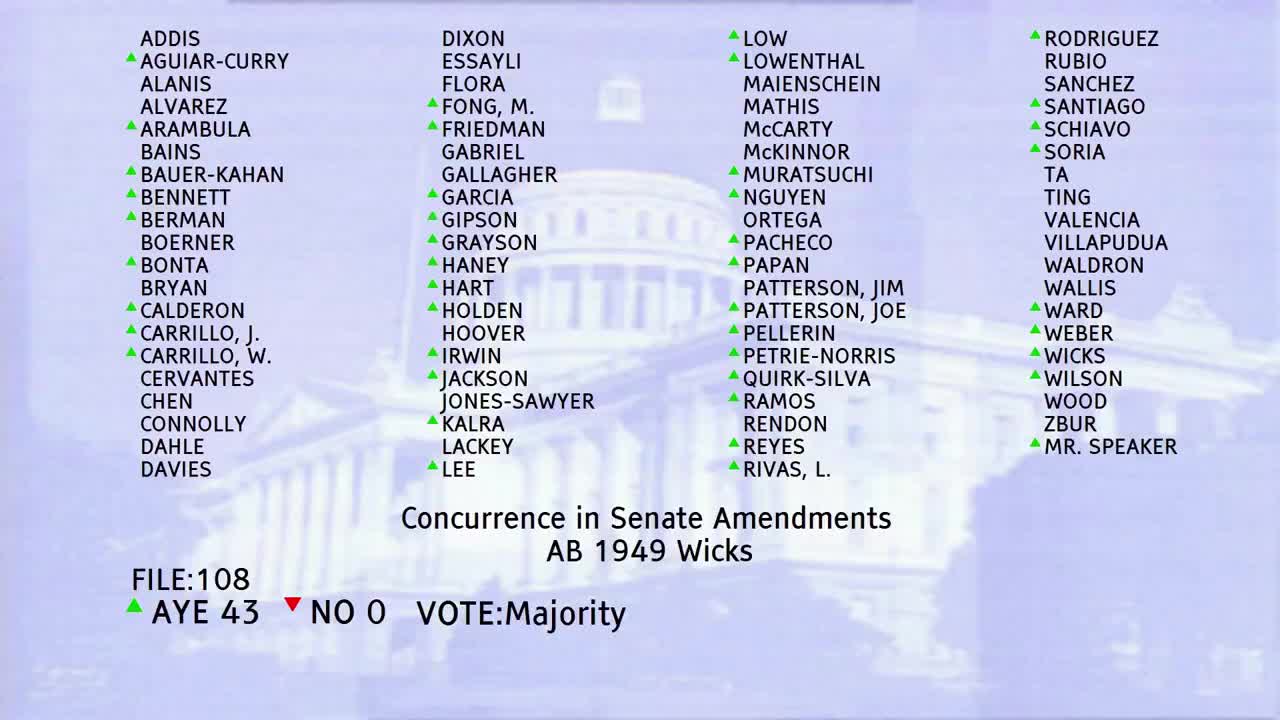 1MIN
Assembly Floor
 50SEC
Senate Floor
 2MIN
Assembly Floor
 8MIN
Assembly Standing Committee on Human Services
Bill Author

Bill Co-Author(s):
