AB 3139: Data privacy: vehicle manufacturers: remote vehicle technology.
- Session Year: 2023-2024
- House: Assembly
- Latest Version Date: 2024-04-24
Current Status:
Failed
(2024-08-28: Ordered to inactive file at the request of Senator Min.)
Introduced
In Committee
First Chamber
In Committee
Second Chamber
Enacted
Existing law establishes various privacy requirements applicable to vehicle manufacturers, including limitations on the usage of images or video recordings from in-vehicle cameras in new motor vehicles equipped standard with one or more in-vehicle cameras. Existing law provides various protections to persons who are escaping from actual or threatened domestic violence, sexual assault, stalking, human trafficking, and other abuse, including providing for a means to keep the names and addresses of abuse survivors confidential in public records.
This bill would, among other things, require a vehicle manufacturer that offers a vehicle for sale, rent, or lease in the state that includes remote vehicle technology to do certain things, including ensure that the remote vehicle technology can be immediately manually disabled by a driver of the vehicle while that driver is inside the vehicle by a method that, among other things, is prominently located and easy to use and does not require access to a remote, online application. The bill would require a vehicle manufacturer to offer secure remote means via the internet for a survivor to submit a vehicle separation notice that meets specified requirements. The bill would define survivor to mean an individual who has a covered act committed, or allegedly committed, against the individual. The bill would define covered act to mean, among other things, certain crimes relating to domestic violence, dating violence, sexual assault, stalking, and sex trafficking.
This bill would require a survivor to submit a vehicle separation notice through the secure remote means described above within 7 days of the date on which the survivor used the method of manually disabling remote vehicle technology and would require the notice to include prescribed information, including a statement by the survivor signed under penalty of perjury that a perpetrator who has access to the remote vehicle technology in the vehicle has committed committed, or allegedly committed committed, a covered act against the survivor or an individual in the survivors care, or a copy of specified documents that support that the perpetrator has committed committed, or allegedly committed committed, a covered act against the survivor or an individual in the survivors care, including a signed affidavit from, among other specified individuals acting within the scope of their employment, a licensed medical care provider.
By requiring a survivor to submit a statement signed under penalty of perjury or requiring specified individuals to sign an affidavit, the bill would expand the crime of perjury and impose a state-mandated local program.
This bill would make a vehicle manufacturer that violates the above-described provisions liable in a civil action brought by a survivor for, among other things, reasonable attorneys fees and costs of the prevailing survivor, in addition to any other remedy provided by law. The bill would specify that any waiver of the requirements of the above-described provisions is against public policy, void, and unenforceable. statutory damages in an amount not to exceed $50,000 or not to exceed $100,000 for a knowing violation.
This bill would define various terms for these purposes, purposes and would make related findings and declarations.
The California Constitution requires the state to reimburse local agencies and school districts for certain costs mandated by the state. Statutory provisions establish procedures for making that reimbursement.
This bill would provide that no reimbursement is required by this act for a specified reason.
Existing law establishes various privacy requirements applicable to vehicle manufacturers, including limitations on the usage of images or video recordings from in-vehicle cameras in new motor vehicles equipped standard with one or more in-vehicle cameras. Existing law provides various protections to persons who are escaping from actual or threatened domestic violence, sexual assault, stalking, human trafficking, and other abuse, including providing for a means to keep the names and addresses of abuse survivors confidential in public records.
This bill would would, among other things, require a vehicle manufacturer, no later than 2 business days after receiving a completed vehicle separation request from a survivor, to separate the perpetrators access to the remote vehicle technology from the vehicle subject to specified requirements, including that the vehicle manufacturer performs the separation without imposing any fee. If the vehicle manufacturer cannot operationally or technically separate a perpetrators access to the remote vehicle technology from the vehicle, the bill would require a vehicle manufacturer to separate the remote vehicle technology from the vehicle subject to the above-described requirements. manufacturer that offers a vehicle for sale, rent, or lease in the state that includes remote vehicle technology to do certain things, including ensure that the remote vehicle technology can be immediately manually disabled by a driver of the vehicle while that driver is inside the vehicle by a method that, among other things, is prominently located and easy to use and does not require access to a remote, online application. The bill would require a vehicle manufacturer to offer secure remote means via the internet for a survivor to submit a vehicle separation request notice that meets specified requirements, and would require the vehicle manufacturer to receive a vehicle separation request through those means. requirements.
TheThis bill would require a survivor to submit a vehicle separation request submitted to a vehicle manufacturer notice through the secure remote means described above within 7 days of the date on which the survivor used the method of manually disabling remote vehicle technology and would require the notice to include prescribed information, including a statement by the survivor signed under penalty of perjury that a perpetrator who has access to the remote vehicle technology in the vehicle has committed or allegedly committed a covered act against the survivor or an individual in the survivors care, or a copy of specified documents that support that the perpetrator has committed or allegedly committed a covered act against the survivor or an individual in the survivors care, including a signed affidavit from, among other specified individuals acting within the scope of their employment, a licensed medical care provider.
By requiring a survivor to submit a statement signed under penalty of perjury or requiring specified individuals to sign an affidavit, the bill would expand the crime of perjury and impose a state-mandated local program.
The bill would require a vehicle manufacturer to notify a survivor that submits a vehicle separation request, as specified, that the vehicle manufacturer may contact the survivor, or a designated representative of the survivor, to confirm the request. The bill would require a vehicle manufacturer, if the vehicle manufacturer cannot operationally or technically effectuate a vehicle separation request, to perform specified duties, including notifying the survivor who submitted the vehicle separation request of the vehicle manufacturers inability to effectuate a vehicle separation request, as specified.TheThis bill would make a vehicle manufacturer that violates the above-described provisions liable in a civil action brought by a survivor for, among other things, reasonable attorneys fees and costs of the prevailing survivor, in addition to any other remedy provided by law. The bill would specify that any waiver of the requirements of the above-described provisions is against public policy, void, and unenforceable.
TheThis bill would define various terms for these purposes, and would make related findings and declarations.
The California Constitution requires the state to reimburse local agencies and school districts for certain costs mandated by the state. Statutory provisions establish procedures for making that reimbursement.
This bill would provide that no reimbursement is required by this act for a specified reason.
Existing law establishes various privacy requirements applicable to manufacturers of to vehicle manufacturers, including limitations on the usage of images or video recordings from in-vehicle cameras in new motor vehicles equipped standard with one or more in-vehicle cameras, including limitations on the usage of images or video recordings from in-vehicle cameras. cameras. Existing law provides various protections to persons who are escaping from actual or threatened domestic violence, sexual assault, stalking, human trafficking, and other abuse, including providing for a means to keep the names and addresses of abuse survivors confidential in public records.
This bill would state the intent of the Legislature to enact legislation that would enhance the privacy of consumers in vehicles. require a vehicle manufacturer, no later than 2 business days after receiving a completed vehicle separation request from a survivor, to separate the perpetrators access to the remote vehicle technology from the vehicle subject to specified requirements, including that the vehicle manufacturer performs the separation without imposing any fee. If the vehicle manufacturer cannot operationally or technically separate a perpetrators access to the remote vehicle technology from the vehicle, the bill would require a vehicle manufacturer to separate the remote vehicle technology from the vehicle subject to the above-described requirements. The bill would require a vehicle manufacturer to offer secure remote means via the internet for a survivor to submit a vehicle separation request that meets specified requirements, and would require the vehicle manufacturer to receive a vehicle separation request through those means.
The bill would require a vehicle separation request submitted to a vehicle manufacturer to include prescribed information, including a statement by the survivor signed under penalty of perjury that a perpetrator who has access to the remote vehicle technology in the vehicle has committed or allegedly committed a covered act against the survivor or an individual in the survivors care, or a copy of specified documents that support that the perpetrator has committed or allegedly committed a covered act against the survivor or an individual in the survivors care, including a signed affidavit from, among other specified individuals acting within the scope of their employment, a licensed medical care provider.
By requiring a survivor to submit a statement signed under penalty of perjury or requiring specified individuals to sign an affidavit, the bill would expand the crime of perjury and impose a state-mandated local program.
The bill would require a vehicle manufacturer to notify a survivor that submits a vehicle separation request, as specified, that the vehicle manufacturer may contact the survivor, or a designated representative of the survivor, to confirm the request. The bill would require a vehicle manufacturer, if the vehicle manufacturer cannot operationally or technically effectuate a vehicle separation request, to perform specified duties, including notifying the survivor who submitted the vehicle separation request of the vehicle manufacturers inability to effectuate a vehicle separation request, as specified.
The bill would make a vehicle manufacturer that violates the above-described provisions liable in a civil action brought by a survivor for, among other things, reasonable attorneys fees and costs of the prevailing survivor, in addition to any other remedy provided by law. The bill would specify that any waiver of the requirements of the above-described provisions is against public policy, void, and unenforceable.
The bill would define various terms for these purposes, and would make related findings and declarations.
The California Constitution requires the state to reimburse local agencies and school districts for certain costs mandated by the state. Statutory provisions establish procedures for making that reimbursement.
This bill would provide that no reimbursement is required by this act for a specified reason.
Existing law establishes various privacy requirements applicable to manufacturers of new motor vehicles equipped standard with one or more in-vehicle cameras, including limitations on the usage of images or video recordings from in-vehicle cameras.
This bill would state the intent of the Legislature to enact legislation that would enhance the privacy of consumers in vehicles.
The Legislature finds and declares all of the following:
(a)Domestic violence, dating violence, stalking, sexual assault, human trafficking, and related crimes are life-threatening issues and have lasting and harmful effects on individuals, families, and entire communities.
(b)Survivors of violence and abuse often lack meaningful support and options when establishing independence from an abuser, including barriers of financial insecurity and limited access to reliable communication tools to maintain essential connections with family, social safety networks, employers, and support services.
(c)Perpetrators of violence and abuse increasingly use technological and communication tools to exercise control over, monitor, and abuse their victims.
(d)Remote vehicle technology, including mobile phone wireless connectivity and location data capabilities that are manufactured into vehicles, are among the technological and communication tools perpetrators of violence and abuse can, and have, used.
(e)According to The New York Times, Modern vehicles have been called smartphones with wheels because they are internet-connected and have myriad methods of data collection, from cameras and seat weight sensors to records of how hard you brake and corner. Most drivers dont realize how much information their cars are collecting and who has access to it.
(f)Under the federal Safe Connections Act of 2022, survivors of domestic abuse are empowered to protect themselves and their loved ones by requiring telecommunications providers, upon request, to separate their mobile phone accounts from the accounts of their abusers.
SEC. 2.Chapter 36.5 (commencing with Section 22948.60) is added to Division 8 of the Business and Professions Code, to read:36.5.Remote Vehicle Technology22948.60.(a)For the purposes of this chapter:
(1)Covered act means conduct that is any of the following:
(A)A crime described in subsection (a) of Section 40002 of the federal Violence Against Women Act (34 U.S.C. Sec. 12291), including domestic violence, dating violence, sexual assault, stalking, and sex trafficking.
(B)An act or practice described in paragraph (11) or (12) of Section 103 of the federal Trafficking Victims Protection Act of 2000 (22 U.S.C. Sec. 7102) relating to severe forms of trafficking in persons and sex trafficking, respectively.
(C)An act under state law, tribal law, or the Uniform Code of Military Justice (Chapter 47 (commencing with Section 801) of Title 10 of the United States Code) that is similar to an offense described in subparagraph (A) or (B).
(2)Designated person means a person who provides care to a survivor and meets both of the following criteria:
(A)The person has been authorized by the survivor to submit a request pursuant to subdivision (c) of Section 22948.61.
(B)The person did not commit, or did not allegedly commit, a covered act against the survivor.
(2)(3)Perpetrator means an individual who has committed committed, or allegedly committed committed, a covered act against a survivor or an individual under the care of a survivor.
(3)(4)Remote vehicle technology means any technology that allows a person who is outside of a vehicle to access the activity, track the location, or control any operation of the vehicle or its parts, that includes, but is not limited to, any of the following:
(A)A Global Positioning System (GPS).
(B)An app-based technology.
(C)Any other remote wireless connectivity technology.
(4)(5)Survivor means an individual who meets either of the following criteria: has had a covered act committed, or allegedly committed, against the individual.
(A)The individual has had a covered act committed or allegedly committed against them.(B)The individual provides care to an individual who has had a covered act committed or allegedly committed against, and that caretaker did not commit or allegedly commit the covered act.(5)(6)Vehicle manufacturer means a vehicle manufacturer or remanufacturer, as defined in Section 672 of the Vehicle Code.
(b)Subdivision (a) does not require a criminal conviction or any other determination of a court in order for conduct to satisfy a definition.
22948.61.(a)A vehicle manufacturer that offers a vehicle for sale, rent, or lease in the state that includes remote vehicle technology shall do all of the following:
(1)Ensure that the remote vehicle technology can be immediately manually disabled by a driver of the vehicle while that driver is inside the vehicle by a method that meets all of the following criteria:
(A)The method of manually disabling the remote vehicle technology shall be is prominently located and easy to use and shall does not require access to a remote, online application.
(B)Upon its use, the method of manually disabling the remote vehicle technology shall inform informs the user of the requirements of subdivision (b).
(C)The method of manually disabling the remote vehicle technology shall does not require a password or any log-in information.
(D)Upon its use, the method of manually disabling the remote vehicle technology shall does not result in the remote vehicle technology, vehicle manufacturer, or a third-party service provider sending to the registered owner of the car an email, telephone call, or any other notification related to the remote vehicle technology being disabled.
(E)Upon its use, the method of manually disabling the remote vehicle technology shall cause causes the remote vehicle technology to be disabled for a minimum of seven days and capable of being reenabled only by the vehicle manufacturer pursuant to paragraph (4).
(2)Offer secure remote means via the internet for a survivor to submit a vehicle separation notice that includes a prominent link on the vehicle manufacturers internet website that meets both of the following requirements:
(A)The link is titled, in bold and capital letters, CALIFORNIA SURVIVOR DOMESTIC VIOLENCE ASSISTANCE.
(B)The link provides a designated internet website portal that provides a survivor the ability to submit a vehicle separation notice and includes a form that enables a survivor to submit the information required by subdivision (b).
(3)Upon the request of a survivor, reset the remote vehicle technology with a new secure account and delete all data from the original account.
(4)Reenable the remote vehicle technology only if the registered owner of the car notifies the manufacturer that the remote vehicle technology was disabled in error, and a survivor has not contacted the vehicle manufacturer to provide the information required by subdivision (b) within seven days of the remote vehicle technology being disabled.
(b)A survivor shall submit a vehicle separation notice to a vehicle manufacturer through the means provided by the vehicle manufacturer pursuant to paragraph (2) of subdivision (a) within 7 days of the date on which the survivor used the method of manually disabling remote vehicle technology required by subdivision (a), which shall include the vehicle identification number of the vehicle and either of the following:
(1)A statement by the survivor signed under penalty of perjury that a perpetrator who has access to the remote vehicle technology in the vehicle has committed committed, or allegedly committed committed, a covered act against the survivor or an individual in the survivors care.
(2)A copy of either of the following documents that supports that the perpetrator has committed committed, or allegedly committed committed, a covered act against the survivor or an individual in the survivors care:
(A)A signed affidavit from any of the following individuals acting within the scope of that persons employment:
(i)A licensed medical or mental health care provider.
(ii)A licensed military medical or mental health care provider.
(iii)A licensed social worker.
(iv)A victim services provider.
(v)A licensed military victim services provider.
(B)A copy of any of the following documents:
(i)A police report.
(ii)A statement provided by the police, including military police, to a magistrate judge or other judge.
(iii)A charging document.
(iv)A protective or restraining order, including military protective orders.
(v)Any other relevant document that is an official record.
(c)(1)Only if, for technological reasons, a vehicle manufacturer is unable to comply with paragraph (1) of subdivision (a), the vehicle manufacturer shall create a conspicuous mechanism that is easy to use by which a survivor or a designated person can submit a request to disable a vehicles remote vehicle technology.
(2)A vehicle manufacturer shall disable remote vehicle technology within one business day after receiving a request from a survivor that includes the information required by subdivision (b) and is submitted pursuant to the mechanism required by paragraph (1).
(d)This section does not authorize or require a vehicle manufacturer to verify ownership of a vehicle, the identity of a survivor, or the authenticity of information that is submitted by the survivor.
22948.62.(a)In addition to any other remedy provided by law, a vehicle manufacturer that violates Section 22948.61 shall be liable in a civil action brought by a survivor for all of the following:
(1)Reasonable attorneys fees and costs of the prevailing survivor.
(2)A civil penalty Statutory damages in an amount not to exceed fifty thousand dollars ($50,000) per violation, or a civil penalty statutory damages in an amount not to exceed one hundred thousand dollars ($100,000) per violation for knowing violations.
(3)Actual damages or three times the amount at which the actual damages are assessed for knowing or reckless violations.
(b)Any waiver of the requirements of this chapter shall be against public policy, void, and unenforceable.
SEC. 3.No reimbursement is required by this act pursuant to Section 6 of Article XIIIB of the California Constitution because the only costs that may be incurred by a local agency or school district will be incurred because this act creates a new crime or infraction, eliminates a crime or infraction, or changes the penalty for a crime or infraction, within the meaning of Section 17556 of the Government Code, or changes the definition of a crime within the meaning of Section 6 of Article XIIIB of the California Constitution.
(a)The Legislature finds and declares all of the following:
(1)(a)Domestic violence, dating violence, stalking, sexual assault, human trafficking, and related crimes are life-threatening issues and have lasting and harmful effects on individuals, families, and entire communities.
(2)(b)Survivors of violence and abuse often lack meaningful support and options when establishing independence from an abuser, including barriers of financial insecurity and limited access to reliable communication tools to maintain essential connections with family, social safety networks, employers, and support services.
(3)(c)Perpetrators of violence and abuse increasingly use technological and communication tools to exercise control over, monitor, and abuse their victims.
(4)(d)Remote vehicle technology, including mobile phone wireless connectivity and location data capabilities that are manufactured into vehicles, are among the technological and communication tools perpetrators of violence and abuse can, and have, used.
(5)(e)According to The New York Times, Modern vehicles have been called smartphones with wheels because they are internet-connected and have myriad methods of data collection, from cameras and seat weight sensors to records of how hard you brake and corner. Most drivers dont realize how much information their cars are collecting and who has access to it.
(6)(f)Under the federal Safe Connections Act of 2022, survivors of domestic abuse are empowered to protect themselves and their loved ones by requiring telecommunications providers, upon request, to separate their mobile phone accounts from the accounts of their abusers.
(b)For the foregoing reasons, it is the intent of the Legislature in enacting this act to protect survivors of domestic abuse by providing survivors the right to request vehicle manufacturers to separate the remote vehicle technology in vehicles, similar to the rights they have regarding mobile phones under federal law.SEC. 2.Chapter 36.5 (commencing with Section 22948.60) is added to Division 8 of the Business and Professions Code, to read:36.5.Remote Vehicle Technology22948.60.(a)For the purposes of this chapter, the following definitions apply: chapter:
(1)Covered act means conduct that meets is any of the following descriptions: following:
(A)A crime described in subsection (a) of Section 40002 of the federal Violence Against Women Act (34 U.S.C. Sec. 12291), including domestic violence, dating violence, sexual assault, stalking, and sex trafficking.
(B)An act or practice described in paragraph (11) or (12) of Section 103 of the federal Trafficking Victims Protection Act of 2000 (22 U.S.C. Sec. 7102) relating to severe forms of trafficking in persons and sex trafficking, respectively.
(C)An act under state law, tribal law, or the Uniform Code of Military Justice (Chapter 47 (commencing with Section 801) of Title 10 of the United States Code) that is similar to an offense described in subparagraph (A) or (B).
(2)Perpetrator means an individual who has committed or allegedly committed a covered act against a survivor or an individual under the care of a survivor.
(3)Remote vehicle technology means any technology that allows a person who is outside of a vehicle to access the activity, track the location, or control any operation of the vehicle or its parts, that includes, but is not limited to: to, any of the following:
(A)A Global Positioning System (GPS).
(B)An app-based technology.
(C)Any other remote wireless connectivity technology.
(4)Survivor means an individual who meets either of the following criteria:
(A)An The individual who has had a covered act committed or allegedly committed against them.
(B)An The individual who provides care to an individual who has had a covered act committed or allegedly committed against, and that caretaker did not commit or allegedly commit the covered act.
(5)Vehicle manufacturer means a vehicle manufacturer or remanufacturer remanufacturer, as defined in Section 672 of the Vehicle Code.
(b)Subdivision (a) does not require a criminal conviction or any other determination of a court in order for conduct to satisfy a definition.
22948.61.(a)(1)No later than two business days after receiving a completed vehicle separation request from a survivor, a vehicle manufacturer shall separate the perpetrators access to the remote vehicle technology from the vehicle subject to both of the following requirements:(A)The vehicle manufacturer shall perform the separation without imposing any fee, penalty, charge, condition, or agreement.(B)The vehicle manufacturer shall perform the separation notwithstanding the consent of another individual, including the registered owner of the vehicle.(2)If a vehicle manufacturer cannot operationally or technically separate a perpetrators access to the remote vehicle technology from the vehicle, the vehicle manufacturer shall separate the remote vehicle technology from the vehicle subject to the requirements described in paragraph (1).22948.61.(a)A vehicle manufacturer that offers a vehicle for sale, rent, or lease in the state that includes remote vehicle technology shall do all of the following:
(1)Ensure that the remote vehicle technology can be immediately manually disabled by a driver of the vehicle while that driver is inside the vehicle by a method that meets all of the following criteria:
(A)The method of manually disabling the remote vehicle technology shall be prominently located and easy to use and shall not require access to a remote, online application.
(B)Upon its use, the method of manually disabling the remote vehicle technology shall inform the user of the requirements of subdivision (b).
(C)The method of manually disabling the remote vehicle technology shall not require a password or any log-in information.
(D)Upon its use, the method of manually disabling the remote vehicle technology shall not result in the remote vehicle technology, vehicle manufacturer, or a third-party service provider sending to the registered owner of the car an email, telephone call, or any other notification related to the remote vehicle technology being disabled.
(E)Upon its use, the method of manually disabling the remote vehicle technology shall cause the remote vehicle technology to be disabled for a minimum of seven days and capable of being reenabled only by the vehicle manufacturer pursuant to paragraph (4).
(b)(1)A vehicle manufacturer shall offer(2)Offer secure remote means via the internet for a survivor to submit a vehicle separation request notice that meets both of the following requirements: includes a prominent link on the vehicle manufacturers internet website that meets both of the following requirements:
(A)The secure remote means shall include a prominent link on the vehicle manufacturers internet website that meets both of the following requirements:(i)(A)The link shall be entitled, is titled, in bold and capital letters, CALIFORNIA SURVIVOR DOMESTIC VIOLENCE ASSISTANCE.
(ii)(B)The link shall provide provides a designated internet website portal that provides a survivor the ability to submit a vehicle separation request notice and includes a form that enables a survivor to submit the required information described in information required by subdivision (c). (b).
(B)The secure remote means shall be easily navigable if it is commercially available and technically feasible.(2)A vehicle manufacturer shall receive a vehicle separation request through the secure remote means.(3)Upon the request of a survivor, reset the remote vehicle technology with a new secure account and delete all data from the original account.
(4)Reenable the remote vehicle technology only if the registered owner of the car notifies the manufacturer that the remote vehicle technology was disabled in error, and a survivor has not contacted the vehicle manufacturer to provide the information required by subdivision (b) within seven days of the remote vehicle technology being disabled.
(c)(b)A survivor shall submit a vehicle separation request submitted notice to a vehicle manufacturer through the means provided by the vehicle manufacturer pursuant to paragraph (2) of subdivision (a) within 7 days of the date on which the survivor used the method of manually disabling remote vehicle technology required by subdivision (a), which shall include the vehicle identification number of the vehicle and either of the following:
(1)A statement by the survivor signed under penalty of perjury that a perpetrator who has access to the remote vehicle technology in the vehicle has committed or allegedly committed a covered act against the survivor or an individual in the survivors care.
(2)A copy of either of the following documents that supports that the perpetrator has committed or allegedly committed a covered act against the survivor or an individual in the survivors care:
(A)A signed affidavit from any of the following individuals acting within the scope of that persons employment:
(i)A licensed medical or mental health care provider.
(ii)A licensed military medical or mental health care provider.
(iii)A licensed social worker.
(iv)A victim services provider.
(v)A licensed military victim services provider.
(vi)An employee of a court.(B)A copy of any of the following documents:
(i)A police report.
(ii)A statement provided by the police, including military police, to a magistrate judge or other judge.
(iii)A charging document.
(iv)A protective or restraining order, including military protective orders.
(v)Any other relevant document that is an official record.
(d)A vehicle manufacturer shall notify a survivor that submits a vehicle separation request in clear and conspicuous language through the secure remote means that the vehicle manufacturer may contact the survivor, or designated representative of the survivor, to confirm the request.(e)(1)If a vehicle manufacturer cannot operationally or technically effectuate a vehicle separation request, the vehicle manufacturer shall perform both of the following duties:(A)Notify the survivor who submitted the vehicle separation request, no later than two days after receiving the request, of the vehicle manufacturers inability to effectuate a vehicle separation request.(B)Modify, or assist the survivor in modifying, the default settings of the remote vehicle technology in the vehicle to prevent the perpetrator from obtaining information about the survivor, including, but not limited to, the survivors location data.(2)The vehicle manufacturer shall perform the duties described in paragraph (1) without imposing any fee, penalty, charge, condition, or agreement.(c)(1)Only if, for technological reasons, a vehicle manufacturer is unable to comply with paragraph (1) of subdivision (a), the vehicle manufacturer shall create a conspicuous mechanism that is easy to use by which a survivor can submit a request to disable a vehicles remote vehicle technology.
(2)A vehicle manufacturer shall disable remote vehicle technology within one business day after receiving a request from a survivor that includes the information required by subdivision (b) and is submitted pursuant to the mechanism required by paragraph (1).
(d)This section does not authorize or require a vehicle manufacturer to verify ownership of a vehicle, the identity of a survivor, or the authenticity of information that is submitted by the survivor.
22948.62.(a)In addition to any other remedy provided by law, a vehicle manufacturer that violates Section 22948.61 shall be liable in a civil action brought by a survivor for all the following:
(1)Reasonable attorneys fees and costs of the prevailing survivor.
(2)A civil penalty not to exceed fifty thousand dollars ($50,000) per violation, or a civil penalty not to exceed one hundred thousand dollars ($100,000) per violation for knowing violations.
(3)Actual damages, damages or three times the amount at which the actual damages are assessed for knowing or reckless violations.
(b)Any waiver of the requirements of this chapter shall be against public policy, void, and unenforceable.
SEC. 3.No reimbursement is required by this act pursuant to Section 6 of Article XIIIB of the California Constitution because the only costs that may be incurred by a local agency or school district will be incurred because this act creates a new crime or infraction, eliminates a crime or infraction, or changes the penalty for a crime or infraction, within the meaning of Section 17556 of the Government Code, or changes the definition of a crime within the meaning of Section 6 of Article XIIIB of the California Constitution.
(a)The Legislature finds and declares all of the following:
(1)Domestic violence, dating violence, stalking, sexual assault, human trafficking, and related crimes are life-threatening issues and have lasting and harmful effects on individuals, families, and entire communities.
(2)Survivors of violence and abuse often lack meaningful support and options when establishing independence from an abuser, including barriers of financial insecurity and limited access to reliable communication tools to maintain essential connections with family, social safety networks, employers, and support services.
(3)Perpetrators of violence and abuse increasingly use technological and communication tools to exercise control over, monitor, and abuse their victims.
(4)Remote vehicle technology, including mobile phone wireless connectivity and location data capabilities that are manufactured into vehicles, are among the technological and communication tools perpetrators of violence and abuse can, and have, used.
(5)According to The New York Times, Modern vehicles have been called smartphones with wheels because they are internet-connected and have myriad methods of data collection, from cameras and seat weight sensors to records of how hard you brake and corner. Most drivers dont realize how much information their cars are collecting and who has access to it.
(6)Under the federal Safe Connections Act of 2022, survivors of domestic abuse are empowered to protect themselves and their loved ones by requiring telecommunications providers, upon request, to separate their mobile phone accounts from the accounts of their abusers.
(b)For the foregoing reasons, it is the intent of the Legislature in enacting this act to protect survivors of domestic abuse by providing survivors the right to request vehicle manufacturers to separate the remote vehicle technology in vehicles, similar to the rights they have regarding mobile phones under federal law.
SEC. 2.Chapter 36.5 (commencing with Section 22948.60) is added to Division 8 of the Business and Professions Code, to read:36.5.Remote Vehicle Technology22948.60.(a)For the purposes of this chapter, the following definitions apply:
(1)Covered act means conduct that meets any of the following descriptions:
(A)A crime described in subsection (a) of Section 40002 of the federal Violence Against Women Act (34 U.S.C. Sec. 12291), including domestic violence, dating violence, sexual assault, stalking, and sex trafficking.
(B)An act or practice described in paragraph (11) or (12) of Section 103 of the federal Trafficking Victims Protection Act of 2000 (22 U.S.C. Sec. 7102) relating to severe forms of trafficking in persons and sex trafficking, respectively.
(C)An act under state law, tribal law, or the Uniform Code of Military Justice (Chapter 47 (commencing with Section 801) of Title 10 of the United States Code) that is similar to an offense described in subparagraph (A) or (B).
(2)Perpetrator means an individual who has committed or allegedly committed a covered act against a survivor or an individual under the care of a survivor.
(3)Remote vehicle technology means any technology that allows a person who is outside of a vehicle to access the activity, track the location, or control any operation of the vehicle or its parts, that includes, but is not limited to:
(A)A Global Positioning System (GPS).
(B)An app-based technology.
(C)Any other remote wireless connectivity technology.
(4)Survivor means an individual who meets either of the following criteria:
(A)An individual who has had a covered act committed or allegedly committed against them.
(B)An individual who provides care to an individual who has had a covered act committed or allegedly committed against, and that caretaker did not commit or allegedly commit the covered act.
(5)Vehicle manufacturer means a vehicle manufacturer or remanufacturer as defined in Section 672 of the Vehicle Code.
(b)Subdivision (a) does not require a criminal conviction or any other determination of a court in order for conduct to satisfy a definition.
22948.61.(a)(1)No later than two business days after receiving a completed vehicle separation request from a survivor, a vehicle manufacturer shall separate the perpetrators access to the remote vehicle technology from the vehicle subject to both of the following requirements:
(A)The vehicle manufacturer shall perform the separation without imposing any fee, penalty, charge, condition, or agreement.
(B)The vehicle manufacturer shall perform the separation notwithstanding the consent of another individual, including the registered owner of the vehicle.
(2)If a vehicle manufacturer cannot operationally or technically separate a perpetrators access to the remote vehicle technology from the vehicle, the vehicle manufacturer shall separate the remote vehicle technology from the vehicle subject to the requirements described in paragraph (1).
(b)(1)A vehicle manufacturer shall offer secure remote means via the internet for a survivor to submit a vehicle separation request that meets both of the following requirements:
(A)The secure remote means shall include a prominent link on the vehicle manufacturers internet website that meets both of the following requirements:
(i)The link shall be entitled, in bold and capital letters, CALIFORNIA SURVIVOR DOMESTIC VIOLENCE ASSISTANCE.
(ii)The link shall provide a designated website portal that provides a survivor the ability to submit a vehicle separation request and includes a form that enables a survivor to submit the required information described in subdivision (c).
(B)The secure remote means shall be easily navigable if it is commercially available and technically feasible.
(2)A vehicle manufacturer shall receive a vehicle separation request through the secure remote means.
(c)A vehicle separation request submitted to a vehicle manufacturer shall include the vehicle identification number of the vehicle and either of the following:
(1)A statement by the survivor signed under penalty of perjury that a perpetrator who has access to the remote vehicle technology in the vehicle has committed or allegedly committed a covered act against the survivor or an individual in the survivors care.
(2)A copy of either of the following documents that supports that the perpetrator has committed or allegedly committed a covered act against the survivor or an individual in the survivors care:
(A)A signed affidavit from any of the following individuals acting within the scope of that persons employment:
(i)A licensed medical or mental health care provider.
(ii)A licensed military medical or mental health care provider.
(iii)A licensed social worker.
(iv)A victim services provider.
(v)A licensed military victim services provider.
(vi)An employee of a court.
(B)A copy of any of the following documents:
(i)A police report.
(ii)A statement provided by the police, including military police, to a magistrate judge or other judge.
(iii)A charging document.
(iv)A protective or restraining order, including military protective orders.
(v)Any other relevant document that is an official record.
(d)A vehicle manufacturer shall notify a survivor that submits a vehicle separation request in clear and conspicuous language through the secure remote means that the vehicle manufacturer may contact the survivor, or designated representative of the survivor, to confirm the request.
(e)(1)If a vehicle manufacturer cannot operationally or technically effectuate a vehicle separation request, the vehicle manufacturer shall perform both of the following duties:
(A)Notify the survivor who submitted the vehicle separation request, no later than two days after receiving the request, of the vehicle manufacturers inability to effectuate a vehicle separation request.
(B)Modify, or assist the survivor in modifying, the default settings of the remote vehicle technology in the vehicle to prevent the perpetrator from obtaining information about the survivor, including, but not limited to, the survivors location data.
(2)The vehicle manufacturer shall perform the duties described in paragraph (1) without imposing any fee, penalty, charge, condition, or agreement.
22948.62.(a)In addition to any other remedy provided by law, a vehicle manufacturer that violates Section 22948.61 shall be liable in a civil action brought by a survivor for all the following:
(1)Reasonable attorneys fees and costs of the prevailing survivor.
(2)A civil penalty not to exceed fifty thousand dollars ($50,000) per violation, or a civil penalty not to exceed one hundred thousand dollars ($100,000) per violation for knowing violations.
(3)Actual damages, or three times the amount at which the actual damages are assessed for knowing or reckless violations.
(b)Any waiver of the requirements of this chapter shall be against public policy, void, and unenforceable.
SEC. 3.No reimbursement is required by this act pursuant to Section 6 of Article XIIIB of the California Constitution because the only costs that may be incurred by a local agency or school district will be incurred because this act creates a new crime or infraction, eliminates a crime or infraction, or changes the penalty for a crime or infraction, within the meaning of Section 17556 of the Government Code, or changes the definition of a crime within the meaning of Section 6 of Article XIIIB of the California Constitution.
SECTION 1.It is the intent of the Legislature to enact legislation that would enhance the privacy of consumers in vehicles.It is the intent of the Legislature to enact legislation that would enhance the privacy of consumers in vehicles.
|
Date
|
Status
|
|---|---|
| Aug 28, 2024 | Ordered to inactive file at the request of Senator Min. |
| Aug 19, 2024 | Read second time. Ordered to third reading. |
| Aug 15, 2024 | From committee: Do pass. (Ayes 6. Noes 0.) (August 15). |
| Aug 5, 2024 | In committee: Referred to APPR suspense file. |
| Jun 26, 2024 | From committee: Do pass and re-refer to Com. on APPR. (Ayes 13. Noes 0.) (June 25). Re-referred to Com. on APPR. |
| Jun 19, 2024 | From committee: Do pass and re-refer to Com. on TRANS. (Ayes 10. Noes 0.) (June 18). Re-referred to Com. on TRANS. |
| Jun 7, 2024 | In committee: Set, first hearing. Hearing canceled at the request of author. |
| Jun 5, 2024 | Referred to Coms. on JUD. and TRANS. |
| May 23, 2024 | In Senate. Read first time. To Com. on RLS. for assignment. |
| May 22, 2024 | Read third time. Passed. Ordered to the Senate. (Ayes 71. Noes 1. Page 5528.) |
| May 20, 2024 | Read second time. Ordered to third reading. |
| May 16, 2024 | From committee: Do pass. (Ayes 15. Noes 0.) (May 16). |
| May 8, 2024 | In committee: Set, first hearing. Referred to APPR. suspense file. |
| Apr 25, 2024 | Re-referred to Com. on APPR. |
| Apr 24, 2024 | Read second time and amended. |
| Apr 23, 2024 | From committee: Amend, and do pass as amended and re-refer to Com. on APPR. with recommendation: To Consent Calendar. (Ayes 11. Noes 0.) (April 23). |
| Apr 22, 2024 | Re-referred to Com. on JUD. |
| Apr 18, 2024 | Read second time and amended. |
| Apr 17, 2024 | From committee: Amend, and do pass as amended and re-refer to Com. on JUD. (Ayes 11. Noes 0.) (April 16). |
| Apr 1, 2024 | Re-referred to Com. on P. & C.P. |
| Mar 21, 2024 | Referred to Coms. on P. & C.P. and JUD. |
| Mar 21, 2024 | From committee chair, with author's amendments: Amend, and re-refer to Com. on P. & C.P. Read second time and amended. |
| Feb 17, 2024 | From printer. May be heard in committee March 18. |
| Feb 16, 2024 | Read first time. To print. |
|
Date
|
Description
|
Location
|
Votes
|
|
|---|---|---|---|---|
| Aug 15, 2024 | Do pass | Senate Standing Committee on Appropriations |
Passed |
|
| Aug 5, 2024 | Placed on suspense file | Senate Standing Committee on Appropriations |
Passed |
|
| Jun 25, 2024 | Do pass, but first be re-referred to the Committee on [Appropriations] | Senate Standing Committee on Transportation |
Passed |
|
| Jun 18, 2024 | Do pass, but first be re-referred to the Committee on [Transportation] | Senate Standing Committee on Judiciary |
Passed |
|
| May 22, 2024 | AB 3139 Weber Assembly Third Reading | Assembly Floor |
Passed |
|
| May 16, 2024 | Do pass. | Assembly Standing Committee on Appropriations |
Passed |
|
| Apr 23, 2024 | Do pass as amended, and be re-referred to the Committee on [Appropriations] with recommendation: To Consent Calendar | Assembly Standing Committee on Judiciary |
Passed |
|
| Apr 16, 2024 | Do pass as amended and be re-referred to the Committee on [Judiciary] | Assembly Standing Committee on Privacy and Consumer Protection |
Passed |
This list shows positions taken on this bill by organizations on the date displayed, which is linked to the original source.
Positions by individuals are not included.
|
Organization
|
Position
|
Date
|
|---|---|---|
| Alliance For Automotive Innovation | * Indeterminate | Jun 25, 2024 |
| California Low-Income Consumer Coalition | ** Support | |
| Consumer Federation Of California | ** Support | |
| Consumers For Auto Reliability & Safety | ** Support | |
| Elder Law & Advocacy | ** Support | |
| Electronic Frontier Foundation | ** Against | |
| Oakland Privacy | ** Support | |
| Public Law Center | ** Support | |
| Rise Economy | ** Support | |
| Secure Justice | ** Support |
SENATE RULES COMMITTEE Office of Senate Floor Analyses (916) 651-1520 Fax: (916) 327-4478 | AB 3139 |
THIRD READING
Bill No: AB 3139
Author: Weber (D)
Amended: 4/24/24 in Assembly
Vote: 21
SENATE JUDICIARY COMMITTEE: 10-0, 6/18/24
AYES: Umberg, Wilk, Allen, Ashby, Caballero, Durazo, Niello, Roth, Stern, Wahab
NO VOTE RECORDED: Laird
SENATE TRANSPORTATION COMMITTEE: 13-0, 6/25/24
AYES: Cortese, Niello, Allen, Archuleta, Becker, Blakespear, Dodd, Gonzalez, Laird, Limón, Newman, Seyarto, Umberg
NO VOTE RECORDED: Dahle, Nguyen
SENATE APPROPRIATIONS COMMITTEE: 6-0, 8/15/24
AYES: Caballero, Jones, Ashby, Becker, Seyarto, Wahab
NO VOTE RECORDED: Bradford
ASSEMBLY FLOOR: 71-0, 5/22/24 - See last page for vote
SUBJECT: Data privacy: vehicle manufacturers: remote vehicle technology
SOURCE: Consumer Federation of California
DIGEST:
This bill requires a vehicle manufacturer to ensure that any remote technology in their vehicles can be immediately manually disabled by a driver from inside the vehicle, as provided, or, if technically impossible, to create a mechanism for survivors of specified crimes to submit a request to disable such technology, which shall be done within one business day. This bill requires a survivor of specified crimes to provide a notice with specified documentation to the manufacturer within seven days of using the manual mechanism.
ANALYSIS:
Existing law:
- Establishes the federal Safe Connections Act (SCA) of 2022, which requires mobile service providers to separate the line of a survivor of domestic violence (and other related crimes and abuse), and any individuals in the care of the survivor, from a mobile service contract shared with an abuser within two business days after receiving a request from the survivor. (PL 117-223).
- Authorizes a court to issue an ex parte order enjoining a party from molesting, attacking, striking, stalking, threatening, sexually assaulting, battering, credibly impersonating, falsely personating, harassing, telephoning, including, but not limited to, making annoying telephone calls, destroying personal property, contacting, either directly or indirectly, by mail or otherwise, coming within a specified distance of, or disturbing the peace of the other party. “Disturbing the peace of the other party” refers to conduct that, based on the totality of the circumstances, destroys the mental or emotional calm of the other party. This conduct may be committed directly or indirectly, including through the use of a third party, and by any method or through any means including, but not limited to, telephone, online accounts, text messages, internet-connected devices, or other electronic technologies. (Fam. Code § 6320.)
- Authorizes an adult person, or a parent or guardian on behalf of a minor or an incapacitated person, to apply to participate in the Safe at Home program by stating that they are a victim of specified conduct, including domestic violence, sexual assault, stalking, human trafficking, child abduction, or elder or dependent adult abuse, or is a household member of a victim, designating the Secretary of State (SOS) as the agent for service of process and receipt of mail, and providing the SOS with any address they wish to be kept confidential. (Gov’t Code § 6206(a).)
This bill:
- Requires a vehicle manufacturer that offers a vehicle for sale, rent, or lease in the state that includes remote vehicle technology to do all of the following:
- Ensure that the remote vehicle technology can be immediately manually disabled by a driver of the vehicle while that driver is inside the vehicle by a method that meets all of the following criteria:
- The method of manually disabling the remote vehicle technology is prominently located and easy to use and does not require access to a remote, online application.
- Upon its use, the method of manually disabling the remote vehicle technology informs the user of the below notice requirements.
- The method of manually disabling the remote vehicle technology does not require a password or any log-in information.
- Upon its use, the method of manually disabling the remote vehicle technology does not result in the remote vehicle technology, vehicle manufacturer, or a third-party service provider sending to the registered owner of the car an email, telephone call, or any other notification related to the remote vehicle technology being disabled.
- Upon its use, the method of manually disabling the remote vehicle technology causes the remote vehicle technology to be disabled for a minimum of seven days and capable of being reenabled only by the vehicle manufacturer, as provided.
- Offer secure remote means via the internet for a survivor to submit a vehicle separation notice that includes a prominent link on the vehicle manufacturer’s internet website that meets both of the following requirements:
- The link is titled, in bold and capital letters, “CALIFORNIA SURVIVOR DOMESTIC VIOLENCE ASSISTANCE.”
- The link provides a designated internet website portal that provides a survivor the ability to submit a vehicle separation notice and includes a form that enables a survivor to submit the information required.
- Upon the request of a survivor, reset the remote vehicle technology with a new secure account and delete all data from the original account.
- Reenable the remote vehicle technology only if the registered owner of the car notifies the manufacturer that the remote vehicle technology was disabled in error, and a survivor has not contacted the vehicle manufacturer to provide the information required within seven days of the remote vehicle technology being disabled.
- Ensure that the remote vehicle technology can be immediately manually disabled by a driver of the vehicle while that driver is inside the vehicle by a method that meets all of the following criteria:
- Requires a survivor to submit a vehicle separation notice to a vehicle manufacturer through the means provided by the vehicle manufacturer within 7 days of the date on which the survivor used the required method of manually disabling remote vehicle technology, which shall include the vehicle identification number of the vehicle and either of the following:
- A statement by the survivor signed under penalty of perjury that a perpetrator who has access to the remote vehicle technology in the vehicle has committed, or allegedly committed, a covered act against the survivor or an individual in the survivor’s care.
- A copy of specified documents that supports that the perpetrator has committed, or allegedly committed, a covered act against the survivor or an individual in the survivor’s care, including a signed affidavit from specified individuals acting within the scope of that person’s employment, including a health care provider or social worker, a police report, or a restraining order.
- Provides that, only if, for technological reasons, a vehicle manufacturer is unable to comply with the above requirements regarding a manual method, the vehicle manufacturer shall create a conspicuous mechanism that is easy to use by which a survivor or a designated person can submit a request to disable a vehicle’s remote vehicle technology. A manufacturer must disable the technology within one business day after receiving a request from a survivor that includes the information required.
- Provides that it does not authorize or require a vehicle manufacturer to verify ownership of a vehicle, the identity of a survivor, or the authenticity of information that is submitted by the survivor.
- Provides that, in addition to any other remedy provided by law, a vehicle manufacturer that violates the bill shall be liable in a civil action brought by a survivor for all of the following:
- Reasonable attorney’s fees and costs of the prevailing survivor.
- Statutory damages in an amount not to exceed $50,000 per violation, or statutory damages in an amount not to exceed $100,000 per violation for knowing violations.
- Actual damages or three times the amount at which the actual damages are assessed for knowing or reckless violations.
- Provides that any waiver of the requirements of this chapter shall be against public policy, void, and unenforceable.
- Defines the relevant terms. “Covered act” is defined as conduct that is any of the following:
- A crime described in subsection (a) of Section 40002 of the federal Violence Against Women Act (34 U.S.C. Sec. 12291), including domestic violence, dating violence, sexual assault, stalking, and sex trafficking.
- An act or practice described in paragraph (11) or (12) of Section 103 of the federal Trafficking Victims Protection Act of 2000 (22 U.S.C. Sec. 7102) relating to severe forms of trafficking in persons and sex trafficking, respectively.
- An act under state law, tribal law, or the Uniform Code of Military Justice (Chapter 47 (commencing with Section 801) of Title 10 of the United States Code) that is similar to an offense described in subparagraph (A) or (B).
Background
Domestic violence can take many forms, but generally involves a pattern of behaviors by an abuser to gain and maintain power and control. This can involve emotional abuse, intimidation, economic abuse, coercion and threats, and physical or sexual violence. Abusers can assert control over economic resources, children, and modes of transportation. Victims of human trafficking face similar patterns of control and violence. Escaping these situations is often harrowing and beset by fear of being caught or found by the perpetrator of the violence or other criminal abuse.
With the near ubiquitous nature of connected devices and attendant tracking mechanisms, a new tool for abusers to maintain power and control has caused alarm among survivors and advocates. Research and reporting finds that abusers are increasingly using connected devices in vehicles to harass and terrify their victims even after they have managed to escape.
This bill requires vehicle manufacturers to ensure the ability to manually disable any remote technology from within their vehicles immediately or, if not possible, to create a user-friendly process for a survivor of domestic violence, human trafficking, or other crimes, to request the disabling of the technology and to submit supporting documentation. The manufacturer can only reenable the technology upon request of the survivor, or if documentation is not provided by a survivor, after seven days and with the request of the registered owner. A survivor is required to submit documentation within 7 days of disabling the technology or along with the request through the alternative mechanism. However, the manufacturer is not required to verify ownership, the identity of the survivor, or the authenticity of any information submitted.
This bill is sponsored by the Consumer Federation of California. It is supported by several advocacy groups, including the California Low-Income Consumer Coalition. The Electronic Frontier Foundation is in opposition.
Comment
According to the author:
AB 3139 will bolster DV survivor protections by enacting state laws that expand upon the Federal Safe Connections Act to cover vehicle manufacturers, enabling survivors to eliminate abusers' access to their vehicles and personal information.
AB 3139 enables DV survivors to request, with proper documentation such as a copy of a signed affidavit from a licensed medical or mental health care provider, that auto manufacturers separate the information of the survivor from the information of the abuser. This request is required to be completed by auto manufacturers no later than two business days after receiving the request.
FISCAL EFFECT: Appropriation: No Fiscal Com.: Yes Local: Yes
According to the Senate Appropriations Committee:
Unknown, potentially significant cost pressure to the state funded trial court system (Trial Court Trust Fund, General Fund) to adjudicate claims brought pursuant to this bill. The fiscal impact of this bill to the courts will depend on many unknown factors, including the numbers of violations alleged to have occurred, if parties settle the matter before the filing of an action, and the factors unique to each case. An eight hour court day costs approximately $8,000 in staff in workload. If the bill results in only 12 or more days spent in court, trial court costs could be in the hundreds of thousands of dollars. While the courts are not funded on a workload basis, an increase in workload could result in delayed court services and would put pressure on the General Fund to fund additional staff and resources and to increase the amount appropriated to backfill for trial court operations. The Budget Act of 2024, for the fiscal year beginning July 1, 2024, includes a $97 million reduction to the trial courts, a commensurate reduction of up to 7.95 percent to the budget for the state-level judiciary, and a reduction of the trial court state-level emergency reserve in the Trial Court Trust Fund from $10 million to $5 million. The Budget Act also includes a $37.3 million General Fund backfill for the Trial Court Trust Fund to address the continued decline in civil fee and criminal fine and penalty revenues expected in fiscal year 2024‒25.
SUPPORT: (Verified 8/15/24)
Consumer Federation of California (source)
California Low-income Consumer Coalition
Consumers for Auto Reliability & Safety
Elder Law & Advocacy
Oakland Privacy
Public Law Center
Rise Economy
OPPOSITION: (Verified 8/15/24)
Electronic Frontier Foundation
ARGUMENTS IN SUPPORT: Oakland Privacy asserts:
AB 3139 helps legal protections for victims of domestic violence (DV) to catch up with technology used to harass, intimidate, monitor or control them. Modern technology has enabled perpetrators to facilitate abuse in a myriad of ways, from a distance and with little effort or cost.
Moreover, modern cars are essentially computers on wheels - and a class of Internet of Things (IoT) devices. As cars are often a necessity in today’s society, it is important that vehicle technology is not weaponized to exert abuse or control over another individual.
AB 3139 affords victims with an important tool to break from the grip of an abuser, however it also reveals gaps in legal protections against abuse through IoT devices generally. More protections should shift the burden from victims to tech developers, and general privacy protection measures such as data minimization, storage and sharing increase the overall safety of IOT devices.
ARGUMENTS IN OPPOSITION: The Electronic Frontier Foundation writes:
We believe AB 3139 falls short in capturing strong privacy protections for victims of tech-enabled abuse. First, we are concerned that proposed Section 22948.671’s requirement that a car manufacturer “ensure that the remote vehicle technology can be immediately manually disabled by a driver of the vehicle while that driver is inside the vehicle" will not make survivors of abuse safer. Instead, it will have the unintended consequence of creating entirely new avenues of abuse. An immediately-effective manual method of disabling remote vehicle technology that is available to any driver is also available to any passenger who can reach across the car. Car thieves, kidnappers, and carjackers will benefit from the ability to turn off tracking of vehicles that they have stolen. The kidnapping of children shared by the abuser and the survivor and theft of shared property, such as motor vehicles, are common elements of domestic abuse. Creating a scenario in which an abuser can make off with a car, its driver, and possibly a child passenger without the ability to track their location for an extended period of time will put survivors in significant danger.
ASSEMBLY FLOOR: 71-0, 5/22/24
AYES: Addis, Aguiar-Curry, Alanis, Alvarez, Arambula, Bains, Bauer-Kahan, Bennett, Berman, Boerner, Bonta, Bryan, Juan Carrillo, Wendy Carrillo, Chen, Connolly, Davies, Dixon, Flora, Mike Fong, Vince Fong, Gabriel, Gallagher, Garcia, Gipson, Grayson, Haney, Hart, Hoover, Irwin, Jackson, Jones-Sawyer, Kalra, Lackey, Lee, Low, Lowenthal, Maienschein, McCarty, McKinnor, Muratsuchi, Stephanie Nguyen, Ortega, Pacheco, Papan, Jim Patterson, Pellerin, Petrie-Norris, Quirk-Silva, Ramos, Rendon, Reyes, Rodriguez, Blanca Rubio, Sanchez, Santiago, Schiavo, Soria, Ta, Ting, Valencia, Villapudua, Waldron, Wallis, Ward, Weber, Wicks, Wilson, Wood, Zbur, Robert Rivas
NO VOTE RECORDED: Calderon, Cervantes, Megan Dahle, Essayli, Friedman, Holden, Mathis, Joe Patterson, Luz Rivas
Prepared by: Christian Kurpiewski / JUD. / (916) 651-4113
8/18/24 9:19:41
**** END ****
SENATE COMMITTEE ON APPROPRIATIONS
Senator Anna Caballero, Chair
2023 - 2024 Regular Session
AB 3139 (Weber) - Data privacy: vehicle manufacturers: remote vehicle technology
Version: April 24, 2024 | Policy Vote: JUD. 10 - 0, TRANS. 13 - 0 |
Urgency: No | Mandate: Yes |
Hearing Date: August 5, 2024 | Consultant: Liah Burnley |
Bill Summary:
AB 3139 requires the manufacturer of a vehicle with certain remote vehicle technology to immediately reset the technology, as specified, upon the request of a survivor of domestic violence.
Fiscal Impact:
Unknown, potentially significant cost pressure to the state funded trial court system (Trial Court Trust Fund, General Fund) to adjudicate claims brought pursuant to this bill. The fiscal impact of this bill to the courts will depend on many unknown factors, including the numbers of violations alleged to have occurred, if parties settle the matter before the filing of an action, and the factors unique to each case. An eight hour court day costs approximately $8,000 in staff in workload. If the bill results in only 12 or more days spent in court, trial court costs could be in the hundreds of thousands of dollars. While the courts are not funded on a workload basis, an increase in workload could result in delayed court services and would put pressure on the General Fund to fund additional staff and resources and to increase the amount appropriated to backfill for trial court operations. The Budget Act of 2024, for the fiscal year beginning July 1, 2024, includes a $97 million reduction to the trial courts, a commensurate reduction of up to 7.95 percent to the budget for the state-level judiciary, and a reduction of the trial court state-level emergency reserve in the Trial Court Trust Fund from $10 million to $5 million. The Budget Act also includes a $37.3 million General Fund backfill for the Trial Court Trust Fund to address the continued decline in civil fee and criminal fine and penalty revenues expected in fiscal year 2024‒25.
Background:
This bill is substantially similar to the federal Safe Connections Act (SCA) of 2022 (PL 117-223). The SCA requires mobile service providers to separate the line of a survivor of domestic violence (and other related crimes and abuse), and any individuals in the care of the survivor, from a mobile service contract shared with an abuser within two business days after receiving a request from the survivor. Like the SCA, the purpose of this bill is to require an automobile manufacturer to disconnect a vehicle from any remote vehicle technology within two business days of receiving a request from a survivor.
Proposed Law:
- Requires a vehicle manufacturer that offers a vehicle for sale, rent, or lease in the state that includes remote vehicle technology to do all of the following:
- Ensure that the remote vehicle technology can be immediately manually disabled by a driver of the vehicle while the driver is inside the vehicle, as specified.
- Offer a secure remote means via the internet for a survivor to submit a vehicle separation notice.
- Upon the request of a survivor, reset the remote vehicle technology with a new secure account and delete all data from the original account.
- Re-enable the remote vehicle technology only under specified circumstances including the absence of a request from survivor to reset the vehicle’s technology within seven days of the remote vehicle technology being disabled.
- Establishes a procedure for a survivor to establish that they are a survivor and submit a vehicle separation notice to a vehicle manufacturer.
- Provides that a vehicle manufacturer that violates the bill’s requirements will be liable in a civil action brought by a survivor, and specifies available remedies for a prevailing survivor.
Related Legislation:
SB 1000 (Ashby), would require an account managers, upon request, to deny an abusers access to a connected device. SB 1000 is pending in Assembly Appropriations Committee.
SB 1394 (Min), would require a vehicle manufacturer to terminate a person’s access to remote vehicle technology upon a completed request from a driver who establishes legal possession of the vehicle or a domestic violence restraining order naming the person whose access is sought to be terminated. SB 1394 is pending in Assembly Appropriations Committee.
-- END --
SENATE COMMITTEE ON TRANSPORTATION
Senator Dave Cortese, Chair
2023 - 2024 Regular
Bill No: AB 3139 Hearing Date: 6/25/2024
Author: | Weber | ||
Version: | 4/24/2024 Amended | ||
Urgency: | No | Fiscal: | Yes |
Consultant: | Randy Chinn | ||
SUBJECT: Data privacy: vehicle manufacturers: remote vehicle technology
DIGEST: This bill requires a vehicle manufacturer to ensure that any remote technology in their vehicles can be immediately manually disabled by a driver from inside the vehicle or if technically impossible, to create a mechanism for survivors of specified crimes to submit a request to disable such technology, which shall be done within one business day.
ANALYSIS:
Existing law:
- Provides various protections to persons who are escaping domestic violence, including providing a means for keeping the names and addresses of abuse survivors confidential in public records.
This bill:
- Defines “covered act” as specified crimes, including domestic violence, sexual assault, and sex trafficking.
- Defines “survivor” as an individual who has had, or who has allegedly had, a covered act committed against them.
- Establishes requirements on vehicle manufacturers that offer vehicles with remote vehicle technology:
- The driver/survivor must be able to disable the remote vehicle technology while in the vehicle without the use of a password. Disabling the remote vehicle technology may not result in a notification to the registered owner. Within 7 days of the date on which the survivor manually disabled the remote vehicle technology, the survivor shall submit a separation notice as specified below.
- If the vehicle manufacturer cannot allow the remote vehicle technology to be manually disabled by the driver, the manufacturer shall create a mechanism for a survivor or designated person to submit a request to disable the remote vehicle technology, known as a separation notice, with specified documentation as specified below. The manufacturer shall disable the technology within one day of receiving such notice.
- The manufacturer must offer a remote means for a survivor to submit a vehicle separation notice to the manufacturer’s website to reset the remote vehicle technology with a new secure account and delete all data from the original account. If the registered owner notifies the manufacturer that the remote vehicle technology was disabled in error, and the survivor has not provided the manufacturer with the separation notice within 7 days, then the manufacturer shall re-enable the remote vehicle technology.
- The vehicle separation notice shall include the vehicle identification number, and a statement by the survivor under penalty of perjury that a perpetrator who had access to the remote vehicle technology has committee, or allegedly committed, a covered act against the survivor or an individual in the survivor’s care.
- The vehicle separation notice shall also include a copy of either 1) a signed affidavit from specified individuals supporting that the perpetrator has committed, or allegedly committed a covered act, or 2) a copy of an official record, such a police report, providing the same support.
- Provides that a vehicle manufacturer that violates any of the provisions is liable in a civil action for statutory damages not to exceed $50,000 per violation, $100,000 per violation for knowing violations, or actual damages for knowing or reckless violations.
COMMENTS:
- Author’s Statement. With modern vehicles evolving into what some call "smartphones on wheels," their increased connectivity raises concerns about consumer privacy being compromised. Such services grant access to driver’s data, with limited control to consumers on how their data may be used. This poses a threat to safety, and in the case of domestic violence survivors, it can mean a life-or-death situation.
AB 3139 will bolster domestic violence survivor protections by enacting state laws that expand upon the Federal Safe Connections Act to cover vehicle manufacturers, enabling survivors to eliminate abusers' access to their vehicles and personal information.
- Remote Access Abuse. Vehicles can increasingly be tracked and controlled remotely. This feature provides customers with convenience and safety but it can also be abused. Remote tracking and control is established by the vehicle’s registered owner. If an individual is the victim of domestic abuse and leaves with a vehicle registered to the domestic abuser (e.g. a wife leaves with a shared vehicle where the registered owner is the husband), the abuser can track the vehicle and, in some cases, manipulate controls, such as door locks. Some car manufacturers will not allow anyone but the registered owner to disable the tracking or remote access.[1] This risk to domestic violence victims has recently caught the attention of the Federal Communications Commission, whose Chair has questioned the largest automakers asking for details about remote access technology and their plans to support people who have been harassed and stalked by domestic abusers.
- Documenting It. The bill provides that an individual who has, or who allegedly has, been abused can terminate the abuser’s remote access to the vehicle driven by the individual. Termination of remote access can happen instantly if the vehicle is equipped with an in-car on/off switch. If that isn’t technically possible, termination can happen within one day after the individual submits to the auto manufacturer two documents:
- A statement signed under penalty of perjury that the abuser who has remote access to the vehicle has committed, or allegedly committed, abuse or other specified crimes against the individual; and
- A document that supports that the abuser has committed, or allegedly committed, abuse or other specified crimes against the individual, that is signed by a licensed medical or mental health care provider, a licensed social worker, or else a copy of a police report, a statement provided by the police, a charging document, or a protective or restraining order. Proof of abuse is not required.
- Similar Aims, Different Implementation. This bill addresses the same problem as SB 1394 (Min), which passed the committee earlier this year and is pending in the Assembly. However, the two bills deal with the problem of remote access to vehicles by abusers in substantially different ways. SB 1394 requires proof of ownership to terminate remote vehicle access while AB 3139 allows anyone in a vehicle to disable remote access or, alternatively, requires that an automobile company turn off remote access if requested by a person who has been, or believes they have been, abused by a person who has access to the remote vehicle technology. AB 3139 allows non-owners to request that remote access be terminated for persons who have abused, or who are alleged to have abused, the non-owners. SB 1394 is a more stringent standard than AB 3139 but is slower to respond. Rather than have two conflicting bills, it would be preferable for the Legislature to settle on one policy.
- Moving Quickly. AB 3139 allows survivors to move quickly to sever an alleged abuser’s remote access to a vehicle, making survivors safe. However, to move quickly the bill does not require that the survivor be the vehicle’s owner or to prove that the alleged abuser has actually abused. This could lead to a vehicle owner undeservedly losing functionality of their vehicle, including the loss of use of the vehicle to the survivor.
- Liability. The automobile manufacturers have concerns about, among other things, the liability provisions. The author committed to addressing those concerns and the committee understands that discussions have occurred and language has been offered.
- No Privacy. Californians have a right to privacy enshrined in the California Constitution, but it is increasingly hard to enforce in the face of tracking technology that follows us on/in our computers, phones, cars, tracking devices like Airtags, and sophisticated public and private camera systems. Staying anonymous has never been harder.
- Double Referral. This bill was previously heard by the Senate Judiciary Committee and approved on June 18, 2024.
Related Legislation:
SB 1000 (Ashby and Rubio, 2024), Requires an account manager to deny an abuser access to a connected device commencing no later than two days after a device protection request is submitted to the account manager by a victim of that abuser. Also sets forth the requirements for a victim to submit a device protection request and the requirements that an account manager make the request available. This bill is currently pending in the Assembly Privacy and Consumer Protection Committee.
SB 1394 (Min, 2024). Would require a vehicle manufacturer to terminate a person’s access to remote vehicle technology upon a completed request from a driver who establishes legal possession of the vehicle or a domestic violence restraining order naming the person whose access is sought to be terminated. This bill is pending before the Assembly Privacy and Consumer Protection Committee.
FISCAL EFFECT: Appropriation: Fiscal Com.: Local:
POSITIONS: (Communicated to the committee before noon on Wednesday,
June 19, 2024.)
SUPPORT:
California Low-income Consumer Coalition
Consumer Federation of California
Consumers for Auto Reliability & Safety
Elder Law & Advocacy
Public Law Center
Rise Economy
OPPOSITION:
Electronic Frontier Foundation
-- END --
A December 19, 2023 report by Reuters (“An abused wife took on Tesla over tracking tech. She lost.” by Kristina Cooke and Dan Levine) noted a case where a domestic violence victim sued Tesla for negligence by continuing to provide her husband access to their shared car despite the restraining order against him. ↑
Senator Thomas Umberg, Chair
2023-2024 Regular Session
Bill No: AB 3139 (Author:Weber)
Version: April 24, 2024
Hearing Date: June 18, 2024
Fiscal: Yes
Urgency: No
Consultant: CK
SUBJECT
Data privacy: vehicle manufacturers: remote vehicle technology
DIGEST
This bill requires a vehicle manufacturer to ensure that any remote technology in their vehicles can be immediately manually disabled by a driver from inside the vehicle, as provided, or, if technically impossible, to create a mechanism for survivors of specified crimes to submit a request to disable such technology, which shall be done within one business day. The bill requires a survivor of specified crimes to provide a notice with specified documentation to the manufacturer within seven days of using the manual mechanism.
EXECUTIVE SUMMARY
Domestic violence can take many forms, but generally involves a pattern of behaviors by an abuser to gain and maintain power and control. This can involve emotional abuse, intimidation, economic abuse, coercion and threats, and physical or sexual violence. Abusers can assert control over economic resources, children, and modes of transportation. Victims of human trafficking face similar patterns of control and violence. Escaping these situations is often harrowing and beset by fear of being caught or found by the perpetrator of the violence or other criminal abuse.
With the near ubiquitous nature of connected devices and attendant tracking mechanisms, a new tool for abusers to maintain power and control has caused alarm among survivors and advocates. Research and reporting finds that abusers are increasingly using connected devices in vehicles to harass and terrify their victims even after they have managed to escape.
This bill requires vehicle manufacturers to ensure the ability to manually disable any remote technology from within their vehicles immediately or, if not possible, to create a user-friendly process for a survivor of domestic violence, human trafficking, or other crimes, to request the disabling of the technology and to submit supporting documentation. The manufacturer can only reenable the technology upon request of the survivor, or if documentation is not provided by a survivor, after seven days and with the request of the registered owner. A survivor is required to submit documentation within 7 days of disabling the technology or along with the request through the alternative mechanism. However, the manufacturer is not required to verify ownership, the identity of the survivor, or the authenticity of any information submitted.
The bill is sponsored by the Consumer Federation of California. It is supported by several advocacy groups, including the California Low-Income Consumer Coalition. The Electronic Frontier Foundation is in opposition. Should the bill pass out of this Committee, it will next be referred to the Senate Transportation Committee.
PROPOSED CHANGES TO THE LAW
Existing law:
- Establishes the federal Safe Connections Act (SCA) of 2022, which requires mobile service providers to separate the line of a survivor of domestic violence (and other related crimes and abuse), and any individuals in the care of the survivor, from a mobile service contract shared with an abuser within two business days after receiving a request from the survivor. (PL 117-223).
- Authorizes a court to issue an ex parte order enjoining a party from molesting, attacking, striking, stalking, threatening, sexually assaulting, battering, credibly impersonating, falsely personating, harassing, telephoning, including, but not limited to, making annoying telephone calls, destroying personal property, contacting, either directly or indirectly, by mail or otherwise, coming within a specified distance of, or disturbing the peace of the other party. “Disturbing the peace of the other party” refers to conduct that, based on the totality of the circumstances, destroys the mental or emotional calm of the other party. This conduct may be committed directly or indirectly, including through the use of a third party, and by any method or through any means including, but not limited to, telephone, online accounts, text messages, internet-connected devices, or other electronic technologies. (Fam. Code § 6320.)
- Authorizes an adult person, or a parent or guardian on behalf of a minor or an incapacitated person, to apply to participate in the Safe at Home program by stating that they are a victim of specified conduct, including domestic violence, sexual assault, stalking, human trafficking, child abduction, or elder or dependent adult abuse, or is a household member of a victim, designating the Secretary of State (SOS) as the agent for service of process and receipt of mail, and providing the SOS with any address they wish to be kept confidential. (Gov’t Code § 6206(a).)
This bill:
- Requires a vehicle manufacturer that offers a vehicle for sale, rent, or lease in the state that includes remote vehicle technology to do all of the following:
- Ensure that the remote vehicle technology can be immediately manually disabled by a driver of the vehicle while that driver is inside the vehicle by a method that meets all of the following criteria:
- The method of manually disabling the remote vehicle technology is prominently located and easy to use and does not require access to a remote, online application.
- Upon its use, the method of manually disabling the remote vehicle technology informs the user of the below notice requirements.
- The method of manually disabling the remote vehicle technology does not require a password or any log-in information.
- Upon its use, the method of manually disabling the remote vehicle technology does not result in the remote vehicle technology, vehicle manufacturer, or a third-party service provider sending to the registered owner of the car an email, telephone call, or any other notification related to the remote vehicle technology being disabled.
- Upon its use, the method of manually disabling the remote vehicle technology causes the remote vehicle technology to be disabled for a minimum of seven days and capable of being reenabled only by the vehicle manufacturer, as provided.
- Offer secure remote means via the internet for a survivor to submit a vehicle separation notice that includes a prominent link on the vehicle manufacturer’s internet website that meets both of the following requirements:
- The link is titled, in bold and capital letters, “CALIFORNIA SURVIVOR DOMESTIC VIOLENCE ASSISTANCE.”
- The link provides a designated internet website portal that provides a survivor the ability to submit a vehicle separation notice and includes a form that enables a survivor to submit the information required.
- Upon the request of a survivor, reset the remote vehicle technology with a new secure account and delete all data from the original account.
- Reenable the remote vehicle technology only if the registered owner of the car notifies the manufacturer that the remote vehicle technology was disabled in error, and a survivor has not contacted the vehicle manufacturer to provide the information required within seven days of the remote vehicle technology being disabled.
- Ensure that the remote vehicle technology can be immediately manually disabled by a driver of the vehicle while that driver is inside the vehicle by a method that meets all of the following criteria:
- Requires a survivor to submit a vehicle separation notice to a vehicle manufacturer through the means provided by the vehicle manufacturer within 7 days of the date on which the survivor used the required method of manually disabling remote vehicle technology, which shall include the vehicle identification number of the vehicle and either of the following:
- A statement by the survivor signed under penalty of perjury that a perpetrator who has access to the remote vehicle technology in the vehicle has committed, or allegedly committed, a covered act against the survivor or an individual in the survivor’s care.
- A copy of specified documents that supports that the perpetrator has committed, or allegedly committed, a covered act against the survivor or an individual in the survivor’s care, including a signed affidavit from specified individuals acting within the scope of that person’s employment, including a health care provider or social worker, a police report, or a restraining order.
- Provides that, only if, for technological reasons, a vehicle manufacturer is unable to comply with the above requirements regarding a manual method, the vehicle manufacturer shall create a conspicuous mechanism that is easy to use by which a survivor or a designated person can submit a request to disable a vehicle’s remote vehicle technology. A manufacturer must disable the technology within one business day after receiving a request from a survivor that includes the information required.
- Provides that it does not authorize or require a vehicle manufacturer to verify ownership of a vehicle, the identity of a survivor, or the authenticity of information that is submitted by the survivor.
- Provides that, in addition to any other remedy provided by law, a vehicle manufacturer that violates the bill shall be liable in a civil action brought by a survivor for all of the following:
- Reasonable attorney’s fees and costs of the prevailing survivor.
- Statutory damages in an amount not to exceed $50,000 per violation, or statutory damages in an amount not to exceed $100,000 per violation for knowing violations.
- Actual damages or three times the amount at which the actual damages are assessed for knowing or reckless violations.
- Provides that any waiver of the requirements of this chapter shall be against public policy, void, and unenforceable.
- Defines the relevant terms. “Covered act” is defined as conduct that is any of the following:
- A crime described in subsection (a) of Section 40002 of the federal Violence Against Women Act (34 U.S.C. Sec. 12291), including domestic violence, dating violence, sexual assault, stalking, and sex trafficking.
- An act or practice described in paragraph (11) or (12) of Section 103 of the federal Trafficking Victims Protection Act of 2000 (22 U.S.C. Sec. 7102) relating to severe forms of trafficking in persons and sex trafficking, respectively.
- An act under state law, tribal law, or the Uniform Code of Military Justice (Chapter 47 (commencing with Section 801) of Title 10 of the United States Code) that is similar to an offense described in subparagraph (A) or (B).
COMMENTS
- Technology as a means of abusive control
Smart technology has revolutionized everything in our lives, from our phones, to our cars, and even our thermostats. However, while remote access to many of these connected devices provides unparalleled convenience, it also has increasingly been used a weapon by abusers to maintain control over their victims. One study of the use of device tracking states the scope of the issue:
Intimate partner violence, abuse, and harassment is routinely linked with efforts to monitor and control a targeted person. As new technologies have seeped into everyday life, aggressors have adopted and repurposed them to terrorize, control, and manipulate their current and former partners. When National Public Radio conducted a survey of 72 domestic violence shelters in the United States, they found that 85% of domestic violence workers assisted victims whose abuser tracked them using GPS. The US-based National Network to End Domestic Violence found that 71% of domestic abusers monitor survivors’ computer activities, while 54% tracked survivors’ cell phones with stalkerware. In Australia, the Domestic Violence Resources Centre Victoria conducted a survey in 2013 that found that 82% of victims reported abuse via smartphones and 74% of practitioners reported tracking via applications as often occurring amongst their client base. In Canada, a national survey of anti-violence support workers from 2012 found that 98% of perpetrators used technology to intimidate or threaten their victims, that 72% of perpetrators had hacked the email and social media accounts of the women and girls that they targeted, and that a further 61% had hacked into computers to monitor online activities and extract information. An additional 31% installed computer monitoring software or hardware on their target’s computer.[1]
Given the explosion of connected devices in our homes, the problem has only gotten worse as even when survivors are able to physically escape domestic violence, the abuse continues:
Connected home devices have increasingly cropped up in domestic abuse cases over the past year, according to those working with victims of domestic violence. Those at help lines said more people were calling in the last 12 months about losing control of Wi-Fi-enabled doors, speakers, thermostats, lights and cameras. Lawyers also said they were wrangling with how to add language to restraining orders to cover smart home technology.
. . .
Each said the use of internet-connected devices by their abusers was invasive — one called it a form of “jungle warfare” because it was hard to know where the attacks were coming from. They also described it as an asymmetry of power because their partners had control over the technology — and by extension, over them.
One of the women, a doctor in Silicon Valley, said her husband, an engineer, “controls the thermostat. He controls the lights. He controls the music.” She said, “Abusive relationships are about power and control, and he uses technology.”[2]
One particularly problematic area where constant surveillance victimizes survivors is through their vehicles:
San Francisco police Sergeant David Radford contacted Tesla in May 2020 with a request on a case: Could the automaker provide data on an alleged stalker’s remote access to a vehicle?
A woman had come into the station visibly shaken, according to a police report. She told police that her abusive husband, in violation of a restraining order, was stalking and harassing her using the technology in their 2016 Tesla Model X.
The SUV allows owners to remotely access its location and control other features through a smartphone app. She told police she had discovered a metal baseball bat in the back seat — the same bat the husband had previously used to threaten her, the police report stated.
Weeks later, Sergeant Radford asked Tesla for data that might help the investigation. A Tesla service manager replied that remote-access logs were only available within seven days of the events recorded, according to records in a lawsuit the woman later filed. Radford’s investigation stalled.
Cases of technology-enabled stalking involving cars are emerging as automakers add ever-more-sophisticated features, such as location tracking and remote control of functions such as locking doors or honking the horn, according to interviews with divorce lawyers, private investigators and anti-domestic-violence advocates. Such abusive behavior using other devices, such as phone spyware or tracking devices, has long been a concern, prompting technology companies including Google and Apple to design safeguards into their products.[3]
A similar story was reported by the New York Times:
After almost 10 years of marriage, Christine Dowdall wanted out. Her husband was no longer the charming man she had fallen in love with. He had become narcissistic, abusive and unfaithful, she said. After one of their fights turned violent in September 2022, Ms. Dowdall, a real estate agent, fled their home in Covington, La., driving her Mercedes-Benz C300 sedan to her daughter’s house near Shreveport, five hours away. She filed a domestic abuse report with the police two days later.
Her husband, a Drug Enforcement Administration agent, didn’t want to let her go. He called her repeatedly, she said, first pleading with her to return, and then threatening her. She stopped responding to him, she said, even though he texted and called her hundreds of times.
Ms. Dowdall, 59, started occasionally seeing a strange new message on the display in her Mercedes, about a location-based service called “mbrace.” The second time it happened, she took a photograph and searched for the name online.
“I realized, oh my God, that’s him tracking me,” Ms. Dowdall said.
. . .
A car, to its driver, can feel like a sanctuary. A place to sing favorite songs off key, to cry, to vent or to drive somewhere no one knows you’re going.
But in truth, there are few places in our lives less private.
Modern cars have been called “smartphones with wheels” because they are internet-connected and have myriad methods of data collection, from cameras and seat weight sensors to records of how hard you brake and corner. Most drivers don’t realize how much information their cars are collecting and who has access to it, said Jen Caltrider, a privacy researcher at Mozilla who reviewed the privacy policies of more than 25 car brands and found surprising disclosures, such as Nissan saying it might collect information about “sexual activity.”[4]
The concern is that often the abuser is the named account holder and likely set up and has continued access to the remote location tracking even after the survivor has escaped the situation or even secured a restraining order. Advocates argue updates to the applicable laws are desperately needed:
Legal recourse may be limited. Abusers have learned to use smart home technology to further their power and control in ways that often fall outside existing criminal laws, Ms. Becker said. In some cases, she said, if an abuser circulates video taken by a connected indoor security camera, it could violate some states’ revenge porn laws, which aim to stop a former partner from sharing intimate photographs and videos online.
Advocates are beginning to educate emergency responders that when people get restraining orders, they need to ask the judge to include all smart home device accounts known and unknown to victims. Many people do not know to ask about this yet, Ms. Becker said. But even if people get restraining orders, remotely changing the temperature in a house or suddenly turning on the TV or lights may not contravene a no-contact order, she said.[5]
- Allowing survivors of violence to regain control
This bill seeks to provide a tool for survivors to regain control of their lives by regaining control of their vehicles. This bill requires vehicle manufacturers to ensure that any remote vehicle technology can be immediately manually disabled by a driver of the vehicle while that driver is inside the vehicle by a method that meets specified criteria, including that the method be easy, not require a password, and must notify the driver, upon use, of the requirement for survivors to submit a “vehicle separation notice” to the manufacturer within seven days. The notice must identify the vehicle and must be accompanied by either (1) one of a host of documents, including a police report, affidavit of a counselor, or other relevant, official record, or, (2) a statement signed under penalty of perjury by the survivor that states a perpetrator has committed a specified crime against the individual and the perpetrator has access to the remote technology. The manufacturer must provide a secure, remote means to submit such notice.
The technology must be disabled for at least seven days. The manufacturer is the only one that can enable it again. That can only be done after seven days if the required notice from the survivor has not been received and the manufacturer has received a notice from the registered owner that the technology was disabled by error. The survivor can also request the technology be reset, with old data being deleted and a new secure account being established.
The bill provides an alternative for manufacturers only if it is unable due to technological reasons to ensure immediate, manual disabling. In that case, the manufacturer must create a conspicuous mechanism for a survivor to submit the required documentation and request disabling. Upon receiving such a documented request, the manufacturer is required to disable access within one business day.
The manufacturer is not required nor authorized to verify ownership of the vehicle, the identity of the survivor, or the authenticity of the information submitted by the survivor. The manufacturer is also prohibited from notifying the registered owner that the technology is being disabled.
A survivor is authorized to bring a civil action against a vehicle manufacturer in violation of these provisions and to seek all of the following in addition to any other remedy provided by law:
- Reasonable attorney’s fees and costs of the prevailing survivor.
- Statutory damages in an amount not to exceed $50,000 per violation, or statutory damages in an amount not to exceed $100,000 per knowing violation.
- Actual damages or three times the amount at which the actual damages are assessed for knowing or reckless violations.
At the federal level, the Safe Connections Act (117 P.L. 223, 2022) takes the first step by providing a process for survivors of various crimes, including domestic violence and human trafficking, to separate their mobile phone plan from a documented perpetrator. More specifically to the issue at hand, the FCC Chair Jessica Rosenworcel has publicly urged auto manufacturers to address the issues of remote vehicle technology in the hands of perpetrators of violence: “The Chairwoman sent letters to nine of the largest automakers serving the American marketplace. These letters ask the companies for details about the connected car systems they offer, any existing plans to support survivors in their efforts to disconnect from abusers, and how these companies handle consumers’ geolocation data.”[6]
According to the author:
AB 3139 will bolster DV survivor protections by enacting state laws that expand upon the Federal Safe Connections Act to cover vehicle manufacturers, enabling survivors to eliminate abusers' access to their vehicles and personal information.
AB 3139 enables DV survivors to request, with proper documentation such as a copy of a signed affidavit from a licensed medical or mental health care provider, that auto manufacturers separate the information of the survivor from the information of the abuser. This request is required to be completed by auto manufacturers no later than two business days after receiving the request.
Writing in support, Oakland Privacy asserts:
AB 3139 helps legal protections for victims of domestic violence (DV) to catch up with technology used to harass, intimidate, monitor or control them. Modern technology has enabled perpetrators to facilitate abuse in a myriad of ways, from a distance and with little effort or cost.
Moreover, modern cars are essentially computers on wheels - and a class of Internet of Things (IoT) devices. As cars are often a necessity in today’s society, it is important that vehicle technology is not weaponized to exert abuse or control over another individual.
AB 3139 affords victims with an important tool to break from the grip of an abuser, however it also reveals gaps in legal protections against abuse through IoT devices generally. More protections should shift the burden from victims to tech developers, and general privacy protection measures such as data minimization, storage and sharing increase the overall safety of IOT devices.
The Electronic Frontier Foundation writes in an oppose-unless-amended position:
We believe AB 3139 falls short in capturing strong privacy protections for victims of techenabled abuse. First, we are concerned that proposed Section 22948.671’s requirement that a car manufacturer “ensure that the remote vehicle technology can be immediately manually disabled by a driver of the vehicle while that driver is inside the vehicle" will not make survivors of abuse safer. Instead, it will have the unintended consequence of creating entirely new avenues of abuse. An immediately-effective manual method of disabling remote vehicle technology that is available to any driver is also available to any passenger who can reach across the car. Car thieves, kidnappers, and carjackers will benefit from the ability to turn off tracking of vehicles that they have stolen. The kidnapping of children shared by the abuser and the survivor and theft of shared property, such as motor vehicles, are common elements of domestic abuse. Creating a scenario in which an abuser can make off with a car, its driver, and possibly a child passenger without the ability to track their location for an extended period of time will put survivors in significant danger.
Secondly, a vehicle separation notice website that is clearly labeled under A.B. 3139 to state “CALIFORNIA SURVIVOR DOMESTIC VIOLENCE ASSISTANCE” poses significant privacy implications for a survivor’s browser history. Current practice is to have a quick “escape” button on domestic violence survivor services website. The “escape” button’s purpose is to conceal that the survivor has been looking for resources and serves as a simple and quick to use to ensure the utmost safety. We recommend that A.B. 3139 bill require a more innocuous title that will not be so easily found in a victim’s browser search history.
Lastly, A.B. 3139 seems to relieve car manufacturers of any responsibility to exercise due diligence when reviewing and ultimately granting a request, including verification of the requester’s identity. We recommend that an amendment like that contained in S.B. 1000 (Ashby) that delineates the request process and specifies what documents or supporting materials are required to complete the request is considered and amended into A.B. 3139. This will ensure a victim completes the request procedure thoroughly the first time. Time is of the essence, and making sure all steps are thoroughly described will ensure expediency.
SUPPORT
Consumer Federation of California (sponsor)
California Low-income Consumer Coalition
Consumers for Auto Reliability & Safety
Elder Law & Advocacy
Oakland Privacy
Public Law Center
Rise Economy
OPPOSITION
Electronic Frontier Foundation
RELATED LEGISLATION
Pending Legislation:
SB 1000 (Ashby, 2024) requires account managers of connected devices to deny account access to a person in response to a “device protection request” when the requester submits specified documentation, including verification that they are in exclusive legal possession or control of the connected device. SB 1000 is currently in the Assembly Privacy and Consumer Protection Committee.
SB 1394 (Min, 2024) requires a vehicle manufacturer to terminate a person’s access to remote vehicle technology, as defined, upon a completed request from a driver who establishes proof of legal possession of the vehicle or a domestic violence restraining order naming the person whose access is sought to be terminated. SB 1394 prohibits a vehicle manufacturer from charging a fee to a driver for completing their request requires a vehicle manufacturer, among other things, to establish an efficient, secure, and user-friendly online submission process for requests related to terminating a person’s access to remote vehicle technology, as specified, and to ensure that all personal information provided during this process is handled with the utmost security and privacy, adhering to relevant data protection laws and regulations. A vehicle manufacturer is required to provide a notification inside of a vehicle that is installed with remote vehicle technology that shows if the remote vehicle technology is being used. SB 1394 is currently in the Assembly Privacy and Consumer Protection Committee.
Prior Legislation: SB 975 (Min, Ch. 989, Stats. 2022) created a non-judicial process for addressing a debt incurred in the name of a debtor through duress, intimidation, threat, force, or fraud of the debtor’s resources or personal information for personal gain. This bill also created a cause of action through which a debtor can enjoin a creditor from holding the debtor personally liable for such “coerced debts” and a cause of action against the perpetrator in favor of the claimant.
PRIOR VOTES:
Assembly Floor (Ayes 71, Noes 0)
Assembly Appropriations Committee (Ayes 15, Noes 0)
Assembly Judiciary Committee (Ayes 11, Noes 0)
Assembly Privacy and Consumer Protection Committee (Ayes 11, Noes 0)
**************
Christopher Parsons, et al., The Predator in Your Pocket: A Multidisciplinary Assessment of the Stalkerware Application Industry (June 12, 2019) Citizen Lab, https://citizenlab.ca/docs/stalkerware-holistic.pdf. All internet citations are current as of June 4, 2024. ↑
Nellie Bowles, Thermostats, Locks and Lights: Digital Tools of Domestic Abuse (June 23, 2018) The New York Times, https://www.nytimes.com/2018/06/23/technology/smart-home-devices-domestic-abuse.html. ↑
Kristina Cooke & Dan Levine, An abused wife took on Tesla over tracking tech. She lost. (December 19, 2023) Reuters, https://www.reuters.com/technology/an-abused-wife-took-tesla-over-tracking-tech-she-lost-2023-12-19/. ↑
Kashmir Hill, Your Car Is Tracking You. Abusive Partners May Be, Too. (December 31, 2023) The New York Times, https://www.nytimes.com/2023/12/31/technology/car-trackers-gps-abuse.html. ↑
Ibid. ↑
Press release, FCC Chairwoman Calls on Carmakers and Wireless Companies to Help Ensure the Independence and Safety of Domestic Violence Survivors (January 11, 2024) FCC, https://docs.fcc.gov/public/attachments/DOC-399700A1.pdf. ↑
ASSEMBLY THIRD READING
ATR Bill Id:AB 3139
Author:(Weber)
As Amended Ver:April 24, 2024
Majority vote
SUMMARY
Requires the manufacturer of a vehicle with remote vehicle technology allowing the vehicle to be tracked to immediately reset the technology with a new secure account and delete all data from the original account upon the request of a survivor of domestic violence.
Major Provisions
- Requires a vehicle manufacturer that offers a vehicle for sale, rent, or lease in the state that includes remote vehicle technology to do all of the following:
- Ensure that the remote vehicle technology can be immediately manually disabled by a driver of the vehicle while the driver is inside the vehicle, as specified.
- Offer a secure remote means via the internet for a survivor to submit a vehicle separation notice.
- Upon the request of a survivor, reset the remote vehicle technology with a new secure account and delete all data from the original account.
- Re-enable the remote vehicle technology only under specified circumstances including the absence of a request from a survivor to reset the vehicle's technology within seven days of the remote vehicle technology being disabled.
- Provides a procedure for a survivor to establish that they are a survivor and submit a vehicle separation notice to a vehicle manufacturer.
- Provides that a vehicle manufacturer that violates the bill's requirements will be liable in a civil action brought by a survivor, and specifies available remedies for a prevailing survivor.
COMMENTS
Statistically speaking, the most dangerous place for a woman is not out in public, it is in her home. In addition, the most dangerous people for a woman are not strangers, they are the men she knows and has relationships with (e.g. current and former partners, fathers, brothers, and friends). Given where the danger generally lies, for those situations where the danger is also a current partner or someone else who lives in their home, survivors need a safe, quick means of escape.
There are nearly 90 domestic violence related killings in California each year. There were 87 deaths in 2020, 70 were women and 17 were men.[1] The National Domestic Violence Hotline reports that an average of 24 people per minute are victims of rape, physical violence or stalking by an intimate partner in the United States — more than 12 million women and men over the course of a single year. Almost half of all women and men in the US have experienced psychological aggression by an intimate partner in their lifetime (48.4% and 48.8%, respectively).[2]
Adding to the risk, the most dangerous time for someone who is in a relationship with a violent abuser is when they decide to leave. According to organizations working with survivors of abuse, when someone being abused in a relationship leaves or attempts to leave, abusers often lash out in an attempt to regain control over their partner or, in some cases, resort to extreme violence, even homicide, because they feel they have nothing left to lose.
Over the last 12 years this technology has become more sophisticated and common with most new cars offering remote vehicle technology that allows someone with a smart phone app to check a car's location, including following the movement of the car in real time; track the history of where the car has been driven to; lock and unlock the vehicle remotely; turn it on or off; set the car's climate controls; make the horn honk; and turn on its lights. Alongside these advances in technology are parallel advances in the dangers for people who are or were in relationships with violent perpetrators. The advances have brought new and inventive ways for perpetrators to abuse and torture the people in their lives.
The bill would work as follows:
- If/when technologically feasible, an auto manufacturer would need to update the technology in the vehicle to install an option for immediately disabling all remote technology (while preserving all other technology in the vehicle). The method for disabling will be required to be easy to access and disable, without requiring a password or log-in information.
- Once disabled, the survivor will have seven days to submit the information currently required in the bill in order for the connection to remain severed. Similarly, the registered owner of the car will have seven days to contact the auto manufacturer to have the connection restored. Assuming that the technology was disabled for a reason other than to protect a survivor, the connection will be turned back on by the manufacturer.
- If it is not technologically feasible for a manufacturer of a vehicle that offers remote capabilities to update the system to allow it to be disabled, then the original process proposed in this bill will become the default, with the exception that the auto manufacturer would have one-business day after receiving the request to disable the technology.
According to the Author
AB 3139 will bolster DV survivor protections by enacting state laws that expand upon the Federal Safe Connections Act to cover vehicle manufacturers, enabling survivors to eliminate abusers' access to their vehicles and personal information.
AB 3139 enables DV survivors to request, with proper documentation such as a copy of a signed affidavit from a licensed medical or mental health care provider, that auto manufacturers separate the information of the survivor from the information of the abuser. This request is required to be completed by auto manufacturers no later than two business days after receiving the request.
Arguments in Support
The sponsors of the bill, the California Consumer Federation, writes:
In a recent story published in The New York Times, Christine Dowdall was being tracked by her husband, a Drug Enforcement Administration Agent, through 'Mbrace'—a part of 'Mercedes Me,' which is a suite of connected services for her Mercedes-Benz C300 sedan. Ms. Dowdall had only used the Mercedes Me app to make her auto loan payments and was unaware that the service could also be used to track her vehicle's location. Despite numerous calls to Mercedes customer service, where she provided evidence of her payment history, a restraining order against her husband, and legal documentation granting her exclusive use of the car during their divorce proceedings, the representatives informed her that her husband, being listed on the loan, was considered the primary customer, allowing him to retain full access to the vehicle's connected services.
The inability of consumers to control the access and use of their own personal data poses a threat to safety, and in the case of survivors, it can mean life or death. These practices have raised concerns for the Federal Communications Commission, prompting them to inquire with automakers about their plans to support survivors, the use of geolocation data collected by the services. . . . (Citations removed.)
Also in support of the bill, Secure Justice notes:
We believe AB 3139 is a commonsense approach to an increasing problem - women being stalked by current or past partners via electronics in their vehicles. By mandating the manufacturer to provide a technical solution to terminating the remote monitoring of such electronics, the burden is shifted from the victim towards the party most qualified to bear the burden of implementing the technical fix.
In addition, by requiring that requests for separating the communications to be submitted under penalty of perjury, the likelihood of false allegations against former partners is greatly lessened.
For these reasons, AB 3139 would further Secure Justice's goals of guarding against erosion of our civil liberties and right to privacy.
Arguments in Opposition
None
FISCAL COMMENTS
Cost pressures (Trial Court Trust Fund, General Fund) of an unknown but potentially significant amount to the courts to adjudicate civil cases filed by survivors as authorized by this bill. Actual costs will depend on the number of cases filed and the amount of time needed to adjudicate each case. It generally costs approximately $1,000 to operate a courtroom for one hour. Although courts are not funded on the basis of workload, increased pressure on the Trial Court Trust Fund may create a need for increased funding for courts from the General Fund.
The Governor's 2024-25 budget proposes $83.1 million ongoing from the General Fund to backfill declining revenue to the Trial Court Trust Fund. According to the Legislative Analyst's Office, the General Fund faces a structural deficit in the tens of billions of dollars over the next several fiscal years.
VOTES
ASM PRIVACY AND CONSUMER PROTECTION: 11-0-0
YES: Bauer-Kahan, Joe Patterson, Bryan, Dixon, Hoover, Irwin, Lowenthal, Ortega, Ward, Wicks, Wilson
ASM JUDICIARY: 11-0-1
YES: Kalra, Dixon, Bauer-Kahan, Bryan, Connolly, Haney, Maienschein, McKinnor, Pacheco, Reyes, Sanchez
ABS, ABST OR NV: Waldron
ASM APPROPRIATIONS: 15-0-0
YES: Wicks, Sanchez, Arambula, Bryan, Calderon, Wendy Carrillo, Dixon, Mike Fong, Grayson, Haney, Hart, Jim Patterson, Pellerin, Ta, Villapudua
UPDATED
VERSION: April 24, 2024
CONSULTANT: Julie Salley / P. & C.P. / (916) 319-2200 FN: 0003266
Date of Hearing: May 8, 2024
ASSEMBLY COMMITTEE ON APPROPRIATIONS
Buffy Wicks, Chair
ABPCA Bill Id:AB 3139
Author:(Weber) – As Amended Ver:April 24, 2024
Policy Committee: | Privacy and Consumer Protection | Vote: | 11 - 0 |
Judiciary | 11 - 0 | ||
|
|
Urgency: No State Mandated Local Program: Yes Reimbursable: No
SUMMARY:
This bill requires the manufacturer of a vehicle with certain remote vehicle technology to immediately reset the technology, as specified, upon the request of a survivor of domestic violence (“survivor”). The bill authorizes a survivor to file a civil lawsuit to recover damages and reasonable attorney’s fees for a violation by a manufacturer.
Specifically, among other provisions, this bill:
- Requires a vehicle manufacturer that offers a vehicle for sale, rent, or lease in the state that includes remote vehicle technology to do all of the following:
- Ensure that the remote vehicle technology can be immediately manually disabled by a driver of the vehicle while the driver is inside the vehicle, as specified.
- Offer a secure remote means via the internet for a survivor to submit a vehicle separation notice.
- Upon the request of a survivor, reset the remote vehicle technology with a new secure account and delete all data from the original account.
- Re-enable the remote vehicle technology only under specified circumstances including the absence of a request from survivor to reset the vehicle’s technology within seven days of the remote vehicle technology being disabled.
- Provides a procedure for a survivor to establish that they are a survivor and submit a vehicle separation notice to a vehicle manufacturer.
- Provides that a vehicle manufacturer that violates the bill’s requirements will be liable in a civil action brought by a survivor, and specifies available remedies for a prevailing survivor.
FISCAL EFFECT:
Cost pressures (Trial Court Trust Fund, General Fund) of an unknown but potentially significant amount to the courts to adjudicate civil cases filed by survivors as authorized by this bill. Actual costs will depend on the number of cases filed and the amount of time needed to adjudicate each case. It generally costs approximately $1,000 to operate a courtroom for one hour. Although courts are not funded on the basis of workload, increased pressure on the Trial Court Trust Fund may create a need for increased funding for courts from the General Fund.
The Governor’s 2024-25 budget proposes $83.1 million ongoing from the General Fund to backfill declining revenue to the Trial Court Trust Fund. According to the Legislative Analyst’s Office, the General Fund faces a structural deficit in the tens of billions of dollars over the next several fiscal years.
COMMENTS:
- Purpose. Many new cars come equipped with internet connectivity, have features that can be activated remotely, and are enabled to collect and disseminate a variety of data points about the car and its driver. According to the author, these features can pose:
a threat to safety, and in the case of domestic violence (DV) survivors, it can mean a life-or-death situation. Recently, there has been a rise in cases where perpetrators exploit apps to remotely track and control cars. This enables them to locate survivors and manipulate car functions such as honking the horn and locking the doors. . . AB 3139 will bolster DV survivor protections by enacting state laws that expand upon the Federal Safe Connections Act to cover vehicle manufacturers, enabling survivors to eliminate abusers' access to their vehicles and personal information.
- Background. Although many internet-enabled features of new cars can provide consumers with convenience – like the ability to lock and unlock a car remotely or check the vehicle’s location in real time via an app – these features can also be weaponized against a survivor in an abusive relationship. As media reports of these abuses have become more widespread, policymakers have begun to grapple with how to balance protections for survivors with consumers’ desire for these increasingly ubiquitous features. For example, the Federal Communications Commission has taken steps to gather information from car manufacturers about the connected car services they offer and whether manufacturers have existing plans to support survivors in their efforts to disconnect from abusers.
This bill requires a car manufacturer to disable and reset the remote technology in its cars after receiving a substantiated request from a survivor to do so. If a manufacturer fails to comply with the bill’s requirements, a survivor may sue the manufacturer for the violation. A prevailing survivor may be awarded statutory damages, actual damages, and reasonable attorney’s fees and costs. If the violation was knowing or reckless, a prevailing survivor may recover triple the actual damages incurred.
Analysis Prepared by: Annika Carlson / APPR. / (916) 319-2081
Date of Hearing: April 23, 2024
ASSEMBLY COMMITTEE ON JUDICIARY
Ash Kalra, Chair
ABPCA Bill Id:AB 3139
Author:(Weber) – As Amended Ver:April 18, 2024
PROPOSED CONSENT (As Proposed to be Amended)
SUBJECT: Data privacy: vehicle manufacturers: remote vehicle technology
KEY ISSUE: should the manufacturer of a vehicle with remote vehicle technology allowing the vehicle to be tracked be required to immediately reset the technology with a new secure account and delete all data from the original account upon the request of a survivor of domestic violence?
SYNOPSIS
In order to prevent acts of domestic violence, existing law permits a victim or potential victim of domestic violence to seek a “protective order.” Such orders may take the form of emergency protective orders (sought by law enforcement) or domestic violence restraining orders (DVRO). Both types of orders typically take the form of “stay away” or similar orders that ensure separation of the parties, at least for as long as it takes to appear in court or resolve the causes of the violence.
The federal government now recognizes technological abuse as a form of domestic abuse. Advocates and experts working with survivors of stalking and domestic abuse have warned about the danger of allowing this type of technology to be used in cars without offering a way for it to discreetly be turned off by the driver. This bill, sponsored by the Consumer Federation of California, requires the manufacturer of a vehicle with remote vehicle technology allowing the vehicle to be tracked to immediately reset the technology with a new secure account and delete all data from the original account upon the request of a survivor of domestic violence. The survivor (or their representative) would be required to submit documentation justifying the need to disable and reset the technology within the next seven days. While this concept is important for a survivor desperately seeking to be free of a person using the technology to harass or stalk them, it also is possible that the process could have unintended consequences.
The author proposes minor clarifying amendments to the definition of “survivor” in the bill; to add the concept of “designated person” to the bill so that person can act on behalf of a survivor; and to clarify that a survivor may obtain “statutory damages” among other remedies from a vehicle manufacturer who violates the bill’s requirements. The bill is supported by California Low-Income Consumer Coalition; Elder Law & Advocacy; Public Law Center; and Secure Justice and has no opposition on file. The measure was unanimously approved by the Assembly Privacy & Consumer Protection Committee.
SUMMARY: Requires the manufacturer of a vehicle with remote vehicle technology allowing the vehicle to be tracked to immediately reset the technology with a new secure account and delete all data from the original account upon the request of a survivor of domestic violence. Specifically, this bill:
- Finds and declares all of the following on behalf of the Legislature:
- Domestic violence, dating violence, stalking, sexual assault, human trafficking, and related crimes are life-threatening issues and have lasting and harmful effects on individuals, families, and entire communities.
- Survivors of violence and abuse often lack meaningful support and options when establishing independence from an abuser, including barriers of financial insecurity and limited access to reliable communication tools to maintain essential connections with family, social safety networks, employers, and support services.
- Perpetrators of violence and abuse increasingly use technological and communication tools to exercise control over, monitor, and abuse their victims.
- Remote vehicle technology, including mobile phone wireless connectivity and location data capabilities that are manufactured into vehicles, are among the technological and communication tools perpetrators of violence and abuse can, and have, used.
- According to The New York Times, “Modern vehicles have been called ‘smartphones with wheels’ because they are internet-connected and have myriad methods of data collection, from cameras and seat weight sensors to records of how hard you brake and corner. Most drivers don’t realize how much information their cars are collecting and who has access to it.”
- Under the federal Safe Connections Act of 2022, survivors of domestic abuse are empowered to protect themselves and their loved ones by requiring telecommunications providers, upon request, to separate their mobile phone accounts from the accounts of their abusers.
- Requires a vehicle manufacturer that offers a vehicle for sale, rent, or lease in the state that includes remote vehicle technology to do the following:
- Ensure that the remote vehicle technology can be immediately manually disabled by a driver of the vehicle while that driver is inside the vehicle by a method that meets all of the following criteria:
- The method of manually disabling the remote vehicle technology shall be prominently located and easy to use and shall not require access to a remote, online application.
- Upon its use, the method of manually disabling the remote vehicle technology shall inform the user of the requirements of subdivision (b).
- The method of manually disabling the remote vehicle technology shall not require a password or any log-in information.
- Upon its use, the method of manually disabling the remote vehicle technology shall not result in the remote vehicle technology, vehicle manufacturer, or a third-party service provider sending to the registered owner of the car an email, telephone call, or any other notification related to the remote vehicle technology being disabled.
- Upon its use, the method of manually disabling the remote vehicle technology shall cause the remote vehicle technology to be disabled for a minimum of seven days and capable of being reenabled only by the vehicle manufacturer pursuant to d), below.
- Offer secure remote means via the internet for a survivor to submit a vehicle separation notice that includes a prominent link on the vehicle manufacturer’s internet website that meets both of the following requirements:
- The link is titled, in bold and capital letters, “CALIFORNIA SURVIVOR DOMESTIC VIOLENCE ASSISTANCE.”
- The link provides a designated internet website portal that provides a survivor the ability to submit a vehicle separation notice and includes a form that enables a survivor to submit the information required by 3), below.
- Upon the request of a survivor, reset the remote vehicle technology with a new secure account and delete all data from the original account.
- Re-enable the remote vehicle technology only if the registered owner of the car notifies the manufacturer that the remote vehicle technology was disabled in error, and a survivor has not contacted the vehicle manufacturer to provide the information required by 3) within seven days of the remote vehicle technology being disabled.
- Provides that a survivor shall submit a vehicle separation notice to a vehicle manufacturer through the means provided by the vehicle manufacturer pursuant to 2b), above, within 7 days of the date on which the survivor used the method of manually disabling remote vehicle technology required by 2), which shall include the vehicle identification number of the vehicle and either of the following:
- A statement by the survivor signed under penalty of perjury that a perpetrator who has access to the remote vehicle technology in the vehicle has committed or allegedly committed a covered act against the survivor or an individual in the survivor’s care.
- A copy of either of the following documents that supports that the perpetrator has committed or allegedly committed a covered act against the survivor or an individual in the survivor’s care:
- A signed affidavit from any of the following individuals acting within the scope of that person’s employment:
- A licensed medical or mental health care provider.
- A licensed military medical or mental health care provider.
- A licensed social worker.
- A victim services provider.
- A licensed military victim services provider.
- A copy of any of the following documents:
- A signed affidavit from any of the following individuals acting within the scope of that person’s employment:
- A police report.
- A statement provided by the police, including military police, to a magistrate judge or other judge.
- A charging document.
- A protective or restraining order, including military protective orders.
- Any other relevant document that is an official record.
- Provides that only if, for technological reasons, a vehicle manufacturer is unable to comply with 2a), above, the vehicle manufacturer shall create a conspicuous mechanism that is easy to use by which a survivor or designated person can submit a request to disable a vehicle’s remote vehicle technology.
- Requires a vehicle manufacturer to disable remote vehicle technology within one business day after receiving a request from a survivor that includes the information required by 3) and is submitted pursuant to the mechanism required by 4), above.
- Clarifies that the bill does not authorize or require a vehicle manufacturer to verify ownership of a vehicle, the identity of a survivor, or the authenticity of information that is submitted by the survivor.
- Provides that, in addition to any other remedy provided by law, a vehicle manufacturer that violates 2) – 6), above, shall be liable in a civil action brought by a survivor for all the following:
- Reasonable attorney’s fees and costs of the prevailing survivor.
- A civil penalty not to exceed fifty thousand dollars ($50,000) per violation, or a civil penalty not to exceed one hundred thousand dollars ($100,000) per violation for knowing violations.
- Actual damages or three times the amount at which the actual damages are assessed for knowing or reckless violations.
- Provides that any waiver of the requirements of 2) – 7) shall be against public policy, void, and unenforceable.
- Defines the following for purposes of the bill:
- “Covered act” means conduct that is any of the following:
- A crime described in subsection (a) of Section 40002 of the federal Violence Against Women Act (34 U.S.C. Sec. 12291), including domestic violence, dating violence, sexual assault, stalking, and sex trafficking.
- An act or practice described in paragraph (11) or (12) of Section 103 of the federal Trafficking Victims Protection Act of 2000 (22 U.S.C. Sec. 7102) relating to severe forms of trafficking in persons and sex trafficking, respectively.
- An act under state law, tribal law, or the Uniform Code of Military Justice (Chapter 47 (commencing with Section 801) of Title 10 of the United States Code) that is similar to an offense described in subparagraph (A) or (B).
- “Designated person” means a person who provides care to a survivor and meets both of the following criteria:
- The person has been authorized by the survivor to submit a request pursuant to subdivision (c) of Section 22948.61.
- The person did not commit, or allegedly commit, a covered act against the survivor.
- “Perpetrator” means an individual who has committed or allegedly committed a covered act against a survivor or an individual under the care of a survivor.
- “Remote vehicle technology” means any technology that allows a person who is outside of a vehicle to access the activity, track the location, or control any operation of the vehicle or its parts, that includes, but is not limited to, any of the following:
- A Global Positioning System (GPS).
- An app-based technology.
- Any other remote wireless connectivity technology.
- “Survivor” means an individual against whom a covered act was committed or allegedly committed against the individual.
- “Vehicle manufacturer” means a vehicle manufacturer or remanufacturer, as defined in Section 672 of the Vehicle Code.
- “Covered act” means conduct that is any of the following:
- Clarifies that for purposes of the definitions in 9), a criminal conviction or any other determination of a court is not required in order for the conduct to satisfy a definition.
EXISTING LAW:
- Establishes the federal Safe Connections Act (SCA) of 2022, which requires mobile service providers to separate the line of a survivor of domestic violence (and other related crimes and abuse), and any individuals in the care of the survivor, from a mobile service contract shared with an abuser within two business days after receiving a request from the survivor. (PL 117-223.)
- Establishes the Safe at Home (SAH) address confidentiality program in order to enable state and local agencies to both accept and respond to requests for public records without disclosing the changed name or address of a victim of domestic violence, sexual assault, or stalking. (Chapter 3.1 (commencing with Section 6205) of Division 7 of Title 1 of the Government Code.)
- Establishes the Domestic Violence Protection Act (DVPA) which sets forth procedural and substantive requirements for the issuance of a “protective order,” whether issued ex parte, after notice and hearing, or in a judgment, that enjoins specified acts of abuse, excluding a person from a dwelling, or enjoining other specified behavior. (Family Code Section 6200 et seq.)
- Authorizes a court to issue a domestic violence restraining order (DVRO) in order to prevent acts of domestic violence, abuse, and sexual abuse and to provide for the separation of the persons involved in the domestic violence for a sufficient period of time to resolve the causes of the violence. Permits the court to issue the order based solely on the affidavit or testimony of the person requesting the restraining order, if the court is satisfied that evidence presented provides reasonable proof of past acts or acts of abuse. (Family Code Sections 6220 and 6300 (a).)
FISCAL EFFECT: As currently in print this bill is keyed fiscal.
COMMENTS: This bill, sponsored by the Consumer Federation of California, requires the manufacturer of a vehicle with remote vehicle technology allowing the vehicle to be tracked to immediately reset the technology with a new secure account and delete all data from the original account upon the request of a survivor of domestic violence. According to the author:
Consumers spend a lot of time inside their vehicles running errands, commuting to work, or going on road trips. With modern vehicles evolving into what some call "smartphones on wheels," their increased connectivity raises concerns about consumer privacy being compromised. Such services grant access to driver’s data, with limited control to consumers on how their data may be used. This poses a threat to safety, and in the case of domestic violence (DV) survivors, it can mean a life-or-death situation. Recently, there has been a rise in cases where perpetrators exploit apps to remotely track and control cars. This enables them to locate survivors and manipulate car functions such as honking the horn and locking the doors.
. . . AB 3139 will bolster DV survivor protections by enacting state laws that expand upon the Federal Safe Connections Act to cover vehicle manufacturers, enabling survivors to eliminate abusers' access to their vehicles and personal information.
Background on Domestic Violence Protective Orders. In order to prevent acts of domestic violence, existing law permits a victim or potential victim of domestic violence to seek a “protective order.” Such orders may take the form of emergency protective orders (sought by law enforcement) or domestic violence restraining orders (DVRO). Both types of orders typically take the form of “stay away” or similar orders that ensure separation of the parties, at least for as long as it takes to appear in court or resolve the causes of the violence. In order to better prevent harm, emergency protective orders and temporary restraining orders are issued ex parte – that is, based upon the affidavit or testimony of only the party seeking relief. A permanent restraining order, which may last up to five years, may be issued only after a hearing at which the respondent is free to attend and testify. Because of their inherently time-sensitive manner, requests are reviewed and, if approved, issued on the same day as requested, or no later than the next business day.
Technology-assisted ways that abusers abuse, harass, and stalk their targets. Technological innovations can provide consumers with great tools and resources, but also provide perpetrators with new and inventive ways to abuse, harass, and stalk their targets. In fact, the federal government now recognizes technological abuse as a form of domestic abuse. The Office of Violence against Women housed in the U.S. Department of Justice defines technological abuse as the following:
An act or pattern of behavior that is intended to harm, threaten, control, stalk, harass, impersonate, exploit, extort, or monitor another person that occurs using any form of technology, including but not limited to: internet enabled devices, online spaces and platforms, computers, mobile devices, cameras and imaging programs, apps, location tracking devices, or communication technologies, or any other emerging technologies. (US Department of Justice, Office on Violence Against Women, “What is Domestic Violence?” available at https://www.justice.gov/ovw/domestic-violence.)
In 2012, General Motors debuted Family Link, a service offered by OnStar that allows remote users to track their family members and receive alerts about where their car goes. Since then, advocates and experts working with survivors of stalking and domestic abuse have warned about the danger of allowing this type of technology to be used in cars without offering a way for it to discreetly be turned off by the driver. (Lineman, Tracey. “Connected Car Technology Can Enable Abusers to Track Their Victims,” Motherboard, Tech by Vice (Aug 14, 2018) available at https://www.vice.com/en/article/gy3kw7/internet-connected-car-technology-can-enable-abusers-to-track-victims.) Over the last 12 years, this technology has become more sophisticated and more common; most new cars offer some form of remote vehicle technology that allows someone with a smart phone app to check the vehicle’s location, including by following the user to monitor the vehicle’s movement in real time; track the history of where the car has been driven; lock and unlock the vehicle remotely; turn it on or off; set the car’s climate controls; make the horn honk; and turn on or off its lights. (Hill, Kashmir. “Your Car Is Tracking You. Abusive Partners May Be, Too.” The New York Times (Dec. 31, 2023) available at https://www.nytimes.com/2023/12/31/technology/car-trackers-gps-abuse.html.) According to the Times article, “Domestic violence experts say that these convenience features are being weaponized in abusive relationships, and that car makers have not been willing to assist victims. This is particularly complicated when the victim is a co-owner of the car, or not named on the title.” (Ibid.)
Federal Communications Commission (FCC) Rulemaking. FCC Chair Jessica Rosenworcel has called on automakers to help protect domestic abuse survivors from the misuse of remote vehicle technology by abusers. As modern vehicles make it increasingly easy for passengers and drivers to access hands-free communication tools, find-your car services, and more, these smart car services can and have been used to stalk, harass, and intimidate survivors of intimate partner violence. Chair Rosenworcel importantly notes, “No survivor of domestic violence and abuse should have to choose between giving up their car and allowing themselves to be stalked and harmed by those who can access its data and connectivity.” (FCC Media Release (Jan. 11, 2024) https://docs.fcc.gov/public/attachments/DOC-399700A1.pdf.)
The FCC currently is examining how the agency can use existing law to ensure car manufacturers take steps to assist abuse victims; seeking comment on additional steps the FCC can take to safeguard domestic violence survivors. (Miranda, Shauneen. “FCC chairwoman asks that automakers be subject to a domestic abuse law.” Axios (Feb. 28, 2024) https://www.axios.com/2024/02/28/fcc-automakers-proposal-domestic-abuse.)
This bill. As introduced in its substantive form on March 21, 2024, the bill required that a vehicle manufacturer must deactivate a vehicle’s remote technology no later than two business days after receiving a completed request from a survivor. As recently amended by the Committee on Privacy and Consumer Protection, the bill now requires that a vehicle manufacturer allow a survivor to immediately de-activate a vehicle’s tracking system and provide documentation of their need to do so within seven days after the deactivation. The survivor would be able to disable the remote technology from inside the car in a manner that permanently breaks the connection, thus not allowing the abuser to restore the connection from their remote device. A full description of the process is set forth in 2) – 6) of the SUMMARY of the bill, above. According to the analysis of the Assembly Committee on Privacy and Consumer Protection, the process for a survivor to de-activate a tracking system would work as follows:
- If/when technologically feasible, an auto manufacturer would need to update the technology in the car to install an option for immediately disabling all remote technology (while preserving all other technology in the vehicle). The method for disabling will be required to be easy to access and disable, without requiring a password or log-in.
- Once the remote technology is disabled, the survivor will have seven days to submit the information currently required in the bill in order for the connection to remain severed. Similarly, the registered owner of the car will have seven days to contact the auto manufacturer to have the connection restored. Assuming that the technology was disabled for a reason other than to protect a survivor, the connection will be turned back on by the manufacturer.
- If it is not technologically feasible for a manufacturer of a vehicle that offers remote capabilities to update the system to allow [] it to be disabled, then the original process proposed in this bill will become the default, with the exception that the auto manufacturer would have one business day after receiving the request to disable the technology.
The ability to immediately and manually disable the tracking system without prior documentation could be a vital tool for a survivor who needed immediate protection from a perpetrator who is stalking, abusing, or harassing them by means of the vehicle’s tracking system. But it also is possible that this capability could be misused. For example, the bill requires that the vehicle’s remote vehicle technology is immediately manually disabled by a driver of the vehicle while that driver is inside the vehicle. The method of doing so must meet all of the following criteria:
(A) The method of manually disabling the remote vehicle technology shall be prominently located and easy to use and shall not require access to a remote, online application.
(B) Upon its use, the method of manually disabling the remote vehicle technology shall inform the user of the requirements [to provide verification that the user is a “survivor”].
(C) The method of manually disabling the remote vehicle technology shall not require a password or any log-in information.
(D) Upon its use, the method of manually disabling the remote vehicle technology shall not result in the remote vehicle technology, vehicle manufacturer, or a third-party service provider sending to the registered owner of the car an email, telephone call, or any other notification related to the remote vehicle technology being disabled.
(E) Upon its use, the method of manually disabling the remote vehicle technology shall cause the remote vehicle technology to be disabled for a minimum of seven days and capable of being reenabled only by the vehicle manufacturer [by the method described by the bill].
It is conceivable that someone other than the survivor could misuse this immediate and manual method of deactivating the vehicle’s tracking technology. For example, the perpetrator or a person who is in the process of committing a crime, such as car-jacking, theft, or kidnapping, may want to disable the vehicle’s tracking system in order to avoid being located by law enforcement or members of the household with access to the tracking technology. These issues are outside the jurisdiction of this Committee. As the bill moves forward, the author may wish to consider whether these are issues that need to be addressed and, if so, how to effectively address them.
Most relevant to the jurisdiction of this Committee, the bill authorizes a private right of action that would be available to a survivor against a manufacturer in the event that the manufacturer violates any of the bill’s requirements. In addition to any other remedy provided by law, a vehicle manufacturer that violated any of the bill’s requirements would be liable in a civil action brought by a survivor for all the following:
- Reasonable attorney’s fees and costs of the prevailing survivor.
- A civil penalty not to exceed fifty thousand dollars ($50,000) per violation, or a civil penalty not to exceed one hundred thousand dollars ($100,000) per violation for knowing violations.
- Actual damages or three times the amount at which the actual damages are assessed for knowing or reckless violations.
Finally, the bill appropriately provides that any waiver of its requirements are against public policy, void, and unenforceable.
Author’s amendments. As currently in print, this bill defines “survivor” as either 1) “an individual who has a covered act committed or allegedly committed against them”, or 2) “an individual who provides care to an individual who has had a covered act committed or allegedly committed against [sic], and that caretaker did not commit or allegedly commit the covered act.” (Proposed Section 22948.60 (a) (4) [emphasis added].) The bill then proceeds to authorize a “survivor” to submit a request to disable a vehicle’s remote technology.
Due to the inclusion of “an individual who provides care to an individual” within the definition of “survivor,” the bill in print would seem to allow someone who is not the survivor submit a request on the survivor’s behalf with no input or consent from the survivor. While well intentioned, this language appears to be overly expansive. Survivors of domestic violence may often be in situations where they cannot submit the paperwork justifying the request themselves, but they may not be and may wish and be able to do so. Having a third party act for the survivor, if necessary, should only be taken with the survivor’s full knowledge and consent.
In order to ensure that well-meaning family and friends do not submit requests on behalf of a survivor without the survivor’s knowledge or consent while still empowering them to assist the survivor when appropriate, the author proposes the following amendments:
Amend Section 22948.60. (a) to add the following definition:
(2) “Designated person” means a person who provides care to a survivor and meets both of the following criteria:
(A) The person has been authorized by the survivor to submit a request pursuant to subdivision (c) of Section 22948.61.
(B) The person did not commit, or allegedly commit, a covered act against the survivor.
Correspondingly, the definition of “survivor” would be revised as follows:
“Survivor” means an individual who has had a covered act committed or allegedly committed against the individual them or an individual who provides care to an individual who has had a covered act committed or allegedly committed against them.
Amend Section 22948.61 (c)(1) as follows:
(c) (1) Only if, for technological reasons, a vehicle manufacturer is unable to comply with paragraph (1) of subdivision (a), the vehicle manufacturer shall create a conspicuous mechanism that is easy to use by which a survivor or a designated person can submit a request to disable a vehicle’s remote vehicle technology.
Finally, the author proposes a technical amendment to correct a reference to a civil penalty that should refer to statutory damages. The amendment reads as follows:
Section 22948.62. (a) In addition to any other remedy provided by law, a vehicle manufacturer that violates Section 22948.61 shall be liable in a civil action brought by a survivor for all the following:
(1) Reasonable attorney’s fees and costs of the prevailing survivor.
(2) A civil penalty Statutory damages not to exceed fifty thousand dollars ($50,000) per violation, or a civil penalty not to exceed one hundred thousand dollars ($100,000) per violation for knowing violations.
(3) Actual damages or three times the amount at which the actual damages are assessed for knowing or reckless violations.
(b) Any waiver of the requirements of this chapter shall be against public policy, void, and unenforceable.
While the bill in print is very specific about documentation that a survivor must submit to a vehicle manufacturer in the vehicle separation notice, it does not specify the type of documentation that the individual who provides care to the survivor (as provided in the bill in print) or the “designated person” (as provided in the bill as proposed to be amended) must submit to verify who they are and the fact that they represent the interests of the survivor. As the bill moves forward, the author may wish to specify what type of documentation the designated person is required to include with a vehicle separation notice submitted to the vehicle manufacturer.
ARGUMENTS IN SUPPORT: Sponsor Consumer Federation of California writes that the following about why the bill is necessary:
Modern vehicles are so highly technologically advanced that they are being dubbed “smartphones on wheels” and “computers on wheels.” Although such services grant access to the driver's data allowing for customization feasibility features, consumers have very limited control over what happens with their own personal information.
. . .
The inability of consumers to control the access and use of their own personal data poses a threat to safety, and in the case of survivors, it can mean life or death. These practices have raised concerns for the Federal Communications Commission, prompting them to inquire with automakers about their plans to support survivors, the use of geolocation data collected by the services, and whether they should also fall under the federal Safe Connections Act of 2022.3 This law ensures that phone providers, upon request from DV survivors with proper documentation, disconnect phone lines associated with their abusers.
AB 3139 seeks to bolster these efforts by enacting state laws that expand upon the Federal Safe Connections Act to cover vehicle manufacturers.
REGISTERED SUPPORT / OPPOSITION:
Support
Consumer Federation of California (sponsor)
California Low-income Consumer Coalition
Elder Law & Advocacy
Electronic Frontier Foundation (if amended)
Public Law Center
Secure Justice
Opposition
None on file
Analysis Prepared by: Manuela Boucher & Alison Merrilees/ JUD. / (916) 319-2334
Date of Hearing: April 16, 2024
ASSEMBLY COMMITTEE ON PRIVACY AND CONSUMER PROTECTION
Rebecca Bauer-Kahan, Chair
ABPCA Bill Id:AB 3139 (
Author:Weber) – As Amended Ver:March 21, 2024
AS PROPOSED TO BE AMENDED
SUBJECT: Data privacy: vehicle manufacturers: remote vehicle technology
SYNOPSIS
Statistically speaking, the most dangerous place for a woman is not out in public, it is in her home. In addition, the most dangerous people for a woman are not strangers, they are the men she knows and has relationships with (e.g. current and former partners, fathers, brothers, and friends). Given where the danger generally lies, for those situations where the danger is also a current partner or someone else who lives in their home, survivors need a safe, quick means of escape.
Adding to the risk, the most dangerous time for someone who is in a relationship with a violent abuser is when they decide to leave. According to organizations working with survivors of abuse, when someone being abused in a relationship leaves or attempts to leave, abusers often lash out in an attempt to regain control over their partner or, in some cases, resort to extreme violence, even homicide, because they feel they have nothing left to lose.
Since 2012 when General Motors’ OnStar debuted Family Link, a service that allowed remote users to track their family members and receive alerts about where the car goes, advocates and experts working with survivors of stalking and domestic abuse have warned about the dangers related allowing this type of technology to be used in cars without offering a way for it to discreetly be turned off by the driver. Over the last 12 years this technology has become more sophisticated and common with most new cars offering remote vehicle technology that allows someone with a smart phone app to check a car’s location, including following the movement of the car in real time; track the history of where the car has been driven to; lock and unlock the vehicle remotely; turn it on or off; set the car’s climate controls; make the horn honk; and turn on its lights.
As currently in print, this bill is substantially similar to the federal Safe Connections Act (SCA) of 2022 (PL 117-223), which requires mobile service providers to separate the line of a survivor of domestic violence (and other related crimes and abuse), and any individuals in the care of the survivor, from a mobile service contract shared with an abuser within two business days after receiving a request from the survivor. Like the SCA, the purpose of this bill is to require an automobile manufacturer disconnect a vehicle from any remote vehicle technology within two business days of receiving a request from a survivor.
The Committee is concerned that allowing two business days to disconnect the technology is too long in the case where a survivor is in immediate danger and needs to use their vehicle to escape an abuser. As an alternative, the Committee proposes another, more immediate model for breaking the connection between a vehicle and the devices that have remote access. At the core of the policy is allowing a survivor to immediately disable the remote technology from inside the car in a manner that permanently breaks the connection thus not allowing the abuser to restore the connection from their remote device. With the suggested amendments, the bill would work as follows:
- If/when technologically feasible, an auto manufacturer would need to update the technology in the vehicle to install an option for immediately disabling all remote technology (while preserving all other technology in the vehicle). The method for disabling will be required to be easy to access and disable, without requiring a password or log-in information.
- Once disabled, the survivor will have seven days to submit the information currently required in the bill in order for the connection to remain severed. Similarly, the registered owner of the car will have seven days to contact the auto manufacturer to have the connection restored. Assuming that the technology was disabled for a reason other than to protect a survivor, the connection will be turned back on by the manufacturer.
- If it is not technologically feasible for a manufacturer of a vehicle that offers remote capabilities to update the system to allow it to be disabled, then the original process proposed in this bill will become the default, with the exception that the auto manufacturer would have one-business day after receiving the request to disable the technology.
This bill is sponsored by the Consumer Federation of California and has a number of supporters. Currently, there is no registered opposition.
If the bill passes this Committee, it will next be heard by the Judiciary Committee.
SUMMARY: Requires a vehicle manufacturer to separate access to remote vehicle technology from a vehicle no later than two days after receiving a separation request from a survivor of intimate partner violence. Specifically, this bill:
- Requires a vehicle manufacturer to do the following:
- Separate a domestic abuse perpetrator’s access to the remote vehicle technology from a vehicle if technologically possible.
- Separate the technology from the vehicle if a) cannot be operationally or technically achieved.
- Perform the separation without imposing any fee, penalty, charge, condition, or agreement.
- Perform the separation notwithstanding the consent of another individual, including the registered owner of the car.
- Offer a secure remote means via the internet for a survivor to submit a vehicle separation request that includes a prominent link entitled “CALIFORNIA SURVIVOR DOMESTIC VIOLENCE ASSISTANCE.”
- Notify the survivor who submitted the request, no later than two days after receiving the request, of its inability to carry out the separation request.
- Assist the survivor in modifying the settings of the remote vehicle technology to prevent the perpetrator from obtaining information about the survivor, including their location data.
- Requires a vehicle separation request to include a vehicle identification number and either of the following:
- A statement by the survivor signed under penalty of perjury that a perpetrator who has access to the remote vehicle technology in the vehicle has committed or allegedly committed a covered act against the survivor or an individual in the survivor’s care.
- A copy of either of the following documents that supports that the perpetrator has committed or allegedly committed a covered act against the survivor or an individual in the survivor’s care:
- A signed affidavit from any of the following individuals acting within the scope of their employment:
- A licensed medical or mental health care provider.
- A licensed military medical or mental health care provider.
- A licensed social worker.
- A victim services provider.
- A licensed military victim services provider.
- An employee of a court.
- A copy of any of the following documents:
- A police report.
- A statement provided by the police, including military police, to a magistrate judge or other judge.
- A charging document.
- A protective or restraining order, including military protective orders.
- Any other relevant document that is an official record.
- A signed affidavit from any of the following individuals acting within the scope of their employment:
- Defines a “covered act” as including domestic violence, dating violence, sexual assault, stalking, and sex trafficking.
- Defines “perpetrator” as an individual who has committed or allegedly committed a covered act against a survivor or an individual under the care of a survivor.
- Defines “remote vehicle technology” as any technology that allows a person who is outside of a vehicle to access the activity, track the location, or control any operation of the vehicle or its parts.
- Defines “survivor” as an individual who has had a covered act committed or allegedly committed against them or an individual who provides care to an individual who has had a covered act committed or allegedly committed against them.
- Provides that a vehicle manufacturer that violates the provisions of this chapter shall be liable in a civil action brought by a survivor for the following:
- Reasonable attorney’s fees and costs.
- A civil penalty not to exceed $50,000 per violation, or a civil penalty not to exceed $100,000 per violation for knowing violations.
- Actual damages, or three times the amount at which the actual damages are assessed for knowing or reckless violations.
- These penalties are in addition to any other remedy provided by law and any waiver of the requirements of the chapter are against public policy, void, and unenforceable.
EXISTING LAW:
- Establishes the federal Safe Connections Act (SCA) of 2022, which requires mobile service providers to separate the line of a survivor of domestic violence (and other related crimes and abuse), and any individuals in the care of the survivor, from a mobile service contract shared with an abuser within two business days after receiving a request from the survivor. (PL 117-223).
- Establishes the Safe at Home (SAH) address confidentiality program in order to enable state and local agencies to both accept and respond to requests for public records without disclosing the changed name or address of a victim of domestic violence, sexual assault, or stalking. (Chapter 3.1 (commencing with Section 6205) of Division 7 of Title 1 of the Government Code.)
FISCAL EFFECT: As currently in print, this bill is keyed fiscal.
COMMENTS:
1) Intimate Partner Violence. Nationally more than one-third of women will experience rape, physical violence, and/or stalking by an intimate partner in their lifetime. Nearly 8 million women experience one or more of these abuses by a current or former partner each year. There are nearly 90 domestic violence related killings in California each year. There were 87 deaths in 2020, 70 were women and 17 were men.[1] The National Domestic Violence Hotline reports that an average of 24 people per minute are victims of rape, physical violence or stalking by an intimate partner in the United States — more than 12 million women and men over the course of a single year. Almost half of all women and men in the US have experienced psychological aggression by an intimate partner in their lifetime (48.4% and 48.8%, respectively).[2]
Statistically speaking, the most dangerous place for a woman is not out in public, it is in her home. In addition, the most dangerous people for a woman are not strangers, they are the men she knows and has relationships with (e.g. current and former partners, fathers, brothers, and friends). Given where the danger generally lies, for those situations where the danger is also a current partner or someone else who lives in their home, survivors need a safe, quick means of escape.
Adding to the risk, the most dangerous time for someone who is in a relationship with a violent abuser is when they decide to leave. According to organizations working with survivors of abuse, when someone being abused in a relationship leaves or attempts to leave, abusers often lash out in an attempt to regain control over their partner or, in some cases, resort to extreme violence, even homicide, because they feel they have nothing left to lose.[3] According to Canada’s Battered Women Support Services:
Separation is a common theme found within spousal murder-suicide where half of the cases occur after the couple have either separated (26%), were in the process of separating (9%), or had expressed a desire to separate (15%). . . . The statistics outline the reality that the most dangerous time for a survivor/victim is when she leaves the abusive partner; 77 percent of domestic violence-related homicides occur upon separation and there is a 75 percent increase of violence upon separation for at least two years.[4]
With the omnipresent nature of technology that contains remote geo-location capabilities, especially vehicles, leaving an abuser becomes significantly more difficult, if the abuser has online access to the survivor’s location that allows them to track the survivor’s every movement.
2) Technological Abuse. Alongside advances in technology are parallel advances in the dangers for people who are or were in relationships with violent perpetrators. The advances have brought new and inventive ways for perpetrators to abuse and torture the people in their lives. In fact, the federal government now recognizes technological abuse as a form of domestic abuse. The Office of Violence against Women housed in the US Department of Justice defines technological abuse as:
An act or pattern of behavior that is intended to harm, threaten, control, stalk, harass, impersonate, exploit, extort, or monitor another person that occurs using any form of technology, including but not limited to: internet enabled devices, online spaces and platforms, computers, mobile devices, cameras and imaging programs, apps, location tracking devices, or communication technologies, or any other emerging technologies.[5]
Specifically, as it relates to this bill and automobile technology, since 2012 when General Motors’ OnStar debuted Family Link, a service that allowed remote users to track their family members and receive alerts about where the car goes, advocates and experts working with survivors of stalking and domestic abuse have warned about the dangers related allowing this type of technology to be used in cars without offering a way for it to discreetly be turned off by the driver.[6] Over the last 12 years this technology has become more sophisticated and common with most new cars offering remote vehicle technology that allows someone with a smart phone app to check a car’s location, including following the movement of the car in real time; track the history of where the car has been driven to; lock and unlock the vehicle remotely; turn it on or off; set the car’s climate controls; make the horn honk; and turn on its lights.[7]
According to a recent article in The New York Times, “Domestic violence experts say that these convenience features are being weaponized in abusive relationships, and that car makers have not been willing to assist victims. This is particularly complicated when the victim is a co-owner of the car, or not named on the title.”[8]
3) Purpose of this bill. This bill is substantially similar to the federal Safe Connections Act (SCA) of 2022 (PL 117-223). The SCA requires mobile service providers to separate the line of a survivor of domestic violence (and other related crimes and abuse), and any individuals in the care of the survivor, from a mobile service contract shared with an abuser within two business days after receiving a request from the survivor. Like the SCA, the purpose of this bill is to require an automobile manufacturer to disconnect a vehicle from any remote vehicle technology within two business days of receiving a request from a survivor.
4) Author’s statement. According to the author:
AB 3139 will bolster DV survivor protections by enacting state laws that expand upon the Federal Safe Connections Act to cover vehicle manufacturers, enabling survivors to eliminate abusers' access to their vehicles and personal information.
AB 3139 enables DV survivors to request, with proper documentation such as a copy of a signed affidavit from a licensed medical or mental health care provider, that auto manufacturers separate the information of the survivor from the information of the abuser. This request is required to be completed by auto manufacturers no later than two business days after receiving the request.
5) Federal Communications Commission (FCC) Rulemaking. FCC chair, Jessica Rosenworcel, has called on automakers to help in protecting domestic abuse survivors from the misuse of remote vehicle technology by abusers. As modern vehicles make it increasingly easy for passengers and drivers to access hands-free communication tools, find-your car services, and more, these smart car services can and have been used to stalk, harass, and intimidate survivors of intimate partner violence. Chairwoman Rosenworcel importantly notes, “No survivor of domestic violence and abuse should have to choose between giving up their car and allowing themselves to be stalked and harmed by those who can access its data and connectivity.”[9]
The FCC is currently examining how the agency can use existing law to ensure car manufacturers are taking steps to assist abuse victims and are seeking comment on additional steps the Commission can take to safeguard domestic violence survivors.[10]
6) Analysis. As noted previously, this bill is modeled after federal legislation that allows survivors to have their mobile phones separated from family plans or contracts that are connected to their abuser. This allows survivors to keep their phones and phone numbers. Under that law and this legislation, businesses have two business days to break the connection between devices once the business receives a request accompanied by documentation from a survivor. Arguably, someone escaping violence could turn off their phone while leaving an abuser and wait for the time it takes for the mobile phone career to separate the phone from the connected account before turning it back on. However, as discussed in detail in previous sections of this analysis, the most dangerous time in an abusive relationship is when the survivor is attempting to leave. Having access to a vehicle is critical during that time for most survivors. Unfortunately, as currently drafted, this bill allows auto manufacturers the same two business-day period to disconnect the remote vehicle technology. Imagine being a survivor in an increasingly dangerous relationship who needs to flee the Friday before Memorial Day. Under this bill, an abuser would have five days to track the person fleeing before the connection is broken. This is likely ample time for an abuser to track down their victim and either harm them more or force them to return to their home.
In working closely with the author, the Committee proposes another, more immediate model for breaking the connection between a vehicle and the devices that have remote access. At the core of the policy is allowing a survivor to immediately disable the remote technology from inside the car in a manner that permanently breaks the connection thus not allowing the abuser to restore the connection from their remote device. With the suggested amendments, the bill would work as follows:
- If/when technologically feasible, an auto manufacturer would need to update the technology in the car to install an option for immediately disabling all remote technology (while preserving all other technology in the vehicle). The method for disabling will be required to be easy to access and disable, without requiring a password or log-in.
- Once the remote technology is disabled, the survivor will have seven days to submit the information currently required in the bill in order for the connection to remain severed. Similarly, the registered owner of the car will have seven days to contact the auto manufacturer to have the connection restored. Assuming that the technology was disabled for a reason other than to protect a survivor, the connection will be turned back on by the manufacturer.
- If it is not technologically feasible for a manufacturer of a vehicle that offers remote capabilities to update the system to allow for it to be disabled, then the original process proposed in this bill will become the default, with the exception that the auto manufacturer would have one business day after receiving the request to disable the technology.
Creating a safe harbor. The intent of these amendments is to provide survivors with the immediate protection they need while allowing them time to submit the necessary information to an auto manufacturer establishing that even though the survivor is not the registered owner of the vehicle, they have a right to disconnect the technology because they are using the vehicle to flee an abusive relationship. The amendments will also clarify that the manufacturers are not required to verify the validity of the documentation. These changes are intended to provide stronger protections for the survivor. In addition, the amendments will provide additional protections for the auto manufacturers that will no longer be responsible for determining whether or not it is appropriate to sever the remote vehicle connection.
7) Proposed Committee amendments. The suggested Committee amendments will fundamentally restructure this bill in order to strengthen the protections for survivors who are being tracked and/or technologically abused by their perpetrator through remote vehicle technology features. Conceptually, the amendments will reflect the following:
- An automobile manufacturer that offers a vehicle for sale, rent or lease in California that includes remote vehicle technology (as defined) is required to do the following:
- Include the following capability, if it is technologically feasible:
- The remote vehicle technology shall be capable of being immediately and manually disabled by a driver of the vehicle while that driver is inside the vehicle.
- The method of manually disabling the remote vehicle technology features shall be prominently located and easy to disable, without requiring access to a remote, online application.
- The method of manually disabling the remote vehicle technology shall not require a password or any log-in information. However, disabling the technology may require the presence of the key or key-fob that is required to operate the vehicle.
- No warning or notification shall be sent to the remote device at any point before, during, or after it is manually disabled. Nor shall the registered owner of the car receive an email, telephone call, or any other notification related to the remote vehicle technology being disabled.
- Once the remote vehicle technology is manually disabled from inside the car, it must remain disabled for a minimum of seven days and must be capable of being re-enabled only by the automobile manufacturer.
- Offer a secure remote means via the internet for a survivor to submit a vehicle separation notice that includes a prominent link entitled “CALIFORNIA SURVIVOR DOMESTIC VIOLENCE ASSISTANCE.”[11]
- Notify the survivor who submitted the notice, no later than two days after receiving the notice, of whether or not the documents have been accepted and the remote vehicle technology has been permanently severed from the previous account.
- Allow the survivor to request that the remote vehicle technology be reset with a new, secure account and that all data be deleted from the original account.
- Re-enable the remote vehicle technology after seven days, only if the registered owner of the car notifies the manufacturer within that time period that it was disabled in error and the survivor has not contacted the manufacturer to provide the necessary documentation.
- If the required modifications in (a) are technologically incapable of being implemented, the automobile manufacturer must disable the remote vehicle technology no more than one business day after receiving a request from a survivor that includes the required documentation.
- Include the following capability, if it is technologically feasible:
- Requires a vehicle separation notice from a survivor to be submitted within one week of manually disabling the remote vehicle technology and requires that it include a vehicle identification number and either of the following:
- A statement by the survivor signed under penalty of perjury that a perpetrator who has access to the remote vehicle technology in the vehicle has committed or allegedly committed a covered act against the survivor or an individual in the survivor’s care.
- A copy of either of the following documents that supports that the perpetrator has committed or allegedly committed a covered act against the survivor or an individual in the survivor’s care:
- A signed affidavit from any of the following individuals acting within the scope of their employment:
- A licensed medical or mental health care provider.
- A licensed military medical or mental health care provider.
- A licensed social worker.
- A victim services provider.
- A licensed military victim services provider.
- A copy of any of the following documents:
- A police report.
- A statement provided by the police, including military police, to a magistrate judge or other judge.
- A charging document.
- A protective or restraining order, including military protective orders.
- Any other relevant document that is an official record.
- States that nothing in this section shall be interpreted to authorize or require the auto manufacturer to verify ownership of the vehicle, the identity of the survivor, or the authenticity of the documentation that is submitted by the survivor.
- Provides that a vehicle manufacturer that violates the provisions of this chapter shall be liable in a civil action brought by a survivor for the following:
- Reasonable attorney’s fees and costs.
- A civil penalty not to exceed $50,000 per violation, or a civil penalty not to exceed $100,000 per violation for knowing violations.
- Actual damages, or three times the amount at which the actual damages are assessed for knowing or reckless violations.
- These penalties are in addition to any other remedy provided by law and any waiver of the requirements of the chapter are against public policy, void, and unenforceable.
- Defines a “covered act” as including domestic violence, dating violence, sexual assault, stalking, and sex trafficking.
- Defines “perpetrator” as an individual who has committed or allegedly committed a covered act against a survivor or an individual under the care of a survivor.
- Defines “remote vehicle technology” as any technology that allows a person who is outside of a vehicle to access the activity, track the location, or control any operation of the vehicle or its parts.
- Defines “survivor” as an individual who has had a covered act committed or allegedly committed against them or an individual who provides care to an individual who has had a covered act committed or allegedly committed against them.
8) Larger policy questions. While this bill has the potential to make a significant difference in the lives of those fleeing abusive partners, it raises larger policy considerations related to the invasive nature of technology that would benefit from additional attention. With the proliferation of surveillance and tracking technology, including built in vehicle location technology, tracking devices that can easily be concealed in a car or in someone’s belongings, in home and public surveillance cameras, automated license plate recognition tools, not to mention the ability to track someone using the smartphones that are virtually universal, at what point has surveillance gone too far? Should Californians simply accept the complete loss of privacy as people move through their lives in public and private spaces?
Much like the focus that is being placed on the impact of social media, advancement in artificial technology, and the collection and sale of personal information for profit, constant surveillance by private individuals, businesses, and government has a profound impact on Californians’ lives. Rather than considering the risks of one device or technological advancement at a time, at some point, it might behoove the Legislature, and this Committee in particular, to explore the larger surveillance policy questions, including the dangers associated with the unchecked proliferation of surveillance tools and their impact on Californians’ privacy rights, especially for those who are at risk of abuse.
9) Related legislation. SB 1000 (Ashby and Rubio, 2024), commencing January 1, 2026, would require an account manager, as defined, to deny an abuser, as defined, access to a connected device commencing no later than two days after a device protection request is submitted to the account manager by a victim of that abuser, and would set forth the requirements for a victim to submit a device protection request and the requirements that an account manager make the request available. This bill is currently pending in the Senate Judiciary Committee.
SB 1394 (Min, 2024) requires a vehicle manufacturer to terminate a person’s access to remote vehicle technology upon a completed request from a driver who establishes legal possession of the vehicle or a domestic violence restraining order naming the person whose access is sought to be terminated. The bill would prohibit a vehicle manufacturer from charging a fee to a driver for completing their request to terminate a person’s access to remote vehicle technology. That bill is pending before Senate Transportation Committee.
ARGUMENTS IN SUPPORT: The sponsors of the bill, the California Consumer Federation, writes:
In a recent story published in The New York Times, Christine Dowdall was being tracked by her husband, a Drug Enforcement Administration Agent, through ‘Mbrace’—a part of ’Mercedes Me,’ which is a suite of connected services for her Mercedes-Benz C300 sedan. Ms. Dowdall had only used the Mercedes Me app to make her auto loan payments and was unaware that the service could also be used to track her vehicle’s location. Despite numerous calls to Mercedes customer service, where she provided evidence of her payment history, a restraining order against her husband, and legal documentation granting her exclusive use of the car during their divorce proceedings, the representatives informed her that her husband, being listed on the loan, was considered the primary customer, allowing him to retain full access to the vehicle’s connected services.
The inability of consumers to control the access and use of their own personal data poses a threat to safety, and in the case of survivors, it can mean life or death. These practices have raised concerns for the Federal Communications Commission, prompting them to inquire with automakers about their plans to support survivors, the use of geolocation data collected by the services. . . . (Citations removed.)
Also in support of the bill, Secure Justice notes:
We believe AB 3139 is a commonsense approach to an increasing problem - women being stalked by current or past partners via electronics in their vehicles. By mandating the manufacturer to provide a technical solution to terminating the remote monitoring of such electronics, the burden is shifted from the victim towards the party most qualified to bear the burden of implementing the technical fix.
In addition, by requiring that requests for separating the communications to be submitted under penalty of perjury, the likelihood of false allegations against former partners is greatly lessened.
For these reasons, AB 3139 would further Secure Justice’s goals of guarding against erosion of our civil liberties and right to privacy.
REGISTERED SUPPORT / OPPOSITION:
Support
Consumer Federation of California
Elder Law & Advocacy
Oakland Privacy
Public Law Center
Secure Justice
Support if Amended
Electronic Frontier Foundation
Opposition
None on file.
Analysis Prepared by: Julie Salley / P. & C.P. / (916) 319-2200
California Partnership to End Domestic Violence. California Domestic Violence Fact Sheet (2022) https://www.cpedv.org/policy-priorities. ↑
The National Domestic Violence Hotline. Domestic Violence Statistics. https://www.thehotline.org/stakeholders/domestic-violence-statistics/. ↑
Will My Partner Be Violent After I Leave? How to predict violence after leaving an abuser. DomesticShelters.org. (Mar. 24, 2017) https://www.domesticshelters.org/articles/safety-planning/will-my-partner-be-violent-after-i-leave. ↑
Eighteen Months After Leaving Domestic Violence is Still the Most Dangerous Time, Battered Women’s Support Services (Jun. 11, 2020) https://www.bwss.org/eighteen-months-after-leaving-domestic-violence-is-still-the-most-dangerous-time/. ↑
Information on the types of domestic violence and the Office of Violence against Women can be found at https://www.justice.gov/ovw/domestic-violence. ↑
Lineman, Tracey. “Connected Car Technology Can Enable Abusers to Track Their Victims,” Motherboard, Tech by Vice (Aug 14, 2018) available at https://www.vice.com/en/article/gy3kw7/internet-connected-car-technology-can-enable-abusers-to-track-victims. ↑
Hill, Kashmir. “Your Car Is Tracking You. Abusive Partners May Be, Too.” The New York Times (Dec. 31, 2023) available at https://www.nytimes.com/2023/12/31/technology/car-trackers-gps-abuse.html. ↑
Ibid. ↑
FCC Media Release (Jan. 11, 2024) https://docs.fcc.gov/public/attachments/DOC-399700A1.pdf. ↑
Miranda, Shauneen. “FCC chairwoman asks that automakers be subject to a domestic abuse law.” Axios (Feb. 28, 2024) https://www.axios.com/2024/02/28/fcc-automakers-proposal-domestic-abuse. ↑
Italicized text indicates language that remains substantially similar, if not identical, to language currently in the bill in print. ↑
Discussed in Hearing
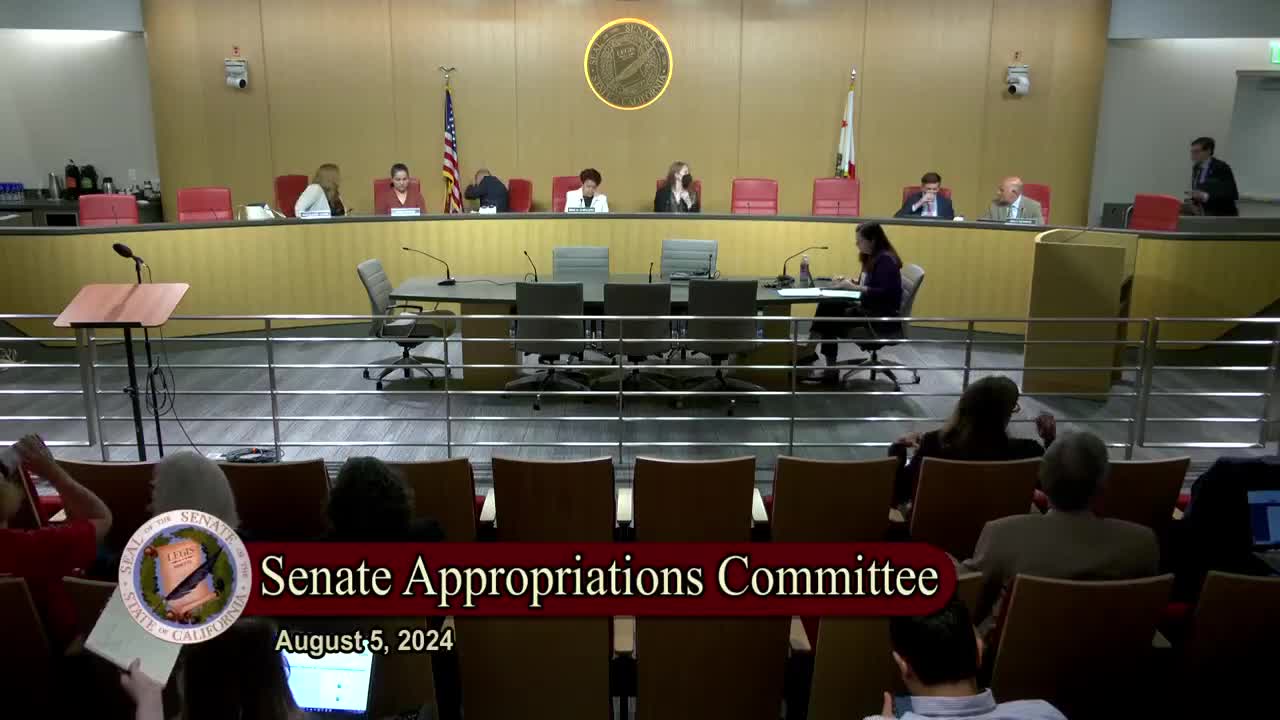 32SEC
Senate Standing Committee on Appropriations
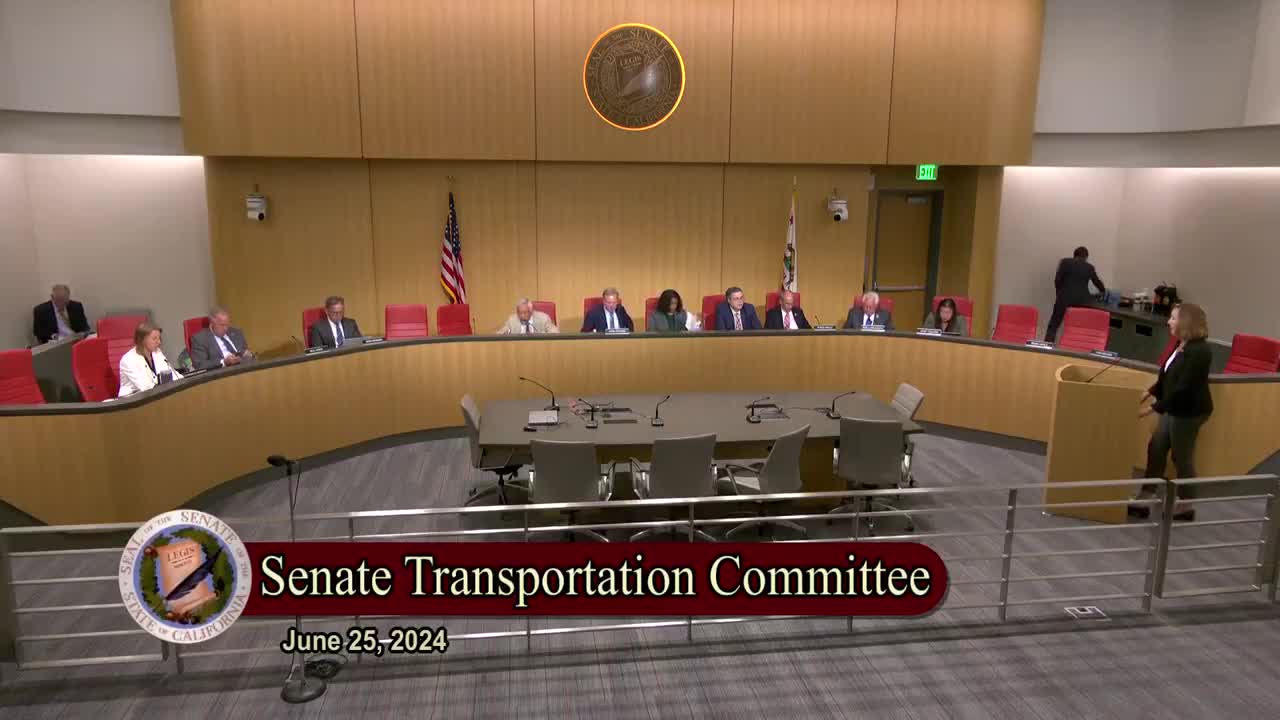 8MIN
Senate Standing Committee on Transportation
 14MIN
Senate Standing Committee on Judiciary
 1MIN
Assembly Floor
 12MIN
Assembly Standing Committee on Privacy and Consumer Protection
Bill Author

Bill Co-Author(s):