AB 3153: Emission standards: marine vessels: exemption.
- Session Year: 2023-2024
- House: Assembly
- Latest Version Date: 2024-02-16
Current Status:
Failed
(2024-04-22: In committee: Set, first hearing. Failed passage. Reconsideration granted.)
Introduced
In Committee
First Chamber
In Committee
Second Chamber
Enacted
What does this bill do?
The bill requires the California Air Resources Board to exempt certain “local ferry” vessels from any rule that would force them to be retired, replaced, or retrofitted. The exemption lasts up to 15 years or until converting the ferry’s internal combustion (gas) engine to a safe, reliable electric motor costs no more than 20% more than replacing the gas engine. A “local ferry” must meet at least five of six tests, such as having a U.S. Coast Guard passenger-and-vehicle permit, operating in an earthquake fault zone, serving as an evacuation vessel, weighing under 30 tons empty, running stages under 1,000 feet, or averaging under 30 gallons fuel use per day for the fleet.
The summary is provided by generative AI which can make mistakes. For original language, please view the details in the table below.
Existing law requires the State Air Resources Board to adopt and implement motor vehicle emission standards, in-use performance standards, and motor vehicle fuel specifications for the control of air contaminants and sources of air pollution that the state board has found to be necessary, cost effective, and technologically feasible, as provided. Existing law also requires the state board to adopt standards and regulations, consistent with those requirements, for motor vehicles and off-road or nonvehicle engine categories, including, but not limited to, marine vessels, to the extent permitted by federal law.
This bill would require the state board to exempt certain vessels from any provision of a standard or regulation that would require the retirement, replacement, or retrofit of the vessel. The bill would provide that the vessel would be exempt for a period not to exceed 15 years or until the cost to replace the vessels internal combustion engine with a safe and reliable electric motor meets a specified threshold.
(a)The state board shall adopt and implement motor vehicle emission standards, in-use performance standards, and motor vehicle fuel specifications for the control of air contaminants and sources of air pollution which that the state board has found to be necessary, cost effective, and technologically feasible, to carry out the purposes of this division, unless preempted by federal law.
(b)(1)The state board shall, consistent with subdivision (a), adopt standards and regulations for light-duty and heavy-duty motor vehicles, medium-duty motor vehicles, as determined and specified by the state board, portable fuel containers and spouts, and off-road or nonvehicle engine categories, including, but not limited to, off-highway motorcycles, off-highway vehicles, construction equipment, farm equipment, utility engines, locomotives, and, to the extent permitted by federal law, marine vessels.
(2)(A)The state board shall exempt a marine vessel used as a local ferry from any provision of a standard or regulation adopted pursuant to this subdivision if the provision would require the retirement, replacement, or retrofit of the vessel. The vessel shall be exempt for a period not to exceed 15 years or until the cost to replace the marine vessels internal combustion engine with a safe and reliable electric motor does not exceed the cost to replace the internal combustion engine by more than 20 percent.
(B)For purposes of this paragraph, a local ferry means a vessel that meets at least five of the following criteria:
(i)Is permitted by the United States Coast Guard to transport passengers and vehicles.
(ii)Operates in an active earthquake fault zone as defined by the United States Geological Survey.
(iii)Is an essential evacuation vehicle for public safety reasons during disasters.
(iv)Weighs less than 30 tons, when unloaded.
(v)Travels less than 1000 feet per stage length.
(vi)Belongs to a fleet that burns in the aggregate less than an average of 30 gallons of fuel per day over a calendar year.
(c)Prior to adopting standards and regulations for farm equipment, the state board shall hold a public hearing and find and determine that the standards and regulations are necessary, cost effective, and technologically feasible. The state board shall also consider the technological effects of emission control standards on the cost, fuel consumption, and performance characteristics of mobile farm equipment.
(d)Notwithstanding subdivision (b), the state board shall not adopt any standard or regulation affecting locomotives until the final study required under Section 5 of Chapter 1326 of the Statutes of 1987 has been completed and submitted to the Governor and Legislature.
(e)Prior to adopting or amending any standard or regulation relating to motor vehicle fuel specifications pursuant to this section, the state board shall, after consultation with public or private entities that would be significantly impacted as described in paragraph (2) of subdivision (f), do both of the following:
(1)Determine the cost-effectiveness of the adoption or amendment of the standard or regulation. The cost-effectiveness shall be compared on an incremental basis with other mobile source control methods and options.
(2)Based on a preponderance of scientific and engineering data in the record, determine the technological feasibility of the adoption or amendment of the standard or regulation. That determination shall include, but is not limited to, the availability, effectiveness, reliability, and safety expected of the proposed technology in an application that is representative of the proposed use.
(f)Prior to adopting or amending any motor vehicle fuel specification pursuant to this section, the state board shall do both of the following:
(1)To the extent feasible, quantitatively document the significant impacts of the proposed standard or specification on affected segments of the states economy. The economic analysis shall include, but is not limited to, the significant impacts of any change on motor vehicle fuel efficiency, the existing motor vehicle fuel distribution system, the competitive position of the affected segment relative to border states, and the cost to consumers.
(2)Consult with public or private entities that would be significantly impacted to identify those investigative or preventive actions that may be necessary to ensure consumer acceptance, product availability, acceptable performance, and equipment reliability. The significantly impacted parties shall include, but are not limited to, fuel manufacturers, fuel distributors, independent marketers, vehicle manufacturers, and fuel users.
(g)To the extent that there is any conflict between the information required to be prepared by the state board pursuant to subdivision (f) and information required to be prepared by the state board pursuant to Chapter 3.5 (commencing with Section 11340) of Part 1 of Division 3 of Title 2 of the Government Code, the requirements established under subdivision (f) shall prevail.
(h)It is the intent of the Legislature that the state board act as expeditiously as is feasible to reduce nitrogen oxide emissions from diesel vehicles, marine vessels, and other categories of vehicular and mobile sources which that significantly contribute to air pollution problems.
|
Date
|
Status
|
|---|---|
| Apr 22, 2024 | In committee: Set, first hearing. Failed passage. Reconsideration granted. |
| Mar 11, 2024 | Referred to Com. on TRANS. |
| Feb 17, 2024 | From printer. May be heard in committee March 18. |
| Feb 16, 2024 | Read first time. To print. |
|
Date
|
Description
|
Location
|
Votes
|
|
|---|---|---|---|---|
| Apr 22, 2024 | Reconsideration. | Assembly Standing Committee on Transportation |
Passed |
|
| Apr 22, 2024 | Do pass and be re-referred to the Committee on [Appropriations] | Assembly Standing Committee on Transportation |
Failed |
This list shows positions taken on this bill by organizations on the date displayed, which is linked to the original source.
Positions by individuals are not included.
|
Organization
|
Position
|
Date
|
|---|---|---|
| Association of California Cities - Orange County | ** Support | |
| Balboa Island Ferry | * Support | Apr 22, 2024 |
| Balboa Island Ferry | * Support | Apr 22, 2024 |
| City of Newport Beach | ** Support | |
| Coalition For Clean Air | * Against | Apr 22, 2024 |
| Earth Justice | * Against | Apr 22, 2024 |
| Mike Carroll, Councilmember, City of Irvine | ** Support | |
| Newport Harbor Foundation | ** Support | |
| Orange County Supervisor Katrina Foley | ** Support | |
| Pacific Environment | * Against | Apr 22, 2024 |
Date of Hearing: April 22, 2024
ASSEMBLY COMMITTEE ON TRANSPORTATION
Lori D. Wilson, Chair
ABPCA Bill Id:AB 3153 (
Author:Dixon) – As Introduced Ver:February 16, 2024
SUBJECT: Emission standards: Marine vessels: exemption
SUMMARY: Exempts a local ferry from standards or regulations that would require the retirement, replacement, or retrofit of the local ferry for a specified period or until the cost to replace an internal combustion engine with an electric motor meets a specified threshold. Specifically, this bill:
- Defines “local ferry” as a vessel that meets at least five of the following criteria:
- Is permitted by the United States Coast Guard (Coast Guard) to transport passengers and vehicles;
- Operates in an active earthquake fault zone as defined by the United States Geological Survey;
- Is an essential evacuation vehicle for public safety reasons during disasters;
- Weighs less than 30 tons, when unloaded;
- Travels less than 1000 feet per stage length; and,
- Belongs to a fleet that burns in the aggregate less than an average of 30 gallons of fuel per day over a calendar year.
- Requires the California Air Resources Board (CARB) to exempt a marine vessel used as a local ferry from any provision of a standard or regulation that would require the retirement, replacement, or retrofit of the local ferry for a maximum of 15 years or until the cost to replace the vessel’s internal combustion engine with an electric motor is no more than 20% of the cost to replace vessel’s engine with another internal combustion engine.
EXISTING LAW:
- Establishes CARB as the air pollution control agency in California and requires CARB, among other things, to control emissions from a wide array of mobile sources and coordinate with local air districts to control emission from stationary sources in order to implement the Federal Clean Air Act. (Health and Safety Code (HSC) 39602; HSC 39602.5)
FISCAL EFFECT: Unknown
COMMENTS: According to CARB, ferry vessels are one of the largest emitting categories of commercial harbor craft. Although they only represent 2% of the harbor craft population, they emit 11% of total commercial harbor craft fine particulate matter (PM2.5) emissions, and 15% of total commercial harbor craft oxides of nitrogen (NOx) emissions. In 2008, CARB promulgated the Commercial Harbor Craft (CHC) Regulation, which required CHC vessel owners to upgrade their engines to newer, cleaner engines, thereby reducing emissions of air pollutants. In 2022, CARB adopted amendments to the regulations, requiring certain CHC to adopt zero-emission technologies and establishing various deadlines for compliance based on specific vessel type. Under the amended regulations, CARB projected that PM2.5 emissions from ferry vessels would decrease by 85%, and NOx emissions would decrease by 68% by 2031.
The 2022 Amendments to the CHC Regulations require short-run ferries to convert to zero-emission technologies no later than December 31, 2025. The CHC regulation defines “short-run ferries” as vessels providing regularly scheduled round-trip ferry service between two points whose straight-line distance apart is less than 3 nautical miles (one nautical mile equals 1.15 mile). Short-run ferries can apply for compliance extensions, including extensions for infrastructure delays (up to two one-year extensions) and scheduling extensions related to manufacturer/shipyard delays and conflicting compliance dates (unlimited one-year extensions).
The Balboa Island Ferry is a privately-owned ferry service that has existed for over 100 years and connects the Balboa Peninsula in Newport Beach to man-made Balboa Island a short 800-foot distance away with a five minute long ferry ride. The ferry service operates year-round for 17 hours each day, transporting up to 75 passengers and three cars per trip, and an average of 1.5 million passengers and 350,000 cars each year. Apart from the ferry service, Newport Beach and Balboa Island are connected by public docks, or by a pedestrian- and car-friendly bridge six miles away from the Newport Beach dock.
The three ferries owned by the Balboa Island Ferry are short-run ferries subject to the zero-emission conversion requirement in the 2022 Amendments to the CHC regulation. According to CARB, there were 16 total short-run ferries statewide in 2023, and, among those, only the three ferries owned by Balboa Island Ferry fulfill at least five criteria set forth in the bill to qualify as a local ferry for the proposed exemption.
There are a number of manufacturers working to produce new hybrid-electric, battery electric and fuel-cell electric vessels of all types, including commercial fishing vessels, excursion vessels, ferries, and tugboats. For example, in 2020, an all-electric, lithium-battery powered 15-vehicle, 132-passenger ferry was deployed in Alabama at Gee’s Bend Ferry, after consultation with the Alabama Department of Transportation, the Coast Guard, and a naval architecture firm. More recently, in late 2023, SWITCH Maritime delivered a hydrogen fuel-cell powered ferry Sea Change, a 70-foot, 75-passenger vessel, to the San Francisco Bay Ferry.
The Balboa Island Ferry is regulated by the Public Utilities Commission (PUC) as a vessel common carrier (VCC), required to obtain approval for any fare increases. During rulemaking, CARB estimated that the cost for upgrades could be passed through to customers and would amount to approximately $0.98-$1.84 per round trip increase in fare. The current one-way fares for the Balboa Island Ferry are $1.50 adult ($1.75 with bike), $0.50 child ($0.75 with bike), and $2.50 for passenger vehicle/truck including driver. The Ferry last submitted a request for fare increase to the PUC in 2019; the PUC approved the requested increase (increasing the one-way adult fare from $1.25 to the current fare of $1.50), and also granted a zone of rate freedom allowing for an up-to-20% fare increase without prior PUC approval.
In 2019, the Balboa Island Ferry had a projected gross annual revenue of approximately $2 million, with an expected operating profit of about $130,000 per year. The owner-operators of the Ferry have tentatively estimated the cost for upgrade or replacement of the three ferries and construction of associated infrastructure at $13 million, based on consultation with engineering firms. The Balboa Island Ferry has applied for state grants from both Advanced Technology Demonstration and Pilot Projects Solicitation (ATDPP) and the Clean Off-Road Equipment Voucher Incentive Project (CORE). As of March 7, 2024, the Balboa Island Ferry has been awarded a preliminary grant for $7.9 million through the ATDPP.
The Balboa Island Ferry received one-year extensions on two of their three ferries from CARB. The Ferry may further qualify for unlimited one-year extensions for manufacturer/shipyard delays and conflicting compliance dates. In its Final Statement of Reasons dated July 2022, CARB noted that “[c]ompliance deadline extensions, if approved, can be utilized to extend compliance dates out providing enough time to meet the surplus emissions reductions requirements of incentives and grant funding programs.”
The Balboa Island Ferry continues to seek funding and consult with engineering firms to assess the feasibility and timing of zero-emission conversion, expecting final assessment in April 2024. However, the Ferry has not yet consulted with the local Coast Guard on safety and timing considerations associated with shore power and other zero-emission infrastructure that would be required to support the ferries.
According to the author, “In January of 2023, the owner of the Balboa Island Ferry, Seymour Beek, called me to ask for support in saving his small business. The Balboa Island Ferry has been a family run business for more than a century. The business operates three ferries that move pedestrians, cars and bicycles 800 feet between Balboa Island and the Balboa Peninsula. It is an iconic fixture for Assembly District 72 and Southern California. The CARB passed regulations that require the Ferry to renovate all three of its vessels with electric motors by 2026. While the Ferry has been applying for multiple sources of funding, and has been offered generous sums through the Advanced Technology Demonstration and Pilot Project Program, it may be technically infeasible to meet emission standards. The total estimated cost to convert or design and build the three ferry boats to zero-emission with new technology, new vessel design and fabrication, as well as related charging infrastructure, is approximately $13 million.” The author has, in coordination with the Balboa Island Ferry, produced a four part Youtube docuseries highlighting the historic, environmental, cultural and economic impact of the Ferry on the local community and the challenges faced by the Ferry in view of the amended CHC regulations.
In support, the Newport Harbor Foundation writes: “[c]urrently, there are no proven motor/battery systems easily available to be adapted to the three ferries that are in operation. The unique circumstances of the Balboa Island Ferry warrant necessary action in regard to the restrictions California has placed on them. Even though the Beek family is applying to grant programs through CARB, and is interested in making the transition, they need more time to make sure it is done correctly. The Beek family has owned and operated the ferry for more than 100 years. It would be an incredible disservice and impact to our community to let this economic and historic landmark be shut down due to not meeting the electrification goals set by CARB”.
Writing in opposition, a coalition comprising Pacific Environment, San Pedro & Peninsula Homeowners Coalition, Center for Biological Diversity, Regional Asthma Management & Prevention, the Coalition for Clean Air, GreenLatinos, Earthjustice, Ocean Conservancy, Sunflower Alliance, Union of Concerned Scientists, and California Environmental Voters states: “Short-run ferries are well suited for zero-emission technologies such as electrification. Many companies have launched projects deploying clean technologies on ferries, including SWITCH Maritime’s hydrogen-fueled ferry and the Angel Island ferry in the San Francisco Bay, which is expected to become the first zero-emission, electric propulsion ferry in California in 2024…The market for zero-emission vessel technologies is growing and is supported by CARB’s CHC Rule. In conclusion, we respectfully oppose AB 3153, which provides unwarranted extensions for CHC Rule requirements and undermines the critical emissions reductions and health benefits of the regulation for California’s portside communities”.
Committee comments: This bill provides an exemption to the Balboa Island Ferry from the 2022 amended CHC Regulation, from transitioning to zero-emission technology by December 31, 2025, for an exemption period of 15 years maximum, or until the cost of zero-emission electric motor is within 20% of the cost of a comparable internal combustion engine.
To the credit of the owners of the Balboa Island Ferry and the local community, they participated in the regulatory process for development of the amended CHC regulations, and they continue to navigate the bureaucratic process of applying for state funds and extensions as the Ferry works towards cleaner, compliant operations of their vessels. While there is a burden imposed on the Balboa Island Ferry to continue applying for repeated, unlimited one-year extensions, the exemption proposed in the bill would likely only apply to Balboa Island Ferry and also offers an excessive exemption period of up to 15 years. Given the narrow application of the exemption to a single party and breadth of the exemption, this bill would set a concerning precedent for future regulations promulgated by CARB and circumvention by affected parties seeking relief in statutory carve-outs.
Top of Form
In its future regulations, CARB might consider provisions to allow for longer extension periods to grant reprieve to small business owners from re-applying each year.
Related Legislation: AB 2626 (Dixon) of 2024 requires CARB to exempt to state and local governments, for a period of 10 years, from complying with near-zero or zero-emission vehicle purchase requirements of Class 2b (gross vehicle weight rating 8,501 pounds) or greater starting January 1, 2024, as required under the Advanced Clean Fleets regulation.
AB 2807 (Bonta) of 2022 would have expanded the California Clean Truck, Bus, and Off-Road Vehicle and Equipment Technology Program, the Clean Transportation Program and the Air Quality Improvement Program to provide funding for the development, demonstration, precommercial pilot, and early commercial deployment of zero- and near-zero-emission commercial harbor craft technologies. Held in Senate Appropriations Committee.
AB 2365 (Acosta) of 2018 would have exempted on- and off-road cranes of any size from any regulation requiring installation of an air pollution control technology. Held in Assembly Transportation Committee.
AB 345 (Caballero) of 2017 would have required CARB to exempt vehicles that do not exceed 5,000 miles annually and low-mileage agricultural vehicles, that meet certain requirements from any regulation to reduce emissions of diesel particulate matter, nitrogen oxides and other criteria air pollutants from in-use, diesel-fueled vehicles. Held in Senate Environmental Quality Committee.
SB 715 (Delgado) of 2018 would have required CARB to exempt a vehicle owned or operated by a state-registered nonprofit apprenticeship training program from any regulation to reduce emissions of diesel particulate matter, oxides of nitrogen, and other criteria air pollutants from in-use, off-road, diesel-fueled vehicles, as specified. Vetoed by the Governor.
REGISTERED SUPPORT / OPPOSITION:
Support
Association of California Cities - Orange County (ACC-OC)
City of Newport Beach
Mike Carroll, Councilmember, City of Irvine
Newport Harbor Foundation
Orange County Supervisor Katrina Foley
One Individual
Opposition
Pacific Environment
Analysis Prepared by: Stephanie Choing / TRANS. / (916) 319-2093
Discussed in Hearing
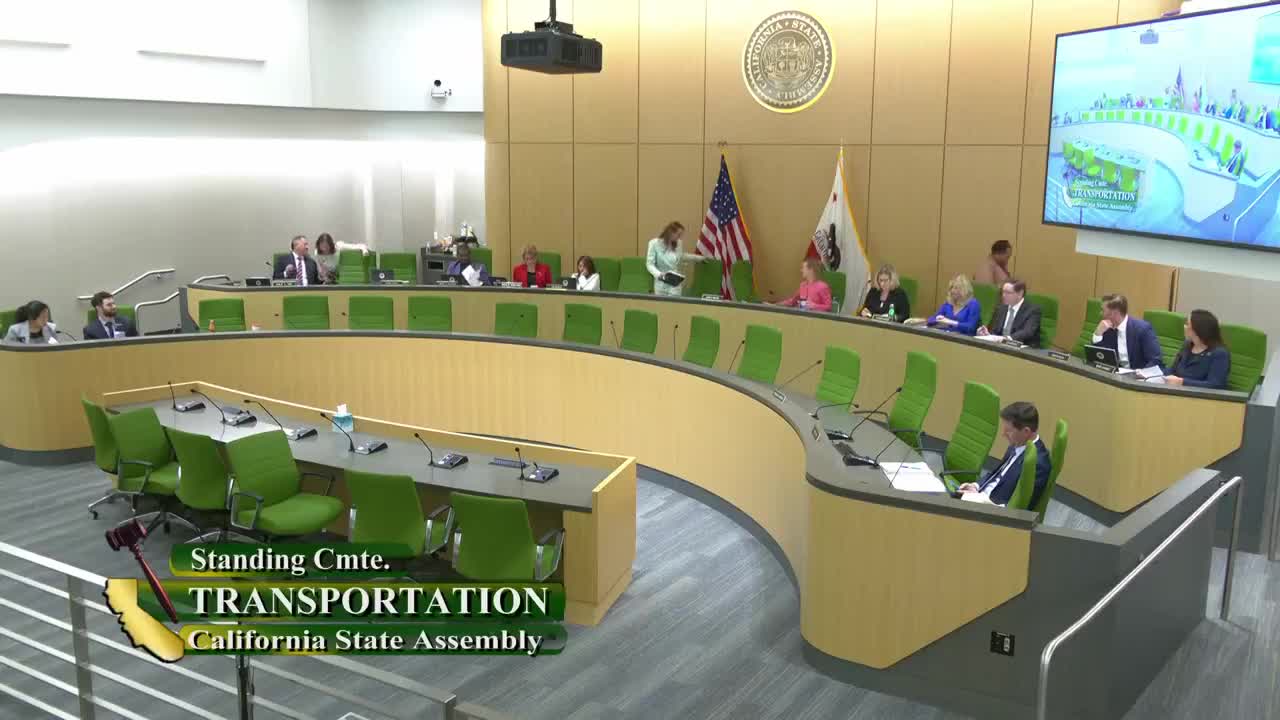 35MIN
Assembly Standing Committee on Transportation
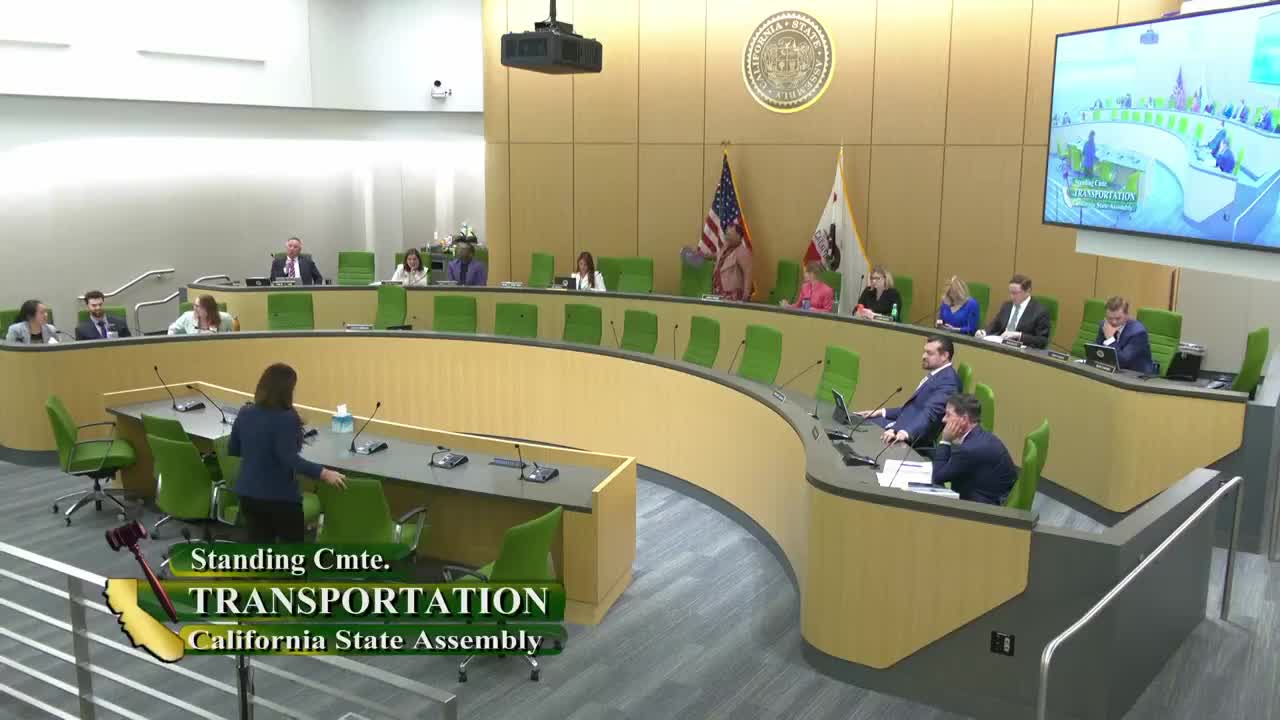 38SEC
Assembly Standing Committee on Transportation
50SEC
Assembly Standing Committee on Transportation
Bill Author

Bill Co-Author(s):
