AB 3182: Land conservation: California Wildlife, Coastal, and Park Land Conservation Act: County of San Bernardino.
- Session Year: 2023-2024
- House: Assembly
- Latest Version Date: 2024-04-24
Current Status:
Failed
(2024-08-15: In committee: Held under submission.)
Introduced
In Committee
First Chamber
In Committee
Second Chamber
Enacted
(1)The California Wildlife, Coastal, and Park Land Conservation Act, an initiative measure approved by the voters in the June 7, 1988, statewide primary election, provided bond funds for wildlife, coastal, and parkland conservation. The initiative measure may authorizes the act to be amended by a 2/3 vote of the Legislature if the amendment is consistent with the purposes of the act. Existing law requires an applicant receiving state funds under the act to maintain any property acquired in perpetuity, as specified, and use the property only for the purposes stated in the act and to make no other use, sale, or other disposition of the property except as authorized by a specific act of the Legislature. Existing law authorizes the County of San Bernardino to sell or exchange property it owns within the Chino Agricultural Preserve that was purchased with grant funds if it meets certain conditions.
Among those conditions, existing law requires the county to preserve all lands and conservation easements acquired or dedicated as authorized by the act in perpetuity for open-space conservation purposes or agricultural preservation, and specifies that open-space conservation includes community gardens, agricultural heritage projects, agricultural and wildlife education or wildlife habitat.
This bill would additionally authorize preservation of those lands or easements for park and recreational purposes, and would explicitly include, to the extent they are consistent with the purposes of the act, playgrounds, recreational venues, sporting venues, amphitheaters, and preservation of historical resources as appropriate purposes.
(2)Existing law prohibits the county from selling, exchanging, or otherwise acquiring replacement land or conservation easements unless and until the board of supervisors for the county adopts a detailed land plan. Existing law requires the land plan to, among other things, identify each parcel of property acquired with grant funds and show which specific parcels the county will sell, exchange, purchase, or retain. Existing law required the land plan to be approved by the Department of Parks and Recreation, as specified. Existing law authorizes the county to propose a plan to the department for the expenditure of any unexpended proceeds from the sale or exchange of land under the land plan for the acquisition of land or easements, or capital improvements to land or easements purchased with grant funds.
This bill would eliminate the explicit authorization and procedures specifically applicable to the expenditure of these unexpended proceeds.
Existing law authorizes the county to use all income generated from the properties it owns within the preserve that were purchased with grant funds, or that were acquired by exchange or purchase as authorized, except revenues from the sale or exchange of land, for the acquisition of additional replacement land within the preserve pursuant to the land plan or for the improvement, operation, and maintenance of existing or replacement land within the preserve.
This bill would authorize the county to use the revenues from the sale or exchange of land for these purposes, and would specify new purposes for which that revenue, and all income generated from the properties the county owns within the preserve that were purchased with grant funds or that were acquired by exchange or purchase, may be used.
Existing law requires the department to approve all proposed uses of the funds from the sale or exchange of land pursuant to these provisions.The bill would eliminate the requirement for department approval of proposed uses of funds from the sale or exchange of this land.The bill would declare that these requirements are an amendment of the act within the meaning of Section 6 of the act and is consistent with the act.
(1)The California Wildlife, Coastal, and Park Land Conservation Act, an initiative measure approved by the voters in the June 7, 1988, statewide primary election, provided bond funds for wildlife, coastal, and parkland conservation. The initiative measure may be amended by a 2/3 vote of the Legislature if the amendment is consistent with the purposes of the act. Existing law requires an applicant receiving state funds under the act to maintain any property acquired in perpetuity, as specified, and use the property only for the purposes stated in the act and to make no other use, sale, or other disposition of the property except as authorized by a specific act of the Legislature. Existing law authorizes the County of San Bernardino to sell or exchange property it owns within the Chino Agricultural Preserve that was purchased with grant funds if it meets certain conditions.
Among those conditions, existing law requires the county to preserve all lands and conservation easements acquired or dedicated as authorized by the act in perpetuity for open-space conservation purposes or agricultural preservation, and specifies that open-space conservation includes community gardens, agricultural heritage projects, agricultural and wildlife education or wildlife habitat.
This bill would additionally authorize preservation of those lands or easements for park and recreational purposes, and would explicitly include, to the extent they are consistent with the purposes of the act, playgrounds, recreational venues, sporting venues, amphitheaters, and preservation of historical resources as appropriate purposes.
(2)Existing law prohibits the county from selling, exchanging, or otherwise acquiring replacement land or conservation easements unless and until the board of supervisors for the county adopts a detailed land plan. Existing law requires the land plan to, among other things, identify each parcel of property acquired with grant funds and show which specific parcels the county will sell, exchange, purchase, or retain. Existing law required the land plan to be approved by the Department of Parks and Recreation, as specified. Existing law authorizes the county to propose a plan to the department for the expenditure of any unexpended proceeds from the sale or exchange of land under the land plan for the acquisition of land or easements, or capital improvements to land or easements purchased with grant funds.
This bill would eliminate the explicit authorization and procedures specifically applicable to the expenditure of these unexpended proceeds.
Existing law authorizes the county to use all income generated from the properties it owns within the preserve that were purchased with grant funds, or that were acquired by exchange or purchase as authorized, except revenues from the sale or exchange of land, for the acquisition of additional replacement land within the preserve pursuant to the land plan or for the improvement, operation, and maintenance of existing or replacement land within the preserve.
This bill would authorize the county to use the revenues from the sale or exchange of land for these purposes, and would specify new purposes for which that revenue, and all income generated from the properties the county owns within the preserve that were purchased with grant funds or that were acquired by exchange or purchase, may be used.
Existing law requires the department to approve all proposed uses of the funds from the sale or exchange of land pursuant to these provisions.
The bill would eliminate the requirement for department approval of proposed uses of funds from the sale or exchange of this land.
The bill would declare that these requirements are an amendment of the act within the meaning of Section 6 of the act and is consistent with the act.
Existing law prohibits an officer from doing certain acts to a record, map, book, or paper or proceeding of a court, filed or deposited in a public office, such as stealing, removing, destroying, or falsifying, among others. Existing law punishes these prohibited acts by imprisonment for 2, 3, or 4 years.This bill would expand this prohibition to a social worker, their designee, and their supervisor.Existing law provides that any person who willfully causes or permits any child to suffer, or inflicts thereon unjustifiable physical pain or mental suffering, or, having the care or custody of any child, willfully causes or permits the person or health of that child to be injured or endangered, is guilty of a crime.This bill would clarify that any adult, including any social worker, who has been entrusted with the care of a child, even for a short period of time, is considered to have the care and custody of that child for the purposes of criminal liability.The California Constitution requires the state to reimburse local agencies and school districts for certain costs mandated by the state. Statutory provisions establish procedures for making that reimbursement.This bill would provide that no reimbursement is required by this act for a specified reason.Existing law prohibits an officer from doing certain acts to a record, map, book, or paper or proceeding of a court, filed or deposited in a public office, such as stealing, removing, destroying, or falsifying, among others. Existing law punishes these prohibited acts by imprisonment for 2, 3, or 4 years.
This bill would expand this prohibition to a social worker, their designee, and their supervisor.
Existing law provides that any person who willfully causes or permits any child to suffer, or inflicts thereon unjustifiable physical pain or mental suffering, or, having the care or custody of any child, willfully causes or permits the person or health of that child to be injured or endangered, is guilty of a crime.
This bill would clarify that any adult, including any social worker, who has been entrusted with the care of a child, even for a short period of time, is considered to have the care and custody of that child for the purposes of criminal liability.
The California Constitution requires the state to reimburse local agencies and school districts for certain costs mandated by the state. Statutory provisions establish procedures for making that reimbursement.
This bill would provide that no reimbursement is required by this act for a specified reason.
(a)The Legislature authorizes, pursuant to paragraph (2) of subdivision (a) of Section 5919 of the Public Resources Code, the County of San Bernardino to sell or exchange property it owns within the Chino Agricultural Preserve that was purchased with grant funds provided pursuant to the California Wildlife, Coastal, and Park Land Conservation Act (Division 5.8 (commencing with Section 5900) of the Public Resources Code), provided that the sale or exchange satisfies the original purposes of the grant agreement between the county and department, except as modified by paragraph (1), the conditions of subdivision (b) of Section 5919 of the Public Resources Code, and all of the following conditions:
(1)The County of San Bernardino shall preserve all lands and conservation easements acquired or dedicated as authorized by this subdivision in perpetuity for park, recreational, agricultural preservation, or open-space conservation purposes, which may include, to the extent consistent with the purposes of this division, the California Wildlife, Coastal, and Park Land Conservation Act (Division 5.8 (commencing with Section 5900) of the Public Resources Code), but is not limited to, playgrounds, recreational venues, sporting venues, amphitheaters, preservation of historical resources, community gardens, agricultural heritage projects, agricultural and wildlife education, or wildlife habitat.
(2)By April 1, 2011, the County of San Bernardino shall place a deed restriction on each property it acquired with grant funds from the California Wildlife, Coastal, and Park Land Conservation Act. The deed restriction shall be written for the purposes set forth in paragraph (1) of this subdivision. Each deed restriction shall be recorded with the county recorder. Each deed restriction shall be in effect until either a conservation easement is recorded on the property, pursuant to subparagraph (A) of paragraph (2) of subdivision (c), or until the County of San Bernardino sells or exchanges the property.
(3)The County of San Bernardino satisfies all conditions in paragraphs (1) and (2) of subdivision (c) that are necessary to develop and implement the adopted plan.
(b)For purposes of this section, the following definitions apply:
(1)County means the County of San Bernardino.
(2)Board means the Board of Supervisors for the County of San Bernardino.
(3)Department means the Department of Parks and Recreation.
(4)Plan means the detailed land plan that is prepared to show the existing and proposed disposition of lands purchased by the County of San Bernardino in the Chino Agricultural Preserve with funds from the California Wildlife, Coastal, and Park Land Conservation Act (Division 5.8 (commencing with Section 5900) of the Public Resources Code).
(5)Grant funds means the grant that was made to the County of San Bernardino from the Department of Parks and Recreation provided pursuant to the California Wildlife, Coastal, and Park Land Conservation Act (Division 5.8 (commencing with Section 5900) of the Public Resources Code).
(6)Preserve means the Chino Agricultural Preserve as defined by the boundaries of the 14,000-acre Chino Agricultural Preserve as it existed on June 8, 1988, and includes property surrounding the Chino airport.
(c)(1)The county shall not sell, exchange, or otherwise acquire replacement land or conservation easements pursuant to this section unless and until the board adopts a detailed land plan by December 31, 2011. The adopted plan shall meet all of the following conditions:
(A)It identifies each parcel of property acquired with grant funds and shows which specific parcels the county will sell, exchange, purchase, or retain.
(B)For each parcel to be sold, exchanged, purchased, or retained, it identifies whether the parcel will be acquired or retained in fee title or as a conservation easement.
(C)To the extent feasible and practical, the plan will maximize the connectivity of lands for the purposes set forth in paragraph (1) of subdivision (a).
(D)If the plan results in any net loss in acreage or habitat value of protected land in comparison to what was purchased with grant funds, the plan shall identify the additional replacement land within the preserve that the county shall acquire or dedicate to compensate for that loss.
(E)An environmental review accompanies the land plan.
(F)The land plan was provided to the department for its review and approval no less than 90 days prior to the countys adoption. The land plan must be approved by the department before it can be approved by the board. If the department does not approve or disapprove the land plan within 45 days of receipt, it must provide written comments to the county setting forth its concerns or suggested modifications to the county that could lead to the departments approval if the land plan was accordingly modified.
(G)The county holds a public hearing before the board for the purpose of reviewing the land plan and taking public comment. The hearing shall be scheduled for a specific time during a regularly scheduled meeting of the board, and shall be separately noticed and publicized.
(H)The land plan and environmental review demonstrate that there is no net loss in acreage or habitat value as a result of implementation of the plan.
(I)The initial land plan approved by the county and the department may be amended from time to time by the county so long as it follows the same steps required for approving the initial plan, including approval by the department.
(2)To implement the adopted land plan, the county shall take the following steps, which are required to fulfill the adopted land plan as well as any other actions that may be necessitated by the land plan:
(A)By April 1, 2012, the county shall record a conservation easement for the purposes set forth in paragraph (1) of subdivision (a) on each property identified for retention in the adopted plan.
(B)Within 90 days of the acquisition of any property in fee title, the county shall record a conservation easement or deed restriction on the property for the purposes set forth in paragraph (1) of subdivision (a).
(C)If the plan identifies a net loss in acreage or habitat value of protected lands, the county shall acquire or dedicate additional replacement land or conservation easements within the preserve to compensate for that loss no later than one year following the sale of the last property to be disposed. Any conservation easement shall be for the purposes set forth in paragraph (1) of subdivision (a).
(D)If the county acquires a conservation easement through purchase or exchange in furtherance of the plan, the conservation easement shall be for the purposes set forth in paragraph (1) of subdivision (a).
(E)Prior to closing any real property transactions with respect to the land plan, the county shall submit independent appraisals of the land to be sold or exchanged and the land to be acquired to the department for concurrence with state appraisal standards. The county and department shall make these appraisals available to the public no later than 60 days following the sale or exchange of the last property to be disposed.
(F)Before recordation, each conservation easement or deed restriction shall be approved by the department. Each conservation easement or deed restriction shall be in perpetuity. The department shall review and approve or disapprove each conservation easement or deed restriction within 60 days of receipt from the county. If the department disapproves the conservation easement or deed restriction, it shall provide the reasons in writing to the county.
(d)(1)After the approved land plan is fully implemented, the county shall provide a report to the department on all expenditures and revenues from all of the sales or exchanges of land under the land plan, on the acreages of all lands or easements sold, exchanged, and held, and on any funds from all of the sales or exchanges of land under the land plan that have not been expended.
(2)The county may use the revenues from the sale or exchange of land authorized by subdivision (a) and all income generated from the properties it owns within the preserve that were purchased with grant funds, or that were acquired by exchange or purchase as authorized herein, for the acquisition of additional replacement land within the preserve pursuant to the land plan or for the improvement, operation, and maintenance of any land the county owns, has a conservation easement in or deed restriction on, or leases from the federal government or a public entity within the preserve for park, recreational, agricultural preservation, or open-space conservation purposes, which may include, to the extent consistent with the purposes of this division, but is not limited to, playgrounds, recreational venues, sporting venues, amphitheaters, preservation of historical resources, community gardens, agricultural heritage projects, agricultural and wildlife education, or wildlife habitat.
(3)All proposed uses of the funds from the sales or exchanges of land shall be as authorized herein approved by the department and be eligible expenditures under the California Wildlife, Coastal, and Park Land Conservation Act (Division 5.8 (commencing with Section 5900) of the Public Resources Code).
(e)If the county fails to adopt a detailed land plan by December 31, 2011, that satisfies the criteria outlined in this section, it may apply to the department to extend the deadline specified in subdivision (c) to a specific different date. Elements or requirements of the land plan shall not be eliminated or substantively modified as part of the extension. The department shall review and approve or disapprove the request to extend the deadline within 60 days of receipt from the county. If the department disapproves the request for extension or modifies the requested date of the extension, it shall provide the reasons in writing to the county. If the county does not apply for an extension of the deadline or the department does not approve an amendment, the county shall record a conservation easement on all lands purchased within the preserve with grant funds no later than June 1, 2012. Before recordation, each conservation easement shall be approved by the department. Each conservation easement shall be for the purposes set forth in paragraph (1) of subdivision (a), and each shall be in perpetuity. The department shall review and approve or disapprove each conservation easement within 60 days of receipt from the county. If the department disapproves the conservation easement, it shall provide the reasons in writing to the county.
(f)This section does not exempt the county from the requirements of the California Environmental Quality Act (Division 13 (commencing with Section 21000) of the Public Resources Code).
SEC. 2.Section 1 of this act is an amendment to the California Wildlife, Coastal, and Park Land Conservation Act (Division 5.8 (commencing with Section 5900) of the Public Resources Code) within the meaning of Section 6 of that act, and is consistent with the purpose of that act.
(a)The Legislature authorizes, pursuant to paragraph (2) of subdivision (a) of Section 5919 of the Public Resources Code, the County of San Bernardino to sell or exchange property it owns within the Chino Agricultural Preserve that was purchased with grant funds provided pursuant to the California Wildlife, Coastal, and Park Land Conservation Act (Division 5.8 (commencing with Section 5900) of the Public Resources Code), provided that the sale or exchange satisfies the original purposes of the grant agreement between the county and department, except as modified by paragraph (1), the conditions of subdivision (b) of Section 5919 of the Public Resources Code, and all of the following conditions:
(1)The County of San Bernardino shall preserve all lands and conservation easements acquired or dedicated as authorized by this subdivision in perpetuity for park, recreational, agricultural preservation, including or open-space conservation purposes, which may include, to the extent consistent with the purposes of this division, but is not limited to, playgrounds, recreational venues, sporting venues, amphitheaters, preservation of historical resources, community gardens, agricultural heritage projects, agricultural and wildlife education education, or wildlife habitat, or for open-space conservation purposes. habitat.
(2)By April 1, 2011, the County of San Bernardino shall place a deed restriction on each property it acquired with grant funds from the California Wildlife, Coastal, and Park Land Conservation Act. The deed restriction shall be written for the purposes set forth in paragraph (1) of this subdivision. Each deed restriction shall be recorded with the county recorder. Each deed restriction shall be in effect until either a conservation easement is recorded on the property, pursuant to subparagraph (A) of paragraph (2) of subdivision (c), or until the County of San Bernardino sells or exchanges the property.
(3)The County of San Bernardino satisfies all conditions in paragraphs (1) and (2) of subdivision (c) that are necessary to develop and implement the adopted plan.
(b)For purposes of this section, the following definitions apply:
(1)County means the County of San Bernardino.
(2)Board means the Board of Supervisors for the County of San Bernardino.
(3)Department means the California Department of Parks and Recreation.
(4)Plan means the detailed land plan that is prepared to show the existing and proposed disposition of lands purchased by the County of San Bernardino in the Chino Agricultural Preserve with funds from the California Wildlife, Coastal, and Park Land Conservation Act (Division 5.8 (commencing with Section 5900) of the Public Resources Code).
(5)Grant funds means the grant that was made to the County of San Bernardino from the California Department of Parks and Recreation provided pursuant to the California Wildlife, Coastal, and Park Land Conservation Act (Division 5.8 (commencing with Section 5900) of the Public Resources Code).
(6)Preserve means the Chino Agricultural Preserve as defined by the boundaries of the 14,000-acre Chino Agricultural Preserve as it existed on June 8, 1988, and includes property surrounding the Chino airport.
(c)(1)The county shall not sell, exchange, or otherwise acquire replacement land or conservation easements pursuant to this section unless and until the board adopts a detailed land plan by December 31, 2011. The adopted plan shall meet all of the following conditions:
(A)It identifies each parcel of property acquired with grant funds and shows which specific parcels the county will sell, exchange, purchase, or retain.
(B)For each parcel to be sold, exchanged, purchased, or retained, it identifies whether the parcel will be acquired or retained in fee title or as a conservation easement.
(C)To the extent feasible and practical, the plan will maximize the connectivity of lands for the purposes set forth in paragraph (1) of subdivision (a).
(D)If the plan results in any net loss in acreage or habitat value of protected land in comparison to what was purchased with grant funds, the plan shall identify the additional replacement land within the preserve that the county shall acquire or dedicate to compensate for that loss.
(E)An environmental review accompanies the land plan.
(F)The land plan was provided to the department for its review and approval no less than 90 days prior to the countys adoption. The land plan must be approved by the department before it can be approved by the board. If the department does not approve or disapprove the land plan within 45 days of receipt, it must provide written comments to the county setting forth its concerns or suggested modifications to the county that could lead to the departments approval if the land plan was accordingly modified.
(G)The county holds a public hearing before the board for the purpose of reviewing the land plan and taking public comment. The hearing shall be scheduled for a specific time during a regularly scheduled meeting of the board, and shall be separately noticed and publicized.
(H)The land plan and environmental review demonstrate that there is no net loss in acreage or habitat value as a result of implementation of the plan.
(I)The initial land plan approved by the county and the department may be amended from time to time by the county so long as it follows the same steps required for approving the initial plan, including approval by the department.
(2)To implement the adopted land plan, the county shall take the following steps, which are required to fulfill the adopted land plan as well as any other actions that may be necessitated by the land plan:
(A)By April 1, 2012, the county shall record a conservation easement for the purposes set forth in paragraph (1) of subdivision (a) on each property identified for retention in the adopted plan.
(B)Within 90 days of the acquisition of any property in fee title, the county shall record a conservation easement or deed restriction on the property for the purposes set forth in paragraph (1) of subdivision (a).
(C)If the plan identifies a net loss in acreage or habitat value of protected lands, the county shall acquire or dedicate additional replacement land or conservation easements within the preserve to compensate for that loss no later than one year following the sale of the last property to be disposed. Any conservation easement shall be for the purposes set forth in paragraph (1) of subdivision (a).
(D)If the county acquires a conservation easement through purchase or exchange in furtherance of the plan, the conservation easement shall be for the purposes set forth in paragraph (1) of subdivision (a).
(E)Prior to closing any real property transactions with respect to the land plan, the county shall submit independent appraisals of the land to be sold or exchanged and the land to be acquired to the department for concurrence with state appraisal standards. The county and department shall make these appraisals available to the public no later than 60 days following the sale or exchange of the last property to be disposed.
(F)Before recordation, each conservation easement or deed restriction shall be approved by the department. Each conservation easement or deed restriction shall be in perpetuity. The department shall review and approve or disapprove each conservation easement or deed restriction within 60 days of receipt from the county. If the department disapproves the conservation easement, easement or deed restriction, it shall provide the reasons in writing to the county.
(d)(1)After the approved land plan is fully implemented, the county shall provide a report to the department on all expenditures and revenues from all of the sales or exchanges of land under the land plan, on the acreages of all lands or easements sold, exchanged, and held, and on any funds from all of the sales or exchanges of land under the land plan that have not been expended. If there are unexpended proceeds from the sales or exchanges of land under the land plan, the county may propose a plan to the department for the expenditure of these funds for the acquisition of land or easements, or capital improvements to land or easements purchased with grant funds.
(2)With the exception of revenues from the sale or exchange of land, the The county may use the revenues from the sale or exchange of land authorized by subdivision (a) and all income generated from the properties it owns within the preserve that were purchased with grant funds, or that were acquired by exchange or purchase as authorized herein, for the acquisition of additional replacement land within the preserve pursuant to the land plan or for the improvement, operation, and maintenance of existing or replacement land within the preserve. any land the county owns, has a conservation easement in or deed restriction on, or leases from the federal government or a public entity within the preserve for park, recreational, agricultural preservation, or open-space conservation purposes, which may include, to the extent consistent with the purposes of this division, but is not limited to, playgrounds, recreational venues, sporting venues, amphitheaters, preservation of historical resources, community gardens, agricultural heritage projects, agricultural and wildlife education, or wildlife habitat.
(3)All proposed uses of the funds from the sales or exchanges of land shall be approved by the department as authorized herein and be eligible expenditures under the California Wildlife, Coastal, and Park Land Conservation Act (Division 5.8 (commencing with Section 5900) of the Public Resources Code).
(e)If the county fails to adopt a detailed land plan by December 31, 2011, that satisfies the criteria outlined in this section, it may apply to the department to extend the deadline specified in subdivision (c) to a specific different date. Elements or requirements of the land plan shall not be eliminated or substantively modified as part of the extension. The department shall review and approve or disapprove the request to extend the deadline within 60 days of receipt from the county. If the department disapproves the request for extension or modifies the requested date of the extension, it shall provide the reasons in writing to the county. If the county does not apply for an extension of the deadline or the department does not approve an amendment, the county shall record a conservation easement on all lands purchased within the preserve with grant funds no later than June 1, 2012. Before recordation, each conservation easement shall be approved by the department. Each conservation easement shall be for the purposes set forth in paragraph (1) of subdivision (a), and each shall be in perpetuity. The department shall review and approve or disapprove each conservation easement within 60 days of receipt from the county. If the department disapproves the conservation easement, it shall provide the reasons in writing to the county.
(f)This section does not exempt the county from the requirements of the California Environmental Quality Act (Division 13 (commencing with Section 21000) of the Public Resources Code).
SEC. 2.Section 1 of this act is an amendment to the California Wildlife, Coastal, and Park Land Conservation Act (Division 5.8 (commencing with Section 5900) of the Public Resources Code) within the meaning of Section 6 of that act, and is consistent with the purpose of that act.
SECTION 1.Section 6200 of the Government Code is amended to read:6200.(a)Every officer having the custody of any record, map, or book, or of any paper or proceeding of any court, filed or deposited in any public office, or placed in their hands for any purpose, is punishable by imprisonment pursuant to subdivision (h) of Section 1170 of the Penal Code for two, three, or four years if, as to the whole or any part of the record, map, book, paper, or proceeding, the officer willfully does or permits any other person to do any of the following:(1)Steal, remove, or secrete.(2)Destroy, mutilate, or deface.(3)Alter or falsify.(b)For the purposes of this section, a social worker, their designee, and their supervisor are considered officers.SEC. 2.Section 273a of the Penal Code is amended to read:273a.(a)Any person who, under circumstances or conditions likely to produce great bodily harm or death, willfully causes or permits any child to suffer, or inflicts thereon unjustifiable physical pain or mental suffering, or having the care or custody of any child, willfully causes or permits the person or health of that child to be injured, or willfully causes or permits that child to be placed in a situation where their person or health is endangered, shall be punished by imprisonment in a county jail not exceeding one year, or in the state prison for two, four, or six years.(b)Any person who, under circumstances or conditions other than those likely to produce great bodily harm or death, willfully causes or permits any child to suffer, or inflicts thereon unjustifiable physical pain or mental suffering, or having the care or custody of any child, willfully causes or permits the person or health of that child to be injured, or willfully causes or permits that child to be placed in a situation where their person or health may be endangered, is guilty of a misdemeanor.(c)For the purposes of this section, any adult, including any social worker, who has been entrusted with the care of a child, even for a short period of time, is considered to have the care and custody of that child.(d)If a person is convicted of violating this section and probation is granted, the court shall require the following minimum conditions of probation:(1)A mandatory minimum period of probation of 48 months.(2)A criminal court protective order protecting the victim from further acts of violence or threats, and, if appropriate, residence exclusion or stay-away conditions.(3)(A)Successful completion of no less than one year of a child abusers treatment counseling program approved by the probation department. The defendant shall be ordered to begin participation in the program immediately upon the grant of probation. The counseling program shall meet the criteria specified in Section 273.1. The defendant shall produce documentation of program enrollment to the court within 30 days of enrollment, along with quarterly progress reports.(B)The terms of probation for offenders shall not be lifted until all reasonable fees due to the counseling program have been paid in full, but in no case shall probation be extended beyond the term provided in subdivision (a) of Section 1203.1. If the court finds that the defendant does not have the ability to pay the fees based on the defendants changed circumstances, the court may reduce or waive the fees.(4)If the offense was committed while the defendant was under the influence of drugs or alcohol, the defendant shall abstain from the use of drugs or alcohol during the period of probation and shall be subject to random drug testing by their probation officer.(5)The court may waive any of the above minimum conditions of probation upon a finding that the condition would not be in the best interests of justice. The court shall state on the record its reasons for any waiver.SEC. 3.No reimbursement is required by this act pursuant to Section 6 of Article XIIIB of the California Constitution because the only costs that may be incurred by a local agency or school district will be incurred because this act creates a new crime or infraction, eliminates a crime or infraction, or changes the penalty for a crime or infraction, within the meaning of Section 17556 of the Government Code, or changes the definition of a crime within the meaning of Section 6 of Article XIIIB of the California Constitution.(a)Every officer having the custody of any record, map, or book, or of any paper or proceeding of any court, filed or deposited in any public office, or placed in his or her their hands for any purpose, is punishable by imprisonment pursuant to subdivision (h) of Section 1170 of the Penal Code for two, three, or four years if, as to the whole or any part of the record, map, book, paper, or proceeding, the officer willfully does or permits any other person to do any of the following:
(a)(1)Steal, remove, or secrete.
(b)(2)Destroy, mutilate, or deface.
(c)(3)Alter or falsify.
(b)For the purposes of this section, a social worker, their designee, and their supervisor are considered officers.
SEC. 2.Section 273a of the Penal Code is amended to read:273a.(a)Any person who, under circumstances or conditions likely to produce great bodily harm or death, willfully causes or permits any child to suffer, or inflicts thereon unjustifiable physical pain or mental suffering, or having the care or custody of any child, willfully causes or permits the person or health of that child to be injured, or willfully causes or permits that child to be placed in a situation where his or her their person or health is endangered, shall be punished by imprisonment in a county jail not exceeding one year, or in the state prison for two, four, or six years.
(b)Any person who, under circumstances or conditions other than those likely to produce great bodily harm or death, willfully causes or permits any child to suffer, or inflicts thereon unjustifiable physical pain or mental suffering, or having the care or custody of any child, willfully causes or permits the person or health of that child to be injured, or willfully causes or permits that child to be placed in a situation where his or her their person or health may be endangered, is guilty of a misdemeanor.
(c)For the purposes of this section, any adult, including any social worker, who has been entrusted with the care of a child, even for a short period of time, is considered to have the care and custody of that child.
(c)(d)If a person is convicted of violating this section and probation is granted, the court shall require the following minimum conditions of probation:
(1)A mandatory minimum period of probation of 48 months.
(2)A criminal court protective order protecting the victim from further acts of violence or threats, and, if appropriate, residence exclusion or stay-away conditions.
(3)(A)Successful completion of no less than one year of a child abusers treatment counseling program approved by the probation department. The defendant shall be ordered to begin participation in the program immediately upon the grant of probation. The counseling program shall meet the criteria specified in Section 273.1. The defendant shall produce documentation of program enrollment to the court within 30 days of enrollment, along with quarterly progress reports.
(B)The terms of probation for offenders shall not be lifted until all reasonable fees due to the counseling program have been paid in full, but in no case shall probation be extended beyond the term provided in subdivision (a) of Section 1203.1. If the court finds that the defendant does not have the ability to pay the fees based on the defendants changed circumstances, the court may reduce or waive the fees.
(4)If the offense was committed while the defendant was under the influence of drugs or alcohol, the defendant shall abstain from the use of drugs or alcohol during the period of probation and shall be subject to random drug testing by his or her their probation officer.
(5)The court may waive any of the above minimum conditions of probation upon a finding that the condition would not be in the best interests of justice. The court shall state on the record its reasons for any waiver.
SEC. 3.No reimbursement is required by this act pursuant to Section 6 of Article XIIIB of the California Constitution because the only costs that may be incurred by a local agency or school district will be incurred because this act creates a new crime or infraction, eliminates a crime or infraction, or changes the penalty for a crime or infraction, within the meaning of Section 17556 of the Government Code, or changes the definition of a crime within the meaning of Section 6 of Article XIIIB of the California Constitution.
|
Date
|
Status
|
|---|---|
| Aug 15, 2024 | In committee: Held under submission. |
| Jul 1, 2024 | In committee: Referred to suspense file. |
| Jun 18, 2024 | From committee: Do pass and re-refer to Com. on APPR. (Ayes 10. Noes 0.) (June 17). Re-referred to Com. on APPR. |
| Jun 5, 2024 | Referred to Com. on N.R. & W. |
| May 23, 2024 | In Senate. Read first time. To Com. on RLS. for assignment. |
| May 22, 2024 | Read third time. Passed. Ordered to the Senate. (Ayes 68. Noes 0. Page 5531.) |
| May 20, 2024 | Read second time. Ordered to third reading. |
| May 16, 2024 | From committee: Do pass. (Ayes 15. Noes 0.) (May 16). |
| May 8, 2024 | In committee: Set, first hearing. Referred to APPR. suspense file. |
| Apr 25, 2024 | Re-referred to Com. on APPR. |
| Apr 24, 2024 | Read second time and amended. |
| Apr 23, 2024 | From committee: Amend, and do pass as amended and re-refer to Com. on APPR. (Ayes 13. Noes 0.) (April 23). |
| Apr 11, 2024 | Re-referred to Com. on W., P., & W. pursuant to Assembly Rule 96. |
| Apr 9, 2024 | Re-referred to Com. on PUB. S. |
| Apr 8, 2024 | From committee chair, with author's amendments: Amend, and re-refer to Com. on PUB. S. Read second time and amended. |
| Mar 11, 2024 | Referred to Coms. on PUB. S. and HUM. S. |
| Feb 17, 2024 | From printer. May be heard in committee March 18. |
| Feb 16, 2024 | Read first time. To print. |
|
Date
|
Description
|
Location
|
Votes
|
|
|---|---|---|---|---|
| Jul 1, 2024 | Placed on suspense file | Senate Standing Committee on Appropriations |
Passed |
|
| Jun 17, 2024 | Do pass, but first be re-referred to the Committee on [Appropriations] | Senate Standing Committee on Natural Resources and Water |
Passed |
|
| May 22, 2024 | AB 3182 Lackey Assembly Third Reading | Assembly Floor |
Passed |
|
| May 16, 2024 | Do pass. | Assembly Standing Committee on Appropriations |
Passed |
|
| Apr 23, 2024 | Do pass as amended and be re-referred to the Committee on [Appropriations] | Assembly Standing Committee on Water, Parks, and Wildlife |
Passed |
This list shows positions taken on this bill by organizations on the date displayed, which is linked to the original source.
Positions by individuals are not included.
|
Organization
|
Position
|
Date
|
|---|---|---|
| California Conference of Carpenters | * Support | Apr 23, 2024 |
| Chino Valley Chamber of Commerce | ** Support | |
| City of Chino | * Support | Apr 23, 2024 |
| City of Chino Hills | ** Support | |
| City Of Ontario | * Support | Jun 18, 2024 |
| County of San Bernardino | * Support | Jun 17, 2024 |
| District Commissoner Michael Kreeger | ** Support | |
| Greater Ontario Chamber of Commerce | ** Support | |
| Inland Empire Economic Partnership | ** Support | |
| Inland Empire Health Plan | * Support | Jun 17, 2024 |
| Orange County Board of Supervisors | * Support | Jun 18, 2024 |
| Orange County Supervisor Don Wagner | ** Support | |
| Riverside County Board of Supervisors | * Support | Apr 23, 2024 |
| San Bernardino County | ** Support | |
| San Bernardino County Transportation Authority | * Support | Apr 23, 2024 |
SENATE COMMITTEE ON
Senator Anna Caballero, Chair
2023 - 2024 Regular Session
AB 3182 (Lackey) - Land conservation: California Wildlife, Coastal, and Park Land Conservation Act: County of San Bernardino
Version: | Policy Vote: |
Urgency: | Mandate: |
Hearing Date: | Consultant: |
Bill Summary:
For the County of San Bernardino (county), this bill would expand the allowable uses of lands acquired with Proposition 70 funding from open-space and agricultural preservation purposes to include park and recreational purposes. This would include playgrounds, recreational venues, sporting venues, amphitheaters, and preservation of historical resources as appropriate purposes. Further, this bill would allow the county to use revenues from the sale or exchange of lands acquired with Proposition 70 funding for improvements to any lands, within a specified area, that the county owns, has a conservation easement in or a deed restriction on, or leases from the federal government or a public entity for park, recreational, agricultural preservation, or open-space conservation purposes.
Fiscal Impact:
- One-time cost pressure (various funds) due to the expenditure of funds that otherwise might be returned to the Department of Parks and Recreation (State Parks) to be used for other purposes absent this bill. According to State Parks, the provisions of this bill do not align with the parameters of Proposition 70, which identifies the allowable uses of San Bernardino County’s grant award for conservation easements to retain land within the Chino Agricultural Preserve for natural, scenic, historical, agricultural, forested, or open-space purposes, in perpetuity. Pursuant to bond statute (PRC §5919), if the county is unable to identify an allowable use for the funds, those funds must be returned to the State Parks for reallocation.
- State Parks anticipates any costs for administration would be minor and absorbable within existing resources.
Background:
Proposition 70. In 1988, voters passed Proposition 70, also known as the California Wildlife, Coastal, and Park Land Conservation Act, approving $776 million in general obligation bonds to fund, among other purposes, the acquisition of parklands, wildlife habitat, coastal, and natural lands in California. Ballot arguments in favor of Proposition 70 argued, “Proposition 70 will protect California’s beautiful, natural, scenic and recreational lands for ourselves, our children and our grandchildren.” In addition, Proposition 70 “will provide permanent benefits to all Californians.”
Proposition 70 requires every applicant to agree to use any property acquired, developed, rehabilitated, or restored in a manner consistent with the bond’s purposes and to make no other use, sale, or other disposition of the property, unless authorized by a specific act of the Legislature. Further, if the Legislature grants a change in use for a property, the grantee must reimburse the state or fund another similar project, as specified, in order to keep Proposition 70 whole.
Since Proposition 70 became law, grantees have occasionally sought legislation to authorize additional uses of conserved properties, on a case-by-case basis. See, for example:
- SB 1264 (Peace, Chapter 231, Statutes of 1995)
- AB 2063 (Negrete McLeod. Chapter 377, Statutes of 2004)
- SB 1124 (Negrete-McLeod, Chapter 321, Statutes of 2010)
- SB 178 (Wieckowski, Chapter 458, Statutes of 2017)
- SB 256 (Dodd, Chapter 305, Statutes of 2023)
State Parks’ Proposition 70 grant to the county. Proposition 70 allocated $20 million to the county, via a grant from the Department of Parks and Recreation (State Parks), to acquire land primarily through the use of conservation easements within the Chino Agricultural Preserve. This preserve encompasses 14,000-acres south of the city of Ontario, and includes property surrounding the Chino airport. Throughout the 1990’s, the county used Proposition 70 funds to purchase, lease, and manage nine operating dairies consisting of approximately 366.55 acres, of which 165.3 acres are located in the City of Chino and the remaining 201.25 acres are located in the City of Ontario. The county acquired these lands to protect their agricultural uses, leasing them to dairy farmers. However, as other urban development occurred around these isolated properties, the farmers ultimately did not renew their leases, leaving them unused for agricultural purposes.
The county began to consider a new use for the lands – to provide park and recreation opportunities, which is still generally consistent with Proposition 70’s overarching purposes. However, this required the Legislature’s approval. Further, the protected lands were generally isolated from one another, making it difficult to use them effectively for park purposes. Ideally, the county would sell the isolated, protected lands and acquire a contiguous block of new lands with the proceeds from the sale for park purposes. This, also, required the Legislature’s approval.
SB 1124 (Negrete-McLeod, Chapter 321, Statutes of 2010) addressed these issues by authorizing the county to sell or exchange the properties acquired with funding from Proposition 70 if the county purchased replacement property within the Chino Agricultural Preserve for “agricultural preservation, including community gardens, agricultural heritage projects, agricultural and wildlife education or wildlife habitat, or for open-space conservation purposes.”
Following passage of SB 1124, in 2014, the county exchanged 104.73 acres of dairy land for $6,364,000 and 271.66 acres of replacement land contiguous to Prado Regional Park in the City of Chino. The county sold the remaining 60.57 acres of dairy land in Chino for $15,335,000 in 2016. According to the county, it has purchased a total of 472.91 acres of replacement land in the Chino Agricultural Preserve, of which 271 acres are adjacent to Prado Regional Park, and still has several additional parcels it will sell.
Prado Regional Park is a 2,200-acre recreation facility and open space preserve near the Santa Ana River. This park, which is owned by the U.S. Army Corps of Engineers, but managed by the county, offers outdoor recreation opportunities, including fishing, camping, hiking, biking and nature trails. The park also has a splash pad, a playground, picnic facilities, a horseshoe pit, archery and shooting ranges, and opportunities for golf, disc golf, and boating and water sports.
Proposed Law:
This bill would:
- Expand the allowable use of lands and conservation easements acquired or dedicated in the Chino Agricultural Preserve with funding from Proposition 70 to include park or recreational purposes, which may include, to the extent consistent with Proposition 70’s purposes, playgrounds, recreational venues, sporting venues, amphitheaters, and preservation of historical resources.
- Include deed restrictions in the land plan adopted by the county that shows the existing and proposed disposition of lands purchased by the county in the Chino Agricultural Preserve with funds from Proposition 70.
- Eliminate a provision allowing the county to propose a plan, if there are unexpended proceeds from the sales or exchanges of land under the land plan, to State Parks for the expenditure of the unexpended proceeds for the acquisition of land, easements, or capital improvements to those lands.
- Authorize the county to use (1) revenues from the sale or exchange of land acquired with funding from Proposition 70 and (2) all income generated from lands the county acquired with Proposition 70 for the improvement, operation, and maintenance of any land that the county owns, has a conservation easement in or deed restriction on, or leases from the federal government or public entity within the Chino Agricultural Preserve.
- Provide that Section 1 of this bill is an amendment to Proposition 70 within the meaning of Section 6 of that act requiring a 2/3 vote of the Legislature, and is consistent with the purpose of that act.
Related Legislation:
SB 1124 (Negrete McLeod, Chapter 321, Statutes of 2010) authorizes the county to exchange lands purchased with state park bond funds if the county meets certain requirements relating to conservation easements and deed restrictions on lands retained, sold and acquired. This bill repealed Chapter 377, Statutes of 2004.
AB 2063 (Negrete McLeod, Chapter 377, Statutes of 2004) authorized the county to sell property acquired with Proposition 70 funds if certain conditions were met, including that the proceeds from the sale were used to acquire replacement land within Chino Agricultural Preserve and there was no net loss of acreage or habitat value as a result of the exchange, among others.
-- END --
SENATE COMMITTEE ON NATURAL RESOURCES AND WATER
Senator Dave Min, Chair
2023 - 2024 Regular
Bill No: AB 3182 Hearing Date: June 17, 2024
Author: | |||
Version: | Amended | ||
Urgency: | Fiscal: | ||
Consultant: | |||
Subject: Land conservation: California Wildlife, Coastal, and Park Land Conservation Act: County of San Bernardino
SUMMARY
For the County of San Bernardino (county), this bill would expand the allowable uses of lands acquired with Proposition 70 funding from open-space and agricultural preservation purposes to include park and recreational purposes. This would include playgrounds, recreational venues, sporting venues, amphitheaters, and preservation of historical resources as appropriate purposes. Further, this bill would allow the county to use revenues from the sale or exchange of lands acquired with Proposition 70 funding for improvements to any lands, within a specified area, that the county owns, has a conservation easement in or a deed restriction on, or leases from the federal government or a public entity for park, recreational, agricultural preservation, or open-space conservation purposes.
BACKGROUND AND EXISTING LAW
Proposition 70. In 1988, voters passed Proposition 70, also known as the California Wildlife, Coastal, and Park Land Conservation Act, approving $776 million in general obligation bonds to fund, among other purposes, the acquisition of parklands, wildlife habitat, coastal, and natural lands in California. Ballot arguments in favor of Proposition 70 argued, “Proposition 70 will protect California’s beautiful, natural, scenic and recreational lands for ourselves, our children and our grandchildren.” In addition, Proposition 70 “will provide permanent benefits to all Californians.”
Proposition 70 requires every applicant to agree to use any property acquired, developed, rehabilitated, or restored in a manner consistent with the bond’s purposes and to make no other use, sale, or other disposition of the property, unless authorized by a specific act of the Legislature. Further, if the Legislature grants a change in use for a property, the grantee must reimburse the state or fund another similar project, as specified, in order to keep Proposition 70 whole.
Since Proposition 70 became law, grantees have occasionally sought legislation to authorize additional uses of conserved properties, on a case-by-case basis. See, for example:
- SB 1264 (Peace, Chapter 231, Statutes of 1995)
- AB 2063 (Negrete McLeod. Chapter 377, Statutes of 2004)
- SB 1124 (Negrete-McLeod, Chapter 321, Statutes of 2010)
- SB 178 (Wieckowski, Chapter 458, Statutes of 2017)
- SB 256 (Dodd, Chapter 305, Statutes of 2023)
State Parks’ Proposition 70 grant to the county. Proposition 70 allocated $20 million to the county, via a grant from the Department of Parks and Recreation (State Parks), to acquire land primarily through the use of conservation easements within the Chino Agricultural Preserve. This preserve encompasses 14,000-acres south of the city of Ontario, and includes property surrounding the Chino airport. Throughout the 1990’s, the county used Proposition 70 funds to purchase, lease, and manage nine operating dairies consisting of approximately 366.55 acres, of which 165.3 acres are located in the City of Chino and the remaining 201.25 acres are located in the City of Ontario. The county acquired these lands to protect their agricultural uses, leasing them to dairy farmers. However, as other urban development occurred around these isolated properties, the farmers ultimately did not renew their leases, leaving them unused for agricultural purposes.
The county began to consider a new use for the lands – to provide park and recreation opportunities, which is still generally consistent with Proposition 70’s overarching purposes. However, this required the Legislature’s approval. Further, the protected lands were generally isolated from one another, making it difficult to use them effectively for park purposes. Ideally, the county would sell the isolated, protected lands and acquire a contiguous block of new lands with the proceeds from the sale for park purposes. This, also, required the Legislature’s approval.
SB 1124 (Negrete-McLeod, Chapter 321, Statutes of 2010) addressed these issues by authorizing the county to sell or exchange the properties acquired with funding from Proposition 70 if the county purchased replacement property within the Chino Agricultural Preserve for “agricultural preservation, including community gardens, agricultural heritage projects, agricultural and wildlife education or wildlife habitat, or for open-space conservation purposes.”
Following passage of SB 1124, in 2014, the county exchanged 104.73 acres of dairy land for $6,364,000 and 271.66 acres of replacement land contiguous to Prado Regional Park in the City of Chino. The county sold the remaining 60.57 acres of dairy land in Chino for $15,335,000 in 2016. According to the county, it has purchased a total of 472.91 acres of replacement land in the Chino Agricultural Preserve, of which 271 acres are adjacent to Prado Regional Park, and still has several additional parcels it will sell.
Prado Regional Park is a 2,200-acre recreation facility and open space preserve near the Santa Ana River. This park, which is owned by the U.S. Army Corps of Engineers, but managed by the county, offers outdoor recreation opportunities, including fishing, camping, hiking, biking and nature trails. The park also has a splash pad, a playground, picnic facilities, a horseshoe pit, archery and shooting ranges, and opportunities for golf, disc golf, and boating and water sports.
Existing law:
- Establishes the California Wildlife, Coastal, and Park Land Conservation Act, approved by the voters via Proposition 70 on June 7, 1988. Public Resources Code (PRC) §§5900 et seq..
- Proposition 70 requires an applicant/grantee to:
- Maintain and operate property acquired, developed, rehabilitated, or restored with Proposition 70 funds in perpetuity. PRC §5919(a)(1).
- Use the property only for the purposes of Proposition 70 and make no other use, sale, or other disposition of the property except as authorized by specific act of the Legislature. PRC §5919(a)(2).
- Reimburse the funds or provide compensatory mitigation, as specified, if the grantee changes the use of the property or a portion of the property, as specified. PRC §5919(b).
- Proposition 70 made $20 million available to State Parks for a grant to the county for acquisition of land primarily through the use of conservation easements within the Chino Agricultural Preserve. PRC §5907(b)(3)(F).
- Chapter 321 of the Statutes of 2010 authorizes the county to sell or exchange property it owns within the Chino Agricultural Preserve that was purchased with Proposition 70 funds, provided that the sale or exchange satisfies the original purposes of the grant, as specified, meets specified conditions from Proposition 70, and the county meets all of the following conditions:
- Preserves all acquired or dedicated lands and conservation easements in perpetuity for agricultural preservation, including community gardens, agricultural heritage projects, agricultural and wildlife education or wildlife habitat, or for open-space conservation purposes.
- Places a deed restriction on each property it acquired with Proposition 70 grant funds, as specified.
- Adopts a detailed land plan that shows the existing and proposed disposition of lands purchased by the county in the Chino Agricultural Preserve with funds from Proposition 70 and meets specified conditions.
- Chapter 321 of the Statutes of 2010 (SB 1124) authorizes, with the exception of revenues from the sale or exchange of land, the county to use all income generated from the properties it owns within the preserve that were purchased with grant funds, or that were acquired by exchange or purchase, for the acquisition of additional replacement land within the preserve pursuant to the land plan or for the improvement, operation, and maintenance of existing or replacement land within the preserve.
PROPOSED LAW
This bill would:
- Expand the allowable use of lands and conservation easements acquired or dedicated in the Chino Agricultural Preserve with funding from Proposition 70 to include park or recreational purposes, which may include, to the extent consistent with Proposition 70’s purposes, playgrounds, recreational venues, sporting venues, amphitheaters, and preservation of historical resources.
- Include deed restrictions in the land plan adopted by the county that shows the existing and proposed disposition of lands purchased by the county in the Chino Agricultural Preserve with funds from Proposition 70.
- Eliminate a provision allowing the county to propose a plan, if there are unexpended proceeds from the sales or exchanges of land under the land plan, to State Parks for the expenditure of the unexpended proceeds for the acquisition of land, easements, or capital improvements to those lands.
- Authorize the county to use (1) revenues from the sale or exchange of land acquired with funding from Proposition 70 and (2) all income generated from lands the county acquired with Proposition 70 for the improvement, operation, and maintenance of any land that the county owns, has a conservation easement in or deed restriction on, or leases from the federal government or public entity within the Chino Agricultural Preserve.
- Provide that Section 1 of this bill is an amendment to Proposition 70 within the meaning of Section 6 of that act requiring a 2/3 vote of the Legislature, and is consistent with the purpose of that act.
- Make other nonsubstantial changes.
ARGUMENTS IN SUPPORT
According to the author, “This bill will facilitate substantial park and infrastructure improvements for Prado Regional Park and nearby communities, demonstrating the County's commitment to conserve open space and expand recreational opportunities in the Inland Empire.”
According to the county, “Passage of AB 3182 will resolve a longstanding problem and allow the County to use these sale proceeds to improve recreational facilities and conserve open space… AB 3182 (Lackey) amends SB 1124 to clarify that San Bernardino County can use the proceeds from [Proposition] 70 land sales for parks, recreational facilities, cultural venues such as an amphitheater, and related infrastructure to expand access and improve amenities in the Chino Agricultural Preserve. These provisions apply solely to San Bernardino County's unique situation rather than all [Proposition] 70 lands in the state.”
“By clarifying state law in SB 1124, AB 3182 will facilitate substantial park and infrastructure improvements for Prado Regional Park and nearby communities, demonstrating the County's commitment to conserve open space and expand recreational opportunities in the Inland Empire.”
ARGUMENTS IN OPPOSITION
None received.
COMMENTS
Proposition 70 notes that “Wildlife, coastal, and park land conservation is in the public interest and is necessary to keep these lands in open-space, natural, and recreational uses, to provide clean air and water, to protect significant environmental and scenic values of wildlife and plant habitat, riparian and wetland areas, and other open-space lands, and to provide opportunities for the people of California to enjoy, appreciate, and visit natural environments and recreational areas.” The bond requires that property acquired with grant funds be used only for the bond’s enumerated purposes and that the grantee make no other use, sale, or other disposition of the property except as authorized by the Legislature. The Legislature has previously authorized the county, via SB 1124, to sell or exchange land acquired with Proposition 70 funding for other replacement property for agricultural preservation and open space purposes.
This bill would expand the allowable purposes of the acquired lands to include park and recreational purposes, including playgrounds, recreational venues, sporting venues, amphitheaters, and preservation of historical resources. It is worth noting that park and recreation purposes are generally consistent with Proposition 70’s original purposes. It is unclear, however, whether the public intended for Proposition 70 funds to be used for higher intensity recreational uses, like recreational venues, sporting venues, and amphitheaters. Indeed, Proposition 70 defines “park” to mean a tract of land with outstanding scenic, natural, open-space, or recreational values, set apart to conserve natural, scenic, cultural, or ecological resources for present and future generations, and to be used by the public as a place for rest, recreation, education, exercise, inspiration, or enjoyment. This does not explicitly include more intensive park uses, like sporting venues.
Further, much, although not all, of the funding allocations in the bond are for land acquisitions, rather than development. One exception within the same set of allocations as the county’s allocation (specifically within the same paragraph in the codes) is a $10 million allocation for acquisition or development of noncommercial visitor use and access facilities, and/or renovation of existing facilities at county, state, or city beaches operated by Los Angeles County.”
The sponsor has noted that in the process of selling and purchasing lands to consolidate the original, disparate parcels, the value of the original property has increased to such an extent that is no longer practical or possible to use all of the revenue to acquire land with the Chino Agricultural Preserve. Indeed, the county has fulfilled its original obligation under SB 1124 to acquire sufficient replacement land; the county actually surpassed that obligation by acquiring more acreage than it had originally acquired with Proposition 70 funding, 473 acres vs 366 acres, respectively. With increased urban development in the area, the county is finding it difficult to locate additional land in the Chino Agricultural Preserve to conserve in fee or via conservation easement for agricultural or open space purposes.
Instead, there are opportunities to invest in existing parks within the Chino Agricultural Preserve that are owned or operated by other entities. In particular, the county has indicated its intention to improve amenities in Prado Regional Park as well as invest in a new park within the preserve. In this regard, this bill would authorize the county to use revenues from the sale or exchange of land purchased with Proposition 70 funds and the income generated from those lands, for the improvement, operation, and maintenance of any land, within the Chino Agricultural Preserve, that the county owns, has a conservation easement in or deed restriction on, or leases from the federal government or public entity for park, recreational, agricultural, and open space purposes.
These appear to be good faith efforts by the county to provide the people within and surrounding the Chino Agricultural Preserve, which includes residents of San Bernardino, Riverside, Orange, and Los Angeles Counties, to connect with beneficial and extensive park and recreational opportunities. That said, this bill could set a precedent for other Proposition 70 grant recipients. Key questions for this committee include:
- Whether to expand the allowable uses of Proposition 70 lands in the Chino Agricultural Preserve beyond what the people of California may have initially approved.
- Whether to allow the county to spend revenue and income associated with Proposition 70 properties on other lands within the Chino Agricultural Preserve, not protected by Proposition 70 funds.
Related legislation.
SB 1124 (Negrete McLeod, Chapter 321, Statutes of 2010) authorizes the county to exchange lands purchased with state park bond funds if the county meets certain requirements relating to conservation easements and deed restrictions on lands retained, sold and acquired. This bill repealed Chapter 377, Statutes of 2004.
AB 2063 (Negrete McLeod, Chapter 377, Statutes of 2004) authorized the county to sell property acquired with Proposition 70 funds if certain conditions were met, including that the proceeds from the sale were used to acquire replacement land within Chino Agricultural Preserve and there was no net loss of acreage or habitat value as a result of the exchange, among others.
SUPPORT
County of San Bernardino (sponsor)
Don Wagner, Supervisor, County of Orange
Michael Kreeger, 4th District Commissioner, San Bernardino County Regional Parks Advisory Commission
Norma J. Torres, U.S. Representative, CA–35
Young Kim, U.S Representative, CA-40
Chino Valley Chamber of Commerce
City of Chino
City of Chino Hills
City of Ontario
County of Riverside
Greater Ontario Chamber of Commerce
Inland Empire Economic Partnership
Inland Empire Health Plan
San Bernardino County Transportation Authority
Southern California Association of Governments
Teamsters Local 1932
Western States Regional Council of Carpenters
OPPOSITION
None Received
-- END --
ASSEMBLY THIRD READING
ATR Bill Id:AB 3182
Author:(Lackey)
As Amended Ver:April 24, 2024
2/3 vote
SUMMARY
Authorizes new uses of bond funds from Proposition 70, the California Wildlife, Coastal, and Park Land Conservation Act of 1988, in San Bernardino County.
Major Provisions
- Expands the allowable uses of the lands and conservation easements acquired or dedicated for the Chino Agricultural Preserve (Preserve) to include park and recreational purposes and additional open space conservation purposes, including playgrounds, recreational venues, sporting venues, amphitheaters, and preservation of historical resources.
- Eliminates the option for San Bernardino County (County) to propose a plan to the Department of Parks and Recreation (State Parks) for the expenditure of unexpended proceeds from the sale or exchange of land under the County’s land plan, for the acquisition of land or easements or capital improvements to those lands or easements.
- Allows the County to use revenues from the sale or exchange of land for the improvement, operation, and maintenance of any land that the County owns, has a conservation easement in or deed restriction on, or leases from the federal government or public entity within the Preserve for park, recreational, agricultural preservation, or open space conservation purposes, which may include, to the extent consistent with the purposes of Proposition 70, playgrounds, recreational venues, sporting venues, amphitheaters, preservation of historical resources, community gardens, agricultural heritage projects, agricultural and wildlife education, or wildlife habitat.
COMMENTS
Proposition 70. In 1988, voters passed Proposition 70, the California Wildlife, Coastal, and Park Land Conservation Act, approving $776 million in general obligation bonds to fund, among other purposes, the acquisition, development, rehabilitation, protection, or restoration of parklands, wildlife habitat, coastal, and natural lands in California. Proposition 70 requires any applicant for grants under Proposition 70 to agree to maintain and operate acquired property in perpetuity and requires legislative authorization for the sale, new use, or other new disposition of property purchased with Proposition 70 funds. Further, if the Legislature grants a change in use for a property, the grantee must reimburse the state or fund another similar project, as specified, in order to keep Proposition 70 whole. Since Proposition 70 became law, grantees have occasionally sought legislative approval to authorize additional uses of conserved properties, on a case-by-case basis.
Chino Agricultural Preserve. The County was awarded $20 million in Proposition 70 funds for the acquisition of lands within the boundaries of the Preserve. According to the County, these funds were used to purchase 366.55 acres on nine agricultural properties in the Preserve. However, because the lands are not adjacent to each other, the County could not use them to fulfill Proposition 70's park and recreation purposes. In 2010, the proposition's provisions were clarified by SB 1124 (Negrete-McLeod), Chapter 321, Statutes of 2010, which authorized the County to sell or exchange its Proposition 70 properties if the replacement property would be used for wildlife habitat conservation, open space, or preservation of the region's agricultural heritage. Roughly 150 acres of the County's Proposition 70 lands have been sold, and 271 acres of replacement land has been purchased next to Prado Regional Park, a 2,200-acre recreation facility and open space preserve near the Santa Ana River. To date, the County has purchased 472.91 acres of replacement land in the Chino Agricultural Preserve.
According to the Author
"[This bill] clarifies that San Bernardino County can use the proceeds from Prop 70 land sales for parks, recreational facilities, cultural venues such as an amphitheater, and related infrastructure to expand access and improve amenities in the Chino Agricultural Preserve. This bill will facilitate substantial park and infrastructure improvements for Prado Regional Park and nearby communities, demonstrating the County's commitment to conserve open space and expand recreational opportunities in the Inland Empire."
Arguments in Support
Numerous local agencies write in support of this bill saying that it will resolve a longstanding problem and "facilitate substantial park and infrastructure improvements for Prado Regional Park and nearby communities, demonstrating the County's commitment to conserve open space and expand recreational opportunities in the Inland Empire."
Arguments in Opposition
None on file.
FISCAL COMMENTS
According to the Assembly Appropriations Committee, State Parks anticipates one-time and ongoing costs of an unknown amount, likely in the low hundreds of thousands of dollars, to update guidelines and monitor projects to ensure their alignment with Proposition 70 and the requirements of this bill (General Fund or special fund).
VOTES
ASM WATER, PARKS, AND WILDLIFE: 13-0-2
YES: Papan, Addis, Alanis, Alvarez, Bennett, Bonta, Gallagher, Davies, Hart, Luz Rivas, Schiavo, Villapudua, Weber
ABS, ABST OR NV: Mathis, Garcia
ASM APPROPRIATIONS: 15-0-0
YES: Wicks, Sanchez, Arambula, Bryan, Calderon, Wendy Carrillo, Dixon, Mike Fong, Grayson, Haney, Hart, Jim Patterson, Pellerin, Ta, Villapudua
UPDATED
VERSION: April 24, 2024
CONSULTANT: Stephanie Mitchell / W., P., & W. / (916) 319-2096 FN: 0003064
ate of Hearing: May 8, 2024
ASSEMBLY COMMITTEE ON APPROPRIATIONS
Buffy Wicks, Chair
ABPCA Bill Id:AB 3182
Author:(Lackey) – As Amended Ver:April 24, 2024
Policy Committee: | Water, Parks and Wildlife | Vote: | 13 - 0 |
|
| ||
|
|
Urgency: No State Mandated Local Program: No Reimbursable: No
SUMMARY:
This bill authorizes new uses of bond funds from Proposition 70, the California Wildlife, Coastal, and Park Land Conservation Act of 1988, in San Bernardino County.
Specifically, this bill, among other things:
- Expands the allowable uses of the lands and conservation easements acquired or dedicated for the Chino Agricultural Preserve (Preserve) to include park and recreational purposes and additional open space conservation purposes, including playgrounds, recreational venues, sporting venues, amphitheaters, and preservation of historical resources.
- Eliminates the authorization for San Bernardino County (County) to propose a plan to the Department of Parks and Recreation (State Parks) for the expenditure of unexpended proceeds from the sale or exchange of land under the County’s land plan, for the acquisition of land or easements or capital improvements to those lands or easements.
- Allows the County to use revenues from the sale or exchange of land for the improvement, operation, and maintenance of any land that the County owns, has a conservation easement in or deed restriction on, or leases from the federal government or public entity within the Preserve for park, recreational, agricultural preservation, or open space conservation purposes, which may include, to the extent consistent with the purposes of Proposition 70, playgrounds, recreational venues, sporting venues, amphitheaters, preservation of historical resources, community gardens, agricultural heritage projects, agricultural and wildlife education, or wildlife habitat.
FISCAL EFFECT:
State Parks anticipates one-time and ongoing costs of an unknown amount, likely in the low hundreds of thousands of dollars, to update guidelines and monitor projects to ensure their alignment with Proposition 70 and the requirements of this bill (General Fund or special fund). According to the Legislative Analyst’s Office, the General Fund faces a structural deficit in the tens of billions of dollars over the next several fiscal years.
COMMENTS:
1) Purpose. According to the author:
[This bill] clarifies that San Bernardino County can use the proceeds from Prop 70 land sales for parks, recreational facilities, cultural venues such as an amphitheater, and related infrastructure to expand access and improve amenities in the Chino Agricultural Preserve. This bill will facilitate substantial park and infrastructure improvements for Prado Regional Park and nearby communities, demonstrating the County's commitment to conserve open space and expand recreational opportunities in the Inland Empire.
2) Background.
Proposition 70. In 1988, voters passed Proposition 70, the California Wildlife, Coastal, and Park Land Conservation Act, approving $776 million in general obligation bonds to fund, among other purposes, the acquisition, development, rehabilitation, protection, or restoration of parklands, wildlife habitat, coastal, and natural lands in California. Proposition 70 requires any applicant for grants under Proposition 70 to agree to maintain and operate acquired property in perpetuity and requires legislative authorization for the sale, new use, or other new disposition of property purchased with Proposition 70 funds. Further, if the Legislature grants a change in use for a property, the grantee must reimburse the state or fund another similar project, as specified, in order to keep Proposition 70 whole. Since Proposition 70 became law, grantees have occasionally sought legislative approval to authorize additional uses of conserved properties, on a case-by-case basis.
Chino Agricultural Preserve. The County was awarded $20 million in Proposition 70 funds for the acquisition of lands within the boundaries of the Preserve. According to the County, these funds were used to purchase 366.55 acres on nine agricultural properties in the Preserve. However, because the lands are not adjacent to each other, the County could not use them to fulfill Proposition 70's park and recreation purposes. In 2010, the proposition’s provisions were clarified by SB 1124 (Negrete-McLeod), Chapter 321, Statutes of 2010, which authorized the County to sell or exchange its Proposition 70 properties if the replacement property would be used for wildlife habitat conservation, open space, or preservation of the region's agricultural heritage. Roughly 150 acres of the County's Proposition 70 lands have been sold, and 271 acres of replacement land has been purchased next to Prado Regional Park, a 2,200-acre recreation facility and open space preserve near the Santa Ana River. To date, the County has purchased 472.91 acres of replacement land in the Chino Agricultural Preserve. Writing in support of this bill, the County states:
AB 3182 (Lackey) amends SB 1124 to clarify that San Bernardino County can use the proceeds from Prop 70 land sales for parks, recreational facilities, cultural venues such as an amphitheater, and related infrastructure to expand access and improve amenities in the Chino Agricultural Preserve. These provisions apply solely to San Bernardino County's unique situation rather than all Prop 70 lands in the state. By clarifying state law in SB 1124, AB 3182 will facilitate substantial park and infrastructure improvements for Prado Regional Park and nearby communities, demonstrating the County's commitment to conserve open space and expand recreational opportunities in the Inland Empire.
Analysis Prepared by: Nikita Koraddi / APPR. / (916) 319-2081
Date of Hearing: April 23, 2024
ASSEMBLY COMMITTEE ON WATER, PARKS, AND WILDLIFE
Diane Papan, Chair
ABPCA Bill Id:AB 3182 (
Author:Lackey) – As Amended Ver:April 8, 2024
SUBJECT: Land conservation: California Wildlife, Coastal, and Park Land Conservation Act: County of San Bernardino
SUMMARY: Authorizes new uses of bond funds from the California Wildlife, Coastal, and Park Land Conservation Act of 1988. Specifically, this bill:
- Expands the allow use of the lands and conservation easements acquired or dedicated for the Chino Agricultural Preserve (Preserve) to include park and recreational purposes and additional open-space conservation purposes including playgrounds, recreational venues, sporting venues, amphitheaters, and preservation of historical resources.
- Includes deed restrictions in the adopted land plan.
- Eliminates the ability of the County of San Bernardino (County) to propose a plan to State Parks for the expenditure of proceeds from the sale or exchange of land for the acquisition of land, easements, or capital improvements to those lands.
- Allows the County to use revenues from the sale or exchange of land to be used for the improvement, operation, and maintenance of any land that the county owns, has a conservation easement in or deed restriction on, or leases from the federal government or public entity within the Preserve.
- Removes State Parks authority to approve the uses of funds from the sale or exchange of land in the Preserve.
EXISTING LAW:
- Establishes the California Wildlife, Coastal, and Park Land Conservation Act, approved by the voters via Proposition 70 on June 7, 1988 [Public Resources Code (PRC) § 5900 et seq.], which:
- Recognizes that wildlife, coastal, and park land conservation is in the public interest and seeks to protect environmental and scenic values of the land (PRC § 5905);
- Provides $20 million to the Department of Parks and Recreation (State Parks) for a grant to the County for the acquisition of land primarily through the use of conservations easements within the Chino Agricultural Preserve [PRC § 5907 (b)(3)(F)];
- Requires that property acquired with funds disbursed under Proposition 70 be maintained and operated in perpetuity and allows that responsibility be transferred with the approval of the granting agency [PRC § 5919 (a)(1)];
- Requires that the acquired property have no other purpose other than that authorized and requires that the Legislature authorize the sale, new use, or other new disposition of the property [PRC § 5919(a)(2)]; and
- Requires that the amount of the grant, the fair market value of the property, or proceeds from the property be used for the original authorized purpose or reimbursed to the state if the ownership, use, or disposition of the acquired property changes [PRC § 5919 (b)].
- Authorizes, pursuant to PRC § 5919 (a)(2), that the County may sell or exchange property it owns within the Preserve that was purchased with Proposition 70 grant funds, provide that the sale or exchange satisfies the original purpose of the grant between the County and State Park and all of the following are met:
- The County shall preserve all lands and conservation easements in perpetuity for agriculture preservation including community gardens, agricultural heritage projects, agricultural and wildlife education or wildlife habitat, or for open-space conservation purposes;
- The County shall place a deed restriction on each property it acquired with grant funds from Proposition 70 by April 1, 2011 and that the deed restriction shall be in effect until a conservation easement is recorded on the property or until the County sells or exchanges the property; and
- The County satisfies the conditions to develop and implement the detailed land plan (Plan) that indicates the existing and proposed disposition of lands purchased by the County in the Preserve with funds from Proposition 70 [Chapter 321, Statutes of 2010 (a)(b)].
- Prevents the County from selling, exchanging, or otherwise acquiring replacement land or conservation easements unless the board of supervisors adopts the Plan which meets a number of conditions, including, but not limited to, identifying the disposition of each parcel, maximizing connectivity, and an environmental review; and requires the County to take designated steps to implement the Plan [Chapter 321, Statutes of 2010 (c)].
- Requires the County to provide a report to State Parks on all expenditures and revenues from all sales and exchanges of land under the Plan; on the acreages of all lands or easements sold, exchanged, and held; and on any funds from all of the sales or exchanges of land under the land plan that have not been expended. Allows the County to propose a plan to State Park for the expenditure of proceeds from the sales or exchanges of land under the Plan that would be used for the acquisition of land or easements, or capital improvements to land or easements purchased with Proposition 70 funds [Chapter 321, Statutes of 2010 (d)(1)].
- Allows the County to use all other income generated from the properties it owns within the Preserve that were purchased with Proposition 70 funds, or that were acquired by exchange or purchase as authorized, to be used for the acquisition of additional replacement land within the Preserve in accordance with the Plan or for the improvement, operation, and maintenance of existing or replacement land within the Preserve [Chapter 321, Statutes of 2010 (d)(2)].
- Requires all proposed uses of the funds from the sales or exchanges of land to be approved by State Parks and be eligible expenditures under Proposition 70 [Chapter 321, Statutes of 2010 (d)(3)].
- Sets provision for adopting the Plan [Chapter 321, Statutes of 2010 (e)].
- Clarifies that the County is not exempt from California Environmental Quality Act [Chapter 321, Statutes of 2010 (e)].
FISCAL EFFECT: Unknown. This bill is keyed fiscal.
COMMENTS:
- Purpose of this bill. According to the author, “[This bill] clarifies that San Bernardino County can use the proceeds from Prop 70 land sales for parks, recreational facilities, cultural venues such as an amphitheater, and related infrastructure to expand access and improve amenities in the Chino Agricultural Preserve. This bill will facilitate substantial park and infrastructure improvements for Prado Regional Park and nearby communities, demonstrating the County's commitment to conserve open space and expand recreational opportunities in the Inland Empire.”
- Background. In 1988, voters passed Proposition 70, the California Wildlife, Coastal, and Park Land Conservation Act, approving $776 million in general obligation bonds to fund, among other purposes, “the acquisition, development, rehabilitation, protection or restoration of parklands, wildlife habitat, coastal, and natural lands in California.” Proposition 70 required any applicant for grants under Proposition 70 to agree to maintain and operate the property in perpetuity and requires legislative authorization for the sale, new use, or other new disposition of property purchased with Proposition 70 funds. Further, if the Legislature grants a change in use for a property, the grantee must reimburse the state or fund another similar project, as specified, in order to keep Proposition 70 whole. Since Proposition 70 became law, grantees have occasionally sought legislative acts to authorize additional uses of conserved properties, on a case-by-case basis. See ‘Related legislation’ for brief descriptions.
Chino Agricultural Preserve. The County was awarded $20 million of the Proposition 70 grant funds for the acquisition of lands within the boundaries of the 14,000 acres Chino Agricultural Preserve. Throughout the 1990’s, the County used Proposition 70 funds to purchase, lease, and manage nine operating dairies consisting of approximately 366.55 acres, of which 165.3 acres are located in the City of Chino and the remaining 201.25 acres are located in the City of Ontario.
While the properties acquired with Proposition 70 funds constitute a significant amount of land, their non-contiguous nature made it difficult for the County to comply with the intent of the Proposition and maximize the benefit to regional residents and visitors. To accommodate the County’s desire to consolidate the dairy properties into one contiguous land mass, Proposition 70 was amended by SB 1124 (Negrete McLeod) in 2009. SB 1124 authorized the County to sell or exchange the originally acquired property under the condition that the county preserves all lands and conservation easements acquired in perpetuity for agricultural preservation, including community gardens, agricultural heritage projects, agricultural and wildlife education or wildlife habitat, or for open-space conservation purposes.
The County has complied with the requirements of AB 1124 including:
- Recording a deed restriction by April 1, 2011 on each property acquired with Proposition 70 funds. These deed restrictions limit the use of the Proposition 70 dairies for agricultural preservation, but can be removed when the County sells or exchanges the property if the replacement land of equal or greater acreage and habitat value is acquired in fee or covered by a conservation easement.
- The Plan (see Existing Law) was approved by State Parks and the County Board of Supervisors in November 2012. The Plan was required before any sale, exchange, or acquisition of replacement land.
In 2014, the County exchanged 104.73 acres of dairy land in exchange for $6,364,00 and 271.66 acres of replacement land contiguous to Prado Park in the City of Chino. The remaining 60.57 acres of dairy land in Chino were sold for $15,335,000 in 2016. According to the County of San Bernardino has purchased a 472.91 acres of replacement land in the Chino Agricultural Preserve and still has several additional parcels it will sell.
- Policy considerations. Proposition 70 required that property acquired with grant funds be (1) maintained and operated in perpetuity and (2) that the property have no other purpose than what was authorized unless otherwise approved by the Legislature. This bill would allow for notable departure in the original intent and proposed use of Proposition 70 funds. The sponsors, in conversation with Committee staff, note that in the process of selling and purchasing lands to consolidate the original, disparate parcels, the value of the original property has increased to such an extent that is no longer practical or possible to use those revenues to purchase or conserve land per the language of Proposition 70 [i.e., conservation easements in the Preserve; PRC § 5907 (b)(3)(F)]. The County believes that it has fulfilled its obligation under Proposition 70 and currently holds and has protected more acreage (473 acres) than it had originally purchased in the 1990’s (366 acres). With the increased development in the Preserve, the County is finding it difficult to invest the accumulated revenues consistent with Proposition 70 by either purchasing or placing easements on property or investing in property purchased with Proposition 70 funds.
Therefore, the County proposes to expand the allowable use of these funds. First, it expands the purpose of lands from agricultural preservation to include park and recreation purposes such as constructing play grounds, recreational venues, sporting venues, and amphitheaters. Second, this bill proposes to allow revenues from the sale or exchange of land purchased with Proposition 70 funds and the revenues generated on those lands, to be used for the improvement, operation, and maintenance on any property that has a park, recreational, agriculture preservation, or open-space purpose, which would include the newly allowed playground, recreation and sporting venues, and amphitheater.
These appear to be good faith efforts to provide the people within and surrounding the Preserve with beneficial and extensive park and recreational opportunities. The County has indicated intentions to improve amenities in Prado Regional Park as well as invest in a new park within the Preserve. However, this bill does set a troubling precedent for other grant recipients. These funds were originally granted to the County for a specific purpose and should be considered an investment that was going to inherently grow in value over time. Whether or not the County should have anticipated such a situation, it now finds itself with windfall profits to invest in purposes and activities not originally allowed when approved by the people of California.
It remains unclear to this Committee if such a shift is advisable. Until more information becomes available, it would be prudent to retain State Parks approval of all proposed uses of the funds to ensure the investment of the people of California is managed in accordance with this purpose.
- Proposed committee amendments. The Committee may wish the author to retain State Parks oversight of the use of Proposition 70 by the County in section (d)(3):
(3) All proposed uses of the funds from the sales or exchanges of land shall be approved by the department as authorized herein and be eligible expenditures under the California Wildlife, Coastal, and Park Land Conservation Act (Division 5.8 (commencing with Section 5900) of the Public Resources Code).
- Arguments in support. Numerous local agencies write in support of this bill saying that it will resolve a longstanding problem and “facilitate substantial park and infrastructure improvements for Prado Regional Park and nearby communities, demonstrating the County's commitment to conserve open space and expand recreational opportunities in the Inland Empire.”
- Two-third’s vote requirement. Because this bill is amending an initiative approved by the voters in a statewide primary election on June 7, 1988, it requires a two-thirds vote of the Legislature to amend.
- Related legislation. SB 256 (Dodd), Chapter 305, Statutes of 2023, authorized the City of Davis to convey easements, leases, or licenses for habitat conservation projects and carbon sequestration projects on parcels acquired for wildlife and riparian habitat, wetlands, and potential wetlands by the City with funding from Proposition 70.
SB 178 (Wieckowski), Chapter 458, Statutes of 2017, authorized the City of Fremont to transfer parkland to the Fremont Unified School District under certain conditions, including that the transferred property only be used for a public school facility and a requirement to spend no less than $5 million to develop a replacement neighborhood park.
AB 1098 (Hagman) of 2009 would have authorized the County to sell or exchange property, instead of just sell property, that it owns within the Chino Agricultural Preserve and allow proceeds from a sale to be extended to the improvement, operation, and maintenance of existing or replacement land within the Chino Agricultural Preserve. AB 1098 was referred to both the Assembly Local Government Committee and the Assembly Agriculture Committee and its first hearing was canceled at the request of the author. The provisions of this bill are found in SB 1124 from the same year.
SB 1124 (Negrete McLeod), Chapter 321, Statutes of 2009, revised and recast the provisions regarding the property in the Chino Agricultural Preserve including allowing the exchange of property in the Preserve, allowing proceeds from a sale to be extended to the improvement, operation, and maintenance of existing or replacement land within the Preserve, and requiring the County to provide a report to State Parks on all expenditures and revenues from the land, among other things.
AB 2063 (Negrete McLeod), Chapter 377, Statutes of 2004, authorized the County to sell property acquired with Proposition 70 funds if proceeds from the sale were used to acquire replacement land within Preserve, and the county prepares a detailed land plan approved by the Board of Supervisors, there is no net loss of acreage or habitat value as a result of the exchange, the county holds a public hearing, and the county receives an independent appraisal of the lands to be sold and acquired and makes these appraisals available to the public.
AB 1264 (Peace), Chapter 231, Statutes of 1995, authorized floodways as a new use of property acquired with Proposition 70 bond funds by San Diego County.
REGISTERED SUPPORT / OPPOSITION:
Support
San Bernardino County (Sponsor)
Chino Valley Chamber of Commerce
City of Chino Hills
City of Ontario
County of Riverside
Greater Ontario Chamber of Commerce
Inland Empire Economic Partnership
Inland Empire Health Plan
San Bernardino County Transportation Authority
Western States Regional Council of Carpenters
Two individuals:
District Commissoner Michael Kreeger
Orange County Supervisor Don Wagner
Opposition
None on file
Analysis Prepared by: Stephanie Mitchell / W., P., & W. / (916) 319-2096
Discussed in Hearing
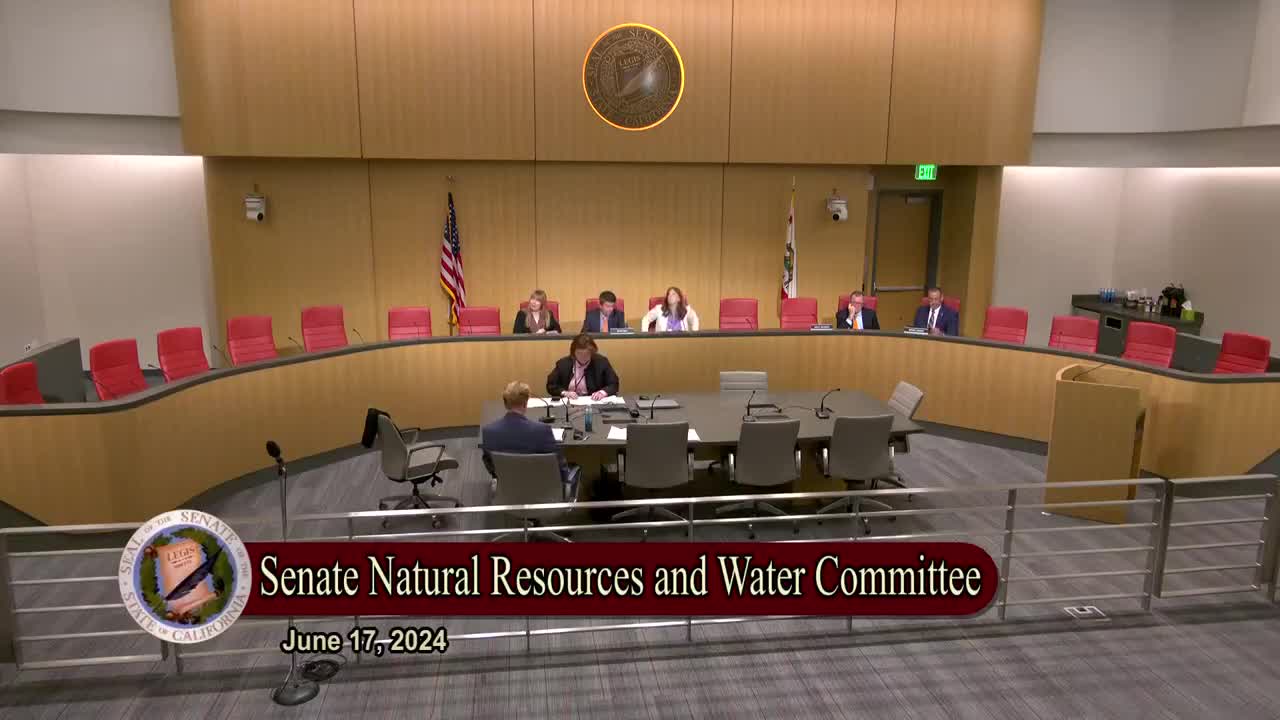 5MIN
Senate Standing Committee on Natural Resources and Water
 43SEC
Assembly Floor
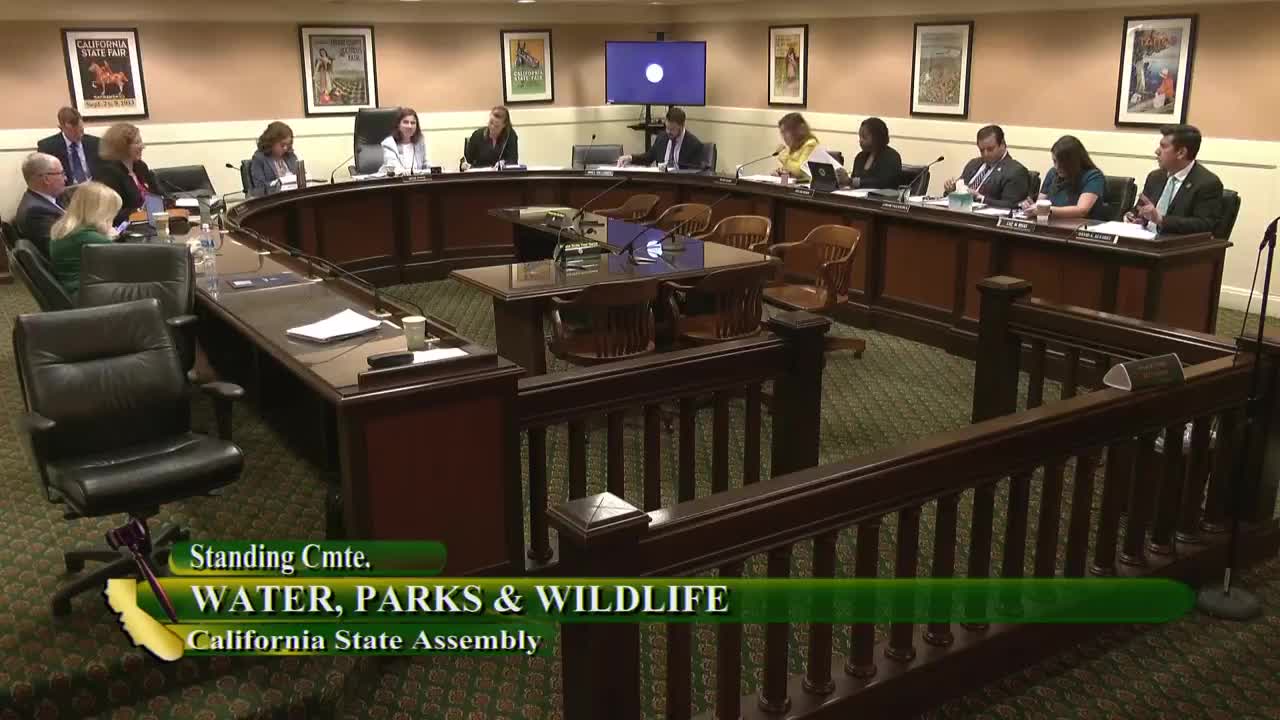 7MIN
Assembly Standing Committee on Water, Parks, and Wildlife
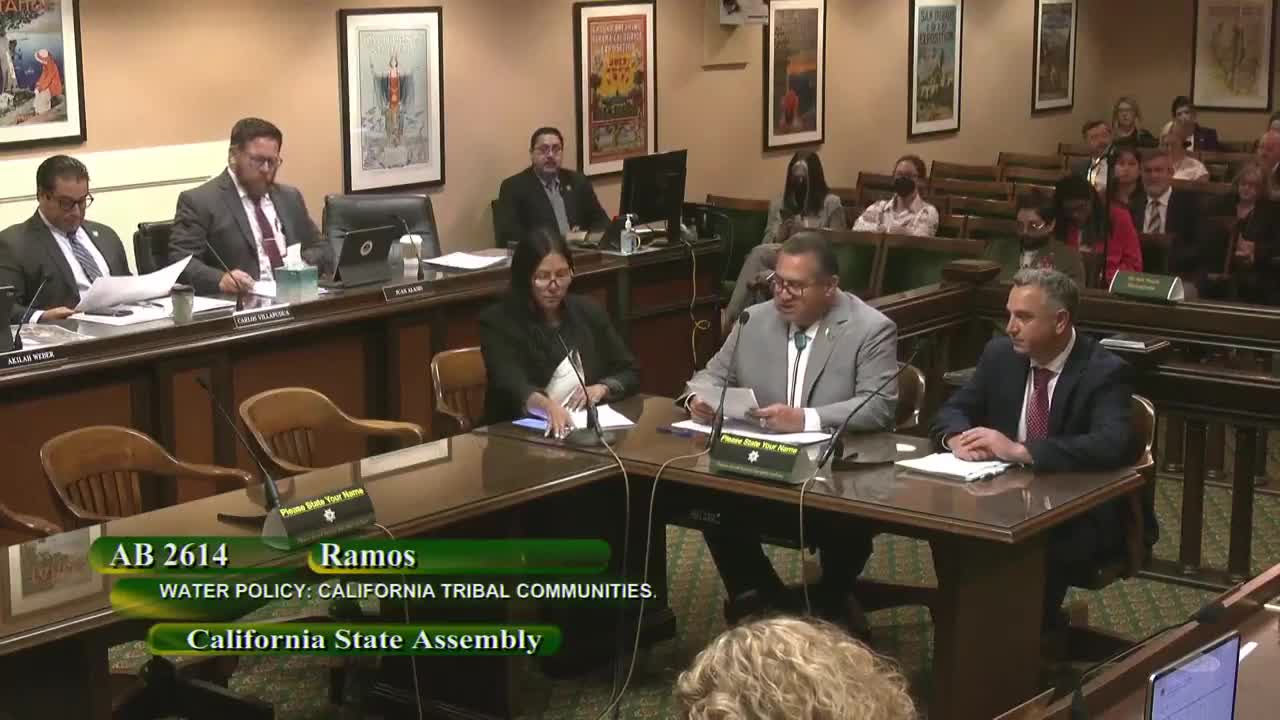 5MIN
Assembly Standing Committee on Water, Parks, and Wildlife
 1MIN
Assembly Floor
Bill Author

Bill Co-Author(s):