AB 325: Human services: noncitizen victims.
- Session Year: 2023-2024
- House: Assembly
- Latest Version Date: 2023-01-30
Current Status:
Failed
(2023-09-01: In committee: Held under submission.)
Introduced
In Committee
First Chamber
In Committee
Second Chamber
Enacted
What does this bill do?
This bill expands who can get state-funded refugee-level cash, social, and health services to include more noncitizen victims of crime and people who fear persecution. It adds victims of parental maltreatment, noncitizen children who are abused, neglected, or abandoned, and people who have filed for immigration relief such as VAWA (the federal Violence Against Women Act), special immigrant juvenile status, asylum, or related U or T visa or parole applications, and it prevents cutting off services just because a visa application was denied if the person qualifies another way.
The summary is provided by generative AI which can make mistakes. For original language, please view the details in the table below.
Under existing law, noncitizen victims of trafficking, domestic violence, and other serious crimes, as defined, are eligible for certain public social services and health care services to the same extent as individuals who are admitted to the United States as refugees. Existing law requires that those services discontinue if there is a final administrative denial of a visa application, as specified. Existing law requires that benefits and services under those provisions be paid from state funds to the extent federal funding is unavailable.
This bill would prohibit the discontinuance of those services due to the denial of a visa application if the individual is eligible for those services on another basis. The bill would also expand those services to noncitizen victims of parental maltreatment, noncitizen children who have been abused, neglected, or abandoned, and noncitizens who fear persecution. The bill would add to the categories of eligible noncitizen victims for the services individuals who have filed a formal application or petition with the appropriate federal agency for status or relief under the federal Violence Against Women Act, for special immigrant juvenile status, for asylum status, or for parole as family members of victims of severe trafficking, as specified. The bill would also make nonsubstantive conforming changes. By increasing duties for counties to administer and determine eligibility for public social services and health care services, the bill would create a state-mandated local program.
The bill would require the Director of Social Services to adopt regulations, which may be emergency regulations, to implement these provisions no later than July 1, 2024. The bill would authorize the State Department of Social Services to implement and administer these provisions through an all-county letter or similar instructions from the director until regulations are adopted.
The California Constitution requires the state to reimburse local agencies and school districts for certain costs mandated by the state. Statutory provisions establish procedures for making that reimbursement.
This bill would provide that, if the Commission on State Mandates determines that the bill contains costs mandated by the state, reimbursement for those costs shall be made pursuant to the statutory provisions noted above.
Notwithstanding any other law, the department shall ensure that noncitizen victims of trafficking, domestic violence, parental maltreatment, and other serious crimes, noncitizen children who have been abused, neglected, or abandoned, and noncitizens who fear persecution, as defined in subdivision (b) of Section 18945, have access to refugee cash assistance, and refugee social services set forth in this chapter, to the same extent as individuals who are admitted to the United States as refugees under Section 1157 of Title 8 of the United States Code. These individuals shall be subject to the same work requirements and exemptions as other participants, provided that compliance with these requirements is authorized by law. An exemption from these requirements shall be available if physical or psychological trauma related to or arising from the victimization impedes their ability to comply. Assistance and services under this section shall be paid from state funds to the extent federal funding is unavailable.
SEC. 2.Section 14005.2 of the Welfare and Institutions Code is amended to read:14005.2.Unless otherwise specified in this chapter, the eligibility of a person eligible under the Cuban-Haitian Entrant Program or the Refugee Resettlement Program for health care services under Section 14005 shall be determined by applying the same income and resource methodologies and standards and all other eligibility criteria established pursuant to this chapter that are applied by the department in determining the eligibility of a medically needy family person, except for those criteria that establish categorical relatedness, and only as long as federal funds are available. Victims Noncitizen victims of trafficking, domestic violence, parental maltreatment, and other serious crimes, noncitizen children who have been abused, neglected, or abandoned, and noncitizens who fear persecution, as defined in subdivision (b) of Section 18945, shall be eligible for these services to the same extent as individuals who are admitted to the United States as a refugee under Section 1157 of Title 8 of the United States Code. Services under this subdivision shall be paid from state funds to the extent federal funding is unavailable.
SEC. 3.Section 18945 of the Welfare and Institutions Code is amended to read:18945.(a)Noncitizen victims of trafficking, domestic violence, parental maltreatment, and other serious crimes, noncitizen children who have been abused, neglected, or abandoned, and noncitizens who fear persecution, as defined in subdivision (b), shall be eligible for public social services under this division, and health care services under Part 6.2 (commencing with Section 12693) of Division 2 of the Insurance Code, to the same extent as individuals who are admitted to the United States as refugees under Section 1157 of Title 8 of the United States Code. These services shall discontinue if there is a final administrative denial of a visa application an application for T nonimmigrant status under Section 1101(a)(15)(T)(i) or (ii), or (ii) of, a petition for U nonimmigrant status under Section 1101(a)(15)(U)(i) or (ii), of (ii) of, a petition for special immigrant juvenile status under Section 1101(a)(27)(J) of, or an application for asylum status under Section 1158 of, Title 8 of the United States Code. Code, or of a visa petition or application for relief under the federal Violence Against Women Act (Title IV of Public Law 103-322 and any subsequent amendments thereto), unless the individual is eligible for the services on another basis. For trafficking victims on behalf of whom law enforcement officials have not yet filed for continued presence or who have not yet filed an application for a visa, benefits issued pursuant to this subdivision shall be available for up to one year, and shall continue after that date only if an application for continued presence, or an application for a visa, is filed within the one-year period. Benefits and services under this subdivision shall be paid from state funds to the extent federal funding is unavailable.
(b)For purposes of this section, noncitizen victims of trafficking, domestic violence, parental maltreatment, and other serious crimes crimes, noncitizen children who have been abused, neglected, or abandoned, and noncitizens who fear persecution shall be defined to include both all of the following:
(1)Noncitizen victims of a severe form of trafficking in persons, who have been subjected to an act or practice described in Section 7102(8) or (9) of Title 22 of the United States Code or Section 236.1 of the Penal Code, and who have filed an I-914 application for T Nonimmigrant status with the appropriate federal agency, are preparing to file an application for status under Section 1101(a)(15)(T)(i) or (ii) of Title 8 of the United States Code, or otherwise are taking steps to meet the conditions for federal benefits eligibility under Section 7105 of Title 22 of the United States Code.
(2)Individuals who have filed a formal application petition with the appropriate federal agency for status under Section 1101(a)(15)(U)(i) or (ii) of Title 8 of the United States Code.
(3)Individuals who have filed a formal application with the appropriate federal agency for status or relief under the federal Violence Against Women Act, including, but not limited to, all of the following:
(A)Individuals who have filed a self-petition with the appropriate federal agency for status or relief under the federal Violence Against Women Act, as described in Section 1101(a)(51) of Title 8 of the United States Code, or pursuant to Section 1154 (a)(1)(A)(iii) to (vii), inclusive, of, or Section 1154 (a)(1)(B)(ii) to (v), inclusive, of, Title 8 of the United States Code.
(B)Individuals who have filed a formal application for cancellation of removal with the appropriate federal agency under the special rule for battered spouses and children pursuant to Section 1229b (b)(2) of Title 8 of the United States Code.
(C)Individuals who have filed a formal application for parole as parents and children of battered noncitizens under Section 1229b (b)(4) of Title 8 of the United States Code.
(4)Individuals who have filed an application for parole as family members of victims of severe trafficking under Section 1229b (b)(6) of Title 8 of the United States Code.
(5)Individuals who have filed a petition with the appropriate federal agency for status under Section 1101 (a)(27)(J) of Title 8 of the United States Code.
(6)Individuals who have filed an application with the appropriate federal agency for status under Section 1158 of Title 8 of the United States Code.
(c)After one year from the date of application for public social services, noncitizen victims of a severe form of trafficking, as defined in paragraph (1) of subdivision (b), shall be ineligible for state-funded services if a visa application has not been filed until under Section 1101(a)(15)(T)(i) or (ii) of Title 8 of the United States Code.
(d)A noncitizen victim of a severe form of trafficking, as defined in paragraph (1) of subdivision (b), who is issued a visa shall be removed from the state-funded program and provided federally funded public social services benefits under the provisions of Section 1522 of Title 8 of the United States Code, or another federal program for which the noncitizen victim may be eligible.
(e)For purposes of this section, Section 13283 13283, and Section 14005.2:
(1)In determining whether an applicant for public social services has been a victim of a severe form of human trafficking, as defined in Section 7102(8) or (9) of Title 22 of the United States Code, or Section 236.1 of the Penal Code, the state or local agency shall consider all relevant and credible evidence. A sworn statement by a victim, or a representative if the victim is not able to competently swear, shall be sufficient if at least one item of additional evidence is also provided, including, but not limited to, any of the following:
(A)Police, government agency, or court records or files.
(B)News articles.
(C)Documentation from a social services, trafficking, or domestic violence program, or a legal, clinical, medical, or other professional from whom the applicant or recipient has sought assistance in dealing with the crime.
(D)A statement from any other individual with knowledge of the circumstances that provided the basis for the claim.
(E)Physical evidence.
(F)A copy of a completed visa application.
(G)Written notice from the federal agency of receipt of the visa application.
(2)If the victim cannot provide additional evidence, then the sworn statement shall be sufficient if the county or state agency makes a determination documented in the case file that the applicant is credible.
SEC. 4.(a)The Director of Social Services shall adopt regulations, as otherwise necessary, to implement the applicable provisions of this act no later than July 1, 2024. Emergency regulations to implement the applicable provisions of the act may be adopted by the director in accordance with the Administrative Procedure Act (Chapter 3.5 (commencing with Section 11340) of Part 1 of Division 3 of Title 2 of the Government Code). Emergency regulations shall be exempt from review by the Office of Administrative Law and shall be deemed to be an emergency and necessary for the immediate preservation of the public peace, health, safety, or general welfare. The emergency regulations authorized by this section shall be submitted to the Office of Administrative Law for filing with the Secretary of State and shall remain in effect for no more than 180 days.
(b)Notwithstanding the Administrative Procedure Act, the State Department of Social Services may implement and administer the applicable provisions of this act through an all-county letter or similar instructions from the director until regulations are adopted.
SEC. 5.No appropriation pursuant to Section 15200 of the Welfare and Institutions Code shall be made for purposes of implementing this act.
SEC. 6.If the Commission on State Mandates determines that this act contains costs mandated by the state, reimbursement to local agencies and school districts for those costs shall be made pursuant to Part 7 (commencing with Section 17500) of Division 4 of Title 2 of the Government Code.
REVISIONS: HeadingLine 2.|
Date
|
Status
|
|---|---|
| Sep 1, 2023 | In committee: Held under submission. |
| Aug 14, 2023 | In committee: Referred to APPR suspense file. |
| Jul 6, 2023 | From committee: Do pass and re-refer to Com. on APPR with recommendation: To Consent Calendar. (Ayes 11. Noes 0.) (July 6). Re-referred to Com. on APPR. |
| Jun 20, 2023 | From committee: Do pass and re-refer to Com. on JUD. with recommendation: To Consent Calendar. (Ayes 5. Noes 0.) (June 19). Re-referred to Com. on JUD. |
| May 31, 2023 | Referred to Coms. on HUMAN S. and JUD. |
| May 23, 2023 | In Senate. Read first time. To Com. on RLS. for assignment. |
| May 22, 2023 | Read third time. Passed. Ordered to the Senate. (Ayes 72. Noes 0. Page 1709.) |
| May 18, 2023 | Coauthors revised. |
| May 18, 2023 | From committee: Do pass. (Ayes 13. Noes 0.) (May 18). |
| May 18, 2023 | Read second time. Ordered to third reading. |
| Mar 29, 2023 | In committee: Set, first hearing. Referred to APPR. suspense file. |
| Mar 14, 2023 | From committee: Do pass and re-refer to Com. on APPR. (Ayes 7. Noes 0.) (March 14). Re-referred to Com. on APPR. |
| Feb 9, 2023 | Referred to Com. on HUM. S. |
| Jan 31, 2023 | From printer. May be heard in committee March 2. |
| Jan 30, 2023 | Read first time. To print. |
|
Date
|
Description
|
Location
|
Votes
|
|
|---|---|---|---|---|
| Aug 14, 2023 | Placed on suspense file | Senate Standing Committee on Appropriations |
Passed |
|
| Jul 6, 2023 | Do pass, but first be re-referred to the Committee on [Appropriations] with the recommendation: To Consent Calendar | Senate Standing Committee on Judiciary |
Passed |
|
| Jun 19, 2023 | Do pass, but first be re-referred to the Committee on [Judiciary] with the recommendation: To Consent Calendar | Senate Standing Committee on Human Services |
Passed |
|
| May 22, 2023 | AB 325 Reyes Assembly Third Reading | Assembly Floor |
Passed |
|
| May 18, 2023 | Do pass. | Assembly Standing Committee on Appropriations |
Passed |
|
| Mar 14, 2023 | Do pass and be re-referred to the Committee on [Appropriations] | Assembly Standing Committee on Human Services |
Passed |
This list shows positions taken on this bill by organizations on the date displayed, which is linked to the original source.
Positions by individuals are not included.
|
Organization
|
Position
|
Date
|
|---|---|---|
| Bay Area Legal Aid | ** Support | |
| California Academy Of Family Physicians | ** Support | |
| California Academy of Preventive Medicine | ** Support | |
| California Pan-Ethnic Health Network | ** Support | |
| Carlsbad Citizens for Community Oversight | ** Support | |
| Coalition for Humane Immigrant Rights | ** Support | |
| Coalition of California Welfare Rights Organizations | ** Support | |
| Disability Rights California | ** Support | |
| Having Our Say Coalition | ** Support | |
| Loyola Immigrant Justice Clinic, Loyola Law School | * Support | Mar 14, 2023 |
| National Association of Social Workers California Chapter | ** Support | |
| Nourish California | * Support | Mar 14, 2023 |
| western center on law & poverty | ** Support |
SENATE COMMITTEE ON APPROPRIATIONS
Senator Anthony Portantino, Chair
2023 - 2024 Regular Session
AB 325 (Reyes) - Human services: noncitizen victims
Version: January 30, 2023 | Policy Vote: HUMAN S. 5 - 0, JUD. 11 - 0 |
Urgency: No | Mandate: Yes |
Hearing Date: August 14, 2023 | Consultant: Agnes Lee |
Bill Summary:
AB 325 would expand eligibility for public social services to certain noncitizen victims, as specified.
Fiscal Impact:
- The California Department of Social Services (CDSS) estimates ongoing General Fund costs for services between $18.6 million and $219.7 million, based on a range of take-up rates.
- The Department of Health Care Services (DHCS) estimates one-time automation system costs, including a cost of $705,000 ($634,500 federal funds and $70,500 General Fund) for CalHEERS, and a cost of $263,350 ($197,512 federal funds and $65,838 General Fund) for CalSAWS. Since current law provides that individuals are/will be eligible for the Medi-Cal program regardless of immigration status, the DHCS indicates no program benefits costs resulting from this bill.
- Cost to counties for administration would be potentially reimbursable by the state, subject to a determination by the Commission on State Mandates.
Background:
Under current state law, noncitizen victims of trafficking, domestic violence, and other serious crimes, as defined, are eligible for certain public social services and health care services to the same extent as individuals who are admitted to the United States as refugees. Noncitizen victims who have applied for certain federal visas related to survivors of crimes are eligible for services. Existing law requires that these services be paid from state funds to the extent federal funding is unavailable, and that those services discontinue if there is a final administrative denial of a visa application, as specified.
These state law provisions do not specify that noncitizen victims applying for federal status of the following are eligible for state public social services:
- Special Immigrant Juvenile Status (SIJS) is a classification used at the federal level to help undocumented youth remain in the county under specified protections. Under the Trafficking Victims Protection Reauthorization Act, any unmarried, undocumented individual under age 21 who has been abused, neglected, or abandoned by a parent and has been declared a dependent of the juvenile court or been committed to the custody of specified entities may seek SIJS classifications. SIJS may also apply to many unaccompanied minors, or those youth who arrived in the United States without law status, had not yet reached 18 years of age, and with respect to whom either there is no legal parent or guardian in the United States, or no parent or legal guardian in the United States is available to provide care and physical custody.
- The federal Violence Against Woman Act (VAWA) provides certain supports to allow an abused spouse or child of a U.S. Citizen or lawful permanent resident or an abused parent of a U.S. Citizen to self-petition for lawful status in the United States, receive employment authorization, and access public benefits.
- Asylum seekers are typically individuals who enter the United States fleeing persecution, violence, or threats of violence to them or their family, but have not been legally recognized as a refugee.
- Family members of victims of severe trafficking.
Proposed Law:
Specific provisions of the bill would:
- Prohibit the discontinuance of public social services due to the denial of an application for a visa or other immigration status, as specified, if the individual is eligible for those services on another basis.
- Expand eligibility for public social services to noncitizen victims of parental maltreatment, noncitizen children who have been abused, neglected, or abandoned, and noncitizens who fear persecution.
- Add to the categories of noncitizen victims eligible for services, individuals who have filed a formal application or petition with the appropriate federal agency for status or relief under the federal VAWA, for special immigrant juvenile status, for asylum status, or for parole as family members of victims of severe trafficking, as specified.
- Require CDSS to adopt regulations, which may include emergency regulations, to implement these provisions no later than July 1, 2024; and authorize CDSS to implement and administer these provisions through an all-county letter or similar instructions until regulations are adopted.
Related Legislation:
AB 1461 (Reyes, 2021) was similar to this bill. The bill was vetoed by the Governor.
-- END --
Senator Thomas Umberg, Chair
2023-2024 Regular Session
Bill No: AB 325 (Author:Reyes)
Version: January 30, 2023
Hearing Date: July 6, 2023
Fiscal: Yes
Urgency: No
Consultant: ID
SUBJECT
Human services: noncitizen victims
DIGEST
Provides that applicants for status or relief under the federal Violence Against Women Act (VAWA), special immigrant juvenile status (SIJS), T or U nonimmigrant status, or for asylum are eligible for certain public social services and health care services, and that those services shall not be terminated upon receiving a final administrative denial if the applicant is still eligible through different means.
EXECUTIVE SUMMARY
Federal immigration law includes various visas for survivors of violent crime, trafficking, familial abuse, and persecution. These include asylum, which is available for individuals who have a well-founded fear of persecution in their country of origin, U nonimmigrant status for victims of certain crimes in the United States who assist law enforcement in the investigation or prosecution of the crime, T nonimmigrant status for survivors of sex or labor trafficking, VAWA self-petitions for victims of battery or extreme cruelty at the hands of a U.S. Citizen or lawful permanent resident family member, and Special Immigrant Juvenile Status (SIJS) for minors who have been abused, neglected, or abandoned by one or both parents. While applicants and recipients of some of these visas are currently eligible for state public benefits programs like Medi-Cal, refugee services, or food benefits, not all are eligible. Additionally, there are often long wait times for such visas to be processed. This bill extends state public benefits to applicants of SIJS, asylum, and VAWA, specifies that such benefits should not be terminated if a recipient receives a final administrative denial of their immigration application if they are eligible for the benefits on another basis, and makes other conforming changes and specifications about implementation by the Department of Social Services.
AB 325 is sponsored by the Coalition for Humane Immigrant Rights (CHIRLA), the Coalition of California Welfare Rights Organizations, and the Western Center on Law and Poverty, and is supported by Disability Rights California, the California Academy of Preventive Medicine, and the National Association of Social Workers – California Chapter. It has no known opposition. This bill passed out of the Senate Human Services Committee on a vote of 5 to 0.
PROPOSED CHANGES TO THE LAW
Existing law:
- Establishes the federal “Supplemental Nutrition Assistance Program” (SNAP) pursuant to the Food Stamps Act of 1964 to provide benefits to families and individuals meeting specified criteria. (7 U.S.C. § 2011.)
- Establishes the state “CalFresh program” for the administration of federal SNAP benefits to eligible individuals. Provides program requirements and eligibility, as specified. (Welfare & Inst. Code § 18900 et seq.)
- Establishes under federal law the “Temporary Assistance for Needy Families” (TANF) program to provide aid and welfare-to-work (WTW) services to eligible families. (42 U.S.C. § 601 et seq.)
- Establishes in state law the CalWORKs program to provide cash assistance and other social services for low-income families through TANF. Under CalWORKs, each county provides assistance through a combination of state, county and federal TANF funds. (Welfare & Inst. Code § 11120 et seq.)
- Provides "refugee social services," which include, English language and employment training, funded through federal appropriations. (Welfare & Inst. Code § 13275(c).)
- Requires CDSS to allocate appropriated federal funds for refugee social services programs to each eligible county and, if the department exercises its discretion, to a qualified nonprofit organization, based on the number of refugees receiving aid in the eligible county or the number of refugees that reside in the eligible county. (Welfare & Inst. Code § 13276.)
- Requires that refugee social services programs be available to recipients of refugee cash assistance and refugees receiving county general assistance in eligible counties. If the county does not provide these services, a portion of the funds allocated to the county may be used to provide services to recipients of refugee cash assistance and refugee recipients of general assistance based on federal requirements and service needs. (Welfare & Inst. Code § 13279.)
- Provides that, in counties receiving federal refugee social services funding, the county welfare department shall include in its CalWORKs plan a section that specifically addresses the provision of services for refugee applicants for, and recipients of, aid and the orderly transition of those applicants and recipients into the CalWORKs program. (Welfare & Inst. Code § 13280.)
- Authorizes the provision of aid to eligible noncitizens who have been lawfully admitted for permanent residence or are otherwise permanently residing in the United States, to the extent permitted by federal law. (Welfare & Inst. Code § 11104.)
- Defines, under federal law, a "special immigrant juvenile" as a person under 21 who is declared a dependent by a juvenile court or committed to the custody of a state agency or a court-appointed individual, whose reunification with one or both parents is not viable due to abuse, neglect, abandonment, or a similar basis found under state law, and whose return to their country of nationality or last habitual residence is not in the juvenile's best interest. Allows such person to obtain SIJS and, based on that, apply for a visa for lawful permanent residency. (8 U.S.C. § 1101(a)(27)(J).)
- Establishes the “Violence Against Women Act” and contains provisions including the protections and rights of petitioners. (42 USC 12131 et seq.)
- Prohibits the federal government from returning to their country of origin people whose life or freedom would be threatened because of the person's race, religion, nationality, membership in a particular social group, or political opinion. (8 USC 1231(b)(3).)
- Provides eligibility for public social services, benefits, and health care services provided through the state to noncitizen victims of trafficking, domestic violence, and other serious crimes, as specified. (Welfare & Inst. Code § 18945.)
This bill:
- Expands eligibility for refugee cash assistance, refugee social services, Medi-Cal, and the California Health Families Program under current provisions for noncitizen victims to individuals who have filed an application with the United States Citizenship and Immigration Services (USCIS) for:
- immigration status under the Violence Against Women Act (VAWA);
- special Immigrant Juvenile Status (SIJS); and
- asylum.
- Expands qualifying individuals to noncitizen victims of “parental maltreatment”, and “noncitizen children who have been abused, neglected, or abandoned, and noncitizens who fear persecution.”
- Clarifies that such public benefits shall not be discontinued if the individual receives a final administrative denial of their relevant immigration visa application if the individual is eligible on another basis.
- Requires the California Department of Social Services (CDSS) to implement the provisions relating to the expansion of public social services to VAWA petitioners, those applying for SIJS, and asylum seekers before July 1, 2024; further, provides that emergency regulations may be adopted by the department, as specified.
- Permits CDSS to implement and administer the applicable provisions of the act through an all-county letter or similar instruction while regulations are being adopted.
- Makes technical and conforming changes.
COMMENTS
- Applicants for asylum, VAWA, and U and T nonimmigrant status
The United States immigration system is a myriad of complex laws and rules. Some of the rules operate to bar noncitizens from eligibility for any immigration status, and others make it difficult to maintain status and meet one’s basic needs. For example, many types of temporary, “nonimmigrant” statuses do not allow for authorization to work in the United States, and every time an individual applies for a visa or entry into the United States, they must show that they have not triggered more than a dozen grounds for being “inadmissible,” or ineligible to be admitted into the United States. A number of grounds of “inadmissibility,” once triggered, permanently bar someone from obtaining immigration status in the United States.
In addition, visas for temporary and permanent immigration status and permission to enter and reside in the United States have large numbers of requirements and restrictions to eligibility and their use. Most types of visas have significant processing and wait times, often resulting in five to even twenty-five year waits to obtain immigration status even when someone qualifies for a visa.
The incredibly restrictive nature of the immigration system, along with the extreme levels of violence, persecution, and poverty throughout Latin America and the World that have caused large amounts of forced migration to the United States over the last few decades, have resulted in over 11 million undocumented individuals living in the United States. Individuals without immigration status live throughout California, and most have resided in the United States for more than five years. They are a part of their communities, contribute taxes, and strengthen the economy. Despite this reality, the United States Congress has not made substantial changes to the immigration system since 1996, and processing and wait times for current visa programs continue to grow.
When a noncitizen fears persecution in their country of origin, is a survivor of violent crime or human trafficking, is a survivor of abuse by a close family member, or is a child that was abused, neglected or abandoned by a parent, they sometimes qualify for one of a few specific types of immigration status meant to protect them from harm and support the work of law enforcement in investigating or prosecuting serious crimes.
Asylum is one of these immigration statuses. Asylum allows a person to receive asylee status and eventually apply for permanent immigration status and U.S. Citizenship if they have a well-founded fear of death, torture, or other grave harm in their country of origin because of their political opinion, religion, race or nationality, or other immutable part of their identity.[1] Asylum seekers are often fleeing persecution by a powerful criminal organization like a Cartel, violence directed toward specific groups of which they are a member, or targeting by their own government. Most have endured serious persecution before fleeing to the United States. Asylum can be applied for directly to the government, commonly called “affirmative asylum,” in which a regional asylum office of the United States Citizenship and Immigration Services (USCIS) will adjudicate the application and schedule an interview, or in immigration court if an applicant is in a deportation proceeding. Deportation proceedings begin when an authorized agency, like USCIS or Customs and Border Patrol (CBP) issue a “Notice To Appear” alleging that a noncitizen in the United States or requesting admission to the United States is either not eligible for admission or is deportable from the United States. Asylum is one of a number of available defenses against deportation in a deportation proceeding, and this type of asylum is commonly referred to as “defensive asylum.” When an applicant applies for asylum affirmatively, and the asylum office does not grant the asylum application, the office will not deny it. Instead, they will issue a Notice To Appear and refer the asylum application to the immigration court for the immigration judge to hear and decide whether to grant or deny. If asylum is denied by an immigration judge, an applicant may sometimes have grounds to appeal the decision to an administrative appeals board, called the Board of Immigration Appeals (BIA). The BIA is the final administrative avenue for an asylum application; a BIA decision can only be appealed to a regular appellate court like the Ninth Circuit Court of Appeals.
However, qualifying for asylum does not necessarily mean an individual will immediately receive asylee status; at the start of 2022, there were more than 87,100 pending asylum applications at the San Francisco and Los Angeles asylum offices, and more than 133,000 pending asylum requests before immigration judges in removal proceedings.[2] Applications in front of asylum offices can take as long as five years to receive a decision, and immigration courts are backlogged at least the same amount of time. Usually an asylum applicant will be waiting in limbo without immigration status this entire time.
The immigration laws also include two visas for those who are survivors of serious violent crimes or human trafficking. A U-visa is one such visa, which is available if a noncitizen was a victim of certain crimes (such as serious assault, attempted murder, or domestic violence) in the United States, cooperated with law enforcement in the investigation or prosecution of that crime, and suffered substantial physical or mental abuse as a result of the crime.[3] U-visas require the law enforcement agency that investigated the crime to certify the crime investigated and that the visa applicant cooperated in their investigation. However, because the number of U-visas that can be granted annually is capped by the United States Congress, there is a significant wait to actually receive U-visa status. For the last number of years, the wait time has been about ten years from time of submitting the application to receiving a visa. While a U-visa applicant may receive a “bona fide” determination before the final approval or denial of their application, which provides temporary protections and work authorization, the processing times to receive the bona fide determination itself is five years.[4]
The other type of visa available to survivors of crime is the T-visa, which is available if a noncitizen has been subjected to severe sex or labor trafficking, reasonably cooperated in an investigation of the trafficking, is in the United States on account of that trafficking, and would suffer extreme hardship involving unusual and severe harm if they were to be deported.[5] While T-visas also are capped in the number that can be provided each year, that cap has never been reached; nonetheless, the processing time for T-visas is currently more than 18 months.[6]
Noncitizen minors in the United States who have been abused, neglected or abandoned by one or both of their parents may be able receive a special type of immigration status called Special Immigrant Juvenile Status (SIJS). SIJS is available if the minor has gone through a state court process and been made a dependent of the court or placed under the custody of an individual, a state agency, or a supportive parent, received specific findings from a probate or family court judge relating to their best interests and that they cannot be reunited with one or both of their parents because they were abandoned, abused, or neglected.[7] SIJS applications typically are approved in about six months, but a grant of SIJS does not actually itself provide immigration status. Instead, it provides the opportunity to “adjust status” from SIJS to a lawful permanent resident. Adjustment of Status applications based on SIJS also have an annual cap that results in a wait that is currently about five years.[8]
The Violence Against Women Act provides another visa available for survivors of abuse by a lawful permanent resident or U.S. Citizen spouse, parent, or adult child that is commonly referred to as VAWA (for the act that created it). To qualify for VAWA, an applicant must have been subjected to battery or extreme cruelty by their U.S. Citizen or lawful permanent resident relative, be residing or have resided with their abusive relative, and be a person of good moral character. VAWA applications take almost three years to be processed.[9]
Unlike affirmative asylum applications, these other affirmative immigration applications sometimes can be appealed for reconsideration before USCIS if they are initially denied by the agency, can be appealed to the Administrative Appeals Office (AAO), or can be appealed to the BIA. Thus, while USCIS will ultimately issue a decision either granting or denying the application, that is not necessarily the end of the administrative process.
- The current landscape and restrictions of the social safety net for immigrants
Various government-funded programs help support low-income Californian’s experiencing poverty or hardship. The goal of the majority of these programs are to provide support through financial benefits or services to individuals as they work to address barriers and gain financial security. These programs include the Supplemental Security Income (SSI) program, Supplemental Nutrition Assistance Program (SNAP), and Temporary Assistance for Needy Families (TANF).
SNAP is a federal program that provides states funds to offer a nutritional benefit to low-income individuals and families. SNAP eligibility standards are set by the United States Department of Agriculture (USDA) and include income tests, work requirements, and required documentation. The benefit is meant to assist with access to healthy and nutritious foods, and may be used to purchase food, as well as seeds and plants that can be utilized to grow food. In California, SNAP funds are administered through the CalFresh program of the Department of Social Services (CDSS) and facilitated through county human services agencies.
The federal TANF program provides states with block grants to create their own program rules as long as those rules are within federal guidelines. California uses TANF funds for the California Work Opportunity and Responsibility to Kids (CalWORKS) program, through which families have access to various services aimed at helping the family achieve self-sufficiency, including: childcare; homelessness assistance; mental health and addiction services; domestic violence counseling; among others. CalWORKs benefits are time limited.
The SSI program provides a monthly cash benefit to qualified low-income individuals and couples in order to help them pay for basic living expenses, such as food, clothing and shelter. In order to be eligible for SSI, a person must be at least 65 years old, blind or disabled (including disabled children) and meet certain income and resource requirements. While SSI is a federally funded benefit, California also provides a similar benefit called State Supplementary Payment (SSP) with state funds.
Unfortunately, since 1996, these Federal public benefits have restrictions as to which noncitizens can access them based on their immigration status. They are only available to noncitizens who have held lawful permanent residency for five years, have asylee status, or received a preliminary “bona fide determination of eligibility” on their T-visa or VAWA application.[10] Applicants for U-visas and asylum are generally excluded from the major federal public benefits programs, and T-visa and VAWA applicants are not eligible during the extensive waiting period for receiving a bona fide determination on their applications. Noncitizens with SIJS may qualify for some in limited circumstances due to their age or status as an unaccompanied minor.
In response to the 1996 federal changes in eligibility rules based on immigration status, California created the California Food Assistance Program (CFAP) to provide nutrition benefits to immigrants who lost access to CalFresh. CFAP utilizes state funding to provide aid to families not eligible for the federally-funded CalFresh. Income and eligibility requirements for CFAP are aligned with CalFresh, as are benefit amounts. California also fills the gap with other programs, such as the Refugee Resettlement Program, state Medi-Cal, Refugee Cash Assistance and Refugee Social Services. But these programs still are currently limited to those granted refugee or asylee status, survivors of trafficking, and applicants for and holders of U-visa status. They are not available for those with SIJS, VAWA, or those who have applied for asylum and not yet received an approval.
- AB 325 extends California’s state public benefits to over vulnerable asylum applicants and survivors of trafficking, serious crime, and familial abuse or abandonment
Considering the long processing and wait times for SIJS, asylum, and U and T-visa applications, many applicants wait many years in the United States without receiving a final decision on their applications. Often that means many years without authorization to work in the United States. While asylum applicants can apply for employment authorization once their application has been pending for 150 days, applicants for VAWA, U and T-visas, and SIJS generally are not eligible for employment authorization until their applications are granted or they receive a “bona fide determination.” They may therefore be without many opportunities to generate income for many months or years. Such applicants also have endured serious harm and abuse. Thus, they are often in great need for supportive public benefits and services. Yet they are not eligible for most federal public benefits while waiting for a decision on their immigration applications. California public benefits programs, while more inclusive of noncitizens, still do not cover those who are awaiting adjudication on their applications for asylum, U-nonimmigrant (U-visa) status, VAWA, or SIJS.
It is this serious gap in services and support for many immigrants awaiting a decision on humanitarian immigration applications that AB 325 aims to fix. It does so by amending the Welfare and Institutions Code to include all VAWA applicants, applicants for SIJS, and asylum applicants as those eligible for California state public benefits programs. Specifically, it amends the sections of the code relating to those eligible for refugee social services and cash assistance, Medi-Cal, and the California Healthy Families program for low-cost health insurance for children (Welfare & Inst. Code §§ 13282, 14005, 18945.)
- AB 325 clarifies that benefits should not be automatically terminated if a recipient is still eligible through other means
Under current law, an individual receiving the specified public benefits through their status as an applicant for a T or U visa must have their benefits discontinued if they receive a “final administrative denial” of their T or U visa application. (Welfare & Inst. Code § 18945.) The plain language of “final administrative denial” clearly states that the denial must be one that is administratively final; as in, there are no more avenues for it to be considered administratively. Thus, this would include a denial from USCIS if the applicant does not appeal that decision, or a denial from the AAO or the BIA if the applicant does appeal. In the case of an asylum application, referral by an Asylum Office to an immigration judge is not currently considered a denial of the asylum application, and even if the immigration judge denies asylum the applicant can appeal that denial to the BIA. Therefore, by the plain language in the statute, an asylum applicant would receive a final administrative denial of their asylum claim only if the immigration judge denies their asylum and they do not appeal, if the BIA denies the immigration judge’s denial, or if the applicant’s application is referred to an immigration judge and the applicant abandons the application once in immigration court.
AB 325 clarifies that, if a designated applicant were to receive a final administrative denial of their T-visa, U-visa, SIJS, VAWA, or asylum application, their benefits would not be automatically terminated if they are eligible for the benefits on another basis. This will ensure that applicants in need of these services do not have their benefits automatically cut off when they can qualify another way, thereby eliminating unnecessary interruptions and administrative hurdles to continued services.
To effectuate the purposes of the act, AB 325 directs the Director of the Department of Social Services to adopt regulations to implement its provisions no later than July 1, 2024. It also allows that such implementation can be accomplished through emergency regulations or by an all-county letter while regulations are being drafted.
- How AB 325 addresses the deficiencies of AB 1461
AB 325 is substantially similar to AB 1461 that passed the Legislature in 2022. However, AB 1461 was vetoed by the Governor. The Governor’s veto message stated:
This bill would codify existing practices of the Trafficking and Crime Victim Assistance Program, and would expand the population eligible to receive these benefits to include those who have applied for immigration relief under the Violence Against Women Act, Special Immigrant Juvenile Status, or asylum status.
While I share the author's goal of ensuring that vulnerable populations have the resources necessary to meet their needs while they await adjudication of their application for immigration relief, bills with a significant fiscal impact, such as this, are best considered in the annual budget process.
To address the governor’s concerns with AB 1461, AB 325 was introduced with an accompanying budget request of $25 million continuing funds to fund the expanded services created by its provisions.
SUPPORT
Western Center on Law & Poverty (Co-sponsor)
Coalition for Humane Immigrant Rights (Co-sponsor)
Coalition of California Welfare Rights Organizations (Co-sponsor)
Disability Rights California
California Academy of Preventive Medicine
National Association of Social Workers – California Chapter
Carlsbad Citizens for Community Oversight
California Pan-Ethnic Health Network
Having Our Say Coalition
Bay Area Legal Aid
OPPOSITION
None known
RELATED LEGISLATION
Pending Legislation: SB 85 (Weiner, 2023) would extend state funds to recent refugee arrivals who exhaust their three-month Federally-funded refugee social services to cover additional months of refugee social services for the recipient. SB 85 was held in the Senate Appropriations Committee.
AB 1261 (Santiago, 2023) would amend various rules relating to state law enforcement agencies’ certification of a victim, indirect victim, or bystander victim’s helpfulness as required by federal law for applications for U nonimmigrant status. AB 1261 is pending before the Senate Appropriations Committee.
Prior Legislation:
AB 1461 (Reyes, 2021) would have provided that specific applicants are eligible for certain public social services, as specified. AB 1461 was a substantially similar to this bill and was vetoed by Governor Newsom because “bills with a significant fiscal impact, such as this, are best considered in the annual budget process.”
SB 464 (Hurtado, 2021) would have made noncitizens eligible for the CFAP. SB 464 was held on the Assembly Floor.
AB 2027 (Quirk, Ch. 749, Stats. 2016) required an agency to certify victim cooperation on the appropriate form upon request so that an individual may apply for a T-Visa to live and work in the country temporarily.
SB 674 (DeLeón, Ch. 721, Stats. 2015) provides that, upon request of a victim or victim's family member, a certifying official from a certifying law enforcement agency shall certify victim helpfulness on the applicable U-Visa certification form when the victim was a victim of qualifying criminal activity and has been helpful, is being helpful, or is likely to be helpful to a law enforcement agency on the detection, investigation, or prosecution of that criminal activity.
AB 2345 (Gonzalez, 2014) would have expanded eligibility for noncitizens who are lawfully in the United States for aid under the CalWORKs program and nutrition assistance under the California Food Assistance Program. AB 2345 was held on the Assembly Appropriations Committee suspense file.
SB 1569 (Kuehl, Ch. 672, Stats. 2006) provided temporary and immediate access to social services, including CalWORKs and CFAP, for noncitizen survivors of human trafficking, domestic violence, and other serious crimes.
PRIOR VOTES:
Senate Human Services (Ayes 5, Noes 0)
Assembly Floor (Ayes 72, Noes 0)
Assembly Appropriations Committee (Ayes 13, Noes 0)
Assembly Human Services Committee (Ayes 7, Noes 0)
**************
8 U.S.C. § 1158; 8 U.S.C. § 1101(a)(42)(A). ↑
U.S. Citizenship & Immigr. Svcs., “Asylum Division Quarterly Statistics Report – FY 2022 Q1,” Dept. of Homeland Security, Appendix VI (2022), available at www.uscis.gov; Transactional Records Access Clearinghouse (TRAC), “A Sober Assessment of the Growing U.S. Asylum Backlog,” Syracuse Univ. (Dec. 22, 2022), available at https://trac.syr.edu/reports/705/. ↑
8 U.S.C. § 1101(a)(15)(U). ↑
See U.S. Cit. & Immigr. Svcs., “Check Case Processing Times,” Dept. of Homeland Sec. (checked Jun. 17, 2023), https://egov.uscis.gov/processing-times/. ↑
8 U.S.C. § 1101(a)(15)(T). ↑
See U.S. Cit. & Immigr. Svcs., “Check Case Processing Times,” Dept. of Homeland Sec. (checked Jun. 17, 2023), https://egov.uscis.gov/processing-times/. ↑
8 U.S.C. § 1101(a)(27)(J). ↑
See Bureau of Consular Affairs, “Visa Bulletin for July 2023,” U.S. Dept. of State, 5 (Jun. 2, 2023), available at https://travel.state.gov/content/travel/en/legal/visa-law0/visa-bulletin/2023/visa-bulletin-for-july-2023.html. See 4th category in table B, “Dates for filing of employment-based visa applications” for current application dates for filing. The dates listed in the chart is the date that must be on the date or later than the date the SIJS application was filed to be considered “current” and eligible for submitting a SIJS-based adjustment of status application for residency. The current date of September 2018 indicates that individuals currently with SIJS must have filed their SIJS application in September 2018 or earlier to now be eligible to request lawful permanent residency in the month of July 2023. ↑
See U.S. Cit. & Immigr. Svcs., “Check Case Processing Times,” Dept. of Homeland Sec. (checked Jun. 17, 2023), https://egov.uscis.gov/processing-times/. ↑
Tanya Broder and Gabrielle Lessard, “Overview of Immigrant Eligibility for Federal Programs,” Nat’l Immigr. Law Center (Mar. 2023), available at https://www.nilc.org/issues/economic-support/overview-immeligfedprograms/#_ftn26. ↑
SENATE COMMITTEE ON HUMAN SERVICES
Senator Alvarado-Gil, Chair
2023 - 2024 Regular
Bill No: | AB 325 | ||
Author: | Reyes | ||
Version: | January 30, 2023 | Hearing Date: | June 19, 2023 |
Urgency: | No | Fiscal: | Yes |
Consultant: | Heather Hopkins | ||
Subject: Human services: noncitizen victims
SUMMARY
This bill provides that applicants who have completed their formal application with the appropriate federal agency for status or relief under the federal Violence Against Women Act (VAWA), special immigrant juvenile status (SIJS), or asylum status are eligible for certain public social services and health care services that are authorized in current law to certain noncitizen survivors of trafficking and serious crimes.
ABSTRACT
Existing Law:
- Establishes the federal “Supplemental Nutrition Assistance Program” (SNAP) pursuant to the Food Stamps Act of 1964 to provide benefits to families and individuals meeting specified criteria. (7 United States Code Section [USC] 2011)
- Establishes the “CalFresh program” for the administration of federal SNAP benefits to eligible individuals. Provides program requirements and eligibility, as specified. (WIC 18900 et seq.)
- Establishes under federal law the “Temporary Assistance for Needy Families” (TANF) program to provide aid and welfare-to-work (WTW) services to eligible families. (42 USC 601 et seq.)
- Establishes in state law the CalWORKs program to provide cash assistance and other social services for low-income families through TANF. Under CalWORKs, each county provides assistance through a combination of state, county and federal TANF funds. (WIC 11120 et seq.)
- Provides that "refugee social services" include, but are not limited to, English language and employment training, funded through federal appropriations. (WIC 13275(c))
- Requires CDSS to allocate appropriated federal funds for refugee social services programs to each eligible county and, if the department exercises its discretion, to a qualified nonprofit organization, based on the number of refugees receiving aid in the eligible county or the number of refugees that reside in the eligible county. (WIC 13276)
- Requires a county, to the extent permitted by federal law, to utilize funds to pay for the costs of any services provided to, or activity performed on behalf of, any refugee participating in the program Refugee Cash Assistance Program. (WIC 13278)
- Requires that refugee social services programs be available to recipients of refugee cash assistance and refugees receiving county general assistance in eligible counties. If the county does not provide these services, a portion of the funds allocated to the county may be used to provide services to recipients of refugee cash assistance and refugee recipients of general assistance based on federal requirements and service needs. (WIC 13279)
- Provides that, in counties receiving federal refugee social services funding, the county welfare department shall include in its CalWORKs plan a section that specifically addresses the provision of services for refugee applicants for, and recipients of, aid and the orderly transition of those applicants and recipients into the CalWORKs program. (WIC 13280)
- Authorizes CDSS, notwithstanding any other law, and to the extent permitted by federal law, to contract with, or issue grants to, qualified nonprofit organizations for the purpose of administering federally funded refugee cash assistance within a county. (WIC 13284)
- Authorizes the provision of aid to eligible legal immigrants who have been lawfully admitted for permanent residence or are otherwise permanently residing in the United States, to the extent permitted by federal law. (WIC 11104)
- Defines, under federal law, a "special immigrant juvenile" as a person under 21 who is declared a dependent by a juvenile court or committed to the custody of a state agency or a court-appointed individual, whose reunification with one or both parents is not viable due to abuse, neglect, abandonment, or a similar basis found under state law, and whose return to their country of nationality or last habitual residence is not in the juvenile's best interest. Allows such person to obtain SIJS and, based on that, apply for a visa for lawful permanent residency. (8 USC 1101(a)(27)(J); 8 Code of Federal Regulations 204.11.)
- Defines “unaccompanied undocumented minor” (UUM) in state law to mean the same as “unaccompanied alien children” in federal law, which defines an unaccompanied alien child to mean a child who has no lawful immigration status in the United States, had not yet reach 18 years of age, and with respect to whom either there is no legal parent or guardian in the United States, or no parent or legal guardian in the United State is available to provide care and physical custody. (WIC 13300(c); 6 U.S.C. 279(g)(2))
- Establishes the “Violence Against Women Act” and contains provisions including the protections and rights of petitioners. (42 USC 12131 et seq.)
- Prohibits the federal government from returning to their home countries people whose life or freedom would be threatened because of the person's race, religion, nationality, membership in a particular social group, or political opinion. (8 USC 1231(b)(3))
- Provides eligibility for public social services, benefits, and health care services provided through the state to noncitizen victims of trafficking, domestic violence, and other serious crimes, as specified. (WIC 18945)
This Bill:
- Includes individuals who have filed a formal application with the appropriate federal agency for status or relief under the federal VAWA as eligible for public social services, benefits, and health care under current provisions for noncitizen victims.
- Includes individuals who have filed a formal application for SIJS with the appropriate federal agency as eligible for public social services, benefits, and health care under current provisions for noncitizen victims.
- Includes individuals who have filed a petition for asylum with the appropriate federal agency, among those eligible for public social services, benefits, and health care under current provisions for noncitizen victims.
- Requires the California Department of Social Services (CDSS) to implement the provisions relating to the expansion of public social services to VAWA petitions, those applying for SIJS, and asylum seekers before July 1, 2024. Further provides that emergency regulations may be adopted by the department, as specified.
- Makes technical and conforming changes
FISCAL IMPACT
According to the Assembly Appropriations Committee, CDSS estimates ongoing General Fund costs in the range of $19 million to $57 million annually to provide services to visa applicants awaiting approval. This estimate includes individual assistance and family assistance and supports and assumes a take-up rate of 5% to 15%.
Unknown, but likely substantial costs to counties to administer the expanded program and determine eligibility under the new requirements in this bill. These costs are likely reimbursable by the state, subject to a determination by the Commission on State Mandates.
The author is also pursuing this proposal in the Legislative budget process.
BACKGROUND AND DISCUSSION
Purpose of the Bill:
According to the author, “Survivors awaiting case determination are often left without access to state and local benefits during the review process of the survivor’s petition for federal relief. With delays in application processing times, survivors cannot access services while in emotionally, physically, and mentally difficult situations. AB 325 will allow Violence Against Women Act petitioners, Special Immigrant Juvenile Status petitioners, and asylum seekers to access crucial benefits while awaiting prima facie case determination. AB 325 will create a pathway to benefits for these survivors and help a relatively small number of people in great need before they transition to existing state or federal services. It is in the spirit of California to secure care for survivors, AB 325 is a step in right direction in building a bridge for benefits and care.”
Social Safety Net
Various government-funded programs help support low-income Californian’s experiencing poverty or hardship. The goal of the majority of these programs are to provide support through financial benefits or services to individuals as they work to address barriers and gain financial security. Some programs, like Supplemental Security Income, are not intended to be time limited but rather provide long term support for specific, designated populations who are recognized as needing ongoing assistance to meet basic needs. The following is a brief overview of several of these programs.
CalFresh/SNAP: SNAP, formerly known as food stamps, is a federal program that provides states fund to offer a nutritional benefit to low-income individuals and families. SNAP eligibility standards are set by the United States Department of Agriculture (USDA) and include income tests, work requirements, and required documentation. The current maximum allowable gross income is 200 percent of the Federal Poverty Level (FPL), however, households with members who are elderly or have disabilities are instead subject to a net monthly income at or below 100 percent of the FPL. The benefit is meant to assist with access to healthy and nutritious foods and is distributed through various sources depending on the state. In California, SNAP funds are administered through the CalFresh program. CalFresh is under the purview of CDSS and facilitated through the county human services agencies. Individuals apply through their county human services agency and once deemed eligible receive benefits through electronic benefit (EBT) cards. CalFresh benefits may be used to purchase food, as well as seeds and plants that can utilized to grow food.
California Work Opportunity and Responsibility to Kids (CalWORKs)/Temporary Assistance for Needy Families (TANF): CalWORKs is a public assistance program that provides cash aid and service to eligible families have a child(ren) in the home. Funding for CalWORKs is provided through federal TANF block grants, which gives the state flexibility to create its own program rules as long as they are within federal guidelines. Families are provided monthly assistance payments to help pay for housing, food, and other necessary expenses. The amount of a family’s monthly assistance payment varies depending on a variety of factors, including the number of people who are eligible residing in the home and the special needs of any of those family members. Families participating in CalWORKs have access to various services aimed at helping the family achieve self-sufficiency, including: childcare; homelessness assistance; mental health and addiction services; domestic violence counseling; among others. Unless deemed exempt or otherwise not required to participate under CalWORKs program rules, parents are required to develop and participate in a Welfare-to-Work (WTW) plan. Approved WTW activities may include: public or private sector subsidized or unsubsidized or employment; on-the-job training; community services; secondary school and adult basic education; vocational education and training, among others. CalWORKs benefits are time limited.
Supplemental Security Income/State Supplementary Payment (SSI/SSP): SSI/SSP provides a monthly cash benefit to qualified low-income individuals and couples in order to help them pay for basic living expenses, such as food, clothing and shelter. In order to be eligible for SSI/SSP, a person must be at least 65 years old, blind or disabled (including disabled children) and meet certain income and resource requirements. A qualified SSI recipient is automatically eligible for SSP. SSI is a federally funded benefit. The SSP benefit is funded with the state’s General Fund and California sets its own SSP rates. SSI/SSP grant amounts vary based on a number of factors, including: whether a recipient is aged, blind, or living with disabilities; the individual's or couple's living arrangements; a recipient's marital status; and whether or not a recipient is a minor.
General Assistance or General Relief (GA/GR): The GA/GR program is designed to provide relied and support to indigent adults who are not supported by their own means, other public funds, or assistance programs. GA/GR programs are operated at the county level and each county establishes and funds their own program. As these programs are county run and funded, benefits, payment levels, and eligibility requirements vary among each of California’s 58 counties.
Medi-Cal: Medi-Cal is California’s Medicaid program and provides medical services to qualifying, low-income people at little or no cost. It is administered by the Centers for Medicare and Medicaid Services and the California Department of Health Care Services. Medi-Cal has more than 90 eligibility categories, and each category has its own rules and requisites. Individuals can see if they qualify by applying online through BenefitsCal or Covered California.
California Food Assistance Program (CFAP): CFAP was created in response to passage of the Personal Responsibility and Work Opportunity Reconciliation Act (PRWORA) in 1996, which restricted federal eligibility for aid to immigrant populations entering the United States. California established CFAP to provide state-funded nutritional aid to legally present immigrant populations who had lost SNAP benefits due to PRWORA. Income and other eligibility requirements, as well as benefit amounts, for CFAP align with those for CalFresh. According to the Legislative Analyst Office, as of January 2022, SB 245 (Hurtado) Page 6 of 10 CFAP provides food assistance to approximately 35,000 legal permanent residents each month and they receive an average food benefit amount of $131. California law identifies specific categories of lawfully present
Refugee Cash Assistance (RCA): The RCA program is a federally funded benefit, administered by states, that is extended to refugees who enter the United States and are not otherwise eligible for cash aid. In California, the RCA program is facilitated through CDSS, specifically the RPB as part of their Refugee Resettlement programs. The RCA program provides employment services and other social services designed to assist refugees in becoming self-sufficient members of their communities. Specifically, the funds provided through RCA are meant to assist the refugee in meeting basic needs while allowing them time to resettle and obtain employment. Refugees may receive RCA for up to 8 months, beginning at their date of admission into the United States under the qualifying status, date of final grant of asylum, or date of certification of the ORR as a Victim of Trafficking.
Office of Refugee Resettlement (ORR)
At the federal level, refugee benefits and supports are overseen by the ORR. ORR was created through the Refugee Act of 1980 and provides benefits to the following groups: refugees, asylees, Cuban and Haitian entrants, Special Immigrant Visa holders, Amerasians, and Victims of Trafficking. ORR seeks to provide social services that help refugees become self-sufficient as quickly as possible, including programs focused on supporting mental health, navigating medical assistance, and addressing refugee specific health challenges.
ORR is not responsible for coordinating admissions of refugees, nor are they involved with allocating specific numbers of arrivals to specific cities and resettlement agencies, as this is the responsibility of the State Department’s Bureau for Population, Refugees and Migration. ORR is responsible for this population from the date of the refugees’ arrival, when they provide short-term cash and medical assistance, case management services, English as a Foreign Language Classes, job readiness and employment services, among other services.
Refugee Programs Bureau (RPB)
In California the RPB, within CDSS, provides state-level leadership and coordination of programs and services to help refugees successfully resettle within California and assist with the integration of other vulnerable populations, including but not limited to: certified human trafficking victims, Afghan and Iraqi Special Immigrant Visa holders, asylees, Cuban and Haitian entrants, and unaccompanied refugee minors. The RPB oversees culturally-sensitive and linguistically-appropriate services that helps clients attain the skills they need to achieve self-sufficiency and successfully integrate. The RPB works to meet their goals by partnering with counties, resettlement agencies, school districts, and community based organizations.
RPB also oversees the following programs: the California Newcomer Education and Well-Being Project; the Refugee Resettlement Program, including RCA, Refugee Medical Assistance, and Refugee Support Services; the Refugee School Impact Program; the Repatriation Program; the Services to Older Refugees Program; the Trafficking and Crime Victims Assistance Program; the Unaccompanied Refugee Minors Program; and the Youth Mentoring Project.
In addition to refugees, there are other noncitizen statuses an immigrant may have due to the circumstances that brought them to the United States or the circumstances that developed after they arrived in this country. Since the RPB oversees programs beyond refugee resettlement efforts, some of these other categories of noncitizens may also qualify for RPB programs or services. These other categories of noncitizen status include:
Special Immigrant Juvenile Status (SIJS): SIJS is a classification used at the federal level to help undocumented youth remain in the county under specified protections. SIJS was established in 1990 at the federal level, and several states have expanded the SIJS to allow access to services for immigrant children, including allowing for lawful permanent resident status. Under the Trafficking Victims Protection Reauthorization Act, any unmarried, undocumented individual under age 21 who has been abused, neglected, or abandoned by a parent and has been declared a dependent of the juvenile court or been committed to the custody of specified entities may seek SIJS classifications. SIJS may also apply to many unaccompanied minors, or those youth who arrived in the united states without law status, had not yet reached 18 years of age, and with respect to whom either there is no legal parent or guardian in the United States, or no parent or legal guardian in the United States is available to provide care and physical custody. However, many are unaware of the application process regulations and do not receive their right to service.
Violence Against Woman Act (VAWA): In 1994, Congress passed VAWA, which sought to improve legal and community-based responses to domestic violence. VAWA has since been reauthorized several times resulting in the provision of additional services and supports for survivors. Provisions of the Act dedicated resources to community coordinated responses, dictated federal protections and rights, and extended supports to women without citizenship status. These supports allow an abused spouse or child of a U.S. Citizen or lawful permanent resident or an abused parent of a U.S. Citizen to self-petition for lawful status in the United States, receive employment authorization, and access public benefits.
U/T Visas Applicants: Immigrant victims of certain crimes who have been helpful in a criminal investigation or prosecution may qualify for a visa that can lead to a permanent legal status. This option may be pursued for qualifying individuals through the U Visa process. T Visas apply to survivors of human trafficking, their status of victims of human trafficking allows for them to apply for this visa. Both U and T Visas provide the recipients with a potential path to permanent residency and provides eligible law status enabling access to employment authorization and certain public benefits, supports, and services.
Asylum Seekers: Asylum seekers are typically individuals who enter the United States fleeing persecution, violence, or threats of violence to them or their family, but have not been legally recognized as a refugee. Under existing law, a claim for asylum is typically made once an individual has entered the United States and their claim is processed and approved or denied while they reside in the United States. However ongoing policy changes at the federal level has resulted in some individuals having to claim asylum at an entry point to the United States and then remain outside of the United States while their claim is decided. An asylee is a person who has entered the county as an asylum seeker and has since had their asylum claim approved and been granted legal status. Asylees have similar resettlement needs to refugees but lacks access to the same resources.
Noncitizens and Social Services
As discussed above, California has a variety of social safety net services to help low income Californian’s meet their basic needs. Some of these programs have been developed through state legislation and policy efforts to specifically address the needs of noncitizen Californians. For example, CFAP was specifically created to provide food assistance to noncitizen Californians who meet certain requirements, including having a legal immigration status, but are ineligible for CalFresh because their immigration status was not incorporated into the CFAP criteria. Other programs, such as Medi-Cal, are available to noncitizens who meet certain eligibility criteria.
Additionally, existing law provides some state and local benefits to individuals who are in the process of qualifying for a certain noncitizen status. For example, existing law provides access to certain public social services and health care services to survivors of trafficking for up to 12 months while they are waiting to be certified for benefits by ORR or are going through the T Visa application process. Immigrants who are survivors of serious crimes are also eligible for some state and local benefits while they are completing the U-Visa processing, meaning they have access to certain public social services and health care while awaiting the approval of their visa.
Under existing law, VAWA petitioners, Special Immigrant Juvenile Status petitioners, and asylum seekers must wait for a prima facie case determination to be eligible by the state to receive public social services. The processing times often have long delays, leaving people unable to access critical resources. This period in time for applicants is a dire time where all support is needed to prevent harm and to ensure financial stability. This bill works to bridge these gaps for petitioners in need of these services.
Related/Prior Legislation:
AB 311 (Santiago, 2023) expands eligibility for the California Food Assistance Program (CFAP) to any individual whose immigration status is the sole basis for their ineligibility for CalFresh by removing the 55 years and older age limit on eligibility. This bill is currently pending in this Committee.
SB 245 (Hurtado, 2023) removes the 55 years and older age limit for noncitizens eligible for the California Food Assistance Program (CFAP) if the noncitizens satisfy all eligibility criteria for participation in CalFresh except any requirements related to immigration status. SB 245 is currently pending in the Assembly Human Services Committee.
SB 465 (Wahab, 2023) requires the California Department of Social Services (CDSS) to post a list of resources available to refugees on its website. SB 465 is currently pending in the Assembly Human Services Committee.
AB 1461 (Reyes, 2021) was virtually identical to AB 325. This bill was vetoed by the Governor.
SB 464 (Hurtado, 2021) would make noncitizens eligible for the CFAP, regardless of immigration status. SB 464 was held in the Assembly Appropriations Committee.
AB 3134 (Reyes, 2020) would have required, upon appropriation by the Legislature in the Budget Act, eight months of RCA benefit payments, to be paid for with state funds. This bill was placed on the Senate Inactive File.
AB 2027 (Quirk, Chapter 749, Statutes of 2016) requires an agency to certify victim cooperation on the appropriate form upon request so that an individual may apply for a T-Visa to live and work in the country temporarily. AB 2345 (Gonzalez of 2014) would have expanded eligibility for noncitizens who are lawfully in the United States for aid under the CalWORKs program and nutrition assistance under the California Food Assistance Program. AB 2345 was held on the Assembly Appropriations Committee suspense file.
SB 1569 (Kuehl, Chapter 672, Statutes of 2006) provides temporary and immediate access to social services, including CalWORKs and CFAP, for non-citizen survivors of human trafficking, domestic violence, and other serious crimes.
COMMENTS
Double Referral: This bill has been double-referred. Should this bill pass out of this Committee, it will be referred to the Senate Committee on the Judiciary.
This bill would make individuals eligible for benefits once they file an application with the appropriate federal agency for specific federal relief. This would expedite the process and provide relief for those critically in need.
PRIOR VOTES
| |
Assembly Floor: | 72 - 0 |
Assembly Appropriations Committee: | 13 - 0 |
Assembly Human Services Committee: | 7 - 0 |
POSITIONS
Support:
Coalition for Humane Immigrant Rights (Sponsor)
California Academy of Family Physicians
California Academy of Preventive Medicine
California Pan - Ethnic Health Network
Disability Rights California
Having Our Say Coalition
National Association of Social Workers, California Chapter
Oppose:
None received
-- END --
\ASSEMBLY THIRD READING
ATR Bill Id:AB 325
Author:(Reyes)
As Introduced Ver:January 30, 2023
Majority vote
SUMMARY
This bill allows applicants who have completed their formal application with the appropriate federal agency for status or relief under the federal Violence Against Women Act (VAWA), special immigrant juvenile status (SIJS) or asylum status to be eligible for certain public social services and health care services offered through current law to noncitizen victims.
Major Provisions
- Specifies those that have filed a formal application with the appropriate federal agency for status or relief under the federal VAWA include:
- Individuals that have filed a formal application with the appropriate federal agency for status or relief under the federal VAWA, are eligible for public social services, benefits, and health care under current provisions for noncitizen victims.
- Individuals that have filed a formal application for SIJS with the appropriate federal agency, in those eligible for public social services, benefits, and health care under current provisions for noncitizen victims.
- Individuals that have filed a formal application for asylum with the appropriate federal agency, in those eligible for public social services, benefits, and health care under current provisions for noncitizen victims.
- Requires the California Department of Social Services (CDSS) to implement the provisions relating to the expansion of public social services to VAWA petitioners, those applying for SIJS, and asylum seekers before July 1, 2024; further, provides that emergency regulations may be adopted by the department, as specified.
- Expands qualifying individuals to noncitizen victims of "parental maltreatment", and "noncitizen children who have been abused, neglected, or abandoned, and noncitizens who fear persecution."
- Prohibits the discontinuance of services due to the denial of a visa application if the individual is otherwise eligible for those services.
COMMENTS
Special Immigrant Juvenile Status. SIJS is a classification used by federal immigration to help undocumented youth remain in the country under specified protections. SIJS was established in 1990 at the federal level and has been expanded upon by several states to allow access to services for immigrant children, including allowing for lawful permanent resident status. Under the Trafficking Victims Protection Reauthorization Act, any unmarried undocumented individual under age 21 who has been abused, neglected, or abandoned by a parent and has been declared a dependent of the juvenile court or been committed to the custody of specified entities may seek SIJS classification. Through current requirements, a large portion of undocumented unaccompanied minors within California would qualify for SIJS; however, many are unaware of the application process regulations and do not receive their right to service.
Violence against Women Act. In 1994, Congress passed VAWA, which sought to improve legal and community-based responses to domestic violence, dating violence, sexual assault, and stalking throughout the country. Provisions of the Act dedicated resources to community-coordinated responses, dictated federal protections and rights, and extended supports to women without citizenship status. Since its original passage, Congress has reauthorized VAWA several times, and states continue to establish policies that go above the federal protections for those who petition for status under the provisions.
Asylum Seekers. Asylum seekers, who are in the United States, but have not yet been legally recognized as a refugee, are immigrants who are fleeing persecution and threats of violence to them or their family. An asylee is a person who entered the country as an asylum seeker and has since had their asylum claim approved and been granted legal status. This population of immigrants lacks significant resources including food, shelter, and health care to support them as they settle into the United States.
Refugee Resettlement Program. In California, the Refugee Resettlement Program assists refugees, Cuban and Haitian entrants, asylees, human trafficking victims, Special Immigrant Visa holders, and Amerasians establish themselves in the state after approval of eligibility. The Refugee Programs Bureau within CDSS has statewide administrative responsibility for the program. Program benefits and services are delivered at the local level by county welfare departments and refugee service providers. Certain counties where large populations of refugees reside are designated as refugee-impacted. These refugee-impacted counties offer additional employment and social services to refugees. Refugees who live in these counties may be eligible for special employment services and training. The Counties of Alameda, Los Angeles, Orange, Sacramento, San Diego, San Francisco, Santa Clara, and Stanislaus are currently considered refugee-impacted counties.
CalFresh. In California, SNAP funds are administered through the CalFresh program. SNAP is the federal program that provides states funds to offer nutritional benefits to low-income individuals and families. SNAP eligibility standards are set by the United States Department of Agriculture (USDA) and include income tests, work requirements, and required documentation. The current maximum allowable gross income is 200% of the Federal Poverty Level (FPL); however, households with members who are elderly or have disabilities are instead subject to a net monthly income at or below 100% of the FPL. The benefit is meant to assist with access to healthy and nutritious foods and is distributed through various sources, depending on the state. Formerly known as food stamps, the program provides specific eligibility requirements and funding to states, planning and implementing at the local level. In the state, CalFresh is under the purview of CDSS and facilitated through county human services agencies. Federal, state, and local governments share in the financial obligation of program administration. Individuals can complete the CalFresh application online, over the phone, in person at their county CalFresh office, or through the mail, as specified. Eligible individuals in the state receive benefits through electronic cards, known as EBT cards, that are used to purchase food items and seeds and plants that can be grown as food at home.
California Food Assistance Program (CFAP). With the 1996 passage of the Personal Responsibility and Work Opportunity Reconciliation Act (PRWORA), immigrants who entered the country after August 22, 1996, lost eligibility for SNAP benefits. California responded to this change the following year by creating the CFAP to provide nutrition benefits to legally present immigrants who lost food assistance with the passing of the PRWORA. State dollars are used to provide aid to families not eligible for federal funding solely due to residency requirements. Income and other eligibility requirements for CFAP are aligned with CalFresh requirements, as are benefit amounts.
California Work Opportunity and Responsibility to Kids. In California, the federal TANF, known as CalWORKs, provides eligible low-income families with cash grants to obtain education, training, and employment. CalWORKs is administered at the county level, primarily funded through the federal block grant, and maintained with state maintenance-of-effort contributions. Families participating in CalWORKs have access to various services aimed at helping the family achieve self-sufficiency; these services can include child care, homelessness assistance, and services aimed at addressing mental health needs, substance use disorders, experiences of domestic violence, and learning disabilities, among others. Unless deemed exempt or otherwise not required to participate under CalWORKs program rules, parents are required to develop and participate in a WTW plan. Approved WTW activities can include: public or private sector subsidized or unsubsidized employment; on-the-job training; community service; secondary school and adult basic education; and vocational education and training when needed for the recipient to become employed, among others.
According to the Author
"[This bill] would improve accessibility to services for racial/ethnic groups, low-income individuals, children/young adults, and immigrants/refugees. The aforementioned groups are those who apply for Violence Against Women Act, Special Immigrant Juvenile Status, and asylum seekers, therefore by expediting their access to services [this bill] is improving accessibility to services to vulnerable communities."
Arguments in Support
According to Coalition for Humane Immigrant Rights, "AB 325 ensures qualified immigrants have access to the benefits and programs they need in a timely manner, independent of the time it takes the federal government to process applications and bridges access to services for vulnerable immigrants. We believe AB 325 would continue to ensure immigrants have access to the resources and benefits they need…"
The Coalition for Humane Immigrant Rights and Coalition of California Welfare Rights Organizations write that, "AB 325 would provide access to state and local public benefits for survivors who fall within this gap. It would cover individuals who have applied for relief under the Violence Against Women Act who have applied for Special Immigrant Juvenile Status as victims of abuse, abandonment or neglect, and persons who have properly filed an application for asylum based on their fear."
Arguments in Opposition
None on file
FISCAL COMMENTS
According to the Assembly Appropriations Committee on March 29, 2023:
- CDSS estimates ongoing General Fund costs in the range of $19 million to $57 million annually to provide services to visa applicants awaiting approval. This estimate includes individual assistance and family assistance and supports and assumes a take-up rate of 5% to 15%.
- Unknown, but likely substantial costs to counties to administer the expanded program and determine eligibility under the new requirements in this bill. These costs are likely reimbursable by the state, subject to a determination by the Commission on State Mandates.
VOTES
ASM HUMAN SERVICES: 7-0-1
YES: Jackson, Alanis, Arambula, Bonta, Bryan, Calderon, Garcia
ABS, ABST OR NV: Sanchez
ASM APPROPRIATIONS: 13-0-3
YES: Holden, Megan Dahle, Bryan, Calderon, Wendy Carrillo, Mike Fong, Hart, Lowenthal, Mathis, Papan, Pellerin, Weber, Ortega
ABS, ABST OR NV: Dixon, Robert Rivas, Sanchez
UPDATED
VERSION: January 30, 2023
CONSULTANT: Jessica Langtry / HUM. S. / (916) 319-2089 FN: 0000617
Date of Hearing: March 29, 2023
ASSEMBLY COMMITTEE ON APPROPRIATIONS
Chris Holden, Chair
ABPCA Bill Id:AB 325
Author:(Reyes) – As Introduced Ver:January 30, 2023
Policy Committee: | Human Services | Vote: | 7 - 0 |
|
| ||
|
|
Urgency: No State Mandated Local Program: Yes Reimbursable: Yes
SUMMARY:
This bill allows an applicant who has completed their formal application with the appropriate federal agency for status or relief under the federal Violence Against Women Act (VAWA), special immigrant juvenile status (SIJS) or asylum status to be eligible for certain public social services and health care services offered through current law to noncitizen victims. The bill prohibits the discontinuance of services due to the denial of a visa application if the individual is otherwise eligible for those services. This bill also expands those services to noncitizen victims of parental maltreatment, noncitizen children who have been abused, neglected, or abandoned, and noncitizens who fear prosecution.
The bill requires the California Department of Social Services (CDSS) to implement these changes before July 1, 2024, and provides CDSS may adopt emergency regulations.
FISCAL EFFECT:
- CDSS estimates ongoing General Fund costs in the range of $19 million to $57 million annually to provide services to visa applicants awaiting approval. This estimate includes individual assistance and family assistance and supports and assumes a take-up rate of 5% to 15%.
- Unknown, but likely substantial costs to counties to administer the expanded program and determine eligibility under the new requirements in this bill. These costs are likely reimbursable by the state, subject to a determination by the Commission on State Mandates.
(The author is also pursuing this proposal in the Legislative budget process.)
COMMENTS:
- Purpose. This bill seeks to help vulnerable individuals acquire streamlined access to supports by allowing those pursuing federal relief under VAWA, seeking SIJS, or applying for asylum to be among the noncitizen victims eligible for public social services and specified health care, if their status applications are filed with the appropriate agency.
Existing state law allows those who receive these statuses to be eligible for state-funded support after they have been approved, but they are left without access to services during the determination period. This bill bridges that gap.
- Background. Under existing law, noncitizen victims of trafficking, domestic violence, and other serious crimes, as defined, are eligible for certain public social services and health care services to the same extent as individuals who are admitted to the United States as refugees. Existing law requires those services be discontinued if there is a final administrative denial of a visa application. Existing law requires that benefits and services under those provisions be paid from state funds to the extent federal funding is unavailable.
- Refugee Resettlement Program. In California, the Refugee Resettlement Program assists refugees, Cuban and Haitian entrants, asylees, human trafficking victims, Special Immigrant Visa holders and Amerasians establish themselves in the state after approval of eligibility. The Refugee Programs Bureau within CDSS has statewide administrative responsibility for the program. Program benefits and services are delivered at the local level by county welfare departments and refugee service providers.
- Prior Legislation. AB 1461 (Reyes), of the 2021-2022 Legislative Session, was nearly identical to this bill. AB 1461 was vetoed by Governor Newsom because “bills with a significant fiscal impact, such as this, are best considered in the annual budget process.”
SB 464 (Hurtado), of the 2021-2022 Legislative Session, would have made noncitizens eligible for the California Food Assistance Program (CFAP). SB 464 was referred to, but never heard in, this committee.
Analysis Prepared by: Jennifer Swenson / APPR. / (916) 319-2081
Date of Hearing: March 14, 2023
ASSEMBLY COMMITTEE ON HUMAN SERVICES
Corey A. Jackson, Chair
ABPCA Bill Id:AB 325 (
Author:Reyes) – As Introduced Ver:January 30, 2023
SUBJECT: Human services: noncitizen victims
SUMMARY: Provides that applicants who have completed their formal application with the appropriate federal agency for status or relief under the federal Violence Against Women Act (VAWA), special immigrant juvenile status (SIJS), or asylum status are eligible for certain public social services and health care services offered through current law to certain noncitizen victims. Specifically, this bill:
- Includes individuals who have filed a formal application with the appropriate federal agency for status or relief under the federal VAWA, are eligible for public social services, benefits, and health care under current provisions for noncitizen victims.
- Includes individuals who have filed a formal application for SIJS with the appropriate federal agency, in those eligible for public social services, benefits, and health care under current provisions for noncitizen victims.
- Includes individuals who have filed a formal application for asylum with the appropriate federal agency, in those eligible for public social services, benefits, and health care under current provisions for noncitizen victims.
- Requires the California Department of Social Services (CDSS) to implement the provisions relating to the expansion of public social services to VAWA petitioners, those applying for SIJS, and asylum seekers before July 1, 2024; further, provides that emergency regulations may be adopted by the department, as specified.
- Expands qualifying individuals to noncitizen victims of “parental maltreatment”, and “noncitizen children who have been abused, neglected, or abandoned, and noncitizens who fear persecution.”
- Makes technical and conforming changes.
EXISTING LAW:
- Authorizes various public social services programs for which eligible low-income persons may qualify, including refugees: California Work Opportunity and Responsibility to Kids (CalWORKs), Media-Cal, Healthy Families, Cash Assistance for Immigrants and California Food Assistance Program. (Welfare and Institutions Code Section [WIC] 10000 – 18999.98)
- Establishes the federal “Supplemental Nutrition Assistance Program” (SNAP), pursuant to the Food Stamps Act of 1964, to provide benefits to families and individuals meeting specified criteria. (7 United States Code Section [USC] 2011)
- Establishes the “CalFresh program” for the administration of federal SNAP benefits to eligible individuals. Provides program requirements and eligibility, as specified. (WIC 18900 et seq.)
- Establishes under federal law the “Temporary Assistance for Needy Families” (TANF) program to provide aid and welfare-to-work (WTW) services to eligible families. (42 USC 601 et seq.)
- Establishes the CalWORKs program within California to provide TANF funds for WTW services to eligible families. (WIC 11200 et seq.)
- Requires all individuals over 16 years of age, unless they are otherwise exempt, to participate in WTW activities as a condition of eligibility for CalWORKs. (WIC 11320.3)
- Establishes the “Electronic Benefits Transfer (EBT) Act” and defines the EBT system as the program designed to provide benefits to those eligible to receive public assistance benefits such as CalWORKs and CalFresh. (WIC 10065 et seq.)
- Provides that "refugee social services" include, but are not limited to, English language and employment training funded through federal appropriations. (WIC 13275(c))
- Requires CDSS to allocate appropriated federal funds for refugee social services programs to each eligible county and, if the department exercises its discretion, to a qualified nonprofit organization, based on the number of refugees receiving aid in the eligible county or the number of refugees that reside in the eligible county. (WIC 13276)
- Requires a county, to the extent permitted by federal law, to utilize funds to pay for the costs of any services provided to, or activity performed on behalf of, any refugee participating in the Refugee Cash Assistance Program. (WIC 13278)
- Requires that refugee social services programs be available to recipients of refugee cash assistance and refugees receiving county general assistance in eligible counties. If the county does not provide these services, a portion of the funds allocated to the county may be used to provide services to recipients of refugee cash assistance and refugee recipients of general assistance based on federal requirements and service needs. (WIC 13279)
- Provides that, in counties receiving federal refugee social services funding, the county welfare department shall include in its CalWORKs plan a section that specifically addresses the provision of services for refugee applicants for, and recipients of, aid and the orderly transition of those applicants and recipients into the CalWORKs program. (WIC 13280)
- Authorizes CDSS, notwithstanding any other law, and to the extent permitted by federal law, to contract with, or issue grants to, qualified nonprofit organizations for the purpose of administering federally funded refugee cash assistance within a county. (WIC 13284)
- Authorizes the provision of aid to eligible legal immigrants who have been lawfully admitted for permanent residence or are otherwise permanently residing in the United States, to the extent permitted by federal law. (WIC 11104)
- Defines, under federal law, a "special immigrant juvenile" as a person under 21 who is declared a dependent by a juvenile court or committed to the custody of a state agency or a court-appointed individual, whose reunification with one or both parents is not viable due to abuse, neglect, abandonment, or a similar basis found under state law, and whose return to their country of nationality or last habitual residence is not in the juvenile's best interest. Allows such person to obtain SIJS and, based on that, apply for a visa for lawful permanent residency. (8 USC 1101(a)(27)(J); 8 Code of Federal Regulations Section 204.11.)
- Establishes the “Violence Against Women Act” and contains provisions including the protections and rights of petitioners. (42 USC 12131 et seq.)
- Prohibits the federal government from returning to their home countries people whose life or freedom would be threatened because of the person's race, religion, nationality, membership in a particular social group, or political opinion. (8 USC 1231(b)(3))
- Provides eligibility for public social services, benefits, and health care services provided through the state to noncitizen victims of trafficking, domestic violence, and other serious crimes, as specified. (WIC 18945)
FISCAL EFFECT: Unknown, this bill has not been analyzed by a fiscal committee.
COMMENTS:
Background: Special Immigrant Juvenile Status. SIJS is a classification used by federal immigration to help undocumented youth remain in the country under specified protections. SIJS was established in 1990 at the federal level and has been expanded upon by several states to allow access to services for immigrant children, including allowing for lawful permanent resident status. Under the Trafficking Victims Protection Reauthorization Act, any unmarried undocumented individual under age 21 who has been abused, neglected, or abandoned by a parent and has been declared a dependent of the juvenile court or been committed to the custody of specified entities may seek SIJS classification. Through current requirements, a large portion of undocumented unaccompanied minors within California would qualify for SIJS; however, many are unaware of the application process regulations and do not receive their right to service.
Violence against Women Act. In 1994, Congress passed VAWA, which sought to improve legal and community-based responses to domestic violence, dating violence, sexual assault, and stalking throughout the country. Provisions of the Act dedicated resources to community-coordinated responses, dictated federal protections and rights, and extended supports to women without citizenship status. Since its original passage, Congress has reauthorized VAWA several times, and states continue to establish policies that go above the federal protections for those who petition for status under the provisions.
Asylum Seekers. Asylum seekers, who are in the United States, but have not yet been legally recognized as a refugee, are immigrants who are fleeing persecution and threats of violence to them or their family. An asylee is a person who entered the country as an asylum seeker and has since had their asylum claim approved and been granted legal status. This population of immigrants lacks significant resources including food, shelter, and health care to support them as they settle into the United States.
Refugee Resettlement Program. In California, the Refugee Resettlement Program assists refugees, Cuban and Haitian entrants, asylees, human trafficking victims, Special Immigrant Visa holders, and Amerasians establish themselves in the state after approval of eligibility. The Refugee Programs Bureau within CDSS has statewide administrative responsibility for the program. Program benefits and services are delivered at the local level by county welfare departments and refugee service providers. Certain counties where large populations of refugees reside are designated as refugee-impacted. These refugee-impacted counties offer additional employment and social services to refugees. Refugees who live in these counties may be eligible for special employment services and training. The Counties of Alameda, Los Angeles, Orange, Sacramento, San Diego, San Francisco, Santa Clara, and Stanislaus are currently considered refugee-impacted counties.
CalFresh. In California, SNAP funds are administered through the CalFresh program. SNAP is the federal program that provides states funds to offer nutritional benefits to low-income individuals and families. SNAP eligibility standards are set by the United States Department of Agriculture (USDA) and include income tests, work requirements, and required documentation. The current maximum allowable gross income is 200% of the Federal Poverty Level (FPL); however, households with members who are elderly or have disabilities are instead subject to a net monthly income at or below 100% of the FPL. The benefit is meant to assist with access to healthy and nutritious foods and is distributed through various sources, depending on the state. Formerly known as food stamps, the program provides specific eligibility requirements and funding to states, planning and implementing at the local level. In the state, CalFresh is under the purview of CDSS and facilitated through county human services agencies. Federal, state, and local governments share in the financial obligation of program administration. Individuals can complete the CalFresh application online, over the phone, in person at their county CalFresh office, or through the mail, as specified. Eligible individuals in the state receive benefits through electronic cards, known as EBT cards, that are used to purchase food items and seeds and plants that can be grown as food at home.
California Food Assistance Program (CFAP). With the 1996 passage of the Personal Responsibility and Work Opportunity Reconciliation Act (PRWORA), immigrants who entered the country after August 22, 1996, lost eligibility for SNAP benefits. California responded to this change the following year by creating the CFAP to provide nutrition benefits to legally present immigrants who lost food assistance with the passing of the PRWORA. State dollars are used to provide aid to families not eligible for federal funding solely due to residency requirements. Income and other eligibility requirements for CFAP are aligned with CalFresh requirements, as are benefit amounts.
Pandemic Hunger Cliff. At the beginning of the coronavirus pandemic, the federal government approved SNAP emergency allotments and flexibilities to states, resulting in a temporary benefit increase for recipients. Since early 2020, this change has allowed our most vulnerable residents to receive additional monthly money for healthy food. The 2022 federal spending bill ended the SNAP emergency allotment, with the USDA announcing that the February 2023 payment would be the last. CDSS estimates that some households will lose up to $200 monthly in benefits, pushing recipients back to early 2020 payment levels. This dramatic reduction in assistance combined with rising inflation is causing concern for many advocates, including those from agriculture and local government. Not only will this “hunger cliff” hinder individuals’ access to healthy food, local economies—including farmers' markets— that have begun to thrive due to the influx of additional CalFresh dollars will feel the impact.
California Work Opportunity and Responsibility to Kids. In California, the federal TANF, known as CalWORKs, provides eligible low-income families with cash grants to obtain education, training, and employment. CalWORKs is administered at the county level, primarily funded through the federal block grant, and maintained with state maintenance-of-effort contributions. Families participating in CalWORKs have access to various services aimed at helping the family achieve self-sufficiency; these services can include child care, homelessness assistance, and services aimed at addressing mental health needs, substance use disorders, experiences of domestic violence, and learning disabilities, among others. Unless deemed exempt or otherwise not required to participate under CalWORKs program rules, parents are required to develop and participate in a WTW plan. Approved WTW activities can include: public or private sector subsidized or unsubsidized employment; on-the-job training; community service; secondary school and adult basic education; and vocational education and training when needed for the recipient to become employed, among others.
Author’s statement: According to the author, “[This bill] would improve accessibility to services for racial/ethnic groups, low-income individuals, children/young adults, and immigrants/refugees. The aforementioned groups are those who apply for Violence Against Women Act, Special Immigrant Juvenile Status, and asylum seekers, therefore by expediting their access to services [this bill] is improving accessibility to services to vulnerable communities.”
Need for this bill: This bill would include those pursuing federal relief under VAWA, seeking SIJS, or applying for asylum, given their status application is filed with the appropriate agency, the noncitizen victims made eligible by the state for public social services and specified health care. While current state law allows those who receive these statuses to be eligible for state-funded support after they have been approved, they are left without access to vital services to provide access to food and other basic needs during the determination period. By clarifying that these individuals are eligible for public benefits after applying for specified immigration status, those in already vulnerable positions could have streamlined access to supports that could allow them to maintain their basic needs.
Individuals seeking asylum or protection status as noncitizens are in extremely vulnerable situations, often leaving the only life they have known in search of safer living conditions. Petitioners face daily toxic stress, which compounded with the trauma of leaving home and support system, put enormous pressure on individual’s nervous and regulatory system. While only a small percentage of applicants are denied permanent status, the months of waiting for approval before they are able to apply for public benefits force petitioners into deep poverty before they are ever able to begin establishing themselves in our state. To ensure noncitizens seeking protection status have the stability necessary to resettle and have equitable access to support, the state could determine that petitioners who have filed their application with the appropriate agency are eligible to apply for public benefits, what this bill aims to do.
RELATED AND PRIOR LEGISLATION:
AB 1461 (Reyes) of 2021, would have provided that specific applicants are eligible for certain public social services, as specified. AB 1461 was a substantially similar to this bill and was vetoed by Governor Newsom because “bills with a significant fiscal impact, such as this, are best considered in the annual budget process.”
SB 464 (Hurtado) of 2021, would have made noncitizens eligible for the CFAP. SB 464 was held on the Assembly Floor.
AB 2027 (Quirk), Chapter 749, Statutes of 2016, required an agency to certify victim cooperation on the appropriate form upon request so that an individual may apply for a T-Visa to live and work in the country temporarily.
AB 2345 (Gonzalez) of 2014, would have expanded eligibility for noncitizens who are lawfully in the United States for aid under the CalWORKs program and nutrition assistance under the California Food Assistance Program. AB 2345 was held on the Assembly Appropriations Committee suspense file.
SB 1569 (Kuehl) Chapter 672, Statutes of 2006, provided temporary and immediate access to social services, including CalWORKs and CFAP, for noncitizen survivors of human trafficking, domestic violence, and other serious crimes.
REGISTERED SUPPORT / OPPOSITION:
Support
Coalition of California Welfare Rights Organizations (Co-Sponsor)
Coalition for Humane Immigrant Rights (CHIRLA) (Co-Sponsor)
Western Center on Law & Poverty (Co-Sponsor)
Disability Rights California
Opposition
None on file
Analysis Prepared by: Emmalynn Mathis / HUM. S. / (916) 319-2089
Discussed in Hearing
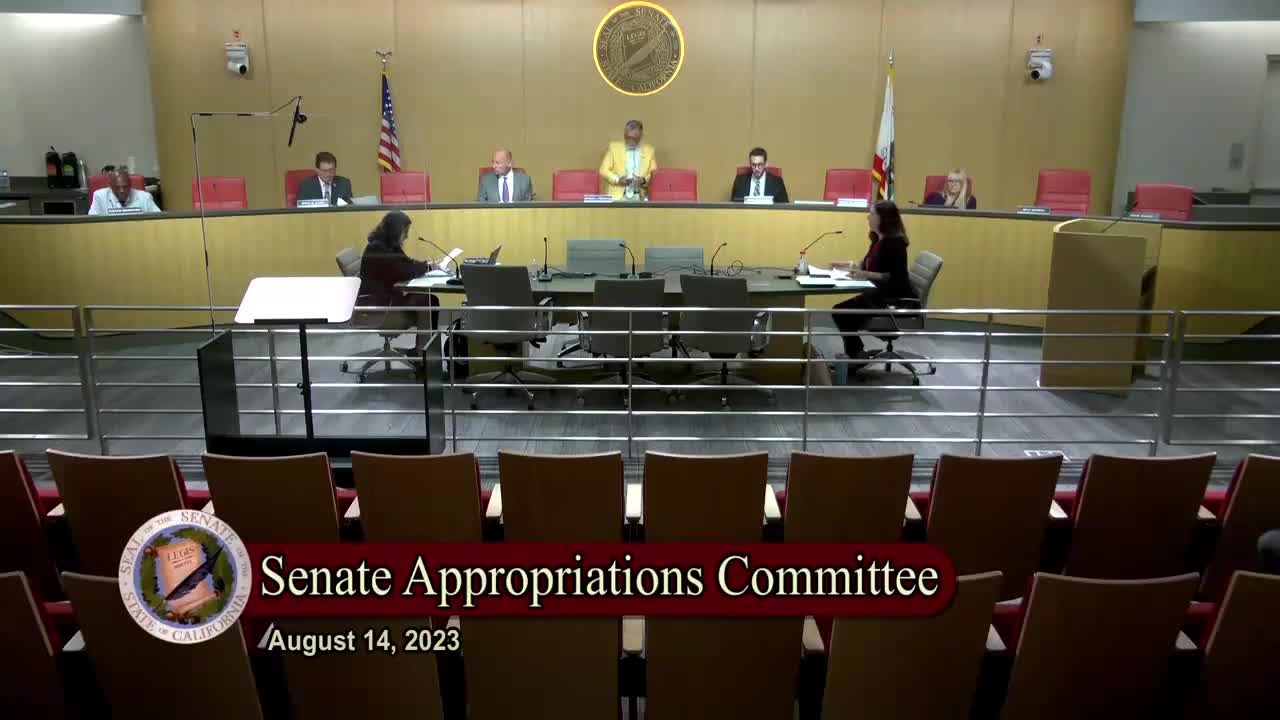 49SEC
Senate Standing Committee on Appropriations
 1MIN
Assembly Floor
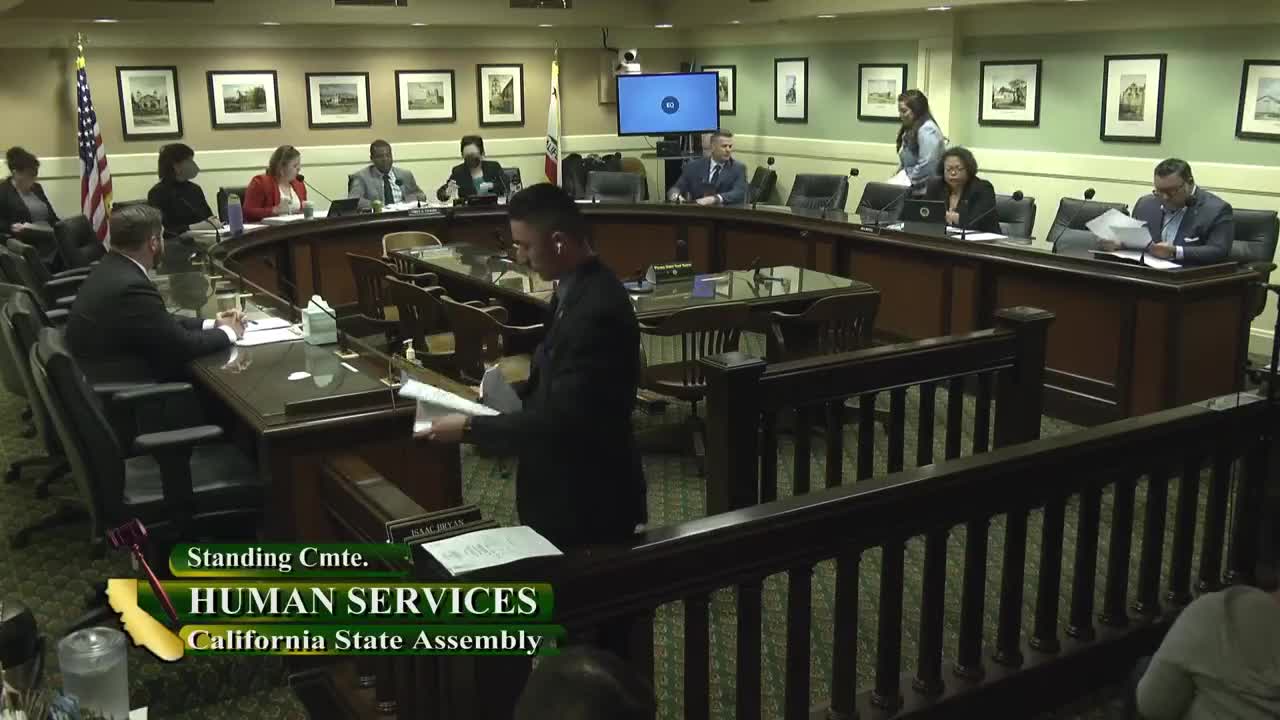 9MIN
Assembly Standing Committee on Human Services
Bill Author

Bill Co-Author(s):