AB 3275: Health care coverage: claim reimbursement.
- Session Year: 2023-2024
- House: Assembly
- Latest Version Date: 2024-09-27
Current Status:
Passed
(2024-09-27: Chaptered by Secretary of State - Chapter 763, Statutes of 2024.)
Introduced
In Committee
First Chamber
In Committee
Second Chamber
Enacted
What does this bill do?
The bill requires health insurers and health care service plans, including Medi‑Cal managed care plans, to pay a complete provider claim within 30 calendar days or notify the provider in writing within 30 days that the claim or part of it is contested or denied. It requires contested notices to identify the procedure or revenue codes and the specific information needed to reconsider the claim, makes late payments automatically accrue 15% annual interest (with plans required to include that interest in payments and pay a fee if they fail), and treats an enrollee’s complaint about a delayed or denied payment as a grievance (a formal complaint) under the plan’s grievance process.
The summary is provided by generative AI which can make mistakes. For original language, please view the details in the table below.
Existing law, the Knox-Keene Health Care Service Plan Act of 1975, provides for the licensure and regulation of health care service plans by the Department of Managed Health Care and makes a willful violation of the act a crime. Existing law provides for the regulation of health insurers by the Department of Insurance.
Existing law requires a health insurer or health care service plan, including a specialized health care service plan, to reimburse a claim or portion of a claim no later than 30 working days after receipt of the claim, unless the plan contests or denies the claim, in which case the plan is required to notify the claimant within 30 working days that the claim is contested or denied. Under existing law, if a claim or portion thereof is contested on the basis that a health insurer or health care service plan has not received all information necessary to determine payer liability for the claim or portion thereof and notice has been provided, the health insurer or health care service plan has 30 working days after receipt of the additional information to complete reconsideration of the claim. Existing law extends these timelines to 45 working days for a health care service plan that is a health maintenance organization. Under existing law, if a claim is not reimbursed, contested, or denied pursuant to these timelines, as specified, interest accrues at a rate of 15% per annum for a health care service plan and 10% per annum for a health insurer.
Commencing January 1, 2026, this bill instead would require a health care service plan, including a Medi-Cal managed care plan, or health insurer to reimburse a complete claim or a portion thereof within 30 calendar days after receipt of the claim, or, if a claim or portion thereof does not meet the criteria for a complete claim or portion thereof, to notify the claimant as soon as practicable, but no later than 30 calendar days that the claim or portion thereof is contested or denied. The bill would authorize the departments to issue guidance and regulations related to these provisions. The bill would exempt the guidance and amendments from the Administrative Procedure Act until December 31, 2027.
Existing law requires health care service plans to establish a grievance process, as specified.
This bill would require a complaint made by an enrollee to a health care service plan about a delay or denial of a payment of a claim to be treated as a grievance subject to that grievance process.
Because a willful violation of these provisions by a health care service plan would be a crime, the bill would impose a state-mandated local program.
The California Constitution requires the state to reimburse local agencies and school districts for certain costs mandated by the state. Statutory provisions establish procedures for making that reimbursement.
This bill would provide that no reimbursement is required by this act for a specified reason.
Existing law, the Knox-Keene Health Care Service Plan Act of 1975, provides for the licensure and regulation of health care service plans by the Department of Managed Health Care and makes a willful violation of the act a crime. Existing law provides for the regulation of health insurers by the Department of Insurance.
Existing law requires a health insurer or health care service plan, including a specialized health care service plan, to reimburse a claim or portion of a claim no later than 30 working days after receipt of the claim, unless the plan contests or denies the claim, in which case the plan is required to notify the claimant within 30 working days that the claim is contested or denied. Under existing law, if a claim or portion thereof is contested on the basis that a health insurer or health care service plan has not received all information necessary to determine payer liability for the claim or portion thereof and notice has been provided, the health insurer or health care service plan has 30 working days after receipt of the additional information to complete reconsideration of the claim. Existing law extends these timelines to 45 working days for a health care service plan that is a health maintenance organization. Under existing law, if a claim is not reimbursed, contested, or denied pursuant to these timelines, as specified, interest accrues at a rate of 15% per annum for a health care service plan and 10% per annum for a health insurer.
Commencing January 1, 2026, this bill instead would require a health care service plan, including a Medi-Cal managed care plan, or health insurer to reimburse a complete claim or a portion thereof within 30 calendar days after receipt of the claim, or, if a claim or portion thereof does not meet the criteria for a complete claim or portion thereof, to notify the claimant as soon as practicable, but no later than 30 calendar days that the claim or portion thereof is contested or denied. The bill would authorize the departments to issue guidance and regulations related to these provisions. The bill would exempt the guidance and amendments from the Administrative Procedure Act until December 31, 2027.
Existing law requires health care service plans to establish a grievance process, as specified.
This bill would require a complaint made by an enrollee to a health care service plan about a delay or denial of a payment of a claim to be treated as a grievance subject to that grievance process.
Because a willful violation of these provisions by a health care service plan would be a crime, the bill would impose a state-mandated local program.
The California Constitution requires the state to reimburse local agencies and school districts for certain costs mandated by the state. Statutory provisions establish procedures for making that reimbursement.
This bill would provide that no reimbursement is required by this act for a specified reason.
Existing law, the Knox-Keene Health Care Service Plan Act of 1975, provides for the licensure and regulation of health care service plans by the Department of Managed Health Care and makes a willful violation of the act a crime. Existing law provides for the regulation of health insurers by the Department of Insurance.
Existing law requires a health insurer or health care service plan, including a specialized health care service plan, to reimburse a claim or portion of a claim no later than 30 working days after receipt of the claim, unless the plan contests or denies the claim, in which case the plan is required to notify the claimant within 30 working days that the claim is contested or denied. Under existing law, if a claim or portion thereof is contested on the basis that a health insurer or health care service plan has not received all information necessary to determine payer liability for the claim or portion thereof and notice has been provided, the health insurer or health care service plan has 30 working days after receipt of the additional information to complete reconsideration of the claim. Existing law extends these timelines to 45 working days for a health care service plan that is a health maintenance organization. Under existing law, if a claim is not reimbursed, contested, or denied pursuant to these timelines, as specified, interest accrues at a rate of 15% per annum for a health care service plan and 10% per annum for a health insurer.
Commencing January 1, 2026, this bill instead would require a health care service plan plan, including a Medi-Cal managed care plan, or health insurer to reimburse a clean complete claim or a portion thereof within 30 calendar days after receipt of the claim, or, if a claim or portion thereof does not meet the criteria for a clean claim, complete claim or portion thereof, to notify the claimant within as soon as practicable, but no later than 30 calendar days that the claim or portion thereof is contested or denied. The bill would require the Department of Managed Health Care and the Department of Insurance to determine the criteria for a clean claim, as specified, no later than July 31, 2025. The bill would authorize the departments to issue guidance and amend regulations related to these provisions. The bill would exempt the guidance and amendments from the Administrative Procedure Act until December 31, 2027.
Existing law requires health care service plans to establish a grievance process, as specified.
This bill would require a complaint or inquiry made by an enrollee to a health care service plan about a delay or denial of a payment of a claim to be treated as a grievance subject to that grievance process.
Existing law creates the Managed Care Administrative Fines and Penalties Fund. This bill would require that an administrative fee assessed upon a health care service plan for a violation of the above-describe provisions related to clean claim reimbursement be deposited into the fund. The bill would require those moneys to be retained in the fund to assist enrollees and providers impacted by a violation, upon appropriation by the Legislature.Because a willful violation of these provisions by a health care service plan would be a crime, the bill would impose a state-mandated local program.
The California Constitution requires the state to reimburse local agencies and school districts for certain costs mandated by the state. Statutory provisions establish procedures for making that reimbursement.
This bill would provide that no reimbursement is required by this act for a specified reason.
Existing law, the Knox-Keene Health Care Service Plan Act of 1975, provides for the licensure and regulation of health care service plans by the Department of Managed Health Care and makes a willful violation of the act a crime. Existing law provides for the regulation of health insurers by the Department of Insurance. Existing
Existing law requires a health insurer or health care service plan, including a specialized health care service plan, to reimburse a claim or portion of a claim no later than 30 working days after receipt of the claim, unless the plan contests or denies the claim, in which case the plan is required to notify the claimant within 30 working days that the claim is contested or denied. Under existing law, if a claim or portion thereof is contested on the basis that a health insurer or health care service plan has not received all information necessary to determine payer liability for the claim or portion thereof and notice has been provided, the health insurer or health care service plan has 30 working days after receipt of the additional information to complete reconsideration of the claim. Existing law extends these timelines to 45 working days for a health care service plan that is a health maintenance organization. Under existing law, if a claim is not reimbursed, contested, or denied pursuant to these timelines, as specified, interest accrues at a rate of 15% per annum for a health care service plan and 10% per annum for a health insurer.
This bill would increase that interest accrual rate for a health insurer to 15% per annum. The bill would delete the provisions that extend the timelines for a health maintenance organization. The bill would require a health care service plan or health insurer to reimburse a claim within 15 working days after receipt of the claim, or, if the health care service plan or health insurer contests or denies the claim, to notify the claimant within 15 working days that the claim is contested or denied. Under the bill, if a claim for reimbursement is contested on the basis that the health care service plan or health insurer has not received all information necessary to determine payer liability for the claim and notice has been provided, the health care service plan or health insurer would have 15 working days after receipt of the additional information to complete reconsideration of the claim. The bill would require the departments to develop respective lists for categories of claims that, commencing January 1, 2026, would be required to be paid by a health insurer or health care service plan no later than 5 days after receipt of the claim, as specified. Existing law requires a health care service plan to automatically include in its payment of a claim all interest that has accrued, as specified.This bill would also require a health insurer to automatically include all interest accrued in its payment of a claim. Existing law requires a health care service plan that fails to comply with the requirement to include all interest in its payment of a claim to pay the claimant a $10 fee.This bill would instead require a health insurer or health care service plan that fails to comply with that requirement to pay the claimant a fee of no less than 10% of the interest accrued.Commencing January 1, 2026, this bill instead would require a health care service plan or health insurer to reimburse a clean claim or a portion thereof within 30 calendar days after receipt of the claim, or, if a claim does not meet the criteria for a clean claim, to notify the claimant within 30 calendar days that the claim is contested or denied. The bill would require the Department of Managed Health Care and the Department of Insurance to determine the criteria for a clean claim, as specified, no later than July 31, 2025. The bill would authorize the departments to issue guidance and amend regulations related to these provisions. The bill would exempt the guidance and amendments from the Administrative Procedure Act until December 31, 2027.
Existing law requires health care service plans to establish a grievance process, as specified.
This bill would require a complaint or inquiry made by an enrollee to a health care service plan about a delay or denial of a payment of a claim to be treated as a grievance subject to that grievance process.
Existing law creates the Managed Care Administrative Fines and Penalties Fund.
This bill would require that an administrative fee assessed upon a health care service plan for a violation of the above-describe provisions related to clean claim reimbursement be deposited into the fund. The bill would require those moneys to be retained in the fund to assist enrollees and providers impacted by a violation, upon appropriation by the Legislature.
Because a willful violation of these provisions by a health care service plan would be a crime, the bill would impose a state-mandated local program.
The California Constitution requires the state to reimburse local agencies and school districts for certain costs mandated by the state. Statutory provisions establish procedures for making that reimbursement.
This bill would provide that no reimbursement is required by this act for a specified reason.
Existing law, the Knox-Keene Health Care Service Plan Act of 1975, provides for the licensure and regulation of health care service plans by the Department of Managed Health Care and makes a willful violation of the act a crime. Existing law provides for the regulation of health insurers by the Department of Insurance. Existing law requires a health insurer or health care service plan, including a specialized health care service plan, to reimburse a claim or portion of a claim no later than 30 working days after receipt of the claim, unless the plan contests or denies the claim, in which case the plan is required to notify the claimant within 30 working days that the claim is contested or denied. Under existing law, if a claim or portion thereof is contested on the basis that a health insurer or health care service plan has not received all information necessary to determine payer liability for the claim or portion thereof and notice has been provided, the health insurer or health care service plan has 30 working days after receipt of the additional information to complete reconsideration of the claim. Existing law extends these timelines to 45 working days for a health care service plan that is a health maintenance organization. Under existing law, if a claim is not reimbursed, contested, or denied pursuant to these timelines, as specified, interest accrues at a rate of 15% per annum for a health care service plan and 10% per annum for a health insurer.
This bill would increase that interest accrual rate for a health insurer to 15% per annum. The bill, notwithstanding the above-described timelines, The bill would delete the provisions that extend the timelines for a health maintenance organization. The bill would require a health care service plan or health insurer to reimburse a claim for a small and rural provider, critical access provider, or distressed provider within 10 business within 15 working days after receipt of the claim, or, if the health care service plan or health insurer contests or denies the claim, to notify the claimant within 5 business 15 working days that the claim is contested or denied. Under the bill, if a claim for reimbursement to a small and rural provider, critical access provider, or distressed provider is contested on the basis that the health care service plan or health insurer has not received all information necessary to determine payer liability for the claim and notice has been provided, the health care service plan or health insurer would have 15 business working days after receipt of the additional information to complete reconsideration of the claim. Under the bill, if a claim is not reimbursed, contested, or denied pursuant to these timelines, as specified, interest would accrue at a rate of 15% per annum for health care service plans and health insurers. The bill would require the departments to develop respective lists for categories of claims that, commencing January 1, 2026, would be required to be paid by a health insurer or health care service plan to a small and rural provider, critical access provider, or distressed provider no later than 5 days after receipt of the claim, as specified.
Existing law requires a health care service plan to automatically include in its payment of a claim all interest that has accrued, as specified.
This bill would also require a health insurer to automatically include all interest accrued in its payment of a claim.
Existing law requires a health care service plan that fails to comply with the requirement to include all interest in its payment of a claim to pay the claimant a $10 fee.
This bill would instead require a health insurer or health care service plan that fails to comply with that requirement to pay the claimant a fee of no less than 10% of the interest accrued.
Because a willful violation of these provisions by a health care service plan would be a crime, the bill would impose a state-mandated local program.
The California Constitution requires the state to reimburse local agencies and school districts for certain costs mandated by the state. Statutory provisions establish procedures for making that reimbursement.
This bill would provide that no reimbursement is required by this act for a specified reason.
Existing law, the Knox-Keene Health Care Service Plan Act of 1975, provides for the licensure and regulation of health care service plans by the Department of Managed Health Care and makes a willful violation of the act a crime. Existing law provides for the regulation of health insurers by the Department of Insurance. Existing law requires a health insurer or health care service plan, including a specialized health care service plan, to reimburse a claim or portion of a claim no later than 30 working days after receipt of the claim, unless the plan contests or denies the claim, in which case the plan is required to notify the claimant within 30 working days that the claim is contested or denied. Under existing law, if a claim or portion thereof is contested on the basis that a health insurer or health care service plan has not received all information necessary to determine payer liability for the claim or portion thereof and notice has been provided, the health insurer or health care service plan has 30 working days after receipt of the additional information to complete reconsideration of the claim. Existing law extends these timelines to 45 working days for a health care service plan that is a health maintenance organization. Under existing law, if a claim is not reimbursed, contested, or denied pursuant to these timelines, as specified, interest accrues at a rate of 15% per annum for a health care service plan and 10% per annum for a health insurer.
This bill would increase that interest accrual rate for a health insurer to 15% per annum. The bill, notwithstanding the above-described timelines, would require a health care service plan or health insurer to reimburse a claim for a small and rural provider, critical access provider, or distressed provider within 10 business days after receipt of the claim, or, if the health care service plan or health insurer contests or denies the claim, to notify the claimant within 5 business days that the claim is contested or denied. Under the bill, if a claim for reimbursement to a small and rural provider, critical access provider, or distressed provider is contested on the basis that the health care service plan or health insurer has not received all information necessary to determine payer liability for the claim and notice has been provided, the health care service plan or health insurer would have 15 business days after receipt of the additional information to complete reconsideration of the claim. Under the bill, if a claim is not reimbursed, contested, or denied pursuant to these timelines, as specified, interest would accrue at a rate of 15% per annum for health care service plans and health insurers. The bill would require the departments to develop respective lists for categories of claims that that, commencing January 1, 2026, would be required to be paid by a health insurer or health care service plan to a small and rural provider, critical access provider, or distressed provider no later than 5 days after receipt of the claim, as specified.
Existing law requires a health care service plan to automatically include in its payment of a claim all interest that has accrued, as specified.
This bill would also require a health insurer to automatically include all interest accrued in its payment of a claim.
Existing law requires a health care service plan that fails to comply with the requirement to include all interest in its payment of a claim to pay the claimant a $10 fee.
This bill would instead require a health insurer or health care service plan that fails to comply with that requirement to pay the claimant a fee of no less than 10% of the interest accrued.
Because a willful violation of these provisions by a health care service plan would be a crime, the bill would impose a state-mandated local program.
The California Constitution requires the state to reimburse local agencies and school districts for certain costs mandated by the state. Statutory provisions establish procedures for making that reimbursement.
This bill would provide that no reimbursement is required by this act for a specified reason.
Existing law, the Knox-Keene Health Care Service Plan Act of 1975, provides for the licensure and regulation of health care service plans by the Department of Managed Health Care and makes a willful violation of the act a crime. Existing law provides for the regulation of health insurers by the Department of Insurance. Existing law requires a health insurer or health care service plan, including a specialized health care service plan, to reimburse a claim or portion of a claim no later than 30 working days after receipt of the claim, unless the plan contests or denies the claim, in which case the plan is required to notify the claimant within 30 working days that the claim is contested or denied. Under existing law, if a claim or portion thereof is contested on the basis that a health insurer or health care service plan has not received all information necessary to determine payer liability for the claim or portion thereof and notice has been provided, the health insurer or health care service plan has 30 working days after receipt of the additional information to complete reconsideration of the claim. Existing law extends these timelines to 45 working days for a health care service plan that is a health maintenance organization. Under existing law, if a claim is not reimbursed, contested, or denied pursuant to these timelines, as specified, interest accrues at a rate of 15% per annum for a health care service plan and 10% per annum for a health insurer.
This bill would increase that interest accrual rate for a health insurer to 15% per annum. The bill, notwithstanding the above-described timelines, would require a health care service plan or health insurer to reimburse a claim for a small and rural provider, critical access provider, or distressed provider within 10 business days after receipt of the claim, or, if the health care service plan or health insurer contests or denies the claim, to notify the claimant within 5 business days that the claim is contested or denied. Under the bill, if a claim for reimbursement to a small and rural provider, critical access provider, or distressed provider is contested on the basis that the health care service plan or health insurer has not received all information necessary to determine payer liability for the claim and notice has been provided, the health care service plan or health insurer would have 15 business days after receipt of the additional information to complete reconsideration of the claim. Under the bill, if a claim is not reimbursed, contested, or denied pursuant to these timelines, as specified, interest would accrue at a rate of 15% per annum for health care service plans and health insurers. The bill would require the departments to develop respective lists for categories of claims that would be required to be paid by a health insurer or health care service plan to a small and rural provider, critical access provider, or distressed provider no later than 5 days after receipt of the claim, as specified.
Existing law requires a health care service plan to automatically include in its payment of a claim all interest that has accrued, as specified.
This bill would also require a health insurer to automatically include all interest accrued in its payment of a claim.
Existing law requires a health care service plan that fails to comply with the requirement to include all interest in its payment of a claim to pay the claimant a $10 fee.
This bill would instead require a health insurer or health care service plan that fails to comply with that requirement to pay the claimant a fee of no less than 10% of the interest accrued.
This bill would delete the provisions that extend the timelines for a health maintenance organization.Because a willful violation of these provisions by a health care service plan would be a crime, the bill would impose a state-mandated local program.
The California Constitution requires the state to reimburse local agencies and school districts for certain costs mandated by the state. Statutory provisions establish procedures for making that reimbursement.
This bill would provide that no reimbursement is required by this act for a specified reason.
Existing law, the Knox-Keene Health Care Service Plan Act of 1975, provides for the licensure and regulation of health care service plans by the Department of Managed Health Care and makes a willful violation of the act a crime. Existing law requires a health care service plan, including a specialized health care service plan, to reimburse a claim or portion of a claim no later than 30 working days after receipt of the claim, unless the plan contests or denies the claim, in which case the plan is required to notify the claimant within 30 working days that the claim is contested or denied. Existing law extends these timelines to 45 working days for a health care service plan that is a health maintenance organization.
This bill would delete the provisions that extend the timelines for a health maintenance organization.
Because a willful violation of these provisions by a health care service plan would be a crime, the bill would impose a state-mandated local program.
The California Constitution requires the state to reimburse local agencies and school districts for certain costs mandated by the state. Statutory provisions establish procedures for making that reimbursement.
This bill would provide that no reimbursement is required by this act for a specified reason.
(a)(1)A health care service plan, including a specialized health care service plan, shall reimburse claims or a portion of a claim, whether in state or out of state, as soon as practicable, but no later than 30 working days after receipt of the claim by the health care service plan, or if the health care service plan is a health maintenance organization, 45 working days after receipt of the claim by the health care service plan, unless the claim or portion thereof is contested by the plan, in which case the claimant shall be notified, in writing, that the claim is contested or denied, within 30 working days after receipt of the claim by the health care service plan, or if the health care service plan is a health maintenance organization, 45 working days after receipt of the claim by the health care service plan. The notice that a claim is being contested shall identify the portion of the claim that is contested and the specific reasons for contesting the claim.
(2)If an uncontested claim is not reimbursed by delivery to the claimants address of record within the respective 30 or 45 working days after receipt, interest shall accrue at the rate of 15 percent per annum beginning with the first calendar day after the 30- or 45-working-day period. A health care service plan shall automatically include in its payment of the claim all interest that has accrued pursuant to this section without requiring the claimant to submit a request for the interest amount. A plan failing to comply with this requirement shall pay the claimant a ten dollar ($10) fee.
(3)For the purposes of this section, a claim, or portion thereof, is reasonably contested if the plan has not received the completed claim and all information necessary to determine payer liability for the claim, or has not been granted reasonable access to information concerning provider services. Information necessary to determine payer liability for the claim includes, but is not limited to, reports of investigations concerning fraud and misrepresentation, and necessary consents, releases, and assignments, a claim on appeal, or other information necessary for the plan to determine the medical necessity for the health care services provided.
(4)If a claim or portion thereof is contested on the basis that the plan has not received all information necessary to determine payer liability for the claim or portion thereof and notice has been provided pursuant to this section, the plan shall have 30 working days or, if the health care service plan is a health maintenance organization, 45 working days after receipt of this additional information to complete reconsideration of the claim. If a plan has received all of the information necessary to determine payer liability for a contested claim and has not reimbursed a claim it has determined to be payable within 30 working days of the receipt of that information, or if the plan is a health maintenance organization, within 45 working days of receipt of that information, interest shall accrue and be payable at a rate of 15 percent per annum beginning with the first calendar day after the 30- or 45-working-day period.
(b)Notwithstanding any other law, a specialized health care service plan that undertakes solely to arrange for the provision of vision care services may use a statistically reliable method to investigate suspected fraud and to recover overpayments made as a result of fraud only if the specialized health care service plan complies with this subdivision.
(1)A specialized health care service plans statistically reliable method, and how the specialized health care service plan intends to utilize that method to determine recovery of overpayments made as a result of fraud, shall be submitted to, and approved by, the department as elements of the specialized health care service plans antifraud plan established and approved pursuant to Section 1348. The specialized health care service plans utilization of a statistically reliable method shall help protect and promote the interests of enrollees and shall help ensure a stable health care delivery system. The statistically reliable method shall be consistent with direction provided by the International Standards for the Professional Practice of Internal Auditing and the guidance provided by the International Professional Practices Framework guide, which are both produced by the Institute of Internal Auditors.
(2)Pursuant to its antifraud plan established and approved pursuant to Section 1348, a specialized health care service plan shall provide a written notice of suspected fraud to a provider that includes, at a minimum, all of the following:
(A)A clear description of the specialized health care service plans statistically reliable methodology. The description shall include information that ensures that the sample size used to calculate the repayment amount is consistent with the professional guidance provided in the 2009 edition of the American Institute of Certified Public Accountants Audit Sampling Considerations of Circular A-133 Compliance Audits.
(B)A clear description of the universe of claims from which the statistical random sample was drawn and, if different, the universe of claims upon which the statistical analysis was applied to generate the recovery amount.
(C)A clear explanation of how the specialized health care service plans statistically reliable methodology was utilized in the specialized health care service plans findings of suspected fraud.
(D)Notice that a provider may dispute the specialized health care service plans findings within 45 working days from the date of receipt of the notice of suspected fraud.
(E)The following information for each of the claims in the statistical sample that was utilized in the specialized health care service plans findings:
(i)The claim number.
(ii)The name of the patient.
(iii)The date of service.
(iv)The date of payment.
(v)A clear explanation of the basis upon which the specialized health care service plan suspects the claim is fraudulent.
(3)A specialized health care service plan that undertakes solely to arrange for the provision of vision care services may use a statistically reliable method to recover overpayments made as a result of suspected fraud only if the universe of claims upon which the statistical analysis is performed consists only of those claims made between 365 days from the date of payment of the earliest in time claim and the date of payment of the latest in time claim. Notice shall be mailed to the provider no later than 60 days following the date of payment of the latest in time claim.
(4)If the provider contests the specialized health care service plans notice of suspected fraud, the provider, within 45 working days of the date of receipt of the notice of suspected fraud, shall send written notice to the specialized health care service plan stating the basis upon which the provider believes that the claims are not fraudulent. The specialized health care service plan shall receive and process this contested notice of suspected fraud as a provider dispute pursuant to subdivision (a) of this section, paragraph (1) of subdivision (h) of Section 1367, and the regulations promulgated thereunder.
(5)A specialized health care service plan may offset the amount the specialized health care service plan disclosed as overpaid to the provider in an uncontested notice of suspected fraud against the providers current claim submissions only if all of the following requirements are met:
(A)The provider fails to reimburse the specialized health care service plan within 45 working days from the date of receipt by the provider of the notice of suspected fraud.
(B)The specialized health care service plan sends written notice to the provider no less than 10 working days prior to withholding current claim payments in which the specialized health care service plan, at a minimum, states its intent to withhold current claim payments and identifies the claim payments that the specialized health care service plan intends to withhold.
(C)The withheld claim payments do not exceed the amount asserted by the specialized health care service plan to be owed to the specialized health care service plan in its notice of suspected fraud.
(6)This section does not limit or remove a specialized health care service plans obligation to comply with its antifraud plan established pursuant to Section 1348, or to limit or remove the specialized health care service plans obligation to comply with the requirements for claims subject to subdivision (a).
(7)This subdivision does not limit or remove a specialized health care service plans ability to recover overpayments as long as recovery is consistent with applicable law, including subdivision (a) and the regulations promulgated thereunder.
(8)This subdivision does not apply to claims submitted by a physician and surgeon for medical or surgical services that are outside the scope of practice of an optometrist pursuant to the Optometry Practice Act (Chapter 7 (commencing with Section 3000) of Division 2 of the Business and Professions Code).
(c)The obligation of a plan to comply with this section shall not be deemed to be waived when the plan requires its medical groups, independent practice associations, or other contracting entities to pay claims for covered services.
(d)This section shall remain in effect only until January 1, 2026, and as of that date is repealed.
SEC. 2.Section 1371 is added to the Health and Safety Code, to read:1371.(a)(1)A health care service plan, including a specialized health care service plan, shall reimburse a complete claim or portion thereof, whether in state or out of state, as soon as practicable, but no later than 30 calendar days after receipt of the claim by the health care service plan. If a claim or portion thereof does not meet the criteria for a complete claim or the criteria for coverage under the plan contract, the claimant shall be notified, in writing, that the claim or portion thereof is contested or denied, as soon as practicable, but no later than 30 calendar days after receipt of the claim by the health care service plan.
(2)The notice that a claim or portion thereof, is contested shall identify the portion of the claim that is contested, by procedure or revenue code, and the specific information needed from the provider to reconsider the claim, including any defect or impropriety or additional information needed to adjudicate the claim.
(3)The notice that a claim or portion thereof, is denied shall identify the portion of the claim that is denied, by procedure or revenue code, and the specific reasons for the denial including any defect or impropriety.
(4)If a complete claim is not reimbursed by delivery to the claimants address of record within 30 calendar days after receipt, interest shall accrue at a rate of 15 percent per annum beginning with the first calendar day after the 30-calendar-day period. A health care service plan shall automatically include in its payment of the claim all interest that has accrued pursuant to this section without requiring the claimant to submit a request for the interest amount. A plan failing to comply with this requirement shall pay the claimant a fee of the greater of an additional fifteen dollars ($15) or 10 percent of the accrued interest.
(5)For the purposes of this section, a claim, or portion thereof, is reasonably contested if the plan has not received the completed claim and all information necessary to determine payer liability for the claim, or has not been granted reasonable access to information concerning provider services. Information necessary to determine payer liability for the claim includes, but is not limited to, reports of investigations concerning fraud and misrepresentation, and necessary consents, releases, and assignments, a claim on appeal, or other information necessary for the plan to determine the medical necessity for the health care services provided. A plan may not contest a claim that is consistent with the procedure or revenue codes and services approved by prior authorization with appropriate documentation included on the claim.
(6)If a claim or portion thereof is contested on the basis that the plan has not received all information necessary to determine payer liability for the claim or portion thereof and notice has been provided pursuant to this section, the plan shall have 30 calendar days after receipt of this additional information to complete reconsideration of the claim. If a plan has received all of the information necessary to determine payer liability for a contested claim and has not reimbursed a claim it has determined to be payable within 30 calendar days of the receipt of that information, interest shall accrue and be payable at a rate of 15 percent per annum beginning with the first calendar day after the 30-calendar-day period.
(b)Notwithstanding any other law, a specialized health care service plan that undertakes solely to arrange for the provision of vision care services may use a statistically reliable method to investigate suspected fraud and to recover overpayments made as a result of fraud only if the specialized health care service plan complies with this subdivision.
(1)A specialized health care service plans statistically reliable method, and how the specialized health care service plan intends to utilize that method to determine recovery of overpayments made as a result of fraud, shall be submitted to, and approved by, the department as elements of the specialized health care service plans antifraud plan established and approved pursuant to Section 1348. The specialized health care service plans utilization of a statistically reliable method shall help protect and promote the interests of enrollees and shall help ensure a stable health care delivery system. The statistically reliable method shall be consistent with direction provided by the International Standards for the Professional Practice of Internal Auditing and the guidance provided by the International Professional Practices Framework guide, which are both produced by the Institute of Internal Auditors.
(2)Pursuant to its antifraud plan established and approved pursuant to Section 1348, a specialized health care service plan shall provide a written notice of suspected fraud to a provider that includes, at a minimum, all of the following:
(A)A clear description of the specialized health care service plans statistically reliable methodology. The description shall include information that ensures that the sample size used to calculate the repayment amount is consistent with the professional guidance provided in the 2009 edition of the American Institute of Certified Public Accountants Audit Sampling Considerations of Circular A-133 Compliance Audits.
(B)A clear description of the universe of claims from which the statistical random sample was drawn and, if different, the universe of claims upon which the statistical analysis was applied to generate the recovery amount.
(C)A clear explanation of how the specialized health care service plans statistically reliable methodology was utilized in the specialized health care service plans findings of suspected fraud.
(D)Notice that a provider may dispute the specialized health care service plans findings within 45 working days from the date of receipt of the notice of suspected fraud.
(E)The following information for each of the claims in the statistical sample that was utilized in the specialized health care service plans findings:
(i)The claim number.
(ii)The name of the patient.
(iii)The date of service.
(iv)The date of payment.
(v)A clear explanation of the basis upon which the specialized health care service plan suspects the claim is fraudulent.
(3)A specialized health care service plan that undertakes solely to arrange for the provision of vision care services may use a statistically reliable method to recover overpayments made as a result of suspected fraud only if the universe of claims upon which the statistical analysis is performed consists only of those claims made between 365 days from the date of payment of the earliest in time claim and the date of payment of the latest in time claim. Notice shall be mailed to the provider no later than 60 days following the date of payment of the latest in time claim.
(4)If the provider contests the specialized health care service plans notice of suspected fraud, the provider, within 45 working days of the date of receipt of the notice of suspected fraud, shall send written notice to the specialized health care service plan stating the basis upon which the provider believes that the claims are not fraudulent. The specialized health care service plan shall receive and process this contested notice of suspected fraud as a provider dispute pursuant to subdivision (a) of this section, paragraph (1) of subdivision (h) of Section 1367, and the regulations promulgated thereunder.
(5)A specialized health care service plan may offset the amount the specialized health care service plan disclosed as overpaid to the provider in an uncontested notice of suspected fraud against the providers current claim submissions only if all of the following requirements are met:
(A)The provider fails to reimburse the specialized health care service plan within 45 working days from the date of receipt by the provider of the notice of suspected fraud.
(B)The specialized health care service plan sends written notice to the provider no less than 10 working days prior to withholding current claim payments in which the specialized health care service plan, at a minimum, states its intent to withhold current claim payments and identifies the claim payments that the specialized health care service plan intends to withhold.
(C)The withheld claim payments do not exceed the amount asserted by the specialized health care service plan to be owed to the specialized health care service plan in its notice of suspected fraud.
(6)This section does not limit or remove a specialized health care service plans obligation to comply with its antifraud plan established pursuant to Section 1348, or to limit or remove the specialized health care service plans obligation to comply with the requirements for claims subject to subdivision (a).
(7)This subdivision does not limit or remove a specialized health care service plans ability to recover overpayments as long as recovery is consistent with applicable law, including subdivision (a) and the regulations promulgated thereunder.
(8)This subdivision does not apply to claims submitted by a physician and surgeon for medical or surgical services that are outside the scope of practice of an optometrist pursuant to the Optometry Practice Act (Chapter 7 (commencing with Section 3000) of Division 2 of the Business and Professions Code).
(c)The obligation of a plan to comply with this section shall not be deemed to be waived when the plan requires its medical groups, independent practice associations, or other contracting entities to pay claims for covered services.
(d)The department may issue compliance guidance and amend regulations for consistency with this section. The guidance and amendments shall not be subject to the rulemaking provisions of the Administrative Procedure Act (Chapter 3.5 (commencing with Section 11340) of Part 1 of Division 3 of Title 2 of the Government Code) until December 31, 2027.
(e)This section shall become operative on January 1, 2026.
SEC. 3.Section 1371.34 is added to the Health and Safety Code, to read:1371.34.(a)A complaint made by an enrollee to a health care service plan about a delay or denial of a payment of a claim shall be treated as a grievance subject to Section 1368 whether or not the enrollee uses the term grievance as part of the complaint. This section does not apply to specialized health care service plans.
(b)This section shall become operative on January 1, 2026.
SEC. 4.Section 1371.35 of the Health and Safety Code is amended to read:1371.35.(a) A health care service plan, including a specialized health care service plan, shall reimburse each complete claim, or portion thereof, whether in state or out of state, as soon as practical, but no later than 30 working days after receipt of the complete claim by the health care service plan, or if the health care service plan is a health maintenance organization, 45 working days after receipt of the complete claim by the health care service plan. However, a plan may contest or deny a claim, or portion thereof, by notifying the claimant, in writing, that the claim is contested or denied, within 30 working days after receipt of the claim by the health care service plan, or if the health care service plan is a health maintenance organization, 45 working days after receipt of the claim by the health care service plan. The notice that a claim, or portion thereof, is contested shall identify the portion of the claim that is contested, by revenue code, and the specific information needed from the provider to reconsider the claim. The notice that a claim, or portion thereof, is denied shall identify the portion of the claim that is denied, by revenue code, and the specific reasons for the denial. A plan may delay payment of an uncontested portion of a complete claim for reconsideration of a contested portion of that claim so long as the plan pays those charges specified in subdivision (b).
(b) If a complete claim, or portion thereof, that is neither contested nor denied, is not reimbursed by delivery to the claimants address of record within the respective 30 or 45 working days after receipt, the plan shall pay the greater of fifteen dollars ($15) per year or interest at the rate of 15 percent per annum beginning with the first calendar day after the 30- or 45-working-day period. A health care service plan shall automatically include the fifteen dollars ($15) per year or interest due in the payment made to the claimant, without requiring a request therefor.
(c) For the purposes of this section, a claim, or portion thereof, is reasonably contested if the plan has not received the completed claim. A paper claim from an institutional provider shall be deemed complete upon submission of a legible emergency department report and a completed UB 92 or other format adopted by the National Uniform Billing Committee, and reasonable relevant information requested by the plan within 30 working days of receipt of the claim. An electronic claim from an institutional provider shall be deemed complete upon submission of an electronic equivalent to the UB 92 or other format adopted by the National Uniform Billing Committee, and reasonable relevant information requested by the plan within 30 working days of receipt of the claim. However, if the plan requests a copy of the emergency department report within the 30 working days after receipt of the electronic claim from the institutional provider, the plan may also request additional reasonable relevant information within 30 working days of receipt of the emergency department report, at which time the claim shall be deemed complete. A claim from a professional provider shall be deemed complete upon submission of a completed HCFA 1500 or its electronic equivalent or other format adopted by the National Uniform Billing Committee, and reasonable relevant information requested by the plan within 30 working days of receipt of the claim. The provider shall provide the plan reasonable relevant information within 10 working days of receipt of a written request that is clear and specific regarding the information sought. If, as a result of reviewing the reasonable relevant information, the plan requires further information, the plan shall have an additional 15 working days after receipt of the reasonable relevant information to request the further information, notwithstanding any time limit to the contrary in this section, at which time the claim shall be deemed complete.
(d) This section shall not apply to claims about which there is evidence of fraud and misrepresentation, to eligibility determinations, or in instances where the plan has not been granted reasonable access to information under the providers control. A plan shall specify, in a written notice sent to the provider within the respective 30- or 45-working days of receipt of the claim, which, if any, of these exceptions applies to a claim.
(e) If a claim or portion thereof is contested on the basis that the plan has not received information reasonably necessary to determine payer liability for the claim or portion thereof, then the plan shall have 30 working days or, if the health care service plan is a health maintenance organization, 45 working days after receipt of this additional information to complete reconsideration of the claim. If a claim, or portion thereof, undergoing reconsideration is not reimbursed by delivery to the claimants address of record within the respective 30 or 45 working days after receipt of the additional information, the plan shall pay the greater of fifteen dollars ($15) per year or interest at the rate of 15 percent per annum beginning with the first calendar day after the 30- or 45-working-day period. A health care service plan shall automatically include the fifteen dollars ($15) per year or interest due in the payment made to the claimant, without requiring a request therefor.
(f) The obligation of the plan to comply with this section shall not be deemed to be waived when the plan requires its medical groups, independent practice associations, or other contracting entities to pay claims for covered services. This section shall not be construed to prevent a plan from assigning, by a written contract, the responsibility to pay interest and late charges pursuant to this section to medical groups, independent practice associations, or other entities.
(g) A plan shall not delay payment on a claim from a physician or other provider to await the submission of a claim from a hospital or other provider, without citing specific rationale as to why the delay was necessary and providing a monthly update regarding the status of the claim and the plans actions to resolve the claim, to the provider that submitted the claim.
(h) A health care service plan shall not request or require that a provider waive its rights pursuant to this section.
(i) This section shall not apply to capitated payments.
(j) This section shall apply only to claims for services rendered to a patient who was provided emergency services and care as defined in Section 1317.1 in the United States on or after September 1, 1999.
(k) This section shall not be construed to affect the rights or obligations of any person pursuant to Section 1371.
(l) This section shall not be construed to affect a written agreement, if any, of a provider to submit bills within a specified time period.
(m) This section shall remain in effect only until January 1, 2026, and as of that date is repealed.
SEC. 5.Section 1371.35 is added to the Health and Safety Code, to read:1371.35.(a)(1)A health care service plan, including a specialized health care service plan, shall reimburse a complete claim or portion thereof, whether in state or out of state, as soon as practicable, but no later than 30 calendar days after receipt of the claim by the health care service plan. If a claim or portion thereof does not meet the criteria for a complete claim or the criteria for coverage under the plan contract, a health care service plan shall notify the claimant, in writing, that the claim or portion thereof is contested or denied, as soon as practicable, but no later than 30 calendar days after receipt of the claim by the health care service plan.
(2)The notice that a claim or portion thereof, is contested shall identify the portion of the claim that is contested, by procedure or revenue code, and the specific information needed from the provider to reconsider the claim, including any defect or impropriety or additional information needed to adjudicate the claim.
(3)The notice that a claim or portion thereof, is denied shall identify the portion of the claim that is denied, by procedure or revenue code, and the specific reasons for the denial, including any defect or impropriety.
(b)If a claim, or portion thereof, is not reimbursed by delivery to the claimants address of record within 30 calendar days after receipt, the plan shall pay interest at a rate of 15 percent per annum beginning with the first calendar day after the 30-calendar-day period. A health care service plan shall automatically include all interest that has accrued pursuant to this section in the payment made to the claimant, without requiring a request therefor. A plan failing to comply with this requirement shall pay the claimant the greater of an additional fifteen dollars ($15) or a fee of 10 percent of the accrued interest.
(c)For the purposes of this section, a claim, or portion thereof, is reasonably contested if the plan has not received the completed claim. A paper claim from an institutional provider shall be deemed complete upon submission of a legible emergency department report and a completed UB 92 or other format adopted by the National Uniform Billing Committee, and reasonable relevant information requested by the plan within 30 calendar days of receipt of the claim. An electronic claim from an institutional provider shall be deemed complete upon submission of an electronic equivalent to the UB 92 or other format adopted by the National Uniform Billing Committee, and reasonable relevant information requested by the plan within 30 calendar days of receipt of the claim. However, if the plan requests a copy of the emergency department report within the 30 calendar days after receipt of the electronic claim from the institutional provider, the plan may also request additional reasonable relevant information within 30 calendar days of receipt of the emergency department report, at which time the claim shall be deemed complete. A claim from a professional provider shall be deemed complete upon submission of a completed HCFA 1500 or its electronic equivalent or other format adopted by the National Uniform Billing Committee, and reasonable relevant information requested by the plan within 30 calendar days of receipt of the claim. The provider shall provide the plan reasonable relevant information within 10 working days of receipt of a written request that is clear and specific regarding the information sought. If, as a result of reviewing the reasonable relevant information, the plan requires further information, the plan shall have an additional 15 calendar days after receipt of the reasonable relevant information to request the further information, notwithstanding any time limit to the contrary in this section, at which time the claim shall be deemed complete.
(d)This section shall not apply to claims about which there is evidence of fraud and misrepresentation, to eligibility determinations, or in instances where the plan has not been granted reasonable access to information under the providers control. A plan shall specify, in a written notice sent to the provider within 30 calendar days of receipt of the claim, which, if any, of these exceptions applies to a claim.
(e)If a claim or portion thereof is contested on the basis that the plan has not received information reasonably necessary to determine payer liability for the claim or portion thereof, then the plan shall have 30 calendar days after receipt of this additional information to complete reconsideration of the claim. If a claim, or portion thereof, undergoing reconsideration is not reimbursed by delivery to the claimants address of record within 30 calendar days after receipt of the additional information, the plan shall pay interest at the rate of 15 percent per annum beginning with the first calendar day after the 30-calendar-day period. A health care service plan shall automatically include the interest due in the payment made to the claimant, without requiring a request therefor.
(f)The obligation of the plan to comply with this section shall not be deemed to be waived when the plan requires its medical groups, independent practice associations, or other contracting entities to pay claims for covered services. This section shall not be construed to prevent a plan from assigning, by a written contract, the responsibility to pay interest and late charges pursuant to this section to medical groups, independent practice associations, or other entities.
(g)A plan shall not delay payment on a claim from a physician or other provider to await the submission of a claim from a hospital or other provider, without citing specific rationale as to why the delay was necessary and providing a monthly update regarding the status of the claim and the plans actions to resolve the claim, to the provider that submitted the claim.
(h)A health care service plan shall not request or require that a provider waive its rights pursuant to this section.
(i)This section shall not apply to capitated payments.
(j)This section shall apply only to claims for services rendered to a patient who was provided emergency services and care as defined in Section 1317.1 in the United States on or after September 1, 1999.
(k)This section shall not be construed to affect the rights or obligations of any person pursuant to Section 1371.
(l)This section shall not be construed to affect a written agreement, if any, of a provider to submit bills within a specified time period.
(m)The department may issue compliance guidance and amend regulations for consistency with this section. The guidance and amendments shall not be subject to the rulemaking provisions of the Administrative Procedure Act (Chapter 3.5 (commencing with Section 11340) of Part 1 of Division 3 of Title 2 of the Government Code) until December 31, 2027.
(n)This section shall become operative on January 1, 2026.
SEC. 6.Section 10123.13 of the Insurance Code is amended to read:10123.13.(a)Every insurer issuing group or individual policies of health insurance that cover hospital, medical, or surgical expenses, including those telehealth services covered by the insurer as defined in subdivision (a) of Section 2290.5 of the Business and Professions Code, shall reimburse claims or any portion of any claim, whether in state or out of state, for those expenses as soon as practical, but no later than 30 working days after receipt of the claim by the insurer unless the claim or portion thereof is contested by the insurer, in which case the claimant shall be notified, in writing, that the claim is contested or denied, within 30 working days after receipt of the claim by the insurer. The notice that a claim is being contested or denied shall identify the portion of the claim that is contested or denied and the specific reasons including for each reason the factual and legal basis known at that time by the insurer for contesting or denying the claim. If the reason is based solely on facts or solely on law, the insurer is required to provide only the factual or the legal basis for its reason for contesting or denying the claim. The insurer shall provide a copy of the notice to each insured who received services pursuant to the claim that was contested or denied and to the insureds health care provider that provided the services at issue. The notice shall advise the provider who submitted the claim on behalf of the insured or pursuant to a contract for alternative rates of payment and the insured that either may seek review by the department of a claim that the insurer contested or denied, and the notice shall include the address, internet website address, and telephone number of the unit within the department that performs this review function. The notice to the provider may be included on either the explanation of benefits or remittance advice and shall also contain a statement advising the provider of its right to enter into the dispute resolution process described in Section 10123.137. The notice to the insured may also be included on the explanation of benefits.
(b)If an uncontested claim is not reimbursed by delivery to the claimants address of record within 30 working days after receipt, interest shall accrue and shall be payable at the rate of 10 percent per annum beginning with the first calendar day after the 30-working-day period.
(c)For purposes of this section, a claim, or portion thereof, is reasonably contested when the insurer has not received a completed claim and all information necessary to determine payer liability for the claim, or has not been granted reasonable access to information concerning provider services. Information necessary to determine liability for the claims includes, but is not limited to, reports of investigations concerning fraud and misrepresentation, and necessary consents, releases, and assignments, a claim on appeal, or other information necessary for the insurer to determine the medical necessity for the health care services provided to the claimant. If an insurer has received all of the information necessary to determine payer liability for a contested claim and has not reimbursed a claim determined to be payable within 30 working days of receipt of that information, interest shall accrue and be payable at a rate of 10 percent per annum beginning with the first calendar day after the 30-working-day period.
(d)The obligation of the insurer to comply with this section shall not be deemed to be waived when the insurer requires its contracting entities to pay claims for covered services.
(e)This section shall remain in effect only until January 1, 2026, and as of that date is repealed.
SEC. 7.Section 10123.13 is added to the Insurance Code, to read:10123.13.(a)Every insurer issuing group or individual policies of health insurance that cover hospital, medical, or surgical expenses, including those telehealth services covered by the insurer as defined in subdivision (a) of Section 2290.5 of the Business and Professions Code, shall reimburse a complete claim or portion thereof, whether in state or out of state, for those expenses as soon as practicable, but no later than 30 calendar days after receipt of the claim by the insurer, in which case the claimant shall be notified, in writing, that the claim is contested or denied, within 30 calendar days after receipt of the claim by the insurer. The notice that a claim is being contested or denied shall identify the portion of the claim that is contested or denied and the specific reasons including for each reason the factual and legal basis known at that time by the insurer for contesting or denying the claim. If the reason is based solely on facts or solely on law, the insurer is required to provide only the factual or the legal basis for its reason for contesting or denying the claim. The insurer shall provide a copy of the notice to each insured who received services pursuant to the claim that was contested or denied and to the insureds health care provider that provided the services at issue. The notice shall advise the provider who submitted the claim on behalf of the insured or pursuant to a contract for alternative rates of payment and the insured that either may seek review by the department of a claim that the insurer contested or denied, and the notice shall include the address, internet website address, and telephone number of the unit within the department that performs this review function. The notice to the provider may be included on either the explanation of benefits or remittance advice and shall also contain a statement advising the provider of its right to enter into the dispute resolution process described in Section 10123.137. The notice to the insured may also be included on the explanation of benefits.
(b)If an uncontested claim is not reimbursed by delivery to the claimants address of record within 30 calendar days after receipt, interest shall accrue at the rate of 15 percent per annum beginning with the first calendar day after the 30-calendar-day period. An insurer shall automatically include in its payment of the claim all interest that has accrued pursuant to this section without requiring the claimant to submit a request for the interest amount. An insurer failing to comply with this requirement shall pay the claimant a fee of the greater an additional of fifteen dollars ($15) or 10 percent of the accrued interest.
(c)(1)For purposes of this section, a claim, or portion thereof, is reasonably contested when the insurer has not received a completed claim and all information necessary to determine payer liability for the claim, or has not been granted reasonable access to information concerning provider services. Information necessary to determine liability for the claims includes, but is not limited to, reports of investigations concerning fraud and misrepresentation, and necessary consents, releases, and assignments, a claim on appeal, or other information necessary for the insurer to determine the medical necessity for the health care services provided to the claimant. An insurer may not contest a complete claim that is consistent with an approved prior authorization request if the prior authorization approval has been provided in the appropriate field on the claim.
(2)If an insurer has received all of the information necessary to determine payer liability for a contested claim and has not reimbursed a claim determined to be payable within 30 calendar days of receipt of that information, interest shall accrue and be payable at a rate of 15 percent per annum beginning with the first calendar day after the 30-calendar-day period.
(d)The obligation of the insurer to comply with this section shall not be deemed to be waived when the insurer requires its contracting entities to pay claims for covered services.
(e)(1)The department may issue guidance and regulations relating to this section. The guidance and regulations shall not be subject to the rulemaking provisions of the Administrative Procedure Act (Chapter 3.5 (commencing with Section 11340) of Part 1 of Division 3 of Title 2 of the Government Code) until December 31, 2027.
(2)After January 1, 2028, the department may issue regulations relating to this section subject to the rulemaking provisions of the Administrative Procedure Act ((Chapter 3.5 commencing with Section 11340) of Part 1 of Division 3 of Title 2 of the Government Code) until December 31, 2030.
(f)This section shall become operative on January 1, 2026.
SEC. 8.Section 10123.147 of the Insurance Code is amended to read:10123.147.(a)Every insurer issuing group or individual policies of health insurance that cover hospital, medical, or surgical expenses, including those telehealth services covered by the insurer as defined in subdivision (a) of Section 2290.5 of the Business and Professions Code, shall reimburse each complete claim, or portion thereof, whether in state or out of state, as soon as practical, but no later than 30 working days after receipt of the complete claim by the insurer. However, an insurer may contest or deny a claim, or portion thereof, by notifying the claimant, in writing, that the claim is contested or denied, within 30 working days after receipt of the complete claim by the insurer. The notice that a claim, or portion thereof, is contested shall identify the portion of the claim that is contested, by revenue code, and the specific information needed from the provider to reconsider the claim. The notice that a claim, or portion thereof, is denied shall identify the portion of the claim that is denied, by revenue code, and the specific reasons for the denial, including the factual and legal basis known at that time by the insurer for each reason. If the reason is based solely on facts or solely on law, the insurer is required to provide only the factual or legal basis for its reason to deny the claim. The insurer shall provide a copy of the notice required by this subdivision to each insured who received services pursuant to the claim that was contested or denied and to the insureds health care provider that provided the services at issue. The notice required by this subdivision shall include a statement advising the provider who submitted the claim on behalf of the insured or pursuant to a contract for alternative rates of payment and the insured that either may seek review by the department of a claim that was contested or denied by the insurer and the address, internet website address, and telephone number of the unit within the department that performs this review function. The notice to the provider may be included on either the explanation of benefits or remittance advice and shall also contain a statement advising the provider of its right to enter into the dispute resolution process described in Section 10123.137. An insurer may delay payment of an uncontested portion of a complete claim for reconsideration of a contested portion of that claim so long as the insurer pays those charges specified in subdivision (b).
(b)If a complete claim, or portion thereof, that is neither contested nor denied, is not reimbursed by delivery to the claimants address of record within the 30 working days after receipt, the insurer shall pay the greater of fifteen dollars ($15) per year or interest at the rate of 10 percent per annum beginning with the first calendar day after the 30-working-day period. An insurer shall automatically include the fifteen dollars ($15) per year or interest due in the payment made to the claimant, without requiring a request therefor.
(c)For the purposes of this section, a claim, or portion thereof, is reasonably contested if the insurer has not received the completed claim. A paper claim from an institutional provider shall be deemed complete upon submission of a legible emergency department report and a completed UB 92 or other format adopted by the National Uniform Billing Committee, and reasonable relevant information requested by the insurer within 30 working days of receipt of the claim. An electronic claim from an institutional provider shall be deemed complete upon submission of an electronic equivalent to the UB 92 or other format adopted by the National Uniform Billing Committee, and reasonable relevant information requested by the insurer within 30 working days of receipt of the claim. However, if the insurer requests a copy of the emergency department report within the 30 working days after receipt of the electronic claim from the institutional provider, the insurer may also request additional reasonable relevant information within 30 working days of receipt of the emergency department report, at which time the claim shall be deemed complete. A claim from a professional provider shall be deemed complete upon submission of a completed HCFA 1500 or its electronic equivalent or other format adopted by the National Uniform Billing Committee, and reasonable relevant information requested by the insurer within 30 working days of receipt of the claim. The provider shall provide the insurer reasonable relevant information within 15 working days of receipt of a written request that is clear and specific regarding the information sought. If, as a result of reviewing the reasonable relevant information, the insurer requires further information, the insurer shall have an additional 15 working days after receipt of the reasonable relevant information to request the further information, notwithstanding any time limit to the contrary in this section, at which time the claim shall be deemed complete.
(d)This section shall not apply to claims about which there is evidence of fraud and misrepresentation, to eligibility determinations, or in instances where the plan has not been granted reasonable access to information under the providers control. An insurer shall specify, in a written notice to the provider within 30 working days of receipt of the claim, which, if any, of these exceptions applies to a claim.
(e)If a claim or portion thereof is contested on the basis that the insurer has not received information reasonably necessary to determine payer liability for the claim or portion thereof, then the insurer shall have 30 working days after receipt of this additional information to complete reconsideration of the claim. If a claim, or portion thereof, undergoing reconsideration is not reimbursed by delivery to the claimants address of record within the 30 working days after receipt of the additional information, the insurer shall pay the greater of fifteen dollars ($15) per year or interest at the rate of 10 percent per annum beginning with the first calendar day after the 30-working-day period. An insurer shall automatically include the fifteen dollars ($15) per year or interest due in the payment made to the claimant, without requiring a request therefor.
(f)An insurer shall not delay payment on a claim from a physician or other provider to await the submission of a claim from a hospital or other provider, without citing specific rationale as to why the delay was necessary and providing a monthly update regarding the status of the claim and the insurers actions to resolve the claim, to the provider that submitted the claim.
(g)An insurer shall not request or require that a provider waive its rights pursuant to this section.
(h)This section shall apply only to claims for services rendered to a patient who was provided emergency services and care as defined in Section 1317.1 of the Health and Safety Code in the United States on or after September 1, 1999.
(i)This section shall not be construed to affect the rights or obligations of any person pursuant to Section 10123.13.
(j)This section shall not be construed to affect a written agreement, if any, of a provider to submit bills within a specified time period.
(k)This section shall remain in effect only until January 1, 2026, and as of that date is repealed.
SEC. 9.Section 10123.147 is added to the Insurance Code, to read:10123.147.(a)Every insurer issuing group or individual policies of health insurance that cover hospital, medical, or surgical expenses, including those telehealth services covered by the insurer as defined in subdivision (a) of Section 2290.5 of the Business and Professions Code, shall reimburse a complete claim or portion thereof, whether in state or out of state, as soon as practicable, but no later than 30 calendar days after receipt of the complete claim by the insurer. However, an insurer may contest or deny a claim, or portion thereof, by notifying the claimant, in writing, that the claim is contested or denied, within 30 calendar days after receipt of the claim by the insurer. The notice that a claim, or portion thereof, is contested shall identify the portion of the claim that is contested, by procedure or revenue code, and the specific information needed from the provider to reconsider the claim. The notice that a claim, or portion thereof, is denied shall identify the portion of the claim that is denied, by procedure or revenue code, and the specific reasons for the denial, including the factual and legal basis known at that time by the insurer for each reason. If the reason is based solely on facts or solely on law, the insurer is required to provide only the factual or legal basis for its reason to deny the claim. The insurer shall provide a copy of the notice required by this subdivision to each insured who received services pursuant to the claim that was contested or denied and to the insureds health care provider that provided the services at issue. The notice required by this subdivision shall include a statement advising the provider who submitted the claim on behalf of the insured or pursuant to a contract for alternative rates of payment and the insured that either may seek review by the department of a claim that was contested or denied by the insurer and the address, internet website address, and telephone number of the unit within the department that performs this review function. The notice to the provider may be included on either the explanation of benefits or remittance advice and shall also contain a statement advising the provider of its right to enter into the dispute resolution process described in Section 10123.137. An insurer may delay payment of an uncontested portion of a complete claim for reconsideration of a contested portion of that claim so long as the insurer pays those charges specified in subdivision (b).
(b)If a complete claim or portion thereof that is neither contested nor denied is not reimbursed by delivery to the claimants address of record within the 30 calendar days after receipt, the insurer shall pay the greater of fifteen dollars ($15) per year or a rate of 15 percent per annum beginning with the first calendar day after the 30-calendar-day period. An insurer shall automatically include the fifteen dollars ($15) per year or interest due in the payment made to the claimant, without requiring a request therefor. An insurer failing to comply with this requirement shall pay the claimant the greater of an additional fifteen dollars ($15) or a fee of 10 percent of the accrued interest.
(c)For the purposes of this section, a claim or portion thereof, is reasonably contested if the insurer has not received the completed claim. A paper claim from an institutional provider shall be deemed complete upon submission of a legible emergency department report and a completed UB 92 or other format adopted by the National Uniform Billing Committee, and reasonable relevant information requested by the insurer within 30 calendar days of receipt of the claim. An electronic claim from an institutional provider shall be deemed complete upon submission of an electronic equivalent to the UB 92 or other format adopted by the National Uniform Billing Committee, and reasonable relevant information requested by the insurer within 30 calendar days of receipt of the claim. However, if the insurer requests a copy of the emergency department report within the 30 calendar days after receipt of the electronic claim from the institutional provider, the insurer may also request additional reasonable relevant information within 30 calendar days of receipt of the emergency department report, at which time the claim shall be deemed complete. A claim from a professional provider shall be deemed complete upon submission of a completed HCFA 1500 or its electronic equivalent or other format adopted by the National Uniform Billing Committee, and reasonable relevant information requested by the insurer within 30 calendar days of receipt of the claim. The provider shall provide the insurer reasonable relevant information within 10 working days of receipt of a written request that is clear and specific regarding the information sought. If, as a result of reviewing the reasonable relevant information, the insurer requires further information, the insurer shall have an additional 15 calendar days after receipt of the reasonable relevant information to request the further information, notwithstanding any time limit to the contrary in this section, at which time the claim shall be deemed complete.
(d)This section shall not apply to claims about which there is evidence of fraud and misrepresentation, to eligibility determinations, or in instances where the plan has not been granted reasonable access to information under the providers control. An insurer shall specify, in a written notice to the provider within 30 calendar days of receipt of the claim, which, if any, of these exceptions applies to a claim.
(e)If a claim or portion thereof is contested on the basis that the insurer has not received information reasonably necessary to determine payer liability for the claim or portion thereof, then the insurer shall have 30 calendar days after receipt of this additional information to complete reconsideration of the claim. If a claim, or portion thereof, undergoing reconsideration is not reimbursed by delivery to the claimants address of record within the 30 calendar days after receipt of the additional information, the insurer shall pay interest at the rate of 15 percent per annum beginning with the first calendar day after the 30-calendar-day period. An insurer shall automatically include interest due in the payment made to the claimant, without requiring a request therefor.
(f)An insurer shall not delay payment on a claim from a physician or other provider to await the submission of a claim from a hospital or other provider, without citing specific rationale as to why the delay was necessary and providing a monthly update regarding the status of the claim and the insurers actions to resolve the claim, to the provider that submitted the claim.
(g)An insurer shall not request or require that a provider waive its rights pursuant to this section.
(h)This section shall apply only to claims for services rendered to a patient who was provided emergency services and care as defined in Section 1317.1 of the Health and Safety Code in the United States on or after September 1, 1999.
(i)This section shall not be construed to affect the rights or obligations of any person pursuant to Section 10123.13.
(j)This section shall not be construed to affect a written agreement, if any, of a provider to submit bills within a specified time period.
(k)(1)The department may issue guidance and regulations relating to this section. The guidance and regulations shall not be subject to the rulemaking provisions of the Administrative Procedure Act (Chapter 3.5 (commencing with Section 11340) of Part 1 of Division 3 of Title 2 of the Government Code) until December 31, 2027.
(2)After January 1, 2028, the department may issue regulations relating to this section subject to the rulemaking provisions of the Administrative Procedure Act ((Chapter 3.5 commencing with Section 11340) of Part 1 of Division 3 of Title 2 of the Government Code) until December 31, 2030.
(l)This section shall become operative on January 1, 2026.
SEC. 10.Section 14093.08 is added to the Welfare and Institutions Code, to read:14093.08.Sections 1371 and 1371.35 of the Health and Safety Code apply to Medi-Cal managed care plan contracts entered into with the State Department of Health Care Services pursuant to this chapter or Chapter 8 (commencing with Section 14200).
SEC. 11.No reimbursement is required by this act pursuant to Section 6 of Article XIIIB of the California Constitution because the only costs that may be incurred by a local agency or school district will be incurred because this act creates a new crime or infraction, eliminates a crime or infraction, or changes the penalty for a crime or infraction, within the meaning of Section 17556 of the Government Code, or changes the definition of a crime within the meaning of Section 6 of Article XIIIB of the California Constitution.
(a)(1)A health care service plan, including a specialized health care service plan, shall reimburse claims or a portion of a claim, whether in state or out of state, as soon as practicable, but no later than 30 working days after receipt of the claim by the health care service plan, or if the health care service plan is a health maintenance organization, 45 working days after receipt of the claim by the health care service plan, unless the claim or portion thereof is contested by the plan, in which case the claimant shall be notified, in writing, that the claim is contested or denied, within 30 working days after receipt of the claim by the health care service plan, or if the health care service plan is a health maintenance organization, 45 working days after receipt of the claim by the health care service plan. The notice that a claim is being contested shall identify the portion of the claim that is contested and the specific reasons for contesting the claim.
(2)If an uncontested claim is not reimbursed by delivery to the claimants address of record within the respective 30 or 45 working days after receipt, interest shall accrue at the rate of 15 percent per annum beginning with the first calendar day after the 30- or 45-working-day period. A health care service plan shall automatically include in its payment of the claim all interest that has accrued pursuant to this section without requiring the claimant to submit a request for the interest amount. A plan failing to comply with this requirement shall pay the claimant a ten dollar ($10) fee.
(3)For the purposes of this section, a claim, or portion thereof, is reasonably contested if the plan has not received the completed claim and all information necessary to determine payer liability for the claim, or has not been granted reasonable access to information concerning provider services. Information necessary to determine payer liability for the claim includes, but is not limited to, reports of investigations concerning fraud and misrepresentation, and necessary consents, releases, and assignments, a claim on appeal, or other information necessary for the plan to determine the medical necessity for the health care services provided.
(4)If a claim or portion thereof is contested on the basis that the plan has not received all information necessary to determine payer liability for the claim or portion thereof and notice has been provided pursuant to this section, the plan shall have 30 working days or, if the health care service plan is a health maintenance organization, 45 working days after receipt of this additional information to complete reconsideration of the claim. If a plan has received all of the information necessary to determine payer liability for a contested claim and has not reimbursed a claim it has determined to be payable within 30 working days of the receipt of that information, or if the plan is a health maintenance organization, within 45 working days of receipt of that information, interest shall accrue and be payable at a rate of 15 percent per annum beginning with the first calendar day after the 30- or 45-working-day period.
(b)Notwithstanding any other law, a specialized health care service plan that undertakes solely to arrange for the provision of vision care services may use a statistically reliable method to investigate suspected fraud and to recover overpayments made as a result of fraud only if the specialized health care service plan complies with this subdivision.
(1)A specialized health care service plans statistically reliable method, and how the specialized health care service plan intends to utilize that method to determine recovery of overpayments made as a result of fraud, shall be submitted to, and approved by, the department as elements of the specialized health care service plans antifraud plan established and approved pursuant to Section 1348. The specialized health care service plans utilization of a statistically reliable method shall help protect and promote the interests of enrollees and shall help ensure a stable health care delivery system. The statistically reliable method shall be consistent with direction provided by the International Standards for the Professional Practice of Internal Auditing and the guidance provided by the International Professional Practices Framework guide, which are both produced by the Institute of Internal Auditors.
(2)Pursuant to its antifraud plan established and approved pursuant to Section 1348, a specialized health care service plan shall provide a written notice of suspected fraud to a provider that includes, at a minimum, all of the following:
(A)A clear description of the specialized health care service plans statistically reliable methodology. The description shall include information that ensures that the sample size used to calculate the repayment amount is consistent with the professional guidance provided in the 2009 edition of the American Institute of Certified Public Accountants Audit Sampling Considerations of Circular A-133 Compliance Audits.
(B)A clear description of the universe of claims from which the statistical random sample was drawn and, if different, the universe of claims upon which the statistical analysis was applied to generate the recovery amount.
(C)A clear explanation of how the specialized health care service plans statistically reliable methodology was utilized in the specialized health care service plans findings of suspected fraud.
(D)Notice that a provider may dispute the specialized health care service plans findings within 45 working days from the date of receipt of the notice of suspected fraud.
(E)The following information for each of the claims in the statistical sample that was utilized in the specialized health care service plans findings:
(i)The claim number.
(ii)The name of the patient.
(iii)The date of service.
(iv)The date of payment.
(v)A clear explanation of the basis upon which the specialized health care service plan suspects the claim is fraudulent.
(3)A specialized health care service plan that undertakes solely to arrange for the provision of vision care services may use a statistically reliable method to recover overpayments made as a result of suspected fraud only if the universe of claims upon which the statistical analysis is performed consists only of those claims made between 365 days from the date of payment of the earliest in time claim and the date of payment of the latest in time claim. Notice shall be mailed to the provider no later than 60 days following the date of payment of the latest in time claim.
(4)If the provider contests the specialized health care service plans notice of suspected fraud, the provider, within 45 working days of the date of receipt of the notice of suspected fraud, shall send written notice to the specialized health care service plan stating the basis upon which the provider believes that the claims are not fraudulent. The specialized health care service plan shall receive and process this contested notice of suspected fraud as a provider dispute pursuant to subdivision (a) of this section, paragraph (1) of subdivision (h) of Section 1367, and the regulations promulgated thereunder.
(5)A specialized health care service plan may offset the amount the specialized health care service plan disclosed as overpaid to the provider in an uncontested notice of suspected fraud against the providers current claim submissions only if all of the following requirements are met:
(A)The provider fails to reimburse the specialized health care service plan within 45 working days from the date of receipt by the provider of the notice of suspected fraud.
(B)The specialized health care service plan sends written notice to the provider no less than 10 working days prior to withholding current claim payments in which the specialized health care service plan, at a minimum, states its intent to withhold current claim payments and identifies the claim payments that the specialized health care service plan intends to withhold.
(C)The withheld claim payments do not exceed the amount asserted by the specialized health care service plan to be owed to the specialized health care service plan in its notice of suspected fraud.
(6)This section does not limit or remove a specialized health care service plans obligation to comply with its antifraud plan established pursuant to Section 1348, or to limit or remove the specialized health care service plans obligation to comply with the requirements for claims subject to subdivision (a).
(7)This subdivision does not limit or remove a specialized health care service plans ability to recover overpayments as long as recovery is consistent with applicable law, including subdivision (a) and the regulations promulgated thereunder.
(8)This subdivision does not apply to claims submitted by a physician and surgeon for medical or surgical services that are outside the scope of practice of an optometrist pursuant to the Optometry Practice Act (Chapter 7 (commencing with Section 3000) of Division 2 of the Business and Professions Code).
(c)The obligation of a plan to comply with this section shall not be deemed to be waived when the plan requires its medical groups, independent practice associations, or other contracting entities to pay claims for covered services.
(d)This section shall remain in effect only until January 1, 2026, and as of that date is repealed.
SEC. 2.Section 1371 is added to the Health and Safety Code, to read:1371.(a)(1)A health care service plan, including a specialized health care service plan, shall reimburse a complete claim or portion thereof, whether in state or out of state, as soon as practicable, but no later than 30 calendar days after receipt of the claim by the health care service plan. If a claim or portion thereof does not meet the criteria for a complete claim or the criteria for coverage under the plan contract, the claimant shall be notified, in writing, that the claim or portion thereof is contested or denied, as soon as practicable, but no later than 30 calendar days after receipt of the claim by the health care service plan.
(2)The notice that a claim or portion thereof, is contested shall identify the portion of the claim that is contested, by procedure or revenue code, and the specific information needed from the provider to reconsider the claim, including any defect or impropriety or additional information needed to adjudicate the claim.
(3)The notice that a claim or portion thereof, is denied shall identify the portion of the claim that is denied, by procedure or revenue code, and the specific reasons for the denial including any defect or impropriety.
(4)If a complete claim is not reimbursed by delivery to the claimants address of record within 30 calendar days after receipt, interest shall accrue at a rate of 15 percent per annum beginning with the first calendar day after the 30-calendar-day period. A health care service plan shall automatically include in its payment of the claim all interest that has accrued pursuant to this section without requiring the claimant to submit a request for the interest amount. A plan failing to comply with this requirement shall pay the claimant a fee of the greater of an additional fifteen dollars ($15) or 10 percent of the accrued interest.
(5)For the purposes of this section, a claim, or portion thereof, is reasonably contested if the plan has not received the completed claim and all information necessary to determine payer liability for the claim, or has not been granted reasonable access to information concerning provider services. Information necessary to determine payer liability for the claim includes, but is not limited to, reports of investigations concerning fraud and misrepresentation, and necessary consents, releases, and assignments, a claim on appeal, or other information necessary for the plan to determine the medical necessity for the health care services provided. A plan may not contest a claim that is consistent with the procedure or revenue codes and services approved by prior authorization with appropriate documentation included on the claim.
(6)If a claim or portion thereof is contested on the basis that the plan has not received all information necessary to determine payer liability for the claim or portion thereof and notice has been provided pursuant to this section, the plan shall have 30 calendar days after receipt of this additional information to complete reconsideration of the claim. If a plan has received all of the information necessary to determine payer liability for a contested claim and has not reimbursed a claim it has determined to be payable within 30 calendar days of the receipt of that information, interest shall accrue and be payable at a rate of 15 percent per annum beginning with the first calendar day after the 30-calendar-day period.
(b)Notwithstanding any other law, a specialized health care service plan that undertakes solely to arrange for the provision of vision care services may use a statistically reliable method to investigate suspected fraud and to recover overpayments made as a result of fraud only if the specialized health care service plan complies with this subdivision.
(1)A specialized health care service plans statistically reliable method, and how the specialized health care service plan intends to utilize that method to determine recovery of overpayments made as a result of fraud, shall be submitted to, and approved by, the department as elements of the specialized health care service plans antifraud plan established and approved pursuant to Section 1348. The specialized health care service plans utilization of a statistically reliable method shall help protect and promote the interests of enrollees and shall help ensure a stable health care delivery system. The statistically reliable method shall be consistent with direction provided by the International Standards for the Professional Practice of Internal Auditing and the guidance provided by the International Professional Practices Framework guide, which are both produced by the Institute of Internal Auditors.
(2)Pursuant to its antifraud plan established and approved pursuant to Section 1348, a specialized health care service plan shall provide a written notice of suspected fraud to a provider that includes, at a minimum, all of the following:
(A)A clear description of the specialized health care service plans statistically reliable methodology. The description shall include information that ensures that the sample size used to calculate the repayment amount is consistent with the professional guidance provided in the 2009 edition of the American Institute of Certified Public Accountants Audit Sampling Considerations of Circular A-133 Compliance Audits.
(B)A clear description of the universe of claims from which the statistical random sample was drawn and, if different, the universe of claims upon which the statistical analysis was applied to generate the recovery amount.
(C)A clear explanation of how the specialized health care service plans statistically reliable methodology was utilized in the specialized health care service plans findings of suspected fraud.
(D)Notice that a provider may dispute the specialized health care service plans findings within 45 working days from the date of receipt of the notice of suspected fraud.
(E)The following information for each of the claims in the statistical sample that was utilized in the specialized health care service plans findings:
(i)The claim number.
(ii)The name of the patient.
(iii)The date of service.
(iv)The date of payment.
(v)A clear explanation of the basis upon which the specialized health care service plan suspects the claim is fraudulent.
(3)A specialized health care service plan that undertakes solely to arrange for the provision of vision care services may use a statistically reliable method to recover overpayments made as a result of suspected fraud only if the universe of claims upon which the statistical analysis is performed consists only of those claims made between 365 days from the date of payment of the earliest in time claim and the date of payment of the latest in time claim. Notice shall be mailed to the provider no later than 60 days following the date of payment of the latest in time claim.
(4)If the provider contests the specialized health care service plans notice of suspected fraud, the provider, within 45 working days of the date of receipt of the notice of suspected fraud, shall send written notice to the specialized health care service plan stating the basis upon which the provider believes that the claims are not fraudulent. The specialized health care service plan shall receive and process this contested notice of suspected fraud as a provider dispute pursuant to subdivision (a) of this section, paragraph (1) of subdivision (h) of Section 1367, and the regulations promulgated thereunder.
(5)A specialized health care service plan may offset the amount the specialized health care service plan disclosed as overpaid to the provider in an uncontested notice of suspected fraud against the providers current claim submissions only if all of the following requirements are met:
(A)The provider fails to reimburse the specialized health care service plan within 45 working days from the date of receipt by the provider of the notice of suspected fraud.
(B)The specialized health care service plan sends written notice to the provider no less than 10 working days prior to withholding current claim payments in which the specialized health care service plan, at a minimum, states its intent to withhold current claim payments and identifies the claim payments that the specialized health care service plan intends to withhold.
(C)The withheld claim payments do not exceed the amount asserted by the specialized health care service plan to be owed to the specialized health care service plan in its notice of suspected fraud.
(6)This section does not limit or remove a specialized health care service plans obligation to comply with its antifraud plan established pursuant to Section 1348, or to limit or remove the specialized health care service plans obligation to comply with the requirements for claims subject to subdivision (a).
(7)This subdivision does not limit or remove a specialized health care service plans ability to recover overpayments as long as recovery is consistent with applicable law, including subdivision (a) and the regulations promulgated thereunder.
(8)This subdivision does not apply to claims submitted by a physician and surgeon for medical or surgical services that are outside the scope of practice of an optometrist pursuant to the Optometry Practice Act (Chapter 7 (commencing with Section 3000) of Division 2 of the Business and Professions Code).
(c)The obligation of a plan to comply with this section shall not be deemed to be waived when the plan requires its medical groups, independent practice associations, or other contracting entities to pay claims for covered services.
(d)The department may issue compliance guidance and amend regulations for consistency with this section. The guidance and amendments shall not be subject to the rulemaking provisions of the Administrative Procedure Act (Chapter 3.5 (commencing with Section 11340) of Part 1 of Division 3 of Title 2 of the Government Code) until December 31, 2027.
(e)This section shall become operative on January 1, 2026.
SEC. 3.Section 1371.34 is added to the Health and Safety Code, to read:1371.34.(a)A complaint made by an enrollee to a health care service plan about a delay or denial of a payment of a claim shall be treated as a grievance subject to Section 1368 whether or not the enrollee uses the term grievance as part of the complaint. This section does not apply to specialized health care service plans.
(b)This section shall become operative on January 1, 2026.
SEC. 4.Section 1371.35 of the Health and Safety Code is amended to read:1371.35.(a) A health care service plan, including a specialized health care service plan, shall reimburse each complete claim, or portion thereof, whether in state or out of state, as soon as practical, but no later than 30 working days after receipt of the complete claim by the health care service plan, or if the health care service plan is a health maintenance organization, 45 working days after receipt of the complete claim by the health care service plan. However, a plan may contest or deny a claim, or portion thereof, by notifying the claimant, in writing, that the claim is contested or denied, within 30 working days after receipt of the claim by the health care service plan, or if the health care service plan is a health maintenance organization, 45 working days after receipt of the claim by the health care service plan. The notice that a claim, or portion thereof, is contested shall identify the portion of the claim that is contested, by revenue code, and the specific information needed from the provider to reconsider the claim. The notice that a claim, or portion thereof, is denied shall identify the portion of the claim that is denied, by revenue code, and the specific reasons for the denial. A plan may delay payment of an uncontested portion of a complete claim for reconsideration of a contested portion of that claim so long as the plan pays those charges specified in subdivision (b).
(b) If a complete claim, or portion thereof, that is neither contested nor denied, is not reimbursed by delivery to the claimants address of record within the respective 30 or 45 working days after receipt, the plan shall pay the greater of fifteen dollars ($15) per year or interest at the rate of 15 percent per annum beginning with the first calendar day after the 30- or 45-working-day period. A health care service plan shall automatically include the fifteen dollars ($15) per year or interest due in the payment made to the claimant, without requiring a request therefor.
(c) For the purposes of this section, a claim, or portion thereof, is reasonably contested if the plan has not received the completed claim. A paper claim from an institutional provider shall be deemed complete upon submission of a legible emergency department report and a completed UB 92 or other format adopted by the National Uniform Billing Committee, and reasonable relevant information requested by the plan within 30 working days of receipt of the claim. An electronic claim from an institutional provider shall be deemed complete upon submission of an electronic equivalent to the UB 92 or other format adopted by the National Uniform Billing Committee, and reasonable relevant information requested by the plan within 30 working days of receipt of the claim. However, if the plan requests a copy of the emergency department report within the 30 working days after receipt of the electronic claim from the institutional provider, the plan may also request additional reasonable relevant information within 30 working days of receipt of the emergency department report, at which time the claim shall be deemed complete. A claim from a professional provider shall be deemed complete upon submission of a completed HCFA 1500 or its electronic equivalent or other format adopted by the National Uniform Billing Committee, and reasonable relevant information requested by the plan within 30 working days of receipt of the claim. The provider shall provide the plan reasonable relevant information within 10 working days of receipt of a written request that is clear and specific regarding the information sought. If, as a result of reviewing the reasonable relevant information, the plan requires further information, the plan shall have an additional 15 working days after receipt of the reasonable relevant information to request the further information, notwithstanding any time limit to the contrary in this section, at which time the claim shall be deemed complete.
(d) This section shall not apply to claims about which there is evidence of fraud and misrepresentation, to eligibility determinations, or in instances where the plan has not been granted reasonable access to information under the providers control. A plan shall specify, in a written notice sent to the provider within the respective 30- or 45-working days of receipt of the claim, which, if any, of these exceptions applies to a claim.
(e) If a claim or portion thereof is contested on the basis that the plan has not received information reasonably necessary to determine payer liability for the claim or portion thereof, then the plan shall have 30 working days or, if the health care service plan is a health maintenance organization, 45 working days after receipt of this additional information to complete reconsideration of the claim. If a claim, or portion thereof, undergoing reconsideration is not reimbursed by delivery to the claimants address of record within the respective 30 or 45 working days after receipt of the additional information, the plan shall pay the greater of fifteen dollars ($15) per year or interest at the rate of 15 percent per annum beginning with the first calendar day after the 30- or 45-working-day period. A health care service plan shall automatically include the fifteen dollars ($15) per year or interest due in the payment made to the claimant, without requiring a request therefor.
(f) The obligation of the plan to comply with this section shall not be deemed to be waived when the plan requires its medical groups, independent practice associations, or other contracting entities to pay claims for covered services. This section shall not be construed to prevent a plan from assigning, by a written contract, the responsibility to pay interest and late charges pursuant to this section to medical groups, independent practice associations, or other entities.
(g) A plan shall not delay payment on a claim from a physician or other provider to await the submission of a claim from a hospital or other provider, without citing specific rationale as to why the delay was necessary and providing a monthly update regarding the status of the claim and the plans actions to resolve the claim, to the provider that submitted the claim.
(h) A health care service plan shall not request or require that a provider waive its rights pursuant to this section.
(i) This section shall not apply to capitated payments.
(j) This section shall apply only to claims for services rendered to a patient who was provided emergency services and care as defined in Section 1317.1 in the United States on or after September 1, 1999.
(k) This section shall not be construed to affect the rights or obligations of any person pursuant to Section 1371.
(l) This section shall not be construed to affect a written agreement, if any, of a provider to submit bills within a specified time period.
(m) This section shall remain in effect only until January 1, 2026, and as of that date is repealed.
SEC. 5.Section 1371.35 is added to the Health and Safety Code, to read:1371.35.(a)(1)A health care service plan, including a specialized health care service plan, shall reimburse a complete claim or portion thereof, whether in state or out of state, as soon as practicable, but no later than 30 calendar days after receipt of the claim by the health care service plan. If a claim or portion thereof does not meet the criteria for a complete claim or the criteria for coverage under the plan contract, a health care service plan shall notify the claimant, in writing, that the claim or portion thereof is contested or denied, as soon as practicable, but no later than 30 calendar days after receipt of the claim by the health care service plan.
(2)The notice that a claim or portion thereof, is contested shall identify the portion of the claim that is contested, by procedure or revenue code, and the specific information needed from the provider to reconsider the claim, including any defect or impropriety or additional information needed to adjudicate the claim.
(3)The notice that a claim or portion thereof, is denied shall identify the portion of the claim that is denied, by procedure or revenue code, and the specific reasons for the denial, including any defect or impropriety.
(b)If a claim, or portion thereof, is not reimbursed by delivery to the claimants address of record within 30 calendar days after receipt, the plan shall pay interest at a rate of 15 percent per annum beginning with the first calendar day after the 30-calendar-day period. A health care service plan shall automatically include all interest that has accrued pursuant to this section in the payment made to the claimant, without requiring a request therefor. A plan failing to comply with this requirement shall pay the claimant the greater of an additional fifteen dollars ($15) or a fee of 10 percent of the accrued interest.
(c)For the purposes of this section, a claim, or portion thereof, is reasonably contested if the plan has not received the completed claim. A paper claim from an institutional provider shall be deemed complete upon submission of a legible emergency department report and a completed UB 92 or other format adopted by the National Uniform Billing Committee, and reasonable relevant information requested by the plan within 30 calendar days of receipt of the claim. An electronic claim from an institutional provider shall be deemed complete upon submission of an electronic equivalent to the UB 92 or other format adopted by the National Uniform Billing Committee, and reasonable relevant information requested by the plan within 30 calendar days of receipt of the claim. However, if the plan requests a copy of the emergency department report within the 30 calendar days after receipt of the electronic claim from the institutional provider, the plan may also request additional reasonable relevant information within 30 calendar days of receipt of the emergency department report, at which time the claim shall be deemed complete. A claim from a professional provider shall be deemed complete upon submission of a completed HCFA 1500 or its electronic equivalent or other format adopted by the National Uniform Billing Committee, and reasonable relevant information requested by the plan within 30 calendar days of receipt of the claim. The provider shall provide the plan reasonable relevant information within 10 working days of receipt of a written request that is clear and specific regarding the information sought. If, as a result of reviewing the reasonable relevant information, the plan requires further information, the plan shall have an additional 15 calendar days after receipt of the reasonable relevant information to request the further information, notwithstanding any time limit to the contrary in this section, at which time the claim shall be deemed complete.
(d)This section shall not apply to claims about which there is evidence of fraud and misrepresentation, to eligibility determinations, or in instances where the plan has not been granted reasonable access to information under the providers control. A plan shall specify, in a written notice sent to the provider within 30 calendar days of receipt of the claim, which, if any, of these exceptions applies to a claim.
(e)If a claim or portion thereof is contested on the basis that the plan has not received information reasonably necessary to determine payer liability for the claim or portion thereof, then the plan shall have 30 calendar days after receipt of this additional information to complete reconsideration of the claim. If a claim, or portion thereof, undergoing reconsideration is not reimbursed by delivery to the claimants address of record within 30 calendar days after receipt of the additional information, the plan shall pay interest at the rate of 15 percent per annum beginning with the first calendar day after the 30-calendar-day period. A health care service plan shall automatically include the interest due in the payment made to the claimant, without requiring a request therefor.
(f)The obligation of the plan to comply with this section shall not be deemed to be waived when the plan requires its medical groups, independent practice associations, or other contracting entities to pay claims for covered services. This section shall not be construed to prevent a plan from assigning, by a written contract, the responsibility to pay interest and late charges pursuant to this section to medical groups, independent practice associations, or other entities.
(g)A plan shall not delay payment on a claim from a physician or other provider to await the submission of a claim from a hospital or other provider, without citing specific rationale as to why the delay was necessary and providing a monthly update regarding the status of the claim and the plans actions to resolve the claim, to the provider that submitted the claim.
(h)A health care service plan shall not request or require that a provider waive its rights pursuant to this section.
(i)This section shall not apply to capitated payments.
(j)This section shall apply only to claims for services rendered to a patient who was provided emergency services and care as defined in Section 1317.1 in the United States on or after September 1, 1999.
(k)This section shall not be construed to affect the rights or obligations of any person pursuant to Section 1371.
(l)This section shall not be construed to affect a written agreement, if any, of a provider to submit bills within a specified time period.
(m)The department may issue compliance guidance and amend regulations for consistency with this section. The guidance and amendments shall not be subject to the rulemaking provisions of the Administrative Procedure Act (Chapter 3.5 (commencing with Section 11340) of Part 1 of Division 3 of Title 2 of the Government Code) until December 31, 2027.
(n)This section shall become operative on January 1, 2026.
SEC. 6.Section 10123.13 of the Insurance Code is amended to read:10123.13.(a)Every insurer issuing group or individual policies of health insurance that cover hospital, medical, or surgical expenses, including those telehealth services covered by the insurer as defined in subdivision (a) of Section 2290.5 of the Business and Professions Code, shall reimburse claims or any portion of any claim, whether in state or out of state, for those expenses as soon as practical, but no later than 30 working days after receipt of the claim by the insurer unless the claim or portion thereof is contested by the insurer, in which case the claimant shall be notified, in writing, that the claim is contested or denied, within 30 working days after receipt of the claim by the insurer. The notice that a claim is being contested or denied shall identify the portion of the claim that is contested or denied and the specific reasons including for each reason the factual and legal basis known at that time by the insurer for contesting or denying the claim. If the reason is based solely on facts or solely on law, the insurer is required to provide only the factual or the legal basis for its reason for contesting or denying the claim. The insurer shall provide a copy of the notice to each insured who received services pursuant to the claim that was contested or denied and to the insureds health care provider that provided the services at issue. The notice shall advise the provider who submitted the claim on behalf of the insured or pursuant to a contract for alternative rates of payment and the insured that either may seek review by the department of a claim that the insurer contested or denied, and the notice shall include the address, internet website address, and telephone number of the unit within the department that performs this review function. The notice to the provider may be included on either the explanation of benefits or remittance advice and shall also contain a statement advising the provider of its right to enter into the dispute resolution process described in Section 10123.137. The notice to the insured may also be included on the explanation of benefits.
(b)If an uncontested claim is not reimbursed by delivery to the claimants address of record within 30 working days after receipt, interest shall accrue and shall be payable at the rate of 10 percent per annum beginning with the first calendar day after the 30-working-day period.
(c)For purposes of this section, a claim, or portion thereof, is reasonably contested when the insurer has not received a completed claim and all information necessary to determine payer liability for the claim, or has not been granted reasonable access to information concerning provider services. Information necessary to determine liability for the claims includes, but is not limited to, reports of investigations concerning fraud and misrepresentation, and necessary consents, releases, and assignments, a claim on appeal, or other information necessary for the insurer to determine the medical necessity for the health care services provided to the claimant. If an insurer has received all of the information necessary to determine payer liability for a contested claim and has not reimbursed a claim determined to be payable within 30 working days of receipt of that information, interest shall accrue and be payable at a rate of 10 percent per annum beginning with the first calendar day after the 30-working-day period.
(d)The obligation of the insurer to comply with this section shall not be deemed to be waived when the insurer requires its contracting entities to pay claims for covered services.
(e)This section shall remain in effect only until January 1, 2026, and as of that date is repealed.
SEC. 7.Section 10123.13 is added to the Insurance Code, to read:10123.13.(a)Every insurer issuing group or individual policies of health insurance that cover hospital, medical, or surgical expenses, including those telehealth services covered by the insurer as defined in subdivision (a) of Section 2290.5 of the Business and Professions Code, shall reimburse a complete claim or portion thereof, whether in state or out of state, for those expenses as soon as practicable, but no later than 30 calendar days after receipt of the claim by the insurer, in which case the claimant shall be notified, in writing, that the claim is contested or denied, within 30 calendar days after receipt of the claim by the insurer. The notice that a claim is being contested or denied shall identify the portion of the claim that is contested or denied and the specific reasons including for each reason the factual and legal basis known at that time by the insurer for contesting or denying the claim. If the reason is based solely on facts or solely on law, the insurer is required to provide only the factual or the legal basis for its reason for contesting or denying the claim. The insurer shall provide a copy of the notice to each insured who received services pursuant to the claim that was contested or denied and to the insureds health care provider that provided the services at issue. The notice shall advise the provider who submitted the claim on behalf of the insured or pursuant to a contract for alternative rates of payment and the insured that either may seek review by the department of a claim that the insurer contested or denied, and the notice shall include the address, internet website address, and telephone number of the unit within the department that performs this review function. The notice to the provider may be included on either the explanation of benefits or remittance advice and shall also contain a statement advising the provider of its right to enter into the dispute resolution process described in Section 10123.137. The notice to the insured may also be included on the explanation of benefits.
(b)If an uncontested claim is not reimbursed by delivery to the claimants address of record within 30 calendar days after receipt, interest shall accrue at the rate of 15 percent per annum beginning with the first calendar day after the 30-calendar-day period. An insurer shall automatically include in its payment of the claim all interest that has accrued pursuant to this section without requiring the claimant to submit a request for the interest amount. An insurer failing to comply with this requirement shall pay the claimant a fee of the greater an additional of fifteen dollars ($15) or 10 percent of the accrued interest.
(c)(1)For purposes of this section, a claim, or portion thereof, is reasonably contested when the insurer has not received a completed claim and all information necessary to determine payer liability for the claim, or has not been granted reasonable access to information concerning provider services. Information necessary to determine liability for the claims includes, but is not limited to, reports of investigations concerning fraud and misrepresentation, and necessary consents, releases, and assignments, a claim on appeal, or other information necessary for the insurer to determine the medical necessity for the health care services provided to the claimant. An insurer may not contest a complete claim that is consistent with an approved prior authorization request if the prior authorization approval has been provided in the appropriate field on the claim.
(2)If an insurer has received all of the information necessary to determine payer liability for a contested claim and has not reimbursed a claim determined to be payable within 30 calendar days of receipt of that information, interest shall accrue and be payable at a rate of 15 percent per annum beginning with the first calendar day after the 30-calendar-day period.
(d)The obligation of the insurer to comply with this section shall not be deemed to be waived when the insurer requires its contracting entities to pay claims for covered services.
(e)(1)The department may issue guidance and regulations relating to this section. The guidance and regulations shall not be subject to the rulemaking provisions of the Administrative Procedure Act (Chapter 3.5 (commencing with Section 11340) of Part 1 of Division 3 of Title 2 of the Government Code) until December 31, 2027.
(2)After January 1, 2028, the department may issue regulations relating to this section subject to the rulemaking provisions of the Administrative Procedure Act ((Chapter 3.5 commencing with Section 11340) of Part 1 of Division 3 of Title 2 of the Government Code) until December 31, 2030.
(f)This section shall become operative on January 1, 2026.
SEC. 8.Section 10123.147 of the Insurance Code is amended to read:10123.147.(a)Every insurer issuing group or individual policies of health insurance that cover hospital, medical, or surgical expenses, including those telehealth services covered by the insurer as defined in subdivision (a) of Section 2290.5 of the Business and Professions Code, shall reimburse each complete claim, or portion thereof, whether in state or out of state, as soon as practical, but no later than 30 working days after receipt of the complete claim by the insurer. However, an insurer may contest or deny a claim, or portion thereof, by notifying the claimant, in writing, that the claim is contested or denied, within 30 working days after receipt of the complete claim by the insurer. The notice that a claim, or portion thereof, is contested shall identify the portion of the claim that is contested, by revenue code, and the specific information needed from the provider to reconsider the claim. The notice that a claim, or portion thereof, is denied shall identify the portion of the claim that is denied, by revenue code, and the specific reasons for the denial, including the factual and legal basis known at that time by the insurer for each reason. If the reason is based solely on facts or solely on law, the insurer is required to provide only the factual or legal basis for its reason to deny the claim. The insurer shall provide a copy of the notice required by this subdivision to each insured who received services pursuant to the claim that was contested or denied and to the insureds health care provider that provided the services at issue. The notice required by this subdivision shall include a statement advising the provider who submitted the claim on behalf of the insured or pursuant to a contract for alternative rates of payment and the insured that either may seek review by the department of a claim that was contested or denied by the insurer and the address, internet website address, and telephone number of the unit within the department that performs this review function. The notice to the provider may be included on either the explanation of benefits or remittance advice and shall also contain a statement advising the provider of its right to enter into the dispute resolution process described in Section 10123.137. An insurer may delay payment of an uncontested portion of a complete claim for reconsideration of a contested portion of that claim so long as the insurer pays those charges specified in subdivision (b).
(b)If a complete claim, or portion thereof, that is neither contested nor denied, is not reimbursed by delivery to the claimants address of record within the 30 working days after receipt, the insurer shall pay the greater of fifteen dollars ($15) per year or interest at the rate of 10 percent per annum beginning with the first calendar day after the 30-working-day period. An insurer shall automatically include the fifteen dollars ($15) per year or interest due in the payment made to the claimant, without requiring a request therefor.
(c)For the purposes of this section, a claim, or portion thereof, is reasonably contested if the insurer has not received the completed claim. A paper claim from an institutional provider shall be deemed complete upon submission of a legible emergency department report and a completed UB 92 or other format adopted by the National Uniform Billing Committee, and reasonable relevant information requested by the insurer within 30 working days of receipt of the claim. An electronic claim from an institutional provider shall be deemed complete upon submission of an electronic equivalent to the UB 92 or other format adopted by the National Uniform Billing Committee, and reasonable relevant information requested by the insurer within 30 working days of receipt of the claim. However, if the insurer requests a copy of the emergency department report within the 30 working days after receipt of the electronic claim from the institutional provider, the insurer may also request additional reasonable relevant information within 30 working days of receipt of the emergency department report, at which time the claim shall be deemed complete. A claim from a professional provider shall be deemed complete upon submission of a completed HCFA 1500 or its electronic equivalent or other format adopted by the National Uniform Billing Committee, and reasonable relevant information requested by the insurer within 30 working days of receipt of the claim. The provider shall provide the insurer reasonable relevant information within 15 working days of receipt of a written request that is clear and specific regarding the information sought. If, as a result of reviewing the reasonable relevant information, the insurer requires further information, the insurer shall have an additional 15 working days after receipt of the reasonable relevant information to request the further information, notwithstanding any time limit to the contrary in this section, at which time the claim shall be deemed complete.
(d)This section shall not apply to claims about which there is evidence of fraud and misrepresentation, to eligibility determinations, or in instances where the plan has not been granted reasonable access to information under the providers control. An insurer shall specify, in a written notice to the provider within 30 working days of receipt of the claim, which, if any, of these exceptions applies to a claim.
(e)If a claim or portion thereof is contested on the basis that the insurer has not received information reasonably necessary to determine payer liability for the claim or portion thereof, then the insurer shall have 30 working days after receipt of this additional information to complete reconsideration of the claim. If a claim, or portion thereof, undergoing reconsideration is not reimbursed by delivery to the claimants address of record within the 30 working days after receipt of the additional information, the insurer shall pay the greater of fifteen dollars ($15) per year or interest at the rate of 10 percent per annum beginning with the first calendar day after the 30-working-day period. An insurer shall automatically include the fifteen dollars ($15) per year or interest due in the payment made to the claimant, without requiring a request therefor.
(f)An insurer shall not delay payment on a claim from a physician or other provider to await the submission of a claim from a hospital or other provider, without citing specific rationale as to why the delay was necessary and providing a monthly update regarding the status of the claim and the insurers actions to resolve the claim, to the provider that submitted the claim.
(g)An insurer shall not request or require that a provider waive its rights pursuant to this section.
(h)This section shall apply only to claims for services rendered to a patient who was provided emergency services and care as defined in Section 1317.1 of the Health and Safety Code in the United States on or after September 1, 1999.
(i)This section shall not be construed to affect the rights or obligations of any person pursuant to Section 10123.13.
(j)This section shall not be construed to affect a written agreement, if any, of a provider to submit bills within a specified time period.
(k)This section shall remain in effect only until January 1, 2026, and as of that date is repealed.
SEC. 9.Section 10123.147 is added to the Insurance Code, to read:10123.147.(a)Every insurer issuing group or individual policies of health insurance that cover hospital, medical, or surgical expenses, including those telehealth services covered by the insurer as defined in subdivision (a) of Section 2290.5 of the Business and Professions Code, shall reimburse a complete claim or portion thereof, whether in state or out of state, as soon as practicable, but no later than 30 calendar days after receipt of the complete claim by the insurer. However, an insurer may contest or deny a claim, or portion thereof, by notifying the claimant, in writing, that the claim is contested or denied, within 30 calendar days after receipt of the claim by the insurer. The notice that a claim, or portion thereof, is contested shall identify the portion of the claim that is contested, by procedure or revenue code, and the specific information needed from the provider to reconsider the claim. The notice that a claim, or portion thereof, is denied shall identify the portion of the claim that is denied, by procedure or revenue code, and the specific reasons for the denial, including the factual and legal basis known at that time by the insurer for each reason. If the reason is based solely on facts or solely on law, the insurer is required to provide only the factual or legal basis for its reason to deny the claim. The insurer shall provide a copy of the notice required by this subdivision to each insured who received services pursuant to the claim that was contested or denied and to the insureds health care provider that provided the services at issue. The notice required by this subdivision shall include a statement advising the provider who submitted the claim on behalf of the insured or pursuant to a contract for alternative rates of payment and the insured that either may seek review by the department of a claim that was contested or denied by the insurer and the address, internet website address, and telephone number of the unit within the department that performs this review function. The notice to the provider may be included on either the explanation of benefits or remittance advice and shall also contain a statement advising the provider of its right to enter into the dispute resolution process described in Section 10123.137. An insurer may delay payment of an uncontested portion of a complete claim for reconsideration of a contested portion of that claim so long as the insurer pays those charges specified in subdivision (b).
(b)If a complete claim or portion thereof that is neither contested nor denied is not reimbursed by delivery to the claimants address of record within the 30 calendar days after receipt, the insurer shall pay the greater of fifteen dollars ($15) per year or a rate of 15 percent per annum beginning with the first calendar day after the 30-calendar-day period. An insurer shall automatically include the fifteen dollars ($15) per year or interest due in the payment made to the claimant, without requiring a request therefor. An insurer failing to comply with this requirement shall pay the claimant the greater of an additional fifteen dollars ($15) or a fee of 10 percent of the accrued interest.
(c)For the purposes of this section, a claim or portion thereof, is reasonably contested if the insurer has not received the completed claim. A paper claim from an institutional provider shall be deemed complete upon submission of a legible emergency department report and a completed UB 92 or other format adopted by the National Uniform Billing Committee, and reasonable relevant information requested by the insurer within 30 calendar days of receipt of the claim. An electronic claim from an institutional provider shall be deemed complete upon submission of an electronic equivalent to the UB 92 or other format adopted by the National Uniform Billing Committee, and reasonable relevant information requested by the insurer within 30 calendar days of receipt of the claim. However, if the insurer requests a copy of the emergency department report within the 30 calendar days after receipt of the electronic claim from the institutional provider, the insurer may also request additional reasonable relevant information within 30 calendar days of receipt of the emergency department report, at which time the claim shall be deemed complete. A claim from a professional provider shall be deemed complete upon submission of a completed HCFA 1500 or its electronic equivalent or other format adopted by the National Uniform Billing Committee, and reasonable relevant information requested by the insurer within 30 calendar days of receipt of the claim. The provider shall provide the insurer reasonable relevant information within 10 working days of receipt of a written request that is clear and specific regarding the information sought. If, as a result of reviewing the reasonable relevant information, the insurer requires further information, the insurer shall have an additional 15 calendar days after receipt of the reasonable relevant information to request the further information, notwithstanding any time limit to the contrary in this section, at which time the claim shall be deemed complete.
(d)This section shall not apply to claims about which there is evidence of fraud and misrepresentation, to eligibility determinations, or in instances where the plan has not been granted reasonable access to information under the providers control. An insurer shall specify, in a written notice to the provider within 30 calendar days of receipt of the claim, which, if any, of these exceptions applies to a claim.
(e)If a claim or portion thereof is contested on the basis that the insurer has not received information reasonably necessary to determine payer liability for the claim or portion thereof, then the insurer shall have 30 calendar days after receipt of this additional information to complete reconsideration of the claim. If a claim, or portion thereof, undergoing reconsideration is not reimbursed by delivery to the claimants address of record within the 30 calendar days after receipt of the additional information, the insurer shall pay interest at the rate of 15 percent per annum beginning with the first calendar day after the 30-calendar-day period. An insurer shall automatically include interest due in the payment made to the claimant, without requiring a request therefor.
(f)An insurer shall not delay payment on a claim from a physician or other provider to await the submission of a claim from a hospital or other provider, without citing specific rationale as to why the delay was necessary and providing a monthly update regarding the status of the claim and the insurers actions to resolve the claim, to the provider that submitted the claim.
(g)An insurer shall not request or require that a provider waive its rights pursuant to this section.
(h)This section shall apply only to claims for services rendered to a patient who was provided emergency services and care as defined in Section 1317.1 of the Health and Safety Code in the United States on or after September 1, 1999.
(i)This section shall not be construed to affect the rights or obligations of any person pursuant to Section 10123.13.
(j)This section shall not be construed to affect a written agreement, if any, of a provider to submit bills within a specified time period.
(k)(1)The department may issue guidance and regulations relating to this section. The guidance and regulations shall not be subject to the rulemaking provisions of the Administrative Procedure Act (Chapter 3.5 (commencing with Section 11340) of Part 1 of Division 3 of Title 2 of the Government Code) until December 31, 2027.
(2)After January 1, 2028, the department may issue regulations relating to this section subject to the rulemaking provisions of the Administrative Procedure Act ((Chapter 3.5 commencing with Section 11340) of Part 1 of Division 3 of Title 2 of the Government Code) until December 31, 2030.
(l)This section shall become operative on January 1, 2026.
SEC. 10.Section 14093.08 is added to the Welfare and Institutions Code, to read:14093.08.Sections 1371 and 1371.35 of the Health and Safety Code apply to Medi-Cal managed care plan contracts entered into with the State Department of Health Care Services pursuant to this chapter or Chapter 8 (commencing with Section 14200).
SEC. 11.No reimbursement is required by this act pursuant to Section 6 of Article XIIIB of the California Constitution because the only costs that may be incurred by a local agency or school district will be incurred because this act creates a new crime or infraction, eliminates a crime or infraction, or changes the penalty for a crime or infraction, within the meaning of Section 17556 of the Government Code, or changes the definition of a crime within the meaning of Section 6 of Article XIIIB of the California Constitution.
(a)(1)A health care service plan, including a specialized health care service plan, shall reimburse claims or a portion of a claim, whether in state or out of state, as soon as practicable, but no later than 30 working days after receipt of the claim by the health care service plan, or if the health care service plan is a health maintenance organization, 45 working days after receipt of the claim by the health care service plan, unless the claim or portion thereof is contested by the plan, in which case the claimant shall be notified, in writing, that the claim is contested or denied, within 30 working days after receipt of the claim by the health care service plan, or if the health care service plan is a health maintenance organization, 45 working days after receipt of the claim by the health care service plan. The notice that a claim is being contested shall identify the portion of the claim that is contested and the specific reasons for contesting the claim.
(2)If an uncontested claim is not reimbursed by delivery to the claimants address of record within the respective 30 or 45 working days after receipt, interest shall accrue at the rate of 15 percent per annum beginning with the first calendar day after the 30- or 45-working-day period. A health care service plan shall automatically include in its payment of the claim all interest that has accrued pursuant to this section without requiring the claimant to submit a request for the interest amount. A plan failing to comply with this requirement shall pay the claimant a ten dollar ($10) fee.
(3)For the purposes of this section, a claim, or portion thereof, is reasonably contested if the plan has not received the completed claim and all information necessary to determine payer liability for the claim, or has not been granted reasonable access to information concerning provider services. Information necessary to determine payer liability for the claim includes, but is not limited to, reports of investigations concerning fraud and misrepresentation, and necessary consents, releases, and assignments, a claim on appeal, or other information necessary for the plan to determine the medical necessity for the health care services provided.
(4)If a claim or portion thereof is contested on the basis that the plan has not received all information necessary to determine payer liability for the claim or portion thereof and notice has been provided pursuant to this section, the plan shall have 30 working days or, if the health care service plan is a health maintenance organization, 45 working days after receipt of this additional information to complete reconsideration of the claim. If a plan has received all of the information necessary to determine payer liability for a contested claim and has not reimbursed a claim it has determined to be payable within 30 working days of the receipt of that information, or if the plan is a health maintenance organization, within 45 working days of receipt of that information, interest shall accrue and be payable at a rate of 15 percent per annum beginning with the first calendar day after the 30- or 45-working-day period.
(b)Notwithstanding any other law, a specialized health care service plan that undertakes solely to arrange for the provision of vision care services may use a statistically reliable method to investigate suspected fraud and to recover overpayments made as a result of fraud only if the specialized health care service plan complies with this subdivision.
(1)A specialized health care service plans statistically reliable method, and how the specialized health care service plan intends to utilize that method to determine recovery of overpayments made as a result of fraud, shall be submitted to, and approved by, the department as elements of the specialized health care service plans antifraud plan established and approved pursuant to Section 1348. The specialized health care service plans utilization of a statistically reliable method shall help protect and promote the interests of enrollees and shall help ensure a stable health care delivery system. The statistically reliable method shall be consistent with direction provided by the International Standards for the Professional Practice of Internal Auditing and the guidance provided by the International Professional Practices Framework guide, which are both produced by the Institute of Internal Auditors.
(2)Pursuant to its antifraud plan established and approved pursuant to Section 1348, a specialized health care service plan shall provide a written notice of suspected fraud to a provider that includes, at a minimum, all of the following:
(A)A clear description of the specialized health care service plans statistically reliable methodology. The description shall include information that ensures that the sample size used to calculate the repayment amount is consistent with the professional guidance provided in the 2009 edition of the American Institute of Certified Public Accountants Audit Sampling Considerations of Circular A-133 Compliance Audits.
(B)A clear description of the universe of claims from which the statistical random sample was drawn and, if different, the universe of claims upon which the statistical analysis was applied to generate the recovery amount.
(C)A clear explanation of how the specialized health care service plans statistically reliable methodology was utilized in the specialized health care service plans findings of suspected fraud.
(D)Notice that a provider may dispute the specialized health care service plans findings within 45 working days from the date of receipt of the notice of suspected fraud.
(E)The following information for each of the claims in the statistical sample that was utilized in the specialized health care service plans findings:
(i)The claim number.
(ii)The name of the patient.
(iii)The date of service.
(iv)The date of payment.
(v)A clear explanation of the basis upon which the specialized health care service plan suspects the claim is fraudulent.
(3)A specialized health care service plan that undertakes solely to arrange for the provision of vision care services may use a statistically reliable method to recover overpayments made as a result of suspected fraud only if the universe of claims upon which the statistical analysis is performed consists only of those claims made between 365 days from the date of payment of the earliest in time claim and the date of payment of the latest in time claim. Notice shall be mailed to the provider no later than 60 days following the date of payment of the latest in time claim.
(4)If the provider contests the specialized health care service plans notice of suspected fraud, the provider, within 45 working days of the date of receipt of the notice of suspected fraud, shall send written notice to the specialized health care service plan stating the basis upon which the provider believes that the claims are not fraudulent. The specialized health care service plan shall receive and process this contested notice of suspected fraud as a provider dispute pursuant to subdivision (a) of this section, paragraph (1) of subdivision (h) of Section 1367, and the regulations promulgated thereunder.
(5)A specialized health care service plan may offset the amount the specialized health care service plan disclosed as overpaid to the provider in an uncontested notice of suspected fraud against the providers current claim submissions only if all of the following requirements are met:
(A)The provider fails to reimburse the specialized health care service plan within 45 working days from the date of receipt by the provider of the notice of suspected fraud.
(B)The specialized health care service plan sends written notice to the provider no less than 10 working days prior to withholding current claim payments in which the specialized health care service plan, at a minimum, states its intent to withhold current claim payments and identifies the claim payments that the specialized health care service plan intends to withhold.
(C)The withheld claim payments do not exceed the amount asserted by the specialized health care service plan to be owed to the specialized health care service plan in its notice of suspected fraud.
(6)This section does not limit or remove a specialized health care service plans obligation to comply with its antifraud plan established pursuant to Section 1348, or to limit or remove the specialized health care service plans obligation to comply with the requirements for claims subject to subdivision (a).
(7)This subdivision does not limit or remove a specialized health care service plans ability to recover overpayments as long as recovery is consistent with applicable law, including subdivision (a) and the regulations promulgated thereunder.
(8)This subdivision does not apply to claims submitted by a physician and surgeon for medical or surgical services that are outside the scope of practice of an optometrist pursuant to the Optometry Practice Act (Chapter 7 (commencing with Section 3000) of Division 2 of the Business and Professions Code).
(c)The obligation of a plan to comply with this section shall not be deemed to be waived when the plan requires its medical groups, independent practice associations, or other contracting entities to pay claims for covered services.
(d)This section shall remain in effect only until January 1, 2026, and as of that date is repealed.
SEC. 3.SEC. 2.Section 1371 is added to the Health and Safety Code, to read:1371.(a)(1)A health care service plan, including a specialized health care service plan, shall reimburse a clean complete claim or portion thereof, whether in state or out of state, as soon as practicable, but no later than 30 calendar days after receipt of the claim by the health care service plan. If a claim or portion thereof does not meet the criteria for a clean claim, complete claim or the criteria for coverage under the plan contract, the claimant shall be notified, in writing, that the claim or portion thereof is contested or denied, within as soon as practicable, but no later than 30 calendar days after receipt of the claim by the health care service plan.
(2)The notice that a claim or portion thereof, is contested shall identify the portion of the claim that is contested, by procedure or revenue code, and the specific information needed from the provider to reconsider the claim, including any defect or impropriety or additional information needed to adjudicate the claim.
(3)The notice that a claim or portion thereof, is denied shall identify the portion of the claim that is denied, by procedure or revenue code, and the specific reasons for the denial including any defect or impropriety, or additional information needed to adjudicate the claim. impropriety.
(4)If an uncontested a complete claim is not reimbursed by delivery to the claimants address of record within 30 calendar days after receipt, interest shall accrue at the greater of fifteen dollars ($15) or a rate of 15 percent per annum beginning with the first calendar day after the 30-calendar-day period. A health care service plan shall automatically include in its payment of the claim all interest that has accrued pursuant to this section without requiring the claimant to submit a request for the interest amount. A plan failing to comply with this requirement shall pay the claimant a fee of the greater of an additional fifteen dollars ($15) or 10 percent of the accrued interest.
(5)For the purposes of this section, a claim, or portion thereof, is reasonably contested if the plan has not received the completed claim and all information necessary to determine payer liability for the claim, or has not been granted reasonable access to information concerning provider services. Information necessary to determine payer liability for the claim includes, but is not limited to, reports of investigations concerning fraud and misrepresentation, and necessary consents, releases, and assignments, a claim on appeal, or other information necessary for the plan to determine the medical necessity for the health care services provided. A plan may not contest a clean claim that is consistent with an approved the procedure or revenue codes and services approved by prior authorization request where the prior authorization approval has been provided in the appropriate field on the claim. with appropriate documentation included on the claim.
(6)If a claim or portion thereof is contested on the basis that the plan has not received all information necessary to determine payer liability for the claim or portion thereof and notice has been provided pursuant to this section, the plan shall have 30 calendar days after receipt of this additional information to complete reconsideration of the claim. If a plan has received all of the information necessary to determine payer liability for a contested claim and has not reimbursed a claim it has determined to be payable within 30 calendar days of the receipt of that information, interest shall accrue and be payable at a rate of 15 percent per annum beginning with the first calendar day after the 30-calendar-day period.
(b)Notwithstanding any other law, a specialized health care service plan that undertakes solely to arrange for the provision of vision care services may use a statistically reliable method to investigate suspected fraud and to recover overpayments made as a result of fraud only if the specialized health care service plan complies with this subdivision.
(1)A specialized health care service plans statistically reliable method, and how the specialized health care service plan intends to utilize that method to determine recovery of overpayments made as a result of fraud, shall be submitted to, and approved by, the department as elements of the specialized health care service plans antifraud plan established and approved pursuant to Section 1348. The specialized health care service plans utilization of a statistically reliable method shall help protect and promote the interests of enrollees and shall help ensure a stable health care delivery system. The statistically reliable method shall be consistent with direction provided by the International Standards for the Professional Practice of Internal Auditing and the guidance provided by the International Professional Practices Framework guide, which are both produced by the Institute of Internal Auditors.
(2)Pursuant to its antifraud plan established and approved pursuant to Section 1348, a specialized health care service plan shall provide a written notice of suspected fraud to a provider that includes, at a minimum, all of the following:
(A)A clear description of the specialized health care service plans statistically reliable methodology. The description shall include information that ensures that the sample size used to calculate the repayment amount is consistent with the professional guidance provided in the 2009 edition of the American Institute of Certified Public Accountants Audit Sampling Considerations of Circular A-133 Compliance Audits.
(B)A clear description of the universe of claims from which the statistical random sample was drawn and, if different, the universe of claims upon which the statistical analysis was applied to generate the recovery amount.
(C)A clear explanation of how the specialized health care service plans statistically reliable methodology was utilized in the specialized health care service plans findings of suspected fraud.
(D)Notice that a provider may dispute the specialized health care service plans findings within 45 working days from the date of receipt of the notice of suspected fraud.
(E)The following information for each of the claims in the statistical sample that was utilized in the specialized health care service plans findings:
(i)The claim number.
(ii)The name of the patient.
(iii)The date of service.
(iv)The date of payment.
(v)A clear explanation of the basis upon which the specialized health care service plan suspects the claim is fraudulent.
(3)A specialized health care service plan that undertakes solely to arrange for the provision of vision care services may use a statistically reliable method to recover overpayments made as a result of suspected fraud only if the universe of claims upon which the statistical analysis is performed consists only of those claims made between 365 days from the date of payment of the earliest in time claim and the date of payment of the latest in time claim. Notice shall be mailed to the provider no later than 60 days following the date of payment of the latest in time claim.
(4)If the provider contests the specialized health care service plans notice of suspected fraud, the provider, within 45 working days of the date of receipt of the notice of suspected fraud, shall send written notice to the specialized health care service plan stating the basis upon which the provider believes that the claims are not fraudulent. The specialized health care service plan shall receive and process this contested notice of suspected fraud as a provider dispute pursuant to subdivision (a) of this section, paragraph (1) of subdivision (h) of Section 1367, and the regulations promulgated thereunder.
(5)A specialized health care service plan may offset the amount the specialized health care service plan disclosed as overpaid to the provider in an uncontested notice of suspected fraud against the providers current claim submissions only if all of the following requirements are met:
(A)The provider fails to reimburse the specialized health care service plan within 45 working days from the date of receipt by the provider of the notice of suspected fraud.
(B)The specialized health care service plan sends written notice to the provider no less than 10 working days prior to withholding current claim payments in which the specialized health care service plan, at a minimum, states its intent to withhold current claim payments and identifies the claim payments that the specialized health care service plan intends to withhold.
(C)The withheld claim payments do not exceed the amount asserted by the specialized health care service plan to be owed to the specialized health care service plan in its notice of suspected fraud.
(6)This section does not limit or remove a specialized health care service plans obligation to comply with its antifraud plan established pursuant to Section 1348, or to limit or remove the specialized health care service plans obligation to comply with the requirements for claims subject to subdivision (a).
(7)This subdivision does not limit or remove a specialized health care service plans ability to recover overpayments as long as recovery is consistent with applicable law, including subdivision (a) and the regulations promulgated thereunder.
(8)This subdivision does not apply to claims submitted by a physician and surgeon for medical or surgical services that are outside the scope of practice of an optometrist pursuant to the Optometry Practice Act (Chapter 7 (commencing with Section 3000) of Division 2 of the Business and Professions Code).
(c)The obligation of a plan to comply with this section shall not be deemed to be waived when the plan requires its medical groups, independent practice associations, or other contracting entities to pay claims for covered services.
(d)This section applies to Medi-Cal managed care plan contracts entered into with the State Department of Health Care Services pursuant to Chapter 7 (commencing Section 14000) or Chapter 8 (commending with Section 14200) of Part 3 of Division 9 of the Welfare and Institutions Code.(e)(d)The department may issue compliance guidance and amend regulations relating to for consistency with this section. The guidance and amendments shall not be subject to the rulemaking provisions of the Administrative Procedure Act (Chapter 3.5 (commencing with Section 11340) of Part 1 of Division 3 of Title 2 of the Government Code) until December 31, 2027.
(f)(e)This section shall become operative on January 1, 2026.
SEC. 4.Section 1371.33 is added to the Health and Safety Code, to read:1371.33.(a)Notwithstanding subdivision (c) of Section 1341.45, an administrative penalty assessed upon a plan for violation of Section 1371 or 1371.35 shall be deposited in the Managed Care Administrative Fines and Penalties Fund and shall be retained in the fund to assist enrollees and providers impacted by violations of Section 1371 or 1371.35, upon appropriation by the Legislature.(b)This section shall become operative on January 1, 2026.SEC. 5.SEC. 3.Section 1371.34 is added to the Health and Safety Code, to read:1371.34.(a)A complaint or inquiry made by an enrollee to a health care service plan about a delay or denial of a payment of a claim shall be treated as a grievance subject to Section 1368 whether or not the enrollee uses the term grievance as part of the complaint or inquiry. complaint. This section does not apply to specialized health care service plans.
(b)This section shall become operative on January 1, 2026.
SEC. 6.SEC. 4.Section 1371.35 of the Health and Safety Code is amended to read:1371.35.(a) A health care service plan, including a specialized health care service plan, shall reimburse each complete claim, or portion thereof, whether in state or out of state, as soon as practical, but no later than 30 working days after receipt of the complete claim by the health care service plan, or if the health care service plan is a health maintenance organization, 45 working days after receipt of the complete claim by the health care service plan. However, a plan may contest or deny a claim, or portion thereof, by notifying the claimant, in writing, that the claim is contested or denied, within 30 working days after receipt of the claim by the health care service plan, or if the health care service plan is a health maintenance organization, 45 working days after receipt of the claim by the health care service plan. The notice that a claim, or portion thereof, is contested shall identify the portion of the claim that is contested, by revenue code, and the specific information needed from the provider to reconsider the claim. The notice that a claim, or portion thereof, is denied shall identify the portion of the claim that is denied, by revenue code, and the specific reasons for the denial. A plan may delay payment of an uncontested portion of a complete claim for reconsideration of a contested portion of that claim so long as the plan pays those charges specified in subdivision (b).
(b) If a complete claim, or portion thereof, that is neither contested nor denied, is not reimbursed by delivery to the claimants address of record within the respective 30 or 45 working days after receipt, the plan shall pay the greater of fifteen dollars ($15) per year or interest at the rate of 15 percent per annum beginning with the first calendar day after the 30- or 45-working-day period. A health care service plan shall automatically include the fifteen dollars ($15) per year or interest due in the payment made to the claimant, without requiring a request therefor.
(c) For the purposes of this section, a claim, or portion thereof, is reasonably contested if the plan has not received the completed claim. A paper claim from an institutional provider shall be deemed complete upon submission of a legible emergency department report and a completed UB 92 or other format adopted by the National Uniform Billing Committee, and reasonable relevant information requested by the plan within 30 working days of receipt of the claim. An electronic claim from an institutional provider shall be deemed complete upon submission of an electronic equivalent to the UB 92 or other format adopted by the National Uniform Billing Committee, and reasonable relevant information requested by the plan within 30 working days of receipt of the claim. However, if the plan requests a copy of the emergency department report within the 30 working days after receipt of the electronic claim from the institutional provider, the plan may also request additional reasonable relevant information within 30 working days of receipt of the emergency department report, at which time the claim shall be deemed complete. A claim from a professional provider shall be deemed complete upon submission of a completed HCFA 1500 or its electronic equivalent or other format adopted by the National Uniform Billing Committee, and reasonable relevant information requested by the plan within 30 working days of receipt of the claim. The provider shall provide the plan reasonable relevant information within 10 working days of receipt of a written request that is clear and specific regarding the information sought. If, as a result of reviewing the reasonable relevant information, the plan requires further information, the plan shall have an additional 15 working days after receipt of the reasonable relevant information to request the further information, notwithstanding any time limit to the contrary in this section, at which time the claim shall be deemed complete.
(d) This section shall not apply to claims about which there is evidence of fraud and misrepresentation, to eligibility determinations, or in instances where the plan has not been granted reasonable access to information under the providers control. A plan shall specify, in a written notice sent to the provider within the respective 30- or 45-working days of receipt of the claim, which, if any, of these exceptions applies to a claim.
(e) If a claim or portion thereof is contested on the basis that the plan has not received information reasonably necessary to determine payer liability for the claim or portion thereof, then the plan shall have 30 working days or, if the health care service plan is a health maintenance organization, 45 working days after receipt of this additional information to complete reconsideration of the claim. If a claim, or portion thereof, undergoing reconsideration is not reimbursed by delivery to the claimants address of record within the respective 30 or 45 working days after receipt of the additional information, the plan shall pay the greater of fifteen dollars ($15) per year or interest at the rate of 15 percent per annum beginning with the first calendar day after the 30- or 45-working-day period. A health care service plan shall automatically include the fifteen dollars ($15) per year or interest due in the payment made to the claimant, without requiring a request therefor.
(f) The obligation of the plan to comply with this section shall not be deemed to be waived when the plan requires its medical groups, independent practice associations, or other contracting entities to pay claims for covered services. This section shall not be construed to prevent a plan from assigning, by a written contract, the responsibility to pay interest and late charges pursuant to this section to medical groups, independent practice associations, or other entities.
(g) A plan shall not delay payment on a claim from a physician or other provider to await the submission of a claim from a hospital or other provider, without citing specific rationale as to why the delay was necessary and providing a monthly update regarding the status of the claim and the plans actions to resolve the claim, to the provider that submitted the claim.
(h) A health care service plan shall not request or require that a provider waive its rights pursuant to this section.
(i) This section shall not apply to capitated payments.
(j) This section shall apply only to claims for services rendered to a patient who was provided emergency services and care as defined in Section 1317.1 in the United States on or after September 1, 1999.
(k) This section shall not be construed to affect the rights or obligations of any person pursuant to Section 1371.
(l) This section shall not be construed to affect a written agreement, if any, of a provider to submit bills within a specified time period.
(m) This section shall remain in effect only until January 1, 2026, and as of that date is repealed.
SEC. 7.SEC. 5.Section 1371.35 is added to the Health and Safety Code, to read:1371.35.(a)(1)A health care service plan, including a specialized health care service plan, shall reimburse a clean complete claim or portion thereof, whether in state or out of state, as soon as practical, practicable, but no later than 30 calendar days after receipt of the claim by the health care service plan. If a claim or portion thereof does not meet the criteria for a clean claim, complete claim or the criteria for coverage under the plan contract, a health care service plan shall notify the claimant, in writing, that the claim or portion thereof is contested or denied, within as soon as practicable, but no later than 30 calendar days after receipt of the claim by the health care service plan.
(2)The notice that a claim or portion thereof, is contested shall identify the portion of the claim that is contested, by procedure or revenue code, and the specific information needed from the provider to reconsider the claim, including any defect or impropriety or additional information needed to adjudicate the claim.
(3)The notice that a claim or portion thereof, is denied shall identify the portion of the claim that is denied, by procedure or revenue code, and the specific reasons for the denial, including any defect or impropriety or additional information needed to adjudicate the claim. impropriety.
(b)If a claim, or portion thereof, is not reimbursed by delivery to the claimants address of record within 30 calendar days after receipt, the plan shall pay interest at the greater of fifteen dollars ($15) or a rate of 15 percent per annum beginning with the first calendar day after the 30-calendar-day period. A health care service plan shall automatically include all interest that has accrued pursuant to this section in the payment made to the claimant, without requiring a request therefor. A plan failing to comply with this requirement shall pay the claimant the greater of an additional fifteen dollars ($15) or a fee of 10 percent of the accrued interest.
(c)For the purposes of this section, a claim, or portion thereof, is reasonably contested if the plan has not received the completed claim. A paper claim from an institutional provider shall be deemed complete upon submission of a legible emergency department report and a completed UB 92 or other format adopted by the National Uniform Billing Committee, and reasonable relevant information requested by the plan within 30 calendar days of receipt of the claim. An electronic claim from an institutional provider shall be deemed complete upon submission of an electronic equivalent to the UB 92 or other format adopted by the National Uniform Billing Committee, and reasonable relevant information requested by the plan within 30 working calendar days of receipt of the claim. However, if the plan requests a copy of the emergency department report within the 30 calendar days after receipt of the electronic claim from the institutional provider, the plan may also request additional reasonable relevant information within 30 calendar days of receipt of the emergency department report, at which time the claim shall be deemed complete. A claim from a professional provider shall be deemed complete upon submission of a completed HCFA 1500 or its electronic equivalent or other format adopted by the National Uniform Billing Committee, and reasonable relevant information requested by the plan within 30 calendar days of receipt of the claim. The provider shall provide the plan reasonable relevant information within 10 calendar working days of receipt of a written request that is clear and specific regarding the information sought. If, as a result of reviewing the reasonable relevant information, the plan requires further information, the plan shall have an additional 15 calendar days after receipt of the reasonable relevant information to request the further information, notwithstanding any time limit to the contrary in this section, at which time the claim shall be deemed complete.
(d)This section shall not apply to claims about which there is evidence of fraud and misrepresentation, to eligibility determinations, or in instances where the plan has not been granted reasonable access to information under the providers control. Claims about which there is evidence of fraud and misrepresentation shall not be considered a clean claim. A plan shall specify, in a written notice sent to the provider within 30 calendar days of receipt of the claim, which, if any, of these exceptions applies to a claim.
(e)If a claim or portion thereof is contested on the basis that the plan has not received information reasonably necessary to determine payer liability for the claim or portion thereof, then the plan shall have 30 calendar days after receipt of this additional information to complete reconsideration of the claim. If a claim, or portion thereof, undergoing reconsideration is not reimbursed by delivery to the claimants address of record within 30 calendar days after receipt of the additional information, the plan shall pay interest at the rate of 15 percent per annum beginning with the first calendar day after the 30-calendar-day period. A health care service plan shall automatically include the interest due in the payment made to the claimant, without requiring a request therefor.
(f)The obligation of the plan to comply with this section shall not be deemed to be waived when the plan requires its medical groups, independent practice associations, or other contracting entities to pay claims for covered services. This section shall not be construed to prevent a plan from assigning, by a written contract, the responsibility to pay interest and late charges pursuant to this section to medical groups, independent practice associations, or other entities.
(g)A plan shall not delay payment on a claim from a physician or other provider to await the submission of a claim from a hospital or other provider, without citing specific rationale as to why the delay was necessary and providing a monthly update regarding the status of the claim and the plans actions to resolve the claim, to the provider that submitted the claim.
(h)A health care service plan shall not request or require that a provider waive its rights pursuant to this section.
(i)This section shall not apply to capitated payments.
(j)This section shall apply only to claims for services rendered to a patient who was provided emergency services and care as defined in Section 1317.1 in the United States on or after September 1, 1999.
(k)This section shall not be construed to affect the rights or obligations of any person pursuant to Section 1371.
(l)This section shall not be construed to affect a written agreement, if any, of a provider to submit bills within a specified time period.
(m)This section applies to Medi-Cal managed care plan contracts entered into with the State Department of Health Care Services pursuant to Chapter 7 (commencing Section 14000) or Chapter 8 (commending with Section 14200) of Part 3 of Division 9 of the Welfare and Institutions Code.(n)(m)The department may issue compliance guidance and amend regulations relating to for consistency with this section. The guidance and amendments shall not be subject to the rulemaking provisions of the Administrative Procedure Act (Chapter 3.5 (commencing with Section 11340) of Part 1 of Division 3 of Title 2 of the Government Code) until December 31, 2027.
(o)(n)This section shall become operative on January 1, 2026.
SEC. 8.SEC. 6.Section 10123.13 of the Insurance Code is amended to read:10123.13.(a)Every insurer issuing group or individual policies of health insurance that covers cover hospital, medical, or surgical expenses, including those telehealth services covered by the insurer as defined in subdivision (a) of Section 2290.5 of the Business and Professions Code, shall reimburse claims or any portion of any claim, whether in state or out of state, for those expenses as soon as practical, but no later than 30 working days after receipt of the claim by the insurer unless the claim or portion thereof is contested by the insurer, in which case the claimant shall be notified, in writing, that the claim is contested or denied, within 30 working days after receipt of the claim by the insurer. The notice that a claim is being contested or denied shall identify the portion of the claim that is contested or denied and the specific reasons including for each reason the factual and legal basis known at that time by the insurer for contesting or denying the claim. If the reason is based solely on facts or solely on law, the insurer is required to provide only the factual or the legal basis for its reason for contesting or denying the claim. The insurer shall provide a copy of the notice to each insured who received services pursuant to the claim that was contested or denied and to the insureds health care provider that provided the services at issue. The notice shall advise the provider who submitted the claim on behalf of the insured or pursuant to a contract for alternative rates of payment and the insured that either may seek review by the department of a claim that the insurer contested or denied, and the notice shall include the address, internet website address, and telephone number of the unit within the department that performs this review function. The notice to the provider may be included on either the explanation of benefits or remittance advice and shall also contain a statement advising the provider of its right to enter into the dispute resolution process described in Section 10123.137. The notice to the insured may also be included on the explanation of benefits.
(b)If an uncontested claim is not reimbursed by delivery to the claimants address of record within 30 working days after receipt, interest shall accrue and shall be payable at the rate of 10 percent per annum beginning with the first calendar day after the 30-working day 30-working-day period.
(c)For purposes of this section, a claim, or portion thereof, is reasonably contested when the insurer has not received a completed claim and all information necessary to determine payer liability for the claim, or has not been granted reasonable access to information concerning provider services. Information necessary to determine liability for the claims includes, but is not limited to, reports of investigations concerning fraud and misrepresentation, and necessary consents, releases, and assignments, a claim on appeal, or other information necessary for the insurer to determine the medical necessity for the health care services provided to the claimant. If an insurer has received all of the information necessary to determine payer liability for a contested claim and has not reimbursed a claim determined to be payable within 30 working days of receipt of that information, interest shall accrue and be payable at a rate of 10 percent per annum beginning with the first calendar day after the 30-working day 30-working-day period.
(d)The obligation of the insurer to comply with this section shall not be deemed to be waived when the insurer requires its contracting entities to pay claims for covered services.
(e)This section shall remain in effect only until January 1, 2026, and as of that date is repealed.
SEC. 9.SEC. 7.Section 10123.13 is added to the Insurance Code, to read:10123.13.(a)(1)Every insurer issuing group or individual policies of health insurance that covers cover hospital, medical, or surgical expenses, including those telehealth services covered by the insurer as defined in subdivision (a) of Section 2290.5 of the Business and Professions Code, shall reimburse a clean complete claim or portion thereof, whether in state or out of state, for those expenses as soon as practicable, but no later than 30 calendar days after receipt of the claim by the insurer. If a claim does not meet the criteria for a clean claim, an insurer shall notify the claimant, insurer, in which case the claimant shall be notified, in writing, that the claim is contested or denied, within 30 calendar days after receipt of the claim by the insurer. The notice that a claim is being contested or denied shall identify the portion of the claim that is contested or denied and the specific reasons including for each reason the factual and legal basis known at that time by the insurer for contesting or denying the claim. If the reason is based solely on facts or solely on law, the insurer is required to provide only the factual or the legal basis for its reason for contesting or denying the claim. The insurer shall provide a copy of the notice to each insured who received services pursuant to the claim that was contested or denied and to the insureds health care provider that provided the services at issue. The notice shall advise the provider who submitted the claim on behalf of the insured or pursuant to a contract for alternative rates of payment and the insured that either may seek review by the department of a claim that the insurer contested or denied, and the notice shall include the address, internet website address, and telephone number of the unit within the department that performs this review function. The notice to the provider may be included on either the explanation of benefits or remittance advice and shall also contain a statement advising the provider of its right to enter into the dispute resolution process described in Section 10123.137. The notice to the insured may also be included on the explanation of benefits.
(2)The notice that a claim or portion thereof is contested shall identify the portion of the claim that is contested, by revenue code, and the specific information needed from the provider to reconsider the claim including any defect or impropriety, or additional information needed to adjudicate the claim.(3)The notice that a claim or portion thereof, is denied shall identify the portion of the claim that is denied, by revenue code, and the specific reasons for the denial, including any defect or impropriety or additional information needed to adjudicate the claim.(4)The insurer shall provide a copy of the notice to each insured who received services pursuant to the claim that was contested or denied and to the insureds health care provider that provided the services at issue. The notice shall advise the provider who submitted the claim on behalf of the insured or pursuant to a contract for alternative rates of payment and the insured that either may seek review by the department of a claim that the insurer contested or denied, and the notice shall include the address, internet website address, and telephone number of the unit within the department that performs this review function. The notice to the provider may be included on either the explanation of benefits or remittance advice and shall also contain a statement advising the provider of its right to enter into the dispute resolution process described in Section 10123.137. The notice to the insured may also be included on the explanation of benefits.(b)(1)If an uncontested claim is not reimbursed by delivery to the claimants address of record within 30 calendar days after receipt, interest shall accrue and shall be payable at the greater of fifteen dollars ($15) or at the rate of 15 percent per annum beginning with the first calendar day after the 30-calendar-day period. An insurer shall automatically include in its payment of the claim all interest that has accrued pursuant to this section without requiring the claimant to submit a request for the interest amount. An insurer failing to comply with this requirement shall pay the claimant a fee of the greater an additional of fifteen dollars ($15) or 10 percent of the accrued interest.
(2)An insurer shall automatically include in its payment of the claim all interest that has accrued pursuant to this section without requiring the claimant to submit a request for the interest amount. An insurer failing to comply with this requirement shall pay the claimant a fee of the greater of fifteen dollars ($15) or 10 percent of the accrued interest.(c)(1)For purposes of this section, a claim, or portion thereof, is reasonably contested when the insurer has not received a completed claim and all information necessary to determine payer liability for the claim, or has not been granted reasonable access to information concerning provider services. Information necessary to determine liability for the claims includes, but is not limited to, reports of investigations concerning fraud and misrepresentation, and necessary consents, releases, and assignments, a claim on appeal, or other information necessary for the insurer to determine the medical necessity for the health care services provided to the claimant. An insurer may not contest a clean complete claim that is consistent with an approved prior authorization request if the prior authorization approval has been provided in the appropriate field on the claim.
(2)If an insurer has received all of the information necessary to determine payer liability for a contested claim and has not reimbursed a claim determined to be payable within 30 calendar days of receipt of that information, interest shall accrue and be payable at a rate of 15 percent per annum beginning with the first calendar day after the 30-calendar-day period.
(d)The obligation of the insurer to comply with this section shall not be deemed to be waived when the insurer requires its contracting entities to pay claims for covered services.
(e)(1)The department may issue guidance and amend regulations relating to this section. The guidance and amendments regulations shall not be subject to the rulemaking provisions of the Administrative Procedure Act (Chapter 3.5 (commencing with Section 11340) of Part 1 of Division 3 of Title 2 of the Government Code) until December 31, 2027.
(2)After January 1, 2028, the department may issue regulations relating to this section subject to the rulemaking provisions of the Administrative Procedure Act ((Chapter 3.5 commencing with Section 11340) of Part 1 of Division 3 of Title 2 of the Government Code) until December 31, 2030.
(f)This section shall become operative on January 1, 2026.
SEC. 10.SEC. 8.Section 10123.147 of the Insurance Code is amended to read:10123.147.(a)Every insurer issuing group or individual policies of health insurance that covers cover hospital, medical, or surgical expenses, including those telehealth services covered by the insurer as defined in subdivision (a) of Section 2290.5 of the Business and Professions Code, shall reimburse each complete claim, or portion thereof, whether in state or out of state, as soon as practical, but no later than 30 working days after receipt of the complete claim by the insurer. However, an insurer may contest or deny a claim, or portion thereof, by notifying the claimant, in writing, that the claim is contested or denied, within 30 working days after receipt of the complete claim by the insurer. The notice that a claim, or portion thereof, is contested shall identify the portion of the claim that is contested, by revenue code, and the specific information needed from the provider to reconsider the claim. The notice that a claim, or portion thereof, is denied shall identify the portion of the claim that is denied, by revenue code, and the specific reasons for the denial, including the factual and legal basis known at that time by the insurer for each reason. If the reason is based solely on facts or solely on law, the insurer is required to provide only the factual or legal basis for its reason to deny the claim. The insurer shall provide a copy of the notice required by this subdivision to each insured who received services pursuant to the claim that was contested or denied and to the insureds health care provider that provided the services at issue. The notice required by this subdivision shall include a statement advising the provider who submitted the claim on behalf of the insured or pursuant to a contract for alternative rates of payment and the insured that either may seek review by the department of a claim that was contested or denied by the insurer and the address, internet website address, and telephone number of the unit within the department that performs this review function. The notice to the provider may be included on either the explanation of benefits or remittance advice and shall also contain a statement advising the provider of its right to enter into the dispute resolution process described in Section 10123.137. An insurer may delay payment of an uncontested portion of a complete claim for reconsideration of a contested portion of that claim so long as the insurer pays those charges specified in subdivision (b).
(b)If a complete claim, or portion thereof, that is neither contested nor denied, is not reimbursed by delivery to the claimants address of record within the 30 working days after receipt, the insurer shall pay the greater of fifteen dollars ($15) per year or interest at the rate of 10 percent per annum beginning with the first calendar day after the 30-working day 30-working-day period. An insurer shall automatically include the fifteen dollars ($15) per year or interest due in the payment made to the claimant, without requiring a request therefor.
(c)For the purposes of this section, a claim, or portion thereof, is reasonably contested if the insurer has not received the completed claim. A paper claim from an institutional provider shall be deemed complete upon submission of a legible emergency department report and a completed UB 92 or other format adopted by the National Uniform Billing Committee, and reasonable relevant information requested by the insurer within 30 working days of receipt of the claim. An electronic claim from an institutional provider shall be deemed complete upon submission of an electronic equivalent to the UB 92 or other format adopted by the National Uniform Billing Committee, and reasonable relevant information requested by the insurer within 30 working days of receipt of the claim. However, if the insurer requests a copy of the emergency department report within the 30 working days after receipt of the electronic claim from the institutional provider, the insurer may also request additional reasonable relevant information within 30 working days of receipt of the emergency department report, at which time the claim shall be deemed complete. A claim from a professional provider shall be deemed complete upon submission of a completed HCFA 1500 or its electronic equivalent or other format adopted by the National Uniform Billing Committee, and reasonable relevant information requested by the insurer within 30 working days of receipt of the claim. The provider shall provide the insurer reasonable relevant information within 15 working days of receipt of a written request that is clear and specific regarding the information sought. If, as a result of reviewing the reasonable relevant information, the insurer requires further information, the insurer shall have an additional 15 working days after receipt of the reasonable relevant information to request the further information, notwithstanding any time limit to the contrary in this section, at which time the claim shall be deemed complete.
(d)This section shall not apply to claims about which there is evidence of fraud and misrepresentation, to eligibility determinations, or in instances where the plan has not been granted reasonable access to information under the providers control. An insurer shall specify, in a written notice to the provider within 30 working days of receipt of the claim, which, if any, of these exceptions applies to a claim.
(e)If a claim or portion thereof is contested on the basis that the insurer has not received information reasonably necessary to determine payer liability for the claim or portion thereof, then the insurer shall have 30 working days after receipt of this additional information to complete reconsideration of the claim. If a claim, or portion thereof, undergoing reconsideration is not reimbursed by delivery to the claimants address of record within the 30 working days after receipt of the additional information, the insurer shall pay the greater of fifteen dollars ($15) per year or interest at the rate of 10 percent per annum beginning with the first calendar day after the 30-working day 30-working-day period. An insurer shall automatically include the fifteen dollars ($15) per year or interest due in the payment made to the claimant, without requiring a request therefor.
(f)An insurer shall not delay payment on a claim from a physician or other provider to await the submission of a claim from a hospital or other provider, without citing specific rationale as to why the delay was necessary and providing a monthly update regarding the status of the claim and the insurers actions to resolve the claim, to the provider that submitted the claim.
(g)An insurer shall not request or require that a provider waive its rights pursuant to this section.
(h)This section shall apply only to claims for services rendered to a patient who was provided emergency services and care as defined in Section 1317.1 of the Health and Safety Code in the United States on or after September 1, 1999.
(i)This section shall not be construed to affect the rights or obligations of any person pursuant to Section 10123.13.
(j)This section shall not be construed to affect a written agreement, if any, of a provider to submit bills within a specified time period.
(k)This section shall remain in effect only until January 1, 2026, and as of that date is repealed.
SEC. 11.SEC. 9.Section 10123.147 is added to the Insurance Code, to read:10123.147.(a)(1)Every insurer issuing group or individual policies of health insurance that covers cover hospital, medical, or surgical expenses, including those telehealth services covered by the insurer as defined in subdivision (a) of Section 2290.5 of the Business and Professions Code, shall reimburse a clean complete claim or portion thereof, whether in state or out of state, as soon as practical, practicable, but no later than 30 calendar days after receipt of the clean complete claim by the insurer. If a claim does not meet the criteria for a clean claim, the insurer shall notify However, an insurer may contest or deny a claim, or portion thereof, by notifying the claimant, in writing, that the claim is contested or denied, within 30 calendar days after receipt of the claim by the insurer. The notice that a claim, or portion thereof, is contested shall identify the portion of the claim that is contested, by procedure or revenue code, and the specific information needed from the provider to reconsider the claim. The notice that a claim, or portion thereof, is denied shall identify the portion of the claim that is denied, by procedure or revenue code, and the specific reasons for the denial, including the factual and legal basis known at that time by the insurer for each reason. If the reason is based solely on facts or solely on law, the insurer is required to provide only the factual or legal basis for its reason to deny the claim. The insurer shall provide a copy of the notice required by this subdivision to each insured who received services pursuant to the claim that was contested or denied and to the insureds health care provider that provided the services at issue. The notice required by this subdivision shall include a statement advising the provider who submitted the claim on behalf of the insured or pursuant to a contract for alternative rates of payment and the insured that either may seek review by the department of a claim that was contested or denied by the insurer and the address, internet website address, and telephone number of the unit within the department that performs this review function. The notice to the provider may be included on either the explanation of benefits or remittance advice and shall also contain a statement advising the provider of its right to enter into the dispute resolution process described in Section 10123.137. An insurer may delay payment of an uncontested portion of a complete claim for reconsideration of a contested portion of that claim so long as the insurer pays those charges specified in subdivision (b).
(2)The notice that a claim or portion thereof, is contested shall identify the portion of the claim that is contested, by revenue code, and the specific information needed from the provider to reconsider the claim, including any defect or impropriety or additional information needed to adjudicate the claim.(3)The notice that a claim or portion thereof, is denied shall identify the portion of the claim that is denied, by revenue code, and the specific reasons for the denial, including any defect or impropriety or additional information needed to adjudicate the claim.(4)The notice shall include the specific information needed from the provider to reconsider the claim, including any defect or impropriety or additional information needed to adjudicate the claim. The insurer shall provide a copy of the notice required by this subdivision to each insured who received services pursuant to the claim that was contested or denied and to the insureds health care provider that provided the services at issue. The notice required by this subdivision shall include a statement advising the provider who submitted the claim on behalf of the insured or pursuant to a contract for alternative rates of payment and the insured that either may seek review by the department of a claim that was contested or denied by the insurer and the address, internet website address, and telephone number of the unit within the department that performs this review function. The notice to the provider may be included on either the explanation of benefits or remittance advice and shall also contain a statement advising the provider of its right to enter into the dispute resolution process described in Section 10123.137.(b)If a clean complete claim or portion thereof that is neither contested nor denied is not reimbursed by delivery to the claimants address of record within the 30 calendar days after receipt, the insurer shall pay the greater of fifteen dollars ($15) per year or a rate of 15 percent per annum beginning with the first calendar day after the 30-calendar-day period. An insurer shall automatically include the fifteen dollars ($15) per year or interest due in the payment made to the claimant, without requiring a request therefor. An insurer failing to comply with this requirement shall pay the claimant the greater of an additional fifteen dollars ($15) or a fee of 10 percent of the accrued interest.
(c)For the purposes of this section, a claim or portion thereof, is reasonably contested if the insurer has not received the completed claim. A paper claim from an institutional provider shall be deemed complete upon submission of a legible emergency department report and a completed UB 92 or other format adopted by the National Uniform Billing Committee, and reasonable relevant information requested by the insurer within 30 calendar days of receipt of the claim. An electronic claim from an institutional provider shall be deemed complete upon submission of an electronic equivalent to the UB 92 or other format adopted by the National Uniform Billing Committee, and reasonable relevant information requested by the insurer within 30 calendar days of receipt of the claim. However, if the insurer requests a copy of the emergency department report within the 30 calendar days after receipt of the electronic claim from the institutional provider, the insurer may also request additional reasonable relevant information within 30 calendar days of receipt of the emergency department report, at which time the claim shall be deemed complete. A claim from a professional provider shall be deemed complete upon submission of a completed HCFA 1500 or its electronic equivalent or other format adopted by the National Uniform Billing Committee, and reasonable relevant information requested by the insurer within 30 calendar days of receipt of the claim. The provider shall provide the insurer reasonable relevant information within 10 calendar working days of receipt of a written request that is clear and specific regarding the information sought. If, as a result of reviewing the reasonable relevant information, the insurer requires further information, the insurer shall have an additional 15 calendar days after receipt of the reasonable relevant information to request the further information, notwithstanding any time limit to the contrary in this section, at which time the claim shall be deemed complete.
(d)This section shall not apply to claims about which there is evidence of fraud and misrepresentation, to eligibility determinations, or in instances where the plan has not been granted reasonable access to information under the providers control. Claims about which there is evidence of fraud and misrepresentation shall not be considered a clean claim. An insurer shall specify, in a written notice to the provider within 30 calendar days of receipt of the claim, which, if any, of these exceptions applies to a claim.
(e)If a claim or portion thereof is contested on the basis that the insurer has not received information reasonably necessary to determine payer liability for the claim or portion thereof, then the insurer shall have 30 calendar days after receipt of this additional information to complete reconsideration of the claim. If a claim, or portion thereof, undergoing reconsideration is not reimbursed by delivery to the claimants address of record within the 30 calendar days after receipt of the additional information, the insurer shall pay interest at the rate of 15 percent per annum beginning with the first calendar day after the 30-calendar-day period. An insurer shall automatically include interest due in the payment made to the claimant, without requiring a request therefor.
(f)An insurer shall not delay payment on a claim from a physician or other provider to await the submission of a claim from a hospital or other provider, without citing specific rationale as to why the delay was necessary and providing a monthly update regarding the status of the claim and the insurers actions to resolve the claim, to the provider that submitted the claim.
(g)An insurer shall not request or require that a provider waive its rights pursuant to this section.
(h)This section shall apply only to claims for services rendered to a patient who was provided emergency services and care as defined in Section 1317.1 of the Health and Safety Code in the United States on or after September 1, 1999.
(i)This section shall not be construed to affect the rights or obligations of any person pursuant to Section 10123.13.
(j)This section shall not be construed to affect a written agreement, if any, of a provider to submit bills within a specified time period.
(k)(1)The department may issue guidance and amend regulations relating to this section. The guidance and amendments regulations shall not be subject to the rulemaking provisions of the Administrative Procedure Act (Chapter 3.5 (commencing with Section 11340) of Part 1 of Division 3 of Title 2 of the Government Code) until December 31, 2027.
(2)After January 1, 2028, the department may issue regulations relating to this section subject to the rulemaking provisions of the Administrative Procedure Act ((Chapter 3.5 commencing with Section 11340) of Part 1 of Division 3 of Title 2 of the Government Code) until December 31, 2030.
(l)This section shall become operative on January 1, 2026.
SEC. 12.Section 10123.148 is added to the Insurance Code, to read:10123.148.For purposes of Sections 10123.13 and 10123.147, as added by the act that added this section, the department, informed by a stakeholder process, shall determine the criteria for a clean claim no later than July 31, 2025. To the extent permitted under federal law, the department shall not rely on federal standards for the purposes of this section.SEC. 10.Section 14093.08 is added to the Welfare and Institutions Code, to read:14093.08.Sections 1371 and 1371.35 of the Health and Safety Code apply to Medi-Cal managed care plan contracts entered into with the State Department of Health Care Services pursuant to this chapter or Chapter 8 (commencing with Section 14200).
SEC. 13.SEC. 11.No reimbursement is required by this act pursuant to Section 6 of Article XIIIB of the California Constitution because the only costs that may be incurred by a local agency or school district will be incurred because this act creates a new crime or infraction, eliminates a crime or infraction, or changes the penalty for a crime or infraction, within the meaning of Section 17556 of the Government Code, or changes the definition of a crime within the meaning of Section 6 of Article XIIIB of the California Constitution.
For purposes of Sections 1371 and 1371.35, as added by the act that added this section, the department, in consultation with the Department of Health Care Services and informed by a stakeholder process, shall determine the criteria for a clean claim no later than July 31, 2025. To the extent permitted under federal law, the department shall not rely on federal standards for purposes of this section.
SEC. 2.Section 1371 of the Health and Safety Code is amended to read:1371.(a)(1)A health care service plan, including a specialized health care service plan, shall reimburse claims or a portion of a claim, whether in state or out of state, as soon as practicable, but no later than 30 working days after receipt of the claim by the health care service plan, or if the health care service plan is a health maintenance organization, 45 working days after receipt of the claim by the health care service plan, unless the claim or portion thereof is contested by the plan, in which case the claimant shall be notified, in writing, that the claim is contested or denied, within 30 working days after receipt of the claim by the health care service plan, or if the health care service plan is a health maintenance organization, 45 working days after receipt of the claim by the health care service plan. The notice that a claim is being contested shall identify the portion of the claim that is contested and the specific reasons for contesting the claim.
(2)If an uncontested claim is not reimbursed by delivery to the claimants claimants address of record within the respective 30 or 45 working days after receipt, interest shall accrue at the rate of 15 percent per annum beginning with the first calendar day after the 30- or 45-working-day period. A health care service plan shall automatically include in its payment of the claim all interest that has accrued pursuant to this section without requiring the claimant to submit a request for the interest amount. A plan failing to comply with this requirement shall pay the claimant a ten dollar ($10) fee.
(3)For the purposes of this section, a claim, or portion thereof, is reasonably contested if the plan has not received the completed claim and all information necessary to determine payer liability for the claim, or has not been granted reasonable access to information concerning provider services. Information necessary to determine payer liability for the claim includes, but is not limited to, reports of investigations concerning fraud and misrepresentation, and necessary consents, releases, and assignments, a claim on appeal, or other information necessary for the plan to determine the medical necessity for the health care services provided.
(4)If a claim or portion thereof is contested on the basis that the plan has not received all information necessary to determine payer liability for the claim or portion thereof and notice has been provided pursuant to this section, the plan shall have 30 working days or, if the health care service plan is a health maintenance organization, 45 working days after receipt of this additional information to complete reconsideration of the claim. If a plan has received all of the information necessary to determine payer liability for a contested claim and has not reimbursed a claim it has determined to be payable within 30 working days of the receipt of that information, or if the plan is a health maintenance organization, within 45 working days of receipt of that information, interest shall accrue and be payable at a rate of 15 percent per annum beginning with the first calendar day after the 30- or 45-working-day period.
(b)Notwithstanding any other law, a specialized health care service plan that undertakes solely to arrange for the provision of vision care services may use a statistically reliable method to investigate suspected fraud and to recover overpayments made as a result of fraud only if the specialized health care service plan complies with this subdivision.
(1)A specialized health care service plans statistically reliable method, and how the specialized health care service plan intends to utilize that method to determine recovery of overpayments made as a result of fraud, shall be submitted to, and approved by, the department as elements of the specialized health care service plans antifraud plan established and approved pursuant to Section 1348. The specialized health care service plans utilization of a statistically reliable method shall help protect and promote the interests of enrollees and shall help ensure a stable health care delivery system. The statistically reliable method shall be consistent with direction provided by the International Standards for the Professional Practice of Internal Auditing and the guidance provided by the International Professional Practices Framework guide, which are both produced by the Institute of Internal Auditors.
(2)Pursuant to its antifraud plan established and approved pursuant to Section 1348, a specialized health care service plan shall provide a written notice of suspected fraud to a provider that includes, at a minimum, all of the following:
(A)A clear description of the specialized health care service plans statistically reliable methodology. The description shall include information that ensures that the sample size used to calculate the repayment amount is consistent with the professional guidance provided in the 2009 edition of the American Institute of Certified Public Accountants Audit Sampling Considerations of Circular A-133 Compliance Audits.
(B)A clear description of the universe of claims from which the statistical random sample was drawn and, if different, the universe of claims upon which the statistical analysis was applied to generate the recovery amount.
(C)A clear explanation of how the specialized health care service plans statistically reliable methodology was utilized in the specialized health care service plans findings of suspected fraud.
(D)Notice that a provider may dispute the specialized health care service plans findings within 45 working days from the date of receipt of the notice of suspected fraud.
(E)The following information for each of the claims in the statistical sample that was utilized in the specialized health care service plans findings:
(i)The claim number.
(ii)The name of the patient.
(iii)The date of service.
(iv)The date of payment.
(v)A clear explanation of the basis upon which the specialized health care service plan suspects the claim is fraudulent.
(3)A specialized health care service plan that undertakes solely to arrange for the provision of vision care services may use a statistically reliable method to recover overpayments made as a result of suspected fraud only if the universe of claims upon which the statistical analysis is performed consists only of those claims made between 365 days from the date of payment of the earliest in time claim and the date of payment of the latest in time claim. Notice shall be mailed to the provider no later than 60 days following the date of payment of the latest in time claim.
(4)If the provider contests the specialized health care service plans notice of suspected fraud, the provider, within 45 working days of the date of receipt of the notice of suspected fraud, shall send written notice to the specialized health care service plan stating the basis upon which the provider believes that the claims are not fraudulent. The specialized health care service plan shall receive and process this contested notice of suspected fraud as a provider dispute pursuant to subdivision (a) of this section, paragraph (1) of subdivision (h) of Section 1367, and the regulations promulgated thereunder.
(5)A specialized health care service plan may offset the amount the specialized health care service plan disclosed as overpaid to the provider in an uncontested notice of suspected fraud against the providers current claim submissions only if all of the following requirements are met:
(A)The provider fails to reimburse the specialized health care service plan within 45 working days from the date of receipt by the provider of the notice of suspected fraud.
(B)The specialized health care service plan sends written notice to the provider no less than 10 working days prior to withholding current claim payments in which the specialized health care service plan, at a minimum, states its intent to withhold current claim payments and identifies the claim payments that the specialized health care service plan intends to withhold.
(C)The withheld claim payments do not exceed the amount asserted by the specialized health care service plan to be owed to the specialized health care service plan in its notice of suspected fraud.
(6)This section does not limit or remove a specialized health care service plans obligation to comply with its antifraud plan established pursuant to Section 1348, or to limit or remove the specialized health care service plans obligation to comply with the requirements for claims subject to subdivision (a).
(7)This subdivision does not limit or remove a specialized health care service plans ability to recover overpayments as long as recovery is consistent with applicable law, including subdivision (a) and the regulations promulgated thereunder.
(8)This subdivision does not apply to claims submitted by a physician and surgeon for medical or surgical services that are outside the scope of practice of an optometrist pursuant to the Optometry Practice Act (Chapter 7 (commencing with Section 3000) of Division 2 of the Business and Professions Code).
(c)The obligation of a plan to comply with this section shall not be deemed to be waived when the plan requires its medical groups, independent practice associations, or other contracting entities to pay claims for covered services.
(d)This section shall remain in effect only until January 1, 2026, and as of that date is repealed.
SEC. 3.Section 1371 is added to the Health and Safety Code, to read:1371.(a)(1)A health care service plan, including a specialized health care service plan, shall reimburse a clean claim or portion thereof, whether in state or out of state, as soon as practicable, but no later than 30 calendar days after receipt of the claim by the health care service plan. If a claim does not meet the criteria for a clean claim, the claimant shall be notified, in writing, that the claim is contested or denied, within 30 calendar days after receipt of the claim by the health care service plan.
(2)The notice that a claim or portion thereof, is contested shall identify the portion of the claim that is contested, by revenue code, and the specific information needed from the provider to reconsider the claim, including any defect or impropriety or additional information needed to adjudicate the claim.
(3)The notice that a claim or portion thereof, is denied shall identify the portion of the claim that is denied, by revenue code, and the specific reasons for the denial including any defect or impropriety, or additional information needed to adjudicate the claim.
(4)If an uncontested claim is not reimbursed by delivery to the claimants address of record within 30 calendar days after receipt, interest shall accrue at the greater of fifteen dollars ($15) or a rate of 15 percent per annum beginning with the first calendar day after the 30-calendar-day period. A health care service plan shall automatically include in its payment of the claim all interest that has accrued pursuant to this section without requiring the claimant to submit a request for the interest amount. A plan failing to comply with this requirement shall pay the claimant a fee of the greater of fifteen dollars ($15) or 10 percent of the accrued interest.
(5)For the purposes of this section, a claim, or portion thereof, is reasonably contested if the plan has not received the completed claim and all information necessary to determine payer liability for the claim, or has not been granted reasonable access to information concerning provider services. Information necessary to determine payer liability for the claim includes, but is not limited to, reports of investigations concerning fraud and misrepresentation, and necessary consents, releases, and assignments, a claim on appeal, or other information necessary for the plan to determine the medical necessity for the health care services provided. A plan may not contest a clean claim that is consistent with an approved prior authorization request where the prior authorization approval has been provided in the appropriate field on the claim.
(6)If a claim or portion thereof is contested on the basis that the plan has not received all information necessary to determine payer liability for the claim or portion thereof and notice has been provided pursuant to this section, the plan shall have 30 calendar days after receipt of this additional information to complete reconsideration of the claim. If a plan has received all of the information necessary to determine payer liability for a contested claim and has not reimbursed a claim it has determined to be payable within 30 calendar days of the receipt of that information, interest shall accrue and be payable at a rate of 15 percent per annum beginning with the first calendar day after the 30-calendar-day period.
(b)Notwithstanding any other law, a specialized health care service plan that undertakes solely to arrange for the provision of vision care services may use a statistically reliable method to investigate suspected fraud and to recover overpayments made as a result of fraud only if the specialized health care service plan complies with this subdivision.
(1)A specialized health care service plans statistically reliable method, and how the specialized health care service plan intends to utilize that method to determine recovery of overpayments made as a result of fraud, shall be submitted to, and approved by, the department as elements of the specialized health care service plans antifraud plan established and approved pursuant to Section 1348. The specialized health care service plans utilization of a statistically reliable method shall help protect and promote the interests of enrollees and shall help ensure a stable health care delivery system. The statistically reliable method shall be consistent with direction provided by the International Standards for the Professional Practice of Internal Auditing and the guidance provided by the International Professional Practices Framework guide, which are both produced by the Institute of Internal Auditors.
(2)Pursuant to its antifraud plan established and approved pursuant to Section 1348, a specialized health care service plan shall provide a written notice of suspected fraud to a provider that includes, at a minimum, all of the following:
(A)A clear description of the specialized health care service plans statistically reliable methodology. The description shall include information that ensures that the sample size used to calculate the repayment amount is consistent with the professional guidance provided in the 2009 edition of the American Institute of Certified Public Accountants Audit Sampling Considerations of Circular A-133 Compliance Audits.
(B)A clear description of the universe of claims from which the statistical random sample was drawn and, if different, the universe of claims upon which the statistical analysis was applied to generate the recovery amount.
(C)A clear explanation of how the specialized health care service plans statistically reliable methodology was utilized in the specialized health care service plans findings of suspected fraud.
(D)Notice that a provider may dispute the specialized health care service plans findings within 45 working days from the date of receipt of the notice of suspected fraud.
(E)The following information for each of the claims in the statistical sample that was utilized in the specialized health care service plans findings:
(i)The claim number.
(ii)The name of the patient.
(iii)The date of service.
(iv)The date of payment.
(v)A clear explanation of the basis upon which the specialized health care service plan suspects the claim is fraudulent.
(3)A specialized health care service plan that undertakes solely to arrange for the provision of vision care services may use a statistically reliable method to recover overpayments made as a result of suspected fraud only if the universe of claims upon which the statistical analysis is performed consists only of those claims made between 365 days from the date of payment of the earliest in time claim and the date of payment of the latest in time claim. Notice shall be mailed to the provider no later than 60 days following the date of payment of the latest in time claim.
(4)If the provider contests the specialized health care service plans notice of suspected fraud, the provider, within 45 working days of the date of receipt of the notice of suspected fraud, shall send written notice to the specialized health care service plan stating the basis upon which the provider believes that the claims are not fraudulent. The specialized health care service plan shall receive and process this contested notice of suspected fraud as a provider dispute pursuant to subdivision (a) of this section, paragraph (1) of subdivision (h) of Section 1367, and the regulations promulgated thereunder.
(5)A specialized health care service plan may offset the amount the specialized health care service plan disclosed as overpaid to the provider in an uncontested notice of suspected fraud against the providers current claim submissions only if all of the following requirements are met:
(A)The provider fails to reimburse the specialized health care service plan within 45 working days from the date of receipt by the provider of the notice of suspected fraud.
(B)The specialized health care service plan sends written notice to the provider no less than 10 working days prior to withholding current claim payments in which the specialized health care service plan, at a minimum, states its intent to withhold current claim payments and identifies the claim payments that the specialized health care service plan intends to withhold.
(C)The withheld claim payments do not exceed the amount asserted by the specialized health care service plan to be owed to the specialized health care service plan in its notice of suspected fraud.
(6)This section does not limit or remove a specialized health care service plans obligation to comply with its antifraud plan established pursuant to Section 1348, or to limit or remove the specialized health care service plans obligation to comply with the requirements for claims subject to subdivision (a).
(7)This subdivision does not limit or remove a specialized health care service plans ability to recover overpayments as long as recovery is consistent with applicable law, including subdivision (a) and the regulations promulgated thereunder.
(8)This subdivision does not apply to claims submitted by a physician and surgeon for medical or surgical services that are outside the scope of practice of an optometrist pursuant to the Optometry Practice Act (Chapter 7 (commencing with Section 3000) of Division 2 of the Business and Professions Code).
(c)The obligation of a plan to comply with this section shall not be deemed to be waived when the plan requires its medical groups, independent practice associations, or other contracting entities to pay claims for covered services.
(d)This section applies to Medi-Cal managed care plan contracts entered into with the State Department of Health Care Services pursuant to Chapter 7 (commencing Section 14000) or Chapter 8 (commending with Section 14200) of Part 3 of Division 9 of the Welfare and Institutions Code.
(e)The department may issue guidance and amend regulations relating to this section. The guidance and amendments shall not be subject to the rulemaking provisions of the Administrative Procedure Act (Chapter 3.5 (commencing with Section 11340) of Part 1 of Division 3 of Title 2 of the Government Code) until December 31, 2027.
(f)This section shall become operative on January 1, 2026.
SEC. 4.Section 1371.33 is added to the Health and Safety Code, to read:1371.33.(a)Notwithstanding subdivision (c) of Section 1341.45, an administrative penalty assessed upon a plan for violation of Section 1371 or 1371.35 shall be deposited in the Managed Care Administrative Fines and Penalties Fund and shall be retained in the fund to assist enrollees and providers impacted by violations of Section 1371 or 1371.35, upon appropriation by the Legislature.
(b)This section shall become operative on January 1, 2026.
SEC. 5.Section 1371.34 is added to the Health and Safety Code, to read:1371.34.(a)A complaint or inquiry made by an enrollee to a health care service plan about a delay or denial of a payment of a claim shall be treated as a grievance subject to Section 1368 whether or not the enrollee uses the term grievance as part of the complaint or inquiry.
(b)This section shall become operative on January 1, 2026.
SEC. 6.Section 1371.35 of the Health and Safety Code is amended to read:1371.35.(a) A health care service plan, including a specialized health care service plan, shall reimburse each complete claim, or portion thereof, whether in state or out of state, as soon as practical, but no later than 30 working days after receipt of the complete claim by the health care service plan, or if the health care service plan is a health maintenance organization, 45 working days after receipt of the complete claim by the health care service plan. However, a plan may contest or deny a claim, or portion thereof, by notifying the claimant, in writing, that the claim is contested or denied, within 30 working days after receipt of the claim by the health care service plan, or if the health care service plan is a health maintenance organization, 45 working days after receipt of the claim by the health care service plan. The notice that a claim, or portion thereof, is contested shall identify the portion of the claim that is contested, by revenue code, and the specific information needed from the provider to reconsider the claim. The notice that a claim, or portion thereof, is denied shall identify the portion of the claim that is denied, by revenue code, and the specific reasons for the denial. A plan may delay payment of an uncontested portion of a complete claim for reconsideration of a contested portion of that claim so long as the plan pays those charges specified in subdivision (b).
(b) If a complete claim, or portion thereof, that is neither contested nor denied, is not reimbursed by delivery to the claimants address of record within the respective 30 or 45 working days after receipt, the plan shall pay the greater of fifteen dollars ($15) per year or interest at the rate of 15 percent per annum beginning with the first calendar day after the 30- or 45-working-day period. A health care service plan shall automatically include the fifteen dollars ($15) per year or interest due in the payment made to the claimant, without requiring a request therefor.
(c) For the purposes of this section, a claim, or portion thereof, is reasonably contested if the plan has not received the completed claim. A paper claim from an institutional provider shall be deemed complete upon submission of a legible emergency department report and a completed UB 92 or other format adopted by the National Uniform Billing Committee, and reasonable relevant information requested by the plan within 30 working days of receipt of the claim. An electronic claim from an institutional provider shall be deemed complete upon submission of an electronic equivalent to the UB 92 or other format adopted by the National Uniform Billing Committee, and reasonable relevant information requested by the plan within 30 working days of receipt of the claim. However, if the plan requests a copy of the emergency department report within the 30 working days after receipt of the electronic claim from the institutional provider, the plan may also request additional reasonable relevant information within 30 working days of receipt of the emergency department report, at which time the claim shall be deemed complete. A claim from a professional provider shall be deemed complete upon submission of a completed HCFA 1500 or its electronic equivalent or other format adopted by the National Uniform Billing Committee, and reasonable relevant information requested by the plan within 30 working days of receipt of the claim. The provider shall provide the plan reasonable relevant information within 10 working days of receipt of a written request that is clear and specific regarding the information sought. If, as a result of reviewing the reasonable relevant information, the plan requires further information, the plan shall have an additional 15 working days after receipt of the reasonable relevant information to request the further information, notwithstanding any time limit to the contrary in this section, at which time the claim shall be deemed complete.
(d) This section shall not apply to claims about which there is evidence of fraud and misrepresentation, to eligibility determinations, or in instances where the plan has not been granted reasonable access to information under the providers control. A plan shall specify, in a written notice sent to the provider within the respective 30- or 45-working days of receipt of the claim, which, if any, of these exceptions applies to a claim.
(e) If a claim or portion thereof is contested on the basis that the plan has not received information reasonably necessary to determine payer liability for the claim or portion thereof, then the plan shall have 30 working days or, if the health care service plan is a health maintenance organization, 45 working days after receipt of this additional information to complete reconsideration of the claim. If a claim, or portion thereof, undergoing reconsideration is not reimbursed by delivery to the claimants address of record within the respective 30 or 45 working days after receipt of the additional information, the plan shall pay the greater of fifteen dollars ($15) per year or interest at the rate of 15 percent per annum beginning with the first calendar day after the 30- or 45-working-day period. A health care service plan shall automatically include the fifteen dollars ($15) per year or interest due in the payment made to the claimant, without requiring a request therefor.
(f) The obligation of the plan to comply with this section shall not be deemed to be waived when the plan requires its medical groups, independent practice associations, or other contracting entities to pay claims for covered services. This section shall not be construed to prevent a plan from assigning, by a written contract, the responsibility to pay interest and late charges pursuant to this section to medical groups, independent practice associations, or other entities.
(g) A plan shall not delay payment on a claim from a physician or other provider to await the submission of a claim from a hospital or other provider, without citing specific rationale as to why the delay was necessary and providing a monthly update regarding the status of the claim and the plans actions to resolve the claim, to the provider that submitted the claim.
(h) A health care service plan shall not request or require that a provider waive its rights pursuant to this section.
(i) This section shall not apply to capitated payments.
(j) This section shall apply only to claims for services rendered to a patient who was provided emergency services and care as defined in Section 1317.1 in the United States on or after September 1, 1999.
(k) This section shall not be construed to affect the rights or obligations of any person pursuant to Section 1371.
(l) This section shall not be construed to affect a written agreement, if any, of a provider to submit bills within a specified time period.
(m) This section shall remain in effect only until January 1, 2026, and as of that date is repealed.
SEC. 7.Section 1371.35 is added to the Health and Safety Code, to read:1371.35.(a)(1)A health care service plan, including a specialized health care service plan, shall reimburse a clean claim or portion thereof, whether in state or out of state, as soon as practical, but no later than 30 calendar days after receipt of the claim by the health care service plan. If a claim does not meet the criteria for a clean claim, a health care service plan shall notify the claimant, in writing, that the claim is contested or denied, within 30 calendar days after receipt of the claim by the health care service plan.
(2)The notice that a claim or portion thereof, is contested shall identify the portion of the claim that is contested, by revenue code, and the specific information needed from the provider to reconsider the claim, including any defect or impropriety or additional information needed to adjudicate the claim.
(3)The notice that a claim or portion thereof, is denied shall identify the portion of the claim that is denied, by revenue code, and the specific reasons for the denial, including any defect or impropriety or additional information needed to adjudicate the claim.
(b)If a claim, or portion thereof, is not reimbursed by delivery to the claimants address of record within 30 calendar days after receipt, the plan shall pay interest at the greater of fifteen dollars ($15) or a rate of 15 percent per annum beginning with the first calendar day after the 30-calendar-day period. A health care service plan shall automatically include all interest that has accrued pursuant to this section in the payment made to the claimant, without requiring a request therefor. A plan failing to comply with this requirement shall pay the claimant the greater of fifteen dollars ($15) or a fee of 10 percent of the accrued interest.
(c)For the purposes of this section, a claim, or portion thereof, is reasonably contested if the plan has not received the completed claim. A paper claim from an institutional provider shall be deemed complete upon submission of a legible emergency department report and a completed UB 92 or other format adopted by the National Uniform Billing Committee, and reasonable relevant information requested by the plan within 30 calendar days of receipt of the claim. An electronic claim from an institutional provider shall be deemed complete upon submission of an electronic equivalent to the UB 92 or other format adopted by the National Uniform Billing Committee, and reasonable relevant information requested by the plan within 30 working days of receipt of the claim. However, if the plan requests a copy of the emergency department report within the 30 calendar days after receipt of the electronic claim from the institutional provider, the plan may also request additional reasonable relevant information within 30 calendar days of receipt of the emergency department report, at which time the claim shall be deemed complete. A claim from a professional provider shall be deemed complete upon submission of a completed HCFA 1500 or its electronic equivalent or other format adopted by the National Uniform Billing Committee, and reasonable relevant information requested by the plan within 30 calendar days of receipt of the claim. The provider shall provide the plan reasonable relevant information within 10 calendar days of receipt of a written request that is clear and specific regarding the information sought. If, as a result of reviewing the reasonable relevant information, the plan requires further information, the plan shall have an additional 15 calendar days after receipt of the reasonable relevant information to request the further information, notwithstanding any time limit to the contrary in this section, at which time the claim shall be deemed complete.
(d)This section shall not apply to claims about which there is evidence of fraud and misrepresentation, to eligibility determinations, or in instances where the plan has not been granted reasonable access to information under the providers control. Claims about which there is evidence of fraud and misrepresentation shall not be considered a clean claim. A plan shall specify, in a written notice sent to the provider within 30 calendar days of receipt of the claim, which, if any, of these exceptions applies to a claim.
(e)If a claim or portion thereof is contested on the basis that the plan has not received information reasonably necessary to determine payer liability for the claim or portion thereof, then the plan shall have 30 calendar days after receipt of this additional information to complete reconsideration of the claim. If a claim, or portion thereof, undergoing reconsideration is not reimbursed by delivery to the claimants address of record within 30 calendar days after receipt of the additional information, the plan shall pay interest at the rate of 15 percent per annum beginning with the first calendar day after the 30-calendar-day period. A health care service plan shall automatically include the interest due in the payment made to the claimant, without requiring a request therefor.
(f)The obligation of the plan to comply with this section shall not be deemed to be waived when the plan requires its medical groups, independent practice associations, or other contracting entities to pay claims for covered services. This section shall not be construed to prevent a plan from assigning, by a written contract, the responsibility to pay interest and late charges pursuant to this section to medical groups, independent practice associations, or other entities.
(g)A plan shall not delay payment on a claim from a physician or other provider to await the submission of a claim from a hospital or other provider, without citing specific rationale as to why the delay was necessary and providing a monthly update regarding the status of the claim and the plans actions to resolve the claim, to the provider that submitted the claim.
(h)A health care service plan shall not request or require that a provider waive its rights pursuant to this section.
(i)This section shall not apply to capitated payments.
(j)This section shall apply only to claims for services rendered to a patient who was provided emergency services and care as defined in Section 1317.1 in the United States on or after September 1, 1999.
(k)This section shall not be construed to affect the rights or obligations of any person pursuant to Section 1371.
(l)This section shall not be construed to affect a written agreement, if any, of a provider to submit bills within a specified time period.
(m)This section applies to Medi-Cal managed care plan contracts entered into with the State Department of Health Care Services pursuant to Chapter 7 (commencing Section 14000) or Chapter 8 (commending with Section 14200) of Part 3 of Division 9 of the Welfare and Institutions Code.
(n)The department may issue guidance and amend regulations relating to this section. The guidance and amendments shall not be subject to the rulemaking provisions of the Administrative Procedure Act (Chapter 3.5 (commencing with Section 11340) of Part 1 of Division 3 of Title 2 of the Government Code) until December 31, 2027.
(o)This section shall become operative on January 1, 2026.
SEC. 8.Section 10123.13 of the Insurance Code is amended to read:10123.13.(a)Every insurer issuing group or individual policies of health insurance that covers hospital, medical, or surgical expenses, including those telehealth services covered by the insurer as defined in subdivision (a) of Section 2290.5 of the Business and Professions Code, shall reimburse claims or any portion of any claim, whether in state or out of state, for those expenses as soon as practical, but no later than 30 working days after receipt of the claim by the insurer unless the claim or portion thereof is contested by the insurer, in which case the claimant shall be notified, in writing, that the claim is contested or denied, within 30 working days after receipt of the claim by the insurer. The notice that a claim is being contested or denied shall identify the portion of the claim that is contested or denied and the specific reasons including for each reason the factual and legal basis known at that time by the insurer for contesting or denying the claim. If the reason is based solely on facts or solely on law, the insurer is required to provide only the factual or the legal basis for its reason for contesting or denying the claim. The insurer shall provide a copy of the notice to each insured who received services pursuant to the claim that was contested or denied and to the insureds health care provider that provided the services at issue. The notice shall advise the provider who submitted the claim on behalf of the insured or pursuant to a contract for alternative rates of payment and the insured that either may seek review by the department of a claim that the insurer contested or denied, and the notice shall include the address, Internet Web site internet website address, and telephone number of the unit within the department that performs this review function. The notice to the provider may be included on either the explanation of benefits or remittance advice and shall also contain a statement advising the provider of its right to enter into the dispute resolution process described in Section 10123.137. The notice to the insured may also be included on the explanation of benefits.
(b)If an uncontested claim is not reimbursed by delivery to the claimants address of record within 30 working days after receipt, interest shall accrue and shall be payable at the rate of 10 percent per annum beginning with the first calendar day after the 30-working day period.
(c)For purposes of this section, a claim, or portion thereof, is reasonably contested when the insurer has not received a completed claim and all information necessary to determine payer liability for the claim, or has not been granted reasonable access to information concerning provider services. Information necessary to determine liability for the claims includes, but is not limited to, reports of investigations concerning fraud and misrepresentation, and necessary consents, releases, and assignments, a claim on appeal, or other information necessary for the insurer to determine the medical necessity for the health care services provided to the claimant. If an insurer has received all of the information necessary to determine payer liability for a contested claim and has not reimbursed a claim determined to be payable within 30 working days of receipt of that information, interest shall accrue and be payable at a rate of 10 percent per annum beginning with the first calendar day after the 30-working day period.
(d)The obligation of the insurer to comply with this section shall not be deemed to be waived when the insurer requires its contracting entities to pay claims for covered services.
(e)This section shall remain in effect only until January 1, 2026, and as of that date is repealed.
SEC. 9.Section 10123.13 is added to the Insurance Code, to read:10123.13.(a)(1)Every insurer issuing group or individual policies of health insurance that covers hospital, medical, or surgical expenses, including those telehealth services covered by the insurer as defined in subdivision (a) of Section 2290.5 of the Business and Professions Code, shall reimburse a clean claim or portion thereof, whether in state or out of state, for those expenses as soon as practicable, but no later than 30 calendar days after receipt of the claim by the insurer. If a claim does not meet the criteria for a clean claim, an insurer shall notify the claimant, in writing, that the claim is contested or denied, within 30 calendar days after receipt of the claim by the insurer.
(2)The notice that a claim or portion thereof is contested shall identify the portion of the claim that is contested, by revenue code, and the specific information needed from the provider to reconsider the claim including any defect or impropriety, or additional information needed to adjudicate the claim.
(3)The notice that a claim or portion thereof, is denied shall identify the portion of the claim that is denied, by revenue code, and the specific reasons for the denial, including any defect or impropriety or additional information needed to adjudicate the claim.
(4)The insurer shall provide a copy of the notice to each insured who received services pursuant to the claim that was contested or denied and to the insureds health care provider that provided the services at issue. The notice shall advise the provider who submitted the claim on behalf of the insured or pursuant to a contract for alternative rates of payment and the insured that either may seek review by the department of a claim that the insurer contested or denied, and the notice shall include the address, internet website address, and telephone number of the unit within the department that performs this review function. The notice to the provider may be included on either the explanation of benefits or remittance advice and shall also contain a statement advising the provider of its right to enter into the dispute resolution process described in Section 10123.137. The notice to the insured may also be included on the explanation of benefits.
(b)(1)If an uncontested claim is not reimbursed by delivery to the claimants address of record within 30 calendar days after receipt, interest shall accrue and shall be payable at the greater of fifteen dollars ($15) or the rate of 15 percent per annum beginning with the first calendar day after the 30-calendar-day period. An insurer shall automatically include in its payment of the claim all interest that has accrued pursuant to this section without requiring the claimant to submit a request for the interest amount. An insurer failing to comply with this requirement shall pay the claimant a fee of the greater of fifteen dollars ($15) or 10 percent of the accrued interest.
(2)An insurer shall automatically include in its payment of the claim all interest that has accrued pursuant to this section without requiring the claimant to submit a request for the interest amount. An insurer failing to comply with this requirement shall pay the claimant a fee of the greater of fifteen dollars ($15) or 10 percent of the accrued interest.
(c)(1)For purposes of this section, a claim, or portion thereof, is reasonably contested when the insurer has not received a completed claim and all information necessary to determine payer liability for the claim, or has not been granted reasonable access to information concerning provider services. Information necessary to determine liability for the claims includes, but is not limited to, reports of investigations concerning fraud and misrepresentation, and necessary consents, releases, and assignments, a claim on appeal, or other information necessary for the insurer to determine the medical necessity for the health care services provided to the claimant. An insurer may not contest a clean claim that is consistent with an approved prior authorization request if the prior authorization approval has been provided in the appropriate field on the claim.
(2)If an insurer has received all of the information necessary to determine payer liability for a contested claim and has not reimbursed a claim determined to be payable within 30 calendar days of receipt of that information, interest shall accrue and be payable at a rate of 15 percent per annum beginning with the first calendar day after the 30-calendar-day period.
(d)The obligation of the insurer to comply with this section shall not be deemed to be waived when the insurer requires its contracting entities to pay claims for covered services.
(e)The department may issue guidance and amend regulations relating to this section. The guidance and amendments shall not be subject to the rulemaking provisions of the Administrative Procedure Act (Chapter 3.5 (commencing with Section 11340) of Part 1 of Division 3 of Title 2 of the Government Code) until December 31, 2027.
(f)This section shall become operative on January 1, 2026.
SEC. 10.Section 10123.147 of the Insurance Code is amended to read:10123.147.(a)Every insurer issuing group or individual policies of health insurance that covers hospital, medical, or surgical expenses, including those telehealth services covered by the insurer as defined in subdivision (a) of Section 2290.5 of the Business and Professions Code, shall reimburse each complete claim, or portion thereof, whether in state or out of state, as soon as practical, but no later than 30 working days after receipt of the complete claim by the insurer. However, an insurer may contest or deny a claim, or portion thereof, by notifying the claimant, in writing, that the claim is contested or denied, within 30 working days after receipt of the complete claim by the insurer. The notice that a claim, or portion thereof, is contested shall identify the portion of the claim that is contested, by revenue code, and the specific information needed from the provider to reconsider the claim. The notice that a claim, or portion thereof, is denied shall identify the portion of the claim that is denied, by revenue code, and the specific reasons for the denial, including the factual and legal basis known at that time by the insurer for each reason. If the reason is based solely on facts or solely on law, the insurer is required to provide only the factual or legal basis for its reason to deny the claim. The insurer shall provide a copy of the notice required by this subdivision to each insured who received services pursuant to the claim that was contested or denied and to the insureds health care provider that provided the services at issue. The notice required by this subdivision shall include a statement advising the provider who submitted the claim on behalf of the insured or pursuant to a contract for alternative rates of payment and the insured that either may seek review by the department of a claim that was contested or denied by the insurer and the address, Internet Web site internet website address, and telephone number of the unit within the department that performs this review function. The notice to the provider may be included on either the explanation of benefits or remittance advice and shall also contain a statement advising the provider of its right to enter into the dispute resolution process described in Section 10123.137. An insurer may delay payment of an uncontested portion of a complete claim for reconsideration of a contested portion of that claim so long as the insurer pays those charges specified in subdivision (b).
(b)If a complete claim, or portion thereof, that is neither contested nor denied, is not reimbursed by delivery to the claimants address of record within the 30 working days after receipt, the insurer shall pay the greater of fifteen dollars ($15) per year or interest at the rate of 10 percent per annum beginning with the first calendar day after the 30-working day period. An insurer shall automatically include the fifteen dollars ($15) per year or interest due in the payment made to the claimant, without requiring a request therefor.
(c)For the purposes of this section, a claim, or portion thereof, is reasonably contested if the insurer has not received the completed claim. A paper claim from an institutional provider shall be deemed complete upon submission of a legible emergency department report and a completed UB 92 or other format adopted by the National Uniform Billing Committee, and reasonable relevant information requested by the insurer within 30 working days of receipt of the claim. An electronic claim from an institutional provider shall be deemed complete upon submission of an electronic equivalent to the UB 92 or other format adopted by the National Uniform Billing Committee, and reasonable relevant information requested by the insurer within 30 working days of receipt of the claim. However, if the insurer requests a copy of the emergency department report within the 30 working days after receipt of the electronic claim from the institutional provider, the insurer may also request additional reasonable relevant information within 30 working days of receipt of the emergency department report, at which time the claim shall be deemed complete. A claim from a professional provider shall be deemed complete upon submission of a completed HCFA 1500 or its electronic equivalent or other format adopted by the National Uniform Billing Committee, and reasonable relevant information requested by the insurer within 30 working days of receipt of the claim. The provider shall provide the insurer reasonable relevant information within 15 working days of receipt of a written request that is clear and specific regarding the information sought. If, as a result of reviewing the reasonable relevant information, the insurer requires further information, the insurer shall have an additional 15 working days after receipt of the reasonable relevant information to request the further information, notwithstanding any time limit to the contrary in this section, at which time the claim shall be deemed complete.
(d)This section shall not apply to claims about which there is evidence of fraud and misrepresentation, to eligibility determinations, or in instances where the plan has not been granted reasonable access to information under the providers control. An insurer shall specify, in a written notice to the provider within 30 working days of receipt of the claim, which, if any, of these exceptions applies to a claim.
(e)If a claim or portion thereof is contested on the basis that the insurer has not received information reasonably necessary to determine payer liability for the claim or portion thereof, then the insurer shall have 30 working days after receipt of this additional information to complete reconsideration of the claim. If a claim, or portion thereof, undergoing reconsideration is not reimbursed by delivery to the claimants address of record within the 30 working days after receipt of the additional information, the insurer shall pay the greater of fifteen dollars ($15) per year or interest at the rate of 10 percent per annum beginning with the first calendar day after the 30-working day period. An insurer shall automatically include the fifteen dollars ($15) per year or interest due in the payment made to the claimant, without requiring a request therefor.
(f)An insurer shall not delay payment on a claim from a physician or other provider to await the submission of a claim from a hospital or other provider, without citing specific rationale as to why the delay was necessary and providing a monthly update regarding the status of the claim and the insurers actions to resolve the claim, to the provider that submitted the claim.
(g)An insurer shall not request or require that a provider waive its rights pursuant to this section.
(h)This section shall apply only to claims for services rendered to a patient who was provided emergency services and care as defined in Section 1317.1 of the Health and Safety Code in the United States on or after September 1, 1999.
(i)This section shall not be construed to affect the rights or obligations of any person pursuant to Section 10123.13.
(j)This section shall not be construed to affect a written agreement, if any, of a provider to submit bills within a specified time period.
(k)This section shall remain in effect only until January 1, 2026, and as of that date is repealed.
SEC. 11.Section 10123.147 is added to the Insurance Code, to read:10123.147.(a)(1)Every insurer issuing group or individual policies of health insurance that covers hospital, medical, or surgical expenses, including those telehealth services covered by the insurer as defined in subdivision (a) of Section 2290.5 of the Business and Professions Code, shall reimburse a clean claim or portion thereof, whether in state or out of state, as soon as practical, but no later than 30 calendar days after receipt of the clean claim by the insurer. If a claim does not meet the criteria for a clean claim, the insurer shall notify the claimant, in writing, that the claim is contested or denied, within 30 calendar days after receipt of the claim by the insurer.
(2)The notice that a claim or portion thereof, is contested shall identify the portion of the claim that is contested, by revenue code, and the specific information needed from the provider to reconsider the claim, including any defect or impropriety or additional information needed to adjudicate the claim.
(3)The notice that a claim or portion thereof, is denied shall identify the portion of the claim that is denied, by revenue code, and the specific reasons for the denial, including any defect or impropriety or additional information needed to adjudicate the claim.
(4)The notice shall include the specific information needed from the provider to reconsider the claim, including any defect or impropriety or additional information needed to adjudicate the claim. The insurer shall provide a copy of the notice required by this subdivision to each insured who received services pursuant to the claim that was contested or denied and to the insureds health care provider that provided the services at issue. The notice required by this subdivision shall include a statement advising the provider who submitted the claim on behalf of the insured or pursuant to a contract for alternative rates of payment and the insured that either may seek review by the department of a claim that was contested or denied by the insurer and the address, internet website address, and telephone number of the unit within the department that performs this review function. The notice to the provider may be included on either the explanation of benefits or remittance advice and shall also contain a statement advising the provider of its right to enter into the dispute resolution process described in Section 10123.137.
(b)If a clean claim or portion thereof is not reimbursed by delivery to the claimants address of record within the 30 calendar days after receipt, the insurer shall pay the greater of fifteen dollars ($15) per year or a rate of 15 percent per annum beginning with the first calendar day after the 30-calendar-day period. An insurer shall automatically include the fifteen dollars ($15) per year or interest due in the payment made to the claimant, without requiring a request therefor. An insurer failing to comply with this requirement shall pay the claimant the greater of fifteen dollars ($15) or a fee of 10 percent of the accrued interest.
(c)For the purposes of this section, a claim or portion thereof, is reasonably contested if the insurer has not received the completed claim. A paper claim from an institutional provider shall be deemed complete upon submission of a legible emergency department report and a completed UB 92 or other format adopted by the National Uniform Billing Committee, and reasonable relevant information requested by the insurer within 30 calendar days of receipt of the claim. An electronic claim from an institutional provider shall be deemed complete upon submission of an electronic equivalent to the UB 92 or other format adopted by the National Uniform Billing Committee, and reasonable relevant information requested by the insurer within 30 calendar days of receipt of the claim. However, if the insurer requests a copy of the emergency department report within the 30 calendar days after receipt of the electronic claim from the institutional provider, the insurer may also request additional reasonable relevant information within 30 calendar days of receipt of the emergency department report, at which time the claim shall be deemed complete. A claim from a professional provider shall be deemed complete upon submission of a completed HCFA 1500 or its electronic equivalent or other format adopted by the National Uniform Billing Committee, and reasonable relevant information requested by the insurer within 30 calendar days of receipt of the claim. The provider shall provide the insurer reasonable relevant information within 10 calendar days of receipt of a written request that is clear and specific regarding the information sought. If, as a result of reviewing the reasonable relevant information, the insurer requires further information, the insurer shall have an additional 15 calendar days after receipt of the reasonable relevant information to request the further information, notwithstanding any time limit to the contrary in this section, at which time the claim shall be deemed complete.
(d)This section shall not apply to claims about which there is evidence of fraud and misrepresentation, to eligibility determinations, or in instances where the plan has not been granted reasonable access to information under the providers control. Claims about which there is evidence of fraud and misrepresentation shall not be considered a clean claim. An insurer shall specify, in a written notice to the provider within 30 calendar days of receipt of the claim, which, if any, of these exceptions applies to a claim.
(e)If a claim or portion thereof is contested on the basis that the insurer has not received information reasonably necessary to determine payer liability for the claim or portion thereof, then the insurer shall have 30 calendar days after receipt of this additional information to complete reconsideration of the claim. If a claim, or portion thereof, undergoing reconsideration is not reimbursed by delivery to the claimants address of record within the 30 calendar days after receipt of the additional information, the insurer shall pay interest at the rate of 15 percent per annum beginning with the first calendar day after the 30-calendar-day period. An insurer shall automatically include interest due in the payment made to the claimant, without requiring a request therefor.
(f)An insurer shall not delay payment on a claim from a physician or other provider to await the submission of a claim from a hospital or other provider, without citing specific rationale as to why the delay was necessary and providing a monthly update regarding the status of the claim and the insurers actions to resolve the claim, to the provider that submitted the claim.
(g)An insurer shall not request or require that a provider waive its rights pursuant to this section.
(h)This section shall apply only to claims for services rendered to a patient who was provided emergency services and care as defined in Section 1317.1 of the Health and Safety Code in the United States on or after September 1, 1999.
(i)This section shall not be construed to affect the rights or obligations of any person pursuant to Section 10123.13.
(j)This section shall not be construed to affect a written agreement, if any, of a provider to submit bills within a specified time period.
(k)The department may issue guidance and amend regulations relating to this section. The guidance and amendments shall not be subject to the rulemaking provisions of the Administrative Procedure Act (Chapter 3.5 (commencing with Section 11340) of Part 1 of Division 3 of Title 2 of the Government Code) until December 31, 2027.
(l)This section shall become operative on January 1, 2026.
SEC. 12.Section 10123.148 is added to the Insurance Code, to read:10123.148.For purposes of Sections 10123.13 and 10123.147, as added by the act that added this section, the department, informed by a stakeholder process, shall determine the criteria for a clean claim no later than July 31, 2025. To the extent permitted under federal law, the department shall not rely on federal standards for the purposes of this section.
SEC. 13.No reimbursement is required by this act pursuant to Section 6 of Article XIIIB of the California Constitution because the only costs that may be incurred by a local agency or school district will be incurred because this act creates a new crime or infraction, eliminates a crime or infraction, or changes the penalty for a crime or infraction, within the meaning of Section 17556 of the Government Code, or changes the definition of a crime within the meaning of Section 6 of Article XIIIB of the California Constitution.
All matter omitted in this version of the bill appears in the bill as amended in the Assembly, May 16, 2024. (JR11)(a)(1)A health care service plan, including a specialized health care service plan, shall reimburse claims or a portion of a claim, whether in state or out of state, as soon as practicable, but no later than 30 15 working days after receipt of the claim by the health care service plan, or if the health care service plan is a health maintenance organization, 45 working days after receipt of the claim by the health care service plan, unless the claim or portion thereof is contested by the plan, in which case the claimant shall be notified, in writing, that the claim is contested or denied, within 30 15 working days after receipt of the claim by the health care service plan, or if the health care service plan is a health maintenance organization, 45 working days after receipt of the claim by the health care service plan. The notice that a claim is being contested shall identify the portion of the claim that is contested and the specific reasons for contesting the claim. A health care service plan shall be responsible for documenting that a provider has received notice of a contested claim.
(2)If an uncontested claim is not reimbursed by delivery to the claimants address of record within the respective 30 or 45 15 working days after receipt, interest shall accrue at the rate of 15 percent per annum beginning with the first calendar day after the 30- or 45-working-day 15-working-day period. A health care service plan shall automatically include in its payment of the claim all interest that has accrued pursuant to this section without requiring the claimant to submit a request for the interest amount. A plan failing to comply with this requirement shall pay the claimant a ten dollar ($10) fee. fee of not less than 10 percent of the accrued interest.
(3)For the purposes of this section, a claim, or portion thereof, is reasonably contested if the plan has not received the completed claim and all information necessary to determine payer liability for the claim, or has not been granted reasonable access to information concerning provider services. Information necessary to determine payer liability for the claim includes, but is not limited to, reports of investigations concerning fraud and misrepresentation, and necessary consents, releases, and assignments, a claim on appeal, or other information necessary for the plan to determine the medical necessity for the health care services provided.
(4)If a claim or portion thereof is contested on the basis that the plan has not received all information necessary to determine payer liability for the claim or portion thereof and notice has been provided pursuant to this section, the plan shall have 30 working days or, if the health care service plan is a health maintenance organization, 45 15 working days after receipt of this additional information to complete reconsideration of the claim. If a plan has received all of the information necessary to determine payer liability for a contested claim and has not reimbursed a claim it has determined to be payable within 30 15 working days of the receipt of that information, or if the plan is a health maintenance organization, within 45 working days of receipt of that information, interest shall accrue and be payable at a rate of 15 percent per annum beginning with the first calendar day after the 30- or 45-working-day period. 15-working-day period.
(b)Notwithstanding any other law, a specialized health care service plan that undertakes solely to arrange for the provision of vision care services may use a statistically reliable method to investigate suspected fraud and to recover overpayments made as a result of fraud only if the specialized health care service plan complies with this subdivision.
(1)A specialized health care service plans statistically reliable method, and how the specialized health care service plan intends to utilize that method to determine recovery of overpayments made as a result of fraud, shall be submitted to, and approved by, the department as elements of the specialized health care service plans antifraud plan established and approved pursuant to Section 1348. The specialized health care service plans utilization of a statistically reliable method shall help protect and promote the interests of enrollees and shall help ensure a stable health care delivery system. The statistically reliable method shall be consistent with direction provided by the International Standards for the Professional Practice of Internal Auditing and the guidance provided by the International Professional Practices Framework guide, which are both produced by the Institute of Internal Auditors.
(2)Pursuant to its antifraud plan established and approved pursuant to Section 1348, a specialized health care service plan shall provide a written notice of suspected fraud to a provider that includes, at a minimum, all of the following:
(A)A clear description of the specialized health care service plans statistically reliable methodology. The description shall include information that ensures that the sample size used to calculate the repayment amount is consistent with the professional guidance provided in the 2009 edition of the American Institute of Certified Public Accountants Audit Sampling Considerations of Circular A-133 Compliance Audits.
(B)A clear description of the universe of claims from which the statistical random sample was drawn and, if different, the universe of claims upon which the statistical analysis was applied to generate the recovery amount.
(C)A clear explanation of how the specialized health care service plans statistically reliable methodology was utilized in the specialized health care service plans findings of suspected fraud.
(D)Notice that a provider may dispute the specialized health care service plans findings within 45 working days from the date of receipt of the notice of suspected fraud.
(E)The following information for each of the claims in the statistical sample that was utilized in the specialized health care service plans findings:
(i)The claim number.
(ii)The name of the patient.
(iii)The date of service.
(iv)The date of payment.
(v)A clear explanation of the basis upon which the specialized health care service plan suspects the claim is fraudulent.
(3)A specialized health care service plan that undertakes solely to arrange for the provision of vision care services may use a statistically reliable method to recover overpayments made as a result of suspected fraud only if the universe of claims upon which the statistical analysis is performed consists only of those claims made between 365 days from the date of payment of the earliest in time claim and the date of payment of the latest in time claim. Notice shall be mailed to the provider no later than 60 days following the date of payment of the latest in time claim.
(4)If the provider contests the specialized health care service plans notice of suspected fraud, the provider, within 45 working days of the date of receipt of the notice of suspected fraud, shall send written notice to the specialized health care service plan stating the basis upon which the provider believes that the claims are not fraudulent. The specialized health care service plan shall receive and process this contested notice of suspected fraud as a provider dispute pursuant to subdivision (a) of this section, paragraph (1) of subdivision (h) of Section 1367, and the regulations promulgated thereunder.
(5)A specialized health care service plan may offset the amount the specialized health care service plan disclosed as overpaid to the provider in an uncontested notice of suspected fraud against the providers current claim submissions only if all of the following requirements are met:
(A)The provider fails to reimburse the specialized health care service plan within 45 working days from the date of receipt by the provider of the notice of suspected fraud.
(B)The specialized health care service plan sends written notice to the provider no less than 10 working days prior to withholding current claim payments in which the specialized health care service plan, at a minimum, states its intent to withhold current claim payments and identifies the claim payments that the specialized health care service plan intends to withhold.
(C)The withheld claim payments do not exceed the amount asserted by the specialized health care service plan to be owed to the specialized health care service plan in its notice of suspected fraud.
(6)This section does not limit or remove a specialized health care service plans obligation to comply with its antifraud plan established pursuant to Section 1348, or to limit or remove the specialized health care service plans obligation to comply with the requirements for claims subject to subdivision (a).
(7)This subdivision does not limit or remove a specialized health care service plans ability to recover overpayments as long as recovery is consistent with applicable law, including subdivision (a) and the regulations promulgated thereunder.
(8)This subdivision does not apply to claims submitted by a physician and surgeon for medical or surgical services that are outside the scope of practice of an optometrist pursuant to the Optometry Practice Act (Chapter 7 (commencing with Section 3000) of Division 2 of the Business and Professions Code).
(c)The obligation of a plan to comply with this section shall not be deemed to be waived when the plan requires its medical groups, independent practice associations, or other contracting entities to pay claims for covered services.
(d)The department shall develop a list of categories of claims that, commencing January 1, 2026, shall be paid by a health care service plan no later than five days after receipt of the claim, so long as the provider can document that care was provided. Categories may include, but are not limited to, emergency care levels 1 and 2, uncomplicated labor and delivery, or skilled nursing facility care provided in a swing bed.
(e)This section applies to Medi-Cal managed care plans. Medi-Cal managed care plan has the same meaning as defined in subdivision (j) of Section 14184.101 of the Welfare and Institutions Code.
SEC. 2.Section 1371.35 of the Health and Safety Code is amended to read:1371.35.(a) A health care service plan, including a specialized health care service plan, shall reimburse each complete claim, or portion thereof, whether in state or out of state, as soon as practical, but no later than 30 15 working days after receipt of the complete claim by the health care service plan, or if the health care service plan is a health maintenance organization, 45 working days after receipt of the complete claim by the health care service plan. However, a plan may contest or deny a claim, or portion thereof, by notifying the claimant, in writing, that the claim is contested or denied, within 30 15 working days after receipt of the claim by the health care service plan, or if the health care service plan is a health maintenance organization, 45 working days after receipt of the claim by the health care service plan. The notice that a claim, or portion thereof, is contested shall identify the portion of the claim that is contested, by revenue code, and the specific information needed from the provider to reconsider the claim. The notice that a claim, or portion thereof, is denied shall identify the portion of the claim that is denied, by revenue code, and the specific reasons for the denial. A plan may delay payment of an uncontested portion of a complete claim for reconsideration of a contested portion of that claim so long as the plan pays those charges specified in subdivision (b). A health care service plan shall be responsible for documenting that a provider has received notice of a contested claim.
(b) If a complete claim, or portion thereof, that is neither contested nor denied, is not reimbursed by delivery to the claimants address of record within the respective 30 or 45 15 working days after receipt, the plan shall pay the greater of fifteen dollars ($15) per year or interest at the rate of 15 percent per annum beginning with the first calendar day after the 30- or 45-working-day 15-working-day period. A health care service plan shall automatically include the fifteen dollars ($15) per year or interest due in the payment made to the claimant, without requiring a request therefor. all interest that has accrued pursuant to this section in the payment made to the claimant, without requiring a request therefor. A plan failing to comply with this requirement shall pay the claimant a fee of not less than 10 percent of the accrued interest.
(c) For the purposes of this section, a claim, or portion thereof, is reasonably contested if the plan has not received the completed claim. A paper claim from an institutional provider shall be deemed complete upon submission of a legible emergency department report and a completed UB 92 or other format adopted by the National Uniform Billing Committee, and reasonable relevant information requested by the plan within 30 working days of receipt of the claim. An electronic claim from an institutional provider shall be deemed complete upon submission of an electronic equivalent to the UB 92 or other format adopted by the National Uniform Billing Committee, and reasonable relevant information requested by the plan within 30 working days of receipt of the claim. However, if the plan requests a copy of the emergency department report within the 30 working days after receipt of the electronic claim from the institutional provider, the plan may also request additional reasonable relevant information within 30 working days of receipt of the emergency department report, at which time the claim shall be deemed complete. A claim from a professional provider shall be deemed complete upon submission of a completed HCFA 1500 or its electronic equivalent or other format adopted by the National Uniform Billing Committee, and reasonable relevant information requested by the plan within 30 working days of receipt of the claim. The provider shall provide the plan reasonable relevant information within 10 working days of receipt of a written request that is clear and specific regarding the information sought. If, as a result of reviewing the reasonable relevant information, the plan requires further information, the plan shall have an additional 15 working days after receipt of the reasonable relevant information to request the further information, notwithstanding any time limit to the contrary in this section, at which time the claim shall be deemed complete.
(d) This section shall not apply to claims about which there is evidence of fraud and misrepresentation, to eligibility determinations, or in instances where the plan has not been granted reasonable access to information under the providers control. A plan shall specify, in a written notice sent to the provider within the respective 30- or 45-working 15 working days of receipt of the claim, which, if any, of these exceptions applies to a claim.
(e) If a claim or portion thereof is contested on the basis that the plan has not received information reasonably necessary to determine payer liability for the claim or portion thereof, then the plan shall have 30 working days or, if the health care service plan is a health maintenance organization, 45 15 working days after receipt of this additional information to complete reconsideration of the claim. If a claim, or portion thereof, undergoing reconsideration is not reimbursed by delivery to the claimants address of record within the respective 30 or 45 15 working days after receipt of the additional information, the plan shall pay the greater of fifteen dollars ($15) per year or interest at the rate of 15 percent per annum beginning with the first calendar day after the 30- or 45-working-day 15-working-day period. A health care service plan shall automatically include the fifteen dollars ($15) per year or interest due in the payment made to the claimant, without requiring a request therefor.
(f) The obligation of the plan to comply with this section shall not be deemed to be waived when the plan requires its medical groups, independent practice associations, or other contracting entities to pay claims for covered services. This section shall not be construed to prevent a plan from assigning, by a written contract, the responsibility to pay interest and late charges pursuant to this section to medical groups, independent practice associations, or other entities.
(g) A plan shall not delay payment on a claim from a physician or other provider to await the submission of a claim from a hospital or other provider, without citing specific rationale as to why the delay was necessary and providing a monthly update regarding the status of the claim and the plans actions to resolve the claim, to the provider that submitted the claim.
(h) A health care service plan shall not request or require that a provider waive its rights pursuant to this section.
(i) This section shall not apply to capitated payments.
(j) This section shall apply only to claims for services rendered to a patient who was provided emergency services and care as defined in Section 1317.1 in the United States on or after September 1, 1999.
(k) This section shall not be construed to affect the rights or obligations of any person pursuant to Section 1371.
(l)This section shall not be construed to affect a written agreement, if any, of a provider to submit bills within a specified time period.
(m)The department shall develop a list of categories of claims that, commencing January 1, 2026, shall be paid by a health care service plan no later than five days after receipt of the claim, so long as the provider can document that care was provided. Categories may include, but are not limited to, emergency care levels 1 and 2, uncomplicated labor and delivery, or skilled nursing facility care provided in a swing bed.
(n)This section applies to Medi-Cal managed care plans. Medi-Cal managed care plan has the same meaning as defined in subdivision (j) of Section 14184.101 of the Welfare and Institutions Code.
SEC. 3.Section 10123.13 of the Insurance Code is amended to read:10123.13.(a)(1)Every insurer issuing group or individual policies of health insurance that covers hospital, medical, or surgical expenses, including those telehealth services covered by the insurer as defined in subdivision (a) of Section 2290.5 of the Business and Professions Code, shall reimburse claims or any portion of any claim, whether in state or out of state, for those expenses as soon as practical, but no later than 30 15 working days after receipt of the claim by the insurer unless the claim or portion thereof is contested by the insurer, in which case the claimant shall be notified, in writing, that the claim is contested or denied, within 30 15 working days after receipt of the claim by the insurer.
(2)Notwithstanding paragraph (1), an insurer shall reimburse a claim or any portion of any claim for a small and rural provider, critical access provider, or distressed provider for those expenses as soon as practical, but no later than 10 business days after receipt of the claim by the insurer unless the claim or portion thereof is contested by the insurer, in which case the claimant shall be notified, in writing, that the claim is contested or denied, within 5 business days after receipt of the claim by the insurer.(3)(2)The notice that a claim is being contested or denied shall identify the portion of the claim that is contested or denied and the specific reasons including for each reason the factual and legal basis known at that time by the insurer for contesting or denying the claim. If the reason is based solely on facts or solely on law, the insurer is required to provide only the factual or the legal basis for its reason for contesting or denying the claim. The insurer shall provide a copy of the notice to each insured who received services pursuant to the claim that was contested or denied and to the insureds health care provider that provided the services at issue. The notice shall advise the provider who submitted the claim on behalf of the insured or pursuant to a contract for alternative rates of payment and the insured that either may seek review by the department of a claim that the insurer contested or denied, and the notice shall include the address, internet website address, and telephone number of the unit within the department that performs this review function. The notice to the provider may be included on either the explanation of benefits or remittance advice and shall also contain a statement advising the provider of its right to enter into the dispute resolution process described in Section 10123.137. The notice to the insured may also be included on the explanation of benefits. An insurer shall be responsible for documenting that a provider has received notice of a contested claim.
(b)(1)If an uncontested claim is not reimbursed by delivery to the claimants address of record within 30 15 working days after receipt, interest shall accrue and shall be payable at the rate of 15 percent per annum beginning with the first calendar day after the 30-working-day 15-working-day period.
(2)Notwithstanding paragraph (1), if an uncontested claim for a small and rural provider, critical access provider, or distressed provider is not reimbursed by delivery to the claimants address of record within 10 business days after receipt, interest shall accrue and shall be payable at the rate of 15 percent per annum beginning with the first calendar day after the 10-business-day period.(3)(2)An insurer shall automatically include in its payment of the claim all interest that has accrued pursuant to this section without requiring the claimant to submit a request for the interest amount. An insurer failing to comply with this requirement shall pay the claimant a fee of no less than 10 percent of the accrued interest.
(c)(1)For purposes of this section, a claim, or portion thereof, is reasonably contested when the insurer has not received a completed claim and all information necessary to determine payer liability for the claim, or has not been granted reasonable access to information concerning provider services. Information necessary to determine liability for the claims includes, but is not limited to, reports of investigations concerning fraud and misrepresentation, and necessary consents, releases, and assignments, a claim on appeal, or other information necessary for the insurer to determine the medical necessity for the health care services provided to the claimant.
(2)(A)If an insurer has received all of the information necessary to determine payer liability for a contested claim and has not reimbursed a claim determined to be payable within 30 15 working days of receipt of that information, interest shall accrue and be payable at a rate of 15 percent per annum beginning with the first calendar day after the 30-working-day 15-working-day period.
(B)If an insurer has received all of the information necessary to determine payer liability for a contested claim for a small and rural hospital, critical access hospital, or distressed hospital and has not reimbursed a claim determined to be payable within 15 business days of receipt of that information, interest shall accrue and be payable at a rate of 15 percent per annum beginning with the first calendar day after the 15-business-day period.(d)The obligation of the insurer to comply with this section shall not be deemed to be waived when the insurer requires its contracting entities to pay claims for covered services.
(e)The department shall develop a list of categories of claims that, commencing January 1, 2026, shall be paid by an insurer to a small and rural provider, critical access provider, or distressed provider no later than five days after receipt of the claim, so long as the provider can document that care was provided. Categories may include, but are not limited to, emergency care levels 1 and 2, uncomplicated labor and delivery, or skilled nursing facility care provided in a swing bed.
(f)To facilitate compliance with this section, an insurer shall maintain a registry of small and rural providers, critical access providers, and distressed providers. The registry shall be available to the department for verification and to providers to determine if they qualify for shorter reimbursement timeframes. No action shall be required on the part of the provider in order to qualify for shorter reimbursement timeframes.(g)For purposes of this section, the following definitions apply:(1)Critical access provider means a hospital that is certified as a critical access hospital by the Secretary of the United States Department of Health and Human Services under the federal Medicare Rural Hospital Flexibility Program. A critical access provider includes a physician with privileges at a critical access hospital.(2)Distressed provider means a hospital that meets the standards established by the Department of Health Care Access and Information for a hospital in financial distress under the Distressed Hospital Loan Program (Chapter 4 (commencing with Section 129380) of Part 6 of Division 107 of the Health and Safety Code) and for one year after the department has determined that the hospital no longer meets the standards for a hospital in financial distress. A distressed provider includes a physician with privileges at a hospital as described in this paragraph. (3)Small and rural provider means a small and rural hospital, as defined in Section 124840 of the Health and Safety Code. A small and rural provider includes a physician with privileges at a small and rural hospital.SEC. 4.No reimbursement is required by this act pursuant to Section 6 of Article XIIIB of the California Constitution because the only costs that may be incurred by a local agency or school district will be incurred because this act creates a new crime or infraction, eliminates a crime or infraction, or changes the penalty for a crime or infraction, within the meaning of Section 17556 of the Government Code, or changes the definition of a crime within the meaning of Section 6 of Article XIIIB of the California Constitution.
(a)(1)(A)A health care service plan, including a specialized health care service plan, shall reimburse claims or a portion of a claim, whether in state or out of state, as soon as practicable, but no later than 30 working days after receipt of the claim by the health care service plan, or if the health care service plan is a health maintenance organization, 45 working days after receipt of the claim by the health care service plan, unless the claim or portion thereof is contested by the plan, in which case the claimant shall be notified, in writing, that the claim is contested or denied, within 30 working days after receipt of the claim by the health care service plan, or if the health care service plan is a health maintenance organization, 45 working days after receipt of the claim by the health care service plan.
(B)Notwithstanding subparagraph (A), a health care service plan, including a specialized health care service plan, shall reimburse a claim or portion of a claim for a small and rural provider, critical access provider, or distressed provider within 10 business days, unless the claim or portion thereof is contested by the plan, in which case the claimant shall be notified that the claim is contested, in writing or via electronic means, within five 5 business days after receipt of the claim by the health care service plan.
(C)The notice that a claim is being contested shall identify the portion of the claim that is contested and the specific reasons for contesting the claim. A health care service plan shall be responsible for documenting that a provider has received notice of a contested claim.
(2)If an uncontested claim is not reimbursed by delivery to the claimants address of record within the timelines provided in paragraph (1), interest shall accrue at the rate of 15 percent per annum beginning with the first calendar day after the 30- or 45-working-day or 10-business-day period, as applicable. A health care service plan shall automatically include in its payment of the claim all interest that has accrued pursuant to this section without requiring the claimant to submit a request for the interest amount. A plan failing to comply with this requirement shall pay the claimant a fee of no less than 10 percent of the accrued interest.
(3)For the purposes of this section, a claim, or portion thereof, is reasonably contested if the plan has not received the completed claim and all information necessary to determine payer liability for the claim, or has not been granted reasonable access to information concerning provider services. Information necessary to determine payer liability for the claim includes, but is not limited to, reports of investigations concerning fraud and misrepresentation, and necessary consents, releases, and assignments, a claim on appeal, or other information necessary for the plan to determine the medical necessity for the health care services provided.
(4)(A)If a claim or portion thereof is contested on the basis that the plan has not received all information necessary to determine payer liability for the claim or portion thereof and notice has been provided pursuant to this section, the plan shall have 30 working days or, if the health care service plan is a health maintenance organization, 45 working days after receipt of this additional information to complete reconsideration of the claim. If a plan has received all of the information necessary to determine payer liability for a contested claim and has not reimbursed a claim it has determined to be payable within 30 working days of the receipt of that information, or if the plan is a health maintenance organization, within 45 working days of receipt of that information, interest shall accrue and be payable at a rate of 15 percent per annum beginning with the first calendar day after the 30- or 45-working-day period.
(B)Notwithstanding subparagraph (A), if a claim or portion thereof for reimbursement to a small and rural provider, critical access provider, or distressed provider is contested on the basis that the plan has not received all information necessary to determine payer liability for the claim or portion thereof and notice has been provided pursuant to this section, the plan shall have 15 business days after receipt of this additional information to complete reconsideration of the claim. If a plan has received all of the information necessary to determine payer liability for a contested claim and has not reimbursed a claim it has determined to be payable within 10 business days of receipt of that information, interest shall accrue and be payable at a rate of 15 percent per annum beginning with the first calendar day after the 10-business-day period.
(b)Notwithstanding any other law, a specialized health care service plan that undertakes solely to arrange for the provision of vision care services may use a statistically reliable method to investigate suspected fraud and to recover overpayments made as a result of fraud only if the specialized health care service plan complies with this subdivision.
(1)A specialized health care service plans statistically reliable method, and how the specialized health care service plan intends to utilize that method to determine recovery of overpayments made as a result of fraud, shall be submitted to, and approved by, the department as elements of the specialized health care service plans antifraud plan established and approved pursuant to Section 1348. The specialized health care service plans utilization of a statistically reliable method shall help protect and promote the interests of enrollees and shall help ensure a stable health care delivery system. The statistically reliable method shall be consistent with direction provided by the International Standards for the Professional Practice of Internal Auditing and the guidance provided by the International Professional Practices Framework guide, which are both produced by the Institute of Internal Auditors.
(2)Pursuant to its antifraud plan established and approved pursuant to Section 1348, a specialized health care service plan shall provide a written notice of suspected fraud to a provider that includes, at a minimum, all of the following:
(A)A clear description of the specialized health care service plans statistically reliable methodology. The description shall include information that ensures that the sample size used to calculate the repayment amount is consistent with the professional guidance provided in the 2009 edition of the American Institute of Certified Public Accountants Audit Sampling Considerations of Circular A-133 Compliance Audits.
(B)A clear description of the universe of claims from which the statistical random sample was drawn and, if different, the universe of claims upon which the statistical analysis was applied to generate the recovery amount.
(C)A clear explanation of how the specialized health care service plans statistically reliable methodology was utilized in the specialized health care service plans findings of suspected fraud.
(D)Notice that a provider may dispute the specialized health care service plans findings within 45 working days from the date of receipt of the notice of suspected fraud.
(E)The following information for each of the claims in the statistical sample that was utilized in the specialized health care service plans findings:
(i)The claim number.
(ii)The name of the patient.
(iii)The date of service.
(iv)The date of payment.
(v)A clear explanation of the basis upon which the specialized health care service plan suspects the claim is fraudulent.
(3)A specialized health care service plan that undertakes solely to arrange for the provision of vision care services may use a statistically reliable method to recover overpayments made as a result of suspected fraud only if the universe of claims upon which the statistical analysis is performed consists only of those claims made between 365 days from the date of payment of the earliest in time claim and the date of payment of the latest in time claim. Notice shall be mailed to the provider no later than 60 days following the date of payment of the latest in time claim.
(4)If the provider contests the specialized health care service plans notice of suspected fraud, the provider, within 45 working days of the date of receipt of the notice of suspected fraud, shall send written notice to the specialized health care service plan stating the basis upon which the provider believes that the claims are not fraudulent. The specialized health care service plan shall receive and process this contested notice of suspected fraud as a provider dispute pursuant to subdivision (a) of this section, paragraph (1) of subdivision (h) of Section 1367, and the regulations promulgated thereunder.
(5)A specialized health care service plan may offset the amount the specialized health care service plan disclosed as overpaid to the provider in an uncontested notice of suspected fraud against the providers current claim submissions only if all of the following requirements are met:
(A)The provider fails to reimburse the specialized health care service plan within 45 working days from the date of receipt by the provider of the notice of suspected fraud.
(B)The specialized health care service plan sends written notice to the provider no less than 10 working days prior to withholding current claim payments in which the specialized health care service plan, at a minimum, states its intent to withhold current claim payments and identifies the claim payments that the specialized health care service plan intends to withhold.
(C)The withheld claim payments do not exceed the amount asserted by the specialized health care service plan to be owed to the specialized health care service plan in its notice of suspected fraud.
(6)This section does not limit or remove a specialized health care service plans obligation to comply with its antifraud plan established pursuant to Section 1348, or to limit or remove the specialized health care service plans obligation to comply with the requirements for claims subject to subdivision (a).
(7)This subdivision does not limit or remove a specialized health care service plans ability to recover overpayments as long as recovery is consistent with applicable law, including subdivision (a) and the regulations promulgated thereunder.
(8)This subdivision does not apply to claims submitted by a physician and surgeon for medical or surgical services that are outside the scope of practice of an optometrist pursuant to the Optometry Practice Act (Chapter 7 (commencing with Section 3000) of Division 2 of the Business and Professions Code).
(c)The obligation of a plan to comply with this section shall not be deemed to be waived when the plan requires its medical groups, independent practice associations, or other contracting entities to pay claims for covered services.
(d)The department shall develop a list of categories of claims that that, commencing January 1, 2026, shall be paid by a health care service plan to a small and rural provider, critical access provider, or distressed provider no later than five days after receipt of the claim, so long as the provider can document that care was provided. Categories may include, but are not limited to, emergency care levels 1 and 2, uncomplicated labor and delivery, or skilled nursing facility care provided in a swing bed.
(e)To facilitate compliance with this section, a health care service plan shall maintain a registry of small and rural providers, critical access providers, and distressed providers. The registry shall be available to the department for verification and to providers to determine if they qualify for shorter reimbursement timeframes. No action shall be required on the part of the provider in order to qualify for shorter reimbursement timeframes.
(f)For purposes of this section and Section 1371.35, the following definitions apply:
(1)Critical access provider means a hospital that is certified as a critical access hospital by the Secretary of the United States Department of Health and Human Services under the federal Medicare Rural Hospital Flexibility Program. A critical access provider includes a physician with privileges at a critical access hospital.
(2)Distressed provider means a hospital that meets the standards established by the Department of Health Care Access and Information for a hospital in financial distress under the Distressed Hospital Loan Program (Chapter 4 (commencing with Section 129380) of Part 6 of Division 107) and for one year after the department has determined that the hospital no longer meets the standards for a hospital in financial distress. A distressed provider includes a physician with privileges at a hospital as described in this paragraph.
(3)Small and rural provider means a small and rural hospital, as defined in Section 124840. A small and rural provider includes a physician with privileges at a small and rural hospital.
(g)This section applies to Medi-Cal managed care plans. Medi-Cal managed care plan has the same meaning as defined in subdivision (j) of Section 14184.101 of the Welfare and Institutions Code.
SEC. 2.Section 1371.35 of the Health and Safety Code is amended to read:1371.35.(a)(1)A health care service plan, including a specialized health care service plan, shall reimburse each complete claim, or portion thereof, whether in state or out of state, as soon as practical, but no later than 30 working days after receipt of the complete claim by the health care service plan, or if the health care service plan is a health maintenance organization, 45 working days after receipt of the complete claim by the health care service plan.
(2)However, a plan may contest or deny a claim, or portion thereof, by notifying the claimant, in writing, that the claim is contested or denied, within 30 working days after receipt of the claim by the health care service plan, or if the health care service plan is a health maintenance organization, 45 working days after receipt of the claim by the health care service plan. The notice that a claim, or portion thereof, is contested shall identify the portion of the claim that is contested, by revenue code, and the specific information needed from the provider to reconsider the claim.
(3)Notwithstanding paragraphs (1) and (2), a health care service plan, including a specialized health care service plan, shall reimburse an uncontested claim or uncontested portion of a claim for a small and rural provider, critical access provider, or distressed provider within 10 business days. A health care service plan shall provide notice that a claim is contested in writing or via electronic means within five business days.
(4)The notice that a claim, or portion thereof, is denied shall identify the portion of the claim that is denied, by revenue code, and the specific reasons for the denial. A plan may delay payment of an uncontested portion of a complete claim for reconsideration of a contested portion of that claim so long as the plan pays those charges specified in subdivision (b). A health care service plan shall be responsible for documenting that a provider has received notice of a contested claim.
(b)If a complete claim, or portion thereof, that is neither contested nor denied, is not reimbursed by delivery to the claimants address of record within the respective 30 or 45 working days or 10 business days after receipt, the plan shall pay interest at the rate of 15 percent per annum beginning with the first calendar day after the 30- or 45-working-day or 10-business-day period. A health care service plan shall automatically include all interest that has accrued pursuant to this section in the payment made to the claimant, without requiring a request therefor. A plan failing to comply with this requirement shall pay the claimant a fee of no less than 10 percent of the accrued interest.
(c)For the purposes of this section, a claim, or portion thereof, is reasonably contested if the plan has not received the completed claim. A paper claim from an institutional provider shall be deemed complete upon submission of a legible emergency department report and a completed UB 92 or other format adopted by the National Uniform Billing Committee, and reasonable relevant information requested by the plan within 30 working days of receipt of the claim. An electronic claim from an institutional provider shall be deemed complete upon submission of an electronic equivalent to the UB 92 or other format adopted by the National Uniform Billing Committee, and reasonable relevant information requested by the plan within 30 working days of receipt of the claim. However, if the plan requests a copy of the emergency department report within the 30 working days after receipt of the electronic claim from the institutional provider, the plan may also request additional reasonable relevant information within 30 working days of receipt of the emergency department report, at which time the claim shall be deemed complete. A claim from a professional provider shall be deemed complete upon submission of a completed HCFA 1500 or its electronic equivalent or other format adopted by the National Uniform Billing Committee, and reasonable relevant information requested by the plan within 30 working days of receipt of the claim. The provider shall provide the plan reasonable relevant information within 10 working days of receipt of a written request that is clear and specific regarding the information sought. If, as a result of reviewing the reasonable relevant information, the plan requires further information, the plan shall have an additional 15 working days after receipt of the reasonable relevant information to request the further information, notwithstanding any time limit to the contrary in this section, at which time the claim shall be deemed complete.
(d) This section shall not apply to claims about which there is evidence of fraud and misrepresentation, to eligibility determinations, or in instances where the plan has not been granted reasonable access to information under the providers control. A plan shall specify, in a written notice sent to the provider within the respective 30 or 45 working days or 10 business days of receipt of the claim, which, if any, of these exceptions applies to a claim.
(e)(1)If a claim or portion thereof is contested on the basis that the plan has not received information reasonably necessary to determine payer liability for the claim or portion thereof, then the plan shall have 30 working days or, if the health care service plan is a health maintenance organization, 45 working days after receipt of this additional information to complete reconsideration of the claim.
(2)Notwithstanding paragraph (1), if a claim or portion thereof for reimbursement to a small and rural provider, critical access provider, or distressed provider is contested on the basis that the plan has not received information reasonably necessary to determine payer liability for the claim or portion thereof, the plan shall have 15 business days after receipt of this additional information to complete reconsideration of the claim.
(3)If a claim, or portion thereof, undergoing reconsideration is not reimbursed by delivery to the claimants address of record within the respective 30 or 45 working days or 15 business days after receipt of the additional information, the plan shall pay interest at the rate of 15 percent per annum beginning with the first calendar day after the 30- or 45-working-day or 15-business-day period. A health care service plan shall automatically include the interest due in the payment made to the claimant, without requiring a request therefor.
(f)The obligation of the plan to comply with this section shall not be deemed to be waived when the plan requires its medical groups, independent practice associations, or other contracting entities to pay claims for covered services. This section shall not be construed to prevent a plan from assigning, by a written contract, the responsibility to pay interest and late charges pursuant to this section to medical groups, independent practice associations, or other entities.
(g)A plan shall not delay payment on a claim from a physician or other provider to await the submission of a claim from a hospital or other provider, without citing specific rationale as to why the delay was necessary and providing a monthly update regarding the status of the claim and the plans actions to resolve the claim, to the provider that submitted the claim.
(h)A health care service plan shall not request or require that a provider waive its rights pursuant to this section.
(i)This section shall not apply to capitated payments.
(j)This section shall apply only to claims for services rendered to a patient who was provided emergency services and care as defined in Section 1317.1 in the United States on or after September 1, 1999.
(k)This section shall not be construed to affect the rights or obligations of any person pursuant to Section 1371.
(l)This section shall not be construed to affect a written agreement, if any, of a provider to submit bills within a specified time period.
(m)The department shall develop a list of categories of claims that that, commencing January 1, 2026, shall be paid by a health care service plan to a small and rural provider, critical access provider, or distressed provider no later than five days after receipt of the claim, so long as the provider can document that care was provided. Categories may include, but are not limited to, emergency care levels 1 and 2, uncomplicated labor and delivery, or skilled nursing facility care provided in a swing bed.
(n)To facilitate compliance with this section, a health care service plan shall maintain a registry of small and rural providers, critical access providers, and distressed providers. The registry shall be available to the department for verification and to providers to determine if they qualify for shorter reimbursement timeframes. No action shall be required on the part of the provider in order to qualify for shorter reimbursement timeframes.
(o)This section applies to Medi-Cal managed care plans. Medi-Cal managed care plan has the same meaning as defined in subdivision (j) of Section 14184.101 of the Welfare and Institutions Code.
SEC. 3.Section 10123.13 of the Insurance Code is amended to read:10123.13.(a)(1)Every insurer issuing group or individual policies of health insurance that covers hospital, medical, or surgical expenses, including those telehealth services covered by the insurer as defined in subdivision (a) of Section 2290.5 of the Business and Professions Code, shall reimburse claims or any portion of any claim, whether in state or out of state, for those expenses as soon as practical, but no later than 30 working days after receipt of the claim by the insurer unless the claim or portion thereof is contested by the insurer, in which case the claimant shall be notified, in writing, that the claim is contested or denied, within 30 working days after receipt of the claim by the insurer.
(2)Notwithstanding paragraph (1), an insurer shall reimburse a claim or any portion of any claim for a small and rural provider, critical access provider, or distressed provider for those expenses as soon as practical, but no later than 10 business days after receipt of the claim by the insurer unless the claim or portion thereof is contested by the insurer, in which case the claimant shall be notified, in writing, that the claim is contested or denied, within five 5 business days after receipt of the claim by the insurer.
(3)The notice that a claim is being contested or denied shall identify the portion of the claim that is contested or denied and the specific reasons including for each reason the factual and legal basis known at that time by the insurer for contesting or denying the claim. If the reason is based solely on facts or solely on law, the insurer is required to provide only the factual or the legal basis for its reason for contesting or denying the claim. The insurer shall provide a copy of the notice to each insured who received services pursuant to the claim that was contested or denied and to the insureds health care provider that provided the services at issue. The notice shall advise the provider who submitted the claim on behalf of the insured or pursuant to a contract for alternative rates of payment and the insured that either may seek review by the department of a claim that the insurer contested or denied, and the notice shall include the address, internet website address, and telephone number of the unit within the department that performs this review function. The notice to the provider may be included on either the explanation of benefits or remittance advice and shall also contain a statement advising the provider of its right to enter into the dispute resolution process described in Section 10123.137. The notice to the insured may also be included on the explanation of benefits. An insurer shall be responsible for documenting that a provider has received notice of a contested claim.
(b)(1)If an uncontested claim is not reimbursed by delivery to the claimants address of record within 30 working days after receipt, interest shall accrue and shall be payable at the rate of 15 percent per annum beginning with the first calendar day after the 30-working day 30-working-day period.
(2)Notwithstanding paragraph (1), if an uncontested claim for a small and rural provider, critical access provider, or distressed provider is not reimbursed by delivery to the claimants address of record within 10 business days after receipt, interest shall accrue and shall be payable at the rate of 15 percent per annum beginning with the first calendar day after the 10-business-day period.
(3)An insurer shall automatically include in its payment of the claim all interest that has accrued pursuant to this section without requiring the claimant to submit a request for the interest amount. An insurer failing to comply with this requirement shall pay the claimant a fee of no less than 10 percent of the accrued interest.
(c)(1)For purposes of this section, a claim, or portion thereof, is reasonably contested when the insurer has not received a completed claim and all information necessary to determine payer liability for the claim, or has not been granted reasonable access to information concerning provider services. Information necessary to determine liability for the claims includes, but is not limited to, reports of investigations concerning fraud and misrepresentation, and necessary consents, releases, and assignments, a claim on appeal, or other information necessary for the insurer to determine the medical necessity for the health care services provided to the claimant.
(2)(A)If an insurer has received all of the information necessary to determine payer liability for a contested claim and has not reimbursed a claim determined to be payable within 30 working days of receipt of that information, interest shall accrue and be payable at a rate of 15 percent per annum beginning with the first calendar day after the 30-working day 30-working-day period.
(B)If an insurer has received all of the information necessary to determine payer liability for a contested claim for a small and rural hospital, critical access hospital, or distressed hospital and has not reimbursed a claim determined to be payable within 15 business days of receipt of that information, interest shall accrue and be payable at a rate of 15 percent per annum beginning with the first calendar day after the 15-business-day period.
(d)The obligation of the insurer to comply with this section shall not be deemed to be waived when the insurer requires its contracting entities to pay claims for covered services.
(e)The department shall develop a list of categories of claims that that, commencing January 1, 2026, shall be paid by an insurer to a small and rural provider, critical access provider, or distressed provider no later than five days after receipt of the claim, so long as the provider can document that care was provided. Categories may include, but are not limited to, emergency care levels 1 and 2, uncomplicated labor and delivery, or skilled nursing facility care provided in a swing bed.
(f)To facilitate compliance with this section, an insurer shall maintain a registry of small and rural providers, critical access providers, and distressed providers. The registry shall be available to the department for verification and to providers to determine if they qualify for shorter reimbursement timeframes. No action shall be required on the part of the provider in order to qualify for shorter reimbursement timeframes.
(g)For purposes of this section, the following definitions apply:
(1)Critical access provider means a hospital that is certified as a critical access hospital by the Secretary of the United States Department of Health and Human Services under the federal Medicare Rural Hospital Flexibility Program. A critical access provider includes a physician with privileges at a critical access hospital.
(2)Distressed provider means a hospital that meets the standards established by the Department of Health Care Access and Information for a hospital in financial distress under the Distressed Hospital Loan Program (Chapter 4 (commencing with Section 129380) of Part 6 of Division 107 of the Health and Safety Code) and for one year after the department has determined that the hospital no longer meets the standards for a hospital in financial distress. A distressed provider includes a physician with privileges at a hospital as described in this paragraph.
(3)Small and rural provider means a small and rural hospital, as defined in Section 124840 of the Health and Safety Code. A small and rural provider includes a physician with privileges at a small and rural hospital.
SEC. 4.No reimbursement is required by this act pursuant to Section 6 of Article XIIIB of the California Constitution because the only costs that may be incurred by a local agency or school district will be incurred because this act creates a new crime or infraction, eliminates a crime or infraction, or changes the penalty for a crime or infraction, within the meaning of Section 17556 of the Government Code, or changes the definition of a crime within the meaning of Section 6 of Article XIIIB of the California Constitution.
(a)(1)(A)A health care service plan, including a specialized health care service plan, shall reimburse claims or a portion of a claim, whether in state or out of state, as soon as practicable, but no later than 30 working days after receipt of the claim by the health care service plan, or if the health care service plan is a health maintenance organization, 45 working days after receipt of the claim by the health care service plan, unless the claim or portion thereof is contested by the plan, in which case the claimant shall be notified, in writing, that the claim is contested or denied, within 30 working days after receipt of the claim by the health care service plan, or if the health care service plan is a health maintenance organization, 45 working days after receipt of the claim by the health care service plan. The
(B)Notwithstanding subparagraph (A), a health care service plan, including a specialized health care service plan, shall reimburse a claim or portion of a claim for a small and rural provider, critical access provider, or distressed provider within 10 business days, unless the claim or portion thereof is contested by the plan, in which case the claimant shall be notified that the claim is contested, in writing or via electronic means, within five business days after receipt of the claim by the health care service plan.
(C)The notice that a claim is being contested shall identify the portion of the claim that is contested and the specific reasons for contesting the claim. A health care service plan shall be responsible for documenting that a provider has received notice of a contested claim.
(2)If an uncontested claim is not reimbursed by delivery to the claimants address of record within the respective 30 or 45 working days after receipt, timelines provided in paragraph (1), interest shall accrue at the rate of 15 percent per annum beginning with the first calendar day after the 30- or 45-working-day period. or 10-business-day period, as applicable. A health care service plan shall automatically include in its payment of the claim all interest that has accrued pursuant to this section without requiring the claimant to submit a request for the interest amount. A plan failing to comply with this requirement shall pay the claimant a ten dollar ($10) fee. fee of no less than 10 percent of the accrued interest.
(3)For the purposes of this section, a claim, or portion thereof, is reasonably contested if the plan has not received the completed claim and all information necessary to determine payer liability for the claim, or has not been granted reasonable access to information concerning provider services. Information necessary to determine payer liability for the claim includes, but is not limited to, reports of investigations concerning fraud and misrepresentation, and necessary consents, releases, and assignments, a claim on appeal, or other information necessary for the plan to determine the medical necessity for the health care services provided.
(4)(A)If a claim or portion thereof is contested on the basis that the plan has not received all information necessary to determine payer liability for the claim or portion thereof and notice has been provided pursuant to this section, the plan shall have 30 working days or, if the health care service plan is a health maintenance organization, 45 working days after receipt of this additional information to complete reconsideration of the claim. If a plan has received all of the information necessary to determine payer liability for a contested claim and has not reimbursed a claim it has determined to be payable within 30 working days of the receipt of that information, or if the plan is a health maintenance organization, within 45 working days of receipt of that information, interest shall accrue and be payable at a rate of 15 percent per annum beginning with the first calendar day after the 30- or 45-working-day period.
(B)Notwithstanding subparagraph (A), if a claim or portion thereof for reimbursement to a small and rural provider, critical access provider, or distressed provider is contested on the basis that the plan has not received all information necessary to determine payer liability for the claim or portion thereof and notice has been provided pursuant to this section, the plan shall have 15 business days after receipt of this additional information to complete reconsideration of the claim. If a plan has received all of the information necessary to determine payer liability for a contested claim and has not reimbursed a claim it has determined to be payable within 10 business days of receipt of that information, interest shall accrue and be payable at a rate of 15 percent per annum beginning with the first calendar day after the 10-business-day period.
(b)Notwithstanding any other law, a specialized health care service plan that undertakes solely to arrange for the provision of vision care services may use a statistically reliable method to investigate suspected fraud and to recover overpayments made as a result of fraud only if the specialized health care service plan complies with this subdivision.
(1)A specialized health care service plans statistically reliable method, and how the specialized health care service plan intends to utilize that method to determine recovery of overpayments made as a result of fraud, shall be submitted to, and approved by, the department as elements of the specialized health care service plans antifraud plan established and approved pursuant to Section 1348. The specialized health care service plans utilization of a statistically reliable method shall help protect and promote the interests of enrollees and shall help ensure a stable health care delivery system. The statistically reliable method shall be consistent with direction provided by the International Standards for the Professional Practice of Internal Auditing and the guidance provided by the International Professional Practices Framework guide, which are both produced by the Institute of Internal Auditors.
(2)Pursuant to its antifraud plan established and approved pursuant to Section 1348, a specialized health care service plan shall provide a written notice of suspected fraud to a provider that includes, at a minimum, all of the following:
(A)A clear description of the specialized health care service plans statistically reliable methodology. The description shall include information that ensures that the sample size used to calculate the repayment amount is consistent with the professional guidance provided in the 2009 edition of the American Institute of Certified Public Accountants Audit Sampling Considerations of Circular A-133 Compliance Audits.
(B)A clear description of the universe of claims from which the statistical random sample was drawn and, if different, the universe of claims upon which the statistical analysis was applied to generate the recovery amount.
(C)A clear explanation of how the specialized health care service plans statistically reliable methodology was utilized in the specialized health care service plans findings of suspected fraud.
(D)Notice that a provider may dispute the specialized health care service plans findings within 45 working days from the date of receipt of the notice of suspected fraud.
(E)The following information for each of the claims in the statistical sample that was utilized in the specialized health care service plans findings:
(i)The claim number.
(ii)The name of the patient.
(iii)The date of service.
(iv)The date of payment.
(v)A clear explanation of the basis upon which the specialized health care service plan suspects the claim is fraudulent.
(3)A specialized health care service plan that undertakes solely to arrange for the provision of vision care services may use a statistically reliable method to recover overpayments made as a result of suspected fraud only if the universe of claims upon which the statistical analysis is performed consists only of those claims made between 365 days from the date of payment of the earliest in time claim and the date of payment of the latest in time claim. Notice shall be mailed to the provider no later than 60 days following the date of payment of the latest in time claim.
(4)If the provider contests the specialized health care service plans notice of suspected fraud, the provider, within 45 working days of the date of receipt of the notice of suspected fraud, shall send written notice to the specialized health care service plan stating the basis upon which the provider believes that the claims are not fraudulent. The specialized health care service plan shall receive and process this contested notice of suspected fraud as a provider dispute pursuant to subdivision (a) of this section, paragraph (1) of subdivision (h) of Section 1367, and the regulations promulgated thereunder.
(5)A specialized health care service plan may offset the amount the specialized health care service plan disclosed as overpaid to the provider in an uncontested notice of suspected fraud against the providers current claim submissions only if all of the following requirements are met:
(A)The provider fails to reimburse the specialized health care service plan within 45 working days from the date of receipt by the provider of the notice of suspected fraud.
(B)The specialized health care service plan sends written notice to the provider no less than 10 working days prior to withholding current claim payments in which the specialized health care service plan, at a minimum, states its intent to withhold current claim payments and identifies the claim payments that the specialized health care service plan intends to withhold.
(C)The withheld claim payments do not exceed the amount asserted by the specialized health care service plan to be owed to the specialized health care service plan in its notice of suspected fraud.
(6)This section does not limit or remove a specialized health care service plans obligation to comply with its antifraud plan established pursuant to Section 1348, or to limit or remove the specialized health care service plans obligation to comply with the requirements for claims subject to subdivision (a).
(7)This subdivision does not limit or remove a specialized health care service plans ability to recover overpayments as long as recovery is consistent with applicable law, including subdivision (a) and the regulations promulgated thereunder.
(8)This subdivision does not apply to claims submitted by a physician and surgeon for medical or surgical services that are outside the scope of practice of an optometrist pursuant to the Optometry Practice Act (Chapter 7 (commencing with Section 3000) of Division 2 of the Business and Professions Code).
(c)The obligation of a plan to comply with this section shall not be deemed to be waived when the plan requires its medical groups, independent practice associations, or other contracting entities to pay claims for covered services.
(d)The department shall develop a list of categories of claims that shall be paid by a health care service plan to a small and rural provider, critical access provider, or distressed provider no later than five days after receipt of the claim, so long as the provider can document that care was provided. Categories may include, but are not limited to, emergency care levels 1 and 2, uncomplicated labor and delivery, or skilled nursing facility care provided in a swing bed.
(e)To facilitate compliance with this section, a health care service plan shall maintain a registry of small and rural providers, critical access providers, and distressed providers. The registry shall be available to the department for verification and to providers to determine if they qualify for shorter reimbursement timeframes. No action shall be required on the part of the provider in order to qualify for shorter reimbursement timeframes.
(f)For purposes of this section and Section 1371.35, the following definitions apply:
(1)Critical access provider means a hospital that is certified as a critical access hospital by the Secretary of the United States Department of Health and Human Services under the federal Medicare Rural Hospital Flexibility Program. A critical access provider includes a physician with privileges at a critical access hospital.
(2)Distressed provider means a hospital that meets the standards established by Department of Health Care Access and Information for a hospital in financial distress under the Distressed Hospital Loan Program (Chapter 4 (commencing with Section 129380) of Part 6 of Division 107) and for one year after the department has determined that the hospital no longer meets the standards for a hospital in financial distress. A distressed provider includes a physician with privileges at a hospital as described in this paragraph.
(3)Small and rural provider means a small and rural hospital, as defined in Section 124840. A small and rural provider includes a physician with privileges at a small and rural hospital.
(g)This section applies to Medi-Cal managed care plans. Medi-Cal managed care plan has the same meaning as defined in subdivision (j) of Section 14184.101 of the Welfare and Institutions Code.
SEC. 2.Section 1371.35 of the Health and Safety Code is amended to read:1371.35.(a) (1)A health care service plan, including a specialized health care service plan, shall reimburse each complete claim, or portion thereof, whether in state or out of state, as soon as practical, but no later than 30 working days after receipt of the complete claim by the health care service plan, or if the health care service plan is a health maintenance organization, 45 working days after receipt of the complete claim by the health care service plan. However,
(2)However, a plan may contest or deny a claim, or portion thereof, by notifying the claimant, in writing, that the claim is contested or denied, within 30 working days after receipt of the claim by the health care service plan, or if the health care service plan is a health maintenance organization, 45 working days after receipt of the claim by the health care service plan. The notice that a claim, or portion thereof, is contested shall identify the portion of the claim that is contested, by revenue code, and the specific information needed from the provider to reconsider the claim. The
(3)Notwithstanding paragraphs (1) and (2), a health care service plan, including a specialized health care service plan, shall reimburse an uncontested claim or uncontested portion of a claim for a small and rural provider, critical access provider, or distressed provider within 10 business days. A health care service plan shall provide notice that a claim is contested in writing or via electronic means within five business days.
(4)The notice that a claim, or portion thereof, is denied shall identify the portion of the claim that is denied, by revenue code, and the specific reasons for the denial. A plan may delay payment of an uncontested portion of a complete claim for reconsideration of a contested portion of that claim so long as the plan pays those charges specified in subdivision (b). A health care service plan shall be responsible for documenting that a provider has received notice of a contested claim.
(b) If a complete claim, or portion thereof, that is neither contested nor denied, is not reimbursed by delivery to the claimants address of record within the respective 30 or 45 working days or 10 business days after receipt, the plan shall pay the greater of fifteen dollars ($15) per year or interest at the rate of 15 percent per annum beginning with the first calendar day after the 30- or 45-working-day or 10-business-day period. A health care service plan shall automatically include the fifteen dollars ($15) per year or interest due all interest that has accrued pursuant to this section in the payment made to the claimant, without requiring a request therefor. A plan failing to comply with this requirement shall pay the claimant a fee of no less than 10 percent of the accrued interest.
(c) For the purposes of this section, a claim, or portion thereof, is reasonably contested if the plan has not received the completed claim. A paper claim from an institutional provider shall be deemed complete upon submission of a legible emergency department report and a completed UB 92 or other format adopted by the National Uniform Billing Committee, and reasonable relevant information requested by the plan within 30 working days of receipt of the claim. An electronic claim from an institutional provider shall be deemed complete upon submission of an electronic equivalent to the UB 92 or other format adopted by the National Uniform Billing Committee, and reasonable relevant information requested by the plan within 30 working days of receipt of the claim. However, if the plan requests a copy of the emergency department report within the 30 working days after receipt of the electronic claim from the institutional provider, the plan may also request additional reasonable relevant information within 30 working days of receipt of the emergency department report, at which time the claim shall be deemed complete. A claim from a professional provider shall be deemed complete upon submission of a completed HCFA 1500 or its electronic equivalent or other format adopted by the National Uniform Billing Committee, and reasonable relevant information requested by the plan within 30 working days of receipt of the claim. The provider shall provide the plan reasonable relevant information within 10 working days of receipt of a written request that is clear and specific regarding the information sought. If, as a result of reviewing the reasonable relevant information, the plan requires further information, the plan shall have an additional 15 working days after receipt of the reasonable relevant information to request the further information, notwithstanding any time limit to the contrary in this section, at which time the claim shall be deemed complete.
(d) This section shall not apply to claims about which there is evidence of fraud and misrepresentation, to eligibility determinations, or in instances where the plan has not been granted reasonable access to information under the providers control. A plan shall specify, in a written notice sent to the provider within the respective 30- or 45-working 30 or 45 working days or 10 business days of receipt of the claim, which, if any, of these exceptions applies to a claim.
(e) (1)If a claim or portion thereof is contested on the basis that the plan has not received information reasonably necessary to determine payer liability for the claim or portion thereof, then the plan shall have 30 working days or, if the health care service plan is a health maintenance organization, 45 working days after receipt of this additional information to complete reconsideration of the claim. If
(2)Notwithstanding paragraph (1), if a claim or portion thereof for reimbursement to a small and rural provider, critical access provider, or distressed provider is contested on the basis that the plan has not received information reasonably necessary to determine payer liability for the claim or portion thereof, the plan shall have 15 business days after receipt of this additional information to complete reconsideration of the claim.
(3)If a claim, or portion thereof, undergoing reconsideration is not reimbursed by delivery to the claimants address of record within the respective 30 or 45 working days or 15 business days after receipt of the additional information, the plan shall pay the greater of fifteen dollars ($15) per year or interest at the rate of 15 percent per annum beginning with the first calendar day after the 30- or 45-working-day or 15-business-day period. A health care service plan shall automatically include the fifteen dollars ($15) per year or interest due in the payment made to the claimant, without requiring a request therefor.
(f) The obligation of the plan to comply with this section shall not be deemed to be waived when the plan requires its medical groups, independent practice associations, or other contracting entities to pay claims for covered services. This section shall not be construed to prevent a plan from assigning, by a written contract, the responsibility to pay interest and late charges pursuant to this section to medical groups, independent practice associations, or other entities.
(g) A plan shall not delay payment on a claim from a physician or other provider to await the submission of a claim from a hospital or other provider, without citing specific rationale as to why the delay was necessary and providing a monthly update regarding the status of the claim and the plans actions to resolve the claim, to the provider that submitted the claim.
(h) A health care service plan shall not request or require that a provider waive its rights pursuant to this section.
(i) This section shall not apply to capitated payments.
(j) This section shall apply only to claims for services rendered to a patient who was provided emergency services and care as defined in Section 1317.1 in the United States on or after September 1, 1999.
(k) This section shall not be construed to affect the rights or obligations of any person pursuant to Section 1371.
( l)
(l)This section shall not be construed to affect a written agreement, if any, of a provider to submit bills within a specified time period.
(m)The department shall develop a list of categories of claims that shall be paid by a health care service plan to a small and rural provider, critical access provider, or distressed provider no later than five days after receipt of the claim, so long as the provider can document that care was provided. Categories may include, but are not limited to, emergency care levels 1 and 2, uncomplicated labor and delivery, or skilled nursing facility care provided in a swing bed.
(n)To facilitate compliance with this section, a health care service plan shall maintain a registry of small and rural providers, critical access providers, and distressed providers. The registry shall be available to the department for verification and to providers to determine if they qualify for shorter reimbursement timeframes. No action shall be required on the part of the provider in order to qualify for shorter reimbursement timeframes.
(o)This section applies to Medi-Cal managed care plans. Medi-Cal managed care plan has the same meaning as defined in subdivision (j) of Section 14184.101 of the Welfare and Institutions Code.
SEC. 3.Section 10123.13 of the Insurance Code is amended to read:10123.13.(a)(1)Every insurer issuing group or individual policies of health insurance that covers hospital, medical, or surgical expenses, including those telehealth services covered by the insurer as defined in subdivision (a) of Section 2290.5 of the Business and Professions Code, shall reimburse claims or any portion of any claim, whether in state or out of state, for those expenses as soon as practical, but no later than 30 working days after receipt of the claim by the insurer unless the claim or portion thereof is contested by the insurer, in which case the claimant shall be notified, in writing, that the claim is contested or denied, within 30 working days after receipt of the claim by the insurer. The
(2)Notwithstanding paragraph (1), an insurer shall reimburse a claim or any portion of any claim for a small and rural provider, critical access provider, or distressed provider for those expenses as soon as practical, but no later than 10 business days after receipt of the claim by the insurer unless the claim or portion thereof is contested by the insurer, in which case the claimant shall be notified, in writing, that the claim is contested or denied, within five business days after receipt of the claim by the insurer.
(3)The notice that a claim is being contested or denied shall identify the portion of the claim that is contested or denied and the specific reasons including for each reason the factual and legal basis known at that time by the insurer for contesting or denying the claim. If the reason is based solely on facts or solely on law, the insurer is required to provide only the factual or the legal basis for its reason for contesting or denying the claim. The insurer shall provide a copy of the notice to each insured who received services pursuant to the claim that was contested or denied and to the insureds health care provider that provided the services at issue. The notice shall advise the provider who submitted the claim on behalf of the insured or pursuant to a contract for alternative rates of payment and the insured that either may seek review by the department of a claim that the insurer contested or denied, and the notice shall include the address, Internet Web site internet website address, and telephone number of the unit within the department that performs this review function. The notice to the provider may be included on either the explanation of benefits or remittance advice and shall also contain a statement advising the provider of its right to enter into the dispute resolution process described in Section 10123.137. The notice to the insured may also be included on the explanation of benefits. An insurer shall be responsible for documenting that a provider has received notice of a contested claim.
(b)(1)If an uncontested claim is not reimbursed by delivery to the claimants address of record within 30 working days after receipt, interest shall accrue and shall be payable at the rate of 10 15 percent per annum beginning with the first calendar day after the 30-working day period.
(2)Notwithstanding paragraph (1), if an uncontested claim for a small and rural provider, critical access provider, or distressed provider is not reimbursed by delivery to the claimants address of record within 10 business days after receipt, interest shall accrue and shall be payable at the rate of 15 percent per annum beginning with the first calendar day after the 10-business-day period.
(3)An insurer shall automatically include in its payment of the claim all interest that has accrued pursuant to this section without requiring the claimant to submit a request for the interest amount. An insurer failing to comply with this requirement shall pay the claimant a fee of no less than 10 percent of the accrued interest.
(c)(1)For purposes of this section, a claim, or portion thereof, is reasonably contested when the insurer has not received a completed claim and all information necessary to determine payer liability for the claim, or has not been granted reasonable access to information concerning provider services. Information necessary to determine liability for the claims includes, but is not limited to, reports of investigations concerning fraud and misrepresentation, and necessary consents, releases, and assignments, a claim on appeal, or other information necessary for the insurer to determine the medical necessity for the health care services provided to the claimant. If
(2)(A)If an insurer has received all of the information necessary to determine payer liability for a contested claim and has not reimbursed a claim determined to be payable within 30 working days of receipt of that information, interest shall accrue and be payable at a rate of 10 15 percent per annum beginning with the first calendar day after the 30-working day period.
(B)If an insurer has received all of the information necessary to determine payer liability for a contested claim for a small and rural hospital, critical access hospital, or distressed hospital and has not reimbursed a claim determined to be payable within 15 business days of receipt of that information, interest shall accrue and be payable at a rate of 15 percent per annum beginning with the first calendar day after the 15-business-day period.
(d)The obligation of the insurer to comply with this section shall not be deemed to be waived when the insurer requires its contracting entities to pay claims for covered services.
(e)The department shall develop a list of categories of claims that shall be paid by an insurer to a small and rural provider, critical access provider, or distressed provider no later than five days after receipt of the claim, so long as the provider can document that care was provided. Categories may include, but are not limited to, emergency care levels 1 and 2, uncomplicated labor and delivery, or skilled nursing facility care provided in a swing bed.
(f)To facilitate compliance with this section, an insurer shall maintain a registry of small and rural providers, critical access providers, and distressed providers. The registry shall be available to the department for verification and to providers to determine if they qualify for shorter reimbursement timeframes. No action shall be required on the part of the provider in order to qualify for shorter reimbursement timeframes.
(g)For purposes of this section, the following definitions apply:
(1)Critical access provider means a hospital that is certified as a critical access hospital by the Secretary of the United States Department of Health and Human Services under the federal Medicare Rural Hospital Flexibility Program. A critical access provider includes a physician with privileges at a critical access hospital.
(2)Distressed provider means a hospital that meets the standards established by Department of Health Care Access and Information for a hospital in financial distress under the Distressed Hospital Loan Program (Chapter 4 (commencing with Section 129380) of Part 6 of Division 107 of the Health and Safety Code) and for one year after the department has determined that the hospital no longer meets the standards for a hospital in financial distress. A distressed provider includes a physician with privileges at a hospital as described in this paragraph.
(3)Small and rural provider means a small and rural hospital, as defined in Section 124840 of the Health and Safety Code. A small and rural provider includes a physician with privileges at a small and rural hospital.
SEC. 4.No reimbursement is required by this act pursuant to Section 6 of Article XIIIB of the California Constitution because the only costs that may be incurred by a local agency or school district will be incurred because this act creates a new crime or infraction, eliminates a crime or infraction, or changes the penalty for a crime or infraction, within the meaning of Section 17556 of the Government Code, or changes the definition of a crime within the meaning of Section 6 of Article XIIIB of the California Constitution.
SECTION 1.Section 1371 of the Health and Safety Code is amended to read:1371.(a)(1)A health care service plan, including a specialized health care service plan, shall reimburse a claim or a portion of a claim, whether in state or out of state, as soon as practicable, but no later than 30 working days after receipt of the claim by the health care service plan unless the claim or portion thereof is contested by the plan. If the health care service plan contests or denies the claim, the plan shall notify the claimant, in writing and within 30 working days after receipt of the claim, that the claim is contested or denied. The notice that a claim is being contested shall identify the portion of the claim that is contested and the specific reasons for contesting the claim.(2)If an uncontested claim is not reimbursed by delivery to the claimants address of record within the respective 30 working days after receipt, interest shall accrue at the rate of 15 percent per annum beginning with the first calendar day after the 30-working-day period. A health care service plan shall automatically include in its payment of the claim all interest that has accrued pursuant to this section without requiring the claimant to submit a request for the interest amount. A plan failing to comply with this requirement shall pay the claimant a ten dollar ($10) fee.(3)For the purposes of this section, a claim, or portion thereof, is reasonably contested if the plan has not received the completed claim and all information necessary to determine payer liability for the claim, or has not been granted reasonable access to information concerning provider services. Information necessary to determine payer liability for the claim includes, but is not limited to, reports of investigations concerning fraud and misrepresentation, and necessary consents, releases, and assignments, a claim on appeal, or other information necessary for the plan to determine the medical necessity for the health care services provided.(4)If a claim or portion thereof is contested on the basis that the plan has not received all information necessary to determine payer liability for the claim or portion thereof and notice has been provided pursuant to this section, the plan shall have 30 working days after receipt of this additional information to complete reconsideration of the claim. If a plan has received all of the information necessary to determine payer liability for a contested claim and has not reimbursed a claim it has determined to be payable within 30 working days of the receipt of that information, interest shall accrue and be payable at a rate of 15 percent per annum beginning with the first calendar day after the 30-working-day period.(b)Notwithstanding any other law, a specialized health care service plan that undertakes solely to arrange for the provision of vision care services may use a statistically reliable method to investigate suspected fraud and to recover overpayments made as a result of fraud only if the specialized health care service plan complies with this subdivision.(1)A specialized health care service plans statistically reliable method, and how the specialized health care service plan intends to utilize that method to determine recovery of overpayments made as a result of fraud, shall be submitted to, and approved by, the department as elements of the specialized health care service plans antifraud plan established and approved pursuant to Section 1348. The specialized health care service plans utilization of a statistically reliable method shall help protect and promote the interests of enrollees and shall help ensure a stable health care delivery system. The statistically reliable method shall be consistent with direction provided by the International Standards for the Professional Practice of Internal Auditing and the guidance provided by the International Professional Practices Framework guide, which are both produced by the Institute of Internal Auditors.(2)Pursuant to its antifraud plan established and approved pursuant to Section 1348, a specialized health care service plan shall provide a written notice of suspected fraud to a provider that includes, at a minimum, all of the following:(A)A clear description of the specialized health care service plans statistically reliable methodology. The description shall include information that ensures that the sample size used to calculate the repayment amount is consistent with the professional guidance provided in the 2009 edition of the American Institute of Certified Public Accountants Audit Sampling Considerations of Circular A-133 Compliance Audits.(B)A clear description of the universe of claims from which the statistical random sample was drawn and, if different, the universe of claims upon which the statistical analysis was applied to generate the recovery amount.(C)A clear explanation of how the specialized health care service plans statistically reliable methodology was utilized in the specialized health care service plans findings of suspected fraud.(D)Notice that a provider may dispute the specialized health care service plans findings within 45 working days from the date of receipt of the notice of suspected fraud.(E)The following information for each of the claims in the statistical sample that was utilized in the specialized health care service plans findings:(i)The claim number.(ii)The name of the patient.(iii)The date of service.(iv)The date of payment.(v)A clear explanation of the basis upon which the specialized health care service plan suspects the claim is fraudulent.(3)A specialized health care service plan that undertakes solely to arrange for the provision of vision care services may use a statistically reliable method to recover overpayments made as a result of suspected fraud only if the universe of claims upon which the statistical analysis is performed consists only of those claims made between 365 days from the date of payment of the earliest in time claim and the date of payment of the latest in time claim. Notice shall be mailed to the provider no later than 60 days following the date of payment of the latest in time claim.(4)If the provider contests the specialized health care service plans notice of suspected fraud, the provider, within 45 working days of the date of receipt of the notice of suspected fraud, shall send written notice to the specialized health care service plan stating the basis upon which the provider believes that the claims are not fraudulent. The specialized health care service plan shall receive and process this contested notice of suspected fraud as a provider dispute pursuant to subdivision (a) of this section, paragraph (1) of subdivision (h) of Section 1367, and the regulations promulgated thereunder.(5)A specialized health care service plan may offset the amount the specialized health care service plan disclosed as overpaid to the provider in an uncontested notice of suspected fraud against the providers current claim submissions only if all of the following requirements are met:(A)The provider fails to reimburse the specialized health care service plan within 45 working days from the date of receipt by the provider of the notice of suspected fraud.(B)The specialized health care service plan sends written notice to the provider no less than 10 working days prior to withholding current claim payments in which the specialized health care service plan, at a minimum, states its intent to withhold current claim payments and identifies the claim payments that the specialized health care service plan intends to withhold.(C)The withheld claim payments do not exceed the amount asserted by the specialized health care service plan to be owed to the specialized health care service plan in its notice of suspected fraud.(6)This section does not limit or remove a specialized health care service plans obligation to comply with its antifraud plan established pursuant to Section 1348, or to limit or remove the specialized health care service plans obligation to comply with the requirements for claims subject to subdivision (a).(7)This subdivision does not limit or remove a specialized health care service plans ability to recover overpayments as long as recovery is consistent with applicable law, including subdivision (a) and the regulations promulgated thereunder.(8)This subdivision does not apply to claims submitted by a physician and surgeon for medical or surgical services that are outside the scope of practice of an optometrist pursuant to the Optometry Practice Act (Chapter 7 (commencing with Section 3000) of Division 2 of the Business and Professions Code).(c)The obligation of a plan to comply with this section shall not be deemed to be waived when the plan requires its medical groups, independent practice associations, or other contracting entities to pay claims for covered services.SEC. 2.No reimbursement is required by this act pursuant to Section 6 of Article XIIIB of the California Constitution because the only costs that may be incurred by a local agency or school district will be incurred because this act creates a new crime or infraction, eliminates a crime or infraction, or changes the penalty for a crime or infraction, within the meaning of Section 17556 of the Government Code, or changes the definition of a crime within the meaning of Section 6 of Article XIIIB of the California Constitution.(a)(1)A health care service plan, including a specialized health care service plan, shall reimburse claims a claim or a portion of a claim, whether in state or out of state, as soon as practicable, but no later than 30 working days after receipt of the claim by the health care service plan, or if the health care service plan is a health maintenance organization, 45 working days after receipt of the claim by the health care service plan, plan unless the claim or portion thereof is contested by the plan, in which case the claimant shall be notified, in writing, that the claim is contested or denied, within 30 working days after receipt of the claim by the health care service plan, or if the health care service plan is a health maintenance organization, 45 working days after receipt of the claim by the health care service plan. plan. If the health care service plan contests or denies the claim, the plan shall notify the claimant, in writing and within 30 working days after receipt of the claim, that the claim is contested or denied. The notice that a claim is being contested shall identify the portion of the claim that is contested and the specific reasons for contesting the claim.
(2)If an uncontested claim is not reimbursed by delivery to the claimants address of record within the respective 30 or 45 working days after receipt, interest shall accrue at the rate of 15 percent per annum beginning with the first calendar day after the 30- or 45-working-day 30-working-day period. A health care service plan shall automatically include in its payment of the claim all interest that has accrued pursuant to this section without requiring the claimant to submit a request for the interest amount. A plan failing to comply with this requirement shall pay the claimant a ten dollar ($10) fee.
(3)For the purposes of this section, a claim, or portion thereof, is reasonably contested if the plan has not received the completed claim and all information necessary to determine payer liability for the claim, or has not been granted reasonable access to information concerning provider services. Information necessary to determine payer liability for the claim includes, but is not limited to, reports of investigations concerning fraud and misrepresentation, and necessary consents, releases, and assignments, a claim on appeal, or other information necessary for the plan to determine the medical necessity for the health care services provided.
(4)If a claim or portion thereof is contested on the basis that the plan has not received all information necessary to determine payer liability for the claim or portion thereof and notice has been provided pursuant to this section, the plan shall have 30 working days or, if the health care service plan is a health maintenance organization, 45 working days after receipt of this additional information to complete reconsideration of the claim. If a plan has received all of the information necessary to determine payer liability for a contested claim and has not reimbursed a claim it has determined to be payable within 30 working days of the receipt of that information, or if the plan is a health maintenance organization, within 45 working days of receipt of that information, interest shall accrue and be payable at a rate of 15 percent per annum beginning with the first calendar day after the 30- or 45-working-day 30-working-day period.
(b)Notwithstanding any other law, a specialized health care service plan that undertakes solely to arrange for the provision of vision care services may use a statistically reliable method to investigate suspected fraud and to recover overpayments made as a result of fraud only if the specialized health care service plan complies with this subdivision.
(1)A specialized health care service plans statistically reliable method, and how the specialized health care service plan intends to utilize that method to determine recovery of overpayments made as a result of fraud, shall be submitted to, and approved by, the department as elements of the specialized health care service plans antifraud plan established and approved pursuant to Section 1348. The specialized health care service plans utilization of a statistically reliable method shall help protect and promote the interests of enrollees and shall help ensure a stable health care delivery system. The statistically reliable method shall be consistent with direction provided by the International Standards for the Professional Practice of Internal Auditing and the guidance provided by the International Professional Practices Framework guide, which are both produced by the Institute of Internal Auditors.
(2)Pursuant to its antifraud plan established and approved pursuant to Section 1348, a specialized health care service plan shall provide a written notice of suspected fraud to a provider that includes, at a minimum, all of the following:
(A)A clear description of the specialized health care service plans statistically reliable methodology. The description shall include information that ensures that the sample size used to calculate the repayment amount is consistent with the professional guidance provided in the 2009 edition of the American Institute of Certified Public Accountants Audit Sampling Considerations of Circular A-133 Compliance Audits.
(B)A clear description of the universe of claims from which the statistical random sample was drawn and, if different, the universe of claims upon which the statistical analysis was applied to generate the recovery amount.
(C)A clear explanation of how the specialized health care service plans statistically reliable methodology was utilized in the specialized health care service plans findings of suspected fraud.
(D)Notice that a provider may dispute the specialized health care service plans findings within 45 working days from the date of receipt of the notice of suspected fraud.
(E)The following information for each of the claims in the statistical sample that was utilized in the specialized health care service plans findings:
(i)The claim number.
(ii)The name of the patient.
(iii)The date of service.
(iv)The date of payment.
(v)A clear explanation of the basis upon which the specialized health care service plan suspects the claim is fraudulent.
(3)A specialized health care service plan that undertakes solely to arrange for the provision of vision care services may use a statistically reliable method to recover overpayments made as a result of suspected fraud only if the universe of claims upon which the statistical analysis is performed consists only of those claims made between 365 days from the date of payment of the earliest in time claim and the date of payment of the latest in time claim. Notice shall be mailed to the provider no later than 60 days following the date of payment of the latest in time claim.
(4)If the provider contests the specialized health care service plans notice of suspected fraud, the provider, within 45 working days of the date of receipt of the notice of suspected fraud, shall send written notice to the specialized health care service plan stating the basis upon which the provider believes that the claims are not fraudulent. The specialized health care service plan shall receive and process this contested notice of suspected fraud as a provider dispute pursuant to subdivision (a) of this section, paragraph (1) of subdivision (h) of Section 1367, and the regulations promulgated thereunder.
(5)A specialized health care service plan may offset the amount the specialized health care service plan disclosed as overpaid to the provider in an uncontested notice of suspected fraud against the providers current claim submissions only if all of the following requirements are met:
(A)The provider fails to reimburse the specialized health care service plan within 45 working days from the date of receipt by the provider of the notice of suspected fraud.
(B)The specialized health care service plan sends written notice to the provider no less than 10 working days prior to withholding current claim payments in which the specialized health care service plan, at a minimum, states its intent to withhold current claim payments and identifies the claim payments that the specialized health care service plan intends to withhold.
(C)The withheld claim payments do not exceed the amount asserted by the specialized health care service plan to be owed to the specialized health care service plan in its notice of suspected fraud.
(6)This section does not limit or remove a specialized health care service plans obligation to comply with its antifraud plan established pursuant to Section 1348, or to limit or remove the specialized health care service plans obligation to comply with the requirements for claims subject to subdivision (a).
(7)This subdivision does not limit or remove a specialized health care service plans ability to recover overpayments as long as recovery is consistent with applicable law, including subdivision (a) and the regulations promulgated thereunder.
(8)This subdivision does not apply to claims submitted by a physician and surgeon for medical or surgical services that are outside the scope of practice of an optometrist pursuant to the Optometry Practice Act (Chapter 7 (commencing with Section 3000) of Division 2 of the Business and Professions Code).
(c)The obligation of a plan to comply with this section shall not be deemed to be waived when the plan requires its medical groups, independent practice associations, or other contracting entities to pay claims for covered services.
SEC. 2.No reimbursement is required by this act pursuant to Section 6 of Article XIIIB of the California Constitution because the only costs that may be incurred by a local agency or school district will be incurred because this act creates a new crime or infraction, eliminates a crime or infraction, or changes the penalty for a crime or infraction, within the meaning of Section 17556 of the Government Code, or changes the definition of a crime within the meaning of Section 6 of Article XIIIB of the California Constitution.
|
Date
|
Status
|
|---|---|
| Sep 27, 2024 | Chaptered by Secretary of State - Chapter 763, Statutes of 2024. |
| Sep 27, 2024 | Approved by the Governor. |
| Sep 11, 2024 | Enrolled and presented to the Governor at 4 p.m. |
| Aug 29, 2024 | Senate amendments concurred in. To Engrossing and Enrolling. (Ayes 74. Noes 0.). |
| Aug 29, 2024 | Assembly Rule 77 suspended. |
| Aug 28, 2024 | In Assembly. Concurrence in Senate amendments pending. May be considered on or after August 30 pursuant to Assembly Rule 77. |
| Aug 28, 2024 | Read third time. Passed. Ordered to the Assembly. (Ayes 38. Noes 0.). |
| Aug 26, 2024 | Read second time. Ordered to third reading. |
| Aug 23, 2024 | Read third time and amended. Ordered to second reading. |
| Aug 19, 2024 | Read second time. Ordered to third reading. |
| Aug 15, 2024 | From committee: Do pass. (Ayes 7. Noes 0.) (August 15). |
| Aug 5, 2024 | In committee: Referred to suspense file. |
| Jun 27, 2024 | Read second time and amended. Re-referred to Com. on APPR. |
| Jun 26, 2024 | From committee: Amend, and do pass as amended and re-refer to Com. on APPR. (Ayes 11. Noes 0.) (June 26). |
| May 29, 2024 | Referred to Com. on HEALTH. |
| May 22, 2024 | In Senate. Read first time. To Com. on RLS. for assignment. |
| May 21, 2024 | Read third time. Passed. Ordered to the Senate. (Ayes 72. Noes 0. Page 5389.) |
| May 20, 2024 | Read second time. Ordered to third reading. |
| May 16, 2024 | Read second time and amended. Ordered returned to second reading. |
| May 16, 2024 | Joint Rule 62(a), file notice suspended. (Page 5215.) |
| May 16, 2024 | From committee: Amend, and do pass as amended. (Ayes 11. Noes 0.) (May 16). |
| May 16, 2024 | Assembly Rule 63 suspended. |
| May 15, 2024 | In committee: Set, first hearing. Referred to APPR. suspense file. |
| Apr 22, 2024 | Re-referred to Com. on APPR. |
| Apr 18, 2024 | Read second time and amended. |
| Apr 17, 2024 | From committee: Amend, and do pass as amended and re-refer to Com. on APPR. (Ayes 16. Noes 0.) (April 16). |
| Apr 2, 2024 | Re-referred to Com. on HEALTH. |
| Apr 1, 2024 | From committee chair, with author's amendments: Amend, and re-refer to Com. on HEALTH. Read second time and amended. |
| Mar 11, 2024 | Referred to Com. on HEALTH. |
| Feb 17, 2024 | From printer. May be heard in committee March 18. |
| Feb 16, 2024 | Read first time. To print. |
|
Date
|
Description
|
Location
|
Votes
|
|
|---|---|---|---|---|
| Aug 29, 2024 | AB 3275 Soria Concurrence in Senate Amendments | Assembly Floor |
Passed |
|
| Aug 28, 2024 | Assembly 3rd Reading AB3275 Soria et al. By Caballero | Senate Floor |
Passed |
|
| Aug 15, 2024 | Do pass | Senate Standing Committee on Appropriations |
Passed |
|
| Aug 5, 2024 | Placed on suspense file | Senate Standing Committee on Appropriations |
Passed |
|
| Jun 26, 2024 | Do pass as amended, but first amend, and re-refer to the Committee on [Appropriations] | Senate Standing Committee on Health |
Passed |
|
| May 21, 2024 | AB 3275 Soria Assembly Third Reading | Assembly Floor |
Passed |
|
| May 16, 2024 | Do pass as amended. | Assembly Standing Committee on Appropriations |
Passed |
|
| Apr 16, 2024 | Do pass as amended and be re-referred to the Committee on [Appropriations] | Assembly Standing Committee on Health |
Passed |
This list shows positions taken on this bill by organizations on the date displayed, which is linked to the original source.
Positions by individuals are not included.
|
Organization
|
Position
|
Date
|
|---|---|---|
| Adventist Health | * Support | Apr 16, 2024 |
| American Advanced Management | * Support | Apr 16, 2024 |
| American Federation of State, County and Municipal Employees | ** Support | |
| AmericaS Health Insurance Plans | ** Against | |
| AmericaS Physician Groups | ** Against | |
| Association of California Healthcare Districts | ** Support | |
| Association Of California Life & Health Insurance Companies | ** Against | |
| California Academy Of Family Physicians | ** Support | |
| California Association Of Dental Plans | * Against Unless Amend | Jun 26, 2024 |
| California Association Of Health Facilities | ** Support | |
| California Association Of Health Plans | ** Against | |
| California Chapter of the American College of Emergency Physicians | * Support | Jun 26, 2024 |
| California Dental Association | ** Support | |
| California Hospital Association | ** Support | |
| California Medical Association | * Support | Jun 26, 2024 |
| California State Council of Service Employees International Union | ** Support | |
| District Hospital Leadership Forum | ** Support | |
| Local Health Plans Of California | ** Against | |
| Madera Community Hospital | * Support | Apr 16, 2024 |
| Martin Luther King Jr Community Hospital | ** Support | |
| MLK Community Hospital and Health system in Los Angeles | * Support | Jun 26, 2024 |
| Private Essential Access Community Hospitals | ** Support | |
| Saint Agnes Medical Center | ** Support | |
| SCO California | * Support | Jun 26, 2024 |
| St. Agnes Medical Center Peach | * Support | Jun 26, 2024 |
| Stanford Health Care | ** Support | |
| United Nurses Associations Of California/Union Of Health Care Professionals | ** Support |
CONCURRENCE IN SENATE AMENDMENTS
CSA1 Bill Id:AB 3275
Author:(Soria and Robert Rivas)
As Amended Ver:August 23, 2024
Majority vote
SUMMARY
Requires a health plan, including a Medi-Cal managed care plan, or a health insurer, including specialized health plans or insurers, commencing January 1, 2026, to reimburse a complete claim or a portion thereof within 30 calendar days after receipt of the claim, or, if a claim or portion thereof does not meet the criteria for a complete claim or portion thereof, to notify the claimant as soon as practicable, but no later than 30 calendar days that the claim is contested or denied. Authorizes the Department of Managed Health Care (DMHC) or California Department of Insurance (CDI) to issue guidance and regulations related to this bill. Exempts the guidance and amendments from the Administrative Procedure Act until December 31, 2027. Requires a complaint made by an enrollee to a health plan about a delay or denial of a payment of a claim to be treated as a grievance subject to that grievance process.
Senate Amendments
Require a health plan or insurer to reimburse a complete claim no later than 30 calendar days (instead of 15 working days) after receipt of the claim. Delete the previous version of this bill that require DMHC to develop a list of categories of claims to be paid by a health plan no later than five days after receipt of the claim. Require a complaint made by an enrollee to a health plan about a delay or denial of a payment of a claim to be treated as a grievance subject to the grievance process.
COMMENTS
- Distressed hospitals. In 2023, California created the Distressed Hospital Loan Program (DHLP) to offer interest-free, working capital loans to non-profit and publicly-operated financially distressed hospitals, including hospitals that belong to integrated health care systems with no more than two separately licensed hospitals in California that are facing a risk of closure, while they implement turnaround strategies to regain financial viability. One of the criteria used to evaluate eligibility was cash on hand or whether the applicant was experiencing lower levels of cash. The author provided information that Madera Community Hospital, which closed in December of 2022, was a recipient of the loan, and one of the issues that emerged were the delays in prompt payment. The bankruptcy court handling Hazel Hawkins Memorial Hospital (Hazel Hawkins) highlighted reimbursement delays as one of the events that led to the declaration of fiscal emergency for Hazel Hawkins. According to the March 2024 court order, "Anthem Blue Cross had approximately $4 million in delayed claims between August and December 2022."
- Health Plan Requirements to Pay Timely Claims. In 2000, California passed SB 1177 (Perata), Chapter 825, Statutes of 2000, and AB 1455 (Scott), Chapter 827, Statutes of 2000, that authorized the DMHC to monitor the payment patterns of health plans, track plans' payment histories, and if a plan displays a pattern of slow payment, unfair denial of payment, downcoding (the practice of coding at a lower level or service supported by medical documentation or medical necessity) or other irregularities. California law requires HMOs to pay claims in 45 days and preferred provider organizations to pay claims in 30 days. Legislation also increased the interest on late payments from 10% to 15%. In addition, if an HMO determines that it paid an erroneous claim, it is up to the plan to prove the billing mistake. The DMHC, on its website, recognizes that it is important for hospitals, doctors and other providers to be paid promptly and accurately, and offers its Provider Complaint process as a means of ensuring prompt payment. Before the DMHC conducts a review, the provider is required to submit the dispute to the payor's Provider Dispute Resolution mechanism for a minimum of 45 working days or until receipt of the payor's written determination, whichever period is shorter. The DMHC will determine whether there is non-compliance with the provisions of existing law. In many instances, a case review will make a determination of whether claims should have been paid, or whether interest is due. At the time SB 1177 regarding prompt pay was passed, proponents of the bill noted that health plans owed hospitals roughly $1 billion in overdue claims payment and that late payments from HMOs contribute to about 64% of California hospitals' financial losses.
- DMHC Enforcement Actions. The DMHC released a March 2023 All Plan Letter (APL), noting that it has been contacted by a number of hospitals informing the DMHC that many health plans are not following the claims payment requirements which has resulted in delayed or non-payment of rendered services. DMHC reminded plans of the legal obligation to timely pay claims submitted by providers, including hospitals, that provide covered services to the plans' enrollees. In addition, plans must timely review and respond to provider requests for authorization of health care services. The APL reminded plans of those timely payment and utilization management obligations with respect to hospitals. The DMHC encouraged plans to go beyond the minimum requirements regarding timely payment and to evaluate how plans can support the hospitals in their networks to ensure enrollees continue to have timely and geographic access to hospital services. Some of the most recent examples of DMHC enforcement actions that generally describe prompt pay violations include the following:
- Health Net of California. On March 27, 2023, the DMHC initiated an enforcement action against Health Net of California, Inc. including a $225,000 fine for failing to properly reimburse thousands of claims to the plan's providers. Through a routine financial examination, the DMHC found the plan failed to accurately reimburse a portion of its claims including interest and penalties. The plan agreed to pay the fine, take corrective actions and remediated 34,433 claims totaling $1.2 million in payments to providers.
- Blue Shield of California. On December 13, 2023, DMHC fined Blue Shield of California $200,000 for mishandling provider claims.
- Anthem Blue Cross. In January 2024, DMHC fined Anthem Blue Cross $690,000 for delaying reimbursement to providers and members.
According to the Author
This bill is in response to findings that health plans are delaying prompt payment to many hospitals. These delays are severely impacting the financial viability of small and rural hospitals, critical access hospitals, and distressed hospitals and their providers who disproportionately serve vulnerable Medicare and Medi-Cal patients. The current payment timeframes are not sustainable for these hospitals because of their payor mix while serving mostly vulnerable and people of color. Last year, the author led the charge to create the DHLP to assist financially distressed hospitals and allow them to remain open. Many challenges remain for these hospitals but the author believes an accelerated payment timeline from health plans would go a long way to assist in the financial survival of these hospitals. The author points out commercial health plans are paying small and rural hospitals less than the costs of delivering services; these small and rural hospitals do not have the workforce and negotiating resources compared to these big and profitable health plans. Many challenges remain for these hospitals and there are various causes for rural hospital closures but the author believes the precarious finances that a delayed on non-payment of claims by health plans can greatly contribute to their decline. This bill is a critical first step to help sustain small and rural hospitals so they can deliver the needed services in rural areas.
The author concludes that existing timeframes on payment of claims were adopted in 2000 when most billing were paper or fax based/manual system and contributed to a lag in payment. In this 21st century, technology has evolved and advance and electronic billing is now the norm. There is just no excuse for health plans or health insurers to not pay these small and rural hospitals at a faster timeline.
Arguments in Support
The District Hospital Leadership Forum (DHLF) writes that district and municipal hospitals are proud to be local governments responsible for providing the health care needs of their communities. Over two-thirds are rural, and more than half have a critical access hospital designation, which are the smallest and most remote hospitals. In addition to rural and remote areas of California, district hospitals serve provider shortage areas, and urban underserved areas. In most communities, they are the sole provider of health care or specific services. Prior to the COVID-19 pandemic, most district and municipal hospitals were operating near break-even margins with some holding operating reserves. However, since the public health emergency, member hospitals have liquidated their reserves and now are facing significant financial distress, struggling with rising inflation and increased labor costs. Unfortunately, for the DHLP program, more than 30% of district and municipal hospitals qualified for these loans and received more than 50% of the available funds in the program. Given that district and municipal hospitals only represent 8% of hospitals statewide, qualifying for this level of support with short-term loans should illustrate the current financial status for these providers and the inherent risk of access to health care in the communities they serve. DHLF continues these efforts and if passed this bill would provide prompt access to claims reimbursement, bolstering the financial solvency of hospitals who need it most. It is essential to preserve these services for patients when and where they need it most.
Arguments in Opposition
The California Association of Health Plans, the Association of California Life and Health Insurance Companies, and America's Health Insurance Plans (collectively "opposition") write that hospitals are paid in part based on a Capitated Model, which are voluntary contracts under which health plans make periodic payments to providers. These payments are not tied to patient volume and provide an important funding source for keeping hospitals operating. These capitated payments are an important funding mechanism for our health care system, but they are also governed by consumer protection rules that ensure that both health plans and capitated providers remain financially solvent. The opposition states that the DMHC is entrusted with monitoring the financial solvency of both health plans and hospitals. Health plans are required to report their own claims timelines data to the DMHC on a quarterly basis and will be placed on a corrective action plan should they fail to pay claims on time 95% of the time. If the plan fails to pay the claim within the statutory timeframe, the payment is subject to interest and financial penalties, and the DMHC may take enforcement action against the plan. This bill ignores all the work California's health plans have instituted to help financially distressed hospitals, including the utilization of $150 million from the Managed Care Organization Tax and $300 million overall General Fund spending, which is going to the DHLP. This bill dramatically reduces the amount of time health plans have to adjudicate and pay claims. The Department of Finance recommends opposing this bill as it results in significant costs not included in the state's spending plan. These costs would likely be passed on to consumers through higher premiums. This bill augments the penalty for failure to include interest owed on a claim to $15 or 10 percent of the accrued interest. CDI notes concern regarding the lower standard for what an insurer must put in its notice when it is contesting or denying a claim. The current required information is ambiguous. Existing law established the Office of Health Care Affordability to slow healthcare spending and address prevailing cost drivers. The costs associated with this bill could increase the cost of health care for enrollees, conflicting with the state's goal to slow the growth of health care costs. Generally, and depending on final enrollment data, a one million dollar increase to the Managed Care Fund could result in a two-cent increase per enrollee on assessments to full-service health plans and a one-cent increase per enrollee to specialized health plans. To the extent this bill and others result in an additional assessment on health plans, there could be an impact to consumers in the form of increased premiums.
FISCAL COMMENTS
According to the Senate Appropriations Committee, DMHC estimates costs to be approximately $961,000 in 2024-25, $4,998,000 in 2025-26, $8,349,000 in 2026-27, $8,343,000 in 2027-28, $5,840,000 in 2028-29, and $5,893,000 in 2029-30 and annually thereafter for state administration (Managed Care Fund). CDI estimates costs of $49,000 in 2024-25 and $63,000 in 2025-26 for state administration (Insurance Fund).
VOTES:
ASM HEALTH: 16-0-0
YES: Bonta, Waldron, Aguiar-Curry, Arambula, Wendy Carrillo, Flora, Haney, Jones-Sawyer, Maienschein, McCarty, Joe Patterson, Rodriguez, Sanchez, Santiago, Schiavo, Weber
ASM APPROPRIATIONS: 11-0-4
YES: Wicks, Arambula, Bryan, Calderon, Wendy Carrillo, Mike Fong, Grayson, Haney, Hart, Pellerin, Villapudua
ABS, ABST OR NV: Sanchez, Dixon, Jim Patterson, Ta
ASSEMBLY FLOOR: 72-0-8
YES: Addis, Aguiar-Curry, Alanis, Alvarez, Arambula, Bains, Bauer-Kahan, Bennett, Berman, Boerner, Bonta, Bryan, Calderon, Juan Carrillo, Wendy Carrillo, Chen, Connolly, Davies, Essayli, Flora, Mike Fong, Vince Fong, Gallagher, Garcia, Gipson, Grayson, Haney, Hart, Hoover, Irwin, Jackson, Jones-Sawyer, Kalra, Lackey, Lee, Low, Lowenthal, Maienschein, McCarty, McKinnor, Muratsuchi, Stephanie Nguyen, Ortega, Pacheco, Papan, Jim Patterson, Joe Patterson, Pellerin, Petrie-Norris, Quirk-Silva, Ramos, Rendon, Reyes, Rodriguez, Blanca Rubio, Sanchez, Santiago, Schiavo, Soria, Ta, Ting, Valencia, Villapudua, Waldron, Wallis, Ward, Weber, Wicks, Wilson, Wood, Zbur, Robert Rivas
ABS, ABST OR NV: Cervantes, Megan Dahle, Dixon, Friedman, Gabriel, Holden, Mathis, Luz Rivas
SENATE FLOOR: 39-0-1
YES: Allen, Archuleta, Ashby, Atkins, Becker, Blakespear, Bradford, Caballero, Cortese, Dahle, Dodd, Durazo, Eggman, Glazer, Gonzalez, Grove, Hurtado, Jones, Laird, Limón, McGuire, Menjivar, Min, Newman, Nguyen, Niello, Ochoa Bogh, Padilla, Portantino, Roth, Rubio, Seyarto, Skinner, Smallwood-Cuevas, Stern, Umberg, Wahab, Wiener, Wilk
ABS, ABST OR NV: Alvarado-Gil
UPDATED
VERSION: August 23, 2024
CONSULTANT: Kristene Mapile / HEALTH / (916) 319-2097 FN: 0004734
CONCURRENCE IN SENATE AMENDMENTS
CSA1 Bill Id:AB 3275
Author:(Soria and Robert Rivas)
As Amended Ver:August 23, 2024
Majority vote
SUMMARY
Requires a health plan, including a Medi-Cal managed care plan, or a health insurer, including specialized health plans or insurers, commencing January 1, 2026, to reimburse a complete claim or a portion thereof within 30 calendar days after receipt of the claim, or, if a claim or portion thereof does not meet the criteria for a complete claim or portion thereof, to notify the claimant as soon as practicable, but no later than 30 calendar days that the claim is contested or denied. Authorizes the Department of Managed Health Care (DMHC) or California Department of Insurance (CDI) to issue guidance and regulations related to this bill. Exempts the guidance and amendments from the Administrative Procedure Act until December 31, 2027. Requires a complaint made by an enrollee to a health plan about a delay or denial of a payment of a claim to be treated as a grievance subject to that grievance process.
Senate Amendments
Require a health plan or insurer to reimburse a complete claim no later than 30 calendar days (instead of 15 working days) after receipt of the claim. Delete the previous version of this bill that require DMHC to develop a list of categories of claims to be paid by a health plan no later than five days after receipt of the claim. Require a complaint made by an enrollee to a health plan about a delay or denial of a payment of a claim to be treated as a grievance subject to the grievance process.
COMMENTS
- Distressed hospitals. In 2023, California created the Distressed Hospital Loan Program (DHLP) to offer interest-free, working capital loans to non-profit and publicly-operated financially distressed hospitals, including hospitals that belong to integrated health care systems with no more than two separately licensed hospitals in California that are facing a risk of closure, while they implement turnaround strategies to regain financial viability. One of the criteria used to evaluate eligibility was cash on hand or whether the applicant was experiencing lower levels of cash. The author provided information that Madera Community Hospital, which closed in December of 2022, was a recipient of the loan, and one of the issues that emerged were the delays in prompt payment. The bankruptcy court handling Hazel Hawkins Memorial Hospital (Hazel Hawkins) highlighted reimbursement delays as one of the events that led to the declaration of fiscal emergency for Hazel Hawkins. According to the March 2024 court order, "Anthem Blue Cross had approximately $4 million in delayed claims between August and December 2022."
- Health Plan Requirements to Pay Timely Claims. In 2000, California passed SB 1177 (Perata), Chapter 825, Statutes of 2000, and AB 1455 (Scott), Chapter 827, Statutes of 2000, that authorized the DMHC to monitor the payment patterns of health plans, track plans' payment histories, and if a plan displays a pattern of slow payment, unfair denial of payment, downcoding (the practice of coding at a lower level or service supported by medical documentation or medical necessity) or other irregularities. California law requires HMOs to pay claims in 45 days and preferred provider organizations to pay claims in 30 days. Legislation also increased the interest on late payments from 10% to 15%. In addition, if an HMO determines that it paid an erroneous claim, it is up to the plan to prove the billing mistake. The DMHC, on its website, recognizes that it is important for hospitals, doctors and other providers to be paid promptly and accurately, and offers its Provider Complaint process as a means of ensuring prompt payment. Before the DMHC conducts a review, the provider is required to submit the dispute to the payor's Provider Dispute Resolution mechanism for a minimum of 45 working days or until receipt of the payor's written determination, whichever period is shorter. The DMHC will determine whether there is non-compliance with the provisions of existing law. In many instances, a case review will make a determination of whether claims should have been paid, or whether interest is due. At the time SB 1177 regarding prompt pay was passed, proponents of the bill noted that health plans owed hospitals roughly $1 billion in overdue claims payment and that late payments from HMOs contribute to about 64% of California hospitals' financial losses.
- DMHC Enforcement Actions. The DMHC released a March 2023 All Plan Letter (APL), noting that it has been contacted by a number of hospitals informing the DMHC that many health plans are not following the claims payment requirements which has resulted in delayed or non-payment of rendered services. DMHC reminded plans of the legal obligation to timely pay claims submitted by providers, including hospitals, that provide covered services to the plans' enrollees. In addition, plans must timely review and respond to provider requests for authorization of health care services. The APL reminded plans of those timely payment and utilization management obligations with respect to hospitals. The DMHC encouraged plans to go beyond the minimum requirements regarding timely payment and to evaluate how plans can support the hospitals in their networks to ensure enrollees continue to have timely and geographic access to hospital services. Some of the most recent examples of DMHC enforcement actions that generally describe prompt pay violations include the following:
- Health Net of California. On March 27, 2023, the DMHC initiated an enforcement action against Health Net of California, Inc. including a $225,000 fine for failing to properly reimburse thousands of claims to the plan's providers. Through a routine financial examination, the DMHC found the plan failed to accurately reimburse a portion of its claims including interest and penalties. The plan agreed to pay the fine, take corrective actions and remediated 34,433 claims totaling $1.2 million in payments to providers.
- Blue Shield of California. On December 13, 2023, DMHC fined Blue Shield of California $200,000 for mishandling provider claims.
- Anthem Blue Cross. In January 2024, DMHC fined Anthem Blue Cross $690,000 for delaying reimbursement to providers and members.
According to the Author
This bill is in response to findings that health plans are delaying prompt payment to many hospitals. These delays are severely impacting the financial viability of small and rural hospitals, critical access hospitals, and distressed hospitals and their providers who disproportionately serve vulnerable Medicare and Medi-Cal patients. The current payment timeframes are not sustainable for these hospitals because of their payor mix while serving mostly vulnerable and people of color. Last year, the author led the charge to create the DHLP to assist financially distressed hospitals and allow them to remain open. Many challenges remain for these hospitals but the author believes an accelerated payment timeline from health plans would go a long way to assist in the financial survival of these hospitals. The author points out commercial health plans are paying small and rural hospitals less than the costs of delivering services; these small and rural hospitals do not have the workforce and negotiating resources compared to these big and profitable health plans. Many challenges remain for these hospitals and there are various causes for rural hospital closures but the author believes the precarious finances that a delayed on non-payment of claims by health plans can greatly contribute to their decline. This bill is a critical first step to help sustain small and rural hospitals so they can deliver the needed services in rural areas.
The author concludes that existing timeframes on payment of claims were adopted in 2000 when most billing were paper or fax based/manual system and contributed to a lag in payment. In this 21st century, technology has evolved and advance and electronic billing is now the norm. There is just no excuse for health plans or health insurers to not pay these small and rural hospitals at a faster timeline.
Arguments in Support
The District Hospital Leadership Forum (DHLF) writes that district and municipal hospitals are proud to be local governments responsible for providing the health care needs of their communities. Over two-thirds are rural, and more than half have a critical access hospital designation, which are the smallest and most remote hospitals. In addition to rural and remote areas of California, district hospitals serve provider shortage areas, and urban underserved areas. In most communities, they are the sole provider of health care or specific services. Prior to the COVID-19 pandemic, most district and municipal hospitals were operating near break-even margins with some holding operating reserves. However, since the public health emergency, member hospitals have liquidated their reserves and now are facing significant financial distress, struggling with rising inflation and increased labor costs. Unfortunately, for the DHLP program, more than 30% of district and municipal hospitals qualified for these loans and received more than 50% of the available funds in the program. Given that district and municipal hospitals only represent 8% of hospitals statewide, qualifying for this level of support with short-term loans should illustrate the current financial status for these providers and the inherent risk of access to health care in the communities they serve. DHLF continues these efforts and if passed this bill would provide prompt access to claims reimbursement, bolstering the financial solvency of hospitals who need it most. It is essential to preserve these services for patients when and where they need it most.
Arguments in Opposition
The California Association of Health Plans, the Association of California Life and Health Insurance Companies, and America's Health Insurance Plans (collectively "opposition") write that hospitals are paid in part based on a Capitated Model, which are voluntary contracts under which health plans make periodic payments to providers. These payments are not tied to patient volume and provide an important funding source for keeping hospitals operating. These capitated payments are an important funding mechanism for our health care system, but they are also governed by consumer protection rules that ensure that both health plans and capitated providers remain financially solvent. The opposition states that the DMHC is entrusted with monitoring the financial solvency of both health plans and hospitals. Health plans are required to report their own claims timelines data to the DMHC on a quarterly basis and will be placed on a corrective action plan should they fail to pay claims on time 95% of the time. If the plan fails to pay the claim within the statutory timeframe, the payment is subject to interest and financial penalties, and the DMHC may take enforcement action against the plan. This bill ignores all the work California's health plans have instituted to help financially distressed hospitals, including the utilization of $150 million from the Managed Care Organization Tax and $300 million overall General Fund spending, which is going to the DHLP. This bill dramatically reduces the amount of time health plans have to adjudicate and pay claims. The Department of Finance recommends opposing this bill as it results in significant costs not included in the state's spending plan. These costs would likely be passed on to consumers through higher premiums. This bill augments the penalty for failure to include interest owed on a claim to $15 or 10 percent of the accrued interest. CDI notes concern regarding the lower standard for what an insurer must put in its notice when it is contesting or denying a claim. The current required information is ambiguous. Existing law established the Office of Health Care Affordability to slow healthcare spending and address prevailing cost drivers. The costs associated with this bill could increase the cost of health care for enrollees, conflicting with the state's goal to slow the growth of health care costs. Generally, and depending on final enrollment data, a one million dollar increase to the Managed Care Fund could result in a two-cent increase per enrollee on assessments to full-service health plans and a one-cent increase per enrollee to specialized health plans. To the extent this bill and others result in an additional assessment on health plans, there could be an impact to consumers in the form of increased premiums.
FISCAL COMMENTS
According to the Senate Appropriations Committee, DMHC estimates costs to be approximately $961,000 in 2024-25, $4,998,000 in 2025-26, $8,349,000 in 2026-27, $8,343,000 in 2027-28, $5,840,000 in 2028-29, and $5,893,000 in 2029-30 and annually thereafter for state administration (Managed Care Fund). CDI estimates costs of $49,000 in 2024-25 and $63,000 in 2025-26 for state administration (Insurance Fund).
VOTES:
ASM HEALTH: 16-0-0
YES: Bonta, Waldron, Aguiar-Curry, Arambula, Wendy Carrillo, Flora, Haney, Jones-Sawyer, Maienschein, McCarty, Joe Patterson, Rodriguez, Sanchez, Santiago, Schiavo, Weber
ASM APPROPRIATIONS: 11-0-4
YES: Wicks, Arambula, Bryan, Calderon, Wendy Carrillo, Mike Fong, Grayson, Haney, Hart, Pellerin, Villapudua
ABS, ABST OR NV: Sanchez, Dixon, Jim Patterson, Ta
ASSEMBLY FLOOR: 72-0-8
YES: Addis, Aguiar-Curry, Alanis, Alvarez, Arambula, Bains, Bauer-Kahan, Bennett, Berman, Boerner, Bonta, Bryan, Calderon, Juan Carrillo, Wendy Carrillo, Chen, Connolly, Davies, Essayli, Flora, Mike Fong, Vince Fong, Gallagher, Garcia, Gipson, Grayson, Haney, Hart, Hoover, Irwin, Jackson, Jones-Sawyer, Kalra, Lackey, Lee, Low, Lowenthal, Maienschein, McCarty, McKinnor, Muratsuchi, Stephanie Nguyen, Ortega, Pacheco, Papan, Jim Patterson, Joe Patterson, Pellerin, Petrie-Norris, Quirk-Silva, Ramos, Rendon, Reyes, Rodriguez, Blanca Rubio, Sanchez, Santiago, Schiavo, Soria, Ta, Ting, Valencia, Villapudua, Waldron, Wallis, Ward, Weber, Wicks, Wilson, Wood, Zbur, Robert Rivas
ABS, ABST OR NV: Cervantes, Megan Dahle, Dixon, Friedman, Gabriel, Holden, Mathis, Luz Rivas
SENATE FLOOR: 39-0-1
YES: Allen, Archuleta, Ashby, Atkins, Becker, Blakespear, Bradford, Caballero, Cortese, Dahle, Dodd, Durazo, Eggman, Glazer, Gonzalez, Grove, Hurtado, Jones, Laird, Limón, McGuire, Menjivar, Min, Newman, Nguyen, Niello, Ochoa Bogh, Padilla, Portantino, Roth, Rubio, Seyarto, Skinner, Smallwood-Cuevas, Stern, Umberg, Wahab, Wiener, Wilk
ABS, ABST OR NV: Alvarado-Gil
UPDATED
VERSION: August 23, 2024
CONSULTANT: Kristene Mapile / HEALTH / (916) 319-2097 FN: 0004734
SENATE RULES COMMITTEE Office of Senate Floor Analyses (916) 651-1520 Fax: (916) 327-4478 | AB 3275 |
THIRD READING
Bill No: AB 3275
Author: Soria (D) and Robert Rivas (D), et al.
Amended: 8/23/24 in Senate
Vote: 21
SENATE HEALTH COMMITTEE: 11-0, 6/26/24
AYES: Roth, Nguyen, Glazer, Gonzalez, Grove, Hurtado, Limón, Menjivar, Rubio, Smallwood-Cuevas, Wiener
SENATE APPROPRIATIONS COMMITTEE: 7-0, 8/15/24
AYES: Caballero, Jones, Ashby, Becker, Bradford, Seyarto, Wahab
ASSEMBLY FLOOR: 72-0, 5/21/24 - See last page for vote
SUBJECT: Health care coverage: claim reimbursement
SOURCE: Author
DIGEST:
This bill reduces the current 30 or 45 working days timeframe required for a health plan, health maintenance organization (HMO) or health insurer to pay provider claims to 30 calendar days. This bill increases the interest penalty on plans and insurers that fail to meet timelines in the law.
Senate Floor Amendments of 8/22/24 (1) delete the requirement that the Department of Managed Health Care (DMHC) and Department of Insurance (CDI) convene stakeholders and determine the criteria for a clean claim; (2) replace the term “clean” claim with “complete” claim; (3) make other clarifying changes; (4) clarify that a plan or insurer cannot contest a claim that is consistent with the procedure or revenue codes and services approved through prior authorization with appropriate documentation; (5) delete a requirement that interest penalties accrue at “the greater of $15 dollars,” and clarify that if interest isn’t automatically paid the penalty is “an additional” $15 or 10% of accrued interest, which is greater; (6) delete a requirement that penalties be retained to assist enrollees and providers impacted by violations of this bill and the law it amends; (7) clarify that complaints (not inquiries) made by enrollees related to delay or denials of claims shall be treated as grievances; (8) exempt specialized plans; (9) require providers to respond within 10 “working days” instead of “calendar days.”; (10)permit DMHC and CDI to issue regulations after January 1, 2028.
ANALYSIS:
Existing law:
- Establishes the DMHC to regulate health plans under the Knox-Keene Health Care Service Plan Act of 1975 (Knox-Keene Act); CDI to regulate health and other insurance; and, the Department of Health Care Services (DHCS) to administer the Medi-Cal program. [Health & Safety Code (HSC) §1340, et seq., Insurance Code (INS) §106, et seq. and Welfare & Instutions Code (WIC) §14000, et seq.]
- Requires health plans and specialized health plans, to reimburse claims or a portion of a claim, whether in state or out of state, as soon as practicable, but not later than 30 working days after receipt, or for HMOs, 45 working days after receipt, unless the claim or portion is contested, in which case the claimant must be notified that the claim is contested or denied within 30 working days, or for HMOs, 45 working days after receipt. The plan must specify the reasons for its decision, and must pay the uncontested portion with in the required timelines. Plans may not request irrelevant or unnecessary information. [HSC §1371]
- Requires, if the claim is not reimbursed within 30 or 45 working days after receipt, interest to accrue at 15% per annum beginning with the first calendar day after the 30 or 45 working day period, and the plan to pay the interest automatically or pay the claimant a $10 fee if this does not occur. [HSC §1371]
- Requires, for emergency department claims, health plans and specialized health plans to reimburse each complete claim, or portion thereof, whether in state or out of state, as soon as practical, but no later than 30 working days after receipt of the complete claim by the plan, or for HMOs, 45 working days after receipt of the complete claim. Allows plans to contest or deny the claim in writing within 30 days after receipt of the claim. Requires, if a complete claim that is not contested nor denied is not paid within the 30 or 45 working day period, the plan to pay the greater of $15 dollars per year or interest at the rate of 15% per annum beginning the first calendar day after the 30-45 working day period. Requires the plan to automatically include the $15 per year or interest without being requested to do so. This provision does not apply to capitated payments. [HSC §1371.35]
- Assumes a claim, or portion thereof, is reasonably contested if the plan has not received the completed claim. For an insurer, a claim, or portion thereof, is reasonably contested when the insurer has not received a completed claim and all information necessary to determine payer liability for the claim, or has not been granted reasonable access to information concerning provider services. Specifies that “information necessary to determine liability for the claims” includes, but is not limited to, reports of investigations concerning fraud and misrepresentation, and necessary consents, releases, and assignments, a claim on appeal, or other information necessary for the insurer to determine the medical necessity for the health care services provided to the claimant. This provision does not apply to capitated payments. [HSC §1371.35 and INS §10123.13]
This bill:
- Requires health plans, including HMOs, and to reimburse claims, including complete claims, no later than 30 calendar days after receipt of a claim and no later than 30 calendar days of receiving information in response to a contested claim. Requires a health plan to be responsible for documenting that a provider has received notice of a contested claim. Replaces the $10 fee required to be paid by a plan failing to comply with timely claims payment requirements with a fee of not less than 10% of the accrued interest or $15, whichever is greater. Requires an additoinal $15 fee per year or interest due required to be paid by a plan failing to comply with timely complete claims payment requirements with all accrued interest required under the law.
- Applies this bill to Medi-Cal managed care plans.
- Requires every insurer issuing group or individual policies of health insurance that covers hospital, medical, or surgical expenses, including those telehealth services covered by the insurer to reimburse claims or any portion of any claim, whether in state or out of state, for those expenses as soon as practical, but no later than 30 calendar days after receipt of the claim by the insurer unless the claim or portion thereof is contested by the insurer, in which case the claimant must be notified, in writing, that the claim is contested or denied, within 30 calendar days after receipt of the claim by the insurer.
- Makes a complaint made by an enrollee to a health plan about a delay or denial of payment of a claim a grievance, subject to the law whether or not the enrollee uses the term “grievance,” operative January 1, 2026. Exempts specialized plans from this provision.
- Allows CDI to issue guidance and amend regulations. Guidance is not subject to the Administrative Procedure Act.
Comments
- Author’s statement. According to the author, many hospitals in California, especially those located in small and rural communities, are financially distressed, and are at risk of closing because of serious financial challenges. Last year, the State created the Distressed Hospital Loan Program (DHLP) out of the acknowledgement that when hospitals close, especially those in rural areas, this leads to gaps in, and unequal access to care, and worsens disparities in care for many Californians. During the course of evaluating eligibility for the DHLP, one of the issues that emerged for some of the hospitals that were awarded loans was the delays in getting promptly paid by health plans for services provided to consumers. Although health plans are required to reimburse providers for uncontested claims within 30 or 45 days for in-state or out-of-state claims, many providers are not receiving payment according to these requirements and health plans are contesting claims up to the last day to further delay payments. Examples of these delays include a $450 cardiologist bill where the cardiologist received prior authorization to provide the care but the plan still denied the claim and it took almost a year for the cardiologist to be paid. A March 2024 bankruptcy court order for Hazel Hawkins found that one of the events that led to the declaration of a fiscal emergency for Hazel Hawkins was that: “Anthem Blue Cross had approximately $4 million in delayed claims between August and December 2022.” These examples illustrate that when providers are not paid on time, their ability to pay wages for their workers and other expenses and deliver core health care services are impacted.
- DMHC enforcement actions. The author’s office provided background on a number of enforcement actions taken against plans for failure to accurately reimburse claims, including interest and penalties, failure to process claims in a timely manner, prompt payment violations, denial of claims even when the plan granted prior authorization, denial of claim that in error the plan thought was delegated to a provider which resulted in the enrollee being billed for the care, denials of emergency care, underpayments, and unnecessary request of medical records. Included in this information is prompt pay rates for specified plans that did not exceed 82%. There are at least 415 claims related to enforcement actions on the DMHC enforcement action database, which includes enforcement actions posted since July 1, 2000. These claims related enforcement actions include: 190 enforcement actions on failure to pay claims timely/to pay interest on late claims/to include fee for failing to include interest; 42 enforcement actions on failure to timely reimburse, contest, or deny a claim; and/or for a contested claim, failure to identify the portion being contested and the specific reasons for contesting the claim; and, 84 enforcement actions on time limits for reimbursement, contest, or denial of claims.
- Opposition unless amended. American’s Physician Groups (APG) writes moving to a clean claims payment cycle of anything less than 30 days completely jeopardizes the financial stability of the 200+ risk bearing organizations (“RBO”) across California, many of which are part of integrated hospital system networks. RBOs are paid capitation from plans on a 30-day prospective basis. Getting paid on a 30-day basis but being required to pay downstream claims on a 15-day basis exposes the RBO to greater financial risk than it has assumed under the negotiated 30-day capitated payment cycle with the health plan. It necessitates increased reserves, which takes money out of physician’s pockets and ties it up to meet the other Knox Keene financial solvency metric of cash-to-claims ratio. The 15-day claims payment cycle will also double the administrative payment cycle from 12 times annually to 24, which will increase the administrative load within the RBO, and stretch their administrative staff workload. APG request RBOs be carved out of the requirements of this bill.
FISCAL EFFECT: Appropriation: No Fiscal Com.: Yes Local: Yes
According to the Senate Appropriations Committee:
- DMHC estimates costs to be approximately $961,000 in 2024-25, $4,998,000 in 2025-26, $8,349,000 in 2026-27, $8,343,000 in 2027-28, $5,840,000 in 2028-29, and $5,893,000 in 2029-30 and annually thereafter for state administration (Managed Care Fund).
- CDI estimates costs of $49,000 in 2024-25 and $63,000 in 2025-26 for state administration (Insurance Fund).
SUPPORT: (Verified 8/15/24)
American Federation of State, County and Municipal Employees
Association of California Healthcare Districts
California Academy of Family Physicians
California Association of Health Facilities
California Dental Association
California Hospital Association
California State Council of Service Employees International Union
District Hospital Leadership Forum
Martin Luther King, Jr. Community Hospital
Private Essential Access Community Hospitals
Saint Agnes Medical Center
Stanford Health Care
United Nurses Associations of California/union of Health Care Professionals
OPPOSITION: (Verified 8/15/24)
America’s Health Insurance Plans
America’s Physician Groups
Association of California Life & Health Insurance Companies
California Association of Health Plans
Local Health Plans of California
ARGUMENTS IN SUPPORT: Stanford Health Care writes as hospitals across California strive to keep their doors open to serve their communities, cash flow and predictable reimbursement has never been more critical to maintaining operations. The changes proposed by this bill are modest and in keeping with today’s enhanced electronic billing systems which promptly transmit claim information from the hospital to the health plan or insurer. Saint Agnes indicates that the closure of Madera Community Hospital has had a significant impact on patient volume, and as it relates to this bill they have lengthy delays in health plan payments. More than 27% of the Medi-Cal money owed to St. Agnes is in open Accounts Receivable -- $122 million. Medi-Cal MCPs have more than 30% of their payments that are 90 days past due. Their overall financial picture would look much different if the state simply paid in a timely manner and made the Medi-Cal MCPs do the same. Without support, their stability as a health care provider in the region is in jeopardy. The California Association of Health Facilities writes California’s skilled nursing and intermediate care facilities for the developmental disabled providers depend almost entirely on funding from government payers for their operations. Similar to many other health providers, the Medi-Cal reimbursement rate significantly underfunds providers and does not come close to covering their actual cost of service. When Medi-Cal reimbursement is late, these providers do not have other significant sources of revenue, such as commercial insurance or private pay, that are available to keep the facility operating. This impacts access to care and quality of care for vulnerable and disabled Medi-Cal beneficiaries. This bill’s provisions to reduce the timeline for reimbursement by managed care plans from 30 days to 15 days, allows accrual of 15 percent interest after 15 days, and to institute categories of claims that must be paid within five days would all help to ensure that Medi-Cal providers receive timely payment for their services. The Private Essential Access Community Hospitals (PEACH) writes that their members report denial rates of up to 20% of claims submitted to payers and average more than $20 million dollars in denials annually. PEACH member hospitals report that they are having to spend additional resources to address denials, invest in training, litigate, and hire outside consultants to respond to excessive denials from plans. These are administrative costs that would be much better spent to further invest in patient care.
ARGUMENTS IN OPPOSITION: America’s Health Insurance Plans, Association of California Life and Health Insurance Companies, California Association of Health Plans (plans) write this bill would dramatically shorten the time window plans have to pay claims, create a whole new system for paying those claims, and threatens to delay payments for critical parts of the health care delivery system. Hospitals are paid in part based on a Capitated Model, which are voluntary contracts under which health plans make periodic payments to providers. These payments are not tied to patient volume and provide an important funding source for keeping hospitals operating. These capitated payments are an important funding mechanism for our health care system, but they are also governed by consumer protection rules that ensure that both health plans and capitated providers remain financially solvent. DMHC is entrusted with monitoring the financial solvency of both health plans and hospitals. Health plans are required to report their own claims timelines data to the DMHC on a quarterly basis and will be placed on a corrective action plan should they fail to pay claims on time 95% of the time. If the plan fails to pay the claim within the statutory timeframe, the payment is subject to interest and financial penalties, and the DMHC may take enforcement action against the plan. Health plans take these requirements seriously and work hard to maintain excellent standards. Our member health plans have reported that the vast majority of clean claims are paid well within the current legal 30-day window. However, health plan payment systems are only as good as the information they receive. If the claim is missing information, it needs to be resubmitted, and notices are sent regularly to update all parties involved. This may delay the payment through no fault of the health plan. This bill ignores all the work California’s health plans have instituted to help financially distressed hospitals, including the utilization of $150 million from the Managed Care Organization (MCO) Tax and $300 million overall General Fund spending, which is going to the Distressed Hospital Loan Program. It’s important to point out that the MCO Tax falls directly on our member health plans.
ASSEMBLY FLOOR: 72-0, 5/21/24
AYES: Addis, Aguiar-Curry, Alanis, Alvarez, Arambula, Bains, Bauer-Kahan, Bennett, Berman, Boerner, Bonta, Bryan, Calderon, Juan Carrillo, Wendy Carrillo, Chen, Connolly, Davies, Essayli, Flora, Mike Fong, Vince Fong, Gallagher, Garcia, Gipson, Grayson, Haney, Hart, Hoover, Irwin, Jackson, Jones-Sawyer, Kalra, Lackey, Lee, Low, Lowenthal, Maienschein, McCarty, McKinnor, Muratsuchi, Stephanie Nguyen, Ortega, Pacheco, Papan, Jim Patterson, Joe Patterson, Pellerin, Petrie-Norris, Quirk-Silva, Ramos, Rendon, Reyes, Rodriguez, Blanca Rubio, Sanchez, Santiago, Schiavo, Soria, Ta, Ting, Valencia, Villapudua, Waldron, Wallis, Ward, Weber, Wicks, Wilson, Wood, Zbur, Robert Rivas
NO VOTE RECORDED: Cervantes, Megan Dahle, Dixon, Friedman, Gabriel, Holden, Mathis, Luz Rivas
Prepared by: Teri Boughton / HEALTH / (916) 651-4111
8/25/24 13:36:04
**** END ****
SENATE RULES COMMITTEE Office of Senate Floor Analyses (916) 651-1520 Fax: (916) 327-4478 | AB 3275 |
THIRD READING
Bill No: AB 3275
Author: Soria (D) and Robert Rivas (D), et al.
Amended: 6/27/24 in Senate
Vote: 21
SENATE HEALTH COMMITTEE: 11-0, 6/26/24
AYES: Roth, Nguyen, Glazer, Gonzalez, Grove, Hurtado, Limón, Menjivar, Rubio, Smallwood-Cuevas, Wiener
SENATE APPROPRIATIONS COMMITTEE: 7-0, 8/15/24
AYES: Caballero, Jones, Ashby, Becker, Bradford, Seyarto, Wahab
ASSEMBLY FLOOR: 72-0, 5/21/24 - See last page for vote
SUBJECT: Health care coverage: claim reimbursement
SOURCE: Author
DIGEST:
This bill reduces the current 30 or 45 working days timeframe required for a health plan or health insurer to pay provider claims to 30 calendar days; and, requires the Department of Managed Health Care and the California Department of Insurance, informed by a stakeholder process, to determine the criteria for a clean claim no later than July 31, 2025, and not rely on federal standards to the extent permitted under federal law. This bill increases the interest penalty on plans and insurers that fail to meet timelines in the law.
ANALYSIS:
Existing law:
- Establishes the Department of Managed Health Care (DMHC) to regulate health plans under the Knox-Keene Health Care Service Plan Act of 1975 (Knox-Keene Act); California Department of Insurance (CDI) to regulate health and other insurance; and, the Department of Health Care Services (DHCS) to administer the Medi-Cal program. [Health & Safety Code (HSC) §1340, et seq., Insurance Code (INS) §106, et seq. and Welfare & Instutions Code (WIC) §14000, et seq.]
- Requires health plans and specialized health plans, to reimburse claims or a portion of a claim, whether in state or out of state, as soon as practicable, but not later than 30 working days after receipt, or for health maintenance organization (HMOs), 45 working days after receipt, unless the claim or portion is contested, in which case the claimant must be notified that the claim is contested or denied within 30 working days, or for HMOs, 45 working days after receipt. The plan must specify the reasons for its decision, and must pay the uncontested portion with in the required timelines. Plans may not request irrelevant or unnecessary information. [HSC §1371]
- Requires, if the claim is not reimbursed within 30 or 45 working days after receipt, interest to accrue at 15% per annum beginning with the first calendar day after the 30 or 45 working day period, and the plan to pay the interest automatically or pay the claimant a $10 fee if this does not occur. [HSC §1371]
- Requires, for emergency department claims, health plans and specialized health plans to reimburse each complete claim, or portion thereof, whether in state or out of state, as soon as practical, but no later than 30 working days after receipt of the complete claim by the plan, or for HMOs, 45 working days after receipt of the complete claim. Allows plans to contest or deny the claim in writing within 30 days after receipt of the claim. Requires, if a complete claim that is not contested nor denied is not paid within the 30 or 45 working day period, the plan to pay the greater of $15 dollars per year or interest at the rate of 15% per annum beginning the first calendar day after the 30-45 working day period. Requires the plan to automatically include the $15 per year or interest without being requested to do so. This provision does not apply to capitated payments. [HSC §1371.35]
- Assumes a claim, or portion thereof, is reasonably contested if the plan has not received the completed claim. For an insurer, a claim, or portion thereof, is reasonably contested when the insurer has not received a completed claim and all information necessary to determine payer liability for the claim, or has not been granted reasonable access to information concerning provider services. Specifies that “information necessary to determine liability for the claims” includes, but is not limited to, reports of investigations concerning fraud and misrepresentation, and necessary consents, releases, and assignments, a claim on appeal, or other information necessary for the insurer to determine the medical necessity for the health care services provided to the claimant. This provision does not apply to capitated payments. [HSC §1371.35 and INS §10123.13]
This bill:
- Requires health plans, including HMOs, to reimburse claims, including clean claims, no later than 30 calendar days after receipt of a claim and no later than 30 calendar days of receiving information in response to a contested claim. Requires a health plan to be responsible for documenting that a provider has received notice of a contested claim. Replaces the $10 fee required to be paid by a plan failing to comply with timely claims payment requirements with a fee of not less than 10% of the accrued interest or $15, whichever is greater. Replaces the $15 fee per year or interest due required to be paid by a plan failing to comply with timely complete claims payment requirements with all accrued interest required under the law.
- Applies this bill to Medi-Cal managed care plans.
- Requires every insurer issuing group or individual policies of health insurance that covers hospital, medical, or surgical expenses, including those telehealth services covered by the insurer to reimburse claims or any portion of any claim, whether in state or out of state, for those expenses as soon as practical, but no later than 30 calendar days after receipt of the claim by the insurer unless the claim or portion thereof is contested by the insurer, in which case the claimant must be notified, in writing, that the claim is contested or denied, within 30 calendar days after receipt of the claim by the insurer.
- Requires an insurer to be responsible for documenting that a provider has received notice of a contested claim.
- Requires an insurer to automatically include in its payment of the claim all interest that has accrued pursuant to the law without requiring the claimant to submit a request for the interest amount. Requires an insurer failing to comply with this requirement to pay the claimant a fee of no less than 10% of the accrued interest.
- Requires DMHC in consultation with DHCS, and CDI, informed by a stakeholder process to determine the criteria for a clean claim no later than July 31, 2025, and not rely on federal standards to the extent permitted under federal law.
- Requires an administrative penalty assessed on health plans for violation of this bill and the law it amends to be deposited in the Managed Care Administrative Fines and Penalties Fund and be retained in the fund to assist enrollees and providers impacted by violations, upon appropriation by the Legislature, operative January 1, 2026.
- Makes a complaint or inquiry made by an enrollee to a health plan about a delay or denial of payment of a claim a grievance, subject to the law whether or not the enrollee uses the term “grievance,” operative January 1, 2026.
- Allows CDI to issue guidance and amend regulations. Guidance is not subject to the Administrative Procedure Act.
Comments
- Author’s statement. According to the author, many hospitals in California, especially those located in small and rural communities, are financially distressed, and are at risk of closing because of serious financial challenges. Last year, the State created the Distressed Hospital Loan Program (DHLP) out of the acknowledgement that when hospitals close, especially those in rural areas, this leads to gaps in, and unequal access to care, and worsens disparities in care for many Californians. During the course of evaluating eligibility for the DHLP, one of the issues that emerged for some of the hospitals that were awarded loans was the delays in getting promptly paid by health plans for services provided to consumers. Although health plans are required to reimburse providers for uncontested claims within 30 or 45 days for in-state or out-of-state claims, many providers are not receiving payment according to these requirements and health plans are contesting claims up to the last day to further delay payments. Examples of these delays include a $450 cardiologist bill where the cardiologist received prior authorization to provide the care but the plan still denied the claim and it took almost a year for the cardiologist to be paid. A March 2024 bankruptcy court order for Hazel Hawkins found that one of the events that led to the declaration of a fiscal emergency for Hazel Hawkins was that: “Anthem Blue Cross had approximately $4 million in delayed claims between August and December 2022.” These examples illustrate that when providers are not paid on time, their ability to pay wages for their workers and other expenses and deliver core health care services are impacted.
- DMHC enforcement actions. The author’s office provided background on a number of enforcement actions taken against plans for failure to accurately reimburse claims, including interest and penalties, failure to process claims in a timely manner, prompt payment violations, denial of claims even when the plan granted prior authorization, denial of claim that in error the plan thought was delegated to a provider which resulted in the enrollee being billed for the care, denials of emergency care, underpayments, and unnecessary request of medical records. Included in this information is prompt pay rates for specified plans that did not exceed 82%. There are at least 415 claims related to enforcement actions on the DMHC enforcement action database, which includes enforcement actions posted since July 1, 2000. These claims related enforcement actions include: 190 enforcement actions on failure to pay claims timely/to pay interest on late claims/to include fee for failing to include interest; 42 enforcement actions on failure to timely reimburse, contest, or deny a claim; and/or for a contested claim, failure to identify the portion being contested and the specific reasons for contesting the claim; and, 84 enforcement actions on time limits for reimbursement, contest, or denial of claims.
- Opposition unless amended. American’s Physician Groups (APG) writes moving to a clean claims payment cycle of anything less than 30 days completely jeopardizes the financial stability of the 200+ risk bearing organizations (“RBO”) across California, many of which are part of integrated hospital system networks. RBOs are paid capitation from plans on a 30-day prospective basis. Getting paid on a 30-day basis but being required to pay downstream claims on a 15-day basis exposes the RBO to greater financial risk than it has assumed under the negotiated 30-day capitated payment cycle with the health plan. It necessitates increased reserves, which takes money out of physician’s pockets and ties it up to meet the other Knox Keene financial solvency metric of cash-to-claims ratio. The 15-day claims payment cycle will also double the administrative payment cycle from 12 times annually to 24, which will increase the administrative load within the RBO, and stretch their administrative staff workload. APG request RBOs be carved out of the requirements of this bill.
FISCAL EFFECT: Appropriation: No Fiscal Com.: Yes Local: Yes
According to the Senate Appropriations Committee:
- DMHC estimates costs to be approximately $961,000 in 2024-25, $4,998,000 in 2025-26, $8,349,000 in 2026-27, $8,343,000 in 2027-28, $5,840,000 in 2028-29, and $5,893,000 in 2029-30 and annually thereafter for state administration (Managed Care Fund).
- CDI estimates costs of $49,000 in 2024-25 and $63,000 in 2025-26 for state administration (Insurance Fund).
SUPPORT: (Verified 8/15/24)
American Federation of State, County and Municipal Employees
Association of California Healthcare Districts
California Academy of Family Physicians
California Association of Health Facilities
California Dental Association
California Hospital Association
California State Council of Service Employees International Union
District Hospital Leadership Forum
Martin Luther King, Jr. Community Hospital
Private Essential Access Community Hospitals
Saint Agnes Medical Center
Stanford Health Care
United Nurses Associations of California/union of Health Care Professionals
OPPOSITION: (Verified 8/15/24)
America’s Health Insurance Plans
America’s Physician Groups
Association of California Life & Health Insurance Companies
California Association of Health Plans
Local Health Plans of California
ARGUMENTS IN SUPPORT: Stanford Health Care writes as hospitals across California strive to keep their doors open to serve their communities, cash flow and predictable reimbursement has never been more critical to maintaining operations. The changes proposed by this bill are modest and in keeping with today’s enhanced electronic billing systems which promptly transmit claim information from the hospital to the health plan or insurer. Saint Agnes indicates that the closure of Madera Community Hospital has had a significant impact on patient volume, and as it relates to this bill they have lengthy delays in health plan payments. More than 27% of the Medi-Cal money owed to St. Agnes is in open Accounts Receivable -- $122 million. Medi-Cal MCPs have more than 30% of their payments that are 90 days past due. Their overall financial picture would look much different if the state simply paid in a timely manner and made the Medi-Cal MCPs do the same. Without support, their stability as a health care provider in the region is in jeopardy. The California Association of Health Facilities writes California’s skilled nursing and intermediate care facilities for the developmental disabled providers depend almost entirely on funding from government payers for their operations. Similar to many other health providers, the Medi-Cal reimbursement rate significantly underfunds providers and does not come close to covering their actual cost of service. When Medi-Cal reimbursement is late, these providers do not have other significant sources of revenue, such as commercial insurance or private pay, that are available to keep the facility operating. This impacts access to care and quality of care for vulnerable and disabled Medi-Cal beneficiaries. This bill’s provisions to reduce the timeline for reimbursement by managed care plans from 30 days to 15 days, allows accrual of 15 percent interest after 15 days, and to institute categories of claims that must be paid within five days would all help to ensure that Medi-Cal providers receive timely payment for their services. The Private Essential Access Community Hospitals (PEACH) writes that their members report denial rates of up to 20% of claims submitted to payers and average more than $20 million dollars in denials annually. PEACH member hospitals report that they are having to spend additional resources to address denials, invest in training, litigate, and hire outside consultants to respond to excessive denials from plans. These are administrative costs that would be much better spent to further invest in patient care.
ARGUMENTS IN OPPOSITION: America’s Health Insurance Plans, Association of California Life and Health Insurance Companies, California Association of Health Plans (plans) write this bill would dramatically shorten the time window plans have to pay claims, create a whole new system for paying those claims, and threatens to delay payments for critical parts of the health care delivery system. Hospitals are paid in part based on a Capitated Model, which are voluntary contracts under which health plans make periodic payments to providers. These payments are not tied to patient volume and provide an important funding source for keeping hospitals operating. These capitated payments are an important funding mechanism for our health care system, but they are also governed by consumer protection rules that ensure that both health plans and capitated providers remain financially solvent. DMHC is entrusted with monitoring the financial solvency of both health plans and hospitals. Health plans are required to report their own claims timelines data to the DMHC on a quarterly basis and will be placed on a corrective action plan should they fail to pay claims on time 95% of the time. If the plan fails to pay the claim within the statutory timeframe, the payment is subject to interest and financial penalties, and the DMHC may take enforcement action against the plan. Health plans take these requirements seriously and work hard to maintain excellent standards. Our member health plans have reported that the vast majority of clean claims are paid well within the current legal 30-day window. However, health plan payment systems are only as good as the information they receive. If the claim is missing information, it needs to be resubmitted, and notices are sent regularly to update all parties involved. This may delay the payment through no fault of the health plan. This bill ignores all the work California’s health plans have instituted to help financially distressed hospitals, including the utilization of $150 million from the Managed Care Organization (MCO) Tax and $300 million overall General Fund spending, which is going to the Distressed Hospital Loan Program. It’s important to point out that the MCO Tax falls directly on our member health plans.
ASSEMBLY FLOOR: 72-0, 5/21/24
AYES: Addis, Aguiar-Curry, Alanis, Alvarez, Arambula, Bains, Bauer-Kahan, Bennett, Berman, Boerner, Bonta, Bryan, Calderon, Juan Carrillo, Wendy Carrillo, Chen, Connolly, Davies, Essayli, Flora, Mike Fong, Vince Fong, Gallagher, Garcia, Gipson, Grayson, Haney, Hart, Hoover, Irwin, Jackson, Jones-Sawyer, Kalra, Lackey, Lee, Low, Lowenthal, Maienschein, McCarty, McKinnor, Muratsuchi, Stephanie Nguyen, Ortega, Pacheco, Papan, Jim Patterson, Joe Patterson, Pellerin, Petrie-Norris, Quirk-Silva, Ramos, Rendon, Reyes, Rodriguez, Blanca Rubio, Sanchez, Santiago, Schiavo, Soria, Ta, Ting, Valencia, Villapudua, Waldron, Wallis, Ward, Weber, Wicks, Wilson, Wood, Zbur, Robert Rivas
NO VOTE RECORDED: Cervantes, Megan Dahle, Dixon, Friedman, Gabriel, Holden, Mathis, Luz Rivas
Prepared by: Teri Boughton / HEALTH / (916) 651-4111
8/19/24 17:46:36
**** END ****
SENATE COMMITTEE ON APPROPRIATIONS
Senator Anna Caballero, Chair
2023 - 2024 Regular Session
AB 3275 (Soria) - Health care coverage: claim reimbursement
Version: June 27, 2024 | Policy Vote: HEALTH 11 - 0 |
Urgency: No | Mandate: Yes |
Hearing Date: August 5, 2024 | Consultant: Agnes Lee |
Bill Summary:
AB 3275 would revise the process for health plans and health insurers to pay provider claims.
Fiscal Impact:
- The Department of Managed Health Care (DMHC) estimates costs to be approximately $961,000 in 2024-25, $4,998,000 in 2025-26, $8,349,000 in 2026-27, $8,343,000 in 2027-28, $5,840,000 in 2028-29, and $5,893,000 in 2029-30 and annually thereafter for state administration (Managed Care Fund).
- The California Department of Insurance (CDI) estimates costs of $49,000 in 2024-25 and $63,000 in 2025-26 for state administration (Insurance Fund).
Background:
The DMHC regulates health plans under the Knox-Keene Act. Current law requires health plans to reimburse claims or a portion of a claim, whether in state or out of state, as soon as practicable, but not later than 30 working days after receipt, or for health maintenance organizations (HMOs), 45 working days after receipt, unless the claim or portion is contested, in which case the claimant must be notified that the claim is contested or denied within 30 working days, or for HMOs, 45 working days after receipt. Current law requires, if the claim is not reimbursed within the respective 30 or 45 working days after receipt, interest to accrue at 15 percent per annum beginning with the first calendar day after the 30 or 45 working day period and the health plan to pay the interest automatically, and requires the health plan to pay the claimant a $10 fee if this does not occur.
The CDI regulates health insurance. Current law requires health insurers to reimburse claims or any portion of any claim, whether in state or out of state, for those expenses as soon as practical, but no later than 30 working days after receipt unless contested, in which case the claimant should be notified, in writing, that the claim is contested or denied, within 30 working days after receipt of the claim. If an uncontested claim is not reimbursed by delivery to the claimant’s address of record within 30 working days after receipt, interest must accrue and be payable at the rate of 10 percent per annum beginning with the first calendar day after the 30-working day period.
Proposed Law:
Specific provisions of the bill would:
- Require health plans to reimburse a clean claim or portion thereof, whether in state or out of state, as soon as practicable, but no later than 30 calendar days after receipt of the claim by the health care service plan; and require that if a claim does not meet the criteria for a clean claim, the claimant must be notified, in writing, that the claim is contested or denied, within 30 calendar days after receipt of the claim by the health plan.
- Require, for health plans, if an uncontested claim is not reimbursed by delivery to the claimant’s address of record within 30 calendar days after receipt, interest must accrue at the greater of $15 or a rate of 15 percent per annum beginning with the first calendar day after the 30-calendar-day period; require plans to automatically include in its payment of the claim all interest that has accrued without requiring the claimant to submit a request for the interest amount; and require a health plan failing to comply with this requirement to pay the claimant a fee of the greater of $15 or 10 percent of the accrued interest.
- Require DMHC, in consultation with the Department of Health Care Services and informed by a stakeholder process, to determine the criteria for a clean claim, as specified.
- Require that an administrative penalty assessed upon a health plan for violations of these provisions be deposited in the Managed Care Administrative Fines and Penalties Fund and be retained in the fund to assist enrollees and providers impacted by these violations, upon appropriation by the Legislature.
- Require that a complaint or inquiry made by an enrollee to a health plan about a delay or denial of a payment of a claim must be treated as a grievance, subject to existing law, whether or not the enrollee uses the term “grievance” as part of the complaint or inquiry.
- Require health insurers that cover hospital, medical, or surgical expenses, including those telehealth services, as defined, to reimburse a clean claim or portion thereof, whether in state or out of state, for those expenses as soon as practicable, but no later than 30 calendar days after receipt of the claim by the insurer; and require the health insurer, if a claim does not meet the criteria for a clean claim, to notify the claimant, in writing, that the claim is contested or denied, within 30 calendar days after receipt of the claim by the insurer.
- Require for health insurers, that if an uncontested claim is not reimbursed by delivery to the claimant’s address of record within 30 calendar days after receipt, interest must accrue and be payable at the greater of $15 or the rate of 15 percent per annum beginning with the first calendar day after the 30-calendar-day period; require a health insurer to automatically include in its payment of the claim all interest that has accrued without requiring the claimant to submit a request for the interest amount; and provide that a health insurer failing to comply with this requirement must pay the claimant a fee of the greater of $15 or 10 percent of the accrued interest.
- Require the CDI, informed by a stakeholder process, to determine the criteria for a clean claim, as specified.
-- END --
SENATE COMMITTEE ON HEALTH
Senator Richard Roth, Chair
BILL NO: AB 3275
AUTHOR: | Soria and Robert Rivas | ||
VERSION: | May 16, 2024 | ||
HEARING DATE: | June 26, 2024 | ||
CONSULTANT: | Teri Boughton | ||
SUBJECT: Health care coverage: claim reimbursement.
SUMMARY:
Reduces the current 30 or 45 working days timeframe required for a health plan or health insurer to pay provider claims to 15 working days; and, requires the Department of Managed Health Care and the California Department of Insurance to develop a list of categories of claims that, commencing January 1, 2026, must be paid no later than five days after receipt of the claim, so long as the provider can document that care was provided.
Existing law:
- Establishes the Department of Managed Health Care (DMHC) to regulate health plans under the Knox-Keene Health Care Service Plan Act of 1975 (Knox-Keene Act); California Department of Insurance (CDI) to regulate health and other insurance; and, the Department of Health Care Services (DHCS) to administer the Medi-Cal program. [HSC §1340, et seq., INS §106, et seq. and WIC §14000, et seq.]
- Requires health plans and specialized health plans, to reimburse claims or a portion of a claim, whether in state or out of state, as soon as practicable, but not later than 30 working days after receipt, or for health maintenance organization (HMOs), 45 working days after receipt, unless the claim or portion is contested, in which case the claimant must be notified that the claim is contested or denied within 30 working days, or for HMOs, 45 working days after receipt. The plan must specify the reasons for its decision, and must pay the uncontested portion with in the required timelines. Plans may not request irrelevant or unnecessary information. [HSC §1371]
- Requires, if the claim is not reimbursed within 30 or 45 working days after receipt, interest to accrue at 15% per annum beginning with the first calendar day after the 30 or 45 working day period, and the plan to pay the interest automatically or pay the claimant a $10 fee if this does not occur. [HSC §1371]
- Requires health plans and specialized health plans to reimburse each complete claim, or portion thereof, whether in state or out of state, as soon as practical, but no later than 30 working days after receipt of the complete claim by the plan, or for HMOs, 45 working days after receipt of the complete claim. Allows plans to contest or deny the claim in writing within 30 days after receipt of the claim. Requires, if a complete claim that is not contested nor denied is not paid within the 30 or 45 working day period, the plan to pay the greater of $15 dollars per year or interest at the rate of 15% per annum beginning the first calendar day after the 30-45 working day period. Requires the plan to automatically include the $15 per year or interest without being requested to do so. This provision does not apply to capitated payments. [HSC §1371.35]
- Assumes a claim, or portion thereof, is reasonably contested if the plan has not received the completed claim. For an insurer, a claim, or portion thereof, is reasonably contested when the insurer has not received a completed claim and all information necessary to determine payer liability for the claim, or has not been granted reasonable access to information concerning provider services. Specifies that “information necessary to determine liability for the claims” includes, but is not limited to, reports of investigations concerning fraud and misrepresentation, and necessary consents, releases, and assignments, a claim on appeal, or other information necessary for the insurer to determine the medical necessity for the health care services provided to the claimant. This provision does not apply to capitated payments. [HSC §1371.35 and INS §10123.13]
- Requires a paper claim from an institutional provider, such as a hospital, to be deemed complete upon submission of a legible emergency department report and a completed UB 92 or other format adopted by the National Uniform Billing Committee (NUBC), and reasonable relevant information requested by the plan within 30 working days of receipt of the claim. Requires an electronic claim from an institutional provider to be deemed complete upon submission of an electronic equivalent to the UB 92 or other format adopted by the NUBC, and reasonable relevant information requested by the plan within 30 working days of receipt of the claim. However, if the plan requests a copy of the emergency department report within the 30 working days after receipt of the electronic claim from the institutional provider, the plan may also request additional, reasonable relevant information within 30 working days of receipt of the emergency department report, at which time the claim is deemed complete. This provision does not apply to capitated payments. [HSC §1371.35]
- Requires a claim from a professional provider to be deemed complete upon submission of a completed HCFA 1500 or its electronic equivalent or other format adopted by the NUBC, and reasonable relevant information requested by the plan within 30 working days of receipt of the claim. Requires the provider to provide the plan reasonable relevant information within 10 working days of receipt of a written request that is clear and specific regarding the information sought. Requires if, as a result of reviewing the reasonable relevant information, the plan requires further information, the plan to have an additional 15 working days after receipt of the reasonable relevant information to request the further information, notwithstanding any time limit to the contrary in the law, at which time the claim is deemed complete. This provision does not apply to capitated payments. [HSC §1371.35]
- Requires every insurer issuing group or individual policies of health insurance that covers hospital, medical, or surgical expenses, including those telehealth services to reimburse claims or any portion of any claim, whether in state or out of state, for those expenses as soon as practical, but no later than 30 working days after receipt unless contested, in which case the claimant should be notified, in writing, that the claim is contested or denied, within 30 days after receipt of the claim. [INS §10123.13]
- Requires an insurer to pay interest that accrues and is payable at a rate of 10% per annum beginning with the first calendar day after the 30 working day period if all information has been received that is necessary to determine payer liability for a contested claim, and the claim continues to not be paid. [INS §10123.13]
This bill:
- Requires health plans, including HMOs, to reimburse claims, including complete claims, no later than 15 working days after receipt of a claim and no later than 15 working days of receiving information in response to a contested claim. Requires a health plan to be responsible for documenting that a provider has received notice of a contested claim. Replaces the $10 fee required to be paid by a plan failing to comply with timely claims payment requirements with a fee of not less than 10% of the accrued interest. Replaces the $15 fee per year or interest due required to be paid by a plan failing to comply with timely complete claims payment requirements with all accrued interest required under the law.
- Applies this bill to Medi-Cal managed care plans.
- Requires every insurer issuing group or individual policies of health insurance that covers hospital, medical, or surgical expenses, including those telehealth services covered by the insurer to reimburse claims or any portion of any claim, whether in state or out of state, for those expenses as soon as practical, but no later than 15 working days after receipt of the claim by the insurer unless the claim or portion thereof is contested by the insurer, in which case the claimant must be notified, in writing, that the claim is contested or denied, within 15 working days after receipt of the claim by the insurer.
- Requires an insurer to be responsible for documenting that a provider has received notice of a contested claim.
- Requires an insurer to automatically include in its payment of the claim all interest that has accrued pursuant to the law without requiring the claimant to submit a request for the interest amount. Requires an insurer failing to comply with this requirement to pay the claimant a fee of no less than 10% of the accrued interest.
- Requires DMHC and CDI to develop a list of categories of claims that, commencing January 1, 2026, to be paid by a health plan or insurer no later than five days after receipt of the claim, so long as the provider can document that care was provided. Permits categories to include, but not be limited to, emergency care levels I and II, uncomplicated labor and delivery, or skilled nursing facility care provided in a swing bed.
FISCAL EFFECT:
According to the Assembly Appropriations Committee, annual costs of an unknown amount, potentially in the low- to mid-millions of dollars, in fiscal year (FY) 2024-25 and ongoing (Managed Care Fund). Costs of an unknown amount, likely in the mid-tens of thousands of dollars, to CDI in FY 2024-25 and FY 2025-26 (Insurance Fund).
PRIOR VOTES:
Assembly Floor: 72 - 0
Assembly Appropriations Committee: 11 - 0
Assembly Health Committee: 16 - 0
COMMENTS:
- Author’s statement. According to the author, many hospitals in California, especially those located in small and rural communities, are financially distressed, and are at risk of closing because of serious financial challenges. Last year, the State created the Distressed Hospital Loan Program (DHLP) out of the acknowledgement that when hospitals close, especially those in rural areas, this leads to gaps in, and unequal access to care, and worsens disparities in care for many Californians. During the course of evaluating eligibility for the DHLP, one of the issues that emerged for some of the hospitals that were awarded loans was the delays in getting promptly paid by health plans for services provided to consumers. Although health plans are required to reimburse providers for uncontested claims within 30 or 45 days for in-state or out-of-state claims, many providers are not receiving payment according to these requirements and health plans are contesting claims up to the last day to further delay payments. Examples of these delays include a $450 cardiologist bill where the cardiologist received prior authorization to provide the care but the plan still denied the claim and it took almost a year for the cardiologist to be paid. A March 2024 bankruptcy court order for Hazel Hawkins found that one of the events that led to the declaration of a fiscal emergency for Hazel Hawkins was that: “Anthem Blue Cross had approximately $4 million in delayed claims between August and December 2022.” These examples illustrate that when providers are not paid on time, their ability to pay wages for their workers and other expenses and deliver core health care services are impacted.
- Federal regulations. Medicaid agencies (in California, this is DHCS) must meet federal standards for timely processing of claims of payments, prepayment and post payment claims reviews, and conditions under which waivers may be granted. A “clean claim” is one that can be processed without obtaining additional information from the provider of the service or from a third party. It includes a claim with errors originating in a State’s claims system. It does not include a claim from a provider who is under investigation for fraud or abuse, or a claim under review for medical necessity. The Medicaid agency must require providers to submit all claims within 12 months from the date of service. The agency must pay 90% of all clean claims from practitioners, who are in individual or group practice or who practice in shared health facilities, within 30 days of the date of receipt. The agency must pay 99% of all clean claims from practitioners, who are in individual or group practice or who practice in shared health facilities, within 90 days of the date of receipt. The agency must pay all other claims within 12 months of the date of receipt, except in the following circumstances:
- Retroactive adjustments paid to providers who are reimbursed under a retrospective payment system;
- If a claim for payment under Medicare has been filed in a timely manner, the agency may pay a Medicaid claim relating to the same services within six months after the agency or the provider receives notice of the disposition of the Medicare claim;
- Claims from providers under investigation for fraud or abuse; or,
- The agency may make payments at any time in accordance with a court order, to carry out hearing decisions or agency corrective actions taken to resolve a dispute, or to extend the benefits of a hearing decision, corrective action, or court order to others in the same situation as those directly affected by it.
These timelines can be waived if Centers for Medicare and Medicaid Services (CMS) finds that the agency has shown good faith in trying to meet them. In deciding whether the agency has shown good faith, CMS will consider whether the agency has received an unusually high volume of claims which are not clean claims, and whether the agency is making diligent efforts to implement an automated claims processing and information retrieval system.
- DHCS All Plan Letter. On October 12, 2023, DHCS issued an All Medi-Cal Managed Care Plans Letter (MCP-APL) to remind Managed Care Plans (MCPs) of their legal and contractual obligation to timely pay claims submitted by providers for covered services to MCP members. MCPs, and their subcontractors, must operate in full compliance of the contract and state and federal rules, and guidance, including the timely payment standards described in “existing law” above, which this bill proposes to amend. DHCS encourages MCPs to go beyond the minimum requirements, to the extent feasible, regarding the timely payment of claims in an effort to support and sustain providers to ensure access to care. Some providers do not have the same financial reserves or diverse payer mix as others and rely on prompt payment from the Medi-Cal program through their MCPs to sustain services to members. If an MCP has delegated the adjudication of claims for emergency service and care to a capitated subcontractor, the MCP must forward at least 95% of such claims that were misdirected to the MCP to the appropriate capitated subcontractor within ten working days of receipt of the claim of when it was sent to the MCP erroneously. If the MCP has delegated the adjudication of claims for services that do not involve emergency services and care to a capitated subcontractor, the MCP must either forward at least 95% of such claims that were misdirected to the MCP to the appropriate capitated subcontractor or send a notice of denial, with instructions to bill the appropriate capitated subcontractor within ten working days of receipt of the claim of when it was sent to the MCP erroneously. In addition to issuing clear policies and procedures, MCPs must ensure that all providers are afforded education and training on their billing, invoicing, and clean claims submission protocols. This includes education and training about the providers’ obligation to refrain from billing members for covered services, even if the MCP pays late or denies payment for a claim. For providers who are not billed on a fee-for-service basis, MCPs are required to ensure that providers are educated on appropriate processes for submission of Encounter Data. Training must start within ten working days, and be completed within 30 working days after MCPs place a newly contracted network provider on active status. DHCS encourages MCPs to hold office hours or other open-door approaches to working with their providers, particularly if systemic billing concerns are identified. DHCS encourages MCPs to use standardized mechanisms to facilitate provider claims and equivalent encounter transactions. At a minimum, MCPs are required to ensure providers have the training to effectively use electronic systems to facilitate timely submission of clean claims, equivalent encounters, or bills or invoices.
- DMHC All Plan Letter (APL). In March of 2023, DMHC issued an APL to highlight and remind health plans of timely payment and utilization management obligations with respect to hospitals. This was in response to a number of hospitals informing the DMHC that many health plans are not following the claims payment requirements which has resulted in delayed or non-payment of rendered services. The APL summarizes the requirements of the law and directs plans to review the policies and procedures regarding claims submission and processing that have been disseminated to contracted providers. The APL states that plans have a legal obligation to timely pay claims submitted by providers, including hospitals that provide covered services to the plans’ enrollees. In addition, plans must timely review and respond to provider requests for authorization of health care services. The APL encourages plans to go beyond the minimum requirements regarding timely payment and to evaluate how plans can support the hospitals in their networks to ensure enrollees continue to have timely and geographic access to hospital services. DMHC states that plans should evaluate if additional provider training is needed.
- Unfair payment pattern. According to DMHC regulations, an unfair payment pattern is any practice, policy or procedure that results in repeated delays in the adjudication and correct reimbursement of provider claims. Below are some of the practices, policies, and procedures that may constitute a basis for a finding that the plan or its capitated provider has engaged in a “demonstrable and unjust payment pattern:’’
- The imposition of a Claims Filing Deadline inconsistent with requirements in three or more claims over the course of any three-month period;
- The failure to forward at least 95% of misdirected claims consistent with requirements over the course of any three-month period;
- The failure to accept a late claim consistent with requirements at least 95% of the time for the affected claims over the course of any three-month period;
- The failure to request reimbursement of an overpayment of a claim consistent with the requirements at least 95% of the time for the affected claims over the course of any three-month period;
- The failure to acknowledge the receipt of at least 95% of claims consistent with requirements over the course of any three-month period;
- The failure to provide a provider with an accurate and clear written explanation of the specific reasons for denying, adjusting or contesting a claim consistent with requirements at least 95% of the time for the affected claims over the course of any three-month period;
- The inclusion of contract provisions in a provider contract that requires the provider to submit medical records that are not reasonably relevant, as defined, for the adjudication of a claim on three or more occasions over the course of any three month period;
- The failure to establish, upon DMHC’s written request, that requests for medical records more frequently than in three percent of the claims submitted to a plan or its capitated provider by all providers over any 12-month period, was reasonably necessary to determine payer liability for those claims consistent with requirements, except with claims involving emergency or unauthorized services or where the plan establishes reasonable grounds for suspecting possible fraud, misrepresentation or unfair billing practices;
- The failure to establish, upon DMHC’s written request, that requests for medical records more frequently than in 20% of the emergency services and care professional provider claims submitted to the plan’s or its capitated providers for emergency room service and care over any 12-month period was reasonably necessary to determine payer liability for those claims consistent with requirements, except where the plan demonstrates reasonable grounds for suspecting possible fraud, misrepresentation, or unfair billing practices;
- The failure to reimburse at least 95% of complete claims with the correct payment including the automatic payment of all interest and penalties due and owing over the course of any three-month period; and,
- The failure to contest or deny a claim, or a portion of, within the timeframes required at least 95% of the time for the affected claims over the course of any three-month period.
- DMHC enforcement actions. The author’s office provided background on a number of enforcement actions taken against plans for failure to accurately reimburse claims, including interest and penalties, failure to process claims in a timely manner, prompt payment violations, denial of claims even when the plan granted prior authorization, denial of claim that in error the plan thought was delegated to a provider which resulted in the enrollee being billed for the care, denials of emergency care, underpayments, and unnecessary request of medical records. Included in this information is prompt pay rates for specified plans that did not exceed 82%. There are at least 415 claims related to enforcement actions on the DMHC enforcement action database, which includes enforcement actions posted since July 1, 2000. These claims related enforcement actions include: 190 enforcement actions on failure to pay claims timely/to pay interest on late claims/to include fee for failing to include interest; 42 enforcement actions on failure to timely reimburse, contest, or deny a claim; and/or for a contested claim, failure to identify the portion being contested and the specific reasons for contesting the claim; and, 84 enforcement actions on time limits for reimbursement, contest, or denial of claims.
- Prior legislation. AB 112 (Committee on Budget, Chapter 6, Statutes of 2023) establishes the DHLP, until January 1, 2032, providing interest free cash flow loans to not-for-profit hospitals and public hospitals, as defined, in significant financial distress, or to governmental entities representing closed hospitals.
AB 1162 (Villapudua of 2021) would have required a health plan or disability insurer that provides hospital, medical, or surgical coverage to provide access to medically necessary health care services to its enrollees or insureds that are displaced or otherwise affected by a state of emergency. AB 1162 would have shortened the time requirements for a plan or insurer to pay or contest a claim for emergency or nonemergency services to 20 working days and would have shortened the time limit for requesting additional information about a claim to 20 working days. AB 1162 was held in Assembly Appropriations Committee.
AB 454 (Rodriquez of 2021) would have authorized the DMHC Director or the CDI Commissioner to require a health plan or insurer to provide specified payments and support to a provider during and at least 60 days after the end of a declared state of emergency or other circumstance. AB 454 was held in the Assembly Appropriations Committee.
AB 2674 (Aguiar-Curry, Chapter 303, Statutes of 2018) requires DMHC to review complaints of unfair payment patterns at least annually. Authorizes DMHC to conduct an audit or an enforcement action if it determines the complaint review indicates a possible unfair payment pattern.
SB 1455 (Scott, Chapter 827, Statutes of 2000) provides for a clearer dispute resolution process of claims for medical services between providers and plans as to unfair and unjust payment and billing patterns.
- Support. Stanford Health Care writes as hospitals across California strive to keep their doors open to serve their communities, cash flow and predictable reimbursement has never been more critical to maintaining operations. The changes proposed by this bill are modest and in keeping with today’s enhanced electronic billing systems which promptly transmit claim information from the hospital to the health plan or insurer. Saint Agnes indicates that the closure of Madera Community Hospital has had a significant impact on patient volume, and as it relates to this bill they have lengthy delays in health plan payments. More than 27% of the Medi-Cal money owed to St. Agnes is in open Accounts Receivable -- $122 million. Medi-Cal MCPs have more than 30% of their payments that are 90 days past due. Their overall financial picture would look much different if the state simply paid in a timely manner and made the Medi-Cal MCPs do the same. Without support, their stability as a health care provider in the region is in jeopardy. The California Association of Health Facilities writes California’s skilled nursing and intermediate care facilities for the developmental disabled providers depend almost entirely on funding from government payers for their operations. Similar to many other health providers, the Medi-Cal reimbursement rate significantly underfunds providers and does not come close to covering their actual cost of service. When Medi-Cal reimbursement is late, these providers do not have other significant sources of revenue, such as commercial insurance or private pay, that are available to keep the facility operating. This impacts access to care and quality of care for vulnerable and disabled Medi-Cal beneficiaries. This bill’s provisions to reduce the timeline for reimbursement by managed care plans from 30 days to 15 days, allows accrual of 15 percent interest after 15 days, and to institute categories of claims that must be paid within five days would all help to ensure that Medi-Cal providers receive timely payment for their services. The Private Essential Access Community Hospitals (PEACH) writes that their members report denial rates of up to 20% of claims submitted to payers and average more than $20 million dollars in denials annually. PEACH member hospitals report that they are having to spend additional resources to address denials, invest in training, litigate, and hire outside consultants to respond to excessive denials from plans. These are administrative costs that would be much better spent to further invest in patient care.
- Opposition unless amended. American’s Physician Groups (APG) writes moving to a clean claims payment cycle of anything less than 30 days completely jeopardizes the financial stability of the 200+ risk bearing organizations (“RBO”) across California, many of which are part of integrated hospital system networks. RBOs are paid capitation from plans on a 30-day prospective basis. Getting paid on a 30-day basis but being required to pay downstream claims on a 15-day basis exposes the RBO to greater financial risk than it has assumed under the negotiated 30-day capitated payment cycle with the health plan. It necessitates increased reserves, which takes money out of physician’s pockets and ties it up to meet the other Knox Keene financial solvency metric of cash-to-claims ratio. The 15-day claims payment cycle will also double the administrative payment cycle from 12 times annually to 24, which will increase the administrative load within the RBO, and stretch their administrative staff workload. APG request RBOs be carved out of the requirements of this bill.
- Opposition. America’s Health Insurance Plans, Association of California Life and Health Insurance Companies, California Association of Health Plans (plans) write this bill would dramatically shorten the time window plans have to pay claims, create a whole new system for paying those claims, and threatens to delay payments for critical parts of the health care delivery system. Hospitals are paid in part based on a Capitated Model, which are voluntary contracts under which health plans make periodic payments to providers. These payments are not tied to patient volume and provide an important funding source for keeping hospitals operating. These capitated payments are an important funding mechanism for our health care system, but they are also governed by consumer protection rules that ensure that both health plans and capitated providers remain financially solvent. DMHC is entrusted with monitoring the financial solvency of both health plans and hospitals. Health plans are required to report their own claims timelines data to the DMHC on a quarterly basis and will be placed on a corrective action plan should they fail to pay claims on time 95% of the time. If the plan fails to pay the claim within the statutory timeframe, the payment is subject to interest and financial penalties, and the DMHC may take enforcement action against the plan. Health plans take these requirements seriously and work hard to maintain excellent standards. Our member health plans have reported that the vast majority of clean claims are paid well within the current legal 30-day window. However, health plan payment systems are only as good as the information they receive. If the claim is missing information, it needs to be resubmitted, and notices are sent regularly to update all parties involved. This may delay the payment through no fault of the health plan. This bill ignores all the work California’s health plans have instituted to help financially distressed hospitals, including the utilization of $150 million from the Managed Care Organization (MCO) Tax and $300 million overall General Fund spending, which is going to the Distressed Hospital Loan Program. It’s important to point out that the MCO Tax falls directly on our member health plans.
- Policy comment. Speeding up the required timeline for plans to pay claims may result in more plan denials rather than actual claims paid sooner if the plans do not have the information to responsibly pay the claim. It seems that developing consensus on what constitutes “clean” claims may be more responsive to the delays and minimize the need for plans to “contest” claims. Furthermore, as it relates to MCPs and other arrangements where claims payment is delegated, there appears to be opportunity for significant delay when claims are misdirected. What more should be done to provide clarity for providers?
- Amendments. The author is requesting amendments to change the 15 working day payment standard to 30 calendar days, which is a reasonable improvement over the 30 or 45 working day standard in existing law. The author is requesting other clarifying changes suggested through technical assistance from DMHC and DHCS.
SUPPORT AND OPPOSITION:
Support: American Federation of State, County and Municipal Employees
Association of California Healthcare Districts
California Academy of Family Physicians
California Association of Health Facilities
California Dental Association
California Hospital Association
California State Council of Service Employees International Union
District Hospital Leadership Forum
Martin Luther King, Jr. Community Hospital
Private Essential Access Community Hospitals
Saint Agnes Medical Center
Stanford Health Care
United Nurses Associations of California/union of Health Care Professionals
Oppose: America’s Physician Groups (unless amended)
Association of California Life & Health Insurance Companies
California Association of Health Plans
Local Health Plans of California
-- END --
ASSEMBLY THIRD READING
ATR Bill Id:AB 3275
Author:(Soria and Robert Rivas)
As Amended Ver:May 16, 2024
Majority vote
SUMMARY
Shortens the timeframe of a health plan, including a specialized health plan, or health insurer, as specified, to reimburse a claim, no later than 15 working days after receipt of the claim, or, if the health plan or health insurer contests or denies the claim, to notify the claimant within 15 working days that the claim is contested or denied. Requires a health plan or health insurer to be responsible for documenting that a provider has received notice of a contested claim. Specifies that the health plan or insurer has 15 working days after receipt of the additional information to complete reconsideration of the claim, if a claim for reimbursement is contested on the basis that the health plan or health insurer has not received all information necessary to determine payer liability for the claim and notice has been provided. Specifies an interest accrue at a rate of 15% per annum for health plans and insurers if a claim is not reimbursed, contested, or denied pursuant to these timelines, as specified. Provides that if a health plan or health insurer fails to comply with the requirement to automatically include in its payment of the claim all interest that has accrued, then the health plan or health insurer pays a fee of no less than 10% of the accrued interest. Requires the Department of Managed Health Care (DMHC) or California Department of Insurance (CDI) to develop respective lists for categories of claims, commencing January 1, 2026, that a health plan or insurer is required to pay no later than five days after receipt of a claim, so long as the provider can document that care was provided, and includes, but are not limited to, emergency care levels one and two, uncomplicated labor and delivery, or skilled nursing facility care provided in a swing bed. Applies the provisions of this bill to Medi-Cal managed care plans, as defined.
Major Provisions
COMMENTS
- Distressed hospitals. In 2023, California created the Distressed Hospital Loan Program (DHLP) to offer interest-free, working capital loans to non-profit and publicly-operated financially distressed hospitals, including hospitals that belong to integrated health care systems with no more than two separately licensed hospitals in California that are facing a risk of closure, while they implement turnaround strategies to regain financial viability. One of the criteria used to evaluate eligibility was cash on hand or whether the applicant was experiencing lower levels of cash. The author provided information that Madera Community Hospital, which closed in December of 2022, was a recipient of the loan, and one of the issues that emerged were the delays in prompt payment. The bankruptcy court handling Hazel Hawkins Memorial Hospital (Hazel Hawkins) highlighted reimbursement delays as one of the events that led to the declaration of fiscal emergency for Hazel Hawkins. According to the March 2024 court order, "Anthem Blue Cross had approximately $4 million in delayed claims between August and December 2022.
- Health Plan Requirements to Pay Timely Claims. In 2000, California passed SB 1177 (Perata), Chapter 825, Statutes of 2000, and AB 1455 (Scott), Chapter 827, Statutes of 2000, that authorized the DMHC to monitor the payment patterns of health plans, track plans' payment histories, and if a plan displays a pattern of slow payment, unfair denial of payment, downcoding (the practice of coding at a lower level or service supported by medical documentation or medical necessity) or other irregularities. California law requires HMOs to pay claims in 45 days and preferred provider organizations to pay claims in 30 days. Legislation also increased the interest on late payments from 10% to 15%. In addition, if an HMO determines that it paid an erroneous claim, it is up to the plan to prove the billing mistake. The DMHC, on its website, recognizes that it is important for hospitals, doctors and other providers to be paid promptly and accurately, and offers its Provider Complaint process as a means of ensuring prompt payment. Before the DMHC conducts a review, the provider is required to submit the dispute to the payor's Provider Dispute Resolution mechanism for a minimum of 45 working days or until receipt of the payor's written determination, whichever period is shorter. The DMHC will determine whether there is non-compliance with the provisions of existing law. In many instances, a case review will make a determination of whether claims should have been paid, or whether interest is due. At the time SB 1177 regarding prompt pay was passed, proponents of the bill noted that health plans owed hospitals roughly $1 billion in overdue claims payment and that late payments from HMOs contribute to about 64% of California hospitals' financial losses.
- DMHC Enforcement Actions. The DMHC released a March 2023 All Plan Letter (APL), noting that it has been contacted by a number of hospitals informing the DMHC that many health plans are not following the claims payment requirements which has resulted in delayed or non-payment of rendered services. DMHC reminded plans of the legal obligation to timely pay claims submitted by providers, including hospitals, that provide covered services to the plans' enrollees. In addition, plans must timely review and respond to provider requests for authorization of health care services. The APL reminded plans of those timely payment and utilization management obligations with respect to hospitals. The DMHC encouraged plans to go beyond the minimum requirements regarding timely payment and to evaluate how plans can support the hospitals in their networks to ensure enrollees continue to have timely and geographic access to hospital services. Some of the most recent examples of DMHC enforcement actions that generally describe prompt pay violations include the following:
- Health Net of California. On March 27, 2023, the DMHC initiated an enforcement action against Health Net of California, Inc. including a $225,000 fine for failing to properly reimburse thousands of claims to the plan's providers. Through a routine financial examination, the DMHC found the plan failed to accurately reimburse a portion of its claims including interest and penalties. The plan agreed to pay the fine, take corrective actions and remediated 34,433 claims totaling $1.2 million in payments to providers.
- Blue Shield of California. On December 13, 2023, DMHC fined Blue Shield of California $200,000 for mishandling provider claims.
- Anthem Blue Cross. In January 2024, DMHC fined Anthem Blue Cross $690,000 for delaying reimbursement to providers and members.
According to the Author
This bill is in response to findings that health plans are delaying prompt payment to many hospitals. These delays are severely impacting the financial viability of small and rural hospitals, critical access hospitals, and distressed hospitals and their providers who disproportionately serve vulnerable Medicare and Medi-Cal patients. The current payment timeframes are not sustainable for these hospitals because of their payor mix while serving mostly vulnerable and people of color. Last year, the author led the charge to create the DHLP to assist financially distressed hospitals and allow them to remain open. Many challenges remain for these hospitals but the author believes an accelerated payment timeline from health plans would go a long way to assist in the financial survival of these hospitals. The author points out commercial health plans are paying small and rural hospitals less than the costs of delivering services; these small and rural hospitals do not have the workforce and negotiating resources compared to these big and profitable health plans. Many challenges remain for these hospitals and there are various causes for rural hospital closures but the author believes the precarious finances that a delayed on non-payment of claims by health plans can greatly contribute to their decline. This bill is a critical first step to help sustain small and rural hospitals so they can deliver the needed services in rural areas.
The author concludes that existing timeframes on payment of claims were adopted in 2000 when most billing were paper or fax based/manual system and contributed to a lag in payment. In this 21st century, technology has evolved and advance and electronic billing is now the norm. There is just no excuse for health plans or health insurers to not pay these small and rural hospitals at a faster timeline.
Arguments in Support
The District Hospital Leadership Forum (DHLF) writes that district and municipal hospitals are proud to be local governments responsible for providing the health care needs of their communities. Over two-thirds are rural, and more than half have a critical access hospital designation, which are the smallest and most remote hospitals. In addition to rural and remote areas of California, district hospitals serve provider shortage areas, and urban underserved areas. In most communities, they are the sole provider of health care or specific services. Prior to the COVID-19 pandemic, most district and municipal hospitals were operating near break-even margins with some holding operating reserves. However, since the public health emergency, member hospitals have liquidated their reserves and now are facing significant financial distress, struggling with rising inflation and increased labor costs. Unfortunately, for the DHLP program, more than 30% of district and municipal hospitals qualified for these loans and received more than 50% of the available funds in the program. Given that district and municipal hospitals only represent 8% of hospitals statewide, qualifying for this level of support with short-term loans should illustrate the current financial status for these providers and the inherent risk of access to health care in the communities they serve. DHLF continues these efforts and if passed this bill would provide prompt access to claims reimbursement, bolstering the financial solvency of hospitals who need it most. It is essential to preserve these services for patients when and where they need it most.
Arguments in Opposition
The California Association of Health Plans, the Association of California Life and Health Insurance Companies, and America's Health Insurance Plans (collectively "opposition") write that hospitals are paid in part based on a Capitated Model, which are voluntary contracts under which health plans make periodic payments to providers. These payments are not tied to patient volume and provide an important funding source for keeping hospitals operating. These capitated payments are an important funding mechanism for our health care system, but they are also governed by consumer protection rules that ensure that both health plans and capitated providers remain financially solvent. The opposition states that the DMHC is entrusted with monitoring the financial solvency of both health plans and hospitals. Health plans are required to report their own claims timelines data to the DMHC on a quarterly basis and will be placed on a corrective action plan should they fail to pay claims on time 95% of the time. If the plan fails to pay the claim within the statutory timeframe, the payment is subject to interest and financial penalties, and the DMHC may take enforcement action against the plan. This bill ignores all the work California’s health plans have instituted to help financially distressed hospitals, including the utilization of $150 million from the Managed Care Organization Tax and $300 million overall General Fund spending, which is going to the DHLP. This bill dramatically reduces the amount of time health plans have to adjudicate and pay claims.
FISCAL COMMENTS
According to the Assembly Appropriations Committee, annual costs of an unknown amount, potentially in the low- to mid-millions of dollars, in fiscal year (FY) 2024-25 and ongoing (Managed Care Fund). Costs of an unknown amount, likely in the mid-tens of thousands of dollars, to CDI in FY 2024-25 and FY 2025-26 (Insurance Fund).
VOTES
ASM HEALTH: 16-0-0
YES: Bonta, Waldron, Aguiar-Curry, Arambula, Wendy Carrillo, Flora, Haney, Jones-Sawyer, Maienschein, McCarty, Joe Patterson, Rodriguez, Sanchez, Santiago, Schiavo, Weber
ASM APPROPRIATIONS: 11-0-4
YES: Wicks, Arambula, Bryan, Calderon, Wendy Carrillo, Mike Fong, Grayson, Haney, Hart, Pellerin, Villapudua
ABS, ABST OR NV: Sanchez, Dixon, Jim Patterson, Ta
UPDATED
VERSION: May 16, 2024
CONSULTANT: Kristene Mapile / HEALTH / (916) 319-2097 FN: 0003355
Date of Hearing: May 15, 2024
ASSEMBLY COMMITTEE ON APPROPRIATIONS
Buffy Wicks, Chair
ABPCA Bill Id:AB 3275
Author:(Soria) – As Amended Ver:April 18, 2024
Policy Committee: | Health | Vote: | 16 - 0 |
|
| ||
|
|
Urgency: No State Mandated Local Program: Yes Reimbursable: No
SUMMARY:
This bill accelerates timelines for a health plan and health insurer to reimburse a small and rural provider, critical access provider, or distressed provider for a claim. The bill includes timelines for when a claim is contested or denied and for reconsideration of a denial when the health plan or insurer needs more information, and interest rates when the health plan or insurer fails to provide timely reimbursement to a small and rural provider, critical access provider, or distressed provider. The bill also requires the Department of Managed Health Care (DMHC) and the California Department of Insurance (CDI) to develop lists for categories of claims that a health plan or insurer is required to pay a small and rural, critical access, or distressed provider within five days of receipt of a claim, as specified.
Specifically, this bill does the following, among other provisions:
- Requires a health plan or insurer to reimburse a claim or portion of a claim for a small and rural, critical access, or distressed provider within 10 business days, unless the claim or portion is contested by the plan or insurer, in which case it requires the health plan or insurer to notify the claimant that the claim is contested, within five business days after receipt of the claim by the health plan or insurer.
- Requires the notice that a claim is being contested to identify the portion of the claim that is contested and the specific reasons for contesting the claim.
- Accrues interest at the rate of 15% per annum after 10 business days if an uncontested claim is not reimbursed by delivery to the claimants’ address of record within specified timelines.
- Revises the fee for a plan or insurer failing to comply with specified timelines to pay claims from $10 to a fee of no less than 10% of the accrued interest.
- Requires the plan or insurer to have 15 business days after receipt of additional information to complete reconsideration of the claim if a claim or portion thereof for reimbursement to a small and rural provider, critical access provider, or distressed provider is contested on the basis that the plan or insurer has not received all information necessary to determine payer liability for the claim or portion thereof and notice has been provided pursuant to this bill.
- Requires DMHC and CDI to develop a list of categories of claims to be paid by a health plan and insurer to a small and rural provider, critical access provider, or distressed provider no later than five days after receipt of the claim, so long as the provider can document that care was provided. Allows categories to include emergency care levels one and two, uncomplicated labor and delivery, or skilled nursing facility care provided in a swing bed.
- Requires a health plan or insurer to maintain a registry of small and rural providers, critical access providers, and distressed providers to facilitate compliance with this bill. Requires the registration to be available to the DMHC or CDI for verification and to providers to determine if they qualify for shorter reimbursement timeframes.
- Applies provisions of this bill to Medi-Cal managed care plans, as defined.
- Makes conforming changes to the prompt payment provisions for emergency care.
- Defines critical access provider, distressed provider, and small and rural provider.
FISCAL EFFECT:
- DMHC estimates costs of approximately $4.4 million in fiscal year (FY) 2024-25, $10.7 million in FY 2025-26, $10.1 million in FY 2026-27, $10.0 million in FY 2027-28, and $7.7 million in FY 2028-29 and annually thereafter (Managed Care Fund).
- CDI estimates costs of $42,000 in FY 2024-25 and $74,000 in FY 2025-26 (Insurance Fund).
COMMENTS:
- Purpose. According to the author:
AB 3275 is in response to findings that health plans are delaying prompt payment to many hospitals. These delays are severely impacting the financial viability of small and rural hospitals, critical access hospitals, and distressed hospitals and their providers who disproportionately serve vulnerable Medicare and Medi-Cal patients. The current payment timeframes are not sustainable for these hospitals because of their payor mix while serving mostly vulnerable and people of color. Last year, I led the charge to create the Distressed Hospital Loan Program to assist financially distressed hospitals and allow them to remain open. Many challenges remain for these hospitals but I believe an accelerated payment timeline from health plans would go a long way to assist in the financial survival of these hospitals.
- Background. Rural residents tend to be older and have worse health conditions than urban residents, and also might have more limited access to health care. According to a 2022 University of Pennsylvania publication, “The Plight of Rural Hospitals: They’ve Been Closing at a Faster Rate Than Urban Facilities for Years,” some evidence suggests that rural hospital closures were more likely to occur in counties with larger shares of non-white residents. Rural counties with higher proportions of non-Hispanic Black populations also might be more likely to lose access to obstetric care. A 2023 California Health Care Foundation blog post identified six rural hospitals in California as at risk of closing. The author argues that delayed or non-payment of claims by health plans can greatly contribute to the decline of a vulnerable hospital with precarious finances; this bill shortens the timeframe for claims reimbursement to small and rural, critical access, or distressed providers.
Analysis Prepared by: Allegra Kim / APPR. / (916) 319-2081
Date of Hearing: April 16, 2024
ASSEMBLY COMMITTEE ON HEALTH
Mia Bonta, Chair
ABPCA Bill Id:AB 3275
Author:(Soria and Robert Rivas) – As Amended Ver:April 1, 2024
SUBJECT: Health care coverage: claim reimbursement.
SUMMARY: Requires a health plan, including a specialized health plan, or health insurer, as specified, to reimburse a claim for a small and rural provider, critical access provider, or distressed provider within ten business days after receipt of the claim, or, if the health plan or health insurer contests or denies the claim, to notify the claimant within five business days that the claim is contested or denied. Specifies that the health plan or insurer has 15 business days after receipt of the additional information to complete reconsideration of the claim, if a claim for reimbursement to a small and rural provider, critical access provider, or distressed provider is contested on the basis that the health plan or health insurer has not received all information necessary to determine payer liability for the claim and notice has been provided. Specifies that interest accrue at a rate of 15% per annum for health plans and insurers if a claim is not reimbursed, contested, or denied pursuant to these timelines, as specified. Requires the Department of Managed Health Care (DMHC) or California Department of Insurance (CDI) to develop respective lists for categories of claims that a health plan or insurer is required to pay a small and rural, critical access, or distressed provider no later than five days after receipt of claim, as specified. Requires a health plan or insurer to maintain a registry of providers subject to this bill. Specifically, this bill:
- Requires a health plan, including a specialized health plan, or insurer issuing group or individual policies of health insurance that covers hospital, medical, or surgical expenses, to reimburse a claim or portion of a claim for a small and rural, critical access, or distressed provider within 10 business days, unless the claim or portion is contested by the plan or insurer, in which case requires the health plan or insurer to notify the claimant that the claim is contested, in writing or via electronic means, within five business days after receipt of the claim by the health plan or insurer.
- Requires the notice that a claim is being contested to identify the portion of the claim that is contested and the specific reasons for contesting the claim. Requires a health plan or insurer to be responsible for documenting that a provider has received notice of a contested claim.
- Accrues interest at the rate of 15% per annum beginning with the first calendar day after the 10 business day period if a uncontested claim is not reimbursed by delivery to the claimants’ address of record within specified timelines, consistent with existing law.
- Revises the fee for a plan or insurer failing to comply with specified timelines to pay claims from $10 to a fee of no less than 10% of the accrued interest.
- Requires the plan or insurer to have 15 business days after receipt of additional information to complete reconsideration of the claim if a claim or portion thereof for reimbursement to a small and rural provider, critical access provider, or distressed provider is contested on the basis that the plan or insurer has not received all information necessary to determine payer liability for the claim or portion thereof and notice has been provided pursuant to this bill.
- Accrues interest to be payable at a rate of 15% per annum beginning with the first calendar day after the 10-business-day period if a plan or insurer has received all of the information necessary to determine payer liability for a contested claim and has not reimbursed a claim it has determined to be payable within 10 business days of receipt of that information.
- Requires DMHC and CDI to develop a list of categories of claims to be paid by a health plan and insurer to a small and rural provider, critical access provider, or distressed provider no later than five days after receipt of the claim, so long as the provider can document that care was provided. Allows categories to include, but are not limited to, emergency care levels one and two, uncomplicated labor and delivery, or skilled nursing facility care provided in a swing bed.
- Requires a health plan or insurer to maintain a registry of small and rural providers, critical access providers, and distressed providers to facilitate compliance with this bill. Requires the registration to be available to the DMHC or CDI for verification and to providers to determine if they qualify for shorter reimbursement timeframes. Specifies that no action is required on the part of the provider in order to qualify for shorter reimbursement timeframes.
- Applies provisions of this bill to Medi-Cal managed care plans, as defined.
- Makes conforming changes to the prompt payment provisions for emergency care.
- Applies the following definitions to this bill:
- Critical access provider as a hospital that is certified as a critical access hospital by the Secretary of the United States Department of Health and Human Services under the federal Medicare Rural Hospital Flexibility Program. Includes a physician with privileges at a critical access hospital;
- Distressed provider as a hospital that meets the standards established by Department of Health Care Access and Information (HCAI) for a hospital in financial distress under the Distressed Hospital Loan Program (DHLP) and for one year after HCAI has determined that the hospital no longer meets the standards for a hospital in financial distress. Includes a physician with privileges at a hospital, as described; and,
- Small and rural provider as a small and rural hospital, as defined in 6) below under existing law. Includes a physician with privileges at a small and rural hospital.
EXISTING LAW:
- Establishes the DMHC to regulate health plans under the Knox-Keene Health Care Service Plan Act of 1975 (KKA) and CDI to regulate health and other insurance. [Health and Safety Code (HSC) §1340, et seq., Insurance Code (INS) §106, et seq.]
- Requires health plans to ensure that all services be readily available at reasonable times to each enrollee consistent with good professional practice, and to the extent feasible, a health plan to make all services readily accessible to all enrollees consistent with existing law on timely access to health care services. [HSC §1367]
- Requires contracts between providers and health plans to be in writing and prohibits, except for applicable copayments and deductibles, a contracted provider from invoicing or balance billing a health plan’s enrollee for the difference between the provider’s billed charges and the reimbursement paid by the health plan or the health plan’s capitated provider for any covered benefit. Prohibits a provider, in the event that a contract has not been reduced to writing, or does not contain the prohibition above, from collecting or attempting to collect from the subscriber or enrollee sums owed by the health plan. Prohibits a contracting provider, agent, trustee, or assignee from taking an action against a subscriber or enrollee to collect sums owed by the health plan. [HSC §1367.03]
- Prohibits a health plan from engaging in an unfair payment pattern, defined as, engaging in a demonstrable and unjust pattern of reviewing or processing complete and accurate claims that results in payment delays; engaging in a demonstrable and unjust pattern of reducing the amount of payment or denying complete and accurate claims; failing on a repeated basis to pay the uncontested portions of a claim within specified timeframes; and, failing on a repeated basis to automatically include the interest due on claims, as specified. [HSC §1371.37]
- Requires a health plan or a health insurer to reimburse each complete claim, as specified, as soon as practical, but no later than 30 working days, or for a health maintenance organization (HMO), 45 working days, after receipt of the complete claim. Authorizes a health plan or insurer to contest or deny a claim, as specified within 30 working days, or 45 working days for a HMO, after receipt of the claim. Authorizes the health plan or insurer to request reasonable additional information about a contested claim within 30 working days, or for a HMO, 45 working days. Allows the health plan or insurer 30 working days, or a HMO 45 working days, after receipt of the additional information to reconsider the claim. Requires interest to accrue at 15% per annum (or $15 whichever is greater) once the plan or insurer has received all the information necessary to determine payer liability for the claim and has not reimbursed the claim deemed to be payable within 30 working days, or 45 working days for a HMO. Requires a health plan to automatically include in its payment of the claim all interest that has accrued without requiring the claimant to submit a request for the interest amount, and failure to comply with this requirement is subject to a $10 fee. [HSC §1371.35 and INS §10123.13]
- Defines small and rural hospital as an acute care hospital that meets either of the following criteria:
- Meets the criteria for designation within peer group six or eight, as defined in the report entitled Hospital Peer Grouping for Efficiency Comparison, dated December 20, 1982;
- Meets the criteria for designation within peer group five or seven and has no more than 76 acute care beds and is located in an incorporated place or census designated place of 15,000 or less population according to the 1980 federal census. [HSC §124840]
FISCAL EFFECT: Unknown. This bill has not yet been analyzed by a fiscal committee.
COMMENTS:
- PURPOSE OF THIS BILL. According to the author, this bill is in response to findings that health plans are delaying prompt payment to many hospitals. These delays are severely impacting the financial viability of small and rural hospitals, critical access hospitals, and distressed hospitals and their providers who disproportionately serve vulnerable Medicare and Medi-Cal patients. The current payment timeframes are not sustainable for these hospitals because of their payor mix while serving mostly vulnerable and people of color. Last year, the author led the charge to create the Distressed Hospital Loan Program (DHLP) to assist financially distressed hospitals and allow them to remain open. Many challenges remain for these hospitals but the author believes an accelerated payment timeline from health plans would go a long way to assist in the financial survival of these hospitals. The author points out commercial health plans are paying small and rural hospitals less than the costs of delivering services; these small and rural hospitals do not have the workforce and negotiating resources compared to these big and profitable health plans. Many challenges remain for these hospitals and there are various causes for rural hospital closures but the author believes the precarious finances that a delayed on non-payment of claims by health plans can greatly contribute to their decline. This bill is a critical first step to help sustain small and rural hospitals so they can deliver the needed services in rural areas.
The author concludes that existing timeframes on payment of claims were adopted in 2000 when most billing were paper or fax based/manual system and contributed to a lag in payment. In this 21st century, technology has evolved and advance and electronic billing is now the norm. There is just no excuse for health plans or health insurers to not pay these small and rural hospitals at a faster timeline. - BACKGROUND. According to a 2023 U.S. Government Accountability Office blog, more than 60 million Americans, about one-fifth of the U.S. population, live in rural areas. On average, rural residents are older and generally have worse health conditions than urban residents. But while they may require more medical attention and care, they also might have more limited access to health care. A 2022 University of Pennsylvania publication entitled, “The Plight of Rural Hospitals: They’ve Been Closing at a Faster Rate Than Urban Facilities for Years,” indicates there is some evidence to suggest that rural hospital closures were more likely to occur in counties with larger shares of non-white residents. This is the context of rapidly changing demographics and migration patterns in rural America, which is becoming increasingly represented by racial and ethnic minority populations. There’s also prior work showing that rural counties with higher proportions of non-Hispanic Black populations were more likely to lose access to obstetric care. Taken together, these trends raise concerns that the populations left behind may be overrepresented by communities of color. In a California Health Care Foundation 2023 blog, six rural hospitals in California were identified as at risk of closing, according to the Center for Healthcare Quality and Payment Reform. This bill shortens the timeframe for claims reimbursement to small and rural, critical access, or distressed providers.
- Distressed hospitals. In 2023, California created the DHLP to offer interest-free, working capital loans to non-profit and publicly-operated financially distressed hospitals, including hospitals that belong to integrated health care systems with no more than two separately licensed hospitals in California that are facing a risk of closure, while they implement turnaround strategies to regain financial viability. One of the criteria used to evaluate eligibility was cash on hand or whether the applicant was experiencing lower levels of cash. The author provided information that Madera Community Hospital, which closed in December of 2022, was a recipient of the loan, and one of the issues that emerged were the delays in prompt payment. The bankruptcy court handling Hazel Hawkins Memorial Hospital (Hazel Hawkins) highlighted reimbursement delays as one of the events that led to the declaration of fiscal emergency for Hazel Hawkins. According to the March 2024 court order, “Anthem Blue Cross had approximately $4 million in delayed claims between August and December 2022.”
- Health Plan Requirements to Pay Timely Claims. In 2000, California passed SB 1177 (Perata), Chapter 825, Statutes of 2000, and AB 1455 (Scott), Chapter 827, Statutes of 2000, that authorized the DMHC to monitor the payment patterns of health plans, track plans' payment histories, and if a plan displays a pattern of slow payment, unfair denial of payment, downcoding (the practice of coding at a lower level or service supported by medical documentation or medical necessity) or other irregularities. California law requires HMOs to pay claims in 45 days and preferred provider organizations (PPOs) to pay claims in 30 days. Legislation also increased the interest on late payments from 10% to 15%. In addition, if an HMO determines that it paid an erroneous claim, it is up to the plan to prove the billing mistake. The DMHC, on its website, recognizes that it is important for hospitals, doctors and other providers to be paid promptly and accurately, and offers its Provider Complaint process as a means of ensuring prompt payment. Before the DMHC conducts a review, the provider is required to submit the dispute to the payor's Provider Dispute Resolution mechanism for a minimum of 45 working days or until receipt of the payor's written determination, whichever period is shorter. The DMHC will determine whether there is non-compliance with the provisions of the KKA. In many instances, a case review will make a determination of whether claims should have been paid, or whether interest is due. At the time SB 1177 regarding prompt pay was passed, proponents of the bill noted that health plans owed hospitals roughly $1 billion in overdue claims payment and that late payments from HMOs contribute to about 64% of California hospitals’ financial losses.
- DMHC Enforcement Actions. The DMHC released a March 2023 All Plan Letter (APL), noting that it has been contacted by a number of hospitals informing the DMHC that many health plans are not following the claims payment requirements which has resulted in delayed or non-payment of rendered services. DMHC reminded plans of the legal obligation to timely pay claims submitted by providers, including hospitals, that provide covered services to the plans’ enrollees. In addition, plans must timely review and respond to provider requests for authorization of health care services. The APL reminded plans of those timely payment and utilization management obligations with respect to hospitals. The DMHC encouraged plans to go beyond the minimum requirements regarding timely payment and to evaluate how plans can support the hospitals in their networks to ensure enrollees continue to have timely and geographic access to hospital services. California law includes the following:
- A plan must pay all claims within the statutory timeframes. If the plan pays a claim beyond the statutory timeframes, the plan’s payment must automatically include specified interest and/or monetary penalties. If the plan contests a portion of a claim, the plan must reimburse any uncontested portions of the claim within the statutory timeframes;
- If a plan contests or denies all or a portion of a claim, the plan must specify the reason(s) for the contest or denial within the statutory timeframes. If the plan needs additional information to complete a claim, the plan must request such additional information within the statutory timeframes;
- Plans may not request irrelevant or unnecessary information from providers during claims processing, and must specify why the requested information is necessary to complete the claim;
- A plan or its delegate, if applicable, must timely reimburse complete claims for authorized services or for services that do not require prior authorization. The plan or its delegate are prohibited from rescinding or modifying an authorization after the authorized service has been rendered; and,
- A plan must approve, modify, or deny, based on medical necessity, requests by providers prior to or concurrent with the provision of health care services within a timely fashion but no later than five business days from the plan’s receipt of the request and no later than 72 hours if the enrollee faces an imminent and serious threat to their health.
Some of the most recent examples of DMHC enforcement actions that generally describe prompt pay violations include the following:
- Health Net of California. On March 27, 2023, the DMHC initiated an enforcement action against Health Net of California, Inc. including a $225,000 fine for failing to properly reimburse thousands of claims to the plan’s providers. Through a routine financial examination, the DMHC found the plan failed to accurately reimburse a portion of its claims including interest and penalties. The plan agreed to pay the fine, take corrective actions and remediated 34,433 claims totaling $1.2 million in payments to providers.
- Blue Shield of California. On December 13, 2023, DMHC fined Blue Shield of California $200,000 for mishandling provider claims.
- Anthem Blue Cross. In January 2024, DMHC fined Anthem Blue Cross $690,000 for delaying reimbursement to providers and members.
- SUPPORT. The District Hospital Leadership Forum (DHLF) writes that district and municipal hospitals are proud to be local governments responsible for providing the health care needs of their communities. Over two-thirds are rural, and more than half have a critical access hospital designation, which are the smallest and most remote hospitals. In addition to rural and remote areas of California, district hospitals serve provider shortage areas, and urban underserved areas. In most communities, they are the sole provider of health care or specific services. Prior to the COVID-19 pandemic, most district and municipal hospitals were operating near break-even margins with some holding operating reserves. However, since the public health emergency, member hospitals have liquidated their reserves and now are facing significant financial distress, struggling with rising inflation and increased labor costs. Unfortunately, for the DHLP program, more than 30% of district and municipal hospitals qualified for these loans and received more than 50% of the available funds in the program. Given that district and municipal hospitals only represent 8% of hospitals statewide, qualifying for this level of support with short-term loans should illustrate the current financial status for these providers and the inherent risk of access to health care in the communities they serve. DHLF continues these efforts and if passed this bill would provide prompt access to claims reimbursement, bolstering the financial solvency of hospitals who need it most. It is essential to preserve these services for patients when and where they need it most.
The California Hospital Association (CHA) state that hospitals must devote significant resources to a time-consuming communication and appeals process, just to receive payment for care that has already been provided. The situation is dire for our rural, critical access, and distressed hospitals, who serve our state’s most vulnerable citizens. Such hospitals operate on very thin or even negative margins, and do not have reserves to support ongoing operations when plans delay payments for care provided to their members. In recent years, CHA has seen individual hospitals forced to declare bankruptcy or even close. While the financial pressures on these hospitals are multiple and complex, ensuring timely and accurate payment would address one of the major contributing factors.
- OPPOSITION. The California Association of Health Plans, the Association of California Life and Health Insurance Companies, and America’s Health Insurance Plans (collectively “opposition”) write that hospitals are paid in part based on a Capitated Model, which are voluntary contracts under which health plans make periodic payments to providers. These payments are not tied to patient volume and provide an important funding source for keeping hospitals operating. These capitated payments are an important funding mechanism for our health care system, but they are also governed by consumer protection rules that ensure that both health plans and capitated providers remain financially solvent. The opposition states that the DMHC is entrusted with monitoring the financial solvency of both health plans and hospitals. Health plans are required to report their own claims timelines data to the DMHC on a quarterly basis and will be placed on a corrective action plan should they fail to pay claims on time 95% of the time. If the plan fails to pay the claim within the statutory timeframe, the payment is subject to interest and financial penalties, and the DMHC may take enforcement action against the plan. Member health plans have reported that the vast majority of clean claims are paid well within the current legal 30-day window. However, health plan payment systems are only as good as the information they receive. If the claim is missing information, it needs to be resubmitted, and notices are sent regularly to update all parties involved. This bill ignores all the work California’s health plans have instituted to help financially distressed hospitals, including the utilization of $150 million from the Managed Care Organization (MCO) Tax and $300 million overall General Fund spending, which is going to the DHLP. This bill dramatically reduces the amount of time health plans have to adjudicate and pay claims. These are not reasonable amounts of time to adjudicate and pay claims appropriately, especially considering that health plans need to assess which type of provider is requiring the payment statutorily. Additionally, this bill would require health plans to overhaul their existing IT systems to separately track payment types for small and rural providers, critical access providers, and distressed providers, including physicians with privileges at those facilities. Providers generally maintain privileges at multiple facilities and are not necessarily financially stressed as a result of privileges at one particular facility. The opposition concludes that this bill would subsequently privilege certain providers over others, as health plans would be required to expedite claims processing for these providers for a specific service and track them in real-time, regardless of whether the services are rendered at a distressed hospital.
- RELATED LEGISLATION. AB 2098 (Garcia) extends the repayment requirements for nondesignated public hospitals participating in a California Health Facilities Financial Authority loan program. AB 2098 is pending in Assembly Health Committee.
- PREVIOUS LEGISLATION.
- AB 112 (Committee on Budget), Chapter 6, Statutes of 2023, establishes the DHLP, until January 1, 2032, providing interest free cashflow loans to not-for-profit hospitals and public hospitals, as defined, in significant financial distress, or to governmental entities representing closed hospitals.
- AB 1162 (Villapudua) of 2021 would have required a health plan or disability insurer that provides hospital, medical, or surgical coverage to provide access to medically necessary health care services to its enrollees or insureds that are displaced or otherwise affected by a state of emergency. Would have shortened the time requirements for a plan or insurer to pay or contest a claim for emergency or nonemergency services to 20 working days. Would have shortened the time limit for requesting additional information about a claim to 20 working days. AB 1162 was held in Assembly Appropriations Committee.
- AB 454 (Rodriquez) of 2021 would have authorized the DMHC Director or the CDI Commissioner to require a health plan or health insurer to provide specified payments and support to a provider during and at least 60 days after the end of a declared state of emergency or other circumstance, as specified. AB 454 was held in the Assembly Appropriations Committee.
- AB 2674 (Aguiar-Curry), Chapter 303, Statutes of 2018, requires the DMHC to review complaints of unfair payment patterns on or before July 1, 2019, and at least annually. Authorizes the DMHC to conduct an audit or an enforcement action, as specified, if the department determines the complaint review indicates a possible unfair payment pattern.
- SUGGESTED AMENDMENT. Reimbursement in 5 days. This bill requires DMHC and CDI to develop a list for categories of claims that a health plan or insurer is required to pay no later than five days after receipt of a claim. As this bill moves forward, the author should consider requiring DMHC and CDI to develop a joint list. The author has agreed to amend this bill to specify an implementation date for this provision of January 1, 2026.
- COMMENTS.
- HMO versus PPO prompt pay timeframes. California law requires a health plan to reimburse PPO claims in 30 working days and HMO claims in 45 working days. As this bill moves forward, the author has agreed to align the two products so that all claims are paid within 30 days.
- Medi-Cal Managed Care Plans. The proposed prompt pay timeframes in this bill apply to Medi-Cal managed care plans. At this time, the author intends to apply these timeframes to County Organized Health Systems overseen by the Department of Health Care Services in addition to plans regulated by DMHC. Moving forward, the author has agreed to continue working to ensure that the definition currently in this bill is consistent with the author’s intent.
- HIE. Health information exchange (HIE) allows health care providers and health plans to appropriate access and securely share patients medical information, including claims, electronically, improving the speed, quality, safety and cost of patient care. The prevalence of HIE should assist health plans in paying electronic claims faster than paper claims.
REGISTERED SUPPORT / OPPOSITION:
Support
California Hospital Association
California State Council of Service Employees International Union
District Hospital Leadership Forum
Martin Luther King, Jr. Community Hospital
Oppose
Association of California Life & Health Insurance Companies
California Association of Health Plans
Local Health Plans of California
Analysis Prepared by: Kristene Mapile / HEALTH / (916) 319-2097
Discussed in Hearing
 50SEC
Assembly Floor
 47SEC
Senate Floor
 1MIN
Senate Standing Committee on Appropriations
 17MIN
Senate Standing Committee on Health
 1MIN
Assembly Floor
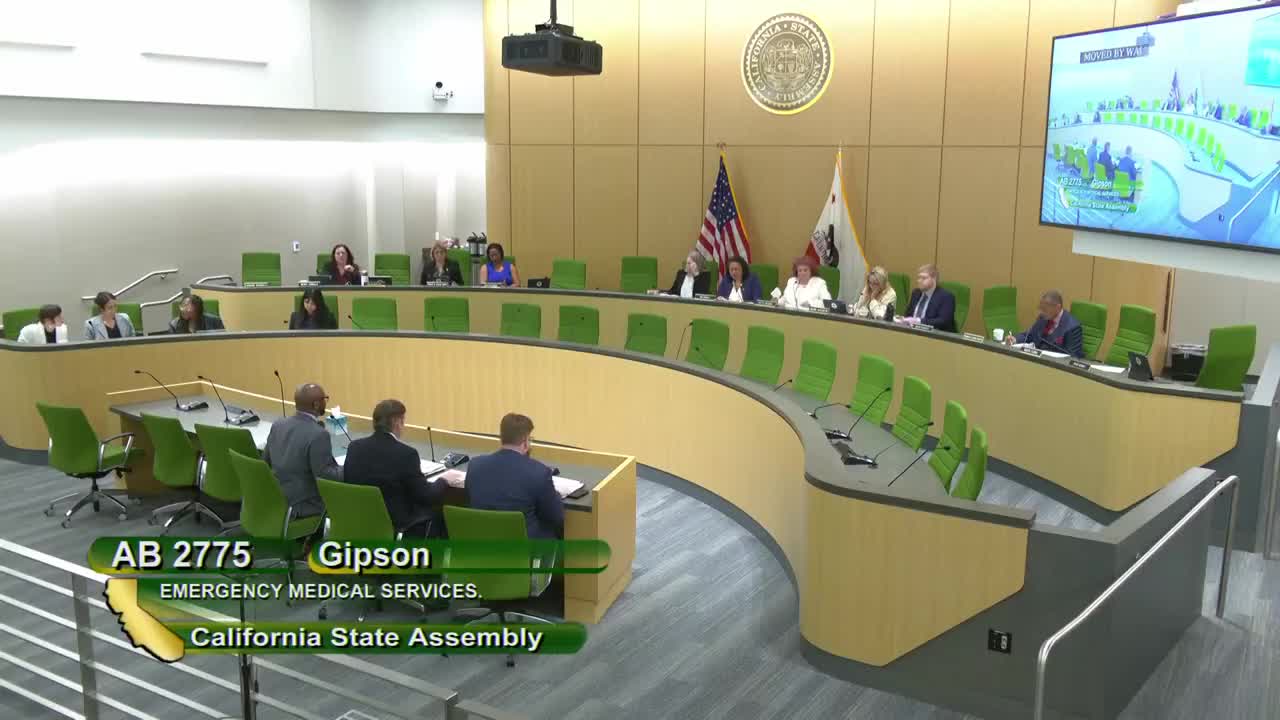 21MIN
Assembly Standing Committee on Health


Bill Co-Author(s):