AB 339: Qualified ABLE Program: age limit.
- Session Year: 2023-2024
- House: Assembly
- Latest Version Date: 2023-10-07
Current Status:
Passed
(2023-10-07: Chaptered by Secretary of State - Chapter 324, Statutes of 2023.)
Introduced
In Committee
First Chamber
In Committee
Second Chamber
Enacted
Existing federal law, the Stephen Beck, Jr., Achieving a Better Life Experience Act of 2014 (ABLE Act), encourages and assists individuals and families to save private funds for the purpose of supporting eligible individuals with disabilities to maintain their health, independence, and quality of life by excluding from gross income distributions used for qualified disability expenses by a beneficiary of a qualified ABLE program established and maintained by a state, as specified. Under the ABLE Act, pursuant to the Consolidated Appropriations Act, 2023, an eligible individual for a taxable year is an individual entitled to specified benefits based on blindness or disability or for whom there is a disability certification filed with the Secretary of the Treasury, and such blindness or disability occurred before the date on which the individual attained 26 years of age, or, on and after January 1, 2026, 46 years of age.
Existing law establishes the Qualified ABLE Program, administered by the California ABLE Act Board, in this state for purposes of implementing the federal ABLE Act, and provides the same definition for eligible individual.
Existing law, the Personal Income Tax Law and the Corporation Tax Law, for taxable years beginning on or after January 1, 2016, conforms to the exclusions from gross income provided under federal income tax law provisions relating to the ABLE Act, as those exclusions read in specified federal law prior to the Consolidated Appropriations Act, 2023.
This bill would, commencing January 1, 2026, revise the definition of eligible individual under the Qualified ABLE Program by increasing the age limit for when an eligible individuals blindness or disability occurred to 46 years of age to conform with federal ABLE Act.
This bill would also conform, for taxable years beginning on or after January 1, 2026, state tax law to those changes relating to qualified ABLE programs made by the Consolidated Appropriations Act, 2023.
Existing law requires any bill authorizing a new tax expenditure to contain, among other things, specific goals, purposes, and objectives that the tax credit will achieve, detailed performance indicators, and data collection requirements.
This bill would make specified findings complying with this requirement for the above-described tax expenditure. The bill would require the Treasurers office to submit, no later than January 1, 2030, a report to the Legislature, detailing the number of ABLE accounts that are created for individuals who are made newly eligible by the raised age limit.
Existing federal law, the Stephen Beck, Jr., Achieving a Better Life Experience Act of 2014 (ABLE Act), encourages and assists individuals and families to save private funds for the purpose of supporting eligible individuals with disabilities to maintain their health, independence, and quality of life by excluding from gross income distributions used for qualified disability expenses by a beneficiary of a qualified ABLE program established and maintained by a state, as specified. Under the ABLE Act, pursuant to the Consolidated Appropriations Act, 2023, an eligible individual for a taxable year is an individual entitled to specified benefits based on blindness or disability or for whom there is a disability certification filed with the Secretary of the Treasury, and such blindness or disability occurred before the date on which the individual attained 26 years of age, or, on and after January 1, 2026, 46 years of age.
Existing law establishes the Qualified ABLE Program, administered by the California ABLE Act Board, in this state for purposes of implementing the federal ABLE Act, and provides the same definition for eligible individual.
Existing law, the Personal Income Tax Law and the Corporation Tax Law, for taxable years beginning on or after January 1, 2016, conforms to the exclusions from gross income provided under federal income tax law provisions relating to the ABLE Act, as those exclusions read in specified federal law prior to the Consolidated Appropriations Act, 2023.
This bill would, commencing January 1, 2026, revise the definition of eligible individual under the Qualified ABLE Program by increasing the age limit for when an eligible individuals blindness or disability occurred to 46 years of age to conform with federal ABLE Act.
This bill would also conform, for taxable years beginning on or after January 1, 2026, state tax law to those changes relating to qualified ABLE programs made by the Consolidated Appropriations Act, 2023.
Existing law requires any bill authorizing a new tax expenditure to contain, among other things, specific goals, purposes, and objectives that the tax credit will achieve, detailed performance indicators, and data collection requirements.
This bill would make specified findings complying with this requirement for the above-described tax expenditure. The bill would require the Treasurers office to submit, no later than January 1, 2030, a report to the Legislature, detailing the number of ABLE accounts that are created for individuals who are made newly eligible by the raised age limit.
Existing federal law, the Stephen Beck, Jr., Achieving a Better Life Experience Act of 2014 (ABLE Act), encourages and assists individuals and families to save private funds for the purpose of supporting eligible individuals with disabilities to maintain their health, independence, and quality of life by excluding from gross income distributions used for qualified disability expenses by a beneficiary of a qualified ABLE program established and maintained by a state, as specified. Under the ABLE Act, pursuant to the Consolidated Appropriations Act, 2023, an eligible individual for a taxable year is an individual entitled to specified benefits based on blindness or disability or for whom there is a disability certification filed with the Secretary of the Treasury, and such blindness or disability occurred before the date on which the individual attained 26 years of age, or, on and after January 1, 2026, 46 years of age.
Existing law establishes the Qualified ABLE Program, administered by the California ABLE Act Board, in this state for purposes of implementing the federal ABLE Act, and provides the same definition for eligible individual.
Existing law, the Personal Income Tax Law and the Corporation Tax Law, for taxable years beginning on or after January 1, 2016, conforms to the exclusions from gross income provided under federal income tax law provisions relating to the ABLE Act, as those exclusions read in specified federal law prior to the Consolidated Appropriations Act, 2023.
This bill would, commencing January 1, 2026, revise the definition of eligible individual under the Qualified ABLE Program by increasing the age limit for when an eligible individuals blindness or disability occurred to 46 years of age to conform with federal ABLE Act.
This bill would also conform, for taxable years beginning on or after January 1, 2026, state tax law to those changes relating to qualified ABLE programs made by the Consolidated Appropriations Act, 2023.
Existing law requires any bill authorizing a new tax expenditure to contain, among other things, specific goals, purposes, and objectives that the tax credit will achieve, detailed performance indicators, and data collection requirements.
This bill would make specified findings complying with this requirement for the above-described tax expenditure. The bill would require the Treasurers office to submit, no later than January 1, 2030, a report to the Legislature, detailing the number of ABLE accounts that are created for individuals who are made newly eligible by the raised age limit.
Existing federal law, the Stephen Beck, Jr., Achieving a Better Life Experience Act of 2014 (ABLE Act), encourages and assists individuals and families to save private funds for the purpose of supporting eligible individuals with disabilities to maintain their health, independence, and quality of life by excluding from gross income distributions used for qualified disability expenses by a beneficiary of a qualified ABLE program established and maintained by a state, as specified. Under the ABLE Act, an eligible individual for a taxable year is an individual entitled to specified benefits based on blindness or disability or for whom there is a disability certification filed with the Secretary of the Treasury, and such blindness or disability occurred before the date on which the individual attained 26 years of age, or, on and after January 1, 2026, 46 years of age.
Existing law establishes the Qualified ABLE Program, administered by the California ABLE Act Board, in this state for purposes of implementing the federal ABLE Act, and provides the same definition for eligible individual.
This bill would, commencing January 1, 2026, revise the definition of eligible individual under the Qualified ABLE Program by increasing the age limit for when an eligible individuals blindness or disability occurred to 46 years of age to conform with federal ABLE Act.
For taxable years beginning on or after January 1, 2016, Section 529A of the Internal Revenue Code, relating to qualified ABLE programs, added by Section 102 of Division B of Public Law 113-295, shall apply, except as otherwise provided.
(a)Section 529A(a) of the Internal Revenue Code is modified as follows:
(1)By substituting the phrase under this part and Part 11 (commencing with Section 23001) in lieu of the phrase under this subtitle.
(2)By substituting Article 2 (commencing with Section 23731) in lieu of Section 511.
(b)Section 529A(c)(3)(A) of the Internal Revenue Code is modified by substituting 2.5 percent in lieu of 10 percent.
(c)A copy of the report required to be filed with the Secretary of the Treasury under Section 529A(d) of the Internal Revenue Code, relating to reports, shall be filed with the Franchise Tax Board at the same time and in the same manner as specified in that section.
(d)(1)The amendments made by Section 303(a) of Division Q of the Consolidated Appropriations Act, 2016 (Public Law 114-113) to Section 529A(b)(1) of the Internal Revenue Code, relating to qualified ABLE programs, shall apply, except as otherwise provided.
(2)The amendments made by Section 303(b) of Division Q of the Consolidated Appropriations Act, 2016 (Public Law 114-113) to Sections 529A(d)(3) and 529A(e) of the Internal Revenue Code, relating to qualified ABLE programs shall apply, except as otherwise provided.
(3)The amendments made by Section 303(c) of Division Q of the Consolidated Appropriations Act, 2016 (Public Law 114-113) to Sections 529A(d)(4) and 529A(c)(1)(C)(i) of the Internal Revenue Code, relating to qualified ABLE program, shall apply, except as otherwise provided.
(e)The amendments made by Section 11024(a) of the Tax Cuts and Jobs Act (Public Law 115-97) to Section 529A(b)(2)(B) of the Internal Revenue Code, relating to qualified ABLE programs, shall apply, except as otherwise provided.
(f)(1)For taxable years beginning on or after January 1, 2026, the amendments made by Section 124 of the Consolidated Appropriations Act, 2023 (Public Law 117-328) to Section 529A(e) of the Internal Revenue Code, relating to qualified ABLE programs, shall apply, except as otherwise provided.
(2)(A)For the purpose of complying with Section 41, as it relates to the tax expenditures established by this subdivision and subdivision (f) of Section 23711.4 (hereafter the tax expenditures,) the Legislature finds and declares as follows:
(i)The goal, purpose, and objective of the tax expenditures are to encourage and assist individuals and families to save private funds for purposes of supporting persons with disabilities to maintain their health, independent, and quality of life.
(ii)The performance indicators for the Legislature to use in determining whether the tax expenditures are achieving their stated goal shall be the number of ABLE accounts that are created for individuals who are made newly eligible by the raised age limit.
(B)No later than January 1, 2030, the Treasurers office shall submit a report to the Legislature, in compliance with Section 9795 of the Government Code, detailing the number of ABLE accounts that are created for individuals who are made newly eligible by the raised age limit.
SEC. 2.Section 23711.4 of the Revenue and Taxation Code is amended to read:23711.4.For taxable years beginning on or after January 1, 2016, Section 529A of the Internal Revenue Code, relating to qualified ABLE programs, added by Section 102 of Division B of Public Law 113-295, shall apply, except as otherwise provided.
(a)Section 529A(a) of the Internal Revenue Code is modified as follows:
(1)By substituting the phrase under Part 10 (commencing with Section 17001) and this part in lieu of the phrase under this subtitle.
(2)By substituting Article 2 (commencing with Section 23731) in lieu of Section 511.
(b)Section 529A(c)(3)(A) of the Internal Revenue Code is modified by substituting 2.5 percent in lieu of 10 percent.
(c)A copy of the report required to be filed with the Secretary of the Treasury under Section 529A(d) of the Internal Revenue Code, relating to reports shall be filed with the Franchise Tax Board at the same time and in the same manner as specified in that section.
(d)(1)The amendments made by Section 303(a) of Division Q of the Consolidated Appropriations Act, 2016 (Public Law 114-113) to Section 529A(b)(1) of the Internal Revenue Code, relating to qualified ABLE programs, shall apply, except as otherwise provided.
(2)The amendments made by Section 303(b) of Division Q of the Consolidated Appropriations Act, 2016 (Public Law 114-113) to Sections 529A(d)(3) and 529A(e) of the Internal Revenue Code, relating to qualified ABLE programs, shall apply, except as otherwise provided.
(3)The amendments made by Section 303(c) of Division Q of the Consolidated Appropriations Act, 2016 (Public Law 114-113) to Sections 529A(d)(4) and 529A(c)(1)(C)(i) of the Internal Revenue Code, relating to qualified ABLE programs, shall apply, except as otherwise provided.
(e)The amendments made by Section 11024(a) of the Tax Cuts and Jobs Act (Public Law 115-97) to Section 529A(b)(2)(B) of the Internal Revenue Code, relating to qualified ABLE programs, shall apply, except as otherwise provided.
(f)(1)For taxable years beginning on or after January 1, 2026, the amendments made by Section 124 of the Consolidated Appropriations Act, 2023 (Public Law 117-328) to Section 529A(e) of the Internal Revenue Code, relating to qualified ABLE programs, shall apply, except as otherwise provided.
(2)For purposes of complying with Section 41, the goal, purpose, objective, performance indicators, and data collection requirements for the tax expenditure allowed by this subdivision shall be as specified in subdivision (f) of Section 17140.4.
SEC. 3.Section 4875 of the Welfare and Institutions Code is amended to read:4875.For purposes of this chapter:
(a)ABLE account or account means the account established for and owned by a designated beneficiary pursuant to this chapter for the purpose of meeting the qualified disability expenses of the designated beneficiary of the account.
(b)Administrative fund means the fund used to administer this chapter.
(c)Board means the California ABLE Act Board established under this chapter.
(d)California ABLE Program Trust or ABLE program trust means the trust created pursuant to this chapter.
(e)CalABLE account means an ABLE account that is established within the program established by this chapter and administered by the board.
(f)Designated beneficiary means the eligible individual for whom the ABLE account was established and who is the owner of the account.
(g)Eligible individual means an individual who is eligible under the program for a taxable year if blindness or disability occurred before the date on which the individual attained 26 years of age, and during that taxable year either of the following criteria are satisfied:
(1)The individual is entitled to benefits based on blindness or disability under Title II or XVI of the federal Social Security Act, and that blindness or disability occurred before the date on which the individual attained 26 years of age.
(2)A disability certification, as defined in the federal ABLE Act, with respect to the individual is filed pursuant to the requirements set forth in the federal ABLE Act.
(h)Federal ABLE Act means the federal Stephen Beck, Jr., Achieving a Better Life Experience Act of 2014 (as codified in Section 529A of Title 26 of the United States Code and amended through Public Law 115-141).
(i)Investment management means the functions performed by a manager contracted to perform functions delegated by the board.
(j)Investment manager means a manager contracted to perform functions delegated by the board.
(k)Program fund means the program fund established by this chapter, which shall be held as a separate fund within the California ABLE Program Trust.
(l)Qualified ABLE Program or program means the program established by this chapter to implement the federal ABLE Act pursuant to Section 529A of the Internal Revenue Code.
(m)Qualified disability expenses means any expenses related to the eligible individuals blindness or disability that are made for the benefit of an eligible individual who is the designated beneficiary, including the following expenses: education, housing, transportation, employment training and support, assistive technology and personal support services, health, prevention and wellness, financial management and administrative services, legal fees, expenses for oversight and monitoring, funeral and burial expenses, and other expenses, which are approved by the Secretary of the Treasury under regulations and consistent with the purposes of the federal ABLE Act.
(n)This section shall remain in effect only until January 1, 2026, and as of that date is repealed.
SEC. 4.Section 4875 is added to the Welfare and Institutions Code, to read:4875.For purposes of this chapter:
(a)ABLE account or account means the account established for and owned by a designated beneficiary pursuant to this chapter for the purpose of meeting the qualified disability expenses of the designated beneficiary of the account.
(b)Administrative fund means the fund used to administer this chapter.
(c)Board means the California ABLE Act Board established under this chapter.
(d)California ABLE Program Trust or ABLE program trust means the trust created pursuant to this chapter.
(e)CalABLE account means an ABLE account that is established within the program established by this chapter and administered by the board.
(f)Designated beneficiary means the eligible individual for whom the ABLE account was established and who is the owner of the account.
(g)Eligible individual means an individual who is eligible under the program for a taxable year if blindness or disability occurred before the date on which the individual attained 46 years of age, and during that taxable year either of the following criteria are satisfied:
(1)The individual is entitled to benefits based on blindness or disability under Title II or XVI of the federal Social Security Act, and that blindness or disability occurred before the date on which the individual attained 46 years of age.
(2)A disability certification, as defined in the federal ABLE Act, with respect to the individual is filed pursuant to the requirements set forth in the federal ABLE Act.
(h)Federal ABLE Act means the federal Stephen Beck, Jr., Achieving a Better Life Experience Act of 2014 (as codified in Section 529A of Title 26 of the United States Code and amended through Public Law 117-328).
(i)Investment management means the functions performed by a manager contracted to perform functions delegated by the board.
(j)Investment manager means a manager contracted to perform functions delegated by the board.
(k)Program fund means the program fund established by this chapter, which shall be held as a separate fund within the California ABLE Program Trust.
(l)Qualified ABLE Program or program means the program established by this chapter to implement the federal ABLE Act pursuant to Section 529A of the Internal Revenue Code.
(m)Qualified disability expenses means any expenses related to the eligible individuals blindness or disability that are made for the benefit of an eligible individual who is the designated beneficiary, including the following expenses: education, housing, transportation, employment training and support, assistive technology and personal support services, health, prevention and wellness, financial management and administrative services, legal fees, expenses for oversight and monitoring, funeral and burial expenses, and other expenses, which are approved by the Secretary of the Treasury under regulations and consistent with the purposes of the federal ABLE Act.
(n)This section shall become operative on January 1, 2026.
For taxable years beginning on or after January 1, 2016, Section 529A of the Internal Revenue Code, relating to qualified ABLE programs, added by Section 102 of Division B of Public Law 113-295, shall apply, except as otherwise provided.
(a)Section 529A(a) of the Internal Revenue Code is modified as follows:
(1)By substituting the phrase under this part and Part 11 (commencing with Section 23001) in lieu of the phrase under this subtitle.
(2)By substituting Article 2 (commencing with Section 23731) in lieu of Section 511.
(b)Section 529A(c)(3)(A) of the Internal Revenue Code is modified by substituting 2.5 percent in lieu of 10 percent.
(c)A copy of the report required to be filed with the Secretary of the Treasury under Section 529A(d) of the Internal Revenue Code, relating to reports, shall be filed with the Franchise Tax Board at the same time and in the same manner as specified in that section.
(d)(1)The amendments made by Section 303(a) of Division Q of the Consolidated Appropriations Act, 2016 (Public Law 114-113) to Section 529A(b)(1) of the Internal Revenue Code, relating to qualified ABLE programs, shall apply, except as otherwise provided.
(2)The amendments made by Section 303(b) of Division Q of the Consolidated Appropriations Act, 2016 (Public Law 114-113) to Sections 529A(d)(3) and 529A(e) of the Internal Revenue Code, relating to qualified ABLE programs shall apply, except as otherwise provided.
(3)The amendments made by Section 303(c) of Division Q of the Consolidated Appropriations Act, 2016 (Public Law 114-113) to Sections 529A(d)(4) and 529A(c)(1)(C)(i) of the Internal Revenue Code, relating to qualified ABLE program, shall apply, except as otherwise provided.
(e)The amendments made by Section 11024(a) of the Tax Cuts and Jobs Act (Public Law 115-97) to Section 529A(b)(2)(B) of the Internal Revenue Code, relating to qualified ABLE programs, shall apply, except as otherwise provided.
(f)(1)For taxable years beginning on or after January 1, 2026, the amendments made by Section 124 of the Consolidated Appropriations Act, 2023 (Public Law 117-328) to Section 529A(e) of the Internal Revenue Code, relating to qualified ABLE programs, shall apply, except as otherwise provided.
(2)(A)For the purpose of complying with Section 41, as it relates to the tax expenditures established by this subdivision and subdivision (f) of Section 23711.4 (hereafter the tax expenditures,) the Legislature finds and declares as follows:
(i)The goal, purpose, and objective of the tax expenditures are to encourage and assist individuals and families to save private funds for purposes of supporting persons with disabilities to maintain their health, independent, and quality of life.
(ii)The performance indicators for the Legislature to use in determining whether the tax expenditures are achieving their stated goal shall be the number of ABLE accounts that are created for individuals who are made newly eligible by the raised age limit.
(B)No later than January 1, 2030, the Treasurers office shall submit a report to the Legislature, in compliance with Section 9795 of the Government Code, detailing the number of ABLE accounts that are created for individuals who are made newly eligible by the raised age limit.
SEC. 2.Section 23711.4 of the Revenue and Taxation Code is amended to read:23711.4.For taxable years beginning on or after January 1, 2016, Section 529A of the Internal Revenue Code, relating to qualified ABLE programs, added by Section 102 of Division B of Public Law 113-295, shall apply, except as otherwise provided.
(a)Section 529A(a) of the Internal Revenue Code is modified as follows:
(1)By substituting the phrase under Part 10 (commencing with Section 17001) and this part in lieu of the phrase under this subtitle.
(2)By substituting Article 2 (commencing with Section 23731) in lieu of Section 511.
(b)Section 529A(c)(3)(A) of the Internal Revenue Code is modified by substituting 2.5 percent in lieu of 10 percent.
(c)A copy of the report required to be filed with the Secretary of the Treasury under Section 529A(d) of the Internal Revenue Code, relating to reports shall be filed with the Franchise Tax Board at the same time and in the same manner as specified in that section.
(d)(1)The amendments made by Section 303(a) of Division Q of the Consolidated Appropriations Act, 2016 (Public Law 114-113) to Section 529A(b)(1) of the Internal Revenue Code, relating to qualified ABLE programs, shall apply, except as otherwise provided.
(2)The amendments made by Section 303(b) of Division Q of the Consolidated Appropriations Act, 2016 (Public Law 114-113) to Sections 529A(d)(3) and 529A(e) of the Internal Revenue Code, relating to qualified ABLE programs, shall apply, except as otherwise provided.
(3)The amendments made by Section 303(c) of Division Q of the Consolidated Appropriations Act, 2016 (Public Law 114-113) to Sections 529A(d)(4) and 529A(c)(1)(C)(i) of the Internal Revenue Code, relating to qualified ABLE programs, shall apply, except as otherwise provided.
(e)The amendments made by Section 11024(a) of the Tax Cuts and Jobs Act (Public Law 115-97) to Section 529A(b)(2)(B) of the Internal Revenue Code, relating to qualified ABLE programs, shall apply, except as otherwise provided.
(f)(1)For taxable years beginning on or after January 1, 2026, the amendments made by Section 124 of the Consolidated Appropriations Act, 2023 (Public Law 117-328) to Section 529A(e) of the Internal Revenue Code, relating to qualified ABLE programs, shall apply, except as otherwise provided.
(2)For purposes of complying with Section 41, the goal, purpose, objective, performance indicators, and data collection requirements for the tax expenditure allowed by this subdivision shall be as specified in subdivision (f) of Section 17140.4.
SEC. 3.Section 4875 of the Welfare and Institutions Code is amended to read:4875.For purposes of this chapter:
(a)ABLE account or account means the account established for and owned by a designated beneficiary pursuant to this chapter for the purpose of meeting the qualified disability expenses of the designated beneficiary of the account.
(b)Administrative fund means the fund used to administer this chapter.
(c)Board means the California ABLE Act Board established under this chapter.
(d)California ABLE Program Trust or ABLE program trust means the trust created pursuant to this chapter.
(e)CalABLE account means an ABLE account that is established within the program established by this chapter and administered by the board.
(f)Designated beneficiary means the eligible individual for whom the ABLE account was established and who is the owner of the account.
(g)Eligible individual means an individual who is eligible under the program for a taxable year if blindness or disability occurred before the date on which the individual attained 26 years of age, and during that taxable year either of the following criteria are satisfied:
(1)The individual is entitled to benefits based on blindness or disability under Title II or XVI of the federal Social Security Act, and that blindness or disability occurred before the date on which the individual attained 26 years of age.
(2)A disability certification, as defined in the federal ABLE Act, with respect to the individual is filed pursuant to the requirements set forth in the federal ABLE Act.
(h)Federal ABLE Act means the federal Stephen Beck, Jr., Achieving a Better Life Experience Act of 2014 (as codified in Section 529A of Title 26 of the United States Code and amended through Public Law 115-141).
(i)Investment management means the functions performed by a manager contracted to perform functions delegated by the board.
(j)Investment manager means a manager contracted to perform functions delegated by the board.
(k)Program fund means the program fund established by this chapter, which shall be held as a separate fund within the California ABLE Program Trust.
(l)Qualified ABLE Program or program means the program established by this chapter to implement the federal ABLE Act pursuant to Section 529A of the Internal Revenue Code.
(m)Qualified disability expenses means any expenses related to the eligible individuals blindness or disability that are made for the benefit of an eligible individual who is the designated beneficiary, including the following expenses: education, housing, transportation, employment training and support, assistive technology and personal support services, health, prevention and wellness, financial management and administrative services, legal fees, expenses for oversight and monitoring, funeral and burial expenses, and other expenses, which are approved by the Secretary of the Treasury under regulations and consistent with the purposes of the federal ABLE Act.
(n)This section shall remain in effect only until January 1, 2026, and as of that date is repealed.
SEC. 4.Section 4875 is added to the Welfare and Institutions Code, to read:4875.For purposes of this chapter:
(a)ABLE account or account means the account established for and owned by a designated beneficiary pursuant to this chapter for the purpose of meeting the qualified disability expenses of the designated beneficiary of the account.
(b)Administrative fund means the fund used to administer this chapter.
(c)Board means the California ABLE Act Board established under this chapter.
(d)California ABLE Program Trust or ABLE program trust means the trust created pursuant to this chapter.
(e)CalABLE account means an ABLE account that is established within the program established by this chapter and administered by the board.
(f)Designated beneficiary means the eligible individual for whom the ABLE account was established and who is the owner of the account.
(g)Eligible individual means an individual who is eligible under the program for a taxable year if blindness or disability occurred before the date on which the individual attained 46 years of age, and during that taxable year either of the following criteria are satisfied:
(1)The individual is entitled to benefits based on blindness or disability under Title II or XVI of the federal Social Security Act, and that blindness or disability occurred before the date on which the individual attained 46 years of age.
(2)A disability certification, as defined in the federal ABLE Act, with respect to the individual is filed pursuant to the requirements set forth in the federal ABLE Act.
(h)Federal ABLE Act means the federal Stephen Beck, Jr., Achieving a Better Life Experience Act of 2014 (as codified in Section 529A of Title 26 of the United States Code and amended through Public Law 117-328).
(i)Investment management means the functions performed by a manager contracted to perform functions delegated by the board.
(j)Investment manager means a manager contracted to perform functions delegated by the board.
(k)Program fund means the program fund established by this chapter, which shall be held as a separate fund within the California ABLE Program Trust.
(l)Qualified ABLE Program or program means the program established by this chapter to implement the federal ABLE Act pursuant to Section 529A of the Internal Revenue Code.
(m)Qualified disability expenses means any expenses related to the eligible individuals blindness or disability that are made for the benefit of an eligible individual who is the designated beneficiary, including the following expenses: education, housing, transportation, employment training and support, assistive technology and personal support services, health, prevention and wellness, financial management and administrative services, legal fees, expenses for oversight and monitoring, funeral and burial expenses, and other expenses, which are approved by the Secretary of the Treasury under regulations and consistent with the purposes of the federal ABLE Act.
(n)This section shall become operative on January 1, 2026.
For taxable years beginning on or after January 1, 2016, Section 529A of the Internal Revenue Code, relating to qualified ABLE programs, added by Section 102 of Division B of Public Law 113-295, shall apply, except as otherwise provided.
(a)Section 529A(a) of the Internal Revenue Code is modified as follows:
(1)By substituting the phrase under this part and Part 11 (commencing with Section 23001) in lieu of the phrase under this subtitle.
(2)By substituting Article 2 (commencing with Section 23731) in lieu of Section 511.
(b)Section 529A(c)(3)(A) of the Internal Revenue Code is modified by substituting 2.5 percent in lieu of 10 percent.
(c)A copy of the report required to be filed with the Secretary of the Treasury under Section 529A(d) of the Internal Revenue Code, relating to reports, shall be filed with the Franchise Tax Board at the same time and in the same manner as specified in that section.
(d)(1)The amendments made by Section 303(a) of Division Q of the Consolidated Appropriations Act, 2016 (Public Law 114-113) to Section 529A(b)(1) of the Internal Revenue Code, relating to qualified ABLE programs, shall apply, except as otherwise provided.
(2)The amendments made by Section 303(b) of Division Q of the Consolidated Appropriations Act, 2016 (Public Law 114-113) to Sections 529A(d)(3) and 529A(e) of the Internal Revenue Code, relating to qualified ABLE programs shall apply, except as otherwise provided.
(3)The amendments made by Section 303(c) of Division Q of the Consolidated Appropriations Act, 2016 (Public Law 114-113) to Sections 529A(d)(4) and 529A(c)(1)(C)(i) of the Internal Revenue Code, relating to qualified ABLE program, shall apply, except as otherwise provided.
(e)The amendments made by Section 11024(a) of the Tax Cuts and Jobs Act (Public Law 115-97) to Section 529A(b)(2)(B) of the Internal Revenue Code, relating to qualified ABLE programs, shall apply, except as otherwise provided.
(f)(1)For taxable years beginning on or after January 1, 2026, the amendments made by Section 124 of the Consolidated Appropriations Act, 2023 (Public Law 117-328) to Section 529A(e) of the Internal Revenue Code, relating to qualified ABLE programs, shall apply, except as otherwise provided.
(2)(A)For the purpose of complying with Section 41, as it relates to the tax expenditures established by this subdivision and subdivision (f) of Section 23711.4 (hereafter the tax expenditures,) the Legislature finds and declares as follows:
(i)The goal, purpose, and objective of the tax expenditures are to encourage and assist individuals and families to save private funds for purposes of supporting persons with disabilities to maintain their health, independent, and quality of life.
(ii)The performance indicators for the Legislature to use in determining whether the tax expenditures are achieving their stated goal shall be the number of ABLE accounts that are created for individuals who are made newly eligible by the raised age limit.
(B)No later than January 1, 2030, the Treasurers office shall submit a report to the Legislature, in compliance with Section 9795 of the Government Code, detailing the number of ABLE accounts that are created for individuals who are made newly eligible by the raised age limit.
SEC. 2.Section 23711.4 of the Revenue and Taxation Code is amended to read:23711.4.For taxable years beginning on or after January 1, 2016, Section 529A of the Internal Revenue Code, relating to qualified ABLE programs, added by Section 102 of Division B of Public Law 113-295, shall apply, except as otherwise provided.
(a)Section 529A(a) of the Internal Revenue Code is modified as follows:
(1)By substituting the phrase under Part 10 (commencing with Section 17001) and this part in lieu of the phrase under this subtitle.
(2)By substituting Article 2 (commencing with Section 23731) in lieu of Section 511.
(b)Section 529A(c)(3)(A) of the Internal Revenue Code is modified by substituting 2.5 percent in lieu of 10 percent.
(c)A copy of the report required to be filed with the Secretary of the Treasury under Section 529A(d) of the Internal Revenue Code, relating to reports shall be filed with the Franchise Tax Board at the same time and in the same manner as specified in that section.
(d)(1)The amendments made by Section 303(a) of Division Q of the Consolidated Appropriations Act, 2016 (Public Law 114-113) to Section 529A(b)(1) of the Internal Revenue Code, relating to qualified ABLE programs, shall apply, except as otherwise provided.
(2)The amendments made by Section 303(b) of Division Q of the Consolidated Appropriations Act, 2016 (Public Law 114-113) to Sections 529A(d)(3) and 529A(e) of the Internal Revenue Code, relating to qualified ABLE programs, shall apply, except as otherwise provided.
(3)The amendments made by Section 303(c) of Division Q of the Consolidated Appropriations Act, 2016 (Public Law 114-113) to Sections 529A(d)(4) and 529A(c)(1)(C)(i) of the Internal Revenue Code, relating to qualified ABLE programs, shall apply, except as otherwise provided.
(e)The amendments made by Section 11024(a) of the Tax Cuts and Jobs Act (Public Law 115-97) to Section 529A(b)(2)(B) of the Internal Revenue Code, relating to qualified ABLE programs, shall apply, except as otherwise provided.
(f)(1)For taxable years beginning on or after January 1, 2026, the amendments made by Section 124 of the Consolidated Appropriations Act, 2023 (Public Law 117-328) to Section 529A(e) of the Internal Revenue Code, relating to qualified ABLE programs, shall apply, except as otherwise provided.
(2)For purposes of complying with Section 41, the goal, purpose, objective, performance indicators, and data collection requirements for the tax expenditure allowed by this subdivision shall be as specified in subdivision (f) of Section 17140.4.
SECTION 1.SEC. 3.Section 4875 of the Welfare and Institutions Code is amended to read:4875.For purposes of this chapter:
(a)ABLE account or account means the account established for and owned by a designated beneficiary pursuant to this chapter for the purpose of meeting the qualified disability expenses of the designated beneficiary of the account.
(b)Administrative fund means the fund used to administer this chapter.
(c)Board means the California ABLE Act Board established under this chapter.
(d)California ABLE Program Trust or ABLE program trust means the trust created pursuant to this chapter.
(e)CalABLE account means an ABLE account that is established within the program established by this chapter and administered by the board.
(f)Designated beneficiary means the eligible individual for whom the ABLE account was established and who is the owner of the account.
(g)Eligible individual means an individual who is eligible under the program for a taxable year if blindness or disability occurred before the date on which the individual attained 26 years of age, and during that taxable year either of the following criteria are satisfied:
(1)The individual is entitled to benefits based on blindness or disability under Title II or XVI of the federal Social Security Act, and that blindness or disability occurred before the date on which the individual attained 26 years of age.
(2)A disability certification, as defined in the federal ABLE Act, with respect to the individual is filed pursuant to the requirements set forth in the federal ABLE Act.
(h)Federal ABLE Act means the federal Stephen Beck, Jr., Achieving a Better Life Experience Act of 2014 (as codified in Section 529A of Title 26 of the United States Code and amended through Public Law 115-141).
(i)Investment management means the functions performed by a manager contracted to perform functions delegated by the board.
(j)Investment manager means a manager contracted to perform functions delegated by the board.
(k)Program fund means the program fund established by this chapter, which shall be held as a separate fund within the California ABLE Program Trust.
(l)Qualified ABLE Program or program means the program established by this chapter to implement the federal ABLE Act pursuant to Section 529A of the Internal Revenue Code.
(m)Qualified disability expenses means any expenses related to the eligible individuals blindness or disability that are made for the benefit of an eligible individual who is the designated beneficiary, including the following expenses: education, housing, transportation, employment training and support, assistive technology and personal support services, health, prevention and wellness, financial management and administrative services, legal fees, expenses for oversight and monitoring, funeral and burial expenses, and other expenses, which are approved by the Secretary of the Treasury under regulations and consistent with the purposes of the federal ABLE Act.
(n)This section shall remain in effect only until January 1, 2026, and as of that date is repealed.
SEC. 2.SEC. 4.Section 4875 is added to the Welfare and Institutions Code, to read:4875.For purposes of this chapter:
(a)ABLE account or account means the account established for and owned by a designated beneficiary pursuant to this chapter for the purpose of meeting the qualified disability expenses of the designated beneficiary of the account.
(b)Administrative fund means the fund used to administer this chapter.
(c)Board means the California ABLE Act Board established under this chapter.
(d)California ABLE Program Trust or ABLE program trust means the trust created pursuant to this chapter.
(e)CalABLE account means an ABLE account that is established within the program established by this chapter and administered by the board.
(f)Designated beneficiary means the eligible individual for whom the ABLE account was established and who is the owner of the account.
(g)Eligible individual means an individual who is eligible under the program for a taxable year if blindness or disability occurred before the date on which the individual attained 46 years of age, and during that taxable year either of the following criteria are satisfied:
(1)The individual is entitled to benefits based on blindness or disability under Title II or XVI of the federal Social Security Act, and that blindness or disability occurred before the date on which the individual attained 46 years of age.
(2)A disability certification, as defined in the federal ABLE Act, with respect to the individual is filed pursuant to the requirements set forth in the federal ABLE Act.
(h)Federal ABLE Act means the federal Stephen Beck, Jr., Achieving a Better Life Experience Act of 2014 (as codified in Section 529A of Title 26 of the United States Code and amended through Public Law 117-328).
(i)Investment management means the functions performed by a manager contracted to perform functions delegated by the board.
(j)Investment manager means a manager contracted to perform functions delegated by the board.
(k)Program fund means the program fund established by this chapter, which shall be held as a separate fund within the California ABLE Program Trust.
(l)Qualified ABLE Program or program means the program established by this chapter to implement the federal ABLE Act pursuant to Section 529A of the Internal Revenue Code.
(m)Qualified disability expenses means any expenses related to the eligible individuals blindness or disability that are made for the benefit of an eligible individual who is the designated beneficiary, including the following expenses: education, housing, transportation, employment training and support, assistive technology and personal support services, health, prevention and wellness, financial management and administrative services, legal fees, expenses for oversight and monitoring, funeral and burial expenses, and other expenses, which are approved by the Secretary of the Treasury under regulations and consistent with the purposes of the federal ABLE Act.
(n)This section shall become operative on January 1, 2026.
For purposes of this chapter:
(a)ABLE account or account means the account established for and owned by a designated beneficiary pursuant to this chapter for the purpose of meeting the qualified disability expenses of the designated beneficiary of the account.
(b)Administrative fund means the fund used to administer this chapter.
(c)Board means the California ABLE Act Board established under this chapter.
(d)California ABLE Program Trust or ABLE program trust means the trust created pursuant to this chapter.
(e)CalABLE account means an ABLE account that is established within the program established by this chapter and administered by the board.
(f)Designated beneficiary means the eligible individual for whom the ABLE account was established and who is the owner of the account.
(g)Eligible individual means an individual who is eligible under the program for a taxable year if blindness or disability occurred before the date on which the individual attained 26 years of age, and during that taxable year either of the following criteria are satisfied:
(1)The individual is entitled to benefits based on blindness or disability under Title II or XVI of the federal Social Security Act, and that blindness or disability occurred before the date on which the individual attained 26 years of age.
(2)A disability certification, as defined in the federal ABLE Act, with respect to the individual is filed pursuant to the requirements set forth in the federal ABLE Act.
(h)Federal ABLE Act means the federal Stephen Beck, Jr., Achieving a Better Life Experience Act of 2014 (as codified in Section 529A of Title 26 of the United States Code and amended through Public Law 115-141).
(i)Investment management means the functions performed by a manager contracted to perform functions delegated by the board.
(j)Investment manager means a manager contracted to perform functions delegated by the board.
(k)Program fund means the program fund established by this chapter, which shall be held as a separate fund within the California ABLE Program Trust.
(l)Qualified ABLE Program or program means the program established by this chapter to implement the federal ABLE Act pursuant to Section 529A of the Internal Revenue Code.
(m)Qualified disability expenses means any expenses related to the eligible individuals blindness or disability that are made for the benefit of an eligible individual who is the designated beneficiary, including the following expenses: education, housing, transportation, employment training and support, assistive technology and personal support services, health, prevention and wellness, financial management and administrative services, legal fees, expenses for oversight and monitoring, funeral and burial expenses, and other expenses, which are approved by the Secretary of the Treasury under regulations and consistent with the purposes of the federal ABLE Act.
(n)This section shall remain in effect only until January 1, 2026, and as of that date is repealed.
SEC. 2.Section 4875 is added to the Welfare and Institutions Code, to read:4875.For purposes of this chapter:
(a)ABLE account or account means the account established for and owned by a designated beneficiary pursuant to this chapter for the purpose of meeting the qualified disability expenses of the designated beneficiary of the account.
(b)Administrative fund means the fund used to administer this chapter.
(c)Board means the California ABLE Act Board established under this chapter.
(d)California ABLE Program Trust or ABLE program trust means the trust created pursuant to this chapter.
(e)CalABLE account means an ABLE account that is established within the program established by this chapter and administered by the board.
(f)Designated beneficiary means the eligible individual for whom the ABLE account was established and who is the owner of the account.
(g)Eligible individual means an individual who is eligible under the program for a taxable year if blindness or disability occurred before the date on which the individual attained 46 years of age, and during that taxable year either of the following criteria are satisfied:
(1)The individual is entitled to benefits based on blindness or disability under Title II or XVI of the federal Social Security Act, and that blindness or disability occurred before the date on which the individual attained 46 years of age.
(2)A disability certification, as defined in the federal ABLE Act, with respect to the individual is filed pursuant to the requirements set forth in the federal ABLE Act.
(h)Federal ABLE Act means the federal Stephen Beck, Jr., Achieving a Better Life Experience Act of 2014 (as codified in Section 529A of Title 26 of the United States Code and amended through Public Law 117-328).
(i)Investment management means the functions performed by a manager contracted to perform functions delegated by the board.
(j)Investment manager means a manager contracted to perform functions delegated by the board.
(k)Program fund means the program fund established by this chapter, which shall be held as a separate fund within the California ABLE Program Trust.
(l)Qualified ABLE Program or program means the program established by this chapter to implement the federal ABLE Act pursuant to Section 529A of the Internal Revenue Code.
(m)Qualified disability expenses means any expenses related to the eligible individuals blindness or disability that are made for the benefit of an eligible individual who is the designated beneficiary, including the following expenses: education, housing, transportation, employment training and support, assistive technology and personal support services, health, prevention and wellness, financial management and administrative services, legal fees, expenses for oversight and monitoring, funeral and burial expenses, and other expenses, which are approved by the Secretary of the Treasury under regulations and consistent with the purposes of the federal ABLE Act.
(n)This section shall become operative on January 1, 2026.
|
Date
|
Status
|
|---|---|
| Oct 7, 2023 | Chaptered by Secretary of State - Chapter 324, Statutes of 2023. |
| Oct 7, 2023 | Approved by the Governor. |
| Sep 19, 2023 | Enrolled and presented to the Governor at 4 p.m. |
| Sep 12, 2023 | In Assembly. Ordered to Engrossing and Enrolling. |
| Sep 12, 2023 | Read third time. Passed. Ordered to the Assembly. (Ayes 39. Noes 0. Page 2685.). |
| Sep 8, 2023 | Ordered to special consent calendar. |
| Sep 5, 2023 | Read second time. Ordered to third reading. |
| Sep 1, 2023 | From committee: Do pass. (Ayes 7. Noes 0.) (September 1). |
| Jul 3, 2023 | In committee: Referred to APPR suspense file. |
| Jun 21, 2023 | From committee: Do pass and re-refer to Com. on APPR with recommendation: To Consent Calendar. (Ayes 8. Noes 0.) (June 21). Re-referred to Com. on APPR. |
| Jun 7, 2023 | Referred to Com. on GOV. & F. |
| May 26, 2023 | In Senate. Read first time. To Com. on RLS. for assignment. |
| May 25, 2023 | Read third time. Passed. Ordered to the Senate. (Ayes 78. Noes 0. Page 1751.) |
| May 18, 2023 | Read second time. Ordered to third reading. |
| May 18, 2023 | From committee: Do pass. (Ayes 15. Noes 0.) (May 18). |
| May 10, 2023 | In committee: Set, first hearing. Referred to APPR. suspense file. |
| Apr 25, 2023 | From committee: Do pass and re-refer to Com. on APPR. (Ayes 11. Noes 0.) (April 24). Re-referred to Com. on APPR. |
| Mar 28, 2023 | In committee: Set, second hearing. Referred to REV. & TAX. suspense file. |
| Mar 15, 2023 | Re-referred to Com. on REV. & TAX. |
| Mar 14, 2023 | In committee: Set, first hearing. Hearing canceled at the request of author. |
| Mar 14, 2023 | From committee chair, with author's amendments: Amend, and re-refer to Com. on REV. & TAX. Read second time and amended. |
| Feb 9, 2023 | Referred to Com. on REV. & TAX. |
| Jan 31, 2023 | From printer. May be heard in committee March 2. |
| Jan 30, 2023 | Read first time. To print. |
|
Date
|
Description
|
Location
|
Votes
|
|
|---|---|---|---|---|
| Sep 12, 2023 | Special Consent AB339 Irwin By Glazer | Senate Floor |
Passed |
|
| Sep 1, 2023 | Do pass | Senate Standing Committee on Appropriations |
Passed |
|
| Jul 3, 2023 | Placed on suspense file | Senate Standing Committee on Appropriations |
Passed |
|
| Jun 21, 2023 | Do pass, but first be re-referred to the Committee on [Appropriations] with the recommendation: To Consent Calendar | Senate Standing Committee on Governance and Finance |
Passed |
|
| May 25, 2023 | AB 339 Irwin Assembly Third Reading | Assembly Floor |
Passed |
|
| May 18, 2023 | Do pass. | Assembly Standing Committee on Appropriations |
Passed |
|
| Apr 24, 2023 | Do pass and be re-referred to the Committee on [Appropriations] | Assembly Standing Committee on Revenue and Taxation |
Passed |
This list shows positions taken on this bill by organizations on the date displayed, which is linked to the original source.
Positions by individuals are not included.
|
Organization
|
Position
|
Date
|
|---|---|---|
| Association Of Regional Center Agencies | ** Support | |
| CalABLE Board | * Support | Mar 27, 2023 |
| California Society Of Enrolled Agents | ** Support | |
| Disability Rights California | ** Support | |
| East Bay Developmental Disabilities Legislative Coalition | ** Support | |
| State Treasurer Fiona Ma | ** Support | |
| The Arc and United Cerebral Palsy California Collaboration | ** Support |
SENATE RULES COMMITTEE Office of Senate Floor Analyses (916) 651-1520 Fax: (916) 327-4478 | AB 339 |
THIRD READING
Bill No: AB 339
Author: Irwin (D)
Amended: 3/14/23 in Assembly
Vote: 21
SENATE GOVERNANCE & FIN. COMMITTEE: 8-0, 6/21/23
AYES: Caballero, Seyarto, Blakespear, Dahle, Durazo, Glazer, Skinner, Wiener
SENATE APPROPRIATIONS COMMITTEE: 7-0, 9/1/23
AYES: Portantino, Jones, Ashby, Bradford, Seyarto, Wahab, Wiener
ASSEMBLY FLOOR: 78-0, 5/25/23 - See last page for vote
SUBJECT: Qualified ABLE Program: age limit
SOURCE: State Treasurer Fiona Ma
East Bay Developmental Disabilities Legislative Coalition
DIGEST:
This bill conforms state law to the recent change made to Achieving a Better Life Experience Act accounts in the federal Consolidated Appropriations Act
ANALYSIS:
Existing law:
- Does not automatically conform state tax law to changes in federal tax law, except for specific retirement provisions, so the Legislature must enact statute to affirmatively conform state tax law to any federal changes to the Internal Revenue Code.
- Conforms, currently, to the Internal Revenue Code as of January 1, 2015 (AB 154, Ting, Chapter 359, Statutes of 2015).
- Allows, in conformity with federal law, a CalABLE account that allows individuals who became blind or disabled before reaching age 26 to create tax-free savings accounts.
- Allows CalABLE accounts to generally follow the same rules as educations savings accounts allowed by Section 529 of the Internal Revenue Code: individuals can make nondeductible cash contributions to an ABLE account in the name of a specified beneficiary, and earnings can grow tax free.
This bill:
- Conforms state law to the recent change made by Congress to ABLE accounts in the Consolidated Appropriations Act, specifically to increase the age for eligible individuals before which an individual's blindness or disability must have begun to qualify for an ABLE account.
- Applies its change commencing in the 2026 taxable year, similar to federal law.
- Makes legislative findings and declarations to comply with Section 41 of the Revenue and Taxation Code.
Background
ABLE Accounts. On December 19, 2014, President Obama signed the Stephen Beck, Jr., Achieving a Better Life Experience Act of 2014, which allows individuals who became blind or disabled before reaching age 26 to create tax-free savings accounts, known as ABLE accounts. These savings accounts may be used to pay for qualified services. These services include education, housing, transportation, employment training and support, assistive technology and personal support services, health, prevention, and wellness, financial management and administrative services, legal fees, oversight and monitoring, and funeral and burial services.
Congress created ABLE accounts to offer an alternative to Special Needs and Supplement Needs Trusts. The individual must be entitled to Social Security Disability Insurance benefits, or have a disability certificate on file with the Internal Revenue Service. The federal ABLE Act directed states to establish one ABLE account for each beneficiary who is a resident of the state.
The Legislature enacted two bills (SB 324, Pavley, Chapter 792, Statutes of 2015 and AB 449, Irwin, Chapter 774, Statutes of 2015) to implement the ABLE Act in California, known as CalABLE, and directed the State Treasurer to administer CalABLE accounts on behalf of qualified Californians. Contributions to a CalABLE account must be in cash and is currently limited to $15,000 per year. These contributions can be made by family, friends, or the beneficiary themselves. The account’s earnings are allowed to accumulate tax-free, and the withdrawals, provided they are applied to qualifying disability expenses, are tax-free. Additionally, current state law provides that all CalABLE accounts are exempt from state collection activities for Medicaid cost recovery.
Consolidated Appropriations Act. On December 29, 2022, President Biden signed the Consolidated Appropriations Act of 2023, which among other provisions, modified the age requirement for qualified ABLE programs by increasing from 26 to 46 the age prior to which an individual's blindness or disability must have begun to qualify for the program. The change applies beginning in the 2026 taxable year.
FISCAL EFFECT: Appropriation: No Fiscal Com.: Yes Local: No
According to the Senate Appropriations Committee:
- The Franchise Tax Board (FTB) estimates that this bill would result in a General Fund revenue loss of $700,000 in 2025-26, $2.5 million in 2026-27, and $4.7 million in 2027-28.
- The California ABLE Act Board and FTB would incur minor and absorbable administrative costs.
SUPPORT: (Verified 9/1/23)
State Treasurer Fiona Ma (co-source)
East Bay Developmental Disabilities Legislative Coalition (co-source)
Association of Regional Center Agencies
California Society of Enrolled Agents
Disability Rights California
The ARC and United Cerebral Palsy California Collaboration
OPPOSITION: (Verified 9/1/23)
None received
ARGUMENTS IN SUPPORT: According to the author, “a recent change in federal law has given California the opportunity to make the CalABLE program more inclusive to those who develop a disability in their later years. AB 339 will raise the eligibility age limit for the onset of disability from age 26 to age 46 which would enable more disabled Californians, particularly those who are hurt on the job or during military service, to secure the important protections of CalABLE accounts and begin to build a rainy-day fund.”
ASSEMBLY FLOOR: 78-0, 5/25/23
AYES: Addis, Alanis, Alvarez, Arambula, Bains, Bauer-Kahan, Bennett, Berman, Boerner, Bonta, Bryan, Calderon, Juan Carrillo, Wendy Carrillo, Cervantes, Chen, Connolly, Megan Dahle, Davies, Dixon, Essayli, Flora, Mike Fong, Vince Fong, Friedman, Gabriel, Gallagher, Garcia, Gipson, Grayson, Haney, Hart, Holden, Hoover, Irwin, Jackson, Jones-Sawyer, Kalra, Lackey, Lee, Low, Lowenthal, Maienschein, McCarty, McKinnor, Muratsuchi, Stephanie Nguyen, Ortega, Pacheco, Papan, Jim Patterson, Joe Patterson, Pellerin, Petrie-Norris, Quirk-Silva, Ramos, Reyes, Luz Rivas, Robert Rivas, Rodriguez, Blanca Rubio, Sanchez, Santiago, Schiavo, Soria, Ta, Ting, Valencia, Villapudua, Waldron, Wallis, Ward, Weber, Wicks, Wilson, Wood, Zbur, Rendon
NO VOTE RECORDED: Aguiar-Curry, Mathis
Prepared by: Colin Grinnell / GOV. & F. / (916) 651-4119
9/2/23 14:07:48
**** END ****
SENATE COMMITTEE ON APPROPRIATIONS
Senator Anthony Portantino, Chair
2023 - 2024 Regular Session
AB 339 (Irwin) - Qualified ABLE Program: age limit
Version: March 14, 2023 | Policy Vote: GOV. & F. 8 - 0 |
Urgency: No | Mandate: No |
Hearing Date: July 3, 2023 | Consultant: Robert Ingenito |
Bill Summary:
AB 339 would conform state law to the recent federal change made to Achieving a Better Life Experience Act (ABLE) accounts.
Fiscal Impact:
- The Franchise Tax Board (FTB) estimates that this bill would result in a General Fund revenue loss of $700,000 in 2025-26, $2.5 million in 2026-27, and $4.7 million in 2027-28.
- The California ABLE Act Board and FTB would incur minor and absorbable administrative costs.
Background:
Under current law, individuals who became blind or disabled before reaching age 26 can create tax-free savings accounts, known as ABLE accounts. These savings accounts may be used to pay for qualified services, including education, housing, transportation, employment training and support, assistive technology and personal support services, health, prevention, and wellness, financial management and administrative services, legal fees, oversight and monitoring, and funeral and burial services. Taxpayers can contribute up to $17,000 each year to any ABLE account.
ABLE accounts generally follow the same rules as education savings accounts allowed by Section 529 of the Internal Revenue Code: individuals can make nondeductible cash contributions to an ABLE account in the name of a specified beneficiary, and earnings can grow tax free. ABLE account distributions are also not included in the beneficiary’s income so long as they’re used for qualified services for the beneficiary, and distributions don’t exceed the cost of the services, which include education, housing, transportation, employment training and support, assistive technology and personal support services, health, prevention, and wellness, financial management and administrative services, legal fees, oversight and monitoring, and funeral and burial services. If money is withdrawn from an account for something other than qualified disability expenses, than the beneficiary is subject to an additional 10 percent penalty on the overall amount withdrawn.
The federal Consolidated Appropriations Act of 2023 increased, beginning in taxable year 2026, the eligibility ceiling of ABLE accounts to age 46.
Proposed Law:
This bill would, among other things, conform state law effective taxable year 2026 to the recent change made to ABLE accounts in the Consolidated Appropriations Act, specifically to increase the age for eligible individuals before which an individual's blindness or disability must have begun to qualify for an ABLE account. .
Related Legislation:
AB 2216 (Irwin, Chapter 896, Statutes of 2022) modified provisions of the CalABLE Program to bring the program into further conformity with federal law.
Staff Comments:
The Legislature authorized CalABLE accounts in 2015 under the administration of the State Treasurer’s Office, and conformed to the federal tax treatment of ABLE accounts as of January 1st, 2015 (AB 449, Irwin, and SB 324, Pavley, 2015). The CalABLE program opened to the public on December 18, 2018. The Legislature has conformed several times to federal changes to ABLE accounts, including eliminating differences in qualification criteria, increasing contribution limits to up to the federal poverty level, and allowing taxpayers to roll-over Section 529 plans to ABLE accounts, among other changes (AB 91, Burke, 2019).
-- END --
SENATE COMMITTEE ON GOVERNANCE AND FINANCE
Senator Anna M. Caballero, Chair
2023 - 2024 Regular
Bill No: | AB 339 | Hearing Date: | 6/21/23 |
Author: | Irwin | Tax Levy: | No |
Version: | 3/14/23 | Fiscal: | Yes |
Consultant: | Grinnell | ||
Qualified ABLE Program: age limit
Conforms state law to the recent change made to Achieving a Better Life Experience Act accounts in the federal Consolidated Appropriations Act.
Background
Conformity. State law does not automatically conform to changes in federal tax law, except for specific retirement provisions. Instead, the Legislature must affirmatively conform to federal changes, which it can do in two different ways. First, the Legislature can pass an individual tax bill that conforms to a specific federal provision, such as the Regulated Investment Company Modernization Act (AB 1423, Perea, 2011). Second, the Legislature can pass one omnibus bill conforming state law to federal law as of a specified date. Currently state law generally conforms to federal tax law as of January 1, 2015 (AB 154, Ting, 2015).
ABLE accounts. In 2014, Congress authorized the Achieving a Better Life Experience Act (ABLE) which provides parents of people with disabilities a way to save tax-free for their children’s future needs as an alternative to Special Needs and Supplement Needs Trusts. The individual must be entitled to Social Security Disability Insurance benefits, or have a disability certificate on file with the Internal Revenue Service. States administer ABLE programs on behalf of the programs’ beneficiaries. Individuals can be named the beneficiary of only one ABLE account, and beneficiaries must be either blind or disabled before reaching 26 years of age. Taxpayers can then contribute up to $17,000 each year to any ABLE account.
ABLE accounts generally follow the same rules as education savings accounts allowed by Section 529 of the Internal Revenue Code: individuals can make nondeductible cash contributions to an ABLE account in the name of a specified beneficiary, and earnings can grow tax free. ABLE account distributions are also not included in the beneficiary’s income so long as they’re used for qualified services for the beneficiary, and distributions don’t exceed the cost of the services, which include education, housing, transportation, employment training and support, assistive technology and personal support services, health, prevention, and wellness, financial management and administrative services, legal fees, oversight and monitoring, and funeral and burial services. If money is withdrawn from an account for something other than qualified disability expenses, than the beneficiary is subject to an additional 10% penalty on the overall amount withdrawn.
The Legislature authorized CalABLE accounts in 2015 under the administration of the State Treasurer’s Office, and conformed to the federal tax treatment of ABLE accounts as of January 1st, 2015 (AB 449, Irwin, and SB 324, Pavley, 2015). The CalABLE program opened to the public on December 18, 2018. The Legislature has conformed several times to federal changes to ABLE accounts, including eliminating differences in qualification criteria, increasing contribution limits to up to the federal poverty level, and allowing taxpayers to roll-over Section 529 plans to ABLE accounts, among other changes (AB 91, Burke, 2019). Last year, the Legislature made clarifying changes to bring California CalABLE account definitions in alignment with federal law regarding ABLE accounts, among other changes (AB 2216, Irwin).
Consolidated Appropriations Act. On December 29, 2022, President Biden signed the Consolidated Appropriations Act of 2023, which among other provisions, modified the age requirement for qualified ABLE programs by increasing from 26 to 46 the age prior to which an individual's blindness or disability must have begun to qualify for the program. The change applies beginning in the 2026 taxable year.
The author wants to conform state law to the recent federal changes to the age prior to which an individual's blindness or disability must have begun to qualify for the program.
Proposed Law
Assembly Bill 339 conforms state law to the recent change made to ABLE accounts in the Consolidated Appropriations Act, specifically to increase the age for eligible individuals before which an individual's blindness or disability must have begun to qualify for an ABLE account. Like federal law, the measure applies the change beginning in the 2026 taxable year. The bill also makes a conforming change to Welfare and Institutions Code provisions used by the Treasurer to administer the program. Lastly, AB 339 makes legislative findings and declarations to comply with Section 41 of the Revenue and Taxation Code.
State Revenue Impact
Franchise Tax Board estimates AB 339 will result in a revenue loss of $700,000 commencing in the 2025-26 fiscal year.
Comments
1. Purpose of the bill. According to the author, “a recent change in federal law has given California the opportunity to make the CalABLE program more inclusive to those who develop a disability in their later years. AB 339 will raise the eligibility age limit for the onset of disability from age 26 to age 46 which would enable more disabled Californians, particularly those who are hurt on the job or during military service, to secure the important protections of CalABLE accounts and begin to build a rainy-day fund.”
2. Conformity. As mentioned above, state law does not automatically conform to changes in federal tax law, including ABLE accounts. The Legislature must affirmatively conform to federal changes with measures like AB 339. This bill will be particularly helpful for disabled individuals with ABLE accounts whose disabilities begin between age 26 and 46. Absent this change, these individuals would be ineligible for an ABLE account in California or would be subject to state taxes on ABLE Account earnings or distributions which would be exempt for federal purposes.
3. Section 41. Section 41 of the Revenue and Taxation Code requires any bill enacting a new tax expenditure to contain, among other things, specific goals, purposes, and objectives the tax expenditure will achieve, detailed performance indicators, along with data collection and reporting requirements (SB 1335, Leno, 2014). AB 339 states as its goal, purpose, and objective to encourage and assist individuals and families to save private funds for purposes of supporting persons with disabilities to maintain their health, independent, and quality of life. The measure identifies the number of ABLE accounts created for individuals who are made newly eligible by the raised age limit as its performance indicator, and directs the State Treasurer to report to the Legislature no later than January 1, 2029 regarding the number of such accounts.
Assembly Actions
Assembly Revenue and Taxation Committee: 11-0
Assembly Appropriations Committee: 15-0
Assembly Floor: 78-0
Support and Opposition
(6/16/23)
Support: Fiona Ma - California State Treasurer (Sponsor)
East Bay Developmental Disabilities Legislative Coalition (Sponsor)
Association of Regional Center Agencies
California Society of Enrolled Agents
Disability Rights California
Opposition: None received.
-- END --
ASSEMBLY THIRD READING
ATR Bill Id:AB 339
Author:(Irwin)
As Amended Ver:March 14, 2023
Majority vote
SUMMARY
Revises the definition of an "eligible individual" under the Qualified ABLE Program (Program) by increasing the age prior to which an eligible individual's blindness or disability must have begun to conform with recent changes to the Federal ABLE Act.
Major Provisions
- Increases, from 26 to 46, the age by which blindness or disability must begin for an individual to qualify as eligible by reason of such blindness or disability for the Program.
- Provides that the revised definition applies for taxable years commencing on or after January 1, 2026.
- Conforms the Personal Income Tax (PIT) Law and Corporation Tax (CT) Law, for taxable years commencing on or after January 1, 2026, to the gross income exclusions provided in Internal Revenue Code (IRC) Section 529A related to disbursements for qualified expenses made by Program beneficiaries.
- Requires the Treasurer's Office to submit a report to the Legislature, no later than January 1, 2030, detailing the number of ABLE accounts that are created for individuals who are made newly eligible by the raised age limit.
COMMENTS
Overview of ABLE Accounts: Federal law authorizes states to establish a qualified ABLE program under which individuals may contribute to an ABLE account established to meet the "qualified disability expenses" of the account's designated beneficiary. Qualified disability expenses" are defined as any expenses related to the eligible individual's blindness or disability, including expenses for education, housing, transportation, employment training, assistive technology, health, financial management, and legal fees. As long as distributions from a qualified ABLE program do not exceed the designated beneficiary's qualified disability expenses, those distributions are excluded from gross income. Assets in an ABLE account, up to $100,000, are not taken into account when determining eligibility for federal welfare benefit programs.
Who is ABLE eligible? ABLE eligibility is tied to the age of onset of the disability, meaning symptoms of a person's disability must begin before the age specified in statute. For taxable years beginning before December 31, 2025, those who sustain a severe injury or develop a chronic health condition after their 26th birthday are not eligible to open an ABLE account. Under the changes proposed by this bill, an individual who experiences onset of a disability or blindness after their 26th birthday would be eligible to open an ABLE account in California beginning on January 1, 2026. According to a resolution adopted by the Board on October 19, 2022 expressing support for the age adjustment, this change will expand ABLE eligibility to an estimated six million Americans, including one million disabled veterans.
Recent changes to Federal ABLE Act: Enacted on December 29, 2022, the Consolidated Appropriations Act of 2023 modified the age requirement for taxable years beginning after December 31, 2025 for qualified ABLE programs. The legislation increased the age, from 26 to 46, prior to which an individual's blindness or disability must have begun to qualify for the program. This bill would conform California state law to these Federal provisions.
According to the Author
The author has provided the following statement in support of this bill:
A recent change in federal law has given California the opportunity to make the CalABLE program more inclusive to those who develop a disability in their later years. AB 339 will raise the eligibility age limit for the onset of disability from age 26 to age 46 which would enable more disabled Californians, particularly those who are hurt on the job or during military service, to secure the important protections of CalABLE accounts and begin to build a rainy-day fund.
Arguments in Support
This bill is sponsored by State Treasurer Fiona Ma, who notes, in part:
Improvements to the Act have continued to be made at the Federal level and it is imperative we conform to these changes so that CalABLE accounts maintain the competitive choice for Californians, compared to other states' ABLE programs. California does not have rolling conformity and we must ensure that Californians enrolled in ABLE plans do not fall behind other states.
Arguments in Opposition
None on file
FISCAL COMMENTS
According to the Assembly Appropriations Committee:
- General Fund (GF) revenue loss of approximately $700,000 in fiscal year (FY) 2025-26, $2.5 million in FY 2026-27, and $4.7 million in FY 2027-28.
- Minor and absorbable costs to the California ABLE Act Board and Franchise Tax Board to update program administration in conformity with federal law.
VOTES
ASM REVENUE AND TAXATION: 11-0-0
YES: Irwin, Wallis, Bains, Grayson, Pacheco, Jim Patterson, Petrie-Norris, Luz Rivas, Ta, Valencia, Zbur
ASM APPROPRIATIONS: 15-0-1
YES: Holden, Megan Dahle, Bryan, Calderon, Wendy Carrillo, Dixon, Mike Fong, Hart, Lowenthal, Mathis, Papan, Pellerin, Sanchez, Weber, Ortega
ABS, ABST OR NV: Robert Rivas
UPDATED
VERSION: March 14, 2023
CONSULTANT: Wesley Whitaker / REV. & TAX. / (916) 319-2098 FN: 0000651
Date of Hearing: May 10, 2023
ASSEMBLY COMMITTEE ON APPROPRIATIONS
Chris Holden, Chair
ABPCA Bill Id:AB 339
Author:(Irwin) – As Amended Ver:March 14, 2023
Policy Committee: | Revenue and Taxation | Vote: | 11 - 0 |
|
| ||
|
|
Urgency: No State Mandated Local Program: No Reimbursable: No
SUMMARY:
This bill revises the definition of “eligible individual” under the state Qualified ABLE (CalABLE) Program to conform with the federal ABLE Act.
Beginning January 1, 2026, this bill increases, from age 26 to age 46, the age by which a disability must occur for an individual to be eligible for the CalABLE Program. This bill states the goal of the resultant tax expenditure and requires, by January 1, 2030, the State Treasurer’s Office (STO) to provide a report to the Legislature with the number of ABLE accounts created for individuals newly eligible for the program due to the revised age limit.
FISCAL EFFECT:
- General Fund (GF) revenue loss of approximately $700,000 in fiscal year (FY) 2025-26, $2.5 million in FY 2026-27, and $4.7 million in FY 2027-28.
- Minor and absorbable costs to the California ABLE Act Board and Franchise Tax Board to update program administration in conformity with federal law.
COMMENTS:
- Purpose. According to the author:
A recent change in federal law has given California the opportunity to make the CalABLE program more inclusive to those who develop a disability in their later years. AB 339 will raise the eligibility age limit for the onset of disability from age 26 to age 46 which would enable more disabled Californians, particularly those who are hurt on the job or during military service, to secure the important protections of CalABE accounts and begin to build a rainy-day fund.
This bill is sponsored by State Treasurer Fiona Ma and supported by disability rights groups.
- Background.
CalABLE Program. Federal law authorizes each state to establish a program allowing individuals to contribute to an ABLE account to support “qualified disability expenses” of the account’s designated beneficiary. After-tax contributions allow earnings to grow tax-deferred, and withdrawals, when used for qualified disability expenses, are federal and state tax-free. Qualified disability expenses include any expenses related to the designated beneficiary’s blindness or disability, including expenses for education, housing, transportation, employment training, assistive technology, health, financial management, and legal fees. ABLE accounts also enable eligible individuals to build savings without impacting their eligibility for means-tested public benefits, such as Medicaid/Medi-Cal.
In accordance with federal law, the CalABLE Program opened to the public on December 18, 2018, and is managed by TIAA-CREF Tuition Financing, Inc, which also manages California’s analogous 529 ScholarShare College Savings Plan. The CalABLE Board, chaired by the State Treasurer, sets investment policies and oversees program activities.
Recent Changes to Federal ABLE Act. Existing federal and state law specifies that an individual must sustain a severe injury or develop a chronic health condition by age 26 to qualify as a designated beneficiary of an ABLE account. The federal Consolidated Appropriations Act of 2023 increased, for taxable years beginning after December 31, 2025, this eligibility ceiling to age 46. This bill conforms the CalABLE Program to the increased age ceiling under federal law.
- Prior Legislation. AB 2216 (Irwin), Chapter 896, Statutes of 2022, modified provisions of the CalABLE Program to bring the program into further conformity with federal law.
Analysis Prepared by: Irene Ho / APPR. / (916) 319-2081
Date of Hearing: April 24, 2023
ASSEMBLY COMMITTEE ON REVENUE AND TAXATION
Jacqui Irwin, Chair
ABPCA Bill Id:AB 339 (
Author:Irwin) – As Amended Ver:March 14, 2023
SUSPENSE
Majority vote. Fiscal committee.
SUBJECT: Qualified ABLE Program: age limit.
SUMMARY: Revises the definition of an "eligible individual" under the Qualified ABLE Program (Program) by increasing the age prior to which an eligible individual's blindness or disability must have begun to conform with recent changes to the Federal ABLE Act. Specifically, this bill:
- Increases, from 26 to 46, the age by which blindness or disability must begin for an individual to qualify as eligible by reason of such blindness or disability for the Program.
- Provides that the revised definition applies for taxable years commencing on or after
January 1, 2026. - Conforms the Personal Income Tax (PIT) Law and Corporation Tax (CT) Law, for taxable years commencing on or after January 1, 2026, to the gross income exclusions provided in Internal Revenue Code (IRC) Section 529A related to disbursements for qualified expenses made by Program beneficiaries.
- Finds and declares the following for the purposes of satisfying the requirements of Revenue and Taxation Code (R&TC) Section 41:
- The specific goals, purposes, and objectives of this bill are to encourage and assist individuals and families to save private funds for purposes of supporting persons with disabilities to maintain their health, independence, and quality of life; and,
- To measure whether this bill achieves its intended purpose, the Treasurer's Office shall submit, no later than January 1, 2030, a report to the Legislature detailing the number of ABLE accounts that are created for individuals who are made newly eligible by the raised age limit.
EXISTING FEDERAL LAW establishes the Stephen Beck, Jr., Achieving a Better Life Experience Act of 2014, which encourages individuals and families to save private funds to support persons with disabilities in maintaining their health, independence, and quality of life. The Act does so by excluding from gross income distributions used for qualified disability expenses by a beneficiary of a qualified ABLE program established and maintained by the state, as specified.
EXISTING STATE LAW:
- Defines "Federal ABLE Act" as the federal Stephen Beck, Jr., Achieving a Better Life Experience Act of 2014. (Welfare & Institutions Code (W&IC) Section 4875).
- Defines a "CalABLE account" as an ABLE account that is established within the Program and administered by the California ABLE Act Board (Board). (Id.)
- Establishes the Program, administered by the Board, in this state to implement the ABLE Act. (W&IC Section 4877.)
- Conforms the PIT Law and CT Law to provisions in federal income tax law that provide an exclusion from gross income for disbursements from ABLE accounts for qualifying expenses. (R&TC Sections 17140.4 and 23711.4.)
- Requires any bill authorizing a new tax expenditure to contain all of the following:
- Specific goals, purposes, and objectives that the tax expenditure will achieve;
- Detailed performance indicators for the Legislature to use when measuring whether the tax expenditure meets the goals, purposes, and objectives stated in the bill; and,
- Data collection requirements to enable the Legislature to determine whether the tax expenditure is meeting, failing to meet, or exceeding those specific goals, purposes, and objectives. The requirements shall include the specific data and baseline measurements to be collected and remitted in each year the expenditure is in effect, for the Legislature to measure the change in performance indicators, and the specific taxpayers, state agencies, or other entities required to collect and remit data. (R&TC Section 41.)
FISCAL EFFECT: The Franchise Tax Board (FTB) estimates no General Fund losses for Fiscal Year (FY) 2023-24 and FY 2024-25. The FTB estimates General Fund losses of $700,000 in FY 2025-26.
COMMENTS:
- The author has provided the following statement in support of this bill:
A recent change in federal law has given California the opportunity to make the CalABLE program more inclusive to those who develop a disability in their later years. AB 339 will raise the eligibility age limit for the onset of disability from age 26 to age 46 which would enable more disabled Californians, particularly those who are hurt on the job or during military service, to secure the important protections of CalABLE accounts and begin to build a rainy-day fund.
- This bill is sponsored by State Treasurer Fiona Ma, who notes, in part:
Improvements to the Act have continued to be made at the Federal level and it is imperative we conform to these changes so that CalABLE accounts maintain the competitive choice for Californians, compared to other states’ ABLE programs. California does not have rolling conformity and we must ensure that Californians enrolled in ABLE plans do not fall behind other states.
- This bill is supported by Disability Rights California, which notes, in part:
ABLE accounts can help provide financial security for people with disabilities and have the potential to break the cycle of poverty that often results from the inability to save money as a result of receiving public benefits. Increasing the eligibility age to 46 years old will help ensure individuals who are diagnosed or become disabled later in life can utilize the benefits of this program.
- Committee Staff Comments:
- Overview of federal law: Federal law authorizes states to establish a qualified ABLE program under which individuals may contribute to an ABLE account established to meet the "qualified disability expenses" of the account's designated beneficiary. (IRC Section 529A(b)(1).) "Qualified disability expenses" are defined as any expenses related to the eligible individual's blindness or disability, including expenses for education, housing, transportation, employment training, assistive technology, health, financial management, and legal fees. (IRC Section 529A(e)(5).) As long as distributions from a qualified ABLE program do not exceed the designated beneficiary's qualified disability expenses, those distributions are excluded from gross income. (IRC Section 529A(c)(1)(B).) Assets in an ABLE account, up to $100,000, are not taken into account when determining eligibility for federal welfare benefit programs. Furthermore, the structure and tax treatment of the account generally follow the same rules as a 529 educational savings account. In this regard, after-tax contributions are placed in the account, amounts earned in the account are tax-deferred, and distributions are not included in income so long as they are used for qualifying disability expenses.
- California's Qualified ABLE Program: California's Qualified ABLE Program, codified in W&IC Section 4875 et seq., was established to implement the federal ABLE Act pursuant to IRC Section 529A. Under this Program, the Board is authorized to enter into agreements with designated beneficiaries or eligible individuals to establish and maintain an ABLE account. (W&IC Section 4877(c)(6).) All moneys paid by designated beneficiaries or eligible individuals in connection with ABLE accounts must be deposited into the Program fund, promptly invested, and accounted for separately. (W&IC Section 4878(f).) Deposits accumulated on behalf of designated beneficiaries in the Program fund may then be used for qualified disability expenses. (Id.)
- Conforming to recent changes to Federal ABLE Act: Enacted on December 29, 2022, Sec. 124 of Part 3 of the Consolidated Appropriations Act of 2023 modified the age requirement for taxable years beginning after December 31, 2025 for qualified ABLE programs. The legislation increased the age, from 26 to 46, prior to which an individual's blindness or disability must have begun to qualify for the program.[1] This bill would conform California state law to these Federal provisions.
- Who is ABLE eligible? ABLE eligibility is tied to the age of onset of the disability, meaning symptoms of a person's disability must begin before the age specified in statute. For taxable years beginning before December 31, 2025, those who sustain a severe injury or develop a chronic health condition after their 26th birthday are not eligible to open an ABLE account. Under the changes proposed by this bill, an individual who experiences onset of a disability or blindness after their 26th birthday would be eligible to open an ABLE account in California beginning on January 1, 2026. According to a resolution adopted by the Board on October 19, 2022 expressing support for the age adjustment, this change will expand ABLE eligibility to an estimated six million Americans, including one million disabled veterans.[2]
- Prior Legislation: AB 91 (Burke), Chapter 39 of Statutes of 2019, conformed, with modifications, to the allowance of rollovers between IRC Section 529 accounts and ABLE accounts made by the Tax Cuts and Jobs Act (TCJA) of 2017 and clarifies the treatment of distributions made under TCJA. AB 91 also conformed to changes made by the Consolidated Appropriations Act of 2016 to maintain account qualification for the ABLE program and the definition of qualified educational expenditures under IRC section 529.
REGISTERED SUPPORT / OPPOSITION:
Support
Association of Regional Center Agencies
California Society of Enrolled Agents
California State Treasurer Fiona Ma (Sponsor)
Disability Rights California
The Arc and United Cerebral Palsy California Collaboration
Opposition
None on file
Analysis Prepared by: Wesley Whitaker / REV. & TAX. / (916) 319-2098
117 P.L. 328, 2022 Enacted H.R. 2617, 117 Enacted H.R. 2617, 136 Stat. 4459 ↑
"CalABLE Adopts Resolution in Support of the ABLE Age Adjustment Act". California State Treasurer Fiona Ma. October 19, 2022. https://www.treasurer.ca.gov/news/releases/2022/35.pdf. ↑
Date of Hearing: March 27, 2023
ASSEMBLY COMMITTEE ON REVENUE AND TAXATION
Jacqui Irwin, Chair
ABPCA Bill Id:AB 339 (
Author:Irwin) – As Amended Ver:March 14, 2023
Majority vote. Fiscal committee.
SUBJECT: Qualified ABLE Program: age limit.
SUMMARY: Revises the definition of an "eligible individual" under the Qualified ABLE Program (Program) by increasing the age prior to which an eligible individual's blindness or disability must have begun to conform with recent changes to the Federal ABLE Act. Specifically, this bill:
- Increases, from 26 to 46, the age by which blindness or disability must begin for an individual to qualify as eligible by reason of such blindness or disability for the Program.
- Provides that the revised definition applies for taxable years commencing on or after
January 1, 2026. - Conforms the Personal Income Tax (PIT) Law and Corporation Tax (CT) Law, for taxable years commencing on or after January 1, 2026, to the gross income exclusions provided in Internal Revenue Code (IRC) Section 529A related to disbursements for qualified expenses made by Program beneficiaries.
- Finds and declares the following for the purposes of satisfying the requirements of Revenue and Taxation Code (R&TC) Section 41:
- The specific goals, purposes, and objectives of this bill are to encourage and assist individuals and families to save private funds for purposes of supporting persons with disabilities to maintain their health, independence, and quality of life; and,
- To measure whether this bill achieves its intended purpose, the Treasurer's Office shall submit, no later than January 1, 2030, a report to the Legislature detailing the number of ABLE accounts that are created for individuals who are made newly eligible by the raised age limit.
EXISTING FEDERAL LAW establishes the Stephen Beck, Jr., Achieving a Better Life Experience Act of 2014, which encourages individuals and families to save private funds to support persons with disabilities in maintaining their health, independence, and quality of life. The Act does so by excluding from gross income distributions used for qualified disability expenses by a beneficiary of a qualified ABLE program established and maintained by the state, as specified.
EXISTING STATE LAW:
- Defines "Federal ABLE Act" as the federal Stephen Beck, Jr., Achieving a Better Life Experience Act of 2014. (Welfare & Institutions Code (W&IC) Section 4875).
- Defines a "CalABLE account" as an ABLE account that is established within the Program and administered by the California ABLE Act Board (Board). (Id.)
- Establishes the Program, administered by the Board, in this state to implement the ABLE Act. (W&IC Section 4877.)
- Conforms the PIT Law and CT Law to provisions in federal income tax law that provide an exclusion from gross income for disbursements from ABLE accounts for qualifying expenses. (R&TC Sections 17140.4 and 23711.4.)
- Requires any bill authorizing a new tax expenditure to contain all of the following:
- Specific goals, purposes, and objectives that the tax expenditure will achieve;
- Detailed performance indicators for the Legislature to use when measuring whether the tax expenditure meets the goals, purposes, and objectives stated in the bill; and,
- Data collection requirements to enable the Legislature to determine whether the tax expenditure is meeting, failing to meet, or exceeding those specific goals, purposes, and objectives. The requirements shall include the specific data and baseline measurements to be collected and remitted in each year the expenditure is in effect, for the Legislature to measure the change in performance indicators, and the specific taxpayers, state agencies, or other entities required to collect and remit data. (R&TC Section 41.)
FISCAL EFFECT: The Franchise Tax Board (FTB) estimates no General Fund losses for Fiscal Year (FY) 2023-24 and FY 2024-25. The FTB estimates General Fund losses of $700,000 in FY 2025-26.
COMMENTS:
- The author has provided the following statement in support of this bill:
A recent change in federal law has given California the opportunity to make the CalABLE program more inclusive to those who develop a disability in their later years. AB 339 will raise the eligibility age limit for the onset of disability from age 26 to age 46 which would enable more disabled Californians, particularly those who are hurt on the job or during military service, to secure the important protections of CalABLE accounts and begin to build a rainy-day fund.
- This bill is sponsored by State Treasurer Fiona Ma, who notes, in part:
Improvements to the Act have continued to be made at the Federal level and it is imperative we conform to these changes so that CalABLE accounts maintain the competitive choice for Californians, compared to other states’ ABLE programs. California does not have rolling conformity and we must ensure that Californians enrolled in ABLE plans do not fall behind other states.
- This bill is supported by Disability Rights California, which notes, in part:
ABLE accounts can help provide financial security for people with disabilities and have the potential to break the cycle of poverty that often results from the inability to save money as a result of receiving public benefits. Increasing the eligibility age to 46 years old will help ensure individuals who are diagnosed or become disabled later in life can utilize the benefits of this program.
- Committee Staff Comments:
- Overview of federal law: Federal law authorizes states to establish a qualified ABLE program under which individuals may contribute to an ABLE account established to meet the "qualified disability expenses" of the account's designated beneficiary. (IRC Section 529A(b)(1).) "Qualified disability expenses" are defined as any expenses related to the eligible individual's blindness or disability, including expenses for education, housing, transportation, employment training, assistive technology, health, financial management, and legal fees. (IRC Section 529A(e)(5).) As long as distributions from a qualified ABLE program do not exceed the designated beneficiary's qualified disability expenses, those distributions are excluded from gross income. (IRC Section 529A(c)(1)(B).) Assets in an ABLE account, up to $100,000, are not taken into account when determining eligibility for federal welfare benefit programs. Furthermore, the structure and tax treatment of the account generally follow the same rules as a 529 educational savings account. In this regard, after-tax contributions are placed in the account, amounts earned in the account are tax-deferred, and distributions are not included in income so long as they are used for qualifying disability expenses.
- California's Qualified ABLE Program: California's Qualified ABLE Program, codified in W&IC Section 4875 et seq., was established to implement the federal ABLE Act pursuant to IRC Section 529A. Under this Program, the Board is authorized to enter into agreements with designated beneficiaries or eligible individuals to establish and maintain an ABLE account. (W&IC Section 4877(c)(6).) All moneys paid by designated beneficiaries or eligible individuals in connection with ABLE accounts must be deposited into the Program fund, promptly invested, and accounted for separately. (W&IC Section 4878(f).) Deposits accumulated on behalf of designated beneficiaries in the Program fund may then be used for qualified disability expenses. (Id.)
- Conforming to recent changes to Federal ABLE Act: Enacted on December 29, 2022, Sec. 124 of Part 3 of the Consolidated Appropriations Act of 2023 modified the age requirement for taxable years beginning after December 31, 2025 for qualified ABLE programs. The legislation increased the age, from 26 to 46, prior to which an individual's blindness or disability must have begun to qualify for the program.[1] This bill would conform California state law to these Federal provisions.
- Who is ABLE eligible? ABLE eligibility is tied to the age of onset of the disability, meaning symptoms of a person's disability must begin before the age specified in statute. For taxable years beginning before December 31, 2025, those who sustain a severe injury or develop a chronic health condition after their 26th birthday are not eligible to open an ABLE account. Under the changes proposed by this bill, an individual who experiences onset of a disability or blindness after their 26th birthday would be eligible to open an ABLE account in California beginning on January 1, 2026. According to a resolution adopted by the Board on October 19, 2022 expressing support for the age adjustment, this change will expand ABLE eligibility to an estimated six million Americans, including one million disabled veterans.[2]
- Prior Legislation: AB 91 (Burke), Chapter 39 of Statutes of 2019, conformed, with modifications, to the allowance of rollovers between IRC Section 529 accounts and ABLE accounts made by the Tax Cuts and Jobs Act (TCJA) of 2017 and clarifies the treatment of distributions made under TCJA. AB 91 also conformed to changes made by the Consolidated Appropriations Act of 2016 to maintain account qualification for the ABLE program and the definition of qualified educational expenditures under IRC section 529.
REGISTERED SUPPORT / OPPOSITION:
Support
California State Treasurer Fiona Ma (Sponsor)
Disability Rights California
The Arc and United Cerebral Palsy California Collaboration
Opposition
None on file
Analysis Prepared by: Wesley Whitaker / REV. & TAX. / (916) 319-2098
117 P.L. 328, 2022 Enacted H.R. 2617, 117 Enacted H.R. 2617, 136 Stat. 4459 ↑
"CalABLE Adopts Resolution in Support of the ABLE Age Adjustment Act". California State Treasurer Fiona Ma. October 19, 2022. https://www.treasurer.ca.gov/news/releases/2022/35.pdf. ↑
Discussed in Hearing
 56SEC
Assembly Floor
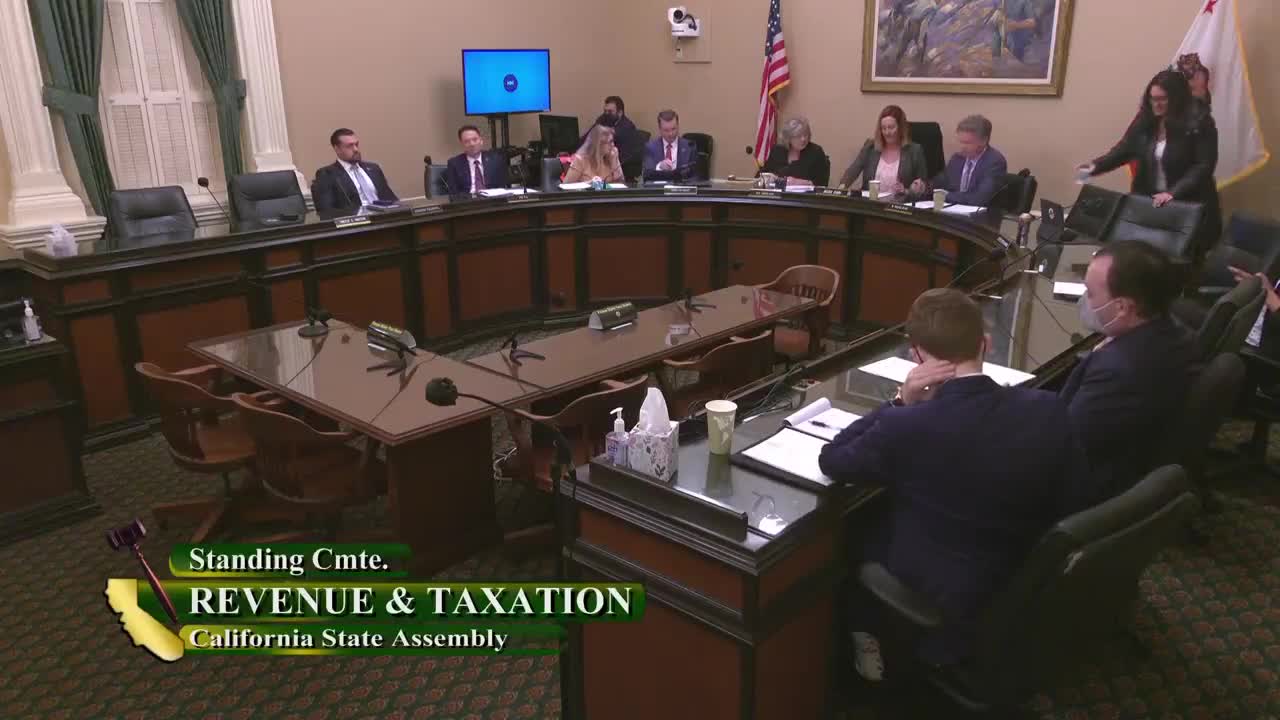 9MIN
Assembly Standing Committee on Revenue and Taxation
Bill Author

Bill Co-Author(s):