AB 363: Pesticides: neonicotinoids for nonagricultural use: reevaluation: control measures.
- Session Year: 2023-2024
- House: Assembly
- Latest Version Date: 2023-10-08
Current Status:
Passed
(2023-10-08: Chaptered by Secretary of State - Chapter 520, Statutes of 2023.)
Introduced
In Committee
First Chamber
In Committee
Second Chamber
Enacted
Existing law, added by the Governors Reorganization Plan No. 1 of 1991, creates the Department of Pesticide Regulation, which is administered by the Director of Pesticide Regulation. Existing law requires the director to endeavor to eliminate from use a pesticide that endangers the agricultural or nonagricultural environment. Existing law requires pesticides to be registered by the department, and requires that a pesticide be thoroughly evaluated prior to registration. Existing law provides for the continued evaluation of registered pesticides. Existing law requires the department, by July 1, 2018, to issue a determination with respect to its reevaluation of neonicotinoids and to adopt any control measures necessary to protect pollinator health within 2 years after making that determination. Existing law provides that every person who violates a provision of any of certain laws relating to pesticides, or a regulation issued pursuant to any of those laws, is guilty of a misdemeanor and shall be punished by specified fines or by imprisonment of not more than 6 months, or both.
This bill, beginning January 1, 2025, would prohibit a person from selling, possessing, or using a pesticide containing one or more neonicotinoid pesticides, as defined, for any nonagricultural use on nonproduction outdoor ornamental plants, trees, or turf, except as provided. The bill would require the department to evaluate, taking into account relevant routes of exposure, the potential impacts of those neonicotinoid pesticide uses on pollinating insects, aquatic organisms, and human health. The bill would require the department, among other things, to issue a determination on those impacts on or before July 1, 2027, and adopt necessary control measures for the use of neonicotinoid pesticides on or before July 1, 2029.
Because the adoption of control measures for the use of neonicotinoid pesticides would require regulations, and a violation of those regulations and the above-described prohibition of the sale, possession, and use of neonicotinoid pesticides would be a crime, this bill would impose a state-mandated local program.
The California Constitution requires the state to reimburse local agencies and school districts for certain costs mandated by the state. Statutory provisions establish procedures for making that reimbursement.
This bill would provide that no reimbursement is required by this act for a specified reason.
Existing law, added by the Governors Reorganization Plan No. 1 of 1991, creates the Department of Pesticide Regulation, which is administered by the Director of Pesticide Regulation. Existing law requires the director to endeavor to eliminate from use a pesticide that endangers the agricultural or nonagricultural environment. Existing law requires pesticides to be registered by the department, and requires that a pesticide be thoroughly evaluated prior to registration. Existing law provides for the continued evaluation of registered pesticides. Existing law requires the department, by July 1, 2018, to issue a determination with respect to its reevaluation of neonicotinoids and to adopt any control measures necessary to protect pollinator health within 2 years after making that determination. Existing law provides that every person who violates a provision of any of certain laws relating to pesticides, or a regulation issued pursuant to any of those laws, is guilty of a misdemeanor and shall be punished by specified fines or by imprisonment of not more than 6 months, or both.
This bill would require the department, by July 1, 2024, to issue a determination, taking into account the latest science, with respect to a reevaluation of neonicotinoid pesticides, as defined, on pollinating insects, aquatic ecosystems, and human health when used for the nonagricultural protection of outdoor ornamental plants, trees, and turf, and, by July 1, 2026, to adopt any control measures for that use that are determined by the department, based on the reevaluation, to be necessary to protect pollinating insects, aquatic ecosystems, and human health, as provided. The bill would require that the reevaluation consider the impacts to pollinating insects, aquatic ecosystems, and human health, including, except as provided, the cumulative impacts of exposure, which the bill would define for these purposes.This bill, beginning January 1, 2025, would prohibit a person from selling, possessing, or using a pesticide containing one or more neonicotinoid pesticides, as defined, for any nonagricultural use on nonproduction outdoor or ornamental plants, trees, or turf, except as provided. The bill would require the department to evaluate, taking into account relevant routes of exposure, the potential impacts of those neonicotinoid pesticide uses on pollinating insects, aquatic ecosystems, and human health. The bill would require the department, among other things, to issue a determination on those impacts on or before July 1, 2027, and adopt necessary control measures for the use of neonicotinoid pesticides on or before July 1, 2029.
Because the adoption of control measures for the use of neonicotinoid pesticides would require regulations, and a violation of those regulations and the above-described prohibition of the sale, possession, and use of neonicotinoid pesticides would be a crime, this bill would impose a state-mandated local program.
The California Constitution requires the state to reimburse local agencies and school districts for certain costs mandated by the state. Statutory provisions establish procedures for making that reimbursement.
This bill would provide that no reimbursement is required by this act for a specified reason.
Existing law generally regulates pesticide use by law, added by the Governors Reorganization Plan No. 1 of 1991, creates the Department of Pesticide Regulation, and Regulation, which is administered by the Director of Pesticide Regulation. Existing law requires the Director of Pesticide Regulation director to endeavor to eliminate from use a pesticide that endangers the agricultural or nonagricultural environment. Existing law requires pesticides to be registered by the department, and requires that a pesticide be thoroughly evaluated prior to registration. Existing law provides for the continued evaluation of registered pesticides. Existing law requires the department, by July 1, 2018, to issue a determination with respect to its reevaluation of neonicotinoids and to adopt any control measures necessary to protect pollinator health within 2 years after making that determination. Existing law provides that every person who violates a provision of law or any regulation of any of certain laws relating to pesticides pesticides, or a regulation issued pursuant to any of those laws, is guilty of a misdemeanor and shall be punished by specified fines or by up to 6-months imprisonment, imprisonment of not more than 6 months, or both.
This bill would require the department, by July 1, 2024, to issue a determination, taking into account the latest science, with respect to a reevaluation of neonicotinoids, neonicotinoid pesticides, as defined, on pollinating insects, aquatic ecosystems, and human health when used for the nonagricultural protection of outdoor ornamental plants, trees, and turf, and, by July 1, 2026, to adopt any control measures for that use that are determined by the department, based on the reevaluation, to be necessary to protect pollinating insects, aquatic ecosystems, and human health, as provided. The bill would require that the reevaluation consider the impacts to pollinating insects, aquatic ecosystems, and human health, including, except as provided, the cumulative impacts of exposure, which the bill would define for these purposes.
By expanding the scope of a crime through theBecause the adoption of control measures for the use of neonicotinoid pesticides, pesticides would require regulations, and a violation of those regulations would be a crime, this bill would impose a state-mandated local program.
The California Constitution requires the state to reimburse local agencies and school districts for certain costs mandated by the state. Statutory provisions establish procedures for making that reimbursement.
This bill would provide that no reimbursement is required by this act for a specified reason.
Existing law generally regulates pesticide use by the Department of Pesticide Regulation, and requires the Director of Pesticide Regulation to endeavor to eliminate from use a pesticide that endangers the agricultural or nonagricultural environment. Existing law requires pesticides to be registered by the department, and requires that a pesticide be thoroughly evaluated prior to registration. Existing law provides for the continued evaluation of registered pesticides. Existing law requires the department, by July 1, 2018, to issue a determination with respect to its reevaluation of neonicotinoids and to adopt any control measures necessary to protect pollinator health within 2 years after making that determination. Existing law provides that every person who violates a provision of law or any regulation relating to pesticides is guilty of a misdemeanor and shall be punished by specified fines or by up to 6-months imprisonment, or both.
This bill would require the department, by July 1, 2024, to publish a reevaluation of the latest science regarding the impacts of neonicotinoid pesticides, to issue a determination, taking into account the latest science, with respect to a reevaluation of neonicotinoids, as defined, on pollinating insects, aquatic ecosystems, and human health when used for the nonagricultural protection of outdoor ornamental plants, trees, and turf, and, by July 1, 2026, to adopt regulations governing control measures for that use that are necessary to protect the health of honeybees, native bees, and other pollinating insects, aquatic ecosystems, and human health, as provided. The bill would require that the reevaluation consider the impacts to pollinating insects, aquatic ecosystems, and human health, including, except as provided, the cumulative impacts of exposure, which the bill would define for these purposes. The bill would require the department to consult with the Office of Environmental Health Hazard Assessment (OEHHA) in conducting its human health evaluation and to consider and adopt, or not adopt, all recommendations of OEHHA, as provided.
By expanding the scope of a crime through the adoption of regulations, control measures for the use of neonicotinoid pesticides, this bill would impose a state-mandated local program.
The California Constitution requires the state to reimburse local agencies and school districts for certain costs mandated by the state. Statutory provisions establish procedures for making that reimbursement.
This bill would provide that no reimbursement is required by this act for a specified reason.
Existing law generally regulates pesticide use by the Department of Pesticide Regulation, and requires the Director of Pesticide Regulation to endeavor to eliminate from use a pesticide that endangers the agricultural or nonagricultural environment. Existing law requires pesticides to be registered by the department, and requires that a pesticide be thoroughly evaluated prior to registration. Existing law provides for the continued evaluation of registered pesticides. Existing law requires the department, by July 1, 2018, to issue a determination with respect to its reevaluation of neonicotinoids and to adopt any control measures necessary to protect pollinator health within 2 years after making that determination. Existing law provides that every person who violates a provision of law or any regulation relating to pesticides is guilty of a misdemeanor and shall be punished by specified fines or by up to 6-months imprisonment, or both.
This bill would require the department, by July 1, 2024, to publish a reevaluation of the latest science regarding the impacts of neonicotinoid pesticides, as defined, on pollinating insects, aquatic ecosystems, and human health when used for the nonagricultural protection of outdoor ornamental plants, trees, and turf, and, by July 1, 2026, to adopt regulations governing that use that are necessary to protect the health of honeybees, native bees, and other pollinating insects, aquatic ecosystems, and human health, as provided. The bill would require that the reevaluation consider the impacts to pollinating insects, aquatic ecosystems, and human health, including, except as provided, the cumulative impacts of exposure, which the bill would define for these purposes. The bill would require the department to consult with the Office of Environmental Health Hazard Assessment (OEHHA) in conducting its human health evaluation and to consider and adopt, or not adopt, all recommendations of OEHHA, as provided.
By expanding the scope of a crime through the adoption of regulations, this bill would impose a state-mandated local program.
The California Constitution requires the state to reimburse local agencies and school districts for certain costs mandated by the state. Statutory provisions establish procedures for making that reimbursement.
This bill would provide that no reimbursement is required by this act for a specified reason.
(a)On or before July 1, 2018, the department shall issue a determination with respect to its reevaluation of neonicotinoids.
(b)(1)Within two years after making the determination specified in subdivision (a), the department shall adopt any control measures necessary to protect pollinator health.
(2)If the department is unable to adopt the necessary control measures within two years as required in paragraph (1), the department shall submit a report to the appropriate committees of the Legislature setting forth the reasons the requirement of paragraph (1) has not been met.
(3)The department shall update the report submitted to the appropriate committees of the Legislature pursuant to paragraph (2) every year until the department adopts the necessary control measures specified in paragraph (1).
(c)(1)For purposes of this subdivision, the following definitions apply:
(A)Cumulative impacts of exposure means the collective impact of exposure to two or more neonicotinoid pesticides.
(B)Neonicotinoid pesticide means a pesticide containing acetamiprid, clothianidin, dinotefuran, imidacloprid, thiamethoxam, or any other chemical designated by the department as belonging to the neonicotinoid class of chemicals.
(2)Beginning January 1, 2025, a person shall not sell, possess, or use a pesticide containing one or more neonicotinoid pesticides for any use that is excluded from the definition of agricultural use in Section 11408 on nonproduction outdoor ornamental plants, trees, or turf, with the exception of use and possession by state certified applicators and sale by state licensed pest control dealers.
(3)The department shall evaluate, at a minimum, the potential impacts of the neonicotinoid pesticide uses described in paragraph (2) on pollinating insects, aquatic organisms, and human health, taking into account relevant routes of exposure, as follows:
(A)On or before January 1, 2024, the department shall issue a draft human health risk assessment of imidacloprid.
(B)On or before July 1, 2024, the department shall initiate a reevaluation of neonicotinoid pesticides relative to pollinating insects, aquatic organisms, and human health, taking into account relevant routes of exposure.
(C)On or before January 1, 2025, the department shall issue a final human health risk assessment for imidacloprid.
(D)On or before January 1, 2025, the department shall issue draft human health risk assessments for the neonicotinoid chemicals described in subparagraph (B) of paragraph (1) other than imidacloprid.
(E)On or before July 1, 2025, the department shall issue an evaluation of the impact of neonicotinoid pesticides on aquatic organisms.
(F)On or before January 1, 2026, the department shall issue final human health risk assessments for the neonicotinoid chemicals described in subparagraph (B) of paragraph (1) other than imidacloprid.
(G)On or before July 1, 2027, the department shall issue a determination with respect to the reevaluation of neonicotinoid pesticides on their impacts to pollinating insects, aquatic organisms, and human health.
(4)On or before July 1, 2029, the department shall adopt any necessary control measures for the use of neonicotinoid pesticides that are determined by the department to be necessary, based on the evaluations described in paragraph (3).
(5)If the department is unable to meet any deadline required in paragraph (3) or (4), the department shall submit a report to the appropriate committees of the Legislature setting forth the reasons the deadline or deadlines have not been met.
(6)In performing the evaluations described in paragraph (3), the department shall consider the cumulative impacts of exposure to multiple neonicotinoid pesticides unless the department can demonstrate with substantial evidence that one or more neonicotinoid pesticides do not share a common mechanism of toxicity and do not present risk of cumulative harm.
(7)The department is not required to conduct a reevaluation of any use of neonicotinoid pesticides for the protection of agricultural commodities, as defined in Section 6000 of Title 3 of the California Code of Regulations.
SEC. 2.No reimbursement is required by this act pursuant to Section 6 of Article XIIIB of the California Constitution because the only costs that may be incurred by a local agency or school district will be incurred because this act creates a new crime or infraction, eliminates a crime or infraction, or changes the penalty for a crime or infraction, within the meaning of Section 17556 of the Government Code, or changes the definition of a crime within the meaning of Section 6 of Article XIIIB of the California Constitution.
(a)On or before July 1, 2018, the department shall issue a determination with respect to its reevaluation of neonicotinoids.
(b)(1)Within two years after making the determination specified in subdivision (a), the department shall adopt any control measures necessary to protect pollinator health.
(2)If the department is unable to adopt the necessary control measures within two years as required in paragraph (1), the department shall submit a report to the appropriate committees of the Legislature setting forth the reasons the requirement of paragraph (1) has not been met.
(3)The department shall update the report submitted to the appropriate committees of the Legislature pursuant to paragraph (2) every year until the department adopts the necessary control measures specified in paragraph (1).
(c)(1)For purposes of this subdivision, the following definitions apply:
(A)Cumulative impacts of exposure means the collective impact of exposure to two or more neonicotinoid chemicals in the outdoor lawn or garden environment, aggregated with the impacts of exposure to any relevant neonicotinoid chemicals from sources other than lawn or garden products. pesticides.
(B)Neonicotinoid pesticide means a pesticide containing acetamiprid, clothianidin, dinotefuran, imidacloprid, thiamethoxam, or any other chemical designated by the department as belonging to the neonicotinoid class of chemicals.
(2)(A)On or before July 1, 2024, the department shall issue a determination, taking into account the latest science, with respect to a reevaluation of neonicotinoid pesticides when used on outdoor ornamental plants, trees, and turf.(B)All of the following apply to the reevaluation:(i)The reevaluation shall consider the impacts of neonicotinoid pesticides on pollinating insects, aquatic ecosystems, and human health.(2)Beginning January 1, 2025, a person shall not sell, possess, or use a pesticide containing one or more neonicotinoid pesticides for any use that is excluded from the definition of agricultural use in Section 11408 on nonproduction outdoor ornamental plants, trees, or turf, with the exception of use and possession by state certified applicators and sale by state licensed pest control dealers.
(3)The department shall evaluate, at a minimum, the potential impacts of the neonicotinoid pesticide uses described in paragraph (2) on pollinating insects, aquatic organisms, and human health, taking into account relevant routes of exposure, as follows:
(A)On or before January 1, 2024, the department shall issue a draft human health risk assessment of imidacloprid.
(B)On or before July 1, 2024, the department shall initiate a reevaluation of neonicotinoid pesticides relative to pollinating insects, aquatic organisms, and human health, taking into account relevant routes of exposure.
(C)On or before January 1, 2025, the department shall issue a final human health risk assessment for imidacloprid.
(D)On or before January 1, 2025, the department shall issue draft human health risk assessments for the neonicotinoid chemicals described in subparagraph (B) of paragraph (1) other than imidacloprid.
(E)On or before July 1, 2025, the department shall issue an evaluation of the impact of neonicotinoid pesticides on aquatic organisms.
(F)On or before January 1, 2026, the department shall issue final human health risk assessments for the neonicotinoid chemicals described in subparagraph (B) of paragraph (1) other than imidacloprid.
(G)On or before July 1, 2027, the department shall issue a determination with respect to the reevaluation of neonicotinoid pesticides on their impacts to pollinating insects, aquatic organisms, and human health.
(4)On or before July 1, 2029, the department shall adopt any necessary control measures for the use of neonicotinoid pesticides that are determined by the department to be necessary, based on the evaluations described in paragraph (3).
(5)If the department is unable to meet any deadline required in paragraph (3) or (4), the department shall submit a report to the appropriate committees of the Legislature setting forth the reasons the deadline or deadlines have not been met.
(ii)(6)In performing the reevaluation, evaluations described in paragraph (3), the department shall consider the cumulative impacts of exposure to multiple neonicotinoid pesticides unless the department can demonstrate with substantial evidence that one or more neonicotinoid pesticides do not share a common mechanism of toxicity and do not present risk of cumulative harm.
(iii)(7)The department is not required to conduct a reevaluation of any use of neonicotinoid pesticides for the protection of agricultural commodities, as defined in Section 6000 of Title 3 of the California Code of Regulations.
(3)On or before July 1, 2026, the department shall adopt any control measures for the use of neonicotinoid pesticides on outdoor ornamental plants, trees, and turf that are determined by the department to be necessary, based on the reevaluation described in paragraph (2), to protect all of the following:(A)Pollinating insects, including honeybees and native bees, taking into account all relevant routes of exposure, including exposure to contaminated pollen, nectar, soil, and water.(B)Aquatic ecosystems, taking into account contamination of surface or ground water.(C)Human health, taking into account the cumulative exposure of people to neonicotinoid pesticides from all sources.SEC. 2.No reimbursement is required by this act pursuant to Section 6 of Article XIIIB of the California Constitution because the only costs that may be incurred by a local agency or school district will be incurred because this act creates a new crime or infraction, eliminates a crime or infraction, or changes the penalty for a crime or infraction, within the meaning of Section 17556 of the Government Code, or changes the definition of a crime within the meaning of Section 6 of Article XIIIB of the California Constitution.
(a)On or before July 1, 2018, the department shall issue a determination with respect to its reevaluation of neonicotinoids.
(b)(1)Within two years after making the determination specified in subdivision (a), the department shall adopt any control measures necessary to protect pollinator health.
(2)If the department is unable to adopt the necessary control measures within two years as required in paragraph (1), the department shall submit a report to the appropriate committees of the Legislature setting forth the reasons the requirement of paragraph (1) has not been met.
(3)The department shall update the report submitted to the appropriate committees of the Legislature pursuant to paragraph (2) every year until the department adopts the necessary control measures specified in paragraph (1).
(c)(1)For purposes of this subdivision, neonicotinoid pesticide means a pesticide containing acetamiprid, clothianidin, dinotefuran, imidacloprid, thiamethoxam, or any other chemical designated by the department as belonging to the neonicotinoid class of chemicals. the following definitions apply:
(A)Cumulative impacts of exposure means the impact of exposure to two or more neonicotinoid chemicals in the outdoor lawn or garden environment, aggregated with the impacts of exposure to any relevant neonicotinoid chemicals from sources other than lawn or garden products.
(B)Neonicotinoid pesticide means a pesticide containing acetamiprid, clothianidin, dinotefuran, imidacloprid, thiamethoxam, or any other chemical designated by the department as belonging to the neonicotinoid class of chemicals.
(2)(A)On or before July 1, 2024, the department shall issue a determination, taking into account the latest science, with respect to a reevaluation of neonicotinoids neonicotinoid pesticides when used on outdoor ornamental plants, trees, and turf.
(B)All of the following apply to the reevaluation:
(i)The reevaluation shall consider the impacts of neonicotinoid pesticides on pollinating insects, aquatic ecosystems, and human health.
(ii)In performing the reevaluation, the department shall consider the cumulative impacts of exposure to multiple neonicotinoid pesticides unless the department can demonstrate with substantial evidence that one or more neonicotinoid pesticides do not share a common mechanism of toxicity and do not present risk of cumulative harm. For purposes of this subdivision, cumulative impacts of exposure means the impact of exposure to two or more neonicotinoid chemicals in the outdoor lawn or garden environment, aggregated with the impacts of exposure to any relevant neonicotinoid chemicals from sources other than lawn or garden products.
(iii)The department is not required to conduct a reevaluation of any use of neonicotinoid pesticides for the protection of agricultural commodities, as defined in Section 6000 of Title 3 of the California Code of Regulations.
(3)On or before July 1, 2026, the department shall adopt any control measures for the use of neonicotinoid pesticides on outdoor ornamental plants, trees, and turf that are necessary determined by the department to be necessary, based on the reevaluation described in paragraph (2), to protect all of the following:
(A)Pollinating insects, including honeybees and native bees, taking into account all relevant routes of exposure, including exposure to contaminated pollen, nectar, soil, and water.
(B)Aquatic ecosystems, taking into account contamination of surface or ground water.
(C)Human health, taking into account the cumulative exposure of people to neonicotinoid pesticides from all sources.
SEC. 2.No reimbursement is required by this act pursuant to Section 6 of Article XIIIB of the California Constitution because the only costs that may be incurred by a local agency or school district will be incurred because this act creates a new crime or infraction, eliminates a crime or infraction, or changes the penalty for a crime or infraction, within the meaning of Section 17556 of the Government Code, or changes the definition of a crime within the meaning of Section 6 of Article XIIIB of the California Constitution.
(a)On or before July 1, 2018, the department shall issue a determination with respect to its reevaluation of neonicotinoids.
(b)(1)Within two years after making the determination specified in subdivision (a), the department shall adopt any control measures necessary to protect pollinator health.
(2)If the department is unable to adopt the necessary control measures within two years as required in paragraph (1), the department shall submit a report to the appropriate committees of the Legislature setting forth the reasons the requirement of paragraph (1) has not been met.
(3)The department shall update the report submitted to the appropriate committees of the Legislature pursuant to paragraph (2) every year until the department adopts the necessary control measures specified in paragraph (1).
(c)(1)For purposes of this subdivision, neonicotinoid pesticide means a pesticide containing acetamiprid, clothianidin, dinotefuran, imidacloprid, thiamethoxam, or any other chemical designated by the department as belonging to the neonicotinoid class of chemicals.
(2)(A)On or before July 1, 2024, the department shall publish a reevaluation of the latest science regarding the impacts of neonicotinoid pesticides when used for the protection of issue a determination, taking into account the latest science, with respect to a reevaluation of neonicotinoids when used on outdoor ornamental plants, trees, and turf.
(B)All of the following apply to the reevaluation:
(i)The reevaluation shall consider the impacts of neonicotinoid pesticides to on pollinating insects, aquatic ecosystems, and human health.
(ii)In performing the reevaluation, the department shall consider the cumulative impacts of exposure to multiple neonicotinoid pesticides unless the department can demonstrate with substantial evidence that one or more neonicotinoid pesticides do not share a common mechanism of toxicity and do not present risk of cumulative harm. Cumulative For purposes of this subdivision, cumulative impacts of exposure means the impact of exposure to two or more neonicotinoid chemicals in the outdoor lawn or garden environment, aggregated with the impacts of exposure to any relevant neonicotinoid chemicals from sources other than lawn or garden products.
(iii)In conducting its human health evaluation pursuant to this subdivision, the department shall consult with the Office of Environmental Health Hazard Assessment (OEHHA). The department shall consider all recommendations of OEHHA and issue a public notice explaining the decision by the department to adopt, or not adopt, each recommendation of OEHHA.(iv)(iii)The department is not required to conduct a reevaluation of any use of neonicotinoid pesticides for the protection of agricultural commodities, as defined in Section 6000 of Title 3 of the California Code of Regulations.
(3)On or before July 1, 2026, the department shall adopt regulations governing the nonagricultural control measures for the use of neonicotinoid pesticides, as specified in paragraph (2), pesticides on outdoor ornamental plants, trees, and turf that are necessary to protect all of the following:
(A)The health of honeybees, native bees, and other pollinating insects, Pollinating insects, including honeybees and native bees, taking into account all relevant routes of exposure, including exposure to contaminated pollen, nectar, soil, and water.
(B)Aquatic ecosystems, taking into account contamination of surface or ground water.
(C)Human health, taking into account aggregate the cumulative exposure of people to neonicotinoid pesticides from all sources.
SEC. 2.No reimbursement is required by this act pursuant to Section 6 of Article XIIIB of the California Constitution because the only costs that may be incurred by a local agency or school district will be incurred because this act creates a new crime or infraction, eliminates a crime or infraction, or changes the penalty for a crime or infraction, within the meaning of Section 17556 of the Government Code, or changes the definition of a crime within the meaning of Section 6 of Article XIIIB of the California Constitution.
(a)On or before July 1, 2018, the department shall issue a determination with respect to its reevaluation of neonicotinoids.
(b)(1)Within two years after making the determination specified in subdivision (a), the department shall adopt any control measures necessary to protect pollinator health.
(2)If the department is unable to adopt the necessary control measures within two years as required in paragraph (1), the department shall submit a report to the appropriate committees of the Legislature setting forth the reasons the requirement of paragraph (1) has not been met.
(3)The department shall update the report submitted to the appropriate committees of the Legislature pursuant to paragraph (2) every year until the department adopts the necessary control measures specified in paragraph (1).
(c)(1)For purposes of this subdivision, neonicotinoid pesticide means a pesticide containing acetamiprid, clothianidin, dinotefuran, imidacloprid, thiamethoxam, or any other chemical designated by the department as belonging to the neonicotinoid class of chemicals.
(2)(A)On or before July 1, 2024, the department shall publish a reevaluation of the latest science regarding the impacts of neonicotinoid pesticides when used for the protection of outdoor ornamental plants, trees, and turf.
(B)All of the following apply to the reevaluation:
(i)The reevaluation shall consider the impacts of neonicotinoid pesticides to pollinating insects, aquatic ecosystems, and human health.
(ii)In performing the reevaluation, the department shall consider the cumulative impacts of exposure to multiple neonicotinoid pesticides unless the department can demonstrate with substantial evidence that one or more neonicotinoid pesticides do not share a common mechanism of toxicity and do not present risk of cumulative harm. Cumulative impacts of exposure means the impact of exposure to two or more neonicotinoid chemicals in the outdoor lawn or garden environment, aggregated with the impacts of exposure to any relevant neonicotinoid chemicals from sources other than lawn or garden products.
(iii)In conducting its human health evaluation pursuant to this subdivision, the department shall consult with the Office of Environmental Health Hazard Assessment (OEHHA). The department shall consider all recommendations of OEHHA and issue a public notice explaining the decision by the department to adopt, or not adopt, each recommendation of OEHHA.
(iv)The department is not required to conduct a reevaluation of any use of neonicotinoid pesticides for the protection of agricultural commodities, as defined in Section 6000 of Title 3 of the California Code of Regulations.
(3)On or before July 1, 2026, the department shall adopt regulations governing the nonagricultural use of neonicotinoid pesticides, as specified in paragraph (2), that are necessary to protect all of the following:
(A)The health of honeybees, native bees, and other pollinating insects, taking into account all relevant routes of exposure, including exposure to contaminated pollen, nectar, soil, and water.
(B)Aquatic ecosystems, taking into account contamination of surface or ground water.
(C)Human health, taking into account aggregate exposure of people to neonicotinoid pesticides from all sources.
SEC. 2.No reimbursement is required by this act pursuant to Section 6 of Article XIIIB of the California Constitution because the only costs that may be incurred by a local agency or school district will be incurred because this act creates a new crime or infraction, eliminates a crime or infraction, or changes the penalty for a crime or infraction, within the meaning of Section 17556 of the Government Code, or changes the definition of a crime within the meaning of Section 6 of Article XIIIB of the California Constitution.
|
Date
|
Status
|
|---|---|
| Oct 8, 2023 | Chaptered by Secretary of State - Chapter 520, Statutes of 2023. |
| Oct 8, 2023 | Approved by the Governor. |
| Sep 19, 2023 | Enrolled and presented to the Governor at 4 p.m. |
| Sep 12, 2023 | Senate amendments concurred in. To Engrossing and Enrolling. (Ayes 53. Noes 16. Page 3282.). |
| Sep 12, 2023 | Assembly Rule 77 suspended. (Page 3228.) |
| Sep 11, 2023 | In Assembly. Concurrence in Senate amendments pending. May be considered on or after September 13 pursuant to Assembly Rule 77. |
| Sep 11, 2023 | Read third time. Passed. Ordered to the Assembly. (Ayes 26. Noes 10. Page 2858.). |
| Sep 7, 2023 | Read second time. Ordered to third reading. |
| Sep 6, 2023 | Read third time and amended. Ordered to second reading. |
| Sep 5, 2023 | Read second time. Ordered to third reading. |
| Sep 1, 2023 | From committee: Do pass. (Ayes 5. Noes 2.) (September 1). |
| Aug 14, 2023 | In committee: Referred to APPR suspense file. |
| Jul 6, 2023 | Read second time and amended. Re-referred to Com. on APPR. |
| Jul 5, 2023 | From committee: Amend, and do pass as amended and re-refer to Com. on APPR. (Ayes 5. Noes 2.) (July 5). |
| Jun 14, 2023 | Referred to Com. on E.Q. |
| Jun 1, 2023 | In Senate. Read first time. To Com. on RLS. for assignment. |
| May 31, 2023 | Read third time. Passed. Ordered to the Senate. (Ayes 57. Noes 16. Page 1974.) |
| May 18, 2023 | Read second time. Ordered to third reading. |
| May 18, 2023 | From committee: Do pass. (Ayes 11. Noes 4.) (May 18). |
| Mar 29, 2023 | In committee: Set, first hearing. Referred to APPR. suspense file. |
| Mar 15, 2023 | From committee: Do pass and re-refer to Com. on APPR. (Ayes 7. Noes 2.) (March 14). Re-referred to Com. on APPR. |
| Mar 7, 2023 | Re-referred to Com. on E.S. & T.M. |
| Mar 6, 2023 | From committee chair, with author's amendments: Amend, and re-refer to Com. on E.S. & T.M. Read second time and amended. |
| Feb 9, 2023 | Referred to Com. on E.S. & T.M. |
| Feb 2, 2023 | From printer. May be heard in committee March 4. |
| Feb 1, 2023 | Read first time. To print. |
|
Date
|
Description
|
Location
|
Votes
|
|
|---|---|---|---|---|
| Sep 12, 2023 | AB 363 Bauer-Kahan Concurrence in Senate Amendments | Assembly Floor |
Passed |
|
| Sep 11, 2023 | Assembly 3rd Reading AB363 Bauer-Kahan By Allen | Senate Floor |
Passed |
|
| Sep 1, 2023 | Do pass | Senate Standing Committee on Appropriations |
Passed |
|
| Aug 14, 2023 | Placed on suspense file | Senate Standing Committee on Appropriations |
Passed |
|
| Jul 5, 2023 | Do pass as amended, but first amend, and re-refer to the Committee on [Appropriations] | Senate Standing Committee on Environmental Quality |
Passed |
|
| May 31, 2023 | AB 363 Bauer-Kahan Assembly Third Reading | Assembly Floor |
Passed |
|
| May 18, 2023 | Do pass. | Assembly Standing Committee on Appropriations |
Passed |
|
| Mar 14, 2023 | Do pass and be re-referred to the Committee on [Appropriations] | Assembly Standing Committee on Environmental Safety and Toxic Materials |
Passed |
This list shows positions taken on this bill by organizations on the date displayed, which is linked to the original source.
Positions by individuals are not included.
|
Organization
|
Position
|
Date
|
|---|---|---|
| 350 Bay Area Action | ** Support | |
| 350 Ventura County Climate Hub | ** Support | |
| A Voice for Choice Advocacy | ** Support | |
| Aaron Reed and Associates | * Support | Jul 5, 2023 |
| Active San Gabriel Valley | ** Support | |
| Agricultural and Input Providers | * Against | Jul 5, 2023 |
| American Beekeeping Federation | ** Support | |
| American Bird Conservancy | ** Support | |
| American Chemistry Council | * Against | Mar 14, 2023 |
| American College Of Obstetricians And Gynecologists District Ix | ** Support | |
| American Pistachio Growers | ** Against | |
| Breast Cancer Prevention Partners | ** Support | |
| California Association Of Pest Control Advisers | ** Against | |
| California Chamber Of Commerce | ** Against | |
| California Citrus Mutual | ** Against | |
| California Cotton Ginners and Growers Association | ** Against | |
| California Environmental Voters | ** Support | |
| California Farm Bureau | * Against Unless Amend | Mar 14, 2023 |
| California Fresh Fruit Association | ** Against | |
| California Institute for Biodiversity | ** Support | |
| California Manufacturers & Technology Association | ** Against | |
| California Native Plant Society | ** Support | |
| California Nurses for Environmental Health and Justice | ** Support | |
| California Public Interest Research Group | ** Support | |
| California Seed Association | ** Against | |
| California State Beekeepers Association | ** Against | |
| California State Grange | ** Support | |
| California Strawberry Commission | ** Against | |
| California Tomato Growers Association | ** Against | |
| California Walnut Commission | ** Against | |
| Californians For Alternatives to Toxics | ** Support | |
| Californians for Pesticide Reform | ** Support | |
| Center For Biological Diversity | ** Support | |
| Center For Environmental Health | ** Support | |
| Center For Food Safety; The | ** Support | |
| City Of Oakland | ** Support | |
| Clean Water Action | ** Support | |
| cleanearth4kids.org | ** Support | |
| Coalition of Health Professionals | ** Support | |
| Democrats of Rossmoor | ** Support | |
| Dietrick Institute for Applied Insect Ecology | ** Support | |
| Earth-riders | ** Support | |
| Environment California | ** Support | |
| Environmental Health Trust | ** Support | |
| Environmental Working Group | ** Support | |
| Families Advocating for Chemical and Toxics Safety | ** Support | |
| Friends Committee On Legislation Of California | ** Support | |
| Friends Of The Earth | ** Support | |
| GMO Science | ** Support | |
| Household and Commercial Products Association | ** Against | |
| Indivisible California Green Team | ** Support | |
| indivisible ventura | ** Support | |
| Jonas Philanthropies | ** Support | |
| Midpeninsula Regional Open Space District | ** Support | |
| Mount Diablo Audubon Society | ** Support | |
| National Stewardship Action Council | * Support | Jul 5, 2023 |
| Natural Resources Defense Council | ** Support | |
| Natural Resources Defense Council (NRDC) | * Support | Jul 5, 2023 |
| Nontoxic Neighborhoods | ** Support | |
| Pacific Seed Association | ** Against | |
| Parents for a Safer Environment | ** Support | |
| Pesticide Action Network | ** Support | |
| Plant California Alliance | ** Against | |
| Poison Free Malibu | ** Support | |
| Pollinator Stewardship Council, Inc. | ** Support | |
| Raptors Are The Solution | ** Support | |
| Rincon-Vitova Insectaries | ** Support | |
| Rise Medical Colorado | ** Support | |
| Rooted in Resistance | ** Support | |
| Santa Cruz Climate Action Network | ** Support | |
| Save Mount Diablo | ** Support | |
| Sea And Sage Audubon Society | ** Support | |
| Sierra Club California | ** Support | |
| SoCal 350 Climate Action | ** Support | |
| Solano County Democratic Central Committee | ** Support | |
| Sonoma Safe Agriculture Safe Schools | ** Support | |
| Sustainable Rossmoor | ** Support | |
| The Herd Foundation - Holistic Education for Reversing Desertification | ** Support | |
| The Xerces Society for Invertebrate Conservation | ** Support | |
| Western Agricultural Processors Association | ** Against | |
| Western Growers Association | * Against Unless Amend | Mar 14, 2023 |
| Western Plant Health Association | ** Against |
CONCURRENCE IN SENATE AMENDMENTS
CSA1 Bill Id:AB 363
Author:(Bauer-Kahan)
As Amended Ver:September 6, 2023
Majority vote
SUMMARY
Prohibits, beginning January 1, 2025, the sale, possession, or use of a pesticide containing one or more neonicotinoid pesticides, as defined, for any nonagricultural use on nonproduction outdoor or ornamental plants, trees, or turf, except by state certified applicators and state licensed pest control dealers. Requires the Department of Pesticide Regulation (DPR) to evaluate the potential impacts of neonicotinoid pesticide uses on pollinating insects, aquatic ecosystems, and human health, as specified.
Senate Amendments
- Change the definition of "cumulative impacts of exposure" to the collective impact of exposure to two or more neonicotinoid pesticides.
- Prohibit, beginning January 1, 2025, a person from selling, possessing, or using a pesticide containing one or more neonicotinoid pesticides for any non-agricultural use on nonproduction outdoor ornamental plants, trees, or turf.
- Exempt from this prohibition use and possession by state certified applicators and sale by state licensed pest control dealers.
- Require DPR to evaluate, at a minimum, the potential impacts of the neonicotinoid pesticide use and possession by state certified applicators and state licensed pest control dealers on pollinating insects, aquatic organisms, and human health, taking into account relevant routes of exposure, on a specified timeline that includes:
- On or before July 1, 2024, DPR shall initiate a reevaluation of neonicotinoid pesticides relative to pollinating insects, aquatic organisms, and human health, taking into account relevant routes of exposure;
- On or before January 1, 2025, DPR shall issue a final human health risk assessment for imidacloprid;
- On or before January 1, 2026, DPR shall issue final human health risk assessments for the specified neonicotinoid chemicals other than imidacloprid;
- On or before July 1, 2027, DPR shall issue a determination with respect to the reevaluation of neonicotinoid pesticides on their impacts to pollinating insects, aquatic ecosystems, organisms, and human health; and,
- On or before July 1, 2029, DPR shall adopt any necessary control measures for the use of neonicotinoid pesticides that are determined by DPR to be necessary, based on the evaluations of use by state certified applicators and state licensed pest control dealers.
- Require, if it is unable to meet any deadline required by the bill, DPR to submit a report to the appropriate committees of the Legislature setting forth the reasons the deadline or deadlines have not been met.
- Delete the requirement that DPR, by July 1, 2024, issue a determination, taking into account the latest science, with respect to a reevaluation of neonicotinoids when used on outdoor ornamental plants, trees, and turf.
- Delete the requirement that DPR, on or before July 1, 2026, adopt control measures for the use of neonicotinoid pesticides on outdoor ornamental plants, trees, and turf, as specified.
- Make other technical and conforming changes.
COMMENTS
Neonicotinoid pesticides: Neonicotinoids are the most widely used class of insecticides in the world, representing 25% of the global insecticide market. Neonicotinoids are found in soil, water, food, and plant life, and DPR has detected neonicotinoids in the majority of urban water samples across the state. Neonicotinoids affect the central nervous system of insects, and do not discriminate between target (e.g., corn rootworm, flea beetle) and nontarget insects (e.g., bees). Even low-level continual exposures to neonicotinoids are likely to lead to cumulative effects in exposed organisms. Nontarget organisms exposed to neonicotinoids at levels of concern include pollinators, aquatic insects, and birds. The three most commonly detected neonicotinoids are classified as being highly toxic to bees. Research links neonicotinoid exposure and adverse developmental and neurological outcomes in humans, among other risks.
Reevaluation of pesticide registration in California: DPR's mission is to protect human health and the environment through the regulation of pesticide sales and use, and by fostering reduced-risk pest management. DPR must register a pesticide product before it can be sold or offered for sale in California. DPR is also required by statute to "develop an orderly program for the continuous evaluation of all pesticides actually registered." California regulations require DPR to investigate reports of possible adverse effects to people or the environment resulting from the use of registered pesticides. If DPR finds that a significant adverse impact occurred or is likely to occur, regulations require DPR to reevaluate the registration of the pesticide. During the reevaluation process, DPR reviews existing data and may require registrants to provide additional data to determine the nature or the extent of the potential hazard, or to identify appropriate mitigation measures, if needed. DPR concludes reevaluations in a number of different ways. If the data demonstrates that use of the pesticide presents no significant adverse effects, DPR concludes the reevaluation without additional mitigation measures. If additional mitigation measures are necessary, DPR places appropriate restrictions on the use of the pesticide to mitigate the potential adverse effect. If the adverse impact cannot be mitigated, DPR cancels or suspends the registration of the pesticide product(s).
DPR's reevaluation of neonicotinoids: In 2008, DPR received an adverse effects disclosure that showed potentially harmful effects of the neonicotinoid, imidacloprid, to pollinators. After investigating the disclosures, DPR placed certain pesticide products containing imidacloprid, and related neonicotinoid active ingredients, into reevaluation on February 27, 2009, so that it could assess the magnitude of their residues in the pollen and nectar of agricultural commodities and the corresponding levels of risk to honey bee colonies. In July, 2018, as a result of its reevaluation, DPR found that certain agricultural applications of neonicotinoids presented a hazard to honey bees. According to DPR, it is currently finalizing its regulation mitigating agricultural uses of neonicotinoids, with an anticipated effective date of January 1, 2024.
DPR's evaluation of non-agricultural uses of neonicotinoids: According to DPR, it has begun its evaluation of which non-agricultural neonicotinoid uses may have significant adverse impacts to pollinators and aquatic environments. DPR expects to determine the potential degree of risk from those uses by the end of 2023. In addition, DPR is finalizing a human health Risk Characterization Document for all registered uses of imidacloprid, which will be released for public comment later this year. DPR states that this work will inform the next steps for mitigation. DPR estimates that in California, about 80-85% of neonicotinoid use and sales is for agricultural purposes, and 15-20% is for non-agricultural purposes; however, the rates of application for neonicitinoids is likely to change as DPR's rulemaking comes into effect.
This bill: This bill would prohibit, beginning January 1, 2025, the sale, possession, or use of a pesticide containing one or more neonicotinoid pesticides, as defined, for any nonagricultural use on nonproduction outdoor or ornamental plants, trees, or turf, except by state certified applicators and state licensed pest control dealers. It also requires DPR to evaluate the potential impacts of neonicotinoid pesticide uses on pollinating insects, aquatic ecosystems, and human health, as specified.
According to the Author
According to the author, "Our pollinators are threatened. California beekeepers lost 41.9% of their colonies in 2021, one of the worst years on record. These pollinators are critical to California's agriculture, worth $50 billion annually. A huge body of research links adverse health impacts and the decline in pollinator populations to the use of pesticides, particularly neonicotinoids. Though we have seen steps to regulate these pesticides in our commercial fields, there has been little movement on non-agricultural uses. The European Union, Maine, New Jersey, and several other states have already banned or restricted these pesticides for non-agricultural uses. It's time to catch up to the rest of the world in protecting bee and human health. AB 363 will ensure DPR moves forward with these long-overdue regulations for neonicotinoids to protect pollinator and human health."
Arguments in Support
According to a coalition of supporters, "Neonics broadly contaminate California's environment, threatening the collapse of entire ecosystems. State water testing has detected neonics in the vast majority of samples statewide, including 92% of samples in urban areas of Southern California. And they are found at levels that likely harm aquatic life, killing insects and other invertebrates and starving the birds, fish, and other species that rely on them for food… On any given day, neonics are found in the bodies of half the U.S. population and a recent study found neonics in the bodies of over 95% of 171 pregnant women tested in California and four other states… While the DPR has proposed restrictions on neonic uses in agriculture to protect pollinators, the agency has so far not addressed neonic use in non-agricultural settings and has focused solely on risks to honey bees. AB 363 would address upwards of 20% of total neonic use in the state."
Arguments in Opposition
According to the California Agricultural Commissioners and Sealers Association (CACASA), "California law currently allows [DPR] to put special controls on pesticides designated as California restricted materials—limiting their use to trained individuals and then only at times and places approved by the state's County Agricultural Commissioners (CACs). Working together with DPR, the pesticide use enforcement program promotes reduced risk pest management strategies, assesses human health risks from pesticides, licenses pest control businesses and monitors pesticide residue in the environment… AB 363 circumvents the established processes in place to determine the appropriate regulation of neonicotinoids… Strong regulations for neonicotinoids that include tiered restrictions based on the chemical used, the type of crop and the time of year the application is applied in order to protect pollinator health already exist…. The regulations address both risks to bees and ensures the protection of pollinators critical to growers and the agricultural sector."
FISCAL COMMENTS
According to the Senate Appropriations Committee, DPR estimates that, should a previous version this bill be enacted, it would incur ongoing costs of $353,000 annually for two positions to support the timelines that would be established by this bill. In addition, DPR estimates unknown but likely significant forgone revenues, potentially up to $890,000 annually starting after July 1, 2026, due to the adoption of mitigation measures that could include cancelling all non-agricultural neonicotinoid uses. DPR notes that potential mitigation measure are unknown, but the cancellation of all non-agricultural neonicotinoid uses would have the largest fiscal impact. Other mitigation measure could result in a lower amount of foregone revenue. Senate Appropriations Committee staff note that the DPR Fund has a significant structural deficit.
VOTES:
ASM ENVIRONMENTAL SAFETY AND TOXIC MATERIALS: 7-2-0
YES: Lee, Arambula, Bauer-Kahan, Connolly, McKinnor, Pacheco, Zbur
NO: Hoover, Ta
ASM APPROPRIATIONS: 11-4-1
YES: Holden, Bryan, Calderon, Wendy Carrillo, Mike Fong, Hart, Lowenthal, Papan, Pellerin, Weber, Ortega
NO: Megan Dahle, Dixon, Mathis, Sanchez
ABS, ABST OR NV: Robert Rivas
ASSEMBLY FLOOR: 57-16-7
YES: Addis, Aguiar-Curry, Alvarez, Arambula, Bauer-Kahan, Bennett, Berman, Boerner, Bonta, Bryan, Calderon, Juan Carrillo, Wendy Carrillo, Cervantes, Connolly, Mike Fong, Friedman, Gabriel, Garcia, Gipson, Grayson, Haney, Hart, Holden, Jackson, Jones-Sawyer, Kalra, Lee, Low, Lowenthal, Maienschein, McCarty, McKinnor, Muratsuchi, Ortega, Pacheco, Papan, Pellerin, Petrie-Norris, Quirk-Silva, Ramos, Reyes, Luz Rivas, Robert Rivas, Rodriguez, Blanca Rubio, Santiago, Schiavo, Ting, Valencia, Ward, Weber, Wicks, Wilson, Wood, Zbur, Rendon
NO: Alanis, Chen, Megan Dahle, Davies, Dixon, Flora, Vince Fong, Gallagher, Hoover, Mathis, Jim Patterson, Joe Patterson, Sanchez, Ta, Waldron, Wallis
ABS, ABST OR NV: Bains, Essayli, Irwin, Lackey, Stephanie Nguyen, Soria, Villapudua
SENATE FLOOR: 27-10-3
YES: Allen, Archuleta, Ashby, Atkins, Becker, Blakespear, Bradford, Cortese, Durazo, Eggman, Glazer, Gonzalez, Laird, Limón, McGuire, Menjivar, Min, Newman, Padilla, Portantino, Rubio, Skinner, Smallwood-Cuevas, Stern, Umberg, Wahab, Wiener
NO: Alvarado-Gil, Dahle, Grove, Hurtado, Jones, Nguyen, Niello, Ochoa Bogh, Seyarto, Wilk
ABS, ABST OR NV: Caballero, Dodd, Roth
UPDATED
VERSION: September 6, 2023
CONSULTANT: Shannon McKinney / E.S. & T.M. / (916) 319-3965 FN: 0002360
SENATE RULES COMMITTEE Office of Senate Floor Analyses (916) 651-1520 Fax: (916) 327-4478 | AB 363 |
THIRD READING
Bill No: AB 363
Author: Bauer-Kahan (D)
Amended: 9/6/23 in Senate
Vote: 21
SENATE ENVIRONMENTAL QUALITY COMMITTEE: 5-2, 7/5/23
AYES: Allen, Gonzalez, Hurtado, Menjivar, Skinner
NOES: Dahle, Nguyen
SENATE APPROPRIATIONS COMMITTEE: 5-2, 9/1/23
AYES: Portantino, Ashby, Bradford, Wahab, Wiener
NOES: Jones, Seyarto
ASSEMBLY FLOOR: 57-16, 5/31/23 - See last page for vote
SUBJECT: Pesticides: neonicotinoids for nonagricultural use: reevaluation: control measures
SOURCE: Environment California
Natural Resources Defense Council
DIGEST:
This bill prohibits the sale, possession, or use of neonicotinoid pesticides for non-agricultural uses, except for possession or use by state certified applicators and sale by state licensed pest control dealers, beginning on January 1, 2025. This bill requires the Department of Pesticide Regulation (DPR) to reevaluate non-agricultural uses of neonicotinoid pesticides relative to pollinating insects, aquatic ecosystems, and human health, and sets deadlines for this process, including the adoption of any necessary control measures by July 1, 2029.
Senate Floor Amendments of 9/6/23 add a prohibition on sale, possession, or use of neonicotinoid pesticides beginning January 1, 2025 except for possession or use by state certified applicators and sale by state licensed pest control dealers. The amendments extend the timelines for work completion and provide specific deadlines for individual portions of the neonicotinoid reevaluation.
ANALYSIS:
Existing law:
- Authorizes the state’s pesticide regulatory program and mandates DPR to, among other things, provide for the proper, safe, and efficient use of pesticides essential for the production of food and fiber, for the protection of public health and safety, for the protection of the environment from environmentally harmful pesticides, and to assure agricultural and pest control workers safe working conditions where pesticides are present by prohibiting, regulating, or otherwise ensuring proper stewardship of those pesticides. (Food and Agriculture Code (FAC) § 11401, et seq.)
- Regulates the use of pesticides and authorizes the director to adopt regulations to govern the registration, sale, transportation, or use of pesticides, as prescribed. (FAC §11501, et seq.)
- Requires the director to endeavor to eliminate from use in the state any pesticide that endangers the agricultural or nonagricultural environment, is not beneficial for the purposes for which it is sold, or is misrepresented. (FAC § 12824)
- Authorizes the director, after a hearing, to cancel the registration of, or refuse to register, any pesticide that fulfills these, among other, criteria:
- That has demonstrated serious uncontrollable adverse effects either within or outside the agricultural environment;
- The use of which is of less public value or greater detriment to the environment than the benefit received by its use;
- For which there is a reasonable, effective, and practicable alternate material or procedure that is demonstrably less destructive to the environment; or,
- That, when properly used, is detrimental to vegetation, except weeds, to domestic animals, or to the public health and safety. (FAC § 12825)
- Requires, if during or after the registration of a pesticide the registrant has factual or scientific evidence of any adverse effect or risk of the pesticide to human health, livestock, crops, or the environment that has not been previously submitted to DPR, the registrant to submit the evidence to DPR. Authorizes the director of DPR to adopt regulations to carry out the reevaluation process. (FAC § 12825.5)
- Requires DPR to issue a determination with respect to its reevaluation of neonicotinoids by July 1, 2018, and to adopt control measures necessary to protect pollinator health within two years after making the determination. (FAC § 12838)
This bill:
- Defines “neonicotinoid pesticide” for the purposes of the provisions of this bill as a pesticide containing acetamiprid, clothianidin, dinotefuran, imidacloprid, thiamethoxam, or any other chemical designated by DPR as belonging to the neonicotinoid class of chemicals.
- Defines “cumulative impacts of exposure” as the collective impact of two or more neonicotinoid pesticides.
- Prohibits the sale, possession, or use of a pesticide containing one or more neonicotinoid pesticides for any non-agricultural use on nonproduction outdoor ornamental plants, trees, or turf, with exceptions for use and possession by state certified applicators and for sale by state licensed pest control dealers as of January 1, 2025.
- Requires DPR to evaluate the impacts on pollinating insects, aquatic organisms, and human health, taking into account relevant routes of exposure and cumulative impacts of exposure, of using neonicotinoid pesticides on nonproduction outdoor ornamental plants, trees, or turf, by:
- Initiating a reevaluation of non-agricultural uses of neonicotinoid pesticides relative to pollinating insects, aquatic organisms and human health by July 1, 2024;
- Issuing a determination with respect to the reevaluation of non-agricultural neonicotinoid pesticide use on impacts to pollinating inspects, aquatic organisms, and human health by July 1, 2027;
- Issuing a draft human health risk assessment of imidacloprid, one neonicotinoid pesticide, by January 1, 2024 and a final assessment by January 1, 2025;
- Issuing a draft human health risk assessment for other neonicotinoid chemicals by January 1, 2025 and a final assessment by January 1, 2026;
- Evaluating the impact of neonicotinoids on aquatic organisms by July 1, 2025; and,
- Adopting any control measures determined by DPR to be necessary by the evaluations by July 1, 2029.
- Directs to DPR to, if unable to meet any of these deadlines, submit a report to the appropriate committees of the Legislature describing the reasons for this.
- Clarifies that DPR is not required to conduct a reevaluation of any use of neonicotinoid pesticides for the protection of agricultural commodities, as defined in the California Code of Regulations.
Background
- Neonicotinoid pesticides. Neonicotinoid insecticides, often referred to as “neonics,” are currently the most widely used class of insecticides in the world, representing 25% of the global insecticide market. They are effective against a broad spectrum of insects by affecting their central nervous system. Neonicotinoids are absorbed in to plants and distributed throughout their stems, leaves, roots, and flowers. Because of this, neonicotinoids are often coated on seeds, especially in agricultural settings, because they then spread throughout the plant as it grows. They can also be applied as sprays, soil drenches, or injections. Neonicotinoids do not discriminate between target and nontarget insects, such as bees. The impact of neonicotinoid use on bees and other pollinators has been of particular concern. Other nontarget animals likely at risk of damaging exposure to neonicotinoids include aquatic insects, and birds. Exposure to neonicotinoids may also impact humans. Research suggests associations between neonicotinoid exposure and adverse developmental and neurological effects, among other possible health impacts. Neonicotinoids can spread into the environment, including into water, and be taken up by other plants. DPR’s report, "Urban monitoring in Southern California watersheds fiscal year 2017-2018," showed neonicotinoid contamination in over 90% urban surface water samples taken in Los Angeles, Orange, and San Diego counties, which may indicate extensive outdoor, non-agricultural use.
- Reevaluation of pesticides in California. California regulations require DPR to investigate reports of possible adverse effects to people or the environment resulting from the use of pesticides. If a significant adverse impact occurred or is likely to occur, regulations require DPR to reevaluate the registration of the pesticide. When a pesticide enters the reevaluation process, DPR reviews existing data and may require registrants to provide additional data to determine the nature or the extent of the potential hazard or identify appropriate mitigation measures, if needed. DPR concludes reevaluations in a number of different ways. If the data demonstrate that use of the pesticide presents no significant adverse effects, DPR concludes the reevaluation without additional mitigation measures. If additional mitigation measures are necessary, DPR places appropriate restrictions on the use of the pesticide to mitigate the potential adverse effect. If the adverse impact cannot be mitigated, DPR cancels or suspends the registration of the pesticide product(s).
- DPR’s reevaluation and rulemaking regarding neonicotinoids. DPR initiated its reevaluation of neonicotinoids in February 2009 in response to evidence that a type of neonicotinoid was posing hazards to pollinators. Studies had revealed high levels of the neonicotinoid in leaves and blossoms of treated ornamental plants and increasing residue levels over time.
Five years later, in 2014, the Legislature adopted AB 1789 (Williams, Chapter 578, Statutes of 2014), which required DPR to issue a determination with respect to its reevaluation of neonicotinoids by July 1, 2018, and to adopt control measures necessary to protect pollinator health within two years after making the determination. In July 2018, DPR published the California Neonicotinoid Risk Determination. In February 2022, DPR published a Notice of Proposed Regulatory Action. These proposed regulations cover foliar and soil application of neonicotinoids for specified agricultural commodities and include restrictions on application methods and rates, application timing, and seasonal application rate caps, all of which are specified by crop group. The proposed regulations have an anticipated effective date of January 1, 2024.
- Non-agricultural use of neonicotinoids. DPR estimates that in California, about 80-85% of neonicotinoid use and sales is for agricultural purposes and 15-20% is for non-agricultural purposes; however, the rates of application for neonicotinoids is likely to change as DPR’s rulemaking comes into effect. Non-agricultural use of neonicotinoids in places such yards and gardens have the potential to contaminate places close to where people, including sensitive populations, live. The author asserts that many neonicotinoid product labels allow use rates that greatly exceed those approved for agriculture, sometimes by orders of magnitude, and consumers often fail to read product labels, applying the products in excess of even the higher labeled rates.
- Gaps in the previous reevaluation. DPR’s reevaluation of neonicotinoids that resulted in the 2018 determination and anticipated 2024 regulations focused on agricultural uses of neonicotinoids and risks to honey bees. DPR stated that the reevaluation included pesticide products labeled for outdoor uses that would result in substantial exposure to honey bees. Within the outdoor uses, DPR focused on gathering data on neonicotinoid pesticides used in the production of an agricultural food and feed commodity because they are known to attract pollinators, commonly used at relatively high application rates, and are potentially detrimental to pollinators. DPR stated it did not evaluate risks to indoor uses, structural uses, and non-agricultural outdoor uses such as lawns, gardens and golf courses due to lack of pollinator exposure (i.e., not attractive to bees, no food sources for bees to feed on, lower use rates) or lack of widespread use.
Comments
- Purpose of Bill. According to the author, “Our pollinators are threatened. California beekeepers lost 41.9% of their colonies in 2021, one of the worst years on record. These pollinators are critical to California's agriculture, worth $50 billion annually. A huge body of research links adverse health impacts and the decline in pollinator populations to the use of pesticides, particularly neonicotinoids. Though we have seen steps to regulate these pesticides in our commercial fields, there has been little movement on non-agricultural uses. The European Union, Maine, New Jersey, and several other states have already banned or restricted these pesticides for non-agricultural uses. It’s time to catch up to the rest of the world in protecting bee and human health. AB 363 will ensure DPR moves forward with these long-overdue regulations for neonicotinoids to protect pollinator and human health.”
- Recent amendments. Amendments taken on the Senate Floor extend the previous deadlines for DPR to complete the reevaluation work and adopt control measures. The new deadlines separate different portions of the evaluation of impacts to human health, pollinators, and aquatic organisms, subject material that was already specified in the bill previously. The amendments also impose a ban starting in 2025 on neonicotinoid sale, possession, or use on nonproduction outdoor ornamental plants, trees, or turf, except for use and possession by state certified applicators and sale by state licensed pest control dealers. The author asserts that given evidence of how ecologically destructive neonicotinoids are, the extensive levels of neonicotinoids detected in pregnant women, and the concerns raised by Californian health experts about neonicotinoid exposure on Californians’ health (esp. children), use should be restricted to trained and certified professionals while DPR examines the impacts of these pesticides further.
Related/Prior Legislation
AB 2146 (Bauer-Kahan, 2022) would have prohibited, beginning January 1, 2024, a person from selling, possessing, or using a neonicotinoid pesticide, as defined, for application to outdoor ornamental plants, trees, or turf, except for use on, or for the protection of, an agricultural commodity. The bill was vetoed by Governor Gavin Newsom.
AB 567 (Bauer-Kahan, 2021) would have prohibited, on and after January 1, 2024, the use of a neonicotinoid on a seed. The bill was not heard in the Assembly Committee on Environmental Safety and Toxic Materials and the bill subsequently died on file.
AB 1789 (Williams, Chapter 578, Statutes of 2014) required DPR to issue a determination with respect to its reevaluation of neonicotinoids by July 1, 2018, and to adopt control measures necessary to protect pollinator health within two years after making the determination.
FISCAL EFFECT: Appropriation: No Fiscal Com.: Yes Local: Yes
According to the Senate Appropriations Committee, “DPR estimates ongoing costs of $353,000 annually (DPR Fund) for two positions to support the timelines that would be established by this bill. In addition, DPR estimates unknown but likely significant forgone revenues, potentially up to $890,000 annually (DPR Fund) starting after July 1, 2026, due to the adoption of mitigation measures that could include cancelling all non-agricultural neonicotinoid uses. DPR notes that potential mitigation measure are unknown, but the cancellation of all non-agricultural neonicotinoid uses would have the largest fiscal impact. Other mitigation measure could result in a lower amount of foregone revenue. Staff note that the DPR Fund has a significant structural deficit.”
SUPPORT: (Verified 9/7/23)
Environment California (co-source)
Natural Resources Defense Council (co-source)
350 Bay Area Action
350 Ventura County Climate Hub
A Voice for Choice Advocacy
Active San Gabriel Valley
American Beekeeping Federation
American Bird Conservancy
American College of Obstetricians and Gynecologists District IX
Breast Cancer Prevention Partners
California Environmental Voters
California Institute for Biodiversity
California Native Plant Society
California Nurses for Environmental Health and Justice
California State Grange
Californians for Alternatives to Toxics
Californians for Pesticide Reform
California Public Interest Research Group
Center for Biological Diversity
Center for Environmental Health
Center for Food Safety; the
City of Oakland
Clean Water Action
Cleanearth4kids.org
Coalition of Health Professionals
Democrats of Rossmoor
Dietrick Institute for Applied Insect Ecology
Earth-Riders
Environmental Health Trust
Environmental Working Group
Families Advocating for Chemical and Toxics Safety
Friends Committee on Legislation of California
Friends of The Earth
GMO Science
Indivisible California Green Team
Indivisible Ventura
Jonas Philanthropies
Midpeninsula Regional Open Space District
Mount Diablo Audubon Society
Non-toxic Neighborhoods
Parents for A Safer Environment
Pesticide Action Network
Poison Free Malibu
Pollinator Stewardship Council, INC.
Raptors are The Solution
Rincon-vitova Insectaries
Rise Medical Colorado
Rooted in Resistance
Santa Cruz Climate Action Network
Save Mount Diablo
Sea and Sage Audubon Society
Sierra Club California
Socal 350 Climate Action
Solano County Democratic Central Committee
Sonoma Safe Agriculture Safe Schools
Sustainable Rossmoor
The Herd Foundation - Holistic Education for Reversing Desertification
The Xerces Society for Invertebrate Conservation
OPPOSITION: (Verified 9/7/23)
American Pistachio Growers
California Association of Pest Control Advisers
California Chamber of Commerce
California Citrus Mutual
California Cotton Ginners and Growers Association
California Fresh Fruit Association
California Manufacturers & Technology Association
California Seed Association
California State Beekeepers Association
California Strawberry Commission
California Tomato Growers Association
California Walnut Commission
Household and Commercial Products Association
Pacific Seed Association
Plant California Alliance
Western Agricultural Processors Association
Western Plant Health Association
ARGUMENTS IN SUPPORT: According to supporters: “Lawn and garden uses targeted by AB 363 contribute to widespread neonic contamination and are unnecessary. These uses are approved at rates far higher than approved rates in agriculture, meaning they intensely contaminate areas where many Californians live, work, and play. They are also used preventatively, regardless of whether there is a pest problem, meaning the vast majority of uses are completely unnecessary. Even where pests are present, there are effective and less harmful alternatives available, including organic and minimum risk pesticide products. While the DPR has proposed restrictions on neonic uses in agriculture to protect pollinators, the agency has so far not addressed neonic use in non-agricultural settings and has focused solely on risks to honey bees. AB 363 would address upwards of 20% of total neonic use in the state.”
ARGUMENTS IN OPPOSITION: According to opponents: “As is currently the process at DPR, new scientific findings or use cases should guide the initiation of a re-evaluation of any product or class of products. If it is the Legislature’s prerogative that DPR assess whether a reevaluation and subsequent action is warranted, they should do so through an iterative. […] This coalition believes that the current process for reevaluation is more than adequate and is foundational to the regulatory process. We also believe that legislatively mandated reevaluations on a product-by-product basis degrades DPR’s credibility and reduces resources for DPR to conduct meaningful and scientifically justified reevaluations of other products.”
ASSEMBLY FLOOR: 57-16, 5/31/23
AYES: Addis, Aguiar-Curry, Alvarez, Arambula, Bauer-Kahan, Bennett, Berman, Boerner, Bonta, Bryan, Calderon, Juan Carrillo, Wendy Carrillo, Cervantes, Connolly, Mike Fong, Friedman, Gabriel, Garcia, Gipson, Grayson, Haney, Hart, Holden, Jackson, Jones-Sawyer, Kalra, Lee, Low, Lowenthal, Maienschein, McCarty, McKinnor, Muratsuchi, Ortega, Pacheco, Papan, Pellerin, Petrie-Norris, Quirk-Silva, Ramos, Reyes, Luz Rivas, Robert Rivas, Rodriguez, Blanca Rubio, Santiago, Schiavo, Ting, Valencia, Ward, Weber, Wicks, Wilson, Wood, Zbur, Rendon
NOES: Alanis, Chen, Megan Dahle, Davies, Dixon, Flora, Vince Fong, Gallagher, Hoover, Mathis, Jim Patterson, Joe Patterson, Sanchez, Ta, Waldron, Wallis
NO VOTE RECORDED: Bains, Essayli, Irwin, Lackey, Stephanie Nguyen, Soria, Villapudua
Prepared by: Theresa Keates / E.Q. / (916) 651-4108
9/8/23 16:30:21
**** END ****
SENATE COMMITTEE ON APPROPRIATIONS
Senator Anthony Portantino, Chair
2023 - 2024 Regular Session
AB 363 (Bauer-Kahan) - Pesticides: neonicotinoids for nonagricultural use: reevaluation: control measures
Version: July 6, 2023 | Policy Vote: E.Q. 5 - 2 |
Urgency: No | Mandate: Yes |
Hearing Date: August 14, 2023 | Consultant: Ashley Ames |
Bill Summary:
This bill would require the Department of Pesticide Regulation (DPR), to issue a determination with respect to a reevaluation of neonicotinoids when used in nonagricultural settings and to adopt any control measures for those uses that are necessary to protect pollinating insects, aquatic ecosystems, and human health by July 1, 2024 and July 1, 2026, respectively.
Fiscal Impact:
- DPR estimates ongoing costs of $353,000 annually (DPR Fund) for two positions to support the timelines that would be established by this bill. In addition, DPR estimates unknown but likely significant forgone revenues, potentially up to $890,000 annually (DPR Fund) starting after July 1, 2026, due to the adoption of mitigation measures that could include cancelling all non-agricultural neonicotinoid uses. DPR notes that potential mitigation measure are unknown, but the cancellation of all non-agricultural neonicotinoid uses would have the largest fiscal impact. Other mitigation measure could result in a lower amount of foregone revenue. Staff note that the DPR Fund has a significant structural deficit.
Background:
DPR regulates pesticides in California. DPR is responsible for protecting human health and the environment through the regulation of pesticide sales and use, and by fostering reduced-risk pest management. The department’s oversight includes product evaluation and registration, continuous assessment, reevaluation, enforcement, statewide licensing of applicators and pest control businesses, environmental monitoring, and residue testing of produce. In the United States, pesticides must be registered and licensed with the US Environmental Protection Agency (US EPA) before being registered in California. DPR conducts additional evaluations alongside the US EPA, assessing factors such as a product's toxicology, environmental behavior, effectiveness against target pests, risks to non-target organisms, fish, wildlife, and human health. The DPR continues to evaluate pesticides post-registration, even placing products into formal reevaluation if necessary.
California regulations mandate that DPR investigate reports of possible adverse effects from pesticide use on people or the environment. If significant adverse impacts occurred or are likely, DPR must reevaluate the pesticide's registration, potentially requiring additional data to determine hazards or appropriate mitigation measures. The reevaluation can conclude in various ways: if no significant adverse effects are found, the process ends without further action; if mitigation is needed, DPR imposes restrictions; if the impact cannot be mitigated, the pesticide's registration may be canceled or suspended.
Funding DPR. DPR’s Pesticide Programs and Administration are primarily funded by the DPR Fund with limited funding from the General Fund, California Environmental License Plate Fund, Federal Trust Fund, Reimbursements, and Cannabis Tax Fund. The DPR Fund supports roughly 90 percent of the department’s budget. It collects revenues from the following three sources: (1) a quarterly mill assessment on pesticide sales, (2) pesticide registration fees from over 13,750 registrants, and (3) licensing and certification fees from individual commercial applicators, pest control pilots and advisers and dealers. The fund receives 20 percent of its revenues from pesticide-related licensing and registration fees and 80 percent from a mill assessment levied on pesticides. The mill assessment is applied to agricultural and non-agricultural pesticides at the point of first sale into the state. The assessment is currently at 21 mills, or 2.1 cents per dollar, and was last adjusted in 2004. Of the total mill assessment, 7.6 mills are allocated to CACs for their pesticide compliance and enforcement activities.
Neonicotinoid insecticides. Neonicotinoid insecticides, known as "neonics," constitute 25% of the global insecticide market, making them the most widely used insecticides in the world. Effective against various insects, neonics work by affecting their central nervous system and are absorbed into the plants, spreading throughout stems, leaves, roots, and flowers. These insecticides are often used in agriculture by coating seeds or through sprays, soil drenches, or injections. However, neonicotinoids do not differentiate between target and non-target organisms like bees, other pollinators, aquatic insects, and birds, leading to concerns about their ecological impact. Research also suggests potential adverse effects on human development and neurological health. Moreover, a report revealed neonicotinoid contamination in over 90% of urban surface water samples from specific counties in Southern California, suggesting extensive non-agricultural use and environmental spread.
DPR’s reevaluation and rulemaking regarding neonicotinoids. DPR initiated its reevaluation of neonicotinoids in February 2009 in response to evidence that a type of neonicotinoid was posing hazards to pollinators. Studies had revealed high levels of the neonicotinoid in leaves and blossoms of treated ornamental plants and increasing residue levels over time.
Five years later, in 2014, the Legislature adopted AB 1789 (Williams, Chapter 578, Statutes of 2014), which required DPR to issue a determination with respect to its reevaluation of neonicotinoids by July 1, 2018, and to adopt control measures necessary to protect pollinator health within two years after making the determination. In July 2018, DPR published the California Neonicotinoid Risk Determination. In February 2022, DPR published a Notice of Proposed Regulatory Action. These proposed regulations cover foliar and soil application of neonicotinoids for specified agricultural commodities and include restrictions on application methods and rates, application timing, and seasonal application rate caps, all of which are specified by crop group. The proposed regulations have an anticipated effective date of January 1, 2024.
Non-agricultural use of neonicotinoids. DPR estimates that in California, about 80-85% of neonicotinoid use and sales is for agricultural purposes and 15-20% is for non-agricultural purposes; however, the rates of application for neonicotinoids is likely to change as DPR’s rulemaking comes into effect. Non-agricultural use of neonicotinoids in places such yards and gardens have the potential to contaminate places close to where people, including sensitive populations, live. The author asserts that many neonicotinoid product labels allow use rates that greatly exceed those approved for agriculture, sometimes by orders of magnitude, and consumers often fail to read product labels, applying the products in excess of even the higher labeled rates.
Gaps in the previous reevaluation. DPR’s reevaluation of neonicotinoids that resulted in the 2018 determination and anticipated 2024 regulations focused on agricultural uses of neonicotinoids and risks to honey bees. DPR stated that the reevaluation included pesticide products labeled for outdoor uses that would result in substantial exposure to honey bees. Within the outdoor uses, DPR focused on gathering data on neonicotinoid pesticides used in the production of an agricultural food and feed commodity because they are known to attract pollinators, commonly used at relatively high application rates, and are potentially detrimental to pollinators. DPR stated it did not evaluate risks to indoor uses, structural uses, and non-agricultural outdoor uses such as lawns, gardens and golf courses due to lack of pollinator exposure (i.e., not attractive to bees, no food sources for bees to feed on, lower use rates) or lack of widespread use.
Proposed Law:
This bill would require, on or before July 1, 2024, DPR to issue a determination, taking into account the latest science, with respect to a reevaluation of neonicotinoids when used in nonagricultural settings and by July 1, 2026, adopt control measures for those uses that are necessary to protect pollinating insects, aquatic ecosystems, and human health. Specifically, this bill would:
- Require, on or before July 1, 2024, DPR to issue a determination, taking into account the latest science, with respect to a reevaluation of neonicotinoids when used on outdoor ornamental plants, trees, and turf.
- Require all of the following to apply to the reevaluation:
- The reevaluation shall consider the impacts of neonicotinoid pesticides on pollinating insects, aquatic ecosystems, and human health; and
- In performing the reevaluation, DPR shall consider the cumulative impacts of exposure, as defined, to multiple neonicotinoid pesticides.
- Clarify that DPR is not required to conduct a reevaluation of any use of neonicotinoid pesticides for the protection of agricultural commodities, as defined in the California Code of Regulations.
- Require, on or before July 1, 2026, DPR to adopt any control measures for the use of neonicotinoid pesticides on outdoor ornamental plants, trees, and turf that are determined by DPR to be necessary, as specified, to protect all of the following:
- Pollinating insects, including honeybees and native bees, taking into account all relevant routes of exposure, including exposure to contaminated pollen, nectar, soil, and water;
- Aquatic ecosystems, taking into account contamination of surface or ground water; and
- Human health, taking into account the cumulative exposure of people to neonicotinoid pesticides from all sources.
Related Legislation:
AB 1042 (Bauer-Kahan, 2023) would require the director of the DPR to adopt regulations to govern the use and disposal of seeds treated with a pesticide.
AB 2146 (Bauer-Kahan, 2022) would have prohibited, beginning January 1, 2024, a person from selling, possessing, or using a neonicotinoid pesticide, as defined, for application to outdoor ornamental plants, trees, or turf, except for use on, or for the protection of, an agricultural commodity. This bill was vetoed by Governor Gavin Newsom.
AB 567 (Bauer-Kahan, 2021) would have prohibited, on and after January 1, 2024, the use of a neonicotinoid on a seed. The bill was not heard in the Assembly Committee on Environmental Safety and Toxic Materials and the bill subsequently died on file.
SB 1282 (Leno, 2016) would have prohibited the noncommercial use of neonicotinoids and would have required labeling, as specified, of all commercially available seeds and plants treated with a neonicotinoid pesticide. This bill failed passage on the Senate floor, was granted reconsideration, but subsequently died on file.
AB 1789 (Williams, Chapter 578, Statutes of 2014) requires DPR to issue a determination with respect to its reevaluation of neonicotinoids by July 1, 2018, and to adopt control measures necessary to protect pollinator health within two years after making the determination.
Staff Comments:
The growth in expenditures from the DPR Fund has outpaced growth in revenues, creating a structural imbalance in the fund. The DPR Fund has operated under a structural deficit in five out of eight years from 2014-15 to FY 2021-22. According to the administration, the DPR Fund balance is estimated to be approximately $8.54 million in 2023-23 and approximately $1.73 million at the end of 2023-24. Absent any changes, the administration anticipates the DPR Fund will fall $3.85 million short of current programmatic needs in 2024-25.
DPR notes that potential mitigation measure are unknown, but the cancellation of all non-agricultural neonicotinoid uses would have the largest fiscal impact. Roughly 91% of DPR’s annual funding ($136 million in 2021-22) is generated by revenue from registration fees and fees assessed based on pesticide product sales. Cancellation of non-agricultural neonicotinoid uses would result in a decrease in registration renewals and sales. DPR currently registers 382 products containing neonicotinoids. Of those, approximately 160 products are expected to be impacted by this bill. DPR estimates a reduction in renewal fees of approximately $240,000. Additionally, there would be a reduction in mill assessment paid to DPR on the sale of neonicotinoid pesticide products and correspondingly distributed to the local CACs to support local pesticide use enforcement. The annual mill assessed on non-agricultural use neonicotinoid pesticides averages roughly $650,000. Therefore, DPR estimates this bill could result in up to a $890,000 annual reduction in revenue when taking into consideration the loss of renewal fees, registration fees, and mill assessment collected as an outcome of potential mitigation measures.
-- END --
SENATE COMMITTEE ON ENVIRONMENTAL QUALITY
Senator Allen, Chair
2023 - 2024 Regular
Bill No. | AB 363 | Hearing Date: | 7/5/2023 |
Author: | Bauer-Kahan | ||
Version: | 3/6/2023 | ||
Urgency: | No | Fiscal: | Yes |
Consultant: | Theresa Keates | ||
SUBJECT: Pesticides: neonicotinoids for nonagricultural use: reevaluation: control measures
DIGEST: Requires, on or before July 1, 2024, the Department of Pesticide Regulation (DPR) to issue a determination, taking into account the latest science, with respect to a reevaluation of neonicotinoids when used in nonagricultural settings and by July 1, 2026, adopt control measures for those uses that are necessary to protect pollinating insects, aquatic ecosystems, and human health.
ANALYSIS:
Existing law:
- Authorizes the state’s pesticide regulatory program and mandates DPR to, among other things, provide for the proper, safe, and efficient use of pesticides essential for the production of food and fiber, for the protection of public health and safety, for the protection of the environment from environmentally harmful pesticides, and to assure agricultural and pest control workers safe working conditions where pesticides are present by prohibiting, regulating, or otherwise ensuring proper stewardship of those pesticides. (Food and Agriculture Code (FAC) § 11401, et seq.)
- Regulates the use of pesticides and authorizes the director to adopt regulations to govern the registration, sale, transportation, or use of pesticides, as prescribed. (FAC §11501, et seq.)
- Requires the director to endeavor to eliminate from use in the state any pesticide that endangers the agricultural or nonagricultural environment, is not beneficial for the purposes for which it is sold, or is misrepresented. (FAC § 12824)
- Authorizes, the director, after a hearing, to cancel the registration of, or refuse to register, any pesticide that fulfills these, among other, criteria:
- That has demonstrated serious uncontrollable adverse effects either within or outside the agricultural environment;
- The use of which is of less public value or greater detriment to the environment than the benefit received by its use;
- For which there is a reasonable, effective, and practicable alternate material or procedure that is demonstrably less destructive to the environment; or,
- That, when properly used, is detrimental to vegetation, except weeds, to domestic animals, or to the public health and safety. (FAC § 12825)
- Requires, if during or after the registration of a pesticide the registrant has factual or scientific evidence of any adverse effect or risk of the pesticide to human health, livestock, crops, or the environment that has not been previously submitted to DPR, the registrant to submit the evidence to DPR. Authorizes the director of DPR to adopt regulations to carry out the reevaluation process. (FAC § 12825.5)
- Requires DPR to issue a determination with respect to its reevaluation of neonicotinoids by July 1, 2018, and to adopt control measures necessary to protect pollinator health within two years after making the determination. (FAC § 12838)
This bill:
- Requires, on or before July 1, 2024, DPR to issue a determination, taking into account the latest science, with respect to a reevaluation of neonicotinoids when used on outdoor ornamental plants, trees, and turf.
- Defines "neonicotinoid pesticide" for the purposes of the provisions of this bill as a pesticide containing acetamiprid, clothianidin, dinotefuran, imidacloprid, thiamethoxam, or any other chemical designated by DPR as belonging to the neonicotinoid class of chemicals.
- Requires all of the following to apply to the reevaluation:
- The reevaluation shall consider the impacts of neonicotinoid pesticides on pollinating insects, aquatic ecosystems, and human health; and
- In performing the reevaluation, DPR shall consider the cumulative impacts of exposure, as defined, to multiple neonicotinoid pesticides.
- Clarifies that DPR is not required to conduct a reevaluation of any use of neonicotinoid pesticides for the protection of agricultural commodities, as defined in the California Code of Regulations.
- Requires, on or before July 1, 2026, DPR to adopt control measures for the use of neonicotinoid pesticides on outdoor ornamental plants, trees, and turf that are necessary to protect all of the following:
- Pollinating insects, including honeybees and native bees, taking into account all relevant routes of exposure, including exposure to contaminated pollen, nectar, soil, and water;
- Aquatic ecosystems, taking into account contamination of surface or ground water; and
- Human health, taking into account the cumulative exposure of people to neonicotinoid pesticides from all sources.
- Defines “cumulative impacts of exposure” as the impact of exposure to two or more neonicotinoid chemicals in the outdoor lawn or garden environment, aggregated with the impacts of exposure to any relevant neonicotinoid chemicals from sources other than lawn or garden products.
Background
- Neonicotinoid pesticides. Neonicotinoid insecticides, often referred to as “neonics,” are currently the most widely used class of insecticides in the world, representing 25% of the global insecticide market. They are effective against a broad spectrum of insects by affecting their central nervous system. Neonicotinoids are absorbed in to plants and distributed throughout their stems, leaves, roots, and flowers. Because of this, neonicotinoids are often coated on seeds, especially in agricultural settings, because they then spread throughout the plant as it grows. They can also be applied as sprays, soil drenches, or injections.
Neonicotinoids do not discriminate between target and nontarget insects, such as bees. The impact of neonicotinoid use on bees and other pollinators has been of particular concern. Other nontarget animals likely at risk of damaging exposure to neonicotinoids include aquatic insects, and birds. Exposure to neonicotinoids may also impact humans. Research suggests associations between neonicotinoid exposure and adverse developmental and neurological effects, among other possible health impacts.
Neonicotinoids can spread into the environment, including into water, and be taken up by other plants. DPR’s report, "Urban monitoring in Southern California watersheds fiscal year 2017-2018," showed neonicotinoid contamination in over 90% urban surface water samples taken in Los Angeles, Orange, and San Diego counties, which may indicate extensive outdoor, non-agricultural use.
- Regulation of pesticides in California. DPR’s mission is to protect human health and the environment through the regulation of pesticide sales and use, and by fostering reduced-risk pest management. Its oversight of pesticide use begins with product evaluation and registration; and continues through continuous evaluation, reevaluation and enforcement; statewide licensing of commercial and private applicators and pest control businesses; environmental monitoring; and residue testing of fresh produce.
Pesticides are registered and licensed for sale and use with the United States Environmental Protection Agency (US EPA) prior to California registration. DPR’s registration evaluation is conducted in addition to US EPA’s evaluation. Before a pesticide is registered, both agencies require data on a product’s toxicology and environmental fate to evaluate how it behaves in the environment; its effectiveness against target pests; the hazards it poses to non-target organisms; its effect on fish and wildlife; and, its degree of risk to human health. DPR continues to evaluate pesticides after they are registered, including evaluating potential adverse effects resulting from the use of registered pesticide products and if necessary, placing products into formal reevaluation.
- Reevaluation of pesticides in California. California regulations require DPR to investigate reports of possible adverse effects to people or the environment resulting from the use of pesticides. If a significant adverse impact occurred or is likely to occur, regulations require DPR to reevaluate the registration of the pesticide. When a pesticide enters the reevaluation process, DPR reviews existing data and may require registrants to provide additional data to determine the nature or the extent of the potential hazard or identify appropriate mitigation measures, if needed. DPR concludes reevaluations in a number of different ways. If the data demonstrate that use of the pesticide presents no significant adverse effects, DPR concludes the reevaluation without additional mitigation measures. If additional mitigation measures are necessary, DPR places appropriate restrictions on the use of the pesticide to mitigate the potential adverse effect. If the adverse impact cannot be mitigated, DPR cancels or suspends the registration of the pesticide product(s).
- DPR’s reevaluation and rulemaking regarding neonicotinoids. DPR initiated its reevaluation of neonicotinoids in February 2009 in response to evidence that a type of neonicotinoid was posing hazards to pollinators. Studies had revealed high levels of the neonicotinoid in leaves and blossoms of treated ornamental plants and increasing residue levels over time.
Five years later, in 2014, the Legislature adopted AB 1789 (Williams, Chapter 578, Statutes of 2014), which required DPR to issue a determination with respect to its reevaluation of neonicotinoids by July 1, 2018, and to adopt control measures necessary to protect pollinator health within two years after making the determination. In July 2018, DPR published the California Neonicotinoid Risk Determination. In February 2022, DPR published a Notice of Proposed Regulatory Action. These proposed regulations cover foliar and soil application of neonicotinoids for specified agricultural commodities and include restrictions on application methods and rates, application timing, and seasonal application rate caps, all of which are specified by crop group. The proposed regulations have an anticipated effective date of January 1, 2024.
- Non-agricultural use of neonicotinoids. DPR estimates that in California, about 80-85% of neonicotinoid use and sales is for agricultural purposes and 15-20% is for non-agricultural purposes; however, the rates of application for neonicotinoids is likely to change as DPR’s rulemaking comes into effect. Non-agricultural use of neonicotinoids in places such yards and gardens have the potential to contaminate places close to where people, including sensitive populations, live. The author asserts that many neonicotinoid product labels allow use rates that greatly exceed those approved for agriculture, sometimes by orders of magnitude, and consumers often fail to read product labels, applying the products in excess of even the higher labeled rates.
- Gaps in the previous reevaluation. DPR’s reevaluation of neonicotinoids that resulted in the 2018 determination and anticipated 2024 regulations focused on agricultural uses of neonicotinoids and risks to honey bees. DPR stated that the reevaluation included pesticide products labeled for outdoor uses that would result in substantial exposure to honey bees. Within the outdoor uses, DPR focused on gathering data on neonicotinoid pesticides used in the production of an agricultural food and feed commodity because they are known to attract pollinators, commonly used at relatively high application rates, and are potentially detrimental to pollinators. DPR stated it did not evaluate risks to indoor uses, structural uses, and non-agricultural outdoor uses such as lawns, gardens and golf courses due to lack of pollinator exposure (i.e., not attractive to bees, no food sources for bees to feed on, lower use rates) or lack of widespread use.
Comments
- Purpose of Bill. According to the author, “Our pollinators are threatened. California beekeepers lost 41.9% of their colonies in 2021, one of the worst years on record. These pollinators are critical to California's agriculture, worth $50 billion annually. A huge body of research links adverse health impacts and the decline in pollinator populations to the use of pesticides, particularly neonicotinoids. Though we have seen steps to regulate these pesticides in our commercial fields, there has been little movement on non-agricultural uses. The European Union, Maine, New Jersey, and several other states have already banned or restricted these pesticides for non-agricultural uses. It’s time to catch up to the rest of the world in protecting bee and human health. AB 363 will ensure DPR moves forward with these long-overdue regulations for neonicotinoids to protect pollinator and human health.”
- DPR’s reevaluation of non-agricultural uses of neonicotinoids has begun. AB 2146 (Bauer-Kahan, 2022) would have prohibited the sale, possession, or use of a neonicotinoid pesticide for application to outdoor ornamental plants, trees, or turf. In his veto message, Governor Gavin Newsom stated, in part, “DPR has already taken significant steps to restrict neonicotinoid uses, based on scientific review and documented uses that pose the greatest risks to pollinators and human health. The department is finalizing regulations on the agricultural use of neonicotinoids and will begin the process of evaluating non-agricultural uses next year.” This bill would set a timeline for the reevaluation of non-agricultural neonicotinoid uses.
According to DPR, it has begun its evaluation of which non-agricultural neonicotinoid uses may have significant adverse impacts to pollinators and aquatic environments. DPR expects to determine the potential degree of risk from those uses by the end of 2023. In addition, DPR is finalizing a human health Risk Characterization Document for all registered uses of imidacloprid, a type of neonicotinoid, which will be released for public comment later this year. DPR states that this work will inform the next steps for mitigation. There is no set deadline for the completion of this reevaluation.
- Allowing data to drive the process. The bill as written implies that control measures for non-agricultural uses of neonicotinoids must be adopted to protect pollinators, aquatic ecosystems, and human health by July 1, 2026 regardless of the findings of the reevaluation. Identifying whether control measures are needed should ideally be driven by the findings of the reevaluation. The committee may wish to amend the bill to require DPR to adopt any control measures that are found to be necessary by DPR through the reevaluation to protect pollinators, aquatic ecosystems, and human health by July 1, 2026.
- Aggressive timeline. The July 1, 2024, timeline proposed in this bill for DPR to issue a determination with respect to the reevaluation of non-agricultural neonicotinoid use is ambitious. The reevaluation process includes, for example, public comment periods that must be open for a set amount of time. The author may wish to continue engaging with DPR to determine a workable timeline.
- Committee amendments. Staff recommends the committee adopt the bolded amendment contained in comment 3 above.
Related/Prior Legislation
AB 1042 (Bauer-Kahan, 2023) would require the director of the DPR to adopt regulations to govern the use and disposal of seeds treated with a pesticide. This bill is pending before the Senate Agriculture Committee.
AB 2146 (Bauer-Kahan, 2022) would have prohibited, beginning January 1, 2024, a person from selling, possessing, or using a neonicotinoid pesticide, as defined, for application to outdoor ornamental plants, trees, or turf, except for use on, or for the protection of, an agricultural commodity. This bill was vetoed by Governor Gavin Newsom.
AB 567 (Bauer-Kahan, 2021) would have prohibited, on and after January 1, 2024, the use of a neonicotinoid on a seed. The bill was not heard in the Assembly Committee on Environmental Safety and Toxic Materials and the bill subsequently died on file.
SB 1282 (Leno, 2016) would have prohibited the noncommercial use of neonicotinoids and would have required labeling, as specified, of all commercially available seeds and plants treated with a neonicotinoid pesticide. This bill failed passage on the Senate floor, was granted reconsideration, but subsequently died on file.
AB 1789 (Williams, Chapter 578, Statutes of 2014) requires DPR to issue a determination with respect to its reevaluation of neonicotinoids by July 1, 2018, and to adopt control measures necessary to protect pollinator health within two years after making the determination.
SOURCE:
Natural Resources Defense Council and Environment California (co-sponsors)
SUPPORT:
350 Bay Area Action
350 Ventura County Climate Hub
A Voice for Choice Advocacy
Active San Gabriel Valley
American Beekeeping Federation
American Bird Conservancy
American College of Obstetricians and Gynecologists District Ix
Breast Cancer Prevention Partners
California Environmental Voters
California Institute for Biodiversity
California Native Plant Society
California Nurses for Environmental Health and Justice
California State Grange
Californians for Alternatives to Toxics
Californians for Pesticide Reform
Calpirg, California Public Interest Research Group
Center for Biological Diversity
Center for Environmental Health
Center for Food Safety; the
City of Oakland
Clean Earth 4 Kids
Clean Water Action
Coalition of Health Professionals
Democrats of Rossmoor
Dietrick Institute for Applied Insect Ecology
Earth-riders
Environment California
Environmental Health Trust
Environmental Working Group
Families Advocating for Chemical and Toxics Safety
Friends Committee on Legislation of California
Friends of The Earth
Gmo Science
Indivisible California Green Team
Indivisible Ventura
Jonas Philanthropies
Mount Diablo Audubon Society
Natural Resources Defense Council (NRDC)
Non-toxic Neighborhoods
Parents for A Safer Environment
Pesticide Action Network
Poison Free Malibu
Pollinator Stewardship Council, INC.
Raptors are The Solution
Rincon-vitova Insectaries
Rise Medical Colorado
Rooted in Resistance
Santa Cruz Climate Action Network
Save Mount Diablo
Sea and Sage Audubon Society
Sierra Club California
Socal 350 Climate Action
Solano County Democratic Central Committee
Sonoma Safe Agriculture Safe Schools
Sustainable Rossmoor
The Herd Foundation - Holistic Education for Reversing Desertification
The Xerces Society for Invertebrate Conservation
OPPOSITION:
American Pistachio Growers
California Association of Pest Control Advisers
California Chamber of Commerce
California Citrus Mutual
California Cotton Ginners and Growers Association
California Fresh Fruit Association
California Manufacturers & Technology Association
California Seed Association
California State Beekeepers Association
California Strawberry Commission
California Tomato Growers Association
California Walnut Commission
Household and Commercial Products Association
Pacific Seed Association
Plant California Alliance
Western Agricultural Processors Association
Western Plant Health Association
ARGUMENTS IN SUPPORT:
According to a coalition of 47 environmental and public health organizations, “Neonics broadly contaminate California’s environment, threatening the collapse of entire ecosystems. State water testing has detected neonics in the vast majority of samples statewide, including 92% of samples in urban areas of Southern California. And they are found at levels that likely harm aquatic life, killing insects and other invertebrates and starving the birds, fish, and other species that rely on them for food. Because of neonics’ toxicity and persistence, U.S. EPA recently found that their widespread use is likely driving over 200 threatened and endangered species toward extinction—including California’s own bay checkerspot and mission blue butterflies, California freshwater shrimp, and vernal pool fairy shrimp. Neonics may also be harming Californians. On any given day, neonics are found in the bodies of half the U.S. population and a recent study found neonics in the bodies of over 95% of 171 pregnant women tested in California and four other states. Research links neonics to increased risk of developmental or neurological harm in people—including malformations of the developing heart and brain. Animal studies also connect neonics to birth defects and higher rates of death in white-tailed deer fawns and neurological and reproductive harms in other mammals. California is recognized globally for its diversity of native bees and plants, but we are falling behind other states, including New Jersey, Maine, and Colorado, that have taken steps to limit the use of these dangerous pesticides.”
ARGUMENTS IN OPPOSITION:
According to a coalition of 16 agricultural and manufacturing organizations, “[I]f it is the Legislature’s prerogative that DPR assess whether a reevaluation and subsequent action is warranted, they should do so through an iterative. As the bill is currently drafted, DPR would be obligated to conduct re-evaluation, regardless of the need, and regardless of the outcomes of that reevaluation, adopt control measures (i.e. restrictive regulations) by July 1, 2026. The bill presupposes that reevaluation is warranted, regardless of the science, and requires regulations regardless of the findings of the reevaluation. Science should dictate the review process and be the foundation and motivation for any regulatory decision-making process. […] This coalition supports initiatives to promote pollinator health and believe its complexity calls for thoughtful, stakeholder engagement and continued research. The federal government and state of California have developed one of the most robust and protective systems for pesticide regulation and protection in the world. In short, we encourage the Legislature to allow that system to do this important work.”
-- END --
ASSEMBLY THIRD READING
ATR Bill Id:AB 363
Author:(Bauer-Kahan)
As Amended Ver:March 6, 2023
Majority vote
SUMMARY
Requires the Department of Pesticide Regulation (DPR) to issue a determination with respect to a reevaluation of neonicotinoid pesticides when used on outdoor ornamental plants, trees, and turf, and to adopt control measures for those uses that are necessary to protect pollinating insects, aquatic ecosystems, and human health.
Major Provisions
- Requires, on or before July 1, 2024, DPR to issue a determination, taking into account the latest science, with respect to a reevaluation of neonicotinoids when used on outdoor ornamental plants, trees, and turf. Provides that DPR is not required to conduct a reevaluation of any use of neonicotinoid pesticides for the protection of agricultural commodities, as defined.
- Requires the reevaluation to consider the impacts of neonicotinoid pesticides on pollinating insects, aquatic ecosystems, and human health; and, requires DPR, in performing the reevaluation, to consider the cumulative impacts of exposure to multiple neonicotinoid pesticides unless DPR can demonstrate with substantial evidence that one or more neonicotinoid pesticides do not share a common mechanism of toxicity and do not present risk of cumulative harm.
- Requires, on or before July 1, 2026, DPR to adopt control measures for the use of neonicotinoids on outdoor ornamental plants, trees, and turf that are necessary to protect pollinating insects, aquatic ecosystems, and human health, as defined.
COMMENTS
Neonicotinoid pesticides: Neonicotinoids are the most widely used class of insecticides in the world, representing 25% of the global insecticide market. Neonicotinoids are found in soil, water, food, and plant life, and DPR has detected neonicotinoids in the majority of urban water samples across the state. Neonicotinoids affect the central nervous system of insects, and do not discriminate between target (e.g., corn rootworm, flea beetle) and nontarget insects (e.g., bees). Even low-level continual exposures to neonicotinoids are likely to lead to cumulative effects in exposed organisms. Nontarget organisms exposed to neonicotinoids at levels of concern include pollinators, aquatic insects, and birds. The three most commonly detected neonicotinoids are classified as being highly toxic to bees. Research links neonicotinoid exposure and adverse developmental and neurological outcomes in humans, among other risks.
Reevaluation of pesticide registration in California: DPR"s mission is to protect human health and the environment through the regulation of pesticide sales and use, and by fostering reduced-risk pest management. DPR must register a pesticide product before it can be sold or offered for sale in California. DPR is also required by statute to "develop an orderly program for the continuous evaluation of all pesticides actually registered." California regulations require DPR to investigate reports of possible adverse effects to people or the environment resulting from the use of registered pesticides. If DPR finds that a significant adverse impact occurred or is likely to occur, regulations require DPR to reevaluate the registration of the pesticide. During the reevaluation process, DPR reviews existing data and may require registrants to provide additional data to determine the nature or the extent of the potential hazard, or to identify appropriate mitigation measures, if needed. DPR concludes reevaluations in a number of different ways. If the data demonstrates that use of the pesticide presents no significant adverse effects, DPR concludes the reevaluation without additional mitigation measures. If additional mitigation measures are necessary, DPR places appropriate restrictions on the use of the pesticide to mitigate the potential adverse effect. If the adverse impact cannot be mitigated, DPR cancels or suspends the registration of the pesticide product(s).
DPR"s reevaluation of neonicotinoids: In 2008, DPR received an adverse effects disclosure that showed potentially harmful effects of the neonicotinoid, imidacloprid, to pollinators. After investigating the disclosures, DPR placed certain pesticide products containing imidacloprid, and related neonicotinoid active ingredients, into reevaluation on February 27, 2009, so that it could assess the magnitude of their residues in the pollen and nectar of agricultural commodities and the corresponding levels of risk to honey bee colonies. In July, 2018, as a result of its reevaluation, DPR found that certain agricultural applications of neonicotinoids presented a hazard to honey bees. According to DPR, it is currently finalizing its regulation mitigating agricultural uses of neonicotinoids, with an anticipated effective date of January 1, 2024.
DPR"s evaluation of non-agricultural uses of neonicotinoids: According to DPR, it has begun its evaluation of which non-agricultural neonicotinoid uses may have significant adverse impacts to pollinators and aquatic environments. DPR expects to determine the potential degree of risk from those uses by the end of 2023. In addition, DPR is finalizing a human health Risk Characterization Document for all registered uses of imidacloprid, which will be released for public comment later this year. DPR states that this work will inform the next steps for mitigation. DPR estimates that in California, about 80-85% of neonicotinoid use and sales is for agricultural purposes, and 15-20% is for non-agricultural purposes; however, the rates of application for neonicitinoids is likely to change as DPR"s rulemaking comes into effect.
This bill: This bill would require DPR, by July 1, 2024, to issue a determination, taking into account the latest science, with respect to a reevaluation of neonicotinoids when used on outdoor ornamental plants, trees, and turf, and, by July 1, 2026, to adopt control measures for that use that are necessary to protect pollinating insects, aquatic ecosystems, and human health.
According to the Author
"Our pollinators are threatened. California beekeepers lost 41.9% of their colonies in 2021, one of the worst years on record. These pollinators are critical to California"s agriculture, worth $50 billion annually. A huge body of research links adverse health impacts and the decline in pollinator populations to the use of pesticides, particularly neonicotinoids. Though we have seen steps to regulate these pesticides in our commercial fields, there has been little movement on non-agricultural uses. The European Union, Maine, New Jersey, and several other states have already banned or restricted these pesticides for non-agricultural uses. It"s time to catch up to the rest of the world in protecting bee and human health. AB 363 will ensure DPR moves forward with these long-overdue regulations for neonicotinoids to protect pollinator and human health."
Arguments in Support
The sponsors of the bill argue, "While DPR acknowledges neonics" risks to pollinators and is moving to reduce their use in agriculture, it has, to date, ignored polluting lawn and garden neonic uses as well as the broader threats neonics pose to ecosystems and human health. This bill would end years of delay and require a prompt, comprehensive review of these harmful and unnecessary pesticide uses… Overwhelming scientific evidence confirms that neonics are a leading cause of pollinator declines, but the connection is also intuitive… Neonics may also be directly harming Californians… Documented widespread water contamination in California"s urban areas shows that non-agricultural uses of neonics are a major source of neonic contamination. These "lawn and garden" uses also present a high risk of exposure for children and pets who play in these areas and contaminate water supplies in high population areas…
After over a decade of delay, the Department of Pesticide Regulation (DPR) last year proposed restrictions on neonic uses in agricultural settings to protect pollinators. But the agency did not address considerable neonic use in non-agricultural settings, nor did it consider broader ecosystem harm or risks to human health. Last year, Governor Newsom announced that DPR would begin an evaluation of non-agricultural neonic uses in 2023… But Californians—and disappearing bees and other wildlife—do not have another decade to wait for DPR"s review..."
Arguments in Opposition
A coalition of opponents argue, "DPR has undergone proactive efforts to reevaluate "certain pesticide products containing the nitroguanidine-substituted neonicotinoid active ingredients, imidacloprid, thiamethoxam, clothianidin, and dinotefuran." After finalizing that reevaluation and addressing public comments, DPR is in the process of promulgating regulations to protect pollinators where appropriate. Within that re-evaluation, "DPR did not evaluate risks to indoor uses, structural uses, and non-agricultural outdoor uses such as lawns, gardens and golf courses due to lack of pollinator exposure… or lack of widespread use." …A comprehensive report by U.S. Department of Agriculture (USDA) and the USDA National Agricultural Statistics Service (NASS) describes a broad range of issues or "stressors" negatively affecting bees, including habitat loss, parasites and diseases, lack of genetic diversity, climate change, pesticides, reduced forage options and pathogens. Data collected specific to California shows the leading stressor to honeybee colonies is overwhelmingly varroa mites. Therefore, any subsequent legislation on pollinator health should incorporate the most influential stressors… This coalition supports initiatives to promote pollinator health and believe its complexity calls for thoughtful, stakeholder engagement and continued research. The federal government and state of California have developed one of the most robust and protective systems for pesticide regulation and protection in the world. In short, we encourage the Legislature to allow that system to do this important work."
FISCAL COMMENTS
According to the Assembly Appropriations Committee, DPR estimates ongoing annual costs of approximately $353,000 (DPR Fund) for two new positions to implement this bill. DPR is in the process of evaluating available scientific information with respect to which non-agricultural neonicitinoid uses may have adverse impacts. DPR contends it will need to accelerate its evaluation, thereby necessitating two new staff to issue a determination by July 1, 2024, as required by this bill.
The DPR Fund has operated under a structural deficit in five out of eight years from fiscal year (FY) 2014-15 to FY 2021-22. The DPR Fund supports roughly 90% of DPR"s budget and receives 80% of its revenues from a mill assessment levied on agricultural and non-agricultural pesticides at the point of first sale into the state. The FY 2021-22 Governor"s Budget proposed to restructure and increase the mill assessment to generate more revenue for DPR. This proposal was not included in the final budget. Instead, the FY 2021-22 budget included $1 million over two years for a study on the mill assessment to identify the appropriate structure, sources, and levels of funding that will allow DPR to continue to fulfill its mission of protecting public health and the environment long-term. The mill assessment study is ongoing.
VOTES
ASM ENVIRONMENTAL SAFETY AND TOXIC MATERIALS: 7-2-0
YES: Lee, Arambula, Bauer-Kahan, Connolly, McKinnor, Pacheco, Zbur
NO: Hoover, Ta
ASM APPROPRIATIONS: 11-4-1
YES: Holden, Bryan, Calderon, Wendy Carrillo, Mike Fong, Hart, Lowenthal, Papan, Pellerin, Weber, Ortega
NO: Megan Dahle, Dixon, Mathis, Sanchez
ABS, ABST OR NV: Robert Rivas
UPDATED
VERSION: March 6, 2023
CONSULTANT: Shannon McKinney / E.S. & T.M. / (916) 319-3965 FN: 0000431
Date of Hearing: March 29, 2023
ASSEMBLY COMMITTEE ON APPROPRIATIONS
Chris Holden, Chair
ABPCA Bill Id:AB 363
Author:(Bauer-Kahan) – As Amended Ver:March 6, 2023
Policy Committee: | Environmental Safety and Toxic Materials | Vote: | 7 - 2 |
|
| ||
|
|
Urgency: No State Mandated Local Program: Yes Reimbursable: No
SUMMARY:
This bill requires the Department of Pesticide Regulation (DPR) to issue a determination with respect to a reevaluation of neonicotinoid pesticides (neonics) when used on outdoor ornamental plants, trees, and turf, and to adopt control measures for those uses that are necessary to protect pollinating insects, aquatic ecosystems, and human health.
Specifically, this bill, among other things:
- Requires, on or before July 1, 2024, DPR to issue a determination, taking into account the latest science, with respect to a reevaluation of neonics when used on outdoor ornamental plants, trees, and turf. States that DPR is not required to conduct a reevaluation of any use of neonics for the protection of agricultural commodities, as defined.
- Requires the reevaluation to consider the impacts of neonics on pollinating insects, aquatic ecosystems, and human health. In performing the reevaluation, requires DPR to consider the cumulative impacts of exposure, as defined, to multiple neonics unless DPR can demonstrate with substantial evidence that one or more neonics do not share a common mechanism of toxicity and do not present risk of cumulative harm.
- Requires, on or before July 1, 2026, DPR to adopt control measures for the use of neonics on outdoor ornamental plants, trees, and turf that are necessary to protect pollinating insects, aquatic ecosystems, and human health, as defined.
FISCAL EFFECT:
DPR estimates ongoing annual costs of approximately $353,000 (DPR Fund) for two new positions to implement this bill. DPR is in the process of evaluating available scientific information with respect to which non-agricultural neonic uses may have adverse impacts. The department contends it will need to accelerate its evaluation, thereby necessitating two new staff to issue a determination by July 1, 2024, as required in this bill.
COMMENTS:
1) Purpose. According to the author:
A huge body of research links adverse health impacts and the decline in pollinator populations to the use of pesticides, particularly neonicotinoids. Though we have seen steps to regulate these pesticides in our commercial fields, there has been little movement on non-agricultural uses. The European Union, Maine, New Jersey, and several other states have already banned or restricted these pesticides for non-agricultural uses. It’s time to catch up to the rest of the world in protecting bee and human health. AB 363 will ensure DPR moves forward with these long-overdue regulations for neonicotinoids to protect pollinator and human health.
2) Neonics. Neonics are the most widely used class of insecticides in the world, representing 25% of the global insecticide market. According to the Natural Resources Defense Council, one of the co-sponsors of the bill, there is considerable research linking neonic use to pollinator declines and massive bee die-offs over the past two decades, threatening agricultural production in California. Neonics also contaminate soil, water, food, and plant life. DPR has detected neonics in the vast majority of urban water samples across the state. Widespread research has shown that neonics harm aquatic and terrestrial biodiversity and are linked to a variety of health risks and developmental harms.
3) Reevaluation of Pesticide Registration in California. DPR must register a pesticide product before it can be sold or offered for sale in California. State regulations require DPR to investigate reports of possible adverse effects to people or the environment resulting from the use of pesticides. If a significant adverse impact occurred or is likely to occur, regulations require DPR to reevaluate registration of the pesticide. If DPR determines the data demonstrates that use of the pesticide presents no significant adverse effects, DPR concludes the reevaluation without additional mitigation measures. If DPR finds additional mitigation measures are necessary, DPR places appropriate restrictions on the use of the pesticide to mitigate the potential adverse effects. If DPR concludes the adverse effects cannot be mitigated, DPR cancels or suspends the registration of the pesticide product(s).
4) DPR’s Reevaluation of Neonics. In 2008, DPR received an adverse effects disclosure that showed potentially harmful effects of the neonic imidacloprid on pollinators. After investigating the disclosures, DPR placed certain pesticide products containing imidacloprid, and several other related neonic active ingredients, into reevaluation on February 27, 2009. As a result of the reevaluation, DPR determined that additional mitigation measures are needed to protect pollinators from the use of neonics in agricultural crops. DPR notes it is currently finalizing its regulation with an anticipated effective date of January 1, 2024.
- DPR’s Evaluation of Non-Agricultural Uses of Neonics. According to DPR, the department has begun its evaluation of which non-agricultural neonic uses may have significant adverse impacts to pollinators and aquatic environments. DPR expects to determine the potential degree of risk from those uses by the end of 2023. In addition, DPR is finalizing a human health Risk Characterization Document for all registered uses of imidacloprid. DPR states this work will inform next steps for mitigation. DPR estimates that in California, about 80% to 85% of neonic use and sales is for agricultural purposes and 15% to 20% is for non-agricultural purposes.
- Response to Veto Message. In September 2022, Governor Newsom vetoed AB 2146 (Bauer-Kahan), which would have prohibited the sale, possession, or use of a neonic pesticide for application to outdoor ornamental plants, trees, or turf. In response, supporters of the bill contend:
While the California Department of Pesticide Regulation (DPR) has proposed restrictions on neonic uses in agriculture to protect pollinators, the agency has so far not addressed neonic use in non-agricultural settings and has focused solely on risks to honey bees. Governor Newsom last year announced that DPR would begin its evaluation of non-agricultural neonic uses in 2023. AB 363 would ensure DPR finalizes regulations to protect people, pollinators, and ecosystems from non-agricultural neonic uses by July 1, 2026.
7) DPR Fund Faces Deficits. The DPR Fund supports roughly 90% of DPR’s budget. The DPR Fund receives 20% of its revenues from pesticide-related licensing and registration fees and 80% from a mill assessment levied on pesticides. The mill assessment is applied to agricultural and non-agricultural pesticides at the point of first sale into the state. The assessment, which is currently a $0.021 fee charged on each dollar of pesticide sales, has not changed in 17 years.
The DPR Fund has operated under a structural deficit in five out of eight years from fiscal year (FY) 2014-15 to FY 2021-22. According to the administration, the DPR Fund balance is estimated to be approximately $8.54 million in FY 2023-23 and approximately $1.73 million at the end of FY 2023-24. Absent any changes, the administration anticipates the DPR Fund, in FY 2024-25, will fall $3.85 million short of current programmatic needs. This anticipated deficit is likely to be even greater when accounting for future programmatic needs.
The FY 2021-22 Governor’s Budget proposed to restructure and increase the mill assessment to generate more revenue for DPR. This proposal was not include in the final budget. Instead, the FY 2021-22 budget included limited-term General Fund augmentations for various activities intended to support safe and sustainable pest management practices. This included $1 million over two years for a study on the mill assessment to identify the appropriate structure, sources, and levels of funding that will allow the department to continue to fulfill its mission of protecting public health and the environment long-term. The mill assessment study is ongoing.
8) Opposition. Writing in opposition, a coalition of agricultural groups states, among other concerns:
…This coalition strongly objects to the obligation in AB 363 for DPR to promulgate regulations restricting neonicotinoid use in urban settings by July 2026. This is a substantial presupposition that regulations are necessary and the appropriate result of the mandated reevaluation. Science should dictate the review process and be the foundation and motivation for any regulatory decision-making process. We request the entirety of Section 12838(c)(3) as proposed be removed.
Analysis Prepared by: Nikita Koraddi / APPR. / (916) 319-2081
Date of Hearing: March 14, 2023
ASSEMBLY COMMITTEE ON ENVIRONMENTAL SAFETY AND TOXIC MATERIALS
Alex Lee, Chair
ABPCA Bill Id:AB 363 (
Author:Bauer-Kahan) – As Amended Ver:March 6, 2023
SUBJECT: Pesticides: neonicotinoids for nonagricultural use: reevaluation: control measures
SUMMARY: Requires the Department of Pesticide Regulation (DPR) to issue a determination with respect to a reevaluation of neonicotinoid pesticides when used on outdoor ornamental plants, trees, and turf, and to adopt control measures for those uses that are necessary to protect pollinating insects, aquatic ecosystems, and human health. Specifically, this bill:
- Defines for the purposes of the provisions of this bill, "neonicotinoid pesticide" as a pesticide containing acetamiprid, clothianidin, dinotefuran, imidacloprid, thiamethoxam, or any other chemical designated by DPR as belonging to the neonicotinoid class of chemicals.
- Defines "cumulative impacts of exposure" as the impact of exposure to two or more neonicotinoid chemicals in the outdoor lawn or garden environment, aggregated with the impacts of exposure to any relevant neonicotinoid chemicals from sources other than lawn or garden products.
- Requires, on or before July 1, 2024, DPR to issue a determination, taking into account the latest science, with respect to a reevaluation of neonicotinoids when used on outdoor ornamental plants, trees, and turf.
- Requires all of the following to apply to the reevaluation:
- The reevaluation shall consider the impacts of neonicotinoid pesticides on pollinating insects, aquatic ecosystems, and human health; and,
- In performing the reevaluation, DPR shall consider the cumulative impacts of exposure, as defined, to multiple neonicotinoid pesticides unless DPR can demonstrate with substantial evidence that one or more neonicotinoid pesticides do not share a common mechanism of toxicity and do not present risk of cumulative harm.
- Clarifies that DPR is not required to conduct a reevaluation of any use of neonicotinoid pesticides for the protection of agricultural commodities, as defined in the California Code of Regulations.
- Requires, on or before July 1, 2026, DPR to adopt control measures for the use of neonicotinoid pesticides on outdoor ornamental plants, trees, and turf that are necessary to protect all of the following:
- Pollinating insects, including honeybees and native bees, taking into account all relevant routes of exposure, including exposure to contaminated pollen, nectar, soil, and water;
- Aquatic ecosystems, taking into account contamination of surface or ground water; and,
- Human health, taking into account the cumulative exposure of people to neonicotinoid pesticides from all sources.
EXISTING LAW:
- Provides, under the Federal Insecticide, Fungicide, and Rodenticide Act (FIFRA), for federal regulation of pesticide distribution, sale, and use. Requires that all pesticides distributed or sold in the United States be registered (licensed) by the United States Environmental Protection Agency (US EPA). Requires, before US EPA registers a pesticide under FIFRA, the applicant to show, among other things, that using the pesticide according to specifications will not generally cause unreasonable adverse effects on the environment. (7 United States Code (U.S.C.) §136 et seq)
- Defines, under FIFRA, ''unreasonable adverse effects on the environment'' to mean: (1) any unreasonable risk to man or the environment, taking into account the economic, social, and environmental costs and benefits of the use of any pesticide, or (2) a human dietary risk from residues that result from a use of a pesticide in or on any food, as defined. (7 U.S.C. §136 (bb))
- Authorizes the state’s pesticide regulatory program and mandates DPR to, among other things, provide for the proper, safe, and efficient use of pesticides essential for the production of food and fiber, for the protection of public health and safety, for the protection of the environment from environmentally harmful pesticides, and to assure agricultural and pest control workers safe working conditions where pesticides are present by prohibiting, regulating, or otherwise ensuring proper stewardship of those pesticides. (Food and Agriculture Code (FAC) § 11401, et seq.)
- Regulates the use of pesticides and authorizes the director to adopt regulations to govern the registration, sale, transportation, or use of pesticides, as prescribed. (FAC §11501, et. seq)
- Requires the director to endeavor to eliminate from use in the state any pesticide that endangers the agricultural or nonagricultural environment, is not beneficial for the purposes for which it is sold, or is misrepresented. (FAC § 12824)
- Authorizes, the director, after a hearing, to cancel the registration of, or refuse to register, any pesticide that fulfills these, among other, criteria:
- That has demonstrated serious uncontrollable adverse effects either within or outside the agricultural environment;
- The use of which is of less public value or greater detriment to the environment than the benefit received by its use;
- For which there is a reasonable, effective, and practicable alternate material or procedure that is demonstrably less destructive to the environment; or,
- That, when properly used, is detrimental to vegetation, except weeds, to domestic animals, or to the public health and safety. (FAC § 12825)
- Requires, if during or after the registration of a pesticide the registrant has factual or scientific evidence of any adverse effect or risk of the pesticide to human health, livestock, crops, or the environment that has not been previously submitted to DPR, the registrant to submit the evidence to DPR. Authorizes the director of DPR to adopt regulations to carry out the reevaluation process. (FAC § 12825.5)
- Requires DPR to issue a determination with respect to its reevaluation of neonicotinoids by July 1, 2018, and to adopt control measures necessary to protect pollinator health within two years after making the determination. (FAC § 12838)
- Defines "agricultural commodity," as an unprocessed product of farms, ranches, nurseries and forests (except livestock, poultry, and fish). Defines agricultural commodities as including fruits and vegetables; grains, such as wheat, barley, oats, rye, triticale, rice, corn, and sorghum; legumes, such as field beans and peas; animal feed and forage crops; rangeland and pasture; seed crops; fiber crops such as cotton; oil crops, such as safflower, sunflower, corn, and cottonseed; trees grown for lumber and wood products; nursery stock grown commercially; Christmas trees; ornamentals and cut flowers; and, turf grown commercially for sod. (Title 3, California Code of Regulations (CCR) § 6000)
- Authorizes the director of DPR to, at any time, evaluate a registered pesticide. Authorizes the director to investigate all reported episodes and information received by the director that indicate a pesticide may have caused, or is likely to cause, a significant adverse impact, or that indicate there is an alternative that may significantly reduce an adverse environmental impact. Requires, if the director finds from the investigation that a significant adverse impact has occurred or is likely to occur or that such an alternative is available, the pesticide involved to be reevaluated. (Title 3, CCR § 6220)
FISCAL EFFECT: Unknown.
COMMENTS:
Need for the bill: According to the author, "Our pollinators are threatened. California beekeepers lost 41.9% of their colonies in 2021, one of the worst years on record. These pollinators are critical to California's agriculture, worth $50 billion annually. A huge body of research links adverse health impacts and the decline in pollinator populations to the use of pesticides, particularly neonicotinoids. Though we have seen steps to regulate these pesticides in our commercial fields, there has been little movement on non-agricultural uses. The European Union, Maine, New Jersey, and several other states have already banned or restricted these pesticides for non-agricultural uses. It’s time to catch up to the rest of the world in protecting bee and human health. AB 363 will ensure DPR moves forward with these long-overdue regulations for neonicotinoids to protect pollinator and human health."
Neonicotinoid pesticides: According to the 2018 article, "Environmental Risks and Challenges Associated with Neonicotinoid Insecticides" in Environmental Science and Technology, neonicotinoid insecticides have been in use for over two decades. The first neonicotinoid, imidacloprid, was registered for use in 1991. In the mid-2000s, neonicotinoid use increased rapidly due to increased use on coated seeds, increased insect resistance, and in response to concern over the high mammalian toxicity of other insecticides previously used, such as organophosphates (e.g., chlorpyrifos), carbamates (e.g., carbaryl), and pyrethroids (e.g,. bifenthrin). Since then, neonicotinoid use has continued to increase in the United States and worldwide. Currently, neonicotinoids are the most widely used class of insecticides in the world, representing 25% of the global insecticide market.
Neonicotinoids are synthetic compounds similar in structure to nicotine. They have a common mode of action that affects the central nervous system of insects, making them active against a broad spectrum of insects. Neonicotinoids are also systemic insecticides, which means they can be taken up through the roots of plants and translocate to their leaves, flowers, and pollen. Due to their systemic activity, neonicotinoids are ideal candidates for seed coatings. Seed coatings are used for a variety of crops including maize (corn), soybeans, sunflowers, oilseed rape (canola), and cotton.
In addition to their use as seed coatings, neonicotinoids are applied in agricultural areas as foliar sprays, in-furrow treatments (e.g., soil drenches), and granules. In urban or forested areas, neonicotinoids are applied as tree soil drenches or injections (e.g., for the control of emerald ash borer). Plants grown in garden centers and nurseries are often treated with neonicotinoid foliar sprays, drenches, and/or granular applications. Neonicotinoids have a variety of other home uses including lawn and garden applications, topical flea medicines for pets such as dogs and cats, and in bait formulations for use against cockroaches and ants.
Environmental fate of neonicotinoids: As described in the Environmental Science and Technology article, neonicotinoids are not volatile, somewhat persistent in water and soils, and highly soluble in water, making them available for transport away from the area of initial application to different environmental compartments. Neonicotinoids have been frequently detected in waterways around the world, including surface water runoff (rivers, streams), groundwater, and wetlands. Imidacloprid is detected in 89–100% of water samples collected during monitoring studies of global surface waters. DPR’s report, "Urban monitoring in Southern California watersheds fiscal year 2017-2018," shows neonicotinoid contamination in over 90% urban surface water samples taken in Los Angeles, Orange, and San Diego counties, which may indicate extensive outdoor, non-agricultural use. The source of neonicotinoids in water can vary from overspray to particulates (such as dust from treated seeds) to runoff from seed coatings or soil applications. In general, agricultural areas have frequent detections of the three neonicotinoids used primarily as seed coatings (i.e., clothianidin, imidacloprid, and thiamethoxam), whereas urban areas have frequent detections of imidacloprid. Neonicotinoids have been detected in wildflowers adjacent to agricultural areas, indicating their potential to move away from the point of application and be taken up by other nontarget plants.
Impacts of neonicotinoids: The Environmental Science and Technology article provides the following background on the effects of neonicotinoids on non-target organisims. Since neonicotinoids affect the central nervous system of insects, they do not discriminate between target (e.g., corn rootworm, flea beetle) and nontarget insects (e.g., bees). An important mechanism of neurotoxicity for neonicotinoids is the almost irreversible binding to nicotinic acetylcholine receptors in insects, making low-level continual exposures to neonicotinoids likely to lead to cumulative effects. Nontarget organisms expected to be exposed to neonicotinoids at levels of concern include pollinators, aquatic insects, and birds.
The impact of neonicotinoid use on bees, and other pollinators, has been of particular concern. The three most commonly detected neonicotinoids (clothianidin, imidacloprid, and thiamethoxam) are classified as being highly toxic to bees. As neonicotinoids are systemic within the crop, pollinators can be exposed when they consume the nectar or pollen of a treated crop that flowers and through the dust from seed coatings. Additionally, neonicotinoids frequently contaminate the pollen and nectar of wildflowers growing in the vicinity of treated crops, increasing the likely duration and extent of pollinator exposure to neonicotinoids. In laboratory and semifield studies, exposure to field realistic doses has been shown to impair learning and the accuracy of navigation, decrease foraging success, suppress immune response, reduce the viability of sperm stores in queens, reduce queen longevity, reduce growth of bumblebee colonies, and reduce the number of new queens they produce. It should be noted that some field trials have found no negative impacts, and it seems that honeybee colonies may be less susceptible to neonicotinoids than are wild bees, perhaps because the relatively large size of their colonies buffers them against impacts. However, the article summarizes that, "Overall, there is now a substantial body of evidence suggesting that neonicotinoids are contributing to health issues being experienced by domestic honeybees, and to declines of wild bees and butterflies."
Beyond pollinators, neonicotinoids are known to negatively impact aquatic ecosystems, especially nontarget aquatic invertebrate communities that can support aquatic and terrestrial food webs.
Birds are also impacted by neonicotinoids. Granivorous birds can consume neonicotinoid-coated seeds during planting causing lethal or sublethal direct effects. Sublethal effects include a loss of body mass or impaired flying orientation, which is critical for maintaining the correct migratory direction. Even the ingestion of an individual coated seed can be toxic or have an effect on a bird’s reproductive ability. Birds are also likely to experience indirect effects from neonicotinoids, especially insectivorous birds whose food source can be depleted by neonicotinoid use.
Exposure to neonicotinoids may also impact humans. An article published in Environmental Health Perspectives in 2017, "Effects of Neonicotinoid Pesticide Exposure on Human Health: A Systematic Review," cites four general population studies that reported associations between chronic neonicotinoid exposure and adverse developmental or neurological outcomes, including neural tube defects and autism spectrum disorder. The 2020 article, "A critical review on the potential impacts of neonicotinoid insecticide use: current knowledge of environmental fate, toxicity, and implications for human health" in Environmental Science: Processes and Impacts summarizes, "Available toxicological data from animal studies indicate possible genotoxicity, cytotoxicity, impaired immune function, and reduced growth and reproductive success at low concentrations, while limited data from ecological or cross-sectional epidemiological studies have identified acute and chronic health effects ranging from acute respiratory, cardiovascular, and neurological symptoms to oxidative genetic damage and birth defects." The European Food Safety Authority concluded that acetamiprid and imidacloprid adversely affect the development of neurons and brain structures associated with functions such as learning and memory. The Environmental Science: Processes and Impacts article concludes, "Due to the heavy use of neonicotinoids and potential for cumulative chronic exposure, these insecticides represent novel risks and necessitate further study to fully understand their risks to humans."
Regulation of pesticides in California: DPR’s mission is to protect human health and the environment through the regulation of pesticide sales and use, and by fostering reduced-risk pest management. DPR notes that its oversight of pesticide use begins with product evaluation and registration; and continues through continuous evaluation, reevaluation and enforcement; statewide licensing of commercial and private applicators and pest control businesses; environmental monitoring; and, residue testing of fresh produce. This statutory scheme is set forth primarily in FAC Divisions 6 and 7.
Pesticides are registered and licensed for sale and use with the US EPA prior to California registration. DPR’s registration evaluation is conducted in addition to US EPA’s evaluation. Before a pesticide is registered, both agencies require data on a product’s toxicology and environmental fate to evaluate how it behaves in the environment; its effectiveness against target pests; the hazards it poses to non-target organisms; its effect on fish and wildlife; and, its degree of risk to human health. DPR continues to evaluate pesticides after they are registered, including evaluating potential adverse effects resulting from the use of registered pesticide products and if necessary, placing products into formal reevaluation.
Reevaluation of pesticide registration in California: California regulations require DPR to investigate reports of possible adverse effects to people or the environment resulting from the use of pesticides. If a significant adverse impact occurred or is likely to occur, regulations require DPR to reevaluate the registration of the pesticide. When a pesticide enters the reevaluation process, DPR reviews existing data and may require registrants to provide additional data to determine the nature or the extent of the potential hazard or identify appropriate mitigation measures, if needed. DPR concludes reevaluations in a number of different ways. If the data demonstrates that use of the pesticide presents no significant adverse effects, DPR concludes the reevaluation without additional mitigation measures. If additional mitigation measures are necessary, DPR places appropriate restrictions on the use of the pesticide to mitigate the potential adverse effect. If the adverse impact cannot be mitigated, DPR cancels or suspends the registration of the pesticide product(s).
DPR’s reevaluation of neonicotinoids: In 2008, DPR received an adverse effects disclosure that showed potentially harmful effects of the neonicotinoid, imidacloprid, to pollinators. According to DPR, studies of imidacloprid revealed high levels of the insecticide in leaves and blossoms of treated ornamental plants, as well as increasing residue levels over time. The residues were present at levels acutely toxic to honey bees, potentially threatening pollinator health. After investigating the disclosures, DPR placed certain pesticide products containing imidacloprid, and the related neonicotinoid active ingredients, thiamethoxam, clothianidin, and dinotefuran, into reevaluation on February 27, 2009, so that it could assess the magnitude of their residues in the pollen and nectar of agricultural commodities and the corresponding levels of risk to honey bee colonies. Products containing clothianidin, dinotefuran, and/or thiamethoxam- part of a group of active ingredients is known as the nitroguanidine-substituted neonicotinoids- were included in the reevaluation because they are in the same chemical family as imidacloprid and have similar properties and characteristics (e.g., soil mobility, half-lives, and toxicity to honey bees).
In 2014, the California Legislature adopted Assembly Bill (AB) 1789 (Williams, Chapter 578, Statutes of 2014), which required DPR to issue a determination with respect to its reevaluation of neonicotinoids by July 1, 2018, and to adopt control measures necessary to protect pollinator health within two years after making the determination (FAC § 12838).
DPR states that its reevaluation of neonicotinoids included pesticide products labeled for outdoor uses that would result in substantial exposure to honey bees. Within the outdoor uses, DPR focused on gathering data on neonicotinoid pesticides used in the production of agricultural food and feed commodities, including fruits, vegetables, grains, legumes, and fiber and oilseed crops such as cotton, because the pesticides are commonly used at relatively high application rate, and are detrimental to pollinators. Production agricultural products are those used for the production for sale of an agricultural commodity, which is defined in 3 CCR section 6000.
Trees grown for lumber and wood products, Christmas trees, ornamentals and cut flowers, and turf grown commercially for sod are also considered agricultural commodities under 3 CCR section 6000. However, DPR states that it did not evaluate risks due to neonicotinoid use on these particular commodities, "due to sufficient label mitigation or the lack of pollinator exposure (i.e., not attractive to bees, grown indoors, lower use rates) and widespread use."
DPR’s rulemaking on agricultural uses of neonicotinoids: In July, 2018, DPR submitted its Risk Determination on the impacts of neonicotinoid pesticides on pollinator health. In the Risk Determination, and subsequent Addendum, DPR found that certain agricultural applications of neonicotinoids presented a hazard to honey bees. On February 25, 2022, following the Risk Determination and an extensive evaluation of existing and relevant new data, DPR published a Notice of Proposed Regulatory Action. As required under FAC § 12838, DPR’s proposed regulations are control measures, consistent with the Risk Determination, that are necessary to protect pollinator health. The proposed regulations would add restrictions to existing uses of neonicotinoids in the production of an agricultural food or feed commodity, including restrictions on application methods and rates, application timing, and seasonal application rate caps, all of which are specified by crop group.
After DPR published its Notice of Proposed Regulatory Action, a sixty-day public comment period began, and a public hearing was held on April 25, 2022. The comment period ended on April 26, 2022. DPR states that after careful evaluation of all comments received, it is proposing modifications to the rulemaking where appropriate. On October 5, 2022, DPR published a Notice of Modifications to Text of Proposed Regulations and a Notice of Addition of Documents to Rulemaking File, at which time a 15-day comment period began. The comment period ended on October 21, 2022. DPR notes that it is currently finalizing its regulation mitigating agricultural uses of neonicotinoids, which will have an anticipated effective date of January 1, 2024.
DPR’s evaluation of non-agricultural uses of neonicotinoids: According to DPR, it has begun its evaluation of which non-agricultural neonicotinoid uses may have significant adverse impacts to pollinators and aquatic environments. DPR expects to determine the potential degree of risk from those uses by the end of 2023. In addition, DPR is finalizing a human health Risk Characterization Document for all registered uses of imidacloprid, which will be released for public comment later this year. DPR states that this work will inform the next steps for mitigation.
DPR estimates that in California, about 80-85% of neonicotinoid use and sales is for agricultural purposes and 15-20% is for non-agricultural purposes; however, the rates of application for neonicitinoids is likely to change as DPR’s rulemaking comes into effect.
Veto message for AB 2146 (Bauer-Kahan, 2022): In September 2022, Governor Gavin Newsom vetoed AB 2146 (Bauer-Kahan, 2022), which would have prohibited the sale, possession, or use of a neonicotinoid pesticide for application to outdoor ornamental plants, trees, or turf. His veto message stated, in part, "DPR has already taken significant steps to restrict neonicotinoid uses, based on scientific review and documented uses that pose the greatest risks to pollinators and human health. The department is finalizing regulations on the agricultural use of neonicotinoids and will begin the process of evaluating non-agricultural uses next year."
This bill: This bill would require DPR, by July 1, 2024, to issue a determination, taking into account the latest science, with respect to a reevaluation of neonicotinoids when used on outdoor ornamental plants, trees, and turf, and, by July 1, 2026, to adopt control measures for that use that are necessary to protect pollinating insects, aquatic ecosystems, and human health. The author’s office states that, "this bill defers to [DPR’s] regulatory process but ensures prompt and thorough evaluation of neonics in non ag settings. [DPR] has long been aware of the risks, and not taken action. This bill is a necessary step to ensure effective evaluation, as dictated by the governor." As DPR received an adverse effects disclosure that showed potentially harmful effects of a neonicotinoid to pollinators in 2008, thus initiating a reevaluation of neonicotinoid pesticides 15 years ago, this bill would set statutory deadlines to finally require a conclusion to this lengthy and overdue process.
Arguments in support: The sponsors of the bill argue,
"While DPR acknowledges neonics’ risks to pollinators and is moving to reduce their use in agriculture, it has, to date, ignored polluting lawn and garden neonic uses as well as the broader threats neonics pose to ecosystems and human health. This bill would end years of delay and require a prompt, comprehensive review of these harmful and unnecessary pesticide uses…
… Overwhelming scientific evidence confirms that neonics are a leading cause of pollinator declines, but the connection is also intuitive. Neonics are extraordinarily insect-toxic and designed to permeate plants—turning their fruit, nectar, pollen, leaves, and other parts poisonous to insects. Neonics also persist in soil for years and spread easily in rain or irrigation water to pollute new soil, plants, and water supplies. Due to their widespread popularity, neonics now contaminate soil, water, and plant life over large areas of the country… This pollution is particularly evident in California. State water testing has detected neonics in the vast majority of samples statewide: 92% of samples in urban areas of Southern California; 58% in urban areas in Northern California; and 94% in agricultural areas of Southern California.
Neonics may also be directly harming Californians. On any given day, roughly half of Americans have neonics in their bodies, with the highest levels found in children. And a recent study found neonics in the bodies of over 95% of 171 pregnant women tested in California and four other states. This is particularly concerning because research links neonic exposures to developmental or neurological harm in people—including malformations of the developing heart and brain and autism-like symptoms.
…Documented widespread water contamination in California’s urban areas shows that non-agricultural uses of neonics are a major source of neonic contamination. These "lawn and garden" uses also present a high risk of exposure for children and pets who play in these areas and contaminate water supplies in high population areas.
…After over a decade of delay, the Department of Pesticide Regulation (DPR) last year proposed restrictions on neonic uses in agricultural settings to protect pollinators. But the agency did not address considerable neonic use in non-agricultural settings, nor did it consider broader ecosystem harm or risks to human health. Last year, Governor Newsom announced that DPR would begin an evaluation of non-agricultural neonic uses in 2023.
But Californians—and disappearing bees and other wildlife—do not have another decade to wait for DPR’s review. It is critical that DPR completes this evaluation quickly and considers the full scope of harms that are associated with widespread neonic use..."
Arguments in opposition: A coalition of opponents argues,
"While we appreciate the author is limiting this re-evaluation and regulatory mandate to exclude agricultural use, neonicotinoids are used for several common non-agricultural insect pest management applications in and around dwellings, including addressing bed bugs, flies, fleas, stink bugs, cockroaches, grubs, certain invasive species, and used for controlling pet (dog and cat) insect pests.
All of these applications have been evaluated by the U.S. Environmental Protection Agency (EPA) and DPR. EPA’s risk assessments focus on both ecological and human health effects employing a process guided by scientific advisory panels. Under the conditions of the Federal Insecticide, Fungicide and Rodenticide Act (FIFRA), EPA reviews all current registrations to ensure they continue to meet the protective risk standard in light of new information and evolving science.
To further strengthen environmental, human health, and endangered species protection, federal action is accelerated by state procedures. DPR has undergone proactive efforts to reevaluate "certain pesticide products containing the nitroguanidine-substituted neonicotinoid active ingredients, imidacloprid, thiamethoxam, clothianidin, and dinotefuran." After finalizing that reevaluation and addressing public comments, DPR is in the process of promulgating regulations to protect pollinators where appropriate. Within that re-evaluation, "DPR did not evaluate risks to indoor uses, structural uses, and non-agricultural outdoor uses such as lawns, gardens and golf courses due to lack of pollinator exposure (i.e., not attractive to bees, no food sources for bees to feed on, lower use rates) or lack of widespread use."
…Provisions in the bill strongly suggest that negative pollinator health is unilaterally due to neonicotinoid use. However, a comprehensive report by U.S. Department of Agriculture (USDA) and the USDA National Agricultural Statistics Service (NASS) describes a broad range of issues or "stressors" negatively affecting bees, including habitat loss, parasites and diseases, lack of genetic diversity, climate change, pesticides, reduced forage options and pathogens. Data collected specific to California shows the leading stressor to honeybee colonies is overwhelmingly varroa mites. Therefore, any subsequent legislation on pollinator health should incorporate the most influential stressors.
…This coalition supports initiatives to promote pollinator health and believe its complexity calls for thoughtful, stakeholder engagement and continued research. The federal government and state of California have developed one of the most robust and protective systems for pesticide regulation and protection in the world. In short, we encourage the Legislature to allow that system to do this important work."
Previous related legislation:
- AB 2146 (Bauer-Kahan, 2022). Would have prohibited, beginning January 1, 2024, a person from selling, possessing, or using a neonicotinoid pesticide, as defined, for application to outdoor ornamental plants, trees, or turf, except for use on, or for the protection of, an agricultural commodity. This bill was vetoed by Governor Gavin Newsom.
- AB 567 (Bauer-Kahan, 2021). Would have prohibited, on and after January 1, 2024, the use of a neonicotinoid on a seed. The bill was not heard in the Assembly Committee on Environmental Safety and Toxic Materials and the bill subsequently died on file.
- SB 1282 (Leno, 2016). Would have prohibited the noncommercial use of neonicotinoids and would have required labeling, as specified, of all commercially available seeds and plants treated with a neonicotinoid pesticide. This bill failed passage on the Senate floor, was granted reconsideration, but subsequently died on file.
- AB 1789 (Williams, Chapter 578, Statutes of 2014). Required DPR to issue a determination with respect to its reevaluation of neonicotinoids by July 1, 2018, and to adopt control measures necessary to protect pollinator health within two years after making the determination.
REGISTERED SUPPORT / OPPOSITION:
Support
Environment California (Co-Sponsor)
Natural Resources Defense Council (NRDC) (Co-Sponsor)
350 Bay Area
A Voice for Choice Advocacy
Active San Gabriel Valley
American Beekeeping Federation
American Bird Conservancy
California Environmental Voters
California Native Plant Society
Californians for Alternatives to Toxics
CALPIRG, California Public Interest Research Group
Center for Biological Diversity
Center for Food Safety; the
Clean Earth 4 Kids
Clean Water Action
Cleanearth4kids.org
Environmental Health Trust
Environmental Working Group (EWG)
Families Advocating for Chemical and Toxics Safety
Friends of The Earth
GMO Science
Indivisible California Green Team
Jonas Philanthropies
Non-toxic Neighborhoods
Parents for A Safer Environment
Pollinator Stewardship Council, Inc.
Rooted in Resistance
Sierra Club California
Opposition
American Pistachio Growers
California Association of Pest Control Advisers
California Chamber of Commerce
California Citrus Mutual
California Cotton Ginners and Growers Association
California Fresh Fruit Association
California Seed Association
California Strawberry Commission
California Tomato Growers Association
California Walnut Commission
Household and Commercial Products Association
Pacific Seed Association
Plant California Alliance
Western Agricultural Processors Association
Western Plant Health Association
Analysis Prepared by: Shannon McKinney / E.S. & T.M. /
Discussed in Hearing
 1MIN
Assembly Floor
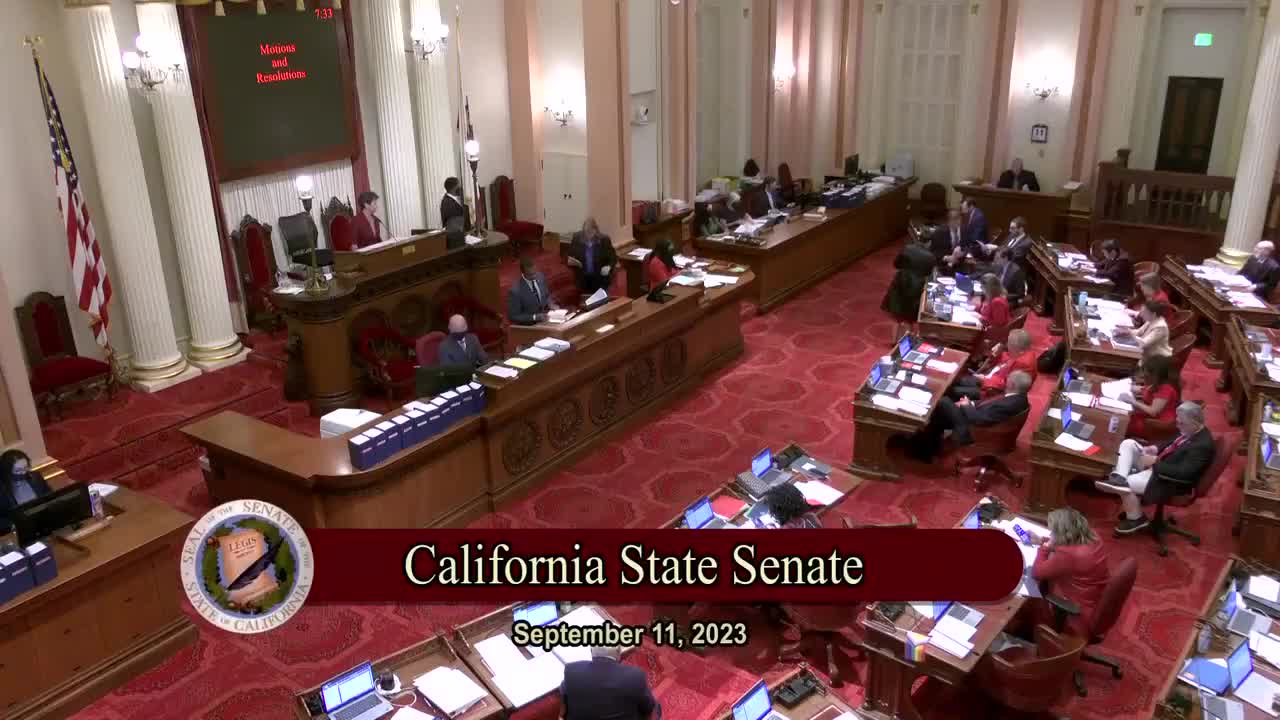 3MIN
Senate Floor
 1MIN
Senate Standing Committee on Appropriations
 13MIN
Senate Standing Committee on Environmental Quality
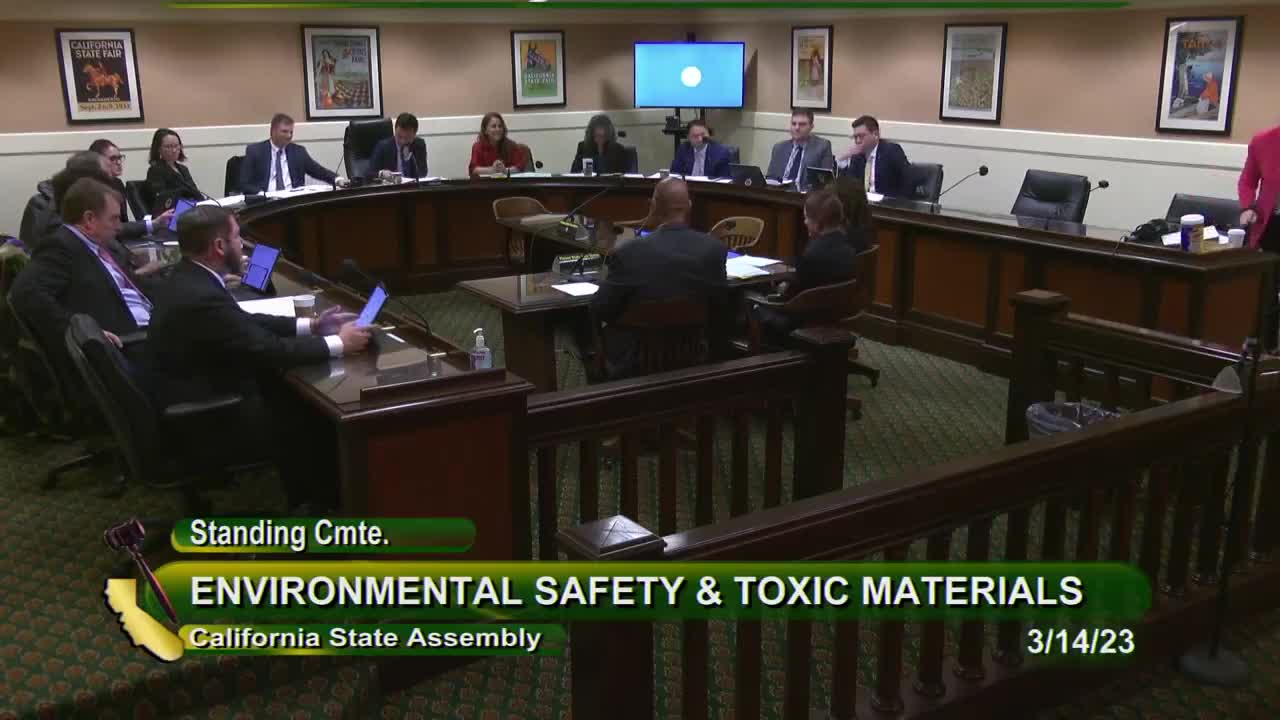 14MIN
Assembly Standing Committee on Environmental Safety and Toxic Materials
Bill Author

Bill Co-Author(s):