AB 426: Unlicensed residential foster care facilities: temporary placement management.
- Session Year: 2023-2024
- House: Assembly
- Latest Version Date: 2023-10-08
Current Status:
Passed
(2023-10-08: Chaptered by Secretary of State - Chapter 438, Statutes of 2023.)
Introduced
In Committee
First Chamber
In Committee
Second Chamber
Enacted
What does this bill do?
Increases the immediate civil penalty for any person who operates an unlicensed residential care facility serving children from $200 per day to $1,000 per day. It also lets the Director of Social Services use state enforcement steps when a county fails to follow the California Community Care Facilities Act and requires the director to send written notice to the county welfare director and the board of supervisors if told a county is not complying.
The summary is provided by generative AI which can make mistakes. For original language, please view the details in the table below.
Existing law prohibits an unlicensed community care facility, as defined, from operating in the state, and prohibits a person, firm, partnership, association, or corporation within the state, or state or local public agency, from operating, establishing, managing, conducting, or maintaining a community care facility in this state, without a current, valid community care facility license. Existing law authorizes the department to assess an immediate civil penalty in the amount of $200 per day for a violation of either or both of those prohibitions, as specified.
This bill would additionally authorize the department to assess an immediate civil penalty in the amount of $1,000 for each day of the violation on a person, as defined, who provides residential care to children.
Existing law requires the Director of Social Services to follow specified procedures if the director believes that a county is substantially failing to comply with specified provisions of law or any regulation pertaining to any program administered by the department, including, among other things, taking formal action to secure compliance and providing counties with written notice of that action and a minimum of 30 days to correct its failure to comply.
This bill would additionally apply these procedures when a county has failed to comply with the California Community Care Facilities Act. The bill would additionally require the director to inform the county welfare director and the board of supervisors by written notice if the director is informed a county is failing to comply with any provision of law or regulation pertaining to any program administered by the department.
Existing law generally provides for the placement of foster youth in various placement settings and governs the provision, through the State Department of Social Services and county welfare departments, of child welfare services, which is defined to mean public social services that are directed toward the accomplishment of specified purposes, including protecting and promoting the welfare of all children, preventing the unnecessary separation of children from their families, and restoring to their families children who have been removed. The California Community Care Facilities Act provides for the licensure and regulation of community care and residential facilities, including certain residential facilities that provide care for foster youth. Existing law requires the Office of the State Foster Care Ombudsperson to be established in the department with prescribed powers and duties relating to the management of foster children. Existing law authorizes the ombudsperson, as part of the offices efforts to resolve complaints related to foster care, to conduct whatever investigation reasonably related to the complaint and to foster care that the ombudsperson deems necessary.Existing law grants specified rights to all minors and nonminors in foster care, including, among others, the right to receive medical, dental, vision, and mental health services, the right to be informed of these rights in an age- and developmentally appropriate manner, and the right to receive a copy of these rights at specified intervals.This bill would authorize the State Department of Social Services to appoint a temporary placement manager, as defined, if the department has reason to believe, including pursuant to a complaint investigated by the State Foster Care Ombudsperson, that an unlicensed residential foster care facility, as defined, is endangering the welfare of foster children or youth in the facility, including, but not limited to, in violation of any of the rights described above. The bill would require the department to issue an initial statement of allegations, followed by a formal statement of allegations that specifies the factual and legal basis for the appointment of a temporary placement manager to operate the facility 60 calendar days after issuance of the formal statement of allegations. The bill would require the appointment of the temporary placement manger to be effective 61 calendar days after the department issues the statement of causes and concerns, and until the temporary placement manager notifies the department, and the department verifies, that appropriate placements have been arranged for all foster children and youth in the facility, as prescribed. The bill would authorize a residential foster care facility that receives a formal statement of allegations to contest the appointment of a temporary manager by seeking injunctive relief in the superior court sitting in the county in which the facility is located, as specified.Existing law prohibits an unlicensed community care facility, as defined, from operating in the state, and prohibits a person, firm, partnership, association, or corporation within the state, or state or local public agency, from operating, establishing, managing, conducting, or maintaining a community care facility in this state, without a current, valid community care facility license. Existing law authorizes the department to assess an immediate civil penalty in the amount of $200 per day for a violation of either or both of those prohibitions, as specified.This bill, notwithstanding those provisions, would assess civil penalties on an unlicensed residential foster care facility that violates the above prohibitions, in the amount of $500 for each foster child or youth residing in the facility per day of the violation for 60 calendar days after the facility receives the formal statement of allegations. The bill additionally would assess penalties in the amount of $5,000 for each foster child or youth residing in the facility per day of the violation if the person fails to locate appropriate placements for all of the foster children and youth residing in the unlicensed facility within 60 days after receiving the formal statement of allegations. The bill would authorize a facility to appeal the assessment to the director. The bill would require the department to adopt regulations setting forth the appeal procedure, and would require that procedure to include judicial review pursuant to a specified provision.This bill would declare that it is to take effect immediately as an urgency statute.Existing law generally provides for the placement of foster youth in various placement settings and governs the provision, through the State Department of Social Services and county welfare departments, of child welfare services, which is defined to mean public social services that are directed toward the accomplishment of specified purposes, including protecting and promoting the welfare of all children, preventing the unnecessary separation of children from their families, and restoring to their families children who have been removed. The California Community Care Facilities Act provides for the licensure and regulation of community care and residential facilities, including certain residential facilities that provide care for foster youth.
Existing law requires the Office of the State Foster Care Ombudsperson to be established in the department with prescribed powers and duties relating to the management of foster children. Existing law authorizes the ombudsperson, as part of the offices efforts to resolve complaints related to foster care, to conduct whatever investigation reasonably related to the complaint and to foster care that the ombudsperson deems necessary.
Existing law grants specified rights to all minors and nonminors in foster care, including, among others, the right to receive medical, dental, vision, and mental health services, the right to be informed of these rights in an age- and developmentally appropriate manner, and the right to receive a copy of these rights at specified intervals.
This bill would authorize the State Department of Social Services to appoint a temporary placement manager, as defined, if the department has reason to believe, including pursuant to a complaint investigated by the State Foster Care Ombudsperson, that an unlicensed residential foster care facility, as defined, is endangering the welfare of foster children or youth in the facility, including, but not limited to, in violation of any of the rights described above. The bill would require the department to issue an initial statement of allegations, followed by a formal statement of allegations that specifies the factual and legal basis for the appointment of a temporary placement manager to operate the facility 60 calendar days after issuance of the formal statement of allegations. The bill would require the appointment of the temporary placement manger to be effective 61 calendar days after the department issues the statement of causes and concerns, and until the temporary placement manager notifies the department, and the department verifies, that appropriate placements have been arranged for all foster children and youth in the facility, as prescribed. The bill would authorize a residential foster care facility that receives a formal statement of allegations to contest the appointment of a temporary manager by seeking injunctive relief in the superior court sitting in the county in which the facility is located, as specified.
Existing law prohibits an unlicensed community care facility, as defined, from operating in the state, and prohibits a person, firm, partnership, association, or corporation within the state, or state or local public agency, from operating, establishing, managing, conducting, or maintaining a community care facility in this state, without a current, valid community care facility license. Existing law authorizes the department to assess an immediate civil penalty in the amount of $200 per day for a violation of either or both of those prohibitions, as specified.
This bill, notwithstanding those provisions, would assess civil penalties on an unlicensed residential foster care facility that violates the above prohibitions, in the amount of $500 for each foster child or youth residing in the facility per day of the violation for 60 calendar days after the facility receives the formal statement of allegations. The bill additionally would assess penalties in the amount of $5,000 for each foster child or youth residing in the facility per day of the violation if the person fails to locate appropriate placements for all of the foster children and youth residing in the unlicensed facility within 60 days after receiving the formal statement of allegations. The bill would authorize a facility to appeal the assessment to the director. The bill would require the department to adopt regulations setting forth the appeal procedure, and would require that procedure to include judicial review pursuant to a specified provision.
This bill would declare that it is to take effect immediately as an urgency statute.
Existing law generally provides for the placement of foster youth in various placement settings and governs the provision, through the State Department of Social Services and county welfare departments, of child welfare services, which is defined to mean public social services that are directed toward the accomplishment of specified purposes, including protecting and promoting the welfare of all children, preventing the unnecessary separation of children from their families, and restoring to their families children who have been removed. Existing The California Community Care Facilities Act provides for the licensure and regulation of community care and residential facilities, including certain residential facilities that provide care for foster youth.
Existing law requires the Office of the State Foster Care Ombudsperson to be established in the department with prescribed powers and duties relating to the management of foster children. Existing law authorizes the ombudsperson, as part of the offices efforts to resolve complaints related to foster care, to conduct whatever investigation reasonably related to the complaint and to foster care that the ombudsperson deems necessary.
Existing law grants specified rights to all minors and nonminors in foster care, including, among others, the right to receive medical, dental, vision, and mental health services, the right to be informed of these rights in an age- and developmentally appropriate manner, and the right to receive a copy of these rights at specified intervals.
This bill would authorize the State Department of Social Services to appoint a temporary placement manager, as defined, if the department has reason to believe, including pursuant to a complaint investigated by the State Foster Care Ombudsperson, that a county-operated an unlicensed residential foster care facility facility, as defined, is endangering the welfare of foster care children or youth in the facility facility, including, but not limited to, in violation of any of the rights described above. The bill would require the department to issue a an initial statement of allegations, followed by a formal statement of causes and concerns allegations that specifies the factual and legal basis for the imposition of a temporary appointment of a temporary placement manager to operate the facility if the identified deficiencies are not remedied within 60 days of receipt of the statement of causes and concerns. 60 calendar days after issuance of the formal statement of allegations. The bill would require the appointment of the temporary placement manger to be effective 61 calendar days after the department issues the statement of causes and concerns, and until the temporary manager temporary placement manager notifies the department, and the department verifies, that the facility has corrected the deficiencies identified by the department, or that suitable alternative that appropriate placements have been arranged for all foster children and youth in the facility, as prescribed.
Existing law prohibits an unlicensed community care facility, as defined, from operating in the state, and prohibits a person, firm, partnership, association, or corporation within the state, or state or local public agency, from operating, establishing, managing, conducting, or maintaining a community care facility in this state, without a current, valid community care facility license. Existing law authorizes the department to assess an immediate civil penalty in the amount of $200 per day for a violation of either or both of those prohibitions, as specified.
This bill, notwithstanding those provisions, would assess civil penalties on an unlicensed residential foster care facility that violates the above prohibitions, in the amount of $500 for each foster child or youth residing in the facility per day of the violation for 60 calendar days after the facility receives the formal statement of allegations. The bill additionally would assess penalties in the amount of $5,000 for each foster child or youth residing in the facility per day of the violation if the person fails to locate appropriate placements for all of the foster children and youth residing in the unlicensed facility within 60 days after receiving the formal statement of allegations. The bill would authorize a facility to appeal the assessment to the director.
This bill would declare that it is to take effect immediately as an urgency statute.
Existing law generally provides for the placement of foster youth in various placement settings and governs the provision, through the State Department of Social Services and county welfare departments, of child welfare services, which is defined to mean public social services that are directed toward the accomplishment of specified purposes, including protecting and promoting the welfare of all children, preventing the unnecessary separation of children from their families, and restoring to their families children who have been removed. Existing law requires the Office of the State Foster Care Ombudsperson to be established in the department with prescribed powers and duties relating to the management of foster children. Existing law authorizes the ombudsperson, as part of the offices efforts to resolve complaints related to foster care, to conduct whatever investigation reasonably related to the complaint and to foster care that the ombudsperson deems necessary.
Existing law grants specified rights to all minors and nonminors in foster care, including, among others, the right to receive medical, dental, vision, and mental health services, the right to be informed of these rights in an age- and developmentally appropriate manner, and the right to receive a copy of these rights at specified intervals.
This bill would authorize the State Department of Social Services to appoint a temporary manager, as defined, if the department has reason to believe, including pursuant to a complaint investigated by the State Foster Care Ombudsperson, that a county-operated residential foster care facility is endangering the welfare of foster care children or youth in the facility in violation of any of the rights described above. The bill would require the department to issue a statement of allegations, followed by a formal statement of causes and concerns that specifies the factual and legal basis for the imposition of a temporary manager to operate the facility if the identified deficiencies are not remedied within 60 days of receipt of the statement of causes and concerns. The bill would require the appointment of the temporary manger to be effective 61 days after the department issues the statement of causes and concerns, and until the temporary manager notifies the department, and the department verifies, that the facility has corrected the deficiencies identified by the department, or that suitable alternative placements have been arranged for all foster children and youth in the facility, as prescribed.
This bill would declare that it is to take effect immediately as an urgency statute.
Existing law establishes the California Statewide Housing Plan to serve as a state housing plan for all relevant purposes. Existing law requires that the plan incorporate, among other things, a statement of housing goals, policies, and objectives, and requires the Department of Housing and Community Development to update and provide a revision of the plan to the Legislature every 4 years, as specified. Existing law requires each update and revision to the plan to include, among other things, an inventory of the number of affordable units needed to meet the states affordable housing needs for the plan period, as defined.This bill would authorize the plan to also include a strategy for the state to keep pace with building housing units and affiliated infrastructure during an economic downturn, as specified.Existing law establishes the California Statewide Housing Plan to serve as a state housing plan for all relevant purposes. Existing law requires that the plan incorporate, among other things, a statement of housing goals, policies, and objectives, and requires the Department of Housing and Community Development to update and provide a revision of the plan to the Legislature every 4 years, as specified. Existing law requires each update and revision to the plan to include, among other things, an inventory of the number of affordable units needed to meet the states affordable housing needs for the plan period, as defined.
This bill would require authorize the plan to also include a strategy for the state to keep pace with building housing units and affiliated infrastructure during an economic downturn, as specified.
Existing law establishes the California Statewide Housing Plan to serve as a state housing plan for all relevant purposes. Existing law requires that the plan incorporate, among other things, a statement of housing goals, policies, and objectives, and requires the Department of Housing and Community Development to update and provide a revision of the plan to the Legislature every 4 years, as specified. Existing law requires each update and revision to the plan to include, among other things, an inventory of the number of affordable units needed to meet the states affordable housing needs for the plan period, as defined.
This bill would require the plan to also include a strategy for the state to keep pace with building housing units and affiliated infrastructure during an economic downturn, as specified.
Existing law establishes the Department of Housing and Community Development within the Business, Consumer Services, and Housing Agency and sets forth its powers and duties, including responsibility for administering various housing and home loan programs throughout the state. Existing law requires the department to develop and publish specified reports, including a study of farmworker housing conditions, needs, and solutions.This bill would require the department to develop a plan for the state to keep pace with building infrastructure and housing units during an economic downturn on or before January 1, 2025, as specified. The bill would require the department to submit the plan to the Senate Housing Committee and the Assembly Committee on Housing and Community Development on or before December 1, 2026.Existing law establishes the Department of Housing and Community Development within the Business, Consumer Services, and Housing Agency and sets forth its powers and duties, including responsibility for administering various housing and home loan programs throughout the state. Existing law requires the department to develop and publish specified reports, including a study of farmworker housing conditions, needs, and solutions.
This bill would require the department to develop a plan for the state to keep pace with building infrastructure and housing units during an economic downturn on or before January 1, 2025, as specified. The bill would require the department to submit the plan to the Senate Housing Committee and the Assembly Committee on Housing and Community Development on or before December 1, 2026.
(a) (1)Notwithstanding any other provision of this chapter, any person who violates Section 1503.5 or 1508, or both, may be assessed by the department an immediate civil penalty in the amount of two hundred dollars ($200) per day of the violation, unless the conditions described in paragraph (2) apply.
(2)A person who violates Section 1503.5 or 1508 and provides residential care to children may be assessed an immediate civil penalty in the amount of one thousand dollars ($1,000) per day of the violation.
(b) The civil penalty authorized in subdivision (a) shall be imposed if an unlicensed facility is operated and the operator refuses to seek licensure or the operator seeks licensure and the licensure application is denied and the operator continues to operate the unlicensed facility, unless other remedies available to the department, including criminal prosecution, are deemed more effective by the department.
(c) An operator may appeal the assessment to the director. The department shall adopt regulations setting forth the appeal procedure.
(d)For purposes of this section, person means an individual, firm, association, organization, partnership, business trust, corporation, limited liability company, company, or political subdivision of the state.
SEC. 2.Section 10605 of the Welfare and Institutions Code is amended to read:10605.(a)If the director believes that a county is substantially failing to comply with any provision of this code or Chapter 3 (commencing with Section 1500) of Division 2 of the Health and Safety Code, or any regulation pertaining to any program administered by the department, and the director determines that formal action may be necessary to secure compliance, the director shall inform the county welfare director and the board of supervisors of that failure. The notice to the county welfare director and board of supervisors shall be in writing and shall allow the county a specified period of time, not less than 30 days, to correct its failure to comply with the law or regulations. If within the specified period the county does not comply or provide reasonable assurances in writing that it will comply within the additional time as the director may allow, the director may take one or both of the following actions:
(1)(A)Bring an action for injunctive relief to secure immediate compliance.
(B)A county that is found to be failing to substantially comply with the law or regulations pertaining to any program administered by the department may be enjoined by any court of competent jurisdiction. The court may make orders or judgments as may be necessary to secure county compliance.
(2)Order the county to appear at a hearing before the director to show cause why the director should not take administrative action to secure compliance. The county shall be given at least 30 days notice of the hearing. The director shall consider the case on the record established at the hearing and, within 30 days, shall render proposed findings and a proposed decision on the issues. The proposed findings and decisions shall be submitted to the county, and the county shall have the opportunity to appear within 10 days, at a time and place as may be determined by the director, for the purpose of presenting oral arguments respecting the proposed findings and decisions. Thereupon, the director shall make final findings and issue a final administrative decision.
(b)If the director determines, based on the record established at the hearing pursuant to paragraph (2) of subdivision (a), that the county is failing to comply with laws or regulations pertaining to any program administered by the department, or if the Department of Human Resources certifies to the director that a county is not in conformity with established merit system standards under Part 2.5 (commencing with Section 19800) of Division 5 of Title 2 of the Government Code, and that administrative sanctions are necessary to secure compliance, the director may invoke either of the following sanctions, except that the sanctions shall not be invoked concurrently:
(1)Except for child welfare services programs, withhold all or part of state and federal funds from the county until the county demonstrates to the director that it has complied.
(2)(A)Assume, temporarily, direct responsibility for the administration of all or part of any or all programs administered by the department in the county until the time as the county provides reasonable written assurances to the director of its intention and ability to comply. During the period of direct state administrative responsibility, the director or their authorized representative shall have all of the powers and responsibilities of the county director, except that the authorized representative shall not be subject to the authority of the board of supervisors.
(B)(i)In the event that the director invokes sanctions pursuant to this section, the county shall be responsible for providing any funds as may be necessary for the continued operation of all programs administered by the department in the county. If a county fails or refuses to provide these funds, including a sufficient amount to reimburse any and all costs incurred by the department in directly administering any program in the county, the Controller may deduct an amount certified by the director as necessary for the continued operation of these programs by the department from any state or federal funds payable to the county for any purpose.
(ii)In the event of a state-imposed sanction, the amount of the sanction shall be no greater than the amount of county funds that the county would be required to contribute to fully match the state General Fund allocation for the particular program or programs for which the county is being sanctioned for those programs that are not Public Safety Programs realigned pursuant to 2011 realignment legislation.
(iii)In the event of a state-imposed sanction pursuant to this paragraph for the Public Safety Programs realigned pursuant to 2011 realignment legislation that are administered by the Department of Social Services, the amount of the sanction shall be no greater than the amount of funding originally provided to the county in the 201112 fiscal year for the particular program from the Protective Services Subaccount within the Support Services Account of the Local Revenue Fund 2011, as adjusted by the countys share of the additional incremental funding provided pursuant to paragraph (2) of subdivision (f) of Section 30027.5 of, paragraph (2) of subdivision (f) of Section 30027.6 of, paragraph (2) of subdivision (f) of Section 30027.7 of, and paragraph (2) of subdivision (f) of Section 30027.8 of, the Government Code, the estimated growth funding for the program from the Support Services Growth Subaccount within the Sales and Use Tax Growth Account, and any adjustment to the county allocation pursuant to subdivisions (a) and (b) of Section 30029.5 of the Government Code.
(c)(1)The department is authorized to conduct or have conducted audits and reviews in order to meet its obligations for child welfare programs and to ensure the protection of children and families.
(2)Except when there is a risk of immediate harm to a minor, the department shall provide the county with at least 30-calendar days notice of the departments intent to perform an audit or review. This notice shall include the intended purpose, scope, and timing of the audit or review.
(3)The county shall have an opportunity to respond to the audit or review and may request an extension of up to 30 calendar days, that shall be granted by the director if there is good cause and unless there is a risk of immediate harm to a minor. The request for extension shall be submitted to the department within 10 business days of receipt of the audit or review notice. The department, in consultation with the California State Association of Counties, shall develop a definition of good cause for the purposes of this section.
(4)The notice required by paragraph (2) does not limit the authority of the department under federal or state law to examine other information or records should that become prudent or necessary during the course of the audit or review.
(5)The county shall be presented with the audit or review findings at the conclusion of the audit or review. The county shall have 10 business days to provide a written response to the audit or review findings. The department shall have 10 business days thereafter to issue a final response to the countys written response. Both the county response and the departments written response shall be published as part of the audit or review and made final.
(6)The audit or review shall not result in a fiscal sanction to the county, as defined in subdivision (b).
(7)The department may impose a fiscal disallowance if there is a finding of misappropriation of funding, and the county shall be afforded due process as specified in subdivision (d).
(d)(1)If the audit or review specified in subdivision (c) results in a fiscal disallowance, the county may request a hearing within 30 calendar days of the notice of sanction or finalized audit or review. The hearing request shall be in writing and shall be known as the Statement of Disputed Issues, which shall set forth the issues in dispute, and the countys contentions as to those issues, including any documentation to support the countys contentions. The hearing shall take place before a hearing officer designated by the director to examine any disputed audit or review finding.
(A)Following the hearing, the hearing officer shall submit the proposed final audit or review of the findings to the director. The director may take any of the following actions:
(i)Adopt the proposed findings with or without reading the record. The findings shall be final upon adoption by the director.
(ii)Reject the proposed findings and have findings prepared based upon the documentation presented at the hearing.
(iii)Refer the matter back to the hearing officer to receive additional information and prepare new findings.
(B)The final audit or review of the findings shall include the countys Statement of Disputed Issues, including its accompanying documentation. The final audit or review of the findings shall be subject to judicial review.
(e)If the director is informed that a county is failing to comply with any provision of law or regulation pertaining to a program administered by the department, and the director determines that formal action, as described in subdivision (a), is not yet warranted but that county action is necessary to correct the reported failure, the director shall inform the county welfare director and the board of supervisors by written notice. The written notice shall, at a minimum, identify the legal compliance issues and provide a minimum of 10 days for county response.
(f)Nothing in this section shall be construed as preventing the department from bringing an action for writ of mandamus or any other action in court as may be appropriate to ensure no interruption in the provision of benefits to any person eligible therefore under federal law, the provisions of this code or the regulations of the department.
(g)(1)Nothing in this section shall be construed as relieving the board of supervisors of the responsibility to provide funds necessary for the continued services required by law.
(2)Nothing contained in this section shall be construed as preventing a county from seeking judicial review of action taken by the director pursuant to this section under Section 1094.5 of the Code of Civil Procedure or, except in cases arising under Sections 10962 and 10963, from seeking injunctive relief when deemed appropriate.
(a) (1)Notwithstanding any other provision of this chapter, any person who violates Section 1503.5 or 1508, or both, may be assessed by the department an immediate civil penalty in the amount of two hundred dollars ($200) per day of the violation. violation, unless the conditions described in paragraph (2) apply.
(2)A person who violates Section 1503.5 or 1508 and provides residential care to children may be assessed an immediate civil penalty in the amount of one thousand dollars ($1,000) per day of the violation.
(b) The civil penalty authorized in subdivision (a) shall be imposed if an unlicensed facility is operated and the operator refuses to seek licensure or the operator seeks licensure and the licensure application is denied and the operator continues to operate the unlicensed facility, unless other remedies available to the department, including criminal prosecution, are deemed more effective by the department.
(c) An operator may appeal the assessment to the director. The department shall adopt regulations setting forth the appeal procedure.
(d)For purposes of this section, person means an individual, firm, association, organization, partnership, business trust, corporation, limited liability company, company, or political subdivision of the state.
SEC. 2.Section 10605 of the Welfare and Institutions Code is amended to read:10605.(a)If the director believes that a county is substantially failing to comply with any provision of this code or Chapter 3 (commencing with Section 1500) of Division 2 of the Health and Safety Code, or any regulation pertaining to any program administered by the department, and the director determines that formal action may be necessary to secure compliance, he or she the director shall inform the county welfare director and the board of supervisors of that failure. The notice to the county welfare director and board of supervisors shall be in writing and shall allow the county a specified period of time, not less than 30 days, to correct its failure to comply with the law or regulations. If within the specified period the county does not comply or provide reasonable assurances in writing that it will comply within the additional time as the director may allow, the director may take one or both of the following actions:
(1)(A)Bring an action for injunctive relief to secure immediate compliance.
Any(B)A county that is found to be failing to substantially comply with the law or regulations pertaining to any program administered by the department may be enjoined by any court of competent jurisdiction. The court may make orders or judgments as may be necessary to secure county compliance.
(2)Order the county to appear at a hearing before the director to show cause why the director should not take administrative action to secure compliance. The county shall be given at least 30 days notice of the hearing. The director shall consider the case on the record established at the hearing and, within 30 days, shall render proposed findings and a proposed decision on the issues. The proposed findings and decisions shall be submitted to the county, and the county shall have the opportunity to appear within 10 days, at a time and place as may be determined by the director, for the purpose of presenting oral arguments respecting the proposed findings and decisions. Thereupon, the director shall make final findings and issue a final administrative decision.
(b)If the director determines, based on the record established at the hearing pursuant to paragraph (2) of subdivision (a), that the county is failing to comply with laws or regulations pertaining to any program administered by the department, or if the Department of Human Resources certifies to the director that a county is not in conformity with established merit system standards under Part 2.5 (commencing with Section 19800) of Division 5 of Title 2 of the Government Code, and that administrative sanctions are necessary to secure compliance, the director may invoke either of the following sanctions, except that the sanctions shall not be invoked concurrently:
(1)Except for child welfare services programs, withhold all or part of state and federal funds from the county until the county demonstrates to the director that it has complied.
(2)(A)Assume, temporarily, direct responsibility for the administration of all or part of any or all programs administered by the department in the county until the time as the county provides reasonable written assurances to the director of its intention and ability to comply. During the period of direct state administrative responsibility, the director or his or her their authorized representative shall have all of the powers and responsibilities of the county director, except that he or she the authorized representative shall not be subject to the authority of the board of supervisors.
(B)(i)In the event that the director invokes sanctions pursuant to this section, the county shall be responsible for providing any funds as may be necessary for the continued operation of all programs administered by the department in the county. If a county fails or refuses to provide these funds, including a sufficient amount to reimburse any and all costs incurred by the department in directly administering any program in the county, the Controller may deduct an amount certified by the director as necessary for the continued operation of these programs by the department from any state or federal funds payable to the county for any purpose.
(ii)In the event of a state-imposed sanction, the amount of the sanction shall be no greater than the amount of county funds that the county would be required to contribute to fully match the state General Fund allocation for the particular program or programs for which the county is being sanctioned for those programs that are not Public Safety Programs realigned pursuant to 2011 realignment legislation.
(iii)In the event of a state-imposed sanction pursuant to this paragraph for the Public Safety Programs realigned pursuant to 2011 realignment legislation that are administered by the Department of Social Services, the amount of the sanction shall be no greater than the amount of funding originally provided to the county in the 201112 fiscal year for the particular program from the Protective Services Subaccount within the Support Services Account of the Local Revenue Fund 2011, as adjusted by the countys share of the additional incremental funding provided pursuant to paragraph (2) of subdivision (f) of Section 30027.5 of, paragraph (2) of subdivision (f) of Section 30027.6 of, paragraph (2) of subdivision (f) of Section 30027.7 of, and paragraph (2) of subdivision (f) of Section 30027.8 of, the Government Code, the estimated growth funding for the program from the Support Services Growth Subaccount within the Sales and Use Tax Growth Account, and any adjustment to the county allocation pursuant to subdivisions (a) and (b) of Section 30029.5 of the Government Code.
(c)(1)The department is authorized to conduct or have conducted audits and reviews in order to meet its obligations for child welfare programs and to ensure the protection of children and families.
(2)Except for cases in which when there is a risk of immediate harm to a minor, the department shall provide the county with at least 30-calendar days notice of the departments intent to perform an audit or review. This notice shall include the intended purpose, scope, and timing of the audit or review.
(3)The county shall have an opportunity to respond to the audit or review and may request an extension of up to 30 calendar days, that shall be granted by the director if there is good cause and unless there is a risk of immediate harm to a minor. The request for extension shall be submitted to the department within 10 business days of receipt of the audit or review notice. The department, in consultation with the California State Association of Counties, shall develop a definition of good cause for the purposes of this section.
(4)Nothing in the The notice required by paragraph (2) shall be construed to does not limit the authority of the department under federal or state law to examine other information or records should that become prudent or necessary during the course of the audit or review.
(5)The county shall be presented with the audit or review findings at the conclusion of the audit or review. The county shall have 10 business days to provide a written response to the audit or review findings. The department shall have 10 business days thereafter to issue a final response to the countys written response. Both the county response and the departments written response shall be published as part of the audit or review and made final.
(6)The audit or review shall not result in a fiscal sanction to the county, as defined in subdivision (b).
(7)The department may impose a fiscal disallowance if there is a finding of misappropriation of funding, and the county shall be afforded due process as specified in subdivision (d).
(d)(1)If the audit or review specified in subdivision (c) results in a fiscal disallowance, the county may request a hearing within 30 calendar days of the notice of sanction or finalized audit or review. The hearing request shall be in writing and shall be known as the Statement of Disputed Issues, which shall set forth the issues in dispute, and the countys contentions as to those issues, including any documentation to support the countys contentions. The hearing shall take place before a hearing officer designated by the director to examine any disputed audit or review finding.
(A)Following the hearing, the hearing officer shall submit the proposed final audit or review of the findings to the director. The director may take any of the following actions:
(i)Adopt the proposed findings with or without reading the record. The findings shall be final upon adoption by the director.
(ii)Reject the proposed findings and have findings prepared based upon the documentation presented at the hearing.
(iii)Refer the matter back to the hearing officer to receive additional information and prepare new findings.
(B)The final audit or review of the findings shall include the countys Statement of Disputed Issues, including its accompanying documentation. The final audit or review of the findings shall be subject to judicial review.
(e)If the director is informed that a county is failing to comply with any provision of law or regulation pertaining to a program administered by the department, and the director determines that formal action, as described in subdivision (a), is not yet warranted but that county action is necessary to correct the reported failure, the director shall inform the county welfare director and the board of supervisors by written notice. The written notice shall, at a minimum, identify the legal compliance issues and provide a minimum of 10 days for county response.
(e)(f)Nothing in this section shall be construed as preventing the department from bringing an action for writ of mandamus or any other action in court as may be appropriate to ensure no interruption in the provision of benefits to any person eligible therefore under federal law, the provisions of this code or the regulations of the department.
(f)(g)(1)Nothing in this section shall be construed as relieving the board of supervisors of the responsibility to provide funds necessary for the continued services required by law.
(2)Nothing contained in this section shall be construed as preventing a county from seeking judicial review of action taken by the director pursuant to this section under Section 1094.5 of the Code of Civil Procedure or, except in cases arising under Sections 10962 and 10963, from seeking injunctive relief when deemed appropriate.
SECTION 1.Section 1547.1 is added to the Health and Safety Code, to read:1547.1.(a)(1)Notwithstanding Sections 1540 and 1547 or any other provision of this chapter, with respect to an unlicensed residential foster care facility, as defined in Section 16003 of the Welfare and Institutions Code, a person who violates Section 1503.5, 1508, or both, shall be assessed by the department an immediate civil penalty in the amount of five hundred dollars ($500) for each foster child or youth residing in the facility per day of the violation.(2)A civil penalty under this subdivision shall be assessed commencing on the date the unlicensed facility is issued a formal statement of allegations by the department pursuant to subdivision (c) of Section 16003 of the Welfare and Institutions Code that the department is endangering the health and safety of foster children or youth, including, but not limited to, by violating any of the rights specified in Section 16001.9 of the Welfare and Institutions Code.(b)In addition to the penalties assessed under subdivision (a), a person that fails to locate appropriate placements for all of the foster children and youth residing in the unlicensed facility within 60 days after receiving the formal statement of allegations shall be assessed by the department an immediate civil penalty in the amount of five thousand dollars ($5,000) for each remaining foster child or youth residing in the unlicensed facility per day of the violation.(c) A person subject to this section may appeal the assessment to the director. The department shall adopt regulations setting forth the appeal procedure, which shall include judicial review pursuant to Section 1094.5 of the Code of Civil Procedure by the superior court sitting in the county where the facility is located.(d)For purposes of this section, person means an individual, firm, association, organization, partnership, business trust, corporation, limited liability company, company, or political subdivision of the state.SEC. 2.Section 16003 is added to the Welfare and Institutions Code, to read:16003.(a)It is the intent of the Legislature in enacting this section to empower the state department to take quick, effective action to protect the health and safety of all foster children and youth in unlicensed residential foster care facilities.(b)The following definitions apply for purposes of this section:(1)Residential foster care facility or facility means a facility that provides 24-hour nonmedical care and supervision to foster children or youth. Residential foster care facility does not include a private foster family home, small family home, or certified family home.(2)Temporary placement manager means a person, corporation, or other entity, appointed temporarily by the department as a substitute facility placement manager or administrator with authority to hire, terminate, or reassign staff, obligate facility funds, alter facility procedures, and manage the appropriate placement of a foster child or youth, as defined in Section 1527 of the Health and Safety Code.(c)(1)The department shall provide an initial statement of allegations to a residential foster care facility if the department has reason to believe, including, but not limited to, pursuant to a complaint investigated by the State Foster Care Ombudsperson, that the facility is not licensed under Chapter 3 (commencing with Section 1500) of Division 2 of the Health and Safety Code, and is endangering the welfare of foster care children or youth in the facility, including, but not limited to, by violation of any of the rights specified in Section 16001.9. Within 48 hours of providing the initial statement of allegations, the department shall provide the facility with a formal statement of allegations. The formal statement of allegations shall specify the departments factual and legal basis for appointing, 60 calendar days after the formal statement of allegations is issued, a temporary placement manager to locate appropriate placements for any foster children or youth residing in the unlicensed facility, and operate the facility until all appropriate placements have been arranged. The formal statement of allegations shall be supported by the declaration of the director or the directors authorized designee.(2)Upon appointment, the temporary placement manager shall take all necessary steps and make best efforts to arrange appropriate alternative placements for all foster children and youth in the facility.(d)(1)The appointment of a temporary placement manager is effective 61 calendar days after the department issues the formal statement of causes and concerns, and continues until the temporary placement manager notifies the department, and the department verifies, that appropriate placements have been arranged for all foster children and youth in the facility.(2)A temporary placement manager shall not be appointed if the facility arranges appropriate placements for all children and youth residing in the facility before the end of the 60-day time period specified in subdivision (c).(e)The appointment of a temporary placement manager authorizes the temporary placement manager to act pursuant to this section, and shall be made pursuant to an agreement between the temporary placement manager and the department that outlines the circumstances under which the temporary placement manager may expend funds. The temporary placement manager shall make no long-term capital investments to the facility without the permission of the department.(f)The temporary placement manager appointed pursuant to this section shall meet the following qualifications:(1)Be qualified to oversee correction of deficiencies on the basis of experience and education.(2)Not have been found guilty of misconduct, and not be the subject of any pending action or investigation, by any licensing board.(3)Not currently serve, or have served within the past two years, as a member of the staff of the facility.(g)(1)A residential foster care facility that receives a formal statement of allegations under subdivision (c) may contest the appointment of a temporary manager by seeking injunctive relief in the superior court sitting in the county in which the facility is located.(2)(A)The facility shall file its petition for injunctive relief and provide notice to the department within 15 days of receiving the formal statement of allegations.(B)The department shall file its response within 10 days of receiving the application.(C)The court shall hold a hearing on the application for injunctive relief within 15 days of receiving the departments response and issue a decision within 5 days of the hearing.(3)The courts review shall be limited to the question of whether the residential foster care facility is operating pursuant to a valid license. If the residential foster care facility proves that it is operating pursuant to a valid license, the court shall enjoin the appointment of a temporary manger under the notice at issue. The courts order shall not prohibit the department from taking any action authorized by law against a licensee.SEC. 3.This act is an urgency statute necessary for the immediate preservation of the public peace, health, or safety within the meaning of Article IV of the California Constitution and shall go into immediate effect. The facts constituting the necessity are:In order to ensure the safety and welfare of children and youth in unlicensed residential foster care facilities at the earliest possible time, it is necessary for this bill to take effect immediately.(a)(1)Notwithstanding Sections 1540 and 1547 or any other provision of this chapter, with respect to an unlicensed residential foster care facility, as defined in Section 16003 of the Welfare and Institutions Code, a person who violates Section 1503.5, 1508, or both, shall be assessed by the department an immediate civil penalty in the amount of five hundred dollars ($500) for each foster child or youth residing in the facility per day of the violation.
(2)A civil penalty under this subdivision shall be assessed commencing on the date the unlicensed facility is issued a formal statement of allegations by the department pursuant to subdivision (c) of Section 16003 of the Welfare and Institutions Code that the department is endangering the health and safety of foster children or youth, including, but not limited to, by violating any of the rights specified in Section 16001.9 of the Welfare and Institutions Code.
(b)In addition to the penalties assessed under subdivision (a), a person that fails to locate appropriate placements for all of the foster children and youth residing in the unlicensed facility within 60 days after receiving the formal statement of allegations shall be assessed by the department an immediate civil penalty in the amount of five thousand dollars ($5,000) for each remaining foster child or youth residing in the unlicensed facility per day of the violation.
(c) A person subject to this section may appeal the assessment to the director. The department shall adopt regulations setting forth the appeal procedure. procedure, which shall include judicial review pursuant to Section 1094.5 of the Code of Civil Procedure by the superior court sitting in the county where the facility is located.
(d)For purposes of this section, person means an individual, firm, association, organization, partnership, business trust, corporation, limited liability company, company, or political subdivision of the state.
SEC. 2.Section 16003 is added to the Welfare and Institutions Code, to read:16003.(a)It is the intent of the Legislature in enacting this section to empower the state department to take quick, effective action to protect the health and safety of all foster children and youth in unlicensed residential foster care facilities.
(b)The following definitions apply for purposes of this section:
(1)Residential foster care facility or facility means a facility that provides 24-hour nonmedical care and supervision to foster children or youth. Residential foster care facility does not include a private foster family home, small family home, or certified family home.
(2)Temporary placement manager means a person, corporation, or other entity, appointed temporarily by the department as a substitute facility placement manager or administrator with authority to hire, terminate, or reassign staff, obligate facility funds, alter facility procedures, and manage the appropriate placement of a foster child or youth, as defined in Section 1527 of the Health and Safety Code.
(c)(1)The department shall provide an initial statement of allegations to a residential foster care facility if the department has reason to believe, including, but not limited to, pursuant to a complaint investigated by the State Foster Care Ombudsperson, that the facility is not licensed under Chapter 3 (commencing with Section 1500) of Division 2 of the Health and Safety Code, and is endangering the welfare of foster care children or youth in the facility, including, but not limited to, by violation of any of the rights specified in Section 16001.9. Within 48 hours of providing the initial statement of allegations, the department shall provide the facility with a formal statement of allegations. The formal statement of allegations shall specify the departments factual and legal basis for appointing, 60 calendar days after the formal statement of allegations is issued, a temporary placement manager to locate appropriate placements for any foster children or youth residing in the unlicensed facility, and operate the facility until all appropriate placements have been arranged. The formal statement of allegations shall be supported by the declaration of the director or the directors authorized designee.
(2)Upon appointment, the temporary placement manager shall take all necessary steps and make best efforts to arrange appropriate alternative placements for all foster children and youth in the facility.
(d)(1)The appointment of a temporary placement manager is effective 61 calendar days after the department issues the formal statement of causes and concerns, and continues until
the temporary placement manager notifies the department, and the department verifies, that appropriate placements have been arranged for all foster children and youth in the facility.
(2)A temporary placement manager shall not be appointed if the facility arranges appropriate placements for all children and youth residing in the facility before the end of the 60-day time period specified in subdivision (c).
(e)The appointment of a temporary placement manager authorizes the temporary placement manager to act pursuant to this section, and shall be made pursuant to an agreement between the temporary placement manager and the department that outlines the circumstances under which the temporary placement manager may expend funds. The temporary placement manager shall make no long-term capital investments to the facility without the permission of the department.
(f)The temporary placement manager appointed pursuant to this section shall meet the following qualifications:
(1)Be qualified to oversee correction of deficiencies on the basis of experience and education.
(2)Not have been found guilty of misconduct, and not be the subject of any pending action or investigation, by any licensing board.
(3)Not currently serve, or have served within the past two years, as a member of the staff of the facility.
(g)(1)A residential foster care facility that receives a formal statement of allegations under subdivision (c) may contest the appointment of a temporary manager by seeking injunctive relief in the superior court sitting in the county in which the facility is located.
(2)(A)The facility shall file its petition for injunctive relief and provide notice to the department within 15 days of receiving the formal statement of allegations.
(B)The department shall file its response within 10 days of receiving the application.
(C)The court shall hold a hearing on the application for injunctive relief within 15 days of receiving the departments response and issue a decision within 5 days of the hearing.
(3)The courts review shall be limited to the question of whether the residential foster care facility is operating pursuant to a valid license. If the residential foster care facility proves that it is operating pursuant to a valid license, the court shall enjoin the appointment of a temporary manger under the notice at issue. The courts order shall not prohibit the department from taking any action authorized by law against a licensee.
SEC. 3.This act is an urgency statute necessary for the immediate preservation of the public peace, health, or safety within the meaning of Article IV of the California Constitution and shall go into immediate effect. The facts constituting the necessity are:
In order to ensure the safety and welfare of children and youth in unlicensed residential foster care facilities at the earliest possible time, it is necessary for this bill to take effect immediately.
(a)(1)Notwithstanding Sections 1540 and 1547 or any other provision of this chapter, with respect to an unlicensed residential foster care facility, as defined in Section 16003 of the Welfare and Institutions Code, a person who violates Section 1503.5, 1508, or both, shall be assessed by the department an immediate civil penalty in the amount of five hundred dollars ($500) for each foster child or youth residing in the facility per day of the violation.
(2)A civil penalty under this subdivision shall be assessed commencing on the date the unlicensed facility is issued a formal statement of allegations by the department pursuant to subdivision (c) of Section 16003 of the Welfare and Institutions Code that the department is endangering the health and safety of foster children or youth, including, but not limited to, by violating any of the rights specified in Section 16001.9 of the Welfare and Institutions Code.
(b)In addition to the penalties assessed under subdivision (a), a person that fails to locate appropriate placements for all of the foster children and youth residing in the unlicensed facility within 60 days after receiving the formal statement of allegations shall be assessed by the department an immediate civil penalty in the amount of five thousand dollars ($5,000) for each remaining foster child or youth residing in the unlicensed facility per day of the violation.
(c) A person subject to this section may appeal the assessment to the director. The department shall adopt regulations setting forth the appeal procedure.
SECTION 1.SEC. 2.Section 16003 is added to the Welfare and Institutions Code, to read:16003.(a)It is the intent of the Legislature in enacting this section to empower the state department to take quick, effective action to protect the health and safety of all foster children and youth in county-operated unlicensed residential foster care facilities.
(b)The following definitions apply for purposes of this section:
(1)County-operated residential Residential foster care facility or facility means a facility operated by the county that provides 24-hour nonmedical care and supervision to foster children or youth. A county-operated residential Residential foster care facility does not include a private foster family home, small family home, or certified family home.
(2)Temporary placement manager means a person, corporation, or other entity, appointed temporarily by the department as a substitute facility placement manager or administrator with authority to hire, terminate, or reassign staff, obligate facility funds, alter facility procedures, and manage the facility to correct deficiencies identified in the facilitys operation as described in this section. appropriate placement of a foster child or youth, as defined in Section 1527 of the Health and Safety Code.
(c)(1)The department may provide a shall provide an initial statement of allegations to a county residential foster care facility if the department has reason to believe, including, but not limited to, pursuant to a complaint investigated by the State Foster Care Ombudsperson, that the a county-operated residential foster care facility is not licensed under Chapter 3 (commencing with Section 1500) of Division 2 of the Health and Safety Code, and is endangering the welfare of foster care children or youth in the facility in facility, including, but not limited to, by violation of any of the rights specified in Section 16001.9. Within 48 hours of providing the initial statement of allegations, the department shall provide the county with a formal statement of cause and concerns that specifies the factual and legal basis for the imposition of a temporary manager to operate the facility if the identified deficiencies are not remedied within 60 days of issuance of the statement of causes and concerns. facility with a formal statement of allegations. The formal statement of allegations shall specify the departments factual and legal basis for appointing, 60 calendar days after the formal statement of allegations is issued, a temporary placement manager to locate appropriate placements for any foster children or youth residing in the unlicensed facility, and operate the facility until all appropriate placements have been arranged. The statement of causes and concerns formal statement of allegations shall be supported by the declaration of the director or the directors authorized designee.
(2)Upon appointment, the temporary placement manager shall take all necessary steps and make best efforts to correct the deficiencies specified in the statement of causes and concerns, or arrange suitable appropriate alternative placements for all foster children and youth in the facility.
(d)(1)The appointment of a temporary placement manager is effective 61 calendar days after the department issues the formal statement of causes and concerns, and continues until either of the following occurs:
(1)The temporary manager notifies the department, and the department verifies, that the facility has corrected the deficiencies identified by the department and will be able to continue to maintain that level of compliance after the termination of temporary management.(2)The temporary the temporary placement manager notifies the department, and the department verifies, that suitable alternative appropriate placements have been arranged for all foster children and youth in the facility.
(2)A temporary placement manager shall not be appointed if the facility arranges appropriate placements for all children and youth residing in the facility before the end of the 60-day time period specified in subdivision (c).
(e)The appointment of a temporary placement manager authorizes the temporary placement manager to act pursuant to this section, and shall be made pursuant to an agreement between the temporary placement manager and the department that outlines the circumstances under which the temporary placement manager may expend funds. The temporary placement manager shall make no long-term capital investments to the facility without the permission of the department.
(f)The temporary placement manager appointed pursuant to this section shall meet the following qualifications:
(1)Be qualified to oversee correction of deficiencies on the basis of experience and education.
(2)Not have been found guilty of misconduct misconduct, and not be the subject of any pending action or investigation, by any licensing board.
(3)Not currently serve, or have served within the past two years, as a member of the staff of the facility.
SEC. 2.SEC. 3.This act is an urgency statute necessary for the immediate preservation of the public peace, health, or safety within the meaning of Article IV of the California Constitution and shall go into immediate effect. The facts constituting the necessity are:
In order to ensure the safety and welfare of children and youth in county-operated unlicensed residential foster care facilities at the earliest possible time, it is necessary for this bill to take effect immediately.
(a)It is the intent of the Legislature in enacting this section to empower the state department to take quick, effective action to protect the health and safety of foster children and youth in county-operated residential foster care facilities.
(b)The following definitions apply for purposes of this section:
(1)County-operated residential foster care facility or facility means a facility operated by the county that provides 24-hour nonmedical care and supervision to foster children or youth. A county-operated residential foster care facility does not include a private foster family home, small family home, or certified family home.
(2)Temporary manager means a person, corporation, or other entity, appointed temporarily by the department as a substitute facility manager or administrator with authority to hire, terminate, or reassign staff, obligate facility funds, alter facility procedures, and manage the facility to correct deficiencies identified in the facilitys operation as described in this section.
(c)(1)The department may provide a statement of allegations to a county if the department has reason to believe, including, but not limited to, pursuant to a complaint investigated by the State Foster Care Ombudsperson, that the a county-operated residential foster care facility is endangering the welfare of foster care children or youth in the facility in violation of any of the rights specified in Section 16001.9. Within 48 hours of providing the statement of allegations, the department shall provide the county with a formal statement of cause and concerns that specifies the factual and legal basis for the imposition of a temporary manager to operate the facility if the identified deficiencies are not remedied within 60 days of issuance of the statement of causes and concerns. The statement of causes and concerns shall be supported by the declaration of the director or the directors authorized designee.
(2)Upon appointment, the temporary manager shall take all necessary steps and make best efforts to correct the deficiencies specified in the statement of causes and concerns, or arrange suitable alternative placements for all foster children in the facility.
(d)The appointment of a temporary manager is effective 61 days after the department issues the statement of causes and concerns, and continues until either of the following occurs:
(1)The temporary manager notifies the department, and the department verifies, that the facility has corrected the deficiencies identified by the department and will be able to continue to maintain that level of compliance after the termination of temporary management.
(2)The temporary manager notifies the department, and the department verifies, that suitable alternative placements have been arranged for all foster children and youth in the facility.
(e)The appointment of a temporary manager authorizes the temporary manager to act pursuant to this section, and shall be made pursuant to an agreement between the temporary manager and the department that outlines the circumstances under which the temporary manager may expend funds. The temporary manager shall make no long-term capital investments to the facility without the permission of the department.
(f)The temporary manager appointed pursuant to this section shall meet the following qualifications:
(1)Be qualified to oversee correction of deficiencies on the basis of experience and education.
(2)Not have been found guilty of misconduct by any licensing board.
(3)Not currently serve, or have served within the past two years, as a member of the staff of the facility.
SEC. 2.This act is an urgency statute necessary for the immediate preservation of the public peace, health, or safety within the meaning of Article IV of the California Constitution and shall go into immediate effect. The facts constituting the necessity are:
In order to ensure the safety and welfare of children and youth in county-operated residential foster care facilities at the earliest possible time, it is necessary for this bill to take effect immediately.
SECTION 1.Section 50426 of the Health and Safety Code is amended to read:50426.(a)Each update and revision to the plan occurring on or after January 1, 2023, shall incorporate both of the following:(1)The plan shall include an inventory of the number of affordable units needed to meet the states affordable housing needs for the plan period.(2)The plan shall incorporate technical updates and provide technical recommendations, including, but not limited to, both of the following:(A)Recommendations for modernizing statutory and regulatory terminology.(B)Updating cross references to relevant reports and studies relied on in the plan and used in this part.(b)In addition to the requirements of subdivision (a), the plan may include a strategy for the state to keep pace with building housing units and affiliated infrastructure during an economic downturn. The strategy shall include both of the following:(1)The number of housing units needed to be built during an economic downturn, including housing for extremely low income, very low income, lower income, low or moderate-income, and above-moderate income households. (2)Recommendations for facilitating production at all income levels during and coming out of an economic downturn, including a discussion of the implications to the housing industry of not facilitating housing construction during an economic downturn.(c)The department may use data collected by the Homeless Coordinating and Financing Council to meet the requirements of paragraph (2) of subdivision (a).(d)For the purposes of this section, the following terms have the following meanings:(1)Above-moderate income households, means persons and families whose income exceeds the moderate-income level of Section 50093.(2)Economic downturn means two consecutive quarters of negative gross domestic product growth within the state.(3)Extremely low income households has the same meaning as the term is defined in Section 50106.(4)Low or moderate-income households has the same meaning as persons and families of low or moderate income, as defined in Section 50093.(5)Lower income households has the same meaning as the term is defined in Section 50079.5.(6)Very low income households has the same meaning as the term is defined in Section 50105.(a)Each update and revision to the plan occurring on or after January 1, 2023, shall incorporate all both of the following:
(1)The plan shall include an inventory of the number of affordable units needed to meet the states affordable housing needs for the plan period.
(2)The plan shall incorporate technical updates and provide technical recommendations, including, but not limited to, both of the following:
(A)Recommendations for modernizing statutory and regulatory terminology.
(B)Updating cross references to relevant reports and studies relied on in the plan and used in this part.
(3)The plan shall(b)In addition to the requirements of subdivision (a), the plan may include a strategy for the state to keep pace with building housing units and affiliated infrastructure during an economic downturn. The strategy shall include all both of the following:
(A)(1)The number of housing units needed to be built during an economic downturn, including housing for extremely low income, very low income, lower income, low or moderate-income, and above-moderate income households.
(B)(2)Recommendations for facilitating production at all income levels during and coming out of an economic downturn. downturn, including a discussion of the implications to the housing industry of not facilitating housing construction during an economic downturn.
(C)The implications to the housing industry of not facilitating countercyclical housing construction.(D)The process and administration, funding models, forecasts, and legal framework for the strategy to be feasible with state and local governments.(b)(c)The department may use data collected by the Homeless Coordinating and Financing Council to meet the requirements of paragraph (2) of subdivision (a).
(c)(d)For the purposes of this section, the following terms have the following meanings:
(1)Above-moderate income households, means persons and families whose income exceeds the moderate-income level of Section 50093.
(2)Economic downturn means two consecutive quarters of negative gross domestic product growth within the state.
(3)Extremely low income households has the same meaning as the term is defined in Section 50106.
(4)Low or moderate-income households has the same meaning as persons and families of low or moderate income, as defined in Section 50093.
(5)Lower income households has the same meaning as the term is defined in Section 50079.5.
(6)Very low income households has the same meaning as the term is defined in Section 50105.
(a)Each update and revision to the plan occurring on or after January 1, 2023, shall incorporate both all of the following:
(1)The plan shall include an inventory of the number of affordable units needed to meet the states affordable housing needs for the plan period.
(2)The plan shall incorporate technical updates and provide technical recommendations, including, but not limited to, both of the following:
(A)Recommendations for modernizing statutory and regulatory terminology.
(B)Updating cross references to relevant reports and studies relied on in the plan and used in this part.
(3)The plan shall include a strategy for the state to keep pace with building housing units and affiliated infrastructure during an economic downturn. The strategy shall include all of the following:
(A)The number of housing units needed to be built during an economic downturn, including housing for extremely low income, very low income, lower income, low or moderate-income, and above-moderate income households.
(B)Recommendations for facilitating production at all income levels during and coming out of an economic downturn.
(C)The implications to the housing industry of not facilitating countercyclical housing construction.
(D)The process and administration, funding models, forecasts, and legal framework for the strategy to be feasible with state and local governments.
(b)The department may use data collected by the Homeless Coordinating and Financing Council to meet the requirements of paragraph (2) of subdivision (a).
(c)For the purposes of this section, the following terms have the following meanings:
(1)Above-moderate income households, means persons and families whose income exceeds the moderate-income level of Section 50093.
(2)Economic downturn means two consecutive quarters of negative gross domestic product growth within the state.
(3)Extremely low income households has the same meaning as the term is defined in Section 50106.
(4)Low or moderate-income households has the same meaning as persons and families of low or moderate income, as defined in Section 50093.
(5)Lower income households has the same meaning as the term is defined in Section 50079.5.
(6)Very low income households has the same meaning as the term is defined in Section 50105.
SECTION 1.Section 50408.7 is added to the Health and Safety Code, to read:50408.7.(a)On or before January 1, 2025, the department shall develop a plan for the state to keep pace with building infrastructure and housing units during an economic downturn. The plan shall include, but not be limited to:(1)The process and administration, funding models, forecasts, and legal framework for the plan to be feasible with state and local governments.(2)The number of housing units needed to be built during an economic downturn, including housing for extremely low income, very low income, lower income, low- or moderate-income, and above-moderate incomes households.(b)On or before December 1, 2026, the department shall submit the plan to the Senate Housing Committee and the Assembly Committee on Housing and Community Development in accordance with Section 9795 of the Government Code.(c)For the purposes of this section:(1)Economic downturn, means two consecutive quarters of negative gross domestic product growth within the state.(2)Extremely low income households, has the same meaning as defined in Section 50106 of the Health and Safety Code.(3)Very low income households has the same meaning as defined in Section 50105 of the Health and Safety Code.(4)Lower income households has the same meaning as defined in Section 50079.5 of the Health and Safety Code.(5)Low- or moderate-income households has the same meaning as persons and families of low or moderate income, as defined in Section 50093 of the Health and Safety Code.(6)Above-moderate incomes households, means persons and families whose income exceeds the moderate-income level of Section 50093 of the Health and Safety Code.(a)On or before January 1, 2025, the department shall develop a plan for the state to keep pace with building infrastructure and housing units during an economic downturn. The plan shall include, but not be limited to:
(1)The process and administration, funding models, forecasts, and legal framework for the plan to be feasible with state and local governments.
(2)The number of housing units needed to be built during an economic downturn, including housing for extremely low income, very low income, lower income, low- or moderate-income, and above-moderate incomes households.
(b)On or before December 1, 2026, the department shall submit the plan to the Senate Housing Committee and the Assembly Committee on Housing and Community Development in accordance with Section 9795 of the Government Code.
(c)For the purposes of this section:
(1)Economic downturn, means two consecutive quarters of negative gross domestic product growth within the state.
(2)Extremely low income households, has the same meaning as defined in Section 50106 of the Health and Safety Code.
(3)Very low income households has the same meaning as defined in Section 50105 of the Health and Safety Code.
(4)Lower income households has the same meaning as defined in Section 50079.5 of the Health and Safety Code.
(5)Low- or moderate-income households has the same meaning as persons and families of low or moderate income, as defined in Section 50093 of the Health and Safety Code.
(6)Above-moderate incomes households, means persons and families whose income exceeds the moderate-income level of Section 50093 of the Health and Safety Code.
|
Date
|
Status
|
|---|---|
| Oct 8, 2023 | Chaptered by Secretary of State - Chapter 438, Statutes of 2023. |
| Oct 8, 2023 | Approved by the Governor. |
| Sep 19, 2023 | Enrolled and presented to the Governor at 4 p.m. |
| Sep 12, 2023 | Senate amendments concurred in. To Engrossing and Enrolling. (Ayes 77. Noes 1. Page 3232.). |
| Sep 12, 2023 | Assembly Rule 77 suspended. (Page 3228.) |
| Sep 11, 2023 | In Assembly. Concurrence in Senate amendments pending. May be considered on or after September 13 pursuant to Assembly Rule 77. |
| Sep 11, 2023 | Read third time. Passed. Ordered to the Assembly. (Ayes 30. Noes 7. Page 2558.). |
| Sep 5, 2023 | Read second time. Ordered to third reading. |
| Sep 1, 2023 | Read second time and amended. Ordered returned to second reading. |
| Sep 1, 2023 | From committee: Amend, and do pass as amended. (Ayes 5. Noes 2.) (September 1). |
| Aug 14, 2023 | In committee: Referred to APPR suspense file. |
| Aug 2, 2023 | In committee: Set, first hearing. Hearing canceled at the request of author. |
| Jul 14, 2023 | Read second time and amended. Re-referred to Com. on APPR. |
| Jul 14, 2023 | From committee: Amend, and do pass as amended and re-refer to Com. on APPR. (Ayes 6. Noes 3.) (July 11). |
| Jul 5, 2023 | From committee: Do pass and re-refer to Com. on JUD. (Ayes 4. Noes 1.) (July 3). Re-referred to Com. on JUD. |
| Jun 28, 2023 | From committee chair, with author's amendments: Amend, and re-refer to committee. Read second time, amended, and re-referred to Com. on HUMAN S. |
| Jun 21, 2023 | Re-referred to Coms. on HUMAN S. and JUD. |
| Jun 8, 2023 | From committee chair, with author's amendments: Amend, and re-refer to committee. Read second time, amended, and re-referred to Com. on RLS. |
| Jun 7, 2023 | Referred to Com. on RLS. |
| May 26, 2023 | In Senate. Read first time. To Com. on RLS. for assignment. |
| May 25, 2023 | Read third time. Passed. Ordered to the Senate. (Ayes 77. Noes 0. Page 1797.) |
| May 22, 2023 | Read second time. Ordered to third reading. |
| May 18, 2023 | Read second time and amended. Ordered returned to second reading. |
| May 18, 2023 | From committee: Amend, and do pass as amended. (Ayes 11. Noes 0.) (May 18). |
| Apr 19, 2023 | In committee: Set, first hearing. Referred to APPR. suspense file. |
| Mar 29, 2023 | From committee: Do pass and re-refer to Com. on APPR. with recommendation: To Consent Calendar. (Ayes 8. Noes 0.) (March 29). Re-referred to Com. on APPR. |
| Mar 21, 2023 | Re-referred to Com. on H. & C.D. |
| Mar 20, 2023 | From committee chair, with author's amendments: Amend, and re-refer to Com. on H. & C.D. Read second time and amended. |
| Feb 17, 2023 | Referred to Com. on H. & C.D. |
| Feb 7, 2023 | From printer. May be heard in committee March 9. |
| Feb 6, 2023 | Read first time. To print. |
|
Date
|
Description
|
Location
|
Votes
|
|
|---|---|---|---|---|
| Sep 12, 2023 | AB 426 Jackson Concurrence in Senate Amendments | Assembly Floor |
Passed |
|
| Sep 11, 2023 | Assembly 3rd Reading AB426 Jackson By Menjivar | Senate Floor |
Passed |
|
| Sep 1, 2023 | Do pass as amended | Senate Standing Committee on Appropriations |
Passed |
|
| Aug 14, 2023 | Placed on suspense file | Senate Standing Committee on Appropriations |
Passed |
|
| Jul 11, 2023 | Do pass as amended, but first amend, and re-refer to the Committee on [Appropriations] | Senate Standing Committee on Judiciary |
Passed |
|
| Jul 3, 2023 | Do pass, but first be re-referred to the Committee on [Judiciary] | Senate Standing Committee on Human Services |
Passed |
|
| May 25, 2023 | AB 426 Jackson Assembly Third Reading | Assembly Floor |
Passed |
|
| May 18, 2023 | Do pass as amended. | Assembly Standing Committee on Appropriations |
Passed |
|
| Mar 29, 2023 | Do pass and be re-referred to the Committee on [Appropriations] with recommendation: To Consent Calendar | Assembly Standing Committee on Housing and Community Development |
Passed |
This list shows positions taken on this bill by organizations on the date displayed, which is linked to the original source.
Positions by individuals are not included.
|
Organization
|
Position
|
Date
|
|---|---|---|
| California Commission on Aging | ** Support | |
| California State Association Of Counties | * Against | Jul 11, 2023 |
| County Of Kern | ** Against | |
| County Welfare Directors Association Of California (Cwda) | * Support | Jul 11, 2023 |
| CWDA | * Against | Jul 3, 2023 |
| Los Angeles County Board of Supervisors | * Against | Jul 11, 2023 |
| Rural Counties Representatives of California | ** Against | Jul 3, 2023 |
| The Urban Counties of California | * Against | Jul 11, 2023 |
| Youth Law Center | ** Support |
CONCURRENCE IN SENATE AMENDMENTS
CSA1 Bill Id:AB 426
Author:(Jackson)
As Amended Ver:September 1, 2023
Majority vote
SUMMARY
Authorizes the California Department of Social Services (CDSS) to assess an immediate civil penalty in the amount of $1,000 per day for providing unlicensed residential care to children. Requires CDSS to inform the County Welfare Director and the Board of Supervisors by written notice identifying the legal compliance issues if a county is failing to comply with current law and CDSS determines that county action is necessary.
Senate Amendments
- Delete provisions related to housing.
- Authorize a person operating a community care facility without a license and providing residential care to children to be assessed an immediate civil penalty in the amount of $1,000 per day of the violation.
- Define a "person" to mean an individual, firm, association, organization, partnership, business trust, corporation, limited liability company, company, or political subdivision of the state.
- Require the CDSS Director, if they are informed that a county is failing to comply with any provision of law or regulation pertaining to a program administered by CDSS, and the Director determines that formal action, as described, is not yet warranted but that county action is necessary to correct the reported failure, to inform the County Welfare Director and the board of supervisors by written notice.
- Require the written notice to, at a minimum, identify the legal compliance issues and provide a minimum of 10 days for county response.
COMMENTS
Child Welfare Services (CWS). California's CWS system exists to protect children from abuse and neglect, and in doing so, to provide for their health, safety, and overall well-being. When suspicions of abuse or neglect arise, often as a result of a report by a mandated reporter like a doctor or teacher, Child Protective Services (CPS) is tasked with investigating the report. If the allegation of abuse or neglect is substantiated, it is then determined whether it is in the best interest of the child to remain in their parent's custody or to be placed within the CWS system. If a child is suspected to be at risk of neglect, abuse, or abandonment, the juvenile court holds legal jurisdiction, and the CWS system appoints a social worker to ensure that the needs of a youth are met. California's CWS provided on behalf of each child represent a continuum of services, including emergency response services, family preservation services, family maintenance services, family reunification services, and permanent placement services, including supportive transition services, with the child's individual case plan being the guiding principle in the provision of these services. The case plan is required to be developed within a maximum of 60 days of the initial removal of the child. Prevention services such as substance use disorder treatment and in-home parenting support are provided to families who are at risk of child removal. As of October 1, 2022, there were 53,371 youth between the ages of 0 and 21 placed in California's CWS system.
California's CWS programs are administered by the 58 individual counties which means that each county organizes and operates its own program of child protection based on local needs while complying with state and federal regulations. Counties are the primary governmental entities that interact with children and families when addressing issues of child abuse and neglect. Counties, either directly or through providers, are responsible for obtaining or providing the interventions and applicable services to protect the well-being of children and to help families address issues of child abuse and neglect. CDSS monitors and provides support in the counties efforts to best serve children and families.
Continuum of Care Reform (CCR). Beginning in 2015, California enacted legislation, known as CCR, to improve placement and treatment options for youth in foster care. AB 403 (Stone), Chapter 773, Statutes of 2015, sponsored by CDSS, sought to improve outcomes for children and youth served by the CWS system by working to ensure that foster youth have their day-to-day physical, mental, and emotional needs met, that they have the opportunity to grow up in permanent and supportive homes, and have the opportunities necessary to become self-sufficient and successful adults. CCR also sought to reduce the use of congregate care as a frequently used placement option for youth, as data have demonstrated that youth placed in congregate care settings experience poorer outcomes than youth placed in family settings.
As part of the reforms set forth by CCR, the Resource Family Approval (RFA) process was established. The RFA process is a unified, family-friendly, and child-centered process that combines elements of foster parent licensing, relative approval, and adoption/guardianship approval processes. The RFA process includes a psychosocial assessment, home environment check, and training for all resource families (formerly known as foster families), including relatives, in order to ensure that caregivers are equipped to best meet the needs of youth in foster care. RFA is also a route to direct permanency for caregivers who wish to adopt or be guardians of youth in care, as the RFA process includes elements required by both the adoption and guardianship processes.
Existing law requires the juvenile court, during the dispositional hearing for a dependent child, to make a finding that the child's social worker has exercised due diligence in identifying, locating and notifying the child's relatives. Effective January 1, 2017, all new relative home placements were required to meet RFA standards and counties are encouraged to consider the likelihood that a relative will be able to meet those standards when evaluating that possibility. Existing law also provides for a process to place with a relative, either on an emergency basis or based on a compelling reason, prior to full RFA approval.
Family finding and due diligence. It has long been the goal of the CWS system to preserve familial ties whenever possible. Under certain circumstances, family maintenance services are provided to families in order to prevent the removal of children from their parents' home, including family therapy, parenting classes, or substance use treatment. However, in instances when a youth is removed from the custody of their parents and placed temporarily in an out-of-home placement through the foster care system, county social workers are required to locate any relatives or nonrelative extended family members who may serve as caregivers to the youth.
Data from the California Child Welfare Indicators Project show that in October 2021, the total number of all children in foster care for 24 months or longer, including foster children 18 years of age and older and foster children living with relatives, was 27,475, or 46% of all children in foster care.
Penalties for Placement in Unlicensed Facilities. Generally when youth are found to have been placed in an unlicensed facility, CDSS issues a notice of violation of law and gives the operator an opportunity to submit an application. If an application is not submitted, then civil penalties may be assessed. It is unclear how often violations are noticed and if/when civil penalties have been assessed and enforced.
Under existing law, the civil penalty is $200 per day. This amount has not been updated since 1985. Using the United States Bureau of Labor Statistics inflation calculator, the fine adjusted for inflation should be $596. This bill proposes to increase the fine for housing children in an unlicensed facility to $1,000 per day.
According to the Author
"Youth who have been removed from their home and placed into foster care are one of the most vulnerable populations in our state. Yet, time and time again California has turned a blind eye while counties across the state continue to house foster youth in inappropriate settings that are not conducive to their safety, permanency, and well-being. In 2021, there were reports of Fresno County housing children who were waiting to be placed in foster homes inside child welfare offices and sleeping on floors and desks. Most recently, reports surfaced that since August of 2022, Sacramento County has placed foster youth in a former juvenile detention facility that is unlicensed, and in violation of multiple health, safety, and fire code laws, claiming it is the safest and best option as they continue to seek viable solutions for placements in licensed settings. As a state, it is our duty and responsibility to ensure foster youth are not put in harm's way. When we allow counties to house foster youth in unfit facilities, we are not only telling youth that their well-being is not a priority, but we are signaling to them that residing in detention centers is their inevitable future."
Arguments in Support
According to Youth Law Center, "[This bill], as amended, takes an important step toward bringing more accountability to our system and clarifying the state's role in stepping in and ensuring youth are cared for when counties and facilities do not follow the law and use unlicensed placements. We believe that the updated fines and clarification regarding the state's role in enforcement of county responsibilities will help move toward a safer and more supportive system. We wish to be clear, however, that this bill is indeed only a first step. Additional comprehensive reforms are necessary to address the root causes of overuse and misuse of congregate care facilities. This bill includes several practical improvements and we hope that it begins an important discussion around dealing with the system's structural issues, particularly in ways that are not short-sighted such as establishing new institutional facilities or increasing the number of available beds in these facilities."
Arguments in Opposition
No opposition on file
FISCAL COMMENTS
According to Senate Appropriations Committee on September 1, 2023, CDSS estimates no fiscal impact.
VOTES:
ASM HOUSING AND COMMUNITY DEVELOPMENT: 8-0-0
YES: Wicks, Joe Patterson, Wendy Carrillo, Gabriel, Juan Carrillo, Quirk-Silva, Sanchez, Ward
ASM APPROPRIATIONS: 11-0-5
YES: Holden, Bryan, Calderon, Wendy Carrillo, Mike Fong, Hart, Lowenthal, Papan, Pellerin, Weber, Ortega
ABS, ABST OR NV: Megan Dahle, Dixon, Mathis, Robert Rivas, Sanchez
ASSEMBLY FLOOR: 77-0-3
YES: Addis, Alanis, Alvarez, Arambula, Bains, Bauer-Kahan, Bennett, Berman, Boerner, Bonta, Bryan, Calderon, Juan Carrillo, Wendy Carrillo, Cervantes, Chen, Connolly, Megan Dahle, Davies, Dixon, Essayli, Flora, Mike Fong, Vince Fong, Friedman, Gabriel, Gallagher, Garcia, Gipson, Grayson, Haney, Hart, Holden, Hoover, Irwin, Jackson, Jones-Sawyer, Kalra, Lackey, Lee, Low, Lowenthal, Maienschein, McCarty, McKinnor, Muratsuchi, Stephanie Nguyen, Ortega, Pacheco, Jim Patterson, Joe Patterson, Pellerin, Petrie-Norris, Quirk-Silva, Ramos, Reyes, Luz Rivas, Robert Rivas, Rodriguez, Blanca Rubio, Sanchez, Santiago, Schiavo, Soria, Ta, Ting, Valencia, Villapudua, Waldron, Wallis, Ward, Weber, Wicks, Wilson, Wood, Zbur, Rendon
ABS, ABST OR NV: Aguiar-Curry, Mathis, Papan
SENATE FLOOR: 30-7-3
YES: Allen, Alvarado-Gil, Archuleta, Atkins, Blakespear, Bradford, Cortese, Dahle, Dodd, Durazo, Eggman, Glazer, Gonzalez, Grove, Hurtado, Laird, Limón, McGuire, Menjivar, Min, Newman, Padilla, Portantino, Roth, Skinner, Smallwood-Cuevas, Stern, Umberg, Wahab, Wiener
NO: Ashby, Jones, Nguyen, Niello, Ochoa Bogh, Seyarto, Wilk
ABS, ABST OR NV: Becker, Caballero, Rubio
UPDATED
VERSION: September 1, 2023
CONSULTANT: Jessica Langtry / HUM. S. / (916) 319-2089 FN: 0002207
SENATE RULES COMMITTEE Office of Senate Floor Analyses (916) 651-1520 Fax: (916) 327-4478 | AB 426 |
THIRD READING
Bill No: AB 426
Author: Jackson (D)
Amended: 9/1/23 in Senate
Vote: 21
SENATE HUMAN SERVICES COMMITTEE: 4-1, 7/3/23
AYES: Alvarado-Gil, Hurtado, Menjivar, Wahab
NOES: Ochoa Bogh
SENATE JUDICIARY COMMITTEE: 6-3, 7/11/23
AYES: Umberg, Durazo, Laird, Min, Stern, Wiener
NOES: Wilk, Ashby, Niello
NO VOTE RECORDED: Allen, Caballero
SENATE APPROPRIATIONS COMMITTEE: 5-2, 9/1/23
AYES: Portantino, Ashby, Bradford, Wahab, Wiener
NOES: Jones, Seyarto
ASSEMBLY FLOOR: 77-0, 5/25/23 - See last page for vote
SUBJECT: Unlicensed residential foster care facilities: temporary placement management
SOURCE: Author
DIGEST:
This bill authorizes the California Department of Social Services (CDSS) to assess a civil penalty of $1000 per day of violation and authorizes CDSS to apply existing procedures to counties for noncompliance
ANALYSIS:
Existing law:
- Establishes a state and local system of child welfare services, including foster care, for children who have been adjudged by the court to be at risk of abuse and neglect or to have been abused or neglected, as specified. (Welfare & Institutions Code (WIC) § 202)
- States that the purpose of foster care law is to provide maximum safety and protection for children who are currently being physically, sexually, emotionally abused, neglected, or exploited, and to ensure the safety, protection, and physical and emotional well-being of children who are at risk of harm. (WIC § 300.2)
- Requires, in order to ensure that coordinated, timely, and trauma-informed services are provided to children and youth in foster care who have experienced severe trauma, each county to develop and implement a memorandum of understanding (MOU) setting forth the roles and responsibilities of agencies and other entities that serve children and youth in foster care who have experienced severe trauma. (WIC § 16521.6(a))
- Establishes licensing and regulatory oversight by the California Department of Social Services (CDSS) over, among other places, residential care facilities and licensed foster family homes for foster children. (Health & Safety Code (HSC) § 1500 et seq.)
- Establishes the “California Community Care Facilities Act” (CCFA) and requires CDSS to administer and license community care facilities providing nonmedical services, including adult residential facilities and short-term residential therapeutic programs (STRTPs), among others. (HSC § 1500 et seq.)
- Defines “community care facility” as any facility, place, or building that is maintained and operated to provide nonmedical residential care, day treatment, adult day care, or foster family agency services for children, adults, or children and adults, including, but not limited to, individuals with physical disabilities or mental impairments and abused or neglected children. (HSC § 1502(a))
- Provides that if the director of CDSS believes a county is substantially failing to comply with specified provisions or regulations pertaining to any program administered by CDSS, and the director determines that formal action may be necessary to secure compliance, the director shall inform the county welfare director and board of supervisors of that failure. The county shall then have 30 days to correct their failure to comply with the law or regulation. If the county does not comply or provide reasonable assurances in writing it will comply the director may take further action. (WIC § 10605)
This bill:
- Authorizes CDSS to assess an immediate civil penalty of $1,000 per day of violation on a person who provides residential care to children without a valid community care facility license.
- Requires the director of CDSS, if a county is failing comply with current law, to inform the county welfare director and the board of supervisors by written notice to identify the legal compliance issues and provide a minimum of 10 days for county response
- Adds the Community Care Facilities Act to Welfare & Institutions Code Section 10605 which allows DSS to take actions when counties are failing to comply with the law.
Comments
- Author’s statement. According to the author, “Youth who have been removed from their home and placed into foster care are one of the most vulnerable populations in our state. Yet, time and time again California has turned a blind eye while counties across the state continue to house foster youth in inappropriate settings that are not conducive to their safety, permanency, and well-being. In 2021, there were reports of Fresno County housing children who were waiting to be placed in foster homes inside child welfare offices and sleeping on floors and desks. Most recently, reports surfaced that since August of 2022, Sacramento County has placed foster youth in a former juvenile detention facility that is unlicensed, and in violation of multiple health, safety, and fire code laws, claiming it is the safest and best option as they continue to seek viable solutions for placements in licensed settings. As a state, it is our duty and responsibility to ensure foster youth are not put in harm’s way. When we allow counties to house foster youth in unfit facilities, we are not only telling youth that their well-being is not a priority, but we are signaling to them that residing in detention centers is their inevitable future.”
- Child Welfare Services System. California’s child welfare services (CWS) system is an essential component of the state’s safety net. Social workers in each county who receive reports of abuse or neglect investigate and resolve those reports. When a case is substantiated, a family is either provided with services to ensure a child’s well-being and avoid court involvement, or a child is removed and placed into foster care. In 2022, the state’s child welfare agencies received 440,212 reports of abuse or neglect. Of these, 51,806 reports contained allegations that were substantiated and 19,953 children were removed from their homes and placed into foster care via the CWS system.
Abused and neglected children who have been removed from their homes fall under the jurisdiction of the county’s juvenile dependency court. The dependency court holds legal jurisdiction over the child, while the child is served by a CWS system social worker. This system seeks to ensure the safety and protection of these children, and where possible, preserve and strengthen families through visitation and family reunification. The CWS system provides multiple opportunities for the custody of a foster child, or the child’s placement outside of the home, to be evaluated, reviewed and determined by the judicial system, in consultation with the child’s social worker to help provide the best possible services to the child. It is the state’s goal to reunify a foster child or youth with their biological family whenever possible. In instances where reunification is not possible, it is the state’s goal to provide a permanent placement alternative, such as adoption or guardianship, with other relatives or nonrelative extended family members, or with Resource Families.
- Recent Reforms There have been system-wide efforts to institute a series of reforms to California’s CWS system. They are designed out of an understanding that children who must live apart from their biological parents do best when they are cared for in committed nurturing family homes. For more than a decade, researchers have documented poor outcomes for foster children. These outcomes have been especially pronounced for those placed in group or congregate care settings. These reforms are designed to reduce the number of foster children placed in congregate care settings by improving the assessments of children and families and establishing a child and family team for each child in foster care. AB 403 (Stone, Chapter 773, Statutes of 2015) was the first of six CDSS-sponsored continuum of care reform bills and provided the statutory and policy framework to ensure services and supports provided to the child or youth and their family are tailored toward the ultimate goal of maintaining a stable permanent family.
- Housing Foster Youth in Unlicensed Facilities There have been multiple reports across the state of foster youth placed in unlicensed settings, including former juvenile detention centers, hotels, and office buildings. Recent Los Angeles Times reporting highlights numerous occasions of foster youth in Los Angeles being housed in unlicensed hotels. They further reported instances of social workers being attacked while looking after youth staying in hotel rooms, with one youth having been placed under psychiatric holds over twenty times.
In Fresno, in 2021 reports surfaced of foster youth sleeping on floors and desks inside child welfare offices, with no facilities to bathe. County officials, citing the new child welfare building would not be open for another month, moved the youth into ten vacant county offices near the fairgrounds. There were no showers, and the facility was not licensed, making placement there against the law.
Similar reports came out of Madera County. There a single minor with severe mental health issues was housed in a county office for multiple months. The youth was reported to not speak English and was supervised 24-hours a day by staff and security. An anonymous source did report to the Fresno Bee that the youth had later been placed.
Most recently, Sacramento County was in the news for housing youth in unlicensed facilities for months on end. Foster youth were reported to have been housed in a former youth detention facility since 2022. The county did, at one point, apply for licensure for the facility, but was denied. The state sent the county a letter in February requiring them to move the children. Yet, for months after, children remained in the unlicensed facility. Even after the state barred Sacramento County from placing more youth in the former juvenile detention facility, the county continued to place youth there. “This action is in direct violation of the May 16, 2023, Notice of Application Denial which prohibited youth from being admitted to the WET (Warren E. Thornton Youth) Center after May 16,” stated the June 5 letter from DSS to Melissa Lloyd, deputy director of the county’s Department of Child Protective Services. “A civil penalty of $200 per day is being assessed for the youth being admitted to an unlicensed community care facility beginning on May 30, 2023, and will continue until all youth are removed from the WET Center.” As of June 16, fines to the county totaled $3,600. For a county with a multi-billion dollar budget, such a fine is virtually inconsequential to their bottom line. As of June 20, 2023 no foster youth remain in placement in the detention facility.
On June 27, 2023 the Sacramento County Superior Court approved a stipulated Final Judgement between Sacramento County and the Youth Law Center. According to the Youth Law Center, the hope is that this agreement with court oversight marks a new chapter in Sacramento County that includes licensed emergency placements, increased community and family-like settings, expanded community based therapeutic supports and robust family finding and engagement. The Sacramento County Superior Court will have jurisdiction over this Final Judgement for five years.
- Penalties for Placement in Unlicensed Facilities. Generally, when youth are found to be placed in an unlicensed facility, CDSS would issue a notice of violation of law and give the operator an opportunity to submit an application. If an application is not submitted, then civil penalties may be assessed. It is unclear how often violations are noticed and if and when civil penalties have been assessed and enforced.
FISCAL EFFECT: Appropriation: No Fiscal Com.: Yes Local: No
According to Senate Appropriations Committee, the California Department of Social Services (CDSS) estimates no fiscal impact.
SUPPORT: (Verified 9/5/23)
California Commission on Aging
Youth Law Center
OPPOSITION: (Verified 9/5/23)
ASSEMBLY FLOOR: 77-0, 5/25/23
AYES: Addis, Alanis, Alvarez, Arambula, Bains, Bauer-Kahan, Bennett, Berman, Boerner, Bonta, Bryan, Calderon, Juan Carrillo, Wendy Carrillo, Cervantes, Chen, Connolly, Megan Dahle, Davies, Dixon, Essayli, Flora, Mike Fong, Vince Fong, Friedman, Gabriel, Gallagher, Garcia, Gipson, Grayson, Haney, Hart, Holden, Hoover, Irwin, Jackson, Jones-Sawyer, Kalra, Lackey, Lee, Low, Lowenthal, Maienschein, McCarty, McKinnor, Muratsuchi, Stephanie Nguyen, Ortega, Pacheco, Jim Patterson, Joe Patterson, Pellerin, Petrie-Norris, Quirk-Silva, Ramos, Reyes, Luz Rivas, Robert Rivas, Rodriguez, Blanca Rubio, Sanchez, Santiago, Schiavo, Soria, Ta, Ting, Valencia, Villapudua, Waldron, Wallis, Ward, Weber, Wicks, Wilson, Wood, Zbur, Rendon
NO VOTE RECORDED: Aguiar-Curry, Mathis, Papan
Prepared by: Heather Hopkins / HUMAN S. / (916) 651-1524
9/7/23 11:30:32
**** END ****
SENATE COMMITTEE ON
Senator Anthony Portantino, Chair
2023 - 2024 Regular Session
AB 426 (Jackson) - Unlicensed residential foster care facilities: temporary placement management
Version: | Policy Vote: |
Urgency: | Mandate: |
Hearing Date: | Consultant: |
Bill Summary:
AB 426, an urgency measure, would increase enforcement and penalties for unlicensed residential facilities for foster youth.
*********** ANALYSIS ADDENDUM – SUSPENSE FILE ***********
The following information is revised to reflect amendments
adopted by the committee on September 1, 2023
Fiscal Impact:
The California Department of Social Services (CDSS) estimates no fiscal impact.
Author Amendments:
Author amendments delete the provisions of the bill and instead authorize CDSS to assess a civil penalty of $1,000 per day of violation and authorize CDSS to apply existing procedures to counties for noncompliance, as specified.
-- END --
SENATE COMMITTEE ON
Senator Anthony Portantino, Chair
2023 - 2024 Regular Session
AB 426 (Jackson) - Unlicensed residential foster care facilities: temporary placement management
Version: | Policy Vote: |
Urgency: | Mandate: |
Hearing Date: August 14, 2023 | Consultant: |
Bill Summary:
AB 426, an urgency measure, would increase enforcement and penalties for unlicensed residential facilities for foster youth.
Fiscal Impact:
The California Department of Social Services (CDSS) estimates ongoing General Fund costs, likely tens of millions, for state operations and local assistance.
Background:
The CDSS is responsible for licensing several categories of children’s residential community care facilities. Facility placements for foster youth may include, but are not limited to:
- Community Treatment Facility: These facilities provide 24-hour non-medical care and mental health treatment services to children in a secure environment, which are less restrictive than a hospital.
- Short-Term Residential Therapeutic Program (STRTP): This is a residential facility operated by a public agency or private organization that provides short-term, specialized, and intensive therapeutic and 24-hour care and supervision to children.
- Temporary Shelter Care Facility: These facilities are owned and operated by the county or on behalf of a county by a private, nonprofit agency that provides for 24-hour non-medical care for up to 10 calendar days, for children under 18 years of age who have been removed from their homes as a result of abuse or neglect. During the child’s stay, the county is identifying and placing the child with a suitable family member or in an appropriate licensed or approved home or facility.
Under current law, a community care facility may not operate without a current valid license issued by CDSS. The CDSS may assess an immediate civil penalty of $200 per day of the violation. Current law requires this civil penalty to be imposed if an unlicensed facility is operated and the operator refuses to seek licensure or the operator seeks licensure and the licensure application is denied and the operator continues to operate the unlicensed facility, unless other remedies available to CDSS, including criminal prosecution, are deemed more effective by the CDSS.
Proposed Law:
Specific provisions of the bill would:
- Require the CDSS to provide an initial statement of allegations to a residential foster care facility if the department has reason to believe that the facility is not licensed and is endangering the welfare of foster care children or youth in the facility, as specified.
- Require the CDSS, within 48 hours of providing the initial statement of allegations, to provide the facility with a formal statement of allegations, as specified.
- Require that the appointment of a temporary placement manager is effective 61 calendar days after the department issues the formal statement of causes and concerns, and continues until the temporary placement manager notifies the department, and the department verifies, that appropriate placements have been arranged for all foster children and youth in the facility.
- Authorize a residential foster care facility that receives a formal statement of allegations to contest the appointment of a temporary manager by seeking injunctive relief in the superior court sitting in the county in which the facility is located.
- Require CDSS, in addition to existing penalties related to unlicensed residential foster care facilities, to assess the following:
- An immediate civil penalty of $500 for each foster child or youth residing in the facility per day of the violation.
- For failure to locate appropriate placements for all of the foster children and youth residing in the unlicensed facility within 60 days after receiving the formal statement of allegations, $5,000 for each remaining foster child or youth residing in the unlicensed facility per day of the violation.
- Contain an urgency clause.
-- END --
Senator Thomas Umberg, Chair
2023-2024 Regular Session
Bill No: AB 426 (Author:Jackson)
Version: June 28, 2023
Hearing Date: July 11, 2023
Fiscal: Yes
Urgency: Yes
Consultant: AWM
SUBJECT
County-operated residential foster care facilities: temporary management
DIGEST
This bill establishes a procedure by which the California Department of Social Services (DSS) can appoint a temporary placement manager to supervise placements of foster children and youth being housed in an unlicensed foster care facility and increases the daily administrative penalties that may be assessed against the operator of such an unlicensed facility.
EXECUTIVE SUMMARY
Current law requires residential foster care facilities to obtain a license from DSS to operate. Current law also requires county welfare departments to maintain certain standards for residential foster care facilities, consistent with the state’s “obligation of the highest order to ensure the safety of children in foster care.” (Welf. & Inst. Code, § 16000.1.) In many counties, however, foster youth—particularly those with complex needs—have been housed in unlicensed facilities, including office buildings and, in one recent case, a juvenile detention facility. DSS has the authority to fine unlicensed facilities, the other enforcement options assume that a county welfare department will be available to find placements for the foster children living in the unlicensed facility; this gives DSS few desirable options if the unlicensed facility is being operated by the county.
This bill allows DSS to appoint a temporary manager to assume control of an unlicensed residential foster care facility in order to arrange temporary placements for the residents. The bill requires DSS to provide the facility with initial notice, and then a formal statement of reasons for the appointment; the facility will then have 60 days to arrange placements for the residents. If there are still foster children or youth residing in the facility at the expiration of 60 days, the temporary manager will take over and find placements for those who remain. The bill also authorizes DSS to impose a civil penalty on the operator of an unlicensed facility in the amount of $500 per child per day, increasing to $5,000 per child per day for the children still living at the unlicensed facility when the temporary manager takes over. The author has agreed to amend the bill to ensure that there are adequate procedural protections in place and to clarify that the civil penalty may be imposed on a public entity.
This bill is sponsored by the author. This bill is opposed by the County of Kern and the County Welfare Directors Association. The Senate Human Services Committee passed this bill with a vote of 4-1.
PROPOSED CHANGES TO THE LAW
Existing law:
- Makes the following declarations of Legislative intent regarding children and youths in the dependency system:
- It is the intent of the Legislature to preserve and strengthen a child’s family whenever possible, removing the child from the custody of their parents only when necessary for their welfare or for the safety and protection of the public.
- If a child is removed from the physical custody of their parents, preferential consideration shall be given whenever possible to the placement of the child with a relative.
- If a child is removed from their family, the child should be provided with the custody, care, and discipline equivalent to that which should have been provided by their parents.
- It is the intent of the Legislature that children in an out-of-home placement should live in the least-restrictive family setting promoting normal a childhood experience that is suited to meet their individual needs, and to live as close to their family as possible.
- In fulfilling their responsibilities to pupils in foster care, educators, county placing agencies, care providers, advocates, and the juvenile courts shall work together to maintain stable school placements and to ensure that each pupil is placed in the least-restrictive educational programs, and has access to the academic resources, services, and extracurricular and enrichment activities available to all pupils. (Welf. & Inst. Code, § 16000.)
- Provides that the State has a duty to care for and protect the children that it places into foster care, and as a matter of policy, assumes an obligation of the highest order to ensure the safety of children in foster care. (Welf. & Inst. Code, § 16000.1.)
- Establishes a list of enumerated rights, known as the Foster Youth Bill of Rights, which are held by all children placed in foster care, either voluntarily or after being adjudged a ward or dependent of the juvenile court, and by nonminor dependents except where the rights conflict with nonminor dependents’ retention of their legal decisionmaking authority as an adult. (Welf. & Inst. Code, § 16001.9.)
- Establishes DSS, which is granted the full power to supervise every phase of the administration of public social services, except health care services and medical assistance, for which grants-in-aid are received from the federal government or made by the State, as specified. (Welf. & Inst. Code, §§ 10054, 10600.)
- Provides that counties are responsible for and accountable to DSS for specified child welfare program performance measures. (Welf. & Inst. Code, § 10601.2.)
- Establishes the Office of the State Foster Care Ombudsperson as an autonomous entity within DSS for the purpose of having children who are placed in foster care with a means to resolve issues related to their care, placement, or services. (Welf. & Inst. Code, § 16161.)
- Defines a “community care facility” as any facility, place, or building that is maintained and operated to provide nonmedical residential care, day treatment, adult daycare, or foster family agency services for children, adults, or children and adults, including, but not limited to, abused or neglected children, and includes the following:
- A foster family home, which is a residential facility providing 24-hour care for six or fewer foster children that is owned, leased, or rented and is the residence of the foster parent or parents with whom the children have been placed, as specified.
- A small family home, which is a residential facility for foster children who require special care and supervision, as specified.
- A group home, which is a residential facility that provides 24-hour care and supervision to children, delivered at least in part by staff employed by the licensee in a structured environment. (Health & Saf. Code, § 1502.)
- Provides that no person, firm, partnership, association, or corporation within the State and no State or local public agency shall operate, establish, manage, conduct, or maintain a community care facility in this State without a current valid license therefor as specified. (Health & Saf. Code, § 1508.)
- Provides that a facility shall be deemed an “unlicensed community care facility” and “maintained and operated to provide nonmedical care” if it is unlicensed and not exempt from licensure and any one of the following conditions is satisfied:
- The facility is providing care or supervision, as defined.
- The facility is held out or represented as providing care or supervision, as defined.
- The facility accepts or retains residents who demonstrate the need for care or supervision, as defined.
- The facility represents itself as a licensed community care facility.
- The facility is performing any of the functions of a foster family agency or holding itself out as a foster family agency.
- The facility is performing any of the functions of an adoption agency or holding itself out as performing any of the functions of an adoption agency. (Health & Saf. Code, § 1503.5(a).)
- Provides that no unlicensed facility, as defined in 9), shall operate in the State. (Health & Saf. Code, § 1503.5(b).)
- Provides that, upon discovery of an unlicensed community care facility, DSS shall refer residents to the appropriate local or state ombudsperson, or placement, adult protective services, or child protective services if either of the following conditions exists:
- There is an immediate threat to the clients’ health and safety.
- The facility will not cooperate with the licensing agency to apply for a license, meet licensing standards, and obtain a valid license. (Health & Saf. Code, § 1503.5(c).)
- Provides that DSS may assess an immediate civil penalty against any person who operates an unlicensed community care facility in violation of 8), 10), or both. (Health & Saf. Code, § 1547(a).)
- Provides that the civil penalty authorized in 12) shall be imposed if an unlicensed facility is operated and the operator refuses to seek licensure, or if the operator seeks licensure and the application is denied and the operator continues to operate the unlicensed facility, unless DSS determines that other available remedies, including criminal prosecution, are more effective. (Health & Saf. Code, § 1547(b).)
- Provides that an operator may appeal the assessment of civil penalties under 12) to the director of DSS, and DSS shall adopt regulations setting forth the appeal procedure. (Health & Saf. Code, § 1547(c).)
This bill:
- States that it is the intent of the Legislature in enacting this bill to empower DSS to take quick, effective action to protect the health and safety of foster children and youth in unlicensed residential foster care facilities.
- Defines the following terms:
- “Residential foster care facility” or “facility” means a facility that provides 24-hour nonmedical care and supervision to foster children or youth, but does not include a private foster family home, small family home, or certified family home.
- “Temporary placement manager” means a person, corporation, or other entity, appointed temporarily by DSS as a substitute facility placement manager or administrator with authority to hire, terminate, or reassign staff, obligate facility funds, alter facility procedures, and manage the appropriate placement of a foster child or youth.
- Authorizes DSS to appoint a temporary manager of an unlicensed foster care facility as follows:
- DSS must provide a statement of allegations to a residential foster care facility if DSS has reason to believe, including, but not limited to, a complaint investigated by the State Foster Care Ombudsperson, that the residential foster care facility is operating without a license and is endangering the welfare of foster care children or youth in the facility, including, but not limited to, in violation of the Foster Youth Bill of Rights.
- Within 48 hours of providing the initial statement of allegations, DSS must provide the facility with a formal statement of allegations, supported by a declaration of the director or the director’s authorized designee, that specifies DSS’s factual legal basis for appointing, 60 calendar days after the formal statement of allegations is issued, a temporary placement manager to locate appropriate placements for any foster children or youth residing in the unlicensed facility, and operate the facility until all appropriate placements have been arranged.
- Upon appointment, the temporary manager shall take all necessary steps and make best efforts to arrange suitable alternative placements for all foster children and youth in the facility.
- Provides that the appointment of a temporary placement manager appointed under 3) is effective 61 calendar days after DSS issues the formal statement of causes and concerns, and continues until the temporary placement manager notifies DSS, and DSS verifies, that suitable alternative placements have been arranged for all foster children and youth in the facility.
- Provides that a temporary placement manager shall not be appointed under 4) if the facility arranges appropriate placements for all children and youth residing in the facility before the end of the 60-day period.
- Provides that the appointment of a temporary placement manager authorizes the temporary placement manager to act pursuant to the requirements in this bill and shall be made pursuant to an agreement between the temporary placement manager and DSS which outlines the circumstances under which the temporary manager may expend funds. The temporary placement manager shall not make long-term capital investments to the facility without the permission of DSS
- Requires a temporary placement manager appointed pursuant to 3) to meet the following qualifications:
- Be qualified to oversee correction of deficiencies on the basis of experience and education.
- Not have been found guilty of misconduct, and not be the subject of any pending action or investigation, of any licensing board.
- Not currently serve, or have served within the past two years, as a member of the staff of the facility.
- Authorizes DSS to assess an immediate civil penalty for a person who operates an unlicensed residential foster care facility in the amount of $500 for each foster child or youth residing in the facility per day of the violation.
- Provides that a civil penalty assessed under 8) shall be assessed commencing on the date that the unlicensed facility is issued a formal statement of allegations by DSS pursuant to 3)(b).
- Provides that, in addition to the penalties assessed under 8), a person that fails to locate appropriate placements for all of the foster children and youth residing in the unlicensed facility within 60 days after receiving the formal statement of allegations shall be assessed by DSS an immediate civil penalty of $5,000 for each remaining foster child or youth residing in the unlicensed facility per day of the violation.
- Provides that a person assessed a penalty under 9) or 10) may appeal the assessment to the director of DSS, and that DSS shall adopt regulations setting forth the appeal procedure.
- Includes an urgency clause.
COMMENTS
- Author’s comment
According to the author:
Youth who have been removed from their home and placed into foster care are one of the most vulnerable populations in our state. Yet, time and time again California has turned a blind eye while counties across the state continue to house foster youth in inappropriate settings that are not conducive to their safety, permanency, and well-being. In 2021, there were reports of Fresno County housing children who were waiting to be placed in foster homes inside child welfare offices and sleeping on floors and desks. Most recently, reports surfaced that since August of 2022, Sacramento County has placed foster youth in a former juvenile detention facility that is unlicensed, and in violation of multiple health, safety, and fire code laws, claiming it is the safest and best option as they continue to seek viable solutions for placements in licensed settings. As a state, it is our duty and responsibility to ensure foster youth are not put in harm’s way. When we allow counties to house foster youth in unfit facilities, we are not only telling youth that their well-being is not a priority, but we are signaling to them that residing in detention centers is their inevitable future.
AB 426 seeks to remedy this issue by sanctioning the California Department of Social Services (CDSS) to issue a statement of allegations and a statement of cause and concerns to a county if CDSS has a reason to believe that the welfare of foster youth in an unlicensed facility is being endangered. This bill also imposes civil penalties in the amount of $500 and $5000 for each foster youth residing in a facility per day for endangering the welfare of foster youth and for failing to make appropriate placements for each foster youth per day, respectively. AB 426 further adds an urgency clause to immediately ensure the safety and welfare of children and youth in unlicensed foster care facilities.
2. Foster children in some counties are being housed in unsuitable conditions in unlicensed facilities
The Legislature has declared that “the state assumes an obligation of the highest order to ensure the safety of children in foster care.”[1] In practice, however, foster children are sometimes housed in conditions that are more likely to traumatize than to comfort.
In April of this year, the Sacramento Bee reported that Sacramento County child welfare officials had been housing foster children “in cells in a former juvenile detention facility, in violation of state law.”[2] Sacramento County continued to house the foster youth in the facility despite the DSS Foster Care Ombudsmen informing the county in February the facility was unlicensed and in violation of California law.[3] The DSS Foster Care Ombudsmen described the conditions as “ ‘jail-like’ cells, containing mental bunk beds, and metal toilets covered with wood,” which could “ ‘retraumatize’ youth and make them feel ‘physically and psychologically unsafe.’ ”[4] Records show that law enforcement and firefighters were called to the building 81 times in eight months, for “everything from overdoses to violent attacks to smoke alarms going off due to clouds of marijuana smoke inside the building.”[5] A pending lawsuit also alleges that a foster youth who was housed in the detention facility—and in an office building before that—by the county had been coerced into sex work while in the county’s custody.[6] According to the family member who brought the suit, the girl said that “the facility felt like a jail.”[7] The county generally housed children aged 13 to 17 in the detention facility, “though sometimes they are younger.”[8]
DSS denied the county’s application to operate the detention center as a foster care facility, and as a result, the county was given until June 16, 2023, to find placements for all of the youth housed there.[9] The county announced that it would meet the deadline—barely.[10] On June 27, 2023, the Superior Court for the County of Sacramento entered a final judgment against the County of Sacramento in an action brought by the Youth Law Center to enjoin the country from continuing to house children in the unlicensed juvenile detention facility.[11] The terms of the judgment against the county require it to, among other things, provide the youth housed at the facility with mental health and substance abuse treatment services, find appropriate licensed placements for the youth, and cease and desist any use of the detention to house foster children.[12]
Sacramento is not the only county that has resorted to less-than-desirable placements for foster youth. In 2021, Fresno County housed foster youth in office buildings; the children slept on cots, desks, and the floor.[13]
3. DSS’s current options to address unlicensed foster care facilities
Current law tacitly assumes that an unlicensed foster care facility will be run by a private party: when DSS discovers an unlicensed foster care facility, it is required by statute to notify the appropriate child protective services agency.[14] This is not much of a remedy when the county that runs the child protective services agency is also running the unlicensed facility.
DSS is also authorized to assess an administrative penalty against an unlicensed civil penalty in the amount of $200 per day.[15] The penalty may be imposed only if the operator of the facility refuses to seek licensure or if the operator applies for a license and is denied.[16] In the case of Sacramento County, DSS denied the county’s application to operate the detention facility as a foster care facility on May 16 and threatened to start levying the penalty if the youths were not given new placements by June 16;[17] the county was ultimately able to meet the June 16 deadline and avoid the penalties.[18]
4. This bill allows DSS to appoint a temporary manager of an unlicensed residential foster care facility, in order to find suitable placements for the child and youth residents
This bill implements a framework for DSS to appoint a temporary manager to take control of an unlicensed residential foster care facility that is endangering the health and welfare of foster children and youth, for the limited purpose of finding suitable placements for the foster children and youth housed there. Under the bill, DSS is required to provide to the facility an initial statement of reasons setting forth the intent to appoint of a temporary manager, and, within 48 hours, provide a formal statement of allegations. Upon receipt of the formal statement, the unlicensed facility has 60 days in which to attempt to find suitable placements for its residents. On the 61st day, the temporary manager will take over and complete the task of finding placements for the residents.
AB 426 also implements a new penalty framework to increase the penalties DSS can levy when foster children are housed in an unlicensed facility. The bill’s civil penalties start at $500 per child per day and increase to $5,000 per child per day for every child who is still unplaced when a temporary manager assumes control of the facility. Some stakeholders have raised concerns that the penalties will be impose directly on employees; for two reasons, this is not likely to happen. First, though the bill refers to the penalty being imposed on a “person,” Health and Safety Code section 19 establishes that a “person” includes non-natural person entities.[19] Second, existing principles of vicarious liability and respondeat superior would apply here to ensure that individuals would not be liable for the penalty unless they were acting outside the scope of their employment. [20] Additionally, public employees are not liable for an injury resulting from the result of their exercise of discretion unless specifically provided for by statute.[21] The author has agreed to amendments to make clear that public entities may also be liable for the civil penalty (whether directly or under the theory of respondeat superior).
While AB 426 gives DSS a tool to assume direct control over unlicensed facilities when foster children are being kept in untenable conditions, AB 426 does not provide any new solutions for ensuring that there are enough suitable placements, particularly for foster children with complex needs, in the first place. It is possible that the threat of the enhanced penalties will spur counties to find additional placements for foster children and youth. Or maybe DSS, upon taking control of an unlicensed facility, will discover that the problems are, as the bill’s opponents argue, insufficient funding and lack of capacity, not county intransigence. If that turns out to be the case, perhaps this bill could be the first step in a reckoning with regard to how much we spend on foster children and youth.
5. Due process requirements
“Procedural due process imposes constraints on governmental decisions which deprive individuals of ‘liberty’ or ‘property’ interests within the meaning of the Due Process Clause of the Fifth or Fourteenth Amendments.”[22] As such, to fall within the Due Process Clause, an interest must be “within the contemplation of the ‘liberty or property’ language of the Fourteenth Amendment.”[23] A license issued by the State to conduct some business is generally considered to fall within the ambit of property interests covered by the Fourteenth Amendment, and license revocation procedures are therefore generally required to provide some degree of process to the affected licensee.[24] To that end, existing law authorizing the State to appoint a temporary manager to assume operation of a licensed community care facility (including a foster care facility) provides the licensee with an opportunity to contest the appointment prior to the appointment, to be heard before a hearing officer, and to appeal the decision to a superior court.[25]
This bill, by contrast, deals with unlicensed foster care facilities, i.e., facilities that the operator has no right to operate in the first place.[26] The property interests implicated by this bill are accordingly nil; there is no right to illegally operate a foster care facility. If, however, DSS improperly used the bill’s procedures to appoint a temporary placement manager for a licensed facility, that would be an improper deprivation of the licensee’s right to a hearing.
The author has agreed to amend the bill to make clear that the target of a notice from DSS to appoint a temporary placement manager may file an action in superior court to enjoin the appointment on the basis that the target actually has a valid license; this procedure provides an improperly targeted licensee with a mechanism to ensure that they are not removed without the procedural protections due to a licensee. The amendments expressly limit the scope of the review to the licensing question, and make clear that the court should not prevent DSS from taking any remedial actions it is entitled to take against a licensee. The scenario contemplated by these amendments—that DSS would inadvertently, or deliberately, take action against a licensee as if they were unlicensed—is far-fetched, but the amendments will nonetheless protect licensees in such a scenario.
In the same vein, the amendments specify that the regulations adopted by DSS for appealing the enhanced civil penalties put in place by this bill must include judicial review by a superior court under Code of Civil Procedure section 1094.5, which provides for appeals of administrative decisions. This measure is also intended to ensure that a person assessed with a penalty under this bill receives adequate due process.
6. Amendments
As discussed in Parts 4 and 5, above, the author has agreed to amend the bill to (1) clarify that the civil penalties in the bill may be imposed on a public entity, and (2) add due process protections. The amendments are as follows, subject to any nonsubstantive changes that the Office of Legislative Counsel may make:
Amendment 1
In Section 1 of the bill, add a new subdivision (d) to clarify that a “person” includes a public entity.
Amendment 2
At page 4, in line 9, after “procedure” delete “.” and insert “, which shall include judicial review as provided in Section 1094.5 of the Code of Civil Procedure by the superior court sitting in the county where the facility is located.”
Amendment 3
At page 6, after line 17, insert:
(g) (1) A residential foster care facility that receives a formal statement of allegations under subdivision (c) may contest the appointment of a temporary manager by seeking injunctive relief in the superior court sitting in the county in which the facility is located.
(2) (A) A residential foster care facility must file its application for injunctive relief and provide notice to the department within 15 days of receiving the formal statement of allegations.
(B) The department shall file its response within 10 days of receiving the application.
(C) The court shall hold a hearing on the application for injunctive relief within 15 days of receiving the department’s response and issue a decision within 5 days of the hearing.
(3) The court’s review shall be limited to the question of whether the residential foster care facility is operating pursuant to a valid license. If the residential foster care facility proves that it is operating pursuant to a valid license, the court shall enjoin the appointment of a temporary manger under the notice at issue. The court’s order shall not prohibit the department from taking any action authorized by law against a licensee.
7. Arguments in opposition
According to the County Welfare Directors Association (CWDA):
While well-intentioned, AB 426 is the wrong approach to addressing the significant issues currently facing the child welfare system. As has been publicly reported for more than a year now, the lack of treatment options for complex needs youth is resulting in counties utilizing unlicensed facilities such as offices and hotel rooms in lieu of licensed alternatives. A CWDA survey of counties found hundreds of instances of such situations last year alone. This is not the situation any county director wants, but it is what counties face when there are not enough appropriate licensed settings – either family based or congregate – who will accept our children and youth for placement and provide them with the treatment and services they desperately need…
A recent survey of county members found more than 1,000 instances of foster youth staying in unlicensed settings (such as hotels and county offices), or overstaying their time in licensed placements such as county shelters in calendar year 2022. We also note California is not alone in struggling with options for youth with the most complex needs. Other states report a similar crisis. AB 426, while well intentioned, does nothing to address the underlying issue that leads counties to have foster youth in unlicensed placements. AB 426 would allow the state, which has little to no experience in the direct care of youth, with little documentation or due process for counties, to place a “temporary manager” over a county-administered residential foster care facility. Allowing the state to take over a county facility, does nothing to address the underlying root cause of why these youth are at such facilities in the first place – the severe lack of more appropriate, service-rich, community-based treatment options for foster youth. Were the state to come into a facility as a “temporary manager,” it would still face all of these issues and, due to its lack of knowledge of direct care, likely struggle even more to arrange necessary services and supports for these youth. Rather than a recipe for success, this bill is a recipe for even more harm to youth who have already suffered significant trauma and likely numerous placement moves and staffing changes over their time in foster care.
SUPPORT
None known
OPPOSITION
County of Kern
County Welfare Directors Association
RELATED LEGISLATION
Pending Legislation: SB 408 (Ashby, 2023) requires the Department of Health Care Services, in consultation with DSS, to establish up to 10 regional health teams throughout the state to serve foster youth and youth who may be at risk of entering foster care at a facility or through mobile services in home or other community-based settings. SB 408 is pending before the Senate Health Committee.
Prior Legislation: AB 2377 (Chiu, Ch. 146, Stats. Stats. 2020) among other things, established proceedings by which the Department of Health Services may appoint a temporary manager for an adult residential facility.
PRIOR VOTES:
Senate Human Services Committee (Ayes 4, Noes 1)
Assembly Floor (Ayes 77, Noes 0)
Assembly Appropriations Committee (Ayes 11, Noes 0)
Assembly Housing and Community Development Committee (Ayes 8, Noes 0)
**************
Welf. & Inst. Code, § 16000.1. ↑
Clift, Exclusive: Sacramento County foster kids have been living in cells for 6 months, Sacramento Bee (originally published Apr. 10, 2023; updated May 2, 2023), https://www.sacbee.com/article273785975.html. All links in this analysis are current as of July 7, 2023. ↑
Clift, Foster kids would be removed from cells in Sacramento County if new lawsuit prevails, Sacramento Bee (originally published Apr. 25, 2023; updated Apr. 26, 2023), https://www.sacbee.com/article274590056.html. ↑
Ibid. ↑
Manoucheri & Bandur, Drugs, alcohol, and violence inside Sacramento County foster youth facility, KCRA3 (as updated June 8, 2023), https://www.kcra.com/article/sacramento-county-wet-center-foster-youth-drugs/44131290. ↑
Foster kids would be removed from cells in Sacramento County if new lawsuit prevails, supra. ↑
Ibid. ↑
Exclusive: Sacramento County foster kids have been living in cells for 6 months, supra. ↑
Clift, California orders Sacramento County to remove all foster children from cells by June 16, Sacramento Bee (May 30, 2023), https://www.sacbee.com/article275893376.html. ↑
Clift, Sacramento County to remove foster children from cells, avoiding state fines, Sacramento Bee (Jun. 15, 2023), https://www.sacbee.com/news/local/article276419811.html. ↑
Daniels v. County of Sacramento, Final Judgment, Case No. 23WM000024 (Jun. 27, 2023). ↑
Id. at pp. 6-10. ↑
Harrington, Fresno Co. Social Services looks for long-term plan to house kids, here’s how other counties do it, ABC 30 Action News (Oct. 18, 2021), https://abc30.com/fresno-county-children-social-services/11141342/. ↑
Health & Saf. Code, § 1503.5(c). ↑
Id., § 1547(a). ↑
Id., § 1547(b). ↑
California orders Sacramento County to remove all foster children from cells by June 16, supra. ↑
Sacramento County to remove foster children from cells, avoiding state fines, supra. ↑
Health & Saf. Code, § 19. ↑
See, e.g., Farmers Ins. Group v. County of Santa Clara (1995) 11 Cal.4th 992, 1004-1005; Gov. Code, §§ 815.2. ↑
Gov. Code, §§ 820, 820.2. Courts have held that determining whether an employee exercised discretion requires distinguishing “between the employee's operational and policy decisions,” holding that a policy-based decision should be allotted greater discretion and protection from liability. (Barner v. Leeds (2000) 24 Cal.4th 676, 685.) ↑
Mathews v. Eldridge (1976) 424 U.S. 319, 332. ↑
Morrissey v. Brewer (1972) 408 U.S. 471, 481. ↑
E.g., California Ass’n of PSES v. California Dept. of Educ. (2006) 141 Cal.App.4th 360, 371-372. ↑
Health & Saf. Code, § 1546.1(f) ↑
Id., § 1503.5(b). ↑
SENATE COMMITTEE ON HUMAN SERVICES
Senator Alvarado-Gil, Chair
2023 - 2024 Regular
Bill No: | AB 426 | ||
Author: | Jackson | ||
Version: | June 28, 2023 | Hearing Date: | July 3, 2023 |
Urgency: | Yes | Fiscal: | Yes |
Consultant: | Heather Hopkins | ||
Subject: Unlicensed residential foster care facilities: temporary placement management
SUMMARY
This bill increases penalties and oversight when foster youth are housed in unlicensed facilities.
ABSTRACT
Existing Law:
- Establishes a state and local system of child welfare services, including foster care, for children who have been adjudged by the court to be at risk of abuse and neglect or to have been abused or neglected, as specified. (WIC 202)
- States that the purpose of foster care law is to provide maximum safety and protection for children who are currently being physically, sexually, emotionally abused, neglected, or exploited, and to ensure the safety, protection, and physical and emotional well-being of children who are at risk of harm. (WIC 300.2)
- Requires, in order to ensure that coordinated, timely, and trauma-informed services are provided to children and youth in foster care who have experienced severe trauma, each county to develop and implement a memorandum of understanding (MOU) setting forth the roles and responsibilities of agencies and other entities that serve children and youth in foster care who have experienced severe trauma. (WIC 16521.6(a))
- Establishes licensing and regulatory oversight by the California Department of Social Services (CDSS) over, among other places, residential care facilities and licensed foster family homes for foster children. (HSC 1500 et seq.)
- Establishes the “California Community Care Facilities Act” (CCFA) and requires CDSS to administer and license community care facilities providing nonmedical services, including adult residential facilities and short-term residential therapeutic programs (STRTPs), among others. (HSC 1500 et seq.)
- Defines “community care facility” as any facility, place, or building that is maintained and operated to provide nonmedical residential care, day treatment, adult day care, or foster family agency services for children, adults, or children and adults, including, but not limited to, individuals with physical disabilities or mental impairments and abused or neglected children. (HSC 1502(a))
- Requires CDSS, to ensure that a facility licensed by and a home certified or approved by a foster family agency to provide foster care, as provided, shall accord children and nonminor dependents in foster care their personal rights, including, but not limited to, the rights enumerated in the Foster Youth Bill of Rights. Further requires CDSS to adopt regulations to implement and enforce the provision of these rights. (WIC 1530.91(c))
This Bill:
- Requires an unlicensed residential foster care facility be assessed by CDSS an immediate civil penalty in the amount of five hundred dollars ($500) for each foster child or youth residing in the facility per day of the violation.
- Requires the civil penalty to be assessed beginning on the day of unlicensed facility is issued a formal statement of allegations by CDSS.
- Provides that in addition to the civil penalty above, if a person fails to locate appropriate placements for all of the foster children and youth residing in the unlicensed facility within 60 days after receiving the formal statement of allegations, they shall be assessed by CDSS an immediate civil penalty in the amount of five thousand dollars ($5,000) for each remaining foster child or youth residing in the unlicensed facility per day of the violation.
- Allows for an appeal of the assessment to the director of CDSS.
- Requires CDSS to adopt regulations setting the appeal process.
- Provides it is the intent of the Legislature in enacting this section to empower CDSS to take quick, effective action to protect the health and safety of all foster children and youth in unlicensed residential foster care facilities.
- Defines “residential foster care facility” or “facility” as a facility that provides 24-hour nonmedical care and supervision to foster children or youth, but does not include a private foster family home, small family home, or certified family home.
- Defines “temporary placement manager” means a person, corporation, or other entity, appointed temporarily by CDSS as a substitute facility placement manager or administrator with authority to hire, terminate, or reassign staff, obligate facility funds, alter facility procedures, and manage the appropriate placement of a foster child or youth.
- Requires CDSS to provide an initial statement of allegations to a residential foster care facility if CDSS has reason to believe that the facility is not licensed, and is endangering the welfare of foster care children or youth in the facility.
- Provides that within 48 hours of providing the initial statement of allegations, the department shall provide the facility with a formal statement of allegations. The formal statement of allegations shall specify the department’s factual and legal basis for appointing, 60 calendar days after the formal statement of allegations is issued, a temporary placement manager to locate appropriate placements for any foster children or youth residing in the unlicensed facility, and operate the facility until all appropriate placements have been arranged. The formal statement of allegations shall be supported by the declaration of the director or the director’s authorized designee.
- Provides that upon appointment, the temporary placement manager shall take all necessary steps and make best efforts to arrange appropriate alternative placements for all foster children and youth in the facility.
- Provides that the appointment of a temporary placement manager is effective 61 calendar days after CDSS issues the formal statement of causes and concerns, and continues until the temporary placement manager notifies CDSS, and CDSS verifies, that appropriate placements have been arranged for all foster children and youth in the facility.
- Provides that a temporary placement manager shall not be appointed if the facility arranges appropriate placements for all children and youth residing in the facility before the end of the 60-day time period.
- Provides that the appointment of a temporary placement manager authorizes the temporary placement manager to act pursuant to this section, and shall be made pursuant to an agreement between the temporary placement manager and CDSS that outlines the circumstances under which the temporary placement manager may expend funds. The temporary placement manager shall make no long-term capital investments to the facility without the permission of CDSS.
- Provides that the temporary placement manager appointed pursuant to this section shall meet the following qualifications:
- Be qualified to oversee correction of deficiencies on the basis of experience and education.
- Not have been found guilty of misconduct, and not be the subject of any pending action or investigation, by any licensing board.
- Not currently serve, or have served within the past two years, as a member of the staff of the facility.
- Be qualified to oversee correction of deficiencies on the basis of experience and education.
FISCAL IMPACT
This bill has not yet been analyzed by a fiscal committee.
BACKGROUND AND DISCUSSION
Purpose of the Bill:
According to the author, “Youth who have been removed from their home and placed into foster care are one of the most vulnerable populations in our state. Yet, time and time again California has turned a blind eye while counties across the state continue to house foster youth in inappropriate settings that are not conducive to their safety, permanency, and well-being. In 2021, there were reports of Fresno County housing children who were waiting to be placed in foster homes inside child welfare offices and sleeping on floors and desks. Most recently, reports surfaced that since August of 2022, Sacramento County has placed foster youth in a former juvenile detention facility that is unlicensed, and in violation of multiple health, safety, and fire code laws, claiming it is the safest and best option as they continue to seek viable solutions for placements in licensed settings. As a state, it is our duty and responsibility to ensure foster youth are not put in harm’s way. When we allow counties to house foster youth in unfit facilities, we are not only telling youth that their well-being is not a priority, but we are signaling to them that residing in detention centers is their inevitable future.”
The author further states, “AB 426 seeks to remedy this issue by sanctioning the California Department of Social Services (CDSS) to issue a statement of allegations and a statement of cause and concerns to a county if CDSS has a reason to believe that the welfare of foster youth in an unlicensed facility is being endangered. This bill also imposes civil penalties in the amount of $500 and $5000 for each foster youth residing in a facility per day for endangering the welfare of foster youth and for failing to make appropriate placements for each foster youth per day, respectively. AB 426 further adds an urgency clause to immediately ensure the safety and welfare of children and youth in unlicensed foster care facilities.”
Child Welfare Services System
California’s child welfare services (CWS) system is an essential component of the state’s safety net. Social workers in each county who receive reports of abuse or neglect investigate and resolve those reports. When a case is substantiated, a family is either provided with services to ensure a child’s well-being and avoid court involvement, or a child is removed and placed into foster care. In 2022, the state’s child welfare agencies received 440,212 reports of abuse or neglect. Of these, 51,806 reports contained allegations that were substantiated and 19,953 children were removed from their homes and placed into foster care via the CWS system.
Abused and neglected children who have been removed from their homes fall under the jurisdiction of the county’s juvenile dependency court. The dependency court holds legal jurisdiction over the child, while the child is served by a CWS system social worker. This system seeks to ensure the safety and protection of these children, and where possible, preserve and strengthen families through visitation and family reunification. The CWS system provides multiple opportunities for the custody of a foster child, or the child’s placement outside of the home, to be evaluated, reviewed and determined by the judicial system, in consultation with the child’s social worker to help provide the best possible services to the child. It is the state’s goal to reunify a foster child or youth with their biological family whenever possible. In instances where reunification is not possible, it is the state’s goal to provide a permanent placement alternative, such as adoption or guardianship, with other relatives or nonrelative extended family members, or with Resource Families.
Recent Reforms
There have been system-wide efforts to institute a series of reforms to California’s CWS system. They are designed out of an understanding that children who must live apart from their biological parents do best when they are cared for in committed nurturing family homes. For more than a decade, researchers have documented poor outcomes for foster children. These outcomes have been especially pronounced for those placed in group or congregate care settings. These reforms are designed to reduce the number of foster children placed in congregate care settings by improving the assessments of children and families and establishing a child and family team for each child in foster care. Assembly Bill 403 (Stone, Chapter 773, Statutes of 2015) was the first of six CDSS-sponsored continuum of care reform bills and provided the statutory and policy framework to ensure services and supports provided to the child or youth and their family are tailored toward the ultimate goal of maintaining a stable permanent family.
Housing Foster Youth in Unlicensed Facilities
There have been multiple reports across the state of foster youth placed in unlicensed settings, including former juvenile detention centers, hotels, and office buildings.
Recent Los Angeles Times reporting highlights numerous occasions of foster youth in Los Angeles being housed in unlicensed hotels. They further reported instances of social workers being attacked while looking after youth staying in hotel rooms, with one youth having been placed under psychiatric holds over twenty times.
In Fresno, in 2021 reports surfaced of foster youth sleeping on floors and desks inside child welfare offices, with no facilities to bathe. County officials, citing the new child welfare building would not be open for another month, moved the youth into ten vacant county offices near the fairgrounds. There were no showers, and the facility was not licensed, making placement there against the law.
Similar reports came out of Madera County. There a single minor with severe mental health issues was housed in a county office for multiple months. The youth was reported to not speak English and was supervised 24-hours a day by staff and security. An anonymous source did report to the Fresno Bee that the youth had later been placed.
Most recently, Sacramento County was in the news for housing youth in unlicensed facilities for months on end. Foster youth were reported to have been housed in a former youth detention facility since 2022. The county did, at one point, apply for licensure for the facility, but was denied. The state sent the county a letter in February requiring them to move the children. Yet, for months after, children remained in the unlicensed facility. Even after the state barred Sacramento County from placing more youth in the former juvenile detention facility, the county continued to place youth there. “This action is in direct violation of the May 16, 2023, Notice of Application Denial which prohibited youth from being admitted to the WET (Warren E. Thornton Youth) Center after May 16,” stated the June 5 letter from DSS to Melissa Lloyd, deputy director of the county’s Department of Child Protective Services. “A civil penalty of $200 per day is being assessed for the youth being admitted to an unlicensed community care facility beginning on May 30, 2023, and will continue until all youth are removed from the WET Center.” As of June 16, fines to the county totaled $3,600. For a county with a multi-billion dollar budget, such a fine is virtually inconsequential to their bottom line. As of June 20, 2023 no foster youth remain in placement in the detention facility.
On June 27, 2023 the Sacramento County Superior Court approved a stipulated Final Judgement between Sacramento County and the Youth Law Center. According to the Youth Law Center, the hope is that this agreement with court oversight marks a new chapter in Sacramento County that includes licensed emergency placements, increased community and family-like settings, expanded community based therapeutic supports and robust family finding and engagement. The Sacramento County Superior Court will have jurisdiction over this Final Judgement for five years.
Penalties for Placement in Unlicensed Facilities
Generally when youth are found to be placed in an unlicensed facility, CDSS would issue a notice of violation of law and give the operator an opportunity to submit an application. If an application is not submitted, then civil penalties may be assessed. It is unclear how often violations are noticed and if and when civil penalties have been assessed and enforced.
Under existing law, the civil penalty is $200 per day. This amount has not been updated since 1985. Using the United States Bureau of Labor Statistics inflation calculator, the fine adjusted for inflation should be $596. This bill proposed to make the fine $500 per day per youth for the first 60 days, and $5,000 per day per youth thereafter.
COMMENTS
This bill seeks to increase penalties and oversight when foster youth have been placed in unlicensed facilities. The author’s hope is that this will discourage such behavior and ensure foster youth are housed only in licensed facilities.
SUPPORT/OPPOSITION
Arguments in Opposition:
The County Welfare Directors Association writes, “While well-intentioned, AB 426 is the wrong approach to addressing the significant issues currently facing the child welfare system. As has been publicly reported for more than a year now, the lack of treatment options for complex needs youth is resulting in counties utilizing unlicensed facilities such as offices and hotel rooms in lieu of licensed alternatives. A CWDA survey of counties found hundreds of instances of such situations last year alone. This is not the situation any county director wants, but it is what counties face when there are not enough appropriate licensed settings – either family based or congregate – who will accept our children and youth for placement and provide them with the treatment and services they desperately need.”
PRIOR VOTES
| |
Assembly Floor: | 77 - 0 |
Assembly Appropriations Committee: | 11 - 0 |
Assembly Housing and Community Development Committee: | 8 - 0 |
POSITIONS
Support:
None received
Oppose:
County Welfare Directors Association of California
-- END --
ASSEMBLY THIRD READING
ATR Bill Id:AB 426
Author:(Jackson)
As Amended Ver:May 18, 2023
Majority vote
SUMMARY
Authorizes the Department of Housing and Community Development (HCD) to include, in the California Statewide Housing Plan, a strategy for the state to keep pace with building housing units and affiliated infrastructure during an economic downturn.
Major Provisions
Authorizes (HCD) to include, in the California Statewide Housing Plan, a strategy for the state to keep pace with building housing units and affiliated infrastructure during an economic downturn, including:
- The number of housing units needed to be built during an economic downturn for all income levels; and
- Recommendations for facilitating production at all income levels during and coming out an economic downturn, including the implications to the housing industry of not facilitating countercyclical housing construction.
COMMENTS
Statewide Housing Plan: Every four years, HCD is required to produce a Statewide Housing Plan, in coordination with the private sector and state, regional, and local housing and planning agencies. The most recent plan was released in March of 2022.[1] According to the most recent version, "The Statewide Housing Plan lays out a vision to ensure every Californian has a safe, stable, and affordable home. The state is working towards three objectives to achieve this vision:
- Keep Californians in their homes;
- Produce more affordable and climate-smart housing; and
- Continue to act with urgency to address homelessness and housing need.
The plan describes why we need to act now to address the state's housing affordability crisis, what we know about California's housing crisis, including how we got here and growing challenges, what the housing needs in California are, what our state and local governments are currently doing to address the problem, where we are going in the future, and how we will track our progress."
Housing During and Economic Downturn: Market-rate housing production is feasible when the revenues from developing housing (the rents or sales price) exceeds the costs (design, process, materials and labor). During an economic downturn, revenues typically decline more quickly than costs, as households are able to pay less for housing. The result is that market-rate housing production can decline precipitously during an economic downturn. For example, in the three years prior to the recession of 1990, there were over 240,000 units built per year in California. By contrast, from 1991-1993, less than 100,000 units were built annually.[2]
The production of publicly-subsidized affordable housing may also affected by economic downturns. Economic downturns typically cause budget deficits, which creates pressure to reduce discretionary funding for housing. For example, the previous two state budgets included over $5 billion per year for affordable housing. This year's budget proposed less than $3 billion.[3]
Economic downturns often have an effect on the housing market that last far longer than the downturn itself. When housing production declines, it leads to a decrease in construction jobs. These workers then seek work in other professions, or move out of state to pursue their line of work. When the economy recovers, it has proven difficult to replenish the construction workforce, making it difficult to produce same amount of housing as was constructed before the downturn. For example, the number of residential construction workers in California dropped steeply during the Great Recession that began in 2008, from about 160,000 in 2006 to about 80,000 in 2011.[4] Even with strong economic upturn and demand for housing that lasted throughout the subsequent decade, the number of residential construction workers never exceeded 110,000.[5] The number of units built was reduced commensurately – from a cyclical peak of over 200,000 units in 2005 to 130,000 units in 2017.[6]
AB 426 would authorize the state to develop a strategy to facilitate housing construction and commensurate infrastructure during an economic downturn and include it in the next Statewide Housing Plan due on January 1, 2025. If included, the strategy could determine the state's housing needs during a downturn at all income levels. It could also include recommendations for facilitating production at all income levels during and coming out an economic downturn, including the implications to the housing industry of not facilitating countercyclical housing construction to better prepare the state to facilitate housing production and worker retention during an economic downturn.
According to the Author
"California cannot afford to stop building homes during an economic downturn or it will fail to build enough homes to keep pace with current housing demands. Currently, California law fails to mandate or account for a statewide plan to continuously build housing during an economic downturn. In fact, California has not been able to build more than 120,000 units of housing (annually) since the Great Recession. In 2007, California issued 207,000 housing permits, the highest total of the past two decades. This data clearly shows evidence of a clear correlation (if not causation) that during an economic downturn, the state's homebuilding permitting process will slow and could experience another slow recovery."
Arguments in Support
Supporters of this bill, including the California Commission on Aging, argue that this bill "would provide the needed foresight and planning in order to avoid furthering the state's housing crisis."
Arguments in Opposition
None on file.
FISCAL COMMENTS
According to the Assembly Appropriations Committee : No state costs. This bill authorizes, but does not require, HCD to include the strategy. Should HCD decide to include the strategy, HCD will incur consultant and staffing costs likely in the hundreds of thousands of dollars for the initial study and additional costs for consultant and staffing costs for any subsequent plan updates.
VOTES
ASM HOUSING AND COMMUNITY DEVELOPMENT: 8-0-0
YES: Wicks, Joe Patterson, Wendy Carrillo, Gabriel, Juan Carrillo, Quirk-Silva, Sanchez, Ward
ASM APPROPRIATIONS: 11-0-5
YES: Holden, Bryan, Calderon, Wendy Carrillo, Mike Fong, Hart, Lowenthal, Papan, Pellerin, Weber, Ortega
ABS, ABST OR NV: Megan Dahle, Dixon, Mathis, Robert Rivas, Sanchez
UPDATED
VERSION: May 18, 2023
CONSULTANT: Steve Wertheim / H. & C.D. / (916) 319-2085 FN: 0000422
https://storymaps.arcgis.com/stories/94729ab1648d43b1811c1698a748c136 ↑
Ibid ↑
https://ebudget.ca.gov/2023-24/pdf/BudgetSummary/HousingandHomelessness.pdf ↑
See Figure 5: https://norcalapa.org/2019/03/taking-the-high-road-to-fix-californias-broken-housing-production-system/ ↑
Ibid ↑
HCD's Statewide Housing Plan, March 2022. See figure entitled "New Permitted Units in California by Year and Structure Type": https://storymaps.arcgis.com/stories/94729ab1648d43b1811c1698a748c136 ↑
Date of Hearing: April 19, 2023
ASSEMBLY COMMITTEE ON APPROPRIATIONS
Chris Holden, Chair
ABPCA Bill Id:AB 426
Author:(Jackson) – As Amended Ver:March 20, 2023
Policy Committee: | Housing and Community Development | Vote: | 8 - 0 |
|
| ||
|
|
Urgency: No State Mandated Local Program: No Reimbursable: No
SUMMARY:
This bill requires the California Department of Housing and Community Development (HCD) to include a strategy for the state to “keep pace with building housing units and affiliated infrastructure during an economic downturn,” in each update to the California Statewide Housing Plan occurring on or after January 1, 2023.
Specifically, this bill:
- Requires the strategy to include:
- The number of housing units needed to be built during an economic downturn for all income levels.
- Recommendations for facilitating production at all income levels during and coming out of an economic downturn.
- The implications to the housing industry of not facilitating countercyclical housing construction.
- The process and administration, funding models, forecasts, and legal framework for the plan to be feasible with state and local governments.
- Defines, for the purposes of this section, “economic downturn,” to mean two consecutive quarters of negative gross domestic product growth within the state.
FISCAL EFFECT:
- HCD estimates one-time General Fund (GF) costs of $1.2 million in budget year (BY) 2025-26, for consultant and staffing costs for the initial study, and $924,000 in BY 2029-30, and every four years thereafter, for consultant and staffing costs for each subsequent plan update. These costs include the following:
- One-time General Fund (GF) consulting costs of $800,000 in BY 2025-26 for the initial study and strategy, and ongoing GF consulting costs of $500,000 for each subsequent update of the Statewide Housing Plan, beginning in BY 2029-30, and every four years thereafter. HCD indicates these estimated consultant costs are consistent with estimates for a University of California research contract.
- Ongoing staffing costs (GF) of $424,013 in BY 2023-24, and $423,941 in BY 2024-25 and ongoing, for two additional staff to oversee the consulting work, develop the strategy, and incorporate the strategy into each update of the Statewide Housing Plan. In years when a plan update is not released only these staffing costs would be incurred.
COMMENTS:
- Purpose. This bill seeks to better prepare the state to avoid exacerbating the current housing crisis during the next economic downturn by requiring HCD to add a strategy to the Statewide Housing Plan for continuously building housing during an economic downturn. According to California Commission on Aging, in support of the bill:
Since 2017, the number of Californians over the age of 55 seeking homelessness services grew by 84%, far outpacing the total population. This has occurred even as California has been experiencing relatively robust economic growth. The current housing crisis is exacerbated by the uncertainty of a potential economic recession in the years to come. As California’s older adult population continues to grow, the state will need to approach housing from a perspective that acknowledges the disparities thrust upon older Californians. Planning for the next recession is an important step in avoiding expanding the current housing crisis.
- Statewide Housing Plan. The California Statewide Housing Plan serves as the state housing plan for all relevant purposes. The plan was developed by HCD in cooperation with the private housing industry, as well as regional and local housing and planning agencies, and other agencies of the state. The plan incorporates a statement of housing goals, policies, and objectives, as well as eight specified segments.
Existing law requires HCD to update and revise the plan every four years. The revised plan must contain specified comparisons, revisions, updated recommendations for action and, beginning January 1, 2020, a 10-year housing data strategy. In addition, each update and revision occurring on or after January 1, 2023, must include an inventory of the number of affordable housing units needed to meet the state’s affordable housing needs for the plan period.
This bill would require each update to the Statewide Housing Plan occurring on or after January 1, 2023, to also incorporate a strategy for the state to keep pace with building housing units and affiliated infrastructure during an economic downturn.
- Related Legislation. AB 1474 (Reyes) requires subsequent Statewide Housing Plans to factor in the needs of veterans. AB 1474 is pending in this committee.
AB 1508 (Ramos) requires subsequent Statewide Housing Plans to include a goal to increase home ownership among first-time home buyers in the state by at least 20% above the average of home ownership rates among first-time home buyers over the prior four-year period. AB 1508 is pending in the Assembly Housing and Community Development Committee.
Analysis Prepared by: Jennifer Swenson / APPR. / (916) 319-2081
Date of Hearing: March 29, 2023
ASSEMBLY COMMITTEE ON HOUSING AND COMMUNITY DEVELOPMENT
Buffy Wicks, Chair
ABPCA Bill Id:AB 426 (
Author:Jackson) – As Amended Ver:March 20, 2023
SUBJECT: Department of Housing and Community Development: California Statewide Housing Plan
SUMMARY: Requires the California Statewide Housing Plan to include a strategy for the state to keep pace with building housing units and affiliated infrastructure during an economic downturn. Specifically, this bill:
- Requires that the strategy include:
- The number of housing units needed to be built during an economic downturn for all income levels;
- Recommendations for facilitating production at all income levels during and coming out an economic downturn;
- The implications to the housing industry of not facilitating countercyclical housing construction; and
- The process and administration, funding models, forecasts, and legal framework for the plan to be feasible with state and local governments.
- Defines, for the purposes of this section, “economic downturn,” to mean two consecutive quarters of negative gross domestic product growth within the state.
EXISTING LAW: Requires the Department of Housing and Community Development (HCD) to develop the Statewide Housing Plan, including that:
- The plan serves as a state housing plan for all relevant purposes.
- It must be developed in cooperation with the private housing industry, regional and local housing and planning agencies, and other agencies of the state.
- It must be updated every four years.
- The plan must incorporate:
- A statement of housing goals, policies, and objective;
- An evaluation and summary of housing conditions throughout the state;
- A determination of the statewide need for housing development for the plan period;
- Goals for the provision of housing assistance for the plan period;
- An identification of governmental and nongovernmental constraints and obstacles and specific recommendations for their removal;
- An analysis of state and local housing and building codes and their enforcement;
- Recommendations for actions by federal, state, and local governments and the private sector;
- A housing strategy that coordinates the housing assistance and activities of state and local agencies;
- A review of housing assistance policies, goals, and objectives affecting the homeless;
- An inventory of the number of affordable units needed to meet the state’s affordable housing needs for the plan period; and
- A housing data strategy (Health and Safety Code Sections 50420-50426).
FISCAL EFFECT: Unknown
COMMENTS:
Author’s Statement: According to the author, “California cannot afford to stop building homes during an economic downturn or it will fail to build enough homes to keep pace with current housing demands. Currently, California law fails to mandate or account for a statewide plan to continuously build housing during an economic downturn. In fact, California has not been able to build more than 120,000 units of housing (annually) since the Great Recession. In 2007, California issued 207,000 housing permits, the highest total of the past two decades. This data clearly shows evidence of a clear correlation (if not causation) that during an economic downturn, the state’s homebuilding permitting process will slow and could experience another slow recovery.”
Statewide Housing Plan: Every four years, HCD is required to produce a Statewide Housing Plan, in coordination with the private sector and state, regional, and local housing and planning agencies. The most recent plan was released in March of 2022.[1] According to the most recent version, “The Statewide Housing Plan lays out a vision to ensure every Californian has a safe, stable, and affordable home. The state is working towards three objectives to achieve this vision:
- Keep Californians in their homes;
- Produce more affordable and climate-smart housing; and
- Continue to act with urgency to address homelessness and housing need.
The plan describes why we need to act now to address the state’s housing affordability crisis, what we know about California’s housing crisis, including how we got here and growing challenges, what the housing needs in California are, what our state and local governments are currently doing to address the problem, where we are going in the future, and how we will track our progress.”
Housing During and Economic Downturn: Market-rate housing production is feasible when the revenues from developing housing (the rents or sales price) exceeds the costs (design, process, materials and labor). During an economic downturn, revenues typically decline more quickly than costs, as households are able to pay less for housing. The result is that market-rate housing production can decline precipitously during an economic downturn. For example, in the three years prior to the recession of 1990, there were over 240,000 units built per year in California. By contrast, from 1991-1993, less than 100,000 units were built annually.[2]
The production of publicly-subsidized affordable housing may also affected by economic downturns. Economic downturns typically cause budget deficits, which creates pressure to reduce discretionary funding for housing. For example, the previous two state budgets included over $5 billion per year for affordable housing. This year’s budget proposed less than $3 billion.[3]
Economic downturns often have an effect on the housing market that last far longer than the downturn itself. When housing production declines, it leads to a decrease in construction jobs. These workers then seek work in other professions, or move out of state to pursue their line of work. When the economy recovers, it has proven difficult to replenish the construction workforce, making it difficult to produce same amount of housing as was constructed before the downturn. For example, the number of residential construction workers in California dropped steeply during the Great Recession that began in 2008, from about 160,000 in 2006 to about 80,000 in 2011.[4] Even with strong economic upturn and demand for housing that lasted throughout the subsequent decade, the number of residential construction workers never exceeded 110,000.[5] The number of units built was reduced commensurately – from a cyclical peak of over 200,000 units in 2005 to 130,000 units in 2017.[6]
AB 426 would require the state to develop a strategy to facilitate housing construction and commensurate infrastructure during an economic downturn and include it in the next Statewide Housing Plan due on January 1, 2025. The strategy would determine the state’s housing needs during a downturn at all income levels, and include recommendations for facilitating production at all income levels during and coming out an economic downturn. The strategy would also include the implications to the housing industry of not facilitating countercyclical housing construction to better prepare the state to facilitate housing production and worker retention during an economic downturn.
Arguments in Support: The supporter of the bill, the California Commission on Aging, argue that this bill “would provide the needed foresight and planning in order to avoid furthering the state's housing crisis.”
Arguments in Opposition: None on file.
Related Legislation:
AB 1474 (Reyes, 2023): Requires subsequent Statewide Housing Plans to factor in the needs of veterans. This bill is currently pending a hearing in this committee.
AB 1508 (Ramos, 2023): Requires subsequent Statewide Housing Plans to include a goal to increase home ownership among first-time home buyers in the state by at least 20 percent above the average of home ownership rates among first-time home buyers over the prior 4-year period. This bill is currently pending a hearing in this committee.
AB 68 (Salas, Chapter 341, Statutes of 2021): This bill updates the contents of the quadrennial Statewide Housing Plan and expands the requirements of the annual report produced by HCD.
REGISTERED SUPPORT / OPPOSITION:
Support
California Commission on Aging
Opposition
None on file.
Analysis Prepared by: Steve Wertheim / H. & C.D. / (916) 319-2085
https://storymaps.arcgis.com/stories/94729ab1648d43b1811c1698a748c136 ↑
Ibid ↑
https://ebudget.ca.gov/2023-24/pdf/BudgetSummary/HousingandHomelessness.pdf ↑
See Figure 5: https://norcalapa.org/2019/03/taking-the-high-road-to-fix-californias-broken-housing-production-system/ ↑
Ibid ↑
HCD’s Statewide Housing Plan, March 2022. See figure entitled “New Permitted Units in California by Year and Structure Type”: https://storymaps.arcgis.com/stories/94729ab1648d43b1811c1698a748c136 ↑
Discussed in Hearing
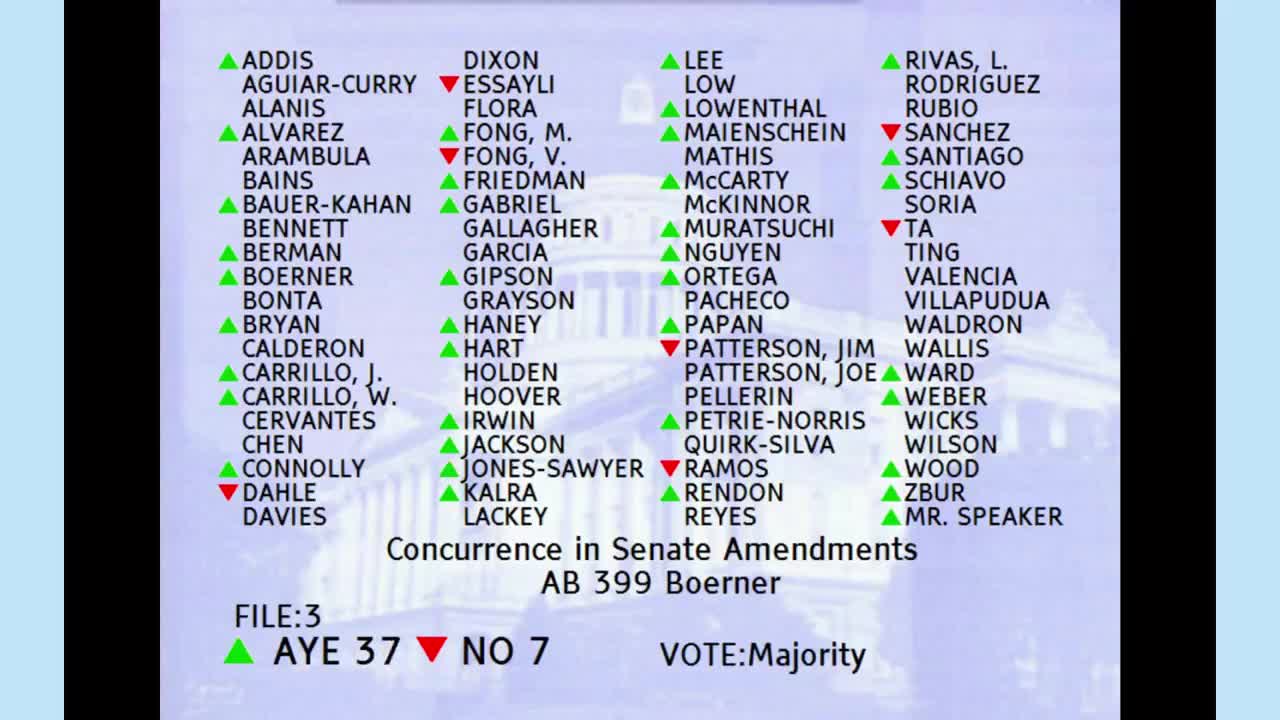 52SEC
Assembly Floor
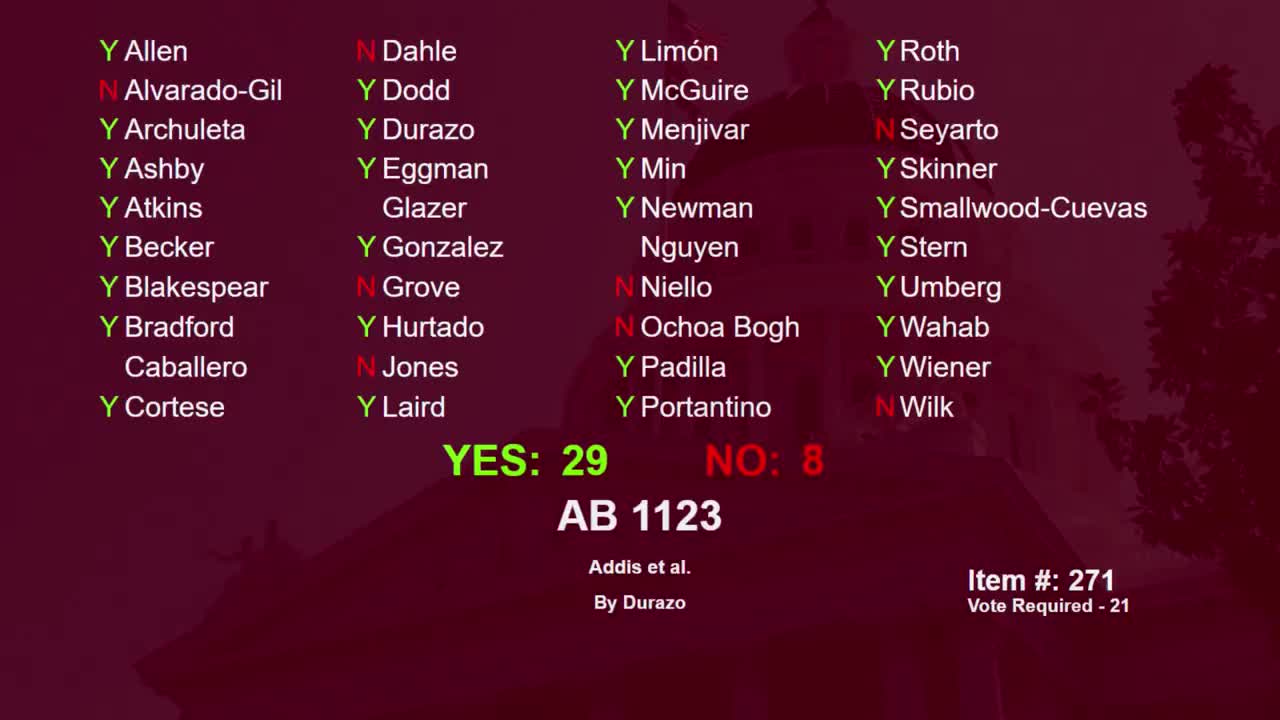 3MIN
Senate Floor
 2MIN
Senate Standing Committee on Appropriations
 21MIN
Senate Standing Committee on Judiciary
 4MIN
Senate Standing Committee on Judiciary
 48MIN
Senate Standing Committee on Human Services
 1MIN
Assembly Floor
Bill Author

Bill Co-Author(s):