AB 435: Public social services: automated application process.
- Session Year: 2023-2024
- House: Assembly
- Latest Version Date: 2023-03-30
Current Status:
Failed
(2024-02-01: From committee: Filed with the Chief Clerk pursuant to Joint Rule 56.)
Introduced
In Committee
First Chamber
In Committee
Second Chamber
Enacted
What does this bill do?
The bill requires the statewide welfare computer system (CalSAWS) and the BenefitsCal online portal to accept and process applications for three immigrant-focused cash programs: the Cash Assistance Program for Aged, Blind, and Disabled Legal Immigrants (CAPI), the Trafficking and Crime Victim Assistance Program (help for noncitizen victims), and Refugee Cash Assistance. It also requires county social services departments to post general information on their websites about those and other immigrant benefit services.
The summary is provided by generative AI which can make mistakes. For original language, please view the details in the table below.
Existing law requires the Office of Systems Integration within the California Health and Human Services Agency to implement a statewide automated welfare system, known as the California Statewide Automated Welfare System (CalSAWS), for various public assistance programs, including the CalWORKs program, CalFresh, and the Medi-Cal program. Under existing law, among other duties, the state is consolidating existing consortia systems into the single CalSAWS.
Existing law requires the State Department of Social Services to establish and supervise the Cash Assistance Program for Aged, Blind, and Disabled Legal Immigrants (CAPI), which provides cash assistance to aged, blind, and disabled legal immigrants who are not citizens of the United States, as specified. Existing law establishes the state-funded Trafficking and Crime Victim Assistance Program (TCVAP), which provides critical benefits and services to noncitizen victims of human trafficking, domestic violence, and other serious crimes. Existing law also requires the department, after setting aside state administrative funds, to allocate social services funds derived from appropriated federal funds and federally targeted assistance to eligible counties. Existing law requires these funds, known as Refugee Cash Assistance (RCA), to be used by the county, pursuant to a plan developed by the county, to provide services to refugees that lead to successful self-sufficiency and social integration for the refugees.
This bill would require CalSAWS to accept and process applications for CAPI, TCVAP, and RCA. The bill would require a county social services department to post on its internet website general information identifying available immigrant benefit services, including, but not limited to, those programs. By increasing the duties of county human services departments, the bill would impose a state-mandated local program. The bill would require the State Department of Social Services, with 60 days of the effective date of the bill, to report to the budget committees and relevant policy committees of the Legislature the departments plan to ensure that potential beneficiaries are able to apply online for those programs by December 1, 2024, or when the department notifies the Legislature that CalSAWS can perform the necessary automation to implement it, as specified. The bill would require the department to implement the bills requirements by all-county letters or similar instructions, beginning no later than March 1, 2024, or when the department notifies the Legislature that CalSAWS can perform the necessary automation to implement it, until regulations are adopted. The bill also would make findings and declarations relating to CalSAWS automation activities.
The California Constitution requires the state to reimburse local agencies and school districts for certain costs mandated by the state. Statutory provisions establish procedures for making that reimbursement.
This bill would provide that, if the Commission on State Mandates determines that the bill contains costs mandated by the state, reimbursement for those costs shall be made pursuant to the statutory provisions noted above.
Existing law requires the Office of Systems Integration within the California Health and Human Services Agency to implement a statewide automated welfare system, known as the California Statewide Automated Welfare System (CalSAWS), for various public assistance programs, including the CalWORKs program, CalFresh, and the Medi-Cal program. Under existing law, among other duties, the state is consolidating existing consortia systems into the single CalSAWS.
Existing law requires the State Department of Social Services to establish and supervise the Cash Assistance Program for Aged, Blind, and Disabled Legal Immigrants (CAPI), which provides cash assistance to aged, blind, and disabled legal immigrants who are not citizens of the United States, as specified. Existing law establishes the state-funded Trafficking and Crime Victim Assistance Program (TCVAP), which provides critical benefits and services to noncitizen victims of human trafficking, domestic violence, and other serious crimes. Existing law also requires the department, after setting aside state administrative funds, to allocate social services funds derived from appropriated federal funds and federally targeted assistance to eligible counties. Existing law requires these funds, known as Refugee Cash Assistance (RCA), to be used by the county, pursuant to a plan developed by the county, to provide services to refugees that lead to successful self-sufficiency and social integration for the refugees.
This bill would require CalSAWS to accept and process applications for CAPI, TCVAP, and RCA. The bill would require a county social services department to post on its internet website general information identifying available immigrant benefit services, including, but not limited to, those programs. By increasing the duties of county human services departments, the bill would impose a state-mandated local program. The bill would require the State Department of Social Services, with 60 days of the effective date of the bill, to report to the budget committees and relevant policy committees of the Legislature the departments plan to ensure that potential beneficiaries are able to apply online for those programs by December 1, 2024, as specified. The bill would require the department to implement the bills requirements by all-county letters or similar instructions, beginning no later than March 1, 2024, until regulations are adopted. The bill also would make findings and declarations relating to CalSAWS automation activities.
The California Constitution requires the state to reimburse local agencies and school districts for certain costs mandated by the state. Statutory provisions establish procedures for making that reimbursement.
This bill would provide that, if the Commission on State Mandates determines that the bill contains costs mandated by the state, reimbursement for those costs shall be made pursuant to the statutory provisions noted above.
Existing law requires the Office of Systems Integration within the California Health and Human Services Agency to implement a statewide automated welfare system, known as the California Statewide Automated Welfare System (CalSAWS), for various public assistance programs, including the CalWORKs program, CalFresh, and the Medi-Cal program. Under existing law, among other duties, the state is consolidating existing consortia systems into the single CalSAWS.
Existing law requires the State Department of Social Services to establish and supervise the Cash Assistance Program for Aged, Blind, and Disabled Legal Immigrants (CAPI), which provides cash assistance to aged, blind, and disabled legal immigrants who are not citizens of the United States, as specified. Existing law establishes the state-funded Trafficking and Crime Victim Assistance Program (TCVAP), which provides critical benefits and services to noncitizen victims of human trafficking, domestic violence, and other serious crimes. Existing law also requires the department, after setting aside state administrative funds, to allocate social services funds derived from appropriated federal funds and federally targeted assistance to eligible counties. Existing law requires these funds, known as Refugee Cash Assistance (RCA), to be used by the county, pursuant to a plan developed by the county, to provide services to refugees that lead to successful self-sufficiency and social integration for the refugees.
This bill would require CalSAWS to accept and process applications for CAPI, TCVAP, and RCA. The bill would require the State Department of Social Services, with 60 days of the effective date of the bill, to report to the budget committees and relevant policy committees of the Legislature the departments plan to ensure that potential beneficiaries are able to apply online for those programs by December 1, 2024, as specified. The bill would require the department to implement the bills requirements by all-county letters or similar instructions, beginning no later than March 1, 2024, until regulations are adopted. The bill also would make findings and declarations relating to CalSAWS automation activities.
The Legislature finds and declares as follows:
(a)The Legislature recognizes that only 20 percent of the California Statewide Automated Welfare System (CalSAWS) automation activities are devoted to migration, while 60 percent are devoted to automating county initiatives.
(b) It is the intent of the Legislature, with respect to CalSAWS automation activities, that legislative initiatives, such as Section 10007 of the Welfare and Institutions Code as added by Section 2 of this act, shall be prioritized over county initiatives.
SEC. 2.Section 10007 is added to the Welfare and Institutions Code, to read:10007.(a)The statewide electronic application system established pursuant to Chapter 4.1 (commencing with Section 10816) of Part 2 shall accept and process applications for the Cash Assistance Program for Aged, Blind, and Disabled Legal Immigrants (Chapter 10.3 (commencing with Section 18937) of Part 6), the Trafficking and Crime Victim Assistance Program under paragraph (6) of subdivision (a) of Section 13650, and Refugee Cash Assistance (Chapter 5.5 (commencing with Section 13275)).
(b)Within 60 days from the effective date of the act that added this section, the State Department of Social Services shall report to the budget committees and policy committees of the Legislature responsible for the California Statewide Automated Welfare System (CalSAWS) on the departments plan to ensure that potential beneficiaries of programs specified in subdivision (a) are able to apply for those programs through the BenefitsCal online portal by December 1, 2024. 2024, or when the department notifies the Legislature that CalSAWS can perform the necessary automation to implement it, whichever is later.
(c)A report submitted pursuant to subdivision (b) shall be submitted in accordance with Section 9795 of the Government Code.
SEC. 3.Section 10008 is added to the Welfare and Institutions Code, to read:10008.A county social services department shall post on its internet website general information identifying available immigrant benefit services, including, but not limited to, the Cash Assistance Program for Aged, Blind, and Disabled Legal Immigrants (Chapter 10.3 (commencing with Section 18937) of Part 6), the Trafficking and Crime Victim Assistance Program under paragraph (6) of subdivision (a) of Section 13650, and Refugee Cash Assistance (Chapter 5.5 (commencing with Section 13275)).
SEC. 4.Notwithstanding the rulemaking provisions of the Administrative Procedure Act (Chapter 3.5 (commencing with Section 11340) of Part 1 of Division 3 of Title 2 of the Government Code), the State Department of Social Services shall implement this act by all-county letters or similar instructions, beginning no later than March 1, 2024, until regulations are adopted. adopted, or when the department notifies the Legislature that CalSAWS can perform the necessary automation to implement it, whichever is later.
SEC. 5.If the Commission on State Mandates determines that this act contains costs mandated by the state, reimbursement to local agencies and school districts for those costs shall be made pursuant to Part 7 (commencing with Section 17500) of Division 4 of Title 2 of the Government Code.
The Legislature finds and declares as follows:
(a)The Legislature recognizes that only 20 percent of the California Statewide Automated Welfare System (CalSAWS) automation activities are devoted to migration, while 60 percent are devoted to automating county initiatives.
(b) It is the intent of the Legislature, with respect to CalSAWS automation activities, that legislative initiatives, such as Section 10007 of the Welfare and Institutions Code as added by Section 2 of this act, shall be prioritized over county initiatives.
SEC. 2.Section 10007 is added to the Welfare and Institutions Code, to read:10007.(a)The statewide electronic application system established pursuant to Chapter 4.1 (commencing with Section 10816) of Part 2 shall accept and process applications for the Cash Assistance Program for Aged, Blind, and Disabled Legal Immigrants (Chapter 10.3 (commencing with Section 18937) of Part 6), the Trafficking and Crime Victim Assistance Program under paragraph (6) of subdivision (a) of Section 13650, and Refugee Cash Assistance (Chapter 5.5 (commencing with Section 13275)).
(b)Within 60 days from the effective date of the act that added this section, the State Department of Social Services shall report to the budget committees and policy committees of the Legislature responsible for the California Statewide Automated Welfare System (CalSAWS) on the departments plan to ensure that potential beneficiaries of programs specified in subdivision (a) are able to apply for those programs through the BenefitsCal online portal by December 1, 2024.
(c)A report submitted pursuant to subdivision (b) shall be submitted in accordance with Section 9795 of the Government Code.
SEC. 3.Section 10008 is added to the Welfare and Institutions Code, to read:10008.A county social services department shall post on its internet website general information identifying available immigrant benefit services, including, but not limited to, the Cash Assistance Program for Aged, Blind, and Disabled Legal Immigrants (Chapter 10.3 (commencing with Section 18937) of Part 6), the Trafficking and Crime Victim Assistance Program under paragraph (6) of subdivision (a) of Section 13650, and Refugee Cash Assistance (Chapter 5.5 (commencing with Section 13275)).
SEC. 3.SEC. 4.Notwithstanding the rulemaking provisions of the Administrative Procedure Act (Chapter 3.5 (commencing with Section 11340) of Part 1 of Division 3 of Title 2 of the Government Code), the State Department of Social Services shall implement this act by all-county letters or similar instructions, beginning no later than March 1, 2024, until regulations are adopted.
SEC. 5.If the Commission on State Mandates determines that this act contains costs mandated by the state, reimbursement to local agencies and school districts for those costs shall be made pursuant to Part 7 (commencing with Section 17500) of Division 4 of Title 2 of the Government Code.
The Legislature finds and declares as follows:
(a)The Legislature recognizes that only 20 percent of the California Statewide Automated Welfare System (CalSAWS) automation activities are devoted to migration, while 60 percent are devoted to automating county initiatives.
(b) It is the intent of the Legislature, with respect to CalSAWS automation activities, that legislative initiatives, such as Section 10007 of the Welfare and Institutions Code as added by Section 2 of this act, shall be prioritized over county initiatives.
SEC. 2.Section 10007 is added to the Welfare and Institutions Code, to read:10007.(a)The statewide electronic application system established pursuant to Chapter 4.1 (commencing with Section 10816) of Part 2 shall accept and process applications for the Cash Assistance Program for Aged, Blind, and Disabled Legal Immigrants (Chapter 10.3 (commencing with Section 18937) of Part 6), the Trafficking and Crime Victim Assistance Program under paragraph (6) of subdivision (a) of Section 13650, and Refugee Cash Assistance (Chapter 5.5 (commencing with Section 13275)).
(b)Within 60 days from the effective date of the act that added this section, the State Department of Social Services shall report to the budget committees and policy committees of the Legislature responsible for the California Statewide Automated Welfare System (CalSAWS) on the departments plan to ensure that potential beneficiaries of programs specified in subdivision (a) are able to apply for those programs through the BenefitsCal online portal by December 1, 2024.
(c)A report submitted pursuant to subdivision (b) shall be submitted in accordance with Section 9795 of the Government Code.
SEC. 3.Notwithstanding the rulemaking provisions of the Administrative Procedure Act (Chapter 3.5 (commencing with Section 11340) of Part 1 of Division 3 of Title 2 of the Government Code), the State Department of Social Services shall implement this act by all-county letters or similar instructions, beginning no later than March 1, 2024, until regulations are adopted.
|
Date
|
Status
|
|---|---|
| Feb 1, 2024 | From committee: Filed with the Chief Clerk pursuant to Joint Rule 56. |
| Jan 31, 2024 | Died pursuant to Art. IV, Sec. 10(c) of the Constitution. |
| May 18, 2023 | In committee: Held under submission. |
| Apr 19, 2023 | In committee: Set, first hearing. Referred to APPR. suspense file. |
| Apr 3, 2023 | Re-referred to Com. on APPR. |
| Mar 30, 2023 | Read second time and amended. |
| Mar 29, 2023 | From committee: Amend, and do pass as amended and re-refer to Com. on APPR. (Ayes 8. Noes 0.) (March 28). |
| Mar 1, 2023 | Re-referred to Com. on HUM. S. |
| Feb 28, 2023 | From committee chair, with author's amendments: Amend, and re-refer to Com. on HUM. S. Read second time and amended. |
| Feb 17, 2023 | Referred to Com. on HUM. S. |
| Feb 7, 2023 | From printer. May be heard in committee March 9. |
| Feb 6, 2023 | Read first time. To print. |
|
Date
|
Description
|
Location
|
Votes
|
|
|---|---|---|---|---|
| Mar 28, 2023 | Do pass as amended and be re-referred to the Committee on [Appropriations] | Assembly Standing Committee on Human Services |
Passed |
This list shows positions taken on this bill by organizations on the date displayed, which is linked to the original source.
Positions by individuals are not included.
|
Organization
|
Position
|
Date
|
|---|---|---|
| All Home | ** Support | |
| Center for Empowering Refugees and Immigrants | ** Support | |
| Ceres Community Project | ** Support | |
| Coalition for Humane Immigrant Rights | ** Support | |
| Coalition of California Welfare Rights Organizations | ** Support | |
| Food for People, the Food Bank for Humboldt County | ** Support | |
| Grace Institute - End Child Poverty in Ca | ** Support | |
| Jewish Family Service of Los Angeles | ** Support | |
| Law Foundation of Silicon Valley | ** Support | |
| National Association of Social Work | * Support | Mar 28, 2023 |
| National Association Of Social Workers, California Chapter | ** Support | |
| Nourished California | * Support | Mar 28, 2023 |
| Office of Health Equity, Santa Barbara County Public Health Department | ** Support | |
| Western Center on Law and Policy | * Support | Mar 28, 2023 |
Date of Hearing: April 19, 2023
ASSEMBLY COMMITTEE ON APPROPRIATIONS
Chris Holden, Chair
ABPCA Bill Id:AB 435
Author:(Cervantes) – As Amended Ver:March 30, 2023
Policy Committee: | Human Services | Vote: | 8 - 0 |
|
| ||
|
|
Urgency: No State Mandated Local Program: Yes Reimbursable: Yes
SUMMARY:
This bill requires the California Statewide Automated Welfare System (CalSAWS) to accept and process applications for the Cash Assistance Program for Aged, Blind, and Disabled Legal Immigrants (CAPI), the Trafficking and Crime Victim Assistance Program (TCVAP), and Refugee Cash Assistance (RCA), and requires the California Department of Social Services (CDSS) to submit a report to the Legislature on CDSS’ plan to ensure this occurs. This bill also states Legislative intent that CalSAWS automation for this bill, and legislative requests generally, be prioritized above county requests.
Specifically, this bill:
- Requires the California Statewide Automated Welfare System (CalSAWS) to accept and process applications for CAPI, TCVAP, and RCA.
- Requires the Department of Social Services (CDSS) to submit a legislative report within 60 days of the effective date of this legislation, on CDSS’ plan to ensure CAPI, TCVAP, and RCA applicants are able to apply using the BenefitsCal system by December 1, 2024, or when CDSS indicates CalSAWS can perform the necessary automation, whichever is later.
- Requires each county social services department to post general information identifying available immigrant benefit services, including, but not limited to, CAPI, TCVAP, and RCA, on its internet website.
- States Legislative intent, with respect to CalSAWS automation activities, that legislative initiatives, such as the one proposed by this bill, be prioritized over county initiatives.
FISCAL EFFECT:
- General Fund cost pressures of an unknown amount, but likely greater than $150,000 for increased workload to re-shift existing and future automation priorities to give preference to legislative initiatives over county requests. CDSS indicates the automation queue is determined by many strategic factors, including efficiencies achieved by grouping similar types of changes, regardless of their origin.
- Negligible automation costs for CalSAWS to accept and process applications for CAPI, TCVAP, and RCA. CDSS indicates the automation for CAPI is in process and funding is already allocated as part of the larger CalSAWS project. TCVAP and RCA are completed.
- Minor and absorbable costs to CDSS to produce a report to the Legislature on CDSS’ plan to ensure timely implementation of this bill. CDSS indicates it provides regular updates to the Legislature on the status of the CalSAWS project and this report is largely redundant.
- Costs of an unknown amount, likely minor, if any, to each county to post general information regarding immigrant benefit services on its social services department website.
COMMENTS:
- Purpose. This bill seeks to improve access to CAPI, TCVAP, and RCA by requiring the application process be available online, similar to applications for CalFresh and Medi-Cal, and by requiring each county to post information about the programs on its website.
- CalSAWS. Existing law requires the Office of Systems Integration (OSI) to implement a statewide automated welfare system for several public assistance programs, including California Work Opportunity and Responsibility to Kids (CalWORKs), CalFresh, Medi-Cal, and foster care, refugee and county medical services programs. The system is intended to assist county workers with eligibility determinations for those seeking assistance.
The state is still in the process of implementing CalSAWS, and currently, California has two separate automated welfare systems, CalSAWS, which supports 40 counties, including Los Angeles County and the 39 former Consortium IV (C-IV) system counties, and the CalWORKs Information Network (CalWIN) system, which supports 18 counties. In September 2021, the CalSAWS project migrated the 39 C-IV counties to join Los Angeles County in forming a 40-county CalSAWS system. The migration to CalSAWS of the remaining 18 CalWIN counties is expected to be completed in October 2023.
As new laws take effect and stakeholders discover needed changes to programs already in the system, additions and updates to the existing programing are required. Each change request requires significant time to develop and program in the system and must occur simultaneously with the system migration efforts. According to OSI and others, 22 automation policy changes have been completed with CalSAWS in the last two years, with eight legislatively mandated changes and 29 initiatives in the queue for future automation.
This bill states Legislative intent to reprioritize current and future projects in the queue.
- Immigrant Safety Net Programs. CAPI is a state-funded program that provides monthly cash aid to aging, blind, and disabled immigrants not eligible for SSI/SSP based on immigration status. TCVAP provides cash assistance for non-citizen victims of crimes in need of immediate services, and who are obtaining a legal humanitarian status or assisting in the prosecution of a crime. TCVAP includes victims of human trafficking and victims of domestic violence. RCA provides federal cash payments to refugee single adults and families for up to 12 months.
This bill requires application to these programs to be available online through the CalSAWS system. Advocates indicate this requirement, combined with the requirement for counties to post information about the programs on their websites, will help increase awareness of the programs and ensure these programs remain easily accessible to those who need them.
Analysis Prepared by: Jennifer Swenson / APPR. / (916) 319-2081
Date of Hearing: March 28, 2023
ASSEMBLY COMMITTEE ON HUMAN SERVICES
Corey A. Jackson, Chair
ABPCA Bill Id:AB 435 (
Author:Cervantes) – As Amended Ver:February 28, 2023
SUBJECT: Public social services: automated application process
SUMMARY: Requires the California Statewide Automated Welfare System (CalSAWS) to accept and process qualified applicants of Cash Assistance Program for Aged, Blind, and Disabled Legal Immigrants (CAPI), the Trafficking and Crime Victim Assistance Program (TCVAP), and Refugee Cash Assistance (RCA) to the current list of automated applications. Specifically, this bill:
- Requires the Department of Social Services (CDSS) to submit a legislative report, by March 1, 2024, on CDSS’ plan to ensure qualified CAPI, TCVAP, and RCA applicants are able to apply using the BenefitsCal system by December 1, 2024.
- Requires county social services departments to post on their websites general information identifying available immigrant benefit services.
- Requires CDSS to issue all-county letters, or similar instructions, to implement this bill, no later than March 1, 2024, until regulations are adopted.
- Makes the following Legislative findings and declarations:
- The Legislature recognizes that only 20% of the CalSAWS automation activities are devoted to migration, while 60% are devoted to automating county initiatives.
- It is the intent of the Legislature, with respect to CalSAWS automation activities, that legislative initiatives, such as Welfare and Institutions Code Section 10007 as added by Section 2 of this act, shall be prioritized over county initiatives.
EXISTING LAW:
- Requires the Office of Systems Integration (OSI) to implement a statewide automated welfare system (SAWS) for the following public assistance programs:
- The California Work Opportunity and Responsibility to Kids (CalWORKs) program;
- CalFresh;
- The Medi-Cal program;
- The foster care program;
- The refugee program;
- County medical services programs. (Welfare and Institutions Code Section [WIC] 10823)
- Requires CDSS, the California Department of Health Care Services (DHCS), and OSI to develop, in consultation with the County Welfare Directors Association of California, the SAWS consortia, and stakeholders, a formal process for health and human services advocates and clients to provide input into new or changing public-facing elements of the California Automated Consortium Eligibility System and CalSAWS. (WIC 10823.2)
- Requires CDSS to establish and supervise a consortia-administered program to provide cash assistance to qualified non-citizens aged, blind, and disabled legal immigrants. (WIC 18937)
- Establishes the “Enhanced Services for Asylees and Vulnerable Noncitizens Program” to provide resettlement case management services for persons who are currently residing in California and are granted asylum by the United States (U.S.) Attorney General or the U.S. Secretary of Homeland Security, or who are eligible for assistance and services as members of “vulnerable populations” under the TCVAP. (WIC 13650)
- Requires noncitizen victims of trafficking, domestic violence, and other serious crimes be eligible for public social and health care services to the same extent as individuals who are admitted to the U.S. as refugees. (WIC 18945)
- Establishes the “Refugee Cash Assistance Program”. (WIC 13275–13286)
- Requires CDSS, after setting aside the necessary state administrative funds, to allocate appropriated federal funds for refugee social services programs to each eligible county to a qualified nonprofit organization, based on the number of refugees receiving aid in the eligible county or the number of refugees that reside in the eligible county. (WIC 13276)
- Requires CDSS to ensure that noncitizen victims of trafficking, domestic violence, and other serious crimes have access to refugee cash assistance, and refugee social services to the same extent as individuals who are admitted to the U.S. as refugees under federal law and requires these individuals to be subject to the same work requirements and exemptions as other participants. (WIC 13283)
- Permits CDSS to contract with, or issue grants to, qualified nonprofit organizations for the purpose of administering federally funded refugee cash assistance within a county. (WIC 13284)
- Establishes criteria for refugee admittance including the maximum number of refugees to be admitted, presidential authority for establishing admittance criteria during an emergency, and permits the U.S. Attorney General to admit refugees. (8 U.S. Code 1157)
FISCAL EFFECT: Unknown, this bill has not been analyzed by a fiscal committee.
COMMENTS:
Background: CalSAWS is intended to assist county eligibility workers with eligibility determinations seeking assistance with health coverage, access to food, cash assistance, and supportive services. As new policy initiatives are implemented to support the needs of underserved populations in California, CalSAWS plays a critical role in developing automated processes.
The Centers for Medicare and Medicaid Services and Food and Nutrition Services has stipulated to California that in order to continue to receive federal financial participation for SAWS development, implementation, and ongoing maintenance and enhancements there needs to be one single SAWS instead of the current two systems that California currently uses
Currently, California has two separate systems, CalSAWS which supports 40 counties including Los Angeles County and the 39 former Consortium IV (C-IV) system counties, and the CalWORKs Information Network system which supports 18 counties.
Presently, CalSAWS is used for the single consortium instead of the bifurcated system described above. The CalSAWS project is a Joint Powers Authority developed and directed by the 58 counties. In September 2021, as the first step in creating a single system, the CalSAWS project migrated the 39 C-IV counties to join Los Angeles County in forming a 40-county CalSAWS system. Next, beginning in October 2022 and set to finish in October 2023, the remaining 18 CalWIN counties are migrating to CalSAWS to form the full 58-county CalSAWS.
Due to the efficient, convenient, and equitable nature of CalSAWS, there are many additions being requested and a substantial number already in queue. Each change request requires significant time in order to develop the policy and to then implement in the system. According to a Budget Change Proposal submitted for “Statewide Automated Welfare System Ongoing Support” by OSI, CDSS, and DHCS, 22 automation policy changes have been completed with CalSAWS in the last two years and there are 8 legislatively mandated changes with another 29 (or more) initiatives planned for future automation. In addition to other policy changes planned, CDSS reports they have the following plans for CalSAWS:
“CalWORKs pregnancy changes to increase pregnancy special needs from $47 to $100 and allow eligibility for pregnant persons under 18 with no other aided children to begin at the application date so long as the pregnancy is verified; Food for All which expands access to California Food Assistance Program (CFAP) and Cash Assistance Program for Immigrants (CAPI) to serve Californians of targeted ages regardless of immigration status, with security to prevent the federal government from accessing these cases; and CalWORKs overpayment changes to reduce the lookback timeframe to 2 years. CDSS also has vital changes post migration which include expanding and streamlining the eligibility and administration of the CalWORKs Homeless Assistance (HA) Program through a series of policy changes impacting access to HA benefits.”
Cash Assistance Program for Aged, Blind, and Disabled Immigrants is a state-funded program that provides monthly cash aid to aging, blind, and immigrants that are not eligible for SSI/SSP based on immigration status. In 1996, the Personal Responsibility and Work Opportunity Act excluded noncitizen immigrants from SSI/SSP eligibility. The following are CAPI requirements:
- 65 or over, blind, or disabled.
- A non-citizen and meet the immigration status criteria in effect for SSI/SSP as of August 21, 1996.
- Ineligible for SSI/SSP solely due to their immigration status.
- California resident.
- Their income must be less than the CAPI standards.
- Resources must be below $2,000 for an individual or $3,000 for a couple.
Currently to apply for CAPI, an applicant must go to their local county office to seek an application and submit the application as prescribed by their county social services agency. While CAPI applicants may be eligible for CalFresh, Medi-Cal, or In-Home Supportive Services (IHSS), there is not currently an automated system to link CAPI eligibility with other safety net programs. CAPI is currently being integrated into CalSAWS and is estimated to be fully automated by June 2025. Once integrated, when applicants apply for CalFresh, Medi-Cal, or IHSS, the system will help determine eligibility for other programs such as CAPI and help applicants receive services more quickly and efficiently.
Trafficking and Crime Victim Assistance Program is a cash assistance program for victims of crimes that are non-citizens in need of immediate services, and who are obtaining a legal humanitarian status or assisting in the prosecution of a crime. Senate Bill 1569, (Kuehl), Chapter 672, Statutes of 2006, made human trafficking a crime and enacted a state-funded victim assistance program, the TCVAP. TCVAP includes victims of human trafficking who have not yet been certified by the Office of Refugee Resettlement (ORR) and victims of domestic violence.
To be eligible for federally funded benefits and services, an individual must be certified by ORR as a victim of a severe form of human trafficking. In order to receive certification, victims of trafficking must be willing to assist with the investigation and prosecution of traffickers. In addition, they must have completed an application for a T-Visa or they must have been granted continued presence status by the U.S. Citizenship and Immigration Services for the purpose of contributing to the prosecution of the traffickers.
Victims of human trafficking certified by ORR as trafficking victims are eligible to receive federally funded benefits and services including: RCA, CalWORKs, Refugee Medical Assistance, Medi-Cal, Refugee Social Services, SNAP/CalFresh benefits, and other services to assist victims with adjustment and facilitate self-sufficiency. This bill will not impact TCVAP because, according to CDSS, TCVAP eligibility can be currently determined through BenefitsCal.
Refugee Cash Assistance provides federal cash payments to refugee single adults and/or families for up to 12 months from the refugee’s date of entry into the US. RCA follows most of the CalWORKs regulations including those of properties and income. Unlike CalWORKs, eligibility for RCA does not require a child to be in the home that is deprived of parental support or care. Refugees eligible to CalWORKs cannot choose to be aided under RCA. RCA recipients receive cash assistance based on the CalWORKs Maximum Aid Payment (MAP) values. This bill will also not impact RCA because, according to CDSS, RCA eligibility can be currently determined through BenefitsCal.
Author’s Statement: According to the author, “Individuals who are eligible for the Cash Assistance Program for Aged, Blind, and Disabled Legal Immigrants (CAPI), the Refugee Cash Assistance (RCA), and the Trafficking and Crime Victim Assistance Program (TCVAP) cash assistance programs can apply online for other forms of state financial assistance, including CalFresh or Medi-Cal, using the BenefitsCal web portal administered by the Department of Social Services and Department of Health Care Services. However, under current law, these individuals must complete their CAPI, RCA, or TCVAP applications in person.
“Unfortunately, due to language barrier issues many immigrants face, many CAPI, TCVAP, and RCA applicants rely on family members or friends to assist them in navigating the application process. However, according to the U.S. Bureau of Labor Statistics, the majority of U.S. workers are at work during the hours of 8 A.M. to 5 P.M. This means that individuals who wish to help their loved ones finish their CAPI, RCA, or TCVAP applications often face difficulties taking time off from work to provide in-person assistance at relevant government offices during normal business hours. Denying individuals who are eligible for CAPI, RCA, or TCVAP the opportunity to apply for these crucial benefits online creates an inequitable barrier to access for these groups of immigrants.
“[This bill] would solve this problem by allowing CAPI, RCA, or TCVAP applicants to complete their applications for benefits through those programs online using the BenefitsCal web portal.”
Need for this bill: The bill will add CAPI, TCVAP, and RA as legislatively required additions to CalSAWS. As described above, these programs are important safety net programs. Adding the requirement in statute for their inclusion in CalSAWS could make clearer the legislative intent to protect this population by ensuring their application availability in CalSAWS.
This bill also requires counties to make general information available on their websites about these programs. This might heighten visibility to these programs and encourage more applications
Equity Implications: CAPI, TCVAP, and RCA all serve vulnerable communities that benefit from the assistance these programs provide by allowing recipients to meet their basic needs, which allows them to seek stability as they work to establish their lives in California. These programs are designed to assist with their integration into their new community, many of whom are not yet proficient in English. Cash assistance is one tool in the safety net program to help this community. By ensuring these programs can be easily accessed through CalSAWS, it will help encourage enrollment and assist individuals who are not aware they are eligible receive these necessary benefits. CalSAWS plays a vital role in automated processes for seamless application of policies and procedures and as the state continues to add new policy initiatives that support the needs of underserved populations in California, the safety net will continue become stronger.
Policy Considerations: While well intended, the bill’s timeline is unrealistic and will cause other policy changes in queue to be delayed. As mentioned above, there are at least 29 other policies “in line” to be added to the automated eligibility system in CalSAWS. Each policy change is important and each policy change has already been vetted via the Legislature, the county, or the Administration. This bill does not take into consideration these other policy changes. Without holistically looking at each of the pending changes in queue, it is difficult to say where this policy stands in line with timeliness priority. Additionally, two programs in this bill are already reported by CDSS as live in CalSAWS so it is not clear the need for these two programs to be added in statute.
Proposed Committee Amendments: In order to address the timeline considerations stated above, the committee suggests adding language to require these changes within CalSAWS, but to allow timeline flexibility to avoid delays for other programs.
RELATED AND PRIOR LEGISLATION:
AB 1536 (Juan Carrillo) of 2023, expands eligibility for CAPI to all individuals regardless of immigration status; deletes obsolete language; deletes requirements to apply for SSI/SSP in order to qualify for CAPI. AB 1536 is pending before this Committee and is set for a hearing on March 28, 2023.
REGISTERED SUPPORT / OPPOSITION:
Support
Coalition of California Welfare Rights Organizations (Sponsor)
All Home
California Healthcare Interpreting Association (CHIA)
Center for Empowering Refugees and Immigrants
Ceres Community Project
Coalition for Humane Immigrant Rights (CHIRLA)
Food for People, the Food Bank for Humboldt County
Grace Institute - End Child Poverty in Ca
Jewish Family Service of Los Angeles (UNREG)
Law Foundation of Silicon Valley
National Association of Social Workers, California Chapter
Office of Health Equity, Santa Barbara County Public Health Department
Western Center on Law & Poverty
Opposition
None on file
Analysis Prepared by: Alexandria Smith / HUM. S. / (916) 319-2089
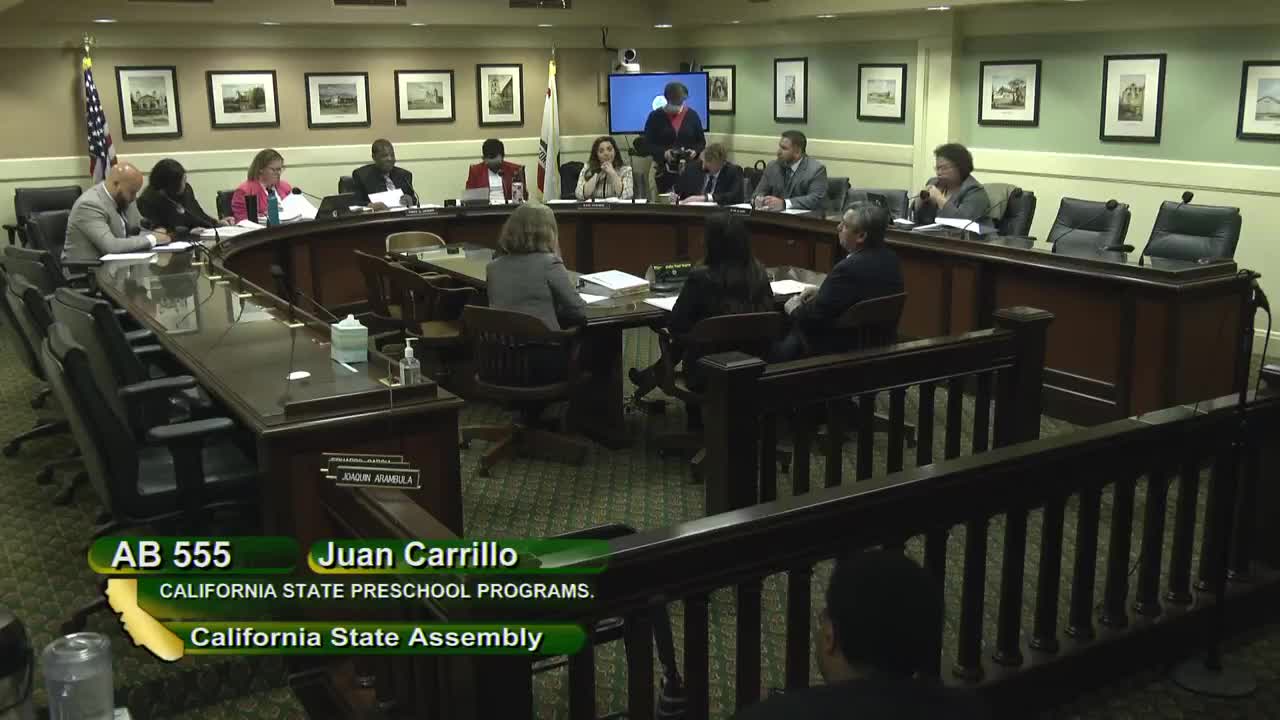
Discussed in Hearing
 8MIN
Assembly Standing Committee on Human Services
Bill Author

Bill Co-Author(s):