AB 443: Peace officers: determination of bias.
- Session Year: 2023-2024
- House: Assembly
- Latest Version Date: 2023-10-08
Current Status:
Passed
(2023-10-08: Chaptered by Secretary of State - Chapter 439, Statutes of 2023.)
Introduced
In Committee
First Chamber
In Committee
Second Chamber
Enacted
Existing law establishes the Commission on Peace Officer Standards and Training (POST) to set minimum standards for the recruitment and training of peace officers, to establish a certification for peace officers, and to develop training courses and curriculum for the training of peace officers. Existing law, commencing January 1, 2023, authorizes POST to suspend or revoke the certification of a peace officer if the person has been terminated for cause from employment as a peace officer, or has, while employed as a peace officer, otherwise engaged in serious misconduct, which includes demonstrating bias on the basis of race, national origin, religion, gender identity or expression, housing status, sexual orientation, mental or physical disability, or other protected status. Existing law requires each law enforcement agency to be responsible for completing investigations of allegations of serious misconduct of a peace officer.
This bill would, commencing January 1, 2026, require POST to establish a definition of biased conduct, as specified, and would require law enforcement agencies to use that definition in any investigation into a bias-related complaint or an incident that involves possible indications of officer bias, and to determine if any racial profiling occurred, as defined. The bill would also require POST to develop guidance for local law enforcement departments on performing effective internet and social media screenings of officer applicants.
Existing law establishes the Commission on Peace Officer Standards and Training (POST) to set minimum standards for the recruitment and training of peace officers, to establish a certification for peace officers, and to develop training courses and curriculum for the training of peace officers. Existing law, commencing January 1, 2023, authorizes POST to suspend or revoke the certification of a peace officer if the person has been terminated for cause from employment as a peace officer, or has, while employed as a peace officer, otherwise engaged in serious misconduct, which includes demonstrating bias on the basis of race, national origin, religion, gender identity or expression, housing status, sexual orientation, mental or physical disability, or other protected status. Existing law requires each law enforcement agency to be responsible for completing investigations of allegations of serious misconduct of a peace officer.
This bill would, commencing January 1, 2026, require POST to establish a definition of biased conduct, as specified, and would require law enforcement agencies to use that definition in any investigation into a bias-related complaint or an incident that involves possible indications of officer bias, and to determine if any racial profiling occurred, as defined. The bill would also require POST to develop guidance for local law enforcement departments on performing effective Internet internet and social media screenings of officer applicants.
Existing law establishes the Commission on Peace Officer Standards and Training (POST) to set minimum standards for the recruitment and training of peace officers, to establish a certification for peace officers, and to develop training courses and curriculum for the training of peace officers. Existing law, commencing January 1, 2023, authorizes POST to suspend or revoke the certification of a peace officer if the person has been terminated for cause from employment as a peace officer, or has, while employed as a peace officer, otherwise engaged in serious misconduct, which includes demonstrating bias on the basis of race, national origin, religion, gender identity or expression, housing status, sexual orientation, mental or physical disability, or other protected status. Existing law requires each law enforcement agency to be responsible for completing investigations of allegations of serious misconduct of a peace officer.
This bill would, commencing January 1, 2026, require POST to establish a definition of biased conduct, as specified, and would require law enforcement agencies to use that definition in any investigation into a bias-related complaint or an incident that involves possible indications of officer bias, and to determine if any racial profiling occurred, as defined. The bill would also require POST to develop guidance for local law enforcement departments on performing effective Internet and social media screenings of officer applicants.
(a)The commission shall establish a definition of biased conduct that, at a minimum, includes all of the following:
(1)Biased conduct includes any conduct, including, but not limited to, conduct online, such as social media use, engaged in by a peace officer in any encounter with the public, first responders, or employees of criminal justice agencies, as defined in Section 13101, motivated by bias toward any persons protected class or characteristic, whether actual or perceived, that is described in subdivision (b) of Section 51 of the Civil Code.
(2)Biased conduct may result from implicit and explicit biases.
(3)Conduct is biased if a reasonable person with the same training and experience would conclude, based upon the facts, that the officers conduct resulted from bias towards that persons membership in a protected class described in paragraph (1).
(4)An officer need not admit biased or prejudiced intent for conduct to be determined to be biased conduct.
(b)When investigating any bias-related complaint or incident that involves possible indications of officer bias, a law enforcement agency shall determine whether the conduct being investigated constitutes biased conduct, using the definition developed by the commission in accordance with subdivision (a).
(c)The commission shall develop guidance for local law enforcement departments on performing effective internet and social media screenings of officer applicants. The guidance shall include, at minimum, strategies for identifying applicant social media profiles and for searching for, and identifying, content indicative of potential biases, such as affiliation with hate groups.
(d)In the investigation of any complaint involving any law enforcement activity described in subdivision (e) of Section 13519.4, the investigating law enforcement agency shall determine if racial profiling, as defined in that section, occurred.
(e)This section shall become operative on January 1, 2026.
(a)The commission shall establish a definition of biased conduct that, at a minimum, includes all of the following:
(1)Biased conduct includes any conduct, including, but not limited to, conduct online, such as social media use, engaged in by a peace officer in any encounter with the public, first responders, or employees of criminal justice agencies, as defined in Section 13101, motivated by bias toward any persons protected class or characteristic of that person, characteristic, whether actual or perceived, that is described in subdivision (b) of Section 51 of the Civil Code, including, without limitation, a persons race, color, ethnicity, national origin, age, religion, gender identity or expression, sexual orientation, or mental or physical disability. Code.
(2)Biased conduct may result from implicit and explicit biases.
(3)Conduct is biased if a reasonable person with the same training and experience would conclude, based upon the facts, that the officers conduct resulted from bias towards that persons membership in a protected class described in paragraph (1).
(4)An officer need not admit biased or prejudiced intent for conduct to be determined to be biased conduct.
(b)When investigating any bias-related complaint or incident that involves possible indications of officer bias, a law enforcement agency shall determine whether the conduct being investigated constitutes biased conduct, using the definition developed by the commission in accordance with subdivision (a).
(c)The commission shall develop guidance for local law enforcement departments on performing effective internet and social media screenings of officer applicants. The guidance shall include, at minimum, strategies for identifying applicant social media profiles and for searching for, and identifying, content indicative of potential biases, such as affiliation with hate groups.
(d)In the investigation of any complaint involving any law enforcement activity described in subdivision (e) of Section 13519.4, the investigating law enforcement agency shall determine if racial profiling, as defined in that section, occurred.
(e)This section shall become operative on January 1, 2026.
(a)The commission shall establish a definition of biased conduct that, at a minimum, includes all of the following:
(1)Biased conduct includes any conduct, including, but not limited to, conduct online, such as social media use, engaged in by a peace officer in any encounter with the public, first responders, or employees of criminal justice agencies, as defined in Section 13101, motivated by bias toward that persons any class or characteristic of that person, whether actual or perceived perceived, that is described in subdivision (b) of Section 51 of the Civil Code, including, without limitation, a persons race, color, ethnicity, national origin, age, religion, gender identity or expression, sexual orientation, or mental or physical disability.
(2)Biased conduct may result from implicit and explicit biases.
(3)Conduct is biased if a reasonable person with the same training and experience would conclude, based upon the facts, that the officers conduct resulted from bias towards that persons membership in a protected class described in paragraph (1).
(4)An officer need not admit biased or prejudiced intent for conduct to be determined to be biased conduct.
(b)When investigating any bias-related complaint or incident that involves possible indications of officer bias, a law enforcement agency shall determine whether the conduct being investigated constitutes biased conduct, using the definition developed by the commission in accordance with subdivision (a).
(c)The commission shall develop guidance for local law enforcement departments on performing effective internet and social media screenings of officer applicants. The guidance shall include, at minimum, strategies for identifying applicant social media profiles and for searching for, and identifying, content indicative of potential biases, such as affiliation with hate groups.
(d)In the investigation of any complaint involving any law enforcement activity described in subdivision (e) of Section 13519.4, the investigating law enforcement agency shall determine if racial profiling, as defined in that section, occurred.
(e)This section shall become operative on January 1, 2026.
(a)The commission shall establish a definition of biased conduct that, at a minimum, includes all of the following:
(1)Biased conduct includes any conduct, including, but not limited to, conduct online, such as social media use, engaged in by a peace officer in any encounter with the public, first responders, or employees of criminal justice agencies, as defined in Section 13101, motivated by bias toward that persons actual or perceived race, color, ethnicity, national origin, age, religion, gender identity or expression, sexual orientation, or mental or physical disability.
(2)Biased conduct may result from implicit and explicit biases.
(3)Conduct is biased if a reasonable person with the same training and experience would conclude, based upon the facts, that the officers conduct resulted from bias towards that persons membership in a protected class described in paragraph (1).
(4)An officer need not admit biased or prejudiced intent for conduct to be determined to be biased conduct.
(b)When investigating any bias-related complaint or incident that involves possible indications of officer bias, a law enforcement agency shall determine whether the conduct being investigated constitutes biased conduct, using the definition developed by the commission in accordance with subdivision (a).
(c)The commission shall develop guidance for local law enforcement departments on performing effective internet and social media screenings of officer applicants. The guidance shall include, at minimum, strategies for identifying applicant social media profiles and for searching for, and identifying, content indicative of potential biases, such as affiliation with hate groups.
(d)In the investigation of any complaint involving any law enforcement activity described in subdivision (e) of Section 13519.4, the investigating law enforcement agency shall determine if racial profiling, as defined in that section, occurred.
(e)This section shall become operative on January 1, 2026.
SECTION 1.Section 13510.6 is added to the Penal Code, to read:13510.6.(a)(1)The commission shall establish a definition of biased conduct that, at a minimum, includes all of the following:(A)Biased conduct includes conduct resulting from implicit and explicit biases.(B)Conduct is biased if a reasonable person would conclude so using the facts at hand.(C)An officer need not admit biased or prejudiced intent for conduct to reasonably appear biased.(D)Biased conduct may occur in an encounter with the public, first responders, employees of criminal justice agencies, as defined in Section 13101, or online, such as conduct on social media.(2)Law enforcement agencies shall use the commissions definition of biased conduct, consistent with paragraph (5) of subdivision (b) of Section 13510.8, in any investigation into a bias-related complaint or an incident that involves possible indications of officer bias, and determine if racial profiling occurred, as defined in subdivision (e) of Section 13519.4.(b)The commission shall develop guidance for local law enforcement departments on performing effective Internet and social media screenings of officer applicants. The guidance shall include, at minimum, strategies for identifying applicant social media profiles and for searching for, and identifying, content indicative of potential biases, such as affiliation with hate groups.(c)This section shall become operative on January 1, 2026.(a)(1)The commission shall establish a definition of biased conduct that, at a minimum, includes all of the following:
(A)Biased conduct includes conduct resulting from implicit and explicit biases.
(B)Conduct is biased if a reasonable person would conclude so using the facts at hand.
(C)An officer need not admit biased or prejudiced intent for conduct to reasonably appear biased.
(D)Biased conduct may occur in an encounter with the public, first responders, employees of criminal justice agencies, as defined in Section 13101, or online, such as conduct on social media.
(2)Law enforcement agencies shall use the commissions definition of biased conduct, consistent with paragraph (5) of subdivision (b) of Section 13510.8, in any investigation into a bias-related complaint or an incident that involves possible indications of officer bias, and determine if racial profiling occurred, as defined in subdivision (e) of Section 13519.4.
(b)The commission shall develop guidance for local law enforcement departments on performing effective Internet and social media screenings of officer applicants. The guidance shall include, at minimum, strategies for identifying applicant social media profiles and for searching for, and identifying, content indicative of potential biases, such as affiliation with hate groups.
(c)This section shall become operative on January 1, 2026.
|
Date
|
Status
|
|---|---|
| Oct 8, 2023 | Chaptered by Secretary of State - Chapter 439, Statutes of 2023. |
| Oct 8, 2023 | Approved by the Governor. |
| Sep 20, 2023 | Enrolled and presented to the Governor at 4 p.m. |
| Sep 13, 2023 | Senate amendments concurred in. To Engrossing and Enrolling. (Ayes 63. Noes 1. Page 3474.). |
| Sep 13, 2023 | In Assembly. Concurrence in Senate amendments pending. |
| Sep 13, 2023 | Read third time. Passed. Ordered to the Assembly. (Ayes 28. Noes 9. Page 2705.). |
| Sep 11, 2023 | Read second time. Ordered to third reading. |
| Sep 8, 2023 | Read third time and amended. Ordered to second reading. |
| Sep 5, 2023 | Read second time. Ordered to third reading. |
| Sep 1, 2023 | Read second time and amended. Ordered returned to second reading. |
| Sep 1, 2023 | From committee: Amend, and do pass as amended. (Ayes 5. Noes 2.) (September 1). |
| Aug 14, 2023 | In committee: Referred to APPR suspense file. |
| Jul 13, 2023 | Read second time and amended. Re-referred to Com. on APPR. |
| Jul 12, 2023 | From committee: Amend, and do pass as amended and re-refer to Com. on APPR. (Ayes 3. Noes 0.) (July 11). |
| Jun 14, 2023 | Referred to Com. on PUB S. |
| Jun 1, 2023 | In Senate. Read first time. To Com. on RLS. for assignment. |
| May 31, 2023 | Read third time. Passed. Ordered to the Senate. (Ayes 60. Noes 0. Page 1980.) |
| May 18, 2023 | Read second time. Ordered to third reading. |
| May 18, 2023 | From committee: Do pass. (Ayes 11. Noes 1.) (May 18). |
| Apr 19, 2023 | In committee: Set, first hearing. Referred to APPR. suspense file. |
| Mar 14, 2023 | From committee: Do pass and re-refer to Com. on APPR. (Ayes 8. Noes 0.) (March 14). Re-referred to Com. on APPR. |
| Feb 17, 2023 | Referred to Com. on PUB. S. |
| Feb 7, 2023 | From printer. May be heard in committee March 9. |
| Feb 6, 2023 | Read first time. To print. |
|
Date
|
Description
|
Location
|
Votes
|
|
|---|---|---|---|---|
| Sep 13, 2023 | AB 443 Jackson Concurrence in Senate Amendments | Assembly Floor |
Passed |
|
| Sep 13, 2023 | Assembly 3rd Reading AB443 Jackson By Bradford | Senate Floor |
Passed |
|
| Sep 1, 2023 | Do pass as amended | Senate Standing Committee on Appropriations |
Passed |
|
| Aug 14, 2023 | Placed on suspense file | Senate Standing Committee on Appropriations |
Passed |
|
| Jul 11, 2023 | Do pass as amended, but first amend, and re-refer to the Committee on [Appropriations] | Senate Standing Committee on Public Safety |
Passed |
|
| May 31, 2023 | AB 443 Jackson Assembly Third Reading | Assembly Floor |
Passed |
|
| May 18, 2023 | Do pass. | Assembly Standing Committee on Appropriations |
Passed |
|
| Mar 14, 2023 | Do pass and be re-referred to the Committee on [Appropriations] | Assembly Standing Committee on Public Safety |
Passed |
This list shows positions taken on this bill by organizations on the date displayed, which is linked to the original source.
Positions by individuals are not included.
|
Organization
|
Position
|
Date
|
|---|---|---|
| California Academy of Child & Adolescent Psychiatry | * Support | Jul 11, 2023 |
| California Association Of Highway Patrolmen | ** Against | |
| California Faculty Association | ** Support | |
| California Highway Patrol | * Against | Jul 11, 2023 |
| California Public Defender Association | ** Support | |
| California State Auditor's Office | * Support | Mar 14, 2023 |
| Friends Committee On Legislation Of Ca | * Support | Jul 11, 2023 |
| Los Angeles County District AttorneyS Office | ** Support | |
| National Association Of Social Workers, California Chapter | ** Support | |
| National College Players Association | ** Support | |
| Peace Officers Research Association Of California | ** Against |
CONCURRENCE IN SENATE AMENDMENTS
CSA1 Bill Id:AB 443
Author:(Jackson)
As Amended Ver:September 8, 2023
Majority vote
SUMMARY
Requires the Commission on Peace Officer Standards and Training (POST) to establish a definition of biased conduct and to develop guidance for law enforcement agencies when screening applicant social media accounts for bias.
Senate Amendments:
State that the definition of "biased conduct" must also include the following:
- That the conduct may include bias against a person's actual or perceived class or characteristic protected under the Unruh Civil Rights Act; and,
- That conduct is biased if a reasonable person with the same training and experience would look at the facts and conclude that the conduct resulted from bias due to membership in a specified class.
COMMENTS
- As passed by the Assembly: This bill required the Commission on Peace Officer Standards and Training (POST) to establish a definition of biased conduct and to develop guidance for law enforcement agencies when screening applicant social media accounts for bias
Major Provisions
- Required that POST establish a definition for biased conduct that, at a minimum, includes all of the following:
- Biased conduct includes conduct resulting from implicit and explicit biases;
- Conduct is biased if a reasonable person would conclude so using the facts at hand;
- An officer need not admit biased or prejudiced intent for conduct to reasonably appear biased; and,
- Biased conduct may occur in an encounter with the public, employees of criminal justice agencies, or online.
- Stated that law enforcement agencies must use POST's definition of bias for peace officer decertification purposes and in other specified circumstances.
- Required POST to develop "best-practices" guidance for law enforcement agencies when they screen applicant social media accounts for bias.
- Stated that these provisions would become operative on January 1, 2026.
- State Auditor Report on Peace Officer Bias: In 2022, the California State Auditor's Office (State Auditor) audited five law enforcement departments (including LA Sheriff, San Jose Police Department, and the California Department of Rehabilitation and Corrections (CDCR)) for peace officer bias, and uncovered a number of bias-related issues. (State Auditor. Law Enforcement Departments Have Not Adequately Guarded Against Biased Conduct. (Apr. 2022) <https://www.auditor.ca.gov/reports/2021-105/index.html> [as of Mar. 8, 2023] at p. iii.) As part of the audit, the State Auditor reviewed a selection of five internal investigations at each department, reviewed the public social media accounts of approximately 450 officers, and examined agency responses to incidents and allegations of biased conduct.
The report defined bias in general as a lack of objectivity that can take the form of preconceived judgments, opinions, or attitudes about a person or group based on actual or perceived identity characteristics. (Id. at 13.) Using this general definition of bias, the State Auditor identified numerous occasions of explicit or implicit bias and the corresponding disciplinary actions. (Id. at 19.)
One of these instances included an officer filming black incarcerated individuals and narrating, "Black Lives Matter;" he later explained he was sarcastically responding to their sagging pants. (Id. at 20.) That officer received a temporary pay reduction. (Ibid.) In another instance, an officer admitted to teasing incarcerated black youth about watermelon and chicken, and also admitted to teasing them about their clothing, asking them if they were homosexual. (Ibid.) That officer, as part of a broader investigation into other matters, was given an unpaid suspension and was required to take training. (Ibid.) A third officer told investigators he shared a joke with one or two coworkers about taking a biology exam, being asked to name something commonly found in a cell, and being told that "Mexicans" was apparently an incorrect answer. (Ibid.) That officer retired during the investigation. (Ibid.)
Biased behavior was also found to be displayed on social media. (Id. at 24.)
The State Auditor pointed out that although the biased conduct they found was generated by a small number of officers at each department, concluding that bias is not a significant problem on that basis alone would be incorrect for a number of reasons. (Id. at 25.) Their review was not designed to catalogue every instance of biased conduct, their work only encompassed a limited number of internal investigations and publicly shared views by a selection of officers. (Ibid.) Furthermore, because they found that the departments they reviewed did not have strong safeguards against bias in place, there is a high risk of departments being unaware of and unable to effectively address the ways in which officers exhibit bias. (Ibid.)
This bill would require POST to create a definition of bias, and requires that any definition POST creates include the elements of bias that the State Auditor suggested. This bill would also require that the definition POST establishes be used by law enforcement agencies when investigating claims of bias, including instances where a peace officer may be decertified for exhibiting bias. (Penal Code Section 13510.8(b)(5).) By doing so, it would provide clearer guidelines to assist investigations of bias. This bill has been recently amended to state that conduct is biased if a reasonable person with the same training and experience would conclude, based upon the facts, that the officer's conduct resulted from bias towards that person's membership in a protected class. Does this language seem to imply that only persons with the same training and experience would be able to determine whether conduct was biased? If the author's intent is for officer conduct to be assessed in the context of their training, would a clearer way to articulate this provision be, "Conduct is biased if a reasonable person with knowledge of relevant officer standards and practices, would conclude…"?
Furthermore, this bill would also require POST to develop a "best practices" guideline for law enforcement agencies when they screen applicant social media profiles for bias. Creating such a guideline would assist on the front end by helping to comb out potentially biased peace officer applicants before they would be released into the community with police powers.
According to the Author
"California's work to elevate the conduct of our law enforcement professionals and protect our citizens is not over. That is why this bill requires all of California's POST certified peace officers to follow the same definition of "biased conduct". It is essential that in the most progressive and diverse state ensures that peace officers are held to the same standard of conducting themselves free of bias without out room for interpretation.
"Every person in California should have confidence that any contact with a peace officer is based on the need for service or intervention. But most importantly, they should be sure that their contact with any officer is free from fear that bias might dictate the level of professionalism and service they receive.
"In April of 2022, the State Auditor released a report asking for the Legislature to adopt this simple change, but it should not have taken a state audit to arrive at this conclusion. AB 443 is another step to ensuring that Californians receive the level of service and justice they deserve."
Arguments in Support
According to the California Public Defenders Association, "Bias, both implicit and explicit, has undeniably plagued the criminal justice system and resulted in immeasurable injustice to affected individuals. We all are confronted with the ongoing effects of bias in the criminal justice system on a daily if not hourly bias when we see the latest new coverage or research article of some aspect of racial profiling, "biased conduct," and/or implicitly biased discrimination. The negative effects of bias within the criminal justice arena are so profound that they have, in many ways, had severely negative multi-generational effects on communities and families, not only in how they view and/or distrust the criminal justice system, but also in preventing those affected communities and families from thriving. In fact the damaging effects of bias are so dire that bias has been declared a 'public health crisis' by local governments in California."AB 443 is a necessary step to mitigate the existence of bias in our criminal justice system. Any meaningful interdiction of bias in the criminal justice system must start with law enforcement who are sworn to serve and protect the community. It is crucial that biased individuals are not hired as law enforcement officers. Additionally, there must be a mechanism to investigate, oversee and terminate individuals who engage in biased conduct while serving as law enforcement officers."AB 443 provides an important tool in the long battle to prevent bias and remediate some of the bias that already exists within the criminal justice arena. By providing a definition of "biased conduct" and requiring agencies to use the operative definition in any investigation or complaint about an allegation of bias or racial profiling, AB 443 provides an initial framework, consistent language for describing the problem and mandates that framework be utilized…"
Arguments in Opposition
According to the San Bernardino Police Department, "This unnecessary bureaucracy is just an attempt at further civilian oversight, where oversight already exists. Not only is there administrative oversight in each department, by those who have a vested interest in providing the best quality service to our communities, but there is also a legislatively mandated complaint process empowering Professional Standards Investigators to be made aware of and root out impropriety in law enforcement. Furthermore, every government agency has a Human Resources department that provides one more step of oversight specific to bias allegations.
"Bias is already readily defined as, 'to give a settled and often prejudiced outlook to' by society accepted Merriam-Webster. Your proposed definition specifications are flawed and add a level of subjectivity. First, you require 'biased conduct includes conduct resulting from implicit and explicit biases.' Using the defining word in its own definition is not only grammatically improper but also causes confusion and ambiguity in the word's meaning. Furthermore, you specify that, 'conduct is biased if a reasonable person would conclude so using the facts at hand.' Again, using the word 'bias' in the definition of bias does not establish the meaning of the word but, does the opposite by expanding its subjectivity. As specified, there are several layers of oversight for police action. Your feeble attempt to add yet another layer is not necessary or appropriate."
FISCAL COMMENTS
According to Senate Appropriations Committee:
- Unknown, potentially reimbursable costs to local law enforcement agencies in the hundreds of thousands to millions for investigation and termination proceedings that must comply with the Public Safety Officer Procedural Bill of Rights (Local Funds, General Fund). See Staff Comments for additional detail.
- Minor and absorbable costs to POST to develop and provide guidance to local law enforcement departments on performing effective internet and social media screenings of officer applicants.
VOTES:
ASM PUBLIC SAFETY: 8-0-0
YES: Jones-Sawyer, Alanis, Bonta, Bryan, Lackey, Ortega, Santiago, Zbur
ASM APPROPRIATIONS: 11-1-4
YES: Holden, Bryan, Calderon, Wendy Carrillo, Mike Fong, Hart, Lowenthal, Papan, Pellerin, Weber, Ortega
NO: Megan Dahle
ABS, ABST OR NV: Dixon, Mathis, Robert Rivas, Sanchez
ASSEMBLY FLOOR: 60-0-20
YES: Addis, Aguiar-Curry, Alanis, Alvarez, Arambula, Bains, Bauer-Kahan, Bennett, Berman, Boerner, Bonta, Bryan, Calderon, Juan Carrillo, Wendy Carrillo, Cervantes, Connolly, Mike Fong, Friedman, Gabriel, Garcia, Gipson, Grayson, Haney, Hart, Holden, Irwin, Jackson, Jones‑Sawyer, Kalra, Lee, Low, Lowenthal, Maienschein, McCarty, McKinnor, Muratsuchi, Stephanie Nguyen, Ortega, Papan, Pellerin, Petrie-Norris, Quirk-Silva, Reyes, Luz Rivas, Robert Rivas, Santiago, Schiavo, Soria, Ting, Valencia, Villapudua, Wallis, Ward, Weber, Wicks, Wilson, Wood, Zbur, Rendon
ABS, ABST OR NV: Chen, Megan Dahle, Davies, Dixon, Essayli, Flora, Vince Fong, Gallagher, Hoover, Lackey, Mathis, Pacheco, Jim Patterson, Joe Patterson, Ramos, Rodriguez, Blanca Rubio, Sanchez, Ta, Waldron
UPDATED
VERSION: September 8, 2023
CONSULTANT: Mureed Rasool / PUB. S. / (916) 319-3744 FN: 0002344
SENATE RULES COMMITTEE Office of Senate Floor Analyses (916) 651-1520 Fax: (916) 327-4478 | AB 443 |
THIRD READING
Bill No: AB 443
Author: Jackson (D)
Amended: 9/8/23 in Senate
Vote: 21
SENATE PUBLIC SAFETY COMMITTEE: 3-0, 7/11/23
AYES: Bradford, Skinner, Wiener
NO VOTE RECORDED: Ochoa Bogh, Wahab
SENATE APPROPRIATIONS COMMITTEE: 5-2, 9/1/23
AYES: Portantino, Ashby, Bradford, Wahab, Wiener
NOES: Jones, Seyarto
ASSEMBLY FLOOR: 60-0, 5/31/23 - See last page for vote
SUBJECT: Peace officers: determination of bias
SOURCE: Author
DIGEST:
This bill requires the Commission on Peace Officer Standards and Training (POST) to establish a definition of “biased conduct” and to develop guidance for use by law enforcement agencies in screening the social media accounts of applicants for bias.
Senate Floor Amendments of 9/8/23 re-word language in one component of the bill’s definition of bias
ANALYSIS:
Existing law:
- Establishes the POST to set minimum standards for the recruitment and training of peace officers, develop training courses and curriculum, and establish a professional certificate program that awards different levels of certification based on training, education, experience, and other relevant prerequisites and states the powers of POST, including among others, to develop and implement programs to increase the effectiveness of law enforcement, to secure the cooperation of state-level peace officers, agencies, and bodies having jurisdiction over systems of public higher education in continuing the development of college-level training and education programs. (Pen. Code, §§ 830-832.10; 13500 et. seq.)
- Authorizes POST, for the purpose of raising the level of competence of local law enforcement officers, to adopt rules establishing minimum standards related to physical, mental and moral fitness and training that shall govern the recruitment of any peace officers in California. (Pen. Code, § 13510, subd. (a).)
- Requires POST to develop and deliver training courses for peace officers on a wide array of topics, including, the use of tear gas, SWAT operations, elder abuse, persons with disabilities, behavioral health, technology crimes, sexual assault, first aid, missing persons, gang and drug enforcement, use of force and human trafficking, among others. (Pen. Code §§13514 – 13519.15.)
- Requires POST to post on its internet website all current standards, policies, practices, operating procedures and education and training materials, as specified. (Pen. Code, § 13650.)
- Requires each class of public officers or employees declared by law to be peace officers shall meet minimum standards, including that they be free from any physical, emotional, or mental condition, including bias against race or ethnicity, gender, nationality, religion, disability, or sexual orientation, that might adversely affect the exercise of the powers of a peace officer. (Gov. Code, § 1031, subd. (f).)
- Requires POST, by January 1, 2022, to study, review and update their regulations and associated screening materials related to the evaluation of emotional and mental condition to include the identification of explicit and implicit bias toward race or ethnicity, gender, nationality, religion, disability, or sexual orientation. . (Gov. Code, § 1031.3.)
- Requires all peace officers to complete an introductory course of training prescribed by POST, demonstrated by passage of an appropriate examination developed by POST. (Pen. Code, § 832, subd. (a).)
- Mandates the course of basic training for peace officers include adequate instruction on racial, identity, and cultural diversity in order to foster mutual respect and cooperation between law enforcement and members of all racial, identity, and cultural groups. In developing the training, POST shall consult with appropriate groups and individuals having an interest and expertise in the field of racial, identity, and cultural awareness and diversity. (Pen. Code, § 13519.4 (b).)
- Provides that a peace officer shall not engage in racial or identity profiling, and defines “racial or identity profiling” as the consideration of, or reliance on, to any degree, actual or perceived race, color, ethnicity, national origin, age, religion, gender identity or expression, sexual orientation, or mental or physical disability in deciding which persons to subject to a stop or in deciding upon the scope or substance of law enforcement activities following a stop, except that an officer may consider or rely on characteristics listed in a specific suspect description. The activities include, but are not limited to, traffic or pedestrian stops, or actions during a stop, such as asking questions, frisks, consensual and nonconsensual searches of a person or any property, seizing any property, removing vehicle occupants during a traffic stop, issuing a citation, and making an arrest. (Pen. Code, § 13519.4, subds. (e), (f).)
- Provides that once the initial basic peace officer training is completed, specified peace officers who adhere to the standards approved by the POST shall be required to complete a refresher course on racial and identity profiling, including implicit bias, every five years thereafter, or on a more frequent basis if deemed necessary, in order to keep current with changing racial, identity, and cultural trends. (Pen. Code, § 13519.4, subd, (i).)
- Provides that a peace officer may have their certification suspended or revoked if they have engaged in serious misconduct, which includes demonstrating bias on the basis of race, religion, or other specified categories. (Pen. Code, § 13510.8.)
- Requires POST to adopt by regulation a definition of “serious misconduct” that shall serve as the criteria to be considered for ineligibility for, or revocation of, certification, and requires that definition to include demonstrating bias on the basis of race, national origin, religion, gender identity or expression, housing status, sexual orientation, mental or physical disability, or other protected status in violation of law or department policy or inconsistent with a peace officer’s obligation to carry out their duties in a fair and unbiased manner. (Pen. Code, § 13510.8, subd. (b)(5).)
- Provides that peace officer personnel records are confidential except records related to use-of-force cases involving death or great bodily injury, sustained findings of sexual assault, and sustained findings of discrimination, among other things. (Pen. Code, § 832.7.)
- Requires law enforcement agencies to report to POST any complaints, charges, or allegations that could lead to decertification. (Pen. Code, § 13510.9.)
- Provides that a law enforcement officer exhibiting bias or animus towards a defendant because of their race, ethnicity, or national origin may be grounds to declare a mistrial, dismiss charges, or vacate a sentence, as specified. (Pen. Code, § 745, subd. (e).)
- Defines “bias motivation” for purposes of adopting law enforcement hate crimes policy as a preexisting negative attitude toward actual or perceived characteristics such as disability, gender, race, religion, and other enumerated traits. (Pen. Code, § 422.87.)
This bill:
- Requires POST to establish a definition of “biased conduct” that, at a minimum, includes all of the following:
- Biased conduct includes any conduct, including, but not limited to, conduct online, such as social media use, engaged in by a peace officer in any encounter with the public, first responders, or employees of criminal justice agencies, motivated by bias toward any person’s protected class or characteristic, whether actual or perceived, as specified.
- Biased conduct may result from implicit and explicit biases.
- Conduct is biased if a reasonable person with the same training and experience would conclude, based upon the facts, that the officer’s conduct resulted from bias towards that person’s membership in a protected class as described above.
- An officer need not admit biased or prejudiced intent for conduct to be determined to be biased conduct.
- Provides that when investigating any bias-related complaint or incident that involves possible indications of officer bias, a law enforcement agency shall determine whether the conduct being investigated constitutes “biased conduct,” using the definition developed by POST.
- Requires POST to develop guidance for local law enforcement departments on performing effective Internet and social media screenings of officer applicants, which, at a minimum, must include strategies for identifying applicant social media profiles and for searching for, and identifying, content indicative of potential biases, such as affiliation with hate groups.
- Provides that in the investigation of any complaint involving specified law enforcement activity, the investigating agency shall determine if racial profiling occurred.
- Provides that its provisions shall become operative on January 1, 2026.
Comments
According to the author, “California’s work to elevate the conduct of our law enforcement professionals and protect our citizens is not over. That is why this bill requires all of California’s POST certified peace officers to follow the same definition of “biased conduct”. It is essential that in the most progressive and diverse state ensures that peace officers are held to the same standard of conducting themselves free of bias without out room for interpretation.
“Every person in California should have confidence that any contact with a peace officer is based on the need for service or intervention. But most importantly, they should be sure that their contact with any officer is free from fear that bias might dictate the level of professionalism and service they receive. In April of 2022, the State Auditor released a report asking for the Legislature to adopt this simple change, but it should not have taken a state audit to arrive at this conclusion. AB 443 is another step to ensuring that Californians receive the level of service and justice they deserve.”
POST was established by the Legislature in 1959 to develop minimum recruitment and training standards for California peace officers. As of 1989, all peace officers in California are required to complete an introductory course of training prescribed by POST, and demonstrate completion of that course by passing an examination. According to the POST Web site, the Regular Basic Course Training includes 43 separate topics, ranging from juvenile law and procedure to search and seizure, taught over the course of a minimum of 664 hours of training. Over the course of the training, individuals are trained not only in policing skills such as crowd control, evidence collection and patrol techniques, they are also given instruction in criminal law, requiring specific knowledge of various Penal Code and constitutional provisions.
Existing law contains several provisions intended to minimize and respond to bias among peace officers. AB 846 (Burke, Chapter 322, Statutes of 2020), which was inadvertently repealed, established a requirement that peace officers be free from any bias against race or ethnicity, gender, nationality, religion, disability, or sexual orientation that might adversely affect the exercise of the powers of a peace officer. Further, POST currently provides mandatory training for peace officers on implicit bias, which must “stress understanding and respect for racial, identity, and cultural differences, and development of effective, noncombative methods of carrying out law enforcement duties in a diverse racial, identity, and cultural environment.”
Additionally, existing law, established by SB 2 (Bradford, Chapter 409, Statutes of 2021), provides a process whereby peace officers who have engaged in serious misconduct can be decertified, where “serious misconduct” includes “demonstrating bias on the basis of race, national origin, gender identity or expression, housing status, sexual orientation, mental or physical disability, or other protected status in violation of law or department policy or inconsistent with a peace officer’s obligation to carry out their duties in a fair and unbiased manner.” Finally, AB 655 (Kalra, Chapter 854, Statutes of 2022), which was signed just last year, imposed a requirement that law enforcement agencies investigate current and prospective peace officers regarding membership in hate groups, participation in hate group activity, or advocacy of public expressions of hate, and provided that certain findings would disqualify a person from employment as a peace officer.
In April 2022, the California State Auditor released a report entitled, “Law Enforcement Departments Have Not Adequately Guarded against Biased Conduct,” which presented the findings of an audit of five law enforcement departments throughout the state. As part of the audit, the State Auditor reviewed a selection of five internal investigations at each department, reviewed the public social media accounts of approximately 450 officers, and examined agency responses to incidents and allegations of biased conduct. The report defined bias in general as a lack of objectivity that can take the form of preconceived judgments, opinions, or attitudes about a person or group based on actual or perceived identity characteristics. Using this general definition of bias, the State Auditor identified numerous occasions of explicit or implicit bias and agencies’ corresponding disciplinary actions.
The audit concluded that, as a result of the deficiencies in the departments’ investigative practices, “they are at higher risk for failing to identify instances when their officers engage in biased conduct and failing to take action to prevent those officers from engaging in biased conduct in the future.” Further, the report suggested that “greater statewide oversight could increase law enforcement departments’ adoption of best practices for addressing bias,” and made several recommendations for legislative action.
This bill seeks to implement two of the recommendations offered by the State Auditor, items 2) and 4) above. Specifically, this bill requires POST to establish a definition of “biased conduct,” and specifies several required components of that definition.
FISCAL EFFECT: Appropriation: No Fiscal Com.: Yes Local: No
According to the Senate Appropriations Committee:
- Unknown, potentially reimbursable costs to local law enforcement agencies in the hundreds of thousands to millions for investigation and termination proceedings that must comply with the Public Safety Officer Procedural Bill of Rights (Local Funds, General Fund).
- Minor and absorbable costs to POST to develop and provide guidance to local law enforcement departments on performing effective internet and social media screenings of officer applicants.
SUPPORT: (Verified 9/8/23)
California Faculty Association
California Public Defender Association
Los Angeles County District Attorney’s Office
National Association of Social Workers, California Chapter
National College Players Association
OPPOSITION: (Verified 9/8/23)
California Association of Highway Patrolmen
Peace Officers Research Association of California
ASSEMBLY FLOOR: 60-0, 5/31/23
AYES: Addis, Aguiar-Curry, Alanis, Alvarez, Arambula, Bains, Bauer-Kahan, Bennett, Berman, Boerner, Bonta, Bryan, Calderon, Juan Carrillo, Wendy Carrillo, Cervantes, Connolly, Mike Fong, Friedman, Gabriel, Garcia, Gipson, Grayson, Haney, Hart, Holden, Irwin, Jackson, Jones-Sawyer, Kalra, Lee, Low, Lowenthal, Maienschein, McCarty, McKinnor, Muratsuchi, Stephanie Nguyen, Ortega, Papan, Pellerin, Petrie-Norris, Quirk-Silva, Reyes, Luz Rivas, Robert Rivas, Santiago, Schiavo, Soria, Ting, Valencia, Villapudua, Wallis, Ward, Weber, Wicks, Wilson, Wood, Zbur, Rendon
NO VOTE RECORDED: Chen, Megan Dahle, Davies, Dixon, Essayli, Flora, Vince Fong, Gallagher, Hoover, Lackey, Mathis, Pacheco, Jim Patterson, Joe Patterson, Ramos, Rodriguez, Blanca Rubio, Sanchez, Ta, Waldron
Prepared by: Alex Barnett / PUB. S. /
9/11/23 12:50:00
SENATE RULES COMMITTEE Office of Senate Floor Analyses (916) 651-1520 Fax: (916) 327-4478 | AB 443 |
THIRD READING
Bill No: AB 443
Author: Jackson (D)
Amended: 9/1/23 in Senate
Vote: 21
SENATE PUBLIC SAFETY COMMITTEE: 3-0, 7/11/23
AYES: Bradford, Skinner, Wiener
NO VOTE RECORDED: Ochoa Bogh, Wahab
SENATE APPROPRIATIONS COMMITTEE: 5-2, 9/1/23
AYES: Portantino, Ashby, Bradford, Wahab, Wiener
NOES: Jones, Seyarto
ASSEMBLY FLOOR: 60-0, 5/31/23 - See last page for vote
SUBJECT: Peace officers: determination of bias
SOURCE: Author
DIGEST:
This bill requires the Commission on Peace Officer Standards and Training (POST) to establish a definition of “biased conduct” and to develop guidance for use by law enforcement agencies in screening the social media accounts of applicants for bias.
ANALYSIS:
Existing law:
- Establishes the POST to set minimum standards for the recruitment and training of peace officers, develop training courses and curriculum, and establish a professional certificate program that awards different levels of certification based on training, education, experience, and other relevant prerequisites and states the powers of POST, including among others, to develop and implement programs to increase the effectiveness of law enforcement, to secure the cooperation of state-level peace officers, agencies, and bodies having jurisdiction over systems of public higher education in continuing the development of college-level training and education programs. (Pen. Code, §§ 830-832.10; 13500 et. seq.)
- Authorizes POST, for the purpose of raising the level of competence of local law enforcement officers, to adopt rules establishing minimum standards related to physical, mental and moral fitness and training that shall govern the recruitment of any peace officers in California. (Pen. Code, § 13510, subd. (a).)
- Requires POST to develop and deliver training courses for peace officers on a wide array of topics, including, the use of tear gas, SWAT operations, elder abuse, persons with disabilities, behavioral health, technology crimes, sexual assault, first aid, missing persons, gang and drug enforcement, use of force and human trafficking, among others. (Pen. Code §§13514 – 13519.15.)
- Requires POST to post on its internet website all current standards, policies, practices, operating procedures and education and training materials, as specified. (Pen. Code, § 13650.)
- Requires each class of public officers or employees declared by law to be peace officers shall meet minimum standards, including that they be free from any physical, emotional, or mental condition, including bias against race or ethnicity, gender, nationality, religion, disability, or sexual orientation, that might adversely affect the exercise of the powers of a peace officer. (Gov. Code, § 1031, subd. (f).)
- Requires POST, by January 1, 2022, to study, review and update their regulations and associated screening materials related to the evaluation of emotional and mental condition to include the identification of explicit and implicit bias toward race or ethnicity, gender, nationality, religion, disability, or sexual orientation. . (Gov. Code, § 1031.3.)
- Requires all peace officers to complete an introductory course of training prescribed by POST, demonstrated by passage of an appropriate examination developed by POST. (Pen. Code, § 832, subd. (a).)
- Mandates the course of basic training for peace officers include adequate instruction on racial, identity, and cultural diversity in order to foster mutual respect and cooperation between law enforcement and members of all racial, identity, and cultural groups. In developing the training, POST shall consult with appropriate groups and individuals having an interest and expertise in the field of racial, identity, and cultural awareness and diversity. (Pen. Code, § 13519.4 (b).)
- Provides that a peace officer shall not engage in racial or identity profiling, and defines “racial or identity profiling” as the consideration of, or reliance on, to any degree, actual or perceived race, color, ethnicity, national origin, age, religion, gender identity or expression, sexual orientation, or mental or physical disability in deciding which persons to subject to a stop or in deciding upon the scope or substance of law enforcement activities following a stop, except that an officer may consider or rely on characteristics listed in a specific suspect description. The activities include, but are not limited to, traffic or pedestrian stops, or actions during a stop, such as asking questions, frisks, consensual and nonconsensual searches of a person or any property, seizing any property, removing vehicle occupants during a traffic stop, issuing a citation, and making an arrest. (Pen. Code, § 13519.4, subds. (e), (f).)
- Provides that once the initial basic peace officer training is completed, specified peace officers who adhere to the standards approved by the POST shall be required to complete a refresher course on racial and identity profiling, including implicit bias, every five years thereafter, or on a more frequent basis if deemed necessary, in order to keep current with changing racial, identity, and cultural trends. (Pen. Code, § 13519.4, subd, (i).)
- Provides that a peace officer may have their certification suspended or revoked if they have engaged in serious misconduct, which includes demonstrating bias on the basis of race, religion, or other specified categories. (Pen. Code, § 13510.8.)
- Requires POST to adopt by regulation a definition of “serious misconduct” that shall serve as the criteria to be considered for ineligibility for, or revocation of, certification, and requires that definition to include demonstrating bias on the basis of race, national origin, religion, gender identity or expression, housing status, sexual orientation, mental or physical disability, or other protected status in violation of law or department policy or inconsistent with a peace officer’s obligation to carry out their duties in a fair and unbiased manner. (Pen. Code, § 13510.8, subd. (b)(5).)
- Provides that peace officer personnel records are confidential except records related to use-of-force cases involving death or great bodily injury, sustained findings of sexual assault, and sustained findings of discrimination, among other things. (Pen. Code, § 832.7.)
- Requires law enforcement agencies to report to POST any complaints, charges, or allegations that could lead to decertification. (Pen. Code, § 13510.9.)
- Provides that a law enforcement officer exhibiting bias or animus towards a defendant because of their race, ethnicity, or national origin may be grounds to declare a mistrial, dismiss charges, or vacate a sentence, as specified. (Pen. Code, § 745, subd. (e).)
- Defines “bias motivation” for purposes of adopting law enforcement hate crimes policy as a preexisting negative attitude toward actual or perceived characteristics such as disability, gender, race, religion, and other enumerated traits. (Pen. Code, § 422.87.)
This bill:
- Requires POST to establish a definition of “biased conduct” that, at a minimum, includes all of the following:
- Biased conduct includes any conduct, including, but not limited to, conduct online, such as social media use, engaged in by a peace officer in any encounter with the public, first responders, or employees of criminal justice agencies, motivated by bias toward any class or characteristic of that person, whether actual or perceived, as specified, including, without limitation, a person’s race, color, ethnicity, national origin, age, religion, gender identity or expression, sexual orientation, or mental or physical disability.
- Biased conduct may result from implicit and explicit biases.
- Conduct is biased if a reasonable person with the same training and experience would conclude, based upon the facts, that the officer’s conduct resulted from bias towards that person’s membership in a protected class as described above.
- An officer need not admit biased or prejudiced intent for conduct to be determined to be biased conduct.
- Provides that when investigating any bias-related complaint or incident that involves possible indications of officer bias, a law enforcement agency shall determine whether the conduct being investigated constitutes “biased conduct,” using the definition developed by POST.
- Requires POST to develop guidance for local law enforcement departments on performing effective Internet and social media screenings of officer applicants, which, at a minimum, must include strategies for identifying applicant social media profiles and for searching for, and identifying, content indicative of potential biases, such as affiliation with hate groups.
- Provides that in the investigation of any complaint involving specified law enforcement activity, the investigating agency shall determine if racial profiling occurred.
- Provides that its provisions shall become operative on January 1, 2026.
Comments
According to the author, “California’s work to elevate the conduct of our law enforcement professionals and protect our citizens is not over. That is why this bill requires all of California’s POST certified peace officers to follow the same definition of “biased conduct”. It is essential that in the most progressive and diverse state ensures that peace officers are held to the same standard of conducting themselves free of bias without out room for interpretation.
“Every person in California should have confidence that any contact with a peace officer is based on the need for service or intervention. But most importantly, they should be sure that their contact with any officer is free from fear that bias might dictate the level of professionalism and service they receive. In April of 2022, the State Auditor released a report asking for the Legislature to adopt this simple change, but it should not have taken a state audit to arrive at this conclusion. AB 443 is another step to ensuring that Californians receive the level of service and justice they deserve.”
POST was established by the Legislature in 1959 to develop minimum recruitment and training standards for California peace officers. As of 1989, all peace officers in California are required to complete an introductory course of training prescribed by POST, and demonstrate completion of that course by passing an examination. According to the POST Web site, the Regular Basic Course Training includes 43 separate topics, ranging from juvenile law and procedure to search and seizure, taught over the course of a minimum of 664 hours of training. Over the course of the training, individuals are trained not only in policing skills such as crowd control, evidence collection and patrol techniques, they are also given instruction in criminal law, requiring specific knowledge of various Penal Code and constitutional provisions.
Existing law contains several provisions intended to minimize and respond to bias among peace officers. AB 846 (Burke, Chapter 322, Statutes of 2020), which was inadvertently repealed, established a requirement that peace officers be free from any bias against race or ethnicity, gender, nationality, religion, disability, or sexual orientation that might adversely affect the exercise of the powers of a peace officer. Further, POST currently provides mandatory training for peace officers on implicit bias, which must “stress understanding and respect for racial, identity, and cultural differences, and development of effective, noncombative methods of carrying out law enforcement duties in a diverse racial, identity, and cultural environment.”
Additionally, existing law, established by SB 2 (Bradford, Chapter 409, Statutes of 2021), provides a process whereby peace officers who have engaged in serious misconduct can be decertified, where “serious misconduct” includes “demonstrating bias on the basis of race, national origin, gender identity or expression, housing status, sexual orientation, mental or physical disability, or other protected status in violation of law or department policy or inconsistent with a peace officer’s obligation to carry out their duties in a fair and unbiased manner.” Finally, AB 655 (Kalra, Chapter 854, Statutes of 2022), which was signed just last year, imposed a requirement that law enforcement agencies investigate current and prospective peace officers regarding membership in hate groups, participation in hate group activity, or advocacy of public expressions of hate, and provided that certain findings would disqualify a person from employment as a peace officer.
In April 2022, the California State Auditor released a report entitled, “Law Enforcement Departments Have Not Adequately Guarded against Biased Conduct,” which presented the findings of an audit of five law enforcement departments throughout the state. As part of the audit, the State Auditor reviewed a selection of five internal investigations at each department, reviewed the public social media accounts of approximately 450 officers, and examined agency responses to incidents and allegations of biased conduct. The report defined bias in general as a lack of objectivity that can take the form of preconceived judgments, opinions, or attitudes about a person or group based on actual or perceived identity characteristics. Using this general definition of bias, the State Auditor identified numerous occasions of explicit or implicit bias and agencies’ corresponding disciplinary actions.
The audit concluded that, as a result of the deficiencies in the departments’ investigative practices, “they are at higher risk for failing to identify instances when their officers engage in biased conduct and failing to take action to prevent those officers from engaging in biased conduct in the future.” Further, the report suggested that “greater statewide oversight could increase law enforcement departments’ adoption of best practices for addressing bias,” and made several recommendations for legislative action.
This bill seeks to implement two of the recommendations offered by the State Auditor, items 2) and 4) above. Specifically, this bill requires POST to establish a definition of “biased conduct,” and specifies several required components of that definition.
FISCAL EFFECT: Appropriation: No Fiscal Com.: Yes Local: No
According to the Senate Appropriations Committee:
- Unknown, potentially reimbursable costs to local law enforcement agencies in the hundreds of thousands to millions for investigation and termination proceedings that must comply with the Public Safety Officer Procedural Bill of Rights (Local Funds, General Fund).
- Minor and absorbable costs to POST to develop and provide guidance to local law enforcement departments on performing effective internet and social media screenings of officer applicants.
SUPPORT: (Verified 9/1/23)
California Faculty Association
California Public Defender Association
Los Angeles County District Attorney’s Office
National Association of Social Workers, California Chapter
National College Players Association
OPPOSITION: (Verified 9/1/23)
California Association of Highway Patrolmen
Peace Officers Research Association of California
ASSEMBLY FLOOR: 60-0, 5/31/23
AYES: Addis, Aguiar-Curry, Alanis, Alvarez, Arambula, Bains, Bauer-Kahan, Bennett, Berman, Boerner, Bonta, Bryan, Calderon, Juan Carrillo, Wendy Carrillo, Cervantes, Connolly, Mike Fong, Friedman, Gabriel, Garcia, Gipson, Grayson, Haney, Hart, Holden, Irwin, Jackson, Jones-Sawyer, Kalra, Lee, Low, Lowenthal, Maienschein, McCarty, McKinnor, Muratsuchi, Stephanie Nguyen, Ortega, Papan, Pellerin, Petrie-Norris, Quirk-Silva, Reyes, Luz Rivas, Robert Rivas, Santiago, Schiavo, Soria, Ting, Valencia, Villapudua, Wallis, Ward, Weber, Wicks, Wilson, Wood, Zbur, Rendon
NO VOTE RECORDED: Chen, Megan Dahle, Davies, Dixon, Essayli, Flora, Vince Fong, Gallagher, Hoover, Lackey, Mathis, Pacheco, Jim Patterson, Joe Patterson, Ramos, Rodriguez, Blanca Rubio, Sanchez, Ta, Waldron
Prepared by: Alex Barnett / PUB. S. /
9/2/23 14:58:41
SENATE COMMITTEE ON
Senator Anthony Portantino, Chair
2023 - 2024 Regular Session
AB 443 (Jackson) - Peace officers: determination of bias
Version: | Policy Vote: |
Urgency: | Mandate: |
Hearing Date: | Consultant: |
Bill Summary:
Requires the Commission on Peace Officers Standards and Training (POST) to establish a definition of “biased conduct” that law enforcement agencies must use when investigating any bias-related complaint or incident that involves possible indications of officer bias.
*********** ANALYSIS ADDENDUM – SUSPENSE FILE ***********
The following information is revised to reflect amendments
adopted by the committee on September 1, 2023
Fiscal Impact:
- Unknown, potentially reimbursable costs to local law enforcement agencies in the hundreds of thousands to millions for investigation and termination proceedings that must comply with the Public Safety Officer Procedural Bill of Rights (Local Funds, General Fund).
- Minor and absorbable costs to POST to develop and provide guidance to local law enforcement departments on performing effective internet and social media screenings of officer applicants.
Committee Amendments:
Make a clarifying change.
-- END --
SENATE COMMITTEE ON
Senator Anthony Portantino, Chair
2023 - 2024 Regular Session
AB 443 (Jackson) - Peace officers: determination of bias
Version: | Policy Vote: |
Urgency: | Mandate: |
Hearing Date: | Consultant: |
Bill Summary:
Requires the Commission on Peace Officers Standards and Training (POST) to stablish a definition of “biased conduct” that law enforcement agencies must use when investigating any bias-related complaint or incident that involves possible indications of officer bias.
Fiscal Impact:
- Unknown, potentially reimbursable costs to local law enforcement agencies in the hundreds of thousands to millions for investigation and termination proceedings that must comply with the Public Safety Officer Procedural Bill of Rights (Local Funds, General Fund). See Staff Comments for additional detail.
- Minor and absorbable costs to POST to develop and provide guidance to local law enforcement departments on performing effective internet and social media screenings of officer applicants.
Background:
POST was established by the Legislature in 1959 to develop minimum recruitment and training standards for California peace officers. As of 1989, all peace officers in California are required to complete an introductory course of training prescribed by POST, and demonstrate completion of that course by passing an examination. According to the POST Web site, the Regular Basic Course Training includes 43 separate topics, ranging from juvenile law and procedure to search and seizure, taught over the course of a minimum of 664 hours of training. Over the course of the training, individuals are trained not only in policing skills such as crowd control, evidence collection and patrol techniques, they are also given instruction in criminal law, requiring specific knowledge of various Penal Code and constitutional provisions.
POST currently provides mandatory training for peace officers on implicit bias, which must “stress understanding and respect for racial, identity, and cultural differences, and development of effective, noncombative methods of carrying out law enforcement duties in a diverse racial, identity, and cultural environment.” Additionally, existing law, established by SB 2 (Bradford, Ch. 409, Stats. of 2021), provides a process whereby peace officers who have engaged in serious misconduct can be decertified, where “serious misconduct” includes “demonstrating bias on the basis of race, national origin, gender identity or expression, housing status, sexual orientation, mental or physical disability, or other protected status in violation of law or department policy or inconsistent with a peace officer’s obligation to carry out their duties in a fair and unbiased manner.” Finally, AB 655 (Kalra, Ch. 854, Stats. of 2022), which was signed just last year, imposed a requirement that law enforcement agencies investigate current and prospective peace officers regarding membership in hate groups, participation in hate group activity, or advocacy of public expressions of hate, and provided that certain findings would disqualify a person from employment as a peace officer.
In April 2022, the California State Auditor released a report entitled, “Law Enforcement Departments Have Not Adequately Guarded against Biased Conduct,” which presented the findings of an audit of five law enforcement departments throughout the state. As part of the audit, the State Auditor reviewed a selection of five internal investigations at each department, reviewed the public social media accounts of approximately 450 officers, and examined agency responses to incidents and allegations of biased conduct. The report defined bias in general as a lack of objectivity that can take the form of preconceived judgments, opinions, or attitudes about a person or group based on actual or perceived identity characteristics. Using this general definition of bias, the State Auditor identified numerous occasions of explicit or implicit bias and agencies’ corresponding disciplinary actions.
Proposed Law:
- Requires POST to establish a definition of “biased conduct” that, at a minimum, includes all of the following:
- Biased conduct includes any conduct, including, but not limited to, conduct online, such as social media use, engaged in by a peace officer in any encounter with the public, first responders, or employees of criminal justice agencies, motivated by bias toward that person’s actual or perceived race, color, ethnicity, national origin, age, religion, gender identity or expression, sexual orientation, or mental or physical disability.
- Biased conduct includes conduct resulting from implicit and explicit biases.
- Condcut is biased if a reasonable person with the same training and experience would conclude, based upon the facts, that the officer’s conduct resulted from bias towards that person’s membership in a protected class
- An officer need not admit biased or prejudiced intent for conduct to reasonably appear biased.
- Provides that law enforcement agencies shall use the commission’s definition of biased conduct in any investigation into a bias-related complaint or an incident that involves possible indications of officer bias, and determine if racial profiling occurred.
- Requires POST to develop guidance for local law enforcement departments on performing effective internet and social media screenings of officer applicants. The guidance shall include, at minimum, strategies for identifying applicant social media profiles and for searching for, and identifying, content indicative of potential biases, such as affiliation with hate groups.
- Delays implementation until January 1, 2026.
Related Legislation:
AB 2547 (Nazarian), of the 2021-2022 Legislative Session, was substantially similar to this bill. That bill was held on this Committe’s suspense file.
Staff Comments:
This bill seeks to codify some of the recommendations made in the State Auditor’s report. It would require POST to establish a definition for biased conduct that includes certain elements specified in the bill, and would require POST to develop guidance for law enforcement agencies about how to screen peace officer applicants’ social media accounts for bias. Additionally, this bill would require law enforcement agencies to use POST’s definition of biased conduct for peace officer decertification and investigations into bias-related complaints and incidents.
Peace officers are covered under the Peace Officer Procedural Bill of Rights (POBOR, see Gov. Code § 3300, et. seq.) POBOR requires numerous procedural requirements to be observed during the investigatory process that may result in officer discipline. The Commission on State Mandates has determined that a number of provisions of POBOR mandated a new or higher level of service by local jurisdictions and is subject to state reimbursement. Reimbursable activities include some or all parts of administrative activities, administrative appeal, interrogations, and adverse comment. The existing POBOR mandates, POBOR I and POBOR II, result in state-reimbursable costs to local governments in the millions of dollars annually. The state's backlog of reimbursements for POBOR I mandate claims is about $117.3 million cumulatively from FY 2004-05 to FY 2021-22 and about $9.2 million for POBOR II mandate claims cumulatively from FY 2002-2003 to FY 2021-2022, totaling a backlog of $126.5 million through FY 2021-2022. Although prior mandate reimbursements, POBOR I and POBOR II, have been deferred for a number of years, any costs incurred by the state due to this measure would be added to the existing amount owed, which exceeds $120 million.
-- END --
SENATE COMMITTEE ON PUBLIC SAFETY
Senator Aisha Wahab, Chair
2023 - 2024 Regular
Bill No: AB 443 Hearing Date: July 11, 2023
Author: | Jackson | ||
Version: | February 6, 2023 | ||
Urgency: | No | Fiscal: | Yes |
Consultant: | AB | ||
Subject: Peace officers: determination of bias
HISTORY
Source: Author
Prior Legislation: AB 2547 (Nazarian, 2022), held in Senate Appropriations
AB 655 (Kalra, Ch. 854, Stats. of 2022)
SB 2 (Bradford, Ch. 409, Stats. of 2021)
AB 846 (Burke, Ch. 322, Stats. of 2020)
AB 243 (Kamlager, 2019), held in Senate Appropriations
Support: California Faculty Association; California Public Defender Association; Los Angeles County District Attorney’s Office; National Association of Social Workers, California Chapter, National College Players Association
Opposition: Peace Officers Research Association of California (PORAC)
Assembly Floor Vote: 60 - 0
PURPOSE
The purpose of this bill is to require the Commission on Peace Officer Standards and Training (POST) to establish a definition of “biased conduct” and to develop guidance for use by law enforcement agencies in screening the social media accounts of applicants for bias.
Existing law establishes the Commission on Peace Officer Standards and Training (POST) to set minimum standards for the recruitment and training of peace officers, develop training courses and curriculum, and establish a professional certificate program that awards different levels of certification based on training, education, experience, and other relevant prerequisites and states the powers of POST, including among others, to develop and implement programs to increase the effectiveness of law enforcement, to secure the cooperation of state-level peace officers, agencies, and bodies having jurisdiction over systems of public higher education in continuing the development of college-level training and education programs. (Pen. Code, §§ 830-832.10; 13500 et. seq.)
Existing law authorizes POST, for the purpose of raising the level of competence of local law enforcement officers, to adopt rules establishing minimum standards related to physical, mental and moral fitness and training that shall govern the recruitment of any peace officers in California. (Pen. Code, § 13510, subd. (a).)
Existing law requires POST to develop and deliver training courses for peace officers on a wide array of topics, including, the use of tear gas, SWAT operations, elder abuse, persons with disabilities, behavioral health, technology crimes, sexual assault, first aid, missing persons, gang and drug enforcement, use of force and human trafficking, among others. (Pen. Code §§13514 – 13519.15.)
Existing law requires POST to post on its internet website all current standards, policies, practices, operating procedures and education and training materials, as specified. (Pen. Code, § 13650.)
Existing law requires each class of public officers or employees declared by law to be peace officers shall meet minimum standards, including that they be free from any physical, emotional, or mental condition, including bias against race or ethnicity, gender, nationality, religion, disability, or sexual orientation, that might adversely affect the exercise of the powers of a peace officer. (Gov. Code, § 1031, subd. (f).)
Existing law requires POST, by January 1, 2022, to study, review and update their regulations and associated screening materials related to the evaluation of emotional and mental condition to include the identification of explicit and implicit bias toward race or ethnicity, gender, nationality, religion, disability, or sexual orientation. . (Gov. Code, § 1031.3.)
Existing law requires all peace officers to complete an introductory course of training prescribed by POST, demonstrated by passage of an appropriate examination developed by POST. (Pen. Code, § 832, subd. (a).)
Existing law mandates the course of basic training for peace officers include adequate instruction on racial, identity, and cultural diversity in order to foster mutual respect and cooperation between law enforcement and members of all racial, identity, and cultural groups. In developing the training, POST shall consult with appropriate groups and individuals having an interest and expertise in the field of racial, identity, and cultural awareness and diversity. (Pen. Code, § 13519.4 (b).)
Existing law provides that a peace officer shall not engage in racial or identity profiling, and defines “racial or identity profiling” as the consideration of, or reliance on, to any degree, actual or perceived race, color, ethnicity, national origin, age, religion, gender identity or expression, sexual orientation, or mental or physical disability in deciding which persons to subject to a stop or in deciding upon the scope or substance of law enforcement activities following a stop, except that an officer may consider or rely on characteristics listed in a specific suspect description. The activities include, but are not limited to, traffic or pedestrian stops, or actions during a stop, such as asking questions, frisks, consensual and nonconsensual searches of a person or any property, seizing any property, removing vehicle occupants during a traffic stop, issuing a citation, and making an arrest. (Pen. Code, § 13519.4, subds. (e), (f).)
Existing law provides that once the initial basic peace officer training is completed, specified peace officers who adhere to the standards approved by the Commission on Peace Officer Standards and Training (POST) shall be required to complete a refresher course on racial and identity profiling, including implicit bias, every five years thereafter, or on a more frequent basis if deemed necessary, in order to keep current with changing racial, identity, and cultural trends. (Pen. Code, § 13519.4, subd, (i).)
Existing law provides that a peace officer may have their certification suspended or revoked if they have engaged in serious misconduct, which includes demonstrating bias on the basis of race, religion, or other specified categories. (Pen. Code, § 13510.8.)
Existing law requires POST to adopt by regulation a definition of “serious misconduct” that shall serve as the criteria to be considered for ineligibility for, or revocation of, certification, and requires that definition to include demonstrating bias on the basis of race, national origin, religion, gender identity or expression, housing status, sexual orientation, mental or physical disability, or other protected status in violation of law or department policy or inconsistent with a peace officer’s obligation to carry out their duties in a fair and unbiased manner. (Pen. Code, § 13510.8, subd. (b)(5).)
Existing law provides that peace officer personnel records are confidential except records related to use-of-force cases involving death or great bodily injury, sustained findings of sexual assault, and sustained findings of discrimination, among other things. (Pen. Code, § 832.7.)
Existing law requires law enforcement agencies to report to POST any complaints, charges, or allegations that could lead to decertification. (Pen. Code, § 13510.9.)
Existing law provides that a law enforcement officer exhibiting bias or animus towards a defendant because of their race, ethnicity, or national origin may be grounds to declare a mistrial, dismiss charges, or vacate a sentence, as specified. (Pen. Code, § 745, subd. (e).)
Existing law defines “bias motivation” for purposes of adopting law enforcement hate crimes policy as a preexisting negative attitude toward actual or perceived characteristics such as disability, gender, race, religion, and other enumerated traits. (Pen. Code, § 422.87.)
This bill requires POST to establish a definition of “biased conduct” that, at a minimum, includes all of the following:
- Biased conduct includes conduct resulting from implicit and explicit biases.
- Conduct is biased if a reasonable person would conclude so using the facts at hand.
- An officer need not admit biased or prejudiced intent for conduct to reasonably appear biased.
- Biased conduct may occur in an encounter with the public, first responders, employees of criminal justice agencies, as specified, or online, such as conduct on social media.
This bill provides that law enforcement agencies shall use the commission’s definition of biased conduct, consistent with existing law, in any investigation into a bias-related complaint or an incident that involves possible indications of officer bias, and determine if racial profiling occurred.
This bill requires POST to develop guidance for local law enforcement departments on performing effective Internet and social media screenings of officer applicants, which, at a minimum, must include strategies for identifying applicant social media profiles and for searching for, and identifying, content indicative of potential biases, such as affiliation with hate groups.
This bill delays its effective date to January 1, 2026.
COMMENTS
- Need for This Bill
According to the Author:
California’s work to elevate the conduct of our law enforcement professionals and protect our citizens is not over. That is why this bill requires all of California’s POST certified peace officers to follow the same definition of “biased conduct”. It is essential that in the most progressive and diverse state ensures that peace officers are held to the same standard of conducting themselves free of bias without out room for interpretation.
Every person in California should have confidence that any contact with a peace officer is based on the need for service or intervention. But most importantly, they should be sure that their contact with any officer is free from fear that bias might dictate the level of professionalism and service they receive. In April of 2022, the State Auditor released a report asking for the Legislature to adopt this simple change, but it should not have taken a state audit to arrive at this conclusion. AB 443 is another step to ensuring that Californians receive the level of service and justice they deserve.
- POST and Existing Requirements Related to This Bill
POST was established by the Legislature in 1959 to develop minimum recruitment and training standards for California peace officers. As of 1989, all peace officers in California are required to complete an introductory course of training prescribed by POST, and demonstrate completion of that course by passing an examination. According to the POST Web site, the Regular Basic Course Training includes 43 separate topics, ranging from juvenile law and procedure to search and seizure, taught over the course of a minimum of 664 hours of training.[1] Over the course of the training, individuals are trained not only in policing skills such as crowd control, evidence collection and patrol techniques, they are also given instruction in criminal law, requiring specific knowledge of various Penal Code and constitutional provisions.
Existing law contains several provisions intended to minimize and respond to bias among peace officers. AB 846 (Burke, Ch. 322, Stats. of 2020), which was inadvertently repealed,[2] established a requirement that peace officers be free from any bias against race or ethnicity, gender, nationality, religion, disability, or sexual orientation that might adversely affect the exercise of the powers of a peace officer. Further, POST currently provides mandatory training for peace officers on implicit bias, which must “stress understanding and respect for racial, identity, and cultural differences, and development of effective, noncombative methods of carrying out law enforcement duties in a diverse racial, identity, and cultural environment.”[3] Additionally, existing law, established by SB 2 (Bradford, Ch. 409, Stats. of 2021), provides a process
whereby peace officers who have engaged in serious misconduct can be decertified, where “serious misconduct” includes “demonstrating bias on the basis of race, national origin, gender identity or expression, housing status, sexual orientation, mental or physical disability, or other protected status in violation of law or department policy or inconsistent with a peace officer’s obligation to carry out their duties in a fair and unbiased manner.”[4] Finally, AB 655 (Kalra, Ch. 854, Stats. of 2022), which was signed just last year, imposed a requirement that law enforcement agencies investigate current and prospective peace officers regarding membership in hate groups, participation in hate group activity, or advocacy of public expressions of hate, and provided that certain findings would disqualify a person from employment as a peace officer.
- Recent State Audit
In April 2022, the California State Auditor released a report entitled, “Law Enforcement Departments Have Not Adequately Guarded against Biased Conduct,” which presented the findings of an audit of five law enforcement departments throughout the state.[5] As part of the audit, the State Auditor reviewed a selection of five internal investigations at each department, reviewed the public social media accounts of approximately 450 officers, and examined agency responses to incidents and allegations of biased conduct. The report defined bias in general as a lack of objectivity that can take the form of preconceived judgments, opinions, or attitudes about a person or group based on actual or perceived identity characteristics. Using this general definition of bias, the State Auditor identified numerous occasions of explicit or implicit bias and agencies’ corresponding disciplinary actions .The audit resulted in the following findings:
- “We identified some officers at each of the five law enforcement departments we reviewed […] who had engaged in biased conduct.”
- “Of the about 450 officers who had public social media accounts, 17 officers had posted biased statements or content. The posts we identified either promoted negative stereotypes or contained deliberately hateful and derogatory speech directed at groups of people.”
- “We also reviewed selected internal investigations and public social media accounts to determine whether any officers were members of hate groups. […] Although we did not identify evidence that any officers were members of hate groups, six officers posted content suggesting that they support groups with problematic principles or activities.”
- “We found that each of the local departments had not appropriately addressed indications of bias when they occurred,” and that local departments’ investigations of biased conduct “relied heavily on the officers’ denials that bias influenced their actions, without considering whether an officer’s conduct created the reasonable appearance of bias.”
The audit concluded that, as a result of the deficiencies in the departments’ investigative practices, “they are at higher risk for failing to identify instances when their officers engage in biased conduct and failing to take action to prevent those officers from engaging in biased conduct in the future.” Further, the report suggested that “greater statewide oversight could increase law enforcement departments’ adoption of best practices for addressing bias,” and made several recommendations for legislative action, including:
- Require that POST, in the course of its regular audits of local law enforcement departments’ hiring processes, determine whether the departments conduct oral interviews that incorporate assessments of officer applicants’ ability to interact with a diverse community and interviews of secondary references.
- Require that POST develop guidance for local law enforcement departments on performing effective Internet and social media screening of applicants and specify in state law that departments my request that applicants identify their public social media accounts.
- Require that officers receive training on various topics related to community engagement, cultural awareness and biased conduct.
- Create a definition of biased conduct that departments must use when investigating any bias-related complaint or any incident that involves possible indications of officer bias.
- Require law enforcement departments that analyze officer conduct based on this definition to reach one of the existing formal determinations in state law about whether an allegation is true, and to document a rationale for reaching the determination.
- Effect of This Bill
This bill seeks to implement two of the recommendations offered by the State Auditor, items (2) and (4) above. Specifically, the bill requires POST to establish a definition of “biased conduct,” and specifies several required components of that definition:
- Biased conduct includes conduct resulting from implicit and explicit biases.
- Conduct is biased if a reasonable person would conclude so using the facts at hand.
- An officer need not admit biased or prejudiced intent for conduct to reasonably appear biased.
- Biased conduct may occur in an encounter with the public, first responders, employees of criminal justice agencies, or online, such as conduct on social media.
The bill, which delays the implementation of its provisions until January 1, 2026, also requires agencies to use this definition when investigating claims of bias or an incident that involves possible indications of officer bias, including instances where a peace officer’s bias may constitute “serious misconduct” leading to decertification under the framework established by SB 2 (Bradford, 2021). This requirement also mandates that agencies, pursuant to an
investigation into a bias-related complaint, to determine if racial profiling occurred. However, the manner in which this provision is drafted gives rise to some ambiguity as to how it is meant to be implemented. Specifically, with regard to SB 2, the bill provides that “law enforcement agencies shall use [POST’s] definition of biased conduct, consistent with Penal Code §13510.8(b)(5), in any investigation into a bias-related complaint […]. Penal Code §13510.8(b)(5) provides that demonstrating bias on the basis of a protected class constitutes “serious misconduct” for the purpose of determining whether a peace officers certification should be suspended or revoked. Does the phrase in this bill “consistent with §13510.8(b)(5) mean that if an officer meets the definition of biased conduct under this bill, they will also meet the definition of “serious misconduct” under SB 2? The Author and Committee may wish to consider amending the bill to clarify whether this is the intent of the provision, and if so, add greater clarity to how such a determination should be made.
Another provision of this bill requires POST to develop guidance for local law enforcement departments on performing effective Internet and social media screenings of officer applicants. The guidance must include, at minimum, strategies for identifying applicant social media profiles and for searching for, and identifying, content indicative of potential biases, such as affiliation with hate groups. This provision will likely be useful in assisting agencies with implementing their new mandates under AB 655 (Kalra, Ch. 854, Stats. of 2022, discussed above).
- Reasonable Person Standard
This bill requires that the definition of “biased conduct” include, at minimum 4 components, one of which that “conduct is biased if a reasonable person would conclude so using the facts at hand.” The “reasonable person” standard is a common form in the American legal system, though is most predominant in civil tort cases involving negligence. The term can be highly subjective and its meaning may change from context to context, or even case to case. In order to ensure that the “reasonable person” standard as applied in this bill achieves the intended objective to accurately define biased conduct, the Author may wish to consider working with stakeholders to amend the bill accordingly and add specificity to that standard.
- Recent Legislation
AB 2547 (Nazarian, 2022) was almost identical to this bill, except that it included different language regarding the parties with which biased conduct may occur, and did not require agencies to make a determination as to whether racial profiling occurred after a bias-related investigation. The bill passed out of this committee but was held on the suspense file in Senate Appropriations.
- Committee Amends
The Author intends to take several amendments in committee to address issues raised above and by POST, including:
- Specifying that biased conduct includes conduct, including conduct online, such as social media, engaged in by a peace officer motivated by bias toward that person’s actual or perceived race, color, ethnicity, national origin, age, religion, gender identity or expression, sexual orientation, or mental or physical disability.
- Specifying that conduct is biased if a reasonable person with the same training and experience would conclude, based on the facts, that the officer’s conduct resulted from bias toward a person’s membership in a protected class described in the bullet above.
- Specifying that an officer need not admit biased or prejudiced intent for conduct to be determined to be biased.
- Removing references to Penal Code 13510.8 (SB 2), largely resolving the ambiguity discussed in Comment 4 above. The amendments instead provide:
- “When investigating any bias-related complaint or incident that involves possible indications of officer bias, a law enforcement agency shall determine whether the conduct being investigated constitutes “biased conduct,” using the definition developed by the Commission […]”
- Argument in Support
According to the California Public Defenders Association:
Bias, both implicit and explicit, has undeniably plagued the criminal justice system and resulted in immeasurable injustice to affected individuals. We all are confronted with the ongoing effects of bias in the criminal justice system on a daily if not hourly bias when we see the latest new coverage or research article of some aspect of racial profiling, “biased conduct,” and/or implicitly biased discrimination. The negative effects of bias within the criminal justice arena are so profound that they have, in many ways, had severely negative multi-generational effects on communities and families, not only in how they view and/or distrust the criminal justice system, but also in preventing those affected communities and families from thriving. In fact the damaging effects of bias are so dire that bias has been declared a “public health crisis” by local governments in California.
AB 443 is a necessary step to mitigate the existence of bias in our criminal justice system. Any meaningful interdiction of bias in the criminal justice system must start with law enforcement who are sworn to serve and protect the community. It is crucial that biased individuals are not hired as law enforcement officers. Additionally, there must be a mechanism to investigate, oversee and terminate individuals who engage in biased conduct while serving as law enforcement officers.
AB 443 provides an important tool in the long battle to prevent bias and remediate some of the bias that already exists within the criminal justice arena. By providing a definition of “biased conduct” and requiring agencies to use the operative definition in any investigation or complaint about an allegation of bias or racial profiling, AB 443 provides an initial framework, consistent language for describing the problem and mandates that framework be utilized.
- Argument in Opposition
According to the Peace Officers Research Association of California (PORAC):
AB 443 would, commencing January 1, 2026, require the Commission on Peace Officer Standards and Training (POST) to establish a definition of “biased conduct,” as specified, and would require law enforcement agencies to use that definition in any investigation into a bias-related complaint or an incident that involves possible indications of officer bias, and to determine if any racial profiling occurred, as defined. The bill would also require POST to develop guidance for local law enforcement departments on performing effective Internet and social media screenings of officer applicants.
-- END –
http://post.ca.gov/regular-basic-course-training-specifications.aspx ↑
See fn. 1 above. ↑
Penal Code §13519.4 ↑
Penal Code §13510.8(b). ↑
“Law Enforcement Departments Have Not Adequately Guarded Against Biased Conduct.” California State Auditor. Published April 2022. http://auditor.ca.gov/pdfs/reports/2021-105.pdf ; the agencies examined were the California Department of Corrections and Rehabilitation, the Los Angeles County Sheriff’s Department, the San Bernardino Police Department, the San Jose Police Department, and the Stockton Police Department. ↑
ASSEMBLY THIRD READING
ATR Bill Id:AB 443
Author:(Jackson)
As Introduced Ver:February 6, 2023
Majority vote
SUMMARY
Requires the Commission on Peace Officer Standards and Training (POST) to establish a definition of biased conduct and to develop guidance for law enforcement agencies when screening applicant social media accounts for bias.
Major Provisions
- Requires that POST establish a definition for biased conduct that, at a minimum, includes all of the following:
- Biased conduct includes conduct resulting from implicit and explicit biases;
- Conduct is biased if a reasonable person would conclude so using the facts at hand;
- An officer need not admit biased or prejudiced intent for conduct to reasonably appear biased; and,
- Biased conduct may occur in an encounter with the public, employees of criminal justice agencies, or online.
- States that law enforcement agencies must use POST's definition of bias for peace officer decertification purposes and in other specified circumstances.
- Requires POST to develop "best-practices" guidance for law enforcement agencies when they screen applicant social media accounts for bias.
- States that these provisions would become operative on January 1, 2026.
COMMENTS
State Auditor Report on Peace Officer Bias: In 2022, the California State Auditor's Office (State Auditor) audited five law enforcement departments (including LA Sheriff, San Jose Police Department, and the California Department of Rehabilitation and Corrections (CDCR)) for peace officer bias, and uncovered a number of bias-related issues. (State Auditor. Law Enforcement Departments Have Not Adequately Guarded Against Biased Conduct. (Apr. 2022) [https://www.auditor.ca.gov/reports/2021-105/index.html] [as of Mar. 8, 2023] at p. iii.) As part of the audit, the State Auditor reviewed a selection of five internal investigations at each department, reviewed the public social media accounts of approximately 450 officers, and examined agency responses to incidents and allegations of biased conduct.
The report defined bias in general as a lack of objectivity that can take the form of preconceived judgments, opinions, or attitudes about a person or group based on actual or perceived identity characteristics. (Id. at 13.) Using this general definition of bias, the State Auditor identified numerous occasions of explicit or implicit bias and the corresponding disciplinary actions. (Id. at 19.)
One of these instances included an officer filming black incarcerated individuals and narrating, "Black Lives Matter;" he later explained he was sarcastically responding to their sagging pants. (Id. at 20.) That officer received a temporary pay reduction. (Ibid.) In another instance, an officer admitted to teasing incarcerated black youth about watermelon and chicken, and also admitted to teasing them about their clothing, asking them if they were homosexual. (Ibid.) That officer, as part of a broader investigation into other matters, was given an unpaid suspension and was required to take training. (Ibid.) A third officer told investigators he shared a joke with one or two coworkers about taking a biology exam, being asked to name something commonly found in a cell, and being told that "Mexicans" was apparently an incorrect answer. (Ibid.) That officer retired during the investigation. (Ibid.)
Biased behavior was also found to be displayed on social media. (Id. at 24.)
The State Auditor pointed out that although the biased conduct they found was generated by a small number of officers at each department, concluding that bias is not a significant problem on that basis alone would be incorrect for a number of reasons. (Id. at 25.) Their review was not designed to catalogue every instance of biased conduct, their work only encompassed a limited number of internal investigations and publicly shared views by a selection of officers. (Ibid.) Furthermore, because they found that the departments they reviewed did not have strong safeguards against bias in place, there is a high risk of departments being unaware of and unable to effectively address the ways in which officers exhibit bias. (Ibid.)
This bill would require POST to create a definition of bias, and requires that any definition POST creates include the elements of bias that the State Auditor suggested. This bill would also require that the definition POST establishes be used by law enforcement agencies when investigating claims of bias, including instances where a peace officer may be decertified for exhibiting bias (Penal Code Section (PEN) 13510.8, subdivision (b)(5)). By doing so, it would provide clearer guidelines to assist investigations of bias.
Furthermore, this bill would also require POST to develop a "best practices" guideline for law enforcement agencies when they screen applicant social media profiles for bias. Creating such a guideline would assist on the front end by helping to comb out potentially biased peace officer applicants before they would be released into the community with police powers.
According to the Author
"California's work to elevate the conduct of our law enforcement professionals and protect our citizens is not over. That is why this bill requires all of California's POST certified peace officers to follow the same definition of "biased conduct". It is essential that in the most progressive and diverse state ensures that peace officers are held to the same standard of conducting themselves free of bias without out room for interpretation.
"Every person in California should have confidence that any contact with a peace officer is based on the need for service or intervention. But most importantly, they should be sure that their contact with any officer is free from fear that bias might dictate the level of professionalism and service they receive.
"In April of 2022, the State Auditor released a report asking for the Legislature to adopt this simple change, but it should not have taken a state audit to arrive at this conclusion. AB 443 is another step to ensuring that Californians receive the level of service and justice they deserve.”
Arguments in Support
According to the California Public Defenders Association, "Bias, both implicit and explicit, has undeniably plagued the criminal justice system and resulted in immeasurable injustice to affected individuals. We all are confronted with the ongoing effects of bias in the criminal justice system on a daily if not hourly bias when we see the latest new coverage or research article of some aspect of racial profiling, "biased conduct," and/or implicitly biased discrimination. The negative effects of bias within the criminal justice arena are so profound that they have, in many ways, had severely negative multi-generational effects on communities and families, not only in how they view and/or distrust the criminal justice system, but also in preventing those affected communities and families from thriving. In fact the damaging effects of bias are so dire that bias has been declared a 'public health crisis' by local governments in California.
"AB 443 is a necessary step to mitigate the existence of bias in our criminal justice system. Any meaningful interdiction of bias in the criminal justice system must start with law enforcement who are sworn to serve and protect the community. It is crucial that biased individuals are not hired as law enforcement officers. Additionally, there must be a mechanism to investigate, oversee and terminate individuals who engage in biased conduct while serving as law enforcement officers.
"AB 443 provides an important tool in the long battle to prevent bias and remediate some of the bias that already exists within the criminal justice arena. By providing a definition of "biased conduct" and requiring agencies to use the operative definition in any investigation or complaint about an allegation of bias or racial profiling, AB 443 provides an initial framework, consistent language for describing the problem and mandates that framework be utilized…"
Arguments in Opposition
Not applicable.
FISCAL COMMENTS
According to the Assembly Appropriations Committee:
- One-time costs (General Fund) to POST of approximately $150,000 to hire subject matter experts to help develop guidelines for internet and social media screenings of peace officer applicants.
- Unknown, potentially reimbursable costs (General Fund, local costs) to law enforcement agencies for adoption of new policies, and for bias-related investigation and termination proceedings for peace officers. The Commission on State Mandates (Commission) has previously authorized reimbursement of local entities that employ peace officers for certain costs associated with developing or updating policies and procedures, and for complying with certain procedural requirements of the Public Safety Officer Procedural Bill of Rights during the investigation and interrogation of peace officers (see Government Code section 3300 and subsequent sections of code). General Fund costs will depend on whether the Commission determines that this bill imposes a reimbursable, state-mandated local program.
VOTES
ASM PUBLIC SAFETY: 8-0-0
YES: Jones-Sawyer, Alanis, Bonta, Bryan, Lackey, Ortega, Santiago, Zbur
ASM APPROPRIATIONS: 11-1-4
YES: Holden, Bryan, Calderon, Wendy Carrillo, Mike Fong, Hart, Lowenthal, Papan, Pellerin, Weber, Ortega
NO: Megan Dahle
ABS, ABST OR NV: Dixon, Mathis, Robert Rivas, Sanchez
UPDATED
VERSION: February 6, 2023
CONSULTANT: Mureed Rasool / PUB. S. / (916) 319-3744 FN: 0000814
Date of Hearing: April 19, 2023
ASSEMBLY COMMITTEE ON APPROPRIATIONS
Chris Holden, Chair
ABPCA Bill Id:AB 443
Author:(Jackson) – As Introduced Ver:February 6, 2023
Policy Committee: | Public Safety | Vote: | 8 - 0 |
|
| ||
|
|
Urgency: No State Mandated Local Program: No Reimbursable: No
SUMMARY:
This bill requires the Commission on Peace Officer Standards and Training (POST) to establish a definition of “biased conduct” that California law enforcement agencies must use when investigating bias-related complaints and incidents that involve “possible indications of officer bias.” The bill also requires POST to develop guidance for law enforcement agencies about conducting effective internet and social media bias screenings for prospective peace officers.
FISCAL EFFECT:
- One-time costs (General Fund) to POST of approximately $150,000 to hire subject matter experts to help develop guidelines for internet and social media screenings of peace officer applicants.
- Unknown, potentially reimbursable costs (General Fund, local costs) to law enforcement agencies for adoption of new policies, and for bias-related investigation and termination proceedings for peace officers. The Commission on State Mandates (Commission) has previously authorized reimbursement of local entities that employ peace officers for certain costs associated with developing or updating policies and procedures, and for complying with certain procedural requirements of the Public Safety Officer Procedural Bill of Rights during the investigation and interrogation of peace officers (see Gov. Code section 3300 and subsequent sections of code). General Fund costs will depend on whether the Commission determines that this bill imposes a reimbursable, state-mandated local program.
COMMENTS:
- Purpose. According to the author:
California’s work to elevate the conduct of our law enforcement professionals and protect our citizens is not over. That is why this bill requires all of California’s POST certified peace officers to follow the same definition of “biased conduct”. It is essential that in the most progressive and diverse state ensures that peace officers are held to the same standard of conducting themselves free of bias without room for interpretation.
- Background. In 2022, the State Auditor released a report finding that certain California law enforcement agencies have not adequately protected against bias among their officers. The report concluded that the agencies had insufficient hiring practices, inadequate community engagement and employee training, insufficient processes for identifying biased behavior, and inconsistent investigations into alleged biased behavior. This bill seeks to codify some of the recommendations made in the State Auditor’s report. It would require POST to establish a definition for biased conduct that includes certain elements specified in the bill, and would require POST to develop guidance for law enforcement agencies about how to screen peace officer applicants’ social media accounts for bias. Additionally, this bill would require law enforcement agencies to use POST’s definition of biased conduct for peace officer decertification and investigations into bias-related complaints and incidents, when determining if racial profiling occurred.
- Prior Legislation. AB 2547 (Nazarian), of the 2021-2022 Legislative Session, was substantially similar to this bill. That bill was held on the Senate Committee on Appropriations’ suspense file.
Analysis Prepared by: Annika Carlson / APPR. / (916) 319-2081
Date of Hearing: March 14, 2023
Counsel: Mureed Rasool
ASSEMBLY COMMITTEE ON
Reginald Byron Jones-Sawyer, Sr., Chair
ABPCA Bill Id:
Author:() – As Ver:
SUMMARY:
Requires the Commission on Peace Officer Standards and Training (POST) to establish a definition of biased conduct and to develop guidance for law enforcement agencies when screening applicant social media accounts for bias. Specifically, this bill:
- Requires that POST establish a definition for biased conduct that, at a minimum, includes all of the following:
- Biased conduct includes conduct resulting from implicit and explicit biases;
- Conduct is biased if a reasonable person would conclude so using the facts at hand;
- An officer need not admit biased or prejudiced intent for conduct to reasonably appear biased; and,
- Biased conduct may occur in an encounter with the public, employees of criminal justice agencies, or online.
- States that law enforcement agencies must use POST’s definition of bias for peace officer decertification purposes and in other specified circumstances.
- Requires POST to develop “best-practices” guidance for law enforcement agencies when they screen applicant social media accounts for bias.
- States that these provisions would become operative on January 1, 2026.
EXISTING LAW:
- Authorizes POST, for the purpose of raising the level of competence of local law enforcement officers, to adopt rules establishing minimum standards related to physical, mental and moral fitness and training that shall govern the recruitment of any peace officers in California. (Pen. Code, § 13510, subd. (a).)
- Requires each class of public officers or employees declared by law to be peace officers to meet minimum standards, including that they be free from any physical, emotional, or mental condition, including bias against race or ethnicity, gender, nationality, religion, disability, or sexual orientation that might adversely affect the exercise of the powers of a peace officer. (Gov. Code, § 1031, subd. (f).)
- States that POST must review and update their regulations and associated screening material to include identification of explicit and implicit bias towards race, ethnicity, gender, nationality, religion, disability, or sexual orientation. (Pen. Code, § 1031.3.)
- Mandates the course of basic training for peace officers include adequate instruction on racial, identity, and cultural diversity in order to foster mutual respect and cooperation between law enforcement and members of all racial, identity, and cultural groups. In developing the training, POST shall consult with appropriate groups and individuals having an interest and expertise in the field of racial, identity, and cultural awareness and diversity. (Pen. Code, § 13519.4 (b).)
- Provides that a peace officer may have their certification suspended or revoked if they have engaged in serious misconduct, which includes demonstrating bias on the basis of race, religion, or other specified categories. (Pen. Code, § 13510.8.)
- States that peace officer personnel records are confidential except records related to use-of-force cases involving death or great bodily injury, sustained findings of sexual assault, and sustained findings of discrimination, among other things. (Pen. Code, § 832.7.)
- Requires law enforcement agencies to report to POST any complaints, charges, or allegations that could lead to decertification. (Pen. Code, § 13510.9.)
- States that a law enforcement officer exhibiting bias or animus towards a defendant because of their race, ethnicity, or national origin may be grounds to declare a mistrial, dismiss charges, or vacate a sentence, as specified. (Pen. Code, § 745, subd. (e).)
- Defines “bias motivation” for purposes of adopting law enforcement hate crimes policy as a preexisting negative attitude toward actual or perceived characteristics such as disability, gender, race, religion, and other enumerated traits. (Pen. Code, § 422.87.)
FISCAL EFFECT:
Unknown
COMMENTS:
- Author's Statement: According to the author, “California’s work to elevate the conduct of our law enforcement professionals and protect our citizens is not over. That is why this bill requires all of California’s POST certified peace officers to follow the same definition of “biased conduct”. It is essential that in the most progressive and diverse state ensures that peace officers are held to the same standard of conducting themselves free of bias without out room for interpretation.
“Every person in California should have confidence that any contact with a peace officer is based on the need for service or intervention. But most importantly, they should be sure that their contact with any officer is free from fear that bias might dictate the level of professionalism and service they receive.
“In April of 2022, the State Auditor released a report asking for the Legislature to adopt this simple change, but it should not have taken a state audit to arrive at this conclusion. AB 443 is another step to ensuring that Californians receive the level of service and justice they deserve.”
- State Auditor Report on Peace Officer Bias: In 2022, the California State Auditor’s Office (State Auditor) audited five law enforcement departments (including LA Sheriff, San Jose Police Department, and the California Department of Rehabilitation and Corrections (CDCR)) for peace officer bias, and uncovered a number of bias-related issues. (State Auditor. Law Enforcement Departments Have Not Adequately Guarded Against Biased Conduct. (Apr. 2022) <https://www.auditor.ca.gov/reports/2021-105/index.html> [as of Mar. 8, 2023] at p. iii.) As part of the audit, the State Auditor reviewed a selection of five internal investigations at each department, reviewed the public social media accounts of approximately 450 officers, and examined agency responses to incidents and allegations of biased conduct.
The report defined bias in general as a lack of objectivity that can take the form of preconceived judgments, opinions, or attitudes about a person or group based on actual or perceived identity characteristics. (Id. at 13.) Using this general definition of bias, the State Auditor identified numerous occasions of explicit or implicit bias and the corresponding disciplinary actions. (Id. at 19.)
One of these instances included an officer filming black incarcerated individuals and narrating, “Black Lives Matter;” he later explained he was sarcastically responding to their sagging pants. (Id. at 20.) That officer received a temporary pay reduction. (Ibid.) In another instance, an officer admitted to teasing incarcerated black youth about watermelon and chicken, and also admitted to teasing them about their clothing, asking them if they were homosexual. (Ibid.) That officer, as part of a broader investigation into other matters, was given an unpaid suspension and was required to take training. (Ibid.) A third officer told investigators he shared a joke with one or two coworkers about taking a biology exam, being asked to name something commonly found in a cell, and being told that “Mexicans” was apparently an incorrect answer. (Ibid.) That officer retired during the investigation. (Ibid.)
Biased behavior was also found to be displayed on social media. (Id. at 24.)

(Id. at 24.)
The State Auditor pointed out that although the biased conduct they found was generated by a small number of officers at each department, concluding that bias is not a significant problem on that basis alone would be incorrect for a number of reasons. (Id. at 25.) Their review was not designed to catalogue every instance of biased conduct, their work only encompassed a limited number of internal investigations and publicly shared views by a selection of officers. (Ibid.) Furthermore, because they found that the departments they reviewed did not have strong safeguards against bias in place, there is a high risk of departments being unaware of and unable to effectively address the ways in which officers exhibit bias. (Ibid.)
Among the numerous other suggestions the State Auditor made, one was to establish a definition of bias with certain elements that should be taken into account. (Id. at 6.) The State Auditor also listed out questions that law enforcement could consider when determining if conduct was based on bias such as:
- Did the officer make statements that reasonably appeared to be related to an individual’s identity characteristic(s), including coded language or other statements more subtle than slurs?
- Did the officer make statements or take actions that invoked any stereotypes related to identity characteristics?
- Did the officer use or promote any symbols, objects, or gestures that could imply bias or prejudice against certain groups of people?
- Does the officer have different identity characteristic(s) than those in question?
- Would the officer have behaved the same way in a similar situation involving a person with different identity characteristic(s)?
- Did the subject(s) and/or other witnesses perceive the officer’s conduct as biased?
- Did the officer provide a reasonable explanation for the conduct that takes into account the full circumstances and is not an after-the-fact rationalization?
- Are there any other facts or contextual elements that suggest the officer may have engaged in conduct that was influenced by a person’s identity characteristics?
(Id. at 72.)
This bill would require POST to create a definition of bias, and requires that any definition POST creates include the elements of bias that the State Auditor suggested. This bill would also require that the definition POST establishes be used by law enforcement agencies when investigating claims of bias, including instances where a peace officer may be decertified for exhibiting bias. (Pen. Code, § 13510.8, subd. (b)(5).) By doing so, it would provide clearer guidelines to assist investigations of bias.
Furthermore, this bill would also require POST to develop a “best practices” guideline for law enforcement agencies when they screen applicant social media profiles for bias. Creating such a guideline would assist on the front end by helping to comb out potentially biased peace officer applicants before they would be released into the community with police powers.
- Argument in Support: According to the California Public Defenders Association, “Bias, both implicit and explicit, has undeniably plagued the criminal justice system and resulted in immeasurable injustice to affected individuals. We all are confronted with the ongoing effects of bias in the criminal justice system on a daily if not hourly bias when we see the latest new coverage or research article of some aspect of racial profiling, “biased conduct,” and/or implicitly biased discrimination. The negative effects of bias within the criminal justice arena are so profound that they have, in many ways, had severely negative multi-generational effects on communities and families, not only in how they view and/or distrust the criminal justice system, but also in preventing those affected communities and families from thriving. In fact the damaging effects of bias are so dire that bias has been declared a ‘public health crisis’ by local governments in California.
“AB 443 is a necessary step to mitigate the existence of bias in our criminal justice system. Any meaningful interdiction of bias in the criminal justice system must start with law enforcement who are sworn to serve and protect the community. It is crucial that biased individuals are not hired as law enforcement officers. Additionally, there must be a mechanism to investigate, oversee and terminate individuals who engage in biased conduct while serving as law enforcement officers.
“AB 443 provides an important tool in the long battle to prevent bias and remediate some of the bias that already exists within the criminal justice arena. By providing a definition of “biased conduct” and requiring agencies to use the operative definition in any investigation or complaint about an allegation of bias or racial profiling, AB 443 provides an initial framework, consistent language for describing the problem and mandates that framework be utilized…” - Argument in Opposition: None submitted.
- Related Legislation: SB 11 (Menjivar), requires, among other things, that the California State University system implement implicit bias training for their telehealth mental health providers. SB 11 is pending hearing in the Senate Education Committee.
- Prior Legislation:
- AB 2547 (Nazarian), was substantially similar to this bill . AB 2547 was held in the Senate Appropriations Committee.
- SB 2 (Bradford), Chapter 409, Statutes of 2021, requires that peace officer lose their certification if they commit certain acts, including engaging in discrimination, as specified.
- AB 846 (Burke), Chapter 322, Statutes of 2020, requires that POST review and update regulations and screening materials to ensure identification of implicit and explicit biases towards specified characteristics.
- AB 243 (Kamlager), of the 2019-2020 Legislative Session, would have required peace officers to complete a refresher training every two years on racial, identity, and cultural trends. AB 243 was held in the Senate Appropriations Committee.
- AB 2547 (Nazarian), was substantially similar to this bill . AB 2547 was held in the Senate Appropriations Committee.
REGISTERED SUPPORT / OPPOSITION:
Support
California Public Defenders Association (CPDA)
Opposition
Peace Officers Research Association of California (PORAC)
Analysis Prepared by:
Discussed in Hearing
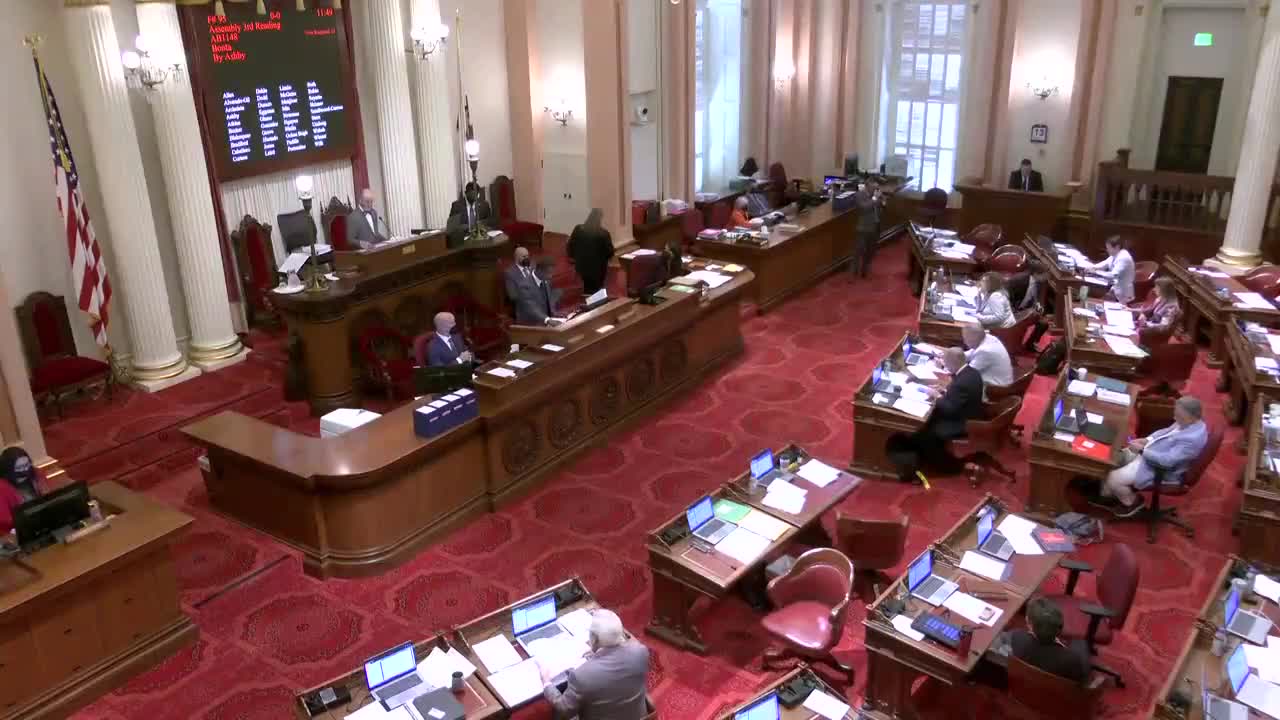 3MIN
Senate Floor
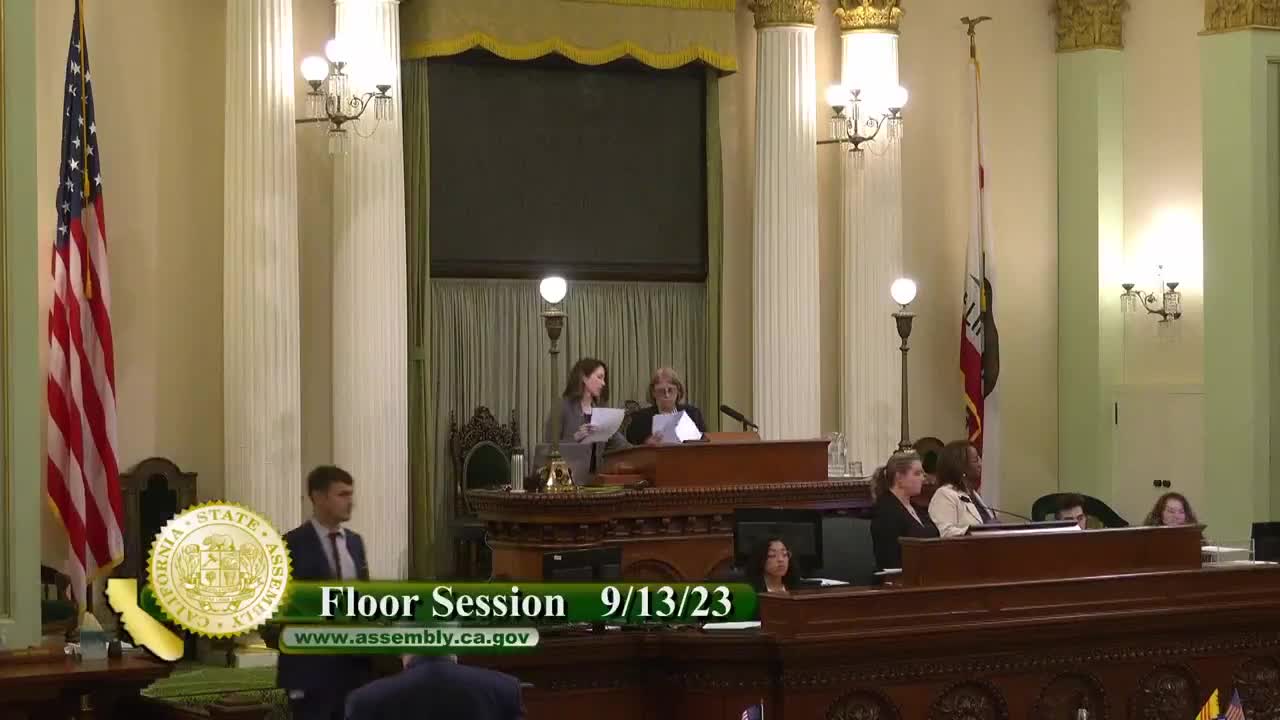 46SEC
Assembly Floor
 1MIN
Senate Standing Committee on Appropriations
 10MIN
Senate Standing Committee on Public Safety
 1MIN
Assembly Floor
 11MIN
Assembly Standing Committee on Public Safety
Bill Author

Bill Co-Author(s):