AB 536: Bay Area Air Quality Management Advisory Council: compensation.
- Session Year: 2023-2024
- House: Assembly
- Latest Version Date: 2023-06-29
Current Status:
Passed
(2023-06-29: Chaptered by Secretary of State - Chapter 16, Statutes of 2023.)
Introduced
In Committee
First Chamber
In Committee
Second Chamber
Enacted
Existing law establishes the Bay Area Air Quality Management District, which is vested with the authority to regulate air emissions located in the boundaries of the Counties of Alameda, Contra Costa, Marin, Napa, San Francisco, San Mateo, and Santa Clara and portions of the Counties of Solano and Sonoma. Existing law establishes a district board (bay district board) to govern the district. Existing law also establishes the Bay Area Air Quality Management Advisory Council, which is appointed by the bay district board, to advise and consult with the bay district board and the bay district air pollution control officer, as provided. Existing law requires council members to serve without compensation, but authorizes actual expenses incurred in the discharge of their duties.
This bill would repeal the compensation prohibition and would instead authorize each council member to receive actual and necessary expenses incurred in the discharge of their duties. The bill would also authorize each council member to receive compensation, to be determined by the bay district board for either attending a meeting of the council or attending a meeting, upon authorization of the bay district board, as a representative of the council.
(a)Each council member may receive actual and necessary expenses incurred in the discharge of their duties.
(b)Each council member may receive compensation, to be determined by the bay district board for either of the following:
(1)Attending a meeting of the council.
(2)Attending a meeting, upon authorization of the bay district board, as a representative of the council.
REVISIONS: HeadingLine 2.|
Date
|
Status
|
|---|---|
| Jun 29, 2023 | Chaptered by Secretary of State - Chapter 16, Statutes of 2023. |
| Jun 29, 2023 | Approved by the Governor. |
| Jun 23, 2023 | Enrolled and presented to the Governor at 3 p.m. |
| Jun 15, 2023 | In Assembly. Ordered to Engrossing and Enrolling. |
| Jun 15, 2023 | Read third time. Passed. Ordered to the Assembly. (Ayes 40. Noes 0. Page 1575.). |
| Jun 8, 2023 | Read second time. Ordered to Consent Calendar. |
| Jun 7, 2023 | From committee: Do pass. To Consent Calendar. (Ayes 7. Noes 0.) (June 7). |
| May 3, 2023 | Referred to Com. on E.Q. |
| Mar 20, 2023 | In Senate. Read first time. To Com. on RLS. for assignment. |
| Mar 20, 2023 | Read third time. Passed. Ordered to the Senate. (Ayes 78. Noes 0. Page 741.) |
| Mar 15, 2023 | Read second time. Ordered to Consent Calendar. |
| Mar 14, 2023 | Coauthors revised. |
| Mar 14, 2023 | From committee: Do pass. To Consent Calendar. (Ayes 11. Noes 0.) (March 13). |
| Feb 17, 2023 | Referred to Com. on NAT. RES. |
| Feb 9, 2023 | From printer. May be heard in committee March 11. |
| Feb 8, 2023 | Read first time. To print. |
|
Date
|
Description
|
Location
|
Votes
|
|
|---|---|---|---|---|
| Jun 15, 2023 | Consent Calendar AB536 Wilson et al. | Senate Floor |
Passed |
|
| Jun 7, 2023 | Do pass and be ordered to the Consent Calendar | Senate Standing Committee on Environmental Quality |
Passed |
|
| Mar 20, 2023 | AB 536 Wilson Consent Calendar Second Day | Assembly Floor |
Passed |
|
| Mar 13, 2023 | Do pass. To Consent Calendar. | Assembly Standing Committee on Natural Resources |
Passed |
This list shows positions taken on this bill by organizations on the date displayed, which is linked to the original source.
Positions by individuals are not included.
|
Organization
|
Position
|
Date
|
|---|---|---|
| BAAQMD | ** Support | |
| Bay Area Air Quality Management District | ** Support |
SENATE RULES COMMITTEE Office of Senate Floor Analyses (916) 651-1520 Fax: (916) 327-4478 | AB 536 |
CONSENT
Bill No: AB 536
Author: Wilson (D), et al.
Introduced: 2/8/23
Vote: 21
SENATE ENVIRONMENTAL QUALITY COMMITTEE: 7-0, 6/7/23
AYES: Allen, Dahle, Gonzalez, Hurtado, Menjivar, Nguyen, Skinner
ASSEMBLY FLOOR: 78-0, 3/20/23 (Consent) - See last page for vote
SUBJECT: Bay Area Air Quality Management Advisory Council: compensation
SOURCE: Bay Area Air Quality Management District
DIGEST:
This bill repeals the prohibition on Bay Area Air Quality Management District (BAAQMD) Advisory Council to receive compensation for attending specified meetings.
ANALYSIS:
Existing law:
- Provides the California Air Resources Board (CARB) with primary responsibility for control of mobile source air pollution and provides that local air districts have primary responsibility for controlling air pollution from all sources, other than emissions from mobile sources, and establishes certain powers, duties, and requirements for those districts. (Health and Safety Code Section 39000, et seq.)
- Establishes the BAAQMD to regulate air emissions in the Counties of Alameda, Contra Costa, Marin, Napa, San Francisco, San Mateo, and Santa Clara and portions of the Counties of Solano and Sonoma. (Health and Safety Code Section 40200-40276.)
- Establishes the Advisory Council, consisting of seven members appointed by the BAAQMD board, to advise and consult with the board and the air pollution control officer in effectuating their duties. And further:
- Requires each member to be skilled and experienced in air pollution, climate change, or health impacts of air pollution;
- Requires the members to be selected to include a diversity of perspectives, experience, and backgrounds; and
- Provides that members serve without compensation but allows them to be reimbursed for actual expenses incurred in the discharge of their duties. (Health and Safety Code Section 40260-40268.)
This bill:
- Repeals the prohibition on Advisory Council members servicing without compensation.
- Authorizes Advisory Council members to receive actual and necessary expenses incurred during their duties.
- Permits each Advisory Council member to receive compensation, to be determined by the BAAQMD board for either attending a meeting of the Council or as a representative of the Council.
Background
- A brief history of air district compensation. In 1975, AB 1758 (Lewis) authorized the appointment of advisory councils for all air districts and established general standards for the councils, including that “members shall serve without compensation, but may be allowed actual expenses incurred in the discharge of their duties.” In separate provisions, AB 1758 also continued the BAAQMD Advisory Council, which predated the 1975 law. The BAAQMD provisions included the same language prohibiting compensation, but allowing expenses, set the number of members at 20, and prescribed certain qualifications. In 2014, SB 1415 (Hill) reduced the number of members of the BAAQMD Advisory Council from 20 to seven and revised qualifications to focus on air pollution, climate change, and health impacts.
In 1980, SB 1661 (Presley) amended the act creating the South Coast Air Quality Management District (SCAQMD) to, among other things, specifically provide for an advisory council. SB 1661 did not include the same standards as AB 1758, including regarding compensation and expenses. Instead, SB 1661 provided that the “membership and rules of the advisory council shall be as established by resolution of the south coast district board.” Under this authority, the SCAQMD board has established a per diem rate of $100 for advisory council members for attendance at advisory council meetings.
According to the author and sponsor (BAAQMD), “removing (the compensation) prohibition would align the BAAQMD’s policy with that of the SCAQMD. Since the BAAQMD has its own section within the Health and Safety Code, this bill would amend Health and Safety Code § 40266 and add language to allow for Advisory Council members to receive compensation, to be determined by the Board, either for attending a meeting of the Advisory Council or attending a meeting, upon authorization of the Board, as a representative of the Advisory Council.”
Comments
- Purpose of bill. According to the author, “The Bay Area AQMD Advisory Council is made up of health and science professionals, including medical professionals, climate economists, and nonprofit leaders that are skilled and highly respected in their fields regarding air pollution, climate change, or the health impacts of air pollution. The Advisory Council has been very involved in the subject of particulate matter (PM) and recommendations for changes to Bay Area AQMD rules and policies around it. The work is highly complex and requires a significant time commitment to be acquainted with the latest science and policy recommendations. Allowing the Advisory Council to receive compensation would align it with other Air Quality Management Districts and ensure councilmembers are compensated for their diligent work and technical expertise.”
- Not one-size-fits-all. California’s large and diverse geography, economy, and populace make effective regulation of air pollution a challenging proposition. The state’s 35 air districts each have responsibility for regional air quality planning, monitoring, and stationary source and facility permitting within their borders, and they have each taken a different tack in the best way to do so.
The size of the air districts vary widely. The South Coast Air Quality Management District, according to their website, includes 44% of the state’s population: 17 million people. The Bay Area AQMD is the second largest: roughly 7.7 million people, or almost 20%. Many of the state’s air districts are in more sparsely-populated regions, and regulate far fewer sources and populations.
This bill follows the lead established by SCAQMD by removing the prohibition on compensation. It should be noted that this bill appears to differ from the rules adopted by SCAQMD in that the bill authorizes Advisory Council members to be compensated for attending meetings other than meetings of the Advisory Council itself.
The other 33 air districts would remain subject to the general provision prohibiting compensation.
FISCAL EFFECT: Appropriation: No Fiscal Com.: No Local: No
SUPPORT: (Verified 6/8/23)
Bay Area Air Quality Management District (source)
OPPOSITION: (Verified 6/8/23)
None received
ASSEMBLY FLOOR: 78-0, 3/20/23
AYES: Addis, Aguiar-Curry, Alanis, Alvarez, Arambula, Bains, Bauer-Kahan, Bennett, Berman, Boerner Horvath, Bonta, Bryan, Calderon, Juan Carrillo, Wendy Carrillo, Cervantes, Chen, Connolly, Megan Dahle, Davies, Dixon, Essayli, Flora, Mike Fong, Vince Fong, Friedman, Gabriel, Gallagher, Gipson, Grayson, Haney, Hart, Holden, Hoover, Irwin, Jackson, Jones-Sawyer, Kalra, Lackey, Lee, Low, Lowenthal, Maienschein, McCarty, McKinnor, Muratsuchi, Stephanie Nguyen, Ortega, Pacheco, Papan, Jim Patterson, Joe Patterson, Pellerin, Petrie-Norris, Quirk-Silva, Ramos, Reyes, Luz Rivas, Robert Rivas, Rodriguez, Blanca Rubio, Sanchez, Santiago, Schiavo, Soria, Ta, Ting, Valencia, Villapudua, Waldron, Wallis, Ward, Weber, Wicks, Wilson, Wood, Zbur, Rendon
NO VOTE RECORDED: Garcia, Mathis
Prepared by: Eric Walters / E.Q. / (916) 651-4108
6/9/23 9:49:10
**** END ****
SENATE COMMITTEE ON ENVIRONMENTAL QUALITY
Senator Allen, Chair
2023 - 2024 Regular
Bill No: AB 536
Author: | Wilson | ||
Version: | 2/8/2023 | Hearing Date: | 6/7/2023 |
Urgency: | No | Fiscal: | No |
Consultant: | Eric Walters | ||
SUBJECT: Bay Area Air Quality Management Advisory Council: compensation
DIGEST: This bill repeals the prohibition on Bay Area Air Quality Management District (BAAQMD) Advisory Council to receive compensation for attending specified meetings.
ANALYSIS:
Existing law:
- Provides the California Air Resources Board (CARB) with primary responsibility for control of mobile source air pollution and provides that local air districts have primary responsibility for controlling air pollution from all sources, other than emissions from mobile sources, and establishes certain powers, duties, and requirements for those districts. (Health and Safety Code Section 39000, et seq.)
- Establishes the BAAQMD to regulate air emissions in the Counties of Alameda, Contra Costa, Marin, Napa, San Francisco, San Mateo, and Santa Clara and portions of the Counties of Solano and Sonoma. (Health and Safety Code Section 40200-40276.)
- Establishes the Advisory Council, consisting of seven members appointed by the BAAQMD board, to advise and consult with the board and the air pollution control officer in effectuating their duties. And further:
- Requires each member to be skilled and experienced in air pollution, climate change, or health impacts of air pollution;
- Requires the members to be selected to include a diversity of perspectives, experience, and backgrounds; and
- Provides that members serve without compensation but allows them to be reimbursed for actual expenses incurred in the discharge of their duties. (Health and Safety Code Section 40260-40268.)
This bill:
- Repeals the prohibition on Advisory Council members servicing without compensation.
- Authorizes Advisory Council members to receive actual and necessary expenses incurred during their duties.
- Permits each Advisory Council member to receive compensation, to be determined by the BAAQMD board for either attending a meeting of the Council or as a representative of the Council.
Background
- A brief history of air district compensation. In 1975, AB 1758 (Lewis) authorized the appointment of advisory councils for all air districts and established general standards for the councils, including that “members shall serve without compensation, but may be allowed actual expenses incurred in the discharge of their duties.” In separate provisions, AB 1758 also continued the BAAQMD Advisory Council, which predated the 1975 law. The BAAQMD provisions included the same language prohibiting compensation, but allowing expenses, set the number of members at 20, and prescribed certain qualifications. In 2014, SB 1415 (Hill) reduced the number of members of the BAAQMD Advisory Council from 20 to seven and revised qualifications to focus on air pollution, climate change, and health impacts.
In 1980, SB 1661 (Presley) amended the act creating the South Coast Air Quality Management District (SCAQMD) to, among other things, specifically provide for an advisory council. SB 1661 did not include the same standards as AB 1758, including regarding compensation and expenses. Instead, SB 1661 provided that the “membership and rules of the advisory council shall be as established by resolution of the south coast district board.” Under this authority, the SCAQMD board has established a per diem rate of $100 for advisory council members for attendance at advisory council meetings.
According to the author and sponsor (BAAQMD), “removing (the compensation) prohibition would align the BAAQMD’s policy with that of the SCAQMD. Since the BAAQMD has its own section within the Health and Safety Code, this bill would amend Health and Safety Code § 40266 and add language to allow for Advisory Council members to receive compensation, to be determined by the Board, either for attending a meeting of the Advisory Council or attending a meeting, upon authorization of the Board, as a representative of the Advisory Council.”
Comments
- Purpose of Bill. According to the author, “The Bay Area AQMD Advisory Council is made up of health and science professionals, including medical professionals, climate economists, and nonprofit leaders that are skilled and highly respected in their fields regarding air pollution, climate change, or the health impacts of air pollution. The Advisory Council has been very involved in the subject of particulate matter (PM) and recommendations for changes to Bay Area AQMD rules and policies around it. The work is highly complex and requires a significant time commitment to be acquainted with the latest science and policy recommendations. Allowing the Advisory Council to receive compensation would align it with other Air Quality Management Districts and ensure councilmembers are compensated for their diligent work and technical expertise.”
- Not one-size-fits-all. California’s large and diverse geography, economy, and populace make effective regulation of air pollution a challenging proposition. The state’s 35 air districts each have responsibility for regional air quality planning, monitoring, and stationary source and facility permitting within their borders, and they have each taken a different tack in the best way to do so.
The size of the air districts vary widely. The South Coast Air Quality Management District, according to their website, includes 44% of the state’s population: 17 million people. The Bay Area AQMD is the second largest: roughly 7.7 million people, or almost 20%. Many of the state’s air districts are in more sparsely-populated regions, and regulate far fewer sources and populations.
This bill follows the lead established by SCAQMD by removing the prohibition on compensation. It should be noted that this bill appears to differ from the rules adopted by SCAQMD in that the bill authorizes Advisory Council members to be compensated for attending meetings other than meetings of the Advisory Council itself.
The other 33 air districts would remain subject to the general provision prohibiting compensation.
Related/Prior Legislation
AB 2721 (Lee, Chapter 501, Statutes of 2022) doubled, while maintaining the existing compensation limit of $6,000 per year, the daily compensation that a member of the BAAQMD board may receive for attending meetings from $100 to $200, and authorized BAAQMD board members to receive compensation for active transportation travel, as defined, to meetings.
SOURCE:
Bay Area Air Quality Management District
SUPPORT:
None received
OPPOSITION:
None received
-- END --
Date of Hearing: March 13, 2023
ASSEMBLY COMMITTEE ON NATURAL RESOURCES
Luz Rivas, Chair
ABPCA Bill Id:AB 536 (
Author:Wilson) – As Introduced Ver:February 8, 2023
SUBJECT: Bay Area Air Quality Management Advisory Council: compensation
SUMMARY: Authorizes members of the Bay Area Air Quality Management District (BAAQMD) Advisory Council to receive compensation for attending specified meetings.
EXISTING LAW:
- Provides the Air Resources Board (ARB) with primary responsibility for control of mobile source air pollution and provides that local air districts have primary responsibility for controlling air pollution from all sources, other than emissions from mobile sources, and establishes certain powers, duties, and requirements for those districts. (Health and Safety Code Section 39000, et seq.)
- Establishes the BAAQMD to regulate air emissions in the Counties of Alameda, Contra Costa, Marin, Napa, San Francisco, San Mateo, and Santa Clara and portions of the Counties of Solano and Sonoma. (Health and Safety Code Section 40200-40276.)
- Establishes the Advisory Council, consisting of seven members appointed by the BAAQMD board, to advise and consult with the board and the air pollution control officer in effectuating their duties. Requires each member to be skilled and experienced in air pollution, climate change, or health impacts of air pollution. Requires the members to be selected to include a diversity of perspectives, experience, and backgrounds. Provides that members serve without compensation but allows them to be reimbursed for actual expenses incurred in the discharge of their duties. (Health and Safety Code Section 40260-40268.)
THIS BILL repeals the prohibition on Advisory Council member compensation and instead authorizes each member to receive compensation, to be determined by the BAAQMD board for either of the following:
- Attending a meeting of the council.
- Attending a meeting, upon authorization of the BAAQMD board, as a representative of the council.
FISCAL EFFECT: Unknown
COMMENTS:
- Background. In 1975, AB 1758 (Lewis) authorized the appointment of advisory councils for all air districts and established general standards for the councils, including that “members shall serve without compensation, but may be allowed actual expenses incurred in the discharge of their duties.” In separate provisions, AB 1758 also continued the BAAQMD Advisory Council, which predated the 1975 law. The BAAQMD provisions included the same language prohibiting compensation, but allowing expenses, set the number of members at 20, and prescribed certain qualifications. In 2014, SB 1415 (Hill) reduced the number of members of the BAAQMD Advisory Council from 20 to seven and revised qualifications to focus on air pollution, climate change, and health impacts.
In 1980, SB 1661 (Presley) amended the act creating the South Coast Air Quality Management District (SCAQMD) to, among other things, specifically provide for an advisory council. SB 1661 did not include the same standards as AB 1758, including regarding compensation and expenses. Instead, SB 1661 provided that the “membership and rules of the advisory council shall be as established by resolution of the south coast district board.” Under this authority, the SCAQMD board has established a per diem rate of $100 for advisory council members for attendance at advisory council meetings.
According to the author and sponsor (BAAQMD), “removing (the compensation) prohibition would align the BAAQMD’s policy with that of the SCAQMD. Since the BAAQMD has its own section within the Health and Safety Code, this bill would amend Health and Safety Code § 40266 and add language to allow for Advisory Council members to receive compensation, to be determined by the Board, either for attending a meeting of the Advisory Council or attending a meeting, upon authorization of the Board, as a representative of the Advisory Council.”
It should be noted that this bill appears to differ from the rules adopted by SCAQMD in that the bill authorizes Advisory Council members to be compensated for attending meetings other than meetings of the Advisory Council itself.
The other 33 air districts would remain subject to the general provision prohibiting compensation.
- Author’s statement:
The BAAQMD Advisory Council is made up of health and science professionals, including medical professionals, climate economists, and nonprofit leaders that are skilled and highly respected in their fields regarding air pollution, climate change, or the health impacts of air pollution. The Advisory Council has been very involved in the subject of particulate matter (PM) and recommendations for changes to BAAQMD rules and policies around it. The work is highly complex and requires a significant time commitment to be acquainted with the latest science and policy recommendations. Allowing the Advisory Council to receive compensation would align it with other Air Quality Management Districts and ensure councilmembers are compensated for their diligent work and technical expertise.
REGISTERED SUPPORT / OPPOSITION:
Support
BAAQMD (sponsor)
Opposition
None on file
Analysis Prepared by: Lawrence Lingbloom / NAT. RES. /
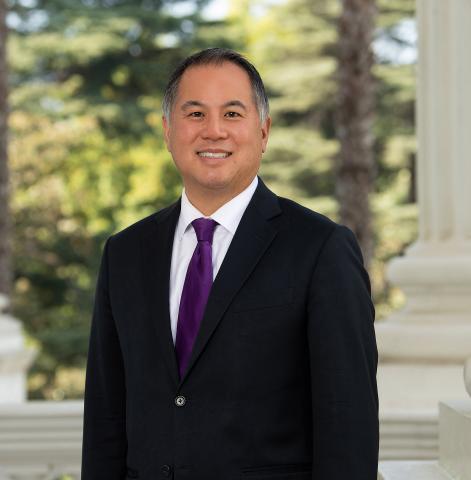
Bill Author