AB 586: Medi-Cal: community supports: climate change or environmental remediation devices.
- Session Year: 2023-2024
- House: Assembly
- Latest Version Date: 2023-03-30
Current Status:
Failed
(2024-02-01: From committee: Filed with the Chief Clerk pursuant to Joint Rule 56.)
Introduced
In Committee
First Chamber
In Committee
Second Chamber
Enacted
What does this bill do?
This bill lets Medi‑Cal managed care plans cover “climate change or environmental remediation devices” as community supports for people enrolled in those plans. It defines those devices and their installation as items to address health problems tied to extreme weather, poor air quality, or other climate events, and gives examples such as air conditioners, electric heaters or heat pumps, air filters or humidifiers, and backup power sources to run ventilators or other medical devices.
The summary is provided by generative AI which can make mistakes. For original language, please view the details in the table below.
Existing law establishes the Medi-Cal program, which is administered by the State Department of Health Care Services and under which qualified low-income individuals receive health care services. The Medi-Cal program is, in part, governed and funded by federal Medicaid program provisions.
Existing law, subject to implementation of the California Advancing and Innovating Medi-Cal (CalAIM) initiative, authorizes a Medi-Cal managed care plan to elect to cover community supports approved by the department as cost effective and medically appropriate in a comprehensive risk contract that are in lieu of applicable Medi-Cal state plan services. Under existing law, community supports that the department is authorized to approve include, among other things, housing deposits, environmental accessibility adaptations or home modifications, and asthma remediation.
This bill would add climate change remediation or environmental remediation devices to the above-described list of community supports. For purposes of these provisions, the bill would define climate change remediation or environmental remediation devices as coverage of devices and installation of those devices, as necessary, to address health-related complications, barriers, or other factors linked to extreme weather or other weather, poor air quality, or climate events, including air conditioners, electric heaters, air filters, or generators, backup power sources, among other specified devices for certain purposes.
Existing law establishes the Medi-Cal program, which is administered by the State Department of Health Care Services and under which qualified low-income individuals receive health care services. The Medi-Cal program is, in part, governed and funded by federal Medicaid program provisions.
Existing law, subject to implementation of the California Advancing and Innovating Medi-Cal (CalAIM) initiative, authorizes a Medi-Cal managed care plan to elect to cover community supports approved by the department as cost effective and medically appropriate in a comprehensive risk contract that are in lieu of applicable Medi-Cal state plan services. Under existing law, community supports that the department is authorized to approve include, among other things, housing deposits, environmental accessibility adaptations or home modifications, and asthma remediation.
This bill would add climate change remediation to the above-described list of community supports. For purposes of these provisions, the bill would define climate change remediation as coverage of devices and installation of those devices, as necessary, to address health-related complications, barriers, or other factors linked to extreme weather or other climate events, including air conditioners, heaters, air filters, or generators, among other specified devices for certain purposes.
(a)Commencing January 1, 2022, and subject to subdivision (f) of Section 14184.102, a Medi-Cal managed care plan may elect to cover those community supports approved by the department as cost effective and medically appropriate in the comprehensive risk contract that are in lieu of applicable Medi-Cal state plan services, in accordance with the CalAIM Terms and Conditions.
(b)(1)Approved community supports pursuant to this section shall be available only to beneficiaries enrolled in a Medi-Cal managed care plan under a comprehensive risk contract, subject to paragraph (2).
(2)Approved community supports shall not supplant other covered Medi-Cal benefits that are not the responsibility of the Medi-Cal managed care plan under the comprehensive risk contract, including, but not limited to, in-home supportive services provided pursuant to Article 7 (commencing with Section 12300) of Chapter 3, and Sections 14132.95, 14132.952, and 14132.956.
(3)An enrolled Medi-Cal beneficiary shall not be required by their Medi-Cal managed care plan to use the community support.
(c)Subject to subdivision (f) of Section 14184.102, community supports that the department may approve include, but need not be limited to, all of the following when authorized by the department in the comprehensive risk contract with each Medi-Cal managed care plan and to the extent the department determines that the community support is a cost-effective and medically appropriate substitute for the applicable covered Medi-Cal benefit under the comprehensive risk contract:
(1)Housing transition navigation services.
(2)Housing deposits.
(3)Housing tenancy and sustaining services.
(4)Short-term post-hospitalization housing.
(5)Recuperative care or medical respite.
(6)Respite.
(7)Day habilitation programs.
(8)Nursing facility transition or diversion to assisted living facilities, including, but not limited to, residential care facilities for the elderly or adult residential facilities.
(9)Nursing facility transition to a home.
(10)Personal care and homemaker services.
(11)Environmental accessibility adaptations or home modifications.
(12)Medically supportive food and nutrition services, including medically tailored meals.
(13)Sobering centers.
(14)Asthma remediation.
(15)(A)Climate change remediation. or environmental remediation devices.
(B)For purposes of this paragraph, climate change remediation or environmental remediation devices means coverage of devices and installation of those devices, as necessary, to address health-related complications, barriers, or other factors linked to extreme weather or other weather, poor air quality, or climate events, including, but not limited to, any of the following devices:
(i)Air conditioners, electric heaters, or electric heat pumps, for purposes of temperature control.
(ii)Air filters or humidifiers, for purposes of air quality control in cases of wildfires or extreme heat. control.
(iii)Generators Backup power sources to operate ventilators or other medical devices, for purposes of power restoration during an outage occurring as a result of flooding, rainstorms, or extreme heat. outage.
(d)The department shall publicly post on its internet website a list of which community supports are offered to enrollees by each Medi-Cal managed care plan.
(e)A Medi-Cal managed care plan shall provide information on the available community supports in its member handbook and plan website, including any limitations on community supports on the plan website.
(f)The department shall develop, in consultation with Medi-Cal managed care plans and other appropriate stakeholders, a monitoring plan and reporting template for the implementation of community supports pursuant to this section. The department shall annually publish a public report on reported community supports utilization data, populations served, and demographic data, stratified by age, sex, race, ethnicity, and languages spoken, to the extent statistically reliant data are available.
(g)The department shall conduct an independent evaluation of the effectiveness of community supports in accordance with the parameters and timeframes specified in the CalAIM Terms and Conditions.
(h)The department shall take into account the utilization and actual cost of community supports in developing capitation rates.
(i)For purposes of this section, the following definitions apply:
(1)Community supports means those alternative services and settings approved in the CalAIM Terms and Conditions and administered according to paragraph (2) of subsection (e) of Section 438.3 of Title 42 of the Code of Federal Regulations.
(2)Comprehensive risk contract has the same meaning as set forth in Section 438.2 of Title 42 of the Code of Federal Regulations.
(a)Commencing January 1, 2022, and subject to subdivision (f) of Section 14184.102, a Medi-Cal managed care plan may elect to cover those community supports approved by the department as cost effective and medically appropriate in the comprehensive risk contract that are in lieu of applicable Medi-Cal state plan services, in accordance with the CalAIM Terms and Conditions.
(b)(1)Approved community supports pursuant to this section shall be available only to beneficiaries enrolled in a Medi-Cal managed care plan under a comprehensive risk contract, subject to paragraph (2).
(2)Approved community supports shall not supplant other covered Medi-Cal benefits that are not the responsibility of the Medi-Cal managed care plan under the comprehensive risk contract, including, but not limited to, in-home supportive services provided pursuant to Article 7 (commencing with Section 12300) of Chapter 3, and Sections 14132.95, 14132.952, and 14132.956.
(3)An enrolled Medi-Cal beneficiary shall not be required by their Medi-Cal managed care plan to use the community support.
(c)Subject to subdivision (f) of Section 14184.102, community supports that the department may approve include, but need not be limited to, all of the following when authorized by the department in the comprehensive risk contract with each Medi-Cal managed care plan and to the extent the department determines that the community support is a cost-effective and medically appropriate substitute for the applicable covered Medi-Cal benefit under the comprehensive risk contract:
(1)Housing transition navigation services.
(2)Housing deposits.
(3)Housing tenancy and sustaining services.
(4)Short-term post-hospitalization housing.
(5)Recuperative care or medical respite.
(6)Respite.
(7)Day habilitation programs.
(8)Nursing facility transition or diversion to assisted living facilities, including, but not limited to, residential care facilities for the elderly or adult residential facilities.
(9)Nursing facility transition to a home.
(10)Personal care and homemaker services.
(11)Environmental accessibility adaptations or home modifications.
(12)Medically supportive food and nutrition services, including medically tailored meals.
(13)Sobering centers.
(14)Asthma remediation.
(15)(A)Climate change remediation.
(B)For purposes of this paragraph, climate change remediation means coverage of devices and installation of those devices, as necessary, to address health-related complications, barriers, or other factors linked to extreme weather or other climate events, including, but not limited to, any of the following devices:
(i)Air conditioners, heaters, or heat pumps, for purposes of temperature control.
(ii)Air filters or humidifiers, for purposes of air quality control in cases of wildfires or extreme heat.
(iii)Generators to operate ventilators or other medical devices, for purposes of power restoration during an outage occurring as a result of flooding, rainstorms, or extreme heat.
(d)The department shall publicly post on its internet website a list of which community supports are offered to enrollees by each Medi-Cal managed care plan.
(e)A Medi-Cal managed care plan shall provide information on the available community supports in its member handbook and plan website, including any limitations on community supports on the plan website.
(f)The department shall develop, in consultation with Medi-Cal managed care plans and other appropriate stakeholders, a monitoring plan and reporting template for the implementation of community supports pursuant to this section. The department shall annually publish a public report on reported community supports utilization data, populations served, and demographic data, stratified by age, sex, race, ethnicity, and languages spoken, to the extent statistically reliant data are available.
(g)The department shall conduct an independent evaluation of the effectiveness of community supports in accordance with the parameters and timeframes specified in the CalAIM Terms and Conditions.
(h)The department shall take into account the utilization and actual cost of community supports in developing capitation rates.
(i)For purposes of this section, the following definitions apply:
(1)Community supports means those alternative services and settings approved in the CalAIM Terms and Conditions and administered according to paragraph (2) of subsection (e) of Section 438.3 of Title 42 of the Code of Federal Regulations.
(2)Comprehensive risk contract has the same meaning as set forth in Section 438.2 of Title 42 of the Code of Federal Regulations.
|
Date
|
Status
|
|---|---|
| Feb 1, 2024 | From committee: Filed with the Chief Clerk pursuant to Joint Rule 56. |
| Jan 31, 2024 | Died pursuant to Art. IV, Sec. 10(c) of the Constitution. |
| May 18, 2023 | In committee: Held under submission. |
| May 3, 2023 | In committee: Set, first hearing. Referred to APPR. suspense file. |
| Apr 26, 2023 | In committee: Hearing postponed by committee. |
| Apr 12, 2023 | From committee: Do pass and re-refer to Com. on APPR. (Ayes 11. Noes 1.) (April 11). Re-referred to Com. on APPR. |
| Apr 3, 2023 | Re-referred to Com. on HEALTH. |
| Mar 30, 2023 | From committee chair, with author's amendments: Amend, and re-refer to Com. on HEALTH. Read second time and amended. |
| Feb 17, 2023 | Referred to Com. on HEALTH. |
| Feb 10, 2023 | From printer. May be heard in committee March 12. |
| Feb 9, 2023 | Read first time. To print. |
|
Date
|
Description
|
Location
|
Votes
|
|
|---|---|---|---|---|
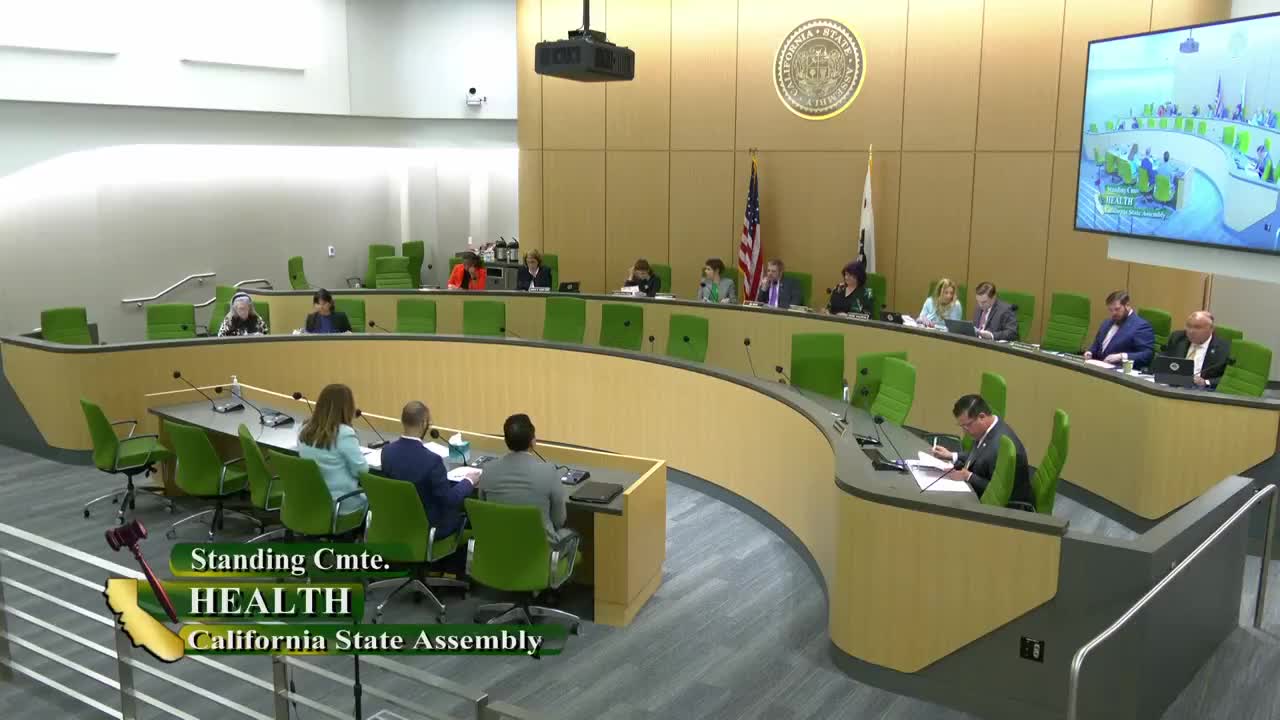
| Apr 11, 2023 | Do pass and be re-referred to the Committee on [Appropriations] | Assembly Standing Committee on Health |
Passed |
This list shows positions taken on this bill by organizations on the date displayed, which is linked to the original source.
Positions by individuals are not included.
|
Organization
|
Position
|
Date
|
|---|---|---|
| California Health+ Advocates | * Support | Apr 11, 2023 |
| County Behavioral Health Directors Association | * Support | Apr 11, 2023 |
| Planned Parenthood Affiliates Of California | * Support | Apr 11, 2023 |
| The Western Center on Law and Poverty | * Support | Apr 11, 2023 |
Date of Hearing: May 3, 2023
ASSEMBLY COMMITTEE ON APPROPRIATIONS
Chris Holden, Chair
ABPCA Bill Id:AB 586
Author:(Calderon) – As Amended Ver:March 30, 2023
Policy Committee: | Health | Vote: | 11 - 1 |
|
| ||
|
|
Urgency: No State Mandated Local Program: No Reimbursable: No
SUMMARY:
This bill adds “climate change or environmental remediation devices” to the list of allowable community supports the Department of Health Care Services (DHCS) may approve, and a Medi-Cal managed care plan may cover, through the California Advancing and Innovating Medi-Cal (CalAIM) demonstration project. This bill defines “climate change or environmental remediation devices” as devices, including their installation, as necessary, to address health-related complications, barriers, or other factors linked to extreme weather, poor air quality, or climate events. Examples include air conditioners, heaters or electric heat pumps, air filters or humidifiers, and backup power sources to operate ventilators or other medical devices.
FISCAL EFFECT:
Cost pressure, possibly exceeding $100,000, for DHCS to seek federal approval to add climate change or environmental remediation devices as a community support in the CalAIM project. If the federal government approves the amendment, there will be additional cost pressures, potentially in the millions of dollars, to provide the newly available community supports (General Fund and federal funds).
COMMENTS:
- Purpose. According to the author:
Currently, CalAIM provides an unhoused individual with an air conditioning unit in lieu of a housing deposit, and asthma remediation for individuals experiencing asthma-related hospitalizations and emergency visits. However, there are no community support programs that directly address climate change health impacts.
AB 586 aims to remedy this gap by including climate change remediation to the list of CalAIM community supports. This service would cover climate change expenses, such as payments for devices that maintain healthy temperatures and clean air within residential dwelling units during climate emergencies. This bill would also cover generators to ensure life-saving equipment continues to run in the event of power outages due to extreme weather conditions. As the impacts of climate change intensify, this bill will protect the health of vulnerable communities in our state.
- Background.
- CalAIM. CalAIM is a collection of major initiatives that align with the administration’s program improvement goals, including addressing social drivers of health, reducing program complexity and increasing flexibility, and modernizing payment structures to promote better outcomes. The majority of CalAIM proposals were put forward in 2021 through two comprehensive applications to the federal government. DHCS received approval on December 29, 2021, for both proposals, through December 31, 2026.
- Community Supports. Every Medicaid program has a Medicaid State Plan that specifies the benefits and services covered by that program. One component of CalAIM that addresses social drivers of health is called community supports, which are delivered by a different provider or in a different setting than is described in the State Plan. Community supports are services that can be provided by Medi-Cal managed care plans as cost-effective alternatives to traditional medical services or settings.
DHCS has a pre-approved list of 14 community supports that provide flexibility to address specific needs of complex populations, based largely on experience with prior demonstration programs. For instance, housing support services, including transition and navigation services, housing deposits, and housing tenancy and sustaining services, can potentially provide health improvements that are comparable to those from expensive, high-intensity health care services.
Medi-Cal may cover community supports only if the state determines they are medically appropriate and cost-effective substitutes or settings for a Medicaid State Plan service. Community supports are provided under a federal authority known as “in lieu of services,” because the community support is provided in lieu of another covered service. Twelve of the 14 CalAIM community supports, including the housing supports mentioned above, home modifications, medically tailored meals, and other services, were approved in the state’s renewal of its 1915(b) waiver.
Because the CalAIM waiver and demonstration are already approved, implementing this bill to add new community supports would require an amendment, likely to the Section 1915(b) waiver, that would need federal approval.
- Policy Concern. According to the Assembly Health Committee analysis, community supports are specifically designed to be cost-effective services provided “In Lieu Of” other services. Whether climate change remediation supports can be defined as cost-effective is unclear.
- Related Legislation.
- AB 1085 (Maienschein) requires DHCS to seek federal approval to add housing support services, comprised of three housing-related CalAIM Community Supports, as a Medi-Cal benefit, as specified. AB 1085 is pending on the suspense file in this committee.
- AB 1338 (Petrie-Norris) adds fitness, physical activity, and wellness memberships as a community support under the CalAIM initiative. AB 1338 is pending in this committee.
Analysis Prepared by: Allegra Kim / APPR. / (916) 319-2081
Date of Hearing: April 11, 2023
ASSEMBLY COMMITTEE ON HEALTH
Jim Wood, Chair
ABPCA Bill Id:AB 586
Author:(Calderon) – As Amended Ver:March 30, 2023
SUBJECT: Medi-Cal: community supports: climate change or environmental remediation devices.
SUMMARY: Establishes “climate change or environmental remediation devices,” as specified, as an allowable Community Support that DHCS may approve and a Medi-Cal managed care plan may elect to cover, through the California Advancing and Innovating Medi-Cal (CalAIM) Medi-Cal demonstration project. Specifically, this bill:
- Adds climate change or environmental remediation devices to the list of fourteen currently authorized community supports.
- Defines “climate change or environmental remediation devices” as coverage of devices and installation of those devices, as necessary, to address health-related complications, barriers, or other factors linked to extreme weather, poor air quality, or climate events, including, but not limited to, any of the following devices:
- Air conditioners, electric heaters, or electric heat pumps, for purposes of temperature control;
- Air filters or humidifiers, for purposes of air quality control; and,
- Backup power sources to operate ventilators or other medical devices, for purposes of power restoration during an outage.
EXISTING LAW:
- Establishes the Medi-Cal Program, administered by the Department of Health Care Services (DHCS), to provide comprehensive health benefits to low-income individuals who meet specified eligibility criteria. [Welfare and Institutions Code (WIC) § 14000 et seq.]
- Establishes a schedule of benefits under the Medi-Cal program, which includes federally required and optional Medicaid benefits. [WIC §14132]
- Establishes the CalAIM Act, and requires the implementation of DHCS’s CalAIM initiative to support the following goals:
- Identify and manage the risk and needs of Medi-Cal beneficiaries through whole-person-care approaches and addressing social determinants of health;
- Transition and transform the Medi-Cal program to a more consistent and seamless system by reducing complexity and increasing flexibility; and,
- Improve quality outcomes, reduce health disparities, and drive delivery system transformation and innovation through value-based initiatives, modernization of systems, and payment reform. [WIC §14184.100]
- Establishes a CalAIM term of January 1, 2022, to December 31, 2026, inclusive, and any extensions. [WIC §14184.101]
- Requires DHCS to seek federal approval for specific CalAIM components, including those related to Medi-Cal managed care, specialty mental health, behavioral health payment reform, Drug Medi-Cal, pre-release services for justice-involved individuals, county administration of Medi-Cal, the Providing Access and Transforming Health program to build CalAIM implementation capacity, and other components. [WIC §14184.102]
- Authorizes 14 specific services, under CalAIM, as “Community Supports” that DHCS may approve and a Medi-Cal managed care plan may elect to cover. Specifies Community Supports are provided “in lieu of” typical Medi-Cal covered services, in accordance with the federally approved CalAIM Terms and Conditions. [WIC §14184.206]
FISCAL EFFECT: Unknown. This bill has not yet been analyzed by a fiscal committee.
COMMENTS:
- PURPOSE OF THIS BILL. According to the author, this author-sponsored bill would add climate change remediation to the list of community supports under the CalAIM initiative. Currently, CalAIM provides supports like housing deposits and asthma remediation for individuals experiencing asthma-related hospitalizations and emergency visits. However, there are no community support programs that directly address climate change and related environmental health impacts. The author aims to remedy this gap by including climate change and environmental remediation as a CalAIM community support. This service would cover payments for devices that maintain healthy temperatures and clean air within residential dwelling units. This bill would also cover generators to ensure life-saving equipment continues to run in the event of power outages due to extreme weather conditions. The author asserts as the impacts of climate change intensify, this bill will protect the health of vulnerable communities in our state.
- BACKGROUND.
- Medicaid Waivers and Demonstrations. Medicaid (Medi-Cal in California) is administered as a state-federal partnership. States are subject to federal law and strict federal rules that guide the provision of Medicaid services. However, federal law also authorizes the Centers for Medicare and Medicaid Services (CMS), which oversees state Medicaid programs, to approve demonstrations and waivers. Under these authorities, states are granted flexibility to design, deliver and receive federal matching participation (FFP, or federal matching funds) for Medicaid services in ways that are not otherwise authorized under Medicaid rules.
Under Section 1115 of the federal Social Security Act (SSA), CMS may waive certain provisions of the Medicaid law to give states additional flexibility to design and improve their programs. Similarly, Section 1915(b) of the SSA provides states with the flexibility to modify their delivery systems by allowing CMS to waive statutory requirements for comparability, statewideness, and freedom of choice that otherwise apply to Medicaid programs. Many states, including California, have active 1115 demonstrations and Section 1915(b) waivers.
- Medicaid Waivers and Demonstrations. Medicaid (Medi-Cal in California) is administered as a state-federal partnership. States are subject to federal law and strict federal rules that guide the provision of Medicaid services. However, federal law also authorizes the Centers for Medicare and Medicaid Services (CMS), which oversees state Medicaid programs, to approve demonstrations and waivers. Under these authorities, states are granted flexibility to design, deliver and receive federal matching participation (FFP, or federal matching funds) for Medicaid services in ways that are not otherwise authorized under Medicaid rules.
A Section 1115 demonstration application submitted by the State of Oregon approved by CMS on October 28, 2022, allows the state Medicaid program to provide and claim FFP for health-related social needs services, as specified, including: a) medically necessary air conditioners, heaters, humidifiers, air filtration devices, generators, and refrigeration units as needed for medical treatment and prevention; and, b) medically necessary home accessibility modifications and remediation services such as ventilation system repairs/improvements and mold/pest remediation.
- CalAIM. CalAIM is a collection of major initiatives spearheaded by the DHCS that align with the administration’s program improvement goals, including addressing social drivers of health, reducing program complexity and increasing flexibility, and modernizing payment structures to promote better outcomes. The majority of CalAIM proposals were put forward in 2021 through two comprehensive applications to the federal government for a Section 1115 demonstration and Section 1915(b) waiver, as explained above. DHCS received approval on December 29, 2021, for both the demonstration and waiver, effective through December 31, 2026.
- Community supports. One component of CalAIM that addresses social drivers of health is called community supports. Community supports are services that can be provided by Medi-Cal managed care plans as cost-effective alternatives to traditional medical services or settings.
Every Medicaid program has a Medicaid State Plan that specifies the benefits and services covered by that program. Community supports, as defined through CalAIM, are alternative services to those covered under the Medi-Cal State Plan, but are delivered by a different provider or in a different setting than is described in the State Plan.
DHCS has a pre-approved list of 14 Community Supports, based largely on experience with prior demonstration programs. These supports are designed to provide flexibility to address specific needs of complex populations. For instance, home modifications and adaptations can support individuals in maintaining or improving their health and reduce emergency department visits and inpatient stays. Similarly, housing support services, including transition and navigation services, housing deposits, and housing tenancy and sustaining services can potentially provide similar health improvements and avoidance of expensive, high-intensity health care services.
Community supports can only be covered if a state determines they are medically appropriate and cost-effective substitutes or settings for a State Plan service. They are provided under a federal authority known as “in lieu of services,” (ILOS) because the Community Support is provided “in lieu of” another covered service.
Twelve of the 14 Community Supports under federal ILOS authority were approved in the state’s renewal of its 1915(b) waiver:
- Housing Transition Navigation Services;
- Housing Deposits;
- Housing Tenancy and Sustaining Services;
- Respite Services;
- Day Habilitation Programs;
- Nursing Facility Transition/Diversion to Assisted Living Facility;
- Community Transition Services/Nursing Facility Transition to a Home;
- Personal Care and Homemaker Services;
- Environmental Accessibility Adaptations (Home Modifications);
- Asthma Remediation;
- Medically Tailored Meals; and,
- Sobering Centers.
Two additional Community Supports – recuperative care and short-term post-hospitalization services – are authorized through the 1115 demonstration. CMS states it does not consider such services to be appropriate under the ILOS framework due to the general prohibitions that apply to Medicaid payments for room and board under federal law.
Because the CalAIM waiver and demonstration are already approved, implementing this bill to add new Community Supports would necessitate an amendment, likely to the Section 1915(b) waiver, that would need federal approval.
- Climate Effects on Health. According to the Centers for Disease Control and Prevention (CDC), climate change, together with other natural and human-made health stressors, influences human health and disease in numerous ways. Some existing health threats will intensify and new health threats will emerge. In the past decade, California experienced more frequent and intense heat events, wildfires and droughts, and reduced air quality that outpaced historic records.
According to the American Public Health Association, some populations are more vulnerable to climate change health impacts than others. In particular, children, pregnant people, older adults, communities of color, immigrant groups, people with disabilities, low-income communities, and people with pre-existing or chronic medical conditions bear a disproportionate burden because they have fewer resources to adapt to various climate impacts.
- Climate Effects on Health. According to the Centers for Disease Control and Prevention (CDC), climate change, together with other natural and human-made health stressors, influences human health and disease in numerous ways. Some existing health threats will intensify and new health threats will emerge. In the past decade, California experienced more frequent and intense heat events, wildfires and droughts, and reduced air quality that outpaced historic records.
A CDC report, “Preparing for the Regional Health Impacts of Climate Change in the United States,” details specific health-related health impacts for California and the southwest U.S. broadly. These include:
- Temperature-related death and illness: A projected increases in hot days and extreme heat events will increase the risk of heat-associated deaths;
- Air quality impacts: Ground-level ozone air pollution, particulate air pollution from wildfires and dust storms, and airborne allergens are all concerns, as well as drier conditions increasing reproduction of a fungus found in soils, potentially leading to the disease coccidioidomycosis, or Valley fever;
- Vector-borne disease: Heat extremes, warming, and changes in precipitation may influence the distribution and occurrence of vector-borne diseases like West Nile virus and may lead to the emergence of new disease;
- Water-related illness: Prolonged droughts can affect drinking water availability, reduce water quality, and send more people to seek medical treatment; and,
- Mental health and well-being: Rising temperatures are associated with an increase in violence towards others and towards self. Slow-moving disasters, such as drought, may affect mental health over many years. Communities that rely especially on well-functioning natural and agricultural systems in specific locations may be especially vulnerable to mental health effects when those systems fail.
- State Action Plan on Extreme Heat. In April 2022, California Resources Agency released a plan titled, “Protecting Californians From Extreme Heat: A State Action Plan to Build Community Resilience.” This bill appears aligned with goals outlined in that report, including addressing obstacles to the use of air conditioning and other cooling strategies for vulnerable populations. However, this action plan recommended the state provide for the direct installation of new heat pump HVAC equipment and retrofits of existing air-conditioning systems, and complementary efficiency measures where needed, in existing residential single family or multifamily buildings, stating specifically that “the direct install approach will facilitate quick program roll-out and the ability to leverage installation infrastructure already in place for a variety of local, regional, and statewide programs.”
- Legislative Analyst’s Office (LAO) Report. In April 2022, the LAO released a report on how a changing climate is affecting the health of Californians and key issues the Legislature faces in responding to those impacts. The LAO finds that climate change has a wide variety of direct and indirect health effects on Californians, pointing to health effects of rising temperatures, extreme heat events, and wildfire smoke. The LAO also notes adverse health effects are not uniformly distributed across regions and populations, echoing other state and national entities in identifying particularly vulnerable populations. The LAO recommends considering targeting state programs in ways that support these vulnerable populations. The LAO also raises important questions for Legislative consideration, including:
- How should state health policies and programs fit within the broader suite of adaptation activities?
- How can the state improve monitoring and analyses of health effects?
- How can the state evaluate which adaptation strategies best reduce health risks?
- How can the state support local health programs?
- How can state health departments support and coordinate with other state agencies?
- How can the state help reduce impacts on the most vulnerable populations?
- How can the state ensure the health care delivery system is adequately prepared?
As it relates to this bill, the LAO suggests the Legislature could expand Medi-Cal’s role in providing nonmedical benefits that address the negative health impacts of climate change.
- Current Efforts. The California Building Resilience Against Climate Effects (CalBRACE) project is a CDC-funded effort within the California Department of Public Health (DPH) that aims to prevent and reduce health effects associated with a changing climate through state and local actions. CalBRACE assists agencies, tribes, and community partners in developing policy, data, and strategies to embed climate adaptation, public health, and health equity benefits into their operations and investment plans. The staff also provides leadership on climate change and health equity within the DPH. CalBRACE focuses primarily on preparing for three of the major climate impacts California will face: higher temperature and extreme heat, wildfire, and sea level rise (including flooding).
The LAO report mentioned above includes a more comprehensive assessment of current state efforts, including significant budget augmentations included in 2021-22 Budget for the Emergency Medical Services Authority, as well as a several-billion-dollar, multiyear funding package meant to promote climate adaptation.
Local public health entities in the state are also working to address the health effects of climate change. For instance, the San Francisco Department of Public Health’s Climate and Health Program works to address the local health impacts of extreme heat, flooding and extreme storms, drought and wildfire, and allergies and air pollution through the analysis, assessments, planning, technical assistance, and community outreach.
- Current Efforts. The California Building Resilience Against Climate Effects (CalBRACE) project is a CDC-funded effort within the California Department of Public Health (DPH) that aims to prevent and reduce health effects associated with a changing climate through state and local actions. CalBRACE assists agencies, tribes, and community partners in developing policy, data, and strategies to embed climate adaptation, public health, and health equity benefits into their operations and investment plans. The staff also provides leadership on climate change and health equity within the DPH. CalBRACE focuses primarily on preparing for three of the major climate impacts California will face: higher temperature and extreme heat, wildfire, and sea level rise (including flooding).
- SUPPORT. According to the County Behavioral Health Directors Association of California (CBHDA), who supports this bill, community supports provided by Medi-Cal managed care plans go beyond services offered in traditional medical settings, and recognize complex and unmet ‘whole person’ needs that can impact physical health. CBHDA supports this bill because is vital that California recognize and address the health implications of climate change, which impact the most vulnerable most significantly.
- RELATED LEGISLATION.
- AB 1085 (Maienschein) requires DHCS to seek federal approval to add housing support services, comprised of three housing-related CalAIM Community Supports, as a Medi-Cal benefit, as specified. AB 1085 is pending in the Assembly Appropriations Committee.
- AB 1338 (Petrie-Norris) adds fitness, physical activity, recreational sports, and mental wellness memberships as a community support under the Medi-Cal CalAIM initiative. AB 1338 is pending in the Assembly Health Committee.
- PREVIOUS LEGISLATION. AB 133 (Committee on Budget), Chapter 143, Statutes of 2021, established statutory authority for various aspects of the CalAIM initiative, including authority to provide ILOS, which was later renamed as “community supports.”
- POLICY COMMENTS. The LAO suggested an important question for Legislative consideration: how should state health policies and programs fit within the broader suite of adaptation activities? Moving forward, the author may wish to consider clarifying the desired role of health plans in providing devices to protect individuals from extreme heat and air quality impacts, as well as to respond to emergencies, given this should be coordinated with other complimentary efforts in other sectors. Particularly in the case of emergency response, the role of health plans should make sense in the context of other agencies and efforts like the Federal Emergency Management Agency (FEMA) and local and state public health emergency response. Other entities like landlords, facilities, or homeowner’s insurance companies may also have a role in maintaining a habitable living environment or remediating environmental concerns, depending on the situation.
In addition, Community Supports are specifically designed to be cost-effective services provided “In Lieu Of” other services. This may be difficult to assess in an emergency response context. Alternatively, provision of environmental remediation devices could be assessed and provided in a proactive, preventive context of general climate adaptation and resilience that would assist Medi-Cal enrollees to avoid exacerbating health conditions based on known climate and air quality-related risk factors.
Finally, DHCS and its Medi-Cal managed care plan partners have taken on numerous and wide-ranging transformation initiatives over the last couple of years as part of CalAIM. Managed care plans are still in the process of implementing 14 Community Supports, which require engagement with new partners like community-based organizations and other non-traditional providers, while plans are simultaneously implementing a large number of other changes and program improvements. This bill as drafted is permissive for DHCS and for plans to implement and does not specify a time period for implementation. This is appropriate given the current volume and pace of change in the Medi-Cal program and the need to appropriately phase in new initiatives over time.
REGISTERED SUPPORT / OPPOSITION:
Support
County Behavioral Health Directors Association
Opposition
None on file.
Analysis Prepared by: Lisa Murawski / HEALTH / (916) 319-2097
Bill Author
Bill Co-Author(s):