AB 591: Electric vehicle service equipment: connectors and public accessibility.
- Session Year: 2023-2024
- House: Assembly
- Latest Version Date: 2023-05-31
Current Status:
Failed
(2023-06-14: In committee: Hearing postponed by committee.)
Introduced
In Committee
First Chamber
In Committee
Second Chamber
Enacted
Existing law prohibits requiring a person to pay a subscription fee or obtain a membership in any club, association, or organization in order to use an electric vehicle charging station that requires payment of a fee, as specified. Existing law requires an electric vehicle charging station that requires payment of a fee to allow a person desiring to use the station to pay via credit card or mobile technology, or both.
This bill would instead require an electric vehicle charging station that requires payment of a fee to allow a person desiring to use the station to pay via credit card. The bill would require that any electric vehicle service equipment that is capable of charging a light-duty electric vehicle and is installed or substantially retrofitted, as defined, except for private use at a single-family residence or multifamily residence, include a universal connectors, connector, as defined, and be publicly accessible, including by enabling a person desiring to use the electric vehicle charging station to pay via credit card. accessible. The bill would require an owner or operator of CHAdeMO electric vehicle service equipment, as defined, that is in operation on January 1, 2024, except where it is located at a single-family residence or multifamily residence and is only for private use, to maintain the CHAdeMO electric vehicle service equipment in good working condition until at least January 1, 2029.
Existing law prohibits requiring a person to pay a subscription fee or obtain a membership in any club, association, or organization in order to use an electric vehicle charging station that requires payment of a fee, as specified. Existing law requires an electric vehicle charging station that requires payment of a fee to allow a person desiring to use the station to pay via credit card or mobile technology, or both.
This bill would instead require an electric vehicle charging station that requires payment of a fee to allow a person desiring to use the station to pay via credit card. The bill would require that any electric vehicle service equipment that is capable of charging a light-duty electric vehicle and is installed or substantially retrofitted, as defined, except for private use at a single-family residence, residence or multifamily residence, include universal connectors that enable any electric vehicle to charge using the electric vehicle service equipment connectors, as defined, and be publicly accessible, including by enabling a person desiring to use the electric vehicle charging station to pay via credit card.
Existing law prohibits requiring a person to pay a subscription fee or obtain a membership in any club, association, or organization in order to use an electric vehicle charging station that requires payment of a fee, as specified. Existing law requires an electric vehicle charging station that requires payment of a fee to allow a person desiring to use the station to pay via credit card or mobile technology, or both.
This bill would instead require an electric vehicle charging station that requires payment of a fee to allow a person desiring to use the station to pay via credit card. The bill would require that any electric vehicle service equipment installed or substantially retrofitted, as defined, except for private use at a single-family residence, include universal connectors that enable any electric vehicle to charge using the electric vehicle service equipment and be publicly accessible, including by enabling a person desiring to use the electric vehicle charging station to pay via credit card.
As used in this chapter, the following terms have the following meanings:
(a)Battery means an electrochemical energy storage system powered directly by electrical current.
(b)CHAdeMO electric vehicle service equipment means direct current, fast charging electric vehicle service equipment that is equipped with a CHAdeMO connector or plug.
(b)(c)Electric vehicle means a vehicle that uses a plug-in battery to provide all or part of the motive power of the vehicle, including battery electric, plug-in hybrid electric, or plug-in fuel cell vehicle.
(c)(d)Electric vehicle charging station means one or more publicly available parking spaces served by electric vehicle service equipment.
(d)(e)Electric vehicle service equipment means an electric component assembly or cluster of component assemblies designed specifically to charge batteries within electric vehicles by permitting the transfer of electric energy to a battery or other storage device in an electric vehicle.
(e)(f)Interoperability billing standards means the ability for a member of one electric vehicle charging station billing network to use another billing network.
(f)(g)Network roaming means the act of a member of one electric vehicle charging station billing network using a an electric vehicle charging station that is outside of the members billing network with their billing network account information.
(g)(h)Publicly available parking space means a parking space that has been designated by a property owner or lessee to be available to, and accessible by, the public and may include on-street parking spaces and parking spaces in surface lots or parking garages. Publicly available parking space shall does not include a parking space that is part of, or associated with, a private residence or a parking space that is reserved for the exclusive use of an individual driver or vehicle or for a group of drivers or vehicles, such as employees, tenants, visitors, residents of a common interest development, or residents of an adjacent building. This article does not limit the ability of an owner or lessee of a publicly available parking space whose primary business is other than electric vehicle charging from restricting use of the parking space, such as limiting use to customers and visitors of the business.
(h)(i)Substantially retrofitted means that either onsite work was performed on the electric vehicle service equipment or the electric vehicle service equipment was fixed after malfunctioning, being broken, or otherwise being inoperable for at least 30 days.
(i)(j)Universal connector means a plug that enables any an electric vehicle equipped with a conductive charger inlet and charging system that meets the specifications applicable to direct current charging contained in the Society of Automobile Engineers (SAE) J1772 Surface Vehicle Standard (revised October 2017), SAE Electric Vehicle and Plug in Hybrid Electric Vehicle Conductive Charger Coupler, to charge using the electric vehicle service equipment.
SEC. 2.Section 44268.2 of the Health and Safety Code is amended to read:44268.2.(a)(1)Persons desiring to use an electric vehicle charging station that requires payment of a fee shall not be required to pay a subscription fee in order to use the station, and shall not be required to obtain membership in any club, association, or organization as a condition of using the station. The total actual charges for the use of an electric vehicle charging station, including any additional network roaming charges for nonmembers, shall be disclosed to the public at the point of sale. An electric vehicle charging station that requires payment of a fee shall allow a person desiring to use the station to pay via credit card.(2)Notwithstanding paragraph (1), an electric vehicle charging station may offer services on a subscription- or membership-only basis provided those electric vehicle charging stations allow nonsubscribers or nonmembers the ability to use the electric vehicle charging station through the payment option detailed in paragraph (1).(b)The service provider of electric vehicle service equipment at an electric vehicle charging station or its designee shall disclose to the National Renewable Energy Laboratory the electric vehicle charging stations geographic location, a schedule of fees, accepted methods of payment, and the amount of network roaming charges for nonmembers, if any.(c)Electric vehicle charging stations shall be labeled in accordance with Part 309 of Title 16 of the Code of Federal Regulations, and, where commercially reasonable and feasible, may be clearly marked with appropriate directional signage in the parking area or facility where they are located.(d)If no interoperability billing standards have been adopted by a national standards organization by January 1, 2015, the state board may adopt interoperability billing standards for network roaming payment methods for electric vehicle charging stations. If the state board adopts interoperability billing standards, all electric vehicle charging stations that require payment shall meet those standards within one year. Any standards adopted by the state board shall consider other governmental or industry-developed interoperability billing standards and may adopt interoperability billing standards promulgated by an outside authoritative body.SEC. 3.SEC. 2.Section 44268.4 is added to the Health and Safety Code, to read:44268.4.(a)Except as specified in subdivision (b), any electric vehicle service equipment that is capable of charging a light-duty electric vehicle and is installed or substantially retrofitted shall include a universal connectors connector and shall be publicly accessible, including, but not limited to, by enabling a person desiring to use the electric vehicle charging station to pay via credit card pursuant to subdivision (a) of Section 44268.2. accessible.
(b)Subdivision (a) does not apply to electric vehicle service equipment installed or substantially retrofitted for private use at a single-family residence or multifamily residence.
SEC. 3.Section 44268.6 is added to the Health and Safety Code, to read:44268.6.(a)An owner or operator of CHAdeMO electric vehicle service equipment that is in operation on January 1, 2024, shall maintain the CHAdeMO electric vehicle service equipment in good working condition until at least January 1, 2029.
(b)Subdivision (a) does not apply to CHAdeMO electric vehicle service equipment that is located at a single-family residence or multifamily residence and is only for private use.
As used in this chapter, the following terms have the following meanings:
(a)Battery means an electrochemical energy storage system powered directly by electrical current.
(b)Electric vehicle means a vehicle that uses a plug-in battery to provide all or part of the motive power of the vehicle, including battery electric, plug-in hybrid electric, or plug-in fuel cell vehicle.
(c)Electric vehicle charging station means one or more publicly available parking spaces served by electric vehicle service equipment.
(d)Electric vehicle service equipment means an electric component assembly or cluster of component assemblies designed specifically to charge batteries within electric vehicles by permitting the transfer of electric energy to a battery or other storage device in an electric vehicle.
(e)Interoperability billing standards means the ability for a member of one electric charging station billing network to use another billing network.
(f)Network roaming means the act of a member of one electric vehicle charging station billing network using a charging station that is outside of the members billing network with their billing network account information.
(g)Publicly available parking space means a parking space that has been designated by a property owner or lessee to be available to, and accessible by, the public and may include on-street parking spaces and parking spaces in surface lots or parking garages. Publicly available parking space shall not include a parking space that is part of, or associated with, a private residence, residence or a parking space that is reserved for the exclusive use of an individual driver or vehicle or for a group of drivers or vehicles, such as employees, tenants, visitors, residents of a common interest development, or residents of an adjacent building, or a parking space provided by a producer of electric vehicles as a service. building. This article does not limit the ability of an owner or lessee of a publicly available parking space whose primary business is other than electric vehicle charging from restricting use of the parking space, such as limiting use to customers and visitors of the business.
(h)Substantially retrofitted means that either onsite work was performed on the electric vehicle service equipment or the electric vehicle service equipment was fixed after malfunctioning, being broken, or otherwise being inoperable for at least 30 days.
(i)Universal connector means a plug that enables any electric vehicle to charge using the electric vehicle service equipment.
SEC. 2.Section 44268.2 of the Health and Safety Code is amended to read:44268.2.(a)(1)Persons desiring to use an electric vehicle charging station that requires payment of a fee shall not be required to pay a subscription fee in order to use the station, and shall not be required to obtain membership in any club, association, or organization as a condition of using the station. The total actual charges for the use of an electric vehicle charging station, including any additional network roaming charges for nonmembers, shall be disclosed to the public at the point of sale. An electric vehicle charging station that requires payment of a fee shall allow a person desiring to use the station to pay via credit card.
(2)Notwithstanding paragraph (1), an electric vehicle charging station may offer services on a subscription- or membership-only basis provided those electric vehicle charging stations allow nonsubscribers or nonmembers the ability to use the electric vehicle charging station through the payment option detailed in paragraph (1).
(b)The service provider of electric vehicle service equipment at an electric vehicle charging station or its designee shall disclose to the National Renewable Energy Laboratory the electric vehicle charging stations geographic location, a schedule of fees, accepted methods of payment, and the amount of network roaming charges for nonmembers, if any.
(c)Electric vehicle charging stations shall be labeled in accordance with Part 309 of Title 16 of the Code of Federal Regulations, and, where commercially reasonable and feasible, may be clearly marked with appropriate directional signage in the parking area or facility where they are located.
(d)If no interoperability billing standards have been adopted by a national standards organization by January 1, 2015, the state board may adopt interoperability billing standards for network roaming payment methods for electric vehicle charging stations. If the state board adopts interoperability billing standards, all electric vehicle charging stations that require payment shall meet those standards within one year. Any standards adopted by the state board shall consider other governmental or industry-developed interoperability billing standards and may adopt interoperability billing standards promulgated by an outside authoritative body.
SEC. 3.Section 44268.4 is added to the Health and Safety Code, to read:44268.4.(a)Except as specified in subdivision (b), any electric vehicle service equipment that is capable of charging a light-duty electric vehicle and is installed or substantially retrofitted shall include universal connectors that enable any electric vehicle to charge using the electric vehicle service equipment and shall be publicly accessible, including, but not limited to, by enabling a person desiring to use the electric vehicle charging station to pay via credit card pursuant to subdivision (a) of Section 44268.2.
(b)Subdivision (a) does not apply to electric vehicle service equipment installed or substantially retrofitted for private use at a single-family residence. residence or multifamily residence.
REVISIONS: HeadingLine 2.As used in this chapter, the following terms have the following meanings:
(a)Battery means an electrochemical energy storage system powered directly by electrical current.
(b)Electric vehicle means a vehicle that uses a plug-in battery to provide all or part of the motive power of the vehicle, including battery electric, plug-in hybrid electric, or plug-in fuel cell vehicle.
(c)Electric vehicle charging station means one or more publicly available parking spaces served by electric vehicle service equipment.
(d)Electric vehicle service equipment means an electric component assembly or cluster of component assemblies designed specifically to charge batteries within electric vehicles by permitting the transfer of electric energy to a battery or other storage device in an electric vehicle.
(e)Interoperability billing standards means the ability for a member of one electric charging station billing network to use another billing network.
(f)Network roaming means the act of a member of one electric vehicle charging station billing network using a charging station that is outside of the members billing network with his or her their billing network account information.
(g)Publicly available parking space means a parking space that has been designated by a property owner or lessee to be available to, and accessible by, the public and may include on-street parking spaces and parking spaces in surface lots or parking garages. Publicly available parking space shall not include a parking space that is part of, or associated with, a private residence, a parking space that is reserved for the exclusive use of an individual driver or vehicle or for a group of drivers or vehicles, such as employees, tenants, visitors, residents of a common interest development, or residents of an adjacent building, or a parking space provided by a producer of electric vehicles as a service. Nothing in this This article limits does not limit the ability of an owner or lessee of a publicly available parking space whose primary business is other than electric vehicle charging from restricting use of the parking space, such as limiting use to customers and visitors of the business.
(h)Substantially retrofitted means that either onsite work was performed on the electric vehicle service equipment or the electric vehicle service equipment was fixed after malfunctioning, being broken, or otherwise being inoperable for at least 30 days.
SEC. 2.Section 44268.2 of the Health and Safety Code is amended to read:44268.2.(a)(1)Persons desiring to use an electric vehicle charging station that requires payment of a fee shall not be required to pay a subscription fee in order to use the station, and shall not be required to obtain membership in any club, association, or organization as a condition of using the station. The total actual charges for the use of an electric vehicle charging station, including any additional network roaming charges for nonmembers, shall be disclosed to the public at the point of sale. An electric vehicle charging station that requires payment of a fee shall allow a person desiring to use the station to pay via credit card or mobile technology, or both. card.
(2)Notwithstanding paragraph (1), an electric vehicle charging station may offer services on a subscription- or membership-only basis provided those electric vehicle charging stations allow nonsubscribers or nonmembers the ability to use the electric vehicle charging station through the payment options option detailed in paragraph (1).
(b)The service provider of electric vehicle service equipment at an electric vehicle charging station or its designee shall disclose to the National Renewable Energy Laboratory the electric vehicle charging stations geographic location, a schedule of fees, accepted methods of payment, and the amount of network roaming charges for nonmembers, if any.
(c)Electric vehicle charging stations shall be labeled in accordance with Part 309 of Title 16 of the Code of Federal Regulations, and, where commercially reasonable and feasible, may be clearly marked with appropriate directional signage in the parking area or facility where they are located.
(d)If no interoperability billing standards have been adopted by a national standards organization by January 1, 2015, the state board may adopt interoperability billing standards for network roaming payment methods for electric vehicle charging stations. If the state board adopts interoperability billing standards, all electric vehicle charging stations that require payment shall meet those standards within one year. Any standards adopted by the state board shall consider other governmental or industry-developed interoperability billing standards and may adopt interoperability billing standards promulgated by an outside authoritative body.
SEC. 3.Section 44268.4 is added to the Health and Safety Code, to read:44268.4.(a)Except as specified in subdivision (b), any electric vehicle service equipment installed or substantially retrofitted shall include universal connectors that enable any electric vehicle to charge using the electric vehicle service equipment and shall be publicly accessible, including, but not limited to, by enabling a person desiring to use the electric vehicle charging station to pay via credit card pursuant to subdivision (a) of Section 44268.2.
(b)Subdivision (a) does not apply to electric vehicle service equipment installed or substantially retrofitted for private use at a single-family residence.
|
Date
|
Status
|
|---|---|
| Jun 14, 2023 | In committee: Hearing postponed by committee. |
| Jun 8, 2023 | In committee: Hearing postponed by committee. |
| May 31, 2023 | From committee chair, with author's amendments: Amend, and re-refer to committee. Read second time, amended, and re-referred to Com. on TRANS. |
| May 10, 2023 | Referred to Coms. on TRANS. and E., U. & C. |
| May 2, 2023 | In Senate. Read first time. To Com. on RLS. for assignment. |
| May 1, 2023 | Read third time. Passed. Ordered to the Senate. (Ayes 78. Noes 0. Page 1407.) |
| Mar 27, 2023 | Read second time. Ordered to third reading. |
| Mar 23, 2023 | Ordered to second reading. |
| Mar 23, 2023 | Withdrawn from committee. |
| Mar 21, 2023 | Coauthors revised. |
| Mar 21, 2023 | From committee: Do pass and re-refer to Com. on APPR. (Ayes 15. Noes 0.) (March 20). Re-referred to Com. on APPR. |
| Mar 14, 2023 | Re-referred to Com. on TRANS. |
| Mar 13, 2023 | From committee chair, with author's amendments: Amend, and re-refer to Com. on TRANS. Read second time and amended. |
| Feb 17, 2023 | Referred to Com. on TRANS. |
| Feb 10, 2023 | From printer. May be heard in committee March 12. |
| Feb 9, 2023 | Read first time. To print. |
|
Date
|
Description
|
Location
|
Votes
|
|
|---|---|---|---|---|
| May 1, 2023 | AB 591 Gabriel Assembly Third Reading | Assembly Floor |
Passed |
|
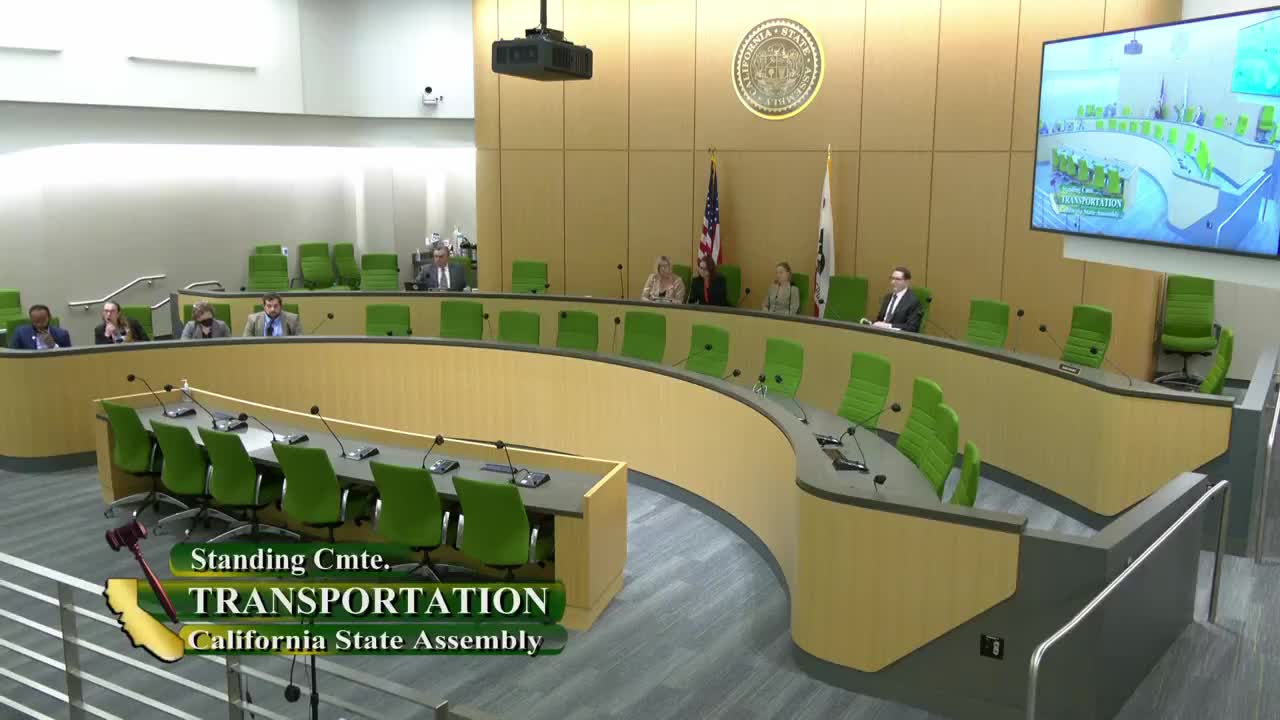
| Mar 20, 2023 | Do pass and be re-referred to the Committee on [Appropriations] | Assembly Standing Committee on Transportation |
Passed |
This list shows positions taken on this bill by organizations on the date displayed, which is linked to the original source.
Positions by individuals are not included.
|
Organization
|
Position
|
Date
|
|---|---|---|
| 350 Sacramento | * Support | Mar 20, 2023 |
| California Environmental Voters | * Support | Mar 20, 2023 |
| California New Car Dealers Association | * Support | Mar 20, 2023 |
| Coalition for Clean Air | * Support | Mar 20, 2023 |
| Greenlining Institute | * Support | Mar 20, 2023 |
| Samson Advisors | * Support | Mar 20, 2023 |
| Sustainable Rossmoor | * Support | Mar 20, 2023 |
ASSEMBLY THIRD READING
ATR Bill Id:AB 591
Author:(Gabriel)
As Amended Ver:March 13, 2023
Majority vote
SUMMARY
Requires any installed or substantially retrofitted electric vehicle service equipment (EVSE) to be publicly accessible and include universal connectors.
Major Provisions
- Requires EVSE to be publicly accessible including, but not limited to, enabling a person to pay via credit card.
- Excludes EVSE installed or substantially retrofitted for private use at a single-family or multi-family residence from the public accessibility requirement.
- Specifies that the requirements apply to EVSE that is capable of charging a light-duty EV.
- Eliminates the option of allowing a person utilizing an EV charging station to pay via mobile technology.
- Defines "universal connector" as a plug that enables any EV to charge using the EVSE.
- Defines "substantially retrofitted" to mean either onsite work was performed on the EVSE or the EVSE was fixed after malfunctioning, being broken, or otherwise being inoperable for at least 30 days.
- Removes "a parking space provided by a producer of EVs as a service" as an exemption from the definition of "publicly available parking space."
COMMENTS
The Legislature has set a number of goals to reduce greenhouse (GHG) emissions and address climate change. The Global Warming Solutions Act of 2006. AB 32 (Nuñéz), Chapter 488, Statutes of 2006, and subsequent companion legislation SB 32 (Pavley), Chapter 249, Statutes of 2016 requires California to reduce statewide GHG emissions to 40% below the 1990 level by 2030. AB 1279 (Muratsuchi), Chapter 337, Statutes of 2022 establishes the policy of the state to achieve carbon neutrality as soon as possible, but no later than 2045. CARB is responsible for developing a Scoping Plan to detail how the state will achieve its mandated GHG emissions reduction targets across sectors.
Nearly 40% of California's GHG emissions are generated by the transportation sector, which includes both light-duty (passenger) and medium- and heavy-duty fleets. Heavy-duty diesel trucks also contribute to unhealthy levels of ozone, inhalable particulate matter, carbon monoxide, oxides of nitrogen (NOx), and sulfur dioxide, affecting local air quality. In the transportation sector, measures to reduce GHG emissions include requiring the use of low carbon fuels, cleaner vehicles, and strategies to promote sustainable communities and improved transportation choices that reduce growth in number of vehicle miles traveled.
To further these efforts, at the end of 2020, Governor Newsom issued Executive Order (EO) N-79-20 which requires 100% of in-state sales of new passenger cars and trucks to be zero-emission by 2035. EO N-79-20 charges CARB with developing and proposing passenger vehicle and truck regulations requiring increasing volumes of new zero-emission vehicles sold in the State towards that goal. EO-N-79-20 also tasked the State Energy Resources Conservation and Development Commission (also known as the Energy Commission or CEC) to update the biennial statewide assessment of zero-emission vehicle infrastructure required by AB 2127 (Ting) Chapter 365, Statutes of 2018 to support the level of EV adoption required by the EO.
State needs significantly more EV chargers to meet projected EV needs. Based on the AB 2127 analysis, CEC projects that approximately 700,000 to 1.2 million public and shared-private chargers will be needed by 2030 to support five million to eight million light-duty ZEVs, respectively. According to the Zero-Emission Vehicle Infrastructure Plan, 80,000 light-duty public and shared-private EV chargers currently operate statewide, with another estimated 17,000 planned.
Types of charging technology. In North America, every EV manufacturer (except Tesla) uses the SAE J1772 connector, also known as the J-plug, for Level 1 (120 volt) and Level 2 (240 volt) charging. Level 1 and 2 charging are slower than DC fast chargers (DCFC). Tesla provides a Tesla charger adapter cable with every car it sells that allows the Tesla to use charging stations that have a J1772 connector. Every EV sold in North America can use any Level 1 or 2 charging station that comes with the standard J1772 connector.
Tesla's proprietary connector accepts all voltage, so it is compatible for Level 1, Level 2, and DCFCs. Historically, only Tesla vehicles have been allowed to use the Tesla DCFC network.
The EV Charging Stations Open Access Act. CARB adopted the EVSE Standards Regulation to implement SB 454 (Corbett), Chapter 418, Statutes of 2013 and establish requirements for EVSE to build driver confidence in accessing public charging infrastructure. Under the regulations developed by CARB, EVSE must be accessible to drivers regardless of membership in an Electric Vehicle Service Provider (EVSP) network. EVSPs must operate a credit card reader device physically located on either the EVSE unit or a nearby kiosk. The credit card reader device must accept, at a minimum, the Euro MasterCard Visa (EMV) chip and, at a minimum, one of the following credit card types: Visa, MasterCard, or American Express. A DCFC installed on or after January 1, 2022 must comply with the open access requirements. Existing DCFCs must comply when replaced, but no later than July 1, 2033. New Level 2 EVSEs have a compliance deadline of July 1, 2023, but existing Level 2s have the same retrofit date.
National Electric Vehicle Infrastructure (NEVI) standards and requirements. On November 15, 2021, the President signed into law the Bipartisan Infrastructure Law (BIL), enacted as the Infrastructure Investment and Jobs Act (IIJA), (Pub. L. 117-58). The BIL authorized a new NEVI Program, which includes a total of up to $7.5 billion in dedicated funding to help make EV chargers accessible to all Americans for local to long-distance trips.
On February 15, 2023 the federal government released its final rule establishing regulations that set minimum standards and requirements for projects the NEVI program will fund, including requirements for connector types, availability, and payment types, as detailed in the table below.
Federal Requirements for Various Charging Network Features
Category | Federal Requirement/Standard |
Connector Type | Each DCFC port must have a CCS Type 1 connector |
Availability (along Alternative Fuel Corridors (AFC) | Charging station must be available 24 hours per day, 7 days per week |
Availability (not along AFCs) | Charging station must be available for use, and accessible to the public, at least as frequently as the business operating hours of the site host |
Payment methods | Charging station must provide a contactless payment method accepting major credit/debit cards Must accept payment through either an automated toll-free phone number or short message/messaging system |
This bill was introduced prior to the federal standards release. This bill intends to codify CARB's current regulation and eliminate the requirement for an EV charging customer to be able to pay via mobile technology. This bill maintains the requirement for a credit card payment option, although it does not specify whether the credit card payment needs to be via chip reader or tap/contactless. As part of the Governor's proposed 2023-24 budget, the administration proposed legislation requiring an EV charging station that requires payment of a fee to include a contactless payment method that accepts major debit and credit cards. The legislation also authorizes CARB, by regulation, to add or subtract from the required payment methods as appropriate as technologies change. There will need to be reconciliation if both this bill and the Governor's proposal continues to move through the process.
Tesla recently announced changes to its private charging network. Tesla owns and operates a global, fast charging network of more than 40,000 DCFC that only Tesla's can use. On February 15, 2023, coinciding with the federal NEVI guidance release, Tesla announced that it will make at least 7,500 of its United States' DCFC and Level 2 chargers publically accessible to non-Tesla EVs by the end of 2024. Tesla currently has around 17,000 total chargers in the United States and 1100 chargers in California. The open chargers will be distributed along highway corridors and at locations like hotels and restaurants in urban and rural locations. This action allows Tesla to be eligible for federal NEVI grants (discussed above). In addition, currently, Tesla is not eligible for state funding because its charging network is not open to non-Teslas.
Committee comments: This bill requires newly installed, or substantially retrofitted, EVSE to include universal connectors and be publicly accessible. While Tesla's recent actions are a step in the direction this bill requires, the details of Tesla's agreement are limited. Even if Tesla fulfills its promise to open 7,500 chargers nationwide, there is still a much larger Tesla network that could potentially be opened up.
The author should consider adjusting the definition of "substantially retrofitted" to ensure that the bill does not violate the Takings Clause of the Fifth Amendment to United States Constitution. A taking is when the government seizes private property for public use, and can come in two forms. The taking may be physical, which means that the government literally takes the property from its owner). Or the taking may be constructive (also called a regulatory taking), which means that the government restricts the owner's rights so much that the governmental action becomes the functional equivalent of a physical seizure. The Fifth Amendment provides that the government may only exercise this power if they provide just compensation to the property owners; "Nor shall private property be taken for public use, without just compensation."
This bill defines and requires the use of a universal connector. However, most, but not all EVs, specifically Tesla and the Nissan Leaf, use the same plugs. The author may need to clarify what is meant by a universal connector, in coordination with CEC and auto manufacturers, as this bill proceeds to ensure that the accessibility goal is reached.
According to the Author
"[This bill] will address "range anxiety" and bolster consumer confidence by requiring all new and retrofitted EV chargers in California to be accessible to all brands of light-duty of EVs. In particular, [this bill], will mandate that all new and retrofitted EV chargers – other than those in private residences—include universal connectors and be publicly accessible to all types of EVs."
Arguments in Support
In support, the Greenlining Institute writes, "California set an ambitious requirement that all new cars sold in the state must be a zero-emission vehicle by 2035. In order to be on track to meet this goal, and support older EVs with different connection types, public infrastructure must be vast, and easily accessible to drivers for daily commutes, and longer excursions. However, charging infrastructure remains fragmented across the state, with most of these public chargers only available in wealthier communities, or in freeway corridors designed to support traveling drivers. Direct current connectors are exclusive to select passenger vehicles, meaning this efficient charging option is only available to few. Drivers who only have access to Level 1 and Level 2 chargers must locate a station with a connector that is compatible with their vehicle. This inconsistency creates confusion, is a barrier for communities in adopting EV technology and delays statewide electric vehicle infrastructure integration."
Arguments in Opposition
In opposition, Tesla writes, "[1] There is no "universal DC fast charging connector that can charge all EVs in California. [2] Tesla is already in the process of opening our charging networks to provide access to non-Tesla EVs. [3] [This bill]'s payment requirements are duplicative of existing regulations, misguided in removing the ability to utilize mobile payment methods, and misaligned with federal standards and current California efforts which enable contactless payments. For these reasons, Tesla must oppose [this bill]."
FISCAL COMMENTS
None
VOTES
ASM TRANSPORTATION: 15-0-0
YES: Friedman, Vince Fong, Berman, Juan Carrillo, Davies, Gipson, Hart, Jackson, Kalra, Lowenthal, Stephanie Nguyen, Sanchez, Wallis, Ward, Wicks
UPDATED
VERSION: March 13, 2023
CONSULTANT: Christine Casey / TRANS. / (916) 319-2093 FN: 0000166
Date of Hearing: March 20, 2023
ASSEMBLY COMMITTEE ON TRANSPORTATION
Laura Friedman, Chair
ABPCA Bill Id:AB 591 (
Author:Gabriel) – As Amended Ver:March 13, 2023
SUBJECT: Electric vehicle service equipment: universal connectors and public accessibility
SUMMARY: Requires any installed or substantially retrofitted electric vehicle service equipment (EVSE) to be publicly accessible and include universal connectors. Specifically, this bill:
- Requires EVSE to be publicly accessible including, but not limited to, enabling a person to pay via credit card.
- Excludes EVSE installed or substantially retrofitted for private use at a single-family or multi-family residence from the public accessibility requirement.
- Specifies that the requirements apply to EVSE that is capable of charging a light-duty EV.
- Eliminates the option of allowing a person utilizing an EV charging station to pay via mobile technology.
- Defines “universal connector” as a plug that enables any EV to charge using the EVSE.
- Defines “substantially retrofitted” to mean either onsite work was performed on the EVSE or the EVSE was fixed after malfunctioning, being broken, or otherwise being inoperable for at least 30 days.
- Removes “a parking space provided by a producer of EVs as a service” as an exemption from the definition of “publicly available parking space.”
EXISTING LAW:
- Authorizes the California Air Resources Board (CARB), in the absence of a national standard by January 1, 2015, to adopt interoperability billing standards for network roaming payment methods for EV charging stations. (Health and Safety Code (HSC) 44268.2 (d))
- Requires, if CARB adopts interoperability standards, that all EV charging stations that require payment, meet the imposed interoperability standards within one year. (HSC 44268.2 (d))
- Requires CARB, when adopting interoperability standards for EV charging stations, to consider industry-developed interoperability billing standards and authorizes CARB to adopt interoperability billing standards promulgated by outside authoritative bodies. (HSC 44268.2 (d))
- Requires an EV charging station that requires payment of a fee to allow a person using the station to pay by credit card or mobile technology, or both. (HSC 44268.2 (a))
- Defines “EV charging station” as one or more publicly available parking spaces served by EVSE. (HSC 44268 (c))
- Defines “publicly available parking space” as a parking space that has been designated to be available to the public and may include on-street parking spaces and parking spaces in surface lots or parking garages. (HSC 44268 (g))
- Exempts from the definition of “publicly available parking space” a parking space that is part of, or associated with, a private residence, a parking space that is reserved for the exclusive use of an individual or vehicle or for a group of drivers or vehicles, such as employees, tenants, visitors, residents of a common interest development, or residents of an adjacent building, or a parking space provided by a producer of electric vehicles as a service. (HSC 44268 (g))
States that provisions related to the Open Access Charging Act do not limit the ability of an owner or lessee of a publicly available parking space whose primary business is other than EV charging from restricting use of the parking space, such as limiting use to customers and visitors of the business.
FISCAL EFFECT: Unknown
COMMENTS: The Legislature has set a number of goals to reduce greenhouse (GHG) emissions and address climate change. The Global Warming Solutions Act of 2006. AB 32 (Nunez) Chapter 488, Statutes of 2006 and subsequent companion legislation SB 32 (Pavley) Chapter 249, Statutes of 2016 requires California to reduce statewide GHG emissions to 40% below the 1990 level by 2030. AB 1279 (Muratsuchi) Chapter 337, Statutes of 2022 establishes the policy of the state to achieve carbon neutrality as soon as possible, but no later than 2045. CARB is responsible for developing a Scoping Plan to detail how the state will achieve its mandated GHG emissions reduction targets across sectors.
Nearly 40% of California's GHG emissions are generated by the transportation sector, which includes both light-duty (passenger) and medium- and heavy-duty fleets. Heavy-duty diesel trucks also contribute to unhealthy levels of ozone, inhalable particulate matter, carbon monoxide, oxides of nitrogen (NOx), and sulfur dioxide, affecting local air quality. In the transportation sector, measures to reduce GHG emissions include requiring the use of low carbon fuels, cleaner vehicles, and strategies to promote sustainable communities and improved transportation choices that reduce growth in number of vehicle miles traveled.
To further these efforts, at the end of 2020, Governor Newsom issued Executive Order (EO) N-79-20 which requires 100% of in-state sales of new passenger cars and trucks to be zero-emission by 2035. EO N-79-20 charges CARB with developing and proposing passenger vehicle and truck regulations requiring increasing volumes of new zero-emission vehicles sold in the State towards that goal. EO-N-79-20 also tasked the State Energy Resources Conservation and Development Commission (also known as the Energy Commission or CEC) to update the biennial statewide assessment of zero-emission vehicle infrastructure required by AB 2127 (Ting) Chapter 365, Statutes of 2018 to support the level of EV adoption required by the EO.
State needs significantly more EV chargers to meet projected EV needs. Based on the AB 2127 analysis, CEC projects that approximately 700,000 to 1.2 million public and shared-private chargers will be needed by 2030 to support 5 million to 8 million light-duty ZEVs, respectively. According to the Zero-Emission Vehicle Infrastructure Plan, 80,000 light-duty public and shared-private EV chargers currently operate statewide, with another estimated 17,000 on the way.
Types of charging technology. In North America, every EV manufacturer (except Tesla) uses the SAE J1772 connector, also known as the J-plug, for Level 1 (120 volt) and Level 2 (240 volt) charging. Level 1 and 2 charging are slower than DC fast chargers (DCFC). Tesla provides a Tesla charger adapter cable with every car it sells that allows the Tesla to use charging stations that have a J1772 connector. Every EV sold in North America can use any Level 1 or 2 charging station that comes with the standard J1772 connector.
Tesla’s proprietary connector accepts all voltage, so it is compatible for Level 1, Level 2, and DCFCs. Historically, only Tesla vehicles have been allowed to use the Tesla DCFC network.
The EV Charging Stations Open Access Act. CARB adopted the EVSE Standards Regulation to implement SB 454 (Corbett) Chapter 418, Statutes of 2013 and establish requirements for EVSE to build driver confidence in accessing public charging infrastructure. Under the regulations developed by CARB, EVSE must be accessible to drivers regardless of membership in an Electric Vehicle Service Provider (EVSP) network. EVSPs must operate a credit card reader device physically located on either the EVSE unit or a nearby kiosk. The credit card reader device must accept, at a minimum, the Euro MasterCard Visa (EMV) chip and, at a minimum, one of the following credit card types: Visa, MasterCard, or American Express. A DCFC installed on or after January 1, 2022 must comply with the open access requirements. Existing DCFCs must comply when replaced, but no later than July 1, 2033. New Level 2 EVSEs have a compliance deadline of July 1, 2023, but existing Level 2s have the same retrofit date.
National Electric Vehicle Infrastructure (NEVI) standards and requirements. On November 15, 2021, the President signed into law the Bipartisan Infrastructure Law (BIL), enacted as the Infrastructure Investment and Jobs Act (IIJA), (Pub. L. 117-58). The BIL authorized a new NEVI Program, which includes a total of up to $7.5 billion in dedicated funding to help make EV chargers accessible to all Americans for local to long-distance trips.
On February 15, 2023 the federal government released its final rule establishing regulations that set minimum standards and requirements for projects the NEVI program will fund, including requirements for connector types, availability, and payment types, as detailed in the table below.
Federal Requirements for Various Charging Network Features
Category | Federal Requirement/Standard |
Connector Type | Each DCFC port must have a CCS Type 1 connector |
Availability (along Alternative Fuel Corridors (AFC) | Charging station must be available 24 hours per day, 7 days per week |
Availability (not along AFCs) | Charging station must be available for use, and accessible to the public, at least as frequently as the business operating hours of the site host |
Payment methods | Charging station must provide a contactless payment method accepting major credit/debit cards Must accept payment through either an automated toll-free phone number or short message/messaging system |
This bill was introduced prior to the federal standards release. This bill intends to codify CARB’s current regulation and eliminate the requirement for an EV charging customer to be able to pay via mobile technology. This bill maintains the requirement for a credit card payment option, although it does not specify whether the credit card payment needs to be via chip reader or tap/contactless. As part of the Governor’s proposed 2023-24 budget, the administration proposed legislation requiring an EV charging station that requires payment of a fee to include a contactless payment method that accepts major debit and credit cards. The legislation also authorizes CARB, by regulation, to add or subtract from the required payment methods as appropriate as technologies change. There will need to be reconciliation if both this bill and the Governor’s proposal continues to move through the process.
Tesla recently announced changes to its private charging network. Tesla owns and operates a global, fast charging network of more than 40,000 DCFC that only Tesla’s can use. On February 15, 2023, coinciding with the federal NEVI guidance release, Tesla announced that it will make at least 7,500 of its United States’ DCFC and Level 2 chargers publically accessible to non-Tesla EVs by the end of 2024. Tesla currently has around 17,000 total chargers in the United States and 1100 chargers in California. The open chargers will be distributed along highway corridors and at locations like hotels and restaurants in urban and rural locations. This action allows Tesla to be eligible for federal NEVI grants (discussed above). In addition, currently, Tesla is not eligible for state funding because its charging network is not open to non-Teslas.
Committee comments: This bill requires newly installed, or substantially retrofitted, EVSE to include universal connectors and be publicly accessible. While Tesla’s recent actions are a step in the direction this bill requires, the details of Tesla’s agreement are limited. Even if Tesla fulfills its promise to open 7,500 chargers nationwide, there is still a much larger Tesla network that could potentially be opened up.
The author should consider adjusting the definition of “substantially retrofitted” to ensure that the bill does not violate the Takings Clause of the Fifth Amendment to United States Constitution. A taking is when the government seizes private property for public use, and can come in two forms. The taking may be physical, which means that the government literally takes the property from its owner). Or the taking may be constructive (also called a regulatory taking), which means that the government restricts the owner's rights so much that the governmental action becomes the functional equivalent of a physical seizure. The Fifth Amendment provides that the government may only exercise this power if they provide just compensation to the property owners; “Nor shall private property be taken for public use, without just compensation.”
This bill defines and requires the use of a universal connector. However, most, but not all EVs, specifically Tesla and the Nissan Leaf, use the same plugs. The author may need to clarify what is meant by a universal connector, in coordination with CEC and auto manufacturers, as this bill proceeds to ensure that the accessibility goal is reached.
According to the author, “[This bill] will address “range anxiety” and bolster consumer confidence by requiring all new and retrofitted EV chargers in California to be accessible to all brands of light-duty of EVs. In particular, [this bill], will mandate that all new and retrofitted EV chargers—other than those in private residences—include universal connectors and be publicly accessible to all types of EVs.”
In support, the Greenlining Institute writes, “California set an ambitious requirement that all new cars sold in the state must be a zero-emission vehicle by 2035. In order to be on track to meet this goal, and support older EVs with different connection types, public infrastructure must be vast, and easily accessible to drivers for daily commutes, and longer excursions. However, charging infrastructure remains fragmented across the state, with most of these public chargers only available in wealthier communities, or in freeway corridors designed to support traveling drivers. Direct current connectors are exclusive to select passenger vehicles, meaning this efficient charging option is only available to few. Drivers who only have access to Level 1 and Level 2 chargers must locate a station with a connector that is compatible with their vehicle. This inconsistency creates confusion, is a barrier for communities in adopting EV technology and delays statewide electric vehicle infrastructure integration.”
Related and previous legislation: AB 1424 (Berman) of 2019 would have required EV charging stations to allow a person to pay via a toll-free telephone number to process a credit card payment or via an onsite capacity for credit card payment by a contactless credit card, EMV chip, or magstripe card reader. The bill would have also delayed the adoption of interoperability standards for network roaming payment methods for electric vehicle charging stations until January 1, 2021. AB 1424 was held in the Senate Appropriations committee.
AB 2127 (Ting) Chapter 365, Statutes of 2018 requires CEC, working with CARB and the Public Utilities Commission (CPUC), to prepare and biennially update a statewide assessment of the EV charging infrastructure needed to support the levels of EV adoption required for the state to meet its goals of putting at least 5 million zero-emission vehicles on California roads by 2030 and of reducing emissions of greenhouse gases to 40% below 1990 levels by 2030.
SB 454 (Corbett), Chapter 418, Statutes of 2013, establishes the EV Charging Stations Open Access Act which among other things, prohibits the provider of an EV charging station from requiring a subscription or membership as a condition of using the station; requires the total actual charges for the use of an EV charging station, including any network roaming charges be disclosed at the point of sale; requires that an EV charging station accept payment by credit card or mobile technology, or both; and authorizes CARB to adopt interoperability billing standards for network roaming payment methods for EV charging stations.
REGISTERED SUPPORT / OPPOSITION:
Support
350 Bay Area Action
350 Sacramento
California New Car Dealers Association
Greenlining Institute
Sustainable Rossmoor
Opposition
None on file
Analysis Prepared by: Christine Casey / TRANS. / (916) 319-2093
Discussed in Hearing
View Older Hearings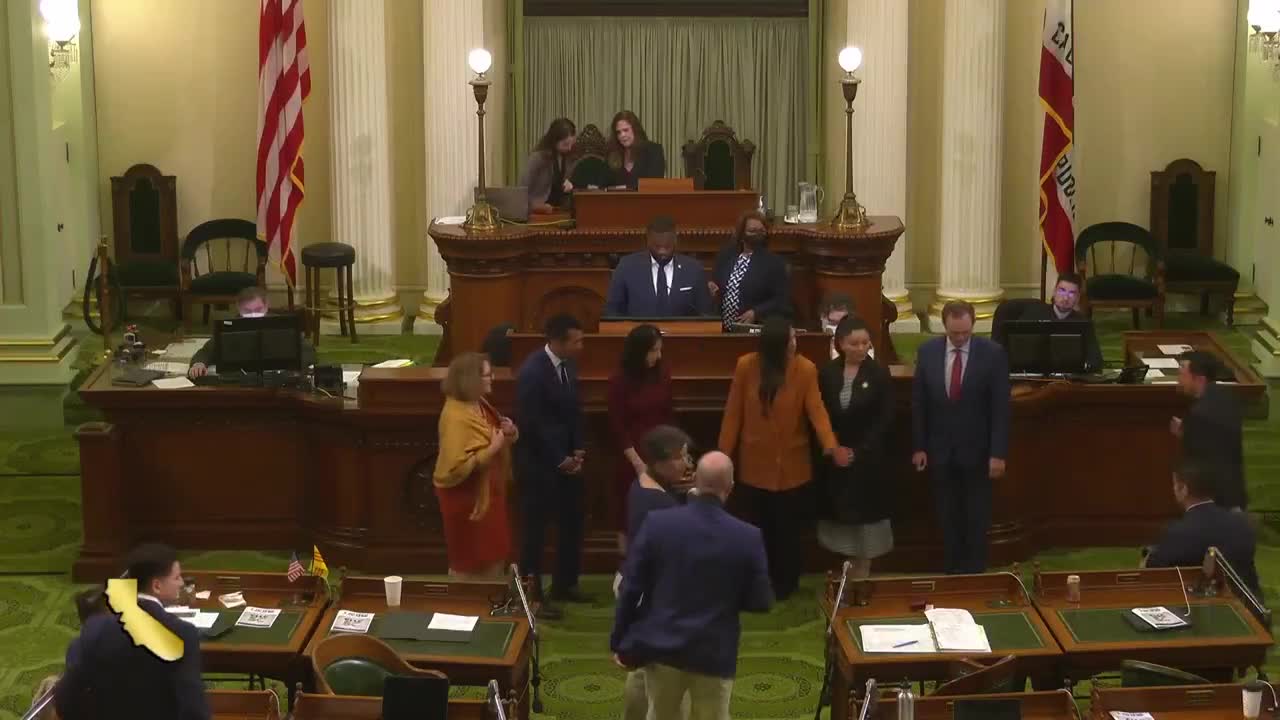
Bill Author

Bill Co-Author(s):
