AB 616: Medical Group Financial Transparency Act.
- Session Year: 2023-2024
- House: Assembly
- Latest Version Date: 2023-09-14
Current Status:
Failed
(2024-01-30: Consideration of Governor's veto stricken from file.)
Introduced
In Committee
First Chamber
In Committee
Second Chamber
Enacted
What does this bill do?
The bill requires certain physician groups and other providers to submit audited financial reports or, if they don’t normally produce audits, sworn comprehensive financial statements to the state’s Office of Health Care Affordability and allows the Department of Managed Health Care to access similar records from risk-bearing organizations (groups that take on financial risk for health plans). The office and DMHC must keep those reports confidential and use them only as needed, but the office will publicly release the financial reports of physician organizations that have 50 or more doctors and of physician groups in fully integrated delivery systems in the same way it publishes hospital financial data.
The summary is provided by generative AI which can make mistakes. For original language, please view the details in the table below.
Existing law establishes the Office of Health Care Affordability within the Department of Health Care Access and Information to analyze the health care market for cost trends and drivers of spending, develop data-informed policies for lowering health care costs for consumers and purchasers, and create a state strategy for controlling the cost of health care. Existing law requires the office to collect data and other information it deems necessary from health care entities to carry out the functions of the office, and requires the office to require providers and physician organizations to submit audited financial reports or comprehensive financial statements, as specified. Existing law requires those reports and statements to be kept confidential, and specifies that they are not required to be disclosed under the California Public Records Act.
Existing law requires the office to obtain information about health care service plans from the Department of Managed Health Care. Existing law requires a contract between a health care service plan and a risk-bearing organization to include provisions concerning the risk-bearing organizations administrative and financial capacity. Existing law requires the director of the Department of Managed Health Care to adopt regulations regarding, among other things, periodic reports from a health care service plan that include information concerning the risk-bearing organizations and the type and amount of financial risk they have assumed.
Existing law establishes, within the office, the Health Care Affordability Board, composed of 8 members, appointed as prescribed.
This bill, the Medical Group Financial Transparency Act, would authorize the disclosure of audited financial reports and comprehensive financial statements of providers and physician organizations collected by the Office of Health Care Affordability and financial and other records of risk-bearing organizations made available to the Department of Managed Health Care. This bill would authorize the board, members of the board, the office, the department, and the employees, contractors, and advisors of the office and the department to use confidential audited financial reports and comprehensive financial statements only as necessary to carry out functions of the office. The bill would also require certain physician organizations, as specified, to produce or disclose audited financial reports and comprehensive financial statements to the office, subject to these provisions. The bill would require the audited financial reports and comprehensive financial statements produced or disclosed to the office to be made available to the public, by the office, as specified. The bill would also make related findings and declarations.
Existing law establishes the Office of Health Care Affordability within the Department of Health Care Access and Information to analyze the health care market for cost trends and drivers of spending, develop data-informed policies for lowering health care costs for consumers and purchasers, and create a state strategy for controlling the cost of health care. Existing law requires the office to collect data and other information it deems necessary from health care entities to carry out the functions of the office, and requires the office to require providers and physician organizations to submit audited financial reports or comprehensive financial statements, as specified. Existing law requires those reports and statements to be kept confidential, and specifies that they are not required to be disclosed under the California Public Records Act.
Existing law requires the office to obtain information about health care service plans from the Department of Managed Health Care. Existing law requires a contract between a health care service plan and a risk-bearing organization to include provisions concerning the risk-bearing organizations administrative and financial capacity. Existing law requires the director of the Department of Managed Health Care to adopt regulations regarding, among other things, periodic reports from a health care service plan that include information concerning the risk-bearing organizations and the type and amount of financial risk they have assumed.
This bill, the Medical Group Financial Transparency Act, would authorize the disclosure of audited financial reports and comprehensive financial statements of providers and physician organizations collected by the Office of Health Care Affordability and financial and other records of risk-bearing organizations made available to the Department of Managed Health Care. The bill would also make related findings and declarations.
This act shall be known, and may be cited, as the Medical Group Financial Transparency Act.
SEC. 2.The Legislature finds and declares all of the following:
(a)To advance health care cost transparency, the Department of Health Care Access and Information (HCAI) collects financial information from California hospitals, skilled nursing facilities, and clinics. HCAI leverages this financial information to create publicly available data products that are useful in assessing the financial status and service volume of providers.
(b)Financial data made public by HCAI and the Department of Managed Health Care (DMHC) have been used to study many policy questions, including the financial impact of COVID-19 on California hospitals, the relationship between hospital financial performance and patient care outcomes, and the impact on nursing home financial performance and resident well-being when a skilled nursing facility is acquired by a private equity firm. These analyses have informed public policy decisions related to health care equity, access, and affordability.
(c)Going forward, HCAI will collect similar financial information from certain physician organizations, including physician organizations that are part of fully integrated delivery systems. However, unlike the similar financial information collected from other types of providers, HCAI is statutorily prevented from publicly disclosing the financial information it will collect from physician organizations.
(d)DMHC has a long-standing program to collect financial information from health care service plans and risk-bearing organizations, which are physician organizations that take on delegated risk for health care service plan enrollees.
(e)DMHC makes broad information about the financial standing of health care service plans available publicly, but only publicly discloses an extremely limited subset of financial solvency indicators for risk-bearing organizations.
(f)More than 25 percent of the money spent on health care services in California is spent on physician and clinical services. From 1980 through 2019, spending in California on physician and clinical services increased by an average of more than 7 percent each year from $7,200,000,000 in 1980 to more than $101,000,000,000 in 2019.
(g)There is insufficient data available publicly to show how much of that money went to provide services to patients and how much was held as profit by physician organizations or distributed to shareholders and investors.
(h)It is in the interest of the state and of purchasers and consumers of health care services to have a more complete understanding of the financial standing of physician organizations in California. That information would advance efforts to reduce unnecessary health care spending, thereby making high-quality health care more affordable.
(i)The Healthy California for All Commission, the California Health Benefit Exchange, and the State Department of Health Care Services have all used publicly available provider and health plan financial data to inform their work. However, equivalent information about medical group finances was not included in those analyses.
(j)As physician organizations are already statutorily required to report this financial information to DMHC or HCAI, releasing the information publicly will not create a new reporting burden for physician organizations.
(k)As financial information reported by physician organizations is aggregated at the corporate level, there is no data for individual patients contained in the financial information reported to DMHC and HCAI.
SEC. 3.Section 1375.4 of the Health and Safety Code is amended to read:1375.4.(a)Every contract between a health care service plan and a risk-bearing organization that is issued, amended, renewed, or delivered in this state on or after July 1, 2000, shall include provisions concerning the following, as to the risk-bearing organizations administrative and financial capacity, which shall be effective as of January 1, 2001:
(1)A requirement that the risk-bearing organization furnish financial information to the health care service plan or the plans designated agent and meet any other financial requirements that assist the health care service plan in maintaining the financial viability of its arrangements for the provision of health care services in a manner that does not adversely affect the integrity of the contract negotiation process.
(2)A requirement that the health care service plan disclose information to the risk-bearing organization that enables the risk-bearing organization to be informed regarding the financial risk assumed under the contract.
(3)A requirement that the health care service plans provide payments of all risk arrangements, excluding capitation, within 180 days after close of the fiscal year.
(b)In accordance with subdivision (a) of Section 1344, the director shall adopt regulations on or before June 30, 2000, to implement this section which shall, at a minimum, provide for the following:
(1)(A)A process for reviewing or grading risk-bearing organizations based on the following criteria:
(i)The risk-bearing organization meets criterion 1 if it reimburses, contests, or denies claims for health care services it has provided, arranged, or for which it is otherwise financially responsible in accordance with the timeframes and other requirements described in Section 1371 and in accordance with any other applicable state and federal laws and regulations.
(ii)The risk-bearing organization meets criterion 2 if it estimates its liability for incurred but not reported claims pursuant to a method that has not been held objectionable by the director, records the estimate at least quarterly as an accrual in its books and records, and appropriately reflects this accrual in its financial statements.
(iii)The risk-bearing organization meets criterion 3 if it maintains at all times a positive tangible net equity, as defined in subdivision (e) of Section 1300.76 of Title 28 of the California Code of Regulations.
(iv) The risk-bearing organization meets criterion 4 if it maintains at all times a positive level of working capital (excess of current assets over current liabilities).
(B)A risk-bearing organization may reduce its liabilities for purposes of calculating tangible net equity, pursuant to clause (iii) of subparagraph (A), and working capital, pursuant to clause (iv) of subparagraph (A), by the amount of any liabilities the payment of which is guaranteed by a sponsoring organization pursuant to a qualified guarantee. A sponsoring organization is one that has a tangible net equity of a level to be established by the director that is in excess of all amounts that it has guaranteed to any person or entity. A qualified guarantee is one that meets all of the following:
(i)It is approved by a board resolution of the sponsoring organization.
(ii)The sponsoring organization agrees to submit audited annual financial statements to the plan within 120 days of the end of the sponsoring organizations fiscal year.
(iii)The guarantee is unconditional except for a maximum monetary limit.
(iv)The guarantee is not limited in duration with respect to liabilities arising during the term of the guarantee.
(v)The guarantee provides for six months advance notice to the plan prior to its cancellation.
(2)The information required from risk-bearing organizations to assist in reviewing or grading these risk-bearing organizations, including balance sheets, claims reports, and designated annual, quarterly, or monthly financial statements prepared in accordance with generally accepted accounting principles, to be used in a manner, and to the extent necessary, provided to a single external party as approved by the director to the extent that it does not adversely affect the integrity of the contract negotiation process between the health care service plan and the risk-bearing organizations.
(3)Audits to be conducted in accordance with generally accepted auditing standards and in a manner that avoids duplication of review of the risk-bearing organization.
(4)A process for corrective action plans, as mutually agreed upon by the health care service plan and the risk-bearing organization and as approved by the director, for cases where the review or grading indicates deficiencies that need to be corrected by the risk-bearing organization, and contingency plans to ensure the delivery of health care services if the corrective action fails. The corrective action plan shall be approved by the director and standardized, to the extent possible, to meet the needs of the director and all health care service plans contracting with the risk-bearing organization. If the health care service plan and the risk-bearing organization are unable to determine a mutually agreeable corrective action plan, the director shall determine the corrective action plan.
(5)The disclosure of information by health care service plans to the risk-bearing organization that enables the risk-bearing organization to be informed regarding the risk assumed under the contract, including:
(A)Enrollee information monthly.
(B)Risk arrangement information, information pertaining to any pharmacy risk assumed under the contract, information regarding incentive payments, and information on income and expenses assigned to the risk-bearing organization quarterly.
(6)Periodic reports from each health care service plan to the director that include information concerning the risk-bearing organizations and the type and amount of financial risk assumed by them, and, if deemed necessary and appropriate by the director, a registration process for the risk-bearing organizations.
(7)The confidentiality of financial and other records to be produced, disclosed, or otherwise made available, unless as otherwise determined by the director.
(c)The failure by a health care service plan to comply with the contractual requirements pursuant to this section shall constitute grounds for disciplinary action. The director shall, as appropriate, within 60 days after receipt of documented violation from a risk-bearing organization, investigate and take enforcement action against a health care service plan that fails to comply with these requirements and shall periodically evaluate contracts between health care service plans and risk-bearing organizations to determine if any audit, evaluation, or enforcement actions should be undertaken by the department.
(d)The Financial Solvency Standards Board established in Section 1347.15 shall study and report to the director on or before January 1, 2001, regarding all of the following:
(1)The feasibility of requiring that there be in force insurance coverage commensurate with the financial risk assumed by the risk-bearing organization to protect against financial losses.
(2)The appropriateness of different risk-bearing arrangements between health care service plans and risk-bearing organizations.
(3)The appropriateness of the four criteria specified in paragraph (1) of subdivision (b).
(e)This section shall not apply to specialized health care service plans.
(f)Notwithstanding any other law, financial and other records of risk-bearing organizations to be produced, disclosed, or otherwise made available to the department pursuant to this section shall be open to public disclosure using a process equivalent to the process for disclosing health care service plan financial and administrative information described in Sections 1341.5 and 1384. This shall not be construed to require the public disclosure of individual plan specific rates.
(g)For purposes of this section, provider organization means a medical group, independent practice association, or other entity that delivers, furnishes, or otherwise arranges for or provides health care services, but does not include an individual or a plan.
(h)(1)For purposes of this section, a risk-bearing organization means a professional medical corporation, other form of corporation controlled by physicians and surgeons, a medical partnership, a medical foundation exempt from licensure pursuant to subdivision (l) of Section 1206, or another lawfully organized group of physicians that delivers, furnishes, or otherwise arranges for or provides health care services, but does not include an individual or a health care service plan, and that does all of the following:
(A)Contracts directly with a health care service plan or arranges for health care services for the health care service plans enrollees.
(B)Receives compensation for those services on any capitated or fixed periodic payment basis.
(C)Is responsible for the processing and payment of claims made by providers for services rendered by those providers on behalf of a health care service plan that are covered under the capitation or fixed periodic payment made by the plan to the risk-bearing organization. Nothing in this subparagraph in any way limits, alters, or abrogates any responsibility of a health care service plan under existing law.
(2)Notwithstanding paragraph (1), risk-bearing organizations shall not be deemed to include a provider organization that meets either of the following requirements:
(A)The health care service plan files with the department consolidated financial statements that include the provider organization.
(B)The health care service plan is the only health care service plan with which the provider organization contracts for arranging or providing health care services and, during the previous and current fiscal years, the provider organizations maximum potential expenses for providing or arranging for health care services did not exceed 115 percent of its maximum potential revenue for providing or arranging for those services.
(i)For purposes of this section, claims include, but are not limited to, contractual obligations to pay capitation or payments on a managed hospital payment basis.
SEC. 4.Section 127501.4 of the Health and Safety Code is amended to read:127501.4.(a)(1)Notwithstanding any other state or local law, the office shall collect data and other information it determines necessary from health care entities, except exempted providers, to carry out the functions of the office. To the extent consistent with federal law and to the greatest extent possible, the office may use existing and emerging public and private data sources to minimize administrative burdens and duplicative reporting, including data or information from federal agencies as well as state agencies. The office may request data and information from, or enter into a data sharing agreement with, the State Department of Health Care Services, Covered California, the Department of Managed Health Care, the Department of Insurance, the Labor and Workforce Development Agency, the Business, Consumer Services, and Housing Agency, and other relevant state agencies that monitor compliance of plans and providers with access standards, including timely access, language access, geographic access, and other access standards as provided by law and regulation. The office may also enter into a data sharing agreement with these state agencies that collect payer and provider financial data or other data or information about the health care workforce.
(2)In furtherance of this chapter, and with the intent to reduce administrative burdens, the office shall coordinate with the State Department of Health Care Services on data and other information necessary to report all of the following:
(A)Total health care expenditures and per capita total health care expenditures for Medi-Cal services.
(B)Medical loss ratios required under applicable state and federal laws.
(C)Quality and equity measures to assess performance for the Medi-Cal program or other programs administered by the State Department of Health Care Services.
(3)(A)The office shall obtain from the Department of Managed Health Care and the Department of Insurance information about health care services plans, as defined in subdivision (b) of Section 1345, and insurers offering policies of health insurance, as defined in subdivision (b) of Section 106 of the Insurance Code. The information shall be for coverage in the individual, small group, and large group markets for both grandfathered and nongrandfathered products. The information shall include, but not be limited to, all of the following:
(i)Information on premiums, cost sharing, benefits, and other information required under Article 6.2 (commencing with Section 1385.01) of Chapter 2.2 of Division 2 of this code and Article 4.5 (commencing with Section 10181) of Chapter 1 of Part 2 of Division 2 of the Insurance Code.
(ii)Trend factors by benefit category, such as inpatient hospitalization and physician services, including price, utilization, and cost as a percentage of Medicare, as required by Section 1385.045 of this code and Section 10181.45 of the Insurance Code.
(iii)Medical loss ratio for each health care service plan or health insurer under applicable state and federal laws.
(iv)Cost containment and quality improvement efforts reported consistent with Sections 1385.03 and 1385.045 of this code and Sections 10181.3 and 10181.45 of the Insurance Code.
(v)Prescription drug costs consistent with Section 1367.243 and Article 6.1 (commencing with Section 1385.001) of Chapter 2.2 of Division 2 of this code and Section 10123.205 of the Insurance Code.
(vi)Information regarding health equity and quality required under Article 11.9 (commencing with Section 1399.870) of Chapter 2.2 of Division 2, including data and results.
(B)The Department of Managed Health Care and the Department of Insurance shall provide the above information in the initial submission of data to the office for the five years prior to 2023, to the extent that information is available, and annually thereafter.
(b)The office shall establish requirements for payers and fully integrated delivery systems to submit data and other information necessary to do all of the following:
(1)Measure total health care expenditures and per capita total health care expenditures.
(2)Determine whether health care entities met health care cost targets.
(3)Identify the annual change in health care costs of health care entities.
(4)Approve and monitor implementation of performance improvement plans.
(5)Assess performance on quality and equity measures.
(c)The office shall, in a manner prescribed by the office, establish requirements for providers to submit data in support of this section as necessary to carry out the functions of the office.
(d)(1)For the purpose of the baseline health care spending report published pursuant to subdivision (a) of Section 127501.6, payers and fully integrated delivery systems shall submit data on total health care expenditures for the 2022 and 2023 calendar years on or before September 1, 2024. Enforcement shall not be implemented pursuant to this baseline report, except any enforcement actions necessary to ensure compliance with the deadline for submitting data.
(2)For the first annual report, published pursuant to subdivision (b) of Section 127501.6, payers and fully integrated delivery systems shall submit data on total health care expenditures for the 2024 and 2025 calendar years based on a reporting schedule established by the office. For subsequent annual reports, payers and fully integrated delivery systems shall submit data for the relevant calendar years according to the reporting schedule established by the office.
(e)(1)The office shall require health care entities to submit data and other information as necessary to fulfill its functions and measure total health care expenditures and per capita total health care expenditures by sectors.
(2)For the calculation of total health care expenditures and per capita total health care expenditures by sectors, the office shall use the Health Care Payments Data Program, established pursuant to Chapter 8.5 (commencing with Section 127671), to the greatest extent possible, to minimize reporting burdens for health care entities, and may also use data from federal agencies.
(f)The office shall require payers, fully integrated delivery systems, hospitals, and physician organizations to report data and other information, as necessary, for the single set of standard quality measures pursuant to Section 127503.
(g)(1)The office shall require payers, fully integrated delivery systems, restricted health care service plans, and limited health care service plans, as defined in Section 1300.49 of Title 28 of the California Code of Regulations, to submit data and other information to measure the adoption of alternative payment models pursuant to Section 127504.
(2)The office shall establish requirements for payers, fully integrated delivery systems, restricted health care service plans, and limited health care service plans, as defined in Section 1300.49 of Title 28 of the California Code of Regulations, to report data and other information, including, but not limited to, the types of payment models, adoption by line of business, the number of members covered by alternative payment models, the percent of budget dedicated to alternative payments, or cost and quality performance measures tied to those payment models.
(h)(1)The office shall require payers, fully integrated delivery systems, restricted health care service plans, and limited health care service plans, as defined in Section 1300.49 of Title 28 of the California Code of Regulations, to submit data and other information to measure the percentage of total health care expenditures allocated to primary care and behavioral health pursuant to Section 127505.
(2)For the calculation of total health care expenditures allocated to primary care and behavioral health, the office shall do all of the following:
(A)Use the Health Care Payments Data Program, established pursuant to Chapter 8.5 (commencing with Section 127671), to the greatest extent possible, to minimize reporting burdens for health care entities.
(B)Determine the categories of health care professionals who should be considered primary care and behavioral health providers and consider existing state and national approaches, as appropriate.
(C)Determine specific procedure codes that should be considered primary care and behavioral health services and consider existing state and national approaches, as appropriate.
(D)Determine the categories of payments to primary care or behavioral health care providers and practices, including non-claims-based payments, such as alternative payment models, that should be included when determining the total amount spent on primary care and behavioral health.
(i)(1)With consideration to minimizing reporting burdens and expenses, the office shall require providers and any physician organizations that are part of a fully integrated delivery system to submit audited financial reports, similar to those required in paragraphs (a) to (e), inclusive, of Section 128735. This paragraph does not apply to exempted providers.
(2)For physician organizations defined in paragraph (5) of subdivision (p) of Section 127500, and providers that do not routinely prepare audited financial reports, the office shall require a comprehensive financial statement that includes details regarding annual costs, annual receipts, realized capital gains and losses, and accumulated surplus and accumulated reserves using the standard accounting method routinely used by the physician organization or provider. The comprehensive financial statement shall be supported by sworn written declarations by the chief financial officer, chief executive officer, or other officer who has financial management and oversight responsibilities for the physician organization or provider, certifying that the financial statement is complete, true, and correct in all material matters to the best of their knowledge, and that the provider does not routinely prepare audited financial reports. This paragraph does not apply to exempted providers and physician organizations that are part of a fully integrated delivery system.
(3)(A)The board, members of the board, the office, the department, and the employees, contractors, and advisors of the office and the department shall keep the audited financial reports and comprehensive financial statements confidential, and shall use the confidential information and documents only as necessary for the function of the office.
(B)Notwithstanding subparagraph (A), audited financial reports or comprehensive financial statements produced, disclosed, or otherwise made available pursuant to this subdivision by physician organizations comprised of 50 or more physicians shall be publicly disclosed by the office using a process equivalent to the process for public disclosure of health facility information submitted pursuant to subdivisions (a) to (e), inclusive, of Section 128735. This shall not be construed to require the public disclosure of individual plan specific rates.
(C)Notwithstanding subparagraph (A), audited financial reports produced, disclosed, or otherwise made available pursuant to this subdivision by physician organizations that are part of a fully integrated delivery system shall be publicly disclosed by the office using a process equivalent to the process for public disclosure of health facility information submitted pursuant to subdivisions (a) to (e), inclusive, of Section 128735.
(D)The information collected according to this subdivision encompasses standard financial disclosures such as balance sheets, statements of changes in equity, income statements, statements of cash flows, revenues by payer, expenses by natural classification, cost allocation statistics and calculations, annual costs and receipts, realized capital gains and losses, and accumulated surplus and accumulated reserves as calculated using standard accounting methods and shall be disclosed in the same manner as the equivalent data is disclosed pursuant to subdivisions (a) to (e), inclusive, of Section 128735.
(4)This subdivision does not apply to providers that are already required to report under Section 128735 or risk-bearing organizations (RBOs) that are required to file quarterly and annual financial statements under Section 1375.4 of this code and Section 1300.75.4.2 of Title 28 of the California Code of Regulations.
(j)(1)Consistent with subdivision (a), the office shall obtain data from existing state and federal data sources and from regulated entities to effectively monitor impacts to health care workforce stability and training needs.
(2)In order for an adjustment to cost targets to be made under paragraph (7) of subdivision (d) of Section 127502, a provider, a fully integrated delivery system, or other associated party shall produce actual or projected nonsupervisory employee organized labor costs, including increased expenditures related to compensation, and any other supporting information to validate the adjustment, as may be requested by the office pertaining to the actual or projected organized labor costs.
(3)The office may collect all of the following types of data and make it accessible to the public:
(A)Overall trends in the health care workforce, including, but not limited to, statewide and regional workforce supply, unemployment and wage data, trends and projections of wages and compensation, projections of workforce supply by region and specialty, training needs, and other future trends in the health care workforce.
(B)The number and classification of workers in internship, clinical placements, apprenticeships, and other training programs sponsored by an employer.
(C)The percentage of employees employed through a registry or casual employment.
(D)The number of workers at health care entities that were retrained through established public training programs.
(E)Investments by health care entities in private training and retraining programs.
(F)The number of workers subject to relocation, termination, or mass layoff as described in Chapter 4 (commencing with Section 1400) of Part 4 of Division 2 of the Labor Code.
(4)The office may request additional data from health care entities if it finds that the data is needed to effectively monitor impacts to health care workforce stability and training needs.
(5)The office may annually request from health care entities that are in compliance with the cost target, a summary of best practices used for improving health care affordability, if any.
(k)In furtherance of this section, the office shall promulgate regulations to collect data and other information it determines necessary from health care entities, except exempted providers, to carry out the functions of the office. The regulations may include, but are not limited to, detailed reporting schedules, technical specifications, and other resources to ensure the submission of accurate data in a standardized format within the specified timeframes. Prior to adopting regulations and approving the reporting schedules, technical specifications, and other resources, the office shall engage relevant stakeholders, hold a public meeting to solicit input, and provide a response to input received.
This act shall be known, and may be cited, as the Medical Group Financial Transparency Act.
SEC. 2.The Legislature finds and declares all of the following:
(a)To advance health care cost transparency, the Department of Health Care Access and Information (HCAI) collects financial information from California hospitals, skilled nursing facilities, and clinics. HCAI leverages this financial information to create publicly available data products that are useful in assessing the financial status and service volume of providers.
(b)Financial data made public by HCAI and the Department of Managed Health Care (DMHC) have been used to study many policy questions, including the financial impact of COVID-19 on California hospitals, the relationship between hospital financial performance and patient care outcomes, and the impact on nursing home financial performance and resident well-being when a skilled nursing facility is acquired by a private equity firm. These analyses have informed public policy decisions related to health care equity, access, and affordability.
(c)Going forward, HCAI will collect similar financial information from certain physician organizations, including physician organizations that are part of fully integrated delivery systems. However, unlike the similar financial information collected from other types of providers, HCAI is statutorily prevented from publicly disclosing the financial information it will collect from physician organizations.
(d)DMHC has a long-standing program to collect financial information from health care service plans and risk-bearing organizations, which are physician organizations that take on delegated risk for health care service plan enrollees.
(e)DMHC makes broad information about the financial standing of health care service plans available publicly, but only publicly discloses an extremely limited subset of financial solvency indicators for risk-bearing organizations.
(f)More than 25 percent of the money spent on health care services in California is spent on physician and clinical services. From 1980 through 2019, spending in California on physician and clinical services increased by an average of more than 7 percent each year from $7,200,000,000 in 1980 to more than $101,000,000,000 in 2019.
(g)There is insufficient data available publicly to show how much of that money went to provide services to patients and how much was held as profit by physician organizations or distributed to shareholders and investors.
(h)It is in the interest of the state and of purchasers and consumers of health care services to have a more complete understanding of the financial standing of physician organizations in California. That information would advance efforts to reduce unnecessary health care spending, thereby making high-quality health care more affordable.
(i)The Healthy California for All Commission, the California Health Benefit Exchange, and the State Department of Health Care Services have all used publicly available provider and health plan financial data to inform their work. However, equivalent information about medical group finances was not included in those analyses.
(j)As physician organizations are already statutorily required to report this financial information to DMHC or HCAI, releasing the information publicly will not create a new reporting burden for physician organizations.
(k)As financial information reported by physician organizations is aggregated at the corporate level, there is no data for individual patients contained in the financial information reported to DMHC and HCAI.
SEC. 3.Section 1375.4 of the Health and Safety Code is amended to read:1375.4.(a)Every contract between a health care service plan and a risk-bearing organization that is issued, amended, renewed, or delivered in this state on or after July 1, 2000, shall include provisions concerning the following, as to the risk-bearing organizations administrative and financial capacity, which shall be effective as of January 1, 2001:
(1)A requirement that the risk-bearing organization furnish financial information to the health care service plan or the plans designated agent and meet any other financial requirements that assist the health care service plan in maintaining the financial viability of its arrangements for the provision of health care services in a manner that does not adversely affect the integrity of the contract negotiation process.
(2)A requirement that the health care service plan disclose information to the risk-bearing organization that enables the risk-bearing organization to be informed regarding the financial risk assumed under the contract.
(3)A requirement that the health care service plans provide payments of all risk arrangements, excluding capitation, within 180 days after close of the fiscal year.
(b)In accordance with subdivision (a) of Section 1344, the director shall adopt regulations on or before June 30, 2000, to implement this section which shall, at a minimum, provide for the following:
(1)(A)A process for reviewing or grading risk-bearing organizations based on the following criteria:
(i)The risk-bearing organization meets criterion 1 if it reimburses, contests, or denies claims for health care services it has provided, arranged, or for which it is otherwise financially responsible in accordance with the timeframes and other requirements described in Section 1371 and in accordance with any other applicable state and federal laws and regulations.
(ii)The risk-bearing organization meets criterion 2 if it estimates its liability for incurred but not reported claims pursuant to a method that has not been held objectionable by the director, records the estimate at least quarterly as an accrual in its books and records, and appropriately reflects this accrual in its financial statements.
(iii)The risk-bearing organization meets criterion 3 if it maintains at all times a positive tangible net equity, as defined in subdivision (e) of Section 1300.76 of Title 28 of the California Code of Regulations.
(iv) The risk-bearing organization meets criterion 4 if it maintains at all times a positive level of working capital (excess of current assets over current liabilities).
(B)A risk-bearing organization may reduce its liabilities for purposes of calculating tangible net equity, pursuant to clause (iii) of subparagraph (A), and working capital, pursuant to clause (iv) of subparagraph (A), by the amount of any liabilities the payment of which is guaranteed by a sponsoring organization pursuant to a qualified guarantee. A sponsoring organization is one that has a tangible net equity of a level to be established by the director that is in excess of all amounts that it has guaranteed to any person or entity. A qualified guarantee is one that meets all of the following:
(i)It is approved by a board resolution of the sponsoring organization.
(ii)The sponsoring organization agrees to submit audited annual financial statements to the plan within 120 days of the end of the sponsoring organizations fiscal year.
(iii)The guarantee is unconditional except for a maximum monetary limit.
(iv)The guarantee is not limited in duration with respect to liabilities arising during the term of the guarantee.
(v)The guarantee provides for six months advance notice to the plan prior to its cancellation.
(2)The information required from risk-bearing organizations to assist in reviewing or grading these risk-bearing organizations, including balance sheets, claims reports, and designated annual, quarterly, or monthly financial statements prepared in accordance with generally accepted accounting principles, to be used in a manner, and to the extent necessary, provided to a single external party as approved by the director to the extent that it does not adversely affect the integrity of the contract negotiation process between the health care service plan and the risk-bearing organizations.
(3)Audits to be conducted in accordance with generally accepted auditing standards and in a manner that avoids duplication of review of the risk-bearing organization.
(4)A process for corrective action plans, as mutually agreed upon by the health care service plan and the risk-bearing organization and as approved by the director, for cases where the review or grading indicates deficiencies that need to be corrected by the risk-bearing organization, and contingency plans to ensure the delivery of health care services if the corrective action fails. The corrective action plan shall be approved by the director and standardized, to the extent possible, to meet the needs of the director and all health care service plans contracting with the risk-bearing organization. If the health care service plan and the risk-bearing organization are unable to determine a mutually agreeable corrective action plan, the director shall determine the corrective action plan.
(5)The disclosure of information by health care service plans to the risk-bearing organization that enables the risk-bearing organization to be informed regarding the risk assumed under the contract, including:
(A)Enrollee information monthly.
(B)Risk arrangement information, information pertaining to any pharmacy risk assumed under the contract, information regarding incentive payments, and information on income and expenses assigned to the risk-bearing organization quarterly.
(6)Periodic reports from each health care service plan to the director that include information concerning the risk-bearing organizations and the type and amount of financial risk assumed by them, and, if deemed necessary and appropriate by the director, a registration process for the risk-bearing organizations.
(7)The confidentiality of financial and other records to be produced, disclosed, or otherwise made available, unless as otherwise determined by the director.
(c)The failure by a health care service plan to comply with the contractual requirements pursuant to this section shall constitute grounds for disciplinary action. The director shall, as appropriate, within 60 days after receipt of documented violation from a risk-bearing organization, investigate and take enforcement action against a health care service plan that fails to comply with these requirements and shall periodically evaluate contracts between health care service plans and risk-bearing organizations to determine if any audit, evaluation, or enforcement actions should be undertaken by the department.
(d)The Financial Solvency Standards Board established in Section 1347.15 shall study and report to the director on or before January 1, 2001, regarding all of the following:
(1)The feasibility of requiring that there be in force insurance coverage commensurate with the financial risk assumed by the risk-bearing organization to protect against financial losses.
(2)The appropriateness of different risk-bearing arrangements between health care service plans and risk-bearing organizations.
(3)The appropriateness of the four criteria specified in paragraph (1) of subdivision (b).
(e)This section shall not apply to specialized health care service plans.
(f)Notwithstanding any other law, financial and other records of risk-bearing organizations to be produced, disclosed, or otherwise made available to the department pursuant to this section shall be open to public inspection disclosure using a process equivalent to the process for disclosing health care service plan financial and administrative information described in Section 1382. Sections 1341.5 and 1384. This shall not be construed to require the public disclosure of individual plan specific rates.
(g)For purposes of this section, provider organization means a medical group, independent practice association, or other entity that delivers, furnishes, or otherwise arranges for or provides health care services, but does not include an individual or a plan.
(h)(1)For purposes of this section, a risk-bearing organization means a professional medical corporation, other form of corporation controlled by physicians and surgeons, a medical partnership, a medical foundation exempt from licensure pursuant to subdivision (l) of Section 1206, or another lawfully organized group of physicians that delivers, furnishes, or otherwise arranges for or provides health care services, but does not include an individual or a health care service plan, and that does all of the following:
(A)Contracts directly with a health care service plan or arranges for health care services for the health care service plans enrollees.
(B)Receives compensation for those services on any capitated or fixed periodic payment basis.
(C)Is responsible for the processing and payment of claims made by providers for services rendered by those providers on behalf of a health care service plan that are covered under the capitation or fixed periodic payment made by the plan to the risk-bearing organization. Nothing in this subparagraph in any way limits, alters, or abrogates any responsibility of a health care service plan under existing law.
(2)Notwithstanding paragraph (1), risk-bearing organizations shall not be deemed to include a provider organization that meets either of the following requirements:
(A)The health care service plan files with the department consolidated financial statements that include the provider organization.
(B)The health care service plan is the only health care service plan with which the provider organization contracts for arranging or providing health care services and, during the previous and current fiscal years, the provider organizations maximum potential expenses for providing or arranging for health care services did not exceed 115 percent of its maximum potential revenue for providing or arranging for those services.
(i)For purposes of this section, claims include, but are not limited to, contractual obligations to pay capitation or payments on a managed hospital payment basis.
SEC. 4.Section 127501.4 of the Health and Safety Code is amended to read:127501.4.(a)(1)Notwithstanding any other state or local law, the office shall collect data and other information it determines necessary from health care entities, except exempted providers, to carry out the functions of the office. To the extent consistent with federal law and to the greatest extent possible, the office may use existing and emerging public and private data sources to minimize administrative burdens and duplicative reporting, including data or information from federal agencies as well as state agencies. The office may request data and information from, or enter into a data sharing agreement with, the State Department of Health Care Services, Covered California, the Department of Managed Health Care, the Department of Insurance, the Labor and Workforce Development Agency, the Business, Consumer Services, and Housing Agency, and other relevant state agencies that monitor compliance of plans and providers with access standards, including timely access, language access, geographic access, and other access standards as provided by law and regulation. The office may also enter into a data sharing agreement with these state agencies that collect payer and provider financial data or other data or information about the health care workforce.
(2)In furtherance of this chapter, and with the intent to reduce administrative burdens, the office shall coordinate with the State Department of Health Care Services on data and other information necessary to report all of the following:
(A)Total health care expenditures and per capita total health care expenditures for Medi-Cal services.
(B)Medical loss ratios required under applicable state and federal laws.
(C)Quality and equity measures to assess performance for the Medi-Cal program or other programs administered by the State Department of Health Care Services.
(3)(A)The office shall obtain from the Department of Managed Health Care and the Department of Insurance information about health care services plans, as defined in subdivision (b) of Section 1345, and insurers offering policies of health insurance, as defined in subdivision (b) of Section 106 of the Insurance Code. The information shall be for coverage in the individual, small group, and large group markets for both grandfathered and nongrandfathered products. The information shall include, but not be limited to, all of the following:
(i)Information on premiums, cost sharing, benefits, and other information required under Article 6.2 (commencing with Section 1385.01) of Chapter 2.2 of Division 2 of this code and Article 4.5 (commencing with Section 10181) of Chapter 1 of Part 2 of Division 2 of the Insurance Code.
(ii)Trend factors by benefit category, such as inpatient hospitalization and physician services, including price, utilization, and cost as a percentage of Medicare, as required by Section 1385.045 of this code and Section 10181.45 of the Insurance Code.
(iii)Medical loss ratio for each health care service plan or health insurer under applicable state and federal laws.
(iv)Cost containment and quality improvement efforts reported consistent with Sections 1385.03 and 1385.045 of this code and Sections 10181.3 and 10181.45 of the Insurance Code.
(v)Prescription drug costs consistent with Section 1367.243 and Article 6.1 (commencing with Section 1385.001) of Chapter 2.2 of Division 2 of this code and Section 10123.205 of the Insurance Code.
(vi)Information regarding health equity and quality required under Article 11.9 (commencing with Section 1399.870) of Chapter 2.2 of Division 2, including data and results.
(B)The Department of Managed Health Care and the Department of Insurance shall provide the above information in the initial submission of data to the office for the five years prior to 2023, to the extent that information is available, and annually thereafter.
(b)The office shall establish requirements for payers and fully integrated delivery systems to submit data and other information necessary to do all of the following:
(1)Measure total health care expenditures and per capita total health care expenditures.
(2)Determine whether health care entities met health care cost targets.
(3)Identify the annual change in health care costs of health care entities.
(4)Approve and monitor implementation of performance improvement plans.
(5)Assess performance on quality and equity measures.
(c)The office shall, in a manner prescribed by the office, establish requirements for providers to submit data in support of this section as necessary to carry out the functions of the office.
(d)(1)For the purpose of the baseline health care spending report published pursuant to subdivision (a) of Section 127501.6, payers and fully integrated delivery systems shall submit data on total health care expenditures for the 2022 and 2023 calendar years on or before September 1, 2024. Enforcement shall not be implemented pursuant to this baseline report, except any enforcement actions necessary to ensure compliance with the deadline for submitting data.
(2)For the first annual report, published pursuant to subdivision (b) of Section 127501.6, payers and fully integrated delivery systems shall submit data on total health care expenditures for the 2024 and 2025 calendar years based on a reporting schedule established by the office. For subsequent annual reports, payers and fully integrated delivery systems shall submit data for the relevant calendar years according to the reporting schedule established by the office.
(e)(1)The office shall require health care entities to submit data and other information as necessary to fulfill its functions and measure total health care expenditures and per capita total health care expenditures by sectors.
(2)For the calculation of total health care expenditures and per capita total health care expenditures by sectors, the office shall use the Health Care Payments Data Program, established pursuant to Chapter 8.5 (commencing with Section 127671), to the greatest extent possible, to minimize reporting burdens for health care entities, and may also use data from federal agencies.
(f)The office shall require payers, fully integrated delivery systems, hospitals, and physician organizations to report data and other information, as necessary, for the single set of standard quality measures pursuant to Section 127503.
(g)(1)The office shall require payers, fully integrated delivery systems, restricted health care service plans, and limited health care service plans, as defined in Section 1300.49 of Title 28 of the California Code of Regulations, to submit data and other information to measure the adoption of alternative payment models pursuant to Section 127504.
(2)The office shall establish requirements for payers, fully integrated delivery systems, restricted health care service plans, and limited health care service plans, as defined in Section 1300.49 of Title 28 of the California Code of Regulations, to report data and other information, including, but not limited to, the types of payment models, adoption by line of business, the number of members covered by alternative payment models, the percent of budget dedicated to alternative payments, or cost and quality performance measures tied to those payment models.
(h)(1)The office shall require payers, fully integrated delivery systems, restricted health care service plans, and limited health care service plans, as defined in Section 1300.49 of Title 28 of the California Code of Regulations, to submit data and other information to measure the percentage of total health care expenditures allocated to primary care and behavioral health pursuant to Section 127505.
(2)For the calculation of total health care expenditures allocated to primary care and behavioral health, the office shall do all of the following:
(A)Use the Health Care Payments Data Program, established pursuant to Chapter 8.5 (commencing with Section 127671), to the greatest extent possible, to minimize reporting burdens for health care entities.
(B)Determine the categories of health care professionals who should be considered primary care and behavioral health providers and consider existing state and national approaches, as appropriate.
(C)Determine specific procedure codes that should be considered primary care and behavioral health services and consider existing state and national approaches, as appropriate.
(D)Determine the categories of payments to primary care or behavioral health care providers and practices, including non-claims-based payments, such as alternative payment models, that should be included when determining the total amount spent on primary care and behavioral health.
(i)(1)With consideration to minimizing reporting burdens and expenses, the office shall require providers and any physician organizations that are part of a fully integrated delivery system to submit audited financial reports, similar to those required in paragraphs (a) to (e), inclusive, of Section 128735. This paragraph does not apply to exempted providers.
(2)For physician organizations defined in paragraph (5) of subdivision (p) of Section 127500, and providers that do not routinely prepare audited financial reports, the office shall require a comprehensive financial statement that includes details regarding annual costs, annual receipts, realized capital gains and losses, and accumulated surplus and accumulated reserves using the standard accounting method routinely used by the physician organization or provider. The comprehensive financial statement shall be supported by sworn written declarations by the chief financial officer, chief executive officer, or other officer who has financial management and oversight responsibilities for the physician organization or provider, certifying that the financial statement is complete, true, and correct in all material matters to the best of their knowledge, and that the provider does not routinely prepare audited financial reports. This paragraph does not apply to exempted providers and physician organizations that are part of a fully integrated delivery system.
(3)(A)The board, members of the board, the office, the department, and the employees, contractors, and advisors of the office and the department shall keep the audited financial reports and comprehensive financial statements confidential, and shall use the confidential information and documents only as necessary for the function of the office.
(B)Notwithstanding subparagraph (A), audited financial reports or comprehensive financial statements produced, disclosed, or otherwise made available pursuant to this subdivision by physician organizations comprised of 50 or more physicians and physician organizations that are part of a fully integrated delivery system shall be made open to public inspection shall be publicly disclosed by the office using a process equivalent to the process for public disclosure of health facility information submitted pursuant to subdivisions (a) to (e), inclusive, of Section 128735. This shall not be construed to require the public disclosure of individual plan specific rates.
(C)Notwithstanding subparagraph (A), audited financial reports produced, disclosed, or otherwise made available pursuant to this subdivision by physician organizations that are part of a fully integrated delivery system shall be publicly disclosed by the office using a process equivalent to the process for public disclosure of health facility information submitted pursuant to subdivisions (a) to (e), inclusive, of Section 128735.
(D)The information collected according to this subdivision encompasses standard financial disclosures such as balance sheets, statements of changes in equity, income statements, statements of cash flows, revenues by payer, expenses by natural classification, cost allocation statistics and calculations, annual costs and receipts, realized capital gains and losses, and accumulated surplus and accumulated reserves as calculated using standard accounting methods and shall be disclosed in the same manner as the equivalent data is disclosed pursuant to subdivisions (a) to (e), inclusive, of Section 128735.
(4)This subdivision does not apply to providers that are already required to report under Section 128735 or risk-bearing organizations (RBOs) that are required to file quarterly and annual financial statements under Section 1375.4 of this code and Section 1300.75.4.2 of Title 28 of the California Code of Regulations.
(j)(1)Consistent with subdivision (a), the office shall obtain data from existing state and federal data sources and from regulated entities to effectively monitor impacts to health care workforce stability and training needs.
(2)In order for an adjustment to cost targets to be made under paragraph (7) of subdivision (d) of Section 127502, a provider, a fully integrated delivery system, or other associated party shall produce actual or projected nonsupervisory employee organized labor costs, including increased expenditures related to compensation, and any other supporting information to validate the adjustment, as may be requested by the office pertaining to the actual or projected organized labor costs.
(3)The office may collect all of the following types of data and make it accessible to the public:
(A)Overall trends in the health care workforce, including, but not limited to, statewide and regional workforce supply, unemployment and wage data, trends and projections of wages and compensation, projections of workforce supply by region and specialty, training needs, and other future trends in the health care workforce.
(B)The number and classification of workers in internship, clinical placements, apprenticeships, and other training programs sponsored by an employer.
(C)The percentage of employees employed through a registry or casual employment.
(D)The number of workers at health care entities that were retrained through established public training programs.
(E)Investments by health care entities in private training and retraining programs.
(F)The number of workers subject to relocation, termination, or mass layoff as described in Chapter 4 (commencing with Section 1400) of Part 4 of Division 2 of the Labor Code.
(4)The office may request additional data from health care entities if it finds that the data is needed to effectively monitor impacts to health care workforce stability and training needs.
(5)The office may annually request from health care entities that are in compliance with the cost target, a summary of best practices used for improving health care affordability, if any.
(k)In furtherance of this section, the office shall promulgate regulations to collect data and other information it determines necessary from health care entities, except exempted providers, to carry out the functions of the office. The regulations may include, but are not limited to, detailed reporting schedules, technical specifications, and other resources to ensure the submission of accurate data in a standardized format within the specified timeframes. Prior to adopting regulations and approving the reporting schedules, technical specifications, and other resources, the office shall engage relevant stakeholders, hold a public meeting to solicit input, and provide a response to input received.
This act shall be known, and may be cited, as the Medical Group Financial Transparency Act.
SEC. 2.The Legislature finds and declares all of the following:
(a)To advance health care cost transparency, the Department of Health Care Access and Information (HCAI) collects financial information from California hospitals, skilled nursing facilities, and clinics. HCAI leverages this financial information to create publicly available data products that are useful in assessing the financial status and service volume of providers.
(b)Financial data made public by HCAI and the Department of Managed Health Care (DMHC) have been used to study many policy questions, including the financial impact of COVID-19 on California hospitals, the relationship between hospital financial performance and patient care outcomes, and the impact on nursing home financial performance and resident well-being when a skilled nursing facility is acquired by a private equity firm. These analyses have informed public policy decisions related to health care equity, access, and affordability.
(c)Going forward, HCAI will collect similar financial information from certain physician organizations, including physician organizations that are part of fully integrated delivery systems. However, unlike the similar financial information collected from other types of providers, HCAI is statutorily prevented from publicly disclosing the financial information it will collect from physician organizations.
(d)DMHC has a long-standing program to collect financial information from health care service plans and risk-bearing organizations, which are physician organizations that take on delegated risk for health care service plan enrollees.
(e)DMHC makes broad information about the financial standing of health care service plans available publicly, but only publicly discloses an extremely limited subset of financial solvency indicators for risk-bearing organizations.
(f)More than 25 percent of the money spent on health care services in California is spent on physician and clinical services. From 1980 through 2019, spending in California on physician and clinical services increased by an average of more than 7 percent each year from $7,200,000,000 in 1980 to more than $101,000,000,000 in 2019.
(g)There is insufficient data available publicly to show how much of that money went to provide services to patients and how much was held as profit by physician organizations or distributed to shareholders and investors.
(h)It is in the interest of the state and of purchasers and consumers of health care services to have a more complete understanding of the financial standing of physician organizations in California. That information would advance efforts to reduce unnecessary health care spending, thereby making high-quality health care more affordable.
(i)The Healthy California for All Commission, the California Health Benefit Exchange, and the State Department of Health Care Services have all used publicly available provider and health plan financial data to inform their work. However, equivalent information about medical group finances was not included in those analyses.
(j)As physician organizations are already statutorily required to report this financial information to DMHC or HCAI, releasing the information publicly will not create a new reporting burden for physician organizations.
(k)As financial information reported by physician organizations is aggregated at the corporate level, there is no data for individual patients contained in the financial information reported to DMHC and HCAI.
SEC. 3.Section 1375.4 of the Health and Safety Code is amended to read:1375.4.(a)Every contract between a health care service plan and a risk-bearing organization that is issued, amended, renewed, or delivered in this state on or after July 1, 2000, shall include provisions concerning the following, as to the risk-bearing organizations administrative and financial capacity, which shall be effective as of January 1, 2001:
(1)A requirement that the risk-bearing organization furnish financial information to the health care service plan or the plans designated agent and meet any other financial requirements that assist the health care service plan in maintaining the financial viability of its arrangements for the provision of health care services in a manner that does not adversely affect the integrity of the contract negotiation process.
(2)A requirement that the health care service plan disclose information to the risk-bearing organization that enables the risk-bearing organization to be informed regarding the financial risk assumed under the contract.
(3)A requirement that the health care service plans provide payments of all risk arrangements, excluding capitation, within 180 days after close of the fiscal year.
(b)In accordance with subdivision (a) of Section 1344, the director shall adopt regulations on or before June 30, 2000, to implement this section which shall, at a minimum, provide for the following:
(1)(A)A process for reviewing or grading risk-bearing organizations based on the following criteria:
(i)The risk-bearing organization meets criterion 1 if it reimburses, contests, or denies claims for health care services it has provided, arranged, or for which it is otherwise financially responsible in accordance with the timeframes and other requirements described in Section 1371 and in accordance with any other applicable state and federal laws and regulations.
(ii)The risk-bearing organization meets criterion 2 if it estimates its liability for incurred but not reported claims pursuant to a method that has not been held objectionable by the director, records the estimate at least quarterly as an accrual in its books and records, and appropriately reflects this accrual in its financial statements.
(iii)The risk-bearing organization meets criterion 3 if it maintains at all times a positive tangible net equity, as defined in subdivision (e) of Section 1300.76 of Title 28 of the California Code of Regulations.
(iv) The risk-bearing organization meets criterion 4 if it maintains at all times a positive level of working capital (excess of current assets over current liabilities).
(B)A risk-bearing organization may reduce its liabilities for purposes of calculating tangible net equity, pursuant to clause (iii) of subparagraph (A), and working capital, pursuant to clause (iv) of subparagraph (A), by the amount of any liabilities the payment of which is guaranteed by a sponsoring organization pursuant to a qualified guarantee. A sponsoring organization is one that has a tangible net equity of a level to be established by the director that is in excess of all amounts that it has guaranteed to any person or entity. A qualified guarantee is one that meets all of the following:
(i)It is approved by a board resolution of the sponsoring organization.
(ii)The sponsoring organization agrees to submit audited annual financial statements to the plan within 120 days of the end of the sponsoring organizations fiscal year.
(iii)The guarantee is unconditional except for a maximum monetary limit.
(iv)The guarantee is not limited in duration with respect to liabilities arising during the term of the guarantee.
(v)The guarantee provides for six months months advance notice to the plan prior to its cancellation.
(2)The information required from risk-bearing organizations to assist in reviewing or grading these risk-bearing organizations, including balance sheets, claims reports, and designated annual, quarterly, or monthly financial statements prepared in accordance with generally accepted accounting principles, to be used in a manner, and to the extent necessary, provided to a single external party as approved by the director to the extent that it does not adversely affect the integrity of the contract negotiation process between the health care service plan and the risk-bearing organizations.
(3)Audits to be conducted in accordance with generally accepted auditing standards and in a manner that avoids duplication of review of the risk-bearing organization.
(4)A process for corrective action plans, as mutually agreed upon by the health care service plan and the risk-bearing organization and as approved by the director, for cases where the review or grading indicates deficiencies that need to be corrected by the risk-bearing organization, and contingency plans to ensure the delivery of health care services if the corrective action fails. The corrective action plan shall be approved by the director and standardized, to the extent possible, to meet the needs of the director and all health care service plans contracting with the risk-bearing organization. If the health care service plan and the risk-bearing organization are unable to determine a mutually agreeable corrective action plan, the director shall determine the corrective action plan.
(5)The disclosure of information by health care service plans to the risk-bearing organization that enables the risk-bearing organization to be informed regarding the risk assumed under the contract, including:
(A)Enrollee information monthly.
(B)Risk arrangement information, information pertaining to any pharmacy risk assumed under the contract, information regarding incentive payments, and information on income and expenses assigned to the risk-bearing organization quarterly.
(6)Periodic reports from each health care service plan to the director that include information concerning the risk-bearing organizations and the type and amount of financial risk assumed by them, and, if deemed necessary and appropriate by the director, a registration process for the risk-bearing organizations.
(7)The confidentiality of financial and other records to be produced, disclosed, or otherwise made available, unless as otherwise determined by the director.
(c)The failure by a health care service plan to comply with the contractual requirements pursuant to this section shall constitute grounds for disciplinary action. The director shall, as appropriate, within 60 days after receipt of documented violation from a risk-bearing organization, investigate and take enforcement action against a health care service plan that fails to comply with these requirements and shall periodically evaluate contracts between health care service plans and risk-bearing organizations to determine if any audit, evaluation, or enforcement actions should be undertaken by the department.
(d)The Financial Solvency Standards Board established in Section 1347.15 shall study and report to the director on or before January 1, 2001, regarding all of the following:
(1)The feasibility of requiring that there be in force insurance coverage commensurate with the financial risk assumed by the risk-bearing organization to protect against financial losses.
(2)The appropriateness of different risk-bearing arrangements between health care service plans and risk-bearing organizations.
(3)The appropriateness of the four criteria specified in paragraph (1) of subdivision (b).
(e)This section shall not apply to specialized health care service plans.
(f)Notwithstanding any other law, financial and other records of risk-bearing organizations to be produced, disclosed, or otherwise made available to the department pursuant to this section shall be open to public inspection using a process equivalent to the process for disclosing health care service plan financial and administrative information described in Section 1382.
(g)For purposes of this section, provider organization means a medical group, independent practice association, or other entity that delivers, furnishes, or otherwise arranges for or provides health care services, but does not include an individual or a plan.
(h)(1)For purposes of this section, a risk-bearing organization means a professional medical corporation, other form of corporation controlled by physicians and surgeons, a medical partnership, a medical foundation exempt from licensure pursuant to subdivision (l) of Section 1206, or another lawfully organized group of physicians that delivers, furnishes, or otherwise arranges for or provides health care services, but does not include an individual or a health care service plan, and that does all of the following:
(A)Contracts directly with a health care service plan or arranges for health care services for the health care service plans enrollees.
(B)Receives compensation for those services on any capitated or fixed periodic payment basis.
(C)Is responsible for the processing and payment of claims made by providers for services rendered by those providers on behalf of a health care service plan that are covered under the capitation or fixed periodic payment made by the plan to the risk-bearing organization. Nothing in this subparagraph in any way limits, alters, or abrogates any responsibility of a health care service plan under existing law.
(2)Notwithstanding paragraph (1), risk-bearing organizations shall not be deemed to include a provider organization that meets either of the following requirements:
(A)The health care service plan files with the department consolidated financial statements that include the provider organization.
(B)The health care service plan is the only health care service plan with which the provider organization contracts for arranging or providing health care services and, during the previous and current fiscal years, the provider organizations maximum potential expenses for providing or arranging for health care services did not exceed 115 percent of its maximum potential revenue for providing or arranging for those services.
(i)For purposes of this section, claims include, but are not limited to, contractual obligations to pay capitation or payments on a managed hospital payment basis.
SEC. 4.Section 127501.4 of the Health and Safety Code is amended to read:127501.4.(a)(1)Notwithstanding any other state or local law, the office shall collect data and other information it determines necessary from health care entities, except exempted providers, to carry out the functions of the office. To the extent consistent with federal law and to the greatest extent possible, the office may use existing and emerging public and private data sources to minimize administrative burdens and duplicative reporting, including data or information from federal agencies as well as state agencies. The office may request data and information from, or enter into a data sharing agreement with, the State Department of Health Care Services, Covered California, the Department of Managed Health Care, the Department of Insurance, the Labor and Workforce Development Agency, the Business, Consumer Services, and Housing Agency, and other relevant state agencies that monitor compliance of plans and providers with access standards, including timely access, language access, geographic access, and other access standards as provided by law and regulation. The office may also enter into a data sharing agreement with these state agencies that collect payer and provider financial data or other data or information about the health care workforce.
(2)In furtherance of this chapter, and with the intent to reduce administrative burdens, the office shall coordinate with the State Department of Health Care Services on data and other information necessary to report all of the following:
(A)Total health care expenditures and per capita total health care expenditures for Medi-Cal services.
(B)Medical loss ratios required under applicable state and federal laws.
(C)Quality and equity measures to assess performance for the Medi-Cal program or other programs administered by the State Department of Health Care Services.
(3)(A)The office shall obtain from the Department of Managed Health Care and the Department of Insurance information about health care services plans, as defined in subdivision (b) of Section 1345, and insurers offering policies of health insurance, as defined in subdivision (b) of Section 106 of the Insurance Code. The information shall be for coverage in the individual, small group, and large group markets for both grandfathered and nongrandfathered products. The information shall include, but not be limited to, all of the following:
(i)Information on premiums, cost sharing, benefits, and other information required under Article 6.2 (commencing with Section 1385.01) of Chapter 2.2 of Division 2 of this code and Article 4.5 (commencing with Section 10181) of Chapter 1 of Part 2 of Division 2 of the Insurance Code.
(ii)Trend factors by benefit category, such as inpatient hospitalization and physician services, including price, utilization, and cost as a percentage of Medicare, as required by Section 1385.045 of this code and Section 10181.45 of the Insurance Code.
(iii)Medical loss ratio for each health care service plan or health insurer under applicable state and federal laws.
(iv)Cost containment and quality improvement efforts reported consistent with Sections 1385.03 and 1385.045 of this code and Sections 10181.3 and 10181.45 of the Insurance Code.
(v)Prescription drug costs consistent with Section 1367.243 and Article 6.1 (commencing with Section 1385.001) of Chapter 2.2 of Division 2 of this code and Section 10123.205 of the Insurance Code.
(vi)Information regarding health equity and quality required under Article 11.9 (commencing with Section 1399.870) of Chapter 2.2 of Division 2, including data and results.
(B)The Department of Managed Health Care and the Department of Insurance shall provide the above information in the initial submission of data to the office for the five years prior to 2023, to the extent that information is available, and annually thereafter.
(b)The office shall establish requirements for payers and fully integrated delivery systems to submit data and other information necessary to do all of the following:
(1)Measure total health care expenditures and per capita total health care expenditures.
(2)Determine whether health care entities met health care cost targets.
(3)Identify the annual change in health care costs of health care entities.
(4)Approve and monitor implementation of performance improvement plans.
(5)Assess performance on quality and equity measures.
(c)The office shall, in a manner prescribed by the office, establish requirements for providers to submit data in support of this section as necessary to carry out the functions of the office.
(d)(1)For the purpose of the baseline health care spending report published pursuant to subdivision (a) of Section 127501.6, payers and fully integrated delivery systems shall submit data on total health care expenditures for the 2022 and 2023 calendar years on or before September 1, 2024. Enforcement shall not be implemented pursuant to this baseline report, except any enforcement actions necessary to ensure compliance with the deadline for submitting data.
(2)For the first annual report, published pursuant to subdivision (b) of Section 127501.6, payers and fully integrated delivery systems shall submit data on total health care expenditures for the 2024 and 2025 calendar years based on a reporting schedule established by the office. For subsequent annual reports, payers and fully integrated delivery systems shall submit data for the relevant calendar years according to the reporting schedule established by the office.
(e)(1)The office shall require health care entities to submit data and other information as necessary to fulfill its functions and measure total health care expenditures and per capita total health care expenditures by sectors.
(2)For the calculation of total health care expenditures and per capita total health care expenditures by sectors, the office shall use the Health Care Payments Data Program, established pursuant to Chapter 8.5 (commencing with Section 127671), to the greatest extent possible, to minimize reporting burdens for health care entities, and may also use data from federal agencies.
(f)The office shall require payers, fully integrated delivery systems, hospitals, and physician organizations to report data and other information, as necessary, for the single set of standard quality measures pursuant to Section 127503.
(g)(1)The office shall require payers, fully integrated delivery systems, restricted health care service plans, and limited health care service plans, as defined in Section 1300.49 of Title 28 of the California Code of Regulations, to submit data and other information to measure the adoption of alternative payment models pursuant to Section 127504.
(2)The office shall establish requirements for payers, fully integrated delivery systems, restricted health care service plans, and limited health care service plans, as defined in Section 1300.49 of Title 28 of the California Code of Regulations, to report data and other information, including, but not limited to, the types of payment models, adoption by line of business, the number of members covered by alternative payment models, the percent of budget dedicated to alternative payments, or cost and quality performance measures tied to those payment models.
(h)(1)The office shall require payers, fully integrated delivery systems, restricted health care service plans, and limited health care service plans, as defined in Section 1300.49 of Title 28 of the California Code of Regulations, to submit data and other information to measure the percentage of total health care expenditures allocated to primary care and behavioral health pursuant to Section 127505.
(2)For the calculation of total health care expenditures allocated to primary care and behavioral health, the office shall do all of the following:
(A)Use the Health Care Payments Data Program, established pursuant to Chapter 8.5 (commencing with Section 127671), to the greatest extent possible, to minimize reporting burdens for health care entities.
(B)Determine the categories of health care professionals who should be considered primary care and behavioral health providers and consider existing state and national approaches, as appropriate.
(C)Determine specific procedure codes that should be considered primary care and behavioral health services and consider existing state and national approaches, as appropriate.
(D)Determine the categories of payments to primary care or behavioral health care providers and practices, including non-claims-based payments, such as alternative payment models, that should be included when determining the total amount spent on primary care and behavioral health.
(i)(1)With consideration to minimizing reporting burdens and expenses, the office shall require providers and any physician organizations that are part of a fully integrated delivery system to submit audited financial reports, similar to those required in paragraphs (a) to (e), inclusive, of Section 128735. This paragraph does not apply to exempted providers.
(2)For physician organizations defined in paragraph (5) of subdivision (p) of Section 127500, and providers that do not routinely prepare audited financial reports, the office shall require a comprehensive financial statement that includes details regarding annual costs, annual receipts, realized capital gains and losses, and accumulated surplus and accumulated reserves using the standard accounting method routinely used by the physician organization or provider. The comprehensive financial statement shall be supported by sworn written declarations by the chief financial officer, chief executive officer, or other officer who has financial management and oversight responsibilities for the physician organization or provider, certifying that the financial statement is complete, true, and correct in all material matters to the best of their knowledge, and that the provider does not routinely prepare audited financial reports. This paragraph does not apply to exempted providers and physician organizations that are part of a fully integrated delivery system.
(3)(A)The board, members of the board, the office, the department, and the employees, contractors, and advisors of the office and the department shall keep the audited financial reports and comprehensive financial statements confidential only to the degree that information submitted pursuant to subdivisions (a) to (e), inclusive, of Section 128735 is treated as confidential. confidential, and shall use the confidential information and documents only as necessary for the function of the office.
(B)Notwithstanding subparagraph (A), audited financial reports or comprehensive financial statements produced, disclosed, or otherwise made available pursuant to this subdivision by physician organizations comprised of 50 or more physicians and physician organizations that are part of a fully integrated delivery system shall be made open to public inspection by the office using a process equivalent to the process for public disclosure of health facility information submitted pursuant to subdivisions (a) to (e), inclusive, of Section 128735.
(4)This subdivision does not apply to providers that are already required to report under Section 128735 or risk-bearing organizations (RBOs) that are required to file quarterly and annual financial statements under Section 1375.4 of this code and Section 1300.75.4.2 of Title 28 of the California Code of Regulations.
(j)(1)Consistent with subdivision (a), the office shall obtain data from existing state and federal data sources and from regulated entities to effectively monitor impacts to health care workforce stability and training needs.
(2)In order for an adjustment to cost targets to be made under paragraph (7) of subdivision (d) of Section 127502, a provider, a fully integrated delivery system, or other associated party shall produce actual or projected nonsupervisory employee organized labor costs, including increased expenditures related to compensation, and any other supporting information to validate the adjustment, as may be requested by the office pertaining to the actual or projected organized labor costs.
(3)The office may collect all of the following types of data and make it accessible to the public:
(A)Overall trends in the health care workforce, including, but not limited to, statewide and regional workforce supply, unemployment and wage data, trends and projections of wages and compensation, projections of workforce supply by region and specialty, training needs, and other future trends in the health care workforce.
(B)The number and classification of workers in internship, clinical placements, apprenticeships, and other training programs sponsored by an employer.
(C)The percentage of employees employed through a registry or casual employment.
(D)The number of workers at health care entities that were retrained through established public training programs.
(E)Investments by health care entities in private training and retraining programs.
(F)The number of workers subject to relocation, termination, or mass layoff as described in Chapter 4 (commencing with Section 1400) of Part 4 of Division 2 of the Labor Code.
(4)The office may request additional data from health care entities if it finds that the data is needed to effectively monitor impacts to health care workforce stability and training needs.
(5)The office may annually request from health care entities that are in compliance with the cost target, a summary of best practices used for improving health care affordability, if any.
(k)In furtherance of this section, the office shall promulgate regulations to collect data and other information it determines necessary from health care entities, except exempted providers, to carry out the functions of the office. The regulations may include, but are not limited to, detailed reporting schedules, technical specifications, and other resources to ensure the submission of accurate data in a standardized format within the specified timeframes. Prior to adopting regulations and approving the reporting schedules, technical specifications, and other resources, the office shall engage relevant stakeholders, hold a public meeting to solicit input, and provide a response to input received.
This act shall be known, and may be cited, as the Medical Group Financial Transparency Act.
SEC. 2.The Legislature finds and declares all of the following:
(a)To advance health care cost transparency, the Department of Health Care Access and Information (HCAI) collects financial information from California hospitals, skilled nursing facilities, and clinics. HCAI leverages this financial information to create publicly available data products that are useful in assessing the financial status and service volume of providers.
(b)Financial data made public by HCAI and the Department of Managed Health Care (DMHC) have been used to study many policy questions, including the financial impact of COVID-19 on California hospitals, the relationship between hospital financial performance and patient care outcomes, and the impact on nursing home financial performance and resident well-being when a skilled nursing facility is acquired by a private equity firm. These analyses have informed public policy decisions related to health care equity, access, and affordability.
(c)Going forward, HCAI will collect similar financial information from certain physician organizations, including physician organizations that are part of fully integrated delivery systems. However, unlike the similar financial information collected from other types of providers, HCAI is statutorily prevented from publicly disclosing the financial information it will collect from physician organizations.
(d)DMHC has a long-standing program to collect financial information from health care service plans and risk-bearing organizations, which are physician organizations that take on delegated risk for health care service plan enrollees.
(e)DMHC makes broad information about the financial standing of health care service plans available publicly, but only publicly discloses an extremely limited subset of financial solvency indicators for risk-bearing organizations.
(f)More than 25 percent of the money spent on health care services in California is spent on physician and clinical services. From 1980 through 2019, spending in California on physician and clinical services increased by an average of more than 7 percent each year from $7,200,000,000 in 1980 to more than $101,000,000,000 in 2019.
(g)There is insufficient data available publicly to show how much of that money went to provide services to patients and how much was held as profit by physician organizations or distributed to shareholders and investors.
(h)It is in the interest of the state and of purchasers and consumers of health care services to have a more complete understanding of the financial standing of physician organizations in California. That information would advance efforts to reduce unnecessary health care spending, thereby making high-quality health care more affordable.
(i)The Healthy California for All Commission, the California Health Benefit Exchange, and the State Department of Health Care Services have all used publicly available provider and health plan financial data to inform their work. However, equivalent information about medical group finances was not included in those analyses.
(j)As physician organizations are already statutorily required to report this financial information to DMHC or HCAI, releasing the information publicly will not create a new reporting burden for physician organizations.
(k)As financial information reported by physician organizations is aggregated at the corporate level, there is no data for individual patients contained in the financial information reported to DMHC and HCAI.
SEC. 3.Section 1375.4 of the Health and Safety Code is amended to read:1375.4.(a)Every contract between a health care service plan and a risk-bearing organization that is issued, amended, renewed, or delivered in this state on or after July 1, 2000, shall include provisions concerning the following, as to the risk-bearing organizations administrative and financial capacity, which shall be effective as of January 1, 2001:
(1)A requirement that the risk-bearing organization furnish financial information to the health care service plan or the plans designated agent and meet any other financial requirements that assist the health care service plan in maintaining the financial viability of its arrangements for the provision of health care services in a manner that does not adversely affect the integrity of the contract negotiation process.
(2)A requirement that the health care service plan disclose information to the risk-bearing organization that enables the risk-bearing organization to be informed regarding the financial risk assumed under the contract.
(3)A requirement that the health care service plans provide payments of all risk arrangements, excluding capitation, within 180 days after close of the fiscal year.
(b)In accordance with subdivision (a) of Section 1344, the director shall adopt regulations on or before June 30, 2000, to implement this section which shall, at a minimum, provide for the following:
(1)(A)A process for reviewing or grading risk-bearing organizations based on the following criteria:
(i)The risk-bearing organization meets criterion 1 if it reimburses, contests, or denies claims for health care services it has provided, arranged, or for which it is otherwise financially responsible in accordance with the timeframes and other requirements described in Section 1371 and in accordance with any other applicable state and federal laws and regulations.
(ii)The risk-bearing organization meets criterion 2 if it estimates its liability for incurred but not reported claims pursuant to a method that has not been held objectionable by the director, records the estimate at least quarterly as an accrual in its books and records, and appropriately reflects this accrual in its financial statements.
(iii)The risk-bearing organization meets criterion 3 if it maintains at all times a positive tangible net equity, as defined in subdivision (e) of Section 1300.76 of Title 28 of the California Code of Regulations.
(iv) The risk-bearing organization meets criterion 4 if it maintains at all times a positive level of working capital (excess of current assets over current liabilities).
(B)A risk-bearing organization may reduce its liabilities for purposes of calculating tangible net equity, pursuant to clause (iii) of subparagraph (A), and working capital, pursuant to clause (iv) of subparagraph (A), by the amount of any liabilities the payment of which is guaranteed by a sponsoring organization pursuant to a qualified guarantee. A sponsoring organization is one that has a tangible net equity of a level to be established by the director that is in excess of all amounts that it has guaranteed to any person or entity. A qualified guarantee is one that meets all of the following:
(i)It is approved by a board resolution of the sponsoring organization.
(ii)The sponsoring organization agrees to submit audited annual financial statements to the plan within 120 days of the end of the sponsoring organizations fiscal year.
(iii)The guarantee is unconditional except for a maximum monetary limit.
(iv)The guarantee is not limited in duration with respect to liabilities arising during the term of the guarantee.
(v)The guarantee provides for six months advance notice to the plan prior to its cancellation.
(2)The information required from risk-bearing organizations to assist in reviewing or grading these risk-bearing organizations, including balance sheets, claims reports, and designated annual, quarterly, or monthly financial statements prepared in accordance with generally accepted accounting principles, to be used in a manner, and to the extent necessary, provided to a single external party as approved by the director to the extent that it does not adversely affect the integrity of the contract negotiation process between the health care service plan and the risk-bearing organizations.
(3)Audits to be conducted in accordance with generally accepted auditing standards and in a manner that avoids duplication of review of the risk-bearing organization.
(4)A process for corrective action plans, as mutually agreed upon by the health care service plan and the risk-bearing organization and as approved by the director, for cases where the review or grading indicates deficiencies that need to be corrected by the risk-bearing organization, and contingency plans to ensure the delivery of health care services if the corrective action fails. The corrective action plan shall be approved by the director and standardized, to the extent possible, to meet the needs of the director and all health care service plans contracting with the risk-bearing organization. If the health care service plan and the risk-bearing organization are unable to determine a mutually agreeable corrective action plan, the director shall determine the corrective action plan.
(5)The disclosure of information by health care service plans to the risk-bearing organization that enables the risk-bearing organization to be informed regarding the risk assumed under the contract, including:
(A)Enrollee information monthly.
(B)Risk arrangement information, information pertaining to any pharmacy risk assumed under the contract, information regarding incentive payments, and information on income and expenses assigned to the risk-bearing organization quarterly.
(6)Periodic reports from each health care service plan to the director that include information concerning the risk-bearing organizations and the type and amount of financial risk assumed by them, and, if deemed necessary and appropriate by the director, a registration process for the risk-bearing organizations.
(7)The confidentiality of financial and other records to be produced, disclosed, or otherwise made available, unless as otherwise determined by the director.
(c)The failure by a health care service plan to comply with the contractual requirements pursuant to this section shall constitute grounds for disciplinary action. The director shall, as appropriate, within 60 days after receipt of documented violation from a risk-bearing organization, investigate and take enforcement action against a health care service plan that fails to comply with these requirements and shall periodically evaluate contracts between health care service plans and risk-bearing organizations to determine if any audit, evaluation, or enforcement actions should be undertaken by the department.
(d)The Financial Solvency Standards Board established in Section 1347.15 shall study and report to the director on or before January 1, 2001, regarding all of the following:
(1)The feasibility of requiring that there be in force insurance coverage commensurate with the financial risk assumed by the risk-bearing organization to protect against financial losses.
(2)The appropriateness of different risk-bearing arrangements between health care service plans and risk-bearing organizations.
(3)The appropriateness of the four criteria specified in paragraph (1) of subdivision (b).
(e)This section shall not apply to specialized health care service plans.
(f)Notwithstanding any other law, financial and other records of risk-bearing organizations to be produced, disclosed, or otherwise made available to the department pursuant to this section shall be open to public inspection using a process equivalent to the process for disclosing health care service plan financial and administrative information described in Section 1382.
(f)(g)For purposes of this section, provider organization means a medical group, independent practice association, or other entity that delivers, furnishes, or otherwise arranges for or provides health care services, but does not include an individual or a plan.
(g)(h)(1)For purposes of this section, a risk-bearing organization means a professional medical corporation, other form of corporation controlled by physicians and surgeons, a medical partnership, a medical foundation exempt from licensure pursuant to subdivision (l) of Section 1206, or another lawfully organized group of physicians that delivers, furnishes, or otherwise arranges for or provides health care services, but does not include an individual or a health care service plan, and that does all of the following:
(A)Contracts directly with a health care service plan or arranges for health care services for the health care service plans enrollees.
(B)Receives compensation for those services on any capitated or fixed periodic payment basis.
(C)Is responsible for the processing and payment of claims made by providers for services rendered by those providers on behalf of a health care service plan that are covered under the capitation or fixed periodic payment made by the plan to the risk-bearing organization. Nothing in this subparagraph in any way limits, alters, or abrogates any responsibility of a health care service plan under existing law.
(2)Notwithstanding paragraph (1), risk-bearing organizations shall not be deemed to include a provider organization that meets either of the following requirements:
(A)The health care service plan files with the department consolidated financial statements that include the provider organization.
(B)The health care service plan is the only health care service plan with which the provider organization contracts for arranging or providing health care services and, during the previous and current fiscal years, the provider organizations maximum potential expenses for providing or arranging for health care services did not exceed 115 percent of its maximum potential revenue for providing or arranging for those services.
(h)(i)For purposes of this section, claims include, but are not limited to, contractual obligations to pay capitation or payments on a managed hospital payment basis.
SEC. 4.Section 127501.4 of the Health and Safety Code is amended to read:127501.4.(a)(1)Notwithstanding any other state or local law, the office shall collect data and other information it determines necessary from health care entities, except exempted providers, to carry out the functions of the office. To the extent consistent with federal law and to the greatest extent possible, the office may use existing and emerging public and private data sources to minimize administrative burdens and duplicative reporting, including data or information from federal agencies as well as state agencies. The office may request data and information from, or enter into a data sharing agreement with, the State Department of Health Care Services, Covered California, the Department of Managed Health Care, the Department of Insurance, the Labor and Workforce Development Agency, the Business, Consumer Services, and Housing Agency, and other relevant state agencies that monitor compliance of plans and providers with access standards, including timely access, language access, geographic access, and other access standards as provided by law and regulation. The office may also enter into a data sharing agreement with these state agencies that collect payer and provider financial data or other data or information about the health care workforce.
(2)In furtherance of this chapter, and with the intent to reduce administrative burdens, the office shall coordinate with the State Department of Health Care Services on data and other information necessary to report both all of the following:
(A)Total health care expenditures and per capita total health care expenditures for Medi-Cal services.
(B)Medical loss ratios required under applicable state and federal laws.
(C)Quality and equity measures to assess performance for the Medi-Cal program or other programs administered by the State Department of Health Care Services.
(3)(A)The office shall obtain from the Department of Managed Health Care and the Department of Insurance information about health care services plans, as defined in subdivision (b) of Section 1345, and insurers offering policies of health insurance, as defined in subdivision (b) of Section 106 of the Insurance Code. The information shall be for coverage in the individual, small group, and large group markets for both grandfathered and nongrandfathered products. The information shall include, but not be limited to, all of the following:
(i)Information on premiums, cost sharing, benefits, and other information required under Article 6.2 (commencing with Section 1385.01) of Chapter 2.2 of Division 2 of this code and Article 4.5 (commencing with Section 10181) of Chapter 1 of Part 2 of Division 2 of the Insurance Code.
(ii)Trend factors by benefit category, such as inpatient hospitalization and physician services, including price, utilization, and cost as a percentage of Medicare, as required by Section 1385.045 of this code and Section 10181.45 of the Insurance Code.
(iii)Medical loss ratio for each health care service plan or health insurer under applicable state and federal laws.
(iv)Cost containment and quality improvement efforts reported consistent with Sections 1385.03 and 1385.045 of this code and Sections 10181.3 and 10181.45 of the Insurance Code.
(v)Prescription drug costs consistent with Section 1367.243 and Article 6.1 (commencing with Section 1385.001) of Chapter 2.2 of Division 2 of this code and Section 10123.205 of the Insurance Code.
(vi)Information regarding health equity and quality required under Article 11.9 (commencing with Section 1399.870) of Chapter 2.2 of Division 2, including data and results.
(B)The Department of Managed Health Care and the Department of Insurance shall provide the above information in the initial submission of data to the office for the five years prior to 2023, to the extent that information is available, and annually thereafter.
(b)The office shall establish requirements for payers and fully integrated delivery systems to submit data and other information necessary to do all of the following:
(1)Measure total health care expenditures and per capita total health care expenditures.
(2)Determine whether health care entities met health care cost targets.
(3)Identify the annual change in health care costs of health care entities.
(4)Approve and monitor implementation of performance improvement plans.
(5)Assess performance on quality and equity measures.
(c)The office shall, in a manner prescribed by the office, establish requirements for providers to submit data in support of this section as necessary to carry out the functions of the office.
(d)(1)For the purpose of the baseline health care spending report published pursuant to subdivision (a) of Section 127501.6, payers and fully integrated delivery systems shall submit data on total health care expenditures for the 2022 and 2023 calendar years on or before September 1, 2024. Enforcement shall not be implemented pursuant to this baseline report, except any enforcement actions necessary to ensure compliance with the deadline for submitting data.
(2)For the first annual report, published pursuant to subdivision (b) of Section 127501.6, payers and fully integrated delivery systems shall submit data on total health care expenditures for the 2024 and 2025 calendar years based on a reporting schedule established by the office. For subsequent annual reports, payers and fully integrated delivery systems shall submit data for the relevant calendar years according to the reporting schedule established by the office.
(e)(1)The office shall require health care entities to submit data and other information as necessary to fulfill its functions and measure total health care expenditures and per capita total health care expenditures by sectors.
(2)For the calculation of total health care expenditures and per capita total health care expenditures by sectors, the office shall use the Health Care Payments Data Program, established pursuant to Chapter 8.5 (commencing with Section 127671), to the greatest extent possible, to minimize reporting burdens for health care entities, and may also use data from federal agencies.
(f)The office shall require payers, fully integrated delivery systems, hospitals, and physician organizations to report data and other information, as necessary, for the single set of standard quality measures pursuant to Section 127503.
(g)(1)The office shall require payers, fully integrated delivery systems, restricted health care service plans, and limited health care service plans, as defined in Section 1300.49 of Title 28 of the California Code of Regulations, to submit data and other information to measure the adoption of alternative payment models pursuant to Section 127504.
(2)The office shall establish requirements for payers, fully integrated delivery systems, restricted health care service plans, and limited health care service plans, as defined in Section 1300.49 of Title 28 of the California Code of Regulations, to report data and other information, including, but not limited to, the types of payment models, adoption by line of business, the number of members covered by alternative payment models, the percent of budget dedicated to alternative payments, or cost and quality performance measures tied to those payment models.
(h)(1)The office shall require payers, fully integrated delivery systems, restricted health care service plans, and limited health care service plans, as defined in Section 1300.49 of Title 28 of the California Code of Regulations, to submit data and other information to measure the percentage of total health care expenditures allocated to primary care and behavioral health pursuant to Section 127505.
(2)For the calculation of total health care expenditures allocated to primary care and behavioral health, the office shall do all of the following:
(A)Use the Health Care Payments Data Program, established pursuant to Chapter 8.5 (commencing with Section 127671), to the greatest extent possible, to minimize reporting burdens for health care entities.
(B)Determine the categories of health care professionals who should be considered primary care and behavioral health providers and consider existing state and national approaches, as appropriate.
(C)Determine specific procedure codes that should be considered primary care and behavioral health services and consider existing state and national approaches, as appropriate.
(D)Determine the categories of payments to primary care or behavioral health care providers and practices, including non-claims-based payments, such as alternative payment models, that should be included when determining the total amount spent on primary care and behavioral health.
(i)(1)With consideration to minimizing reporting burdens and expenses, the office shall require providers and any physician organizations that are part of a fully integrated delivery system to submit audited financial reports, similar to those required in paragraphs (a) to (e), inclusive, of Section 128735. This paragraph does not apply to exempted providers.
(2)For physician organizations defined in paragraph (5) of subdivision (p) of Section 127500, and providers that do not routinely prepare audited financial reports, the office shall require a comprehensive financial statement that includes details regarding annual costs, annual receipts, realized capital gains and losses, and accumulated surplus and accumulated reserves using the standard accounting method routinely used by the physician organization or provider. The comprehensive financial statement shall be supported by sworn written declarations by the chief financial officer, chief executive officer, or other officer who has financial management and oversight responsibilities for the physician organization or provider, certifying that the financial statement is complete, true, and correct in all material matters to the best of their knowledge, and that the provider does not routinely prepare audited financial reports. This paragraph does not apply to exempted providers and physician organizations that are part of a fully integrated delivery system.
(3)The board, members of the board, the office, the department, and the employees, contractors, and advisors of the office and the department shall keep the audited financial reports and comprehensive financial statements confidential, and shall use the confidential information and documents only as necessary for the function of the office. confidential only to the degree that information submitted pursuant to subdivisions (a) to (e), inclusive, of Section 128735 is treated as confidential.
(4)This subdivision does not apply to providers that are already required to report under Section 128735 or risk bearing risk-bearing organizations (RBOs) that are required to file quarterly and annual financial statements under Section 1375.4 of this code and Section 1300.75.4.2 of Title 28 of the California Code of Regulations.
(5)Notwithstanding any other law, all information and documents obtained under this subdivision shall not be required to be disclosed pursuant to the California Public Records Act (Chapter 3.5 (commencing with Section 6250) of Division 7 of Title 1 of the Government Code) or any similar local law requiring the disclosure of public records.(j)(1)Consistent with subdivision (a), the office shall obtain data from existing state and federal data sources and from regulated entities to effectively monitor impacts to health care workforce stability and training needs.
(2)In order for an adjustment to cost targets to be made under paragraph (7) of subdivision (d) of Section 127502, a provider, a fully integrated delivery system, or other associated party shall produce actual or projected nonsupervisory employee organized labor costs, including increased expenditures related to compensation, and any other supporting information to validate the adjustment, as may be requested by the office pertaining to the actual or projected organized labor costs.
(3)The office may collect all of the following types of data and make it accessible to the public:
(A)Overall trends in the health care workforce, including, but not limited to, statewide and regional workforce supply, unemployment and wage data, trends and projections of wages and compensation, projections of workforce supply by region and specialty, training needs, and other future trends in the health care workforce.
(B)The number and classification of workers in internship, clinical placements, apprenticeships, and other training programs sponsored by an employer.
(C)The percentage of employees employed through a registry or casual employment.
(D)The number of workers at health care entities that were retrained through established public training programs.
(E)Investments by health care entities in private training and retraining programs.
(F)The number of workers subject to relocation, termination, or mass layoff as described in Chapter 4 (commencing with Section 1400) of Part 4 of Division 2 of the Labor Code.
(4)The office may request additional data from health care entities if it finds that the data is needed to effectively monitor impacts to health care workforce stability and training needs.
(5)The office may annually request from health care entities that are in compliance with the cost target, a summary of best practices used for improving health care affordability, if any.
(k)In furtherance of this section, the office shall promulgate regulations to collect data and other information it determines necessary from health care entities, except exempted providers, to carry out the functions of the office. The regulations may include, but are not limited to, detailed reporting schedules, technical specifications, and other resources to ensure the submission of accurate data in a standardized format within the specified timeframes. Prior to adopting regulations and approving the reporting schedules, technical specifications, and other resources, the office shall engage relevant stakeholders, hold a public meeting to solicit input, and provide a response to input received.
|
Date
|
Status
|
|---|---|
| Jan 30, 2024 | Consideration of Governor's veto stricken from file. |
| Jan 3, 2024 | Consideration of Governor's veto pending. |
| Oct 13, 2023 | Vetoed by Governor. |
| Sep 19, 2023 | Enrolled and presented to the Governor at 4 p.m. |
| Sep 12, 2023 | Senate amendments concurred in. To Engrossing and Enrolling. (Ayes 54. Noes 17. Page 3235.). |
| Sep 12, 2023 | Assembly Rule 77 suspended. (Page 3228.) |
| Sep 11, 2023 | In Assembly. Concurrence in Senate amendments pending. May be considered on or after September 13 pursuant to Assembly Rule 77. |
| Sep 11, 2023 | Read third time. Passed. Ordered to the Assembly. (Ayes 23. Noes 9. Page 2553.). |
| Sep 5, 2023 | Read second time. Ordered to third reading. |
| Sep 1, 2023 | From committee: Do pass. (Ayes 5. Noes 2.) (September 1). |
| Aug 14, 2023 | In committee: Referred to APPR suspense file. |
| Jul 12, 2023 | From committee: Do pass and re-refer to Com. on APPR. (Ayes 9. Noes 1.) (July 11). Re-referred to Com. on APPR. |
| Jul 6, 2023 | From committee chair, with author's amendments: Amend, and re-refer to committee. Read second time, amended, and re-referred to Com. on JUD. |
| Jul 6, 2023 | From committee: Do pass and re-refer to Com. on JUD. (Ayes 9. Noes 1.) (July 5). Re-referred to Com. on JUD. |
| Jun 14, 2023 | Referred to Coms. on HEALTH and JUD. |
| Jun 1, 2023 | In Senate. Read first time. To Com. on RLS. for assignment. |
| May 31, 2023 | Read third time. Passed. Ordered to the Senate. (Ayes 53. Noes 17. Page 2028.) |
| May 18, 2023 | Read second time. Ordered to third reading. |
| May 18, 2023 | From committee: Do pass. (Ayes 11. Noes 4.) (May 18). |
| May 10, 2023 | In committee: Set, first hearing. Referred to APPR. suspense file. |
| May 3, 2023 | In committee: Hearing postponed by committee. |
| Apr 12, 2023 | From committee: Do pass and re-refer to Com. on APPR. (Ayes 10. Noes 4.) (April 11). Re-referred to Com. on APPR. |
| Mar 29, 2023 | Re-referred to Com. on HEALTH. |
| Mar 28, 2023 | From committee chair, with author's amendments: Amend, and re-refer to Com. on HEALTH. Read second time and amended. |
| Feb 17, 2023 | Referred to Com. on HEALTH. |
| Feb 10, 2023 | From printer. May be heard in committee March 12. |
| Feb 9, 2023 | Read first time. To print. |
|
Date
|
Description
|
Location
|
Votes
|
|
|---|---|---|---|---|
| Sep 12, 2023 | AB 616 Rodriguez Concurrence in Senate Amendments | Assembly Floor |
Passed |
|
| Sep 11, 2023 | Assembly 3rd Reading AB616 Rodriguez et al. By Stern | Senate Floor |
Passed |
|
| Sep 1, 2023 | Do pass | Senate Standing Committee on Appropriations |
Passed |
|
| Aug 14, 2023 | Placed on suspense file | Senate Standing Committee on Appropriations |
Passed |
|
| Jul 11, 2023 | Do pass, but first be re-referred to the Committee on [Appropriations] | Senate Standing Committee on Judiciary |
Passed |
|
| Jul 5, 2023 | Do pass, but first be re-referred to the Committee on [Judiciary] | Senate Standing Committee on Health |
Passed |
|
| May 31, 2023 | AB 616 Rodriguez Assembly Third Reading | Assembly Floor |
Passed |
|
| May 18, 2023 | Do pass. | Assembly Standing Committee on Appropriations |
Passed |
|
| Apr 11, 2023 | Do pass and be re-referred to the Committee on [Appropriations] | Assembly Standing Committee on Health |
Passed |
This list shows positions taken on this bill by organizations on the date displayed, which is linked to the original source.
Positions by individuals are not included.
|
Organization
|
Position
|
Date
|
|---|---|---|
| Alliance of Californians for Community Empowerment Action | ** Support | |
| America'S Physician Groups | ** Against | |
| Asian American Drug Abuse Program, Inc. | ** Support | |
| California Ambulatory Surgery Association | ** Against | |
| California Health Care Coalition | ** Support | |
| California Health+ Advocates | ** Against | |
| California Labor Federation | ** Support | |
| California Medical Association | ** Against | |
| California Nurses Association | ** Support | |
| California Orthopedic Association | ** Against | |
| California Pan - Ethnic Health Network | ** Support | |
| California Physicians Alliance | ** Support | |
| California Rural Legal Assistance Foundation, Inc. | ** Support | |
| California School Employees Association | ** Support | |
| California Society Of Anesthesiologists | ** Against | |
| California State Association of Psychiatrists | ** Against | |
| California State Council Of Laborers | ** Support | |
| California State Retirees | ** Support | |
| California Teachers Association | ** Support | |
| Chcc | ** Support | |
| Consumer Attorneys Of California | ** Support | |
| Disability Rights Legal Center | ** Support | |
| Health Access California | ** Support | |
| Kaiser Permanente | ** Against | |
| Leukemia & Lymphoma Society | ** Support | |
| Memorial Healthcare System | * Against | Jul 5, 2023 |
| Memorialcare | ** Against | |
| National Health Law Program | ** Support | |
| National Nurses United | ** Support | |
| National Union Of Healthcare Workers | ** Support | |
| Next Generation California | ** Support | |
| NextGen California | ** Support | |
| Public Health Advocates | ** Support | |
| Public Law Center | ** Support | |
| Purchaser Business Group on Health | ** Support | |
| San Diego Electrical H&w Trust | ** Support | |
| San Diego Electrical Health & Welfare Trust | ** Support | |
| san francisco marin medical society | ** Against | |
| Service Employees International Union California | ** Support | |
| Small Business Majority | ** Support | |
| Voices for Progress | ** Support | |
| western center on law & poverty | ** Support | |
| Young Invincibles | ** Support |
GOVERNOR'S VETO
GV Bill Id:AB 616
Author:(Rodriguez)
As Enrolled Ver:September 14, 2023
2/3 vote
SUMMARY
Establishes the Medical Group Financial Transparency Act and authorizes the disclosure of audited financial reports and comprehensive financial statements of physician organizations of 50 or more physicians and physician organizations that are part of a fully integrated delivery system, collected by the Office of Health Care Affordability (OHCA), and financial and other records of risk-bearing organizations (RBOs) made available to the Department of Managed Health Care (DMHC).
Senate Amendments
Specify information collected in audited financial reports or comprehensive financial statements to encompass standard financial disclosures such as balance sheets, statements of changes in equity, income statements, statements of cash flows, revenues by payer, expenses by natural classification, cost allocation statistics and calculations, annual costs and receipts, realized capital gains and losses, and accumulated surplus and accumulated reserves as calculated using standard accounting methods and to be disclosed in the same manner as the equivalent data is disclosed, as specified.
Governor’s Veto Message
This bill would require OHCA and DMHC to publicly disclose audited financial reports and comprehensive financial statements of provider and physician organizations.
Just last year, the OHCA was established within the Department of Health Care Access and Information (HCAI) to develop data-informed policies and to create a state strategy for controlling the costs of health care while ensuring affordability. The OHCA is authorized to receive financial information from the DMHC, with specific provisions regarding confidentiality and use.
While I support transparency, this policy is premature. Given the OHCA is in its initial stages of implementation, any additional requirements and associated impacts should be evaluated following full implementation of existing law.
COMMENTS
According to OHCA, health care spending in California reached $10,299 per capita and $405 billion overall in 2020, up 30% from 2015. Californians with job-based coverage are facing higher out-of-pocket costs, with the share of workers with a large deductible ($1,000 or more) increasing from 6% in 2006 to 54% in 2020. For the third consecutive year, the 2022 California Health Care Foundation California Health Policy Survey found that half of Californians (49%) – and fully two-thirds of those with lower incomes (under 200% of the federal poverty level) – reported skipping or delaying at least one kind of health care due to cost in the past 12 months. Among those who reported skipping or delaying care due to cost, about half reported that their conditions worsened as a result. OHCA states that to create a sustainable health care system, the rate of health care spending needs to align with a target percentage, such as the statewide economic growth rate. An analysis of health care spending in California identified a range of contributors to high health care costs, including overtreatment and administrative complexity, and estimated that California could save between $58 and $73 billion per year by eliminating waste and improving efficiency.
- OHCA. In 2022, the California Health Care Quality and Affordability Act (SB 184 (Budget and Fiscal Review Committee), Chapter 47, Statutes of 2022) established OHCA within HCAI. Recognizing that health care affordability has reached a crisis point as health care costs continue to grow, OHCA's enabling statute emphasizes that it is in the public interest that all Californians receive health care that is accessible, affordable, equitable, high-quality, and universal. OHCA will collect, analyze, and publicly report data on total health care expenditures, and enforce spending targets set by a new Health Care Affordability Board. To ensure a balanced approach to slow spending growth, OHCA will monitor system performance by measuring quality, equity, adoption of alternative payment models, investment in primary care and behavioral health, and workforce stability. Through cost and market impact reviews, OHCA will analyze transactions that are likely to significantly impact on market competition, the state's ability to meet targets, or affordability for consumers and purchasers. Based on results of the review, OHCA will then coordinate with other state agencies to address consolidation as appropriate.
SB 184 also requires OHCA to require providers and any physician organizations that are part of a fully integrated delivery system to submit audited financial reports. For specified physician organizations and providers that do not routinely prepare audited financial reports, SB 184 also requires OHCA to require a comprehensive financial statement that includes details regarding annual costs, annual receipts, realized capital gains and losses, and accumulated surplus and accumulated reserves, as specified. It should be noted that SB 184 required members of the OHCA board, OHCA, HCAI and the employees, contractors, and advisors of OHCA and HCAI to keep the audited financial reports and comprehensive financial statement confidential, and to use the confidential information and documents only as necessary for the function of OHCA. This bill requires these audited financials and financial statements to be made open to public inspection.
- DMHC Licensure Requirements. According to a 2018 State Health and Value Strategies report entitled, "Case Studies: State Examples of Safeguarding Financial Stability of Provider Risk-Bearing Organizations," California's Knox-Keene Act is the legal framework through which health care entities in the state are governed. The long-standing practice of providers accepting financial risk in California, and the bankruptcies of large provider groups in the 1990s, led DMHC to adopt prescriptive regulations governing health plans and provider RBOs.
RBOs. An entity in California that only takes financial risk within the scope of its professional license (e.g., primary care capitation) is required to register as an RBO. DMHC retains limited oversight of RBOs; most of the direct oversight is delegated to the health plans with which RBOs contract. RBOs are required to submit quarterly and annual reports to DMHC so the DMHC can evaluate their financial condition. DMHC has established minimum solvency requirements for RBOs. DMHC publishes on its website a list of RBOs that have completed the financial reports and whether or not they have met each of the solvency requirements; a list of RBOs that failed to comply with the financial reporting requirements is also posted on the website. Existing law prohibits the disclosure of RBO financial records by regulations, specifically that the RBO's annual audited financial statement be considered permanently confidential.
This bill makes publicly available financial statements previously established as confidential in existing law. The author states that rising health care costs are a major burden on California consumers, businesses, and the state budget. California is taking several steps to rein in the growth of health care costs, and critical to those efforts is a strong understanding of the factors driving rising prices. To understand these factors, the author states that there must be public transparency of financial data across our healthcare delivery system, but today there are gaps. According to the author, by allowing the same public disclosure of medical group financial data that already exists for other parts of the health care sector, this bill will advance California's efforts to contain health care costs.
According to the Author
Rising health care costs are a major burden on consumers, businesses, and the state budget. Over the past 20 years, the cost of medical care has grown much faster than non-medical inflation, and rising deductibles and cost sharing mean that burden increasingly falls on California's families. An important piece in understanding how to reduce the growth in health care costs is understanding the finances of health care providers. This bill will provide greater transparency into health care spending by allowing public disclosure of medical group financial data that is already collected by the state. The author concludes that in the interest of efficiency and reducing administrative burden, this bill relies on existing data reporting requirements and creates consistency between data release practices for medical groups and the public disclosure practices already used for equivalent hospital, skilled nursing facilities, clinic, and health plan financial data.
Arguments in Support
Service Employees International Union California (SEIU), sponsor of this bill, writes that this bill would not create a new reporting burden for medical groups. It would simply allow standardized public release of physician organization financial data collected by DMHC and HCAI to match those departments' long-standing data release practices for hospitals, clinics, skilled nursing facilities, and health plans. More than 25% of the money spent on health care services in California is included in the category "physician and clinical services, "more than $100 billion in 2020. However, for the medical groups and other physician organizations that make up the bulk of this category, there is very little publicly available information to show how much of that money is going to health care services and how much is kept as profit, disbursed to shareholders, or used for other nonclinical purposes. A March 2022 report from the California Health Care Foundation raised concerns about the "[s]ignificant gaps in information" created by the incomplete information publicly available about California's physician landscape. For example, Kaiser's Permanente Medical Groups provide care to the more than 9 million Kaiser members in California, but the Permanente groups do not disclose financial data publicly. While the Permanente groups will be required to submit financial information to OHCA, current law will shield that data from public disclosure, even though it will be used to help set cost growth targets for Kaiser. As another example, a 2020 RAND report named John Muir as one of the most expensive health systems in the entire country. But it is not possible to fully understand where that money is going. While John Muir's hospitals and medical foundation report financial data, the John Muir Medical Group is under no requirement to publicly disclose its financials. This lack of information makes it more difficult for purchasers to understand whether John Muir's high prices are justified. In several states, certain medical groups, physician organizations, and facilities owned by physician organizations are required to report public financial data. According to SEIU, at the federal level, nonprofit physician organizations (such as California's medical foundations) and publicly traded medical groups have extensive financial reporting and disclosure requirements. Existing publicly available financial data for hospitals, other providers, and health plans has been used by many stakeholders to identify potential cost savings for consumers and purchasers. Such information, especially when combined with utilization data and patient outcomes, can identify low-value services that are needlessly driving up health care spending. Additionally, SEIU writes that this data will be essential for stakeholders wishing to engage in OHCA's rate setting process.
Arguments in Opposition
America's Physician Groups (APG) writes in opposition that the Legislature considered direct regulation of RBOs, but opted not to adopt that model in part because it would impose yet another layer of regulatory compliance (and cost) onto the health care system and states that confidentiality should be preserved. First, these organizations exist in a highly competitive managed care marketplace. They compete against one another for contracts with health plans. Moreover, a big part of that competitive environment is the arms-length relationship between the RBO and the health plan. Physician organizations are orders of magnitude smaller and far less capitalized than health plans. Health plans exercise great dominance in the managed care market place, imposing their contract provisions on these organizations. Publicly disclosing levels of profit places RBOs at an even greater disadvantage in the competitive contracting process and could reignite the instability that occurred during the late 1990s and early 2000s. DMHC financial solvency data, publicly reported on a quarterly basis shows that RBOs serve only 2.7 million of the approximate forty million life health care market in this state. That is 0.06% of the employer sponsored market.
Kaiser Permanente writes that the public release of this highly sensitive information would have many unintended consequences. Mandating disclosure of competitively sensitive information, particularly in the health care sector, is likely to have an inflationary impact and raise health care costs. Health care is a highly competitive industry, disclosure of the compensation information and hiring strategies that that these reports contain, for example, could encourage employers to compete by raising compensation.
The Department of Finance is opposed to this bill, as it creates significant costs and pressures to the General Fund and Managed Care Fund not included in the 2023-24 spending plan. Additionally, this bill may be premature as state programs dedicated to the collection of healthcare data are still in the initial phases of implementation. While the Department of Finance is supportive of increased transparency, it may be prudent to allow for preliminary data evaluation before considering substantial programmatic changes.
FISCAL COMMENTS
According to the Senate Appropriations Committee, DMHC estimates costs of approximately $1,557,000 in 2023-24, $4,887,000 in 2024-25, and $2,359,000 in 2025-26 and annually thereafter for state administration (Managed Care Fund). HCAI estimates General Fund costs of $2.1 million in 2024-25 and $1.6 million in 2025-26 and ongoing thereafter for state administration. This includes $1.6 million in ongoing staffing costs and $500,000 in one-time contracting costs in 2024-25.
VOTES
ASM HEALTH: 10-4-1
YES: Wood, Aguiar-Curry, Arambula, Boerner Horvath, Wendy Carrillo, Maienschein, McCarty, Rodriguez, Santiago, Villapudua
NO: Waldron, Flora, Vince Fong, Joe Patterson
ABS, ABST OR NV: Weber
ASM APPROPRIATIONS: 11-4-1
YES: Holden, Bryan, Calderon, Wendy Carrillo, Mike Fong, Hart, Lowenthal, Papan, Pellerin, Weber, Ortega
NO: Megan Dahle, Dixon, Mathis, Sanchez
ABS, ABST OR NV: Robert Rivas
ASSEMBLY FLOOR: 53-17-10
YES: Addis, Aguiar-Curry, Alvarez, Arambula, Bauer-Kahan, Bennett, Berman, Boerner, Bonta, Bryan, Juan Carrillo, Wendy Carrillo, Cervantes, Connolly, Mike Fong, Friedman, Gabriel, Gipson, Grayson, Haney, Holden, Jackson, Jones-Sawyer, Kalra, Lee, Low, Lowenthal, Maienschein, McCarty, McKinnor, Muratsuchi, Ortega, Papan, Pellerin, Ramos, Reyes, Luz Rivas, Robert Rivas, Rodriguez, Blanca Rubio, Santiago, Schiavo, Soria, Ting, Valencia, Villapudua, Ward, Weber, Wicks, Wilson, Wood, Zbur, Rendon
NO: Alanis, Chen, Megan Dahle, Davies, Dixon, Essayli, Flora, Vince Fong, Gallagher, Hoover, Mathis, Jim Patterson, Joe Patterson, Sanchez, Ta, Waldron, Wallis
ABS, ABST OR NV: Bains, Calderon, Garcia, Hart, Irwin, Lackey, Stephanie Nguyen, Pacheco, Petrie‑Norris, Quirk-Silva
SENATE FLOOR: 23-9-8
YES: Allen, Ashby, Atkins, Bradford, Cortese, Durazo, Eggman, Gonzalez, Hurtado, Laird, Limón, McGuire, Menjivar, Min, Padilla, Portantino, Roth, Skinner, Smallwood-Cuevas, Stern, Umberg, Wahab, Wiener
NO: Alvarado-Gil, Dahle, Grove, Jones, Nguyen, Niello, Ochoa Bogh, Seyarto, Wilk
ABS, ABST OR NV: Archuleta, Becker, Blakespear, Caballero, Dodd, Glazer, Newman, Rubio
ASSEMBLY FLOOR: 54-17-9
YES: Addis, Alvarez, Arambula, Bauer-Kahan, Bennett, Berman, Boerner, Bonta, Bryan, Calderon, Juan Carrillo, Wendy Carrillo, Cervantes, Connolly, Mike Fong, Friedman, Gabriel, Garcia, Gipson, Grayson, Haney, Hart, Holden, Jackson, Jones-Sawyer, Kalra, Lee, Low, Lowenthal, Maienschein, McCarty, McKinnor, Muratsuchi, Ortega, Papan, Pellerin, Quirk-Silva, Ramos, Rendon, Reyes, Luz Rivas, Rodriguez, Blanca Rubio, Santiago, Schiavo, Soria, Ting, Valencia, Ward, Wicks, Wilson, Wood, Zbur, Robert Rivas
NO: Alanis, Chen, Megan Dahle, Davies, Dixon, Essayli, Flora, Vince Fong, Gallagher, Hoover, Mathis, Jim Patterson, Joe Patterson, Sanchez, Ta, Waldron, Wallis
ABS, ABST OR NV: Aguiar-Curry, Bains, Irwin, Lackey, Stephanie Nguyen, Pacheco, Petrie-Norris, Villapudua, Weber
UPDATED
VERSION: September 14, 2023
CONSULTANT: Kristene Mapile / HEALTH / (916) 319-2097 FN: 0002551
CONCURRENCE IN SENATE AMENDMENTS
CSA1 Bill Id:AB 616
Author:(Rodriguez)
As Amended Ver:July 6, 2023
Majority vote
SUMMARY
Establishes the Medical Group Financial Transparency Act and authorizes the disclosure of audited financial reports and comprehensive financial statements of physician organizations of 50 or more physicians and physician organizations that are part of a fully integrated delivery system, collected by the Office of Health Care Affordability (OHCA), and financial and other records of risk-bearing organizations (RBOs) made available to the Department of Managed Health Care (DMHC).
Senate Amendments
Specify information collected in audited financial reports or comprehensive financial statements to encompass standard financial disclosures such as balance sheets, statements of changes in equity, income statements, statements of cash flows, revenues by payer, expenses by natural classification, cost allocation statistics and calculations, annual costs and receipts, realized capital gains and losses, and accumulated surplus and accumulated reserves as calculated using standard accounting methods and to be disclosed in the same manner as the equivalent data is disclosed, as specified.
COMMENTS
According to OHCA, health care spending in California reached $10,299 per capita and $405 billion overall in 2020, up 30% from 2015. Californians with job-based coverage are facing higher out-of-pocket costs, with the share of workers with a large deductible ($1,000 or more) increasing from 6% in 2006 to 54% in 2020. For the third consecutive year, the 2022 California Health Care Foundation California Health Policy Survey found that half of Californians (49%) – and fully two-thirds of those with lower incomes (under 200% of the federal poverty level) – reported skipping or delaying at least one kind of health care due to cost in the past 12 months. Among those who reported skipping or delaying care due to cost, about half reported that their conditions worsened as a result. OHCA states that to create a sustainable health care system, the rate of health care spending needs to align with a target percentage, such as the statewide economic growth rate. An analysis of health care spending in California identified a range of contributors to high health care costs, including overtreatment and administrative complexity, and estimated that California could save between $58 and $73 billion per year by eliminating waste and improving efficiency.
- OHCA. In 2022, the California Health Care Quality and Affordability Act (SB 184 (Budget and Fiscal Review Committee), Chapter 47, Statutes of 2022) established the OHCA within the Department of Health Care Access and Information (HCAI). Recognizing that health care affordability has reached a crisis point as health care costs continue to grow, OHCA's enabling statute emphasizes that it is in the public interest that all Californians receive health care that is accessible, affordable, equitable, high-quality, and universal. OHCA will collect, analyze, and publicly report data on total health care expenditures, and enforce spending targets set by a new Health Care Affordability Board. To ensure a balanced approach to slow spending growth, OHCA will monitor system performance by measuring quality, equity, adoption of alternative payment models, investment in primary care and behavioral health, and workforce stability. Through cost and market impact reviews, OHCA will analyze transactions that are likely to significantly impact on market competition, the state's ability to meet targets, or affordability for consumers and purchasers. Based on results of the review, OHCA will then coordinate with other state agencies to address consolidation as appropriate.
SB 184 also requires OHCA to require providers and any physician organizations that are part of a fully integrated delivery system to submit audited financial reports. For specified physician organizations and providers that do not routinely prepare audited financial reports, SB 184 also requires OHCA to require a comprehensive financial statement that includes details regarding annual costs, annual receipts, realized capital gains and losses, and accumulated surplus and accumulated reserves, as specified. It should be noted that SB 184 required members of the OHCA board, OHCA, HCAI and the employees, contractors, and advisors of OHCA and HCAI to keep the audited financial reports and comprehensive financial statement confidential, and to use the confidential information and documents only as necessary for the function of OHCA. This bill requires these audited financials and financial statements to be made open to public inspection.
- DMHC Licensure Requirements. According to a 2018 State Health and Value Strategies report entitled, "Case Studies: State Examples of Safeguarding Financial Stability of Provider Risk-Bearing Organizations," California's Knox-Keene Act is the legal framework through which health care entities in the state are governed. The long-standing practice of providers accepting financial risk in California, and the bankruptcies of large provider groups in the 1990s, led DMHC to adopt prescriptive regulations governing health plans and provider RBOs.
RBOs. An entity in California that only takes financial risk within the scope of its professional license (e.g., primary care capitation) is required to register as an RBO. DMHC retains limited oversight of RBOs; most of the direct oversight is delegated to the health plans with which RBOs contract. RBOs are required to submit quarterly and annual reports to DMHC so the DMHC can evaluate their financial condition. DMHC has established minimum solvency requirements for RBOs. DMHC publishes on its website a list of RBOs that have completed the financial reports and whether or not they have met each of the solvency requirements; a list of RBOs that failed to comply with the financial reporting requirements is also posted on the website. Existing law prohibits the disclosure of RBO financial records by regulations, specifically that the RBO's annual audited financial statement be considered permanently confidential.
This bill makes publicly available financial statements previously established as confidential in existing law. The author states that rising health care costs are a major burden on California consumers, businesses, and the state budget. California is taking several steps to rein in the growth of health care costs, and critical to those efforts is a strong understanding of the factors driving rising prices. To understand these factors, the author states that there must be public transparency of financial data across our healthcare delivery system, but today there are gaps. According to the author, by allowing the same public disclosure of medical group financial data that already exists for other parts of the health care sector, this bill will advance California's efforts to contain health care costs.
According to the Author
Rising health care costs are a major burden on consumers, businesses, and the state budget. Over the past 20 years, the cost of medical care has grown much faster than non-medical inflation, and rising deductibles and cost sharing mean that burden increasingly falls on California's families. An important piece in understanding how to reduce the growth in health care costs is understanding the finances of health care providers. This bill will provide greater transparency into health care spending by allowing public disclosure of medical group financial data that is already collected by the state. The author concludes that in the interest of efficiency and reducing administrative burden, this bill relies on existing data reporting requirements and creates consistency between data release practices for medical groups and the public disclosure practices already used for equivalent hospital, skilled nursing facilities, clinic, and health plan financial data.
Arguments in Support
Service Employees International Union California (SEIU), sponsor of this bill, writes that this bill would not create a new reporting burden for medical groups. It would simply allow standardized public release of physician organization financial data collected by DMHC and HCAI to match those departments' long-standing data release practices for hospitals, clinics, skilled nursing facilities, and health plans. More than 25% of the money spent on health care services in California is included in the category "physician and clinical services, "more than $100 billion in 2020. However, for the medical groups and other physician organizations that make up the bulk of this category, there is very little publicly available information to show how much of that money is going to health care services and how much is kept as profit, disbursed to shareholders, or used for other nonclinical purposes. A March 2022 report from the California Health Care Foundation raised concerns about the "[s]ignificant gaps in information" created by the incomplete information publicly available about California's physician landscape. For example, Kaiser's Permanente Medical Groups provide care to the more than 9 million Kaiser members in California, but the Permanente groups do not disclose financial data publicly. While the Permanente groups will be required to submit financial information to OHCA, current law will shield that data from public disclosure, even though it will be used to help set cost growth targets for Kaiser. As another example, a 2020 RAND report named John Muir as one of the most expensive health systems in the entire country. But it is not possible to fully understand where that money is going. While John Muir's hospitals and medical foundation report financial data, the John Muir Medical Group is under no requirement to publicly disclose its financials. This lack of information makes it more difficult for purchasers to understand whether John Muir's high prices are justified. In several states, certain medical groups, physician organizations, and facilities owned by physician organizations are required to report public financial data. In several states, physician organizations seeking to open facilities such as ambulatory surgery centers and outpatient care facilities are required to submit applications to the state prior to opening those facilities. Such application processes often require the parent company, including physician organizations, to submit financial data as part of the public approval process. According to SEIU, at the federal level, nonprofit physician organizations (such as California's medical foundations) and publicly traded medical groups have extensive financial reporting and disclosure requirements. Existing publicly available financial data for hospitals, other providers, and health plans has been used by many stakeholders to identify potential cost savings for consumers and purchasers. Such information, especially when combined with utilization data and patient outcomes, can identify low-value services that are needlessly driving up health care spending. Additionally, SEIU writes that this data will be essential for stakeholders wishing to engage in OHCA's rate setting process.
Arguments in Opposition
America's Physician Groups (APG) writes in opposition that the Legislature considered direct regulation of RBOs, but opted not to adopt that model in part because it would impose yet another layer of regulatory compliance (and cost) onto the health care system and states that confidentiality should be preserved. First, these organizations exist in a highly competitive managed care marketplace. They compete against one another for contracts with health plans. Moreover, a big part of that competitive environment is the arms-length relationship between the RBO and the health plan. Physician organizations are orders of magnitude smaller and far less capitalized than health plans. Health plans exercise great dominance in the managed care market place, imposing their contract provisions on these organizations. Publicly disclosing levels of profit places RBOs at an even greater disadvantage in the competitive contracting process and could reignite the instability that occurred during the late 1990s and early 2000s. DMHC financial solvency data, publicly reported on a quarterly basis shows that RBOs serve only 2.7 million of the approximate forty million life health care market in this state. That is 0.06% of the employer sponsored market. The California Regional Cost and Quality Atlas, originally sponsored by the California Health Care Foundation, provides a transparency model based on total cost of care measurement. It uses cost data, combined with quality performance metrics to score the performance of different combinations of payers and providers at the regional level across this state. Other states, like Washington, employ similar models that even identify specific provider entities. According to APG, the total cost of care model provides the best information for consumers to judge whether a payer and provider combination delivers higher quality at lower cost than their competitors, and isn't that the most important piece of information to a prospective purchaser in the marketplace?
Kaiser Permanente writes that the public release of this highly sensitive information would have many unintended consequences. Mandating disclosure of competitively sensitive information, particularly in the health care sector, is likely to have an inflationary impact and raise health care costs. Health care is a highly competitive industry, disclosure of the compensation information and hiring strategies that that these reports contain, for example, could encourage employers to compete by raising compensation.
The Department of Finance is opposed to this bill, as it creates significant costs and pressures to the General Fund and Managed Care Fund not included in the 2023-24 spending plan. Additionally, this bill may be premature as state programs dedicated to the collection of healthcare data are still in the initial phases of implementation. While the Department of Finance is supportive of increased transparency, it may be prudent to allow for preliminary data evaluation before considering substantial programmatic changes.
FISCAL COMMENTS
According to the Senate Appropriations Committee,
- DMHC estimates costs of approximately $1,557,000 in 2023-24, $4,887,000 in 2024-25, and $2,359,000 in 2025-26 and annually thereafter for state administration (Managed Care Fund).
- HCAI estimates General Fund costs of $2.1 million in 2024-25 and $1.6 million in 2025-26 and ongoing thereafter for state administration. This includes $1.6 million in ongoing staffing costs and $500,000 in one-time contracting costs in 2024-25.
VOTES:
ASM HEALTH: 10-4-1
YES: Wood, Aguiar-Curry, Arambula, Boerner Horvath, Wendy Carrillo, Maienschein, McCarty, Rodriguez, Santiago, Villapudua
NO: Waldron, Flora, Vince Fong, Joe Patterson
ABS, ABST OR NV: Weber
ASM APPROPRIATIONS: 11-4-1
YES: Holden, Bryan, Calderon, Wendy Carrillo, Mike Fong, Hart, Lowenthal, Papan, Pellerin, Weber, Ortega
NO: Megan Dahle, Dixon, Mathis, Sanchez
ABS, ABST OR NV: Robert Rivas
ASSEMBLY FLOOR: 53-17-10
YES: Addis, Aguiar-Curry, Alvarez, Arambula, Bauer-Kahan, Bennett, Berman, Boerner, Bonta, Bryan, Juan Carrillo, Wendy Carrillo, Cervantes, Connolly, Mike Fong, Friedman, Gabriel, Gipson, Grayson, Haney, Holden, Jackson, Jones-Sawyer, Kalra, Lee, Low, Lowenthal, Maienschein, McCarty, McKinnor, Muratsuchi, Ortega, Papan, Pellerin, Ramos, Reyes, Luz Rivas, Robert Rivas, Rodriguez, Blanca Rubio, Santiago, Schiavo, Soria, Ting, Valencia, Villapudua, Ward, Weber, Wicks, Wilson, Wood, Zbur, Rendon
NO: Alanis, Chen, Megan Dahle, Davies, Dixon, Essayli, Flora, Vince Fong, Gallagher, Hoover, Mathis, Jim Patterson, Joe Patterson, Sanchez, Ta, Waldron, Wallis
ABS, ABST OR NV: Bains, Calderon, Garcia, Hart, Irwin, Lackey, Stephanie Nguyen, Pacheco, Petrie-Norris, Quirk-Silva
SENATE FLOOR: 23-9-8
YES: Allen, Ashby, Atkins, Bradford, Cortese, Durazo, Eggman, Gonzalez, Hurtado, Laird, Limón, McGuire, Menjivar, Min, Padilla, Portantino, Roth, Skinner, Smallwood-Cuevas, Stern, Umberg, Wahab, Wiener
NO: Alvarado-Gil, Dahle, Grove, Jones, Nguyen, Niello, Ochoa Bogh, Seyarto, Wilk
ABS, ABST OR NV: Archuleta, Becker, Blakespear, Caballero, Dodd, Glazer, Newman, Rubio
UPDATED
VERSION: July 6, 2023
CONSULTANT: Kristene Mapile / HEALTH / (916) 319-2097 FN: 0001728
SENATE RULES COMMITTEE Office of Senate Floor Analyses (916) 651-1520 Fax: (916) 327-4478 | AB 616 |
THIRD READING
Bill No: AB 616
Author: Rodriguez (D), et al.
Amended: 7/6/23 in Senate
Vote: 21
SENATE HEALTH COMMITTEE: 9-1, 7/5/23
AYES: Eggman, Gonzalez, Hurtado, Limón, Menjivar, Roth, Rubio, Wahab, Wiener
NOES: Nguyen
NO VOTE RECORDED: Glazer, Grove
SENATE JUDICIARY COMMITTEE: 9-1, 7/11/23
AYES: Umberg, Wilk, Allen, Ashby, Durazo, Laird, Min, Stern, Wiener
NOES: Niello
NO VOTE RECORDED: Caballero
SENATE APPROPRIATIONS COMMITTEE: 5-2, 9/1/23
AYES: Portantino, Ashby, Bradford, Wahab, Wiener
NOES: Jones, Seyarto
ASSEMBLY FLOOR: 53-17, 5/31/23 - See last page for vote
SUBJECT: Medical Group Financial Transparency Act
SOURCE: Service Employees International Union California
DIGEST:
This bill requires financial records of Risk Bearing Organizations (RBO) to be made public using a process equivalent to the process for disclosing health plan financial information; and, requires financial information to be made public of physician organizations comprised of 50 or more physicians and physician organizations that are part of a fully integrated delivery system using a process equivalent to the process for public disclosure of health facility information.
ANALYSIS:
Existing law:
- Establishes the Department of Health Care Access and Information (HCAI), which among many other responsibilities collects and publicly reports health data, including health facility financial data. Also, establishes the Department of Managed Health Care (DMHC) to regulate health plans under the Knox-Keene Health Care Service Plan Act of 1975 (KKA) and the California Department of Insurance (CDI) to regulate health insurance. [HSC §128675 – 128810, HSC §1340, et seq. and INS §106, et seq.]
- Requires an organization that operates, conducts, owns, or maintains a health facility to make and file reports with HCAI, including balance sheets, statements of income, expenses, patient revenue by payer, and cash flows, as specified. [HSC §128735]
- Authorizes a health facility that receives a preponderance of its revenue from associated comprehensive group practice prepayment health plans and that is operated as a unit of a coordinated group of health facilities under common management to report the information required for the coordinated group of health facilities, and not for each separately licensed health facility. [HSC §128735]
- Establishes the Office of Health Care Affordability (OHCA) in HCAI, which is responsible for analyzing the health care market for cost trends and drivers of spending, developing data-informed policies for lowering health care costs for consumers and purchasers, creating a state strategy for controlling the cost of health care and ensuring affordability for consumers and purchasers, and enforcing cost targets. [HSC §127501]
This bill:
- Requires, notwithstanding any other law, financial and other records of RBOs to be produced, disclosed, or otherwise made available to DMHC, as specified, to be open to public disclosure using a process equivalent to the process for disclosing health plan financial and administrative information described in existing law, as specified. Prohibits this from being construed to require the public disclosure of individual plan specific rates.
- Requires audited financial reports or comprehensive financial statements produced, disclosed, or otherwise made available by physician organizations comprised of 50 or more physicians and physician organizations that are part of a fully integrated delivery system to be made open to public disclosure by OHCA using a process equivalent to the process for public disclosure of health facility information, as specified. Indicates that the information encompasses standard financial disclosures such as balance sheets, statements of changes in equity, income statements, statements of cash flows, revenues by payer, expenses by natural classification, cost allocation statistics and calculations, annual costs and receipts, realized capital gains and losses, and accumulated surplus and accumulated reserves as calculated using standard accounting methods.
- Deletes a provision of existing law that prohibits all information and documents related to audited financial reports and comprehensive financial statements obtained by OHCA, as specified, from being required to be disclosed under the California Public Records Act or any similar local law requiring the disclosure of public records.
Comments
Author’s statements. According to the author, rising health care costs are a major burden on consumers, businesses, and the state budget. Over the past twenty years, the cost of medical care has grown much faster than non-medical inflation, and rising deductibles and cost sharing mean that burden increasingly falls on California’s families. An important piece in understanding how to reduce the growth in health care costs is understanding the finances of health care providers. Put simply, we cannot manage what we cannot measure. This bill provides greater transparency into health care spending by allowing public disclosure of medical group financial data that is already collected by the state. This bill creates consistency between data release practices for medical groups and the public disclosure practices already used for equivalent hospital, skilled nursing facilities, clinics, and health plan financial data.
RBOs. An RBO contracts with health plans on a capitated payment basis, meaning it is paid on a per member per month basis. The RBO accepts risk on professional physician services and pays claims to providers it contracts with for those services. Generally speaking, accepting risk means that if more expenses occur above the plan contract amount the RBO losses money. If less expenses occur, the RBO saves money. The objective is for the RBO to manage services in a manner that provides better quality at lower cost. RBOs are required to submit quarterly and annual financial reports to DMHC. The annual financial survey report is based upon the RBO’s annual audited financial statement prepared by an independent certified public accountant in accordance with generally accepted accounting principles. Within 120 days following each reporting period due date, the DMHC will make data information available on its website such as comparative, aggregated data on all RBOs, and information that enables consumers to assess an RBO's relative financial viability.
Health plan financial reporting. The Division of Financial Oversight at DMHC is responsible for conducting routine financial examinations of each health plan and issuing a public report for each plan a minimum of once every five years. Each financial examination discusses plan performance in the areas of health plan fiscal and administrative functions. Final public reports that have been issued since July 1, 2001 are available on the DMHC website listed under the name of each health plan.
Health facility reporting. According to HCAI, the following data are public reported:
- The complete set of Hospital Annual Financial data contains desk-audited data collected from all acute care hospitals licensed by the State of California. The information collected includes general hospital information, type of ownership, medical staff specialties, hospital services inventory, number of beds, utilization data by payer, balance sheets, statements of changes in equity, income statements, statements of cash flows, revenues by payer, expenses by natural classification, cost allocation statistics and calculations, and labor hours and hourly rates.
- The complete set of Long-Term Care Annual Financial data contains data collected from all skilled nursing, intermediate care, mentally disordered/developmentally disabled and congregate living health facilities licensed by the State of California. The information collected includes general facility information, patient-days and revenue by payer, balance sheet, statement of changes in equity, income statement, and statement of cash flows, expenses, and labor detail.
- The complete data set of annual utilization data reported by primary care clinics contains basic clinic identification information including community services, clinic staffing data, and patient and staff language data; financial information including gross revenue, itemized write-offs by program, an income statement, and selected capital project items; and information on encounters by service, principal diagnosis, and procedure codes. These products provide trend utilization information for primary care clinics in the form of tables and pivot tables. The primary care clinic trends resource includes information on the number of clinics by type, the number of patients (by race, ethnicity, gender and age), the number of encounters by payer source; and revenues by payer source including the average revenue per encounter.
Related/Prior Legislation
SB 261 (Speier, 2003) would have specified the financial information filed with the DMHC by RBOs that must be disclosed by DMHC to the public, and would have required annual registration of RBOs. SB 261 was vetoed by Governor Davis, who stated:
This measure would require risk-based organizations to register with the Department of Managed Health Care (Department) and submit financial information to the Department on a periodic basis. The bill specifies the limited amount of financial information that is subject to public disclosure.
The Department currently is in the process of regulations implementing SB 260 (CH 529, 1999), the original bill that this measure is designed to amend. I believe the issues raised in this measure can be addressed during the regulatory process in a way that balances the integrity of the health care marketplace against public access to important financial data.
Accordingly, I am returning this bill to the Senate. Resolution of these issues is in all of our interests and will permit the important consumer safeguards envisioned in the author's original legislation to be implemented.
SB 260 (Speier, Chapter 529, Statutes of 1999) requires RBOs to register with DMHC (previously the Department of Corporations) and submit quarterly financial statements, and directs the Department of Corporations to establish a rating system for the RBOs based on data from the statements submitted.
FISCAL EFFECT: Appropriation: No Fiscal Com.: Yes Local: No
According to the Senate Appropriations Committee:
- DMHC estimates costs of approximately $1,557,000 in 2023-24, $4,887,000 in 2024-25, and $2,359,000 in 2025-26 and annually thereafter for state administration (Managed Care Fund).
- HCAI estimates General Fund costs of $2.1 million in 2024-25 and $1.6 million in 2025-26 and ongoing thereafter for state administration. This includes $1.6 million in ongoing staffing costs and $500,000 in one-time contracting costs in 2024-25.
SUPPORT: (Verified 9/1/23)
Service Employees International Union California (source)
Alliance of Californians for Community Empowerment Action
Asian American Drug Abuse Program, INC.
California Health Care Coalition
California Labor Federation
California Nurses Association
California Pan - Ethnic Health Network
California Physicians Alliance
California Rural Legal Assistance Foundation, Inc.
California School Employees Association
California State Council of Laborers
California State Retirees
California Teachers Association
Consumer Attorneys of California
Disability Rights Legal Center
Health Access California
Leukemia & Lymphoma Society
National Health Law Program
National Nurses United
National Union of Healthcare Workers
Next Generation California
Public Health Advocates
Public Law Center
Purchaser Business Group on Health
San Diego Electrical Health & Welfare Trust
Small Business Majority
Voices for Progress
Western Center on Law & Poverty
Young Invincibles
OPPOSITION: (Verified 9/1/23)
America's Physician Groups
California Ambulatory Surgery Association
California Health+ Advocates
California Medical Association
California Orthopedic Association
California Society of Anesthesiologists
California State Association of Psychiatrists
Kaiser Permanente
San Francisco Marin Medical Society
ARGUMENTS IN SUPPORT: Service Employees International Union California (SEIU), the sponsor of this bill, writes this bill removes the existing Public Records Act exemptions for financial data that physician organizations are already required to report to DMHC and HCAI, thereby creating a pathway for purchasers, researchers, policymakers, and other advocates to access the information. The result would be that medical groups would be subject to similar public transparency that currently exists for financial data reported by hospitals, skilled nursing facilities, clinics, and health plans. This bill builds on existing reporting requirements and standardizes disclosure with current practice for other parts of the health care sector. This bill does not create a new reporting burden for medical groups. It simply allows standardize public release of physician organization financial data collected by DMHC and HCAI to match those departments’ long-standing data release practices for hospitals, clinics, skilled nursing facilities, and health plans. A March 2022 report from the California Health Care Foundation raised concerns about the“[s]ignificant gaps in information” created by the incomplete information publicly available about California’s physician landscape. For example, Kaiser’s Permanente Medical Groups provide care to the more than 9 million Kaiser members in California, but the Permanente groups do not disclose financial data publicly. While the Permanente groups will be required to submit financial information to the OHCA, current law will shield that data from public disclosure, even though it will be used to help set cost growth targets for Kaiser. SEIU believes California is behind other states and the federal government when it comes to data transparency for physician organizations.
The Small Business Majority writes as healthcare increasingly moves to outpatient settings, and as ongoing provider consolidation increases the market power of large physician organizations, it is appropriate to bring the same level of public scrutiny to physician organizations that already exists for other providers and health plans.
Health Access California writes this bill is an important bill to ensure that the public and stakeholders can engage in OHCA work with full financial transparency to better understand the drivers of health care costs, and that this bill would allow researchers and stakeholders to be better informed to address California’s rising health care costs that are driving over half of Californians to skip the health care they need.
ARGUMENTS IN OPPOSITION: The California Medical Association writes this bill could harm the ability of California to recruit physicians. This bill raises privacy and antitrust concerns with the disclosure of the information. Finally, this bill would amend current provisions of OHCA that were agreed upon by a majority of the parties involved before the first set of regulations have been released. The final language of SB 184 (Committee on Budget and Fiscal Review, Chapter 47, Statutes of 2022)was extensively negotiated and it is inappropriate to undo that agreement just a few months after it went into effect.
Kaiser Permanente writes that currently, providers are required to submit audited financial reports to OHCA. Those reports are required to be kept confidential by the OHCA board and staff and may not be disclosed pursuant to the California Public Records Act or any similar local law requiring the disclosure of public records. This bill would reverse that provision, allowing confidential and proprietary information to be released to competitors or others who may misinterpret or misuse the information. Kaiser Permanente’s concern last year was that the information in financial statements is not relevant to the work of OHCA, will not improve understanding of health care cost drivers and will not help in setting cost targets. But Kaiser agreed to a compromise in SB 184 to submit the information to OHCA if the information is kept confidential and only used for the work of OHCA. The language, and other important amendments to the bill, ultimately removed Kaiser’s opposition. This bill reverses the outcome of those good faith negotiations.
America’s Physician Groups (APG) writes that there are several reasons for the adoption of confidentiality of financial data. First, RBOs are not regulated entities under the KKA, as are health plans. The Legislature considered direct regulation, but opted not to adopt that model in part because it would impose yet another layer of regulatory compliance (and cost) onto the health care system, instead physician organizations adopted audited financial reporting to the DMHC if they accepted capitated contracts, and were delegated by health plans to pay downstream claims for covered services not directly provided by their organizations, such as the cost of professional emergency medical services. After some two decades of oversight, DMHC has maintained a system of financial accountability in which the dramatic and sudden closures of risk bearing physician organizations has been controlled and a stable market maintained. APG believes publicly disclosing levels of profit places RBOs at an even greater disadvantage in the contracting process; RBOs are a small slice of the California employer-sponsored market (only 2.7 million lives); RBOs have lower total cost of care, out of pocket consumer cost, higher utilization, and higher measured quality performance.
ASSEMBLY FLOOR: 53-17, 5/31/23
AYES: Addis, Aguiar-Curry, Alvarez, Arambula, Bauer-Kahan, Bennett, Berman, Boerner, Bonta, Bryan, Juan Carrillo, Wendy Carrillo, Cervantes, Connolly, Mike Fong, Friedman, Gabriel, Gipson, Grayson, Haney, Holden, Jackson, Jones-Sawyer, Kalra, Lee, Low, Lowenthal, Maienschein, McCarty, McKinnor, Muratsuchi, Ortega, Papan, Pellerin, Ramos, Reyes, Luz Rivas, Robert Rivas, Rodriguez, Blanca Rubio, Santiago, Schiavo, Soria, Ting, Valencia, Villapudua, Ward, Weber, Wicks, Wilson, Wood, Zbur, Rendon
NOES: Alanis, Chen, Megan Dahle, Davies, Dixon, Essayli, Flora, Vince Fong, Gallagher, Hoover, Mathis, Jim Patterson, Joe Patterson, Sanchez, Ta, Waldron, Wallis
NO VOTE RECORDED: Bains, Calderon, Garcia, Hart, Irwin, Lackey, Stephanie Nguyen, Pacheco, Petrie-Norris, Quirk-Silva
Prepared by: Teri Boughton / HEALTH / (916) 651-4111
9/4/23 9:40:17
**** END ****
SENATE COMMITTEE ON APPROPRIATIONS
Senator Anthony Portantino, Chair
2023 - 2024 Regular Session
AB 616 (Rodriguez) - Medical Group Financial Transparency Act
Version: July 6, 2023 | Policy Vote: HEALTH 9 - 1, JUD. 9 - 1 |
Urgency: No | Mandate: No |
Hearing Date: August 14, 2023 | Consultant: Agnes Lee |
Bill Summary:
AB 616 would require financial records of Risk Bearing Organizations (RBOs) to be made public, as specified; and would require financial information to be made public of physician organizations comprised of 50 or more physicians and physician organizations that are part of a fully integrated delivery system, as specified.
Fiscal Impact:
- The Department of Managed Health Care (DMHC) estimates costs of approximately $1,557,000 in 2023-24, $4,887,000 in 2024-25, and $2,359,000 in 2025-26 and annually thereafter for state administration (Managed Care Fund).
- The Department of Health Care Access and Information (HCAI) estimates General Fund costs of $2.1 million in 2024-25 and $1.6 million in 2025-26 and ongoing thereafter for state administration. This includes $1.6 million in ongoing staffing costs and $500,000 in one-time contracting costs in 2024-25.
Background:
The DMHC regulates health plans under the Knox-Keene Act. Under current law, an RBO must register with DMHC and meet financial solvency standards. An RBO contracts with health plans on a capitated payment basis, meaning it is paid on a per member per month basis. The RBO accepts risk on professional services (physician services) and pays claims to providers it contracts with for those services. Generally speaking, accepting risk means that if more expenses occur above the plan contract amount the RBO losses money. If less expenses occur the RBO saves money. The objective is for the RBO to manage services in a manner that provides better quality at lower cost.
RBOs are required to submit quarterly and annual financial reports to DMHC. The annual financial survey report is based upon the RBO’s annual audited financial statement prepared by an independent certified public accountant in accordance with generally accepted accounting principles. Within 120 days following each reporting period due date, the DMHC will make the following information available on its website:
- A list of all RBOs that have submitted substantially complete financial survey forms, if required, and whether the RBO's submission reflects that the organization has met or not met each of the Grading Criteria;
- A list of all "non-compliant" organizations that failed to substantially comply with the reporting obligations, including submission of the financial survey reports; and,
- Comparative, aggregated data on all RBOs, and information that enables consumers to assess an RBO's relative financial viability.
Current law establishes the Office of Health Care Affordability (OHCA) in HCAI, which is responsible for analyzing the health care market for cost trends and drivers of spending, developing data-informed policies for lowering health care costs for consumers and purchasers, creating a state strategy for controlling the cost of health care and ensuring affordability for consumers and purchasers, and enforcing cost targets. Current law requires OHCA to require providers, except as provided, and any physician organizations that are part of a fully integrated delivery system to submit audited financial reports. For providers that do not routinely prepare audited financial reports, the OHCA must require a comprehensive financial statement that includes details regarding annual costs, annual receipts, realized capital gains and losses, and accumulated surplus and accumulated reserves using the standard accounting method routinely used by the physician organization or provider.
Proposed Law:
Specific provisions of the bill would:
- Require the financial and other records of RBOs that are made available to DMHC to be open to public disclosure, as specified.
- Require audited financial reports or comprehensive financial statements produced, disclosed, or otherwise made available by physician organizations comprised of 50 or more physicians and physician organizations that are part of a fully integrated delivery system to OHCA, to be made open to public disclosure, as specified.
- Delete a provision of existing law that prohibits all information and documents related to audited financial reports and comprehensive financial statements obtained by OHCA, as specified, from being required to be disclosed under the California Public Records Act or any similar local law requiring the disclosure of public records.
-- END --
Senator Thomas Umberg, Chair
2023-2024 Regular Session
Bill No: AB 616 (Author:Rodriguez)
Version: July 6, 2023
Hearing Date: July 11, 2023
Fiscal: Yes
Urgency: No
Consultant: AM
SUBJECT
Medical Group Financial Transparency Act
DIGEST
This bill authorizes the public disclosure of audited financial reports and comprehensive financial statements of providers and physician organizations collected by the Office of Health Care Affordability (OHCA) and financial and other records of risk-bearing organizations made available to the Department of Managed Health Care (DMHC), as provided.
EXECUTIVE SUMMARY
California consumers, businesses, and the state budget are being burdened by the rising cost of health care. In 2021, half of Californians skipped or delayed health care due to concerns about cost, and the cost of care is the most commonly cited reason for Californians to be uninsured or underinsured.[1] California has taken steps to address this issue, most recently in 2022 when OHCA was established. OHCA was tasked with the responsibility of collecting information from health care providers and entities in order to understand the factors driving rising prices. Additionally, the DMHC collects certain data regarding risk-bearing organizations (RBOs) in order to review or grade RBOs. Under existing law, OHCA and DMHC are prohibited from disclosing that information to the public. This bill aims to provide greater transparency into health care spending by requiring public disclosure of that data. The proponents of the bill believe this will assist policymakers, advocates, and academics to inform policy proposals and help them understand how changes to existing policy can impact affordability, access, and quality of care.
The bill is sponsored by Service Employee International Union California (SEIU). It is supported by various labor organizations and public health and health care advocacy organizations. The bill is opposed by various associations representing medical providers and medical entities whose information would be publically disclosed under this bill. The bill passed the Senate Health Committee on a vote of 9 to 1.
PROPOSED CHANGES TO THE LAW
Existing law:
- Establishes the Department of Managed Health Care (DMHC) to regulate health plans under the Knox-Keene Health Care Service Plan Act of 1975 (Knox-Keene Act) and the California Department of Insurance (CDI) to regulate health insurance. (Health & Saf. Code § 1340, et seq.; Ins. Code § 106, et seq.)
- Defines a “risk-bearing organization or RBO” to mean a professional medical corporation, other form of corporation controlled by physicians and surgeons, a medical partnership, a medical foundation exempt from licensure, as specified, or another lawfully organized group of physicians that delivers, furnishes, or otherwise arranges for or provides health care services, but does not include an individual or a health plan, that also:
- contracts directly with a health plan or arranges for health care services for the health plan’s enrollees;
- receives compensation for those services on any capitated or fixed periodic payment basis; and
- is responsible for the processing and payment of claims made by providers for services rendered by those providers on behalf of a health plan that are covered under the capitation or fixed periodic payment made by the plan to the RBO. This does not limit, alter, or abrogate any responsibility of a health plan under existing law. (Health & Saf. Code § 1375.4.)
- Requires every contract between a health plan and a RBO to include provisions concerning the RBO’s administrative and financial capacity, such as:
- a requirement that the RBO furnish financial information to the health plan or the plan’s designated agent and meet any other financial requirements that assist the health plan in maintaining the financial viability of its arrangements for the provision of health care services in a manner that does not adversely affect the integrity of the contract negotiation process;
- a requirement that the health plan disclose information to the RBO that enables the RBO to be informed regarding the financial risk assumed under the contract; and
- a requirement that the health plan provide payments of all risk arrangements, excluding capitation, within 180 days after close of the fiscal year. (Health & Saf. Code § 1375.4.)
- Requires DMHC to provide a process for reviewing or grading RBOs based on specified criteria and requires these balance sheets, claims reports, and designated annual, quarterly, or monthly financial statements to be prepared and audited in accordance with generally accepted accounting principles, and used in a manner, and to the extent necessary that it does not adversely affect the integrity of the contract negotiation process between the health plan and the RBO. (Health & Saf. Code § 1375.4.)
- Requires reports of all examinations of the fiscal and administrative affairs of any health care service plan, and each person with whom the plan has made arrangements for administrative, management, or financial services, to be open to public inspection, except that no examination is to be made public, unless the plan has had an opportunity to review the examination report and file a statement or response within 45 days of the date that DMHC provided the report to the plan.
- After reviewing the plan’s response, the Director of DMHC is required to issue a final report that excludes any survey information, legal findings, or conclusions determined by the director to be in error, describes compliance efforts, identifies deficiencies that have been corrected by the plan on or before the time the director receives the plan’s response, and describes remedial actions for deficiencies requiring longer periods for the remedy required by the director or proposed by the plan. (Health & Saf. Code § 1382.)
- Establishes the Department of Health Care Access and Information (HCAI), which among many other responsibilities, collects and publicly reports health data, including health facility financial data. (Health & Saf. Code § 128675–128810.)
- Requires an organization that operates, conducts, owns, or maintains a health facility to make and file all of the following reports with HCAI:
- a balance sheet detailing the assets, liabilities, and net worth of the health facility at the end of its fiscal year;
- a statement of income, expenses, and operating surplus or deficit for the annual fiscal period, and a statement of ancillary utilization and patient census;
- a statement detailing patient revenue by payer, including, but not limited to, Medicare, Medi-Cal, and other payers, and revenue center;
- a statement of cash flows, including, but not limited to, ongoing and new capital expenditures and depreciation; and
- a statement reporting the information required in a)-d), above, for each separately licensed health facility operated, conducted, or maintained by the reporting organization. (Health & Saf. Code § 128735.)
- Authorizes a health facility that receives a preponderance of its revenue from associated comprehensive group practice prepayment health plans and that is operated as a unit of a coordinated group of health facilities under common management to report the information required pursuant to a) and d) above for the coordinated group of health facilities, and not for each separately licensed health facility. (Health & Saf. Code § 128735.)
- Establishes the Office of Health Care Affordability (OHCA) within HCAI with the responsibility to analyze the health care market for cost trends and drivers of spending, developing data-informed policies for lowering health care costs for consumers and purchasers, creating a state strategy for controlling the cost of health care and ensuring affordability for consumers and purchasers, and enforcing cost targets. (Health & Saf. Code § 127501.)
- Requires OHCA, notwithstanding any other state or local law, to collect data and other information it determines necessary from health care entities and providers, except exempted providers who are determined exempt by the standards developed by the OHCA board.
- Authorizes OHCA to use existing and emerging public and private data sources to minimize administrative burdens and duplicative reporting, including data or information from federal agencies as well as state agencies.
- Authorizes OHCA to request data and information from, or enter into a data sharing agreement with state agencies that collect payer and provider financial data. (Health & Saf. Code § 127501.4.)
- Requires OHCA to require providers, except exempted providers who are determined by the standards for exemption developed by the OHCA board, and any physician organizations that are part of a fully integrated delivery system to submit audited financial reports, similar to those required in 7), above.
- Requires OHCA to require providers that do not routinely prepare audited financial reports, to require a comprehensive financial statement that includes details regarding annual costs, annual receipts, realized capital gains and losses, and accumulated surplus and accumulated reserves using the standard accounting method routinely used by the physician organization or provider.
- Requires the comprehensive financial statement to be supported by sworn written declarations by an officer who has management and oversight responsibilities for the physician organization or provider, certifying that the financial statement is complete, true, and correct in all material matters to the best of their knowledge, and that the provider does not routinely prepare audited financial reports. (Health & Saf. Code § 127501.4.)
- Prohibits, notwithstanding any other law, all information and documents obtained in 11), above, from being required to be disclosed pursuant to the California Public Records Act. Requires the OHCA board, OHCA, HCAI, employees, contractors, and advisors of OHCA and HCAI to keep the audited financial reports and comprehensive financial statements confidential, and to use the confidential information and documents only as necessary for the function of OHCA. (Health & Saf. Code § 127501.4.)
- Provides, pursuant to the California Constitution, that the people have the right of access to information concerning the conduct of the people’s business, and, therefore, the meetings of public bodies and the writings of public officials and agencies are required to be open to public scrutiny. (Cal. const. art. I, § 3(b)(1).)
- Requires a statute to be broadly construed if it furthers the people’s right of access, and narrowly construed if it limits the right of access. (Cal. const. art. I, § 3(b)(1).)
- Governs the disclosure of information collected and maintained by public agencies pursuant to the California Public Records Act (CPRA). (Gov. Code §§ 7920.000 et seq.)
- States that the Legislature, mindful of the individual right to privacy, finds and declares that access to information concerning the conduct of the people’s business is a fundamental and necessary right of every person in this state. (Gov. Code § 7921.000.)
- Defines “public records” as any writing containing information relating to the conduct of the public’s business prepared, owned, used, or retained by any state or local agency regardless of physical form or characteristics. (Gov. Code § 7920.530.)
- Provides that all public records are accessible to the public upon request, unless the record requested is exempt from public disclosure. (Gov. Code § 7922.530.)
This bill:
- Requires, notwithstanding any other law, financial and other records of RBOs to be produced, disclosed, or otherwise made available to DMHC, as specified, to be open to public disclosure using a process equivalent to the process for disclosing health plan financial and administrative information described in Section 1382 of the Health and Safety Code. This is not to be construed to require the public disclosure of individual plan specific rates or revenues.
- Requires audited financial reports or comprehensive financial statements produced, disclosed, or otherwise made available by physician organizations comprised of 50 or more physicians to be publicly disclosed by OHCA using a process equivalent to the process for public disclosure of health facility information submitted pursuant to subdivisions (a) to (e) of Section 128735 of the Health and Safety Code. This is not to be construed to require the public disclosure of individual plan specific rates or revenues.
- Requires audited financial reports produced, disclosed, or otherwise made by physician organizations that are part of a fully integrated delivery system to be publicly disclosed by OHCA using a process equivalent to the process for public disclosure of health facility information submitted pursuant to subdivisions (a) to (e) of Section 128735 of the Health and Safety Code.
- Specifies that the information in 2) and 3), above, includes balance sheets, statements of changes in equity, income statements, statements of cash flows, revenues by payer, expenses by natural classification, cost allocation statistics and calculations, and labor hours and hourly rates.
- Deletes a provision of existing law that prohibits all information and documents related to financial information obtained by OHCA from being disclosed under the CPRA or any similar local law requiring the disclosure of public records.
- Makes various findings and declarations of the Legislature, including:
- more than 25 percent of the money spent on health care services in California is spent on physician and clinical services. From 1980 through 2019, spending in California on physician and clinical services increased by an average of more than 7 percent each year from $7,200,000,000 in 1980 to more than $101,000,000,000 in 2019;
- there is insufficient data available publicly to show how much of that money went to provide services to patients and how much was held as profit by physician organizations or distributed to shareholders and investors; and
- it is in the interest of the state and of purchasers and consumers of health care services to have a more complete understanding of the financial standing of physician organizations in California. That information would advance efforts to reduce unnecessary health care spending, thereby making high-quality health care more affordable.
COMMENTS
- Stated need for the bill
The author writes:
Rising health care costs are a major burden on consumers, businesses, and the state budget. Over the past twenty years, the cost of medical care has grown much faster than non-medical inflation, and rising deductibles and cost sharing mean that burden increasingly falls on California’s families. An important piece in understanding how to reduce the growth in health care costs is understanding the finances of health care providers. Put simply, we cannot manage what we cannot measure.
This bill will provide greater transparency into health care spending by allowing public disclosure of medical group financial data that is already collected by the state. This bill creates consistency between data release practices for medical groups and the public disclosure practices already used for equivalent hospital, skilled nursing facilities, clinics, and health plan financial data.
- Background
- Health care affordability has reached a crisis point - OHCA
OHCA was just established last year through the California Health Care Quality and Affordability Act (Act) (SB 184 (Committee on Budget and Fiscal Review, Ch. 47, Stats. 2022)), which was enacted in recognition that health care affordability has reached a crisis point. OHCA’s website notes that:
Health care spending in California reached $10,299 per capita and $405 billion overall in 2020, up 30% from 2015. Californians with job-based coverage are facing higher out-of-pocket costs, with the share of workers with a large deductible ($1,000 or more) increasing from 6% in 2006 to 54% in 2020. For the third consecutive year, the 2022 CHCF California Health Policy Survey found that half of Californians (49%) – and fully two-thirds of those with lower incomes (under 200% of the federal policy level) – reported skipping or delaying at least one kind of health care due to cost in the past 12 months. Among those who reported skipping or delaying care due to cost, about half reported that their conditions worsened as a result.[2]
The Act emphasized that it is in the public interest that all Californians receive health care that is accessible, affordable, equitable, high-quality, and universal, and tasked OHCA with three primary responsibilities: managing spending targets, monitoring system performance, and assessing market consolidation. In order to perform these duties, OHCA “will collect, analyze, and publicly report data on total health care expenditures, and enforce spending targets set by a new Health Care Affordability Board. To ensure a balanced approach to slow spending growth, OHCA will monitor system performance by measuring quality, equity, adoption of alternative payment models, investment in primary care and behavioral health, and workforce stability. Through cost and market impact reviews, OHCA will analyze transactions that are likely to have a significant impact on market competition, the state’s ability to meet targets, or affordability for consumers and purchasers. Based on results of the review, OHCA will then coordinate with other state agencies to address consolidation as appropriate.”[3]
- RBOs
Under existing law, RBOs are required to submit quarterly and annual financial reports to DMHC, which are based upon the RBO’s annual audited financial statement prepared by an independent certified public accountant in accordance with generally accepted accounting principles. The DMHC will make the following information available on its website within 120 days following each reporting period due date:
- a list of all RBOs that have submitted substantially complete financial survey forms, if required, and whether the RBO's submission reflects that the organization has met or not met each of the Grading Criteria;
- a list of all "non-compliant" organizations that failed to substantially comply with the reporting obligations, including submission of the financial survey reports; and
- comparative, aggregated data on all RBOs, and information that enables consumers to assess an RBO's relative financial viability.[4]
The Senate Health Committee provides a detailed description of RBOs in the health care market place in this state:
An RBO contracts with health plans on a capitated payment basis, meaning it is paid on a per member per month basis. The RBO accepts risk on professional (physician services) and pays claims to providers it contracts with for those services. Generally speaking, accepting risk means that if more expenses occur above the plan contract amount the RBO losses money. If less expenses occur the RBO saves money. The objective is for the RBO to manage services in a manner that provides better quality at lower cost. Since the RBO accepts risk, it must register with DMHC and meet financial solvency standards. According to a 2022 California Health Care Foundation report there were 201 RBO physician organizations registered in 2020. RBOs had 8.8 million enrollees as of 9/30/2021, 2.7 million in the commercial HMO market, 4.9 million in Medi-Cal managed care, and 1.2 million in Medicare. There is much less known about other physician practices and organizations. These physician organizations may accept capitation payments for services they provide, but they do not pay claims to other contracting or subcontracting providers. These physician organizations may also be paid on a fee-for-service basis, or both fee-for-service and capitation.[5]
Existing law makes DMHC responsible for conducting routine financial examinations of each health plan and issuing a public report for each plan a minimum of once every five years. In addition to routine examinations, DMHC conducts orientation examinations one year after licensing a new health plan and conducts non-routine financial examinations of health plans as may be needed. Financial examinations are conducted of all licensed health plans including full-service and all specialty health plans. The purpose of the financial examinations is to evaluate and report on regulatory compliance with KKA. Each financial examination discusses plan performance in the areas of health plan fiscal and administrative functions. Final (public) reports that have been issued since July 1, 2001 are available on the DMHC website listed under the name of each health plan.
- Existing reporting requirements for hospitals, nursing homes and other long-term care facilities, and primary care clinics
HCAI publically provides data collected on licensed acute care hospitals, long-term care facilities, such as licensed skilled nursing, intermediate care, and congregate living health facilities, and licensed primary care clinics. (Health & Saf. Code § 128735.) The information disclosed does not provide specific identifying information about employees, physicians, or patients. The Hospital Annual Disclosure Report includes general hospital information, type of ownership, medical staff specialties, hospital services inventory, number of beds, utilization data by payer, balance sheets, statements of changes in equity, income statements, statements of cash flows, revenues by payer, expenses by natural classification, cost allocation statistics and calculations, and labor hours and hourly rates.[6] Long-term care facility data collected by HCAI and publically disclosed includes general facility information, patient days and revenue by payer, balance sheet, statement of changes in equity, income statement, statement of cash flows, expenses, and labor detail.[7] Primacy care clinic data that is publically disclosed includes basic clinic identification information, such as community services, clinic staffing data, and patient and staff language data; financial information, including gross revenue, itemized write-offs by program, an income statement, and selected capital project items; and information on encounters by service, principal diagnosis, and procedure codes.[8] Additional data publically provided includes information on the number of clinics by type, the number of patients broken down by race, ethnicity, gender and age, the number of encounters by payer source, and revenues by payer source, including the average revenue per encounter. This data is presented in a variety of formats including: individual reports: an open data portal where facilities are listed from top to bottom, and data fields span across columns; a pre-selected set of data representing a wide range of commonly used data items; and pivot trends and profiles.
- This bill seeks to require public disclosure of certain financial information collected by OHCA and financial and other records of RBOs made available to DMHC
Existing law limits public disclosure
The statutes that authorize OHCA to collect audited financial reports from providers and any physician organizations that are part of a fully integrated delivery system provides that the audited financial reports and comprehensive financial statements are to be kept confidential, and that the confidential information and documents used only as necessary for the function of the office. Additionally, the statute expressly provides that the reports are not required to be disclosed under the CPRA or any similar local law requiring disclosure of public records. (Health & Saf. Code § 127501.4(i)(3).) This bill removes this provision, and instead specifies that audited financial reports or comprehensive financial statements produced, disclosed, or otherwise made available to OHCA by physician organizations comprised of 50 or more physicians are to be made open to public disclosure. Amendments taken in the Senate Health Committee specify that this language is not to be construed to require the public disclosure of individual plan specific rates or revenues. Additionally, the bill provides that audited financial reports produced, disclosed, or otherwise made available to OHCA physician organizations that are part of a fully integrated delivery system are to be publicly disclosed by OHCA. The bill requires public disclosure by OHCA to be equivalent to the process for public disclosure of health facility information submitted pursuant to subdivisions (a) to (e), inclusive, of Section 128735.
The statute that requires RBOs to provide financial and other records to the DMHC requires the Director of DMHC to adopt regulations that, among other things, provides for the confidentiality of financial and other records to be produced, disclosed, or otherwise made available, unless as otherwise determined by the Director. (Health & Saf. Code § 1375.4(b)(7).) This bill, notwithstanding any other law, requires financial and other records of risk-bearing organizations to be produced, disclosed, or otherwise made available to DMHC to be open to public disclosure using a process equivalent to the process for disclosing health care service plan financial and administrative information described in Section 1384 of the Health and Safety Code. Amendments taken in Senate Health Committee specify that this language is not to be construed to require the public disclosure of individual plan specific rates or revenues.
Proponents of the bill’s arguments for the need of public disclosure
The proponents of the bill argue that while other large parts of the health care industry are subject to state-mandated transparency (e.g. hospitals, long-term care facilities, and primary care clinics, and health care service plans) of their financial records, financial data about medical groups collected by the state is largely exempt from public disclosure. They point to a March 2022 report from the California Health Care Foundation (CHCF), which raised concerns about the “gaps in information” in the structure and finances of medical groups:
Existing sources create an incomplete picture of California’s complex and rapidly changing physician landscape, without systematic capture and reporting on structure, affiliation, ownership, and payment arrangements. Significant gaps in information suggest that it may be worth considering measures to increase availability of data to support policymaking, practice, and research that can enable improvement in affordability and health system performance.[9]
Supporters of the bill point to increasing ongoing provider consolidation leading to large physician organizations gaining even more market power in the health care industry, and believe that it is appropriate to bring a similar level of public scrutiny to physician organizations as already exists for other entities in the health care market.
SEIU, sponsor of the bill, notes that on several states, certain medical groups, physician organizations, and facilities owned by physician organizations are required to report public financial data:
- Massachusetts: Medical groups affiliated with health systems report public financial data as part of the state’s cost containment efforts.
- West Virginia: Ambulatory health facilities and ambulatory surgery centers submit audited financial statements, which are made public on the state’s website.
- Washington: Health systems must submit public financial statements for their affiliated physician groups, urgent care clinics, and other subsidiaries.
- Alaska: Medical groups and other physician organizations must post the prices for their most common procedures on their website. The prices are also posted by the state Department of Public Health.
Opponents concerns with the bill
Opponents of the bill include associations representing various providers and physician organizations (such as Kaiser Permanente). Many of the opposition state that this bill reverses an agreement that was reached last year when OHCA was established – that the reports provided to OHCA be kept confidential and disclosed to the public. They note that OHCA has not even issued implementing regulations, yet changes are already being sought to its implementing statute. Additionally, the opposition believes that the information to be disclosed does not provide valuable insight to the health care delivery system and raises privacy concerns. Some opponents raise concerns regarding antitrust issues and that the bill will hinder their ability to recruit providers and employees, especially in rural and low-income communities.
- Statements in support
Service Employee International Union California, sponsor of the bill, writes in support stating:
Rising health care costs are a substantial burden on Californians, businesses that provide health insurance to their employees, and the state budget. To combat this problem, California is taking many steps to ensure that health care spending is efficient and effective, including the recent creation of the Office of Health Care Affordability and requirements that many entities within the health care sector regularly report financial information to the state.
As health care increasingly moves to outpatient settings operated by physician organizations, and as ongoing provider consolidation increases the market power of large physician organizations, it is appropriate to bring the same level of public scrutiny to physician organizations that already exists for other types of providers and health plans.
The Medical Group Transparency Act would remove the existing Public Records Act exemptions for financial data that physician organizations are already required to report to DMHC and HCAI, thereby creating a pathway for purchasers, researchers, policymakers, and other advocates to access the information.
The result would be that medical groups would be subject to similar public transparency that currently exists for financial data reported by hospitals, skilled nursing facilities, clinics, and health plans. […]
More than 25 percent of the money spent on health care services in California is included in the category “physician and clinical services” – more than $100 billion in 2020. However, for the medical groups and other physician organizations that make up the bulk of this category, there is very little publicly available information to show how much of that money is going to health care services and how much is kept as profit, disbursed to shareholders, or used for other nonclinical purposes. A March 2022 report from the California Health Care Foundation raised concerns about the “[s]ignificant gaps in information” created by the incomplete information publicly available about California’s physician landscape. (footnotes omitted)
- Statements in opposition
Kaiser Permanente writes in opposition stating:
The public release of this highly sensitive information would have many unintended consequences. Mandating disclosure of competitively sensitive information, particularly in the health care sector, is likely to have an inflationary impact and raise health care costs. Health care is a highly competitive industry – disclosure of the compensation information and hiring strategies that that these reports contain, for example, could encourage employers to compete by raising compensation.
Kaiser Permanente’s concern last year was that the information in financial statements is not relevant to the work of OHCA, will not improve understanding of health care cost drivers and will not help in setting cost targets. But we agreed to a compromise in last year’s bill to submit the information to OHCA if the information is kept confidential and only used for the work of the Office. This language, and other important amendments to the bill, ultimately removed our opposition.
Kaiser Permanente, alongside many stakeholders, moved forward with this compromise last year in AB 1130 and ultimately SB 184, the budget trailer bill that implemented OHCA. AB 616 is troubling in that it reverses the outcome of those good faith negotiations. We would respectfully request that compromise be honored.
SUPPORT
Service Employees International Union California (sponsor)
Asian American Drug Abuse Program, Inn.
California Labor Federation, AFL-CIO
California Nurses Association
California Rural Legal Assistance Foundation, Inc.
California School Employees Association
California State Retirees
California Teachers Association
Disability Rights Legal Center
Health Access California
Leukemia & Lymphoma Society
National Health Law Program
National Nurses United
National Union of Healthcare Workers
Public Health Advocates
Public Law Center
Purchaser Business Group on Health
San Diego Electrical Health & Welfare Trust
Western Center on Law & Poverty
OPPOSITION
America's Physician Groups
California Ambulatory Surgery Association
California Medical Association
California Orthopedic Association
California Society of Anesthesiologists
California State Association of Psychiatrists
California Health+Advocates
Kaiser Permanente
MemorialCare
San Francisco Marin Medical Society
RELATED LEGISLATION
Pending Legislation: None known.
Prior Legislation:
SB 184 (Committee on Budget and Fiscal Review, Ch. 47, Stats. 2022), among many other provisions, created OHCA within HCAI to collect audited financial reports from providers and any physician organizations that are part of a fully integrated delivery system, except as specified, and made those documents not disclosable under the CPRA.
AB 1130 (Wood, 2022) was substantially similar to SB 184. AB 1130 was never set for a hearing in the Senate as the majority of its provisions were amended in to SB 184.
SB 261 (Speier, 2003) would have required certain financial information filed with the DMHC by RBOs to be publically disclosed, and would have required annual registration of RBOs. SB 261 was vetoed by then Governor Davis, stating “the Department currently is in the process of regulations implementing SB 260 (Ch. 529, Stats. 1999), the original bill that this measure is designed to amend. I believe the issues raised in this measure can be addressed during the regulatory process in a way that balances the integrity of the health care marketplace against public access to important financial data.”
AB 1213 (Vargas, 2003) would have allowed public release of RBO financial data for RBOs with at least 10,000 covered lives. AB 1213 was not set for a hearing in the Senate Insurance Committee.
AB 684 (Kehoe, 2002) would have allowed the director of DMHC to make public all confidential financial information of a RBO. AB 684 was not set for a hearing in in the Senate Insurance Committee.
SB 260 (Speier, Ch. 529, Stats. 1999) required RBOs to register with DMHC and submit quarterly financial statements, and directed DMHC to establish a rating system for the RBOs based on data from the statements submitted.
PRIOR VOTES
Senate Health Committee (Ayes 9, Noes 1)
Assembly Floor (Ayes 53, Noes 17)
Assembly Appropriations Committee (Ayes 11, Noes 4)
Assembly Health Committee (Ayes 10, Noes 4)
**************
Kristen Hwang and Ana B. Ibarra, Health care costs keep rising. A new California agency aims to fix that (July 15, 2022), available at https://calmatters.org/health/2022/07/rising-health-care-costs/. ↑
Office of Health Care Affordability, Overview, available at https://hcai.ca.gov/ohca/. ↑
Ibid. ↑
DMHC, Risk Bearing Organizations (RBO) – Financial Report Results, https://dmhc.ca.gov/LicensingReporting/RiskBearingOrganizations/RBO%E2%80%93FinancialReportResults.aspx. ↑
Sen. Health Comm. Analysis AB 616 (2023-24 Reg. Sess.) as amended Mar. 28, 2023, at p. 5. ↑
HCAI, Hospital Financials, available at https://hcai.ca.gov/data-and-reports/cost-transparency/hospital-financials/#hospital-annual-disclosure-report. ↑
HCAI, Long-Term Care Facility Financial Data, available at https://hcai.ca.gov/data-and-reports/cost-transparency/long-term-care-facility-financial-data/#available-data-products. ↑
HCAI, Primary Care Clinic Annual Utilization Data, available at https://data.chhs.ca.gov/dataset/primary-care-clinic-annual-utilization-data. ↑
Jill Yegian, PhD and Marta Green, California’s Physician Practice Landscape: A Rapidly Changing Market with Limited Data, CHCF at p. 23, available at https://www.chcf.org/wp-content/uploads/2022/02/CAPhysicianPracticeLandscapeRapidlyChanging.pdf. ↑
SENATE COMMITTEE ON HEALTH
Senator Dr. Susan Talamantes Eggman, Chair
BILL NO: AB 616
AUTHOR: | Rodriguez | ||
VERSION: | March 28, 2023 | ||
HEARING DATE: | July 5, 2023 | ||
CONSULTANT: | Teri Boughton | ||
SUBJECT: Medical Group Financial Transparency Act
SUMMARY:
Requires financial records of Risk Bearing Organizations to be made public using a process equivalent to the process for disclosing health plan financial information; and, requires financial information to be made public of physician organizations comprised of 50 or more physicians and physician organizations that are part of a fully integrated delivery system using a process equivalent to the process for public disclosure of health facility information.
Existing law:
- Establishes the Department of Managed Health Care (DMHC) to regulate health plans under the Knox-Keene Health Care Service Plan Act of 1975 (KKA) and the California Department of Insurance (CDI) to regulate health insurance. [HSC §1340, et seq. and INS §106, et seq.]
- Defines a “risk-bearing organization or RBO” to mean a professional medical corporation, other form of corporation controlled by physicians and surgeons, a medical partnership, a medical foundation exempt from licensure, as specified, or another lawfully organized group of physicians that delivers, furnishes, or otherwise arranges for or provides health care services, but does not include an individual or a health plan, that also:
- Contract directly with a health plan or arrange for health care services for the health plan’s enrollees;
- Receive compensation for those services on any capitated or fixed periodic payment basis; and,
- Is responsible for the processing and payment of claims made by providers for services rendered by those providers on behalf of a health plan that are covered under the capitation or fixed periodic payment made by the plan to the RBO. This does not limit, alter, or abrogate any responsibility of a health plan under existing law. [HSC §1375.4]
- Requires every contract between a health plan and a RBO to include provisions concerning the RBO’s administrative and financial capacity, such as:
- A requirement that the RBO furnish financial information to the health plan or the plan’s designated agent and meet any other financial requirements that assist the health plan in maintaining the financial viability of its arrangements for the provision of health care services in a manner that does not adversely affect the integrity of the contract negotiation process;
- A requirement that the health plan disclose information to the RBO that enables the RBO to be informed regarding the financial risk assumed under the contract; and,
- A requirement that the health plan provide payments of all risk arrangements, excluding capitation, within 180 days after close of the fiscal year. [HSC §1375.4]
- Requires DMHC to provide a process for reviewing or grading RBOs based on specified criteria and requires these balance sheets, claims reports, and designated annual, quarterly, or monthly financial statements to be prepared and audited in accordance with generally accepted accounting principles, and used in a manner, and to the extent necessary that it does not adversely affect the integrity of the contract negotiation process between the health plan and the RBO. [HSC §1375.4]
- Defines “provider organization” to mean a medical group, independent practice association, or other entity that delivers, furnishes, or otherwise arranges for or provides health care services, but does not include an individual or a plan. [HSC §1375.4]
- Requires reports of DMHC examinations of all fiscal and administrative affairs to be open to public inspection, but not made public, unless the plan has had an opportunity to review the examination report and file a statement or response within 45 days of the date that DMHC provided the report to the plan. Requires the DMHC director to issue a final report that excludes any survey information, legal findings, or conclusions determined by the director to be in error; describes compliance efforts; identifies deficiencies that have been corrected by the plan on or before the time the director receives the plan’s response, and describes remedial actions for deficiencies requiring longer periods for the remedy required by the director or proposed by the plan. [HSC §1382]
- Requires within 90 days after receipt of a request from the director, a plan or other person subject to the KKA, to submit to the director an audit report containing audited financial statements, as specified. Authorizes the director to make rules and regulations specifying the form and content of the reports and financial statements, and require that they be verified by the plan or other person subject to the KKA. [HSC §1384]
- Establishes the Department of Health Care Access and Information (HCAI), which among many other responsibilities collects and publicly reports health data, including health facility financial data. [HSC §128675 – 128810]
- Requires an organization that operates, conducts, owns, or maintains a health facility to make and file all of the following reports with HCAI:
- A balance sheet detailing the assets, liabilities, and net worth of the health facility at the end of its fiscal year;
- A statement of income, expenses, and operating surplus or deficit for the annual fiscal period, and a statement of ancillary utilization and patient census;
- A statement detailing patient revenue by payer, including, but not limited to, Medicare, Medi-Cal, and other payers, and revenue center;
- A statement of cash flows, including, but not limited to, ongoing and new capital expenditures and depreciation; and,
- A statement reporting the information required in a)-d) above for each separately licensed health facility operated, conducted, or maintained by the reporting organization. [HSC §128735]
- Authorizes a health facility that receives a preponderance of its revenue from associated comprehensive group practice prepayment health plans and that is operated as a unit of a coordinated group of health facilities under common management to report the information required pursuant to a) and d) above for the coordinated group of health facilities, and not for each separately licensed health facility. (This describes Kaiser hospitals.) [HSC §128735]
- Establishes the Office of Health Care Affordability (OHCA) in HCAI, which is responsible for analyzing the health care market for cost trends and drivers of spending, developing data-informed policies for lowering health care costs for consumers and purchasers, creating a state strategy for controlling the cost of health care and ensuring affordability for consumers and purchasers, and enforcing cost targets. [HSC §127501]
- Requires OHCA, notwithstanding any other state or local law, to collect data and other information it determines necessary from health care entities and providers, except exempted providers who are determined exempt by the standards developed by the OHCA board. Authorizes OHCA to use existing and emerging public and private data sources to minimize administrative burdens and duplicative reporting, including data or information from federal agencies as well as state agencies. Authorizes OHCA to request data and information from, or enter into a data sharing agreement with state agencies that collect payer and provider financial data. [HSC §127501.4]
- Requires OHCA to require providers, except exempted providers who are determined by the standards for exemption developed by the OHCA board, and any physician organizations that are part of a fully integrated delivery system to submit audited financial reports, similar to those required in 8) above. Requires OHCA to require providers that do not routinely prepare audited financial reports, to require a comprehensive financial statement that includes details regarding annual costs, annual receipts, realized capital gains and losses, and accumulated surplus and accumulated reserves using the standard accounting method routinely used by the physician organization or provider. Requires the comprehensive financial statement to be supported by sworn written declarations by an officer who has management and oversight responsibilities for the physician organization or provider, certifying that the financial statement is complete, true, and correct in all material matters to the best of their knowledge, and that the provider does not routinely prepare audited financial reports. [HSC §127501.4]
- Exempts additional providers that are already required to report to OHCA under 8) above and RBOs from 13) above. Prohibits, notwithstanding any other law, all information and documents obtained in 13) above from being required to be disclosed pursuant to the California Public Records Act. Requires the OHCA board, OHCA, HCAI, employees, contractors, and advisors of OHCA and HCAI to keep the audited financial reports and comprehensive financial statements confidential, and to use the confidential information and documents only as necessary for the function of OHCA. [HSC §127501.4]
This bill:
- Requires, notwithstanding any other law, financial and other records of RBOs to be produced, disclosed, or otherwise made available to DMHC, as specified, to be open to public inspection using a process equivalent to the process for disclosing health plan financial and administrative information described in existing law, as specified.
- Requires audited financial reports or comprehensive financial statements produced, disclosed, or otherwise made available by physician organizations comprised of 50 or more physicians and physician organizations that are part of a fully integrated delivery system to be made open to public inspection by OHCA using a process equivalent to the process for public disclosure of health facility information, as specified.
- Deletes a provision of existing law that prohibits all information and documents related to audited financial reports and comprehensive financial statements obtained by OHCA, as specified, from being required to be disclosed under the California Public Records Act or any similar local law requiring the disclosure of public records.
- Includes legislative intent that:
- More than 25% of the money spent on health care services in California is spent on physician and clinical services. From 1980 through 2019, spending in California on physician and clinical services increased by an average of more than 7% each year from $7,200,000,000 in 1980 to more than $101,000,000,000 in 2019;
- There is insufficient data available publicly to show how much of that money went to provide services to patients and how much was held as profit by physician organizations or distributed to shareholders and investors; and,
- It is in the interest of the state and of purchasers and consumers of health care services to have a more complete understanding of the financial standing of physician organizations in California. That information would advance efforts to reduce unnecessary health care spending, thereby making high-quality health care more affordable.
FISCAL EFFECT:
According to the Assembly Appropriations Committee:
HCAI states the specified physician organizations are already required to submit financial reports to OHCA. Given existing OHCA requirements and planned implementation activities, HCAI anticipates the costs of this bill to be absorbable.
DMHC states this bill requires further review of the RBO financial filings and all attachments to ensure that all appropriate documents are made public, while also safeguarding against the release of proprietary information. DMHC states it will also need to develop new processes to ensure all documents posted for public consumption meet accessibility requirements prior to posting. The majority of attachments submitted by RBOs are not accessible upon receipt and will require additional efforts by DMHC to comply with accessibility standards. DMHC estimates the total costs of this bill to be approximately:
- $1.56 million and eight person years (PYs) in fiscal year (FY) 2023-24;
- $4.89 million and 12 PYs in FY 2024-25; and,
- $2.36 million and 12 PYs in FY 2025-26 and annually thereafter (Managed Care Fund).
This bill's costs would be incurred by different units within DMHC. The Office of Legal Services anticipates additional workload to conduct legal research, develop All Plan Letters, undertake complex rulemaking, issue legal memoranda and promulgate new regulations to clarify the requirements set forth in this bill. The Office of Financial Review anticipates additional workload of up to nine staff per year to review financial statements of all RBOs for compliance with this bill. The Office of Technology and Innovation (OTI) anticipates additional workload to develop application and website enhancements for a public interface to display RBO financial, enrollment and exam data, and to provide administrative support services to new employees. OTI costs will also include consulting to assist with the application enhancements and software licensing costs. The Office of Administrative Services anticipates additional workload to provide administrative support for personnel, fiscal services, budgeting, and facility services to support the new positions.
PRIOR VOTES:
Assembly Floor: | 53 - 17 |
Assembly Appropriations Committee: | 11 - 4 |
Assembly Health Committee: | 10 - 4 |
COMMENTS:
- Author’s statement. According to the author, rising health care costs are a major burden on consumers, businesses, and the state budget. Over the past twenty years, the cost of medical care has grown much faster than non-medical inflation, and rising deductibles and cost sharing mean that burden increasingly falls on California’s families. An important piece in understanding how to reduce the growth in health care costs is understanding the finances of health care providers. Put simply, we cannot manage what we cannot measure. This bill will provide greater transparency into health care spending by allowing public disclosure of medical group financial data that is already collected by the state. This bill creates consistency between data release practices for medical groups and the public disclosure practices already used for equivalent hospital, skilled nursing facilities, clinics, and health plan financial data.
- RBOs versus other physician groups. An RBO contracts with health plans on a capitated payment basis, meaning it is paid on a per member per month basis. The RBO accepts risk on professional (physician services) and pays claims to providers it contracts with for those services. Generally speaking, accepting risk means that if more expenses occur above the plan contract amount the RBO losses money. If less expenses occur the RBO saves money. The objective is for the RBO to manage services in a manner that provides better quality at lower cost. Since the RBO accepts risk, it must register with DMHC and meet financial solvency standards. According to a 2022 California Health Care Foundation report there were 201 RBO physician organizations registered in 2020. RBOs had 8.8 million enrollees as of 9/30/2021, 2.7 million in the commercial HMO market, 4.9 million in Medi-Cal managed care, and 1.2 million in Medicare. There is much less known about other physician practices and organizations. These physician organizations may accept capitation payments for services they provide, but they do not pay claims to other contracting or subcontracting providers. These physician organizations may also be paid on a fee-for-service basis, or both fee-for-service and capitation.
- Limited RBO data is public today. RBOs are required to submit quarterly and annual financial reports to DMHC. The annual financial survey report is based upon the RBO’s annual audited financial statement prepared by an independent certified public accountant in accordance with generally accepted accounting principles. Within 120 days following each reporting period due date, the DMHC will make the following information available on its website:
- A list of all RBOs that have submitted substantially complete financial survey forms, if required, and whether the RBO's submission reflects that the organization has met or not met each of the Grading Criteria;
- A list of all "non-compliant" organizations that failed to substantially comply with the reporting obligations, including submission of the financial survey reports; and,
- Comparative, aggregated data on all RBOs, and information that enables consumers to assess an RBO's relative financial viability.
- Health plan financial reporting. The Division of Financial Oversight at DMHC is responsible for conducting routine financial examinations of each health plan and issuing a public report for each plan a minimum of once every five years. In addition to routine examinations, DMHC conducts orientation examinations one year after licensing a new health plan and conducts non-routine financial examinations of health plans as may be needed. Financial examinations are conducted of all licensed health plans including full-service and all specialty health plans. The purpose of the financial examinations is to evaluate and report on regulatory compliance with KKA. Each financial examination discusses plan performance in the areas of health plan fiscal and administrative functions. Final (public) reports that have been issued since July 1, 2001 are available on the DMHC website listed under the name of each health plan.
- Health facility reporting. According to HCAI:
- Hospitals. The complete set of Hospital Annual Financial data contains desk-audited data collected from all acute care hospitals licensed by the State of California. The information collected includes general hospital information, type of ownership, medical staff specialties, hospital services inventory, number of beds, utilization data by payer, balance sheets, statements of changes in equity, income statements, statements of cash flows, revenues by payer, expenses by natural classification, cost allocation statistics and calculations, and labor hours and hourly rates.
- Nursing homes and others. The complete set of Long-Term Care Annual Financial data contains data collected from all skilled nursing, intermediate care, mentally disordered/developmentally disabled and congregate living health facilities licensed by the State of California. The information collected includes general facility information, patient-days and revenue by payer, balance sheet, statement of changes in equity, income statement, and statement of cash flows, expenses, and labor detail.
- Primary Care Clinics. The complete data set of annual utilization data reported by primary care clinics contains basic clinic identification information including community services, clinic staffing data, and patient and staff language data; financial information including gross revenue, itemized write-offs by program, an income statement, and selected capital project items; and information on encounters by service, principal diagnosis, and procedure codes (CPT codes). These products provide trend utilization information for primary care clinics in the form of tables and pivot tables. The primary care clinic trends resource includes information on the number of clinics by type, the number of patients (by race, ethnicity, gender and age), the number of encounters by payer source; and revenues by payer source including the average revenue per encounter.
- Double referral. This bill has been double referred. Should this bill pass out of this Committee it will be referred to the Senate Judiciary Committee.
- Prior legislation. SB 184 (Committee on Budget and Fiscal Review, Chapter 47, Statutes of 2022), among many other provisions, creates OHCA within HCAI. Relevant to this bill, requires providers and any physician organizations that are part of a fully integrated delivery system to submit audited financial reports, except for providers that do not routinely prepare audited financial reports, who will be required to submit a comprehensive financial statement instead.
AB 1213 (Vargas of 2003) would have allowed public release of RBO financial data for RBOs with at least 10,000 covered lives. AB 1213 was not heard in the Senate Insurance Committee.
SB 261 (Speier of 2003) would have specified the financial information filed with the DMHC by RBOs that must be disclosed by DMHC to the public, and would have required annual registration of RBOs. SB 261 was vetoed by Governor Davis, who stated:
This measure would require risk-based organizations to register with the Department of
Managed Health Care (Department) and submit financial information to the Department on a periodic basis. The bill specifies the limited amount of financial information that is subject to public disclosure.
The Department currently is in the process of regulations implementing SB 260 (CH 529, 1999), the original bill that this measure is designed to amend. I believe the issues raised in this measure can be addressed during the regulatory process in a way that balances the integrity of the health care marketplace against public access to important financial data.
Accordingly, I am returning this bill to the Senate. Resolution of these issues is in all of our interests and will permit the important consumer safeguards envisioned in the author's original legislation to be implemented.
AB 684 (Kehoe of 2002) would have allowed the director of DMHC to make public all confidential financial information of a RBO. AB 684 was not heard in the Senate Insurance Committee.
SB 260 (Speier, Chapter 529, Statutes of 1999) requires RBOs to register with DMHC (previously the Department of Corporations or DOC) and submit quarterly financial statements, and directs the DOC to establish a rating system for the RBOs based on data from the statements submitted.
- Support. Service Employees International Union California (SEIU), the sponsor of this bill, writes this bill would remove the existing Public Records Act exemptions for financial data that physician organizations are already required to report to DMHC and HCAI, thereby creating a pathway for purchasers, researchers, policymakers, and other advocates to access the information. The result would be that medical groups would be subject to similar public transparency that currently exists for financial data reported by hospitals, skilled nursing facilities, clinics, and health plans. This bill builds on existing reporting requirements and standardizes disclosure with current practice for other parts of the health care sector. This bill would not create a new reporting burden for medical groups. It would simply allow standardize public release of physician organization financial data collected by DMHC and
HCAI to match those departments’ long-standing data release practices for hospitals, clinics, skilled nursing facilities, and health plans. A March 2022 report from the California Health Care Foundation raised concerns about the“[s]ignificant gaps in information” created by the incomplete information publicly available about California’s physician landscape. For example, Kaiser’s Permanente Medical Groups provide care to the more than 9 million
Kaiser members in California, but the Permanente groups do not disclose financial data
publicly. While the Permanente groups will be required to submit financial information to the
OHCA, current law will shield that data from public disclosure, even though it will be used to help set cost growth targets for Kaiser. SEIU believes California is behind other states and the federal government when it comes to data transparency for physician organizations. The Small Business Majority writes as healthcare increasingly moves to outpatient settings, and as ongoing provider consolidation increases the market power of large physician organizations, it is appropriate to bring the same level of public scrutiny to physician organizations that already exists for other providers and health plans. Health Access California writes this bill is an important bill to ensure that the public and stakeholders can engage in OHCA work with full financial transparency to better understand the drivers of health care costs, and that this bill would allow researchers and stakeholders to be better informed to address California’s rising health care costs that are driving over half of Californians to skip the health care they need.
- Opposition. The California Medical Association writes this bill could harm the ability of California to recruit physicians. The bill raises privacy and antitrust concerns with the disclosure of the information. Finally, this bill would amend current provisions of OHCA that were agreed upon by a majority of the parties involved before the first set of regulations have been released. The final language of SB 184 was extensively negotiated and it is inappropriate to undo that agreement just a few months after it went into effect. Kaiser Permanente writes that currently, providers are required to submit audited financial reports to OHCA. Those reports are required to be kept confidential by the OHCA board and staff and may not be disclosed pursuant to the California Public Records Act or any similar local law requiring the disclosure of public records. This bill would reverse that provision, allowing confidential and proprietary information to be released to competitors or others who may misinterpret or misuse the information. Kaiser Permanente’s concern last year was that the information in financial statements is not relevant to the work of OHCA, will not improve understanding of health care cost drivers and will not help in setting cost targets. But Kaiser agreed to a compromise in SB 184 to submit the information to OHCA if the information is kept confidential and only used for the work of OHCA. This language, and other important amendments to the bill, ultimately removed Kaiser’s opposition. This bill reverses the outcome of those good faith negotiations. Americas Physician Groups (APG) writes that there are several reasons for the adoption of confidentiality of financial data. First, RBOs are not regulated entities under the KKA, as are health plans. The Legislature considered direct regulation, but opted not to adopt that model in part because it would impose yet another layer of regulatory compliance (and cost) onto the health care system, instead physician organizations adopted audited financial reporting to the DMHC if they accepted capitated contracts, and were delegated by health plans to pay downstream claims for covered services not directly provided by their organizations, such as the cost of professional emergency medical services. After some two decades of oversight, DMHC has maintained a system of financial accountability in which the dramatic and sudden closures of risk bearing physician organizations has been controlled and a stable market maintained. APG believes publicly disclosing levels of profit places RBOs at an even greater disadvantage in the contracting process; RBOs are a small slice of the California employer-sponsored market (only 2.7 million lives); RBOs have lower total cost of care, out of pocket consumer cost, higher utilization, and higher measured quality performance.
- Amendments. The committee may wish to require some clarifying amendments to make clear that the disclosure of financial data under this bill is done in manner that is the same as the disclosure of financial data by health plans, hospitals, nursing homes, and clinics, and that plan specific rates are not intended to be disclosed.
SUPPORT AND OPPOSITION:
Support: Service Employees International Union California (sponsor)
Asian American Drug Abuse Program, INC.
California Health Care Coalition
California Labor Federation
California Nurses Association
California Pan - Ethnic Health Network
California Physicians Alliance
California Rural Legal Assistance Foundation, INC.
California School Employees Association
California State Council of Laborers
California State Retirees
California Teachers Association
Consumer Attorneys of California
Disability Rights Legal Center
Health Access California
Leukemia & Lymphoma Society
National Health Law Program
National Nurses United
National Union of Healthcare Workers
Next Generation California
Public Health Advocates
Public Law Center
Purchaser Business Group on Health
San Diego Electrical Health & Welfare Trust
Small Business Majority
Voices for Progress
Western Center on Law & Poverty
Young Invincibles
Oppose: America's Physician Groups
California Ambulatory Surgery Association
California Health+ Advocates
California Medical Association
California Orthopedic Association
California State Association of Psychiatrists
Kaiser Permanente
San Francisco Marin Medical Society
-- END --
ASSEMBLY THIRD READING
ATR Bill Id:AB 616
Author:(Rodriguez)
As Amended Ver:March 28, 2023
Majority vote
SUMMARY
Establishes the Medical Group Financial Transparency Act and authorizes the disclosure of audited financial reports and comprehensive financial statements of physician organizations of 50 or more physicians and physician organizations that are part of a fully integrated delivery system, collected by the Office of Health Care Affordability (OHCA), and financial and other records of risk-bearing organizations (RBOs) made available to the Department of Managed Health Care (DMHC).
Major Provisions
COMMENTS
According to OHCA, health care spending in California reached $10,299 per capita and $405 billion overall in 2020, up 30% from 2015. Californians with job-based coverage are facing higher out-of-pocket costs, with the share of workers with a large deductible ($1,000 or more) increasing from 6% in 2006 to 54% in 2020. For the third consecutive year, the 2022 California Health Care Foundation California Health Policy Survey found that half of Californians (49%) – and fully two-thirds of those with lower incomes (under 200% of the federal poverty level) – reported skipping or delaying at least one kind of health care due to cost in the past 12 months. Among those who reported skipping or delaying care due to cost, about half reported that their conditions worsened as a result. OHCA states that to create a sustainable health care system, the rate of health care spending needs to align with a target percentage, such as the statewide economic growth rate. An analysis of health care spending in California identified a range of contributors to high health care costs, including overtreatment and administrative complexity, and estimated that California could save between $58 and $73 billion per year by eliminating waste and improving efficiency.
- OHCA. In 2022, the California Health Care Quality and Affordability Act (SB 184 (Committee on Budget and Fiscal Review), Chapter 47, Statutes of 2022) established the OHCA within the Department of Health Care Access and Information (HCAI). Recognizing that health care affordability has reached a crisis point as health care costs continue to grow, OHCA's enabling statute emphasizes that it is in the public interest that all Californians receive health care that is accessible, affordable, equitable, high-quality, and universal. OHCA will collect, analyze, and publicly report data on total health care expenditures, and enforce spending targets set by a new Health Care Affordability Board. To ensure a balanced approach to slow spending growth, OHCA will monitor system performance by measuring quality, equity, adoption of alternative payment models, investment in primary care and behavioral health, and workforce stability. Through cost and market impact reviews, OHCA will analyze transactions that are likely to significantly impact on market competition, the state's ability to meet targets, or affordability for consumers and purchasers. Based on results of the review, OHCA will then coordinate with other state agencies to address consolidation as appropriate.
SB 184 also requires OHCA to require providers and any physician organizations that are part of a fully integrated delivery system to submit audited financial reports. For specified physician organizations and providers that do not routinely prepare audited financial reports, OHCA to require a comprehensive financial statement that includes details regarding annual costs, annual receipts, realized capital gains and losses, and accumulated surplus and accumulated reserves, as specified. It should be noted that SB 184 required members of the OHCA board, OHCA, HCAI and the employees, contractors, and advisors of OHCA and HCAI to keep the audited financial reports and comprehensive financial statement confidential, and to use the confidential information and documents only as necessary for the function of OHCA. This bill requires these audited financials and financial statements to be made open to public inspection.
- DMHC Licensure Requirements. According to a 2018 State Health and Value Strategies report entitled, "Case Studies: State Examples of Safeguarding Financial Stability of Provider Risk-Bearing Organizations," California's Knox-Keene Act is the legal framework through which health care entities in the state are governed. The long-standing practice of providers accepting financial risk in California, and the bankruptcies of large provider groups in the 1990s, led DMHC to adopt prescriptive regulations governing health plans and provider RBOs.
RBOs. An entity in California that only takes financial risk within the scope of its professional license (e.g., primary care capitation) is required to register as an RBO. DMHC retains limited oversight of RBOs; most of the direct oversight is delegated to the health plans with which RBOs contract. RBOs are required to submit quarterly and annual reports to DMHC so the DMHC can evaluate their financial condition. DMHC has established minimum solvency requirements for RBOs. DMHC publishes on its website a list of RBOs that have completed the financial reports and whether or not they have met each of the solvency requirements; a list of RBOs that failed to comply with the financial reporting requirements is also posted on the website. Existing law prohibits the disclosure of RBO financial records by regulations, specifically that the RBO's annual audited financial statement be considered permanently confidential.
This bill makes publicly available financial statements previously established as confidential in existing law. The author states that rising health care costs are a major burden on California consumers, businesses, and the state budget. California is taking several steps to rein in the growth of health care costs, and critical to those efforts is a strong understanding of the factors driving rising prices. To understand these factors, the author states that there must be public transparency of financial data across our healthcare delivery system, but today there are gaps. According to the author, by allowing the same public disclosure of medical group financial data that already exists for other parts of the health care sector, this bill will advance California's efforts to contain health care costs.
According to the Author
Rising health care costs are a major burden on consumers, businesses, and the state budget. Over the past 20 years, the cost of medical care has grown much faster than non-medical inflation, and rising deductibles and cost sharing mean that burden increasingly falls on California's families. An important piece in understanding how to reduce the growth in health care costs is understanding the finances of health care providers. This bill will provide greater transparency into health care spending by allowing public disclosure of medical group financial data that is already collected by the state. The author concludes that in the interest of efficiency and reducing administrative burden, this bill relies on existing data reporting requirements and creates consistency between data release practices for medical groups and the public disclosure practices already used for equivalent hospital, skilled nursing facilities, clinic, and health plan financial data.
Arguments in Support
Service Employees International Union California (SEIU), sponsor of this bill, writes that this bill would not create a new reporting burden for medical groups. It would simply allow standardize public release of physician organization financial data collected by DMHC and HCAI to match those departments' long-standing data release practices for hospitals, clinics, skilled nursing facilities, and health plans. More than 25% of the money spent on health care services in California is included in the category "physician and clinical services, "more than $100 billion in 2020. However, for the medical groups and other physician organizations that make up the bulk of this category, there is very little publicly available information to show how much of that money is going to health care services and how much is kept as profit, disbursed to shareholders, or used for other nonclinical purposes. A March 2022 report from the California Health Care Foundation raised concerns about the "[s]ignificant gaps in information" created by the incomplete information publicly available about California's physician landscape. For example, Kaiser's Permanente Medical Groups provide care to the more than 9 million Kaiser members in California, but the Permanente groups do not disclose financial data publicly. While the Permanente groups will be required to submit financial information to OHCA, current law will shield that data from public disclosure, even though it will be used to help set cost growth targets for Kaiser. As another example, a 2020 RAND report named John Muir as one of the most expensive health systems in the entire country. But it is not possible to fully understand where that money is going. While John Muir's hospitals and medical foundation report financial data, the John Muir Medical Group is under no requirement to publicly disclose its financials. This lack of information makes it more difficult for purchasers to understand whether John Muir's high prices are justified. In several states, certain medical groups, physician organizations, and facilities owned by physician organizations are required to report public financial data. In several states, physician organizations seeking to open facilities such as ambulatory surgery centers and outpatient care facilities are required to submit applications to the state prior to opening those facilities. Such application processes often require the parent company, including physician organizations, to submit financial data as part of the public approval process. According to SEIU, at the federal level, nonprofit physician organizations (such as California's medical foundations) and publicly traded medical groups have extensive financial reporting and disclosure requirements. Existing publicly available financial data for hospitals, other providers, and health plans has been used by many stakeholders to identify potential cost savings for consumers and purchasers. Such information, especially when combined with utilization data and patient outcomes, can identify low-value services that are needlessly driving up health care spending. Additionally, SEIU writes that this data will be essential for stakeholders wishing to engage in OHCA's rate setting process.
Arguments in Opposition
CaliforniaHealth+ Advocates, the advocacy affiliate of the California Primary Care Association, writes in an opposed unless amended position, that this bill could deter Community Health Centers (CHCs) from taking on these risks due to the possibility of any person or organization having full access to all financial information. Furthermore, the Legislature, just last session, created OHCA through arduous and complex negotiations with stakeholders. OHCA is just beginning to get off the ground and the operating statute is already being proposed to be amended without a fair evaluation following implementation. As CHCs transition to a more holistic approach to providing care, moving away from volume-based care to value-based care, efforts to take on risk for the sake of improved patient outcomes and decreased financial burdens should be encouraged. This bill may diminish those efforts. The exclusion from the California Privacy Rights Act should be deleted to honor the Legislature's decision and maintain privacy protections for RBOs.
America's Physician Groups (APG) writes in opposition that the Legislature considered direct regulation of RBOs, but opted not to adopt that model in part because it would impose yet another layer of regulatory compliance (and cost) onto the health care system and states that confidentiality should be preserved. First, these organizations exist in a highly competitive managed care marketplace. They compete against one another for contracts with health plans. Moreover, a big part of that competitive environment is the arms-length relationship between the RBO and the health plan. Physician organizations are orders of magnitude smaller and far less capitalized than health plans. Health plans exercise great dominance in the managed care market place, imposing their contract provisions on these organizations. Publicly disclosing levels of profit places RBOs at an even greater disadvantage in the competitive contracting process and could reignite the instability that occurred during the late 1990s and early 2000s. DMHC financial solvency data, publicly reported on a quarterly basis shows that RBOs serve only 2.7 million of the approximate forty million life health care market in this state. That is 0.06% of the employer sponsored market. The California Regional Cost and Quality Atlas, originally sponsored by the California Health Care Foundation, provides a transparency model based on total cost of care measurement. It uses cost data, combined with quality performance metrics to score the performance of different combinations of payers and providers at the regional level across this state. Other states, like Washington, employ similar models that even identify specific provider entities. According to APG, the total cost of care model provides the best information for consumers to judge whether a payer and provider combination delivers higher quality at lower cost than their competitors, and isn't that the most important piece of information to a prospective purchaser in the marketplace?
Kaiser Permanente writes that the public release of this highly sensitive information would have many unintended consequences. Mandating disclosure of competitively sensitive information, particularly in the health care sector, is likely to have an inflationary impact and raise health care costs. Health care is a highly competitive industry, disclosure of the compensation information and hiring strategies that that these reports contain, for example, could encourage employers to compete by raising compensation.
FISCAL COMMENTS
According to the Assembly Appropriations Committee,
HCAI states the specified physician organizations are already required to submit financial reports to OHCA. Given existing OHCA requirements and planned implementation activities, HCAI anticipates the costs of this bill to be absorbable.
DMHC states this bill requires further review of the RBO financial filings and all attachments to ensure that all appropriate documents are made public, while also safeguarding against the release of proprietary information. DMHC states it will also need to develop new processes to ensure all documents posted for public consumption meet accessibility requirements prior to posting. The majority of attachments submitted by RBOs are not accessible upon receipt and will require additional efforts by DMHC to comply with accessibility standards. DMHC estimates the total costs of this bill to be approximately:
- $1.56 million and eight person years (PYs) in fiscal year (FY) 2023-24;
- $4.89 million and 12 PYs in FY 2024-25; and,
- $2.36 million and 12 PYs in FY 2025-26 and annually thereafter (Managed Care Fund).
This bill's costs would be incurred by different units within DMHC. The Office of Legal Services anticipates additional workload to conduct legal research, develop All Plan Letters, undertake complex rulemaking, issue legal memoranda and promulgate new regulations to clarify the requirements set forth in this bill. The Office of Financial Review anticipates additional workload of up to nine staff per year to review financial statements of all RBOs for compliance with this bill. The Office of Technology and Innovation (OTI) anticipates additional workload to develop application and website enhancements for a public interface to display RBO financial, enrollment and exam data, and to provide administrative support services to new employees. OTI costs will also include consulting to assist with the application enhancements and software licensing costs. The Office of Administrative Services anticipates additional workload to provide administrative support for personnel, fiscal services, budgeting, and facility services to support the new positions.
VOTES
ASM HEALTH: 10-4-1
YES: Wood, Aguiar-Curry, Arambula, Boerner Horvath, Wendy Carrillo, Maienschein, McCarty, Rodriguez, Santiago, Villapudua
NO: Waldron, Flora, Vince Fong, Joe Patterson
ABS, ABST OR NV: Weber
ASM APPROPRIATIONS: 11-4-1
YES: Holden, Bryan, Calderon, Wendy Carrillo, Mike Fong, Hart, Lowenthal, Papan, Pellerin, Weber, Ortega
NO: Megan Dahle, Dixon, Mathis, Sanchez
ABS, ABST OR NV: Robert Rivas
UPDATED
VERSION: March 28, 2023
CONSULTANT: Kristene Mapile / HEALTH / (916) 319-2097 FN: 0000561
Date of Hearing: May 10, 2023
ASSEMBLY COMMITTEE ON APPROPRIATIONS
Chris Holden, Chair
ABPCA Bill Id:AB 616
Author:(Rodriguez) – As Amended Ver:March 28, 2023
Policy Committee: | Health | Vote: | 10 - 4 |
|
| ||
|
|
Urgency: No State Mandated Local Program: No Reimbursable: No
SUMMARY:
This bill establishes the Medical Group Financial Transparency Act. The bill requires the Office of Health Care Affordability (OHCA) to publicly disclose audited financial reports and comprehensive financial statements of physician organizations of 50 or more physicians and physician organizations that are part of a fully integrated delivery system. This bill also requires the Department of Managed Health Care (DMHC) to make the financial and other records of risk-bearing organizations (RBOs) publicly available.
FISCAL EFFECT:
The Department of Health Care Access and Information (HCAI) states the specified physician organizations are already required to submit financial reports to OHCA. Given existing OHCA requirements and planned implementation activities, HCAI anticipates the costs of this bill to be absorbable.
DMHC states this bill requires further review of the RBO financial filings and all attachments to ensure that all appropriate documents are made public, while also safeguarding against the release of proprietary information. DMHC states it will also need to develop new processes to ensure all documents posted for public consumption meet accessibility requirements prior to posting. The majority of attachments submitted by RBOs are not accessible upon receipt and will require additional efforts by DMHC to comply with accessibility standards. DMHC estimates the total costs of this bill to be approximately:
- $1.56 million and eight person years (PYs) in fiscal year (FY) 2023-24.
- $4.89 million and 12 PYs in FY 2024-25.
- $2.36 million and 12 PYs in FY 2025-26 and annually thereafter (Managed Care Fund).
The bill’s costs would be incurred by different units within DMHC. The Office of Legal Services anticipates additional workload to conduct legal research, develop All Plan Letters, undertake complex rulemaking, issue legal memoranda and promulgate new regulations to clarify the requirements set forth in this bill. The Office of Financial Review (OFR) anticipates additional workload of up to nine staff per year to review financial statements of all RBOs for compliance with this bill. The Office of Technology and Innovation (OTI) anticipates additional workload to develop application and website enhancements for a public interface to display RBO financial, enrollment and exam data, and to provide administrative support services to new employees. OTI costs will also include consulting to assist with the application enhancements and software licensing costs. The Office of Administrative Services (OAS) anticipates additional workload to provide administrative support for personnel, fiscal services, budgeting, and facility services to support the new positions.
COMMENTS:
- Purpose. This bill is sponsored by Service Employees International Union California (SEIU). According to the author:
Rising health care costs are a major burden on consumers, businesses, and the state budget. Over the past twenty years, the cost of medical care has grown much faster than non-medical inflation, and rising deductibles and cost sharing mean that burden increasingly falls on California’s families. An important piece in understanding how to reduce the growth in health care costs is understanding the finances of health care providers. Put simply, we cannot manage what we cannot measure.
This bill will provide greater transparency into health care spending by allowing public disclosure of medical group financial data that is already collected by the state. In the interest of efficiency and reducing administrative burden, this bill relies on existing data reporting requirements and creates consistency between data release practices for medical groups and the public disclosure practices already used for equivalent hospital, skilled nursing facility, clinic, and health plan financial data.
- Background.
OHCA. In 2022, the California Health Care Quality and Affordability Act (SB 184 (Committee on Budget and Fiscal Review), Chapter 47, Statutes of 2022) established OHCA within HCAI. The statute emphasizes that it is in the public interest that all Californians receive health care that is accessible, affordable, equitable, high-quality, and universal. OHCA will collect, analyze, and publicly report data on total health care expenditures, and enforce spending targets set by a new Health Care Affordability Board. To ensure a balanced approach to slow spending growth, OHCA will monitor system performance by measuring quality, equity, adoption of alternative payment models, investment in primary care and behavioral health, and workforce stability. Through cost and market impact reviews, OHCA will analyze transactions that are likely to significantly affect market competition, the state’s ability to meet targets, or affordability for consumers and purchasers. Based on results of the review, OHCA will then coordinate with other state agencies to address consolidation as appropriate.
SB 184 also requires OHCA to require providers and any physician organizations that are part of a fully integrated delivery system to submit audited financial reports. For specified physician organizations and providers that do not routinely prepare audited financial reports, OHCA will require a comprehensive financial statement that includes details regarding annual costs, annual receipts, realized capital gains and losses, and accumulated surplus and accumulated reserves, as specified. SB 184 required members of the OHCA board, OHCA, HCAI and the employees, contractors, and advisors of OHCA and HCAI to keep the audited financial reports and comprehensive financial statement confidential, and to use the confidential information and documents only as necessary for the function of OHCA.
DMHC Licensure Requirements. The long-standing practice of providers accepting financial risk in California, and the bankruptcies of large provider groups in the 1990s, led DMHC to adopt prescriptive regulations governing health plans and provider RBOs. The state has adopted different requirements for entities based on the scope of services they accept financial risk for and the entities they contract with. The Knox-Keene Act requires DMHC to license health plans that accept global risk, defined as risk for both institutional and professional services, for the provision of health care services.
RBOs. An entity in California that takes financial risk only within the scope of its professional license (such as primary care capitation) must register as an RBO. DMHC retains limited oversight of RBOs; most of the direct oversight is delegated to the health plans RBOs contract with. DMHC has established minimum solvency requirements for RBOs. RBOs submit quarterly and annual reports to DMHC so DMHC can evaluate their financial condition. DMHC publishes on its website a list of RBOs that have completed the financial reports and whether they have met each of the solvency requirements; a list of RBOs that failed to comply with the financial reporting requirements is also posted on the website. Regulations state specifically that an RBO’s annual audited financial statements are considered permanently confidential.
Analysis Prepared by: Allegra Kim / APPR. / (916) 319-2081
Date of Hearing: April 11, 2023
ASSEMBLY COMMITTEE ON HEALTH
Jim Wood, Chair
ABPCA Bill Id:AB 616
Author:(Rodriguez) – As Amended Ver:March 28, 2023
SUBJECT: Medical Group Financial Transparency Act.
SUMMARY: Establishes the Medical Group Financial Transparency Act and authorizes the disclosure of audited financial reports and comprehensive financial statements of physician organizations of 50 or more physicians and physician organizations that are part of a fully integrated delivery system, collected by the Office of Health Care Affordability (OHCA), and financial and other records of risk-bearing organizations (RBOs) made available to the Department of Managed Health Care (DMHC). Specifically, this bill:
- Requires financial and other records of RBOs produced, disclosed, or otherwise made available to the DMHC to be open to public inspection, as specified.
- Requires audited financial reports or comprehensive financial statements by physician organizations comprised of 50 or more physicians and physician organizations that are part of a fully integrated delivery system to be made open to public inspection by OHCA, as specified.
- Makes various findings and declarations, including the following:
- It is in the interest of the state and of purchasers and consumers of health care services to have a more complete understanding of the financial standing of physician organizations in California. Advances efforts to reduce unnecessary health care spending, thereby making high-quality health care more affordable;
- The Healthy California for All Commission, the California Health Benefit Exchange, and the Department of Health Care Services have all used publicly available provider and health plan financial data to inform their work. However, equivalent information about medical group finances was not included in those analyses;
- As physician organizations are already statutorily required to report this financial information to DMHC or Department of Health Care Access and Information (HCAI), releasing the information publicly will not create a new reporting burden for physician organizations; and,
- As financial information reported by physician organizations is aggregated at the corporate level, there is no data for individual patients contained in the financial information reported to DMHC and HCAI.
EXISTING LAW:
- Establishes the DMHC to regulate health plans under the Knox-Keene Health Care Service Plan Act of 1975 (Knox-Keene Act). [Health and Safety Code (HSC) §1340, et seq.]
- Requires RBOs to submit financial data to DMHC but exempts that data from public disclosure. [HSC §1375.4]
- Specifies that financial and other records produced, disclosed, or otherwise made available by an RBO are to be received and maintained on a confidential basis and protected from public disclosure, unless the DMHC Director makes a specific finding that the information can be released in a manner that does not adversely affect the integrity of the contract negotiation process. Requires RBO’s annual audited financial statement to be permanently maintained on a confidential basis. [California Code of Regulations §1300.75.4.4]
- Requires the DMHC Director to conduct a fiscal and administrative examination of any health care service plan and requires the reports of all examinations to be open to public inspection, except that no examination be made public, unless the plan has had an opportunity to review the report. [HSC §1382]
- Establishes the OHCA within HCAI. Identifies OHCAs three primary responsibilities: managing spending targets, monitoring system performance, and assessing market consolidation. Requires OHCA to collect, analyze, and publicly report data on total health care expenditures, and enforce spending targets set by a Health Care Affordability Board. [HSC §127501]
- Requires non-RBO physician organizations above a certain size threshold to report financial data to HCAI so that OHCA can use that information to set cost growth targets. Exempts physician organizations and providers that do not routinely prepare audited financial reports from public disclosure. [HSC §127501.4]
FISCAL EFFECT: Unknown. This bill has not yet been analyzed by a fiscal committee.
COMMENTS:
- PURPOSE OF THIS BILL. According to the author, rising health care costs are a major burden on consumers, businesses, and the state budget. Over the past 20 years, the cost of medical care has grown much faster than non-medical inflation, and rising deductibles and cost sharing mean that burden increasingly falls on California’s families. An important piece in understanding how to reduce the growth in health care costs is understanding the finances of health care providers. This bill will provide greater transparency into health care spending by allowing public disclosure of medical group financial data that is already collected by the state. The author concludes that in the interest of efficiency and reducing administrative burden, this bill relies on existing data reporting requirements and creates consistency between data release practices for medical groups and the public disclosure practices already used for equivalent hospital, skilled nursing facilities, clinic, and health plan financial data.
- BACKGROUND. According to OHCA, health care spending in California reached $10,299 per capita and $405 billion overall in 2020, up 30% from 2015. Californians with job-based coverage are facing higher out-of-pocket costs, with the share of workers with a large deductible ($1,000 or more) increasing from 6% in 2006 to 54% in 2020. For the third consecutive year, the 2022 California Health Care Foundation California Health Policy Survey found that half of Californians (49%) – and fully two-thirds of those with lower incomes (under 200% of the federal poverty level) – reported skipping or delaying at least one kind of health care due to cost in the past 12 months. Among those who reported skipping or delaying care due to cost, about half reported that their conditions worsened as a result. OHCA states that to create a sustainable health care system, the rate of health care spending needs to align with a target percentage, such as the statewide economic growth rate. An analysis of health care spending in California identified a range of contributors to high health care costs, including overtreatment and administrative complexity, and estimated that California could save between $58 and $73 billion per year by eliminating waste and improving efficiency.
- OHCA. In 2022, the California Health Care Quality and Affordability Act (SB 184 (Committee on Budget and Fiscal Review), Chapter 47, Statutes of 2022) established the OHCA within HCAI. Recognizing that health care affordability has reached a crisis point as health care costs continue to grow, OHCA’s enabling statute emphasizes that it is in the public interest that all Californians receive health care that is accessible, affordable, equitable, high-quality, and universal. OHCA will collect, analyze, and publicly report data on total health care expenditures, and enforce spending targets set by a new Health Care Affordability Board. To ensure a balanced approach to slow spending growth, OHCA will monitor system performance by measuring quality, equity, adoption of alternative payment models, investment in primary care and behavioral health, and workforce stability. Through cost and market impact reviews, OHCA will analyze transactions that are likely to significantly impact on market competition, the state’s ability to meet targets, or affordability for consumers and purchasers. Based on results of the review, OHCA will then coordinate with other state agencies to address consolidation as appropriate.
SB 184 also requires OHCA to require providers and any physician organizations that are part of a fully integrated delivery system to submit audited financial reports. For specified physician organizations and providers that do not routinely prepare audited financial reports, OHCA to require a comprehensive financial statement that includes details regarding annual costs, annual receipts, realized capital gains and losses, and accumulated surplus and accumulated reserves, as specified. It should be noted that SB 184 required members of the OHCA board, OHCA, HCAI and the employees, contractors, and advisors of OHCA and HCAI to keep the audited financial reports and comprehensive financial statement confidential, and to use the confidential information and documents only as necessary for the function of OHCA. This bill requires these audited financials and financial statements to be made open to public inspection.
- DMHC Licensure Requirements. According to a 2018 State Health and Value Strategies report entitled, “Case Studies: State Examples of Safeguarding Financial Stability of Provider Risk-Bearing Organizations,” California’s Knox-Keene Act is the legal framework through which health care entities in the state are governed. The long-standing practice of providers accepting financial risk in California, and the bankruptcies of large provider groups in the 1990s, led DMHC to adopt prescriptive regulations governing health plans and provider RBOs. The state has adopted different requirements for entities based on the scope of services for which they accept financial risk and the entities with which they contract. The Knox-Keene Act requires licensure by DMHC of health plans that accept global risk, defined as risk for both institutional and professional services, for the provision of health care services.
- RBOs. An entity in California that only takes financial risk within the scope of its professional license (e.g., primary care capitation) is required to register as an RBO. DMHC retains limited oversight of RBOs; most of the direct oversight is delegated to the health plans with which RBOs contract. RBOs are required to submit quarterly and annual reports to DMHC so the DMHC can evaluate their financial condition. DMHC has established minimum solvency requirements for RBOs. DMHC publishes on its website a list of RBOs that have completed the financial reports and whether or not they have met each of the solvency requirements; a list of RBOs that failed to comply with the financial reporting requirements is also posted on the website. Existing law prohibits the disclosure of RBO financial records by regulations, specifically that the RBO’s annual audited financial statement be considered permanently confidential.
- DMHC Licensure Requirements. According to a 2018 State Health and Value Strategies report entitled, “Case Studies: State Examples of Safeguarding Financial Stability of Provider Risk-Bearing Organizations,” California’s Knox-Keene Act is the legal framework through which health care entities in the state are governed. The long-standing practice of providers accepting financial risk in California, and the bankruptcies of large provider groups in the 1990s, led DMHC to adopt prescriptive regulations governing health plans and provider RBOs. The state has adopted different requirements for entities based on the scope of services for which they accept financial risk and the entities with which they contract. The Knox-Keene Act requires licensure by DMHC of health plans that accept global risk, defined as risk for both institutional and professional services, for the provision of health care services.
This bill makes publicly available financial statements previously established as confidential in existing law. The author states that rising health care costs are a major burden on California consumers, businesses, and the state budget. California is taking several steps to rein in the growth of health care costs, and critical to those efforts is a strong understanding of the factors driving rising prices. To understand these factors, the author states that there must be public transparency of financial data across our healthcare delivery system, but today there are gaps. According to the author, by allowing the same public disclosure of medical group financial data that already exists for other parts of the health care sector, this bill will advance California’s efforts to contain health care costs.
- SUPPORT. Service Employees International Union California (SEIU), sponsor of this bill, writes that this bill would not create a new reporting burden for medical groups. It would simply allow standardize public release of physician organization financial data collected by DMHC and HCAI to match those departments’ long-standing data release practices for hospitals, clinics, skilled nursing facilities, and health plans. More than 25% of the money spent on health care services in California is included in the category “physician and clinical services, “more than $100 billion in 2020. However, for the medical groups and other physician organizations that make up the bulk of this category, there is very little publicly available information to show how much of that money is going to health care services and how much is kept as profit, disbursed to shareholders, or used for other nonclinical purposes. A March 2022 report from the California Health Care Foundation raised concerns about the “[s]ignificant gaps in information” created by the incomplete information publicly available about California’s physician landscape. For example, Kaiser’s Permanente Medical Groups provide care to the more than 9 million Kaiser members in California, but the Permanente groups do not disclose financial data publicly. While the Permanente groups will be required to submit financial information to OHCA, current law will shield that data from public disclosure, even though it will be used to help set cost growth targets for Kaiser. As another example, a 2020 RAND report named John Muir as one of the most expensive health systems in the entire country. But it is not possible to fully understand where that money is going. While John Muir’s hospitals and medical foundation report financial data, the John Muir Medical Group is under no requirement to publicly disclose its financials. This lack of information makes it more difficult for purchasers to understand whether John Muir’s high prices are justified. In several states, certain medical groups, physician organizations, and facilities owned by physician organizations are required to report public financial data. In several states, physician organizations seeking to open facilities such as ambulatory surgery centers and outpatient care facilities are required to submit applications to the state prior to opening those facilities. Such application processes often require the parent company, including physician organizations, to submit financial data as part of the public approval process. According to SEIU, at the federal level, nonprofit physician organizations (such as California’s medical foundations) and publicly traded medical groups have extensive financial reporting and disclosure requirements. Existing publicly available financial data for hospitals, other providers, and health plans has been used by many stakeholders to identify potential cost savings for consumers and purchasers. Such information, especially when combined with utilization data and patient outcomes, can identify low-value services that are needlessly driving up health care spending. Additionally, SEIU writes that this data will be essential for stakeholders wishing to engage in OHCA’s rate setting process.
- OPPOSE UNLESS AMENDED. CaliforniaHealth+ Advocates, the advocacy affiliate of the California Primary Care Association, writes that this bill could deter Community Health Centers (CHCs) from taking on these risks due to the possibility of any person or organization having full access to all financial information. Furthermore, the Legislature, just last session, created OHCA through arduous and complex negotiations with stakeholders. OHCA is just beginning to get off the ground and the operating statute is already being proposed to be amended without a fair evaluation following implementation. As CHCs transition to a more holistic approach to providing care, moving away from volume-based care to value-based care, efforts to take on risk for the sake of improved patient outcomes and decreased financial burdens should be encouraged. This bill may diminish those efforts. The exclusion from CPRA should be deleted to honor the Legislature’s decision and maintain privacy protections for RBOs.
- OPPOSITION. America’s Physician Groups (APG) writes that the Legislature considered direct regulation of RBOs, but opted not to adopt that model in part because it would impose yet another layer of regulatory compliance (and cost) onto the health care system and states that confidentiality should be preserved. First, these organizations exist in a highly competitive managed care marketplace. They compete against one another for contracts with health plans. Moreover, a big part of that competitive environment is the arms-length relationship between the RBO and the health plan. Physician organizations are orders of magnitude smaller and far less capitalized than health plans. Health plans exercise great dominance in the managed care market place, imposing their contract provisions on these organizations. Publicly disclosing levels of profit places RBOs at an even greater disadvantage in the competitive contracting process and could reignite the instability that occurred during the late 1990s and early 2000s. The United States faces a looming shortage of doctors and nurses by the end of this decade in the order of a 300,000 person shortfall of needed practitioners. Demand therefore outstrips supply in this market. RBOs comprise a very small slice of the California employer-sponsored coverage market provider network. DMHC financial solvency data, publicly reported on a quarterly basis shows that RBOs serve only 2.7 million of the approximate forty million life health care market in this state. That is 0.06% of the employer sponsored market. Publicly available data from the California Regional Cost and Quality Atlas has proven time and time again that RBO-based HMO networks outperform their PPO-based, fee-for-service paid counterparts with lower total cost of care, lower out of pocket consumer cost, higher services utilization, and higher measured quality performance. The California Regional Cost and Quality Atlas, originally sponsored by the California Health Care Foundation, provides a transparency model based on total cost of care measurement. It uses cost data, combined with quality performance metrics to score the performance of different combinations of payers and providers at the regional level across this state. Other states, like Washington, employ similar models that even identify specific provider entities. According to APG, the total cost of care model provides the best information for consumers to judge whether a payer and provider combination delivers higher quality at lower cost than their competitors, and isn’t that the most important piece of information to a prospective purchaser in the marketplace?
Kaiser Permanent writes that the public release of this highly sensitive information would have many unintended consequences. Mandating disclosure of competitively sensitive information, particularly in the health care sector, is likely to have an inflationary impact and raise health care costs. Health care is a highly competitive industry, disclosure of the compensation information and hiring strategies that that these reports contain, for example, could encourage employers to compete by raising compensation.
- PREVIOUS LEGISLATION.
- SB 184 (Committee on Budget and Fiscal Review), Chapter 47, Statutes of 2202, establishes OHCA within HCAI. Identifies OHCAs three primary responsibilities: managing spending targets, monitoring system performance, and assessing market consolidation. Requires OHCA to collect, analyze, and publicly report data on total health care expenditures, and enforce spending targets set by a Health Care Affordability Board.
- SB 261 (Speier) of 2003 would have required a contract between a health plan and a RBO to include provisions indicating if the organization meets specified financial solvency standards and would have required the plan to notify the director if the RBO fails to perform a duty under its contract. SB 261 would have required the regulations adopted by the DMHC Director to specify information that the DMHC Director is required to disclose and to authorize the DMHC Director to disclose certain information submitted by a RBO in designated circumstances. SB 261 would have required a RBO to register with the DMHC Director annually and would prohibit a plan from contracting with a RBO that fails to comply with this requirement. Would have required a RBO to report on a quarterly basis, the name and specialty of each physician and surgeon who is its employee or contractor to the hospital where the physician and surgeon has admitting privileges. The Governor vetoed SB 261 who indicated that the issues raised in SB 261 can be addressed during the regulatory process in a way that balances the integrity of the health care marketplace against public access to important financial data.
- SB 260 (Speier), Chapter 529, Statutes of 1999, requires every health plan that contracts with a RBO to submit a quarterly survey listing all its contracting organizations, including the organizations’ names, addresses, contact persons, telephone numbers, and number of enrollees assigned to the organization as of the last day of the quarter being reported and not more than 45 days after the close of each subsequent calendar quarter. Requires every plan, along with the quarterly report, to submit an annual survey report due by May 15 of each year, containing specific information, as required. Establishes the Financial Solvency Standards Board, within the DMHC, composed of 8 members, one of whom is the DMHC Director and 7 of whom are appointed by DMHC Director. Requires the board to take specified actions with regard to financial solvency and standards affecting the delivery of health care services. Prohibits, until January 1, 2002, a license with waivers or limited license, on or after January 1, 2000, from being issued to any person for provision of, or the arranging, payment, or reimbursement for the provision of, health care services to enrollees of another plan under certain risk-assuming contracts. Prohibits any licensed health plan, on and after January 1, 2000, from contracting with any person, with certain exceptions, for the assumption of financial risk with respect to certain health care services and any other form of global capitation.
REGISTERED SUPPORT / OPPOSITION:
Support
California State Council of Service Employees International Union (seiu California) (sponsor)
Asian American Drug Abuse Program, INC.
California Labor Federation, Afl-cio
California Pan - Ethnic Health Network
California Physicians Alliance
California Rural Legal Assistance Foundation, INC.
California School Employees Association
California State Council of Laborers
California State Retirees
California Teachers Association
Chcc
Consumer Attorneys of California
Health Access California
National Union of Healthcare Workers (NUHW)
Nextgen California
Public Health Advocates
San Diego Electrical H&w Trust
Small Business Majority
The Leukemia & Lymphoma Society
Western Center on Law & Poverty, INC.
Young Invincibles
Opposition
America's Physician Groups
California State Association of Psychiatrists
California Medical Association
California Orthopedic Association
Kaiser Permanente
Analysis Prepared by: Kristene Mapile / HEALTH / (916) 319-2097
Discussed in Hearing
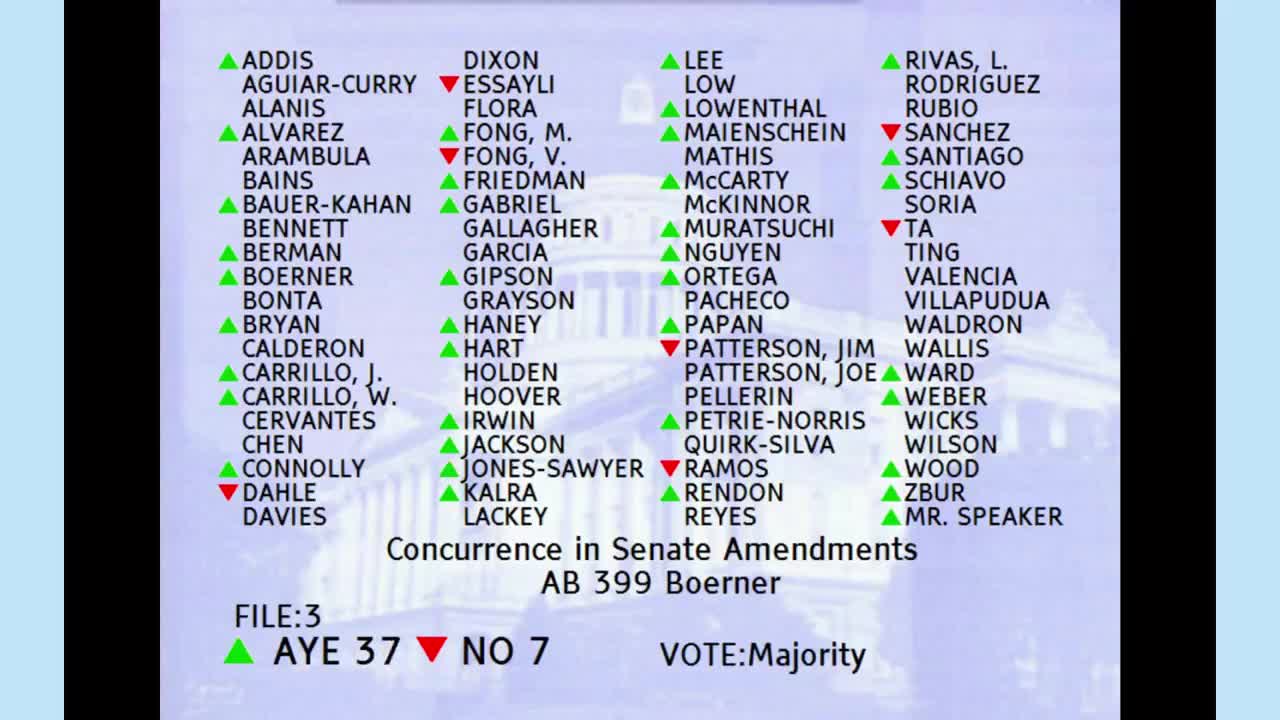 43SEC
Assembly Floor
 3MIN
Senate Floor
 1MIN
Senate Standing Committee on Appropriations
 28MIN
Senate Standing Committee on Judiciary
 18MIN
Senate Standing Committee on Health
 20MIN
Assembly Standing Committee on Health
Bill Author