AB 627: Drayage trucks: voucher incentive project.
- Session Year: 2023-2024
- House: Assembly
- Latest Version Date: 2024-01-22
Current Status:
Failed
(2024-06-05: In committee: Set, first hearing. Hearing canceled at the request of author.)
Introduced
In Committee
First Chamber
In Committee
Second Chamber
Enacted
What does this bill do?
The bill requires the State Air Resources Board to set voucher amounts for buying a new or retrofitting a used drayage truck (trucks that move goods to and from ports) on a sliding scale based on how many drayage trucks an operator owns. It directs the board to prioritize vouchers for operators that haul goods between the Ports of Los Angeles, Long Beach, or Oakland and in‑state warehouses, and for operators who own five or fewer trucks. Vouchers may only be awarded for trucks that currently run on diesel and operate only in California, and can be used to buy or convert trucks to battery electric or hydrogen fuel cell power.
The summary is provided by generative AI which can make mistakes. For original language, please view the details in the table below.
Existing law establishes the State Air Resources Board as the state agency responsible for monitoring and regulating sources emitting greenhouse gases. The state board, in this capacity, administers the California Hybrid and Zero-Emission Truck and Bus Voucher Incentive Project under which the agency issues a limited number of vouchers to incentivize the purchase and use of zero-emission commercial vehicles. The Budget Act of 2023 appropriated funds from the Greenhouse Gas Reduction Fund to the state board for zero-emission drayage trucks to be administered through the project and, in expending those funds, requires the state board, before January 1, 2025, to limit the number and award amount levels under the project based on fleet size.
This bill would require the state board to ensure that a voucher provided under the project for the purchase of a new, or the retrofit of a used, drayage truck is provided to an operator in an amount determined pursuant to a sliding scale established by the state board, based on the number of drayage trucks the operator owns. In administering the project, the bill would require the state board to prioritize the award of those vouchers to operators meeting certain criteria. The bill would also require the state board to ensure that these vouchers may be used to purchase a new drayage truck using, or to retrofit a used drayage truck to use, hydrogen fuel cell or battery electric technology as its source of propulsion.
Existing law establishes the State Air Resources Board as the state agency responsible for monitoring and regulating sources emitting greenhouse gases. The state board, in this capacity, administers the California Hybrid and Zero-Emission Truck and Bus Voucher Incentive Project under which the agency issues a limited number of vouchers to incentivize the purchase and use of zero-emission commercial vehicles. The Budget Act of 2023 appropriated funds from the Greenhouse Gas Reduction Fund to the state board for zero-emission drayage trucks to be administered through the project and, in expending those funds, requires the state board, before January 1, 2025, to limit the number and award amount levels under the project based on fleet size.
This bill would require the state board to ensure that a voucher provided under the project for the purchase or retrofit of a new or used heavy-duty of a new, or the retrofit of a used, drayage truck is provided to an operator in specified amounts an amount determined pursuant to a sliding scale established by the state board, based on the number of heavy-duty drayage trucks that the operator owns. In administering the project, the bill would require the state board to prioritize the award of those vouchers to operators meeting certain criteria. The bill would also require the state board to ensure that these vouchers may be used to purchase a heavy-duty new drayage truck using, or to retrofit a heavy-duty used drayage truck to use, hydrogen fuel cell or battery electric technology as its source of propulsion.
Existing law establishes various incentive programs that are administered or funded by the State Air Resources Board to provide financial assistance for the purchase of vehicles by individuals and fleet purchasers. Existing law establishes the South Coast Air Quality Management District (south coast district) vested with the authority to regulate air emissions from stationary sources located in the South Coast Air Basin. the State Air Resources Board as the state agency responsible for monitoring and regulating sources emitting greenhouse gases. The state board, in this capacity, administers the California Hybrid and Zero-Emission Truck and Bus Voucher Incentive Project under which the agency issues a limited number of vouchers to incentivize the purchase and use of zero-emission commercial vehicles. The Budget Act of 2023 appropriated funds from the Greenhouse Gas Reduction Fund to the state board for zero-emission drayage trucks to be administered through the project and, in expending those funds, requires the state board, before January 1, 2025, to limit the number and award amount levels under the project based on fleet size.
This bill would require the south coast district to establish a statewide program to provide grants to operators of diesel-fueled heavy-duty trucks to replace a diesel-fueled truck with a new truck using a specified power source or to retrofit the diesel-fueled truck by replacing the diesel engine with a power source using a qualifying technology. The bill would require the south coast district to prioritize grants for certain purposes. By adding to the duties of the south coast district, the bill would impose a state-mandated local program. state board to ensure that a voucher provided under the project for the purchase or retrofit of a new or used heavy-duty truck is provided to an operator in specified amounts based on the number of heavy-duty trucks that the operator owns. In administering the project, the bill would require the state board to prioritize the award of those vouchers to operators meeting certain criteria. The bill would also require the state board to ensure that these vouchers may be used to purchase a heavy-duty truck using, or to retrofit a heavy-duty truck to use, hydrogen fuel cell or battery electric technology as its source of propulsion.
The California Constitution requires the state to reimburse local agencies and school districts for certain costs mandated by the state. Statutory provisions establish procedures for making that reimbursement.This bill would provide that with regard to certain mandates no reimbursement is required by this act for a specified reason.With regard to any other mandates, this bill would provide that, if the Commission on State Mandates determines that the bill contains costs so mandated by the state, reimbursement for those costs shall be made pursuant to the statutory provisions noted above.Existing law requires the State Air Resources Board to adopt and implement motor vehicle emission standards, in-use performance standards, and motor vehicle fuel specifications for the control of air contaminants and sources of air pollution the state board has found to be necessary, cost effective, and technologically feasible, to carry out specified purposes, unless preempted by federal law. generally designates the State Air Resources Board as the state agency with the primary responsibility for the control of vehicular air pollution. Under existing law, a violation or failure to comply with a provision of the Vehicle Code constitutes an infraction.
This bill would prohibit, on and after January 1, 2030, a person from operating a diesel-fueled heavy-duty truck on the city streets or county roads located in the Counties of Riverside or San Bernardino, as specified. bill, commencing on January 1, 2035, and except as specifically exempted, would prohibit the operation of a heavy-duty diesel-fueled vehicle, as defined, within the city limits of any city identified by the state board as containing a disadvantaged community and meeting specified air pollution criteria with respect to diesel particulate matter, as specified. A violation of this prohibition, as a provision within the Vehicle Code, would be punishable as an infraction. By expanding the scope of an existing crime, the bill would impose a state-mandated local program.
Existing law, the California Pollution Control Financing Authority Act, establishes the California Pollution Control Financing Authority, with specified powers and duties, and authorizes the authority to approve financing for projects or pollution control facilities to prevent or reduce environmental pollution. law establishes various incentive programs that are administered or funded by the State Air Resources Board to provide financial assistance for the purchase of vehicles by individuals and fleet purchasers. Existing law establishes the South Coast Air Quality Management District (south coast district) vested with the authority to regulate air emissions from stationary sources located in the South Coast Air Basin.
This bill would require the authority south coast district to establish a statewide program to provide grants to operators of diesel-fueled heavy-duty trucks to replace a diesel-fueled truck with a new truck using a specified power source or to retrofit the diesel-fueled truck by replacing the diesel engine with a power source using a qualifying technology. The bill would establish eligibility criteria for the program and would require the board south coast district to prioritize grants for certain purposes. By adding to the duties of the south coast district, the bill would impose a state-mandated local program.
This bill would make legislative findings and declarations as to the necessity of a special statute for the Counties of Riverside and San Bernardino.The California Constitution requires the state to reimburse local agencies and school districts for certain costs mandated by the state. Statutory provisions establish procedures for making that reimbursement.
This bill would provide that with regard to certain mandates no reimbursement is required by this act for a specified reason.
With regard to any other mandates, this bill would provide that, if the Commission on State Mandates determines that the bill contains costs so mandated by the state, reimbursement for those costs shall be made pursuant to the statutory provisions noted above.
Existing law requires the State Air Resources Board to adopt and implement motor vehicle emission standards, in-use performance standards, and motor vehicle fuel specifications for the control of air contaminants and sources of air pollution the state board has found to be necessary, cost effective, and technologically feasible, to carry out specified purposes, unless preempted by federal law.
This bill would prohibit, on and after January 1, 2030, a person from operating a diesel-fueled heavy-duty truck on the city streets or county roads located in the Counties of Riverside or San Bernardino, as specified.
Existing law, the California Pollution Control Financing Authority Act, establishes the California Pollution Control Financing Authority, with specified powers and duties, and authorizes the authority to approve financing for projects or pollution control facilities to prevent or reduce environmental pollution.
This bill would require the authority to establish a program to provide grants to operators of diesel-fueled heavy-duty trucks to replace a diesel-fueled truck with a new truck using a specified power source or to retrofit the diesel-fueled truck by replacing the diesel engine with a power source using a qualifying technology. The bill would establish eligibility criteria for the program and would require the board to prioritize grants for certain purposes.
This bill would make legislative findings and declarations as to the necessity of a special statute for the Counties of Riverside and San Bernardino.
For purposes of this chapter, project means the California Hybrid and Zero-Emission Truck and Bus Voucher Incentive Project established and administered by the state board.
44171.(a)A voucher for the purchase of a new drayage truck, or the retrofit of a used drayage truck, shall be in an amount determined pursuant to a sliding scale that shall be established by the state board. The sliding scale shall authorize increased vouchers in different amounts for fleets of 50 49 or fewer, 30 or fewer, or 5 or fewer vehicles.
(b)In administering the project to provide vouchers described in subdivision (a), the state board shall prioritize awarding those vouchers to both of the following:
(1)Operators for the purchase of new, or the retrofit of used, drayage trucks that transport goods between the Ports of Los Angeles, Long Beach, or Oakland and warehouses located in the state.
(2)Operators who own five or fewer drayage trucks.
(c)The state board may only award a voucher described in subdivision (a) under the project if the moneys provided by the voucher will be used to purchase a new, or retrofit a used, diesel-fueled drayage truck that operates exclusively in California.
(d)The state board shall ensure that a voucher described in subdivision (a) may be used to purchase a new drayage truck that uses, or to retrofit a used drayage truck to use, hydrogen fuel cell or battery electric technology as its source of propulsion.
(e)This chapter does not prohibit the state board from awarding vouchers to vehicles other than drayage trucks as a part of the project.
(f)To the extent this section conflicts with Section 111 of the Budget Act of 2023 (Chapter 38 of the Statutes of 2023), that section of the Budget Act of 2023 shall prevail.
For purposes of this chapter, the following definitions apply: project means the California Hybrid and Zero-Emission Truck and Bus Voucher Incentive Project established and administered by the state board.
(a)Heavy-duty truck means a commercial motor vehicle, not including a bus, with a gross vehicle weight rating of 26,001 or more pounds.(b)Project means the California Hybrid and Zero-Emission Truck and Bus Voucher Incentive Project established and administered by the state board.44171.(a)The state board shall ensure that a voucher provided under the project for the purchase or retrofit of a new or used heavy-duty truck is provided to an operator in the following amounts:(1)A voucher that covers 100 percent of the cost of the purchase of each heavy-duty truck or the retrofit of each diesel-fueled heavy-duty truck, or both, if the operator owns 30 or fewer heavy-duty trucks.(2)A voucher that covers 80 percent of the cost of the purchase of each heavy-duty truck or the retrofit of each diesel-fueled heavy-duty truck, or both, if the operator owns more than 30 heavy-duty trucks and fewer than 51 heavy-duty trucks.(3)A voucher that covers 50 percent of the cost of the purchase of each heavy-duty truck or the retrofit of each diesel-fueled heavy-duty truck, or both, if the operator owns more than 50 heavy-duty trucks.44171.(a)A voucher for the purchase of a new drayage truck, or the retrofit of a used drayage truck, shall be in an amount determined pursuant to a sliding scale that shall be established by the state board. The sliding scale shall authorize increased vouchers in different amounts for fleets of 50 or fewer, 30 or fewer, or 5 or fewer vehicles.
(b)In administering the project to provide vouchers described in subdivision (a), the state board shall prioritize awarding those vouchers to both of the following:
(1)Operators for the replacement or retrofit of diesel-fueled heavy-duty purchase of new, or the retrofit of used, drayage trucks that transport goods between the Ports of Los Angeles, Long Beach, or Oakland and warehouses located in the state.
(2)Operators who own 30 five or fewer heavy-duty drayage trucks.
(c)The state board may only award a voucher described in subdivision (a) under the project if the moneys provided by the voucher will be used to replace purchase a new, or retrofit a used, diesel-fueled heavy-duty drayage truck that operates exclusively in California.
(d)The state board shall ensure that a voucher described in subdivision (a) may be used to purchase a heavy-duty truck using, or to retrofit a heavy-duty truck to use, new drayage truck that uses, or to retrofit a used drayage truck to use, hydrogen fuel cell or battery electric technology as its source of propulsion.
(e)This chapter does not prohibit the state board from awarding vouchers to vehicles other than drayage trucks as a part of the project.
For purposes of this chapter, the following definitions apply:
(a)Heavy-duty truck means a commercial motor vehicle vehicle, not including a bus, with a gross vehicle weight rating of 26,001 or more pounds.
(b)Qualifying technology means hydrogen fuel cell, compressed natural gas, or battery electric technology.(b)Project means the California Hybrid and Zero-Emission Truck and Bus Voucher Incentive Project established and administered by the state board.
44171.(a)The south coast district shall establish a statewide program to provide grants to operators of diesel-fueled heavy-duty trucks in the state for either or both of the following purposes: state board shall ensure that a voucher provided under the project for the purchase or retrofit of a new or used heavy-duty truck is provided to an operator in the following amounts:
(1)The purchase of a new or used heavy-duty truck that is powered by a qualifying technology to replace the diesel-fueled heavy-duty truck.(2)The retrofit of the diesel-fueled heavy-duty truck by replacing the diesel engine with a power source that uses a qualifying technology.(b)An operator shall be eligible to receive a grant in the following amounts:(1)A grant voucher that covers 100 percent of the cost of the purchase of each heavy-duty truck or the retrofit of each diesel-fueled heavy-duty truck, or both, if the operator owns 30 or fewer heavy-duty trucks.
(2)A grant voucher that covers 80 percent of the cost of the purchase of each heavy-duty truck or the retrofit of each diesel-fueled heavy-duty truck, or both, if the operator owns more than 30 heavy-duty trucks and fewer than 51 heavy-duty trucks.
(3)A grant voucher that covers 50 percent of the cost of the purchase of each heavy-duty truck or the retrofit of each diesel-fueled heavy-duty truck, or both, if the operator owns more than 50 heavy-duty trucks.
(c)An operator may use a grant received pursuant to this chapter in conjunction with a voucher provided pursuant to the California Hybrid and Zero-Emission Truck and Bus Voucher Incentive Project.(d)(b)In administering the grant program, the south coast district project to provide vouchers described in subdivision (a), the state board shall prioritize making grants awarding those vouchers to both of the following:
(1)Operators for the replacement or retrofit of diesel-fueled heavy-duty trucks that transport goods between the Ports of Los Angeles, Long Beach, or Oakland and warehouses located in the state.
(2)Operators who own 30 or fewer heavy-duty trucks.
(e)(c)The south coast district state board may only make a grant award a voucher described in subdivision (a) under the program project if the moneys provided by the grant voucher will be used to replace or retrofit a diesel-fueled heavy-duty truck that operates exclusively in California.
(d)The state board shall ensure that a voucher described in subdivision (a) may be used to purchase a heavy-duty truck using, or to retrofit a heavy-duty truck to use, hydrogen fuel cell or battery electric technology as its source of propulsion.
SEC. 3.Division 14.2 (commencing with Section 32075) is added to the Vehicle Code, to read:14.2.Restricted Air Pollution Zones32075.(a)A person shall not operate a heavy-duty diesel-fueled vehicle within the city limits of any city that the State Air Resources Board has included in the list established pursuant to Section 43011.7 of the Health and Safety Code.(b)This section does not apply to any of the following vehicles:(1)Any emergency vehicle.(2)Any service vehicle owned or operated by or for or operated under contract with a utility or public utility, whether privately, municipally, or publicly owned, used in the construction, operation, removal, or repair of utility or public utility property or facilities.(3)Any implement of husbandry as defined in Section 36000.(4)Any tank vehicle, as defined in Section 34003, engaged in the transportation of fuel to a fueling station.(5)Any vehicle registered in another state.(c)As used in subdivision (a), heavy-duty diesel-fueled vehicle means a commercial motor vehicle with a gross vehicle weight rating of 26,001 or more pounds that is powered by a combustion engine that uses diesel fuel.(d)For the purposes of subdivision (a), any vehicle that is being operated on a state highway traversing a designated city is not deemed to be within the city limits of that city.(e)Notwithstanding Section 12810, a violation of this section shall not result in a violation point count.(f)This section shall become operative on January 1, 2035.SEC. 4.No reimbursement is required by this act pursuant to Section 6 of Article XIIIB of the California Constitution for certain costs that may be incurred by a local agency or school district because, in that regard, this act creates a new crime or infraction, eliminates a crime or infraction, or changes the penalty for a crime or infraction, within the meaning of Section 17556 of the Government Code, or changes the definition of a crime within the meaning of Section 6 of Article XIIIB of the California Constitution.However, if the Commission on State Mandates determines that this act contains other costs mandated by the state, reimbursement to local agencies and school districts for those costs shall be made pursuant to Part 7 (commencing with Section 17500) of Division 4 of Title 2 of the Government Code.(a)The state board shall identify each city in the state that meets both of the following requirements:
(1)The city contains a disadvantaged community identified pursuant to Section 39711.
(2)Any portion of the city is in the top 10 percentile of worst air quality in the state for diesel particulate matter, as determined by the state board using CalEnviroScreen.
(b)For purposes of Section 32075 of the Vehicle Code, the state board shall establish a list of cities identified pursuant to subdivision (a) on January 1, 2025, and shall update the list every 10 years thereafter.
(c)The state board shall publish the list of cities established pursuant to this section on its internet website.
(d)For purposes of this section, CalEnviroScreen means the California Communities Environmental Health Screening Tool created by the California Environmental Protection Agency to identify disadvantaged communities for purposes of Section 39711.
SEC. 2.Article 7.5 (commencing with Section 44558.50) is added to Chapter 1 of Division 27 of the Health and Safety Code, to read:7.5.Heavy-Duty Truck Grant ProgramSEC. 2.Chapter 5.7 (commencing with Section 44170) is added to Part 5 of Division 26 of the Health and Safety Code, to read:5.7Heavy-Duty Truck Grant Program44558.50.44170.For purposes of this article, qualifying chapter, the following definitions apply:
(a)Heavy-duty truck means a commercial motor vehicle with a gross vehicle weight rating of 26,001 or more pounds.
(b)Qualifying technology means hydrogen fuel cell, compressed natural gas, or battery electric technology.
44558.51.44171.(a)The authority south coast district shall establish a statewide program to provide grants to operators of diesel-fueled heavy-duty trucks in the state for either or both of the following purposes:
(1)The purchase of a new or used heavy-duty truck that is powered by a qualifying technology to replace the diesel-fueled heavy-duty truck.
(2)The retrofit of the diesel-fueled heavy-duty truck by replacing the diesel engine with a power source that uses a qualifying technology.
(b)The authority shall only provide a grant under the program to an operator who meets all of the following eligibility requirements:(1)The operator owns seven or fewer heavy-duty trucks.(2)The operator makes less than seven million dollars ($7,000,000) per year from the operation of heavy-duty trucks.(3)The operator employs fewer than 70 people in the operation of heavy-duty trucks.(b)An operator shall be eligible to receive a grant in the following amounts:
(1)A grant that covers 100 percent of the cost of the purchase of each heavy-duty truck or the retrofit of each diesel-fueled heavy-duty truck, or both, if the operator owns 30 or fewer heavy-duty trucks.
(2)A grant that covers 80 percent of the cost of the purchase of each heavy-duty truck or the retrofit of each diesel-fueled heavy-duty truck, or both, if the operator owns more than 30 heavy-duty trucks and fewer than 51 heavy-duty trucks.
(3)A grant that covers 50 percent of the cost of the purchase of each heavy-duty truck or the retrofit of each diesel-fueled heavy-duty truck, or both, if the operator owns more than 50 heavy-duty trucks.
(c)An operator may use a grant received pursuant to this chapter in conjunction with a voucher provided pursuant to the California Hybrid and Zero-Emission Truck and Bus Voucher Incentive Project.
(c)(d)In administering the grant program, the authority south coast district shall prioritize making grants for to both of the following:
(1)Operators for the replacement or retrofit of diesel-fueled heavy-duty trucks that transport goods between the Ports of Los Angeles, Long Beach, or Oakland and warehouses located in the state.
(2)Operators who own 30 or fewer heavy-duty trucks.
(d)(e)The authority south coast district may only make a grant under the program if the moneys provided by the grant will be used to replace or retrofit a diesel-fueled heavy-duty truck that operates exclusively in California.
SEC. 3.The Legislature finds and declares that a special statute is necessary and that a general statute cannot be made applicable within the meaning of Section 16 of Article IV of the California Constitution because of the unique air pollution conditions in the Counties of San Bernardino and Riverside arising from the local topography of those counties and the truck traffic from the Ports of Los Angeles and Long Beach into those counties.SEC. 3.Division 14.2 (commencing with Section 32075) is added to the Vehicle Code, to read:14.2.Restricted Air Pollution Zones32075.(a)A person shall not operate a heavy-duty diesel-fueled vehicle within the city limits of any city that the State Air Resources Board has included in the list established pursuant to Section 43011.7 of the Health and Safety Code.
(b)This section does not apply to any of the following vehicles:
(1)Any emergency vehicle.
(2)Any service vehicle owned or operated by or for or operated under contract with a utility or public utility, whether privately, municipally, or publicly owned, used in the construction, operation, removal, or repair of utility or public utility property or facilities.
(3)Any implement of husbandry as defined in Section 36000.
(4)Any tank vehicle, as defined in Section 34003, engaged in the transportation of fuel to a fueling station.
(5)Any vehicle registered in another state.
(c)As used in subdivision (a), heavy-duty diesel-fueled vehicle means a commercial motor vehicle with a gross vehicle weight rating of 26,001 or more pounds that is powered by a combustion engine that uses diesel fuel.
(d)For the purposes of subdivision (a), any vehicle that is being operated on a state highway traversing a designated city is not deemed to be within the city limits of that city.
(e)Notwithstanding Section 12810, a violation of this section shall not result in a violation point count.
(f)This section shall become operative on January 1, 2035.
SEC. 4.No reimbursement is required by this act pursuant to Section 6 of Article XIIIB of the California Constitution for certain costs that may be incurred by a local agency or school district because, in that regard, this act creates a new crime or infraction, eliminates a crime or infraction, or changes the penalty for a crime or infraction, within the meaning of Section 17556 of the Government Code, or changes the definition of a crime within the meaning of Section 6 of Article XIIIB of the California Constitution.
However, if the Commission on State Mandates determines that this act contains other costs mandated by the state, reimbursement to local agencies and school districts for those costs shall be made pursuant to Part 7 (commencing with Section 17500) of Division 4 of Title 2 of the Government Code.
(a)On and after January 1, 2030, a person shall not operate a diesel-fueled heavy-duty truck on the city streets or county roads located in the Counties of Riverside or San Bernardino.
(b)For purposes of this section, diesel-fueled heavy-duty truck means a diesel-fueled heavy-duty truck that operates exclusively in the state.
SEC. 2.Article 7.5 (commencing with Section 44558.50) is added to Chapter 1 of Division 27 of the Health and Safety Code, to read:7.5.Heavy-Duty Truck Grant Program44558.50.For purposes of this article, qualifying technology means hydrogen fuel cell, compressed natural gas, or battery electric technology.
44558.51.(a)The authority shall establish a program to provide grants to operators of diesel-fueled heavy-duty trucks for either or both of the following purposes:
(1)The purchase of a new or used heavy-duty truck that is powered by a qualifying technology to replace the diesel-fueled heavy-duty truck.
(2)The retrofit of the diesel-fueled heavy-duty truck by replacing the diesel engine with a power source that uses a qualifying technology.
(b)The authority shall only provide a grant under the program to an operator who meets all of the following eligibility requirements:
(1)The operator owns seven or fewer heavy-duty trucks.
(2)The operator makes less than seven million dollars ($7,000,000) per year from the operation of heavy-duty trucks.
(3)The operator employs fewer than 70 people in the operation of heavy-duty trucks.
(c)In administering the grant program, the authority shall prioritize making grants for the replacement or retrofit of diesel-fueled heavy-duty trucks that transport goods between the Ports of Los Angeles, Long Beach, or Oakland and warehouses located in the state.
(d)The authority may only make a grant under the program if the moneys provided by the grant will be used to replace or retrofit a diesel-fueled heavy-duty truck that operates exclusively in California.
SEC. 3.The Legislature finds and declares that a special statute is necessary and that a general statute cannot be made applicable within the meaning of Section 16 of Article IV of the California Constitution because of the unique air pollution conditions in the Counties of San Bernardino and Riverside arising from the local topography of those counties and the truck traffic from the Ports of Los Angeles and Long Beach into those counties.
|
Date
|
Status
|
|---|---|
| Jun 5, 2024 | In committee: Set, first hearing. Hearing canceled at the request of author. |
| May 1, 2024 | Referred to Coms. on E.Q. and TRANS. |
| Jan 29, 2024 | In Senate. Read first time. To Com. on RLS. for assignment. |
| Jan 29, 2024 | Read third time. Passed. Ordered to the Senate. (Ayes 67. Noes 1. Page 3953.) |
| Jan 23, 2024 | Read second time. Ordered to third reading. |
| Jan 22, 2024 | Read second time and amended. Ordered returned to second reading. |
| Jan 18, 2024 | In committee: Set, first hearing. Referred to APPR. suspense file. |
| Jan 18, 2024 | From committee: Amend, and do pass as amended. (Ayes 12. Noes 0.) (January 18). |
| Jan 11, 2024 | Re-referred to Com. on APPR. |
| Jan 10, 2024 | Read second time and amended. |
| Jan 9, 2024 | From committee: Amend, and do pass as amended and re-refer to Com. on APPR. (Ayes 14. Noes 0.) (January 8). |
| Jan 4, 2024 | Re-referred to Com. on TRANS. |
| Jan 3, 2024 | From committee chair, with author's amendments: Amend, and re-refer to Com. on TRANS. Read second time and amended. |
| Apr 11, 2023 | In committee: Set, second hearing. Hearing canceled at the request of author. |
| Apr 4, 2023 | Re-referred to Com. on TRANS. |
| Apr 3, 2023 | From committee chair, with author's amendments: Amend, and re-refer to Com. on TRANS. Read second time and amended. |
| Mar 8, 2023 | In committee: Set, first hearing. Hearing canceled at the request of author. |
| Feb 17, 2023 | Referred to Coms. on TRANS. and B. & F. |
| Feb 10, 2023 | From printer. May be heard in committee March 12. |
| Feb 9, 2023 | Read first time. To print. |
|
Date
|
Description
|
Location
|
Votes
|
|
|---|---|---|---|---|
| Jan 29, 2024 | AB 627 Jackson Assembly Third Reading | Assembly Floor |
Passed |
|
| Jan 18, 2024 | Do pass as amended. | Assembly Standing Committee on Appropriations |
Passed |
|
| Jan 8, 2024 | Do pass as amended and be re-referred to the Committee on [Appropriations] | Assembly Standing Committee on Transportation |
Passed |
This list shows positions taken on this bill by organizations on the date displayed, which is linked to the original source.
Positions by individuals are not included.
|
Organization
|
Position
|
Date
|
|---|---|---|
| California Chamber Of Commerce | * Neutral | Jan 8, 2024 |
| California Construction And Industrial Materials Association | ** Support | |
| California Trucking Association | * Neutral | Jan 8, 2024 |
| Republic Services | ** Against | Jan 8, 2024 |
ASSEMBLY THIRD READING
ATR Bill Id:AB 627
Author:(Jackson)
As Amended Ver:January 22, 2024
Majority vote
SUMMARY
Requires the California Air Resources Board (CARB) to establish as part of the Hybrid and Zero-emission Truck and Bus Voucher Incentive Project (HVIP) a sliding scale voucher program for the purchase of a new, or retrofit of a used, drayage truck that uses, hydrogen fuel cell or battery electric technology.
Major Provisions
- Directs CARB to prioritize awarding of HVIP drayage vouchers to the following:
- Operators that transport goods between any of the ports of Los Angeles, Long Beach or Oakland and warehouses located in California; and,
- Operators who own five or fewer drayage trucks.
- Does not prohibit CARB from awarding HVIP vouchers to vehicles other than drayage trucks.
- States that to the extent the bill conflicts with the provisions of the Budget Act of 2023, the budget act shall prevail.
COMMENTS
California climate goals. The Legislature has set a number of goals to reduce greenhouse gas (GHG) emissions and address climate change. The Global Warming Solutions Act of 2006 (AB 32 [Nunez], Chapter 488, Statutes of 2006) and subsequent companion legislation SB 32 (Pavley), Chapter 249, Statutes of 2016 requires California to reduce statewide GHG emissions to 40% below the 1990 level by 2030. AB 1279 (Muratsuchi), Chapter 337, Statutes of 2022 establishes the policy of the state to achieve carbon neutrality as soon as possible, but no later than 2045. CARB is responsible for developing a Scoping Plan to detail how the state will achieve its GHG emissions reduction targets mandated by law.
Nearly 40% of California's GHG emissions are generated by the transportation sector, which includes both the light-duty (passenger) and medium- and heavy-duty fleets. That percentage increases when factoring in the production of transportation fuels. Heavy-duty diesel trucks also contribute to unhealthy levels of ozone, inhalable particulate matter, carbon monoxide, (oxides of nitrogen) NOx, and sulfur dioxide, affecting local air quality. Air quality contaminants are concentrated near ports, rail yards, and freeways. According to data from the South Coast Air Quality Management District, the South Bay Port Complex (Port of Los Angeles and Port of Long Beach) is the single largest fixed source of air pollution in Southern California. The Port of Los Angeles spans 7500 acres, including parts of Wilmington and San Pedro. Over 130,000 people reside in these communities, including 36,000 under the age of 18. Over 70% of these residents are people of color based on recent U.S. Census data.
In the transportation sector, measures to reduce GHG emissions and improve air quality include requiring the use of low carbon fuels, cleaner vehicles, and strategies to promote sustainable communities and improved transportation choices that reduce growth in number of vehicle miles traveled.
To further these efforts, at the end of 2020, Governor Newsom issued Executive Order (EO) N-79-20 which requires 100% of medium- and heavy-duty vehicles in the state be zero-emission by 2045 for all operations where feasible and by 2035 for drayage trucks. EO N-79-20 charges CARB with developing and proposing medium- and heavy-duty vehicle regulations requiring increasing volumes of new zero-emission trucks and buses sold and operated in the state towards that goal. To this end, CARB spent three years developing the Advanced Clean Fleet (ACF) Regulation, which went into effect in late 2023 with initial compliance and reporting dates phasing in for certain fleets December 31, 2023.
Existing vehicle incentive programs. HVIP provides point-of-sale discounts to purchasers of clean medium- and heavy-duty vehicles of all types and sizes. HVIP does not require an owner of the replaced vehicle to scrap the vehicle. HVIP has been funded through Air Quality Improvement Program funding, Greenhouse Gas Reduction Fund, and General Fund moneys.
Due to the disproportionate impact of emissions from drayage trucks traveling between the sea ports and intermodal railyards and inland warehouses, the state has prioritized an earlier transition of this fleet to zero-emission and has provided significant funding for zero-emission drayage truck purchases. Between the 2021-22 and 2026-27 budgets, the state has allocated almost $1 billion for drayage trucks.
Additionally, the Budget Act of 2023 directed CARB to "limit the number and award amount levels based on fleet size," with specific direction to "establish an amount of incentive funds that will only be available for fleet sizes of less than 100 vehicles." Amendments in the Assembly Appropriations Committee clarify the bill and help to ensure consistency with the requirements of the Budget Act of 2023.
Staff comments:
This bill makes changes to HVIP, a project that is not specified in statute, but authorized generally under the California Clean Truck, Bus, and Off-Road Vehicle and Equipment Technology Program. While the state has prioritized the transition of drayage trucks to zero-emission through recent budgetary allocations, other sectors, such as garbage trucks or transit buses, are not specifically called out in statute. Also, this bill makes retrofits eligible under HVIP and as a result would require CARB to create new guidelines.
According to the Author
"[This bill] seeks to strike a balance and complement existing California law seeking to increase the amount of zero emissions trucks operating on California roadways. Additionally this bill prioritizes small fleets, aiming to support their cost for fleet conversion. [This bill] is a needed measure to ensure clean air along California transportation corridors and prioritizes the health of our communities."
Arguments in Support
The California Construction and Industrial Materials Association writes, "[This bill] will provide support for adapting California's goods movement supply chain, helping to reduce costs for consumers and businesses while enhancing emission reductions within California. Further we appreciate the emphasis on supporting small fleets as they are a vital link in moving construction and industrial materials to the construction sites and manufacturers utilizing the products and minerals our members produce."
Arguments in Opposition
Republic Services writes, "[This bill] by definition deprioritizes funding for other vehicles used for other purposes. A large percentage of these vehicles operate within priority communities impacted by industrial or commercial activities not related to distribution centers or port activities. Enactment of [this bill], directing CARB to prioritize funding for a specific type of vehicle being used for a particular purpose, will invite the introduction and enactment of other measures that seek to prioritize other types of vehicles used for other purposes. This measure puts the legislature in the unnecessary position of picking winning and losing industries. Instead, we recommend that the Legislature continue to allow CARB the ability to evaluate the market and make adjustments as necessary to be responsive to real-world changes."
FISCAL COMMENTS
For its part, CARB describes the work required by this bill as (a) developing changes to HVIP program design to allow CARB to request and track grant applicant fleet size and incorporate consideration of fleet size into the voucher award process, and (b) implementing and enforcing those changes. To these activities, CARB attributes four air pollution control specialists at an annual cost of $220,000 each ($880,000 total) and one attorney at $263,000 annually (special fund).
It is reasonable to expect CARB to incur costs as a result of this bill. The bill would require CARB to modify rules governing the HVIP program and to implement and administer those changes, which would include enforcement. Each requirement will entail costs to CARB of an unknown, but significant amount, likely in the hundreds of thousands of dollars annually. However, it is also reasonable to expect initial costs to diminish, once CARB has developed new program rules and procedures and incorporated them into overall HVIP administration. It is not clear why the cost estimate CARB provided to the committee does not show a decrease after the first year or two following the bill's effective date.
VOTES
ASM TRANSPORTATION: 14-0-1
YES: Wilson, Vince Fong, Aguiar-Curry, Berman, Juan Carrillo, Davies, Hart, Jackson, Lowenthal, Papan, Sanchez, Wallis, Ward, Wicks
ABS, ABST OR NV: Ting
ASM APPROPRIATIONS: 12-0-4
YES: Holden, Arambula, Wood, Calderon, Connolly, Mike Fong, Grayson, Haney, Hart, Lowenthal, Pellerin, Villapudua
ABS, ABST OR NV: Sanchez, Megan Dahle, Dixon, Ta
UPDATED
VERSION: January 22, 2024
CONSULTANT: Christine Casey / TRANS. / (916) 319-2093 FN: 0002617
Date of Hearing: January 18, 2024
ASSEMBLY COMMITTEE ON APPROPRIATIONS
Chris Holden, Chair
ABPCA Bill Id:AB 627
Author:(Jackson) – As Amended Ver:January 10, 2024
Policy Committee: | Transportation | Vote: | 14 - 0 |
|
| ||
|
|
Urgency: No State Mandated Local Program: No Reimbursable: No
SUMMARY:
This bill modifies the rules by which the Air Resources Board (ARB) administers the California Hybrid and Zero-emission Truck and Bus Voucher Incentive Project (HVIP).
Specifically, this bill requires ARB to establish a sliding scale by which to determine the dollar amount of a voucher provided through HVIP for the purchase of a new drayage truck that uses, or the retrofit of a used drayage truck to use, hydrogen fuel cell or battery electric technology. The bill requires ARB’s sliding scale to authorize vouchers worth incrementally greater dollar amounts for fleets with 50 or fewer vehicles, 30 or fewer vehicles, and five or fewer vehicles.
The bill further directs ARB to prioritize awarding of HVIP drayage vouchers, as described above, to the following:
- Operators that transport goods between any of the ports of Los Angeles, Long Beach or Oakland and warehouses located in California.
- Operators who own five or fewer drayage trucks.
The bill states it does not prohibit ARB from awarding HVIP vouchers to vehicles other than drayage trucks.
FISCAL EFFECT:
For its part, ARB describes the work required by this bill as (a) developing changes to HVIP program design to allow ARB to request and track grant applicant fleet size and incorporate consideration of fleet size into the voucher award process, and (b) implementing and enforcing those changes. To these activities, ARB attributes four air pollution control specialists at an annual cost of $220,000 each ($880,000 total) and one attorney at $263,000 annually (special fund).
It is reasonable to expect ARB to incur costs as a result of this bill. The bill would require ARB to modify rules governing the HVIP program and to implement and administer those changes, which would include enforcement. Each requirement will entail costs to ARB of an unknown, but significant amount, likely in the hundreds of thousands of dollars annually. However, it is also reasonable to expect initial costs to diminish, once ARB has developed new program rules and procedures and incorporated them into overall HVIP administration. It is not clear why the cost estimate ARB provided to the committee does not show a decrease after the first year or two following the bill’s effective date.
COMMENTS:
- Purpose. The author intends this bill to reduce air pollution caused by heavy-duty vehicles, especially those that move goods from the state’s ports to other destinations. According to the author:
[This bill] seeks to strike a balance and complement existing California law seeking to increase the amount of zero emissions trucks operating on California roadways. Additionally this bill prioritizes small fleets, aiming to support their cost for fleet conversion. [This bill] is a needed measure to ensure clean air along California transportation corridors and prioritizes the health of our communities.
- Background. The state has ambitious clean energy goals: a reduction of statewide greenhouse gas (GHG) emissions to 40% below the 1990 level by 2030, and carbon neutrality as soon as possible, but no later than 2045. To these ends, in September of 2020, the Governor issued Executive Order (EO) N-79-20, which proclaims the following goals:
- 100% of in-state sales of new passenger cars and trucks be zero-emission by 2035.
- 100% of medium- and heavy-duty vehicles in the state be zero-emission by 2045 for all operations, where feasible, and by 2035 for drayage trucks.
- 100% of off-road vehicles and equipment be zero-emission by 2035, where feasible.
ARB is working on regulations to realize the goals of EO N-79-20, including a requirement that drayage trucks—that is, vehicles that transport containers and bulk goods to and from seaports and intermodal railyards—be zero-emission by 2035.
ARB provides financial incentives to ease the burden of the purchase of new zero-emission vehicles. For example, and most directly relevant to this bill, ARB’s HVIP provides point-of-sale vouchers for the purchase of a clean vehicle, such as those required by ARB regulations. Currently, HVIP vouchers are available for purchase of a new clean vehicle, but not for the retrofit of an existing vehicle with clean vehicle technology. This bill would modify HVIP to require ARB issue vouchers for new clean vehicles and for retrofits of existing vehicles and would focus the vouchers on smaller fleets.
The Budget Act of 2023 provided $165 million for HVIP vouchers for drayage trucks, and directed ARB to “limit the number and award amount levels based on fleet size,” with specific direction to “establish an amount of incentive funds that will only be available for fleet sizes of less than 100 vehicles.” The author’s intent seems consistent with existing statute. However, the wording of the bill is ambiguous. The bill states “the sliding scale shall authorize increased vouchers in different amounts for fleets of 50 or fewer, 30 or fewer, or 5 or fewer vehicles.” It is unclear what “increased vouchers” means. In any case, and consistent with the author’s intent, the committee may wish to consider amendments to clarify the meaning of the bill’s language and the need for ARB to implement the bill, should it become law, consistent with the requirements of the Budget Act of 2023.
Analysis Prepared by: Jay Dickenson / APPR. / (916) 319-2081
Date of Hearing: January 8, 2024
ASSEMBLY COMMITTEE ON TRANSPORTATION
Lori D. Wilson, Chair
ABPCA Bill Id:AB 627 (
Author:Jackson) – As Amended Ver:January 3, 2024
SUBJECT: Heavy-duty trucks: voucher incentive project.
SUMMARY: Requires vouchers provided through the Hybrid and Zero-Emission Truck and Bus Voucher Incentive Project (HVIP) for new or used heavy-duty hydrogen or battery electric trucks to cover up to 100% of the purchase cost and requires operators scrap the replaced vehicle. Specifically, this bill:
- Requires the California Air Resources Board (CARB) to provide HVIP vouchers for the purchase of each new or used hydrogen fuel cell or battery electric heavy-duty truck or retrofit of each diesel-fueled heavy-duty truck in the following amounts:
- 100% of the cost, if the operator owns 30 or fewer heavy-duty trucks;
- 80% of the cost, if the operator owns between 30 and 50 heavy-duty trucks; and,
- 50% of the cost, if the operator owns more than 50 heavy-duty trucks.
- Requires CARB to prioritize awarding these HVIP vouchers to:
- Operators that transport goods between the Ports of Los Angeles, Long Beach, or Oakland and warehouses located in the state; and,
- Operators who own 30 or fewer heavy-duty trucks.
- Provides that a voucher only be awarded if it is used to replace or retrofit only diesel-fueled heavy-duty trucks that operate exclusively in California. (For purposes of compliance with interstate commerce law.)
- Defines heavy-duty truck as a commercial motor-vehicle, not including a bus, with a gross vehicle weight rating (GVWR) of 26,001 or more pounds.
EXISTING LAW:
- Establishes the Air Quality Improvement Program (AQIP), administered by CARB, to fund air quality improvement projects relating to fuel and vehicle technologies that reduce criteria air pollutants, improve air quality and fund research to determine and improve the air quality impacts of alternative transportation fuels and vehicles, vessels, and equipment technologies. Funds AQIP through, among other things, surcharges on vehicle registration fees and a portion of the Smog Abatement Fee. (HSC 44274)
- Establishes the Medium- and Heavy-Duty Zero-Emission Fleet Purchasing Assistance Program, within AQIP, to make financing tools and nonfinancial supports available to those fleets to enable those operators to transition their fleets to zero-emission vehicles. (ZEVs). (HSC 44274.11)
- Creates the Clean Truck, Bus, and Off-Road Vehicle and Equipment Technology (Clean Truck and Bus) Program administered by CARB in conjunction with the State Energy Resources Conservation and Development Commission (CEC) and upon appropriation of Greenhouse Gas Reduction Fund (GGRF) funding requires the program to develop, demonstrate, pilot, and deploy zero- and near-zero-emission truck, bus, and off-road vehicle and equipment technologies. (HSC 39719.2 (a))
- Lists purchase incentives for commercially available zero-emission truck, bus, and off-road vehicle and equipment technologies and fueling infrastructure as an eligible project under the Clean Truck and Bus Program. (HSC 39719.2 (b)(4))
- Creates the Carl Moyer Memorial Air Quality Standards Attainment (Carl Moyer) Program to provide grants to offset the incremental cost of projects that reduce emissions of oxides of nitrogen (NOx), particulate matter, and reactive organic gases from on- and off-road vehicles, locomotives, marine vessels, and other sources in the state. CARB oversees the Carl Moyer Program and develops guidelines, protocols, and criteria for covered vehicle projects. The state’s air pollution control and air quality management districts (air districts) select, fund, and monitor specific clean air projects. (HSC 44275, et seq.)
- States the intent of the Legislature to provide owners of commercial motor vehicles certainty about the useful life of engines certified by CARB and other applicable agencies to meet environmental standards for sale in the state. (HSC 43021)
FISCAL EFFECT: Unknown
COMMENTS: California climate goals. The Legislature has set a number of goals to reduce greenhouse gas (GHG) emissions and address climate change. The Global Warming Solutions Act of 2006 (AB 32 [Nunez], Chapter 488, Statutes of 2006) and subsequent companion legislation SB 32 (Pavley), Chapter 249, Statutes of 2016 requires California to reduce statewide GHG emissions to 40% below the 1990 level by 2030. AB 1279 (Muratsuchi), Chapter 337, Statutes of 2022 establishes the policy of the state to achieve carbon neutrality as soon as possible, but no later than 2045. CARB is responsible for developing a Scoping Plan to detail how the state will achieve its GHG emissions reduction targets mandated by law.
Nearly 40% of California's GHG emissions are generated by the transportation sector, which includes both the light-duty (passenger) and medium- and heavy-duty fleets. That percentage increases when factoring in the production of transportation fuels. Heavy-duty diesel trucks also contribute to unhealthy levels of ozone, inhalable particulate matter, carbon monoxide, (oxides of nitrogen) NOx, and sulfur dioxide, affecting local air quality. Air quality contaminants are concentrated near ports, rail yards, and freeways. According to data from the South Coast Air Quality Management District, the South Bay Port Complex (Port of Los Angeles and Port of Long Beach) is the single largest fixed source of air pollution in Southern California. The Port of Los Angeles spans 7500 acres, including parts of Wilmington and San Pedro. Over 130,000 people reside in these communities, including 36,000 under the age of 18. Over 70% of these residents are people of color based on recent U.S. Census data.
In the transportation sector, measures to reduce GHG emissions and improve air quality include requiring the use of low carbon fuels, cleaner vehicles, and strategies to promote sustainable communities and improved transportation choices that reduce growth in number of vehicle miles traveled.
To further these efforts, at the end of 2020, Governor Newsom issued Executive Order (EO) N-79-20 which requires 100% of medium- and heavy-duty vehicles in the state be zero-emission by 2045 for all operations where feasible and by 2035 for drayage trucks. EO N-79-20 charges CARB with developing and proposing medium- and heavy-duty vehicle regulations requiring increasing volumes of new zero-emission trucks and buses sold and operated in the state towards that goal. To this end, CARB spent three years developing the Advanced Clean Fleet (ACF) Regulation, which went into effect in late 2023 with initial compliance and reporting dates phasing in for certain fleets December 31, 2023.
Existing vehicle incentive programs. The Hybrid and Zero-Emission Truck and Bus Voucher Incentive Project (HVIP) provides point-of-sale discounts to purchasers of clean medium- and heavy-duty vehicles of all types and sizes. HVIP does not require an owner of the replaced vehicle to scrap the vehicle. HVIP has been funded through AQIP, GGRF, and General Fund moneys.
Due to the disproportionate impact of emissions from drayage trucks traveling between the sea ports and intermodal railyards and inland warehouses, the state has prioritized an earlier transition of this fleet to zero-emission and has provided significant funding for zero-emission drayage truck purchases. Between the 2021-22 and 2026-27 budgets, the state has allocated almost $1 billion for drayage trucks.
Committee comments:
New scrappage requirement. Currently, HVIP is a point-of-sale voucher program that does not require an existing vehicle to be decommissioned (scrapped) as part of the transaction. This bill imposes a vehicle scrappage requirement similar to the Carl Moyer Program. Carl Moyer is a partnership between CARB and local air districts that provides grant funding for cleaner-than-required engines, equipment, and other sources of air pollution and consistent with federal requirements it requires scrapping a truck.
Fleet owners and operators have raised concerns that requiring scrappage in HVIP greatly reduces the value of the voucher because it requires destroying an expensive asset that is still useful and valuable.
Funding 100% of the purchase cost of a vehicle is not the best use of state resources. Providing incentives for the full purchase cost of a heavy-duty truck may lead to artificial inflation of vehicle prices. Further it obligates the state to bear the full burden of costs that are better shared with federal and local partners. HVIP currently allows combining funding, also known as “stacking”, with the Carl Moyer Program and CARB’s Truck Loan Assistance Program. When stacking HVIP vouchers with other funding sources, HVIP only funds the remaining allowable cost after the other incentives have been applied. Finally, larger voucher amounts will ultimately lead to fewer new ZEVs in use.
Suggested amendments. The following amendments address the above issues and better reflect the author’s intent.
- Remove the scrappage requirement.
- Remove the requirement that CARB provide a voucher for 100% of the purchase price. Instead require CARB to set a sliding scale for vouchers based on fleet size.
- Focus author’s intent on helping small fleets by adding a category for fleets of five or fewer vehicles and prioritize vouchers for these fleets.
- Consistent with the author’s intent, focus on drayage trucks by removing references to “heavy-duty” and replacing with “drayage trucks.”
- Clarify author’s intent that this bill does not preclude CARB from awarding HVIP vouchers to vehicles other than drayage trucks.
- Remove the purchase of a used vehicle from eligibility and clarify that retrofits are only eligible when done on a used vehicle.
According to the author, “[This bill] seeks to strike a balance and complement existing California law seeking to increase the amount of zero emissions trucks operating on California roadways. Additionally this bill prioritizes small fleets, aiming to support their cost for fleet conversion. [This bill] is a needed measure to ensure clean air along California transportation corridors and prioritizes the health of our communities.”
REGISTERED SUPPORT / OPPOSITION:
Support
California Construction and Industrial Materials Association
Opposition
None on file
Analysis Prepared by: Christine Casey / TRANS. / (916) 319-2093
Discussed in Hearing
View Older Hearings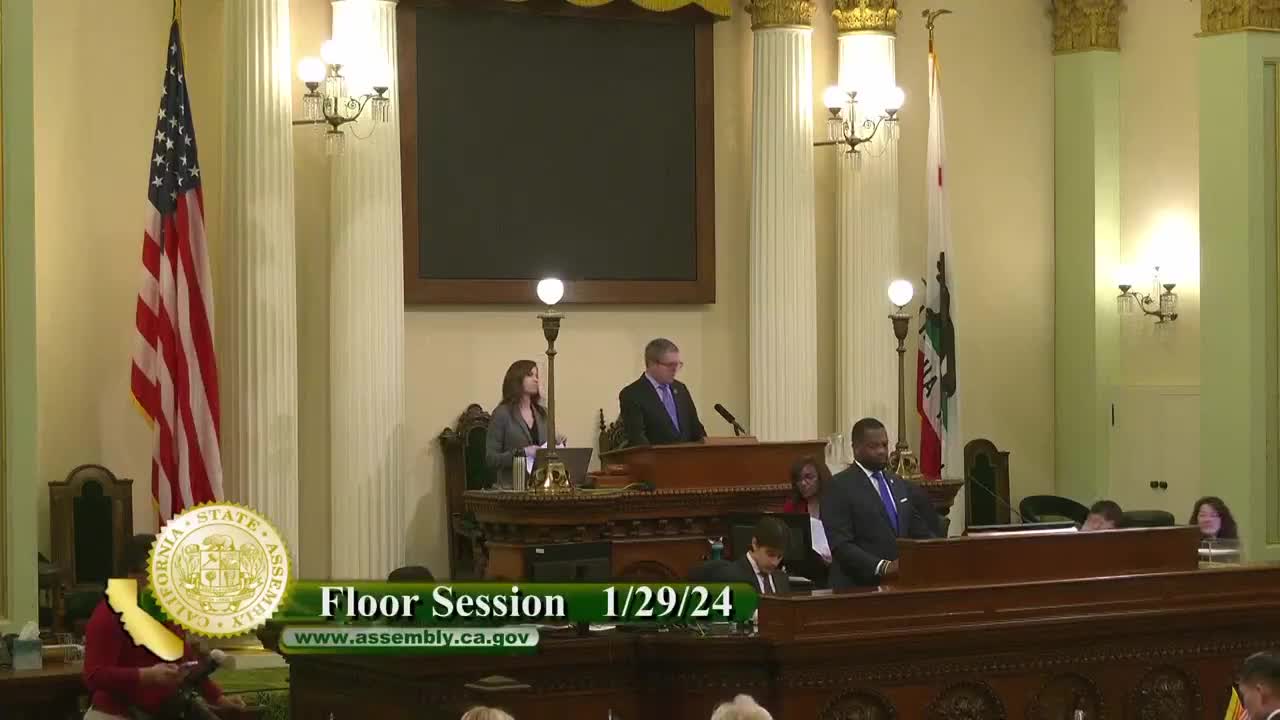
Bill Author

Bill Co-Author(s):