AB 753: State Water Pollution Cleanup and Abatement Account: annual proceeds transfers.
- Session Year: 2023-2024
- House: Assembly
- Latest Version Date: 2023-09-14
Current Status:
Failed
(2024-02-01: Consideration of Governor's veto stricken from file.)
Introduced
In Committee
First Chamber
In Committee
Second Chamber
Enacted
What does this bill do?
The bill creates a Waterway Recovery Account and requires that 40% of annual proceeds from the State Water Pollution Cleanup and Abatement Account (excluding certain administrative penalties tied to supplemental environmental projects) be moved into it. The state water board must divide those funds among regional water boards based on where they were generated, and regional boards must award the money to third parties for water-quality restoration projects, giving priority to projects that add greenspace and other benefits in disadvantaged communities and that help the communities harmed by the original pollution.
The summary is provided by generative AI which can make mistakes. For original language, please view the details in the table below.
Under existing law, the State Water Resources Control Board and the 9 California regional water quality control boards regulate water quality and prescribe waste discharge requirements in accordance with the federal national pollutant discharge elimination system permit program established by the federal Clean Water Act and the Porter-Cologne Water Quality Control Act. Existing law requires each regional board to formulate and adopt water quality control plans for all areas within the region, as provided.
Existing law authorizes the imposition of civil penalties for violations of certain waste discharge requirements and requires that penalties imposed pursuant to these provisions be deposited into the Waste Discharge Permit Fund, to be expended by the state board, upon appropriation by the Legislature, for specified purposes related to water quality. For violations of certain other waste discharge requirements, including the violation of a waste discharge requirement effluent limitation, existing law imposes specified civil penalties, the proceeds of which are deposited into the continuously appropriated State Water Pollution Cleanup and Abatement Account, which is established in the State Water Quality Control Fund.
This bill would create the Waterway Recovery Account within the Waste Discharge Permit Fund, and would annually transfer from the State Water Pollution Cleanup and Abatement Account, excluding administratively imposed civil liabilities that include a supplemental environmental project in connection with a monetary penalty, 40% of the annual proceeds to the Waterway Recovery Account. The bill would provide that moneys in the account created by the bill are continuously appropriated to the state board without regard to fiscal years. The bill would require the state board to allocate the Waterway Recovery Account moneys to each regional board on a proportional basis, based on moneys generated in each region, and would require the regional boards to allocate those moneys to third parties for restoration projects, as specified, with priority given to third parties that will undertake projects with multiple benefits that provide greenspace within disadvantaged communities, as provided.
By creating a new continuously appropriated account, and by transferring funds from an existing continuously appropriated account, the bill would make an appropriation.
Under existing law, the State Water Resources Control Board and the 9 California regional water quality control boards regulate water quality and prescribe waste discharge requirements in accordance with the federal national pollutant discharge elimination system (NPDES) permit program established by the federal Clean Water Act and the Porter-Cologne Water Quality Control Act. Existing law requires each regional board to formulate and adopt water quality control plans for all areas within the region, as provided.
Existing law authorizes the imposition of civil penalties for violations of certain waste discharge requirements and requires that penalties imposed pursuant to these provisions be deposited into the Waste Discharge Permit Fund, to be expended by the state board, upon appropriation by the Legislature, for specified purposes related to water quality. For violations of certain other waste discharge requirements, including the violation of a waste discharge requirement effluent limitation, existing law imposes specified civil penalties, the proceeds of which are deposited into the continuously appropriated State Water Pollution Cleanup and Abatement Account, which is established in the State Water Quality Control Fund.
This bill would create the Waterway Recovery Account within the Waste Discharge Permit Fund, and would annually transfer from the State Water Pollution Cleanup and Abatement Account, excluding administratively imposed civil liabilities that include a supplemental environmental project in connection with a monetary penalty, 40% of the annual proceeds to the Waterway Recovery Account. The bill would provide that moneys in the account created by the bill are continuously appropriated to the state board without regard to fiscal years. The bill would require the state board to allocate the Waterway Recovery Account moneys to each regional board on a proportional basis, based on moneys generated in each region, and would require the regional boards to allocate those moneys to third parties, parties for restoration projects, as specified, with priority given to third parties that will undertake projects with multiple benefits that provide greenspace within disadvantaged communities, as provided.
By creating a new continuously appropriated account, and by transferring funds from an existing continuously appropriated account, the bill would make an appropriation.
Under existing law, the State Water Resources Control Board and the 9 California regional water quality control boards regulate water quality and prescribe waste discharge requirements in accordance with the federal national pollutant discharge elimination system (NPDES) permit program established by the federal Clean Water Act and the Porter-Cologne Water Quality Control Act. Existing law requires each regional board to formulate and adopt water quality control plans for all areas within the region, as provided.
Existing law authorizes the imposition of civil penalties for violations of certain waste discharge requirements and requires that penalties imposed pursuant to these provisions be deposited into the Waste Discharge Permit Fund, to be expended by the state board, upon appropriation by the Legislature, for specified purposes related to water quality. For violations of certain other waste discharge requirements, including the violation of a waste discharge requirement effluent limitation, existing law imposes specified civil penalties, the proceeds of which are deposited into the continuously appropriated State Water Pollution Cleanup and Abatement Account, which is established in the State Water Quality Control Fund.
This bill would create the Waterway Recovery Account within the Waste Discharge Permit Fund, and would annually transfer from the State Water Pollution Cleanup and Abatement Account, excluding administratively imposed civil liabilities that include a supplemental environmental project in connection with a monetary penalty, 50% 40% of the annual proceeds to the Waterway Recovery Account. The bill would provide that moneys in the account created by the bill are continuously appropriated to the state board without regard to fiscal years. The bill would require the state board to allocate the Waterway Recovery Account moneys to each regional board on a proportional basis, based on moneys generated in each region, and would require the regional boards to allocate those moneys to third parties, with priority given to third parties that will undertake projects with multiple benefits that provide greenspace within disadvantaged communities, as provided.
By creating a new continuously appropriated account, and by transferring funds from an existing continuously appropriated account, the bill would make an appropriation.
Under existing law, the State Water Resources Control Board and the 9 California regional water quality control boards regulate water quality and prescribe waste discharge requirements in accordance with the federal national pollutant discharge elimination system (NPDES) permit program established by the federal Clean Water Act and the Porter-Cologne Water Quality Control Act. Existing law requires each regional board to formulate and adopt water quality control plans for all areas within the region, as provided.
Existing law authorizes the imposition of civil penalties for violations of certain waste discharge requirements and requires that penalties imposed pursuant to these provisions be deposited into the Waste Discharge Permit Fund, to be expended by the state board, upon appropriation by the Legislature, for specified purposes related to water quality. For violations of certain other waste discharge requirements, including the violation of a waste discharge requirement effluent limitation, existing law imposes specified civil penalties, the proceeds of which are deposited into the continuously appropriated State Water Pollution Cleanup and Abatement Account, which is established in the State Water Quality Control Fund.
This bill would create the Waterway Recovery Account within the Waste Discharge Permit Fund, and would annually transfer from the State Water Pollution Cleanup and Abatement Account, excluding administratively imposed civil liabilities that include a supplemental environmental project in connection with a monetary penalty, 50% of the annual proceeds to the Waterway Recovery Account. The bill would provide that moneys in the account created by the bill are continuously appropriated to the state board without regard to fiscal years to expend on restoration projects that improve water quality as specified, for the state boards Clean Water Team to increase water quality monitoring, and to create and fund a community capacity program to increase disadvantaged and tribal community participation in state board and regional board outreach and regulatory processes, as specified. years. The bill would require the state board, including the state boards Clean Water Team, and the regional boards to designate third parties to make these expenditures. board to allocate the Waterway Recovery Account moneys to each regional board on a proportional basis, based on moneys generated in each region, and would require the regional boards to allocate those moneys to third parties, with priority given to third parties that will undertake projects with multiple benefits that provide greenspace within disadvantaged communities, as provided.
By creating a new continuously appropriated account, and by transferring funds from an existing continuously appropriated account, the bill would make an appropriation.
Under existing law, the State Water Resources Control Board and the 9 California regional water quality control boards regulate water quality and prescribe waste discharge requirements in accordance with the federal national pollutant discharge elimination system (NPDES) permit program established by the federal Clean Water Act and the Porter-Cologne Water Quality Control Act. Existing law requires each regional board to formulate and adopt water quality control plans for all areas within the region, as provided.
Existing law authorizes the imposition of civil penalties for violations of certain waste discharge requirements and requires that penalties imposed pursuant to these provisions be deposited into the Waste Discharge Permit Fund, to be expended by the state board, upon appropriation by the Legislature, for specified purposes related to water quality. For violations of certain other waste discharge requirements, including the violation of a waste discharge requirement effluent limitation, existing law imposes specified civil penalties, the proceeds of which are deposited into the continuously appropriated State Water Pollution Cleanup and Abatement Account, which is established in the State Water Quality Control Fund.
This bill would create the Waterway Recovery Account within the Waste Discharge Permit Fund the Waterway Recovery Account, Fund, and would annually transfer from the State Water Pollution Cleanup and Abatement Account, excluding administratively imposed civil liabilities that include a supplemental environmental project in connection with a monetary penalty, 50% of the annual proceeds to the Waterway Recovery Account. The bill would provide that moneys in the account created by the bill are continuously appropriated to the state board without regard to fiscal years to expend for the following purposes: for on restoration projects that improve water quality standards, as specified; as specified, for the state boards Clean Water Team Citizen Monitoring Program, to increase water quality monitoring; monitoring, and to create and fund a community capacity program to increase disadvantaged and tribal community participation in state board and regional board outreach and regulatory processes, as specified. The bill would require the state board, including the state boards Clean Water Team, and the regional boards to designate third parties to make these expenditures.
By creating a new continuously appropriated account, and by transferring funds from an existing continuously appropriated account, the bill would make an appropriation.
Under existing law, the State Water Resources Control Board and the 9 California regional water quality control boards regulate water quality and prescribe waste discharge requirements in accordance with the federal national pollutant discharge elimination system (NPDES) permit program established by the federal Clean Water Act and the Porter-Cologne Water Quality Control Act. Existing law requires each regional board to formulate and adopt water quality control plans for all areas within the region, as provided.
Existing law authorizes the imposition of civil penalties for violations of certain waste discharge requirements and requires that penalties imposed pursuant to these provisions be deposited into the Waste Discharge Permit Fund, to be expended by the state board, upon appropriation by the Legislature, for specified purposes related to water quality. For violations of certain other waste discharge requirements, including the violation of a waste discharge requirement effluent limitation, existing law imposes specified civil penalties, the proceeds of which are deposited into the continuously appropriated State Water Pollution Cleanup and Abatement Account, which is established in the State Water Quality Control Fund.
This bill would create within the Waste Discharge Permit Fund the Waterway Recovery Account, and would annually transfer from the State Water Pollution Cleanup and Abatement Account, excluding administratively imposed civil liabilities that include a supplemental environmental project in connection with a monetary penalty, 50% of the annual proceeds to the Waterway Recovery Account. The bill would provide that moneys in the account created by the bill are continuously appropriated to the state board without regard to fiscal years to expend for the following purposes: for restoration projects that improve water quality standards, as specified; for the Clean Water Team Citizen Monitoring Program, to increase water quality monitoring; and to create and fund a community capacity program to increase disadvantaged and tribal community participation in state board and regional board outreach and regulatory processes, as specified.
By creating a new continuously appropriated account, and by transferring funds from an existing continuously appropriated account, the bill would make an appropriation.
(a)The Waterway Recovery Account is hereby created in the Waste Discharge Permit Fund.
(b)Forty percent of the annual proceeds of the State Water Pollution Cleanup and Abatement Account, excluding administratively imposed civil liabilities that include a supplemental environmental project in connection with a monetary penalty, shall be annually transferred to the Waterway Recovery Account.
(c)Notwithstanding Section 13340 of the Government Code, moneys in the Waterway Recovery Account are hereby continuously appropriated to the state board without regard to fiscal years. The state board shall allocate the Waterway Recovery Account moneys to each regional board on a proportional basis based on moneys generated in each region.
(d)Regional boards shall allocate the moneys allocated by the state board for restoration projects, including supplemental environmental projects, to improve water quality in the community, by allocating these moneys to third parties. Priority shall be given to a third party that will undertake projects with multiple benefits that provide greenspace within disadvantaged communities. Regional boards shall, to the best of their ability, use moneys from the Waterway Recovery Account to fund projects with a significant nexus to the community harmed by the original water quality violation.
(a)The Waterway Recovery Account is hereby created in the Waste Discharge Permit Fund.
(b)Forty percent of the annual proceeds of the State Water Pollution Cleanup and Abatement Account, excluding administratively imposed civil liabilities that include a supplemental environmental project in connection with a monetary penalty, shall be annually transferred to the Waterway Recovery Account.
(c)Notwithstanding Section 13340 of the Government Code, moneys in the Waterway Recovery Account are hereby continuously appropriated to the state board without regard to fiscal years. The state board shall allocate the Waterway Recovery Account moneys to each regional board on a proportional basis based on moneys generated in each region.
(d)Regional boards shall allocate the moneys allocated by the state board for restoration projects, including supplemental environmental projects, to improve water quality in the community, by allocating these moneys to third parties, and priority parties. Priority shall be given to a third party that will undertake projects with multiple benefits that provide greenspace within disadvantaged communities. Regional boards shall, to the best of their ability, use moneys from the Waterway Recovery Account to fund projects with a significant nexus to the community harmed by the original water quality violation.
(a)The Waterway Recovery Account is hereby created in the Waste Discharge Permit Fund.
(b)Fifty Forty percent of the annual proceeds of the State Water Pollution Cleanup and Abatement Account, excluding administratively imposed civil liabilities that include a supplemental environmental project in connection with a monetary penalty, shall be annually transferred to the Waterway Recovery Account.
(c)Notwithstanding Section 13340 of the Government Code, moneys in the Waterway Recovery Account are hereby continuously appropriated to the state board without regard to fiscal years. The state board shall allocate the Waterway Recovery Account moneys to each regional board on a proportional basis based on moneys generated in each region.
(d)Regional boards shall allocate the moneys allocated by the state board to third parties, and priority shall be given to a third party that will undertake projects with multiple benefits that provide greenspace within disadvantaged communities. Regional boards shall, to the best of their ability, use moneys from the Waterway Recovery Account to fund projects with a significant nexus to the community harmed by the original water quality violation.
(a)The Waterway Recovery Account is hereby created in the Waste Discharge Permit Fund.
(b)Fifty percent of the annual proceeds of the State Water Pollution Cleanup and Abatement Account, excluding administratively imposed civil liabilities that include a supplemental environmental project in connection with a monetary penalty, shall be annually transferred to the Waterway Recovery Account.
(c)Notwithstanding Section 13340 of the Government Code, moneys in the Waterway Recovery Account are hereby continuously appropriated to the state board without regard to fiscal years to expend on all of the following: years. The state board shall allocate the Waterway Recovery Account moneys to each regional board on a proportional basis based on moneys generated in each region.
(1)(A)Restoration projects, including supplemental environmental projects, that improve water quality.(B)The state board shall allocate no less than 30 percent of the Waterway Recovery Account moneys to each regional board on an equitable basis based on moneys generated in each region. Regional(d)Regional boards shall allocate those the moneys allocated by the state board to third parties, and priority shall be given to a third party that will undertake projects with multiple benefits that provide greenspace within disadvantaged communities. Regional boards shall, to the best of their ability, use moneys from the Waterway Recovery Account to fund projects with a significant nexus to the community harmed by the original water quality violation.
(2)Pursuant to paragraph (2) of subdivision (b) of Section 189.7, a community capacity program to increase disadvantaged and tribal community participation in state board and regional board outreach and regulatory processes, including, but not limited to, all of the following:(A)Increasing disadvantaged and tribal community stakeholder participation.(B)Improving language access.(C)Improving access to data and information on racial equity.(D)Improving communication with communities and partners.(E)Bridging the digital divide to increase public participation in underserved communities.(3)The state boards Clean Water Team to increase water quality monitoring to inform the states integrated report or to establish a priority water-contact recreation site monitoring program that includes posting and notification of water quality hazards at identified water bodies. The state board shall prioritize moneys to increase monitoring for inland waterways in overburdened communities, as defined in paragraph (4) of subdivision (e) of Section 115917 of the Health and Safety Code.(d)(1)Moneys in this section may be allocated for ongoing implementation and are not required to be spent on discrete projects.(2)The state board shall designate, and allocate moneys in the Waterway Recovery Account to, third parties to make the expenditures authorized by subparagraph (A) of paragraph (1), and paragraph (2), of subdivision (c). The state boards Clean Water Team shall designate third parties to expend any moneys allocated for the Clean Water Teams use by the state board to increase water quality monitoring pursuant to paragraph (3) of subdivision (c).(a)The Waterway Recovery Account is hereby created in the Waste Discharge Permit Fund.
(b)Fifty percent of the annual proceeds of the State Water Pollution Cleanup and Abatement Account, excluding administratively imposed civil liabilities that include a supplemental environmental project in connection with a monetary penalty, shall be annually transferred to the Waterway Recovery Account.
(c)Notwithstanding Section 13340 of the Government Code, moneys in the Waterway Recovery Account are hereby continuously appropriated to the state board without regard to fiscal years to expend on all of the following:
(1)(A)Restoration projects, including supplemental environmental projects, that improve water quality. The
(B)The state board shall allocate no less than 30 percent of the Waterway Recovery Account moneys to each regional board on an equitable basis based on moneys generated in each region. Regional boards shall allocate those moneys to third parties, and priority shall be given to projects with multiple benefits that provide greenspace within disadvantaged communities. Regional boards shall shall, to the best of their ability, use moneys from the Waterway Recovery Account to fund, to the best of their ability, fund projects with a significant nexus to the community harmed by the original water quality violation.
(2)Pursuant to paragraph (2) of subdivision (b) of Section 189.7, a community capacity program to increase disadvantaged and tribal community participation in state board and regional board outreach and regulatory processes, including, but not limited to, all of the following:
(A)Increasing disadvantaged and tribal community stakeholder participation.
(B)Improving language access.
(C)Improving access to data and information on racial equity.
(D)Improving communication with communities and partners.
(E)Bridging the digital divide to increase public participation in underserved communities.
(3)The state boards Clean Water Team Citizen Monitoring Program to increase water quality monitoring to inform the states integrated report or to establish a priority water-contact recreation site monitoring program that includes posting and notification of water quality hazards at identified water bodies. The state board shall prioritize moneys to increase monitoring for inland waterways in overburdened communities, as defined in paragraph (4) of subdivision (e) of Section 115917 of the Health and Safety Code.
(d)(1)Moneys in this section may be allocated for ongoing implementation and are not required to be spent on discrete projects.
(2)The state board shall designate, and allocate moneys in the Waterway Recovery Account to, third parties to make the expenditures authorized by subparagraph (A) of paragraph (1), and paragraph (2), of subdivision (c). The state boards Clean Water Team shall designate third parties to expend any moneys allocated for the Clean Water Teams use by the state board to increase water quality monitoring pursuant to paragraph (3) of subdivision (c).
(a)The Waterway Recovery Account is hereby created in the Waste Discharge Permit Fund.
(b)Fifty percent of the annual proceeds of the State Water Pollution Cleanup and Abatement Account, excluding administratively imposed civil liabilities that include a supplemental environmental project in connection with a monetary penalty, shall be annually transferred to the Waterway Recovery Account.
(c)Notwithstanding Section 13340 of the Government Code, moneys in the Waterway Recovery Account are hereby continuously appropriated to the state board without regard to fiscal years to expend on all of the following:
(1)Restoration projects, including supplemental environmental projects, that improve water quality. The state board shall allocate no less than 30 percent of the Waterway Recovery Account moneys to each regional board on an equitable basis based on moneys generated in each region. Regional boards shall allocate those moneys to third parties, and priority shall be given to projects with multiple benefits that provide greenspace within disadvantaged communities. Regional boards shall use moneys from the Waterway Recovery Account to fund, to the best of their ability, projects with a significant nexus to the community harmed by the original water quality violation.
(2)Pursuant to paragraph (2) of subdivision (b) of Section 189.7, a community capacity program to increase disadvantaged and tribal community participation in state board and regional board outreach and regulatory processes, including, but not limited to, all of the following:
(A)Increasing disadvantaged and tribal community stakeholder participation.
(B)Improving language access.
(C)Improving access to data and information on racial equity.
(D)Improving communication with communities and partners.
(E)Bridging the digital divide to increase public participation in underserved communities.
(3)The Clean Water Team Citizen Monitoring Program to increase water quality monitoring to inform the states integrated report or to establish a priority water-contact recreation site monitoring program that includes posting and notification of water quality hazards at identified water bodies. The state board shall prioritize moneys to increase monitoring for inland waterways in overburdened communities, as defined in paragraph (4) of subdivision (e) of Section 115917 of the Health and Safety Code.
(d)Moneys in this section may be allocated for ongoing implementation and are not required to be spent on discrete projects.
REVISIONS: HeadingLine 2.|
Date
|
Status
|
|---|---|
| Feb 1, 2024 | Consideration of Governor's veto stricken from file. |
| Jan 3, 2024 | Consideration of Governor's veto pending. |
| Oct 8, 2023 | Vetoed by Governor. |
| Sep 19, 2023 | Enrolled and presented to the Governor at 4 p.m. |
| Sep 12, 2023 | Senate amendments concurred in. To Engrossing and Enrolling. (Ayes 79. Noes 0. Page 3236.). |
| Sep 12, 2023 | Assembly Rule 77 suspended. (Page 3228.) |
| Sep 11, 2023 | In Assembly. Concurrence in Senate amendments pending. May be considered on or after September 13 pursuant to Assembly Rule 77. |
| Sep 11, 2023 | Read third time. Passed. Ordered to the Assembly. (Ayes 32. Noes 6. Page 2554.). |
| Sep 5, 2023 | Read second time. Ordered to third reading. |
| Sep 1, 2023 | From committee: Do pass. (Ayes 5. Noes 2.) (September 1). |
| Aug 21, 2023 | In committee: Referred to APPR suspense file. |
| Aug 14, 2023 | From committee chair, with author's amendments: Amend, and re-refer to committee. Read second time, amended, and re-referred to Com. on APPR. |
| Aug 9, 2023 | In committee: Set, first hearing. Hearing canceled at the request of author. |
| Jul 13, 2023 | Read second time and amended. Re-referred to Com. on APPR. |
| Jul 12, 2023 | From committee: Amend, and do pass as amended and re-refer to Com. on APPR. (Ayes 6. Noes 1.) (July 12). |
| Jun 29, 2023 | From committee chair, with author's amendments: Amend, and re-refer to committee. Read second time, amended, and re-referred to Com. on E.Q. |
| Jun 15, 2023 | From committee chair, with author's amendments: Amend, and re-refer to committee. Read second time, amended, and re-referred to Com. on E.Q. |
| Jun 14, 2023 | In committee: Set, first hearing. Hearing canceled at the request of author. |
| Jun 7, 2023 | Referred to Com. on E.Q. |
| May 31, 2023 | In Senate. Read first time. To Com. on RLS. for assignment. |
| May 30, 2023 | Read third time. Passed. Ordered to the Senate. (Ayes 78. Noes 0. Page 1868.) |
| May 18, 2023 | Read second time. Ordered to third reading. |
| May 18, 2023 | From committee: Do pass. (Ayes 15. Noes 0.) (May 18). |
| Apr 19, 2023 | In committee: Set, first hearing. Referred to APPR. suspense file. |
| Mar 29, 2023 | From committee: Do pass and re-refer to Com. on APPR. (Ayes 9. Noes 0.) (March 28). Re-referred to Com. on APPR. |
| Mar 29, 2023 | Coauthors revised. |
| Feb 23, 2023 | Referred to Com. on E.S. & T.M. |
| Feb 14, 2023 | From printer. May be heard in committee March 16. |
| Feb 13, 2023 | Read first time. To print. |
|
Date
|
Description
|
Location
|
Votes
|
|
|---|---|---|---|---|
| Sep 12, 2023 | AB 753 Papan Concurrence in Senate Amendments | Assembly Floor |
Passed |
|
| Sep 11, 2023 | Assembly 3rd Reading AB753 Papan et al. By Stern | Senate Floor |
Passed |
|
| Sep 1, 2023 | Do pass | Senate Standing Committee on Appropriations |
Passed |
|
| Aug 21, 2023 | Placed on suspense file | Senate Standing Committee on Appropriations |
Passed |
|
| Jul 12, 2023 | Do pass as amended, but first amend, and re-refer to the Committee on [Appropriations] | Senate Standing Committee on Environmental Quality |
Passed |
|
| May 30, 2023 | AB 753 Papan Assembly Third Reading | Assembly Floor |
Passed |
|
| May 18, 2023 | Do pass. | Assembly Standing Committee on Appropriations |
Passed |
|
| Mar 28, 2023 | Do pass and be re-referred to the Committee on [Appropriations] | Assembly Standing Committee on Environmental Safety and Toxic Materials |
Passed |
This list shows positions taken on this bill by organizations on the date displayed, which is linked to the original source.
Positions by individuals are not included.
|
Organization
|
Position
|
Date
|
|---|---|---|
| California Coastkeeper Alliance | ** Support | |
| California Environmental Voters | ** Support | |
| Clean Earth 4 Kids | * Support | Aug 21, 2023 |
| Coachella Valley Waterkeeper | ** Support | |
| El Dorado Irrigation District | ** Against | |
| Elsinore Valley Municipal Water District | ** Against | |
| Heal The Bay | ** Support | |
| Humboldt Baykeeper | ** Support | |
| Inland Empire Waterkeeper | ** Support | |
| LAANE | ** Support | |
| Los Angeles Waterkeeper | ** Support | |
| Monterey Waterkeeper | ** Support | |
| Orange County Coastkeeper | ** Support | |
| Russian Riverkeeper | ** Support | |
| San Diego Coastkeeper | ** Support | |
| Santa Barbara Channelkeeper | ** Support | |
| Sierra Club California | ** Support | |
| Sonoma County Board of Supervisors | * Support | Mar 28, 2023 |
| South Yuba River Citizens League | ** Support | |
| Surfrider Foundation | ** Support | |
| The Otter Project | ** Support | |
| Yuba River Waterkeeper | ** Support |
GOVERNOR'S VETO
GV Bill Id:AB 753
Author:(Papan)
As Enrolled Ver:September 14, 2023
2/3 vote
SUMMARY
Creates the Waterway Recovery Account (Waterway Account) within the Waste Discharge Permit Fund, and transfers forty percent of the funds from the State Water Pollution Cleanup and Abatement Account (Abatement Account) to the Waterway Account for projects to improve water quality.
Senate Amendments:
1) Reduces the amount transferred from the Abatement Account to the Waterway Account from 50% to 40%.
2) Requires the State Water Resources Control Board (State Water Board) to allocate Waterway Account moneys to each Regional Water Quality Control Board (Regional Water Board) on a proportional basis based on moneys generated from the Abatement Account in each region.
3) Deletes from the bill the requirement that money from the Waterway Account shall be used for a community capacity program to increase disadvantaged and tribal community participation in State and Regional Water Board regulatory processes and for funds to go to the State Water Board's Clean Water Team Citizen Monitoring Program.
Governor’s Veto Message
While I appreciate the author's intent to improve clean up of local waterways in disadvantaged communities, this bill reallocates revenue from an oversubscribed fund that is utilized to clean up waste, abate the effects of waste on waters of the state, and address urgent drinking water needs. This funding represents a critical need and we cannot afford to redirect it to a new account.
COMMENTS
Federal Clean Water Act (CWA): The federal CWA establishes the basic structure for regulating discharges of pollutants into the waters of the United States and for regulating quality standards for surface waters. Under the CWA, the United States Environmental Protection Agency has implemented pollution control programs, including setting wastewater standards for industrial facilities, as well as set water quality standards for all contaminants in surface waters. The CWA makes it unlawful to discharge any pollutant from a point source into navigable waters without a permit. Industrial, municipal, and other facilities must obtain a permit under the National Pollutant Discharge Elimination System in order to discharge into surface water.
State regulation of water pollution: The State Water Board is responsible for administering the federal CWA and California’s Water Quality Act (Water Quality Act), which set up the statewide structure for water quality control. The Water Quality Act designates the State Water Board as the water pollution control agency for all purposes stated in the CWA, and it authorizes the State Water Board to exercise any powers that the federal CWA delegates to the State. The State Water Board and the Regional Water Boards are charged with preventing and reducing water pollution in rivers, streams, lakes, beaches, bays, and groundwater.
State Water Pollution Cleanup and Abatement Account (Abatement Account): The Abatement Account was created to provide public agencies with grants for the cleanup or abatement of pollution when there are no viable responsible parties available to undertake the work. Abatement Account funding comes from court judgments and administrative civil liabilities assessed by the State Water Board and the Regional Water Boards. Eligible entities that could apply for funding from the Abatement Account include public agencies, as well as certain not-for-profit organizations and tribal governments that serve a disadvantaged community and that have the authority to clean up or abate the effects of a waste.
In 2015, the Legislature enacted AB 92 (Budget Committee), Chapter 2, Statutes of 2015, to help provide grant funding to address emergency drinking water issues. Among its provisions, AB 92 expanded the types of projects that can be funded from the Abatement Account to include projects to address an urgent drinking water need, without regard to whether the need for drinking water is a result of the discharge of waste; expanded the pool of applicants eligible for funding from the Abatement Account to include community water systems that serve a disadvantaged community; exempted projects funded from the Abatement Account from state contracting and procurement requirements to the extent necessary to take immediate action to protect public health and safety; and, authorized the State Water Board to adopt guidelines for the allocation and administration of the Abatement Account funds.
Abatement Account Funding: According to the detailed budget information released as part of the Governor's proposed 2023-2024 budget, appropriations to the Abatement Account averaged approximately $34 million over the past couple of fiscal years. If this is indicative of the future, this bill would divert about $13.5 million to the Waterway Account, leaving approximately $26.5 million in the Abatement Account.
Policy change to consider: This bill proposes to shift 40% of the proceeds from the Abatement Account to the Waterway Account for programs and projects to improve water quality.
According to the Author
"AB 753 will make several important changes to how money in the Abatement Account is spent, without increasing fines or fees. Specifically, this legislation will require that 40% of the Abatement Account funding be sent back to the Regional Water Boards. When a water quality violation occurs from pollution, the violator can remedy the action monetarily. Fines collected from polluters are then deposited into the Abatement Account.
Historically, the State Water Board has returned much of the money from the Abatement Account to the Regional Water Boards in order to clean up waterways in the communities most impacted by pollution. However, the State Water Board no longer sends that money back to local communities at the same rate. Many disadvantaged communities around the state have seen water quality issues persist or worsen. Until these communities receive more funding from the Abatement Account, they will continue to lack the resources to clean up their local waterways.
AB 753 will simply reallocate existing funds to ensure that Regional Water Boards have the ability, as they have in the past, to be adaptable to the most pressing water quality issues within that region."
Arguments in Support
According to a coalition of groups in support, including the California Coastkeeper Alliance, "The undersigned organizations are advocates for healthy water quality for all Californians. We recognize that, to achieve this goal, degraded waterways must be restored and vigilantly monitored, communities must be able to participate in the regulatory processes that impact their watersheds, and scientifically valid methods must be used to prevent water quality from degrading further. The State Water Pollution Cleanup and Abatement Account (CAA) was designed as a safety net, intended to make sure that even when polluters could not be found, there was adequate financing to clean contaminated sites. However, nothing mandates that the funds polluters pay into the CAA must be used to remediate the damage caused by the violation, or even that the State Water Board needs to repay a regional board for its restorative work. Instead, CAA funds can be used for projects anywhere in the state. For these reasons, we support Assembly Bill 753 because it will ensure that communities harmed by water quality violations are made whole by requiring enforcement fines to go back to the community to restore their watershed and open spaces."
Arguments in Opposition
According to the El Dorado Irrigation District, "AB 753 would reallocate existing funds that are expended to address priority cleanup actions. AB 753 would reduce state investments in water quality improvement projects. Further, the Board previously estimated ongoing annual costs of $7.5 million in staff and contracting costs from the General Fund to administer the new accounts to be created by the bill and to implement the corresponding requirements associated with each of the accounts."
FISCAL COMMENTS
According to the Senate Appropriations Committee, enactment of this bill could result in unknown ongoing costs likely in the millions of dollars annually.
VOTES
ASM ENVIRONMENTAL SAFETY AND TOXIC MATERIALS: 9-0-0
YES: Lee, Hoover, Arambula, Bauer-Kahan, Connolly, McKinnor, Pacheco, Ta, Zbur
ASM APPROPRIATIONS: 15-0-1
YES: Holden, Megan Dahle, Bryan, Calderon, Wendy Carrillo, Dixon, Mike Fong, Hart, Lowenthal, Mathis, Papan, Pellerin, Sanchez, Weber, Ortega
ABS, ABST OR NV: Robert Rivas
ASSEMBLY FLOOR: 78-0-2
YES: Addis, Aguiar-Curry, Alanis, Alvarez, Arambula, Bains, Bauer-Kahan, Bennett, Berman, Boerner, Bonta, Bryan, Calderon, Juan Carrillo, Wendy Carrillo, Cervantes, Chen, Connolly, Megan Dahle, Davies, Dixon, Flora, Mike Fong, Vince Fong, Friedman, Gabriel, Gallagher, Garcia, Gipson, Grayson, Haney, Hart, Holden, Hoover, Irwin, Jackson, Jones-Sawyer, Kalra, Lackey, Lee, Low, Lowenthal, Maienschein, Mathis, McCarty, McKinnor, Muratsuchi, Stephanie Nguyen, Ortega, Pacheco, Papan, Jim Patterson, Pellerin, Petrie-Norris, Quirk-Silva, Ramos, Reyes, Luz Rivas, Robert Rivas, Rodriguez, Blanca Rubio, Sanchez, Santiago, Schiavo, Soria, Ta, Ting, Valencia, Villapudua, Waldron, Wallis, Ward, Weber, Wicks, Wilson, Wood, Zbur, Rendon
ABS, ABST OR NV: Essayli, Joe Patterson
SENATE FLOOR: 32-6-2
YES: Allen, Archuleta, Ashby, Atkins, Becker, Blakespear, Bradford, Cortese, Dodd, Durazo, Eggman, Glazer, Gonzalez, Hurtado, Laird, Limón, McGuire, Menjivar, Min, Newman, Nguyen, Padilla, Portantino, Roth, Rubio, Skinner, Smallwood-Cuevas, Stern, Umberg, Wahab, Wiener, Wilk
NO: Dahle, Grove, Jones, Niello, Ochoa Bogh, Seyarto
ABS, ABST OR NV: Alvarado-Gil, Caballero
ASSEMBLY FLOOR: 79-0-1
YES: Addis, Aguiar-Curry, Alanis, Alvarez, Arambula, Bains, Bauer-Kahan, Bennett, Berman, Boerner, Bonta, Bryan, Calderon, Juan Carrillo, Wendy Carrillo, Cervantes, Chen, Connolly, Megan Dahle, Davies, Dixon, Flora, Mike Fong, Vince Fong, Friedman, Gabriel, Gallagher, Garcia, Gipson, Grayson, Haney, Hart, Holden, Hoover, Irwin, Jackson, Jones-Sawyer, Kalra, Lackey, Lee, Low, Lowenthal, Maienschein, Mathis, McCarty, McKinnor, Muratsuchi, Stephanie Nguyen, Ortega, Pacheco, Papan, Jim Patterson, Joe Patterson, Pellerin, Petrie-Norris, Quirk-Silva, Ramos, Rendon, Reyes, Luz Rivas, Rodriguez, Blanca Rubio, Sanchez, Santiago, Schiavo, Soria, Ta, Ting, Valencia, Villapudua, Waldron, Wallis, Ward, Weber, Wicks, Wilson, Wood, Zbur, Robert Rivas
ABS, ABST OR NV: Essayli
UPDATED
VERSION: September 14, 2023
CONSULTANT: Josh Tooker / E.S. & T.M. / (916) 319-3965 FN: 0002523
CONCURRENCE IN SENATE AMENDMENTS
CSA1 Bill Id:AB 753
Author:(Papan)
As Amended Ver:August 14, 2023
2/3 vote
SUMMARY
Creates the Waterway Recovery Account (Waterway Account) within the Waste Discharge Permit Fund, and transfers forty percent of the funds from the State Water Pollution Cleanup and Abatement Account (Abatement Account) to the Waterway Account for projects to improve water quality.
Senate Amendments
1) Reduces the amount transferred from the Abatement Account to the Waterway Account from 50% to 40%.
2) Requires the State Water Resources Control Board (State Water Board) to allocate Waterway Account moneys to each Regional Water Quality Control Board (Regional Water Board) on a proportional basis based on moneys generated from the Abatement Account in each region.
3) Deletes from the bill the requirement that money from the Waterway Account shall be used for a community capacity program to increase disadvantaged and tribal community participation in State and Regional Water Board regulatory processes and for funds to go to the State Water Board's Clean Water Team Citizen Monitoring Program.
COMMENTS
Federal Clean Water Act (CWA): The federal CWA establishes the basic structure for regulating discharges of pollutants into the waters of the United States and for regulating quality standards for surface waters. Under the CWA, the United States Environmental Protection Agency has implemented pollution control programs, including setting wastewater standards for industrial facilities, as well as set water quality standards for all contaminants in surface waters. The CWA makes it unlawful to discharge any pollutant from a point source into navigable waters without a permit. Industrial, municipal, and other facilities must obtain a permit under the National Pollutant Discharge Elimination System in order to discharge into surface water.
State regulation of water pollution: The State Water Board is responsible for administering the federal CWA and California’s Water Quality Act (Water Quality Act), which set up the statewide structure for water quality control. The Water Quality Act designates the State Water Board as the water pollution control agency for all purposes stated in the CWA, and it authorizes the State Water Board to exercise any powers that the federal CWA delegates to the State. The State Water Board and the Regional Water Boards are charged with preventing and reducing water pollution in rivers, streams, lakes, beaches, bays, and groundwater.
State Water Pollution Cleanup and Abatement Account (Abatement Account): The Abatement Account was created to provide public agencies with grants for the cleanup or abatement of pollution when there are no viable responsible parties available to undertake the work. Abatement Account funding comes from court judgments and administrative civil liabilities assessed by the State Water Board and the Regional Water Boards. Eligible entities that could apply for funding from the Abatement Account include public agencies, as well as certain not-for-profit organizations and tribal governments that serve a disadvantaged community and that have the authority to clean up or abate the effects of a waste.
In 2015, the Legislature enacted AB 92 (Budget Committee), Chapter 2, Statutes of 2015, to help provide grant funding to address emergency drinking water issues. Among its provisions, AB 92 expanded the types of projects that can be funded from the Abatement Account to include projects to address an urgent drinking water need, without regard to whether the need for drinking water is a result of the discharge of waste; expanded the pool of applicants eligible for funding from the Abatement Account to include community water systems that serve a disadvantaged community; exempted projects funded from the Abatement Account from state contracting and procurement requirements to the extent necessary to take immediate action to protect public health and safety; and, authorized the State Water Board to adopt guidelines for the allocation and administration of the Abatement Account funds.
Abatement Account Funding: According to the detailed budget information released as part of the Governor's proposed 2023-2024 budget, appropriations to the Abatement Account averaged approximately $34 million over the past couple of fiscal years. If this is indicative of the future, this bill would divert about $13.5 million to the Waterway Account, leaving approximately $26.5 million in the Abatement Account.
Policy change to consider: This bill proposes to shift 40% of the proceeds from the Abatement Account to the Waterway Account for programs and projects to improve water quality.
According to the Author
"AB 753 will make several important changes to how money in the Abatement Account is spent, without increasing fines or fees. Specifically, this legislation will require that 40% of the Abatement Account funding be sent back to the Regional Water Boards. When a water quality violation occurs from pollution, the violator can remedy the action monetarily. Fines collected from polluters are then deposited into the Abatement Account.
Historically, the State Water Board has returned much of the money from the Abatement Account to the Regional Water Boards in order to clean up waterways in the communities most impacted by pollution. However, the State Water Board no longer sends that money back to local communities at the same rate. Many disadvantaged communities around the state have seen water quality issues persist or worsen. Until these communities receive more funding from the Abatement Account, they will continue to lack the resources to clean up their local waterways.
AB 753 will simply reallocate existing funds to ensure that Regional Water Boards have the ability, as they have in the past, to be adaptable to the most pressing water quality issues within that region."
Arguments in Support
According to a coalition of groups in support, including the California Coastkeeper Alliance, "The undersigned organizations are advocates for healthy water quality for all Californians. We recognize that, to achieve this goal, degraded waterways must be restored and vigilantly monitored, communities must be able to participate in the regulatory processes that impact their watersheds, and scientifically valid methods must be used to prevent water quality from degrading further. The State Water Pollution Cleanup and Abatement Account (CAA) was designed as a safety net, intended to make sure that even when polluters could not be found, there was adequate financing to clean contaminated sites. However, nothing mandates that the funds polluters pay into the CAA must be used to remediate the damage caused by the violation, or even that the State Water Board needs to repay a regional board for its restorative work. Instead, CAA funds can be used for projects anywhere in the state. For these reasons, we support Assembly Bill 753 because it will ensure that communities harmed by water quality violations are made whole by requiring enforcement fines to go back to the community to restore their watershed and open spaces."
Arguments in Opposition
According to the El Dorado Irrigation District, "AB 753 would reallocate existing funds that are expended to address priority cleanup actions. AB 753 would reduce state investments in water quality improvement projects. Further, the Board previously estimated ongoing annual costs of $7.5 million in staff and contracting costs from the General Fund to administer the new accounts to be created by the bill and to implement the corresponding requirements associated with each of the accounts."
FISCAL COMMENTS
According to the Senate Appropriations Committee, enactment of this bill could result in unknown ongoing costs likely in the millions of dollars annually.
VOTES:
ASM ENVIRONMENTAL SAFETY AND TOXIC MATERIALS: 9-0-0
YES: Lee, Hoover, Arambula, Bauer-Kahan, Connolly, McKinnor, Pacheco, Ta, Zbur
ASM APPROPRIATIONS: 15-0-1
YES: Holden, Megan Dahle, Bryan, Calderon, Wendy Carrillo, Dixon, Mike Fong, Hart, Lowenthal, Mathis, Papan, Pellerin, Sanchez, Weber, Ortega
ABS, ABST OR NV: Robert Rivas
ASSEMBLY FLOOR: 78-0-2
YES: Addis, Aguiar-Curry, Alanis, Alvarez, Arambula, Bains, Bauer-Kahan, Bennett, Berman, Boerner, Bonta, Bryan, Calderon, Juan Carrillo, Wendy Carrillo, Cervantes, Chen, Connolly, Megan Dahle, Davies, Dixon, Flora, Mike Fong, Vince Fong, Friedman, Gabriel, Gallagher, Garcia, Gipson, Grayson, Haney, Hart, Holden, Hoover, Irwin, Jackson, Jones-Sawyer, Kalra, Lackey, Lee, Low, Lowenthal, Maienschein, Mathis, McCarty, McKinnor, Muratsuchi, Stephanie Nguyen, Ortega, Pacheco, Papan, Jim Patterson, Pellerin, Petrie-Norris, Quirk-Silva, Ramos, Reyes, Luz Rivas, Robert Rivas, Rodriguez, Blanca Rubio, Sanchez, Santiago, Schiavo, Soria, Ta, Ting, Valencia, Villapudua, Waldron, Wallis, Ward, Weber, Wicks, Wilson, Wood, Zbur, Rendon
ABS, ABST OR NV: Essayli, Joe Patterson
SENATE FLOOR: 32-6-2
YES: Allen, Archuleta, Ashby, Atkins, Becker, Blakespear, Bradford, Cortese, Dodd, Durazo, Eggman, Glazer, Gonzalez, Hurtado, Laird, Limón, McGuire, Menjivar, Min, Newman, Nguyen, Padilla, Portantino, Roth, Rubio, Skinner, Smallwood-Cuevas, Stern, Umberg, Wahab, Wiener, Wilk
NO: Dahle, Grove, Jones, Niello, Ochoa Bogh, Seyarto
ABS, ABST OR NV: Alvarado-Gil, Caballero
UPDATED
VERSION: August 14, 2023
CONSULTANT: Josh Tooker / E.S. & T.M. / (916) 319-3965 FN: 0001589
SENATE RULES COMMITTEE Office of Senate Floor Analyses (916) 651-1520 Fax: (916) 327-4478 | AB 753 |
THIRD READING
Bill No: AB 753
Author: Papan (D), et al.
Amended: 8/14/23 in Senate
Vote: 27
SENATE ENVIRONMENTAL QUALITY COMMITTEE: 6-1, 7/12/23
AYES: Allen, Gonzalez, Hurtado, Menjivar, Nguyen, Skinner
NOES: Dahle
SENATE APPROPRIATIONS COMMITTEE: 5-2, 9/1/23
AYES: Portantino, Ashby, Bradford, Wahab, Wiener
NOES: Jones, Seyarto
ASSEMBLY FLOOR: 78-0, 5/30/23 - See last page for vote
SUBJECT: State Water Pollution Cleanup and Abatement Account: annual proceeds transfers
SOURCE: Author
DIGEST: This bill creates the Waterway Recovery Account (Waterway Account) within the Waste Discharge Permit Fund, and transfer forty percent of the funds from the State Water Pollution Cleanup and Abatement Account (Abatement Account) to the Waterway Account for water quality restoration projects with a significant nexus to the community harmed by the original water quality violation.
ANALYSIS:
Existing law:
- Establishes the federal Clean Water Act (CWA) to regulate discharges of pollutants into the waters of the United States and to regulate quality standards for surface waters. (33 United States Code (U.S.C.) §1251 et seq.)
- Establishes the Porter-Cologne Water Quality Control Act (Water Quality Act), which prohibits the discharge of pollutants to surface waters unless the discharger obtains a permit from the State Water Resources Control Board (State Water Board). (Water Code (WC) § 13000 et seq.)
- Establishes the Abatement Account within the State Water Quality Control Fund, which is administered by the State Water Board. (WC § 13440)
4) Provides to the Abatement Account half of all funds collected due to criminal penalties and all funds from civil penalties received under the Porter Cologne Water Quality Control Act. (WC § 13441)
5) Authorizes the State Water Board to approve grants from the Abatement Account, to any eligible entity to assist in cleaning up a waste, abating the effects of a waste on waters of the state, or addressing an urgent drinking water need. Eligible entities include: a public agency, a tribal government, a not-for-profit organization serving a disadvantaged community, or a community water system that serves a disadvantaged community. (WC § 13442)
This bill:
- Creates the Waterway Recovery Account in the Waste Discharge Permit Fund.
- Transfers forty percent of the annual proceeds of the Abatement Account, excluding administratively imposed civil liabilities that include a supplemental environmental project in connection with a monetary penalty, to the Waterway Account.
- Appropriates, continuously, funds in the Waterway Account to the State Water Board without regard to fiscal years and requires the Board to allocate the money to each Regional Water Quality Control Board (Regional Water Board) on a proportional basis based on moneys generated in each region.
- Requires Regional Water Boards to allocate money from the Waterway Account for restoration projects, including supplemental environmental projects, to improve water quality in the community.
- Requires the Regional Water Boards to allocate those moneys to third parties and give priority to projects with multiple benefits that provide greenspace within disadvantaged communities.
- Requires Regional Water Boards to use moneys from the Waterway Account to fund, to the best of their ability, projects with a significant nexus to the community harmed by the original water quality violation.
Background
- Federal Clean Water Act (CWA). The Federal Water Pollution Control Act of 1948 was the first major U.S. law to address water pollution. The law was amended in 1972, and became commonly known as the Clean Water Act (CWA). The federal CWA establishes the basic structure for regulating discharges of pollutants into the waters of the United States and regulating quality standards for surface waters. Under the CWA, the United States Environmental Protection Agency (US EPA) has implemented pollution control programs, including setting wastewater standards for industrial facilities, as well as setting water quality standards for all contaminants in surface waters. The CWA made it unlawful to discharge any pollutant from a point source into navigable waters without a permit. Industrial, municipal, and other facilities must obtain a permit under the National Pollutant Discharge Elimination System in order to discharge into surface water.
- State regulation of water pollution. The State Water Board is responsible for administering the federal CWA and California’s Water Quality Act, enacted in 1969, which set up the statewide structure for water quality control. The Water Quality Act designates the State Water Board as the water pollution control agency for all purposes stated in the CWA, and it authorizes the State Water Board to exercise any powers that the federal CWA delegates to the State. The State Water Board and the Regional Water Boards are charged with preventing and reducing water pollution in rivers, streams, lakes, beaches, bays, and groundwater.
- State Water Pollution Cleanup and Abatement Account (Abatement Account). The Abatement Account was created to provide public agencies with grants for the cleanup or abatement of a condition of pollution when there are no viable responsible parties available to undertake the work. The Abatement Account is supported by court judgments and administrative civil liabilities assessed by the State Water Board and the Regional Water Boards. Eligible entities that could apply for this funding include public agencies, as well as certain not-for-profit organizations and tribal governments that serve a disadvantaged community and that have the authority to clean up or abate the effects of a waste.
In 2015, the Legislature enacted AB 92 (Budget Committee, Chapter 2, Statutes of 2015) to help provide grant funding to address emergency drinking water issues. Among its provisions, AB 92 expanded the types of projects that can be funded from the Abatement Account to include projects to address an urgent drinking water need, without regard to whether the need for drinking water is a result of the discharge of waste; expanded the pool of applicants eligible for funding from the Abatement Account to include community water systems that serve a disadvantaged community; exempted projects funded from the Abatement Account from state contracting and procurement requirements to the extent necessary to take immediate action to protect public health and safety; and, authorized the State Water Board to adopt guidelines for the allocation and administration of the Abatement Account funds.
- Abatement Account Funding. According to the detailed budget information released as part of the Governor's proposed 2023-2024 budget, appropriations to the Abatement Account averaged approximately $34 million over the past couple of fiscal years. If this is indicative of the future, AB 753 would divert about $17 million to the Waterway Account, leaving approximately $17 million in the Abatement Account.
Comments
- Purpose of Bill. According to the author, "AB 753 will make several important changes to how money in the Abatement Account is spent, without increasing fines or fees. Specifically, this legislation will require that 50% of the Abatement Account funding be sent back to the Regional Water Boards. When a water quality violation occurs from pollution, the violator can remedy the action monetarily. Fines collected from polluters are then deposited into the Abatement Account.
“Historically, the State Water Board has returned much of the money from the Abatement Account to the Regional Water Boards in order to clean up waterways in the communities most impacted by pollution. However, the State Water Board no longer sends that money back to local communities at the same rate. Many disadvantaged communities around the state have seen water quality issues persist or worsen. Until these communities receive more funding from the Abatement Account, they will continue to lack the resources to clean up their local waterways. AB 753 will simply reallocate existing funds to ensure that Regional Water Boards have the ability, as they have in the past, to be adaptable to the most pressing water quality issues within that region."
- A question of funding priority. Under current law, when water violations occur, the violator has two options: create a Supplemental Environmental Project to clean up the water in the community in which the violation occurred or pay a penalty into the Abatement Account. Most often, violators choose to pay a penalty into the Abatement Account, leaving the communities where the water quality violation occurred uncompensated for the pollution impacts. AB 753 would shift 40% of the proceeds from the Abatement Account back to the Regional Water Boards for projects to clean up waterways in the communities where the water violation occurred. According to the author, this will give the Regional Water Boards in those impacted communities funding to address the most pressing water quality issues within that region.
- However, since AB 92 (Budget Committee, 2015) expanded the types of projects that can be funded from the Abatement Account and authorized the State Water Board to adopt guidelines for the allocation of the funds, the Account’s primary purpose has been to serve as an easily accessible source of funds to address emergency response and perform cleanup at priority sites. According to the State Water Board, the Abatement Account is already significantly underfunded and oversubscribed for this purpose, and this bill would make it more difficult for the Water Boards to direct funds to time-sensitive efforts such as hazard mitigation during post-wildfire clean-up and emergency drinking water needs.
- The question this bill poses is one of funding priority. Both the existing use and the proposed use of the Abatement Account have merit and justification. Staff would note, however, that diverting half of the Abatement Account funds for other purposes will reduce currently available funding for emergency response.
Related/Prior Legislation
AB 2113 (Robert Rivas, 2022) would have created four new accounts in the Waste Discharge Permit Fund and, subject to a future legislative act, transferred up to a total of 50% of the annual proceeds from the Abatement Account to these four new accounts for specified purposes. AB 2113 was held on the suspense file in the Assembly Appropriations Committee.
FISCAL EFFECT: Appropriation: Yes Fiscal Com.: Yes Local: No
According to the Senate Appropriations Committee, the bill would result in unknown ongoing costs likely in the millions of dollars annually (General Fund or special fund) for the State Water Board to implement the provisions of this bill. For the previous version of this bill, the State Water Board estimated costs of $3.6 million in the first year and $3.375 million per year annually thereafter.
SUPPORT: (Verified 9/1/23)
California Coastkeeper Alliance
California Environmental Voters
Coachella Valley Waterkeeper
Heal the Bay
Humboldt Baykeeper
Inland Empire Waterkeeper
Laane (los Angeles Alliance for A New Economy)
Los Angeles Waterkeeper
Monterey Waterkeeper
Orange County Coastkeeper
Russian Riverkeeper
San Diego Coastkeeper
Santa Barbara Channelkeeper
Sierra Club California
South Yuba River Citizens League
Surfrider Foundation
The Otter Project
Yuba River Waterkeeper
OPPOSITION: (Verified 9/1/23)
Elsinore Valley Municipal Water District
ARGUMENTS IN SUPPORT:
According to a coalition of groups in support, including the California Coastkeeper Alliance, "The undersigned organizations are advocates for healthy water quality for all Californians. We recognize that, to achieve this goal, degraded waterways must be restored and vigilantly monitored, communities must be able to participate in the regulatory processes that impact their watersheds, and scientifically valid methods must be used to prevent water quality from degrading further. The State Water Pollution Cleanup and Abatement Account (CAA) was designed as a safety net, intended to make sure that even when polluters could not be found, there was adequate financing to clean contaminated sites. However, nothing mandates that the funds polluters pay into the CAA must be used to remediate the damage caused by the violation, or even that the State Water Board needs to repay a regional board for its restorative work. Instead, CAA funds can be used for projects anywhere in the state. For these reasons, we support Assembly Bill 753 because it will ensure that communities harmed by water quality violations are made whole by requiring enforcement fines to go back to the community to restore their watershed and open spaces."
ARGUMENTS IN OPPOSITION:
According to El Dorado Irrigation District (EID) and Elsinore Valley Municipal Water District (EVMWD), The CAA was created…to provide grants for the cleanup or abatement of a condition of pollution when there are no viable responsible parties available to undertake the work. The CAA [Abatement Account] is supported by court judgments and administrative civil liabilities assessed by the Board and the regional boards…The boards collectively determine priorities for annual expenditures from CAA. In 2017, for example, the priority for funding addressed potential water quality impacts resulting from wildfire. In other years, CAA funds are used for projects that clean up waste and/or abate the effects of waste on waters of the State, and for projects that address urgent drinking water needs…AB 753 would reallocate existing funds that are expended to address priority cleanup actions. AB 753 would reduce state investments in water quality improvement projects.”
ASSEMBLY FLOOR: 78-0, 5/30/23
AYES: Addis, Aguiar-Curry, Alanis, Alvarez, Arambula, Bains, Bauer-Kahan, Bennett, Berman, Boerner, Bonta, Bryan, Calderon, Juan Carrillo, Wendy Carrillo, Cervantes, Chen, Connolly, Megan Dahle, Davies, Dixon, Flora, Mike Fong, Vince Fong, Friedman, Gabriel, Gallagher, Garcia, Gipson, Grayson, Haney, Hart, Holden, Hoover, Irwin, Jackson, Jones-Sawyer, Kalra, Lackey, Lee, Low, Lowenthal, Maienschein, Mathis, McCarty, McKinnor, Muratsuchi, Stephanie Nguyen, Ortega, Pacheco, Papan, Jim Patterson, Pellerin, Petrie-Norris, Quirk-Silva, Ramos, Reyes, Luz Rivas, Robert Rivas, Rodriguez, Blanca Rubio, Sanchez, Santiago, Schiavo, Soria, Ta, Ting, Valencia, Villapudua, Waldron, Wallis, Ward, Weber, Wicks, Wilson, Wood, Zbur, Rendon
NO VOTE RECORDED: Essayli, Joe Patterson
Prepared by: Gabrielle Meindl / E.Q. / (916) 651-4108
9/2/23 9:51:52
**** END ****
SENATE COMMITTEE ON
Senator Anthony Portantino, Chair
2023 - 2024 Regular Session
AB 753 (Papan) - State Water Pollution Cleanup and Abatement Account: annual proceeds transfers
Version: | Policy Vote: |
Urgency: | Mandate: |
Hearing Date: | Consultant: |
Bill Summary:
This bill would create the Waterway Recovery Account (Waterway Account) within the Waste Discharge Permit Fund, and transfer forty percent of the funds from the State Water Pollution Cleanup and Abatement Account (Abatement Account) to the Waterway Account for restoration projects with a significant nexus to the community harmed by the original water quality violation.
Fiscal Impact:
- Unknown ongoing costs likely in the millions of dollars annually (General Fund or special fund) for the SWRCB to implement the provisions of this bill. For the previous version of this bill, the SWRCB estimated costs of $3.6 million in the first year and $3.375 million per year annually thereafter.
Background:
Federal Clean Water Act (CWA). The Federal Water Pollution Control Act of 1948 was the first major U.S. law to address water pollution. The law was amended in 1972, and became commonly known as the Clean Water Act (CWA). The federal CWA establishes the basic structure for regulating discharges of pollutants into the waters of the United States and regulating quality standards for surface waters. Under the CWA, the United States Environmental Protection Agency (US EPA) has implemented pollution control programs, including setting wastewater standards for industrial facilities, as well as setting water quality standards for all contaminants in surface waters. The CWA made it unlawful to discharge any pollutant from a point source into navigable waters without a permit. Industrial, municipal, and other facilities must obtain a permit under the National Pollutant Discharge Elimination System in order to discharge into surface water.
State regulation of water pollution. The State Water Board is responsible for administering the federal CWA and California’s Water Quality Act, enacted in 1969, which set up the statewide structure for water quality control. The Water Quality Act designates the State Water Board as the water pollution control agency for all purposes stated in the CWA, and it authorizes the State Water Board to exercise any powers that the federal CWA delegates to the State. The State Water Board and the Regional Water Boards are charged with preventing and reducing water pollution in rivers, streams, lakes, beaches, bays, and groundwater.
State Water Pollution Cleanup and Abatement Account (Abatement Account). The Abatement Account was created to provide public agencies with grants for the cleanup or abatement of a condition of pollution when there are no viable responsible parties available to undertake the work. The Abatement Account is supported by court judgments and administrative civil liabilities assessed by the State Water Board and the Regional Water Boards. Eligible entities that could apply for this funding include public agencies, as well as certain not-for-profit organizations and tribal governments that serve a disadvantaged community and that have the authority to clean up or abate the effects of a waste.
In 2015, the Legislature enacted AB 92 (Budget Committee, Chapter 2, Statutes of 2015) to help provide grant funding to address emergency drinking water issues. Among its provisions, AB 92 expanded the types of projects that can be funded from the Abatement Account to include projects to address an urgent drinking water need, without regard to whether the need for drinking water is a result of the discharge of waste; expanded the pool of applicants eligible for funding from the Abatement Account to include community water systems that serve a disadvantaged community; exempted projects funded from the Abatement Account from state contracting and procurement requirements to the extent necessary to take immediate action to protect public health and safety; and, authorized the State Water Board to adopt guidelines for the allocation and administration of the Abatement Account funds.
Abatement Account funding. According to the detailed budget information released as part of the Governor's proposed 2023-2024 budget, appropriations to the Abatement Account averaged approximately $34 million over the past couple of fiscal years. If this is indicative of the future, AB 753 would divert about $17 million to the Waterway Account, leaving approximately $17 million in the Abatement Account.
Proposed Law:
This bill would create the Waterway Account within the Waste Discharge Permit Fund, and transfer forty percent of the funds from the Abatement Account to the Waterway Account for restoration projects with a significant nexus to the community harmed by the original water quality violation.
Related Legislation:
AB 2113 (Robert Rivas, 2022) would have created four new accounts in the Waste Discharge Permit Fund and, subject to a future legislative act, transferred up to a total of 50% of the annual proceeds from the Abatement Account to these four new accounts for specified purposes. AB 2113 was held on the suspense file in the Assembly Appropriations Committee.
-- END --
SENATE COMMITTEE ON ENVIRONMENTAL QUALITY
Senator Allen, Chair
2023 - 2024 Regular
Bill No: AB 753
Author: | Papan | ||
Version: | 6/29/2023 | Hearing Date: | 7/12/2023 |
Urgency: | No | Fiscal: | Yes |
Consultant: | Gabrielle Meindl | ||
SUBJECT: State Water Pollution Cleanup and Abatement Account: annual proceed transfers
DIGEST: Creates the Waterway Recovery Account (Waterway Account) within the Waste Discharge Permit Fund, and transfers fifty percent of the funds from the State Water Pollution Cleanup and Abatement Account (Abatement Account) to the Waterway Account for restoration projects with a significant nexus to the community harmed by the original water quality violation.
ANALYSIS:
Existing law:
- Establishes the federal Clean Water Act (CWA) to regulate discharges of pollutants into the waters of the United States and to regulate quality standards for surface waters. (33 United States Code (U.S.C.) §1251 et seq.)
- Establishes the Porter-Cologne Water Quality Control Act (Water Quality Act), which prohibits the discharge of pollutants to surface waters unless the discharger obtains a permit from the State Water Resources Control Board (State Water Board). (Water Code (WC) § 13000 et seq.)
- Establishes the Abatement Account within the State Water Quality Control Fund, which is administered by the State Water Board. (WC § 13440)
4) Provides to the Abatement Account half of all funds collected due to criminal penalties and all funds from civil penalties received under the Porter Cologne Water Quality Control Act. (WC § 13441)
5) Authorizes the State Water Board to approve grants from the Abatement Account, to any eligible entity to assist in cleaning up a waste, abating the effects of a waste on waters of the state, or addressing an urgent drinking water need. Eligible entities include: a public agency, a tribal government, a not-for-profit organization serving a disadvantaged community, or a community water system that serves a disadvantaged community. (WC § 13442)
This bill:
- Creates the Waterway Recovery Account in the Waste Discharge Permit Fund.
- Transfers fifty percent of the annual proceeds of the Abatement Account, excluding administratively imposed civil liabilities that include a supplemental environmental project in connection with a monetary penalty, to the Waterway Account.
- Continuously appropriates funds in the Waterway Account to the State Water Board without regard to fiscal years and requires the Board to allocate the money to each Regional Water Quality Control Board (Regional Water Board) on a proportional basis based on moneys generated in each region.
- Requires Regional Boards to allocate money from the Waterway Account for restoration projects, including supplemental environmental projects, to improve water quality in the community.
- Requires the Regional Water Boards to allocate those moneys to third parties, and give priority to projects with multiple benefits that provide greenspace within disadvantaged communities.
- Requires Regional Water Boards to use moneys from the Waterway Account to fund, to the best of their ability, projects with a significant nexus to the community harmed by the original water quality violation.
Background
- Federal Clean Water Act (CWA). The Federal Water Pollution Control Act of 1948 was the first major U.S. law to address water pollution. The law was amended in 1972, and became commonly known as the Clean Water Act (CWA). The federal CWA establishes the basic structure for regulating discharges of pollutants into the waters of the United States and regulating quality standards for surface waters. Under the CWA, the United States Environmental Protection Agency (US EPA) has implemented pollution control programs, including setting wastewater standards for industrial facilities, as well as setting water quality standards for all contaminants in surface waters. The CWA made it unlawful to discharge any pollutant from a point source into navigable waters without a permit. Industrial, municipal, and other facilities must obtain a permit under the National Pollutant Discharge Elimination System in order to discharge into surface water.
- State regulation of water pollution. The State Water Board is responsible for administering the federal CWA and California’s Water Quality Act, enacted in 1969, which set up the statewide structure for water quality control. The Water Quality Act designates the State Water Board as the water pollution control agency for all purposes stated in the CWA, and it authorizes the State Water Board to exercise any powers that the federal CWA delegates to the State. The State Water Board and the Regional Water Boards are charged with preventing and reducing water pollution in rivers, streams, lakes, beaches, bays, and groundwater.
- State Water Pollution Cleanup and Abatement Account (Abatement Account). The Abatement Account was created to provide public agencies with grants for the cleanup or abatement of a condition of pollution when there are no viable responsible parties available to undertake the work. The Abatement Account is supported by court judgments and administrative civil liabilities assessed by the State Water Board and the Regional Water Boards. Eligible entities that could apply for this funding include public agencies, as well as certain not-for-profit organizations and tribal governments that serve a disadvantaged community and that have the authority to clean up or abate the effects of a waste.
In 2015, the Legislature enacted AB 92 (Budget Committee, Chapter 2, Statutes of 2015) to help provide grant funding to address emergency drinking water issues. Among its provisions, AB 92 expanded the types of projects that can be funded from the Abatement Account to include projects to address an urgent drinking water need, without regard to whether the need for drinking water is a result of the discharge of waste; expanded the pool of applicants eligible for funding from the Abatement Account to include community water systems that serve a disadvantaged community; exempted projects funded from the Abatement Account from state contracting and procurement requirements to the extent necessary to take immediate action to protect public health and safety; and, authorized the State Water Board to adopt guidelines for the allocation and administration of the Abatement Account funds.
- Abatement Account Funding. According to the detailed budget information released as part of the Governor's proposed 2023-2024 budget, appropriations to the Abatement Account averaged approximately $34 million over the past couple of fiscal years. If this is indicative of the future, AB 753 would divert about $17 million to the Waterway Account, leaving approximately $17 million in the Abatement Account.
Comments
- Purpose of Bill. According to the author, "AB 753 will make several important changes to how money in the Abatement Account is spent, without increasing fines or fees. Specifically, this legislation will require that 50% of the Abatement Account funding be sent back to the Regional Water Boards. When a water quality violation occurs from pollution, the violator can remedy the action monetarily. Fines collected from polluters are then deposited into the Abatement Account.
“Historically, the State Water Board has returned much of the money from the Abatement Account to the Regional Water Boards in order to clean up waterways in the communities most impacted by pollution. However, the State Water Board no longer sends that money back to local communities at the same rate. Many disadvantaged communities around the state have seen water quality issues persist or worsen. Until these communities receive more funding from the Abatement Account, they will continue to lack the resources to clean up their local waterways. AB 753 will simply reallocate existing funds to ensure that Regional Water Boards have the ability, as they have in the past, to be adaptable to the most pressing water quality issues within that region."
- A question of funding priority. Under current law, when water violations occur, the violator has two options: create a Supplemental Environmental Project to clean up the water in the community in which the violation occurred or pay a penalty into the Abatement Account. Most often, violators choose to pay a penalty into the Abatement Account, leaving the communities where the water quality violation occurred uncompensated for the pollution impacts. AB 753 would shift 50% of the proceeds from the Abatement Account back to the Regional Water Boards for projects to clean up waterways in the communities where the water violation occurred. According to the author, this will give the Regional Water Boards in those impacted communities funding to address the most pressing water quality issues within that region.
However, since AB 92 (Budget Committee, 2015) expanded the types of projects that can be funded from the Abatement Account and authorized the State Water Board to adopt guidelines for the allocation of the funds, the Account’s primary purpose has been to serve as an easily accessible source of funds to address emergency response and perform cleanup at priority sites. According to the State Water Board, the Abatement Account is already significantly underfunded and oversubscribed for this purpose, and this bill would make it more difficult for the Water Boards to direct funds to time-sensitive efforts such as hazard mitigation during post-wildfire clean-up and emergency drinking water needs.
The question before the committee is one of funding priority. Both the existing use and the proposed use of the Abatement Account have merit and justification. Staff would note, however, that diverting half of the Abatement Account funds for other purposes will reduce currently available funding for emergency response.
To address this concern, the committee and author may wish consider amending the bill to lower the percentage of funds diverted from the Abatement Account to the Regional Water Boards from to 50% of proceeds to 40%. - Committee amendments. Staff recommends the committee adopt the bolded amendments contained in comment 2 above.
Related/Prior Legislation
AB 2113 (Robert Rivas, 2022) would have created four new accounts in the Waste Discharge Permit Fund and, subject to a future legislative act, transferred up to a total of 50% of the annual proceeds from the Abatement Account to these four new accounts for specified purposes. AB 2113 was held on the suspense file in the Assembly Appropriations Committee.
SOURCE:
California Coastkeeper Alliance
SUPPORT:
California Environmental Voters
Coachella Valley Waterkeeper
Heal the Bay
Humboldt Baykeeper
Inland Empire Waterkeeper
Laane (Los Angeles Alliance for A New Economy)
Los Angeles Waterkeeper
Monterey Waterkeeper
Orange County Coastkeeper
Russian Riverkeeper
San Diego Coastkeeper
Santa Barbara Channelkeeper
Sierra Club California
South Yuba River Citizens League
Surfrider Foundation
The Otter Project
Yuba River Waterkeeper
OPPOSITION:
El Dorado Irrigation District
Elsinore Valley Municipal Water District
ARGUMENTS IN SUPPORT:
According to a coalition of groups in support, including the California Coastkeeper Alliance, "The undersigned organizations are advocates for healthy water quality for all Californians. We recognize that, to achieve this goal, degraded waterways must be restored and vigilantly monitored, communities must be able to participate in the regulatory processes that impact their watersheds, and scientifically valid methods must be used to prevent water quality from degrading further. The State Water Pollution Cleanup and Abatement Account (CAA) was designed as a safety net, intended to make sure that even when polluters could not be found, there was adequate financing to clean contaminated sites. However, nothing mandates that the funds polluters pay into the CAA must be used to remediate the damage caused by the violation, or even that the State Water Board needs to repay a regional board for its restorative work. Instead, CAA funds can be used for projects anywhere in the state. For these reasons, we support Assembly Bill 753 because it will ensure that communities harmed by water quality violations are made whole by requiring enforcement fines to go back to the community to restore their watershed and open spaces."
ARGUMENTS IN OPPOSITION:
According to El Dorado Irrigation District (EID) and Elsinore Valley Municipal Water District (EVMWD), The CAA was created…to provide grants for the cleanup or abatement of a condition of pollution when there are no viable responsible parties available to undertake the work. The CAA [Abatement Account] is supported by court judgments and administrative civil liabilities assessed by the Board and the regional boards…The boards collectively determine priorities for annual expenditures from CAA. In 2017, for example, the priority for funding addressed potential water quality impacts resulting from wildfire. In other years, CAA funds are used for projects that clean up waste and/or abate the effects of waste on waters of the State, and for projects that address urgent drinking water needs…AB 753 would reallocate existing funds that are expended to address priority cleanup actions. AB 753 would reduce state investments in water quality improvement projects.”
-- END --
ASSEMBLY THIRD READING
ATR Bill Id:AB 753
Author:(Papan)
As Introduced Ver:February 13, 2023
2/3 vote
SUMMARY
Creates the Waterway Recovery Account (Waterway Account) within the Waste Discharge Permit Fund, and transfers fifty percent of the funds from the State Water Pollution Cleanup and Abatement Account (Abatement Account) to the Waterway Account for projects and programs to address water quality issues.
Major Provisions
1) Appropriates funds in the Waterway Account to the State Water Resources Control Board (State Water Board) for the following:
(a) Restoration projects, including supplemental environmental projects, that improve water quality;
(b) A community capacity program to increase disadvantaged and tribal community participation in State Water Board and Regional Water Quality Control Board (Regional Water Board) outreach and regulatory processes; and,
(c) The Clean Water Team Citizen Monitoring Program to increase water quality monitoring to inform the state’s integrated report or to establish a priority water-contact recreation site monitoring program that includes posting and notification of water quality hazards at identified water bodies.
2) Requires the State Water Board to allocate at a minimum of 30 percent of the Waterway Account moneys to each Regional Water Board on an equitable basis based on moneys generated in each region. Requires the Regional Water Boards to allocate those moneys to third parties, and give priority to projects with multiple benefits that provide greenspace within disadvantaged communities.
COMMENTS
State Water Pollution Cleanup and Abatement Account (Abatement Account): The Abatement Account was created to provide public agencies with grants to assist in cleaning up a waste and abating the effects of a waste on waters of the state. The Abatement Account is supported by court judgments and administrative civil liabilities assessed by the State Water Board and the Regional Water Boards. Eligible entities that could apply for this funding include public agencies, as well as certain not-for-profit organizations and tribal governments that serve a disadvantaged community and that have the authority to clean up or abate the effects of a waste.
In 2015, the Legislature enacted AB 92 (Budget Committee, Chapter 2, Statutes of 2015) to help provide grant funding to address emergency drinking water issues. Among its provisions, AB 92 expanded the types of projects that can be funded from the Abatement Account to include projects that address an urgent drinking water need, without regard to whether the need for drinking water is a result of the discharge of waste; expanded the pool of applicants eligible for funding from the Abatement Account to include community water systems that serve a disadvantaged community; exempted projects funded from the Abatement Account from state contracting and procurement requirements to the extent necessary to take immediate action to protect public health and safety; and, authorized the State Water Board to adopt guidelines for the allocation and administration of the Abatement Account funds.
Abatement Account funding: According to the Governor's proposed 2023-2024 budget, appropriations to the Abatement Account averaged approximately $34 million over the past couple of fiscal years. If this is indicative of the future, AB 753 would divert about $17 million to the Waterway Account, leaving approximately $17 million in the Abatement Account.
Clean Water Team Citizen Monitoring Program: The Clean Water Team (CWT) is the citizen monitoring program of the State Water Board. The CWT Citizen Monitoring Coordinator(s) work statewide in order to provide technical assistance and guidance documents, training, quality assurance/quality control, support, temporary loans of equipment, and communication to citizen monitoring programs and watershed stewardship organizations. Citizen monitoring is any water quality monitoring activity that relies in whole or in part on participation by volunteers, students, or non-paid staff. A variety of organizations may be involved in citizen monitoring projects, including but not limited to non-profit groups, resource conservation districts, coordinated resource management and planning groups, local government agencies, and colleges. AB 753 specifically authorizes funds from the Waterway Account to be expended for the CWT Monitoring Program.
Policy change to consider: Is this new proposed Waterway Account worth reducing half of the funding to the Abatement Account, thereby reducing by half the amount that is available for grants to local governments and non-profits for projects eligible under the Abatement Account? AB 753 proposes to shift approximately half of the proceeds from the Abatement Account to the Waterway Account for programs and projects to improve water quality, including projects specifically within disadvantaged communities.
According to the Author
"AB 753 will make several important changes to how money in the Abatement Account is spent, without increasing fines or fees. Specifically, this legislation will require that 50% of the Abatement Account funding be sent back to the Regional Water Boards. When a water quality violation occurs from pollution, the violator can remedy the action monetarily. Fines collected from polluters are then deposited into the Abatement Account.
Historically, the State Water Board has returned much of the money from the Abatement Account to the Regional Water Boards in order to clean up waterways in the communities most impacted by pollution. However, the State Water Board no longer sends that money back to local communities at the same rate. Many disadvantaged communities around the state have seen water quality issues persist or worsen. Until these communities receive more funding from the Abatement Account, they will continue to lack the resources to clean up their local waterways.
AB 753 will simply reallocate existing funds to ensure that Regional Water Boards have the ability, as they have in the past, to be adaptable to the most pressing water quality issues within that region."
Arguments in Support
According to a coalition of groups in support, including the California Coastkeeper Alliance, "The State Water Pollution Cleanup and Abatement Account (CAA) was designed as a safety net, intended to make sure that even when polluters could not be found, there was adequate financing to clean contaminated sites. However, nothing mandates that the funds polluters pay into the CAA must be used to remediate the damage caused by the violation, or even that the State Water Board needs to repay a regional board for its restorative work. Instead, CAA funds can be used for projects anywhere in the state. For these reasons, we support Assembly Bill 753 because it will ensure that communities harmed by water quality violations are made whole by requiring enforcement fines to go back to the community to restore their watershed and open spaces."
Arguments in Opposition
According to the El Dorado Irrigation District, "AB 753 would reallocate existing funds that are expended to address priority cleanup actions. AB 753 would reduce state investments in water quality improvement projects. Further, the [State Water] Board previously estimated ongoing annual costs of $7.5 million in staff and contracting costs from the General Fund to administer the new accounts to be created by the bill and to implement the corresponding requirements associated with each of the accounts."
FISCAL COMMENTS
According to the Assembly Appropriations Committee, enactment of this bill will cost the State Water Board approximately $7.5 million to administer the Waterway Account and create cost pressure to transfer 50% of the funds from the Abatement Account to the Waterway Account.
VOTES
ASM ENVIRONMENTAL SAFETY AND TOXIC MATERIALS: 9-0-0
YES: Lee, Hoover, Arambula, Bauer-Kahan, Connolly, McKinnor, Pacheco, Ta, Zbur
ASM APPROPRIATIONS: 15-0-1
YES: Holden, Megan Dahle, Bryan, Calderon, Wendy Carrillo, Dixon, Mike Fong, Hart, Lowenthal, Mathis, Papan, Pellerin, Sanchez, Weber, Ortega
ABS, ABST OR NV: Robert Rivas
UPDATED
VERSION: February 13, 2023
CONSULTANT: Josh Tooker / E.S. & T.M. / (916) 319-3965 FN: 0000449
Date of Hearing: April 19, 2023
ASSEMBLY COMMITTEE ON APPROPRIATIONS
Chris Holden, Chair
ABPCA Bill Id:AB 753
Author:(Papan) – As Introduced Ver:February 13, 2023
Policy Committee: | Environmental Safety and Toxic Materials | Vote: | 9 - 0 |
|
| ||
|
|
Urgency: No State Mandated Local Program: No Reimbursable: No
SUMMARY:
This bill transfers 50% of the funds from the State Water Pollution Cleanup and Abatement Account (CAA) to a newly created Waterway Recovery Account (Waterway Account) for projects and programs to address water quality issues.
Specifically, this bill:
1) Creates the Waterway Account in the Waste Discharge Permit Fund and annually transfers 50% of the annual proceeds of the CAA, excluding administratively imposed civil liabilities that include a supplemental environmental project in connection with a monetary penalty, to the Waterway Account.
2) Continuously appropriates funds in the Waterway Account to the State Water Resources Control Board (State Water Board) for (a) specified restoration projects, including supplemental environmental projects, that improve water quality, (b) a community capacity program to increase disadvantaged and tribal community participation in State Water Board and Regional Water Quality Control Board (Regional Water Board) outreach and regulatory processes, and (c) the Clean Water Team Citizen Monitoring Program to increase water quality monitoring.
3) Requires the State Water Board to allocate at least 30% of the Waterway Account moneys to each Regional Water Board on an equitable basis based on moneys generated in each region and requires the Regional Water Boards to allocate those moneys to third parties, and give priority to projects with multiple benefits that provide greenspace within disadvantaged communities.
4) Requires Regional Water Boards to use moneys from the Waterway Account to fund, to the best of their ability, projects with a significant nexus to the community harmed by the original water quality violation.
5) Provides that moneys may be allocated for ongoing implementation and are not required to be spent on discrete projects.
FISCAL EFFECT:
1) The State Water Board estimates ongoing annual costs of approximately $7.5 million in staff and contracting costs (General Fund) to administer the Waterway Account and all the corresponding requirements, such as developing and administering a community capacity program, providing water quality monitoring, and proportionally allocating funds to all nine Regional Water Boards.
2) Cost pressure to transfer 50% of the funds, totaling millions of dollars, from the CAA to the Waterway Account.
COMMENTS:
1) Purpose. According to the author:
Historically, the State Water Board has returned much of the money from the Abatement Account to the Regional Water Boards in order to clean up waterways in the communities most impacted by pollution. However, the State Water Board no longer sends that money back to local communities at the same rate. Many disadvantaged communities around the state have seen water quality issues persist or worsen. Until these communities receive more funding from the Abatement Account, they will continue to lack the resources to clean up their local waterways. AB 753 will simply reallocate existing funds to ensure that Regional Water Boards have the ability, as they have in the past, to be adaptable to the most pressing water quality issues within that region.
2) State Water Pollution Cleanup and Abatement Account (CAA). The CAA was created to provide public agencies with grants for the cleanup or abatement of pollution when there are no viable responsible parties available to undertake the work. The CAA is primarily supported by court judgments and administrative civil liabilities assessed by the State Water Board and Regional Water Boards. Eligible entities for this funding include public agencies, as well as certain nonprofits and tribal governments that serve disadvantaged communities and that have the authority to clean up or abate the effects of a waste. The CAA’s primary purpose is to serve as a flexible and easily accessible source of funds to address emergency response, such as hazard mitigation during post-wildfire clean-up; providing bottled water to communities served by a small, failing water system; and removing invasive species from state waters.
In some instances, a court judgment or settlement agreement specifies how collected funds must be spent (for example, a specific cleanup, investigation, or supplemental environmental project). Those funds may be set aside in the CAA for that identified purpose. The CAA is also used as a “clearing account” for the State Water Board’s Site Cleanup Program. Responsible parties (RPs) sign a cost recovery agreement with a Regional Water Board, CAA funds are used to pay the associated Regional Water Board staff oversight costs, and costs recovered from RPs return to the CAA. After accounting for these needs and other prior encumbrances, remaining CAA funds may be utilized for the purposes allowed by law. Consistent with guidelines adopted by the State Water Board, available funds may be awarded to (a) projects that clean up waste or abate the effects of waste on waters of the State and (b) projects that address urgent drinking water needs.
As of April 10, 2023, the State Water Board has 29 active CAA projects, totaling $13.5 million in funding commitments. Of this, $7.3 million has been expended. At the end of fiscal year 2021-22, the CAA had a remaining fund balance of approximately $30 million.
Supporters of the bill state:
Nothing mandates that the funds polluters pay into the CAA must be used to remediate the damage caused by the violation, or even that the State Water Board needs to repay a regional board for its restorative work. Instead, CAA funds can be used for projects anywhere in the state. To that effect, the State Water Board has used the CAA for emergency needs, unevenly distributing those monies back to the regional watersheds that contributed the funds in the first place. This has led to situations where polluters have paid to pollute yet those payments are never used to remediate the contaminated watersheds. AB 753 seeks to solve this issue through the creation of the Waterway Recovery Account.
This bill proposes to transfer half the funds from the CAA to the new Waterway Account to fund regional restoration projects, increase citizen water quality monitoring, and provide impacted communities the resources they need to participate in regulatory processes.
3) Tradeoffs. As raised in the Assembly Environmental Safety and Toxic Materials Committee analysis of this bill, shifting half of the proceeds from the CAA to the Waterway Account for programs and projects to improve water quality raises the question of whether the new proposed projects are worth reducing by half the amount of CAA funds that are currently available for grants to local governments, nonprofits, community water systems serving disadvantaged communities, tribes, and other entities.
Additionally, there are potential risks associated with using CAA moneys to fund ongoing programs, such as community capacity building and citizen monitoring, rather than emergency response. Namely, establishing or supporting programs that are reliant on enforcement funding potentially creates pressure on enforcement staff and State Water Board members to continue to generate enforcement revenue to fund penalty-reliant programs. According to the State Water Board, this pressure to generate penalties and assess fines has been treated by some courts as creating an unacceptable risk of bias by decisionmakers and has been used to overturn enforcement structures. The State Board notes the loss of civil liability authority would be catastrophic for water quality outcomes as the State and Regional Water Boards would no longer be able to enforce permit conditions or levy fines for water quality violations.
4) Previous Legislation. AB 2113 (Robert Rivas), of the 2021-2022 Legislative Session, would have created four new accounts in the Waste Discharge Permit Fund and, subject to a future legislative act, transferred up to a total of 50% of the annual proceeds from the CAA to these four new accounts for specified purposes. AB 2113 was held on this committee’s suspense file.
Analysis Prepared by: Nikita Koraddi / APPR. / (916) 319-2081
Date of Hearing: March 28, 2023
ASSEMBLY COMMITTEE ON ENVIRONMENTAL SAFETY AND TOXIC MATERIALS
Alex Lee, Chair
ABPCA Bill Id:AB 753 (
Author:Papan) – As Introduced Ver:February 13, 2023
SUBJECT: State Water Pollution Cleanup and Abatement Account: annual proceed transfers
SUMMARY: Creates the Waterway Recovery Account (Waterway Account) within the Waste Discharge Permit Fun, and transfers fifty percent of the funds from the State Water Pollution Cleanup and Abatement Account (Abatement Account) to the Waterway Account for projects and programs to address water quality issues. Specifically, this bill:
1) Creates the Waterway Recovery Account in the Waste Discharge Permit Fund.
2) Transfers fifty percent of the annual proceeds of the Abatement Account to the Waterway Account.
3) Appropriates funds in the Waterway Account to the State Water Resources Control Board (State Water Board) for the following:
(a) Restoration projects, including supplemental environmental projects, that improve water quality;
(b) A community capacity program to increase disadvantaged and tribal community participation in State Water Board and Regional Water Quality Control Board (Regional Water Board) outreach and regulatory processes, including, but not limited to, all of the following:
(i) Increasing disadvantaged and tribal community stakeholder participation;
(ii) Improving language access;
(iii) Improving access to data and information on racial equity;
(iv) Improving communication with communities and partners; and,
(v) Bridging the digital divide to increase public participation in underserved communities; and,
(c) The Clean Water Team Citizen Monitoring Program to increase water quality monitoring to inform the state’s integrated report or to establish a priority water-contact recreation site monitoring program that includes posting and notification of water quality hazards at identified water bodies.
4) Requires the State Water Board to allocate at a minimum of 30 percent of the Waterway Account moneys to each Regional Water Board on an equitable basis based on moneys generated in each region. Requires the Regional Water Boards to allocate those moneys to third parties, and give priority to projects with multiple benefits that provide greenspace within disadvantaged communities.
5) Requires Regional Water Boards to use moneys from the Waterway Account to fund, to the best of their ability, projects with a significant nexus to the community harmed by the original water quality violation.
EXISTING LAW:
- Establishes the federal Clean Water Act (CWA) to regulate discharges of pollutants into the waters of the United States and to regulate quality standards for surface waters. (33 United States Code (U.S.C.) §1251 et seq.)
- Establishes the Porter-Cologne Water Quality Control Act (Water Quality Act), which prohibits the discharge of pollutants to surface waters unless the discharger obtains a permit from the State Water Board. (Water Code (WC) § 13000 et seq.)
- Establishes the Abatement Account within the State Water Quality Control Fund, which is administered by the State Water Board. (WC § 13440)
4) Provides to the Abatement Account half of all funds collected due to criminal penalties and all funds from civil penalties received under the Porter Cologne Water Quality Control Act. (WC § 13441)
5) Authorizes the State Water Board to approve grants from the Abatement Account, to any eligible entity to assist in cleaning up a waste, abating the effects of a waste on waters of the state, or addressing an urgent drinking water need. Eligible entities include: a public agency, a tribal government, a not-for-profit organization serving a disadvantaged community, or a community water system that serves a disadvantaged community. (WC § 13442)
FISCAL EFFECT: Unknown.
COMMENTS:
Need for the bill: According to the author,
"AB 753 will make several important changes to how money in the Abatement Account is spent, without increasing fines or fees. Specifically, this legislation will require that 50% of the Abatement Account funding be sent back to the Regional Water Boards. When a water quality violation occurs from pollution, the violator can remedy the action monetarily. Fines collected from polluters are then deposited into the Abatement Account.
Historically, the State Water Board has returned much of the money from the Abatement Account to the Regional Water Boards in order to clean up waterways in the communities most impacted by pollution. However, the State Water Board no longer sends that money back to local communities at the same rate. Many disadvantaged communities around the state have seen water quality issues persist or worsen. Until these communities receive more funding from the Abatement Account, they will continue to lack the resources to clean up their local waterways.
AB 753 will simply reallocate existing funds to ensure that Regional Water Boards have the ability, as they have in the past, to be adaptable to the most pressing water quality issues within that region."
Federal Clean Water Act (CWA): The Federal Water Pollution Control Act of 1948 was the first major U.S. law to address water pollution. The law was amended in 1972, and became commonly known as the Clean Water Act (CWA). The federal CWA establishes the basic structure for regulating discharges of pollutants into the waters of the United States and regulating quality standards for surface waters. Under the CWA, the US EPA has implemented pollution control programs, including setting wastewater standards for industrial facilities, as well as setting water quality standards for all contaminants in surface waters. The CWA made it unlawful to discharge any pollutant from a point source into navigable waters without a permit. Industrial, municipal, and other facilities must obtain a permit under the National Pollutant Discharge Elimination System in order to discharge into surface water.
State regulation of water pollution: The State Water Board is responsible for administering the federal CWA and California’s Water Quality Act, enacted in 1969, which set up the statewide structure for water quality control. The Water Quality Act designates the State Water Board as the water pollution control agency for all purposes stated in the CWA, and it authorizes the State Water Board to exercise any powers that the federal CWA delegates to the State. The State Water Board and the Regional Water Boards are charged with preventing and reducing water pollution in rivers, streams, lakes, beaches, bays, and groundwater.
State Water Pollution Cleanup and Abatement Account (Abatement Account): The Abatement Account was created to provide public agencies with grants for the cleanup or abatement of a condition of pollution when there are no viable responsible parties available to undertake the work. The Abatement Account is supported by court judgments and administrative civil liabilities assessed by the State Water Board and the Regional Water Boards. Eligible entities that could apply for this funding include public agencies, as well as certain not-for-profit organizations and tribal governments that serve a disadvantaged community and that have the authority to clean up or abate the effects of a waste.
In 2015, the Legislature enacted AB 92 (Budget Committee, Chapter 2, Statutes of 2015) to help provide grant funding to address emergency drinking water issues. Among its provisions, AB 92 expanded the types of projects that can be funded from the Abatement Account to include projects to address an urgent drinking water need, without regard to whether the need for drinking water is a result of the discharge of waste; expanded the pool of applicants eligible for funding from the Abatement Account to include community water systems that serve a disadvantaged community; exempted projects funded from the Abatement Account from state contracting and procurement requirements to the extent necessary to take immediate action to protect public health and safety; and, authorized the State Water Board to adopt guidelines for the allocation and administration of the Abatement Account funds.
Abatement Account Funding: According to the detailed budget information released as part of the Governor's proposed 2023-2024 budget, appropriations to the Abatement Account averaged approximately $34 million over the past couple of fiscal years. If this is indicative of the future, AB 753 would divert about $17 million to the Waterway Account, leaving approximately $17 million in the Abatement Account.
Clean Water Team Citizen Monitoring Program: The Clean Water Team (CWT) is the citizen monitoring program of the State Water Board. The CWT Citizen Monitoring Coordinator(s) work statewide in order to provide technical assistance and guidance documents, training, quality assurance/quality control, support, temporary loans of equipment, and communication to citizen monitoring programs and watershed stewardship organizations. Citizen monitoring is any water quality monitoring activity that relies in whole or in part on participation by volunteers, students or non-paid staff. A variety of organizations may be involved in citizen monitoring projects, including but not limited to non-profit groups, Resource Conservation Districts, Coordinated Resource Management and Planning groups, local government agencies, and colleges. AB 753 specifically authorizes funds from the Waterway Account to be expended for the CWT Monitoring Program.
Policy change to consider: AB 753 proposes to shift approximately half of the proceeds from the Abatement Account to the Waterway Account for programs and projects to improve water quality. The question is, is this new proposed Waterway Account worth reducing half of the funding to the Abatement Account, thereby reducing by half the amount that is available for grants to local governments and non-profits for projects eligible under the Cleanup Account?
Arguments in Support: According to a coalition of groups in support including the California Coastkeeper Alliance, "The undersigned organizations are advocates for healthy water quality for all Californians. We recognize that, to achieve this goal, degraded waterways must be restored and vigilantly monitored, communities must be able to participate in the regulatory processes that impact their watersheds, and scientifically valid methods must be used to prevent water quality from degrading further. The State Water Pollution Cleanup and Abatement Account (CAA) was designed as a safety net, intended to make sure that even when polluters could not be found, there was adequate financing to clean contaminated sites. However, nothing mandates that the funds polluters pay into the CAA must be used to remediate the damage caused by the violation, or even that the State Water Board needs to repay a regional board for its restorative work. Instead, CAA funds can be used for projects anywhere in the state. For these reasons, we support Assembly Bill 753 because it will ensure that communities harmed by water quality violations are made whole by requiring enforcement fines to go back to the community to restore their watershed and open spaces."
Arguments in Opposition: According to the El Dorado Irrigation District, "AB 753 would reallocate existing funds that are expended to address priority cleanup actions. AB 753 would reduce state investments in water quality improvement projects. Further, the Board previously estimated ongoing annual costs of $7.5 million in staff and contracting costs from the General Fund to administer the new accounts to be created by the bill and to implement the corresponding requirements associated with each of the accounts."
Related legislation:
1) AB 2113 (Robert Rivas, 2022). Would have created four new accounts in the Waste Discharge Permit Fund and, subject to a future legislative act, transfers up to a total of 50 percent of the annual proceeds from the Abatement Account to these four new accounts for specified purposes. This bill was held on the suspense file of the Assembly Appropriations Committee.
2) AB 339 (Mathis, Chapter 439, Statutes of 2017). Extends the ability of State Water Board to fund projects addressing an urgent drinking water need from the Abatement Account by deleting the sunset for this provision.
3) AB 91 (Budget Committee, Chapter 1, Statutes of 2015). Appropriated $15 million from the Abatement Account to the State Water Board to fund actions to address drought-related drinking water emergencies or threatened emergencies. Also, appropriated $4 million from the Abatement Account to the State Water Board to provide interim emergency drinking water to disadvantaged communities with contaminated drinking water supplies.
4) AB 92 (Budget Committee, Chapter 2, Statutes of 2015). Expanded the use of the Cleanup and Abatement Account for uses beyond mitigation of waste and unreasonable use to include urgent drinking water needs. Sunsets these provisions on July 1, 2018.
5) SB 826 (Budget Committee, Chapter 23, Statutes of 2016). Appropriated $15 million from the Abatement Account to the State Water Board to fund actions to address drought-related drinking water emergencies or threatened emergencies.
REGISTERED SUPPORT / OPPOSITION:
Support
California Coastkeeper Alliance
California Environmental Voters
Coachella Valley Waterkeeper
Heal the Bay
Humboldt Baykeeper
Inland Empire Waterkeeper
LAANE (Los Angeles Alliance for A New Economy)
Los Angeles Waterkeeper
Monterey Waterkeeper
Orange County Coastkeeper
Russian Riverkeeper
San Diego Coastkeeper
Santa Barbara Channelkeeper
Sierra Club California
South Yuba River Citizens League
Surfrider Foundation
The Otter Project
Yuba River Waterkeeper
Opposition
El Dorado Irrigation District
Analysis Prepared by: Josh Tooker / E.S. & T.M. /
Discussed in Hearing
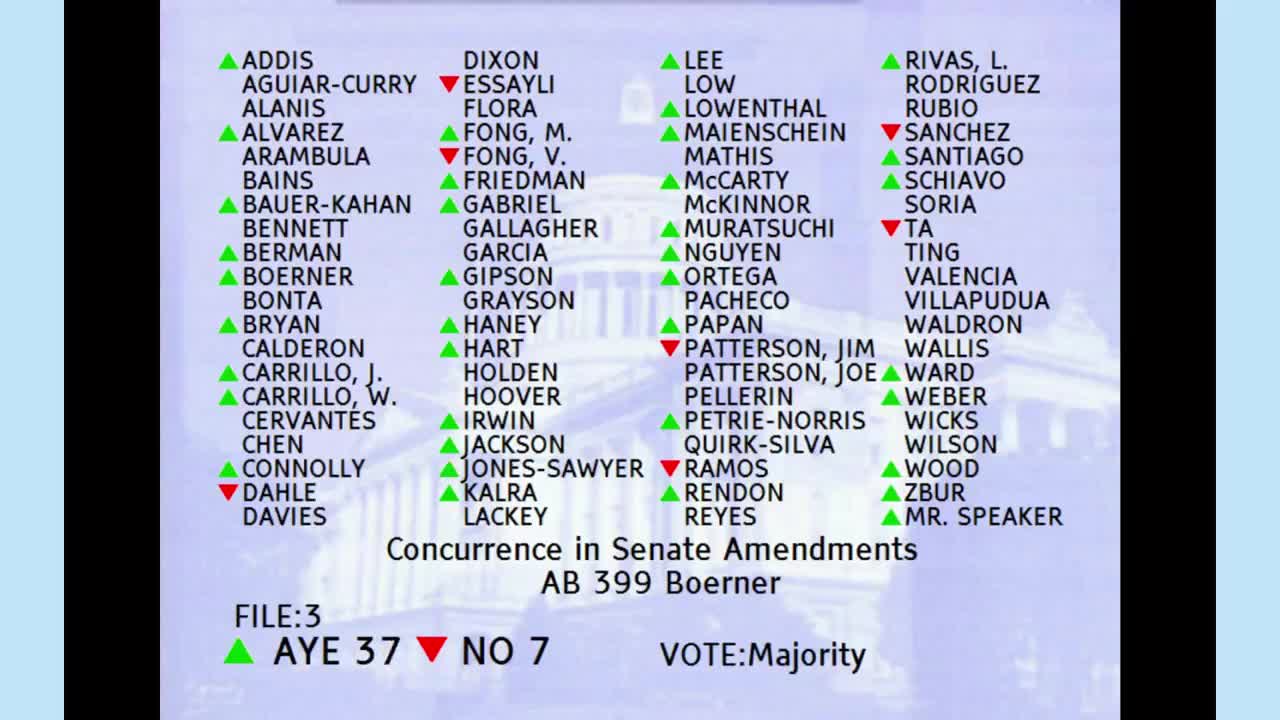 1MIN
Assembly Floor
 2MIN
Senate Floor
 34SEC
Senate Standing Committee on Appropriations
 7MIN
Senate Standing Committee on Environmental Quality
 1MIN
Assembly Floor
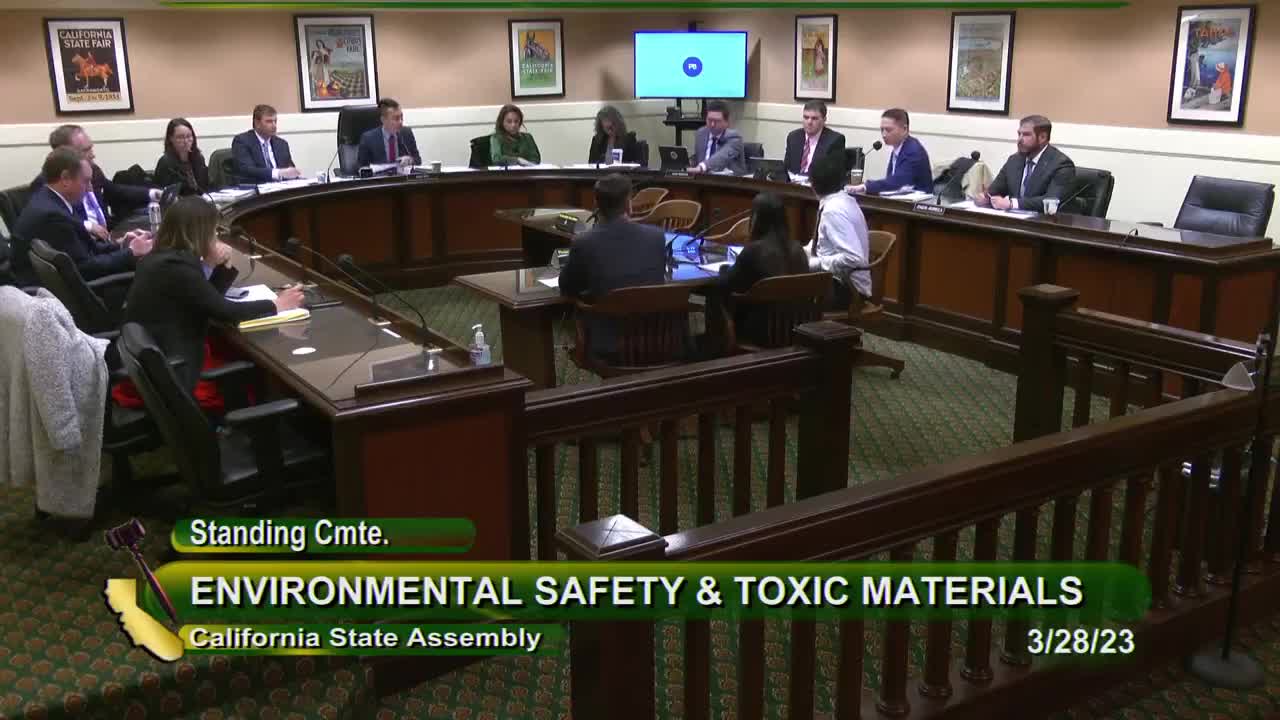 11MIN
Assembly Standing Committee on Environmental Safety and Toxic Materials
Bill Author
Bill Co-Author(s):
