AB 772: Child day care facilities.
- Session Year: 2023-2024
- House: Assembly
- Latest Version Date: 2024-09-29
Current Status:
Passed
(2024-09-29: Chaptered by Secretary of State - Chapter 933, Statutes of 2024.)
Introduced
In Committee
First Chamber
In Committee
Second Chamber
Enacted
Existing law, the California Child Day Care Facilities Act, provides for the licensure and regulation of daycare centers by the State Department of Social Services. Existing regulation generally requires child daycare facilities that are licensed by the State Department of Social Services to require proof of each childs immunizations, including tuberculosis testing, and to maintain files of this proof on the premises. Existing law exempts from these requirements any child daycare center that exclusively offers a program of services for which there is no contract or agreement between the parent and the center for the regular care of the child, and there is no prearranged schedule of care for any child. Existing law requires parents using these exempt child daycare centers to sign a form acknowledging that they understand the center is not required to verify immunizations and tuberculosis testing for any children accepted for care. Existing law makes a willful or repeated violation of the act a crime.
This bill would define the child daycare facilities subject to the above exemption as drop-in childcare centers and would make conforming changes. The bill would require, upon admission of a child to a drop-in childcare center, if the medical assessment required by department regulations is not available for the child, a licensee to obtain a written health assessment completed by the childs authorized representative, as specified. By expanding the scope of a crime, this bill would impose a state-mandated local program.
The California Constitution requires the state to reimburse local agencies and school districts for certain costs mandated by the state. Statutory provisions establish procedures for making that reimbursement.
This bill would provide that no reimbursement is required by this act for a specified reason.
Existing law, the California Child Day Care Facilities Act, provides for the licensure and regulation of daycare centers by the State Department of Social Services. Existing law regulation generally requires child daycare facilities that are licensed by the State Department of Social Services to require proof of each childs immunizations, including tuberculosis testing, and to maintain files of this proof on the premises, but exempts premises. Existing law exempts from these requirements any child daycare center that exclusively offers a program of services for which there is no contract or agreement between the parent and the center for the regular care of the child, and there is no prearranged schedule of care for any child. Existing law requires parents using these exempt child daycare centers to sign a form acknowledging that they understand the center is not required to verify immunizations and tuberculosis testing for any children accepted for care. Existing law makes a willful or repeated violation of the act a crime.
This bill would include physicians assessments in the list of documents that the child daycare centers described above are exempt from verifying and maintaining. The bill would also require the parental acknowledgment form described above to also include physicians assessments. define the child daycare facilities subject to the above exemption as drop-in childcare centers and would make conforming changes. The bill would require, upon admission of a child to a drop-in childcare center, if the medical assessment required by department regulations is not available for the child, a licensee to obtain a written health assessment completed by the childs authorized representative, as specified. By expanding the scope of a crime, this bill would impose a state-mandated local program.
The California Constitution requires the state to reimburse local agencies and school districts for certain costs mandated by the state. Statutory provisions establish procedures for making that reimbursement.
This bill would provide that no reimbursement is required by this act for a specified reason.
Existing law, the California Child Day Care Facilities Act, provides for the licensure and regulation of daycare centers by the State Department of Social Services. Existing law generally requires child daycare facilities that are licensed by the State Department of Social Services to require proof of each childs immunizations, including tuberculosis testing, and to maintain files of this proof on the premises, but exempts from these requirements any child daycare center that exclusively offers a program of services for which there is no contract or agreement between the parent and the center for the regular care of the child, and there is no prearranged schedule of care for any child. Existing law requires parents using these exempt child daycare centers to sign a form acknowledging that they understand the center is not required to verify immunizations and tuberculosis testing for any children accepted for care.
This bill would include physicians assessments in the list of documents that the child daycare centers described above are exempt from verifying and maintaining. The bill would also require the parental acknowledgment form described above to also include physicians assessments.
Existing law requires the Office of the State Foster Care Ombudsperson to be established in the State Department of Social Services with prescribed powers and duties relating to the management of foster children. Existing law authorizes the ombudsperson, as part of the offices efforts to resolve complaints related to foster care, to conduct whatever investigation reasonably related to the complaint and to foster care that the ombudsperson deems necessary, including access to, and investigation of, premises within the control of a state or local agency or a contractor with a state and local agency, and access to, and inspection of, a licensed or approved childrens residential facility at any time, upon providing identification.Existing law, the California Community Care Facilities Act, provides for the licensure and regulation of community care and residential facilities, including specified residential facilities that provide care for foster youth. Under existing law, the definition of a community care facility includes childrens residential facilities, foster family agencies, foster family homes, and small family homes.This bill would specify that for purposes of the ombudspersons access and inspection authority, childrens residential facility also includes foster family agencies, foster family homes, and small family homes, as defined in the California Community Care Facilities Act.Existing law additionally requires the ombudsperson to submit a written plan to the relevant state or county agency, or a contractor with the state or local agency, recommending a course of action to resolve a complaint. If the ombudsperson makes a written recommendation, existing law requires the state or county agency, or contractor, to submit a written response to the ombudsperson within 30 calendar days.This bill would extend the deadline for that written response to 30 business days.Existing law requires the Office of the State Foster Care Ombudsperson to be established in the State Department of Social Services with prescribed powers and duties relating to the management of foster children. Existing law authorizes the ombudsperson, as part of the offices efforts to resolve complaints related to foster care, to conduct whatever investigation reasonably related to the complaint and to foster care that the ombudsperson deems necessary, including access to, and investigation of, premises within the control of a state or local agency or a contractor with a state and local agency, and access to, and inspection of, a licensed or approved childrens residential facility at any time, upon providing identification.
Existing law, the California Community Care Facilities Act, provides for the licensure and regulation of community care and residential facilities, including specified residential facilities that provide care for foster youth. Under existing law, the definition of a community care facility includes childrens residential facilities, foster family agencies, foster family homes, and small family homes.
This bill would specify that for purposes of the ombudspersons access and inspection authority, childrens residential facility also includes foster family agencies, foster family homes, and small family homes, as defined in the California Community Care Facilities Act.
Existing law additionally requires the ombudsperson to submit a written plan to the relevant state or county agency, or a contractor with the state or local agency, recommending a course of action to resolve a complaint. If the ombudsperson makes a written recommendation, existing law requires the state or county agency, or contractor, to submit a written response to the ombudsperson within 30 calendar days.
This bill would extend the deadline for that written response to 30 business days.
Existing law establishes the State Energy Resources Conservation and Development Commission (Energy Commission) and vests the commission with jurisdiction over various matters related to energy production and usage in the state. Existing law requires the Energy Commission, working with the State Air Resources Board and the Public Utilities Commission (PUC), to prepare and update, as provided, a statewide assessment of the electric vehicle charging infrastructure needed to support the levels of electric vehicle adoption required for the state to meet its goals of putting at least 5,000,000 zero-emission vehicles on California roads by 2030, and of reducing emissions of greenhouse gases to 40% below 1990 levels by 2030.This bill would require the Energy Commission to require, by regulation, that each single-family residence constructed on and after January 1, 2025, include a rapid compact electric vehicle charger and that each multifamily residence constructed on and after January 1, 2025, include sufficient rapid compact electric vehicle chargers to serve at least 10% of its residential capacity at any given time.Existing law vests the PUC with regulatory authority over public utilities, including electrical corporations, while local publicly owned electric utilities, as defined, are under the direction of their governing boards.This bill would require an electrical corporation and local publicly owned electric utility, on and after January 1, 2025, and upon receiving a request from a homeowner in its service territory, to install an electric vehicle charger at the homeowners property within a reasonable time. The bill would require the PUC to establish accounts to track moneys allocated and reimbursements made to an electrical corporation or publicly owned electric utility for that purpose.Under existing law, a violation of any order, decision, rule, direction, demand, or requirement of the commission is a crime.Because a violation of a commission action implementing this bills requirements would be a crime, the bill would impose a state-mandated local program. Additionally, by imposing the requirement described above on local publicly owned electric utilities, the bill would impose a state-mandated local program.The California Constitution requires the state to reimburse local agencies and school districts for certain costs mandated by the state. Statutory provisions establish procedures for making that reimbursement.This bill would provide that no reimbursement is required by this act for specified reasons.Existing law establishes the State Energy Resources Conservation and Development Commission (Energy Commission) and vests the commission with jurisdiction over various matters related to energy production and usage in the state. Existing law requires the Energy Commission, working with the State Air Resources Board and the Public Utilities Commission (PUC), to prepare and update, as provided, a statewide assessment of the electric vehicle charging infrastructure needed to support the levels of electric vehicle adoption required for the state to meet its goals of putting at least 5,000,000 zero-emission vehicles on California roads by 2030, and of reducing emissions of greenhouse gases to 40% below 1990 levels by 2030.
This bill would require the Energy Commission to require, by regulation, that each single-family residence constructed on and after January 1, 2025, include a rapid compact electric vehicle charger and that each multifamily residence constructed on and after January 1, 2025, include sufficient rapid compact electric vehicle chargers to serve at least 10% of its residential capacity at any given time.
Existing law vests the PUC with regulatory authority over public utilities, including electrical corporations, while local publicly owned electric utilities, as defined, are under the direction of their governing boards.
This bill would require an electrical corporation and local publicly owned electric utility, on and after January 1, 2025, and upon receiving a request from a homeowner in its service territory, to install an electric vehicle charger at the homeowners property within a reasonable time. The bill would require the PUC to establish accounts to track moneys allocated and reimbursements made to an electrical corporation or publicly owned electric utility for that purpose.
Under existing law, a violation of any order, decision, rule, direction, demand, or requirement of the commission is a crime.
Because a violation of a commission action implementing this bills requirements would be a crime, the bill would impose a state-mandated local program. Additionally, by imposing the requirement described above on local publicly owned electric utilities, the bill would impose a state-mandated local program.
The California Constitution requires the state to reimburse local agencies and school districts for certain costs mandated by the state. Statutory provisions establish procedures for making that reimbursement.
This bill would provide that no reimbursement is required by this act for specified reasons.
Drop-in childcare center means any daycare center, as defined in Section 1596.76, that exclusively offers a program of services for which there is no contract or agreement between any childs authorized representative and the center for the regular or prearranged schedule of care for any child.
SEC. 2.Section 1596.799 of the Health and Safety Code is amended to read:1596.799.(a) Notwithstanding Section 1597.05 or any other law, a drop-in childcare center shall not be required to do either of the following:
(1) Verify childrens immunizations or tuberculosis testing.
(2) Maintain files regarding childrens immunizations or tuberculosis testing.
(b)Upon admission of a child into a drop-in childcare center, if the medical assessment required by department regulations is not available for a child, then the licensee shall obtain a written health assessment completed by the childs authorized representative. Except as provided in subdivision (a), a written health assessment shall include the same information and be maintained in the same manner as a medical assessment required by department regulations. A drop-in childcare center shall not require physician approval of the health assessment completed by the childs authorized representative.
(c)Upon admission of a child into a drop-in childcare center, the childs authorized representative shall sign an acknowledgment that they understand that verification of immunizations and tuberculosis testing is not required for any child accepted into a drop-in childcare center.
(d)This section shall not be construed to exempt a drop-in childcare center from any other licensing requirement.
SEC. 3.No reimbursement is required by this act pursuant to Section 6 of Article XIIIB of the California Constitution because the only costs that may be incurred by a local agency or school district will be incurred because this act creates a new crime or infraction, eliminates a crime or infraction, or changes the penalty for a crime or infraction, within the meaning of Section 17556 of the Government Code, or changes the definition of a crime within the meaning of Section 6 of Article XIIIB of the California Constitution.
Drop-in childcare center means any daycare center, as defined in Section 1596.76, that exclusively offers a program of services for which there is no contract or agreement between any childs authorized representative and the center for the regular or prearranged schedule of care for any child.
SEC. 2.Section 1596.799 of the Health and Safety Code is amended to read:1596.799.(a) Notwithstanding Section 1597.05 or any other provision of law, any day care center that exclusively offers a program of services for which there is no contract or agreement between any parent and the center for the regular care of any child, and for which there is no prearranged schedule of care for any child, law, a drop-in childcare center shall not be required to do either of the following:
(1) Verify childrens immunizations or tuberculosis testing.
(2) Maintain files regarding childrens immunizations or tuberculosis testing.
(b)Upon admission of a child into a drop-in childcare center, if the medical assessment required by department regulations is not available for a child, then the licensee shall obtain a written health assessment completed by the childs authorized representative. Except as provided in subdivision (a), a written health assessment shall include the same information and be maintained in the same manner as a medical assessment required by department regulations. A drop-in childcare center shall not require physician approval of the health assessment completed by the childs authorized representative.
(b)(c)Upon admission of a child, the parent child into a drop-in childcare center, the childs authorized representative shall sign an acknowledgment that he or she understands they understand that verification of immunizations and tuberculosis testing is not required for any child accepted in this type of program. into a drop-in childcare center.
(c)(d)This section shall not be construed to exempt a day care drop-in childcare center from any other licensing requirement.
SEC. 3.No reimbursement is required by this act pursuant to Section 6 of Article XIIIB of the California Constitution because the only costs that may be incurred by a local agency or school district will be incurred because this act creates a new crime or infraction, eliminates a crime or infraction, or changes the penalty for a crime or infraction, within the meaning of Section 17556 of the Government Code, or changes the definition of a crime within the meaning of Section 6 of Article XIIIB of the California Constitution.
SECTION 1.Section 1596.799 of the Health and Safety Code is amended to read:1596.799.(a)Notwithstanding Section 1597.05 or any other provision of law, any day care center that exclusively offers a program of services for which there is no contract or agreement between any parent and the center for the regular care of any child, and for which there is no prearranged schedule of care for any child, shall not be required to do either of the following:(1)Verify a physicians assessment, childrens immunizations, or tuberculosis testing.(2)Maintain files regarding a physicians assessment, childrens immunizations, or tuberculosis testing.(b)Upon admission of a child, the parent shall sign an acknowledgment that they understand that verification of immunizations, tuberculosis testing, and a physicians assessment is not required for any child accepted in this type of program.(c)This section shall not be construed to exempt a day care center from any other licensing requirement.(a)Notwithstanding Section 1597.05 or any other provision of law, any day care center that exclusively offers a program of services for which there is no contract or agreement between any parent and the center for the regular care of any child, and for which there is no prearranged schedule of care for any child, shall not be required to do either of the following:
(1)Verify a physicians assessment, childrens immunizations immunizations, or tuberculosis testing.
(2)Maintain files regarding a physicians assessment, childrens immunizations immunizations, or tuberculosis testing.
(b)Upon admission of a child, the parent shall sign an acknowledgment that he or she understands they understand that verification of immunizations and tuberculosis testing immunizations, tuberculosis testing, and a physicians assessment is not required for any child accepted in this type of program.
(c)This section shall not be construed to exempt a day care center from any other licensing requirement.
SECTION 1.Section 16165 of the Welfare and Institutions Code is amended to read:16165.As part of the offices efforts to resolve complaints related to foster care, the ombudsperson may do all of the following:(a)Establish policies and procedures for receiving and processing complaints, conducting investigations, and reporting findings.(b)Conduct whatever investigation reasonably related to the complaint and to foster care that the ombudsperson deems necessary, including, but not limited to, both of the following:(1)Access to, and inspection of, premises within the control of a state or local agency or a contractor with a state and local agency, and access to, and inspection of, a licensed or approved childrens residential facility, at any time, with or without prior notice, for the purpose of carrying out the duties of the office. The ombudsperson shall be granted access to records and residents at all times for the purpose of carrying out the duties of the office.(A)For purposes of this section, access means the right to do all of the following:(i)Enter any licensed or approved childrens residential facility, as defined in paragraph (1), (4), (5), or (6) of subdivision (a) of Section 1502 of the Health and Safety Code, upon providing identification.(ii)Communicate privately and without restriction with any resident, caregiver, personnel, or volunteer.(iii)Review and copy any resident record or caregiver file.(iv)Observe all resident and staff areas of a facility.(v)Review and reproduce administrative records, policies, and documents of any licensed or approved childrens residential care facility.(vi)Review and copy all licensing records maintained by the state, county, or agency, and review and reproduce any records of a state, county, or local agency and their contractors, except sealed court records, which may be obtained only by subpoena or other lawful court order.(vii)Interview all relevant witnesses.(B)For purposes of this section, record means a document, paper, memorandum, book, letter, file, drawing, map, plat, photo, photographic file, motion picture, film, microfilm, microphotograph, exhibit, magnetic or paper tape, punched card, or other item developed or received under law or in connection with the transaction of official business, but does not include material that is protected by privilege.(2)Observe proceedings and attend hearings, consistent with Section 346.(c)Attempt to resolve the complaint.(d)Submit a written plan to the relevant state or county agency, or a contractor with the state or local agency, recommending a course of action to resolve the complaint. If the ombudsperson makes a written recommendation, the state or county agency, or contractor, shall submit a written response to the ombudsperson within 30 business days.As part of the offices efforts to resolve complaints related to foster care, the ombudsperson may do all of the following:
(a)Establish policies and procedures for receiving and processing complaints, conducting investigations, and reporting findings.
(b)Conduct whatever investigation reasonably related to the complaint and to foster care that the ombudsperson deems necessary, including, but not limited to, both of the following:
(1)Access to, and inspection of, premises within the control of a state or local agency or a contractor with a state and local agency, and access to, and inspection of, a licensed or approved childrens residential facility, at any time, with or without prior notice, for the purpose of carrying out the duties of the office. The ombudsperson shall be granted access to records and residents at all times for the purpose of carrying out the duties of the office.
(A)For purposes of this section, access means the right to do all of the following:
(i)Enter any licensed or approved childrens residential facility, as defined in paragraph (1), (4), (5), or (6) of subdivision (a) of Section 1502 of the Health and Safety Code, upon providing identification.
(ii)Communicate privately and without restriction with any resident, caregiver, personnel, or volunteer.
(iii)Review and copy any resident record or caregiver file.
(iv)Observe all resident and staff areas of a facility.
(v)Review and reproduce administrative records, policies, and documents of any licensed or approved childrens residential care facility.
(vi)Review and copy all licensing records maintained by the state, county, or agency, and review and reproduce any records of a state, county, or local agency and their contractors, except sealed court records, which may be obtained only by subpoena or other lawful court order.
(vii)Interview all relevant witnesses.
(B)For purposes of this section, record means a document, paper, memorandum, book, letter, file, drawing, map, plat, photo, photographic file, motion picture, film, microfilm, microphotograph, exhibit, magnetic or paper tape, punched card, or other item developed or received under law or in connection with the transaction of official business, but does not include material that is protected by privilege.
(2)Observe proceedings and attend hearings, consistent with Section 346.
(c)Attempt to resolve the complaint.
(d)Submit a written plan to the relevant state or county agency, or a contractor with the state or local agency, recommending a course of action to resolve the complaint. If the ombudsperson makes a written recommendation, the state or county agency, or contractor, shall submit a written response to the ombudsperson within 30 calendar business days.
SECTION 1.Section 25402.15 is added to the Public Resources Code, to read:25402.15.The commission shall require, by regulation in Title 24 of the California Code of Regulations, both of the following:(a)Each single-family residence constructed on and after January 1, 2025, shall include a rapid compact electric vehicle charger.(b)Each multifamily residence constructed on and after January 1, 2025, shall include sufficient rapid compact electric vehicle chargers to serve at least 10 percent of its residential capacity at any given time.SEC. 2.Chapter 8 (commencing with Section 8400) is added to Division 4.1 of the Public Utilities Code, to read:8.Electric Vehicle Chargers8400.For purposes of this chapter, electrical utility means an electrical corporation, as defined in Section 218, or a local publicly owned electric utility, as defined in Section 224.3.8401.On and after January 1, 2025, each electrical utility, upon receiving a request from a homeowner in its service territory pursuant to this chapter, shall, within a reasonable time, install an electric vehicle charger at the homeowners property.8402.The commission shall establish accounts to track moneys allocated and reimbursements made to electrical utilities for purposes of this chapter.8403.It is the intent of the Legislature that the requirements of this chapter be funded through existing appropriations and that electrical utilities be adequately compensated by the state for their actions pursuant to this chapter.SEC. 3.No reimbursement is required by this act pursuant to Section 6 of Article XIIIB of the California Constitution because a local agency or school district has the authority to levy service charges, fees, or assessments sufficient to pay for the program or level of service mandated by this act or because costs that may be incurred by a local agency or school district will be incurred because this act creates a new crime or infraction, eliminates a crime or infraction, or changes the penalty for a crime or infraction, within the meaning of Section 17556 of the Government Code, or changes the definition of a crime within the meaning of Section 6 of Article XIIIB of the California Constitution.The commission shall require, by regulation in Title 24 of the California Code of Regulations, both of the following:
(a)Each single-family residence constructed on and after January 1, 2025, shall include a rapid compact electric vehicle charger.
(b)Each multifamily residence constructed on and after January 1, 2025, shall include sufficient rapid compact electric vehicle chargers to serve at least 10 percent of its residential capacity at any given time.
SEC. 2.Chapter 8 (commencing with Section 8400) is added to Division 4.1 of the Public Utilities Code, to read:8.Electric Vehicle Chargers8400.For purposes of this chapter, electrical utility means an electrical corporation, as defined in Section 218, or a local publicly owned electric utility, as defined in Section 224.3.
8401.On and after January 1, 2025, each electrical utility, upon receiving a request from a homeowner in its service territory pursuant to this chapter, shall, within a reasonable time, install an electric vehicle charger at the homeowners property.
8402.The commission shall establish accounts to track moneys allocated and reimbursements made to electrical utilities for purposes of this chapter.
8403.It is the intent of the Legislature that the requirements of this chapter be funded through existing appropriations and that electrical utilities be adequately compensated by the state for their actions pursuant to this chapter.
SEC. 3.No reimbursement is required by this act pursuant to Section 6 of Article XIIIB of the California Constitution because a local agency or school district has the authority to levy service charges, fees, or assessments sufficient to pay for the program or level of service mandated by this act or because costs that may be incurred by a local agency or school district will be incurred because this act creates a new crime or infraction, eliminates a crime or infraction, or changes the penalty for a crime or infraction, within the meaning of Section 17556 of the Government Code, or changes the definition of a crime within the meaning of Section 6 of Article XIIIB of the California Constitution.
|
Date
|
Status
|
|---|---|
| Sep 29, 2024 | Chaptered by Secretary of State - Chapter 933, Statutes of 2024. |
| Sep 29, 2024 | Approved by the Governor. |
| Sep 5, 2024 | Enrolled and presented to the Governor at 4 p.m. |
| Aug 27, 2024 | Senate amendments concurred in. To Engrossing and Enrolling. (Ayes 77. Noes 0.). |
| Aug 27, 2024 | Assembly Rule 77 suspended. |
| Aug 26, 2024 | In Assembly. Concurrence in Senate amendments pending. May be considered on or after August 28 pursuant to Assembly Rule 77. |
| Aug 26, 2024 | Read third time. Passed. Ordered to the Assembly. (Ayes 40. Noes 0.). |
| Jul 2, 2024 | Read second time. Ordered to third reading. |
| Jul 1, 2024 | From committee: Be ordered to second reading pursuant to Senate Rule 28.8. |
| Jun 24, 2024 | Re-referred to Com. on APPR pursuant to Joint Rule 10.5. |
| Jun 20, 2024 | Read second time and amended. Ordered to third reading. |
| Jun 19, 2024 | From committee: Amend, and do pass as amended. (Ayes 5. Noes 0.) (June 17). |
| May 1, 2024 | Referred to Com. on HUMAN S. |
| Jan 18, 2024 | In Senate. Read first time. To Com. on RLS. for assignment. |
| Jan 18, 2024 | Read third time. Passed. Ordered to the Senate. (Ayes 68. Noes 0. Page 3883.) |
| Jan 10, 2024 | Read second time. Ordered to third reading. |
| Jan 9, 2024 | From committee: Do pass. (Ayes 6. Noes 0.) (January 9). |
| Jan 3, 2024 | Withdrawn from committee. |
| Jan 3, 2024 | Re-referred to Com. on HUM. S. |
| Jan 3, 2024 | Re-referred to Com. on APPR. |
| Jan 3, 2024 | From committee chair, with author's amendments: Amend, and re-refer to Com. on APPR. Read second time and amended. |
| Apr 26, 2023 | From committee: Do pass and re-refer to Com. on APPR. with recommendation: To Consent Calendar. (Ayes 8. Noes 0.) (April 25). Re-referred to Com. on APPR. |
| Apr 20, 2023 | Re-referred to Com. on HUM. S. pursuant to Assembly Rule 96. |
| Apr 18, 2023 | Re-referred to Com. on U. & E. |
| Apr 17, 2023 | From committee chair, with author's amendments: Amend, and re-refer to Com. on U. & E. Read second time and amended. |
| Mar 27, 2023 | In committee: Set, first hearing. Hearing canceled at the request of author. |
| Mar 2, 2023 | Referred to Com. on U. & E. |
| Feb 14, 2023 | From printer. May be heard in committee March 16. |
| Feb 13, 2023 | Read first time. To print. |
|
Date
|
Description
|
Location
|
Votes
|
|
|---|---|---|---|---|
| Aug 27, 2024 | AB 772 Jackson Concurrence in Senate Amendments | Assembly Floor |
Passed |
|
| Aug 26, 2024 | Assembly 3rd Reading AB772 Jackson By Limón | Senate Floor |
Passed |
|
| Jun 17, 2024 | Do pass as amended | Senate Standing Committee on Human Services |
Passed |
|
| Jan 18, 2024 | AB 772 Jackson Assembly Third Reading | Assembly Floor |
Passed |
|
| Jan 9, 2024 | Do pass. | Assembly Standing Committee on Human Services |
Passed |
|
| Apr 25, 2023 | Do pass and be re-referred to the Committee on [Appropriations] with recommendation: To Consent Calendar | Assembly Standing Committee on Human Services |
Passed |
This list shows positions taken on this bill by organizations on the date displayed, which is linked to the original source.
Positions by individuals are not included.
|
Organization
|
Position
|
Date
|
|---|---|---|
| A Voice for Choice and Advocacy | ** Support | |
| Educate. Advocate. | ** Support | |
| Thriving Families California | * Support | Jun 17, 2024 |
CONCURRENCE IN SENATE AMENDMENTS
CSA1 Bill Id:AB 772
Author:(Jackson)
As Amended Ver:June 20, 2024
Majority vote
SUMMARY
Exempts drop-in childcare centers from requiring a physician's approval of a written health assessment completed by the child's authorized representative upon admission of a child.
Senate Amendments
- Define a "drop-in childcare center" to mean any daycare center, as defined in current law, that exclusively offers a program of services for which there is no contract or agreement between any child's authorized representative and the center for the regular or prearranged schedule of care for any child.
- Require upon admission of a child into a drop-in childcare center, if the medical assessment required by the California Department of Social Services (CDSS) regulations is not available for a child, the licensee to obtain a written health assessment completed by the child's authorized representative.
- Require a written health assessment to include the same information and be maintained in the same manner as a medical assessment required by CDSS regulations.
- Remove exemption for a day care center to verify and maintain a physician's assessment and instead exempt a drop-in childcare center from the requirement to have physician approval of the written health assessment completed by the child's authorized representative.
- Make conforming changes.
COMMENTS
Licensed Childcare. The California Child Day Care Facilities Act governs the licensure, maintenance, and operation of child daycare centers and family daycare homes in the state. This law and the associated regulations found in Title 22 of the California Code of Regulations establish, among other things, general health and safety requirements, staff-to-child ratios, and provider training requirements. Daycare centers include, infant centers, preschools, extended daycare facilities, and school-age childcare centers. CDSS Community Care Licensing Division (CCLD) has the responsibility of licensing and monitoring the state's 10,481 daycare centers, which, as of January 2021, provided 705,734 childcare slots. There are an additional 1,040 licensed school-age daycare facilities, which provided 76,941 slots as of that same date.
State law and regulations dictate that infant care centers serve children under two years of age; preschool childcare centers serve children between two years of age and when they start school; and school-age childcare centers serve children who have entered the first grade or are in a childcare program exclusively for children in kindergarten and above. A "combination center" is any combination of an infant center, preschool childcare center, school-age childcare center and childcare center for mildly ill children that is owned and operated by one licensee at a common address. In California, separate licenses are currently required for serving infants, preschoolers, and school-age children, although a center may be licensed to care for all three groups at one site. Depending on their age, children receive care in separate areas at the center for safety and activity reasons.
Drop-in childcare centers are not defined in existing law or regulations, but are statutorily described as childcare that does not require a contract or agreement between any parent and center for the regular care of a child, and for which there is no prearranged schedule of care for any child. This allows parents or guardians to find the care they need when they need it most, which includes during the day, evenings, and weekends, with no reservations required. This bill establishes a definition of drop-in childcare centers in statute.
Licensing Requirements. To be granted a valid license as a child daycare center, current law and regulations require, among other things, licensed child daycare facilities to verify and maintain each child's immunization records, including tuberculosis (TB) testing, and the submission of a physician's assessment for each enrollee. A medical assessment must be performed by or under the supervision of a licensed medical professional within the prior 12 months and be submitted within 30 calendar days of the child's enrollment. State law has exempted drop-in childcare centers from the immunization and TB verification requirements since 1995 with the passage of (AB 301) Alpert, Chapter 473, Statutes of 1995, but has not explicitly exempted drop-in daycare centers from other licensing requirements, including the physician's assessment. The exemption for drop-in childcare centers to verify immunizations had sunset in 2001, but was re-instated in 2002 after KidsPark – a chain of hourly drop-in childcare centers that serves 7,000 families – requested the exemption language be included in a separate bill in 2001, AB 182 (Vargas) of 2001; AB 3049 (Committee on Health) Chapter 536, Statutes of 2002. A Senate Health and Human Service Committee analysis on AB 182, stated, "There has been no evidence of any problem resulting from [the immunization verification] exemption at KidsPark or any other drop-in center." Apart from statutory exemptions, regulations stipulate that child daycare centers may seek written departmental approval for a waiver or an exception to use alternate concepts, programs, services, procedures, techniques, equipment, space, personnel qualifications or staffing ratios as long as there is no instance that such alternative be detrimental to the health and safety of any child in care.
This bill surfaced when a drop-in daycare center relocated their San Jose center in February 2023. The drop-in daycare center was asked by the regional office that licenses the San Jose region to collect physician's assessments and was informed that a waiver for this requirement would not be issued because it is a statutory requirement. The drop-in daycare center moved forward and requested an exemption with CDSS to be allowed to use the drop-in daycare center's online or paper registration form to collect health assessment information in lieu of a physician's assessment. CDSS denied the request. The drop-in daycare center then appealed CDSS' decision, maintaining, among other things, that in the past, they were able to operate without collecting physician's assessments. This prompted CDSS to review past waivers for the physician's assessment requirement to determine if any might have been granted without proper authority, and should therefore be rescinded.
This bill seeks to exempt physician's approval of a written health assessment completed by a child's authorized representative upon admission of a child at drop-in childcare centers. This ensures that children receive continuity of care when parents or guardians face unexpected schedule changes and need to drop off their child(ren) in a moment's notice..
According to the Senate Human Services Committee Analysis: "It is unclear how many 'drop in' daycare centers exist in the state. 'Drop in' centers that do not require a contract between a parent and the center are not their own licensing category, and are licensed as child daycare centers. Accordingly, CDSS does not track the number of licensed facilities that utilize a 'drop in' business model. Due to the lack of information on 'drop in' centers, it is unclear how widespread this issue is, or how many families and centers would be affected should this bill be enacted."
According to the Author
"[This bill] seeks to break down a barrier for working families, the backbone of this state's economy, to have access to child care by adding physician's assessments to the list of exemptions for non-contract child day care centers, alongside children's immunizations and tuberculosis testing to simplify access to care for working families."
Arguments in Support
A Voice for Choice Advocacy writes, "We support this measure to include physician assessments in the list of documents that child daycare centers exclusively offering programs of service, without a contract, agreement, or prearranged schedule of care between the parent and center, remain exempt upon parental acknowledgment."
Arguments in Opposition
No opposition on file.
FISCAL COMMENTS
According to the Senate Appropriations Committee, pursuant to Senate Rule 28.8, the June 20, 2024, version of this bill would result in negligible state costs.
VOTES:
ASM HUMAN SERVICES: 6-0-1
YES: Lee, Calderon, Gipson, Jackson, Mathis, Ortega
ABS, ABST OR NV: Essayli
ASSEMBLY FLOOR: 68-0-12
YES: Aguiar-Curry, Alanis, Arambula, Bennett, Berman, Boerner, Bonta, Calderon, Juan Carrillo, Wendy Carrillo, Cervantes, Connolly, Davies, Dixon, Flora, Mike Fong, Vince Fong, Friedman, Gabriel, Gallagher, Garcia, Gipson, Grayson, Haney, Hart, Holden, Hoover, Irwin, Jackson, Kalra, Lackey, Lee, Low, Lowenthal, Maienschein, Mathis, McCarty, Muratsuchi, Stephanie Nguyen, Ortega, Pacheco, Papan, Jim Patterson, Joe Patterson, Pellerin, Quirk-Silva, Ramos, Reyes, Luz Rivas, Rodriguez, Blanca Rubio, Sanchez, Santiago, Schiavo, Soria, Ta, Ting, Valencia, Villapudua, Waldron, Wallis, Ward, Weber, Wicks, Wilson, Wood, Zbur, Robert Rivas
ABS, ABST OR NV: Addis, Alvarez, Bains, Bauer-Kahan, Bryan, Chen, Megan Dahle, Essayli, Jones-Sawyer, McKinnor, Petrie-Norris, Rendon
ASM HUMAN SERVICES: 8-0-0
YES: Jackson, Sanchez, Alanis, Arambula, Bonta, Bryan, Calderon, Garcia
UPDATED
VERSION: June 20, 2024
CONSULTANT: Bri-Ann Hernández / HUM. S. / (916) 319-2089 FN: 0004701
CONCURRENCE IN SENATE AMENDMENTS
CSA1 Bill Id:AB 772
Author:(Jackson)
As Amended Ver:June 20, 2024
Majority vote
SUMMARY
Exempts drop-in childcare centers from requiring a physician's approval of a written health assessment completed by the child's authorized representative upon admission of a child.
Senate Amendments
- Define a "drop-in childcare center" to mean any daycare center, as defined in current law, that exclusively offers a program of services for which there is no contract or agreement between any child's authorized representative and the center for the regular or prearranged schedule of care for any child.
- Require upon admission of a child into a drop-in childcare center, if the medical assessment required by the California Department of Social Services (CDSS) regulations is not available for a child, the licensee to obtain a written health assessment completed by the child's authorized representative.
- Require a written health assessment to include the same information and be maintained in the same manner as a medical assessment required by CDSS regulations.
- Remove exemption for a day care center to verify and maintain a physician's assessment and instead exempt a drop-in childcare center from the requirement to have physician approval of the written health assessment completed by the child's authorized representative.
- Make conforming changes.
COMMENTS
Licensed Childcare. The California Child Day Care Facilities Act governs the licensure, maintenance, and operation of child daycare centers and family daycare homes in the state. This law and the associated regulations found in Title 22 of the California Code of Regulations establish, among other things, general health and safety requirements, staff-to-child ratios, and provider training requirements. Daycare centers include, infant centers, preschools, extended daycare facilities, and school-age childcare centers. CDSS Community Care Licensing Division (CCLD) has the responsibility of licensing and monitoring the state's 10,481 daycare centers, which, as of January 2021, provided 705,734 childcare slots. There are an additional 1,040 licensed school-age daycare facilities, which provided 76,941 slots as of that same date.
State law and regulations dictate that infant care centers serve children under two years of age; preschool childcare centers serve children between two years of age and when they start school; and school-age childcare centers serve children who have entered the first grade or are in a childcare program exclusively for children in kindergarten and above. A "combination center" is any combination of an infant center, preschool childcare center, school-age childcare center and childcare center for mildly ill children that is owned and operated by one licensee at a common address. In California, separate licenses are currently required for serving infants, preschoolers, and school-age children, although a center may be licensed to care for all three groups at one site. Depending on their age, children receive care in separate areas at the center for safety and activity reasons.
Drop-in childcare centers are not defined in existing law or regulations, but are statutorily described as childcare that does not require a contract or agreement between any parent and center for the regular care of a child, and for which there is no prearranged schedule of care for any child. This allows parents or guardians to find the care they need when they need it most, which includes during the day, evenings, and weekends, with no reservations required. This bill establishes a definition of drop-in childcare centers in statute.
Licensing Requirements. To be granted a valid license as a child daycare center, current law and regulations require, among other things, licensed child daycare facilities to verify and maintain each child's immunization records, including tuberculosis (TB) testing, and the submission of a physician's assessment for each enrollee. A medical assessment must be performed by or under the supervision of a licensed medical professional within the prior 12 months and be submitted within 30 calendar days of the child's enrollment. State law has exempted drop-in childcare centers from the immunization and TB verification requirements since 1995 with the passage of (AB 301) Alpert, Chapter 473, Statutes of 1995, but has not explicitly exempted drop-in daycare centers from other licensing requirements, including the physician's assessment. The exemption for drop-in childcare centers to verify immunizations had sunset in 2001, but was re-instated in 2002 after KidsPark – a chain of hourly drop-in childcare centers that serves 7,000 families – requested the exemption language be included in a separate bill in 2001, AB 182 (Vargas) of 2001; AB 3049 (Committee on Health) Chapter 536, Statutes of 2002. A Senate Health and Human Service Committee analysis on AB 182, stated, "There has been no evidence of any problem resulting from [the immunization verification] exemption at KidsPark or any other drop-in center." Apart from statutory exemptions, regulations stipulate that child daycare centers may seek written departmental approval for a waiver or an exception to use alternate concepts, programs, services, procedures, techniques, equipment, space, personnel qualifications or staffing ratios as long as there is no instance that such alternative be detrimental to the health and safety of any child in care.
This bill surfaced when a drop-in daycare center relocated their San Jose center in February 2023. The drop-in daycare center was asked by the regional office that licenses the San Jose region to collect physician's assessments and was informed that a waiver for this requirement would not be issued because it is a statutory requirement. The drop-in daycare center moved forward and requested an exemption with CDSS to be allowed to use the drop-in daycare center's online or paper registration form to collect health assessment information in lieu of a physician's assessment. CDSS denied the request. The drop-in daycare center then appealed CDSS' decision, maintaining, among other things, that in the past, they were able to operate without collecting physician's assessments. This prompted CDSS to review past waivers for the physician's assessment requirement to determine if any might have been granted without proper authority, and should therefore be rescinded.
This bill seeks to exempt physician's approval of a written health assessment completed by a child's authorized representative upon admission of a child at drop-in childcare centers. This ensures that children receive continuity of care when parents or guardians face unexpected schedule changes and need to drop off their child(ren) in a moment's notice..
According to the Senate Human Services Committee Analysis: "It is unclear how many 'drop in' daycare centers exist in the state. 'Drop in' centers that do not require a contract between a parent and the center are not their own licensing category, and are licensed as child daycare centers. Accordingly, CDSS does not track the number of licensed facilities that utilize a 'drop in' business model. Due to the lack of information on 'drop in' centers, it is unclear how widespread this issue is, or how many families and centers would be affected should this bill be enacted."
According to the Author
"[This bill] seeks to break down a barrier for working families, the backbone of this state's economy, to have access to child care by adding physician's assessments to the list of exemptions for non-contract child day care centers, alongside children's immunizations and tuberculosis testing to simplify access to care for working families."
Arguments in Support
A Voice for Choice Advocacy writes, "We support this measure to include physician assessments in the list of documents that child daycare centers exclusively offering programs of service, without a contract, agreement, or prearranged schedule of care between the parent and center, remain exempt upon parental acknowledgment."
Arguments in Opposition
No opposition on file.
FISCAL COMMENTS
According to the Senate Appropriations Committee, pursuant to Senate Rule 28.8, the June 20, 2024, version of this bill would result in negligible state costs.
VOTES:
ASM HUMAN SERVICES: 6-0-1
YES: Lee, Calderon, Gipson, Jackson, Mathis, Ortega
ABS, ABST OR NV: Essayli
ASSEMBLY FLOOR: 68-0-12
YES: Aguiar-Curry, Alanis, Arambula, Bennett, Berman, Boerner, Bonta, Calderon, Juan Carrillo, Wendy Carrillo, Cervantes, Connolly, Davies, Dixon, Flora, Mike Fong, Vince Fong, Friedman, Gabriel, Gallagher, Garcia, Gipson, Grayson, Haney, Hart, Holden, Hoover, Irwin, Jackson, Kalra, Lackey, Lee, Low, Lowenthal, Maienschein, Mathis, McCarty, Muratsuchi, Stephanie Nguyen, Ortega, Pacheco, Papan, Jim Patterson, Joe Patterson, Pellerin, Quirk-Silva, Ramos, Reyes, Luz Rivas, Rodriguez, Blanca Rubio, Sanchez, Santiago, Schiavo, Soria, Ta, Ting, Valencia, Villapudua, Waldron, Wallis, Ward, Weber, Wicks, Wilson, Wood, Zbur, Robert Rivas
ABS, ABST OR NV: Addis, Alvarez, Bains, Bauer-Kahan, Bryan, Chen, Megan Dahle, Essayli, Jones-Sawyer, McKinnor, Petrie-Norris, Rendon
SENATE FLOOR: 40-0-0
YES: Allen, Alvarado-Gil, Archuleta, Ashby, Atkins, Becker, Blakespear, Bradford, Caballero, Cortese, Dahle, Dodd, Durazo, Eggman, Glazer, Gonzalez, Grove, Hurtado, Jones, Laird, Limón, McGuire, Menjivar, Min, Newman, Nguyen, Niello, Ochoa Bogh, Padilla, Portantino, Roth, Rubio, Seyarto, Skinner, Smallwood-Cuevas, Stern, Umberg, Wahab, Wiener, Wilk
ASM HUMAN SERVICES: 8-0-0
YES: Jackson, Sanchez, Alanis, Arambula, Bonta, Bryan, Calderon, Garcia
UPDATED
VERSION: June 20, 2024
CONSULTANT: Bri-Ann Hernández / HUM. S. / (916) 319-2089 FN: 0004701
SENATE RULES COMMITTEE Office of Senate Floor Analyses (916) 651-1520 Fax: (916) 327-4478 | AB 772 |
THIRD READING
Bill No: AB 772
Author: Jackson (D)
Amended: 6/20/24 in Senate
Vote: 21
SENATE HUMAN SERVICES COMMITTEE: 5-0, 6/17/24
AYES: Alvarado-Gil, Ochoa Bogh, Blakespear, Hurtado, Menjivar
SENATE APPROPRIATIONS COMMITTEE: Senate Rule 28.8
ASSEMBLY FLOOR: 68-0, 1/18/24 - See last page for vote
SUBJECT: Child day care facilities
SOURCE: Author
DIGEST:
This bill requires a drop-in child care center to obtain a written health assessment completed by the child’s authorized representative if a medical assessment is not available for a child. This bill would define “drop-in child care center.”
ANALYSIS:
Existing law:
- Establishes the California Child Day Care Facilities Act to create a separate licensing category for child day care centers and family day care homes within the existing licensing structure at the California Department of Social Services (CDSS). (HSC 1596.70 et seq.)
- Defines “child day care facility” to mean a facility that provides nonmedical care to children under 18 years of age in need of personal services, supervision, or assistance essential for sustaining the activities of daily living or for the protection of the individual on less than a 24-hour basis. Child day care facilities include day care centers, employer-sponsored child care centers, and family day care homes. (HSC 1596.750)
- Defines “day care center” to mean a child day care facility other than a family day care home, and includes infant centers, preschools, extended day care facilities, and schoolage child care centers, and includes child care centers with a single license. (HSC 1596.76)
- Prohibits any person or entity operating a child day care facility from providing care or supervision without a valid license from CDSS. (22 CCR 101156(a))
- Requires a child day care center, within 30 days of a child’s enrollment, to secure records, as specified:
- Physical examination reports by physicians and surgeons.
- Confirmation of required immunizations. (HSC 1597.05)
- Requires child day care centers to maintain a separate, complete and current record for each child maintained in the center. Requires each record to contain information including, but not limited to, the following:
- Name of child.
- Birthdate.
- Sex.
- Date of admission.
- Name, address and telephone number of the child’s authorized representative and of relatives or others who can assume responsibility for the child if the authorized representative cannot be reached when necessary.
- A signed copy of the admission agreement.
- Name, address and telephone number of the child’s physician and dentist and any other medical/dental or mental health providers.
- Medical assessment, including ambulatory status, as specified, and the following health information:
- Dietary restrictions and allergies.
- Instructions for action to be taken in case the child’s authorized representative, or the physician designated by the authorized representative, cannot be reached in an emergency.
- A signed consent form for emergency medical treatment unless the child’s authorized representative has signed a statement, as specified.
- Record of any illness or injury requiring treatment by a physician or dentist and for which the center provided assistance to the child in meeting their necessary medical or dental needs.
- Record of current medications, including the name of the prescribing physician, and instructions, if any, regarding control and custody of medications.
- Signed and dated authorization from the child’s authorized representative for each activity away from the center.
- Date of termination of services. (22 CCR 101221)
- Requires, prior to admission to a child day care center, children to be immunized against specified diseases, as required by the California Code of Regulation, Title 17, commencing with Section 6000. Requires the center to document each child’s immunizations and maintain files for as long as the child is enrolled. (22 CCR 101220.1)
- Requires a child day care center, prior to, or within 30 calendar days following the enrollment of a child, to obtain a written medical assessment of the child, as specified. Prohibits a medical assessment from being more than one year old when obtained. Requires the medical assessment to provide the following:
- A record of any infectious or contagious diseases that would preclude care of the child by the licensee.
- Results of a test for tuberculosis.
- Identification of the child’s special problems and needs.
- Identification of any prescribed medications being taken by the child.
- Ambulatory status. (22 CCR 101220)
- Requires, if a medical assessment is not available and cannot be obtained within 30 days of admission:
- A medical appointment date must be obtained from the authorized representative upon the child’s admission.
- A tuberculosis test must be obtained on the child within 30 days of admission. (22 CCR 101220)
- Exempts any day care center that exclusively offers a program of services for which there is no contract or agreement between any parent and the center for the regular care of any child, and for which there is no prearranged schedule of care for any child, from being required to verify or maintain files regarding children’s immunizations or tuberculosis testing. Requires, upon admission of a child, the parent to sign an acknowledgment that they understand that verification of immunizations and tuberculosis testing is not required for any child accepted in this type of program. Specifies that these centers are not exempt from any other licensing requirements. (HSC 1596.799)
This bill:
- Defines “drop-in childcare center” as any daycare center, as defined in HSC 1596.76, that exclusively offers a program of services for which there is no contract or agreement between any child’s authorized representative and the center for the regular or prearranged schedule of care for any child.
- Requires a drop-in childcare center, upon admission of a child, to obtain a written health assessment completed by the child’s authorized representative if the medical assessment required by department regulations is not available. Requires a written health assessment to include the same information and be maintained in the same manner as a medical assessment required by department regulations. Provides that a drop-in childcare center shall not require physician approval of the health assessment completed by the child’s authorized representative.
Background
Purpose of the Bill. According to the author, “AB 772 seeks to break down a barrier for working families, the backbone of this state's economy, to have access to child care by adding physician’s assessments to the list of exemptions for non-contract child day care centers, alongside children’s immunizations and tuberculosis testing to simplify access to care for working families.”
The author continues, “This bill seeks to ensure children receive continuity of care when parents or guardians face unexpected schedule changes and need to drop off their children without a reservation. This bill also aims to require caregivers using these exempt drop in daycare centers to sign a form acknowledging that they understand the center is not required to verify a physician’s assessment. While parents would be placing their children in facilities where a physician’s assessment has not been verified, the parents would be doing so with full knowledge of that fact, providing more parental choice around meeting their childcare needs.”
California Child Day Care Facilities Act
The California Child Day Care Facilities Act and Title 22 of the California Code of Regulations establish, among other things, general health and safety requirements, staff-to-child ratios, documentation kept on each enrolled child, and administration of medication. CDSS is responsible for licensing and regulatory oversight of child day care providers to ensure programs are upholding all applicable health and safety standards. CDSS conducts orientations, pre-licensing inspections, unannounced facility inspections, complaint investigations, consultations, education and technical support, and follow-up inspections.
“Drop In” Centers and History of Exemptions
AB 301 (Alpert, Chapter 473, Statutes of 1995) exempted “drop in” centers from the requirement that a day care center must verify and maintain files regarding a child’s immunizations or tuberculosis testing. This exemption ended after a sunset date of January 1, 2001, and was later reinstated indefinitely by AB 3049 (Committee on Health, Chapter 536, Statutes of 2002). “Drop in center” is an informal term that is not defined in law. Instead, Health and Safety Code 1596.799 refers to these day care centers as those that (1) exclusively offer a program of services for which there is no contract or agreement between a parent and the center for regular care of a child; and (2) have no prearranged schedule of care for a child. This bill defines “drop-in child care center” as those centers currently described under HSC 1596.799.
KidsPark is a chain of “drop in” centers operating in nine states, including eight centers operating in California. KidsPark was the sponsor of the initial exemption bill, AB 301, and sponsor of its reinstatement via AB 3049. According to KidsPark, when its original center opened in 1988, the CDSS regional licensing office issued a waiver that exempted the San Jose center from collecting medical assessments, because its registration form was considered a substitute. KidsPark opened seven more “drop in” centers in five different licensing districts, and states that none of these licensing offices have requested KidsPark centers to collect medical assessments. In February 2023, after KidsPark relocated one of its centers, the CDSS regional licensing office asked KidsPark to begin collecting medical assessments. KidsPark stated that this requirement will be a hardship in terms of administration and business practice, and that they already collect all pertinent medical information from parents. KidsPark requested a waiver to be allowed to use an online or paper registration form to collect health information in lieu of a medical assessment, which CDSS denied, citing a lack of authority to waive a statutory requirement outside of a state of emergency.
CDSS does not track the number of licensed facilities that fall under the “drop in” business model. According to KidsPark, their “drop in” only model is unique. There are other “drop in” centers, but they operate as part of traditional child care centers and require standard documentation.
This bill would allow a drop-in center to obtain either a medical assessment completed by a medical professional or a written health assessment completed by the child’s authorized representative upon admission of a child.
Medical Assessments
Regulations use the term “medical assessment” in 22 CCR 101220 and 22 CCR 101221 regarding child day care center licensing requirements.
- 22 CCR 101220(b) states a medical assessment shall provide the following:
- A record of any infectious or contagious diseases that would preclude care of the child by the licensee.
- Results of a test for tuberculosis.
- Identification of the child’s special problems and needs.
- Identification of any prescribed medications being taken by the child.
- Ambulatory status.
- 22 CCR 101221 requires a record to be kept on each child in the day care center, including a medical assessment that includes the following:
- Ambulatory status, as specified in Section 101220.
- Dietary restrictions and allergies.
- Instructions for action to be taken in case the child’s authorized representative, or the physician designated by the authorized representative, or the physician designated by the authorized representative, cannot be reached in an emergency.
- A signed consent form for emergency medical treatment unless the child’s authorized representative has signed the statement specified in Section 101220(f) related to religious faith or spiritual healing practices.
This bill requires a drop-in center to obtain a written health assessment completed by the child’s authorized representative if a medical assessment is not available for a child as required by Title 22 regulations. This bill requires the written health assessment to include the same information and be maintained in the same manner as a medical assessment required by Title 22 regulations. This bill specifies that a drop-in center shall not require physical approval of the health assessment completed by the child’s authorized representative.
Comments
This bill seeks to define the term “drop-in child care center” in statute and allow these drop-in centers the flexibility to accept either of the following upon enrollment of a child: (A) a medical assessment completed by a physician, per department regulations, or (B) a health assessment completed by the child’s authorized representative containing the same information. According to KidsPark, their “drop in” centers have not been required to collect medical assessments in over 20 years. KidsPark requires parents to disclose any medical conditions the child has through the admission agreement, and affirm they will notify KidsPark of any changes to their child’s health. This bill would authorize this practice in statute for drop-in centers.
“Drop in” centers that do not require a contract between a parent and the center are not their own licensing category, and are licensed as child day care centers. Accordingly, CDSS does not track the number of licensed facilities that utilize a “drop in” business model. Due to the lack of information on “drop in” centers, it is unclear how widespread this issue is, or how many families and centers would be affected should this bill be enacted.
Related/Prior Legislation
AB 2131 (Mullin, Chapter 910, Statutes of 2022) repealed CDSS’ ability to implement AB 605 through the adoption of emergency regulations, and instead authorized CDSS to implement and administer these provisions by all-county letter or similar written instructions until regulations are adopted.
AB 605 (Mullin, Chapter 574, Statutes of 2018) required CDSS, in consultation with stakeholders, to adopt regulations on or before January 1, 2021, to create a single child care center license to serve infant, toddler, preschool, and school age children, and required all day care centers to be licensed as child care centers before January 1, 2024. The bill required regulations to include certain components.
AB 1897 (Mullin, 2016) would have required CDSS, in consultation with stakeholders, to adopt regulations on or before January 1, 2018, to develop and implement a birth to first grade license option for day care centers. AB 1897 was held in the Assembly Appropriations Committee.
AB 3049 (Committee on Health, Chapter 536, Statutes of 2002) reinstated the exemption for “drop in” day care centers from the requirement that a center must verify and maintain files regarding a child’s immunizations or tuberculosis testing, among other things.
AB 182 (Vargas, 2001) would have reinstated the exemption for “drop in” day care centers from the requirement to verify and maintain files regarding a child’s immunizations or tuberculosis testing, among other things. The bill failed passage in the Senate Health Committee.
AB 301 (Alpert, Chapter 473, Statutes of 1995) exempted “drop in” day care centers from the requirement to verify or maintain files regarding a child’s immunizations or tuberculosis testing, and required, upon admission of the child, a parent to sign an acknowledgment that they understand that verification of immunizations and tuberculosis testing is not required for any child accepted for care in this type of program. The bill included a sunset date of January 1, 2001.
FISCAL EFFECT: Appropriation: No Fiscal Com.: Yes Local: Yes
SUPPORT:
Educate. Advocate.
A Voice for Choice and Advocacy
OPPOSITION:
None received
ASSEMBLY FLOOR: 68-0, 1/18/24
AYES: Aguiar-Curry, Alanis, Arambula, Bennett, Berman, Boerner, Bonta, Calderon, Juan Carrillo, Wendy Carrillo, Cervantes, Connolly, Davies, Dixon, Flora, Mike Fong, Vince Fong, Friedman, Gabriel, Gallagher, Garcia, Gipson, Grayson, Haney, Hart, Holden, Hoover, Irwin, Jackson, Kalra, Lackey, Lee, Low, Lowenthal, Maienschein, Mathis, McCarty, Muratsuchi, Stephanie Nguyen, Ortega, Pacheco, Papan, Jim Patterson, Joe Patterson, Pellerin, Quirk-Silva, Ramos, Reyes, Luz Rivas, Rodriguez, Blanca Rubio, Sanchez, Santiago, Schiavo, Soria, Ta, Ting, Valencia, Villapudua, Waldron, Wallis, Ward, Weber, Wicks, Wilson, Wood, Zbur, Robert Rivas
NO VOTE RECORDED: Addis, Alvarez, Bains, Bauer-Kahan, Bryan, Chen, Megan Dahle, Essayli, Jones-Sawyer, McKinnor, Petrie-Norris, Rendon
Prepared by: Diana Dominguez / HUMAN S. / (916) 651-1524
7/2/24 9:31:55
**** END ****
SENATE COMMITTEE ON HUMAN SERVICES
Senator Alvarado-Gil, Chair
2023 - 2024 Regular
Bill No: | AB 772 | ||
Author: | Jackson | ||
Version: | January 3, 2024 | Hearing Date: | June 17, 2024 |
Urgency: | No | Fiscal: | No |
Consultant: | Diana Dominguez | ||
Subject: Child day care facilities
SUMMARY
This bill would exempt a “drop in” day care center from requiring a physician’s assessment upon admission of a child, and require a parent to sign an acknowledgment that they understand a physician’s assessment is not required for any child under the center’s care.
ABSTRACT
Existing Law:
- Establishes the California Child Day Care Facilities Act to create a separate licensing category for child day care centers and family day care homes within the existing licensing structure at the California Department of Social Services (CDSS). (HSC 1596.70 et seq.)
- Defines “child day care facility” to mean a facility that provides nonmedical care to children under 18 years of age in need of personal services, supervision, or assistance essential for sustaining the activities of daily living or for the protection of the individual on less than a 24-hour basis. Child day care facilities include day care centers, employer-sponsored child care centers, and family day care homes. (HSC 1596.750)
- Defines “day care center” to mean a child day care facility other than a family day care home, and includes infant centers, preschools, extended day care facilities, and schoolage child care centers, and includes child care centers with a single license. (HSC 1596.76)
- Prohibits any person or entity operating a child day care facility from providing care or supervision without a valid license from CDSS. (22 CCR 101156(a))
- Requires a child day care center, within 30 days of a child’s enrollment, to secure records, as specified:
- Physical examination reports by physicians and surgeons.
- Confirmation of required immunizations. (HSC 1597.05)
- Requires child day care centers to maintain a separate, complete and current record for each child maintained in the center. Requires each record to contain information including, but not limited to, the following:
- Name of child.
- Birthdate.
- Sex.
- Date of admission.
- Name, address and telephone number of the child’s authorized representative and of relatives or others who can assume responsibility for the child if the authorized representative cannot be reached when necessary.
- A signed copy of the admission agreement.
- Name, address and telephone number of the child’s physician and dentist and any other medical/dental or mental health providers.
- Medical assessment, including ambulatory status, as specified, and the following health information:
- Dietary restrictions and allergies.
- Instructions for action to be taken in case the child’s authorized representative, or the physician designated by the authorized representative, cannot be reached in an emergency.
- A signed consent form for emergency medical treatment unless the child’s authorized representative has signed a statement, as specified.
- Record of any illness or injury requiring treatment by a physician or dentist and for which the center provided assistance to the child in meeting their necessary medical or dental needs.
- Record of current medications, including the name of the prescribing physician, and instructions, if any, regarding control and custody of medications.
- Signed and dated authorization from the child’s authorized representative for each activity away from the center.
- Date of termination of services. (22 CCR 101221)
- Prior to admission to a child day care center, requires children to be immunized against specified diseases, as required by the California Code of Regulation, Title 17, commencing with Section 6000. Requires the center to document each child’s immunizations and maintain files for as long as the child is enrolled. (22 CCR 101220.1)
- Requires a child day care center, prior to, or within 30 calendar days following the enrollment of a child, to obtain a written medical assessment of the child, as specified. Prohibits a medical assessment from being more than one year old when obtained. Requires the medical assessment to provide the following:
- A record of any infectious or contagious diseases that would preclude care of the child by the licensee.
- Results of a test for tuberculosis.
- Identification of the child’s special problems and needs.
- Identification of any prescribed medications being taken by the child.
- Ambulatory status. (22 CCR 101220)
- Requires, if a medical assessment is not available and cannot be obtained within 30 days of admission:
- A medical appointment date must be obtained from the authorized representative upon the child’s admission.
- A tuberculosis test must be obtained on the child within 30 days of admission. (22 CCR 101220)
- Exempts any day care center that exclusively offers a program of services for which there is no contract or agreement between any parent and the center for the regular care of any child, and for which there is no prearranged schedule of care for any child, from being required to verify or maintain files regarding children’s immunizations or tuberculosis testing. Requires, upon admission of a child, the parent to sign an acknowledgment that they understand that verification of immunizations and tuberculosis testing is not required for any child accepted in this type of program. Specifies that these centers are not exempt from any other licensing requirements. (HSC 1596.799)
This Bill:
- Additionally exempts drop in day care centers from being required to verify or maintain files regarding a physician’s assessment for a child being admitted.
- Additionally requires, upon admission of a child, the parent to sign an acknowledgment that they understand that verification of a physician’s assessment is not required for any child accepted in this type of program.
FISCAL IMPACT
This bill has been keyed as non-fiscal by Legislative Counsel.
BACKGROUND AND DISCUSSION
Purpose of the Bill:
According to the author, “AB 772 seeks to break down a barrier for working families, the backbone of this state's economy, to have access to child care by adding physician’s assessments to the list of exemptions for non-contract child day care centers, alongside children’s immunizations and tuberculosis testing to simplify access to care for working families.”
The author continues, “This bill seeks to ensure children receive continuity of care when parents or guardians face unexpected schedule changes and need to drop off their children without a reservation. This bill also aims to require caregivers using these exempt drop in daycare centers to sign a form acknowledging that they understand the center is not required to verify a physician’s assessment. While parents would be placing their children in facilities where a physician’s assessment has not been verified, the parents would be doing so with full knowledge of that fact, providing more parental choice around meeting their childcare needs.”
California Child Day Care Facilities Act
The California Child Day Care Facilities Act and Title 22 of the California Code of Regulations establish, among other things, general health and safety requirements, staff-to-child ratios, documentation kept on each enrolled child, and administration of medication. CDSS is responsible for licensing and regulatory oversight of child day care providers to ensure programs are upholding all applicable health and safety standards. CDSS conducts orientations, pre-licensing inspections, unannounced facility inspections, complaint investigations, consultations, education and technical support, and follow-up inspections.
“Drop In” Centers and History of Exemptions
AB 301 (Alpert, Chapter 473, Statutes of 1995) exempted “drop in” centers from the requirement that a day care center must verify and maintain files regarding a child’s immunizations or tuberculosis testing. This exemption ended after a sunset date of January 1, 2001, and was later reinstated indefinitely by AB 3049 (Committee on Health, Chapter 536, Statutes of 2002). “Drop in center” is an informal term that is not defined in law. Instead, Health and Safety Code 1596.799 refers to these day care centers as those that 1) exclusively offer a program of services for which there is no contract or agreement between a parent and the center for regular care of a child, and 2) have no prearranged schedule of care for a child.
KidsPark is a chain of “drop in” day care centers operating in nine states, including eight centers operating in California. KidsPark was the sponsor of the initial exemption bill, AB 301, and sponsor of its reinstatement via AB 3049. According to KidsPark, when its original center opened in 1988, the CDSS regional licensing office issued a waiver that exempted the San Jose center from collecting medical assessments, because its registration form was considered a substitute. KidsPark opened seven more “drop in” centers in five different licensing districts, and states that none of these licensing offices have requested KidsPark centers to collect medical assessments. In February 2023, after KidsPark relocated one of its centers, the CDSS regional licensing office asked KidsPark to begin collecting physician’s assessments. KidsPark stated that this requirement will be a hardship in terms of administration and business practice, and that they already collect all pertinent medical information from parents. KidsPark requested a waiver to be allowed to use an online or paper registration form to collect health information in lieu of a physician’s assessment, which CDSS denied, citing a lack of authority to waive a statutory requirement outside of a state of emergency.
This bill would exempt “drop in” centers from the requirement to verify and maintain a physician’s assessment for each child in its care. CDSS does not track the number of licensed facilities that fall under the “drop in” business model. According to KidsPark, their “drop in” only model is unique. There are other “drop in” centers, but they operate as part of traditional child care centers and require standard documentation.
Physician’s Assessments
Existing law uses the terms “physician’s assessment” and “physician’s report” but does not define them. Regulations use the term “medical assessment” in 22 CCR 101220 and 22 CCR 101221 regarding child day care center licensing requirements.
- 22 CCR 101220(b) states a medical assessment shall provide the following:
- A record of any infectious or contagious diseases that would preclude care of the child by the licensee.
- Results of a test for tuberculosis.
- Identification of the child’s special problems and needs.
- Identification of any prescribed medications being taken by the child.
- Ambulatory status.
- 22 CCR 101221 requires a record to be kept on each child in the day care center, including a medical assessment that includes the following:
- Ambulatory status, as specified in Section 101220.
- Dietary restrictions and allergies.
- Instructions for action to be taken in case the child’s authorized representative, or the physician designated by the authorized representative, or the physician designated by the authorized representative, cannot be reached in an emergency.
- A signed consent form for emergency medical treatment unless the child’s authorized representative has signed the statement specified in Section 101220(f) related to religious faith or spiritual healing practices.
This bill would exempt “drop in” day care centers from being required to collect physician’s assessments for children being admitted, and would require a parent to sign an acknowledgment that they understand that physician’s assessments are not required for any child at the “drop in” center.
Related/Prior Legislation:
AB 2131 (Mullin, Chapter 910, Statutes of 2022) repealed CDSS’ ability to implement AB 605 through the adoption of emergency regulations, and instead authorized CDSS to implement and administer these provisions by all-county letter or similar written instructions until regulations are adopted.
AB 605 (Mullin, Chapter 574, Statutes of 2018) required CDSS, in consultation with stakeholders, to adopt regulations on or before January 1, 2021, to create a single child care center license to serve infant, toddler, preschool, and school age children, and required all day care centers to be licensed as child care centers before January 1, 2024. AB 605 required regulations to include certain components.
AB 1897 (Mullin, 2016) would have required CDSS, in consultation with stakeholders, to adopt regulations on or before January 1, 2018, to develop and implement a birth to first grade license option for day care centers. AB 1897 was held in the Assembly Appropriations Committee.
AB 3049 (Committee on Health, Chapter 536, Statutes of 2002), among other things, reinstated the exemption for “drop in” day care centers from the requirement that a center must verify and maintain files regarding a child’s immunizations or tuberculosis testing.
AB 182 (Vargas, 2001), among other things, would have reinstated the exemption for “drop in” day care centers from the requirement to verify and maintain files regarding a child’s immunizations or tuberculosis testing. AB 182 failed passage in the Senate Health Committee.
AB 301 (Alpert, Chapter 473, Statutes of 1995) exempted “drop in” day care centers from the requirement to verify or maintain files regarding a child’s immunizations or tuberculosis testing, and required, upon admission of the child, a parent to sign an acknowledgment that they understand that verification of immunizations and tuberculosis testing is not required for any child accepted for care in this type of program. AB 301 included a sunset date of January 1, 2001.
COMMENTS
This bill seeks to exempt “drop in” day care centers from the requirement to collect physician’s assessments from parents. According to KidsPark, their “drop in” centers have not been required to collect physician’s assessments in over 20 years and have never had a problem with adjusting care to suit a child’s needs. Additionally, KidsPark requires parents to disclose through the admission agreement any medical conditions the child has, and affirm they will notify KidsPark of any changes to their child’s health.
KidsPark, a chain of eight “drop in” day care centers in California, raised the issue of requiring physician’s assessments in “drop in” centers. However, it is unclear how many “drop in” day care centers exist in the state. “Drop in” centers that do not require a contract between a parent and the center are not their own licensing category, and are licensed as child day care centers. Accordingly, CDSS does not track the number of licensed facilities that utilize a “drop in” business model. Due to the lack of information on “drop in” centers, it is unclear how widespread this issue is, or how many families and centers would be affected should this bill be enacted.
The author may wish to work with CDSS to amend this bill to define “physician’s assessment” or to instead use the term “medical assessment” in alignment with terminology in state licensing regulations. The author may also wish to define “drop in day care center” and include these centers in the definition of “day care centers.”
Proposed Amendments: The author has agreed to committee amendments to: (1) define “drop-in child care center” and (2) allow a drop-in child care center to obtain a health assessment completed by a child’s authorized representative if a medical assessment by a physician is not available.
SECTION 1. Section 1596.7916 is added to the Health and Safety Code, to read:
1596.7916. “Drop-in child care center” means any day care center, as defined in Section 1596.76, that exclusively offers a program of services for which there is no contract or agreement between any child’s authorized representative and the center for the regular or prearranged schedule of care for any child.
SECTION 1. SECTION 2. Section 1596.799 of the Health and Safety Code is amended to read:
1596.799. (a) Notwithstanding Section 1597.05 or any other provision of law, any day care center that exclusively offers a program of services for which there is no contract or agreement between any parent and the center for the regular care of any child, and for which there is no prearranged schedule of care for any child, a drop-in child care center shall not be required to do either of the following:
- Verify
a physician’s assessment, children’s immunizations,children’s immunizations or tuberculosis testing. - Maintain files regarding
a physician’s assessment, children’s immunizations,children’s immunizations or tuberculosis testing.
(b) Upon admission of a child into a drop-in child care center, if a medical assessment is not available for a child, as required by department regulations, then the licensee shall obtain a written health assessment completed by the child’s authorized representative. Except as provided in subdivision (a), a written health assessment shall include the same information and be maintained in the same manner as a medical assessment required by department regulations. A drop-in child care center shall not require physician approval of the health assessment completed by the child’s authorized representative.
(b) (c) Upon admission of a child, child into a drop-in child care center, the parent child’s authorized representative shall sign an acknowledgment that they understand that verification of immunizations, tuberculosis testing, and a physician’s assessment immunizations and tuberculosis testing is not required for any child accepted in this type of program. into a drop-in child care center.
(c) (d) This section shall not be construed to exempt a day drop-in child care center from any other licensing requirement.
PRIOR VOTES
Assembly Floor: | 68 - 0 |
Assembly Human Services Committee: | 8 - 0 |
POSITIONS
Support:
Educate. Advocate.
Oppose:
None
-- END --
ASSEMBLY THIRD READING
ATR Bill Id:AB 772
Author:(Jackson)
As Amended Ver:January 3, 2024
Majority vote
SUMMARY
Exempts "drop-in" day care centers from verifying, maintaining records, or requiring a physician's assessment upon admission of a child.
Major Provisions
COMMENTS
Licensed Child Care. The California Child Day Care Facilities Act governs the licensure, maintenance, and operation of child day care centers and family day care homes in the state. This law and the associated regulations found in Title 22 of the California Code of Regulations (CCR) establish, among other things, general health and safety requirements, staff-to-child ratios, and provider training requirements. Day care centers include, infant centers, preschools, extended day care facilities, and school age child care centers. California Department of Social Services' (CDSS's) Community Care Licensing Division (CCLD) has the responsibility of licensing and monitoring the state's 10,481 day care centers, which, as of January 2021, provided 705,734 child care slots (47,497 of which were for infants). There are an additional 1,040 licensed school-age day care facilities, which provided 76,941 slots as of that same date.
State law and regulations dictate that infant care centers serve children under the age of two, preschool child care centers serve children between the ages of two and when they start school, and school-age child care centers serve children who have entered the first grade or are in a child care program exclusively for children in kindergarten and above. A "combination center" is any combination of an infant center, preschool child care center, school-age child care center and child care center for mildly ill children that is owned and operated by one licensee at a common address. In California, separate licenses are currently required for serving infants, preschoolers, and school-age children, although a center may be licensed to care for all three groups at one site (AB 605, (Mullin), Chapter 574, Statutes of 2018). Depending on their age, children receive care in separate areas at the center for safety and activity reasons.
Drop-in day care centers are not defined in existing law or regulations, but are statutorily described as child care that does not require a contract or agreement between any parent and center for the regular care of a child, and for which there is no prearranged schedule of care for any child. This allows parents or guardians to find the care they need when they need it most, which includes during the day, evenings, and weekends, with no reservations required.
Licensing Requirements. To be granted a valid license as a child day care center, current law and regulations require, among other things, licensed child day care facilities to verify and maintain each child's immunization records, including tuberculosis (TB) testing, and to submit a physician's assessment. A medical assessment must performed by or under the supervision of a licensed medical professional, be obtained within 30 calendar days of the child's enrollment and cannot be more than one year of age when obtained. State law has exempted drop-in child care centers from the immunization and TB verification requirement since 1995 (AB 301 (Alpert), Chapter 473, Statutes of 1995), but has not explicitly exempted drop-in day care centers from other licensing requirements, including the physician's assessment. The exemption for drop-in child care centers to verify immunizations had sunset in 2001, but was re-instated in 2002 after KidsPark – a chain of eight hourly drop-in child care centers that serves 7,000 families – requested the exemption language be included in a separate bill in 2001 (AB 182 (Vargas), 2001; AB 3049 (Committee on Health), Chapter 536, Statutes of 2002). A Senate Health and Human Service Committee analysis on AB 182, stated, "There has been no evidence of any problem resulting from [the immunization verification] exemption at KidsPark or any other drop-in center." Apart from statutory exemptions, regulations stipulate that child day care centers may seek written departmental approval for a waiver or an exception to use alternate concepts, programs, services, procedures, techniques, equipment, space, personnel qualifications or staffing ratios as long as there is no instance that such alternative be detrimental to the health and safety of any child in care.
This bill surfaced when a drop-in day care center relocated their San Jose center in February 2023. The drop-in day care center was asked by the regional office that licenses the San Jose region to collect physician's assessments and was informed that a waiver for this requirement would not be issued because it is a statutory requirement. The drop-in day care center moved forward and requested an exemption with CDSS to be allowed to use the drop-in day care center's online or paper registration form to collect health assessment information in lieu of a physician's assessment. CDSS denied the request. The drop-in day care center then appealed CDSS' decision, maintaining, among other things, that in the past, they were able to operate without collecting physician's assessments. This prompted CDSS to review past waivers for the physician's assessment requirement to determine if any might have been granted without proper authority, and should therefore be rescinded.
The provisions of this bill seek to exempt the physician's assessment requirement for drop-in child care centers to ensure children receive continuity of care when parents or guardians face unexpected schedule changes and need to drop off their child(ren) without a reservation. This bill also aims to require caregivers using these exempt drop-in day care centers to sign a form acknowledging that they understand the center is not required to verify a physician's assessment. While parents would be placing their children in facilities where a physician's assessment has not been verified, the parents would be doing so with full knowledge of that fact, providing more parental choice around meeting their child care needs.
Equity Implications: The provisions of this bill seek to ensure equity by supporting non-traditional child care providers who provide much-needed child care to families and children on any day of the week. As previously discussed, drop-in child care centers offer an alternate child care model for children and families who have unpredictable schedules and need last-minute child care, which could be for an hour or the full day. This especially affects working parents who require child care during nontraditional working hours or during summer or holiday breaks. Drop-in child care is a crucial support, particularly for those parents who may work evenings, or for those who work multiple jobs.
Additionally, unlike traditional day care centers with a stable population who may see a few changes every month, drop-in day care centers may not see a family after their first visit or their second visit may be months apart. Thus, requesting families who use drop-in day care centers to submit a physician's assessment decreases their access to much-needed child care because a family will not have this paperwork readily available since most times they are dropping in for care on an unplanned basis. Research shows that caregivers who struggle to arrange child care are more likely to have negative effects on their employment, such as more missed days of work, job loss, which can lead to loss of insurance coverage for their children, and financial stress. Child care-related employment disruption was higher among caregivers from low-income families, and children from racial and ethnic minority groups.
Regulations provide that if a medical assessment is not available for a child and cannot be obtained within 30 days of admission, then a medical appointment date is required to be obtained upon the child's admission to day care and a TB test is required to be obtained on the child within 30 days of admission. However, this requirement assumes that working parents have established insurance, the ability to take days off work to obtain the physician's assessment, and sufficient funds to pay the co-pay. The health information provided in a physician's assessment, including, but not limited to, dietary restrictions and allergies, is information the parent can relay to child care providers. A physician's assessment would not only increase administrative load for child care providers by having to track and maintain these records, but also consequently result in drop-in day care centers turning away hundreds of families in need of urgent care per day. For families who only come in once and forget the paper would simply not return. All other child care centers and family day care homes can enforce the policy because if parents do not bring in the paperwork, the child is not permitted to return. By exempting the physician's assessment verification requirement, this bill aims to increase child care access and ensure drop-in child care centers remain open.
Policy Considerations: Existing law refers to the terms, "physician's assessment" or "physician's report," but does not statutorily define them, whereas CDSS expanded the definition of "medical assessment" in two different regulatory code sections regarding child care center general licensing requirements:
- 22 CCR, Article 6, Section 101220(b) - Child's Medical Assessments: The medical assessment shall provide the following:
- A record of any infectious or contagious diseases that would preclude care of the child by the licensee;
- Results of a test for TB;
- Identification of the child's special problems and needs;
- Identification of any prescribed medications being taken by the child; and,
- Ambulatory status.
- 22 CCR, Article 6, Section 101221 – Child's Records: The medical assessment includes ambulatory status as specified above, and the following health information:
- Dietary restrictions and allergies;
- Instructions for action to be taken in case the child's authorized representative, or the physician designated by the authorized representative, cannot be reached in an emergency; and,
- A signed consent form for emergency medical treatment unless the child's authorized representative has signed a statement.
Should this bill move forward, the author may wish to amend this bill and work with CDSS to define a "physician's assessment." The definition may be in accordance with CCR.
Furthermore, existing law statutorily defines "records" as types of records requiring information from sources not in the control of the facilities, and includes, but are not limited to, all of the following:
- Physical examination reports by physicians and surgeons;
- Confirmation of required immunizations; and,
- Submission of official data describing the educational qualifications of the facility staff.
However, regulations define "child's records" to contain information, among other things, records of current medications, including the name of the prescribing physician, and instructions, if any, regarding control and custody of medications.
Should this bill move forward, the author may wish to amend this bill and work with CDSS to define "child's records." The definition may be in accordance with CCR.
Additionally, "day care centers" is defined in statute and regulations to include, infant centers, preschools, extended day care facilities, and school age child care centers, but does not make any explicit reference to "drop-in day care centers". This type of child care is described in existing code as, "any day care center that exclusively offers a program of services for which there is no contract or agreement between any parent and the center for the regular care of any child, and for which there is no prearranged schedule of care for any child…"
Should this bill move forward, the author may wish to consider explicitly listing "drop-in day care centers" in the definition of "day care centers." The author may also wish to consider defining this type of care more broadly.
According to the Author
According to the Author, "[This bill] seeks to break down a barrier for working families, the backbone of this state's economy, to have access to child care by adding physician's assessments to the list of exemptions for non-contract child day care centers, alongside children's immunizations and tuberculosis testing to simplify access to care for working families."
Arguments in Support
None on file.
Arguments in Opposition
None on file.
FISCAL COMMENTS
This bill has been keyed non-fiscal by the Legislative Counsel.
VOTES
ASM HUMAN SERVICES: 6-0-1
YES: Lee, Calderon, Gipson, Jackson, Mathis, Ortega
ABS, ABST OR NV: Essayli
ASM HUMAN SERVICES: 8-0-0
YES: Jackson, Sanchez, Alanis, Arambula, Bonta, Bryan, Calderon, Garcia
UPDATED
VERSION: January 3, 2024
CONSULTANT: Bri-Ann Hernandez / HUM. S. / (916) 319-2089 FN: 0002572
Date of Hearing: January 9, 2024
ASSEMBLY COMMITTEE ON HUMAN SERVICES
Alex Lee, Chair
ABPCA Bill Id:AB 772 (
Author:Jackson) – As Amended Ver:January 3, 2024
SUBJECT: Child Day Care Facilities
SUMMARY: Exempts “drop-in” day care centers from verifying, maintaining records, or requiring a physician’s assessment upon admission of a child.
EXISTING LAW:
- Establishes the “California Child Day Care Facilities Act”, creating a separate licensing category for child day care centers and family day care homes within the California Department of Social Services’ (CDSS) existing licensing structure. (Health and Safety Code [HSC] § 1596.70 et seq.)
- Defines the following terms:
- “Child day care facility” to mean a facility that provides nonmedical care to children under 18 years of age in need of personal services, supervision, or assistance for sustaining the activities of daily living or for the protection of the individual on less than a 24-hour basis. Child day care facilities include day care centers, employer-sponsored child care centers, and family day care homes. (HSC § 1596.750)
- “Day care center” to include infant centers, preschools, extended day care facilities, and school age child care centers. (HSC § 1596.76)
- “Infant” as a child under two years of age and “infant care center” to mean any child care center, or part thereof, where less than 24-hours per day of nonmedical care and supervision are provided to infants in a group setting. (Title 22 California Code of Regulations [CCR] § 101152(i)(1) and (2))
- "Preschool age children" to mean children who are enrolled in a licensed child day care center and who are not enrolled in either an infant care center or school-age child day care center. (HSC § 1597.059(b))
- “Family day care home” to mean a facility that regularly provides care, protection, and supervision for 14 or fewer children, including children under 10 years of age who reside at the home, in the provider’s own home, for periods of less than 24 hours per day, while the parents or guardians are away. (HSC § 1596.78)
- "School-age child" to mean any child who has either entered the first grade or higher or who is in a child care program that provides care and supervision exclusively to children enrolled in kindergarten and higher, and defines a "school-age child care center" to mean any child care center, or part thereof, where less than 24-hour per day nonmedical care and supervision are provided to school-age children in a group setting. (22 CCR § 101152(s)(1) and (2))
- “Combination center” to mean any combination of a child care center, infant care center, school-age child care center, and child care center for mildly ill children that is owned and operated by one licensee at a common address. (22 CCR § 101152 (c)(10))
- Requires any person or entity operating, as specified, a child day care facility in California to have a current valid license from CDSS. (22 CCR § 101156(a))
- Directs CDSS, and any local agency with which it contracts for purposes of licensing activities, to conduct an initial site visit and grant or deny an application for license within 30 days of receiving a complete licensing application for a day care center. (HSC § 1597.13)
- Requires child day care centers to obtain a written medical assessment of the child within 30 calendar days following the enrollment of a child that cannot be more than one year of age when obtained. Further requires the medical assessment to provide the following:
- A record of any infectious or contagious disease that would preclude care of the child by the licensee;
- Results of a test for tuberculosis (TB);
- Identification of the child’s special problems and needs;
- Identification of any prescribed medications being taken by the child;
- Ambulatory status; and,
- Health information, such as dietary restrictions and allergies, instructions for action to be taken in case the child’s authorized representative, or the physician designated by the authorized representative, cannot be reached in an emergency; and, a signed consent form for emergency medical treatment unless the child’s authorized representative has signed a statement. (22 CCR § 101221(b)(8); 22 CCR § 101220; HSC § 1597.05)
- Authorizes CDSS to require child day care centers to obtain a current written medical assessment if such an assessment is necessary to verify the appropriateness of a child’s placement. Further provides that if a medical assessment is not available for a child and cannot be obtained within 30 days of admission:
- Requires a medical appointment date to be obtained from the authorized representative, which includes, but is not limited to, a parent, legal guardian, a conservator or a public placement agency, upon the child’s admission; and,
- Requires a TB test to be obtained on the child within 30 days of admission. (22 CCR § 101220)
- Requires child day care facilities that are licensed by CDSS to require proof of each child’s immunizations, including for TB, and to maintain files of this proof on the premises. (17 CCR § 6000; 22 CCR § 101220.1)
- Exempts drop-in day care centers from being required to verify children’s immunizations or TB testing or maintain files regarding children’s immunizations or TB testing and specifies that these day care centers are not exempt from any other licensure requirements. (HSC § 1596.799)
- Permits child day care facilities to exempt a child from immunization requirements provided that one of the following criteria is met:
- A physician provides a written statement that an immunization(s) should not be given to the child and specifies how long this exemption is expected to be needed; and,
- The child’s authorized representative provides a written statement that immunizations are contrary to their personal or religious beliefs. (22 CCR § 101220.1)
FISCAL EFFECT: This bill has been keyed non-fiscal by the Legislative Counsel.
COMMENTS: Licensed Child Care. The California Child Day Care Facilities Act governs the licensure, maintenance, and operation of child day care centers and family day care homes in the state. This law and the associated regulations found in Title 22 of the CCR establish, among other things, general health and safety requirements, staff-to-child ratios, and provider training requirements. Day care centers include, infant centers, preschools, extended day care facilities, and school age child care centers. CDSS’s Community Care Licensing Division (CCLD) has the responsibility of licensing and monitoring the state’s 10,481 day care centers, which, as of January 2021, provided 705,734 child care slots (47,497 of which were for infants). There are an additional 1,040 licensed school-age day care facilities, which provided 76,941 slots as of that same date.
State law and regulations dictate that infant care centers serve children under the age of two, preschool child care centers serve children between the ages of two and when they start school, and school-age child care centers serve children who have entered the first grade or are in a child care program exclusively for children in kindergarten and above. A “combination center” is any combination of an infant center, preschool child care center, school-age child care center and child care center for mildly ill children that is owned and operated by one licensee at a common address. In California, separate licenses are currently required for serving infants, preschoolers, and school-age children, although a center may be licensed to care for all three groups at one site (AB 605, Mullin, Chapter 574, Statutes of 2018). Depending on their age, children receive care in separate areas at the center for safety and activity reasons.
Drop-in day care centers are not defined in existing law or regulations, but are statutorily described as child care that does not require a contract or agreement between any parent and center for the regular care of a child, and for which there is no prearranged schedule of care for any child. This allows parents or guardians to find the care they need when they need it most, which includes during the day, evenings, and weekends, with no reservations required.
Licensing Requirements. To be granted a valid license as a child day care center, current law and regulations require, among other things, licensed child day care facilities to verify and maintain each child’s immunization records, including TB testing, and to submit a physician’s assessment. A medical assessment must performed by or under the supervision of a licensed medical professional, be obtained within 30 calendar days of the child’s enrollment and cannot be more than one year of age when obtained. State law has exempted drop-in child care centers from the immunization and TB verification requirement since 1995 (AB 301, Alpert, Chapter 473, Statutes of 1995), but has not explicitly exempted drop-in day care centers from other licensing requirements, including the physician’s assessment. The exemption for drop-in child care centers to verify immunizations had sunset in 2001, but was re-instated in 2002 after KidsPark – a chain of eight hourly drop-in child care centers that serves 7,000 families – requested the exemption language be included in a separate bill in 2001 (AB 182, Vargas, 2001; AB 3049, Committee on Health, Chapter 536, Statutes of 2002). A Senate Health and Human Service Committee analysis on AB 182, stated, “There has been no evidence of any problem resulting from [the immunization verification] exemption at KidsPark or any other drop-in center.” Apart from statutory exemptions, regulations stipulate that child day care centers may seek written departmental approval for a waiver or an exception to use alternate concepts, programs, services, procedures, techniques, equipment, space, personnel qualifications or staffing ratios as long as there is no instance that such alternative be detrimental to the health and safety of any child in care.
This bill surfaced when a drop-in day care center relocated their San Jose center in February 2023. The drop-in day care center was asked by the regional office that licenses the San Jose region to collect physician’s assessments and was informed that a waiver for this requirement would not be issued because it is a statutory requirement. The drop-in day care center moved forward and requested an exemption with CDSS to be allowed to use the drop-in day care center’s online or paper registration form to collect health assessment information in lieu of a physician’s assessment. CDSS denied the request. The drop-in day care center then appealed CDSS’ decision, maintaining, among other things, that in the past, they were able to operate without collecting physician’s assessments. This prompted CDSS to review past waivers for the physician’s assessment requirement to determine if any might have been granted without proper authority, and should therefore be rescinded.
The provisions of this bill seek to exempt the physician’s assessment requirement for drop-in child care centers to ensure children receive continuity of care when parents or guardians face unexpected schedule changes and need to drop off their child(ren) without a reservation. This bill also aims to require caregivers using these exempt drop-in day care centers to sign a form acknowledging that they understand the center is not required to verify a physician’s assessment. While parents would be placing their children in facilities where a physician’s assessment has not been verified, the parents would be doing so with full knowledge of that fact, providing more parental choice around meeting their child care needs.
Author’s Statement: According to the author, “[This bill] seeks to break down a barrier for working families, the backbone of this state's economy, to have access to child care by adding physician’s assessments to the list of exemptions for non-contract child day care centers, alongside children’s immunizations and tuberculosis testing to simplify access to care for working families.”
Equity Implications: The provisions of this bill seek to ensure equity by supporting non-traditional child care providers who provide much-needed child care to families and children on any day of the week. As previously discussed, drop-in child care centers offer an alternate child care model for children and families who have unpredictable schedules and need last-minute child care, which could be for an hour or the full day. This especially affects working parents who require child care during nontraditional working hours or during summer or holiday breaks. Drop-in child care is a crucial support, particularly for those parents who may work evenings, or for those who work multiple jobs.
Additionally, unlike traditional day care centers with a stable population who may see a few changes every month, drop-in day care centers may not see a family after their first visit or their second visit may be months apart. Thus, requesting families who use drop-in day care centers to submit a physician’s assessment decreases their access to much-needed child care because a family will not have this paperwork readily available since most times they are dropping in for care on an unplanned basis. Research shows that caregivers who struggle to arrange child care are more likely to have negative effects on their employment, such as more missed days of work, job loss, which can lead to loss of insurance coverage for their children, and financial stress. Child care-related employment disruption was higher among caregivers from low-income families, and children from racial and ethnic minority groups.
Regulations provide that if a medical assessment is not available for a child and cannot be obtained within 30 days of admission, then a medical appointment date is required to be obtained upon the child’s admission to day care and a TB test is required to be obtained on the child within 30 days of admission. However, this requirement assumes that working parents have established insurance, the ability to take days off work to obtain the physician’s assessment, and sufficient funds to pay the co-pay. The health information provided in a physician’s assessment, including, but not limited to, dietary restrictions and allergies, is information the parent can relay to child care providers. A physician’s assessment would not only increase administrative load for child care providers by having to track and maintain these records, but also consequently result in drop-in day care centers turning away hundreds of families in need of urgent care per day. For families who only come in once and forget the paper would simply not return. All other child care centers and family day care homes can enforce the policy because if parents do not bring in the paperwork, the child is not permitted to return. By exempting the physician’s assessment verification requirement, this bill aims to increase child care access and ensure drop-in child care centers remain open.
Policy Considerations: Existing law refers to the terms, “physician’s assessment” or “physician’s report,” but does not statutorily define them, whereas CDSS expanded the definition of “medical assessment” in two different regulatory code sections regarding child care center general licensing requirements:
- 22 CCR, Article 6, § 101220(b) - Child’s Medical Assessments: The medical assessment shall provide the following:
- A record of any infectious or contagious diseases that would preclude care of the child by the licensee;
- Results of a test for TB;
- Identification of the child’s special problems and needs;
- Identification of any prescribed medications being taken by the child; and,
- Ambulatory status.
- 22 CCR, Article 6, § 101221 – Child’s Records: The medical assessment includes ambulatory status as specified above, and the following health information:
- Dietary restrictions and allergies;
- Instructions for action to be taken in case the child’s authorized representative, or the physician designated by the authorized representative, cannot be reached in an emergency; and,
- A signed consent form for emergency medical treatment unless the child’s authorized representative has signed a statement.
Should this bill move forward, the author may wish to amend this bill and work with CDSS to define a “physician’s assessment.” The definition may be in accordance with CCR.
Furthermore, existing law statutorily defines “records” as types of records requiring information from sources not in the control of the facilities, and includes, but are not limited to, all of the following:
- Physical examination reports by physicians and surgeons;
- Confirmation of required immunizations; and,
- Submission of official data describing the educational qualifications of the facility staff.
However, regulations define “child’s records” to contain information, among other things, records of current medications, including the name of the prescribing physician, and instructions, if any, regarding control and custody of medications.
Should this bill move forward, the author may wish to amend this bill and work with CDSS to define “child’s records.” The definition may be in accordance with CCR.
Additionally, “day care centers” is defined in statute and regulations to include, infant centers, preschools, extended day care facilities, and school age child care centers, but does not make any explicit reference to “drop-in day care centers”. This type of child care is described in existing code as, “any day care center that exclusively offers a program of services for which there is no contract or agreement between any parent and the center for the regular care of any child, and for which there is no prearranged schedule of care for any child…”
Should this bill move forward, the author may wish to consider explicitly listing “drop-in day care centers” in the definition of “day care centers.” The author may also wish to consider defining this type of care more broadly.
RELATED AND PRIOR LEGISLATION:
AB 605 (Mullin), Chapter 574, Statutes of 2018, through the adoption of regulations, created a day care center license option to serve infant, toddler, preschool, and school-age children by January 1, 2021, and required all day care centers to be licensed as child care centers by January 1, 2024.
AB 1897 (Mullin) of 2016, was similar to this bill and would have created an optional birth-to-entering-first-grade day care center license option. AB 1897 was held on the Assembly Appropriations Committee suspense file.
AB 3049 (Committee on Health), Chapter 536, Statutes of 2002, among other things, reinstated an exemption for drop in day care centers from requirement that the center verify a children’s immunization or TB testing and maintain files regarding the children’s immunizations or TB testing.
AB 182 (Vargas) of 2001, among other things, would have reinstated an exemption for drop-in day care centers from immunization and TB testing verification requirements. AB 182 failed passage in the Senate Health Committee.
AB 301 (Alpert), Chapter 473, Statutes of 1995, exempted drop in day care centers from an immunization or TB testing requirement, and contained a sunset date for the exemption of January 1, 2001.
REGISTERED SUPPORT / OPPOSITION:
Support
None on file
Opposition
None on file
Analysis Prepared by: Bri-Ann Hernández / HUM. S. / (916) 319-2089
Date of Hearing: April 25, 2023
ASSEMBLY COMMITTEE ON HUMAN SERVICES
Corey A. Jackson, Chair
ABPCA Bill Id:AB 772 (
Author:Jackson) – As Amended Ver:April 17, 2023
SUBJECT: State Foster Care Ombudsperson
SUMMARY: Clarifies the types of facilities the State Foster Care Ombudsperson (Ombudsperson), as part of the Office of the Foster Care Ombudsperson’s (OFCO) efforts to resolve complaints related to foster care, has the right to enter any licensed or approved children’s residential facility. Extends the length of time a state or county agency, or contractor has to submit a written response to the Ombudsperson, from 30 calendar days to 30 business days. Specifically, this bill:
- Clarifies that the types of facilities the Ombudsperson is authorized to enter upon providing identification by cross referencing the corresponding code section, which includes the following definitions:
- “Residential facility” means any family home, group care facility, or similar facility determined by the California Department of Social Services (CDSS), for 24-hour nonmedical care of persons in need of personal services, supervision, or assistance essential for sustaining the activities of daily living or for the protection of the individual;
- “Foster family agency” means any public agency or private organization, organized and operated on a nonprofit basis, engaged in any of the following:
- Recruiting, certifying, approving, and training of, and providing professional support to, foster parents and resource families;
- Coordinating with county placing agencies to find homes for foster children in need of care; or,
- Providing services and supports to licensed or certified foster parents, county-approved resource families, and children to the extent authorized by state and federal law.
- “Foster family home” means any residential facility providing 24-hour care for six or fewer foster children that is owned, leased, or rented and is the residence of the foster parent or parents, including their family, in whose care the foster children have been placed. The placement may be by a public or private child placement agency or by a court order, or by voluntary placement by a parent, parents, or guardian; and,
- “Small family home” means any residential facility, in the licensee’s family residence, that provides 24-hour care for six or fewer foster children who have mental disorders or developmental or physical disabilities and who require special care and supervision as a result of their disabilities.
- Extends the amount of time, if the Ombudsperson makes a written recommendation to resolve a complaint, the state or county agency, or contractor, has to submit a written response to the Ombudsperson from within 30 calendar days, to 30 business days.
EXISTING LAW:
- Establishes a state and local system of child welfare services, including foster care, for children who have been adjudged by the court to be at risk of abuse and neglect or to have been abused or neglected, as specified. (Welfare and Institutions Code Section [WIC] 202)
- Establishes a system of juvenile dependency for children for specified reasons, and designates that a child who meets certain criteria is within the jurisdiction of the juvenile court and may be adjudged as a dependent child of the court, as specified. (WIC 300 et seq.)
- Enumerates the rights of minors and nonminors in foster care, including but not limited to the right to: live in a safe, healthy, and comfortable home where they are treated with respect; be free from physical, sexual, emotional, or other abuse, corporal punishment, or exploitation; receive adequate and healthy food, clothing, and age appropriate allowance; be placed in the least restrictive setting possible; have a placement that utilize trauma-informed and evidence-based de-escalation and intervention techniques; receive medical, dental, vision, mental health and substance use disorder services, and reproductive and sexual health care; have a caregiver, child welfare and probation personnel, and legal counsel who have received instruction on cultural competency and sensitivity relating to sexual orientation and gender identities and expression; attend religious services and activities of their choice; be involved in the development of their own case plan and plan for permanent placement; review their own case plan and plan for permanent placement, if they are 10 years of age or older, and receive information about their out-of-home placement and case plan, including being told of changes to the plan; and, be provided with contact information for the Ombudsperson, at the time of each placement, and be free from threats or punishment for making complaints. (WIC 16001.9)
- Establishes the OFCO as an autonomous entity within CDSS for the purpose of providing children who are placed in foster care with a means to resolve issues related to their care, placement, or services. (WIC 16161)
- Requires the Ombudsperson to, among other things, disseminate information and provide training and technical assistance to foster youth and relevant parties on the rights of children and youth in foster care, reasonable and prudent parent standards, and the services provided by the OFCO; investigate and attempt to resolve complaints made by or on behalf of children placed in foster care, related to their care, placement, or services; decide, in its discretion, whether to investigate a complaint, or refer complaints to another agency for investigation; update a complainant on the progress of the investigation and notify the complainant of the final outcome; document the number, source, origin, location, and nature of complaints; and, have access to copies of any record of a state or local agency, and contractors with state and local agencies, that is necessary to carry out their responsibilities, and may meet or communicate with any foster child in their placement or elsewhere. (WIC 16164)
- Authorizes the Ombudsperson, as part of OFCO’s efforts to resolve complaints related to foster care, to do all of the following:
- Establish policies and procedures for receiving and processing complaints, conducting investigations, and reporting findings;
- Conduct whatever investigation reasonably related to the complaint and to foster care that the ombudsperson deems necessary, including: access to, and inspection of, premises within the control of a state or local agency or a contractor with a state and local agency, and access to, and inspection of, a licensed or approved children’s residential facility, at any time, with or without prior notice, for the purpose of carrying out the duties of the office; and, grants the Ombudsperson access to records and residents at all times for the purpose of carrying out the duties of the OFCO;
- Defines “access” to mean the right to: enter any licensed or approved children’s residential facility, upon providing identification; communicate privately and without restriction with any resident, caregiver, personnel, or volunteer; review and copy any resident record or caregiver file; observe all resident and staff areas of a facility; review and reproduce administrative records, policies, and documents of any licensed or approved children’s residential care facility; review and copy all licensing records maintained by the state, county, or agency, and review and reproduce any records, except sealed court records, which may be obtained only by subpoena or other lawful court order; interview all relevant witnesses; observe proceedings and attend hearings, consistent with existing law; attempt to resolve the complaint; submit a written plan to the relevant state or county agency, or a contractor with the state or local agency, recommending a course of action to resolve the complaint; and,
- Requires, if the Ombudsperson makes a written recommendation, the state or county agency, or contractor, to submit a written response to the Ombudsperson within 30 calendar days. (WIC 16165)
- Requires social workers to provide foster children with the toll-free number for the OFCO and verbal or written information regarding the existence and purpose of the office. (WIC 16167)
- Defines the following terms: residential facility; foster family agency; foster family home and small family home to include a “community care facility.” (Health and Safety Code Section 1502(a)(1)(4)(5)(6))
FISCAL EFFECT: Unknown, this bill has not been analyzed by a fiscal committee.
COMMENTS:
Background: Child Welfare Services (CWS). California’s CWS system exists to protect children from abuse and neglect, and in doing so, to provide for their health, safety, and overall well-being. When suspicions of abuse or neglect arise, often as a result of a report by a mandated reporter like a healthcare provider or teacher, Child Protective Services (CPS) is tasked with investigating the report. If the allegation of abuse or neglect is substantiated, it is then determined whether it is in the best interest of the child to remain in their parent’s custody or be placed within the CWS system. If a child is suspected to be at risk of neglect, abuse, or abandonment, the juvenile court holds legal jurisdiction, and the CWS system appoints a social worker to ensure that the needs of the youth are met.
CDSS secures federal funding to support child welfare services programs, provides statewide best practices training for social workers, and conducts program regulatory oversight and administration, and is responsible for the development of policy while also providing direct services such as adoption placements. Foster parents receive a monthly payment to meet the needs of the youth placed in their care and is intended to cover food, clothing, transportation, and vary based on the child, their age and any special needs they may have.
As of January 1, 2023, there are 52,265 youth between birth and up to 21 years old in foster care.
Foster Youth Bill of Rights. AB 899 (Liu), Chapter 683, Statues of 2001, adopted California’s Foster Youth Bill of Rights and required: social workers and probation officers to periodically inform children of these rights in an age-appropriate manner; the OFCO to, in consultation with stakeholders, develop and disseminate information on these rights; and any facility licensed to provide foster care for six or more children to post a listing of these rights.
The Foster Youth Bill of Rights has been amended to add and clarify rights over time and includes 41 enumerated rights, such as the right to receive adequate food, clothing, including the right to receive grooming and hygiene products regardless of sexual orientation and gender identity and expression; the right to an allowance to all youth regardless of placement type; and specifying that the allowance be age-appropriate.
The Office of the Foster Care Ombudsperson was created to provide foster youth with an independent forum for review and resolution of concerns related to the care, placement, or services provided to children and youth in foster care. The OFCO is responsible for investigating and resolving complaints made by foster youth regarding their care and compiling data regarding contacts, investigations, and unresolved complaints. The OFCO is also responsible for disseminating information relating to the Foster Youth Bill of Rights and ensuring that children and youth in foster care know their rights. Additionally, the OFCO is responsible for reviewing amendments to laws applicable to foster youth at the end of every two-year legislative session and determining whether updates to the Foster Youth Bill of Rights should be recommended as a result of legislation passed during the previous legislative session.
Author’s Statement: “This bill will bring transparency to facilities where foster youth are residing, by clarifying the types of facilities the Office of the Foster Care Ombudsperson is allowed to access and inspect to ensure that the care, placement, and services of California’s foster youth are being appropriately addressed. In an effort to guarantee that there is sufficient time for agencies to respond to any written recommendations made by the Ombudsperson as a result of a complaint, this bill would extend the timeline for an agency to respond.”
Need for this bill: This bill clarifies the types of facilities the foster care Ombudsperson is authorized to access when the OFCO is attempting to resolve complaints related to foster care. In order to reduce ambiguity as it relates to the facilities that the Ombudsperson has the right to access and inspect upon providing identification, this bill seeks to define the specific facilities.
Equity Implications: Foster youth are among the most vulnerable when it comes to having a voice to resolve complaints related to their care, placement, or services. Often, these youth are caught between a maze of court hearings, placement changes, and uncertainty in their home life. The role that the OFCO plays in serving as these youth’s voice is an imperative and it is equally important that there is transparency when it comes to the types of facilities and manner that the Ombudsperson can access in an effort to resolve complaints on behalf of these youth. Without the benefit of a stable family to look out for, the Ombudsperson can advocate on their behalf to resolve complaints and level a playing field for foster youth who are too frequently at a disadvantage when compared to their non-foster youth peers.
RELATED AND PRIOR LEGISLATION:
AB 317 (Patterson), Chapter 293, Statutes of 2021, clarified the role of the foster care Ombudsperson and allowed the Ombudsperson to notify the dependency counsel of a complaint; limiting investigations to those reasonably related to the complaint and to foster care; and, adding other lawful court orders to ways the Ombudsperson may access sealed records for the purpose of an investigation.
AB 1988 (Patterson) of 2020, would have required the Governor to appoint the Foster Care Ombudsperson, subject to confirmation by the Senate. AB 1988 was set to be heard in the Assembly Human Services Committee but the hearing was postponed by the committee.
AB 175 (Gipson), Chapter 417, Statutes of 2019, among other things, made changes to the OFCO’s responsibilities including collection and sharing of data related to the complaints by or on behalf of children placed in foster care, including a requirement that the California Department of Education share education rights complaints with the OFCO; requiring the materials used to inform foster children and youth of their rights be those materials disseminated by the OFCO; and, requiring the OFCO to review amendments to laws applicable to foster youth at the end of every two-year legislative session and determine whether updates to the Foster Youth Bill of Rights should be recommended as a result of legislation passed during the previous legislative session.
REGISTERED SUPPORT / OPPOSITION:
Support
None on file
Opposition
None on file
Analysis Prepared by: Jessica Langtry / HUM. S. / (916) 319-2089
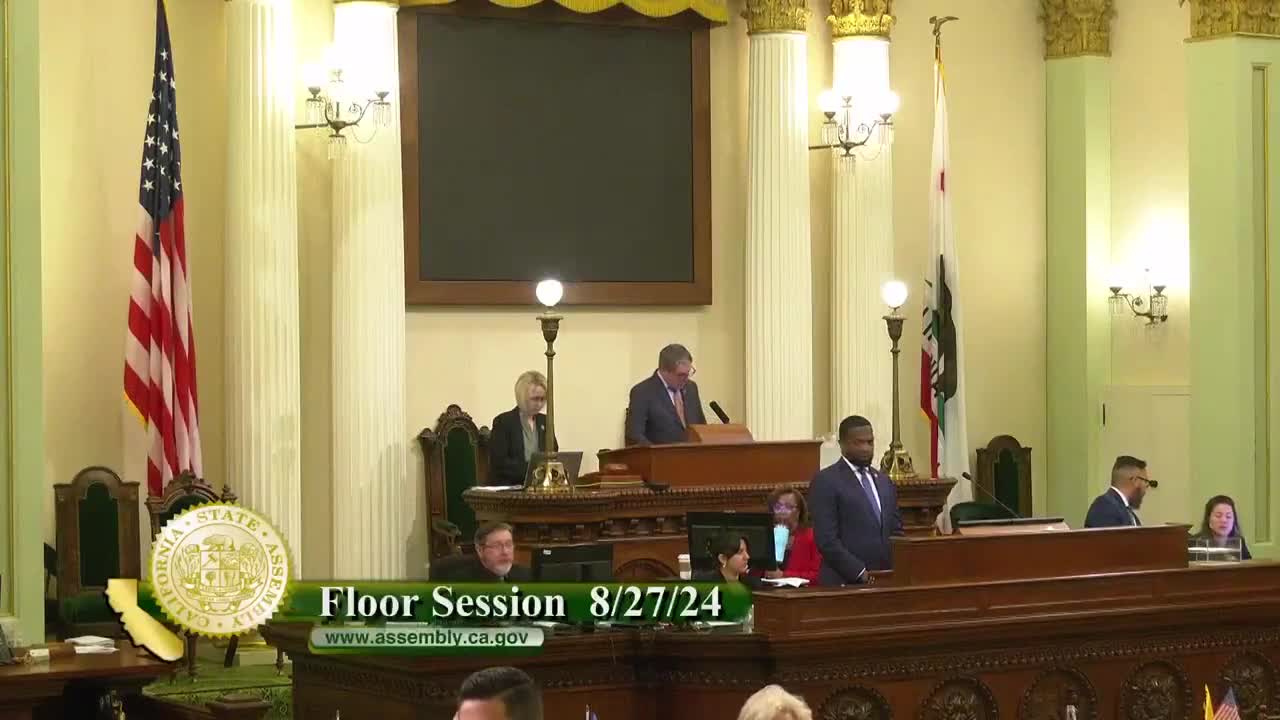
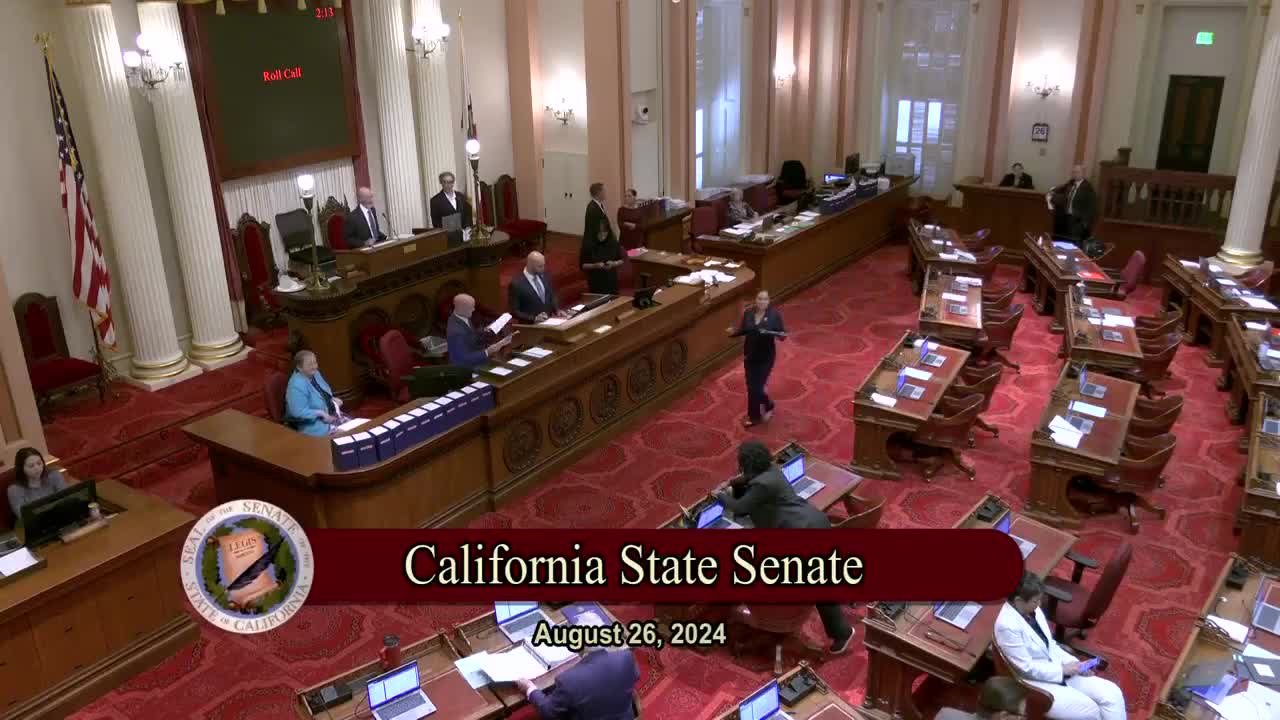
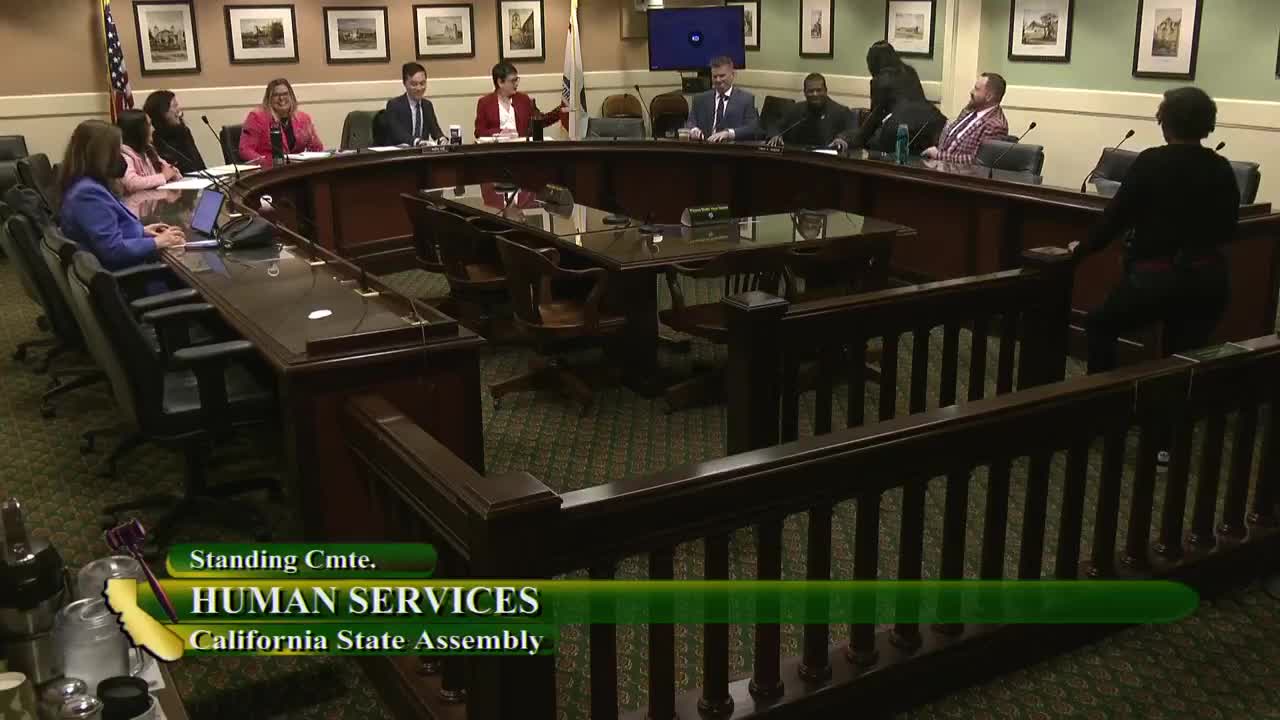
Bill Author

Bill Co-Author(s):