AB 791: Postconviction bail.
- Session Year: 2023-2024
- House: Assembly
- Latest Version Date: 2023-10-08
Current Status:
Passed
(2023-10-08: Chaptered by Secretary of State - Chapter 545, Statutes of 2023.)
Introduced
In Committee
First Chamber
In Committee
Second Chamber
Enacted
Existing law requires a defendant out on bail, if a verdict is rendered against them, to be committed to the custody of the county to await judgment of the court upon the verdict, unless the court concludes that various factors, including the protection of the public and the probability of the defendant failing to appear, support a decision to allow the defendant to remain out on bail. Existing law gives a defendant convicted of an offense who has made an application for probation or who has appealed a right to be admitted to bail in misdemeanor or infraction cases. Existing law authorizes the court to admit a defendant convicted of an offense not punishable with death to bail in all other cases.
This bill would prohibit a person convicted of an offense punishable by life without the possibility of parole from being released on bail. By requiring county jails to hold additional defendants, this bill would impose a state-mandated local program.
The California Constitution requires the state to reimburse local agencies and school districts for certain costs mandated by the state. Statutory provisions establish procedures for making that reimbursement.
This bill would provide that, if the Commission on State Mandates determines that the bill contains costs mandated by the state, reimbursement for those costs shall be made pursuant to the statutory provisions noted above.
Existing law requires a defendant out on bail, if a verdict is rendered against them, to be committed to the custody of the county to await judgment of the court upon the verdict, unless the court concludes that various factors, including the protection of the public and the probability of the defendant failing to appear, support a decision to allow the defendant to remain out on bail. Existing law gives a defendant convicted of an offense who has made an application for probation or who has appealed a right to be admitted to bail in misdemeanor or infraction cases. Existing law authorizes the court to admit a defendant convicted of an offense not punishable with death to bail in all other cases.
This bill would require a judicial officer to remand a defendant who has been found guilty of an offense for which they face imprisonment for life and is awaiting imposition or execution of sentence unless, among other things, the judicial officer finds that there is a substantial likelihood that a motion for acquittal or new trial will be granted or the prosecuting attorney has recommended that no sentence of imprisonment be imposed on the person, as specified. The bill would prohibit a person convicted of an offense punishable by life without the possibility of parole or death from being released on bail. By requiring county jails to hold additional defendants, this bill would impose a state-mandated local program.
The California Constitution requires the state to reimburse local agencies and school districts for certain costs mandated by the state. Statutory provisions establish procedures for making that reimbursement.
This bill would provide that, if the Commission on State Mandates determines that the bill contains costs mandated by the state, reimbursement for those costs shall be made pursuant to the statutory provisions noted above.
Existing law requires a defendant out on bail, if a verdict is rendered against them, to be committed to the custody of the county to await judgment of the court upon the verdict, unless the court concludes that various factors, including the protection of the public and the probability of the defendant failing to appear, support a decision to allow the defendant to remain out on bail. Existing law gives a defendant convicted of an offense who has made an application for probation or who has appealed a right to be admitted to bail in misdemeanor or infraction cases. Existing law authorizes the court to admit a defendant convicted of an offense not punishable with death to bail in all other cases.
This bill would require the judicial officer to remand a person who is found guilty of any felony or any offense that requires registration as a sex offender unless the judicial officer finds by clear and convincing evidence that the person is not likely to flee and will not pose a danger to the safety of any other person or the community. The bill would require the judicial officer to remand a person convicted of specified felonies, including serious felonies, unless the judicial officer finds that there is a substantial likelihood that a motion for acquittal or new trial will be granted or the prosecuting attorney has recommended that no sentence of imprisonment be imposed on the person. The bill would prohibit a person convicted of an offense punishable by life without the possibility of parole from being released on bail. By requiring county jails to hold additional defendants, this bill would impose a state-mandated local program.This bill would require a judicial officer to remand a defendant who has been found guilty of an offense for which they face imprisonment for life and is awaiting imposition or execution of sentence unless, among other things, the judicial officer finds that there is a substantial likelihood that a motion for acquittal or new trial will be granted or the prosecuting attorney has recommended that no sentence of imprisonment be imposed on the person, as specified. The bill would prohibit a person convicted of an offense punishable by life without the possibility of parole or death from being released on bail. By requiring county jails to hold additional defendants, this bill would impose a state-mandated local program.
The California Constitution requires the state to reimburse local agencies and school districts for certain costs mandated by the state. Statutory provisions establish procedures for making that reimbursement.
This bill would provide that, if the Commission on State Mandates determines that the bill contains costs mandated by the state, reimbursement for those costs shall be made pursuant to the statutory provisions noted above.
Existing law requires a defendant out on bail, if a verdict is rendered against them, to be committed to the custody of the county to await judgment of the court upon the verdict, unless the court concludes that various factors, including the protection of the public and the probability of the defendant failing to appear, support a decision to allow the defendant to remain out on bail. Existing law gives a defendant convicted of an offense who has made an application for probation or who has appealed a right to be admitted to bail in misdemeanor or infraction cases. Existing law authorizes the court to admit a defendant convicted of an offense not punishable with death to bail in all other cases.
This bill would require the judicial officer to remand a person who is found guilty of any felony or any offense that requires registration as a sex offender unless the judicial officer finds by clear and convincing evidence that the person is not likely to flee and will not pose a danger to the safety of any other person or the community. The bill would require the judicial officer to remand a person convicted of specified felonies, including serious felonies, unless the judicial officer finds that there is a substantial likelihood that a motion for acquittal or new trial will be granted or the prosecuting attorney has recommended that no sentence of imprisonment be imposed on the person. The bill would prohibit a person convicted of an offense punishable by life without the possibility of parole from being released on bail. By requiring county jails to hold additional defendants, this bill would impose a state-mandated local program.
The California Constitution requires the state to reimburse local agencies and school districts for certain costs mandated by the state. Statutory provisions establish procedures for making that reimbursement.
This bill would provide that, if the Commission on State Mandates determines that the bill contains costs mandated by the state, reimbursement for those costs shall be made pursuant to the statutory provisions noted above.
(a)Except as provided in subdivision (b), if a general verdict is rendered against the defendant, or a special verdict is given, they shall be remanded, if in custody, or if on bail they shall be committed to the proper officer of the county to await the judgment of the court upon the verdict, unless, upon considering the protection of the public, the seriousness of the offense charged and proven, the previous criminal record of the defendant, the probability of the defendant failing to appear for the judgment of the court upon the verdict, and public safety, the court concludes the evidence supports its decision to allow the defendant to remain out on bail.
(b)The judicial officer shall order that a person who has been found guilty of an offense punishable by life in prison without the possibility of parole or death, and is awaiting imposition or execution of sentence, be remanded.
(c)When a defendant is committed or remanded pursuant to this section, their bail is exonerated, or if money is deposited instead of bail, it shall be refunded to the defendant or to the person who deposited money on behalf of the defendant.
SEC. 2.Section 1272 of the Penal Code is amended to read:1272.After conviction of an offense not punishable with death or life without the possibility of parole, a defendant who has made application for probation or who has appealed may be admitted to bail:
(a)As a matter of right, before judgment is pronounced pending application for probation in cases of misdemeanors, or when the appeal is from a judgment imposing a fine only.
(b)As a matter of right, before judgment is pronounced pending application for probation in cases of misdemeanors, or when the appeal is from a judgment imposing imprisonment in cases of misdemeanors.
(c)As a matter of discretion in all other cases, except that a person convicted of an offense subject to this subdivision, who makes a motion for release on bail subsequent to a sentencing hearing, shall provide notice of the hearing on the bail motion to the prosecuting attorney at least five court days prior to the hearing.
SEC. 3.If the Commission on State Mandates determines that this act contains costs mandated by the state, reimbursement to local agencies and school districts for those costs shall be made pursuant to Part 7 (commencing with Section 17500) of Division 4 of Title 2 of the Government Code.
(a)Except as provided in subdivision (b), if a general verdict is rendered against the defendant, or a special verdict is given, they shall be remanded, if in custody, or if on bail they shall be committed to the proper officer of the county to await the judgment of the court upon the verdict, unless, upon considering the protection of the public, the seriousness of the offense charged and proven, the previous criminal record of the defendant, the probability of the defendant failing to appear for the judgment of the court upon the verdict, and public safety, the court concludes the evidence supports its decision to allow the defendant to remain out on bail.
(b)Except as provided in subdivision (c), the judicial officer shall order that a person who has been found guilty of an offense for which the defendant faces an imprisonment of life, and is awaiting imposition or execution of sentence, be remanded unless any of the following apply:(1)The judicial officer finds by clear and convincing evidence that the person is not likely to flee and does not pose a danger to the safety of another person or the community.(2)The judicial officer finds there is a substantial likelihood that a motion for acquittal or new trial will be granted.(3)The prosecuting attorney has recommended that no sentence of imprisonment be imposed on the person.(c)(b)The judicial officer shall order that a person who has been found guilty of an offense punishable by life in prison without the possibility of parole or death, and is awaiting imposition or execution of sentence, be remanded.
(d)(c)When a defendant is committed or remanded pursuant to this section, their bail is exonerated, or if money is deposited instead of bail, it shall be refunded to the defendant or to the person who deposited money on behalf of the defendant.
SEC. 2.Section 1272 of the Penal Code is amended to read:1272.(a)After being found guilty of any offense, a defendant who has made application for probation or who has appealed may be admitted to bail as a matter of right in the following circumstances:(1)Before judgment is pronounced pending application for probation in cases of misdemeanors.(2)When appealing from a judgment imposing a fine only.(3)When appealing from a judgment imposing imprisonment in a misdemeanor case.(b)(1)A defendant who has been found guilty of an offense for which the defendant faces an imprisonment of life, and is awaiting imposition or execution of sentence, shall be remanded and not admitted to bail unless any of the following apply:(A)The judicial officer finds by clear and convincing evidence that the person is not likely to flee and does not pose a danger to the safety of another person or the community.(B)The judicial officer finds there is a substantial likelihood that a motion for acquittal or new trial will be granted.(C)The prosecuting attorney has recommended that no sentence of imprisonment be imposed on the person.(2)A person convicted of an offense subject to this subdivision, who makes a motion for release on bail subsequent to a sentencing hearing, shall provide notice of the hearing on the bail motion to the prosecuting attorney at least five court days prior to the hearing.(c)Under no circumstances shall a person be admitted to bail for an offense punishable by life in prison without the possibility of parole or death.SEC. 2.Section 1272 of the Penal Code is amended to read:1272.After conviction of an offense not punishable with death, death or life without the possibility of parole, a defendant who has made application for probation or who has appealed may be admitted to bail:
1.(a)As a matter of right, before judgment is pronounced pending application for probation in cases of misdemeanors, or when the appeal is from a judgment imposing a fine only.
2.(b)As a matter of right, before judgment is pronounced pending application for probation in cases of misdemeanors, or when the appeal is from a judgment imposing imprisonment in cases of misdemeanors.
3.(c)As a matter of discretion in all other cases, except that a person convicted of an offense subject to this subdivision, who makes a motion for release on bail subsequent to a sentencing hearing, shall provide notice of the hearing on the bail motion to the prosecuting attorney at least five court days prior to the hearing.
SEC. 3.If the Commission on State Mandates determines that this act contains costs mandated by the state, reimbursement to local agencies and school districts for those costs shall be made pursuant to Part 7 (commencing with Section 17500) of Division 4 of Title 2 of the Government Code.
If (a)Except as provided in subdivision (b), if a general verdict is rendered against the defendant, or a special verdict is given, he or she must they shall be remanded, if in custody, or if on bail he or she they shall be committed to the proper officer of the county to await the judgment of the court upon the verdict, unless, upon considering the protection of the public, the seriousness of the offense charged and proven, the previous criminal record of the defendant, the probability of the defendant failing to appear for the judgment of the court upon the verdict, and public safety, the court concludes the evidence supports its decision to allow the defendant to remain out on bail. When committed, his or her bail is exonerated, or if money is deposited instead of bail it must be refunded to the defendant or to the person or persons found by the court to have deposited said money on behalf of said defendant.
(b)Except as provided in subdivision (c), the judicial officer shall order that a person who has been found guilty of an offense for which the defendant faces an imprisonment of life, and is awaiting imposition or execution of sentence, be remanded unless any of the following apply:
(1)The judicial officer finds by clear and convincing evidence that the person is not likely to flee and does not pose a danger to the safety of another person or the community.
(2)The judicial officer finds there is a substantial likelihood that a motion for acquittal or new trial will be granted.
(3)The prosecuting attorney has recommended that no sentence of imprisonment be imposed on the person.
(c)The judicial officer shall order that a person who has been found guilty of an offense punishable by life in prison without the possibility of parole or death, and is awaiting imposition or execution of sentence, be remanded.
(d)When a defendant is committed or remanded pursuant to this section, their bail is exonerated, or if money is deposited instead of bail, it shall be refunded to the defendant or to the person who deposited money on behalf of the defendant.
SEC. 3.SEC. 2.Section 1272 of the Penal Code is amended to read:1272.(a)After being found guilty of any offense, a defendant who has made application for probation or who has appealed may be admitted to bail as a matter of right in the following circumstances:
(1)Before judgment is pronounced pending application for probation in cases of misdemeanors, when that offense does not require registration pursuant to Section 290. misdemeanors.
(2)When appealing from a judgment imposing a fine only.
(3)When appealing from a judgment imposing imprisonment in a misdemeanor case, when that offense does not require registration pursuant to Section 290. case.
(b)A defendant shall be remanded and not admitted to bail for any felony offense or any offense requiring registration pursuant to Section 290, unless the judicial officer finds by clear and convincing evidence that the person is not likely to flee and will not pose a danger to the safety of any other person or the community. (c)(b)(1)A defendant who has been found guilty of an offense described in subdivision (e) of Section 667 or subdivision (c) of Section 1192.7 or any conviction for which the defendant faces an imprisonment of life, and is awaiting imposition or execution of sentence, shall be remanded and not admitted to bail unless either any of the following apply:
(A)The judicial officer finds by clear and convincing evidence that the person is not likely to flee and does not pose a danger to the safety of another person or the community.
(A)(B)The judicial officer finds there is a substantial likelihood that a motion for acquittal or new trial will be granted.
(B)(C)The prosecuting attorney has recommended that no sentence of imprisonment be imposed on the person.
(2)A person convicted of an offense subject to this subdivision, who makes a motion for release on bail subsequent to a sentencing hearing, shall provide notice of the hearing on the bail motion to the prosecuting attorney at least five court days prior to the hearing.
(d)(c)Under no circumstances shall a person be admitted to bail for an offense punishable by life in prison without the possibility of parole or death.
SEC. 4.SEC. 3.If the Commission on State Mandates determines that this act contains costs mandated by the state, reimbursement to local agencies and school districts for those costs shall be made pursuant to Part 7 (commencing with Section 17500) of Division 4 of Title 2 of the Government Code.
(a)(1)Except as provided in paragraph (2), the judicial officer shall order that a person who has been found guilty of a felony offense or any offense that requires registration pursuant to Section 290 and who is awaiting imposition or execution of sentence be remanded, unless the judicial officer finds by clear and convincing evidence that the person is not likely to flee and will not pose a danger to the safety of any other person or the community.
(2)Except as provided in paragraph (3), the judicial officer shall order that a person who has been found guilty of an offense in a case involving an offense described in subdivision (e) of Section 667 or subdivision (c) of Section 1192.7 or any conviction for which the defendant faces an imprisonment of life, and is awaiting imposition or execution of sentence, be remanded unless either of the following apply:
(A)The judicial officer finds there is a substantial likelihood that a motion for acquittal or new trial will be granted.
(B)The prosecuting attorney has recommended that no sentence of imprisonment be imposed on the person.
(3)The judicial officer shall order that a person who has been found guilty of an offense punishable by life in prison without the possibility of parole or death, and is awaiting imposition or execution of sentence, be remanded.
(b)When remanded, the defendants bail is exonerated, or if money is deposited instead of bail, it shall be refunded to the defendant or to the person or persons found by the court to have deposited said money on behalf of said defendant.
SEC. 3.Section 1272 of the Penal Code is amended to read:1272.(a)After conviction of an offense not punishable with death, being found guilty of any offense, a defendant who has made application for probation or who has appealed may be admitted to bail: bail as a matter of right in the following circumstances:
1.As a matter of right, before judgment is pronounced pending application for probation in cases of misdemeanors, or when the appeal is from a judgment imposing a fine only.2.As a matter of right, before judgment is pronounced pending application for probation in cases of misdemeanors, or when the appeal is from a judgment imposing imprisonment in cases of misdemeanors.3.As a matter of discretion in all other cases, except that a(1)Before judgment is pronounced pending application for probation in cases of misdemeanors, when that offense does not require registration pursuant to Section 290.
(2)When appealing from a judgment imposing a fine only.
(3)When appealing from a judgment imposing imprisonment in a misdemeanor case, when that offense does not require registration pursuant to Section 290.
(b)A defendant shall be remanded and not admitted to bail for any felony offense or any offense requiring registration pursuant to Section 290, unless the judicial officer finds by clear and convincing evidence that the person is not likely to flee and will not pose a danger to the safety of any other person or the community.
(c)(1)A defendant who has been found guilty of an offense described in subdivision (e) of Section 667 or subdivision (c) of Section 1192.7 or any conviction for which the defendant faces an imprisonment of life, and is awaiting imposition or execution of sentence, shall be remanded and not admitted to bail unless either of the following apply:
(A)The judicial officer finds there is a substantial likelihood that a motion for acquittal or new trial will be granted.
(B)The prosecuting attorney has recommended that no sentence of imprisonment be imposed on the person.
(2)A person convicted of an offense subject to this subdivision, who makes a motion for release on bail subsequent to a sentencing hearing, shall provide notice of the hearing on the bail motion to the prosecuting attorney at least five court days prior to the hearing.
(d)Under no circumstances shall a person be admitted to bail for an offense punishable by life in prison without the possibility of parole or death.
SEC. 4.If the Commission on State Mandates determines that this act contains costs mandated by the state, reimbursement to local agencies and school districts for those costs shall be made pursuant to Part 7 (commencing with Section 17500) of Division 4 of Title 2 of the Government Code.
|
Date
|
Status
|
|---|---|
| Oct 8, 2023 | Chaptered by Secretary of State - Chapter 545, Statutes of 2023. |
| Oct 8, 2023 | Approved by the Governor. |
| Sep 13, 2023 | Enrolled and presented to the Governor at 3 p.m. |
| Sep 6, 2023 | In Assembly. Ordered to Engrossing and Enrolling. |
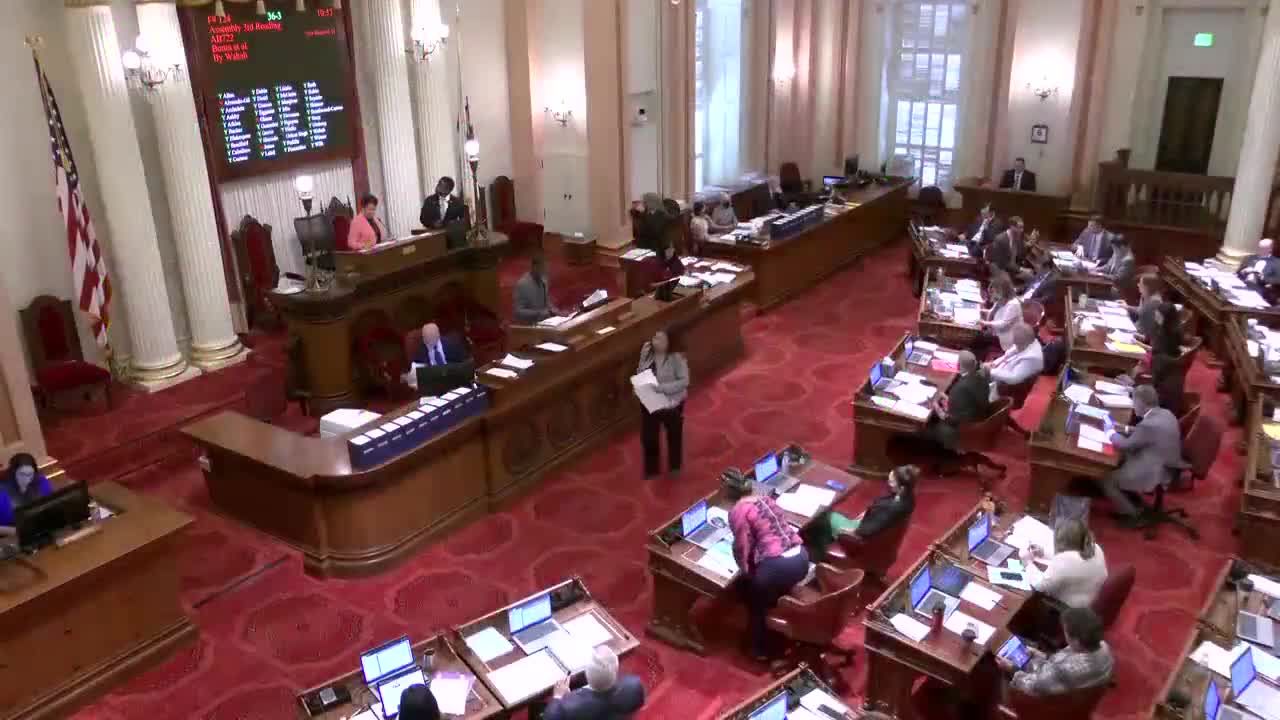
| Sep 6, 2023 | Read third time. Passed. Ordered to the Assembly. (Ayes 40. Noes 0. Page 2394.). |
| Aug 15, 2023 | Read second time. Ordered to third reading. |
| Aug 14, 2023 | From committee: Be ordered to second reading pursuant to Senate Rule 28.8. |
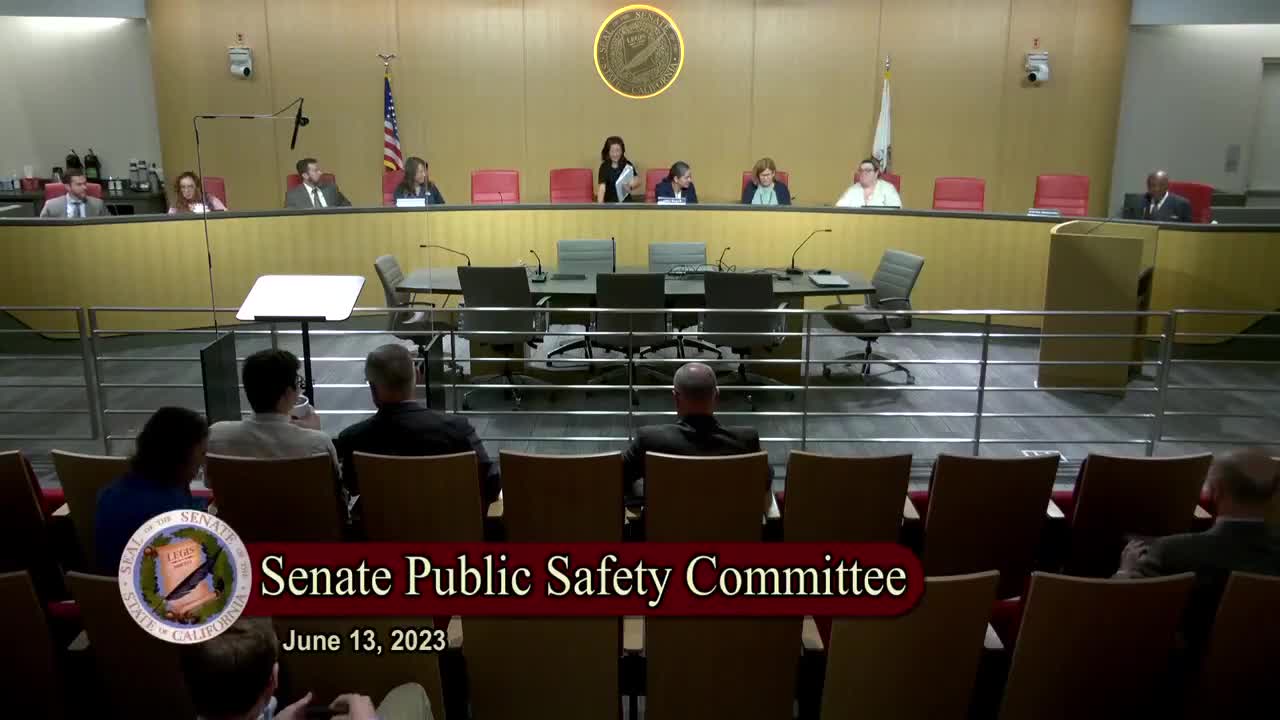
| Jun 13, 2023 | From committee: Do pass and re-refer to Com. on APPR. (Ayes 5. Noes 0.) (June 13). Re-referred to Com. on APPR. |
| May 31, 2023 | Referred to Com. on PUB S. |
| May 18, 2023 | In Senate. Read first time. To Com. on RLS. for assignment. |
| May 18, 2023 | Read third time. Passed. Ordered to the Senate. (Ayes 74. Noes 0. Page 1595.) |
| May 11, 2023 | Read second time. Ordered to Consent Calendar. |
| May 10, 2023 | From committee: Do pass. To Consent Calendar. (Ayes 14. Noes 0.) (May 10). |
| Apr 27, 2023 | Re-referred to Com. on APPR. |
| Apr 26, 2023 | Read second time and amended. |
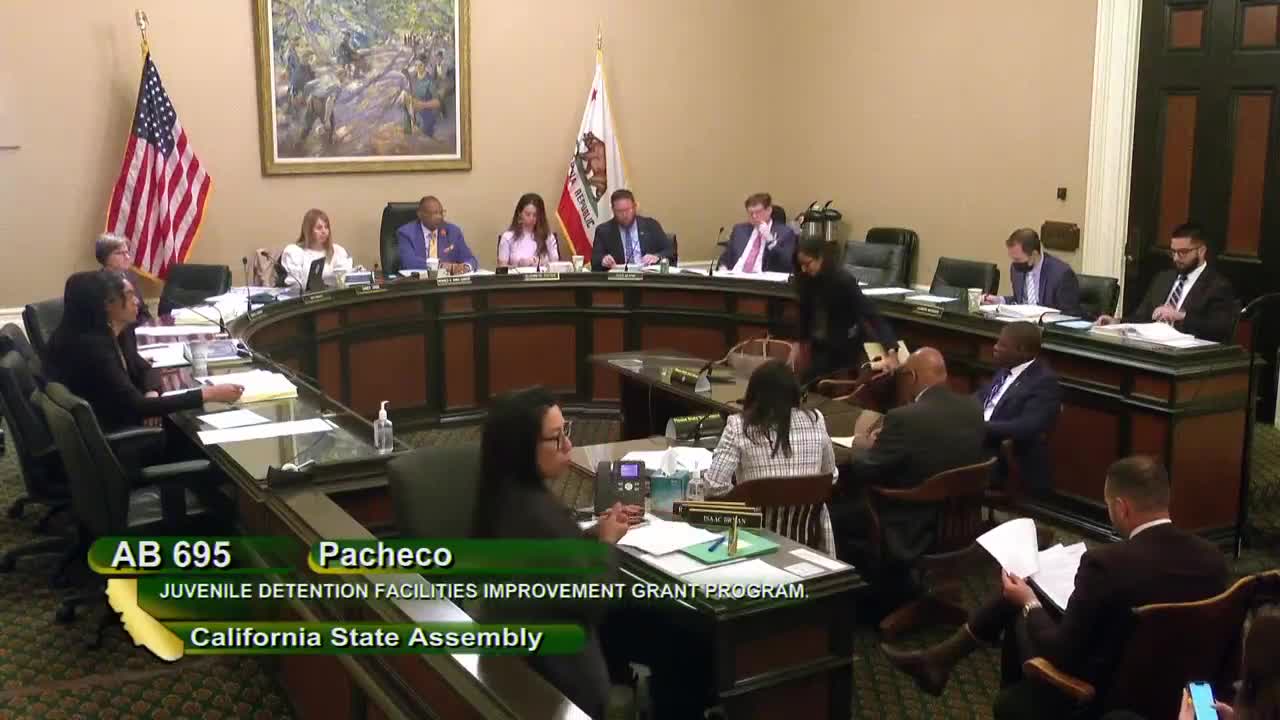
| Apr 25, 2023 | From committee: Amend, and do pass as amended and re-refer to Com. on APPR. (Ayes 8. Noes 0.) (April 25). |
| Apr 3, 2023 | Re-referred to Com. on PUB. S. |
| Mar 30, 2023 | Referred to Com. on PUB. S. |
| Mar 30, 2023 | From committee chair, with author's amendments: Amend, and re-refer to Com. on PUB. S. Read second time and amended. |
| Feb 14, 2023 | From printer. May be heard in committee March 16. |
| Feb 13, 2023 | Read first time. To print. |
|
Date
|
Description
|
Location
|
Votes
|
|
|---|---|---|---|---|
| Sep 6, 2023 | Assembly 3rd Reading AB791 Ramos By Roth | Senate Floor |
Passed |
|
| Jun 13, 2023 | Do pass, but first be re-referred to the Committee on [Appropriations] | Senate Standing Committee on Public Safety |
Passed |
|
| May 18, 2023 | AB 791 Ramos Consent Calendar Second Day Regular Session | Assembly Floor |
Passed |
|
| May 10, 2023 | Do pass. To Consent Calendar. | Assembly Standing Committee on Appropriations |
Passed |
|
| Apr 25, 2023 | Do pass as amended and be re-referred to the Committee on [Appropriations] | Assembly Standing Committee on Public Safety |
Passed |
This list shows positions taken on this bill by organizations on the date displayed, which is linked to the original source.
Positions by individuals are not included.
|
Organization
|
Position
|
Date
|
|---|---|---|
| Arcadia Police Officers' Association | ** Support | |
| Burbank Police Officers' Association | ** Support | |
| California Association Of Highway Patrolmen | ** Support | |
| California Attorneys For Criminal Justice | ** Against | |
| California District Attorneys Association | ** Support | |
| California Public Defenders Association | ** Against | |
| California State Sheriffs' Association | ** Support | |
| Californians United for a Responsible Budget | ** Against | |
| CLAREMONT POLICE OFFICERS ASSOCIATION | ** Support | |
| Communities United for Restorative Youth Justice | ** Against | |
| Corona Police Officers Association | ** Support | |
| Culver City Police Officers' Association | ** Support | |
| Deputy Sheriffs Association of Monterey County | ** Support | |
| Fullerton Police Officers' Association | ** Support | |
| Los Angeles County District Attorney'S Office | ** Support | |
| Murrieta Police Officers' Association | ** Support | |
| Newport Beach Police Association | ** Support | |
| Office of Placer County District Attorney | * Support | Apr 25, 2023 |
| Palos Verdes Police Officers Association | ** Support | |
| Peace Officers Research Association Of California | ** Support | |
| PLACER COUNTY DEPUTY SHERIFFS ASSOCIATION | ** Support | |
| Pomona Police Officers' Association | ** Support | |
| Riverside County District Attorney | ** Support | |
| Riverside County District Attorney's Office | * Support | Apr 25, 2023 |
| Riverside County Sheriff's Office | ** Support | |
| RIVERSIDE POLICE OFFICERS ASSOCIATION | ** Support | |
| Riverside Sheriffs Association | ** Support | |
| San Bernardino County Sheriff'S Department | ** Support | |
| San Bernardino County SheriffS Employees Benefit Association | * Support | Jun 13, 2023 |
| San Francisco Public Defender | ** Against | |
| Santa Ana Police Officers Association | ** Support | |
| Sister Warriors Freedom Coalition | ** Against | |
| Upland Police Officers Association | ** Support |
SENATE RULES COMMITTEE Office of Senate Floor Analyses (916) 651-1520 Fax: (916) 327-4478 | AB 791 |
THIRD READING
Bill No: AB 791
Author: Ramos (D)
Amended: 4/26/23 in Assembly
Vote: 21
SENATE PUBLIC SAFETY COMMITTEE: 5-0, 6/13/23
AYES: Wahab, Ochoa Bogh, Bradford, Skinner, Wiener
SENATE APPROPRIATIONS COMMITTEE: Senate Rule 28.8
ASSEMBLY FLOOR: 74-0, 5/18/23 (Consent) - See last page for vote
SUBJECT: Postconviction bail
SOURCE: Riverside County Sheriff’s Office
Riverside Sheriffs’ Association
DIGEST: This bill prohibits a person convicted of an offense punishable by life without possibility of parole from being released on bail pending sentencing or appeal.
ANALYSIS:
Existing law:
- Prohibits excessive bail. (U.S. Const., 8th Amend. & Cal. Const., art. I, § 12.)
- Declares that a person shall be released on bail by sufficient sureties, except for:
- Capital crimes when the facts are evident or the presumption great;
- Felony offenses involving acts of violence on another person, or felony sexual assault offenses on another person, when the facts are evident or the presumption great and the court finds based upon clear and convincing evidence that there is a substantial likelihood the person's release would result in great bodily harm to others; or
- Felony offenses when the facts are evident or the presumption great and the court finds based on clear and convincing evidence that the person has threatened another with great bodily harm and that there is a substantial likelihood that the person would carry out the threat if released. (Cal. Const., art. I, section 12.)
- Requires the court to consider the safety of the victim and the victim's family in setting bail and release conditions for a defendant. (Cal. Const., art. I, § 28, subd. (b)(3).)
- Provides that in setting, reducing or denying bail, the judge or magistrate shall take into consideration the protection of the public, the safety of the victim, the seriousness of the offense charged, the previous criminal record of the defendant, and the probability of his or her appearing at the trial or hearing of the case. Public safety and the safety of the victim shall be the primary considerations. A person may be released on his or her own recognizance in the court’s discretion, subject to the same factors considered in setting bail. (Cal. Const., art. I, section 28(f)(3).)
- States that the admission to bail is the order of a competent court or magistrate that the defendant be discharged from actual custody upon bail. (Pen. Code, § 1268.)
- Provides that if a general verdict is rendered against the defendant, or a special verdict is given, they must be remanded if in custody, or if on bail, they shall be committed to the proper officer of the county to await the judgment of the court, unless, upon considering the protection of the public, the seriousness of the offense charged and proven, the previous criminal record of the defendant, the probability of the defendant failing to appear for the judgment of the court, and public safety, the court concludes the evidence supports its decision to allow the defendant to remain out on bail. (Pen. Code, § 1166.)
- States that after conviction of an offense not punishable with death, a defendant who has applied for probation or who has appealed may be admitted to bail, as follows:
- As a matter of right, before judgment is pronounced pending application for probation in misdemeanor cases;
- As a matter of right, when the appeal is from a judgment imposing imprisonment in misdemeanors cases;
- As a matter of right, when the appeal is from a judgment imposing only a fine; and,
- As a matter of discretion in all other cases. (Pen. Code, § 1272.)
- Provides that provides that when exercising discretion, bail pending appeal must be ordered if the defendant demonstrates all of the following:
- By clear and convincing evidence, that they are not likely to flee. The court shall consider: the defendant’s ties to the community, including their employment, the duration of their residence, their family attachments and their property holdings, the defendant’s record of appearance at past court hearings or of flight to avoid prosecution, and the severity of the sentence the defendant faces;
- By clear and convincing evidence, that the defendant does not pose a danger to the safety of any other person or to the community. The court shall consider, among other factors, whether the defendant was convicted of a violent felony; and,
- That the appeal is not for the purpose of delay and, based on the record in the case, raises a substantial legal question that, if decided in favor of the defendant, is likely to result in reversal. A “substantial legal question” means a close question, one of more substance than would be necessary to a finding that it was not frivolous. In assessing whether a substantial legal question has been raised on appeal by the defendant, the court shall not be required to determine whether it committed error. (Pen. Code, § 1272.1, subd. (a) – (c).)
- Requires the court, in making its decision, to include a brief statement of reasons in support of an order granting or denying a motion for bail on appeal. The statement need only include the basis for the order with sufficient specificity to permit meaningful review. (Pen. Code, § 1272.1, subd. (c).)
This bill:
- Prohibits a person convicted of an offense punishable by life without possibility of parole from being released on bail pending imposition or execution of sentence.
- Requires a judicial officer to remand into custody a person who has been found guilty of an offense punishable by life in prison without the possibility of parole or death.
- Prohibits a court from authorizing a defendant to be released on bail pending an application for probation or appeal from judgment when the defendant has been convicted of an offense punishable by life without the possibility of parole.
Comments
According to the author of this bill:
AB 791 is a common sense measure that aims to improve public safety. Addressing ambiguity within our judicial system will improve delivery of justice.
Existing law requires a defendant to be committed to the county once a verdict has been rendered, unless the court concludes that the defendant can remain out on bail. This bill would make it so defendants found guilty of an offense for which they face life in prison, that they be remanded in the county’s custody and not be released.
FISCAL EFFECT: Appropriation: No Fiscal Com.: Yes Local: Yes
SUPPORT: (Verified 8/14/23)
Riverside County Sheriff's Office (co-source)
Riverside Sheriffs’ Association (co-source)
California Association of Highway Patrolmen
California District Attorneys Association
California State Sheriffs' Association
Los Angeles County District Attorney's Office
Peace Officers Research Association of California
Riverside County District Attorney
OPPOSITION: (Verified 8/14/23)
California Attorneys for Criminal Justice
California Public Defenders Association
Californians United for a Responsible Budget
Communities United for Restorative Youth Justice
San Francisco Public Defender
Sister Warriors Freedom Coalition
ARGUMENTS IN SUPPORT: According to the Riverside County Sheriffs’ Office, the sponsor of this bill:
Deputy Cordero's life was tragically cut short by a career criminal who unprovokedly murdered him simply because of what his uniform represented —law, order, and justice. Deputy Cordero left behind over 300 grieving family members, left his 4,000 brothers and sisters in tan and green devastated, and left our community in shock.
Deputy Cordero's murder was unfortunately preventable only if the suspect, William McKay, had been behind bars for the serious crimes he had already been convicted of. McKay's criminal history stretched over two decades and he was recently convicted of his third strike. Unfortunately, although McKay was facing a life sentence, the judge lowered his bail and allowed him to roam free. McKay had nothing to lose on December 29, 2022, and made the decision to kill Deputy Cordero rather than face life in prison. If he had been behind bars that day. Deputy Cordero would still be alive proudly serving his community.
ARGUMENTS IN OPPOSITION: According to the California Public Defenders Association:
This bill takes discretions away from the courts who know best whether an individual convicted of an offense for which they may be imprisoned should remain out on bail. The judge who presided over the trial, knows the facts, and who will ultimately sentence the individual is in the best position to determine if the individual should remain out of custody or remanded. The trial judge’s discretion should not be curtailed. While it would be a rare situation in which a judge would allow someone facing life without parole to be released following a conviction, the judge knows best.
If a judge does set bail, there is a good reason, perhaps the evidence is completely lacking and there is a good chance the person has been wrongly convicted. A judge would only set bail pending appeal for an individual convicted of an offense that carried a life sentence in order to prevent a miscarriage of justice.
ASSEMBLY FLOOR: 74-0, 5/18/23
AYES: Addis, Aguiar-Curry, Alanis, Alvarez, Arambula, Bains, Bauer-Kahan, Bennett, Berman, Boerner, Bonta, Bryan, Calderon, Juan Carrillo, Wendy Carrillo, Chen, Connolly, Megan Dahle, Davies, Dixon, Essayli, Flora, Mike Fong, Gabriel, Gallagher, Garcia, Gipson, Grayson, Haney, Hart, Holden, Hoover, Irwin, Jackson, Jones-Sawyer, Kalra, Lackey, Lee, Low, Lowenthal, Maienschein, Mathis, McCarty, McKinnor, Muratsuchi, Stephanie Nguyen, Ortega, Pacheco, Papan, Jim Patterson, Joe Patterson, Pellerin, Petrie-Norris, Quirk-Silva, Ramos, Reyes, Luz Rivas, Robert Rivas, Rodriguez, Blanca Rubio, Sanchez, Santiago, Schiavo, Soria, Ta, Ting, Valencia, Wallis, Ward, Weber, Wicks, Wood, Zbur, Rendon
NO VOTE RECORDED: Cervantes, Vince Fong, Friedman, Villapudua, Waldron, Wilson
Prepared by: Stella Choe / PUB. S. /
8/16/23 10:11:42
**** END ****
SENATE COMMITTEE ON PUBLIC SAFETY
Senator Aisha Wahab, Chair
2023 - 2024 Regular
Bill No: AB 791 Hearing Date: June 13, 2023
Author: | Ramos | ||
Version: | April 26, 2023 | ||
Urgency: | No | Fiscal: | Yes |
Consultant: | SC | ||
Subject: Postconviction bail
HISTORY
Source: Riverside County Sheriff’s Office
Riverside Sheriffs’ Association
Prior Legislation: AB 476 (Ackerman), Ch. 570, Stats. 1999
Support: Arcadia Police Officers Association; Burbank Police Officers Association; California Association of Highway Patrolmen; California District Attorneys Association; California State Sheriffs’ Association; Claremont Police Officers Association; Corona Police Officers Association; Culver City Police Officers Association; DSA Monterey County; Fullerton Police Officers Association; Golden State Bail Agents Association; Murrieta Police Officers Association; Newport Beach PA; Palos Verdes Police Officers Association; Peace Officers Research Association of California; Placer County DSA; Pomona Police Officers Association; Riverside County District Attorney; Riverside Police Officers Association; Santa Ana Police Officers Association; San Bernardino County Sheriff’s Department; Upland Police Officers Association
Opposition: California Attorneys for Criminal Justice; California Public Defenders Association
Assembly Floor Vote: 74 - 0
PURPOSE
The purpose of this bill is to prohibit a person convicted of an offense punishable by life without possibility of parole from being released on bail pending sentencing or appeal.
Existing law prohibits excessive bail. (U.S. Const., 8th Amend. & Cal. Const., art. I, § 12.)
Existing law declares that a person shall be released on bail by sufficient sureties, except for:
- Capital crimes when the facts are evident or the presumption great;
- Felony offenses involving acts of violence on another person, or felony sexual assault offenses on another person, when the facts are evident or the presumption great and the court finds based upon clear and convincing evidence that there is a substantial likelihood the person's release would result in great bodily harm to others; or
- Felony offenses when the facts are evident or the presumption great and the court finds based on clear and convincing evidence that the person has threatened another with great bodily harm and that there is a substantial likelihood that the person would carry out the threat if released. (Cal. Const., art. I, section 12.)
Existing law requires the court to consider the safety of the victim and the victim's family in setting bail and release conditions for a defendant. (Cal. Const., art. I, § 28, subd. (b)(3).)
Existing law provides that in setting, reducing or denying bail, the judge or magistrate shall take into consideration the protection of the public, the safety of the victim, the seriousness of the offense charged, the previous criminal record of the defendant, and the probability of his or her appearing at the trial or hearing of the case. Public safety and the safety of the victim shall be the primary considerations. A person may be released on his or her own recognizance in the court’s discretion, subject to the same factors considered in setting bail. (Cal. Const., art. I, section 28(f)(3).)
Existing law states that the admission to bail is the order of a competent court or magistrate that the defendant be discharged from actual custody upon bail. (Pen. Code, § 1268.)
Existing law provides that if a general verdict is rendered against the defendant, or a special verdict is given, they must be remanded if in custody, or if on bail, they shall be committed to the proper officer of the county to await the judgment of the court, unless, upon considering the protection of the public, the seriousness of the offense charged and proven, the previous criminal record of the defendant, the probability of the defendant failing to appear for the judgment of the court, and public safety, the court concludes the evidence supports its decision to allow the defendant to remain out on bail. (Pen. Code, § 1166.)
Existing law states that after conviction of an offense not punishable with death, a defendant who has applied for probation or who has appealed may be admitted to bail, as follows:
- As a matter of right, before judgment is pronounced pending application for probation in misdemeanor cases;
- As a matter of right, when the appeal is from a judgment imposing imprisonment in misdemeanors cases;
- As a matter of right, when the appeal is from a judgment imposing only a fine; and,
- As a matter of discretion in all other cases. (Pen. Code, § 1272.)
Existing law provides that provides that when exercising discretion, bail pending appeal must be ordered if the defendant demonstrates all of the following:
- By clear and convincing evidence, that they are not likely to flee. The court shall consider: the defendant’s ties to the community, including their employment, the duration of their residence, their family attachments and their property holdings, the defendant’s record of appearance at past court hearings or of flight to avoid prosecution, and the severity of the sentence the defendant faces;
- By clear and convincing evidence, that the defendant does not pose a danger to the safety of any other person or to the community. The court shall consider, among other factors, whether the defendant was convicted of a violent felony; and,
- That the appeal is not for the purpose of delay and, based on the record in the case, raises a substantial legal question that, if decided in favor of the defendant, is likely to result in reversal. A “substantial legal question” means a close question, one of more substance than would be necessary to a finding that it was not frivolous. In assessing whether a substantial legal question has been raised on appeal by the defendant, the court shall not be required to determine whether it committed error. (Pen. Code, § 1272.1, subd. (a) – (c).)
Existing law requires the court, in making its decision, to include a brief statement of reasons in support of an order granting or denying a motion for bail on appeal. The statement need only include the basis for the order with sufficient specificity to permit meaningful review. (Pen. Code, § 1272.1, subd. (c).)
This bill prohibits a person convicted of an offense punishable by life without possibility of parole from being released on bail pending imposition or execution of sentence.
This bill requires a judicial officer to remand into custody a person who has been found guilty of an offense punishable by life in prison without the possibility of parole or death.
This bill prohibits a court from authorizing a defendant to be released on bail pending an application for probation or appeal from judgment when the defendant has been convicted of an offense punishable by life without the possibility of parole.
COMMENTS
- Need for This Bill
According to the author of this bill:
AB 791 is a common sense measure that aims to improve public safety. Addressing ambiguity within our judicial system will improve delivery of justice.
Existing law requires a defendant to be committed to the county once a verdict has been rendered, unless the court concludes that the defendant can remain out on bail. This bill would make it so defendants found guilty of an offense for which they face life in prison, that they be remanded in the county’s custody and not be released.
- Bail Generally
Existing law provides a process whereby the court may set a bail amount for a criminal defendant. (Penal Code Section 1269b.) Additionally, Section 12 of Article 1 of the California Constitution provides, with limited exceptions for capital offenses and felonies involving violence or sexual assault, that a criminal defendant has a right to bail and what conditions shall be taken into consideration in setting bail. A defendant may post bail by depositing cash or an equivalent form of currency, provide a security in real property, or undertake bail using a bail bond.
The bail bond is the most likely means by which a person posts bail and is essentially a private-party contract that provides the court with a guarantee that the defendant will appear for a hearing or trial. A defendant pays a licensed bail agent a percentage of the total amount of bail ordered as a non-refundable fee – often an amount in the range of 10%. The bail agent will contract with a surety company to issue a bail bond – essentially, an insurance policy. The bond is issued providing that if the defendant fails to appear, the county will receive the full amount of bail set by the court. The bond is provided to the court and, if accepted, the defendant is released. As designed, the bail system often allows the court to rely on the private sector to ensure appearances and provide a means for the county to be made whole in the event that a person fails to appear.
While the main purpose of a bail bond is to provide some assurance that a defendant will return to court to resolve the pending charges, courts must also consider the danger a released defendant will pose to the public or specific persons if released. Bail is set through a bail schedule that lists preset amounts of bail for various crimes. A committee of judges in each county promulgates the bail schedule for that county. (Pen. Code § 1269b, subd. (c).) In setting the amount of bail for an individual, the court the court must additionally consider the arrestee's ability to pay the stated amount of bail—and may not effectively detain the arrestee solely because the arrestee lacked the resources to post bail. (In re Humphrey (2021) 11 Cal.5tht 135, 143.)
A defendant or the prosecution can move the judge presiding over a particular case to raise or lower the amount of bail, or the defendant can request release on his or her own recognizance. (Pen. Code § 1275.) Additional statutory rules apply if the defendant is charged with a serious felony or domestic violence. (Pen. Code § 1270.1.)
- Bail after Conviction
While the right to pretrial bail is a right provided in the California constitution, the availability of bail after conviction is statutory, not constitutional. (In re Podesto (1976) 15 Cal.3d 921, 929-931; People v. Turner (1974) 39 Cal.App.3d 682.) Generally, when a defendant has been convicted of an offense, the defendant is to be remanded into custody while awaiting sentencing on the conviction. (Pen. Code, § 1166.) However, after “considering the protection of the public, the seriousness of the offense charged and proven, the previous criminal record of the defendant, the probability of the defendant failing to appear for the judgment of the court upon the verdict, and public safety,” the court may allow the defendant to remain out on bail if it concludes the evidence supports this decision. (Ibid.)
Existing law also specifies that a defendant who has appealed a conviction for a non-capital case may be released on bail either as a matter of right in misdemeanor cases, or as a matter of court’s discretion in all other cases. (Pen. Code, §1272.)
This bill prohibits a court from authorizing a defendant to be admitted on bail after being found guilty of an offense punishable by life in prison without the possibility of parole or death while awaiting sentencing. This bill also expands the prohibition in existing law that makes ineligible for bail pending appeal a defendant who is convicted of a crime punishable by death to also include a defendant who is convicted of a crime punishable by life without the possibility of parole.
- Impetus for this Legislation
The impetus for this bill comes from a case out of Riverside County where a man named William McKay, who was out on bail after being convicted of several felonies including a third strike, shot and killed Riverside County Sheriff’s Deputy Isaiah Cordero during a traffic stop:
McKay had been out on $500,000 bail since early 2022. San Bernardino County Superior Court Judge Cara D. Hutson had reduced his bail from $950,000 over the objection of a San Bernardino County prosecutor, who asked that McKay be remanded into custody after being convicted of several felonies that made him eligible for a life sentence under California’s “three strikes” law.
Hutson in November 2021 found McKay guilty of falsely imprisoning and threatening a woman, receiving stolen property and leading police on a high-speed chase. She acquitted him of more serious kidnapping charges.
The judge delayed sentencing as McKay’s lawyer challenged the verdict and sought a new trial over revelations that the alleged victim — the prosecution’s key witness — was herself facing federal charges of smuggling drugs into the U.S. from Mexico.
Six days after he was arrested in Fontana in October 2022 and then released, McKay was supposed to come to court for a hearing on that request for a new trial. He did not show up. His $500,000 bond was forfeited and a warrant issued for his arrest, court records show.
Records also show that, two months later, his $50,000 bail for the Fontana narcotics arrest was exonerated because the San Bernardino district attorney’s office had not filed charges. The reason? Lab results were pending.
When an individual is already out of custody, said Fontana Police Sgt. Chris Surgent, the “D.A.’s office will not consider the case for filing until the lab results for the narcotics are conducted, confirmed and sent over with the entire case. ... This is their policy, not ours.”
(Winton and Ormseth, Why a three-strikes felon – on bail twice over – was on the streets, where he gunned down a deputy, Los Angeles Times (Jan. 7, 2023).)
The trial judge in the case has received public criticism and even calls to resign. However, some legal scholars expressed that such criticism of the judge may not be warranted by the facts of the case. According to the director of criminal justice at the UC Irvine Law School, “The judge heard the testimony and adjusted the bail after finding (McKay) not guilty of the most serious charges (kidnapping), and $500,000 is a significant bail.” (Saavedra, Criticism of judge in killing of a Riverside County Deputy not so clear legal experts say, The Press Enterprise (Jan. 7, 2023).) She added, “There’s no indication the judge didn’t do what a judge is supposed to do: evaluate the facts, evaluate the criminal history and consider bail.” (Ibid.)
- Argument in Support
According to the Riverside County Sheriffs’ Office, the sponsor of this bill:
Deputy Cordero's life was tragically cut short by a career criminal who unprovokedly murdered him simply because of what his uniform represented —law, order, and justice. Deputy Cordero left behind over 300 grieving family members, left his 4,000 brothers and sisters in tan and green devastated, and left our community in shock.
Deputy Cordero's murder was unfortunately preventable only if the suspect, William McKay, had been behind bars for the serious crimes he had already been convicted of. McKay's criminal history stretched over two decades and he was recently convicted of his third strike. Unfortunately, although McKay was facing a life sentence, the judge lowered his bail and allowed him to roam free. McKay had nothing to lose on December 29, 2022, and made the decision to kill Deputy Cordero rather than face life in prison. If he had been behind bars that day. Deputy Cordero would still be alive proudly serving his community.
- Argument in Opposition
According to the California Public Defenders Association:
This bill takes discretions away from the courts who know best whether an individual convicted of an offense for which they may be imprisoned should remain out on bail. The judge who presided over the trial, knows the facts, and who will ultimately sentence the individual is in the best position to determine if the individual should remain out of custody or remanded. The trial judge’s discretion should not be curtailed. While it would be a rare situation in which a judge would allow someone facing life without parole to be released following a conviction, the judge knows best.
If a judge does set bail, there is a good reason, perhaps the evidence is completely lacking and there is a good chance the person has been wrongly convicted. A judge would only set bail pending appeal for an individual convicted of an offense that carried a life sentence in order to prevent a miscarriage of justice.
-- END –
Date of Hearing: May 10, 2023
ASSEMBLY COMMITTEE ON APPROPRIATIONS
Chris Holden, Chair
ABPCA Bill Id:AB 791
Author:(Ramos) – As Amended Ver:April 26, 2023
Policy Committee: | Public Safety | Vote: | 8 - 0 |
|
| ||
|
|
Urgency: No State Mandated Local Program: Yes Reimbursable: Yes
SUMMARY:
This bill removes a court’s discretion to allow a criminal defendant to be released on bail if the defendant has been found guilty of an offense punishable by life without the possibility of parole (LWOP) or death and requires that the court remand such a defendant into custody until sentencing. The bill also removes the ability of a court to grant bail to a defendant who is appealing their conviction for an offense punishable by LWOP.
FISCAL EFFECT:
Potential incarceration costs (local funds, General Fund) of an unknown amount. This bill eliminates the option for a judge to allow a defendant to be released on bail if the defendant has been convicted of an offense punishable by LWOP or death. As a result, the bill may lead to increased costs to counties to incarcerate defendants between conviction and sentencing who may otherwise have been released on bail at the discretion of a judge. However, many defendants convicted of these serious offenses are routinely remanded into custody until sentencing, so the additional incarceration costs resulting from this bill may not be significant. General Fund costs will depend on whether the duties imposed by this bill constitute a reimbursable state mandate, as determined by the Commission on State Mandates.
COMMENTS:
- Author’s Statement. According to the author, “AB 791 is a common sense measure that aims to improve public safety. Addressing ambiguity within our judicial system will improve delivery of justice.”
- Background. Bail is cash or a bond that a defendant deposits with the court as an assurance that the defendant will return to court for later proceedings. A defendant who pays bail can return to the community while their case is pending rather than remain in custody. If the defendant appears for court as required the bail money is generally returned to the defendant after the conclusion of the case or applied to fines owed by the defendant if they are convicted. If the defendant does not appear in court, the bail money is forfeited.
Existing law requires a criminal defendant who has been convicted of a crime be held in custody unless the court, after weighing relevant factors, concludes the evidence supports allowing the defendant to remain out of custody on bail until their sentencing hearing. This bill would remove the court’s ability to grant bail to any defendant convicted of an offense punishable by LWOP or death – like murder – and instead require the court to remand the defendant into custody until they are sentenced by the court. According to the analysis of this bill by the Assembly Committee on Public Safety, it appears that this bill was motivated by a 2022 case in which a Riverside County Deputy Sheriff was killed by a defendant, William McKay, who was out on bail awaiting sentencing. McKay had been convicted of offenses punishable by life in prison. In a similar situation, this bill would have required the court to remand McKay into custody until his sentencing instead of releasing him on bail.
Analysis Prepared by: Annika Carlson / APPR. / (916) 319-2081
Date of Hearing:
Counsel: Cheryl Anderson
ASSEMBLY COMMITTEE ON PUBLIC SAFETY
Reginald Byron Jones-Sawyer, Sr., Chair
ABPCA Bill Id:AB 791
Author:(Ramos) – As Amended Ver:March 30, 2023
As Proposed to be Amended in Committee
SUMMARY:
Prohibits post-conviction bail in felony cases punishable by life without parole (LWOP), in addition to those punishable by death. Specifically, this bill:
- Provides that the judicial officer must remand a person into custody who has been found guilty of an offense punishable by LWOP or death, and who is awaiting sentencing.
- Removes the court’s discretion to admit a person who has appealed or applied for probation to bail if the conviction is for an offense punishable by LWOP, in addition to offenses punishable by death.
EXISTING LAW:
- Prohibits excessive bail. (U.S. Const., 8th Amend. & Cal. Const., art. I, § 12.)
- States that a person shall be granted release on bail except for the following crimes when the facts are evident or the presumption great:
- Capital crimes;
- Felonies involving violence or sexual assault if the court finds by clear and convincing evidence that there is a substantial likelihood the person's release would result in great bodily harm to others; and,
- Felonies where the court finds by clear and convincing evidence that the person has threatened another with great bodily harm and that there is a substantial likelihood that the person would carry out the threat if released. (Cal. Const., art. I, § 12; see also Pen. Code, §§ 292, 1270.5.)
- States that in setting, reducing or denying bail, the judge or magistrate shall take into consideration the protection of the public, the safety of the victim, the seriousness of the offense charged, the previous criminal record of the defendant, and their probability of appearing at the trial or hearing of the case. Public safety and the safety of the victim shall be the primary considerations. (Cal. Const., art. I, § 28, subd. (f)(3).)
- Requires the court to consider the safety of the victim and the victim's family in setting bail and release conditions for a defendant. (Cal. Const., art. I, § 28, subd. (b)(3).)
- Requires the superior court judges in each county to prepare, adopt, and annually revise a uniform, countywide bail schedule. (Pen. Code, § 1269b, subd. (c).)
- Allows a court, by local rule, to prescribe the procedure by which the uniform countywide schedule of bail is prepared, adopted, and annually revised by the judges. If a court does not adopt a local rule, the uniform countywide schedule of bail shall be prepared, adopted, and annually revised by a majority of the judges. (Pen. Code, § 1269b, subd. (d).)
- Provides that in adopting a uniform countywide schedule of bail for all bailable felony offenses the judges shall consider the seriousness of the offense charged. (Pen. Code, § 1269b, subd. (e).)
- Provides that if a general verdict is rendered against the defendant, or a special verdict is given, they must be remanded if in custody, or if on bail, they shall be committed to the proper officer of the county to await the judgment of the court, unless, upon considering the protection of the public, the seriousness of the offense charged and proven, the previous criminal record of the defendant, the probability of the defendant failing to appear for the judgment of the court, and public safety, the court concludes the evidence supports its decision to allow the defendant to remain out on bail. (Pen. Code, § 1166.)
- After conviction of an offense not punishable with death, a defendant who has applied for probation or who has appealed may be admitted to bail, as follows:
- As a matter of right, before judgment is pronounced pending application for probation in misdemeanor cases;
- As a matter of right, when the appeal is from a judgment imposing imprisonment in misdemeanors cases;
- As a matter of right, when the appeal is from a judgment imposing only a fine; and,
- As a matter of discretion in all other cases. (Pen. Code, § 1272.)
- Provides that when exercising discretion, bail pending appeal must be ordered if the defendant demonstrates all of the following:
- By clear and convincing evidence, that they are not likely to flee. The court shall consider: the defendant’s ties to the community, including their employment, the duration of their residence, their family attachments and their property holdings, the defendant’s record of appearance at past court hearings or of flight to avoid prosecution, and the severity of the sentence the defendant faces;
- By clear and convincing evidence, that the defendant does not pose a danger to the safety of any other person or to the community. The court shall consider, among other factors, whether the defendant was convicted of a violent felony; and,
- That the appeal is not for the purpose of delay and, based on the record in the case, raises a substantial legal question that, if decided in favor of the defendant, is likely to result in reversal. A “substantial legal question” means a close question, one of more substance than would be necessary to a finding that it was not frivolous. In assessing whether a substantial legal question has been raised on appeal by the defendant, the court shall not be required to determine whether it committed error. (Pen. Code, § 1272.1, subd. (a) – (c).)
- Requires the court, in making its decision, to include a brief statement of reasons in support of an order granting or denying a motion for bail on appeal. The statement need only include the basis for the order with sufficient specificity to permit meaningful review. (Pen. Code, § 1272.1, subd. (c).)
FISCAL EFFECT:
Unknown
COMMENTS:
- Author's Statement: According to the author, “AB 791 is a common sense measure that aims to improve public safety. Addressing ambiguity within our judicial system will improve delivery of justice.”
- Bail: Bail is a security given to the court. The purpose is to guarantee a defendant’s future court attendance as well as to protect public safety. In California, bail is a constitutional right except when the defendant is charged with: (1) a capital crime; (2) a felony involving violence or sex and the court finds that the person’s release would result in great bodily harm to another; or (3) when the defendant has threatened another and the court finds it likely that the defendant might carry out that threat. (Cal. Const. art. I, § 12.) This language has been interpreted to pertain only to persons in custody on a charge of a criminal offense. The right to bail after conviction is statutory, not constitutional. (In re Podesto (1976) 15 Cal.3d 921, 929-931; People v. Turner (1974) 39 Cal.App.3d 682.)
- Bail Following an Adverse Verdict: Penal Code section 1166 states that if a verdict is rendered against a defendant, the defendant must be remanded to await the court’s judgment – i.e., pending sentencing. However, after “considering the protection of the public, the seriousness of the offense charged and proven, the previous criminal record of the defendant, the probability of the defendant failing to appear for the judgment of the court upon the verdict, and public safety,” the court may allow the defendant to remain out on bail if it concludes the evidence supports this decision. (Pen. Code, § 1166.) That being said, Penal Code section 1270.5 provides that a “defendant charged with an offense punishable with death cannot be admitted to bail, when the proof of his or her guilt is evident or the presumption thereof great.” This language has been read to refer to bail before trial. (In re Law (1973) 10 Cal.3d 21, 25 [The phrase “the proof is evident or the presumption [is] great” can be relevant only as a limitation on the bailable nature of a charged but unproven capital offense; otherwise the proof and presumption would have been conclusively and finally established.”].)
This bill would prohibit a court from allowing a defendant convicted of the most serious charges and facing LWOP from being allowed to remain on bail after conviction, and pending sentencing. This bill would also expressly prohibit post-conviction bail for those facing a death sentence while sentencing is pending. - Bail on Appeal: Following conviction of a noncapital offense, a defendant who has appealed may request the trial court to release them on bail. (Pen. Code, § 1272.) Bail is a matter of right in misdemeanor cases and cases where only a fine has been imposed. In all other cases, release on bail is subject to the court’s discretion. (Ibid.) However, the court must release the defendant on bail if the appeal is not for the purpose of delay and raises a substantial legal question that, if decided in the defendant's favor, will likely result in reversal and the defendant demonstrates by clear and convincing evidence both that they do not pose a danger to other persons and are unlikely to flee. (Pen. Code, § 1272.1.)
This bill would similarly remove a court’s discretion to admit a defendant to bail on appeal following a conviction for an offense punishable by LWOP, in addition to following conviction of an offense punishable by death. - Bail in the William McKay Case: On December 29, 2022, a Riverside County Deputy Sheriff was killed by a defendant, William McKay, who was out on bail awaiting sentencing. McKay had been convicted of offenses punishable by life in prison.
Criticism of the judge in that case followed these tragic events. However, some legal scholars expressed that criticism of the judge was not so clear. A veteran defense lawyer and former deputy district attorney, said that while it was a bad judgment call, it was not legally unreasonable. According to the director of criminal justice at the UC Irvine Law School, “The judge heard the testimony and adjusted the bail after finding (McKay) not guilty of the most serious charges, and $500,000 is a significant bail.” (https://www.pressenterprise.com/2023/01/07/criticism-of-judge-in-the-killing-of-a-riverside-county-deputy-not-so-clear-legal-experts-say/.) She added, “There’s no indication the judge didn’t do what a judge is supposed to do: evaluate the facts, evaluate the criminal history and consider bail.” (Ibid.) Experts also chided the prosecutor for a lack of forceful argument against reducing bail. According to a professor at Chapman University’s Fowler School of Law, “All we get from the prosecution is a single sentence (opposing bail). There is nothing in the way of a coherent argument there…My overall reaction is that the prosecution’s handling of this matter was far from satisfactory.” (Ibid.)
While a tragedy, this incident begs the question whether this judge’s bad call and/or the prosecutor’s unsatisfactory performance justify further curtailing judicial discretion in life cases. Post-conviction bail statutes – Penal Code sections 1166, 1272, and 1272.1 – put public safety considerations and severity of the sentence the defendant faces at the forefront of a judge’s decision whether to grant bail. As proposed to be amended in committee, this bill would expressly prohibit post-conviction bail in the most serious cases – those in which the punishment is LWOP or death. - Argument in Support: According to the Riverside County District Attorney’s Office, “Convicted capital murder defendants have no incentive to return for sentencing and every incentive to use violence against the public and law enforcement to avoid a return to custody. While Penal Code sections 1166 and 1272 address convicted murder defendants facing death sentences, the statutes do not explicitly address convicted murder defendants facing Life Without the Possibility of Parole (LWOP). By providing clarity to these legal provisions and addressing LWOP, AB 791 protects the public and ensures these dangerous convicted defendants remain in custody pending sentencing.”
- Argument in Opposition: According to the California Public Defenders Association, “This bill takes discretions away from the courts who know best whether an individual convicted of an offense for which they may be imprisoned should remain out on bail. The judge who presided over the trial, knows the facts, and who will ultimately sentence the individual is in the best position to determine if the individual should remain out of custody or remanded. The trial judge’s discretion should not be curtailed.”
- Prior Legislation: AB 476 (Ackerman), Chapter 570, Statutes of 1999, directed a court to consider a defendant's background, crime of conviction and risk of flight when determining whether to leave a defendant out on bail pending sentencing.
REGISTERED SUPPORT / OPPOSITION:
Support
Arcadia Police Officers' Association
Burbank Police Officers' Association
California Association of Highway Patrolmen
California State Sheriffs' Association
Claremont Police Officers Association
Corona Police Officers Association
Culver City Police Officers' Association
Deputy Sheriffs' Association of Monterey County
Fullerton Police Officers' Association
Murrieta Police Officers' Association
Newport Beach Police Association
Palos Verdes Police Officers Association
Peace Officers Research Association of California (PORAC)
Placer County Deputy Sheriffs' Association
Pomona Police Officers' Association
Riverside County District Attorney
Riverside County Sheriff's Office
Riverside Police Officers Association
Riverside Sheriffs' Association
San Bernardino County Sheriff's Department
Santa Ana Police Officers Association
Upland Police Officers Association
Opposition
California Public Defenders Association (CPDA)
Analysis Prepared by:
Cheryl Anderson / PUB. S. / (916) 319-3744
Discussed in Hearing
 51SEC
Senate Floor
 8MIN
Senate Standing Committee on Public Safety
 10MIN
Assembly Standing Committee on Public Safety
Bill Author

Bill Co-Author(s):