AB 818: Protective orders.
- Session Year: 2023-2024
- House: Assembly
- Latest Version Date: 2023-09-26
Current Status:
Passed
(2023-09-26: Chaptered by Secretary of State - Chapter 242, Statutes of 2023.)
Introduced
In Committee
First Chamber
In Committee
Second Chamber
Enacted
Existing law provides for temporary restraining orders or emergency protective orders with respect to domestic violence and elder abuse, as specified. Existing law requires that a temporary restraining order or emergency protective order issued under these provisions be served on the respondent at the request of the petitioner, whether or not the respondent has been taken into custody, by a law enforcement officer who is present at the scene of reported domestic violence involving the parties to the proceeding.
This bill would expand these provisions to require service of orders issued after hearing. The bill would also authorize these orders to be served by a law enforcement officer who receives a request from the petitioner to provide service of the order, but would exclude service by specified peace officers, including a parole officer of the Department of Corrections and Rehabilitation or a probation officer. The bill would prohibit a fee from being charged to the petitioner for service of those orders. The bill would require specified peace officers to take into temporary custody any firearm or deadly weapon in plain sight or discovered pursuant to a consensual or otherwise lawful search for the protection of peace officers or other persons present when those officers are at the scene of a domestic violence incident involving a threat to human life or physical assault, serving a protective order pursuant to the above provisions, or serving a gun violence restraining order. By expanding the duties of local law enforcement, this bill would impose a state-mandated local program.
Existing law requires a law enforcement agency to enter all firearms that have been reported stolen, lost, found, recovered, held for safekeeping, or under observation into the Automated Firearms System (AFS).
This bill would require law enforcement to enter, or cause to be entered, a firearm into the AFS if the firearm is obtained at the scene of a domestic violence incident or during service of specified orders.
The California Constitution requires the state to reimburse local agencies and school districts for certain costs mandated by the state. Statutory provisions establish procedures for making that reimbursement.
This bill would provide that, if the Commission on State Mandates determines that the bill contains costs mandated by the state, reimbursement for those costs shall be made pursuant to the statutory provisions noted above.
Existing law provides for temporary restraining orders or emergency protective orders with respect to domestic violence and elder abuse, as specified. Existing law requires that a temporary restraining order or emergency protective order issued under these provisions be served on the respondent at the request of the petitioner, whether or not the respondent has been taken into custody, by a law enforcement officer who is present at the scene of reported domestic violence involving the parties to the proceeding.
This bill would expand these provisions to require service of orders issued after hearing. The bill would also authorize these orders to be served by a law enforcement officer who receives a request from the petitioner to provide service of the order. This order, but would exclude service by specified peace officers, including a parole officer of the Department of Corrections and Rehabilitation or a probation officer. The bill would prohibit a fee from being charged to the petitioner for service of those orders. The bill would require specified peace officers to take into temporary custody any firearm or deadly weapon in plain sight or discovered pursuant to a consensual or otherwise lawful search for the protection of peace officers or other persons present when those officers are at the scene of a domestic violence incident involving a threat to human life or physical assault, serving a protective order pursuant to the above provisions, or serving a gun violence restraining order. By expanding the duties of local law enforcement, this bill would impose a state-mandated local program.
Existing law requires a law enforcement agency to enter all firearms that have been reported stolen, lost, found, recovered, held for safekeeping, or under observation into the Automated Firearms System (AFS).
This bill would require law enforcement to enter, or cause to be entered, a firearm into the AFS if the firearm is obtained at the scene of a domestic violence incident or during service of specified orders.
The California Constitution requires the state to reimburse local agencies and school districts for certain costs mandated by the state. Statutory provisions establish procedures for making that reimbursement.
This bill would provide that, if the Commission on State Mandates determines that the bill contains costs mandated by the state, reimbursement for those costs shall be made pursuant to the statutory provisions noted above.
Existing law provides for temporary restraining orders or emergency protective orders with respect to domestic violence and elder abuse, as specified. Existing law requires that a temporary restraining order or emergency protective order issued under these provisions be served on the respondent at the request of the petitioner, whether or not the respondent has been taken into custody, by a law enforcement officer who is present at the scene of reported domestic violence involving the parties to the proceeding.
This bill would expand these provisions to require service of orders issued after hearing. The bill would also authorize these orders to be served by a law enforcement officer who receives a request from the petitioner to provide service of the order. This bill would prohibit a fee from being charged to the petitioner for service of those orders. The bill would require specified peace officers to take into temporary custody any firearm or deadly weapon in plain sight or discovered pursuant to a consensual or otherwise lawful search for the protection of peace officers or other persons present when those officers are at the scene of a domestic violence incident involving a threat to human life or physical assault, serving a protective order pursuant to the above provisions, or serving a gun violence restraining order. By expanding the duties of local law enforcement, this bill would impose a state-mandated local program.
Existing law requires a law enforcement agency to enter all firearms that have been reported stolen, lost, found, recovered, held for safekeeping, or under observation into the Automated Firearms System (AFS).
This bill would require law enforcement to enter, or cause to be entered, a firearm into the AFS if the firearm is obtained at the scene of a domestic violence incident or during service of specified orders.
The California Constitution requires the state to reimburse local agencies and school districts for certain costs mandated by the state. Statutory provisions establish procedures for making that reimbursement.
This bill would provide that, if the Commission on State Mandates determines that the bill contains costs mandated by the state, reimbursement for those costs shall be made pursuant to the statutory provisions noted above.
Existing law provides for temporary restraining orders or emergency protective orders with respect to domestic violence and elder abuse, as specified. Existing law requires that a temporary restraining order or emergency protective order issued under these provisions be served on the respondent at the request of the petitioner, whether or not the respondent has been taken into custody, by a law enforcement officer who is present at the scene of reported domestic violence involving the parties to the proceeding.
This bill would expand these provisions to require service of orders issued after hearing. The bill would also authorize these orders to be served by a law enforcement officer designated by their department to provide service on these orders when firearms or ammunition are at issue in the case. receives a request from the petitioner to provide service of the order. This bill would prohibit a fee from being charged for service of those orders. The bill would require specified peace officers to take into temporary custody any firearm or deadly weapon in plain sight or discovered pursuant to a consensual or otherwise lawful search for the protection of peace officers or other persons present when those officers are at the scene of a domestic violence incident involving a threat to human life or physical assault, serving a protective order pursuant to the above provisions, or serving a gun violence restraining order. By expanding the duties of local law enforcement, this bill would impose a state-mandated local program.
Existing law requires a law enforcement agency to enter all firearms that have been reported stolen, lost, found, recovered, held for safekeeping, or under observation into the Automated Firearms System (AFS).
This bill would require law enforcement to enter, or cause to be entered, a firearm into the AFS if the firearm is obtained at the scene of a domestic violence incident or during service of specified orders.
The California Constitution requires the state to reimburse local agencies and school districts for certain costs mandated by the state. Statutory provisions establish procedures for making that reimbursement.
This bill would provide that, if the Commission on State Mandates determines that the bill contains costs mandated by the state, reimbursement for those costs shall be made pursuant to the statutory provisions noted above.
Existing law provides for temporary restraining orders or emergency protective orders with respect to domestic violence and elder abuse, as specified. Existing law requires that a temporary restraining order or emergency protective order issued under these provisions be served on the respondent at the request of the petitioner, whether or not the respondent has been taken into custody, by a law enforcement officer who is present at the scene of reported domestic violence involving the parties to the proceeding.
This bill would expand these provisions to require service of orders issued after hearing. The bill would also authorize these orders to be served by a law enforcement officer designated by their department to provide service on these orders when firearms or ammunition are at issue in the case. The bill would require specified peace officers to take into temporary custody any firearm or deadly weapon in plain sight or discovered pursuant to a consensual or otherwise lawful search for the protection of peace officers or other persons present when those officers are at the scene of a domestic violence incident involving a threat to human life or physical assault, serving a protective order pursuant to the above provisions, or serving a gun violence restraining order. By expanding the duties of local law enforcement, this bill would impose a state-mandated local program.
The California Constitution requires the state to reimburse local agencies and school districts for certain costs mandated by the state. Statutory provisions establish procedures for making that reimbursement.
This bill would provide that, if the Commission on State Mandates determines that the bill contains costs mandated by the state, reimbursement for those costs shall be made pursuant to the statutory provisions noted above.
Existing law requires the Attorney General to establish and maintain an online database, known as the Prohibited Arms Persons File, to cross-reference individuals who own or possess firearms after a specified date with individuals who may fall within a class of persons who are prohibited to do so.This bill would make a technical, nonsubstantive change to these provisions.Existing law requires the Attorney General to establish and maintain an online database, known as the Prohibited Arms Persons File, to cross-reference individuals who own or possess firearms after a specified date with individuals who may fall within a class of persons who are prohibited to do so.
This bill would make a technical, nonsubstantive change to these provisions.
(a)A temporary restraining order, emergency protective order, or an order issued after hearing pursuant to this part shall, on request of the petitioner, be served on the respondent, whether or not the respondent has been taken into custody, either by a law enforcement officer, excluding those defined in subdivision (a) of Section 830.5 of the Penal Code, who is present at the scene of reported domestic violence involving the parties to the proceeding or who receives a request from the petitioner to provide service of the order.
(b)(1)The petitioner shall provide the officer with an endorsed copy of the order and a proof of service that the officer shall complete and transmit to the issuing court.
(2)Service shall be provided pursuant to Section 6389 of the Family Code.
(3)Notwithstanding any other law, a fee shall not be charged to the petitioner for service of an order described in subdivision (a).
(4)If a firearm is obtained at the scene of a domestic violence incident or during service as provided in this section, law enforcement shall enter, or cause to be entered, the firearm into the Department of Justice Automated Firearms System pursuant to Section 11108.2 of the Penal Code.
(c)It is a rebuttable presumption that the proof of service was signed on the date of service.
(d)Upon receiving information at the scene of a domestic violence incident that a protective order has been issued under this part, or that a person who has been taken into custody is the respondent to that order, if the protected person cannot produce an endorsed copy of the order, a law enforcement officer shall immediately inquire of the California Restraining and Protective Order System to verify the existence of the order.
(e)If the law enforcement officer determines that a protective order has been issued but not served, the officer shall immediately notify the respondent of the terms of the order and where a written copy of the order can be obtained, and the officer shall, at that time, also enforce the order. The law enforcement officers verbal notice of the terms of the order shall constitute service of the order and is sufficient notice for the purposes of this section and for the purposes of Sections 273.6 and 29825 of the Penal Code.
(f)If a report is required under Section 13730 of the Penal Code, or if no report is required, then in the daily incident log, the officer shall provide the name and assignment of the officer notifying the respondent pursuant to subdivision (e) and the case number of the order.
(g)Upon service of the order outside of the court, a law enforcement officer shall advise the respondent to go to the local court to obtain a copy of the order containing the full terms and conditions of the order.
(h)(1)There shall be no civil liability on the part of, and no cause of action for false arrest or false imprisonment against, a peace officer who makes an arrest pursuant to a protective or restraining order that is regular upon its face, if the peace officer, in making the arrest, acts in good faith and has reasonable cause to believe that the person against whom the order is issued has notice of the order and has committed an act in violation of the order.
(2)If there is more than one order issued and one of the orders is an emergency protective order that has precedence in enforcement pursuant to paragraph (1) of subdivision (c) of Section 136.2 of the Penal Code, the peace officer shall enforce the emergency protective order. If there is more than one order issued, none of the orders issued is an emergency protective order that has precedence in enforcement, and one of the orders issued is a no-contact order, as described in Section 6320, the peace officer shall enforce the no-contact order. If there is more than one civil order regarding the same parties and neither an emergency protective order that has precedence in enforcement nor a no-contact order has been issued, the peace officer shall enforce the order that was issued last. If there are both civil and criminal orders regarding the same parties and neither an emergency protective order that has precedence in enforcement nor a no-contact order has been issued, the peace officer shall enforce the criminal order issued last, subject to the provisions of subdivisions (h) and (i) of Section 136.2 of the Penal Code. This section does not exonerate a peace officer from liability for the unreasonable use of force in the enforcement of the order. The immunities afforded by this section shall not affect the availability of any other immunity that may apply, including, but not limited to, Sections 820.2 and 820.4 of the Government Code.
(i)A peace officer listed in Section 18250 of the Penal Code shall take temporary custody of any firearm or other deadly weapon in plain sight or discovered pursuant to a consensual or otherwise lawful search as necessary for the protection of the peace officer or other persons present in any of the following circumstances:
(1)The peace officer is at the scene of a domestic violence incident involving a threat to human life or a physical assault.
(2)The peace officer is serving a protective order issued pursuant to this part.
(3)The peace officer is serving a gun violence restraining order issued pursuant to Division 3.2 (commencing with Section 18100) of Title 2 of Part 6 of the Penal Code.
SEC. 2.If the Commission on State Mandates determines that this act contains costs mandated by the state, reimbursement to local agencies and school districts for those costs shall be made pursuant to Part 7 (commencing with Section 17500) of Division 4 of Title 2 of the Government Code.
(a)A temporary restraining order, emergency protective order, or an order issued after hearing pursuant to this part shall, on request of the petitioner, be served on the respondent, whether or not the respondent has been taken into custody, either by a law enforcement officer officer, excluding those defined in subdivision (a) of Section 830.5 of the Penal Code, who is present at the scene of reported domestic violence involving the parties to the proceeding or who receives a request from the petitioner to provide service of the order.
(b)(1)The petitioner shall provide the officer with an endorsed copy of the order and a proof of service that the officer shall complete and transmit to the issuing court.
(2)Service shall be provided pursuant to Section 6389 of the Family Code.
(3)Notwithstanding any other law, a fee shall not be charged to the petitioner for service of an order described in subdivision (a).
(4)If a firearm is obtained at the scene of a domestic violence incident or during service as provided in this section, law enforcement shall enter, or cause to be entered, the firearm into the Department of Justice Automated Firearms System pursuant to Section 11108.2 of the Penal Code.
(c)It is a rebuttable presumption that the proof of service was signed on the date of service.
(d)Upon receiving information at the scene of a domestic violence incident that a protective order has been issued under this part, or that a person who has been taken into custody is the respondent to that order, if the protected person cannot produce an endorsed copy of the order, a law enforcement officer shall immediately inquire of the California Restraining and Protective Order System to verify the existence of the order.
(e)If the law enforcement officer determines that a protective order has been issued but not served, the officer shall immediately notify the respondent of the terms of the order and where a written copy of the order can be obtained, and the officer shall, at that time, also enforce the order. The law enforcement officers verbal notice of the terms of the order shall constitute service of the order and is sufficient notice for the purposes of this section and for the purposes of Sections 273.6 and 29825 of the Penal Code.
(f)If a report is required under Section 13730 of the Penal Code, or if no report is required, then in the daily incident log, the officer shall provide the name and assignment of the officer notifying the respondent pursuant to subdivision (e) and the case number of the order.
(g)Upon service of the order outside of the court, a law enforcement officer shall advise the respondent to go to the local court to obtain a copy of the order containing the full terms and conditions of the order.
(h)(1)There shall be no civil liability on the part of, and no cause of action for false arrest or false imprisonment against, a peace officer who makes an arrest pursuant to a protective or restraining order that is regular upon its face, if the peace officer, in making the arrest, acts in good faith and has reasonable cause to believe that the person against whom the order is issued has notice of the order and has committed an act in violation of the order.
(2)If there is more than one order issued and one of the orders is an emergency protective order that has precedence in enforcement pursuant to paragraph (1) of subdivision (c) of Section 136.2 of the Penal Code, the peace officer shall enforce the emergency protective order. If there is more than one order issued, none of the orders issued is an emergency protective order that has precedence in enforcement, and one of the orders issued is a no-contact order, as described in Section 6320, the peace officer shall enforce the no-contact order. If there is more than one civil order regarding the same parties and neither an emergency protective order that has precedence in enforcement nor a no-contact order has been issued, the peace officer shall enforce the order that was issued last. If there are both civil and criminal orders regarding the same parties and neither an emergency protective order that has precedence in enforcement nor a no-contact order has been issued, the peace officer shall enforce the criminal order issued last, subject to the provisions of subdivisions (h) and (i) of Section 136.2 of the Penal Code. This section does not exonerate a peace officer from liability for the unreasonable use of force in the enforcement of the order. The immunities afforded by this section shall not affect the availability of any other immunity that may apply, including, but not limited to, Sections 820.2 and 820.4 of the Government Code.
(i)A peace officer listed in Section 18250 of the Penal Code shall take temporary custody of any firearm or other deadly weapon in plain sight or discovered pursuant to a consensual or otherwise lawful search as necessary for the protection of the peace officer or other persons present in any of the following circumstances:
(1)The peace officer is at the scene of a domestic violence incident involving a threat to human life or a physical assault.
(2)The peace officer is serving a protective order issued pursuant to this part.
(3)The peace officer is serving a gun violence restraining order issued pursuant to Division 3.2 (commencing with Section 18100) of Title 2 of Part 6 of the Penal Code.
SEC. 2.If the Commission on State Mandates determines that this act contains costs mandated by the state, reimbursement to local agencies and school districts for those costs shall be made pursuant to Part 7 (commencing with Section 17500) of Division 4 of Title 2 of the Government Code.
(a)A temporary restraining order, emergency protective order, or an order issued after hearing pursuant to this part shall, on request of the petitioner, be served on the respondent, whether or not the respondent has been taken into custody, either by a law enforcement officer who is present at the scene of reported domestic violence involving the parties to the proceeding or who receives a request from the petitioner to provide service of the order.
(b)(1)The petitioner shall provide the officer with an endorsed copy of the order and a proof of service that the officer shall complete and transmit to the issuing court.
(2)Service shall be provided pursuant to Section 6389 of the Family Code.
(3)Notwithstanding any other law, a fee shall not be charged to the petitioner for service of an order described in subdivision (a).
(4)If a firearm is obtained at the scene of a domestic violence incident or during service as provided in this section, law enforcement shall enter, or cause to be entered, the firearm into the Department of Justice Automated Firearms System pursuant to Section 11108.2 of the Penal Code.
(c)It is a rebuttable presumption that the proof of service was signed on the date of service.
(d)Upon receiving information at the scene of a domestic violence incident that a protective order has been issued under this part, or that a person who has been taken into custody is the respondent to that order, if the protected person cannot produce an endorsed copy of the order, a law enforcement officer shall immediately inquire of the California Restraining and Protective Order System to verify the existence of the order.
(e)If the law enforcement officer determines that a protective order has been issued but not served, the officer shall immediately notify the respondent of the terms of the order and where a written copy of the order can be obtained, and the officer shall, at that time, also enforce the order. The law enforcement officers verbal notice of the terms of the order shall constitute service of the order and is sufficient notice for the purposes of this section and for the purposes of Sections 273.6 and 29825 of the Penal Code.
(f)If a report is required under Section 13730 of the Penal Code, or if no report is required, then in the daily incident log, the officer shall provide the name and assignment of the officer notifying the respondent pursuant to subdivision (e) and the case number of the order.
(g)Upon service of the order outside of the court, a law enforcement officer shall advise the respondent to go to the local court to obtain a copy of the order containing the full terms and conditions of the order.
(h)(1)There shall be no civil liability on the part of, and no cause of action for false arrest or false imprisonment against, a peace officer who makes an arrest pursuant to a protective or restraining order that is regular upon its face, if the peace officer, in making the arrest, acts in good faith and has reasonable cause to believe that the person against whom the order is issued has notice of the order and has committed an act in violation of the order.
(2)If there is more than one order issued and one of the orders is an emergency protective order that has precedence in enforcement pursuant to paragraph (1) of subdivision (c) of Section 136.2 of the Penal Code, the peace officer shall enforce the emergency protective order. If there is more than one order issued, none of the orders issued is an emergency protective order that has precedence in enforcement, and one of the orders issued is a no-contact order, as described in Section 6320, the peace officer shall enforce the no-contact order. If there is more than one civil order regarding the same parties and neither an emergency protective order that has precedence in enforcement nor a no-contact order has been issued, the peace officer shall enforce the order that was issued last. If there are both civil and criminal orders regarding the same parties and neither an emergency protective order that has precedence in enforcement nor a no-contact order has been issued, the peace officer shall enforce the criminal order issued last, subject to the provisions of subdivisions (h) and (i) of Section 136.2 of the Penal Code. This section does not exonerate a peace officer from liability for the unreasonable use of force in the enforcement of the order. The immunities afforded by this section shall not affect the availability of any other immunity that may apply, including, but not limited to, Sections 820.2 and 820.4 of the Government Code.
(i)A peace officer listed in Section 18250 of the Penal Code shall take temporary custody of any firearm or other deadly weapon in plain sight or discovered pursuant to a consensual or otherwise lawful search as necessary for the protection of the peace officer or other persons present in any of the following circumstances:
(1)The peace officer is at the scene of a domestic violence incident involving a threat to human life or a physical assault.
(2)The peace officer is serving a protective order issued pursuant to this part.
(3)The peace officer is serving a gun violence restraining order issued pursuant to Division 3.2 (commencing with Section 18100) of Title 2 of Part 6 of the Penal Code.
SEC. 2.If the Commission on State Mandates determines that this act contains costs mandated by the state, reimbursement to local agencies and school districts for those costs shall be made pursuant to Part 7 (commencing with Section 17500) of Division 4 of Title 2 of the Government Code.
(a)A temporary restraining order, emergency protective order, or an order issued after hearing issued under pursuant to this part shall, on request of the petitioner, be served on the respondent, whether or not the respondent has been taken into custody, either by a law enforcement officer who is present at the scene of reported domestic violence involving the parties to the proceeding or who is designated by their department receives a request from the petitioner to provide service on these orders when firearms or ammunition are at issue in the case. of the order.
(b)(1)The petitioner shall provide the officer with an endorsed copy of the order and a proof of service that the officer shall complete and transmit to the issuing court.
(2)Service shall be provided pursuant to Section 6389 of the Family Code.
(3)Notwithstanding any other law, a fee shall not be charged for service of an order described in subdivision (a).
(4)If a firearm is obtained at the scene of a domestic violence incident or during service as provided in this section, law enforcement shall enter, or cause to be entered, the firearm into the Department of Justice Automated Firearms System pursuant to Section 11108.2 of the Penal Code.
(c)It is a rebuttable presumption that the proof of service was signed on the date of service.
(d)Upon receiving information at the scene of a domestic violence incident that a protective order has been issued under this part, or that a person who has been taken into custody is the respondent to that order, if the protected person cannot produce an endorsed copy of the order, a law enforcement officer shall immediately inquire of the California Restraining and Protective Order System to verify the existence of the order.
(e)If the law enforcement officer determines that a protective order has been issued, issued but not served, the officer shall immediately notify the respondent of the terms of the order and where a written copy of the order can be obtained, and the officer shall, at that time, also enforce the order. The law enforcement officers verbal notice of the terms of the order shall constitute service of the order and is sufficient notice for the purposes of this section and for the purposes of Sections 273.6 and 29825 of the Penal Code.
(f)If a report is required under Section 13730 of the Penal Code, or if no report is required, then in the daily incident log, the officer shall provide the name and assignment of the officer notifying the respondent pursuant to subdivision (e) and the case number of the order.
(g)Upon service of the order outside of the court, a law enforcement officer shall advise the respondent to go to the local court to obtain a copy of the order containing the full terms and conditions of the order.
(h)(1)There shall be no civil liability on the part of, and no cause of action for false arrest or false imprisonment against, a peace officer who makes an arrest pursuant to a protective or restraining order that is regular upon its face, if the peace officer, in making the arrest, acts in good faith and has reasonable cause to believe that the person against whom the order is issued has notice of the order and has committed an act in violation of the order.
(2)If there is more than one order issued and one of the orders is an emergency protective order that has precedence in enforcement pursuant to paragraph (1) of subdivision (c) of Section 136.2 of the Penal Code, the peace officer shall enforce the emergency protective order. If there is more than one order issued, none of the orders issued is an emergency protective order that has precedence in enforcement, and one of the orders issued is a no-contact order, as described in Section 6320, the peace officer shall enforce the no-contact order. If there is more than one civil order regarding the same parties and neither an emergency protective order that has precedence in enforcement nor a no-contact order has been issued, the peace officer shall enforce the order that was issued last. If there are both civil and criminal orders regarding the same parties and neither an emergency protective order that has precedence in enforcement nor a no-contact order has been issued, the peace officer shall enforce the criminal order issued last, subject to the provisions of subdivisions (h) and (i) of Section 136.2 of the Penal Code. This section does not exonerate a peace officer from liability for the unreasonable use of force in the enforcement of the order. The immunities afforded by this section shall not affect the availability of any other immunity that may apply, including, but not limited to, Sections 820.2 and 820.4 of the Government Code.
(i)A peace officer listed in Section 18250 of the Penal Code shall take temporary custody of any firearm or other deadly weapon in plain sight or discovered pursuant to a consensual or otherwise lawful search as necessary for the protection of the peace officer or other persons present in any of the following circumstances:
(1)The peace officer is at the scene of a domestic violence incident involving a threat to human life or a physical assault.
(2)The peace officer is serving a protective order issued pursuant to this part.
(3)The peace officer is serving a gun violence restraining order issued pursuant to Division 3.2 (commencing with Section 18100) of Title 2 of Part 6 of the Penal Code.
SEC. 2.If the Commission on State Mandates determines that this act contains costs mandated by the state, reimbursement to local agencies and school districts for those costs shall be made pursuant to Part 7 (commencing with Section 17500) of Division 4 of Title 2 of the Government Code.
(a)A temporary restraining order or order, emergency protective order order, or an order issued after hearing issued under this part shall, on request of the petitioner, be served on the respondent, whether or not the respondent has been taken into custody, either by a law enforcement officer who is present at the scene of reported domestic violence involving the parties to the proceeding. proceeding or who is designated by their department to provide service on these orders when firearms or ammunition are at issue in the case.
(b)The petitioner shall provide the officer with an endorsed copy of the order and a proof of service that the officer shall complete and transmit to the issuing court.
(c)It is a rebuttable presumption that the proof of service was signed on the date of service.
(d)Upon receiving information at the scene of a domestic violence incident that a protective order has been issued under this part, or that a person who has been taken into custody is the respondent to that order, if the protected person cannot produce an endorsed copy of the order, a law enforcement officer shall immediately inquire of the California Restraining and Protective Order System to verify the existence of the order.
(e)If the law enforcement officer determines that a protective order has been issued, but not served, the officer shall immediately notify the respondent of the terms of the order and where a written copy of the order can be obtained, and the officer shall, at that time, also enforce the order. The law enforcement officers verbal notice of the terms of the order shall constitute service of the order and is sufficient notice for the purposes of this section and for the purposes of Sections 273.6 and 29825 of the Penal Code.
(f)If a report is required under Section 13730 of the Penal Code, or if no report is required, then in the daily incident log, the officer shall provide the name and assignment of the officer notifying the respondent pursuant to subdivision (e) and the case number of the order.
(g)Upon service of the order outside of the court, a law enforcement officer shall advise the respondent to go to the local court to obtain a copy of the order containing the full terms and conditions of the order.
(h)(1)There shall be no civil liability on the part of, and no cause of action for false arrest or false imprisonment against, a peace officer who makes an arrest pursuant to a protective or restraining order that is regular upon its face, if the peace officer, in making the arrest, acts in good faith and has reasonable cause to believe that the person against whom the order is issued has notice of the order and has committed an act in violation of the order.
(2)If there is more than one order issued and one of the orders is an emergency protective order that has precedence in enforcement pursuant to paragraph (1) of subdivision (c) of Section 136.2 of the Penal Code, the peace officer shall enforce the emergency protective order. If there is more than one order issued, none of the orders issued is an emergency protective order that has precedence in enforcement, and one of the orders issued is a no-contact order, as described in Section 6320, the peace officer shall enforce the no-contact order. If there is more than one civil order regarding the same parties and neither an emergency protective order that has precedence in enforcement nor a no-contact order has been issued, the peace officer shall enforce the order that was issued last. If there are both civil and criminal orders regarding the same parties and neither an emergency protective order that has precedence in enforcement nor a no-contact order has been issued, the peace officer shall enforce the criminal order issued last, subject to the provisions of subdivisions (h) and (i) of Section 136.2 of the Penal Code. This section does not exonerate a peace officer from liability for the unreasonable use of force in the enforcement of the order. The immunities afforded by this section shall not affect the availability of any other immunity that may apply, including, but not limited to, Sections 820.2 and 820.4 of the Government Code.
(i)A peace officer listed in Section 18250 of the Penal Code shall take temporary custody of any firearm or other deadly weapon in plain sight or discovered pursuant to a consensual or otherwise lawful search as necessary for the protection of the peace officer or other persons present in any of the following circumstances:
(1)The peace officer is at the scene of a domestic violence incident involving a threat to human life or a physical assault.
(2)The peace officer is serving a protective order issued pursuant to this part.
(3)The peace officer is serving a gun violence restraining order issued pursuant to Division 3.2 (commencing with Section 18100) of Title 2 of Part 6 of the Penal Code.
SEC. 2.If the Commission on State Mandates determines that this act contains costs mandated by the state, reimbursement to local agencies and school districts for those costs shall be made pursuant to Part 7 (commencing with Section 17500) of Division 4 of Title 2 of the Government Code.
SECTION 1.Section 30000 of the Penal Code is amended to read:30000.(a)The Attorney General shall establish and maintain an online database to be known as the Prohibited Armed Persons File. The purpose of the file is to cross-reference persons who have ownership or possession of a firearm on or after January 1, 1996, as indicated by a record in the Consolidated Firearms Information System, and who, after the date of that ownership or possession of a firearm, fall within a class of persons who are prohibited from owning or possessing a firearm.(b)Except as provided in subdivision (c), the information contained in the Prohibited Armed Persons File shall only be available to those entities specified in, and pursuant to, subdivision (b) or (c) of Section 11105, through the California Law Enforcement Telecommunications System, for the purpose of determining if persons are armed and prohibited from possessing firearms.(c)The information contained in the Prohibited Armed Persons File shall be available to researchers affiliated with the California Firearm Violence Research Center at UC Davis following approval by the institutions governing institutional review board, when required. At the departments discretion, and subject to Section 14240, the data may be provided to any other nonprofit bona fide research institution accredited by the United States Department of Education or the Council for Higher Education Accreditation for the study of the prevention of violence, following approval by the institutions governing institutional review board or human subjects committee, when required, for academic and policy research purposes. Material identifying individuals shall only be provided for research or statistical activities and shall not be transferred, revealed, or used for purposes other than research or statistical activities, and reports or publications derived therefrom shall not identify specific individuals. Reasonable costs to the department associated with the departments processing of that data may be billed to the researcher. If a request for data or letter of support for research using the data is denied, the department shall provide a written statement of the specific reasons for the denial.(a)The Attorney General shall establish and maintain an online database to be known as the Prohibited Armed Persons File. The purpose of the file is to cross-reference persons who have ownership or possession of a firearm on or after January 1, 1996, as indicated by a record in the Consolidated Firearms Information System, and who, subsequent to after the date of that ownership or possession of a firearm, fall within a class of persons who are prohibited from owning or possessing a firearm.
(b)Except as provided in subdivision (c), the information contained in the Prohibited Armed Persons File shall only be available to those entities specified in, and pursuant to, subdivision (b) or (c) of Section 11105, through the California Law Enforcement Telecommunications System, for the purpose of determining if persons are armed and prohibited from possessing firearms.
(c)The information contained in the Prohibited Armed Persons File shall be available to researchers affiliated with the California Firearm Violence Research Center at UC Davis following approval by the institutions governing institutional review board, when required. At the departments discretion, and subject to Section 14240, the data may be provided to any other nonprofit bona fide research institution accredited by the United States Department of Education or the Council for Higher Education Accreditation for the study of the prevention of violence, following approval by the institutions governing institutional review board or human subjects committee, when required, for academic and policy research purposes. Material identifying individuals shall only be provided for research or statistical activities and shall not be transferred, revealed, or used for purposes other than research or statistical activities, and reports or publications derived therefrom shall not identify specific individuals. Reasonable costs to the department associated with the departments processing of that data may be billed to the researcher. If a request for data or letter of support for research using the data is denied, the department shall provide a written statement of the specific reasons for the denial.
|
Date
|
Status
|
|---|---|
| Sep 26, 2023 | Chaptered by Secretary of State - Chapter 242, Statutes of 2023. |
| Sep 26, 2023 | Approved by the Governor. |
| Sep 20, 2023 | Enrolled and presented to the Governor at 4 p.m. |
| Sep 13, 2023 | Senate amendments concurred in. To Engrossing and Enrolling. (Ayes 80. Noes 0. Page 3404.). |
| Sep 12, 2023 | In Assembly. Concurrence in Senate amendments pending. |
| Sep 12, 2023 | Read third time. Passed. Ordered to the Assembly. (Ayes 38. Noes 0. Page 2641.). |
| Sep 11, 2023 | Read second time. Ordered to third reading. |
| Sep 8, 2023 | Read third time and amended. Ordered to second reading. |
| Sep 5, 2023 | Read second time. Ordered to third reading. |
| Sep 1, 2023 | Read second time and amended. Ordered returned to second reading. |
| Sep 1, 2023 | From committee: Amend, and do pass as amended. (Ayes 7. Noes 0.) (September 1). |
| Aug 14, 2023 | In committee: Referred to APPR suspense file. |
| Jul 12, 2023 | From committee: Do pass and re-refer to Com. on APPR with recommendation: To Consent Calendar. (Ayes 4. Noes 0.) (July 11). Re-referred to Com. on APPR. |
| Jun 21, 2023 | From committee: Do pass and re-refer to Com. on PUB S. with recommendation: To Consent Calendar. (Ayes 11. Noes 0.) (June 20). Re-referred to Com. on PUB S. |
| Jun 7, 2023 | Referred to Coms. on JUD. and PUB S. |
| May 31, 2023 | In Senate. Read first time. To Com. on RLS. for assignment. |
| May 30, 2023 | Read third time. Passed. Ordered to the Senate. (Ayes 80. Noes 0. Page 1872.) |
| May 18, 2023 | Read second time. Ordered to third reading. |
| May 18, 2023 | From committee: Do pass. (Ayes 15. Noes 0.) (May 18). |
| May 3, 2023 | In committee: Set, first hearing. Referred to APPR. suspense file. |
| Apr 25, 2023 | From committee: Do pass and re-refer to Com. on APPR. with recommendation: To Consent Calendar. (Ayes 8. Noes 0.) (April 25). Re-referred to Com. on APPR. |
| Mar 30, 2023 | Re-referred to Com. on PUB. S. |
| Mar 29, 2023 | Read second time and amended. |
| Mar 28, 2023 | From committee: Amend, and do pass as amended and re-refer to Com. on PUB. S. (Ayes 10. Noes 0.) (March 28). |
| Mar 13, 2023 | Re-referred to Com. on JUD. |
| Mar 9, 2023 | Referred to Coms. on JUD. and PUB. S. |
| Mar 9, 2023 | From committee chair, with author's amendments: Amend, and re-refer to Com. on JUD. Read second time and amended. |
| Feb 14, 2023 | From printer. May be heard in committee March 16. |
| Feb 13, 2023 | Read first time. To print. |
|
Date
|
Description
|
Location
|
Votes
|
|
|---|---|---|---|---|
| Sep 13, 2023 | AB 818 Petrie-Norris Concurrence in Senate Amendments | Assembly Floor |
Passed |
|
| Sep 12, 2023 | Assembly 3rd Reading AB818 Petrie-Norris By Portantino | Senate Floor |
Passed |
|
| Sep 1, 2023 | Do pass as amended | Senate Standing Committee on Appropriations |
Passed |
|
| Aug 14, 2023 | Placed on suspense file | Senate Standing Committee on Appropriations |
Passed |
|
| Jul 11, 2023 | Do pass, but first be re-referred to the Committee on [Appropriations] with the recommendation: To Consent Calendar | Senate Standing Committee on Public Safety |
Passed |
|
| Jun 20, 2023 | Do pass, but first be re-referred to the Committee on [Public Safety] with the recommendation: To Consent Calendar | Senate Standing Committee on Judiciary |
Passed |
|
| May 30, 2023 | AB 818 Petrie-Norris Assembly Third Reading | Assembly Floor |
Passed |
|
| May 18, 2023 | Do pass. | Assembly Standing Committee on Appropriations |
Passed |
|
| Apr 25, 2023 | Do pass and be re-referred to the Committee on [Appropriations] with recommendation: To Consent Calendar | Assembly Standing Committee on Public Safety |
Passed |
|
| Mar 28, 2023 | Do pass as amended and be re-referred to the Committee on [Public Safety] | Assembly Standing Committee on Judiciary |
Passed |
This list shows positions taken on this bill by organizations on the date displayed, which is linked to the original source.
Positions by individuals are not included.
|
Organization
|
Position
|
Date
|
|---|---|---|
| Giffords Law Center To Prevent Gun Violence | ** Support | |
| Los Angeles County District AttorneyS Office | ** Support | |
| Weave Inc. | ** Support |
CONCURRENCE IN SENATE AMENDMENTS
CSA1 Bill Id:AB 818
Author:(Petrie-Norris)
As Amended Ver:September 8, 2023
Majority vote
SUMMARY
Expands the requirement for law enforcement officers to serve domestic violence orders upon request of a petitioner in order to more efficiently help victims of domestic violence.
Major Provisions
- Requires a law enforcement officer, excluding those defined in Penal Code 830.5(a), to serve a temporary restraining order, emergency protective order, or an order issued after hearing on a domestic violence respondent, at the request of a petitioner.
- Requires that service of an order pursuant to 1), above, comply with the existing process for registration and enforcement of protective orders and other domestic violence prevention orders.
- Establishes that a petitioner who requests that a domestic violence order be served on a respondent not be charged a fee for such service.
- Establishes that when a firearm is obtained at the scene of a domestic violence incident or during service of an order pursuant to 1), above, a law enforcement officer must enter information about the firearm into the Department of Justice Automated Firearms System.
- Clarifies that a peace officer must take temporary custody of any firearm or other deadly weapon in plain sight or discovered pursuant to a lawful search as necessary for the protection of the peace officers or other persons present in any of the following circumstances:
- The peace officer is at the scene of a domestic violence incident involving a threat to human life or a physical assault.
- The peace officer is serving a domestic violence protective order.
- The peace officer is serving a gun violence restraining order.
- Establishes that if the Commission on State Mandates determines that this act contains costs mandated by the state, reimbursement to local agencies and school districts for those costs must be made pursuant to Government Code Section 1500 et seq.
Senate Amendments
Clarify that a fee may not be charged to the petitioner for service of an order and exclude parole and probation officers.
COMMENTS
Existing law requires a law enforcement officer who is present at the scene of reported domestic violence incident to serve any lawful protective orders, upon the request of the petitioner, whether or not the respondent has been taken into custody. These orders involve confiscating firearms, and their successful effectuation is imperative in securing the safety of all involved. Advocates for victims of domestic violence often report that when a victim requests that law enforcement serve a lawful order outside the scene of the domestic violence incident, some agencies refer victims to another law enforcement agency elsewhere. Victims are then forced to locate and drive to a subsequent local law enforcement agency and attempt to get them to serve the protective order and remove the firearms from the perpetrator. This 'punting' by law enforcement agencies is concerning because many, if not all, victims are already living in fear for their lives. In addition, this referral to another agency undermines the goal of the firearms prohibitions and California's Gun Violence Restraining Orders (GVRO) system: to identify those who currently own firearms, ensure the time between prohibition and relinquishment is reduced, and rapidly get guns out of the hands of those who courts have determined under state statutes should not have them. This bill eliminates that dangerous scenario by expressly requiring a law enforcement officer to serve the domestic violence order and confiscate any firearms, upon request by a petitioner – even if that request is not made at the scene of a domestic violence incident.
According to the Author
Family Code Section 6383 details the process for when a temporary restraining order or emergency protective order is issued by a court and provided to a law enforcement officer for the officer to serve at the scene of a domestic violence incident. However, advocates for victims of domestic violence often report that when a protected party requests that law enforcement serve the order, some agencies refer victims to another law enforcement agency elsewhere. Victims are then forced to locate and drive to a subsequent local law enforcement agency and attempt to get them to serve the protective order and remove the firearms from the perpetrator. This is not ideal as it puts victims at further risk and undermines the goals of current law to quickly remove firearms from prohibited persons.
Arguments in Support
Giffords, the gun violence prevention organization established by former Congressmember Gabriel Giffords, a supporter of this bill, believes that the bill will fill an existing gap and help further protect domestic violence victims:
California currently prohibits a person who is subject to a domestic violence, civil harassment, workplace violence prevention or gun violence restraining order from having firearms and ammunition. When the person becomes prohibited, that information is entered into the statewide database (CLETS); if they currently own a registered firearm, the person who is now prohibited and known to have a firearm or firearms will show up in the state's Armed Prohibited Persons System (APPS). When serving the order, an officer is required to inform the now restrained party they are prohibited from having firearms and ammunition and remove firearms in plain sight, obtained through a consensual search, or relinquished by the party to comply with the order. Currently, there are over 24,000 people in APPS – people who are known to have registered firearms but are prohibited. We can and must do better.
Unfortunately, advocates for victims of domestic violence often report that when a victim of domestic violence requests that law enforcement serve the firearm prohibiting order, some agencies refer victims to another law enforcement agency elsewhere or refuse to serve the order. Victims are then forced to locate and drive to a subsequent local law enforcement agency and attempt to get them to serve the protective order and remove the firearms from the prohibited party. Alternatively, they must rely on non-law enforcement process servers or lay people who cannot remove those firearms from the prohibited person. Without service, the order is not enforceable and the person who the court sought to prohibit is not in fact prohibited from having firearms. This is concerning because it undermines the goal of the firearms prohibitions (to increase safety) and the APPS system: to identify those who currently own firearms, ensure the time between prohibition and relinquishment is reduced, and to rapidly get guns out of the hands of those who courts have determined under state statutes should not have them.
Arguments in Opposition
No opposition on file.
FISCAL COMMENTS
According to the Senate Appropriations Committee, unknown, potentially reimbursable costs to local law enforcement agencies to serve restraining orders if requested by the petitioner and to upload specified information to about firearms seized at the site of a domestic violence incident into the AFS (local funds, General Fund). Costs will depend on the number of restraining and protective orders issued, the number of petitioners who request service by an officer, and the amount of time it takes to serve each order. General Fund costs will depend on whether this measure constitutes a reimbursable state mandate as determined by the Commission on State Mandates.
VOTES:
ASM JUDICIARY: 10-0-1
YES: Maienschein, Essayli, Connolly, Dixon, Haney, Pacheco, Papan, Reyes, Robert Rivas, Sanchez
ABS, ABST OR NV: Kalra
ASM PUBLIC SAFETY: 8-0-0
YES: Jones-Sawyer, Alanis, Bonta, Bryan, Lackey, Ortega, Santiago, Zbur
ASM APPROPRIATIONS: 15-0-1
YES: Holden, Megan Dahle, Bryan, Calderon, Wendy Carrillo, Dixon, Mike Fong, Hart, Lowenthal, Mathis, Papan, Pellerin, Sanchez, Weber, Ortega
ABS, ABST OR NV: Robert Rivas
ASSEMBLY FLOOR: 80-0-0
YES: Addis, Aguiar-Curry, Alanis, Alvarez, Arambula, Bains, Bauer-Kahan, Bennett, Berman, Boerner, Bonta, Bryan, Calderon, Juan Carrillo, Wendy Carrillo, Cervantes, Chen, Connolly, Megan Dahle, Davies, Dixon, Essayli, Flora, Mike Fong, Vince Fong, Friedman, Gabriel, Gallagher, Garcia, Gipson, Grayson, Haney, Hart, Holden, Hoover, Irwin, Jackson, Jones‑Sawyer, Kalra, Lackey, Lee, Low, Lowenthal, Maienschein, Mathis, McCarty, McKinnor, Muratsuchi, Stephanie Nguyen, Ortega, Pacheco, Papan, Jim Patterson, Joe Patterson, Pellerin, Petrie-Norris, Quirk-Silva, Ramos, Reyes, Luz Rivas, Robert Rivas, Rodriguez, Blanca Rubio, Sanchez, Santiago, Schiavo, Soria, Ta, Ting, Valencia, Villapudua, Waldron, Wallis, Ward, Weber, Wicks, Wilson, Wood, Zbur, Rendon
UPDATED
VERSION: September 8, 2023
CONSULTANT: Shiran Zohar / JUD. / (916) 319-2334 FN: 0002225
SENATE RULES COMMITTEE Office of Senate Floor Analyses (916) 651-1520 Fax: (916) 327-4478 | AB 818 |
THIRD READING
Bill No: AB 818
Author: Petrie-Norris (D)
Amended: 9/8/23 in Senate
Vote: 21
SENATE JUDICIARY COMMITTEE: 11-0, 6/20/23
AYES: Umberg, Wilk, Allen, Ashby, Caballero, Durazo, Laird, Min, Niello, Stern, Wiener
SENATE PUBLIC SAFETY COMMITTEE: 4-0, 7/11/23
AYES: Bradford, Ochoa Bogh, Skinner, Wiener
NO VOTE RECORDED: Wahab
SENATE APPROPRIATIONS COMMITTEE: 7-0, 9/1/23
AYES: Portantino, Jones, Ashby, Bradford, Seyarto, Wahab, Wiener
ASSEMBLY FLOOR: 80-0, 5/30/23 - See last page for vote
SUBJECT: Protective orders
SOURCE: Author
DIGEST:
This bill requires peace officers to take temporary custody of any firearm or other deadly weapon in plain sight or discovered pursuant to a lawful search in specified circumstances, and clarifies that a law enforcement officer must serve a protective order upon request by a petitioner, even if that request is not made at the scene of a domestic violence incident.
Senate Floor Amendments of 9/8/23 exempt parole officers from the bill’s requirement than officers serve protective orders upon request
ANALYSIS:
Existing law:
- Requires the Department of Justice (DOJ) to keep and properly file various records related to firearms. (Pen. Code, §11106.)
- Requires law enforcement agencies that have been reported stolen, lost, found, recovered, held for safekeeping, relinquished, or surrendered into the DOJ’s Automated Firearms System (AFS). (Pen. Code, § 11108.2.)
- Requires peace officers at the scene of a domestic violence incident, as specified, or is serving a protective order or gun violence restraining order (GVRO), as specified, to take temporary custody of any firearm or other deadly weapon in plain sight or discovered pursuant to a consensual or other lawful search as necessary for the protection of the peace officer. (Pen. Code, § 18250.)
- Establishes various processes regarding the disposition of weapons seized pursuant to the above provision. (Pen. Code, §§18255 – 18275.)
- Authorizes courts to issue protective orders in criminal cases, and specifies that when the defendant is charged with a crime involving domestic violence, the court shall consider issuing a protective order requiring the defendant to relinquish ownership or possession of any firearms. (Pen. Code, § 136.2.)
- Provides that no fee shall be charged for serving an emergency protective order, protective order, or restraining order issued pursuant on a respondent who is in custody in specified domestic violence cases. (Gov. Code, § 26721.)
- Authorizes a court to issue an emergency protective order in domestic violence cases, requires the law enforcement officer who requested the order to serve the order, and requires law enforcement officers to use every reasonable means to enforce the order. (Fam. Code, §§ 6240-6275.)
- Provides that when making a protective order, where both parties are in court, the court is required to inform both the petitioner and the respondent of the terms of the order, including that the respondent is prohibited from owning, possessing, purchasing, or receiving or attempting to own, possess, purchase, or receive a firearm or ammunition, and notice of the penalty for violation. Information provided shall include how any firearms or ammunition still in the restrained party’s possession are to be relinquished, according to local procedures, and the process for submitting a receipt to the court showing proof of relinquishment. (Fam. Code, § 6304.)
- Authorizes a court to issue an ex parte temporary restraining order or emergency protective order without a noticed hearing. (Fam. Code, §§ 6320-6327.)
- Provides that a person subject to a protective order shall not own, possess, purchase, or receive a firearm or ammunition while the protective order is in effect; a violation of this prohibition is a misdemeanor or a wobbler. (Fam. Code, § 6389(a), (g); Pen. Code, § 29825.)
- Provides that, upon issuance of a protective order, the court shall order the respondent to relinquish any firearms and ammunition, which shall occur by surrendering any firearms or ammunition in a safe manner as specified; if a law enforcement officer is serving a protective order that indicates the respondent possesses weapons or ammunition, the law enforcement officer must request that the firearm or ammunition be immediately surrendered. (Fam. Code, § 6389(c).)
- Provides that a temporary restraining order or emergency protective order shall, on the request of the petitioner, be served on the respondent, whether or not the respondent has been taken into custody, by a law enforcement officer who is present at the scene of reported domestic violence involving the parties to the proceeding. (Fam. Code, §6383.)
This bill:
- Provides that a temporary restraining order, emergency protective order, or an order issued after a domestic violence hearing shall be served on the respondent by a law enforcement officer who receives a request from the petitioner to serve the order, regardless of whether the request is made at the scene of a reported domestic violence incident.
- Exempts parole officers from the requirement above.
- Provides that, when service of a protective order is made pursuant to the above, the law enforcement officer must make service pursuant to Family Code Section 6389’s requirement that the officer request that respondent surrender any firearms or ammunition.
- Prohibits a fee from being charged to the petitioner for service of a protective order pursuant to the above.
- Provides that if a firearm is obtained at the scene of a domestic violence incident or during service, law enforcement shall enter the firearm into the DOJ’s AFS pursuant to existing law.
- Requires a peace officer to take temporary custody of any firearm or other deadly weapon in plain sight or discovered pursuant to a consensual or otherwise lawful search as necessary for the protection of the peace officer or other persons present in any of the following circumstances:
- The peace officer is at the scene of a domestic violence incident involving a threat to human life or a physical assault;
- The peace officer is serving a protective order; or,
- The peace officer is serving a GVRO.
Comments
According to the author, “Current law requires that someone subject to a domestic violence or gun violence restraining order be prohibited from having firearms. When the person becomes prohibited, that information is entered into the statewide database (CLETS); if they currently own a registered firearm, they will show up in the state’s Armed Prohibited Persons System (APPS). When serving the order, an officer is required to remove firearms from the prohibited person.
“However, advocates for victims of domestic violence often report that when a protected party (victim) requests that law enforcement serve the order, some agencies refer victims to another law enforcement agency elsewhere. Victims are then forced to locate and drive to a subsequent local law enforcement agency and attempt to get them to serve the protective order and remove the firearms from the perpetrator.
“This is concerning because many victims are already living in fear for their lives. In addition, this undermines the goal of the firearms prohibitions: to rapidly get guns out of the hands of those who courts have determined should not have them. AB 818 strengthens the goal of these policies by requiring law enforcement agencies remove firearms from a prohibited person when requested by a victim. This bill will help protect victims of domestic violence – and make our communities safer.”
Under California’s Domestic Violence Prevention Act, law enforcement is required to serve domestic violence restraining orders (DVROs) on a respondent via the specific law enforcement officer who is present at the scene of the domestic violence incident. According to the author, in some instances when a protected party requests that law enforcement serve a protective order on a respondent, the agency will refer the victim to a different agency, which results in dangerous delays and significant inconvenience to the victim. This bill requires a protective order to be served on a respondent not only by a law enforcement officer present at the scene of a reported domestic violence incident, but, at the request of the petitioner, by any law enforcement officer who receives such a request. Related provisions of this bill precludes the charging of a fee for service of the order and require service of the order to be completed in accordance with existing firearm relinquishment provisions (see Family Code §6389.) The fee restriction is consistent with existing law (Gov. Code § 26721), which waives fees for service of domestic violence orders when a respondent is in custody. Accordingly, this bill extends that fee waiver to all DVROs, whether or not the respondent is in custody.
This bill also specifies that law enforcement must enter a firearm obtained during service of the order or obtained at the scene of a domestic violence incident into the AFS. The AFS is a repository of firearm records maintained by the DOJ, in order to assist in the investigation of crime, the prosecution of civil actions by city attorneys, the arrest and prosecution of criminals, and the recovery of lost, stolen, or found firearms. Under existing law, law enforcement agencies are required to enter firearms that have been reported stolen, lost, found, recovered, held for safekeeping, relinquished, or surrendered into the AFS.
Finally, this bill enacts language in the DVPA that is identical to related language in the Penal Code which sets forth the procedure peace officers must follow in domestic violence incidents involving firearms. Specifically, Penal Code Section 18250 requires a peace officer at the scene of a domestic violence incident to take temporary custody of any firearm or other deadly weapon in plain sight or discovered pursuant to a consensual or otherwise lawful search as necessary for the protection of the peace officer or other persons present. This bill also imposes this requirement in the following specified circumstances: where the peace officer is at the scene of a domestic violence incident involving a threat to human life or a physical assault; the peace officer is serving a protective order related to domestic violence under the DVPA; or where the peace officer is serving a gun violence restraining order.
FISCAL EFFECT: Appropriation: No Fiscal Com.: Yes Local: Yes
According to the Senate Appropriations Committee, “unknown, potentially reimbursable costs to local law enforcement agencies to serve restraining orders if requested by the petitioner and to upload specified information to about firearms seized at the site of a domestic violence incident into the AFS (local funds, General Fund). Costs will depend on the number of restraining and protective orders issued, the number of petitioners who request service by an officer, and the amount of time it takes to serve each order. General Fund costs will depend on whether this measure constitutes a reimbursable state mandate as determined by the Commission on State Mandates”.
SUPPORT: (Verified 9/7/23)
Giffords Law Center to Prevent Gun Violence
Los Angeles County District Attorney’s Office
WEAVE Inc.
OPPOSITION: (Verified 9/7/23)
None received
ASSEMBLY FLOOR: 80-0, 5/30/23
AYES: Addis, Aguiar-Curry, Alanis, Alvarez, Arambula, Bains, Bauer-Kahan, Bennett, Berman, Boerner, Bonta, Bryan, Calderon, Juan Carrillo, Wendy Carrillo, Cervantes, Chen, Connolly, Megan Dahle, Davies, Dixon, Essayli, Flora, Mike Fong, Vince Fong, Friedman, Gabriel, Gallagher, Garcia, Gipson, Grayson, Haney, Hart, Holden, Hoover, Irwin, Jackson, Jones-Sawyer, Kalra, Lackey, Lee, Low, Lowenthal, Maienschein, Mathis, McCarty, McKinnor, Muratsuchi, Stephanie Nguyen, Ortega, Pacheco, Papan, Jim Patterson, Joe Patterson, Pellerin, Petrie-Norris, Quirk-Silva, Ramos, Reyes, Luz Rivas, Robert Rivas, Rodriguez, Blanca Rubio, Sanchez, Santiago, Schiavo, Soria, Ta, Ting, Valencia, Villapudua, Waldron, Wallis, Ward, Weber, Wicks, Wilson, Wood, Zbur, Rendon
Prepared by: Alex Barnett / PUB. S. /
9/11/23 13:01:36
**** END ****
SENATE RULES COMMITTEE Office of Senate Floor Analyses (916) 651-1520 Fax: (916) 327-4478 | AB 818 |
THIRD READING
Bill No: AB 818
Author: Petrie-Norris (D)
Amended: 9/1/23 in Senate
Vote: 21
SENATE JUDICIARY COMMITTEE: 11-0, 6/20/23
AYES: Umberg, Wilk, Allen, Ashby, Caballero, Durazo, Laird, Min, Niello, Stern, Wiener
SENATE PUBLIC SAFETY COMMITTEE: 4-0, 7/11/23
AYES: Bradford, Ochoa Bogh, Skinner, Wiener
NO VOTE RECORDED: Wahab
SENATE APPROPRIATIONS COMMITTEE: 7-0, 9/1/23
AYES: Portantino, Jones, Ashby, Bradford, Seyarto, Wahab, Wiener
ASSEMBLY FLOOR: 80-0, 5/30/23 - See last page for vote
SUBJECT: Protective orders
SOURCE: Author
DIGEST:
This bill require peace officers to take temporary custody of any firearm or other deadly weapon in plain sight or discovered pursuant to a lawful search in specified circumstances, and to clarify that a law enforcement officer must serve a protective order upon request by a petitioner, even if that request is not made at the scene of a domestic violence incident.
ANALYSIS:
Existing law:
- Requires the Department of Justice (DOJ) to keep and properly file various records related to firearms. (Pen. Code, §11106.)
- Requires law enforcement agencies that have been reported stolen, lost, found, recovered, held for safekeeping, relinquished, or surrendered into the DOJ’s Automated Firearms System (AFS). (Pen. Code, § 11108.2.)
- Requires peace officers at the scene of a domestic violence incident, as specified, or is serving a protective order or gun violence restraining order (GVRO), as specified, to take temporary custody of any firearm or other deadly weapon in plain sight or discovered pursuant to a consensual or other lawful search as necessary for the protection of the peace officer. (Pen. Code, § 18250.)
- Establishes various processes regarding the disposition of weapons seized pursuant to the above provision. (Pen. Code, §§18255 – 18275.)
- Authorizes courts to issue protective orders in criminal cases, and specifies that when the defendant is charged with a crime involving domestic violence, the court shall consider issuing a protective order requiring the defendant to relinquish ownership or possession of any firearms. (Pen. Code, § 136.2.)
- Provides that no fee shall be charged for serving an emergency protective order, protective order, or restraining order issued pursuant on a respondent who is in custody in specified domestic violence cases. (Gov. Code, § 26721.)
- Authorizes a court to issue an emergency protective order in domestic violence cases, requires the law enforcement officer who requested the order to serve the order, and requires law enforcement officers to use every reasonable means to enforce the order. (Fam. Code, §§ 6240-6275.)
- Provides that when making a protective order, where both parties are in court, the court is required to inform both the petitioner and the respondent of the terms of the order, including that the respondent is prohibited from owning, possessing, purchasing, or receiving or attempting to own, possess, purchase, or receive a firearm or ammunition, and notice of the penalty for violation. Information provided shall include how any firearms or ammunition still in the restrained party’s possession are to be relinquished, according to local procedures, and the process for submitting a receipt to the court showing proof of relinquishment. (Fam. Code, § 6304.)
- Authorizes a court to issue an ex parte temporary restraining order or emergency protective order without a noticed hearing. (Fam. Code, §§ 6320-6327.)
- Provides that a person subject to a protective order shall not own, possess, purchase, or receive a firearm or ammunition while the protective order is in effect; a violation of this prohibition is a misdemeanor or a wobbler. (Fam. Code, § 6389(a), (g); Pen. Code, § 29825.)
- Provides that, upon issuance of a protective order, the court shall order the respondent to relinquish any firearms and ammunition, which shall occur by surrendering any firearms or ammunition in a safe manner as specified; if a law enforcement officer is serving a protective order that indicates the respondent possesses weapons or ammunition, the law enforcement officer must request that the firearm or ammunition be immediately surrendered. (Fam. Code, § 6389(c).)
- Provides that a temporary restraining order or emergency protective order shall, on the request of the petitioner, be served on the respondent, whether or not the respondent has been taken into custody, by a law enforcement officer who is present at the scene of reported domestic violence involving the parties to the proceeding. (Fam. Code, §6383.)
This bill:
- Provides that a temporary restraining order, emergency protective order, or an order issued after a domestic violence hearing shall be served on the respondent by a law enforcement officer who receives a request from the petitioner to serve the order, regardless of whether the request is made at the scene of a reported domestic violence incident.
- Provides that, when service of a protective order is made pursuant to the above, the law enforcement officer must make service pursuant to Family Code Section 6389’s requirement that the officer request that respondent surrender any firearms or ammunition.
- Prohibits a fee from being charged to the petitioner for service of a protective order pursuant to the above.
- Provides that if a firearm is obtained at the scene of a domestic violence incident or during service, law enforcement shall enter the firearm into the DOJ’s AFS pursuant to existing law.
- Requires a peace officer to take temporary custody of any firearm or other deadly weapon in plain sight or discovered pursuant to a consensual or otherwise lawful search as necessary for the protection of the peace officer or other persons present in any of the following circumstances:
- The peace officer is at the scene of a domestic violence incident involving a threat to human life or a physical assault;
- The peace officer is serving a protective order; or,
- The peace officer is serving a GVRO.
Comments
According to the author, “Current law requires that someone subject to a domestic violence or gun violence restraining order be prohibited from having firearms. When the person becomes prohibited, that information is entered into the statewide database (CLETS); if they currently own a registered firearm, they will show up in the state’s Armed Prohibited Persons System (APPS). When serving the order, an officer is required to remove firearms from the prohibited person.
“However, advocates for victims of domestic violence often report that when a protected party (victim) requests that law enforcement serve the order, some agencies refer victims to another law enforcement agency elsewhere. Victims are then forced to locate and drive to a subsequent local law enforcement agency and attempt to get them to serve the protective order and remove the firearms from the perpetrator.
“This is concerning because many victims are already living in fear for their lives. In addition, this undermines the goal of the firearms prohibitions: to rapidly get guns out of the hands of those who courts have determined should not have them. AB 818 strengthens the goal of these policies by requiring law enforcement agencies remove firearms from a prohibited person when requested by a victim. This bill will help protect victims of domestic violence – and make our communities safer.”
Under California’s Domestic Violence Prevention Act, law enforcement is required to serve domestic violence restraining orders (DVROs) on a respondent via the specific law enforcement officer who is present at the scene of the domestic violence incident. According to the author, in some instances when a protected party requests that law enforcement serve a protective order on a respondent, the agency will refer the victim to a different agency, which results in dangerous delays and significant inconvenience to the victim. This bill requires a protective order to be served on a respondent not only by a law enforcement officer present at the scene of a reported domestic violence incident, but, at the request of the petitioner, by any law enforcement officer who receives such a request. Related provisions of the bill preclude the charging of a fee for service of the order and require service of the order to be completed in accordance with existing firearm relinquishment provisions (see Family Code §6389.) The fee restriction is consistent with existing law (Gov. Code § 26721), which waives fees for service of domestic violence orders when a respondent is in custody. Accordingly, this bill extends that fee waiver to all DVROs, whether or not the respondent is in custody.
This bill also specifies that law enforcement must enter a firearm obtained during service of the order or obtained at the scene of a domestic violence incident into the Automated Firearms System, or AFS. The AFS is a repository of firearm records maintained by the DOJ, in order to assist in the investigation of crime, the prosecution of civil actions by city attorneys, the arrest and prosecution of criminals, and the recovery of lost, stolen, or found firearms. Under existing law, law enforcement agencies are required to enter firearms that have been reported stolen, lost, found, recovered, held for safekeeping, relinquished, or surrendered into the AFS.
Finally, this bill enacts language in the DVPA that is identical to related language in the Penal Code which sets forth the procedure peace officers must follow in domestic violence incidents involving firearms. Specifically, Penal Code Section 18250 requires a peace officer at the scene of a domestic violence incident to take temporary custody of any firearm or other deadly weapon in plain sight or discovered pursuant to a consensual or otherwise lawful search as necessary for the protection of the peace officer or other persons present. This bill also imposes this requirement in the following specified circumstances: where the peace officer is at the scene of a domestic violence incident involving a threat to human life or a physical assault; the peace officer is serving a protective order related to domestic violence under the DVPA; or where the peace officer is serving a gun violence restraining order.
FISCAL EFFECT: Appropriation: No Fiscal Com.: Yes Local: Yes
According to the Senate Appropriations Committee, unknown, potentially reimbursable costs to local law enforcement agencies to serve restraining orders if requested by the petitioner and to upload specified information to about firearms seized at the site of a domestic violence incident into the AFS (local funds, General Fund). Costs will depend on the number of restraining and protective orders issued, the number of petitioners who request service by an officer, and the amount of time it takes to serve each order. General Fund costs will depend on whether this measure constitutes a reimbursable state mandate as determined by the Commission on State Mandates.
SUPPORT: (Verified 9/1/23)
Giffords Law Center to Prevent Gun Violence
Los Angeles County District Attorney’s Office
Weave Inc.
OPPOSITION: (Verified 9/1/23)
None received
ASSEMBLY FLOOR: 80-0, 5/30/23
AYES: Addis, Aguiar-Curry, Alanis, Alvarez, Arambula, Bains, Bauer-Kahan, Bennett, Berman, Boerner, Bonta, Bryan, Calderon, Juan Carrillo, Wendy Carrillo, Cervantes, Chen, Connolly, Megan Dahle, Davies, Dixon, Essayli, Flora, Mike Fong, Vince Fong, Friedman, Gabriel, Gallagher, Garcia, Gipson, Grayson, Haney, Hart, Holden, Hoover, Irwin, Jackson, Jones-Sawyer, Kalra, Lackey, Lee, Low, Lowenthal, Maienschein, Mathis, McCarty, McKinnor, Muratsuchi, Stephanie Nguyen, Ortega, Pacheco, Papan, Jim Patterson, Joe Patterson, Pellerin, Petrie-Norris, Quirk-Silva, Ramos, Reyes, Luz Rivas, Robert Rivas, Rodriguez, Blanca Rubio, Sanchez, Santiago, Schiavo, Soria, Ta, Ting, Valencia, Villapudua, Waldron, Wallis, Ward, Weber, Wicks, Wilson, Wood, Zbur, Rendon
Prepared by: Alex Barnett / PUB. S. /
9/2/23 16:58:15
**** END ****
SENATE COMMITTEE ON
Senator Anthony Portantino, Chair
2023 - 2024 Regular Session
AB 818 (Petrie-Norris) - Protective orders
Version: | Policy Vote: |
Urgency: | Mandate: |
Hearing Date: | Consultant: |
Bill Summary:
AB 818 would require a peace officer to take temporary custody of any firearm or other deadly weapon discovered pursuant to a lawful search in specified circumstances, and clarify that a law enforcement officer must serve a protective order upon request by a petitioner, even if that request is not made at the scene of a domestic violence incident.
*********** ANALYSIS ADDENDUM – SUSPENSE FILE ***********
The following information is revised to reflect amendments
adopted by the committee on September 1, 2023
Fiscal Impact:
Unknown, potentially reimbursable costs to local law enforcement agencies to serve restraining orders if requested by the petitioner and to upload specified information to about firearms seized at the site of a domestic violence incident into the Automated Firearms System (AFS) (local funds, General Fund). Costs will depend on the number of restraining and protective orders issued, the number of petitioners who request service by an officer, and the amount of time it takes to serve each order. General Fund costs will depend on whether this measure constitutes a reimbursable state mandate as determined by the Commission on State Mandates.
Author Amendments:
Specify that a fee shall not be charged to the petitioner for service of the order.
-- END --
SENATE COMMITTEE ON APPROPRIATIONS
Senator Anthony Portantino, Chair
2023 - 2024 Regular Session
AB 818 (Petrie-Norris) - Protective orders
Version: March 29, 2023 | Policy Vote: JUD. 11 - 0, PUB. S. 4 - 0 |
Urgency: No | Mandate: Yes |
Hearing Date: August 14, 2023 | Consultant: Matthew Fleming |
Bill Summary:
AB 818 would require a peace officer to take temporary custody of any firearm or other deadly weapon discovered pursuant to a lawful search in specified circumstances, and clarify that a law enforcement officer must serve a protective order upon request by a petitioner, even if that request is not made at the scene of a domestic violence incident.
Fiscal Impact:
Unknown, potentially reimbursable costs to local law enforcement agencies to serve restraining orders if requested by the petitioner and to upload specified information to about firearms seized at the site of a domestic violence incident into the Automated Firearms System (AFS) (local funds, General Fund). Costs will depend on the number of restraining and protective orders issued, the number of petitioners who request service by an officer, and the amount of time it takes to serve each order. General Fund costs will depend on whether this measure constitutes a reimbursable state mandate as determined by the Commission on State Mandates.
Background:
California’s Domestic Violence Protection Act (DVPA) seeks to prevent acts of domestic violence, abuse, and sexual abuse, and to provide for a separation of persons involved in domestic violence for a period sufficient to enable them to seek a resolution. The DVPA’s “protective purpose is broad both in its stated intent and its breadth of persons protected” and courts are required to construe it broadly in order to accomplish the statute’s purpose. The act enables a party to seek a “protective order,” also known as a restraining order, which may be issued to protect a petitioner who presents “reasonable proof of a past act or acts of abuse.”
Victims of domestic violence who need immediate protection may seek a temporary restraining order, which may be decided ex parte (without notice to the respondent) and generally must be issued or denied the same court day the petition is filed. Because the restrained party would not have had the opportunity to defend their interests, ex parte orders are short in duration. If a noticed hearing is not held within 21 days (or 25 if the court finds good cause), a temporary restraining order is no longer enforceable, unless a court grants a continuance. The respondent must be personally served with a copy of the petition, the temporary restraining order, if any, and the notice of the hearing on the petition, at least five days before the hearing. After a duly noticed hearing, the court is authorized to extend the original temporary restraining order for up to five years, which may then be renewed.
A person who is the subject of a domestic violence restraining order under the DVPA is prohibited from owning, possessing, purchasing, or receiving a firearm or ammunition while that protective order is in effect. A person who owns or possesses a firearm while a domestic violence restraining order is in effect may be punished by a misdemeanor with up to one year in county jail. A person who purchases or receives, or attempts to purchase or receive a firearm or ammunition while the protective order is in effect is punishable as either a misdemeanor or state-prison felony.
Proposed Law:
- Provides that a temporary restraining order, emergency protective order, or an order issued after a domestic violence hearing shall be served on the respondent by a law enforcement officer who receives a request from the petitioner to serve the order, regardless of whether the request is made at the scene of a reported domestic violence incident.
- Provides that, when an officer serves a protective order, as specified, the officer must request that the respondent surrender any firearms or ammunition.
- Prohibits a fee from being charged for service of a protective order, as specified.
- Provides that if a firearm is obtained at the scene of a domestic violence incident or during service, law enforcement shall enter the firearm into the DOJ’s AFS pursuant to existing law.
- Requires a peace officer to take temporary custody of any firearm or other deadly weapon in plain sight or discovered pursuant to a consensual or otherwise lawful search as necessary for the protection of the peace officer or other persons present in any of the following circumstances:
- The peace officer is at the scene of a domestic violence incident involving a threat to human life or a physical assault;
- The peace officer is serving a protective order; or,
- The peace officer is serving a gun violence restraining order (GVRO).
Related Legislation:
- AB 36 (Gabriel, 2023) would prohibit a person subject to a protective order from owning, possessing, purchasing, or receiving a firearm or ammunition within three years after the expiration of the order. AB 36 was held on the Assembly Appropriations Committee Suspense File.
- AB 2791 (Bloom, Ch. 417, Stats. 2022) required, beginning January 1, 2024, marshal and sheriff departments to accept electronic requests for service of court documents, as specified.
- SB 320 (Eggman, Ch. 685, Stats. 2021) codified Rules of Court related to the relinquishment of a firearm by a person subject to a civil domestic violence restraining order and required the courts to notify law enforcement and the county prosecutor’s office when there has been a violation of a firearm relinquishment order.
-- END --
SENATE COMMITTEE ON PUBLIC SAFETY
Senator Aisha Wahab, Chair
2023 - 2024 Regular
Bill No: AB 818 Hearing Date: July 11, 2023
Author: | Petrie-Norris | ||
Version: | March 29, 2023 | ||
Urgency: | No | Fiscal: | Yes |
Consultant: | AB | ||
Subject: Protective orders
HISTORY
Source: Author
Prior Legislation: AB 178 (Ting, Ch. 45, Stats. of 2022)
AB 2791 (Bloom, Ch. 417, Stats. of 2022)
SB 320 (Eggman, Ch. 685, Stats. of 2021)
SB 465 (Eggman, Ch. 137, Stats. of 2020)
Support: Giffords Law Center to Prevent Gun Violence; Los Angeles County District Attorney’s Office; Weave Inc.
Opposition: None known
Assembly Floor Vote: 80 - 0
PURPOSE
The purpose of this bill is to require peace officers to take temporary custody of any firearm or other deadly weapon in plain sight or discovered pursuant to a lawful search in specified circumstances, and to clarify that a law enforcement officer must serve a protective order upon request by a petitioner, even if that request is not made at the scene of a domestic violence incident.
Existing law requires the Department of Justice (DOJ) to keep and properly file various records related to firearms. (Pen. Code, §11106.)
Existing law requires law enforcement agencies that have been reported stolen, lost, found, recovered, held for safekeeping, relinquished, or surrendered into the DOJ’s Automated Firearms System (AFS). (Pen. Code, § 11108.2.)
Existing law requires peace officers at the scene of a domestic violence incident, as specified, or is serving a protective order or GVRO, as specified, to take temporary custody of any firearm or other deadly weapon in plain sight or discovered pursuant to a consensual or other lawful search as necessary for the protection of the peace officer. (Pen. Code, § 18250.)
Existing law establishes various processes regarding the disposition of weapons seized pursuant to the above provision. (Pen. Code, §§18255 – 18275.)
Existing law authorizes courts to issue protective orders in criminal cases, and specifies that when the defendant is charged with a crime involving domestic violence, the court shall consider issuing a protective order requiring the defendant to relinquish ownership or possession of any firearms. (Pen. Code, § 136.2.)
Existing law provides that no fee shall be charged for serving an emergency protective order, protective order, or restraining order issued pursuant on a respondent who is in custody in specified domestic violence cases. (Gov. Code, § 26721.)
Existing law authorizes a court to issue an emergency protective order in domestic violence cases, requires the law enforcement officer who requested the order to serve the order, and requires law enforcement officers to use every reasonable means to enforce the order. (Fam. Code, §§ 6240-6275.)
Existing law provides that when making a protective order, where both parties are in court, the court is required to inform both the petitioner and the respondent of the terms of the order, including that the respondent is prohibited from owning, possessing, purchasing, or receiving or attempting to own, possess, purchase, or receive a firearm or ammunition, and notice of the penalty for violation. Information provided shall include how any firearms or ammunition still in the restrained party’s possession are to be relinquished, according to local procedures, and the process for submitting a receipt to the court showing proof of relinquishment. (Fam. Code, § 6304.)
Existing law authorizes a court to issue an ex parte temporary restraining order or emergency protective order without a noticed hearing. (Fam. Code, §§ 6320-6327.)
Existing law provides that a person subject to a protective order shall not own, possess, purchase, or receive a firearm or ammunition while the protective order is in effect; a violation of this prohibition is a misdemeanor or a wobbler. (Fam. Code, § 6389(a), (g); Pen. Code, § 29825.)
Existing law provides that, upon issuance of a protective order, the court shall order the respondent to relinquish any firearms and ammunition, which shall occur by surrendering any firearms or ammunition in a safe manner as specified; if a law enforcement officer is serving a protective order that indicates the respondent possesses weapons or ammunition, the law enforcement officer must request that the firearm or ammunition be immediately surrendered. (Fam. Code, § 6389(c).)
Existing law provides that a temporary restraining order or emergency protective order shall, on the request of the petitioner, be served on the respondent, whether or not the respondent has been taken into custody, by a law enforcement officer who is present at the scene of reported domestic violence involving the parties to the proceeding. (Fam. Code, §6383.)
This bill provides that a temporary restraining order, emergency protective order, or an order issued after a domestic violence hearing shall be served on the respondent by a law enforcement officer who receives a request from the petitioner to serve the order, regardless of whether the request is made at the scene of a reported domestic violence incident.
This bill provides that, when service of a protective order is made pursuant to the above, the law enforcement officer must make service pursuant to Family Code §6389’s requirement that the officer request that respondent surrender any firearms or ammunition.
This bill prohibits a fee from being charged for service of a protective order pursuant to the above.
This bill provides that if a firearm is obtained at the scene of a domestic violence incident or during service, law enforcement shall enter the firearm into the DOJ’s AFS pursuant to existing law.
This bill requires a peace officer to take temporary custody of any firearm or other deadly weapon in plain sight or discovered pursuant to a consensual or otherwise lawful search as necessary for the protection of the peace officer or other persons present in any of the following circumstances:
- The peace officer is at the scene of a domestic violence incident involving a threat to human life or a physical assault;
- The peace officer is serving a protective order; or,
- The peace officer is serving a gun violence restraining order (GVRO).
COMMENTS
- Need for This Bill
According to the Author:
Current law requires that someone subject to a domestic violence or gun violence restraining order be prohibited from having firearms. When the person becomes prohibited, that information is entered into the statewide database (CLETS); if they currently own a registered firearm, they will show up in the state’s Armed Prohibited Persons System (APPS). When serving the order, an officer is required to remove firearms from the prohibited person.
However, advocates for victims of domestic violence often report that when a protected party (victim) requests that law enforcement serve the order, some agencies refer victims to another law enforcement agency elsewhere. Victims are then forced to locate and drive to a subsequent local law enforcement agency and attempt to get them to serve the protective order and remove the firearms from the perpetrator.
This is concerning because many victims are already living in fear for their lives. In addition, this undermines the goal of the firearms prohibitions: to rapidly get guns out of the hands of those who courts have determined should not have them. AB 818 strengthens the goal of these policies by requiring law enforcement agencies remove firearms from a prohibited person when requested by a victim. This bill will help protect victims of domestic violence – and make our communities safer.
- Domestic Violence Restraining Orders (DVROs)
California’s Domestic Violence Protection Act (DVPA) seeks to prevent acts of domestic violence, abuse, and sexual abuse, and to provide for a separation of persons involved in domestic violence for a period sufficient to enable them to seek a resolution. The DVPA’s “protective purpose is broad both in its stated intent and its breadth of persons protected” and courts are required to construe it broadly in order to accomplish the statute’s purpose.[1] The act enables a party to seek a “protective order,” also known as a restraining order, which may be issued to protect a petitioner who presents “reasonable proof of a past act or acts of abuse.”[2]
Victims of domestic violence who need immediate protection may seek a temporary restraining order, which may be decided ex parte (without notice to the respondent) and generally must be issued or denied the same court day the petition is filed.[3] Because the restrained party would not have had the opportunity to defend their interests, ex parte orders are short in duration. If a noticed hearing is not held within 21 days (or 25 if the court finds good cause), a temporary restraining order is no longer enforceable, unless a court grants a continuance. The respondent must be personally served with a copy of the petition, the temporary restraining order, if any, and the notice of the hearing on the petition, at least five days before the hearing.[4] After a duly noticed hearing, the court is authorized to extend the original temporary restraining order for up to five years, which may then be renewed.[5]
A person who is the subject of a domestic violence restraining order under the DVPA is prohibited from owning, possessing, purchasing, or receiving a firearm or ammunition while that protective order is in effect. A person who owns or possesses a firearm while a domestic violence restraining order is in effect may be punished by a misdemeanor with up to one year in county jail. A person who purchases or receives, or attempts to purchase or receive a firearm or ammunition while the protective order is in effect is punishable as either a misdemeanor or state-prison felony.[6]
- Effect of This Bill
Under the DVPA, law enforcement is required to serve DVROs on a respondent via the specific law enforcement officer who is present at the scene of the domestic violence incident. According to the Author, in some instances when a protected party requests that law enforcement serve a protective order on a respondent, the agency will refer the victim to a different agency, which results in dangerous delays and significant inconvenience to the victim. This bill requires a protective order to be served on a respondent not only by a law enforcement officer present at the scene of a reported domestic violence incident, but, at the request of the petitioner, by any law enforcement officer who receives such a request. Related provisions of the bill preclude the charging of a fee for service of the order and require service of the order to be completed in accordance with existing firearm relinquishment provisions (see Family Code §6389.) The fee restriction is consistent with existing law (Gov. Code § 26721), which waives fees for service of domestic violence orders when a respondent is in custody. Accordingly, this this bill would extend that fee waiver to all DVROs, whether or not the respondent is in custody.
This bill also specifies that law enforcement must enter a firearm obtained during service of the order or obtained at the scene of a domestic violence incident into the Automated Firearms System, or AFS. The AFS is a repository of firearm records maintained by the DOJ, in order to assist in the investigation of crime, the prosecution of civil actions by city attorneys, the arrest and prosecution of criminals, and the recovery of lost, stolen, or found firearms.[7] Under existing law, law enforcement agencies are required to enter firearms that have been reported stolen, lost, found, recovered, held for safekeeping, relinquished, or surrendered into the AFS.
Finally, this bill enacts language in the DVPA that is identical to related language in the Penal Code which sets forth the procedure peace officers must follow in domestic violence incidents involving firearms. Specifically, Penal Code Section 18250 requires a peace officer at the scene of a domestic violence incident to take temporary custody of any firearm or other deadly weapon in plain sight or discovered pursuant to a consensual or otherwise lawful search as necessary for the protection of the peace officer or other persons present. This bill also imposes this requirement in the following specified circumstances: where the peace officer is at the scene of a domestic violence incident involving a threat to human life or a physical assault; the peace officer is serving a protective order related to domestic violence under the DVPA; or where the peace officer is serving a gun violence restraining order.
- Argument in Support
According to the Giffords Law Center to Prevent Gun Violence:
As you know, gun violence is a public health crisis in this country, and in particular, the nexus of guns and domestic violence puts victims at tremendous risk. Women in the United States are 21 times more likely to be killed with a gun than women in other high-income countries and the risk of homicide increases by at least 500% when a firearm is present in domestic violence situations.
California currently prohibits a person who is subject to a domestic violence, civil harassment, workplace violence prevention or gun violence restraining order from having firearms and ammunition. When the person becomes prohibited, that information is entered into the statewide database (CLETS); if they currently own a registered firearm, the person who is now prohibited and known to have a firearm or firearms will show up in the state’s Armed Prohibited Persons System (APPS). […] Currently, there are over 24,000 people in APPS – people who are known to have registered firearms but are prohibited. We can and must do better.
Unfortunately, advocates for victims of domestic violence often report that when a victim of domestic violence requests that law enforcement serve the firearm prohibiting order, some agencies refer victims to another law enforcement agency elsewhere or refuse to serve the order. Victims are then forced to locate and drive to a subsequent local law enforcement agency and attempt to get them to serve the protective order and remove the firearms from the prohibited party. Alternatively, they must rely on non-law enforcement process servers or lay people who cannot remove those firearms from the prohibited person. Without service, the order is not enforceable and the person who the court sought to prohibit is not in fact prohibited from having firearms. […]
Giffords is dedicated to reducing gun violence and increasing safety for individuals and the broader community. We know that when good policies are in place, we can save lives. Research shows that having these types of policies in place reduces domestic violence-related homicides by 16 percent; we appreciate this bill’s focus on these lifesaving remedies. AB 818 strengthens the goal of these policies and APPS by requiring that law enforcement agencies serve court-mandated restraining orders upon request. This bill will help protect victims of domestic violence and help make our communities safer.
-- END –
Caldwell v. Coppola (1990) 219 Cal.App.3d 859, 863; In re Marriage of Nadkarni (2009) 173 Cal.App.4th 1483, 1498 ↑
Fam. Code, § § 6218, 6300. ↑
Fam. Code, §§ 241, 6320 et seq. ↑
Fam. Code, §§ 242, 243 & 245. ↑
Fam. Code, §§ 6302, 6340, 6345. ↑
Pen. Code, § 29825. ↑
For more information, see DOJ, Regulations: Automated Firearms System (AFS) Information Updates https://www.oag.ca.gov/firearms/regs/afs ↑
Senator Thomas Umberg, Chair
2023-2024 Regular Session
Bill No: AB 818 (Author:Petrie-Norris)
Version: March 29, 2023
Hearing Date: June 20, 2023
Fiscal: Yes
Urgency: No
Consultant: AWM
SUBJECT
Protective orders
DIGEST
This bill requires a law enforcement officer to serve a domestic violence protective order issued under the Domestic Violence Prevention Act (DVPA) and confiscate firearms obtained on the scene of a domestic violence incident, as specified.
EXECUTIVE SUMMARY
Existing law requires a law enforcement officer who is present at the scene of a reported domestic violence incident to serve temporary restraining orders and emergency protective orders at the request of the petitioner, whether or not the respondent has been taken into custody. A longstanding component of these protective orders is the requirement that the subject of the order (i.e., the restrained person) relinquish any firearms or ammunition for the duration of the order, for the safety of all involved. Separate sections of the Family Code and Penal Code make clear that firearms and ammunition should be confiscated by law enforcement when a DVPA protective order is served.
Unfortunately, stakeholders report that some law enforcement agencies decline to serve a DVPA protective order at the request of the victim at the scene of the domestic violence incident; instead, these agencies refer the victim to a different law enforcement agency rather than complete the service and confiscate the firearms and ammunition. Victims are then forced to locate and drive to a subsequent local law enforcement agency and attempt to get them to serve the protective order and remove the firearms from the perpetrator. This unnecessary delay increases the danger to the victim and the person who ultimately accomplishes the service and is tasked with taking custody of the respondent’s firearms and ammunition.
This bill eliminates any ambiguity regarding the obligation of law enforcement to serve a DVPA protective order at the request of a victim, by clarifying that a law enforcement officer must serve a domestic violence order and confiscate any firearms, upon request by a petitioner, even if that request is not made at the scene of a domestic violence incident. The author and sponsor hope that this will eliminate the risks created when law enforcement declines to serve a protective order at the request of the victim.
This bill is sponsored by the author and is supported by Giffords and WEAVE. There is no known opposition. If this Committee passes this bill, it will be heard by the Senate Public Safety Committee.
PROPOSED CHANGES TO THE LAW
Existing law:
- Establishes the DVPA (Fam. Code, §§ 6200 et seq.), which sets forth procedural and substantive requirements for the issuance of a protective order to, among other things, enjoin specific acts of abuse or prohibit the abuser from coming within a specified distance of the abused person. (Fam. Code, §§ 6218, 6300 et seq.)
- Authorizes a court to issue an ex parte temporary restraining order or emergency protective order without a noticed hearing. (Fam. Code, §§ 6320-6327.)
- Provides that a temporary restraining order or emergency protective order shall, on the request of the petitioner, be served on the respondent, whether or not the respondent has been taken into custody, by a law enforcement officer who is present at the scene of reported domestic violence involving the parties to the proceeding.
- The petitioner must provide the officer with an endorsed copy of the order and a proof of service that the officer shall complete and transmit to the issuing court.
- There is a rebuttable presumption that the proof of service was signed on the date of service.
- If the protected person cannot produce an endorsed copy of the order, the law enforcement officer must immediately make an inquiry to the California Restraining and Protective Order System to verify the existence of the order.
- Upon service, the law enforcement officer shall advise the respondent to go to the local court to obtain a copy of the order and its full terms and conditions. (Fam. Code, § 6383.)
- Authorizes a court to issue a personal conduct, stay-away, and/or residence exclusion order after a noticed hearing at which the alleged abuser may appear. (Fam. Code, §§ 6340-6347.)
- Provides that a person subject to a protective order shall not own, possess, purchase, or receive a firearm or ammunition while the protective order is in effect; a violation of this prohibition is a misdemeanor or a wobbler. (Fam. Code, § 6389(a), (g); Pen. Code, § 29825.)
- All forms providing that a protective order has been requested or granted must contain a notice regarding the requirement to relinquish firearms and ammunition and prohibition on possession for the duration of the order. (Fam. Code, § 6389(b).)
- Provides that, upon issuance of a protective order, the court shall order the respondent to relinquish any firearms and ammunition, which shall occur by surrendering any firearms or ammunition in a safe manner as specified; if a law enforcement officer is serving a protective order that indicates the respondent possesses weapons or ammunition, the law enforcement officer must request that the firearm or ammunition be immediately surrendered. (Fam. Code, § 6389(c).)
- Requires specified law enforcement officers, when at the scene of a domestic violence incident involving a threat to human life or a physical assault, serving a protective order under the DPVA, or serving a gun violence restraining order, to take temporary custody of any firearm or other deadly weapon in plain sight or discovered pursuant to a consensual or other lawful search as necessary for the protection of the law enforcement officer or other persons present. (Pen. Code, § 18250.)
This bill:
- Clarifies that a law enforcement officer, when present at a scene of reported domestic violence, must serve, at the request of the petitioner, all types of protective orders issued under the DVPA (including orders issued after a hearing), and that law enforcement must serve a DVPA protective order at the request from a petitioner to serve an order whether or not at the scene of a reported domestic violence incident.
- Clarifies that, when service of a DVPA protective order is made pursuant to 1), the law enforcement officer providing service must comply with Family Code section 6389’s obligation to request that the respondent surrender any firearms or ammunition.
- Prohibits law enforcement from charging a fee for service under 1).
- Requires, when a firearm is obtained at the scene of a domestic violence incident or during service under 1), the law enforcement officer enter, or cause to be entered, the firearm into the Department of Justice Automated Firearms System, as specified.
- Clarifies that the requirement that a law enforcement officer’s obligation under 6), above, to take temporary custody of any firearm or other deadly weapon in plain sight or discovered pursuant to a consensual or otherwise lawful suit applies under the following circumstances:
- The law enforcement officer is at the scene of a domestic violence incident involving a threat to human life or a physical assault.
- The law enforcement officer is serving a DVPA protective order.
- The law enforcement officer is serving a gun violence restraining order.
COMMENTS
- Author’s comment
According to the author:
In California, approximately one in three women and nearly as many men experience some form of domestic violence during their lifetimes. The risk of homicide increases by at least 500 percent when a firearm is present in the home during an incident of domestic violence. More than 80,000 domestic violence incidents are reported annually in California – and more go unreported.
Current law requires that a person who is subject to a domestic violence or gun violence restraining order be prohibited from having firearms and ammunition. When the person becomes prohibited, that information is entered into the statewide database (CLETS); if they currently own a registered firearm, the person who is now prohibited and known to have a firearm or firearms will show up in the state’s Armed Prohibited Persons System (APPS). When serving the order, an officer is required to inform the now restrained party they are prohibited from having firearms and ammunition and remove firearms in plain sight, obtained through a consensual search, or relinquished by the party to comply with the order.
However, advocates for victims of domestic violence often report that when a protected party (victim of domestic violence) requests that law enforcement serve the order, some agencies refer victims to another law enforcement agency elsewhere. Victims are then forced to locate and drive to a subsequent local law enforcement agency and attempt to get them to serve the protective order and remove the firearms from the perpetrator.
This ‘punting’ by law enforcement agencies is concerning because many, if not all, victims are already living in fear for their lives. In addition, this referral to another agency undermines the goal of the firearms prohibitions and the APPS system: to identify those who currently own firearms, ensure the time between prohibition and relinquishment is reduced, and to rapidly get guns out of the hands of those who courts have determined under state statutes should not have them.
AB 818 strengthens the goal of these policies and APPS by requiring that law enforcement agencies remove firearms from a prohibited person when requested by a victim and enter that information in the statewide database. This bill will help protect victims of domestic violence and those at risk of harming themselves or others – and make our communities safer.
2. The DVPA, firearm relinquishment, and service of orders
The DVPA seeks to prevent acts of domestic violence, abuse, and sexual abuse, and to provide for a separation of persons involved in domestic violence for a period sufficient to enable them to seek a resolution. The DVPA’s “protective purpose is broad both in its stated intent and its breadth of persons protected,”[1] and courts are required to construe it broadly in order to accomplish the statute’s purpose.[2] A victim of domestic violence needing immediate protection may seek a temporary restraining order on an ex parte basis; the court may issue a short-term temporary order enjoining the abuser from a range of conduct, including harassing, threatening, and contacting the victim.[3] After a noticed hearing, the court may extend the temporary order, or issue a non-temporary order if no temporary order was issued, for a term of up to five years.[4] These non-temporary orders may be renewed indefinitely at the discretion of the court.[5]
When a DVPA protective order is entered against a person, it becomes a misdemeanor or wobbler for that person to own, possess, purchase, or receive a firearm.[6] Firearms that are within the possession or control of the restrained person when the order is entered must be relinquished: “[u]pon issuance of a protective order…the court shall order the respondent to relinquish any firearm in the respondent’s immediate possession or control or subject to the respondent’s immediate possession or control.”[7] The relinquishment process “shall occur by immediately surrendering the firearm in a safe manner, upon request of any law enforcement officer, to the control of the officer, after being served with the protective order.”[8] “Alternatively,” if there is no request for relinquishment, “the relinquishment shall occur within 24 hours of being served with the order, by either surrendering the firearm in a safe manner to the control of local law enforcement officials, or by selling the firearm to a licensed gun dealer … .”[9] Within 48 hours of service of the order, the restrained person must file a receipt with the court that issued the order and the law enforcement agency that served it showing that the firearm was surrendered to law enforcement or sold to a licensed gun dealer.[10]
For a victim of domestic violence, serving a protective order comes with serious risks. Abusers frequently become more violent when their victims leave and take steps to protect themselves;[11] 50 to 75 percent of domestic violence homicides occur after the victim has left the abuser.[12] That risk increases even further if the abuser has access to a firearm.[13]
Current provisions in the Family and Penal Codes provide victims with the option of requesting that a law enforcement officer serve a protective order when the officer is on the scene for a domestic violence incident.[14] Current law also requires that, when a law enforcement officer serves a protective order, the officer must also request that any firearms or ammunition listed in the order be surrendered.[15] According to Giffords, however:
[A]dvocates for victims of domestic violence often report that when a victim of domestic violence requests that law enforcement serve the firearm-prohibiting order, some agencies refer victims to another law enforcement agency elsewhere or refuse to serve the order. Victims are then forced to locate and drive to a subsequent local law enforcement agency and attempt to get them to serve the protective order and remove the firearms from the prohibited party. Alternatively, they must rely on non-law enforcement process serves or lay people who cannot remove those firearms from the prohibited person. Without service, the order is not enforceable and the person whom the court sought to prohibit is not, in fact, prohibited from having firearms.
3. This bill clarifies that a law enforcement officer must serve a DVPA protective order at the request of the petitioner and take custody of firearms and ammunition under specified circumstances
This bill is intended to clarify the obligations of law enforcement vis-à-vis the service of a DVPA protective order and the relinquishment of firearms and ammunition listed in the order. The bill adds to the DVPA’s service provision language that is identical to the Penal Code’s provisions for law enforcement to serve a protective order when at the scene of an alleged domestic violence incident and to take possession of any firearms or weapon in sight or discovered through a lawful search. The bill also specifies that any firearms so seized must be entered in the Department of Justice’s Automated Firearms System.
The bill also clarifies that law enforcement has an obligation to serve all types of DVPA protective orders—including orders issued after a hearing—and that the obligation arises upon request from a petitioner under any circumstance, not only when the officer is at the scene of an alleged domestic violence incident between the parties to the protective order. The bill further prohibits law enforcement from charging a fee for the service of the order.
SUPPORT
Giffords
WEAVE
OPPOSITION
None known
RELATED LEGISLATION
Pending Legislation: AB 36 (Gabriel, 2023) prohibits, beginning July 1, 2024, a person subject to a protective order from owning, possessing, purchasing, or receiving a firearm or ammunition within three years after the expiration of the order, and expands the grounds on which a search warrant may be issued when a person is prohibited from owning a firearm and the person has failed to relinquish the firearm. AB 36 is pending before the Assembly Appropriations Committee.
Prior Legislation:
AB 2791 (Bloom, Ch. 417, Stats. 2022) required, beginning January 1, 2024, marshal and sheriff departments to accept electronic requests for service of court documents, as specified.
SB 320 (Eggman, Ch. 685, Stats. 2021) codified Rules of Court related to the relinquishment of a firearm by a person subject to a civil domestic violence restraining order and required the courts to notify law enforcement and the county prosecutor’s office when there has been a violation of a firearm relinquishment order.
SB 465 (Eggman, Ch. 137, Stats. 2020) was, when it was heard by this Committee, similar to SB 320 but expanded and expedited some of the processes in the Rules of Court. SB 320 was gutted and amended on the Senate Floor to address a different subject matter.
PRIOR VOTES:
Assembly Floor (Ayes 80, Noes 0)
Assembly Appropriations Committee (Ayes 15, Noes 0)
Assembly Public Safety Committee (Ayes 8, Noes 0)
Assembly Judiciary Committee (Ayes 10, Noes 0)
**************
Caldwell v. Coppola (1990) 219 Cal.App.3d 859, 863. ↑
In re Marriage of Nadkarni (2009) 173 Cal.App.4th 1483, 1498. ↑
See Fam. Code, §§ 240-246, 6320-6327. ↑
See id., §§ 6340-6347. ↑
Id., § 6345. ↑
Id., § 6389; Pen. Code, § 29825. ↑
Fam. Code, § 6389(c). ↑
Ibid. ↑
Ibid. ↑
Ibid. ↑
Gillis, The Most Common Fears About Leaving an Unsafe Relationship, Psychology Today (Jul. 8, 2022), https://www.psychologytoday.com/us/blog/invisible-bruises/202207/the-most-common-fears-about-leaving-unsafe-relationship. All links in this analysis are current as of June 16, 2023. ↑
Kasperkevic, Private Violence: up to 75% of abused women who are murdered are killed after they leave their partners, The Guardian (Oct. 20, 2014), https://www.theguardian.com/money/us-money-blog/2014/oct/20/domestic-private-violence-women-men-abuse-hbo-ray-rice. ↑
E.g., Campbell, et al., Risk Factors for Femicide in Abusive Relationships: Results From a Multisite Case Control Study, Am. J. Public Health, Vol. 93(7) (July 2003), 1089-1097. ↑
Fam. Code, § 6383; Pen. Code, § 18250. ↑
Fam. Code, § 6389. ↑
ASSEMBLY THIRD READING
ATR Bill Id:AB 818
Author:(Petrie-Norris)
As Amended Ver:March 29, 2023
Majority vote
SUMMARY
Expands the requirement for law enforcement officers to serve domestic violence orders upon request of a petitioner in order to more efficiently help victims of domestic violence.
Major Provisions
- Requires a law enforcement officer to serve a temporary restraining order, emergency protective order, or an order issued after hearing on a domestic violence respondent, at the request of a petitioner.
- Requires that service of an order pursuant to 1), above, comply with the existing process for registration and enforcement of protective orders and other domestic violence prevention orders.
- Establishes that a petitioner who requests that a domestic violence order be served on a respondent not be charged a fee for such service.
- Establishes that when a firearm is obtained at the scene of a domestic violence incident or during service of an order pursuant to 1), above, a law enforcement officer must enter information about the firearm into the Department of Justice Automated Firearms System.
- Clarifies that a peace officer must take temporary custody of any firearm or other deadly weapon in plain sight or discovered pursuant to a lawful search as necessary for the protection of the peace officers or other persons present in any of the following circumstances:
- The peace officer is at the scene of a domestic violence incident involving a threat to human life or a physical assault.
- The peace officer is serving a domestic violence protective order.
- The peace officer is serving a gun violence restraining order.
- Establishes that if the Commission on State Mandates determines that this act contains costs mandated by the state, reimbursement to local agencies and school districts for those costs must be made pursuant to Government Code Section 1500 et seq.
COMMENTS
Existing law requires a law enforcement officer who is present at the scene of reported domestic violence incident to serve any lawful protective orders, upon the request of the petitioner, whether or not the respondent has been taken into custody. These orders involve confiscating firearms, and their successful effectuation is imperative in securing the safety of all involved. Advocates for victims of domestic violence often report that when a victim requests that law enforcement serve a lawful order outside the scene of the domestic violence incident, some agencies refer victims to another law enforcement agency elsewhere. Victims are then forced to locate and drive to a subsequent local law enforcement agency and attempt to get them to serve the protective order and remove the firearms from the perpetrator. This 'punting' by law enforcement agencies is concerning because many, if not all, victims are already living in fear for their lives. In addition, this referral to another agency undermines the goal of the firearms prohibitions and California's Gun Violence Restraining Orders (GVRO) system: to identify those who currently own firearms, ensure the time between prohibition and relinquishment is reduced, and rapidly get guns out of the hands of those who courts have determined under state statutes should not have them. This bill eliminates that dangerous scenario by expressly requiring a law enforcement officer to serve the domestic violence order and confiscate any firearms, upon request by a petitioner— even if that request is not made at the scene of a domestic violence incident.
According to the Author
Family Code Section 6383 details the process for when a temporary restraining order or emergency protective order is issued by a court and provided to a law enforcement officer for the officer to serve at the scene of a domestic violence incident. However, advocates for victims of domestic violence often report that when a protected party requests that law enforcement serve the order, some agencies refer victims to another law enforcement agency elsewhere. Victims are then forced to locate and drive to a subsequent local law enforcement agency and attempt to get them to serve the protective order and remove the firearms from the perpetrator. This is not ideal as it puts victims at further risk and undermines the goals of current law to quickly remove firearms from prohibited persons.
Arguments in Support
Giffords, the gun violence prevention organization established by former Congressmember Gabriel Giffords, a supporter of this bill, believes that the bill will fill an existing gap and help further protect domestic violence victims:
California currently prohibits a person who is subject to a domestic violence, civil harassment, workplace violence prevention or gun violence restraining order from having firearms and ammunition. When the person becomes prohibited, that information is entered into the statewide database (CLETS); if they currently own a registered firearm, the person who is now prohibited and known to have a firearm or firearms will show up in the state's Armed Prohibited Persons System (APPS). When serving the order, an officer is required to inform the now restrained party they are prohibited from having firearms and ammunition and remove firearms in plain sight, obtained through a consensual search, or relinquished by the party to comply with the order. Currently, there are over 24,000 people in APPS – people who are known to have registered firearms but are prohibited. We can and must do better.
Unfortunately, advocates for victims of domestic violence often report that when a victim of domestic violence requests that law enforcement serve the firearm prohibiting order, some agencies refer victims to another law enforcement agency elsewhere or refuse to serve the order. Victims are then forced to locate and drive to a subsequent local law enforcement agency and attempt to get them to serve the protective order and remove the firearms from the prohibited party. Alternatively, they must rely on non-law enforcement process servers or lay people who cannot remove those firearms from the prohibited person. Without service, the order is not enforceable and the person who the court sought to prohibit is not in fact prohibited from having firearms. This is concerning because it undermines the goal of the firearms prohibitions (to increase safety) and the APPS system: to identify those who currently own firearms, ensure the time between prohibition and relinquishment is reduced, and to rapidly get guns out of the hands of those who courts have determined under state statutes should not have them.
Arguments in Opposition
No opposition on file.
FISCAL COMMENTS
According to the Assembly Appropriations analysis, costs of an unknown but potentially significant amount (local funds, General Fund) in increased workload to law enforcement agencies. This bill requires a law enforcement officer to serve a restraining or protective order if asked to do so by the petitioner. It is difficult to estimate the workload costs to law enforcement agencies for fulfilling these new duties. The cost will depend on the number of restraining and protective orders issued, the number of petitioners who request service by an officer, and the amount of time it takes officers to serve each order. Depending on the circumstances, this may require officers to determine a respondent's location and travel there to serve the order. The bill also requires peace officers to seize firearms located at the scene of certain domestic violence incidents, and to enter information about any seized firearms into the Automated Firearms System (AFS). General Fund costs will depend on whether the duties imposed by this bill constitute a reimbursable state mandate, as determined by the Commission on State Mandates.
VOTES
ASM JUDICIARY: 10-0-1
YES: Maienschein, Essayli, Connolly, Dixon, Haney, Pacheco, Papan, Reyes, Robert Rivas, Sanchez
ABS, ABST OR NV: Kalra
ASM PUBLIC SAFETY: 8-0-0
YES: Jones-Sawyer, Alanis, Bonta, Bryan, Lackey, Ortega, Santiago, Zbur
ASM APPROPRIATIONS: 15-0-1
YES: Holden, Megan Dahle, Bryan, Calderon, Wendy Carrillo, Dixon, Mike Fong, Hart, Lowenthal, Mathis, Papan, Pellerin, Sanchez, Weber, Ortega
ABS, ABST OR NV: Robert Rivas
UPDATED
VERSION: March 29, 2023
CONSULTANT: Shiran Zohar / JUD. / (916) 319-2334 FN: 0000452
Date of Hearing: May 3, 2023
ASSEMBLY COMMITTEE ON APPROPRIATIONS
Chris Holden, Chair
ABPCA Bill Id:AB 818
Author:(Petrie-Norris) – As Amended Ver:March 29, 2023
Policy Committee: | Judiciary | Vote: | 10 - 0 |
Public Safety | 8 - 0 | ||
|
|
Urgency: No State Mandated Local Program: Yes Reimbursable: Yes
SUMMARY:
This bill requires a law enforcement officer to, upon request of a petitioner, serve certain types of restraining or protective order on the respondent to the order. The bill also requires any peace officer to take temporary custody of a firearm in plain sight or discovered during a lawful search if the officer is at the scene of a serious domestic violence incident, or if the officer is serving a protective order or gun violence restraining order.
FISCAL EFFECT:
Costs of an unknown but potentially significant amount (local funds, General Fund) in increased workload to law enforcement agencies. This bill requires a law enforcement officer to serve a restraining or protective order if asked to do so by the petitioner. It is difficult to estimate the workload costs to law enforcement agencies for fulfilling these new duties. The cost will depend on the number of restraining and protective orders issued, the number of petitioners who request service by an officer, and the amount of time it takes officers to serve each order. Depending on the circumstances, this may require officers to determine a respondent’s location and travel there to serve the order. The bill also requires peace officers to seize firearms located at the scene of certain domestic violence incidents, and to enter information about any seized firearms into the Automated Firearms System (AFS). General Fund costs will depend on whether the duties imposed by this bill constitute a reimbursable state mandate, as determined by the Commission on State Mandates.
COMMENTS:
- Author’s Statement. According to the author:
Family Code Section 6383 details the process for when a temporary restraining order or emergency protective order is issued by a court and provided to a law enforcement officer for the officer to serve at the scene of a domestic violence incident. However, advocates for victims of domestic violence often report that when a protected party requests that law enforcement serve the order, some agencies refer victims to another law enforcement agency elsewhere. Victims are then forced to locate and drive to a subsequent local law enforcement agency and attempt to get them to serve the protective order and remove the firearms from the perpetrator. This is not ideal as it puts victims at further risk and undermines the goals of current law to quickly remove firearms from prohibited persons.
- Background. Some of the responsibilities for law enforcement officers outlined in this bill are already required by existing law. Penal Code section 18250 requires an officer who is serving a protective order or gun violence restraining order to take temporary custody of any firearm the officer sees in plain sight or during a consensual or otherwise lawful search. Penal Code section 11108.2 requires officers to enter into AFS information about any firearms that are recovered, held for safekeeping, or surrendered to a law enforcement agency. This bill adds these same requirements currently in the Penal Code into the Family Code.
The bill also fills a gap identified by advocates for victims of domestic violence. Under current law, if an officer is present at the scene of a domestic violence incident involving someone who requested a protective or restraining order (the petitioner) and the person against whom they sought the order (the respondent), the officer is required to serve the order on the respondent. Service notifies the respondent about the order and the restrictions it imposes. However, in other circumstances, a law enforcement officer is not compelled by law to serve a restraining order if a petitioner asks them to do so. This bill would require an officer to serve a restraining or protective order on a respondent upon request of a petitioner.
Analysis Prepared by: Annika Carlson / APPR. / (916) 319-2081
Date of Hearing: April 25, 2023
Counsel: Liah Burnley
ASSEMBLY COMMITTEE ON
Reginald Byron Jones-Sawyer, Sr., Chair
ABPCA Bill Id:
Author:() – As Ver:
SUMMARY:
- Requires peace officers to take temporary custody of any firearm or other deadly weapon in plain sight or discovered pursuant to a consensual or otherwise lawful in specified circumstances. Specifically, this bill:
- Requires peace officers to take temporary custody of any firearm or other deadly weapon in plain sight or discovered pursuant to a consensual or otherwise lawful search as necessary for the protection of the peace officer or other persons present in any of the following circumstances:
- The peace officer is at the scene of a domestic violence incident involving a threat to human life or a physical assault;
- The peace officer is serving a protective order; or,
- The peace officer is serving a gun violence restraining order (GVRO).
- Provides that a temporary restraining order, emergency protective order, or an order issued after a domestic violence hearing shall be served on the respondent by a law enforcement officer who receives a request from the petitioner to serve the order.
- Provides that a fee shall not be charged for service of the order.
- Requires law enforcement to enter a firearm obtained during service of the order into the Department of Justice’s (DOJ) Automated Firearms System (AFS).
- Requires law enforcement to enter a firearm obtained at the scene of a domestic violence incident into AFS.
EXISTING LAW:
- Requires law enforcement agencies to enter firearms that have been reported stolen, lost, found, recovered, held for safekeeping, relinquished, or surrendered into AFS. (Pen. Code, § 11108.2.)
- Requires peace officers at the scene of a domestic violence incident, as specified, or is serving a protective order or GVRO, as specified, to take temporary custody of any firearm or other deadly weapon in plain sight or discovered pursuant to a consensual or other lawful search as necessary for the protection of the peace officer. (Pen. Code, § 18250.)
- Authorizes courts to issue protective orders in criminal cases, and specifies that when the defendant is charged with a crime involving domestic violence, the court shall consider issuing a protective order requiring the defendant to relinquish ownership or possession of any firearms. (Pen. Code, § 136.2.)
- Provides that no fee shall be charged for serving an emergency protective order, protective order, or restraining order issued pursuant on a respondent who is in custody in specified domestic violence cases. (Gov. Code, § 26721.)
- Requires a temporary restraining order or emergency protective order issued on request of the petitioner, to be served on the respondent, whether or not the respondent has been taken into custody, by a law enforcement officer who is present at the scene of reported domestic violence involving the parties to the proceeding. (Fam. Code, § 6383.)
- Authorizes a court to issue an emergency protective order in domestic violence cases, requires the law enforcement officer who requested the order to serve the order, and requires law enforcement officers to use every reasonable means to enforce the order. (Fam. Code, §§ 6240-6275.)
- Authorizes a court to issue protective orders and domestic violence restraining orders (DVRO). When making a protective order, where both parties are in court, the court is required to inform both the petitioner and the respondent of the terms of the order, including that the respondent is prohibited from owning, possessing, purchasing, or receiving or attempting to own, possess, purchase, or receive a firearm or ammunition, and notice of the penalty for violation. Information provided shall include how any firearms or ammunition still in the restrained party’s possession are to be relinquished, according to local procedures, and the process for submitting a receipt to the court showing proof of relinquishment. (Fam. Code, § 6304.)
- Requires, prior to a hearing on the issuance or denial of a protective order or DVRO, the court to ensure that a search is or has been conducted to determine if the subject of the proposed order has a registered firearm. If the results of the search indicate that the person possesses a firearm or ammunition, the court shall make a written record as to whether the person has relinquished the firearm or ammunition. If evidence of compliance with firearms prohibitions is not provided, the court shall order the clerk of the court to immediately notify, appropriate law enforcement officials of the issuance and contents of a protective order, information about the firearm or ammunition, and of any other information obtained through the search that the court determines is appropriate. The law enforcement officials so notified shall take all actions necessary to obtain those and any other firearms or ammunition owned, possessed, or controlled by the restrained person and to address any violation of the order with respect to firearms or ammunition as appropriate and as soon as practicable. (Fam. Code, § 6306.)
- Prohibits a person subject to a protective order from owning, possessing, purchasing, or receiving a firearm or ammunition while the order is in effect. (Fam. Code, § 6389, subd. (a).)
- Provides that, upon issuance of a protective order, the court must order the respondent to relinquish any firearm in the respondent’s possession or control. After being served with the order, the respondent must surrender the firearm immediately upon request by law enforcement. (Fam. Code, § 6389, subd. (c).)
FISCAL EFFECT:
Unknown
COMMENTS:
- Author's Statement: According to the author, “In California, approximately one in three women and nearly as many men experience some form of domestic violence during their lifetimes. The risk of homicide increases by at least 500% when a firearm is present in the home during an incident of domestic violence. More than 80,000 domestic violence incidents are reported annually in California – and more go unreported.
“Current law requires that a person who is subject to a domestic violence or gun violence restraining order be prohibited from having firearms and ammunition. When the person becomes prohibited, that information is entered into the statewide database (CLETS); if they currently own a registered firearm, the person who is now prohibited and known to have a firearm or firearms will show up in the state’s Armed Prohibited Persons System (APPS). When serving the order, an officer is required to inform the now restrained party they are prohibited from having firearms and ammunition and remove firearms in plain sight, obtained through a consensual search, or relinquished by the party to comply with the order.
“However, advocates for victims of domestic violence often report that when a protected party (victim of domestic violence) requests that law enforcement serve the order, some agencies refer victims to another law enforcement agency elsewhere. Victims are then forced to locate and drive to a subsequent local law enforcement agency and attempt to get them to serve the protective order and remove the firearms from the perpetrator.
“This ‘punting’ by law enforcement agencies is concerning because many, if not all, victims are already living in fear for their lives. In addition, this referral to another agency undermines the goal of the firearms prohibitions and the APPS system: to identify those who currently own firearms, ensure the time between prohibition and relinquishment is reduced, and to rapidly get guns out of the hands of those who courts have determined under state statutes should not have them.
“AB 818 strengthens the goal of these policies and APPS by requiring that law enforcement agencies designate one or more officers to be responsible for serving court-mandated domestic violence or gun violence restraining orders. This bill will help protect victims of domestic violence and those at risk of harming themselves or others – and make our communities safer.”
- Existing Provisions Regarding Protective Orders and Possession of Firearms in Domestic Violence Incidents: The bill would enact identical language in the Family Code from Section 18250 of the Penal Code, which sets out the procedure a peace officer must undertake in a domestic violence incident involving a firearm. Specifically, Penal Code Section 18250 requires a peace officer to take temporary custody of any firearm or other deadly weapon in plain sight or discovered pursuant to a consensual or otherwise lawful search as necessary for the protection of the peace officer or other persons present in any of the following circumstances: where the peace officer is at the scene of a domestic violence incident involving a threat to human life or a physical assault; the peace officer is serving a protective order related to domestic violence; or where the peace officer is serving a gun violence restraining order. (Pen. Code, § 18250.)
This bill also specifies that law enforcement must enter a firearm obtained during service of the order or obtained at the scene of a domestic violence incident into the AFS. The AFS is a repository of firearm records maintained by the DOJ, in order to assist in the investigation of crime, the prosecution of civil actions by city attorneys, the arrest and prosecution of criminals, and the recovery of lost, stolen, or found firearms. (DOJ, Regulations: Automated Firearms System (AFS) Information Updates <https://www.oag.ca.gov/firearms/regs/afs> [as of April 17, 2023].) Under existing law, law enforcement agencies are required to enter firearms that have been reported stolen, lost, found, recovered, held for safekeeping, relinquished, or surrendered into the AFS. (Pen. Code, § 11108.2.) - Service of DVROs: Under existing law, law enforcement is required to serve DVROs on a respondent by the law enforcement officer who is present at the scene of the domestic violence incident. (Fam. Code, § 6383.) According to background information provided by the author, “advocates for victims of domestic violence often report that when a protected party requests that law enforcement serve the order, some agencies refer victims to another law enforcement agency elsewhere.” This bill would require law enforcement officials to additionally serve DVROs upon the respondent at the request of the petitioner.
This bill would also prohibit a fee for service of a domestic violence order. This is consistent with Government Code Section 26721, which waives fees for service of domestic violence orders when a respondent is in custody. Accordingly, this this bill would extend that fee waiver to all DVROs, whether or not the respondent is in custody.
- Argument in Support: According to Giffords, “California currently prohibits a person who is subject to a domestic violence, civil harassment, workplace violence prevention or gun violence restraining order from having firearms and ammunition. […]
“When serving the order, an officer is required to inform the now restrained party they are prohibited from having firearms and ammunition and remove firearms in plain sight, obtained through a consensual search, or relinquished by the party to comply with the order. […]
“Unfortunately, advocates for victims of domestic violence often report that when a victim of domestic violence requests that law enforcement serve the firearm prohibiting order, some agencies refer victims to another law enforcement agency elsewhere or refuse to serve the order. Victims are then forced to locate and drive to a subsequent local law enforcement agency and attempt to get them to serve the protective order and remove the firearms from the prohibited party. Alternatively, they must rely on non-law enforcement process servers or lay people who cannot remove those firearms from the prohibited person. Without service, the order is not enforceable and the person who the court sought to prohibit is not in fact prohibited from having firearms.
“This is concerning because it undermines the goal of the firearms prohibitions (to increase safety) and the APPS system: to identify those who currently own firearms, ensure the time between prohibition and relinquishment is reduced, and to rapidly get guns out of the hands of those who courts have determined under state statutes should not have them. […]
“Research shows that having these types of policies in place reduces domestic violence-related homicides by 16 percent; we appreciate this bill’s focus on these lifesaving remedies.
“AB 818 strengthens the goal of these policies and APPS by requiring that law enforcement agencies serve court-mandated restraining orders upon request. This bill will help protect victims of domestic violence and help make our communities safer.”
- Related Legislation:
- AB 36 (Gabriel), would prohibit any person subject to a civil or criminal protective order issued on or after July 1, 2024, from owning, possessing, purchasing, or receiving a firearm or ammunition within three years after expiration of the order. AB 36 is being heard by this Committee today.
- AB 303 (Davies), would require the Attorney General to provide local law enforcement agencies enumerated information related to prohibited persons APPS database. AB 303 is pending hearing in the Assembly Appropriations Committee.
- AB 732 (M. Fong), would, among other things, require a defendant not in custody to relinquish their firearms within 48 hours. AB 732 is being heard by this Committee today.
- SB 2 (Portantino), would, among other things, add misdemeanor convictions for several firearm offenses to the list of offenses that trigger a 10-year ban on the purchase and possession of firearms. SB 2 is pending in the Senate Appropriations Committee.
- AB 36 (Gabriel), would prohibit any person subject to a civil or criminal protective order issued on or after July 1, 2024, from owning, possessing, purchasing, or receiving a firearm or ammunition within three years after expiration of the order. AB 36 is being heard by this Committee today.
- Prior Legislation:
- AB 178 (Ting), Chapter 45, Statutes of 2022, allocates $40 million to the Judicial Council to support a court-based firearm relinquishment program to ensure the consistent and safe removal of firearms from individuals who become prohibited from owning or possessing firearms and ammunition pursuant to court order and required the Judicial Council to at prioritize courts with higher numbers of DVROs.
- SB 320 (Eggman), Chapter 685, Statutes of 2021, required the court to determine whether a the respondent has complied with the firearm relinquishment requirement and required every law enforcement agency in the state to develop, adopt, and implement written policies and standards for law enforcement officers who request immediate relinquishment of firearms or ammunition.
- AB 809 (Feuer), Chapter 745, Statutes of 2011, required the DOJ to collect and retain firearm transaction information for all types of firearms, including long guns.
- SB 950 (Brulte), Chapter 944, Statutes of 2001, created APPS.
- AB 178 (Ting), Chapter 45, Statutes of 2022, allocates $40 million to the Judicial Council to support a court-based firearm relinquishment program to ensure the consistent and safe removal of firearms from individuals who become prohibited from owning or possessing firearms and ammunition pursuant to court order and required the Judicial Council to at prioritize courts with higher numbers of DVROs.
REGISTERED SUPPORT / OPPOSITION:
Support
Giffords
Weave INC
Opposition
None submitted.
Analysis Prepared by:
Date of Hearing: March 28, 2023
ASSEMBLY COMMITTEE ON JUDICIARY
Brian Maienschein, Chair
ABPCA Bill Id:AB 818
Author:(Petrie-Norris) – As Amended Ver:March 9, 2023
As Proposed to be Amended
SUBJECT: Protective orders
KEY ISSUE: should the existing mandate for law enforcement officers to serve domestic violence orders when at the scene of an incident be expanded to include a mandate for service upon request by the domestic violence victim, regardless of where the request is made?
SYNOPSIS
Existing law requires a law enforcement officer who is present at the scene of reported domestic violence incident to serve any lawful protective orders, upon the request of the petitioner, whether or not the respondent has been taken into custody. These orders involve confiscating firearms, and their successful effectuation is imperative in securing the safety of all involved. Advocates for victims of domestic violence often report that when a victim requests that law enforcement serve a lawful order outside the scene of the domestic violence incident, some agencies refer victims to another law enforcement agency elsewhere. Victims are then forced to locate and drive to a subsequent local law enforcement agency and attempt to get them to serve the protective order and remove the firearms from the perpetrator. This bill would eliminate that dangerous scenario by expressly requiring a law enforcement officer to serve the domestic violence order and confiscate any firearms, upon request by a petitioner— even if that request is not made at the scene of a domestic violence incident. The author proposes to amend the bill, clarifying the bill’s intent and aligning it with other provisions in state law governing domestic violence orders and firearms. The amendments are incorporated into the summary of the bill and explained in the analysis. This bill is supported by Giffords; there is no known opposition.
SUMMARY: Expands the requirement for law enforcement officers to serve domestic violence orders upon request of a petitioner in order to more efficiently help victims of domestic violence. Specifically, this bill:
- Requires a law enforcement officer to serve a temporary restraining order, emergency protective order, or an order issued after hearing on a domestic violence respondent, at the request of a petitioner.
- Requires that service of an order pursuant to 1) comply with the existing process for registration and enforcement of protective orders and other domestic violence prevention orders.
- Establishes that a petitioner who requests that a domestic violence order be served on a respondent not be charged a fee for such service.
- Establishes that when a firearm is obtained at the scene of a domestic violence incident or during service of an order pursuant to 1), a law enforcement officer must enter information about the firearm into the Department of Justice Automated Firearms System.
- Clarifies that a peace officer must take temporary custody of any firearm or other deadly weapon in plain sight or discovered pursuant to a lawful search as necessary for the protection of the peace officers or other persons present in any of the following circumstances:
- The peace officer is at the scene of a domestic violence incident involving a threat to human life or a physical assault.
- The peace officer is serving a domestic violence protective order.
- The peace officer is serving a gun violence restraining order.
- Establishes that if the Commission on State Mandates determines that this act contains costs mandated by the state, reimbursement to local agencies and school districts for those costs must be made pursuant to Government Code Section 1500 et seq.
EXISTING LAW:
- Requires a law enforcement officer who is present at the scene of reported domestic violence involving the parties to serve protective orders, upon the request of the petitioner, whether or not the respondent has been taken into custody. (Family Code Section 6383 (a). All further statutory references are to the Family Code, unless otherwise specified.)
- Requires a peace officer who is at the scene of a domestic violence incident involving a threat to human life or a physical assault, is serving a protective order, or is serving a gun violence restraining order, to take temporary custody of any firearm or other deadly weapon in plain sight or discovered pursuant to a consensual or other lawful search, as necessary for the protection of the peace officer or other persons present. (Penal Code Section 18250.)
- Requires a law enforcement agency to enter into the Department of Justice Automated Firearms System each firearm relinquished pursuant to a domestic violence order. (Penal Code Section 11108.2.)
- Establishes the Domestic Violence Protection Act (DVPA), which sets forth procedural and substantive requirements for the issuance of a “protective order,” whether issued ex parte, after notice and hearing, or in a judgment, that enjoins specified acts of abuse, excluding a person from a dwelling, or enjoining other specified behavior. (Sections 6218, 6300 et seq.)
- Waives fees for serving an emergency protective order, protective order, or restraining order issued pursuant to the DVPA on a respondent who is in custody. (Government Code Section 26721.)
- Requires, before a hearing on a protective order, that the court ensure a search of specified records and databases is conducted to determine if the subject of the proposed order, has, among other things, a registered firearm. (Section 6306 (a).)
- Prohibits a person subject to a protective order from owning, possessing, purchasing, or receiving a firearm or ammunition while the order is in effect, a violation of which is a crime. (Section 6389 (a).)
- Provides that upon issuance of a restraining order, the court shall order the respondent to relinquish any firearm in the respondent’s immediate possession or control or subject to the respondent’s immediate possession or control. (Section 6389 (c)(1).)
- Upon issuance of a protective order, requires the court to order the respondent to relinquish any firearm in the respondent’s possession or control. (Section 6389 (c)(1).) After being served with the order, the respondent must surrender the firearm immediately upon request by law enforcement. (Section 6389 (c)(2).)
FISCAL EFFECT: As currently in print this bill is keyed fiscal.
COMMENTS: This bill expands existing law by mandating that a law enforcement officer serve a domestic violence order on a respondent, at the request of a petitioner, even if the request is not made at the scene of a domestic violence incident. The bill does so by including an express mandate to law enforcement to serve such an order upon receipt of a request from the petitioner. According to the author:
Family Code Section 6383 details the process for when a temporary restraining order or emergency protective order is issued by a court and provided to a law enforcement officer for the officer to serve at the scene of a domestic violence incident. However, advocates for victims of domestic violence often report that when a protected party requests that law enforcement serve the order, some agencies refer victims to another law enforcement agency elsewhere. Victims are then forced to locate and drive to a subsequent local law enforcement agency and attempt to get them to serve the protective order and remove the firearms from the perpetrator. This is not ideal as it puts victims at further risk and undermines the goals of current law to quickly remove firearms from prohibited persons.
Background – DVROs and GVROs. The Domestic Violence Prevention Act (DVPA, or Act) seeks to prevent acts of domestic violence, abuse, and sexual abuse, and to provide for a separation of persons involved in domestic violence for a period sufficient to create safety. The Act enables a party to seek a “protective order,” also known as a restraining order, which may be issued to protect a petitioner who presents “reasonable proof of a past act or acts of abuse.” (Family Code Sections 6300, 6218.) Petitioners who need immediate protection may seek a temporary restraining order or TRO, which becomes effective upon receiving a judge’s signature and being served on the respondent. TROs may be issued “ex parte” (Latin for “by or for one party”)—that is, without formal notice to, or the presence of, the respondent. (Family Code Section 241.) California’s Gun Violence Restraining Orders (GVRO) laws, modeled after domestic violence restraining order laws, went into effect on January 1, 2016. A GVRO prohibits the restrained person from purchasing or possessing firearms or ammunition, and authorizes law enforcement to remove any firearms or ammunition already in the individual’s possession.
These orders, like all court orders, must be served on the affected party.
Existing law requires a person subject to a domestic violence order to relinquish any firearms, but there are shortcomings with its effectuation. Since 1994, California has tasked law enforcement officers with service of domestic violence protective orders when they are the scene of a reported domestic violence incident. Though that requirement has been long-standing, it has not always been properly effectuated. In 2008, the Judicial Council issued a report recommending guidelines for improving the administration of justice in domestic violence cases. On the issue of firearms relinquishment, the report stated that while California and federal law bars persons subject to restraining orders from possessing or purchasing firearms or ammunition, a court’s order to relinquish firearms are not self-implementing. The restrained party is responsible for surrendering any firearms to law enforcement, or selling them to a licensed gun dealer, but some gun owners are extremely reluctant to comply. (Recommended Guidelines and Practices for Improving the Administration of Justice in Domestic Violence Cases: Final Report of the Domestic Violence Practice and Procedure Task Force (Jan. 2008) Administrative Office of the Courts, p. 21.) According to the report:
Ultimately, public safety is best served when law enforcement and the entire justice system take immediate action to remove firearms, whether registered or not, from the hands of a person who is statutorily barred from possessing them. The courts have a necessary and important role in achieving this goal, but because they are not investigative or enforcement agencies, the courts must rely on justice system entities to provide necessary information and to enforce compliance with firearm relinquishment orders. (Ibid.)
In 2014, the Judicial Council adopted Rule of Court 5.495 related to firearm relinquishment procedures when a civil domestic violence restraining order has been issued. These rules were created in order to address a procedural gap in existing statutes that prohibit a restrained person from owning, possessing, or controlling a firearm for the duration of the restraining order but do not provide for a procedure for the court to determine whether its order to relinquish firearms has been complied with. In 2021, Rule of Court 5.495 was codified in the Family Code.
A gap nevertheless remains. Existing law requires a law enforcement officer to serve the order, upon request, only when they “are present at the scene of reported domestic violence,” often resulting in domestic violence victims scrambling to find a law enforcement officer to actually serve the order.
The bill closes a gap in existing law by requiring law enforcement officers to serve domestic violence orders upon request. Advocates for victims of domestic violence often report that when a victim of domestic violence requests that law enforcement serve the order, some agencies refer victims to another law enforcement agency elsewhere. Victims are then forced to locate and drive to a subsequent local law enforcement agency and attempt to get them to serve the protective order and remove the firearms from the perpetrator.
This ‘punting’ by law enforcement agencies is concerning because many, if not all, victims are already living in fear for their lives. In addition, this referral to another agency undermines the goal of the firearms prohibitions and the GVRO system: to identify those who currently own firearms, ensure the time between prohibition and relinquishment is reduced, and rapidly get guns out of the hands of those who courts have determined under state statutes should not have them.
By expanding the requirement for law enforcement officials to serve domestic violence orders upon request of domestic violence victims—whether at a police station or at the scene of the incident—this bill advances the goals of protecting victims of domestic violence and helping make our communities safer.
The author’s proposed amendments revise the language of this provision to clarify that the domestic violence order service requirement applies to law enforcement officers upon request by the petitioner. The amendments to Family Code Section 6383, will read as follows:
(a) A temporary restraining order, emergency protective order, or an order issued after hearing issued under pursuant to this part shall, on request of the petitioner, be served on the respondent, whether or not the respondent has been taken into custody, either by a law enforcement officer who is present at the scene of reported domestic violence involving the parties to the proceeding or who is designated by their department receives a request from the petitioner to provide service on these orders when firearms or ammunition are at issue in the case. of the order.
The bill aligns the Family Code and Penal Code provisions regarding protective orders and possession of firearms in domestic violence incidents. The bill in print adopts identical language from Section 18250 of the Penal Code, which sets out the procedure a peace officer must undertake in a domestic violence incident involving a firearm. Specifically, Penal Code Section 18250 requires a peace officer to take temporary custody of any firearm or other deadly weapon in plain sight or discovered pursuant to a consensual or otherwise lawful search as necessary for the protection of the peace officer or other persons present in any of the following circumstances:
- Where the peace officer is at the scene of a domestic violence incident involving a threat to human life or a physical assault;
- The peace officer is serving a protective order related to domestic violence; or where
- The peace officer is serving a gun violence restraining order.
These Penal Code requirements, which are designed to reduce risk and save lives, are often not followed or understood by rank and file law enforcement personnel. By including the same language here, law enforcement, courts, and those providing training can help make the connection between the requirements in the Penal Code and the requirements under the Family Code with respect to firearms and domestic violence orders.
The author proposes additional amendments to clarify that the existing rules governing domestic violence orders and firearms apply to this section. The author’s proposed amendments includes a cross reference to Family Code Section 6389 that sets out procedures for service of a domestic violence order.
Proposed new paragraph (2) of subdivision (b) establishes that no fee shall be charged for service of a domestic violence order. This is consistent with Government Code Section 26721, which waives fees for service of domestic violence orders when a respondent is in custody; this proposed author’s amendment would extend that fee waiver to all domestic violence orders served under this section, whether or not the respondent is in custody.
The author’s proposed new paragraph (3) of subdivision (b) clarifies that a law enforcement officer is required to enter information regarding a removed firearm into the Department of Justice Automated Firearms System, as already required under the Penal Code. Accordingly, as proposed to be amended, the bill will now read:
(b) The petitioner shall provide the officer with an endorsed copy of the order and a proof of service that the officer shall complete and transmit to the issuing court.
(1) Service shall be provided pursuant to Section 6389 of the Family Code.
(2) Notwithstanding any other law, a fee shall not be charged for service of an order described in subdivision (a).
(3) If a firearm is obtained at the scene of a domestic violence incident or during service as provided in this section, law enforcement shall enter, or cause to be entered, the firearm into the Department of Justice Automated Firearms System pursuant to Section 11108.2 of the Penal Code.
If this bill moves out of this Committee, the author may wish to consider amending Penal Code Section 11108.2 to cross-reference Family Code Section 6383 so that the Penal Code accurately reflects the complete list of instances where confiscated firearms must be entered into the Department of Justice’s Automated Firearms System.
ARGUMENTS IN SUPPORT: Giffords, the gun violence prevention organization established by former Congressmember Gabriel Giffords, a supporter of this bill, believes that the bill will fill an existing gap and help further protect domestic violence victims:
California currently prohibits a person who is subject to a domestic violence, civil harassment, workplace violence prevention or gun violence restraining order from having firearms and ammunition. When the person becomes prohibited, that information is entered into the statewide database (CLETS); if they currently own a registered firearm, the person who is now prohibited and known to have a firearm or firearms will show up in the state’s Armed Prohibited Persons System (APPS). When serving the order, an officer is required to inform the now restrained party they are prohibited from having firearms and ammunition and remove firearms in plain sight, obtained through a consensual search, or relinquished by the party to comply with the order. Currently, there are over 24,000 people in APPS – people who are known to have registered firearms but are prohibited. We can and must do better.
Unfortunately, advocates for victims of domestic violence often report that when a victim of domestic violence requests that law enforcement serve the firearm prohibiting order, some agencies refer victims to another law enforcement agency elsewhere or refuse to serve the order. Victims are then forced to locate and drive to a subsequent local law enforcement agency and attempt to get them to serve the protective order and remove the firearms from the prohibited party. Alternatively, they must rely on non-law enforcement process servers or lay people who cannot remove those firearms from the prohibited person. Without service, the order is not enforceable and the person who the court sought to prohibit is not in fact prohibited from having firearms. This is concerning because it undermines the goal of the firearms prohibitions (to increase safety) and the APPS system: to identify those who currently own firearms, ensure the time between prohibition and relinquishment is reduced, and to rapidly get guns out of the hands of those who courts have determined under state statutes should not have them.
REGISTERED SUPPORT / OPPOSITION:
Support
Giffords
Opposition
None on file
Analysis Prepared by: Shiran Zohar / JUD. / (916) 319-2334
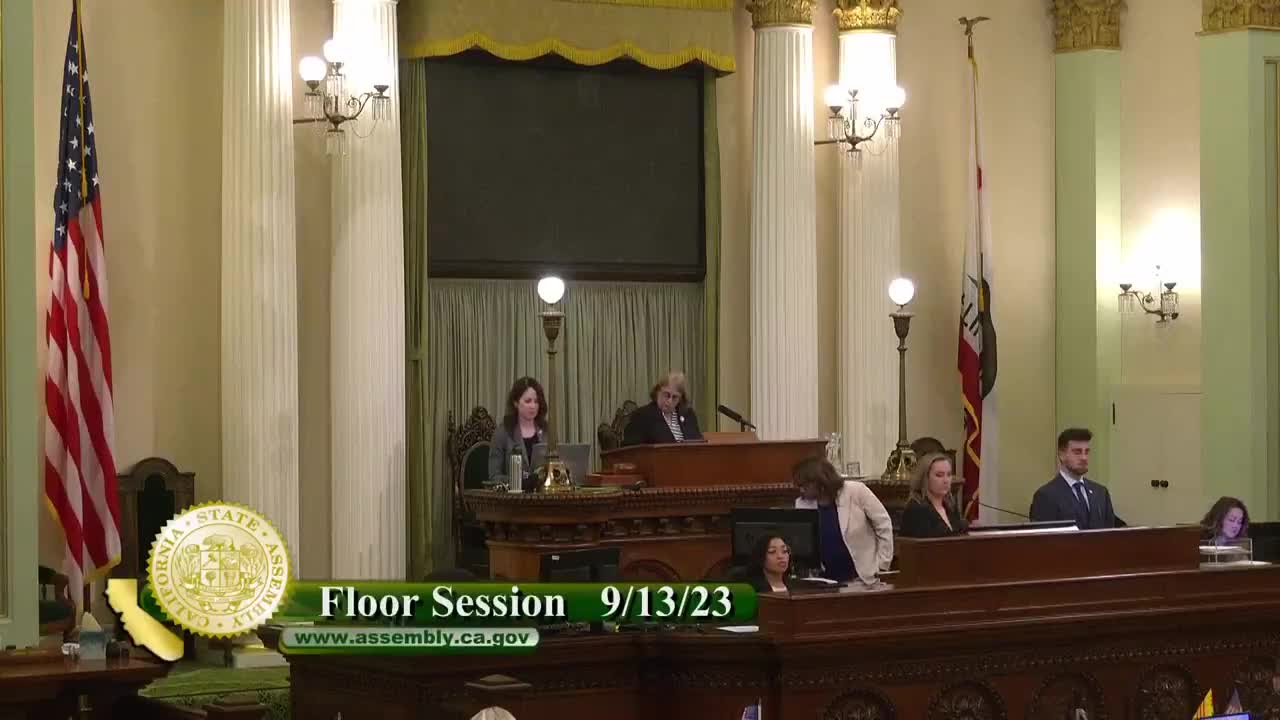
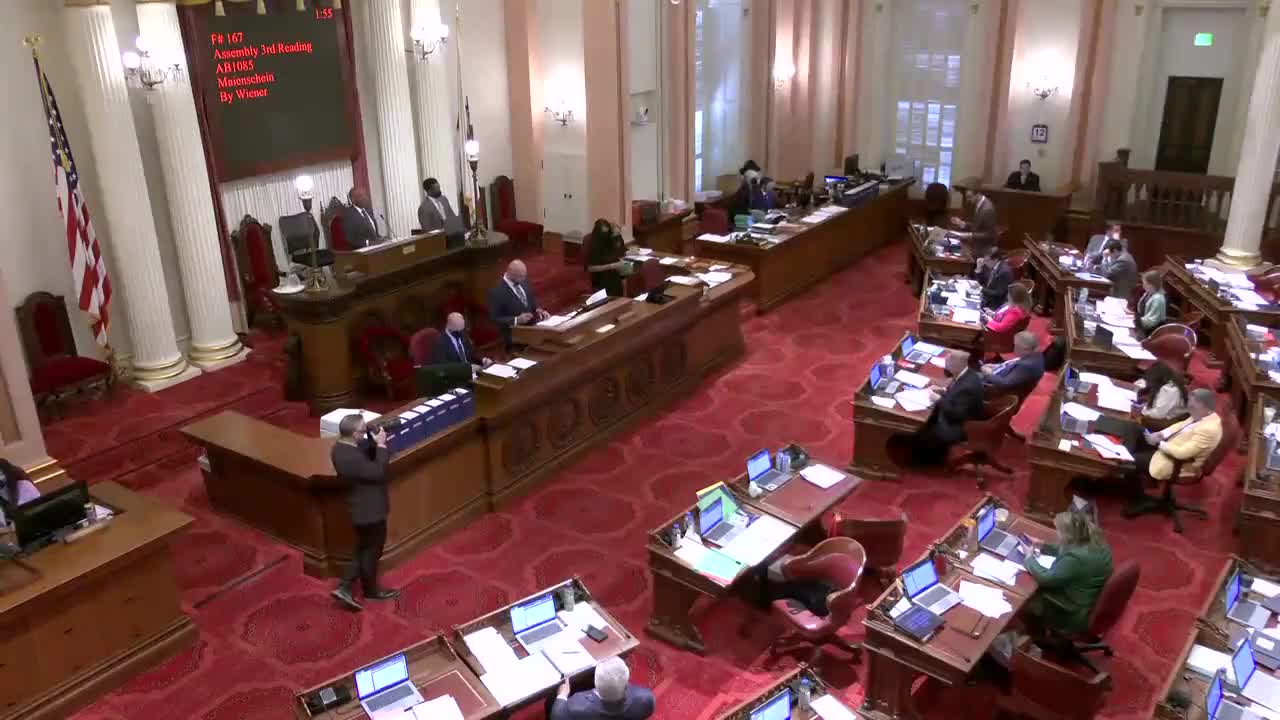
Bill Author

Bill Co-Author(s):