AB 845: Behavioral health: older adults.
- Session Year: 2023-2024
- House: Assembly
- Latest Version Date: 2023-04-13
Current Status:
Failed
(2024-02-01: From committee: Filed with the Chief Clerk pursuant to Joint Rule 56.)
Introduced
In Committee
First Chamber
In Committee
Second Chamber
Enacted
Existing law, the Mental Health Services Act (MHSA), an initiative measure enacted by the voters as Proposition 63 at the November 2, 2004, statewide general election, establishes the continuously appropriated Mental Health Services Fund to fund various county mental health programs, including the Adult and Older Adult Mental Health System of Care Act. Existing law authorizes the MHSA to be amended by a 2/3 vote of the Legislature if the amendments are consistent with and further the intent of the MHSA.
This bill would establish within the State Department of Health Care Services an Older Adult Behavioral Health Services Administrator to oversee behavioral health services for older adults. The bill would require that position to be funded with administrative funds from the Mental Health Services Fund. The bill would prescribe the functions of the administrator and their responsibilities, including, but not limited to, developing outcome and related indicators for older adults for the purpose of assessing the status of behavioral health services for older adults, monitoring the quality of programs for those adults, and guiding decisionmaking on how to improve those services. The bill would require the administrator to receive data from other state agencies and departments to implement these provisions, subject to existing state or federal confidentiality requirements. The bill would require the administrator to report to the entities that administer the MHSA on those outcome and related indicators by July 1, 2022, 2024, and would require the report to be posted on the departments internet website. The bill would also require the administrator to develop a strategy and standardized training for all county behavioral health personnel in order for the counties to assist the administrator in obtaining the data necessary to develop the outcome and related indicators. By expanding the purposes for which funds from a continuously appropriated fund may be spent, this bill would make an appropriation.
This bill would declare that it is consistent with and furthers the intent of the MHSA.
Existing law, the Mental Health Services Act (MHSA), an initiative measure enacted by the voters as Proposition 63 at the November 2, 2004, statewide general election, establishes the continuously appropriated Mental Health Services Fund to fund various county mental health programs, including the Adult and Older Adult Mental Health System of Care Act. Existing law authorizes the MHSA to be amended by a 2/3 vote of the Legislature if the amendments are consistent with and further the intent of the MHSA.
This bill would establish within the State Department of Health Care Services an Older Adult Behavioral Health Services Administrator to oversee behavioral health services for older adults. The bill would require that position to be funded with administrative funds from the Mental Health Services Fund. The bill would prescribe the functions of the administrator and their responsibilities, including, but not limited to, developing outcome and related indicators for older adults for the purpose of assessing the status of behavioral health services for older adults, monitoring the quality of programs for those adults, and guiding decisionmaking on how to improve those services. The bill would require the administrator to receive data from other state agencies and departments to implement these provisions, subject to existing state or federal confidentiality requirements. The bill would require the administrator to report to the entities that administer the MHSA on those outcome and related indicators by July 1, 2022, and would require the report to be posted on the departments internet website. The bill would also require the administrator to develop a strategy and standardized training for all county behavioral health personnel in order for the counties to assist the administrator in obtaining the data necessary to develop the outcome and related indicators. By expanding the purposes for which funds from a continuously appropriated fund may be spent, this bill would make an appropriation.
This bill would declare that it is consistent with and furthers the intent of the MHSA.
(a)There is within the State Department of Health Care Services an Older Adult Behavioral Health Services Administrator who shall oversee behavioral health services for older adults. The administrator position shall be funded with administrative funds pursuant to, and shall act in accordance with the purposes described in, subdivision (d) of Section 5892.
(b)The Older Adult Behavioral Health Services Administrator shall work in close coordination and collaboration with stakeholders, including, but not limited to, the following:
(1)The Mental Health Services Oversight and Accountability Commission.
(2)The Director of the California Department of Aging.
(3)County behavioral health services departments.
(4)Any other relevant stakeholders to ensure that older adults have access to necessary behavioral health services and supports.
(c)To fulfill duties to consumers and family members, as well as the requirements for research and evaluation of behavioral health services and outcomes as described in subdivision (d) of Section 5892, the Older Adult Behavioral Health Services Administrators responsibilities shall include, but shall not be limited to, the following:
(1)Integrate behavioral health services for older adults.
(2)Determine both of the following:
(A)Which outcome and related indicators counties currently collect.
(B)Which current services are being offered.
(3)Develop outcome and related indicators for older adults, using existing data, for the purpose of assessing the status of behavioral health services for older adults, for monitoring the quality of programs intended to serve those older adults, and to guide decisionmaking on how to improve those services.
(4)Ensure that indicators shall reflect the following issues, including, but not limited to, screenings and assessments of affective disorders, suicide risk and suicide rates, medication review, cognitive review and assessment, alcohol use and substance misuse, housing and independent living assessment, social connections and social isolation, consumer and family satisfaction with care, access to care overall and for diverse populations, continuity and integration of care, health services utilization such as psychiatric hospitalizations and emergency room use for behavioral health care, the number of eligible older adults with a mental health service need compared with the number of eligible older adults who received services in the measurement year, and services provided on a regional basis to determine regional areas with the greatest need for services.
(5)To the extent that data does not exist to sufficiently determine the outcome and related indicators identified in paragraph (4), work with all relevant stakeholders to develop a strategy to identify high-level indicators, including, but not limited to, for the indicators identified in paragraph (4) that cannot be sufficiently defined using existing and available data.
(6)Utilize the new outcome and related indicators to prepare and disseminate reports, on an annual basis, to the State Department of Health Care Services, the Mental Health Services Oversight and Accountability Commission, and counties that shall include, but are not limited to, numbers of older adults served by age, differences in age categorization of older adult groups served, and effectiveness of services.
(7)In close coordination and consultation with experts in the field, establish a standardized geriatrics training module for behavioral health professionals that would include a plan to account for cultural, linguistic, ethnic, geographic, and socioeconomic diversity among the older adult population that addresses barriers and stigma experienced by older adult populations. The standardized training module shall be made available to behavioral health professionals and other providers.
(8)Implement a public awareness campaign related to older adult mental health.
(d)The Older Adult Behavioral Health Services Administrator shall receive any data, the access to which is not restricted by any state or federal law, that is necessary to develop outcome-related indicators as specified in paragraph (4) of subdivision (c), including, but not limited to, data held by other state agencies or departments.
(e)The Older Adult Behavioral Health Services Administrator shall maintain the confidentiality of information received pursuant to this section in a manner that is equal to the manner in which other state agencies or departments maintain the confidentiality of data.
(f)The Older Adult Behavioral Health Services Administrator may establish one or more advisory bodies to guide and inform the selection of outcome and related indicators and the strategy for developing and reporting those indicators. An existing state entity that involves diverse representation of older adults, including, but not limited to, the California Commission on Aging, may act as an advisory body for purposes of this section.
(g)On or before July 1, 2022, 2024, the Older Adult Behavioral Health Services Administrator shall report all of the outcome and related indicators developed by the administrator pursuant to paragraph (4) of subdivision (c) to the entities listed in subdivision (d) of Section 5892. The report shall also include recommendations on ways to establish a system for monitoring those indicators on a continual basis, including additional staffing or technology that might be necessary and any regulatory or fiscal barriers that may hinder future progress on the development of a monitoring system. The report shall be posted on the departments internet website.
(h)The Older Adult Behavioral Health Services Administrator shall develop a strategy and standardized training for all county behavioral health personnel, including clinicians, involved in delivering Mental Health Services Act mental health care and prevention services to older adults for counties to assist the administrator in obtaining the data necessary to develop the outcome and related indicators specified in paragraph (4) of subdivision (c).
SEC. 2.The Legislature finds and declares that this act is consistent with and furthers the intent of the Mental Health Services Act within the meaning of Section 18 of the Mental Health Services Act.
(a)There is within the State Department of Health Care Services an Older Adult Behavioral Health Services Administrator who shall oversee behavioral health services for older adults. The administrator position shall be funded with administrative funds pursuant to, and shall act in accordance with the purposes described in, subdivision (d) of Section 5892.
(b)The Older Adult Behavioral Health Services Administrator shall work in close coordination and collaboration with stakeholders, including, but not limited to, the following:
(1)The Mental Health Services Oversight and Accountability Commission.
(2)The Director of the California Department of Aging.
(3)County behavioral health services departments.
(4)Any other relevant stakeholders to ensure that older adults have access to necessary behavioral health services and supports.
(c)To fulfill duties to consumers and family members, as well as the requirements for research and evaluation of behavioral health services and outcomes as described in subdivision (d) of Section 5892, the Older Adult Behavioral Health Services Administrators responsibilities shall include, but shall not be limited to, the following:
(1)Integrate behavioral health services for older adults.
(2)Determine both of the following:
(A)Which outcome and related indicators counties currently collect.
(B)Which current services are being offered.
(3)Develop outcome and related indicators for older adults, using existing data, for the purpose of assessing the status of behavioral health services for older adults, for monitoring the quality of programs intended to serve those older adults, and to guide decisionmaking on how to improve those services.
(4)Ensure that indicators shall reflect the following issues, including, but not limited to, screenings and assessments of affective disorders, suicide risk and suicide rates, medication review, cognitive review and assessment, alcohol use and substance misuse, housing and independent living assessment, social connections and social isolation, consumer and family satisfaction with care, access to care overall and for diverse populations, continuity and integration of care, health services utilization such as psychiatric hospitalizations and emergency room use for behavioral health care, the number of eligible older adults with a mental health service need compared with the number of eligible older adults who received services in the measurement year, and services provided on a regional basis to determine regional areas with the greatest need for services.
(5)To the extent that data does not exist to sufficiently determine the outcome and related indicators identified in paragraph (4), work with all relevant stakeholders to develop a strategy to identify high-level indicators, including, but not limited to, for the indicators identified in paragraph (4) that cannot be sufficiently defined using existing and available data.
(6)Utilize the new outcome and related indicators to prepare and disseminate reports, on an annual basis, to the State Department of Health Care Services, the Mental Health Services Oversight and Accountability Commission, and counties that shall include, but are not limited to, numbers of older adults served by age, differences in age categorization of older adult groups served, and effectiveness of services.
(7)In close coordination and consultation with experts in the field, establish a standardized geriatrics training module for behavioral health professionals that would include a plan to account for cultural, linguistic, ethnic, geographic, and socioeconomic diversity among the older adult population that addresses barriers and stigma experienced by older adult populations. The standardized training module shall be made available to behavioral health professionals and other providers.
(8)Implement a public awareness campaign related to older adult mental health.
(d)The Older Adult Behavioral Health Services Administrator shall receive any data, the access to which is not restricted by any state or federal law, that is necessary to develop outcome-related indicators as specified in paragraph (4) of subdivision (c), including, but not limited to, data held by other state agencies or departments.
(e)The Older Adult Behavioral Health Services Administrator shall maintain the confidentiality of information received pursuant to this section in a manner that is equal to the manner in which other state agencies or departments maintain the confidentiality of data.
(f)The Older Adult Behavioral Health Services Administrator may establish one or more advisory bodies to guide and inform the selection of outcome and related indicators and the strategy for developing and reporting those indicators. An existing state entity that involves diverse representation of older adults, including, but not limited to, the California Commission on Aging, may act as an advisory body for purposes of this section.
(g)On or before July 1, 2022, the Older Adult Behavioral Health Services Administrator shall report all of the outcome and related indicators developed by the administrator pursuant to paragraph (4) of subdivision (c) to the entities listed in subdivision (d) of Section 5892. The report shall also include recommendations on ways to establish a system for monitoring those indicators on a continual basis, including additional staffing or technology that might be necessary and any regulatory or fiscal barriers that may hinder future progress on the development of a monitoring system. The report shall be posted on the departments internet website.
(h)The Older Adult Behavioral Health Services Administrator shall develop a strategy and standardized training for all county behavioral health personnel, including clinicians, involved in delivering Mental Health Services Act mental health care and prevention services to older adults for counties to assist the administrator in obtaining the data necessary to develop the outcome and related indicators specified in paragraph (4) of subdivision (c).
SEC. 2.The Legislature finds and declares that this act is consistent with and furthers the intent of the Mental Health Services Act within the meaning of Section 18 of the Mental Health Services Act.
|
Date
|
Status
|
|---|---|
| Feb 1, 2024 | From committee: Filed with the Chief Clerk pursuant to Joint Rule 56. |
| Jan 31, 2024 | Died pursuant to Art. IV, Sec. 10(c) of the Constitution. |
| May 18, 2023 | In committee: Held under submission. |
| May 18, 2023 | Joint Rule 62(a), file notice suspended. (Page 1580.) |
| May 17, 2023 | In committee: Set, first hearing. Referred to APPR. suspense file. |
| May 3, 2023 | In committee: Hearing postponed by committee. |
| Apr 19, 2023 | From committee: Do pass and re-refer to Com. on APPR. with recommendation: To Consent Calendar. (Ayes 15. Noes 0.) (April 18). Re-referred to Com. on APPR. |
| Apr 17, 2023 | Re-referred to Com. on HEALTH. |
| Apr 13, 2023 | Read second time and amended. |
| Apr 12, 2023 | From committee: Amend, and do pass as amended and re-refer to Com. on HEALTH. (Ayes 8. Noes 0.) (April 11). |
| Feb 23, 2023 | Referred to Coms. on AGING & L.T.C. and HEALTH. |
| Feb 15, 2023 | From printer. May be heard in committee March 17. |
| Feb 14, 2023 | Read first time. To print. |
|
Date
|
Description
|
Location
|
Votes
|
|
|---|---|---|---|---|
| Apr 18, 2023 | Do pass and be re-referred to the Committee on [Appropriations] with recommendation: To Consent Calendar | Assembly Standing Committee on Health |
Passed |
|
| Apr 11, 2023 | Do pass as amended and be re-referred to the Committee on [Health] | Assembly Standing Committee on Aging and Long-Term Care |
Passed |
This list shows positions taken on this bill by organizations on the date displayed, which is linked to the original source.
Positions by individuals are not included.
|
Organization
|
Position
|
Date
|
|---|---|---|
| California Commission on Aging | ** Support | |
| California Senior Legislature | ** Support | |
| Commission on Aging | ** Support | |
| Depression And Bipolar Support Alliance | ** Support | |
| LeadingAge California | ** Support | |
| San Francisco Community Health Center | ** Support |
Date of Hearing: May 17, 2023
ASSEMBLY COMMITTEE ON APPROPRIATIONS
Chris Holden, Chair
ABPCA Bill Id:AB 845
Author:(Alvarez) – As Amended Ver:April 13, 2023
Policy Committee: | Aging and Long Term Care | Vote: | 8 - 0 |
Health | 15 - 0 | ||
|
|
Urgency: No State Mandated Local Program: No Reimbursable: No
SUMMARY:
This bill establishes within the State Department of Health Care Services (DHCS) an Older Adult Mental Health Services Administrator (Administrator) to oversee mental health services for older adults.
Specifically, this bill:
- Establishes within DHCS an Administrator who is required to oversee behavioral health services for older adults and requires the Administrator’s position to be funded by the Mental Health Services Act (MHSA) administrative funds, as specified.
- Requires the Administrator to work in close coordination and collaboration with stakeholders, including, but not limited to, the Mental Health Services Oversight and Accountability Commission (MHSOAC), California Department of Aging (CDA), county behavioral health services departments, and other relevant stakeholders, as specified.
- Requires the Administrator’s responsibilities to include, among others, service integration for behavioral health services for older adults, developing outcome and related indicators for older adults, establishing a standardized geriatrics training module for behavioral health professionals and other providers, and implementing a public awareness campaign related to older adult mental health.
- Requires the Administrator to receive any data, as permitted by state or federal law, necessary to develop outcome-related indicators including data held by other state agencies or departments. Requires the Administrator to maintain the confidentiality of information received, as specified.
- Permits the Administrator to establish one or more advisory bodies to guide and inform the selection of outcome and related indicators, and the strategy for developing and reporting those indicators. Permits an existing state entity, such as the California Commission on Aging, to act as an advisory body.
- Requires the Administrator to report to DHCS, the California Behavioral Health Planning Council, the Department of Health Care Access and Information, the MHSOAC, the Department of Public Health, and any other state agency that receives MHSA administrative funds on or before July 1, 2024, of all the outcome and related indicators developed by the Administrator, and to include recommendations on ways to establish a system for monitoring those indicators, as specified. Requires the report to be posted on DHCS’s website.
- Requires the Administrator to develop a strategy and standardized training for all county behavioral health personnel, including clinicians, involved in delivering MHSA-funded mental health care and prevention services to older adults in order for counties to assist the Administrator in obtaining the data necessary to develop the outcome and related indicators, as specified.
FISCAL EFFECT:
Based on a similar proposal in 2021, estimated total costs to DHCS of approximately $2 million in the first year, and approximately $1 million ongoing (MHSA fund), to fund the Administrator position as well as additional staff to meet the required activities in the bill. This estimate assumes data use agreements and regulations will be required for the data sharing components and a consultant contract will be needed for establishing a training module for mental health professionals.
The MHSA fund is a continuously appropriated fund and existing law allows 5% of the total funding to be allocated for state administrative costs. This allotment is currently fully allocated. Absent additional funding, an additional use of the funds would require a reduction in spending elsewhere.
COMMENTS:
- Purpose. According to the author, the California Master Plan for Aging (MPA) states that by 2030, 25% of the state’s population will be 60 years of age or older, an estimated 10.7 million people, and for the first time older adults will outnumber those 18 and under. The Centers for Disease Control and Prevention also shares that 20% of people ages 55 or older experience mental health issues. However, less than one-third of all older adults in the United States who need mental health care receive it.
- Background. According to the World Health Organization, between 2015 and 2050, the proportion of the world’s older adults is estimated to almost double from about 12% to 22%, an expected increase from 900 million to 2 billion people over the age of 60. Over 20% of adults aged 60 and over suffer from a mental or neurological disorder and 6.6% of all disability among people over 60 years is attributed to mental and neurological disorders.
A study conducted by the UCLA Center for Health Policy Research found a number of deficiencies in the current state and local program structure as it relates to mental health services for older adults, including that the availability of a complete system of services for older adults with mental illness is a work in progress and there is a need for programs to engage in targeted outreach specifically tailored to older adults. The study found that implementation of older adult mental health services is uneven; MHSA outcome reporting is inadequate for measuring the reach and effectiveness of services among older adults; there are significant and persistent deficits in the geriatrics workforce; and, there are numerous barriers to mental health services for older adults.
MHSA. Existing law establishes the MHSA, enacted by voters in 2004 through Proposition 63, to provide funds to counties to expand services, develop innovative programs and integrate service plans for mentally ill children, adults, and seniors through a 1% income tax on personal income above $1 million. The MHSA addresses prevention, early intervention and service needs, as well as provides funding for the infrastructure, technology and training needs for the community mental health system.
The MHSA establishes the continuously appropriated Mental Health Services Fund to fund various mental health programs, including the Adult and Older Mental Health System of Care Act. The law allows 5% of total funding to be set aside for administrative activities, from which the Administrator position proposed in this bill would be funded.
MPA. In January of 2021, the Governor released his Master Plan for Aging (MPA), which prioritizes the health and well-being of older Californians and the need for policies that promote healthy aging. AB 845 advances the goals of the MPA regarding the mental health needs of older Californians.
- Prior Legislation. AB 383 (Salas), of the 2021-22 Legislative Session, and AB 480 (Salas), of 2019-20 Legislative Session, were substantially similar to this bill and would have established within DHCS, the Administrator to oversee behavioral health services for older adults. AB 383 and AB 480 were both held in the Senate Appropriations Committee.
Analysis Prepared by: Jennifer Swenson / APPR. / (916) 319-2081
Date of Hearing: April 18, 2023
ASSEMBLY COMMITTEE ON HEALTH
Jim Wood, Chair
ABPCA Bill Id:AB 845 (
Author:(Alvarez) – As Introduced Ver:February 14, 2023
SUBJECT: Behavioral health: older adults.
SUMMARY: Establishes within the State Department of Health Care Services (DHCS) an Older Adult Mental Health Services Administrator (Administrator) to oversee mental health services for older adults. Specifically, this bill:
- Establishes within DHCS an Administrator who is required to oversee behavioral health services for older adults and requires the Administrator’s position to be funded by the Mental Health Services Act (MHSA) administrative funds, as specified.
- Requires the Administrator to work in close coordination and collaboration with stakeholders, including, but not limited to, the Mental Health Services Oversight and Accountability Commission (MHSOAC), California Department of Aging (CDA), county behavioral health services departments, and other relevant stakeholders, as specified.
- Requires the Administrator’s responsibilities to include, but not be limited to, the following:
- Service integration for behavioral health services for older adults;
- Determine which outcome and related indicators counties collect, and which services are being offered;
- Develop outcome and related indicators for older adults, as specified;
- Ensure that indicators reflect such things as screenings and assessments of affective disorders, suicide risk and suicide rates, medication review, cognitive review and assessment, substance use and misuse, housing and independent living assessment, social connections and isolation, behavioral health service needs access to care overall and for diverse populations, continuity and integration of care, and health services utilization;
- Work with all relevant stakeholders to develop a strategy to identify high-level indicators when information is not readily available, as specified;
- Utilize the new outcome and related indicators to prepare and disseminate annually to DHCS, the MHSOAC, and counties, as specified;
- Coordinate and consult with experts in the field, establish a standardized geriatrics training module for behavioral health professionals and other providers that includes a plan to account for cultural, linguistic, ethnic, geographic, and socioeconomic diversity and that addresses barriers and stigma experienced by older adult populations; and,
- Implement a public awareness campaign related to older adult mental health.
- Requires the Administrator to receive any data, as permitted by state or federal law, necessary to develop outcome-related indicators including data held by other state agencies or departments. Requires the Administrator to maintain the confidentiality of information received, as specified.
- Permits the Administrator to establish one or more advisory bodies to guide and inform the selection of outcome and related indicators, and the strategy for developing and reporting those indicators. Permits an existing state entity, such as the California Commission on Aging, to act as an advisory body.
- Requires the Administrator to report to DHCS, the California Behavioral Health Planning Council, the Department of Health Care Access and Information, the MHSOAC, the Department of Public Health, and any other state agency that receives MHSA administrative funds on or before July 1, 2024, of all the outcome and related indicators developed by the Administrator, and to include recommendations on ways to establish a system for monitoring those indicators, as specified. Requires the report to be posted on DHCS’s website.
- Requires the Administrator to develop a strategy and standardized training for all county behavioral health personnel, including clinicians, involved in delivering MHSA-funded mental health care and prevention services to older adults in order for counties to assist the Administrator in obtaining the data necessary to develop the outcome and related indicators, as specified.
EXISTING LAW:
- Establishes the MHSA, an initiative enacted by the voters as Proposition 63 which provides for the continuously appropriated Mental Health Services Fund (MHSF) to support various county mental health programs, including the Adult and Older Adult Mental Health System of Care Act. [Enacted November 2, 2004 by initiative, Proposition 63]
- Authorizes, pursuant to Proposition 63, the MHSA to be amended by a 2/3 vote of the Legislature if the amendments are consistent with, and further the purposes of, the MHSA, and also permits the Legislature to clarify procedures and terms of the MHSA by a majority vote. [Enacted November 2, 2004 by initiative, Proposition 63]
- Establishes the Adult and Older Adult Mental Health System of Care Act. [Welfare and Institutions Code (WIC) § 5800 et seq.]
- Requires DHCS to require counties to use available state and matching funds for specified client target population, which includes adults and older adults who have a serious mental disorder, and to develop a comprehensive array of services, as specified. [WIC § 5805]
- Requires, subject to the availability of funds from the MHSF, the state to distribute funds for the provision of specified services to county mental health programs. Further requires services to be available to adults and seniors with severe mental illnesses, as specified. [WIC § 5813.5]
- Requires funding to be provided at sufficient levels to ensure that counties can provide each adult and senior with the medically necessary mental health services, medications, and supportive services set forth in the applicable treatment plan. [WIC § 5813.5 (a)]
- Creates the MHSF in the State Treasury and requires that all monies in the MHSF are continuously appropriated, without regard to fiscal years, for the purpose of funding specified programs, including the Adult and Older Adult Mental Health System of Care Act, and other related activities, as specified. [WIC § 5890]
- Establishes the Mello-Granlund Older Californians Act, which establishes CDA, and sets forth its duties and powers, including, among other things, entering into a contract for the development of information and materials to educate Californians on the concept of “aging in place.” [WIC § 9100 et seq.]
FISCAL EFFECT: Unknown. This bill has not yet been analyzed by a fiscal committee.
COMMENTS:
- PURPOSE OF THIS BILL. According to the author, the California Master Plan for Aging (MPA) states that by 2030, 25% of the state’s population will be 60 years of age or older, an estimated 10.7 million people, and for the first time older adults will outnumber those 18 and under. The Centers for Disease Control and Prevention also shares that 20% of people ages 55 or older experience mental health issues. However, less than one-third of all older adults in the United States who need mental health care receive it. The author concludes that this bill will address the lack of services available to this vulnerable population by developing outcomes and strategies that will impact them and as such, prioritize this growing population regarding mental health services.
- BACKGROUND. According to the Department of Finance, California’s aging population is growing faster than any other age group. By 2030, over 25% of the population in California will be 60 and older. The population in the state is becoming more racially and ethnically diverse, and yet the COVID-19 pandemic impacted Californians disparately. Life expectancy continues to rise, however during 2019-2021 overall life expectancy for Californians fell from 81.4 years to 78.4 years. For Hispanics, life expectancy declined by nearly six years, a difference three times greater than their white counterparts. And the difference between those in California’s highest and lowest income brackets increased by three-and-a-half years to greater than 15 years (11.5 years before the pandemic to more than 15 years in 2021).
- Mental health of older adults. According to the World Health Organization, older adults (those aged 60 or above) make important contributions to society as family members, volunteers, and as active participants in the workforce. While most have good mental health, many older adults are at risk of developing mental disorders, neurological disorders, or substance use problems, as well as other health conditions, such as diabetes, hearing loss, and osteoarthritis. Furthermore, as people age, they are more likely to experience several conditions at the same time. Between 2015 and 2050, the proportion of the world’s older adults is estimated to almost double from about 12% to 22%, an expected increase from 900 million to 2 billion people over the age of 60. Older people face special physical and mental health challenges. Over 20% of adults aged 60 and over suffer from a mental or neurological disorder (excluding headache disorders), and 6.6% of all disability among people over 60 years is attributed to mental and neurological disorders. The most common mental and neurological disorders in this age group are dementia and depression, which affect approximately 5% and 7% of the world’s older population, respectively. Anxiety disorders affect 3.8% of the older population, substance use problems affect almost 1%, and around a quarter of deaths from self-harm are among people aged 60 or above. Substance abuse problems among older people are often overlooked or misdiagnosed. Mental health problems are under-identified by health care professionals and older people themselves, and the stigma surrounding these conditions makes people reluctant to seek help.
- UCLA Center for Health Policy Research. A study conducted by the UCLA Center for Health Policy Research, “California’s Public Mental Health Services: How are Older Adults Being Served,” found a number of deficiencies in the current structure as it relates to mental health services for older adults, including that the availability of a complete system of services for older adults with mental illness is a work in progress and there is a need for programs to engage in targeted outreach specifically tailored to older adults. The study found that implementation of older adult mental health services is uneven; MHSA outcome reporting is inadequate for measuring the reach and effectiveness of services among older adults; there are significant and persistent deficits in the geriatrics workforce; and, there are numerous barriers to mental health services for older adults. The study concluded that California counties with a formal, designated older adult system of care offered more programming and services tailored to older adult needs than those without. The report recommended that such a dedicated system should be implemented in all counties.
- MPA. In January of 2021, the Governor released the MPA. The MPA prioritizes the health and well-being of older Californians and the need for policies that promote healthy aging. The MPA serves as a blueprint for state government, local government, the private sector, and philanthropy to prepare the state for the coming demographic changes and continue California’s leadership in aging, disability, and equity.
After work began on the MPA, the COVID-19 pandemic struck. The virus disproportionately harmed older and other at-risk adults, and it strained aging and disability services that were perpetually underfunded. Worldwide, older adults have experienced unprecedented death rates. California’s diverse population saw disproportionate numbers of deaths, particularly among Latino, Black and Asian Pacific Islander communities and those living in nursing homes. The pandemic also further intensified social isolation.
The work plan laid out in the MPA two years after its release continues to highlight the urgent needs facing California’s older adults, people with disabilities, their families, advocates and the workforce supporting these populations.
The MPA outlines five bold goals, 23 strategies and currently seeks to advance 95 initiatives to build a California for All Ages by 2030. It also includes a Data Dashboard on Aging to measure progress. This bill can be directly linked to Goals Two and Three below, but mental health can arguably be linked to all of the five goals:- Housing for All Ages and Stages;
- Health Reimagined;
- Inclusion and Equity, Not Isolation;
- Caregiving That Works; and,
- Affording Aging.
- SUPPORT. The Depression and Bipolar Support Alliance (DBSA), sponsor of this bill, states that with the creation of an Administrator, it is hopeful that information on mental health for older adults will be disseminated to the public through an education program to multiply the efforts of improving mental health outcomes for this particularly affected population. Behavioral Health Care is never provided unless someone, whether a friend or family member or the individual himself, is aware of the warning signs of an episode. DBSA concludes, that knowledge, as much as the system of care, is crucial in prevention and intervention relating to behavioral health.
The California Commission on Aging (CCA) also in support, states that older adults are often not given the same consideration or are impelled to prioritize their physical health above all other aspects of care. Behavioral health for older adults is often cast into the conversation surrounding mental decline as a result of aging. However, evidence has suggested an increase in depression and other mental health issues in older adults while also suggesting that early detection and intervention can improve behavioral health outcomes. CCA concludes that without an administrator strictly dedicated to this issue, the state will continue to be uncertain as to the extent of this problem and how to resolve it.
- PREVIOUS LEGISLATION. AB 383 (Salas) of 2021 and AB 480 (Salas) of 2019, were substantially similar to this bill and would have established within DHCS, the Administrator to oversee behavioral health services for older adults. AB 383 and AB 480 were both held in the Senate Appropriations Committee.
- DOUBLE REFERRAL. This bill is double referred, it passed the Assembly Committee on Aging and Long Term Care with an 8-0 vote on April 11, 2023.
REGISTERED SUPPORT / OPPOSITION:
Support
Depression and Bipolar Support Alliance (sponsor)
Commission on Aging
California Senior Legislature
LeadingAge California
San Francisco Community Health Center
Opposition
None on file.
Analysis Prepared by: Judith Babcock / HEALTH / (916) 319-2097
Date of Hearing: April 11, 2023
ASSEMBLY COMMITTEE ON AGING AND LONG-TERM CARE
Jasmeet Bains, Chair
ABPCA Bill Id:AB 845 (
Author:Alvarez) – As Introduced Ver: February 14, 2023
Updated Author’s Statement included
SUBJECT: Behavioral health: older adults
SUMMARY: Establishes within the State Department of Health Care Services (DHCS) an Older Adult Mental Health Services Administrator (Administrator) to oversee mental health services for older adults. Specifically, this bill:
- Creates an Administrator within DHCS who is required to oversee behavioral health services for older adults and requires the Administrator’s position to be funded by Mental Health Services Act (MHSA) administrative funds, as specified.
- Requires the Administrator to work in close coordination and collaboration with stakeholders, including, but not limited to, the Mental Health Services Oversight and Accountability Commission (MHSOAC), California Department of Aging (CDA), county behavioral health services departments, and other relevant stakeholders, as specified.
- Requires the Administrator’s responsibilities to include, but not be limited to, the following:
- Service integration for behavioral health services for older adults;
- Determining which outcome and related indicators counties collect, and which services are being offered;
- Developing outcome and related indicators for older adults, as specified;
- Ensuring that indicators reflect such things as screenings and assessments of affective disorders, suicide risk and suicide rates, medication review, substance use and misuse, housing and independent living assessment, social connections and isolation, and behavioral health service needs;
- Working with all relevant stakeholders to develop a strategy to identify high-level indicators when information is not readily available, as specified;
- Utilization of the new outcome and related indicators to prepare and disseminate annually to DHCS, the MHSOAC, and counties, as specified; and,
- Establishing a standardized geriatrics training module for behavioral health professionals, in close coordination and consultation with experts, as specified, to be made available to behavioral health professionals and other providers.
- Requires the Administrator to receive any data, as permitted by state or federal law, necessary to develop outcome-related indicators, as specified, including data held by other state agencies or departments. Requires the Administrator to maintain the confidentiality of information received, as specified.
- Permits the Administrator to establish one or more advisory bodies to guide and inform the selection of outcome and related indicators, and the strategy for developing and reporting those indicators. Permits an existing state entity, such as the California Commission on Aging, to act as an advisory body.
- Requires the Administrator to report to DHCS, the California Behavioral Health Planning Council, the Office of Statewide Health Planning and Development, the MHSOAC, the Department of Public Health, and any other state agency that receives MHSA administrative funds on or before July 1, 2024, of all the outcome and related indicators developed by the Administrator, and to include recommendations on ways to establish a system for monitoring those indicators, as specified. Requires the report to be posted on DHCS’s website.
- Requires the Administrator to develop a strategy and standardized training for all county behavioral health personnel, including clinicians, involved in delivering MHSA-funded mental health care and prevention services to older adults in order for counties to assist the Administrator in obtaining the data necessary to develop the outcome and related indicators, as specified.
EXISTING LAW:
- Establishes the MHSA, an initiative enacted by the voters as Proposition 63 (November 2004), which provides for the continuously appropriated Mental Health Services Fund to support various county mental health programs, including the Adult and Older Adult Mental Health System of Care Act.
- Authorizes, pursuant to Proposition 63, the MHSA to be amended by a 2/3 vote of the Legislature if the amendments are consistent with, and further the purposes of, the MHSA, and also permits the Legislature to clarify procedures and terms of the MHSA by a majority vote.
- Establishes the Adult and Older Adult Mental Health System of Care Act. (WIC § 5800 et seq.)
- Requires the DHCS to require counties to use available state and matching funds for specified client target population, which includes adults and older adults who have a serious mental disorder, and to develop a comprehensive array of services, as specified. (WIC § 5805)
- Requires, subject to the availability of funds from the Mental Health Services Fund, the state to distribute funds for the provision of specified services to county mental health programs. Further requires that services shall be available to adults and seniors with severe mental illnesses, as specified. (WIC § 5813.5)
- Requires that funding shall be provided at sufficient levels to ensure that counties can provide each adult and senior with the medically necessary mental health services, medications, and supportive services set forth in the applicable treatment plan. (WIC § 5813.5 (a))
- Creates the Mental Health Services Fund in the State Treasury and requires that all monies in the fund are continuously appropriated, without regard to fiscal years, for the purpose of funding specified programs, including the Adult and Older Adult Mental Health System of Care Act, and other related activities, as specified. (WIC § 5890)
- Establishes the Mello-Granlund Older Californians Act, which establishes CDA, and sets forth its duties and powers, including, among other things, entering into a contract for the development of information and materials to educate Californians on the concept of “aging in place.” (WIC § 9100 et seq.)
FISCAL EFFECT: This bill has not yet been analyzed by a fiscal committee.
COMMENTS:
Author’s Statement: “According the Master Plan for Aging, ‘by 2030, 25 percent of the state’s population will be 60 years of age or older– an estimated 10.7 million people – and for the first time older adults will outnumber those 18 and under.’ It is crucial that we also give the same attention to this growing population regarding mental health services.”
BACKGROUND
California’s aging population is growing faster than any other age group. By 2030, over 25 percent of the population in California will be 60 and older.[1] The population in the state is becoming more racially and ethnically diverse, and yet the COVID-19 pandemic impacted Californians disparately.
Life expectancy continues to rise[2], however during 2019-2021 overall life expectancy for Californians fell from 81.4 years to 78.4 years. For Hispanics, life expectancy declined by nearly 6 years, a difference three times greater than their white counterparts. And the difference between those in California’s highest and lowest income brackets increased by three-and-a-half years to greater than 15 years (11.5 years before the pandemic to more than 15 years in 2021).[3]
Depression is more common in people who also have other illnesses or whose function has become limited. Older adults are at increased risk. We know that about 80% of older adults have at least one chronic health condition, and 50% have two or more.
Older adults can be misdiagnosed and undertreated. An older adult’s symptoms of depression may be mistaken as just a natural reaction to illness or the life changes that may occur as we age, and therefore the depression may go untreated. Older adults themselves often share this belief and do not seek help because they don’t understand that they could feel better with appropriate treatment.[4]
The World Health Organization defines health as “a state of complete physical, mental and social well-being and not merely the absence of disease or infirmity.”[5]
According to a study conducted by the UCLA Center for Health Policy Research, less than one-third of all older adults in the United States who need mental health care receive it. The study found a number of deficiencies in the current structure as it relates to mental health services for older adults. It found that (a) implementation of older adult mental health services is uneven; (b) MHSA outcome reporting is inadequate for measuring the reach and effectiveness of services among older adults; (c) there are significant and persistent deficits in the geriatrics workforce; and (d) there are numerous barriers to mental health services for older adults.[6]
Master Plan for Aging: In January of 2021, the Governor released his Master Plan for Aging (MPA). The MPA prioritizes the health and well-being of older Californians and the need for policies that promote healthy aging. The MPA serves as a blueprint for state government, local government, the private sector, and philanthropy to prepare the state for the coming demographic changes and continue California’s leadership in aging, disability, and equity.
After work began on the MPA, the COVID-19 pandemic reached California. The virus disproportionately harmed older and other at-risk adults, and it strained aging and disability services that were perpetually underfunded. Worldwide, older adults have experienced unprecedented death rates. California’s diverse population saw disproportionate numbers, particularly among Latino, Black and Asian Pacific Islander communities and those living in nursing homes. The pandemic intensified social isolation.
The work plan laid out in the MPA two years after its release continues to highlight the urgent needs facing California’s older adults, people with disabilities, their families, advocates and the workforce supporting these populations.
The MPA outlines five bold goals, 23 strategies and currently seeks to advance 95 initiatives to build a California for All Ages by 2030. It also includes a Data Dashboard on Aging to measure progress. AB 845 can be linked to Goals Two and Three, but mental health can arguably be linked to all of the five goals:
- Goal One: Housing for All Ages and Stages
- Goal Two: Health Reimagined
- Goal Three: Inclusion and Equity, Not Isolation
- Goal Four: Caregiving That Works
- Goal Five: Affording Aging
Previous legislation:
AB 480 (Salas) of 2019 and AB 383 (Salas) of 2021 shared similar language to AB 845, both bills were held in the Senate Appropriations Committee.
Dual-referral: AB 845 is dual-referred and will be heard in the Assembly Health Committee on April 25, 2023 if passed out of this committee.
Committee amendments: Amendments address drafting errors and add coauthors.
Argument in Support: The California Commission on Aging writes in support, “Older adults are often not given the same consideration or are impelled to prioritize their physical health above all other aspects of care. Behavioral health for older adults is often cast into the conversation surrounding mental decline as a result of aging. However, evidence has suggested an increase in depression and other mental health issues in older adults while also suggesting that early detection and intervention can improve behavioral health outcomes. Nonetheless, without an administrator strictly dedicated to this issue, the state will continue to be uncertain as to the extent of this problem and how to resolve it.”
LeadingAge California writes, “According to the World Health Organization, mental health problems are under identified by both providers and older adults and many are reluctant to seek treatment due to stigma. Additionally, older adults face added mental health stressors including loss of capabilities and decline in functional mobility. Mental health has a significant impact on physical health and vice versa. The older adult population deserves and requires special attention due to the unique nature of their mental health needs.”
Argument in Opposition: None.
REGISTERED SUPPORT / OPPOSITION:
Support
California Commission on Aging
California Senior Legislature
Depression and Bipolar Support Association California
Leading Age California
San Francisco Community Health Center
Opposition
None on file.
Analysis Prepared by: Elizabeth Fuller / AGING & L.T.C. / (916) 319-3990
Date of Hearing: April 11, 2023
ASSEMBLY COMMITTEE ON AGING AND LONG-TERM CARE
Jasmeet Bains, Chair
ABPCA Bill Id:AB 845 (
Author:Alvarez) – As Introduced Ver: February 14, 2023
SUBJECT: Behavioral health: older adults
SUMMARY: Establishes within the State Department of Health Care Services (DHCS) an Older Adult Mental Health Services Administrator (Administrator) to oversee mental health services for older adults. Specifically, this bill:
- Creates an Administrator within DHCS who is required to oversee behavioral health services for older adults and requires the Administrator’s position to be funded by Mental Health Services Act (MHSA) administrative funds, as specified.
- Requires the Administrator to work in close coordination and collaboration with stakeholders, including, but not limited to, the Mental Health Services Oversight and Accountability Commission (MHSOAC), California Department of Aging (CDA), county behavioral health services departments, and other relevant stakeholders, as specified.
- Requires the Administrator’s responsibilities to include, but not be limited to, the following:
- Service integration for behavioral health services for older adults;
- Determining which outcome and related indicators counties collect, and which services are being offered;
- Developing outcome and related indicators for older adults, as specified;
- Ensuring that indicators reflect such things as screenings and assessments of affective disorders, suicide risk and suicide rates, medication review, substance use and misuse, housing and independent living assessment, social connections and isolation, and behavioral health service needs;
- Working with all relevant stakeholders to develop a strategy to identify high-level indicators when information is not readily available, as specified;
- Utilization of the new outcome and related indicators to prepare and disseminate annually to DHCS, the MHSOAC, and counties, as specified; and,
- Establishing a standardized geriatrics training module for behavioral health professionals, in close coordination and consultation with experts, as specified, to be made available to behavioral health professionals and other providers.
- Requires the Administrator to receive any data, as permitted by state or federal law, necessary to develop outcome-related indicators, as specified, including data held by other state agencies or departments. Requires the Administrator to maintain the confidentiality of information received, as specified.
- Permits the Administrator to establish one or more advisory bodies to guide and inform the selection of outcome and related indicators, and the strategy for developing and reporting those indicators. Permits an existing state entity, such as the California Commission on Aging, to act as an advisory body.
- Requires the Administrator to report to DHCS, the California Behavioral Health Planning Council, the Office of Statewide Health Planning and Development, the MHSOAC, the Department of Public Health, and any other state agency that receives MHSA administrative funds on or before July 1, 2024, of all the outcome and related indicators developed by the Administrator, and to include recommendations on ways to establish a system for monitoring those indicators, as specified. Requires the report to be posted on DHCS’s website.
- Requires the Administrator to develop a strategy and standardized training for all county behavioral health personnel, including clinicians, involved in delivering MHSA-funded mental health care and prevention services to older adults in order for counties to assist the Administrator in obtaining the data necessary to develop the outcome and related indicators, as specified.
EXISTING LAW:
- Establishes the MHSA, an initiative enacted by the voters as Proposition 63 (November 2004), which provides for the continuously appropriated Mental Health Services Fund to support various county mental health programs, including the Adult and Older Adult Mental Health System of Care Act.
- Authorizes, pursuant to Proposition 63, the MHSA to be amended by a 2/3 vote of the Legislature if the amendments are consistent with, and further the purposes of, the MHSA, and also permits the Legislature to clarify procedures and terms of the MHSA by a majority vote.
- Establishes the Adult and Older Adult Mental Health System of Care Act. (WIC § 5800 et seq.)
- Requires the DHCS to require counties to use available state and matching funds for specified client target population, which includes adults and older adults who have a serious mental disorder, and to develop a comprehensive array of services, as specified. (WIC § 5805)
- Requires, subject to the availability of funds from the Mental Health Services Fund, the state to distribute funds for the provision of specified services to county mental health programs. Further requires that services shall be available to adults and seniors with severe mental illnesses, as specified. (WIC § 5813.5)
- Requires that funding shall be provided at sufficient levels to ensure that counties can provide each adult and senior with the medically necessary mental health services, medications, and supportive services set forth in the applicable treatment plan. (WIC § 5813.5 (a))
- Creates the Mental Health Services Fund in the State Treasury and requires that all monies in the fund are continuously appropriated, without regard to fiscal years, for the purpose of funding specified programs, including the Adult and Older Adult Mental Health System of Care Act, and other related activities, as specified. (WIC § 5890)
- Establishes the Mello-Granlund Older Californians Act, which establishes CDA, and sets forth its duties and powers, including, among other things, entering into a contract for the development of information and materials to educate Californians on the concept of “aging in place.” (WIC § 9100 et seq.)
FISCAL EFFECT: This bill has not yet been analyzed by a fiscal committee.
COMMENTS:
Author’s Statement: “According the California Older Americans Act, State Plan on Aging, ‘by 2030 we will have 25 percent of the state’s population – an estimated 10.8 million people – and for the first time older adults will outnumber those 18 and under.’ It is crucial that we also give the same attention to this growing population regarding mental health services.
The Center for Disease Control and Prevention also shares that 20 percent of people ages 55 or older experience mental health. However, less than one-third of all older adults in the United States who need mental health care receive it. This bill will address the lack of services available to this vulnerable population by developing outcomes and strategies that will impact them.”
BACKGROUND
California’s aging population is growing faster than any other age group. By 2030, over 25 percent of the population in California will be 60 and older.[1] The population in the state is becoming more racially and ethnically diverse, and yet the COVID-19 pandemic impacted Californians disparately.
Life expectancy continues to rise[2], however during 2019-2021 overall life expectancy for Californians fell from 81.4 years to 78.4 years. For Hispanics, life expectancy declined by nearly 6 years, a difference three times greater than their white counterparts. And the difference between those in California’s highest and lowest income brackets increased by three-and-a-half years to greater than 15 years (11.5 years before the pandemic to more than 15 years in 2021).[3]
Depression is more common in people who also have other illnesses or whose function has become limited. Older adults are at increased risk. We know that about 80% of older adults have at least one chronic health condition, and 50% have two or more.
Older adults can be misdiagnosed and undertreated. An older adult’s symptoms of depression may be mistaken as just a natural reaction to illness or the life changes that may occur as we age, and therefore the depression may go untreated. Older adults themselves often share this belief and do not seek help because they don’t understand that they could feel better with appropriate treatment.[4]
The World Health Organization defines health as “a state of complete physical, mental and social well-being and not merely the absence of disease or infirmity.”[5]
According to a study conducted by the UCLA Center for Health Policy Research, less than one-third of all older adults in the United States who need mental health care receive it. The study found a number of deficiencies in the current structure as it relates to mental health services for older adults. It found that (a) implementation of older adult mental health services is uneven; (b) MHSA outcome reporting is inadequate for measuring the reach and effectiveness of services among older adults; (c) there are significant and persistent deficits in the geriatrics workforce; and (d) there are numerous barriers to mental health services for older adults.[6]
Master Plan for Aging: In January of 2021, the Governor released his Master Plan for Aging (MPA). The MPA prioritizes the health and well-being of older Californians and the need for policies that promote healthy aging. The MPA serves as a blueprint for state government, local government, the private sector, and philanthropy to prepare the state for the coming demographic changes and continue California’s leadership in aging, disability, and equity.
After work began on the MPA, the COVID-19 pandemic reached California. The virus disproportionately harmed older and other at-risk adults, and it strained aging and disability services that were perpetually underfunded. Worldwide, older adults have experienced unprecedented death rates. California’s diverse population saw disproportionate numbers, particularly among Latino, Black and Asian Pacific Islander communities and those living in nursing homes. The pandemic intensified social isolation.
The work plan laid out in the MPA two years after its release continues to highlight the urgent needs facing California’s older adults, people with disabilities, their families, advocates and the workforce supporting these populations.
The MPA outlines five bold goals, 23 strategies and currently seeks to advance 95 initiatives to build a California for All Ages by 2030. It also includes a Data Dashboard on Aging to measure progress. AB 845 can be linked to Goals Two and Three, but mental health can arguably be linked to all of the five goals:
- Goal One: Housing for All Ages and Stages
- Goal Two: Health Reimagined
- Goal Three: Inclusion and Equity, Not Isolation
- Goal Four: Caregiving That Works
- Goal Five: Affording Aging
Previous legislation:
AB 480 (Salas) of 2019 and AB 383 (Salas) of 2021 shared similar language to AB 845, both bills were held in the Senate Appropriations Committee.
Dual-referral: AB 845 is dual-referred and will be heard in the Assembly Health Committee on April 25, 2023 if passed out of this committee.
Committee amendments: Amendments address drafting errors and add coauthors.
Argument in Support: The California Commission on Aging writes in support, “Older adults are often not given the same consideration or are impelled to prioritize their physical health above all other aspects of care. Behavioral health for older adults is often cast into the conversation surrounding mental decline as a result of aging. However, evidence has suggested an increase in depression and other mental health issues in older adults while also suggesting that early detection and intervention can improve behavioral health outcomes. Nonetheless, without an administrator strictly dedicated to this issue, the state will continue to be uncertain as to the extent of this problem and how to resolve it.”
LeadingAge California writes, “According to the World Health Organization, mental health problems are under identified by both providers and older adults and many are reluctant to seek treatment due to stigma. Additionally, older adults face added mental health stressors including loss of capabilities and decline in functional mobility. Mental health has a significant impact on physical health and vice versa. The older adult population deserves and requires special attention due to the unique nature of their mental health needs.”
Argument in Opposition: None.
REGISTERED SUPPORT / OPPOSITION:
Support
California Commission on Aging
California Senior Legislature
Depression and Bipolar Support Association California
Leading Age California
San Francisco Community Health Center
Opposition
None on file.
Analysis Prepared by: Elizabeth Fuller / AGING & L.T.C. / (916) 319-3990
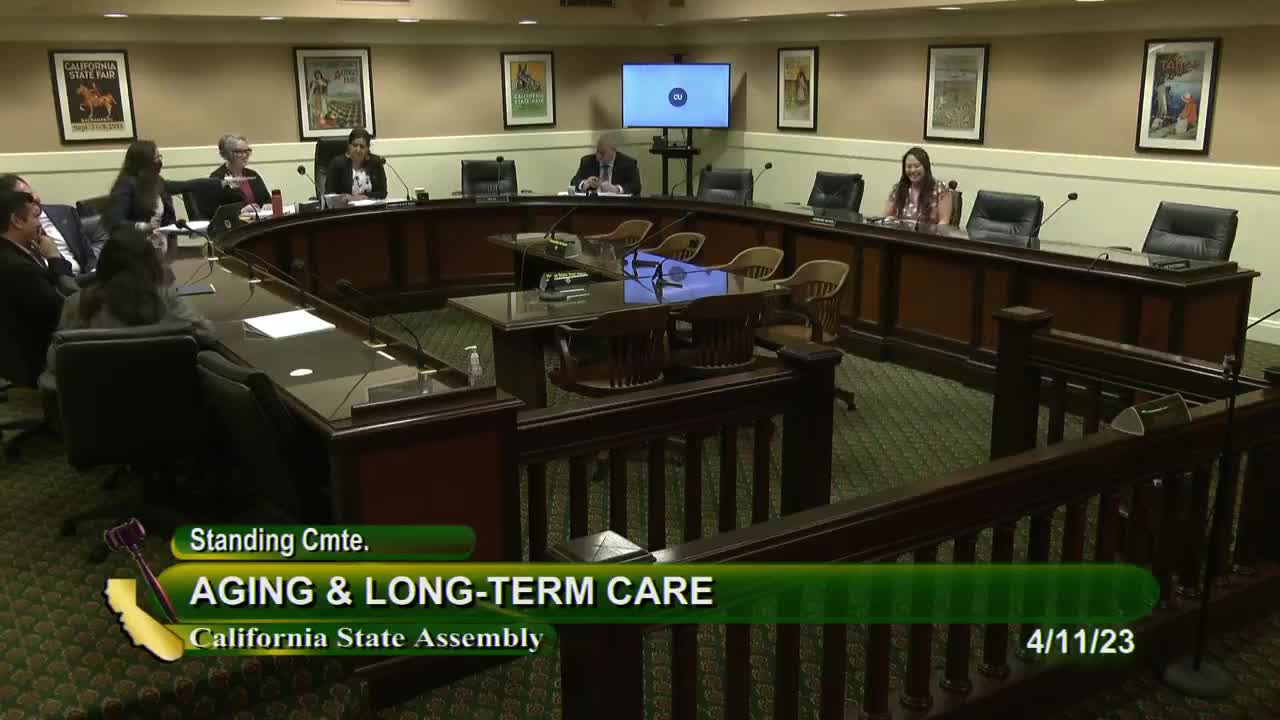
Discussed in Hearing
 8MIN
Assembly Standing Committee on Aging and Long-Term Care
Bill Author