AB 891: Beverage container recycling: nonpetroleum materials.
- Session Year: 2023-2024
- House: Assembly
- Latest Version Date: 2023-04-12
Current Status:
Failed
(2024-02-01: From committee: Filed with the Chief Clerk pursuant to Joint Rule 56.)
Introduced
In Committee
First Chamber
In Committee
Second Chamber
Enacted
What does this bill do?
The bill lets beverage manufacturers who sell plastic bottles covered by California’s deposit program get a processing-fee discount when part of a bottle’s weight comes from certified nonpetroleum biomaterials; the discount is 10% of the fee for that certified portion, capped at 50% of the bottle’s weight. An independent, accredited third party must certify the percentage of biomaterial and confirm the change does not reduce recyclability, and the state may charge a fee to cover its review costs. Manufacturers may also report pounds of virgin plastic derived from nonpetroleum biomaterials, and the law sets a nonbinding goal of 15% bio-based virgin plastic by 2030.
The summary is provided by generative AI which can make mistakes. For original language, please view the details in the table below.
(1)The California Beverage Container Recycling and Litter Reduction Act, which is administered by the Department of Resource Recovery and Recycling, is established to promote beverage container recycling. The act requires a beverage manufacturer to pay to the department a processing fee for each beverage container sold or transferred and requires the department to distribute those fees, with other moneys, as processing payments to processors and recycling centers.
Beginning January 1, 2025, this bill would require the department to provide a 10% reduction in the processing fee applicable to the percentage of a beverage container, by weight, that derives from nonpetroleum biomaterials. biomaterials, not to exceed 50% of the total beverage container weight sold. The bill would require that percentage to be certified by an independent third party, an independent third party to certify the recyclability and percentage of nonpetroleum biomaterials used in beverage containers, as specified. The bill would require the department to charge a fee to cover its reasonable costs of implementing these provisions.
(2)The act annually requires, on or before March 1, a manufacturer of a beverage sold in a plastic beverage container subject to the California Redemption Value to report to the department the amount of virgin plastic and postconsumer recycled plastic used by the manufacturer for plastic beverage containers subject to the California Redemption Value for sale in the state in the previous calendar year. Existing law requires the department to post this information on its internet website within 45 days.
This bill would also authorize a beverage manufacturer to report to the department, in pounds and by resin type, the amount of virgin plastic derived from nonpetroleum biomaterials for plastic beverage containers subject to the California Redemption Value for sale in the state in the previous calendar year.
(1)The California Beverage Container Recycling and Litter Reduction Act, which is administered by the Department of Resource Recovery and Recycling, is established to promote beverage container recycling. The act requires plastic beverage containers, as defined, to contain an average of 15% of postconsumer recycled plastic per year. The act provides for periodic increases in the required percentage. The act increases the required percentage to 25% for each year from January 1, 2025, to December 31, 2029, and to 50% on and after January 1, 2030. The act requires a beverage manufacturer to pay to the department a processing fee for each beverage container sold or transferred and requires the department to distribute those fees, with other moneys, as processing payments to processors and recycling centers.
This bill would provide that it is the policy goal of the state that the total number of plastic beverage containers filled with a beverage sold by a beverage manufacturer, as specified, contain, on average, no less than an unspecified percentage of nonpetroleum materials, by January 1, 2026, and no less than an unspecified percentage of nonpetroleum materials by January 1, 2030. The bill would define nonpetroleum materials for this purpose.The bill would authorize the department to identify incentives to encourage beverage manufacturers to use nonpetroleum materials in their beverage containers, as provided.Beginning January 1, 2025, this bill would require the department to provide a 10% reduction in the processing fee applicable to the percentage of a beverage container, by weight, that derives from nonpetroleum biomaterials. The bill would require that percentage to be certified by an independent third party, as specified. The bill would require the department to charge a fee to cover its reasonable costs of implementing these provisions.
(2)The act annually requires, on or before March 1, a manufacturer of a beverage sold in a plastic beverage container subject to the California Redemption Value to report to the department the amount of virgin plastic and postconsumer recycled plastic used by the manufacturer for plastic beverage containers subject to the California Redemption Value for sale in the state in the previous calendar year. Existing law requires the department to post this information on its internet website within 45 days.
This bill would also authorize a beverage manufacturer to report to the department, in pounds and by resin type, the amount of virgin plastic derived from nonpetroleum biomaterials for plastic beverage containers subject to the California Redemption Value for sale in the state in the previous calendar year.
The California Beverage Container Recycling and Litter Reduction Act, which is administered by the Department of Resource Recovery and Recycling, is established to promote beverage container recycling. The act requires plastic beverage containers, as defined, to contain an average of 15% of postconsumer recycled plastic per year. The act provides for periodic increases in the required percentage. The act increases the required percentage to 25% for each year from January 1, 2025, to December 31, 2029, and to 50% on and after January 1, 2030.
This bill would provide that it is the policy goal of the state that the total number of plastic beverage containers filled with a beverage sold by a beverage manufacturer, as specified, contain, on average, no less than an unspecified percentage of nonpetroleum materials, by January 1, 2026, and no less than an unspecified percentage of nonpetroleum materials by January 1, 2030. The bill would define nonpetroleum materials for this purpose.
The bill would authorize the department to identify incentives to encourage beverage manufacturers to use nonpetroleum materials in their beverage containers, as provided.
The Legislature finds and declares all of the following:
(a)Solutions are needed to reduce and ultimately eliminate the environmental impacts that result from petroleum-derived plastic extraction, refining, and production. As they relate to plastic beverage containers, those solutions are increasingly technically feasible.
(b)Solutions include source reduction, recycling and using the maximum feasible amount of postconsumer recycled material, and displacing the remaining petroleum-derived virgin material content from the postconsumer, postindustrial, and postagricultural biomaterial that are fully compatible with recycling.
(c)California has already demonstrated global environmental leadership in this area by implementing recycled content standards that equal or exceed the highest levels in the world.
(d)California can extend this global environmental leadership by establishing standards and incentives for increasing the use of nonpetroleum-derived biomaterial in plastic beverage containers while reducing carbon footprints and without compromising the states closed loop recyclability goals.
(e)In combination, California has the potential to eliminate reliance on petroleum-derived plastic and realize 100-percent circularity for plastic beverage containers, and to transition the state towards materials independence and supply chain security.
(f)Additionally, California has the opportunity to model this potential for other jurisdictions and for other plastic packaging.
SEC. 2.Section 14547.1 is added to the Public Resources Code, to read:14547.1.(a)For the purposes of this section, nonpetroleum biomaterials means materials produced from nonpetroleum feedstocks not fit for human or animal consumption that provide biobased or biogenic carbon as referenced in ASTM International (ASTM) D6866-22.
(1)Nonpetroleum biomaterials include any of the following:
(A)Agricultural crop residues.
(B)Bark, lawn, yard, and garden clippings.
(C)Leaves, silvicultural residue, and tree and brush pruning.
(D)Wood, wood chips, and wood paste. waste.
(E)Nonrecyclable pulp and nonrecyclable paper materials.
(F)Old corrugated cardboard that cannot be feasibly recycled.
(G)Cotton waste products.
(H)Other nonpetroleum biomaterials authorized by the department.
(2)Nonpetroleum biomaterials does not include any of the following:
(A)Crops grown for the express purpose of creating feedstocks pursuant to this section. for plastic production.
(B)Materials or processes that undermine or contaminate the recyclability of a plastic container.
(b)Beginning January 1, 2025, a beverage manufacturer shall receive a reduction in the processing fee imposed by Section 14575 if the beverage container is both derived from nonpetroleum materials biomaterials and subject to the California Redemption Value. The processing fee reduction shall be made in accordance with all of the following:
(1)The processing fee reduction shall be equal to 10 percent of the processing fee applicable only to the certified percentage of the beverage container, by weight, that derives from nonpetroleum biomaterials. biomaterials, not to exceed 50 percent of the total beverage container weight.
(2)A third-party certification entity shall certify the percentage of the beverage container, by weight, that derives from nonpetroleum biomaterials. biomaterials and that the addition of nonpetroleum biomaterials to the beverage container does not reduce the recyclability of the beverage container, including requiring any change to collection or processing. A third-party certification entity shall be independent and accredited as either a competent testing laboratory pursuant to ISO/IEC 17025 or as a certification body pursuant to ISO/IEC 17065 of the International Organization for Standardization.
(3) The department shall accept a certification that complies with paragraph (2) and use it to calculate the processing fee reduction. The department shall not accept or use a certification if it does not comply with paragraph (2) or if it is not accompanied by the fee authorized by subdivision (c).
(c)The department shall charge a fee to a beverage manufacturer applying for a processing fee reduction pursuant to this chapter. The fee shall be sufficient to cover, but not exceed, the departments reasonable costs to implement this section.
SEC. 3.Section 14547.2 is added to the Public Resources Code, to read:14547.2.It is the intent of the Legislature that beverage manufacturers transition towards increasing levels of nonpetroleum biomaterials when producing recyclable plastic beverage containers subject to the California Redemption Value, pursuant to Chapter 5 (commencing with Section 14560), with a companywide and industrywide goal of 15 percent or more of the virgin plastic portion of material used being nonpetroleum biomaterials by January 1, 2030.
SEC. 4.Section 14549.3 of the Public Resources Code is amended to read:14549.3.(a)(1)On or before March 1 of each year, a manufacturer of a beverage sold in a plastic beverage container subject to the California Redemption Value, pursuant to Chapter 5 (commencing with Section 14560), shall report to the department the amount in pounds and by resin type of virgin plastic and postconsumer recycled plastic used by the manufacturer for plastic beverage containers subject to the California Redemption Value for sale in the state in the previous calendar year. The manufacturer shall submit this information to the department under penalty of perjury pursuant to standardized forms in the form and manner prescribed by the department.
(2)In addition to the information required by paragraph (1), a beverage manufacturer may also report to the department, in pounds and by resin type, the amount of virgin plastic derived from nonpetroleum biomaterials used for plastic beverage containers subject to the California Redemption Value for sale in the state in the previous calendar year.
(3)For purposes of this subdivision, nonpetroleum biomaterials has the same meaning as defined in Section 14547.1.
(b)On or before March 1, 2024, and annually thereafter, a plastic material reclaimer shall report to the department the amount in pounds and by resin type of empty plastic beverage containers subject to the California Redemption Value, pursuant to Chapter 5 (commencing with Section 14560), that the plastic material reclaimer has collected and sold in the previous calendar year. The report shall specify the amount in pounds and by resin type of empty plastic containers sold in the state for beverage processing. The plastic material reclaimer shall submit this information to the department under penalty of perjury pursuant to standardized forms in the form and manner prescribed by the department.
(c)On or before March 1, 2024, and annually thereafter, a manufacturer of postconsumer recycled plastic shall report to the department the amount in pounds of food-grade flake, pellet, sheet, fines, or other forms that were sold in the previous calendar year and their capacity to produce food-grade material. The report shall specify the amount in pounds of material that meets beverage manufacturer specifications for bottle-grade material. The report shall include the amount in pounds of food-grade material sold in the state for beverage processing. The manufacturer shall submit this information to the department under penalty of perjury pursuant to standardized forms in the form and manner prescribed by the department.
(d)The department shall post the information reported pursuant to subdivision (a) within 45 days on the departments internet website.
(e)This section does not apply to a refillable plastic beverage container.
The Legislature finds and declares all of the following:
(a)Solutions are needed to reduce and ultimately eliminate the environmental impacts that result from petroleum-derived plastic extraction, refining, and production. As they relate to plastic beverage containers, those solutions are increasingly technically feasible.
(b)Solutions include source reduction, recycling and using the maximum feasible amount of postconsumer recycled material, and displacing the remaining petroleum-derived virgin material content from the postconsumer, postindustrial, and postagricultural biomaterial that are fully compatible with recycling.
(c)California has already demonstrated global environmental leadership in this area by implementing recycled content standards that equal or exceed the highest levels in the world.
(d)California can extend this global environmental leadership by establishing standards and incentives for increasing the use of nonpetroleum-derived biomaterial in plastic beverage containers while reducing carbon footprints and without compromising the states closed loop recyclability goals.
(e)In combination, California has the potential to eliminate reliance on petroleum-derived plastic and realize 100-percent circularity for plastic beverage containers, and to transition the state towards materials independence and supply chain security.
(f)Additionally, California has the opportunity to model this potential for other jurisdictions and for other plastic packaging.
SECTION 1.SEC. 2.Section 14547.1 is added to the Public Resources Code, to read:14547.1.(a)For the purposes of this section, nonpetroleum materials biomaterials means materials produced from nonpetroleum feedstocks not fit for human or animal consumption that provide biobased or biogenic carbon as referenced in ASTM International (ASTM) D6866-22. Nonpetroleum materials
(1)Nonpetroleum biomaterials include any of the following:
(1)(A)Agricultural crop residues.
(2)(B)Bark, lawn, yard, and garden clippings.
(3)(C)Leaves, silvicultural residue, and tree and brush pruning.
(4)(D)Wood, wood chips, and wood paste.
(5)(E)Nonrecyclable pulp and nonrecyclable paper materials.
(6)(F)Old corrugated cardboard. cardboard that cannot be feasibly recycled.
(7)(G)Cotton waste products.
(b)Notwithstanding any other section of this chapter, the policy goal of the state is as follows:(1)On or before January 1, 2026, the total number of plastic beverage containers filled with a beverage sold by a beverage manufacturer subject to the California Redemption Value, pursuant to Chapter 5 (commencing with Section 14560), for sale in the state shall, on average, contain no less than ____ percent nonpetroleum materials.(2)On or before January 1, 2030, the total number of plastic beverage containers filled with a beverage sold by a beverage manufacturer subject to the California Redemption Value, pursuant to Chapter 5 (commencing with Section 14560), for sale in the state shall, on average, contain no less than ____ percent nonpetroleum materials.(c)The department may, within its discretion, identify incentives under its existing authority to encourage beverage manufacturers to source from nonpetroleum materials for the production of their beverage containers.(H)Other nonpetroleum biomaterials authorized by the department.
(2)Nonpetroleum biomaterials does not include any of the following:
(A)Crops grown for the express purpose of creating feedstocks pursuant to this section.
(B)Materials or processes that undermine or contaminate the recyclability of a plastic container.
(b)Beginning January 1, 2025, a beverage manufacturer shall receive a reduction in the processing fee imposed by Section 14575 if the beverage container is both derived from nonpetroleum materials and subject to the California Redemption Value. The processing fee reduction shall be made in accordance with all of the following:
(1)The processing fee reduction shall be equal to 10 percent of the processing fee applicable only to the certified percentage of the beverage container, by weight, that derives from nonpetroleum biomaterials.
(2)A third-party certification entity shall certify the percentage of the beverage container, by weight, that derives from nonpetroleum biomaterials. A third-party certification entity shall be independent and accredited as either a competent testing laboratory pursuant to ISO/IEC 17025 or as a certification body pursuant to ISO/IEC 17065 of the International Organization for Standardization.
(3) The department shall accept a certification that complies with paragraph (2) and use it to calculate the processing fee reduction. The department shall not accept or use a certification if it does not comply with paragraph (2) or if it is not accompanied by the fee authorized by subdivision (c).
(c)The department shall charge a fee to a beverage manufacturer applying for a processing fee reduction pursuant to this chapter. The fee shall be sufficient to cover, but not exceed, the departments reasonable costs to implement this section.
SEC. 3.Section 14547.2 is added to the Public Resources Code, to read:14547.2.It is the intent of the Legislature that beverage manufacturers transition towards increasing levels of nonpetroleum biomaterials when producing recyclable plastic beverage containers subject to the California Redemption Value, pursuant to Chapter 5 (commencing with Section 14560), with a companywide and industrywide goal of 15 percent or more of the virgin plastic portion of material used being nonpetroleum biomaterials by January 1, 2030.
SEC. 4.Section 14549.3 of the Public Resources Code is amended to read:14549.3.(a)(1)On or before March 1 of each year, a manufacturer of a beverage sold in a plastic beverage container subject to the California Redemption Value, pursuant to Chapter 5 (commencing with Section 14560), shall report to the department the amount in pounds and by resin type of virgin plastic and postconsumer recycled plastic used by the manufacturer for plastic beverage containers subject to the California Redemption Value for sale in the state in the previous calendar year. The manufacturer shall submit this information to the department under penalty of perjury pursuant to standardized forms in the form and manner prescribed by the department.
(2)In addition to the information required by paragraph (1), a beverage manufacturer may also report to the department, in pounds and by resin type, the amount of virgin plastic derived from nonpetroleum biomaterials used for plastic beverage containers subject to the California Redemption Value for sale in the state in the previous calendar year.
(3)For purposes of this subdivision, nonpetroleum biomaterials has the same meaning as defined in Section 14547.1.
(b)On or before March 1, 2024, and annually thereafter, a plastic material reclaimer shall report to the department the amount in pounds and by resin type of empty plastic beverage containers subject to the California Redemption Value, pursuant to Chapter 5 (commencing with Section 14560), that the plastic material reclaimer has collected and sold in the previous calendar year. The report shall specify the amount in pounds and by resin type of empty plastic containers sold in the state for beverage processing. The plastic material reclaimer shall submit this information to the department under penalty of perjury pursuant to standardized forms in the form and manner prescribed by the department.
(c)On or before March 1, 2024, and annually thereafter, a manufacturer of postconsumer recycled plastic shall report to the department the amount in pounds of food-grade flake, pellet, sheet, fines, or other forms that were sold in the previous calendar year and their capacity to produce food-grade material. The report shall specify the amount in pounds of material that meets beverage manufacturer specifications for bottle-grade material. The report shall include the amount in pounds of food-grade material sold in the state for beverage processing. The manufacturer shall submit this information to the department under penalty of perjury pursuant to standardized forms in the form and manner prescribed by the department.
(d)The department shall post the information reported pursuant to subdivision (a) within 45 days on the departments internet website.
(e)This section does not apply to a refillable plastic beverage container.
(a)For the purposes of this section, nonpetroleum materials means materials produced from nonpetroleum feedstocks not fit for human or animal consumption that provide biobased or biogenic carbon as referenced in ASTM International (ASTM) D6866-22. Nonpetroleum materials include any of the following:
(1)Agricultural crop residues.
(2)Bark, lawn, yard, and garden clippings.
(3)Leaves, silvicultural residue, and tree and brush pruning.
(4)Wood, wood chips, and wood paste.
(5)Nonrecyclable pulp and nonrecyclable paper materials.
(6)Old corrugated cardboard.
(7)Cotton waste products.
(b)Notwithstanding any other section of this chapter, the policy goal of the state is as follows:
(1)On or before January 1, 2026, the total number of plastic beverage containers filled with a beverage sold by a beverage manufacturer subject to the California Redemption Value, pursuant to Chapter 5 (commencing with Section 14560), for sale in the state shall, on average, contain no less than ____ percent nonpetroleum materials.
(2)On or before January 1, 2030, the total number of plastic beverage containers filled with a beverage sold by a beverage manufacturer subject to the California Redemption Value, pursuant to Chapter 5 (commencing with Section 14560), for sale in the state shall, on average, contain no less than ____ percent nonpetroleum materials.
(c)The department may, within its discretion, identify incentives under its existing authority to encourage beverage manufacturers to source from nonpetroleum materials for the production of their beverage containers.
|
Date
|
Status
|
|---|---|
| Feb 1, 2024 | From committee: Filed with the Chief Clerk pursuant to Joint Rule 56. |
| Jan 31, 2024 | Died pursuant to Art. IV, Sec. 10(c) of the Constitution. |
| May 18, 2023 | In committee: Held under submission. |
| May 3, 2023 | In committee: Set, first hearing. Referred to APPR. suspense file. |
| Apr 26, 2023 | In committee: Hearing postponed by committee. |
| Apr 17, 2023 | Re-referred to Com. on APPR. |
| Apr 12, 2023 | Read second time and amended. |
| Apr 11, 2023 | From committee: Amend, and do pass as amended and re-refer to Com. on APPR. (Ayes 8. Noes 3.) (April 10). |
| Mar 23, 2023 | In committee: Set, first hearing. Hearing canceled at the request of author. |
| Mar 16, 2023 | Re-referred to Com. on NAT. RES. |
| Mar 15, 2023 | From committee chair, with author's amendments: Amend, and re-refer to Com. on NAT. RES. Read second time and amended. |
| Feb 23, 2023 | Referred to Com. on NAT. RES. |
| Feb 15, 2023 | From printer. May be heard in committee March 17. |
| Feb 14, 2023 | Read first time. To print. |
|
Date
|
Description
|
Location
|
Votes
|
|
|---|---|---|---|---|
| Apr 10, 2023 | Do pass as amended and be re-referred to the Committee on [Appropriations] | Assembly Standing Committee on Natural Resources |
Passed |
This list shows positions taken on this bill by organizations on the date displayed, which is linked to the original source.
Positions by individuals are not included.
|
Organization
|
Position
|
Date
|
|---|---|---|
| American Beverage Association | * Against | Apr 10, 2023 |
| Californians Against Waste | * Support | Apr 10, 2023 |
| Consumer Brands Association | ** Against | |
| International Bottled Water Association | * Against | Apr 10, 2023 |
| RCRC | * Indeterminate | Apr 10, 2023 |
| Sierra Club California | * Support | Apr 10, 2023 |
Date of Hearing: May 3, 2023
ASSEMBLY COMMITTEE ON APPROPRIATIONS
Chris Holden, Chair
ABPCA Bill Id:AB 891
Author:(Irwin) – As Amended Ver:April 12, 2023
Policy Committee: | Natural Resources | Vote: | 8 - 3 |
|
| ||
|
|
Urgency: No State Mandated Local Program: No Reimbursable: No
SUMMARY:
This bill provides a reduction in processing fees as an incentive to transition towards increasing levels of nonpetroleum biomaterials in plastic beverage containers.
Specifically, this bill, among other things:
- Requires, beginning January 1, 2025, a beverage manufacturer to receive a reduction in the processing fee imposed as part of the state’s Beverage Container Recycling Program (Bottle Bill) if the beverage container is derived from both nonpetroleum biomaterials and subject to the California Redemption Value (CRV).
- Specifies the amount of the processing fee reduction is equal to 10% of the processing fee applicable only to the certified percentage of the beverage container, by weight, that derives from nonpetroleum biomaterials, not to exceed 50% of the total beverage container weight, subject to third-party certification.
- Requires the Department of Resources Recycling and Recovery (CalRecycle) to charge a fee to a beverage manufacturer who applies for a processing fee reduction sufficient to cover CalRecycle’s reasonable implementation costs.
- Codifies legislative intent that beverage manufacturers transition toward increasing levels of nonpetroleum biomaterials when producing recyclable plastic beverage containers subject to the CRV, as specified.
- Authorizes beverage manufactures to report information regarding use of nonpetroleum biomaterials for plastic beverage containers in their annual recycled content reports.
FISCAL EFFECT:
1) CalRecycle estimates costs of approximately $2.9 million in fiscal year (FY) 2024-25 ($881,000 for six positions and $2 million in contracts) and approximately $2.8 million in FY 2025-26 and ongoing ($1.8 million for 12 positons and $1 million in contracts) (Beverage Container Recycling Fund (BCRF)) to implement this bill. Tasks include administering new processes to calculate and manage discounts and fees, managing new reporting requirements, and incorporating new technologies for beverage container material types.
2) Once every three years, starting in FY 2027-28, CalRecycle estimates an additional $1 million in contract funds (BCRF). According to CalRecycle, the addition of nonpetroleum biomaterials to the Bottle Bill necessitates third-party certification to verify the percentage of a beverage container derived from these materials and to certify that the addition of these materials to the beverage container will not reduce the recyclability of the beverage container or require any changes to collection or processing. To set standards and validate third party certifications, CalRecycle would need to contract with an external party that can provide technical expertise with respect to nonpetroleum biomaterials. This contract will be ongoing, renewed every three years, to keep up with changes in the industry and advancements in technology.
This bill requires CalRecycle to charge a fee to a beverage manufacturer who applies for a processing fee reduction to cover the department’s reasonable costs of implementation.
3) Reduced revenues of an unknown amount, likely in the high hundreds of thousands of dollars, to the BCRF as a result of the processing fee reduction proposed in this bill.
COMMENTS:
1) Purpose. According to the author:
I introduced AB 891 with the intent to reduce fossil fuel based plastics and instead incentivize the use of recyclable non petroleum based plastics in plastic bottles. As joint author of AB 793 with Assemblymember Ting, I believe the time is right to work towards reducing fossil fuel based plastics and supporting the circular economy.
2) Background. While the conversation around plastic has generally focused on its end of life, plastic pollution starts with fossil fuel extraction, and continues through manufacturing, transportation, usage, and finally disposal. Plastic production is a significant driver of climate change. Hundreds of petrochemical facilities throughout the United States create the pellets used in the production of plastic products. The vast majority of plastic is synthesized from fossil fuels, including oil, coal, and natural gas. Concerns about plastic have contributed to the development of alternative types of plastics. These plastics are intended to, or claim to, address different environmental impacts associated with plastic production and use. These generally fall into two categories – biobased plastics and compostable or degradable plastics. For a detailed discussion about alternative plastics and some of the associated issues, see the Assembly Natural Resources Committee analysis of this bill. The author intends this bill to encourage beverage manufacturers to transition towards increasing levels of nonpetroleum biomaterials when producing recyclable plastic beverages subject to the Bottle Bill and begin to transition the state away from fossil-fuel based virgin plastic. The use of the biomaterials authorized by this bill might reduce the greenhouse gas emissions and other pollutants associated with the production of virgin plastic.
Bottle Bill. The Bottle Bill was established in 1986 to be a self-funded program to prevent littering and achieve an 80% recycling rate for eligible containers. The program requires consumers to pay a deposit for each eligible container purchased. The program then guarantees consumers repayment of that deposit, known as the CRV, for each eligible container returned to a certified recycler.
Processing Payments and Processing Fees. As detailed in the Assembly Natural Resources Committee analysis of this bill, the largest challenge facing the Bottle Bill is the closure of more than 1,000 recycling centers, leaving many Californians without redemption opportunities. While a number of factors have contributed to the closures, one of the challenges facing recycling centers is the volatile nature of the per-container “processing payments” made to recycling centers. For many material types, the cost of recycling containers is greater than the value of the recycled material, which is referred to as the “scrap value.” This means that, absent some additional financial support, accepting these containers from consumers and recycling them would be unprofitable for recyclers and processors. In order to close that gap, the state subsidizes recycling by making processing payments from the BCRF to recyclers and processors.
The cost to the BCRF of making processing payments is partially covered by the beverage manufacturers who produce these containers when they pay “processing fees” into the BCRF. While processing fees were established to cover the full cost of making processing payments, over time, the Legislature has reduced the processing payment by creating “processing fee offsets.” Since 2003, CalRecycle has determined the amount of processing fee offsets on a sliding scale based on recycling rates (the amount of material collected for recycling, not the amount of material actually being recycled into new containers). As recycling rates for specific materials increase, beverage manufacturers that produce containers from those materials pay proportionally less in processing fees. The difference is funded by the BCRF. For example, in FY 2020-21, total processing fees were over $155 million, but, after processing fee offsets, beverage container manufacturers paid just over $30 million. The same year, processing payments made to recyclers were just over $153 million.
While this bill provides an incentive to producers who use nonpetroleum biomaterial for the production of virgin plastic bottles, the incentive is an additional reduction in the amount of processing fees paid by beverage manufacturers. This additional reduction will require the BCRF to cover the costs of the further-reduced processing fees.
Analysis Prepared by: Nikita Koraddi / APPR. / (916) 319-2081
Date of Hearing: April 10, 2023
ASSEMBLY COMMITTEE ON NATURAL RESOURCES
Luz Rivas, Chair
ABPCA Bill Id:AB 891 (
Author:Irwin) – As Introduced Ver:March 15, 2023
SUBJECT: Beverage container recycling: nonpetroleum materials
SUMMARY: Establishes a goal for plastic beverage containers subject to the California Beverage Container Recycling and Litter Reduction Act (Bottle Bill) to include a minimum of 15% nonpetroleum biomaterials by 2030.
EXISTING LAW:
- Requires the Air Resources Board (ARB), pursuant to California Global Warming Solutions Act of 2006 [AB 32 (Núñez), Chapter 488, Statutes of 2006], to adopt a statewide greenhouse gas (GHG) emissions limit equivalent to 1990 levels by 2020 and adopt regulations to achieve maximum technologically feasible and cost-effective GHG emission reductions. AB 32 authorizes ARB to permit the use of market-based compliance mechanisms to comply with GHG reduction regulations once specified conditions are met. Requires ARB to approve a statewide GHG emissions limit equivalent to 85% below the 1990 level by 2045. (Health and Safety Code 38500-38599.11)
- Establishes as the policy of the state that eligible renewable energy resources and zero-carbon resources supply 100% of all retail sales of electricity to California end-use customers and 100% of electricity procured to serve all state agencies by December 31, 2045. (Public Utilities Code 454.53)
- Establishes the Bottle Bill (Public Resources Code 14500-14599), which:
- Requires beverage containers, as defined, sold in-state to have a California redemption value (CRV) of 5 cents for containers that hold fewer than 24 ounces and 10 cents for containers that hold 24 ounces or more. Requires beverage distributors to pay a redemption payment to the Department of Resources Recycling and Recovery (CalRecycle) for every beverage container sold in the state.
- Defines “beverage” as:
- Beer and other malt beverages;
- Wine and distilled spirit coolers;
- Carbonated water;
- Noncarbonated water;
- Carbonated soft drinks;
- Noncarbonated soft drinks and sports drinks;
- Noncarbonated fruit juice drinks that contain any percentage of fruit juice;
- Coffee and tea drinks;
- Carbonated fruit drinks; and,
- Vegetable juice in beverage containers of 16 ounces or less.
- Beginning January 1, 2024, adds wine and distilled spirts to the definition of “beverage.”
- Specifies that “beverage” does not include:
- Any product sold in a container that is not aluminum, glass, plastic, or bimetal, as specified;
- Wine and wine from which the alcohol has been removed, in whole or in part;
- Milk, medical food, and infant formula; and,
- 100% fruit juice sold in containers that are 46 ounces or more in volume.
- Beginning January 1, 2024, removes wine from the list of beverages excluded from the definition of “beverage.”
- Defines “beverage container” as the individual, separate bottle, can, jar, carton, or other receptacle in which a beverage is sold, and which is constructed of metal, glass, plastic, or any other material, or any combination of these materials. Specifies that “beverage container” does not include cups or other similar open or loosely sealed receptacles.
- Requires plastic beverage containers subject to the Bottle Bill to contain the following percentages of postconsumer recycled plastic annually:
- From January 1, 2022, until December 31, 2024, no less than 15%;
- From January 1, 2025, until December 31, 2029, no less than 25%; and,
- On and after January 1, 2030, no less than 50%.
- Requires glass beverage containers to contain a minimum of 35% postfilled (i.e., recycled) glass, as specified.
- Requires CalRecycle to establish a processing payment for a beverage container covered under the program that has a scrap value less than the cost of recycling, to be determined as specified, that is at least equal to the difference between the scrap value of the material and the sum of the cost of recycling and a reasonable financial return.
- Requires beverage manufacturers to pay a processing fee to CalRecycle for each container sold in the state equal to 65% of the processing payment. Reduces the amount of the processing fee based on the recycling rate of the type of container, as specified.
- Requires beverage containers, as defined, sold in-state to have a California redemption value (CRV) of 5 cents for containers that hold fewer than 24 ounces and 10 cents for containers that hold 24 ounces or more. Requires beverage distributors to pay a redemption payment to the Department of Resources Recycling and Recovery (CalRecycle) for every beverage container sold in the state.
- Excludes beverage containers subject to the Bottle Bill from the Plastic Pollution Prevention and Packaging Producer Responsibility Act. (Public Resources Code 42041)
THIS BILL:
- Defines “nonpetroleum biomaterials” as materials produced from nonpetroleum feedstocks not fit for human or animal consumption that provide biobased or biogenic carbon, as specified, including:
- Agricultural crop residues;
- Bark, lawn, yard, and garden clippings;
- Leaves, silvicultural residue, and tree and brush pruning;
- Wood, wood chips, and wood “paste”;
- Nonrecyclable pulp and nonrecyclable paper materials;
- Old corrugated cardboard;
- Cotton waste products; and,
- Other nonpetroleum biomaterials authorized by CalRecycle.
Specifies that nonpetroleum biomaterials do not include crops grown for the express purpose of creating feedstocks pursuant to this bill or materials or processes that undermine or contaminate the recyclability of a plastic container.
- Beginning January 1, 2025, specifies that a beverage manufacturer uses nonpetroleum materials in containers covered by the Bottle Bill receive a reduction in the processing fee “equal to 10% of the processing fee applicable only to the certified percentage of the beverage container, by weight, that derives from nonpetroleum biomaterials.”
- Requires certification of the percentage of the beverage container, by weight, that derives from nonpetroleum biomaterials by a third-party certification entity, which shall be independent and accredited, as specified.
- Requires CalRecycle to charge a fee to a beverage manufacturer who applies for a processing fee reduction under the bill that is sufficient to cover, but not exceed, CalRecycle’s reasonable costs to implement the bill.
- Codifies legislative intent that beverage manufacturers transition toward increasing levels of nonpetroleum biomaterials when producing recyclable plastic beverage containers with a companywide and industrywide goal of 15% or more by January 1, 2030.
- Authorizes beverage manufactures to report the amount of virgin plastic derived from nonpetroleum biomaterials in the report they submit annually to CalRecycle regarding postconsumer recycled content.
- States related legislative findings and declarations.
FISCAL EFFECT: Unknown
COMMENTS:
- Author’s statement:
I introduced AB 891 with the intent to reduce fossil fuel based plastics and instead incentivize the use of recyclable non petroleum based plastics in plastic bottles. As joint author of AB 793 with Assemblymember Ting, I believe the time is right to work towards reducing fossil fuel based plastics and supporting the circular economy.
- Plastic production. While the conversation around plastic has generally focused on its end of life, plastic pollution starts with fossil fuel extraction, and continues through manufacturing, transportation, usage, and finally disposal. Hundreds of petrochemical facilities throughout the United States create the pellets used in the production of plastic products. The vast majority of plastic is synthesized from fossil fuels, including oil, coal, and natural gas. About 14% of oil is used in petrochemical manufacturing, a precursor to producing plastic. By 2050, it is predicted to account for 50% of oil and fracked gas demand growth.
Plastic production is a significant driver of climate change. According to the Organisation for Economic Co-operation and Development, plastics generated 18 billion metric tons of GHGs in 2019. By 2060, GHG emissions from plastics are expected to reach 4.3 billion metric tons, given the ongoing exponential increase in production.
- Plastic pollution. An estimated 8 million metric tons of plastic waste enters the world’s oceans annually. By 2040, that number is expected to triple to 24 million metric tons. Ocean plastic pollution is driven by ocean currents and accumulates in certain areas throughout the ocean. The North Pacific Central Gyre is the ultimate destination for much of the marine debris originating from the California coast. However, plastic generated in California pollutes oceans across the globe, as bales of plastic collected for recycling here are exported for processing and recycling. The plastic with value is collected and recycled, and the rest is landfilled or incinerated.
As plastic circulates in the environment, it breaks down into smaller particles, known as microplastic. Microplastic refers to plastic particles that are less than 5 millimeters in length (about the size of a sesame seed). They come from a variety of sources, including primary microplastics, which are purposely manufactured for use in products, such as “microbeads” used in cosmetics, household cleaners, and personal care products, and pellets used for plastic manufacturing, and secondary microplastics that are generated as larger plastic debris degrades into smaller and smaller pieces over time, and microfibers, which are small plastic fibers that are shed from polyester fabrics, such as polyester fleece, and from plastic-based textiles like upholstery and carpet.
Microplastics have become ubiquitous in the environment. They are floating in outdoor and indoor air, even in areas far from any identifiable source. The particles are small enough to be carried by wind currents. They have been found in waterways and drinking water. Like all plastic in the environment, these particles accumulate toxins like pesticides, heavy metals, and other chemicals. Humans are breathing and ingesting microplastics, but there is almost no research into their health impacts.
Policies that target plastic production help to reduce its impacts on the environment and public health; however, these policies alone are not a solution. To address the plastic pollution crisis, we need to produce less of it.
- Alternative plastics. Concerns about plastic have contributed to the development of alternative types of plastics. These plastics are intended to, or claim to, address different environmental impacts associated with plastic production and use. These generally fall into two categories – biobased plastics and compostable or degradable plastics.
Biobased plastics are intended to reduce the environmental impacts associated with the production of plastic. They are conventional resin types, generally PET, produced out of materials other than fossil fuels. Source materials can include crops, like corn and soy, or waste materials, like crop residues and yard waste. These plastics are identical to fossil fuel-derived resins and can be recycled with other types of plastic in conventional recycling systems. Like conventional plastics, they do not degrade into their organic constituents when released into the environment; instead, they persist in the environment indefinitely and eventually break down into microplastics.
Compostable and “degradable” plastics are intended to reduce the environmental impacts associated with plastic’s end-of-life. These are plastics that are designed to break down into their organic constituents in composting operations. In California, plastics have to meet specified standards to be labeled compostable (both for industrial composting operations and home composting). Even those that meet California’s strict standards may not actually compost in the state’s compost facilities, as most facilities process material faster than compostable plastics can break down. Additionally, compost containing compostable plastics does not meet federal organic standards and cannot be labeled organic, greatly reducing the marketability of the finished compost. Other plastics claim to be “degradable” or “biodegradable,” which are intended to break down into their organic constituents under various environmental conditions, such as the presence of certain microbes. California law prohibits labeling plastic products biodegradable or degradable, as there are no approved testing standards to verify these claims. Real world conditions don’t necessarily replicate the specific conditions under which these products degrade, so they may persist in the environment for extended periods of time. These plastics are contaminants in recycling streams and must be either composted, if compostable, or disposed of as solid waste.
The various claims about less impactful plastics have created consumer confusion about what their benefits are, if any, and about how to manage them. For example, consumers may feel more comfortable littering a product labeled “biodegradable,” even though the product may persist in the environment for years. A 2014 CalRecycle report, Biobased and Degradable Plastics Understanding New Packaging Materials and Their Management in California, concluded that “While producing bioplastics in the state may offer some environmental benefits, currently the potential value is overshadowed by end-of-life concerns.”
- Bottle Bill. The Bottle Bill was established in 1986 to be a self-funded program that encourages consumers to recycle beverage containers and to prevent littering. The program accomplishes this goal by requiring consumers to pay a deposit for each eligible container purchased. Then the program guarantees consumers repayment of that deposit, the CRV, for each eligible container returned to a certified recycler. Statute includes two main goals for the program: (1) reducing litter; and, (2) achieving a recycling rate of 80% for eligible containers. Containers recycled through the Bottle Bill’s certified recycling centers also provides a consistent, clean, uncontaminated stream of recycled materials with minimal processing.
- Eligible beverage containers. Only certain containers containing certain beverages are part of the CRV program. Most containers made from glass, plastic, aluminum, and bimetal (consisting of one or more metals) are included. Containers for wine, spirits, milk, fruit juices over 46 ounces, vegetable juice over 16 ounces, and soy drinks are not part of the program. Container types that are not included in the CRV program are cartons, pouches, and any container that holds 64 ounces or more. Beginning January 1, 2024, the Bottle Bill will include containers for wine and distilled spirits.
- Processing payments and processing fees. The largest challenge facing the Bottle Bill is the closure of more than 1,000 recycling centers, leaving many Californians without redemption opportunities. While a number of factors have contributed to the closures, one of the key challenges facing recycling centers is the volatile nature of the per container “processing payments” that are made to recycling centers by the program. These payments are intended to cover the cost of recycling so that the recycled plastic collected by the centers can compete with virgin plastic in the marketplace. Unfortunately, the methodology used to calculate the payments does not adequately reflect recyclers’ costs, and the timelines of adjustments to the payments have resulted in sudden and significant shifts in funding for recycling centers. For example, at the end of 2022, the processing payment for PET was $0.13 per pound. In January, the payment dropped to just $0.04 per pound. Earlier this month, CalRecycle exercised its authority to revise the processing payment every three months and increased it to just over $0.08 per pound. This instability causes significant financial strain on recycling centers.
Processing payments are intended to be funded by processing fees paid by beverage manufactures. Processing fees are designed to cover the cost of recycling the beverage containers marketed by the manufacturers, and are the only producer responsibility component of the Bottle Bill. The fees are discounted, or “offset,” based on the recycling rate (i.e., collection rate), and the total amount of the proceeding fees paid by manufacturers are capped at 65% of the processing payment, so while intended to assist with the cost of recycling, they cover only about 20% of the processing payments made to manufacturers. The difference is funded by the Beverage Container Recycling Fund (BCRF). For example, in the 2020-21 Fiscal Year (FY), total processing fees were over $155 million, but after the processing fee offsets, the amount paid by beverage manufacturers totaled just over $30 million. The same year, processing payments made to recyclers were just over $153 million. - This bill. California has adopted a number of statutes that are intended to move the state away from fossil fuels; however, the state has not taken action to begin to transition away from fossil fuel-based plastic. This bill is intended to begin to transition the state away from fossil-fuel based virgin plastic. AB 891 mirrors the feedstocks that are approved for use under the state’s renewable energy procurement law and adds old, nonrecyclable cardboard and cotton waste, which are currently used by some nonpetroleum biomaterial plastic producers. These feedstocks are waste materials that are difficult to manage. This bill also excludes the use of crops grown for the purpose of creating biomaterial and materials that undermine or contaminate the recyclability of the container. The use of the biomaterials authorized by the bill has the potential to reduce the GHG emissions and other pollutants associated with the production of virgin plastic. Additionally, by limiting the approved feedstock to waste materials, it encourages a way to use those materials and avoids the environmental and social problems associated with raising crops for industrial purposes, such as pollution from the use of pesticides, fertilizers, and herbicides, GHG emissions associated with industrial farming practices, and contributing to global deforestation,.
This bill establishes minimum nonpetroleum-derived plastic content requirements for beverage containers covered by the state’s Bottle Bill program. This would be a first step toward reducing the state’s dependence on oil for plastic production.
- The right reward? It is not clear that processing fee reductions are the appropriate incentive for the purposes of this bill. While this bill is structured to provide an incentive to producers who use nonpetroleum biomaterial for the production of virgin plastic bottles, the incentive used is an additional reduction in the amount of processing fees paid by beverage manufacturers. The Bottle Bill is intended to manage the end-of-life of beverage containers by reducing litter and increasing recycling, not govern the production of virgin plastic.
In keeping with the intent of the Bottle Bill, the processing fee is intended to reflect the cost of recycling and support the state’s recycling infrastructure, and the offsets are intended to incentivize higher recycling rates. This bill, however, does not improve the recyclability or recycling rates of plastic beverage containers. Moreover, the processing fee is already significantly discounted for beverage manufacturers and does not fully fund the cost of recycling beverage containers, which is subsidized by the BCRF. This additional reduction will require the BCRF to cover the costs of the further reduced processing fees. For FY 2021-22, for example, PET processing fees were nearly $67 million, but after offsets, beverage manufacturers paid just $9.1 million. This bill proposes to discount the processing fees “imposed” up to 10%, based on the amount of biomaterials used in the beverage container, further reducing the amount beverage manufacturers who use biomaterials would pay for processing fees. The author’s office indicates that this language is intended to apply to the amount of the processing fee after offsets, so, for FY 2021-22, up to $900,000.
- One piece of the puzzle. Policies that encourage the use of biomaterials in the production of plastic need to avoid undermining other plastic production reduction and recycling efforts. Lower-polluting production methods are one piece of the plastic pollution puzzle, but they do not solve the myriad issues associated with plastic’s end of life. Policies like this bill should be in addition to, and not combined with or overlapping, other policies like source reduction, recycling, and postconsumer recycled-content requirements.
- Suggested amendments. The committee may wish to make the following amendments to the bill:
- Correct drafting errors by replacing the word “paste” on page 3, line 36 with “waste” and correcting a reference to “nonpetroleum materials” on page 4, line 34.
- Clarify that the definition of “nonpetroleum biomaterials” does not include crops grown for the express purpose of creating feedstocks for plastic production.
- Limit the percentage of a beverage container that is eligible for processing fee reduction to 50%.
- Specify that the certification body must certify that the nonpetroleum biomaterials do not require any change to collection or processing of the beverage containers.
- Correct drafting errors by replacing the word “paste” on page 3, line 36 with “waste” and correcting a reference to “nonpetroleum materials” on page 4, line 34.
REGISTERED SUPPORT / OPPOSITION:
Support
Californians Against Waste
Opposition
American Beverage Association
Consumer Brands Association
International Bottled Water Association
Analysis Prepared by: Elizabeth MacMillan / NAT. RES. /
Discussed in Hearing
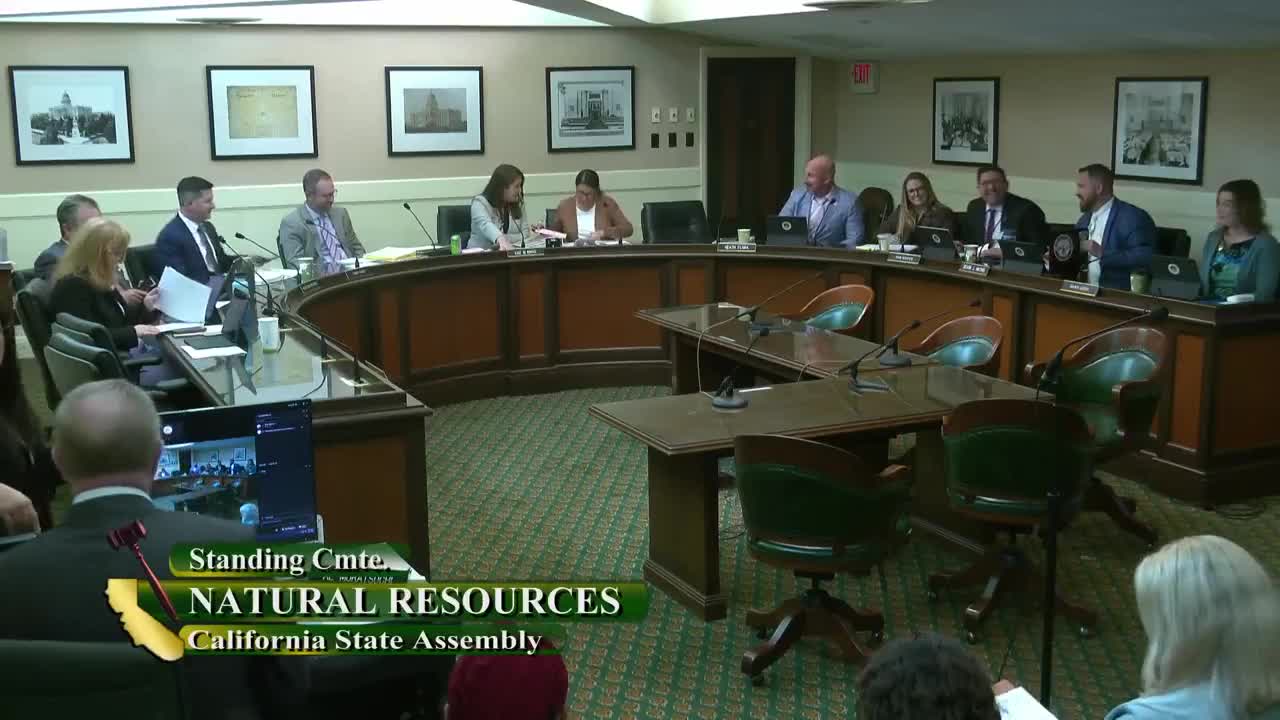 19MIN
Assembly Standing Committee on Natural Resources
Bill Author

Bill Co-Author(s):