ACR 137: Cities Week.
- Session Year: 2023-2024
- House: Assembly
- Latest Version Date: 2024-05-14
Current Status:
Passed
(2024-05-14: Chaptered by Secretary of State - Res. Chapter 65, Statutes of 2024.)
Introduced
In Committee
First Chamber
In Committee
Second Chamber
Enacted
This measure would proclaim the week of April 14, 2024 to April 20, 2024, to be Cities Week, and would encourage all Californians to be involved in their communities and be civically engaged with their local government.
This measure would proclaim the week of April 14, 2024 to April 20, 2024, to be Cities Week, and would encourage all Californians to be involved in their communities and be civically engaged with their local government.
This measure would proclaim the week of April 14, 2024 to April 20, 2024, to be Cities Week, and would encourage all Californians to be involved in their communities and be civically engaged with their local government.
WHEREAS, Cities first arose when eight California municipalities incorporated in 1850, before the territory of California was admitted to the United States of America in September 1850; and
WHEREAS, The first municipality to incorporate was the city of Sacramento in 1850, to provide essential safety and health services to the rapidly growing population of the territory of California; and
WHEREAS, In the 19th and early 20th century, the incorporation and population of cities increased dramatically during the periods of economic prosperity and immigration that followed the Gold Rush and both world wars when the demand for all types of public services increased, and cities met those needs; and
WHEREAS, Cities vary in size and scope and serve diverse communities throughout California, from small rural neighborhoods, to large urban regions; and
WHEREAS, While cities differ in matters of population, geography, and economy, they share essential beliefs and values; and
WHEREAS, Cities are created by the same power, exist by virtue of the same laws, exercise almost identical functions, and are called upon to meet the same demands and pursue the same purposes to serve their residents; and
WHEREAS, the California Constitution grants a number of powers to cities, including the authority to promote and regulate public safety, the authority to raise revenue for public purposes, and the power to operate public works to furnish residents with light, water, power, heat, transportation, and communication; and
WHEREAS, Today, 482 cities provide millions of Californians with essential services, including public libraries, fire departments, police departments, emergency medical and disaster response, parks and recreation, childcare, community and human services programs, solid waste and recycling management, water, sewer, utilities, land use planning, housing, economic development, transportation planning, maintenance of streets and roads, telecommunications, and more; and
WHEREAS, More than 80 percent of Californias population resides within municipalities and receive city services; and
WHEREAS, Cities remain transparent and accountable to the communities they serve, and have earned the trust placed in them by local residents; now, therefore, be it
Resolved by the Assembly of the State of California, the Senate thereof concurring, That the Legislature hereby proclaims the week of April 14, 2024, to April 20, 2024, inclusive, to be Cities Week and encourages all Californians to be involved in their communities and to be civically engaged with their local government, and be it further;
Resolved, That the Chief Clerk of the Assembly transmit copies of this resolution to the author for appropriate distribution.
|
Date
|
Status
|
|---|---|
| May 14, 2024 | Chaptered by Secretary of State - Res. Chapter 65, Statutes of 2024. |
| May 14, 2024 | Enrolled and filed with the Secretary of State at 2 p.m. |
| May 9, 2024 | In Assembly. Ordered to Engrossing and Enrolling. |
| May 9, 2024 | Adopted and to Assembly. (Ayes 37. Noes 0. Page 3876.) |
| May 8, 2024 | Ordered to special consent calendar. |
| May 1, 2024 | From committee: Ordered to third reading. |
| Apr 22, 2024 | In Senate. To Com. on RLS. |
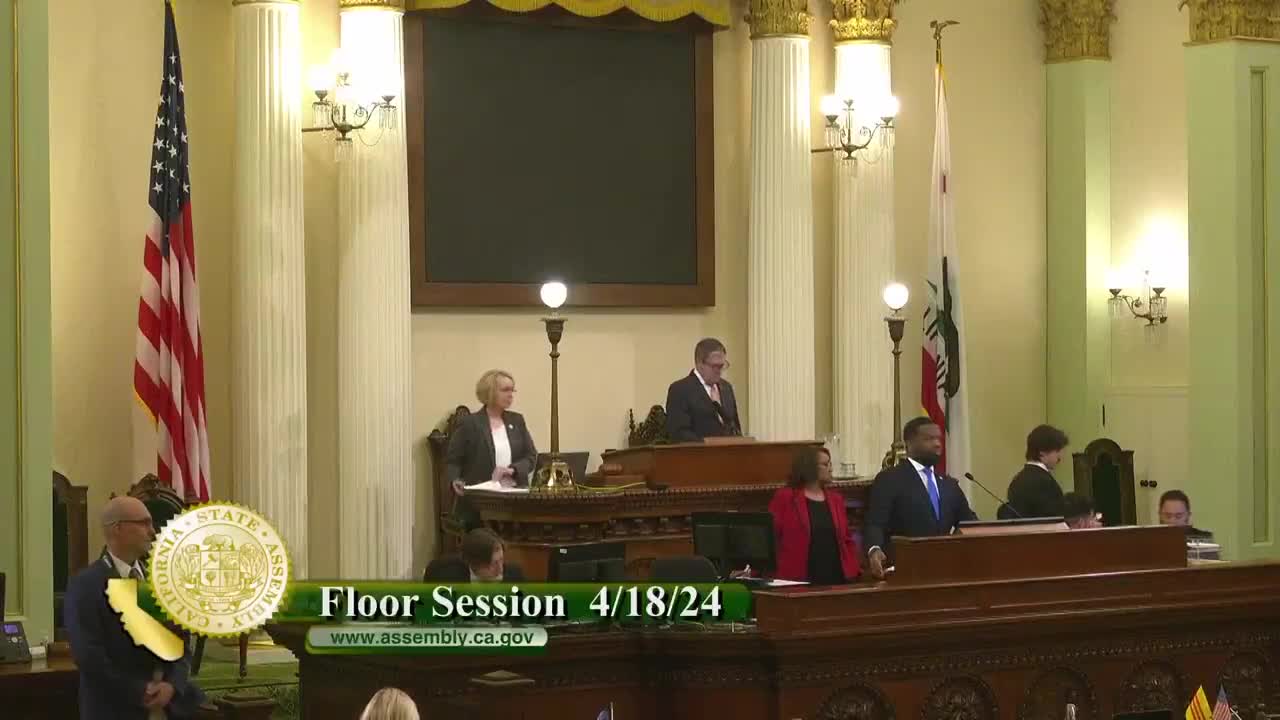
| Apr 18, 2024 | Adopted and to Senate. (Ayes 71. Noes 0.) |
| Apr 18, 2024 | Coauthors revised. |
| Apr 1, 2024 | From committee: Be adopted. Ordered to Third Reading. (Ayes 8. Noes 0.) (April 1). |
| Feb 5, 2024 | Referred to Com. on RLS. |
| Feb 2, 2024 | From printer. |
| Feb 1, 2024 | Introduced. To print. |
|
Date
|
Description
|
Location
|
Votes
|
|
|---|---|---|---|---|
| May 9, 2024 | Special Consent ACR137 Pacheco et al. | Senate Floor |
Passed |
|
| Apr 1, 2024 | Be adopted. To third reading. | Assembly Standing Committee on Rules |
Passed |
This list shows positions taken on this bill by organizations on the date displayed, which is linked to the original source.
Positions by individuals are not included.
|
Organization
|
Position
|
Date
|
|---|---|---|
| League Of California Cities | ** Support |
SENATE RULES COMMITTEE Office of Senate Floor Analyses (916) 651-1520 Fax: (916) 327-4478 | ACR 137 |
THIRD READING
Bill No: ACR 137
Author: Pacheco (D), et al.
Introduced: 2/1/24
Vote: 21
ASSEMBLY FLOOR: Read and adopted, 4/18/24
SUBJECT: Cities Week
SOURCE: League of California Cities
DIGEST:
This resolution proclaims the week of April 14, 2024 to April 20, 2024, to be Cities Week, and would encourage all Californians to be involved in their communities and be civically engaged with their local government.
ANALYSIS: This resolution makes the following legislative findings:
- Cities first arose when eight California municipalities incorporated in 1850, before the territory of California was admitted to the United States of America in September 1850. The first municipality to incorporate was the city of Sacramento in 1850, to provide essential safety and health services to the rapidly growing population of the territory of California.
- The California Constitution grants a number of powers to cities, including the authority to promote and regulate public safety, the authority to raise revenue for public purposes, and the power to operate public works to furnish residents with light, water, power, heat, transportation, and communication.
- Today, 482 cities provide millions of Californians with essential services, including public libraries, fire departments, police departments, emergency medical and disaster response, parks and recreation, childcare, community and human services programs, solid waste and recycling management, water, sewer, utilities, land use planning, housing, economic development, transportation planning, maintenance of streets and roads, telecommunications, and more.
- More than 80 percent of California’s population resides within municipalities and receive city services.
This resolution proclaims the week of April 14, 2024, to April 20, 2024, inclusive, to be Cities Week and encourages all Californians to be involved in their communities and to be civically engaged with their local government.
Comments
According to the author, “I am proud to author ACR 137, proclaiming the week of April 14 to April 20, 2024, to be Cities Week, encouraging all Californians to be involved in their communities and be civically engaged with their local government.”
Related/Prior Legislation
ACR 54 (Pacheco, Resolution Chapter 61, Statutes of 2023) proclaimed the week of April 9, 2023, to April 14, 2023, inclusive, to be Cities Week.
FISCAL EFFECT: Appropriation: No Fiscal Com.: No Local: No
SUPPORT: (Verified 4/29/24)
League of California Cities (source)
OPPOSITION: (Verified 4/29/24)
None received
Prepared by: Russell Manning / SFA / (916) 651-1520
5/1/24 10:58:21
**** END ****
ASSEMBLY THIRD READING
ATR Bill Id:ACR 137
Author:(Pacheco)
As Introduced Ver:February 1, 2024
Majority vote
SUMMARY
Proclaims the week of April 14, 2024, to April 20, 2024, to be Cities Week, and encourages all Californians to be involved in their communities and be civically engaged with their local government.
Major Provisions
- Cities first arose when eight California municipalities incorporated in 1850, before the territory of California was admitted to the United States of America in September 1850.
- The first municipality to incorporate was the city of Sacramento in 1850, to provide essential safety and health services to the rapidly growing population of the territory of California.
- Cities vary in size and scope and serve diverse communities throughout California, from small rural neighborhoods, to large urban regions. While cities differ in matters of population, geography, and economy, they share essential beliefs and values.
- Cities are created by the same power, exist by virtue of the same laws, exercise almost identical functions, and are called upon to meet the same demands and pursue the same purposes to serve their residents.
- The California Constitution grants a number of powers to cities, including the authority to promote and regulate public safety, the authority to raise revenue for public purposes, and the power to operate public works to furnish residents with light, water, power, heat, transportation, and communication.
- Today, 482 cities provide millions of Californians with essential services, including public libraries, fire departments, police departments, emergency medical and disaster response, parks and recreation, childcare, community and human services programs, solid waste and recycling management, water, sewer, utilities, land use planning, housing, economic development, transportation planning, maintenance of streets and roads, telecommunications, and more.
- More than 80% of California's population resides within municipalities and receive city services. Cities remain transparent and accountable to the communities they serve, and have earned the trust placed in them by local residents.
COMMENTS
According to the Author
I am proud to author ACR 137, proclaiming the week of April 14 to April 20, 2024, to be Cities Week. It is important to encourage all Californians to be involved in their communities and be civically engaged with their local government.
Arguments in Support
None on file
Arguments in Opposition
None on file
FISCAL COMMENTS
No fiscal impact. This resolution is keyed non-fiscal by Legislative Counsel.
VOTES
ASM RULES: 8-0-3
YES: Pacheco, Arambula, Flora, Friedman, Holden, Jones-Sawyer, Maienschein, Dixon
ABS, ABST OR NV: Low, Ting, Waldron
UPDATED
VERSION: February 1, 2024
CONSULTANT: Michael Erke / RLS. / (916) 319-2800 FN: 0002682
Date of Hearing: April 1, 2024
ASSEMBLY COMMITTEE ON RULES
Blanca Pacheco, Chair
ABPCA Bill Id:ACR 137 (
Author:Pacheco) – As Introduced Ver:February 1, 2024
SUBJECT: Cities Week.
SUMMARY: Proclaims the week of April 14, 2024, to April 20, 2024, to be Cities Week, and encourages all Californians to be involved in their communities and be civically engaged with their local government. Specifically, this resolution makes the following legislative findings:
- Cities first arose when eight California municipalities incorporated in 1850, before the territory of California was admitted to the United States of America in September 1850.
- The first municipality to incorporate was the city of Sacramento in 1850, to provide essential safety and health services to the rapidly growing population of the territory of California.
- Cities vary in size and scope and serve diverse communities throughout California, from small rural neighborhoods, to large urban regions. While cities differ in matters of population, geography, and economy, they share essential beliefs and values.
- Cities are created by the same power, exist by virtue of the same laws, exercise almost identical functions, and are called upon to meet the same demands and pursue the same purposes to serve their residents.
- The California Constitution grants a number of powers to cities, including the authority to promote and regulate public safety, the authority to raise revenue for public purposes, and the power to operate public works to furnish residents with light, water, power, heat, transportation, and communication.
- Today, 482 cities provide millions of Californians with essential services, including public libraries, fire departments, police departments, emergency medical and disaster response, parks and recreation, childcare, community and human services programs, solid waste and recycling management, water, sewer, utilities, land use planning, housing, economic development, transportation planning, maintenance of streets and roads, telecommunications, and more.
- More than 80 percent of California’s population resides within municipalities and receive city services. Cities remain transparent and accountable to the communities they serve, and have earned the trust placed in them by local residents.
FISCAL EFFECT: None
REGISTERED SUPPORT / OPPOSITION:
Support
None on file
Opposition
None on file
Analysis Prepared by: Michael Erke / RLS. / (916) 319-2800
Bill Author

Bill Co-Author(s):