ACR 151: Nonstructural seismic technologies.
- Session Year: 2023-2024
- House: Assembly
- Latest Version Date: 2024-08-28
Current Status:
Passed
(2024-08-28: Chaptered by Secretary of State - Res. Chapter 188, Statutes of 2024.)
Introduced
In Committee
First Chamber
In Committee
Second Chamber
Enacted
This measure would support the use of nonstructural seismic technologies.
This measure would support the use of nonstructural seismic technologies.
This measure would support the use of nonstructural seismic technologies.
WHEREAS, California is a state with a high level of seismic activity and it is in the best interest of the state and its citizens to encourage the use of nonstructural technologies that have undergone advanced seismic performance verification wherever possible; and
WHEREAS, Recent damaging earthquakes in Japan, Turkey, and Morocco have again demonstrated the dangers presented by damaged structures to occupants and the public within close proximity to those buildings; and
WHEREAS, A destructive earthquake that will impact a highly populated area within California is long overdue; and
WHEREAS, Nonstructural entities are critical to seismic performance and should be encouraged when retrofitting buildings; and
WHEREAS, Damage to nonstructural entities such as ceilings, internet access, HVAC, piping, and power lines could instigate a red or yellow tag, which could render the building unoccupiable even though the structural components are still functional; and
WHEREAS, Federal, state, and local governments should recommend the use of technologies and policies that encourage the use of products that have demonstrated exceptional performance during earthquakes or have gone through recognized seismic performance verification procedures; and
WHEREAS, The use of products with superior seismic performance will lead to a more rapid postearthquake functional recovery; and
WHEREAS, The use of vetted seismic products will reduce damage from shaking, fires, toxic spills, and rubble removal, thereby resulting in a reduced postearthquake carbon footprint for California; and
WHEREAS, Encouraging the use of vetted seismic technologies will ultimately lead to more jobs for the people of California; now, therefore, be it
Resolved by the Assembly of the State of California, the Senate thereof concurring, That the Legislature supports giving priority to vetted nonstructural seismic technologies for the reduction in loss of life and property damage, and for rapid postearthquake economic recovery; and be it further
Resolved, That the Chief Clerk of the Assembly transmit copies of this resolution to the author for appropriate distribution.
|
Date
|
Status
|
|---|---|
| Aug 28, 2024 | Chaptered by Secretary of State - Res. Chapter 188, Statutes of 2024. |
| Aug 28, 2024 | Enrolled and filed with the Secretary of State at 4 p.m. |
| Aug 22, 2024 | In Assembly. Ordered to Engrossing and Enrolling. |
| Aug 22, 2024 | Adopted and to Assembly. (Ayes 33. Noes 0. Page 5298.) |
| Aug 20, 2024 | Ordered to special consent calendar. |
| Aug 13, 2024 | From committee: Be adopted. Ordered to Third Reading. (Ayes 10. Noes 0.) (August 13). |
| Aug 7, 2024 | Referred to Com. on G.O. |
| Aug 5, 2024 | In Senate. To Com. on RLS. |
| Jul 3, 2024 | Adopted and to Senate. (Ayes 71. Noes 0. Page 6156.) |
| Jun 25, 2024 | From committee: Be adopted. Ordered to Third Reading. (Ayes 8. Noes 0.) (June 24). |
| May 13, 2024 | Referred to Com. on E.M. |
| Feb 27, 2024 | From printer. |
| Feb 26, 2024 | Introduced. To print. |
|
Date
|
Description
|
Location
|
Votes
|
|
|---|---|---|---|---|
| Aug 22, 2024 | Special Consent ACR151 Calderon | Senate Floor |
Passed |
|
| Aug 13, 2024 | Be adopted. Ordered to third reading | Senate Standing Committee on Governmental Organization |
Passed |
|
| Jul 3, 2024 | ACR 151 Calderon Assembly Third Reading | Assembly Floor |
Passed |
|
| Jun 24, 2024 | Be adopted. To third reading. | Assembly Standing Committee on Emergency Management |
Passed |
This list shows positions taken on this bill by organizations on the date displayed, which is linked to the original source.
Positions by individuals are not included.
|
Organization
|
Position
|
Date
|
|---|---|---|
| Earthquake Engineering Research Institute | * Support | Jun 24, 2024 |
| Earthquake Engineering Research Institute, Northern California Chapter | ** Support | |
| Omega Flex, Inc | ** Support | |
| Omegaflex | * Support | Jun 24, 2024 |
SENATE RULES COMMITTEE Office of Senate Floor Analyses (916) 651-1520 Fax: (916) 327-4478 | ACR 151 |
THIRD READING
Bill No: ACR 151
Author: Calderon (D)
Introduced: 2/26/24
Vote: 21
ASSEMBLY FLOOR: 71-0, 7/3/24 - See last page for vote
SUBJECT: Nonstructural seismic technologies
SOURCE: Omega Flex, Inc.
DIGEST:
This resolution states the Legislature’s support for giving priority to vetted nonstructural seismic technologies for the reduction in loss of life and property damage and for rapid post-earthquake economic recovery.
ANALYSIS:
Existing law:
- Defines “seismic retrofit” to mean retrofitting or reconstruction of an existing building or structure, to significantly reduce structural collapse and falling hazards from structural or nonstructural components of any building or structure including, but not limited to, parapets, appendages, cornices, hanging objects, and building cladding that poses serious danger to the occupants or adjacent areas. “Seismic retrofit” also means either structural strengthening or providing the means necessary to modify the seismic response that would otherwise be expected by an existing building or structure during an earthquake, so as to significantly reduce hazards to life and safety while also providing for the substantial safe ingress and egress of the building occupants immediately after an earthquake. Alternatively, “seismic retrofit” means to strengthen an existing building or structure, so as to improve or allow the building or structure to remain functional immediately after an earthquake. Alternatively, “seismic retrofit” means to strengthen an existing building or structure so as to improve or allow the building or structure to remain functional immediately after an earthquake.
- Defines “earthquake hazard mitigation technologies” to include, but not be limited to, seismic isolation, energy dissipation, ductility, damping systems, and other technologies which endeavor to reasonably protect buildings and nonstructural components, building contents, and functional capability from earthquake damage.
- Directs the State Architect, with the consultation of the Alfred E. Alquist Seismic Safety Commission (Commission) and the Office of Emergency Services (OES), to establish criteria for projects potentially eligible for an appropriation from the Legislature based on factors including the populations at risk of injury and the cost-effectiveness of remedial actions.
This resolution:
- States the Legislature’s support for giving priority to vetted nonstructural seismic technologies for the reduction in loss of life and property damage, and for rapid post-earthquake economic recovery.
- Includes supporting background information relating to, among other things, nonstructural technologies and their seismic performance, as specified.
Background
- Author Statement. According to the author’s office, “the seismic resiliency of our buildings and communities is essential, as California is responsible for two-thirds of the country’s earthquake risk. The nonstructural elements of our buildings, such as electrical, plumbing, and HVAC systems, are often overlooked in their role towards resiliency. During an earthquake, these very systems can incur damage to the point of rendering a building inhospitable, despite minimal damage to the building’s structural components. Assembly Concurrent Resolution 151 seeks to increase awareness of the nonstructural elements of our buildings, and supports the use of proven nonstructural seismic technologies. With the threat of an earthquake constantly looming, it is important that both the structural and nonstructural components of our building infrastructure feature the most seismically vetted technologies.”
- Quake Me Up Before You Go-Go. Although the Earth looks like a pretty solid place from above, it’s actually extremely active just below the surface. Similar to a multi-layered cake-pop with a solid center, hard candy crust, and a moist middle, the Earth is made up of four basic layers: a solid crust, a hot and nearly solid mantle, a liquid outer core, and a solid inner core. The solid crust and the top stiff layer of the mantle make up a region called the lithosphere. The lithosphere isn’t a contiguous piece that wraps around the whole Earth like an eggshell, it is made up of giant puzzle pieces called tectonic plates. Tectonic plates are constantly shifting as they drift around on the viscous, and slowly flowing, mantle layer below.
An earthquake is caused by a sudden slip on a fault. The tectonic plates are always gradually moving, but they get stuck at their edges due to friction from time to time. When the stress on the edge overcomes the friction, there is a sudden “Wham!” – an earthquake that releases energy in waves that travel through the Earth’s crust and cause the shaking that we feel up above.
- I Fell Into a Pacific Ring of Fire. The Ring of Fire is a long horseshoe-shaped seismically active belt of earthquake epicenters, volcanoes, and tectonic plate boundaries that fringes the Pacific basin. For much of its 24,900-mile length, the Ring of Fire walks a line of island arcs such as Tonga and New Hebrides, the Indonesian archipelago, the Philippines, and Japan, as well as other arc-shaped geomorphic features, such as the western coast of North America and the Andes Mountains.
Volcanoes are associated with the belt throughout its length; for this reason it is called the “Ring of Fire.” A series of deep ocean troughs frame the belt on the oceanic side, and continental landmasses lie behind. Most of the world’s earthquakes, the overwhelming majority of the world’s strongest earthquakes, and approximately 75 percent of the world’s volcanoes occur within the Ring of Fire.
The Ring of Fire surrounds several tectonic plates—including the vast Pacific Plate and the smaller Philippine, Juan de Fuca, Cocos, and Nazca plates. Many of these plates are subducting under the continental plates they border. Along much of the western coast of North America, and specifically California, the Pacific Plate is sliding past the North American plate at plate intersections called transform faults.
- Whose Fault is This? California sits at the junction of two massive tectonic plates—the Pacific Plate and the North American Plate—constantly at odds in a geological tug-of-war. The Pacific Plate consists of most of the Pacific Ocean floor and the California Coast line. The North American Plate comprises most the North American Continent and parts of the Atlantic Ocean floor. The primary boundary between these two plates is the San Andreas Fault. The San Andreas Fault is more than 650 miles long and extends to depths of at least 10 miles. Many other smaller faults like the Hayward (Northern California) and the San Jacinto (Southern California) branch from and join the San Andreas Fault Zone. With over 500 active faults, according to the California Earthquake Authority (CEA), California is a hotbed of seismic activity, where the ground is always ready to surprise, and most Californians live within 30 miles of one of those active faults.
The Pacific Plate grinds northwestward past the North American Plate at a rate of about two inches per year. Parts of the San Andreas Fault system adapt to this movement by constant "creep" resulting in many tiny shocks and a few moderate Earth tremors. In other areas where creep is NOT constant, strain can build up for hundreds of years, producing great earthquakes when it finally releases.
- Shake it Off: Building for Resilience. Seismic resilience focuses on reducing the damage caused by earthquakes, including loss of life, injuries, and economic impacts. Essentially, it's about ensuring that structures and systems can keep functioning normally or return to normal swiftly after initial repairs. This concept applies not just to individual buildings but also entire systems and communities working in concert. The main goal is to enable critical infrastructure and buildings to bounce back to normal conditions and begin again. Seismic resilience involves both constructing new buildings and retrofitting existing ones to protect occupants and minimize damage during an earthquake. By incorporating proper seismic resilience, buildings are much more likely to avoid a “Red” tag, rendering the building uninhabitable.
- Bend and Snap Back to Functionality. Functional recovery ensures that after an earthquake, a building’s essential systems—like electrical, plumbing, and HVAC—snap back into action quickly, minimizing disruption. These systems, like electrical, plumbing, HVAC, ceilings, and partitions, are crucial for a building's operations even though they don't hold it up. The goal is to make sure buildings can resume their intended functions quickly and effectively, ensuring minimal disruption in the aftermath of a quake.
According to an April 5, 2023 article in The Harvard Gazette, “Disaster Risk Reduction emphasizes taking steps to reduce the harm and impact caused by disasters on society. Such measures include adopting the latest building codes and retrofitting critical disaster infrastructure lifelines such as telecommunications, roads, power and water infrastructure.”
- Stronger Things: An Ode to Building Codes. Experts emphasize the importance of hazard-resistant building codes in reducing earthquake damage. In 2010, both Chile and Haiti experienced major earthquakes. Haiti’s magnitude 7 earthquake resulted in an estimated 220,000 deaths, 300,000 injuries, and 1.5 million homeless. In contrast, Chile’s much stronger magnitude 8.8 earthquake caused less than 800 deaths—most due to the resulting tsunami—and relatively little structural damage. While some differences in outcomes can be attributed to seismic and site characteristics, the stark contrast in casualties and structural damage is largely due to Chile’s strong building codes, which were rigorously enforced, unlike the virtually nonexistent and poorly enforced codes in Haiti.
The National Institute of Building Sciences underscored the importance of building codes in a widely cited study. It found that adopting the latest building codes could save $11 for every dollar invested in hazard-resistant codes and standards, and above-code design could save $4 for each dollar invested. The study also found that adopting the 2015 International Code Council building codes added about one percent in costs relative to 1990 standards.
In California, most building codes require habitable structures that protect people from injury or death but do not necessarily ensure occupancy or functionality soon after a disaster. A notable exception is the seismic standards for hospitals established by the Alfred E. Alquist Hospital Facilities Seismic Safety Act of 1983. These standards set functional recovery requirements for acute care facilities because, after a major earthquake, hospitals must continue to care for existing patients and handle a surge of new injuries. However, the expense of retrofitting acute care facilities is challenging, especially when hospitals need to maintain continuity of care during the retrofit and are facing severe budget shortfalls. Consequently, recent seismic safety legislation has focused on providing deadline extensions for hospital retrofits.
- Subtle Saviors: Protecting Buildings from Within. Nonstructural components are the unsung defenders of a building—they don't hold it up, but they protect crucial systems during an earthquake. These include architectural partitions, piping systems, ceilings, building contents, mechanical and electrical equipment, and exterior cladding.
Researchers and engineers now widely recognize the crucial role nonstructural components play in seismic design and performance, ensuring the whole system stays intact. This issue gained special attention after the 1971 San Fernando earthquake. It became evident that damage to nonstructural components can lead to major economic losses and pose serious threats to life safety. For instance, evaluations of various Veterans Administration hospitals after the San Fernando quake showed that many facilities, although structurally intact, were rendered non-functional due to the loss of essential equipment and supplies.
The economic impact of seismic nonstructural damage can be staggering. A prime example is the 1994 Northridge earthquake, where nonstructural damage accounted for about 50 percent of the total $18.5 billion in losses. These technologies and nonstructural components are tested and vetted at facilities such as the University of California (UC) San Diego’s National Science Foundation-funded earthquake simulator known as the NGERI Large High Performance Outdoor Shake Table (LHPOST6), which is the world’s largest outdoor earthquake simulator.
A recent $16.8 million grant from the National Science Foundation along with an additional $3.4 million of in-kind support from UC San Diego expanded the shake table’s testing capabilities to more realistically recreate the ground motions during strong earthquakes. The facility can test some of the heaviest specimens in the world, from multi-story buildings to bridge columns, bridge bents, and wind turbines, now with the ability to reproduce a full range of earthquake ground motions.
Related/Prior Legislation
SB 528 (Rubio, 2023) clarified confusing and outdated sections of the California Earthquake Authority’s (CEA) statute regarding potential assessments of the insurance industry, and consolidates a Legislative reporting requirement. (Never heard in the Assembly Insurance Committee)
AB 1770 (Committee on Emergency Management, 2023) authorized the Commission to coordinate with the Department of Forestry and Fire Protection (Cal FIRE) and OES to take actions related to implementing and funding seismic mitigation activities and earthquake early warning technology, as specified. (Pending concurrence in Senate amendments on the Assembly Floor)
FISCAL EFFECT: Appropriation: No Fiscal Com.: No Local: No
SUPPORT: (Verified 8/13/24)
Omega Flex, Inc. (Source)
Earthquake Engineering Research Institute, Northern California Chapter
OPPOSITION: (Verified 8/13/24)
None received
ARGUMENTS IN SUPPORT: In support of the resolution, Omega Flex, Inc. writes that, “Californians expect new construction in the state to be resilient in seismic events (large and small) and should expect that older building structures will be upgraded and retrofitted up to current technologies for the reduction of loss of life and property damage, and for rapid post-earthquake economic recovery, ACR 151 is a key step in this direction.”
Additionally, the Earthquake Engineering Research Institute writes that,” [n]on-structural components within a building system are vital to enabling the structure to be functional/habitable following a damaging earthquake. For example, recent earthquakes in Turkey, Morocco, Japan and Taiwan have demonstrated that buildings built to the local codes do resist earthquake shaking better than non-code compliant buildings. The same is true with non-structural components that have been vetted through a seismic testing process. Application of Field Act requirements (for structural and nonstructural components) in California Schools demonstrate a higher seismic performance than facilities built to the building code.”
ASSEMBLY FLOOR: 71-0, 7/3/24
AYES: Addis, Aguiar-Curry, Alanis, Arambula, Bains, Bauer-Kahan, Berman, Boerner, Bonta, Bryan, Calderon, Juan Carrillo, Wendy Carrillo, Cervantes, Chen, Connolly, Megan Dahle, Davies, Essayli, Flora, Mike Fong, Friedman, Gabriel, Gallagher, Garcia, Gipson, Grayson, Haney, Hart, Holden, Hoover, Irwin, Jackson, Kalra, Lackey, Lee, Low, Lowenthal, Maienschein, McCarty, Muratsuchi, Stephanie Nguyen, Ortega, Pacheco, Papan, Jim Patterson, Joe Patterson, Pellerin, Petrie-Norris, Quirk-Silva, Rendon, Reyes, Luz Rivas, Rodriguez, Blanca Rubio, Santiago, Schiavo, Soria, Ta, Ting, Valencia, Villapudua, Waldron, Wallis, Ward, Weber, Wicks, Wilson, Wood, Zbur, Robert Rivas
NO VOTE RECORDED: Alvarez, Bennett, Dixon, Jones-Sawyer, Mathis, McKinnor, Ramos, Sanchez
Prepared by: Brian Duke / G.O. / (916) 651-1530
8/14/24 15:50:44
**** END ****
+SENATE COMMITTEE ON GOVERNMENTAL ORGANIZATION
Senator Bill Dodd
Chair
2023 - 2024 Regular
Bill No: ACR Hearing Date: 8/13/2024
Author: | Calderon | ||
Version: | Introduced | ||
Urgency: | Fiscal: | ||
Consultant: | |||
SUBJECT:
DIGEST: This resolution states the Legislature’s support for giving priority to vetted nonstructural seismic technologies for the reduction in loss of life and property damage, and for rapid post-earthquake economic recovery.
ANALYSIS:
Existing law:
- Defines “seismic retrofit” to mean retrofitting or reconstruction of an existing building or structure, to significantly reduce structural collapse and falling hazards from structural or nonstructural components of any building or structure including, but not limited to, parapets, appendages, cornices, hanging objects, and building cladding that poses serious danger to the occupants or adjacent areas. “Seismic retrofit” also means either structural strengthening or providing the means necessary to modify the seismic response that would otherwise be expected by an existing building or structure during an earthquake, so as to significantly reduce hazards to life and safety while also providing for the substantial safe ingress and egress of the building occupants immediately after an earthquake. Alternatively, “seismic retrofit” means to strengthen an existing building or structure, so as to improve or allow the building or structure to remain functional immediately after an earthquake. Alternatively, “seismic retrofit” means to strengthen an existing building or structure so as to improve or allow the building or structure to remain functional immediately after an earthquake.
- Defines “earthquake hazard mitigation technologies” to include, but not be limited to, seismic isolation, energy dissipation, ductility, damping systems, and other technologies which endeavor to reasonably protect buildings and nonstructural components, building contents, and functional capability from earthquake damage.
- Directs the State Architect, with the consultation of the Alfred E. Alquist Seismic Safety Commission (Commission) and the Office of Emergency Services (OES), to establish criteria for projects potentially eligible for an appropriation from the Legislature based on factors including the populations at risk of injury and the cost-effectiveness of remedial actions.
This resolution:
- States the Legislature’s support for giving priority to vetted nonstructural seismic technologies for the reduction in loss of life and property damage, and for rapid post-earthquake economic recovery.
- Includes supporting background information relating to, among other things, nonstructural technologies and their seismic performance, as specified.
Background
Author Statement. According to the author’s office, “the seismic resiliency of our buildings and communities is essential, as California is responsible for two-thirds of the country’s earthquake risk. The nonstructural elements of our buildings, such as electrical, plumbing, and HVAC systems, are often overlooked in their role towards resiliency. During an earthquake, these very systems can incur damage to the point of rendering a building inhospitable, despite minimal damage to the building’s structural components. Assembly Concurrent Resolution 151 seeks to increase awareness of the nonstructural elements of our buildings, and supports the use of proven nonstructural seismic technologies. With the threat of an earthquake constantly looming, it is important that both the structural and nonstructural components of our building infrastructure feature the most seismically vetted technologies.”
Quake Me Up Before You Go-Go. Although the Earth looks like a pretty solid place from the surface, it’s actually extremely active just below the surface. Similar to a multi-layered cake-pop with a solid center, the Earth is made of four basic layers: a solid crust, a hot, nearly solid mantle, a liquid outer core, and a solid inner core. The solid crust and top, stiff layer of the mantle make up a region called the lithosphere. The lithosphere isn’t a continuous piece that wraps around the whole Earth like an eggshell. It’s made up of giant puzzle pieces called tectonic plates. Tectonic plates are constantly shifting as they drift around on the viscous, or slowly flowing, mantle layer below.
An earthquake is caused by a sudden slip on a fault. The tectonic plates are always slowly moving, but they get stuck at their edges due to friction. When the stress on the edge overcomes the friction, there is a sudden “Wham!” – an earthquake that releases energy in waves that travel through the Earth’s crust and cause the shaking that we feel.
I Fell Into a Pacific Ring of Fire. The Ring of Fire is a long horseshoe-shaped seismically active belt of earthquake epicenters, volcanoes, and tectonic plate boundaries that fringes the Pacific basin. For much of its 24,900-mile length, the belt follows chains of island arcs such as Tonga and New Hebrides, the Indonesian archipelago, the Philippines, Japan, the Kuril Islands, and the Aleutians, as well as other arc-shaped geomorphic features, such as the western coast of North America and the Andes Mountains. Volcanoes are associated with the belt throughout its length; for this reason it is called the “Ring of Fire.” A series of deep ocean troughs frame the belt on the oceanic side, and continental landmasses lie behind. Most of the world’s earthquakes, the overwhelming majority of the world’s strongest earthquakes, and approximately 75 percent of the world’s volcanoes occur within the Ring of Fire.
The Ring of Fire surrounds several tectonic plates—including the vast Pacific Plate and the smaller Philippine, Juan de Fuca, Cocos, and Nazca plates. Many of these plates are subducting under the continental plates they border. Along much of the western coast of North America, and specifically California, the Pacific Plate is sliding past the North American plate at plate intersections called transform faults.
The Faults in Our Stars. California sits at the junction of two massive tectonic plates—the Pacific Plate and the North American Plate—constantly at odds in a geological tug-of-war. The Pacific Plate consists of most of the Pacific Ocean floor and the California Coast line. The North American Plate comprises most the North American Continent and parts of the Atlantic Ocean floor. The primary boundary between these two plates is the San Andreas Fault. The San Andreas Fault is more than 650 miles long and extends to depths of at least 10 miles. Many other smaller faults like the Hayward (Northern California) and the San Jacinto (Southern California) branch from and join the San Andreas Fault Zone.
With over 500 active faults, according to the California Earthquake Authority (CEA), California is a hotbed of seismic activity, where the ground is always ready to surprise, and most Californians live within 30 miles of one of those active faults.
The Pacific Plate grinds northwestward past the North American Plate at a rate of about two inches per year. Parts of the San Andreas Fault system adapt to this movement by constant "creep" resulting in many tiny shocks and a few moderate Earth tremors. In other areas where creep is NOT constant, strain can build up for hundreds of years, producing great earthquakes when it finally releases.

Shake it Off: Building for Resilience. Seismic resilience focuses on reducing the damage caused by earthquakes, including loss of life, injuries, and economic impacts. Essentially, it's about ensuring that structures and systems can keep functioning normally or return to normal swiftly after initial repairs. This concept applies not just to individual buildings but also entire systems and communities working in concert. The main goal is to enable critical infrastructure and buildings to bounce back to normal conditions and begin again. Seismic resilience involves both constructing new buildings and retrofitting existing ones to protect occupants and minimize damage during an earthquake.
Bend and Snap Back to Functionality. Functional recovery ensures that after an earthquake, a building’s essential systems—like electrical, plumbing, and HVAC—snap back into action quickly, minimizing disruption. These systems, like electrical, plumbing, HVAC, ceilings, and partitions, are crucial for a building's operations even though they don't hold it up. The goal is to make sure buildings can resume their intended functions quickly and effectively, ensuring minimal disruption in the aftermath of a quake.
Stronger Things: An Ode to Building Codes. Experts emphasize the importance of hazard-resistant building codes in reducing earthquake damage. In 2010, both Chile and Haiti experienced major earthquakes. Haiti’s magnitude 7 earthquake resulted in an estimated 220,000 deaths, 300,000 injuries, and 1.5 million homeless. In contrast, Chile’s much stronger magnitude 8.8 earthquake caused less than 800 deaths—most due to the resulting tsunami—and relatively little structural damage. While some differences in outcomes can be attributed to seismic and site characteristics, the stark contrast in casualties and structural damage is largely due to Chile’s strong building codes, which were rigorously enforced, unlike the virtually nonexistent and poorly enforced codes in Haiti.
The National Institute of Building Sciences underscored the importance of building codes in a widely cited study. It found that adopting the latest building codes could save $11 for every dollar invested in hazard-resistant codes and standards, and above-code design could save $4 for each dollar invested. The study also found that adopting the 2015 International Code Council building codes added about one percent in costs relative to 1990 standards.
In California, most building codes require habitable structures that protect people from injury or death but do not necessarily ensure occupancy or functionality soon after a disaster. A notable exception is the seismic standards for hospitals established by the Alfred E. Alquist Hospital Facilities Seismic Safety Act of 1983.
These standards set functional recovery requirements for acute care facilities because, after a major earthquake, hospitals must continue to care for existing patients and handle a surge of new injuries. However, the expense of retrofitting acute care facilities is challenging, especially when hospitals need to maintain continuity of care during the retrofit and are facing severe budget shortfalls. Consequently, recent seismic safety legislation has focused on providing deadline extensions for hospital retrofits.
Subtle Saviors: Protecting Buildings from Within. Nonstructural components are the unsung defenders of a building—they don't hold it up, but they protect crucial systems during an earthquake. These include architectural partitions, piping systems, ceilings, building contents, mechanical and electrical equipment, and exterior cladding.
Researchers and engineers now widely recognize the crucial role nonstructural components play in seismic design and performance, ensuring the whole system stays intact. This issue gained special attention after the 1971 San Fernando earthquake. It became evident that damage to nonstructural components can lead to major economic losses and pose serious threats to life safety. For instance, evaluations of various Veterans Administration hospitals after the San Fernando quake showed that many facilities, although structurally intact, were rendered non-functional due to the loss of essential equipment and supplies.
The economic impact of seismic nonstructural damage can be staggering. A prime example is the 1994 Northridge earthquake, where nonstructural damage accounted for about 50 percent of the total $18.5 billion in losses.
These technologies and nonstructural components are tested and vetted at facilities such as the University of California (UC) San Diego’s National Science Foundation-funded earthquake simulator known as the NGERI Large High Performance Outdoor Shake Table (LHPOST6), which is the world’s largest outdoor earthquake simulator.
A recent $16.8 million grant from the National Science Foundation along with an additional $3.4 million of in-kind support from UC San Diego expanded the shake table’s testing capabilities to more realistically recreate the ground motions during strong earthquakes. The facility can test some of the heaviest specimens in the world, from multi-story buildings to bridge columns, bridge bents, and wind turbines, now with the ability to reproduce a full range of earthquake ground motions.
Prior/Related Legislation
SB 528 (Rubio, 2023) clarifies confusing and outdated sections of the California Earthquake Authority’s (CEA) statute regarding potential assessments of the insurance industry, and consolidates a Legislative reporting requirement. (Never heard in the Assembly Insurance Committee)
AB 1770 (Committee on Emergency Management, 2023) authorizes the Commission to coordinate with the Department of Forestry and Fire Protection (Cal FIRE) and OES to take actions related to implementing and funding seismic mitigation activities and earthquake early warning technology, as specified. (Pending concurrence in Senate amendments on the Assembly Floor)
FISCAL EFFECT: Appropriation: Fiscal Com.: No Local:
SUPPORT:
Omega Flex, Inc. (Source)
Earthquake Engineering Research Institute, Northern California Chapter
OPPOSITION:
None received
ARGUMENTS IN SUPPORT: In support of the resolution, Omega Flex, Inc. writes that, “Californians expect new construction in the state to be resilient in seismic events (large and small) and should expect that older building structures will be upgraded and retrofitted up to current technologies for the reduction of loss of life and property damage, and for rapid post-earthquake economic recovery, ACR 151 is a key step in this direction.”
Additionally, the Earthquake Engineering Research Institute writes that,” [n]on-structural components within a building system are vital to enabling the structure to be functional/habitable following a damaging earthquake. For example, recent earthquakes in Turkey, Morocco, Japan and Taiwan have demonstrated that buildings built to the local codes do resist earthquake shaking better than non-code compliant buildings. The same is true with non-structural components that have been vetted through a seismic testing process. Application of Field Act requirements (for structural and nonstructural components) in California Schools demonstrate a higher seismic performance than facilities built to the building code.”
ASSEMBLY THIRD READING
ATR Bill Id:ACR 151
Author:(Calderon)
As Introduced Ver:February 26, 2024
Majority vote
SUMMARY
This resolution supports the use of nonstructural seismic technologies as a means to increase earthquake resiliency in California communities.
Major Provisions
- Notes the high level of seismic activity in California and that a significant, destructive earthquake in a densely populated area is overdue in the state.
- Observes that the use of products which have superior seismic performance will lead to a more rapid post-earthquake recovery.
- Identifies the advantages of using nonstructural technologies which have been tested and put through recognized verification processes as having high seismic performance.
- Identifies nonstructural elements as including ceilings, internet access, HVAC, piping, and powerlines, and notes that damage to these elements can cause a yellow or red 'unoccupiable' tag to be assigned to a building even if the structural components are still functional.
- Identifies that the use of vetted seismic products will reduce damage from shaking, fires, toxic spills, and rubble removal, thereby resulting in a reduced postearthquake carbon footprint for California.
- Ties the use of vetted seismic technologies in the state to an increase in jobs for Californians.
- Decrees support from the Legislature for prioritizing the use of vetted nonstructural seismic technologies for the reduction in loss of life and property damage, and for rapid postearthquake economic recovery.
- Directs the Chief Clerk of the Assembly to transmit copies of this resolution to the author for appropriate distribution.
COMMENTS
Earthquake hazard in California: According to seismologists and other experts, it is not seismic shaking but the collapse or failure of structures that kill the most people in an earthquake. Emergency managers and engineers have long emphasized that the nature of the built environment often determines the severity of a disaster no matter whether the inciting event is an earthquake, hurricane, flood, or fire. How buildings withstand seismic shaking, high winds, floodwaters, or falling embers may determine the number of casualties, how long the power is out, and how many millions or billions of dollars are needed to rebuild. The potential for hazards to become dangerous, disruptive, or costly often depends on where and how communities build.
In the Bay Area, there is a 72% chance of a 6.7 magnitude earthquake, a 51% chance of a 7.0 magnitude earthquake and a 20% chance of a 7.5 magnitude earthquake before the year 2043, according to the U.S. Geological Survey (USGS). The East Bay's Hayward Fault, which is believed capable of generating up to a magnitude 7.0 earthquake, has not produced a big quake since 1868 and is "due" for one, geologists say. The San Andreas Fault produced the estimated 7.9 magnitude earthquake of 1906 and could give San Francisco another huge shake again.
In Southern California, there is a 93% chance of a 6.7 magnitude or larger earthquake somewhere in the region before 2043 and a 17% chance of a 7.7 magnitude or larger occurring on the Southern San Andreas Fault before 2043.
Seismic resilience: Seismic resilience is a structural engineering concept that aims to reduce the damage caused by earthquakes, such as loss of life, injuries, and economic losses. It is generally defined as the ability of a structure or a system to continue operating as normal or probably extends its serviceability after the initial damage has been repaired and can apply to systems and communities in addition to individual structures. The goal is to help critical buildings and infrastructure in communities return to normal conditions as quickly as possible. Seismic resilience is about constructing new buildings and strengthening those already built to keep occupants safe in an earthquake and to limit damage to the building itself.
Functional recovery: Functional recovery is a post-earthquake state in which a building's non-structural systems are restored or maintained to support its basic functions. Non-structural elements are essential to a building's function but don't support its structure, such as electrical systems, plumbing, HVAC systems, ceilings, and partitions. Functional recovery aims to ensure that buildings can support their intended functions within an acceptable time after an earthquake.
The impact of building codes: The role of inadequate building codes is a significant contributor to natural disaster losses. For example, although South Florida had one of the strongest building codes in the nation in 1992, a quarter of the $16 billion in insured losses from Hurricane Andrew were attributed to Dade County's failure to enforce its building code. Experts have also pointed out how hazard-resistant building codes reduce earthquake damage. In 2010, both Chile and Haiti were hit by major earthquakes. The magnitude 7 earthquake in Haiti killed an estimated 220,000 people, injured 300,000, and left 1.5 million homeless. The much stronger magnitude 8.8 earthquake in Chile killed less than 800 people, most due to the resulting tsunami, and caused relatively little structural damage. Some of the difference in outcomes might be attributable to variations in seismic and site characteristics, while much of the difference in casualties and structural damage has been attributed to the adoption and enforcement of strong building codes in Chile, in contrast to the virtually nonexistent and poorly enforced building codes in Haiti. 4
The National Institute of Building Sciences also emphasized the importance of building codes in a widely cited study which found that adopting the most recent building code could save $11 for every dollar invested in hazard-resistant codes and standards, and above-code design could save $4 for each dollar invested. The study also found that adopting the 2015 International Code Council building codes added about 1% in costs relative to 1990 standards.[1] At this time, most building codes in California require a habitable structure that protects people from injury or death and do not require occupancy or functionality soon after a disaster.
[1] National Institute of Building Sciences, Natural Hazard Mitigation Saves: 2019 Report, Washington, DC, 2019, pp. 37-39, https://www.nibs.org/files/pdfs/NIBS_MMC_MitigationSaves_2019.pdf.
A notable exception is the seismic standards for hospitals as established by the Alfred E. Alquist Hospital Facilities Seismic Safety Act of 1983, which sets functional recovery standards for acute care facilities in hospitals. This is because, after a major earthquake, hospitals will not only need to continue preserving the life safety of existing patients but will also be subject to a flood of new injuries and must remain operational in order to provide care. At this time, however, the expense of retrofitting acute care facilities at hospitals is challenged by a need to maintain continuity of care during retrofit and severe budget shortfalls faced by several hospitals in the state. As such, all seismic safety legislation introduced this year has been to provide deadline extensions to hospital retrofits SB 1447, (Durazo) of the current legislative session; AB 869, (Wood and Garcia) of the current legislative session; SB 1119, (Newman) of the current legislative session.
The last functional recovery bill: AB 1857 (Nazarian) of 2018) was introduced in the California Legislature by Assembly Member Adrin Nazarian on January 10, 2018. The proposed legislation addressed performance standards for earthquake safety in new buildings. It would have required the California Building Standards Commission to assemble a working group to investigate and determine criteria for a functional recovery standard following a seismic event for all, or some, building occupancy classifications. This bill was the last seismic resiliency legislation to reach the Governors' desk, but was vetoed.
This bill expresses policy preferences related to nonstructural seismic resiliency and is meant to restart the conversation that ended with the Governor's veto. In California, it is not a matter of if big earthquakes are coming, but rather when. This resolution emphasizes that California needs to be actively planning for and executing policies and strategies that will increase its ability to have good functional recovery after seismic events.
According to the Author
"The seismic resiliency of our buildings and communities is essential, as California is responsible for two-thirds of the country's earthquake risk. The nonstructural elements of our buildings, such as electrical, plumbing, and HVAC systems, are often overlooked in their role towards resiliency. During an earthquake, these very systems can incur damage to the point of rendering a building inhospitable, despite minimal damage to the building's structural components. Assembly Concurrent Resolution 151 seeks to increase awareness of the nonstructural elements of our buildings, and supports the use of proven nonstructural seismic technologies. With the threat of an earthquake constantly looming, it is important that both the structural and nonstructural components of our building infrastructure feature the most seismically vetted technologies."
Arguments in Support
The sponsor of the bill, Omega Flex Inc. (OFI), writes in support: "OFI believes that Californians expect new construction in the state to be resilient in seismic events (large and small) and should expect that older building structures will be upgraded and retrofitted up to current seismic standards. By expressing state policy support to give priority to vetted nonstructural seismic technologies for the reduction of loss of life and property damage, and for rapid post-earthquake economic recovery, ACR 151 is a key step in this direction."
The Earthquake Engineering Research Center (EERI) Northern California Chapter write in support: "Non-structural components within a building system are vital to enabling the structure to be functional/habitable following a damaging earthquake." For example, "application of Field Act requirements (for structural and nonstructural components) in California Schools demonstrate a higher seismic performance than facilities built to the building code." Therefore, "EERI concurs with ACR 151's call to prioritize nonstructural components that have been seismically vetted. These off-the-shelf cost-effective technologies will enhance the resilience of the built environment should be given priority for use in new construction and for the seismic retrofitting of older buildings."
Arguments in Opposition
None on file.
FISCAL COMMENTS
This resolution has not been evaluated by a fiscal committee.
VOTES
ASM EMERGENCY MANAGEMENT: 8-0-0
YES: Rodriguez, Davies, Arambula, Bennett, Boerner, Calderon, Wendy Carrillo, Waldron
UPDATED
VERSION: February 26, 2024
CONSULTANT: Sarina Patel / E.M. / (916) 319-3802 FN: 0003639
Date of Hearing: June 24, 2024
ASSEMBLY COMMITTEE ON EMERGENCY MANAGEMENT
Freddie Rodriguez, Chair
ABPCA Bill Id:ACR 151 (
Author:Calderon) – As Introduced Ver:February 26, 2024
SUBJECT: Nonstructural seismic technologies
SUMMARY: This resolution supports the use of nonstructural seismic technologies as a means to increase earthquake resiliency in California communities. Specifically, this measure:
- Notes the high level of seismic activity in California and that a significant, destructive earthquake in a densely populated area is overdue in the state.
- Observes that the use of products which have superior seismic performance will lead to a more rapid post-earthquake recovery.
- Identifies the advantages of using nonstructural technologies which have been tested and put through recognized verification processes as having high seismic performance.
- Identifies nonstructural elements as including ceilings, internet access, HVAC, piping, and powerlines, and notes that damage to these elements can cause a yellow or red ‘unoccupiable’ tag to be assigned to a building even if the structural components are still functional.
- Identifies that the use of vetted seismic products will reduce damage from shaking, fires, toxic spills, and rubble removal, thereby resulting in a reduced postearthquake carbon footprint for California.
- Ties the use of vetted seismic technologies in the state to an increase in jobs for Californians.
- Decrees support from the Legislature for prioritizing the use of vetted nonstructural seismic technologies for the reduction in loss of life and property damage, and for rapid postearthquake economic recovery.
- Directs the Chief Clerk of the Assembly to transmit copies of this resolution to the author for appropriate distribution.
EXISTING LAW:
- Defines ‘seismic retrofit’ to mean retrofitting or reconstruction of an existing building or structure, to significantly reduce structural collapse and falling hazards from structural or nonstructural components of any building or structure including, but not limited to, parapets, appendages, cornices, hanging objects, and building cladding that poses serious danger to the occupants or adjacent areas. Also defines “seismic retrofit” to mean either structural strengthening or providing the means necessary to modify the seismic response that would otherwise be expected by an existing building or structure during an earthquake, so as to significantly reduce hazards to life and safety while also providing for the substantial safe ingress and egress of the building occupants immediately after an earthquake. Thirdly defines “seismic retrofit” to alternatively mean to strengthen an existing building or structure, so as to improve or allow the building or structure to remain functional immediately after an earthquake. (Government Code 8894.2)
- For the purpose of Health and Safety law concerning buildings used by the public, defines “earthquake hazard mitigation technologies” to include, but not be limited to, seismic isolation, energy dissipation, ductility, damping systems, and other technologies which endeavor to reasonably protect buildings and nonstructural components, building contents, and functional capability from earthquake damage. (Health and Safety Code 16100)
- Directs the State Architect, with the consultation of the Seismic Safety Commission and the office, to establish criteria for projects potentially eligible for an appropriation from the Legislature based on factors including the populations at risk of injury and the cost-effectiveness of remedial actions. The first hazard reduction priority is the abatement of falling hazards that are structural or nonstructural components of buildings or facilities and that pose serious threats to life, including, but not limited to, parapets, appendages, cornices, hanging objects, and building cladding. (Government Code 8878.90)
- Establishes the California Center for Earthquake Engineering Research within the University of California. Directs the Center to research several earthquake hazard and resilience topics, including experimentation to verify the seismic behavior of bridges, dams, ports, critical communications facilities, utility and transportation system elements, and nonstructural and structural components of buildings (Government Code 8876.2)
- Requires all hospital buildings providing acute care services in California are to be fully functional to provide care following an earthquake as of 2030. This standard includes both structural performance categories (SPC) and nonstructural performance categories (NPC), such as for electricity, water, sewage, oxygen, and other mechanical and electrical systems. As of January 2023, hospitals must disclose the status of their compliance to the Department of Health Care Access and Information, Office of Emergency Services, relevant local government entities, and other interested parties (Health and Safety Code 130000)
- Directs general acute care hospitals, by the year 2000, to conduct seismic evaluations of their facilities, identify the most critical nonstructural systems at risk of failure in an earthquake, and submit a timetable for upgrading those systems to comply with the level of nonstructural performance the hospital owner has elected to meet within the options laid out by the Alfred E. Alquist Hospital Facilities Seismic Safety Act. Grants hospital owners an additional year to comply if needed. (Health and Safety Code 130050)
- Sets out deadlines, standards, and causes for extensions for acute care hospitals to meet structural and nonstructural seismic safety standards intended to ensure continued function of an acute care facility immediately following a damaging earthquake. (Health and Safety Code (130060)
- Establishes the Small and Rural Hospital Relief Program under the administration of the Department of Health Care Access and Information for the purpose of funding seismic safety compliance with respect to small hospitals, rural hospitals, and critical access hospitals in the state. (Health and Safety Code 130075)
- Directs the State Architect and the State Building Standards Commission, in consultation with, and with the concurrence of, the University of California, the California State University, the Structural Engineers Association of California, and the Seismic Safety Commission, to develop and adopt building seismic retrofit guidelines for state buildings, including those owned by the University of California and by the California State University, by January 1, 1993. These guidelines must include provisions for the abatement of falling hazards that are structural or nonstructural components of buildings and that pose serious threats to life, including, but not limited to, parapets, appendages, cornices, hanging objects, and building cladding. (Health and Safety Code 16600)
- Directs the Alfred E. Alquist Seismic Safety Commission to develop, adopt, and publish a Commercial Property Owner’s Guide to Earthquake Safety and Homeowner’s Guide to Earthquake Safety which includes, among other types of information, explanations of structural and nonstructural earthquake hazards. (Business and Professions Code 10147 & 10149)
- Directs the California Governor’s Office of Emergency Services (Cal OES), in cooperation with the State Department of Education, the Department of General Services, and the Seismic Safety Commission, to develop and distribute an educational pamphlet for use by grades Kindergarten to 14 personnel to identify and mitigate the risks posed by nonstructural earthquake hazards. (Government Code 8587.7)
- Recognizes the relative safety of single-story, wood-frame, and light steel frame construction for use in housing patients requiring skilled nursing and intermediate care services and therefore provides for reasonable flexibility in seismic safety standards and a simplified approval process for minor nonstructural alterations for these structures (Health and Safety Code 129875)
- Charges the State Architect with encouraging technical and professional societies to conduct forums and seminars to spread knowledge about new earthquake hazard mitigation technologies. Also charges the State Architect with encouraging state and federal governments, the University of California, other state agencies, the private educational institutions and the private sector to increase the availability of earthquake research funds and equipment, as well as encouraging the development of educational materials for earthquake hazard mitigation technologies. (Health and Safety Code 16103)
- Prohibits the leasing of a building for use as a school or community college when it is not constructed in accordance with seismic safety standards for commercial buildings constructed within an earthquake zone or a structural engineer has observed that the overhead nonstructural elements, including, but not limited to, light fixtures, heating, and air-conditioning diffusers are not adequately braced or anchored. (Education Code 17285 and 81530.5)
FISCAL EFFECT: This resolution has not been evaluated by a fiscal committee.
COMMENTS:
Author’s statement: “The seismic resiliency of our buildings and communities is essential, as California is responsible for two-thirds of the country’s earthquake risk. The nonstructural elements of our buildings, such as electrical, plumbing, and HVAC systems, are often overlooked in their role towards resiliency. During an earthquake, these very systems can incur damage to the point of rendering a building inhospitable, despite minimal damage to the building’s structural components. Assembly Concurrent Resolution 151 seeks to increase awareness of the nonstructural elements of our buildings, and supports the use of proven nonstructural seismic technologies. With the threat of an earthquake constantly looming, it is important that both the structural and nonstructural components of our building infrastructure feature the most seismically vetted technologies.”
Equity impact: Standardizing the use of tested nonstructural seismic technologies at the time of construction and seismic retrofitting will help ensure buildings are properly equipped to withstand an earthquake. This is important, especially for the state’s multifamily building residents – most of whom rent. In the event of an earthquake, these renters are at risk of displacement if the building’s nonstructural systems fail. This risk is at no fault of the renter, and cannot be mitigated unless they have a proactive property owner. ACR 151 is a first step in addressing this inequity and promoting the safety of all Californians.
Earthquake hazard in California: According to seismologists and other experts, it is not seismic shaking but the collapse or failure of structures that kill the most people in an earthquake. Emergency managers and engineers have long emphasized that the nature of the built environment often determines the severity of a disaster no matter whether the inciting event is an earthquake, hurricane, flood, or fire. How buildings withstand seismic shaking, high winds, floodwaters, or falling embers may determine the number of casualties, how long the power is out, and how many millions or billions of dollars are needed to rebuild. The potential for hazards to become dangerous, disruptive, or costly often depends on where and how communities build.
In the Bay Area, there is a 72% chance of a 6.7 magnitude earthquake, a 51% chance of a 7.0 magnitude earthquake and a 20% chance of a 7.5 magnitude earthquake before the year 2043, according to the U.S. Geological Survey (USGS). The East Bay’s Hayward Fault, which is believed capable of generating up to a magnitude 7.0 earthquake, has not produced a big quake since 1868 and is “due” for one, geologists say. The San Andreas Fault produced the estimated 7.9 magnitude earthquake of 1906 and could give San Francisco another huge shake again.
In Southern California, there is a 93% chance of a 6.7 magnitude or larger earthquake somewhere in the region before 2043 and a 17% chance of a 7.7 magnitude or larger occurring on the Southern San Andreas Fault before 2043.
Seismic resilience: Seismic resilience is a structural engineering concept that aims to reduce the damage caused by earthquakes, such as loss of life, injuries, and economic losses. It is generally defined as the ability of a structure or a system to continue operating as normal or probably extends its serviceability after the initial damage has been repaired and can apply to systems and communities in addition to individual structures. The goal is to help critical buildings and infrastructure in communities return to normal conditions as quickly as possible. Seismic resilience is about constructing new buildings and strengthening those already built to keep occupants safe in an earthquake and to limit damage to the building itself.
Functional recovery: Functional recovery is a post-earthquake state in which a building's non-structural systems are restored or maintained to support its basic functions. Non-structural elements are essential to a building's function but don't support its structure, such as electrical systems, plumbing, HVAC systems, ceilings, and partitions. Functional recovery aims to ensure that buildings can support their intended functions within an acceptable time after an earthquake.
The impact of building codes: The role of inadequate building codes is a significant contributor to natural disaster losses. For example, although South Florida had one of the strongest building codes in the nation in 1992, a quarter of the $16 billion in insured losses from Hurricane Andrew were attributed to Dade County’s failure to enforce its building code. Experts have also pointed out how hazard-resistant building codes reduce earthquake damage. In 2010, both Chile and Haiti were hit by major earthquakes. The magnitude 7 earthquake in Haiti killed an estimated 220,000 people, injured 300,000, and left 1.5 million homeless. The much stronger magnitude 8.8 earthquake in Chile killed less than 800 people, most due to the resulting tsunami, and caused relatively little structural damage. Some of the difference in outcomes might be attributable to variations in seismic and site characteristics, while much of the difference in casualties and structural damage has been attributed to the adoption and enforcement of strong building codes in Chile, in contrast to the virtually nonexistent and poorly enforced building codes in Haiti. 4
The National Institute of Building Sciences also emphasized the importance of building codes in a widely cited study which found that adopting the most recent building code could save $11 for every dollar invested in hazard-resistant codes and standards, and above-code design could save $4 for each dollar invested. The study also found that adopting the 2015 International Code Council building codes added about 1% in costs relative to 1990 standards.[1] At this time, most building codes in California require a habitable structure that protects people from injury or death and do not require occupancy or functionality soon after a disaster.
[1] National Institute of Building Sciences, Natural Hazard Mitigation Saves: 2019 Report, Washington, DC, 2019, pp. 37-39, https://www.nibs.org/files/pdfs/NIBS_MMC_MitigationSaves_2019.pdf.
A notable exception is the seismic standards for hospitals as established by the Alfred E. Alquist Hospital Facilities Seismic Safety Act of 1983, which sets functional recovery standards for acute care facilities in hospitals. This is because, after a major earthquake, hospitals will not only need to continue preserving the life safety of existing patients but will also be subject to a flood of new injuries and must remain operational in order to provide care. At this time, however, the expense of retrofitting acute care facilities at hospitals is challenged by a need to maintain continuity of care during retrofit and severe budget shortfalls faced by several hospitals in the state. As such, all seismic safety legislation introduced this year has been to provide deadline extensions to hospital retrofits (SB 1447, Durazo; AB 869, Wood and Garcia; SB 1119, Newman)
The last functional recovery bill: AB 1857 (Nazarian / 2018) was introduced in the California Legislature by Assembly Member Adrin Nazarian on January 10, 2018. The proposed legislation addressed performance standards for earthquake safety in new buildings. It would have required the California Building Standards Commission to assemble a working group to investigate and determine criteria for a functional recovery standard following a seismic event for all, or some, building occupancy classifications. This bill was the last seismic resiliency legislation to reach the Governors’ desk, but was vetoed.
ACR 151 expresses policy preferences related to nonstructural seismic resiliency and is meant to restart the conversation that ended with the Governor’s veto. In California, it is not a matter of if big earthquakes are coming, but rather when. This resolution emphasizes that California needs to be actively planning for and executing policies and strategies that will increase its ability to have good functional recovery after seismic events.
Chaptered Prior Legislation: AB 38 (Nava) Chapter 372, Statutes of 2008. AB 2791 (Committee on Governmental Organization) Chapter 618, Statutes of 2010. Among other provisions concerning California Emergency Management Agency, directs the agency, in cooperation with the State Department of Education, the Department of General Services, and the Seismic Safety Commission, to develop, print, and distribute an educational pamphlet for use by grades Kindergarten to 14 personnel to identify and mitigate the risks posed by nonstructural earthquake hazards.
SB 947 (Committee on Government and Finance) Chapter 351, Statutes of 2011. Among other provisions concerning property taxation, defines ‘seismic retrofitting improvements’ to mean retrofitting or reconstruction of an existing building or structure, to abate falling hazards from structural or nonstructural components of any building or structure including, but not limited to, parapets, appendages, cornices, hanging objects, and building cladding that pose serious danger.
SB 135 (Padilla) Chapter 342, Statutes of 2013. Directed the California Governor’s Office of Emergency Services (Cal OES) to participate in developing a comprehensive statewide earthquake early warning system, in service of Cal OES’s mandate to identify and mitigate the risks posed by nonstructural earthquake hazards.
AB 100 (Committee on Budget) Chapter 20, Statutes of 2020. Among other provisions reorganizing the Alfred E. Seismic Safety Commission, directs the Commission to develop, adopt, and publish a Homeowner’s Guide to Earthquake Safety, which includes, among other types of information, explanations of structural and nonstructural earthquake hazards.
SB 800 (Archuleta) Chapter 431, Statutes of 2021. Among other provisions concerning real estate salesperson and broker licenses, directs the Alfred E. Alquist Seismic Safety Commission to develop, adopt, and publish a Commercial Property Owner’s Guide to Earthquake Safety, which includes, among other types of information, explanations of structural and nonstructural earthquake hazards.
Arguments in Support: The sponsor of the bill, Omega Flex Inc. (OFI), writes in support: “OFI believes that Californians expect new construction in the state to be resilient in seismic events (large and small) and should expect that older building structures will be upgraded and retrofitted up to current seismic standards. By expressing state policy support to give priority to vetted nonstructural seismic technologies for the reduction of loss of life and property damage, and for rapid post-earthquake economic recovery, ACR 151 is a key step in this direction.”
The Earthquake Engineering Research Center (EERI) Northern California Chapter write in support: “Non-structural components within a building system are vital to enabling the structure to be functional/habitable following a damaging earthquake.” For example, “application of Field Act requirements (for structural and nonstructural components) in California Schools demonstrate a higher seismic performance than facilities built to the building code.” Therefore, “EERI concurs with ACR 151’s call to prioritize nonstructural components that have been seismically vetted. These off-the-shelf cost-effective technologies will enhance the resilience of the built environment should be given priority for use in new construction and for the seismic retrofitting of older buildings.”
Arguments in Opposition: None on file.
REGISTERED SUPPORT / OPPOSITION:
Support
Omega Flex, Inc.
Earthquake Engineering Research Center (EERI) Northern California Chapter
Opposition
None on file.
Analysis Prepared by: Sarina Patel / E.M. / (916) 319-3802
Discussed in Hearing
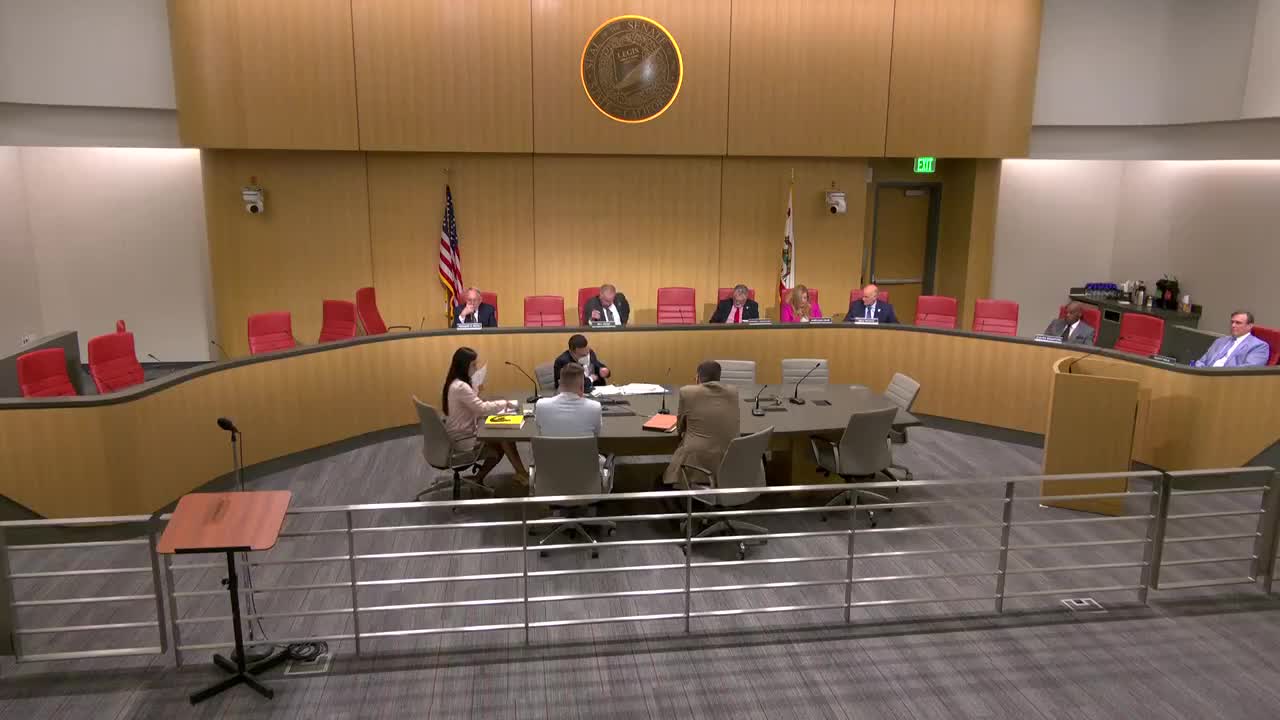 8MIN
Senate Standing Committee on Governmental Organization
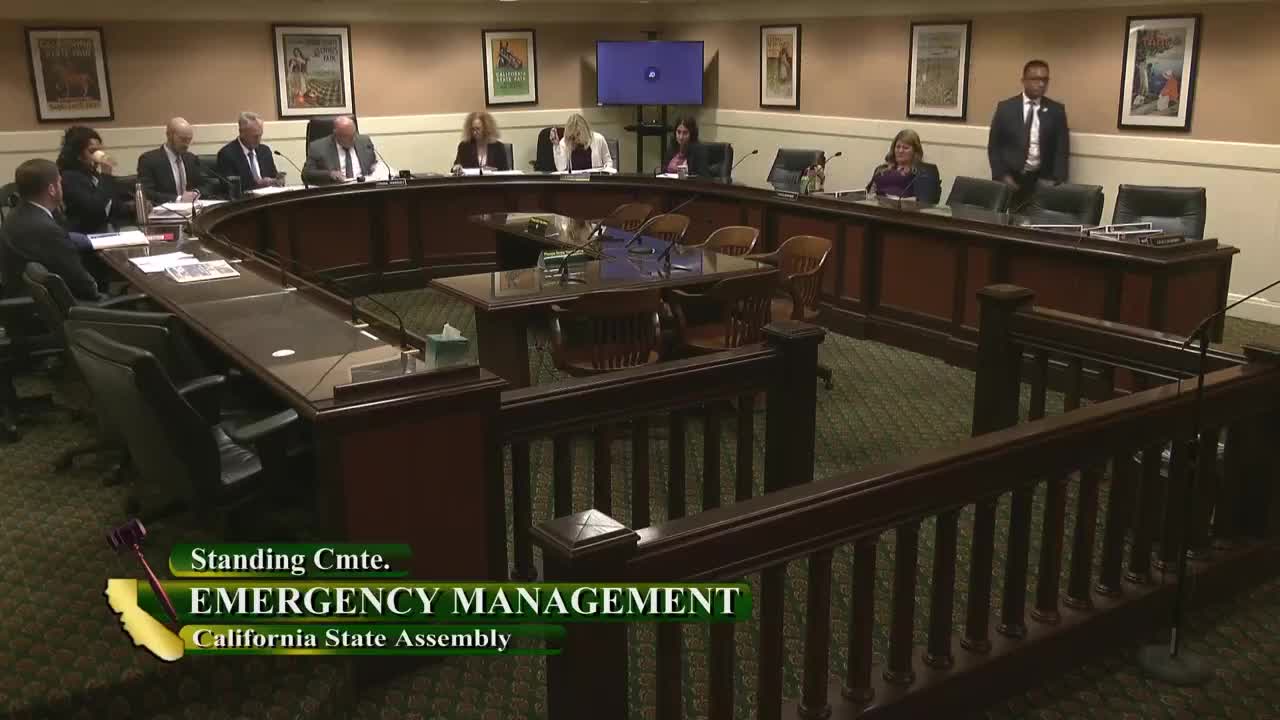 7MIN
Assembly Standing Committee on Emergency Management
Bill Author

Bill Co-Author(s):