ACR 228: Women’s Equality Day.
- Session Year: 2023-2024
- House: Assembly
- Latest Version Date: 2024-08-28
Current Status:
Passed
(2024-08-28: Chaptered by Secretary of State - Res. Chapter 197, Statutes of 2024.)
Introduced
In Committee
First Chamber
In Committee
Second Chamber
Enacted
This measure would recognize August 26, 2024, as Womens Equality Day and its historic importance to womens rights, including the battle to attain those rights in the past, present, and future.
This measure would recognize August 26, 2024, as Womens Equality Day and its historic importance to womens rights, including the battle to attain those rights in the past, present, and future.
This measure would recognize August 26, 2024, as Womens Equality Day and its historic importance to womens rights, including the battle to attain those rights in the past, present, and future.
WHEREAS, The first womens rights convention on July 19, 1848, was called by Elizabeth Cady Stanton and Lucretia Mott to win equal rights for women and expand the role of women in society, and it was then that the fight for womens rights came together as an organized effort; and
WHEREAS, In 1851, abolitionist and womens rights activist Sojourner Truth, whose first language was Dutch, delivered her most renowned extemporaneous speech at the Ohio Womens Rights Convention in Akron, the first complete transcription of which was titled On Womans Rights, and which was later altered and titled Aint I a Woman?; and
WHEREAS, The addition of the Nineteenth Amendment to the United States Constitution on August 26, 1920, secured for women the right to vote, with full enfranchisement of African American, Asian American, Hispanic American, and Native American women to take nearly an additional 50 years to be realized; and
WHEREAS, The passage of the federal Civil Rights Act of 1964 barred employment discrimination against women; and
WHEREAS, The enactment of Title IX of the federal Education Amendments of 1972 guaranteed equal opportunity for women in all aspects of education; and
WHEREAS, Many women have planned, organized, lectured, written, marched, lobbied, canvassed voters, staged parades, become candidates for political office, argued court cases, and more, in order to irrevocably change for the better the world of todays women and girls; and
WHEREAS, Despite the many efforts of policymakers and advocates, both women and men, toward ensuring equality for women, gender inequality persists in many areas, as evidenced by the ongoing struggle for fair pay and equal job opportunities, job training opportunities, access to childcare, family friendly workplaces, and against poverty, especially among women and children; and
WHEREAS, Despite important steps to achieve equal access in the workplace and equal access to educational opportunities, women face barriers in education and employment that are not experienced at the same magnitude by men, including, the presence of historical male privilege and gender bias; sex discrimination, harassment, and sexual violence in the workplace and on campus; the complications of having caregiving duties in the unpaid economy; and being undervalued for their work in the paid economy; and
WHEREAS, Women are critical to a strong and vibrant California economy and play a pivotal role in spurring economic growth in California; and
WHEREAS, Women comprise almost one-half of the workforce in our state and are primary income earners in many households; and
WHEREAS, The lack of affordable, quality childcare and affordable housing makes it difficult for women to provide safe and secure environments for their families; and
WHEREAS, Womens earnings are still far too low compared to mens in California, and women are disproportionately employed in jobs that pay the minimum wage; and
WHEREAS, Women are also disproportionately disadvantaged by the stresses of poverty and the constraints of the social services system; and
WHEREAS, Ensuring the economic security of all California women and their families will benefit people in all communities who count on public policies to meet their basic needs, earn a decent living, and care for their families; and
WHEREAS, The women of the United States have designated August 26 as a symbol of the continued fight for equal rights; and
WHEREAS, The United States Congress recognizes that August 26 of each year is designated as Womens Equality Day and the President of the United States annually issues a proclamation commemorating August 26, 1920, as the day when the women of the United States were first given the right to vote and recognizes that same date in 1970 when a nationwide demonstration for womens rights took place; now, therefore, be it
Resolved by the Assembly of the State of California, the Senate thereof concurring, That upon the anniversary of the Nineteenth Amendment to the United States Constitution, the Legislature recognizes August 26, 2024, as Womens Equality Day and its historic importance to womens rights, including the battle to attain those rights in the past, present, and future; and be it further
Resolved, That the Chief Clerk of the Assembly transmit copies of this resolution to the author for appropriate distribution.
|
Date
|
Status
|
|---|---|
| Aug 28, 2024 | Chaptered by Secretary of State - Res. Chapter 197, Statutes of 2024. |
| Aug 28, 2024 | Enrolled and filed with the Secretary of State at 4 p.m. |
| Aug 22, 2024 | In Assembly. Ordered to Engrossing and Enrolling. |
| Aug 22, 2024 | Adopted and to Assembly. (Ayes 33. Noes 0. Page 5299.) |
| Aug 20, 2024 | Ordered to special consent calendar. |
| Aug 14, 2024 | From committee: Ordered to third reading. |
| Aug 12, 2024 | In Senate. To Com. on RLS. |
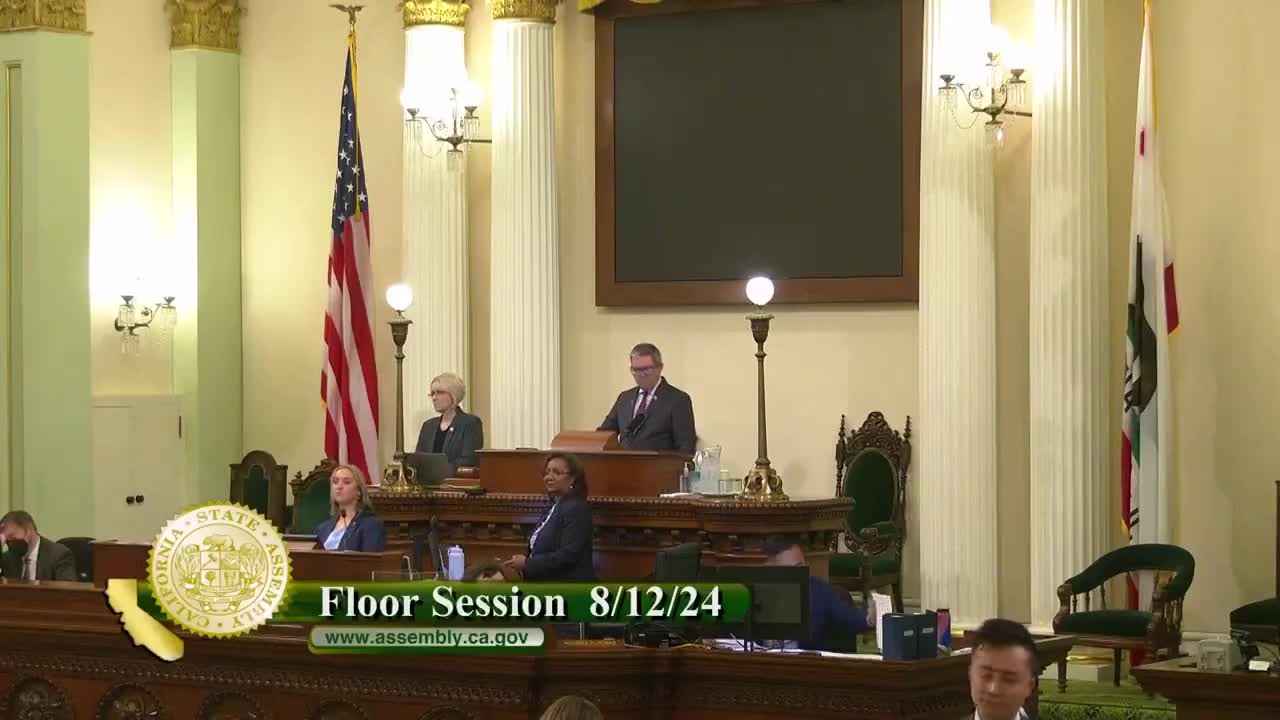
| Aug 12, 2024 | Adopted and to Senate. (Ayes 76. Noes 0. Page 6275.) |
| Aug 8, 2024 | From committee: Be adopted. Ordered to Third Reading. (Ayes 8. Noes 0.) (August 8). |
| Aug 8, 2024 | Referred to Com. on RLS. |
| Aug 6, 2024 | From printer. |
| Aug 5, 2024 | Introduced. To print. |
|
Date
|
Description
|
Location
|
Votes
|
|
|---|---|---|---|---|
| Aug 22, 2024 | Special Consent ACR228 Pellerin | Senate Floor |
Passed |
|
| Aug 12, 2024 | ACR 228 Pellerin Assembly Third Reading | Assembly Floor |
Passed |
|
| Aug 8, 2024 | Be adopted. To third reading. | Assembly Standing Committee on Rules |
Passed |
This list shows positions taken on this bill by organizations on the date displayed, which is linked to the original source.
Positions by individuals are not included.
SENATE RULES COMMITTEE Office of Senate Floor Analyses (916) 651-1520 Fax: (916) 327-4478 | ACR 228 |
THIRD READING
Bill No: ACR 228
Author: Pellerin (D)
Introduced: 8/5/24
Vote: 21
ASSEMBLY FLOOR: 76-0, 8/12/24 - See last page for vote
SUBJECT: Women’s Equality Day
SOURCE: Author
DIGEST:
This resolution recognizes August 26, 2024, as Women’s Equality Day and its historic importance to women’s rights.
ANALYSIS: This resolution makes the following legislative findings:
- The first women’s rights convention on July 19, 1848, was called by Elizabeth Cady Stanton and Lucretia Mott to win equal rights for women and expand the role of women in society, and it was then that the fight for women’s rights came together as an organized effort.
- The addition of the Nineteenth Amendment to the United States Constitution on August 26, 1920, secured for women the right to vote, with full enfranchisement of African American, Asian American, Hispanic American, and Native American women to take nearly an additional 50 years to be realized.
- The passage of the federal Civil Rights Act of 1964 barred employment discrimination against women and the enactment of Title IX of the federal Education Amendments of 1972 guaranteed equal opportunity for women in all aspects of education.
- Many women have planned, organized, lectured, written, marched, lobbied, canvassed voters, staged parades, become candidates for political office, argued court cases, and more, in order to irrevocably change for the better the world of today’s women and girls.
- Women are critical to a strong and vibrant California economy and play a pivotal role in spurring economic growth in California. Women comprise almost one-half of the workforce in our state and are primary income earners in many households.
- Ensuring the economic security of all California women and their families will benefit people in all communities who count on public policies to meet their basic needs, earn a decent living, and care for their families.
- The women of the United States have designated August 26 as a symbol of the continued fight for equal rights.
- The United States Congress recognizes that August 26 of each year is designated as Women’s Equality Day and the President of the United States annually issues a proclamation commemorating August 26, 1920, as the day when the women of the United States were first given the right to vote and recognizes that same date in 1970 when a nationwide demonstration for women’s rights took place.
This resolution would recognize August 26, 2024, as Women’s Equality Day and its historic importance to women’s rights.
FISCAL EFFECT: Appropriation: No Fiscal Com.: No Local: No
SUPPORT: (Verified 8/13/24)
None received
OPPOSITION: (Verified 8/13/24)
None received
ASSEMBLY FLOOR: 76-0, 8/12/24
AYES: Addis, Aguiar-Curry, Alanis, Alvarez, Arambula, Bains, Bauer-Kahan, Berman, Boerner, Bonta, Bryan, Calderon, Juan Carrillo, Wendy Carrillo, Cervantes, Chen, Connolly, Megan Dahle, Davies, Dixon, Flora, Mike Fong, Friedman, Gabriel, Gallagher, Garcia, Gipson, Grayson, Haney, Hart, Hoover, Irwin, Jackson, Jones-Sawyer, Kalra, Lackey, Lee, Low, Lowenthal, Maienschein, Mathis, McCarty, McKinnor, Muratsuchi, Stephanie Nguyen, Ortega, Pacheco, Papan, Jim Patterson, Joe Patterson, Pellerin, Petrie-Norris, Quirk-Silva, Ramos, Rendon, Reyes, Luz Rivas, Rodriguez, Blanca Rubio, Sanchez, Santiago, Schiavo, Soria, Ta, Ting, Valencia, Villapudua, Waldron, Wallis, Ward, Weber, Wicks, Wilson, Wood, Zbur, Robert Rivas
NO VOTE RECORDED: Bennett, Essayli, Holden
Prepared by: Holly Hummelt / SFA / (916) 651-1520
8/14/24 14:03:22
**** END ****
ASSEMBLY THIRD READING
ATR Bill Id:ACR 228
Author:(Pellerin)
As Introduced Ver:August 5, 2024
Majority vote
SUMMARY
Recognizes August 26, 2024, as Women's Equality Day and its historic importance to women's rights, including the battle to attain those rights in the past, present, and future.
Major Provisions
- The first women's rights convention on July 19, 1848, was called by Elizabeth Cady Stanton and Lucretia Mott to win equal rights for women and expand the role of women in society, and it was then that the fight for women's rights came together as an organized effort.
- The addition of the Nineteenth Amendment to the United States Constitution on August 26, 1920, secured for women the right to vote, with full enfranchisement of African American, Asian American, Hispanic American, and Native American women to take nearly an additional 50 years to be realized.
- The passage of the federal Civil Rights Act of 1964 barred employment discrimination against women. And, the enactment of Title IX of the federal Education Amendments of 1972 guaranteed equal opportunity for women in all aspects of education.
- Many women have planned, organized, lectured, written, marched, lobbied, canvassed voters, staged parades, become candidates for political office, argued court cases, and more, in order to irrevocably change for the better the world of today's women and girls.
- Despite the many efforts of policymakers and advocates, both women and men, toward ensuring equality for women, gender inequality persists in many areas, as evidenced by the ongoing struggle for fair pay and equal job opportunities, job training opportunities, access to childcare, family friendly workplaces, and against poverty, especially among women and children.
- And, despite important steps to achieve equal access in the workplace and equal access to educational opportunities, women face barriers in education and employment that are not experienced at the same magnitude by men, including, the presence of historical male privilege and gender bias; sex discrimination, harassment, and sexual violence in the workplace and on campus; the complications of having caregiving duties in the unpaid economy; and being undervalued for their work in the paid economy.
- Women are critical to a strong and vibrant California economy and play a pivotal role in spurring economic growth in California. Women's earnings are still far too low compared to men's in California, and women are disproportionately employed in jobs that pay the minimum wage. Women are also disproportionately disadvantaged by the stresses of poverty and the constraints of the social services system.
- Ensuring the economic security of all California women and their families will benefit people in all communities who count on public policies to meet their basic needs, earn a decent living, and care for their families.
- The women of the United States have designated August 26 as a symbol of the continued fight for equal rights.
COMMENTS
According to the Author
ACR 228 will recognize August 26, 2024, as Women's Equality Day and its historic importance to women's rights.
Arguments in Support
None on file
Arguments in Opposition
None on file
FISCAL COMMENTS
No fiscal impact. This resolution is keyed non-fiscal by Legislative Counsel.
VOTES
ASM RULES: 8-0-3
YES: Pacheco, Cervantes, Flora, Friedman, Jones-Sawyer, Low, Maienschein, Ting
ABS, ABST OR NV: Mathis, Holden, Waldron
UPDATED
VERSION: August 5, 2024
CONSULTANT: Michael Erke / RLS. / (916) 319-2800 FN: 0003806
Date of Hearing: August 8, 2024
ASSEMBLY COMMITTEE ON RULES
Blanca Pacheco, Chair
ABPCA Bill Id:ACR 228 (
Author:Pellerin) – As Introduced Ver:August 5, 2024
SUBJECT: Women’s Equality Day.
SUMMARY: Recognizes August 26, 2024, as Women’s Equality Day and its historic importance to women’s rights, including the battle to attain those rights in the past, present, and future. Specifically, this resolution makes the following legislative findings:
- The first women’s rights convention on July 19, 1848, was called by Elizabeth Cady Stanton and Lucretia Mott to win equal rights for women and expand the role of women in society, and it was then that the fight for women’s rights came together as an organized effort.
- The addition of the Nineteenth Amendment to the United States Constitution on August 26, 1920, secured for women the right to vote, with full enfranchisement of African American, Asian American, Hispanic American, and Native American women to take nearly an additional 50 years to be realized.
- The passage of the federal Civil Rights Act of 1964 barred employment discrimination against women. And, the enactment of Title IX of the federal Education Amendments of 1972 guaranteed equal opportunity for women in all aspects of education.
- Many women have planned, organized, lectured, written, marched, lobbied, canvassed voters, staged parades, become candidates for political office, argued court cases, and more, in order to irrevocably change for the better the world of today’s women and girls.
- Despite the many efforts of policymakers and advocates, both women and men, toward ensuring equality for women, gender inequality persists in many areas, as evidenced by the ongoing struggle for fair pay and equal job opportunities, job training opportunities, access to childcare, family friendly workplaces, and against poverty, especially among women and children.
- And, despite important steps to achieve equal access in the workplace and equal access to educational opportunities, women face barriers in education and employment that are not experienced at the same magnitude by men, including, the presence of historical male privilege and gender bias; sex discrimination, harassment, and sexual violence in the workplace and on campus; the complications of having caregiving duties in the unpaid economy; and being undervalued for their work in the paid economy.
- Women are critical to a strong and vibrant California economy and play a pivotal role in spurring economic growth in California. Women’s earnings are still far too low compared to men’s in California, and women are disproportionately employed in jobs that pay the minimum wage. Women are also disproportionately disadvantaged by the stresses of poverty and the constraints of the social services system.
- Ensuring the economic security of all California women and their families will benefit people in all communities who count on public policies to meet their basic needs, earn a decent living, and care for their families.
- The women of the United States have designated August 26 as a symbol of the continued fight for equal rights.
FISCAL EFFECT: This resolution is keyed non-fiscal by Legislative Counsel.
REGISTERED SUPPORT / OPPOSITION:
Support
None on file
Opposition
None on file
Analysis Prepared by: Michael Erke / RLS. / (916) 319-2800
Bill Author

Bill Co-Author(s):