ACR 36: Compost Awareness Week.
- Session Year: 2023-2024
- House: Assembly
- Latest Version Date: 2023-06-02
Current Status:
Passed
(2023-06-02: Chaptered by Secretary of State - Res. Chapter 78, Statutes of 2023.)
Introduced
In Committee
First Chamber
In Committee
Second Chamber
Enacted
This measure would designate the week of May 7, 2023, through May 13, 2023, as Compost Awareness Week.
This measure would designate the week of May 7, 2023, through May 13, 2023, as Compost Awareness Week.
This measure would designate the week of May 7, 2023, through May 13, 2023, as Compost Awareness Week.
WHEREAS, Composting is an effective form of waste reduction, reuse, and recycling, and since organic materials make up over 30 percent of the material going to landfills, composting is becoming one of the primary methods communities use to reach waste diversion goals and create sustainable communities; and
WHEREAS, Chapter 719 of the Statutes of 2014 phased out diversion credits for organic alternative daily cover in landfills, Chapter 727 of the Statutes of 2014 statutorily mandated commercial recycling of organics, and Chapter 593 of the Statutes of 2015 required organic waste recycling planning by local jurisdictions; and
WHEREAS, Section 42649.87 of the Public Resources Code requires the California Environmental Protection Agency, in coordination with the Department of Resources Recycling and Recovery, the State Water Resources Control Board, the State Air Resources Board, the Department of Food and Agriculture, and the Department of Forestry and Fire Protection, to develop and implement policies to aid in diverting organic waste from landfills by promoting the use of agricultural, forestry, and urban organic waste as a feedstock for compost and by promoting the appropriate use of that compost throughout the state to improve the states soil organic matter; and
WHEREAS, Chapter 395 of the Statutes of 2016 required the State Air Resources Board to incorporate new targets for landfill diversion and reduction of methane emissions from livestock and dairy operations in its comprehensive short-lived climate pollutant strategy, and specifically recognized the important role composting has in achieving those targets; and
WHEREAS, Organic residual materials, including yard trimmings, vegetable cuttings, biosolids, food scraps, manures, rice hulls, almond hulls, and hay shavings, are being composted and converted into beneficial compost products; and
WHEREAS, Returning organic resources, remanufactured into compost and applied to the soil, reduces water consumption by over 30 percent on all soil types, conserves water during extreme drought or flooding conditions, decreases dependence on chemical fertilizers and pesticides, and decreases erosion and nonpoint source pollution; and
WHEREAS, Composting is recognized by the State Air Resources Board as an important tool to sequester massive amounts of carbon in Californias soils to help immediately reverse global warming by drawing down excess carbon dioxide from the atmosphere and storing it deep in Californias soils; and
WHEREAS, Communities, through their local governments, highway departments, soil conservation services, and public works professionals, can have positive impacts on clean water, soil, climate change, and landfill diversion by using compost for public works projects; and
WHEREAS, International Compost Awareness Week is a multimedia publicity and educational initiative to showcase compost production and demonstrate compost use initiated and supported by compost industry organizations around the world; and
WHEREAS, Composting creates green jobs and infrastructure for cities and states that implement composting programs; and
WHEREAS, The United States Composting Council, Canada, and the United Kingdom have declared the first week of May to be the annual International Compost Awareness Week; and
WHEREAS, The Association of Compost Producers is the California State Chapter of the United States Composting Council and manages International Compost Awareness Week in California; and
WHEREAS, All California citizens produce organic residual feedstocks that are remanufactured into compost, from their backyards to their regional industrial scale compost production facilities, collectively producing over 10 million tons of compost and mulch each year; and
WHEREAS, California intends to almost double its compost production capacity in the next five years; and
WHEREAS, The theme for 2023, For Healthier Soil, Healthier Food... Compost!, is a great current message for California citizens, municipal leaders, and farmers to continue to learn the benefits to communities, property owners, and agricultural growers; now, therefore, be it
Resolved by the Assembly of the State of California, the Senate thereof concurring, That the week of May 7, 2023, through May 13, 2023, is hereby designated as Compost Awareness Week; and be it further
Resolved, That the Chief Clerk of the Assembly transmit copies of this resolution to the author for appropriate distribution.
|
Date
|
Status
|
|---|---|
| Jun 2, 2023 | Chaptered by Secretary of State - Res. Chapter 78, Statutes of 2023. |
| Jun 2, 2023 | Enrolled and filed with the Secretary of State at 2 p.m. |
| May 26, 2023 | In Assembly. Ordered to Engrossing and Enrolling. |
| May 26, 2023 | Adopted and to Assembly. (Ayes 37. Noes 0. Page 1330.) |
| May 24, 2023 | Ordered to special consent calendar. |
| May 17, 2023 | From committee: Ordered to third reading. |
| May 9, 2023 | In Senate. To Com. on RLS. |
| May 8, 2023 | Adopted and to Senate. (Page 1479.) |
| May 8, 2023 | Coauthors revised. |
| Apr 27, 2023 | From committee: Be adopted. Ordered to Third Reading. (Ayes 13. Noes 0.) (April 27). |
| Mar 16, 2023 | Referred to Com. on RLS. |
| Mar 9, 2023 | From printer. |
| Mar 8, 2023 | Introduced. To print. |
|
Date
|
Description
|
Location
|
Votes
|
|
|---|---|---|---|---|
| May 26, 2023 | Special Consent ACR36 Connolly et al. | Senate Floor |
Passed |
|
| Apr 27, 2023 | Be adopted. To third reading. | Assembly Standing Committee on Rules |
Passed |
This list shows positions taken on this bill by organizations on the date displayed, which is linked to the original source.
Positions by individuals are not included.
SENATE RULES COMMITTEE Office of Senate Floor Analyses (916) 651-1520 Fax: (916) 327-4478 | ACR 36 |
THIRD READING
Bill No: ACR 36
Author: Connolly (D), et al.
Introduced: 3/8/23
Vote: 21
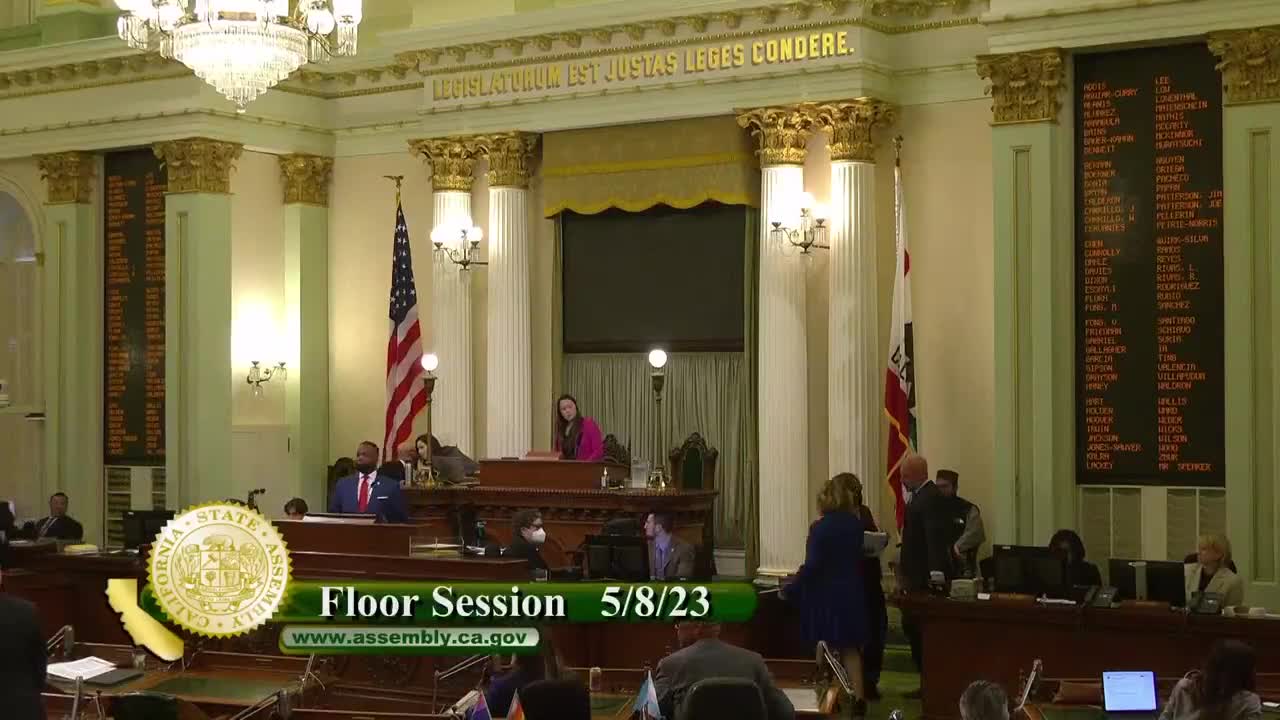
ASSEMBLY FLOOR: Read and adopted, 5/8/23
SUBJECT: Compost Awareness Week
SOURCE: Author
DIGEST:
This resolution designates the week of May 7, 2023, through May 13, 2023, as Compost Awareness Week.
ANALYSIS: This resolution makes the following legislative findings:
- Composting is an effective form of waste reduction, reuse, and recycling, and since organic materials make up over 30% of the material going to landfills, composting is becoming one of the primary methods communities use to reach waste diversion goals and create sustainable communities.
- Section 42649.87 of the Public Resources Code requires the California Environmental Protection Agency, in coordination with the Department of Resources Recycling and Recovery, the State Water Resources Control Board, the State Air Resources Board, the Department of Food and Agriculture, and the Department of Forestry and Fire Protection, to "develop and implement policies to aid in diverting organic waste from landfills by promoting the use of agricultural, forestry, and urban organic waste as a feedstock for compost and by promoting the appropriate use of that compost throughout the state to improve the state’s soil organic matter".
- Organic residual materials, including yard trimmings, vegetable cuttings, biosolids, food scraps, manures, rice hulls, almond hulls, and hay shavings, are being composted and converted into beneficial compost products.
- Returning organic resources, remanufactured into compost and applied to the soil, reduces water consumption by over 30% on all soil types, conserves water during extreme drought or flooding conditions, decreases dependence on chemical fertilizers and pesticides, and decreases erosion and nonpoint source pollution.
- Communities, through their local governments, highway departments, soil conservation services, and public works professionals, can have positive impacts on clean water, soil, climate change, and landfill diversion by using compost for public works projects.
- Composting creates green jobs and infrastructure for cities and states that implement composting programs. California intends to almost double its compost production capacity in the next five years.
- All California citizens produce organic residual feedstocks that are remanufactured into compost, from their backyards to their regional industrial scale compost production facilities, collectively producing over 10 million tons of compost and mulch each year.
- The theme for 2023, "For Healthier Soil, Healthier Food… Compost!," is a great current message for California citizens, municipal leaders, and farmers to continue to learn the benefits to communities, property owners, and agricultural growers.
This resolution designates the week of May 7, 2023, through May 13, 2023, as Compost Awareness Week.
Comments
According to the author,
ACR 36 highlights that composting is an effective form of waste reduction, reuse, and recycling. Since organic materials make up over 30 percent of the material going to landfills, composting is becoming one of the primary methods communities use to reach waste diversion goals and create sustainable communities.
FISCAL EFFECT: Appropriation: No Fiscal Com.: No Local: No
SUPPORT: (Verified 5/15/23)
None received
OPPOSITION: (Verified 5/15/23)
None received
Prepared by: Jonas Austin / SFA / (916) 651-1520
5/17/23 14:24:16
**** END ****
ASSEMBLY THIRD READING
ATR Bill Id:ACR 36
Author:(Connolly)
As Introduced Ver:March 8, 2023
Majority vote
SUMMARY
Designates the week of May 7, 2023, through May 13, 2023, as Compost Awareness Week.
Major Provisions
- Composting is an effective form of waste reduction, reuse, and recycling, and since organic materials make up over 30% of the material going to landfills, composting is becoming one of the primary methods communities use to reach waste diversion goals and create sustainable communities.
- Section 42649.87 of the Public Resources Code requires the California Environmental Protection Agency, in coordination with the Department of Resources Recycling and Recovery, the State Water Resources Control Board, the State Air Resources Board, the Department of Food and Agriculture, and the Department of Forestry and Fire Protection, to "develop and implement policies to aid in diverting organic waste from landfills by promoting the use of agricultural, forestry, and urban organic waste as a feedstock for compost and by promoting the appropriate use of that compost throughout the state to improve the state’s soil organic matter".
- Organic residual materials, including yard trimmings, vegetable cuttings, biosolids, food scraps, manures, rice hulls, almond hulls, and hay shavings, are being composted and converted into beneficial compost products.
- Returning organic resources, remanufactured into compost and applied to the soil, reduces water consumption by over 30% on all soil types, conserves water during extreme drought or flooding conditions, decreases dependence on chemical fertilizers and pesticides, and decreases erosion and nonpoint source pollution.
- Communities, through their local governments, highway departments, soil conservation services, and public works professionals, can have positive impacts on clean water, soil, climate change, and landfill diversion by using compost for public works projects.
- Composting creates green jobs and infrastructure for cities and states that implement composting programs. California intends to almost double its compost production capacity in the next five years.
- All California citizens produce organic residual feedstocks that are remanufactured into compost, from their backyards to their regional industrial scale compost production facilities, collectively producing over 10 million tons of compost and mulch each year.
- The theme for 2023, "For Healthier Soil, Healthier Food… Compost!," is a great current message for California citizens, municipal leaders, and farmers to continue to learn the benefits to communities, property owners, and agricultural growers.
COMMENTS
According to the Author
ACR 36 highlights that composting is an effective form of waste reduction, reuse, and recycling. Since organic materials make up over 30 percent of the material going to landfills, composting is becoming one of the primary methods communities use to reach waste diversion goals and create sustainable communities.
Arguments in Support
None on file.
Arguments in Opposition
None on file.
FISCAL COMMENTS
No fiscal impact. This resolution is keyed non-fiscal by Legislative Counsel.
VOTES
ASM RULES: 13-0-0
YES: Ramos, Waldron, Addis, Juan Carrillo, Essayli, Flora, Low, Ortega, Pacheco, Papan, Pellerin, Blanca Rubio, Valencia
UPDATED
VERSION: March 8, 2023
CONSULTANT: Michael Erke / RLS. / (916) 319-2800 FN: 0000271
Date of Hearing: April 27, 2023
ASSEMBLY COMMITTEE ON RULES
James Ramos, Chair
ABPCA Bill Id:ACR 36 (
Author:Connolly) – As Introduced Ver:March 8, 2023
SUBJECT: Compost Awareness Week.
SUMMARY: Designates the week of May 7, 2023, through May 13, 2023, as Compost Awareness Week. Specifically, this resolution makes the following legislative findings:
- Composting is an effective form of waste reduction, reuse, and recycling, and since organic materials make up over 30 percent of the material going to landfills, composting is becoming one of the primary methods communities use to reach waste diversion goals and create sustainable communities.
- Section 42649.87 of the Public Resources Code requires the California Environmental Protection Agency, in coordination with the Department of Resources Recycling and Recovery, the State Water Resources Control Board, the State Air Resources Board, the Department of Food and Agriculture, and the Department of Forestry and Fire Protection, to “develop and implement policies to aid in diverting organic waste from landfills by promoting the use of agricultural, forestry, and urban organic waste as a feedstock for compost and by promoting the appropriate use of that compost throughout the state to improve the state’s soil organic matter”.
- Organic residual materials, including yard trimmings, vegetable cuttings, biosolids, food scraps, manures, rice hulls, almond hulls, and hay shavings, are being composted and converted into beneficial compost products.
- Returning organic resources, remanufactured into compost and applied to the soil, reduces water consumption by over 30 percent on all soil types, conserves water during extreme drought or flooding conditions, decreases dependence on chemical fertilizers and pesticides, and decreases erosion and nonpoint source pollution.
- Communities, through their local governments, highway departments, soil conservation services, and public works professionals, can have positive impacts on clean water, soil, climate change, and landfill diversion by using compost for public works projects.
- Composting creates green jobs and infrastructure for cities and states that implement composting programs. California intends to almost double its compost production capacity in the next five years.
- All California citizens produce organic residual feedstocks that are remanufactured into compost, from their backyards to their regional industrial scale compost production facilities, collectively producing over 10 million tons of compost and mulch each year.
- The theme for 2023, “For Healthier Soil, Healthier Food… Compost!,” is a great current message for California citizens, municipal leaders, and farmers to continue to learn the benefits to communities, property owners, and agricultural growers.
FISCAL EFFECT: None
REGISTERED SUPPORT / OPPOSITION:
Support
None on file
Opposition
None on file
Analysis Prepared by: Michael Erke / RLS. / (916) 319-2800
Bill Author

Bill Co-Author(s):