AJR 19: Vehicles: disabled veterans.
- Session Year: 2023-2024
- House: Assembly
- Latest Version Date: 2024-08-28
Current Status:
Passed
(2024-08-28: Chaptered by Secretary of State - Res. Chapter 200, Statutes of 2024.)
Introduced
In Committee
First Chamber
In Committee
Second Chamber
Enacted
This measure would urge the federal government to allow vehicles registered to disabled veterans to utilize high-occupancy vehicle lanes or carpool lanes pursuant to the federal governments Clean Air Act program authority.
This measure would urge the federal government to allow vehicles registered to disabled veterans to utilize high-occupancy vehicle lanes or carpool lanes pursuant to the federal governments Clean Air Act program authority.
This measure would urge the federal government to include allow vehicles registered to disabled veterans in to utilize high-occupancy vehicle lanes or carpool lanes pursuant to the federal governments Clean Air Act program authority.
This measure would urge the federal government to include vehicles registered to disabled veterans in the federal governments Clean Air Act program authority.
WHEREAS, California is home to one of the largest veteran populations of any state in the United States; and
WHEREAS, Adjusting to civilian life can prove especially difficult for veterans who are disabled; and
WHEREAS, Increased access to health facilities is critical to acknowledging and honoring the contributions of disabled veterans; and
WHEREAS, The issues faced by disabled veterans may be exacerbated for those who live in rural areas; and
WHEREAS, There is a need for timely and reliable transportation options for veterans to ensure that disabled veterans are able to access necessary services; and
WHEREAS, Highway congestion proves to have several negative side effects, including wasted time and fuel and greater potential for collisions; and
WHEREAS, Vehicle decals will not only help improve disabled veterans health outcomes, but additionally will help bolster societal perception of their service; and
WHEREAS, Ensuring equitable health outcomes for the disabled veteran population benefits all Californians; now, therefore, be it
Resolved by the Assembly and the Senate of the State of California, jointly, That the Legislature urges the Congress of the United States, when reauthorizing the Clean Air Act program authority pursuant to Section 166 of Title 23 of the United States Code, to allow vehicles registered to disabled veterans to utilize high-occupancy vehicle lanes or carpool lanes under the programs authority; and be it further
Resolved, That the Chief Clerk of the Assembly transmit copies of this resolution to the President and Vice President of the United States, to the Speaker of the House of Representatives, to the Majority Leader of the Senate, to each Senator and Representative from California in the Congress of the United States, and to the author for appropriate distribution.
WHEREAS, California is home to one of the largest veteran populations of any state in the United States; and
WHEREAS, Adjusting to civilian life can prove especially difficult for veterans who are disabled; and
WHEREAS, Increased access to health facilities is critical to acknowledging and honoring the contributions of disabled veterans; and
WHEREAS, The issues faced by disabled veterans may be exacerbated for those who live in rural areas; and
WHEREAS, There is a need for timely and reliable transportation options for veterans to ensure that disabled veterans are able to access necessary services; and
WHEREAS, Highway congestion proves to have several negative side effects, including wasted time and fuel and greater potential for collisions; and
WHEREAS, Vehicle decals will not only help improve disabled veterans health outcomes, but additionally will help bolster societal perception of their service; and
WHEREAS, Ensuring equitable health outcomes for the disabled veteran population benefits all Californians; now, therefore, be it
Resolved by the Assembly and the Senate of the State of California, jointly, That the Legislature urges the Congress of the United States, in considering when reauthorizing the Clean Air Act program authority pursuant to Section 166 of Title 23 of the United States Code, to include allow vehicles registered to disabled veterans to utilize high-occupancy vehicle lanes or carpool lanes under the programs authority; and be it further
Resolved, That the Chief Clerk of the Assembly transmit copies of this resolution to the President and Vice President of the United States, to the Speaker of the House of Representatives, to the Majority Leader of the Senate, to each Senator and Representative from California in the Congress of the United States, and to the author for appropriate distribution.
WHEREAS, California is home to one of the largest veteran populations of any state in the United States; and
WHEREAS, Adjusting to civilian life can prove especially difficult for veterans who are disabled; and
WHEREAS, Increased access to health facilities is critical to acknowledging and honoring the contributions of disabled veterans; and
WHEREAS, The issues faced by disabled veterans may be exacerbated for those who live in rural areas; and
WHEREAS, There is a need for timely and reliable transportation options for veterans to ensure that disabled veterans are able to access necessary services; and
WHEREAS, Highway congestion proves to have several negative side effects, including wasted time and fuel and greater potential for collisions; and
WHEREAS, Vehicle decals will not only help improve disabled veterans health outcomes, but additionally will help bolster societal perception of their service; and
WHEREAS, Ensuring equitable health outcomes for the disabled veteran population benefits all Californians; now, therefore, be it
Resolved by the Assembly and the Senate of the State of California, jointly, That the Legislature urges the Congress of the United States, in considering reauthorizing the Clean Air Act program authority pursuant to Section 166 of Title 23 of the United States Code, to include vehicles registered to disabled veterans under the programs authority; and be it further
Resolved, That the Chief Clerk of the Assembly transmit copies of this resolution to the President and Vice President of the United States, to the Speaker of the House of Representatives, to the Majority Leader of the Senate, to each Senator and Representative from California in the Congress of the United States, and to the author for appropriate distribution.
|
Date
|
Status
|
|---|---|
| Aug 28, 2024 | Chaptered by Secretary of State - Res. Chapter 200, Statutes of 2024. |
| Aug 28, 2024 | Enrolled and filed with the Secretary of State at 4 p.m. |
| Aug 22, 2024 | In Assembly. Ordered to Engrossing and Enrolling. |
| Aug 22, 2024 | Adopted and to Assembly. (Ayes 33. Noes 0. Page 5295.) |
| Aug 14, 2024 | Read second time. Ordered to Consent Calendar. |
| Aug 13, 2024 | From committee: Be adopted. To Consent Calendar. (Ayes 13. Noes 0.) (August 13). |
| Jul 3, 2024 | Referred to Com. on TRANS. |
| Jun 24, 2024 | In Senate. To Com. on RLS. |
| Jun 20, 2024 | Adopted and to Senate. (Ayes 67. Noes 0. Page 5949.) |
| Jun 20, 2024 | Coauthors revised. |
| Jun 18, 2024 | From committee: Be adopted. To Consent Calendar. (Ayes 15. Noes 0.) (June 17). |
| Jun 12, 2024 | Re-referred to Com. on TRANS. |
| Jun 11, 2024 | From committee chair, with author's amendments: Amend, and re-refer to Com. on TRANS. Amended. |
| Jun 3, 2024 | Referred to Com. on TRANS. |
| May 22, 2024 | From printer. |
| May 21, 2024 | Introduced. To print. |
|
Date
|
Description
|
Location
|
Votes
|
|
|---|---|---|---|---|
| Aug 22, 2024 | Consent Calendar 2nd AJR19 Juan Carrillo et al. | Senate Floor |
Passed |
|
| Aug 13, 2024 | Be adopted and be ordered to the Consent Calendar | Senate Standing Committee on Transportation |
Passed |
|
| Jun 20, 2024 | AJR 19 Juan Carrillo Consent Calendar Second Day Regular Session | Assembly Floor |
Passed |
|
| Jun 17, 2024 | Be adopted. To Consent Calendar. | Assembly Standing Committee on Transportation |
Passed |
This list shows positions taken on this bill by organizations on the date displayed, which is linked to the original source.
Positions by individuals are not included.
SENATE RULES COMMITTEE Office of Senate Floor Analyses (916) 651-1520 Fax: (916) 327-4478 | AJR 19 |
CONSENT
Bill No: AJR 19
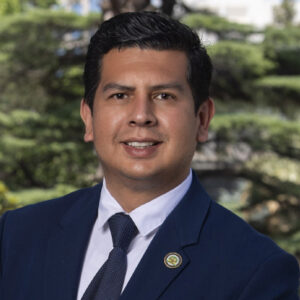
Author: Juan Carrillo (D), et al.
Amended: 6/11/24 in Assembly
Vote: 21
SENATE TRANSPORTATION COMMITTEE: 13-0, 8/13/24
AYES: Cortese, Niello, Allen, Archuleta, Becker, Blakespear, Dahle, Dodd, Gonzalez, Limón, Newman, Portantino, Seyarto
NO VOTE RECORDED: Nguyen, Umberg
ASSEMBLY FLOOR: 67-0, 6/20/24 (Consent) - See last page for vote
SUBJECT: Vehicles: disabled veterans
SOURCE: Author
DIGEST:
This resolution urges the federal government to allow vehicles registered to disabled veterans to utilize high occupancy vehicle (HOV) lanes.
ANALYSIS:
Existing law:
- Establishes the authority for occupancy requirements of vehicles authorized to access HOV lanes (23 United States Code 166):
- Provides for limited exceptions to an established occupancy requirement including high occupancy toll (HOT) vehicles and low emission and energy efficient vehicles; and,
- Requires a public entity that allows HOT vehicles and low emission and energy efficient vehicles access to a HOV facility to submit a report demonstrating that the facility is not already degraded, and that the presence of the vehicles will not cause the facility to become degraded.
This resolution urges the federal government to allow vehicles registered to disabled veterans to utilize high occupancy vehicle (HOV) lanes.
Comments
- Purpose of the resolution. According to the author, “Disabled veterans make significant sacrifices in the line of duty and often have unique needs when adjusting to civilian life. Because of this, equitable solutions are needed to address the challenges they face. When it comes to accessing health care, many disabled veterans may need specialized care. However, despite the strides California has made, inadequate transportation remains a barrier. This is made more apparent in historically underserved communities like mine. In the High Desert, though there are distinct concentrations of veterans in the Antelope and Victor valleys, along with military industry, these folks often lack access to certain specialized medical facilities. In lieu of these facilities, disabled veterans must commute down the hill to the urban cores of Los Angeles and San Bernardino. This resolution seeks to ease the gap disabled veterans face when commuting for care.”
- HOV lane access. Existing federal law authorizes states to allow clean air vehicles (CAVs) to drive in HOV lanes. This access for single-occupant clean vehicles was first authorized in California in 1999 with the passage of AB 71 (Cunneen). Over the years, this access has expanded and shifted to encourage the purchase of more fuel-efficient vehicles. Recently, AB 544 (Bloom, Chapter 630, Satutes of 2017) established the current version of the CAV decal program, until the expiration of federal authorization on September 30, 2025. Under this version of the program, decals issued in 2019 and later have staggered expiration dates on January 1 of the fourth year after the year of issuance. AB 2678 (Wallis, 2023), currently in Senate Appropriations, extends this program until January 1, 2027 if permitted by federal law.
This resolution urges the federal government to extend access to HOV lanes for vehicles registered to disabled veterans. In the past, this authorization has only been given to specific types of vehicles and not as a privilege to specific types of vehicle owners. Existing CAV decals only authorize HOV lane usage for a limited time per vehicle. While equitable access to health care is imperative for disabled veterans, the ability to use an HOV lane will not inherently improve access. It will increase the speed at which a disabled veteran with a vehicle could arrive at a care facility. If a true medical emergency arises where speed of transport is critical ambulance services would likely be required making HOV lane access moot. To truly improve access the state needs to ensure that disabled veterans have adequate transportation services and medical centers in their community. If the goal is to reward those who have served our country and communities with access to the HOV lane so they can avoid wasted time, traffic headaches, and the potential for accidents why not include other distinguished groups like disabled firefighters or peace officers who might also struggle with these issues when accessing care.
- HOV lane degradation and congestion. The federal government requires traffic in HOV lanes to move at a certain speed. Annually, Caltrans must complete an HOV Facilities Degradation Report to assess if the state is in compliance with federal law. An HOV facility is considered degraded if the average traffic speed during the morning or evening weekday peak hour period is less than 45 mph for more than 10% of the time over a consecutive 180-day period. Recent reports have found that 22% to 40% of the state’s HOV facilities do not meet federal requirements. According to the July 2023 report, in 2022 “Of the 1,130 lane-miles monitored during the morning peak hour period, about 22% (245 lane-miles) were degraded. Of the 1,130 lane-miles monitored during the afternoon peak hour period, approximately 36% (410 lane-miles) were degraded. District 7 (Los Angeles area), District 8 (Riverside and San Bernardino Counties), and District 12 (Orange County) had the most degradation. Approximately 40% of District 7, District 8, and District 12 HOV facilities that operated in both peak hour periods experienced degradation in both peak hour periods.” During that same period, Los Angeles accounted for 29% of the state’s active CAV decals, Orange County accounted for 18% of the state’s active CAV decals and San Bernardino/Riverside accounted for 8% of the state's active decals. Under the program, Caltrans is allowed to remove lanes or portions of lanes from the program if congestion occurs and the segment exceeds a specified level of service. However, degradation alone is not sufficient to prompt removal of a lane or portion of a lane from the program.
According to the DMV, as of March 2024, 29,361 vehicles with Disabled Veteran License Plates are registered. The allowance of almost 30,000 additional vehicles to access HOV lanes would likely increase HOV lane degradation and increase the number of HOV facilities that do not meet federal requirements.
- Existing Federal programs. The Veterans Transportation Program offers Veterans many travel solutions to Veteran Affairs health care facilities and authorized non-VA health care appointments at little or no cost to eligible Veterans through several services and programs including the Veterans Transportation Service, Beneficiary Travel, and Highly Rural Transportation Grants.
FISCAL EFFECT: Appropriation: No Fiscal Com.: No Local: No
SUPPORT: (Verified 8/14/24)
None received
OPPOSITION: (Verified 8/14/24)
None received
ASSEMBLY FLOOR: 67-0, 6/20/24
AYES: Addis, Alanis, Alvarez, Arambula, Bauer-Kahan, Bennett, Berman, Boerner, Bryan, Juan Carrillo, Cervantes, Chen, Connolly, Megan Dahle, Davies, Dixon, Essayli, Flora, Friedman, Gabriel, Gallagher, Garcia, Gipson, Grayson, Hart, Holden, Hoover, Irwin, Jackson, Kalra, Lackey, Lee, Low, Lowenthal, Maienschein, McCarty, McKinnor, Muratsuchi, Stephanie Nguyen, Ortega, Pacheco, Papan, Jim Patterson, Joe Patterson, Pellerin, Quirk-Silva, Ramos, Rendon, Reyes, Luz Rivas, Rodriguez, Blanca Rubio, Sanchez, Santiago, Schiavo, Soria, Ta, Valencia, Waldron, Wallis, Ward, Weber, Wicks, Wilson, Wood, Zbur, Robert Rivas
NO VOTE RECORDED: Aguiar-Curry, Bains, Bonta, Calderon, Wendy Carrillo, Mike Fong, Haney, Jones-Sawyer, Mathis, Petrie-Norris, Ting, Villapudua
Prepared by: Benjamin O'Brien-Hokanson / TRANS. / (916) 651-4121
8/14/24 16:40:27
**** END ****
SENATE COMMITTEE ON TRANSPORTATION
Senator Dave Cortese, Chair
2023 - 2024 Regular
Bill No: Hearing Date: 8/13/2024
Author: | Juan Carrillo | ||
Version: | 6/11/2024 Introduced | ||
Urgency: |
| Fiscal: | No |
Consultant: | Benjamin O'Brien-Hokanson | ||
SUBJECT:
DIGEST: This resolution urges the federal government to allow vehicles registered to disabled veterans to utilize high occupancy vehicle (HOV) lanes.
ANALYSIS:
Existing federal law:
- Establishes the authority for occupancy requirements of vehicles authorized to access HOV lanes (23 United States Code 166):
- Provides for limited exceptions to an established occupancy requirement including high occupancy toll (HOT) vehicles and low emission and energy efficient vehicles; and,
- Requires a public entity that allows HOT vehicles and low emission and energy efficient vehicles access to a HOV facility to submit a report demonstrating that the facility is not already degraded, and that the presence of the vehicles will not cause the facility to become degraded.
This resolution:
- Urges the federal government to allow vehicles registered to disabled veterans to utilize high occupancy vehicle (HOV) lanes.
COMMENTS:
- Purpose of the resolution. According to the author, “Disabled veterans make significant sacrifices in the line of duty and often have unique needs when adjusting to civilian life. Because of this, equitable solutions are needed to address the challenges they face. When it comes to accessing health care, many disabled veterans may need specialized care. However, despite the strides California has made, inadequate transportation remains a barrier. This is made more apparent in historically underserved communities like mine. In the High Desert, though there are distinct concentrations of veterans in the Antelope and Victor valleys, along with military industry, these folks often lack access to certain specialized medical facilities. In lieu of these facilities, disabled veterans must commute down the hill to the urban cores of Los Angeles and San Bernardino. This resolution seeks to ease the gap disabled veterans face when commuting for care.”
- HOV lane access. Existing federal law authorizes states to allow clean air vehicles (CAVs) to drive in HOV lanes. This access for single-occupant clean vehicles was first authorized in California in 1999 with the passage of AB 71 (Cunneen). Over the years, this access has expanded and shifted to encourage the purchase of more fuel-efficient vehicles. Recently, AB 544 (Bloom, 2017) established the current version of the CAV decal program, until the expiration of federal authorization on September 30, 2025. Under this version of the program, decals issued in 2019 and later have staggered expiration dates on January 1 of the fourth year after the year of issuance. AB 2678, currently in Senate Appropriations, would extend this program until January 1, 2027 if permitted by federal law.
This resolution urges the federal government to extend access to HOV lanes for vehicles registered to disabled veterans. In the past this authorization has only been given to specific types of vehicles and not as a privilege to specific types of vehicle owners. Existing CAV decals only authorize HOV lane usage for a limited time per vehicle. While equitable access to health care is imperative for disabled veterans the ability to use an HOV lane will not inherently improve access. It will increase the speed at which a disabled veteran with a vehicle could arrive at a care facility. If a true medical emergency arises where speed of transport is critical ambulance services would likely be required making HOV lane access moot. To truly improve access the state needs to ensure that disabled veterans have adequate transportation services and medical centers in their community. If the goal is to reward those who have served our country and communities with access to the HOV lane so they can avoid wasted time, traffic headaches, and the potential for accidents why not include other distinguished groups like disabled firefighters or peace officers who might also struggle with these issues when accessing care.
- HOV lane degradation and congestion. The federal government requires traffic in HOV lanes to move at a certain speed. Annually, Caltrans must complete an HOV Facilities Degradation Report to assess if the state is in compliance with federal law. An HOV facility is considered degraded if the average traffic speed during the morning or evening weekday peak hour period is less than 45 mph for more than 10% of the time over a consecutive 180-day period. Recent reports have found that 22% to 40% of the state’s HOV facilities do not meet federal requirements. According to the July 2023 report, in 2022 “Of the 1,130 lane-miles monitored during the morning peak hour period, about 22% (245 lane-miles) were degraded. Of the 1,130 lane-miles monitored during the afternoon peak hour period, approximately 36% (410 lane-miles) were degraded. District 7 (Los Angeles area), District 8 (Riverside and San Bernardino Counties), and District 12 (Orange County) had the most degradation. Approximately 40% of District 7, District 8, and District 12 HOV facilities that operated in both peak hour periods experienced degradation in both peak hour periods.” During that same period, Los Angeles accounted for 29% of the state’s active CAV decals, Orange County accounted for 18% of the state’s active CAV decals and San Bernardino/Riverside accounted for 8% of the state's active decals. Under the program, Caltrans is allowed to remove lanes or portions of lanes from the program if congestion occurs and the segment exceeds a specified level of service. However, degradation alone is not sufficient to prompt removal of a lane or portion of a lane from the program.
According to the DMV, as of March 2024, 29,361 vehicles with Disabled Veteran License Plates are registered. The allowance of almost 30,000 additional vehicles to access HOV lanes would likely increase HOV lane degradation and increase the number of HOV facilities that do not meet federal requirements.
- Existing Federal programs. The Veterans Transportation Program (VTP) offers Veterans many travel solutions to Veteran Affairs (VA) health care facilities and authorized non-VA health care appointments at little or no cost to eligible Veterans through several services and programs including the Veterans Transportation Service, Beneficiary Travel, and Highly Rural Transportation Grants.
Related Legislation:
AB 2678 (Wallis, 2024) - Would, if given federal authorization, extend the existing state CAV decal program until 2027. In process in Senate Appropriations
SB 957 (Lara, Chapter 367, Statutes of 2018) - Allows the DMV to issue a CAV decal for a CAV that has previously been issued a decal, if the owner of the vehicle is low-income and has not obtained a CAV decal for that same vehicle prior to January 1, 2017.
AB 544 (Bloom, Chapter 630, Statutes of 2017) - Modifies the CAV program and creates a new program to take effect when the program sunsets in 2019.
AB 71 (Cunneen, Chapter 330, Statutes of 1999) - First authorized access to HOV lanes for certain vehicles.
FISCAL EFFECT: Appropriation: Fiscal Com.: No Local:
POSITIONS: (Communicated to the committee before noon on Friday August 8, 2024.)
SUPPORT:
None Received
OPPOSITION:
None Received
-- END --
Date of Hearing: June 17, 2024
ASSEMBLY COMMITTEE ON TRANSPORTATION
Lori D. Wilson, Chair
ABPCA Bill Id:AJR 19 (
Author:Juan Carrillo) – As Introduced Ver:May 21, 2024
SUBJECT: Vehicles: disabled veterans
SUMMARY: Urges the federal government to allow vehicles registered to disabled veterans to utilize high occupancy vehicle (HOV) lanes.
EXISTING LAW:
Existing federal law establishes the authority for occupancy requirements of vehicles authorized to access HOV lanes (23 United States Code 166):
- Provides for limited exceptions to an established occupancy requirement including high occupancy toll (HOT) vehicles and low emission and energy efficient vehicles; and,
- Requires a public entity that allows HOT vehicles and low emission and energy efficient vehicles access to a HOV facility to submit a report demonstrating that the facility is not already degraded, and that the presence of the vehicles will not cause the facility to become degraded
FISCAL EFFECT: Unknown. This bill is keyed non-fiscal by the Legislative Counsel.
COMMENTS: An HOV lane, commonly referred to as a "carpool" or "diamond" lane, is part of a traffic management strategy designed to provide an incentive for commuters to form carpools by offering reduced travel times. In order to drive in an HOV lane, a driver must typically have two or more occupants in their car. By promoting carpooling, HOV lanes decrease congestion and reduce vehicular pollution. Existing federal law authorizes states to allow clean air vehicles such as a battery electric vehicle, and toll-paying vehicles to access HOV lanes without meeting occupancy requirements.
HOV lane degradation: The federal government requires traffic in HOV lanes to move at a certain speed. Annually, the California Department of Transportation (Caltrans) must complete an HOV Facilities Degradation Report to assess if the state is in compliance with federal law. An HOV facility is considered degraded if the average traffic speed during the morning or evening weekday peak hour period is less than 45 mph for more than 10% of the time over a consecutive 180-day period. Recent reports have found that 22% to 40% of the state’s HOV facilities do not meet federal requirements. According to the July 2023 report, in 2022 “Of the 1,130 lane-miles monitored during the morning peak hour period, about 22% (245 lane-miles) were degraded. Of the 1,130 lane-miles monitored during the afternoon peak hour period, approximately 36% (410 lane-miles) were degraded. District 7 (Los Angeles area), District 8 (Riverside and San Bernardino Counties), and District 12 (Orange County) had the most degradation. Approximately 40% of District 7, District 8, and District 12 HOV facilities that operated in both peak hour periods experienced degradation in both peak hour periods.”
According to the DMV, as of March 2024, 29,361 vehicles with Disabled Veteran License Plates are registered. The allowance of almost 30,000 additional vehicles to access HOV lanes would likely increase HOV lane degradation and increase the number of HOV facilities that do not meet federal requirements.
According to the author, “Disabled veterans make significant sacrifices in the line of duty and often have unique needs when adjusting to civilian life. Because of this, equitable solutions are needed to address the challenges they face. When it comes to accessing health care, many disabled veterans may need specialized care. However, despite the strides California has made, inadequate transportation remains a barrier.
This is made more apparent in historically underserved communities like mine. In the High Desert, though there are distinct concentrations of veterans in the Antelope and Victor valleys, along with military industry, these folks often lack access to certain specialized medical facilities. In lieu of these facilities, disabled veterans must commute down the hill to the urban cores of Los Angeles and San Bernardino. This resolution seeks to ease the gap disabled veterans face when commuting for care.”
REGISTERED SUPPORT / OPPOSITION:
Support
None on file
Opposition
None on file
Analysis Prepared by: Aaron Kurz / TRANS. / (916) 319-2093
Bill Author
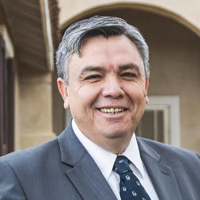
Bill Co-Author(s):