HR 37
- Session Year: 2023-2024
- House: Assembly
- Latest Version Date: 2023-05-08
Current Status:
Failed
(2023-06-22: Read. Adopted. (Page 2349.).)
Introduced
In Committee
First Chamber
In Committee
Second Chamber
Enacted
WHEREAS, Title IX of the Education Amendments of 1972 is a federal law that specifically states that no person in the United States shall, on the basis of sex, be excluded from participation in, be denied the benefits of, or be subjected to discrimination under any education program or activity receiving federal financial assistance; and
WHEREAS, All public and private elementary schools and secondary schools, school districts, colleges, and universities receiving any federal funding must comply with Title IX; and
WHEREAS, Title IX requires equal access in recruitment, admissions, counseling, financial assistance, discipline, employment, and athletics; protection from sex-based harassment; and equitable treatment of pregnant and parenting students; and
WHEREAS, Before the enactment of Title IX, many women and girls faced discrimination and limited opportunities in athletics, academics, and extracurricular activities; and
WHEREAS, The educational equity guaranteed in Title IX does not solely apply to women; it protects everyone from sex-based discrimination, regardless of real or perceived sex, gender identity, or gender expression; and
WHEREAS, Discrimination on the basis of sex can include sexual harassment or sexual violence, including rape, sexual assault, sexual battery, and sexual coercion; and
WHEREAS, Title IX has been used as a basis in a number of complaints alleging sexual violence on college campuses, as sexual violence interferes with a students right to receive education free from discrimination; and
WHEREAS, Multiple California colleges and universities are currently under investigation by the United States Department of Education for their handling of sexual violence and sexual harassment cases; and
WHEREAS, Title IX, which governs educational equity generally, is widely known for ensuring equal access to women and girl athletes; and
WHEREAS, Nearly all of the members of the United States Womens National Soccer Team, which is ranked number one in the world and continues to make our nation proud, played collegiate level soccer and had Title IX protections; and
WHEREAS, As of 2019, the girls high school athletics participation rate is greater than 10 times what it was when Title IX passed, an increase of more than 1,000 percent; and
WHEREAS, Title IX regulations require that pregnant and parenting students have equal access to schools and activities, and that all separate programs for pregnant or parenting students be completely voluntary and equal to the regular programs; and
WHEREAS, Title IX has been the basis for California laws that protect graduate students from discrimination on the basis of pregnancy in research projects in California universities, laws requiring affirmative consent, and laws requiring lactation accommodations in California schools; and
WHEREAS, It is the policy of the state that all persons, regardless of their sex, should enjoy freedom from discrimination of any kind in the educational institutions of the state; and
WHEREAS, Although Title IX has increased opportunities for girls and women in academics, sports, and other educational activities, it has not yet achieved the goal of full equality; now, therefore, be it
Resolved by the Assembly of the State of California,That the Assembly urges Californians to continue to work together to achieve the goals set by Title IX of increased opportunities for girls and women in academics, sports, and other educational activities; and be it further
Resolved,That the Assembly, on June 23, 2023, commemorates the 51st anniversary of Title IX, and commends the national movement toward increased equality and fair treatment of all students; and be it further
Resolved,That the Chief Clerk of the Assembly transmit copies of this resolution to the author for appropriate distribution.
|
Date
|
Status
|
|---|---|
| Jun 22, 2023 | Coauthors revised. |
| Jun 22, 2023 | Read. Adopted. (Page 2349.). |
| Jun 6, 2023 | From committee: Be adopted. Ordered to Third Reading. (Ayes 11. Noes 0.) (June 6). |
| May 11, 2023 | Referred to Com. on JUD. |
| May 8, 2023 | Introduced. |
|
Date
|
Description
|
Location
|
Votes
|
|
|---|---|---|---|---|
| Jun 6, 2023 | Be adopted. To third reading. | Assembly Standing Committee on Judiciary |
Passed |
This list shows positions taken on this bill by organizations on the date displayed, which is linked to the original source.
Positions by individuals are not included.
Date of Hearing: June 6, 2023
ASSEMBLY COMMITTEE ON JUDICIARY
Brian Maienschein, Chair
ABPCA Bill Id:HR 37
Author:(Boerner) – As Introduced Ver:May 8, 2023
SUBJECT: Title Ix
KEY ISSUE: SHOULD THE LEGISLATURE RECOGNIZE AND COMMEMORATE THE 51ST ANNIVERSARY OF TITLE IX AND ITS PROFOUND IMPACT ON WOMEN’S LIVES?
SYNOPSIS
Title IX is a federal law that was enacted as a follow-up to the passage of the Civil Rights Act of 1964, which prohibits discrimination based on race, color, religion, or national origin in the areas of employment and public accommodation. The 1964 Act only partly prohibited sex discrimination. In 1972, President Nixon closed this gap and signed Title IX into law, prohibiting sex discrimination in education programs and activities offered by entities receiving federal financial assistance.
While Title IX is best known for its impact on high school sports and collegiate athletics, the original statute made no explicit mention of sports. Title IX has been used to advance not only the participation of women in athletics, but also a number of other significant civil rights and policy issues, including protection against sexual harassment and assault; equal access to education at the secondary level and in higher education; employment in education programs; and transgender rights. The analysis reviews the progress made in achieving Title IX’s goal of gender equity in these areas, but also points out how and why this goal has not yet been achieved, especially for women of color.
The resolution commemorates the 51st anniversary of Title IX of the Education Amendments of 1972, acknowledges its profound impact, and emphasizes the importance of working together to achieve the goals set by Title IX of increased opportunities for girls and women in academics, sports, and other educational activities.
SUMMARY: Commemorates the 51st anniversary of the enactment of Title IX and urges Californians to continue to work together to achieve the goals set by Title IX. Specifically, this measure:
- Finds the following:
- Title IX of the Education Amendments of 1972 is a federal law that specifically states that no person in the United States shall, on the basis of sex, be excluded from participation in, be denied the benefits of, or be subjected to discrimination under any education program or activity receiving federal financial assistance.
- All public and private elementary schools and secondary schools, school districts, colleges, and universities receiving any federal funding must comply with Title IX.
- Title IX requires equal access in recruitment, admissions, counseling, financial assistance, discipline, employment, and athletics; protection from sex-based harassment; and equitable treatment of pregnant and parenting students.
- Before the enactment of Title IX, many women and girls faced discrimination and limited opportunities in athletics, academics, and extracurricular activities.
- The educational equity guaranteed in Title IX does not solely apply to women; it protects everyone from sex-based discrimination, regardless of real or perceived sex, gender identity, or gender expression.
- Discrimination on the basis of sex can include sexual harassment or sexual violence, including rape, sexual assault, sexual battery, and sexual coercion.
- Title IX has been used as a basis in a number of complaints alleging sexual violence on college campuses, as sexual violence interfered with a student’s right to receive education free from discrimination.
- Multiple California colleges and universities are currently under investigation by the United States Department of Education for their handling of sexual violence and sexual harassment cases.
- Title IX, which governs educational equity generally, is widely known for ensuring equal access to women and girl athletes.
- Nearly all of the members of the United States Women’s National Soccer Team, which is ranked #1 in the world and continues to make our nation proud, played collegiate level soccer and had Title IX protections.
- As of 2019, the girls’ high school athletics participation rate is greater than 10 times what it was when Title IX was passed, an increase of more than 1,000 percent.
- Title IX regulations require that pregnant and parenting students have equal access to schools and activities, and that all separate programs for pregnant or parenting students be completely voluntary and equal to the regular programs.
- Title IX has been the basis for California laws that protect graduate students from discrimination on the basis of pregnancy in research projects in California universities, laws requiring affirmative consent, and laws requiring lactation accommodations in California schools.
- It is the policy of the state that all persons, regardless of their sex, should enjoy freedom from discrimination of any kind in the educational institutions of the state.
- Although Title IX has increased opportunities for girls and women in academics, sports, and other educational activities, it has not yet achieved the goal of full equality.
- Resolves the following:
- That the Assembly urges Californians to continue to work together to achieve the goals set by Title IX of increased opportunities for girls and women in academics, sports, and other educational activities.
- That the Assembly, on June 23, 2023, commemorates the 51st anniversary of Title IX, and commends the national movement towards increased equality and fair treatment of all students.
EXISTING LAW:
- Provides that “No person in the United States shall, on the basis of sex, be excluded from participation in, be denied the benefits of, or be subjected to discrimination under any education program or activity receiving Federal financial assistance.” (Title IX of the Education Amendments of 1972, codified at 20 U.S.C. Sections 1681–1688, hereafter “Title IX.”)
- Makes Title IX applicable to any institution receiving federal financial assistance from the Department of Education, including state and local educational agencies and requires such institutions to operate in a nondiscriminatory manner. (Ibid.)
- Prohibits an institution that is subject to Title IX from retaliating against any person for opposing an unlawful educational practice or policy, or because a person made charges, testified, or participated in any complaint action under Title IX. (Ibid.)
- Declares that it is the policy of the State of California to afford all persons in public schools, regardless of their disability, gender, gender identity, gender expression, nationality, race or ethnicity, religion, sexual orientation, or any other characteristic protected by state hate crime statutes, including immigration status, equal rights, and opportunities in the educational institutions of the state. (Education Code Section 200.)
- Provides that no person shall be subjected to discrimination on the basis of disability, gender, gender identity, gender expression, nationality, race or ethnicity, religion, sexual orientation, or any other characteristic protected by state hate crime statutes, including immigration status, in any program or activity conducted by an educational institution that receives, or benefits from, state financial assistance, or enrolls pupils who receive state student financial aid. Provides that this shall not apply to an educational institution that is controlled by a religious organization if the application would not be consistent with the religious tenets of that organization. (Education Code Sections 220 - 221.)
- Declares as state policy, under the Sex Equity in Education Act, that elementary and secondary school classes and courses, including nonacademic and elective classes and courses, be conducted without regard to the sex of the student enrolled in these classes and courses; prohibits specified forms of sex-based discrimination; and permits a pupil to participate in sex-segregated school programs and activities consistent with their gender identity, irrespective of the gender listed on the pupil’s records. (Education Code Section 221.5.)
- Prohibits a local educational agency from applying any rule concerning a pupil’s actual or potential parental, family, or marital status that treats pupils differently on the basis of sex, including excluding or denying any pupil from any educational program or activity solely on the basis of the pupil’s pregnancy, childbirth, false pregnancy, termination of pregnancy, or recovery therefrom. (Education Code Section 221.51 (a) - (b).)
- Finds and declares that female pupils are not accorded opportunities for participation in school-sponsored athletic programs equal to those accorded male pupils, and that it is the intent of the Legislature that opportunities for participation in athletics be provided equally to male and female pupils. (Education Code Section 221.7 (a).)
- Notwithstanding any other provisions of law, prohibits public funds from being used in connection with any athletic program conducted under the auspices of a school district governing board or any student organization within the district, which does not provide equal opportunity to both sexes for participation and for use of facilities. (Education Code Section 221.7 (b).)
- Strongly encourages educational institutions at all levels to take immediate active steps toward full compliance with Title IX and California’s gender equity in athletics laws by reviewing all aspects of their athletic program, including specified factors where appropriate, to ensure that they are offering male and female student athletes equivalent opportunities to play sports and that they are treating male and female athletes fairly. Declares that the need to encourage and increase athletic participation by girls and women is especially strong at educational institutions serving inner-city and urban communities. Declares that full compliance with Title IX is nondiscretionary. (Education Code Section 66221.6 (m).)
- Declares that it is the policy of the State of California, under the Equity in Higher Education Act, to afford all persons, regardless of disability, gender, gender identity, gender expression, nationality, race or ethnicity, religion, sexual orientation, or any other basis that is contained within state hate crime protections, including immigration status, equal rights and opportunities in the postsecondary educational institutions of the state. (Education Code Section 66251.)
COMMENTS: This resolution acknowledges the profound impact of Title IX of the Education Amendments of 1972 and emphasizes the importance of working together to achieve the goals set by Title IX of increased opportunities for girls and women in academics, sports, and other educational activities. According to the author:
I appreciate growing up with fair treatment of women in education programs that Title IX afforded me and generations of American women. In the 51 years since Title IX became law, women and young girls have been able to thrive in an educational environment by having equal access to higher education and athletic opportunities. For decades, this law has taken down barriers and has allowed countless women and young girls to succeed in areas once considered beyond their reach. While there is still more work to be done, it is important to recognize and celebrate the profound victory for equality that we have achieved so far since the passage of Title IX. HR 37 gives Title IX the recognition that it deserves, and urges us to continue the fight for equality.
Background – Title IX. Title IX is a federal law that was enacted as a follow-up to the passage of the Civil Rights Act of 1964, which prohibits discrimination based on race, color, religion, or national origin in public places, schools, and employment. The 1964 Act only prohibited sex discrimination in Title VII of the Act pertaining to equal opportunity. In order to enforce this new law, President Lyndon Johnson issued Executive Orders 11246 (prohibiting federal contractors from discrimination in employment on the basis of race, color, religion, or national origin) in 1965, and 11375 (banning discrimination on the basis of sex in hiring and employment in both the United States federal workforce and on the part of government contractors) in 1967.
Executive Order 11375 provided the basis for the federal government's investigation of the hiring practices of more than 2,000 colleges and universities. In 1970, the House of Representatives held a series of hearings relating to women's issues on employment and equal opportunity. Separately, the federal Civil Service Commission reported that it received a disproportionate number of complaints from female employees of the federal government. Although women only held about two percent of federal jobs, women made one-third of all complaints about workplace discrimination. (Frankel, Johnson Signs Order to Protect Women in U.S. Jobs from Bias (Oct. 13, 1969) New York Times, available at https://timesmachine.nytimes.com/timesmachine/1967/10/14/90410926.pdf.) As a result of these hearings and reports, the idea for what would later become Title IX was first proposed: to create an affirmative action program for women in all aspects of American education, including employment and educational programs at colleges and universities. President Nixon signed Title IX into law on June 23, 1972, prohibiting sex discrimination in education programs and activities offered by entities receiving federal financial assistance.
Impact of Title IX. While Title IX is best known for its impact on high school sports and collegiate athletics, the original statute made no explicit mention of sports. In fact, Title IX has had a multi-faceted impact, including increasing gender equity in athletics and employment, and strengthening protections from gender-based harassment and violence, as well as discrimination based on sex, gender identity, sexual orientation, parenthood, and pregnancy. Though these protections have resulted in much more inclusive educational institutions and programs, inequities persist, especially for women of color, underscoring the continued importance of Title IX protections.
Changes in athletics participation. Regulations for the enforcement of Title IX were first issued in 1975 and have been updated and clarified several times since then. For example, on November 24, 2006, Title IX regulations were amended to provide greater flexibility in the operation of single-sex classes or extracurricular activities at the primary or secondary school level. (34 C.F.R. 106.) The regulations provide that to meet the requirements, schools must pass at least one of three tests measuring gender equality among athletics the school offers. (Ibid. See National Coalition for Women and Girls in Education, Title IX at 35: Beyond the Headlines (2008), available at https://www.ncwge.org/PDF/TitleIXat35.pdf.) The tests gauge whether the institution maintains proportional numbers of males and females participating in sports; whether or not the school is making an effort to increase the number of the unrepresented sex; and, if the school has a history of one specific sex dominating numbers in a sport, whether the school is showing an effort to expand the program to the other sex. (Ibid.) The regulations do not explicitly require that funding for women’s and men’s programs be equal.
Critics of the role of Title IX in athletics have pointed to women’s and girls’ historically lower participation rates in athletics as an indication of lower interest in athletics. (See, e.g., Greg Garber, Landmark law faces new challenges even now (June 22, 2019) ESPN.com, available at https://www.espn.com/gen/womenandsports/020619title9.html.) But, as one advocate states: “People confuse a lack of interest with a lack of opportunity.” (Ibid.) Courts have concurred, recognizing that it is unfounded to claim that women and girls are less interested in sports than men and boys because “interest and ability rarely develop in a vacuum; they evolve as a function of opportunity and experience.” (Cohen v. Brown University (1st Cir. 1996) 101 F.3d 155, 179.) Accordingly, courts have rejected arguments that the assessed interest level of girls in athletics should determine Title IX compliance. (Neal v. California State University (9th Cir. 1999) 198 F.3d 763, 767.)
Consistent with the courts’ observations, as investment in athletic opportunities for women and girl have increased, women’s participation in sports has increased. At the collegiate level, women’s athletic participation in college sports has increased every year since Title IX was passed. Women’s participation in college sports in the 2015-2016 school year was 7 times the participation rate in the 1971-1972 school year. (National Coalition for Women and Girls in Education, Title IX: Advancing Opportunity through Equity in Education (2017), available at https://www.ncwge.org/TitleIX45/Title%20IX%20at%2045-Advancing%20Opportunity%20through%20Equity%20in%20Education.pdf.)
Gender disparities in athletics. Despite Title IX protections, gender disparities in athletics persist. A nationally representative survey of students under the age of 18 found that girls were less likely to be playing sports currently compared to boys (36 percent of girls vs. 46 percent of boys) and were more likely to have dropped out of sports (36 percent of girls vs. 30 percent of boys.) (Women’s Sports Foundation, Keeping Girls in the Game: Factors that Influence Sport Participation (2020), available at https://www.womenssportsfoundation.org/wp-content/uploads/2020/02/Keeping-Girls-in-the-Game-Executive-Summary-FINAL-web.pdf.) Girls also have fewer role models in sports than boys have. Only 58 percent of girls in the survey had a female coach, compared to 88 percent of boys who reported having a male coach. (Ibid.)
On the collegiate level, when increased enrollment is accounted for, men's participation has remained static relative to university enrollment, and men's opportunities outnumber women's by a wide margin. (GAO, Intercollegiate Athletics: Recent Trends in Teams and Participants in National Collegiate Athletic Association Sports (September 25, 2012), available at https://web.archive.org/web/20120925010059/http://www.gao.gov/new.items/d07535.pdf.) Furthermore, men's athletics receive the lion's share of athletic department budgets for operating expenses, recruiting, scholarships, and coaches’ salaries. (Women's Sports Foundation, Gender Equity Report Card (Jan. 2013).) Leadership opportunities, such as coaching or directorship positions, for women have also remained low, while men have gained a larger role in directing athletics. (Boyce, Cheerleading in the Context of Title IX and Gendering in Sport, (2008).) Similarly, increased women in collegiate athletics has led not to more women in administrative positions, but to increased dominance by men in the governance of female athletics, such as in the male-dominated NCAA. A pair of independent audits of NCAA championships found significant gender disparities in nine of the 23 sports examined and concluded that the disparities were due to systematic problems with the NCAA that favor men’s sports. The audits concluded that the NCAA “has not lived up to its stated commitment to diversity, inclusion and gender equity” and lacked “infrastructure necessary to effectively monitor, assess, and ensure gender equity.” (Kaplan Hecker & Fink LLP, NCAA External Gender Equity Review (2021), available at https://ncaagenderequityreview.com/.)
Sexual harassment and assault. In the late 1970s, a group of students and one faculty member sued Yale University for its failure to curtail sexual harassment on campus, including sexual misconduct by male faculty. The case, Alexander v. Yale (2nd Cir. 1980) 631 F.2d 178, was the first to use Title IX to establish that the sexual harassment of female students constitutes illegal sex discrimination. Under Title IX, private lawsuits are allowed against educational institutions (see Cannon v. University of Chicago (1979) 441 U.S. 677), as well as formal complaints submitted to the Department of Education.
In response to a number of high-profile student complaints that colleges and universities – including several in California – failed to adequately investigate and discipline acts of sexual harassment and assault that were alleged to have occurred on their campuses, the Office of Civil Rights within the U.S. Department of Education (OCR) wrote a series of “Dear Colleague” letters during the Obama administration and adopted guidelines for investigating such allegations. However, the Obama administration never adopted these policies and guidelines as formal regulations.
On September 22, 2017, under the Trump administration, U.S. Department of Education Secretary Betsy DeVos rescinded the Obama-era guidelines that, among other things, prodded colleges and universities to more aggressively investigate campus sexual assaults. (Lauren Rosenblatt, Secretary of Education Betsy DeVos rescinds Obama-era guidelines on campus sexual assault (Sep. 2017) Los Angeles Times.) In May of 2020, the U.S. Department of Education released final regulations governing campus sexual assault under Title IX, the first Title IX guidance published by the OCR to go through a formal notice-and-comment process since 1997. (Greta Anderson, U.S. Publishes New Regulations on Campus Sexual Assault (May 2020), Inside Higher Ed.) Among other things, the new regulations shifted the standard of evidence used in Title IX investigations from “preponderance of the evidence” to the higher “clear and convincing” evidence standard. They also defined sexual harassment to include “sexual assault, dating violence, domestic violence, and stalking” and therefore constitute sex discrimination. The regulations also required schools to offer attainable options for anyone to report a sexual harassment case. Unlike guidance issued by the Obama administration in 2011 and 2014, these regulations have the force of law.
These regulations remain in place under the Biden-Harris Administration, though the Department of Education has begun to take steps to revise them. Executive Order 14021 declared the Administration's commitment to guaranteeing an educational environment free from discrimination on the basis of sex and ordered the Secretary of Education and Attorney General to "consider suspending, revising, or rescinding" any Trump administration rules that are "inconsistent" with the policies of the Biden-Harris administration. (Exec. Order No. 14021, 86 Fed. Reg. 13803 (March 8, 2021).)
Sexual harassment and assault unfortunately remain prevalent on college campuses. In one rigorous, peer-reviewed study of colleges in New York, 22 percent of students in 2016 reported that they had experienced an incident of sexual assault since entering college. Women and gender nonconforming students reported the highest rates (28 percent and 38 percent, respectively). (Claude A. Mellins, et al., Sexual assault incidents among college undergraduates: Prevalence and factors associated with risk (Nov. 2017) PLoS One.) Sexual harassment and assault continue to plague California institutions. At USC, a climate survey revealed that 31 percent of undergraduate women and 22 percent of LGBTQ students reported being a victim of non-consensual sexual contact. (Guzman-Lopez, A 2014 State Audit Took Aim At Sexual Violence On College Campuses. Here's What's Changed And What Hasn't (Feb. 2021) LAist, available at https://laist.com/news/sexual-assault-violence-california-colleges-universities-audit.) Such incidents have detrimental impacts on access to education. In one survey, 39 percent of survivors who reported sexual violence to their schools experienced a substantial disruption in their educations, including taking a leave of absence, transferring schools, or dropping out of school entirely. (Advocates for Youth, The Cost of Reporting (2021), available at https://www.knowyourix.org/wp-content/uploads/2021/03/Know-Your-IX-2021-Report-Final-Copy.pdf.)
Equal access to educational programs. Until the 1970s, some colleges and universities completely barred women from stereotypically male education programs, such as law and medicine. Others set quotas that limited the number of female students, regardless of their qualifications relative to male applicants and students. Many of the nation’s most prestigious schools—including public colleges like the University of Virginia—remained male only. Meanwhile, women in academia were denied tenure or simply not hired because of their gender. The law in fact allowed public schools to assign female teachers to elementary schools or home economics classes, hire only male teachers for high school math or science classes, and allow only boys to take shop and welding classes. In 1970, women had virtually zero participation in career technical education (CTE) programs; earned only 14 percent of doctoral degrees; earned just seven percent of all law degrees; and obtained only nine percent of all medical degrees. (See Galles, Filling the Gaps: Women, Civil Rights, and Title IX (July 2004) American Bar Association Human Rights Magazine.)
Today, women make up the majority of students in U.S. medical schools (although only about one third of practicing physicians are women). (Searing, The Big Number: Women now outnumber men in medical schools (Dec. 23, 2019) Washington Post.) Women make up a majority of law school students (but only 20 percent of equity partners in law firms). (National Association of Women Lawyers, 2019 Survey Report on the Promotion and Retention of Women in Law Firms (2019), available at https://www.nawl.org/p/cm/ld/fid=1163.) Almost 75 percent of women participate in at least one CTE course in high school and one third of “CTE concentrators” in high school are women. (U.S. Department of Education Bridging the Skills Gap: Career and Technical Education in High School (Sept. 2019), available at https://www2.ed.gov/datastory/cte/index.html.)
While Title IX coincided with an integration of women in higher education programs, movement toward full gender integration has stalled within the past 20 years: a trend that scholars have termed a “stalled revolution.” This enduring segregation has downstream impacts, resulting in occupational gender segregation in science and technology fields and a persistent gender wage gap. (England, Levine, and Mishel, Progress toward gender equality in the United States has slowed or stalled, Proceedings of the National Academy of Sciences of the United States of America (PNAS) (March 30, 2020) available at: https://www.pnas.org/doi/10.1073/pnas.1918891117 .) Proceedings of the National Academy of Sciences.) Gender bias against students studying science persists as well. As one study demonstrated, science faculty on college campuses viewed an applicant for a lab manager position as significantly less competent and less hirable when they were told the applicant was a woman versus a man. (Moss-Racusin, Dovidio, Brescoll, and Handelsman, Science faculty’s subtle gender biases favor male students, PNAS (September 17, 2012) available at: https://www.pnas.org/doi/10.1073/pnas.1211286109.)
Gaps are even greater for women of color. For example, the pipeline of students of color receiving doctoral degrees is disproportionately low — only 5.4 percent of doctorates are awarded to Black students, and more than a dozen fields did not have a single Black doctoral recipient. (AAUW, Fast Facts: Women Working in Academia, available at https://www.aauw.org/resources/article/fast-facts-academia/.) In the field of athletics, white women have seen greater strides than women of color. As of 2022, 34 percent of head coaches for women’s team are white women, and just seven percent are women of color. Similarly, 20 percent of athletic directors are white women, while women of color hold only four percent of these roles. These number mirror participation rates of Black and brown children in sports during early life. Among public schools, which remain highly segregated despite decades of efforts to integrate them, those that predominantly serve students of colors see a far lower participation rates in sports with 40 percent facing significant opportunity gaps for girls in sports, compared to just 16 percent of predominantly white schools. (Annie Ma and Cliff Brunt, Title IX: Strides for women of color in sports lag under law, Associated Press (June 22, 2022) available at: https://apnews.com/article/sports-college-education-race-and-ethnicity-lacrosse-d70a7ab6361cbbee851d16acb177c819.) These changes, or lack thereof, show that while Title IX is irrefutably important—as acknowledged by this resolution— it has not yet achieved its “goal of full equality.”
Employment in education programs. While Title VI protects people from discrimination on the basis of a protected characteristic in employment in general, Title IX specifically protects people from discrimination in employment in education programs or activities that receive federal funding. Therefore, employees and prospective employees may bring claims under Title IX for discrimination in employment. According to the OCR’s description of its regulations governing employment practices in education:
The prohibition on discrimination in employment in the ED regulation for Title IX encompasses, but is not limited to, recruitment, advertising, hiring, upgrading, tenure, firing, rates of pay, fringe benefits, leave for pregnancy and childbirth, and participation in employer-sponsored activities. The regulation applies to all employment decisions by ED recipients, whether made directly or indirectly through contractual arrangements with referral agencies, labor unions, organizations providing or administering fringe benefits, or others. (U.S. Department of Education, OCR, Nondiscrimination in Employment Practices in Education; Nondiscrimination in Employment Under Title IX (Aug. 1991), available at https://www2.ed.gov/about/offices/list/ocr/docs/hq53e8.html.)
Such claims may be brought, according to the OCR, on the basis of compensation (because Title IX prohibits “unequal compensation to employees on the basis of sex in jobs that require equal skill, effort, and responsibility, and that are performed under similar conditions”); employment tests (because Title IX prohibits an employment test based on sex “unless the test is shown to validly predict successful performance in the position in question, and alternative tests are shown to be unavailable”); pre-employment inquiries about gender (because such inquiries “are permissible when they are made equally for both sexes and are not used for discriminatory purposes”); and marital or parental status (because recipients of federal funds “may not differentiate on the basis of sex over whether a person is the head of a household or the principal wage earner in a family”). (Ibid.)
These rules have had a huge impact on women’s access to employment opportunities in education. As university faculty members, the representation of women among all tenured or tenure-track professor positions in STEM increased from nine percent in 1979 to over 30 percent today. In 1970, less than one in five faculty members were women, and a mere three percent of college presidents were women. Today, 44 percent of tenure-track faculty and 30 percent of college presidents are women. (AAUW, supra.) However, a gender gap remains in higher education, especially for women of color. Only around five percent of college presidents are women of a racial or ethnic minority. (Ibid.) Only 5.2 percent of tenured faculty are Black and 6.6 percent are Latinx at bachelor’s-granting institutions; and at the doctoral-granting institutions, the rates are four percent and 4.6 percent respectively. (Ibid.)
Transgender rights. Between 2010 and 2016 under the Obama administration, the U.S. Department of Education issued guidance explaining that transgender students are protected from sex-based discrimination under Title IX. In particular, the Department of Education instructed public schools to treat transgender students consistent with their gender identity in academic life. A student who identifies as a transgender man, for instance, is allowed entry to a male-only class. The memo stated in part that "All students, including transgender students, or students who do not conform to sex stereotypes, are protected from sex-based discrimination under Title IX. Under Title IX, an institution that receives federal funds must generally treat transgender students consistent with their gender identity in all aspects of the planning, implementation, enrollment, operation, and evaluation of single-sex classes.” (Holden Department Of Education Issues Guidelines To Protect Transgender Students In Single-Sex Classrooms (Dec. 1, 2014) Buzz Feed News, available at https://www.buzzfeednews.com/article/dominicholden/department-of-education-issues-guidelines-to-protect-transge.)
However, starting in 2017, several of these policies were rolled back. In February 2017, the Departments of Justice and Education (headed by Attorney General Jeff Sessions and Education Secretary Betsy DeVos, respectively) withdrew the Obama administration’s guidance on gender identity. The Education Department announced on February 12, 2018 that Title IX did not allow transgender students to use the bathroom corresponding with their gender identity.
Then, in a trio of cases -- Bostock v. Clayton County [a long-time county employee who otherwise was in good standing was fired after participating in a gay softball league]; Altitude Express v. Zarda [a gay employee of a skydiving company who otherwise was in good standing was fired shortly after mentioning that he was gay]; and R.G. & G.R. Harris Funeral Homes Inc. v. EEOC [a long-time funeral home employee who otherwise was in good standing was fired after stating that she intended to dress in accordance with her gender identity], collectively known as “Bostock” 140 S. Ct 1731, the U.S. Supreme Court held that an employer who fires an individual merely for being gay or transgender violates Title VII’s prohibition on discrimination based on “sex.” Shortly thereafter, in August 2020, the United States Court of Appeals for the Eleventh Circuit, relying heavily on the Bostock decision, affirmed a 2018 lower court ruling in Adams v. School Board of St. Johns County, Florida (2020) No. 18-13592, D.C. Docket No. 3:17-cv-00739-TJC-JBT, that discrimination on the basis of gender identity is discrimination "on the basis of sex" and therefore prohibited by Title IX and the Equal Protection Clause of the 14th Amendment to the U.S. Constitution. However, that case is now being reconsidered by the entire Eleventh Circuit.
Despite the clear holding in Bostock affirming the dignity of transgender persons, the Trump administration's Department of Education continued to argue that the rights of cisgender women are denied when transgender dignity and legal rights are exercised. In May of 2020, the Department of Education sent a letter to the State of Connecticut, stating that its policy to allow transgender girls to compete in high school sports, with or against other girls, was a violation of the civil rights of cisgender girls to play on girls athletic teams and violated Title IX. The letter was never rescinded or corrected during the Trump Administration.
Actions under the Biden Administration have taken a position more consistent with Bostock. In January of 2021, the Biden Administration issued Executive Order 13988, stating that “children should be able to learn without worrying about whether they will be denied access to the restroom, the locker room, or school sports.” (Exec. Order No. 13988, 86 Fed. Reg. 7023 (Jan. 20, 2021).) This order confirmed that, pursuant to the Bostock decision, laws that prohibit discrimination based on sex, including Title IX, include discrimination on the basis of sexual orientation and gender identity.
In February of 2021, the OCR informed parties involved in the Connecticut litigation that it was withdrawing an OCR letter issued last year that had interpreted Title IX of the Education Amendments of 1972 and its regulations to mean that transgender female athletes could not compete against, or take the spots of, “biologically female” participants in track and field or other sports. (Mark Walsh, Biden Legal Team Steps Back From Trump Stance on Transgender Female Sports Participation (Feb. 24, 2021) Education Week, available at https://www.edweek.org/policy-politics/biden-legal-team-steps-back-from-trump-stance-on-transgender-female-sports-participation/2021/02.) In June of 2021, the Department of Education issued a Notice of Interpretation affirming that Title IX protects students from discrimination based on sexual orientation and gender identity. This Notice of Interpretation was noteworthy due its expansive view of gender identity and sexual orientation, stating that the “OCR carefully reviews allegations from anyone who files a complaint, including students who identify as male, female or nonbinary; transgender or cisgender; intersex; lesbian, gay, bisexual, queer, heterosexual, or in other ways.” (Enforcement of Title IX of the Education Amendments, 86 Fed. Reg. 32637 (June 22, 2021).)
Despite these recent actions by the U.S. Department of Education, states continue to pass legislation to ban transgender students from competing on athletic teams in school. The first such law was enacted in Idaho, but was stayed from enforcement in response to a lawsuit brought by the ACLU. (Charles Duncan, Dozens of States Consider Laws Banning Transgender Women from Team Sports (Mar. 29, 2021) Spectrum News, available at https://spectrumlocalnews.com/nc/charlotte/politics/2021/03/29/dozens-of-states-consider-laws-banning-transgender-women-from-team-sports.) In May, the Texas House passed a bill authorizing individual lawsuits against colleges or universities that allow transgender athletes to participate on teams that align with their gender identity, and provide whistleblower protections for people who report violations. (Kate McGee, Texas House passes bill restricting the college sports teams transgender athletes can join, The Texas Tribune (May 18, 2023) available at: https://www.texastribune.org/2023/05/17/texas-transgender-college-athletes-ban/.) As of today, at least 19 states have passed laws limiting the rights of transgender athletes at schools, colleges, and universities. Based upon the Supreme Court’s reasoning in Bostock, all of these laws and proposed laws would appear to violate Title IX, the Civil Rights Act of 1964, and the 14th Amendment to the U.S. Constitution.
The NCAA and its regulations have vacillated on these issues. In 2011, the NCAA released guidelines affirming transgender athletes and recommending that students participate on teams aligned with the student’s gender identity. However, in January of 2022, the NCAA Board of Governors revised this policy, declaring that transgender participation policies will be determined by the policy for the national governing body of that sport. In its announcement of this policy change, the NCAA affirmed the need for inclusion, but argued that inclusion should be “balanced” with “fairness” and “safety,” echoing the language used in the titles of transgender bans such as the “Protect Women in Sports” Act and the “Fairness in Women’s Sport” Act. (NCAA, Board of Governors updates transgender participation policy (Jan. 19, 2022), available athttps://www.ncaa.org/news/2022/1/19/media-center-board-of-governors-updates-transgender-participation-policy.aspx.) The NCAA’s current policy mandates that transgender student athletes be subject to additional scrutiny, including regular documentation of sport-specific testosterone levels throughout the season, despite no scientific rationale for such a decision. (Tinbete Ermyas, Wave Of Bills To Block Trans Athletes Has No Basis In Science, Researcher Says, NPR (March 1, 2021) available at: https://www.npr.org/2021/03/18/978716732/wave-of-new-bills-say-trans-athletes-have-an-unfair-edge-what-does-the-science-s#:~:text=Press-,Wave%20Of%20Bills%20To%20Block%20Trans%20Athletes%20Has%20No%20Basis,aren%27t%20rooted%20in%20science.) Imposing blanket mandates of procedural and medical scrutiny on transgender student athletes likely only serves to compound the well-documented challenges that transgender students face in schools, including higher rates of sexual assault (see above) and mental illness (Katherine Schreiber, Why Transgender People Experience More Mental Health Issues, Psychology Today (Dec. 6, 2016) available at: https://www.psychologytoday.com/us/blog/the-truth-about-exercise-addiction/201612/why-transgender-people-experience-more-mental-health.)
In 2021, West Virginia enacted a law banning transgender students from participating on sports teams other than those that align with their sex assigned at birth. West Virginia’s law, titled the “Save Women’s Sports Act,” was originally challenged by a 12-year-old middle school student named Becky Pepper-Jackson. Becky receives puberty-delaying treatment and estrogen hormone therapy and has participated on the girls’ track and field teams for about four seasons. According to her lawyers, Becky has thrived on the team, and “has not had any problems with children on other schools’ teams.” (Nina Totenberg, Supreme Court won’t enforce West Virginia law banning trans athletes from girls’ teams, NPR (April 6, 2023) available at: https://www.npr.org/2023/04/06/1165133771/trans-law-west-virginia-supreme-court.)
The American Civil Liberties Union and Lambda Legal filed suit on behalf of Becky in District Court in May 2021, arguing that the West Virginia law amounted to a violation of both the Constitution’s Equal Protection clause and Title IX protections. (B.P.J. v. W. Va. State Bd. Of Educ., F.Supp.3d __ (2023).) The District Court initially blocked the law and allowed Becky to continue competing on her track team while the litigation was ongoing. However, in January of this year, the court ruled in favor of West Virginia, allowing the law to go into effect and stating “it is generally accepted that, on average, males outperform females athletically because of inherent physical differences between the sexes […] This is not an overbroad generalization, but rather a general principle that realistically reflects the average physical differences between the sexes.” (B.P.J. v. W. Va, F.Supp.3d __ at p. 22.)
In February, Becky appealed the matter to the Fourth Circuit, which granted her motion for an injunction, allowing her to continue to compete on the team pending their ruling on the matter. One month later, West Virginia filed an emergency application to the Supreme Court requesting an emergency stay of the Fourth Circuit’s injunction, seeking to ban Becky from participating on her team. In what was widely viewed as a win for transgender rights advocates, the Supreme Court ultimately rejected the state’s request, allowing the Fourth Circuit’s injunction to remain in effect, and Becky to continue competing on her track team. The Court seemed to rely on the delay between the Fourth Circuit’s decision and the state’s ultimate application to the Supreme Court. Arguably, this delay indicated a lack of urgency for the state, therefore negating the need for the Court to issue any emergency order. However, in a brief dissent, Justices Alito and Thomas wrote, “[i]f we put aside the issue of the State’s delay in seeking emergency relief and if the District Court’s analysis of the merits of this case is correct, the generally applicable stay factors plainly justify granting West Virginia’s application.” (West Virginia v. B.P.J., 143 S. Ct. 889 (2023).)
Shortly following the Supreme Court’s decision in the West Virginia case, the Biden administration announced a proposed change to Title IX that would make it illegal for schools to impose bans on transgender students’ participation in sports activities that align with their gender identity. (Sequoia Carrillo, The Biden administration moves to make broad, transgender sports bans illegal, NPR (April 6, 2023) available at: https://www.npr.org/2023/04/06/1168460726/biden-title-ix-transgender-sports-ban.) The move seems to signal the administration’s intention to continue to support transgender students, including student athletes, throughout our education systems. However, as indicated by Justices Alito and Thomas’ dissent, the question of whether transgender athletes are protected through either the Equal Protection clause of the Constitution or Title IX will likely face scrutiny by the Supreme Court in the near future.
As these examples demonstrate, the principles of Title IX remain under threat even though 50 years have passed since its enactment.
This resolution. This resolution focuses on two main impacts of Title IX on the lives of girls and women: opportunities for participation in athletics and greater protection against sexual harassment, assault, and abuse on college campuses. Those impacts, as described above and in the resolutions factual findings, are profound. For example, the resolution observes that, “As of 2019, the girls’ high school athletics participation rate is greater than 10 times what it was when Title IX passed, an increase of more than 1,000 percent.” (Maya Riser-Kositsky and Holly Peele, Statistics on School Sports: How Many Students Play Sports? Which Sports Do They Play? (July 30, 2021) Education Week.) Also, it finds that, “Multiple California colleges and universities are currently under investigation by the United States Department of Education for their handling of sexual violence cases.” (U.S. Department of Education, Pending Cases Currently Under Investigation at Elementary-Secondary and Post-Secondary Schools (Feb. 25, 2022), available at https://www2.ed.gov/about/offices/list/ocr/docs/investigations/open-investigations/tix.html?queries%5Bstate%5D=CA.)
At the same time, the resolution recognizes some much less well-known impacts of Title IX including its impact on pregnant and breastfeeding graduate students stating: “Title IX has been the basis for California laws that protect graduate students from discrimination on the basis of pregnancy in research projects in California universities, laws requiring affirmative consent, and laws requiring lactation accommodations in California schools.” Consistent with Bostock, the resolution also recognizes that: “The educational equity guaranteed in Title IX does not solely apply to women; it protects everyone from sex-based discrimination, regardless of real or perceived sex, gender identity, or gender expression.”
REGISTERED SUPPORT / OPPOSITION:
Support
None on file
Opposition
None on file
Analysis Prepared by: Manuela Boucher-de la Cadena / JUD. / (916) 319-2334
Discussed in Hearing
View Older Hearings


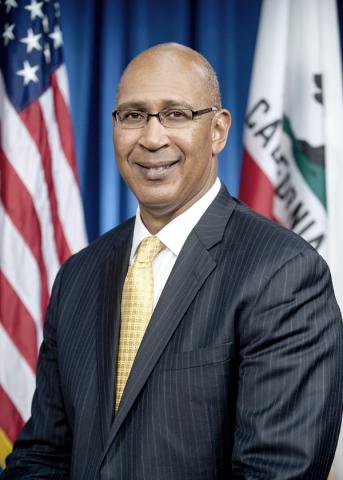
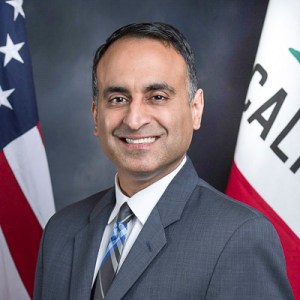
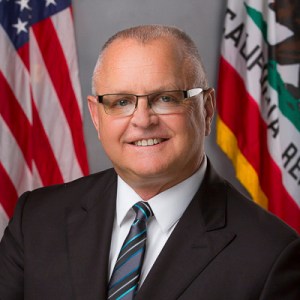
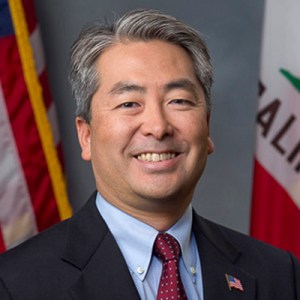
Bill Co-Author(s):