SB 1112: Childcare: alternative payment programs.
- Session Year: 2023-2024
- House: Senate
- Latest Version Date: 2024-09-30
Current Status:
Passed
(2024-09-30: Chaptered by Secretary of State. Chapter 1016, Statutes of 2024.)
Introduced
In Committee
First Chamber
In Committee
Second Chamber
Enacted
Existing law establishes a system of childcare and development services, administered by the State Department of Social Services, for children from infancy to 13 years of age. Existing federal law establishes the Child Care and Development Fund authorized under the Child Care and Development Block Grant Act of 2014 and administered by states to provide assistance to low-income families who need childcare due to specified reasons. Existing federal law requires a portion of those funds to be used to disseminate information on existing resources for developmental screenings and descriptions of how a family may utilize those resources to obtain developmental screenings. Existing law authorizes, upon departmental approval, the use of appropriated funds for alternative payment programs to allow for maximum parental choice. Existing law authorizes the reimbursement to those programs for the cost of child care paid to child care providers and the administrative and support services costs of the alternative program.
This bill would state that the costs allowable for administration shall include, but not be limited to, costs associated with disseminating the above-described information.
Existing law establishes a system of childcare and development services, administered by the State Department of Social Services, for children from infancy to 13 years of age. Existing federal law establishes the Child Care and Development Fund authorized under the Child Care and Development Block Grant Act of 2014 and administered by states to provide assistance to low-income families who need childcare due to specified reasons. Existing federal law requires a portion of those funds to be used to disseminate information on existing resources for developmental screenings and descriptions of how a family may utilize those resources to obtain developmental screenings. Existing law authorizes, upon departmental approval, the use of appropriated funds for alternative payment programs to allow for maximum parental choice. Existing law authorizes the reimbursement to those programs for the cost of child care paid to child care providers and the administrative and support services costs of the alternative program.
This bill would state that the costs allowable for administration shall include, but not be limited to, costs associated with disseminating the above-described information.
Existing law establishes a system of childcare and development services, administered by the State Department of Social Services, for children from infancy to 13 years of age. Existing federal law establishes the Child Care and Development Fund authorized under the Child Care and Development Block Grant Act of 2014 and administered by states to provide assistance to low-income families who need childcare due to specified reasons. Existing federal law requires a portion of those funds to be used to disseminate information on existing resources for developmental screenings and descriptions of how a family may utilize those resources to obtain developmental screenings. Existing law authorizes, upon departmental approval, the use of appropriated funds for alternative payment programs to allow for maximum parental choice. Existing law authorizes the reimbursement to those programs for the cost of child care paid to child care providers and the administrative and support services costs of the alternative program.
This bill would state that the costs allowable for administration shall include, but not be limited to, costs associated with disseminating the above-described information.
Existing law establishes a system of childcare and development services, administered by the State Department of Social Services, for children from infancy to 13 years of age. Existing law authorizes, upon departmental approval, the use of appropriated funds for alternative payment programs to allow for maximum parental choice. Existing law authorizes those programs to include, among other things, a subsidy that follows the family from one childcare provider to another, or choices among hours of service. Existing law requires the department to contract with local contracting agencies for alternative payment programs so that services are provided throughout the state.Existing law establishes the Medi-Cal program, which is administered by the State Department of Health Care Services and under which qualified low-income individuals receive health care services, through managed care or fee-for-service delivery systems. The Medi-Cal program is, in part, governed and funded by federal Medicaid program provisions. Under existing law, early and periodic screening, diagnostic, and treatment (EPSDT) services are covered Medi-Cal benefits for individuals under 21 years of age.This bill, subject to any necessary federal approvals and the availability of federal funding, would require the State Department of Health Care Services and the State Department of Social Services to develop a model memorandum of understanding (MOU), and would require the department to authorize Medi-Cal managed care plans and alternative payment agencies to enter an MOU that includes, at a minimum, the provisions included in the model.For purposes of children of families receiving subsidized childcare services through an alternative payment program, and upon the consent of the parent or guardian, the bill would require the plans and agencies to collaborate on informing and directing the family of a child who is eligible but not a beneficiary of the Medi-Cal program on how to enroll the child and on referring a child who is a Medi-Cal beneficiary to developmental screenings that are available under EPSDT services and administered through the plan. The bill would authorize the agency to perform certain related functions.Existing law establishes a system of childcare and development services, administered by the State Department of Social Services, for children from infancy to 13 years of age. Existing law authorizes, upon departmental approval, the use of appropriated funds for alternative payment programs to allow for maximum parental choice. Existing law authorizes those programs to include, among other things, a subsidy that follows the family from one childcare provider to another, or choices among hours of service. Existing law requires the department to contract with local contracting agencies for alternative payment programs so that services are provided throughout the state.
Existing law establishes the Medi-Cal program, which is administered by the State Department of Health Care Services and under which qualified low-income individuals receive health care services, through managed care or fee-for-service delivery systems. The Medi-Cal program is, in part, governed and funded by federal Medicaid program provisions. Under existing law, early and periodic screening, diagnostic, and treatment (EPSDT) services are covered Medi-Cal benefits for individuals under 21 years of age.
This bill, subject to any necessary federal approvals and the availability of federal funding, would require the State Department of Health Care Services and the State Department of Social Services to develop a model memorandum of understanding (MOU), and would require the department to require authorize Medi-Cal managed care plans and alternative payment agencies to enter an MOU that includes, at a minimum, the provisions included in the model.
For purposes of children of families receiving subsidized childcare services through an alternative payment program, and upon the consent of the parent or guardian, the bill would require the plans and agencies to collaborate on assisting the family with the Medi-Cal enrollment of informing and directing the family of a child who is eligible but not a beneficiary, beneficiary of the Medi-Cal program on how to enroll the child and on referring a child who is a Medi-Cal beneficiary to developmental screenings that are available under EPSDT services and administered through the plan. The bill would authorize the agency to perform certain related functions.
Existing law establishes a system of childcare and development services, administered by the State Department of Social Services, for children from infancy to 13 years of age. Existing law authorizes, upon departmental approval, the use of appropriated funds for alternative payment programs to allow for maximum parental choice. Existing law authorizes those programs to include, among other things, a subsidy that follows the family from one childcare provider to another, or choices among hours of service. Existing law requires the department to contract with local contracting agencies for alternative payment programs so that services are provided throughout the state.
Existing law establishes the Medi-Cal program, which is administered by the State Department of Health Care Services and under which qualified low-income individuals receive health care services, through managed care or fee-for-service delivery systems. The Medi-Cal program is, in part, governed and funded by federal Medicaid program provisions. Under existing law, early and periodic screening, diagnostic, and treatment (EPSDT) services are covered Medi-Cal benefits for individuals under 21 years of age.
This bill, subject to any necessary federal approvals and the availability of federal funding, would require the State Department of Health Care Services and the State Department of Social Services to enter into a develop a model memorandum of understanding to facilitate coordination between (MOU), and would require the department to require Medi-Cal managed care plans and alternative payment agencies. agencies to enter an MOU that includes, at a minimum, the provisions included in the model.
For purposes of children of families receiving subsidized childcare services through an alternative payment program, and upon the consent of the parent or guardian, the bill would require the plans and agencies to collaborate on assisting the family with the Medi-Cal enrollment of a child who is eligible but not a beneficiary, and on referring a Medi-Cal beneficiary to developmental screenings that are available under EPSDT services and administered through the plan. The bill would authorize the agency to perform certain related functions.
Existing law establishes a system of childcare and development services, administered by the State Department of Social Services, for children from infancy to 13 years of age. Existing law authorizes, upon departmental approval, the use of appropriated funds for alternative payment programs to allow for maximum parental choice. Existing law authorizes those programs to include, among other things, a subsidy that follows the family from one childcare provider to another, or choices among hours of service. Existing law requires the department to contract with local contracting agencies for alternative payment programs so that services are provided throughout the state.
Existing law establishes the Medi-Cal program, which is administered by the State Department of Health Care Services and under which qualified low-income individuals receive health care services, through managed care or fee-for-service delivery systems. The Medi-Cal program is, in part, governed and funded by federal Medicaid program provisions. Under existing law, early and periodic screening, diagnostic, and treatment (EPSDT) services are covered Medi-Cal benefits for individuals under 21 years of age.
This bill, subject to any necessary federal approvals and the availability of federal funding, would require the State Department of Health Care Services and the State Department of Social Services to enter into a memorandum of understanding to facilitate coordination between Medi-Cal managed care plans and alternative payment agencies.
For purposes of children of families receiving subsidized childcare services through an alternative payment program, and upon the consent of the parent or guardian, the bill would require the plans and agencies to collaborate on assisting the family with the Medi-Cal enrollment of a child who is eligible but not a beneficiary, and on referring a Medi-Cal beneficiary to developmental screenings that are available under EPSDT services and administered through the plan. The bill would authorize the agency to perform certain related functions.
The reimbursement for alternative payment programs shall include the cost of child care paid to child care providers plus the administrative and support services costs of the alternative payment program. The total cost for administration and support services shall not exceed an amount equal to 17.5 percent of the total contract amount. The administrative costs shall not exceed the costs allowable for administration under federal requirements, and shall include, but not be limited to, costs associated with the dissemination of information on developmental screenings, including information on existing resources and a description of how a family or eligible child care provider may utilize those resources to obtain developmental screenings, as described in Section 9858c of the Title 42 of the United States Code.
The reimbursement for alternative payment programs shall include the cost of child care paid to child care providers plus the administrative and support services costs of the alternative payment program. The total cost for administration and support services shall not exceed an amount equal to 17.5 percent of the total contract amount. The administrative costs shall not exceed the costs allowable for administration under federal requirements, and shall include, but not be limited to, costs associated with the dissemination of information on developmental screenings, including information on existing resources and a description of how a family or eligible child care provider may utilize those resources to obtain developmental screenings, as described in Section 9858c of the Title 42 of the United States Code.
The reimbursement for alternative payment programs shall include the cost of child care paid to child care providers plus the administrative and support services costs of the alternative payment program. The total cost for administration and support services shall not exceed an amount equal to 17.5 percent of the total contract amount. The administrative costs shall not exceed the costs allowable for administration under federal requirements. requirements, and shall include, but not be limited to, costs associated with the dissemination of information on developmental screenings, including information on existing resources and a description of how a family or eligible child care provider may utilize those resources to obtain developmental screenings, as described in Section 9858c of the Title 42 of the United States Code.
SECTION 1.Section 14093.11 is added to the Welfare and Institutions Code, to read:14093.11.(a)The department shall authorize Medi-Cal managed care plans to enter into a memorandum of understanding (MOU) with alternative payment agencies. The MOU shall include, at a minimum, the provisions included in the model developed pursuant to subdivision (d).(b)In accordance with the MOU, and for purposes of children of families receiving subsidized childcare services through an alternative payment program, the Medi-Cal managed care plan and alternative payment agency shall collaborate on both of the following upon the consent of the corresponding parent or guardian:(1)If the child is eligible for coverage under the Medi-Cal program but is not a Medi-Cal beneficiary, informing and directing the family on how to enroll the child into the Medi-Cal program.(2)If the child is already a Medi-Cal beneficiary, or if the child is newly enrolled in Medi-Cal through the assistance described in paragraph (1), referring the child to developmental screenings that are available under early and periodic screening, diagnostic, and treatment (EPSDT) services, as covered under subdivision (v) of Section 14132, and that are administered through the Medi-Cal managed care plan.(c)In accordance with the MOU, an alternative payment agency may address the systems of care coordination gap and may serve as the primary prevention coordination partner with expanded navigation and training functions, for the purpose of implementing subdivision (b).(d)The department, in consultation with the State Department of Social Services, shall develop a model template MOU to be used by Medi-Cal managed care plans and alternative payment agencies.(e)For purposes of this section:(1)Alternative payment agency means an agency that operates alternative payment programs under the Child Care and Development Services Act, as described in Chapter 3 (commencing with Section 10225) of Part 1.8.(2)Medi-Cal managed care plan means an individual, organization, or entity that enters into a contract with the department to provide services to enrolled Medi-Cal beneficiaries pursuant to any of the following:(A)Article 2.7 (commencing with Section 14087.3).(B)Article 2.8 (commencing with Section 14087.5).(C)Article 2.81 (commencing with Section 14087.96).(D)Article 2.82 (commencing with Section 14087.98).(E)Article 2.91 (commencing with Section 14089).(F)Chapter 3 (commencing with Section 101675) of Part 4 of Division 101 of the Health and Safety Code.(f)(1)The department shall seek any necessary federal approvals to implement this section.(2)This section shall be implemented only to the extent that any necessary federal approvals have been obtained and federal financial participation is available.(a)The department shall require authorize Medi-Cal managed care plans to enter into a memorandum of understanding (MOU) with alternative payment agencies. The MOU shall include, at a minimum, the provisions included in the model developed pursuant to subdivision (d).
(b)In accordance with the MOU, and for purposes of children of families receiving subsidized childcare services through an alternative payment program, the Medi-Cal managed care plan and alternative payment agency shall collaborate on both of the following upon the consent of the corresponding parent or guardian:
(1)If the child is eligible for coverage under the Medi-Cal program but is not a Medi-Cal beneficiary, assist the family with enrollment of the child into the Medi-Cal program.(1)If the child is eligible for coverage under the Medi-Cal program but is not a Medi-Cal beneficiary, informing and directing the family on how to enroll the child into the Medi-Cal program.
(2)If the child is already a Medi-Cal beneficiary, or if the child is newly enrolled in Medi-Cal through the assistance described in paragraph (1), refer referring the child to developmental screenings that are available under early and periodic screening, diagnostic, and treatment (EPSDT) services, as covered under subdivision (v) of Section 14132, and that are administered through the Medi-Cal managed care plan.
(c)In accordance with the MOU, an alternative payment agency may address the systems of care coordination gap and may serve as the primary prevention coordination partner with expanded navigation and training functions, for the purpose of implementing subdivision (b).
(d)The department, in consultation with the State Department of Social Services, shall develop a model template MOU to be used by Medi-Cal managed care plans and alternative payment agencies.
(e)For purposes of this section:
(1)Alternative payment agency means an agency that operates alternative payment programs under the Child Care and Development Services Act, as described in Chapter 3 (commencing with Section 10225) of Part 1.8.
(2)Medi-Cal managed care plan means an individual, organization, or entity that enters into a contract with the department to provide services to enrolled Medi-Cal beneficiaries pursuant to any of the following:
(A)Article 2.7 (commencing with Section 14087.3).
(B)Article 2.8 (commencing with Section 14087.5).
(C)Article 2.81 (commencing with Section 14087.96).
(D)Article 2.82 (commencing with Section 14087.98).
(E)Article 2.91 (commencing with Section 14089).
(F)Chapter 3 (commencing with Section 101675) of Part 4 of Division 101 of the Health and Safety Code.
(f)(1)The department shall seek any necessary federal approvals to implement this section.
(2)This section shall be implemented only to the extent that any necessary federal approvals have been obtained and federal financial participation is available.
(a)The department and the State Department of Social Services shall require Medi-Cal managed care plans to enter into a memorandum of understanding (MOU) for the purpose of facilitating coordination between Medi-Cal managed care plans and alternative payment agencies that operate alternative payment programs under the Child Care and Development Services Act, as described in Chapter 3 (commencing with Section 10225) of Part 1.8, in order to implement subdivision (b). with alternative payment agencies. The MOU shall include, at a minimum, the provisions included in the model developed pursuant to subdivision (d).
(b)In accordance with the MOU, and for purposes of children of families receiving subsidized childcare services through an alternative payment program, the Medi-Cal managed care plans plan and alternative payment agencies agency shall collaborate on both of the following upon the consent of the corresponding parent or guardian:
(1)If the child is eligible for coverage under the Medi-Cal program but is not a Medi-Cal beneficiary, assist the family with enrollment of the child into the Medi-Cal program.
(2)If the child is already a Medi-Cal beneficiary, or if the child is newly enrolled in Medi-Cal through the assistance described in paragraph (1), refer the child to developmental screenings that are available under early and periodic screening, diagnostic, and treatment (EPSDT) services, as covered under subdivision (v) of Section 14132, and that are administered through the Medi-Cal managed care plan.
(c)In accordance with the MOU, an alternative payment agency may address the systems of care coordination gap and may serve as the primary prevention coordination partner with expanded navigation and training functions, for the purpose of implementing subdivision (b).
(d)The department, in consultation with the State Department of Social Services, shall develop a model template MOU to be used by Medi-Cal managed care plans and alternative payment agencies.
(e)For purposes of this section:
(1)Alternative payment agency means an agency that operates alternative payment programs under the Child Care and Development Services Act, as described in Chapter 3 (commencing with Section 10225) of Part 1.8.
(2)Medi-Cal managed care plan means an individual, organization, or entity that enters into a contract with the department to provide services to enrolled Medi-Cal beneficiaries pursuant to any of the following:
(A)Article 2.7 (commencing with Section 14087.3).
(B)Article 2.8 (commencing with Section 14087.5).
(C)Article 2.81 (commencing with Section 14087.96).
(D)Article 2.82 (commencing with Section 14087.98).
(E)Article 2.91 (commencing with Section 14089).
(F)Chapter 3 (commencing with Section 101675) of Part 4 of Division 101 of the Health and Safety Code.
(d)(f)(1)The department shall seek any necessary federal approvals to implement this section.
(2)This section shall be implemented only to the extent that any necessary federal approvals have been obtained and federal financial participation is available.
(a)The department and the State Department of Social Services shall enter into a memorandum of understanding (MOU) for the purpose of facilitating coordination between Medi-Cal managed care plans and alternative payment agencies that operate alternative payment programs under the Child Care and Development Services Act, as described in Chapter 3 (commencing with Section 10225) of Part 1.8, in order to implement subdivision (b).
(b)In accordance with the MOU, and for purposes of children of families receiving subsidized childcare services through an alternative payment program, the Medi-Cal managed care plans and alternative payment agencies shall collaborate on both of the following upon the consent of the corresponding parent or guardian:
(1)If the child is eligible for coverage under the Medi-Cal program but is not a Medi-Cal beneficiary, assist the family with enrollment of the child into the Medi-Cal program.
(2)If the child is already a Medi-Cal beneficiary, or if the child is newly enrolled in Medi-Cal through the assistance described in paragraph (1), refer the child to developmental screenings that are available under early and periodic screening, diagnostic, and treatment (EPSDT) services, as covered under subdivision (v) of Section 14132, and that are administered through the Medi-Cal managed care plan.
(c)In accordance with the MOU, an alternative payment agency may address the systems of care coordination gap and may serve as the primary prevention coordination partner with expanded navigation and training functions, for the purpose of implementing subdivision (b).
(d)(1)The department shall seek any necessary federal approvals to implement this section.
(2)This section shall be implemented only to the extent that any necessary federal approvals have been obtained and federal financial participation is available.
|
Date
|
Status
|
|---|---|
| Sep 30, 2024 | Chaptered by Secretary of State. Chapter 1016, Statutes of 2024. |
| Sep 30, 2024 | Approved by the Governor. |
| Sep 10, 2024 | Enrolled and presented to the Governor at 4 p.m. |
| Aug 30, 2024 | Assembly amendments concurred in. (Ayes 40. Noes 0. Page 5736.) Ordered to engrossing and enrolling. |
| Aug 30, 2024 | In Senate. Concurrence in Assembly amendments pending. |
| Aug 29, 2024 | Read third time. Passed. (Ayes 76. Noes 0. Page 6896.) Ordered to the Senate. |
| Aug 20, 2024 | Read second time. Ordered to third reading. |
| Aug 19, 2024 | Read second time and amended. Ordered to second reading. |
| Aug 15, 2024 | From committee: Do pass as amended. (Ayes 11. Noes 0.) (August 15). |
| Aug 7, 2024 | August 7 set for first hearing. Placed on suspense file. |
| Jun 26, 2024 | From committee: Do pass and re-refer to Com. on APPR. with recommendation: To consent calendar. (Ayes 6. Noes 0.) (June 25). Re-referred to Com. on APPR. |
| Jun 12, 2024 | From committee: Do pass and re-refer to Com. on HUM. S. with recommendation: To consent calendar. (Ayes 16. Noes 0.) (June 11). Re-referred to Com. on HUM. S. |
| Jun 3, 2024 | Referred to Coms. on HEALTH and HUM. S. |
| May 24, 2024 | In Assembly. Read first time. Held at Desk. |
| May 24, 2024 | Read third time. Passed. (Ayes 38. Noes 0. Page 4210.) Ordered to the Assembly. |
| May 22, 2024 | Ordered to special consent calendar. |
| May 20, 2024 | Read second time. Ordered to third reading. |
| May 16, 2024 | Read second time and amended. Ordered to second reading. |
| May 16, 2024 | From committee: Do pass as amended. (Ayes 7. Noes 0. Page 3972.) (May 16). |
| May 10, 2024 | Set for hearing May 16. |
| Apr 29, 2024 | April 29 hearing: Placed on APPR suspense file. |
| Apr 22, 2024 | Set for hearing April 29. |
| Apr 16, 2024 | From committee: Do pass and re-refer to Com. on APPR with recommendation: To consent calendar. (Ayes 5. Noes 0. Page 3606.) (April 15). Re-referred to Com. on APPR. |
| Apr 4, 2024 | Set for hearing April 15. |
| Mar 21, 2024 | Read second time and amended. Re-referred to Com. on HUMAN S. |
| Mar 20, 2024 | From committee: Do pass as amended and re-refer to Com. on HUMAN S. with recommendation: To consent calendar. (Ayes 11. Noes 0. Page 3380.) (March 20). |
| Mar 1, 2024 | Set for hearing March 20. |
| Feb 21, 2024 | Referred to Coms. on HEALTH and HUMAN S. |
| Feb 14, 2024 | From printer. May be acted upon on or after March 15. |
| Feb 13, 2024 | Introduced. Read first time. To Com. on RLS. for assignment. To print. |
|
Date
|
Description
|
Location
|
Votes
|
|
|---|---|---|---|---|
| Aug 30, 2024 | Unfinished Business SB1112 Menjivar et al. Concurrence | Senate Floor |
Passed |
|
| Aug 29, 2024 | SB 1112 Menjivar Senate Third Reading By Stephanie Nguyen | Assembly Floor |
Passed |
|
| Aug 15, 2024 | Do pass as amended. | Assembly Standing Committee on Appropriations |
Passed |
|
| Jun 25, 2024 | Do pass and be re-referred to the Committee on [Appropriations] with recommendation: To Consent Calendar | Assembly Standing Committee on Human Services |
Passed |
|
| Jun 11, 2024 | Do pass and be re-referred to the Committee on [Human Services] with recommendation: To Consent Calendar | Assembly Standing Committee on Health |
Passed |
|
| May 24, 2024 | Special Consent SB1112 Menjivar et al. | Senate Floor |
Passed |
|
| May 16, 2024 | Do pass as amended | Senate Standing Committee on Appropriations |
Passed |
|
| Apr 29, 2024 | Placed on suspense file | Senate Standing Committee on Appropriations |
Passed |
|
| Apr 15, 2024 | Do pass, but first be re-referred to the Committee on [Appropriations] with the recommendation: To Consent Calendar | Senate Standing Committee on Human Services |
Passed |
|
| Mar 20, 2024 | Do pass as amended, but first amend, and re-refer to the Committee on [Human Services] with the recommendation: To Consent Calendar | Senate Standing Committee on Health |
Passed |
This list shows positions taken on this bill by organizations on the date displayed, which is linked to the original source.
Positions by individuals are not included.
|
Organization
|
Position
|
Date
|
|---|---|---|
| Association Of Regional Center Agencies | ** Support | |
| BANANAS | ** Support | |
| BANANAS, Inc. | ** Support | |
| California Alternative Payment Program Association | ** Support | |
| California Council Of Community Behavioral Health Agencies | ** Support | |
| Child Action, Inc. | ** Support | |
| Child Care Alliance Los Angeles | ** Support | |
| Child Care Alliance of Los Angeles | ** Support | |
| Child Care Resource Center | ** Support | |
| Child Development Resources of Ventura County, Inc. | ** Support | |
| cleanearth4kids.org | ** Support | |
| Disability Rights California | ** Support | |
| Early Care And Education Consortium | ** Support | |
| EveryChild California | ** Support | |
| First 5 California | ** Support | |
| Latino Coalition for a Healthy California | ** Support | |
| Our Voice: Communities for Quality Education | ** Support | |
| Pathways LA | ** Support | |
| Thriving Families California | ** Support |
SENATE RULES COMMITTEE Office of Senate Floor Analyses (916) 651-1520 Fax: (916) 327-4478 | SB 1112 |
UNFINISHED BUSINESS
Bill No: SB 1112
Author: Menjivar (D), et al.
Amended: 8/19/24
Vote: 21
SENATE HEALTH COMMITTEE: 11-0, 3/20/24
AYES: Roth, Nguyen, Glazer, Gonzalez, Grove, Hurtado, Limón, Menjivar, Rubio, Smallwood-Cuevas, Wiener
SENATE HUMAN SERVICES COMMITTEE: 5-0, 4/15/24
AYES: Alvarado-Gil, Ochoa Bogh, Blakespear, Hurtado, Menjivar
SENATE APPROPRIATIONS COMMITTEE: 7-0, 5/16/24
AYES: Caballero, Jones, Ashby, Becker, Bradford, Seyarto, Wahab
SENATE FLOOR: 38-0, 5/24/24
AYES: Alvarado-Gil, Ashby, Atkins, Becker, Blakespear, Bradford, Caballero, Cortese, Dahle, Dodd, Durazo, Eggman, Glazer, Gonzalez, Grove, Hurtado, Jones, Laird, Limón, McGuire, Menjivar, Min, Newman, Nguyen, Niello, Ochoa Bogh, Padilla, Portantino, Roth, Rubio, Seyarto, Skinner, Smallwood-Cuevas, Stern, Umberg, Wahab, Wiener, Wilk
NO VOTE RECORDED: Allen, Archuleta
ASSEMBLY FLOOR: 76-0, 8/29/24 - See last page for vote
SUBJECT: Childcare: alternative payment programs
SOURCE: Child Care Resource Center
DIGEST:
This bill requires that the administrative costs reimbursement rate for alternative payment programs (APPs) include, but not be limited to, costs associated with disseminating information on developmental screenings.
Assembly Amendments
- 1) delete provisions requiring the Department of Health Care Services (DHCS) to authorize Medi-Cal plans to enter into a memorandum of understanding (MOU) with alternative payment agencies that operate APPs under the Child Care and Development Services Act and develop a model template MOU to be used by the plans and alternative payment agencies and requiring Medi-Cal plans and alternative payment agencies, in accordance with the MOU to collaborate on informing and directing families on how to enroll a child in Medi-Cal and refer children enrolled in Medi-Cal to developmental screenings administered through the Medi-Cal plan; 2) add provisions requiring that APPs include in their administrative costs the cost associated with disseminating information on developmental screenings.
ANALYSIS:
Existing federal law requires state Medicaid plans to cover any clinical preventive services that are assigned a grade of A or B by the United States Preventive Services Task Force. Requires coverage for individuals under age 21 of all necessary health care, diagnostic services, treatment, and other measures to correct or ameliorate defects and physical and mental illnesses and conditions discovered by the screening services, whether or not such services are covered under the State plan, known as the Early and Periodic Screening, Diagnosis, and Treatment (EPSDT) benefit. [42 United States Code (USC) §1396d]
Existing state law:
- Establishes the Medi-Cal program, administered by the Department of Health Care Services (DHCS), under which low-income individuals are eligible for medical coverage. [Welfare and Institutions Code (WIC) §14000, et seq.]
- Establishes a schedule of benefits under the Medi-Cal program, which includes benefits required under federal law and benefits provided at state option but for which federal financial participation through Medicaid is available. The schedule of benefits includes EPSDT for individuals under 21 years of age. [WIC §14132]
- Requires Medi-Cal plans to include developmental screening services for individuals zero to three years of age that comply with the periodicity schedule and standardized and validated developmental screening tools established by the Bright Future Guidelines and Recommendations for Preventive Pediatric Care. [WIC §14132.195]
- Establishes the Child Care and Development Services Act, administered by the California Department of Social Services (CDSS), to provide childcare and development services as part of a coordinated, comprehensive, and cost-effective system, serving children from birth to 13 years old and their parents including a full range of supervision, health, and support services through full- and part-time programs. [WIC §10207, et seq.]
- Defines “alternative payments” to include payments made by one childcare agency to another agency or provider for the provision of childcare and development services, and payments that are made by an agency to a parent for the parent's purchase of childcare and development services. [WIC §10213.5]
- Defines “alternative payment program” as a local government agency or nonprofit organization that has contracted with DSS, as specified, to provide alternative payments and to provide support services to parents and providers. [WIC §10213.5]
- Authorizes the use of childcare and development funds alternative payment programs in order to maximize parental choice in selecting an appropriate childcare setting, and establishes requirements regarding alternative payment programs, as specified. [WIC §10225]
This bill requires that the administrative costs reimbursement rate for alternative payment programs (APPs) include, but not be limited to, costs associated with disseminating information on developmental screenings, including information on existing resources and a description of how a family or eligible childcare provider may utilize those screenings, as described.
Comments
- Author’s statement. According to the author, the early years of a child’s life are pivotal points for future success. Developmental screening and early intervention programs offered during these early stages promote the growth and prosperity of youth, families, and communities. An estimated one in six children in the United States has a developmental disability. However, only three percent of Californian infants and toddlers receive early intervention services. Research shows that low-income families and communities of color face additional difficulties in accessing screening, leading to delayed diagnosis and support. While California has made historic investments to expand our health, mental health, and developmental services, data shows that California is one of the lowest states in providing access. With this bill, we can leverage a clear pathway for eligible families to access these screenings and services through existing programs and relationships formed at the local level. Childcare agencies can support enrollment in Medi-Cal and refer youth to their primary care physician for a screening, ultimately bridging the gap for better care coordination. We cannot continue to lag behind, letting youth fall between the cracks of receiving timely support and intervention.
- Children’s preventive services in Medi-Cal. Medi-Cal includes a very comprehensive pediatric preventive services mandate stemming from federal EPSDT requirements and the Affordable Care Act preventive care requirement.
- The purpose of EPSDT is to discover and treat childhood health conditions before they become serious or disabling. States must inform all Medicaid-eligible families about the benefit, screen children at reasonable intervals, diagnose and treat any health problems found, and report certain data regarding EPSDT participation annually to the Centers for Medicare & Medicaid Services (CMS). According to CMS, the EPSDT benefit is more robust than the Medicaid benefit for adults and is designed to assure that children receive early detection and care, so that health problems are averted or diagnosed and treated as early as possible. For example, services that are optional benefits under federal law for adults in Medi-Cal (such as dental, eyeglasses, physical and occupational therapy and pharmacy) are required goods and services under EPSDT. All Medi-Cal plans must provide EPSDT preventive services, including screenings, designed to identify health and developmental issues as early as possible. Medi-Cal plans must provide plan enrollees with appropriate referrals for diagnosis and treatment without delay.
- The Affordable Care Act specified that coverage of preventive care and screenings must be conducted with evidence-informed, comprehensive guidelines supported by the Health Resources and Services Administration (HRSA), an agency of the U.S. Department of Health and Human Services. HRSA participated in the development of, and provides ongoing support to, the national health promotion and prevention initiative known as Bright Futures, which is led by the American Academy of Pediatrics. The academy develops theory-based and evidence-based guidance and recommendations for preventive care screenings and well-child visits for children and regularly publishes updated tools and resources for use by clinicians and state agencies. These tools include the “Bright Futures Guidelines” and the “Recommendations for Preventive Pediatric Health Care,” which is also known as the “periodicity schedule.” The periodicity schedule indicates specific preventive screenings and procedures that are to be provided to children at age-specific periodic intervals from birth through age 21. Medi-Cal plans are required to use the current Bright Futures periodicity schedule and guidelines for enrollees under age 21, including health and developmental screening services, physical examination, dental services, vision services, and hearing services. Medi-Cal plans must provide all age-specific assessments and services required by the Medi-Cal plan contract and the Bright Futures periodicity schedule.
- State Auditor report findings. In March 2019, the State Auditor released a report on DHCS’s oversight of the delivery of preventive services to children in Medi-Cal. The audit found that over 40% of children enrolled in Medi-Cal do not receive all required preventive services. The audit found that there was a lack of awareness about the availability of preventive services for families and a lack awareness by Medi-Cal plans that children should be receiving mandatory preventive services. The audit also found that DHCS requires Medi-Cal plans to report on performance measures for only a portion of the required preventive services. Finally, the auditor’s report found children’s access to preventive care shows notable deficiencies with respect to both the number and location of providers who offer children’s preventive services.
In September 2022, the State Auditor issued a follow up report to the 2019 audit finding that DHCS has been unsuccessful in increasing the percentage of children receiving the preventive services required by Medi‑Cal. In fact, from fiscal years 2018–19 through 2020–21, DHCS provided these services to less than half of the children in Medi‑Cal, worse than the results cited in the 2019 report. The percentage of children in Medi‑Cal receiving the required amounts of preventive care continued to be even lower among certain age groups during the most recent three fiscal years. For example, nearly three quarters of two-year-olds in Medi‑Cal did not receive the required number of preventive services, which includes blood lead testing and screening for developmental disorders. The follow up report also found in the more than three years since its initial recommendations were issued, DHCS fully implemented just six of the 14 recommendations. The report specifically called out DHCS’s failure to distribute outreach materials during the pandemic, failure to ensure that provider directories were accurate, and failure to increase the number of providers available.
DHCS responded, agreeing with seven of the remaining eight recommendations that had not been fully implemented, indicating steps they were taking to meet those recommendations. On the eighth recommendation to identify the number of providers needed to ensure adequate access, DHCS denied responsibility, stating that workforce issues were not within their jurisdiction. DHCS also pointed to a number of ongoing initiatives intended to improve children’s access to health care services in Medi-Cal, some of which are still in development.
- Alternative Payment Programs. Alternative Payment Programs are programs that assist low-income families, mostly current and former CalWORKs recipients, to arrange for childcare services and make payments directly to the childcare provider selected by the family. These programs receive state and federal funds to provide a variety of supports and payment services that enable eligible low-income families to access subsidized childcare using vouchers. Alternative Payment Programs are intended to increase parental choice in childcare. This bill would require these programs to provide information on Medi-Cal EPSDT developmental screenings.
FISCAL EFFECT: Appropriation: No Fiscal Com.: Yes Local: No
According to the Assembly Appropriations Committee:
- Costs of an unknown, but likely minor and absorbable, amount to DHCS for state administration (General Fund and federal funds).
- Cost pressures of an unknown amount if this bill leads to increased Medi-Cal enrollment (General Fund and federal funds).
SUPPORT: (Verified 8/19/24)
Child Care Resource Center (source)
Association of Regional Center Agencies
Bananas, Inc.
California Council of Community Behavioral Health Agencies
Child Action, Inc.
Child Care Alliance Los Angeles
Child Development Resources of Ventura County, Inc.
CleanEarth4Kids.org
Disability Rights California
Early Care and Education Consortium
EveryChild California
First 5 California
Latino Coalition for a Healthy California
Our Voice: Communities for Quality Education
Pathways LA
Thriving Families California
2 Individuals
OPPOSITION: (Verified 8/19/24)
None received
ARGUMENTS IN SUPPORT: Sponsor, Child Care Resource Center writes that in California, approximately 50% of young children receive their care through the Medi-Cal system. Of those, less than one in four children received a developmental screening in 2020. The Medi-Cal system has a historically poor performance on developmental screenings. Less than one third of children in Medi-Cal managed care received a developmental screening in the first three years of life. This bill will ensure more children have access to a timely screening by adding childcare agencies in the Alternative Payment Program as a required partner in a MOU with managed care plans to address the systems of care coordination gap and serve as primary prevention coordination partners.
ASSEMBLY FLOOR: 76-0, 8/29/24
AYES: Addis, Aguiar-Curry, Alanis, Alvarez, Arambula, Bains, Bauer-Kahan, Bennett, Berman, Boerner, Bonta, Bryan, Calderon, Juan Carrillo, Wendy Carrillo, Chen, Connolly, Megan Dahle, Davies, Dixon, Essayli, Flora, Mike Fong, Friedman, Gabriel, Gallagher, Garcia, Gipson, Grayson, Haney, Hart, Holden, Hoover, Irwin, Jackson, Jones-Sawyer, Kalra, Lackey, Lee, Low, Lowenthal, Maienschein, Mathis, McCarty, McKinnor, Muratsuchi, Stephanie Nguyen, Pacheco, Papan, Jim Patterson, Joe Patterson, Pellerin, Petrie-Norris, Quirk-Silva, Ramos, Rendon, Reyes, Luz Rivas, Rodriguez, Blanca Rubio, Sanchez, Santiago, Schiavo, Soria, Ta, Ting, Valencia, Villapudua, Waldron, Wallis, Ward, Weber, Wicks, Wilson, Wood, Robert Rivas
NO VOTE RECORDED: Cervantes, Ortega, Zbur
Prepared by: Jen Flory / HEALTH / (916) 651-4111
8/29/24 19:49:29
**** END ****
SENATE THIRD READING
STR Bill Id:SB 1112
Author:(Menjivar)
As Amended Ver:August 19, 2024
Majority vote
SUMMARY
Requires the administrative costs included in the reimbursement rate for alternative payment programs (APPs) to include, but not be limited to, costs associated with disseminating information on developmental screenings.
Major Provisions
Requires the administrative costs included in the reimbursement rate for APPs to include, but not be limited to, costs associated with the dissemination of information on developmental screenings, including information on existing resources and a description of how a family or eligible childcare provider may utilize those resources to obtain developmental screenings, as described.
COMMENTS
Background: Alternative Payment Program. An APP is a voucher-based program that manages the distribution of state and federal funds to support the childcare needs of low-income families. The California Department of Social Services contracts with APP agencies, which serve as intermediaries between the state and families, ensuring that funds allocated for childcare are administered directly to childcare providers as subsidy payments on behalf of families across the state. APP agencies facilitate access to affordable childcare for eligible families, including full-day, part-day, and before-and-after-school care options in licensed centers, family childcare homes, or license-exempt settings.
In addition to facilitating access to childcare services, alternative payment agencies offer resources and support to families, including connecting families with additional community resources. Among the 73 APP agencies, 49 are nonprofit community-based organizations, 13 are county offices of education, nine are county welfare departments, one is a school district, and one is a city government. In the fiscal year 2022-23, 92,428 children were participating in APP agencies.
Early and Periodic Screening Diagnostic and Treatment Services & Developmental Screenings (EPSDT). Federal law requires the EPSDT benefit, which serves as the foundation for children's coverage under Medi-Cal. EPSDT offers a wide range of preventive, diagnostic, and treatment services for Medi-Cal enrollees under 21years of age. As part of EPSDT, Medi-Cal provides periodic screening assessments for infants, children, and adolescents, following the American Academy of Pediatrics Bright Futures preventive healthcare periodicity schedule. This schedule offers comprehensive guidance on recommended services during each well-child visit, corresponding to age milestones up to 21 years of age.
Developmental screening involves the use of a standardized tool to identify risks of developmental, behavioral, and social delays. The Bright Futures periodicity schedule recommends conducting developmental screenings during well-child visits at nine months, 18 months, and 24 or 30 months of age.
According to the Author
According to the Author, "The early years of a child's life are pivotal points for future success. Developmental screening and early intervention programs offered during these early stages promote the growth and prosperity of youth, families, and communities. It is estimated that 1 in 6 children in the United States has a developmental disability. However, only 3% of infants and toddlers relative to California's population receive early intervention services. Research shows that low-income families and communities of color face additional difficulties in accessing screening, leading to delayed diagnosis and support.
"While California has made historic investments to expand our health, mental health, and developmental services, data shows that California lags in providing these screenings with a rate of 26% and is ranked one of the lowest in providing access. With [this bill], we can leverage a clear pathway for eligible families to access these screenings and services through existing programs and relationships formed at the local level. Childcare agencies can support enrollment in Medi-Cal and refer youth to their primary care physician for a screening. Ultimately bridging the gap in administering these timely developmental screenings and referrals to support services for better care coordination. We cannot continue to lag behind, letting youth fall between the cracks of receiving timely support and intervention."
Arguments in Support
Child Action, Inc. writes, "In California, approximately 50% of young children receive their care through the Medi-Cal system. Of those, less than 1 in 4 children received a developmental screening in 2020. The Medi-Cal system has a historically poor performance on developmental screenings. Less than 1/3 of children in Medi-Cal managed care received a developmental screening in the first 3 years of life. [This bill] will ensure that children ages 0-5 who need additional services after screening are referred for further assessment and intervention at no cost to the parent."
Arguments in Opposition
No opposition on file.
FISCAL COMMENTS
According to the Assembly Appropriations Committee on August 15, 2024:
- Costs of an unknown, but likely minor and absorbable, amount to DHCS for state administration (General Fund and federal funds).
- Cost pressures of an unknown amount if this bill leads to increased Medi-Cal enrollment (General Fund and federal funds).
According to the Legislative Analyst's Office, the General Fund faces a structural deficit in the tens of billions of dollars over the next several fiscal years.
VOTES
SENATE FLOOR: 38-0-2
YES: Alvarado-Gil, Ashby, Atkins, Becker, Blakespear, Bradford, Caballero, Cortese, Dahle, Dodd, Durazo, Eggman, Glazer, Gonzalez, Grove, Hurtado, Jones, Laird, Limón, McGuire, Menjivar, Min, Newman, Nguyen, Niello, Ochoa Bogh, Padilla, Portantino, Roth, Rubio, Seyarto, Skinner, Smallwood-Cuevas, Stern, Umberg, Wahab, Wiener, Wilk
ABS, ABST OR NV: Allen, Archuleta
ASM HEALTH: 16-0-0
YES: Bonta, Waldron, Aguiar-Curry, Arambula, Wendy Carrillo, Flora, Haney, Jones-Sawyer, Maienschein, McCarty, Joe Patterson, Rodriguez, Sanchez, Santiago, Lowenthal, Pellerin
ASM HUMAN SERVICES: 6-0-1
YES: Lee, Essayli, Calderon, Jackson, Dixon, Ortega
ABS, ABST OR NV: Gipson
ASM APPROPRIATIONS: 11-0-4
YES: Wicks, Arambula, Bryan, Calderon, Wendy Carrillo, Mike Fong, Grayson, Haney, Hart, Pellerin, Villapudua
ABS, ABST OR NV: Sanchez, Dixon, Jim Patterson, Ta
UPDATED
VERSION: August 19, 2024
CONSULTANT: Bri-Ann Hernandez / HUM. S. / (916) 319-2089 FN: 0004154
Date of Hearing: August 7, 2024
ASSEMBLY COMMITTEE ON APPROPRIATIONS
Buffy Wicks, Chair
SBPCA Bill Id:SB 1112
Author:(Menjivar) – As Amended Ver:May 16, 2024
Policy Committee: | Health | Vote: | 16 - 0 |
Human Services | 6 - 0 | ||
|
|
Urgency: No State Mandated Local Program: No Reimbursable: No
SUMMARY:
This bill requires the Department of Health Care Services (DHCS) to authorize a Medi-Cal managed care plan to enter into a memorandum of understanding (MOU) with an alternative payment agency or program (APP agency) to facilitate enrollment of children in Medi-Cal and referral of children to developmental screenings administered by Medi-Cal managed care plans. The bill also requires DHCS to develop a model template for the MOU.
Specifically, this bill:
- Requires DHCS to authorize a Medi-Cal managed care plan to enter into a memorandum of understanding (MOU) with APP agencies.
- Requires, for children of families receiving subsidized child care services through an APP agency and in accordance with the MOU, the Medi-Cal managed care plan and the APP agency to collaborate on the following, upon the consent of the corresponding parent or guardian:
- If the child is eligible for Medi-Cal coverage but is not enrolled in Medi-Cal, informing and directing the family on how to enroll the child into the Medi-Cal program.
- If the child is enrolled in Medi-Cal, including through the assistance described in a, above, referring the child to developmental screenings available through the Medi-Cal managed care plan.
- Authorizes an APP agency to address care coordination and provide expanded navigation and training functions, for the purpose of implementing 2, above.
- Requires DHCS, in consultation with the Department of Social Services (DSS), develop a model template MOU to be used by Medi-Cal managed care plans and APP agencies, as specified.
- Requires DHCS to seek necessary federal approvals to implement this bill and provides this bill is to be implemented only to the extent DHCS obtains necessary federal approvals and federal financial participation.
FISCAL EFFECT:
- Costs of an unknown amount, potentially in the hundreds of thousands of dollars, to DHCS for state administration (General Fund and federal funds).
- No costs to DSS.
- Cost pressures of an unknown amount if this bill leads to increased Medi-Cal enrollment (General Fund and federal funds).
According to the Legislative Analyst’s Office, the General Fund faces a structural deficit in the tens of billions of dollars over the next several fiscal years.
COMMENTS:
- Purpose. This bill is sponsored by the Child Care Resource Center. According to the author:
The early years of a child’s life are pivotal points for future success. Developmental screening and early intervention programs offered during these early stages promote the growth and prosperity of youth, families, and communities. It is estimated that 1 in 6 children in the United States has a developmental disability. However, only 3% of infants and toddlers relative to California’s population receive early intervention services. Research shows that low-income families and communities of color face additional difficulties in accessing screening, leading to delayed diagnosis and support.
California lags in providing these screenings with a rate of 26% and is ranked one of the lowest in providing access. With SB 1112, we can leverage a clear pathway for eligible families to access these screenings and services through existing programs and relationships formed at the local level. Childcare agencies can support enrollment in Medi-Cal and refer youth to their primary care physician for a screening. Ultimately bridging the gap in administering these timely developmental screenings and referrals to support services for better care coordination.
- Background.
APP Agencies. DSS contracts with APP agencies to serve as intermediaries between the state and families, ensuring that funds allocated for childcare are administered directly to childcare providers as subsidy payments on behalf of families across the state. Alternative payment agencies facilitate access to affordable childcare for eligible families. DSS contracts with APP agencies to administer child care subsidy payments for families in all 58 counties. Of the 73 APP agencies, 49 are nonprofit community-based organizations, 13 are county offices of education, nine are county welfare departments, one is a school district, and one is a city government. APP agencies receive state and federal funds to provide a variety of supports and payment services that enable eligible low-income families to access subsidized child care.
Early and Periodic Screening Diagnostic and Treatment (EPSDT) Services & Developmental Screenings. Federal law establishes an entitlement to the EPSDT benefit, which forms the foundation for children’s coverage under Medi-Cal. The EPSDT benefit provides a comprehensive array of prevention, diagnostic, and treatment services for medi-Cal enrollees under the age of 21. Under EPSDT, Medi-Cal covers periodic screening assessments for infants, children, and adolescents, as specified in the American Academy of Pediatrics (AAP) Bright Futures preventive healthcare periodicity schedule. The AAP Bright Futures periodicity schedule provides clear, comprehensive guidance on recommended services at each well-child visit, corresponding to each age milestone up to age 21.
Developmental screening uses a standardized screening tool to identify risk of developmental, behavioral, and social delays. The Bright Futures periodicity schedule recommends developmental screening at well-child visits occurring at nine months, 18 months, and 24 or 30 months of age.
DHCS measures how many children enrolled in Medi-Cal managed care plans receive recommended developmental screening, using a metric called “Developmental Screening in the First Three Years of Life.” DHCS has set a 2025 goal of 35% for this metric, which equals the 2022 national median percentage. According to recent data, California’s statewide average was 42%, with regional averages ranging from 37% to 46%.
Analysis Prepared by: Allegra Kim / APPR. / (916) 319-2081
Date of Hearing: June 25, 2024
ASSEMBLY COMMITTEE ON HUMAN SERVICES
Alex Lee, Chair
SBPCA Bill Id:SB 1112
Author:(Menjivar) – As Amended Ver:May 16, 2024
SENATE VOTE: 38-0
SUBJECT: Medi-Cal: families with subsidized childcare
SUMMARY: Requires the California Department of Health Care Services (DHCS) to authorize Medi-Cal managed care plans to enter into a memorandum of understanding (MOU) with an alternative payment agency (Alternative Payment Program or APP agency) to facilitate enrollment of children in Medi-Cal and referral of children to developmental screenings administered by Medi-Cal managed care plans. Requires DHCS to develop a model template for this purpose. Specifically, this bill:
- Requires DHCS to authorize Medi-Cal managed care plans to enter into a MOU with APPs. Requires the MOU to include, at a minimum, the provisions included in the model developed pursuant 4) below.
- Requires, in accordance with the MOU, and for purposes of children of families receiving subsidized childcare services through an APP, the Medi-Cal managed care plan and alternative payment agency to collaborate on both of the following upon the consent of the corresponding parent or guardian:
- If the child is eligible for coverage under the Medi-Cal program but is not a Medi-Cal beneficiary, informing and directing the family on how to enroll the child into the Medi-Cal program; and,
- If the child is already a Medi-Cal beneficiary, or if the child is newly enrolled in Medi-Cal through the assistance described in a) above, referring the child to developmental screenings that are available under early and periodic screening, diagnostic, and treatment (EPSDT) services, and that are administered through the Medi-Cal managed care plan.
- Authorizes, in accordance with the MOU, an alternative payment agency to address the systems of care coordination gap and serve as the primary prevention coordination partner with expanded navigation and training functions, for the purpose of implementing 2) above.
- Requires DHCS, in consultation with the California Department of Social Services (CDSS), to develop a model template MOU to be used by Medi-Cal managed care plans and alternative payment agencies.
- Defines the following terms:
- “Alternative payment agency” to mean an agency that operates APPs under the Child Care and Development Services Act, as described; and,
- “Medi-Cal managed care plan” to mean an individual, organization, or entity that enters into a contract with the department to provide services to enrolled Medi-Cal beneficiaries pursuant to specified existing law.
- Requires DHCS to seek any necessary federal approvals to implement this section.
- Requires this section to be implemented only to the extent that any necessary federal approvals have been obtained and federal financial participation is available.
EXISTING LAW:
State law:
- Establishes the Child Care and Development Services Act, administered by CDSS, to provide childcare and development services as part of a coordinated, comprehensive, and cost-effective system serving children from birth to 13 years of age and their parents, including a full range of supervision, health, and support services through full- and part-time programs. (Welfare and Institutions Code [WIC] § 10207 et seq.)
- Defines the following terms:
- “Childcare and development services” to mean services designed to meet a wide variety of children’s and families’ needs while parents and guardians are working, in training, seeking employment, incapacitated, or in need of respite and states that these services may include direct care supervision, instructional activities, resource and referral programs, and alternative payment arrangements. (WIC § 10213.5(j))
- “Alternative payments” to include payments that are made by one childcare agency to another agency or childcare provider for the provision of childcare and development services, and payments that are made by an agency to a parent for the parent’s purchase of childcare and development services.
- “APP” to mean a local government agency or nonprofit organization that has contracted with CDSS, or a migrant APP, to provide alternative payments and to provide support services to parents and providers. (WIC § 10213.5(a-b))
- Authorizes, upon the approval of CDSS, the use of childcare and development funds to be use for APPs to allow for maximum parental choice in selecting an appropriate childcare setting, and establishes requirements for APPs, as specified. (WIC § 10225)
- Requires CDSS to contract with local contracting agencies for APPs so that services can be provided throughout the state, as specified (WIC § 10225.5(b))
- Requires childcare and development services programs, if a child exhibits persistent and serious behaviors, to consider completing a comprehensive screening to identify the needs of the child, including, but not limited to, screening the child’s social and emotional development, referring the child’s parents or legal guardians to community resources, and implementing behavior supports within the program (Education Code [EDC] § 8489.1(2)(B)(ii))
- Defines “persistent and serious behaviors” to mean repeated patterns of behavior that significantly interfere with the learning of other children, or interactions with peers and adults that are not responsive to the use of developmental appropriate guidance. (EDC § 8489(e))
- Establishes the Medi-Cal program, administered by DHCS under which low-income individuals are eligible for medical coverage. (WIC § 14000 et seq.)
- Establishes a schedule of benefits under the Medi-Cal program, which includes benefits required under federal law and benefits provided at state option, but for which federal financial participation through Medicaid is available. The schedule of benefits includes EPSDT for individuals under 21 years of age. (WIC § 14132)
- Requires Medi-Cal managed care plans to include developmental screening services for individuals zero to three years of age that comply with the periodicity schedule and standardized and validated developmental screening tools established by the Bright Future Guidelines and Recommendations for Preventive Pediatric Health Care. (WIC § 14132.195)
Federal law:
- Requires state Medicaid plans to cover any clinical preventive services that are assigned a grade of A or B by the United States Preventive Services Task Force. Requires coverage for individuals under 21 years of age of all necessary health care, diagnostic services, treatment, and other measures to correct or ameliorate defects and physical and mental illnesses and conditions discovered by the screening services, whether or not such services are covered under the State plan, known as the EPSDT benefit. (42 USC § 1396(d))
FISCAL EFFECT: According to the Senate Appropriations Committee on May 16, 2024:
- Unknown costs for the Department of Health Care Services (DHCS) for state administration (General Fund and federal funds).
- Unknown General Fund costs for the California Department of Social Services (CDSS) for state administration.
COMMENTS:
Background: Subsidized Childcare. California’s subsidized childcare is made up of a system of voucher-based and direct service programs serving children from birth through 13 years of age and children with exceptional needs up to 21 years of age. Funded through a mix of federal and state dollars, subsidized childcare is administered through a mixed delivery system by local educational agencies, community-based providers, and family childcare providers.
A family may be eligible for childcare if they are: a) either a current aid recipient; b) income eligible; c) homeless; d) one whose children are recipients of protective services or have been identified as being, or at risk of being, abused, or neglected, as specified; or, e) one who has a member of its household who is certified to receive benefits from a means-tested government program such as Medi-Cal, CalFresh, or Early Head Start. For families who are eligible based on income, each family cannot earn more than 85% of the state median income. As of July 1, 2023, that amount is $6,931 per month for a family of three.
Alternative Payment Program. An APP is a voucher-based program that manages the distribution of state and federal funds to support the childcare needs of low-income families. CDSS contracts with APP agencies, which serve as intermediaries between the state and families, ensuring that funds allocated for childcare are administered directly to childcare providers as subsidy payments on behalf of families across the state. Alternative payment agencies facilitate access to affordable childcare for eligible families, including full-day, part-day, and before-and-after-school care options in licensed centers, family childcare homes, or license-exempt settings.
In addition to facilitating access to childcare services, alternative payment agencies offer resources and support to families, including connecting families with additional community resources. Among the 73 alternative payment agencies, 49 are nonprofit community-based organizations, 13 are county offices of education, nine are county welfare departments, one is a school district, and one is a city government. In the fiscal year 2022-23, 92,428 children were participating in APPs. Given their close interaction with families, alternative payment agencies are uniquely positioned to identify children who may benefit from additional health services, including those offered by Medi-Cal.
Children with Developmental Disabilities in Childcare Settings. Early childhood is a period of rapid development across physical, cognitive, social, and behavioral domains. Sometimes, however, this development may deviate from the typical trajectory, resulting in a diagnosis of disability or delay for some children. These children represent an estimated 15% of the United States’ (U.S.) childhood population. Most developmental disabilities begin before a baby is born, but some happen after birth due to injury, infection, genetics, and parental health and behavior, among other factors. Examples of developmental disorders include autism spectrum disorder, cerebral palsy, attention-deficit/hyperactivity disorder (ADHD), and Tourette syndrome.
Many children with developmental delays or behavior concerns are not identified until they are in school or childcare. As a result, significant delays may occur, and chances for timely treatment may be missed. Existing law requires childcare and development services programs to conduct a comprehensive screening to assess the needs of the child. This includes, but is not limited to, screening the child’s social and emotional development, referring the child’s parents or legal guardians to community resources, and incorporating behavior supports within the program if a child exhibits persistent and serious behaviors. These behaviors are defined as repeated patterns of behavior that significantly disrupt the learning of other children or interactions with peers and adults who do not respond to the use of developmentally appropriate guidance.
Identifying children as early as possible for early intervention services can help children from birth to three years of age in developing crucial skills. However, according to a 2022 University of California, Riverside study of parents with autistic children, one in six had reported that their child had been expelled from a childcare program due to behavioral issues that were linked to an undiagnosed disability. Additionally, data shows that young children of color and young children with developmental disabilities are disciplined with suspension and expulsion more often than their White or nondisabled peers. Expulsion and suspension of children in any academic setting, like childcare, has negative long-lasting effects, ranging from dropping out of high school to an increased risk of incarceration.
Medi-Cal Managed Care. Medi-Cal, California’s Medicaid program, serves as a critical safety net for low-income individuals and families, providing comprehensive health coverage to millions of residents. Medi-Cal offers a wide array of health services, including medical, dental, mental health, and long-term care services. Eligibility for Medi-Cal is determined based on income, residency, and other criteria, with specific provisions for different populations, such as children, pregnant women, elderly adults, and people with disabilities.
Medi-Cal managed care plans provide care to the vast majority of Medi-Cal beneficiaries compared to Medi-Cal fee-for-service. DHCS contracts with both private and public, locally governed managed care plans to deliver Medi-Cal services. The model of managed care varies by county, with one to four plans delivering care in each county. According to DHCS, as of December 2017, 4.9 million children – about half of all children in California – were covered through Medi-Cal managed care plans.
Early and Periodic Screening Diagnostic and Treatment Services & Developmental Screenings. Required by federal law, Medi-Cal managed care plans offer EPSDT for children under 21 years of age, which provides comprehensive and preventive healthcare services. For enrollees under 21s years of age, Medi-Cal managed care plans are required to use the current Bright Futures periodicity schedule and guidelines developed by the American Academy of Pediatrics. States must inform all Medicaid-eligible families about the benefit, screen children at reasonable intervals, diagnose and treat any health problems found, and report certain data regarding EPSDT participation annually to the Centers for Medicare & Medicaid Services. Under federal Medicaid law, EPSDT services include screening, vision, dental, hearing, other necessary health care, diagnostic services, and treatment. The purpose of EPSDT is to ensure that eligible children receive early detection and preventive care in addition to medically necessary treatment services so that health problems are averted or diagnosed and treated as early as possible.
As previously noted, developmental screenings during early childhood are essential to identify possible delays in growth and development, and are required for children enrolled in Medicaid. Developmental screening uses a standardized screening tool to identify risk of developmental, behavioral, and social delays. The American Academy of Pediatrics recommends developmental screening at well-child visits to occur at nine months, 18 months, 24 months, and 30 months of age. Therefore, infants and toddlers should be screened in the first, second, and third year of their lives.
According to Medi-Cal data from 2021, 71% of children did not receive their recommended developmental screening before their third birthday. Despite 97% of children in California having health insurance, the state ranks 46th out of all 50 states and the District of Columbia in providing preventative care visits for children aged five and under, as reported by a Los Angeles Times article.
State Auditor Report Findings. In March 2019, the State Auditor released a report on DHCS’ oversight of preventive services for children in Medi-Cal. The audit revealed that about 2.4 million children enrolled in Medi-Cal did not receive all required preventive services, ranking California 40th among all states. This issue is partly attributed to a lack of awareness among families about the availability of preventive services and a lack awareness among Medi-Cal managed care plans that children should be receiving these mandatory services. Additionally, DHCS requires Medi-Cal managed care plans to report on performance measures for only a portion of the required preventive services. The auditor’s report highlighted significant deficiencies in children’s access to preventive care, including both the number and location of providers offering these services. Finally, data shows that utilization rates of preventative services vary significantly across ethnicity and language. For example, the utilization rate was highest among Vietnamese populations at nearly 60%, while utilization rates for Samoan children were lowest at around 37%. Research suggests that patients use preventative services and have higher levels of trust and satisfaction with providers of similar racial, linguistic, and social backgrounds.
In September 2022, the State Auditor released a follow-up report to the 2019 audit, finding that DHCS had not succeeded in increasing the percentage of children receiving the preventive services required by Medi‑Cal. From fiscal years 2018-19 through 2020-21, less than half of the children in Medi‑Cal received these services, which is a decline from the 2019 report finding. The provision of required preventative care remained particularly low for certain age groups over the recent three fiscal years. For instance, almost three-quarters of two-year-olds in Medi-Cal did not receive the necessary preventative services, such as blood lead testing and developmental disorder screening. Additionally, the follow-up report noted that in the three years since the initial recommendations, DHCS had fully implemented only six of 14 recommendations. The report specifically criticized DHCS for failing to distribute outreach materials during the pandemic, not ensuring the accuracy of provider directories, and not increasing the number of available providers, among others.
Medi-Cal Managed Care Plan Memorandums of Understanding. According to the Assembly Health Committee, the current contract between Medi-Cal managed care plans and DHCS requires plans to form partnerships with numerous third-party entities to ensure coordinated care and access to community-based resources, supporting whole-person care. These entities include local health departments, social services, child welfare departments, First 5 programs and providers, and Women, Infants, and Children Supplemental Nutrition Program, among others.
MOUs are designed to clarify roles and responsibilities between the plans and third parties, support local engagement, and facilitate care coordination and information exchange necessary for effective referral processes. Additionally, MOUs aim to enhance transparency and accountability by outlining the existing requirements for each parties related to service or care delivery and coordination, ensuring mutual awareness of each other’s obligations.
To streamline this process, DHCS has developed MOU templates for plans and third-party entities. These templates ensure that all plan contract provisions for MOUs are included and provide standardization in reporting. This bill requires DHCS, in consultation with CDSS, to develop a model template MOU to be used by Medi-Cal managed care plans and APPs.
This bill further allows Medi-Cal managed care plans and alternative payment agencies to enter into MOUs. Without a formal mechanism for collaboration, alternative payment agencies may not have the means to facilitate necessary health screenings and referrals for children in their care. Consequently, developmental delays or health issues may go undetected until they become more serious. As such, a formal partnership could enable alternative payment agencies to assist families enroll eligible children in Medi-Cal, ensuring they receive the health coverage they need. Collaboration might provide for alternative payment agencies and healthcare providers in Medi-Cal managed care plans to better ensure that children receive timely developmental screenings, leading to early detection, and intervention for any issues.
Author’s Statement: According to the Author, “The early years of a child’s life are pivotal points for future success. Developmental screening and early intervention programs offered during these early stages promote the growth and prosperity of youth, families, and communities. It is estimated that 1 in 6 children in the United States has a developmental disability. However, only 3% of infants and toddlers relative to California’s population receive early intervention services. Research shows that low-income families and communities of color face additional difficulties in accessing screening, leading to delayed diagnosis and support.
“While California has made historic investments to expand our health, mental health, and developmental services, data shows that California lags in providing these screenings with a rate of 26% and is ranked one of the lowest in providing access. With [this bill], we can leverage a clear pathway for eligible families to access these screenings and services through existing programs and relationships formed at the local level. Childcare agencies can support enrollment in Medi-Cal and refer youth to their primary care physician for a screening. Ultimately bridging the gap in administering these timely developmental screenings and referrals to support services for better care coordination. We cannot continue to lag behind, letting youth fall between the cracks of receiving timely support and intervention.”
Equity Implications: California’s subsidized childcare system enrolled 231,400 low-income children statewide in 2022, with Black and Latinx children having the greatest need for subsidized childcare. Additionally, children from low-income families often face multiple challenges that can affect their health and development, including economic instability, limited access to nutritious food, inadequate housing, and exposure to toxic stress. Such adverse conditions can contribute to developmental delays, behavioral issues, and long-term health problems.
Research shows significant economic and racial disparities in developmental screening and early intervention referrals. For example, ZERO TO THREE State of Babies Yearbook 2021 reported that in 2020, 35.7% of White families received development screenings, compared to 27.9% of Hispanic families, 27.2% of Black families, and 26.2% of Asian families. Furthermore, a 2023 report by the UNC Equity Research Action Coalition and the Early Childhood Technical Assistance Center found that 36% of families above low income (200% of the federal poverty line) reported their child had received a developmental screening in the past year, compared to 27.2% of low-income parents. Additionally, the researchers highlighted that Black children were less likely than their White and higher-income peers to be referred to early intervention services.
In light of these disparities, this bill seeks to enhance coordination between the healthcare and early childhood education systems by facilitating collaboration between Medi-Cal managed care plans and alternative payment agencies. This bill aims to improve health outcomes for children from low-income families by streamlining the enrollment process for eligible children to ensure they receive timely access to Medi-Cal benefits, including developmental screenings.
Double referral: This bill was previously heard in the Assembly Committee on Health on June 11, 2024, and was approved on a 16-0 vote.
RELATED AND PRIOR LEGISLATION:
SB 635 (Menjivar) of the current legislative session, would have required state preschool programs, childcare programs, and home visiting programs, with consent from a parent, to screen each enrolled child with a validated developmental screening tool. SB 635 was amended on June 8, 2023, and no longer fell under the jurisdiction of this committee.
AB 2806 (B. Rubio), Chapter 915, Statutes of 2022, expanded the existing prohibition on expelling children from state preschool programs to also prohibit the suspension of children enrolled in state preschool programs, and extended the prohibition on suspension and expulsion of children to include those enrolled in childcare programs, with exception.
AB 1361 (B. Rubio) of 2021, would have prohibited a childcare facility from expelling or suspending a child, unless specified expulsion and suspension guidelines were followed.
AB 1361 was held on the Assembly Appropriations Committee suspense file.
AB 1004 (McCarty), Chapter 387, Statutes of 2019, required EPSDT screening services to include developmental screening services for Medi-Cal beneficiaries ages zero to three.
AB 11 (McCarty) of 2018, would have required that screening services available under the EPSDT Program, consistent with federal law, include developmental screening services for individuals zero to three years of age, inclusive. AB 11 was vetoed by Governor Brown.
AB 2698 (B. Rubio), Chapter 946, Statutes of 2018, amongst other things, established the early childhood mental health consultation service in California to serve infants, toddlers, and children in a general childcare and development program or family childcare home education network.
AB 340 (Arambula), Chapter 700, Statutes of 2017, required DHCS, in consultation with specified entities, to convene an advisory working group to update, amend, or develop, if appropriate, tools and protocols for the screening of children for trauma, within the EPSDT benefit, consistent with existing law.
SB 1466 (Mitchell) of 2016, would have required screening services provided under the EPSDT Program to include screening for trauma, as defined, at all screenings. SB 1446 was vetoed by Governor Brown.
REGISTERED SUPPORT / OPPOSITION:
Support
Child Care Resource Center (Sponsor)
Association of Regional Center Agencies
CleanEarth4Kids.org
Early Care and Education Consortium
EveryChild California
First 5 California
Our Voice: Communities for Quality Education
Thriving Families California
Opposition
None on file.
Analysis Prepared by: Bri-Ann Hernández / HUM. S. / (916) 319-2089
Date of Hearing: June 11, 2024
ASSEMBLY COMMITTEE ON HEALTH
Mia Bonta, Chair
SBPCA Bill Id:SB 1112
Author:(Menjivar) – As Amended Ver:May 16, 2024
SENATE VOTE: 38-0
SUBJECT: Medi-Cal: families with subsidized childcare.
SUMMARY: Requires the Department of Health Care Services (DHCS) to authorize Medi-Cal managed care plans to enter into a memorandum of understanding (MOU) with an alternative payment agency (Alternative Payment Program or APP agency) to facilitate enrollment of children in Medi-Cal and referral of children to developmental screenings administered by Medi-Cal managed care plans. Requires DHCS to develop a model template for this purpose. Specifically, this bill:
- Requires DHCS to authorize Medi-Cal managed care plans to enter into a MOU with APP agencies.
- In accordance with the MOU, requires the Medi-Cal managed care plan and APP agency to collaborate on both of the following, upon the consent of the corresponding parent or guardian:
- If the child is eligible for coverage under Medi-Cal but is not a Medi-Cal beneficiary, informing and directing the family on how to enroll the child into the Medi-Cal program; and,
- If the child is already a Medi-Cal beneficiary, or is newly enrolled in Medi-Cal through the assistance described in a) above, referring the child to developmental screenings available under Medi-Cal and that are administered through the Medi-Cal managed care plan.
- In accordance with the MOU, authorizes an APP agency to address care coordination and provide expanded navigation and training functions, for the purpose of implementing 2) above.
- Requires DHCS, in consultation with California Department of Social Services (DSS), to develop a model template MOU to be used by Medi-Cal managed care plans and APP agencies. Requires MOUs to include information in the model developed by DHCS.
- Defines “alternative payment agency” as an agency that operates alternative payment programs under the Child Care and Development Services Act.
- Defines “Medi-Cal managed care plan” as an individual, organization, or entity that enters into a contract with the department to provide services to enrolled Medi-Cal beneficiaries, as specified.
- Authorizes DHCS to seek any necessary federal approvals to implement this bill. Specifies this bill will only be implemented to the extent that any necessary federal approvals have been obtained and federal financial participation is available.
EXISTING FEDERAL LAW: Requires state Medicaid programs to cover, for individuals under the age of 21, all necessary health care, diagnostic services, treatment, and other measures to correct or ameliorate defects and physical and mental illnesses and conditions discovered by the screening services, whether or not such services are covered under the Medicaid State Plan, known as the Early and Periodic Screening, Diagnosis, and Treatment (EPSDT) benefit. [42 United States Code §1396d]
EXISTING STATE LAW:
- Establishes the Medi-Cal program, administered by DHCS, under which low-income individuals are eligible for medical coverage. [Welfare and Institutions Code (WIC) §14000, et seq.]
- Establishes a schedule of benefits under the Medi-Cal program, which includes benefits required under federal law and benefits provided at state option but for which federal financial participation through Medicaid is available. The schedule of benefits includes EPSDT for individuals under 21 years of age. [WIC §14132]
- Requires Medi-Cal managed care plans to include developmental screening services for individuals zero to three years of age that comply with the periodicity schedule and standardized and validated developmental screening tools established by the American Academy of Pediatrics (AAP) Bright Future® Guidelines and Recommendations for Preventive Pediatric Care. [WIC §14132.195]
- Defines APP as a local government agency or nonprofit organization that has contracted with DSS, as specified, to provide payments and to provide support services to parents and providers. [WIC §10213.5]
- Authorizes the use of child care and development funds for alternative payment programs in order to maximize parental choice in selecting an appropriate child care setting, and establishes requirements regarding alternative payment programs, as specified. [WIC § 10225]
FISCAL EFFECT: According to the Senate Committee on Appropriations:
- Unknown costs to DHCS for state administration (General Fund and federal funds).
- Unknown General Fund costs to DSS for state administration.
COMMENTS:
- PURPOSE OF THIS BILL. According to the author, the early years of a child’s life are pivotal points for future success. Developmental screening and early intervention programs offered during these early stages promote the growth and prosperity of youth, families, and communities. The author notes it is estimated that one in six children in the United States has a developmental disability, but that only 3% of infants and toddlers receive early intervention services. Research shows that low-income families and communities of color face additional difficulties in accessing screening, leading to delayed diagnosis and support.
The author laments that while California has made historic investments to expand our health, mental health, and developmental services, data show that California lags in providing these screenings. The author indicates that with this bill, we can leverage a clear pathway for eligible families to access these screenings and services through existing programs and relationships formed at the local level. The author concludes that the state cannot continue to lag behind, letting youth fall between the cracks of receiving timely support and intervention. - BACKGROUND.
- Medi-Cal Managed Care. The expansion of Medi-Cal managed care was authorized beginning in the mid-1990s. Based on recent changes that transitioned additional populations from Medi-Cal fee-for-service to managed care, managed care plans now provide care to the vast majority of Medi-Cal beneficiaries, although most children were enrolled in managed care plans even prior to the recent transitions. DHCS contracts with both private and public, locally governed managed care plans to deliver Medi-Cal services. The model of managed care varies by county, with one to four plans delivering care in each county.
- APP Agencies. DSS contracts with APP agencies to administer child care subsidy payments for families in all 58 counties. Under federal and state law, families are income eligible for subsidized child care if their household income is below 85% of the State Median Income, depending on family size, pursuant to a priority system. Of the 73 APP agencies, 49 are nonprofit community-based organizations, 13 are county offices of education, nine are county welfare departments, one is a school district, and one is a city government. These programs receive state and federal funds to provide a variety of supports and payment services that enable eligible low-income families to access subsidized child care.
- EPSDT and Developmental Screening. Federal law establishes an entitlement to the EPSDT benefit, forming the foundation for children’s coverage under Medicaid. The EPSDT benefit provides a comprehensive array of prevention, diagnostic, and treatment services for individuals under the age of 21 who are enrolled in Medi-Cal. Under EPSDT, Medi-Cal covers periodic screening assessments for infants, children, and adolescents under 21 years of age, as specified in the AAP Bright Futures® preventive healthcare periodicity schedule. The AAP Bright Futures® periodicity schedule provides clear, comprehensive guidance on recommended services at each well-child visit, corresponding to each age milestone up to age 21.
Developmental screening uses a standardized screening tool to identify risk of developmental, behavioral, and social delays. The periodicity schedule referenced above recommends developmental screening at well-child visits occurring at nine months, 18 months, and 24 or 30 months of age. Therefore, according to the schedule, infants and toddlers should be screened in the first, second, and third year of their lives.
- Medi-Cal Managed Care. The expansion of Medi-Cal managed care was authorized beginning in the mid-1990s. Based on recent changes that transitioned additional populations from Medi-Cal fee-for-service to managed care, managed care plans now provide care to the vast majority of Medi-Cal beneficiaries, although most children were enrolled in managed care plans even prior to the recent transitions. DHCS contracts with both private and public, locally governed managed care plans to deliver Medi-Cal services. The model of managed care varies by county, with one to four plans delivering care in each county.
DHCS measures how many children enrolled in managed care plans receive recommended developmental screening, using a metric called “Developmental Screening in the First Three Years of Life.” DHCS has set a 2025 goal of 35% for this metric, which equals the 2022 national median percentage. According to recent data, California is beating this goal with a statewide average of 42%, with regional averages ranging from 37% to 46%.
The sponsor and supporters of this bill point to the low rates of developmental screening as an impetus for this bill. According to the Centers for Disease Control, in the United States, about one in six children aged three to 17 have one or more developmental or behavioral disabilities, such as autism, a learning disorder, or attention-deficit/hyperactivity disorder. However, many children with developmental disabilities are not identified until they are in school, by which time significant delays might have occurred, and opportunities for treatment may have been missed. The sponsor and supporters of this bill indicate APP agencies have established relationships with the children and families they serve and are well-positioned to support early identification and intervention. The author points out developmental screening and referral to appropriate services and supports is also recommended to promote success in a childcare setting, reducing behavior problems and related expulsions from childcare programs.
- Other Required Medi-Cal Managed Care Plan MOUs. The current Medi-Cal managed care plan contract with DHCS requires plans to build partnerships with a large number of third-party entities to ensure member care is coordinated and members have access to community-based resources in order to support whole-person care:
- Local health departments;
- Local educational and governmental agencies, such as county behavioral health departments for Specialty Mental Health Care and Substance Use Disorder Treatment Services;
- Social services;
- Child Welfare Departments;
- Continuums of Care programs;
- First 5 programs and providers;
- Regional Centers;
- Area Agencies on Aging;
- Caregiver Resource Centers;
- Women, Infants, and Children Supplemental Nutrition Programs;
- Home and Community-Based Services waiver agencies and providers; and,
- Justice departments.
- Other Required Medi-Cal Managed Care Plan MOUs. The current Medi-Cal managed care plan contract with DHCS requires plans to build partnerships with a large number of third-party entities to ensure member care is coordinated and members have access to community-based resources in order to support whole-person care:
The MOUs are intended to clarify roles and responsibilities between plans and third parties, support local engagement, and facilitate care coordination and the exchange of information necessary to enable care coordination and improve the referral processes between plans and third-party entities. The MOUs are also intended to improve transparency and accountability by setting forth certain existing requirements for each party as they relate to service or care delivery and coordination so that the parties to the MOU are aware of each other’s obligations.
DHCS has developed MOU templates for plans and third-party entities to use in this process, to ensure that all plan contract provisions for MOUs are captured and provide standardization in reporting.
This bill would authorize a Medi-Cal managed care plan to enter into an MOU with an APP agency to enroll eligible families into Medi-Cal and provide developmental screening to enrolled children.
- SUPPORT. The sponsor, Child Care Resource Center, writes that in California, approximately 50% of young children receive their care through Medi-Cal. The sponsor asserts the Medi-Cal system has a historically poor performance on developmental screenings. Supporters say this bill will ensure more children have access to a timely screening.
- PREVIOUS LEGISLATION.
- SB 635 (Menjivar) of 2023 would have directed all subsidized child care programs and home visiting programs to screen all children, following family consent, with a developmental screening tool (for children 0-5). SB 635 was heard in Senate policy committees then amended to a different subject matter.
- AB 1004 (McCarty), Chapter 387, Statutes of 2019, requires that screenings provided as an EPSDT benefit include developmental screenings for individuals zero to three years of age and requires Medi-Cal managed care plans to ensure that providers who contract with these plans provide the screenings according to the AAP Bright Futures® Guidelines.
- DOUBLE REFERRAL. This bill is double referred. Should it pass out of this Committee, it will be referred to the Committee on Human Services.
REGISTERED SUPPORT / OPPOSITION:
Support
Association of Regional Center Agencies
BANANAS, Inc.
California Alternative Payment Program Association
California Strategies & Advocacy, LLC
Child Action, INC.
Child Care Alliance of Los Angeles
Child Care Resource Center
Child Development Resources of Ventura County, INC.
Disability Rights California
Early Care and Education Consortium
Everychild California
Latino Coalition for A Healthy California
Pathways LA
Thriving Families California
Opposition
None on file.
Analysis Prepared by: Lisa Murawski / HEALTH / (916) 319-2097
SENATE RULES COMMITTEE Office of Senate Floor Analyses (916) 651-1520 Fax: (916) 327-4478 | SB 1112 |
THIRD READING
Bill No: SB 1112
Author: Menjivar (D), et al.
Amended: 5/16/24
Vote: 21
SENATE HEALTH COMMITTEE: 11-0, 3/20/24
AYES: Roth, Nguyen, Glazer, Gonzalez, Grove, Hurtado, Limón, Menjivar, Rubio, Smallwood-Cuevas, Wiener
SENATE HUMAN SERVICES COMMITTEE: 5-0, 4/15/24
AYES: Alvarado-Gil, Ochoa Bogh, Blakespear, Hurtado, Menjivar
SENATE APPROPRIATIONS COMMITTEE: 7-0, 5/16/24
AYES: Caballero, Jones, Ashby, Becker, Bradford, Seyarto, Wahab
SUBJECT: Medi-Cal: families with subsidized childcare
SOURCE: Child Care Resource Center
DIGEST:
This bill requires the Department of Health Care Services (DHCS) to develop a model memorandum of understanding to facilitate coordination between Medi-Cal managed care (MCMC) plans and alternative payment agencies for the purposes of enrolling children in Medi-Cal and referring children to developmental screenings administered by MCMC plans.
ANALYSIS: Existing federal law requires state Medicaid plans to cover any clinical preventive services that are assigned a grade of A or B by the United States Preventive Services Task Force. Requires coverage for individuals under age 21 of all necessary health care, diagnostic services, treatment, and other measures to correct or ameliorate defects and physical and mental illnesses and conditions discovered by the screening services, whether or not such services are covered under the State plan, known as the Early and Periodic Screening, Diagnosis, and Treatment (EPSDT) benefit. [42 USC §1396d]
Existing state law:
- Establishes the Medi-Cal program, administered by the DHCS, under which low-income individuals are eligible for medical coverage. [WIC §14000, et seq.]
- Establishes a schedule of benefits under the Medi-Cal program, which includes benefits required under federal law and benefits provided at state option but for which federal financial participation through Medicaid is available. The schedule of benefits includes EPSDT for individuals under 21 years of age. [WIC §14132]
- Requires MCMC plans to include developmental screening services for individuals zero to three years of age that comply with the periodicity schedule and standardized and validated developmental screening tools established by the Bright Future Guidelines and Recommendations for Preventive Pediatric Care. [WIC §14132.195]
- Establishes the Child Care and Development Services Act, administered by the California Department of Social Services (CDSS), to provide child care and development services as part of a coordinated, comprehensive, and cost-effective system serving children from birth to 13 years old and their parents including a full range of supervision, health, and support services through full- and part-time programs. [WIC §10207, et seq.]
- Defines “alternative payments” to include payments made by one child care agency to another agency or provider for the provision of child care and development services, and payments that are made by an agency to a parent for the parent's purchase of child care and development services. [WIC §10213.5]
- Defines “alternative payment program” as a local government agency or nonprofit organization that has contracted with DSS, as specified, to provide alternative payments and to provide support services to parents and providers. [WIC §10213.5]
- Authorizes the use of child care and development funds alternative payment programs in order to maximize parental choice in selecting an appropriate child care setting, and establishes requirements regarding alternative payment programs, as specified. [WIC §10225]
This bill:
- Requires DHCS to authorize MCMC plans to enter into a memorandum of understanding (MOU) with alternative payment agencies that operate alternative payment programs under the Child Care and Development Services Act.
- Requires DHCS, in consultation with CDSS, to develop a model template MOU to be used by MCMC plans and alternative payment agencies and requires MOUs entered into by MCMC plans and alternative payment agencies to include, at a minimum, the provisions of the model MOU.
- Requires MCMC plans and alternative payment agencies, in accordance with the MOU in 1) to collaborate on informing and directing families on how to enroll a child in Medi-Cal and refer children enrolled in Medi-Cal to EPSDT developmental screenings administered through the MCMC plan upon the consent of the parent or guardian.
- Authorizes an alternative payment agency to address systems of care coordination gap and serve as the primary prevention coordination partner with expanded navigation and training functions in accordance with the MOU.
- Requires DHCS to seek any necessary federal approvals to implement this bill and conditions implementation on the receipt of any necessary federal approvals and federal financial participation.
Comments
- Author’s statement. According to the author, the early years of a child’s life are pivotal points for future success. Developmental screening and early intervention programs offered during these early stages promote the growth and prosperity of youth, families, and communities. An estimated one in six children in the United States has a developmental disability. However, only three percent of Californian infants and toddlers receive early intervention services. Research shows that low-income families and communities of color face additional difficulties in accessing screening, leading to delayed diagnosis and support. While California has made historic investments to expand our health, mental health, and developmental services, data shows that California is one of the lowest states in providing access. With this bill, we can leverage a clear pathway for eligible families to access these screenings and services through existing programs and relationships formed at the local level. Childcare agencies can support enrollment in Medi-Cal and refer youth to their primary care physician for a screening, ultimately bridging the gap for better care coordination. We cannot continue to lag behind, letting youth fall between the cracks of receiving timely support and intervention.
- Children’s preventive services in Medi-Cal. Medi-Cal includes a very comprehensive pediatric preventive services mandate stemming from federal EPSDT requirements and the Affordable Care Act preventive care requirement.
- The purpose of EPSDT is to discover and treat childhood health conditions before they become serious or disabling. States must inform all Medicaid-eligible families about the benefit, screen children at reasonable intervals, diagnose and treat any health problems found, and report certain data regarding EPSDT participation annually to the Centers for Medicare & Medicaid Services (CMS). According to CMS, the EPSDT benefit is more robust than the Medicaid benefit for adults and is designed to assure that children receive early detection and care, so that health problems are averted or diagnosed and treated as early as possible. For example, services that are optional benefits under federal law for adults in Medi-Cal (such as dental, eyeglasses, physical and occupational therapy and pharmacy) are required goods and services under EPSDT. All MCMC plans must provide EPSDT preventive services, including screenings, designed to identify health and developmental issues as early as possible. MCMC plans must provide plan enrollees with appropriate referrals for diagnosis and treatment without delay.
- The Affordable Care Act specified that coverage of preventive care and screenings must be conducted with evidence-informed, comprehensive guidelines supported by the Health Resources and Services Administration (HRSA), an agency of the U.S. Department of Health and Human Services. HRSA participated in the development of, and provides ongoing support to, the national health promotion and prevention initiative known as Bright Futures, which is led by the American Academy of Pediatrics. The academy develops theory-based and evidence-based guidance and recommendations for preventive care screenings and well-child visits for children and regularly publishes updated tools and resources for use by clinicians and state agencies. These tools include the “Bright Futures Guidelines” and the “Recommendations for Preventive Pediatric Health Care,” which is also known as the “periodicity schedule.” The periodicity schedule indicates specific preventive screenings and procedures that are to be provided to children at age-specific periodic intervals from birth through age 21. MCMC plans are required to use the current Bright Futures periodicity schedule and guidelines for enrollees under age 21, including health and developmental screening services, physical examination, dental services, vision services, and hearing services. MCMC plans must provide all age-specific assessments and services required by the MCMC plan contract and the Bright Futures periodicity schedule.
- State Auditor report findings. In March 2019, the State Auditor released a report on DHCS’s oversight of the delivery of preventive services to children in Medi-Cal. The audit found that over 40% of children enrolled in Medi-Cal do not receive all required preventive services. The audit found that there was a lack of awareness about the availability of preventive services for families and a lack awareness by MCMC plans that children should be receiving mandatory preventive services. The audit also found that DHCS requires MCMC plans to report on performance measures for only a portion of the required preventive services. Finally, the auditor’s report found children’s access to preventive care shows notable deficiencies with respect to both the number and location of providers who offer children’s preventive services.
In September 2022, the State Auditor issued a follow up report to the 2019 audit finding that DHCS has been unsuccessful in increasing the percentage of children receiving the preventive services required by Medi‑Cal. In fact, from fiscal years 2018–19 through 2020–21, DHCS provided these services to less than half of the children in Medi‑Cal, worse than the results cited in the 2019 report. The percentage of children in Medi‑Cal receiving the required amounts of preventive care continued to be even lower among certain age groups during the most recent three fiscal years. For example, nearly three quarters of two-year-olds in Medi‑Cal did not receive the required number of preventive services, which includes blood lead testing and screening for developmental disorders. The follow up report also found in the more than three years since its initial recommendations were issued, DHCS fully implemented just six of the 14 recommendations. The report specifically called out DHCS’s failure to distribute outreach materials during the pandemic, failure to ensure that provider directories were accurate, and failure to increase the number of providers available.
DHCS responded, agreeing with seven of the remaining eight recommendations that had not been fully implemented, indicating steps they were taking to meet those recommendations. On the eighth recommendation to identify the number of providers needed to ensure adequate access, DHCS denied responsibility, stating that workforce issues were not within their jurisdiction. DHCS also pointed to a number of ongoing initiatives intended to improve children’s access to health care services in Medi-Cal, some of which are still in development.
- MCMC plan contract requirements with third-party entities. The current MCMC plan contract with DHCS requires MCMC plans to build partnerships with the following third-party entities to ensure member care is coordinated and members have access to community-based resources in order to support whole-person care: local health departments, local educational and governmental agencies, and local programs including social services, child welfare departments, continuums of care programs, First 5 programs and providers, regional centers, area agencies on aging, caregiver resource centers, Women, Infants, and Children (WIC) supplemental nutrition programs, home and community-based services (HCBS) waiver agencies and providers, and justice departments. The MOUs are intended to be tools to clarify roles and responsibilities between MCMC plans and third parties, support local engagement, and facilitate care coordination and the exchange of information necessary to enable care coordination and improve the referral processes between MCPs and third-party entities. The MOUs are also intended to improve transparency and accountability by setting forth certain existing requirements for each party as they relate to service or care delivery and coordination so that the parties to the MOU are aware of each other’s obligations. DHCS has developed MOU templates for MCPs and third-party entities to use in this process to ensure that all MCMC plan contract provisions for MOUs are captured and provide standardization in reporting.
- Alternative Payment Programs. Alternative Payment Programs are programs that assist low-income families, mostly current and former CalWORKs recipients, to arrange for childcare services and make payments directly to the childcare provider selected by the family. These programs receive state and federal funds to provide a variety of supports and payment services that enable eligible low-income families to access subsidized childcare using vouchers. Alternative Payment Programs are intended to increase parental choice in childcare. This bill would require MCMC plans to work with Alternative Payment Programs to ensure that the programs can refer children to the available EPSDT developmental screenings administered by the MCMC plan.
Related/Prior Legislation
AB 1004 (McCarty, Chapter 387, Statutes of 2019) required that screenings provided as an EPSDT benefit include developmental screenings for individuals zero to three and requires MCMC plans to ensure that providers who contract with these plans provide the screenings according to the Bright Futures Guidelines and Recommendations for Preventive Pediatric Health Care.
FISCAL EFFECT: Appropriation: No Fiscal Com.: Yes Local: No
According to the Senate Appropriations Committee:
- Unknown costs for the Department of Health Care Services (DHCS) for state administration (General Fund and federal funds).
- Unknown General Fund costs for the California Department of Social Services (CDSS) for state administration.
SUPPORT: (Verified 5/14/24)
Child Care Resource Center (source)
Association of Regional Center Agencies
Bananas, Inc.
Child Action, Inc.
Child Care Alliance Los Angeles
Child Development Resources of Ventura County, Inc.
Disability Rights California
Early Care and Education Consortium
EveryChild California
First 5 California
Latino Coalition for a Healthy California
Pathways LA
Thriving Families California (formerly California Alternative Payment Program Association)
2 Individuals
OPPOSITION: (Verified 5/14/24)
None received
ARGUMENTS IN SUPPORT: Child Care Resource Center writes that in California, approximately 50% of young children receive their care through the Medi-Cal system. Of those, less than one in four children received a developmental screening in 2020. The Medi-Cal system has a historically poor performance on developmental screenings. Less than one third of children in Medi-Cal managed care received a developmental screening in the first three years of life. This bill will ensure more children have access to a timely screening by adding child care agencies in the Alternative Payment Program as a required partner in a MOU with managed care plans to address the systems of care coordination gap and serve as primary prevention coordination partners.
Prepared by: Jen Flory / HEALTH / (916) 651-4111
5/18/24 16:20:50
**** END ****
SENATE COMMITTEE ON APPROPRIATIONS
Senator Anna Caballero, Chair
2023 - 2024 Regular Session
SB 1112 (Menjivar) - Medi-Cal: families with subsidized childcare
Version: March 21, 2024 | Policy Vote: HEALTH 11 - 0, HUMAN S. 5 - 0 |
Urgency: No | Mandate: No |
Hearing Date: May 16, 2024 | Consultant: Agnes Lee |
Bill Summary:
SB 1112 would require Medi-Cal managed care (MCMC) plans to enter into a memorandum of understanding (MOU) with alternative payment agencies for purposes of assisting families in enrolling children in Medi-Cal and referring children to developmental screenings.
*********** ANALYSIS ADDENDUM – SUSPENSE FILE ***********
The following information is revised to reflect amendments
adopted by the committee on May 16, 2024
Fiscal Impact:
- Unknown costs for the Department of Health Care Services (DHCS) for state administration (General Fund and federal funds).
- Unknown General Fund costs for the California Department of Social Services (CDSS) for state administration.
Author Amendments:
Permit, rather than require, MCMC plans to enter into MOUs with alternative payment agencies and make clarifying changes.
-- END --
SENATE COMMITTEE ON APPROPRIATIONS
Senator Anna Caballero, Chair
2023 - 2024 Regular Session
SB 1112 (Menjivar) - Medi-Cal: families with subsidized childcare
Version: March 21, 2024 | Policy Vote: HEALTH 11 - 0, HUMAN S. 5 - 0 |
Urgency: No | Mandate: No |
Hearing Date: April 29, 2024 | Consultant: Agnes Lee |
Bill Summary:
SB 1112 would require Medi-Cal managed care (MCMC) plans to enter into a memorandum of understanding (MOU) with alternative payment agencies for purposes of assisting families in enrolling children in Medi-Cal and referring children to developmental screenings.
Fiscal Impact:
- Unknown costs for the Department of Health Care Services (DHCS) for state administration (General Fund and federal funds).
- Unknown General Fund costs for the California Department of Social Services (CDSS) for state staffing, data collection and alternative payment agency staff training.
Background:
The Medi-Cal program, administered by the DHCS, provides health care services to eligible low-income individuals. Federal rules require MCMC plans to provide, for individuals under age 21, preventive services and screenings designed to identify health and developmental issues as early as possible. This includes providing preventive services and screenings at age-specific intervals based on recommended periodicity schedules.
The current MCMC plan contract with DHCS requires MCMC plans to build partnerships with the following third-party entities to ensure member care is coordinated and members have access to community-based resources in order to support whole-person care: local health departments, local educational and governmental agencies, and local programs including social services, child welfare departments, continuums of care programs, First 5 programs and providers, regional centers, area agencies on aging, caregiver resource centers, Women, Infants, and Children (WIC) supplemental nutrition programs, home and community-based services waiver agencies and providers, and justice departments. MOUs are intended to be tools to clarify roles and responsibilities between MCMC plans and third parties, support local engagement, and facilitate care coordination and the exchange of information necessary to enable care coordination and improve the referral processes between MCMC plans and third-party entities. The MOUs are also intended to improve transparency and accountability by setting forth certain existing requirements for each party as they relate to service or care delivery and coordination so that the parties to the MOU are aware of each other’s obligations. DHCS has developed MOU templates for MCMC plans and third-party entities to use in this process to ensure that all MCMC plan contract provisions for MOUs are captured and provide standardization in reporting.
Alternative Payment Programs, administered by the CDSS, are programs that assist low-income families, mostly current and former CalWORKs recipients, to arrange for childcare services and make payments directly to the childcare provider selected by the family. These programs receive state and federal funds to provide a variety of supports and payment services that enable eligible low-income families to access subsidized childcare using vouchers.
Proposed Law:
Specific provisions of the bill would:
- Require DHCS to require MCMC plans to enter into an MOU with alternative payment agencies; and require MCMC plans and alternative payment agencies to collaborate, upon the consent of the parent or guardian, to assist families in enrolling children in Medi-Cal and referring children to developmental screenings.
- Require DHCS, in consultation with CDSS, to develop a model template MOU to be used by MCMC plans and alternative payment agencies.
- Condition implementation only to the extent that any necessary federal approvals have been obtained and federal financial participation is available.
-- END --
SENATE COMMITTEE ON HUMAN SERVICES
Senator Alvarado-Gil, Chair
2023 - 2024 Regular
Bill No: | SB 1112 | ||
Author: | Menjivar | ||
Version: | March 21, 2024 | Hearing Date: | April 15, 2024 |
Urgency: | No | Fiscal: | Yes |
Consultant: | Diana Dominguez | ||
Subject: Medi-Cal: families with subsidized childcare
SUMMARY
This bill requires Medi-Cal managed care plans to enter into a memorandum of understanding (MOU) with an alternative payment agency to facilitate coordination for the purposes of enrolling children in Medi-Cal and referring children to developmental screenings administered by Medi-Cal managed care plans.
ABSTRACT
Existing Law:
- In federal law, requires state Medicaid plans to cover any clinical preventive services that are assigned a grade of A or B by the U.S. Preventive Services Task Force. Requires coverage for individuals under age 21 of all necessary health care, diagnostic services, treatment, and other measures to correct or ameliorate defects and physical and mental illnesses and conditions discovered by the screening services, whether or not such services are covered under the State plan, known as the Early and Periodic Screening, Diagnosis, and Treatment (EPSDT) benefit. (42 USC 1396d)
- Establishes the Medi-Cal program, administered by the Department of Health Care Services (DHCS), under which low-income individuals are eligible for medical coverage. (WIC 14000 et seq.)
- Establishes a schedule of benefits under the Medi-Cal program, which includes EPSDT for individuals under 21 years of age. (WIC 14132)
- Requires Medi-Cal managed care plans to include developmental screening services, as specified, for individuals zero to three years of age, inclusive. (WIC 14132.195)
- Establishes the Child Care and Development Services Act, administered by the California Department of Social Services (CDSS), to provide child care and development services as part of a coordinated, comprehensive, and cost-effective system serving children from birth to 13 years old and their parents including a full range of supervision, health, and support services through full- and part-time programs. (WIC 10207 et seq.)
- Defines “alternative payments” to include payments made by one child care agency to another agency or child care provider for the provision of child care and development services, and payments that are made by an agency to a parent for the parent’s purchase of child care and development services. (WIC 10213.5)
- Defines “alternative payment program” (APP) as a local government agency or nonprofit organization that has contracted with CDSS, as specified, to provide alternative payments and to provide support services to parents and providers. (WIC 10213.5)
- Authorizes the use of child care and development funds for alternative payment programs in order to maximize parental choice in selecting an appropriate child care setting, and establishes requirements regarding alternative payment programs, as specified. (WIC 10225)
This Bill:
- Requires DHCS to require Medi-Cal managed care plans to enter into a MOU with APPs. Requires the MOU to include specified information.
- In accordance with the MOU, requires the Medi-Cal managed care plan and AP agency to collaborate on both of the following, upon the consent of the corresponding parent or guardian:
- If the child is eligible for coverage under Medi-Cal but is not a Medi-Cal beneficiary, assist the family with enrollment of the child into Medi-Cal.
- If the child is already a Medi-Cal beneficiary, or is newly enrolled in Medi-Cal through the assistance described in (a), refer the child to developmental screenings that are available under EPSDT services that are administered through the Medi-Cal managed care plan.
- In accordance with the MOU, authorizes an APP to address the systems of care coordination gap and serve as the primary prevention coordination partner with expanded navigation and training functions, for the purpose of implementing 2).
- Requires DHCS, in consultation with CDSS, to develop a model template MOU to be used by Medi-Cal managed care plans and APP.
- Defines “alternative payment agency” as an agency that operates alternative payment programs under the Child Care and Development Services Act.
- Defines “Medi-Cal managed care plan” as an individual, organization, or entity that enters into a contract with the department to provide services to enrolled Medi-Cal beneficiaries, as specified.
- Authorizes DHCS to seek any necessary federal approvals to implement this bill. Specifies this bill shall only be implemented to the extent that any necessary federal approvals have been obtained and federal financial participation is available.
FISCAL IMPACT
This bill has not yet been analyzed by a fiscal committee.
BACKGROUND AND DISCUSSION
Purpose of the Bill:
According to the author, “The early years of a child’s life are pivotal points for future success. Developmental screening and early intervention programs offered during these early stages promote the growth and prosperity of youth, families, and communities. It is estimated that 1 in 6 children in the United States has a developmental disability. However, only 3% of infants and toddlers relative to California’s population receive early intervention services. Research shows that low-income families and communities of color face additional difficulties in accessing screening, leading to delayed diagnosis and support.”
The author continues, “While California has made historic investments to expand our health, mental health, and developmental services, data shows that California lags in providing these screenings with a rate of 26% and is ranked one of the lowest in providing access. With SB 1112, we can leverage a clear pathway for eligible families to access these screenings and services through existing programs and relationships formed at the local level. Childcare agencies can support enrollment in Medi-Cal and refer youth to their primary care physician for a screening. Ultimately bridging the gap in administering these timely developmental screenings and referrals to support services for better care coordination. We cannot continue to lag behind, letting youth fall between the cracks of receiving timely support and intervention.”
Alternative Payment Program (APP) Agencies
CDSS contracts with APP agencies to administer child care subsidy payments for families in all 58 counties. Under federal and state law, families are income eligible for subsidized child care if their household income is below 85% of the State Median Income, depending on family size. Families are prioritized for subsidized child care in the following order:
- A family has a child who has been neglected or abused who is a recipient of child protective services; or is at risk of neglect or abuse.
- Income eligible families, with first priority for families with the lowest gross monthly income in relation to family size, prioritized as follows:
- A family with a child with exceptional needs.
- A family in which the primary home language is other than English.
- A family that has been on the waiting list for the longest time.
Of the 73 APP agencies, 49 are nonprofit community-based organizations, 13 are county offices of education, nine are county welfare departments, one is a school district, and one is a city government. These programs receive state and federal funds to provide a variety of supports and payment services that enable eligible low-income families to access subsidized child care.
This bill would require a Medi-Cal managed care plan to enter into an MOU with an APP agency to enroll eligible families into Medi-Cal and provide developmental screening to enrolled children.
Early and Periodic Screening, Diagnostic and Treatment (EPSDT) Services
The purpose of EPSDT is to discover and treat childhood health conditions before they become serious or disabling. States must inform all Medicaid-eligible families about the benefit, screen children at reasonable intervals, diagnose and treat any health problems found, and report certain data regarding EPSDT participation annually to the Centers for Medicare & Medicaid Services (CMS). According to guidance from CMS, “The EPSDT benefit is more robust than the Medicaid benefit for adults, and is designed to assure that children receive early detection and care so that health problems are averted or diagnosed and treated as early as possible”[1]. For example, services that are optional benefits under federal law for adults in Medi-Cal, such as dental, eyeglasses, physical and occupational therapy, and pharmacy, are required goods and services under EPSDT. All Medi-Cal managed care plans must provide EPSDT preventative services, including screenings, designed to identify health and developmental issues as early as possible. Medi-Cal managed care plans must provide plan enrollees with appropriate referrals for diagnosis and treatment without delay. For enrollees under age 21, Medi-Cal managed care plans are required to use the current Bright Futures periodicity schedule and guidelines developed by the American Academy of Pediatrics.
National guidelines recommend that a developmental screening be performed at well-child visits for all children at nine months, 18 months, and 30 months of age, or when medically necessary based on identified risks through ongoing developmental surveillance.[2] According to Medi-Cal data from 2021, 71% of children did not receive their recommended developmental screening before their third birthday.[3] According to an article by the Los Angeles Times, 97% of children in California have health insurance, yet the state ranks 46th out of all 50 states and the District of Columbia for providing a preventative care visit for kids five years old and under.[4]
This bill would connect eligible families with Medi-Cal to provide children access to EPSDT benefits.
Pilot Programs
In 2023, Child Care Resource Center, an APP agency, entered into partnerships with Medi-Cal managed care plans in San Bernardino County and Antelope Valley as local pilot projects to connect families receiving subsidized child care with EPSDT screenings. To date, the San Bernardino pilot project has conducted outreach to 2,677 families and enrolled 167 children in Medi-Cal. Of these children, 48 received a developmental screening, indicating a 28.7% rate of engagement from parents.
This bill would replicate this model at the state level by requiring Medi-Cal managed care plans to enter MOUs with APP agencies to enroll eligible children into Medi-Cal to gain access to developmental screenings.
Related/Prior Legislation:
SB 635 (Menjivar, 2023), as heard by this committee, would have required state preschool programs, child care programs, and home visiting programs, with consent from a parent, to screen each enrolled child with a validated developmental screening tool. SB 635 was amended out of this committee’s jurisdiction.
AB 1004 (McCarty, Chapter 387, Statutes of 2019) required EPSDT screening services to include developmental screening services for Medi-Cal beneficiaries ages zero to three.
COMMENTS
This bill seeks to connect children accessing subsidized child care with developmental screenings through Medi-Cal. This bill places the onus on Medi-Cal managed care plans to enter into MOUs with APPs. Medi-Cal managed care plans are already required to provide developmental screenings, and already enter into MOUs with other community-based organizations such as county behavioral health departments, regional centers, and local Women, Infants, and Children (WIC) agencies for this purpose.
APP agencies play an important role in the subsidized child care system and are well-positioned to support early identification and intervention. APPs exist in every county and are already connected to families eligible for subsidized child care, which prioritizes enrollment for families with low incomes. According to Child Care Resource Center, sponsor of this bill, approximately 85% of children enrolled in subsidized care are Medi-Cal eligible.
PRIOR VOTES
Senate Health Committee: | 11 - 0 |
POSITIONS
Support:
Child Care Resource Center (Sponsor)
Association of Regional Center Agencies
Bananas
California Alternative Payment Program Association
Child Care Alliance of Los Angeles
Latino Coalition for A Healthy California
Pathways LA
Oppose:
None
-- END --
https://healthlaw.org/resource/epsdt-a-guide-for-states-coverage-in-the-medicaid-benefit-for-children-and-adolescents/ ↑
https://www.dhcs.ca.gov/provgovpart/Prop-56/Pages/Prop56-Screenings-Developmental.aspx ↑
https://www.dhcs.ca.gov/dataandstats/reports/Documents/CA2021-22-Preventative-Services-Report.pdf ↑
https://www.latimes.com/california/story/2024-02-26/california-babies-arent-getting-vital-preventive-care ↑
SENATE COMMITTEE ON HEALTH
Senator Richard Roth, Chair
BILL NO: SB 1112
AUTHOR: | Menjivar | ||
VERSION: | February 13, 2024 | ||
HEARING DATE: | March 20, 2024 | ||
CONSULTANT: | Jen Flory | ||
SUBJECT: Medi-Cal: families with subsidized childcare
SUMMARY:
Requires the Department of Health Care Services and the California Department of Social Services to enter into a memorandum of understanding to facilitate coordination between Medi-Cal managed care (MCMC) plans and alternative payment agencies for the purposes of enrolling children in Medi-Cal and referring children to developmental screenings administered by MCMC plans.
Existing federal law requires state Medicaid plans to cover any clinical preventive services that are assigned a grade of A or B by the United States Preventive Services Task Force. Requires coverage for individuals under age 21 of all necessary health care, diagnostic services, treatment, and other measures to correct or ameliorate defects and physical and mental illnesses and conditions discovered by the screening services, whether or not such services are covered under the State plan, known as the Early and Periodic Screening, Diagnosis, and Treatment (EPSDT) benefit. [42 USC §1396d]
Existing state law:
- Establishes the Medi-Cal program, administered by the Department of Health Care Services (DHCS), under which low-income individuals are eligible for medical coverage. [WIC §14000, et seq.]
- Establishes a schedule of benefits under the Medi-Cal program, which includes benefits required under federal law and benefits provided at state option but for which federal financial participation through Medicaid is available. The schedule of benefits includes EPSDT for individuals under 21 years of age. [WIC §14132]
- Requires MCMC plans to include developmental screening services for individuals zero to three years of age that comply with the periodicity schedule and standardized and validated developmental screening tools established by the Bright Future Guidelines and Recommendations for Preventive Pediatric Care. [WIC §14132.195]
- Establishes the Child Care and Development Services Act, administered by the California Department of Social Services (CDSS), to provide child care and development services as part of a coordinated, comprehensive, and cost-effective system serving children from birth to 13 years old and their parents including a full range of supervision, health, and support services through full- and part-time programs. [WIC §10207, et seq.]
- Defines “alternative payments” to include payments made by one child care agency to another agency or provider for the provision of child care and development services, and payments that are made by an agency to a parent for the parent's purchase of child care and development services. [WIC §10213.5]
- Defines “alternative payment program” as a local government agency or nonprofit organization that has contracted with DSS, as specified, to provide alternative payments and to provide support services to parents and providers. [WIC §10213.5]
- Authorizes the use of child care and development funds alternative payment programs in order to maximize parental choice in selecting an appropriate child care setting, and establishes requirements regarding alternative payment programs, as specified. [WIC §10225]
This bill:
- Requires DHCS and CDSS to enter into a memorandum of understanding (MOU) facilitating coordination between MCMC plans and alternative payment agencies that operate alternative payment programs under the Child Care and Development Services Act.
- Requires MCMC plans and alternative payment agencies, in accordance with the MOU in 1) to collaborate on assisting families to enroll children in Medi-Cal and refer children to EPSDT developmental screenings administered through the MCMC plan upon the consent of the parent or guardian.
- Authorizes an alternative payment agency to address systems of care coordination gap and serve as the primary prevention coordination partner with expanded navigation and training functions in accordance with the MOU.
- Requires DHCS to seek any necessary federal approvals to implement this bill and conditions implementation on the receipt of any necessary federal approvals and federal financial participation.
FISCAL EFFECT:
This bill has not been analyzed by a fiscal committee.
COMMENTS:
- Author’s statement. According to the author, the early years of a child’s life are pivotal points for future success. Developmental screening and early intervention programs offered during these early stages promote the growth and prosperity of youth, families, and communities. An estimated one in six children in the United States has a developmental disability. However, only three percent of Californian infants and toddlers receive early intervention services. Research shows that low-income families and communities of color face additional difficulties in accessing screening, leading to delayed diagnosis and support. While California has made historic investments to expand our health, mental health, and developmental services, data shows that California is one of the lowest states in providing access. With this bill, we can leverage a clear pathway for eligible families to access these screenings and services through existing programs and relationships formed at the local level. Childcare agencies can support enrollment in Medi-Cal and refer youth to their primary care physician for a screening, ultimately bridging the gap for better care coordination. We cannot continue to lag behind, letting youth fall between the cracks of receiving timely support and intervention.
- Children’s preventive services in Medi-Cal. Medi-Cal includes a very comprehensive pediatric preventive services mandate stemming from federal EPSDT requirements and the Affordable Care Act preventive care requirement.
- The purpose of EPSDT is to discover and treat childhood health conditions before they become serious or disabling. States must inform all Medicaid-eligible families about the benefit, screen children at reasonable intervals, diagnose and treat any health problems found, and report certain data regarding EPSDT participation annually to the Centers for Medicare & Medicaid Services (CMS). According to CMS, the EPSDT benefit is more robust than the Medicaid benefit for adults and is designed to assure that children receive early detection and care, so that health problems are averted or diagnosed and treated as early as possible. For example, services that are optional benefits under federal law for adults in Medi-Cal (such as dental, eyeglasses, physical and occupational therapy and pharmacy) are required goods and services under EPSDT. All MCMC plans must provide EPSDT preventive services, including screenings, designed to identify health and developmental issues as early as possible. MCMC plans must provide plan enrollees with appropriate referrals for diagnosis and treatment without delay.
- The Affordable Care Act specified that coverage of preventive care and screenings must be conducted with evidence-informed, comprehensive guidelines supported by the Health Resources and Services Administration (HRSA), an agency of the U.S. Department of Health and Human Services. HRSA participated in the development of, and provides ongoing support to, the national health promotion and prevention initiative known as Bright Futures, which is led by the American Academy of Pediatrics. The academy develops theory-based and evidence-based guidance and recommendations for preventive care screenings and well-child visits for children and regularly publishes updated tools and resources for use by clinicians and state agencies. These tools include the “Bright Futures Guidelines” and the “Recommendations for Preventive Pediatric Health Care,” which is also known as the “periodicity schedule.” The periodicity schedule indicates specific preventive screenings and procedures that are to be provided to children at age-specific periodic intervals from birth through age 21. MCMC plans are required to use the current Bright Futures periodicity schedule and guidelines for enrollees under age 21, including health and developmental screening services, physical examination, dental services, vision services, and hearing services. MCMC plans must provide all age-specific assessments and services required by the MCMC plan contract and the Bright Futures periodicity schedule.
- State Auditor report findings. In March 2019, the State Auditor released a report on DHCS’s oversight of the delivery of preventive services to children in Medi-Cal. The audit found that over 40% of children enrolled in Medi-Cal do not receive all required preventive services. The audit found that there was a lack of awareness about the availability of preventive services for families and a lack awareness by MCMC plans that children should be receiving mandatory preventive services. The audit also found that DHCS requires MCMC plans to report on performance measures for only a portion of the required preventive services. Finally, the auditor’s report found children’s access to preventive care shows notable deficiencies with respect to both the number and location of providers who offer children’s preventive services.
In September 2022, the State Auditor issued a follow up report to the 2019 audit finding that DHCS has been unsuccessful in increasing the percentage of children receiving the preventive services required by Medi‑Cal. In fact, from fiscal years 2018–19 through 2020–21, DHCS provided these services to less than half of the children in Medi‑Cal, worse than the results cited in the 2019 report. The percentage of children in Medi‑Cal receiving the required amounts of preventive care continued to be even lower among certain age groups during the most recent three fiscal years. For example, nearly three quarters of two-year-olds in Medi‑Cal did not receive the required number of preventive services, which includes blood lead testing and screening for developmental disorders. The follow up report also found in the more than three years since its initial recommendations were issued, DHCS fully implemented just six of the 14 recommendations. The report specifically called out DHCS’s failure to distribute outreach materials during the pandemic, failure to ensure that provider directories were accurate, and failure to increase the number of providers available.
DHCS responded, agreeing with seven of the remaining eight recommendations that had not been fully implemented, indicating steps they were taking to meet those recommendations. On the eighth recommendation to identify the number of providers needed to ensure adequate access, DHCS denied responsibility, stating that workforce issues were not within their jurisdiction. DHCS also pointed to a number of ongoing initiatives intended to improve children’s access to health care services in Medi-Cal, some of which are still in development.
- MCMC plan contract requirements with third-party entities. The current MCMC plan contract with DHCS requires MCMC plans to build partnerships with the following third-party entities to ensure member care is coordinated and members have access to community-based resources in order to support whole-person care: local health departments, local educational and governmental agencies, and local programs including social services, child welfare departments, continuums of care programs, First 5 programs and providers, regional centers, area agencies on aging, caregiver resource centers, Women, Infants, and Children (WIC) supplemental nutrition programs, home and community-based services (HCBS) waiver agencies and providers, and justice departments. The MOUs are intended to be tools to clarify roles and responsibilities between MCMC plans and third parties, support local engagement, and facilitate care coordination and the exchange of information necessary to enable care coordination and improve the referral processes between MCPs and third-party entities. The MOUs are also intended to improve transparency and accountability by setting forth certain existing requirements for each party as they relate to service or care delivery and coordination so that the parties to the MOU are aware of each other’s obligations. DHCS has developed MOU templates for MCPs and third-party entities to use in this process to ensure that all MCMC plan contract provisions for MOUs are captured and provide standardization in reporting.
- Alternative Payment Programs. Alternative Payment Programs are programs that assist low-income families, mostly current and former CalWORKs recipients, to arrange for childcare services and make payments directly to the childcare provider selected by the family. These programs receive state and federal funds to provide a variety of supports and payment services that enable eligible low-income families to access subsidized childcare using vouchers. Alternative Payment Programs are intended to increase parental choice in childcare. This bill would require MCMC plans to work with Alternative Payment Programs to ensure that the programs can refer children to the available EPSDT developmental screenings administered by the MCMC plan.
- Double referral. This bill is double referred. Should it pass out of this Committee, it will be referred to the Committee on Human Services.
- Prior legislation. AB 1004 (McCarty, Chapter 387, Statutes of 2019) requires that screenings provided as an EPSDT benefit include developmental screenings for individuals zero to three and requires MCMC plans to ensure that providers who contract with these plans provide the screenings according to the Bright Futures Guidelines and Recommendations for Preventive Pediatric Health Care.
- Support. Sponsor Child Care Resource Center writes that in California, approximately 50% of young children receive their care through the Medi-Cal system. Of those, less than one in four children received a developmental screening in 2020. The Medi-Cal system has a historically poor performance on developmental screenings. Less than one third of children in Medi-Cal managed care received a developmental screening in the first three years of life. This bill will ensure more children have access to a timely screening by adding child care agencies in the Alternative Payment Program as a required partner in a MOU with managed care plans to address the systems of care coordination gap and serve as primary prevention coordination partners.
- Amendments. The author and the committee have agreed to amendments to do the following:
- Change the requirement that DHCS and CDSS enter an MOU to a requirement that DHCS require MCMC plans to enter into an MOU with alternate payment agencies in order to align these requirements with current DHCS practice. As in current practice, DHCS would also develop a model template MOU. The amendments would require the template be developed in consultation with CDSS.
- Add a definition for MCMC plans to limit the requirements of this bill to just the general full-service Medi-Cal plans, rather than plans offering only specialty services or to special populations as those plans do not provide childhood developmental screenings.
SUPPORT AND OPPOSITION:
Support: Child Care Resource Center (sponsor)
Child Care Alliance Los Angeles
Child Development Resources of Ventura County, Inc.
Thriving Families California (formerly California Alternative Payment Program Association)
2 Individuals
Oppose: None received.
-- END --
Discussed in Hearing
View Older Hearings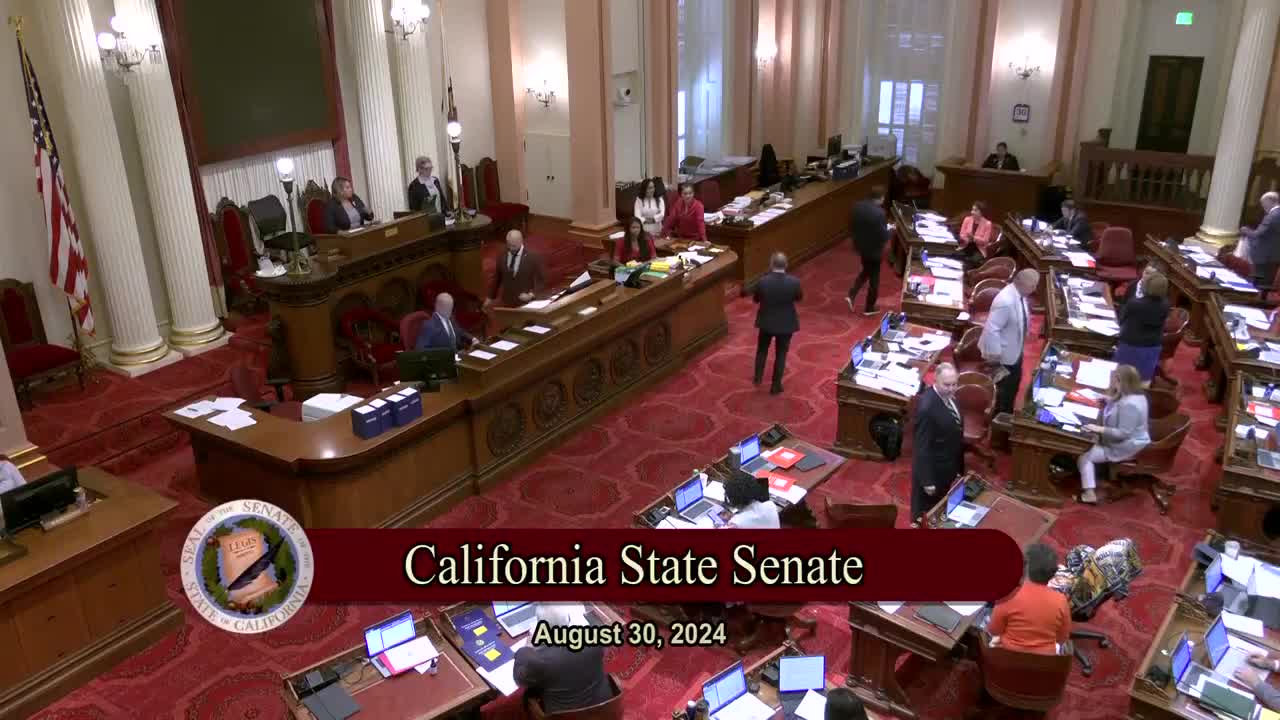
Bill Author