SB 1147: Drinking water: microplastics levels.
- Session Year: 2023-2024
- House: Senate
- Latest Version Date: 2024-09-28
Current Status:
Passed
(2024-09-28: Chaptered by Secretary of State. Chapter 881, Statutes of 2024.)
Introduced
In Committee
First Chamber
In Committee
Second Chamber
Enacted
Existing law, the California Safe Drinking Water Act, requires the State Water Resources Control Board to administer provisions relating to the regulation of drinking water to protect public health. Existing law requires the state board to adopt a definition of microplastics in drinking water and to adopt a standard methodology to be used in the testing of drinking water for microplastics and requirements for 4 years of testing and reporting of microplastics in drinking water, including public disclosure of those results.
This bill would require the Office of Environmental Health Hazard Assessment (OEHHA) to study the health effects of microplastics in drinking and bottled water to evaluate toxicity characteristics and levels of microplastics in water that are not anticipated to cause or contribute to adverse health effects, or to identify data gaps that would need to be addressed to establish those levels. The bill would require OEHHA to provide biennial status updates, and post a final report on its internet website. The bill would authorize the State Water Resources Control Board, after taking into consideration the findings of the report, to request that OEHHA prepare and publish a public health goal for microplastics in drinking water, as specified.
Existing law, the California Safe Drinking Water Act, requires the State Water Resources Control Board to administer provisions relating to the regulation of drinking water to protect public health. Existing law requires the state board to adopt a definition of microplastics in drinking water and to adopt a standard methodology to be used in the testing of drinking water for microplastics and requirements for 4 years of testing and reporting of microplastics in drinking water, including public disclosure of those results.
This bill would require the Office of Environmental Health Hazard Assessment (OEHHA) to study the health effects of microplastics in drinking and bottled water to evaluate toxicity characteristics and levels of microplastics in water that are not anticipated to cause or contribute to adverse health effects, or to identify data gaps that would need to be addressed to establish those levels. The bill would require OEHHA to provide annual biennial status updates, and post a final report on its internet website. The bill would authorize the State Water Resources Control Board, after taking into consideration the findings of the report, to request that OEHHA prepare and publish a public health goal for microplastics in drinking water, as specified.
The California Constitution requires the state to reimburse local agencies and school districts for certain costs mandated by the state. Statutory provisions establish procedures for making that reimbursement.This bill would provide that no reimbursement is required by this act for a specified reason.Existing law, the Sherman Food, Drug, and Cosmetic Law, regulates, among other things, the manufacture, production, processing, and packing of any food, drug, device, or cosmetic, and is administered by the State Department of Public Health. The law prescribes various quality and labeling standards for bottled water and vended water, and limits the levels of certain contaminants that may be contained in those water products. Existing law makes a violation of the law or regulation adopted pursuant to the law a crime. Existing law requires, as a condition of licensure, a water-bottling plant, as defined, to annually prepare a water-bottling plant report, as specified, and to make the report available to each customer, upon request.
This bill would require, in the event that the State Water Resources Control Board adopts a primary drinking water standard for microplastics, and upon adoption of that standard, any water-bottling plant that produces bottled water that is sold in this state to provide the State Department of Public Healths Food and Drug Branch an annual report on the levels of microplastics found in the source water used for bottling and in the final bottled water product that is offered for sale, as provided. The bill would require this report to be included with the annual water-bottling plant report and, upon request, be made available to each consumer. By expanding requirements on water-bottling plants, the violation of which would be a crime, the bill would impose a state-mandated local program. The bill would require the State Department of Public Health to determine, Health, upon adoption of a primary drinking water standard for microplastics in drinking water, whether requiring bottled water to meet a maximum contaminant level equivalent to the primary drinking water standard for microplastics in drinking water is necessary or appropriate for ensuring that bottled water presents no adverse effect on public health. by the State Water Resources Control Board, to ensure bottled water meets the state microplastics drinking water standard. The bill would encourage the State Water Resources Control Board to identify and develop strategies for addressing technical challenges to microplastics testing, as specified.
Existing law, the California Safe Drinking Water Act, requires the State Water Resources Control Board to administer provisions relating to the regulation of drinking water to protect public health. Existing law requires the state board to adopt a definition of microplastics in drinking water and to adopt a standard methodology to be used in the testing of drinking water for microplastics and requirements for 4 years of testing and reporting of microplastics in drinking water, including public disclosure of those results.
This bill would require the Office of Environmental Health Hazard Assessment (OEHHA) to prioritize studying the health impacts of microplastics in drinking water and bottled water to evaluate toxicity characteristics and levels of microplastics in those types of water that are not anticipated to cause or contribute to adverse health effect, or that does not pose any significant risk to health, or to identify any data gaps that exist that need to be addressed in order to establish those levels. The bill would require OEHHA to compile findings from the study into a report and publish the report on its internet website no later than December 31, 2026. study the health effects of microplastics in drinking water to evaluate toxicity characteristics and levels of microplastics in water that are not anticipated to cause or contribute to adverse health effects, or to identify data gaps that would need to be addressed to establish those levels. The bill would require OEHHA to provide annual status updates, and post a final report on its internet website. The bill would authorize the State Water Resources Control Board, after considering taking into consideration the findings of the report, to request that OEHHA prepare and publish a public health goal for microplastics in drinking water, as specified. The bill would require the state board to review the public health goal developed by OEHHA, and adopt a primary drinking water standard for microplastics, if appropriate.
The California Constitution requires the state to reimburse local agencies and school districts for certain costs mandated by the state. Statutory provisions establish procedures for making that reimbursement.
This bill would provide that no reimbursement is required by this act for a specified reason.
Existing law, the Sherman Food, Drug, and Cosmetic Law, regulates, among other things, the manufacture, production, processing, and packing of any food, drug, device, or cosmetic, and is administered by the State Department of Public Health. The law prescribes various quality and labeling standards for bottled water and vended water, and limits the levels of certain contaminants that may be contained in those water products. Existing law makes a violation of the law or regulation adopted pursuant to the law a crime. Existing law requires, as a condition of licensure, a water-bottling plant, as defined, to annually prepare a water-bottling plant report, as specified, and to make the report available to each customer, upon request.
This bill would require, upon adoption by in the event that the State Water Resources Control Board of adopts a primary drinking water standard for microplastics, and upon adoption of that standard, any water-bottling plant that produces bottled water that is sold in this state to provide the State Department of Public Healths Food and Drug Branch an annual report on the levels of microplastics found in the source water used for bottling and in the final bottled water product that is offered for sale, as provided. The bill would require this report to be included with the annual water-bottling plant report and, upon request, be made available to each consumer. By expanding requirements on water-bottling plants, the violation of which would be a crime, the bill would impose a state-mandated local program. The bill would require the State Department of Public Health to determine, upon adoption of a primary drinking water standard for microplastics in drinking water, whether requiring bottled water to meet a maximum contaminant level equivalent to the primary drinking water standard for microplastics in drinking water is necessary or appropriate for ensuring that bottled water presents no adverse effect on public health.
Existing law, the California Safe Drinking Water Act, requires the State Water Resources Control Board to administer provisions relating to the regulation of drinking water to protect public health. Existing law requires the state board to adopt a definition of microplastics in drinking water and to adopt a standard methodology to be used in the testing of drinking water for microplastics and requirements for 4 years of testing and reporting of microplastics in drinking water, including public disclosure of those results.
This bill would require the Office of Environmental Health Hazard Assessment (OEHHA) to study prioritize studying the health impacts of microplastics in drinking water, including bottled water, water and bottled water to evaluate and identify a level toxicity characteristics and levels of microplastics in those types of water that is are not anticipated to cause or contribute to adverse health effects effect, or that does not pose any significant risk to health. health, or to identify any data gaps that exist that need to be addressed in order to establish those levels. The bill would require OEHHA, after the state board adopts a standard methodology and requirements for the testing and reporting of microplastics in drinking water, and upon the request of the state board, to develop and deliver to the state board a public health goal for a level of microplastics in those types of waters, as provided. OEHHA to compile findings from the study into a report and publish the report on its internet website no later than December 31, 2026. The bill would authorize the State Water Resources Control Board, after considering the findings of the report, to request that OEHHA prepare and publish a public health goal for microplastics in drinking water, as specified. The bill would require the state board to review the public health goal developed and delivered by OEHHA, and to adopt a primary drinking water standard for microplastics, as specified. microplastics, if appropriate.
The California Constitution requires the state to reimburse local agencies and school districts for certain costs mandated by the state. Statutory provisions establish procedures for making that reimbursement.
This bill would provide that no reimbursement is required by this act for a specified reason.
Existing law, the Sherman Food, Drug, and Cosmetic Law, regulates, among other things, the manufacture, production, processing, and packing of any food, drug, device, or cosmetic, and is administered by the State Department of Public Health. The law prescribes various quality and labeling standards for bottled water and vended water, and limits the levels of certain contaminants that may be contained in those water products. Existing law makes a violation of the law or regulation adopted pursuant to the law a crime. Existing law requires, as a condition of licensure, a water-bottling plant, as defined, to annually prepare a water-bottling plant report, as specified, and to make the report available to each customer, upon request.
This bill would require, among other things, require, upon adoption by the State Water Resources Control Board of a primary drinking water standard for microplastics, any water-bottling plant that produces bottled water that is sold in this state to provide the State Department of Public Healths Food and Drug Branch an annual report on the levels of microplastics found in the source water used for bottling and in the final bottled water product that is offered for sale, as provided. The bill would require this report to be included with the annual water-bottling plant report and, upon request, be made available to each consumer. By expanding requirements on water-bottling plants, the violation of which would be a crime, the bill would impose a state-mandated local program.
Existing law, the California Safe Drinking Water Act, requires the State Water Resources Control Board to administer provisions relating to the regulation of drinking water to protect public health. Existing law requires the state board to adopt a definition of microplastics in drinking water and to adopt a standard methodology to be used in the testing of drinking water for microplastics and requirements for 4 years of testing and reporting of microplastics in drinking water, including public disclosure of those results.
This bill would require the Office of Environmental Health Hazard Assessment (OEHHA) to study the health impacts of microplastics in drinking water, including bottled water, in order to evaluate and identify safe and unsafe levels a level of microplastics in those types of water, and, on or before January 1, 2026, water that is not anticipated to cause or contribute to adverse health effects or that does not pose any significant risk to health. The bill would require OEHHA, after the state board adopts a standard methodology and requirements for the testing and reporting of microplastics in drinking water, and upon the request of the state board, to develop and deliver to the state board, among other things, board a public health standards and goals goal for a safe level of microplastics in those waters. types of waters, as provided. The bill would require the state board, on or before January 1, 2028, to adopt and implement those board to review the public health standards and goals goal developed and delivered by OEHHA, and to provide those public health standards and goals to local water agencies, along with other specified information provided by OEHHA. The bill would also require the state board to establish testing and reporting requirements for an annual testing of microplastics in bottled water sold in or into this state, as specified. adopt a primary drinking water standard for microplastics, as specified.
The California Constitution requires the state to reimburse local agencies and school districts for certain costs mandated by the state. Statutory provisions establish procedures for making that reimbursement.
This bill would provide that no reimbursement is required by this act for a specified reason.
Existing law, the California Safe Drinking Water Act, requires the State Water Resources Control Board to administer provisions relating to the regulation of drinking water to protect public health. Existing law requires the state board to adopt a definition of microplastics in drinking water and to adopt a standard methodology to be used in the testing of drinking water for microplastics and requirements for 4 years of testing and reporting of microplastics in drinking water, including public disclosure of those results.
This bill would require, among other things, the Office of Environmental Health Hazard Assessment (OEHHA) to study the health impacts of microplastics in drinking water, including bottled water, in order to evaluate and identify safe and unsafe levels of microplastics in those types of water, and, on or before January 1, 2026, to develop and deliver to the state board, among other things, public health standards and goals for a safe level of microplastics in those waters. The bill would require the state board, on or before January 1, 2028, to adopt and implement those public health standards and goals developed and delivered by OEHHA, and to provide those public health standards and goals to local water agencies, along with other specified information provided by OEHHA. The bill would also require the state board to establish testing and reporting requirements for an annual testing of microplastics in bottled water sold in or into this state, as specified.
(a)The Office of Environmental Health Hazard Assessment shall study the health effects of microplastics, consistent with Section 116365, in drinking and bottled water to evaluate toxicity characteristics and levels of microplastics in water that are not anticipated to cause or contribute to adverse health effects, or to identify data gaps that would need to be addressed to establish those levels. The Office of Environmental Health Hazard Assessment shall provide biennial status updates that may contain the compilation of findings from the study into a report and post the final report on its internet website.
(b)After taking into consideration the findings published pursuant to subdivision (a), the State Water Resources Control Board may request that the Office of Environmental Health Hazard Assessment prepare and publish a public health goal, pursuant to subdivision (c) of Section 116365, for microplastics in drinking water.
(a)The Office of Environmental Health Hazard Assessment shall study the health effects of microplastics, consistent with Section 116365, in drinking and bottled water to evaluate toxicity characteristics and levels of microplastics in water that are not anticipated to cause or contribute to adverse health effects, or to identify data gaps that would need to be addressed to establish those levels. The Office of Environmental Health Hazard Assessment shall provide annual biennial status updates that may contain the compilation of findings from the study into a report and post the final report on its internet website.
(b)After taking into consideration the findings published pursuant to subdivision (a), the State Water Resources Control Board may request that the Office of Environmental Health Hazard Assessment prepare and publish a public health goal, pursuant to subdivision (c) of Section 116365, for microplastics in drinking water.
SEC. 3.No reimbursement is required by this act pursuant to Section 6 of Article XIIIB of the California Constitution because the only costs that may be incurred by a local agency or school district will be incurred because this act creates a new crime or infraction, eliminates a crime or infraction, or changes the penalty for a crime or infraction, within the meaning of Section 17556 of the Government Code, or changes the definition of a crime within the meaning of Section 6 of Article XIIIB of the California Constitution.(a)In the event that the State Water Resources Control Board adopts a primary drinking water standard standard, as defined in subdivision (c) of Section 116275, for microplastics, and upon adoption of the primary drinking water standard for microplastics, any water-bottling plant that produces bottled water that is sold in this state shall provide the State Department of Public Healths Food and Drug Branch an annual report on the levels of microplastics found in the source water used for bottling and in the final bottled water product that is offered for sale.
(b)The report required by this section and any related testing may shall be conducted by an ELAP certified laboratory and in accordance with Section 116376, including, but not limited to, the use of methods outlined in the State Water Resources Control Boards Division of Drinking Waters August 9, 2022, publication entitled Policy Handbook Establishing a Standard Method of Testing and Reporting of Microplastics in Drinking Water, and any subsequent document published or released by the state board pursuant to the requirements of Section 116376, or that is related to the publication, including, but not limited to, an update to the publication.
(c)The report required by this section shall be included with the bottled water report pursuant to Section 111071, and shall, upon request, be made available to each consumer.
(d)Upon adoption of a primary drinking water standard for microplastics in drinking water, by the State Water Resources Control Board, the State Department of Public Health Health, pursuant to Section 111080, shall determine, pursuant to Section 111080, whether requiring bottled water to meet a maximum contaminant level equivalent to the primary drinking water standard for microplastics in drinking water is necessary or appropriate for ensuring that bottled water presents no adverse effect on public health. ensure bottled water meets the state microplastics drinking water standard.
(e)The State Water Resources Control Board is encouraged to work with the Environmental Laboratory Technical Advisory Committee to identify and develop strategies for addressing technical challenges to microplastics testing so that public water systems can effectively collect, prepare, analyze, characterize, and confirm microplastics in drinking water, and that may include both of the following:
(1)The development of a universal identification reference library for microplastics in drinking water.
(2)The development of a strategic plan focused on accrediting laboratories to analyze drinking water samples for microplastics.
SEC. 2.Section 116376.2 is added to the Health and Safety Code, to read:116376.2.(a)The Office of Environmental Health Hazard Assessment shall prioritize studying the health impacts of microplastics in drinking water and bottled water to evaluate toxicity characteristics and levels of microplastics in those types of water that are not anticipated to cause or contribute to adverse health effects, or that does not pose any significant risk to health, or to identify any data gaps that exist that need to be addressed in order to establish those levels. study the health effects of microplastics, consistent with Section 116365, in drinking water to evaluate toxicity characteristics and levels of microplastics in water that are not anticipated to cause or contribute to adverse health effects, or to identify data gaps that would need to be addressed to establish those levels. The Office of Environmental Health Hazard Assessment shall provide annual status updates that may contain the compilation of findings from the study into a report and post the final report on its internet website.
(b)The Office of Environmental Health Hazard Assessment shall compile findings from the study pursuant to subdivision (a) into a report and publish the report on its internet website by no later than December 31, 2026.(c)Upon completion of the report published pursuant to subdivision (b), the State Water Resources Control Board may, after considering the findings of the report, request that the Office of Environmental Health Hazard Assessment prepare and publish a public health goal, pursuant to subdivision (c) of Section 116365, for microplastics in drinking water.(d)The State Water Resources Control Board shall review a public health goal developed pursuant to subdivision (c) and, pursuant to subdivision (a) of Section 116365, adopt a primary drinking water standard for microplastics, if appropriate.(b)After taking into consideration the findings published pursuant to subdivision (a), the State Water Resources Control Board may request that the Office of Environmental Health Hazard Assessment prepare and publish a public health goal, pursuant to subdivision (c) of Section 116365, for microplastics in drinking water.
SEC. 3.No reimbursement is required by this act pursuant to Section 6 of Article XIIIB of the California Constitution because the only costs that may be incurred by a local agency or school district will be incurred because this act creates a new crime or infraction, eliminates a crime or infraction, or changes the penalty for a crime or infraction, within the meaning of Section 17556 of the Government Code, or changes the definition of a crime within the meaning of Section 6 of Article XIIIB of the California Constitution.
(a)Upon adoption by In the event that the State Water Resources Control Board of adopts a primary drinking water standard for microplastics, and upon adoption of the primary drinking water standard for microplastics, any water-bottling plant that produces bottled water that is sold in this state shall provide the State Department of Public Healths Food and Drug Branch an annual report on the levels of microplastics found in the source water used for bottling and in the final bottled water product that is offered for sale.
(b)The report required by this section and any related testing shall may be conducted in accordance with Section 116376, including, but not limited to, the use of methods outlined in the State Water Resources Control Boards Division of Drinking Waters August 9, 2022, publication entitled Policy Handbook Establishing a Standard Method of Testing and Reporting of Microplastics in Drinking Water, and any subsequent document published or released by the state board pursuant to the requirements of Section 116376, or that is related to the publication, including, but not limited to, an update to the publication.
(c)The report required by this section shall be included with the bottled water report pursuant to Section 111071, and shall, upon request, be made available to each consumer.
(d)Upon adoption of a primary drinking water standard for microplastics in drinking water, the State Department of Public Health shall determine, pursuant to Section 111080, whether requiring bottled water to meet a maximum contaminant level equivalent to the primary drinking water standard for microplastics in drinking water is necessary or appropriate for ensuring that bottled water presents no adverse effect on public health.
SEC. 2.Section 116376.2 is added to the Health and Safety Code, to read:116376.2.(a)(1)The Office of Environmental Health Hazard and Assessment shall prioritize studying the health impacts of microplastics in drinking water, including bottled water, water and bottled water to evaluate and identify a level toxicity characteristics and levels of microplastics in those types of water that is are not anticipated to cause or contribute to adverse health effects, or that does not pose any significant risk to health. health, or to identify any data gaps that exist that need to be addressed in order to establish those levels.
(2)After the state board adopts a standard methodology and requirements for the testing and reporting of microplastics in drinking water, and upon the request of the state board, the office shall develop and deliver to the state board a public health goal for microplastics in drinking water, including bottled water, using the criteria set forth in subdivision (c) of Section 116365.(b)The state board shall review the public health goal developed pursuant to subdivision (a) and, pursuant to subdivision (a) of Section 116365, adopt a primary drinking water standard for microplastics.(b)The Office of Environmental Health Hazard Assessment shall compile findings from the study pursuant to subdivision (a) into a report and publish the report on its internet website by no later than December 31, 2026.
(c)Upon completion of the report published pursuant to subdivision (b), the State Water Resources Control Board may, after considering the findings of the report, request that the Office of Environmental Health Hazard Assessment prepare and publish a public health goal, pursuant to subdivision (c) of Section 116365, for microplastics in drinking water.
(d)The State Water Resources Control Board shall review a public health goal developed pursuant to subdivision (c) and, pursuant to subdivision (a) of Section 116365, adopt a primary drinking water standard for microplastics, if appropriate.
SEC. 3.No reimbursement is required by this act pursuant to Section 6 of Article XIIIB of the California Constitution because the only costs that may be incurred by a local agency or school district will be incurred because this act creates a new crime or infraction, eliminates a crime or infraction, or changes the penalty for a crime or infraction, within the meaning of Section 17556 of the Government Code, or changes the definition of a crime within the meaning of Section 6 of Article XIIIB of the California Constitution.
(a)Upon adoption by the State Water Resources Control Board of a primary drinking water standard for microplastics, any water-bottling plant that produces bottled water that is sold in this state shall provide the State Department of Public Healths Food and Drug Branch an annual report on the levels of microplastics found in the source water used for bottling and in the final bottled water product that is offered for sale.
(b)The report required by this section and any related testing shall be conducted in accordance with Section 116376, including, but not limited to, the use of methods outlined in the State Water Resources Control Boards Division of Drinking Waters August 9, 2022, publication entitled Policy Handbook Establishing a Standard Method of Testing and Reporting of Microplastics in Drinking Water, and any subsequent document published or released by the state board pursuant to the requirements of Section 116376, or that is related to the publication, including, but not limited to, an update to the publication.
(c)The report required by this section shall be included with the bottled water report pursuant to Section 111071, and shall, upon request, be made available to each consumer.
SECTION 1.SEC. 2.Section 116376.2 is added to the Health and Safety Code, to read:116376.2.(a)(1)The Office of Environmental Health Hazard and Assessment shall study prioritize studying the health impacts of microplastics in drinking water, including bottled water, to evaluate and identify safe and unsafe levels a level of microplastics in those types of water. water that is not anticipated to cause or contribute to adverse health effects, or that does not pose any significant risk to health.
(2)The office, on or before January 1, 2026, After the state board adopts a standard methodology and requirements for the testing and reporting of microplastics in drinking water, and upon the request of the state board, the office shall develop and deliver to the state board a public health standards and goals goal for a safe level of microplastics in drinking water, including bottled water, and develop and deliver to the state board definitions for the terms safe level of microplastics and unsafe level of microplastics. using the criteria set forth in subdivision (c) of Section 116365.
(b)(1)The state board, on or before January 1, 2028, board shall adopt and implement review the public health standards and goals for a safe level of microplastics in drinking water, including bottled water, developed and delivered by the Office of Environmental Health Hazard and Assessment pursuant to subdivision (a). goal developed pursuant to subdivision (a) and, pursuant to subdivision (a) of Section 116365, adopt a primary drinking water standard for microplastics.
(2)The state board shall provide to local water agencies those public health standards and goals and the definitions for safe level of microplastics and unsafe level of microplastics developed and delivered by the Office of Environmental Health Hazard and Assessment pursuant to subdivision (a).(c)The state board shall establish testing and reporting requirements for an annual testing of microplastics in bottled water sold in or into this state. The testing and reporting requirements shall apply whether the water is bottled in or outside of the state. The testing requirement shall include methodologies to test for various types of materials within water samples that are sufficient to determine whether the material of the plastic bottle affects the level of microplastics in the bottled water.SEC. 3.No reimbursement is required by this act pursuant to Section 6 of Article XIIIB of the California Constitution because the only costs that may be incurred by a local agency or school district will be incurred because this act creates a new crime or infraction, eliminates a crime or infraction, or changes the penalty for a crime or infraction, within the meaning of Section 17556 of the Government Code, or changes the definition of a crime within the meaning of Section 6 of Article XIIIB of the California Constitution.
(a)(1)The Office of Environmental Health Hazard and Assessment shall study the health impacts of microplastics in drinking water, including bottled water, to evaluate and identify safe and unsafe levels of microplastics in those types of water.
(2)The office, on or before January 1, 2026, shall develop and deliver to the state board public health standards and goals for a safe level of microplastics in drinking water, including bottled water, and develop and deliver to the state board definitions for the terms safe level of microplastics and unsafe level of microplastics.
(b)(1)The state board, on or before January 1, 2028, shall adopt and implement the public health standards and goals for a safe level of microplastics in drinking water, including bottled water, developed and delivered by the Office of Environmental Health Hazard and Assessment pursuant to subdivision (a).
(2)The state board shall provide to local water agencies those public health standards and goals and the definitions for safe level of microplastics and unsafe level of microplastics developed and delivered by the Office of Environmental Health Hazard and Assessment pursuant to subdivision (a).
(c)The state board shall establish testing and reporting requirements for an annual testing of microplastics in bottled water sold in or into this state. The testing and reporting requirements shall apply whether the water is bottled in or outside of the state. The testing requirement shall include methodologies to test for various types of materials within water samples that are sufficient to determine whether the material of the plastic bottle affects the level of microplastics in the bottled water.
|
Date
|
Status
|
|---|---|
| Sep 28, 2024 | Chaptered by Secretary of State. Chapter 881, Statutes of 2024. |
| Sep 28, 2024 | Approved by the Governor. |
| Sep 9, 2024 | Enrolled and presented to the Governor at 3 p.m. |
| Aug 29, 2024 | Assembly amendments concurred in. (Ayes 33. Noes 4. Page 5649.) Ordered to engrossing and enrolling. |
| Aug 28, 2024 | In Senate. Concurrence in Assembly amendments pending. |
| Aug 28, 2024 | Read third time. Passed. (Ayes 66. Noes 0. Page 6794.) Ordered to the Senate. |
| Aug 22, 2024 | Ordered to third reading. |
| Aug 22, 2024 | Read third time and amended. |
| Aug 20, 2024 | Read second time. Ordered to third reading. |
| Aug 19, 2024 | Read second time and amended. Ordered to second reading. |
| Aug 15, 2024 | From committee: Do pass as amended. (Ayes 12. Noes 1.) (August 15). |
| Aug 7, 2024 | August 7 set for first hearing. Placed on suspense file. |
| Jun 26, 2024 | From committee: Do pass and re-refer to Com. on APPR. (Ayes 6. Noes 0.) (June 25). Re-referred to Com. on APPR. |
| Jun 19, 2024 | From committee: Do pass and re-refer to Com. on E.S. & T.M. (Ayes 14. Noes 0.) (June 18). Re-referred to Com. on E.S. & T.M. |
| Jun 19, 2024 | From committee with author's amendments. Read second time and amended. Re-referred to Com. on E.S. & T.M. |
| Jun 6, 2024 | Re-referred to Coms. on HEALTH and E.S. & T.M. pursuant to Assembly Rule 96. |
| Jun 3, 2024 | Referred to Coms. on E.S. & T.M. and HEALTH. |
| May 21, 2024 | In Assembly. Read first time. Held at Desk. |
| May 20, 2024 | Read third time. Passed. (Ayes 32. Noes 3. Page 4030.) Ordered to the Assembly. |
| May 16, 2024 | Read second time. Ordered to third reading. |
| May 16, 2024 | From committee: Do pass. (Ayes 5. Noes 2. Page 3973.) (May 16). |
| May 14, 2024 | Set for hearing May 16. |
| May 13, 2024 | May 13 hearing: Placed on APPR suspense file. |
| May 3, 2024 | Set for hearing May 13. |
| Apr 25, 2024 | From committee: Do pass and re-refer to Com. on APPR. (Ayes 9. Noes 0. Page 3755.) (April 24). Re-referred to Com. on APPR. |
| Apr 22, 2024 | Set for hearing April 24. |
| Apr 18, 2024 | Re-referred to Com. on HEALTH. |
| Apr 17, 2024 | From committee: Do pass and re-refer to Com. on RLS. (Ayes 5. Noes 0. Page 3660.) (April 17). Re-referred to Com. on RLS. |
| Apr 10, 2024 | From committee with author's amendments. Read second time and amended. Re-referred to Com. on E.Q. |
| Mar 12, 2024 | Set for hearing April 17. |
| Feb 21, 2024 | Referred to Com. on E.Q. |
| Feb 15, 2024 | From printer. May be acted upon on or after March 16. |
| Feb 14, 2024 | Introduced. Read first time. To Com. on RLS. for assignment. To print. |
|
Date
|
Description
|
Location
|
Votes
|
|
|---|---|---|---|---|
| Aug 29, 2024 | Unfinished Business SB1147 Portantino et al. Concurrence | Senate Floor |
Passed |
|
| Aug 28, 2024 | SB 1147 Portantino Senate Third Reading By Lowenthal | Assembly Floor |
Passed |
|
| Aug 15, 2024 | Do pass as amended. | Assembly Standing Committee on Appropriations |
Passed |
|
| Jun 25, 2024 | Do pass and be re-referred to the Committee on [Appropriations] | Assembly Standing Committee on Environmental Safety and Toxic Materials |
Passed |
|
| Jun 18, 2024 | Do pass and be re-referred to the Committee on [Environmental Safety and Toxic Materials] | Assembly Standing Committee on Health |
Passed |
|
| May 20, 2024 | Senate 3rd Reading SB1147 Portantino et al. | Senate Floor |
Passed |
|
| May 16, 2024 | Do pass | Senate Standing Committee on Appropriations |
Passed |
|
| May 13, 2024 | Placed on suspense file | Senate Standing Committee on Appropriations |
Passed |
|
| Apr 24, 2024 | Do pass, but first be re-referred to the Committee on [Appropriations] | Senate Standing Committee on Health |
Passed |
|
| Apr 17, 2024 | Do pass, but first be re-referred to the Committee on [Rules] | Senate Standing Committee on Environmental Quality |
Passed |
This list shows positions taken on this bill by organizations on the date displayed, which is linked to the original source.
Positions by individuals are not included.
|
Organization
|
Position
|
Date
|
|---|---|---|
| A Voice for Choice Advocacy | ** Support | |
| Activist San Diego | * For If Amend | Jun 18, 2024 |
| American Beverage Association | * Neutral | Apr 17, 2024 |
| American Waterworks Association | * For If Amend | Jun 25, 2024 |
| California Environmental Voters | ** Support | |
| California, Nevada, AWWA | * For If Amend | Jun 25, 2024 |
| California, Nevada, AWWA | * For If Amend | Jun 27, 2024 |
| Californians Against Waste | ** Support | |
| Center For Environmental Health | * For If Amend | Jun 18, 2024 |
| Clean Earth 4 Kids | * Support | Jun 25, 2024 |
| Climate Reality Project, California Coalition | ** Support | |
| ECO Sustainability | * Support | Jun 25, 2024 |
| Ecosustainability peeps | * For If Amend | Jun 18, 2024 |
| Facts | * Support | Jun 25, 2024 |
| Grandparents Acting Together | * Support | Jun 25, 2024 |
| International Bottled Water Association | * For If Amend | Jun 27, 2024 |
| Moms Advocating for Sustainability | * Support | Jun 25, 2024 |
| NCCA | * Support | Jun 25, 2024 |
| North County Equity and Justice | * Support | Jun 25, 2024 |
| retired public health nurse | * Support | Apr 17, 2024 |
| Sacramento Resident | * Support | Apr 17, 2024 |
| Union Of Concerned Scientists | * Support | Apr 17, 2024 |
| YardSmartMarin | * Support | Jun 25, 2024 |
SENATE RULES COMMITTEE Office of Senate Floor Analyses (916) 651-1520 Fax: (916) 327-4478 | SB 1147 |
UNFINISHED BUSINESS
Bill No: SB 1147
Author: Portantino (D), et al.
Amended: 8/22/24
Vote: 21
SENATE ENVIRONMENTAL QUALITY COMMITTEE: 5-0, 4/17/24
AYES: Allen, Archuleta, Gonzalez, Menjivar, Skinner
NO VOTE RECORDED: Dahle, Nguyen
SENATE HEALTH COMMITTEE: 9-0, 4/24/24
AYES: Roth, Glazer, Gonzalez, Hurtado, Limón, Menjivar, Rubio, Smallwood-Cuevas, Wiener
NO VOTE RECORDED: Nguyen, Grove
SENATE APPROPRIATIONS COMMITTEE: 5-2, 5/16/24
AYES: Caballero, Ashby, Becker, Bradford, Wahab
NOES: Jones, Seyarto
SENATE FLOOR: 32-3, 5/20/24
AYES: Allen, Alvarado-Gil, Archuleta, Ashby, Atkins, Becker, Blakespear, Bradford, Caballero, Cortese, Dodd, Durazo, Eggman, Glazer, Gonzalez, Hurtado, Laird, Limón, McGuire, Menjivar, Newman, Padilla, Portantino, Roth, Rubio, Skinner, Smallwood-Cuevas, Stern, Umberg, Wahab, Wiener, Wilk
NOES: Jones, Niello, Seyarto
NO VOTE RECORDED: Dahle, Grove, Min, Nguyen, Ochoa Bogh
ASSEMBLY FLOOR: 66-0, 8/28/24 - See last page for vote
SUBJECT: Drinking water: microplastics levels
SOURCE: Author
DIGEST:
This bill requires the Office of Environmental Health Hazard Assessment (OEHHA) to study the health effects of microplastics in drinking water and bottled water, and authorizes the State Water Resources Control Board (State Water Board), after OEHHA's study is complete, to request that OEHHA develop a public health goal (PHG) for microplastics in drinking water.
Assembly Amendments
remove the requirement of water bottling plants to provide the State Department of Public Health an annual report on the level of microplastics found in source and final bottled water; remove the requirement of the State Water Board to set a primary drinking water standard; authorizes OEHHA to study the health effects of microplastics in drinking and bottled water.
ANALYSIS:
Existing law:
- Requires, on or before December 31, 2024, the Ocean Protection Council (OPC), to the extent funding is available, to adopt and implement a Statewide Microplastics Strategy (OPC Strategy) related to microplastic materials that pose an emerging concern to ocean health. Requires OPC to work with the State Water Board, the Office of Environmental Health Hazard Assessment (OEHHA), and other interested entities in developing the OPC Strategy.
- Requires the State Water Board to adopt a definition of microplastics in drinking water and to adopt a standard methodology to be used in the testing of drinking water for microplastics and requirements for four years of testing and reporting of microplastics in drinking water, including public disclosure of those results. (HSC §116376)
- Requires OEHHA to prepare and publish an assessment of the risks to public health posed by each contaminant for which the state board proposes a primary drinking water standard. The risk assessment shall contain an estimate of the level of the contaminant in drinking water that is not anticipated to cause or contribute to adverse health effects, or does not pose any significant risk to health (known as a public health goal). (HSC §116365)
This bill:
- Requires OEHHA to study the health effects of microplastics in drinking water and bottled water, to evaluate toxicity characteristics and levels of microplastics that are not anticipated to cause or contribute to adverse health effects, or to identify data gaps that exist that need to be addressed in order to establish those levels; and
- Requires OEHHA to provide biennial status updates that may contain a compilation of the study's findings into a report, and to post the final report on its internet website; and
- Authorizes, after taking into consideration the findings in OEHHA's report, the State Water Board to request that OEHHA prepare and publish a PHG for microplastics in drinking water.
Background
- Prevalence and impacts of microplastics. Once plastics enter the environment, they break into smaller fragments known as microplastics. Microplastics, defined as small plastic particles with a diameter less than 5mm, have become a subject of increasing environmental concern. Microplastics can come in different shapes (fragments, films, and fibers), sizes, and materials (e.g. polystyrene, polyester). Because microplastics are so small, they can travel in water, air, and in the bodies of living organisms. As a result, microplastics are ubiquitous in the environment and are found in some of the most remote areas on earth. Of particular concern for living organisms, microplastics’ small size allows them to bioaccumulate up the food chain. Microplastics can also act as vectors for pollutants such as pesticides and heavy metals, effectively “piggybacking” these harmful pollutants wherever the microplastics go.
- Nanoplastics found in drinking water bottles. On January 8, 2024, the Los Angeles Times reported that scientists at Columbia University’s Lamont-Doherty laboratory examined water samples from three popular brands and found hundreds of thousands of bits of plastic per liter of water (on average, 240,000 pieces in a liter of bottled water). Ninety percent of those plastics were small enough to qualify as nanoplastics: microscopic flecks so small that they can be absorbed into human cells and tissue, as well as cross the blood-brain barrier. The researchers found that the quantity of such particles was 10 to 100 times greater than previously estimated.
- CalSPEC evidence review of the human health effects from microplastics exposure. A January 2023 report from the California State Policy Evidence Consortium (CalSPEC), an independent program administered through the University of California Center Sacramento (UCCS), examined evidence concerning human health effects of microplastics. The report rendered three principal conclusions. First, knowledge about microplastics prevalence, distribution, and toxicity to humans is incomplete. Second, despite these knowledge gaps, existing evidence raises concerns about the environmental and health consequences of microplastics pollution. Third, the international community has only just begun to implement policy interventions designed to curtail microplastics pollution, but the effectiveness of these interventions is unknown. The report suggested that more research is needed to characterize the prevalence and distribution of microplastic contaminants across all environmental compartments, determine acceptable levels of microplastics exposure to humans and the environment, and evaluate effective prevention and mitigation techniques.
- Statewide microplastics strategy. In 2018, in response to rising concerns over the potential impacts of microplastics to ocean and human health in California, the Legislature adopted SB 1422 and SB 1263, requiring the State Water Board to address microplastics in drinking water and the California Ocean Protection Council (OPC) to develop a Statewide Microplastics Strategy to address microplastics in the ambient marine environment, respectively. In February 2022, the OPC released its Statewide Microplastics Strategy which provides a multi-year roadmap for California to take a national and global leadership role in managing microplastics pollution. Multiple state agencies and external partners are working together to reduce the introduction of microplastics in California’s coastal ocean and other aquatic systems. Foundational to this Strategy is a recognition that the state must take decisive, precautionary action to reduce microplastics pollution, while scientific knowledge and understanding of microplastics sources, impacts, and successful reduction measures continue to grow.
Comments
- Purpose of Bill. According to the author, “With increased reporting and interest on the health risks of microplastics, it is past time we formally study its impacts to public health. Microplastics are becoming increasingly present in the environment and human body – including the heart, brain, and reproductive organs – yet, it is still inconclusive how microplastics impact our health. SB 1147 is essential to California’s ability to respond to the presence of microplastics in our drinking water – both tap and bottled water - and is led by science. The Office of Environmental Health Hazard Assessments reporting on the issue will allow the State Water Resource Control board to properly respond to the pervasive presence of microplastics within drinking water.”
- State action on microplastics in drinking water: As required by SB 1422 (Portantino, Chapter 902, Statutes of 2018), on June 1, 2020 the State Water Board adopted a definition of "microplastics in drinking water" through Resolution No. 2020-0021. SB 1422 additionally required the State Water Board to adopt a standard methodology to be used in the testing of drinking water for microplastics; adopt requirements for four years of testing and reporting of microplastics in drinking water; consider issuing a notification level or other guidance to aid consumer interpretation of the test results; and, accredit qualified laboratories in California to analyze microplastics.
On September 7, 2022, the State Water Board adopted the "Policy Handbook Establishing a Standard Method for Testing and Reporting of Microplastics in Drinking Water" (Policy Handbook) through Resolution No. 2022-0032. The State Water Board is also currently employing a phased approach for monitoring microplastics, to inform how public water systems will be required to monitor and report microplastics in drinking water going forward. Phases I and II (which focus on evaluating testing and monitoring protocols through implementation by a select number of public water systems, followed by the issuance of monitoring orders to additional public water systems) have been delayed from their expected start and end dates. The anticipated timeline for Phase 1 monitoring to begin is mid-2025, though it is unclear when the phases will be complete. The State Water Board writes in the Policy Handbook that it recognizes "the rapidly evolving science regarding microplastics, including the limited laboratory capacity and lack of proficiency testing samples, and the relatively high amount of resources required to sample and monitor for microplastics. The State Water Board anticipates capacity for monitoring and assessing laboratories using proficiency testing samples will be developed as a result of required monitoring." As of the writing of this analysis, there are currently no state-accredited laboratories to analyze for microplastics, though two laboratories have applied and are under review.
- Aligned with scientific process. SB 1147 builds on prior legislation and takes a stepwise approach to addressing microplastics in drinking water. This bill requires OEHHA to study the health effects of microplastics in both drinking and bottled water, and provide biennial status updates from their studies. The State Water Board is then authorized, but not required, to request OEHHA prepare and publish a public health goal for microplastics in drinking water. This approach avoids "getting ahead of the science" by grounding the state's next steps in a study conducted by OEHHA, to first assess the health effects of microplastics in drinking water and bottled water.
FISCAL EFFECT: Appropriation: No Fiscal Com.: Yes Local: No
According to the Assembly Appropriations Committee, enactment of this bill would result in ongoing annual costs of $253,000 for OEHHA to study the health impacts of microplastics and develop a PHG for microplastics in drinking water, and $200,000 in 2025-26 for external technical advising and specialized work. The State Water Board estimates ongoing, annual costs of up to $675,000, to develop the data necessary for OEHHA's study and conduct work on a PHG and MCL.
SUPPORT: (Verified 8/27/24)
A Voice for Choice Advocacy
California Environmental Voters
Californians Against Waste
Climate Reality Project, California Coalition
OPPOSITION: (Verified 8/27/24)
None received
ARGUMENTS IN SUPPORT: According to the California Environmental Voters, “Plastic pollution is a serious global concern. The extent of the environmental damage caused by plastics is well documented. Plastic packaging, such as water bottles, single-use plastic bags, and disposable medical supplies are some of the more recognizable offenders. As these materials begin to breakdown, they become smaller and smaller. Microplastics, which can be up to five millimeters in diameter, enter the ocean from marine plastic litter breaking down, run-off from plumbing, leakage from production facilities and other sources. Microplastics have been identified in soil, rain, drinking water, the air, even in the human heart.”
ASSEMBLY FLOOR: 66-0, 8/28/24
AYES: Addis, Aguiar-Curry, Alanis, Alvarez, Arambula, Bains, Bauer-Kahan, Bennett, Berman, Boerner, Bonta, Bryan, Calderon, Juan Carrillo, Wendy Carrillo, Connolly, Davies, Mike Fong, Friedman, Gabriel, Garcia, Gipson, Grayson, Haney, Hart, Holden, Hoover, Irwin, Jackson, Jones-Sawyer, Kalra, Lee, Low, Lowenthal, Maienschein, McCarty, McKinnor, Muratsuchi, Stephanie Nguyen, Pacheco, Papan, Joe Patterson, Pellerin, Petrie-Norris, Quirk-Silva, Ramos, Rendon, Reyes, Luz Rivas, Blanca Rubio, Sanchez, Santiago, Schiavo, Soria, Ting, Valencia, Villapudua, Waldron, Wallis, Ward, Weber, Wicks, Wilson, Wood, Zbur, Robert Rivas
NO VOTE RECORDED: Cervantes, Chen, Megan Dahle, Dixon, Essayli, Flora, Gallagher, Lackey, Mathis, Ortega, Jim Patterson, Rodriguez, Ta
Click here to enter text.
Prepared by: Holly Rudel / E.Q. / (916) 651-4108
8/28/24 22:50:42
**** END ****
SENATE THIRD READING
STR Bill Id:SB 1147
Author:(Portantino)
As Amended Ver:August 22, 2024
Majority vote
SUMMARY
Requires the Office of Environmental Health Hazard Assessment (OEHHA) to study the health effects of microplastics in drinking water and bottled water, and authorizes the State Water Resources Control Board (State Water Board), after OEHHA's study is complete, to request that OEHHA develop a public health goal (PHG) for microplastics in drinking water.
Major Provisions
- Requires OEHHA to study the health effects of microplastics in drinking water and bottled water, to evaluate toxicity characteristics and levels of microplastics that are not anticipated to cause or contribute to adverse health effects, or to identify data gaps that exist that need to be addressed in order to establish those levels.
- Requires OEHHA to provide biennial status updates that may contain a compilation of the study's findings into a report, and to post the final report on its internet website.
- Authorizes, after taking into consideration the findings in OEHHA's report, the State Water Board to request that OEHHA prepare and publish a PHG for microplastics in drinking water.
COMMENTS
Microplastics and human health: A January 2023 report to the Senate Environmental Quality Committee and the Assembly Natural Resources Committee from the California State Policy Evidence Consortium (CalSPEC), an independent program administered through the University of California Center Sacramento, examines evidence concerning the human health effects of microplastics. In the report, CalSPEC makes the following findings:
- Exposure to microplastics is suspected to be a digestive hazard to humans, including cancer;
- Exposure to microplastics is suspected to be a hazard to the human reproductive system; and,
- Although the evidence from the respiratory studies did not undergo as rigorous of an evaluation, findings in five studies on the respiratory system are indicative of health harm.
In March 2024, a study in the New England Journal of Medicine provided the first evidence of a potential link between microplastics and human health, although the authors acknowledge that additional studies are needed and that other factors not addressed in the study, such as socioeconomic status, could have contributed to the study's outcomes. The authors found that, among more than 200 people undergoing surgery, nearly 60% had microplastics or even smaller nanoplastics in a main artery. These people were 4.5 times more likely to experience a heart attack, stroke, or death within three years of their surgery, compared to those whose arteries were plastic-free. Chemical analyses revealed that the bulk of the particles were composed of either polyethylene—the most used plastic in the world, often found in food packaging, shopping bags and medical tubing—or polyvinyl chloride.
State action on microplastics in drinking water: As required by SB 1422 (Portantino, Chapter 902, Statutes of 2018), on June 1, 2020 the State Water Board adopted a definition of "microplastics in drinking water" through Resolution No. 2020-0021. SB 1422 additionally required the State Water Board to adopt a standard methodology to be used in the testing of drinking water for microplastics; adopt requirements for four years of testing and reporting of microplastics in drinking water; consider issuing a notification level or other guidance to aid consumer interpretation of the test results; and, accredit qualified laboratories in California to analyze microplastics.
On September 7, 2022, the State Water Board adopted the "Policy Handbook Establishing a Standard Method for Testing and Reporting of Microplastics in Drinking Water" (Policy Handbook) through Resolution No. 2022-0032. The State Water Board is also currently employing a phased approach for monitoring microplastics, to inform how public water systems will be required to monitor and report microplastics in drinking water going forward. Phases I and II (which focus on evaluating testing and monitoring protocols through implementation by a select number of public water systems, followed by the issuance of monitoring orders to additional public water systems) have been delayed from their expected start and end dates. The anticipated timeline for Phase 1 monitoring to begin is mid-2025, though it is unclear when the phases will be complete. The State Water Board writes in the Policy Handbook that it recognizes "the rapidly evolving science regarding microplastics, including the limited laboratory capacity and lack of proficiency testing samples, and the relatively high amount of resources required to sample and monitor for microplastics. The State Water Board anticipates capacity for monitoring and assessing laboratories using proficiency testing samples will be developed as a result of required monitoring." As of the writing of this analysis, there are currently no state-accredited laboratories to analyze for microplastics, though two laboratories have applied and are under review.
Federal and state regulation of contaminants in drinking water: To regulate drinking water contaminants that pose significant health risks, the State Water Board can begin the process by requesting that OEHHA establish a PHG. PHGs are concentrations of drinking water contaminants that pose no significant health risk if consumed for a lifetime, based on current risk assessment principles, practices, and methods. Once OEHHA establishes a PHG, the State Water Board determines whether a maximum contaminant level (MCL; a health protective drinking water standard that must be met by public water systems) should be considered. If the State Water Board determines that an MCL should be considered, it then conducts an in-depth risk management analysis and, if appropriate, initiates the regulatory process for adopting an MCL, enforceable under the California Safe Drinking Water Act.
Microplastics in bottled water: An understanding of the prevalence and implications of microplastics in bottled water is still emerging. In January 2024, a study published in the Proceedings of the National Academy of Sciences reported findings from a new imaging technique used to examine microplastics in three popular brands of bottled water. Key findings were summarized by the National Institutes of Health as follows:
"The researchers found that, on average, a liter of bottled water included about 240,000 tiny pieces of plastic. About 90% of these plastic fragments were nanoplastics. This total was 10 to 100 times more plastic particles than seen in earlier studies, which mostly focused on larger microplastics.
The water contained particles of all seven types of plastic. The most common was polyamide, a type of nylon that's often used to help filter and purify water. An abundance of polyethylene terephthalate (PET) was also detected. This might be expected, since PET is used to make bottles for water, soda, and many other drinks and foods. Other identified plastics included polyvinyl chloride, polymethyl methacrylate, and polystyrene, which is also used in water purification."
This bill: SB 1147 builds on prior legislation and takes a stepwise approach to addressing microplastics in drinking water. This approach avoids "getting ahead of the science" by grounding the state's next steps in a study conducted by OEHHA, to first assess the health effects of microplastics in drinking water and bottled water. After the study is complete, the State Water Board can then initiate the regulatory process for developing a PHG for microplastics.
According to the Author
"With the global urgency of plastic pollution, we begin to discover the extent of environmental damage and the breakdown of these materials into what we call microplastics. This material can be found in soil, rain, drinking water, air, and the human heart. Current research shows that microplastics have been detrimental to the behaviors and wellbeing of marine life, fish, mammals, and plants, although more consistent research is needed to dissect the true health impact of microplastics, especially on human health. With the existing damage that microplastics have on animals, sea life, and plants, it is plausible that microplastics pose concern for human health as well. With adequate studies on the health impacts of microplastics in water and by identifying a safe level of microplastics in water, we can decrease significant health risks. Therefore we author this bill in hopes of adopting primary drinking water standards for microplastics and for beginning to analyze how plastic materials may leach into plastic water bottles."
Arguments in Support
Writing on a prior version of this bill, CleanEarth4Kids.org states:
"CleanEarth4Kids.org supports SB 1147 to require [OEHHA] to study the health impacts of microplastics in drinking water, including bottled water and develop public health standards and goals for a safe level of microplastics in drinking water…There is currently no known safe level of microplastics in drinking water at the state or federal level. It is known that microplastics are commonly found in both tap and bottled water. Plastics are known to be full of toxic chemicals and it is necessary to study the health impacts of microplastics in our drinking water to protect human health and the environment."
Arguments in Opposition
None on file.
FISCAL COMMENTS
According to the Assembly Appropriations Committee, enactment of this bill would result in ongoing annual costs of $253,000 for OEHHA to study the health impacts of microplastics and develop a PHG for microplastics in drinking water, and $200,000 in 2025-26 for external technical advising and specialized work. The State Water Board estimates ongoing, annual costs of up to $675,000, to develop the data necessary for OEHHA's study and conduct work on a PHG and MCL.
VOTES
SENATE FLOOR: 32-3-5
YES: Allen, Alvarado-Gil, Archuleta, Ashby, Atkins, Becker, Blakespear, Bradford, Caballero, Cortese, Dodd, Durazo, Eggman, Glazer, Gonzalez, Hurtado, Laird, Limón, McGuire, Menjivar, Newman, Padilla, Portantino, Roth, Rubio, Skinner, Smallwood-Cuevas, Stern, Umberg, Wahab, Wiener, Wilk
NO: Jones, Niello, Seyarto
ABS, ABST OR NV: Dahle, Grove, Min, Nguyen, Ochoa Bogh
ASM HEALTH: 14-0-2
YES: Bonta, Waldron, Aguiar-Curry, Arambula, Jackson, Haney, Jones-Sawyer, Maienschein, McCarty, Rodriguez, Sanchez, Santiago, Schiavo, Weber
ABS, ABST OR NV: Flora, Joe Patterson
ASM ENVIRONMENTAL SAFETY AND TOXIC MATERIALS: 6-0-1
YES: Garcia, Hoover, Connolly, McKinnor, Papan, Reyes
ABS, ABST OR NV: Ta
ASM APPROPRIATIONS: 12-1-2
YES: Wicks, Sanchez, Arambula, Bryan, Calderon, Wendy Carrillo, Mike Fong, Grayson, Haney, Hart, Pellerin, Villapudua
NO: Dixon
ABS, ABST OR NV: Jim Patterson, Ta
UPDATED
VERSION: August 22, 2024
CONSULTANT: Naomi Ondrasek / E.S. & T.M. / (916) 319-3965 FN: 0004524
SENATE THIRD READING
STR Bill Id:SB 1147
Author:(Portantino)
As Amended Ver:August 19, 2024
Majority vote
SUMMARY
Requires the Office of Environmental Health Hazard Assessment (OEHHA) to study the health effects of microplastics in drinking water; authorizes the State Water Resources Control Board (State Water Board), after OEHHA's study is complete, to request that OEHHA develop a public health goal (PHG) for microplastics in drinking water; requires, if a primary drinking water standard for microplastics is adopted, water-bottling plants to annually report the levels of microplastics found in bottled water and the California Department of Public Health (CDPH) to ensure that bottled water meets the primary drinking water standard.
Major Provisions
- Requires, in the event that the State Water Board adopts a primary drinking water standard for microplastics, that any water-bottling plant producing bottled water sold in this state to provide, upon adoption of the primary drinking water standard, CDPH with an annual report on the levels of microplastics found in the source water and in the final bottled water product.
- Requires the report and any related testing to be conducted by an Environmental Laboratory Accreditation Program-certified laboratory and in accordance with current state law, including, but not limited to, the use of methods outlined in the State Water Board's "Policy Handbook Establishing a Standard Method of Testing and Reporting of Microplastics in Drinking Water."
- Requires the microplastics report to be included in a bottled water report that is required under current state law, and that the report be made available to each consumer upon request.
- Requires CDPH, upon adoption of a primary drinking water standard for microplastics by the State Water Board, to ensure that bottled water meets the primary drinking water standard.
- Encourages the State Water Board to work with the Environmental Laboratory Technical Advisory Committee to identify and develop strategies for addressing technical challenges to microplastics testing, so that public water systems can effectively evaluate microplastics in drinking water; this may include the development of a universal identification reference library for microplastics in drinking water, and the development of a strategic plan focused on accrediting laboratories to analyze drinking water for microplastics.
- Requires OEHHA to study the health effects of microplastics in drinking water to evaluate toxicity characteristics and levels of microplastics that are not anticipated to cause or contribute to adverse health effects, or to identify data gaps that exist that need to be addressed in order to establish those levels; requires OEHHA to provide annual status updates that may include a compilation of the study findings into a report, and to post the final report on its internet website.
- Authorizes, after taking into consideration the findings in OEHHA's report, the State Water Board to request that OEHHA prepare and publish a public health goal for microplastics in drinking water.
COMMENTS
Microplastics and human health: A January 2023 report to the Senate Environmental Quality Committee and the Assembly Natural Resources Committee from the California State Policy Evidence Consortium (CalSPEC), an independent program administered through the University of California Center Sacramento, examines evidence concerning the human health effects of microplastics. In the report, CalSPEC makes the following findings about the human health effects of microplastics:
- Exposure to microplastics is suspected to be a digestive hazard to humans, including cancer;
- Exposure to microplastics is suspected to be a hazard to the human reproductive system; and,
- Although the evidence from the respiratory studies did not undergo as rigorous of an evaluation, findings in five studies on the respiratory system are also indicative of health harm.
In March 2024, a study in the New England Journal of Medicine provided the first evidence of a potential link between microplastics and human health, although the authors acknowledge that additional studies are needed and that other factors not addressed in the study, such as socioeconomic status, could have contributed to the study's outcomes. The authors found that, among more than 200 people undergoing surgery, nearly 60% had microplastics or even smaller nanoplastics in a main artery. These people were 4.5 times more likely to experience a heart attack, stroke, or death within three years of their surgery, compared to those whose arteries were plastic-free. Chemical analyses revealed that the bulk of the particles were composed of either polyethylene—the most used plastic in the world, often found in food packaging, shopping bags and medical tubing—or polyvinyl chloride (PVC).
State action on microplastics in drinking water: As required by SB 1422 (Portantino, Chapter 902, Statutes of 2018), on June 1, 2020 the State Water Board adopted a definition of "microplastics in drinking water" through Resolution No. 2020-0021. SB 1422 additionally required the State Water Board to adopt a standard methodology to be used in the testing of drinking water for microplastics; adopt requirements for four years of testing and reporting of microplastics in drinking water; consider issuing a notification level or other guidance to aid consumer interpretation of the test results; and, accredit qualified laboratories in California to analyze microplastics.
On September 7, 2022, the State Water Board adopted the "Policy Handbook Establishing a Standard Method for Testing and Reporting of Microplastics in Drinking Water" (Policy Handbook) through Resolution No. 2022-0032. The State Water Board is also currently employing a phased approach for monitoring microplastics, to inform how public water systems will be required to monitor and report microplastics in drinking water going forward. Phases I and II (which focus on evaluating testing and monitoring protocols through implementation by a select number of public water systems, followed by the issuance of monitoring orders to additional public water systems) have been delayed from their expected start and end dates. The anticipated timeline for Phase 1 monitoring to begin is mid-2025, though it is unclear when the phases will be complete. The State Water Board writes in the Policy Handbook that it recognizes "the rapidly evolving science regarding microplastics, including the limited laboratory capacity and lack of proficiency testing samples, and the relatively high amount of resources required to sample and monitor for microplastics. The State Water Board anticipates capacity for monitoring and assessing laboratories using proficiency testing samples will be developed as a result of required monitoring." As of the writing of this analysis, there are currently no state-accredited laboratories to analyze for microplastics, though two laboratories have applied and are under review.
Microplastics in bottled water: An understanding of the prevalence and implications of microplastics in bottled water is still emerging. In January 2024, a study published in the Proceedings of the National Academy of Sciences reported findings from a new imaging technique used to examine microplastics in three popular brands of bottled water. Key findings were summarized by the National Institutes of Health as follows:
"The researchers found that, on average, a liter of bottled water included about 240,000 tiny pieces of plastic. About 90% of these plastic fragments were nanoplastics. This total was 10 to 100 times more plastic particles than seen in earlier studies, which mostly focused on larger microplastics.
The water contained particles of all seven types of plastic. The most common was polyamide, a type of nylon that's often used to help filter and purify water. An abundance of polyethylene terephthalate (PET) was also detected. This might be expected, since PET is used to make bottles for water, soda, and many other drinks and foods. Other identified plastics included polyvinyl chloride, polymethyl methacrylate, and polystyrene, which is also used in water purification."
Federal and state regulation of contaminants in drinking water: To regulate drinking water contaminants that pose significant health risks, the State Water Board can begin the process by requesting that OEHHA establish a PHG. PHGs are concentrations of drinking water contaminants that pose no significant health risk if consumed for a lifetime, based on current risk assessment principles, practices, and methods. Once OEHHA establishes a PHG, the State Water Board determines whether a maximum contaminant level (MCL) (or an updated MCL) should be considered. If the State Water Board determines that an MCL should be considered, it then conducts an in-depth risk management analysis and, if appropriate, initiates the regulatory process for adopting an MCL, enforceable under the California Safe Drinking Water Act (SDWA).
Federal and state regulation of bottled water: Unlike drinking water, which is regulated under the state and federal SDWAs, bottled water is regulated as a food under the federal Food, Drug, and Cosmetic Act (FD&C Act), enforced by the FDA, and the Sherman Food, Drug, and Cosmetic Law, enforced by CDPH.
After the 1974 federal SDWA gave regulatory oversight of public drinking water to the United States Environmental Protection Agency (US EPA), the FDA subsequently took responsibility, under the FD&C Act, for ensuring that the quality standards for bottled water are compatible with US EPA standards for public drinking water. Specifically, each time the US EPA establishes a standard for a contaminant, the FDA must either adopt an MCL for bottled water that is no less stringent than the federal standard for drinking water, or make a finding that the standard is not necessary for bottled water. Notably, state law does not require that state MCLs for drinking water, when they are more stringent than federal standards, are adopted as MCLs for bottled water. According to CDPH, the department only adopts federal MCLs for bottled water.
This bill: SB 1147 builds on prior legislation and takes a stepwise approach to addressing microplastics in drinking water and bottled water. This approach avoids "getting ahead of the science" by grounding the state's next steps in a study conducted by OEHHA, to first assess the health effects of microplastics in drinking water. After the study is complete, the State Water Board can then initiate the regulatory process for developing a PHG for microplastics. If this ultimately leads to the adoption of an MCL, CDPH will then be required to ensure that bottled water meets the MCL.
According to the Author
"With the global urgency of plastic pollution, we begin to discover the extent of environmental damage and the breakdown of these materials into what we call microplastics. This material can be found in soil, rain, drinking water, air, and the human heart. Current research shows that microplastics have been detrimental to the behaviors and wellbeing of marine life, fish, mammals, and plants, although more consistent research is needed to dissect the true health impact of microplastics, especially on human health. With the existing damage that microplastics have on animals, sea life, and plants, it is plausible that microplastics pose concern for human health as well. With adequate studies on the health impacts of microplastics in water and by identifying a safe level of microplastics in water, we can decrease significant health risks. Therefore we author this bill in hopes of adopting primary drinking water standards for microplastics and for beginning to analyze how plastic materials may leach into plastic water bottles."
Arguments in Support
According to the Union of Concerned Scientists:
"When ingested by wildlife, microplastics have both toxic and mechanical effects, leading to issues including reduced food intake, suffocation, behavioral changes and genetic alteration. It can be assumed that these particles have the potential to similarly affect our genes, cells, and organs. More research is necessary to understand the exact health impact of microplastics and how much must be ingested to begin experiencing health effects.
In California, water bottling plants must submit copies of testing reports to the California Department of Public Health's Food and Drug Branch in order to retain their license. These reports include annual testing for physical, bacteriological, chemical and radiological analyses for both the source water and product water. Currently, these facilities do not test for microplastics in the source water nor the water being bottled, so it is uncertain where the largest concentration of microplastics originate from. SB 1147 would provide a deeper understanding of the consequences of microplastics on our health. Additionally, the bill would set health standards and goals for microplastics in both tap and bottled water in California."
Arguments in Opposition
None on file.
FISCAL COMMENTS
According to the Assembly Appropriations Committee, enactment of this bill would result in ongoing annual costs of $253,000 for OEHHA to study the health impacts of microplastics and develop a PHG for microplastics in drinking water, and $200,000 in 2025-26 for external technical advising and specialized work. The State Water Board estimates ongoing, annual costs of up to $675,000 to develop the data necessary for OEHHA's study and to conduct work on a PHG and MCL. CDPH estimates annual costs of $149,000 for three years to promulgate regulations.
VOTES
SENATE FLOOR: 32-3-5
YES: Allen, Alvarado-Gil, Archuleta, Ashby, Atkins, Becker, Blakespear, Bradford, Caballero, Cortese, Dodd, Durazo, Eggman, Glazer, Gonzalez, Hurtado, Laird, Limón, McGuire, Menjivar, Newman, Padilla, Portantino, Roth, Rubio, Skinner, Smallwood-Cuevas, Stern, Umberg, Wahab, Wiener, Wilk
NO: Jones, Niello, Seyarto
ABS, ABST OR NV: Dahle, Grove, Min, Nguyen, Ochoa Bogh
ASM HEALTH: 14-0-2
YES: Bonta, Waldron, Aguiar-Curry, Arambula, Jackson, Haney, Jones-Sawyer, Maienschein, McCarty, Rodriguez, Sanchez, Santiago, Schiavo, Weber
ABS, ABST OR NV: Flora, Joe Patterson
ASM ENVIRONMENTAL SAFETY AND TOXIC MATERIALS: 6-0-1
YES: Garcia, Hoover, Connolly, McKinnor, Papan, Reyes
ABS, ABST OR NV: Ta
ASM APPROPRIATIONS: 12-1-2
YES: Wicks, Sanchez, Arambula, Bryan, Calderon, Wendy Carrillo, Mike Fong, Grayson, Haney, Hart, Pellerin, Villapudua
NO: Dixon
ABS, ABST OR NV: Jim Patterson, Ta
UPDATED
VERSION: August 19, 2024
CONSULTANT: Naomi Ondrasek / E.S. & T.M. / (916) 319-3965 FN: 0004072
Date of Hearing: August 7, 2024
ASSEMBLY COMMITTEE ON APPROPRIATIONS
Buffy Wicks, Chair
SBPCA Bill Id:SB 1147
Author:(Portantino) – As Amended Ver:June 19, 2024
Policy Committee: | Health | Vote: | 14 - 0 |
Environmental Safety and Toxic Materials | 6 - 0 | ||
|
|
Urgency: No State Mandated Local Program: Yes Reimbursable: No
SUMMARY:
This bill requires specified state entities to evaluate microplastics in drinking water for toxicity to humans, and if appropriate, to develop a public health goal (PHG), primary drinking water standard, and maximum contaminant level (MCL) for microplastics in bottled water and drinking water.
Specifically, this bill:
- Requires the Office of Environmental Health Hazard Assessment (OEHHA) to prioritize studying the health impacts of microplastics in drinking water and bottled water to evaluate toxicity and levels of microplastics that are not anticipated to cause or contribute to adverse health effects, or to identify data gaps that need to be addressed in order to establish those levels. Requires OEHHA to compile findings from the study into a report, and to publish the report on its website no later than December 31, 2026.
- Authorizes the State Water Resources Control Board (Water Board), after considering the findings of OEHHA’s report, to request that OEHHA prepare and publish a PHG for microplastics in drinking water.
- Requires the Water Board to review the PHG for microplastics and, if appropriate, adopt a primary drinking water standard for microplastics. If the Water Board adopts a primary drinking water standard for microplastics, requires a water-bottling plant producing bottled water sold in this state to provide CDPH an annual report on the levels of microplastics found in the source water and in the final bottled water product that is offered for sale.
- Authorizes the reports and any related testing to be conducted in accordance with current state law, including methods outlined in the Water Board’s 2022 "Policy Handbook Establishing a Standard Method of Testing and Reporting of Microplastics in Drinking Water," and any subsequent document published or released by the Water Board, including updates to the publication.
- Requires a water bottling plant to include the microplastics report with the bottled water report required under state law, and the report be made available to each consumer upon request.
- Upon adoption of a primary drinking water standard for microplastics in drinking water, requires the California Department of Public Health (CDPH) to determine whether requiring bottled water to meet an MCL equivalent to the primary drinking water standard for microplastics is necessary or appropriate for ensuring that bottled water presents no adverse effect on public health.
FISCAL EFFECT:
- OEHHA estimates annual, ongoing General Fund (GF) costs of $253,000 for staff resources and to prioritize studying the health impacts of microplastics in drinking water and bottled water, and to develop a PHG for microplastics in drinking water upon request of the Water Board. Additional contract dollars of $200,000 in 2025-26 from the GF are needed to cover external technical advising and specialized work, including laboratory analysis. Existing law requires PHGs be updated every five years; additional staff and contract funds are needed because added workload cannot be absorbed without displacing existing PHG and notification level development work.
- The Water Board anticipates ongoing, annual special fund costs of up to $675,000, including $225,000 ongoing from the Safe Drinking Water Account to assist in developing the data necessary for OEHHA’s study report and possible PHG and to develop the MCL, if necessary. The remainder $450,000 from the Environmental Laboratory Improvement Fund would be required at a later date if an MCL were set and increased the number of assessments for testing bottled water for microplastics.
- If the Water Board adopts a primary drinking water standard for microplastics, CDPH would determine whether an MCL is necessary for bottled water, and if so, promulgate regulations, at annual costs of $149,000 for three fiscal years from the GF.
According to the Legislative Analyst’s Office, the General Fund faces a structural deficit in the tens of billions of dollars over the next several fiscal years.
COMMENTS:
- Purpose. According to the author:
[Microplastics] can be found in soil, rain, drinking water, air, and the human heart. Current research shows that microplastics have been detrimental to the behaviors and wellbeing of marine life, fish, mammals, and plants, although more consistent research is needed to dissect the true health impact of microplastics, especially on human health. With the [known] damage that microplastics have on animals, sea life, and plants, it is plausible that microplastics pose concern for human health as well. With adequate studies on the health impacts of microplastics in water and by identifying a safe level of microplastics in water, we can decrease significant health risks. Therefore we author this bill in hopes of adopting primary drinking water standards for microplastics and for beginning to analyze how plastic materials may leech into plastic water bottles.
- Background.
Microplastics and Human Health. Microplastics are ubiquitous in the environment and found in arctic sea ice, the deep ocean, mountain peaks in national parks, and human embryos. Of particular concern for living organisms, microplastics bioaccumulate up the food chain. For example, microplastics in water can be consumed by fish and shellfish and become part of their tissue. The fish and shellfish can in turn be eaten by humans or other animals. Microplastics can also carry pollutants such as pesticides and heavy metals, effectively "piggybacking" these harmful pollutants wherever the microplastics go, including into living tissues of plants and animals, including humans.
In March 2024, Scientific American summarized a study providing the first evidence of a potential link between microplastics and human health: of more than 200 people undergoing surgery, nearly 60% had microplastics or even smaller nanoplastics in a main artery. Those who did were 4.5 times more likely to experience a heart attack, a stroke, or death in the approximately 34 months after the surgery than were those whose arteries were plastic-free.
State Regulation of Contaminants in Drinking Water. To regulate drinking water contaminants that pose significant health risks, the Water Board may begin the process by requesting that OEHHA establish a PHG. A PHG is a concentration of drinking water contaminants that pose no significant health risk if consumed for a lifetime, based on current risk assessment principles, practices, and methods. When determining a PHG, OEHHA uses all the information available to identify the level of the chemical in drinking water that would not cause significant adverse health effects in people who drink that water every day for 70 years. OEHHA must also consider any evidence of immediate and severe health effects when setting the PHG. OEHHA may establish PHGs for contaminants regulated under existing drinking water standards (MCLs), and for contaminants that do not yet have MCLs.
PHGs are not regulatory standards. However, state law requires the Water Board to set MCLs for contaminants as close to the corresponding PHG as is economically and technologically feasible. Once OEHHA establishes a PHG, the Water Board determines whether an MCL (or an updated MCL) should be considered. If the Water Board determines that an MCL should be considered, it conducts an in-depth risk management analysis and, if appropriate, initiates the regulatory process for adopting an MCL.
State Regulation of Bottled Water. Unlike drinking water, bottled water is regulated as a food under the federal Food, Drug and Cosmetic Act, enforced by the FDA, and the Sherman Law, enforced by CDPH. Under the Sherman Law, manufacturers of bottled water must be licensed to sell or distribute products in California. In addition, each water bottling plant, as a condition of licensure, is required to prepare a bottled water report. The report must be updated annually and contain specified types of information, including the source of the bottled water and a brief description of the treatment process used for producing the bottled water. The manufacturer must submit its report to CDPH and provide it to consumers upon request. CDPH conducts periodic on-site inspections to assess compliance with applicable state and federal laws and regulations, including a review of water quality test results, the bottled water report, and equipment maintenance and sanitation records. CDPH posts on its website an annual "Bottled and Vended Water Program Report" that summarizes major violations and fines, by county.
Analysis Prepared by: Allegra Kim / APPR. / (916) 319-2081
Date of Hearing: June 25, 2024
ASSEMBLY COMMITTEE ON ENVIRONMENTAL SAFETY AND TOXIC MATERIALS
Eduardo Garcia, Chair
SBPCA Bill Id:SB 1147
Author:(Portantino) – As Amended Ver:June 19, 2024
SENATE VOTE: 32-3
SUBJECT: Drinking water: bottled water: microplastics levels
SUMMARY: Requires the Office of Environmental Health Hazard Assessment (OEHHA) to prioritize studying the health impacts of microplastics in drinking water and bottled water; authorizes the State Water Resources Control Board (State Water Board), after OEHHA's study is complete, to request that OEHHA develop a public health goal (PHG) for microplastics in drinking water; requires the State Water Board to adopt a primary drinking water standard for microplastics, if appropriate; requires, if a primary drinking water standard for microplastics is adopted, water-bottling plants to annually report the levels of microplastics found in bottled water and the California Department of Public Health (CDPH) to determine whether adopting a maximum contaminant level (MCL) for microplastics is necessary or appropriate. Specifically, this bill:
- Requires, in the event that the State Water Board adopts a primary drinking water standard for microplastics, that any water-bottling plant producing bottled water that is sold in this state to provide, upon adoption of the primary drinking water standard, CDPH with an annual report on the levels of microplastics found in the source water and in the final bottled water product that is offered for sale.
- Authorizes the report and any related testing to be conducted in accordance with current state law, including, but not limited to, the use of methods outlined in the State Water Board's "Policy Handbook Establishing a Standard Method of Testing and Reporting of Microplastics in Drinking Water," and any subsequent document published or released by the State Water Board, including updates to the publication.
- Requires the microplastics report to be included in a bottled water report that is required under current state law, and that the report be made available to each consumer upon request.
- Requires, upon adoption of a primary drinking water standard for microplastics in drinking water, CDPH to determine, pursuant to its existing authority, whether requiring bottled water to meet an MCL equivalent to the primary drinking water standard for microplastics is necessary or appropriate for ensuring that bottled water presents no adverse effect on public health.
- Requires OEHHA to prioritize studying the health impacts of microplastics in drinking water and bottled water to evaluate toxicity characteristics and levels of microplastics that are not anticipated to cause or contribute to adverse health effects or that do not pose any significant risk to health, or to identify any data gaps that exist that need to be addressed in order to establish those levels.
- Requires OEHHA to compile findings from the study into a report, and to publish the report on its internet website no later than December 31, 2026.
- Authorizes, upon completion of OEHHA's report, the State Water Board, after considering the report's findings, to request that OEHHA prepare and publish a PHG for microplastics in drinking water.
- Requires the State Water Board to review a PHG for microplastics and adopt a primary drinking water standard for microplastics, if appropriate.
EXISTING LAW:
- Authorizes, pursuant to the federal Safe Drinking Water Act (SDWA), the United States Environmental Protection Agency (US EPA) to set standards for drinking water quality and to oversee the states, localities, and water suppliers that implement those standards. (42 United States Code (USC) § 300(f), et seq.)
- Establishes the California SDWA and requires the State Water Board to maintain a drinking water program. (Health and Safety Code (HSC) § 116270, et seq.)
- Defines, under the California SDWA, "primary drinking water standards" to mean:
- MCLs that may have an adverse effect on human health;
- Specific treatment techniques adopted by the State Water Board in lieu of MCLs; or,
- The monitoring and reporting requirements specified in regulations, adopted by the State Water Board, that pertain to MCLs. (HSC § 116275(c))
- Requires OEHHA to prepare and publish an assessment of the risks to public health posed by each contaminant for which the State Water Board proposes a primary drinking water standard, as provided. (HSC § 116365, et seq.)
- Requires the risk assessment, prepared by OEHHA, to contain an estimate of the level of the contaminant in drinking water that is not anticipated to cause or contribute to adverse health effects, or that does not pose any significant risk to public health, also known as the PHG for the contaminant. (HSC § 116365, et seq.)
- Requires the State Water Board to consider specified criteria when it adopts a primary drinking water standard, including the PHG for the contaminant published by OEHHA. (HSC § 116365, et seq.)
- Requires the State Water Board to adopt a definition of microplastics in drinking water, on or before July 1, 2020. (HSC § 116376(a))
- Requires the State Water Board, on or before July 1, 2021, to do all of the following: adopt a standard methodology to be used in the testing of drinking water for microplastics; adopt requirements for four years of testing and reporting of microplastics in drinking water; consider issuing a notification level or other guidance to aid consumer interpretation of the test results; and, accredit qualified laboratories in California to analyze microplastics. (HSC § 116376)
- Establishes the state Sherman Food, Drug, and Cosmetic Law (Sherman Law), administered by CDPH, to regulate the manufacture, packaging, labeling, and advertising of food, drugs, and cosmetics. (HSC § 109875-111929.4)
- Defines "bottled water" under the Sherman Law to mean any water that is placed in a sealed container at a water-bottling plant to be used for drinking, culinary, or other purposes involving a likelihood of the water being ingested by humans. (HSC § 111070(a))
- Requires, as a condition of licensure, each bottled water plant to prepare an annual bottled water report containing specified information and to make the report available to customers upon request. (HSC § 111071)
- Requires, under the federal Food, Drug, and Cosmetic Act (FD&C Act), not later than 180 days before the effective date for a national primary drinking water regulation that is promulgated by the US EPA, the federal Food and Drug Administration (FDA) to promulgate a standard of quality regulation for that contaminant in bottled water, or make a finding that such a regulation is not necessary to protect the public health because the contaminant is contained in water in public water systems, but not in water used for bottled water. (21 USC § 349(b)(1))
- Requires, if an MCL is established in a national primary drinking water regulation under the federal SDWA, that the FDA's regulation establish an MCL for the contaminant in bottled water that is no less stringent than the MCL provided in the national primary drinking water regulation. (21 USC § 349(b)(3)(A))
- Establishes standards of quality for bottled water, including allowable levels for multiple substances. (21 Code of Federal Regulations (CFR) § 165.110(b))
- Provides that bottled water containing a substance at a level considered injurious to health under the FD&C Act is deemed adulterated. (21 CFR § 165.110(d))
- Requires, under the Sherman Law, the quality and labeling standards requirements for bottled water to include all standards prescribed in the federal FD&C Act, under 21 CFR 165.110; requires bottled water to comply with any additional quality standards adopted by CDPH through regulation; requires bottled water to meet all MCLs set for public drinking water that CDPH determines are necessary or appropriate so that bottled water may present no adverse effect on public health. (HSC § 111080)
FISCAL EFFECT: Unknown.
COMMENTS:
Need for the bill: According to the author:
"With the global urgency of plastic pollution, we begin to discover the extent of environmental damage and the breakdown of these materials into what we call microplastics. This material can be found in soil, rain, drinking water, air, and the human heart. Current research shows that microplastics have been detrimental to the behaviors and wellbeing of marine life, fish, mammals, and plants, although more consistent research is needed to dissect the true health impact of microplastics, especially on human health. With the existing damage that microplastics have on animals, sea life, and plants, it is plausible that microplastics pose concern for human health as well. With adequate studies on the health impacts of microplastics in water and by identifying a safe level of microplastics in water, we can decrease significant health risks. Therefore we author this bill in hopes of adopting primary drinking water standards for microplastics and for beginning to analyze how plastic materials may leach into plastic water bottles."
Microplastics pollution: In 2018, the Legislature recognized the need for a comprehensive plan to address microplastics pollution and passed SB 1263 (Portantino, Chapter 609, Statutes of 2018), which requires the Ocean Protection Council to adopt and implement a Statewide Microplastics Strategy that increases understanding of the scale and risks of microplastics pollution in the marine environment and identifies proposed solutions. Released in February 2022, the Strategy provides a multi-year roadmap designed to help California take on a national and global leadership role in managing microplastics pollution.
According to research reviewed in the Strategy, plastics are ubiquitous in both Californians’ daily lives and in the environment. Worldwide, an estimated 11 million metric tons of plastic enter the ocean each year, and without any intervention, this amount is anticipated to triple by 2040. Plastics are recognized globally as the most harmful and persistent fraction of marine litter, accounting for at least 85% of total marine waste. Over time, plastics break down in aquatic environments into pieces of ever-decreasing size, with those less than 5 millimeters in size known as microplastics.
Microplastics fall into two general categories: primary microplastics manufactured at a small size (e.g., preproduction plastic pellets used in manufacturing or microbeads in personal care products) or secondary microplastics that result from the breakdown of larger plastics. Microplastics have a range of polymer types, sizes, shapes, and associated chemicals, with irregular shapes and fibers found increasingly in marine organisms, including mammals, fish, mollusks, and crustaceans.
Microplastics and human health: Because microplastics are so small, they can travel in water, air, and in the bodies of living organisms. As a result, microplastics are ubiquitous in the environment and found in some of the most remote areas on earth, including arctic sea ice, the deep ocean, mountain peaks in national parks, and human embryos. Of particular concern for living organisms, microplastics’ small size allows them to bioaccumulate up the food chain. Plastics in water, for instance, can be consumed by fish and shellfish and become part of their tissue. The fish and shellfish can in turn be eaten by humans or other animals. Microplastics can also act as vectors for pollutants such as pesticides and heavy metals, effectively "piggybacking" these harmful pollutants wherever the microplastics go, including into the living tissues of plants, animals, and humans.
A January 2023 report to the Senate Environmental Quality Committee and the Assembly Natural Resources Committee from the California State Policy Evidence Consortium (CalSPEC), an independent program administered through the University of California Center Sacramento, examined evidence concerning human health effects of microplastics. CalSPEC conducted a rapid systematic review of evidence from peer-reviewed literature to examine the human health effects of microplastics exposure. A comprehensive search in July 2022 found no human studies of microplastics exposure; therefore, CalSPEC evaluated mammalian rodent studies of microplastic exposures. This process led CalSPEC to make the following findings about the human health effects of microplastics:
- Exposure to microplastics is suspected to be a digestive hazard to humans, including cancer;
- Exposure to microplastics is suspected to be a hazard to the human reproductive system; and,
- Although the evidence from the respiratory studies did not undergo as rigorous of an evaluation, findings in five studies on the respiratory system are also indicative of health harm.
The report rendered three principal conclusions. First, knowledge about microplastics prevalence, distribution, and toxicity to humans is incomplete. Second, despite these knowledge gaps, existing evidence raises concerns about the environmental and health consequences of microplastics pollution. Third, the international community has only just begun to implement policy interventions designed to curtail microplastics pollution, but the effectiveness of these interventions is unknown.
In March 2024, a study in the New England Journal of Medicine provided the first evidence of a potential link between microplastics and human health, although the authors acknowledge that additional studies are needed and that other factors not addressed in the study, such as socioeconomic status, could have contributed to the study's outcomes. A summary of the study's findings by Scientific American states the following:
"A study of more than 200 people undergoing surgery found that nearly 60% had microplastics or even smaller nanoplastics in a main artery. Those who did were 4.5 times more likely to experience a heart attack, a stroke or death in the approximately 34 months after the surgery than were those whose arteries were plastic-free…The team tracked 257 people undergoing a surgical procedure that reduces stroke risk by removing plaque from an artery in the neck.
The researchers put the excised plaques under an electron microscope. They saw jagged blobs— evidence of microplastics—intermingled with cells and other waste products in samples from 150 of the participants. Chemical analyses revealed that the bulk of the particles were composed of either polyethylene, which is the most used plastic in the world and is often found in food packaging, shopping bags and medical tubing, or polyvinyl chloride, known more commonly as PVC or vinyl."
State action on microplastics in drinking water: As required by SB 1422 (Portantino, Chapter 902, Statutes of 2018), on June 1, 2020 the State Water Board adopted a definition of "microplastics in drinking water" through Resolution No. 2020-0021. SB 1422 additionally required the State Water Board to adopt a standard methodology to be used in the testing of drinking water for microplastics; adopt requirements for four years of testing and reporting of microplastics in drinking water; consider issuing a notification level or other guidance to aid consumer interpretation of the test results; and, accredit qualified laboratories in California to analyze microplastics.
On September 7, 2022, the State Water Board adopted the "Policy Handbook Establishing a Standard Method for Testing and Reporting of Microplastics in Drinking Water" (Policy Handbook) through Resolution No. 2022-0032. In the Policy Handbook, the State Water Board states:
"The Policy Handbook includes an iterative, two-step, four-year plan for monitoring and reporting microplastics in a systematic and harmonized manner. To date, no government in the world has required monitoring for microplastics in drinking water, and the data obtained through the efforts detailed in this Policy Handbook will provide valuable insights for determining exposure to consumers through drinking water. The [State Water Board] recognizes the emerging nature of microplastics and the potentially challenging effects (economically, technically, etc.) ordering a designated public water system to conduct monitoring may have on the public water system and community served. The State Water Board intends to use its monitoring authority carefully to minimize the unnecessary use of resources while obtaining necessary occurrence and exposure information to allow for more reliable characterizations of risk."
The State Water Board is currently employing a phased approach for monitoring microplastics, to inform how public water systems will be required to monitor and report microplastics in drinking water going forward. The phases are sequenced as follows:
- Pilot Phase (Expected Summer 2022-Summer 2023): Build infrastructure for monitoring. Develop sampling, provide resources for laboratories to become accredited to test for microplastics through the state's Environmental Laboratory Accreditation Program;
- Phase I (Expected Fall 2023-Fall 2025): Evaluate testing and monitoring protocols. A select number of public water systems will test for microplastics using one of the approved standardized methods. This phase will have a focus on characterization of sources that serve the greatest number of consumers (as a result, water systems that serve more than 100,000 people will receive the vast majority of monitoring orders in Phase I). This phase will focus on microplastics 50 micrometers and larger; and,
- Phase II (Expected Fall 2026-Fall 2028): After evaluating the results from Phase I, additional monitoring orders will be issued. Public water systems without any detections of microplastics during Phase I may be exempt from monitoring during Phase II. This phase will include monitoring of microplastics 5 micrometers and larger and will focus on treated water.
Of note, the dates of Phase I and II have been delayed from their expected start and end dates. The anticipated timeline for Phase 1 monitoring to begin is mid-2025, though it is unclear when the Phases will be complete. The Policy Handbook also includes a note that, at the time of its writing, "no government has required monitoring for microplastics, and there are few commercial or utility laboratories capable of monitoring microplastics." The State Water Board writes that it recognizes "the rapidly evolving science regarding microplastics, including the limited laboratory capacity and lack of proficiency testing samples, and the relatively high amount of resources required to sample and monitor for microplastics. The State Water Board anticipates capacity for monitoring and assessing laboratories using proficiency testing samples will be developed as a result of required monitoring." As of the writing of this analysis, there are currently no state-accredited laboratories to analyze for microplastics, though two laboratories have applied and are under review.
Microplastics in bottled water: An understanding of the prevalence and implications of microplastics in bottled water is still emerging. In January 2024, a study published in the Proceedings of the National Academy of Sciences reported findings from a new imaging technique used to examine microplastics in three popular brands of bottled water. Key findings were summarized by the National Institutes of Health as follows:
"The researchers found that, on average, a liter of bottled water included about 240,000 tiny pieces of plastic. About 90% of these plastic fragments were nanoplastics. This total was 10 to 100 times more plastic particles than seen in earlier studies, which mostly focused on larger microplastics.
The water contained particles of all seven types of plastic. The most common was polyamide, a type of nylon that’s often used to help filter and purify water. An abundance of polyethylene terephthalate (PET) was also detected. This might be expected, since PET is used to make bottles for water, soda, and many other drinks and foods. Other identified plastics included polyvinyl chloride, polymethyl methacrylate, and polystyrene, which is also used in water purification. The method identified millions of additional particles that did not match the seven categories of plastic. It’s not yet clear if these tiny particles are nanoplastics or other substances."
Equity considerations for bottled water use: The 2023 study, "Disparities in drinking water quality: evidence from California," published in the journal Water Policy, analyzed drinking water quality violations for 1,710 community water systems in the state and identified the types of communities disproportionately burdened by water contaminants. The researchers found that low-income communities and minority groups (Hispanics and non-Whites) face a greater likelihood of water quality violations. When water quality violations are longstanding and severe, or groundwater wells dry up, communities may end up needing to rely on bottled water, sometimes for years at a time. For example, in the tiny community of San Lucas in the Salinas Valley, where nitrate contamination has at times made the groundwater unsafe to drink, community members were on bottled water restrictions from 2011 to 2014. A new well provided a reliable source of drinking water for two years until 2016, when elevated nitrate levels again prompted a bottled water order.
In addition, tap water distrust has been linked to racial disparities in bottled water use. A 2018 study, "U.S. households' perception of drinking water as unsafe and its consequences: Examining alternative choices to the tap," published in Water Resources Research, analyzed 2015 American Housing Survey data and showed that minority households more commonly perceived their tap water as unsafe, and chose bottled water when they perceived their tap water as unsafe. The authors of another study conducted in Wisconsin, published in 2011 in the journal Archives of Pediatrics and Adolescent Medicine, found through parent surveys that African American and Latino parents were more likely to give their children mostly bottled water and that minority children were exclusively given bottled water three times more often than non-Latino white children. The researchers further found that the use of mostly bottled water was associated with a belief that bottled water is safer, cleaner, better tasting, or more convenient.
Federal and state regulation of contaminants in drinking water: To regulate drinking water contaminants that pose significant health risks, the State Water Board can begin the process by requesting that OEHHA establish a PHG. PHGs are concentrations of drinking water contaminants that pose no significant health risk if consumed for a lifetime, based on current risk assessment principles, practices, and methods. OEHHA can establish PHGs for contaminants regulated under existing drinking water standards (also called MCLs), and for contaminants that do not yet, but may in the future, have MCLs.
PHGs are not regulatory standards. However, state law requires the State Water Board to set MCLs for contaminants as close to the corresponding PHG as is economically and technologically feasible. To establish a PHG, OEHHA scientists first compile all relevant scientific information available, which includes studies of the chemical's effects on laboratory animals and studies of humans who have been exposed to the chemical. The scientists use data from these studies to perform a health risk assessment, in which they determine the levels of the contaminant in drinking water that could be associated with various adverse health effects. When calculating a PHG, OEHHA uses all the information it has compiled to identify the level of the chemical in drinking water that would not cause significant adverse health effects in people who drink that water every day for 70 years. OEHHA must also consider any evidence of immediate and severe health effects when setting the PHG.
Once OEHHA establishes a PHG, the State Water Board determines whether an MCL (or an updated MCL) should be considered. If the State Water Board determines that an MCL should be considered, it then conducts an in-depth risk management analysis and, if appropriate, initiates the regulatory process for adopting an MCL, enforceable under the California SDWA.
Similarly, under the federal SDWA, the US EPA can establish national primary drinking water regulations, which are legally enforceable standards and treatment techniques that apply to public water systems. These standards are established to protect public health by limiting the levels of contaminants in drinking water. Like most states, California has been granted "primacy" by the US EPA, which grants the State Water Board the authority to implement and enforce the federal SDWA, including national primary drinking water regulations, at the state level. For the State Water Board to maintain its primacy authority, California must have statutes, regulations, and an implementation program for public water system supervision that are no less stringent than those under the federal SDWA.
Some of California's drinking water MCLs are more stringent than national standards: Under its primacy authority, the State Water Board can adopt stricter drinking water MCLs than those adopted by the US EPA; this includes the adoption of a state MCL, even when the US EPA has not adopted a national MCL for a particular contaminant, and the adoption of a state MCL that is more stringent than the federal MCL. California has state MCLs for several contaminants that the US EPA does not, including MCLs for the metals aluminum and nickel; the radionuclides strontium-90 and tritium; the herbicides bentazon and molinate; and the solvent 1,2,3-tricloropropane. For some contaminants, California also has stricter MCLs than the US EPA's. For example, the state MCL for toluene (a potent solvent that can cause birth defects and other reproductive harms) is 0.15 milligrams per liter (mg/L), while the federal MCL is 1 mg/L.
SB 1147 initiates a process that could lead to the adoption of an MCL for microplastics in drinking water in California. The US EPA does not currently have an MCL for microplastics; if this remains the case when (if) the State Water Board adopts an MCL for microplastics, then California would have a more stringent standard for this contaminant than the US EPA.
Federal and state regulation of bottled water: Similar to drinking water, bottled water is subject to both federal and state laws and regulations. However, unlike drinking water, which is regulated under the state and federal SDWAs, bottled water is regulated as a food under the FD&C Act, enforced by the FDA, and the Sherman Law, enforced by CDPH.
Under the FD&C Act, manufacturers are responsible for producing safe, wholesome, and truthfully labeled food products. Federal regulations that focus specifically on bottled water include "standard of identity" regulations that define different types of bottled water; "standard of quality" regulations that set maximum levels of contaminants—including chemical, physical, microbial, and radiological contaminants—allowed in bottled water; and "current good manufacturing practice" (CGMP) regulations that require bottled water to be safe and produced under sanitary conditions.
Federal quality standards for bottled water were first adopted in 1973 and based on United States Public Health Service standards for drinking water, set in 1962. After the 1974 SDWA gave regulatory oversight of public drinking water to the US EPA, the FDA subsequently took responsibility, under the FD&C Act, for ensuring that the quality standards for bottled water are compatible with US EPA standards for public drinking water. Specifically, each time the US EPA establishes a standard for a contaminant, the FDA must either adopt an MCL that is no less stringent for bottled water, or make a finding that the standard is not necessary for bottled water.
For bottled water production, bottlers must follow the CGMP regulations that are specific to processing and bottling drinking water. Water must be sampled, analyzed, and found to be safe and sanitary. These regulations also require proper plant and equipment design, bottling procedures, and record keeping. Bottled water containing a substance at a level considered injurious to health under the FD&C Act is deemed adulterated, which gives the FDA the authority to initiate enforcement actions that can range from issuing a letter notifying the individual or firm of a violation and requesting correction, to criminal prosecution of the individual or firm. In addition, the FDA inspects bottled water plants under its general food safety program and has states perform some plant inspections under contract. Some states, including California, also require bottled water firms to be licensed annually.
Under the Sherman Law, manufacturers of bottled water must be licensed in order to sell or distribute their products in California. In addition, each water bottling plant, as a condition of licensure, is required to prepare a bottled water report. The report must be updated annually and contain specified types of information, including the source of the bottled water, definitions of terms, and a brief description of the treatment process used for producing the bottled water. These reports must be submitted to CDPH and provided to customers upon request.
Once licensed, CDPH conducts periodic on-site inspections to assess compliance with applicable state and federal laws and regulations, including a review of water quality test results, the bottled water report, and equipment maintenance and sanitation records. CDPH posts an annual "Bottled and Vended Water Program Report" on its website that summarizes major violations and fines, by county. In 2023, CDPH reported 28 major violations that were corrected by the responsible firms.
SB 1147 relative to current laws and regulations for bottled water: State law does not require bottled water plants to include water quality information (i.e., test results for contaminants) in the bottled water reports described above (although CDPH recommends, but does not require, that bottlers include current or immediately previous year water quality test results with their bottled water reports). This means that, unless a bottled water manufacturer voluntarily includes these test results, a consumer cannot use the bottled water report to evaluate the quality of the bottled water they are consuming. SB 1147 would require that bottled water manufacturers include in their bottled water reports the levels of microplastics found in the source water used for bottling and in the final bottled water product.
In addition, as noted above, there is a federal mechanism for requiring that new federal drinking water MCLs are examined and potentially adopted by the FDA as MCLs for bottled water. California lacks a similar mechanism for ensuring that state MCLs, when they are more stringent than federal standards, are also considered and potentially adopted as MCLs for bottled water. According to CDPH, the department only adopts federal MCLs for bottled water.
In the event that the State Water Board adopts an MCL for microplastics in drinking water, SB 1147 would require that CDPH determine if it is necessary, for the protection of public health, to adopt an MCL for bottled water that is as stringent as the state MCL for microplastics in drinking water. This provision may be important for ensuring that the intensive work done by OEHHA and the State Water Board, to inform and adopt a state MCL for microplastics in drinking water, has the potential to inform similar protections for people drinking bottled water.
This bill: SB 1147 builds on prior legislation and takes a stepwise approach to addressing microplastics in drinking water and bottled water. This approach avoids "getting ahead of the science" by grounding the state's next steps in a study conducted by OEHHA, to first assess the human health impacts of microplastics in drinking water and bottled water. After the study is complete, the State Water Board can then initiate the regulatory process for developing a primary drinking water standard for microplastics, if appropriate. Then, if a primary drinking water standard is adopted, CDPH will determine whether it is necessary, for the protection of public health, to adopt an MCL for microplastics in bottled water that is equivalent to the State Water Board's drinking water standard.
Arguments in support: According to the Union of Concerned Scientists:
"In 2018, the Governor signed SB 1422 (Portantino) into law, which required the State Water Resource Control Board (the Board) to define microplastics and establish standardized methods for testing drinking water for these materials…When ingested by wildlife, microplastics have both toxic and mechanical effects, leading to issues including reduced food intake, suffocation, behavioral changes and genetic alteration. It can be assumed that these particles have the potential to similarly affect our genes, cells, and organs. More research is necessary to understand the exact health impact of microplastics and how much must be ingested to begin experiencing health effects.
In California, water bottling plants must submit copies of testing reports to the California Department of Public Health’s Food and Drug Branch in order to retain their license. These reports include annual testing for physical, bacteriological, chemical and radiological analyses for both the source water and product water. Currently, these facilities do not test for microplastics in the source water nor the water being bottled, so it is uncertain where the largest concentration of microplastics originate from. SB 1147 would provide a deeper understanding of the consequences of microplastics on our health. Additionally, the bill would set health standards and goals for microplastics in both tap and bottled water in California."
Arguments in opposition: None on file.
Related legislation:
- AB 2214 (Bauer-Kahan, McKinnor, 2024). Requires the Ocean Protection Council to establish and lead an interagency coordination group to recommend statutory changes and adopt a workplan to implement recommendations from the 2022 Statewide Microplastics Strategy. This bill is pending before the Senate Environmental Quality Committee.
- AB 234 (Bauer-Kahan, 2023). Would have prohibited a synthetic polymer microparticle, as defined, from being placed on the market; specified multiple effective dates for restrictions, depending upon product type; and established exemptions on the basis of biodegradability, determined using specified tests and pass criteria. This bill was held in the Assembly Natural Resources Committee.
- AB 1628 (McKinnor, 2023). Would have required that all new washing machines sold or offered for sale in the state for residential or state use contain a microfiber filtration system by January 1, 2029. This bill was vetoed by Governor Gavin Newsom.
- SB 1263 (Portantino, Chapter 609, Statutes of 2018). Requires the OPC to adopt and implement a Statewide Microplastics Strategy that increases understanding of the scale and risks of microplastics pollution in the marine environment and identifies proposed solutions.
- SB 1422 (Portantino, Chapter 902, Statutes of 2018). Requires the State Water Board to adopt a definition of microplastics in drinking water, and to adopt requirements for the testing and reporting of the amount of microplastics in drinking water for four years.
REGISTERED SUPPORT / OPPOSITION:
Support
California Environmental Voters (formerly CLCV)
California Nurses for Environmental Health & Justice
Cleanearth4kids.org
Climate Reality Project, California Coalition
Union of Concerned Scientists
Opposition
None on file.
Analysis Prepared by: Naomi Ondrasek / E.S. & T.M. /
Date of Hearing: June 18, 2024
ASSEMBLY COMMITTEE ON HEALTH
Mia Bonta, Chair
SBPCA Bill Id:SB 1147
Author:(Portantino) – As Amended Ver:April 10, 2024
SENATE VOTE: 32-3
SUBJECT: Drinking water: bottled water: microplastics levels.
SUMMARY: Requires the State Water Resources Control Board (Board) to adopt a primary drinking water standard for microplastics based on a public health goal developed by the Office of Environmental Health Hazard and Assessment (OEHHA), and requires water bottling plants that produce bottled water sold in this state to provide an annual report to the Food and Drug Branch (FDB) of the Department of Public Health (DPH), on the levels of microplastics found in the source water and the final bottled water product. Specifically, this bill:
- Requires, upon adoption by the Board of a primary drinking water standard for microplastics, any water-bottling plant that produces bottled water that is sold in California to provide the FDB an annual report on the levels of microplastics found in the source water used for bottling and in the final bottled water product that is offered for sale.
- Requires the report in 1) above and any related testing to be conducted in accordance with existing law, including, but not limited to, the use of methods outlined in the Board’s Division of Drinking Water’s August 9, 2022, publication entitled “Policy Handbook Establishing a Standard Method of Testing and Reporting of Microplastics in Drinking Water,” and any subsequent document published or released by the Board pursuant to the requirements of existing law or that is related to the publication, including, but not limited to, an update to the publication.
- Requires the report required by this section to be included with the bottled water report pursuant to existing law, and upon request, to be made available to each consumer.
- Requires OEHHA to prioritize studying the health impacts of microplastics in drinking water, including bottled water, to evaluate and identify a level of microplastics in those types of water that is not anticipated to cause or contribute to adverse health effects, or that does not pose any significant risk to health.
- Requires OEHHA, after the Board adopts a standard methodology and requirements for the testing and reporting of microplastics in drinking water, and upon the request of the Board, to develop and deliver to the Board a public health goal for microplastics in drinking water, including bottled water, using the criteria set forth in existing law.
- Requires the Board to review the public health goal developed pursuant to 5) and, pursuant to existing law adopt a primary drinking water standard for microplastics.
EXISTING LAW:
- Establishes the California Safe Drinking Water Act, under the Board to establish primary drinking water standards that are at least as stringent as those established under the federal Safe Drinking Water Act, and to establish a program that is more protective of public health than the minimum federal requirements. [Health and Safety Code (HSC) §116270 et seq.]
- Requires a license from the FDB in order to bottle, collect, treat, hold, distribute, haul, vend, or sell bottled water, vended water, or operate a retail water facility, or operate a private water source. [HSC §11120]
- Requires each bottled water plant, as a condition of licensure, to annually prepare a bottled water report, as specified, and upon request, make that report available to each customer. [HSC §111071]
- Requires bottled and vended water to meet all maximum contaminant levels set for public drinking water that DPH determines are necessary or appropriate so that bottled water may present no adverse effect on public health. [HSC §111080]
- Requires the Board when adopting primary drinking water standards for contaminants in drinking water, to consider specified criteria, including the public health goal for the contaminant established by OEHHA. [HSC §116365]
- Requires OEHHA to prepare and publish an assessment of the risks to public health posed by each contaminant for which the Board proposes a primary drinking water standard. Requires the risk assessment to contain an estimate of the level of contaminant in drinking water that is not anticipated to cause or contribute to adverse health effects, or that does not pose any significant risk to health. This is known as the public health goal for the contaminant. [HSC §116365(c)]
- Requires the Board to adopt a definition of microplastics in drinking water by July 1, 2020, and by July 1, 2021 to adopt a standard methodology to be used in the testing of drinking water for microplastics, along requirements for four years of testing and reporting of microplastics in drinking water, including public disclosure of those results. [HSC §116376]
FISCAL EFFECT: According to the Senate Appropriations Committee, Board estimates ongoing costs of $450,000 annually (special fund) to handle the increased number of assessments that would potentially result from testing bottles for microplastics. Costs would initially be incurred from the Underground Storage Tank Cleanup Fund, until more labs become accredited, to which costs these costs would then be attributed through fees paid into the Environmental Laboratory Improvement Fund. OEHHA estimates ongoing costs of $253,000 annually and one-time costs of $100,000 in 2025-26 (General Fund) for staff resources and contract costs to prioritize studying the health impacts of microplastics in drinking water and bottled water, and to develop a public health goal for microplastics in drinking water upon request of the Board.
COMMENTS:
- PURPOSE OF THIS BILL. According to the author, with the global urgency of plastic pollution, we begin to discover the extent of environmental damage and the breakdown of these materials into what we call, microplastics. This material can be found in soil, rain, drinking water, air, and the human heart. The author continues that current research shows that microplastics have been detrimental to the behaviors and wellbeing of marine life, fish, mammals, and plants, although more consistent research is needed to dissect the true health impact of microplastics, especially on human health. The author contends that with the existing damage that microplastics have on animals, sea life, and plants, it is plausible that microplastics pose concern for human health as well. With adequate studies on the health impacts of microplastics in water and by identifying a safe level of microplastics in water, we can decrease significant health risks. The author concludes the intent of this bill is to adopt primary drinking water standards for microplastics and for beginning to analyze how plastic materials may leech into plastic water bottles.
- BACKGROUND.
- Microplastics. According to the National Ocean Service, microplastics are small plastic pieces less than five millimeters long. Microplastics come from a variety of sources, including from larger plastic debris that degrades into smaller and smaller pieces. In addition, microbeads, a type of microplastic, are very tiny pieces of manufactured polyethylene plastic that are added as exfoliants to health and beauty products, such as some cleansers and toothpastes. These tiny particles easily pass through water filtration systems and end up in the ocean.
- Nanoplastics found in drinking water bottles. On January 8, 2024, the Los Angeles Times reported that scientists at Columbia University’s Lamont-Doherty laboratory examined water samples from three popular brands and found hundreds of thousands of bits of plastic per liter of water (on average, 240,000 pieces in a liter of bottled water). Ninety percent of those plastics were small enough to qualify as nanoplastics: microscopic flecks so small that they can be absorbed into human cells and tissue, as well as cross the blood-brain barrier. The researchers found that the quantity of such particles was 10 to 100 times greater than previously estimated.
- Microplastics and their potential impacts on health. In 2019, the World Health Organization (WHO) commissioned a report to evaluate the evidence for risks to human health associated with exposure to nano- and microplastic particles (NMP) in drinking-water. The report was based on literature reviews of studies published up to December 2021 in which original data on the occurrence of NMP in air, water, food and beverages were reported and also experimental studies on their toxicity. WHO experts evaluated the quality of the studies of environmental monitoring and of toxicity, particularly with regard to the reliability and relevance of the data for characterizing risk. The possible role of NMP as vectors of chemicals and pathogens was also assessed, and clinical observations from occupational epidemiology are summarized. A key observation is that MP are ubiquitous in the environment and have been detected in environmental media with direct relevance for human exposure, including air, dust, water, food and beverages. In 2022, WHO noted that although there are substantial limitations of available information on the adverse impacts of NMP are low, there is an awareness and consensus among stakeholders that measures should be taken to mitigate exposure to NMP.
A 2023 review article published in the South Korean Yonsei Medical Journal, highlighted research which showed that nano-sized plastics were associated with mitochondrial damage in human respiratory cells.
In a March 2024 study in the New England Journal of Medicine, an international team of physicians and researchers showed that surgical patients who had a build-up of micro and nanoplastics in their arterial plaque had a 2.1 times greater risk of nonfatal heart attack, nonfatal stroke or death from any cause in the three years postsurgery than those who did not.
- Efforts to monitor microplastics in drinking water. SB 1422 (Portantino), Chapter 902, Statutes of 2018, required the State Water Board to adopt a definition of microplastics in drinking water, and to adopt requirements for the testing and reporting of the amount of microplastics in drinking water for four years. The definition the Board adopted is as follows: “Microplastics in Drinking Water are defined as solid polymeric materials to which chemical additives or other substances may have been added, which are particles which have at least three dimensions that are greater than 1 nanometer and less than 5,000 micrometers. Polymers that are derived in nature that have not been chemically modified (other than hydrolysis) are excluded.”
Following the adoption of this definition, the Board in 2022 adopted a policy handbook establishing a standard method of testing and reporting microplastics in drinking water. However, the testing program itself is still in the process of being established. The Board is currently working on a phased approach for monitoring microplastics in order to inform how public water systems will be required to monitor and report microplastics in water going forward. Laboratories will need to be accredited by the Environmental Laboratory Accreditation Program to analyze for microplastics, and there is currently limited laboratory capacity in this field. Once the testing process, including the sampling method, has been completed, a select number of public water systems will test for microplastics, focusing on sources that serve the greatest number of consumers, and looking for microplastics 50 micrometers (.05 millimeter) and larger. After this phase, additional monitoring orders will be issued, and focus on microplastics 5 micrometers (.005 millimeters) and larger in treated water.
This bill is structured so that once testing results from SB 1422 come in, the Board will request OEHHA to develop and deliver a public health goal for microplastics in drinking water, and based on that goal; adopt a standard for drinking water. Once the drinking water standard is adopted, under this bill, water-bottling plants would be required to test and report on the level of microplastics in their source water and in their final products. - How is bottled water is regulated in California? Manufacturers of bottled water (whether located in-state, out-of-state, or in a foreign country) must be licensed and regulated by the FDB in order to sell or distribute their products in California. FDB inspects in-state bottlers for sanitation, manufacturing operation control, equipment and quality control procedures, testing requirements, record keeping, labeling, and advertising. For bottlers located out-of-state or in foreign countries, FDB relies on the inspection by the pertinent regulatory agency of the state or the country where the plant is located. However, the bottlers must provide pertinent documents to FDB for review and must apply for a Bottled Water Plant License.
- Distinctions between the regulations for bottled water and drinking water. The regulations for drinking water (which the average consumer knows as “tap water”) are different from those for bottled water mainly because their sources are different. Source waters for producing public drinking water include lakes, rivers, and wells, while bottled water must be produced only from already approved sources (e.g., public drinking water or a licensed private water source). DPH indicates the key purpose of treatments for drinking water is to make the water safe. Accordingly, the regulations for drinking water are to meet that purpose. On the other hand, a water bottling plant, a water vending machine, or a retail water facility treats approved water to improve its quality (mainly clarity, flavor, and taste) by treatment with filtration processes (such as activated carbon, reverse osmosis, micro-filtration) and disinfection (such as ozone, ultraviolet light). According to DPH’s website, since the source water, purpose, and the types of equipment used for tap water are different from those for bottled water, comparing the regulations for the two different groups of products is not appropriate.
- Efforts to monitor microplastics in drinking water. SB 1422 (Portantino), Chapter 902, Statutes of 2018, required the State Water Board to adopt a definition of microplastics in drinking water, and to adopt requirements for the testing and reporting of the amount of microplastics in drinking water for four years. The definition the Board adopted is as follows: “Microplastics in Drinking Water are defined as solid polymeric materials to which chemical additives or other substances may have been added, which are particles which have at least three dimensions that are greater than 1 nanometer and less than 5,000 micrometers. Polymers that are derived in nature that have not been chemically modified (other than hydrolysis) are excluded.”
As noted in existing law, bottled water is required to meet the same maximum contaminant level as drinking water.
- Bottled water reports. As a condition of licensure by DPH, each water bottling plant is required to prepare an annual bottled water report. The information required in the report includes the source of the bottled water, such as a spring, artesian well, drilled well, municipal water supply, or any other source that has been inspected and the water sampled, analyzed, and found to be of a safe and sanitary quality. Additionally, the report is required to include a brief description of the treatment process used, such as reverse osmosis, carbon filtration, distillation, ultraviolet treatment, etc. The report is required to include information on the levels of unregulated substances, if any, and which water bottlers are required to monitor pursuant to state or federal law. Finally, it is recommended, though not required, that the report include the current or immediate previous year water quality test results of contaminant levels that is required under both federal and state law.
This bill would require, once a standard is set for microplastics in drinking water, that water bottlers include an annual report on the levels of microplastics found both in the source water, and in the final bottled water product.
- Bottled water reports. As a condition of licensure by DPH, each water bottling plant is required to prepare an annual bottled water report. The information required in the report includes the source of the bottled water, such as a spring, artesian well, drilled well, municipal water supply, or any other source that has been inspected and the water sampled, analyzed, and found to be of a safe and sanitary quality. Additionally, the report is required to include a brief description of the treatment process used, such as reverse osmosis, carbon filtration, distillation, ultraviolet treatment, etc. The report is required to include information on the levels of unregulated substances, if any, and which water bottlers are required to monitor pursuant to state or federal law. Finally, it is recommended, though not required, that the report include the current or immediate previous year water quality test results of contaminant levels that is required under both federal and state law.
- SUPPORT. The Climate Reality Project, writes in support, this bill will establish the harmful effects of microplastics, regular monitoring of microplastic levels, and government regulation of microplastics within our drinking water. The prevalence of microplastics underscores the need to understand their effects whether benign or injurious, particularly if injurious. Microplastics are ubiquitous. They have been detected in bodies of water, humans, and animals and throughout the world from Mount Everest to the Mariana Trench. The Climate Reality Project continues that there remains concern and confusion over whether microplastics-plastic particles less than 5 millimeters/one-fifth of an inch-fall into those categories. The Climate Reality Project continues that this bill would establish this clarity, noting that the following integral actions will occur: The health impacts of microplastics will finally and officially be investigated and known; The OEHHA will establish safe and unsafe levels of microplastics; The Board will establish standards and objectives based upon those levels to reduce danger(s); The Board will implement annual testing and reporting obligations specifically for bottled water. In sum, the effect of microplastics will be understood, microplastics will be monitored, and most importantly, regulated. The Climate Reality Project concludes that this bill is pivotal to understanding and eventually combating the negative effects, health implications, and environmental degradation associated with microplastics.
- RELATED LEGISLATION. AB 2648 (Bennett) prohibits state agencies from purchasing single-use plastic bottles. AB 2648 is on the Assembly inactive file.
- PREVIOUS LEGISLATION.
- SB 1422 (Portantino), Chapter 902, Statutes of 2018, requires the Board to adopt requirements for the testing and reporting of the amount of microplastics in drinking water for four years.
- SB 1263 (Portantino), Chapter 609, Statutes of 2018, requires, on or before December 31, 2024, the Ocean Protection Council, in collaboration with specified entities, to adopt and implement a Statewide Microplastics Strategy and authorizes those entities to enter into contracts with marine research institutes for the provision of research services that would contribute directly to the development of the Statewide Microplastics Strategy.
- AB 223 (Stone) of 2019, would have required the Board, to the extent possible, and where feasible and cost effective, to work with DPH in complying with those requirements in existing law to requires the Board, on or before July 1, 2020, to adopt a definition of microplastics in drinking water and, on or before July 1, 2021, to adopt a standard methodology to be used in the testing of drinking water for microplastics and requirements for four years of testing and reporting of microplastics in drinking water, including public disclosure of those results. AB 223 was not heard in the Assembly Committee on Environmental Safety and Toxic Materials.
- DOUBLE REFERRAL. This bill is double-referred, upon passage of this committee, it will be referred to the Assembly Committee on Environmental Safety and Toxic Materials.
REGISTERED SUPPORT / OPPOSITION:
Support
California Environmental Voters (formerly Clcv)
California Nurses for Environmental Health & Justice
CleanEarth4Kids.org
Climate Reality Project, California Coalition
Opposition
None on file.
Analysis Prepared by: Eliza Brooks / HEALTH / (916) 319-2097
SENATE RULES COMMITTEE Office of Senate Floor Analyses (916) 651-1520 Fax: (916) 327-4478 | SB 1147 |
THIRD READING
Bill No: SB 1147
Author: Portantino (D), et al.
Amended: 4/10/24
Vote: 21
SENATE ENVIRONMENTAL QUALITY COMMITTEE: 5-0, 4/17/24
AYES: Allen, Archuleta, Gonzalez, Menjivar, Skinner
NO VOTE RECORDED: Dahle, Nguyen
SENATE HEALTH COMMITTEE: 9-0, 4/24/24
AYES: Roth, Glazer, Gonzalez, Hurtado, Limón, Menjivar, Rubio, Smallwood-Cuevas, Wiener
NO VOTE RECORDED: Nguyen, Grove
SENATE APPROPRIATIONS COMMITTEE: 5-2, 5/16/24
AYES: Caballero, Ashby, Becker, Bradford, Wahab
NOES: Jones, Seyarto
SUBJECT: Drinking water: bottled water: microplastics levels
SOURCE: Author
DIGEST:
This bill requires the Office of Environmental Health Hazard Assessment (OEHHA) to prioritize studying the health impacts of microplastics in drinking water, including bottled water. Also requires the State Water Resources Control Board (State Water Board) to develop public health standards and goals for a safe level of microplastics in those waters and establish testing and reporting requirements for an annual testing of microplastics in bottled water sold in or into the state. Finally, requires water bottlers to submit annual information on microplastics levels in source and treated water to the California Department of Public Health’s Food and Drug Branch.
ANALYSIS:
Existing law:
- Requires, on or before December 31, 2024, the Ocean Protection Council (OPC), to the extent funding is available, to adopt and implement a Statewide Microplastics Strategy (OPC Strategy) related to microplastic materials that pose an emerging concern to ocean health. Requires OPC to work with the State Water Board, the Office of Environmental Health Hazard Assessment (OEHHA), and other interested entities in developing the OPC Strategy.
- Requires the State Water Board to adopt a definition of microplastics in drinking water and to adopt a standard methodology to be used in the testing of drinking water for microplastics and requirements for four years of testing and reporting of microplastics in drinking water, including public disclosure of those results. (HSC §116376)
- Requires bottled water plants to prepare an annual bottled water report and, upon request, make that report available to customers. (HSC §111071)
- Requires bottled and vended water to meet all maximum contaminant levels (MCLs) set for public drinking water. (HSC §111080)
- Requires OEHHA to prepare and publish an assessment of the risks to public health posed by each contaminant for which the state board proposes a primary drinking water standard. The risk assessment shall contain an estimate of the level of the contaminant in drinking water that is not anticipated to cause or contribute to adverse health effects, or does not pose any significant risk to health (known as a public health goal). (HSC §116365)
This bill:
- Requires any water-bottling plant that produces bottled water that is sold in the state to provide the State Department of Public Health’s (CDPH) Food and Drug Branch an annual report on the levels of microplastics found in source and final product water pursuant to sampling and testing methods established by the State Water Board.
- Stipulates that OEHHA shall prioritize studying the health impacts of microplastics in drinking water, including bottled water.
- Stipulates that, after the State Water Board adopts a standard methodology and requirement for testing and reporting of microplastics in drinking water and upon the request of the State Water Board, OEHAA shall develop and deliver a public health goal for microplastics in drinking water.
- Requires the State Water Board to review the public health goal and adopt a primary drinking water standard for microplastics.
Background
- Persistence of plastic and climate impact. The annual global plastic production will reach an estimated 1.1 billion metric tons by 2050. Degradation studies estimate the half-lives of plastics in the natural environment range from 50 to 1200 years, depending on the plastic’s composition and environmental exposures. Plastics generated 1.8 billion metric tons of greenhouse gas (GHG) emissions in 2019, which represents 3.4% of global GHG (more than the percentage of CO2 contributed by the global aviation industry); annual emissions from plastics will exceed 4.3 billion metric tons by 2060.
- Prevalence and impacts of microplastics. Once plastics enter the environment, they break into smaller fragments known as microplastics. Microplastics, defined as small plastic particles with a diameter less than 5mm, have become a subject of increasing environmental concern. Microplastics can come in different shapes (fragments, films, and fibers), sizes, and materials (e.g. polystyrene, polyester). Because microplastics are so small, they can travel in water, air, and in the bodies of living organisms. As a result, microplastics are ubiquitous in the environment and are found in some of the most remote areas on earth, including arctic sea ice, the deep ocean, mountain peaks in national parks, and human embryos. Of particular concern for living organisms, microplastics’ small size allows them to bioaccumulate up the food chain. Microplastics can also act as vectors for pollutants such as pesticides and heavy metals, effectively “piggybacking” these harmful pollutants wherever the microplastics go, including into the living tissues of plants, animals, and humans.
- Nanoplastics found in drinking water bottles. On January 8, 2024, the Los Angeles Times reported that scientists at Columbia University’s Lamont-Doherty laboratory examined water samples from three popular brands and found hundreds of thousands of bits of plastic per liter of water (on average, 240,000 pieces in a liter of bottled water). Ninety percent of those plastics were small enough to qualify as nanoplastics: microscopic flecks so small that they can be absorbed into human cells and tissue, as well as cross the blood-brain barrier. The researchers found that the quantity of such particles was 10 to 100 times greater than previously estimated.
- CalSPEC evidence review of the human health effects from microplastics exposure. A January 2023 report from the California State Policy Evidence Consortium (CalSPEC), an independent program administered through the University of California Center Sacramento (UCCS), examined evidence concerning human health effects of microplastics. The report rendered three principal conclusions. First, knowledge about microplastics prevalence, distribution, and toxicity to humans is incomplete. Second, despite these knowledge gaps, existing evidence raises concerns about the environmental and health consequences of microplastics pollution. Third, the international community has only just begun to implement policy interventions designed to curtail microplastics pollution, but the effectiveness of these interventions is unknown. The report suggested that more research is needed to characterize the prevalence and distribution of microplastic contaminants across all environmental compartments, determine acceptable levels of microplastics exposure to humans and the environment, and evaluate effective prevention and mitigation techniques.
- Statewide microplastics strategy. In 2018, in response to rising concerns over the potential impacts of microplastics to ocean and human health in California, the Legislature passed SB 1422 (Portantino, Chapter 902, Statutes of 2018) and and SB 1263 (Portantino, Chapter 609, Statutes of 2018), requiring the State Water Board to address microplastics in drinking water and the California Ocean Protection Council (OPC) to develop a Statewide Microplastics Strategy to address microplastics in the ambient marine environment, respectively. In February 2022, the OPC released its Statewide Microplastics Strategy which provides a multi-year roadmap for California to take a national and global leadership role in managing microplastics pollution. Multiple state agencies and external partners are working together to reduce the introduction of microplastics in California’s coastal ocean and other aquatic systems. Foundational to this Strategy is a recognition that the state must take decisive, precautionary action to reduce microplastics pollution, while scientific knowledge and understanding of microplastics sources, impacts, and successful reduction measures continue to grow.
- Ongoing scientific work on microplastics. The Southern California Coastal Water Research Project (SCCWRP) was identified as another coordinating entity to work with microplastics experts and environmental managers across California to help provide a scientific foundation for the legislative mandates set out by SB 1422 and SB 1263, including addressing several scientific holes:
- Agree on a definition of microplastics in drinking water (complete).
In June 2020, the State Water Board adopted the following definition of microplastics in drinking water: ‘Microplastics in Drinking Water’ are defined as “solid polymeric materials to which chemical additives or other substances may have been added, which are particles which have at least three dimensions that are greater than 1 nm and less than 5,000 micrometers (µm). Polymers that are derived in nature that have not been chemically modified (other than by hydrolysis) are excluded.”
- Standardize methods for testing and reporting microplastics in drinking water (ongoing). The State Water Board, in collaboration with SCCWRP, released standardized methods for extracting and analyzing microplastics in drinking water using infrared and Raman spectroscopy on September 28, 2021. On August 9, 2022, the State Water Board published a ‘Policy Handbook for Establishing a Standard Method of Testing and Reporting of Microplastics in Drinking Water’. The handbook sets forth the requirements for conducting monitoring and reporting of microplastics in drinking water. To date, no government in the world has required monitoring for microplastics in drinking water, and the data obtained through the efforts detailed in the policy handbook will provide valuable insights for determining exposure to consumers through drinking water.
- Develop a framework for developing health-based guidance levels (ongoing). Several webinars and workshops between 2020-2021 for researchers and policy experts around the world to discuss the relationship between microplastics levels and biological effects. The workshop participants were charged with evaluating the evidence for hazards presented by microplastics in drinking water and providing a recommendation to the State Water Board for the type of health-based guidance level appropriate for adoption. Due to the nascent nature of the field, the participants agreed that the data was insufficient for establishing a regulatory health standard, but was sufficient for setting a non-regulatory screening level. The participants noted that additional research regarding mammalian toxicity of microplastics is urgently needed for developing a regulatory response, and concluded that “the ability to transition from a non-regulatory screening level to regulatory threshold values will undoubtedly be more strongly supported in the future.”
Comments
- Purpose of Bill. According to the author, “Microplastics have been identified in rain, drinking water, soil, and air. Even the food we eat. The science is still not clear as to how the exposure and consumption of microplastics affect our health. It is imperative we prioritize the research and analysis of microplastics for the sake of public safety and public health.”
- Ongoing work for monitoring and reporting microplastics in drinking water. As described above, California became the first place in the world to establish a process to require testing and monitoring for microplastics. The State Water board is currently employing a phased approach for monitoring microplastics to inform how public water systems will be required to monitor and report microplastics in water going forward:
- Pilot Phase (Expected Summer 2022-Summer 2023). Build infrastructure for monitoring— Develop methods for in-line filtration sampling methods; determine optimal sampling volumes; provide resources for laboratories to become Environmental Laboratory Accreditation Program (ELAP) accredited to analyze for microplastics. The project to identify an optimal sampling method and fine-tune an analytical testing method for both untreated and drinking water is still ongoing and has not yet been completed. The State Water Board is also in the process of developing training materials for water systems.
- Phase I (Expected Fall 2023-Fall 2025): Evaluate testing and monitoring protocols— A select number of public water systems will test for microplastics using one of the approved standardized methods. This phase will have a focus on characterization of sources that serve the greatest number of consumers (as a result, water systems that serve more than 100,000 people will receive the vast majority of monitoring orders in Phase I). This phase will focus on microplastics 50 micrometers and larger.
- Phase II (Expected Fall 2026-Fall 2028): After evaluating the results from Phase I monitoring, additional monitoring orders will be issued. Public water systems without any detections of microplastics during Phase I may be exempt from monitoring during Phase II. This phase will include monitoring of microplastics 5 micrometers and larger and will focus on treated water.
Of note, the dates of Phase I and II have been delayed from their expected start and end dates. The anticipated timeline for Phase 1 monitoring to begin is mid-2025, though it is unclear when the Phases will be complete. SB 1147 refers to the completion of the above Phases, rather than specific dates, as benchmarks for OEHHA to develop a public health goal for microplastics in drinking water and for the State Water Board to adopt a primary drinking water standard.
- How does the state currently regulate bottled water? Manufacturers of bottled and providers of vended water must be licensed and regulated by the California Department of Public Health (CDPH) in order to sell or distribute their products in California. State law requires that all licensed bottlers must prepare a bottled water report that includes, among other things: the source of the bottled water, and the treatment process. It is also recommended, but not required, that bottlers attach test reports on contaminant levels specified in accordance with federal law (Title 21 Code of Federal Regulations, Section 165.110(b)) as well as relevant maximum contaminant levels and/or public health goals. State law requires bottled and vended water to meet all MCLs set for public drinking water. As a condition of licensure, bottlers must update the bottled water reports every year and submit copies to CDPH. The bottled water reports must also, upon request, be made available to each customer. State law also requires bottlers both in- and out-of-state use an Environmental Laboratory Accreditation Program (ELAP) or U.S. EPA certified drinking water laboratory to test for coliform bacteria weekly, and physical (e.g., color, odor, turbidity), chemical (e.g., arsenic, mercury, benzene, atrazine, chlorite), and radiological parameters yearly.
This bill requires water-bottling plants to submit information on microplastics levels to the CDPH through an already-established annual bottled water report. The timelines and methods for bottlers to comply with monitoring and testing requirements are consistent with those established by the State Water Board for public water systems. This bill also requires testing for both source and final product water, as it is important to capture microplastics levels after the water has been bottled in the plastic container, where microplastics can leach.
- Bringing bottled water into the fold. The ambitious program outlined in the State Water Board’s Policy Handbook applies only to Public Water Systems. As detailed in the State Water Board’s “Microplastics in Drinking Water Policy Handbook,” public water systems shall include positive detections of microplastics in their Consumer Confidence Report. However, as extensive academic research has shown, bottled water can also be a source of microplastics and nanoplastics. This bill seeks to require bottlers to monitor and report microplastics levels in source and finished water, aligning with the requirements for public water systems. If consumers are entitled to know information about microplastics in their publicly sourced, water, why shouldn’t they also be entitled to the same information in bottled water they purchase?
- Prioritizing microplastics. In the universe of emerging contaminants of concern in drinking water, this bill seeks to prioritize microplastics. It is clear that there is still more work to be done to establish rigorous and repeatable testing protocols and investigate the human health impacts of microplastics in drinking water. Should this bill be passed by this Legislature, it sends a clear signal that microplastics continue to be a priority contaminant and that resources should be allocated to support ongoing scientific work.
FISCAL EFFECT: Appropriation: No Fiscal Com.: Yes Local: Yes
According to the Senate Appropriations committee:
- The State Water Board estimates ongoing costs of $450,000 annually (special fund) to handle the increased number of assessments that would potentially result from testing bottles for microplastics. Costs would initially be incurred from the Underground Storage Tank Cleanup Fund, until more labs become accredited, to which costs these costs would then be attributed through fees paid into the Environmental Laboratory Improvement Fund.
- OEHHA estimates ongoing costs of $253,000 annually and one-time costs of $100,000 in 2025-26 (General Fund) for staff resources and contract costs to prioritize studying the health impacts of microplastics in drinking water and bottled water, and to develop a public health goal for microplastics in drinking water upon request of the State Water Board.
SUPPORT: (Verified 5/16/24)
A Voice for Choice Advocacy
California Environmental Voters (formerly Clcv)
Californians Against Waste
Climate Reality Project, California Coalition
OPPOSITION: (Verified 5/16/24)
None received
ARGUMENTS IN SUPPORT: According to California Environmental Voters, “Plastic pollution is a serious global concern. The extent of the environmental damage caused by plastics is well documented. Plastic packaging, such as water bottles, single-use plastic bags, and disposable medical supplies are some of the more recognizable offenders. As these materials begin to breakdown, they become smaller and smaller. Microplastics, which can be up to five millimeters in diameter, enter the ocean from marine plastic litter breaking down, run-off from plumbing, leakage from production facilities and other sources. Microplastics have been identified in soil, rain, drinking water, the air, even in the human heart.”
Prepared by: Holly Rudel / E.Q. / (916) 651-4108
5/17/24 16:07:55
**** END ****
SENATE COMMITTEE ON
Senator Anna Caballero, Chair
2023 - 2024 Regular Session
SB 1147 (Portantino) - Drinking water: bottled water: microplastics levels
Version: | Policy Vote: |
Urgency: | Mandate: |
Hearing Date: | Consultant: |
Bill Summary:
This bill would require the Office of Environmental Health Hazard Assessment (OEHHA) to study the health impacts of microplastics in drinking water, including bottled water. It would also require the State Water Resources Control Board (State Water Board) to develop public health standards and goals for a safe level of microplastics in those waters and establish testing and reporting requirements for an annual testing of microplastics in bottled water sold in or into the state. Finally it would require water bottlers to submit annual information on microplastics levels in source and treated water to the California Department of Public Health’s Food and Drug Branch.
Fiscal Impact:
- The State Water Board estimates ongoing costs of $450,000 annually (special fund) to handle the increased number of assessments that would potentially result from testing bottles for microplastics. Costs would initially be incurred from the Underground Storage Tank Cleanup Fund, until more labs become accredited, to which costs these costs would then be attributed through fees paid into the Environmental Laboratory Improvement Fund.
- OEHHA estimates ongoing costs of $253,000 annually and one-time costs of $100,000 in 2025-26 (General Fund) for staff resources and contract costs to prioritize studying the health impacts of microplastics in drinking water and bottled water, and to develop a public health goal for microplastics in drinking water upon request of the State Water Board.
Background:
Persistence of plastic and climate impact. The annual global plastic production will reach an estimated 1.1 billion metric tons by 2050. Degradation studies estimate the half-lives of plastics in the natural environment range from 50 to 1200 years, depending on the plastic’s composition and environmental exposures. Plastics generated 1.8 billion metric tons of greenhouse gas (GHG) emissions in 2019, which represents 3.4% of global GHG (more than the percentage of CO2 contributed by the global aviation industry); annual emissions from plastics will exceed 4.3 billion metric tons by 2060.
Prevalence and impacts of microplastics. Once plastics enter the environment, they break into smaller fragments known as microplastics. Microplastics, defined as small plastic particles with a diameter less than 5mm, have become a subject of increasing environmental concern. Microplastics can come in different shapes (fragments, films, and fibers), sizes, and materials (e.g. polystyrene, polyester). Because microplastics are so small, they can travel in water, air, and in the bodies of living organisms. As a result, microplastics are ubiquitous in the environment and are found in some of the most remote areas on earth, including arctic sea ice, the deep ocean, mountain peaks in national parks, and human embryos. Of particular concern for living organisms, microplastics’ small size allows them to bioaccumulate up the food chain. Plastics in water, for instance, can be consumed by fish and shellfish and become part of their tissue. The fish and shellfish can in turn be eaten by humans or other animals: with each step up the food web, the concentration of microplastics accumulates.
Microplastics can also act as vectors for pollutants such as pesticides and heavy metals, effectively “piggybacking” these harmful pollutants wherever the microplastics go, including into the living tissues of plants, animals, and humans.
Nanoplastics found in drinking water bottles. On January 8, 2024, the Los Angeles Times reported that scientists at Columbia University’s Lamont-Doherty laboratory examined water samples from three popular brands and found hundreds of thousands of bits of plastic per liter of water (on average, 240,000 pieces in a liter of bottled water). Ninety percent of those plastics were small enough to qualify as nanoplastics: microscopic flecks so small that they can be absorbed into human cells and tissue, as well as cross the blood-brain barrier. The researchers found that the quantity of such particles was 10 to 100 times greater than previously estimated.
CalSPEC evidence review of the human health effects from microplastics exposure. A January 2023 report to this committee and the Assembly Committee on Natural Resources from the California State Policy Evidence Consortium (CalSPEC), an independent program administered through the University of California Center Sacramento (UCCS), examined evidence concerning human health effects of microplastics. CalSPEC conducted a rapid systematic review of evidence from the peer-reviewed literature to answer: “What are the human health effects from microplastics exposure?” A comprehensive search in July 2022 found no human studies of microplastics exposure; therefore, CalSPEC evaluated mammalian rodent studies of microplastic exposures. This process allowed CalSPEC to draw conclusions about human health effects.
Key findings from the CalSPEC report include:
- Exposure to microplastics is suspected to be a digestive hazard to humans, including cancer.
- Exposure to microplastics is suspected to be a hazard to the human reproductive system.
- Although the evidence from the respiratory studies did not undergo as rigorous of an evaluation, the findings in the five studies on the respiratory system are also indicative of health harm.
Statewide microplastics strategy. In 2018, in response to rising concerns over the potential impacts of microplastics to ocean and human health in California, the Legislature adopted SB 1422 and SB 1263, requiring the State Water Board to address microplastics in drinking water and the California Ocean Protection Council (OPC) to develop a Statewide Microplastics Strategy to address microplastics in the ambient marine environment, respectively. In February 2022, the OPC released its Statewide Microplastics Strategy which provides a multi-year roadmap for California to take a national and global leadership role in managing microplastics pollution. Multiple state agencies and external partners are working together to reduce the introduction of microplastics in California’s coastal ocean and other aquatic systems. Foundational to this Strategy is a recognition that the state must take decisive, precautionary action to reduce microplastics pollution, while scientific knowledge and understanding of microplastics sources, impacts, and successful reduction measures continue to grow.
Proposed Law:
This bill would:
- Require any water-bottling plant that produces bottled water that is sold in the state to provide the State Department of Public Health’s (CDPH) Food and Drug Branch an annual report on the levels of microplastics found in source and final product water pursuant to sampling and testing methods established by the State Water Board.
- Stipulate that OEHHA shall prioritize studying the health impacts of microplastics in drinking water, including bottled water.
- Stipulate that, after the State Water Board adopts a standard methodology and requirement for testing and reporting of microplastics in drinking water and upon the request of the State Water Board, OEHAA shall develop and deliver a public health goal for microplastics in drinking water.
- Require the State Water Board to review the public health goal and adopt a primary drinking water standard for microplastics.
Related Legislation:
SB 1422 (Portantino, Chapter 902, Statutes of 2018) requires the State Water Board to adopt requirements for the testing and reporting of the amount of microplastics in drinking water for four years.
SB 1263 (Portantino, Chapter 609, Statutes of 2018) requires, on or before December 31, 2024, the Ocean Protection Council, in collaboration with specified entities, to adopt and implement a Statewide Microplastics Strategy and authorizes those entities to enter into contracts with marine research institutes for the provision of research services that would contribute directly to the development of the Statewide Microplastics Strategy.
Staff Comments:
OHHA notes that ore clarification is needed regarding how the requirement that OEHHA develop a PHG for microplastics in drinking and bottled water is feasible given PHGs only apply to drinking water. Bottled water is regulated separately by the California Department of Public Health’s (CDPH) Food and Drug Branch. Furthermore, current scientific evidence suggests that microplastics in bottled water may be introduced from the bottle and cap, potentially differing from the types of microplastics in tap water. An OEHHA PHG for microplastics in drinking water could potentially help inform CDPH efforts on microplastics in bottled water. However, different microplastics types can have different toxicities and there may be different methods available for reducing microplastics in drinking versus bottled water.
The health effects of microplastics is an active area of research. Without a deeper review of the literature, it is unclear whether the science of microplastics’ health effects is sufficiently mature to enable public health goal development. However, OEHHA anticipates the scientific literature in this area will continue to expand rapidly.
-- END --
SENATE COMMITTEE ON HEALTH
Senator Richard Roth, Chair
BILL NO: SB 1147
AUTHOR: | Portantino | ||
VERSION: | April 10, 2024 | ||
HEARING DATE: | April 24, 2024 | ||
CONSULTANT: | Vincent D. Marchand | ||
SUBJECT: Drinking water: bottled water: microplastics levels
SUMMARY:
Requires the State Water Resources Control Board to adopt a primary drinking water standard for microplastics based on a public health goal developed by the Office of Environmental Health Hazard and Assessment, and requires water bottling plants that produce bottled water sold in this state to provide an annual report to the Food and Drug Branch of the California Department of Public Health, on the levels of microplastics found in the source water and the final bottled water product.
Existing law:
- Establishes the California Safe Drinking Water Act, under the State Water Resources Control Board (State Water Board) to establish primary drinking water standards that are at least as stringent as those established under the federal Safe Drinking Water Act, and to establish a program that is more protective of public health than the minimum federal requirements. [HSC §116270 et seq.]
- Requires a license from the Food and Drug Branch (FDB) of the California Department of Public Health (CDPH) in order to bottle, collect, treat, hold, distribute, haul, vend, or sell bottled water, vended water, or operate a retail water facility, or operate a private water source. [HSC §11120]
- Requires each bottled water plant, as a condition of licensure, to annually prepare a bottled water report, as specified, and upon request, make that report available to each customer. [HSC §111071]
- Requires bottled and vended water to meet all maximum contaminant levels set for public drinking water. [HSC §111080]
- Requires the State Water Board, when adopting primary drinking water standards for contaminants in drinking water, to consider specified criteria, including the public health goal for the contaminant established by the Office of Environmental Health Hazard Assessment (OEHHA). [HSC §116365]
- Requires OEHHA to prepare and publish an assessment of the risks to public health posed by each contaminant for which the State Water Board proposes a primary drinking water standard. Requires the risk assessment to contain an estimate of the level of contaminant in drinking water that is not anticipated to cause or contribute to adverse health effects, or that does not pose any significant risk to health. This is known as the public health goal for the contaminant. [HSC §116365(c)]
- Requires the State Water Board to adopt a definition of microplastics in drinking water by July 1, 2020, and by July 1, 2021 to adopt a standard methodology to be used in the testing of drinking water for microplastics, along requirements for four years of testing and reporting of microplastics in drinking water, including public disclosure of those results. [HSC §116376]
This bill:
- Requires OEHHA to prioritize studying the health impacts of microplastics in drinking water, including bottled water, to evaluate and identify a level of microplastics in those types of water that is not anticipated to cause or contribute to adverse health effects, or that does not pose any significant risk to health.
- Requires OEHHA, after the State Water Board adopts a standard methodology and requirements for the testing and reporting of microplastics in drinking water, and upon the request of the State Water Board, to develop and deliver a public health goal for microplastics in drinking water, including bottled water, using the criteria established in existing law for drinking water standards.
- Requires the State Water Board to adopt a primary drinking water standard for microplastics upon review of the public health goal developed by OEHHA.
- Requires water bottling plants that produce bottled water sold in this state, upon adoption by the State Water Board of a primary drinking water standard for microplastics, to provide CDPH’s FDB with an annual report on the levels of microplastics found in the source water used for bottling and in the final bottled water product that is offered for sale. Requires this report to be included with the bottled water report required under existing law, and to be made available to each consumer upon request.
- Requires the annual report and any related testing to be conducted in accordance with specified provisions of existing law, including the methods outlined in a State Water Board publication that establishes a standard method of testing microplastics in drinking water.
FISCAL EFFECT:
This bill has not been analyzed by a fiscal committee.
COMMENTS:
- Author’s statement. According to the author, with the global urgency of plastic pollution, we begin to discover the extent of environmental damage and the breakdown of these materials into what we call microplastics. This material can be found in soil, rain, drinking water, air, and the human heart. Current research shows that microplastics have been detrimental to the behaviors and wellbeing of marine life, fish, mammals, and plants, although more consistent research is needed to dissect the true health impact of microplastics, especially on human health. With the existing damage that microplastics have on animals, sea life, and plants, it is plausible that microplastics pose concern for human health as well. With adequate studies on the health impacts of microplastics in water and by identifying a safe level of microplastics in water, we can decrease significant health risks. Therefore we author this bill in hopes of adopting primary drinking water standards for microplastics.
- Background on microplastics and potential risks to human health. According to the National Oceanic and Atmospheric Administration, microplastics are small plastic pieces less than five millimeters long (about the size of a pencil eraser). Microplastics come from a variety of sources, including from larger plastic debris that degrades into smaller and smaller pieces. The definition of microplastics in water, as described below, includes microplastics as small as one nanometer. There are 1,000 nanometers in one micrometer, and 1,000 micrometers in one millimeter. Microplastics can come in different shapes, sizes, and materials, and because they are so small, they can travel in water, air, and in the bodies of living organisms. As a result, microplastics are ubiquitous in the environment and are found in some of the most remote areas on earth.
According to a 2019 study published in Environmental Science & Technology, annual microplastic consumption from commonly consumed foods was estimated at ranges from 39,000 to 52,000 particles, depending on age and sex. Additionally, individuals who meet their recommended water intake through only bottled sources may be ingesting an additional 90,000 microplastic particles annually, compared to 4,000 microplastic particles for those who consume only tap water. According to a September 2023 article in Discover Magazine, experts are starting to correlate microplastics with lung inflammation, shortness of breath, and a higher risk of lung cancer, and that studies suggest polypropylene plastics such as those found in many disposable containers damage the mitochondria inside cells. Microplastics have been found in lungs, blood, breastmilk, and in 2021, Italian researchers for the first time identified microplastics in human placenta. While it is important to note that the presence of microplastic in human tissue does not necessarily mean it is causing damage, there is a growing body of literature suggesting at least some of the chemicals found in and alongside plastics can harm our health. - Recent efforts to monitor microplastics in drinking water. SB 1422 (Portantino, Chapter 902, Statutes of 2018) required the State Water Board to adopt a definition of microplastics in drinking water, and to adopt requirements for the testing and reporting of the amount of microplastics in drinking water for four years. The definition the State Water Board adopted is as follows: “Microplastics in Drinking Water are defined as solid polymeric materials to which chemical additives or other substances may have been added, which are particles which have at least three dimensions that are greater than 1 nanometer and less than 5,000 micrometers. Polymers that are derived in nature that have not been chemically modified (other than hydrolysis) are excluded.”
Following the adoption of this definition, the State Water Board in 2022 adopted a policy handbook establishing a standard method of testing and reporting microplastics in drinking water. However, the testing program itself is still in the process of being established. The State Water Board is currently working on a phased approach for monitoring microplastics in order to inform how public water systems will be required to monitor and report microplastics in water going forward. Laboratories will need to be accredited by the Environmental Laboratory Accreditation Program to analyze for microplastics, and there is currently limited laboratory capacity in this field. Once the testing process, including the sampling method, has been completed, a select number of public water systems will test for microplastics, focusing on sources that serve the greatest number of consumers, and looking for microplastics 50 micrometers (.05 millimeter) and larger. After this phase, additional monitoring orders will be issued, and focus on microplastics 5 micrometers (.005 millimeters) and larger in treated water.
However, SB 1422 only established a testing process, not a standard. This bill is structured so that once testing results from SB 1422 come in, the State Water Board will request OEHHA to develop and deliver a public health goal for microplastics in drinking water, and based on that goal; adopt a standard for drinking water. Once the drinking water standard is adopted, under this bill, water-bottling plants would be required to test and report on the level of microplastics in their source water and in their final products. - Bottled water reports. As a condition of licensure by CDPH, each water bottling plant is required to prepare an annual bottled water report. The information required in the report includes the source of the bottled water, such as a spring, artesian well, drilled well, municipal water supply, or any other source that has been inspected and the water sampled, analyzed, and found to be of a safe and sanitary quality. Additionally, the report is required to include a brief description of the treatment process used, such as reverse osmosis, carbon filtration, distillation, ultraviolet treatment, etc. The report is required to include information on the levels of unregulated substances, if any, and which water bottlers are required to monitor pursuant to state or federal law. Finally, it is recommended, though not required, that the report include the current or immediate previous year water quality test results of contaminant levels that is required under both federal and state law.
As noted in existing law, bottled water is required to meet the same standard as public drinking water. This bill would require, once a standard is set for microplastics in drinking water, that water bottlers include an annual report on the levels of microplastics found both in the source water, and in the final bottled water product. - Double referral. This bill was heard in the Senate Environmental Quality Committee on June 14, 2011, and passed with a 5-0 vote.
- Prior legislation. SB 1422 (Portantino, Chapter 902, Statutes of 2018) required the State Water Board to adopt a definition of microplastics in drinking water, and to adopt requirements for the testing and reporting of the amount of microplastics in drinking water for four years.
SB 1263 (Portantino, Chapter 609, Statutes of 2018) required, on or before December 31, 2024, the Ocean Protection Council, in collaboration with specified entities, to adopt and implement a Statewide Microplastics Strategy and authorizes those entities to enter into contracts with marine research institutes for the provision of research services that would contribute directly to the development of the Statewide Microplastics Strategy. - Support. Californians Against Waste states in support that microplastics in drinking water can pose a significant threat to human health and the environment. Research suggests that these particles can absorb and accumulate toxic chemicals, including persistent organic pollutants and heavy metals, which are then released into the body upon ingestion, potentially causing harmful effects on organ systems and disrupting hormonal balance. The Climate Reality Project states in support that safe drinking water is essential to sustaining all life, and to be safe, drinking water must be free of contaminants, toxins, and hazardous material.
- Letters of concern to prior version. The San Diego County Water Authority and the International Bottled Water Association both submitted letters of concern to a prior version of this bill that would have required the State Water Board to adopt a standard for a safe level of microplastics by January 1, 2028. Both letters expressed concern that requiring a standard to be adopted before the results of the testing that is required under SB 1422 was premature, and that it would be better to wait until there is sufficient high-quality data for determining exposure to consumers. Recent amendments removed the date certain to allow the testing and reporting requirements to be finished, without specifying a date, before OEHHA establishes a public health goal and the State Water Board adopts a standard. It is unclear whether these recent amendments addressed these concerns.
SUPPORT AND OPPOSITION:
Support: A Voice for Choice Advocacy
California Environmental Voters
Californians Against Waste
Climate Reality Project, California Coalition
Oppose: None received
-- END --
SENATE COMMITTEE ON ENVIRONMENTAL QUALITY
Senator Allen, Chair
2023 - 2024 Regular
Bill No: SB 1147
Author: | Portantino | ||
Version: | 4/10/2024 | Hearing Date: | 4/17/2024 |
Urgency: | No | Fiscal: | Yes |
Consultant: | Holly Rudel | ||
SUBJECT: Drinking water: bottled water: microplastics levels
DIGEST: Requires, among other things, the Office of Environmental Health Hazard Assessment to study the health impacts of microplastics in drinking water, including bottled water. Requires the State Water Resources Control Board to develop public health standards and goals for a safe level of microplastics in those waters and establish testing and reporting requirements for an annual testing of microplastics in bottled water sold in or into the state. Requires water bottlers to submit annual information on microplastics levels in source and treated water to the California Department of Public Health’s Food and Drug Branch.
ANALYSIS:
Existing law:
- Requires, under the California Safe Drinking Water Act, the State Water Resources Control Board (State Water Board) to administer provisions relating to the regulation of drinking water to protect public health, including, but not limited to, conducting research, studies, and demonstration programs relating to the provision of a dependable, safe supply of drinking water, enforcing the federal Safe Drinking Water Act, adoption of enforcement regulations, and conducting studies and investigations to assess the quality of water in domestic water supplies. (Health and Safety Code (HSC) §116350)
- Requires, on or before December 31, 2024, the Ocean Protection Council (OPC), to the extent funding is available, to adopt and implement a Statewide Microplastics Strategy (OPC Strategy) related to microplastic materials that pose an emerging concern to ocean health. Requires OPC to work with the State Water Board, the Office of Environmental Health Hazard Assessment (OEHHA), and other interested entities in developing the OPC Strategy. Establishes that the goal of the OPC Strategy is to increase understanding of the scale and risks of microplastic materials on the marine environment and identify solutions to address the impacts of microplastic materials, to the extent feasible. (Public Resources Code (PRC) § 35635)
- Requires the State Water Board to adopt a definition of microplastics in drinking water and to adopt a standard methodology to be used in the testing of drinking water for microplastics and requirements for four years of testing and reporting of microplastics in drinking water, including public disclosure of those results. (HSC §116376)
- Requires bottled water plants to prepare an annual bottled water report and, upon request, make that report available to customers. (HSC §111071)
- Requires bottled and vended water to meet all maximum contaminant levels (MCLs) set for public drinking water. (HSC §111080)
- Requires OEHHA to prepare and publish an assessment of the risks to public health posed by each contaminant for which the state board proposes a primary drinking water standard. The risk assessment shall contain an estimate of the level of the contaminant in drinking water that is not anticipated to cause or contribute to adverse health effects, or does not pose any significant risk to health (known as a public health goal). (HSC §116365)
- Requires the State Water Board to consider all of the following criteria when it adopts a primary drinking water standard (HSC §116365):
- The public health goal for the contaminant as set by the OEHHA; and
- The national primary drinking water standard for the contaminant as established by the U.S. Environmental Protection Agency (U.S. EPA); and
- The technological and economic feasibility of compliance with the proposed primary drinking water standard.
This bill:
- Requires any water-bottling plant that produces bottled water that is sold in the state to provide the State Department of Public Health’s (CDPH) Food and Drug Branch an annual report on the levels of microplastics found in source and final product water pursuant to sampling and testing methods established by the State Water Board.
- Stipulates that OEHHA shall prioritize studying the health impacts of microplastics in drinking water, including bottled water.
- Stipulates that, after the State Water Board adopts a standard methodology and requirement for testing and reporting of microplastics in drinking water and upon the request of the State Water Board, OEHAA shall develop and deliver a public health goal for microplastics in drinking water.
- Requires the State Water Board to review the public health goal and adopt a primary drinking water standard for microplastics.
Background
- Persistence of plastic and climate impact. The annual global plastic production will reach an estimated 1.1 billion metric tons by 2050. Degradation studies estimate the half-lives of plastics in the natural environment range from 50 to 1200 years, depending on the plastic’s composition and environmental exposures. Plastics generated 1.8 billion metric tons of greenhouse gas (GHG) emissions in 2019, which represents 3.4% of global GHG (more than the percentage of CO2 contributed by the global aviation industry); annual emissions from plastics will exceed 4.3 billion metric tons by 2060.
- Prevalence and impacts of microplastics. Once plastics enter the environment, they break into smaller fragments known as microplastics. Microplastics, defined as small plastic particles with a diameter less than 5mm, have become a subject of increasing environmental concern. Microplastics can come in different shapes (fragments, films, and fibers), sizes, and materials (e.g. polystyrene, polyester). Because microplastics are so small, they can travel in water, air, and in the bodies of living organisms. As a result, microplastics are ubiquitous in the environment and are found in some of the most remote areas on earth, including arctic sea ice, the deep ocean, mountain peaks in national parks, and human embryos. Of particular concern for living organisms, microplastics’ small size allows them to bioaccumulate up the food chain. Plastics in water, for instance, can be consumed by fish and shellfish and become part of their tissue. The fish and shellfish can in turn be eaten by humans or other animals: with each step up the food web, the concentration of microplastics accumulates.
Microplastics can also act as vectors for pollutants such as pesticides and heavy metals, effectively “piggybacking” these harmful pollutants wherever the microplastics go, including into the living tissues of plants, animals, and humans.
- Nanoplastics found in drinking water bottles. On January 8, 2024, the Los Angeles Times reported that scientists at Columbia University’s Lamont-Doherty laboratory examined water samples from three popular brands and found hundreds of thousands of bits of plastic per liter of water (on average, 240,000 pieces in a liter of bottled water). Ninety percent of those plastics were small enough to qualify as nanoplastics: microscopic flecks so small that they can be absorbed into human cells and tissue, as well as cross the blood-brain barrier. The researchers found that the quantity of such particles was 10 to 100 times greater than previously estimated.
- Microplastics may be a risk factor in cardiovascular disease. In a March, 2024 study in the New England Journal of Medicine, an international team of physicians and researchers showed that surgical patients who had a build-up of micro and nanoplastics in their arterial plaque had a 2.1 times greater risk of nonfatal heart attack, nonfatal stroke or death from any cause in the three years postsurgery than those who did not. It was the first study to show these ubiquitous particles are having a direct effect on human health.
- CalSPEC evidence review of the human health effects from microplastics exposure. A January 2023 report to this committee and the Assembly Committee on Natural Resources from the California State Policy Evidence Consortium (CalSPEC), an independent program administered through the University of California Center Sacramento (UCCS), examined evidence concerning human health effects of microplastics. CalSPEC conducted a rapid systematic review of evidence from the peer-reviewed literature to answer: “What are the human health effects from microplastics exposure?” A comprehensive search in July 2022 found no human studies of microplastics exposure; therefore, CalSPEC evaluated mammalian rodent studies of microplastic exposures. This process allowed CalSPEC to draw conclusions about human health effects.
Key findings from the CalSPEC report include:
- Exposure to microplastics is suspected to be a digestive hazard to humans, including cancer.
- Exposure to microplastics is suspected to be a hazard to the human reproductive system.
- Although the evidence from the respiratory studies did not undergo as rigorous of an evaluation, the findings in the five studies on the respiratory system are also indicative of health harm.
The report rendered three principal conclusions. First, knowledge about microplastics prevalence, distribution, and toxicity to humans is incomplete. Second, despite these knowledge gaps, existing evidence raises concerns about the environmental and health consequences of microplastics pollution. Third, the international community has only just begun to implement policy interventions designed to curtail microplastics pollution, but the effectiveness of these interventions is unknown.
The report suggested that more research is needed to characterize the prevalence and distribution of microplastic contaminants across all environmental compartments, determine acceptable levels of microplastics exposure to humans and the environment, and evaluate effective prevention and mitigation techniques.
- Statewide microplastics strategy. In 2018, in response to rising concerns over the potential impacts of microplastics to ocean and human health in California, the Legislature adopted SB 1422 and SB 1263, requiring the State Water Board to address microplastics in drinking water and the California Ocean Protection Council (OPC) to develop a Statewide Microplastics Strategy to address microplastics in the ambient marine environment, respectively. In February 2022, the OPC released its Statewide Microplastics Strategy which provides a multi-year roadmap for California to take a national and global leadership role in managing microplastics pollution. Multiple state agencies and external partners are working together to reduce the introduction of microplastics in California’s coastal ocean and other aquatic systems. Foundational to this Strategy is a recognition that the state must take decisive, precautionary action to reduce microplastics pollution, while scientific knowledge and understanding of microplastics sources, impacts, and successful reduction measures continue to grow.
The Strategy outlines a two-track approach to comprehensively manage microplastics in California. The first track outlines immediate, ‘no regrets’ actions and multi-benefit solutions to reduce and manage microplastics pollution, while the second track outlines a comprehensive research strategy to enhance the scientific foundation for microplastics monitoring, source identification, risk assessment, and development of management solutions.
According to the report, as policy recommendations are implemented and scientific understanding advances, OPC, alongside state agency partners, will evaluate the findings and lessons learned to provide additional recommendations to the California Legislature by December 2025, to ensure that California takes action to reduce microplastics pollution that is informed by the best available science.
- Ongoing scientific work on microplastics. The Southern California Coastal Water Research Project (SCCWRP) was identified as another coordinating entity to work with microplastics experts and environmental managers across California to help provide a scientific foundation for the legislative mandates set out by SB 1422 and SB 1263, including addressing several scientific holes:
- Agree on a definition of microplastics in drinking water (complete).
In June 2020, the State Water Board adopted the following definition of microplastics in drinking water: ‘Microplastics in Drinking Water’ are defined as “solid polymeric materials to which chemical additives or other substances may have been added, which are particles which have at least three dimensions that are greater than 1 nm and less than 5,000 micrometers (µm). Polymers that are derived in nature that have not been chemically modified (other than by hydrolysis) are excluded.”
- Standardize methods for testing and reporting microplastics in drinking water (ongoing). The State Water Board, in collaboration with SCCWRP, released standardized methods for extracting and analyzing microplastics in drinking water using infrared and Raman spectroscopy on September 28, 2021. On August 9, 2022, the State Water Board published a ‘Policy Handbook for Establishing a Standard Method of Testing and Reporting of Microplastics in Drinking Water’. The handbook sets for forth the requirements for conducting monitoring and reporting of microplastics in drinking water. To date, no government in the world has required monitoring for microplastics in drinking water, and the data obtained through the efforts detailed in the policy handbook will provide valuable insights for determining exposure to consumers through drinking water. As described in Comment #3 below, work is ongoing to meet the testing and monitoring goals laid out in the Handbook.
- Develop a framework for developing health-based guidance levels (ongoing). Several webinars and workshops between 2020-2021 for researchers and policy experts around the world to discuss the relationship between microplastics levels and biological effects. The workshop participants were charged with evaluating the evidence for hazards presented by microplastics in drinking water and providing a recommendation to the State Water Board for the type of health-based guidance level appropriate for adoption. Due to the nascent nature of the field, the participants agreed that the data was insufficient for establishing a regulatory health standard, but was sufficient for setting a non-regulatory screening level of 6.4 nanograms/liter, or 1.2 particles/liter. The participants noted that additional research regarding mammalian toxicity of microplastics is urgently needed for developing a regulatory response, and commented that this may be aided by ~€30 million of research funded by the European Commission, which is expected to be completed in 2025 or 2026. They conclude, therefore, that “the ability to transition from a non-regulatory screening level to regulatory threshold values will undoubtedly be more strongly supported in the future.”
Comments
- Purpose of Bill. According to the author, “Microplastics have been identified in rain, drinking water, soil, and air. Even the food we eat. The science is still not clear as to how the exposure and consumption of microplastics affects our health. It is imperative we prioritize the research and analysis of microplastics for the sake of public safety and public health.”
- What is the state’s process for setting drinking water standards? Upon request from the State Water Board, OEHHA rigorously evaluates available scientific information to conduct a health risk assessment on a particular contaminant of concern. OEHHA determines the levels of the contaminant that could be associated with various adverse health effects, then calculates a level of the chemical that would not cause significant adverse health effects in people who drink that water every day for 70 years. This level is called a “public health goal” (PHG). Upon OEHHA’s presentation of the PHG, the State Water Board establishes a maximum contaminant level (MCL) that, by law, is as technically and economically feasible to its PHG. Evaluating technical feasibility includes an evaluation of commercial laboratories’ ability to analyze and detect the chemical in drinking water, these costs of monitoring, and the costs of treatment required to remove it. State law also requires the Water Board, at least once every five years, to review and potentially lower its MCLs if changes in technology or treatment techniques or new evidence of a contaminant’s risk to public health warrant it.
At the request of the State Water Board, OEHHA can also recommend health-based advisory levels (i.e., notification levels) for chemicals for which there are no formal regulatory standards (i.e., MCLs). When notification levels are exceeded, the drinking water system is required to notify the local governing body of the local agency in which the users of the drinking water reside, and it is recommended they also inform its customers/consumers. Response levels are levels of the contaminant at which the State Water Board recommends the drinking water systems take the affected water source out of service (typically 10-100 times the notification level).
SB 463 (Perata, Chapter 604, Statutes of 2001) required OEHHA to place a priority on the development of a public health goal for arsenic in drinking water. SB 1147 would similarly require OEHHA to prioritize studying the health impacts of microplastics in drinking water, perhaps over other emerging contaminants of concern. Unlike SB 463, SB 1147 does not establish a date by which OEHHA must adopt a public health goal, as scientific studies on the health impacts of microplastics in drinking water are still nascent, though rapidly developing (see Background comment 7c).
- Ongoing work for monitoring and reporting microplastics in drinking water. As described above, California became the first place in the world to establish a process to require testing and monitoring for microplastics. The State Water board is currently employing a phased approach for monitoring microplastics to inform how public water systems will be required to monitor and report microplastics in water going forward:
- Pilot Phase (Expected Summer 2022-Summer 2023). Build infrastructure for monitoring— Develop methods for in-line filtration sampling methods; determine optimal sampling volumes; provide resources for laboratories to become Environmental Laboratory Accreditation Program (ELAP) accredited to analyze for microplastics. The project to identify an optimal sampling method and fine-tune an analytical testing method for both untreated and drinking water is still ongoing and has not yet been completed. The State Water Board is also in the process of developing training materials for water systems.
- Phase I (Expected Fall 2023-Fall 2025): Evaluate testing and monitoring protocols— A select number of public water systems will test for microplastics using one of the approved standardized methods. This phase will have a focus on characterization of sources that serve the greatest number of consumers (as a result, water systems that serve more than 100,000 people will receive the vast majority of monitoring orders in Phase I). This phase will focus on microplastics 50 micrometers and larger.
- Phase II (Expected Fall 2026-Fall 2028): After evaluating the results from Phase I monitoring, additional monitoring orders will be issued. Public water systems without any detections of microplastics during Phase I may be exempt from monitoring during Phase II. This phase will include monitoring of microplastics 5 micrometers and larger and will focus on treated water.
Of note, the dates of Phase I and II have been delayed from their expected start and end dates. The anticipated timeline for Phase 1 monitoring to begin is mid-2025, though it is unclear when the Phases will be complete. SB 1147 refers to the completion of the above Phases, rather than specific dates, as benchmarks for OEHHA to develop a public health goal for microplastics in drinking water and for the State Water Board to adopt a primary drinking water standard.
Additionally, in their 2022 Policy Handbook, the State Water Board writes that they recognize, “the rapidly evolving science regarding microplastics, including the limited laboratory capacity and lack of proficiency testing samples, and the relatively high amount of resources required to sample and monitor for microplastics. The State Water Board anticipates capacity for monitoring and assessing laboratories using proficiency testing samples will be developed as a result of required monitoring.” As of the writing of this analysis, there are currently no ELAP accredited laboratories to analyze for microplastics, though the Moore Institute for Plastic Pollution Research has applied and is under review. It is likely that more labs will apply for accreditation once sampling and testing methods are finalized, though it remains unclear when this might occur.
- How does the state currently regulate bottled water? Manufacturers of bottled and providers of vended water must be licensed and regulated by the California Department of Public Health (CDPH) in order to sell or distribute their products in California. State law requires that all licensed bottlers must prepare a bottled water report that includes, among other things: the source of the bottled water, and the treatment process. It is also recommended, but not required, that bottlers attach test reports on contaminant levels specified in accordance with federal law (Title 21 Code of Federal Regulations, Section 165.110(b)) as well as relevant maximum contaminant levels and/or public health goals. State law requires bottled and vended water to meet all MCLs set for public drinking water. As a condition of licensure, bottlers must update the bottled water reports every year and submit copies to CDPH. The bottled water reports must also, upon request, be made available to each customer. State law also requires bottlers both in- and out-of-state use an Environmental Laboratory Accreditation Program (ELAP) or U.S. EPA certified drinking water laboratory to test for coliform bacteria weekly, and physical (e.g., color, odor, turbidity), chemical (e.g., arsenic, mercury, benzene, atrazine, chlorite), and radiological parameters yearly.
Once licensed, CDPH conducts periodic on-site inspections to assess compliance with applicable State and Federal laws and regulations, including a review of water quality test results, bottled water report, and equipment maintenance and sanitation records. CDPH posts an annual Bottled and Vended Water Program Report on their website that summarizes major violations and fines for the Water Program per county. In 2023, CDPH reported 28 major violations that were corrected by the responsible firms.
SB 1147 requires water-bottling plants to submit information on microplastics levels to the CDPH through an already established annual bottled water report. The timelines and methods for bottlers to comply with monitoring and testing requirements are consistent with those established by the State Water Board for public water systems. SB 1147 also requires testing for both source and final product water, as it is important to capture microplastics levels after the water has been bottled in the plastic container, where microplastics can leach.
- Bringing bottled water into the fold. The ambitious program outlined in the State Water Board’s Policy Handbook applies only to Public Water Systems. As detailed in the State Water Board’s “Microplastics in Drinking Water Policy Handbook,” public water systems shall include positive detections of microplastics in their Consumer Confidence Report. However, as extensive academic research has shown, bottled water can also be a source of microplastics and nanoplastics. SB 1147 seeks to require bottlers to monitor and report microplastics levels in source and finished water, aligning with the requirements for public water systems. If consumers are entitled to know information about microplastics in their publicly sourced, water, why shouldn’t they also be entitled to the same information in bottled water they purchase?
- Prioritizing microplastics. In the universe of emerging contaminants of concern in drinking water, SB 1147 seeks to prioritize microplastics. It is clear that there is still more work to be done to establish rigorous and repeatable testing protocols and investigate the human health impacts of microplastics in drinking water. Should SB 1147 be passed by this Legislature, it sends a clear signal that microplastics continue to be a priority contaminant and that resources should be allocated to support ongoing scientific work.
DOUBLE REFERRAL:
If this measure is approved by the Senate Environmental Quality Committee, the do pass motion must include the action to re-refer the bill to the Senate Rules Committee.
Related/Prior Legislation
SB 1422 (Portantino, Chapter 902, Statutes of 2018) requires the State Water Board to adopt requirements for the testing and reporting of the amount of microplastics in drinking water for four years.
SB 1263 (Portantino, Chapter 609, Statutes of 2018) requires, on or before December 31, 2024, the Ocean Protection Council, in collaboration with specified entities, to adopt and implement a Statewide Microplastics Strategy and authorizes those entities to enter into contracts with marine research institutes for the provision of research services that would contribute directly to the development of the Statewide Microplastics Strategy.
SOURCE: Author
The committee has received letters of support for a previous version of this bill
SUPPORT:
None received
OPPOSITION:
None received
-- END --
Discussed in Hearing
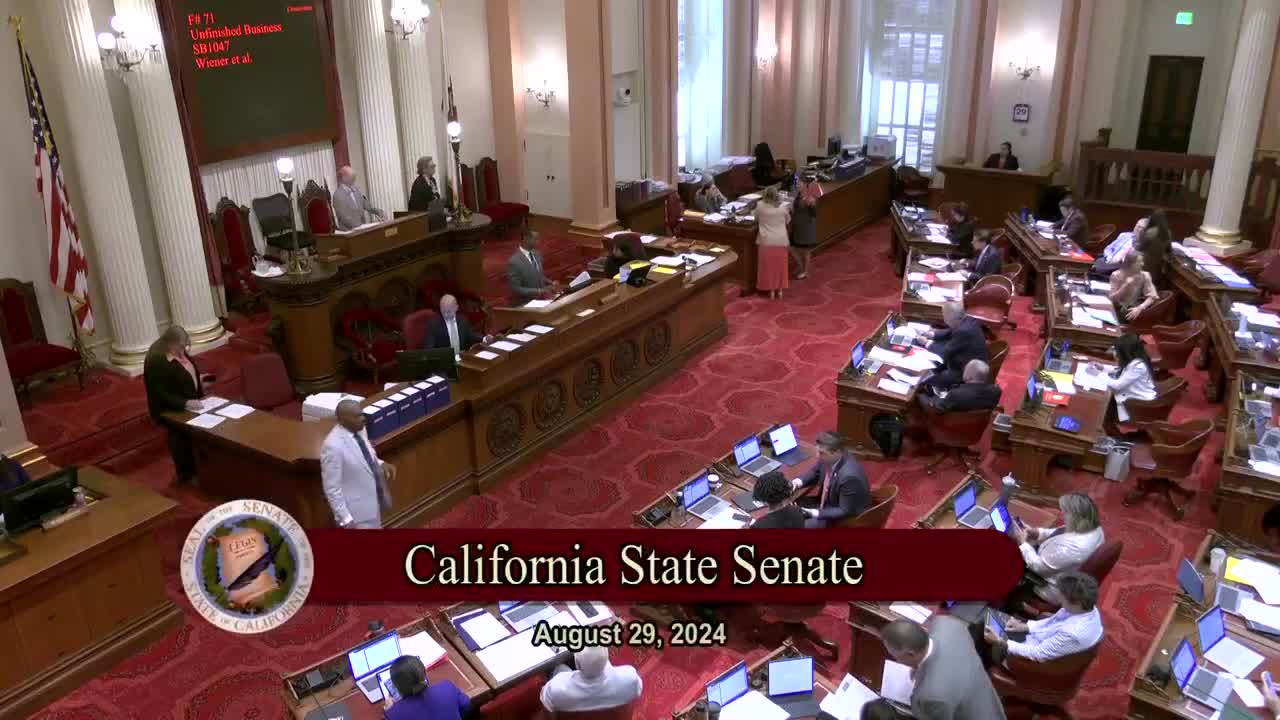 2MIN
Senate Floor
 1MIN
Assembly Floor
 10MIN
Assembly Standing Committee on Environmental Safety and Toxic Materials
 5MIN
Assembly Standing Committee on Health
 3MIN
Senate Floor
 3MIN
Senate Standing Committee on Health
 7MIN
Senate Standing Committee on Environmental Quality
Bill Author