SB 1174: Elections: voter identification.
- Session Year: 2023-2024
- House: Senate
- Latest Version Date: 2024-09-29
Current Status:
Passed
(2024-09-29: Chaptered by Secretary of State. Chapter 990, Statutes of 2024.)
Introduced
In Committee
First Chamber
In Committee
Second Chamber
Enacted
What does this bill do?
The bill bars local governments from making people show identification to vote or submit a ballot at polling places, vote centers, or other places where ballots are cast, unless state or federal law requires an ID. It applies to counties and cities, including charter cities.
The summary is provided by generative AI which can make mistakes. For original language, please view the details in the table below.
Existing law permits the governing body of a city or district to request that the county render specified services to the city or district regarding the conduct of an election.
This bill would prohibit a local government from enacting or enforcing any charter provision, ordinance, or regulation requiring a person to present identification for the purpose of voting or submitting a ballot at any polling place, vote center, or other location where ballots are cast or submitted, as specified.
The bill would include findings that changes proposed by this bill address a matter of statewide concern rather than a municipal affair and, therefore, apply to all cities, including charter cities.
Existing law permits the governing body of a city or district to request that the county render specified services to the city or district regarding the conduct of an election.
This bill would prohibit a local government from enacting or enforcing any charter provision, ordinance, or regulation requiring a person to present identification for the purpose of voting or submitting a ballot at any polling place, voting center, vote center, or other location where ballots are cast or submitted, as specified.
The bill would include findings that changes proposed by this bill address a matter of statewide concern rather than a municipal affair and, therefore, apply to all cities, including charter cities.
Existing law permits the governing body of a city or district to request that the county render specified services to the city or district regarding the conduct of an election.
This bill would prohibit a local government from enacting or enforcing any charter provision, ordinance, or regulation requiring a person to present identification for the purpose of voting or submitting a ballot at any polling place, voting center, or other location where ballots are cast or submitted, as specified.
The bill would include findings that changes proposed by this bill address a matter of statewide concern rather than a municipal affair and, therefore, apply to all cities, including charter cities.
(a)The Legislature finds and declares all of the following:
(1)Under existing law, a person is entitled to vote in a local, special, or consolidated election who is registered in any one of the precincts which compose the local, special, or consolidated election precinct.
(2)California ensures the integrity of its elections by requiring a person to provide a drivers license number, a California identification number, or the last four digits of their social security number to register to vote.
(3)The state has taken further steps to ensure election integrity, including signature verification checks, mandatory partial recounts, and ballot tracking.
(4)Voter identification laws have historically been used to disenfranchise low-income voters, voters of color, voters with disabilities, and senior voters.
(5)Existing law gives the Secretary of State jurisdiction over voter-eligibility functions.
(6)Under existing law, local elections officials are responsible for supervising voting at the polls.
(7)Voter identification laws place the onus on the voter to prove their identity and right to vote, even after voters have taken the necessary steps to prove their identity and right to vote through the voter registration process.
(8)The implementation of voter identification laws in municipal elections conflicts with Californias established, well-balanced methods of ensuring election integrity across the state.
(b)The Legislature finds and declares that Section 2 of this act adding Section 10005 of the Elections Code addresses a matter of statewide concern rather than a municipal affair as that term is used in Section 5 of Article XI of the California Constitution. Therefore, Section 2 of this act applies to all cities, including charter cities.
SEC. 2.Section 10005 is added to the Elections Code, to read:10005.A local government shall not enact or enforce any charter provision, ordinance, or regulation requiring a person to present identification for the purpose of voting or submitting a ballot at any polling place, vote center, or other location where ballots are cast or submitted, unless required by state or federal law. For the purpose of this section, local government means any charter or general law city, charter or general law county, or any city and county.
(a)The Legislature finds and declares all of the following:
(1)Under existing law, a person is entitled to vote in a local, special, or consolidated election who is registered in any one of the precincts which compose the local, special, or consolidated election precinct.
(2)California ensures the integrity of its elections by requiring a person to provide a drivers license number, a California identification number, or the last four digits of their social security number to register to vote.
(3)The state has taken further steps to ensure election integrity, including signature verification checks, mandatory partial recounts, and ballot tracking.
(4)Voter identification laws have historically been used to disenfranchise low-income voters, voters of color, voters with disabilities, and senior voters.
(5)Existing law gives the Secretary of State jurisdiction over voter-eligibility functions.
(6)Under existing law, local elections officials are responsible for supervising voting at the polls.
(7)Voter identification laws place the onus on the voter to prove their identity and right to vote, even after voters have taken the necessary steps to prove their identity and right to vote through the voter registration process.
(8)The implementation of voter identification laws in municipal elections conflicts with Californias established, well-balanced methods of ensuring election integrity across the state.
(b)The Legislature finds and declares that Section 2 of this act adding Section 10005 of the Elections Code addresses a matter of statewide concern rather than a municipal affair as that term is used in Section 5 of Article XI of the California Constitution. Therefore, Section 2 of this act applies to all cities, including charter cities.
SECTION 1.SEC. 2.Section 10005 is added to the Elections Code, to read:10005.A local government shall not enact or enforce any charter provision, ordinance, or regulation requiring a person to present identification for the purpose of voting or submitting a ballot at any polling place, vote center, or other location where ballots are cast or submitted, unless required by state or federal law. For the purpose of this section, local government means any charter or general law city, charter or general law county, or any city and county.
SEC. 2.The Legislature finds and declares that Section 1 of this act adding Section 10005 of the Elections Code addresses a matter of statewide concern rather than a municipal affair as that term is used in Section 5 of Article XI of the California Constitution. Therefore, Section 1 of this act applies to all cities, including charter cities. REVISIONS: HeadingLine 3.A local government shall not enact or enforce any charter provision, ordinance, or regulation requiring a person to present identification for the purpose of voting or submitting a ballot at any polling place, voting center, vote center, or other location where ballots are cast or submitted, unless required by state or federal law. For the purpose of this section, local government means any charter or general law city, charter or general law county, or any city and county.
SEC. 2.The Legislature finds and declares that Section 1 of this act adding Section 10005 of the Elections Code addresses a matter of statewide concern rather than a municipal affair as that term is used in Section 5 of Article XI of the California Constitution. Therefore, Section 1 of this act applies to all cities, including charter cities.
A local government shall not enact or enforce any charter provision, ordinance, or regulation requiring a person to present identification for the purpose of voting or submitting a ballot at any polling place, voting center, or other location where ballots are cast or submitted, unless required by state or federal law. For the purpose of this section, local government means any charter or general law city, charter or general law county, or any city and county.
SEC. 2.The Legislature finds and declares that Section 1 of this act adding Section 10005 of the Elections Code addresses a matter of statewide concern rather than a municipal affair as that term is used in Section 5 of Article XI of the California Constitution. Therefore, Section 1 of this act applies to all cities, including charter cities.
|
Date
|
Status
|
|---|---|
| Sep 29, 2024 | Chaptered by Secretary of State. Chapter 990, Statutes of 2024. |
| Sep 29, 2024 | Approved by the Governor. |
| Sep 3, 2024 | Enrolled and presented to the Governor at 3 p.m. |
| Aug 28, 2024 | In Senate. Ordered to engrossing and enrolling. |
| Aug 27, 2024 | Read third time. Passed. (Ayes 57. Noes 16. Page 6660.) Ordered to the Senate. |
| Jun 24, 2024 | Read second time. Ordered to third reading. |
| Jun 20, 2024 | From committee: Do pass. (Ayes 7. Noes 2.) (June 19). |
| Jun 12, 2024 | From committee: Do pass and re-refer to Com. on L. GOV. (Ayes 6. Noes 2.) (June 12). Re-referred to Com. on L. GOV. |
| Jun 12, 2024 | Coauthors revised. |
| Jun 3, 2024 | Referred to Coms. on ELECTIONS and L. GOV. |
| May 22, 2024 | In Assembly. Read first time. Held at Desk. |
| May 21, 2024 | Read third time. Passed. (Ayes 30. Noes 8. Page 4079.) Ordered to the Assembly. |
| May 2, 2024 | Read second time and amended. Ordered to third reading. |
| May 1, 2024 | From committee: Do pass as amended. (Ayes 4. Noes 2. Page 3821.) (May 1). |
| Apr 17, 2024 | Set for hearing May 1. |
| Apr 2, 2024 | From committee: Do pass and re-refer to Com. on L. GOV. (Ayes 6. Noes 1. Page 3444.) (April 2). Re-referred to Com. on L. GOV. |
| Mar 18, 2024 | From committee with author's amendments. Read second time and amended. Re-referred to Com. on E. & C.A. |
| Mar 15, 2024 | Set for hearing April 2. |
| Feb 21, 2024 | Referred to Coms. on E. & C.A. and L. GOV. |
| Feb 15, 2024 | From printer. May be acted upon on or after March 16. |
| Feb 14, 2024 | Introduced. Read first time. To Com. on RLS. for assignment. To print. |
|
Date
|
Description
|
Location
|
Votes
|
|
|---|---|---|---|---|
| Aug 27, 2024 | SB 1174 Min Senate Third Reading By BERMAN | Assembly Floor |
Passed |
|
| Jun 19, 2024 | Do pass. | Assembly Standing Committee on Local Government |
Passed |
|
| Jun 12, 2024 | Do pass and be re-referred to the Committee on [Local Government] | Assembly Standing Committee on Elections |
Passed |
|
| May 21, 2024 | Senate 3rd Reading SB1174 Min et al. | Senate Floor |
Passed |
|
| May 1, 2024 | Do pass as amended | Senate Standing Committee on Local Government |
Passed |
|
| Apr 2, 2024 | Do pass, but first be re-referred to the Committee on [Local Government] | Senate Standing Committee on Elections and Constitutional Amendments |
Passed |
This list shows positions taken on this bill by organizations on the date displayed, which is linked to the original source.
Positions by individuals are not included.
|
Organization
|
Position
|
Date
|
|---|---|---|
| Aclu California Action | * Support | Jun 22, 2024 |
| AFSCME California | * Support | Jun 19, 2024 |
| California Common Cause | ** Support | |
| California Environmental Voters | ** Support | |
| California Federation of Teachers, AFT, AFL-CIO | ** Support | |
| california hawaii state conference of the naacp | ** Support | |
| California's Secretary of State | * Support | Jun 14, 2024 |
| City Of Rancho Cucamonga | * Support | Jun 19, 2024 |
| Culver City Democratic Club | ** Support | |
| Disability Rights California | ** Support | |
| Election Integrity Project California | ** Against | |
| Greater Bakersfield Republican Assembly | ** Against | |
| Indivisible Ca: Statestrong | ** Support | |
| League Of Women Voters Of California | * Support | Jun 12, 2024 |
| Santa Monica Democratic Club | ** Support |
SENATE THIRD READING
STR Bill Id:SB 1174
Author:(Min)
As Amended Ver:May 2, 2024
Majority vote
SUMMARY
Prohibits a local government from enacting or enforcing any local requirement that a person must present identification when voting or submitting a ballot at a polling location.
Major Provisions
- Prohibits a local government from enacting or enforcing any charter provision, ordinance, or regulation requiring a person to present identification for the purpose of voting or submitting a ballot at any polling place, vote center, or other location where ballots are cast or submitted, unless required by state or federal law.
- Defines "local government" to mean any charter or general law city, charter or general law county, or any city and county.
COMMENTS
Section 5(a) of Article XI of the California Constitution gives charter cities broad authority to "make and enforce all ordinances and regulations in respect to municipal affairs" and provides that "City charters adopted pursuant to this Constitution shall supersede any existing charter, and with respect to municipal affairs shall supersede all laws inconsistent therewith." Additionally, Section 5(b) of Article XI grants charter cities broad authority to structure and organize their government, to conduct city elections, and grants plenary authority, subject to limited restrictions, to provide "the manner in which, the method by which, the times at which, and the terms for which several municipal officers and employees whose compensation if paid by the city shall be elected and appointed, and for their removal…" The Constitution further provides that properly adopted city charters "shall supersede all laws inconsistent" with the charter.
In California, an individual registering to vote declares under penalty of perjury that the information provided on the registration form is true and correct. The voter registration form includes questions related to a person's eligibility to vote, date of birth, California driver's license (DL) or identification card number, and the last four numbers of the registrant's social security number (SSN) if it is available.
Under federal law, if a first-time voter does not provide a DL or state identification number or the last four digits of their SSN when they register to vote, they must provide identification prior to being eligible to vote in a federal election. If a first-time voter is voting in person they will be asked to show a form of identification when they go to a polling location. If a first-time voter is voting by mail and did not provide a form of identification with their vote by mail (VBM) ballot, a county elections official is advised to reach out to the voter to request and receive the required proof of identification prior to processing and counting the ballot. If the first-time voter does not provide the necessary identification, the VBM ballot will not be processed.
On October 17, 2023, the Huntington Beach city council voted 4-3 to place the city charter amendment, known as Measure A, on the March 5, 2024 ballot. Measure A, in part, adds provisions to the charter stating that beginning in 2026, for all municipal elections: 1) "Elector" means a person who is a United States citizen 18 years of age or older, and a resident of the City on or before the day of an election; 2) The City may verify the eligibility of electors by voter identification, 3) The City may provide at least 20 Americans with Disabilities Act compliant voting locations for in-person voting dispersed evenly throughout the City, in addition to any City facility voting locations; and, 4) The City may monitor ballot drop boxes located within the City for compliance with all applicable laws. Huntington Beach voters passed Measure A with 32,892 votes (53.40%) in support of the city charter amendment and 28,701 votes (46.60%) in opposition.
On April 15, 2024, the Attorney General and Secretary of State filed a lawsuit in the Orange County Superior Court against the city of Huntington Beach alleging that Measure A "…unlawfully conflicts with and is preempted by state law" and asks the court for a permanent injunction barring the city from implementing or enforcing section 705, subdivision (a)(2) of the Huntington Beach city charter. That lawsuit is pending.
Please see the policy committee analyses for full discussion of this bill.
According to the Author
"Healthy democracies rely on robust access to the polls. An overwhelming body of evidence proves that voter ID laws only subvert voter turnout and create barriers to law abiding voters. To register to vote in California, voters are already required to provide their driver's license number, California identification number, or the last four digits of their social security number. The state also conducts signature verification checks, automatically recounts a portion of ballots, and allows voters to track their ballots. We will not concede to ploys of voter fraud while an overwhelming body of evidence proves our elections are safe, secure, and above board. SB 1174 reinforces that voting rights are a matter of statewide concern, and ensures that cities cannot place the unnecessary burden of voter ID laws on law-abiding citizens."
Arguments in Support
In support of this bill, California Common Cause, writes: "Studies by the Center for Democracy & Civic Engagement found that during the 2020 elections millions of voters nationwide did not have current government-issued photo identification, and that voters who lacked photo identification were more likely to be voters with disabilities and Latino, Black, young, and low-income voters. These communities of voters would be disproportionately harmed by requirements to show photo identification before voting...Locally imposed voter identification rules would also create a confusing voting experience for Californians and increase election administration costs. Local rules would not apply for state and federal elections, which are generally held at the same time as municipal elections, so could mean different experiences for voters election to election, and increased costs from holding a separate municipal election."
"California also already has numerous precautions in place to prevent voter fraud, such as signature verification checks, ballot tracking, audits, and recounts. To register to vote, a person must provide their driver's license number, their state identification number, or the last four digits of their Social Security number. If a person does not include this identifying information with their registration application, pursuant to federal law they must provide identification the first time that they vote in a federal election. While efforts to impose voter identification requirements locally may already be in violation of state law, SB 1174 rightly affirms that voter eligibility is a matter of statewide concern and state policy."
Arguments in Opposition
In opposition to this bill, the Greater Bakersfield Republican Assembly, writes: "Elections are the bedrock of our nation, state, and local municipalities and communities. Without free and fair election[s], we would be a society in continual upheaval and chaos. Confidence in our election process is the first line of defense against this chaos. The Greater Bakersfield Republican Assembly would even argue that confidence is more important than the candidates or issues on the ballot…If an election is to be free and fair, voters must have the highest confidence in the entire election system, from voter registration to ballot counting and tabulation. This proposed legislation would diminish confidence and impose the will of the state on local communities' and municipalities' elections processes…Our purpose in this writing is this, we believe the simple act of providing proof of eligibility is well within the purview of any community or municipality and is the single greatest tool to enhancing confidence in our elections and as such are asking that you oppose SB 1174."
FISCAL COMMENTS
None. This bill is keyed non-fiscal by the Legislative Counsel.
VOTES
SENATE FLOOR: 30-8-2
YES: Archuleta, Ashby, Atkins, Becker, Blakespear, Bradford, Caballero, Cortese, Dodd, Durazo, Eggman, Glazer, Gonzalez, Hurtado, Laird, Limón, McGuire, Menjivar, Min, Newman, Padilla, Portantino, Roth, Rubio, Skinner, Smallwood-Cuevas, Stern, Umberg, Wahab, Wiener
NO: Dahle, Grove, Jones, Nguyen, Niello, Ochoa Bogh, Seyarto, Wilk
ABS, ABST OR NV: Allen, Alvarado-Gil
ASM ELECTIONS: 6-2-0
YES: Pellerin, Bennett, Berman, Cervantes, Low, Weber
NO: Lackey, Essayli
ASM LOCAL GOVERNMENT: 7-2-0
YES: Juan Carrillo, Haney, Kalra, Pacheco, Ramos, Ward, Wilson
NO: Waldron, Sanchez
UPDATED
VERSION: May 2, 2024
CONSULTANT: Nichole Becker / ELECTIONS / (916) 319-2094 FN: 0003573
Date of Hearing: June 19, 2024
ASSEMBLY COMMITTEE ON LOCAL GOVERNMENT
Juan Carrillo, Chair
SBPCA Bill Id:SB 1174
Author:(Min) – As Amended Ver:May 2, 2024
SENATE VOTE: 30-8
SUBJECT: Elections: voter identification
SUMMARY: Prohibits a local government from enacting or enforcing any local requirement that a person must present identification when voting or submitting a ballot at a polling location. Specifically, this bill:
- Prohibits a local government from enacting or enforcing any charter provision, ordinance, or regulation requiring a person to present identification for the purpose of voting or submitting a ballot at any polling place, vote center, or other location where ballots are cast or submitted, unless required by state or federal law.
- Defines “local government” to mean any charter or general law city, charter or general law county, or any city and county.
- Makes various finding and declarations regarding the purpose of this bill and applying its provisions to all cities, including charter cities, by declaring that this bill addresses a matter of state-wide concern rather than a municipal affair.
EXISTING LAW:
- Permits a city or county to adopt a charter by majority vote of its electors, as specified. [California Constitution, Article XI, § 3(a)]
- Authorizes any city charter to permit the city to make and enforce all ordinances and regulations related to municipal affairs, as specified, and provides that any city charter adopted pursuant to the California Constitution supersedes all laws inconsistent with the charter with respect to municipal affairs.[California Constitution, Article XI, § 5(a)]
- Grants plenary authority, subject to limited restrictions, for city charters to provide the manner in which, the method by which, the times at which, and the terms for which municipal officers and employees whose compensation is paid by the city are elected and appointed, and for their removal, as specified. [California Constitution, Article XI, § 5(b)]
- Permits a person who is a United States (US) citizen, a resident of California, not imprisoned for the conviction of a felony, and at least 18 years of age at the time of the next election, to register to vote and to vote. [California Constitution, Article II, § 2]
- Requires a person to provide personal identifying information, and other specified information, when registering to vote and requires elections officials to validate the information provided. [Elections Code (ELEC) §§ 2188(b), 2196(a)(7); Code of California Regulations §§ 19073, 20107]
- Requires an applicant to certify to the truth and correctness of the content of their voter registration application under penalty of perjury. [ELEC § 2188(e)]
- Provides that every person is guilty of a crime punishable by imprisonment for 16 months or two or three years, or in a county jail not exceeding one year, who registers to vote knowing that they are ineligible to do so. [ELEC § 18100]
- Requires any person desiring to vote to provide their name and address and, upon the precinct officers finding the name in the roster, requires the voter to sign their name in the space provided, as specified. [ELEC § 14216(a)]
- Provides that a voter’s identity or eligibility to vote may only be questioned by election workers on narrow grounds, and only with evidence constituting probable cause to justify such a challenge. [ELEC § 14240 et seq.]
- Provides that a challenged voter need only take a sworn oath of affirmation to remedy the challenge. [ELEC §§ 14243, 14244, 14245, 14246]
- Provides that all doubts in the interpretation of the law are to be resolved in favor of the challenged voter. [ELEC § 14251]
- Provides that every person is guilty of a felony punishable by imprisonment in county jail for not more than 12 months or in the state prison who knowingly challenges a person's right to vote without probable cause or on fraudulent or spurious grounds, or who engages in mass, indiscriminate, and groundless challenging of voters solely for the purpose of preventing voters from voting or to delay the process of voting. [ELEC § 18543(a)]
- Provides that any voter claiming to be properly registered, but whose qualifications cannot be immediately established upon examination of the list of registered voters for the precinct or the records on file with the county elections official, is entitled to cast a provisional ballot. [ELEC §§ 2300, 14310(a)]
- Provides that every person is guilty of a crime punishable by imprisonment for 16 months or two or three years, or in a county jail not exceeding one year, who does any of the following: [ELEC § 18560]
- Not being entitled to vote at an election, fraudulently votes or fraudulently attempts to vote at that election.
- Being entitled to vote at an election, votes more than once, attempts to vote more than once, or knowingly hands in two or more ballots folded together at that election.
- Impersonates or attempts to impersonate a voter at an election.
- Not being entitled to vote at an election, fraudulently votes or fraudulently attempts to vote at that election.
- Requires a voter who submits their voter registration form by mail and who has not previously voted to present one of a number of specified documents to establish identity before receiving a ballot. Provides that this requirement only applies the first time an individual votes after registering to vote. [42 U.S.C. 15483; 2 Code of California Regulations § 20107]
- Allows a governing body of any city or district, by resolution, to request the board of supervisors of the county to permit the county elections official to render specified services to the city or district relating to the conduct of an election. [ELEC § 10002]
FISCAL EFFECT: None.
COMMENTS:
- Bill Summary and Author’s Statement. This bill prohibits local governments from enacting or enforcing any requirement for a person to present identification to vote or submit a ballot at polling places, vote centers, or other ballot submission locations, unless mandated by state or federal law. This bill applies to any charter or general law city, charter or general law county, or any city and county.
According to the author, “Healthy democracies rely on robust access to the polls. An overwhelming body of evidence proves that voter ID laws only subvert voter turnout and create barriers to law-abiding voters. To register to vote in California, voters are already required to provide their driver’s license number, California identification number, or the last four digits of their social security number. The state also conducts signature verification checks, automatically recounts a portion of ballots, and allows voters to track their ballots. We will not concede to ploys of voter fraud while an overwhelming body of evidence proves our elections are safe, secure, and above board. SB 1174 reinforces that voting rights are a matter of statewide concern, and ensures that cities cannot place the unnecessary burden of voter ID laws on law-abiding citizens.”
This bill is sponsored by the author.
- Charter Counties and the California Constitution. The California Constitution recognizes two types of counties: general law counties and charter counties. General law counties are governed by state law, while charter counties have the autonomy to create and enforce local ordinances, provided the ordinances do not conflict with the general law of the state.
Sections 3 and 4 of Article XI of the California Constitution provide the powers of charter counties. Specifically, Section 3 provides that “County charters adopted pursuant to this section shall supersede any existing charter and all laws inconsistent therewith. The provisions of a charter are the law of the State and have the force and effect of legislative enactments.”
Section 4 of Article XI provides the structure and operation of county charters. Specifically, Section 4(a) requires county charters to provide for a governing body of 5 members, elected by district, or at large, with a requirement that they reside in the district and provides that charter counties are subject to state laws governing redistricting. Section 4(b) requires county charters to provide for the compensation, terms, and removal of members of the governing body. Additionally, Section 4(c) requires county charters to provide for "an elected sheriff, an elected district attorney, an elected assessor, other officers, their election or appointment, compensation, terms and removal." Moreover, Section 4(d) requires county charters to provide for "the performance of functions required by statute," and Section 4(h) specifies that charter counties have all the powers that are provided by the Constitution or by statute for counties. - Charter Cities and the California Constitution. The California Constitution recognizes two types of cities: general law cities and charter cities. General law cities are governed by state law, while charter cities have a larger amount of autonomy over local affairs. Article XI, Section 3(a) of the California Constitution authorizes the adoption of a city charter and provides such a charter has the force and effect of state law. Article XI, Section 5(a), also known as the "home rule" provision, allows charter cities to “make and enforce all ordinances and regulations in respect to municipal affairs” and makes these laws supreme over “all laws inconsistent therewith.” In all other matters, charter cities must follow the general, statewide laws. The state Constitution does not define “municipal affairs.” As a result, the courts generally determine whether a topic is a municipal affair or an issue of statewide concern.
While a definition of municipal affairs is not provided, the state Constitution specifies certain categories of municipal affairs that charter cities have the authority to regulate. Specifically, Section 5(a) of Article XI gives charter cities broad authority to "make and enforce all ordinances and regulations in respect to municipal affairs" and provides that "City charters adopted pursuant to this Constitution shall supersede any existing charter, and with respect to municipal affairs shall supersede all laws inconsistent therewith.” Additionally, Section 5(b) of Article XI grants charter cities broad authority to structure and organize their government, to conduct city elections, and grants plenary authority, subject to limited restrictions, to provide "the manner in which, the method by which, the times at which, and the terms for which several municipal officers and employees whose compensation if paid by the city shall be elected and appointed, and for their removal…" The Constitution further provides that properly adopted city charters "shall supersede all laws inconsistent" with the charter. - Voter Identification. In California, an individual registering to vote declares under penalty of perjury that the information provided on the registration form is true and correct. The voter registration form includes questions related to a person’s eligibility to vote, date of birth, California driver’s license (DL) or identification card number, and the last four numbers of the registrant’s social security number (SSN) if it is available.
Under federal law, if a first-time voter does not provide a DL or state identification number or the last four digits of their SSN when they register to vote, they must provide identification prior to being eligible to vote in a federal election. If a first-time voter is voting in person they will be asked to show a form of identification when they go to a polling location. If a first-time voter is voting by mail and did not provide a form of identification with their vote by mail (VBM) ballot, a county elections official is advised to reach out to the voter to request and receive the required proof of identification prior to processing and counting the ballot. If the first-time voter does not provide the necessary identification, the VBM ballot will not be processed. For the November 8, 2022 statewide general election, there were 660 VBM ballots rejected for a lack of identification.
The Secretary of State’s (SOS) website provides a list of acceptable forms of identification that includes, but is not limited to, a DL, an identification card, passport, student identification card, a credit/debit card, health club identification card, and an identification card provided by a commercial establishment. Additionally, a copy of a recent utility bill, the sample ballot booklet a voter received from their county elections office, or another document sent to the voter by a government agency are other examples of acceptable forms of identification.
- Huntington Beach Local Ballot Measure. Huntington Beach is a charter city. On September 28, 2023, the California Attorney General (AG) and the SOS sent a joint letter to the Mayor and Councilmembers of Huntington Beach regarding the city’s proposal to amend its city charter to add section 705, entitled “Special Provisions Relating to Municipal Elections.” The proposed charter amendment, in part, adds provisions to the charter stating that beginning in 2026, for all municipal elections: 1) “Elector” means a person who is a US citizen 18 years of age or older, and a resident of the City on or before the day of an election, 2) The City may verify the eligibility of electors by voter identification, 3) The City may provide at least 20 Americans with Disabilities Act compliant voting locations for in-person voting dispersed evenly throughout the City, in addition to any City facility voting locations; and, 4) The City may monitor ballot drop boxes located within the City for compliance with all applicable laws.
In their letter, the AG and the SOS state that the city’s proposal to require voter identification at the polls in municipal elections conflicts with state law and would only serve to suppress voter participation without providing any discernible local benefit. Specifically, the joint letter stated in part that “the Elections Code sets forth a detailed process for resolving questions of voter identity or eligibility at the polls. A voter’s identity or eligibility to vote may only be questioned by election workers on narrow grounds, and only with evidence constituting probable cause to justify such a challenge. A challenged voter need only take a sworn oath of affirmation to remedy the challenge. All doubts are to be resolved in favor of the challenged voter. And any person who illegally casts a ballot is subject to criminal prosecution.”
Additionally, the letter states that “this framework strikes a careful balance: it guards the ballot box against ineligible and/or fraudulent voters, while at the same time simplifying and facilitating the process of voting so as to avoid suppressing turnout and disenfranchising qualified voters…Huntington Beach’s voter ID proposal would destroy this careful balance by placing the onus on the voter to establish their identity and right to vote with some form of identification at the time they cast their ballot.” Additionally, the letter states that “by requiring additional documentation to establish a voter’s identity and eligibility to vote at the time of voting—a higher standard of proof than set out in the Elections Code—Huntington Beach’s proposal conflicts with state law.” In closing the letter urges the Huntington Beach Mayor and Councilmembers to reject their proposed charter amendment and warn the city that if the proposal moves forward and is placed on the ballot they would “stand ready to take appropriate action to ensure that voters’ rights are protected, and state election laws are enforced.”
Despite this letter, on October 17, 2023, the Huntington Beach city council voted 4-3 to place the city charter amendment, known as Measure A, on the March 5, 2024 ballot.
Huntington Beach voters passed Measure A with 32,892 votes (53.40%) in support of the city charter amendment and 28,701 votes (46.60%) in opposition.
On April 15, 2024, the AG and SOS filed a lawsuit in the Orange County Superior Court against the city of Huntington Beach alleging that Measure A “…unlawfully conflicts with and is preempted by state law” and asks the court for a permanent injunction barring the city from implementing or enforcing section 705, subdivision (a)(2) of the Huntington Beach city charter. That lawsuit is pending. - Arguments in Support. The American Civil Liberties Union California Action writes, “Voter ID laws perpetuate the myth of voter fraud and do nothing to improve election integrity. Instead, numerous studies and data show that voter ID requirements impose severe and disparate burdens on voters. During the 2020 elections, for example, seven million voters nationwide did not have a current government-issued photo ID, and nearly 29 million voters did not have a current driver’s license. Voters who lacked any form of photo ID were more likely to be voters with disabilities and Latine, Black, young, and low-income voters. Black and Latine voters were also twice as likely as white and Asian voters to lack photo ID, and low-income voters were more likely than voters with a higher income to lack photo ID.
“The Legislature has long understood the harms of voter ID requirements, and California law does not impose a voter ID requirement at the ballot box. The Secretary of State and county elections officials verify voter eligibility and ensure election integrity for local, state, and federal elections in a manner that is minimally burdensome on voters.”
- Arguments in Opposition. The Election Integrity Project California, Inc. states, “Far too often we hear the phrase ‘a threat to our Democracy’ bantered around, but what exactly is a threat? We believe that removing local control of our elections is certainly a threat. If an election is to be free and fair, voters must have the highest confidence in the entire election system, from voter registration to ballot counting and tabulation. This proposed legislation would diminish confidence and impose the will of the state on local communities’ and municipalities’ elections processes.
“We understand certain guidelines are necessary, what is not necessary is mandating how the guidelines are achieved. For example, how do we know that the individuals casting votes in any given election are eligible? Do ineligible or illegal votes cast count equally as eligible or legal ones? When one observes the entire elections process objectively and thoroughly, there would be no disputing that California has very loose state-wide standards of registration criteria, signature verification is less than effective, mail-out ballots are expensive and vulnerable, voting machines continue to erode confidence, poll workers often lack sufficient training to ensure compliance with election code and more.”
- Previous Legislation. AB 2742 (Travis Allen) of 2018 would have required a voter to provide specified identification in order to have their ballot counted. AB 2742 was referred to the Assembly Elections and Redistricting Committee, but was never heard.
AB 1356 (Berryhill and Garrick) of 2009 would have required a voter to present photo identification before receiving a ballot at the polling place. AB 1356 failed passage in the Assembly Elections & Redistricting Committee.
- Double-Referral. This bill is double-referred to the Elections Committee, where it passed on a 6-2 vote on June 12, 2024.
REGISTERED SUPPORT / OPPOSITION:
Support
A Union of Educators and Classified Professionals, Afl-cio
ACLU California Action
American Federation of State, County and Municipal Employees, Afl-cio
California Environmental Voters (formerly Clcv)
California Federation of Teachers Afl-cio
California Secretary of State
California-Hawaii State Conference of The NAACP
City of Rancho Cucamonga
Common CAUSE - California
Culver City Democratic Club
Disability Rights California
Indivisible CA Statestrong
League of Women Voters of California
Santa Monica Democratic Club
Opposition
Election Integrity Project California
Greater Bakersfield Republican Assembly
Analysis Prepared by: Claire Norton / L. GOV. / (916) 319-3958
Date of Hearing: June 12, 2024
ASSEMBLY COMMITTEE ON ELECTIONS
Gail Pellerin, Chair
SBPCA Bill Id:SB 1174
Author:(Min) – As Amended Ver:May 2, 2024
SENATE VOTE: 30-8
SUBJECT: Elections: voter identification.
SUMMARY: Prohibits a local government from enacting or enforcing any local requirement that a person must present identification when voting or submitting a ballot at a polling location. Specifically, this bill:
- Prohibits a local government from enacting or enforcing any charter provision, ordinance, or regulation requiring a person to present identification for the purpose of voting or submitting a ballot at any polling place, vote center, or other location where ballots are cast or submitted, unless required by state or federal law.
- Defines “local government” to mean any charter or general law city, charter or general law county, or any city and county.
- Makes various finding and declarations.
EXISTING LAW:
- Permits a city or county to adopt a charter by majority vote of its electors, as specified. (California Constitution, Article XI, §3(a))
- Authorizes any city charter to permit the city to make and enforce all ordinances and regulations related to municipal affairs, as specified, and provides that any city charter adopted pursuant to the California Constitution supersedes all laws inconsistent with the charter with respect to municipal affairs.(California Constitution, Article XI, §5(a))
- Grants plenary authority, subject to limited restrictions, for city charters to provide the manner in which, the method by which, the times at which, and the terms for which municipal officers and employees whose compensation is paid by the city are elected and appointed, and for their removal, as specified. (California Constitution, Article XI, §5(b))
- Permits a person who is a United States (US) citizen, a resident of California, not imprisoned for the conviction of a felony, and at least 18 years of age at the time of the next election, to register to vote and to vote. (California Constitution, Article II, §2)
- Requires a person to provide personal identifying information, and other specified information, when registering to vote and requires an elections officials to validate the information provided. (Elections Code §§ 2188(b), 2196(a)(7); 2 Code of California Regulations §§19073, 20107)
- Requires an applicant to certify to the truth and correctness of the content of their voter registration application under penalty of perjury. (Elections Code § 2188(e))
- Provides that every person is guilty of a crime punishable by imprisonment for 16 months or two or three years, or in a county jail not exceeding one year, who registers to vote knowing that they are ineligible to do so. (Elections Code §18100)
- Requires any person desiring to vote to provide their name and address and, upon the precinct officers finding the name in the roster, requires the voter to sign their name in the space provided, as specified. (Elections Code §14216(a))
- Provides that a voter’s identity or eligibility to vote may only be questioned by election workers on narrow grounds, and only with evidence constituting probable cause to justify such a challenge. (Elections Code §14240 et seq.)
- Provides that a challenged voter need only take a sworn oath of affirmation to remedy the challenge. (Elections Code §§14243, 14244, 14245, 14246)
- Provides that all doubts in the interpretation of the law are to be resolved in favor of the challenged voter. (Elections Code §14251)
- Provides that every person is guilty of a felony punishable by imprisonment in county jail for not more than 12 months or in the state prison who knowingly challenges a person's right to vote without probable cause or on fraudulent or spurious grounds, or who engages in mass, indiscriminate, and groundless challenging of voters solely for the purpose of preventing voters from voting or to delay the process of voting. (Elections Code §18543(a))
- Provides that any voter claiming to be properly registered, but whose qualifications cannot be immediately established upon examination of the list of registered voters for the precinct or the records on file with the county elections official, is entitled to cast a provisional ballot. (Elections Code §§2300, 14310(a))
- ) Provides that every person is guilty of a crime punishable by imprisonment for 16 months or two or three years, or in a county jail not exceeding one year, who does any of the following:
- Not being entitled to vote at an election, fraudulently votes or fraudulently attempts to vote at that election.
- Being entitled to vote at an election, votes more than once, attempts to vote more than once, or knowingly hands in two or more ballots folded together at that election.
- Impersonates or attempts to impersonate a voter at an election. (Elections Code §18560)
- Not being entitled to vote at an election, fraudulently votes or fraudulently attempts to vote at that election.
- Requires a voter who submits their voter registration form by mail and who has not previously voted to present one of a number of specified documents to establish identity before receiving a ballot. Provides that this requirement only applies the first time an individual votes after registering to vote. (42 U.S.C. 15483; 2 Code of California Regulations §20107)
- Allows a governing body of any city or district, by resolution, to request the board of supervisors of the county to permit the county elections official to render specified services to the city or district relating to the conduct of an election. (Elections Code §10002)
FISCAL EFFECT: None. This bill is keyed non-fiscal by the Legislative Counsel.
COMMENTS:
- Purpose of the Bill: According to the author:
Healthy democracies rely on robust access to the polls. An overwhelming body of evidence proves that voter ID laws only subvert voter turnout and create barriers to law abiding voters. To register to vote in California, voters are already required to provide their driver’s license number, California identification number, or the last four digits of their social security number. The state also conducts signature verification checks, automatically recounts a portion of ballots, and allows voters to track their ballots. We will not concede to ploys of voter fraud while an overwhelming body of evidence proves our elections are safe, secure, and above board. SB 1174 reinforces that voting rights are a matter of statewide concern, and ensures that cities cannot place the unnecessary burden of voter ID laws on law-abiding citizens.
- Charter Counties and the California Constitution: The California Constitution recognizes two types of counties: general law counties and charter counties. General law counties are governed by state law, while charter counties have autonomy to create and enforce local ordinances, provided the ordinances do not conflict with the general law of the state.
Sections 3 and 4 of Article XI of the California Constitution provide the powers of charter counties. Specifically, Section 3 provides that “County charters adopted pursuant to this section shall supersede any existing charter and all laws inconsistent therewith. The provisions of a charter are the law of the State and have the force and effect of legislative enactments.”
Section 4 of Article XI provides the structure and operation of county charters. Specifically, Section 4(a) requires county charters to provide for a governing body of 5 members, elected by district, or at large, with a requirement that they reside in the district and provides that charter counties are subject to state laws governing redistricting. Section 4(b) requires county charters to provide for the compensation, terms, and removal of members of the governing body. Additionally, Section 4(c) requires county charters to provide for "an elected sheriff, an elected district attorney, an elected assessor, other officers, their election or appointment, compensation, terms and removal." Moreover, Section 4(d) requires county charters to provide for "the performance of functions required by statute," and Section 4(h) specifies that charter counties have all the powers that are provided by the Constitution or by statute for counties. - Charter Cities and the California Constitution: The California Constitution recognizes two types of cities: general law cities and charter cities. General law cities are governed by state law, while charter cities have a larger amount of autonomy over local affairs. Article XI, Section 3(a) of the California Constitution authorizes the adoption of a city charter and provides such a charter has the force and effect of state law. Article XI, Section 5(a), also known as the "home rule" provision, allows charter cities to “make and enforce all ordinances and regulations in respect to municipal affairs” and makes these laws supreme over “all laws inconsistent therewith.” In all other matters, charter cities must follow the general, statewide laws. According to the Senate Committee on Local Government’s analysis of this bill, the state Constitution does not define “municipal affairs,” as a result the courts generally determine whether a topic is a municipal affair or an issue of statewide concern.
Moreover, while a definition of municipal affairs is not provided, the state Constitution specifies certain categories of municipal affairs in which charter cities have authority to regulate. Specifically, Section 5(a) of Article XI gives charter cities broad authority to "make and enforce all ordinances and regulations in respect to municipal affairs" and provides that "City charters adopted pursuant to this Constitution shall supersede any existing charter, and with respect to municipal affairs shall supersede all laws inconsistent therewith.” Additionally, Section 5(b) of Article XI grants charter cities broad authority to structure and organize their government, to conduct city elections, and grants plenary authority, subject to limited restrictions, to provide "the manner in which, the method by which, the times at which, and the terms for which several municipal officers and employees whose compensation if paid by the city shall be elected and appointed, and for their removal…" The Constitution further provides that properly adopted city charters "shall supersede all laws inconsistent" with the charter. - Voter Identification: In California, an individual registering to vote declares under penalty of perjury that the information provided on the registration form is true and correct. The voter registration form includes questions related to a person’s eligibility to vote, date of birth, California driver’s license (DL) or identification card number, and the last four numbers of the registrant’s social security number (SSN) if it is available.
Under federal law, if a first-time voter does not provide a DL or state identification number or the last four digits of their SSN when they register to vote, they must provide identification prior to being eligible to vote in a federal election. If a first-time voter is voting in person they will be asked to show a form of identification when they go to a polling location. If a first-time voter is voting by mail and did not provide a form of identification with their vote by mail (VBM) ballot, a county elections official is advised to reach out to the voter to request and receive the required proof of identification prior to processing and counting the ballot. If the first-time voter does not provide the necessary identification, the VBM ballot will not be processed. For the November 8, 2022 statewide general election, there were 660 VBM ballots rejected for a lack of identification.
The Secretary of State’s (SOS) website provides a list of acceptable forms of identification that includes, but is not limited to, a DL, an identification card, passport, student identification card, a credit/debit card, health club identification card, and an identification card provided by a commercial establishment. Additionally, a copy of a recent utility bill, the sample ballot booklet a voter received from their county elections office, or another document sent to the voter by a government agency are other examples of acceptable forms of identification.
- Huntington Beach Local Ballot Measure: On September 28, 2023, the California Attorney General (AG) and the SOS sent a joint letter to the Mayor and Councilmembers of Huntington Beach regarding the city’s proposal to amend its city charter to add section 705, entitled “Special Provisions Relating to Municipal Elections.” The proposed charter amendment, in part, adds provisions to the charter stating that beginning in 2026, for all municipal elections: 1) “Elector” means a person who is a US citizen 18 years of age or older, and a resident of the City on or before the day of an election; 2) The City may verify the eligibility of electors by voter identification, 3) The City may provide at least 20 Americans with Disabilities Act compliant voting locations for in-person voting dispersed evenly throughout the City, in addition to any City facility voting locations; and, 4) The City may monitor ballot drop boxes located within the City for compliance with all applicable laws.
In their letter, the AG and the SOS state that the city’s proposal to require voter identification at the polls in municipal elections conflicts with state law and would only serve to suppress voter participation without providing any discernible local benefit. Specifically, the joint letter stated in part that “the Elections Code [] sets forth a detailed process for resolving questions of voter identity or eligibility at the polls. A voter’s identity or eligibility to vote may only be questioned by election workers on narrow grounds, and only with evidence constituting probable cause to justify such a challenge. A challenged voter need only take a sworn oath of affirmation to remedy the challenge. All doubts are to be resolved in favor of the challenged voter. And any person who illegally casts a ballot is subject to criminal prosecution.”
Additionally, the letter states that “this framework strikes a careful balance: it guards the ballot box against ineligible and/or fraudulent voters, while at the same time simplifying and facilitating the process of voting so as to avoid suppressing turnout and disenfranchising qualified voters…Huntington Beach’s voter ID proposal would destroy this careful balance by placing the onus on the voter to establish their identity and right to vote with some form of identification at the time they cast their ballot.” Additionally, the letter states that “by requiring additional documentation to establish a voter’s identity and eligibility to vote at the time of voting—a higher standard of proof than set out in the Elections Code—Huntington Beach’s proposal conflicts with state law.” In closing the letter urges the Huntington Beach Mayor and Councilmembers to reject their proposed charter amendment and warn the city that if the proposal moves forward and is placed on the ballot they would “stand ready to take appropriate action to ensure that voters’ rights are protected, and state election laws are enforced.”
Despite the warning, on October 17, 2023, the Huntington Beach city council voted 4-3 to place the city charter amendment, known as Measure A, on the March 5, 2024 ballot.
Huntington Beach voters passed Measure A with 32,892 votes (53.40%) in support of the city charter amendment and 28,701 votes (46.60%) in opposition.
On April 15, 2024, the AG and SOS filed a lawsuit in the Orange County Superior Court against the city of Huntington Beach alleging that Measure A “…unlawfully conflicts with and is preempted by state law” and asks the court for a permanent injunction barring the city from implementing or enforcing section 705, subdivision (a)(2) of the Huntington Beach city charter. That lawsuit is pending. - Arguments in Support: In support of this bill, California Common Cause, writes:
Efforts to impose voter identification laws are based on the myth that our elections are subject to rampant fraud but have very real negative impacts on voters. Studies by the Center for Democracy & Civic Engagement found that during the 2020 elections millions of voters nationwide did not have current government-issued photo identification, and that voters who lacked photo identification were more likely to be voters with disabilities and Latino, Black, young, and low-income voters. These communities of voters would be disproportionately harmed by requirements to show photo identification before voting. Data from the Brennan Center of Justice also indicates voter identification laws have contributed to a growing voter turnout gap among different demographics, and in North Carolina, reduced voter turnout.
Locally imposed voter identification rules would also create a confusing voting experience for Californians and increase election administration costs. Local rules would not apply for state and federal elections, which are generally held at the same time as municipal elections, so could mean different experiences for voters election to election, and increased costs from holding a separate municipal election.
California also already has numerous precautions in place to prevent voter fraud, such as signature verification checks, ballot tracking, audits, and recounts. To register to vote, a person must provide their driver’s license number, their state identification number, or the last four digits of their Social Security number. If a person does not include this identifying information with their registration application, pursuant to federal law they must provide identification the first time that they vote in a federal election.
While efforts to impose voter identification requirements locally may already be in violation of state law, SB 1174 rightly affirms that voter eligibility is a matter of statewide concern and state policy.
- Arguments in Opposition: In opposition to this bill, the Greater Bakersfield Republican Assembly, writes:
Elections are the bedrock of our nation, state, and local municipalities and communities. Without free and fair election[s], we would be a society in continual upheaval and chaos. Confidence in our election process is the first line of defense against this chaos. The Greater Bakersfield Republican Assembly would even argue that confidence is more important than the candidates or issues on the ballot…
If an election is to be free and fair, voters must have the highest confidence in the entire election system, from voter registration to ballot counting and tabulation. This proposed legislation would diminish confidence and impose the will of the state on local communities’ and municipalities’ elections processes…
Our purpose in this writing is this, we believe the simple act of providing proof of eligibility is well within the purview of any community or municipality and is the single greatest tool to enhancing confidence in our elections and as such are asking that you oppose SB 1174.
- Previous Legislation: AB 2742 (Allen) of 2018 would have required a voter to provide specified identification in order to have their ballot counted. AB 2742 was not heard in committee.
AB 1356 (Berryhill and Garrick) of 2009 would have required a voter to present photo identification before receiving a ballot at the polling place. AB 1356 failed passage in the Assembly Elections & Redistricting Committee (the predecessor to this committee) on a vote of 2-5.
- Double Referral: This bill is double referred to the Assembly Local Government Committee.
REGISTERED SUPPORT / OPPOSITION:
Support
American Civil Liberties Union California Action
American Federation of State, County, and Municipal Employees (AFSCME, AFL-CIO)
California Environmental Voters
California Federation of Teachers AFL-CIO
California Secretary of State Shirley N. Weber, Ph.D.
California Hawaii State Conference of the NAACP
City of Rancho Cucamonga
California Common Cause
Culver City Democratic Club
Disability Rights California
Indivisible CA: StateStrong
League of Women Voters of California
Santa Monica Democratic Club
Opposition
Election Integrity Project California, Inc.
Greater Bakersfield Republican Assembly
5 individuals
Analysis Prepared by: Nichole Becker / ELECTIONS / (916) 319-2094
SENATE RULES COMMITTEE Office of Senate Floor Analyses (916) 651-1520 Fax: (916) 327-4478 | SB 1174 |
THIRD READING
Bill No: SB 1174
Author: Min (D), et al.
Amended: 5/2/24
Vote: 21
SENATE ELECTIONS & C.A. COMMITTEE: 6-1, 4/2/24
AYES: Blakespear, Allen, Menjivar, Newman, Portantino, Umberg
NOES: Nguyen
SENATE LOCAL GOVERNMENT COMMITTEE: 4-2, 5/1/24
AYES: Durazo, Skinner, Smallwood-Cuevas, Wiener
NOES: Seyarto, Dahle
NO VOTE RECORDED: Glazer
SUBJECT: Elections: voter identification
SOURCE: Author
DIGEST:
This bill prohibits any local government from enacting or enforcing any charter provision, ordinance, or regulation requiring a person to present identification for the purpose of voting or submitting a ballot at any polling place, vote center, or other location where ballots are cast or submitted, unless required by state or federal law.
ANALYSIS:
Existing law:
- Requires the Legislature to prescribe uniform procedures for city formation and provide for city powers.
- Permits a city or county to adopt a charter by majority vote of its electors, as specified.
- Requires that any city charter for making and enforcing all ordinances and regulations in respect of municipal affairs, as specified.
- Requires all city charters to provide for the conduct of city elections, in addition to other provisions allowable by the California Constitution, and by the laws of the State, as specified. Grants plenary authority, subject to limited restrictions, to provide the manner in which, the method by which, the times at which, and the terms for which several municipal officers and employees whose compensation if paid by the city shall be elected and appointed, and for their removal, as specified.
- Permits a county or city to make and enforce within its limits all local, police, sanitary, and other ordinances and regulations not in conflict with general laws.
- Provides that every person who willfully causes, procures, or allows themself or any other person to be registered as a voter, knowing that they or that the other person is not entitled to registration, is punishable by imprisonment for 16 months or two or three years, or in a county jail for not more than one year, as specified. Provides that every person who knowingly and willfully signs, or causes or procures the signing of, an affidavit of registration of a nonexistent person, and who mails or delivers, or causes or procures the mailing or delivery of, that affidavit to a county elections official is guilty of a crime punishable by imprisonment for 16 months or two or three years, or in a county jail for not more than one year, as specified.
- Requires any person desiring to vote to state or provide their name and address and, upon the precinct officers finding the name in the roster, requires the voter to sign their name in the space provided. Requires that if the voter is unable to sign, their name is to be signed by another person on the roster provided for that purpose, whereupon a challenge may be interposed, as specified.
- Provides that if any member of a precinct board receives, by mail or otherwise, any document or list concerning the residence or other voting qualifications of any person or persons, with the express or implied suggestion, request, or demand that the person or persons be challenged, the board member shall first determine whether the document or list contains or is accompanied by evidence constituting probable cause to justify or substantiate a challenge. Provides that before making any use whatever of such a list or document, the member of the precinct board shall immediately contact the elections official, charged with the duty of conducting the election, and describe the contents of the document or list and the evidence, if any, received bearing on voting qualifications. Requires the elections official to advise the members of the precinct board as to the sufficiency of probable cause for instituting and substantiating the challenge and as to the law as herein provided, relating to hearings and procedures for challenges by members of the precinct board and determination thereof by a precinct board. Permits the elections official, if necessary, to designate a deputy to receive and answer inquiries from precinct board members.
- Provides that a challenged voter take a sworn oath of affirmation to remedy the challenge, as specified. Requires any doubt in the interpretation of the law be resolved in favor of the challenged voter.
- Provides that any person who commits fraud or attempts to commit fraud, and any person who aids or abets fraud or attempts to aid or abet fraud, in connection with any vote cast, to be cast, or attempted to be cast, is guilty of a felony, punishable by imprisonment for 16 months or two or three years.
- Provides that every person who knowingly challenges a person’s right to vote without probable cause or on fraudulent or spurious grounds, or who engages in mass, indiscriminate, and groundless challenging of voters solely for the purpose of preventing voters from voting or to delay the process of voting, or who fraudulently advises any person that he or she is not eligible to vote or is not registered to vote when in fact that person is eligible or is registered, or who violates the provisions in 8), is punishable by imprisonment in the county jail for not more than 12 months or in the state prison.
This bill:
- Prohibits any local government from enacting or enforcing any charter provision, ordinance, or regulation requiring a person to present identification for the purpose of voting or submitting a ballot at any polling place, vote center, or other location where ballots are cast or submitted, unless required by state or federal law.
- Defines, for purposes of this bill, “local government” to mean any charter or general law city, charter or general law county, or any city and county.
- Finds and declares that the provisions of this bill address a matter of statewide concern rather than a municipal affair and applies to all cities, including charter cities.
Background
Charter Cities. The California Constitution allows cities and counties that adopt charters to control their own “municipal affairs,” and makes these laws supreme over “all laws inconsistent therewith.” This municipal affairs doctrine grants charter cities broad authority to enact laws governing local matters, including the power to tax for local purposes. In all other matters, charter cities must follow the general, statewide laws.
However, the Constitution does not define “municipal affairs,” so the courts determine whether a topic is a municipal affair or an issue of statewide concern. In California Fed. Savings & Loan Assn. v. City of Los Angeles (1991, 54 Cal.3d 1, 17), the California Supreme Court first laid out an analytical framework to determine whether the state’s or the charter city’s authority prevails:
- A court must determine whether the city ordinance at issue regulates an activity that can be characterized as a “municipal affair.”
- The court must satisfy itself that the case presents an actual conflict between local and state law.
- The court must decide whether the state law addresses a matter of “statewide concern.”
- The court must determine whether the law is “reasonably related to ... resolution” of that concern and “narrowly tailored” to avoid unnecessary interference in local governance.
If the court finds that the subject of the state statute is one of statewide concern and that the statute is reasonably related to its resolution, then the conflicting charter city measure ceases to be a “municipal affair” and the Legislature is not prohibited from addressing the statewide dimension by its own tailored enactments.
Voter Identification in California. In California, an individual registering to vote declares under penalty of perjury that the information provided on the registration form is true and correct. The registration form includes questions related to a person’s eligibility to vote, date of birth, California driver’s license or identification card number, and the last four numbers of the registrant’s social security number, if it is available. This all typically occurs prior to voting during the registration process.
If a first-time voter does not provide a California driver’s license or state identification number or the last four digits of their social security number when they register to vote, they must provide identification prior to being eligible to vote in a federal election. If a first-time voter does not provide the required information with their voted vote-by mail ballot, the county elections official is advised to reach out to the voter to request and receive the required proof prior to counting the ballot. The vote by mail ballot would be treated as a provisional ballot where it is processed after the voter is verified. If the first time voter does not provide the necessary identification, then the vote by mail ballot is not accepted. For the November 8, 2022 statewide general election, there were 660 vote by mail ballots rejected for a lack of identification.
When voting in person, if the person is voting for the first time after registering to vote by mail and did not provide a driver license number, California identification number or the last four digits of their social security number on the registration form, then the person may be asked to show a form of identification when they go to the polling location. The Secretary of State provides a list of acceptable identification and includes, but is not limited to, a driver’s license, an identification card, passport, student identification card, a credit/debit card, health club identification card, and an identification card provided by a commercial establishment. If no identification is provided by the first time voter, then the ballot is considered a provisional ballot.
Measure A in Huntington Beach. On March 5, 2024, voters in the City of Huntington Beach voted on an amendment to the city’s charter related to voter identification when voting. This was known as Measure A. Among the provisions of Measure A, the measure specifically placed the following into the city’s charter:
- Beginning in 2026, for all municipal elections:
- “Elector” means a person who is a United States citizen 18 years of age or older, and a resident of the City on or before the day of an election.
- The City may verify the eligibility of Electors by voter identification.
- The City may provide at least 20 Americans with Disabilities Act compliant voting locations for in-person voting dispersed evenly throughout the City, in addition to any City facility voting locations.
- The City may monitor ballot drop boxes located within the City for compliance with all applicable laws.
As of March 26, 2024, Measure A received 32,892 votes in support (53.40%) of amending the city charter and 28,701 votes opposed (46.60%) to the amendment.
Attorney General and Secretary of State’s Response. When the City of Huntington Beach considered placing Measure A on the ballot (known as Charter Amendment
1 at the time), the Attorney General and the Secretary of State submitted a letter to the City with concerns about the legality of the ballot measure. Below is part of their letter:
The Elections Code also sets forth a detailed process for resolving questions of voter identity or eligibility at the polls. A voter’s identity or eligibility to vote may only be questioned by election workers on narrow grounds, and only with evidence constituting probable cause to justify such a challenge. A challenged voter need only take a sworn oath of affirmation to remedy the challenge. All doubts are to be resolved in favor of the challenged voter. And any person who illegally casts a ballot is subject to criminal prosecution.
This framework strikes a careful balance: it guards the ballot box against ineligible and/or fraudulent voters, while at the same time simplifying and facilitating the process of voting so as to avoid suppressing turnout and disenfranchising qualified voters. It also makes clear that the job of local elections officials is to supervise voting at the polls, not to take over voter-eligibility functions performed by the county registrar and the Secretary of State.
Huntington Beach’s voter ID proposal would destroy this careful balance by placing the onus on the voter to establish their identity and right to vote with some form of identification at the time they cast their ballot. By requiring additional documentation to establish a voter’s identity and eligibility to vote at the time of voting—a higher standard of proof than set out in the Elections Code—Huntington Beach’s proposal conflicts with state law. Indeed, the City’s proposal would arguably constitute “mass, indiscriminate, and groundless challenging of voters,” in violation of Elections Code section 18543.
Comments
- Author’s statement. According to the author, healthy democracies rely on robust access to the polls. An overwhelming body of evidence proves that voter ID laws only subvert voter turnout and create barriers to law abiding voters. To register to vote in California, voters are already required to provide their driver’s license number, California identification number, or the last four digits of their social security number. The state also conducts signature verification checks, automatically recounts a portion of ballots, and allows voters to track their ballots. Voter ID laws are discriminatory and only make it harder for seniors, people of color, and other vulnerable groups to participate in our democracy. This bill prevents this practice by local jurisdictions and clarifies that local elections cannot mandate voter ID laws.
- Charter Cities. California’s constitutional home rule doctrine is more than 100 years old, and is based on the understanding that charter cities know their own local needs better than the state. However, the doctrine provides that city charters regulation of municipal affairs must cede to the Legislature on issues of statewide concern, and that state law is narrowly tailored to the state’s interest. Courts have generally recognized elections are municipal affairs, so the state’s interest would need to be clear.
Related/Prior Legislation
AB 2742 (Allen, 2018) would have required a voter to provide specified identification in order to have their ballot counted. The bill was not heard by a committee.
AB 1356 (Bill Berryhill, 2009) would have required a voter to present photo identification before receiving a ballot at the polling place. The bill failed passage in the Assembly Committee on Elections and Redistricting by a vote of 2-5.
FISCAL EFFECT: Appropriation: No Fiscal Com.: No Local: No
SUPPORT: (Verified 5/10/24)
Shirley N. Weber, Ph.D, California Secretary of State
American Civil Liberties Union California Action
American Federation of State, County, and Municipal Employees
California Common Cause
California Environmental Voters
California Hawaii State Conference of the NAACP
City of Rancho Cucamonga
California Federation of Teachers, AFT, AFL-CIO
Culver City Democratic Club
Disability Rights California
Indivisible CA: StateStrong
League of Women Voters of California
Santa Monica Democratic Club
1 individual
OPPOSITION: (Verified 5/10/24)
Elections Integrity Project California
Greater Bakersfield Republican Assembly
15 individuals
Prepared by: Scott Matsumoto / E. & C.A. / (916) 651-4106
5/10/24 14:12:29
**** END ****
SENATE RULES COMMITTEE Office of Senate Floor Analyses (916) 651-1520 Fax: (916) 327-4478 | SB 1174 |
THIRD READING
Bill No: SB 1174
Author: Min (D), et al.
Amended: 5/2/24
Vote: 21
SENATE ELECTIONS & C.A. COMMITTEE: 6-1, 4/2/24
AYES: Blakespear, Allen, Menjivar, Newman, Portantino, Umberg
NOES: Nguyen
SENATE LOCAL GOVERNMENT COMMITTEE: 4-2, 5/1/24
AYES: Durazo, Skinner, Smallwood-Cuevas, Wiener
NOES: Seyarto, Dahle
NO VOTE RECORDED: Glazer
SUBJECT: Elections: voter identification
SOURCE: Author
DIGEST:
This bill prohibits any local government from enacting or enforcing any charter provision, ordinance, or regulation requiring a person to present identification for the purpose of voting or submitting a ballot at any polling place, vote center, or other location where ballots are cast or submitted, unless required by state or federal law.
ANALYSIS:
Existing law:
- Requires the Legislature to prescribe uniform procedures for city formation and provide for city powers.
- Permits a city or county to adopt a charter by majority vote of its electors, as specified.
- Requires that any city charter for making and enforcing all ordinances and regulations in respect of municipal affairs, as specified.
- Requires all city charters to provide for the conduct of city elections, in addition to other provisions allowable by the California Constitution, and by the laws of the State, as specified. Grants plenary authority, subject to limited restrictions, to provide the manner in which, the method by which, the times at which, and the terms for which several municipal officers and employees whose compensation if paid by the city shall be elected and appointed, and for their removal, as specified.
- Permits a county or city to make and enforce within its limits all local, police, sanitary, and other ordinances and regulations not in conflict with general laws.
- Provides that every person who willfully causes, procures, or allows themself or any other person to be registered as a voter, knowing that they or that the other person is not entitled to registration, is punishable by imprisonment for 16 months or two or three years, or in a county jail for not more than one year, as specified. Provides that every person who knowingly and willfully signs, or causes or procures the signing of, an affidavit of registration of a nonexistent person, and who mails or delivers, or causes or procures the mailing or delivery of, that affidavit to a county elections official is guilty of a crime punishable by imprisonment for 16 months or two or three years, or in a county jail for not more than one year, as specified.
- Requires any person desiring to vote to state or provide their name and address and, upon the precinct officers finding the name in the roster, requires the voter to sign their name in the space provided. Requires that if the voter is unable to sign, their name is to be signed by another person on the roster provided for that purpose, whereupon a challenge may be interposed, as specified.
- Provides that if any member of a precinct board receives, by mail or otherwise, any document or list concerning the residence or other voting qualifications of any person or persons, with the express or implied suggestion, request, or demand that the person or persons be challenged, the board member shall first determine whether the document or list contains or is accompanied by evidence constituting probable cause to justify or substantiate a challenge. Provides that before making any use whatever of such a list or document, the member of the precinct board shall immediately contact the elections official, charged with the duty of conducting the election, and describe the contents of the document or list and the evidence, if any, received bearing on voting qualifications. Requires the elections official to advise the members of the precinct board as to the sufficiency of probable cause for instituting and substantiating the challenge and as to the law as herein provided, relating to hearings and procedures for challenges by members of the precinct board and determination thereof by a precinct board. Permits the elections official, if necessary, to designate a deputy to receive and answer inquiries from precinct board members.
- Provides that a challenged voter take a sworn oath of affirmation to remedy the challenge, as specified. Requires any doubt in the interpretation of the law be resolved in favor of the challenged voter.
- Provides that any person who commits fraud or attempts to commit fraud, and any person who aids or abets fraud or attempts to aid or abet fraud, in connection with any vote cast, to be cast, or attempted to be cast, is guilty of a felony, punishable by imprisonment for 16 months or two or three years.
- Provides that every person who knowingly challenges a person’s right to vote without probable cause or on fraudulent or spurious grounds, or who engages in mass, indiscriminate, and groundless challenging of voters solely for the purpose of preventing voters from voting or to delay the process of voting, or who fraudulently advises any person that he or she is not eligible to vote or is not registered to vote when in fact that person is eligible or is registered, or who violates the provisions in 8), is punishable by imprisonment in the county jail for not more than 12 months or in the state prison.
This bill:
- Prohibits any local government from enacting or enforcing any charter provision, ordinance, or regulation requiring a person to present identification for the purpose of voting or submitting a ballot at any polling place, vote center, or other location where ballots are cast or submitted, unless required by state or federal law.
- Defines, for purposes of this bill, “local government” to mean any charter or general law city, charter or general law county, or any city and county.
- Finds and declares that the provisions of this bill address a matter of statewide concern rather than a municipal affair and applies to all cities, including charter cities.
Background
Charter Cities. The California Constitution allows cities and counties that adopt charters to control their own “municipal affairs,” and makes these laws supreme over “all laws inconsistent therewith.” This municipal affairs doctrine grants charter cities broad authority to enact laws governing local matters, including the power to tax for local purposes. In all other matters, charter cities must follow the general, statewide laws.
However, the Constitution does not define “municipal affairs,” so the courts determine whether a topic is a municipal affair or an issue of statewide concern. In California Fed. Savings & Loan Assn. v. City of Los Angeles (1991, 54 Cal.3d 1, 17), the California Supreme Court first laid out an analytical framework to determine whether the state’s or the charter city’s authority prevails:
- A court must determine whether the city ordinance at issue regulates an activity that can be characterized as a “municipal affair.”
- The court must satisfy itself that the case presents an actual conflict between local and state law.
- The court must decide whether the state law addresses a matter of “statewide concern.”
- The court must determine whether the law is “reasonably related to ... resolution” of that concern and “narrowly tailored” to avoid unnecessary interference in local governance.
If the court finds that the subject of the state statute is one of statewide concern and that the statute is reasonably related to its resolution, then the conflicting charter city measure ceases to be a “municipal affair” and the Legislature is not prohibited from addressing the statewide dimension by its own tailored enactments.
Voter Identification in California. In California, an individual registering to vote declares under penalty of perjury that the information provided on the registration form is true and correct. The registration form includes questions related to a person’s eligibility to vote, date of birth, California driver’s license or identification card number, and the last four numbers of the registrant’s social security number, if it is available. This all typically occurs prior to voting during the registration process.
If a first-time voter does not provide a California driver’s license or state identification number or the last four digits of their social security number when they register to vote, they must provide identification prior to being eligible to vote in a federal election. If a first-time voter does not provide the required information with their voted vote-by mail ballot, the county elections official is advised to reach out to the voter to request and receive the required proof prior to counting the ballot. The vote by mail ballot would be treated as a provisional ballot where it is processed after the voter is verified. If the first time voter does not provide the necessary identification, then the vote by mail ballot is not accepted. For the November 8, 2022 statewide general election, there were 660 vote by mail ballots rejected for a lack of identification.
When voting in person, if the person is voting for the first time after registering to vote by mail and did not provide a driver license number, California identification number or the last four digits of their social security number on the registration form, then the person may be asked to show a form of identification when they go to the polling location. The Secretary of State provides a list of acceptable identification and includes, but is not limited to, a driver’s license, an identification card, passport, student identification card, a credit/debit card, health club identification card, and an identification card provided by a commercial establishment. If no identification is provided by the first time voter, then the ballot is considered a provisional ballot.
Measure A in Huntington Beach. On March 5, 2024, voters in the City of Huntington Beach voted on an amendment to the city’s charter related to voter identification when voting. This was known as Measure A. Among the provisions of Measure A, the measure specifically placed the following into the city’s charter:
- Beginning in 2026, for all municipal elections:
- “Elector” means a person who is a United States citizen 18 years of age or older, and a resident of the City on or before the day of an election.
- The City may verify the eligibility of Electors by voter identification.
- The City may provide at least 20 Americans with Disabilities Act compliant voting locations for in-person voting dispersed evenly throughout the City, in addition to any City facility voting locations.
- The City may monitor ballot drop boxes located within the City for compliance with all applicable laws.
As of March 26, 2024, Measure A received 32,892 votes in support (53.40%) of amending the city charter and 28,701 votes opposed (46.60%) to the amendment.
Attorney General and Secretary of State’s Response. When the City of Huntington Beach considered placing Measure A on the ballot (known as Charter Amendment
1 at the time), the Attorney General and the Secretary of State submitted a letter to the City with concerns about the legality of the ballot measure. Below is part of their letter:
The Elections Code also sets forth a detailed process for resolving questions of voter identity or eligibility at the polls. A voter’s identity or eligibility to vote may only be questioned by election workers on narrow grounds, and only with evidence constituting probable cause to justify such a challenge. A challenged voter need only take a sworn oath of affirmation to remedy the challenge. All doubts are to be resolved in favor of the challenged voter. And any person who illegally casts a ballot is subject to criminal prosecution.
This framework strikes a careful balance: it guards the ballot box against ineligible and/or fraudulent voters, while at the same time simplifying and facilitating the process of voting so as to avoid suppressing turnout and disenfranchising qualified voters. It also makes clear that the job of local elections officials is to supervise voting at the polls, not to take over voter-eligibility functions performed by the county registrar and the Secretary of State.
Huntington Beach’s voter ID proposal would destroy this careful balance by placing the onus on the voter to establish their identity and right to vote with some form of identification at the time they cast their ballot. By requiring additional documentation to establish a voter’s identity and eligibility to vote at the time of voting—a higher standard of proof than set out in the Elections Code—Huntington Beach’s proposal conflicts with state law. Indeed, the City’s proposal would arguably constitute “mass, indiscriminate, and groundless challenging of voters,” in violation of Elections Code section 18543.
Comments
- Author’s statement. According to the author, healthy democracies rely on robust access to the polls. An overwhelming body of evidence proves that voter ID laws only subvert voter turnout and create barriers to law abiding voters. To register to vote in California, voters are already required to provide their driver’s license number, California identification number, or the last four digits of their social security number. The state also conducts signature verification checks, automatically recounts a portion of ballots, and allows voters to track their ballots. Voter ID laws are discriminatory and only make it harder for seniors, people of color, and other vulnerable groups to participate in our democracy. This bill prevents this practice by local jurisdictions and clarifies that local elections cannot mandate voter ID laws.
- Charter Cities. California’s constitutional home rule doctrine is more than 100 years old, and is based on the understanding that charter cities know their own local needs better than the state. However, the doctrine provides that city charters regulation of municipal affairs must cede to the Legislature on issues of statewide concern, and that state law is narrowly tailored to the state’s interest. Courts have generally recognized elections are municipal affairs, so the state’s interest would need to be clear.
Related/Prior Legislation
AB 2742 (Allen, 2018) would have required a voter to provide specified identification in order to have their ballot counted. The bill was not heard by a committee.
AB 1356 (Bill Berryhill, 2009) would have required a voter to present photo identification before receiving a ballot at the polling place. The bill failed passage in the Assembly Committee on Elections and Redistricting by a vote of 2-5.
FISCAL EFFECT: Appropriation: No Fiscal Com.: No Local: No
SUPPORT: (Verified 5/9/24)
Shirley N. Weber, Ph.D, California Secretary of State
American Civil Liberties Union California Action
American Federation of State, County, and Municipal Employees
California Common Cause
California Environmental Voters
California Hawaii State Conference of the NAACP
City of Rancho Cucamonga
California Federation of Teachers, AFT, AFL-CIO
Culver City Democratic Club
Disability Rights California
Indivisible CA: StateStrong
League of Women Voters of California
Santa Monica Democratic Club
1 individual
OPPOSITION: (Verified 5/9/24)
Greater Bakersfield Republican Assembly
15 individuals
Prepared by: Scott Matsumoto / E. & C.A. / (916) 651-4106
5/9/24 10:08:25
**** END ****
SENATE RULES COMMITTEE Office of Senate Floor Analyses (916) 651-1520 Fax: (916) 327-4478 | SB 1174 |
THIRD READING
Bill No: SB 1174
Author: Min (D), et al.
Amended: 5/2/24
Vote: 21
SENATE ELECTIONS & C.A. COMMITTEE: 6-1, 4/2/24
AYES: Blakespear, Allen, Menjivar, Newman, Portantino, Umberg
NOES: Nguyen
SENATE LOCAL GOVERNMENT COMMITTEE: 4-2, 5/1/24
AYES: Durazo, Skinner, Smallwood-Cuevas, Wiener
NOES: Seyarto, Dahle
NO VOTE RECORDED: Glazer
SUBJECT: Elections: voter identification
SOURCE: Author
DIGEST:
This bill prohibits any local government from enacting or enforcing any charter provision, ordinance, or regulation requiring a person to present identification for the purpose of voting or submitting a ballot at any polling place, vote center, or other location where ballots are cast or submitted, unless required by state or federal law.
ANALYSIS:
Existing law:
- Requires the Legislature to prescribe uniform procedures for city formation and provide for city powers.
- Permits a city or county to adopt a charter by majority vote of its electors, as specified.
- Requires that any city charter for making and enforcing all ordinances and regulations in respect of municipal affairs, as specified.
- Requires all city charters to provide for the conduct of city elections, in addition to other provisions allowable by the California Constitution, and by the laws of the State, as specified. Grants plenary authority, subject to limited restrictions, to provide the manner in which, the method by which, the times at which, and the terms for which several municipal officers and employees whose compensation if paid by the city shall be elected and appointed, and for their removal, as specified.
- Permits a county or city to make and enforce within its limits all local, police, sanitary, and other ordinances and regulations not in conflict with general laws.
- Provides that every person who willfully causes, procures, or allows themself or any other person to be registered as a voter, knowing that they or that the other person is not entitled to registration, is punishable by imprisonment for 16 months or two or three years, or in a county jail for not more than one year, as specified. Provides that every person who knowingly and willfully signs, or causes or procures the signing of, an affidavit of registration of a nonexistent person, and who mails or delivers, or causes or procures the mailing or delivery of, that affidavit to a county elections official is guilty of a crime punishable by imprisonment for 16 months or two or three years, or in a county jail for not more than one year, as specified.
- Requires any person desiring to vote to state or provide their name and address and, upon the precinct officers finding the name in the roster, requires the voter to sign their name in the space provided. Requires that if the voter is unable to sign, their name is to be signed by another person on the roster provided for that purpose, whereupon a challenge may be interposed, as specified.
- Provides that if any member of a precinct board receives, by mail or otherwise, any document or list concerning the residence or other voting qualifications of any person or persons, with the express or implied suggestion, request, or demand that the person or persons be challenged, the board member shall first determine whether the document or list contains or is accompanied by evidence constituting probable cause to justify or substantiate a challenge. Provides that before making any use whatever of such a list or document, the member of the precinct board shall immediately contact the elections official, charged with the duty of conducting the election, and describe the contents of the document or list and the evidence, if any, received bearing on voting qualifications. Requires the elections official to advise the members of the precinct board as to the sufficiency of probable cause for instituting and substantiating the challenge and as to the law as herein provided, relating to hearings and procedures for challenges by members of the precinct board and determination thereof by a precinct board. Permits the elections official, if necessary, to designate a deputy to receive and answer inquiries from precinct board members.
- Provides that a challenged voter take a sworn oath of affirmation to remedy the challenge, as specified. Requires any doubt in the interpretation of the law be resolved in favor of the challenged voter.
- Provides that any person who commits fraud or attempts to commit fraud, and any person who aids or abets fraud or attempts to aid or abet fraud, in connection with any vote cast, to be cast, or attempted to be cast, is guilty of a felony, punishable by imprisonment for 16 months or two or three years.
- Provides that every person who knowingly challenges a person’s right to vote without probable cause or on fraudulent or spurious grounds, or who engages in mass, indiscriminate, and groundless challenging of voters solely for the purpose of preventing voters from voting or to delay the process of voting, or who fraudulently advises any person that he or she is not eligible to vote or is not registered to vote when in fact that person is eligible or is registered, or who violates the provisions in 8), is punishable by imprisonment in the county jail for not more than 12 months or in the state prison.
This bill:
- Prohibits any local government from enacting or enforcing any charter provision, ordinance, or regulation requiring a person to present identification for the purpose of voting or submitting a ballot at any polling place, vote center, or other location where ballots are cast or submitted, unless required by state or federal law.
- Defines, for purposes of this bill, “local government” to mean any charter or general law city, charter or general law county, or any city and county.
- Finds and declares that the provisions of this bill address a matter of statewide concern rather than a municipal affair and applies to all cities, including charter cities.
Background
Charter Cities. The California Constitution allows cities and counties that adopt charters to control their own “municipal affairs,” and makes these laws supreme over “all laws inconsistent therewith.” This municipal affairs doctrine grants charter cities broad authority to enact laws governing local matters, including the power to tax for local purposes. In all other matters, charter cities must follow the general, statewide laws.
However, the Constitution does not define “municipal affairs,” so the courts determine whether a topic is a municipal affair or an issue of statewide concern. In California Fed. Savings & Loan Assn. v. City of Los Angeles (1991, 54 Cal.3d 1, 17), the California Supreme Court first laid out an analytical framework to determine whether the state’s or the charter city’s authority prevails:
- A court must determine whether the city ordinance at issue regulates an activity that can be characterized as a “municipal affair.”
- The court must satisfy itself that the case presents an actual conflict between local and state law.
- The court must decide whether the state law addresses a matter of “statewide concern.”
- The court must determine whether the law is “reasonably related to ... resolution” of that concern and “narrowly tailored” to avoid unnecessary interference in local governance.
If the court finds that the subject of the state statute is one of statewide concern and that the statute is reasonably related to its resolution, then the conflicting charter city measure ceases to be a “municipal affair” and the Legislature is not prohibited from addressing the statewide dimension by its own tailored enactments.
Voter Identification in California. In California, an individual registering to vote declares under penalty of perjury that the information provided on the registration form is true and correct. The registration form includes questions related to a person’s eligibility to vote, date of birth, California driver’s license or identification card number, and the last four numbers of the registrant’s social security number, if it is available. This all typically occurs prior to voting during the registration process.
If a first-time voter does not provide a California driver’s license or state identification number or the last four digits of their social security number when they register to vote, they must provide identification prior to being eligible to vote in a federal election. If a first-time voter does not provide the required information with their voted vote-by mail ballot, the county elections official is advised to reach out to the voter to request and receive the required proof prior to counting the ballot. The vote by mail ballot would be treated as a provisional ballot where it is processed after the voter is verified. If the first time voter does not provide the necessary identification, then the vote by mail ballot is not accepted. For the November 8, 2022 statewide general election, there were 660 vote by mail ballots rejected for a lack of identification.
When voting in person, if the person is voting for the first time after registering to vote by mail and did not provide a driver license number, California identification number or the last four digits of their social security number on the registration form, then the person may be asked to show a form of identification when they go to the polling location. The Secretary of State provides a list of acceptable identification and includes, but is not limited to, a driver’s license, an identification card, passport, student identification card, a credit/debit card, health club identification card, and an identification card provided by a commercial establishment. If no identification is provided by the first time voter, then the ballot is considered a provisional ballot.
Measure A in Huntington Beach. On March 5, 2024, voters in the City of Huntington Beach voted on an amendment to the city’s charter related to voter identification when voting. This was known as Measure A. Among the provisions of Measure A, the measure specifically placed the following into the city’s charter:
- Beginning in 2026, for all municipal elections:
- “Elector” means a person who is a United States citizen 18 years of age or older, and a resident of the City on or before the day of an election.
- The City may verify the eligibility of Electors by voter identification.
- The City may provide at least 20 Americans with Disabilities Act compliant voting locations for in-person voting dispersed evenly throughout the City, in addition to any City facility voting locations.
- The City may monitor ballot drop boxes located within the City for compliance with all applicable laws.
As of March 26, 2024, Measure A received 32,892 votes in support (53.40%) of amending the city charter and 28,701 votes opposed (46.60%) to the amendment.
Attorney General and Secretary of State’s Response. When the City of Huntington Beach considered placing Measure A on the ballot (known as Charter Amendment
1 at the time), the Attorney General and the Secretary of State submitted a letter to the City with concerns about the legality of the ballot measure. Below is part of their letter:
The Elections Code also sets forth a detailed process for resolving questions of voter identity or eligibility at the polls. A voter’s identity or eligibility to vote may only be questioned by election workers on narrow grounds, and only with evidence constituting probable cause to justify such a challenge. A challenged voter need only take a sworn oath of affirmation to remedy the challenge. All doubts are to be resolved in favor of the challenged voter. And any person who illegally casts a ballot is subject to criminal prosecution.
This framework strikes a careful balance: it guards the ballot box against ineligible and/or fraudulent voters, while at the same time simplifying and facilitating the process of voting so as to avoid suppressing turnout and disenfranchising qualified voters. It also makes clear that the job of local elections officials is to supervise voting at the polls, not to take over voter-eligibility functions performed by the county registrar and the Secretary of State.
Huntington Beach’s voter ID proposal would destroy this careful balance by placing the onus on the voter to establish their identity and right to vote with some form of identification at the time they cast their ballot. By requiring additional documentation to establish a voter’s identity and eligibility to vote at the time of voting—a higher standard of proof than set out in the Elections Code—Huntington Beach’s proposal conflicts with state law. Indeed, the City’s proposal would arguably constitute “mass, indiscriminate, and groundless challenging of voters,” in violation of Elections Code section 18543.
Comments
- Author’s statement. According to the author, healthy democracies rely on robust access to the polls. An overwhelming body of evidence proves that voter ID laws only subvert voter turnout and create barriers to law abiding voters. To register to vote in California, voters are already required to provide their driver’s license number, California identification number, or the last four digits of their social security number. The state also conducts signature verification checks, automatically recounts a portion of ballots, and allows voters to track their ballots. Voter ID laws are discriminatory and only make it harder for seniors, people of color, and other vulnerable groups to participate in our democracy. This bill prevents this practice by local jurisdictions and clarifies that local elections cannot mandate voter ID laws.
- Charter Cities. California’s constitutional home rule doctrine is more than 100 years old, and is based on the understanding that charter cities know their own local needs better than the state. However, the doctrine provides that city charters regulation of municipal affairs must cede to the Legislature on issues of statewide concern, and that state law is narrowly tailored to the state’s interest. Courts have generally recognized elections are municipal affairs, so the state’s interest would need to be clear.
Related/Prior Legislation
AB 2742 (Allen, 2018) would have required a voter to provide specified identification in order to have their ballot counted. The bill was not heard by a committee.
AB 1356 (Bill Berryhill, 2009) would have required a voter to present photo identification before receiving a ballot at the polling place. The bill failed passage in the Assembly Committee on Elections and Redistricting by a vote of 2-5.
FISCAL EFFECT: Appropriation: No Fiscal Com.: No Local: No
SUPPORT: (Verified 5/8/24)
Shirley N. Weber, Ph.D, California Secretary of State
American Civil Liberties Union California Action
American Federation of State, County, and Municipal Employees
California Common Cause
California Environmental Voters
California Hawaii State Conference of the NAACP
City of Rancho Cucamonga
California Federation of Teachers, AFT, AFL-CIO
Culver City Democratic Club
Disability Rights California
Indivisible CA: StateStrong
League of Women Voters of California
Santa Monica Democratic Club
1 individual
OPPOSITION: (Verified 5/8/24)
15 individuals
Prepared by: Scott Matsumoto / E. & C.A. / (916) 651-4106
5/8/24 15:40:45
**** END ****
SENATE RULES COMMITTEE Office of Senate Floor Analyses (916) 651-1520 Fax: (916) 327-4478 | SB 1174 |
THIRD READING
Bill No: SB 1174
Author: Min (D), et al.
Amended: 5/2/24
Vote: 21
SENATE ELECTIONS & C.A. COMMITTEE: 6-1, 4/2/24
AYES: Blakespear, Allen, Menjivar, Newman, Portantino, Umberg
NOES: Nguyen
SENATE LOCAL GOVERNMENT COMMITTEE: 4-2, 5/1/24
AYES: Durazo, Skinner, Smallwood-Cuevas, Wiener
NOES: Seyarto, Dahle
NO VOTE RECORDED: Glazer
SUBJECT: Elections: voter identification
SOURCE: Author
DIGEST:
This bill prohibits any local government from enacting or enforcing any charter provision, ordinance, or regulation requiring a person to present identification for the purpose of voting or submitting a ballot at any polling place, vote center, or other location where ballots are cast or submitted, unless required by state or federal law.
ANALYSIS:
Existing law:
- Requires the Legislature to prescribe uniform procedures for city formation and provide for city powers.
- Permits a city or county to adopt a charter by majority vote of its electors, as specified.
- Requires that any city charter for making and enforcing all ordinances and regulations in respect of municipal affairs, as specified.
- Requires all city charters to provide for the conduct of city elections, in addition to other provisions allowable by the California Constitution, and by the laws of the State, as specified. Grants plenary authority, subject to limited restrictions, to provide the manner in which, the method by which, the times at which, and the terms for which several municipal officers and employees whose compensation if paid by the city shall be elected and appointed, and for their removal, as specified.
- Permits a county or city to make and enforce within its limits all local, police, sanitary, and other ordinances and regulations not in conflict with general laws.
- Provides that every person who willfully causes, procures, or allows themself or any other person to be registered as a voter, knowing that they or that the other person is not entitled to registration, is punishable by imprisonment for 16 months or two or three years, or in a county jail for not more than one year, as specified. Provides that every person who knowingly and willfully signs, or causes or procures the signing of, an affidavit of registration of a nonexistent person, and who mails or delivers, or causes or procures the mailing or delivery of, that affidavit to a county elections official is guilty of a crime punishable by imprisonment for 16 months or two or three years, or in a county jail for not more than one year, as specified.
- Requires any person desiring to vote to state or provide their name and address and, upon the precinct officers finding the name in the roster, requires the voter to sign their name in the space provided. Requires that if the voter is unable to sign, their name is to be signed by another person on the roster provided for that purpose, whereupon a challenge may be interposed, as specified.
- Provides that if any member of a precinct board receives, by mail or otherwise, any document or list concerning the residence or other voting qualifications of any person or persons, with the express or implied suggestion, request, or demand that the person or persons be challenged, the board member shall first determine whether the document or list contains or is accompanied by evidence constituting probable cause to justify or substantiate a challenge. Provides that before making any use whatever of such a list or document, the member of the precinct board shall immediately contact the elections official, charged with the duty of conducting the election, and describe the contents of the document or list and the evidence, if any, received bearing on voting qualifications. Requires the elections official to advise the members of the precinct board as to the sufficiency of probable cause for instituting and substantiating the challenge and as to the law as herein provided, relating to hearings and procedures for challenges by members of the precinct board and determination thereof by a precinct board. Permits the elections official, if necessary, to designate a deputy to receive and answer inquiries from precinct board members.
- Provides that a challenged voter take a sworn oath of affirmation to remedy the challenge, as specified. Requires any doubt in the interpretation of the law be resolved in favor of the challenged voter.
- Provides that any person who commits fraud or attempts to commit fraud, and any person who aids or abets fraud or attempts to aid or abet fraud, in connection with any vote cast, to be cast, or attempted to be cast, is guilty of a felony, punishable by imprisonment for 16 months or two or three years.
- Provides that every person who knowingly challenges a person’s right to vote without probable cause or on fraudulent or spurious grounds, or who engages in mass, indiscriminate, and groundless challenging of voters solely for the purpose of preventing voters from voting or to delay the process of voting, or who fraudulently advises any person that he or she is not eligible to vote or is not registered to vote when in fact that person is eligible or is registered, or who violates the provisions in 8), is punishable by imprisonment in the county jail for not more than 12 months or in the state prison.
This bill:
- Prohibits any local government from enacting or enforcing any charter provision, ordinance, or regulation requiring a person to present identification for the purpose of voting or submitting a ballot at any polling place, vote center, or other location where ballots are cast or submitted, unless required by state or federal law.
- Defines, for purposes of this bill, “local government” to mean any charter or general law city, charter or general law county, or any city and county.
- Finds and declares that the provisions of this bill address a matter of statewide concern rather than a municipal affair and applies to all cities, including charter cities.
Background
Charter Cities. The California Constitution allows cities and counties that adopt charters to control their own “municipal affairs,” and makes these laws supreme over “all laws inconsistent therewith.” This municipal affairs doctrine grants charter cities broad authority to enact laws governing local matters, including the power to tax for local purposes. In all other matters, charter cities must follow the general, statewide laws.
However, the Constitution does not define “municipal affairs,” so the courts determine whether a topic is a municipal affair or an issue of statewide concern. In California Fed. Savings & Loan Assn. v. City of Los Angeles (1991, 54 Cal.3d 1, 17), the California Supreme Court first laid out an analytical framework to determine whether the state’s or the charter city’s authority prevails:
- A court must determine whether the city ordinance at issue regulates an activity that can be characterized as a “municipal affair.”
- The court must satisfy itself that the case presents an actual conflict between local and state law.
- The court must decide whether the state law addresses a matter of “statewide concern.”
- The court must determine whether the law is “reasonably related to ... resolution” of that concern and “narrowly tailored” to avoid unnecessary interference in local governance.
If the court finds that the subject of the state statute is one of statewide concern and that the statute is reasonably related to its resolution, then the conflicting charter city measure ceases to be a “municipal affair” and the Legislature is not prohibited from addressing the statewide dimension by its own tailored enactments.
Voter Identification in California. In California, an individual registering to vote declares under penalty of perjury that the information provided on the registration form is true and correct. The registration form includes questions related to a person’s eligibility to vote, date of birth, California driver’s license or identification card number, and the last four numbers of the registrant’s social security number, if it is available. This all typically occurs prior to voting during the registration process.
If a first-time voter does not provide a California driver’s license or state identification number or the last four digits of their social security number when they register to vote, they must provide identification prior to being eligible to vote in a federal election. If a first-time voter does not provide the required information with their voted vote-by mail ballot, the county elections official is advised to reach out to the voter to request and receive the required proof prior to counting the ballot. The vote by mail ballot would be treated as a provisional ballot where it is processed after the voter is verified. If the first time voter does not provide the necessary identification, then the vote by mail ballot is not accepted. For the November 8, 2022 statewide general election, there were 660 vote by mail ballots rejected for a lack of identification.
When voting in person, if the person is voting for the first time after registering to vote by mail and did not provide a driver license number, California identification number or the last four digits of their social security number on the registration form, then the person may be asked to show a form of identification when they go to the polling location. The Secretary of State provides a list of acceptable identification and includes, but is not limited to, a driver’s license, an identification card, passport, student identification card, a credit/debit card, health club identification card, and an identification card provided by a commercial establishment. If no identification is provided by the first time voter, then the ballot is considered a provisional ballot.
Measure A in Huntington Beach. On March 5, 2024, voters in the City of Huntington Beach voted on an amendment to the city’s charter related to voter identification when voting. This was known as Measure A. Among the provisions of Measure A, the measure specifically placed the following into the city’s charter:
- Beginning in 2026, for all municipal elections:
- “Elector” means a person who is a United States citizen 18 years of age or older, and a resident of the City on or before the day of an election.
- The City may verify the eligibility of Electors by voter identification.
- The City may provide at least 20 Americans with Disabilities Act compliant voting locations for in-person voting dispersed evenly throughout the City, in addition to any City facility voting locations.
- The City may monitor ballot drop boxes located within the City for compliance with all applicable laws.
As of March 26, 2024, Measure A received 32,892 votes in support (53.40%) of amending the city charter and 28,701 votes opposed (46.60%) to the amendment.
Attorney General and Secretary of State’s Response. When the City of Huntington Beach considered placing Measure A on the ballot (known as Charter Amendment
1 at the time), the Attorney General and the Secretary of State submitted a letter to the City with concerns about the legality of the ballot measure. Below is part of their letter:
The Elections Code also sets forth a detailed process for resolving questions of voter identity or eligibility at the polls. A voter’s identity or eligibility to vote may only be questioned by election workers on narrow grounds, and only with evidence constituting probable cause to justify such a challenge. A challenged voter need only take a sworn oath of affirmation to remedy the challenge. All doubts are to be resolved in favor of the challenged voter. And any person who illegally casts a ballot is subject to criminal prosecution.
This framework strikes a careful balance: it guards the ballot box against ineligible and/or fraudulent voters, while at the same time simplifying and facilitating the process of voting so as to avoid suppressing turnout and disenfranchising qualified voters. It also makes clear that the job of local elections officials is to supervise voting at the polls, not to take over voter-eligibility functions performed by the county registrar and the Secretary of State.
Huntington Beach’s voter ID proposal would destroy this careful balance by placing the onus on the voter to establish their identity and right to vote with some form of identification at the time they cast their ballot. By requiring additional documentation to establish a voter’s identity and eligibility to vote at the time of voting—a higher standard of proof than set out in the Elections Code—Huntington Beach’s proposal conflicts with state law. Indeed, the City’s proposal would arguably constitute “mass, indiscriminate, and groundless challenging of voters,” in violation of Elections Code section 18543.
Comments
- Author’s statement. According to the author, healthy democracies rely on robust access to the polls. An overwhelming body of evidence proves that voter ID laws only subvert voter turnout and create barriers to law abiding voters. To register to vote in California, voters are already required to provide their driver’s license number, California identification number, or the last four digits of their social security number. The state also conducts signature verification checks, automatically recounts a portion of ballots, and allows voters to track their ballots. Voter ID laws are discriminatory and only make it harder for seniors, people of color, and other vulnerable groups to participate in our democracy. This bill prevents this practice by local jurisdictions and clarifies that local elections cannot mandate voter ID laws.
- Charter Cities. California’s constitutional home rule doctrine is more than 100 years old, and is based on the understanding that charter cities know their own local needs better than the state. However, the doctrine provides that city charters regulation of municipal affairs must cede to the Legislature on issues of statewide concern, and that state law is narrowly tailored to the state’s interest. Courts have generally recognized elections are municipal affairs, so the state’s interest would need to be clear.
Related/Prior Legislation
AB 2742 (Allen, 2018) would have required a voter to provide specified identification in order to have their ballot counted. The bill was not heard by a committee.
AB 1356 (Bill Berryhill, 2009) would have required a voter to present photo identification before receiving a ballot at the polling place. The bill failed passage in the Assembly Committee on Elections and Redistricting by a vote of 2-5.
FISCAL EFFECT: Appropriation: No Fiscal Com.: No Local: No
SUPPORT: (Verified 5/2/24)
American Civil Liberties Union California Action
American Federation of State, County, and Municipal Employees
California Common Cause
California Environmental Voters
California Hawaii State Conference of the NAACP
City of Rancho Cucamonga
California Federation of Teachers, AFT, AFL-CIO
Culver City Democratic Club
Disability Rights California
Indivisible CA: StateStrong
League of Women Voters of California
Santa Monica Democratic Club
1 individual
OPPOSITION: (Verified 5/2/24)
15 individuals
Prepared by: Scott Matsumoto / E. & C.A. / (916) 651-4106
5/3/24 14:26:09
**** END ****
SENATE COMMITTEE ON LOCAL GOVERNMENT
Senator María Elena Durazo, Chair
2023 - 2024 Regular
Bill No: | SB 1174 | Hearing Date: | 5/1/24 |
Author: | Min | Fiscal: | No |
Version: | 3/18/24 | Consultant: | Peterson |
Elections: voter identification
Prohibits any local government from enacting or enforcing voter identification requirements unless required by state or federal law.
Background
Charter counties. Counties fall into two types: “general law” and “charter.” General law counties are organized according to the generally applicable laws for county governance established by the Legislature that set the number, appointment, and election procedures for county officials, including the board of supervisors. General law counties must also adhere to state laws which require county employees to perform most county functions and restrict counties’ ability to contract out for services.
Charter counties have greater leeway to determine their own governance structure. Specifically, the California Constitution provides that “county charters … shall supersede any existing charter and all laws inconsistent therewith. The provisions of a charter are the law of the State and have the force and effect of legislative enactments.” If a county adopts its own voter-approved charter, the charter must provide for:
- A board of supervisors with at least five members, elected by districts, from districts, or at large;
- The compensation, terms, and removal of members of the board. If a county charter provides for the Legislature to prescribe the salary of the governing body, such compensation must be prescribed by the governing body by ordinance;
- An elected sheriff, an elected district attorney, an elected assessor, other officers, their election or appointment, compensation, terms and removal;
- The performance of functions required by statute;
- The powers and duties of governing bodies and all other county officers, and for consolidation and segregation of county officers, and for the manner of filling vacancies; and
- Procedures for the governing body, by ordinance, to appoint and govern county officers and employees.
A new charter, or an amendment to an existing charter, may be proposed by the board of supervisors, a charter commission, or an initiative petition.
There are 14 charter counties: Alameda, Butte, El Dorado, Fresno, Los Angeles, Orange, Placer, Sacramento, San Bernardino, San Diego, San Francisco, San Mateo, Santa Clara, and Tehama. Most large counties are charter counties: eight of the ten largest counties by population have adopted charters.
Charter cities. The California Constitution allows cities and counties that adopt charters to control their own “municipal affairs,” and makes these laws supreme over “all laws inconsistent therewith.” This municipal affairs doctrine grants charter cities broad authority to enact laws governing local matters. In all other matters, charter cities must follow the general, statewide laws. However, the Constitution does not define “municipal affairs,” so the courts determine whether a topic is a municipal affair or an issue of statewide concern. While it does not provide a definition of municipal affairs, the Constitution does specify certain categories of municipal affairs: regulation of city police forces, conducting city elections, and specifying the terms and compensation for city officers and employees. Over 100 of California’s 483 cities are charter cities.
Conduct of elections. The Elections Code specifies which dates may count as established election dates based on whether the election is on an even- or odd-numbered year. It also requires local elections to be held on an established election date unless a city or county charter specifies a different election date, among other exceptions.
State and federal law lay out voter registration requirements. A first-time voter must provide a California driver’s license number, state identification number, or the last four digits of their social security number when they register to vote. Registering voters certify the information is correct under penalty of perjury and falsifying information is punishable as a felony.
State law gives the Secretary of State the authority to adopt uniform standards for proof of residency, which apply in all instances where voters must prove residency. If a first-time voter does not provide a California driver’s license number, state identification number, or the last four digits of their social security number when they register to vote, they must provide identification before they can vote in an election. The Secretary of State has adopted regulations detailing what proof of residency is acceptable in these instances. That list includes items such as a utility bill, a government check, a bank statement, a document from a government agency, and other items that can be combined with a photo ID such as a passport, employee ID card, military ID card, or other similar document.
If a voter does not provide this information with a mail-in ballot, the elections official must reach out to the voter to request it. If the individual votes in person without the required information, they can cast a provisional ballot which will not be counted until the voter supplies the documents from the list of eligible documents prescribed by the Secretary of State. If a person cannot provide such proof, then the provisional ballot will not be counted.
Huntington Beach Measure A. Huntington Beach is a charter city in Orange County representing around 196,000 residents. Its city charter provides that its elections must be held in accordance with state election laws so far as those laws do not conflict with the charter. In fall 2023, the Huntington Beach City Council proposed Measure A to amend its city charter to allow the city, beginning with 2026 municipal elections, to:
- Verify the eligibility of voters by requiring them to provide identification;
- Provide at least 20 federal Americans with Disabilities Act (ADA) compliant voting locations for in-person voting dispersed throughout the City; and
- Monitor ballot drop boxes in the City.
The measure also provided that in the event of a conflict with state law, the charter prevails.
On September 28, 2023, Attorney General Rob Bonta and Secretary of State Shirley Weber sent a letter to the City of Huntington Beach warning the proposal may conflict with state law. [1] This letter said in part:
“The Elections Code also sets forth a detailed process for resolving questions of voter identity or eligibility at the polls. A voter’s identity or eligibility to vote may only be questioned by election workers on narrow grounds, and only with evidence constituting probable cause to justify such a challenge. A challenged voter need only take a sworn oath of affirmation to remedy the challenge. All doubts are to be resolved in favor of the challenged voter. And any person who illegally casts a ballot is subject to criminal prosecution.
“This framework strikes a careful balance: it guards the ballot box against ineligible and/or fraudulent voters, while at the same time simplifying and facilitating the process of voting so as to avoid suppressing turnout and disenfranchising qualified voters. It also makes clear that the job of local elections officials is to supervise voting at the polls, not to take over voter-eligibility functions performed by the county registrar and the Secretary of State.
“Huntington Beach’s voter ID proposal would destroy this careful balance by placing the onus on the voter to establish their identity and right to vote with some form of identification at the time they cast their ballot. By requiring additional documentation to establish a voter’s identity and eligibility to vote at the time of voting—a higher standard of proof than set out in the Elections Code—Huntington Beach’s proposal conflicts with state law. Indeed, the City’s proposal would arguably constitute ‘mass, indiscriminate, and groundless challenging of voters,’ in violation of Elections Code section 18543.”
Despite the warning, on October 17, 2023, the City Council voted 4-3 to place the measure on the March 2024 ballot. On March 5, 2024, Huntington Beach voters passed Measure A with 54 percent in support. On April 15th, 2024, the Attorney General Rob Bonta and Secretary of State Shirley Weber announced they were filing a lawsuit against the City of Huntington Beach alleging that Measure A “…unlawfully conflicts with and is preempted by state law.”[2]
The author wants to prohibit local governments from adopting voter identification requirements.
Proposed Law
Senate Bill 1174 prohibits a local government from enacting or enforcing any charter provision, ordinance, or regulation requiring a person to present identification to vote or drop a ballot off at any polling place, vote center, or other location where ballots are cast, unless required by state or federal law. The measure defines “local government” to mean any charter or general law city, charter or general law county, or any city and county.
Comments
1. Purpose of the bill. According to the author, “Healthy democracies rely on robust access to the polls. An overwhelming body of evidence proves that voter ID laws only subvert voter turnout and create barriers to law abiding voters. To register to vote in California, voters are already required to provide their driver’s license number, California identification number, or the last four digits of their social security number. The state also conducts signature verification checks, automatically recounts a portion of ballots, and allows voters to track their ballots. Voter ID laws are discriminatory and only make it harder for seniors, people of color, and other vulnerable groups to participate in our democracy. SB 1174 prevents this practice by local jurisdictions and clarifies that local elections cannot mandate voter ID laws.”
2. Home rule. California’s constitutional home rule doctrine is more than 100 years old, and is based on the understanding that charter cities know their own local needs better than the state. The California Constitution gives charter cities the ability to determine how they conduct city elections. City charters may also address other municipal affairs, provided they do not constitute a matter of statewide concern. The City of Huntington Beach submitted Measure A to its voters the majority of whom approved it to require voter identification for municipal elections. Members of the city council that supported the measure cited concerns over voter fraud as the reason the measure was necessar.[3] However, the state already voters to verify their identity when they vote, and no credible evidence has been provided showing voter fraud exists in the other 482 cities or 58 counties that do not have their own voter ID requirement. This particular charter amendment appears to make Huntington Beach the only city with voter identification requirements for municipal elections. Additionally, the City contracts with Orange County to run its elections. It is unclear whether the County would want to implement procedures to allow for Huntington Beach’s voter ID requirement. Allowing Measure A to move forward could create confusion for voters if they need to provide voter ID for municipal elections, but not for state or federal elections. Finally, according to Attorney General Rob Bonta, “The right to freely cast your vote is the foundation of our democracy and Huntington Beach’s voter ID policy flies in the face of this principle. State election law already contains robust voter ID requirements with strong protections to prevent voter fraud, while ensuring that every eligible voter can cast their ballot without hardship. Imposing unnecessary obstacles to voter participation disproportionately burdens low-income voters, voters of color, young or elderly voters, and people with disabilities.”[4] While SB 1174 overrides a city charter amendment Huntington Beach voters approved, it ensures the voter registration process remains consistent across California.
3. Same goal, different tracks. Even before the Huntington Beach City Council placed Measure A on the March 2024 ballot, the Attorney General and Secretary of State warned the proposal conflicted with existing law. Fast forward to April 2024, the Attorney General and Secretary of State followed through with their warning and filed a lawsuit against the City. SB 1174 and the court challenge are on parallel tracks until either the Legislature enacts SB 1174, or the courts decide whether state law preempts local voter identification requirements. Enacting SB 1174 may be unnecessary if the courts agree with the Attorney General and Secretary of State that state law preempts these requirements. Should the Legislature weigh in through enacting SB 1174 before the courts have decided whether state law preempts local voter identification requirements?
4. Let’s be clear. The home rule doctrine provides that city charter regulation of municipal affairs must cede to the Legislature on issues of statewide concern, and that state law is narrowly tailored to the state’s interest. Courts have generally recognized city elections are municipal affairs, so the state’s interest would need to be clear. SB 1174 states it constitutes a matter of statewide concern, but does not include any specific language as to why. While courts will ultimately determine if SB 1174 preempts the City of Huntington Beach’s charter, the Committee may wish to consider amending the bill to clarify the reasons why the measure addresses a matter of statewide concern.
5. Incoming! The Senate Elections and Constitutional Amendments Committee approved SB 1174 at its April 2 hearing on a vote of 6-1. The Senate Local Government Committee is hearing SB 1174 as the committee of second reference.
Support and Opposition
(4/26/24)
Support: ACLU California Action
Afscme CA
California Environmental Voters
California-Hawaii State Conference of The NAACP
Common CAUSE - California
Culver City Democratic Club
Disability Rights California
Indivisible CA Statestrong
League of Women Voters of California
Santa Monica Democratic Club
Opposition: 5 Individuals
-- END --
https://oag.ca.gov/news/press-releases/attorney-general-bonta-secretary-state-weber-warn-city-huntington-beach-proposed ↑
https://oag.ca.gov/news/press-releases/attorney-general-bonta-secretary-state-weber-file-lawsuit-against-huntington ↑
https://www.ocregister.com/2024/03/11/whats-next-for-huntington-beachs-voter-id-proposal/ ↑
https://oag.ca.gov/news/press-releases/attorney-general-bonta-secretary-state-weber-file-lawsuit-against-huntington ↑
SENATE COMMITTEE ON
ELECTIONS AND CONSTITUTIONAL AMENDMENTS
Senator Catherine Blakespear, Chair
2023 - 2024 Regular
Bill No: SB Hearing Date: 4/2/24
Author: | |||
Version: | 3/18/24 | ||
Urgency: | No | Fiscal: | No |
Consultant: | Scott Matsumoto | ||
Subject: Elections: voter identification
DIGEST
This bill prohibits any local government from enacting or enforcing any charter provision, ordinance, or regulation requiring a person to present identification for the purpose of voting or submitting a ballot at any polling place, vote center, or other location where ballots are cast or submitted, unless required by state or federal law.
ANALYSIS
Existing law:
- Requires the Legislature to prescribe uniform procedures for city formation and provide for city powers.
- Permits a city or county to adopt a charter by majority vote of its electors, as specified.
- Requires that any city charter for making and enforcing all ordinances and regulations in respect of municipal affairs, as specified.
- Requires all city charters to provide for the conduct of city elections, in addition to other provisions allowable by the California Constitution, and by the laws of the State, as specified. Grants plenary authority, subject to limited restrictions, to provide the manner in which, the method by which, the times at which, and the terms for which several municipal officers and employees whose compensation if paid by the city shall be elected and appointed, and for their removal, as specified.
- Permits a county or city to make and enforce within its limits all local, police, sanitary, and other ordinances and regulations not in conflict with general laws.
- Provides that every person who willfully causes, procures, or allows themself or any other person to be registered as a voter, knowing that they or that other person is not entitled to registration, is punishable by imprisonment for 16 months or two or three years, or in a county jail for not more than one year, as specified. Provides that every person who knowingly and willfully signs, or causes or procures the signing of, an affidavit of registration of a nonexistent person, and who mails or delivers, or causes or procures the mailing or delivery of, that affidavit to a county elections official is guilty of a crime punishable by imprisonment for 16 months or two or three years, or in a county jail for not more than one year, as specified.
- Requires any person desiring to vote to state or provide their name and address and, upon the precinct officers finding the name in the roster, requires the voter to sign their name in the space provided. Requires that if the voter is unable to sign, their name is to be signed by another person on the roster provided for that purpose, whereupon a challenge may be interposed, as specified.
- Provides that if any member of a precinct board receives, by mail or otherwise, any document or list concerning the residence or other voting qualifications of any person or persons, with the express or implied suggestion, request, or demand that the person or persons be challenged, the board member shall first determine whether the document or list contains or is accompanied by evidence constituting probable cause to justify or substantiate a challenge. Provides that before making any use whatever of such a list or document, the member of the precinct board shall immediately contact the elections official, charged with the duty of conducting the election, and describe the contents of the document or list and the evidence, if any, received bearing on voting qualifications. Requires the elections official to advise the members of the precinct board as to the sufficiency of probable cause for instituting and substantiating the challenge and as to the law as herein provided, relating to hearings and procedures for challenges by members of the precinct board and determination thereof by a precinct board. Permits the elections official, if necessary, to designate a deputy to receive and answer inquiries from precinct board members.
- Provides that a challenged voter take a sworn oath of affirmation to remedy the challenge, as specified. Requires any doubt in the interpretation of the law be resolved in favor of the challenged voter.
- Provides that any person who commits fraud or attempts to commit fraud, and any person who aids or abets fraud or attempts to aid or abet fraud, in connection with any vote cast, to be cast, or attempted to be cast, is guilty of a felony, punishable by imprisonment for 16 months or two or three years.
- Provides that every person who knowingly challenges a person’s right to vote without probable cause or on fraudulent or spurious grounds, or who engages in mass, indiscriminate, and groundless challenging of voters solely for the purpose of preventing voters from voting or to delay the process of voting, or who fraudulently advises any person that he or she is not eligible to vote or is not registered to vote when in fact that person is eligible or is registered, or who violates the provisions in 8), is punishable by imprisonment in the county jail for not more than 12 months or in the state prison.
This bill:
- Prohibits any local government from enacting or enforcing any charter provision, ordinance, or regulation requiring a person to present identification for the purpose of voting or submitting a ballot at any polling place, vote center, or other location where ballots are cast or submitted, unless required by state or federal law.
- Defines, for purposes of this bill, “local government” to mean any charter or general law city, charter or general law county, or any city and county.
- Finds and declares that the provisions of this bill address a matter of statewide concern rather than a municipal affair and applies to all cities, including charter cities.
BACKGROUND
Charter Cities. The California Constitution allows cities and counties that adopt charters to control their own “municipal affairs,” and makes these laws supreme over “all laws inconsistent therewith.” This municipal affairs doctrine grants charter cities broad authority to enact laws governing local matters, including the power to tax for local purposes. In all other matters, charter cities must follow the general, statewide laws.
However, the Constitution does not define “municipal affairs,” so the courts determine whether a topic is a municipal affair or an issue of statewide concern. In California Fed. Savings & Loan Assn. v. City of Los Angeles (1991) 54 Cal.3d 1, 17, the California Supreme Court first laid out an analytical framework to determine whether the state’s or the charter city’s authority prevails:
- A court must determine whether the city ordinance at issue regulates an activity that can be characterized as a “municipal affair.”
- The court must satisfy itself that the case presents an actual conflict between local and state law.
- The court must decide whether the state law addresses a matter of “statewide concern.”
- The court must determine whether the law is “reasonably related to ... resolution” of that concern and “narrowly tailored” to avoid unnecessary interference in local governance.
If the Court finds that the subject of the state statute is one of statewide concern and that the statute is reasonably related to its resolution, then the conflicting charter city measure ceases to be a “municipal affair” and the Legislature is not prohibited from addressing the statewide dimension by its own tailored enactments.
Voter Identification in California. In California, an individual registering to vote declares under penalty of perjury that the information provided on the registration form is true and correct. The registration form includes questions related to a person’s eligibility to vote, date of birth, California driver’s license or identification card number, and the last four numbers of the registrant’s social security number if it is available. This all typically occurs prior to voting during the registration process.
If a first-time voter does not provide a California driver’s license or state identification number or the last four digits of their social security number when they register to vote, they must provide identification prior to being eligible to vote in a federal election. If a first-time voter does not provide the required information with their voted vote-by mail ballot, the county elections official is advised to reach out to the voter to request and receive the required proof prior to counting the ballot. The vote by mail ballot would be treated as a provisional ballot where it is processed after the voter is verified. If the first time voter does not provide the necessary identification, then the vote by mail ballot is not accepted. For the November 8, 2022 statewide general election, there were 660 vote by mail ballots rejected for a lack of identification.
When voting in person, if the person is voting for the first time after registering to vote by mail and did not provide your driver license number, California identification number or the last four digits of your social security number on your registration form, then the person may be asked to show a form of identification when you go to the polling location. The Secretary of State provides a list of acceptable identification and includes, but is not limited to, a driver’s license, an identification card, passport, student identification card, a credit/debit card, health club identification card, and an identification card provided by a commercial establishment. If no identification is provided by the first time voter, then the ballot is considered a provisional ballot.
Measure A in Huntington Beach. On March 5, 2024, voters in the City of Huntington Beach voted on an amendment to the city’s charter related to voter identification when voting. This was known as Measure A. Among the provisions of Measure A, the measure specifically placed the following into the city’s charter:
Beginning in 2026, for all municipal elections:
(1) “Elector” means a person who is a United States citizen 18 years of age or older, and a resident of the City on or before the day of an election.
(2) The City may verify the eligibility of Electors by voter identification.
(3) The City may provide at least 20 Americans with Disabilities Act compliant voting locations for in-person voting dispersed evenly throughout the City, in addition to any City facility voting locations.
(4) The City may monitor ballot drop boxes located within the City for compliance with all applicable laws.
As of March 26, 2024, Measure A received 32,892 votes in support (53.40%) of amending the city charter and 28,701 votes opposed (46.60%) to the amendment.
Attorney General and Secretary of State’s Response. When the City of Huntington Beach considered placing Measure A on the ballot (known as Charter Amendment 1 at the time), the Attorney General and the Secretary of State submitted a letter to the City with concerns about the legality of the ballot measure. Below is part of their letter:
The Elections Code also sets forth a detailed process for resolving questions of voter identity or eligibility at the polls. A voter’s identity or eligibility to vote may only be questioned by election workers on narrow grounds, and only with evidence constituting probable cause to justify such a challenge. A challenged voter need only take a sworn oath of affirmation to remedy the challenge. All doubts are to be resolved in favor of the challenged voter. And any person who illegally casts a ballot is subject to criminal prosecution.
This framework strikes a careful balance: it guards the ballot box against ineligible and/or fraudulent voters, while at the same time simplifying and facilitating the process of voting so as to avoid suppressing turnout and disenfranchising qualified voters. It also makes clear that the job of local elections officials is to supervise voting at the polls, not to take over voter-eligibility functions performed by the county registrar and the Secretary of State.
Huntington Beach’s voter ID proposal would destroy this careful balance by placing the onus on the voter to establish their identity and right to vote with some form of identification at the time they cast their ballot. By requiring additional documentation to establish a voter’s identity and eligibility to vote at the time of voting—a higher standard of proof than set out in the Elections Code—Huntington Beach’s proposal conflicts with state law. Indeed, the City’s proposal would arguably constitute “mass, indiscriminate, and groundless challenging of voters,” in violation of Elections Code section 18543.
COMMENTS
- According to the author: Healthy democracies rely on robust access to the polls. An overwhelming body of evidence proves that voter ID laws only subvert voter turnout and create barriers to law abiding voters. To register to vote in California, voters are already required to provide their driver’s license number, California identification number, or the last four digits of their social security number. The state also conducts signature verification checks, automatically recounts a portion of ballots, and allows voters to track their ballots. Voter ID laws are discriminatory and only make it harder for seniors, people of color, and other vulnerable groups to participate in our democracy. SB 1174 prevents this practice by local jurisdictions and clarifies that local elections cannot mandate voter ID laws.
- Charter Cities. California’s constitutional home rule doctrine is more than 100 years old, and is based on the understanding that charter cities know their own local needs better than the state. However, the doctrine provides that city charters regulation of municipal affairs must cede to the Legislature on issues of statewide concern, and that state law is narrowly tailored to the state’s interest. Courts have generally recognized elections are municipal affairs, so the state’s interest would need to be clear.
- Double Referral. If approved by this committee, SB 1174 will be referred to the Committee on Local Government for further consideration.
- Argument in Support. In a letter supporting SB 1174, the American Civil Liberties Union (ACLU) California Action stated, in part, the following:
SB 1174 reaffirms that voter ID is a matter of statewide concern and makes it explicit that charter cities do not have home rule authority to impose a burdensome ID requirement for municipal elections. Huntington Beach’s measure will no doubt be successfully challenged in court. In the meantime, SB 1174 will stop any other cities from attempting to pass similar measures that spread misinformation about the integrity of our elections. For these reasons, ACLU California Action supports SB 1174.
RELATED/PRIOR LEGISLATION
AB 2742 (Allen) of 2018 would have required a voter to provide specified identification in order to have their ballot counted. AB 2742 was not heard by a committee.
AB 1356 (Berryhill and Garrick) of 2009 would have required a voter to present photo identification before receiving a ballot at the polling place. AB 1356 failed passage in the Assembly Committee on Elections and Redistricting by a vote of 2-5.
POSITIONS
Sponsor: Author
Support: American Civil Liberties Union California Action
American Federation of State, County, and Municipal Employees
California Environmental Voters
California Hawaii State Conference of the NAACP
CFT — A Union of Educators & Classified Professionals, AFT, AFL-CIO
Culver City Democratic Club
Disability Rights California
League of Women Voters of California
1 individual
Oppose: 10 individuals
-- END --
Discussed in Hearing
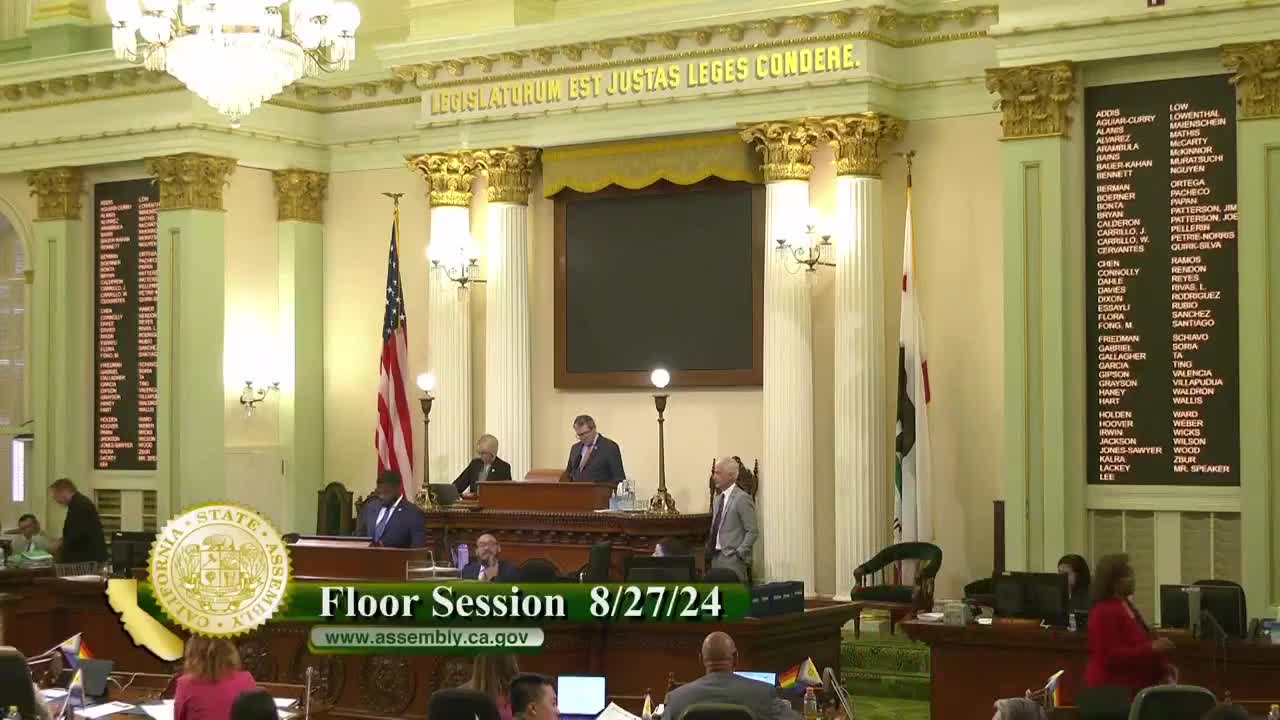 27MIN
Assembly Floor
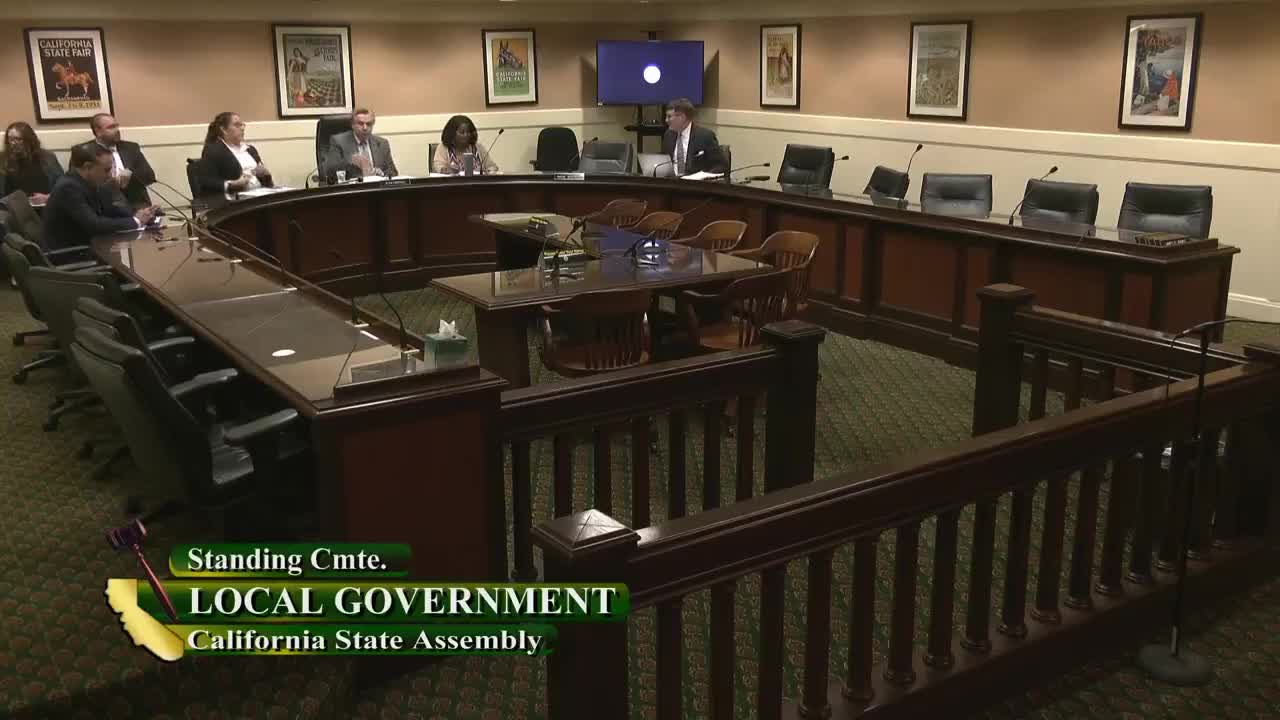 12MIN
Assembly Standing Committee on Local Government
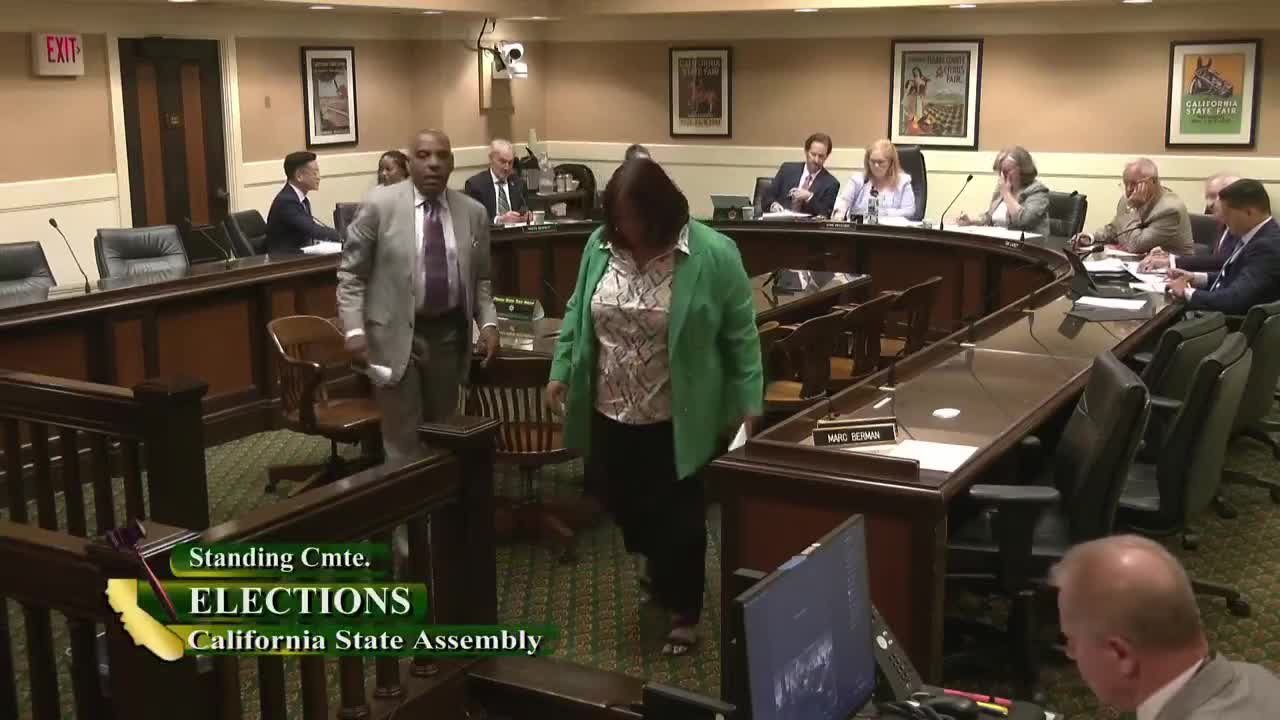 24MIN
Assembly Standing Committee on Elections
 3MIN
Senate Floor
 17MIN
Senate Standing Committee on Local Government
 32MIN
Senate Standing Committee on Elections and Constitutional Amendments
Bill Author


