SB 1209: Local agency formation commission: indemnification.
- Session Year: 2023-2024
- House: Senate
- Latest Version Date: 2024-09-28
Current Status:
Passed
(2024-09-28: Chaptered by Secretary of State. Chapter 886, Statutes of 2024.)
Introduced
In Committee
First Chamber
In Committee
Second Chamber
Enacted
What does this bill do?
The bill lets a local agency formation commission (LAFCO) require that an applicant for a city or district boundary change, sphere update, or other LAFCO action agree to defend, indemnify (pay for losses), and hold harmless the LAFCO, its officers, and employees from lawsuits that try to overturn the LAFCO’s approval. The LAFCO must promptly notify and fully cooperate with the applicant about any such lawsuit, the applicant is not responsible to defend or to pay a settlement if the LAFCO fails to notify or cooperate or the applicant does not approve the settlement, and the LAFCO may join the defense if it pays its own legal costs and defends in good faith.
The summary is provided by generative AI which can make mistakes. For original language, please view the details in the table below.
Existing law, the Cortese-Knox-Hertzberg Local Government Reorganization Act of 2000, provides the exclusive authority and procedure for the initiation, conduct, and completion of changes of organization and reorganization for cities and districts, except as specified. The act continues in existence in each county a local agency formation commission (LAFCO) that consists of members appointed, as specified, and oversees those changes of organization and reorganization. The act authorizes a LAFCO to, among other things, review and approve with or without amendment, wholly, partially, or conditionally, or disapprove proposals for changes of organization or reorganization, as specified.
This bill would authorize a LAFCO to require, as a condition for, among other things, processing a change of organization or reorganization, that the applicant agrees to defend, indemnify, and hold harmless the LAFCO, its agents, officers, and employees from and against any claim, action, or proceeding, as specified, to attack, set aside, void, or annul an approval by the LAFCO. The bill would require the LAFCO to promptly notify the applicant of any claim, action, or proceeding to attack, set aside, void, or annul an approval by the LAFCO and require the LAFCO to fully cooperate in the defense. The bill would specify that an applicant who is a party to the agreement is not responsible to defend, indemnify, or hold harmless the LAFCO if the LAFCO fails to notify the applicant or cooperate fully in the defense, and is not required to pay or perform any settlement relating to the agreement, unless the applicant approves the settlement. The bill would specify that nothing in its provisions are to be construed to prohibit the LAFCO from participating in the defense of any claim, action, or proceeding to attack, set aside, void, or annul an approval by the commission if specified conditions are met, including that the LAFCO bears its own attorneys fees and costs of the claim, action, or proceeding.
Existing law, the Cortese-Knox-Hertzberg Local Government Reorganization Act of 2000, provides the exclusive authority and procedure for the initiation, conduct, and completion of changes of organization and reorganization for cities and districts, except as specified. The act continues in existence in each county a local agency formation commission (LAFCO) that consists of members appointed, as specified, and oversees those changes of organization and reorganization. The act authorizes a LAFCO to, among other things, review and approve with or without amendment, wholly, partially, or conditionally, or disapprove proposals for changes of organization or reorganization, as specified.
This bill would authorize a LAFCO to require, as a condition for, among other things, processing a change of organization or reorganization, that the applicant agrees to defend, indemnify, and hold harmless the LAFCO, its agents, officers, and employees from and against any claim, action, or proceeding, as specified, arising from or relating to the action or determination by the LAFCO. to attack, set aside, void, or annul an approval by the LAFCO. The bill would require the LAFCO to promptly notify the applicant of any claim, action, or proceeding to attack, set aside, void, or annul an approval by the LAFCO and require the LAFCO to fully cooperate in the defense. The bill would specify that an applicant who is a party to the agreement is not responsible to defend, indemnify, or hold harmless the LAFCO if the LAFCO fails to notify the applicant or cooperate fully in the defense, and is not required to pay or perform any settlement relating to the agreement, unless the applicant approves the settlement. The bill would specify that nothing in its provisions are to be construed to prohibit the LAFCO from participating in the defense of any claim, action, or proceeding to attack, set aside, void, or annul an approval by the commission if specified conditions are met, including that the LAFCO bears its own attorneys fees and costs of the claim, action, or proceeding.
Existing law, the Cortese-Knox-Hertzberg Local Government Reorganization Act of 2000, provides the exclusive authority and procedure for the initiation, conduct, and completion of changes of organization and reorganization for cities and districts, except as specified. The act continues in existence in each county a local agency formation commission (LAFCO) that consists of members appointed, as specified, and oversees those changes of organization and reorganization. The act authorizes a LAFCO to, among other things, review and approve with or without amendment, wholly, partially, or conditionally, or disapprove proposals for changes of organization or reorganization, as specified.
This bill would authorize a LAFCO to require, as a condition for, among other things, processing a change of organization or reorganization, that the applicant agrees to defend, indemnify, and hold harmless the LAFCO, its agents, officers, and employees from and against any claim, action, or proceeding, as specified, arising from or relating to the action or determination by the LAFCO.
(a)The commission may require, as a condition for processing a change of organization or reorganization, a sphere amendment or a sphere update, or any other action or determination requested from the commission, that the applicant agrees to defend, indemnify, and hold harmless the commission, its agents, officers, and employees from any claim, action, or proceeding against the commission, its agents, officers, or employees to attack, set aside, void, or annul an approval by the commission.
(b)(1)An agreement to defend, indemnify, and hold harmless entered into pursuant to subdivision (a) shall require the commission to promptly notify the applicant of any claim, action, or proceeding to attack, set aside, void, or annul an approval by the commission and shall require the commission to cooperate fully in the defense.
(2)An applicant who is a party to an agreement to defend, indemnify, and hold harmless entered into pursuant to subdivision (a) shall not be responsible to defend, indemnify, or hold harmless if the commission fails to notify the applicant or cooperate fully in the defense pursuant to paragraph (1).
(c)An applicant who is a party to an agreement to defend, indemnify, and hold harmless entered into pursuant to subdivision (a) shall not be required to pay or perform any settlement relating to the agreement, unless the applicant approves the settlement.
(d)Nothing in this section shall be construed to prohibit the commission from participating in the defense of any claim, action, or proceeding to attack, set aside, void or annul an approval by the commission if both of the following conditions are met:
(1)The commission bears its own attorneys fees and costs of the claim, action, or proceeding.
(2)The commission defends the claim, action, or proceeding in good faith.
(a)The commission may require, as a condition for processing a change of organization or reorganization, a sphere amendment or a sphere update, or any other action or determination requested from the commission, that the applicant agrees to defend, indemnify, and hold harmless the commission, its agents, officers, and employees from any claim, action, or proceeding against the commission, its agents, officers, or employees arising from or relating to the action or determination by the commission. to attack, set aside, void, or annul an approval by the commission.
(b)(1)An agreement to defend, indemnify, and hold harmless entered into pursuant to subdivision (a) shall require the commission to promptly notify the applicant of any claim, action, or proceeding to attack, set aside, void, or annul an approval by the commission and shall require the commission to cooperate fully in the defense.
(2)An applicant who is a party to an agreement to defend, indemnify, and hold harmless entered into pursuant to subdivision (a) shall not be responsible to defend, indemnify, or hold harmless if the commission fails to notify the applicant or cooperate fully in the defense pursuant to paragraph (1).
(c)An applicant who is a party to an agreement to defend, indemnify, and hold harmless entered into pursuant to subdivision (a) shall not be required to pay or perform any settlement relating to the agreement, unless the applicant approves the settlement.
(d)Nothing in this section shall be construed to prohibit the commission from participating in the defense of any claim, action, or proceeding to attack, set aside, void or annul an approval by the commission if both of the following conditions are met:
(1)The commission bears its own attorneys fees and costs of the claim, action, or proceeding.
(2)The commission defends the claim, action, or proceeding in good faith.
The commission may require, as a condition for processing a change of organization or reorganization, a sphere amendment or a sphere update, or any other action or determination requested from the commission, that the applicant agrees to defend, indemnify, and hold harmless the commission, its agents, officers, and employees from any claim, action, or proceeding against the commission, its agents, officers, or employees arising from or relating to the action or determination by the commission.
|
Date
|
Status
|
|---|---|
| Sep 28, 2024 | Chaptered by Secretary of State. Chapter 886, Statutes of 2024. |
| Sep 28, 2024 | Approved by the Governor. |
| Sep 3, 2024 | Enrolled and presented to the Governor at 3 p.m. |
| Aug 26, 2024 | Assembly amendments concurred in. (Ayes 40. Noes 0. Page 5415.) Ordered to engrossing and enrolling. |
| Aug 22, 2024 | In Senate. Concurrence in Assembly amendments pending. |
| Aug 22, 2024 | Read third time. Passed. (Ayes 60. Noes 0. Page 6442.) Ordered to the Senate. |
| Jun 24, 2024 | Read second time. Ordered to third reading. |
| Jun 20, 2024 | From committee: Do pass. (Ayes 9. Noes 0.) (June 19). |
| Jun 11, 2024 | From committee with author's amendments. Read second time and amended. Re-referred to Com. on L. GOV. |
| May 28, 2024 | Referred to Com. on L. GOV. |
| May 22, 2024 | In Assembly. Read first time. Held at Desk. |
| May 21, 2024 | Read third time. Passed. (Ayes 39. Noes 0. Page 4095.) Ordered to the Assembly. |
| Mar 21, 2024 | Read second time. Ordered to third reading. |
| Mar 20, 2024 | From committee: Do pass. (Ayes 6. Noes 0. Page 3380.) (March 20). |
| Mar 12, 2024 | Set for hearing March 20. |
| Feb 29, 2024 | Referred to Com. on L. GOV. |
| Feb 16, 2024 | From printer. May be acted upon on or after March 17. |
| Feb 15, 2024 | Introduced. Read first time. To Com. on RLS. for assignment. To print. |
|
Date
|
Description
|
Location
|
Votes
|
|
|---|---|---|---|---|
| Aug 26, 2024 | Unfinished Business SB1209 Cortese Concurrence | Senate Floor |
Passed |
|
| Aug 22, 2024 | SB 1209 Cortese Senate Third Reading By Juan Carrillo | Assembly Floor |
Passed |
|
| Jun 19, 2024 | Do pass. | Assembly Standing Committee on Local Government |
Passed |
|
| May 21, 2024 | Senate 3rd Reading SB1209 Cortese | Senate Floor |
Passed |
|
| Mar 20, 2024 | Do pass | Senate Standing Committee on Local Government |
Passed |
This list shows positions taken on this bill by organizations on the date displayed, which is linked to the original source.
Positions by individuals are not included.
|
Organization
|
Position
|
Date
|
|---|---|---|
| Butte County Local Agency Formation Commission | ** Support | |
| CA Association of Local Agency Formation Commissions | ** Support | |
| California Association of Local Agency Formation Commissions | ** Support | |
| California Association Of Resource Conservation Districts | * Against | Jun 22, 2024 |
| California Building Industry Association | * Neutral | Mar 20, 2024 |
| County Of Los Angeles | * Support | Jun 22, 2024 |
| Los Angeles County Local Agency Formation Commission | ** Support | |
| Mendocino County Local Agency Formation Commission | ** Support | |
| Nevada County Local Agency Formation Commission | ** Support | |
| Orange County Local Agency Formation Commission | ** Support | |
| Placer County Local Agency Formation Commission | ** Support | |
| Sonoma County Local Agency Formation Commission | ** Support | |
| Tulare County Local Agency Formation Commission | ** Support |
SENATE RULES COMMITTEE Office of Senate Floor Analyses (916) 651-1520 Fax: (916) 327-4478 | SB 1209 |
UNFINISHED BUSINESS
Bill No: SB 1209
Author: Cortese (D)
Amended: 6/11/24
Vote: 21
SENATE LOCAL GOVERNMENT COMMITTEE: 6-0, 3/20/24
AYES: Durazo, Seyarto, Glazer, Skinner, Wahab, Wiener
NO VOTE RECORDED: Dahle
SENATE FLOOR: 39-0, 5/21/24
AYES: Alvarado-Gil, Archuleta, Ashby, Atkins, Becker, Blakespear, Bradford, Caballero, Cortese, Dahle, Dodd, Durazo, Eggman, Glazer, Gonzalez, Grove, Hurtado, Jones, Laird, Limón, McGuire, Menjivar, Min, Newman, Nguyen, Niello, Ochoa Bogh, Padilla, Portantino, Roth, Rubio, Seyarto, Skinner, Smallwood-Cuevas, Stern, Umberg, Wahab, Wiener, Wilk
NO VOTE RECORDED: Allen
ASSEMBLY FLOOR: 60-0, 8/22/24 - See last page for vote
SUBJECT: Local agency formation commission: indemnification
SOURCE: Author
DIGEST:
This bill authorizes a Local Agency Formation Commission (LAFCO) to require an applicant to indemnify the LAFCO, its agents, officers, and employees from and against any claim, action, or proceeding that may stem from a LAFCO decision to approve an application.
Assembly Amendments
impose certain requirements on a LAFCO that wishes to impose an indemnification requirement on an applicant, state an applicant is not required to pay or adhere to any settlement unless it approves the settlement, and clarify a LAFCO can participate in any proceeding it if bears its own costs and defends a claim in good faith.
ANALYSIS:
Existing law gives LAFCOs specific authority to charge applicants fees for four items: (a) filing and processing applications; (b) proceedings undertaken by the LAFCO; (c) amending or updating a sphere of influence; and (d) reconsidering a resolution making determinations.
This bill:
- Authorizes a LAFCO to require an applicant to indemnify the LAFCO, its agents, officers, and employees from and against any claim, action, or proceeding, that may stem from an action or determination by the LAFCO.
- Requires that under any such agreement, the LAFCO must promptly notify the applicant of any claim, action, or proceeding to attack, set aside, void, or annul an approval by the LAFCO and the LAFCO must cooperate fully in the defense. If the LAFCO fails to notify the applicant or fully cooperate in the defense, the applicant is not responsible for defending the action or for indemnifying the LAFCO.
- States an applicant is not required to pay or perform any settlement relating to the agreement, unless the applicant approves the settlement made by the LAFCO.
- States a LAFCO is not precluded from participating in the defense of any claim, action, or proceeding to attack, set aside, void or annul an approval it has issued as long as the LACO:
- Bears its own attorney’s fees and costs of the claim, action, or proceeding; and
- Defends the claim, action, or proceeding in good faith.
Background
- LAFCO, not Laugh Co. LAFCOs were established by the Legislature in 1963 to encourage the orderly formation of local government agencies, preserve agricultural land, and discourage urban sprawl.
LAFCO law was last overhauled via the Cortese-Knox-Hertzberg Local Government Reorganization Act of 2000, which gave LAFCOs more independence and further clarified their purpose and mission. Each of California’s 58 counties is home to a LAFCO and while there is some variation between counties in terms of how a LAFCO is built, each LAFCO is governed by a board of commissioners that is generally composed of two members from the Board of Supervisors and two members from the city councils in that county. Many commissions also have two members from the independent special districts in the county and in turn, these members select a member of the general public who doesn’t sit on any elected body.
- What voodoo do LAFCOs do? The 58 LAFCOs work with approximately 3,500 governmental agencies (483 cities, and 3,000+ special districts) across the state. Local governments can only exercise their powers and provide services where LAFCO allows them to. Accordingly, LAFCOs review proposals to form new local government agencies, change existing agencies’ boundaries, and grant special districts the authority to exercise powers identified in their principal acts. LAFCO decisions form the basis of sustainable regional planning for government services and strive to balance the competing needs in California for efficient services, affordable housing, economic opportunity, and the conservation of natural resources.
LAFCOs are responsible for coordinating and approving changes in local governmental boundaries, conducting special studies looking at ways to reorganize, simplify, and streamline governmental structure, and preparing a sphere of influence for each city and special district within each county. Generally speaking, LAFCOs approve or adopt:
- Boundary changes;
- Sphere of influence studies;
- Municipal Service Reviews;
- Special district consolidations; and
- Out-of-agency service agreements.
- How LAFCOs are funded. Under state law, any local agency whose council or board members are eligible to be LAFCO commissioners must help pay to fund the county LAFCO. Each agency’s share is proportional to its general tax revenue and LAFCOs also receive funding from fees they charge to applicants to cover the cost of processing and reviewing applications.
- Indemnification. When a private entity or a governmental agency brings a proposal before a LAFCO for review and approval, many LAFCOs have historically required the applicant to sign an indemnity agreement. Such an agreement essentially requires the applicant to indemnify the LAFCO against any lawsuits that may stem from its decision and cover the LAFCO’s legal expenses should any be incurred in the process of defending its decision.
- Why are we here? A May 2022 decision by California’s Second District Court of Appeals in 78 Cal.App.5th 363 (2022) San Luis Obispo Local Agency Formation Commission et al. v. Central Coast Development Company found LAFCOs have no statutory authority to include an indemnification clause in a contract it requires a project applicant to sign. The California Association of Local Agency Formation Commissions wants the Legislature to grant LAFCOs the explicit authority to require an applicant to indemnify them.
Comments
- San Luis Obispo LAFCO vs. Central Coast Development Company. This bill was introduced in response to the California’s Second District Court of Appeals’ May 5, 2022, decision in San Luis Obispo LAFCO vs. Central Coast Development Company. A brief history of the case is as follows:
- The Central Coast Development Company (Central Coast) owned a 154-acre parcel of property within the sphere of influence of the City of Pismo Beach.
- Pismo Beach approved Central Coast’s development permit application to build 252 single-family homes and 60 senior housing units. Together, Central Coast and Pismo Beach applied to the San Luis Obispo LAFCO to annex the property into the city.
- The San Luis Obispo LAFCO application signed by Pismo Beach and Central Coast contained an indemnification agreement, which read in relevant part: “As part of this application, Applicant agrees to … indemnify … the San Luis Obispo Local Agency Formation Commission (LAFCO) … from any claim … to attack, set aside, void, or annul, in whole or in part, LAFCO's action on the proposal… This indemnification obligation shall include, but not be limited to, damages … that may be asserted by any person or entity, including the Applicant, arising out of or in connection with the application. In the event of such indemnification, LAFCO expressly reserves the right to provide its own defense at the reasonable expense of the Applicant.”
- The San Luis Obispo LAFCO denied the annexation application, finding Pismo Beach could not provide adequate water supply to the new development. Pismo Beach and Central Coast then sued San Luis Obispo LAFCO. The San Luis Obispo LAFCO prevailed and, based on the indemnity agreement signed by the two applicants, charged Pismo Beach and Central Coast more than $400,000 for attorney fees and costs.
- Pismo Beach and Central Coast refused to pay the fees assessed by the San Luis Obispo LAFCO, at which point the LAFCO sued the city and Central Coast.
- The court ruled in favor of Pismo Beach and Central Coast, writing in part:
“… the indemnity agreement was not supported by consideration and that LAFCO has no statutory authority to impose an indemnity agreement as a condition of LAFCO's statutory duty to consider Central Coast's application.
“Moreover … fees and charges are authorized by Government Code section 56383. Government Code section 56383 does not include a provision for attorney fees incurred in the collection of such processing fees and charges.”
- The limits of Government Code (GOV) Section 56383. This section of law gives LAFCOs specific authority to charge applicants fees for four items: (a) Filing and processing applications; (b) Proceedings undertaken by the LAFCO; (c) Amending or updating a sphere of influence; and (d) Reconsidering a resolution making determinations. That list does not include an enumerated authority to require an applicant to indemnify the LAFCO against any legal challenges, but GOV Section 56383 does contain the expansive phrase “Including, but not limited to” prior to listing the four items noted above. According to the court, this terminology in GOV Section 56383 was not broad enough to allow LAFCOs to require applicants to indemnify them against legal challenges, noting essentially the fees did not and could not cover activities that occurred after LAFCO had acted on an application. This bill seeks to provide LAFCOs with the specific authority to require applicants to indemnify the agency.
- We’ll have what they’re having. The indemnification sought by LAFCOs in this bill is something already provided to a number of other governmental entities. For example, Government Code Section 66474.9(b) of the Subdivision Map Act allows cities and counties to require a subdivider to indemnify the local agency for lawsuits challenging the local agency’s approval of a subdivision. The general argument for indemnification is if a governmental agency is at risk for being sued every time it makes a decision it is tasked with making, the cost to the agency – and, by extension, the taxpayers – could be astronomical. Alternatives to indemnification could include allowing LAFCOs to spread the cost of its litigation exposure to all of its member agencies (and taxpayers) by increasing their fees or requiring the agency asking the LAFCO for a decision to post a bond to cover any litigation costs.
- What’s the bottom line? The bottom line question posed by this bill is “Who should pay if a LAFCO decision is challenged in court?” The choices appear to boil down to allowing LAFCOs to increase fees across their member agencies to cover litigation costs or allowing LAFCOs to require filing entities to cover those costs, should they be incurred. This bill answers the question by allowing a LAFCO to require an entity filing an application with it to indemnify the agency and agree to pay for any litigation costs associated with the LAFCO’s decision.
FISCAL EFFECT: Appropriation: No Fiscal Com.: No Local: No
SUPPORT: (Verified 8/23/24)
California Association of Local Agency Formation Commissions (source)
Butte County Local Agency Formation Commission
Los Angeles County Local Agency Formation Commission
Mendocino County Local Agency Formation Commission
Nevada County Local Agency Formation Commission
Orange County Local Agency Formation Commission
Placer County Local Agency Formation Commission
Sonoma County Local Agency Formation Commission
Tulare County Local Agency Formation Commission
OPPOSITION: (Verified 8/23/24)
None received
ASSEMBLY FLOOR: 60-0, 8/22/24
AYES: Alanis, Alvarez, Arambula, Bains, Bennett, Berman, Boerner, Bryan, Calderon, Juan Carrillo, Wendy Carrillo, Chen, Connolly, Megan Dahle, Davies, Dixon, Essayli, Flora, Friedman, Gabriel, Gallagher, Gipson, Grayson, Hart, Hoover, Jackson, Jones-Sawyer, Lackey, Lee, Lowenthal, Maienschein, Mathis, Muratsuchi, Stephanie Nguyen, Pacheco, Papan, Jim Patterson, Joe Patterson, Pellerin, Quirk-Silva, Ramos, Rendon, Reyes, Luz Rivas, Rodriguez, Blanca Rubio, Sanchez, Santiago, Schiavo, Soria, Ta, Ting, Valencia, Villapudua, Waldron, Wallis, Ward, Wood, Zbur, Robert Rivas
NO VOTE RECORDED: Addis, Aguiar-Curry, Bauer-Kahan, Bonta, Cervantes, Mike Fong, Garcia, Haney, Holden, Irwin, Kalra, Low, McCarty, McKinnor, Ortega, Petrie-Norris, Weber, Wicks, Wilson
Prepared by: Evan Goldberg / L. GOV. / (916) 651-4119
8/23/24 19:16:35
**** END ****
SENATE THIRD READING
STR Bill Id:SB 1209
Author:(Cortese)
As Amended Ver:June 11, 2024
Majority vote
SUMMARY
Authorizes a Local Agency Formation Commission (LAFCO) to require an applicant to indemnify the LAFCO, its agents, officers, and employees from and against any claim, action, or proceeding that may stem from a LAFCO decision to approve an application.
Major Provisions
- Provides that a LAFCO may require, as a condition for processing a change of organization or reorganization, a sphere amendment or sphere update, or any other action or determination requested from the LAFCO, that the applicant agrees to defend, indemnify, and hold harmless the LAFCO, its agents, officers, and employees from any claim, action, or proceeding against the LAFCO, its agents, officers, or employees to attack, set aside, void, or annul an approval by the LAFCO.
- Specifies that an agreement to defend, indemnify, and hold harmless entered into pursuant to 1) above, shall require the LAFCO to promptly notify the applicant of any claim, action, or proceeding to attack, set aside, void, or annul an approval by the LAFCO and shall require the LAFCO to cooperate fully in the defense.
- Provides that an applicant who is party to an agreement to defend, indemnify, and hold harmless entered into pursuant to 1) above, shall not be responsible to defend, indemnify, or hold harmless if the LAFCO fails to notify the applicant or cooperate fully in the defense pursuant to 2) above.
- Specifies that an applicant who is a party to an agreement to defend, indemnify, and hold harmless entered into pursuant to 1) above, shall not be required to pay or perform any settlement relating to the agreement, unless the applicant approves the settlement.
- Provides that nothing in this bill shall be construed to prohibit a LAFCO from participating in the defense of any claim, action, or proceeding to attack, set aside, void or annul an approval by the LAFCO if both of the following conditions are met:
- The LAFCO bears its own attorney's fees and costs of the claim, action, or proceeding.
- The LAFCO defends the claim, action, or proceeding in good faith.
COMMENTS
Local Government Boundaries. The Legislature has the authority to create, dissolve, or otherwise modify the boundaries and services of local governments. Beginning in 1963, the Legislature delegated the ongoing responsibility to control the boundaries of cities, county service areas, and most special districts to LAFCOs in each county. The responsibilities and authority of LAFCOs have been modified in subsequent legislation, including a major revision of the LAFCO statutes in the Cortese-Knox-Hertzberg Local Government Reorganization Act of 2000 [AB 2838 (Hertzberg), Chapter 761, Statutes of 2000]. The courts often refer to LAFCOs as the Legislature's watchdog over boundary changes.
Local governments can only exercise their powers and provide services where LAFCO allows them to. LAFCOs' boundary decisions must be consistent with spheres of influence (SOIs) that LAFCOs adopt to show the future boundaries and service areas of the cities and special districts. Before LAFCOs can adopt their SOIs, they must prepare Municipal Service Reviews (MSRs) which analyze population growth, public facilities, and service demands. LAFCOs may also conduct special studies of local governments.
Most boundary changes begin when a city or special district applies to a LAFCO, or when registered voters or landowners file petitions with a LAFCO. In limited circumstances, LAFCOs can initiate some special district boundary changes: consolidations, dissolutions, mergers, subsidiary districts, or reorganizations.
Indemnification. When a private entity or a governmental agency brings a proposal before a LAFCO for review and approval, many LAFCOs have often required the applicant to sign an indemnity agreement. Such an agreement essentially requires the applicant to indemnify the LAFCO against any lawsuits that may stem from its decision and cover the LAFCO's legal expenses should any be incurred in the process of defending its decision. However, recent court cases have ruled that LAFCO's do not have the authority to require such indemnity agreements.
In the 2021 appellate court case San Luis Obispo Local Agency Formation Commission v. City of Pismo Beach, a dispute arose over attorney fees and costs. The Central Coast Development Company (Central Coast) owned a 154-acre parcel of property within the sphere of influence of the City of Pismo Beach (Pismo Beach). Central Coast wanted to construct 252 single family residences and 60 senior housing units on the parcel. Pismo Beach approved Central Coast's application for a development permit for the property. Pismo Beach and Central Coast applied to the LAFCO for Pismo Beach to annex the property. The LAFCO application contained the following indemnity agreement:
"As part of this application, Applicant agrees to defend, indemnify, hold harmless and release the San Luis Obispo Local Agency Formation Commission (LAFCO), its officers, employees, attorneys, or agents from any claim, action or proceeding brought against any of them, the purpose of which is to attack, set aside, void, or annul, in whole or in part, LAFCO's action on the proposal or on the environmental documents submitted to or prepared by LAFCO in connection with the proposal. This indemnification obligation shall include, but not be limited to, damages, costs, expenses, attorneys' fees, and expert witness fees that may be asserted by any person or entity, including the Applicant, arising out of or in connection with the application. In the event of such indemnification, LAFCO expressly reserves the right to provide its own defense at the reasonable expense of the Applicant."
The LAFCO ended up denying the annexation application, and Pismo Beach and Central Coast sued the LAFCO. The LAFCO prevailed and presented Pismo Beach and Central Coast with a bill for more than $400,000 in attorney fees and costs. Pismo Beach and Central Coast ultimately refused to pay. According to the Court, the Special District Risk Management Authority (SDRMA), a public entity insurance pool, paid the LAFCO's fees and costs, and the LAFCO and SDRMA subsequently sued Pismo Beach and Central Coast to recover the expenses based on the indemnity provision of the annexation application. The Trial Court ruled in favor of Pismo Beach and Central Coast because the LAFCO had no authority to require such fees. The Appellate Court affirmed the Trial Court's decision.
Government Code Section 56383 allows a LAFCO to establish a schedule of fees and service charges for the following:
- Filing and processing applications filed with the LAFCO.
- Proceedings undertaken by the LAFCO and any reorganization committee.
- Amending or updating a sphere of influence.
- Reconsidering a resolution making determinations.
However, the Appellate Court stated that, "Moreover, section 56383 contemplates that fees charged thereunder will be limited to those necessary to the administrative process, not to post-decision court proceedings...Nothing in section 56383, no matter how broadly construed authorizes the indemnity agreement."
In San Luis Obispo Local Agency Formation Commission v. Central Coast Development Company, a subsequent 2022 appellate court case also regarding the awarding of attorney fees, the Court stated, "We affirmed in San Luis Obispo Local Agency Formation Com. v. City of Pismo Beach (2021) 61 Cal.App.5th 595 [275Cal.Rptr.3d 837] (LAFCO I). We determined that the indemnity agreement was not supported by consideration and that LAFCO has no statutory authority to impose an indemnity agreement as a condition of LAFCO's statutory duty to consider Central Coast's application." The Court also stated, "Government Code section 56383 does not include a provision for attorney fees incurred in the collection of such processing fees and charges. In LAFCO I, we expressly rejected the argument that the authority to provide for attorney fees could be implied from statutes.
Other Indemnity Authority. LAFCOs are seeking the ability to enter into indemnity agreements with applicants, which is not unique as other governmental entities have this authority. For example, Government Code section 66474.9(b) of the Subdivision Map Act allows local agencies to require a subdivider to indemnify the local agency for lawsuits challenging the local agency's approval of a subdivision. Such an agreement requires the subdivider to defend, indemnify, and hold harmless the local agency from any claim, action, or proceeding against the local agency to attack, set aside, void, or annul, an approval of the local agency concerning a subdivision. Like this bill, the Subdivision Map Act requires the local agency to promptly notify the subdivider of any claim and that the local agency cooperate fully in the defense. If the local agency fails to promptly notify the subdivider of any claim, or if the local agency fails to cooperate fully in the defense, the subdivider is not responsible to defend, indemnify, or hold harmless the local agency.
According to the Author
According to the author, "SB 1209 would authorize LAFCOs to be indemnified by an applicant when a commission approves their application. For most applications to public agencies, such as those for land-use, private parties indemnify the involved city or county. Similarly, LAFCOs have normally required an indemnification provision in applications and conditions of approval. However, in 2022, the Second District Court of Appeals determined that LAFCO, despite prevailing in the underlying court case, could not require or rely upon indemnification because it is not expressly authorized in the Cortese-Knox-Hertzberg Local Government Act of 2000. Without the ability to indemnify, the LAFCO will necessarily have to consider whether to make concessions to the applicant, or to not defend its actions."
Arguments in Support
According to the California Association of LAFCOs, the sponsors of this bill, "This bill will add new language to the Cortese-Knox-Hertzberg Local Government Reorganization Act of 2000 (The Act) authorizing LAFCOs to enter into indemnification agreements with applicants. Counties and cities are already empowered to enter into, and require, indemnification and routinely do so with respect to discretionary land-use approvals. SB 1209 will provide LAFCOs with a similar authority in this situation.
"This bill is in response to a 2022 decision of the Second District Court of Appeals, which found that existing State law does not provide LAFCOs with the explicit authority needed to require indemnification. Absent an indemnification authority - and because LAFCO funding is statutorily required in a specified ratio from the county, cities, and special districts within a county - any costs to defend litigation end up being absorbed by a LAFCO's funding agencies. Consequently, SB 1209 will allow LAFCOs to use indemnification agreements, similar to those already in use by counties and cities in land use applications which, in turn, will prevent some costs to defend litigation from being shifted to a county, its cities, and its special districts."
Arguments in Opposition
According to the California Association of Resource Conservation Districts, "RCDs are special districts created by Division 9 of the Public Resources Code in which the Legislature declared RCDs legal subdivisions of the state. The services provided by RCDs are largely funded by state and/or federal grants, which also serve as the main fund source for RCDs' basic administration costs. Most RCDs receive little to no local tax dollars to support RCD functions and the indemnification and defense requirements that may be imposed by SB 1209 are simply financially infeasible for most RCDs. Accordingly, many RCDs would be incapable of seeking sphere of influence changes or latent power activations that may be necessary to implement critical climate resilience and adaptation projects.
"CARCD is aligned with the LAFCO mission to discourage urban sprawl, preserve open space and prime agricultural lands and we appreciate that LAFCOs are being requested to approve requests that are antithetical to this mission. We agree with the intent of SB 1209 to shield LAFCO decision-making from lawsuits, or the threat of lawsuits, that would force LAFCOs into approving projects that allow for new developments on lands that should be protected or restored. However, we strongly disagree with the premise of SB 1209 being applied to RCDs. We believe the intentions of SB 1209 have some merit but apply too broadly and will cause serious harm to RCDs across the state."
FISCAL COMMENTS
None.
VOTES
SENATE FLOOR: 39-0-1
YES: Alvarado-Gil, Archuleta, Ashby, Atkins, Becker, Blakespear, Bradford, Caballero, Cortese, Dahle, Dodd, Durazo, Eggman, Glazer, Gonzalez, Grove, Hurtado, Jones, Laird, Limón, McGuire, Menjivar, Min, Newman, Nguyen, Niello, Ochoa Bogh, Padilla, Portantino, Roth, Rubio, Seyarto, Skinner, Smallwood-Cuevas, Stern, Umberg, Wahab, Wiener, Wilk
ABS, ABST OR NV: Allen
ASM LOCAL GOVERNMENT: 9-0-0
YES: Juan Carrillo, Waldron, Sanchez, Haney, Kalra, Pacheco, Ramos, Ward, Wilson
UPDATED
VERSION: June 11, 2024
CONSULTANT: Jimmy MacDonald / L. GOV. / (916) 319-3958 FN: 0003559
Date of Hearing: June 19, 2024
ASSEMBLY COMMITTEE ON LOCAL GOVERNMENT
Juan Carrillo, Chair
SBPCA Bill Id:SB 1209
Author:(Cortese) – As Amended Ver:June 11, 2024
SENATE VOTE: 39-0
SUBJECT: Local agency formation commission: indemnification.
SUMMARY: Authorizes a Local Agency Formation Commission (LAFCO) to require an applicant to indemnify the LAFCO, its agents, officers, and employees from and against any claim, action, or proceeding that may stem from a LAFCO decision to approve an application. Specifically, this bill:
- Provides that a LAFCO may require, as a condition for processing a change of organization or reorganization, a sphere amendment or sphere update, or any other action or determination requested from the LAFCO, that the applicant agrees to defend, indemnify, and hold harmless the LAFCO, its agents, officers, and employees from any claim, action, or proceeding against the LAFCO, its agents, officers, or employees to attack, set aside, void, or annul an approval by the LAFCO.
- Specifies that an agreement to defend, indemnify, and hold harmless entered into pursuant to 1) above, shall require the LAFCO to promptly notify the applicant of any claim, action, or proceeding to attack, set aside, void, or annul an approval by the LAFCO and shall require the LAFCO to cooperate fully in the defense.
- Provides that an applicant who is party to an agreement to defend, indemnify, and hold harmless entered into pursuant to 1) above, shall not be responsible to defend, indemnify, or hold harmless if the LAFCO fails to notify the applicant or cooperate fully in the defense pursuant to 2) above.
- Specifies that an applicant who is a party to an agreement to defend, indemnify, and hold harmless entered into pursuant to 1) above, shall not be required to pay or perform any settlement relating to the agreement, unless the applicant approves the settlement.
- Provides that nothing in this bill shall be construed to prohibit a LAFCO from participating in the defense of any claim, action, or proceeding to attack, set aside, void or annul an approval by the LAFCO if both of the following conditions are met:
- The LAFCO bears its own attorney’s fees and costs of the claim, action, or proceeding.
- The LAFCO defends the claim, action, or proceeding in good faith.
FISCAL EFFECT: None.
COMMENTS:
- Local Government Boundaries. The Legislature has the authority to create, dissolve, or otherwise modify the boundaries and services of local governments. Beginning in 1963, the Legislature delegated the ongoing responsibility to control the boundaries of cities, county service areas, and most special districts to LAFCOs in each county. The responsibilities and authority of LAFCOs have been modified in subsequent legislation, including a major revision of the LAFCO statutes in the Cortese-Knox-Hertzberg Local Government Reorganization Act of 2000 [AB 2838 (Hertzberg), Chapter 761, Statutes of 2000]. The courts often refer to LAFCOs as the Legislature’s watchdog over boundary changes.
Local governments can only exercise their powers and provide services where LAFCO allows them to. LAFCOs’ boundary decisions must be consistent with spheres of influence (SOIs) that LAFCOs adopt to show the future boundaries and service areas of the cities and special districts. Before LAFCOs can adopt their SOIs, they must prepare Municipal Service Reviews (MSRs) which analyze population growth, public facilities, and service demands. LAFCOs may also conduct special studies of local governments.
Most boundary changes begin when a city or special district applies to a LAFCO, or when registered voters or landowners file petitions with a LAFCO. In limited circumstances, LAFCOs can initiate some special district boundary changes: consolidations, dissolutions, mergers, subsidiary districts, or reorganizations. Boundary changes generally require four (sometimes five) steps:
- First, there must be a completed application to LAFCO, including a petition or resolution, an environmental review document, an agreement on how property taxes will be transferred, and a plan for services that describes what services will be provided at what level and how those services will be financed.
- Second, LAFCO must hold a noticed public hearing, take testimony, and may approve the proposed reorganization. The LAFCO may impose terms and conditions that spell out what happens to the assets and liabilities of affected local agencies. If LAFCO disapproves, the proposed reorganization stops.
- Third, LAFCO must hold another public hearing to count written protests in order to determine whether an election is needed. Although there are many exceptions, in most cases an election is required if 25% of the voters in a district, or voters representing 25% of the assessed value of land, submit written protests. In nearly all cases, if a majority of voters or landowners protest, the reorganization also stops.
- Fourth, if an election is required, it occurs among the affected voters, requiring majority voter approval.
- Finally, LAFCO’s staff files formal documents to complete the reorganization.
- First, there must be a completed application to LAFCO, including a petition or resolution, an environmental review document, an agreement on how property taxes will be transferred, and a plan for services that describes what services will be provided at what level and how those services will be financed.
- LAFCO Funding. Under state law, any local agency whose council or board members are eligible to be LAFCO commissioners must help pay to fund the county LAFCO. Each LAFCO is required to annually adopt a proposed budget by May 1 and a final budget by June 15. At a minimum, the proposed and final budget is required to be equal to the budget adopted for the previous fiscal year unless the LAFCO finds that reduced staffing or program costs will nevertheless allow the LAFCO to fulfill the purposes and programs of LAFCO law. After the adoption of the final budget, the county auditor generally must apportion the net operating expenses of a LAFCO in the following manner:
- In counties where there is city, county, and independent special district representation on the LAFCO, each must provide one-third share of the LAFCO’s operating costs.
- The cities’ share must be apportioned to each city’s total revenues as a percentage of the combined city revenues within a county, as specified.
- The independent special districts’ share shall be apportioned in proportion to each district’s total revenues as a percentage of the combined total district revenues within a county, as specified.
- Alternative methods for apportionment can take place if a majority of cities or independent special approve an agreement.
- The cities’ share must be apportioned to each city’s total revenues as a percentage of the combined city revenues within a county, as specified.
- In counties where there is no independent special district representation, the county and the cities within that county each provide one-half of the LAFCO’s operational costs.
- In counties where there are no cities, the county and its independent special districts each provide one-half of the LAFCO’s operational costs.
- Any alternative method of apportionment of the net operating expenses of the LAFCO may be used if approved by a majority vote of each of the following: the board of supervisors; a majority of the cities representing a majority of the total population of cities in the county; and the independent special districts representing a majority of the combined total population of independent special districts in the county.
- In counties where there is city, county, and independent special district representation on the LAFCO, each must provide one-third share of the LAFCO’s operating costs.
- Indemnification. When a private entity or a governmental agency brings a proposal before a LAFCO for review and approval, many LAFCOs have often required the applicant to sign an indemnity agreement. Such an agreement essentially requires the applicant to indemnify the LAFCO against any lawsuits that may stem from its decision and cover the LAFCO’s legal expenses should any be incurred in the process of defending its decision. However, recent court cases have ruled that LAFCO’s do not have the authority to require such indemnity agreements.
In the 2021 appellate court case San Luis Obispo Local Agency Formation Commission v. City of Pismo Beach, a dispute arose over attorney fees and costs. The Central Coast Development Company (Central Coast) owned a 154-acre parcel of property within the sphere of influence of the City of Pismo Beach (Pismo Beach). Central Coast wanted to construct 252 single family residences and 60 senior housing units on the parcel. Pismo Beach approved Central Coast’s application for a development permit for the property. Pismo Beach and Central Coast applied to the LAFCO for Pismo Beach to annex the property. The LAFCO application contained the following indemnity agreement:
“As part of this application, Applicant agrees to defend, indemnify, hold harmless and release the San Luis Obispo Local Agency Formation Commission (LAFCO), its officers, employees, attorneys, or agents from any claim, action or proceeding brought against any of them, the purpose of which is to attack, set aside, void, or annul, in whole or in part, LAFCO’s action on the proposal or on the environmental documents submitted to or prepared by LAFCO in connection with the proposal. This indemnification obligation shall include, but not be limited to, damages, costs, expenses, attorneys’ fees, and expert witness fees that may be asserted by any person or entity, including the Applicant, arising out of or in connection with the application. In the event of such indemnification, LAFCO expressly reserves the right to provide its own defense at the reasonable expense of the Applicant.”
The LAFCO ended up denying the annexation application, and Pismo Beach and Central Coast sued the LAFCO. The LAFCO prevailed and presented Pismo Beach and Central Coast with a bill for more than $400,000 in attorney fees and costs. Pismo Beach and Central Coast ultimately refused to pay. According to the Court, the Special District Risk Management Authority (SDRMA), a public entity insurance pool, paid the LAFCO’s fees and costs, and the LAFCO and SDRMA subsequently sued Pismo Beach and Central Coast to recover the expenses based on the indemnity provision of the annexation application. The Trial Court ruled in favor of Pismo Beach and Central Coast because the LAFCO had no authority to require such fees. The Appellate Court affirmed the Trial Court’s decision.
Government Code Section 56383 allows a LAFCO to establish a schedule of fees and service charges for the following:
- Filing and processing applications filed with the LAFCO.
- Proceedings undertaken by the LAFCO and any reorganization committee.
- Amending or updating a sphere of influence.
- Reconsidering a resolution making determinations.
- Filing and processing applications filed with the LAFCO.
However, the Appellate Court stated that, “Moreover, section 56383 contemplates that fees charged thereunder will be limited to those necessary to the administrative process, not to post-decision court proceedings...Nothing in section 56383, no matter how broadly construed authorizes the indemnity agreement.”
In San Luis Obispo Local Agency Formation Commission v. Central Coast Development Company, a subsequent 2022 appellate court case also regarding the awarding of attorney fees, the Court stated, “We affirmed in San Luis Obispo Local Agency Formation Com. v. City of Pismo Beach (2021) 61 Cal.App.5th 595 [275Cal.Rptr.3d 837] (LAFCO I). We determined that the indemnity agreement was not supported by consideration and that LAFCO has no statutory authority to impose an indemnity agreement as a condition of LAFCO's statutory duty to consider Central Coast's application.” The Court also stated, “Government Code section 56383 does not include a provision for attorney fees incurred in the collection of such processing fees and charges. In LAFCO I, we expressly rejected the argument that the authority to provide for attorney fees could be implied from statutes.”
- Other Indemnity Authority. LAFCOs are seeking the ability to enter into indemnity agreements with applicants, which is not unique as other governmental entities have this authority. For example, Government Code section 66474.9(b) of the Subdivision Map Act allows local agencies to require a subdivider to indemnify the local agency for lawsuits challenging the local agency’s approval of a subdivision. Such an agreement requires the subdivider to defend, indemnify, and hold harmless the local agency from any claim, action, or proceeding against the local agency to attack, set aside, void, or annul, an approval of the local agency concerning a subdivision. Like this bill, the Subdivision Map Act requires the local agency to promptly notify the subdivider of any claim and that the local agency cooperate fully in the defense. If the local agency fails to promptly notify the subdivider of any claim, or if the local agency fails to cooperate fully in the defense, the subdivider is not responsible to defend, indemnify, or hold harmless the local agency.
- Bill Summary. This bill allows a LAFCO to require, as a condition for processing a change of organization or reorganization, a sphere amendment or sphere update, or any other action or determination requested from the LAFCO, that the applicant agrees to defend, indemnify, and hold harmless the LAFCO, its agents, officers, and employees from any claim, action, or proceeding against the LAFCO. This bill applies only to a decision by a LAFCO to approve any of these actions. This bill is sponsored by the California Association of LAFCOs.
- Author’s Statement. According to the author, “SB 1209 would authorize LAFCOs to be indemnified by an applicant when a commission approves their application. For most applications to public agencies, such as those for land-use, private parties indemnify the involved city or county. Similarly, LAFCOs have normally required an indemnification provision in applications and conditions of approval. However, in 2022, the Second District Court of Appeals determined that LAFCO, despite prevailing in the underlying court case, could not require or rely upon indemnification because it is not expressly authorized in the Cortese-Knox-Hertzberg Local Government Act of 2000. Without the ability to indemnify, the LAFCO will necessarily have to consider whether to make concessions to the applicant, or to not defend its actions.”
- Policy Consideration. The main question this bill is posing is “Who should pay the costs if a LAFCO is challenged in court after approving an application?” The choices appear to be either allowing LAFCOs to increase fees across their member agencies to cover litigation costs or allowing LAFCOs to require filing entities to pay those costs. By allowing a LAFCO to require an entity filing an application to indemnify the LAFCO and agree to pay for any litigation costs associated with the LAFCO’s decision, this bill would answer that question. Ultimately, the Committee may wish to consider if applicants should bear the responsibility to defend a LAFCO if it is sued for approving an application.
- Arguments in Support. According to the California Association of LAFCOs, the sponsors of this bill, “This bill will add new language to the Cortese-Knox-Hertzberg Local Government Reorganization Act of 2000 (The Act) authorizing LAFCOs to enter into indemnification agreements with applicants. Counties and cities are already empowered to enter into, and require, indemnification and routinely do so with respect to discretionary land-use approvals. SB 1209 will provide LAFCOs with a similar authority in this situation.
“This bill is in response to a 2022 decision of the Second District Court of Appeals, which found that existing State law does not provide LAFCOs with the explicit authority needed to require indemnification. Absent an indemnification authority - and because LAFCO funding is statutorily required in a specified ratio from the county, cities, and special districts within a county - any costs to defend litigation end up being absorbed by a LAFCO’s funding agencies. Consequently, SB 1209 will allow LAFCOs to use indemnification agreements, similar to those already in use by counties and cities in land use applications which, in turn, will prevent some costs to defend litigation from being shifted to a county, its cities, and its special districts.”
- Arguments in Opposition. According to the California Association of Resource Conservation Districts, “RCDs are special districts created by Division 9 of the Public Resources Code in which the Legislature declared RCDs legal subdivisions of the state. The services provided by RCDs are largely funded by state and/or federal grants, which also serve as the main fund source for RCDs’ basic administration costs. Most RCDs receive little to no local tax dollars to support RCD functions and the indemnification and defense requirements that may be imposed by SB 1209 are simply financially infeasible for most RCDs. Accordingly, many RCDs would be incapable of seeking sphere of influence changes or latent power activations that may be necessary to implement critical climate resilience and adaptation projects.
“CARCD is aligned with the LAFCO mission to discourage urban sprawl, preserve open space and prime agricultural lands and we appreciate that LAFCOs are being requested to approve requests that are antithetical to this mission. We agree with the intent of SB 1209 to shield LAFCO decision-making from lawsuits, or the threat of lawsuits, that would force LAFCOs into approving projects that allow for new developments on lands that should be protected or restored. However, we strongly disagree with the premise of SB 1209 being applied to RCDs. We believe the intentions of SB 1209 have some merit but apply too broadly and will cause serious harm to RCDs across the state.”
REGISTERED SUPPORT / OPPOSITION:
Support
California Association of LAFCOs [SPONSOR]
Alameda LAFCO
Butte LAFCO
Contra Costa LAFCO
Del Norte LAFCO
El Dorado LAFCO
Fresno LAFCO
Inyo LAFCO
Los Angeles County
Los Angeles LAFCO
Madera LAFCO
Marin LAFCO
Mendocino LAFCO
Merced LAFCO
Monterey LAFCO
Napa LAFCO
Nevada LAFCO
Orange LAFCO
Placer LAFCO
Riverside LAFCO
Sacramento LAFCO
San Francisco LAFCO
San Joaquin LAFCO
San Luis Obispo LAFCO
San Mateo LAFCO
Santa Barbara LAFCO
San Bernardino LAFCO
Santa Clara LAFCO
Shasta LAFCO
Solano LAFCO
Sonoma LAFCO
Stanislaus LAFCO
Tulare LAFCO
Yolo LAFCO
Opposition
California Association of Resource Conservation Districts
Analysis Prepared by: Jimmy MacDonald / L. GOV. / (916) 319-3958
SENATE RULES COMMITTEE Office of Senate Floor Analyses (916) 651-1520 Fax: (916) 327-4478 | SB 1209 |
THIRD READING
Bill No: SB 1209
Author: Cortese (D)
Introduced: 2/15/24
Vote: 21
SENATE LOCAL GOVERNMENT COMMITTEE: 6-0, 3/20/24
AYES: Durazo, Seyarto, Glazer, Skinner, Wahab, Wiener
NO VOTE RECORDED: Dahle
SUBJECT: Local agency formation commission: indemnification
SOURCE: California Association of Local Agency Formation Commissions
DIGEST:
This bill authorizes a Local Agency Formation Commission (LAFCO) to require an applicant to indemnify the LAFCO, its agents, officers, and employees from and against any claim, action, or proceeding that may stem from a LAFCO decision.
ANALYSIS: Existing law gives LAFCOs specific authority to charge applicants fees for four items: (1) filing and processing applications; (2) proceedings undertaken by the LAFCO; (3) amending or updating a sphere of influence; and (4) reconsidering a resolution making determinations.
This bill authorizes a LAFCO to require an applicant to indemnify the LAFCO, its agents, officers, and employees from and against any claim, action, or proceeding, that may stem from an action or determination by the LAFCO.
Background
- LAFCO, not Laugh Co. LAFCOs were established by the Legislature in 1963 to encourage the orderly formation of local government agencies, preserve agricultural land, and discourage urban sprawl.
LAFCO law was last overhauled via the Cortese-Knox-Hertzberg Local Government Reorganization Act of 2000, which gave LAFCOs more independence and further clarified their purpose and mission. Each of California’s 58 counties is home to a LAFCO and while there is some variation between counties in terms of how a LAFCO is built, each LAFCO is governed by a board of commissioners that is generally composed of two members from the Board of Supervisors and two members from the city councils in that county. Many commissions also have two members from the independent special districts in the county and in turn, these members select a member of the general public who doesn’t sit on any elected body.
- What voodoo do LAFCOs do? The 58 LAFCOs work with approximately 3,500 governmental agencies (483 cities, and 3,000+ special districts) across the state. Local governments can only exercise their powers and provide services where LAFCO allows them to. Accordingly, LAFCOs review proposals to form new local government agencies, change existing agencies’ boundaries, and grant special districts the authority to exercise powers identified in their principal acts. LAFCO decisions form the basis of sustainable regional planning for government services and strive to balance the competing needs in California for efficient services, affordable housing, economic opportunity, and the conservation of natural resources.
LAFCOs are responsible for coordinating and approving changes in local governmental boundaries, conducting special studies looking at ways to reorganize, simplify, and streamline governmental structure, and preparing a sphere of influence for each city and special district within each county. Generally speaking, LAFCOs approve or adopt:
- Boundary changes;
- Sphere of influence studies;
- Municipal Service Reviews;
- Special district consolidations; and
- Out-of-agency service agreements.
- How LAFCOs are funded. Under state law, any local agency whose council or board members are eligible to be LAFCO commissioners must help pay to fund the county LAFCO. Each agency’s share is proportional to its general tax revenue and LAFCOs also receive funding from fees they charge to applicants to cover the cost of processing and reviewing applications.
- Indemnification. When a private entity or a governmental agency brings a proposal before a LAFCO for review and approval, many LAFCOs have historically required the applicant to sign an indemnity agreement. Such an agreement essentially requires the applicant to indemnify the LAFCO against any lawsuits that may stem from its decision and cover the LAFCO’s legal expenses should any be incurred in the process of defending its decision.
- Why are we here? A May 2022 decision by California’s Second District Court of Appeals in 78 Cal.App.5th 363 (2022) San Luis Obispo Local Agency Formation Commission et al. v. Central Coast Development Company found LAFCOs have no statutory authority to include an indemnification clause in a contract it requires a project applicant to sign. The California Association of Local Agency Formation Commissions wants the Legislature to grant LAFCOs the explicit authority to require an applicant to indemnify them.
Comments
- San Luis Obispo LAFCO vs. Central Coast Development Company. This bill was introduced in response to the California’s Second District Court of Appeals’ May 5, 2022, decision in San Luis Obispo LAFCO vs. Central Coast Development Company. A brief history of the case is as follows:
- The Central Coast Development Company (Central Coast) owned a 154-acre parcel of property within the sphere of influence of the City of Pismo Beach.
- Pismo Beach approved Central Coast’s development permit application to build 252 single-family homes and 60 senior housing units. Together, Central Coast and Pismo Beach applied to the San Luis Obispo LAFCO to annex the property into the city.
- The San Luis Obispo LAFCO application signed by Pismo Beach and Central Coast contained an indemnification agreement, which read in relevant part: “As part of this application, Applicant agrees to … indemnify … the San Luis Obispo Local Agency Formation Commission (LAFCO) … from any claim … to attack, set aside, void, or annul, in whole or in part, LAFCO's action on the proposal… This indemnification obligation shall include, but not be limited to, damages … that may be asserted by any person or entity, including the Applicant, arising out of or in connection with the application. In the event of such indemnification, LAFCO expressly reserves the right to provide its own defense at the reasonable expense of the Applicant.”
- The San Luis Obispo LAFCO denied the annexation application, finding Pismo Beach could not provide adequate water supply to the new development. Pismo Beach and Central Coast then sued San Luis Obispo LAFCO. The San Luis Obispo LAFCO prevailed and, based on the indemnity agreement signed by the two applicants, charged Pismo Beach and Central Coast more than $400,000 for attorney fees and costs.
- Pismo Beach and Central Coast refused to pay the fees assessed by the San Luis Obispo LAFCO, at which point the LAFCO sued the city and Central Coast.
- The court ruled in favor of Pismo Beach and Central Coast, writing in part:
… the indemnity agreement was not supported by consideration and that LAFCO has no statutory authority to impose an indemnity agreement as a condition of LAFCO's statutory duty to consider Central Coast's application.
Moreover … fees and charges are authorized by Government Code section 56383. Government Code section 56383 does not include a provision for attorney fees incurred in the collection of such processing fees and charges.
- The limits of Government Code (GOV) 56383. This section of law gives LAFCOs specific authority to charge applicants fees for four items: (1) Filing and processing applications; (2) Proceedings undertaken by the LAFCO; (3) Amending or updating a sphere of influence; and (4) Reconsidering a resolution making determinations. That list does not include an enumerated authority to require an applicant to indemnify the LAFCO against any legal challenges, but GOV 56383 does contain the expansive phrase “Including, but not limited to” prior to listing the four items noted above. According to the court, this terminology in GOV 56383 was not broad enough to allow LAFCOs to require applicants to indemnify them against legal challenges, noting essentially the fees did not and could not cover activities that occurred after LAFCO had acted on an application. This bill seeks to provide LAFCOs with the specific authority to require applicants to indemnify the agency.
- We’ll have what they’re having. The indemnification sought by LAFCOs in this bill is something already provided to a number of other governmental entities. For example, Government Code 66474.9(b) of the Subdivision Map Act allows cities and counties to require a subdivider to indemnify the local agency for lawsuits challenging the local agency’s approval of a subdivision. The general argument for indemnification is if a governmental agency is at risk for being sued every time it makes a decision it is tasked with making, the cost to the agency – and, by extension, the taxpayers – could be astronomical. Alternatives to indemnification could include allowing LAFCOs to spread the cost of its litigation exposure to all of its member agencies (and taxpayers) by increasing their fees or requiring the agency asking the LAFCO for a decision to post a bond to cover any litigation costs.
- What’s the bottom line? The bottom line question posed by this bill is “Who should pay if a LAFCO decision is challenged in court?” The choices appear to boil down to allowing LAFCOs to increase fees across their member agencies to cover litigation costs or allowing LAFCOs to require filing entities to cover those costs, should they be incurred. This bill answers the question by allowing a LAFCO to require an entity filing an application with it to indemnify the agency and agree to pay for any litigation costs associated with the LAFCO’s decision.
FISCAL EFFECT: Appropriation: No Fiscal Com.: No Local: No
SUPPORT: (Verified 3/22/24)
California Association of Local Agency Formation Commissions (source)
Butte County Local Agency Formation Commission
Los Angeles County Local Agency Formation Commission
Mendocino County Local Agency Formation Commission
Nevada County Local Agency Formation Commission
Orange County Local Agency Formation Commission
Placer County Local Agency Formation Commission
Sonoma County Local Agency Formation Commission
Tulare County Local Agency Formation Commission
OPPOSITION: (Verified 3/22/24)
None received
ARGUMENTS IN SUPPORT: According to the source, the California Association of Local Agency Formation Commissions:
This bill is in response to a 2022 decision of the Second District Court of Appeals, which found that existing State law does not provide LAFCOs with the explicit authority needed to require indemnification. Absent an indemnification authority - and because LAFCO funding is statutorily required in a specified ratio from the county, cities, and special districts within a county - any costs to defend litigation end up being absorbed by a LAFCO’s funding agencies.
Consequently, SB 1209 will allow LAFCOs to use indemnification agreements, similar to those already in use by counties and cities in land use applications. This will prevent costs to defend litigation from being shifted to the taxpayers of the county, cities, and special districts funding a LAFCO, and removes the possibility that an applicant threatens litigation to coerce a desirable LAFCO determination.
Prepared by: Evan Goldberg / L. GOV. / (916) 651-4119
3/27/24 14:13:36
**** END ****
SENATE COMMITTEE ON LOCAL GOVERNMENT
Senator Maria Elena Durazo, Chair
2023 - 2024 Regular
Bill No: | SB 1209 | Hearing Date: | 3/20/24 |
Author: | Cortese | Fiscal: | No |
Version: | 2/15/24 | Consultant: | Goldberg |
Local agency formation commission: indemnification
Authorizes a Local Agency Formation Commission (LAFCO) to require an applicant to indemnify the LAFCO, its agents, officers, and employees from and against any claim, action, or proceeding that may stem from a LAFCO decision.
Background
LAFCO, not Laugh Co. Local Agency Formation Commissions (LAFCOs) were established by the Legislature in 1963 to encourage the orderly formation of local government agencies, preserve agricultural land, and discourage urban sprawl.
LAFCO law was last overhauled via the Cortese-Knox-Hertzberg Local Government Reorganization Act of 2000, which gave LAFCOs more independence and further clarified their purpose and mission. Each of California’s 58 counties is home to a LAFCO and while there is some variation between counties in terms of how a LAFCO is built, each LAFCO is governed by a board of commissioners that is generally composed of two members from the Board of Supervisors and two members from the city councils in that county. Many commissions also have two members from the independent special districts in the county and in turn, these members select a member of the general public who doesn’t sit on any elected body.
What voodoo do LAFCOs do? The 58 LAFCOs work with approximately 3,500 governmental agencies (483 cities, and 3,000+ special districts) across the state. Local governments can only exercise their powers and provide services where LAFCO allows them to. Accordingly, LAFCOs review proposals to form new local government agencies, change existing agencies’ boundaries, and grant special districts the authority to exercise powers identified in their principal acts. LAFCO decisions form the basis of sustainable regional planning for government services and strive to balance the competing needs in California for efficient services, affordable housing, economic opportunity, and the conservation of natural resources.
LAFCOs are responsible for coordinating and approving changes in local governmental boundaries, conducting special studies looking at ways to reorganize, simplify, and streamline governmental structure, and preparing a sphere of influence for each city and special district within each county. Generally speaking, LAFCOs approve or adopt:
- Boundary changes;
- Sphere of influence studies;
- Municipal Service Reviews;
- Special district consolidations; and
- Out-of-agency service agreements.
How LAFCOs are funded. Under state law, any local agency whose council or board members are eligible to be LAFCO commissioners must help pay to fund the county LAFCO. Each agency’s share is proportional to its general tax revenue and LAFCOs also receive funding from fees they charge to applicants to cover the cost of processing and reviewing applications.
Indemnification. When a private entity or a governmental agency brings a proposal before a LAFCO for review and approval, many LAFCOs have historically required the applicant to sign an indemnity agreement. Such an agreement essentially requires the applicant to indemnify the LAFCO against any lawsuits that may stem from its decision and cover the LAFCO’s legal expenses should any be incurred in the process of defending its decision.
Why are we here? A May 2022 decision by California’s Second District Court of Appeals in 78 Cal.App.5th 363 (2022) San Luis Obispo Local Agency Formation Commission et al. v. Central Coast Development Company found LAFCOs have no statutory authority to include an indemnification clause in a contract it requires a project applicant to sign. The California Association of Local Agency Formation Commissions (LAFCOs) wants the Legislature to grant LAFCOs the explicit authority to require an applicant to indemnify them.
Proposed Law
Senate Bill 1209 authorizes a LAFCO to require an applicant to indemnify the LAFCO, its agents, officers, and employees from and against any claim, action, or proceeding, that may stem from an action or determination by the LAFCO.
Comments
1. Purpose of the bill. According to the author, “SB 1209 would explicitly authorize LAFCOs to indemnify as cities and counties do. For most applications to public agencies, such as those for land-use, private parties indemnify the involved city or county. Similarly, LAFCOs have normally required an indemnification provision in applications and conditions of approval. However, in 2022, the Second District Court of Appeals determined that LAFCO, despite prevailing in the underlying court case, could not require or rely upon indemnification because it is not expressly authorized in the Cortese-Knox-Hertzberg Local Government Act of 2000. Without the ability to indemnify, the LAFCO will necessarily have to consider whether to make concessions to the applicant, or to not defend its actions.”
2. San Luis Obispo LAFCO vs. Central Coast Development Company. This bill was introduced in response to the California’s Second District Court of Appeals’ May 5, 2022, decision in San Luis Obispo LAFCO vs. Central Coast Development Company. A brief history of the case is as follows:
- The Central Coast Development Company (Central Coast) owned a 154-acre parcel of property within the sphere of influence of the City of Pismo Beach.
- Pismo Beach approved Central Coast’s development permit application to build 252 single-family homes and 60 senior housing units. Together, Central Coast and Pismo Beach applied to the San Luis Obispo LAFCO to annex the property into the city.
- The San Luis Obispo LAFCO application signed by Pismo Beach and Central Coast contained an indemnification agreement, which read in relevant part: “As part of this application, Applicant agrees to … indemnify … the San Luis Obispo Local Agency Formation Commission (LAFCO) … from any claim … to attack, set aside, void, or annul, in whole or in part, LAFCO's action on the proposal… This indemnification obligation shall include, but not be limited to, damages … that may be asserted by any person or entity, including the Applicant, arising out of or in connection with the application. In the event of such indemnification, LAFCO expressly reserves the right to provide its own defense at the reasonable expense of the Applicant.”
- The San Luis Obispo LAFCO denied the annexation application, finding Pismo Beach could not provide adequate water supply to the new development. Pismo Beach and Central Coast then sued San Luis Obispo LAFCO. The San Luis Obispo LAFCO prevailed and, based on the indemnity agreement signed by the two applicants, charged Pismo Beach and Central Coast more than $400,000 for attorney fees and costs.
- Pismo Beach and Central Coast refused to pay the fees assessed by the San Luis Obispo LAFCO, at which point the LAFCO sued the city and Central Coast.
- The court ruled in favor of Pismo Beach and Central Coast, writing in part:
“… the indemnity agreement was not supported by consideration and that LAFCO has no statutory authority to impose an indemnity agreement as a condition of LAFCO's statutory duty to consider Central Coast's application.
“Moreover … fees and charges are authorized by Government Code section 56383. Government Code section 56383 does not include a provision for attorney fees incurred in the collection of such processing fees and charges.”
3. The limits of Government Code (GOV) 56383. This section of law gives LAFCOs specific authority to charge applicants fees for four items: (1) Filing and processing applications; (2) Proceedings undertaken by the LAFCO; (3) Amending or updating a sphere of influence; and (4) Reconsidering a resolution making determinations. That list does not include an enumerated authority to require an applicant to indemnify the LAFCO against any legal challenges, but GOV 56383 does contain the expansive phrase “Including, but not limited to” prior to listing the four items noted above. According to the court, this terminology in GOV 56383 was not broad enough to allow LAFCOs to require applicants to indemnify them against legal challenges, noting essentially the fees did not and could not cover activities that occurred after LAFCO had acted on an application. This bill seeks to provide LAFCOs with the specific authority to require applicants to indemnify the agency.
4. We’ll have what they’re having. The indemnification sought by LAFCOs in this bill is something already provided to a number of other governmental entities. For example, Government Code 66474.9(b) of the Subdivision Map Act allows cities and counties to require a subdivider to indemnify the local agency for lawsuits challenging the local agency’s approval of a subdivision. The general argument for indemnification is if a governmental agency is at risk for being sued every time it makes a decision it is tasked with making, the cost to the agency – and, by extension, the taxpayers – could be astronomical. Alternatives to indemnification could include allowing LAFCOs to spread the cost of its litigation exposure to all of its member agencies (and taxpayers) by increasing their fees or requiring the agency asking the LAFCO for a decision to post a bond to cover any litigation costs.
5. What’s the bottom line? The bottom line question posed by this bill is “Who should pay if the LAFCO is challenged in its attempts to carry out that responsibility?” The choices appear to boil down to allowing LAFCOs to increase fees across their member agencies to cover litigation costs or allowing LAFCOs to require filing entities to pay those costs. This bill answers that question by allowing a LAFCO to require an entity filing an application with a LAFCO to indemnify the agency and agree to pay for any litigation costs associated with the LAFCO’s decision.
Support and Opposition
(3/15/24)
Support: CA Association of Local Agency Formation Commissions (Sponsor)
Butte County Local Agency Formation Commission
Los Angeles County Local Agency Formation Commission
Mendocino County Local Agency Formation Commission
Nevada County Local Agency Formation Commission
Orange County Local Agency Formation Commission
Placer County Local Agency Formation Commission
Sonoma County Local Agency Formation Commission
Tulare County Local Agency Formation Commission
Opposition: None submitted.
-- END --
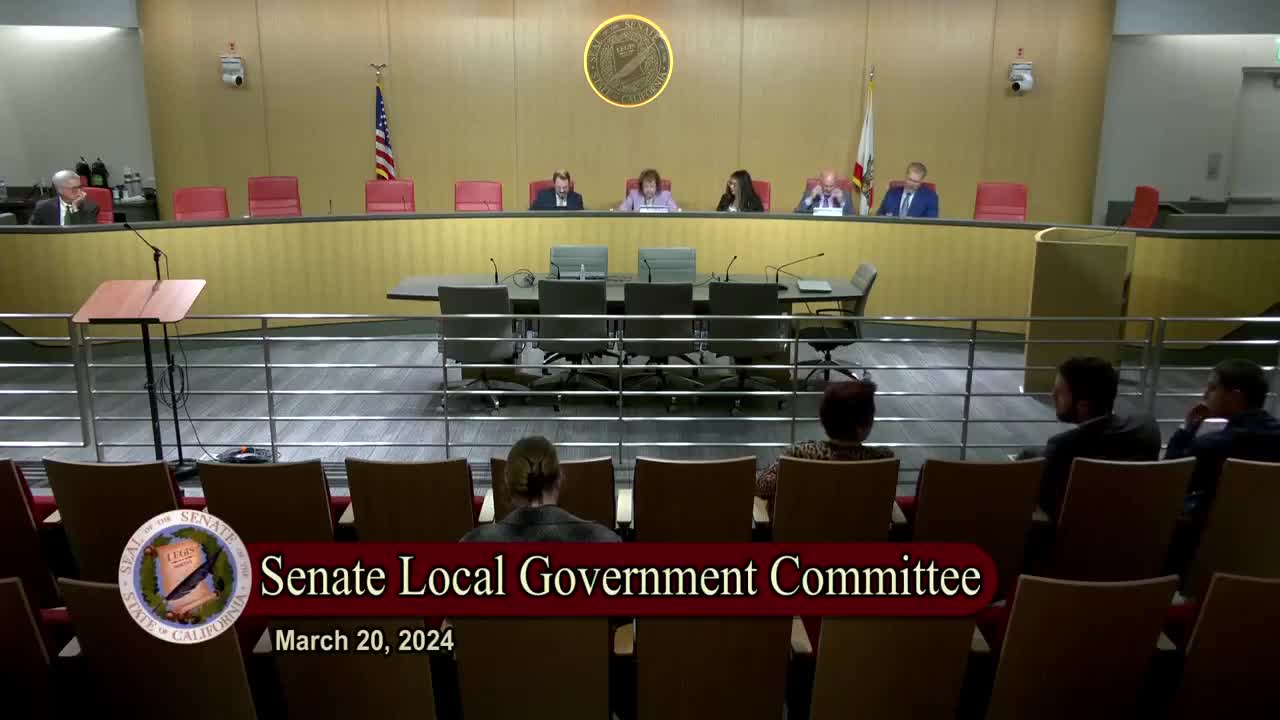
Bill Author
Bill Co-Author(s):