SB 1226: Hunting: navigable waters.
- Session Year: 2023-2024
- House: Senate
- Latest Version Date: 2024-08-19
Current Status:
Passed
(2024-08-19: Chaptered by Secretary of State. Chapter 186, Statutes of 2024.)
Introduced
In Committee
First Chamber
In Committee
Second Chamber
Enacted
Existing law makes it unlawful to enter land for the purpose of discharging a firearm or taking or destroying any mammal or bird, including waterfowl, on that land, without having first obtained written permission from the owner, the owners agent, or the person in lawful possession of that land, if either of the following applies: (1) the land belongs to, or is occupied by, another person and is either under cultivation or enclosed by a fence, or (2) there are signs forbidding trespass or hunting or both displayed at intervals not less than 3 to the mile along all exterior boundaries and at all roads and trails entering those lands, including land temporarily inundated by water flowing outside the established banks of a waterway.
This bill would restrict the application of the provisions regarding land temporarily inundated by water flowing outside the established banks of a waterway to non-navigable waters. The bill would also state that these provisions do not restrict the publics right to use navigable waters for hunting, fishing, or other public purposes under the California Constitution.
(a)It is unlawful to enter land for the purpose of discharging a firearm or taking or destroying a mammal or bird, including waterfowl, on that land, without having first obtained written permission from the owner, the owners agent, or the person in lawful possession of that land, if either of the following is true:
(1)The land belongs to, or is occupied by, another person and is either under cultivation or enclosed by a fence.
(2)There are signs of any size and wording forbidding trespass or hunting or both displayed along all exterior boundaries of the land, at intervals not less than three to the mile, and at all roads and trails entering the land, including land temporarily inundated by non-navigable waters flowing outside the established banks of a river, stream, slough, or other waterway, which fairly advise a person about to enter the land that the use of the land is so restricted.
(b)Nothing in this section restricts the right of the public to use navigable waters for hunting, fishing, or other public purpose as guaranteed under Section IV of Article X of the California Constitution.
(a)It is unlawful to enter land for the purpose of discharging a firearm or taking or destroying a mammal or bird, including waterfowl, on that land, without having first obtained written permission from the owner, the owners agent, or the person in lawful possession of that land, if either of the following is true:
(a)(1)The land belongs to to, or is occupied by by, another person and is either under cultivation or enclosed by a fence.
(b)(2)There are signs of any size and wording forbidding trespass or hunting or both displayed along all exterior boundaries of the land, at intervals not less than three to the mile, and at all roads and trails entering the land, including land temporarily inundated by water non-navigable waters flowing outside the established banks of a river, stream, slough, or other waterway, which fairly advise a person about to enter the land that the use of the land is so restricted.
(b)Nothing in this section restricts the right of the public to use navigable waters for hunting, fishing, or other public purpose as guaranteed under Section IV of Article X of the California Constitution.
|
Date
|
Status
|
|---|---|
| Aug 19, 2024 | Chaptered by Secretary of State. Chapter 186, Statutes of 2024. |
| Aug 19, 2024 | Approved by the Governor. |
| Aug 13, 2024 | Enrolled and presented to the Governor at 2 p.m. |
| Aug 8, 2024 | In Senate. Ordered to engrossing and enrolling. |
| Aug 8, 2024 | Read third time. Passed. (Ayes 71. Noes 0. Page 6243.) Ordered to the Senate. |
| Jun 20, 2024 | Read second time. Ordered to consent calendar. |
| Jun 20, 2024 | Ordered to third reading. |
| Jun 20, 2024 | From consent calendar on motion of Assembly Member Santiago. |
| Jun 19, 2024 | From committee: Do pass. Ordered to consent calendar. (Ayes 14. Noes 0.) (June 19). |
| Jun 11, 2024 | From committee: Do pass and re-refer to Com. on APPR. (Ayes 13. Noes 0.) (June 11). Re-referred to Com. on APPR. |
| May 13, 2024 | Referred to Com. on W., P., & W. |
| May 2, 2024 | In Assembly. Read first time. Held at Desk. |
| May 2, 2024 | Read third time. Passed. (Ayes 38. Noes 0. Page 3831.) Ordered to the Assembly. |
| Apr 30, 2024 | Read second time. Ordered to consent calendar. |
| Apr 29, 2024 | From committee: Be ordered to second reading pursuant to Senate Rule 28.8 and ordered to consent calendar. |
| Apr 22, 2024 | Set for hearing April 29. |
| Apr 16, 2024 | From committee: Do pass and re-refer to Com. on APPR with recommendation: To consent calendar. (Ayes 10. Noes 0. Page 3608.) (April 15). Re-referred to Com. on APPR. |
| Apr 2, 2024 | Set for hearing April 15. |
| Feb 29, 2024 | Referred to Com. on N.R. & W. |
| Feb 16, 2024 | From printer. May be acted upon on or after March 17. |
| Feb 15, 2024 | Introduced. Read first time. To Com. on RLS. for assignment. To print. |
|
Date
|
Description
|
Location
|
Votes
|
|
|---|---|---|---|---|
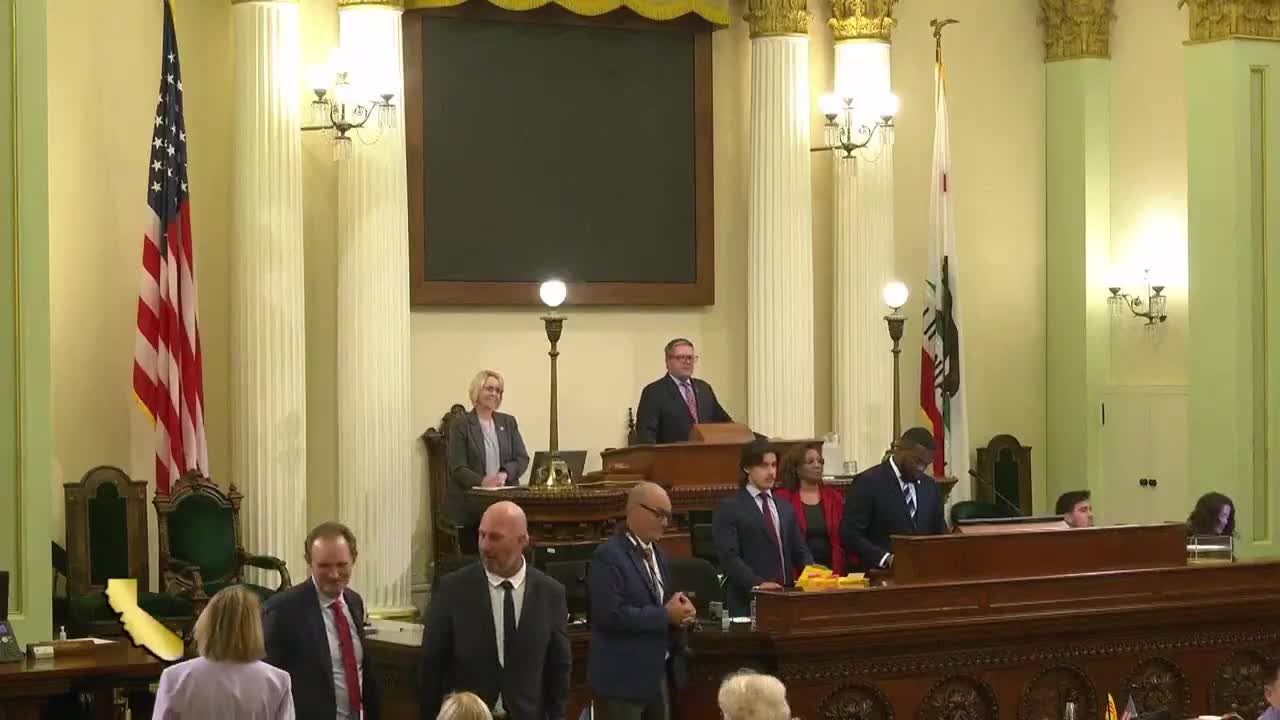
| Aug 8, 2024 | SB 1226 Cortese Senate Third Reading By Soria | Assembly Floor |
Passed |
|
| Jun 19, 2024 | Do pass. To Consent Calendar. | Assembly Standing Committee on Appropriations |
Passed |
|
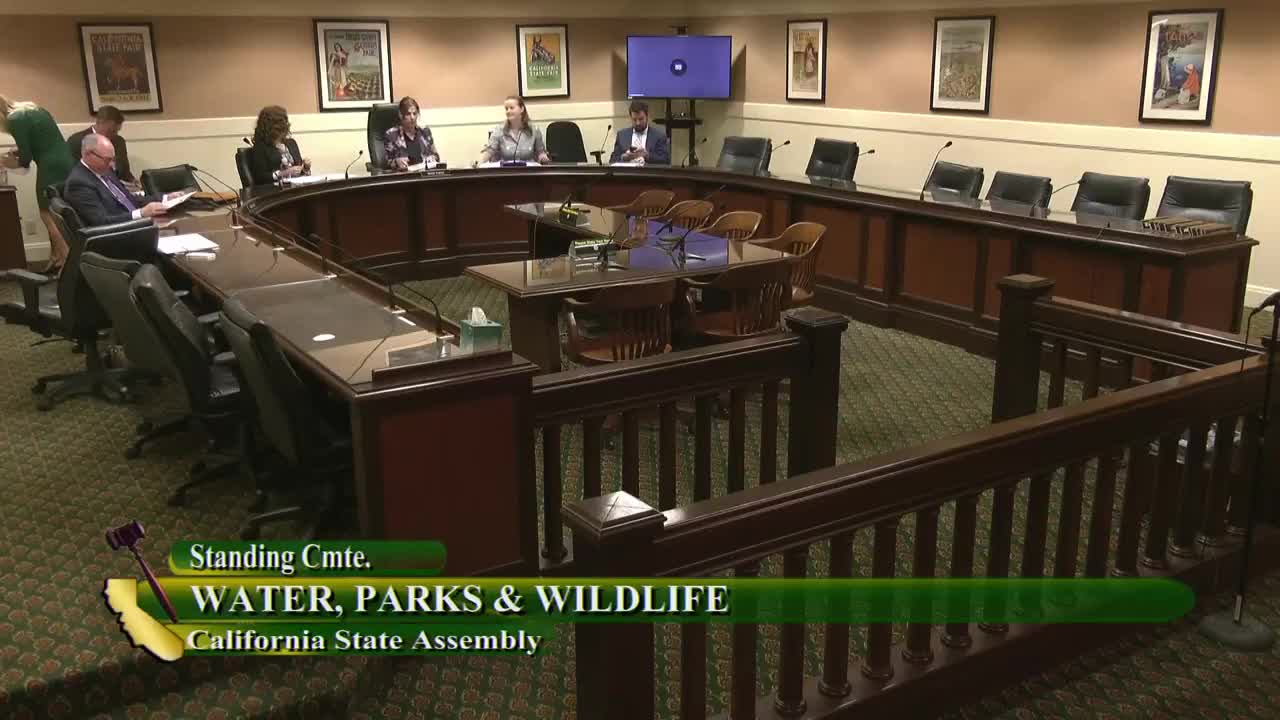
| Jun 11, 2024 | Do pass and be re-referred to the Committee on [Appropriations] | Assembly Standing Committee on Water, Parks, and Wildlife |
Passed |
|
| May 2, 2024 | Consent Calendar 2nd SB1226 Cortese | Senate Floor |
Passed |
|
| Apr 15, 2024 | Do pass, but first be re-referred to the Committee on [Appropriations] with the recommendation: To Consent Calendar | Senate Standing Committee on Natural Resources and Water |
Passed |
This list shows positions taken on this bill by organizations on the date displayed, which is linked to the original source.
Positions by individuals are not included.
|
Organization
|
Position
|
Date
|
|---|---|---|
| Backcountry Hunters and Anglers | ** Support | |
| Cal-Ore Wetlands and Waterfowl Council | ** Support | |
| California Bowmen Hunters/State Archery Association | ** Support | |
| California Deer Association | ** Support | |
| California Hawking Club | ** Support | |
| California Houndsmen For Conservation | ** Support | |
| California Waterfowl Association | * Support | Jun 11, 2024 |
| congressional sportsmen's foundation | ** Support | |
| Delta Waterfowl | * Support | Jun 11, 2024 |
| Ducks Unlimited | ** Support | |
| Max McGraw Wildlife Foundation | ** Support | |
| NorCal Guides And SportsmenS Association | ** Support | |
| Northern California Guides and Sportsman Association | * Support | Jun 11, 2024 |
| Safari Club International, California Chapters | ** Support | |
| Safari Club International, Golden Gate Chapter | ** Support | |
| San Diego County Wildlife Federation | ** Support | |
| Suisun Resource Conservation District | ** Support | |
| The Black Brant Group | ** Support | |
| Theodore Roosevelt Conservation Partnership | ** Support | |
| Tulare Basin Wetlands Association | ** Support |
SENATE THIRD READING
STR Bill Id:SB 1226
Author:(Cortese)
As Introduced Ver:February 15, 2024
Majority vote
SUMMARY
Clarifies that hunting by boat over private land that is temporarily flooded is not trespass if the floodwaters are navigable and that the right of the public to use navigable waters for hunting, fishing, or other public purpose is protected, consistent with the California Constitution.
Major Provisions
- Restricts to non-navigable waters the application of provisions that make it unlawful to enter land temporarily inundated by water flowing outside the established banks of a waterway for the purpose of discharging a firearm or taking or destroying any mammal or bird, including waterfowl, on that land.
- States that nothing in this statute restricts the right of the public to use navigable waters for hunting, fishing, or other public purpose as guaranteed under Article X, Section IV of the California Constitution.
COMMENTS
Article X, Section IV of the California Constitution protects public access to navigable waters consistent with the public trust, and states "the Legislature shall enact such laws as will give the most liberal construction to this provision, so that access to the navigable waters of this State shall be always attainable for the people thereof." Under California law, the public has a general legal right to access and enjoy California's navigable waterways at any point below the high water mark. While there are several navigability tests under state and federal laws, in California a waterway is considered "navigable" if it is "capable of being navigated by oar or motor-propelled small craft." Waters do not need to be navigable year-round to be navigable for public use or access purposes.
Fish and Game Code (FGC) Section 2016 conflicts. In 1982, the Legislature amended FGC Section 2016 to add the phrase "including lands temporarily inundated by waters flowing outside the established banks of a river, stream, slough, or other waterway," to protect the interests of private property owners with regard to the presence of hunters boating over their lands without their permission. The stated purpose of the 1982 legislation "was to exclude the public so as to 'provide needed protection to privately owned lands.'" The changes made in 1982 are in conflict with the public's right to utilize navigable waters for public purposes per the California Constitution.
A 1985 Attorney General Opinion (85-602) found that "the 'overflow waters' provision of [FGC Section 2016] is unconstitutional in its application to navigable waters of the state due to conflict with the Constitution. [FGC § 2016] is, however, constitutional as applied to 'non-navigable waters' which are those not useable by small craft or in which the state holds no sovereign fee or public trust interest."
The public right of navigation is inextricably tied to recreation, including hunting (Forestier v. Johnson, 1912). It is important to note that all other laws under the FGC and other codes still apply, and the Fish and Game Commission can still restrict or ban hunting anywhere in the state, including banning hunting upon specified navigable waters in certain situations. Private landowners may not interfere with the public use of navigable waters on their property. The public does not have a right to enter private property where no right of access exists and signs forbidding trespass are displayed without approval of the owner or legal occupant. However, in California, the public can legally use navigable floodwaters on private lands as long as the public can access the floodwaters without trespassing on private property (i.e., via a navigable waterway with a public access point).
According to the Author
This bill supports California's renowned outdoor recreation by protecting public use of waterways from unwarranted legal challenges. SB 1226 strikes the right balance between respecting private property and ensuring Californians' right to enjoyment of natural resources.
Arguments in Support
A coalition of organizations write in support, citing the opinions that highlight the unconstitutionality of FGC § 2016 and stating that this bill "will not only help ensure that sportsmen exercising their rights on navigable floodwaters are not wrongly cited for trespassing, but will save the court system time and money."
Arguments in Opposition
FISCAL COMMENTS
According to the Assembly Appropriations Committee, "The Department of Fish and Wildlife reports no expected fiscal impact. Generally, potential cost savings to law enforcement and the court system from greater clarity on what constitutes a trespass violation on floodwaters."
VOTES
SENATE FLOOR: 38-0-2
YES: Allen, Alvarado-Gil, Archuleta, Ashby, Atkins, Becker, Blakespear, Bradford, Caballero, Cortese, Dahle, Dodd, Durazo, Eggman, Glazer, Gonzalez, Grove, Jones, Limón, McGuire, Menjivar, Min, Newman, Nguyen, Niello, Ochoa Bogh, Padilla, Portantino, Roth, Rubio, Seyarto, Skinner, Smallwood-Cuevas, Stern, Umberg, Wahab, Wiener, Wilk
ABS, ABST OR NV: Hurtado, Laird
ASM WATER, PARKS, AND WILDLIFE: 13-0-2
YES: Papan, Addis, Alanis, Alvarez, Bennett, Bonta, Gallagher, Davies, Hart, Luz Rivas, Schiavo, Villapudua, Weber
ABS, ABST OR NV: Mathis, Garcia
ASM APPROPRIATIONS: 14-0-1
YES: Wicks, Sanchez, Arambula, Bryan, Calderon, Berman, Dixon, Mike Fong, Haney, Hart, Jim Patterson, Pellerin, Ta, Aguiar-Curry
ABS, ABST OR NV: Grayson
UPDATED
VERSION: February 15, 2024
CONSULTANT: Stephanie Mitchell / W., P., & W. / (916) 319-2096 FN: 0003580
Date of Hearing: June 19, 2024
ASSEMBLY COMMITTEE ON APPROPRIATIONS
Buffy Wicks, Chair
SBPCA Bill Id:SB 1226
Author:(Cortese) – As Introduced Ver:February 15, 2024
Policy Committee: | Water, Parks and Wildlife | Vote: | 13 - 0 |
|
| ||
|
|
Urgency: No State Mandated Local Program: No Reimbursable: No
SUMMARY:
This bill clarifies that hunting by boat over private land that is temporarily flooded is not trespass if the floodwaters are navigable and that the right of the public to use navigable waters for hunting, fishing, or other public purpose is protected, consistent with the California Constitution.
Specifically, this bill:
- Restricts to non-navigable waters the application of provisions that make it unlawful to enter land temporarily inundated by water flowing outside the established banks of a waterway for the purpose of discharging a firearm or taking or destroying any mammal or bird, including waterfowl, on that land.
- States that nothing in this statute restricts the right of the public to use navigable waters for hunting, fishing, or other public purpose as guaranteed under Section IV of Article X of the California Constitution.
FISCAL EFFECT:
The Department of Fish and Wildlife reports no expected fiscal impact. Generally, potential cost savings to law enforcement and the court system from greater clarity on what constitutes a trespass violation on floodwaters.
COMMENTS:
- Author Statement. This bill amends statute to ensure consistency with provisions of the California Constitution regarding the use of navigable waters for public purposes, including hunting by boat over land that is temporarily flooded and navigable. The statutory restriction on hunting in Fish and Game Code Section 2016 would still apply to any non-navigable waters and lands that meet the signage and other requirements of that section. According to the author:
This bill supports California’s renowned outdoor recreation by protecting public use of waterways from unwarranted legal challenges. [This bill] strikes the right balance between respecting private property and ensuring Californians’ right to enjoyment of natural resources.
- Background. The California Constitution provides the public a general right of access to the navigable waters of this state and prohibits owners of the frontage or tidal lands of navigable waters from excluding the public from such navigable waters. Section 2016 of the Fish and Game Code makes it unlawful, without the owner’s permission, to enter land to hunt if there are trespass signs at all roads and trails entering the land. 1982 amendments to this section added language to also make it a trespass on “land temporarily inundated by water flowing outside the established banks” of the waterway. Several subsequent state Attorney General provisions in the 1980s found that this “overflow waters” provision is unconstitutional in its application to navigable waters due to conflict with the right of public access to navigable waters in the state Constitution. There are known cases of hunters in boats cited for trespassing on navigable floodwaters. Supporters of this bill state that many law enforcement personnel and district attorneys may not be aware of the Attorney General opinions, although judges generally dismiss these trespass charges in reliance of these opinions.
- Prior Legislation. AB 859 (Gallagher) of 2023 was similar to this bill and would have clarified hunter trespass via navigable waters. AB 859 was vetoed by the Governor.
Analysis Prepared by: Jacqueline Kinney / APPR. / (916) 319-2081
Date of Hearing: June 11, 2024
ASSEMBLY COMMITTEE ON WATER, PARKS, AND WILDLIFE
Diane Papan, Chair
SBPCA Bill Id:SB 1226
Author:(Cortese) – As Introduced Ver:February 15, 2024
SENATE VOTE: 38-0
SUBJECT: Hunting: navigable waters
SUMMARY: Clarifies that hunting by boat over private land that is temporarily flooded is not trespass if the floodwaters are navigable and that the right of the public to use navigable waters for hunting, fishing, or other public purpose is protected, consistent with the California Constitution. Specifically, this bill:
- Restricts to non-navigable waters the application of provisions that make it unlawful to enter land temporarily inundated by water flowing outside the established banks of a waterway for the purpose of discharging a firearm or taking or destroying any mammal or bird, including waterfowl, on that land.
- States that nothing in this statute restricts the right of the public to use navigable waters for hunting, fishing, or other public purpose as guaranteed under Section IV of Article X of the California Constitution.
EXISTING LAW:
- States that no individual, partnership, or corporation, claiming or possessing the frontage or tidal lands of a harbor, bay, inlet, estuary, or other navigable water in this state, shall be permitted to exclude the right of way to such water whenever it is required for any public purpose, nor to destroy or obstruct the free navigation of such water; and that the Legislature shall enact such laws as will give the most liberal construction to this provision, so that access to the navigable waters of this state shall be always attainable for the people thereof (Section IV of Article X of the California Constitution).
- Makes a person who unlawfully obstructs the navigation of any navigable waters guilty of a misdemeanor [Harbors and Navigation Code (HNC) § 131].
- Declares the unlawful obstruction of the free passage or use, in the customary manner, of any navigable lake, or river, bay, stream, canal, or basin, among other provisions, a public nuisance (Penal Code § 370; Civil Code § 3479; Civil Code § 846).
- Authorizes entities with jurisdiction, as specified, to adopt emergency rules and regulations relating to boats or vessels to ensure the safety of persons and property because of disaster or other public calamity, which can include the closure of navigable waterways to recreational boaters during periods of emergency (HNC § 660).
- Prohibits the sale of any land below the ordinary high water mark of a navigable waterway (Public Resources Code § 7991).
- Makes it unlawful to enter land for the purpose of discharging a firearm or taking or destroying any mammal or bird, including waterfowl, on that land, without having first obtained written permission from the owner, the owner’s agent, or the person in lawful possession of that land, if either of the following applies:
- The land belongs to, or is occupied by, another person and is either under cultivation or enclosed by a fence; or
- There are signs forbidding trespass or hunting or both displayed at intervals not less than three per mile along all exterior boundaries and at all roads and trails entering those lands, including land temporarily inundated by water flowing outside the established banks of a waterway (FGC § 2016).
- Makes it unlawful to hunt or discharge a firearm within 150 yards of an occupied structure, or across a public road or other established way open to the public in an unsafe and reckless manner (FGC § 3004).
- Makes it unlawful for any person, while taking any bird, mammal, fish, reptile, or amphibian, to cause damage, or assist in causing damage, to real or personal property, or to leave gates or bars open, or to break down, destroy, or damage fences, or to tear down or scatter piles of rails, posts, stone, or wood, or, through carelessness or negligence, to injure livestock of any kind (FGC § 2004).
FISCAL EFFECT: Unknown. This bill is keyed fiscal.
COMMENTS:
- Purpose of this bill. This bill amends statute to ensure consistency with provisions of the California Constitution regarding the use of navigable waters for public purposes, including hunting by boat over land that is temporarily flooded and navigable. The statutory restriction on hunting in FGC § 2016 would still apply to any non-navigable waters and lands that meet the signage and other requirements of that section. According to the author, “this bill supports California’s renowned outdoor recreation by protecting public use of waterways from unwarranted legal challenges. [This bill] strikes the right balance between respecting private property and ensuring Californians’ right to enjoyment of natural resources.”
- Background. The Public Trust Doctrine is an ancient legal doctrine dating back to 6th century Roman law that states “[b]y the law of nature these things are common to mankind—the air, running water, the sea and consequently the shores of the sea.”[1] In California, this Doctrine has been extended to navigable surface waters, other aquatic resources, and wildlife resources. These resources are held in trust for all of the people and the state acts as the Trustee to protect these resources for present and future generations. Article X, Section IV of the California Constitution protects access to navigable waters consistent with the public trust, and states “the Legislature shall enact such laws as will give the most liberal construction to this provision, so that access to the navigable waters of this State shall be always attainable for the people thereof.”
Whatever floats your boat. Under California law, the public has a general legal right to access and enjoy California’s navigable waterways at any point below the high water mark. While there are several navigability tests under state and federal laws, in California a waterway is considered “navigable” if it is “capable of being navigated by oar or motor-propelled small craft.”[2] HNC § 100 states that navigable waters and all streams of sufficient capacity to transport the products of the country are public ways for the purposes of navigation and of such transportation. HNC §§ 101–106 enumerate certain waterways as being navigable. However, a 1985 opinion by the California Attorney General (No. 85-602) details case law that supports the assertion that “[d]esignation of some waters does not, however, preclude other waters from being found to be navigable in law or in fact.”[3] The Indiana Supreme Court concurs that “nature is competent […] to make a navigable river without the help of the legislature.”[4] Both California and federal courts have repeatedly held that interpreting navigability is a question of fact properly left for judicial resolution, not the legislature.
Rising tides lift all boats. Waters do not need to be navigable year-round to be navigable for public use or access purposes. HNC § 100 specifies that the floodwaters, except those of extraordinary times of flood, of any navigable river, stream, slough, or other watercourse while temporarily flowing above the normal high-water mark over public or private lands outside any established banks of such river, stream, slough, or other watercourse are navigable waters. The Attorney General’s opinion also recognize that regular flooding cycles constitute navigable waters.[5]
FGC § 2016 conflicts. In 1982, the Legislature amended FGC § 2016 (via Chapter 1607, Statutes of 1982) to add the phrase “including lands temporarily inundated by waters flowing outside the established banks of a river, stream, slough, or other waterway,” to protect the interests of private property owners with regard to the presence of hunters boating over their lands without their permission. The stated purpose of the 1982 legislation “was to exclude the public so as to ‘provide needed protection to privately owned lands.’” The changes made in 1982 are in conflict with the public’s right to utilize navigable waters for public purposes per Article X, Section IV of the California Constitution.
The 1985 Attorney General Opinion found that “the ‘overflow waters’ provision of [FGC § 2016] is unconstitutional in its application to navigable waters of the state due to conflict with Section 4 of Article X of the Constitution. Section 2016 is, however, constitutional as applied to ‘non-navigable waters’ which are those not useable by small craft or in which the state holds no sovereign fee or public trust interest.”
Case law cited in the opinion summarizes the public’s ability to use all navigable waters for recreational purposes such as hunting, irrespective of the underlying land being in private ownership. A previous court decision in Forestier v. Johnson (1912) found that “hunting of wild game […] is a privilege which is incidental to the public right of navigation.” Attorney General Opinion No. 97-307 also mentions this and an additional legal analysis comes to a similar conclusion.[6],[7]
Management of hunting. As noted above, the public right of navigation is in inextricable tied recreation, including hunting.[8] It is important to note that all other laws under the FGC or other codes still apply, and the Fish and Game Commission can still restrict or ban hunting anywhere in the state, including banning all hunting upon specified navigable waters in certain situations (see Existing Law). Private landowners may not interfere with the public use of recreationally navigable waters on their property.[9] The public does not have a right to enter private property where no right of access exists and signs forbidding trespass are displayed without approval of the owner or legal occupant. However, in California, the public can legally use navigable floodwaters on private lands as long as the public can access the floodwaters without trespassing on private property (i.e., via a navigable waterway with a public access point).[10] The definition of navigable waters in HNC § 100 confirms that nothing in the definitions shall be construed as permitting trespass.
There are known cases of hunters in boats being cited for trespassing on navigable floodwaters. The Attorney General opinions are not widely known, and many law enforcement personnel as well as district attorneys are unaware of them. While judges generally dismiss charges brought under FGC § 2016 for hunting on navigable floodwaters, the legal process to that point can still incur significant financial and other costs for the accused and the court system.
Birds of a feather. AB 859 (Gallagher) of 2023 also sought to address the ability of hunters and others to access temporarily inundated navigable waters by, in part, revising the same provision in the FGC. After passing the Legislature, including this Committee, with near unanimous support, AB 859 was vetoed by Governor Newsom, who wrote:
“I support the intent of this bill to clarify the public's right to navigate temporarily inundated waterways for fishing, hunting, or other enjoyment, as guaranteed by the California Constitution. However, this bill contains overly broad language that could extend access rights beyond the public trust doctrine, thus impacting private property owners' rights. The bill also creates inconsistency with the definition of navigable waters in the Harbors and Navigation Code, which is likely to result in confusion in communities across California. I encourage the Legislature to refine these revisions in subsequent legislation.”
- Arguments in support. A coalition of organizations write in support, citing the opinions that highlight the unconstitutionality of FGC § 2016 and stating that this bill “will not only help ensure that sportsmen exercising their rights on navigable floodwaters are not wrongly cited for trespassing, but will save the court system time and money.”
- Related legislation. AB 859 (Gallagher) of 2023 was similar to this bill and would have clarified hunter trespass via navigable waters. AB 859 was vetoed by the Governor.
AB 1162 (Chesbro), Chapter 590, Statutes of 2012, expands the trespass sign provision to encompass signs forbidding trespass or hunting, or both, among other provisions.
AB 2132 (Houston) of 2008 would have required signs forbidding trespass to be at least 8 1/2 by 11 inches in size, among other provisions. AB 2132 was vetoed by the Governor.
REGISTERED SUPPORT / OPPOSITION:
Support
California Waterfowl Association (Sponsor)
Backcountry Hunters and Anglers, California Chapter
Black Brant Group, the
Cal-Ore Wetlands and Waterfowl Council
California Bowman Hunters
California Deer Association
California Hawking Club
California Houndsmen for Conservation
Congressional Sportsmen's Foundation
Delta Waterfowl
Ducks Unlimited
Max McGraw Wildlife Foundation
Nor-Cal Guides and Sportsmen's Association
Safari Club International
Safari Club International, Golden Gate Chapter
San Diego County Wildlife Federation
Suisun Resource Conservation District
Theodore Roosevelt Conservation Partnership
Tulare Basin Wetlands Association
Opposition
None on file
Analysis Prepared by: Stephanie Mitchell / W., P., & W. / (916) 319-2096
A Legal Guide to the Public’s Right to Access and Use California’s Navigable Waters. https://www.slc.ca.gov/public-access/a-legal-guide-to-the-publics-rights-to-access-and-use-californias-navigable-waters/ ↑
Baker v Mack, 19 Cal. App. 3d at 1050 (1970).; California Attorney General Opinion No. 85-602, https://www.oag.ca.gov/system/files/opinions/pdfs/85-602_0.pdf ↑
California Attorney General Opinion No. 85-602, https://www.oag.ca.gov/system/files/opinions/pdfs/85-602_0.pdf. ↑
Martin v Bliss, 5 Blackf. 35, 35 (1838). ↑
California Attorney General Opinion No. 85-602 ↑
California Attorney General Opinion No. 97-307, https://oag.ca.gov/system/files/opinions/pdfs/97-307.pdf ↑
Berrey, A.R. (1984). Public Access to Lands Annually Flooded: A Constitutional Analysis of Section 2016 of the California Fish and Game Code, 16 Pac. L. J. 353. https://scholarlycommons.pacific.edu/mlr/vol16/iss1/9 ↑
Forestier v Johnson, 164 Cal. 24. The Supreme Court stated “… the hunting of wild game… is a privilege which is incidental to the public right of navigation. […] But wherever [a hunter] may lawfully go, [they] may take and kill such game as [they] may find there, subject, of course, to the restrictions of the game laws.’ ↑
Hitchings v Del Rio Woods Recreation & Park District, 55 Cal. App. 3d at 568 (1970).; Civil Code § 3479 ↑
Bohn v Albertson, 107 Cal. App. 2d at 738, 749. ↑
SENATE RULES COMMITTEE Office of Senate Floor Analyses (916) 651-1520 Fax: (916) 327-4478 | SB 1226 |
CONSENT
Bill No: SB 1226
Author: Cortese (D)
Introduced: 2/15/24
Vote: 21
SENATE NATURAL RES. & WATER COMMITTEE: 10-0, 4/15/24
AYES: Min, Seyarto, Allen, Dahle, Eggman, Hurtado, Laird, Limón, Padilla, Stern
NO VOTE RECORDED: Grove
SENATE APPROPRIATIONS COMMITTEE: Senate Rule 28.8
SUBJECT: Hunting: navigable waters
SOURCE: California Waterfowl Association
DIGEST:
This bill modifies a section of the Fish and Game Code that prohibits the use of certain temporarily inundated lands for hunting without permission to clarify that this applies to non-navigable waters only, and authorizes the use of navigable waters for hunting, fishing, or other public purpose, as provided.
ANALYSIS:
Existing law:
- States that no individual, partnership, or corporation, claiming or possessing the frontage or tidal lands of a harbor, bay, inlet, estuary, or other navigable water in this state, shall be permitted to exclude the right of way to such water whenever it is required for any public purpose, nor to destroy or obstruct the free navigation of such water; and that the Legislature shall enact such laws as will give the most liberal construction to this provision, so that access to the navigable waters of this state shall be always attainable for the people thereof. (Section IV of Article X of the California Constitution)
- Makes it unlawful to enter land for the purpose of discharging a firearm or taking or destroying any mammal or bird, including waterfowl, on that land, without having first obtained written permission from the owner, the owner’s agent, or the person in lawful possession of that land, if either of the following applies:
- The land belongs to, or is occupied by, another person and is either under cultivation or enclosed by a fence.
- There are signs forbidding trespass or hunting or both displayed at intervals not less than three per mile along all exterior boundaries and at all roads and trails entering those lands, including land temporarily inundated by water flowing outside the established banks of a waterway. (Fish and Game Code (FGC) §2016)
- Makes a person who unlawfully obstructs the navigation of any navigable waters guilty of a misdemeanor. (Harbors and Navigation Code (HNC) §131)
- Defines navigable waters and all streams of sufficient capacity to transport the products of the country as public ways for the purposes of navigation and of such transportation. However, the floodwaters of any navigable river, stream, slough, or other watercourse while temporarily flowing above the normal high-water mark over public or private lands outside any established banks of such river, stream, slough, or other watercourse are not navigable waters and nothing in this section shall be construed as permitting trespass on any such lands. For the purposes of this section, “floodwaters” refers to that elevation of water which occurs at extraordinary times of flood and does not mean the water elevation of ordinary annual or recurring high waters resulting from normal runoff. (HNC §100)
- Authorizes entities with jurisdiction, as specified, to adopt emergency rules and regulations relating to boats or vessels to ensure the safety of persons and property because of disaster or other public calamity, which can include the closure of navigable waterways to recreational boaters during periods of emergency. (HNC §660)
- Establishes the Fish and Game Commission (Commission) and delegates the authority to regulate the taking or possession of birds, mammals, fish, amphibians, and reptiles to the Commission. (Section 20 of Article IV of the California Constitution; FGC §§200 et seq.)
- Makes it unlawful to hunt or discharge a firearm within 150 yards of an occupied structure, or across a public road or other established way open to the public in an unsafe and reckless manner. (FGC §3004)
- Makes it unlawful for any person, while taking any bird, mammal, fish, reptile, or amphibian, to cause damage, or assist in causing damage, to real or personal property, or to leave gates or bars open, or to break down, destroy, or damage fences, or to tear down or scatter piles of rails, posts, stone, or wood, or, through carelessness or negligence, to injure livestock of any kind. (FGC §2004)
This bill modifies a section of the Fish and Game Code that prohibits the use of certain temporarily inundated lands for hunting without permission to clarify that this applies to non-navigable waters only, and authorizes the use of navigable waters for hunting, fishing, or other public purpose, as provided.
Specifically, this bill:
- Narrows the prohibition on hunting on lands temporarily inundated with water without permission, to a prohibition on hunting on lands temporarily inundated with non-navigable waters, as specified.
- States that the code section does not restrict the public’s right to use navigable waters for hunting, fishing, or other public purpose pursuant to Section IV of Article X of the California Constitution.
Background
In 1982, the Legislature amended FGC Section 2016 to add language prohibiting the entry into any lands temporarily inundated by waters flowing outside the established banks of a river, stream, slough, or other waterway, where signs forbidding trespass are displayed […] “for the purpose of discharging any firearm or taking or destroying any mammal or bird, including any waterfowl, on such lands without having first obtained permission,” as provided. According to the Assembly Water, Parks, and Wildlife Committee’s analysis of an earlier bill, the stated purpose of the 1982 legislation “was to exclude the public so as to ‘provide needed protection to privately owned lands’”. (Chapter 1607, Statutes of 1982)
Then-Senator Byron Sher asked the Attorney General to provide an opinion on whether “the ‘overflow waters’ provision in Fish and Game Code section 2016 [is] constitutional in light of section 4 of Article X of the Constitution.” That section in the California Constitution guarantees access to navigable waters by the public.
The Attorney General’s subsequent opinion (No. 85-602, dated October 10, 1985) found that FGC Section 2016 is constitutional with respect to non-navigable waters, but that the prohibition on use of navigable waters was unconstitutional. The opinion noted that the control of large seasonal water flows in the Sacramento and San Joaquin valleys often resulted in private property being inundated with floodwaters which attracts waterfowl and waterfowl hunters.
A second opinion from the Attorney General’s office (No. 97-307) dated November 12, 1997, found that the then-Department of Boating and Waterways had the authority to close navigable waters to recreational boaters during periods of emergency, such as flood conditions. The opinion noted the public’s right to use navigable waters for boating and recreation, and, citing the 1985 opinion, that the right of navigation includes the right to hunt from a boat.
The California Waterfowl Association cites three instances from the last 20 or so years where a hunter in a boat on navigable flooded waters was cited or threatened with a citation for trespass.
AB 859 (Gallagher, 2023) sought to address the ability of hunters and others to access temporarily inundated navigable waters by, in part, revising the objectionable provision in the FGC. After passing the Legislature, including this Committee, with near unanimous support, this bill was vetoed by Governor Newsom, who wrote:
I support the intent of this bill to clarify the public's right to navigate temporarily inundated waterways for fishing, hunting, or other enjoyment, as guaranteed by the California Constitution. However, this bill contains overly broad language that could extend access rights beyond the public trust doctrine, thus impacting private property owners' rights. The bill also creates inconsistency with the definition of navigable waters in the Harbors and Navigation Code, which is likely to result in confusion in communities across California. I encourage the Legislature to refine these revisions in subsequent legislation.
This bill is a reintroduction of a version of AB 859.
Comments
- This bill is a work-in-progress. As noted by the Governor in his veto message, the definition of navigable waters in the HNC was somewhat at odds with certain aspects of the final version of AB 859. This bill, in its current form, returns to an earlier version of AB 859 that would fix the unconstitutional provision in FGC Section 2016, and then assert the right of the public to use navigable waters for certain purposes. This approach, however, was discarded as AB 859 moved through the Legislature last year, and it may be that the same factors will result in efforts to modify this bill’s language this year.
- Codifies the Attorney General’s opinions. This bill codifies the two opinions by the California Attorney General related to the permissibility of recreation and hunting on the navigable waters – even temporarily navigable waters – in the state. These opinions have not been formally cited by a court. The statutory restriction on hunting in FGC Section 2016 would still apply to any non-navigable waters and lands that meet the signage and other requirements of that section.
- In the event of an emergency? It is important to note that navigability alone does not imply that the water is necessarily open for recreation or use for hunting where other laws – such as a local emergency – apply, and that the Legislature may regulate both hunting and boating. It is important to note that all other laws under the FGC or other codes, such as those provisions in the HNC noted above, still apply. The Commission can still restrict or ban hunting anywhere in the state using its delegated authority, including banning all hunting upon specified navigable waters in certain situations.
FISCAL EFFECT: Appropriation: No Fiscal Com.: Yes Local: No
SUPPORT: (Verified 4/29/24)
California Waterfowl Association (source)
Backcountry Hunters and Anglers
Cal-Ore Wetlands and Waterfowl Council
California Bowmen Hunters/State Archery Association
California Deer Association
California Hawking Club
California Houndsmen for Conservation
Congressional Sportsmen’s Foundation
Delta Waterfowl
Ducks Unlimited
Max McGraw Wildlife Foundation
Nor-Cal Guides and Sportsmen’s Association
Safari Club International, California Chapters
Safari Club International, Golden Gate Chapter
San Diego County Wildlife Federation
Suisun Resource Conservation District
The Black Brant Group
Theodore Roosevelt Conservation Partnership
Tulare Basin Wetlands Association
OPPOSITION: (Verified 4/29/24)
None received
ARGUMENTS IN SUPPORT: According to the author, “This bill supports California’s renowned outdoor recreation by protecting public use of waterways from unwarranted legal challenges. SB 1226 strikes the right balance between respecting private property and ensuring Californians’ right to enjoyment of natural resources.”
The California Waterfowl Association, in a joint sign-on letter, writes, “SB 1226 amends Section 2016 of the Fish and Game Code to make it consistent with a State Attorney General Opinion that found that hunting is an integral part of the public right of navigation; and, that Section 2016’s restriction on hunting navigable floodwaters is unconstitutional because it conflicts with Article X, Section IV of the California Constitution, which requires the State Legislature to protect the public’s access to navigable waters. A subsequent State Opinion also effectively reaffirmed this conclusion.”
“This change will not only help ensure that sportsmen exercising their rights on navigable floodwaters are not wrongly cited for trespassing, but will save the court system time and money. Most district attorneys are unaware of the State Opinions, and judges who have access to them typically dismiss that particular charge due to concerns about infringement on the public’s Constitutional rights.”
Prepared by: Katharine Moore / N.R. & W. / (916) 651-4116
4/30/24 10:04:59
**** END ****
SENATE COMMITTEE ON NATURAL RESOURCES AND WATER
Senator Dave Min, Chair
2023 - 2024 Regular
Bill No: SB 1226 Hearing Date: April 15, 2024
Author: | |||
Version: | Introduced | ||
Urgency: | Fiscal: | ||
Consultant: | |||
Subject: Hunting: navigable waters
SUMMARY
This bill would modify a section of the Fish and Game Code that prohibits the use of certain temporarily inundated lands for hunting without permission to clarify that this applies to non-navigable waters only, and authorize the use of navigable waters for hunting, fishing, or other public purpose, as provided.
BACKGROUND AND EXISTING LAW
- In 1982, the Legislature amended Fish and Game Code (FGC) §2016 to add language prohibiting the entry into any lands temporarily inundated by waters flowing outside the established banks of a river, stream, slough, or other waterway, where signs forbidding trespass are displayed […] “for the purpose of discharging any firearm or taking or destroying any mammal or bird, including any waterfowl, on such lands without having first obtained permission,” as provided. According to the Assembly Water, Parks, and Wildlife Committee’s analysis of an earlier bill, the stated purpose of the 1982 legislation “was to exclude the public so as to ‘provide needed protection to privately owned lands’” (Chapter 1607, Statutes of 1982).
- Then-Senator Byron Sher asked the Attorney General to provide an opinion on whether “the ‘overflow waters’ provision in Fish and Game Code section 2016 [is] constitutional in light of section 4 of Article X of the Constitution.” That section in the California Constitution guarantees access to navigable waters by the public.
- The Attorney General’s subsequent opinion (No. 85-602, dated October 10, 1985) found that FGC §2016 is constitutional with respect to non-navigable waters, but that the prohibition on use of navigable waters was unconstitutional. The opinion noted that the control of large seasonal water flows in the Sacramento and San Joaquin valleys often resulted in private property being inundated with floodwaters which attracts waterfowl and waterfowl hunters.
- A second opinion from the Attorney General’s office (No. 97-307) dated November 12, 1997 found that the then-Department of Boating and Waterways had the authority to close navigable waters to recreational boaters during periods of emergency, such as flood conditions. The opinion noted the public’s right to use navigable waters for boating and recreation, and, citing the 1985 opinion, that the right of navigation includes the right to hunt from a boat.
- The California Waterfowl Association cites three instances from the last 20 or so years where a hunter in a boat on navigable flooded waters was cited or threatened with a citation for trespass.
- AB 859 (Gallagher, 2023) (AB 859) sought to address the ability of hunters and others to access temporarily inundated navigable waters by, in part, revising the objectionable provision in the Fish and Game Code. After passing the Legislature, including this Committee, with near unanimous support, this bill was vetoed by Governor Newsom, who wrote:
“I support the intent of this bill to clarify the public's right to navigate temporarily inundated waterways for fishing, hunting, or other enjoyment, as guaranteed by the California Constitution. However, this bill contains overly broad language that could extend access rights beyond the public trust doctrine, thus impacting private property owners' rights. The bill also creates inconsistency with the definition of navigable waters in the Harbors and Navigation Code, which is likely to result in confusion in communities across California. I encourage the Legislature to refine these revisions in subsequent legislation.”
- This bill is a reintroduction of a version of AB 859.
Existing law:
- States that no individual, partnership, or corporation, claiming or possessing the frontage or tidal lands of a harbor, bay, inlet, estuary, or other navigable water in this state, shall be permitted to exclude the right of way to such water whenever it is required for any public purpose, nor to destroy or obstruct the free navigation of such water; and that the Legislature shall enact such laws as will give the most liberal construction to this provision, so that access to the navigable waters of this state shall be always attainable for the people thereof (Section IV of Article X of the California Constitution).
- Makes it unlawful to enter land for the purpose of discharging a firearm or taking or destroying any mammal or bird, including waterfowl, on that land, without having first obtained written permission from the owner, the owner’s agent, or the person in lawful possession of that land, if either of the following applies:
- The land belongs to, or is occupied by, another person and is either under cultivation or enclosed by a fence, or
- There are signs forbidding trespass or hunting or both displayed at intervals not less than three per mile along all exterior boundaries and at all roads and trails entering those lands, including land temporarily inundated by water flowing outside the established banks of a waterway (FGC §2016).
- Makes a person who unlawfully obstructs the navigation of any navigable waters guilty of a misdemeanor (Harbors and Navigation Code (HNC) §131).
- Defines navigable waters and all streams of sufficient capacity to transport the products of the country as public ways for the purposes of navigation and of such transportation. However, the floodwaters of any navigable river, stream, slough, or other watercourse while temporarily flowing above the normal high-water mark over public or private lands outside any established banks of such river, stream, slough, or other watercourse are not navigable waters and nothing in this section shall be construed as permitting trespass on any such lands. For the purposes of this section, “floodwaters” refers to that elevation of water which occurs at extraordinary times of flood and does not mean the water elevation of ordinary annual or recurring high waters resulting from normal runoff (HNC §100).
- Authorizes entities with jurisdiction, as specified, to adopt emergency rules and regulations relating to boats or vessels to ensure the safety of persons and property because of disaster or other public calamity, which can include the closure of navigable waterways to recreational boaters during periods of emergency (HNC §660).
- Establishes the Fish and Game Commission (Commission) and delegates the authority to regulate the taking or possession of birds, mammals, fish, amphibians, and reptiles to the Commission (Section 20 of Article IV of the California Constitution; FGC §§200 et seq.).
- Makes it unlawful to hunt or discharge a firearm within 150 yards of an occupied structure, or across a public road or other established way open to the public in an unsafe and reckless manner (FGC §3004).
- Makes it unlawful for any person, while taking any bird, mammal, fish, reptile, or amphibian, to cause damage, or assist in causing damage, to real or personal property, or to leave gates or bars open, or to break down, destroy, or damage fences, or to tear down or scatter piles of rails, posts, stone, or wood, or, through carelessness or negligence, to injure livestock of any kind (FGC §2004).
PROPOSED LAW
This bill would modify a section of the Fish and Game Code that prohibits the use of certain temporarily inundated lands for hunting without permission to clarify that this applies to non-navigable waters only, and authorize the use of navigable waters for hunting, fishing, or other public purpose, as provided. Specifically, this bill would:
- Narrow the prohibition on hunting on lands temporarily inundated with water without permission, to a prohibition on hunting on lands temporarily inundated with non-navigable waters, as specified.
- State that the code section does not restrict the public’s right to use navigable waters for hunting, fishing, or other public purpose pursuant to Section IV of Article X of the California Constitution.
ARGUMENTS IN SUPPORT
According to the author, “This bill supports California’s renowned outdoor recreation by protecting public use of waterways from unwarranted legal challenges. SB 1226 strikes the right balance between respecting private property and ensuring Californians’ right to enjoyment of natural resources.”
The California Waterfowl Association, in a joint sign-on letter, writes, “SB 1226 amends Section 2016 of the Fish and Game Code to make it consistent with a State Attorney General Opinion that found that hunting is an integral part of the public right of navigation; and, that Section 2016’s restriction on hunting navigable floodwaters is unconstitutional because it conflicts with Article X, Section IV of the California Constitution, which requires the State Legislature to protect the public’s access to navigable waters. A subsequent State Opinion also effectively reaffirmed this conclusion.”
“This change will not only help ensure that sportsmen exercising their rights on navigable floodwaters are not wrongly cited for trespassing, but will save the court system time and money. Most district attorneys are unaware of the State Opinions, and judges who have access to them typically dismiss that particular charge due to concerns about infringement on the public’s Constitutional rights.”
ARGUMENTS IN OPPOSITION
None received
COMMENTS
This bill is a work-in-progress. As noted by the Governor in his veto message, the definition of navigable waters in the Harbors and Navigation Code was somewhat at odds with certain aspects of the final version of AB 859. This bill, in its current form, returns to an earlier version of AB 859 that would fix the unconstitutional provision in FGC §2016, and then assert the right of the public to use navigable waters for certain purposes. This approach, however, was discarded as AB 859 moved through the Legislature last year, and it may be that the same factors will result in efforts to modify this bill’s language this year. It may be that an opinion from Legislative Counsel would be helpful in addressing the nuances concerning the public use of temporarily navigable waters over private property and private property rights. The presence of navigable waters does not imply that the underlying lands are necessarily public trust lands.
The Committee may wish to direct Committee staff to continue working with the author’s office and stakeholders as the bill moves forward in order to help address the concerns raised in the Governor’s veto message to AB 859. The Committee may also wish to re-hear the bill in the future as its language evolves.
Codifies the Attorney General’s opinions. This bill would codify the two opinions by the California Attorney General related to the permissibility of recreation and hunting on the navigable waters – even temporarily navigable waters – in the state. To the knowledge of Committee staff, these opinions have not been formally cited by a court. The statutory restriction on hunting in FGC §2016 would still apply to any non-navigable waters and lands that meet the signage and other requirements of that section.
In the event of an emergency? It is important to note that navigability alone does not imply that the water is necessarily open for recreation or use for hunting where other laws – such as a local emergency – apply, and that the Legislature may regulate both hunting and boating. It is important to note that all other laws under the Fish and Game Code or other codes, such as those provisions in the Harbors and Navigation Code noted above, still apply. The Commission can still restrict or ban hunting anywhere in the state using its delegated authority, including banning all hunting upon specified navigable waters in certain situations.
Recent related legislation.
AB 859 (Gallagher, 2023) would have modified existing law prohibiting the use of temporarily inundated lands for hunting without written permission to instead authorize the use of temporarily inundated navigable waters for hunting, as provided. (This bill was vetoed by Governor Newsom.)
AB 1162 (Chesbro, Chapter 590, Statutes of 2012) expands the trespass sign provision to encompass signs forbidding trespass or hunting, or both, among other provisions.
AB 2132 (Houston, 2008) would have required signs forbidding trespass to be at least 8 1/2 by 11 inches in size, among other provisions. (This bill was vetoed by the then-Governor Schwarzenegger.)
SUGGESTED AMENDMENTS: none
SUPPORT
California Waterfowl Association (sponsor)
Backcountry Hunters and Anglers
Cal-Ore Wetlands and Waterfowl Council
California Bowmen Hunters/State Archery Association
California Deer Association
California Hawking Club
California Houndsmen for Conservation
Congressional Sportsmen’s Foundation
Delta Waterfowl
Ducks Unlimited
Max McGraw Wildlife Foundation
Nor-Cal Guides and Sportsmen’s Association
Safari Club International, California Chapters
Safari Club International, Golden Gate Chapter
San Diego County Wildlife Federation
Suisun Resource Conservation District
The Black Brant Group
Theodore Roosevelt Conservation Partnership
Tulare Basin Wetlands Association
OPPOSITION
None received
-- END --
Discussed in Hearing
 1MIN
Assembly Floor
 5MIN
Assembly Standing Committee on Water, Parks, and Wildlife
Bill Author

Bill Co-Author(s):