SB 1261: Horse racing: state-designated fairs: allocation of revenues: gross receipts for sales and use tax.
- Session Year: 2023-2024
- House: Senate
- Latest Version Date: 2024-05-16
Current Status:
Failed
(2024-08-15: August 15 hearing: Held in committee and under submission.)
Introduced
In Committee
First Chamber
In Committee
Second Chamber
Enacted
What does this bill do?
This bill reduces the share of reported fair-related gross receipts set aside for California fairs from 5% to 3%, cutting the amount the Department of Food and Agriculture will allocate to state-designated fairs. It requires sellers to show sales made on fair property separately on sales tax returns and lets the state tax agency (CDTFA) review those amounts. Fair funding from this source can only go to fairs that provide nonmanagement workers required meal breaks and overtime/double-time pay protections, with limited exceptions for some carnival workers and certain union-covered employees.
The summary is provided by generative AI which can make mistakes. For original language, please view the details in the table below.
Existing law requires a tax return filed with the California Department of Tax and Fee Administration (CDTFA) that reports gross receipts for sales and use tax purposes to segregate the gross receipts of the seller and the sales price of the property on a line or a separate form when the place of sale in this state or for use in this state is on or within the real property of a state-designated fair, as defined, or any real property of a state-designated fair that is leased to another party. Existing law requires, on or before November 1 of each year, the CDTFA to report to the Department of Finance the amount of the total gross receipts segregated on these tax returns for the prior fiscal year, and that 3/4 of 1% of the total gross receipts be included in the next annual Governors Budget for use by the Department of Food and Agriculture for allocation to fairs and that those funds be transferred by the Controller to the Fair and Exposition Fund, which is continuously appropriated, as prescribed.
This bill would instead increase the amount of the total gross receipts required to be included in the next annual Governors Budget for use by the Department of Food and Agriculture and transferred to the Fair and Exposition Fund, as specified, from 3/4 of 1% to 5%. 3%. The bill would make other nonsubstantive changes regarding appropriations to the department for fairs.
Existing law requires a tax return filed with the California Department of Tax and Fee Administration (CDTFA) that reports gross receipts for sales and use tax purposes to segregate the gross receipts of the seller and the sales price of the property on a line or a separate form when the place of sale in this state or for use in this state is on or within the real property of a state-designated fair, as defined, or any real property of a state-designated fair that is leased to another party. Existing law requires, on or before November 1 of each year, the CDTFA to report to the Department of Finance the amount of the total gross receipts segregated on these tax returns for the prior fiscal year, and that 3/4 of 1% of the total gross receipts be included in the next annual Governors Budget for use by the Department of Food and Agriculture for allocation to fairs and that those funds be transferred by the Controller to the Fair and Exposition Fund, which is continuously appropriated, as prescribed.
This bill would instead adjust increase the amount of the total gross receipts required to be included in the next annual Governors Budget for use by the Department of Food and Agriculture and transferred to the Fair and Exposition Fund, as specified, from 3/4 of 1% to an unspecified percentage. 5%. The bill would make other nonsubstantive changes regarding appropriations to the department for fairs.
Existing law requires a tax return filed with the California Department of Tax and Fee Administration (CDTFA) that reports gross receipts for sales and use tax purposes to segregate the gross receipts of the seller and the sales price of the property on a line or a separate form when the place of sale in this state or for use in this state is on or within the real property of a state-designated fair, as defined, or any real property of a state-designated fair that is leased to another party. Existing law requires, on or before November 1 of each year, the CDTFA to report to the Department of Finance the amount of the total gross receipts segregated on these tax returns for the prior fiscal year, and that 3/4 of 1% of the total gross receipts be included in the next annual Governors Budget for use by the Department of Food and Agriculture for allocation to fairs and that those funds be transferred by the Controller to the Fair and Exposition Fund, which is continuously appropriated, as prescribed.
This bill would instead adjust the amount of the total gross receipts required to be included in the next annual Governors Budget for use by the Department of Food and Agriculture and transferred to the Fair and Exposition Fund, as specified, from 3/4 of 1% to an unspecified percentage. The bill would make other nonsubstantive changes regarding appropriations to the department for fairs.
From the total revenue received by the department, the Legislature shall annually appropriate to the department those sums as it deems necessary for the following purposes:
(a)For the oversight of the network of California fairs receiving money from the fund.
(b)For the auditing of all district agricultural association fairs, county fairs, and citrus fruit fairs.
SEC. 2.Section 19620.15 of the Business and Professions Code is amended to read:19620.15.(a)Notwithstanding any other law, a return filed with the California Department of Tax and Fee Administration (CDTFA) to report gross receipts for sales and use tax purposes shall segregate the gross receipts of the seller and the sales price of the property on a line or a separate form as prescribed by the CDTFA when the place of sale in this state or for use in this state is on or within the real property of a state-designated fair or any real property of a state-designated fair that is leased to another party.
(b)For purposes of this section, state-designated fair means a state-designated fair as defined in Sections 19418, 19418.1, 19418.2, and 19418.3.
(c)The CDTFA shall add a line to a current return form, or develop a separate form for purposes of this section.
(d)(1)The CDTFA shall report the amount of the total gross receipts segregated on the returns filed for the prior fiscal year pursuant to subdivision (a) to the Department of Finance on or before November 1 of each year.
(2)The total gross receipts shall be subject to review by the CDTFA for errors. The review may be a review of a sample of returns. The CDTFA shall note any errors identified in the review and the approximate impact of those errors on the total gross receipts in its report to the Department of Finance to allow an adjusted total gross receipt amount to be determined.
(e)An amount equal to 5 3 percent of the total amount of gross receipts, or adjusted gross receipts, for the prior fiscal year reported to the Department of Finance by the CDTFA as specified in subdivision (d) shall be included in the next annual Governors Budget for the Department of Food and Agriculture for allocation to fairs pursuant to Section 19620.2. No later than 30 days after the enactment of the annual Budget Act, the amount appropriated by the Legislature to the Department of Food and Agriculture pursuant to this section shall be transferred by the Controller to the Fair and Exposition Fund in the State Treasury and shall be continuously appropriated and available to be allocated pursuant to Section 19620.2.
(f)The CDTFA shall be paid the actual cost for administering this section from the funds appropriated pursuant to subdivision (e) before any allocation is made to fairs in accordance with Section 19620.2.
(g)(1)Any revenues deposited into the Fair and Exposition Fund pursuant to this section shall only be allocated to a state-designated fair if nonmanagement employees at that state-designated fair, or nonmanagement employees at any real property of that state-designated fair that is leased to another party, are provided the following working conditions:
(A)The employee receives a meal period of not less than 30 minutes for a work period of more than five hours per day, unless the work period per day of the employee is less than six hours and the meal period is waived by mutual consent of both the employer and the employee.
(B)The employee receives a second meal period of not less than 30 minutes for a work period of more than 10 hours per day, unless the work period per day of the employee is less than 12 hours, the second meal period is waived by mutual consent of both the employer and the employee, and the first meal period was not waived.
(C)Any work in excess of eight hours in one workday, any work in excess of 40 hours in any one workweek, and the first eight hours worked on the seventh day of work in any one workweek is compensated at the rate of no less than one and one-half times the regular rate of pay for an employee.
(D)Any work in excess of 12 hours in one day is compensated at the rate of no less than twice the regular rate of pay for an employee.
(E)Any work in excess of eight hours on any seventh day of a workweek is compensated at the rate of no less than twice the regular rate of pay for an employee.
(2)This subdivision does not apply to full-time carnival ride operators employed by a traveling carnival.
(3)For purposes of this subdivision, employee does not include an employee covered by a valid collective bargaining agreement if that agreement expressly provides for all of the following:
(A)Wages, hours of work, and working conditions of the employees.
(B)Meal periods for the employees, including final and binding arbitration of disputes concerning application of its meal period provisions.
(C)Premium wage rates for all overtime hours worked, and a regular hourly rate of pay of not less than 30 percent more than the state minimum wage.
From the total revenue received by the department, the Legislature shall annually appropriate to the department those sums as it deems necessary for the following purposes:
(a)For the oversight of the network of California fairs receiving money from the fund.
(b)For the auditing of all district agricultural association fairs, county fairs, and citrus fruit fairs.
SEC. 2.Section 19620.15 of the Business and Professions Code is amended to read:19620.15.(a)Notwithstanding any other law, a return filed with the California Department of Tax and Fee Administration (CDTFA) to report gross receipts for sales and use tax purposes shall segregate the gross receipts of the seller and the sales price of the property on a line or a separate form as prescribed by the CDTFA when the place of sale in this state or for use in this state is on or within the real property of a state-designated fair or any real property of a state-designated fair that is leased to another party.
(b)For purposes of this section, state-designated fair means a state-designated fair as defined in Sections 19418, 19418.1, 19418.2, and 19418.3.
(c)The CDTFA shall add a line to a current return form, or develop a separate form for purposes of this section.
(d)(1)The CDTFA shall report the amount of the total gross receipts segregated on the returns filed for the prior fiscal year pursuant to subdivision (a) to the Department of Finance on or before November 1 of each year.
(2)The total gross receipts shall be subject to review by the CDTFA for errors. The review may be a review of a sample of returns. The CDTFA shall note any errors identified in the review and the approximate impact of those errors on the total gross receipts in its report to the Department of Finance to allow an adjusted total gross receipt amount to be determined.
(e)An amount equal to ____ 5 percent of the total amount of gross receipts, or adjusted gross receipts, for the prior fiscal year reported to the Department of Finance by the CDTFA as specified in subdivision (d) shall be included in the next annual Governors Budget for the Department of Food and Agriculture for allocation to fairs pursuant to Section 19620.2. No later than 30 days after the enactment of the annual Budget Act, the amount appropriated by the Legislature to the Department of Food and Agriculture pursuant to this section shall be transferred by the Controller to the Fair and Exposition Fund in the State Treasury and shall be continuously appropriated and available to be allocated pursuant to Section 19620.2.
(f)The CDTFA shall be paid the actual cost for administering this section from the funds appropriated pursuant to subdivision (e) before any allocation is made to fairs in accordance with Section 19620.2.
(g)(1)Any revenues deposited into the Fair and Exposition Fund pursuant to this section shall only be allocated to a state-designated fair if nonmanagement employees at that state-designated fair, or nonmanagement employees at any real property of that state-designated fair that is leased to another party, are provided the following working conditions:
(A)The employee receives a meal period of not less than 30 minutes for a work period of more than five hours per day, unless the work period per day of the employee is less than six hours and the meal period is waived by mutual consent of both the employer and the employee.
(B)The employee receives a second meal period of not less than 30 minutes for a work period of more than 10 hours per day, unless the work period per day of the employee is less than 12 hours, the second meal period is waived by mutual consent of both the employer and the employee, and the first meal period was not waived.
(C)Any work in excess of eight hours in one workday, any work in excess of 40 hours in any one workweek, and the first eight hours worked on the seventh day of work in any one workweek is compensated at the rate of no less than one and one-half times the regular rate of pay for an employee.
(D)Any work in excess of 12 hours in one day is compensated at the rate of no less than twice the regular rate of pay for an employee.
(E)Any work in excess of eight hours on any seventh day of a workweek is compensated at the rate of no less than twice the regular rate of pay for an employee.
(2)This subdivision does not apply to full-time carnival ride operators employed by a traveling carnival.
(3)For purposes of this subdivision, employee does not include an employee covered by a valid collective bargaining agreement if that agreement expressly provides for all of the following:
(A)Wages, hours of work, and working conditions of the employees.
(B)Meal periods for the employees, including final and binding arbitration of disputes concerning application of its meal period provisions.
(C)Premium wage rates for all overtime hours worked, and a regular hourly rate of pay of not less than 30 percent more than the state minimum wage.
From the total revenue received by the department, exclusive of money received pursuant to Sections 19640 and 19641, the Legislature shall annually appropriate to the department those sums as it deems necessary for the following purposes:
(a)For the oversight of the network of California fairs receiving money from the fund.
(b)For the auditing of all district agricultural association fairs, county fairs, and citrus fruit fairs.
SEC. 2.Section 19620.15 of the Business and Professions Code is amended to read:19620.15.(a)Notwithstanding any other law, a return filed with the California Department of Tax and Fee Administration (CDTFA) to report gross receipts for sales and use tax purposes shall segregate the gross receipts of the seller and the sales price of the property on a line or a separate form as prescribed by the CDTFA when the place of sale in this state or for use in this state is on or within the real property of a state-designated fair or any real property of a state-designated fair that is leased to another party.
(b)For purposes of this section, state-designated fair means a state-designated fair as defined in Sections 19418, 19418.1, 19418.2, and 19418.3.
(c)The CDTFA shall add a line to a current return form, or develop a separate form for purposes of this section.
(d)(1)The CDTFA shall report the amount of the total gross receipts segregated on the returns filed for the prior fiscal year pursuant to subdivision (a) to the Department of Finance on or before November 1 of each year.
(2)The total gross receipts shall be subject to review by the CDTFA for errors. The review may be a review of a sample of returns. The CDTFA shall note any errors identified in the review and the approximate impact of those errors on the total gross receipts in its report to the Department of Finance to allow an adjusted total gross receipt amount to be determined.
(e)An amount equal to three-quarters of 1 ____ percent of the total amount of gross receipts, or adjusted gross receipts, for the prior fiscal year reported to the Department of Finance by the CDTFA as specified in subdivision (d) shall be included in the next annual Governors Budget for the Department of Food and Agriculture for allocation to fairs pursuant to Section 19620.2. No later than 30 days after the enactment of the annual Budget Act, the amount appropriated by the Legislature to the Department of Food and Agriculture pursuant to this section shall be transferred by the Controller to the Fair and Exposition Fund in the State Treasury and shall be continuously appropriated and available to be allocated pursuant to Section 19620.2.
(f)The CDTFA shall be paid the actual cost for administering the provisions of this section from the funds appropriated pursuant to subdivision (e) before any allocation is made to fairs in accordance with Section 19620.2.
(g)(1)Any revenues deposited into the Fair and Exposition Fund pursuant to this section shall only be allocated to a state-designated fair if nonmanagement employees at that state-designated fair, or nonmanagement employees at any real property of that state-designated fair that is leased to another party, are provided the following working conditions:
(A)The employee receives a meal period of not less than 30 minutes for a work period of more than five hours per day, unless the work period per day of the employee is less than six hours and the meal period is waived by mutual consent of both the employer and the employee.
(B)The employee receives a second meal period of not less than 30 minutes for a work period of more than 10 hours per day, unless the work period per day of the employee is less than 12 hours, the second meal period is waived by mutual consent of both the employer and the employee, and the first meal period was not waived.
(C)Any work in excess of eight hours in one workday, any work in excess of 40 hours in any one workweek, and the first eight hours worked on the seventh day of work in any one workweek is compensated at the rate of no less than one and one-half times the regular rate of pay for an employee.
(D)Any work in excess of 12 hours in one day is compensated at the rate of no less than twice the regular rate of pay for an employee.
(E)Any work in excess of eight hours on any seventh day of a workweek is compensated at the rate of no less than twice the regular rate of pay for an employee.
(2)This subdivision shall does not apply to full-time carnival ride operators employed by a traveling carnival.
(3)For purposes of this subdivision, an employee shall employee does not include an employee covered by a valid collective bargaining agreement if that agreement expressly provides for all of the following:
(A)Wages, hours of work, and working conditions of the employees.
(B)Meal periods for the employees, including final and binding arbitration of disputes concerning application of its meal period provisions.
(C)Premium wage rates for all overtime hours worked, and a regular hourly rate of pay of not less than 30 percent more than the state minimum wage.
|
Date
|
Status
|
|---|---|
| Aug 15, 2024 | August 15 hearing: Held in committee and under submission. |
| Aug 7, 2024 | August 7 set for first hearing. Placed on suspense file. |
| Jul 2, 2024 | From committee: Do pass and re-refer to Com. on APPR. (Ayes 6. Noes 0.) (July 1). Re-referred to Com. on APPR. |
| Jun 24, 2024 | June 24 set for first hearing. Placed on suspense file. |
| Jun 3, 2024 | Referred to Com. on REV. & TAX. |
| May 22, 2024 | In Assembly. Read first time. Held at Desk. |
| May 21, 2024 | Read third time. Passed. (Ayes 37. Noes 0. Page 4101.) Ordered to the Assembly. |
| May 20, 2024 | Read second time. Ordered to third reading. |
| May 16, 2024 | From committee: Do pass as amended. (Ayes 7. Noes 0. Page 3977.) (May 16). |
| May 16, 2024 | Read second time and amended. Ordered to second reading. |
| May 10, 2024 | Set for hearing May 16. |
| Apr 22, 2024 | April 22 hearing: Placed on APPR suspense file. |
| Apr 12, 2024 | Set for hearing April 22. |
| Apr 10, 2024 | From committee: Do pass and re-refer to Com. on APPR. (Ayes 7. Noes 0. Page 3564.) (April 10). Re-referred to Com. on APPR. |
| Apr 1, 2024 | From committee with author's amendments. Read second time and amended. Re-referred to Com. on REV. & TAX. |
| Mar 19, 2024 | Set for hearing April 10. |
| Feb 29, 2024 | Referred to Com. on REV. & TAX. |
| Feb 16, 2024 | From printer. May be acted upon on or after March 17. |
| Feb 15, 2024 | Introduced. Read first time. To Com. on RLS. for assignment. To print. |
|
Date
|
Description
|
Location
|
Votes
|
|
|---|---|---|---|---|
| Jul 1, 2024 | Do pass and be re-referred to the Committee on [Appropriations] | Assembly Standing Committee on Revenue and Taxation |
Passed |
|
| May 21, 2024 | Senate 3rd Reading SB1261 Alvarado-Gil et al. | Senate Floor |
Passed |
|
| May 16, 2024 | Do pass as amended | Senate Standing Committee on Appropriations |
Passed |
|
| Apr 22, 2024 | Placed on suspense file | Senate Standing Committee on Appropriations |
Passed |
|
| Apr 10, 2024 | Do pass, but first be re-referred to the Committee on [Appropriations] | Senate Standing Committee on Revenue and Taxation |
Passed |
This list shows positions taken on this bill by organizations on the date displayed, which is linked to the original source.
Positions by individuals are not included.
|
Organization
|
Position
|
Date
|
|---|---|---|
| California Agricultural Teachers' Association | ** Support | |
| California Fairs Alliance | ** Support | |
| California Farm Bureau Federation | ** Support | |
| California State Association Of Counties | ** Support | |
| Rural County Representatives of California | ** Support | |
| Western Fairs Association | ** Support |
Date of Hearing: August 7, 2024
ASSEMBLY COMMITTEE ON APPROPRIATIONS
Buffy Wicks, Chair
SBPCA Bill Id:SB 1261
Author:(Alvarado-Gil) – As Amended Ver:May 16, 2024
Policy Committee: | Revenue and Taxation | Vote: | 6 - 0 |
|
| ||
|
|
Urgency: No State Mandated Local Program: No Reimbursable: No
SUMMARY:
This bill increases, from 0.75% to 3%, the percentage of gross receipts from sales at state-designated fairs used to calculate the annual budget augmentation to support fairs.
FISCAL EFFECT:
Annual General Fund (GF) cost pressures of approximately $14.5 million by increasing the amount of sales tax revenue subject to transfer to the Department of Food and Agriculture’s (CDFA’s) Fair and Exposition Fund (Fund). The Department of Tax and Fee Administration (CDTFA) notes that reported state fair sales in fiscal year (FY) 2021-22 and FY 2022-23 were approximately $598 million and $682 million, respectively. Thus, if the 3% transfer value applied in those FYs, the Fund would have received an additional $13.5 million and $15.3 million, respectively.
According to the Legislative Analyst’s Office, the GF faces a structural deficit in the tens of billions of dollars over the next several fiscal years.
COMMENTS:
- Purpose. According to the author:
California’s fairs are the embodiment of our communities. They provide educational, social, and economic insights from each region of the state. However, many of our fairs are critically underfunded and in need of repairs to their infrastructure and emergency management facilities. By increasing the funding available to fairs and limiting administrative costs, SB 1261 will provide the needed support for our fairs to thrive.
This bill is supported by the California Fairs Alliance, agricultural groups, and county associations.
- Fair Funding. Prior to 2009, funding for California fairs was supported by licensing fees imposed on horse racing wagers. SBx2 16 (Ashburn), Chapter 12, Statutes of 2009, ended this practice and provided a continuous GF appropriation of $32 million for fairs, until the GF appropriation was eliminated in FY 2011-12. AB 1499 (Gray), Chapter 798, Statutes of 2017, provided a new mechanism for funding fairs by requiring CDTFA to develop a form to segregate sales at state-designated fairs and annually report to the Department of Finance the total gross receipts segregated the prior FY. An amount equal to 0.75% of such reported receipts must then be included in the next annual Governor’s Budget for CDFA to allocate to the fairs. However, the actual transfer of designated GF revenue to the Fund is still subject to legislative appropriation during that year’s budget process. This bill increases, from 0.75% to 3%, the percentage of gross receipts from sales at state-designated fairs used to calculate the proposed annual Fund augmentation.
- Related Legislation. SB 96 (Portantino), Chapter 595, Statutes of 2023, enacted a funding mechanism, similar to the one for fairs, for historic venues.
SB 624 (Alvarado-Gil) is substantially similar to this bill, except SB 624 increases the transfer value to 3.5%. SB 624 was held on the Assembly Revenue and Taxation Committee’s suspense file.
Analysis Prepared by: Irene Ho / APPR. / (916) 319-2081
Date of Hearing: July 1, 2024
ASSEMBLY COMMITTEE ON REVENUE AND TAXATION
Jacqui Irwin, Chair
SBPCA Bill Id:SB 1261
Author:(Alvarado-Gil) – As Amended Ver:May 16, 2024
SUSPENSE
Majority vote. Fiscal committee.
SENATE VOTE: 37-0
SUBJECT: Horse racing: state-designated fairs: allocation of revenues: gross receipts for sales and use tax
SUMMARY: Increases, from 0.75% to 3%, the percentage of gross receipts from sales at state-designated fairs used to calculate the annual budget augmentation for the Department of Food and Agriculture (DFA) for allocation to fairs via the Fair and Exposition Fund (Fund).
EXISTING LAW:
- Requires a tax return filed with the California Department of Tax and Fee Administration (CDTFA) reporting gross receipts for sales and use tax (SUT) purposes to segregate the gross receipts on a line or a separate form when the place of sale in this state is on the real property of a state-designated fair. (Business and Professions Code Section 19620.15.)
- Requires, on or before November 1 of each year, the CDTFA to report to the Department of Finance (DOF) the amount of the total gross receipts segregated on returns for the prior fiscal year (FY). 0.75% of these gross receipts must then be included in the next annual Governor's Budget for use by the DFA for allocation to fairs. Specifically, these funds must be transferred by the State Controller to the Fund, which is continuously appropriated, as prescribed. (Id.)
FISCAL EFFECT: Unknown, but in excess of $150,000 per year.
COMMENTS:
- The author has provided the following statement in support of this bill:
California's fairs are the embodiment of our communities. They provide educational, social, and economic insights from each region of the state. However, many of our fairs are critically underfunded and in need of repairs to their infrastructure and emergency management facilities. By increasing the funding available to fairs and limiting administrative costs, SB 1261 will provide the needed support for our fairs to thrive.
- The California Fairs Alliance, writing in support of this bill, notes, in part:
For more than 75 years, California's fairs had a stable source of funding from horse racing license fees and supplementary General Fund resources. These fund sources were eliminated in the 2011-12 state budget, requiring all fairs to become self-sufficient. With the lapse in funding, many fairs suffered from deferred maintenance, while concurrently becoming more necessary as climactic and community emergencies increased. In response in 2017, the Legislature authored, and the Governor signed AB 1499, which offered an opportunity for fairs to retain three-quarters of 1% (0.75%) of sales and use tax revenues generated on fairgrounds. Through these limited revenues some fairs have been able to benefit, however the amount of revenue is not sufficient to serve as a statewide fiscal solution as currently crafted. And as a result, many of our fairgrounds remain in jeopardy. SB 1261 makes a simple change by increasing the fairs' share of tax revenues generated from on-fairground sales from 0.75% to 3%.
- Committee Staff Comments:
- General background: In 2017, the Governor signed into law AB 1499 (Gray), Chapter 798, Statutes of 2017, to provide a dedicated funding source for state fairs. Specifically, the law now requires that SUT returns filed with the CDTFA must segregate the retailer's gross receipts when the place of sale in this state is at a state-designated fair, as defined. On or before November 1 of each year, CDTFA must report to DOF the total gross receipts segregated on returns for the prior FY. An amount equal to 0.75% of the total gross receipts for the prior FY must then be included in the next annual Governor's Budget for DFA for allocation to fairs pursuant to Business and Professions Code Section 19620.2.
- What would this bill do? The main provision of this bill would simply increase, from 0.75% to 3%, the percentage of gross receipts from sales at state-designated fairs used to calculate the annual budget augmentation for the DFA for allocation to fairs. According to the author, California's network of fairs is critically underfunded and many fairs are in need of repairs to their infrastructure and emergency management facilities. Specifically, the author's office notes:
The Senate Appropriations Committee analysis for AB 1499 states "CDTFA estimates that this bill would result in an annual transfer of $14.9 million from the General Fund to CDFA's Fair and Exposition Fund". Since the initial allocation, this number has not been achieved. Rather, in 2022, the annual transfers from AB 1499 resulted in $4.2 million to be distributed amongst the 78 fairgrounds in California. At the same time, the deferred maintenance needs of the fairgrounds has grown to exceed $200 billion (according to DFA).
By increasing the apportionment of sales and use tax revenues generated on fairgrounds to be retained and redistributed to fairs, SB 1261 allows additional funds to support outstanding deferred maintenance needs on [uniquely] situated, but not otherwise financially supported fairgrounds.
- The benefits and perils of earmarking: Proponents of this bill might argue that this bill provides a stable and much-needed source of augmented funding for California's network of state fairs. Critics, however, might contend that the practice of earmarking restricts the Legislature's ability to fund vital state programs in a holistic manner through the annual budgetary process. Critics might also argue that this bill elevates the needs of state fairs above other vital programs designed to address basic human necessities, ranging from health care to public safety. It should be noted that, however, that while this bill calls for an ongoing augmentation of funding for state fairs in future years, these augmentations would still be subject to adjustment and approval in the annual budget process.
- Related legislation:
- SB 624 (Alvarado-Gil) was substantially similar to this bill. SB 624 was held on this Committee's Suspense File.
- SB 96 (Portantino), Chapter 595, Statutes of 2023, enacted the Historic Venue Restoration and Resiliency Act, which created a funding mechanism for historic venues that is similar to the mechanism proposed by this bill. SB 96 established the Historic Venue Restoration and Resiliency Fund in the State Treasury, requires that retailers making sales at historic venues during qualified events segregate the taxable gross receipts from those sales on a separate line or form when filing sales tax returns to CDTFA, and requires the next annual Governor's budget to include an amount equal to 5% of the total amount of gross receipts, or adjusted gross receipts, reported by CDTFA to DOF for the previous fiscal year, for deposit into the Historic Venue Restoration and Resiliency Fund to transmit to cities and counties with identified historic venues.
REGISTERED SUPPORT / OPPOSITION:
Support
California Agricultural Teachers' Association
California Fairs Alliance
California Farm Bureau Federation
California State Association of Counties
Rural County Representatives of California
Western Fairs Association
Opposition
None on file
Analysis Prepared by: Wesley Whitaker / REV. & TAX. / (916) 319-2098
Date of Hearing: June 24, 2024
ASSEMBLY COMMITTEE ON REVENUE AND TAXATION
Jacqui Irwin, Chair
SBPCA Bill Id:SB 1261
Author:(Alvarado-Gil) – As Amended Ver:May 16, 2024
Majority vote. Fiscal committee.
SENATE VOTE: 37-0
SUBJECT: Horse racing: state-designated fairs: allocation of revenues: gross receipts for sales and use tax
SUMMARY: Increases, from 0.75% to 3%, the percentage of gross receipts from sales at state-designated fairs used to calculate the annual budget augmentation for the Department of Food and Agriculture (DFA) for allocation to fairs via the Fair and Exposition Fund (Fund).
EXISTING LAW:
- Requires a tax return filed with the California Department of Tax and Fee Administration (CDTFA) reporting gross receipts for sales and use tax (SUT) purposes to segregate the gross receipts on a line or a separate form when the place of sale in this state is on the real property of a state-designated fair. (Business and Professions Code Section 19620.15.)
- Requires, on or before November 1 of each year, the CDTFA to report to the Department of Finance (DOF) the amount of the total gross receipts segregated on returns for the prior fiscal year (FY). 0.75% of these gross receipts must then be included in the next annual Governor's Budget for use by the DFA for allocation to fairs. Specifically, these funds must be transferred by the State Controller to the Fund, which is continuously appropriated, as prescribed. (Id.)
FISCAL EFFECT: Unknown, but in excess of $150,000 per year.
COMMENTS:
- The author has provided the following statement in support of this bill:
California's fairs are the embodiment of our communities. They provide educational, social, and economic insights from each region of the state. However, many of our fairs are critically underfunded and in need of repairs to their infrastructure and emergency management facilities. By increasing the funding available to fairs and limiting administrative costs, SB 1261 will provide the needed support for our fairs to thrive.
- The California Fairs Alliance, writing in support of this bill, notes, in part:
For more than 75 years, California's fairs had a stable source of funding from horse racing license fees and supplementary General Fund resources. These fund sources were eliminated in the 2011-12 state budget, requiring all fairs to become self-sufficient. With the lapse in funding, many fairs suffered from deferred maintenance, while concurrently becoming more necessary as climactic and community emergencies increased. In response in 2017, the Legislature authored, and the Governor signed AB 1499, which offered an opportunity for fairs to retain three-quarters of 1% (0.75%) of sales and use tax revenues generated on fairgrounds. Through these limited revenues some fairs have been able to benefit, however the amount of revenue is not sufficient to serve as a statewide fiscal solution as currently crafted. And as a result, many of our fairgrounds remain in jeopardy. SB 1261 makes a simple change by increasing the fairs' share of tax revenues generated from on-fairground sales from 0.75% to 3%.
- Committee Staff Comments:
- General background: In 2017, the Governor signed into law AB 1499 (Gray), Chapter 798, Statutes of 2017, to provide a dedicated funding source for state fairs. Specifically, the law now requires that SUT returns filed with the CDTFA must segregate the retailer's gross receipts when the place of sale in this state is at a state-designated fair, as defined. On or before November 1 of each year, CDTFA must report to DOF the total gross receipts segregated on returns for the prior FY. An amount equal to 0.75% of the total gross receipts for the prior FY must then be included in the next annual Governor's Budget for DFA for allocation to fairs pursuant to Business and Professions Code Section 19620.2.
- What would this bill do? The main provision of this bill would simply increase, from 0.75% to 3%, the percentage of gross receipts from sales at state-designated fairs used to calculate the annual budget augmentation for the DFA for allocation to fairs. According to the author, California's network of fairs is critically underfunded and many fairs are in need of repairs to their infrastructure and emergency management facilities. Specifically, the author's office notes:
The Senate Appropriations Committee analysis for AB 1499 states "CDTFA estimates that this bill would result in an annual transfer of $14.9 million from the General Fund to CDFA's Fair and Exposition Fund". Since the initial allocation, this number has not been achieved. Rather, in 2022, the annual transfers from AB 1499 resulted in $4.2 million to be distributed amongst the 78 fairgrounds in California. At the same time, the deferred maintenance needs of the fairgrounds has grown to exceed $200 billion (according to DFA).
By increasing the apportionment of sales and use tax revenues generated on fairgrounds to be retained and redistributed to fairs, SB 1261 allows additional funds to support outstanding deferred maintenance needs on [uniquely] situated, but not otherwise financially supported fairgrounds.
- The benefits and perils of earmarking: Proponents of this bill might argue that this bill provides a stable and much-needed source of augmented funding for California's network of state fairs. Critics, however, might contend that the practice of earmarking restricts the Legislature's ability to fund vital state programs in a holistic manner through the annual budgetary process. Critics might also argue that this bill elevates the needs of state fairs above other vital programs designed to address basic human necessities, ranging from health care to public safety. It should be noted that, however, that while this bill calls for an ongoing augmentation of funding for state fairs in future years, these augmentations would still be subject to adjustment and approval in the annual budget process.
- Related legislation:
- SB 624 (Alvarado-Gil) was substantially similar to this bill. SB 624 was held on this Committee's Suspense File.
- SB 96 (Portantino), Chapter 595, Statutes of 2023, enacted the Historic Venue Restoration and Resiliency Act, which created a funding mechanism for historic venues that is similar to the mechanism proposed by this bill. SB 96 established the Historic Venue Restoration and Resiliency Fund in the State Treasury, requires that retailers making sales at historic venues during qualified events segregate the taxable gross receipts from those sales on a separate line or form when filing sales tax returns to CDTFA, and requires the next annual Governor's budget to include an amount equal to 5% of the total amount of gross receipts, or adjusted gross receipts, reported by CDTFA to DOF for the previous fiscal year, for deposit into the Historic Venue Restoration and Resiliency Fund to transmit to cities and counties with identified historic venues.
REGISTERED SUPPORT / OPPOSITION:
Support
California Agricultural Teachers' Association
California Fairs Alliance
California Farm Bureau Federation
California State Association of Counties
Rural County Representatives of California
Western Fairs Association
Opposition
None on file
Analysis Prepared by: Wesley Whitaker / REV. & TAX. / (916) 319-2098
SENATE RULES COMMITTEE Office of Senate Floor Analyses (916) 651-1520 Fax: (916) 327-4478 | SB 1261 |
THIRD READING
Bill No: SB 1261
Author: Alvarado-Gil (D), et al.
Amended: 5/16/24
Vote: 21
SENATE REVENUE AND TAXATION COMMITTEE: 7-0, 4/10/24
AYES: Glazer, Dahle, Ashby, Bradford, Dodd, Padilla, Skinner
SENATE APPROPRIATIONS COMMITTEE: 7-0, 5/16/24
AYES: Caballero, Jones, Ashby, Becker, Bradford, Seyarto, Wahab
SUBJECT: Horse racing: state-designated fairs: allocation of revenues: gross receipts for sales and use tax
SOURCE: Western States Fairs Association
DIGEST:
This bill increases the amount the Governor must propose to distribute to CDFA for allocation to fairs in the annual Governor’s Proposed Budget.
ANALYSIS:
Existing law:
- Imposes the sales tax on every retailer engaged in business in this state that sell tangible personal property, and requires them to collect the appropriate tax from the purchase and remit the amount to the California Department of Tax and Fee Administration (CDTFA).
- Directs all revenue generated from the base state sales and use tax rate flows to the General Fund, which the Legislature then allocates to specific purposes annually in the Budget Act.
- Requires that a return filed with the CDTFA to report gross receipts for sales and use tax purposes to segregate the gross receipts of the seller and the sales price of the property on a line or separate form as prescribed by the CDTFA when the place of sale is on or within the real property of a state-designated fair or any real property of a state-designated fair that is leased to another party AB 1499 (Gray, Chapter 798, Statutes of 2017).
- Requires that three-fourths of 1% of the total amount of gross receipts, or adjusted gross receipts, be reported to the Department of Finance (DOF) to be included in the next annual Governor’s Budget for the Department of Food and Agriculture (DFA) for allocation to fairs, as specified.
- Requires that the total gross receipts be subject to review by the CDTFA for errors. (AB 92, Committee on Budget, Chapter 18, Statutes of 2020).
- States that the DFA is responsible for ensuring the integrity of the Fair and Exposition Fund, administering allocations from the fund to the network of California fairs, and providing oversight of activities carried out by each California fair.
This bill:
- Increases the amount the Governor must propose to distribute to CDFA for allocation to fairs in the annual Proposed Budget from 0.75% to 3% of gross receipts segregated under AB 1499.
- Makes technical changes.
Background
California’s network of fairs. Existing law establishes a network of California-designated fairs, composed of 52 district agricultural associations (DAA), 23 county fairs, 2 citrus fruit fairs, and the California Exposition and State Fair (Cal Expo). DAAs are state government entities governed by nine-member governor-appointed boards of directors, county fairs are either directly operated by counties or not-for-profit organizations; citrus fruit fairs are not-for-profit organizations; and Cal Expo is a state agency.
The Division of Fairs and Expositions within the California Department of Food and Agriculture (CDFA) provides fiscal and policy oversight for the network of California fairs. The Department of General Services (DGS) provides oversight for use of state property, procurement, and services contracts. License fees imposed on horse racing wagers are deposited into the Fairs and Exposition Fund and the Satellite Wagering Account, which supports the annual budget of the California Horse Racing Board, and supplements California fairs. However, in 2009, the Legislature shifted the horse racing industry's obligation to fund fairs through license fees imposed on wagers to the General Fund, instead providing an annual continuous appropriation of $32 million from the General Fund to support fairs. The 2011-12 Budget Act eliminated General Fund contributions to the Fairs and Exposition Fund, requiring DAAs and all other designated fairs to be financially self-sufficient as of January 1, 2012.
AB 1499. AB 1499 became effective on July 1, 2018, but did not initially specify the fiscal year upon which CDTFA and the Department of Finance (DOF) should make their required calculations and allocations. On November 1, 2019, CDTFA reported the amount segregated on returns for sales made between July 1, 2018, and June 30, 2019. Based on CDTFA’s reporting, DOF included $18.6 million for allocation to CDFA for allocation to fairs both for the 2019-20 fiscal year for the sales that previously occurred, as well as an estimate for the Governor’s proposed budget for 2020-21.
However, CDTFA indicated there were significant errors from retailers when segregating sales made on the property of state-designated fairs, and noted that in its report to DOF. As a result, the Legislature enacted AB 92, which:
- Provided that CDTFA’s calculation of total gross receipts is subject to its review for errors,
- Required CDTFA to note any errors identified in the review and the approximate impact of those errors on the total gross receipts in its report to DOF to allow an adjusted total gross receipt amount to be determined
- Allowed the review to include a sample of returns.
- Applied retroactively to the 2019-20 fiscal year, and to all subsequent fiscal years, with respect to calculating the amount included in the Governor’s Budget.
As a result of the errors, DOF used AB 92’s provisions to reduce the amount of funds allocated to CDFA for allocation to fairs from the estimated $18.6 to the figure based on adjusted gross receipts of $7.9 million. DOF used this same $7.9 million figure as an estimate for sales made between July 1, 2020 and June 30, 2021, for fair purposes in the Governor’s Proposed 2021-22 budget. In 2021, the Legislature enacted SB 820 (Committee on Governmental Organization, Chapter 393, Statutes of 2021), which reconciled the timing of retailer reporting, and inclusion in the Governor’s proposed Budget, among other changes.
The amount proposed and appropriated under AB 1499 declined to $3.1 million in 2022-23, but rebounded to $5.1 million in 2023-24, which is the same amount proposed for 2024-25. However, this amount remains below the funding levels before the Legislature redistributed license fees on horse racing wagers to the General Fund. SB 1261 increases the percentage of gross receipts reported to DOF under AB 1499 that must be proposed for allocation to CDFA for fairs.
FISCAL EFFECT: Appropriation: No Fiscal Com.: Yes Local: No
According to the Senate Appropriations Committee, this bill is estimated to result in an additional annual transfer of $8.5 million from the General Fund to CDFA’s Fair and Exposition Fund
SUPPORT: (Verified 5/17/24)
Western Fairs Association (source)
California Agricultural Teachers' Association
California Fairs Alliance
California Farm Bureau Federation
California State Association of Counties
Rural County Representatives of California
Rural County Representatives of California
OPPOSITION: (Verified 5/17/24)
None received
ARGUMENTS IN SUPPORT: According to the author, “California’s fairs are the embodiment of our communities. They provide educational, social, and economic insights from each region of the state. Our fairgrounds also serve as evacuation centers, makeshift hospitals, and vaccination sites during critical times. However, many of our fairs are critically underfunded and in need of repairs to their infrastructure and emergency management facilities. By increasing the funding available to fairs, SB 1261 will provide the needed support for our fairs to thrive.”
Prepared by: Colin Grinnell / REV. & TAX. / (916) 651-4117
5/20/24 18:52:47
**** END ****
SENATE COMMITTEE ON
Senator Anna Caballero, Chair
2023 - 2024 Regular Session
SB 1261 (Alvarado-Gil) - Horse racing: state-designated fairs: allocation of revenues: gross receipts for sales and use tax
Version: | Policy Vote: |
Urgency: | Mandate: |
Hearing Date: | Consultant: |
Bill Summary:
SB 1261 would increase the amount in the annual Governor’s Budget that must be allocated to fairs.
*********** ANALYSIS ADDENDUM – SUSPENSE FILE ***********
The following information is revised to reflect amendments
adopted by the committee on May 16, 2024
Fiscal Impact:
The bill is estimated to result in an additional annual transfer of $8.5 million from the General Fund to CDFA’s Fair and Exposition Fund.
Committee Amendments:
Reduce the transfer amount from five percent to three percent.
-- END --
SENATE COMMITTEE ON APPROPRIATIONS
Senator Anna Caballero, Chair
2023 - 2024 Regular Session
SB 1261 (Alvarado-Gil) - Horse racing: state-designated fairs: allocation of revenues: gross receipts for sales and use tax
Version: April 1, 2024 | Policy Vote: REV. & TAX. 7 - 0 |
Urgency: No | Mandate: No |
Hearing Date: April 22, 2024 | Consultant: Robert Ingenito |
Bill Summary:
SB 1261 would increase the amount in the annual Governor’s Budget that must be allocated to fairs.
Fiscal Impact:
The bill is estimated to result in an additional annual transfer of $29 million from the General Fund to CDFA’s Fair and Exposition Fund.
Background:
Except where a specific exemption or exclusion is provided, current law imposes SUT on all retailers for the privilege of selling tangible personal property (TPP) at retail in California, or on the storage, use, or other consumption in this state of TPP purchased from a retailer. Unless purchasers pay the sales tax to the retailer, they are liable for the use tax, which the law imposes on any person consuming tangible personal property in the state. The use tax is the same rate as the sales tax.
After the California Department of Tax and Fee Administration (CDTFA) collects SUT revenue ($78 billion in 2021-22), it allocates the money to various state and local funds. Roughly half—collected from an approximately 3.9 percent rate—goes to the General Fund and can be spent on any state program, such as education, health care, and criminal justice. Another 1.25 percent, known as the Bradley-Burns rate, goes to cities and counties for general purposes. Three sales tax funds have uniform state rates and support specified programs—a 1.0625 percent rate for 2011 realignment (county-administered criminal justice, mental health, and social service programs); a 0.5 percent rate for 1991 realignment (county-administered health and social services programs); and a 0.5 percent rate for city and county public safety programs pursuant to Proposition 172 (1993). Additionally, some local governments levy optional local rates—known as Transactions and Use Taxes (TUTs)—and a small portion of these funds are used for general purposes. As of December 31, 2022, the average statewide SUT rate was 8.56 percent.
Current law establishes a network of California-designated fairs, composed of 52 district agricultural associations (DAA), 23 county fairs, 2 citrus fruit fairs, and the California Exposition and State Fair (Cal Expo). The Division of Fairs and Expositions within the California Department of Food and Agriculture (CDFA) provides fiscal and policy oversight for the network of California fairs. Beginning in 2009-10, fees on horse racing wagers that were previously used to supplement fair funding was replaced by an annual continuous appropriation of $32 million from the General Fund. However, the 2011-12 Budget Act eliminated General Fund support to the Fairs and Exposition Fund, requiring DAAs and all other designated fairs to be financially self-sufficient as of January 1, 2012.
The Legislature created a new funding mechanism to support the fairs in 2017. (AB 1499, Gray). First, AB 1499 required retailers who file sales tax returns to segregate the gross receipts from the sales price of TPP when the place of sale or use is on the real property of a state-designated fair. Second, the bill directs CDTFA to report the amount of total gross receipts segregated under the bill to the Director of Finance on or before November 1 of each year. Third, the measure requires the Governor’s annual budget to include 0.75 percent of the amount of gross receipts recorded in CDFA’s budget for allocation to fairs. Finally, the State Controller must transfer the amount appropriated by the Legislature in the Budget Act to the Fair and Exposition Fund in the State Treasury.
Proposed Law:
This bill would increase the amount the Governor’s Budget must distribute to CDFA’s Fairs and Exposition Fund for allocation to fairs in the annual budget from 0.75 percent to 5 percent of gross receipts segregated under AB 1499.
Staff Comments:
Using reported data from CDTFA, DOF included $18.6 million for allocation to fairs both for 2019-20 and as well as an estimate for the Governor’s proposed budget for 2020-21.
However, CDTFA indicated there were significant errors from retailers when segregating sales made on the property of state-designated fairs, and noted that in its report to DOF. Consequently, the Legislature enacted AB 92 (Committee on Budget, 2020) that (1) provided that CDTFA’s calculation of total gross receipts is subject to its review for errors, (2) required CDTFA to note any errors identified in the review and the approximate impact of those errors on the total gross receipts in its report to DOF to allow an adjusted total gross receipt amount to be determined, (3) allowed the review to include a sample of returns, and (4) applied retroactively to 2019-20, and to all subsequent fiscal years, with respect to calculating the amount included in the Governor’s Budget.
As a result of the errors, DOF used AB 92’s provisions to reduce the amount of funds allocated to fairs from the estimated $18.6 to the figure based on adjusted gross receipts of $7.9 million. The amount proposed and appropriated under AB 1499 declined to $3.1 million in 2022-23, but increased to $5.1 million in 2023-24, which is the same amount proposed for 2024-25. Staff notes that this amount remains below the funding levels before the Legislature redistributed license fees on horse racing wagers to the General Fund.
Available data from CDTFA indicate that taxable sales at the fairgrounds totaled $682 million. Thus, under the bill, the General Fund allocation to the fairs (through CDFA) would increase from $5.1 million (three-fourths of one percent) to $34 million, an increase of $29 million. Staff notes that the future fiscal impact of this bill would depend on (1) annual fair attendance, and (2) growth in affected taxable sales, which in turn would depend on future economic conditions.
-- END --
SENATE COMMITTEE ON REVENUE AND TAXATION
Senator Steven Glazer, Chair
2023 - 2024 Regular
Bill No: | SB 1261 | Hearing Date: | 4/10/24 |
Author: | Alvarado-Gil | Tax Levy: | No |
Version: | 4/1/24 | Fiscal: | Yes |
Consultant: | Grinnell | ||
Horse racing: state-designated fairs: allocation of revenues: gross receipts for sales and use tax
Increases the amount the Governor must propose to distribute to CDFA for allocation to fairs in the annual Governor’s Proposed Budget.
Background
Sales tax. State law imposes the sales tax on every retailer “engaged in business in this state” that sells tangible personal property, and requires them to register with the California Department of Tax & Fee Administration (CDTFA), and remit taxes collected from purchasers to CDFTA. Sales tax applies whenever a retail sale occurs, which is generally any sale other than one for resale in the regular course of business. The current rate is 7.25% as shown in the table below. Additionally, cities, counties, and specified special districts may increase the sales and use tax, also known as district or transactions and use taxes.
Rate | Jurisdiction | Purpose/Authority | |
|---|---|---|---|
3.9375% | State (General Fund) | State general purposes | |
1.0625% |
| Local governments to fund local public safety services | |
0.50% | State (1991 Realignment) | Local governments to fund health and welfare programs | |
0.50% | State (Proposition 172 - 1993) | Local governments to fund public safety services | |
1.25% | Local (City/County) 1.00% City and County | City and county general operations. Dedicated to county transportation purposes | |
7.25% | Total Statewide Rate |
CDTFA collects sales taxes from retailers, deposits the state share in the General Fund, and then allocates the local share of the Bradley-Burns sales tax and any district tax to the appropriate jurisdiction. While component parts of the sales and use tax are allocated for specific state and local purposes, all revenue generated from the base state sales and use tax rate flows to the General Fund, which the Legislature then allocates to specific purposes annually in the Budget Act.
California’s network of fairs. Existing law establishes a network of California-designated fairs, composed of 52 district agricultural associations (DAA), 23 county fairs, 2 citrus fruit fairs, and the California Exposition and State Fair (Cal Expo). DAAs are state government entities governed by nine-member governor-appointed boards of directors, county fairs are either directly operated by counties or not-for-profit organizations; citrus fruit fairs are not-for-profit organizations; and Cal Expo is a state agency.
The Division of Fairs and Expositions within the California Department of Food and Agriculture (CDFA) provides fiscal and policy oversight for the network of California fairs. The Department of General Services (DGS) provides oversight for use of state property, procurement, and services contracts. License fees imposed on horse racing wagers are deposited into the Fairs and Exposition Fund and the Satellite Wagering Account, which supports the annual budget of the California Horse Racing Board, and supplements California fairs. However, in 2009, the Legislature shifted the horse racing industry's obligation to fund fairs through license fees imposed on wagers to the General Fund, instead providing an annual continuous appropriation of $32 million from the General Fund to support fairs. The 2011-12 Budget Act eliminated General Fund contributions to the Fairs and Exposition Fund, requiring DAAs and all other designated fairs to be financially self-sufficient as of January 1, 2012.
AB 1499. Seeking a new funding source for capital projects at fairs, the Legislature created a novel mechanism (AB 1499, Gray, 2017). First, AB 1499 required retailers who file sales tax returns to segregate the gross receipts from the sales price of tangible personal property when the place of sale or use is on the real property of a state-designated fair. Second, the bill directs CDTFA to report the amount of total gross receipts segregated under the bill to the Director of Finance on or before November 1 of each year. Third, the measure requires the Governor’s annual budget to include 0.75% of the amount of gross receipts recorded in CDFA’s budget for allocation to fairs. Lastly, the State Controller must transfer the amount appropriated by the Legislature in the Budget Act to the Fair and Exposition Fund in the State Treasury
AB 1499 became effective on July 1, 2018, but did not initially specify the fiscal year upon which CDTFA and the Department of Finance (DOF) should make their required calculations and allocations. On November 1, 2019, CDTFA reported the amount segregated on returns for sales made between July 1, 2018, and June 30, 2019. Based on CDTFA’s reporting, DOF included $18.6 million for allocation to CDFA for allocation to fairs both for the 2019-20 fiscal year for the sales that previously occurred, as well as an estimate for the Governor’s proposed budget for 2020-21.
However, CDTFA indicated there were significant errors from retailers when segregating sales made on the property of state-designated fairs, and noted that in its report to DOF. As a result, the Legislature enacted a subsequent measure that (AB 92, Committee on Budget, 2020):
- Provided that CDTFA’s calculation of total gross receipts is subject to its review for errors,
- Required CDTFA to note any errors identified in the review and the approximate impact of those errors on the total gross receipts in its report to DOF to allow an adjusted total gross receipt amount to be determined
- Allowed the review to include a sample of returns.
- Applied retroactively to the 2019-20 fiscal year, and to all subsequent fiscal years, with respect to calculating the amount included in the Governor’s Budget.
As a result of the errors, DOF used AB 92’s provisions to reduce the amount of funds allocated to CDFA for allocation to fairs from the estimated $18.6 to the figure based on adjusted gross receipts of $7.9 million. DOF used this same $7.9 million figure as an estimate for sales made between July 1, 2020 and June 30, 2021, for fair purposes in the Governor’s Proposed 2021-22 budget. In 2022, the Legislature enacted SB 820 (Committee on Governmental Organization), which reconciled the timing of retailer reporting, and inclusion in the Governor’s proposed Budget, among other changes.
The amount proposed and appropriated under AB 1499 declined to $3.1 million in 2022-23, but rebounded to $5.1 million in 2023-24, which is the same amount proposed for 2024-25. However, this amount remains below the funding levels before the Legislature redistributed license fees on horse racing wagers to the General Fund. The Western Fairs Association wants to increase the percentage of gross receipts reported to DOF under AB 1499 that must be proposed for allocation to CDFA for fairs.
Proposed Law
Senate Bill 1261 increases the amount the Governor must propose to distribute to CDFA for allocation to fairs in the annual Proposed Budget from 0.75% to 5% of gross receipts segregated under AB 1499. The measure also makes technical changes.
State Revenue Impact
No estimate.
Comments
1. Purpose of the bill. According to the author, “California’s fairs are the embodiment of our communities. They provide educational, social, and economic insights from each region of the state. Our fairgrounds also serve as evacuation centers, makeshift hospitals, and vaccination sites during critical times. However, many of our fairs are critically underfunded and in need of repairs to their infrastructure and emergency management facilities. By increasing the funding available to fairs, SB 1261 will provide the needed support for our fairs to thrive.”
2. Fair is fair. The system created by AB 1499 isn’t a continuous appropriation to fund capital projects at state fairs. Instead, it seeks to estimate a part of the economic activity that takes place at state fairs – taxable sales by retailers – and set aside a percentage of that activity for the benefit of the fairs. While this system hasn’t gone smoothly as evidenced by significant errors in reporting by retailers, and two subsequent legislative adjustments, the Legislature is free to appropriate whatever it wishes to CDFA for allocation to fairs regardless of the amount AB 1499 requires the Governor to put in the proposed Budget. As a result, AB 1499’s effect is to further restrict the Governor from fashioning a Budget proposal that would propose a lower amount for these purposes; the Legislature retains its authority to appropriate an amount that is more, less, or the same. However, does SB 1261 makes sense at a time when the Legislative Analyst’s Office and others warning of higher budget deficits and pressure on the General Fund?
3. Follow the leader. Last year, the Senate approved SB 96 (Portantino), the Historic Venue Restoration and Resiliency Act. As approved by the Senate, the bill continuously appropriated revenues derived from the State General Fund portion of the sales and use tax imposed on the sale of tangible personal property during a qualified event at a historic venue, as defined, to the city, county, or city or county that identified the historic venue in which the qualified event occurred. However, the measure was amended in the Assembly to remove the continuous appropriation and instead require the Governor to include a percentage of gross receipts derived from those sales in the proposed Budget, similar to AB 1499. SB 96 became effective January 1, 2024.
Support and Opposition
(4/5/24)
Support: California Agricultural Teachers' Association
California Fairs Alliance
California Farm Bureau Federation
Rural County Representatives of California
Western Fairs Association
Opposition: None submitted.
-- END --
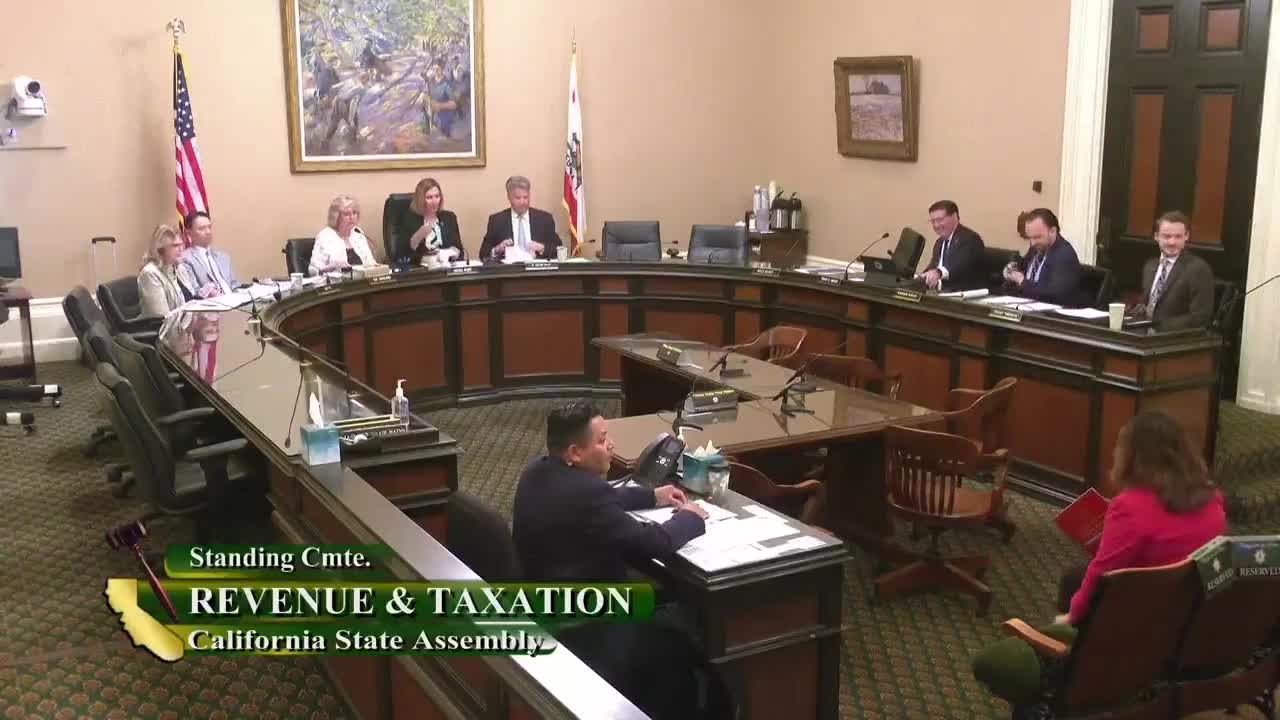
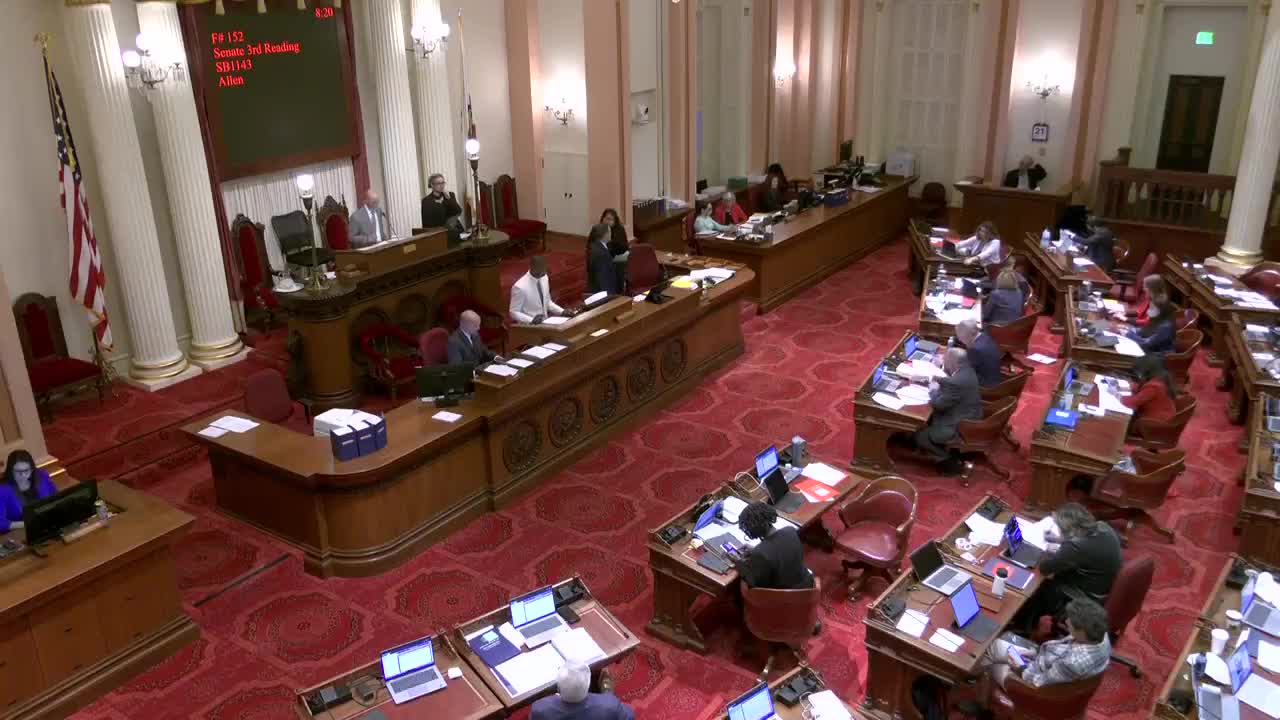
Discussed in Hearing
 5MIN
Assembly Standing Committee on Revenue and Taxation
 5MIN
Senate Floor
 30SEC
Senate Standing Committee on Appropriations
 4MIN
Senate Standing Committee on Revenue and Taxation
Bill Author