SB 1290: Health care coverage: essential health benefits.
- Session Year: 2023-2024
- House: Senate
- Latest Version Date: 2024-02-15
Current Status:
Failed
(2024-08-28: Ordered to inactive file on request of Assembly Member Bonta.)
Introduced
In Committee
First Chamber
In Committee
Second Chamber
Enacted
What does this bill do?
The bill directs California to review its essential health benefits benchmark and establish a new benchmark for the 2027 plan year, affecting individual and small‑group health insurance and health care service plans that must cover essential health benefits (the basic set of services required under federal law). It also limits the current benchmark—the Kaiser Foundation Health Plan Small Group HMO 30 plan as offered in early 2014—to plan years on or before 2027.
The summary is provided by generative AI which can make mistakes. For original language, please view the details in the table below.
Existing law, the Knox-Keene Health Care Service Plan Act of 1975, requires the Department of Managed Health Care to license and regulate health care service plans and makes a willful violation of the act a crime. Other existing law requires the Department of Insurance to regulate health insurers. Existing law requires an individual or small group health care service plan contract or health insurance policy issued, amended, or renewed on or after January 1, 2017, to include, at a minimum, coverage for essential health benefits pursuant to the federal Patient Protection and Affordable Care Act. Existing law requires a health care service plan contract or health insurance policy to cover the same health benefits that the benchmark plan, the Kaiser Foundation Health Plan Small Group HMO 30 plan, offered during the first quarter of 2014, as specified.
This bill would express the intent of the Legislature to review Californias essential health benefits benchmark plan and establish a new benchmark plan for the 2027 plan year. The bill would limit the applicability of the current benchmark plan benefits to plan years on or before the 2027 plan year.
The California Constitution requires the state to reimburse local agencies and school districts for certain costs mandated by the state. Statutory provisions establish procedures for making that reimbursement.
This bill would provide that no reimbursement is required by this act for a specified reason.
It is the intent of the Legislature to review Californias essential health benefits benchmark plan and establish a new benchmark plan for the 2027 plan year.
SEC. 2.Section 1367.005 of the Health and Safety Code is amended to read:1367.005.(a)An individual or small group health care service plan contract issued, amended, or renewed on or after January 1, 2017, shall include, at a minimum, coverage for essential health benefits pursuant to the federal Patient Protection and Affordable Care Act (PPACA) and as outlined in this section. For purposes of this section, essential health benefits means all of the following:
(1)Health benefits within the categories identified in Section 1302(b) of PPACA: ambulatory patient services, emergency services, hospitalization, maternity and newborn care, mental health and substance use disorder services, including behavioral health treatment, prescription drugs, rehabilitative and habilitative services and devices, laboratory services, preventive and wellness services and chronic disease management, and pediatric services, including oral and vision care.
(2)(A)The For plan years on or before the 2027 plan year, health benefits covered by the Kaiser Foundation Health Plan Small Group HMO 30 plan (federal health product identification number 40513CA035) as this plan was offered during the first quarter of 2014, as follows, regardless of whether the benefits are specifically referenced in the evidence of coverage or plan contract for that plan:
(i)Medically necessary basic health care services, as defined in subdivision (b) of Section 1345 and Section 1300.67 of Title 28 of the California Code of Regulations.
(ii)The health benefits mandated to be covered by the plan pursuant to statutes enacted before December 31, 2011, as described in the following sections: Sections 1367.002, 1367.06, and 1367.35 (preventive services for children); Section 1367.25 (prescription drug coverage for contraceptives); Section 1367.45 (AIDS vaccine); Section 1367.46 (HIV testing); Section 1367.51 (diabetes); Section 1367.54 (alpha-fetoprotein testing); Section 1367.6 (breast cancer screening); Section 1367.61 (prosthetics for laryngectomy); Section 1367.62 (maternity hospital stay); Section 1367.63 (reconstructive surgery); Section 1367.635 (mastectomies); Section 1367.64 (prostate cancer); Section 1367.65 (mammography); Section 1367.66 (cervical cancer); Section 1367.665 (cancer screening tests); Section 1367.67 (osteoporosis); Section 1367.68 (surgical procedures for jaw bones); Section 1367.71 (anesthesia for dental); Section 1367.9 (conditions attributable to diethylstilbestrol); Section 1368.2 (hospice care); Section 1370.6 (cancer clinical trials); Section 1371.5 (emergency response ambulance or ambulance transport services); subdivision (b) of Section 1373 (sterilization operations or procedures); Section 1373.4 (inpatient hospital and ambulatory maternity); Section 1374.56 (phenylketonuria); Section 1374.17 (organ transplants for HIV); Section 1374.72 (mental health parity); and Section 1374.73 (autism/behavioral health treatment).
(iii)Any other benefits mandated to be covered by the plan pursuant to statutes enacted before December 31, 2011, as described in those statutes.
(iv)The health benefits covered by the plan that are not otherwise required to be covered under this chapter, to the extent required pursuant to Sections 1367.18, 1367.21, 1367.215, 1367.22, 1367.24, and 1367.25, and Section 1300.67.24 of Title 28 of the California Code of Regulations.
(v)Any other health benefits covered by the plan that are not otherwise required to be covered under this chapter.
(B)If there are any conflicts or omissions in the plan identified in subparagraph (A) as compared with the requirements for health benefits under this chapter that were enacted prior to December 31, 2011, the requirements of this chapter shall be controlling, except as otherwise specified in this section.
(C)Notwithstanding subparagraph (B) or any other provision of this section, the home health services benefits covered under the plan identified in subparagraph (A) shall be deemed to not be in conflict with this chapter.
(D)For purposes of this section, the Paul Wellstone and Pete Domenici Mental Health Parity and Addiction Equity Act of 2008 (Public Law 110-343) shall apply to a contract subject to this section. Coverage of mental health and substance use disorder services pursuant to this paragraph, along with any scope and duration limits imposed on the benefits, shall be in compliance with the Paul Wellstone and Pete Domenici Mental Health Parity and Addiction Equity Act of 2008 (Public Law 110-343), and all rules, regulations, or guidance issued pursuant to Section 2726 of the federal Public Health Service Act (42 U.S.C. Sec. 300gg-26).
(3)With respect to habilitative services, in addition to any habilitative services and devices identified in paragraph (2), coverage shall also be provided as required by federal rules, regulations, and guidance issued pursuant to Section 1302(b) of PPACA. Habilitative services and devices shall be covered under the same terms and conditions applied to rehabilitative services and devices under the plan contract. Limits on habilitative and rehabilitative services and devices shall not be combined.
(4)With respect to pediatric vision care, the same health benefits for pediatric vision care covered under the Federal Employees Dental and Vision Insurance Program vision plan with the largest national enrollment as of the first quarter of 2014. The pediatric vision care benefits covered pursuant to this paragraph shall be in addition to, and shall not replace, any vision services covered under the plan identified in paragraph (2).
(5)With respect to pediatric oral care, the same health benefits for pediatric oral care covered under the dental benefit received by children under the Medi-Cal program as of 2014, including the provision of medically necessary orthodontic care provided pursuant to the federal Childrens Health Insurance Program Reauthorization Act of 2009. The pediatric oral care benefits covered pursuant to this paragraph shall be in addition to, and shall not replace, any dental or orthodontic services covered under the plan identified in paragraph (2).
(b)Treatment limitations imposed on health benefits described in this section shall be no greater than the treatment limitations imposed by the corresponding plans identified in subdivision (a), subject to the requirements set forth in paragraph (2) of subdivision (a).
(c)Except as provided in subdivision (d), this section does not permit a health care service plan to make substitutions for the benefits required to be covered under this section, regardless of whether those substitutions are actuarially equivalent.
(d)To the extent permitted under Section 1302 of PPACA and any rules, regulations, or guidance issued pursuant to that section, and to the extent that substitution would not create an obligation for the state to defray costs for any individual, a plan may substitute its prescription drug formulary for the formulary provided under the plan identified in subdivision (a) if the coverage for prescription drugs complies with the sections referenced in clauses (ii) and (iv) of subparagraph (A) of paragraph (2) of subdivision (a) that apply to prescription drugs.
(e)A health care service plan, or its agent, solicitor, or representative, shall not issue, deliver, renew, offer, market, represent, or sell any product, contract, or discount arrangement as compliant with the essential health benefits requirement in federal law, unless it meets all of the requirements of this section.
(f)This section applies regardless of whether the plan contract is offered inside or outside the California Health Benefit Exchange created by Section 100500 of the Government Code.
(g)This section does not exempt a plan or a plan contract from meeting other applicable requirements of law.
(h)This section does not prohibit a plan contract from covering additional benefits, including, but not limited to, spiritual care services that are tax deductible under Section 213 of the Internal Revenue Code.
(i)Subdivision (a) does not apply to any of the following:
(1)A specialized health care service plan contract.
(2)A Medicare supplement plan.
(3)A plan contract that qualifies as a grandfathered health plan under Section 1251 of PPACA or any rules, regulations, or guidance issued pursuant to that section.
(j)This section shall not be implemented in a manner that conflicts with a requirement of PPACA.
(k)An essential health benefit is required to be provided under this section only to the extent that federal law does not require the state to defray the costs of the benefit.
(l)This section does not obligate the state to incur costs for the coverage of benefits that are not essential health benefits as defined in this section.
(m)A plan is not required to cover, under this section, changes to health benefits that are the result of statutes enacted on or after December 31, 2011.
(n)(1)The department may adopt emergency regulations implementing this section. The department may, on a one-time basis, readopt any emergency regulation authorized by this section that is the same as, or substantially equivalent to, an emergency regulation previously adopted under this section.
(2)The initial adoption of emergency regulations implementing this section and the readoption of emergency regulations authorized by this subdivision shall be deemed an emergency and necessary for the immediate preservation of the public peace, health, safety, or general welfare. The initial emergency regulations and the readoption of emergency regulations authorized by this section shall be submitted to the Office of Administrative Law for filing with the Secretary of State and each shall remain in effect for no more than 180 days, by which time final regulations may be adopted.
(3)The initial adoption of emergency regulations implementing this section made during the 201516 Regular Session of the Legislature and the readoption of emergency regulations authorized by this subdivision shall be deemed an emergency and necessary for the immediate preservation of the public peace, health, safety, or general welfare. The initial emergency regulations and the readoption of emergency regulations authorized by this section shall be submitted to the Office of Administrative Law for filing with the Secretary of State and each shall remain in effect for no more than 180 days, by which time final regulations may be adopted.
(4)The director shall consult with the Insurance Commissioner to ensure consistency and uniformity in the development of regulations under this subdivision.
(5)This subdivision shall become inoperative on July 1, 2018.
(o)For purposes of this section, the following definitions apply:
(1)Habilitative services means health care services and devices that help a person keep, learn, or improve skills and functioning for daily living. Examples include therapy for a child who is not walking or talking at the expected age. These services may include physical and occupational therapy, speech-language pathology, and other services for people with disabilities in a variety of inpatient or outpatient settings, or both. Habilitative services shall be covered under the same terms and conditions applied to rehabilitative services under the plan contract.
(2)(A)Health benefits, unless otherwise required to be defined pursuant to federal rules, regulations, or guidance issued pursuant to Section 1302(b) of PPACA, means health care items or services for the diagnosis, cure, mitigation, treatment, or prevention of illness, injury, disease, or a health condition, including a behavioral health condition.
(B)Health benefits does not mean any cost-sharing requirements such as copayments, coinsurance, or deductibles.
(3)PPACA means the federal Patient Protection and Affordable Care Act (Public Law 111-148), as amended by the federal Health Care and Education Reconciliation Act of 2010 (Public Law 111-152), and any rules, regulations, or guidance issued thereunder.
(4)Small group health care service plan contract means a group health care service plan contract issued to a small employer, as defined in Section 1357.500.
SEC. 3.Section 10112.27 of the Insurance Code is amended to read:10112.27.(a)An individual or small group health insurance policy issued, amended, or renewed on or after January 1, 2017, shall include, at a minimum, coverage for essential health benefits pursuant to the federal Patient Protection and Affordable Care Act (PPACA) and as outlined in this section. This section shall exclusively govern the benefits a health insurer must cover as essential health benefits. For purposes of this section, essential health benefits means all of the following:
(1)Health benefits within the categories identified in Section 1302(b) of PPACA: ambulatory patient services, emergency services, hospitalization, maternity and newborn care, mental health and substance use disorder services, including behavioral health treatment, prescription drugs, rehabilitative and habilitative services and devices, laboratory services, preventive and wellness services and chronic disease management, and pediatric services, including oral and vision care.
(2)(A)The For plan years on or before the 2027 plan year, health benefits covered by the Kaiser Foundation Health Plan Small Group HMO 30 plan (federal health product identification number 40513CA035) as this plan was offered during the first quarter of 2014, as follows, regardless of whether the benefits are specifically referenced in the plan contract or evidence of coverage for that plan:
(i)Medically necessary basic health care services, as defined in subdivision (b) of Section 1345 of the Health and Safety Code and Section 1300.67 of Title 28 of the California Code of Regulations.
(ii)The health benefits mandated to be covered by the plan pursuant to statutes enacted before December 31, 2011, as described in the following sections of the Health and Safety Code: Sections 1367.002, 1367.06, and 1367.35 (preventive services for children); Section 1367.25 (prescription drug coverage for contraceptives); Section 1367.45 (AIDS vaccine); Section 1367.46 (HIV testing); Section 1367.51 (diabetes); Section 1367.54 (alpha-fetoprotein testing); Section 1367.6 (breast cancer screening); Section 1367.61 (prosthetics for laryngectomy); Section 1367.62 (maternity hospital stay); Section 1367.63 (reconstructive surgery); Section 1367.635 (mastectomies); Section 1367.64 (prostate cancer); Section 1367.65 (mammography); Section 1367.66 (cervical cancer); Section 1367.665 (cancer screening tests); Section 1367.67 (osteoporosis); Section 1367.68 (surgical procedures for jaw bones); Section 1367.71 (anesthesia for dental); Section 1367.9 (conditions attributable to diethylstilbestrol); Section 1368.2 (hospice care); Section 1370.6 (cancer clinical trials); Section 1371.5 (emergency response ambulance or ambulance transport services); subdivision (b) of Section 1373 (sterilization operations or procedures); Section 1373.4 (inpatient hospital and ambulatory maternity); Section 1374.56 (phenylketonuria); Section 1374.17 (organ transplants for HIV); Section 1374.72 (mental health parity); and Section 1374.73 (autism/behavioral health treatment).
(iii)Any other benefits mandated to be covered by the plan pursuant to statutes enacted before December 31, 2011, as described in those statutes.
(iv)The health benefits covered by the plan that are not otherwise required to be covered under Chapter 2.2 (commencing with Section 1340) of Division 2 of the Health and Safety Code, to the extent otherwise required pursuant to Sections 1367.18, 1367.21, 1367.215, 1367.22, 1367.24, and 1367.25 of the Health and Safety Code, and Section 1300.67.24 of Title 28 of the California Code of Regulations.
(v)Any other health benefits covered by the plan that are not otherwise required to be covered under Chapter 2.2 (commencing with Section 1340) of Division 2 of the Health and Safety Code.
(B)If there are any conflicts or omissions in the plan identified in subparagraph (A) as compared with the requirements for health benefits under Chapter 2.2 (commencing with Section 1340) of Division 2 of the Health and Safety Code that were enacted before December 31, 2011, the requirements of Chapter 2.2 (commencing with Section 1340) of Division 2 of the Health and Safety Code shall control, except as otherwise specified in this section.
(C)Notwithstanding subparagraph (B) or any other provision of this section, the home health services benefits covered under the plan identified in subparagraph (A) shall not be in conflict with Chapter 2.2 (commencing with Section 1340) of Division 2 of the Health and Safety Code.
(D)For purposes of this section, the Paul Wellstone and Pete Domenici Mental Health Parity and Addiction Equity Act of 2008 (Public Law 110-343) shall apply to a policy subject to this section. Coverage of mental health and substance use disorder services pursuant to this paragraph, along with any scope and duration limits imposed on the benefits, shall be in compliance with the Paul Wellstone and Pete Domenici Mental Health Parity and Addiction Equity Act of 2008 (Public Law 110-343), and all rules, regulations, and guidance issued pursuant to Section 2726 of the federal Public Health Service Act (42 U.S.C. Sec. 300gg-26).
(3)With respect to habilitative services, in addition to any habilitative services and devices identified in paragraph (2), coverage shall also be provided as required by federal rules, regulations, or guidance issued pursuant to Section 1302(b) of PPACA. Habilitative services and devices shall be covered under the same terms and conditions applied to rehabilitative services and devices under the policy. Limits on habilitative and rehabilitative services and devices shall not be combined.
(4)With respect to pediatric vision care, the same health benefits for pediatric vision care covered under the Federal Employees Dental and Vision Insurance Program vision plan with the largest national enrollment as of the first quarter of 2014. The pediatric vision care services covered pursuant to this paragraph shall be in addition to, and shall not replace, any vision services covered under the plan identified in paragraph (2).
(5)With respect to pediatric oral care, the same health benefits for pediatric oral care covered under the dental benefit received by children under the Medi-Cal program as of 2014, including the provision of medically necessary orthodontic care provided pursuant to the federal Childrens Health Insurance Program Reauthorization Act of 2009. The pediatric oral care benefits covered pursuant to this paragraph shall be in addition to, and shall not replace, any dental or orthodontic services covered under the plan identified in paragraph (2).
(b)Treatment limitations imposed on health benefits described in this section shall be no greater than the treatment limitations imposed by the corresponding plans identified in subdivision (a), subject to the requirements set forth in paragraph (2) of subdivision (a).
(c)Except as provided in subdivision (d), this section does not permit a health insurer to make substitutions for the benefits required to be covered under this section, regardless of whether those substitutions are actuarially equivalent.
(d)To the extent permitted under Section 1302 of PPACA and any rules, regulations, or guidance issued pursuant to that section, and to the extent that substitution would not create an obligation for the state to defray costs for any individual, an insurer may substitute its prescription drug formulary for the formulary provided under the plan identified in subdivision (a) if the coverage for prescription drugs complies with the sections referenced in clauses (ii) and (iv) of subparagraph (A) of paragraph (2) of subdivision (a) that apply to prescription drugs.
(e)A health insurer, or its agent, producer, or representative, shall not issue, deliver, renew, offer, market, represent, or sell any product, policy, or discount arrangement as compliant with the essential health benefits requirement in federal law, unless it meets all of the requirements of this section. This subdivision shall be enforced in the same manner as Section 790.03, including through the means specified in Sections 790.035 and 790.05.
(f)This section applies regardless of whether the policy is offered inside or outside the California Health Benefit Exchange created by Section 100500 of the Government Code.
(g)This section does not exempt a health insurer or a health insurance policy from meeting other applicable requirements of law.
(h)This section does not prohibit a policy from covering additional benefits, including, but not limited to, spiritual care services that are tax deductible under Section 213 of the Internal Revenue Code.
(i)Subdivision (a) does not apply to any of the following:
(1)A policy that provides excepted benefits as described in Sections 2722 and 2791 of the federal Public Health Service Act (42 U.S.C. Sec. 300gg-21; 42 U.S.C. Sec. 300gg-91).
(2)A policy that qualifies as a grandfathered health plan under Section 1251 of PPACA or any binding rules, regulations, or guidance issued pursuant to that section.
(j)This section shall not be implemented in a manner that conflicts with a requirement of PPACA.
(k)An essential health benefit is required to be provided under this section only to the extent that federal law does not require the state to defray the costs of the benefit.
(l)This section does not obligate the state to incur costs for the coverage of benefits that are not essential health benefits as defined in this section.
(m)An insurer is not required to cover, under this section, changes to health benefits that are the result of statutes enacted on or after December 31, 2011.
(n)(1)The commissioner may adopt emergency regulations implementing this section. The commissioner, on a one-time basis, may readopt any emergency regulation authorized by this section that is the same as, or substantially equivalent to, an emergency regulation previously adopted under this section.
(2)The initial adoption of emergency regulations implementing this section and the readoption of emergency regulations authorized by this subdivision shall be deemed an emergency and necessary for the immediate preservation of the public peace, health, safety, or general welfare. The initial emergency regulations and the readoption of emergency regulations authorized by this section shall be submitted to the Office of Administrative Law for filing with the Secretary of State and each shall remain in effect for no more than 180 days, by which time final regulations may be adopted.
(3)The initial adoption of emergency regulations implementing this section made during the 201516 Regular Session of the Legislature and the readoption of emergency regulations authorized by this subdivision shall be deemed an emergency and necessary for the immediate preservation of the public peace, health, safety, or general welfare. The initial emergency regulations and the readoption of emergency regulations authorized by this section shall be submitted to the Office of Administrative Law for filing with the Secretary of State and each shall remain in effect for no more than 180 days, by which time final regulations may be adopted.
(4)The commissioner shall consult with the Director of the Department of Managed Health Care to ensure consistency and uniformity in the development of regulations under this subdivision.
(5)This subdivision shall become inoperative on July 1, 2018.
(o)This section does not impose on health insurance policies the cost sharing or network limitations of the plans identified in subdivision (a) except to the extent otherwise required to comply with this code, including this section, and as otherwise applicable to all health insurance policies offered to individuals and small groups.
(p)For purposes of this section, the following definitions apply:
(1)Habilitative services means health care services and devices that help a person keep, learn, or improve skills and functioning for daily living. Examples include therapy for a child who is not walking or talking at the expected age. These services may include physical and occupational therapy, speech-language pathology, and other services for people with disabilities in a variety of inpatient or outpatient settings, or both. Habilitative services shall be covered under the same terms and conditions applied to rehabilitative services under the policy.
(2)(A)Health benefits, unless otherwise required to be defined pursuant to federal rules, regulations, or guidance issued pursuant to Section 1302(b) of PPACA, means health care items or services for the diagnosis, cure, mitigation, treatment, or prevention of illness, injury, disease, or a health condition, including a behavioral health condition.
(B)Health benefits does not mean any cost-sharing requirements such as copayments, coinsurance, or deductibles.
(3)PPACA means the federal Patient Protection and Affordable Care Act (Public Law 111-148), as amended by the federal Health Care and Education Reconciliation Act of 2010 (Public Law 111-152), and any rules, regulations, or guidance issued thereunder.
(4)Small group health insurance policy means a group health insurance policy issued to a small employer, as defined in subdivision (q) of Section 10753.
SEC. 4.No reimbursement is required by this act pursuant to Section 6 of Article XIIIB of the California Constitution because the only costs that may be incurred by a local agency or school district will be incurred because this act creates a new crime or infraction, eliminates a crime or infraction, or changes the penalty for a crime or infraction, within the meaning of Section 17556 of the Government Code, or changes the definition of a crime within the meaning of Section 6 of Article XIIIB of the California Constitution.
|
Date
|
Status
|
|---|---|
| Aug 28, 2024 | Ordered to inactive file on request of Assembly Member Bonta. |
| Aug 12, 2024 | Ordered to third reading. |
| Aug 12, 2024 | From consent calendar on motion of Assembly Member Aguiar-Curry. |
| Aug 8, 2024 | Read second time. Ordered to consent calendar. |
| Aug 7, 2024 | From committee: Do pass. Ordered to consent calendar. (Ayes 14. Noes 0.) (August 7). |
| Jun 26, 2024 | From committee: Do pass and re-refer to Com. on APPR. with recommendation: To consent calendar. (Ayes 16. Noes 0.) (June 25). Re-referred to Com. on APPR. |
| May 28, 2024 | Referred to Com. on HEALTH. |
| May 21, 2024 | In Assembly. Read first time. Held at Desk. |
| May 20, 2024 | Read third time. Passed. (Ayes 39. Noes 0. Page 4013.) Ordered to the Assembly. |
| Apr 23, 2024 | Read second time. Ordered to third reading. |
| Apr 22, 2024 | From committee: Be ordered to second reading pursuant to Senate Rule 28.8. |
| Apr 12, 2024 | Set for hearing April 22. |
| Apr 11, 2024 | From committee: Do pass and re-refer to Com. on APPR. (Ayes 11. Noes 0. Page 3561.) (April 10). Re-referred to Com. on APPR. |
| Apr 1, 2024 | Set for hearing April 10. |
| Feb 29, 2024 | Referred to Com. on HEALTH. |
| Feb 16, 2024 | From printer. May be acted upon on or after March 17. |
| Feb 15, 2024 | Introduced. Read first time. To Com. on RLS. for assignment. To print. |
|
Date
|
Description
|
Location
|
Votes
|
|
|---|---|---|---|---|
| Aug 7, 2024 | Do pass. To Consent Calendar. | Assembly Standing Committee on Appropriations |
Passed |
|
| Jun 25, 2024 | Do pass and be re-referred to the Committee on [Appropriations] with recommendation: To Consent Calendar | Assembly Standing Committee on Health |
Passed |
|
| May 20, 2024 | Senate 3rd Reading SB1290 Roth | Senate Floor |
Passed |
|
| Apr 10, 2024 | Do pass, but first be re-referred to the Committee on [Appropriations] | Senate Standing Committee on Health |
Passed |
This list shows positions taken on this bill by organizations on the date displayed, which is linked to the original source.
Positions by individuals are not included.
|
Organization
|
Position
|
Date
|
|---|---|---|
| Association Of California Life And Health Insurance Companies | * Support | Apr 10, 2024 |
| California Association Of Health Plans | * Support | Apr 10, 2024 |
| California Chiropractic Association | * Support | Apr 10, 2024 |
| California Dental Association | * Support | Apr 10, 2024 |
| California Hands and Voices | * Support | Apr 10, 2024 |
| California Health Benefits Review Program | * Support | Apr 10, 2024 |
| Children Now | ** Support | |
| Crohn's & Colitis Foundation | * Support | Apr 10, 2024 |
| Equality California | * Support | Apr 10, 2024 |
| Hearing Loss Association of America | * Support | Apr 10, 2024 |
| Let California Kids Hear | ** Support | |
| National Health Law Program | ** Support | |
| western center on law & poverty | ** Support |
SENATE THIRD READING
STR Bill Id:SB 1290
Author:(Roth)
As Introduced Ver:February 15, 2024
Majority vote
SUMMARY
Expresses the intent of the Legislature to review California's essential health benefits (EHBs) benchmark plan and establish a new EHB plan for the 2027 plan year. Limits the current benchmark to plan years on or before the 2027 plan year.
Major Provisions
COMMENTS
- Patient Protection and Affordable Care Act (ACA) and federal requirements. Enacted in March 2010, the ACA provides the framework, policies, regulations and guidelines for the implementation of comprehensive health care reform by the states. The ACA expands access to quality, affordable insurance and health care. As of January 1, 2014, insurers are no longer able to deny coverage or charge higher premiums based on preexisting conditions. These aspects of the ACA, along with tax credits for low and middle income people buying insurance on their own in new health benefit exchanges, make it easier for people with preexisting conditions to gain insurance coverage. Additionally, the ACA requires health plans sold in the individual and small group markets to offer a comprehensive package of items and services, known as EHBs. The federal government gave each state the authority to choose its "benchmark" plan.
- California's Current EHB benchmark plan. The federal Department of Health and Human Services (DHHS) define EHBs based on state-specific EHB benchmark plans. The base-benchmark plan California selected for 2014 (Kaiser Foundation Health Plan Small Group HMO 30 plan) was the largest plan by enrollment in one of the three largest small-group insurance products in the state's small-group market. According to the California Health Benefits Review Program (CHBRP), California chose to supplement this plan with the pediatric oral benefit from its Children’s Health Insurance Program (CHIP), and the pediatric vision benefits from a federal plan to create the EHB-benchmark plan. Additionally, California chose to define habilitative services and required that these services be provided "under the same terms and conditions applied to rehabilitative services."
- Health insurance mandates. The ACA establishes that while states are permitted to require coverage of benefits in addition to those considered EHBs, they must defray the cost of providing those state-mandated benefits, either by paying the enrollee directly or by paying the qualified health plan (offered on Covered California). For California, it is unclear which entity or person would be responsible for the determination of whether a benefit mandate requires defrayal. According to CHBRP, federal guidance established the "state" as the entity that would identify when a state benefit mandate exceeds EHBs; however, the state entity would be subject to federal oversight. However, California has not yet officially determined who or which agency would be the responsible party for determining whether a benefit exceeds EHBs. It should be noted that since the passage of the ACA and the selection of the Kaiser benchmark plan, no legislation has been signed into law that exceeded the EHBs and required the state to defray the cost of that service. Last year, SB 635 (Menjivar) of 2023 would have required hearing aids for children and was vetoed by Governor Newsom as exceeding EHBs. New health benefit mandates do not require defrayal when they do not exceed the state’s definition of EHBs. According to CHBRP, state rules around service delivery method (such as telemedicine), provider types, cost sharing, or reimbursement methods are not considered state benefit mandates that would trigger the requirement for the state to defray the costs even though plans and policies in a state must comply with these requirements. States adopting a new benchmark plan or revising the existing plan, will not result in triggering defrayal. It should be noted that premiums (what consumers pay) may increase as a result of setting a new benchmark plan.
- New Benchmark Selection. In late 2023, DHHS published a proposed rule that would, among other things, allow states to mandate new benefits without exceeding EHB or triggering the requirement that the state cover the costs of those new benefits (as explained below), if the state adopts a new benchmark plan that includes the new benefits. If enacted, this rule change would allow California to adopt a new benchmark plan that requires health plans to cover new benefits (such as hearing aids for children) without also incurring the state cost for those benefits for Covered California enrollees. According to the Department of Managed Health Care, federal law dictates the process a state must follow when selecting a new benchmark plan. These requirements include the following:
- The state must select a benchmark plan that provides a scope of benefits equal to or greater than the scope of benefits provided by a "typical employer plan." This sets the floor for the generosity of the benefits. The benchmark plan also cannot exceed the generosity of the state's most generous "comparison plan." This sets the ceiling for the generosity of the benefits. The state must submit to DHHS an actuarial certification and report affirming the selected benchmark plan meets these floor and ceiling requirements;
- The benefits in the proposed benchmark plan cannot be "unduly" weighted toward any particular category of benefits, must provide benefits for diverse segments of the population, and cannot include discriminatory benefit designs;
- The state must submit a formulary drug list in a format and manner specified by DHHS;
- The state must provide reasonable public notice regarding the proposed new benchmark plan and must give the public a reasonable time to comment on the proposed plan; and,
- The state must notify DHHS of the selected new benchmark plan and submit supporting documentation, including the required actuarial certification and report, "by the first Wednesday in May of the year that is two years before the effective date" of the new benchmark plan. Based on these time frames, the earliest that California could have a new benchmark plan in place is for plan year 2027.
According to the Author
EHBs are based upon the same 2014 benchmark plan established when California first implemented the ACA. Updates were adopted in 2015 (effective in 2017) to incorporate the federal definition of habilitative, to base pediatric vision benefits on the Federal Employees Dental and Vision Insurance Program vision plan, and to base pediatric dental benefits on the CHIP benefits. California's benchmark does not include coverage for hearing aids, infertility treatment, adult dental, chiropractic, or nutritional counseling, among other benefits. The author states that inclusion of any of these benefits in California's EHBs requires the state to update our benchmark plan through a stakeholder process and to notify the federal Centers for Medicare and Medicare Services by May of 2025, in order for those benefits to be in place for the 2027 plan year. This bill will help begin the review process, which requires actuarial analysis, and a stakeholder process to inform the options for policymakers, and ultimately codify any changes to California's benchmark plan. The author concludes that any added health insurance mandates outside of this process require the state to pay for or "defray" the added costs of insurance mandates not included in the benchmark.
Arguments in Support
The National Health Law Program (NHeLP) writes that the new benchmarking process requires the state to establish a transparent process where stakeholders can provide input about potential new benefits. The state must also conduct an actuarial analysis certifying that the resulting plan does not exceed the value of the most generous typical employer plan in the state, as defined in federal regulations. For this reason, NHeLP concludes that it is important that states begin the process with sufficient time and in advance of the anticipated effective plan year. Children Now and Let California Kids Hear are writing to strongly support a policy solution that will permanently close coverage gaps and ensure that all children in California have access to affordable and comprehensive health insurance that meets all of their health needs.
Arguments in Opposition
Department of Finance (Finance) writes it is premature and duplicative of existing efforts to update the state's EHB benchmark plan. The DMHC held a public meeting in June 2024 to discuss the state's EHBs and the process for updating the state's benchmark plan with the goal of notifying DHHS of the selection of a new EHBs benchmark plan by May 2025. Finance is also opposed to this bill because California would not be in compliance with federal regulations after 2027 to the extent a measure enacting a new benchmark plan is not adopted. A related bill, AB 2914 (Bonta), also proposes to sunset the state's EHB plan after the 2027 plan year. At the time of this analysis, AB 2914 was referred to the Senate Appropriations Committee. Although federal regulations released by the Centers for Medicare and Medicaid Services in April 2024 specify that states are not required to defray the costs of mandated benefits that are added to a state's EHBs benchmark plan to the extent they meet specified requirements, expanding benefits offered under the state's EHB benchmark plan may increase commercial health care premiums and could result in cost pressures on the Medi-Cal program to offer additional benefits.
FISCAL COMMENTS
According to the Assembly Appropriations Committee, no state costs.
VOTES
SENATE FLOOR: 39-0-1
YES: Allen, Alvarado-Gil, Archuleta, Ashby, Atkins, Becker, Blakespear, Bradford, Caballero, Cortese, Dahle, Dodd, Durazo, Eggman, Glazer, Gonzalez, Grove, Hurtado, Jones, Laird, Limón, McGuire, Menjivar, Newman, Nguyen, Niello, Ochoa Bogh, Padilla, Portantino, Roth, Rubio, Seyarto, Skinner, Smallwood-Cuevas, Stern, Umberg, Wahab, Wiener, Wilk
ABS, ABST OR NV: Min
ASM HEALTH: 16-0-0
YES: Bonta, Waldron, Aguiar-Curry, Arambula, Wendy Carrillo, Flora, Haney, Wood, Jackson, McCarty, Joe Patterson, Rodriguez, Sanchez, Santiago, Schiavo, Weber
ASM APPROPRIATIONS: 14-0-1
YES: Wicks, Sanchez, Arambula, Bryan, Calderon, Wendy Carrillo, Dixon, Mike Fong, Grayson, Haney, Hart, Jim Patterson, Pellerin, Ta
ABS, ABST OR NV: Villapudua
UPDATED
VERSION: February 15, 2024
CONSULTANT: Kristene Mapile / HEALTH / (916) 319-2097 FN: 0003830
Date of Hearing: August 7, 2024
ASSEMBLY COMMITTEE ON APPROPRIATIONS
Buffy Wicks, Chair
SBPCA Bill Id:SB 1290
Author:(Roth) – As Introduced Ver:February 15, 2024
Policy Committee: | Health | Vote: | 16 - 0 |
|
| ||
|
|
Urgency: No State Mandated Local Program: Yes Reimbursable: No
SUMMARY:
This bill states the intent of the Legislature to review California’s essential health benefits (EHBs) benchmark plan and establish a new benchmark plan for the 2017 plan year and limits the current EHB plan to the 2027 plan year or earlier.
FISCAL EFFECT:
No state costs.
COMMENTS:
- Purpose. According to the author:
California’s [EHBs] are based upon the same 2014 benchmark plan established when California first implemented the Affordable Care Act (ACA)…California’s benchmark does not include coverage for hearing aids, infertility treatment, dental for adults, chiropractic, nutritional counseling, and other benefits. Inclusion of any of these benefits in California’s [EHBs] requires the state to update our benchmark plan through a stakeholder process and to notify the federal Centers for Medicare and Medicare Services by May of 2025 in order for those benefits to be in place for the 2027 plan year. This bill will help begin the review process which requires actuarial analysis and a stakeholder process to inform the options for policymakers, and ultimately codify any changes to California’s benchmark plan. Any added health insurance mandates outside of this process require the state to pay for the added costs of insurance mandates not included in the benchmark.
- Background.
ACA. Enacted in March 2010, the ACA expands access to quality, affordable insurance and health care and provides the framework, policies, regulations and guidelines for the implementation of comprehensive health care reform by the states. The ACA prohibits insurers from denying coverage or charging higher premiums based on preexisting conditions. The ACA, along with tax credits for low and middle income people buying insurance on their own in health benefit exchanges, make it easier for people with preexisting conditions to gain insurance coverage. Additionally, the ACA requires health plans sold in the individual and small group markets to offer a comprehensive package of items and services, known as EHBs. The federal government gave each state the authority to choose its “benchmark” plan.
California’s EHBs. The federal Department of Health and Human Services (DHHS) defines EHBs based on state-specific EHB benchmark plans. According to the California Health Benefits Review Program (CHBRP), the base-benchmark plan California selected for 2014, the Kaiser Foundation Health Plan Small Group HMO 30 plan, was the largest plan by enrollment in one of the three largest small-group insurance products in the state’s small-group market. California chose to supplement this plan with the pediatric oral benefit from its Children’s Health Insurance Program, and the pediatric vision benefits from a federal plan to create the EHB-benchmark plan. Additionally, California chose to define habilitative services and required that these services be provided “under the same terms and conditions applied to rehabilitative services.”
New Benchmark Selection. In late 2023, DHHS published a proposed rule that would, among other things, allow states to mandate new benefits without exceeding EHB or triggering the requirement that the state cover the costs of those new benefits (as explained below), if the state adopts a new benchmark plan that includes the new benefits. If enacted, this rule change would allow California to adopt a new benchmark plan that requires health plans to cover new benefits (such as hearing aids for children) without also incurring the cost for those benefits for on-Exchange enrollees. States must submit a proposed modified benchmark plan selection by the first Wednesday in May two years prior to the effective date of the new benchmark plan (for example, May 2024 for plan year beginning in 2026). Based on these time frames, the earliest that California could have a new benchmark plan in place is for plan year 2027.
According to DMHC, federal law dictates the process a state must follow when selecting a new benchmark plan. These requirements include criteria for the “floor” and “ceiling” of benefit packages, benefits for diverse segments of the population and benefit designs that are not discriminatory, and submission of a formulary list, among others.
- Related Legislation. AB 2914 (Bonta) is substantially similar to this bill and is pending in the Senate Committee on Appropriations.
Analysis Prepared by: Allegra Kim / APPR. / (916) 319-2081
Date of Hearing: June 25, 2024
ASSEMBLY COMMITTEE ON HEALTH
Mia Bonta, Chair
SBPCA Bill Id:SB 1290
Author:(Roth) – As Introduced Ver:February 15, 2024
SENATE VOTE: 39-0
SUBJECT: Health care coverage: essential health benefits.
SUMMARY: Expresses the intent of the Legislature to review California’s essential health benefits (EHBs) benchmark plan and establish a new EHB plan for the 2027 plan year. Limits the current benchmark to plan years on or before the 2027 plan year.
EXISTING LAW:
- Establishes the Department of Managed Health Care (DMHC) to regulate health plans and the California Department of Insurance (CDI) to regulate health insurers. [Health and Safety Code (HSC) §1340, et seq., and Insurance Code (INS) §106, et seq.]
- Establishes as California's EHB benchmark under the federal Patient Protection and Affordable Care Act (ACA), the Kaiser Small Group Health Maintenance Organization (HMO) contract, existing California health insurance mandates, and the 10 ACA mandated benefits. Specifies EHBs in the following 10 categories: ambulatory patient services; emergency services; hospitalization; maternity and newborn care; mental health and substance use disorder services; prescription drugs; rehabilitative and habilitative services and devices; laboratory services; preventive and wellness services and chronic disease management; and, pediatric services, including oral and vision care. [HSC §1367.005 and INS §10112.27]
- Defines “basic health care services” as all of the following:
- Physician services, including consultation and referral;
- Hospital inpatient services and ambulatory care services;
- Diagnostic laboratory and therapeutic radiologic services;
- Home health services;
- Preventive health services;
- Emergency health care services, including ambulance and ambulance transport services and out-of-area coverage. Basic health care services includes ambulance and ambulance transport services provided through the 911 emergency response system; and,
- Hospice care. [HSC §1345]
FISCAL EFFECT: According to the Senate Appropriations Committee, pursuant to Senate Rule 28.8, negligible state costs.
COMMENTS:
- PURPOSE OF THIS BILL. According to the author, California’s EHBs are based upon the same 2014 benchmark plan established when California first implemented the ACA. Updates were adopted in 2015 (effective in 2017) to incorporate the federal definition of habilitative, to base pediatric vision benefits on the Federal Employees Dental and Vision Insurance Program (CHIP) vision plan, and to base pediatric dental benefits on the Children’s Health Insurance Program benefits. California’s benchmark does not include coverage for hearing aids, infertility treatment, adult dental, chiropractic, or nutritional counseling, among other benefits. The author states that inclusion of any of these benefits in California’s EHBs requires the state to update our benchmark plan through a stakeholder process and to notify the federal Centers for Medicare and Medicare Services by May of 2025, in order for those benefits to be in place for the 2027 plan year. This bill will help begin the review process, which requires actuarial analysis, and a stakeholder process to inform the options for policymakers, and ultimately codify any changes to California’s benchmark plan. The author concludes that any added health insurance mandates outside of this process require the state to pay for or “defray” the added costs of insurance mandates not included in the benchmark.
- BACKGROUND.
- ACA and federal requirements. Enacted in March 2010, the ACA provides the framework, policies, regulations and guidelines for the implementation of comprehensive health care reform by the states. The ACA expands access to quality, affordable insurance and health care. As of January 1, 2014, insurers are no longer able to deny coverage or charge higher premiums based on preexisting conditions. These aspects of the ACA, along with tax credits for low and middle income people buying insurance on their own in new health benefit exchanges, make it easier for people with preexisting conditions to gain insurance coverage. Additionally, the ACA requires health plans sold in the individual and small group markets to offer a comprehensive package of items and services, known as EHBs. The federal government gave each state the authority to choose its “benchmark” plan.
- California’s Current EHB benchmark plan. The federal Department of Health and Human Services (DHHS) define EHBs based on state-specific EHB benchmark plans. The base-benchmark plan California selected for 2014 (Kaiser Foundation Health Plan Small Group HMO 30 plan) was the largest plan by enrollment in one of the three largest small-group insurance products in the state’s small-group market. According to the California Health Benefits Review Program (CHBRP), California chose to supplement this plan with the pediatric oral benefit from its CHIP, and the pediatric vision benefits from a federal plan to create the EHB-benchmark plan. Additionally, California chose to define habilitative services and required that these services be provided “under the same terms and conditions applied to rehabilitative services.”
- Health insurance mandates. The ACA establishes that while states are permitted to require coverage of benefits in addition to those considered EHBs, they must defray the cost of providing those state-mandated benefits, either by paying the enrollee directly or by paying the qualified health plan (offered on Covered California). For California, it is unclear which entity or person would be responsible for the determination of whether a benefit mandate requires defrayal. According to CHBRP, federal guidance established the “state” as the entity that would identify when a state benefit mandate exceeds EHBs; however, the state entity would be subject to federal oversight. However, California has not yet officially determined who or which agency would be the responsible party for determining whether a benefit exceeds EHBs. It should be noted that since the passage of the ACA and the selection of the Kaiser benchmark plan, no legislation has been signed into law that exceeded the EHBs and required the state to defray the cost of that service. Last year, SB 635 (Menjivar) of 2023 would have required hearing aids for children and was vetoed by Governor Newsom as exceeding EHBs.
New health benefit mandates do not require defrayal when they do not exceed the state’s definition of EHBs. According to CHBRP, state rules around service delivery method (such as telemedicine), provider types, cost sharing, or reimbursement methods are not considered state benefit mandates that would trigger the requirement for the state to defray the costs even though plans and policies in a state must comply with these requirements.
States adopting a new benchmark plan or revising the existing plan, will not result in triggering defrayal. It should be noted that premiums (what consumers pay) may increase as a result of setting a new benchmark plan.
- New Benchmark Selection. In late 2023, DHHS published a proposed rule that would, among other things, allow states to mandate new benefits without exceeding EHB or triggering the requirement that the state cover the costs of those new benefits (as explained below), if the state adopts a new benchmark plan that includes the new benefits. If enacted, this rule change would allow California to adopt a new benchmark plan that requires health plans to cover new benefits (such as hearing aids for children) without also incurring the state cost for those benefits for Covered California enrollees.
According to the DMHC, federal law dictates the process a state must follow when selecting a new benchmark plan. These requirements include the following:
- The state must select a benchmark plan that provides a scope of benefits equal to or greater than the scope of benefits provided by a “typical employer plan.” This sets the floor for the generosity of the benefits. The benchmark plan also cannot exceed the generosity of the state’s most generous “comparison plan.” This sets the ceiling for the generosity of the benefits. The state must submit to DHHS an actuarial certification and report affirming the selected benchmark plan meets these floor and ceiling requirements;
- The benefits in the proposed benchmark plan cannot be “unduly” weighted toward any particular category of benefits, must provide benefits for diverse segments of the population, and cannot include discriminatory benefit designs;
- The state must submit a formulary drug list in a format and manner specified by DHHS;
- The state must provide reasonable public notice regarding the proposed new benchmark plan and must give the public a reasonable time to comment on the proposed plan; and,
- The state must notify DHHS of the selected new benchmark plan and submit supporting documentation, including the required actuarial certification and report, “by the first Wednesday in May of the year that is two years before the effective date” of the new benchmark plan. Based on these time frames, the earliest that California could have a new benchmark plan in place is for plan year 2027.
- SUPPORT. The National Health Law Program (NHeLP) writes that the new benchmarking process requires the state to establish a transparent process where stakeholders can provide input about potential new benefits. The state must also conduct an actuarial analysis certifying that the resulting plan does not exceed the value of the most generous typical employer plan in the state, as defined in federal regulations. For this reason, NHeLP concludes that it is important that states begin the process with sufficient time and in advance of the anticipated effective plan year. Children Now and Let California Kids Hear are writing to strongly support a policy solution that will permanently close coverage gaps and ensure that all children in California have access to affordable and comprehensive health insurance that meets all of their health needs.
- SUPPORT IF AMENDED. The California Dental Association urges the consideration of including adult dental services as an EHB in the updated benchmark plan.
- COMMENT. CDI provided comments on potential changes to the EHB benchmark plan and offered recommendations to consider when the Legislature chooses a new benchmark plan. CDI recommends that at a minimum, manual and power wheelchairs, walkers, hospital beds, respiratory equipment such as oxygen systems, and power operated scooters should be added to EHBs. CDI recommends that the Legislature consider adding external prosthetic and orthotic devices required to replace the function of all or part of an organ or extremity, rigid and semi-rigid orthotic devices required to support or correct a defective body part, and special footwear for foot disfigurement, to EHBs. CDI also recommends hearing aids, infertility, eyeglasses, expansion of home health visits, and routine dental services.
- RELATED LEGISLATION.
- AB 2914 (Bonta) is substantially similar to this bill. AB 2914 is pending in the Senate Health Committee.
- AB 2753 (Ortega) includes durable medical equipment, as specified, under EHBs coverage of rehabilitative and habilitative services and devices. AB 2753 is pending in the Senate Health Committee.
- PREVIOUS LEGISLATION.
- SB 635 would have required health aid coverage for enrollees or insureds under 21 years of age. Governor Newsom vetoed SB 635, stating in part, that the Department of Health Care Services has developed a comprehensive plan to increase provider participation and program enrollment for the Hearing Aid Coverage for Children Program.
- AB 1157 (Ortega) of 2023 was substantially similar to AB 2753 (Ortega) and was held in Senate Appropriations Committee.
- SB 729 (Menjivar) of 2023 would have required large and small group health plan contracts and disability insurance policies issued, amended, or renewed on or after January 1, 2024, to provide coverage for the diagnosis and treatment of infertility and fertility services. SB 729 was held on the Assembly Appropriations Suspense file.
REGISTERED SUPPORT / OPPOSITION:
Support
California Chiropractic Association
Children Now
Crohns and Colitis Foundation
Health Access California
Let California Kids Hear Coalition
National Health Law Program
Western Center on Law & Poverty, INC.
Opposition
None on file.
Analysis Prepared by: Kristene Mapile / HEALTH / (916) 319-2097
SENATE RULES COMMITTEE Office of Senate Floor Analyses (916) 651-1520 Fax: (916) 327-4478 | SB 1290 |
THIRD READING
Bill No: SB 1290
Author: Roth (D)
Introduced: 2/15/24
Vote: 21
SENATE HEALTH COMMITTEE: 11-0, 4/10/24
AYES: Roth, Nguyen, Glazer, Gonzalez, Grove, Hurtado, Limón, Menjivar, Rubio, Smallwood-Cuevas, Wiener
SENATE APPROPRIATIONS COMMITTEE: Senate Rule 28.8
SUBJECT: Health care coverage: essential health benefits
SOURCE: Author
DIGEST:
This bill sunsets the Kaiser Foundation Health Plan Small Group HMO 30 plan as California’s Essential Health Benefit benchmark for individual and small group health plan contracts and health insurance policies after the 2026 plan year.
ANALYSIS:
Existing law:
- Establishes the Department of Managed Health Care (DMHC) to regulate health plans under the Knox-Keene Health Care Service Plan Act of 1975 (Knox-Keene Act); California Department of Insurance (CDI) to regulate health and other insurance; and, the Department of Health Care Services (DHCS) to administer the Medi-Cal program. [HSC §1340, et seq., INS §106, et seq., and WIC §14000, et seq.]
- Requires an individual or small group health plan contract or insurance policy issued, amended, or renewed on or after January 1, 2017, to include at a minimum, coverage for essential health benefits (EHBs) pursuant to the Patient Protection and Affordable Care Act (ACA), and as outlined below:
- Health benefits within the categories identified in the ACA:
- Ambulatory patient services;
- Emergency services;
- Hospitalization;
- Maternity and newborn care;
- Mental health and substance use disorder services;
- Prescription drugs;
- Rehabilitative and habilitative services and devices;
- Laboratory services;
- Preventive and wellness services and chronic disease management; and,
- Pediatric services, including oral and vision care;
- Health benefits covered by the Kaiser Foundation Health Plan Small Group HMO 30 (Kaiser Small Group HMO), as this plan was offered during the first quarter of 2014, regardless of whether the benefits are specifically referenced in the evidence of coverage or plan contract for that plan;
- Medically necessary basic health care services, as specified;
- Health benefits mandated to be covered by the plan pursuant to statutes enacted before December 31, 2011, as described; and,
- Health benefits covered by the plan that are not otherwise required to be covered, as specified. [HSC §1367.005 and INS §10112.27]
- Health benefits within the categories identified in the ACA:
- Establishes federal EHB requirements including that the Secretary of the federal Department of Health and Human Services (HHS) not make coverage decisions, determine reimbursement rates, establish incentive program, or design benefits in ways that discriminate against individuals because of their age, disability, or expected length of life. [42 U.S.C. §§18022]
This bill:
- Sunsets the Kaiser Small Group HMO plan, as offered in 2014, as California’s EHB benchmark plan.
- States legislative intent to review California’s EHB and establish a new benchmark plan for the 2027 plan year.
Comments
- Author’s statement. According to the author, California’s EHBs are based upon the same 2014 benchmark plan established when California first implemented the ACA. Updates were adopted in 2015 (effective in 2017) to incorporate the federal definition of habilitative, to base pediatric vision benefits on the Federal Employees Dental and Vision Insurance Program vision plan, and to base pediatric dental benefits on the Children’s Health Insurance Program benefits. California’s benchmark does not include coverage for hearing aids, infertility treatment, adult dental, chiropractic, or nutritional counseling, among other benefits. Inclusion of any of these benefits in California’s EHBs requires the state to update our benchmark plan through a stakeholder process and to notify the federal Centers for Medicare and Medicare Services (CMS) by May of 2025, in order for those benefits to be in place for the 2027 plan year. This bill will help begin the review process, which requires actuarial analysis, and a stakeholder process to inform the options for policymakers, and ultimately codify any changes to California’s benchmark plan. Any added health insurance mandates outside of this process require the state to pay for or “defray” the added costs of insurance mandates not included in the benchmark.
- California’s benchmark plan. California’s current benchmark plan is the Kaiser Small Group HMO plan. The benchmark plan and other state mandates existing prior to December 31, 2011 are used to determine EHBs. Any state mandate exceeding EHBs requires the state to defray the costs associated with the mandate. California last reviewed its benchmark plan in 2015. At that time, the California Health Benefits Review Program (CHBRP) asked Milliman to analyze and compare the health services covered by the ten plans available to California as options for California’s EHB benchmark effective January 1, 2017, similar to an analysis completed for Covered California in 2012. Milliman found relatively small differences in average healthcare costs among the ten benchmark options. Among the plan options, Milliman found differing coverage of acupuncture, infertility treatment, chiropractic care, and hearing aids. The three California small group plans were essentially the same average cost as the California EHB plan and the California large group and CalPERS plans were approximately 0.2% to 1% higher in cost. The estimated average costs for the three federal employee plan options was approximately 0.8% to 1.2% higher than the California EHB plan. On April 17, 2015, the Secretary of California’s Health and Human Services Agency sent a letter to the federal Center for Consumer Information and Insurance Oversight (CCIIO) selecting the same Kaiser Small Group Plan to remain as California’s benchmark plan.
- Updating EHBs. According to a 2022 CHBRP brief on EHBs, federal HHS issued final rules in 2018 and 2019, which provided new flexibility for states by allowing three new options for the EHB benchmark plan, in addition to the option of retaining the current EHB benchmark plan. Beginning with the 2020 plan year, states could: (a) select an EHB benchmark plan used by another state for the 2017 plan year; (b) replace one or more of the ten EHB categories in the state’s EHB benchmark plan with the same category or categories of EHBs from another state’s 2017 EHB benchmark plan; or, (c) otherwise select a set of benefits that would become the state’s EHB benchmark plan. At a minimum, the EHB benchmark plan must provide a scope of benefits equal to or greater than a typical employer plan. Furthermore, a new “generosity test” requires that EHBs cannot exceed the generosity of the most generous among the set of ten previous 2017 benchmark comparison plan options. A mandate that is added through the benchmark plan process is not subject to the requirement that the state defray those mandate costs if it is not a state mandated benefit enacted after December 31, 2011. According to the CMS website, for plan years between 2020 and 2025, nine states have updated their EHB benchmark plans.
- Updated process rules. CMS has finalized new rules for EHB benchmark updates through the HHS Notice of Benefit and Payment Parameters for 2025. As part of this update, CMS removed a regulatory prohibition on plans and insurers from including routine non-pediatric dental services as an EHB. This allows states to add routine adult dental services as an EHB by updating their EHB benchmark plans. For plan years beginning on or after January 1, 2026, CMS has approved three revisions to the standards for state selection of EHB-benchmark plans to address long-standing requests from states to improve, and reduce the burden of, the EHB-benchmark plan update process. First, CMS will allow states to consolidate the options for states to change EHB-benchmark plans such that a state may change its EHB-benchmark plan by selecting a set of benefits that would become the state’s EHB-benchmark plan. Any changes to state EHB-benchmark plan options would also be applicable to states when choosing a benchmark plan used to define EHBs in a state Basic Health Programs (BHPs) established under section 1331 of the ACA and Medicaid Alternative Benefit Plans (ABPs) implemented pursuant to section 1937 of the ACA. Second, CMS has removed the generosity standard and revised the typicality standard so that, in demonstrating that a state’s new EHB-benchmark plan provides a scope of benefits that is equal to the scope of benefits of a typical employer plan in the state, the scope of benefits of a typical employer plan in the state would be defined as any scope of benefits that is as or more generous than the scope of benefits in the state’s least generous typical employer plan, and as or less generous than the scope of benefits in the state’s most generous typical employer plan. Third, CMS removed the requirement for states to submit a formulary drug list as part of their documentation to change EHB-benchmark plans unless the state changes its prescription drug EHBs.
- State-mandated benefits and defrayal. Under the final rule, CMS indicates that state-mandated benefits would not be considered “in addition to EHB” under CMS’ defrayal policy if the mandated benefit is an EHB in the state’s EHB-benchmark plan. This proposal would help protect consumers by ensuring that existing EHB benefits in states’ EHB-benchmark plans remain subject to EHB nondiscrimination rules, the annual limitation on cost-sharing, and restrictions on annual or lifetime dollar limits.
- Relevant stakeholder comments on federal rules. There are many organizations that submitted comments in response to the proposed federal rule changes. Some relevant comments are summarized here, but not all comments have been included:
- Insurance Commissioner Lara. Insurance Commissioner Lara writes that due to defrayal requirements, limitations imposed upon benefits that constitute state EHBs contribute to the ongoing health care inequities faced by members of historically disadvantaged communities. The Insurance Commissioner writes that in California, most durable medical equipment, as well as external prosthetic and orthotic devices, are not EHBs. Therefore, persons with disabilities and the chronically ill continue to be subjected to discriminatory plan designs. The Insurance Commissioner believes having a more efficient process for updating EHBs will allow, and encourage, states to revisit and update their benchmark plans to address historical insurance inequalities. The Insurance Commissioner also supports allowing states to include coverage of adult dental care in the EHBs, indicating that long-standing systemic inequities in our health care system have resulted in members of historically disadvantaged communities receiving inadequate access to dental care due to lack of coverage.
- Covered California. Covered California writes that they appreciate and value the proposed state flexibility within the EHB framework. In addition to promoting efficiency, the proposal would allow states to tailor their benchmark plans to meet the specific needs of individuals in their respective states.
- National Health Law Program (NHeLP). NHeLP urges federal HHS to outline a process for states to take advantage of the defrayal exception. NHeLP cites Washington’s statute requiring coverage of behavioral health crisis and their Insurance Commissioner’s memo explaining it was necessary to comply with the federal Mental Health Parity and Addiction Equity Act, and, Colorado’s action to enact a coverage mandate for infertility treatment and their Division of Insurance’s explanation that the mandate ensures compliance with federal nondiscrimination requirements. NHeLP has extensive additional comments including support for removing the prohibitions on adult oral health services, non-pediatric eye exam services, and long-term/custodial nursing home care benefits.
- California Dental Association (CDA). CDA writes in support of the inclusion of adult dental services and urges CMS to consider uniform minimum standards to address variation across the dental insurance market. CDA recommends a dental loss ratio be applied to adult dental benefits of 85% and a separate dental deductible, no annual or lifetime limit on covered dental services, and an annual out-of-pocket maximum for dental services.
- Kaiser Permanente. Kaiser Permanente expresses concern with HHS’ approach related to EHBs and state benchmark plans, including the proposal to permit inclusion of non-pediatric dental services as an EHB. Kaiser believes that some of these proposals could have a significant negative impact on affordability of coverage options across all markets, which may be exacerbated in the individual market if the current expanded premium subsidies sunset next year. Kaiser raises concerns that the rule could cause the benchmark plan design to be moved further away from popular large group major medical coverage options in the same geographic market.
- Delta Dental Plans Association. Delta Dental Plans Association indicates that it does not oppose the proposal, but requests that CMS provide guidance for states on model adult dental benchmark plans so that they are comparable to commercially available dental plans in terms of coverage and cost. Additionally, Delta Dental Plans Association requests clarification that a medical qualified health plan (exchange plan) would not have to embed the adult dental EHB if there is a stand-alone dental plan on an exchange that offers such benefits, and further requests that CMS issue additional guidance on the applicability of the premium tax credit and the limitations on enrollee cost-sharing with respect to the proposed adult dental EHBs.
- Other ACA EHB requirements:
- Annual and Lifetime Dollar Limits. The EHB benchmark plans cannot apply annual and lifetime dollar limits to EHBs in accordance with 45 CFR 147.126. Annual and lifetime dollar limits can be converted to actuarially equivalent treatment or service limits.
- Coverage Limits. Pursuant to 45 CFR 156.115(a)(2), with the exception of coverage for pediatric services, a plan may not exclude an enrollee from coverage in an entire EHB category, regardless of whether such limits exist in the EHB-benchmark plan. For example, a plan may not exclude dependent children from the category of maternity and newborn coverage.
FISCAL EFFECT: Appropriation: No Fiscal Com.: Yes Local: Yes
SUPPORT: (Verified 4/23/24)
Children Now
Let California Kids Hear
National Health Law Program
Western Center on Law & Poverty
OPPOSITION: (Verified 4/23/24)
None received
ARGUMENTS IN SUPPORT: Western Center on Law and Poverty appreciates the opportunity that this bill will provide to conduct a comprehensive evaluation of the essential health benefit benchmark plan and look forward to the stakeholder process to ensure that the real-life impact of state policies on Californians is considered. Western Center on Law and Poverty writes that California is currently out of compliance with federal law, including federal discrimination law, and steps must be taken to correct this inequity without further delay.
National Health Law Program (NHeLP) writes like many other states, California did not select, at the time, the most comprehensive benchmark plan possible. As a result, California’s benchmark plan has given way to significant and persistent gaps in coverage in areas that are contributing to health disparities, such as access to midwives and doula care that are instrumental to address and reduce Black maternal mortality and lack of access to methadone services for individuals with opioid use disorders, among others. Fortunately, California now has the chance to address those gaps. Since 2019, states can select new benchmark plans, including creating a new plan altogether. To date, this process has allowed ten states to expand access to key services to address the ongoing overdose epidemic, add new requirements to treat mental health conditions, expand upon requirements to provide services via telehealth, and strengthen prescription drug requirements to ensure access to hepatitis C medications and medications for other conditions impacting underserved populations. NHeLP also cautions that this effort should in no way interfere with parallel efforts to enforce federal nondiscriminatory benefit design requirements in California.
Children Now and Let California Kids Hear write that they strongly support a policy solution that will permanently close coverage gaps and ensure that all children in California have access to affordable and comprehensive health insurance that meets all of their health needs. With recent federal EHB flexibilities and the introduction of this bill, California lawmakers now have the opportunity to update the benchmark, close the coverage gap, and ensure that all children in California have comprehensive coverage and services – including hearing aids – to meet their health and developmental needs. Thirty-two states already require that private individual and group health insurance plans include coverage for children’s hearing aids & services through a state insurance benefit mandate or by way of the state’s EHB benchmark selection, but California is not one of them.
The California Association of Health Plans (CAHP) writes that while reopening California’s EHB package is not without its challenges, it offers policymakers the opportunity to engage in a more thoughtful and comprehensive analysis of affordability and accessibility to health care coverage. Together, health plans, legislators, and the administration can work on a logical approach to benefits and coverage, instead of continuing to introduce benefit mandate bills that increase premiums for everyone. This bill potentially offers this logical path. CAHP writes any discussion around EHBs should factor in and not conflict with the work that is being done by the Office of Health Care Affordability and its underlying mission of consumer affordability. Reexamining the EHB package will allow policymakers to look at the bigger picture by cumulatively reviewing how changing coverage will impact the affordability of health care premiums for Californians.
Prepared by: Teri Boughton / HEALTH / (916) 651-4111
4/24/24 11:16:24
**** END ****
SENATE COMMITTEE ON HEALTH
Senator Richard Roth, Chair
BILL NO: SB 1290
AUTHOR: | Roth | ||
VERSION: | February 15, 2024 | ||
HEARING DATE: | April 10, 2024 | ||
CONSULTANT: | Teri Boughton | ||
SUBJECT: Health care coverage: EHB
SUMMARY:
Sunsets the Kaiser Foundation Health Plan Small Group HMO 30 plan as California’s Essential Health Benefit benchmark for individual and small group health plan contracts and health insurance policies after the 2026 plan year.
Existing law:
- Establishes the Department of Managed Health Care (DMHC) to regulate health plans under the Knox-Keene Health Care Service Plan Act of 1975 (Knox-Keene Act); California Department of Insurance (CDI) to regulate health and other insurance; and, the Department of Health Care Services (DHCS) to administer the Medi-Cal program. [HSC §1340, et seq., INS §106, et seq., and WIC §14000, et seq.]
- Requires an individual or small group health plan contract or insurance policy issued, amended, or renewed on or after January 1, 2017, to include at a minimum, coverage for essential health benefits (EHBs) pursuant to the Patient Protection and Affordable Care Act (ACA), and as outlined below:
- Health benefits within the categories identified in the ACA:
- Ambulatory patient services;
- Emergency services;
- Hospitalization;
- Maternity and newborn care;
- Mental health and substance use disorder services;
- Prescription drugs;
- Rehabilitative and habilitative services and devices;
- Laboratory services;
- Preventive and wellness services and chronic disease management; and,
- Pediatric services, including oral and vision care;
- Health benefits covered by the Kaiser Foundation Health Plan Small Group HMO 30 (Kaiser Small Group HMO), as this plan was offered during the first quarter of 2014, regardless of whether the benefits are specifically referenced in the evidence of coverage or plan contract for that plan;
- Medically necessary basic health care services, as specified;
- Health benefits mandated to be covered by the plan pursuant to statutes enacted before December 31, 2011, as described; and,
- Health benefits covered by the plan that are not otherwise required to be covered, as specified. [HSC §1367.005 and INS §10112.27]
- Health benefits within the categories identified in the ACA:
- Requires pediatric vision care to be the same health benefits for pediatric vision care covered under the Federal Employees Dental and Vision Insurance Program vision plan with the largest national enrollment as of the first quarter of 2014. [HSC §1367.005 and INS §10112.27]
- Requires pediatric oral care to be the same health benefits for pediatric oral care covered under the dental benefit received by children under the Medi-Cal program as of 2014, including the provision of medically necessary orthodontic care provided pursuant to the federal Children’s Health Insurance Program Reauthorization Act of 2009. [HSC §1367.005 and INS §10112.27]
- Defines “habilitative services” to mean health care services and devices that help a person keep, learn, or improve skills and functioning for daily living. Examples include therapy for a child who is not walking or talking at the expected age. These services may include physical and occupational therapy, speech-language pathology, and other services for people with disabilities in a variety of inpatient or outpatient settings, or both. Requires habilitative services to be covered under the same terms and conditions applied to rehabilitative services under the plan contract. [HSC §1367.005 and INS §10112.27]
- Establishes federal EHB requirements including that the Secretary of the federal Department of Health and Human Services (HHS) not make coverage decisions, determine reimbursement rates, establish incentive program, or design benefits in ways that discriminate against individuals because of their age, disability, or expected length of life. [42 U.S.C. §§18022]
This bill:
- Sunsets the Kaiser Small Group HMO plan, as offered in 2014, as California’s EHB benchmark plan.
- States legislative intent to review California’s EHB and establish a new benchmark plan for the 2027 plan year.
FISCAL EFFECT:
This bill has not been analyzed by a fiscal committee.
COMMENTS:
- Author’s statement. According to the author, California’s EHBs are based upon the same 2014 benchmark plan established when California first implemented the ACA. Updates were adopted in 2015 (effective in 2017) to incorporate the federal definition of habilitative, to base pediatric vision benefits on the Federal Employees Dental and Vision Insurance Program vision plan, and to base pediatric dental benefits on the Children’s Health Insurance Program benefits. California’s benchmark does not include coverage for hearing aids, infertility treatment, adult dental, chiropractic, or nutritional counseling, among other benefits. Inclusion of any of these benefits in California’s EHBs requires the state to update our benchmark plan through a stakeholder process and to notify the federal Centers for Medicare and Medicare Services (CMS) by May of 2025, in order for those benefits to be in place for the 2027 plan year. This bill will help begin the review process, which requires actuarial analysis, and a stakeholder process to inform the options for policymakers, and ultimately codify any changes to California’s benchmark plan. Any added health insurance mandates outside of this process require the state to pay for or “defray” the added costs of insurance mandates not included in the benchmark.
- California’s benchmark plan. California’s current benchmark plan is the Kaiser Small Group HMO plan. The benchmark plan and other state mandates existing prior to December 31, 2011 are used to determine EHBs. Any state mandate exceeding EHBs requires the state to defray the costs associated with the mandate. California last reviewed its benchmark plan in 2015. At that time, the California Health Benefits Review Program (CHBRP) asked Milliman to analyze and compare the health services covered by the ten plans available to California as options for California’s EHB benchmark effective January 1, 2017, similar to an analysis completed for Covered California in 2012. Milliman found relatively small differences in average healthcare costs among the ten benchmark options. Among the plan options, Milliman found differing coverage of acupuncture, infertility treatment, chiropractic care, and hearing aids. The three California small group plans were essentially the same average cost as the California EHB plan and the California large group and CalPERS plans were approximately 0.2% to 1% higher in cost. The estimated average costs for the three federal employee plan options was approximately 0.8% to 1.2% higher than the California EHB plan. On April 17, 2015, the Secretary of California’s Health and Human Services Agency sent a letter to the federal Center for Consumer Information and Insurance Oversight (CCIIO) selecting the same Kaiser Small Group Plan to remain as California’s benchmark plan.
- Updating EHBs. According to a 2022 CHBRP brief on EHBs, federal HHS issued final rules in 2018 and 2019, which provided new flexibility for states by allowing three new options for the EHB benchmark plan, in addition to the option of retaining the current EHB benchmark plan. Beginning with the 2020 plan year, states could: 1) select an EHB benchmark plan used by another state for the 2017 plan year; 2) replace one or more of the ten EHB categories in the state’s EHB benchmark plan with the same category or categories of EHBs from another state’s 2017 EHB benchmark plan; or, 3) otherwise select a set of benefits that would become the state’s EHB benchmark plan. At a minimum, the EHB benchmark plan must provide a scope of benefits equal to or greater than a typical employer plan. Furthermore, a new “generosity test” requires that EHBs cannot exceed the generosity of the most generous among the set of ten previous 2017 benchmark comparison plan options. A mandate that is added through the benchmark plan process is not subject to the requirement that the state defray those mandate costs if it is not a state mandated benefit enacted after December 31, 2011. According to the CMS website, for plan years between 2020 and 2025, nine states have updated their EHB benchmark plans.
- Updated process rules. CMS has finalized new rules for EHB benchmark updates through the HHS Notice of Benefit and Payment Parameters for 2025. As part of this update, CMS removed a regulatory prohibition on plans and insurers from including routine non-pediatric dental services as an EHB. This allows states to add routine adult dental services as an EHB by updating their EHB benchmark plans. For plan years beginning on or after January 1, 2026, CMS has approved three revisions to the standards for state selection of EHB-benchmark plans to address long-standing requests from states to improve, and reduce the burden of, the EHB-benchmark plan update process. First, CMS will allow states to consolidate the options for states to change EHB-benchmark plans such that a state may change its EHB-benchmark plan by selecting a set of benefits that would become the state’s EHB-benchmark plan. Any changes to state EHB-benchmark plan options would also be applicable to states when choosing a benchmark plan used to define EHBs in a state Basic Health Programs (BHPs) established under section 1331 of the ACA and Medicaid Alternative Benefit Plans (ABPs) implemented pursuant to section 1937 of the ACA. Second, CMS has removed the generosity standard and revised the typicality standard so that, in demonstrating that a state’s new EHB-benchmark plan provides a scope of benefits that is equal to the scope of benefits of a typical employer plan in the state, the scope of benefits of a typical employer plan in the state would be defined as any scope of benefits that is as or more generous than the scope of benefits in the state’s least generous typical employer plan, and as or less generous than the scope of benefits in the state’s most generous typical employer plan. Third, CMS removed the requirement for states to submit a formulary drug list as part of their documentation to change EHB-benchmark plans unless the state changes its prescription drug EHBs.
- State-mandated benefits and defrayal. Under the final rule, CMS indicates that state-mandated benefits would not be considered “in addition to EHB” under CMS’ defrayal policy if the mandated benefit is an EHB in the state’s EHB-benchmark plan. This proposal would help protect consumers by ensuring that existing EHB benefits in states’ EHB-benchmark plans remain subject to EHB nondiscrimination rules, the annual limitation on cost-sharing, and restrictions on annual or lifetime dollar limits.
- Relevant stakeholder comments on federal rules. There are many organizations that submitted comments in response to the proposed federal rule changes. Some relevant comments are summarized here, but not all comments have been included:
- Insurance Commissioner Lara. Insurance Commissioner Lara writes that due to defrayal requirements, limitations imposed upon benefits that constitute state EHBs contribute to the ongoing health care inequities faced by members of historically disadvantaged communities. The Insurance Commissioner writes that in California, most durable medical equipment, as well as external prosthetic and orthotic devices, are not EHBs. Therefore, persons with disabilities and the chronically ill continue to be subjected to discriminatory plan designs. The Insurance Commissioner believes having a more efficient process for updating EHBs will allow, and encourage, states to revisit and update their benchmark plans to address historical insurance inequalities. The Insurance Commissioner also supports allowing states to include coverage of adult dental care in the EHBs, indicating that long-standing systemic inequities in our health care system have resulted in members of historically disadvantaged communities receiving inadequate access to dental care due to lack of coverage.
- Covered California. Covered California writes that they appreciate and value the proposed state flexibility within the EHB framework. In addition to promoting efficiency, the proposal would allow states to tailor their benchmark plans to meet the specific needs of individuals in their respective states.
- National Health Law Program (NHeLP). NHeLP urges federal HHS to outline a process for states to take advantage of the defrayal exception. NHeLP cites Washington’s statute requiring coverage of behavioral health crisis and their Insurance Commissioner’s memo explaining it was necessary to comply with the federal Mental Health Parity and Addiction Equity Act, and, Colorado’s action to enact a coverage mandate for infertility treatment and their Division of Insurance’s explanation that the mandate ensures compliance with federal nondiscrimination requirements. NHeLP has extensive additional comments including support for removing the prohibitions on adult oral health services, non-pediatric eye exam services, and long-term/custodial nursing home care benefits.
- California Dental Association (CDA). CDA writes in support of the inclusion of adult dental services and urges CMS to consider uniform minimum standards to address variation across the dental insurance market. CDA recommends a dental loss ratio be applied to adult dental benefits of 85% and a separate dental deductible, no annual or lifetime limit on covered dental services, and an annual out-of-pocket maximum for dental services.
- Kaiser Permanente. Kaiser Permanente expresses concern with HHS’ approach related to EHBs and state benchmark plans, including the proposal to permit inclusion of non-pediatric dental services as an EHB. Kaiser believes that some of these proposals could have a significant negative impact on affordability of coverage options across all markets, which may be exacerbated in the individual market if the current expanded premium subsidies sunset next year. Kaiser raises concerns that the rule could cause the benchmark plan design to be moved further away from popular large group major medical coverage options in the same geographic market.
- Delta Dental Plans Association. Delta Dental indicates that it does not oppose the proposal, but requests that CMS provide guidance for states on model adult dental benchmark plans so that they are comparable to commercially available dental plans in terms of coverage and cost. Additionally, Delta Dental requests clarification that a medical qualified health plan (exchange plan) would not have to embed the adult dental EHB if there is a stand-alone dental plan on an exchange that offers such benefits, and further requests that CMS issue additional guidance on the applicability of the premium tax credit and the limitations on enrollee cost-sharing with respect to the proposed adult dental EHBs.
- Other ACA EHB requirements.
- Annual and Lifetime Dollar Limits. The EHB benchmark plans cannot apply annual and lifetime dollar limits to EHBs in accordance with 45 CFR 147.126. Annual and lifetime dollar limits can be converted to actuarially equivalent treatment or service limits.
- Coverage Limits. Pursuant to 45 CFR 156.115(a)(2), with the exception of coverage for pediatric services, a plan may not exclude an enrollee from coverage in an entire EHB category, regardless of whether such limits exist in the EHB-benchmark plan. For example, a plan may not exclude dependent children from the category of maternity and newborn coverage.
- Related legislation. AB 1926 (Connolly) requires health plan contracts and health insurance policies to provide coverage for dietary enteral formulas for the treatment of regional enteritis. AB 1926 passed the Assembly Health Committee on April 3, 2024 by a vote of 15-0.
AB 2753 (Ortega) requires, as part of EHBs, coverage of rehabilitative and habilitative services and devices to include durable medical equipment, services, and repairs, if the equipment, services, or repairs are prescribed or ordered by a physician, surgeon, or other health professional acting within the scope of their license. AB 2753 passed the Assembly Health Committee on April 3, 2024 by a vote of 12-0. - Prior legislation. SB 635 (Menjivar of 2023) would have required coverage for hearing aids and related services for all enrollees and insureds under 21 years of age, if medically necessary; limited the maximum required coverage amount to $3,000 per individual hearing aid; and, prohibited covered hearing aids from being subject to a coinsurance, deductible or copayment requirement, or, subject to financial or treatment limitations, including a dollar limit set below $3,000 per individual hearing aid. SB 635 was vetoed by the Governor. The Governor’s veto message states:
I am committed to ensuring that hearing impaired children have access to the services and supports they need, including hearing aids. Today, children can receive hearing aids and related services through the California Children's Services (CCS) program or through Medi-Cal. In July 2021, we launched the Hearing Aid Coverage for Children Program (HACCP) within the Department of Health Care Services (DHCS) for those who do not qualify for hearing aids through CCS or Medi-Cal.
HACCP was created to improve access and coverage for children's hearing aids, a shared goal of this proposed bill. Unlike HACCP, however, SB 635 would exceed the state's set of EHB, which are established by the state's benchmark plan under the provisions of the federal Affordable Care Act (ACA). As such, this bill's mandate would require the state to defray the costs of coverage in Covered California. This would not only increase ongoing state General Fund costs, but it would set a new precedent by adding requirements that exceed the benchmark plan. A pattern of new coverage mandate bills like this could open the state to millions to billions of dollars in new costs to cover services relating to other health conditions. This creates uncertainty for our healthcare system's affordability, particularly when we have developed an alternative program that can serve the target population.
That said, improving access to hearing aids for children is a priority for my Administration. We can, and we must, do better for these children and their families as we implement HACCP. To this end, I am directing my Administration to explore increases to Medi-Cal provider payments with the goal of incentivizing additional provider participation in HACCP, increasing access for youth in need of hearing aids.
In addition, DHCS has developed a comprehensive plan to increase provider participation and program enrollment. These improvements will enable HACCP to reach and serve more children, which is our shared goal.
Specifically, in the next six months, DHCS will take a variety of steps to help patients maximize benefits, including: (1) partnering with other state entities to promote participation and awareness of HACCP, (2) completing translations for HACCP related materials into 18 languages, (3) implementing a streamlined annual eligibility renewal process to simplify provider enrollment, (4) conducting outreach to Medi-Cal providers not yet participating in HACCP to support their participation, (5) hosting quarterly webinars with providers and stakeholders, and (6) continuing to identify potential service improvements and strategies to increase program success.
Given the structural concerns this bill presents to our healthcare system and the opportunity to improve the existing HACCP to accomplish the same objectives, I cannot sign this bill.
SB 729 (Menjivar of 2023) requires a large group health plan contract or insurance policy to provide, and a small group health plan or insurance policy to offer, coverage for the diagnosis and treatment of infertility and fertility services. SB 729 also revises the definition of infertility and requires fertility services to be provided without discrimination on the basis of specified characteristics. SB 729 is pending in the Assembly Appropriations Committee.
AB 620 (Connolly of 2023) would have required coverage for treatment of chronic digestive diseases, including, but not limited to, Crohn's disease, and inherited metabolic disorders, to include those formulas, including nutritional drinks, that are part of a diet prescribed by a licensed physician and managed by a health care professional in consultation with a physician who specializes in the treatment of chronic digestive diseases and inherited metabolic disorders and who participates in or is authorized by the health plan or insurer, provided that the diet is deemed medically necessary to avert the development of serious physical or mental disabilities or to promote normal development or function as a consequence of chronic digestive diseases and inherited metabolic disorders. AB 620 was vetoed by the Governor. The veto message states:
While I support individuals with these conditions having access to the nutritional support they may need, I am concerned this bill would exceed the state's set of EHB (EHBs), which are established by the state's benchmark plan under the provisions of the federal Affordable Care Act (ACA). As such, this bill's mandate would require the state to defray the costs of coverage in Covered California. This would not only increase ongoing state General Fund costs, but it would set a new precedent by adding requirements that exceed the benchmark plan. A pattern of new coverage mandate bills like this could open the state to millions to billions of dollars in new costs to cover services relating to other health conditions. This creates uncertainty for our healthcare system's affordability.
AB 1060 (Ortega of 2023) would have required coverage for prescription and nonprescription naloxone hydrochloride and all other drugs or products approved by the U.S. Food and Drug Administration (FDA) for the complete or partial reversal of an opioid overdose. This bill limits cost-sharing and coinsurance to not more than $10 per package, and, sunsets on January 1, 2030. AB 1060 was vetoed by the Governor. The veto message states:
Combating the opioid crisis is one of my top priorities. I appreciate the author's shared commitment to this critical public health and public safety imperative. Together with the Legislature, we have invested more than $1 billion to combat overdoses, support those with opioid use disorder, raise awareness, and crack down on trafficking. Further, the 2023 Budget Act included $30 million for the CalRx Naloxone Access Initiative, to support partners in developing, manufacturing, procuring, and distributing a low-cost naloxone nasal product.
While I support providing access to opioid antagonists to individuals with opioid use disorder or other risk factors, this bill would exceed the state's set of EHB, which are established by the state's benchmark plan under the provisions of the federal Affordable Care Act (ACA). As such, this bill's mandate would require the state to defray the costs of coverage in Covered California. This would not only increase ongoing state General Fund costs, but it would set a new precedent by adding requirements that exceed the benchmark plan. A pattern of new coverage mandate bills like this could open the state to millions to billions of dollars in new costs to cover services relating to other health conditions. This creates uncertainty for our healthcare system's affordability.
AB 1157 (Ortega of 2023) would have included, as a mandated California EHB under the rehabilitative and habilitative services and devices benefit, coverage of durable medical equipment, as specified. AB 1157 was held in the Senate Appropriations Committee.
SB 43 (Hernandez, Chapter 648, Statutes of 2015) updates California’s EHB law to make it consistent with new federal requirements promulgated under the ACA, which includes adoption of the federally required definition of habilitative services and devices.
SB 951 (Hernandez, Chapter 866, Statutes of 2012) and AB 1453 (Monning, Chapter 854, Statutes of 2012) select the Kaiser Small Group HMO as California’s benchmark plan to serve as the EHB standard.
- Support. Western Center on Law and Poverty appreciates the opportunity that this bill will provide to conduct a comprehensive evaluation of the essential health benefit benchmark plan and look forward to the stakeholder process to ensure that the real-life impact of state policies on Californians is considered. Western Center on Law and Poverty writes that California is currently out of compliance with federal law, including federal discrimination law, and steps must be taken to correct this inequity without further delay. NHeLP writes like many other states, California did not select, at the time, the most comprehensive benchmark plan possible. As a result, California’s benchmark plan has given way to significant and persistent gaps in coverage in areas that are contributing to health disparities, such as access to midwives and doula care that are instrumental to address and reduce Black maternal mortality and lack of access to methadone services for individuals with opioid use disorders, among others. Fortunately, California now has the chance to address those gaps. Since 2019, states can select new benchmark plans, including creating a new plan altogether. To date, this process has allowed ten states to expand access to key services to address the ongoing overdose epidemic, add new requirements to treat mental health conditions, expand upon requirements to provide services via telehealth, and strengthen prescription drug requirements to ensure access to hepatitis C medications and medications for other conditions impacting underserved populations. NHeLP also cautions that this effort should in no way interfere with parallel efforts to enforce federal nondiscriminatory benefit design requirements in California.
- Support if amended. The CDA urges consideration of including adult dental services as an essential health benefit in California’s updated benchmark plan. Adding adult dental services to California’s essential health benefit benchmark plan is a significant step to increasing access to oral health care. Because adult dental was left out of the ACA, there is no minimum standard for dental coverage, and most dental plans have an annual maximum with no caps on patient out of pocket spending. Currently there is a significant variation across the dental insurance market of services covered and plan policies, but no standard benefits or “floor” required of plans. This often leaves consumers purchasing inadequate dental coverage, coverage inappropriate to their dental needs, or simply receiving little value for their premiums. CDA urges the state to clearly define a minimum dental benefit design to ensure consumers receive a meaningful benefit. CDA urges the state to consider a separate dental deductible for embedded dental benefits, no annual or lifetime limits on covered dental services, and a reasonable annual out-of-pocket maximum.
- Comments. Children Now and Let California Kids Hear write that they strongly support a policy solution that will permanently close coverage gaps and ensure that all children in California have access to affordable and comprehensive health insurance that meets all of their health needs. With recent federal EHB flexibilities and the introduction of this bill, California lawmakers now have the opportunity to update the benchmark, close the coverage gap, and ensure that all children in California have comprehensive coverage and services – including hearing aids – to meet their health and developmental needs. Thirty-two states already require that private individual and group health insurance plans include coverage for children’s hearing aids & services through a state insurance benefit mandate or by way of the state’s EHB benchmark selection, but California is not one of them. The California Association of Health Plans (CAHP) writes that while reopening California’s EHB package is not without its challenges, it offers policymakers the opportunity to engage in a more thoughtful and comprehensive analysis of affordability and accessibility to health care coverage. Together, health plans, legislators, and the administration can work on a logical approach to benefits and coverage, instead of continuing to introduce benefit mandate bills that increase premiums for everyone. This bill potentially offers this logical path. CAHP writes any discussion around EHBs should factor in and not conflict with the work that is being done by the Office of Health Care Affordability and its underlying mission of consumer affordability. Reexamining the EHB package will allow policymakers to look at the bigger picture by cumulatively reviewing how changing coverage will impact the affordability of health care premiums for Californians.
SUPPORT AND OPPOSITION:
Support: National Health Law Program
Western Center on Law and Poverty
Oppose: None received
-- END --
Discussed in Hearing
View Older Hearings
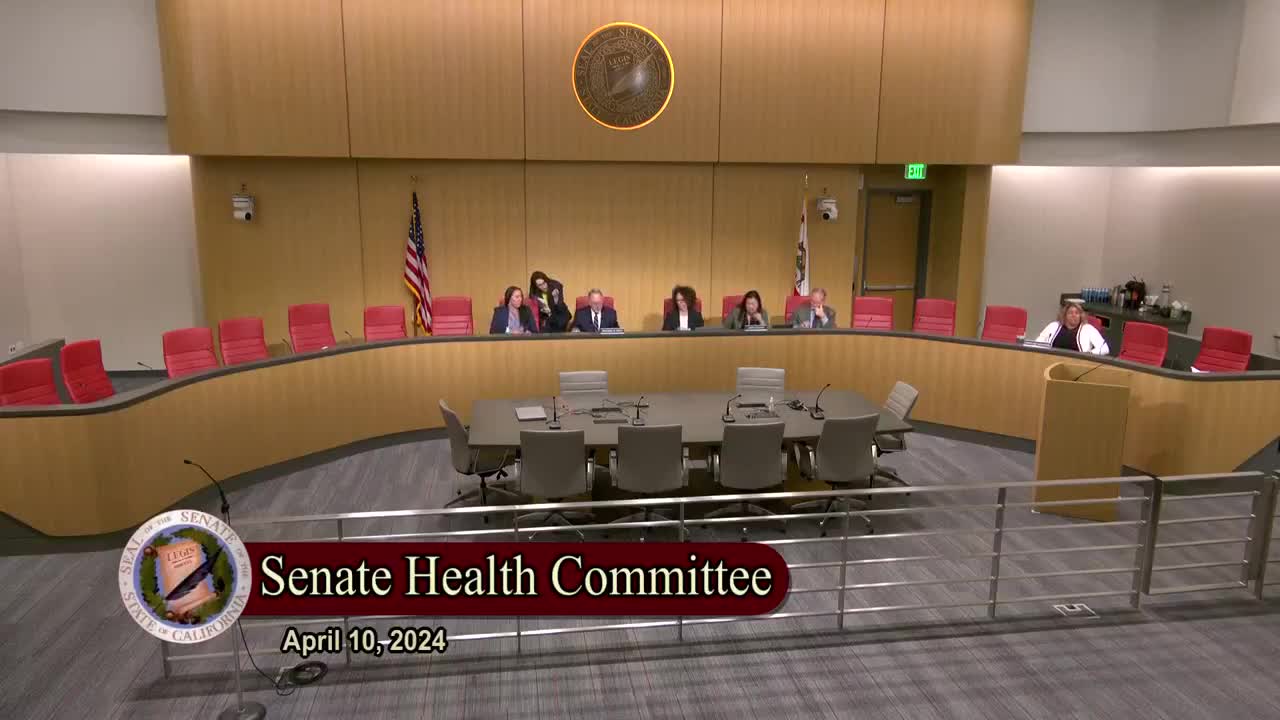
Bill Author

Bill Co-Author(s):