SB 1449: California Private Postsecondary Education Act of 2009: complaint processing contracts.
- Session Year: 2023-2024
- House: Senate
- Latest Version Date: 2024-06-10
Current Status:
Failed
(2024-08-15: August 15 hearing: Held in committee and under submission.)
Introduced
In Committee
First Chamber
In Committee
Second Chamber
Enacted
What does this bill do?
The bill lets law schools that are exempt from the state's private postsecondary law because they are accredited by the American Bar Association or overseen by the Committee of Bar Examiners sign contracts with the Bureau for Private Postsecondary Education so the bureau can review and act on student complaints. It specifies those contracts may remain in effect until no later than December 31, 2029.
The summary is provided by generative AI which can make mistakes. For original language, please view the details in the table below.
The California Private Postsecondary Education Act of 2009 provides, among other things, for student protections and regulatory oversight of private postsecondary institutions in the state. The act is enforced by the Bureau for Private Postsecondary Education within the Department of Consumer Affairs. The act authorizes an independent institution of higher education that is exempt from the act based on accreditation, as specified, to execute a contract with the bureau for the bureau to review and, as appropriate, act on complaints concerning the institution, and requires the executed contract to, among other things, require the institution to cooperate with the bureau to resolve complaints received. The act is repealed on January 1, 2027.
This bill would also authorize a law school that is exempt from the act because it is accredited by the Council of the Section of Legal Education and Admissions to the Bar of the American Bar Association Association, or a law school or law study program that is exempt from the act because it is subject to the approval, regulation, and oversight of the Committee of Bar Examiners Examiners, to execute a contract with the bureau as described above, to be operative until no later than December 31, 2029, if certain requirements are met.
The California Private Postsecondary Education Act of 2009 provides, among other things, for student protections and regulatory oversight of private postsecondary institutions in the state. The act is enforced by the Bureau for Private Postsecondary Education within the Department of Consumer Affairs. The act authorizes an independent institution of higher education that is exempt from the act to execute a contract with the bureau for the bureau to review and, as appropriate, act on complaints concerning the institution, and requires the executed contract to, among other things, require the institution to cooperate with the bureau to resolve complaints received. The act is repealed on January 1, 2027.
This bill would also authorize an independent law school that (1) is incorporated in the state as a nonprofit corporation, (2) qualifies for tax-exempt status under federal law, and (3) is accredited by the American Bar Association, as specified, a law school that is accredited by the Council of the Section of Legal Education and Admissions to the Bar of the American Bar Association or a law school or law study program that is subject to the approval, regulation, and oversight of the Committee of Bar Examiners to execute a contract with the bureau as described above. above, if certain requirements are met.
The California Private Postsecondary Education Act of 2009 provides, among other things, for student protections and regulatory oversight of private postsecondary institutions in the state. The act is enforced by the Bureau for Private Postsecondary Education within the Department of Consumer Affairs. The act authorizes an independent institution of higher education that is exempt from the act to execute a contract with the bureau for the bureau to review and, as appropriate, act on complaints concerning the institution, and requires the executed contract to, among other things, require the institution to cooperate with the bureau to resolve complaints received. The act is repealed on January 1, 2027.
This bill would instead require the executed contract to, among other things, require the institution to cooperate with the bureau to resolve any and all complaints received. also authorize an independent law school that (1) is incorporated in the state as a nonprofit corporation, (2) qualifies for tax-exempt status under federal law, and (3) is accredited by the American Bar Association, as specified, to execute a contract with the bureau as described above.
The California Private Postsecondary Education Act of 2009 provides, among other things, for student protections and regulatory oversight of private postsecondary institutions in the state. The act is enforced by the Bureau for Private Postsecondary Education within the Department of Consumer Affairs. The act authorizes an independent institution of higher education that is exempt from the act to execute a contract with the bureau for the bureau to review and, as appropriate, act on complaints concerning the institution, and requires the executed contract to, among other things, require the institution to cooperate with the bureau to resolve complaints received. The act is repealed on January 1, 2027.
This bill would instead require the executed contract to, among other things, require the institution to cooperate with the bureau to resolve any and all complaints received.
Except as provided in Sections 94874.2, 94874.7, and 94927.5, the following are exempt from this chapter:
(a)An institution that offers solely avocational or recreational educational programs.
(b)(1)An institution only offering educational programs to members of a bona fide trade, business, professional, or fraternal organization that is separate and distinct from the institution and that sponsors the educational programs. An institution that sponsors an educational program directly or through an affiliated division or corporate entity of the institution and that requires student membership for purposes of those educational programs does not qualify under this exemption.
(2)(A)Except as provided in subparagraph (B), a bona fide organization, association, or council that offers preapprenticeship training programs, on behalf of one or more Division of Apprenticeship Standards-approved labor-management apprenticeship programs that satisfies one of the following conditions:
(i)It is not on the Eligible Training Provider List established and maintained by the California Workforce Development Board but has met the requirements for placement on the list.
(ii)It is on the Eligible Training Provider List established and maintained by the California Workforce Development Board and meets the requirements for continued listing.
(B)If an organization, association, or council has been removed from the Eligible Training Provider List established and maintained by the California Workforce Development Board for failure to meet performance standards, it is not exempt until it meets all applicable performance standards.
(c)A postsecondary educational institution established, operated, and governed by the federal government or by this state or its political subdivisions.
(d)An institution offering either of the following:
(1)Test preparation for examinations required for admission to a postsecondary educational institution.
(2)Continuing education or license examination preparation, if the institution or the program is approved, certified, or sponsored by any of the following:
(A)A government agency, other than the bureau, that licenses persons in a particular profession, occupation, trade, or career field.
(B)A state-recognized professional licensing body, such as the State Bar of California, that licenses persons in a particular profession, occupation, trade, or career field.
(C)A bona fide trade, business, or professional organization.
(e)(1)An institution owned, controlled, and operated and maintained by a religious organization lawfully operating as a nonprofit religious corporation pursuant to Part 4 (commencing with Section 9110) of Division 2 of Title 1 of the Corporations Code, that meets all of the following requirements:
(A)The instruction is limited to the principles of that religious organization, or to courses offered pursuant to Section 2789 of the Business and Professions Code.
(B)The diploma or degree is limited to evidence of completion of that education.
(2)An institution operating under this subdivision shall offer degrees and diplomas only in the beliefs and practices of the church, religious denomination, or religious organization.
(3)An institution operating under this subdivision shall not award degrees in any area of physical science.
(4)Any degree or diploma granted under this subdivision shall contain on its face, in the written description of the title of the degree being conferred, a reference to the theological or religious aspect of the degrees subject area.
(5)A degree awarded under this subdivision shall reflect the nature of the degree title, such as associate of religious studies, bachelor of religious studies, master of divinity, or doctor of divinity.
(f)An institution that does not award degrees and that solely provides educational programs for total charges of two thousand five hundred dollars ($2,500) or less when no part of the total charges is paid from state or federal student financial aid programs. The bureau may adjust this cost threshold based upon the California Consumer Price Index and post notification of the adjusted cost threshold on its internet website as the bureau determines, through the promulgation of regulations, that the adjustment is consistent with the intent of this chapter.
(g)(1)A law school that is accredited by the Council of the Section of Legal Education and Admissions to the Bar of the American Bar Association or a law school or law study program that is subject to the approval, regulation, and oversight of the Committee of Bar Examiners, pursuant to Sections 6046.7 and 6060.7 of the Business and Professions Code.
(2)A law school that meets the requirements to be exempt from this chapter pursuant to this subdivision that executed a contract with the bureau pursuant to Section 94874.9 between 2018 and 2023 may execute a contract with the bureau pursuant to Section 94874.9. 94874.9 that is operative until no later than December 31, 2029.
(h)A nonprofit public benefit corporation that satisfies all of the following criteria:
(1)Is qualified under Section 501(c)(3) of the United States Internal Revenue Code.
(2)Is organized specifically to provide workforce development or rehabilitation services.
(3)Is accredited by an accrediting organization for workforce development or rehabilitation services recognized by the Department of Rehabilitation.
(i)An institution that is accredited by the Accrediting Commission for Senior Colleges and Universities, Western Association of Schools and Colleges, or the Accrediting Commission for Community and Junior Colleges, Western Association of Schools and Colleges.
(j)Flight instruction providers or programs that provide flight instruction pursuant to Federal Aviation Administration regulations and meet both of the following criteria:
(1)The flight instruction provider or program does not require students to enter into written or oral contracts of indebtedness.
(2)The flight instruction provider or program does not require or accept prepayment of instruction-related costs in excess of two thousand five hundred dollars ($2,500).
(k)(1)An institution owned, controlled, operated, and maintained by a community-based organization, as defined in Section 7801 of Title 20 of the United States Code, as that section exists on March 1, 2017, that satisfies all of the following criteria:
(A)The institution has programs on or is applying for some or all of their programs to be on the Eligible Training Provider List established and maintained by the California Workforce Development Board.
(B)The institution is registered as a nonprofit entity qualified under Section 501(c)(3) of the federal Internal Revenue Code.
(C)The institution does not offer degrees, as defined in Section 94830.
(D)The institution does not offer educational programs designed to lead directly or specifically to positions in a profession, occupation, trade, or career field requiring licensure, if bureau approval is required for the student to be eligible to sit for licensure.
(E)The institution would not otherwise be subject to oversight of the bureau under this chapter if it did not receive funding under the federal Workforce Innovation and Opportunity Act (29 U.S.C. Sec. 3101 et seq.). For purposes of this requirement, funds received through the federal Workforce Innovation and Opportunity Act (29 U.S.C. Sec. 3101 et seq.) do not count towards the total referenced in subdivision (f) or any other fee charge limitation condition for an exemption from this chapter.
(F)The institution can provide a letter from the local workforce development board that demonstrates the institution has met the initial criteria of that board.
(2)An institution granted an exemption pursuant to paragraph (1) shall comply with all of the following requirements:
(A)The institution shall provide to the Employment Development Department all required tracking information and data necessary to comply with performance reporting requirements under the federal Workforce Innovation and Opportunity Act, codified in Chapter 32 (commencing with Section 3101) of Title 29 of the United States Code, for programs on the Eligible Training Provider List.
(B)The institution shall comply with the Eligible Training Provider List policy developed by the California Workforce Development Board.
(C)The institution shall not charge a student who is a recipient of funding under the federal Workforce Innovation and Opportunity Act (29 U.S.C. Sec. 3101 et seq.) any institutional charges, as defined in Section 94844, for attending and participating in the program.
Except as provided in Sections 94874.2, 94874.7, and 94927.5, the following are exempt from this chapter:
(a)An institution that offers solely avocational or recreational educational programs.
(b)(1)An institution only offering educational programs to members of a bona fide trade, business, professional, or fraternal organization that is separate and distinct from the institution and that sponsors the educational programs. An institution that sponsors an educational program directly or through an affiliated division or corporate entity of the institution and that requires student membership for purposes of those educational programs does not qualify under this exemption.
(2)(A)Except as provided in subparagraph (B), a bona fide organization, association, or council that offers preapprenticeship training programs, on behalf of one or more Division of Apprenticeship Standards-approved labor-management apprenticeship programs that satisfies one of the following conditions:
(i)It is not on the Eligible Training Provider List established and maintained by the California Workforce Development Board but has met the requirements for placement on the list.
(ii)It is on the Eligible Training Provider List established and maintained by the California Workforce Development Board and meets the requirements for continued listing.
(B)If an organization, association, or council has been removed from the Eligible Training Provider List established and maintained by the California Workforce Development Board for failure to meet performance standards, it is not exempt until it meets all applicable performance standards.
(c)A postsecondary educational institution established, operated, and governed by the federal government or by this state or its political subdivisions.
(d)An institution offering either of the following:
(1)Test preparation for examinations required for admission to a postsecondary educational institution.
(2)Continuing education or license examination preparation, if the institution or the program is approved, certified, or sponsored by any of the following:
(A)A government agency, other than the bureau, that licenses persons in a particular profession, occupation, trade, or career field.
(B)A state-recognized professional licensing body, such as the State Bar of California, that licenses persons in a particular profession, occupation, trade, or career field.
(C)A bona fide trade, business, or professional organization.
(e)(1)An institution owned, controlled, and operated and maintained by a religious organization lawfully operating as a nonprofit religious corporation pursuant to Part 4 (commencing with Section 9110) of Division 2 of Title 1 of the Corporations Code, that meets all of the following requirements:
(A)The instruction is limited to the principles of that religious organization, or to courses offered pursuant to Section 2789 of the Business and Professions Code.
(B)The diploma or degree is limited to evidence of completion of that education.
(2)An institution operating under this subdivision shall offer degrees and diplomas only in the beliefs and practices of the church, religious denomination, or religious organization.
(3)An institution operating under this subdivision shall not award degrees in any area of physical science.
(4)Any degree or diploma granted under this subdivision shall contain on its face, in the written description of the title of the degree being conferred, a reference to the theological or religious aspect of the degrees subject area.
(5)A degree awarded under this subdivision shall reflect the nature of the degree title, such as associate of religious studies, bachelor of religious studies, master of divinity, or doctor of divinity.
(f)An institution that does not award degrees and that solely provides educational programs for total charges of two thousand five hundred dollars ($2,500) or less when no part of the total charges is paid from state or federal student financial aid programs. The bureau may adjust this cost threshold based upon the California Consumer Price Index and post notification of the adjusted cost threshold on its internet website as the bureau determines, through the promulgation of regulations, that the adjustment is consistent with the intent of this chapter.
(g)(1)A law school that is accredited by the Council of the Section of Legal Education and Admissions to the Bar of the American Bar Association or a law school or law study program that is subject to the approval, regulation, and oversight of the Committee of Bar Examiners, pursuant to Sections 6046.7 and 6060.7 of the Business and Professions Code.
(2)A law school that meets the requirements to be exempt from this chapter pursuant to this subdivision that executed a contract with the bureau pursuant to Section 94874.9 between 2018 and 2023 may execute a contract with the bureau pursuant to Section 94874.9.
(h)A nonprofit public benefit corporation that satisfies all of the following criteria:
(1)Is qualified under Section 501(c)(3) of the United States Internal Revenue Code.
(2)Is organized specifically to provide workforce development or rehabilitation services.
(3)Is accredited by an accrediting organization for workforce development or rehabilitation services recognized by the Department of Rehabilitation.
(i)An institution that is accredited by the Accrediting Commission for Senior Colleges and Universities, Western Association of Schools and Colleges, or the Accrediting Commission for Community and Junior Colleges, Western Association of Schools and Colleges.
(j)Flight instruction providers or programs that provide flight instruction pursuant to Federal Aviation Administration regulations and meet both of the following criteria:
(1)The flight instruction provider or program does not require students to enter into written or oral contracts of indebtedness.
(2)The flight instruction provider or program does not require or accept prepayment of instruction-related costs in excess of two thousand five hundred dollars ($2,500).
(k)(1)An institution owned, controlled, operated, and maintained by a community-based organization, as defined in Section 7801 of Title 20 of the United States Code, as that section exists on March 1, 2017, that satisfies all of the following criteria:
(A)The institution has programs on or is applying for some or all of their programs to be on the Eligible Training Provider List established and maintained by the California Workforce Development Board.
(B)The institution is registered as a nonprofit entity qualified under Section 501(c)(3) of the federal Internal Revenue Code.
(C)The institution does not offer degrees, as defined in Section 94830.
(D)The institution does not offer educational programs designed to lead directly or specifically to positions in a profession, occupation, trade, or career field requiring licensure, if bureau approval is required for the student to be eligible to sit for licensure.
(E)The institution would not otherwise be subject to oversight of the bureau under this chapter if it did not receive funding under the federal Workforce Innovation and Opportunity Act (29 U.S.C. Sec. 3101 et seq.). For purposes of this requirement, funds received through the federal Workforce Innovation and Opportunity Act (29 U.S.C. Sec. 3101 et seq.) do not count towards the total referenced in subdivision (f) or any other fee charge limitation condition for an exemption from this chapter.
(F)The institution can provide a letter from the local workforce development board that demonstrates the institution has met the initial criteria of that board.
(2)An institution granted an exemption pursuant to paragraph (1) shall comply with all of the following requirements:
(A)The institution shall provide to the Employment Development Department all required tracking information and data necessary to comply with performance reporting requirements under the federal Workforce Innovation and Opportunity Act, codified in Chapter 32 (commencing with Section 3101) of Title 29 of the United States Code, for programs on the Eligible Training Provider List.
(B)The institution shall comply with the Eligible Training Provider List policy developed by the California Workforce Development Board.
(C)The institution shall not charge a student who is a recipient of funding under the federal Workforce Innovation and Opportunity Act (29 U.S.C. Sec. 3101 et seq.) any institutional charges, as defined in Section 94844, for attending and participating in the program.
SECTION 1.Section 94874.9 of the Education Code is amended to read:94874.9.(a)An independent institution of higher education, as defined in Section 66010, that is exempt from this chapter pursuant to subdivision (i) of Section 94874, or an independent law school that is incorporated in the state pursuant to the Nonprofit Corporation Law (Division 2 (commencing with Section 5000) of Title 1 of the Corporations Code), qualifies for tax-exempt status under the Internal Revenue Code of 1986 (Title 26 of the United States Code), and is accredited by the Council of the Section of Legal Education and Admissions to the Bar of the American Bar Association, shall comply with all applicable state and federal laws, including laws relating to fraud, abuse, and false advertising.(b)An institution described in subdivision (a) may execute a contract with the bureau for the bureau to review and, as appropriate, act on complaints concerning the institution, in accordance with Section 600.9 of Title 34 of the Code of Federal Regulations.(c)The execution of a contract by the bureau with an institution pursuant to subdivision (b) shall constitute establishment by the state of that institution to offer programs beyond secondary education, including programs leading to a degree or certificate, in accordance with Section 600.9 of Title 34 of the Code of Federal Regulations.(d)The bureau shall use a standard form contract for purposes of this section.(e)A contract executed pursuant to this section shall, at a minimum, do all of the following:(1)Require an institution to do all of the following:(A)Cooperate with the bureau to resolve complaints received pursuant to this section.(B)Provide the following disclosure notice in all written and internet-based documentation in which the institutions complaint process is described, including the student catalog, student handbook, and the institutions internet website:An individual may contact the Bureau for Private Postsecondary Education for review of a complaint. The bureau may be contacted at (address), Sacramento, CA (ZIP Code), (internet website address), (telephone and fax numbers).(C)Designate a person at the institution to act as a liaison to the bureau.(D)Pay one thousand seventy-six dollars ($1,076) each year for costs incurred by the bureau to perform activities pursuant to the contract, unless another amount is determined by the bureau.(2)(A)Authorize the bureau, for any complaint it receives, including any complaints related to the institutions policies or procedures, or both, as determined by the bureau, to refer the complaint to the institution, an accrediting agency, or another appropriate entity for resolution.(B)The bureau shall notify the complainant and the institution of a referral.(C)This paragraph does not relieve the bureau of its responsibility to ensure that a complaint it has referred for purposes of resolution is resolved by the receiving entity.(f)The bureau may terminate a contract executed pursuant to this section if an institution is no longer an independent institution of higher education, as defined in Section 66010, or fails to comply with the provisions of the contract.(g)All moneys collected by the bureau that relate to a contract executed pursuant to this section, including payments collected in accordance with subparagraph (D) of paragraph (1) of subdivision (e), shall be deposited in the Private Postsecondary Education Administration Fund.(h)The bureau shall maintain, on its internet website, both of the following:(1)The provisions of the standard form contract used for purposes of this section.(2)A list of institutions with which the bureau has executed a contract pursuant to this section.(i)On or before February 1, 2017, and each year thereafter, the bureau shall report to the Director of Finance and, in conformity with Section 9795 of the Government Code, to the Legislature regarding implementation of this section. The report shall include all of the following information:(1)A list of institutions with which the bureau has executed a contract pursuant to this section.(2)The total number of complaints received by the bureau relating to institutions listed in paragraph (1).(3)The general nature of those complaints.(4)The total number of those complaints referred to another entity, disaggregated by the entity to which each complaint was referred.(5)The total number of complaints resolved, disaggregated by the entity that resolved each complaint.(6)The total number of complaints pending, disaggregated by the entity to which each complaint was referred.(j)Notwithstanding any other law, the Department of General Services, at the request of the bureau, may exempt contracts executed pursuant to this section from any laws, rules, resolutions, or procedures that are otherwise applicable to public contracts that the Department of General Services administers.(a)An independent institution of higher education, as defined in Section 66010, that is exempt from this chapter pursuant to subdivision (i) of Section 94874 94874, or an independent law school that is incorporated in the state pursuant to the Nonprofit Corporation Law (Division 2 (commencing with Section 5000) of Title 1 of the Corporations Code), qualifies for tax-exempt status under the Internal Revenue Code of 1986 (Title 26 of the United States Code), and is accredited by the Council of the Section of Legal Education and Admissions to the Bar of the American Bar Association, shall comply with all applicable state and federal laws, including laws relating to fraud, abuse, and false advertising.
(b)An institution described in subdivision (a) may execute a contract with the bureau for the bureau to review and, as appropriate, act on complaints concerning the institution, in accordance with Section 600.9 of Title 34 of the Code of Federal Regulations.
(c)The execution of a contract by the bureau with an institution pursuant to subdivision (b) shall constitute establishment by the state of that institution to offer programs beyond secondary education, including programs leading to a degree or certificate, in accordance with Section 600.9 of Title 34 of the Code of Federal Regulations.
(d)The bureau shall use a standard form contract for purposes of this section.
(e)A contract executed pursuant to this section shall, at a minimum, do all of the following:
(1)Require an institution to do all of the following:
(A)Cooperate with the bureau to resolve any and all complaints received pursuant to this section.
(B)Provide the following disclosure notice in all written and internet-based documentation in which the institutions complaint process is described, including the student catalog, student handbook, and the institutions internet website:
An individual may contact the Bureau for Private Postsecondary Education for review of a complaint. The bureau may be contacted at (address), Sacramento, CA (ZIP Code), (internet website address), (telephone and fax numbers).
(C)Designate a person at the institution to act as a liaison to the bureau.
(D)Pay one thousand seventy-six dollars ($1,076) each year for costs incurred by the bureau to perform activities pursuant to the contract, unless another amount is determined by the bureau.
(2)(A)Authorize the bureau, for any complaint it receives, including any complaints related to the institutions policies or procedures, or both, as determined by the bureau, to refer the complaint to the institution, an accrediting agency, or another appropriate entity for resolution.
(B)The bureau shall notify the complainant and the institution of a referral.
(C)This paragraph does not relieve the bureau of its responsibility to ensure that a complaint it has referred for purposes of resolution is resolved by the receiving entity.
(f)The bureau may terminate a contract executed pursuant to this section if an institution is no longer an independent institution of higher education, as defined in Section 66010, or fails to comply with the provisions of the contract.
(g)All moneys collected by the bureau that relate to a contract executed pursuant to this section, including payments collected in accordance with subparagraph (D) of paragraph (1) of subdivision (e), shall be deposited in the Private Postsecondary Education Administration Fund.
(h)The bureau shall maintain, on its internet website, both of the following:
(1)The provisions of the standard form contract used for purposes of this section.
(2)A list of institutions with which the bureau has executed a contract pursuant to this section.
(i)On or before February 1, 2017, and each year thereafter, the bureau shall report to the Director of Finance and, in conformity with Section 9795 of the Government Code, to the Legislature regarding implementation of this section. The report shall include all of the following information:
(1)A list of institutions with which the bureau has executed a contract pursuant to this section.
(2)The total number of complaints received by the bureau relating to institutions listed in paragraph (1).
(3)The general nature of those complaints.
(4)The total number of those complaints referred to another entity, disaggregated by the entity to which each complaint was referred.
(5)The total number of complaints resolved, disaggregated by the entity that resolved each complaint.
(6)The total number of complaints pending, disaggregated by the entity to which each complaint was referred.
(j)Notwithstanding any other law, the Department of General Services, at the request of the bureau, may exempt contracts executed pursuant to this section from any laws, rules, resolutions, or procedures that are otherwise applicable to public contracts that the Department of General Services administers.
(a)An independent institution of higher education, as defined in Section 66010, that is exempt from this chapter pursuant to subdivision (i) of Section 94874 shall comply with all applicable state and federal laws, including laws relating to fraud, abuse, and false advertising.
(b)An institution described in subdivision (a) may execute a contract with the bureau for the bureau to review and, as appropriate, act on complaints concerning the institution, in accordance with Section 600.9 of Title 34 of the Code of Federal Regulations.
(c)The execution of a contract by the bureau with an institution pursuant to subdivision (b) shall constitute establishment by the state of that institution to offer programs beyond secondary education, including programs leading to a degree or certificate, in accordance with Section 600.9 of Title 34 of the Code of Federal Regulations.
(d)The bureau shall use a standard form contract for purposes of this section.
(e)A contract executed pursuant to this section shall, at a minimum, do all of the following:
(1)Require an institution to do all of the following:
(A)Cooperate with the bureau to resolve any and all complaints received pursuant to this section.
(B)Provide the following disclosure notice in all written and internet-based documentation in which the institutions complaint process is described, including the student catalog, student handbook, and the institutions internet website:
An individual may contact the Bureau for Private Postsecondary Education for review of a complaint. The bureau may be contacted at (address), Sacramento, CA (ZIP Code), (internet website address), (telephone and fax numbers).
(C)Designate a person at the institution to act as a liaison to the bureau.
(D)Pay one thousand seventy-six dollars ($1,076) each year for costs incurred by the bureau to perform activities pursuant to the contract, unless another amount is determined by the bureau.
(2)(A)Authorize the bureau, for any complaint it receives, including any complaints related to the institutions policies or procedures, or both, as determined by the bureau, to refer the complaint to the institution, an accrediting agency, or another appropriate entity for resolution.
(B)The bureau shall notify the complainant and the institution of a referral.
(C)This paragraph shall not be construed to does not relieve the bureau of its responsibility to ensure that a complaint it has referred for purposes of resolution is resolved by the receiving entity.
(f)The bureau may terminate a contract executed pursuant to this section if an institution is no longer an independent institution of higher education education, as defined in Section 66010 66010, or fails to comply with the provisions of the contract.
(g)All moneys collected by the bureau that relate to a contract executed pursuant to this section, including payments collected in accordance with subparagraph (D) of paragraph (1) of subdivision (e), shall be deposited in the Private Postsecondary Education Administration Fund.
(h)The bureau shall maintain, on its internet website, both of the following:
(1)The provisions of the standard form contract used for purposes of this section.
(2)A list of institutions with which the bureau has executed a contract pursuant to this section.
(i)On or before February 1, 2017, and each year thereafter, the bureau shall report to the Director of Finance and, in conformity with Section 9795 of the Government Code, to the Legislature regarding implementation of this section. The report shall include all of the following information:
(1)A list of institutions with which the bureau has executed a contract pursuant to this section.
(2)The total number of complaints received by the bureau relating to institutions listed in paragraph (1).
(3)The general nature of those complaints.
(4)The total number of those complaints referred to another entity, disaggregated by the entity to which each complaint was referred.
(5)The total number of complaints resolved, disaggregated by the entity that resolved each complaint.
(6)The total number of complaints pending, disaggregated by the entity to which each complaint was referred.
(j)Notwithstanding any other law, the Department of General Services, at the request of the bureau, may exempt contracts executed pursuant to this section from any laws, rules, resolutions, or procedures that are otherwise applicable to public contracts that the Department of General Services administers.
|
Date
|
Status
|
|---|---|
| Aug 15, 2024 | August 15 hearing: Held in committee and under submission. |
| Aug 7, 2024 | August 7 set for first hearing. Placed on suspense file. |
| Jun 25, 2024 | From committee: Do pass and re-refer to Com. on APPR. (Ayes 18. Noes 0.) (June 25). Re-referred to Com. on APPR. |
| Jun 19, 2024 | From committee: Do pass and re-refer to Com. on B. & P. (Ayes 9. Noes 0.) (June 18). Re-referred to Com. on B. & P. |
| Jun 10, 2024 | From committee with author's amendments. Read second time and amended. Re-referred to Com. on HIGHER ED. |
| Jun 3, 2024 | Referred to Coms. on HIGHER ED. and B. & P. |
| May 16, 2024 | In Assembly. Read first time. Held at Desk. |
| May 16, 2024 | Read third time. Passed. (Ayes 38. Noes 0. Page 3919.) Ordered to the Assembly. |
| May 7, 2024 | Read second time. Ordered to third reading. |
| May 6, 2024 | From committee: Do pass. (Ayes 6. Noes 0. Page 3849.) (May 6). |
| Apr 26, 2024 | Set for hearing May 6. |
| Apr 24, 2024 | From committee: Do pass and re-refer to Com. on APPR with recommendation: To consent calendar. (Ayes 7. Noes 0. Page 3752.) (April 24). Re-referred to Com. on APPR. |
| Apr 17, 2024 | From committee with author's amendments. Read second time and amended. Re-referred to Com. on ED. |
| Apr 17, 2024 | Set for hearing April 24. |
| Apr 16, 2024 | From committee: Do pass and re-refer to Com. on ED. (Ayes 12. Noes 0. Page 3606.) (April 15). Re-referred to Com. on ED. |
| Apr 5, 2024 | Set for hearing April 15. |
| Mar 20, 2024 | From committee with author's amendments. Read second time and amended. Re-referred to Com. on B., P. & E. D. |
| Feb 29, 2024 | Referred to Coms. on B., P. & E. D. and ED. |
| Feb 20, 2024 | From printer. May be acted upon on or after March 18. |
| Feb 16, 2024 | Introduced. Read first time. To Com. on RLS. for assignment. To print. |
|
Date
|
Description
|
Location
|
Votes
|
|
|---|---|---|---|---|
| Jun 25, 2024 | Do pass and be re-referred to the Committee on [Appropriations] | Assembly Standing Committee on Business and Professions |
Passed |
|
| Jun 18, 2024 | Do pass and be re-referred to the Committee on [Business and Professions] | Assembly Standing Committee on Higher Education |
Passed |
|
| May 16, 2024 | Senate 3rd Reading SB1449 Newman et al. | Senate Floor |
Passed |
|
| May 6, 2024 | Do pass | Senate Standing Committee on Appropriations |
Passed |
|
| Apr 24, 2024 | Do pass, but first be re-referred to the Committee on [Appropriations] with the recommendation: To Consent Calendar | Senate Standing Committee on Education |
Passed |
|
| Apr 15, 2024 | Do pass, but first be re-referred to the Committee on [Education] | Senate Standing Committee on Business, Professions and Economic Development |
Passed |
This list shows positions taken on this bill by organizations on the date displayed, which is linked to the original source.
Positions by individuals are not included.
|
Organization
|
Position
|
Date
|
|---|---|---|
| Institute for College Access and Success | * Against | Jun 20, 2024 |
| Southwestern Law School | * Support | Jun 25, 2024 |
Date of Hearing: August 7, 2024
ASSEMBLY COMMITTEE ON APPROPRIATIONS
Buffy Wicks, Chair
SBPCA Bill Id:SB 1449
Author:(Newman) – As Amended Ver:June 10, 2024
Policy Committee: | Higher Education | Vote: | 9 - 0 |
Business and Professions | 18 - 0 | ||
|
|
Urgency: No State Mandated Local Program: No Reimbursable: No
SUMMARY:
This bill provides certain law schools with an exemption from approval by the Bureau for Private Postsecondary Education (BPPE) but allows them to temporarily contract with BPPE for complaint handling services.
Specifically, this bill allows a law school accredited by the Council of the Section of Legal Education and Admissions to the Bar of the American Bar Association or a law school or law study program subject to the approval, regulation, and oversight of the Committee of Bar Examiners to contract with BPPE for complaint services until December 31, 2029.
FISCAL EFFECT:
- Ongoing special fund revenue reductions to BPPE of $60,000 annually per law school exempted from BPPE approval as a result of this bill that would no longer be required to pay annual fees to BPPE. (However, it is unlikely more than one law school would access this exemption, as is described in comment 2, below.)
- Unknown revenue losses to the Student Tuition Recovery Fund (STRF), as a law school exempted from BPPE approval as a result of this bill would no longer be required to collect an annual assessment from students to contribute to STRF.
COMMENTS:
- Purpose. According to the author:
For more than 110 years, Southwestern Law School has provided Californians with affordable and high-quality legal instruction…SB 1449 will provide Southwestern Law School with temporary regulatory relief as it continues to work through the process of WASC accreditation, thereby providing the same exemption from BPPE regulations that many other California law schools of the same caliber currently enjoy.
This bill is sponsored by Southwestern Law School, located in Los Angeles.
- Background.
BPPE. BPPE is responsible for overseeing any private postsecondary educational institution that has a physical presence in California and for enforcing the California Private Postsecondary Education Act. Among other requirements, the California Private Postsecondary Education Act directs BPPE to review and approve private postsecondary educational institutions, establish minimum operating standards for institutions to ensure educational quality, provide an opportunity for student complaints to be resolved, and ensure private postsecondary educational institutions offer accurate information to prospective students about school and student performance. BPPE also investigates and addresses unlicensed activity, conducts research and outreach to students and postsecondary educational institutions, and administers the STRF.
The STRF. The STRF provides financial assistance to a student who enrolled at BPPE-overseen private postsecondary educational institutions that closes, fails to pay refunds or reimburse loan proceeds, or fails to pay restitution awards to students for a violation of the California Private Postsecondary Education Act. The STRF is funded by assessments paid by students, collected by institutions, and then remitted to the BPPE. When the STRF balance exceeds $25 million, BPPE must temporarily reduce the assessment rate to $0, effectively stopping collection for STRF. The STRF is currently above its cap and BPPE is not collecting the assessment. Prior to suspending the collection, the assessment rate on a student was $2.50 per $1,000 of institutional charges.
BPPE Approval Exemptions. As a condition of a higher education institution’s students receiving federal student aid, federal regulations require that the higher education institution be legally authorized by a state to provide postsecondary education and that the state have a process to review and act upon student complaints at that institution. In California, to comply with these federal requirements, BPPE approves programs. The approval process requires institutions to meet minimum operating standards and numerous other requirements, such as annual reports to BPPE with student outcome information. In addition, every such school is assessed an annual fee of $60,000 and the school’s students are assessed a fee, which contributes to STRF. However, state law allows certain institutions the ability to enter into complaint-processing contracts with BPPE without having to obtain BPPE approval. This exemption allows these institutions’ students to access federal financial aid. This benefit is limited to nonprofit institutions that have Western Association of Schools and Colleges (WASC) accreditation.
According to the author, for almost eight years, BPPE has authorized Southwestern Law School under the WASC accreditation exemption in order to maintain eligibility for federal student aid programs, despite the law school not having WASC accreditation. In March 2023, BPPE and Southwestern Law School realized they had incorrectly interpreted the statute to provide the exemption to Southwestern Law School. Southwestern Law School is in the process of becoming WASC accredited.
This bill would provide an exemption to a school accredited by the Council of the Section of Legal Education and Admissions to the Bar of the American Bar Association or a law school or law study program subject to the approval, regulation, and oversight of the Committee of Bar Examiners to access the exemption. The exemption would expire December 31, 2029. Southwestern Law School is accredited by the American Bar Association and is currently pursuing WASC accreditation.
BPPE’s Structural Deficit. For years, BPPE’s operating fund has faced a substantial structural deficit. To stabilize BPPE, the Budget Act of 2022 provided $24 million General Fund over three years and required BPPE to develop a proposal for a new fee structure to support its operations on an ongoing basis. In early 2024, BPPE submitted a proposal that provides several recommendations to generate sufficient revenue to cover BPPE expenditures. The proposal provided options to stabilize BPPE beyond increasing fees to schools and students, but noted fee increases are likely still necessary. The proposal also provided an update on BPPE’s deficit: BPPE is expected to generate a total of $15.3 million in revenue with total authorized expenditures of $22.7 million in the current fiscal year, amounting to a structural deficit of $7.4 million. This deficit will be partially offset with $6 million from the General Fund. By fiscal year 2028-29, at current revenue levels and with projected routine growth in expenditures, the projected size of the structural deficit may be up to $11 million.
Revenue losses resulting from this bill would further increase the BPPE’s structural deficit.
- Opposition. The Institute for College Access & Success writes in opposition to this bill:
While we acknowledge the bill’s intent to provide regulatory relief to Southwestern Law School and similar independent, non-profit law schools accredited by the American Bar Association (ABA) as they undergo accreditation by the Western Association of Schools and Colleges (WASC), we have significant concerns regarding its policy and fiscal implications. Federal rules are currently being developed that conduct a comprehensive regulatory review of accreditation and [this bill] would precede these federal rules. Introducing state legislation before forthcoming federal rules are established puts California at risk of being out of alignment with future federal regulations.
- Related Legislation. AB 3167 (Chen) would authorize, beginning July 1, 2025, a "highly qualified nonprofit institution" to register with the BPPE in lieu of seeking an approval to operate. The bill is pending in the Senate Appropriations Committee.
Analysis Prepared by: Natasha Collins / APPR. / (916) 319-2081
Date of Hearing:
ASSEMBLY COMMITTEE ON BUSINESS AND PROFESSIONS
Marc Berman, Chair
SBPCA Bill Id:SB 1449
Author:(Newman) – As Amended Ver:June 10, 2024
NOTE: This bill is double referred to the Assembly Higher Education Committee, where it passed, 9-0.
SENATE VOTE: 38-0
SUBJECT: California Private Postsecondary Education Act of 2009: complaint processing contracts
SUMMARY: Authorizes law schools that are exempt from oversight by the Bureau for Private Postsecondary Education (BPPE or Bureau) to contract with the Bureau for complaint handling services until December 31, 2029.
EXISTING LAW:
Federal Law
- Specifies that an institution, as described, is legally authorized by a State if the State has a process to review and appropriately act on complaints concerning the institution including enforcing applicable State laws, and the institution meets specified provisions. (Code of Federal Regulations, Title 34, § 600.9)
State Law
- Enacts the California Private Postsecondary Education Act (Act) to provide for the regulation and oversight of private postsecondary schools, subject to repeal on January 1, 2027. (Education Code (EDC) §§ 94800 et seq.)
- Establishes the BPPE within the Department of Consumer Affairs to regulate private postsecondary educational institutions under the Act. (EDC § 94820)
- Exempts from the Act a law school that is accredited by the Council of the Section of Legal Education and Admissions to the Bar of the American Bar Association or a law school or law study program that is subject to the approval, regulation, and oversight of the California State Bar’s Committee of Bar Examiners, as specified. (EDC § 94874(g)
- Authorizes an independent institution, as defined, to execute a contract with the BPPE for the Bureau to review, and, as appropriate, act on complaints concerning the institution, in accordance with federal regulations. (EDC § 94874.9(b))
- Provides that the execution of a contract by the BPPE with an institution shall constitute establishment by the state of that institution to offer programs beyond secondary education, including programs leading to a degree or certificate, in accordance with federal regulations. (EDC § 94874.9(c))
- Provides that the BPPE shall use a standard form contract. (EDC § 94874.9(d))
- Specifies that a contract meet minimum requirements, as specified. (EDC § 94874.9(e)(1)(A)-(D))
- Provides that the Bureau may terminate a contract if an institution is no longer an independent institution of higher education, as defined, or fails to comply with the provisions of the contract. (EDC § 94874.9(f))
- Requires all moneys collected by the BPPE that relate to a contract to be deposited in the Private Postsecondary Education Administration Fund. (EDC § 94874.9(g))
- Requires the Bureau to maintain on its website both of the following:
- The provisions of the standard form contract.
- A list of institutions with which BPPE has executed a contract.
(EDC § 94874.9(h))
THIS BILL:
- Authorizes a law school that meets the requirements to be exempt from BPPE oversight that executed a contract with the Bureau between 2018 and 2023 for complaint processing to execute a contract for the same purpose until December 31, 2029.
FISCAL EFFECT: According to the Senate Appropriations Committee, the BPPE estimates the following:
- Annual revenue reduction of $60,000, as the impacted law school would no longer have to pay fees to the Bureau (Private Postsecondary Education Administration Fund).
- Minimal decrease in administrative workload, as the impacted law school would still contract with the Bureau for its complaint servicing in order to maintain federal financial aid eligibility.
- Unknown fiscal impact to the Student Tuition Recovery Fund (STRF), as the impacted law school would no longer be required to participate in the program and collect an assessment from students to contribute to STRF.
COMMENTS:
Purpose. This bill is sponsored by Southwestern Law School. According to the author:
For more than 110 years, Southwestern Law School has provided Californians with affordable and high-quality legal instruction. Its roster of distinguished alumni includes numerous members of the Legislature, statewide constitutional officers, justices of the California Supreme Court, members of Congress, and even California’s first African American and Latina judges. [This bill] will provide Southwestern Law School with temporary regulatory relief as it continues to work through the process of [Western Association of Schools and Colleges] accreditation, thereby providing the same exemption from Bureau (Bureau) regulations that many other California law schools of the same caliber currently enjoy.
Background.
Bureau for Private Postsecondary Education. Since January 1, 2010, the Act, implemented and enforced by the Bureau, has governed postsecondary educational institutions operating in California. Private postsecondary educational institutions with a physical presence in California are subject to the Act, except for those specifically exempted. The Bureau also registers specified out-of-state institutions serving California students via distance learning. According to its mission statement, “the Bureau protects students and consumers in California and beyond, through the oversight of California's private postsecondary educational institutions, by conducting qualitative reviews of educational programs and operating standards, proactively combating unlicensed activity, impartially resolving student and consumer complaints, and providing support and financial relief to harmed students.”[1]
Federal State Authorization Regulations. On July 1, 2011, federal regulations began requiring, as a condition of Title IV Federal Student Aid program eligibility, that higher education institutions be legally authorized by a state to provide postsecondary education programs and that the state have a process in place to review and act upon student complaints about that institution.[2] Enforcement of the regulations were stayed until July 1, 2015 to allow states and institutions to prepare. In anticipation of the regulations taking full effect in 2015, the Legislature passed SB 81 (Committee on Budget and Fiscal Review), Chapter 22, Statutes of 2015, which authorized private, nonprofit colleges and universities to contract with the BPPE for the Bureau to review and act on complaints concerning the institution.[3] In 2023, SB 142 (Senate Committee on Budget and Fiscal Review), Chapter 195, Statutes of 2023, subsequently required qualifying institutions approved by the Commission on Teaching Credentialing for the Golden State Teacher Grant Program that do not have a physical presence in California to comply with applicable provisions of the Act and contract with the Bureau to respond to complaints from California resident students. As of June 18, 2024, the Bureau contracts with 106 schools for complaint processing.
Need for the bill. The Act specifically exempts from BPPE oversight law schools that are accredited by the American Bar Association (ABA) or that are subject to the approval, regulation, and oversight by the California State Bar’s Committee of Bar Examiners (CBE). The Act also exempts higher education institutions that are accredited by the Western Association of Schools and Colleges (WASC). However, while existing law allows WASC-accredited institutions to contract with the Bureau for complaint processing, law schools that are ABA-accredited or subject to CBE approval, regulation, and oversight, but are not additionally WASC-accredited, must apply for approval to operate from the Bureau in order for the bureau to review and act on complaints concerning the institution. However, from 2015 to 2023, Southwestern Law School, which is ABA-accredited but not WASC-accredited, was erroneously permitted to contract with the Bureau for complaint handling. Since 2023, Southwestern Law School has been required to get an approval to operate from the Bureau, which requires compliance with minimum operating standards, numerous reporting requirements, and payment of an annual fee of $60,000.
This bill would allow a law school that is exempt from the Act due to its ABA accreditation and that contracted with the Bureau for complaint handling between 2018 and 2023 to continue to do so until December 31, 2029. This committee is only aware of one law school that would benefit from this allowance—the bill’s sponsor, Southwestern Law School. Representatives for Southwestern Law School say the school is currently pursuing WASC accreditation, which would allow the school to contract with the Bureau for complaint handling beyond 2029.
Current Related Legislation.
AB 3167 (Chen) would authorize, beginning July 1, 2025, a "highly qualified nonprofit institution," as specified, to register with the BPPE in lieu of seeking an approval to operate.
Prior Related Legislation.
SB 142 (Senate Committee on Budget and Fiscal Review), Chapter 195, Statutes of 2023, as it relates to this bill, required qualifying institutions approved by the Commission on Teaching Credentialing for the Golden State Teacher Grant Program that do not have a physical presence in California to comply with applicable provisions of the Act and contract with the Bureau to respond to complaints from California resident students.
SB 1433 (Roth), Chapter 544, Statutes of 2022, as it relates to this bill, allowed an out-of-state public institution of higher education, as specified, that maintains a physical presence in this state to apply for an approval to operate from the BPPE for purposes of the Bureau handling complaints against the institution.
AB 70 (Berman), Chapter 153, Statutes of 2020, prohibited the Bureau from approving an exemption or handling complaints for a nonprofit institution that the AG determines does not meet specified criteria of a nonprofit corporation.
SB 81 (Committee on Budget and Fiscal Review), Chapter 22, Statutes of 2015, as it relates to this bill, authorized private, nonprofit colleges and universities to contract with the Bureau for the Bureau to review and act on complaints concerning the institution.
ARGUMENTS IN SUPPORT:
The Southwestern Law School writes in support as the sponsor of this bill:
[This bill] exempts Southwestern from separate and conflicting reporting required by state law. It returns to the status quo that existing without any issues since at least July 2015. It allow allows Southwestern’s faculty and staff to focus on the program of legal education instead of diverting previous human and financial resources on implementing a second compliance regime that largely duplicates topics occurred by the ABA accreditation standards but implements them in a way that requires two parallel systems that are both costly to implement, maintain and conflicting in terms of actual reporting requirements. Instead of promoting consumer protection, the conflicting processes and reports increase costs to students, confuse applicants attempting to compare multiple ABA-accredited law schools, increase the costs students must pay to attend Southwestern, and reduce the direct services Southwestern can offer due to the costs required to maintain BPPE compliance on top of the ABA compliance.
ARGUMENTS IN OPPOSITION:
The Institute for College Access & Success writes in opposition to this bill:
While we acknowledge the bill’s intent to provide regulatory relief to Southwestern Law School and similar independent, non-profit law schools accredited by the American Bar Association (ABA) as they undergo accreditation by the Western Association of Schools and Colleges (WASC), we have significant concerns regarding its policy and fiscal implications. Federal rules are currently being developed that conduct a comprehensive regulatory review of accreditation and [this bill] would precede these federal rules. Introducing state legislation before forthcoming federal rules are established puts California at risk of being out of alignment with future federal regulations. The proposed federal rules aim to address the issue of accrediting bodies allowing non-compliant institutions to remain in good standing for years, despite identifying compliance problems. Some accreditor standards are so lenient that institutions can meet them without demonstrating minimal student success, leading to persistently low-value programs and institutions that can harm students.
IMPLEMENTATION ISSUES:
Ability to act on complaints. Federal regulations specify that in order for a postsecondary institution to receive state authorization the state must have a process to review and appropriately act on complaints concerning the institution. Because BPPE does not have any authority over postsecondary institutions that it does not approve or regulate, BPPE has limited ability to act on complaints beyond referring them to the institutions that are subject the complaints or other agencies (such as accrediting agencies). It is unclear whether this process provides the level of consumer protection envisioned by state authorization requirements.
REGISTERED SUPPORT:
Southwestern Law School (Sponsor)
REGISTERED OPPOSITION:
The Institute for College Access & Success
Analysis Prepared by: Kaitlin Curry / B. & P. / (916) 319-3301
Bureau for Private Postsecondary Education. (n.d.). About Us. https://www.bppe.ca.gov/about_us/ ↑
Federal Student Aid an Office of the U.S. Department of Education. (n.d.). (GEN-15-10) (GEN-15-10) Subject: State Authorization Regulations Effective Date July 1, 2015. https://fsapartners.ed.gov/knowledge-center/library/dear-colleague-letters/2015-06-19/gen-15-10-subject-state-authorization-regulations-effective-date-july-1-2015 ↑
The BPPE reviews and act on complaints concerning private, for-profit colleges and universities and the governing boards of the University of California, California State University, and California Community College systems fulfill this role on behalf of students attending in-state, public colleges and universities in California. ↑
Date of Hearing: June 18, 2024
ASSEMBLY COMMITTEE ON HIGHER EDUCATION
Mike Fong, Chair
SBPCA Bill Id:SB 1449
Author:(Newman) – As Amended Ver:June 10, 2024
[Note: This bill is double referred to the Assembly Committee on Business and Professions and will be heard by that Committee as it relates to issues under its jurisdiction.]
SENATE VOTE: 38-0
SUBJECT: California Private Postsecondary Education Act of 2009: complaint processing contracts
SUMMARY: Expands on the existing exemption for law schools from regulation under the California Private Postsecondary Education Act of 2009 (Act) and oversight by the Bureau for Private Postsecondary Education (BPPE) by authorizing exempt law schools to execute a contract with BPPE to handle complaints processing. Additionally sunsets this expanded authority for law schools on December 31, 2029.
EXISTING LAW:
- Provides that the Board of Trustees of the State Bar of California examining committee (Committee of Bar Examiners) is responsible for the approval, regulation, and oversight of degree-granting law schools that exclusively offer bachelor’s, master’s, or doctorate degrees in law, such as a J.D. (Business and Professions Code (BPC) Section 6060.7)
- Establishes the Act, until January 1, 2027, and requires the BPPE to, among other things, review, investigate and approve private postsecondary institutions, programs and courses of instruction pursuant to the Act and authorizes BPPE to take formal actions against an institution/school to ensure compliance with the Act and even seek closure of an institution/school if determined necessary. The Act requires unaccredited degree granting institutions to be accredited by an accrediting agency recognized by the United States Department of Education. The Act also provides for specified disclosures and enrollment agreements for students, requirements for cancellations, withdrawals and refunds, and that the BPPE shall administer the Student Tuition Recovery Fund (STRF) to provide refunds to students affected by the possible closure of an institution/school. (Education Code (EDC) Section 94800 et seq.)
- Provides numerous exemptions from the Act and oversight by BPPE, including, but not limited to:
- Law schools that are American Bar Association (ABA) accredited and State Bar accredited. (EDC Section 94874 (g))
- Schools that are accredited by the Accrediting Commission for Senior Colleges and Universities, Western Association of Schools and Colleges, or the Accrediting Commission for Community and Junior Colleges, Western Association of Schools and Colleges. (EDC Section 94874 (i))
- Requires BPPE to establish a process through which an institution exempt from the Act may request and obtain verification that the institution is exempt. Specifies that the verification is valid for a period of up to two years, as long as the institution maintains full compliance with the requirements of the exemption. (EDC Section 94874.7)
- Authorizes an institution otherwise exempt from the Act based on specified accreditation to apply to BPPE for an approval to operate according to specified requirements, including that upon issuing an approval to operate, BPPE is authorized to regulate that institution through the full set of powers granted, and duties imposed, by the Act and upon issuance of an approval to operate, the institution is no longer eligible for exemption. (EDC Section 94874.8)
- Requires an independent institution of higher education that is otherwise exempt from the Act to comply with all applicable state and federal laws, including laws relating to fraud, abuse, and false advertising and authorizes these types of institutions to execute a contract with BPPE for BPPE to review and, as appropriate, act on complaints concerning the institution, according to specified requirements and subject to a fee of $1,076. (EDC Section 94874.9)
- Establishes, under Title IV of the Federal Higher Education Act of 1965, the federal student aid program, administered by the United States Department of Education (USDE) to provide grants, loans, and work-study funds from the federal government to eligible students enrolled in eligible colleges or career schools (20 U.S.C. Section 1070, et seq.) Institutional eligibility requirements for Title IV financial aid, include that institutions be “authorized” by each state in which they operate, and have an independent state-level student complaint process. (34 Code of Federal Regulations Section 600.9)
FISCAL EFFECT: According to the Senate Committee on Appropriations:
- Annual revenue reduction of $60,000, as the impacted law school would no longer have to pay bureau fees (Private Postsecondary Education Administration Fund).
- Minimal decrease in administrative workload, as the impacted law school would still contract with the bureau for its complaint servicing in order to maintain federal financial aid eligibility.
- Unknown fiscal impact to the Student Tuition Recovery Fund (STRF), as the impacted law school would no longer be required to participate in the program and collect an assessment from students to contribute to STRF.
COMMENTS:
Purpose. According to the author, “For more than 110 years, Southwestern Law School has provided Californians with affordable and high-quality legal instruction. Its roster of distinguished alumni includes numerous members of the Legislature, statewide constitutional officers, justices of the California Supreme Court, members of Congress, and even California’s first African American and Latina judges. SB 1449 will provide Southwestern Law School with temporary regulatory relief as it continues to work through the process of WASC accreditation, thereby providing the same exemption from BPPE regulations that many other California law schools of the same caliber currently enjoy.
Background. AB 48 (Portantino, Chapter 310, Statutes of 2009), while establishing a foundation for regulation of private postsecondary educational institutions, contained numerous exemptions to state-level regulation, which have since been expanded and added to. The exemptions in the Act, and attempts to create additional exemptions, have been an ongoing source of consideration for the Legislature.
Action taken by the USDE in 2010 aimed at improving the integrity of programs authorized under Title IV of the Higher Education Act requires, among other things, that to remain eligible for Title IV, postsecondary education institutions must be authorized to operate in the state they are located and must ensure access to a complaint process that will permit student consumers to address alleged violations of state consumer protection laws. These changes rendered independent institutions of higher education, exempt from Bureau oversight and regulation under the Act by virtue of being accredited by a regional accrediting agency, potentially unable to meet the state authorization and complaints process requirements for Title IV. In response, the Department of Finance issued a Spring Finance Letter in May 2015 that proposed statutory changes allowing independent institutions of higher education to be recognized by the state and to enter into a contract with BPPE to establish a state-level student complaint process. The BPPE subsequently entered into contracts with over 100 institutions in 2015.
A number of institutions previously verified as exempt under the Act have now sought voluntary approval by BPPE to comply with Title IV requirements.
Entities that oversee higher education. Three entities oversee higher education in the country, the USDE, accreditors and states. The USDE sets standards for institutions participating in federal student financial aid programs. It also approves accrediting agencies. Accreditor’s primary focus is educational quality and review institutions’ financial administrative and business practices to varying extents, depending on type of accreditor. States main role are to protect students from unfair business practices, states are also responsible for educational quality but often rely on accreditation to certify quality, for unaccredited schools states are sole oversite bodies to ensure educational quality financial and administrative capacity, fair practices and student protection.
Arguments in support. Southwestern Law School, the sponsor of SB 1449, notes that “The ABA requires each accredited law school to submit detailed annual reports on tuition, entering student credentials, diversity, attrition, courses offered, distance education, financial aid, graduation, bar passage, employment outcome, school finances, faculty, library, technology, and more. If any information triggers a red flag, the school is subject to additional scrutiny, which can include interim fact-finding or site visits. ABA-accredited schools are also subject to a comprehensive reaccreditation process every ten years. Southwestern completed its 10-year review in 2023.”
“SB 1449 exempts Southwestern from separate and conflicting reporting required by state law. It returns to the status quo that existed without any issues since at least July 2015. It also allows Southwestern's faculty and staff to focus on the program of legal education instead of diverting precious human and financial resources on implementing a second compliance regime that largely duplicates topics covered by the ABA accreditation standards but implements them in a way that requires two parallel systems that are both costly to implement, maintain and conflicting in terms of actual reporting requirements. Instead of promoting consumer protection, the conflicting processes and reports increase the cost to students, confuse applicants attempting to compare multiple ABA-accredited law schools, increase the costs students must pay to attend Southwestern, and reduce the direct services Southwestern can offer due to the costs required to maintain BPPE compliance on top of ABA compliance.”
Arguments in opposition. The Institute for College Access and Success (TICAS) wrote in opposition, noting that “Federal rules are currently being developed that conduct a comprehensive regulatory review of accreditation and SB 1449 would precede these federal rules. Introducing state legislation before forthcoming federal rules are established puts California at risk of being out of alignment with future federal regulations. The proposed federal rules aim to address the issue of accrediting bodies allowing non-compliant institutions to remain in good standing for years, despite identifying compliance problems. Some accreditor standards are so lenient that institutions can meet them without demonstrating minimal student success, leading to persistently low-value programs and institutions that can harm students.”
“While accreditation by organizations such as the ABA and WASC is important, it is insufficient for gauging overall educational quality, as it overlooks key factors such as student outcomes. Instead, California should look towards a holistic evaluation that prioritizes student experiences and outcomes. Unfortunately, SB 1449's reliance on accreditation as a primary measure of institutional quality risks perpetuating a flawed system that does not adequately protect students or ensure educational excellence.”
Federal complaint requirements linked to student aid programs. Under state law, independent law schools accredited by the ABA are exempt from the Act and Bureau oversight. As mentioned above, exempt institutions have voluntarily sought Bureau approval to comply with federal Title IV requirements for federal student aid, which include programs like federal student loans and the Pell Grant program. Absent this bill, Southwestern Law School, being an exempt school, could voluntarily seek approval from the Bureau to have complaints addressed by them and maintain federal student aid eligibility. The sponsors argue that ABA oversight is sufficient and that Bureau reporting requirements are duplicative and at times in direct conflict with ABA requirements. This bill would provide a narrow authority for exempt law schools including those ABA accredited that previously executed a contract with the Bureau. The Act’s primary goal is to provide meaningful student protection and adequate oversight for private colleges.
If future legislation should follow suit in extending this privilege to other colleges, the committee may wish to consider whether this authority used to access public funds provides the appropriate level of state oversight.
REGISTERED SUPPORT / OPPOSITION:
Support
Southwestern Law School
Opposition
The Institute for College Access and Success
Analysis Prepared by: Kevin J. Powers / HIGHER ED. / (916) 319-3960
SENATE RULES COMMITTEE Office of Senate Floor Analyses (916) 651-1520 Fax: (916) 327-4478 | SB 1449 |
THIRD READING
Bill No: SB 1449
Author: Newman (D), et al.
Amended: 4/17/24
Vote: 21
SENATE BUS., PROF. & ECON. DEV. COMMITTEE: 12-0, 4/15/24
AYES: Ashby, Nguyen, Alvarado-Gil, Archuleta, Becker, Dodd, Eggman, Glazer, Menjivar, Roth, Smallwood-Cuevas, Wilk
NO VOTE RECORDED: Niello
SENATE EDUCATION COMMITTEE: 7-0, 4/24/24
AYES: Newman, Ochoa Bogh, Cortese, Glazer, Gonzalez, Smallwood-Cuevas, Wilk
SENATE APPROPRIATIONS COMMITTEE: 6-0, 5/6/24
AYES: Caballero, Jones, Becker, Bradford, Wahab, Wiener
NO VOTE RECORDED: Seyarto
SUBJECT: California Private Postsecondary Education Act of 2009: complaint processing contracts
SOURCE: Southwestern Law School
DIGEST:
This bill expands on the existing exemption for law schools from regulation under the California Private Postsecondary Education Act of 2009 (Act) and oversight by the Bureau for Private Postsecondary Education (BPPE) by authorizing exempt law schools to execute a contract with BPPE to handle complaints processing.
ANALYSIS:
Existing law:
- Provides that the Board of Trustees of the State Bar of California examining committee (Committee of Bar Examiners) is responsible for the approval, regulation, and oversight of degree-granting law schools that exclusively offer bachelor’s, master’s, or doctorate degrees in law, such as a J.D. (Business and Professions Code (BPC) § 6060.7)
- Establishes the Act, until January 1, 2027, and requires the BPPE to, among other things, review, investigate and approve private postsecondary institutions, programs and courses of instruction pursuant to the Act and authorizes BPPE to take formal actions against an institution/school to ensure compliance with the Act and even seek closure of an institution/school if determined necessary. The Act requires unaccredited degree granting institutions to be accredited by an accrediting agency recognized by the United States Department of Education. The Act also provides for specified disclosures and enrollment agreements for students, requirements for cancellations, withdrawals and refunds, and that the BPPE shall administer the Student Tuition Recovery Fund (STRF) to provide refunds to students affected by the possible closure of an institution/school. (Education Code (EC) § 94800 et seq.)
- Provides numerous exemptions from the Act and oversight by BPPE, including, but not limited to:
- Law schools that are American Bar Association (ABA) accredited and State Bar accredited. (EC § 94874 (g))
- Schools that are accredited by the Accrediting Commission for Senior Colleges and Universities, Western Association of Schools and Colleges, or the Accrediting Commission for Community and Junior Colleges, Western Association of Schools and Colleges. (EC § 94874 (i))
- Requires BPPE to establish a process through which an institution exempt from the Act may request and obtain verification that the institution is exempt. Specifies that the verification is valid for a period of up to two years, as long as the institution maintains full compliance with the requirements of the exemption. (EC 94874.7)
- Authorizes an institution otherwise exempt from the Act based on specified accreditation to apply to BPPE for an approval to operate according to specified requirements, including that upon issuing an approval to operate, BPPE is authorized to regulate that institution through the full set of powers granted, and duties imposed, by the Act and upon issuance of an approval to operate, the institution is no longer eligible for exemption. (EC § 94874.8)
- Requires an independent institution of higher education that is otherwise exempt from the Act to comply with all applicable state and federal laws, including laws relating to fraud, abuse, and false advertising and authorizes these types of institutions to execute a contract with BPPE for BPPE to review and, as appropriate, act on complaints concerning the institution, according to specified requirements and subject to a fee of $1,076. (EC § 94874.9)
This bill authorizes exempt law schools to execute a contract with BPPE to handle complaints processing.
Background
AB 48 (Portantino, Chapter 310, Statutes of 2009), while establishing a foundation for regulation of private postsecondary educational institutions, contained numerous exemptions to state-level regulation, which have since been expanded and added to. The exemptions in the Act, and attempts to create additional exemptions, have been an ongoing source of consideration for the Legislature.
Action taken by the United States Department of Education in 2010 aimed at improving the integrity of programs authorized under Title IV of the Higher Education Act requires, among other things, that to remain eligible for Title IV, postsecondary education institutions must be authorized to operate in the state they are located and must ensure access to a complaint process that will permit student consumers to address alleged violations of state consumer protection laws. These changes rendered independent institutions of higher education, exempt from Bureau oversight and regulation under the Act by virtue of being accredited by a regional accrediting agency, potentially unable to meet the state authorization and complaints process requirements for Title IV. In response, the Department of Finance issued a Spring Finance Letter in May 2015 that proposed statutory changes allowing independent institutions of higher education to be recognized by the state and to enter into a contract with BPPE to establish a state-level student complaint process. The BPPE subsequently entered into contracts with over 100 institutions in 2015.
A number of institutions previously verified as exempt under the Act have now sought voluntary approval by BPPE to comply with Title IV requirements.
The Act, as created by AB 48, attempted to correct many of the prior laws’ structural problems, most especially the former acts’ different standards and requirements for different categories of institutions that created legal and regulatory complexities. The Act has one single category of institution and establishes the same standards and requirements for all of the institutions under the Bureau’s oversight. Yet many of the institutions supportive of exemptions were exempt under the prior Bureau for Private Postsecondary and Vocational Education regulatory framework and sought or even still seek to continue operating as they always have: subject to oversight by accreditors and state and federal oversight agencies responsible for approving the expenditure of public monies, but not the BPPE.
Licensing laws exist to protect the public from potentially harmful services rendered by unqualified businesses and individuals. The intent of licensure is not to punish good actors or impose punitive requirements on businesses and individuals but rather to establish a baseline of licensee quality and competency and corresponding enforcement provisions for consequences of violating the regulatory framework. Professionals and businesses required to be licensed are not able to justify a lack of disciplinary action or sanctions to then skirt their licensure requirement. Exemptions in the Act may serve as an artificial measure of quality and in some cases, while the intention may have been to ensure that the BPPE’s workload is focused on those schools that require attention, may not benefit the public and provide accountability for public monies utilized at these institutions.
FISCAL EFFECT: Appropriation: No Fiscal Com.: Yes Local: No
According to the Senate Appropriations Committee, the BPPE notes:
- Annual revenue reduction of $60,000, as the impacted law school would no longer have to pay bureau fees (Private Postsecondary Education Administration Fund).
- Minimal decrease in administrative workload, as the impacted law school would still contract with the bureau for its complaint servicing in order to maintain federal financial aid eligibility.
- Unknown fiscal impact to the Student Tuition Recovery Fund (STRF), as the impacted law school would no longer be required to participate in the program and collect an assessment from students to contribute to STRF.
SUPPORT: (Verified 5/8/24)
Southwestern Law School (source)
OPPOSITION: (Verified 5/8/24)
None received
ARGUMENTS IN SUPPORT: Southwestern Law School writes that instead of promoting consumer protection, conflicting processes and reports that regulation of the school by BPPE result in increase the cost to students, confuse applicants attempting to compare multiple ABA-accredited law schools, increase the costs students must pay to attend Southwestern, and reduce the direct services Southwestern can offer due to the costs required to maintain BPPE compliance on top of ABA compliance.
Prepared by: Sarah Mason / B., P. & E.D. /
5/8/24 14:36:29
**** END ****
SENATE COMMITTEE ON APPROPRIATIONS
Senator Anna Caballero, Chair
2023 - 2024 Regular Session
SB 1449 (Newman) - California Private Postsecondary Education Act of 2009: complaint processing contracts
Version: April 17, 2024 | Policy Vote: B., P. & E.D. 12 - 0, ED. 7 - 0 |
Urgency: No | Mandate: No |
Hearing Date: May 6, 2024 | Consultant: Janelle Miyashiro |
Bill Summary:
SB 1449 authorizes a nonprofit law school that is otherwise exempt from regulation under the California Private Postsecondary Education Act (Act) and oversight by the Bureau for Private Postsecondary Education (BPPE) and which has in the past executed a contract with BPPE, to contract with BPPE to act on complaints concerning the institution.
Fiscal Impact:
The BPPE notes:
- Annual revenue reduction of $60,000, as the impacted law school would no longer have to pay bureau fees (Private Postsecondary Education Administration Fund).
- Minimal decrease in administrative workload, as the impacted law school would still contract with the bureau for its complaint servicing in order to maintain federal financial aid eligibility.
- Unknown fiscal impact to the Student Tuition Recovery Fund (STRF), as the impacted law school would no longer be required to participate in the program and collect an assessment from students to contribute to STRF.
Background:
The BBPE and the Act were established by Assembly Bill 48 (Portantino, Chapter 310, Statutes of 2009) after several failed legislative attempts to remedy the structural challenges of the former Bureau for Private Postsecondary and Vocational Education (BPPVE). AB 48 took effect January 1, 2010, and provided the BPPE responsibility for oversight of private postsecondary educational institutions operating with a physical presence in California. While the Legislature has amended the Act several times since the initial passage of AB 48, it has consistently directed BPPE to make protection of the public the highest priority in performing duties and exercising powers.
AB 48, while establishing a foundation for regulation of private postsecondary educational institutions, contained numerous exemptions to state-level regulation, which have since been expanded and added to. Current law specifies the institutions and organizations exempted from the Act and oversight by BPPE, including (as relevant to this bill), a law school that is accredited by the Council of the Section of Legal Education and Admissions to the Bar of the American Bar Association or a law school or law study program that is subject to the approval, regulation, and oversight of the Committee of Bar Examiners.
Proposed Law:
- Authorizes a law school that meets specified requirements, including having had executed a contract with the BPPE between 2018-2023, to be exempt from the Act to contract with the BPPE to review and, as appropriate, act on complaints concerning the institution.
Staff Comments:
The BPPE’s Private Postsecondary Education Administrative Fund currently faces a substantial structural deficit. The 2022 Budget Act provided BPPE with $24 million General Fund (GF) over three years to stabilize its funding while the bureau developed a proposal for a new fee structure to support its operations on an ongoing basis. The 2022 Budget Act also specified that BPPE submit the proposal no later than January 30, 2024 and prohibited the bureau from spending any GF made available to the bureau during the 2024-25 fiscal year (FY) until a report on the proposal was provided to the Legislature.
BPPE submitted the report to the Legislature on its fee recommendations in February 2024[1]. The report notes that BPPE is expected to generate a total of $15.3 million in revenue with total authorized expenditures of $22.7 million in the current FY, amounting to a structural deficit of $7.4 million. This deficit will be partially offset with $6 million GF. By FY 2028-29, at current revenue levels and with projected routine growth in expenditures, the projected size of the structural deficit may be up to $11 million.
The report goes on to detail several recommendations to generate sufficient revenue to cover BPPE expenditures beyond just fee increases. However, the report does not identify alternative funding approaches sufficient to avoid fee increases entirely.
To the extent that the anticipated revenue loss resulting from this bill contributes to the structural deficit of the BPPE’s Fund, there may be additional cost pressures that impact the bureau’s operating costs, future budget requests, or license fees.
-- END --
SENATE COMMITTEE ON EDUCATION
Senator Josh Newman, Chair
2023 - 2024 Regular
Bill No: Hearing Date: April 24, 2024
Author: | Newman | ||
Version: |
| ||
Urgency: | Fiscal: | ||
Consultant: | |||
Subject: .
SUMMARY
This bill authorizes a nonprofit law school that is otherwise exempt from regulation under the California Private Postsecondary Education Act (Act) and oversight by the Bureau for Private Postsecondary Education (Bureau) and which has in the past executed a contract, to execute a contract with the Bureau to review and act on complaints concerning the institution.
BACKGROUND
Existing law:
- Authorizes the Board of Trustees of the State Bar of California to establish an examining committee (Committee of Bar Examiners, CBE) to examine all applicants for admission to practice law, administer the requirements for admission to practice law, and certify to the Supreme Court for admission to the bar those applicants who fulfill the requirements. (Business and Professions Code (BPC) § 6046)
- Provides that the CBE is responsible for the approval, regulation, and oversight of degree-granting law schools that exclusively offer bachelor’s, master’s, or doctorate degrees in law, such as a J.D. (BPC § 6060.7)
- Establishes the California Private Postsecondary Education Act of 2009 (the Act) until January 1, 2027, and requires the Bureau to, among other things, review, investigate, and approve private postsecondary institutions, programs, and courses of instruction pursuant to the Act and authorizes the Bureau to take formal actions against an institution/school to ensure compliance with the Act and even seek closure of an institution/school if determined necessary. The Act requires unaccredited degree granting institutions to be accredited by an accrediting agency recognized by the United States Department of Education. The Act also provides for specified disclosures and enrollment agreements for students, requirements for cancellations, withdrawals and refunds, and that the Bureau shall administer the Student Tuition Recovery Fund (STRF) to provide refunds to students affected by the possible closure of an institution/school. (Education Code (EC) § 94800 et seq.)
- Provides numerous exemptions from the Act and oversight by Bureau, including, but not limited to:
- Law schools that are American Bar Association (ABA) accredited and State Bar accredited. (EC § 94874 (g))
- Schools that are accredited by the Accrediting Commission for Senior Colleges and Universities, Western Association of Schools and Colleges, or the Accrediting Commission for Community and Junior Colleges, Western Association of Schools and Colleges (WASC). (EC § 94874 (i))
- Requires the Bureau to establish a process through which an institution exempt from the Act may request and obtain verification that the institution is exempt. Specifies that the verification is valid for a period of up to two years, as long as the institution maintains full compliance with the requirements of the exemption. (EC 94874.7)
- Authorizes an institution otherwise exempt from the Act based on specified accreditation to apply to the Bureau for an approval to operate according to specified requirements, including that upon issuing an approval to operate, the Bureau is authorized to regulate that institution through the full set of powers granted, and duties imposed, by the Act and upon issuance of an approval to operate, the institution is no longer eligible for exemption. (EC § 94874.8)
- Requires an independent institution of higher education that is otherwise exempt from the Act to comply with all applicable state and federal laws, including laws relating to fraud, abuse, and false advertising and authorizes these types of institutions to execute a contract with the Bureau for the Bureau to review and, as appropriate, act on complaints concerning the institution, according to specified requirements and subject to a fee of $1,076. (EC § 94874.9.)
- Establishes, under Title IV of the Federal Higher Education Act of 1965, the federal student aid program, administered by the United States Department of Education (USDE) to provide grants, loans, and work-study funds from the federal government to eligible students enrolled in eligible colleges or career schools (20 U.S.C. § 1070, et seq.) Institutional eligibility requirements for Title IV financial aid, include that institutions be “authorized” by each state in which they operate, and have an independent state-level student complaint process. (34 Code of Federal Regulations § 600.9)
ANALYSIS
This bill authorizes a nonprofit law school that is otherwise exempt from regulation under the Act and oversight by the Bureau to execute a contract with the Bureau to review and act on complaints concerning the institution. Specifically it:
- Expands on the existing exemption from the Act and oversight by the Bureau for ABA accredited law schools and law programs that are subject to the Committee of Bar examiners oversight and which executed a contract with the Bureau between 2019 and 2023, by authorizing them to execute a contract with the Bureau to review and act on complaints concerning the institution.
STAFF COMMENTS
- Need for the bill. Current state law allows certain nonprofit institutions the ability to enter into a complaint-processing contract with the Bureau without having to obtain Bureau approval. This benefit is limited to nonprofit institutions that have WASC accreditation. According to the author, over a span of almost 8 years, the Bureau authorized Southwestern law school to engage in contracts related to complaint handling similar to the benefit extended to WASC institutions. It was not until March 2023 that both the Bureau and Southwestern realized they had incorrectly interpreted the statute. At that time, in order to maintain eligibility for Title IV (federal student aid programs), the recommendation was to seek approval from the Bureau.
The author asserts that the bill would allow the restoration of the status quo that has existed without any issues since at least July 2015. “It also allows Southwestern’s faculty and staff to focus on the program of legal education instead of diverting precious human and financial resources on implementing a second compliance regime that largely duplicates topics covered by the ABA accreditation standards but implements them in a way that requires two parallel systems that are both costly to implement, maintain, and conflicting in terms of actual reporting requirements. Instead of promoting consumer protection, the conflicting processes and reports increase the cost to students, confuse applicants attempting to compare multiple ABA-accredited law schools, increase the costs students must pay to attend Southwestern, and reduce the direct services Southwestern can offer due to the costs required to maintain Bureau compliance on top of ABA compliance.”
The author further states, “For more than 110 years, Southwestern Law School has provided Californians with affordable and high-quality legal instruction. Its roster of distinguished alumni includes numerous members of the Legislature, statewide constitutional officers, justices of the California Supreme Court, members of Congress, and even California’s first African American and Latina judges. SB 1449 will provide Southwestern Law School with temporary regulatory relief as it continues to work through the process of WASC accreditation, thereby providing the same exemption from Bureau (Bureau) regulations that many other California law schools of the same caliber currently enjoy.”
- Entities that oversee higher education. Three entities oversee higher education in the country, the USDE, accreditors and states. The USDE sets standards for institutions participating in federal student financial aid programs. It also approves accrediting agencies. Accreditor’s primary focus is educational quality and review institutions’ financial administrative and business practices to varying extents, depending on type of accreditor. States main role are to protect students from unfair business practices, states are also responsible for educational quality but often rely on accreditation to certify quality, for unaccredited schools states are sole oversite bodies to ensure educational quality financial and administrative capacity, fair practices and student protection.
- State oversight protects students. AB 48 (Portantino, Chapter 310, Statutes of 2009), which established the Act, took effect January 1, 2010, following numerous legislative attempts to remedy the laws and structure governing regulation of private postsecondary institutions. The Act established the regulatory framework for state oversight of private postsecondary educational institutions operating in California. The Bureau was charged with ensuring minimum educational quality standards, providing students with an effective complaint resolution process, and preventing public deception associated with fraudulent or substandard degrees. While the Legislature has amended the Act several times since the initial passage of AB 48, it has consistently directed the Bureau to make protection of the public the highest priority in performing duties and exercising powers. The Bureau also actively investigates and combats unlicensed activity, administers the STRF, and conducts outreach and education activities for students and private postsecondary educational institutions within the state. SB 1192 (Hill, Chapter 593, Statutes of 2016), established the Office of Student Assistance and Relief within Bureau to advance the rights of students at private postsecondary educational institutions and assist students who have suffered economic loss due to unlawful activities or the closure of an institution.
- Background on “Good school” exemption. According to the Senate Business Professions and Economic Development Committee analysis, “the exemptions in the Act, and attempts to create additional exemptions, have been an ongoing source of consideration for the Legislature. It was not until a hearing in the Senate that AB 48 was amended to include a “good schools” exemption, as institutions pushing for this exemption (based on criteria like length of operation under one owner and nonprofit status) argued that a similar recognition had been included in all legislation related to private postsecondary institution regulation since 1991 and should be continued. In 2014, during the discussion surrounding SB 1247 (Lieu, Chapter 840, Statutes of 2014), the Author submitted a letter to the Senate Journal requesting that the Legislature strike the exemption outlined above for WASC accredited institutions to remain exempt, and asked that all exemptions provided for in the Act be thoroughly examined by the Legislature to determine the merits of their continuation.
“Action taken by the United States Department of Education (USDE) in 2010 aimed at improving the integrity of programs authorized under Title IV of the Higher Education Act requires, among other things, that to remain eligible for Title IV, postsecondary education institutions must be authorized to operate in the state they are located and must ensure access to a complaint process that will permit student consumers to address alleged violations of state consumer protection laws. These changes rendered independent institutions of higher education, exempt from Bureau oversight and regulation under the Act by virtue of being accredited by a regional accrediting agency, potentially unable to meet the state authorization and complaints process requirements for Title IV. In response, the Department of Finance issued a Spring Finance Letter in May 2015 that proposed statutory changes allowing independent institutions of higher education to be recognized by the state and to enter into a contract with the Bureau to establish a state-level student complaint process. The Bureau subsequently entered into contracts with over 100 institutions in 2015.
“A number of institutions previously verified as exempt under the Act have now sought voluntary approval by Bureau to comply with Title IV requirements.
“The Act, as created by AB 48, attempted to correct many of the prior laws’ structural problems, most especially the former acts’ different standards and requirements for different categories of institutions that created legal and regulatory complexities. The Act has one single category of institution and establishes the same standards and requirements for all of the institutions under the Bureau’s oversight. Yet many of the institutions supportive of exemptions were exempt under the prior BPPVE regulatory framework and sought or even still seek to continue operating as they always have: subject to oversight by accreditors and state and federal oversight agencies responsible for approving the expenditure of public monies, but not the Bureau.”
- Federal complaint requirements linked to student aid programs. Under state law, independent law schools accredited by the ABA are exempt from the Act and Bureau oversight. According to the bill sponsors, they are seeking to amend the Act, particularly in the way complaint-processing contracts are managed, by extending the exemption currently received by schools accredited by WASC to those accredited by the ABA. As mentioned above, exempt institutions have voluntarily sought Bureau approval to comply with federal Title IV requirements for federal student aid, which include programs like federal student loans and the Pell Grant program. Absent this bill, Southwestern, being an exempt school, could voluntarily seek approval from the Bureau to have complaints addressed by them and maintain federal student aid eligibility. The sponsors argue that ABA oversight is sufficient and that Bureau reporting requirements are duplicative and at times in direct conflict with ABA requirements. This bill would provide a narrow authority for exempt law schools including those ABA accredited that previously executed a contract with the Bureau. The Act’s primary goal is to provide meaningful student protection and adequate oversight for private colleges. If future legislation should follow suit in extending this privilege to other colleges, the committee may wish to consider whether this authority used to access public funds provides the appropriate level of state oversight.
- Heard by the Senate Business Professions and Economic Development Committee. This bill was heard and amended by the Senate Business Professions and Economic Development Committee on April 15, where it passed on a 12-0 vote.
SUPPORT
Southwestern Law School
OPPOSITION
None received
-- END --
SENATE COMMITTEE ON
BUSINESS, PROFESSIONS AND ECONOMIC DEVELOPMENT
Senator Angelique Ashby, Chair
2023 - 2024 Regular
Bill No: SB 1449 Hearing Date: April 15, 2024
Author: | Newman | ||
Version: |
| ||
Urgency: | Fiscal: | ||
Consultant: | |||
Subject: California Private Postsecondary Education Act of 2009: complaint processing contracts
SUMMARY:
Authorizes a nonprofit law school accredited by the American Bar Association (ABA) that is otherwise exempt from regulation under the California Private Postsecondary Education Act (Act) and oversight by the Bureau for Private Postsecondary Education (BPPE) to contract with BPPE to act on complaints concerning the institution.
NOTE: This bill is double-referred to the Senate Committee on Education, second.
Existing law:
- Authorizes the Board of Trustees of the State Bar of California to establish an examining committee (Committee of Bar Examiners, CBE) to examine all applicants for admission to practice law, administer the requirements for admission to practice law, and certify to the Supreme Court for admission to the bar those applicants who fulfill the requirements. (Business and Professions Code (BPC) § 6046)
- Provides that the CBE is responsible for the approval, regulation, and oversight of degree-granting law schools that exclusively offer bachelor’s, master’s, or doctorate degrees in law, such as a J.D. (BPC § 6060.7)
- Establishes California Private Postsecondary Education Act of 2009 (the Act) until January 1, 2027, and requires the BPPE to, among other things, review, investigate and approve private postsecondary institutions, programs and courses of instruction pursuant to the Act and authorizes BPPE to take formal actions against an institution/school to ensure compliance with the Act and even seek closure of an institution/school if determined necessary. The Act requires unaccredited degree granting institutions to be accredited by an accrediting agency recognized by the United States Department of Education. The Act also provides for specified disclosures and enrollment agreements for students, requirements for cancellations, withdrawals and refunds, and that the BPPE shall administer the Student Tuition Recovery Fund (STRF) to provide refunds to students affected by the possible closure of an institution/school. (Education Code (EC) § 94800 et seq.)
- Provides numerous exemptions from the Act and oversight by BPPE, including, but not limited to:
- Law schools that are ABA accredited and State Bar accredited. (EC § 94874 (g))
- Schools that are accredited by the Accrediting Commission for Senior Colleges and Universities, Western Association of Schools and Colleges, or the Accrediting Commission for Community and Junior Colleges, Western Association of Schools and Colleges. (EC § 94874 (i))
- Requires BPPE to establish a process through which an institution exempt from the Act may request and obtain verification that the institution is exempt. Specifies that the verification is valid for a period of up to two years, as long as the institution maintains full compliance with the requirements of the exemption. (EC 94874.7)
- Authorizes an institution otherwise exempt from the Act based on specified accreditation to apply to BPPE for an approval to operate according to specified requirements, including that upon issuing an approval to operate, BPPE is authorized to regulate that institution through the full set of powers granted, and duties imposed, by the Act and upon issuance of an approval to operate, the institution is no longer eligible for exemption. (EC § 94874.8)
- Requires an independent institution of higher education that is otherwise exempt from the Act to comply with all applicable state and federal laws, including laws relating to fraud, abuse, and false advertising and authorizes these types of institutions to execute a contract with BPPE for BPPE to review and, as appropriate, act on complaints concerning the institution, according to specified requirements and subject to a fee of $1,076. (EC § 94874.9.)
This bill adds an independent law school that is incorporated in the state pursuant to the Nonprofit Corporation Law , that qualifies for tax-exempt status under the Internal Revenue Code of 1986, and is accredited by the Council of the Section of Legal Education and Admissions to the Bar of the American Bar Association, to the types of institutions eligible to execute a contract with BPPE to review and, as appropriate, act on complaints concerning the institution.
FISCAL EFFECT:
Unknown. This bill is keyed fiscal by Legislative Counsel.
COMMENTS:
- Purpose. This bill is sponsored by Southwestern Law School. According to the Author, “SB 1449 exempts Southwestern from separate and conflicting reporting required by state law. It returns to the status quo that existed without any issues since at least July 2015. It also allows Southwestern’s faculty and staff to focus on the program of legal education instead of diverting precious human and financial resources on implementing a second compliance regime that largely duplicates topics covered by the ABA accreditation standards but implements them in a way that requires two parallel systems that are both costly to implement, maintain and conflicting in terms of actual reporting requirements. Instead of promoting consumer protection, the conflicting processes and reports increase the cost to students, confuse applicants attempting to compare multiple ABA-accredited law schools, increase the costs students must pay to attend Southwestern, and reduce the direct services Southwestern can offer due to the costs required to maintain BPPE compliance on top of ABA compliance.”
The Author echoes sentiments expressed by the sponsors that, stating that, among other factors:
- “The obligation to comply with both ABA and BPPE reporting requirements will likely lead to student confusion, as the requirements do not align;
- BPPE requirements diverge significantly from the standards and protocols established by the ABA and the National Association for Law Placement (NALP), which are tailored for law schools and the types of jobs law graduates seek. BPPE reporting requirements will result in underreported employment outcomes. These discrepancies can undermine the usefulness of consumer reports for prospective students, potentially affecting their decision-making process;
- Due to rigid reporting requirements, the BPPE requires that Southwestern list all these pathways as separate programs, despite all the pathways leading to a J.D. degree and the fact that students can and do switch programs as their personal situations change. This reporting, in turn, raises issues with reporting graduation rates;
- BPPE’s refund policy conflicts with Southwestern’s long-standing practice of requesting a $1,000 nonrefundable seat deposit from admitted students. Southwestern’s long-standing $1,000 seat deposit policy was consistent with the industry standard other Los Angeles ABA-approved law schools use. The BPPE refund policy puts Southwestern at a competitive disadvantage by requiring that the school refund 75% of this amount to students who withdraw up through attendance on the first day of class. This policy could encourage students to hold onto seats at two schools, thus depriving talented students on Southwestern’s waitlist from enrolling for the year;
- Southwestern cannot pay the STRF fee on a student’s behalf or enroll a student who refuses to pay the fee;
- BPPE’s regulations regarding student transcripts require that Southwestern include additional information not required by the ABA and information that the software the school uses to generate the transcripts is not designed to include. Southwestern must create workarounds that will result in much longer transcripts that students may object to. For example, if a student registers for a class but drops it during the add/drop process, the BPPE requires that it be listed;
- ABA-approved schools typically accept visiting students from other ABA-approved schools who need to be in a certain location for part of their program of study or who want to take specific classes offered at one school that are not offered at their home school. The BPPE acknowledged it is not accustomed to programs that include visiting students. However, the BPPE recently required that Southwestern seek approval listing visiting students as separate “programs,” even though visiting students do not graduate from Southwestern or have career placement statistics tied to Southwestern, as their home school counts them for those purposes;
- Southwestern was in the process of hiring a specialized firm to help us identify students who were well-suited for the new Online J.D. Program…Southwestern concluded it could not retain this firm because they do some outreach to prospective students (under the guidance of and in collaboration with Southwestern employees);
- Southwestern compiled a list of the various inconsistent answers it had received and was able to meet with top BPPE officials. Yet even those individuals could not answer all of the school’s questions, and the school continues to wait for answers. And when Southwestern speaks with BPPE officials, the BPPE frequently presents new requirements the school must attempt to meet;
- The school has had to create a new position and hire consultants and multiple lawyers to create a compliance program that overlaps with Southwestern’s extensive compliance program for ABA accreditation, Association of American Law Schools membership, and other federal and state regulations…the school, which has been exerting tremendous effort to comply with BPPE rules and regulations, has encountered varied issues related to vague rules and rules that are not designed for a multi-year professional school with long-existing systems; and
- Southwestern Law School must pay the BPPE an annual fee of $60,000, which is double the accreditation fee required by its accreditor, the ABA.”
- Background. The BBPE and the Act were established by Assembly Bill 48 (Portantino, Chapter 310, Statutes of 2009) after several failed legislative attempts to remedy the structural challenges of the former Bureau for Private Postsecondary and Vocational Education (BPPVE). AB 48 took effect January 1, 2010, and provided the BPPE responsibility for oversight of private postsecondary educational institutions operating with a physical presence in California. While the Legislature has amended the Act several times since the initial passage of AB 48, it has consistently directed BPPE to make protection of the public the highest priority in performing duties and exercising powers. Today, the Act expresses Legislative intent that BPPE:
- Ensure minimum educational quality standards and opportunities for success for California students attending private postsecondary schools in California;
- Provide meaningful student protections through essential avenues of recourse for students;
- Establish a regulatory structure that provides an appropriate level of oversight;
- Provide a regulatory structure that ensures all stakeholders have a voice and are heard in policymaking by the Bureau;
- Ensure accountability and oversight by the Legislature through program monitoring and periodic reports;
- Prevent harm to students and the deception of the public that results from fraudulent or substandard educational programs and degrees.
BPPE also actively investigates and combats unlicensed activity, administers the Student Tuition Recovery Fund (STRF), and conducts outreach and education activities for students and private postsecondary educational institutions within the state. Within BPPE is the Office of Student Assistance and Relief (OSAR), established by SB 1192 (Hill, Chapter 593, Statutes of 2016) which exists to advance the rights of students at private postsecondary educational institutions and assist students who have suffered economic loss due to unlawful activities or the closure of an institution.
Exemptions. Independent institutions have operated in California for hundreds of years, largely under the rules and requirements governing non-profit entities. For-profit colleges and non-profit certificate programs entered the regulatory structure in the early 1990’s in response to a lack of state-level oversight. Despite attempts at meaningful reform and the establishment of laws governing the regulation of institutions, the fragmented regulatory and oversight structure of the former acts were the heart of the rationale behind the eventual elimination of the laws guiding the former BPPVE and the sunset of that bureau.
AB 48, while establishing a foundation for regulation of private postsecondary educational institutions, contained numerous exemptions to state-level regulation, which have since been expanded and added to. The following are currently exempt from the Act and oversight by BPPE:
- An institution that offers solely avocational or recreational educational programs.
- An institution offering educational programs sponsored by a bona fide trade, business, professional, or fraternal organization, solely for that organization’s membership.
- A bona fide organization, association or council that offers preapprenticeship training programs on behalf of one or more Division of Apprenticeship Standards-approved labor-management or apprenticeship programs that is not on the ETPL currently but has met requirements for placement on the list, that is on the ETPL and that has not been removed from the ETPL for failure to meet performance standards.
- A postsecondary educational institution established, operated, and governed by the federal government or by this state or its political subdivisions.
- An institution offering either test preparation for examinations required for admission to a postsecondary educational institution or continuing education or license examination preparation, if the institution or the program is approved, certified, or sponsored by a government agency, other than the Bureau, that licenses persons in a particular profession, occupation, trade, or career field; a state-recognized professional licensing body, such as the State Bar of California, that licenses persons in a particular profession, occupation, trade, or career field; or a bona fide trade, business, or professional organization
- An institution owned, controlled, and operated and maintained by a religious organization lawfully operating as a nonprofit religious corporation whose instruction is limited to the principles of that religious organization and the diploma or degree granted is limited to evidence of completion of that education. The institution is only eligible to offer degrees and diplomas in the beliefs and practices of the church, religious denomination, or religious organization and shall not award degrees in any area of physical science. Any degree or diploma granted by an institution owned, controlled, and operated and maintained by a religious organization lawfully operating as a nonprofit religious corporation shall contain on its face, in the written description of the title of the degree being conferred, a reference to the theological or religious aspect of the degree’s subject area. The degree must reflect the nature of the degree title, such as “associate of religious studies,” “bachelor of religious studies,” “master of divinity,” or “doctor of divinity.”
- An institution that does not award degrees and that solely provides educational programs for total charges of two thousand five hundred dollars ($2,500) or less when no part of the total charges is paid from state or federal student financial aid programs.
- Law schools as previously described.
- A nonprofit public benefit corporation that is qualified under Section 501(c)(3) of the United States Internal Revenue Code, is organized specifically to provide workforce development or rehabilitation services and is accredited by an accrediting organization for workforce development or rehabilitation services recognized by the Department of Rehabilitation.
- Schools accredited by certain accrediting agencies as previously described.
- Flight instruction providers or programs that provide flight instruction pursuant to Federal Aviation Administration (FAA) regulations and do not require students to enter into written or oral contracts of indebtedness and do not require or accept prepayment of instruction-related costs in excess of $2,500.
- An institution owned, controlled, operated, and maintained by a community-based organization that meets specified criteria and complies with specified requirements.
- An institution that is accredited by the Accrediting Commission for Senior Colleges (ACSC) and Universities, Western Association of Schools and Colleges (WASC), or the Accrediting Commission for Community and Junior Colleges (ACCJC) that has been accredited by a USDE recognized accrediting agency for at least 10 years and has not been placed on probation or on monitoring or sanctioned; is headquartered in California and has operated continuously for at least 25 years; is privately held and was previously granted an approval to operate by the BPPE or the former Bureau and has not changed ownership since its last approval; has not filed for bankruptcy protection; maintains an equity ratio composite score of at least 1.5; derives at least 12.5 percent of its revenues from sources other than state or federal student assistance like Title 38 and CalGrant monies; does not have a cohort default rate over 13 percent for the most recent 3 years; has a graduation rate that exceeds 60 percent; has not been subject to any legal or regulatory actions by a state AG that resulted in monetary settlement, fines or other documented violations; provides a pro rata refund of unearned institutional charges to students who complete 75 percent or less of the period of attendance; complies with other reasonable criteria established by the California State Approving Agency for Veterans Education; and verifies its exemption with the Bureau.
The Act was also amended in 2015 to prohibit an institution, beginning January 1, 2016, from claiming an exemption from the Act if the institution is approved to participate in Title 38 veterans benefits programs. There were serious concerns stemming from multiple reports and hearings focusing on the experience of veterans at private for-profit institutions, about false and predatory advertising to veterans, and about the potential lack of accountability for the millions of dollars administered by the federal Veterans Administration (VA) and Department of Defense (DOD) spent at private postsecondary education institutions in California if schools are not regulated.
The exemptions in the Act, and attempts to create additional exemptions, have been an ongoing source of consideration for the Legislature. It was not until a hearing in the Senate that AB 48 was amended to include a “good schools” exemption, as institutions pushing for this exemption (based on criteria like length of operation under one owner and nonprofit status) argued that a similar recognition had been included in all legislation related to private postsecondary institution regulation since 1991 and should be continued. In 2014, during the discussion surrounding SB 1247 (Lieu, Chapter 840, Statutes of 2014), the Author submitted a letter to the Senate Journal requesting that the Legislature strike the exemption outlined above for WASC accredited institutions to remain exempt, and asked that all exemptions provided for in the Act be thoroughly examined by the Legislature to determine the merits of their continuation.
Action taken by the United States Department of Education (USDE) in 2010 aimed at improving the integrity of programs authorized under Title IV of the Higher Education Act requires, among other things, that to remain eligible for Title IV, postsecondary education institutions must be authorized to operate in the state they are located and must ensure access to a complaint process that will permit student consumers to address alleged violations of state consumer protection laws. These changes rendered independent institutions of higher education, exempt from Bureau oversight and regulation under the Act by virtue of being accredited by a regional accrediting agency, potentially unable to meet the state authorization and complaints process requirements for Title IV. In response, the Department of Finance issued a Spring Finance Letter in May 2015 that proposed statutory changes allowing independent institutions of higher education to be recognized by the state and to enter into a contract with BPPE to establish a state-level student complaint process. The Bureau subsequently entered into contracts with over 100 institutions in 2015.
A number of institutions previously verified as exempt under the Act have now sought voluntary approval by BPPE to comply with Title IV requirements.
The Act, as created by AB 48, attempted to correct many of the prior laws’ structural problems, most especially the former acts’ different standards and requirements for different categories of institutions that created legal and regulatory complexities. The Act has one single category of institution and establishes the same standards and requirements for all of the institutions under the Bureau’s oversight. Yet many of the institutions supportive of exemptions were exempt under the prior BPPVE regulatory framework and sought or even still seek to continue operating as they always have: subject to oversight by accreditors and state and federal oversight agencies responsible for approving the expenditure of public monies, but not the BPPE.
Licensing laws exist to protect the public from potentially harmful services rendered by unqualified businesses and individuals. The intent of licensure is not to punish good actors or impose punitive requirements on businesses and individuals but rather to establish a baseline of licensee quality and competency and corresponding enforcement provisions for consequences of violating the regulatory framework. Professionals and businesses required to be licensed are not able to justify a lack of disciplinary action or sanctions to then skirt their licensure requirement.
Exemptions in the Act may serve as an artificial measure of quality and in some cases, while the intention may have been to ensure that the BPPE’s workload is focused on those schools that require attention, may not benefit the public and provide accountability for public monies utilized at these institutions.
Law Schools. When the Private Postsecondary and Vocational Education Reform Act of 1989 (Former Act) took effect, only ABA approved law schools and State Bar law schools that were also accredited by the Western Association of Schools and Colleges were authorized to continue to be exempt from state regulation. Beginning January 1, 1990, most State Bar accredited law schools were subject to concurrent regulation by the California Council for Private Postsecondary and Vocational Education (Council) and the CBE. The Council promulgated regulations applicable to all private postsecondary institutions, including private law schools. The CBE and Council then worked together, given the role CBE had in accrediting law schools, to ensure that CBE focused on curriculum approval and content while the Council focused on student protections and fair business practices. State Bar accredited law schools were then specifically exempted from oversight under the BPPVE in 1997 in the Education Code through language that mirrors current BPC § 6060.7 referenced above. When the Former Act and BPPVE expired, BPC § 6060.7 took effect and subsequently § 6046.7 gave CBE the express authority, on and after January 1, 2008, to regulate and oversee unaccredited law schools, including correspondence law schools, that are neither ABA or State Bar accredited.
This exemption for ABA accredited and CBE approved law schools continued and was a part of the original language in AB 48.
- Suggested Amendments. In order to ensure consistency in the Act and narrow authority for law schools otherwise exempt from BPPE oversight to contract with BPPE to handle complaints, the bill should be amended to expand on the existing exemption for law schools by authorizing exempt law schools to execute a contract with BPPE to handle complaints processing according to the following:
94874 (g) A law school that is accredited by the Council of the Section of Legal Education and Admissions to the Bar of the American Bar Association or a law school or law study program that is subject to the approval, regulation, and oversight of the Committee of Bar Examiners, pursuant to Sections 6046.7 and 6060.7 of the Business and Professions Code. A law school that meets the requirements to be exempt pursuant to this section and which executed a contract with the bureau between 2018 and 2023, pursuant to Section 94874.9, is authorized to execute a contract with the bureau pursuant to Section 94874.9.
SUPPORT AND OPPOSITION:
Support:
Southwestern Law School
Opposition:
None received
-- END --
Discussed in Hearing
 6MIN
Assembly Standing Committee on Business and Professions
 10MIN
Assembly Standing Committee on Higher Education
 4MIN
Senate Floor
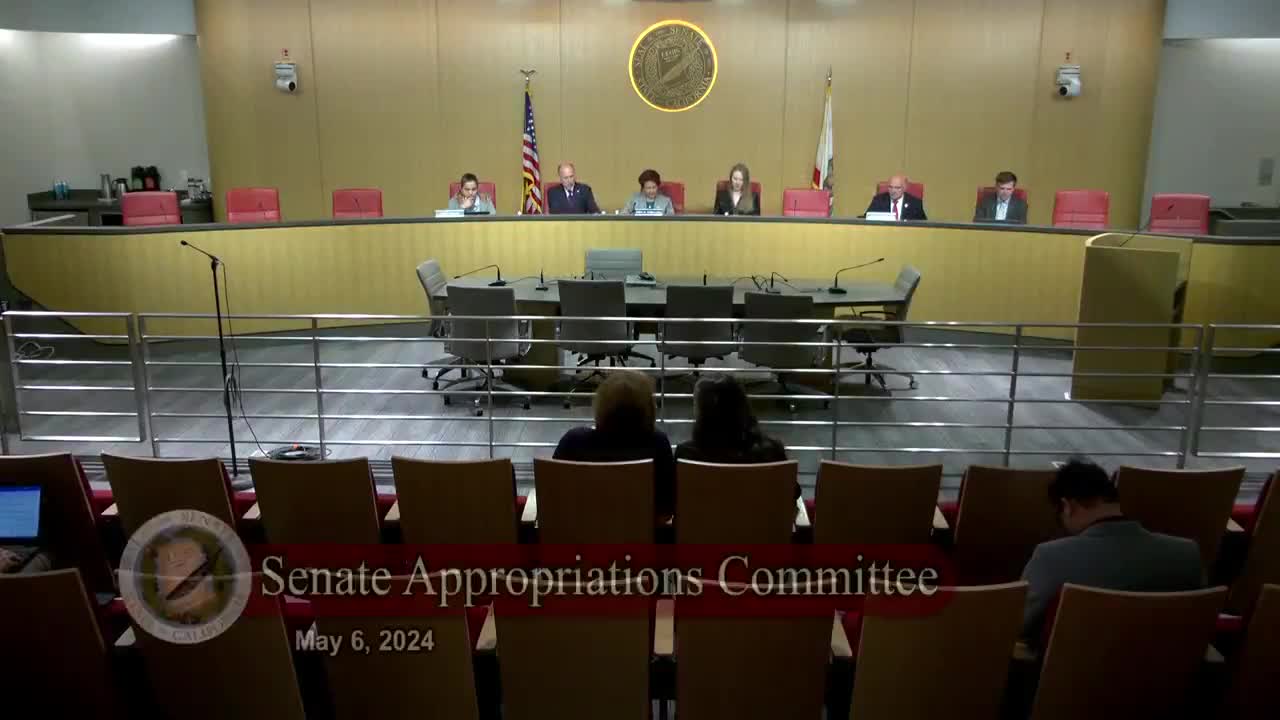 2MIN
Senate Standing Committee on Appropriations
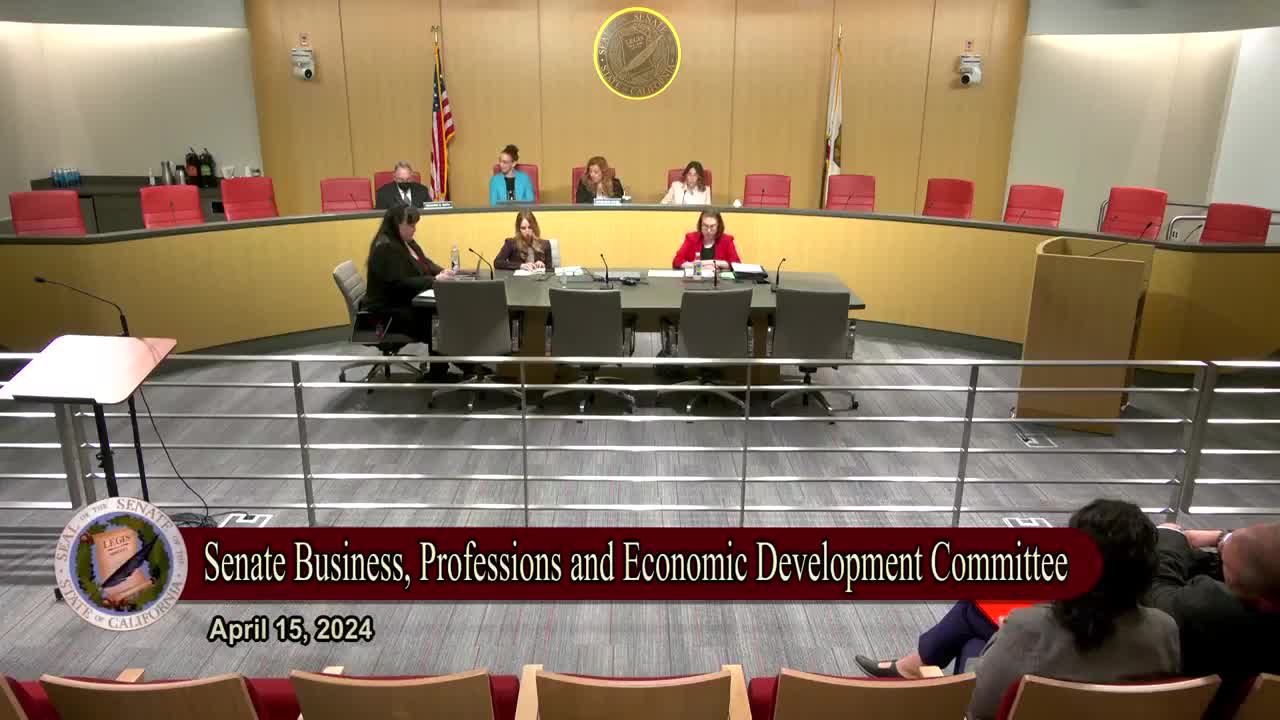 8MIN
Senate Standing Committee on Business, Professions and Economic Development
Bill Author