SB 321: Literacy: libraries: Local Public Library Partnership Program.
- Session Year: 2023-2024
- House: Senate
- Latest Version Date: 2023-10-08
Current Status:
Passed
(2023-10-08: Chaptered by Secretary of State. Chapter 598, Statutes of 2023.)
Introduced
In Committee
First Chamber
In Committee
Second Chamber
Enacted
Existing law declares that it is in the interest of the people and of the state that there be a general diffusion of knowledge and intelligence through the establishment and operation of public libraries. Existing law authorizes the State Librarian to give advisory, consultive, and technical assistance with respect to public libraries to librarians and library authorities, and assist all other authorities, state and local, in assuming their full responsibility for library services.
This bill would establish the Local Public Library Partnership Program, under the administration of the State Librarian, for purposes of ensuring that all pupils have access to a local public library by 3rd grade.
The bill would require the State Librarian to offer resources to assist each local public library, as defined, to find student success card dispensing strategies that work best for their communities, coordinate with each local public library to determine the most effective means to ensure each pupil in each local educational agency, as defined, is issued a student success card by 3rd grade, and, ensure, on or before January 1, 2026, that partnerships between local public libraries and local educational agencies have been established to enable each pupil enrolled at a schoolsite of each local educational agency to be issued a student success card by 3rd grade, as provided. To the extent these provisions impose additional duties on public libraries and local educational agencies, the bill would impose a state-mandated local program.
The bill would require, on or before January 1, 2029, and each year thereafter, the State Librarian to report to the Legislature on the Local Public Library Partnership Program, as provided.
The California Constitution requires the state to reimburse local agencies and school districts for certain costs mandated by the state. Statutory provisions establish procedures for making that reimbursement.
This bill would provide that, if the Commission on State Mandates determines that the bill contains costs mandated by the state, reimbursement for those costs shall be made pursuant to the statutory provisions noted above.
Existing law declares that it is in the interest of the people and of the state that there be a general diffusion of knowledge and intelligence through the establishment and operation of public libraries. Existing law authorizes the State Librarian to give advisory, consultive, and technical assistance with respect to public libraries to librarians and library authorities, and assist all other authorities, state and local, in assuming their full responsibility for library services.
This bill would establish the Local Public Library Partnership Program, under the administration of the State Librarian, for purposes of ensuring that all pupils have access to a local public library by 3rd grade.
The bill would require the State Librarian to offer resources to assist each local public library, as defined, to find student success card dispensing strategies that work best for their communities, coordinate with each local public library to determine the most effective means to ensure each pupil in each local educational agency agency, as defined, is issued a student success card by 3rd grade, and, ensure, on or before January 1, 2026, that partnerships between local public libraries and local educational agencies have been established to enable each pupil enrolled at a schoolsite of each local educational agency to be issued a student success card by 3rd grade, as provided. To the extent these provisions impose additional duties on public libraries and local educational agencies, the bill would impose a state-mandated local program.
The bill would require, on or before January 1, 2029, and each year thereafter, the State Librarian to report to the Legislature on the Local Public Library Partnership Program, as provided.
The California Constitution requires the state to reimburse local agencies and school districts for certain costs mandated by the state. Statutory provisions establish procedures for making that reimbursement.
This bill would provide that, if the Commission on State Mandates determines that the bill contains costs mandated by the state, reimbursement for those costs shall be made pursuant to the statutory provisions noted above.
Existing law declares that it is in the interest of the people and of the state that there be a general diffusion of knowledge and intelligence through the establishment and operation of public libraries. Existing law authorizes the State Librarian to give advisory, consultive, and technical assistance with respect to public libraries to librarians and library authorities, and assist all other authorities, state and local, in assuming their full responsibility for library services.
This bill would establish the Local Public Library Partnership Program, under the administration of the State Librarian, for purposes of ensuring that all pupils have access to a local public library by 3rd grade.
The bill would require the State Librarian to offer resources to assist each local public library, as defined, to find student success card dispensing strategies that work best for their communities, coordinate with each local public library to determine the most effective means to ensure each pupil in each local educational agency is issued a student success card by 3rd grade, and, ensure, on or before January 1, 2026, that partnerships between local public libraries and local educational agencies have been established to enable each pupil enrolled at a schoolsite of each local educational agency to be issued a student success card by 3rd grade, as provided. To the extent these provisions impose additional duties on public libraries and local educational agencies, the bill would impose a state-mandated local program.
The bill would require, on or before January 1, 2029, and each year thereafter, the State Librarian to report to the Legislature on the Local Public Library Partnership Program, as provided.
The California Constitution requires the state to reimburse local agencies and school districts for certain costs mandated by the state. Statutory provisions establish procedures for making that reimbursement.
This bill would provide that, if the Commission on State Mandates determines that the bill contains costs mandated by the state, reimbursement for those costs shall be made pursuant to the statutory provisions noted above.
Existing law declares that it is in the interest of the people and of the state that there be a general diffusion of knowledge and intelligence through the establishment and operation of public libraries. Existing law authorizes the governing board of a school district or a community college district to contract for the provision of school library services by the county library, as provided. Existing law finds and declares that strong leadership is needed at the local level to improve reading instruction in kindergarten and grades 1 to 3, inclusive, of the public schools. the State Librarian to give advisory, consultive, and technical assistance with respect to public libraries to librarians and library authorities, and assist all other authorities, state and local, in assuming their full responsibility for library services.
This bill would require, on or before January 1, 2026, a local educational agency, as defined, and a local public library, as defined, to enter into a memorandum of understanding or a memorandum of agreement with the purpose of increasing participation and access to the local public library for pupils in the 3rd grade, as provided. The bill would require the memorandum to contain specified provisions, including that the local public library, in working with a school administrator, give a presentation to all pupils in the 3rd grade that provides specified information, including, among other things, how to obtain a physical library card, as provided.The bill would require, within 3 years of the establishment of the memorandum of understanding or agreement, a local public library, in consultation with the local educational agency, to provide a report to the California State Library that contains specified information relating to the presentations described above.By creating new duties for a local educational agency and a public library, the bill would impose a state-mandated local program.This bill would establish the Local Public Library Partnership Program, under the administration of the State Librarian, for purposes of ensuring that all pupils have access to a local public library by 3rd grade.
The bill would require the California State Library Librarian to provide technical assistance to the local public libraries on the above-described provisions. offer resources to assist each local public library, as defined, to find student success card dispensing strategies that work best for their communities, coordinate with each local public library to determine the most effective means to ensure each pupil in each local educational agency is issued a student success card by 3rd grade, and, ensure, on or before January 1, 2026, that partnerships between local public libraries and local educational agencies have been established to enable each pupil enrolled at a schoolsite of each local educational agency to be issued a student success card by 3rd grade, as provided. To the extent these provisions impose additional duties on public libraries and local educational agencies, the bill would impose a state-mandated local program.
The bill would require, on or before January 1, 2029, and each year thereafter, the State Librarian to report to the Legislature on the Local Public Library Partnership Program, as provided.
The California Constitution requires the state to reimburse local agencies and school districts for certain costs mandated by the state. Statutory provisions establish procedures for making that reimbursement.
This bill would provide that, if the Commission on State Mandates determines that the bill contains costs mandated by the state, reimbursement for those costs shall be made pursuant to the statutory provisions noted above.
Existing law declares that it is in the interest of the people and of the state that there be a general diffusion of knowledge and intelligence through the establishment and operation of public libraries. Existing law authorizes the governing board of a school district or a community college district to contract for the provision of school library services by the county library, as provided. Existing law finds and declares that strong leadership is needed at the local level to improve reading instruction in kindergarten and grades 1 to 3, inclusive, of the public schools.
This bill would make various findings and declarations regarding literacy and would state the intent of the Legislature to enact subsequent legislation that would require school districts to partner with local libraries for purposes of providing library cards to all pupils in the 3rd grade.This bill would require, on or before January 1, 2026, a local educational agency, as defined, and a local public library, as defined, to enter into a memorandum of understanding or a memorandum of agreement with the purpose of increasing participation and access to the local public library for pupils in the 3rd grade, as provided. The bill would require the memorandum to contain specified provisions, including that the local public library, in working with a school administrator, give a presentation to all pupils in the 3rd grade that provides specified information, including, among other things, how to obtain a physical library card, as provided.
The bill would require, within 3 years of the establishment of the memorandum of understanding or agreement, a local public library, in consultation with the local educational agency, to provide a report to the California State Library that contains specified information relating to the presentations described above.
By creating new duties for a local educational agency and a public library, the bill would impose a state-mandated local program.
The bill would require the California State Library to provide technical assistance to the local public libraries on the above-described provisions.
The California Constitution requires the state to reimburse local agencies and school districts for certain costs mandated by the state. Statutory provisions establish procedures for making that reimbursement.
This bill would provide that, if the Commission on State Mandates determines that the bill contains costs mandated by the state, reimbursement for those costs shall be made pursuant to the statutory provisions noted above.
Existing law authorizes the governing board of a school district or a community college district to contract for the provision of school library services by the county library, as provided. Existing law finds and declares that strong leadership is needed at the local level to improve reading instruction in kindergarten and grades 1 to 3, inclusive, of the public schools.
This bill would make various findings and declarations regarding literacy and would state the intent of the Legislature to enact subsequent legislation that would require school districts to partner with local libraries for purposes of providing library cards to all pupils in the 3rd grade.
The Legislature finds and declares all of the following:
(a)The National Research Council asserts that academic success, as defined by high school graduation, can be predicted with reasonable accuracy by knowing a students reading skill at the end of third grade. A person who is not at least a modestly skilled reader by that time is unlikely to graduate from high school.
(b)California has the lowest literacy rate of any state in the nation.
(c)According to the National Assessment of Adult Literacy, two-thirds of students who cannot read proficiently by the end of the fourth grade will end up in jail or in need of public assistance.
(d)According to the National Assessment of Adult Literacy, 85 percent of all juveniles who interface with the juvenile court system are functionally low literate.
(e)According to United States Department of Justice, 68 percent of state prison inmates did not receive a high school diploma.
(f)According to the National Low Income Housing Coalition, formerly incarcerated people are nearly 10 times more likely to be homeless than the general public.
(g)Children who cannot read proficiently by the end of third grade are four times more likely to drop out of high school or fail to graduate, which can lead to a lifetime of social and economic disadvantages.
(h)Pupils with relatively low literacy achievement tend to have more behavioral and social problems in subsequent grades and higher rates of retention, furthering their educational achievement gap and increasing their risk of dropout.
(i)Seventy-five percent of pupils who are poor readers in third grade will remain poor readers in high school, according to research at Yale University.
(j)According to a national study by New York University, children from low-income families are less likely to have books in their homes.
(k)In 2017, California was the first state in the nation to be sued on the grounds that it had denied childrens civil rights to literacy under the state constitution. After initially fighting the lawsuit, the state settled the case in February 2020.
(l)The mission of public libraries in California is to provide free and easy access to information, ideas, books, and technology that can help to enrich, educate, and empower the lives of all individuals.
(m)Former President Barack Obamas 2013 ConnectED initiative strives to enrich the education and opportunities of every pupil in kindergarten and grades 1 to 12, inclusive, through partnerships and cooperation.
(n)According to the Pew Research Center, 84 percent of the parents who say that libraries are important say a major reason they want their children to have access to libraries is that libraries help inculcate their childrens love of reading and books. Eighty-one percent say that a major reason libraries are important is because libraries provide their children with information and resources not available at home, such as a book club or program, an education class hosted by the library, the use of free and reliable internet, or the ability to do school work more easily.
(o)Issuing library cards to pupils through the ConnectED initiative has fostered stronger family bonds, equipped parents to support their childrens reading progress, encouraged family engagement in school activities, and helped build an at-home culture of reading.
(p)The Oakland Public Library has a partnership with the Oakland Unified School District to provide the Oakland Promise Card.
(q)The Napa County Library has a partnership with the Napa Valley Unified School District to provide the Student OneCard.
(r)The San Francisco Public Library has a partnership with the San Francisco Unified School District to provide the Scholar Card.
(s)The Sacramento Public Library provides Student Success Cards to provide internet-only library access to over 121,000 pupils in six school districts.
(t)In 2016, the Los Angeles Unified School District entered into a memorandum of agreement with the City of Los Angeles Board of Library Commissioners to provide every pupil with a Student Success Card.
(u)The Los Angeles Unified School District is composed of more than 800,000 pupils, is the second largest school district in the nation, and has distributed over 50,000 library cards to pupils of all ages in the school district.
(v)Through the above-mentioned collaborations, many successful models for various types of library cards have been created and pupils have been provided library access using variations of all of the following:
(1)Full-access library cards.
(2)Limited-use library cards.
(3)Internet-only library cards.
(4)Online or in-person library access using a school-issued student identification card.
(w)Communities and school districts vary widely in terms of resources and capacity. In order to be successful, libraries and school partnerships must have options suitable for both small rural districts and larger cooperatives.
(x)Every California public school pupil should have a library card.
SEC. 2.Article 5 (commencing with Section 19340) is added to Chapter 7 of Part 11 of Division 1 of Title 1 of the Education Code, to read:5.Local Public Library Partnership Program19340.The Local Public Library Partnership Program is hereby established under the administration of the State Librarian for purposes of ensuring that, by third grade, all pupils have access to a local public library.
19341.For purposes of this article, the following definitions apply:
(a)Local educational agency means a school district, county office of education, or charter school.
(b)(1)Local public library means a public library formed pursuant to this part that is located within the elementary school attendance area in which a schoolsite of a local educational agency is located.
(2)If no public library is located within the elementary school attendance area in which a schoolsite of a local educational agency is located, the closest public library formed pursuant to this part that is within the elementary or unified school district in which a schoolsite is located shall be considered the local public library.
(3)If no public library is located within the elementary or unified school district in which a schoolsite of a local educational agency is located, the closest public library formed pursuant to this part that is within the county in which a schoolsite is located shall be considered the local public library.
(c)Student success card means a card issued by a local public library that provides access to library services, including, but not limited to, all of the following:
(1)Collections that support school curriculum as well as pupil leisure reading, online research, and learning resources maintained by local public libraries and the California State Library.
(2)Online tutoring.
(3)Digital content from the California State Librarys K12 Online Resources Project.
19342.(a)The State Librarian shall offer resources to assist each local public library to find student success card dispensing strategies that work best for their communities.
(b)The State Librarian shall coordinate with each local public library to determine the most effective means to ensure each pupil in each local educational agency is issued a student success card by third grade, including, but not limited to, by working with a school administrator or school librarian.
(c)On or before January 1, 2026, the State Librarian shall ensure that partnerships between local public libraries and local educational agencies have been established to enable each pupil enrolled at a schoolsite of each local educational agency to be issued a student success card by third grade.
19343.(a)Notwithstanding Section 10231.5 of the Government Code, the State Librarian shall, on or before January 1, 2029, and by each January 1 thereafter, report to the Legislature all of the following information:
(1)The number of third grade pupils who have been issued a student success card.
(2)The number of third grade pupils who received local public library access as a result of the partnerships developed pursuant to this article.
(3)The number of new summer readers each local public library received during the summer months each year.
(4)Any measurable increases to the use of other library resources as a result of the partnerships developed pursuant to this article.
(b)A report required to be submitted pursuant to subdivision (a) shall be submitted in compliance with Section 9795 of the Government Code.
19344.Consistent with Section 99.37 of Title 34 of the Code of Federal Regulations, a local educational agency may disclose directory information, as defined in Section 49061, to the State Librarian for the purpose of administering this article. The information shall not be used for any other purpose or given or transferred to any other person or agency.
19345.Nothing in this chapter shall be construed to prohibit a local public library from partnering with a local educational agency to issue student success cards to pupils in kindergarten or any of grades 1 to 12, inclusive.
SEC. 3.If the Commission on State Mandates determines that this act contains costs mandated by the state, reimbursement to local agencies and school districts for those costs shall be made pursuant to Part 7 (commencing with Section 17500) of Division 4 of Title 2 of the Government Code.
The Legislature finds and declares all of the following:
(a)The National Research Council asserts that academic success, as defined by high school graduation, can be predicted with reasonable accuracy by knowing a students reading skill at the end of third grade. A person who is not at least a modestly skilled reader by that time is unlikely to graduate from high school.
(b)California has the lowest literacy rate of any state in the nation.
(c)According to the National Assessment of Adult Literacy, two-thirds of students who cannot read proficiently by the end of the fourth grade will end up in jail or in need of public assistance.
(d)According to the National Assessment of Adult Literacy, 85 percent of all juveniles who interface with the juvenile court system are functionally low literate.
(e)According to United States Department of Justice, 68 percent of state prison inmates did not receive a high school diploma.
(f)According to the National Low Income Housing Coalition, formerly incarcerated people are nearly 10 times more likely to be homeless than the general public.
(g)Children who cannot read proficiently by the end of third grade are four times more likely to drop out of high school or fail to graduate, which can lead to a lifetime of social and economic disadvantages.
(h)Pupils with relatively low literacy achievement tend to have more behavioral and social problems in subsequent grades and higher rates of retention, furthering their educational achievement gap and increasing their risk of dropout.
(i)Seventy-five percent of pupils who are poor readers in third grade will remain poor readers in high school, according to research at Yale University.
(j)According to a national study by New York University, children from low-income families are less likely to have books in their homes.
(k)In 2017, California was the first state in the nation to be sued on the grounds that it had denied childrens civil rights to literacy under the state constitution. After initially fighting the lawsuit, the state settled the case in February 2020.
(l)The mission of public libraries in California is to provide free and easy access to information, ideas, books, and technology that can help to enrich, educate, and empower the lives of all individuals.
(m)Former President Barack Obamas 2013 ConnectED initiative strives to enrich the education and opportunities of every pupil in kindergarten and grades 1 to 12, inclusive, through partnerships and cooperation.
(n)According to the Pew Research Center, 84 percent of the parents who say that libraries are important say a major reason they want their children to have access to libraries is that libraries help inculcate their childrens love of reading and books. Eighty-one percent say that a major reason libraries are important is because libraries provide their children with information and resources not available at home, such as a book club or program, an education class hosted by the library, the use of free and reliable internet, or the ability to do school work more easily.
(o)Issuing library cards to pupils through the ConnectED initiative has fostered stronger family bonds, equipped parents to support their childrens reading progress, encouraged family engagement in school activities, and helped build an at-home culture of reading.
(p)The Oakland Public Library has a partnership with the Oakland Unified School District to provide the Oakland Promise Card.
(q)The Napa County Library has a partnership with the Napa Valley Unified School District to provide the Student OneCard.
(r)The San Francisco Public Library has a partnership with the San Francisco Unified School District to provide the Scholar Card.
(s)The Sacramento Public Library provides Student Success Cards to provide internet-only library access to over 121,000 pupils in six school districts.
(t)In 2016, the Los Angeles Unified School District entered into a memorandum of agreement with the City of Los Angeles Board of Library Commissioners to provide every pupil with a Student Success Card.
(u)The Los Angeles Unified School District is composed of more than 800,000 pupils, is the second largest school district in the nation, and has distributed over 50,000 library cards to pupils of all ages in the school district.
(v)Through the above-mentioned collaborations, many successful models for various types of library cards have been created and pupils have been provided library access using variations of all of the following:
(1)Full-access library cards.
(2)Limited-use library cards.
(3)Internet-only library cards.
(4)Online or in-person library access using a school-issued student identification card.
(w)Communities and school districts vary widely in terms of resources and capacity. In order to be successful, libraries and school partnerships must have options suitable for both small rural districts and larger cooperatives.
(x)Every California public school pupil should have a library card.
SEC. 2.Article 5 (commencing with Section 19340) is added to Chapter 7 of Part 11 of Division 1 of Title 1 of the Education Code, to read:5.Local Public Library Partnership Program19340.The Local Public Library Partnership Program is hereby established under the administration of the State Librarian for purposes of ensuring that, by third grade, all pupils have access to a local public library.
19341.For purposes of this article, the following definitions apply:
(a)Local educational agency means a school district, county office of education, or charter school.
(a)(b)(1)Local public library means a public library formed pursuant to this part that is located within the elementary school attendance area in which a schoolsite of a local educational agency is located.
(2)If no public library is located within the elementary school attendance area in which a schoolsite of a local educational agency is located, the closest public library formed pursuant to this part that is within the elementary or unified school district in which a schoolsite is located shall be considered the local public library.
(3)If no public library is located within the elementary or unified school district in which a schoolsite of a local educational agency is located, the closest public library formed pursuant to this part that is within the county in which a schoolsite is located shall be considered the local public library.
(b)(c)Student success card means a card issued by a local public library that provides access to library services, including, but not limited to, all of the following:
(1)Collections that support school curriculum as well as pupil leisure reading, online research, and learning resources maintained by local public libraries and the California State Library.
(2)Online tutoring.
(3)Digital content from the California State Librarys K12 Online Resources Project.
19342.(a)The State Librarian shall offer resources to assist each local public library to find student success card dispensing strategies that work best for their communities.
(b)The State Librarian shall coordinate with each local public library to determine the most effective means to ensure each pupil in each local educational agency is issued a student success card by third grade, including, but not limited to, by working with a school administrator or school librarian.
(c)On or before January 1, 2026, the State Librarian shall ensure that partnerships between local public libraries and local educational agencies have been established to enable each pupil enrolled at a schoolsite of each local educational agency to be issued a student success card by third grade.
19343.(a)Notwithstanding Section 10231.5 of the Government Code, the State Librarian shall, on or before January 1, 2029, and by each January 1 thereafter, report to the Legislature all of the following information:
(1)The number of third grade pupils who have been issued a student success card.
(2)The number of third grade pupils who received local public library access as a result of the partnerships developed pursuant to this article.
(3)The number of new summer readers each local public library received during the summer months each year.
(4)Any measurable increases to the use of other library resources as a result of the partnerships developed pursuant to this article.
(b)A report required to be submitted pursuant to subdivision (a) shall be submitted in compliance with Section 9795 of the Government Code.
19344.Consistent with Section 99.37 of Title 34 of the Code of Federal Regulations, a local educational agency may disclose directory information, as defined in Section 49061, to the State Librarian for the purpose of administering this article. The information shall not be used for any other purpose or given or transferred to any other person or agency.
19345.Nothing in this chapter shall be construed to prohibit a local public library from partnering with a local educational agency to issue student success cards to pupils in kindergarten or any of grades 1 to 12, inclusive.
SEC. 3.If the Commission on State Mandates determines that this act contains costs mandated by the state, reimbursement to local agencies and school districts for those costs shall be made pursuant to Part 7 (commencing with Section 17500) of Division 4 of Title 2 of the Government Code.
The Legislature finds and declares all of the following:
(a)The National Research Council asserts that academic success, as defined by high school graduation, can be predicted with reasonable accuracy by knowing a students reading skill at the end of third grade. A person who is not at least a modestly skilled reader by that time is unlikely to graduate from high school.
(b)California has the lowest literacy rate of any state in the nation.
(c)According to the National Assessment of Adult Literacy, two-thirds of students who cannot read proficiently by the end of the fourth grade will end up in jail or in need of public assistance.
(d)According to the National Assessment of Adult Literacy, 85 percent of all juveniles who interface with the juvenile court system are functionally low literate.
(e)According to United States Department of Justice, 68 percent of state prison inmates did not receive a high school diploma.
(f)According to the National Low Income Housing Coalition, formerly incarcerated people are nearly 10 times more likely to be homeless than the general public.
(g)Children who cannot read proficiently by the end of third grade are four times more likely to drop out of high school or fail to graduate, which can lead to a lifetime of social and economic disadvantages.
(h)Pupils with relatively low literacy achievement tend to have more behavioral and social problems in subsequent grades and higher rates of retention, furthering their educational achievement gap and increasing their risk of dropout.
(i)Seventy-five percent of pupils who are poor readers in third grade will remain poor readers in high school, according to research at Yale University.
(j)According to a national study by New York University, children from low-income families are less likely to have books in their homes.
(k)In 2017, California was the first state in the nation to be sued on the grounds that it had denied childrens civil rights to literacy under the state constitution. After initially fighting the lawsuit, the state settled the case in February 2020.
(l)The mission of public libraries in California is to provide free and easy access to information, ideas, books, and technology that can help to enrich, educate, and empower the lives of all individuals.
(m)Former President Barack Obamas 2013 ConnectED initiative strives to enrich the education and opportunities of every pupil in kindergarten and grades 1 to 12, inclusive, through partnerships and cooperation.
(n)According to the Pew Research Center, 84 percent of the parents who say that libraries are important say a major reason they want their children to have access to libraries is that libraries help inculcate their childrens love of reading and books. Eighty-one percent say that a major reason libraries are important is because libraries provide their children with information and resources not available at home, such as a book club or program, an education class hosted by the library, the use of free and reliable internet, or the ability to do school work more easily.
(o)Issuing library cards to pupils through the ConnectED initiative has fostered stronger family bonds, equipped parents to support their childrens reading progress, encouraged family engagement in school activities, and helped build an at-home culture of reading.
(p)The Oakland Public Library has a partnership with the Oakland Unified School District to provide the Oakland Promise Card.
(q)The Napa County Library has a partnership with the Napa Valley Unified School District to provide the Student OneCard.
(r)The San Francisco Public Library has a partnership with the San Francisco Unified School District to provide the Scholar Card.
(s)The Sacramento Public Library provides Student Success Cards to provide internet-only library access to over 121,000 pupils in six school districts.
(t)In 2016, the Los Angeles Unified School District entered into a memorandum of agreement with the City of Los Angeles Board of Library Commissioners to provide every pupil with a Student Success Card.
(u)The Los Angeles Unified School District is composed of more than 800,000 pupils, is the second largest school district in the nation, and has distributed over 50,000 library cards to pupils of all ages in the school district.
(v)Through the above-mentioned collaborations, many successful models for various types of library cards have been created and pupils have been provided library access using variations of all of the following:
(1)Full-access library cards.
(2)Limited-use library cards.
(3)Internet-only library cards.
(4)Online or in-person library access using a school-issued student identification card.
(w)Communities and school districts vary widely in terms of resources and capacity. In order to be successful, libraries and school partnerships must have options suitable for both small rural districts and larger cooperatives.
(x)Every California public school pupil should have a library card.
SEC. 2.Article 5 (commencing with Section 19340) is added to Chapter 7 of Part 11 of Division 1 of Title 1 of the Education Code, to read:5.Local Public Library Partnership Program19340.The Local Public Library Partnership Program is hereby established under the administration of the State Librarian for purposes of ensuring that, by third grade, all pupils have access to a local public library.
19341.(a)For purposes of this article, the following definitions apply:
(2)(A)(a)(1)Local public library means a public library formed pursuant to this part that is located within the elementary school attendance area in which a schoolsite of a local educational agency is located.
(B)(2)If no public library is located within the elementary school attendance area in which a schoolsite of a local educational agency is located, the closest public library formed pursuant to this part that is within the elementary or unified school district in which a schoolsite is located shall be considered the local public library.
(C)(3)If no public library is located within the elementary or unified school district in which a schoolsite of a local educational agency is located, the closest public library formed pursuant to this part that is within the county in which a schoolsite is located shall be considered the local public library.
(3)(b)Student success card means a card issued by a local public library that provides access to library services, including, but not limited to, all of the following:
(A)Age-appropriate(1)Collections that support school curriculum as well as pupil leisure reading, online research research, and learning resources maintained by local public libraries and the California State Library.
(B)(2)Online tutoring.
(C)Age-appropriate digital(3)Digital content from the California State Librarys K12 Online Resources Project.
19342.(a)The State Librarian shall offer resources to assist each local public library to find student success card dispensing strategies that work best for their communities.
(b)The State Librarian shall coordinate with each local public library to determine the most effective means to ensure each pupil in each local educational agency is issued a student success card by third grade, including, but not limited to, by working with a school administrator or school librarian.
(c)On or before January 1, 2026, the State Librarian shall ensure that partnerships between local public libraries and local educational agencies have been established to enable each pupil enrolled at a schoolsite of each local educational agency to be issued a student success card by third grade.
19343.(a)Notwithstanding Section 10231.5 of the Government Code, the State Librarian shall, on or before January 1, 2029, and by each January 1 thereafter, report to the Legislature all of the following information:
(1)The number of third grade pupils who have been issued a student success card.
(2)The number of third grade pupils who received local public library access as a result of the partnerships developed pursuant to this article.
(3)The number of new summer readers each local public library received during the summer months each year.
(4)Any measurable increases to the use of other library resources as a result of the partnerships developed pursuant to this article.
(b)A report required to be submitted pursuant to subdivision (a) shall be submitted in compliance with Section 9795 of the Government Code.
19344.Consistent with Section 99.37 of Title 34 of the Code of Federal Regulations, a local educational agency may disclose directory information, as defined in Section 49061, to the State Librarian for the purpose of administering this article. The information shall not be used for any other purpose or given or transferred to any other person or agency.
19345.Nothing in this chapter shall be construed to prohibit a local public library from partnering with a local educational agency to issue student success cards to pupils in kindergarten or any of grades 1 to 12, inclusive.
SEC. 3.If the Commission on State Mandates determines that this act contains costs mandated by the state, reimbursement to local agencies and school districts for those costs shall be made pursuant to Part 7 (commencing with Section 17500) of Division 4 of Title 2 of the Government Code.
The Legislature finds and declares all of the following:
(a)The National Research Council asserts that academic success, as defined by high school graduation, can be predicted with reasonable accuracy by knowing a students reading skill at the end of third grade. A person who is not at least a modestly skilled reader by that time is unlikely to graduate from high school.
(b)California has the lowest literacy rate of any state in the nation.
(c)According to the National Assessment of Adult Literacy, two-thirds of students who cannot read proficiently by the end of the fourth grade will end up in jail or in need of public assistance.
(d)According to the National Assessment of Adult Literacy, 85 percent of all juveniles who interface with the juvenile court system are functionally low literate.
(e)According to United States Department of Justice, 68 percent of state prison inmates did not receive a high school diploma.
(f)According to the National Low Income Housing Coalition, formerly incarcerated people are nearly 10 times more likely to be homeless than the general public.
(g)Children who cannot read proficiently by the end of third grade are four times more likely to drop out of high school or fail to graduate, which can lead to a lifetime of social and economic disadvantages.
(h)Pupils with relatively low literacy achievement tend to have more behavioral and social problems in subsequent grades and higher rates of retention, furthering their educational achievement gap and increasing their risk of dropout.
(i)Seventy-five percent of pupils who are poor readers in third grade will remain poor readers in high school, according to research at Yale University.
(j)According to a national study by New York University, children from low-income families are less likely to have books in their homes.
(k)In 2017, California was the first state in the nation to be sued on the grounds that it had denied childrens civil rights to literacy under the state constitution. After initially fighting the lawsuit, the state settled the case in February 2020.
(l)The mission of public libraries in California is to provide free and easy access to information, ideas, books, and technology that can help to enrich, educate, and empower the lives of all individuals.
(m)Former President Barack Obamas 2013 ConnectED initiative strives to enrich the education and opportunities of every pupil in kindergarten and grades 1 to 12, inclusive, through partnerships and cooperation.
(n)According to the Pew Research Center, 84 percent of the parents who say that libraries are important say a major reason they want their children to have access to libraries is that libraries help inculcate their childrens love of reading and books. Eighty-one percent say that a major reason libraries are important is because libraries provide their children with information and resources not available at home, such as a book club or program, an education class hosted by the library, the use of free and reliable internet, or the ability to do school work more easily.
(o)Issuing library cards to pupils through the ConnectED initiative has fostered stronger family bonds, equipped parents to support their childrens reading progress, encouraged family engagement in school activities, and helped build an at-home culture of reading.
(p)The Oakland Public Library has a partnership with the Oakland Unified School District to provide the Oakland Promise Card.
(q)The Napa County Library has a partnership with the Napa Valley Unified School District to provide the Student OneCard.
(r)The San Francisco Public Library has a partnership with the San Francisco Unified School District to provide the Scholar Card.
(s)The Sacramento Public Library provides Student Success Cards to provide internet-only library access to over 121,000 pupils in six school districts.
(t)In 2016, the Los Angeles Unified School District entered into a memorandum of agreement with the City of Los Angeles Board of Library Commissioners to provide every pupil with a Student Success Card.
(u)The Los Angeles Unified School District is composed of more than 800,000 pupils, is the second largest school district in the nation, and has distributed over 50,000 library cards to pupils of all ages in the school district.
(v)Through the above-mentioned collaborations, many successful models for various types of library cards have been created and pupils have been provided library access using variations of all of the following:
(1)Full-access library cards.
(2)Limited-use library cards.
(3)Internet-only library cards.
(4)Online or in-person library access using a school-issued student identification card.
(w)Communities and school districts vary widely in terms of resources and capacity. In order to be successful, libraries and school partnerships must have options suitable for both small rural districts and larger cooperatives.
(x)Every California public school pupil should have a library card.
SEC. 2.Chapter 3.5 (commencing with Section 18575) is added to Part 11 of Division 1 of Title 1 of the Education Code, to read:3.5.Public Library Partnerships with Local Educational Agencies18575.For purposes of this chapter, the following terms apply:(a)Local educational agency means a school district, county board of education, or a charter school.(b)Local public library means a public library formed pursuant to this part that is located within the elementary school attendance area in which a schoolsite of a local educational agency is located.18576.On or before January 1, 2026, a local educational agency shall enter into a memorandum of understanding or a memorandum of agreement with a local public library for each elementary schoolsite, with the purpose of increasing participation and access to the local public library for pupils in the third grade. The memorandum of understanding or the memorandum of agreement shall include, but not be limited to, provisions that satisfy both of the following requirements:(a)(1)The local public library, in working with a school administrator, shall give a presentation to all pupils in the third grade in the first semester, trimester, or quarter, as applicable.(2)The presentation may be in person, either in the classroom or at the local public library, via telecommunication, or via any other communication method agreed upon by the parties as appropriate to meet the requirements of this section.(b)The local public library shall provide all of the following information at the presentation described in subdivision (a):(1)How to obtain a physical library card.(2)Where the closest local public library is located.(3)How to access the local public librarys internet website. If the local public library does not have an internet website, the local public library shall provide information on accessing the internet website of the California State Library.(4)Information on the variety of resources provided by or available through the local public library. If the local public library does not provide a variety of resources, the local public library shall provide information on resources available through the California State Library.18577.Within three years of the establishment of the memorandum of understanding or memorandum of agreement pursuant to Section 18576, a local public library, in consultation with the local educational agency, shall provide a report to the California State Library. The report shall contain one years worth of data regarding all of the following information:(a)The number of presentations that were conducted by the local public library.(b)The number of third-grade pupils who took part in the presentations.(c)The number of third-grade pupils who received local public library access as a result of the presentations.(d)The number of new summer readers the local public library received during the summer months following the presentations.(e)Any increase in the number of library cards, or versions of library cards, issued from the time following the presentation.(f)Any increase in the borrowing of library books or eBooks following the presentations.(g)Any measurable increases to the use of other library resources following the presentations.18578.The California State Library shall provide technical assistance to local public libraries on the provisions of this chapter, including creating the memorandum of understanding or memorandum of agreement and the implementation and reporting requirements.SEC. 2.Article 5 (commencing with Section 19340) is added to Chapter 7 of Part 11 of Division 1 of Title 1 of the Education Code, to read:5.Local Public Library Partnership Program19340.The Local Public Library Partnership Program is hereby established under the administration of the State Librarian for purposes of ensuring that, by third grade, all pupils have access to a local public library.
19341.(a)For purposes of this article, the following definitions apply:
(2)(A)Local public library means a public library formed pursuant to this part that is located within the elementary school attendance area in which a schoolsite of a local educational agency is located.
(B)If no public library is located within the elementary school attendance area in which a schoolsite of a local educational agency is located, the closest public library formed pursuant to this part that is within the elementary or unified school district in which a schoolsite is located shall be considered the local public library.
(C)If no public library is located within the elementary or unified school district in which a schoolsite of a local educational agency is located, the closest public library formed pursuant to this part that is within the county in which a schoolsite is located shall be considered the local public library.
(3)Student success card means a card issued by a local public library that provides access to library services, including, but not limited to, all of the following:
(A)Age-appropriate online research and learning resources maintained by local public libraries and the California State Library.
(B)Online tutoring.
(C)Age-appropriate digital content from the California State Librarys K12 Online Resources Project.
19342.(a)The State Librarian shall offer resources to assist each local public library to find student success card dispensing strategies that work best for their communities.
(b)The State Librarian shall coordinate with each local public library to determine the most effective means to ensure each pupil in each local educational agency is issued a student success card by third grade, including, but not limited to, by working with a school administrator or school librarian.
(c)On or before January 1, 2026, the State Librarian shall ensure that partnerships between local public libraries and local educational agencies have been established to enable each pupil enrolled at a schoolsite of each local educational agency to be issued a student success card by third grade.
19343.(a)Notwithstanding Section 10231.5 of the Government Code, the State Librarian shall, on or before January 1, 2029, and by each January 1 thereafter, report to the Legislature all of the following information:
(1)The number of third grade pupils who have been issued a student success card.
(2)The number of third grade pupils who received local public library access as a result of the partnerships developed pursuant to this article.
(3)The number of new summer readers each local public library received during the summer months each year.
(4)Any measurable increases to the use of other library resources as a result of the partnerships developed pursuant to this article.
(b)A report required to be submitted pursuant to subdivision (a) shall be submitted in compliance with Section 9795 of the Government Code.
19344.Consistent with Section 99.37 of Title 34 of the Code of Federal Regulations, a local educational agency may disclose directory information, as defined in Section 49061, to the State Librarian for the purpose of administering this article. The information shall not be used for any other purpose or given or transferred to any other person or agency.
19345.Nothing in this chapter shall be construed to prohibit a local public library from partnering with a local educational agency to issue student success cards to pupils in kindergarten or any of grades 1 to 12, inclusive.
SEC. 3.If the Commission on State Mandates determines that this act contains costs mandated by the state, reimbursement to local agencies and school districts for those costs shall be made pursuant to Part 7 (commencing with Section 17500) of Division 4 of Title 2 of the Government Code.
The Legislature finds and declares all of the following:
(a)The National Research Council asserts that academic success, as defined by high school graduation, can be predicted with reasonable accuracy by knowing a students reading skill at the end of third grade. A person who is not at least a modestly skilled reader by that time is unlikely to graduate from high school.
(b)California has the lowest literacy rate of any state in the nation.
(c)According to the National Assessment of Adult Literacy, two-thirds of students who cannot read proficiently by the end of the fourth grade will end up in jail or in need of public assistance.
(d)According to the National Assessment of Adult Literacy, 85 percent of all juveniles who interface with the juvenile court system are functionally low literate.
(e)According to United States Department of Justice, 68 percent of state prison inmates did not receive a high school diploma.
(f)According to the National Low Income Housing Coalition, formerly incarcerated people are nearly 10 times more likely to be homeless than the general public.
(g)Children who cannot read proficiently by the end of third grade are four times more likely to drop out of high school or fail to graduate, which can lead to a lifetime of social and economic disadvantages.
(h)Pupils with relatively low literacy achievement tend to have more behavioral and social problems in subsequent grades and higher rates of retention, furthering their educational achievement gap and increasing their risk of dropout.
(i)Seventy-five percent of pupils who are poor readers in third grade will remain poor readers in high school, according to research at Yale University.
(j)According to a national study by New York University, children from low-income families are less likely to have books in their homes.
(k)In 2017, California was the first state in the nation to be sued on the grounds that it had denied childrens civil rights to literacy under the state constitution. After initially fighting the lawsuit, the state settled the case in February 2020.
(l)The mission of public libraries in California is to provide free and easy access to information, ideas, books, and technology that can help to enrich, educate, and empower the lives of all individuals.
(m)Former President Barack Obamas 2013 ConnectED initiative strives to enrich the education and opportunities of every pupil in kindergarten and grades 1 to 12, inclusive, through partnerships and cooperation.
(n)According to the Pew Research Center, 84 percent of the parents who say that libraries are important say a major reason they want their children to have access to libraries is that libraries help inculcate their childrens love of reading and books. Eighty-one percent say that a major reason libraries are important is because libraries provide their children with information and resources not available at home, such as a book club or program, an education class hosted by the library, the use of free and reliable internet, or the ability to do school work more easily.
(o)Issuing library cards to pupils through the ConnectED initiative has fostered stronger family bonds, equipped parents to support their childrens reading progress, encouraged family engagement in school activities, and helped build an at-home culture of reading.
(p)The Oakland Public Library has a partnership with the Oakland Unified School District to provide the Oakland Promise Card.
(q)The Napa County Library has a partnership with the Napa Valley Unified School District to provide the Student OneCard.
(r)The San Francisco Public Library has a partnership with the San Francisco Unified School District to provide the Scholar Card.
(s)The Sacramento Public Library provides Student Success Cards to provide internet-only library access to over 121,000 pupils in six school districts.
(t)In 2016, the Los Angeles Unified School District entered into a memorandum of agreement with the City of Los Angeles Board of Library Commissioners to provide every pupil with a Student Success Card.
(u)The Los Angeles Unified School District is composed of more than 800,000 pupils, is the second largest school district in the nation, and has distributed over 50,000 library cards to pupils of all ages in the school district.
(v)Through the above-mentioned collaborations, many successful models for various types of library cards have been created and pupils have been provided library access using variations of all of the following:
(1)Full-access library cards.
(2)Limited-use library cards.
(3)Internet-only library cards.
(4)Online or in-person library access using a school-issued student identification card.
(w)Communities and school districts vary widely in terms of resources and capacity. In order to be successful, libraries and school partnerships must have options suitable for both small rural districts and larger cooperatives.
SEC. 2.Chapter 3.5 (commencing with Section 18575) is added to Part 11 of Division 1 of Title 1 of the Education Code, to read:3.5.Public Library Partnerships with Local Educational Agencies18575.For purposes of this chapter, the following terms apply:
(a)Local educational agency means a school district, county board of education, or a charter school.
(b)Local public library means a public library formed pursuant to this part that is located within the elementary school attendance area in which a schoolsite of a local educational agency is located.
18576.On or before January 1, 2026, a local educational agency shall enter into a memorandum of understanding or a memorandum of agreement with a local public library for each elementary schoolsite, with the purpose of increasing participation and access to the local public library for pupils in the third grade. The memorandum of understanding or the memorandum of agreement shall include, but not be limited to, provisions that satisfy both of the following requirements:
(a)(1)The local public library, in working with a school administrator, shall give a presentation to all pupils in the third grade in the first semester, trimester, or quarter, as applicable.
(2)The presentation may be in person, either in the classroom or at the local public library, via telecommunication, or via any other communication method agreed upon by the parties as appropriate to meet the requirements of this section.
(b)The local public library shall provide all of the following information at the presentation described in subdivision (a):
(1)How to obtain a physical library card.
(2)Where the closest local public library is located.
(3)How to access the local public librarys internet website. If the local public library does not have an internet website, the local public library shall provide information on accessing the internet website of the California State Library.
(4)Information on the variety of resources provided by or available through the local public library. If the local public library does not provide a variety of resources, the local public library shall provide information on resources available through the California State Library.
18577.Within three years of the establishment of the memorandum of understanding or memorandum of agreement pursuant to Section 18576, a local public library, in consultation with the local educational agency, shall provide a report to the California State Library. The report shall contain one years worth of data regarding all of the following information:
(a)The number of presentations that were conducted by the local public library.
(b)The number of third-grade pupils who took part in the presentations.
(c)The number of third-grade pupils who received local public library access as a result of the presentations.
(d)The number of new summer readers the local public library received during the summer months following the presentations.
(e)Any increase in the number of library cards, or versions of library cards, issued from the time following the presentation.
(f)Any increase in the borrowing of library books or eBooks following the presentations.
(g)Any measurable increases to the use of other library resources following the presentations.
18578.The California State Library shall provide technical assistance to local public libraries on the provisions of this chapter, including creating the memorandum of understanding or memorandum of agreement and the implementation and reporting requirements.
SEC. 3.If the Commission on State Mandates determines that this act contains costs mandated by the state, reimbursement to local agencies and school districts for those costs shall be made pursuant to Part 7 (commencing with Section 17500) of Division 4 of Title 2 of the Government Code.
SECTION 1.(a)The Legislature finds and declares all of the following: (1)The National Research Council asserts that academic success, as defined by high school graduation, can be predicted with reasonable accuracy by knowing a students reading skill at the end of third grade. A person who is not at least a modestly skilled reader by that time is unlikely to graduate from high school.(2)In 2017, California was the first state in the nation to be sued on the grounds that it had denied childrens civil right to literacy under the state constitution. After initially fighting the lawsuit, the state settled the case in February 2020.(3)Nearly 60 percent of California children do not meet state reading standards by the third grade, and California fourth graders trail the nation in reading, with two-thirds of Black pupils and 61 percent of Latino pupils not reading at grade level.(4)Seventy-five percent of students who are poor readers in third grade will remain poor readers in high school, according to research at Yale University.(5)Up to one-half of the printed fourth grade curriculum is incomprehensible to students who read below that grade level, according to the Childrens Reading Foundation.(6)Students with relatively low literacy achievement tend to have more behavioral and social problems in subsequent grades and higher rates of retention, furthering their educational achievement gap and increasing their risk of dropout.(7)Ninety-four percent of parents say libraries are important for their children and 79 percent describe libraries as very important. That is especially true of parents of children under the six years of age, of whom 84 percent describe libraries as very important.(8)Eighty-four percent of these parents who say libraries are important say a major reason they want their children to have access to libraries is that libraries help inculcate their childrens love of reading and books.(9)Eighty-one percent say a major reason libraries are important is because libraries provide their children with information and resources not available at home, such as a book club or program, an education class hosted by the library, the use of free and reliable internet, or the ability to do school work more easily.(10)Seventy-one percent also say a major reason libraries are important is because libraries are a safe place for children.(11)In April 2015, then President Barack Obama launched the ConnectED Library Challenge to ensure that all school children have access to the learning resources available in public libraries.(12)The ConnectED Library Challenge grew out of a belief that more intentional collaboration among chief elected officials, school superintendents, and library directors could improve education outcomes for all students, begin to close achievement gaps, and create a framework for an integrated approach to education.(13)Sixty communities answered the Presidents initial call to action and collectively issued new library cards to more than 1,000,000 schoolchildren as a direct result of their work on the ConnectED Library Challenge.(14)These communities created or strengthened partnerships among elected officials, school superintendents, and library directors that provide a foundation for sustained collaboration around shared education goals.(15)Since 2018, elected officials, school administrators, and library leaders in more than 100 communities worked together through the Leaders Library Card Challenge to help over 3,000,000 students gain library cards and significantly increase their use of library resources.(16)Issuing library cards to students has fostered stronger family bonds, equipped parents to support their childrens reading progress, encouraged family engagement in school activities, and helped build an at-home culture of reading.(17)Children who cannot read proficiently by the end of third grade are four times more likely to drop out of high school or fail to graduate, which can lead to a lifetime of social and economic disadvantages.(18)Children from low-income families are less likely to have books in their homes.(b)It is therefore the intent of the Legislature to enact subsequent legislation that would require school districts to partner with local libraries for purposes of providing library cards to all pupils in the third grade.(a)The Legislature finds and declares all of the following:
(1)The National Research Council asserts that academic success, as defined by high school graduation, can be predicted with reasonable accuracy by knowing a students reading skill at the end of third grade. A person who is not at least a modestly skilled reader by that time is unlikely to graduate from high school.
(2)In 2017, California was the first state in the nation to be sued on the grounds that it had denied childrens civil right to literacy under the state constitution. After initially fighting the lawsuit, the state settled the case in February 2020.
(3)Nearly 60 percent of California children do not meet state reading standards by the third grade, and California fourth graders trail the nation in reading, with two-thirds of Black pupils and 61 percent of Latino pupils not reading at grade level.
(4)Seventy-five percent of students who are poor readers in third grade will remain poor readers in high school, according to research at Yale University.
(5)Up to half one-half of the printed fourth-grade fourth grade curriculum is incomprehensible to students who read below that grade level, according to the Childrens Reading Foundation.
(6)Students with relatively low literacy achievement tend to have more behavioral and social problems in subsequent grades and higher rates of retention, furthering their educational achievement gap and increasing their risk of dropout.
(7)Nine-four Ninety-four percent of parents say libraries are important for their children and 79 percent describe libraries as very important. That is especially true of parents of children under the age of six, six years of age, of whom 84 percent describe libraries as very important.
(8)Eighty-four percent of these parents who say libraries are important say a major reason they want their children to have access to libraries is that libraries help inculcate their childrens love of reading and books.
(9)Eighty-one percent say a major reason libraries are important is because libraries provide their children with information and resources not available at home, such as a book club or program, an education class hosted by the library, the use of free and reliable internet, or the ability to do school work more easily.
(10)Seventy-one percent also say a major reason libraries are important is because libraries are a safe place for children.
(11)In April 2015, then President Barack Obama launched the ConnectED Library Challenge to ensure that all school children have access to the learning resources available in public libraries.
(12)The ConnectED Library Challenge grew out of a belief that more intentional collaboration among chief elected officials, school superintendents, and library directors could improve education outcomes for all students, begin to close achievement gaps, and create a framework for an integrated approach to education.
(13)Sixty communities answered the Presidents initial call to action and collectively issued new library cards to more than one million school children 1,000,000 schoolchildren as a direct result of their work on the ConnectED Library Challenge.
(14)These communities created or strengthened partnerships among elected officials, school superintendents, and library directors that provide a foundation for sustained collaboration around shared education goals.
(15)Since 2018, elected officials, school administrators, and library leaders in more than 100 communities worked together through the Leaders Library Card Challenge to help over 3 million 3,000,000 students gain library cards and significantly increase their use of library resources.
(16)Issuing library cards to students has fostered stronger family bonds, equipped parents to support their childrens reading progress, encouraged family engagement in school activities, and helped build an at-home culture of reading.
(17)Children who cannot read proficiently by the end of third grade are four times more likely to drop out of high school or fail to graduate, which can lead to a lifetime of social and economic disadvantages.
(18)Children from low-income families are less likely to have books in their homes.
(b)It is therefore the intent of the Legislature to enact subsequent legislation that would require school districts to partner with local libraries for purposes of providing library cards to all pupils in the third grade.
|
Date
|
Status
|
|---|---|
| Oct 8, 2023 | Chaptered by Secretary of State. Chapter 598, Statutes of 2023. |
| Oct 8, 2023 | Approved by the Governor. |
| Sep 13, 2023 | Enrolled and presented to the Governor at 4 p.m. |
| Sep 7, 2023 | Assembly amendments concurred in. (Ayes 39. Noes 1. Page 2467.) Ordered to engrossing and enrolling. |
| Sep 6, 2023 | In Senate. Concurrence in Assembly amendments pending. |
| Sep 6, 2023 | Read third time. Passed. (Ayes 79. Noes 0. Page 2959.) Ordered to the Senate. |
| Sep 5, 2023 | Read second time. Ordered to third reading. |
| Sep 1, 2023 | From committee: Do pass. (Ayes 16. Noes 0.) (September 1). |
| Aug 16, 2023 | August 16 set for first hearing. Placed on suspense file. |
| Jun 30, 2023 | Read second time and amended. Re-referred to Com. on APPR. |
| Jun 29, 2023 | From committee: Do pass as amended and re-refer to Com. on APPR. with recommendation: To consent calendar. (Ayes 7. Noes 0.) (June 28). |
| Jun 14, 2023 | From committee with author's amendments. Read second time and amended. Re-referred to Com. on ED. |
| May 26, 2023 | Referred to Com. on ED. |
| May 23, 2023 | In Assembly. Read first time. Held at Desk. |
| May 22, 2023 | Read third time. Passed. (Ayes 39. Noes 1. Page 1217.) Ordered to the Assembly. |
| May 18, 2023 | Read second time. Ordered to third reading. |
| May 18, 2023 | From committee: Do pass. (Ayes 6. Noes 1. Page 1165.) (May 18). |
| May 12, 2023 | Set for hearing May 18. |
| Apr 24, 2023 | April 24 hearing: Placed on APPR suspense file. |
| Apr 14, 2023 | Set for hearing April 24. |
| Apr 12, 2023 | From committee: Do pass and re-refer to Com. on APPR. (Ayes 7. Noes 0. Page 681.) (April 12). Re-referred to Com. on APPR. |
| Apr 10, 2023 | From committee with author's amendments. Read second time and amended. Re-referred to Com. on ED. |
| Mar 29, 2023 | Set for hearing April 12. |
| Mar 22, 2023 | Re-referred to Com. on ED. |
| Mar 9, 2023 | From committee with author's amendments. Read second time and amended. Re-referred to Com. on RLS. |
| Feb 15, 2023 | Referred to Com. on RLS. |
| Feb 7, 2023 | From printer. May be acted upon on or after March 9. |
| Feb 6, 2023 | Introduced. Read first time. To Com. on RLS. for assignment. To print. |
|
Date
|
Description
|
Location
|
Votes
|
|
|---|---|---|---|---|
| Sep 7, 2023 | Unfinished Business SB321 Ashby et al. Concurrence | Senate Floor |
Passed |
|
| Sep 6, 2023 | SB 321 Ashby Senate Third Reading By Bonta | Assembly Floor |
Passed |
|
| Sep 1, 2023 | Do pass. | Assembly Standing Committee on Appropriations |
Passed |
|
| Jun 28, 2023 | Do pass as amended, and be re-referred to the Committee on [Appropriations] with recommendation: To Consent Calendar | Assembly Standing Committee on Education |
Passed |
|
| May 22, 2023 | Senate 3rd Reading SB321 Ashby et al. | Senate Floor |
Passed |
|
| May 18, 2023 | Do pass | Senate Standing Committee on Appropriations |
Passed |
|
| Apr 24, 2023 | Placed on suspense file | Senate Standing Committee on Appropriations |
Passed |
|
| Apr 12, 2023 | Do pass, but first be re-referred to the Committee on [Appropriations] | Senate Standing Committee on Education |
Passed |
This list shows positions taken on this bill by organizations on the date displayed, which is linked to the original source.
Positions by individuals are not included.
|
Organization
|
Position
|
Date
|
|---|---|---|
| Association Of California School Administrators | ** Support | |
| California Catholic Conference | ** Support | |
| California Library Association | ** Support | |
| California School Library Association | ** Support | |
| Children'S Law Center Of California | ** Support | |
| City of Buena Park | ** Support | |
| City of Norwalk | ** Support | |
| City of Thousand Oaks | ** Support | |
| League Of California Cities | ** Support | |
| Sacramento County | ** Support | |
| Sacramento County Public Law Library | ** Support |
SENATE RULES COMMITTEE Office of Senate Floor Analyses (916) 651-1520 Fax: (916) 327-4478 | SB 321 |
UNFINISHED BUSINESS
Bill No: SB 321
Author: Ashby (D), et al.
Amended: 6/30/23
Vote: 21
SENATE EDUCATION COMMITTEE: 7-0, 4/12/23
AYES: Newman, Ochoa Bogh, Cortese, Glazer, McGuire, Smallwood-Cuevas, Wilk
SENATE APPROPRIATIONS COMMITTEE: 6-1, 5/18/23
AYES: Portantino, Ashby, Bradford, Seyarto, Wahab, Wiener
NOES: Jones
SENATE FLOOR: 39-1, 5/22/23
AYES: Allen, Alvarado-Gil, Archuleta, Ashby, Atkins, Becker, Blakespear, Bradford, Caballero, Cortese, Dahle, Dodd, Durazo, Eggman, Glazer, Gonzalez, Grove, Hurtado, Laird, Limón, McGuire, Menjivar, Min, Newman, Nguyen, Niello, Ochoa Bogh, Padilla, Portantino, Roth, Rubio, Seyarto, Skinner, Smallwood-Cuevas, Stern, Umberg, Wahab, Wiener, Wilk
NOES: Jones
ASSEMBLY FLOOR: 79-0, 9/6/23 - See last page for vote
SUBJECT: Literacy: libraries: Local Public Library Partnership Program
SOURCE: Author
DIGEST:
This bill (1) establishes the Local Public Library Partnership Program, to be administered by the State Librarian; (2) requires the State Librarian to coordinate with each local public library to ensure each student is issued a student success card by 3rd grade; (3) authorizes local educational agencies (LEAs) to disclose student information to the State Librarian for the purpose of administering this bill; (4) requires the State Librarian to ensure partnerships are developed between local public libraries and LEAs; and, (5) requires the State Librarian to annually report to the Legislature on progress in issuing student success cards and increasing students’ access to a library.
Assembly Amendments
(1) modify the definition of “student success card” to include reference to collections that support school curriculum as well as student leisure reading; and, (2) add a definition of “local educational agency.”
ANALYSIS:
Existing law:
Libraries
- Establishes within the California Department of Education (CDE) a California State Library division, whose chief is to be a technically trained librarian known as the “State Librarian.” (Education Code § 19301, § 19302)
- Requires the State Librarian to employ a consultant to provide technical assistance to public libraries in the development and enhancement of library services to children and youth. (EC § 19320.5)
- Requires the State Librarian to establish the Reading Initiative Program to, among other things, develop a list of recommended books that supplement the state-recommended English language arts curriculum framework and develop a method for recognizing students who participate in the program. (EC § 19336)
- Provides the following definitions:
- “Public library” means a library, or two or more libraries, that is operated by a single public jurisdiction and that serves its residents free of charge.
- “School library” means an organized collection of printed and audiovisual materials that satisfies specified criteria. (EC § 18710)
Directory of student information
- Defines “directory information” as one or more of the following items: student’s name, address, telephone number, date of birth, email address, major field of study, participation in officially recognized activities and sports, weight and height of members of athletic teams, dates of attendance, degrees and awards received, and the most recent previous public or private school attended by the student. (EC § 49061)
- Prohibits a school district from permitting access to student records to a person without written parental consent or under judicial order with exceptions, consistent with federal regulations:
- Access to the records relevant to the legitimate educational interests of the requester shall be permitted to specified people and entities, including the following:
- School officials and employees, and members of an attendance review board.
- Officials and employees of other schools where the student intends to enroll.
- Parents, and students who are at least 16 years of age or have completed 10th grade.
- District attorneys, probation officers, judges, and county placement agencies.
- School districts may release information from student records to specified people and entities, including the following:
- Appropriate people in connection with an emergency if the knowledge of the information is necessary to protect the health or safety of a student or other people.
- Agencies or organizations in connection with the application of a student for, or receipt of, financial aid.
- A county elections official, for the purpose of identifying students eligible to register to vote, or for conducting programs to offer students an opportunity to register to vote.
- Organizations conducting studies for, or on behalf of, educational agencies or institutions for specified purposes. (EC § 49076)
- Access to the records relevant to the legitimate educational interests of the requester shall be permitted to specified people and entities, including the following:
Federal privacy rights
- Protects the privacy of student education records in federal law through FERPA, which applies to all schools that receive funds under an applicable program of the U.S. Department of Education. FERPA gives parents certain rights with respect to their children's education records. These rights transfer to the student when he or she reaches the age of 18 or attends a school beyond the high school level. (United States Code, Title 20 § 1232g; Code of Federal Regulation, Title 34, Part 99)
This bill establishes the Local Public Library Partnership Program under the administration of the State Librarian for purposes of ensuring that, by third grade, all students have access to a local public library. Specifically, this bill:
State Librarian
- Requires the State Librarian to offer resources to assist each local public library to find student success card dispensing strategies that work best for their communities.
- Requires the State Librarian to coordinate with each local public library to determine the most effective means to ensure each student in each LEA is issued a student success card by third grade, including but not limited to, by working with a school administrator or school librarian.
- Requires the State Librarian, by January 1, 2026, to ensure that partnerships between local public libraries and LEAs have been established to enable each student enrolled at a schoolsite of each LEA to be issued a student success card by third grade.
- Requires the State Librarian, by January 1, 2029, and by each January 1 thereafter, to report to the Legislature all of the following information:
- The number of third grade students who have been issued a student success card.
- The number of third grade students who received local public library access as a result of the partnerships developed pursuant to this bill.
- The number of new summer readers each local public library received during the summer months each year.
- Any measurable increases to the use of other library resources as a result of the partnerships developed pursuant to this bill.
Access to student information
- Authorizes an LEA to disclose directory information, consistent with federal law, to the State Librarian for the purpose of administering this bill, and prohibits the information from being used for any other purpose or given or transferred to any other person or agency.
General Provisions
- Provides that nothing in this bill is to be construed to prohibit a local public library from partnering with a LEA to issue student success cards to K-12 students.
- Provides the following definitions:
- “Local public library” means a public library formed pursuant to this part that is located within the elementary school attendance area in which a schoolsite of a LEA is located.
- If no public library is located within the elementary school attendance area in which a schoolsite of a LEA is located, the closest public library formed pursuant to this part that is within the elementary or unified school district in which a schoolsite is located shall be considered the local public library.
- If no public library is located within the elementary or unified school district in which a schoolsite of a LEA is located, the closest public library formed pursuant to this part that is within the county in which a schoolsite is located shall be considered the local public library.
- “Student success card” means a card issued by a local public library that provides access to library services, including, but not limited to, all of the following:
- Collections that support school curriculum as well as student leisure reading, online research, and learning resources maintained by local public libraries and the California State Library.
- Online tutoring.
- Digital content from the California State Library’s K–12 Online Resources Project.
- States findings and declarations relative to the benefits of early literacy and of students having access to libraries.
Comments
Need for the bill. The author states, “According to the National Center for Education Statistics, California ranks lowest in the nation for third-grade reading levels. Half of our third-graders, including two-thirds of Black students and 61% of Latino students, currently do not read at grade level. Third-grade is a crucial pivot point in a child’s education – it is the time when students shift from learning to read and begin reading to learn. SB 321 would help ensure that all children, regardless of socioeconomic status, can succeed in school and life through education
“During my tenure as a Sacramento City Councilwoman, I established a partnership between a low-performing school in my council district and the Sacramento Public Library. Librarians presented students with information about their local library, and students received library cards through the program. That same year, summer reading rates skyrocketed for participating students. The pilot program was so successful that the Sacramento Library, in partnership with the County Office of Education, expanded it to five additional schools across the region. It is vital that we expand literacy programs with proven success statewide and give our students the resources they need to succeed.”
The pandemic’s effects on early literacy. On October 4, 2022, the CDE released test scores of all students in grades 3 - 8 and 11 for the first time since before the COVID-19 pandemic. The test results show a substantial decline in student learning in both English language arts/literacy and mathematics between the 2018–19 and 2021–22 academic years. (Note that there was a six percent decline in the number of students who were tested in 2021-22, which could mean that comparisons are being made of test scores of very different populations pre-pandemic and now.) According to a November 4, 2022 report by Policy Analysis for California Education (PACE), research has “consistently shown that student learning is behind where it would have been in the absence of the pandemic. Researchers have raised concerns about the differential impact on low-income students, students of color, and students learning English.” Also according to this report, “the percentage of students meeting or exceeding ELA standards has declined for every grade, but the worst decline is in third grade. For third graders in 2021–22, the proportion of students meeting or exceeding standards declined by 6.4 percentage points, compared with a decline of 2 - 5 percentage points for the other tested grades. … This impact on ELA development in the primary grades is concerning given the importance of literacy for academic development. A large body of prior research has identified literacy by the third grade as a critical gateway for students’ future academic and life success. If students are unable to regain this loss, they may experience delays in other reading-related skill building, making it difficult to access future academic content and learning.” [https://edpolicyinca.org/newsroom/california-test-scores-show-devastating-impact-pandemic-student-learning]
Access to student information. This bill authorizes an LEA to disclose directory information, consistent with federal law, to the State Librarian for the purpose of administering this bill, and prohibits the information from being used for any other purpose or given or transferred to any other person or agency.
Existing law defines “directory information” as one or more of the following items: student’s name, address, telephone number, date of birth, email address, major field of study, participation in officially recognized activities and sports, weight and height of members of athletic teams, dates of attendance, degrees and awards received, and the most recent previous public or private school attended by the student.
This bill requires the State Librarian to coordinate with each local public library to determine the most effective means to ensure each student in each LEA is issued a student success card by third grade. Local public libraries do not have access to information about which students attend schools within each library’s jurisdiction, or which students are in third grade or younger.
This bill authorizes schools to disclose directory information, consistent with federal law, to the State Librarian for the purpose of administering this bill – presumably the names of students in third grade and below, and which schools those students attend, as federal law authorizes the release of relevant directory information.
While this bill does not specifically prescribe how the State Librarian is to use the directory information, the bill does require the State Librarian to (a) coordinate with each local public library to determine the most effective means to ensure each student in each LEA is issued a student success card by third grade; (b) ensure that partnerships between local public libraries and LEAs have been established to enable each student enrolled at a schoolsite of each LEA to be issued a student success card by third grade; and, (c) report on the number of third grade students who have been issued a student success card and the number of third grade students who received local public library access as a result of the partnerships developed pursuant to this bill.
FISCAL EFFECT: Appropriation: No Fiscal Com.: Yes Local: Yes
According to the Assembly Appropriations Committee:
- Ongoing General Fund costs of at least $312,000 and two positions at the State Library to administer the program, according to the State Library.
- One-time General Fund costs of $1.5 million for grant funding to local library and LEA partnerships. Although this bill does not require this funding, the state library indicates this funding would "jumpstart" the program locally and increase the program's impact.
- Unknown, one-time and ongoing Proposition 98 General Fund costs and local costs to LEAs and local public libraries to work together to provide library cards to all pupils by the third grade and to provide the cards. Costs would be determined by how LEAs and local public libraries agree to split the costs associated with the program. To the extent grant funds are available, as discussed in 2), above, these costs could be less. Costs could also be less to the extent LEAs and local public libraries already provide public library cards to pupils. In the 2022-23 school year, the state had about 6,400 public schools serving pupils in grade three and about 1,130 local public libraries. In addition, every year, about 500,000 pupils enroll in grade three at a public school.
SUPPORT: (Verified 9/6/23)
California Catholic Conference
California Library Association
California School Library Association
Children's Law Center of California
City of Thousand Oaks
League of California Cities
Sacramento County
OPPOSITION: (Verified 9/6/23)
None received
ASSEMBLY FLOOR: 79-0, 9/6/23
AYES: Addis, Aguiar-Curry, Alanis, Alvarez, Arambula, Bains, Bauer-Kahan, Bennett, Berman, Boerner, Bonta, Bryan, Calderon, Juan Carrillo, Wendy Carrillo, Cervantes, Chen, Connolly, Megan Dahle, Davies, Dixon, Essayli, Flora, Mike Fong, Vince Fong, Friedman, Gabriel, Gallagher, Garcia, Gipson, Haney, Hart, Holden, Hoover, Irwin, Jackson, Jones-Sawyer, Kalra, Lackey, Lee, Low, Lowenthal, Maienschein, Mathis, McCarty, McKinnor, Muratsuchi, Stephanie Nguyen, Ortega, Pacheco, Papan, Jim Patterson, Joe Patterson, Pellerin, Petrie-Norris, Quirk-Silva, Ramos, Rendon, Reyes, Luz Rivas, Rodriguez, Blanca Rubio, Sanchez, Santiago, Schiavo, Soria, Ta, Ting, Valencia, Villapudua, Waldron, Wallis, Ward, Weber, Wicks, Wilson, Wood, Zbur, Robert Rivas
NO VOTE RECORDED: Grayso
Prepared by: Lynn Lorber / ED. / (916) 651-4105
9/6/23 18:21:18
**** END ****
SENATE THIRD READING
STR Bill Id:SB 321
Author:(Ashby)
As Amended Ver:June 30, 2023
Majority vote
SUMMARY
Establishes the Local Public Library Partnership Program, under the administration of the State Librarian, in order to ensure that all pupils have access to a local public library by third grade.
Major Provisions
- Requires the State Librarian to offer resources to assist each local public library to find student success card dispensing strategies that work best for their communities.
- Authorizes local educational agencies (LEAs) to disclose student information to the State Librarian for the purpose of administering this program.
- Requires the State Librarian to ensure partnerships are developed between local public libraries and LEAs.
- Requires the State Librarian to annually report to the Legislature on progress in issuing student success cards and increasing students' access to a library.
COMMENTS
Students' reading skills have improved over time, but still below proficient and achievement gaps persist. Early reading skills are critical to future academic success. One frequently cited study of older data suggests that a student who cannot read on grade level by 3rd grade is four times less likely to graduate by age 19 than a child who does read proficiently by that time with effects compounded significantly by poverty. (Hernández, 2011).
Over the last 20 years, California students' scores on the 4th grade reading portion of the National Assessment of Educational Progress (NAEP) have consistently improved, and the gap between the state and the national average has nearly closed. In 2022, California 4th graders scored 214 compared to 217 nationally, and 8th graders scored 259 compared to 260 nationally, both on a 500 point scale. Since 1998, the percentage of California 4th graders scoring proficient in reading has increased from 20% to 31%. However, both the national average and California's performance remain below the NAEP "proficient" threshold. NAEP scores also identify significant achievement gaps which have largely persisted over the same time period. In 2022, students who were eligible for free or reduced price meals had an average score that was 34 points lower than that for students who were not eligible. This performance gap has only slightly reduced since 1998 (36 points). 8th grade scores show similar patterns, though with less improvement over time.
COVID-19 related school disruptions effect on literacy. Statewide summative assessments of ELA and mathematics were suspended in 2020 and 2021 due to the COVID-19 pandemic, but recent data shows that pandemic-related disruptions have had a deleterious effect on ELA achievement. There has been significant learning loss in both ELA and math. The percentage of students proficient in ELA reported on the Smarter Balanced statewide results dropped by nearly 10 percentage points from 2019 (51.1%) to 2022 (42.17%). The equity impact is severe – certain student groups, especially low-income students and English learners, are falling further behind more compared to others.
California public libraries. According to data collected by the California State Library, in 2021, California had 1,159 local public library outlets including central locations, branches, and bookmobiles. California public libraries are almost exclusively supported through local investments, often, but not exclusively, at the county level. Local public library access and quality varies greatly throughout the state.
ConnectED Initiative. In June 2013, President Obama announced the ConnectED initiative, designed to enrich K-12 education for every student in America. The President's ConnectED Initiative set a goal to connect 99% of students across the country to broadband in 5 years. The ConnectEd Library Challenge was a component of the larger initiative, with a goal to create or strengthen partnerships in order for all children enrolled in school to receive a library card. This bill appears to be modeled, in part, after that Challenge. The initiative called upon library directors to work with their mayors or county executives, school leaders, and school librarians. Libraries participating in the challenge also committed to: support student learning through programming that develops language, reading, and critical thinking; provide digital resources, such as eBooks and online collections of traditional media; and provide broadband connectivity and wireless access within library facilities.
According to the Author
"According to the National Center for Education Statistics, California ranks lowest in the nation for third-grade reading levels. Half of our third-graders, including two-thirds of Black students and 61% of Latino students, currently do not read at grade level. Third-grade is a crucial pivot point in a child's education – it is the time when students shift from learning to read and begin reading to learn. SB 321 would help ensure that all children, regardless of socioeconomic status, can succeed in school and life through education.
During my tenure as a Sacramento City Councilwoman, I established a partnership between a low-performing school in my council district and the Sacramento Public Library. Librarians presented students with information about their local library, and students received library cards through the program. That same year, summer reading rates skyrocketed for participating students. The pilot program was so successful that the Sacramento Library, in partnership with the County Office of Education, expanded it to five additional schools across the region. It is vital that we expand literacy programs with proven success statewide and give our students the resources they need to succeed."
Arguments in Support
The County of Sacramento writes, "Third-grade is a crucial pivot point in a child's education as students shift from learning to read and begin reading to learn. Interventions for struggling readers after third-grade are seldom as effective as those in the early years. Our students must have the resources they need to succeed. SB 321 will help third-grade students continue learning outside of school hours by providing them with access to their local libraries."
Arguments in Opposition
None on file
FISCAL COMMENTS
According to the Assembly Appropriations Committee:
- Ongoing General Fund costs of at least $312,000 and two positions at the State Library to administer the program, according to the State Library.
- One-time General Fund costs of $1.5 million for grant funding to local library and LEA partnerships. Although the bill does not require this funding, the state library indicates this funding would "jumpstart" the program locally and increase the program's impact.
- Unknown, one-time and ongoing Proposition 98 General Fund costs and local costs to LEAs and local public libraries to work together to provide library cards to all pupils by the third grade and to provide the cards. Costs would be determined by how LEAs and local public libraries agree to split the costs associated with the program. To the extent grant funds are available, as discussed in 2), above, these costs could be less. Costs could also be less to the extent LEAs and local public libraries already provide public library cards to pupils. In the 2022-23 school year, the state had about 6,400 public schools serving pupils in grade three and about 1,130 local public libraries. In addition, every year, about 500,000 pupils enroll in grade three at a public school.
If the Commission on State Mandates determines this bill's requirements to be a reimbursable state mandate, the state would need to reimburse these costs to LEAs and local public libraries.
VOTES
SENATE FLOOR: 39-1-0
YES: Allen, Alvarado-Gil, Archuleta, Ashby, Atkins, Becker, Blakespear, Bradford, Caballero, Cortese, Dahle, Dodd, Durazo, Eggman, Glazer, Gonzalez, Grove, Hurtado, Laird, Limón, McGuire, Menjivar, Min, Newman, Nguyen, Niello, Ochoa Bogh, Padilla, Portantino, Roth, Rubio, Seyarto, Skinner, Smallwood-Cuevas, Stern, Umberg, Wahab, Wiener, Wilk
NO: Jones
ASM EDUCATION: 7-0-0
YES: Muratsuchi, Megan Dahle, Juan Carrillo, Hoover, Lee, McCarty, Quirk-Silva
ASM APPROPRIATIONS: 16-0-0
YES: Holden, Megan Dahle, Bryan, Calderon, Wendy Carrillo, Dixon, Mike Fong, Hart, Lowenthal, Mathis, Papan, Pellerin, Sanchez, Soria, Weber, Wilson
UPDATED
VERSION: June 30, 2023
CONSULTANT: Marguerite Ries / ED. / (916) 319-2087 FN: 0001498
Date of Hearing: August 16, 2023
ASSEMBLY COMMITTEE ON APPROPRIATIONS
Chris Holden, Chair
SBPCA Bill Id:SB 321
Author:(Ashby) – As Amended Ver:June 30, 2023
Policy Committee: | Education | Vote: | 7 - 0 |
|
| ||
|
|
Urgency: No State Mandated Local Program: Yes Reimbursable: Yes
SUMMARY:
This bill creates a program at the California State Library to facilitate partnerships between local public libraries and local educational agencies (LEAs) that would provide a library card to every pupil by the third grade.
Specifically, this bill requires, by January 1, 2026, the State Librarian to ensure that local public libraries and local educational agencies (LEAs) have formed partnerships to enable each pupil to be issued a library card known as a “student success card” by the third grade. In addition, the bill requires the State Librarian to offer resources to assist each local public library to identify effective strategies to dispense student success cards in their communities. The bill also requires the State Librarian to coordinate with each local public library to determine the most effective way to provide student success cards to each pupil by third grade. Lastly, this bill requires, by January 1, 2029, and each year thereafter, the State Librarian to report the outcomes of these efforts to the Legislature.
To the extent these provisions impose additional duties on public libraries and LEAs, the bill would impose a state-mandated local program.
FISCAL EFFECT:
- Ongoing General Fund costs of at least $312,000 and two positions at the State Library to administer the program, according to the State Library.
- One-time General Fund costs of $1.5 million for grant funding to local library and LEA partnerships. Although the bill does not require this funding, the state library indicates this funding would “jumpstart” the program locally and increase the program’s impact.
- Unknown, one-time and ongoing Proposition 98 General Fund costs and local costs to LEAs and local public libraries to work together to provide library cards to all pupils by the third grade and to provide the cards. Costs would be determined by how LEAs and local public libraries agree to split the costs associated with the program. To the extent grant funds are available, as discussed in 2), these costs could be less. Costs could also be less to the extent LEAs and local public libraries already provide public library cards to pupils. In the 2022-23 school year, the state had about 6,400 public schools serving pupils in grade three and about 1,130 local public libraries. In addition, every year, about 500,000 pupils enroll in grade three at a public school.
If the Commission on State Mandates determines the bill’s requirements to be a reimbursable state mandate, the state would need to reimburse these costs to LEAs and local public libraries.
COMMENTS:
- Purpose. According to the author:
During my tenure as a Sacramento City Councilwoman, I established a partnership between a low-performing school in my council district and the Sacramento Public Library. Librarians presented students with information about their local library, and students received library cards through the program. That same year, summer reading rates skyrocketed for participating students. The pilot program was so successful that the Sacramento Library, in partnership with the County Office of Education, expanded it to five additional schools across the region. It is vital that we expand literacy programs with proven success statewide and give our students the resources they need to succeed.
- Background. According to the Legislative Analyst’s Office, the State Library is an agency which oversees both state-level and local initiatives under the direction of the State Librarian. With regard to local initiatives, the State Library passes through state and federal funds to local public libraries for specified purposes and provides related oversight and technical assistance. These local assistance programs fund literacy initiatives, internet services, and resource sharing, among other activities.
In California, local public libraries typically are operated by counties and cities. Around 95% of local library funding comes from local governments and the remaining 5% comes from state and federal sources.
Until the 2013-14 school year, the California Department of Education collected information about school libraries. At that time, data representing 43% of schools indicated that 84% had a place designated as a school library and 16% did not have a school library.
According to the State Library, partnerships between local public libraries and LEAs are not uncommon and some partnerships allow pupils to use their student identification cards as a library cards to access public library online resources for free.
- Related Legislation. AB 535 (Irwin), of this legislative session ,would require, on or before July 1, 2024, the Superintendent of Public Instruction to select a county office of education to serve as a Statewide School Library Lead to establish library and literacy services. The bill is pending on the Senate Appropriations Committee suspense file.
Analysis Prepared by: Natasha Collins / APPR. / (916) 319-2081
Date of Hearing: June 28, 2023
ASSEMBLY COMMITTEE ON EDUCATION
Al Muratsuchi, Chair
SBPCA Bill Id:SB 321
Author:(Ashby) – As Amended Ver:June 14, 2023
SENATE VOTE: 39-1
SUBJECT: Literacy: libraries: Local Public Library Partnership Program
SUMMARY: Establishes the Local Public Library Partnership Program, under the administration of the State Librarian, in order to ensure that all pupils have access to a local public library by third grade. Specifically, this bill:
- Establishes the Local Public Library Partnership Program, under the administration of the State Librarian, for purposes of ensuring that, by third grade, all pupils have access to a local public library.
State Librarian:
- Requires the State Librarian to offer resources to assist each local public library to find student success card dispensing strategies that work best for their communities.
- Requires the State Librarian to coordinate with each local public library to determine the most effective means to ensure each pupil in each LEA is issued a student success card by third grade, including, but not limited to, by working with a school administrator or school librarian.
- Requires, on or before January 1, 2026, the State Librarian to ensure that partnerships between local public libraries and LEAs have been established to enable each pupil enrolled at a schoolsite of each LEA to be issued a student success card by third grade.
- Requires the State Librarian to, on or before January 1, 2029, and by each January 1 thereafter, report to the Legislature all of the following information:
- The number of third grade pupils who have been issued a student success card;
- The number of third grade pupils who received local public library access as a result of the partnerships developed pursuant to this program;
- The number of new summer readers each local public library received during the summer months each year; and
- Any measurable increases in the use of other library resources as a result of the partnerships developed pursuant to this program.
- Requires the required report to be submitted in compliance with Section 9795 of the Government Code.
Access to student information:
- Authorizes, consistent with Section 99.37 of Title 34 of the Code of Federal Regulations, an LEA to disclose directory information, as defined in Education Code (EC) 49061, to the State Librarian for the purpose of administering this program. Requires the information to not be used for any other purpose or to be given or transferred to any other person or agency.
General provisions:
- Defines the following:
- “Local public library” to mean a public library that is located within the elementary school attendance area in which a schoolsite of an LEA is located. Requires, if no public library is located within the elementary school attendance area in which a schoolsite of an LEA is located, the closest public library that is within the elementary or unified school district in which a schoolsite is located to be considered the local public library. Requires, if no public library is located within the elementary or unified school district in which a schoolsite of an LEA is located, the closest public library that is within the county in which a schoolsite is located to be considered the local public library.
- “Student success card” to mean a card issued by a local public library that provides access to library services, including, but not limited to, all of the following: collections that support school curriculum as well as pupil leisure reading; online research and learning resources maintained by local public libraries and the California State Library; online tutoring; and digital content from the California State Library’s K–12 Online Resources Project.
- States that nothing in the measure is to be construed to prohibit a local public library from partnering with an LEA to issue student success cards to pupils in kindergarten or any of grades 1 to 12, inclusive.
EXISTING LAW:
- Establishes the California State Library, under the direction of the State Librarian, and lists among the responsibilities of the office purchasing and maintaining materials and equipment as necessary to carry out California State Library programs and services consistent with well-established library standards. (Education Code (EC) 19301-19302)
- Requires the State Librarian to employ a consultant to provide technical assistance to public libraries in the development and enhancement of library services to children and youth. (EC 19320.5)
- Requires the State Librarian to establish the Reading Initiative Program to develop a list of recommended books that supplement the state-recommended English language arts curriculum framework and develop a method for recognizing students who participate in the program. (EC 19336)
- Defines the following terms:
- “Public library” to mean a library, or two or more libraries, that is operated by a single public jurisdiction and that services its residents free of charge; and
- “School library” to mean an organized collection of printed and audiovisual materials that satisfies specified criteria. (EC 18710)
- Requires the governing board of each school district to provide school library services for the pupils and teachers of the district by establishing and maintaining school libraries or by contractual arrangements with another public agency. (EC 18100)
- Authorizes the county superintendent of schools to, with the approval of the county board of supervisors and the county board of education, agree with the county librarian to take over all existing contracts for supplementary books and other material adopted for the course of study between the school districts or community college districts and the county librarian. Requires thereafter the county superintendent of schools to generally perform such library services for the school districts or community college districts as were theretofore performed by the county library. (EC 1770)
- Authorizes the California Commission on Teacher Credentialing (CTC) to issue a services credential authorizing service as a library media teacher upon completion of specialized preparation. States that the standards for these credentials are a baccalaureate degree or higher degree from an institution approved by the CTC, a valid teaching credential, and specialized professional preparation. (EC 44269)
FISCAL EFFECT: According to the Senate Appropriations Committee, the California State Library (CSL) estimates ongoing General Fund costs of at least $312,000 and 2.0 positions, and an additional $1.5 million in one-time General Fund for grant funding and administrative fees to jumpstart local student success card programs.
COMMENTS:
Need for the bill. According to the author, “According to the National Center for Education Statistics, California ranks lowest in the nation for third-grade reading levels. Half of our third-graders, including two-thirds of Black students and 61% of Latino students, currently do not read at grade level. Third-grade is a crucial pivot point in a child’s education – it is the time when students shift from learning to read and begin reading to learn. SB 321 would help ensure that all children, regardless of socioeconomic status, can succeed in school and life through education.
During my tenure as a Sacramento City Councilwoman, I established a partnership between a low-performing school in my council district and the Sacramento Public Library. Librarians presented students with information about their local library, and students received library cards through the program. That same year, summer reading rates skyrocketed for participating students. The pilot program was so successful that the Sacramento Library, in partnership with the County Office of Education, expanded it to five additional schools across the region. It is vital that we expand literacy programs with proven success statewide and give our students the resources they need to succeed.”
Students’ reading skills have improved over time, but still below proficient and achievement gaps persist. Early reading skills are critical to future academic success. One frequently cited study of older data suggests that a student who cannot read on grade level by 3rd grade is four times less likely to graduate by age 19 than a child who does read proficiently by that time with effects compounded significantly by poverty. (Hernández, 2011).
Over the last 20 years, California students’ scores on the 4th grade reading portion of the National Assessment of Educational Progress (NAEP) have consistently improved, and the gap between the state and the national average has nearly closed. In 2022, California 4th graders scored 214 compared to 217 nationally, and 8th graders scored 259 compared to 260 nationally, both on a 500 point scale. Since 1998, the percentage of California 4th graders scoring proficient in reading has increased from 20% to 31%. However, both the national average and California’s performance remain below the NAEP “proficient” threshold.
NAEP scores also identify significant achievement gaps which have largely persisted over the same time period. In 2022, students who were eligible for free or reduced price meals had an average score that was 34 points lower than that for students who were not eligible. This performance gap has only slightly reduced since 1998 (36 points). 8th grade scores show similar patterns, though with less improvement over time.

Source: National Assessment of Educational Progress (NAEP)
State data from the Smarter Balanced summative assessment in English language arts (ELA) show that in 2022, 47% of California students met or exceeded standards in ELA. This represented an increase of 3% since 2015. Achievement gaps remain for students with disabilities, students who come from low income families, and students who are English learners. Gains also vary significantly by grade level.
COVID-19 related school disruptions effect on literacy. Statewide summative assessments of ELA and mathematics were suspended in 2020 and 2021 due to the COVID-19 pandemic, but recent data shows that pandemic-related disruptions have had a deleterious effect on ELA achievement. There has been significant learning loss in both ELA and math. The percentage of students proficient in ELA reported on the Smarter Balanced statewide results dropped by nearly 10 percentage points from 2019 (51.1%) to 2022 (42.17%). The equity impact is severe – certain student groups, especially low-income students and English learners, are falling further behind more compared to others.
Access to student information. This bill authorizes an LEA to disclose directory information, consistent with federal law, to the State Librarian for the purpose of administering this bill, and prohibits the information from being used for any other purpose or given or transferred to any other person or agency. Existing law defines “directory information” as one or more of the following items: student’s name, address, telephone number, date of birth, email address, major field of study, participation in officially recognized activities and sports, weight and height of members of athletic teams, dates of attendance, degrees and awards received, and the most recent previous public or private school attended by the student.
This bill requires the State Librarian to coordinate with each local public library to determine the most effective means to ensure each student in each LEA is issued a student success card by third grade. Local public libraries do not currently have access to information about which students attend schools within each library’s jurisdiction, or which students are in third grade or younger.
This bill authorizes schools to disclose directory information, consistent with federal law, to the State Librarian for the purpose of administering this bill – presumably the names of students in third grade and below, and which schools those students attend, as federal law authorizes the release of relevant directory information. The Committee may wish to consider that while this bill does not specifically prescribe how the State Librarian is to use the directory information, the bill does require the State Librarian to 1) coordinate with each local public library to determine the most effective means to ensure each student in each LEA is issued a student success card by third grade; 2) ensure that partnerships between local public libraries and LEAs have been established to enable each student enrolled at a schoolsite of each LEA to be issued a student success card by third grade; and, 3) report on the number of third grade students who have been issued a student success card and the number of third grade students who received local public library access as a result of the partnerships developed pursuant to this bill.
California public libraries. According to data collected by the California State Library, in 2021, California had 1,159 local public library outlets including central locations, branches, and bookmobiles. California public libraries are almost exclusively supported through local investments, often, but not exclusively, at the county level. Local public library access and quality varies greatly throughout the state, as shown in Figure 1. The Committee may wish to consider the feasibility of establishing local partnerships between LEAs and local public libraries, required by this bill, in parts of the state with limited availability of library outlets.
Figure 1: California public library average population per branch, as of May 2023
County | Number of Buildings | County Population | Average population per branch |
Alameda | 47 | 1,636,194 | 34,813 |
Alpine | 2 | 1,184 | 592 |
Amador | 5 | 39,837 | 7,967 |
Butte | 6 | 205,592 | 34,265 |
Calaveras | 8 | 44,890 | 5,611 |
Colusa | 7 | 21,771 | 3,110 |
Contra Costa | 29 | 1,147,653 | 39,574 |
Del Norte | 2 | 26,599 | 13,300 |
El Dorado | 6 | 189,006 | 31,501 |
Fresno | 38 | 1,011,499 | 26,618 |
Glenn | 4 | 28,636 | 7,159 |
Humboldt | 11 | 134,047 | 12,186 |
Imperial | 11 | 179,476 | 16,316 |
Inyo | 6 | 18,896 | 3,149 |
Kern | 23 | 907,476 | 39,455 |
Kings | 7 | 151,018 | 21,574 |
Lake | 4 | 66,800 | 16,700 |
Lassen | 1 | 28,275 | 28,275 |
Los Angeles | 248 | 9,761,210 | 39,360 |
Madera | 5 | 158,148 | 31,630 |
Marin | 18 | 252,959 | 14,053 |
Mariposa | 5 | 16,935 | 3,387 |
Mendocino | 5 | 89,164 | 17,833 |
Merced | 12 | 285,337 | 23,778 |
Modoc | 4 | 8,527 | 2,132 |
Mono | 7 | 13,156 | 1,879 |
Monterey | 23 | 430,368 | 18,712 |
Napa | 5 | 134,637 | 26,927 |
Nevada | 6 | 100,720 | 16,787 |
Orange | 63 | 3,137,164 | 49,796 |
Placer | 14 | 410,305 | 29,308 |
Plumas | 4 | 18,996 | 4,749 |
Riverside | 55 | 2,439,234 | 44,350 |
Sacramento | 29 | 1,572,453 | 54,223 |
San Benito | 2 | 65,666 | 32,833 |
San Bernardino | 45 | 2,182,056 | 48,490 |
San Diego | 82 | 3,269,755 | 39,875 |
San Francisco | 28 | 831,703 | 29,704 |
San Joaquin | 17 | 786,145 | 46,244 |
San Luis Obispo | 16 | 278,348 | 17,397 |
San Mateo | 31 | 737,644 | 23,795 |
Santa Barbara | 15 | 440,557 | 29,370 |
Santa Clara | 44 | 1,886,079 | 42,865 |
Santa Cruz | 12 | 262,051 | 21,838 |
Shasta | 3 | 179,436 | 59,812 |
Sierra | 4 | 3,193 | 798 |
Siskiyou | 9 | 43,548 | 4,839 |
Solano | 10 | 443,749 | 44,375 |
Sonoma | 15 | 478,174 | 31,878 |
Stanislaus | 13 | 545,939 | 41,995 |
Sutter | 3 | 98,952 | 32,984 |
Tehama | 3 | 64,271 | 21,424 |
Trinity | 3 | 15,939 | 5,313 |
Tulare | 19 | 475,064 | 25,003 |
Tuolumne | 4 | 54,590 | 13,648 |
Ventura | 22 | 825,653 | 37,530 |
Yolo | 8 | 220,880 | 27,610 |
Yuba | 1 | 82,677 | 82,677 |
Source: California State Library
California school library statistics. Until the 2013-14 school year, the CDE annually collected information about school libraries using an online survey. Data from that year representing 43% of schools reveal that among the California public schools responding to the survey, 84% have a place designated as the library, although staffing, collections, and programs have a wide range of quality. Of the schools responding, 16% do not have a library. Approximately 9% of California schools had a credentialed teacher librarian on campus part time or longer; the majority of professional staffing was found at the high school level. A teacher librarian has both a California teaching credential and a California teacher librarian services credential. According to the National Center for Education Statistics, the national ratio of teacher librarians to students in the fall of 2011 was 1:1,023. California ranked at the bottom of professional library staffing numbers with a ratio of 1:7,374. In 2013-14, 86% of California public schools reported that classified staff were employed to staff the library.
The average number of school library books per student in 2013-14 in K–12 was 20.4. In 1986, the number reported per student was ten. The average number of books per library collection is 14,137, which at the time was close to the national average. “Books” includes both print and digital formats. In that year, the average copyright date was 20 years old. The average copyright date is measured in the nonfiction section and includes both print and digital books.
Various funding mechanisms have supported school libraries over the last 30 years, including the tax checkoff program from 1994-1997 generated funds from taxpayer donations and dispersed them on a competitive grant basis, the School and Library Improvement Block Grant which was flexed during the 2008-09 fiscal year along with many other categorical programs, and the 2013–14 Budget Act replaced the previous K–12 finance system with a new Local Control Funding Formula (LCFF).
Impact of recent state and local policies on school library collections. According to a 2022 working paper from the Wheelock Educational Policy Center at Boston University, Politics and Children’s Books: Evidence from School Library Collections, books on the topics of LGBTQ+, race/racism, or abortion are less likely to be found in school libraries in conservative areas, and are more likely to have discontinued Dr. Seuss and Christian fiction titles. Using web-scraping techniques to collect original data on hundreds of titles in over 6,600 school libraries nationally to identify patterns in library resources and content, researchers found that the book challenges in the 2021-22 school year have had “chilling effects” on the acquisition of new LGBTQ+ content. The working paper states that books with “controversial content” are widely available, however, the prevalence of these titles is related to local politics, state laws, and social environments. Most public schools have a library on site, but little is known about the quality or content of school library programs. Disparities exist in library resources and collection quality, particularly between schools in low- and high-income areas.
ConnectED Initiative. In June 2013, President Obama announced the ConnectED initiative, designed to enrich K-12 education for every student in America. The President’s ConnectED Initiative set a goal to connect 99% of students across the country to broadband in 5 years. The ConnectEd Library Challenge was a component of the larger initiative, with a goal to create or strengthen partnerships in order for all children enrolled in school to receive a library card. This bill appears to be modeled, in part, after that Challenge. The initiative called upon library directors to work with their mayors or county executives, school leaders, and school librarians. Libraries participating in the challenge also committed to:
- Support student learning through programming that develops language, reading, and critical thinking;
- Provide digital resources, such as eBooks and online collections of traditional media; and
- Provide broadband connectivity and wireless access within library facilities.
Recommended Committee Amendments. Staff recommends that the bill be amended as follows:
- Define “local educational agency” to mean a school district, county office of education (COE), or charter school.
Arguments in support. The County of Sacramento writes, “Third-grade is a crucial pivot point in a child’s education as students shift from learning to read and begin reading to learn. Interventions for struggling readers after third-grade are seldom as effective as those in the early years. Our students must have the resources they need to succeed. SB 321 will help third-grade students continue learning outside of school hours by providing them with access to their local libraries.”
Related legislation. AB 535 (Irwin) of the 2023-24 Session would require, on or before July 1, 2024, the Superintendent of Public Instruction (SPI) to select an applicant county office of education (COE) to serve as a Statewide School Library Lead (SSLL) to work collaboratively with the California Collaborative for Educational Excellence (CCEE) for the purpose of establishing library and literacy services that support the Statewide System of Support (SOS).
AB 731 (Pacheco) of the 2023-24 Session would, upon appropriation by the Legislature for this purpose, establish the Home Book Delivery and School Connection Grant Program for the purpose of increasing access to books that are culturally relevant and reflect the diversity of the state, and build connections between school and home to support pupils in achieving grade-level reading by 3rd grade. This bill was held in the Assembly Education Committee.
AB 2465 (Mia Bonta) of the 2021-22 Session would have established the Family and Community Literacy: Supporting Literacy and Biliteracy in Schools, Families, and Communities Grant Program and the California Family Literacy Innovation Project to support early literacy. This bill was held in the Senate Appropriations Committee.
SB 34 (Umberg), Chapter 297, Statutes of 2022, in its early versions, required the CDE to administer a competitive grant program to award one-time grant funding to LEAs, library districts, and public libraries for the purpose of providing every public school student with a student success card. This bill was subsequently amended into a different jurisdiction.
SB 1183 (Grove), Chapter 992, Statutes of 2002, establishes the Statewide Imagination Library Program, administered by the State Librarian, to provide age-appropriate books to children age birth through age five who are registered for the program, sent to the child’s home on a monthly basis at no cost to families, through Dolly Parton’s Imagination Library.
SB 98 (Committee on Budget and Fiscal Review), Chapter 24, Statutes of 2020, establishes the Early Literacy Support Block Grant, which requires the CDE to award funds to LEAs with the 75 schools that have the highest percentage of students in grade three scoring at the lowest achievement standard level on the state ELA assessment. Appropriates $50 million for this purpose and authorizes $3 million of this amount to be used to establish an Expert Lead in Literacy at a COE, to serve within the SOS. Appropriates $50 million for the purpose of funding California SUMS. Authorizes $9.8 million for the RII Grant Program to generate and disseminate professional learning opportunities for kindergarten through grade twelve educators in the areas of evidence-based literacy, intensive literacy interventions, and support of pupils’ executive functioning skills.
AB 1684 (Maienschein) of the 2019-20 Session would have required the CDE to develop and implement a professional development program to support educators in teaching literacy and reading, including providing dedicated funds to schools identified by the state’s accountability system as needing special ELA support, consistent with the state’s SOS for schools. This bill was held in the Senate Education Committee.
SB 494 (Hueso) of the 2017-18 Session would have established the Golden State Reading grant program for the purpose of assisting LEAs in ensuring that all students meet reading standards and language progressive skills by the end of grade 3. This bill was vetoed by the Governor, who stated:
Local educational agencies already have the flexibility under the Local Control Funding Formula to provide students the support they need to ensure that appropriate reading and language skills are achieved.
REGISTERED SUPPORT / OPPOSITION:
Support
Association of California School Administrators
California Catholic Conference
California Library Association
California School Library Association
Children's Law Center of California
City of Buena Park
City of Norwalk
City of Thousand Oaks
League of California Cities
Sacramento County
Sacramento County Public Law Library
Opposition
None on file
Analysis Prepared by: Marguerite Ries / ED. / (916) 319-2087
SENATE RULES COMMITTEE Office of Senate Floor Analyses (916) 651-1520 Fax: (916) 327-4478 | SB 321 |
THIRD READING
Bill No: SB 321
Author: Ashby (D), et al.
Amended: 4/10/23
Vote: 21
SENATE EDUCATION COMMITTEE: 7-0, 4/12/23
AYES: Newman, Ochoa Bogh, Cortese, Glazer, McGuire, Smallwood-Cuevas, Wilk
SENATE APPROPRIATIONS COMMITTEE: 6-1, 5/18/23
AYES: Portantino, Ashby, Bradford, Seyarto, Wahab, Wiener
NOES: Jones
SUBJECT: Literacy: libraries: Local Public Library Partnership Program
SOURCE: Author
DIGEST:
This bill (1) establishes the Local Public Library Partnership Program, to be administered by the State Librarian; (2) requires the State Librarian to coordinate with each local public library to ensure each student is issued a student success card by 3rd grade; (3) authorizes local educational agencies (LEAs) to disclose student information to the State Librarian for the purpose of administering this bill; (4) requires the State Librarian to ensure partnerships are developed between local public libraries and LEAs; and, (5) requires the State Librarian to annually report to the Legislature on progress in issuing student success cards and increasing students’ access to a library.
ANALYSIS:
Existing law:
Libraries
- Establishes within the California Department of Education (CDE) a California State Library division, whose chief is to be a technically trained librarian known as the “State Librarian.” (Education Code § 19301, § 19302)
- Requires the State Librarian to employ a consultant to provide technical assistance to public libraries in the development and enhancement of library services to children and youth. (EC § 19320.5)
- Requires the State Librarian to establish the Reading Initiative Program to, among other things, develop a list of recommended books that supplement the state-recommended English language arts curriculum framework and develop a method for recognizing students who participate in the program. (EC § 19336)
- Provides the following definitions:
- “Public library” means a library, or two or more libraries, that is operated by a single public jurisdiction and that serves its residents free of charge.
- “School library” means an organized collection of printed and audiovisual materials that satisfies specified criteria. (EC § 18710)
Directory of student information
- Defines “directory information” as one or more of the following items: student’s name, address, telephone number, date of birth, email address, major field of study, participation in officially recognized activities and sports, weight and height of members of athletic teams, dates of attendance, degrees and awards received, and the most recent previous public or private school attended by the student. (EC § 49061)
- Prohibits a school district from permitting access to student records to a person without written parental consent or under judicial order with exceptions, consistent with federal regulations:
- Access to the records relevant to the legitimate educational interests of the requester shall be permitted to specified people and entities, including the following:
- School officials and employees, and members of an attendance review board.
- Officials and employees of other schools where the student intends to enroll.
- Parents, and students who are at least 16 years of age or have completed 10th grade.
- District attorneys, probation officers, judges, and county placement agencies.
- School districts may release information from student records to specified people and entities, including the following:
- Appropriate people in connection with an emergency if the knowledge of the information is necessary to protect the health or safety of a student or other people.
- Agencies or organizations in connection with the application of a student for, or receipt of, financial aid.
- A county elections official, for the purpose of identifying students eligible to register to vote, or for conducting programs to offer students an opportunity to register to vote.
- Organizations conducting studies for, or on behalf of, educational agencies or institutions for specified purposes. (EC § 49076)
- Access to the records relevant to the legitimate educational interests of the requester shall be permitted to specified people and entities, including the following:
Federal privacy rights
- Protects the privacy of student education records in federal law through FERPA, which applies to all schools that receive funds under an applicable program of the U.S. Department of Education. FERPA gives parents certain rights with respect to their children's education records. These rights transfer to the student when he or she reaches the age of 18 or attends a school beyond the high school level. (United States Code, Title 20 § 1232g; Code of Federal Regulation, Title 34, Part 99)
This bill establishes the Local Public Library Partnership Program under the administration of the State Librarian for purposes of ensuring that, by third grade, all students have access to a local public library. Specifically, this bill:
State Librarian
- Requires the State Librarian to offer resources to assist each local public library to find student success card dispensing strategies that work best for their communities.
- Requires the State Librarian to coordinate with each local public library to determine the most effective means to ensure each student in each LEA is issued a student success card by third grade, including but not limited to, by working with a school administrator or school librarian.
- Requires the State Librarian, by January 1, 2026, to ensure that partnerships between local public libraries and LEAs have been established to enable each student enrolled at a schoolsite of each LEA to be issued a student success card by third grade.
- Requires the State Librarian, by January 1, 2029, and by each January 1 thereafter, to report to the Legislature all of the following information:
- The number of third grade students who have been issued a student success card.
- The number of third grade students who received local public library access as a result of the partnerships developed pursuant to this bill.
- The number of new summer readers each local public library received during the summer months each year.
- Any measurable increases to the use of other library resources as a result of the partnerships developed pursuant to this bill.
Access to student information
- Authorizes an LEA to disclose directory information, consistent with federal law, to the State Librarian for the purpose of administering this bill, and prohibits the information from being used for any other purpose or given or transferred to any other person or agency.
General provisions
- Provides that nothing in this bill is to be construed to prohibit a local public library from partnering with a LEA to issue student success cards to K-12 students.
- Provides the following definitions:
- “Local public library” means a public library formed pursuant to this part that is located within the elementary school attendance area in which a schoolsite of a LEA is located.
- If no public library is located within the elementary school attendance area in which a schoolsite of a LEA is located, the closest public library formed pursuant to this part that is within the elementary or unified school district in which a schoolsite is located shall be considered the local public library.
- If no public library is located within the elementary or unified school district in which a schoolsite of a LEA is located, the closest public library formed pursuant to this part that is within the county in which a schoolsite is located shall be considered the local public library.
- “Student success card” means a card issued by a local public library that provides access to library services, including, but not limited to, all of the following:
- Age-appropriate online research and learning resources maintained by local public libraries and the California State Library.
- Online tutoring.
- Age-appropriate digital content from the California State Library’s K–12 Online Resources Project.
- States findings and declarations relative to the benefits of early literacy and of students having access to libraries.
Comments
Need for the bill. The author states, “According to the National Center for Education Statistics, California ranks lowest in the nation for third-grade reading levels. Half of our third-graders, including two-thirds of Black students and 61% of Latino students, currently do not read at grade level. Third-grade is a crucial pivot point in a child’s education – it is the time when students shift from learning to read and begin reading to learn. SB 321 would help ensure that all children, regardless of socioeconomic status, can succeed in school and life through education
“During my tenure as a Sacramento City Councilwoman, I established a partnership between a low-performing school in my council district and the Sacramento Public Library. Librarians presented students with information about their local library, and students received library cards through the program. That same year, summer reading rates skyrocketed for participating students. The pilot program was so successful that the Sacramento Library, in partnership with the County Office of Education, expanded it to five additional schools across the region. It is vital that we expand literacy programs with proven success statewide and give our students the resources they need to succeed.”
The pandemic’s effects on early literacy. On October 4, 2022, the CDE released test scores of all students in grades 3 - 8 and 11 for the first time since before the COVID-19 pandemic. The test results show a substantial decline in student learning in both English language arts/literacy and mathematics between the 2018–19 and 2021–22 academic years. (Note that there was a 6 percent decline in the number of students who were tested in 2021-22, which could mean that comparisons are being made of test scores of very different populations pre-pandemic and now.) According to a November 4, 2022 report by Policy Analysis for California Education (PACE), research has “consistently shown that student learning is behind where it would have been in the absence of the pandemic. Researchers have raised concerns about the differential impact on low-income students, students of color, and students learning English.” Also according to this report, “the percentage of students meeting or exceeding ELA standards has declined for every grade, but the worst decline is in third grade. For third graders in 2021–22, the proportion of students meeting or exceeding standards declined by 6.4 percentage points, compared with a decline of 2 - 5 percentage points for the other tested grades. … This impact on ELA development in the primary grades is concerning given the importance of literacy for academic development. A large body of prior research has identified literacy by the third grade as a critical gateway for students’ future academic and life success. If students are unable to regain this loss, they may experience delays in other reading-related skill building, making it difficult to access future academic content and learning.” [https://edpolicyinca.org/newsroom/california-test-scores-show-devastating-impact-pandemic-student-learning]
Access to student information. This bill authorizes an LEA to disclose directory information, consistent with federal law, to the State Librarian for the purpose of administering this bill, and prohibits the information from being used for any other purpose or given or transferred to any other person or agency.
Existing law defines “directory information” as one or more of the following items: student’s name, address, telephone number, date of birth, email address, major field of study, participation in officially recognized activities and sports, weight and height of members of athletic teams, dates of attendance, degrees and awards received, and the most recent previous public or private school attended by the student.
This bill requires the State Librarian to coordinate with each local public library to determine the most effective means to ensure each student in each LEA is issued a student success card by third grade. Local public libraries do not have access to information about which students attend schools within each library’s jurisdiction, or which students are in third grade or younger.
This bill authorizes schools to disclose directory information, consistent with federal law, to the State Librarian for the purpose of administering this bill – presumably the names of students in third grade and below, and which schools those students attend, as federal law authorizes the release of relevant directory information.
While this bill does not specifically prescribe how the State Librarian is to use the directory information, the bill does require the State Librarian to a) coordinate with each local public library to determine the most effective means to ensure each student in each LEA is issued a student success card by third grade; b) ensure that partnerships between local public libraries and LEAs have been established to enable each student enrolled at a schoolsite of each LEA to be issued a student success card by third grade; and, c) report on the number of third grade students who have been issued a student success card and the number of third grade students who received local public library access as a result of the partnerships developed pursuant to this bill.
Existing local partnerships. Two examples of existing partnerships between school districts and local libraries include:
- A partnership between Sacramento Public Library and local school districts enables students to use their student identification as a public library card to access Sacramento Public Library’s collection and resources for free. Students can borrow up to 30 ebooks or audiobooks, receive free online tutoring in English or Spanish, and access tools and primary sources (academic journals, newspapers, and subject-specific information) to help with school assignments.
- In January 2021, the Santa Ana Public Library and the Santa Ana Unified School District partnered to provide a Student Success Library Card to every student in the school district. According to the City of Santa Ana’s website, student ID cards can be used as Student Success Library Cards. Students can check out up to five books at a time from the Main Library or Newhope Library. Students have access to the library’s online databases, e-books, e-audiobooks, video streaming, and e-magazines. Additionally, students can check out DVDs and CDs. These Student Success Library Cards will not incur overdue fees, will have a grace allowance of up to five lost or damaged books, and will not expire until the student graduates from high school or turns 19 years of age.
FISCAL EFFECT: Appropriation: No Fiscal Com.: Yes Local: Yes
According to the Senate Appropriations Committee, the California State Library estimates ongoing General Fund costs of at least $312,000 and 2.0 positions, and an additional $1.5 million in one-time General Fund for grant funding and administrative fees to jumpstart local student success card programs.
SUPPORT: (Verified 5/18/23)
California Catholic Conference
California Library Association
California School Library Association
Children’s Law Center of California
City of Thousand Oaks
County of Sacramento
League of California Cities
OPPOSITION: (Verified 5/18/23)
None received
Prepared by: Lynn Lorber / ED. / (916) 651-4105
5/20/23 12:44:27
**** END ****
SENATE COMMITTEE ON
Senator Anthony Portantino, Chair
2023 - 2024 Regular Session
SB 321 (Ashby) - Literacy: libraries: Local Public Library Partnership Program
Version: | Policy Vote: |
Urgency: | Mandate: |
Hearing Date: | Consultant: |
Bill Summary:
This bill establishes the Local Public Library Partnership Program in which the State Librarian would coordinate with each local public library to ensure each student is issued a student success card by 3rd grade and increase their access to a library.
Fiscal Impact:
The California State Library (CSL) estimates ongoing General Fund costs of at least $312,000 and 2.0 positions, and an additional $1.5 million in one-time General Fund for grant funding and administrative fees to jumpstart local student success card programs.
Background:
Existing law establishes in the state government an agency known as the California State Library, and provides that the California State Library is under the control of an executive who is to be a technically trained librarian and is to be known as the “State Librarian.”
There are 186 public library jurisdictions in the state with 1,127 individual library buildings. Currently, there is a partnership between the Sacramento Public Library and local school districts that enables students to use their student identification as a public library card to access Sacramento Public Library’s collection and resources for free. Students can borrow up to 30 ebooks or audiobooks, receive free online tutoring in English or Spanish, and access tools and primary sources (academic journals, newspapers, and subject-specific information) to help with school assignments.
Proposed Law:
This bill establishes the Local Public Library Partnership Program and requires the State Librarian to offer resources to assist each local public library to find student success card dispensing strategies that work best for their communities. The State Librarian would be required to coordinate with each local public library to determine the most effective means to ensure each student in each LEA is issued a student success card by third grade, including but not limited to, by working with a school administrator or school librarian.
This bill requires the State Librarian, by January 1, 2026, to ensure that partnerships between local public libraries and LEAs have been established to enable each student enrolled at a schoolsite of each LEA to be issued a student success card by third grade.
This bill requires the State Librarian, by January 1, 2029, and by each January 1 thereafter, to report to the Legislature all of the following information:
- The number of third grade students who have been issued a student success card.
- The number of third grade students who received local public library access as a result of the partnerships developed pursuant to this bill.
- The number of new summer readers each local public library received during the summer months each year.
- Any measurable increases to the use of other library resources as a result of the partnerships developed pursuant to this bill.
- The number of third grade students who have been issued a student success card.
This bill authorizes an LEA to disclose directory information, consistent with federal law, to the State Librarian for the purpose of administering this bill, and prohibits the information from being used for any other purpose or given or transferred to any other person or agency. This bill also provides that nothing is to be construed to prohibit a local public library from partnering with a LEA to issue student success cards to K-12 students.
Staff Comments:
The CSL estimates ongoing General Fund costs of at least $312,000 and 2.0 positions and an additional $1.5 million in one-time General Fund expenses for grant funding and administrative fees to jumpstart local student success card programs.
Specifically, the CSL indicates that the grants would increase the impact of the Partnership Program by supporting programming at local libraries for students and families with new library cards, including reading and literacy programs. The grant funds could also be used to fund opportunities to issue more cards, such as supporting earlier connections to the library for younger children and providing homework help for children in higher grades who haven’t received cards before third grade.
The CSL’s administrative functions will include: reaching out to and raising awareness of the Local Public Library Partnership Program among library staff, educators, administrators, and other stakeholders; facilitating and supporting partnerships between libraries and schools; developing and disseminating a clearinghouse of resources, best practices, and models of success; and providing technical assistance to libraries and schools as they navigate the complexities of developing and implementing cooperative agreements.
-- END --
SENATE COMMITTEE ON EDUCATION
Senator Josh Newman, Chair
2023 - 2024 Regular
Bill No: SB 321 Hearing Date: April 12, 2023
Author: | |||
Version: | April 10, 2023 | ||
Urgency: | No | Fiscal: | Yes |
Consultant: | Lynn Lorber | ||
Subject: Literacy: libraries: third grade pupils: access and participation.
SUMMARY
This bill a) establishes the Local Public Library Partnership Program, to be administered by the State Librarian; b) requires the State Librarian to coordinate with each local public library to ensure each student is issued a student success card by 3rd grade; c) authorizes local educational agencies (LEAs) to disclose student information to the State Librarian for the purpose of administering this bill; d) requires the State Librarian to ensure partnerships are developed between local public libraries and LEAs; and, e) requires the State Librarian to annually report to the Legislature on progress in issuing student success cards and increasing students’ access to a library.
BACKGROUND
Existing law:
Libraries
- Establishes within the California Department of Education (CDE) a California State Library division, whose chief is to be a technically trained librarian known as the “State Librarian.” (Education Code § 19301, § 19302)
- Requires the State Librarian to employ a consultant to provide technical assistance to public libraries in the development and enhancement of library services to children and youth. (EC § 19320.5)
- Requires the State Librarian to establish the Reading Initiative Program to, among other things, develop a list of recommended books that supplement the state-recommended English language arts curriculum framework and develop a method for recognizing students who participate in the program. (EC § 19336)
- Provides the following definitions:
- “Public library” means a library, or two or more libraries, that is operated by a single public jurisdiction and that serves its residents free of charge.
- “School library” means an organized collection of printed and audiovisual materials that satisfies specified criteria. (EC § 18710)
- “Public library” means a library, or two or more libraries, that is operated by a single public jurisdiction and that serves its residents free of charge.
Directory of student information
- Defines “directory information” as one or more of the following items: student’s name, address, telephone number, date of birth, email address, major field of study, participation in officially recognized activities and sports, weight and height of members of athletic teams, dates of attendance, degrees and awards received, and the most recent previous public or private school attended by the student. (EC § 49061)
- Prohibits a school district from permitting access to student records to a person without written parental consent or under judicial order with exceptions, consistent with federal regulations:
- Access to the records relevant to the legitimate educational interests of the requester shall be permitted to specified people and entities, including the following:
- School officials and employees, and members of an attendance review board.
- Officials and employees of other schools where the student intends to enroll.
- Parents, and students who are at least 16 years of age or have completed 10th grade.
- District attorneys, probation officers, judges, and county placement agencies.
- School officials and employees, and members of an attendance review board.
- School districts may release information from student records to specified people and entities, including the following:
- Appropriate people in connection with an emergency if the knowledge of the information is necessary to protect the health or safety of a student or other people.
- Agencies or organizations in connection with the application of a student for, or receipt of, financial aid.
- A county elections official, for the purpose of identifying students eligible to register to vote, or for conducting programs to offer students an opportunity to register to vote.
- Organizations conducting studies for, or on behalf of, educational agencies or institutions for specified purposes. (EC § 49076)
- Appropriate people in connection with an emergency if the knowledge of the information is necessary to protect the health or safety of a student or other people.
- Access to the records relevant to the legitimate educational interests of the requester shall be permitted to specified people and entities, including the following:
- Prohibits a person, persons, agency, or organization permitted access to student records from permitting access to any information obtained from those records by another person, persons, agency, or organization, except for allowable exceptions contained within the federal Family Educational Rights and Privacy Act (FERPA) and state law and implementing regulations, without the written consent of the student’s parent. (EC § 49076, and Title 34 of the Code of Federal Regulations, § 99.1 et seq.)
Federal privacy rights
- Protects the privacy of student education records in federal law through FERPA, which applies to all schools that receive funds under an applicable program of the U.S. Department of Education. FERPA gives parents certain rights with respect to their children's education records. These rights transfer to the student when he or she reaches the age of 18 or attends a school beyond the high school level. (United States Code, Title 20 § 1232g; Code of Federal Regulation, Title 34, Part 99)
ANALYSIS
This bill establishes the Local Public Library Partnership Program under the administration of the State Librarian for purposes of ensuring that, by third grade, all students have access to a local public library. Specifically, this bill:
State Librarian
- Requires the State Librarian to offer resources to assist each local public library to find student success card dispensing strategies that work best for their communities.
- Requires the State Librarian to coordinate with each local public library to determine the most effective means to ensure each student in each LEA is issued a student success card by third grade, including but not limited to, by working with a school administrator or school librarian.
- Requires the State Librarian, by January 1, 2026, to ensure that partnerships between local public libraries and LEAs have been established to enable each student enrolled at a schoolsite of each LEA to be issued a student success card by third grade.
- Requires the State Librarian, by January 1, 2029, and by each January 1 thereafter, to report to the Legislature all of the following information:
- The number of third grade students who have been issued a student success card.
- The number of third grade students who received local public library access as a result of the partnerships developed pursuant to this bill.
- The number of new summer readers each local public library received during the summer months each year.
- Any measurable increases to the use of other library resources as a result of the partnerships developed pursuant to this bill.
- The number of third grade students who have been issued a student success card.
Access to student information
- Authorizes an LEA to disclose directory information, consistent with federal law, to the State Librarian for the purpose of administering this bill, and prohibits the information from being used for any other purpose or given or transferred to any other person or agency.
General provisions
- Provides that nothing in this bill is to be construed to prohibit a local public library from partnering with a LEA to issue student success cards to K-12 students.
- Provides the following definitions:
- “Local public library” means a public library formed pursuant to this part that is located within the elementary school attendance area in which a schoolsite of a LEA is located.
If no public library is located within the elementary school attendance area in which a schoolsite of a LEA is located, the closest public library formed pursuant to this part that is within the elementary or unified school district in which a schoolsite is located shall be considered the local public library.
If no public library is located within the elementary or unified school district in which a schoolsite of a LEA is located, the closest public library formed pursuant to this part that is within the county in which a schoolsite is located shall be considered the local public library. - “Student success card” means a card issued by a local public library that provides access to library services, including, but not limited to, all of the following:
- Age-appropriate online research and learning resources maintained by local public libraries and the California State Library.
- Online tutoring.
- Age-appropriate digital content from the California State Library’s K–12 Online Resources Project.
- Age-appropriate online research and learning resources maintained by local public libraries and the California State Library.
- “Local public library” means a public library formed pursuant to this part that is located within the elementary school attendance area in which a schoolsite of a LEA is located.
- States findings and declarations relative to the benefits of early literacy and of students having access to libraries.
STAFF COMMENTS
- Need for the bill. The author states, “According to the National Center for Education Statistics, California ranks lowest in the nation for third-grade reading levels. Half of our third-graders, including two-thirds of Black students and 61% of Latino students, currently do not read at grade level. Third-grade is a crucial pivot point in a child’s education – it is the time when students shift from learning to read and begin reading to learn. SB 321 would help ensure that all children, regardless of socioeconomic status, can succeed in school and life through education
“During my tenure as a Sacramento City Councilwoman, I established a partnership between a low-performing school in my council district and the Sacramento Public Library. Librarians presented students with information about their local library, and students received library cards through the program. That same year, summer reading rates skyrocketed for participating students. The pilot program was so successful that the Sacramento Library, in partnership with the County Office of Education, expanded it to five additional schools across the region. It is vital that we expand literacy programs with proven success statewide and give our students the resources they need to succeed.” - The pandemic’s effects on early literacy. On October 4, 2022, the CDE released test scores of all students in grades 3 - 8 and 11 for the first time since before the COVID-19 pandemic. The test results show a substantial decline in student learning in both English language arts/literacy and mathematics between the 2018–19 and 2021–22 academic years. (Note that there was a 6 percent decline in the number of students who were tested in 2021-22, which could mean that comparisons are being made of test scores of very different populations pre-pandemic and now.) According to a November 4, 2022 report by Policy Analysis for California Education (PACE), research has “consistently shown that student learning is behind where it would have been in the absence of the pandemic. Researchers have raised concerns about the differential impact on low-income students, students of color, and students learning English.” Also according to this report, “the percentage of students meeting or exceeding ELA standards has declined for every grade, but the worst decline is in third grade. For third graders in 2021–22, the proportion of students meeting or exceeding standards declined by 6.4 percentage points, compared with a decline of 2 - 5 percentage points for the other tested grades. … This impact on ELA development in the primary grades is concerning given the importance of literacy for academic development. A large body of prior research has identified literacy by the third grade as a critical gateway for students’ future academic and life success. If students are unable to regain this loss, they may experience delays in other reading-related skill building, making it difficult to access future academic content and learning.” https://edpolicyinca.org/newsroom/california-test-scores-show-devastating-impact-pandemic-student-learning
- Access to student information. This bill authorizes an LEA to disclose directory information, consistent with federal law, to the State Librarian for the purpose of administering this bill, and prohibits the information from being used for any other purpose or given or transferred to any other person or agency.
Existing law defines “directory information” as one or more of the following items: student’s name, address, telephone number, date of birth, email address, major field of study, participation in officially recognized activities and sports, weight and height of members of athletic teams, dates of attendance, degrees and awards received, and the most recent previous public or private school attended by the student.
This bill requires the State Librarian to coordinate with each local public library to determine the most effective means to ensure each student in each LEA is issued a student success card by third grade. Local public libraries do not have access to information about which students attend schools within each library’s jurisdiction, or which students are in third grade or younger.
This bill authorizes schools to disclose directory information, consistent with federal law, to the State Librarian for the purpose of administering this bill – presumably the names of students in third grade and below, and which schools those students attend, as federal law authorizes the release of relevant directory information.
While this bill does not specifically prescribe how the State Librarian is to use the directory information, the bill does require the State Librarian to a) coordinate with each local public library to determine the most effective means to ensure each student in each LEA is issued a student success card by third grade; b) ensure that partnerships between local public libraries and LEAs have been established to enable each student enrolled at a schoolsite of each LEA to be issued a student success card by third grade; and, c) report on the number of third grade students who have been issued a student success card and the number of third grade students who received local public library access as a result of the partnerships developed pursuant to this bill. - Existing local partnerships. Two examples of existing partnerships between school districts and local libraries include:
- A partnership between Sacramento Public Library and local school districts enables students to use their student identification as a public library card to access Sacramento Public Library’s collection and resources for free. Students can borrow up to 30 ebooks or audiobooks, receive free online tutoring in English or Spanish, and access tools and primary sources (academic journals, newspapers, and subject-specific information) to help with school assignments.
- In January 2021, the Santa Ana Public Library and the Santa Ana Unified School District partnered to provide a Student Success Library Card to every student in the school district. According to the City of Santa Ana’s website, student ID cards can be used as Student Success Library Cards. Students can check out up to five books at a time from the Main Library or Newhope Library. Students have access to the library’s online databases, e-books, e-audiobooks, video streaming, and e-magazines. Additionally, students can check out DVDs and CDs. These Student Success Library Cards will not incur overdue fees, will have a grace allowance of up to five lost or damaged books, and will not expire until the student graduates from high school or turns 19 years of age.
- A partnership between Sacramento Public Library and local school districts enables students to use their student identification as a public library card to access Sacramento Public Library’s collection and resources for free. Students can borrow up to 30 ebooks or audiobooks, receive free online tutoring in English or Spanish, and access tools and primary sources (academic journals, newspapers, and subject-specific information) to help with school assignments.
- State Library resources for schools. The State Library’s California K-12 Online Content Project offers free access to online educational content that is aligned with the state curricular standards. This library database contains an organized collection of information that indexes edited, published, often scholarly material that is collected for an educational use. Importantly, library databases contain information that has been vetted and is trustworthy. https://www.library.ca.gov/services/to-public/k-12-online-content-project/
- Prior legislation.
SB 34 (Umberg) Chapter 297, Statutes of 2022, in its early versions, required the CDE to administer a competitive grant program to award one-time grant funding to LEAs, library districts, and public libraries for the purpose of providing every public school student with a student success card. The bill was subsequently amended to relate to public contracts.
SUPPORT
California Catholic Conference
California Library Association
California School Library Association
OPPOSITION
None received
-- END --
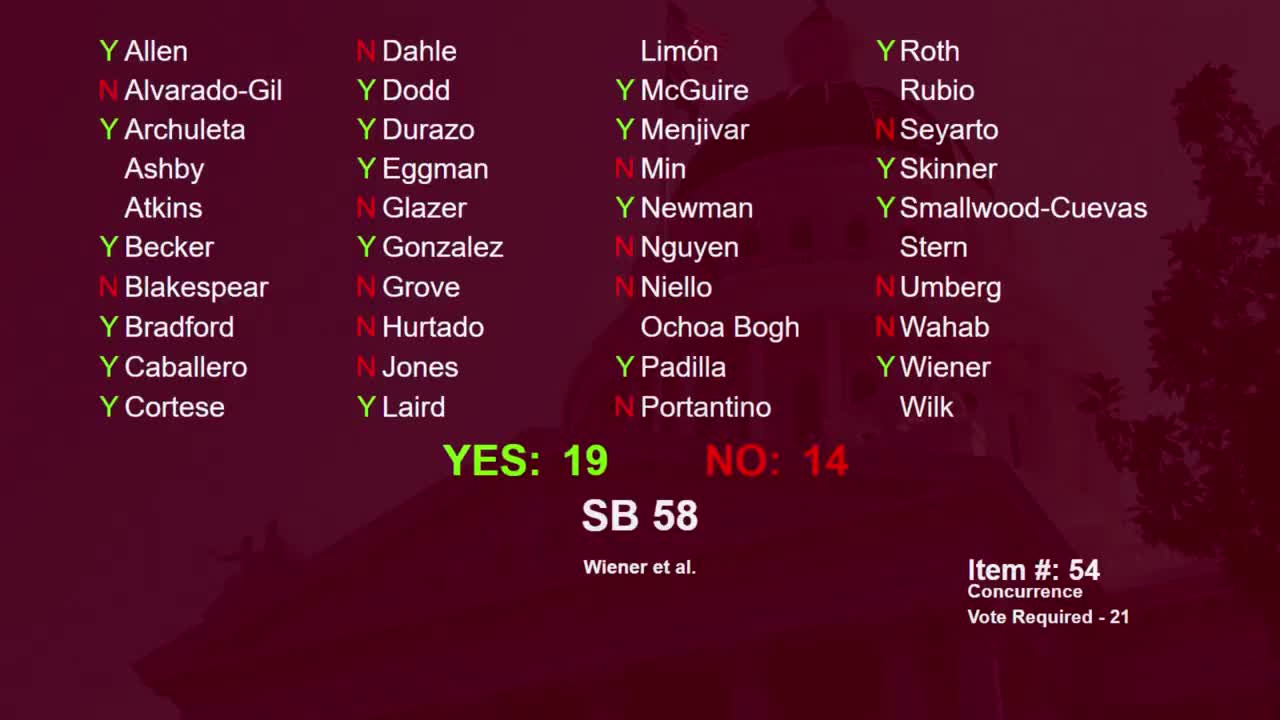
Bill Author