SB 370: California FAIR Plan Association.
- Session Year: 2023-2024
- House: Senate
- Latest Version Date: 2024-06-10
Current Status:
Failed
(2024-08-12: Ordered to third reading.)
Introduced
In Committee
First Chamber
In Committee
Second Chamber
Enacted
What does this bill do?
The bill requires insurance agents and brokers who help people obtain basic property insurance to give applicants the California FAIR Plan’s internet website and toll‑free number and also provide information about the Department of Insurance’s Home Insurance Finder. It also keeps the FAIR Plan’s duty to maintain an internet website and a statewide toll‑free telephone number for people seeking help.
The summary is provided by generative AI which can make mistakes. For original language, please view the details in the table below.
The California FAIR Plan Association is a joint reinsurance association in which all insurers licensed to write basic property insurance participate in administering a program for the equitable apportionment of basic property insurance for persons who are unable to obtain that coverage through normal channels. Existing law requires the association to establish and maintain an internet website and a statewide toll-free telephone number through which a person may receive assistance in applying for basic property insurance. Existing law requires an agent or broker transacting basic property insurance to assist a person seeking the agents or brokers help in obtaining basic property insurance coverage by, among other things, providing the person with the associations internet website and toll-free telephone number.
This bill would require an agent or broker to also provide a person seeking their help in obtaining basic property insurance coverage with information regarding the departments Home Insurance Finder in addition to the associations internet website and toll-free telephone number.
The Personal Income Tax Law and the Corporation Tax Law, in conformity with federal income tax law, generally defines gross income as income from whatever source derived, except as specifically excluded, and provides various exclusions from gross income.This bill would, for taxable years beginning on or after January 1, 2020, provide an exclusion from gross income for any qualified taxpayer, as defined, for amounts received in settlements associated with the 2019 Kincade Fire in the County of Sonoma, as provided.Existing law requires that any bill that would authorize certain tax expenditures contain, among other things, specific goals, purposes, and objectives that the tax expenditure or exemption will achieve, detailed performance indicators, and data collection requirements. This bill would include additional information required for any bill authorizing a new tax expenditure. The bill would make legislative findings and declarations regarding the public purpose served by this bill. This bill would declare that it is to take effect immediately as an urgency statute.The Personal Income Tax Law and the Corporation Tax Law, in conformity with federal income tax law, generally defines gross income as income from whatever source derived, except as specifically excluded, and provides various exclusions from gross income.
This bill would, for taxable years beginning on or after January 1, 2020, provide an exclusion from gross income for any qualified taxpayer, as defined, for amounts received for costs and losses in settlements associated with the 2019 Kincade Fire in the County of Sonoma, as provided.
Existing law establishes the continuously appropriated Tax Relief and Refund Account and provides that payments required to be made to taxpayers or other persons from the Personal Income Tax Fund are to be paid from that account. This bill would make an appropriation from the Tax Relief and Refund Account to the Franchise Tax Board in an amount necessary to make payments of refunds made necessary by the above-described exclusion.Existing law requires that any bill that would authorize certain tax expenditures contain, among other things, specific goals, purposes, and objectives that the tax expenditure or exemption will achieve, detailed performance indicators, and data collection requirements.
This bill would include additional information required for any bill authorizing a new tax expenditure.
This bill would apply its provisions to taxable years beginning before, on, and after the effective date of this bill. The
The bill would make legislative findings and declarations regarding the public purpose served by this bill.
This bill would declare that it is to take effect immediately as an urgency statute.
The Personal Income Tax Law and the Corporation Tax Law, in conformity with federal income tax law, generally defines gross income as income from whatever source derived, except as specifically excluded, and provides various exclusions from gross income.
This bill would, for taxable years beginning on or after January 1, 2020, provide an exclusion from gross income for any qualified taxpayer, as defined, for amounts received for costs and losses associated with the 2019 Kincade Fire in the County of Sonoma, as provided.
Existing law establishes the continuously appropriated Tax Relief and Refund Account and provides that payments required to be made to taxpayers or other persons from the Personal Income Tax Fund are to be paid from that account.
This bill would make an appropriation from the Tax Relief and Refund Account to the Franchise Tax Board in an amount necessary to make payments of refunds made necessary by the above-described exclusion.
Existing law requires that any bill that would authorize certain tax expenditures contain, among other things, specific goals, purposes, and objectives that the tax expenditure or exemption will achieve, detailed performance indicators, and data collection requirements.
This bill would include additional information required for any bill authorizing a new tax expenditure.
This bill would apply its provisions to taxable years beginning before, on, and after the effective date of this bill. The bill would make legislative findings and declarations regarding the public purpose served by this bill.
This bill would declare that it is to take effect immediately as an urgency statute.
(a)The association shall establish and maintain an Internet Web site internet website and a statewide toll-free telephone number through which a person may receive information and assistance in applying for insurance through the plan. The association shall cause the toll-free telephone number to be published in all general distribution telephone directories in the state and shall include the toll-free telephone number and Internet Web site internet website address on all communications with an applicant or insured.
(b)An insurance agent or broker transacting basic property insurance shall assist a person seeking his or her the agents or brokers help in obtaining basic property insurance coverage by any one of the following methods:
(1)Making an application for insurance through the plan by submitting an application at the persons request.
(2)Providing the person with the California FAIR Plans Internet Web site address and the toll-free telephone number. internet website, the toll-free telephone number, and information regarding the departments Home Insurance Finder.
(3)Making an application for insurance, at the persons request, and placing that person with or through an insurer that offers, or a surplus line broker that procures, basic property insurance coverage.
SECTION 1.The Legislature finds and declares as follows:(a)On October 23, 2019, the Kincade Fire ignited in the County of Sonoma. The Kincade Fire burned for nearly 14 days across 77,758 acres after it was first reported in The Geysers at 9:24 p.m. The fire destroyed over 370 structures. (b)The Kincade Fire was fully contained on November 6, 2019.(c)Since 2019, Pacific Gas and Electric Company has been involved in litigation with the victims of the Kincade Fire, and has entered into settlement agreements with many concerned.SEC. 2.Section 17139.2 is added to the Revenue and Taxation Code, to read:17139.2.(a)For taxable years beginning on or after January 1, 2020, gross income does not include any qualified amount received by a qualified taxpayer.(b)For purposes of this section:(1)Qualified amount means any amount received in settlement by a qualified taxpayer from a settlement entity in connection with the 2019 Kincade Fire.(2)Qualified taxpayer means any of the following:(A)Any taxpayer that owned real property located in the County of Sonoma during the 2019 Kincade Fire who paid and incurred expenses and received amounts from a settlement arising out of or pursuant to the 2019 Kincade Fire.(B)Any taxpayer that resided within the County of Sonoma during the 2019 Kincade Fire who paid and incurred expenses and received amounts from a settlement arising out of or pursuant to the 2019 Kincade Fire.(C)Any taxpayer that had a place of business within the County of Sonoma during the 2019 Kincade Fire who paid and incurred expenses and received amounts from a settlement arising out of or pursuant to the Kincade Fire.(3)Settlement entity means Pacific Gas and Electric Company or its subsidiary that is making the settlement payment to a qualified taxpayer.(c)The settlement entity shall provide, upon request by the Franchise Tax Board, documentation of the settlement payments in the form and manner requested by the Franchise Tax Board.(d)(1)For the purpose of complying with Section 41 in regards to the exclusion provided by this section and Section 24309.6, the Legislature finds and declares that the specific goal, purpose, and objective of the tax exclusion is to provide essential relief to individuals who have suffered injury, loss, inconvenience, and expenses resulting from the devastating 2019 Kincade Fire. (2)(A)On December 31, 2028, the Franchise Tax Board shall deliver to the Legislature a written report that includes both of the following: (i)The number of qualified taxpayers that excluded qualified amounts from gross income, as those terms are used in this section and Section 24309.6, as a result of the exclusion. (ii)The aggregate amount of those settlement payments arising out of the 2019 Kincade Fire. (B)The report required by this paragraph shall be delivered to the Legislature in compliance with Section 9795 of the Government Code. (C)The disclosure provisions of this subdivision shall be treated as an exception to Section 19542. (e)This section shall remain in effect only until December 1, 2028, and as of that date is repealed.SEC. 3.Section 24309.6 is added to the Revenue and Taxation Code, to read:24309.6.(a)For taxable years beginning on or after January 1, 2020, gross income does not include any qualified amount received by a qualified taxpayer.(b)For purposes of this section:(1)Qualified amount means any amount received in settlement by a qualified taxpayer from a settlement entity in connection with the 2019 Kincade Fire.(2)Qualified taxpayer means either of the following:(A)Any taxpayer that owned real property located in the County of Sonoma during the 2019 Kincade Fire who paid and incurred expenses and received amounts from a settlement arising out of or pursuant to the 2019 Kincade Fire.(B)Any taxpayer that had a place of business within the County of Sonoma during the 2019 Kincade Fire who paid and incurred expenses and received amounts from a settlement arising out of or pursuant to the 2019 Kincade Fire.(3)Settlement entity means Pacific Gas and Electric Company or its subsidiary that is making the settlement payment to a qualified taxpayer.(c)The settlement entity shall provide, upon request by the Franchise Tax Board, documentation of the settlement payments in the form and manner requested by the Franchise Tax Board.(d)This section shall remain in effect only until December 1, 2028, and as of that date is repealed.SEC. 4.The Legislature finds and declares that Sections 17139.2 and 24309.6 of the Revenue and Taxation Code, as added by this act, are necessary for the public purpose of preventing undue hardship to taxpayers who reside, or used to reside, in a part of California devastated by wildfires, and do not constitute a gift of public funds within the meaning of Section 6 of Article XVI of the California Constitution.SEC. 5.This act is an urgency statute necessary for the immediate preservation of the public peace, health, or safety within the meaning of Article IV of the California Constitution and shall go into immediate effect. The facts constituting the necessity are:In order to provide essential relief to those persons who have suffered injury, loss, inconvenience, and expenses resulting from the devastating 2019 Kincade Fire as soon as possible, it is necessary that this act take effect immediately.The Legislature finds and declares as follows:
(a)On October 23, 2019, the Kincade Fire ignited in the County of Sonoma. The Kincade Fire burned for nearly 14 days across 77,758 acres after it was first reported in The Geysers at 9:24 p.m. The fire destroyed over 370 structures.
(b)The Kincade Fire was fully contained on November 6, 2019.
(c)Since 2019, Pacific Gas and Electric Company has been involved in litigation with the victims of the Kincade Fire, and has entered into settlement agreements with many concerned.
SECTION 1.SEC. 2.Section 17139.2 is added to the Revenue and Taxation Code, to read:17139.2.(a)For taxable years beginning on or after January 1, 2020, gross income does not include any qualified amount received by a qualified taxpayer.
(b)For purposes of this section:
(1)Qualified amount means any amount received in settlement by a qualified taxpayer to replace property damaged or destroyed by from a settlement entity in connection with the 2019 Kincade Fire.
(2)Qualified taxpayer means any of the following:
(A)Any taxpayer that owned real property located in the County of Sonoma during the 2019 Kincade Fire who paid and incurred expenses and received amounts from a settlement arising out of or pursuant to the 2019 Kincade Fire.
(B)Any taxpayer that resided within the County of Sonoma during the 2019 Kincade Fire who paid and incurred expenses and received amounts from a settlement arising out of or pursuant to the 2019 Kincade Fire.
(C)Any taxpayer that had a place of business within the County of Sonoma during the 2019 Kincade Fire who paid and incurred expenses and received amounts from a settlement arising out of or pursuant to the Kincade Fire.
(3)Settlement entity means the entity Pacific Gas and Electric Company or its subsidiary that is making the settlement payment to a qualified taxpayer.
(c)The settlement entity shall provide, upon request by the Franchise Tax Board, documentation of the settlement payments in the form and manner requested by the Franchise Tax Board.
(d)(1)This section shall apply to taxable years beginning before, on, or after the effective date of the act adding this section. (2)There is hereby appropriated from the Tax Relief and Refund Account to the Franchise Tax Board an amount necessary to make payments of refunds made necessary by the exclusion provided by this section. (e)(d)(1)For the purpose of complying with Section 41 in regards to the exclusion provided by this section and Section 24309.6, the Legislature finds and declares that the specific goal, purpose, and objective of the tax exclusion is to provide essential relief to individuals who have suffered injury, loss, inconvenience, and expenses resulting from the devastating 2019 Kincade Fire.
(2)(A)On December 31, 2028, the Franchise Tax Board shall deliver to the Legislature a written report that includes both of the following:
(i)The number of qualified taxpayers that excluded qualified amounts from gross income, as those terms are used in this section and Section 24309.6, as a result of the exclusion.
(ii)The aggregate amount of those settlement payments arising out of the 2019 Kincade Fire.
(B)The report required by this paragraph shall be delivered to the Legislature in compliance with Section 9795 of the Government Code.
(C)The disclosure provisions of this subdivision shall be treated as an exception to Section 19542.
(f)(e)This section shall remain in effect only until December 1, 2028, and as of that date is repealed.
SEC. 2.SEC. 3.Section 24309.6 is added to the Revenue and Taxation Code, to read:24309.6.(a)For taxable years beginning on or after January 1, 2020, gross income does not include any qualified amount received by a qualified taxpayer.
(b)For purposes of this section:
(1)Qualified amount means any amount received in settlement by a qualified taxpayer to replace property damaged or destroyed by from a settlement entity in connection with the 2019 Kincade Fire.
(2)Qualified taxpayer means either of the following:
(A)Any taxpayer that owned real property located in the County of Sonoma during the 2019 Kincade Fire who paid and incurred expenses and received amounts from a settlement arising out of or pursuant to the 2019 Kincade Fire.
(B)Any taxpayer that had a place of business within the County of Sonoma during the 2019 Kincade Fire who paid and incurred expenses and received amounts from a settlement arising out of or pursuant to the 2019 Kincade Fire.
(3)Settlement entity means the entity Pacific Gas and Electric Company or its subsidiary that is making the settlement payment to a qualified taxpayer.
(c)The settlement entity shall provide, upon request by the Franchise Tax Board, documentation of the settlement payments in the form and manner requested by the Franchise Tax Board.
(d)(1)This section shall apply to taxable years beginning before, on, or after the effective date of the act adding this section. (2)There is hereby appropriated from the Tax Relief and Refund Account to the Franchise Tax Board an amount necessary to make payments of refunds made necessary by the exclusion provided by this section. (e)(d)This section shall remain in effect only until December 1, 2028, and as of that date is repealed.
SEC. 3.SEC. 4.The Legislature finds and declares that Sections 17139.2 and 24309.6 of the Revenue and Taxation Code, as added by this act, are necessary for the public purpose of preventing undue hardship to taxpayers who reside, or used to reside, in a part of California devastated by wildfires, and do not constitute a gift of public funds within the meaning of Section 6 of Article XVI of the California Constitution.
SEC. 4.SEC. 5.This act is an urgency statute necessary for the immediate preservation of the public peace, health, or safety within the meaning of Article IV of the California Constitution and shall go into immediate effect. The facts constituting the necessity are:
In order to provide essential relief to those persons who have suffered injury, loss, inconvenience, and expenses resulting from the devastating 2019 Kincade Fire as soon as possible, it is necessary that this act take effect immediately.
(a)For taxable years beginning on or after January 1, 2020, gross income does not include any qualified amount received by a qualified taxpayer.
(b)For purposes of this section:
(1)Qualified amount means any amount received in settlement by a qualified taxpayer to replace property damaged or destroyed by the 2019 Kincade Fire.
(2)Qualified taxpayer means any of the following:
(A)Any taxpayer that owned real property located in the County of Sonoma during the 2019 Kincade Fire who paid and incurred expenses and received amounts from a settlement arising out of or pursuant to the 2019 Kincade Fire.
(B)Any taxpayer that resided within the County of Sonoma during the 2019 Kincade Fire who paid and incurred expenses and received amounts from a settlement arising out of or pursuant to the 2019 Kincade Fire.
(C)Any taxpayer that had a place of business within the County of Sonoma during the 2019 Kincade Fire who paid and incurred expenses and received amounts from a settlement arising out of or pursuant to the Kincade Fire.
(3)Settlement entity means the entity making the settlement payment to a qualified taxpayer.
(c)The settlement entity shall provide, upon request by the Franchise Tax Board, documentation of the settlement payments in the form and manner requested by the Franchise Tax Board.
(d)(1)This section shall apply to taxable years beginning before, on, or after the effective date of the act adding this section.
(2)There is hereby appropriated from the Tax Relief and Refund Account to the Franchise Tax Board an amount necessary to make payments of refunds made necessary by the exclusion provided by this section.
(e)(1)For the purpose of complying with Section 41 in regards to the exclusion provided by this section and Section 24309.6, the Legislature finds and declares that the specific goal, purpose, and objective of the tax exclusion is to provide essential relief to individuals who have suffered injury, loss, inconvenience, and expenses resulting from the devastating 2019 Kincade Fire.
(2)(A)On December 31, 2028, the Franchise Tax Board shall deliver to the Legislature a written report that includes both of the following:
(i)The number of qualified taxpayers that excluded qualified amounts from gross income, as those terms are used in this section and Section 24309.6, as a result of the exclusion.
(ii)The aggregate amount of those settlement payments arising out of the 2019 Kincade Fire.
(B)The report required by this paragraph shall be delivered to the Legislature in compliance with Section 9795 of the Government Code.
(C)The disclosure provisions of this subdivision shall be treated as an exception to Section 19542.
(f)This section shall remain in effect only until December 1, 2028, and as of that date is repealed.
SEC. 2.Section 24309.6 is added to the Revenue and Taxation Code, to read:24309.6.(a)For taxable years beginning on or after January 1, 2020, gross income does not include any qualified amount received by a qualified taxpayer.
(b)For purposes of this section:
(1)Qualified amount means any amount received in settlement by a qualified taxpayer to replace property damaged or destroyed by the 2019 Kincade Fire.
(2)Qualified taxpayer means either of the following:
(A)Any taxpayer that owned real property located in the County of Sonoma during the 2019 Kincade Fire who paid and incurred expenses and received amounts from a settlement arising out of or pursuant to the 2019 Kincade Fire.
(B)Any taxpayer that had a place of business within the County of Sonoma during the 2019 Kincade Fire who paid and incurred expenses and received amounts from a settlement arising out of or pursuant to the 2019 Kincade Fire.
(3)Settlement entity means the entity making the settlement payment to a qualified taxpayer.
(c)The settlement entity shall provide, upon request by the Franchise Tax Board, documentation of the settlement payments in the form and manner requested by the Franchise Tax Board.
(d)(1)This section shall apply to taxable years beginning before, on, or after the effective date of the act adding this section.
(2)There is hereby appropriated from the Tax Relief and Refund Account to the Franchise Tax Board an amount necessary to make payments of refunds made necessary by the exclusion provided by this section.
(e)This section shall remain in effect only until December 1, 2028, and as of that date is repealed.
SEC. 3.The Legislature finds and declares that Sections 17139.2 and 24309.6 of the Revenue and Taxation Code, as added by this act, are necessary for the public purpose of preventing undue hardship to taxpayers who reside, or used to reside, in a part of California devastated by wildfires, and do not constitute a gift of public funds within the meaning of Section 6 of Article XVI of the California Constitution.
SEC. 4.This act is an urgency statute necessary for the immediate preservation of the public peace, health, or safety within the meaning of Article IV of the California Constitution and shall go into immediate effect. The facts constituting the necessity are:
In order to provide essential relief to those persons who have suffered injury, loss, inconvenience, and expenses resulting from the devastating 2019 Kincade Fire as soon as possible, it is necessary that this act take effect immediately.
|
Date
|
Status
|
|---|---|
| Aug 12, 2024 | Ordered to third reading. |
| Aug 12, 2024 | From consent calendar on motion of Assembly Member Aguiar-Curry. |
| Aug 8, 2024 | Read second time. Ordered to consent calendar. |
| Aug 7, 2024 | From committee: Do pass. Ordered to consent calendar. (Ayes 14. Noes 0.) (August 7). |
| Jun 26, 2024 | From committee: Do pass and re-refer to Com. on APPR. (Ayes 14. Noes 0.) (June 26). Re-referred to Com. on APPR. |
| Jun 13, 2024 | Re-referred to Com. on INS. pursuant to Assembly Rule 96. |
| Jun 10, 2024 | From committee with author's amendments. Read second time and amended. Re-referred to Com. on REV. & TAX. |
| Jun 26, 2023 | June 26 set for first hearing canceled at the request of author. |
| Jun 8, 2023 | Referred to Com. on REV. & TAX. |
| May 25, 2023 | In Assembly. Read first time. Held at Desk. |
| May 25, 2023 | Read third time. Urgency clause adopted. Passed. (Ayes 40. Noes 0. Page 1299.) Ordered to the Assembly. |
| May 23, 2023 | Ordered to special consent calendar. |
| May 18, 2023 | Read second time. Ordered to third reading. |
| May 18, 2023 | From committee: Do pass. (Ayes 7. Noes 0. Page 1168.) (May 18). |
| May 12, 2023 | Set for hearing May 18. |
| Apr 24, 2023 | April 24 hearing: Placed on APPR suspense file. |
| Apr 14, 2023 | Set for hearing April 24. |
| Apr 12, 2023 | From committee: Do pass and re-refer to Com. on APPR with recommendation: To consent calendar. (Ayes 8. Noes 0. Page 683.) (April 12). Re-referred to Com. on APPR. |
| Mar 28, 2023 | From committee with author's amendments. Read second time and amended. Re-referred to Com. on GOV. & F. |
| Mar 21, 2023 | Set for hearing April 12. |
| Feb 22, 2023 | Referred to Com. on GOV. & F. |
| Feb 10, 2023 | From printer. May be acted upon on or after March 12. |
| Feb 9, 2023 | Introduced. Read first time. To Com. on RLS. for assignment. To print. |
|
Date
|
Description
|
Location
|
Votes
|
|
|---|---|---|---|---|
| Aug 7, 2024 | Do pass. To Consent Calendar. | Assembly Standing Committee on Appropriations |
Passed |
|
| Jun 26, 2024 | Do pass and be re-referred to the Committee on [Appropriations] | Assembly Standing Committee on Insurance |
Passed |
|
| May 25, 2023 | Special Consent SB370 McGuire et al. Urgency Clause | Senate Floor |
Passed |
|
| May 18, 2023 | Do pass | Senate Standing Committee on Appropriations |
Passed |
|
| Apr 24, 2023 | Placed on suspense file | Senate Standing Committee on Appropriations |
Passed |
|
| Apr 12, 2023 | Do pass, but first be re-referred to the Committee on [Appropriations] with the recommendation: To Consent Calendar | Senate Standing Committee on Governance and Finance |
Passed |
This list shows positions taken on this bill by organizations on the date displayed, which is linked to the original source.
Positions by individuals are not included.
|
Organization
|
Position
|
Date
|
|---|---|---|
| California Farm Bureau Federation | ** Support | |
| City of Santa Rosa | ** Support | |
| Consumer Attorneys Of California | ** Support | |
| County of Sonoma | ** Support | |
| Howard Jarvis Taxpayers Association | ** Support | |
| Rural County Represenatatives of California | * Support | Jun 26, 2024 |
| The California FAIR Plan | * Neutral | Jun 26, 2024 |
SENATE THIRD READING
STR Bill Id:SB 370
Author:(Gonzalez)
As Amended Ver:June 10, 2024
Majority vote
SUMMARY
Requires an agent or broker to provide a person seeking basic property insurance coverage with information regarding the California Department of Insurance (CDI) Home Insurance Finder.
Major Provisions
COMMENTS
- Purpose: According to the author: "As California's insurance market continues to bear the severe impacts of extreme weather and wildfire destruction across the state, homeowners must be aware of all the tools at their disposal to help get the insurance coverage they need. SB 370 enhances the public’s awareness of available insurance coverage options by requiring insurance agents and brokers to provide homeowners with information on the existing California Home Insurance Finder Tool when they provide information about the FAIR Plan. By bridging this gap of information, this bill will help ensure homeowners are empowered to make better-informed decisions to meet their insurance needs."
- Background: The FAIR Plan is an "association" of all licensed insurance companies by CDI that provides basic property insurance in California. It was created in 1968, following urban disturbances, notably the Watts Riots in Los Angeles.
Simply stated, the purpose of the FAIR Plan is to be the "insurer of last resort" for "basic" property insurance in the event of a market failure. At inception, that was essentially urban commercial property. Ultimately, it has expanded to include homeowners' insurance anywhere in the state, provided that the insurance "cannot be obtained" in the normal manner in the market. The FAIR Plan is not intended to compete with the voluntary market.
The FAIR Plan was established to ensure that urban property owners, mostly businesses, would have "fair access" to the property insurance necessary to continue to operate in a market that insurers viewed as too risky to cover. That risk evaluation resulted in a substantial market withdrawal by insurers from the urban property market. Despite its initial creation as an urban/business "insurer of last resort," the FAIR Plan expanded to provide coverage in "designated" brush fire regions of the state. It operated fairly well in this manner until the mid-1990's, when, as a consequence of the genuine homeowners' insurance crisis that followed the Northridge earthquake in 1994, the entire state was designated as the appropriate FAIR Plan coverage region.
By statute, the FAIR Plan policy is not as broad as traditional homeowners' policies, it is nonetheless a fully sound and guaranteed policy that satisfies lenders’ security requirements and protects the property against the primary risk factor faced by homeowners, which is fire. Other coverages are readily available in the market (typically through the purchase of a "difference-in-conditions" or "DIC" policy), which provides wraparound coverage that, coupled with a FAIR Plan policy, results in the same protection provided by a standard homeowner's policy. Because the FAIR plan's role is to provide coverage when the regular market won't, it is not the role of the FAIR Plan to provide DIC policies when there is a healthy market for those policies.
- California Home Insurance Finder Tool: The Home Insurance Finder Tool was created via statute in 2018 (AB 1875 Wood). The measure tasked CDI with creating and maintaining this consumer tool. In response to increasing reports of homeowners being declined coverage or not having their existing coverage renewed, more attention has been focused on how to connect homeowners with insurers offering coverage in their area. The insurance finder tool was inspired by a group in Placer County that built an online database of insurers offering coverage to homes in their area to help local homeowners find coverage without conducting their own search. The home insurance finder is intended to help homeowners navigate a changing insurance market.
According to the Author
As California's insurance market continues to bear the severe impacts of extreme weather and wildfire destruction across the state, homeowners must be aware of all the tools at their disposal to help get the insurance coverage they need. SB 370 enhances the public's awareness of available insurance coverage options by requiring insurance agents and brokers to provide homeowners with information on the existing California Home Insurance Finder Tool when they provide information about the FAIR Plan.
Arguments in Support
According to the Rural County Representatives of California (RCRC), "we support Senate Bill 370, authored by Senator Lena Gonzalez. This measure requires insurance agents and brokers to provide customers seeking help obtaining basic property insurance with information regarding the Home Insurance Finder, a free tool provided by the California Department of Insurance (CDI). RCRC is an association of forty rural California counties and the RCRC Board of Directors is comprised of elected supervisors from each of those member counties."
Arguments in Opposition
None on file.
FISCAL COMMENTS
According to the Assembly Appropriations Committee, costs of approximately $20,000 in fiscal years 2024-25 and 2025-26 to CDI to promulgate regulations and ensure compliance (Insurance Fund).
VOTES
SENATE FLOOR: 40-0-0
YES: Allen, Alvarado-Gil, Archuleta, Ashby, Atkins, Becker, Blakespear, Bradford, Caballero, Cortese, Dahle, Dodd, Durazo, Eggman, Glazer, Gonzalez, Grove, Hurtado, Jones, Laird, Limón, McGuire, Menjivar, Min, Newman, Nguyen, Niello, Ochoa Bogh, Padilla, Portantino, Roth, Rubio, Seyarto, Skinner, Smallwood-Cuevas, Stern, Umberg, Wahab, Wiener, Wilk
ASM INSURANCE: 14-0-1
YES: Calderon, Chen, Bauer-Kahan, Berman, McKinnor, Lee, Lowenthal, Ortega, Joe Patterson, Petrie-Norris, Blanca Rubio, Valencia, Wallis, Wood
ABS, ABST OR NV: Alvarez
ASM APPROPRIATIONS: 14-0-1
YES: Wicks, Sanchez, Arambula, Bryan, Calderon, Wendy Carrillo, Dixon, Mike Fong, Grayson, Haney, Hart, Jim Patterson, Pellerin, Ta
ABS, ABST OR NV: Villapudua
UPDATED
VERSION: June 10, 2024
CONSULTANT: Kathleen O'Malley / INS. / (916) 319-2086 FN: 0003826
Date of Hearing: August 7, 2024
ASSEMBLY COMMITTEE ON APPROPRIATIONS
Buffy Wicks, Chair
SBPCA Bill Id:SB 370
Author:(Gonzalez) – As Amended Ver:June 10, 2024
Policy Committee: | Insurance | Vote: | 14 - 0 |
|
| ||
|
|
Urgency: No State Mandated Local Program: No Reimbursable: No
SUMMARY:
This bill requires, under certain circumstances, an insurance agent or broker to provide a person with information regarding the California Department of Insurance’s (CDI’s) Home Insurance Finder tool.
FISCAL EFFECT:
Costs of approximately $20,000 in fiscal years 2024-25 and 2025-26 to CDI to promulgate regulations and ensure compliance (Insurance Fund).
COMMENTS:
- Purpose. According to the author:
As California’s insurance market continues to bear the severe impacts of extreme weather and wildfire destruction across the state, homeowners must be aware of all the tools at their disposal to help get the insurance coverage they need. SB 370 enhances the public’s awareness of available insurance coverage options by requiring insurance agents and brokers to provide homeowners with information on the existing California Home Insurance Finder Tool when they provide information about the [California FAIR Plan Association (FAIR Plan)].
This bill is supported by the Rural County Representatives of California.
- Home Insurance Finder Tool. AB 1875 (Wood), Chapter 629, Statutes of 2018, tasked CDI with creating and maintaining an online database of insurers offering coverage to homes within a certain area. The tool allows a consumer to search insurance companies and licensed agents and brokers who have been identified to sell insurance to cover homeowners, renters, condominiums, or mobile homes, including a filter to narrow the search to insurance companies that may write policies in higher fire risk areas.
Existing law requires an insurance agent or broker to assist a person seeking basic property insurance coverage by following certain methods. If the agent satisfies this requirement by providing the person with the FAIR Plan’s website and telephone number, this bill requires the agent to also provide the person with Home Insurance Finder tool information.
- Related Legislation. AB 2260 (Calderon) requires a broker of record of a policy placed in the FAIR Plan to determine, prior to the renewal of the policy, whether the policy can be moved to an insurer in the voluntary market. AB 2260 is pending hearing in the Senate Insurance Committee.
Analysis Prepared by: Irene Ho / APPR. / (916) 319-2081
Date of Hearing: June 26, 2024
ASSEMBLY COMMITTEE ON INSURANCE
Lisa Calderon, Chair
SBPCA Bill Id:SB 370
Author:(Gonzalez) – As Amended Ver:June 10, 2024
SENATE VOTE: Vote not relevant
SUBJECT: California FAIR Plan Association
SUMMARY: Requires an agent or broker to provide a person seeking basic property insurance coverage with information regarding the California Department of Insurance (CDI) Home Insurance Finder.
EXISTING LAW:
- States that the Fair Access to Insurance Requirements (FAIR) Plan was established to assure stability, to assure the availability, to encourage maximum use, and to provide for equitable distribution among admitted insurers of the responsibility for insuring qualified property for which basic property insurance cannot be obtained through the normal insurance market. (Insurance (Ins) Code, Section 10090)
- Specifies that rates for the FAIR Plan shall not be excessive, inadequate, or unfairly discriminatory, and shall be actuarially sound so that premiums are adequate to cover expected losses, expenses and taxes, and shall reflect investment income of the plan. (Ins. Code, Section 10100.2)
- Requires the Insurance Commissioner to establish the California Home Insurance Finder on CDI’s website. The purpose of the finder is to connect homeowners in need of insurance assistance to an insurance agent or broker to assist in finding residential property insurance. (Ins. Code, Section 10095.7)
- Requires an insurance agent or broker transacting basic property insurance to assist a person in obtaining basic property insurance coverage by any one of the following methods:
- Making an application for insurance through the plan by submitting an application at the person’s request; or,
- Providing the person with the FAIR Plan’s Internet Web site address and the toll-free telephone number; or,
- Making an application for insurance, at the person’s request, and placing that person with or through an insurer that offers, or a surplus line broker that procures basic property insurance coverage. (Ins. Code, Section 10095.5)
FISCAL EFFECT: Unknown
COMMENTS:
- Purpose: According to the author: “As California’s insurance market continues to bear the severe impacts of extreme weather and wildfire destruction across the state, homeowners must be aware of all the tools at their disposal to help get the insurance coverage they need. SB 370 enhances the public’s awareness of available insurance coverage options by requiring insurance agents and brokers to provide homeowners with information on the existing California Home Insurance Finder Tool when they provide information about the FAIR Plan. By bridging this gap of information, SB 370 will help ensure homeowners are empowered to make better-informed decisions to meet their insurance needs.”
- Background: The FAIR Plan is an “association” of all licensed insurance companies by CDI that provides basic property insurance in California. It was created in 1968, following urban disturbances, notably the Watts Riots in Los Angeles.
Simply stated, the purpose of the FAIR Plan is to be the “insurer of last resort” for “basic” property insurance in the event of a market failure. At inception, that was essentially urban commercial property. Ultimately, it has expanded to include homeowners’ insurance anywhere in the state, provided that the insurance “cannot be obtained” in the normal manner in the market. The FAIR Plan is not intended to compete with the voluntary market.
The FAIR Plan was established to ensure that urban property owners, mostly businesses, would have “fair access” to the property insurance necessary to continue to operate in a market that insurers viewed as too risky to cover. That risk evaluation resulted in a substantial market withdrawal by insurers from the urban property market. Despite its initial creation as an urban/business “insurer of last resort,” the FAIR Plan expanded to provide coverage in “designated” brush fire regions of the state. It operated fairly well in this manner until the mid-1990’s, when, as a consequence of the genuine homeowners’ insurance crisis that followed the Northridge earthquake in 1994, the entire state was designated as the appropriate FAIR Plan coverage region.
By statute, the FAIR Plan policy is not as broad as traditional homeowners’ policies, it is nonetheless a fully sound and guaranteed policy that satisfies lenders’ security requirements and protects the property against the primary risk factor faced by homeowners, which is fire. Other coverages are readily available in the market (typically through the purchase of a “difference-in-conditions” or “DIC” policy), which provides wraparound coverage that, coupled with a FAIR Plan policy, results in the same protection provided by a standard homeowner’s policy. Because the FAIR plan’s role is to provide coverage when the regular market won’t, it is not the role of the FAIR Plan to provide DIC policies when there is a healthy market for those policies.
- California Home Insurance Finder Tool: The Home Insurance Finder Tool was created via statute in 2018 (AB 1875 Wood). The measure tasked CDI with creating and maintaining this consumer tool. In response to increasing reports of homeowners being declined coverage or not having their existing coverage renewed, more attention has been focused on how to connect homeowners with insurers offering coverage in their area. The insurance finder tool was inspired by a group in Placer County that built an online database of insurers offering coverage to homes in their area to help local homeowners find coverage without conducting their own search. The home insurance finder is intended to help homeowners navigate a changing insurance market.
- Related Legislation: AB 1844 (Calderon) This bill requires the Speaker of the Assembly and the Chairperson of the Senate Committee on Rules to serve as nonvoting, ex officio members of the governing committee, and would authorize each to name a designee to serve in their place. Pending before the Senate Insurance Committee.
AB 2260 (Calderon) This bill requires the FAIR Plan, until December 31, 2027, to quarterly provide specified information about policies and clearinghouse program progress to the relevant policy committees of the Legislature and to post the information on the association’s public internet website. Pending before the Senate Insurance Committee.
- Previous Legislation: AB 1875 (Wood) (Chaptered by Secretary of State, Chapter 629, Statutes of 2018) Required CDI to develop a homeowner's insurance finder tool.
SB 1302 (McGuire) (Chaptered by Secretary of State. Chapter 543, Statutes of 2016) Required insurers admitted to sell property insurance in the state to provide the FAIR Plan Internet Web site address and statewide toll-free telephone number to an applicant for insurance who is denied coverage, or a policyholder whose policy is canceled or non-renewed; required the FAIR Plan to establish and maintain an Internet Web site through which a person may receive information and assistance in applying for insurance; required an insurance agent or broker transacting basic property insurance to assist a person in making an application for insurance through the FAIR Plan, another insurer offering coverage, or provide the person with the FAIR Plan Web site and phone number.
- Gut and amend: This measure was substantially amended on June 10, 2024 and the contents are now in the purview of the Assembly Insurance Committee. Should the contents evolve further, the committee retains the right to call the bill back.
REGISTERED SUPPORT / OPPOSITION:
Support
None on file.
Opposition
None on file.
Analysis Prepared by: Kathleen O'Malley / INS. / (916) 319-2086
SENATE RULES COMMITTEE Office of Senate Floor Analyses (916) 651-1520 Fax: (916) 327-4478 | SB 370 |
THIRD READING
Bill No: SB 370
Author: McGuire (D), et al.
Amended: 3/28/23
Vote: 27 - Urgency
SENATE GOVERNANCE & FIN. COMMITTEE: 8-0, 4/12/23
AYES: Caballero, Seyarto, Blakespear, Dahle, Durazo, Glazer, Skinner, Wiener
SENATE APPROPRIATIONS COMMITTEE: 7-0, 5/18/23
AYES: Portantino, Jones, Ashby, Bradford, Seyarto, Wahab, Wiener
SUBJECT: Personal Income Tax Law: Corporation Tax Law: wildfires: exclusions
SOURCE: Author
DIGEST:
This bill excludes settlement payments made in connection with the 2019 Kincade Fire from gross income for state tax purposes.
ANALYSIS:
Existing law:
- Allows various income tax credits, deductions, exemptions, and exclusions.
- Includes, in conformity with federal law, as gross income all income from any source, including compensation for services, business income, gains from property, interest, dividends, rents, and royalties, unless specifically excluded.
- Excludes from gross income amounts received as a gift or inheritance, certain compensation for injuries and sickness, qualified scholarships, educational assistance programs, foster care payments, and interest received on certain state or federal obligations.
- Excludes from gross income of amounts received in a settlement, other than punitive damages, which result from personal physical injuries or physical sickness.
- Excludes from gross income payments received as a reimbursement of costs, such as insurance payments to rebuild a destroyed home, but includes amounts resulting from emotional distress when calculating gross income, unless the emotional distress is the result of physical injury or sickness.
- Does not specifically exclude amounts received from a specified fire settlement from gross income.
This bill:
- Excludes from gross income under the Personal Income and Corporation Taxes any amount received in settlement by a qualified taxpayer from Pacific Gas and Electric Company (PG&E) in settlement claims related to the 2019 Kincade fire from gross income.
- Applies to the 2020 taxable year and thereafter.
- Requires PG&E or its subsidiary to provide to the Franchise Tax Board, upon request, any documentation of the settlement payments in the form and manner requested by the Franchise Tax Board.
- Defines a “qualified taxpayer” as a taxpayer that owned real property or resided in either the County of Sonoma and received a settlement payment from PG&E in connection with the 2019 Kincade fire, and paid or incurred expense related to that fire.
- Makes legislative findings and declarations supporting its purposes, including those to comply with Section 41 of the Revenue and Taxation Code, and that its provisions do not constitute a gift of public funds.
- Contains an urgency clause.
Background
California Fires. Over the last decade, California has experienced increased, intense, and record-breaking wildfires throughout the state. These fires have resulted in devastating loss of life and billions of dollars in damage to property and infrastructure. Fires attributed to power lines and electrical equipment comprise nine of the 20 most destructive fires in California history. According to Cal Fire, in 2022 alone there were over 7,490 incidents and over 362,000 acres of scorched land. In 2021, wildfire destroyed 2.5 million acres. According to CalFire, the Kincade fire burned 77,758 acres, destroyed 374 structures and injured four people, and was caused by PG&E.
FISCAL EFFECT: Appropriation: No Fiscal Com.: Yes Local: No
According to the Senate Appropriations Committee, the Franchise Tax Board (FTB) estimates that the bill would result in General Fund revenue losses of $17 million in 2023-24, $1.4 million in 2024-25, and $50,000 in 2025-26. FTB’s costs to implement the bill have yet to be determined.
SUPPORT: (Verified 5/18/23)
California Farm Bureau Federation
City of Santa Rosa
Consumer Attorneys of California
County of Sonoma
Howard Jarvis Taxpayers Association
OPPOSITION: (Verified 5/18/23)
None received
ARGUMENTS IN SUPPORT: According to the author, “The Kincade Fire was massive and horribly destructive. Hundreds of neighbors lost everything. PG&E victimized these survivors once, they shouldn’t have to suffer again. The guts of this bill are simple, but incredibly important: The legislation would eliminate all state taxes on Kincade Fire PG&E settlement funds putting millions back into the pockets of deserving survivors. Right now, existing law makes wildfire settlement payments subject to taxation here in California. This can’t stand and we’re going to fight to get survivors every penny possible so they can rebuild their homes and lives.”
Prepared by: Colin Grinnell / GOV. & F. / (916) 651-4119
5/20/23 12:44:42
**** END ****
SENATE COMMITTEE ON
Senator Anthony Portantino, Chair
2023 - 2024 Regular Session
SB 370 (McGuire) - Personal Income Tax Law: Corporation Tax Law: wildfires: exclusions
Version: | Policy Vote: |
Urgency: | Mandate: |
Hearing Date: | Consultant: |
Bill Summary:
SB 370 would exclude from taxable income settlement payments made in connection with the 2019 Kincade Fire.
Fiscal Impact:
The Franchise Tax Board (FTB) estimates that the bill would result in General Fund revenue losses of $17 million in 2023-24, $1.4 million in 2024-25, and $50,000 in 2025-26. FTB’s costs to implement the bill have yet to be determined.
Background:
Tax expenditure programs (TEPs) are special tax provisions that reduce the amount of revenues the “basic” tax system would otherwise generate in order to provide (1) benefits to certain groups of taxpayers, and/or (2) incentives to encourage certain types of behavior and activities, such as charitable giving. Specifically, current law provides for, among other things, various income and corporation tax credits and deductions, as well as exemptions from the sales and use tax. The Department of Finance is required to publish a list of TEPs (currently totaling several hundred), which currently exceed $87 billion annually.
Current federal and state laws provide that gross income includes all income from any source, including compensation for services, business income, gains from property, interest, dividends, rents, and royalties, unless specifically excluded. Current federal and state laws do not specifically exclude amounts received from a specified fire settlement from gross income.
Generally, federal and state law allows for the exclusion from gross income of amounts received in a settlement, other than punitive damages, which result from personal physical injuries or physical sickness. Additionally, payments received as a reimbursement of costs, for example paid to rebuild a destroyed home, are excluded from gross income. However, amounts resulting from emotional distress are included when calculating gross income, unless the emotional distress is the result of physical injury or sickness. In some cases, federal and state law require inclusion of attorney's fees resulting from a settlement in the calculation of gross income. To the extent that any settlement payment exceeds costs incurred or paid in connection with the event that caused the settlement, that income may be taxable.
The Kincade Fire burned in Sonoma County in 2019. Data from the California Department of Forestry and Fire Protection (CAL-FIRE) indicate that the fire burned 77,758 acres, destroyed 374 structures, and resulted in four injuries. It was caused by Pacific Gas and Electric (PG&E).
Proposed Law:
This bill would, among other things, do the following:
- Exclude from gross income for state tax purposes any amount received in settlement by a qualified taxpayer, as defined, from PG&E in settlement claims related to the 2019 Kincade fire. This income would be excluded for both Personal Income Tax (PIT) and Corporation taxpayers, and would be operative beginning taxable year 2020.
- Require the qualified taxpayer to provide documentation of the settlement payment received to FTB upon request.
- Require FTB to deliver to the Legislature a written report that includes (1) the number of qualified taxpayers who received a settlement payment in relation to the Kincade fire, and (2) the aggregate amount of those payments.
Related Legislation:
- SB 542 (Dahle) would provide to qualified taxpayers an exclusion from gross income for amounts received in settlement for claims relating to the 2020 Zogg Fire. This bill is currently pending in this Committee.
- AB 294 (Petrie-Norris) would provide a qualified taxpayer an exclusion from gross income for amounts received in settlement for a wildfire or natural disaster. This bill is currently pending in the Assembly Revenue and Taxation Committee.
- SB 1246 (Stern, Chapter 841, Statutes of 2022) provides, to qualified taxpayers, an exclusion from gross income for amounts received from Southern California Edison in settlement for claims relating to the 2017 Thomas Fire or the 2018 Woolsey Fire and allows refunds of tax previously paid on those amounts.
- AB 1249 (Gallagher, Chapter 749, Statutes of 2022) provides an exclusion from gross income for amounts received in settlement under the order of the United States Bankruptcy Court for the Northern District of California dated June 20, 2020, case number19-30088, docket number 8053.
-- END --
SENATE COMMITTEE ON GOVERNANCE AND FINANCE
Senator Anna M. Caballero, Chair
2023 - 2024 Regular
Bill No: | SB 370 | Hearing Date: | 4/12/23 |
Author: | McGuire | Tax Levy: | No |
Version: | 3/28/23 Amended | Fiscal: | Yes |
Consultant: | Deitchman | ||
Personal Income Tax Law: Corporation Tax Law: wildfires: exclusions
Excludes settlement payments made in connection with the 2019 Kincade Fire from taxable income.
Background
Tax expenditures. California law allows various income tax credits, deductions, exemptions, and exclusions. The Legislature enacts such tax incentives either to compensate taxpayers for incurring certain expenses, such as child adoption, or to influence certain behavior, such as charitable giving. The Legislature uses tax incentives to encourage taxpayers to do something that they would otherwise not do, but for the tax credit. The Department of Finance is required annually to publish a list of state tax expenditures, currently totaling around $87 billion per year.
Income. Existing federal and state laws provide that gross income includes all income from any source, including compensation for services, business income, gains from property, interest, dividends, rents, and royalties, unless specifically excluded. Existing federal and state laws provide that certain types of income are excluded from gross income, such as amounts received as a gift or inheritance, certain compensation for injuries and sickness, qualified scholarships, educational assistance programs, foster care payments, and interest received on certain state or federal obligations. Current federal and state laws do not specifically exclude amounts received from a specified fire settlement from gross income.
Treatment of settlement awards. Generally, federal and state law allows for the exclusion from gross income of amounts received in a settlement, other than punitive damages, which result from personal physical injuries or physical sickness. Additionally, payments received as a reimbursement of costs, for example those paid to rebuild a destroyed home, are excluded from gross income. However, amounts resulting from emotional distress are included when calculating gross income, unless the emotional distress is the result of physical injury or sickness. In some cases, federal and state law requires inclusion of attorney's fees resulting from a settlement in the calculation of gross income. To the extent that any settlement payment exceeds costs incurred or paid in connection with the event that caused the settlement, that income may be taxable.
California Fires. Over the last decade, California has experienced increased, intense, and record-breaking wildfires throughout the state. These fires have resulted in devastating loss of life and billions of dollars in damage to property and infrastructure. Fires attributed to power lines and electrical equipment comprise nine of the 20 most destructive fires in California history. According to Cal Fire, in 2022 alone there were over 7,490 incidents and over 362,000 million acres of scorched land. In 2021, wildfire destroyed 2.5 million acres. [1]
According to CalFire, the Kincade fire burned 77,758 acres, destroyed 374 structures and injured four people, and was caused by Pacific Gas and Electric Company. Seeking to provide relief to those residents and owners impacted by the Kincade fire, the author wants to exclude settlement payments made in connection with the fire from taxable income.
Proposed Law
Senate Bill 370 excludes from gross income for state tax purposes any amount received in settlement by a qualified taxpayer from Pacific Gas and Electric Company (PG&E) in settlement claims related to the 2019 Kincade fire from gross income. This income is excluded for both Personal Income Tax (PIT) and Corporation taxpayers and is operative for taxable years after January 1, 2020.
The bill defines a “qualified taxpayer” as a taxpayer that owned real property or resided in either the County of Sonoma and received a settlement payment from PG&E in connection with the 2019 Kincade fire, and paid or incurred expense related to that fire.
The measure requires the qualified taxpayer to provide documentation of the settlement payment received to the Franchise Tax Board (FTB) upon request.
The bill requires FTB to deliver to the Legislature a written report that includes the number of qualified taxpayers who received a settlement payment in relation to the Kincade fire and the aggregate amount of those payments.
The measure includes legislative findings and declarations supporting its purposes, and that its income exclusion does not constitute a gift of public funds under Section 6 of Article XVI of the California Constitution.
The bill includes provisions to comply with Revenue and Taxation Code §41.
State Revenue Impact
Pending.
Comments
1. Purpose of the bill. According to the author, “The Kincade Fire was massive and horribly destructive. Hundreds of neighbors lost everything. PG&E victimized these survivors once, they shouldn’t have to suffer again. The guts of this bill are simple, but incredibly important: The legislation would eliminate all state taxes on Kincade Fire PG&E settlement funds putting millions back into the pockets of deserving survivors. Right now, existing law makes wildfire settlement payments subject to taxation here in California. This can’t stand and we’re going to fight to get survivors every penny possible so they can rebuild their homes and lives.”
2. Revenue loss. Existing tax law provides various credits, deductions, exclusions, and exemptions for certain taxpayers. Since these items are enacted to accomplish some governmental purpose and determined to have a cost — in the form of foregone revenues — state law refers to them as "tax expenditures." This bill would create a new tax expenditure, costing the General Fund in foregone revenue. As a result, the state will have to reduce spending or increase taxes to match the foregone revenue. The Committee may wish to consider whether SB 370 is worth the tradeoff of spending cuts and/or raising taxes.
3. No conformity. The bill creates an income exclusion for income that would not be allowed at the federal level. As a result, taxpayers would have to include the same income for federal purposes that they would exclude for state purposes, which can create confusion for taxpayers.
4. Gift of public funds. Section Six of Article XVI of the California Constitution prohibits the Legislature from making a gift of public funds. SB 370 states that its provisions do not constitute a gift of public funds because the bill serves a public purpose by preventing undue hardship to taxpayers who reside, or used to reside, in a part of California devastated by wildfires.
5. Urgency. As an urgency statute, SB 370 must be approved by 2/3 vote of each house of the Legislature. Regular legislation takes effect on the January 1 following its passage, but urgency bills take effect as soon as they are passed, signed, and chaptered.
6. Section 41. To satisfy the requirements of Revenue and Taxation Code §41, as added by SB 1335 (Leno, 2014), SB 370 states that its purpose is to provide essential relief to individuals who have suffered injury, loss, inconvenience, and expenses resulting from the devastating 2019 Kincade Fire. To measure its impact, the bill directs FTB to prepare an annual report to the Legislature that includes both of the following:
- The number of taxpayers that excluded qualified amounts from gross income, and
- The aggregate amount of those settlement payments arising out of the 2019 Kincade Fire.
Support and Opposition
(4/7/23)
Support:
California Farm Bureau Federation
Consumer Attorneys of California
County of Sonoma
Opposition: None submitted.
-- END --
Discussed in Hearing
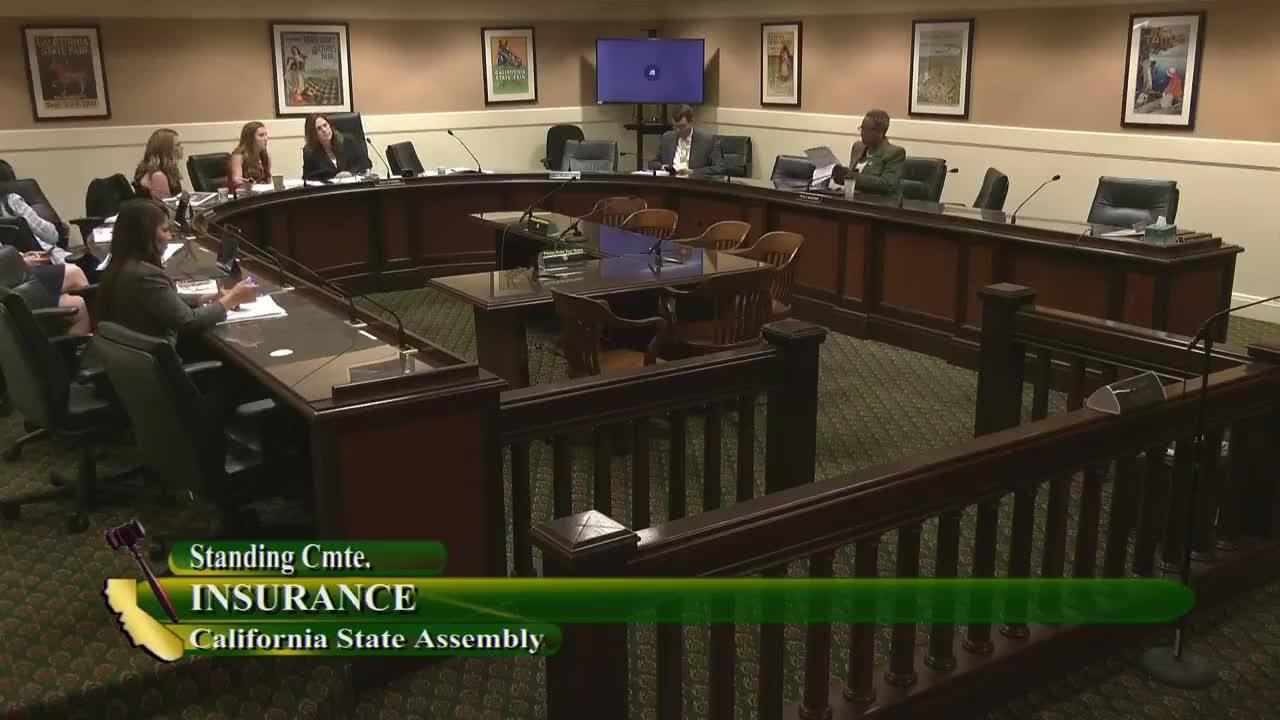 3MIN
Assembly Standing Committee on Insurance
 5MIN