SB 375: Employment: employer contributions: employee withholdings: COVID-19 regulatory compliance credit.
- Session Year: 2023-2024
- House: Senate
- Latest Version Date: 2023-02-09
Current Status:
Failed
(2024-02-01: Returned to Secretary of Senate pursuant to Joint Rule 56.)
Introduced
In Committee
First Chamber
In Committee
Second Chamber
Enacted
The Personal Income Tax Law imposes taxes on taxable income, as provided. Under existing law, every employer who pays wages to a resident employee for services performed either within or without this state, or to a nonresident employee for services performed in this state, is required to deduct and withhold from those wages, except as provided, for each payroll, a tax computed in an amount substantially equivalent to the amount reasonably estimated to be due under the Personal Income Tax Law. Under existing law, every employer required to withhold those taxes is required to, for each calendar quarter, file a withholding report, a quarterly return, and a report of wages in a form prescribed by the Employment Development Department, and pay over the taxes required to be withheld.
This bill would authorize an employer to claim, for the 2023 and 2024 calendar years, a COVID-19 regulatory compliance credit in a specified amount. The bill would require the credit to be claimed on the employers last quarterly return, as described, for the relevant calendar year. The bill would require any amount claimed by an employer to be credited against employee personal income tax withholding amounts required to be remitted to the department for the last quarter of the relevant calendar year.
This bill would provide that its provisions do not change the amount of personal income taxes required to be withheld from employees and required to be reported to the employee, the department, the Franchise Tax Board, and the Internal Revenue Service. The bill would specify that its provisions do not require additional taxes to be paid by the employee or otherwise alter the employees tax liability under the Personal Income Tax Law. The bill would state that it is the intent of the Legislature that the operation of the bills provisions not require an appropriation of moneys by reducing moneys remitted by the employer to the department that would otherwise be deposited in the General Fund. This bill would authorize the department to adopt rules and regulations that are necessary or appropriate to implement the bill.
The bill would repeal its provisions on December 1, 2025.
(a)An employer may claim, for the 2023 and 2024 calendar years, a COVID-19 regulatory compliance credit in accordance with this section.
(b)(1)Subject to paragraphs (2) and (3), the amount shall be equal to the verifiable costs of complying with Sections 3205, 3205.1, 3205.2, and 3205.3 of Title 8 of the California Code of Regulations.
(2)The amount in paragraph (1) shall not exceed any of the following:
(A)Subject to paragraph (3), for an employer with 100 or more employees, fifty dollars ($50) per employee.
(B)Subject to paragraph (3), for an employer with less than 100 employees, one hundred dollars ($100) per employee.
(3)For any employer, the total amount claimed pursuant to paragraphs (1) and (2) shall not exceed the amount that would have been remitted for the last quarter of the relevant calendar year to the Employment Development Department for employee withholdings pursuant to Division 6 (commencing with Section 13000) but for the operation of this section.
(c)The credit shall be claimed on the employers last quarterly return for the relevant calendar year.
(d)(1)Any amount claimed by an employer pursuant to this section shall be credited against employee withholding amounts required to be remitted to the Employment Development Department pursuant to Division 6 (commencing with Section 13000) for the last quarter of the relevant calendar year.
(2)This section does not change the amount of taxes required to be withheld from employees pursuant to Division 6 (commencing with Section 13000) and required to be reported to the employee, the Employment Development Department, the Franchise Tax Board, and the Internal Revenue Service.
(3)This section does not require additional taxes to be paid by the employee or otherwise alter the employees tax liability under Part 10 (commencing with Section 17001) of Division 2 of the Revenue and Taxation Code.
(4)It is the intent of the Legislature that the operation of this section does not require an appropriation of moneys by reducing moneys remitted by the employer to the Employment Development Department that would otherwise be deposited in the General Fund.
(e)The Employment Development Department may adopt rules and regulations that are necessary or appropriate to implement this section.
(f)For purposes of this section, the following definitions apply:
(1)Employee has the same meaning as that term is used in Sections 3205, 3205.1, 3205.2, and 3205.3 of Title 8 of the California Code of Regulations, as those sections read on January 1, 2023.
(2)Quarterly return means the form on which the employer reports its employer contributions and employee withholdings pursuant to this code.
(g)This division shall remain in effect only until December 1, 2025, and as of that date is repealed.
|
Date
|
Status
|
|---|---|
| Feb 1, 2024 | Returned to Secretary of Senate pursuant to Joint Rule 56. |
| May 18, 2023 | May 18 hearing: Held in committee and under submission. |
| May 12, 2023 | Set for hearing May 18. |
| May 8, 2023 | May 8 hearing: Placed on APPR suspense file. |
| May 1, 2023 | Set for hearing May 8. |
| Apr 26, 2023 | From committee: Do pass and re-refer to Com. on APPR. (Ayes 3. Noes 1. Page 897.) (April 26). Re-referred to Com. on APPR. |
| Apr 13, 2023 | Set for hearing April 26. |
| Feb 22, 2023 | Referred to Com. on L., P.E. & R. |
| Feb 10, 2023 | From printer. May be acted upon on or after March 12. |
| Feb 9, 2023 | Introduced. Read first time. To Com. on RLS. for assignment. To print. |
|
Date
|
Description
|
Location
|
Votes
|
|
|---|---|---|---|---|
| May 8, 2023 | Placed on suspense file | Senate Standing Committee on Appropriations |
Passed |
|
| Apr 26, 2023 | Do pass, but first be re-referred to the Committee on [Appropriations] | Senate Standing Committee on Labor, Public Employment and Retirement |
Passed |
This list shows positions taken on this bill by organizations on the date displayed, which is linked to the original source.
Positions by individuals are not included.
|
Organization
|
Position
|
Date
|
|---|---|---|
| Acclamation Insurance Management Services | ** Support | |
| Agricultural Council Of California | ** Support | |
| Allied Managed Care | ** Support | |
| California Apartment Association | ** Support | |
| California Assisted Living Association | ** Support | |
| California Association For Health Services At Home | * Support | Apr 26, 2023 |
| California Association of Boutique and Breakfast Inns | ** Support | |
| California Association Of Health Facilities | ** Support | |
| California Association Of Sheet Metal Air Conditioning Contractors National Association | ** Support | |
| California Association Of Winegrape Growers | * Support | Apr 26, 2023 |
| California Attractions And Parks Association | * Support | Apr 26, 2023 |
| California Chamber Of Commerce | * Support | Apr 26, 2023 |
| California Craft Brewers Association | * Support | Apr 26, 2023 |
| California Credit Union League | ** Support | |
| California Farm Bureau Federation | * Support | Apr 26, 2023 |
| California Grocers Association | ** Support | |
| California Hotel & Lodging Association | ** Support | |
| California Labor Federation | * Against | Apr 26, 2023 |
| California League of Food Producers | ** Support | |
| California Manufacturing Technology Association | * Support | Apr 26, 2023 |
| California New Car Dealers Association | * Support | Apr 26, 2023 |
| California Restaurant Association | ** Support | |
| California Retailers Association | * Support | Apr 26, 2023 |
| California Self Storage Association | ** Support | |
| California Staffing Professionals | ** Support | |
| California State Association Of Counties | ** Support | |
| California Travel Association | * Support | Apr 26, 2023 |
| California Trucking Association | * Support | Apr 26, 2023 |
| Family Winemakers Of California | ** Support | |
| Monterey County Vintners & Growers Association | ** Support | |
| San Gabriel Valley Economic Partnership | ** Support | |
| Western Electrical Contractors Association | ** Support | |
| Western Growers | * Support | Apr 26, 2023 |
SENATE COMMITTEE ON
Senator Anthony Portantino, Chair
2023 - 2024 Regular Session
SB 375 (Alvarado-Gil) - Employment: employer contributions: employee withholdings: COVID-19 regulatory compliance credit
Version: | Policy Vote: |
Urgency: | Mandate: |
Hearing Date: | Consultant: |
Bill Summary:
SB 375 would provide a tax credit, as specified, to employers for their costs to comply with Cal/OSHA’s recently implemented COVID-19 Prevention/Non-Emergency Standard (CP/NES) regulation.
Fiscal Impact:
The Employment Development Department (EDD) indicates that it would incur one-time administrative costs of $4.7 million, and ongoing costs of under $100,000 annually, to implement the provisions of the bill. EDD estimates an implementation timeframe of 22 months. Consequently, the bill’s January 1, 2024 effective date would not be feasible.
Additionally, the bill would lead to an annual General Fund revenue loss, in the tens of millions of dollars, potentially reaching the low hundreds of millions of dollars (See Staff Comments).
Background:
During the initial stages of the COVID-19 pandemic, the Governor and the President declared public health emergencies that imposed numerous requirements on employers to mitigate the spread of the virus. The federal and state governments provided various economic aid packages, including grants, to help offset the resulting economic impact from the emergency regulations affecting employers and their employees. Recently, the federal and state governments have declared an end to the emergencies; consequently, a transition has begun from the extraordinary relief efforts that were in place previously to a new normal, non-emergency condition in which employers must incorporate the effects of endemic COVID-19 into the regular course of economic activity.
Toward that end, Cal/OSHA issued its CP/NES regulation, which contains many of the previous requirements on California employers from the federal and state emergency regulations. However, previous economic aid packages are expiring. Thus, employers’ costs related to complying with the CP/NES will not be compensated. This bill would permit employers to take a credit for their specified compliance costs from amounts they transfer to EDD from their payroll tax withholding.
Proposed Law:
This bill, until December 1, 2025, would among other things, do the following:
- Permit an employer to claim, for the 2023 and 2024 calendar years, a COVID-19 regulatory compliance credit, as specified, in an amount equal to the employer’s verifiable costs of complying with Cal/OSHA’s recently implemented CP/NES.
- Limit the credit amount for an employer with 100 or more employees (as defined) to $50 per employee and for an employer with less than 100 employees to $100 per employee but in no case can the claimed amount exceed that which the employer would have remitted to EDD for the last quarter of the relevant calendar year for employee withholdings.
- Require the employer to claim the credit on the employer’s last quarterly return (as specified) for the relevant calendar year.
- Require EDD to credit the amount the employer claims against the employer’s required remittable amounts for employee withholding for the last quarter of the relevant calendar year.
- Specify that the bill makes no change to the amount of taxes the employer is required to withhold from employees nor those required to be reported to the employee, EDD, the Franchise Tax Board, and the Internal Revenue Service.
- Specify that the bill does not require the employee to pay additional taxes nor otherwise alters the employee’s tax liability.
- Declare legislative intent that the bill does not require an appropriation of moneys by reducing amounts remitted to EDD that EDD would otherwise deposit in the General Fund.
- Authorize EDD to adopt necessary or appropriate rules and regulations to implement the bill’s provisions.
Related Law/Legislation:
- Executive Order No. E 20/21-182 allocated $500 million from the Disaster Response Emergency Operations Account to fund the COVID-19 Relief Grant Program, in order to provide financial relief to small businesses suffering from the economic impacts of the COVID-19 pandemic.
- SB 87 (Senate Committee on Budget, Chapter 7, Statutes of 2021) established the California Small Business COVID-19 Relief Grant Program within the CalOSBA to assist qualified small businesses affected by COVID-19 through the administration of grants.
- SB 151 (Senate Committee on Budget, Chapter 74, Statutes of 2021) established the California Microbusiness COVID-19 Relief Grant Program, to fund regional programs that provide grants of $2,500 to eligible microbusinesses that have been impacted by COVID-19.
- AB 178 (Ting, Chapter 45, Statutes of 2022), appropriates $250 million from the California Emergency Relief Fund to GO-Biz for relief grants for small businesses and non-profits.
Staff Comments: On April 29, 2022, the Department of Finance (DOF) released its Standardized Regulator Impact Assessment of the CP/NES regulation. Specifically DOF estimated that the regulation would result in costs to all business of “$489 million to $1.4 billion in 2023, and $198 million to $1.3 billion in 2024.” The revenue reduction to the General Fund under this bill is likely to be lower, largely because of its tiered, per-employee credit cap.
-- END --
SENATE COMMITTEE ON LABOR, PUBLIC EMPLOYMENT AND RETIREMENT
Senator Dave Cortese, Chair
2023 - 2024 Regular
Bill No: SB 375 Hearing Date: April 26, 2023
Author: | Alvarado-Gil | ||
Version: | February 9, 2023 | ||
Urgency: | No | Fiscal: | Yes |
Consultant: | Glenn Miles | ||
SUBJECT: Employment: employer contributions: employee withholdings: COVID-19 regulatory compliance credit
KEY ISSUE
Should the state provide a tax credit, as specified, to employers for their costs to comply with Cal/OSHA’s recently implemented COVID-19 Prevention / Non-Emergency Standard (CP/NES) regulation?
ANALYSIS
Existing law:
- Establishes the California Occupational Safety and Health Act, which assures safe and healthful working conditions for all California workers by authorizing the enforcement of effective standards, assisting and encouraging employers to maintain safe and healthful working conditions, and by providing for research, information, education, training, and enforcement in the field of occupational safety and health. (Labor Code (LC) §6300)
- Establishes the Division of Occupational Safety and Health (known as Cal/OSHA) within the Department of Industrial Relations (DIR) to, among other things, propose, administer, and enforce occupational safety and health standards. (LC §6300 et seq.)
- Establishes the Occupational Safety and Health Standards Board, within DIR, to promote, adopt, and maintain reasonable and enforceable standards that will ensure a safe and healthful workplace for workers. (LC §140-147.6)
- Requires employers to establish, implement and maintain an effective Injury and Illness Prevention Program (IIPP) that must include, among other things, a system for identifying and evaluating workplace hazards, including scheduled periodic inspections to identify unsafe conditions and work practices and the employer’s methods and procedures for correcting those unsafe or unhealthy conditions and work practices in a timely manner. The IIPP must also include the employer’s system for communicating with employees on occupational health and safety matters. (LC §6401.7)
- Requires employers to withhold specified amounts from their employee payroll and transfer those amounts to EDD for purpose of paying the Unemployment Insurance Tax (UI), State Disability Insurance Tax (SDI), Employment Training Tax (ETT) and the California Personal Income Tax (PIT). (Unemployment Insurance Code (UIC) § 13020 et seq.)
- Declares that COVID-19 is a workplace hazard that employers must address as part of their IIPP and requires them to include their COVID-19 procedures in their written IIPP or maintain them in a separate document. (Cal/OSHA’s CP/NES Regulation, 8 CCR 3205 (c) )
- Requires employers to implement and maintain COVID-19 procedures, as specified, relating to COVID-19 Prevention, COVID-19 Outbreaks, COVID-19 Prevention in Employer-Provided Housing, and COVID-19 Prevention in Employer-Provided Transportation. (8 CCR 3205, 3205.1, 3205.2, and 3205.3)
This bill:
- Permits an employer to claim, for the 2023 and 2024 calendar years, a COVID-19 regulatory compliance credit, as specified, in an amount equal to the employer’s verifiable costs of complying with Cal/OSHA’s recently implemented CP/NES.
- Limits the credit amount for an employer with 100 or more employees to fifty dollars ($50) per employee and for an employer with less than 100 employees to one hundred dollars ($100) per employee but in no case can the claimed amount exceed that which the employer would have remitted to EDD for the last quarter of the relevant calendar year for employee withholdings.
- Requires the employer to claim the credit on the employer’s last quarterly return for the relevant calendar year.
- Requires EDD to credit the amount the employer claims against the employer’s required remittable amounts for employee withholding for the last quarter of the relevant calendar year.
- Specifies that the bill makes no change to the amount of taxes the employer is required to withhold from employees nor those required to be reported to the employee, EDD, the Franchise Tax Board, and the Internal Revenue Service.
- Specifies that the bill does not require the employee to pay additional taxes nor otherwise alters the employee’s tax liability.
- Declares legislative intent that the bill does not require an appropriation of moneys by reducing amounts remitted to EDD that EDD would otherwise deposit in the General Fund.
- Authorizes EDD to adopt necessary or appropriate rules and regulations to implement the bill’s provisions.
- Defines “employee” to have the same meaning as the Cal/OSHA regulations, as specified.
- Defines “Quarterly return” to mean the form on which the employer reports its employer contributions and employee withholdings.
- Establishes a sunset date of December 1, 2025.
COMMENTS
1. Background
At the start of the COVID-19 pandemic, the Governor and the President declared public health emergencies that imposed numerous requirements on employers to help combat COVID-19. The federal and state governments provided various economic aid packages, including grants, to help offset the resulting economic impact from the emergency regulations affecting employers and their employees. Recently, the federal and state governments have declared an end to the previously declared emergencies and a transition from the extraordinary relief efforts that were in place to a new normal, non-emergency condition in which employers must incorporate the effects of endemic COVID-19 into the regular course of economic activity.
To that end, Cal/OSHA issued its CP/NES which contains many of the previous requirements on California employers from the federal and state emergency regulations. However, since previous economic aid packages are expiring, the bill’s sponsor and supporters seek to provide another mechanism to compensate employers for their costs related to complying with the CP/NES. This bill would permit employers to take a credit for their specified compliance costs from amounts they transfer to EDD from their payroll tax withholding.
The committee notes that this mechanism would result in fewer tax revenues flowing into the General Fund from the withholding tax. Because the bill requires EDD to credit amounts claimed against tax amounts required to be remitted for the Personal Income Tax, the bill should not affect revenue for other programs collected through the withholding tax, such as the Unemployment Insurance fund.
Nevertheless, the sponsor argues that the CP/NES primarily serves a public health purpose as opposed to addressing an inherent risk directly associated with the workplace and that the costs associated with that purpose should be borne by the state not by individual employers who face statewide compliance costs of $3 billion annually.
The opposition notes that the CP/NES requires employers to exclude employees who test positive for COVID-19 from the workplace for their entire infectious period but, unlike the previous emergency regulations, the CP/NES does not require employers to provide “exclusion pay” to employees who fall ill to COVID-19. They argue that this bill would essentially reward employers who already have a legal responsibility to ensure safe work environments; and that the better approach would be to explore ways to restore exclusion pay to mitigate economic harm to employees.
2. Need for this bill?
According to the author:
“California employers are required to comply with new COVID-19 Prevention Non-Emergency Regulations. These post-pandemic set of regulations focus on preventing the spread of COVID-19, a community spread virus.
These regulations are placing substantial costs on California businesses employers. This falls particularity hard on employers (especially small employers) who do not have the deep pockets to provide the social safety net for a public health concern.”
3. Proponent Arguments
According to a coalition of employer associations, including the sponsor:
“California employers simply cannot continue to serve as the social safety net for a community spread virus. Keeping that public policy approach in place will no doubt put additional employers out of business as many are still recovering from the pandemic and struggling to keep their doors open.”
In rural communities and for small employers, this new regulation is incredibly burdensome. Small public agencies simply don’t have the budgetary margins to incur two more years of COVID-19 regulatory compliance costs while federal and state COVID-19 financial support are falling by the wayside. Additionally, small employers in rural California don’t have the ability to increase prices or expand markets to recover the costs of compliance with the new regulations. This is especially troublesome when mixed with the challenging realities of economic slowdown, global inflation, an uneasy stock market, and an evolving monetary situation.”
4. Opponent Arguments:
The California Labor Federation directs attention to the regulation’s material benefit to employers as identified by the Department of Finance’s (DOF) Standardized Regulatory Impact Assessment which estimates direct annual benefits (in avoided loss of worker productivity and avoided illnesses and death) from $10.5 to $41.2 billion in 2023 and $5.8 to $39.7 billion in 2024 against costs to all businesses of $489 million to $1.4 billion in 2023 and $198 million to $1.3 billion in 2024.
In contrast, DOF estimates that employees will experience costs in lost wages and benefits resulting in the regulation’s exclusion requirements at $53.8 million to $215 million in 2023 and $26.9 to $ $215 million in 2024, with no corresponding offset.
“Thus, the COVID 19 prevention standard, as it currently exists, extends tens of billions of dollars in savings to employers while denying workers tens to hundreds of millions in lost wages and benefits. There is no doubt that massive economic benefits are already flowing to employers.”
“SB 375, meanwhile, would extend equally massive tax credits to employers for complying with existing law that already deprives workers of paid time off when they fall ill with COVID-19 on the job. Under this proposal, roughly 99% of employers – those with fewer than 100 workers – could claim up to $100 per employee to cover the “verifiable costs of complying with” the COVID-19 prevention standard. Larger employers, or those with over 100 workers, could claim up to $50 per employee. Only a short list of employers would not be covered by this tax credit, and no mention is made of accounting for a given employer’s savings under the regulation. As a result, the amount of money lost to this program would be astronomical.”
5. Prior Law:
Executive Order No. E 20/21-182 allocated $500 million from the Disaster Response Emergency Operations Account to fund the COVID-19 Relief Grant Program, in order to provide financial relief to small businesses suffering from the economic impacts of the COVID-19 pandemic.
SB 87 (Senate Committee on Budget), Chapter 7, Statutes of 2021, established the California Small Business COVID-19 Relief Grant Program within the CalOSBA to assist qualified small businesses affected by COVID-19 through the administration of grants.
SB 151 (Senate Committee on Budget), Chapter 74, Statutes of 2021, established the California Microbusiness COVID-19 Relief Grant Program, to fund regional programs that provide grants of $2,500 to eligible microbusinesses that have been impacted by COVID-19.
AB 178 (Ting), Chapter 45, Statutes of 2022, appropriates $250 million from the California Emergency Relief Fund to GO-Biz for relief grants for small businesses and non-profits.
SUPPORT
California Association of Winegrape Growers (Sponsor)
Acclamation Insurance Management Services
Agricultural Council of California
Allied Managed Care
California Apartment Association
California Assisted Living Association
California Association for Health Services At Home
California Association of Boutique and Breakfast Inns
California Association of Health Facilities
California Association of Sheet Metal & Air Conditioning Contractors National Association
California Attractions and Parks Association
California Chamber of Commerce
California Craft Brewers Association
California Credit Union League
California Farm Bureau Federation
California Grocers Association
California Hotel & Lodging Association
California League of Food Producers
California Manufacturers and Technology Association
California New Car Dealers Association
California Restaurant Association
California Retailers Association
California Self Storage Association
California Staffing Professionals
California State Association of Counties
California Travel Association
California Trucking Association
Family Winemakers of California
Monterey County Vintners & Growers Association
San Gabriel Valley Economic Partnership
Western Electrical Contractors Association
Western Growers Association
OPPOSITION
California Labor Federation
-- END --
Discussed in Hearing
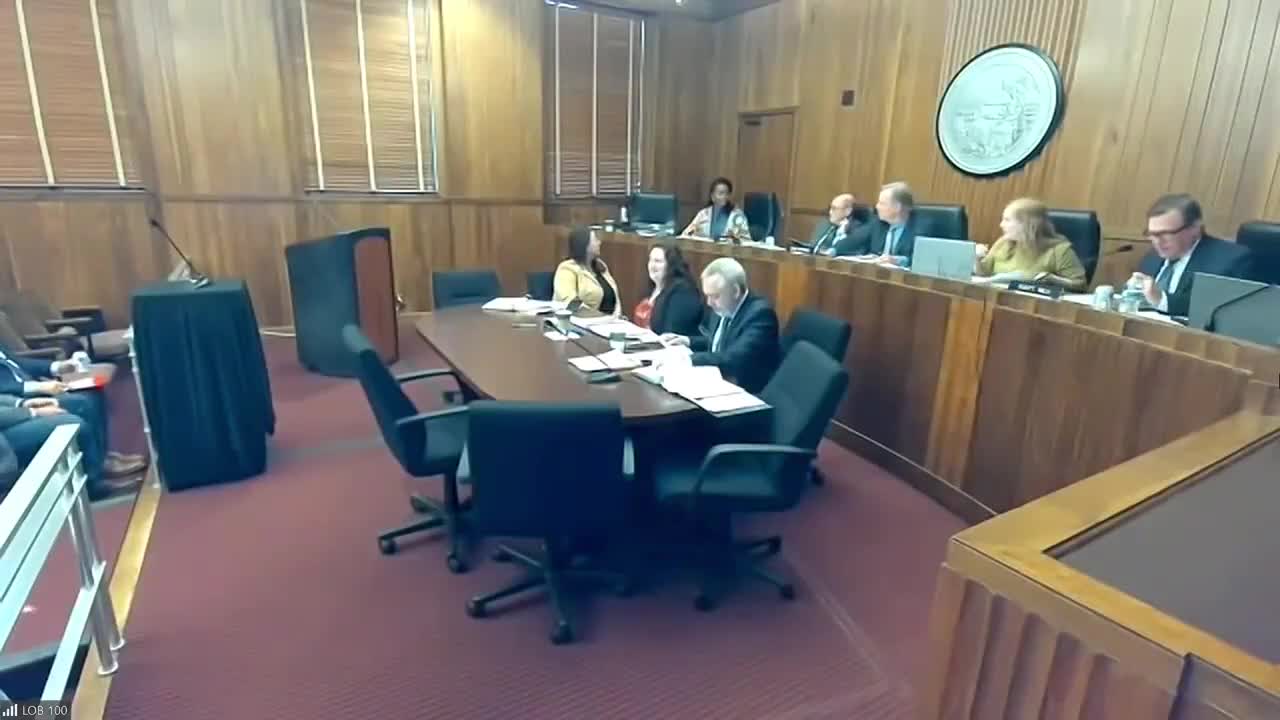 19MIN
Senate Standing Committee on Labor, Public Employment and Retirement
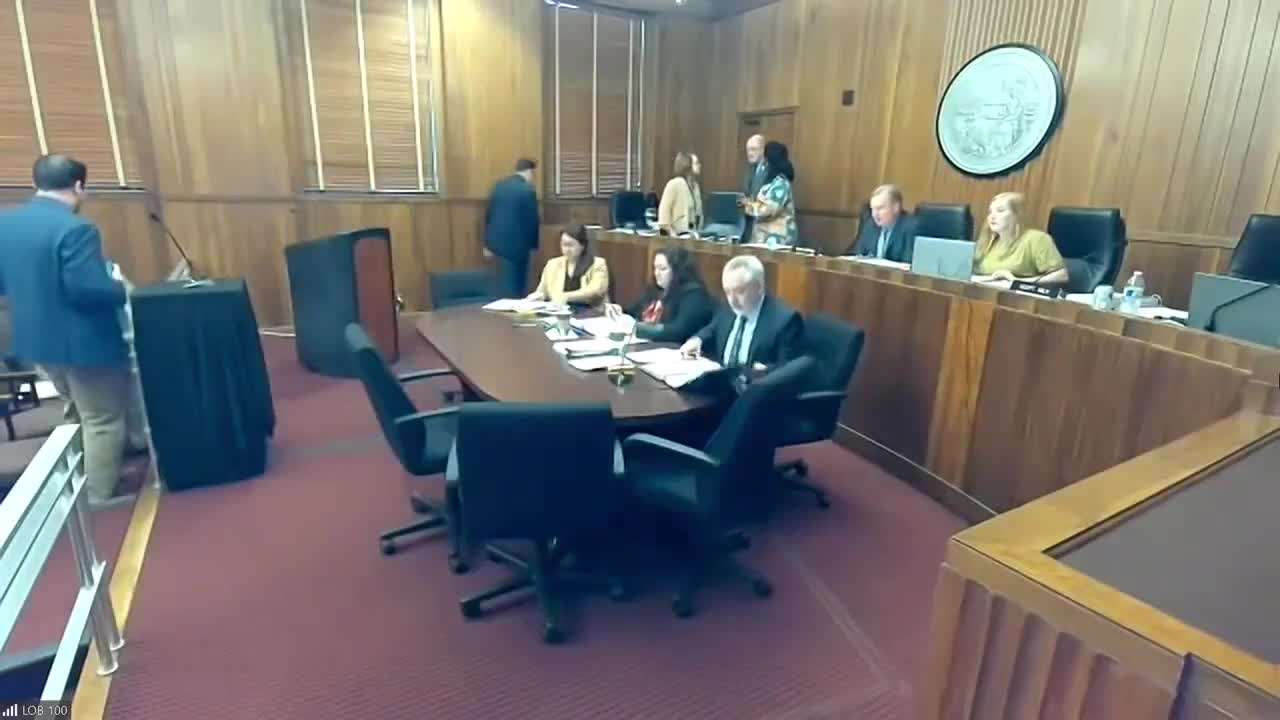 2MIN
Senate Standing Committee on Labor, Public Employment and Retirement
Bill Author