SB 425: Clean Vehicle Rebate Project: fuel cell electric pickup trucks: battery electric pickup trucks.
- Session Year: 2023-2024
- House: Senate
- Latest Version Date: 2023-06-20
Current Status:
Failed
(2023-09-01: September 1 hearing: Held in committee and under submission.)
Introduced
In Committee
First Chamber
In Committee
Second Chamber
Enacted
Existing law establishes the Air Quality Improvement Program that is administered by the State Air Resources Board for the purposes of funding projects related to, among other things, the reduction of criteria air pollutants and improvement of air quality. Pursuant to its existing statutory authority, the state board has established the Clean Vehicle Rebate Project, as a part of the Air Quality Improvement Program, to promote the production and use of zero-emission vehicles by providing rebates for the purchase of new zero-emission vehicles.
The bill would require the state board, as a part of the Clean Vehicle Rebate Project, to provide rebates for zero-emission electric pickup trucks, as defined, so that fuel cell electric pickup trucks and battery electric pickup trucks receive rebates that are $2,500 more than the rebates that are provided for other fuel cell electric vehicles and battery electric vehicles, respectively.
Existing law establishes the Air Quality Improvement Program that is administered by the State Air Resources Board for the purposes of funding projects related to, among other things, the reduction of criteria air pollutants and improvement of air quality. Pursuant to its existing statutory authority, the state board has established the Clean Vehicle Rebate Project, as a part of the Air Quality Improvement Program, to promote the production and use of zero-emission vehicles by providing rebates for the purchase of new zero-emission vehicles.
The bill would require the state board, as a part of the Clean Vehicle Rebate Project, to provide rebates for zero-emission electric pickup trucks, as defined, such so that fuel cell electric pickup trucks and battery electric pickup trucks receive rebates that are $2,500 more than the rebates provided for other fuel cell electric vehicles and battery electric vehicles, respectively.
Existing law establishes the Air Quality Improvement Program that is administered by the State Air Resources Board for the purposes of funding projects related to, among other things, the reduction of criteria air pollutants and improvement of air quality. Pursuant to its existing statutory authority, the state board has established the Clean Vehicle Rebate Project, as a part of the Air Quality Improvement Program, to promote the production and use of zero-emission vehicles by providing rebates for the purchase of new zero-emission vehicles.
The bill would require the state board, as a part of the Clean Vehicle Rebate Project, to provide rebates for fuel cell zero-emission electric pickup trucks, as defined, such that fuel cell electric pickup trucks and battery electric pickup trucks receive rebates that are $1,000 $2,500 more than the rebates provided for other fuel cell electric vehicles. vehicles and battery electric vehicles, respectively.
Existing law, until a specific date that is no later than September 30, 2025, requires the Department of Motor Vehicles to make available for issuance distinctive decals, labels, and other identifiers that clearly distinguish certain vehicles from other vehicles. Existing law prohibits the department from issuing those distinctive decals, labels, and other identifiers to an applicant who received a rebate under the Clean Vehicle Rebate Project unless the rebate is issued to a buyer with an income that does not exceed certain levels.This bill would specify that the above prohibition does not apply to fuel cell electric pickup trucks.Existing law establishes the Air Quality Improvement Program that is administered by the State Air Resources Board for the purposes of funding projects related to, among other things, the reduction of criteria air pollutants and improvement of air quality. Pursuant to its existing statutory authority, the state board has established the Clean Vehicle Rebate Project, as a part of the Air Quality Improvement Program, to promote the production and use of zero-emission vehicles by providing rebates for the purchase of new zero-emission vehicles.
The bill would require the state board, as a part of the Clean Vehicle Rebate Project, to provide rebates for fuel cell electric pickup trucks, as defined, that are $1,000 more than the rebates provided for other fuel cell electric vehicles.
Existing law, until a specific date that is no later than September 30, 2025, requires the Department of Motor Vehicles to make available for issuance distinctive decals, labels, and other identifiers that clearly distinguish certain vehicles from other vehicles. Existing law prohibits the department from issuing those distinctive decals, labels, and other identifiers to an applicant who received a rebate under the Clean Vehicle Rebate Project unless the rebate is issued to a buyer with an income that does not exceed certain levels.
This bill would specify that the above prohibition does not apply to fuel cell electric pickup trucks.
Existing law establishes the Air Quality Improvement Program that is administered by the State Air Resources Board for the purposes of funding projects related to, among other things, the reduction of criteria air pollutants and improvement of air quality. Pursuant to its existing statutory authority, the state board has established the Clean Vehicle Rebate Project, as a part of the Air Quality Improvement Program, to promote the production and use of zero-emission vehicles by providing rebates for the purchase of new zero-emission vehicles.
The bill would require the state board, as a part of the Clean Vehicle Rebate Project, to provide rebates for fuel cell electric pickup trucks, as defined, that are $1,000 more than the rebates provided for other fuel cell electric vehicles.
Existing law, until a specific date that is no later than September 30, 2025, requires the Department of Motor Vehicles to make available for issuance distinctive decals, labels, and other identifiers that clearly distinguish certain vehicles from other vehicles. Existing law prohibits the department from issuing those distinctive decals, labels, and other identifiers to an applicant who received a rebate under the Clean Vehicle Rebate Project unless the rebate is issued to a buyer with an income that does not exceed certain levels.
This bill would specify that the above prohibition does not apply to fuel cell electric pickup trucks.
(a)Under the Clean Vehicle Rebate Project established as a part of the Air Quality Improvement Program, the state board shall provide rebates for zero-emission pickup trucks as follows:
(1)Fuel cell electric pickup trucks shall receive rebates that are two thousand five hundred dollars ($2,500) more than the rebates that are provided for other fuel cell electric vehicles.
(2)Battery electric pickup trucks shall receive rebates that are two thousand five hundred dollars ($2,500) more than the rebates that are provided for other battery electric vehicles.
(b)For purposes of this section, pickup truck has the same meaning as defined in Section 471 of the Vehicle Code.
REVISIONS: HeadingLine 3.(a)Under the Clean Vehicle Rebate Project established as a part of the Air Quality Improvement Program, the state board shall provide rebates for zero-emission pickup trucks as follows:
(1)Fuel cell electric pickup trucks shall receive rebates that are two thousand five hundred dollars ($2,500) more than the rebates provided for other fuel cell electric vehicles.
(2)Battery electric pickup trucks shall receive rebates that are two thousand five hundred dollars ($2,500) more than the rebates provided for other battery electric vehicles.
(b)For purposes of this section, pickup truck means a motor truck with a manufacturers gross vehicle weight rating of less than 26,000 pounds, an unladen weight of less than 15,001 pounds, and that is equipped with an open box-type bed not exceeding nine feet in length. Pickup truck does not include a motor vehicle otherwise meeting the above definition, that is equipped with a bed-mounted storage compartment unit commonly called a utility body. has the same meaning as defined in Section 471 of the Vehicle Code.
(a)Under the Clean Vehicle Rebate Project established as a part of the Air Quality Improvement Program, the state board shall provide rebates for fuel cell electric zero-emission pickup trucks that are one thousand dollars ($1,000) more than the rebates provided for other fuel cell electric vehicles. as follows:
(1)Fuel cell electric pickup trucks shall receive rebates that are two thousand five hundred dollars ($2,500) more than the rebates provided for other fuel cell electric vehicles.
(2)Battery electric pickup trucks shall receive rebates that are two thousand five hundred dollars ($2,500) more than the rebates provided for other battery electric vehicles.
(b)For purposes of this section, pickup truck means a motor truck with a manufacturers gross vehicle weight rating of less than 26,000 pounds, an unladen weight of less than 15,001 pounds, and that is equipped with an open box-type bed not exceeding 9 nine feet in length. Pickup truck does not include a motor vehicle otherwise meeting the above definition, that is equipped with a bed-mounted storage compartment unit commonly called a utility body.
SEC. 2.Section 5205.5 of the Vehicle Code is amended to read:5205.5.(a)(1)For purposes of implementing Section 21655.9, the department shall make available for issuance, for a fee determined by the department to be sufficient to reimburse the department for the reasonable costs incurred pursuant to this section, and pursuant to the eligibility provisions in subdivision (b), distinctive decals, labels, and other identifiers that clearly distinguish the following vehicles from other vehicles:(A)A vehicle that meets the states super ultra-low emission vehicle (SULEV) standard for exhaust emissions and the federal inherently low-emission vehicle (ILEV) evaporative emission standard, as defined in Part 88 (commencing with Section 88.101-94) of Title 40 of the Code of Federal Regulations.(B)A vehicle that was produced during the 2004 model year or earlier and meets the states ultra-low emission vehicle (ULEV) standard for exhaust emissions and the federal ILEV standard. A decal, label, or other identifier issued pursuant to this paragraph is valid until January 1, 2019.(C)A vehicle that meets the states enhanced advanced technology partial zero-emission vehicle (enhanced AT PZEV) standard or transitional zero-emission vehicle (TZEV) standard.(2)(A)A decal, label, or other identifier issued pursuant to subparagraph (A) or (C) of paragraph (1) before January 1, 2017, is valid until January 1, 2019.(B)(i)A decal, label, or other identifier issued pursuant to subparagraph (A) or (C) of paragraph (1) on or after January 1, 2017, and before March 1, 2018, is valid until January 1, 2019.(ii)A decal, label, or other identifier issued pursuant to subparagraph (A) or (C) of paragraph (1) between March 1, 2018, and January 1, 2019, is valid until January 1, 2022.(iii)A decal, label, or other identifier issued pursuant to subparagraph (A) or (C) of paragraph (1) on or after March 1, 2018, for a vehicle that had been issued a decal, label, or other identifier pursuant to subparagraph (A) or (C) of paragraph (1) between January 1, 2017, and March 1, 2018, is valid until January 1, 2022.(C)Except as provided in clause (iii) of subparagraph (B), a decal, label, or other identifier issued pursuant to subparagraph (A) or (C) of paragraph (1) on or after January 1, 2019, is valid until January 1 of the fourth year after the year of issuance.(3)(A)Notwithstanding the validity timeframe specified in clause (iii) of subparagraph (B) of paragraph (2), commencing January 1, 2020, and until January 1, 2024, a decal, label, or other identifier may be issued pursuant to subparagraph (A) or (C) of paragraph (1) for a vehicle that had previously been issued a decal, label, or other identifier, and the decal, label, or other identifier shall be valid until January 1, 2024, if the applicant for the decal, label, or other identifier has a household income at or below 80 percent of the state median income, as designated by the Department of Housing and Community Developments list of state income limits adopted pursuant to Section 50093 of the Health and Safety Code. The determination of income eligibility shall be made by a governmental or nonprofit entity selected by the department, in a format prescribed by the department.(B)A person who obtained a decal, label, or other identifier for a vehicle prior to January 1, 2017, shall not be issued another decal, label, or other identifier pursuant to this paragraph, notwithstanding the persons qualifying income.(C)The department shall report to the Legislature the number of decals, labels, and other identifiers issued pursuant to this paragraph. The report shall be issued after January 1, 2023, but before June 1, 2023.(4)Except as provided in clause (iii) of subparagraph (B) of paragraph (2) and paragraph (3), a vehicle shall not be issued a decal, label, or other identifier more than once.(b)(1)Except as provided in paragraph (2), the department shall not issue a decal, label, or other identifier to an applicant who has received a consumer rebate pursuant to the Clean Vehicle Rebate Project, established as part of the Air Quality Improvement Program pursuant to Article 3 (commencing with Section 44274) of Chapter 8.9 of Part 5 of Division 26 of the Health and Safety Code, for a vehicle purchased on or after January 1, 2018, unless the rebate was issued to a buyer whose gross annual income falls below one hundred fifty thousand dollars ($150,000) for a person who files a tax return as a single person, two hundred four thousand dollars ($204,000) for a person who files a tax return as a head of household, and three hundred thousand dollars ($300,000) for a person who files a joint tax return.(2)Paragraph (1) does not apply to a fuel cell electric pickup truck, as defined in Section 44274.8 of the Health and Safety Code.(3)The department shall collaborate with the State Air Resources Board to establish procedures to implement this subdivision, including, but not limited to, all of the following:(A)The application form for a decal, label, or other identifier issued pursuant to this section and the application for a rebate under the Clean Vehicle Rebate Project shall include a statement indicating that, except for fuel cell electric pickup truck, the applicant cannot participate in both programs unless the applicant meets the income restrictions in paragraph (1). Each application shall require the applicant to provide a signature to confirm that the applicant understands this condition.(B)Notify consumers of the eligibility criteria and conditions using existing education and outreach efforts.(C)Establish appropriate compliance and enforcement measures.(D)Establish information sharing between the department and the board to implement the requirements of this subdivision.(c)The department shall include a summary of the provisions of this section on each motor vehicle registration renewal notice, or on a separate insert, if space is available and the summary can be included without incurring additional printing or postage costs.(d)The Department of Transportation shall remove individual HOV lanes, or portions of those lanes, during periods of peak congestion from the access provisions provided in subdivision (a), following a finding by the Department of Transportation as follows:(1)The lane, or portion of the lane, exceeds a level of service C, as discussed in subdivision (b) of Section 65089 of the Government Code.(2)The operation or projected operation of the vehicles described in subdivision (a) in these lanes, or portions of those lanes, will significantly increase congestion.(3)The finding shall also demonstrate the infeasibility of alleviating the congestion by other means, including, but not limited to, reducing the use of the lane by noneligible vehicles or further increasing vehicle occupancy.(e)The State Air Resources Board shall publish and maintain a list of all vehicles eligible for participation in the programs described in this section. The board shall provide that list to the department.(f)(1)For purposes of subdivision (a), the Department of the California Highway Patrol and the department, in consultation with the Department of Transportation, shall design and specify the placement of the decal, label, or other identifier on the vehicle. Each decal, label, or other identifier issued for a vehicle shall display a unique number, which shall be printed on, or affixed to, the vehicle registration.(2)Except as provided in clause (iii) of subparagraph (B) of paragraph (2) of subdivision (a), decals, labels, or other identifiers issued pursuant to subparagraph (A) or (C) of paragraph (1) of subdivision (a) before January 1, 2019, shall be distinguishable from the decals, labels, or other identifiers issued on or after January 1, 2019.(g)If the Metropolitan Transportation Commission, serving as the Bay Area Toll Authority, grants toll-free and reduced-rate passage on toll bridges under its jurisdiction to a vehicle pursuant to Section 30102.5 of the Streets and Highways Code, it shall also grant the same toll-free and reduced-rate passage to a vehicle displaying a valid identifier issued by the department pursuant to subparagraph (A) or (B) of paragraph (1) of subdivision (a).(h)(1)Notwithstanding Section 21655.9, and except as provided in paragraph (2), a vehicle described in subdivision (a) that displays a valid decal, label, or identifier issued pursuant to this section shall be granted a toll-free or reduced-rate passage in high-occupancy toll lanes as described in Section 149.7 of the Streets and Highways Code unless prohibited by federal law.(2)(A)Paragraph (1) does not apply to the imposition of a toll imposed for passage on a toll road or toll highway, that is not a high-occupancy toll lane as described in Section 149.7 of the Streets and Highways Code.(B)Paragraph (1) does not apply to the imposition of a toll charged for crossing a state-owned bridge.(i)If the Director of Transportation determines that federal law does not authorize the state to allow vehicles that are identified by distinctive decals, labels, or other identifiers on vehicles described in subdivision (a) to use highway lanes or highway access ramps for high-occupancy vehicles regardless of vehicle occupancy, the Director of Transportation shall submit a notice of that determination to the Secretary of State.(j)This section shall become inoperative on the date the federal authorization pursuant to Section 166 of Title 23 of the United States Code expires, or the date the Secretary of State receives the notice described in subdivision (i), whichever occurs first.(k)If this section becomes inoperative pursuant to subdivision (j) the driver of a vehicle with an otherwise valid decal, label, or other identifier issued pursuant to this section shall not be cited for a violation of Section 21655.9 within 60 days of the date that this section becomes inoperative.(l)This section is repealed as of September 30, 2025.(a)Under the Clean Vehicle Rebate Project established as a part of the Air Quality Improvement Program, the state board shall provide rebates for fuel cell electric pickup trucks, as defined in Section 471 of the Vehicle Code, trucks that is are one thousand dollars ($1,000) more than the rebates provided for other fuel cell electric vehicles.
(b)For purposes of this section, pickup truck means a motor truck with a manufacturers gross vehicle weight rating of less than 26,000 pounds, an unladen weight of less than 15,001 pounds, and that is equipped with an open box-type bed not exceeding 9 feet in length. Pickup truck does not include a motor vehicle otherwise meeting the above definition, that is equipped with a bed-mounted storage compartment unit commonly called a utility body.
SEC. 2.Section 5205.5 of the Vehicle Code is amended to read:5205.5.(a)(1)For purposes of implementing Section 21655.9, the department shall make available for issuance, for a fee determined by the department to be sufficient to reimburse the department for the reasonable costs incurred pursuant to this section, and pursuant to the eligibility provisions in subdivision (b), distinctive decals, labels, and other identifiers that clearly distinguish the following vehicles from other vehicles:
(A)A vehicle that meets the states super ultra-low emission vehicle (SULEV) standard for exhaust emissions and the federal inherently low-emission vehicle (ILEV) evaporative emission standard, as defined in Part 88 (commencing with Section 88.101-94) of Title 40 of the Code of Federal Regulations.
(B)A vehicle that was produced during the 2004 model year or earlier and meets the states ultra-low emission vehicle (ULEV) standard for exhaust emissions and the federal ILEV standard. A decal, label, or other identifier issued pursuant to this paragraph is valid until January 1, 2019.
(C)A vehicle that meets the states enhanced advanced technology partial zero-emission vehicle (enhanced AT PZEV) standard or transitional zero-emission vehicle (TZEV) standard.
(2)(A)A decal, label, or other identifier issued pursuant to subparagraph (A) or (C) of paragraph (1) before January 1, 2017, is valid until January 1, 2019.
(B)(i)A decal, label, or other identifier issued pursuant to subparagraph (A) or (C) of paragraph (1) on or after January 1, 2017, and before March 1, 2018, is valid until January 1, 2019.
(ii)A decal, label, or other identifier issued pursuant to subparagraph (A) or (C) of paragraph (1) between March 1, 2018, and January 1, 2019, is valid until January 1, 2022.
(iii)A decal, label, or other identifier issued pursuant to subparagraph (A) or (C) of paragraph (1) on or after March 1, 2018, for a vehicle that had been issued a decal, label, or other identifier pursuant to subparagraph (A) or (C) of paragraph (1) between January 1, 2017, and March 1, 2018, is valid until January 1, 2022.
(C)Except as provided in clause (iii) of subparagraph (B), a decal, label, or other identifier issued pursuant to subparagraph (A) or (C) of paragraph (1) on or after January 1, 2019, is valid until January 1 of the fourth year after the year of issuance.
(3)(A)Notwithstanding the validity timeframe specified in clause (iii) of subparagraph (B) of paragraph (2), commencing January 1, 2020, and until January 1, 2024, a decal, label, or other identifier may be issued pursuant to subparagraph (A) or (C) of paragraph (1) for a vehicle that had previously been issued a decal, label, or other identifier, and the decal, label, or other identifier shall be valid until January 1, 2024, if the applicant for the decal, label, or other identifier has a household income at or below 80 percent of the state median income, as designated by the Department of Housing and Community Developments list of state income limits adopted pursuant to Section 50093 of the Health and Safety Code. The determination of income eligibility shall be made by a governmental or nonprofit entity selected by the department, in a format prescribed by the department.
(B)A person who obtained a decal, label, or other identifier for a vehicle prior to January 1, 2017, shall not be issued another decal, label, or other identifier pursuant to this paragraph, notwithstanding the persons qualifying income.
(C)The department shall report to the Legislature the number of decals, labels, and other identifiers issued pursuant to this paragraph. The report shall be issued after January 1, 2023, but before June 1, 2023.
(4)Except as provided in clause (iii) of subparagraph (B) of paragraph (2) and paragraph (3), a vehicle shall not be issued a decal, label, or other identifier more than once.
(b)(1)Except as provided in paragraph (2), the department shall not issue a decal, label, or other identifier to an applicant who has received a consumer rebate pursuant to the Clean Vehicle Rebate Project, established as part of the Air Quality Improvement Program pursuant to Article 3 (commencing with Section 44274) of Chapter 8.9 of Part 5 of Division 26 of the Health and Safety Code, for a vehicle purchased on or after January 1, 2018, unless the rebate was issued to a buyer whose gross annual income falls below one hundred fifty thousand dollars ($150,000) for a person who files a tax return as a single person, two hundred four thousand dollars ($204,000) for a person who files a tax return as a head of household, and three hundred thousand dollars ($300,000) for a person who files a joint tax return.
(2)Paragraph (1) does not apply to a fuel cell electric pickup truck. truck, as defined in Section 44274.8 of the Health and Safety Code.
(3)The department shall collaborate with the State Air Resources Board to establish procedures to implement this subdivision, including, but not limited to, all of the following:
(A)The application form for a decal, label, or other identifier issued pursuant to this section and the application for a rebate under the Clean Vehicle Rebate Project shall include a statement indicating that, except for fuel cell electric pickup truck, the applicant cannot participate in both programs unless the applicant meets the income restrictions in paragraph (1). Each application shall require the applicant to provide a signature to confirm that the applicant understands this condition.
(B)Notify consumers of the eligibility criteria and conditions using existing education and outreach efforts.
(C)Establish appropriate compliance and enforcement measures.
(D)Establish information sharing between the department and the board to implement the requirements of this subdivision.
(c)The department shall include a summary of the provisions of this section on each motor vehicle registration renewal notice, or on a separate insert, if space is available and the summary can be included without incurring additional printing or postage costs.
(d)The Department of Transportation shall remove individual HOV lanes, or portions of those lanes, during periods of peak congestion from the access provisions provided in subdivision (a), following a finding by the Department of Transportation as follows:
(1)The lane, or portion of the lane, exceeds a level of service C, as discussed in subdivision (b) of Section 65089 of the Government Code.
(2)The operation or projected operation of the vehicles described in subdivision (a) in these lanes, or portions of those lanes, will significantly increase congestion.
(3)The finding shall also demonstrate the infeasibility of alleviating the congestion by other means, including, but not limited to, reducing the use of the lane by noneligible vehicles or further increasing vehicle occupancy.
(e)The State Air Resources Board shall publish and maintain a list of all vehicles eligible for participation in the programs described in this section. The board shall provide that list to the department.
(f)(1)For purposes of subdivision (a), the Department of the California Highway Patrol and the department, in consultation with the Department of Transportation, shall design and specify the placement of the decal, label, or other identifier on the vehicle. Each decal, label, or other identifier issued for a vehicle shall display a unique number, which shall be printed on, or affixed to, the vehicle registration.
(2)Except as provided in clause (iii) of subparagraph (B) of paragraph (2) of subdivision (a), decals, labels, or other identifiers issued pursuant to subparagraph (A) or (C) of paragraph (1) of subdivision (a) before January 1, 2019, shall be distinguishable from the decals, labels, or other identifiers issued on or after January 1, 2019.
(g)If the Metropolitan Transportation Commission, serving as the Bay Area Toll Authority, grants toll-free and reduced-rate passage on toll bridges under its jurisdiction to a vehicle pursuant to Section 30102.5 of the Streets and Highways Code, it shall also grant the same toll-free and reduced-rate passage to a vehicle displaying a valid identifier issued by the department pursuant to subparagraph (A) or (B) of paragraph (1) of subdivision (a).
(h)(1)Notwithstanding Section 21655.9, and except as provided in paragraph (2), a vehicle described in subdivision (a) that displays a valid decal, label, or identifier issued pursuant to this section shall be granted a toll-free or reduced-rate passage in high-occupancy toll lanes as described in Section 149.7 of the Streets and Highways Code unless prohibited by federal law.
(2)(A)Paragraph (1) does not apply to the imposition of a toll imposed for passage on a toll road or toll highway, that is not a high-occupancy toll lane as described in Section 149.7 of the Streets and Highways Code.
(B)Paragraph (1) does not apply to the imposition of a toll charged for crossing a state-owned bridge.
(i)If the Director of Transportation determines that federal law does not authorize the state to allow vehicles that are identified by distinctive decals, labels, or other identifiers on vehicles described in subdivision (a) to use highway lanes or highway access ramps for high-occupancy vehicles regardless of vehicle occupancy, the Director of Transportation shall submit a notice of that determination to the Secretary of State.
(j)This section shall become inoperative on the date the federal authorization pursuant to Section 166 of Title 23 of the United States Code expires, or the date the Secretary of State receives the notice described in subdivision (i), whichever occurs first.
(k)If this section becomes inoperative pursuant to subdivision (j) the driver of a vehicle with an otherwise valid decal, label, or other identifier issued pursuant to this section shall not be cited for a violation of Section 21655.9 within 60 days of the date that this section becomes inoperative.
(l)This section is repealed as of September 30, 2025.
Under the Clean Vehicle Rebate Project established as a part of the Air Quality Improvement Program, the state board shall provide rebates for fuel cell electric pickup trucks, as defined in Section 471 of the Vehicle Code, that is one thousand dollars ($1,000) more than the rebates provided for other fuel cell electric vehicles.
SEC. 2.Section 5205.5 of the Vehicle Code is amended to read:5205.5.(a)(1)For purposes of implementing Section 21655.9, the department shall make available for issuance, for a fee determined by the department to be sufficient to reimburse the department for the reasonable costs incurred pursuant to this section, and pursuant to the eligibility provisions in subdivision (b), distinctive decals, labels, and other identifiers that clearly distinguish the following vehicles from other vehicles:
(A)A vehicle that meets the states super ultra-low emission vehicle (SULEV) standard for exhaust emissions and the federal inherently low-emission vehicle (ILEV) evaporative emission standard, as defined in Part 88 (commencing with Section 88.101-94) of Title 40 of the Code of Federal Regulations.
(B)A vehicle that was produced during the 2004 model year or earlier and meets the states ultra-low emission vehicle (ULEV) standard for exhaust emissions and the federal ILEV standard. A decal, label, or other identifier issued pursuant to this paragraph is valid until January 1, 2019.
(C)A vehicle that meets the states enhanced advanced technology partial zero-emission vehicle (enhanced AT PZEV) standard or transitional zero-emission vehicle (TZEV) standard.
(2)(A)A decal, label, or other identifier issued pursuant to subparagraph (A) or (C) of paragraph (1) before January 1, 2017, is valid until January 1, 2019.
(B)(i)A decal, label, or other identifier issued pursuant to subparagraph (A) or (C) of paragraph (1) on or after January 1, 2017, and before March 1, 2018, is valid until January 1, 2019.
(ii)A decal, label, or other identifier issued pursuant to subparagraph (A) or (C) of paragraph (1) between March 1, 2018, and January 1, 2019, is valid until January 1, 2022.
(iii)A decal, label, or other identifier issued pursuant to subparagraph (A) or (C) of paragraph (1) on or after March 1, 2018, for a vehicle that had been issued a decal, label, or other identifier pursuant to subparagraph (A) or (C) of paragraph (1) between January 1, 2017, and March 1, 2018, is valid until January 1, 2022.
(C)Except as provided in clause (iii) of subparagraph (B), a decal, label, or other identifier issued pursuant to subparagraph (A) or (C) of paragraph (1) on or after January 1, 2019, is valid until January 1 of the fourth year after the year of issuance.
(3)(A)Notwithstanding the validity timeframe specified in clause (iii) of subparagraph (B) of paragraph (2), commencing January 1, 2020, and until January 1, 2024, a decal, label, or other identifier may be issued pursuant to subparagraph (A) or (C) of paragraph (1) for a vehicle that had previously been issued a decal, label, or other identifier, and the decal, label, or other identifier shall be valid until January 1, 2024, if the applicant for the decal, label, or other identifier has a household income at or below 80 percent of the state median income, as designated by the Department of Housing and Community Developments list of state income limits adopted pursuant to Section 50093 of the Health and Safety Code. The determination of income eligibility shall be made by a governmental or nonprofit entity selected by the department, in a format prescribed by the department.
(B)A person who obtained a decal, label, or other identifier for a vehicle prior to January 1, 2017, shall not be issued another decal, label, or other identifier pursuant to this paragraph, notwithstanding the persons qualifying income.
(C)The department shall report to the Legislature the number of decals, labels, and other identifiers issued pursuant to this paragraph. The report shall be issued after January 1, 2023, but before June 1, 2023.
(4)Except as provided in clause (iii) of subparagraph (B) of paragraph (2) and paragraph (3), a vehicle shall not be issued a decal, label, or other identifier more than once.
(b)(1)The Except as provided in paragraph (2), the department shall not issue a decal, label, or other identifier to an applicant who has received a consumer rebate pursuant to the Clean Vehicle Rebate Project, established as part of the Air Quality Improvement Program pursuant to Article 3 (commencing with Section 44274) of Chapter 8.9 of Part 5 of Division 26 of the Health and Safety Code, for a vehicle purchased on or after January 1, 2018, unless the rebate was issued to a buyer whose gross annual income falls below one hundred fifty thousand dollars ($150,000) for a person who files a tax return as a single person, two hundred four thousand dollars ($204,000) for a person who files a tax return as a head of household, and three hundred thousand dollars ($300,000) for a person who files a joint tax return.
(2)Paragraph (1) does not apply to a fuel cell electric pickup truck.
(2)(3)The department shall collaborate with the State Air Resources Board to establish procedures to implement this subdivision, including, but not limited to, all of the following:
(A)The application form for a decal, label, or other identifier issued pursuant to this section and the application for a rebate under the Clean Vehicle Rebate Project shall include a statement indicating that that, except for fuel cell electric pickup truck, the applicant cannot participate in both programs unless the applicant meets the income restrictions in paragraph (1). Each application shall require the applicant to provide a signature to confirm that the applicant understands this condition.
(B)Notify consumers of the eligibility criteria and conditions using existing education and outreach efforts.
(C)Establish appropriate compliance and enforcement measures.
(D)Establish information sharing between the department and the board to implement the requirements of this subdivision.
(c)The department shall include a summary of the provisions of this section on each motor vehicle registration renewal notice, or on a separate insert, if space is available and the summary can be included without incurring additional printing or postage costs.
(d)The Department of Transportation shall remove individual HOV lanes, or portions of those lanes, during periods of peak congestion from the access provisions provided in subdivision (a), following a finding by the Department of Transportation as follows:
(1)The lane, or portion of the lane, exceeds a level of service C, as discussed in subdivision (b) of Section 65089 of the Government Code.
(2)The operation or projected operation of the vehicles described in subdivision (a) in these lanes, or portions of those lanes, will significantly increase congestion.
(3)The finding shall also demonstrate the infeasibility of alleviating the congestion by other means, including, but not limited to, reducing the use of the lane by noneligible vehicles or further increasing vehicle occupancy.
(e)The State Air Resources Board shall publish and maintain a list of all vehicles eligible for participation in the programs described in this section. The board shall provide that list to the department.
(f)(1)For purposes of subdivision (a), the Department of the California Highway Patrol and the department, in consultation with the Department of Transportation, shall design and specify the placement of the decal, label, or other identifier on the vehicle. Each decal, label, or other identifier issued for a vehicle shall display a unique number, which shall be printed on, or affixed to, the vehicle registration.
(2)Except as provided in clause (iii) of subparagraph (B) of paragraph (2) of subdivision (a), decals, labels, or other identifiers issued pursuant to subparagraph (A) or (C) of paragraph (1) of subdivision (a) before January 1, 2019, shall be distinguishable from the decals, labels, or other identifiers issued on or after January 1, 2019.
(g)If the Metropolitan Transportation Commission, serving as the Bay Area Toll Authority, grants toll-free and reduced-rate passage on toll bridges under its jurisdiction to a vehicle pursuant to Section 30102.5 of the Streets and Highways Code, it shall also grant the same toll-free and reduced-rate passage to a vehicle displaying a valid identifier issued by the department pursuant to subparagraph (A) or (B) of paragraph (1) of subdivision (a).
(h)(1)Notwithstanding Section 21655.9, and except as provided in paragraph (2), a vehicle described in subdivision (a) that displays a valid decal, label, or identifier issued pursuant to this section shall be granted a toll-free or reduced-rate passage in high-occupancy toll lanes as described in Section 149.7 of the Streets and Highways Code unless prohibited by federal law.
(2)(A)Paragraph (1) does not apply to the imposition of a toll imposed for passage on a toll road or toll highway, that is not a high-occupancy toll lane as described in Section 149.7 of the Streets and Highways Code.
(B)Paragraph (1) does not apply to the imposition of a toll charged for crossing a state-owned bridge.
(i)If the Director of Transportation determines that federal law does not authorize the state to allow vehicles that are identified by distinctive decals, labels, or other identifiers on vehicles described in subdivision (a) to use highway lanes or highway access ramps for high-occupancy vehicles regardless of vehicle occupancy, the Director of Transportation shall submit a notice of that determination to the Secretary of State.
(j)This section shall become inoperative on the date the federal authorization pursuant to Section 166 of Title 23 of the United States Code expires, or the date the Secretary of State receives the notice described in subdivision (i), whichever occurs first.
(k)If this section becomes inoperative pursuant to subdivision (j) the driver of a vehicle with an otherwise valid decal, label, or other identifier issued pursuant to this section shall not be cited for a violation of Section 21655.9 within 60 days of the date that this section becomes inoperative.
(l)This section is repealed as of September 30, 2025.
|
Date
|
Status
|
|---|---|
| Sep 1, 2023 | September 1 hearing: Held in committee and under submission. |
| Aug 16, 2023 | August 16 set for first hearing. Placed on suspense file. |
| Jul 11, 2023 | From committee: Do pass and re-refer to Com. on APPR. (Ayes 10. Noes 1.) (July 10). Re-referred to Com. on APPR. |
| Jun 27, 2023 | From committee: Do pass and re-refer to Com. on NAT. RES. (Ayes 14. Noes 0.) (June 26). Re-referred to Com. on NAT. RES. |
| Jun 27, 2023 | Coauthors revised. |
| Jun 20, 2023 | From committee with author's amendments. Read second time and amended. Re-referred to Com. on TRANS. |
| Jun 13, 2023 | From committee with author's amendments. Read second time and amended. Re-referred to Com. on TRANS. |
| Jun 1, 2023 | Referred to Coms. on TRANS. and NAT. RES. |
| May 25, 2023 | In Assembly. Read first time. Held at Desk. |
| May 24, 2023 | Read third time. Passed. (Ayes 38. Noes 1. Page 1254.) Ordered to the Assembly. |
| May 18, 2023 | From committee: Do pass. (Ayes 6. Noes 1. Page 1170.) (May 18). |
| May 18, 2023 | Read second time. Ordered to third reading. |
| May 16, 2023 | Set for hearing May 18. |
| May 15, 2023 | May 15 hearing: Placed on APPR suspense file. |
| May 5, 2023 | Set for hearing May 15. |
| May 2, 2023 | Read second time and amended. Re-referred to Com. on APPR. |
| May 1, 2023 | From committee: Do pass as amended and re-refer to Com. on APPR. (Ayes 15. Noes 0. Page 903.) (April 25). |
| Apr 3, 2023 | Set for hearing April 25. |
| Mar 29, 2023 | From committee: Do pass and re-refer to Com. on TRANS. (Ayes 6. Noes 0. Page 571.) (March 29). Re-referred to Com. on TRANS. |
| Mar 16, 2023 | From committee with author's amendments. Read second time and amended. Re-referred to Com. on E.Q. |
| Mar 7, 2023 | Set for hearing March 29. |
| Feb 22, 2023 | Referred to Coms. on E.Q. and TRANS. |
| Feb 14, 2023 | From printer. May be acted upon on or after March 16. |
| Feb 13, 2023 | Introduced. Read first time. To Com. on RLS. for assignment. To print. |
|
Date
|
Description
|
Location
|
Votes
|
|
|---|---|---|---|---|
| Jul 10, 2023 | Do pass and be re-referred to the Committee on [Appropriations] | Assembly Standing Committee on Natural Resources |
Passed |
|
| Jun 26, 2023 | Do pass and be re-referred to the Committee on [Natural Resources] | Assembly Standing Committee on Transportation |
Passed |
|
| May 24, 2023 | Senate 3rd Reading SB425 Newman | Senate Floor |
Passed |
|
| May 18, 2023 | Do pass | Senate Standing Committee on Appropriations |
Passed |
|
| May 15, 2023 | Placed on suspense file | Senate Standing Committee on Appropriations |
Passed |
|
| Apr 25, 2023 | Do pass as amended, but first amend, and re-refer to the Committee on [Appropriations] | Senate Standing Committee on Transportation |
Passed |
|
| Mar 29, 2023 | Do pass, but first be re-referred to the Committee on [Transportation] | Senate Standing Committee on Environmental Quality |
Passed |
This list shows positions taken on this bill by organizations on the date displayed, which is linked to the original source.
Positions by individuals are not included.
|
Organization
|
Position
|
Date
|
|---|---|---|
| Air Products and Chemicals | ** Support | |
| Breathe California | ** Support | |
| CA State Building & Construction Trades | * Support | Apr 25, 2023 |
| California Cotton Ginners and Growers Association | * Support | Jul 10, 2023 |
| California Electric Transportation Coalition | ** Support | |
| California Fuels And Convenience Alliance | ** Support | |
| California Hydrogen Business Council | * Support | Jun 26, 2023 |
| California Hydrogen Coalition | * Support | Jun 26, 2023 |
| California New Car Dealers Association | ** Support | |
| Climate Action California | ** Against | Jul 10, 2023 |
| First Element Fuel | ** Support | |
| Orange County Automobile Dealers Association | ** Support | |
| Plug In America | ** Against | |
| Santa Cruz Climate Action Network | ** Against | |
| Sierra Club | ** Against | |
| Silicon Valley Chapter of Climate Reality | * Against | Jul 10, 2023 |
| Stellantis | ** Support | |
| The Alliance for Automotive Innovation | * Support | Jul 10, 2023 |
| The California Electric Transportation Coalition | * Support | Jul 10, 2023 |
| Weideman Group Inc | * Support | Jun 26, 2023 |
| Western Agricultural Processors Association | * Support | Jul 10, 2023 |
Date of Hearing: August 16, 2023
ASSEMBLY COMMITTEE ON APPROPRIATIONS
Chris Holden, Chair
SBPCA Bill Id:SB 425
Author:(Newman) – As Amended Ver:June 20, 2023
Policy Committee: | Transportation | Vote: | 14 - 0 |
Natural Resources | 10 - 1 | ||
|
|
Urgency: No State Mandated Local Program: No Reimbursable: No
SUMMARY:
This bill requires the Air Resources Board (ARB) to provide rebates for zero-emission pickup trucks under the Clean Vehicle Rebate Project (CVRP) as follows: (1) $2,500 more for fuel cell electric pickup trucks than the rebate amounts for other fuel cell electric vehicles (FCEV), and (2) $2,500 more for battery electric pickup trucks than the rebate amounts for other battery electric vehicles.
FISCAL EFFECT:
1) Unknown, but potentially significant, ongoing cost pressure (Air Quality Improvement Fund, Greenhouse Gas Reduction Fund, General Fund, or other special fund) on CVRP due to the increase in program payments for zero-emission pickup trucks.
2) Minor and absorbable costs to ARB.
COMMENTS:
1) Purpose. According to the author:
With a quarter-million new pickup trucks registered in California in 2022 alone, pickup trucks are a prime example of a vehicle class in high demand, but desperately in need of zero-emission options. If California hopes to realistically meet its aggressive decarbonization goals, the state must update its existing market incentive – the CVRP – to align with and encourage private sector development of zero-emission pickup trucks consumers demand.
2) Background. CVRP offers eligible applicants up to $7,500 to purchase or lease a new plug-in hybrid electric vehicle, battery electric vehicle (BEV), or FCEV. CVRP offers vehicle rebates on a first-come, first-served basis; rebates are available to California residents that meet income requirements; and rebate amounts vary based on the vehicle technology. Higher rebate amounts are available for low-income participants; however, there are no income caps for purchasers of FCEVs. ARB issued over 500,000 CVRP rebates between March 2010 and December 2022, at a cost of over $1.1 billion. According to the Assembly Transportation Committee analysis of this bill, BEVs made up 68% of rebates, plug-in hybrid electric vehicles make up 29%, and FCEVs make up 2%.
CVRP does not provide different rebate levels for cars versus trucks. There are a small handful of electric pickup trucks available for purchase today, including the Rivian R1T, Ford F-150 Lightning, and GMC Hummer EV, and there are several more models in various stages of production, including the Tesla Cybertruck. There are no fuel cell electric pickup trucks available for purchase today. The fuel cell electric pickup truck concept is at different stages of exploration by manufacturers, and commercial availability is expected to be several years away. Under this bill, zero-emission pickup trucks would receive an additional $2,500 rebate under CVRP.
To address a multibillion budget shortfall, the Budget Act of 2023 reduced ZEV spending in fiscal year (FY) 2023-24 from $1.1 billion to $847 million, and allocated $1.4 billion each for FY 2024-25 and 2025-26, and $906 million in FY 2026-27, for a total of $10.1 billion over multiple years and across various programs, though the budget allocated no new funding to CVRP. CVRP is projected to run out of funds later this year and the program will most likely end before this bill takes effect.
3) Support and Opposition. Writing in support, the California Fuels and Convenience Alliance notes that California is home to the nation’s largest number of pickup trucks, with 4.7 million vehicles on its roads in 2019. The organization argues that pickup trucks demonstrate a critical use case that will prove difficult to electrify “either due to range anxiety, cultural hesitancy, or the reality that the technological options available on the consumer market today are insufficient to meet their towing, energy-intensive needs.” The organization also argues that FCEVs, in comparison to BEVs, can quickly refuel and tow “without the range anxiety and charging downtime.”
Writing in opposition, Plug in America argues, among other things:
Larger vehicles like pickup trucks require larger batteries to power them and therefore are more resource intensive than smaller cars. Additionally, because of their weight, larger vehicles cause more wear and tear on roads and infrastructure. One of the main concerns with fuel cell vehicles is the source of the hydrogen used to power them. Although hydrogen is a clean-burning fuel that produces only water as a byproduct, most of the hydrogen produced today comes from fossil fuels, primarily natural gas, through a process called steam methane reforming. In contrast, plug-in electric vehicles can be powered with clean electricity that will help reduce emissions and reach statewide reduction goals.
Writing in opposition, a coalition of environmental organization argues:
The market has spoken on fuel cell passenger vehicles and light trucks: battery electric vehicles (BEVs) are the path consumers have chosen to decarbonize the state’s passenger fleet, and any diversion of resources from BEV adoption or infrastructure build-out only makes it less likely that the state will meet our 2035 decarbonization goals…Out of more than one million ZEVs on the road in California, only 15,000 are fuel-cell vehicles.
Analysis Prepared by: Nikita Koraddi / APPR. / (916) 319-2081
Date of Hearing: July 10, 2023
ASSEMBLY COMMITTEE ON NATURAL RESOURCES
Luz Rivas, Chair
SBPCA Bill Id:SB 425
Author:(Newman) – As Amended Ver:June 20, 2023
SENATE VOTE: 38-1
SUBJECT: Clean Vehicle Rebate Project: fuel cell electric pickup trucks: battery electric pickup trucks
SUMMARY: Requires the State Air Resources Board (ARB) to provide specified rebates for zero-emission pickup trucks under the Clean Vehicle Rebate Project (CVRP).
EXISTING LAW:
- Requires ARB, pursuant to California Global Warming Solutions Act of 2006 [AB 32 (Núñez), Chapter 488, Statutes of 2006], to adopt a statewide greenhouse gas (GHG) emissions limit equivalent to 1990 levels by 2020 and to reduce GHGs to 40% below 1990 levels by 2030 and to 85% below 1990 levels by 2045. (Health & Safety (HSC) Code 38500 et seq)
- Provides the Public Utilities Commission (PUC) with authority to establish a renewable portfolio standard (RPS) requiring all retail sellers to procure 100% of California’s electricity retail sales and electricity procured to serve state agencies by 2045. (Public Utilities Code 399.11)
- Establishes the Charge Ahead California Initiative pursuant to SB 1275 [(de León), Chapter 530, Statutes of 2014], that, among other things, includes the goal of placing at least one million ZEV and near-zero emission vehicles into service by January 1, 2023, and increasing access to these vehicles for disadvantaged, low-income, and moderate income communities and consumers. (HSC 22458)
- Establishes the goal of the state that 100% of in-state sales of new passenger cars and trucks will be zero-emission by 2035. (Executive Order (EO) No. N-79-20)
- Establishes the Air Quality Improvement Program (AQIP), administered by ARB in consultation with local air districts, to fund programs that reduce criteria air pollutants, improve air quality, and provide research for alternative fuels and vehicles, vessels, and equipment technologies. (HSC 44274)
- Establishes the CVRP as a part of AQIP to expand financing mechanisms, including, but not limited to, a loan or loan-loss reserve credit enhancement program to increase consumer access to zero-emission and near-zero-emission vehicle financing and leasing options that can help lower expenditures on transportation and prequalification or point-of-sale rebates or other methods to increase participation rates among low- and moderate-income consumers. (HSC 44274.9(e)(1)(2))
THIS BILL:
- Requires ARB to provide rebates for zero-emission pickup trucks under the CVRP as follows:
- Fuel cell electric pickup trucks shall receive rebates that are $2,500 more than the rebates provided for other fuel cell electric vehicles (FCEV).
- Battery electric pickup trucks shall receive rebates that are $2,500 more than the rebates provided for other battery electric vehicles.
- Defines “pickup truck” as a motor truck with a manufacturer’s gross vehicle weight rating of less than 11,500 pounds, an unladen weight of less than 8,001 pounds, and which is equipped with an open box-type bed not exceeding 9 feet in length (same as it is defined in Vehicle Code 471).
FISCAL EFFECT: According to the Senate Appropriations Committee, this bill would result in unknown, potentially significant ongoing cost pressure (Air Quality Improvement Fund, Greenhouse Gas Reduction Fund, General Fund) on the CVRP due to the increase in program payments for zero emission pickup trucks.
COMMENTS:
- Author’s statement:
With a quarter-million new pickup trucks registered in California in 2022 alone, pickup trucks are a prime example of a vehicle class in high demand, but desperately in need of zero-emission options. If California hopes to realistically meet its aggressive decarbonization goals, the state must update its existing market incentive – the CVRP – to align with and encourage private sector development of zero-emission pickup trucks consumers demand. The passage and implementation of [this bill] will enable California to move that much more quickly in ensuring that hardworking Californians can and will participate in this critical transition.
- Zero Emission Vehicles. ZEV is an umbrella term for hydrogen FCEVs, battery electric vehicles (EVs), and plug-in hybrid electric vehicles (PHEVs). California has some of the most ambitious GHG reduction goals in the nation, which include goals to reduce petroleum use in California up to 50% from 2015 levels by 2030, phase out passenger combustion-engine cars by 2035, and reduce GHG emissions 85% below 1990 levels by 2045. The transportation sector represents about 40% of California's total GHG emissions portfolio, and replacing traditional gas-powered cars with ZEVs is a significant part of California's effort to reduce climate emissions.
The state’s ZEV program is designed to achieve the state’s long-term emissions reduction goals by requiring manufacturers to offer sale specific numbers of the cleanest car technologies available, which include EVs, FCEV, and PHEV. The ZEV regulation was first adopted in 1990 and has been amended many times since. At the time of adoption, ARB required that 2% of the vehicles that large manufacturers produced for sale in California in 1998 had to be ZEVs increasing to 5% in 2001 and 10% in 2003. The tiered compliance timeline was eventually replaced, and in 2012, ARB adopted the Advanced Clean Cars Program, which required more substantial and longer-term requirements for the deployment of ZEVs that are more than 10% of new vehicle sales by 2025.
In 2020, Governor Newsom’s ZEV EO N-79-20 set ZEV targets to have 100% of in-state sales of new passenger cars and light-duty trucks be zero emission by 2035; 100% zero-emission medium and heavy-duty vehicles in the state by 2045, where feasible, and by 2035 for drayage trucks; and, 100% zero-emission off-road vehicles and equipment operations by 2035, where feasible. Following that EO, ARB developed a year-by-year roadmap so that by 2035 100% of new cars and light trucks sold in California will be ZEV.
State air-quality officials say they are confident that manufacturers can scale up to meet the deadlines. California is already two years ahead of schedule in achieving its 2025 target of selling 1.5 million ZEVs.
The two top-selling vehicles for 2022 in California were EVs — the Tesla Model Y (an SUV) and the Tesla Model 3 (sedan), illustrating the reasonable optimism for meeting the state’s ambitious goals. Recent data show that California, with only 10% of the nation’s cars, now accounts for more than 40% of all ZEVs in the country.
- CVRP rebates. The CVRP offers rebates up to $7,500 on a first-come, first-served basis for the purchase or lease of a new EV, PHEV, or FCEV. Rebates are available to California residents that meet income requirements and purchase or lease an eligible vehicle. To-date, more than 30,000 low-income consumers have been assisted under CVRP. Since its inception, the state has awarded more than $1 billion through CVRP resulting in the purchase of more than 500,000 vehicles. Battery electric vehicles made up 68% of rebates, PHEVs are 29%, and FCEVs are 2%. One study cited a statistic that more than 50% of ZEV purchasers would not have purchased a ZEV without a state rebate.
SB 1275 required ARB to adopt CVRP criteria that phase down rebate amounts as cumulative sales increase. SB 1275 also directed ARB to assess when the state can expect a self-sustaining ZEV market. In consultation with academia and stakeholders, ARB defined a self-sustainable ZEV market as a market where broad incentives are not required to increase ZEV adoption. In 2016, CARB determined that self-sustainability would occur when California new ZEV sales reach 16% to 20% of total new car sales. In April 2023, ZEVs made up 21% of California new car sales. Reaching the self-sustaining target indicator, combined with new ZEV sales regulations, signal an end for CVRP. At the May 30th Implementation Work Group on CVRP, ARB announced that CVRP is projected to run out of funds by October or November of this year. With no new funding proposed for CVRP in this year’s budget at the time this analysis was written, the program will end during the 2023-24 fiscal year.
- CVRP rebates for pickup trucks. CVRP does not currently provide different rebate levels for cars versus trucks. There is only one commercially available battery electric pickup truck— the Ford F-150 Lightning. (Rivian R1T and the Tesla Cybertruck are available for preorder.)
These vehicles’ high upfront price tags make them ineligible for both federal and state incentives. Currently, Ford’s truck models range from $59,974 to $98,070; the Rivian is more than $70,000; and, the Tesla truck is ostensibly going to be around $45,000. To qualify, cars must have a price tag less than $45,000, and trucks or larger SUVs less than $60,000.
Under this bill, battery electric pickup trucks like the Ford F-150 Lightning would receive rebates that are $2,500 more than the rebates provided for other EVs, which would help offset the steep price tag and make it more affordable if federal tax credits are inaccessible.
The bill would also make FCEV pickup trucks eligible for rebates that are $2,500 more than the rebates provided for other FCEVs. The FCEV pickup truck concept is at different stages of being explored by a few manufacturers, and commercial availability is several years away, at least.
FCEVs don’t emit exhaust, hence they are ZEVs, but there is associated pollution with the hydrogen production as it is typically derived from reformed natural gas. (Ninety six percent of the hydrogen today is considered to be gray hydrogen, which is produced by heating natural gas, or methane, with steam to form syngas. This process results in a relatively high release of GHGs.)
While electric vehicles bear the same burden of pollution from the energy source – i.e. an EV is only as clean as the electricity powering it – California’s aggressive renewable portfolio standard has the state on track to achieve 100% clean energy by 2045.
Meanwhile, the Legislature is debating the merits of what constitutes “clean” hydrogen.
Further, California is the fifth largest economy in the world, and our policy and economic investments often drive momentum across global markets, but that has not been the case for FCEVs. To-date, the California Energy Commission has spent 28 times more in hydrogen infrastructure per FCEV over battery-powered ZEVs, yet FCEVs represent less than 1% of all ZEVs sales. The Economist reported earlier this year that major auto manufacturers are pivoting away from FCEV and building upon the wave of battery-powered ZEVs.
- If you build it, will they come? The intent of ARB’s various ZEV rebate programs is to incentivize consumers to purchase ZEVs by offsetting the high price of an emerging technology until the market has leveled off making ZEVs are more comparable in cost to combustion-engine vehicles. The program also worked in tandem with polies on global automakers to sell specified percentages of ZEVs in California.
CVRP has been successful in hitting that mark – both for consumers to increase demand and for manufacturers to meet that demand. But not for consumer pickup trucks. If incentives are made available for electric and FCEV passenger trucks, will more models become available on the market and will consumers buy them?
According to data from April 2023, pickup trucks account for 11.7% of all vehicles on the road in California, which means there is a huge chunk of transportation-sector GHGs available to displace with EVs – perhaps if the state can help facilitate.
The California Electric Transportation Coalition writes in support of the bill that “it is more difficult to persuade customers to adopt zero-emission technologies in the larger vehicle sectors, and as such, we support an added incentive to incentivize the purchase of zero emission pick-up trucks.”
Alternatively, Plug In America recommends “prioritizing efficient electrification solutions that can help foster the EV industry in the long-term and make the transition to clean transportation more accessible.” Larger vehicles like pickup trucks require larger batteries to power them and therefore are more resource intensive than smaller cars. Additionally, because of their weight, larger vehicles cause more wear and tear on roads and infrastructure.
- Funding. The 2022-23 Budget Act included $6.1 billion for new zero-emission transportation investments over four years. Of these investments, $4.2 billion was appropriated to ARB and the California Energy Commission for heavy duty zero-emission technology advancement and to expand investments in passenger vehicle incentives and infrastructure.
This year, the state is facing a $30 billion budget deficit and the Governor’s budget is proposing significant cuts across the board for the state’s climate investments and environmental programs, including $6 billion in cuts to last year’s 5-year climate spending plan. However, the Governor overall proposes maintaining $8.9 billion, or 89%, of intended funding for ZEV programs across the 5years. While the Governor does propose to maintain the full funding amount for the Clean Cars 4 All program ($656 million), CVRP is anticipated to run out of money before this bill would go into effect.
- Double referral. This bill passed the Assembly Transportation Committee on June 26 by a vote of 14-0.
REGISTERED SUPPORT / OPPOSITION:
Support
California Electric Transportation Coalition
California Fuels and Convenience Alliance
Opposition
Climate Action California
Plug in America
Santa Cruz Climate Action Network
The Climate Reality Project: Silicon Valley
Analysis Prepared by: Paige Brokaw / NAT. RES. /
Date of Hearing: June 26, 2023
ASSEMBLY COMMITTEE ON TRANSPORTATION
Laura Friedman, Chair
SBPCA Bill Id:SB 425
Author:(Newman) – As Amended Ver:June 13, 2023
SENATE VOTE: 38-1
SUBJECT: Clean Vehicle Rebate Project: fuel cell electric pickup trucks
SUMMARY: Requires the state Air Resources Board (CARB) to provide rebates, under Clean Vehicle Rebate Project (CVRP), for zero-emission pickup trucks that are $2,500 more than the rebates provided for other fuel cell electric and battery electric vehicles.
EXISTING LAW:
- Establishes the Air Quality Improvement Program (AQIP), administered by CARB, with the primary purpose of funding, upon appropriation by the Legislature, air quality improvement projects relating to fuel and vehicle technologies that reduce criteria air pollutants, improve air quality. Also, funds research to determine and improve the air quality impacts of alternative transportation fuels and vehicles, vessels, and equipment technologies. The fees that fund AQIP sunset January 1, 2024. (Health and Safety Code (HSC) 44274)
- Defines a “pickup truck” as a motor truck with a gross vehicle weight rating (GVWR) of less than 11,500 pounds, an unladen weight of less than 8,001 pounds, and which is equipped with an open box-type bed no more than nine feet long. “Pickup truck” excludes vehicles that are equipped with a bed-mounted storage compartment. (Vehicle Code (VEH) 471)
FISCAL EFFECT: According to the Senate Appropriations Committee:
Unknown, potentially significant ongoing cost pressure (Air Quality Improvement Fund, Greenhouse Gas Reduction Fund [GGRF], General Fund [GF]) on the CVRP due to the increase in program payments for zero-emission pickup trucks.
COMMENTS:
Financial incentives have increased the adoption of lower emission vehicles by providing confidence to manufacturers and reducing financial barriers for consumers. Vehicles that produce lower or zero emissions of criteria pollutants, toxic air contaminants, and greenhouse gases (GHGs) when stationary or operating are a key piece of achieving our state’s climate and air quality goals. The state has routinely adjusted CVRP to account for advancing vehicle technologies, changes in the vehicle sales market, vehicle adoption rates, new regulations, and other factors.
CVRP. CARB originally established CVRP as a part of AQIP in 2010, funded by the smog abatement and vessel registration fees that are deposited in the Air Quality Improvement Fund. Funding for CVRP was increased by the addition of GGRFs provided through CARB’s Low Carbon Transportation program. In recent years, the Legislature has appropriated additional GF to support CVRP. Since inception, the state has awarded over $1 billion through CVRP resulting in the purchase of more than 500,000 vehicles. Battery electric vehicles made up 68% of rebates, plug-in hybrid electric vehicles 29%, and fuel-cell electric vehicles 2%.
Currently CVRP rebates vary by vehicle technology. Battery electric vehicles which run on electricity are eligible for a $2,000 rebate. Fuel cell electric vehicles which run on hydrogen are eligible for $4,500. Plug-in hybrid electric vehicles that have zero-emission vehicle (ZEV) range capability of more than 30 miles are eligible for a $1,000 rebate. CVRP also provides rebates of $750 for new zero-emission motorcycle purchases. (Higher rebates are available for low-income participants).
CVRP does not currently provide different rebate levels for cars versus trucks. There is only one commercially available battery electric pickup truck; the Ford F-150 Lightning. There are no fuel cell electric pickup trucks available for purchase today. The fuel cell electric pickup truck concept is at different stages of being explored by a few manufacturers, and commercial availability is several years away, at least. Under this bill, pickup trucks would receive an additional $2,500 rebate, resulting in a baseline $4,500 rebate for battery electric pickup trucks and baseline $7,000 rebate for fuel cell electric pickup trucks, based on current rebate levels.
CARB does not vary rebate levels based on the quantity of emissions reduced. Vehicle GHG emissions correspond to the amount of fuel burned. Therefore, pickup trucks that consume more gasoline generally have higher emissions than fuel-efficient cars. While ZEV pickup trucks are newer, zero-emission sport utility vehicles (SUVs) have been around for a while and have not received a higher CVRP rebate than compact cars. This could be due to the fact that CVRP does not require scrappage of a vehicle. So a vehicle purchased by a CVRP rebate is not necessarily a replacement for an internal combustion engine vehicle. Past bills have attempted to require CARB to base CVRP and other incentive programs on fuel consumption, but have failed passage.
CVRP is Winding Down. SB 1275 (de Leon), Chapter 530, Statutes of 2014 required CARB to adopt CVRP criteria that phase down rebate amounts as cumulative sales increase. SB 1275 also directed CARB to assess when the state can expect a self-sustaining ZEV market. In consultation with academia and stakeholders, CARB defined a self-sustainable ZEV market as a market where broad incentives are not required to increase ZEV adoption. In 2016, CARB determined that self-sustainability would occur when California new ZEV sales reach 16% to 20% of total new car sales.
In April 2023, ZEVs made up 21% of California new car sales. Reaching the self-sustaining target indicator, combined with new ZEV sales regulations, signal an end for CVRP. At the May 30th Implementation Work Group on CVRP, CARB announced that CVRP is projected to run out of funds by October or November of this year. With no new funding proposed for CVRP in this year’s budget at the time this analysis was written, the program will end during the 2023-24 fiscal year.
Staff comments:
Unclear Need for Increased Rebate for Trucks. While electric vehicles are always a better option for the climate than an internal combustion engine equivalent, the American Council for an Energy-Efficient Economy ranks larger electric vehicles as worse than more compact gas cars due to the emissions embedded in their creation. It is unclear whether getting more ZEV trucks on the road, at the expense of other ZEVs, helps the state to meet its climate goals faster.
Pickup trucks accounted for 14% of light-duty vehicle sales in the United States in 2020, and the market share of pickups has grown in recent years. The author introduced this bill to update CVRP “to align with and encourage private sector development of zero-emission pickup trucks that consumers demand.” It is unclear whether an additional incentive is needed for manufactures to produce, or consumers to buy, pickup trucks, since the demand is already apparent. In fact, Ford has more than 200,000 reservations for its Lightning pickup, and production has been unable to keep up with demand.
Heavier Vehicles are Unsafe. One of the most significant determining factors in whether a crash is fatal is the weight of the vehicle. Based on research showing that heavier vehicles cause more serious injuries to pedestrians, the California Transportation Commission (CTC) recommended in their 2022 annual report to the Legislature to consider forming a task force within CTC to study a fee based on weight for passenger vehicles. AB 251 (Ward) of this Session seeks to implement this recommendation. This bill, by offering increased incentives for pickup trucks, which are larger, heavier vehicles, could encourage their adoption to the detriment of pedestrian and bicyclist safety.
Minimal Impact if CVRP Ends Soon. The state began providing ZEV rebates during the nascent stages of the ZEV market. As mentioned earlier, based on CARB’s assessment of ZEV sales as a percentage of car sales, the state has reached a self-sustaining ZEV market. This bill makes changes to CVRP at a time when it is winding down and has no future funding. Therefore the impact of this bill may be minimal, if it would have any impact at all.
According to the author, “With a quarter-million new pickup trucks registered in California in 2022 alone, pickup trucks are a prime example of a vehicle class in high demand, but desperately in need of zero-emission options. If California hopes to realistically meet its aggressive decarbonization goals, the state must update its existing market incentive – the CVRP – to align with and encourage private sector development of zero-emission pickup trucks consumers demand. The passage and implementation of [this bill] will enable California to move that much more quickly in ensuring that hardworking Californians can and will participate in this critical transition.”
In support the California Electric Transportation Coalition writes, “Both battery electric vehicles and fuel cell electric vehicles have their roles to play in ZEV markets with different advantages that are appealing to different consumers. California should continue to send the message to consumers that they have a choice and no matter what they choose it will help to continue California’s commitment to air quality, clean transportation, and meeting our zero-emission goals.”
In opposition Plug In America writes, “[We] recommend prioritizing efficient electrification solutions that can help foster the electric vehicle industry in the long-term and make the transition to clean transportation more accessible. Larger vehicles like pickup trucks require larger batteries to power them and therefore are more resource intensive than smaller cars. Additionally, because of their weight, larger vehicles cause more wear and tear on roads and infrastructure.”
Double referral: This bill is double referred to the Assembly Natural Resources Committee and will be heard by that Committee as it relates to issues under its jurisdiction.
Related and previous legislation: AB 251 (Ward) of this Session requires the CTC to convene a task force to study the potential costs and benefits of imposing a passenger vehicle weight fee. AB 251 is currently in the Senate Transportation Committee.
AB 241 (Reyes) and SB 84 (Gonzalez) of this Session reauthorize fees that fund AQIP, the Clean Transportation Program (CTP), and the Enhanced Fleet Modernization Program (EFMP), and make programmatic changes. AB 241 is on Assembly third reading. SB 84 is on the Senate inactive file.
AB 1267 (Ting) of this Session requires CARB to provide an additional incentive to individuals for the purchase of ZEVs based on the average annual gallons of gasoline that the applicant’s vehicle consumed. This bill was held on the Assembly Appropriations Committee.
AB 2816 (Ting) of the 2021-22 Session would have required CARB to award incentives for passenger ZEVs based on the amount of gasoline or diesel the applicant’s vehicle consumed. This bill was held on the Assembly Appropriations Committee suspense file.
AB 126 (Cooper) of the 2019-20 Session would have required CARB to (1) impose specified income cap limits for CVRP eligibility; (2) increase the rebate payment by $500 for a low-income applicant for all eligible vehicle types; and (3) only offer rebates for plug-in hybrids that have an electric range of at least 40 miles. This bill died in the Senate Transportation Committee.
AB 1046 (Ting) of the 2019-20 Session would have required CARB to develop a plan to provide for the funding of CVRP in order to meet a goal to deploy 5 million electric vehicles by December 2030. This bill died in the Senate Appropriations Committee.
AB 615 (Cooper), Chapter 631, Statutes of 2017 extended the applicability of CVRP income caps, established in SB 859, to January 1, 2019.
SB 859 (Budget Committee), Chapter 368, Statutes of 2016 between November 1, 2016, and July 1, 2017, requires CARB to offer CVRP rebates only to applicants who purchase an eligible vehicle and have a specified maximum gross annual income; increase rebate payments by $500 for low-income applicants, as defined; and prioritize rebate payments for low-income applicants.
SB 1275 (de Leon), Chapter 530, Statutes of 2014 required CARB to adopt revisions to the criteria and requirements for CVRP to ensure 1) rebate levels can be phased down in increments based on cumulative sales levels as determined by CARB, 2) eligibility is limited based on income, and 3) consideration of conversion to prequalification and point-of-sale rebates or other methods to increase participation rates.
REGISTERED SUPPORT / OPPOSITION:
Support
Air Products and Chemicals
Alliance for Automotive Innovation
Breathe California
California Electric Transportation Coalition
California Fuels and Convenience Alliance
California Hydrogen Business Council
California Hydrogen Coalition
California New Car Dealers Association
First Element Fuel
Orange County Automobile Dealers Association
Opposition
Plug in America
Sierra Club
Analysis Prepared by: Christine Casey / TRANS. / (916) 319-2093
SENATE RULES COMMITTEE Office of Senate Floor Analyses (916) 651-1520 Fax: (916) 327-4478 | SB 425 |
THIRD READING
Bill No: SB 425
Author: Newman (D)
Amended: 5/2/23
Vote: 21
SENATE ENVIRONMENTAL QUALITY COMMITTEE: 6-0, 3/29/23
AYES: Allen, Dahle, Hurtado, Menjivar, Nguyen, Skinner
NO VOTE RECORDED: Gonzalez
SENATE TRANSPORTATION COMMITTEE: 15-0, 4/25/23
AYES: Gonzalez, Niello, Allen, Archuleta, Becker, Blakespear, Cortese, Dahle, Dodd, Limón, McGuire, Newman, Seyarto, Umberg, Wahab
NO VOTE RECORDED: Nguyen
SENATE APPROPRIATIONS COMMITTEE: 6-1, 5/18/23
AYES: Portantino, Ashby, Bradford, Seyarto, Wahab, Wiener
NOES: Jones
SUBJECT: Clean Vehicle Rebate Project: fuel cell electric pickup trucks
SOURCE: California Hydrogen Business Council
California Hydrogen Coalition
DIGEST:
This bill provides additional $2,500 under the Clean Vehicle Rebate Project (CVRP) for hydrogen- and battery-powered zero-emission pickup trucks, as defined.
ANALYSIS:
Existing law:
- Establishes the California Air Resources Board (CARB) as the air pollution control agency in California and requires the CARB, among other things, to control emissions from a wide array of mobile sources. (Health and Safety Code (HSC) §39500 et seq.)
- Establishes the Greenhouse Gas Reduction Fund (GGRF) in the State Treasury, requires all moneys, except for fines and penalties, collected pursuant to a market-based mechanism be deposited in the fund. (Government Code (GOV) §16428.8)
- Establishes the Air Quality Improvement Program (AQIP), administered by ARB in consultation with local air districts, to fund programs that reduce criteria air pollutants, improve air quality, and provide research for alternative fuels and vehicles, vessels, and equipment technologies. (HSC §44274 et seq.)
- Establishes the Clean Vehicle Rebate Project (CVRP) under the AQIP.
- Defines pickup trucks as “a motor truck with a manufacturer’s gross vehicle weight rating of less than 11,500 pounds, an unladen weight of less than 8,001 pounds, and which is equipped with an open box-type bed not exceeding 9 feet in length.” (Vehicle Code §471)
This bill:
- Requires CARB to provide rebates for fuel-cell electric vehicle (FCEV) and battery electric vehicle (BEV) pickup trucks, as defined, that is $2,500 more than the rebates for other FCEVs and BEVs.
- Raises, for the purposes of CVRP-eligible FCEV and BEV pickup trucks, the gross vehicle weight rating (GVWR) limit from 11,500 pounds to 26,000 pounds.
Background
- The Clean Vehicle Rebate Project (CVRP). Developed within AQIP by CARB, CVRP is intended to promote accelerated widespread commercialization of zero-emission vehicles by providing rebates of up to $7,500 for the purchase or lease of an eligible vehicle. As of December 27, 2022, 501,233 CVRP rebates had been issued since March 2010, at a cost of over $1.1 billion.
There is no limit to the number of rebates that may be issued, but rebates are subject to funding availability and the program has been oversubscribed in recent years. When funding is exhausted, applicants are placed on a waitlist and issued rebates in the order that they applied in the next funding cycle.
Some eligibility parameters and equity adjustments within CVRP have been applied and modified. These notably include, but are not limited to:
- Eligible vehicles must have an MSRP of under $60,000 for large vehicles ($45,000 or under for light-duty); for comparison, the Ford F150 Lightning (a battery-electric pickup truck) has an MSRP of approximately $55,000 for the base model;
- For battery-electric vehicles (BEVs) or plug-in hybrid vehicles (PHEVs), eligible applicants’ incomes must be below certain amounts ($135,000 for single filers, $200,000 for joint filers). However, CVRP income caps do not apply to FCEV purchases; the rebate may be claimed regardless of the applicant’s income; and
- Rebate amounts are increased for FCEVs. For standard rebate recipients, a FCEV receives a $4,500 rebate, a BEV a $2,000 rebate, and a PHEV a $1,000 rebate.
To summarize the state of FCEV incentives under CVRP, existing rebates are more than double those of BEVs for most applicants and income caps do not apply to them. Altogether, 2.4% of all rebates issued under CVRP have gone to FCEV purchases and this represents 5.2% of total rebate funds to date.
- ZEV pickups on the market. There are four BEV and no FCEV pickup trucks available for purchase today. However, the concept of a ZEV pickup is at different stages of being explored by a few manufacturers.
Nikola, an American heavy-duty ZEV company founded in 2014, first announced in November of 2019 that they would develop the Badger, a FCEV pickup truck with additional batteries capable of 600-mile ranges, in collaboration with GM. Over the course of 2020, Nikola opened reservations for Badgers, released more specifications for the vehicle, was the subject of significant criticism, and ultimately canceled the project altogether. In July of 2021, Nikola’s CEO was charged with securities fraud for allegedly misleading investors about the company, including false claims that the Badger was further along in development than it actually was.
H2X, an Australian hydrogen vehicle technology startup with a strong focus on Europe, announced the Warrego FCEV pickup truck in 2020. While unclear whether the Warrego would be available in the US, H2X said last October that the model would be available to customers within the next nine months, “in line with availability of hydrogen.”
Toyota appears to be the furthest along in developing a FCEV pickup truck of any established vehicle manufacturer. The company plans to combine the chassis of the Hilux (a diesel pickup truck model available in Europe) with the powertrain of the Mirai (a FCEV sedan that has been available in the US since 2015). Initial prototype vehicles are anticipated to be produced in the UK this year.
On the BEV side, there appear to be four models available today, with more on the horizon. Models from GMC, Ford, Rivian, and Lordstown can be purchased today to provide a zero-emission pickup truck experience.
- Light- and medium-duty trucks. This bill expands the definition of “pickup truck” for CVRP-eligible pickup trucks to include vehicles up to 26,000 pounds GVWR and an unladen weight of up to 15,000 pounds (up from the current limits of 11,500 and 8,000, respectively). This is a change from “light-duty” class 2A trucks (like the Ford F-150) to “medium-duty” class 6 trucks (like the Ford F-650).
The CVRP program has, to date, only awarded rebates to light-duty vehicles. The Hybrid and Zero-Emission Truck and Bus Voucher Incentive Project (HVIP) is a similar program that provides point-of-sale discounts on commercial medium- and heavy-duty vehicles. HVIP is available to businesses, and individual owner-operators, small businesses, corporate leaders, school districts, and municipal fleets are all eligible.
Comments
- Purpose of Bill. According to the author, “Climate change represents an existential threat and its prospective impacts pose both immense risks and monumental costs to our state. In response, California has rightfully set aggressive goals for decarbonizing our transportation sector. The passage and implementation of SB 425 will enable California to move that much more quickly in ensuring that hardworking Californians can and will participate in this critical transition.”
- What are we incentivizing? The author of this bill contends that by expanding and enhancing California’s primary consumer incentives for zero-emission vehicle adoption, SB 425 supports both consumers and industry by accelerating the market introduction of hydrogen FCEV pickup trucks and building consumer demand by lowering the price of entry. Nevertheless, a number of questions arise as to what behaviors this bill would incent.
- Does adding $2,500 to the consumer rebate for a ZEV pickup truck truly accelerate the market introduction of these trucks? Given that BEV pickup trucks are available today, but there is no clear timeline for the arrival of FCEV pickup trucks, would this bill widen the gap between the market popularity of BEV versus FCEV vehicles? Any zero-emission vehicle on the road is a step towards California’s all-ZEV future, but care must be taken to allocate limited state dollars to where they will have the most desired effects.
FISCAL EFFECT: Appropriation: No Fiscal Com.: Yes Local: No
According to the Senate Appropriations Committee, unknown, potentially significant ongoing cost pressure (Air Quality Improvement Fund, Greenhouse Gas Reduction Fund, General Fund) on the CVRP due to the increase in program payments for zero emission pickup trucks.
SUPPORT: (Verified 5/18/23)
California Hydrogen Business Council (co-source)
California Hydrogen Coalition (co-source)
Air Products and Chemicals, INC.
Alliance for Automotive Innovation
Breathe California
California Electric Transportation Coalition
California Fuels and Convenience Alliance
California New Car Dealers Association
First Element Fuel, INC.
Orange County Automobile Dealers Association
Stellantis
OPPOSITION: (Verified 5/18/23)
Plug in America
Sierra Club, California Chapter
ARGUMENTS IN SUPPORT: According to the Alliance for Automotive Innovation, “…While ZEV pickup trucks offer much promise in meeting an all ZEV transportation future, potential consumers express concerns regarding higher costs for ZEVs and the availability of fueling infrastructure in the remote and rural locations where pickups are regularly used. Despite California leading the nation with consumer purchase rebates and the installation of ZEV fueling infrastructure, much more needs to be done to transition to an electric transportation future.
“By providing a supplemental CVRP consumer purchase rebate for pickup trucks, SB 425 helps address a major hurdle for consumer acceptance of ZEV pickups and will make more ZEV pickup trucks assessable to more consumers.”
ARGUMENTS IN OPPOSITION: According to the California Chapter of the Sierra Club, “Low-income communities of color will not benefit from implementing SB 425, as fuel cells and electric pickup trucks are expensive and, therefore, inaccessible to most economically burdened households. Even considering the California Energy Commission's projection that fuel-cell electric vehicles will attain price parity with gasoline-powered vehicles, battery-electric vehicles are considerably more affordable, especially with the incoming state and federal incentives for vehicle electrification in disadvantaged communities.”
Prepared by: Eric Walters / E.Q. / (916) 651-4108
5/20/23 12:51:31
**** END ****
SENATE COMMITTEE ON
Senator Anthony Portantino, Chair
2023 - 2024 Regular Session
SB 425 (Newman) - Clean Vehicle Rebate Project: fuel cell electric pickup trucks
Version: | Policy Vote: |
Urgency: | Mandate: |
Hearing Date: | Consultant: |
Bill Summary:
This bill would provide an additional incentive of $2,500 under the Clean Vehicle Rebate Project (CVRP) for zero emission pickup trucks, as defined.
Fiscal Impact:
- Unknown, potentially significant ongoing cost pressure (Air Quality Improvement Fund, Greenhouse Gas Reduction Fund, General Fund) on the CVRP due to the increase in program payments for zero emission pickup trucks.
Background:
The CVRP is intended to accelerate widespread adoption of zero-emission vehicles by providing rebates of up to $7,500 for the purchase or lease of an eligible vehicle. As of December 27, 2022, 501,233 CVRP rebates had been issued since March 2010, at a cost of over $1.1 billion.
There is no limit to the number of rebates that may be issued, but rebates are subject to funding availability and the program has been oversubscribed in recent years. When funding is exhausted, applicants are placed on a waitlist and issued rebates in the order that they applied in the next funding cycle.
The CVRP has eligibility limitations to promote equity. First, there is a price cap on eligible vehicles, an MSRP of under $60,000 for large vehicles ($45,000 or under for sedans). Second, there is an income cap of $135,000 for single filers and $200,000 for joint filers. However, there are no income caps for purchasers of FCEVs.
The CVRP rebate amount varies by the type of vehicle. Electric vehicles which run on batteries get a $2,000 rebate. FCEVs get $4,500. (Higher rebates are available for low-income participants.
The CVRP is only one incentive to encourage ZEV adoption. A much bigger incentive is the federal tax credit, which provides tax credits of up to $7,500, compared to the CVRP rebate of $2,000 for a BEV. This tax credit is limited to vehicles with a GVWR of less than 14,000 pounds, much less than the 26,000 pounds limit established in this bill. Consequently, the heavier trucks included under this bill will not be eligible for the $7,500 tax credit. The impact of the extra $1,000 provided by this bill should be considered in the context of no federal tax credit.
Proposed Law:
This bill would provide an additional incentive of $2,500 under CVRP for zero emission pickup trucks, as defined. Require ARB to provide rebates for zero emission pickup trucks, as defined.
Related Legislation:
AB 126 (Cooper, 2019) – Would have required CARB to (1) impose specified income cap limits for Clean Vehicle Rebate Project eligibility; (2) increase the rebate payment by $500 for a low-income applicant for all eligible vehicle types; and (3) only offer rebates for plug-in hybrids that have an electric range of at least 40 miles. This bill died in the Senate Transportation committee.
AB 1046 (Ting, 2019) – Would have required CARB to develop a plan to provide for the funding of CVRP in order to meet a goal to deploy 5 million electric vehicles by December 2030. This bill died in the Senate Appropriations committee.
AB 544 (Bloom, Chapter 630, Statutes of 2017) — Modified the Clean Air Vehicle program (e.g. HOV stickers) and created a new program to take effect when the program sunset in 2019.
-- END --
SENATE COMMITTEE ON TRANSPORTATION
Senator Lena Gonzalez, Chair
2023 - 2024 Regular
Bill No: Hearing Date: 4/25/2023
Author: | Newman | ||
Version: | 3/16/2023 | ||
Urgency: | No | Fiscal: | Yes |
Consultant: | Randy Chinn | ||
SUBJECT:
DIGEST: This bill provides additional incentives—an additional $1,000 and access to high-occupancy vehicle lanes—under the Clean Vehicle Rebate Project (CVRP) for hydrogen fuel-cell pickup trucks, as defined.
ANALYSIS:
Existing law:
- Establishes the Clean Vehicle Rebate Project (CVRP) under the California Air Resources Board (Health and Safety Code Section 44274) and requires the eligibility for the CVRP to be based on income (HSC 44258.4).
- Establishes a vehicle sticker program for qualified zero-emission vehicles (ZEVs) that allows those ZEVs free or reduced-rate access to high-occupancy toll (HOT) lanes. Higher income individuals cannot receive both the CVRP rebate and the HOT sticker. (Vehicle Code Section 5205.5)
- Defines pickup trucks as “a motor truck with a manufacturer’s gross vehicle weight rating of less than 11,500 pounds, an unladen weight of less than 8,001 pounds, and which is equipped with an open box-type bed not exceeding 9 feet in length.” (Vehicle Code §471)
This bill:
- Requires CARB to provide rebates for fuel-cell electric vehicle (FCEV) pickup trucks, as defined, which are $1,000 more than the rebates for other FCEVs.
- For the purposes of CVRP-eligible FCEV pickup trucks, raises the gross vehicle weight rating (GVWR) limit from 11,500 pounds to 26,000 pounds.
- Allows high-income buyers of FCEV pickup trucks to receive both the CVRP rebate and the HOT lane sticker.
COMMENTS:
- Purpose of Bill. According to the author, “Climate change represents an existential threat and its prospective impacts pose both immense risks and monumental costs to our state. In response, California has rightfully set aggressive goals for decarbonizing our transportation sector. The passage and implementation of SB 425 will enable California to move that much more quickly in ensuring that hardworking Californians can and will participate in this critical transition.”
- Background: The Clean Vehicle Rebate Project (CVRP). The CVRP is intended to accelerate widespread adoption of zero-emission vehicles by providing rebates of up to $7,500 for the purchase or lease of an eligible vehicle. As of December 27, 2022, 501,233 CVRP rebates had been issued since March 2010, at a cost of over $1.1 billion.
There is no limit to the number of rebates that may be issued, but rebates are subject to funding availability and the program has been oversubscribed in recent years. When funding is exhausted, applicants are placed on a waitlist and issued rebates in the order that they applied in the next funding cycle.
The CVRP has eligibility limitations to promote equity. First, there is a price cap on eligible vehicles, an MSRP of under $60,000 for large vehicles ($45,000 or under for sedans). Second, there is an income cap of $135,000 for single filers and $200,000 for joint filers. However, there are no income caps for purchasers of FCEVs.
The CVRP rebate amount varies by the type of vehicle. Electric vehicles which run on batteries get a $2,000 rebate. FCEVs get $4,500. (Higher rebates are available for low-income participants.)
- Background: High-Occupancy Toll (HOT) Lanes. California has a program where the Department of Motor Vehicles (DMV) issues stickers to zero-emission vehicles (ZEVs). A vehicle with this DMV sticker is allowed to enter High-Occupancy Vehicle (HOV), or carpool only, lanes, and High-Occupancy Toll (HOT) lanes. High-income buyers of battery electric vehicles (BEVs) have to choose between the CVRP rebate and the DMV sticker.
- Not Yet. There are no FCEV pickup trucks available for purchase today. However, the concept is at different stages of being explored by a few manufacturers. Commercial availability is several years away, at least. A recent report by the National Renewable Energy Laboratory forecasts that light duty fuel-cell trucks will start showing up in commercial quantities around 2030 with medium- and heavy-duty trucks showing up later.[1] The author may wish to consider whether it is worth the effort to create a program for vehicles which are at least several years from being available for purchase.
- Light- and medium-duty trucks. The bill defines “pickup truck” for eligible FCEV pickup trucks to include vehicles up to 26,000 pounds GVWR and an unladen weight of up to 15,000 pounds (up from the current limits of 11,500 and 8,000, respectively). This is a change from “light-duty” class 2A trucks (like the Ford F-150) to “medium-duty” class 6 trucks (like the Ford F-650).
The CVRP program has only awarded rebates to light-duty vehicles. This bill expands the CVRP to include medium-duty vehicles. Is this is an appropriate addition to the budget-constrained CVRP and, if so, should this change be made for BEVs as well to ensure technological neutrality? - Preferential Treatment. Purchasers of FCEVs get increased government benefits compared to purchasers of BEVs. The CVRP rebate for FCEVs is more than double that of BEVs and more than four times the amount for plug-in hybrid electric vehicles. Under this bill the CVRP for FCEVs is increased by $1,000. The author and committee may wish to consider whether this increase should also apply to battery electric pick-up trucks for technological neutrality. Also under this bill, high-income purchasers of FCEV pickup trucks would get both the higher CVRP and the DMV sticker, while high-income purchasers of BEVs only are eligible for the DMV sticker. The author and committee may wish to consider whether this extra preferential treatment is justified.
- Federal Rebates. The CVRP is only one incentive to encourage ZEV adoption. A much bigger incentive is the federal tax credit, which provides tax credits of up to $7,500, compared to the CVRP rebate of $2,000 for a BEV. This tax credit is limited to vehicles with a GVWR of less than 14,000 pounds, much less than the 26,000 pounds limit established in this bill. Consequently, the heavier trucks included under this bill will not be eligible for the $7,500 tax credit. The impact of the extra $1,000 provided by this bill should be considered in the context of no federal tax credit.
Related Legislation:
AB 126 (Cooper, 2019) – Would have required CARB to (1) impose specified income cap limits for Clean Vehicle Rebate Project eligibility; (2) increase the rebate payment by $500 for a low-income applicant for all eligible vehicle types; and (3) only offer rebates for plug-in hybrids that have an electric range of at least 40 miles. This bill died in the Senate Transportation committee.
AB 1046 (Ting, 2019) – Would have required CARB to develop a plan to provide for the funding of CVRP in order to meet a goal to deploy 5 million electric vehicles by December 2030. This bill died in the Senate Appropriations committee.
AB 544 (Bloom, Chapter 630, Statutes of 2017) — Modified the Clean Air Vehicle program (e.g. HOV stickers) and created a new program to take effect when the program sunset in 2019.
FISCAL EFFECT: Appropriation: No Fiscal Com.: Yes Local: No
POSITIONS: (Communicated to the committee before noon on Wednesday, April 19, 2023.)
SUPPORT:
Air Products and Chemicals, Inc.
Breathe California
California Fuels and Convenience Alliance
California Hydrogen Business Council
California Hydrogen Coalition
California New Car Dealers Association
First Element Fuel, Inc.
Orange County Automobile Dealers Association
Stellantis
SUPPORT IF AMENDED:
California Electric Transportation Coalition
OPPOSITION:
Plug in America
Sierra Club
-- END --
NREL: Decarbonizing Medium- & Heavy-Duty On-Road Vehicles: Zero-Emission Vehicles Cost Analysis by Ledna, Muratori, Yip, Jadun, and Hoehne; March 2022; p.26. ↑
SENATE COMMITTEE ON ENVIRONMENTAL QUALITY
Senator Allen, Chair
2023 - 2024 Regular
Bill No: SB 425
Author: | Newman | ||
Version: | 3/16/23 | Hearing Date: | 3/29/2023 |
Urgency: | No | Fiscal: | Yes |
Consultant: | Eric Walters | ||
SUBJECT: Clean Vehicle Rebate Project: fuel cell electric pickup trucks
DIGEST: This bill provides additional incentives—an additional $1,000 and access to high-occupancy vehicle lanes—under the Clean Vehicle Rebate Project (CVRP) for hydrogen fuel cell pickup trucks, as defined.
ANALYSIS:
Existing law:
- Establishes the California Air Resources Board (CARB) as the air pollution control agency in California and requires the CARB, among other things, to control emissions from a wide array of mobile sources. (Health and Safety Code (HSC) §39500 et seq.)
- Establishes the Greenhouse Gas Reduction Fund (GGRF) in the State Treasury, requires all moneys, except for fines and penalties, collected pursuant to a market-based mechanism be deposited in the fund. (Government Code (GOV) §16428.8)
- Establishes the Air Quality Improvement Program (AQIP), administered by ARB in consultation with local air districts, to fund programs that reduce criteria air pollutants, improve air quality, and provide research for alternative fuels and vehicles, vessels, and equipment technologies. (HSC §44274 et seq.)
- Establishes the Clean Vehicle Rebate Project (CVRP) under the AQIP.
- Establishes the Clean Vehicle Rebate Project (CVRP) under the AQIP.
- Defines pickup trucks as “a motor truck with a manufacturer’s gross vehicle weight rating of less than 11,500 pounds, an unladen weight of less than 8,001 pounds, and which is equipped with an open box-type bed not exceeding 9 feet in length.” (Vehicle Code §471)
This bill:
- Requires CARB to provide rebates for fuel-cell electric vehicle (FCEV) pickup trucks, as defined, that is $1,000 more than the rebates for other FCEVs.
- For the purposes of CVRP-eligible FCEV pickup trucks, raises the gross vehicle weight rating (GVWR) limit from 11,500 pounds to 26,000 pounds.
- Allows FCEV pickup trucks to receive both the CVRP rebate and the high-occupancy vehicle (HOV) lane sticker, as opposed to only one or the other.
Background
- The Clean Vehicle Rebate Project (CVRP). Developed within AQIP by CARB, CVRP is intended to promote accelerated widespread commercialization of zero-emission vehicles by providing rebates of up to $7,500 for the purchase or lease of an eligible vehicle. As of December 27, 2022, 501,233 CVRP rebates had been issued since March 2010, at a cost of over $1.1 billion.
There is no limit to the number of rebates that may be issued, but rebates are subject to funding availability and the program has been oversubscribed in recent years. When funding is exhausted, applicants are placed on a waitlist and issued rebates in the order that they applied in the next funding cycle.
Some eligibility parameters and equity adjustments within CVRP have been applied and modified. These notably include, but are not limited to:- Eligible vehicles must have an MSRP of under $60,000 for large vehicles ($45,000 or under for light-duty); for comparison, the Ford F150 Lightning (a battery-electric pickup truck) has an MSRP of approximately $55,000 for the base model;
- For battery-electric vehicles (BEVs) or plug-in hybrid vehicles (PHEVs), eligible applicants’ incomes must be below certain amounts ($135,000 for single filers, $200,000 for joint filers). However, CVRP income caps do not apply to FCEV purchases; the rebate may be claimed regardless of the applicant’s income; and
- Rebate amounts are increased for FCEVs. For standard rebate recipients, a FCEV receives a $4,500 rebate, a BEV a $2,000 rebate, and a PHEV a $1,000 rebate.
- Eligible vehicles must have an MSRP of under $60,000 for large vehicles ($45,000 or under for light-duty); for comparison, the Ford F150 Lightning (a battery-electric pickup truck) has an MSRP of approximately $55,000 for the base model;
To summarize the state of FCEV incentives under CVRP, existing rebates are more than double those of BEVs for most applicants and income caps do not apply to them. Altogether, 2.4% of all rebates issued under CVRP have gone to FCEV purchases and this represents 5.2% of total rebate funds to date.
- FCEV pickups on the market. There are no FCEV pickup trucks available for purchase today. However, the concept is at different stages of being explored by a few manufacturers.
Nikola, an American heavy-duty ZEV company founded in 2014, first announced in November of 2019 that they would develop the Badger, a FCEV pickup truck with additional batteries capable of 600-mile ranges, in collaboration with GM. Over the course of 2020, Nikola opened reservations for Badgers, released more specifications for the vehicle, was the subject of significant criticism, and ultimately canceled the project altogether. In July of 2021, Nikola’s CEO was charged with securities fraud for allegedly misleading investors about the company, including false claims that the Badger was further along in development than it actually was.
H2X, an Australian hydrogen vehicle technology startup with a strong focus on Europe, announced the Warrego FCEV pickup truck in 2020. While unclear whether the Warrego would be available in the US, H2X said last October that the model would be available to customers within the next nine months, “in line with availability of hydrogen.”
Toyota appears to be the furthest along in developing a FCEV pickup truck of any established vehicle manufacturer. The company plans to combine the chassis of the Hilux (a diesel pickup truck model available in Europe) with the powertrain of the Mirai (a FCEV sedan that has been available in the US since 2015). Initial prototype vehicles are anticipated to be produced in the UK this year. - Light- and medium-duty trucks. Recent amendments to this bill expand the definition of “pickup truck” for eligible FCEV pickup trucks to include vehicles up to 26,000 pounds GVWR and an unladen weight of up to 15,000 pounds (up from the current limits of 11,500 and 8,000, respectively). This is a change from “light-duty” class 2A trucks (like the Ford F-150) to “medium-duty” class 6 trucks (like the Ford F-650).
The CVRP program has, to date, only awarded rebates to light-duty vehicles. The Hybrid and Zero-Emission Truck and Bus Voucher Incentive Project (HVIP) is a similar program that provides point-of-sale discounts on commercial medium- and heavy-duty vehicles. HVIP is available to businesses, and individual owner-operators, small businesses, corporate leaders, school districts, and municipal fleets are all eligible.
Comments
- Purpose of Bill. According to the author, “Climate change represents an existential threat and its prospective impacts pose both immense risks and monumental costs to our state. In response, California has rightfully set aggressive goals for decarbonizing our transportation sector. The passage and implementation of SB 425 will enable California to move that much more quickly in ensuring that hardworking Californians can and will participate in this critical transition.”
- What are we incentivizing? The author of this measure contends that by expanding and enhancing California’s primary consumer incentives for zero-emission vehicle adoption, SB 425 supports both consumers and industry by accelerating the market introduction of hydrogen FCEV pickup trucks and building consumer demand by lowering the price of entry. Nevertheless, a number of questions arise as to what behavioral and policy decisions this bill would incent.
Does adding $1,000 to the consumer rebate for a FCEV truck truly accelerate the market introduction of FCEV pickup trucks? - Dude, where’s my truck? There are no fuel cell electric pickup trucks on the market today. Navigating the state’s plethora of ZEV incentives is confusing already, and CVRP is no exception. Adding a new specific class of vehicles with a specific power source to CVRP without any models actually being available could potentially make that process even more confusing.
Going forward, the author may wish to consider making this bill’s adjustments only take effect once an eligible vehicle is available on the market.
This could still provide some added certainty that additional incentives for FCEV pickup trucks will eventually be provided—insofar as CVRP funds and the vehicles themselves are available—without requiring a premature update CVRP guidance documents or muddying the waters for consumers shopping for ZEVs.
DOUBLE REFERRAL:
If this measure is approved by the Senate Environmental Quality Committee, the do pass motion must include the action to re-refer the bill to the Senate Transportation Committee.
Related/Prior Legislation
AB 126 (Cooper, 2019) would have required CARB to (1) impose specified income cap limits for Clean Vehicle Rebate Project eligibility; (2) increase the rebate payment by $500 for a low-income applicant for all eligible vehicle types; and (3) only offer rebates for plug-in hybrids that have an electric range of at least 40 miles. AB 126 died in the Senate Transportation committee.
AB 1046 (Ting, 2019) would have required CARB to develop a plan to provide for the funding of CVRP in order to meet a goal to deploy 5 million electric vehicles by December 2030. AB 1046 died in the Senate Appropriations committee.
SOURCE:
The California Hydrogen Coalition
The California Hydrogen Business Council
SUPPORT:
California Hydrogen Business Council
California Hydrogen Coalition
First Element Fuel, INC.
OPPOSITION:
None received
-- END --
Discussed in Hearing
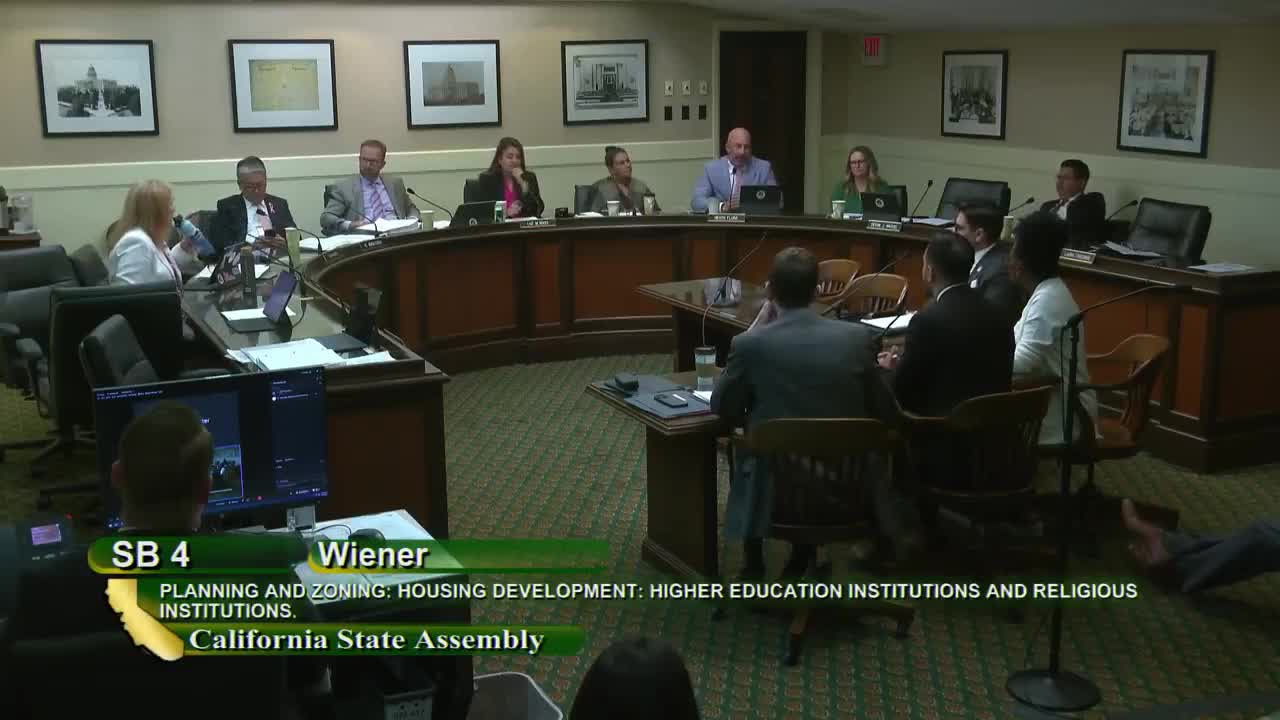 8MIN
Assembly Standing Committee on Natural Resources
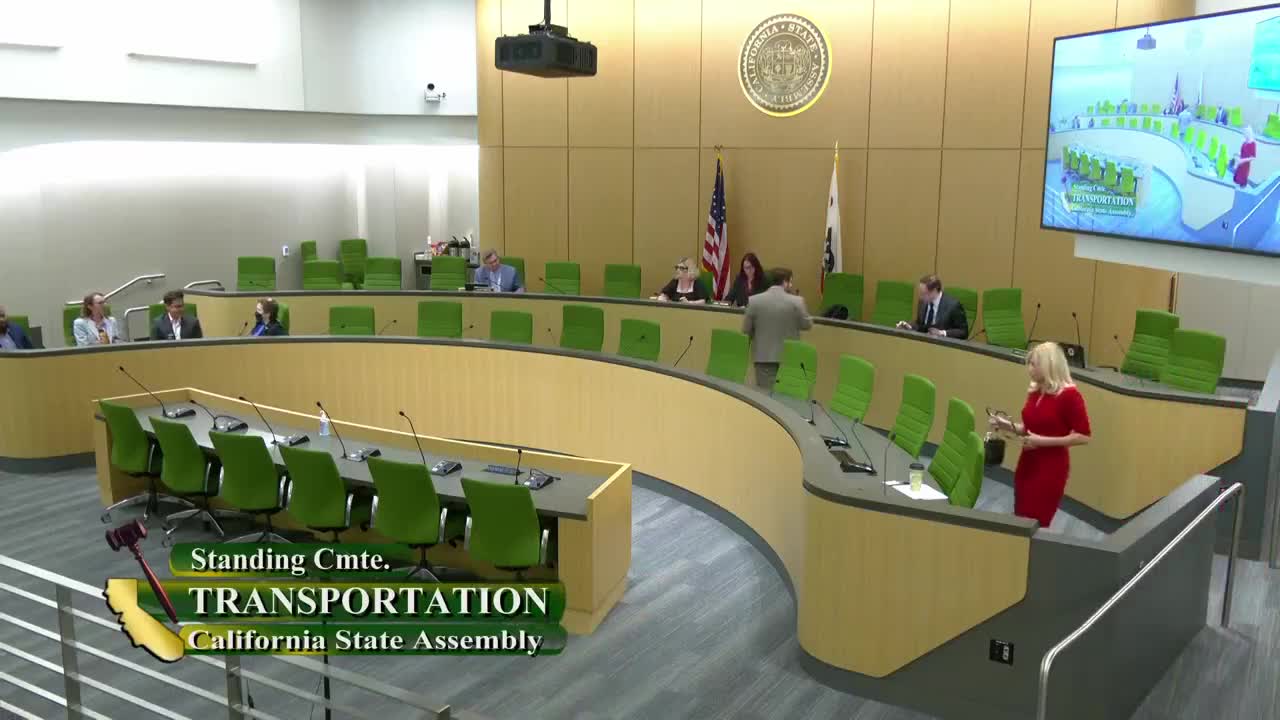 16MIN
Assembly Standing Committee on Transportation
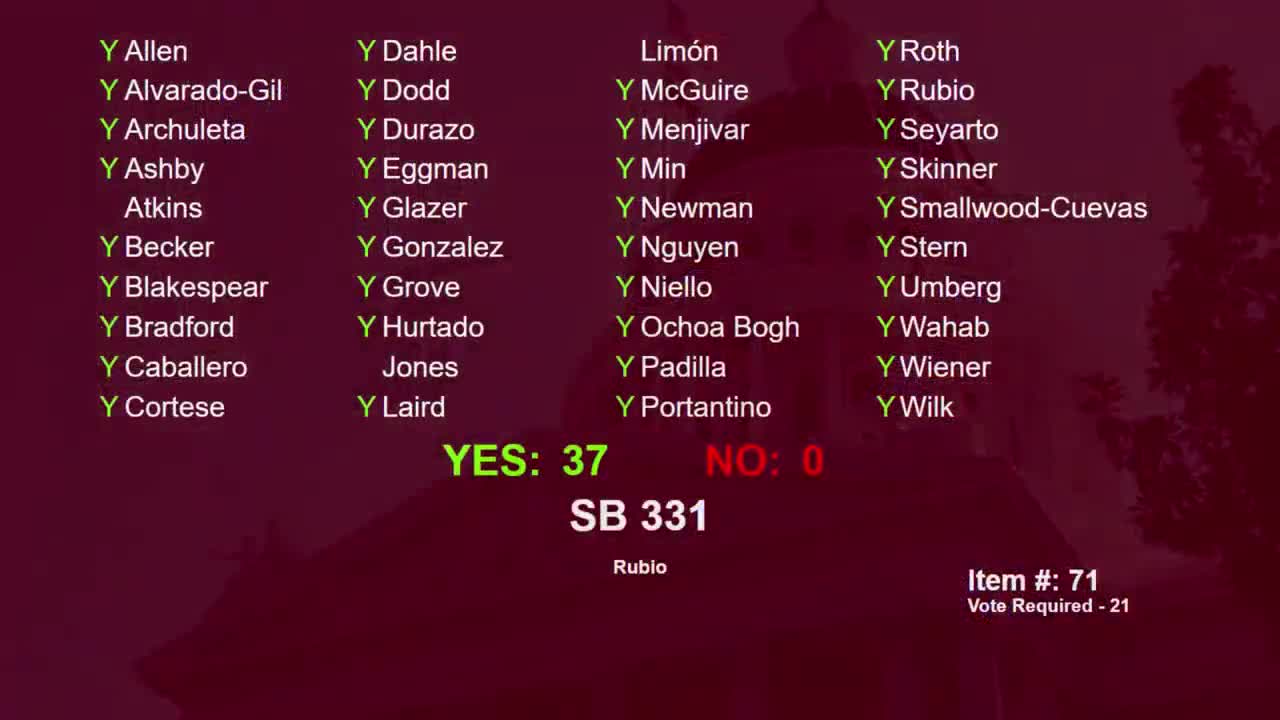 2MIN
Senate Floor
 1MIN
Senate Standing Committee on Appropriations
 13MIN
Senate Standing Committee on Transportation
 9MIN
Senate Standing Committee on Environmental Quality
Bill Author