SB 459: Domestic violence: restraining orders.
- Session Year: 2023-2024
- House: Senate
- Latest Version Date: 2023-10-13
Current Status:
Passed
(2023-10-13: Chaptered by Secretary of State. Chapter 874, Statutes of 2023.)
Introduced
In Committee
First Chamber
In Committee
Second Chamber
Enacted
What does this bill do?
The bill requires the Judicial Council to create one or more official forms, by January 1, 2025, for people who want to ask a court to change (modify) an existing restraining or protective order, so those requests are made on a standardized form.
The summary is provided by generative AI which can make mistakes. For original language, please view the details in the table below.
Existing law allows a civil court, after notice and a hearing, to issue an order to enjoin a person from, among other things, attacking, stalking, or threatening another person. Under existing law, the protective order may be valid for up to 5 years, as determined by the court, and may be renewed for 5 or more years, or permanently, at the discretion of the court.
This bill would require the Judicial Council, on or before January 1, 2025, to create one or more specific forms for the purpose of requesting a modification of an existing restraining order.
Existing law allows a civil court, after notice and a hearing, to issue an order to enjoin a person from, among other things, attacking, stalking, or threatening another person. Under existing law, the protective order may be valid for up to 5 years, as determined by the court, and may be renewed for 5 or more years, or permanently, at the discretion of the court.
This bill would require the Judicial Council, on or before January 1, 2025, to create a specified form for the purpose of modification of an existing restraining order. one or more specific forms for the purpose of requesting a modification of an existing restraining order.
Existing law allows a civil court, after notice and a hearing, to issue an order to enjoin a person from, among other things, attacking, stalking, or threatening another person. Under existing law, the protective order may be valid for up to 5 years, as determined by the court, and may be renewed for 5 or more years, or permanently, at the discretion of the court.
This bill would clarify that a protective order may be modified by the court throughout the duration of the order if the court is convinced that the modification is in the best interest of the victim. require the Judicial Council, on or before January 1, 2025, to create a specified form for the purpose of modification of an existing restraining order.
Existing law allows a criminal court to issue a protective order restraining a defendant from any contact with the victim if the defendant has been convicted of a crime of domestic violence, human trafficking, a crime in furtherance of a criminal street gang, or a registerable sex offense. Under existing law, the protective order may be valid for up to 10 years, as determined by the court.
Existing law allows a civil court, after notice and a hearing, to issue an order to enjoin a person from, among other things, attacking, stalking, or threatening another person. Under existing law, the protective order may be valid for up to 5 years, as determined by the court, and may be renewed for 5 or more years, or permanently, at the discretion of the court.
This bill would clarify that a protective order may be modified by the court throughout the duration of the order if the court is convinced that the modification is in the best interest of the victim.
This act shall be known, and may be cited, as the Sam Sisters Law.
SEC. 2.Section 6345 of the Family Code is amended to read:6345.(a)In the discretion of the court, the personal conduct, stay-away, and residence exclusion orders contained in a court order issued after notice and a hearing under this article may have a duration of not more than five years, subject to termination or modification by further order of the court either on written stipulation filed with the court or on the motion of a party. These orders may be renewed, upon the request of a party, either for five or more years, or permanently, at the discretion of the court, without a showing of further abuse since the issuance of the original order. Renewals and subsequent renewals shall be subject to termination, modification, or subsequent renewal by further order of the court either on written stipulation filed with the court or on the motion of a party. The request for renewal may be brought at any time within the three months before the expiration of the orders.
(b)Notwithstanding subdivision (a), the duration of any orders, other than the protective orders described in subdivision (a), that are also contained in a court order issued after notice and a hearing under this article, including, but not limited to, orders for custody, visitation, support, and disposition of property, shall be governed by the law relating to those specific subjects.
(c)The failure to state the expiration date on the face of the form creates an order with a duration of three years from the date of issuance.
(d)If an action is filed for the purpose of terminating or modifying a protective order prior to the expiration date specified in the order by a party other than the protected party, the party who is protected by the order shall be given notice, pursuant to subdivision (b) of Section 1005 of the Code of Civil Procedure, of the proceeding by personal service or, if the protected party has satisfied the requirements of Chapter 3.1 (commencing with Section 6205) of Division 7 of Title 1 of the Government Code, by service on the Secretary of State. If the party who is protected by the order cannot be notified prior to the hearing for modification or termination of the protective order, the court shall deny the motion to modify or terminate the order without prejudice or continue the hearing until the party who is protected can be properly noticed and may, upon a showing of good cause, specify another method for service of process that is reasonably designed to afford actual notice to the protected party. The protected party may waive the right to notice if the protected party is physically present in court and does not challenge the sufficiency of the notice.
(e)On or before January 1, 2025, the Judicial Council shall create one or more specific forms for the purpose of requesting a modification of an existing restraining order.
This act shall be known, and may be cited, as the Sam Sisters Law.
SEC. 2.Section 6345 of the Family Code is amended to read:6345.(a)In the discretion of the court, the personal conduct, stay-away, and residence exclusion orders contained in a court order issued after notice and a hearing under this article may have a duration of not more than five years, subject to termination or modification by further order of the court either on written stipulation filed with the court or on the motion of a party. These orders may be renewed, upon the request of a party, either for five or more years, or permanently, at the discretion of the court, without a showing of further abuse since the issuance of the original order. Renewals and subsequent renewals shall be subject to termination, modification, or subsequent renewal by further order of the court either on written stipulation filed with the court or on the motion of a party. The request for renewal may be brought at any time within the three months before the expiration of the orders.
(b)Notwithstanding subdivision (a), the duration of any orders, other than the protective orders described in subdivision (a), that are also contained in a court order issued after notice and a hearing under this article, including, but not limited to, orders for custody, visitation, support, and disposition of property, shall be governed by the law relating to those specific subjects.
(c)The failure to state the expiration date on the face of the form creates an order with a duration of three years from the date of issuance.
(d)If an action is filed for the purpose of terminating or modifying a protective order prior to the expiration date specified in the order by a party other than the protected party, the party who is protected by the order shall be given notice, pursuant to subdivision (b) of Section 1005 of the Code of Civil Procedure, of the proceeding by personal service or, if the protected party has satisfied the requirements of Chapter 3.1 (commencing with Section 6205) of Division 7 of Title 1 of the Government Code, by service on the Secretary of State. If the party who is protected by the order cannot be notified prior to the hearing for modification or termination of the protective order, the court shall deny the motion to modify or terminate the order without prejudice or continue the hearing until the party who is protected can be properly noticed and may, upon a showing of good cause, specify another method for service of process that is reasonably designed to afford actual notice to the protected party. The protected party may waive the right to notice if the protected party is physically present in court and does not challenge the sufficiency of the notice.
(e)On or before January 1, 2025, the Judicial Council shall create one or more specific forms for the purpose of requesting a modification of an existing restraining order. The form or forms shall provide options for describing the change of circumstances that necessitates a modification of the order, including, but not limited to, a change in behavior or conduct of the restrained party that warrants modification of the order to further protect the party or parties who are protected by the order.
This act shall be known, and may be cited, as the Sam Sisters Law.
SEC. 2.Section 6345 of the Family Code is amended to read:6345.(a)In the discretion of the court, the personal conduct, stay-away, and residence exclusion orders contained in a court order issued after notice and a hearing under this article may have a duration of not more than five years, subject to termination or modification by further order of the court either on written stipulation filed with the court or on the motion of a party. These orders may be renewed, upon the request of a party, either for five or more years, or permanently, at the discretion of the court, without a showing of further abuse since the issuance of the original order. Renewals and subsequent renewals shall be subject to termination, modification, or subsequent renewal by further order of the court either on written stipulation filed with the court or on the motion of a party. The request for renewal may be brought at any time within the three months before the expiration of the orders.
(b)Notwithstanding subdivision (a), the duration of any orders, other than the protective orders described in subdivision (a), that are also contained in a court order issued after notice and a hearing under this article, including, but not limited to, orders for custody, visitation, support, and disposition of property, shall be governed by the law relating to those specific subjects.
(c)The failure to state the expiration date on the face of the form creates an order with a duration of three years from the date of issuance.
(d)If an action is filed for the purpose of terminating or modifying a protective order prior to the expiration date specified in the order by a party other than the protected party, the party who is protected by the order shall be given notice, pursuant to subdivision (b) of Section 1005 of the Code of Civil Procedure, of the proceeding by personal service or, if the protected party has satisfied the requirements of Chapter 3.1 (commencing with Section 6205) of Division 7 of Title 1 of the Government Code, by service on the Secretary of State. If the party who is protected by the order cannot be notified prior to the hearing for modification or termination of the protective order, the court shall deny the motion to modify or terminate the order without prejudice or continue the hearing until the party who is protected can be properly noticed and may, upon a showing of good cause, specify another method for service of process that is reasonably designed to afford actual notice to the protected party. The protected party may waive the right to notice if the protected party is physically present in court and does not challenge the sufficiency of the notice.
(e)On or before January 1, 2025, the Judicial Council shall create a DV-300 form for the purpose of modification of an existing restraining order. one or more specific forms for the purpose of requesting a modification of an existing restraining order.
This act shall be known, and may be cited, as the Sam Sisters Law.
SEC. 2.Section 6345 of the Family Code is amended to read:6345.(a)In the discretion of the court, the personal conduct, stay-away, and residence exclusion orders contained in a court order issued after notice and a hearing under this article may have a duration of not more than five years, subject to termination or modification by further order of the court either on written stipulation filed with the court or on the motion of a party, if the court is convinced that the modification is in the best interest of the protected person. party. These orders may be renewed, upon the request of a party, either for five or more years, or permanently, at the discretion of the court, without a showing of further abuse since the issuance of the original order. Renewals and subsequent renewals shall be subject to termination, modification, or subsequent renewal by further order of the court either on written stipulation filed with the court or on the motion of a party, if the court is convinced that the modification is in the best interest of the protected person. party. The request for renewal may be brought at any time within the three months before the expiration of the orders.
(b)Notwithstanding subdivision (a), the duration of any orders, other than the protective orders described in subdivision (a), that are also contained in a court order issued after notice and a hearing under this article, including, but not limited to, orders for custody, visitation, support, and disposition of property, shall be governed by the law relating to those specific subjects.
(c)The failure to state the expiration date on the face of the form creates an order with a duration of three years from the date of issuance.
(d)If an action is filed for the purpose of terminating or modifying a protective order prior to the expiration date specified in the order by a party other than the protected party, the party who is protected by the order shall be given notice, pursuant to subdivision (b) of Section 1005 of the Code of Civil Procedure, of the proceeding by personal service or, if the protected party has satisfied the requirements of Chapter 3.1 (commencing with Section 6205) of Division 7 of Title 1 of the Government Code, by service on the Secretary of State. If the party who is protected by the order cannot be notified prior to the hearing for modification or termination of the protective order, the court shall deny the motion to modify or terminate the order without prejudice or continue the hearing until the party who is protected can be properly noticed and may, upon a showing of good cause, specify another method for service of process that is reasonably designed to afford actual notice to the protected party. The protected party may waive the right to notice if the protected party is physically present in court and does not challenge the sufficiency of the notice.
(e)On or before January 1, 2025, the Judicial Council shall create a DV-300 form for the purpose of modification of an existing restraining order.
All matter omitted in this version of the bill appears in the bill as introduced in the Senate, February 13, 2023. (JR11)This act shall be known, and may be cited, as the Sam Sisters Law.
SEC. 2.Section 6345 of the Family Code is amended to read:6345.(a)In the discretion of the court, the personal conduct, stay-away, and residence exclusion orders contained in a court order issued after notice and a hearing under this article may have a duration of not more than five years, subject to termination or modification by further order of the court either on written stipulation filed with the court or on the motion of a party. party, if the court is convinced that the modification is in the best interest of the protected person. These orders may be renewed, upon the request of a party, either for five or more years, or permanently, at the discretion of the court, without a showing of further abuse since the issuance of the original order. Renewals and subsequent renewals shall be subject to termination, modification, or subsequent renewal by further order of the court either on written stipulation filed with the court or on the motion of a party. party, if the court is convinced that the modification is in the best interest of the protected person. The request for renewal may be brought at any time within the three months before the expiration of the orders.
(b)Notwithstanding subdivision (a), the duration of any orders, other than the protective orders described in subdivision (a), that are also contained in a court order issued after notice and a hearing under this article, including, but not limited to, orders for custody, visitation, support, and disposition of property, shall be governed by the law relating to those specific subjects.
(c)The failure to state the expiration date on the face of the form creates an order with a duration of three years from the date of issuance.
(d)If an action is filed for the purpose of terminating or modifying a protective order prior to the expiration date specified in the order by a party other than the protected party, the party who is protected by the order shall be given notice, pursuant to subdivision (b) of Section 1005 of the Code of Civil Procedure, of the proceeding by personal service or, if the protected party has satisfied the requirements of Chapter 3.1 (commencing with Section 6205) of Division 7 of Title 1 of the Government Code, by service on the Secretary of State. If the party who is protected by the order cannot be notified prior to the hearing for modification or termination of the protective order, the court shall deny the motion to modify or terminate the order without prejudice or continue the hearing until the party who is protected can be properly noticed and may, upon a showing of good cause, specify another method for service of process that is reasonably designed to afford actual notice to the protected party. The protected party may waive the right to notice if the protected party is physically present in court and does not challenge the sufficiency of the notice.
SEC. 3.Section 136.2 of the Penal Code is amended to read:136.2.(a)(1)Upon a good cause belief that harm to, or intimidation or dissuasion of, a victim or witness has occurred or is reasonably likely to occur, a court with jurisdiction over a criminal matter may issue orders, including, but not limited to, the following:
(A)An order issued pursuant to Section 6320 of the Family Code.
(B)An order that a defendant shall not violate any provision of Section 136.1.
(C)An order that a person before the court other than a defendant, including, but not limited to, a subpoenaed witness or other person entering the courtroom of the court, shall not violate any provision of Section 136.1.
(D)An order that a person described in this section shall have no communication whatsoever with a specified witness or a victim, victim except through an attorney under reasonable restrictions that the court may impose.
(E)An order calling for a hearing to determine if an order described in subparagraphs (A) to (D), inclusive, should be issued.
(F)(i)An order that a particular law enforcement agency within the jurisdiction of the court provide protection for a victim, witness, or both, or for immediate family members of a victim or a witness who reside in the same household as the victim or witness or within reasonable proximity of the victims or witness household, as determined by the court. The order shall not be made without the consent of the law enforcement agency except for limited and specified periods of time and upon an express finding by the court of a clear and present danger of harm to the victim or witness or immediate family members of the victim or witness.
(ii)For purposes of this paragraph, immediate family members include the spouse, children, or parents of the victim or witness.
(G)(i)An order protecting a victim or witness of violent crime from all contact by the defendant, or contact, defendant or contact with the intent to annoy, harass, threaten, or commit acts of violence, violence by the defendant. The court or its designee shall transmit orders made under this paragraph to law enforcement personnel within one business day of the issuance, modification, extension, or termination of the order, order pursuant to subdivision (a) of Section 6380 of the Family Code. It is the responsibility of the court to transmit the modification, extension, or termination orders made under this paragraph to the same agency that entered the original protective order into the California Restraining and Protective Order System.
(ii)(I)If a court does not issue an order pursuant to clause (i) when the defendant is charged with a crime involving domestic violence violence, as defined in Section 13700 of this code or in Section 6211 of the Family Code, the court, on its own motion, shall consider issuing a protective order upon a good cause belief that harm to, or intimidation or dissuasion of, a victim or witness has occurred or is reasonably likely to occur, that provides as follows:
(ia)The defendant shall not own, possess, purchase, receive, or attempt to purchase or receive, a firearm while the protective order is in effect.
(ib)The defendant shall relinquish ownership or possession of any firearms, firearms pursuant to Section 527.9 of the Code of Civil Procedure.
(II)Every A person who owns, possesses, purchases, or receives, or attempts to purchase or receive, a firearm while this protective order is in effect is punishable pursuant to Section 29825.
(iii)An order issued, modified, extended, or terminated by a court pursuant to this subparagraph shall be issued on forms adopted by the Judicial Council of California that have been approved by the Department of Justice pursuant to subdivision (i) of Section 6380 of the Family Code. However, the fact that an order issued by a court pursuant to this section was not issued on forms adopted by the Judicial Council and approved by the Department of Justice shall not, in and of itself, not make the order unenforceable.
(iv)A protective order issued under this subparagraph may require the defendant to be placed on electronic monitoring if the local government, with the concurrence of the county sheriff or the chief probation officer with jurisdiction, adopts a policy to authorize electronic monitoring of defendants and specifies the agency with jurisdiction for this purpose. If the court determines that the defendant has the ability to pay for the monitoring program, the court shall order the defendant to pay for the monitoring. If the court determines that the defendant does not have the ability to pay for the electronic monitoring, the court may order electronic monitoring to be paid for by the local government that adopted the policy to authorize electronic monitoring. The duration of electronic monitoring shall not exceed one year from the date the order is issued. The electronic monitoring shall not be in place if the protective order is not in place.
(2)For purposes of this subdivision, a minor who was not a victim of, but who was physically present at the time of, an act of domestic violence, violence is a witness and is deemed to have suffered harm within the meaning of paragraph (1).
(b)A person violating an order made pursuant to subparagraphs (A) to (G), inclusive, of paragraph (1) of subdivision (a) may be punished for any a substantive offense described in Section 136.1, 136.1 or for a contempt of the court making the order. A finding of contempt shall not be a bar to prosecution for a violation of Section 136.1. However, a person held in contempt shall be entitled to credit for punishment imposed therein against a sentence imposed upon conviction of an offense described in Section 136.1. A conviction or acquittal for a substantive offense under Section 136.1 shall be a bar to a subsequent punishment for contempt arising out of the same act.
(c)(1)(A)Notwithstanding subdivision (e), an emergency protective order issued pursuant to Chapter 2 (commencing with Section 6250) of Part 3 of Division 10 of the Family Code or Section 646.91 shall have precedence in enforcement over any other restraining or protective order, provided the emergency protective order meets all of the following requirements:
(i)The emergency protective order is issued to protect one or more individuals who are already protected persons under another restraining or protective order.
(ii)The emergency protective order restrains the individual who is the restrained person in the other restraining or protective order specified in clause (i).
(iii)The provisions of the emergency protective order are more restrictive in relation to the restrained person than are the provisions of the other restraining or protective order specified in clause (i).
(B)An emergency protective order that meets the requirements of subparagraph (A) shall have precedence in enforcement over the provisions of any other restraining or protective order only with respect to those provisions of the emergency protective order that are more restrictive in relation to the restrained person.
(2)Except as described in paragraph (1), a no-contact order, as described in Section 6320 of the Family Code, shall have precedence in enforcement over any other restraining or protective order.
(d)(1)A person subject to a protective order issued under this section shall not own, possess, purchase, or receive, or attempt to purchase or receive, a firearm while the protective order is in effect.
(2)The court shall order a person subject to a protective order issued under this section to relinquish ownership or possession of any firearms, firearms pursuant to Section 527.9 of the Code of Civil Procedure.
(3)A person who owns, possesses, purchases, or receives, or attempts to purchase or receive, a firearm while the protective order is in effect is punishable pursuant to Section 29825.
(e)(1)When the defendant is charged with a crime involving domestic violence, as defined in Section 13700 of this code or in Section 6211 of the Family Code, or a violation of Section 261, 261.5, or former Section 262, or a crime that requires the defendant to register pursuant to subdivision (c) of Section 290, including, but not limited to, commercial sexual exploitation of a minor in violation of Section 236.1, the court shall consider issuing the above-described orders on its own motion. All interested parties shall receive a copy of those orders. In order to To facilitate this, the courts records of all criminal cases involving domestic violence or violence, a violation of Section 261, 261.5, or former Section 262, or a crime that requires the defendant to register pursuant to subdivision (c) of Section 290, including, but not limited to, commercial sexual exploitation of a minor in violation of Section 236.1, shall be marked to clearly alert the court to this issue.
(2)When a complaint, information, or indictment charging a crime involving domestic violence, as defined in Section 13700 or in Section 6211 of the Family Code, or a violation of Section 261, 261.5, or former Section 262, or a crime that requires the defendant to register pursuant to subdivision (c) of Section 290, including, but not limited to, commercial sexual exploitation of a minor in violation of Section 236.1, has been issued, except as described in subdivision (c), a restraining order or protective order against the defendant issued by the criminal court in that case has precedence in enforcement over a civil court order against the defendant.
(3)Custody and visitation with respect to the defendant and the defendants minor children may be ordered by a family or juvenile court consistent with the protocol established pursuant to subdivision (f), but if it is ordered after a criminal protective order has been issued pursuant to this section, the custody and visitation order shall make reference to, to and, if there is not an emergency protective order that has precedence in enforcement pursuant to paragraph (1) of subdivision (c), (c) or a no-contact order, as described in Section 6320 of the Family Code, acknowledge the precedence of enforcement of, of an appropriate criminal protective order. On or before July 1, 2014, the Judicial Council shall modify the criminal and civil court forms consistent with this subdivision.
(f)On or before January 1, 2003, the Judicial Council shall promulgate a protocol, for adoption by each local court in substantially similar terms, to provide for the timely coordination of all orders against the same defendant and in favor of the same named victim or victims. The protocol shall include, but shall not be limited to, mechanisms for ensuring appropriate communication and information sharing between criminal, family, and juvenile courts concerning orders and cases that involve the same parties, parties and shall permit a family or juvenile court order to coexist with a criminal court protective order subject to the following conditions:
(1)An order that permits contact between the restrained person and the persons children shall provide for the safe exchange of the children and shall not contain language, either printed or handwritten, that violates a no-contact order issued by a criminal court.
(2)The safety of all parties shall be the courts paramount concern. The family or juvenile court shall specify the time, day, place, and manner of transfer of the child, child as provided in Section 3100 of the Family Code.
(g)On or before January 1, 2003, the Judicial Council shall modify the criminal and civil court protective order forms consistent with this section.
(h)(1)When a complaint, information, or indictment charging a crime involving domestic violence, as defined in Section 13700 or in Section 6211 of the Family Code, has been filed, the court may consider, in determining whether good cause exists to issue an order under subparagraph (A) of paragraph (1) of subdivision (a), the underlying nature of the offense charged, charged and the information provided to the court pursuant to Section 273.75.
(2)When a complaint, information, or indictment charging a violation of Section 261, 261.5, or former Section 262, or a crime that requires the defendant to register pursuant to subdivision (c) of Section 290, including, but not limited to, commercial sexual exploitation of a minor in violation of Section 236.1, has been filed, the court may consider, in determining whether good cause exists to issue an order under paragraph (1) of subdivision (a), the underlying nature of the offense charged, the defendants relationship to the victim, the likelihood of continuing harm to the victim, any current restraining order or protective order issued by a civil or criminal court involving the defendant, and the defendants criminal history, including, but not limited to, prior convictions for a violation of Section 261, 261.5, or former Section 262, a crime that requires the defendant to register pursuant to subdivision (c) of Section 290, including, but not limited to, commercial sexual exploitation of a minor in violation of Section 236.1, any other forms of violence, or a weapons offense.
(i)(1)When a criminal defendant has been convicted of a crime involving domestic violence violence, as defined in Section 13700 or in Section 6211 of the Family Code, a violation of subdivision (a), (b), or (c) of Section 236.1 prohibiting human trafficking, Section 261, 261.5, former Section 262, subdivision (a) of Section 266h, or subdivision (a) of Section 266i, a violation of Section 186.22, or a crime that requires the defendant to register pursuant to subdivision (c) of Section 290, the court, at the time of sentencing, shall consider issuing an order restraining the defendant from any contact with a victim of the crime. The order may be valid for up to 10 years, as determined by the court. This protective order may be issued by the court regardless of whether the defendant is sentenced to the state prison or a county jail or jail, whether the defendant is subject to mandatory supervision, or whether imposition of sentence is suspended and the defendant is placed on probation. The order may be modified by the sentencing court in the county in which it was issued throughout the duration of the order if the court is convinced that the modification is in the best interest of the victim. It is the intent of the Legislature in enacting this subdivision that the duration of a restraining order issued by the court be based upon the seriousness of the facts before the court, the probability of future violations, and the safety of a victim and the victims immediate family. (2)
(2) When a criminal defendant has been convicted of a crime involving domestic violence violence, as defined in Section 13700 or in Section 6211 of the Family Code, a violation of Section 261, 261.5, or former Section 262, a violation of Section 186.22, or a crime that requires the defendant to register pursuant to subdivision (c) of Section 290, the court, at the time of sentencing, shall consider issuing an order restraining the defendant from any contact with a percipient witness to the crime if it can be established by clear and convincing evidence that the witness has been harassed, as defined in paragraph (3) of subdivision (b) of Section 527.6 of the Code of Civil Procedure, by the defendant. (3)
(3) An order under this subdivision may include provisions for electronic monitoring if the local government, upon receiving the concurrence of the county sheriff or the chief probation officer with jurisdiction, adopts a policy authorizing electronic monitoring of defendants and specifies the agency with jurisdiction for this purpose. If the court determines that the defendant has the ability to pay for the monitoring program, the court shall order the defendant to pay for the monitoring. If the court determines that the defendant does not have the ability to pay for the electronic monitoring, the court may order the electronic monitoring to be paid for by the local government that adopted the policy authorizing electronic monitoring. The duration of the electronic monitoring shall not exceed one year from the date the order is issued.
(j)For purposes of this section, local government means the county that has jurisdiction over the protective order.
|
Date
|
Status
|
|---|---|
| Oct 13, 2023 | Chaptered by Secretary of State. Chapter 874, Statutes of 2023. |
| Oct 13, 2023 | Approved by the Governor. |
| Sep 15, 2023 | Enrolled and presented to the Governor at 3 p.m. |
| Sep 11, 2023 | Assembly amendments concurred in. (Ayes 39. Noes 0. Page 2600.) Ordered to engrossing and enrolling. |
| Sep 7, 2023 | In Senate. Concurrence in Assembly amendments pending. |
| Sep 7, 2023 | Read third time. Passed. (Ayes 79. Noes 0. Page 2990.) Ordered to the Senate. |
| Aug 31, 2023 | Read third time and amended. |
| Aug 31, 2023 | Ordered to third reading. |
| Aug 17, 2023 | Ordered to third reading. |
| Aug 17, 2023 | From consent calendar on motion of Assembly Member Blanca Rubio. |
| Jul 13, 2023 | Read second time. Ordered to consent calendar. |
| Jul 12, 2023 | From committee: Do pass. Ordered to consent calendar. (Ayes 15. Noes 0.) (July 12). |
| Jun 21, 2023 | Read second time and amended. Re-referred to Com. on APPR. |
| Jun 20, 2023 | From committee: Do pass as amended and re-refer to Com. on APPR. with recommendation: To consent calendar. (Ayes 10. Noes 0.) (June 20). |
| Jun 12, 2023 | June 13 set for first hearing canceled at the request of author. |
| May 26, 2023 | Referred to Com. on JUD. |
| May 18, 2023 | In Assembly. Read first time. Held at Desk. |
| May 18, 2023 | Read third time. Passed. (Ayes 38. Noes 0. Page 1103.) Ordered to the Assembly. |
| May 16, 2023 | Read second time. Ordered to consent calendar. |
| May 15, 2023 | From committee: Be ordered to second reading pursuant to Senate Rule 28.8 and ordered to consent calendar. |
| May 5, 2023 | Set for hearing May 15. |
| May 1, 2023 | Withdrawn from committee. |
| May 1, 2023 | Re-referred to Com. on APPR. |
| Apr 27, 2023 | Read second time and amended. Re-referred to Com. on PUB S. |
| Apr 26, 2023 | From committee: Do pass as amended and re-refer to Com. on PUB S. with recommendation: To consent calendar. (Ayes 11. Noes 0. Page 893.) (April 25). |
| Apr 17, 2023 | From committee with author's amendments. Read second time and amended. Re-referred to Com. on JUD. |
| Apr 13, 2023 | Set for hearing April 25. |
| Apr 12, 2023 | April 18 set for first hearing canceled at the request of author. |
| Apr 11, 2023 | Set for hearing April 18. |
| Feb 22, 2023 | Referred to Coms. on JUD. and PUB S. |
| Feb 14, 2023 | From printer. May be acted upon on or after March 16. |
| Feb 13, 2023 | Introduced. Read first time. To Com. on RLS. for assignment. To print. |
|
Date
|
Description
|
Location
|
Votes
|
|
|---|---|---|---|---|
| Sep 11, 2023 | Unfinished Business SB459 Rubio et al. Concurrence | Senate Floor |
Passed |
|
| Sep 7, 2023 | SB 459 Rubio Senate Third Reading By Gabriel | Assembly Floor |
Passed |
|
| Jul 12, 2023 | Do pass. To Consent Calendar. | Assembly Standing Committee on Appropriations |
Passed |
|
| Jun 20, 2023 | Do pass as amended, and be re-referred to the Committee on [Appropriations] with recommendation: To Consent Calendar | Assembly Standing Committee on Judiciary |
Passed |
|
| May 18, 2023 | Consent Calendar SB459 Rubio et al. | Senate Floor |
Passed |
|
| Apr 25, 2023 | Do pass as amended, but first amend, and re-refer to the Committee on [Public Safety] with the recommendation: To Consent Calendar | Senate Standing Committee on Judiciary |
Passed |
This list shows positions taken on this bill by organizations on the date displayed, which is linked to the original source.
Positions by individuals are not included.
|
Organization
|
Position
|
Date
|
|---|---|---|
| California Partnership To End Domestic Violence | ** Support | |
| Coalition to Abolish Slavery and Trafficking | ** Support | |
| Community Solutions | ** Support | |
| Community Solutions for Children, Families, and Individuals | ** Support | |
| Family Violence Appellate Project | ** Support | |
| Youth Power Project | ** Support |
SENATE RULES COMMITTEE Office of Senate Floor Analyses (916) 651-1520 Fax: (916) 327-4478 | SB 459 |
UNFINISHED BUSINESS
Bill No: SB 459
Author: Rubio (D), et al.
Amended: 8/31/23
Vote: 21
SENATE JUDICIARY COMMITTEE: 11-0, 4/25/23
AYES: Umberg, Wilk, Allen, Ashby, Caballero, Durazo, Laird, Min, Niello, Stern, Wiener
SENATE APPROPRIATIONS COMMITTEE: Senate Rule 28.8
SENATE FLOOR: 38-0, 5/18/23 (Consent)
AYES: Allen, Alvarado-Gil, Archuleta, Ashby, Atkins, Becker, Blakespear, Bradford, Caballero, Cortese, Dahle, Durazo, Eggman, Glazer, Grove, Hurtado, Jones, Laird, Limón, McGuire, Menjivar, Min, Newman, Nguyen, Niello, Ochoa Bogh, Padilla, Portantino, Roth, Rubio, Seyarto, Skinner, Smallwood-Cuevas, Stern, Umberg, Wahab, Wiener, Wilk
NO VOTE RECORDED: Dodd, Gonzalez
ASSEMBLY FLOOR: 79-0, 9/7/23 - See last page for vote
SUBJECT: Domestic violence: restraining orders
SOURCE: Author
DIGEST:
This bill requires the Judicial Council of California, by January 1, 2025, to create one or more specific forms for the modification of an existing restraining order issued under the Domestic Violence Prevention Act (DVPA).
Assembly Amendments
remove the requirement that the form or forms provide options for describing the change of circumstances necessitating a modification of the order.
ANALYSIS:
Existing law:
- Establishes the DVPA (Fam. Code, §§ 6200 et seq.), which sets forth procedural and substantive requirements for the issuance of a protective order to, among other things, enjoin specific acts of abuse or prohibit the abuser from coming within a specified distance of the abused person. (Fam. Code, §§ 6218, 6300 et seq.)
- Grants the court the discretion to set the duration of a DVPA protective order issued after a noticed hearing, up to a maximum of five years. (Fam. Code, § 6345(a).)
- At any point during the duration of the order, it may be modified or terminated by the court upon a written stipulation filed with the court or by the motion of a party. (Fam. Code, § 6345(a).)
- The order may be renewed at the request of either party, for a period of five years or permanently; renewed orders are subject to modification, termination, and renewal under the same terms as the original order. (Fam. Code, § 6345(a).)
- Establishes procedures by which a court in a criminal case may issue a protective order to protect against actual or reasonably likely harm to, or intimidation or dissuasion of, a victim or witness. (Pen. Code, § 136.2.)
- Requires, when a defendant has been convicted of specified crimes involving domestic violence, human trafficking, or crimes involving the defendant to register as a sex offender with local authorities, the court to consider issuing an order restraining the defendant from any contact with a victim of the crime, for a period of up to 10 years. (Pen. Code, § 136.2(i).)
This bill requires the Judicial Council of California, on or before January 1, 2025, to create a form or forms for the modification of a protective order issued under the DVPA.
Comments
Under the DVPA, a victim of domestic violence may go to court themselves and seek a protective order through the civil courts.[1] A court may modify a protective order at any point upon receipt of a stipulation or on the motion of a party.[2] The author and supporters of the bill report that many victims of domestic violence find it difficult to navigate the modification process when they need to seek additional protections from the court.
To make it easier for a party to seek a modification of a protective order, this bill requires the Judicial Council of California, by January 1, 2025, to create a form or forms by which a party may request a modification of a DVPA protective order from a civil court. Providing a form for parties who wish to modify a protective order should make it easier for victims of domestic violence, many of whom are unrepresented, seek the additional protection they need from the courts.
FISCAL EFFECT: Appropriation: No Fiscal Com.: Yes Local: No
According to the Assembly Appropriations Committee, this bill presents minor and absorbable costs to Judicial Council to create the required forms.
SUPPORT: (Verified 9/7/23)
Coalition to Abolish Slavery and Trafficking
Community Solutions
Family Violence Appellate Project
Youth Power Project
OPPOSITION: (Verified 9/7/23)
None received
ARGUMENTS IN SUPPORT: According to the Coalition to Abolish Slavery and Trafficking:
SB 459 will require that on or before January 1, 2025, Judicial Council shall create a [] form specifically for purposes of modification of an existing restraining order. Existing law makes it easier for a perpetrator—who has committed acts of domestic violence—to terminate a domestic violence restraining order (DVRO). On the other hand a victim seeking to modify an existing DVRO has various non-domestic violence forms, Codes of Civil Procedures and statutes that family law standards force them to navigate. Essentially, it is a far easier path for a perpetrator to seek to terminate the restraining order (RO) prior to its expiration date, than it is for a victim to modify an active DVRO when the restrained person is exhibiting escalating dangerous behavior.
ASSEMBLY FLOOR: 79-0, 9/7/23
AYES: Addis, Aguiar-Curry, Alanis, Alvarez, Arambula, Bains, Bauer-Kahan, Bennett, Berman, Boerner, Bonta, Bryan, Calderon, Juan Carrillo, Wendy Carrillo, Cervantes, Chen, Connolly, Megan Dahle, Davies, Dixon, Flora, Mike Fong, Vince Fong, Friedman, Gabriel, Gallagher, Garcia, Gipson, Grayson, Haney, Hart, Holden, Hoover, Irwin, Jackson, Jones-Sawyer, Kalra, Lackey, Lee, Low, Lowenthal, Maienschein, Mathis, McCarty, McKinnor, Muratsuchi, Stephanie Nguyen, Ortega, Pacheco, Papan, Jim Patterson, Joe Patterson, Pellerin, Petrie-Norris, Quirk-Silva, Ramos, Rendon, Reyes, Luz Rivas, Rodriguez, Blanca Rubio, Sanchez, Santiago, Schiavo, Soria, Ta, Ting, Valencia, Villapudua, Waldron, Wallis, Ward, Weber, Wicks, Wilson, Wood, Zbur, Robert Rivas
NO VOTE RECORDED: Essayli
Prepared by: Allison Whitt Meredith / JUD. / (916) 651-4113
9/8/23 10:50:28
**** END ****
SENATE THIRD READING
STR Bill Id:SB 459
Author:(Rubio)
As Amended Ver:August 31, 2023
Majority vote
SUMMARY
Requires the Judicial Council of California (JCC) to create one or more specific forms for the modification of an existing restraining order.
Major Provisions
Requires the JCC, on or before January 1, 2025, to create one or more specific forms for the modification of a protective order issued under the Domestic Violence Protection Act (DVPA).
COMMENTS
Under the DVPA, a victim of domestic violence may seek a protective order through the civil courts. A court may modify a protective order at any point upon receipt of a stipulation or on the motion of a party.
Despite the fact that the ability to modify protective orders is codified in existing law, the author and supporters of the bill report that many victims of domestic violence find it difficult to navigate the modification process when they need to seek additional protections from the court. Therefore, to make it easier for a party to seek a modification of a protective order, this author-sponsored bill requires the JCC, by January 1, 2025, to create one or more specific forms by which a party may request a modification of a DVPA protective order from a civil court. Providing a form for parties who wish to modify a protective order should make it easier for victims of domestic violence, many of whom are unrepresented, seek the additional protection they need from the courts.
According to the Author
SB 459 is a common sense piece of legislation that expands victims' rights and abilities to end their abuse. . . . In California, around 40% of restraining orders are violated, and this trend will continue as long as there is no clear path for victims to modify their restraining orders. If a victim seeks to modify an existing domestic violence restraining order (DVRO) they become subject to a maze of non-domestic violence forms, Codes of Civil Procedures, and statutes that Family Law standards force them to navigate. Unfortunately, current law may make it easier for an abusive partner to terminate an active DVRO than a victim seeking to modify it.
Furthermore, many issues preclude victims from modifying restraining orders, which can easily addressed by simply clarifying and streamlining the process. This action will even extend to all legal professionals who will, because of the bill and due to their evident inexperience with how to modify a DVRO, be able to navigate this process effectively in cases.
Arguments in Support
The Coalition to Abolish Slavery and Trafficking writes the following to explain why the bill is needed:
The current process for modifying restraining orders is a task that is tremendously difficult and needs to be clarified for court clerks and judges. This is . . . most felt in the processes outside the courtroom. Stanley Mosk is one of the busiest Family Law Courts in the Country. As a result, they have very experienced Support Staff, but even then, their clerks rejected requests to modify a DVRO. The current process for modification also does not allow for immediate protective modification.
Arguments in Opposition
The Family Violence Appellate Project objects to recent amendments taken to the bill that provide additional information about the modification form created by the Judicial Council, noting:
[C]reating this new DVRO modification standard would create a disconnect between modification and termination, which currently are governed similarly. (Ante, fn. 1.) As explained above, this new standard will, in at least some cases, make it harder for a survivor to modify a DVRO than it would be for an abuser to terminate a DVRO. For these reasons, we strongly suggest removing the above-quoted sentence in its entirety.
FISCAL COMMENTS
According to the Assembly Appropriations Committee, minor and absorbable costs to Judicial Council to create the required forms.
VOTES
SENATE FLOOR: 38-0-2
YES: Allen, Alvarado-Gil, Archuleta, Ashby, Atkins, Becker, Blakespear, Bradford, Caballero, Cortese, Dahle, Durazo, Eggman, Glazer, Grove, Hurtado, Jones, Laird, Limón, McGuire, Menjivar, Min, Newman, Nguyen, Niello, Ochoa Bogh, Padilla, Portantino, Roth, Rubio, Seyarto, Skinner, Smallwood-Cuevas, Stern, Umberg, Wahab, Wiener, Wilk
ABS, ABST OR NV: Dodd, Gonzalez
ASM JUDICIARY: 10-0-1
YES: Maienschein, Essayli, Connolly, Dixon, Haney, Kalra, Pacheco, Papan, Reyes, Robert Rivas
ABS, ABST OR NV: Sanchez
ASM APPROPRIATIONS: 15-0-1
YES: Holden, Megan Dahle, Bonta, Wendy Carrillo, Dixon, Mike Fong, Hart, Lowenthal, Mathis, Papan, Pellerin, Sanchez, Soria, Weber, Wilson
ABS, ABST OR NV: Bryan
UPDATED
VERSION: August 31, 2023
CONSULTANT: Alison Merrilees / JUD. / (916) 319-2334 FN: 0001368
SENATE THIRD READING
STR Bill Id:SB 459
Author:(Rubio)
As Amended Ver:June 21, 2023
Majority vote
SUMMARY
Requires the Judicial Council of California (JCC) to create one or more specific forms for the modification of an existing restraining order.
Major Provisions
- Requires the JCC, on or before January 1, 2025, to create one or more specific forms for the modification of a protective order issued under the Domestic Violence Protection Act (DVPA).
- Specifies that the form or forms shall provide options for describing the change of circumstances that necessitates a modification of the order, including but not limited to, a change in behavior or conduct of the restrained party that warrants modification of the order to further protect the party or parties who are protected by the order.
COMMENTS
Under the DVPA, a victim of domestic violence may seek a protective order through the civil courts. A court may modify a protective order at any point upon receipt of a stipulation or on the motion of a party.
Despite the fact that the ability to modify protective orders is codified in existing law, the author and supporters of the bill report that many victims of domestic violence find it difficult to navigate the modification process when they need to seek additional protections from the court. Therefore, to make it easier for a party to seek a modification of a protective order, this author-sponsored bill requires the JCC, by January 1, 2025, to create one or more specific forms by which a party may request a modification of a DVPA protective order from a civil court. Providing a form for parties who wish to modify a protective order should make it easier for victims of domestic violence, many of whom are unrepresented, seek the additional protection they need from the courts.
According to the Author
SB 459 is a common sense piece of legislation that expands victims' rights and abilities to end their abuse. . . . In California, around 40% of restraining orders are violated, and this trend will continue as long as there is no clear path for victims to modify their restraining orders. If a victim seeks to modify an existing domestic violence restraining order (DVRO) they become subject to a maze of non-domestic violence forms, Codes of Civil Procedures, and statutes that Family Law standards force them to navigate. Unfortunately, current law may make it easier for an abusive partner to terminate an active DVRO than a victim seeking to modify it.
Furthermore, many issues preclude victims from modifying restraining orders, which can easily addressed by simply clarifying and streamlining the process. This action will even extend to all legal professionals who will, because of the bill and due to their evident inexperience with how to modify a DVRO, be able to navigate this process effectively in cases.
Arguments in Support
The Coalition to Abolish Slavery and Trafficking writes the following to explain why the bill is needed:
The current process for modifying restraining orders is a task that is tremendously difficult and needs to be clarified for court clerks and judges. This is . . . most felt in the processes outside the courtroom. Stanley Mosk is one of the busiest Family Law Courts in the Country. As a result, they have very experienced Support Staff, but even then, their clerks rejected requests to modify a DVRO. The current process for modification also does not allow for immediate protective modification.
Arguments in Opposition
The Family Violence Appellate Project objects to recent amendments taken to the bill that provide additional information about the modification form created by the Judicial Council, noting:
[C]reating this new DVRO modification standard would create a disconnect between modification and termination, which currently are governed similarly. (Ante, fn. 1.) As explained above, this new standard will, in at least some cases, make it harder for a survivor to modify a DVRO than it would be for an abuser to terminate a DVRO. For these reasons, we strongly suggest removing the above-quoted sentence in its entirety.
FISCAL COMMENTS
According to the Assembly Appropriations Committee, minor and absorbable costs to Judicial Council to create the required forms.
VOTES
SENATE FLOOR: 38-0-2
YES: Allen, Alvarado-Gil, Archuleta, Ashby, Atkins, Becker, Blakespear, Bradford, Caballero, Cortese, Dahle, Durazo, Eggman, Glazer, Grove, Hurtado, Jones, Laird, Limón, McGuire, Menjivar, Min, Newman, Nguyen, Niello, Ochoa Bogh, Padilla, Portantino, Roth, Rubio, Seyarto, Skinner, Smallwood-Cuevas, Stern, Umberg, Wahab, Wiener, Wilk
ABS, ABST OR NV: Dodd, Gonzalez
ASM JUDICIARY: 10-0-1
YES: Maienschein, Essayli, Connolly, Dixon, Haney, Kalra, Pacheco, Papan, Reyes, Robert Rivas
ABS, ABST OR NV: Sanchez
ASM APPROPRIATIONS: 15-0-1
YES: Holden, Megan Dahle, Bonta, Wendy Carrillo, Dixon, Mike Fong, Hart, Lowenthal, Mathis, Papan, Pellerin, Sanchez, Soria, Weber, Wilson
ABS, ABST OR NV: Bryan
UPDATED
VERSION: April 27, 2023
CONSULTANT: Alison Merrilees / JUD. / (916) 319-2334 FN: 0001273
Date of Hearing: July 12, 2023
ASSEMBLY COMMITTEE ON APPROPRIATIONS
Chris Holden, Chair
SBPCA Bill Id:SB 459
Author:(Rubio) – As Amended Ver:June 21, 2023
Policy Committee: | Judiciary | Vote: | 10 - 0 |
|
| ||
|
|
Urgency: No State Mandated Local Program: No Reimbursable: No
SUMMARY:
This bill requires Judicial Council to create one or more standard forms for requesting modification of an existing domestic violence restraining order (DVRO).
FISCAL EFFECT:
Minor and absorbable costs to Judicial Council to create the required forms.
COMMENTS:
- Purpose. According to the author:
In California, around 40% of restraining orders are violated, and this trend will continue as long as there is no clear path for victims to modify their restraining orders. If a victim seeks to modify an existing domestic violence restraining order (DVRO) they become subject to a maze of non-domestic violence forms, Codes of Civil Procedures, and statutes that Family Law standards force them to navigate. Unfortunately, current law may make it easier for an abusive partner to terminate an active DVRO than a victim seeking to modify it. Furthermore, many issues preclude victims from modifying restraining orders, which can easily addressed by simply clarifying and streamlining the process. This action will even extend to all legal professionals who will, because of the bill and due to their evident inexperience with how to modify a DVRO, be able to navigate this process effectively in cases.
- Background. A DVRO is a civil restraining order that protects someone from abuse by their intimate partner or family member. A person may seek a DVRO against a current or former domestic partner, spouse, person they dated, or family member who abused the person or their children. Depending on the circumstances, a court may order the person restrained by a DVRO not to contact, harass, or come near the person who requested the order, not to possess firearms or ammunition, to pay spousal or child support, or to fulfill certain child custody obligations. Current law allows a court to modify an existing DVRO at any time if a party moves to modify the order or if the court receives a stipulation.
This bill requires Judicial Council to develop standard forms that can be used to request modification of an existing DVRO. According to the author and the bill’s supporters, standardized forms would make it easier for a victim of domestic abuse to request changes to the restraining order that protects them.
Analysis Prepared by: Annika Carlson / APPR. / (916) 319-2081
Date of Hearing: June 20, 2023
ASSEMBLY COMMITTEE ON JUDICIARY
Brian Maienschein, Chair
SBPCA Bill Id:SB 459
Author:(Rubio) – As Amended Ver:April 27, 2023
PROPOSED CONSENT (As Proposed to be Amended)
SENATE VOTE: 38-0
SUBJECT: DOMESTIC VIOLENCE: RESTRAINING ORDERS
KEY ISSUE: SHOULD THE JUDICIAL COUNCIL OF CALIFORNIA BE REQUIRED TO CREATE, BY JANUARY 1, 2025, A SPECIFIED FORM FOR THE MODIFICATION OF AN EXISTING RESTRAINING ORDER ISSUED UNDER THE DOMESTIC VIOLENCE PREVENTION ACT?
SYNOPSIS
Under the Domestic Violence Protection Act (DVPA), a victim of domestic violence may seek a protective order through the civil courts. (Family Code Section 6200 et seq.) A court may modify a protective order at any point upon receipt of a stipulation or on the motion of a party. (Section 6345 (a).)
The author and supporters of this bill report that many victims of domestic violence find it difficult to navigate the modification process when they need to seek additional protections from the court. To make it easier for a party to seek a modification of a protective order, this author-sponsored bill requires the Judicial Council, by January 1, 2025, to create one or more specific forms by which a party may request a modification of a DVPA protective order from a civil court. Providing a form for parties who wish to modify a protective order should make it easier for victims of domestic violence, many of whom are unrepresented, seek the additional protection they need from the courts. The author proposes a minor amendment to further specify what information should be included in the modification form. The amendment is included in the SUMMARY, below, and explained in the analysis. This bill is supported by a number of domestic violence and human trafficking survivor advocacy organizations and has no opposition on file.
SUMMARY: Requires the Judicial Council of California (JCC) to create one or more specific forms for the modification of an existing restraining order. Specifically, this bill:
- Requires the JCC, on or before January 1, 2025, to create one or more specific forms for the modification of a protective order issued under the Domestic Violence Protection Act (DVPA).
- Specifies that the form or forms shall provide options for describing the change of circumstances that necessitates a modification of the order, including but not limited to, a change in behavior or conduct of the restrained party that warrants modification of the order to further protect the party or parties who are protected by the order.
EXISTING LAW:
- Establishes the DVPA (Family Code Section 6200 et seq. All further statutory reference are to this code, unless otherwise indicated), which sets forth procedural and substantive requirements for the issuance of a protective order to, among other things, enjoin specific acts of abuse or prohibit the abuser from coming within a specified distance of the abused person. (Sections 6218, 6300 et seq.)
- Grants the court the discretion to set the duration of a DVPA protective order issued after a noticed hearing, up to a maximum of five years.
- At any point during the duration of the order, it may be modified or terminated by the court upon a written stipulation filed with the court or by the motion of a party.
- The order may be renewed at the request of either party, for a period of five years or permanently; renewed orders are subject to modification, termination, and renewal under the same terms as the original order. (Section 6345 (a).)
- Establishes procedures by which a court in a criminal case may issue a protective order to protect against actual or reasonably likely harm to, or intimidation or dissuasion of, a victim or witness. (Penal Code Section 136.2.)
- Requires, when a defendant has been convicted of specified crimes involving domestic violence, human trafficking, or crimes involving the defendant to register as a sex offender with local authorities, the court to consider issuing an order restraining the defendant from any contact with a victim of the crime, for a period of up to 10 years. (Penal Code Section 136.2 (i).)
FISCAL EFFECT: As currently in print this bill is keyed fiscal.
COMMENTS: Under the DVPA, a victim of domestic violence may seek a protective order through the civil courts. (Section 6200 et seq.) A court may modify a protective order at any point upon receipt of a stipulation or on the motion of a party. (Section 6345 (a).)
Despite the fact that the ability to modify protective orders is codified in existing law, the author and supporters of the bill report that many victims of domestic violence find it difficult to navigate the modification process when they need to seek additional protections from the court. Therefore, to make it easier for a party to seek a modification of a protective order, this author-sponsored bill requires the JCC, by January 1, 2025, to create one or more specific forms by which a party may request a modification of a DVPA protective order from a civil court. Providing a form for parties who wish to modify a protective order should make it easier for victims of domestic violence, many of whom are unrepresented, seek the additional protection they need from the courts. According to the author:
SB 459 is a common sense piece of legislation that expands victims’ rights and abilities to end their abuse. . . . In California, around 40% of restraining orders are violated, and this trend will continue as long as there is no clear path for victims to modify their restraining orders. If a victim seeks to modify an existing domestic violence restraining order (DVRO) they become subject to a maze of non-domestic violence forms, Codes of Civil Procedures, and statutes that Family Law standards force them to navigate. Unfortunately, current law may make it easier for an abusive partner to terminate an active DVRO than a victim seeking to modify it.
Furthermore, many issues preclude victims from modifying restraining orders, which can easily addressed by simply clarifying and streamlining the process. This action will even extend to all legal professionals who will, because of the bill and due to their evident inexperience with how to modify a DVRO, be able to navigate this process effectively in cases.
Author’s amendments. The current language of the bill provides broad discretion to the Judicial Council about which information should be included on the modification form. While such discretion is likely appropriate, it may also be helpful to clarify, to at least some extent, what information should be included on the form. Therefore, the author wishes to amend subdivision (e) of the bill to read as follows:
(e) On or before January 1, 2025, the Judicial Council shall create one or more specific forms for the purpose of requesting a modification of an existing restraining order. The form or forms shall provide options for describing the change of circumstances that necessitates a modification of the order, including but not limited to, a change in behavior or conduct of the restrained party that warrants modification of the order to further protect the party or parties who are protected by the order.
ARGUMENTS IN SUPPORT: The Coalition to Abolish Slavery and Trafficking writes the following to explain why the bill is needed:
The current process for modifying restraining orders is a task that is tremendously difficult and needs to be clarified for court clerks and judges. This is . . . most felt in the processes outside the courtroom. Stanley Mosk is one of the busiest Family Law Courts in the Country. As a result, they have very experienced Support Staff, but even then, their clerks rejected requests to modify a DVRO. The current process for modification also does not allow for immediate protective modification.
Pending Related Legislation: AB 467 (Gabriel, 2023) clarifies that a criminal protective order may be modified throughout the duration of the order.
Prior Related Legislation: SB 935 (Min, Ch. 88, Stats. 2022) clarified that certain protective orders issued under the DVPA may be renewed more than once.
AB 454 (Silva, Ch. 101, Stats. 2011) added procedural requirements for an action to terminate or modify a DVPA protective order, including requiring providing notice to the party protected by the order if the protected party is not the party seeking the termination or modification.
AB 99 (Cohn, Ch. 125, Stats. 2005) extended the maximum duration of a DVPA protective order from three years to five years and extended the duration of a renewed order from three years to five years; the bill did not affect the court’s ability to renew a DVPA protective order on a permanent basis in lieu of a specified term.
REGISTERED SUPPORT / OPPOSITION:
Support
California Partnership to End Domestic Violence
Coalition to Abolish Slavery & Trafficking (CAST)
Community Solutions for Children, Families, and Individuals
Family Violence Appellate Project
Youth Power Project
Opposition
None on file
Analysis Prepared by: Alison Merrilees / JUD. / (916) 319-2334
Date of Hearing: June 13, 2023
ASSEMBLY COMMITTEE ON JUDICIARY
Brian Maienschein, Chair
SBPCA Bill Id:SB 459
Author:(Rubio) – As Amended Ver:April 27, 2023
PROPOSED CONSENT
SENATE VOTE: 38-0
SUBJECT: DOMESTIC VIOLENCE: RESTRAINING ORDERS
KEY ISSUE: SHOULD THE JUDICIAL COUNCIL OF CALIFORNIA BE REQUIRED TO CREATE, BY JANUARY 1, 2025, A SPECIFIED FORM FOR THE MODIFICATION OF AN EXISTING RESTRAINING ORDER ISSUED UNDER THE DOMESTIC VIOLENCE PREVENTION ACT?
SYNOPSIS
Under the Domestic Violence Protection Act (DVPA), a victim of domestic violence may seek a protective order through the civil courts. (Family Code Section 6200 et seq.) A court may modify a protective order at any point upon receipt of a stipulation or on the motion of a party. (Section 6345 (a).)
The author and supporters of this bill report that many victims of domestic violence find it difficult to navigate the modification process when they need to seek additional protections from the court. To make it easier for a party to seek a modification of a protective order, this author-sponsored bill requires the Judicial Council, by January 1, 2025, to create one or more specific forms by which a party may request a modification of a DVPA protective order from a civil court. Providing a form for parties who wish to modify a protective order should make it easier for victims of domestic violence, many of whom are unrepresented, seek the additional protection they need from the courts. This bill is supported by a number of domestic violence and human trafficking survivor advocacy organizations and has no opposition on file.
SUMMARY: Requires the Judicial Council of California (JCC) to create one or more specific forms for the modification of an existing restraining order. Specifically, this bill requires the JCC, on or before January 1, 2025, to create one or more specific forms for the modification of a protective order issued under the Domestic Violence Protection Act (DVPA).
EXISTING LAW:
- Establishes the DVPA (Family Code Section 6200 et seq. All further statutory reference are to this code, unless otherwise indicated), which sets forth procedural and substantive requirements for the issuance of a protective order to, among other things, enjoin specific acts of abuse or prohibit the abuser from coming within a specified distance of the abused person. (Sections 6218, 6300 et seq.)
- Grants the court the discretion to set the duration of a DVPA protective order issued after a noticed hearing, up to a maximum of five years.
- At any point during the duration of the order, it may be modified or terminated by the court upon a written stipulation filed with the court or by the motion of a party.
- The order may be renewed at the request of either party, for a period of five years or permanently; renewed orders are subject to modification, termination, and renewal under the same terms as the original order. (Section 6345 (a).)
- Establishes procedures by which a court in a criminal case may issue a protective order to protect against actual or reasonably likely harm to, or intimidation or dissuasion of, a victim or witness. (Penal Code Section 136.2.)
- Requires, when a defendant has been convicted of specified crimes involving domestic violence, human trafficking, or crimes involving the defendant to register as a sex offender with local authorities, the court to consider issuing an order restraining the defendant from any contact with a victim of the crime, for a period of up to 10 years. (Penal Code Section 136.2 (i).)
FISCAL EFFECT: As currently in print this bill is keyed fiscal.
COMMENTS: Under the DVPA, a victim of domestic violence may seek a protective order through the civil courts. (Section 6200 et seq.) A court may modify a protective order at any point upon receipt of a stipulation or on the motion of a party. (Section 6345 (a).)
Despite the fact that the ability to modify protective orders is codified in existing law, the author and supporters of the bill report that many victims of domestic violence find it difficult to navigate the modification process when they need to seek additional protections from the court. Therefore, to make it easier for a party to seek a modification of a protective order, this author-sponsored bill requires the JCC, by January 1, 2025, to create one or more specific forms by which a party may request a modification of a DVPA protective order from a civil court. Providing a form for parties who wish to modify a protective order should make it easier for victims of domestic violence, many of whom are unrepresented, seek the additional protection they need from the courts. According to the author:
SB 459 is a common sense piece of legislation that expands victims’ rights and abilities to end their abuse. . . . In California, around 40% of restraining orders are violated, and this trend will continue as long as there is no clear path for victims to modify their restraining orders. If a victim seeks to modify an existing domestic violence restraining order (DVRO) they become subject to a maze of non-domestic violence forms, Codes of Civil Procedures, and statutes that Family Law standards force them to navigate. Unfortunately, current law may make it easier for an abusive partner to terminate an active DVRO than a victim seeking to modify it.
Furthermore, many issues preclude victims from modifying restraining orders, which can easily addressed by simply clarifying and streamlining the process. This action will even extend to all legal professionals who will, because of the bill and due to their evident inexperience with how to modify a DVRO, be able to navigate this process effectively in cases.
ARGUMENTS IN SUPPORT: The Coalition to Abolish Slavery and Trafficking writes the following to explain why the bill is needed:
The current process for modifying restraining orders is a task that is tremendously difficult and needs to be clarified for court clerks and judges. This is . . . most felt in the processes outside the courtroom. Stanley Mosk is one of the busiest Family Law Courts in the Country. As a result, they have very experienced Support Staff, but even then, their clerks rejected requests to modify a DVRO. The current process for modification also does not allow for immediate protective modification.
Pending Related Legislation: AB 467 (Gabriel, 2023) clarifies that a criminal protective order may be modified throughout the duration of the order.
Prior Related Legislation: SB 935 (Min, Ch. 88, Stats. 2022) clarified that certain protective orders issued under the DVPA may be renewed more than once.
AB 454 (Silva, Ch. 101, Stats. 2011) added procedural requirements for an action to terminate or modify a DVPA protective order, including requiring providing notice to the party protected by the order if the protected party is not the party seeking the termination or modification.
AB 99 (Cohn, Ch. 125, Stats. 2005) extended the maximum duration of a DVPA protective order from three years to five years and extended the duration of a renewed order from three years to five years; the bill did not affect the court’s ability to renew a DVPA protective order on a permanent basis in lieu of a specified term.
REGISTERED SUPPORT / OPPOSITION:
Support
Coalition to Abolish Slavery & Trafficking (CAST)
Community Solutions for Children, Families, and Individuals
Family Violence Appellate Project
Youth Power Project
Opposition
None on file
Analysis Prepared by: Alison Merrilees / JUD. / (916) 319-2334
SENATE RULES COMMITTEE Office of Senate Floor Analyses (916) 651-1520 Fax: (916) 327-4478 | SB 459 |
CONSENT
Bill No: SB 459
Author: Rubio (D), et al.
Amended: 4/27/23
Vote: 21
SENATE JUDICIARY COMMITTEE: 11-0, 4/25/23
AYES: Umberg, Wilk, Allen, Ashby, Caballero, Durazo, Laird, Min, Niello, Stern, Wiener
SENATE APPROPRIATIONS COMMITTEE: Senate Rule 28.8
SUBJECT: Domestic violence: restraining orders
SOURCE: Author
DIGEST:
This bill requires the Judicial Council of California, by January 1, 2025, to create a specified form for the modification of an existing restraining order issued under the Domestic Violence Prevention Act (DVPA).
ANALYSIS:
Existing law:
- Establishes the DVPA (Fam. Code, §§ 6200 et seq.), which sets forth procedural and substantive requirements for the issuance of a protective order to, among other things, enjoin specific acts of abuse or prohibit the abuser from coming within a specified distance of the abused person. (Fam. Code, §§ 6218, 6300 et seq.)
- Grants the court the discretion to set the duration of a DVPA protective order issued after a noticed hearing, up to a maximum of five years. (Fam. Code, § 6345(a).)
- At any point during the duration of the order, it may be modified or terminated by the court upon a written stipulation filed with the court or by the motion of a party. (Fam. Code, § 6345(a).)
- The order may be renewed at the request of either party, for a period of five years or permanently; renewed orders are subject to modification, termination, and renewal under the same terms as the original order. (Fam. Code, § 6345(a).)
- Establishes procedures by which a court in a criminal case may issue a protective order to protect against actual or reasonably likely harm to, or intimidation or dissuasion of, a victim or witness. (Pen. Code, § 136.2.)
- Requires, when a defendant has been convicted of specified crimes involving domestic violence, human trafficking, or crimes involving the defendant to register as a sex offender with local authorities, the court to consider issuing an order restraining the defendant from any contact with a victim of the crime, for a period of up to 10 years. (Pen. Code, § 136.2(i).)
This bill requires the Judicial Council of California, on or before January 1, 2025, to create a form for the modification of a protective order issued under the DVPA.
Comments
Under the DVPA, a victim of domestic violence may go to court themselves and seek a protective order through the civil courts.[1] A court may modify a protective order at any point upon receipt of a stipulation or on the motion of a party.[2] The author and supporters of the bill report that many victims of domestic violence find it difficult to navigate the modification process when they need to seek additional protections from the court.
To make it easier for a party to seek a modification of a protective order, this bill requires the Judicial Council of California, by January 1, 2025, to create a form by which a party may request a modification of a DVPA protective order from a civil court. Providing a form for parties who wish to modify a protective order should make it easier for victims of domestic violence, many of whom are unrepresented, seek the additional protection they need from the courts.
FISCAL EFFECT: Appropriation: No Fiscal Com.: Yes Local: No
SUPPORT: (Verified 5/15/23)
Coalition to Abolish Slavery and Trafficking
Community Solutions
Family Violence Appellate Project
Youth Power Project
OPPOSITION: (Verified 5/15/23)
None received
ARGUMENTS IN SUPPORT: According to the Coalition to Abolish Slavery and Trafficking:
SB 459 will require that on or before January 1, 2025, Judicial Council shall create a [] form specifically for purposes of modification of an existing restraining order. Existing law makes it easier for a perpetrator—who has committed acts of domestic violence—to terminate a domestic violence restraining order (DVRO). On the other hand a victim seeking to modify an existing DVRO has various non-domestic violence forms, Codes of Civil Procedures and statutes that family law standards force them to navigate. Essentially, it is a far easier path for a perpetrator to seek to terminate the restraining order (RO) prior to its expiration date, than it is for a victim to modify an active DVRO when the restrained person is exhibiting escalating dangerous behavior.
Prepared by: Allison Whitt Meredith / JUD. / (916) 651-4113
5/17/23 15:09:35
**** END ****
Senator Thomas Umberg, Chair
2023-2024 Regular Session
Bill No: SB 459 (Author:Rubio)
Version: April 17, 2023
Hearing Date: April 25, 2023
Fiscal: Yes
Urgency: No
Consultant: AWM
SUBJECT
Domestic violence: restraining orders
DIGEST
This bill requires the Judicial Council of California, by January 1, 2025, to create a specified form for the modification of an existing restraining order issued under the Domestic Violence Prevention Act (DVPA).
EXECUTIVE SUMMARY
Current law establishes procedures by which a victim of domestic violence may seek a protective order to enjoin their abuser from specified content through the civil courts. In the criminal context, a protective order may be issued pretrial if the prosecutor believes a victim or witness is at risk of harm or intimidation; and if a defendant is convicted of certain crimes, including crimes involving domestic violence, the court must consider whether to enter a protective order to protect the victim of the crime. While both types of orders are subject to modification if circumstances have changed, the author reports that victims find the modification process difficult to navigate.
This bill requires the Judicial Council of California to create a specific form for litigants to use when seeking a modification of a domestic violence protective order issued under the DVPA. The bill requires the Judicial Council to create the form on or before January 1, 2025. The author has agreed to nonsubstantive amendments to clarify the requirement.
This bill is sponsored by the author and is supported by Community Solutions and the Youth Power Project. There is no known opposition.
PROPOSED CHANGES TO THE LAW
Existing law:
- Establishes the DVPA (Fam. Code, §§ 6200 et seq.), which sets forth procedural and substantive requirements for the issuance of a protective order to, among other things, enjoin specific acts of abuse or prohibit the abuser from coming within a specified distance of the abused person. (Fam. Code, §§ 6218, 6300 et seq.)
- Grants the court the discretion to set the duration of a DVPA protective order issued after a noticed hearing, up to a maximum of five years. (Fam. Code, § 6345(a).)
- At any point during the duration of the order, it may be modified or terminated by the court upon a written stipulation filed with the court or by the motion of a party. (Fam. Code, § 6345(a).)
- The order may be renewed at the request of either party, for a period of five years or permanently; renewed orders are subject to modification, termination, and renewal under the same terms as the original order. (Fam. Code, § 6345(a).)
- Establishes procedures by which a court in a criminal case may issue a protective order to protect against actual or reasonably likely harm to, or intimidation or dissuasion of, a victim or witness. (Pen. Code, § 136.2.)
- Requires, when a defendant has been convicted of specified crimes involving domestic violence, human trafficking, or crimes involving the defendant to register as a sex offender with local authorities, the court to consider issuing an order restraining the defendant from any contact with a victim of the crime, for a period of up to 10 years. (Pen. Code, § 136.2(i).)
This bill:
- Requires the Judicial Council of California, on or before January 1, 2025, to create a form for the modification of a protective order issued under the DVPA.
COMMENTS
- Author’s comment
According to the author:
SB 459 is a common sense piece of legislation that expands victims’ rights and abilities to end their abuse. Countless studies have shown the reality that for victims of domestic violence, the abuse does not stop because of a restraining order. Countless examples exist of abusive partners taking advantage of the limitations of current restraining orders may result in harassment on their child’s school/campus, abusing victims directly through shared children or even in some cases, can be fatal for victims and/or their children. In California, around 40% of restraining orders are violated, and this trend will continue as long as there is no clear path for victims to modify their restraining orders. If a victim seeks to modify an existing domestic violence restraining order (DVRO) they become subject to a maze of non-domestic violence forms, Codes of Civil Procedures, and statutes that Family Law standards force them to navigate. Unfortunately, current law may make it easier for an abusive partner to terminate an active DVRO than a victim seeking to modify it.
Furthermore, many issues preclude victims from modifying restraining orders, which can easily be addressed by simply clarifying and streamlining the process. This action will even extend to all legal professionals who will, because of the bill and due to their evident inexperience with how to modify a DVRO, be able to navigate this process effectively in cases.
2. This bill requires the Judicial Council of California to create a form specifically for the modification of civil protective orders
Under the DVPA, a victim of domestic violence may go to court themselves and seek a protective order through the civil courts.[1] A court may modify a protective order at any point upon receipt of a stipulation or on the motion of a party.[2] The author and supporters of the bill report that many victims of domestic violence find it difficult to navigate the modification process when they need to seek additional protections from the court.
To make it easier for a party to seek a modification of a protective order, this bill requires the Judicial Council of California, by January 1, 2025, to create a form by which a party may request a modification of a DVPA protective order from a civil court. Providing a form for parties who wish to modify a protective order should make it easier for victims of domestic violence, many of whom are unrepresented, seek the additional protection they need from the courts. The author has agreed to nonsubstantively amend the bill to clarify the form requirement. The Committee is not aware of any opposition to this bill.
3. Amendments
As noted above, the author has agreed to nonsubstantively amend the bill to clarify Judicial Council’s obligation to create the forms addressed by this bill. The amendment, subject to any nonsubstantive changes the Office of Legislative Counsel may make, is as follows:
On page 3, delete lines 11-13, and insert:
(e) On or before January 1, 2025, the Judicial Council shall create one or more specific forms for the purpose of requesting a modification of an existing restraining order.
SUPPORT
Community Solutions
Youth Power Project
OPPOSITION
None known
RELATED LEGISLATION
Pending Legislation: AB 467 (Gabriel, 2023) clarifies that a criminal protective order may be modified throughout the duration of the order. AB 467 is pending on the Assembly Floor.
Prior Legislation:
SB 935 (Min, Ch. 88, Stats. 2022) clarifies that certain protective orders issued under the DVPA may be renewed more than once
AB 454 (Silva, Ch. 101, Stats. 2011) added procedural requirements for an action to terminate or modify a DVPA protective order, including requiring providing notice to the party protected by the order if the protected party is not the party seeking the termination or modification.
AB 99 (Cohn, Ch. 125, Stats. 2005) extended the maximum duration of a DVPA protective order from three years to five years and extended the duration of a renewed order from three years to five years; the bill did not affect the court’s ability to renew a DVPA protective order on a permanent basis in lieu of a specified term.
**************
Discussed in Hearing
View Older Hearings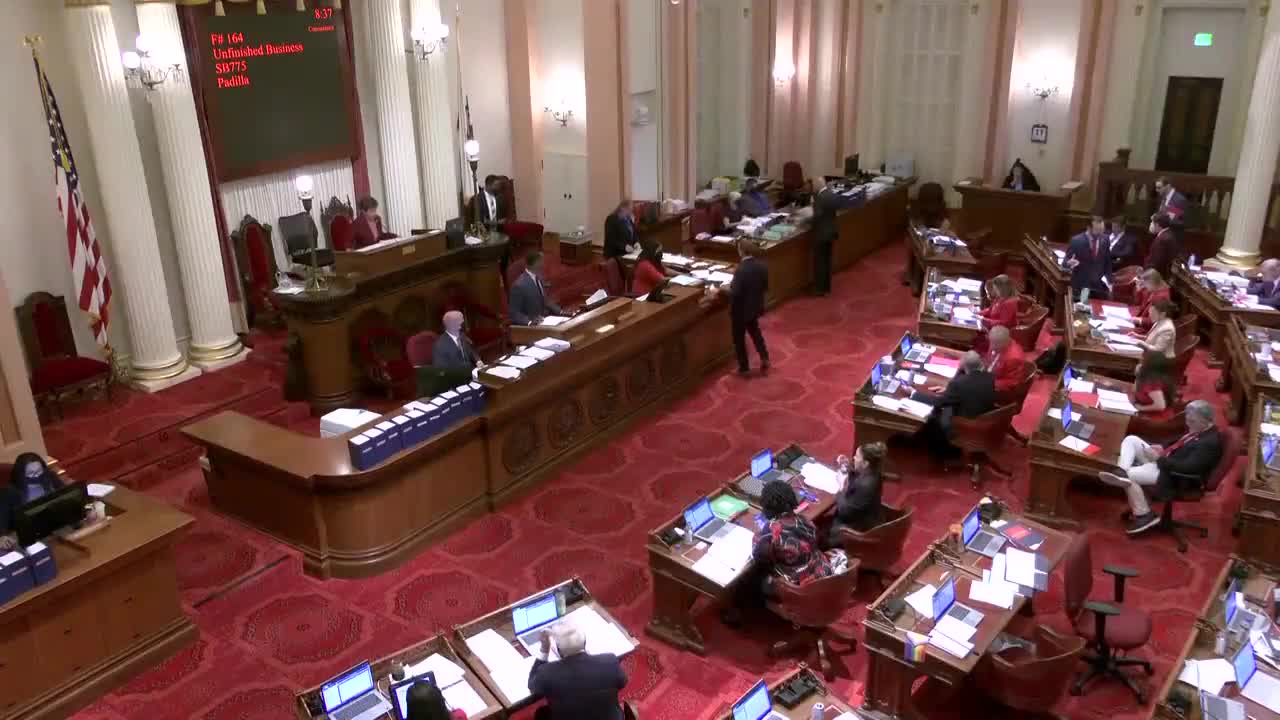
Bill Author

Bill Co-Author(s):
