SB 461: Days and hours of work: religious or cultural observance.
- Session Year: 2023-2024
- House: Senate
- Latest Version Date: 2023-10-07
Current Status:
Passed
(2023-10-07: Chaptered by Secretary of State. Chapter 398, Statutes of 2023.)
Introduced
In Committee
First Chamber
In Committee
Second Chamber
Enacted
Existing law generally entitles a state employee to be given time off with pay for specified holidays and entitles a state employee to one personal holiday per fiscal year. Existing law authorizes the department head or designee to require the employee to provide 5 working days advance notice before a personal holiday is taken, to deny use subject to operational needs, and to provide by rule for the granting of the personal holiday for employees. Existing law authorizes a state employee to elect to receive 8 hours of holiday credit for certain holidays in lieu of receiving 8 hours of personal holiday credit, as specified.
This bill would authorize an employee to elect to receive 8 hours of holiday credit for observance of a holiday or ceremony of the state employees religion, culture, or heritage in lieu of receiving 8 hours of personal holiday credit.
Existing law, the State Civil Service Act, regulates employment with the state and vests in the Department of Human Resources all powers, duties, and authority necessary to operate the state civil service system. Existing law, the Ralph C. Dills Act, grants state employees the right to form and join employee organizations for the purpose of representation of all matters of employer-employee relations. Existing law establishes procedures by which an agreement in the form of a written memorandum of understanding may be reached between the Governor and the recognized employee organization, and presented, as appropriate, to the Legislature for determination.
This bill would apply its provisions to a bargaining unit only after the bargaining unit meets and confers with the Department of Human Resources in the ordinary process and timeline for negotiating and renegotiating the bargaining units collective bargaining agreement, as specified.
Existing law generally entitles a state employee to be given time off with pay for specified holidays and entitles a state employee to one personal holiday per fiscal year. Existing law authorizes the department head or designee to require the employee to provide 5 working days advance notice before a personal holiday is taken, to deny use subject to operational needs, and to provide by rule for the granting of the personal holiday for employees. Existing law authorizes a state employee to elect to receive 8 hours of holiday credit for certain holidays in lieu of receiving 8 hours of personal holiday credit, as specified.
This bill would authorize an employee to elect to receive 8 hours of holiday credit for observance of a holiday or ceremony of the state employees religion, culture, or heritage in lieu of receiving 8 hours of personal holiday credit. The bill would also make nonsubstantive changes to these provisions.
Existing law, the State Civil Service Act, regulates employment with the state and vests in the Department of Human Resources all powers, duties, and authority necessary to operate the state civil service system. Existing law, the Ralph C. Dills Act, grants state employees the right to form and join employee organizations for the purpose of representation of all matters of employer-employee relations. Existing law establishes procedures by which an agreement in the form of a written memorandum of understanding may be reached between the Governor and the recognized employee organization, and presented, as appropriate, to the Legislature for determination.
This bill would apply its provisions to a bargaining unit only after the bargaining unit meets and confers with the Department of Human Resources in the ordinary process and timeline for negotiating and renegotiating the bargaining units collective bargaining agreement, as specified.
Existing law generally entitles a state employee to be given time off with pay for specified holidays and entitles a state employee to one personal holiday per fiscal year. Existing law authorizes the department head or designee to require the employee to provide 5 working days advance notice before a personal holiday is taken, to deny use subject to operational needs, and to provide by rule for the granting of the personal holiday for employees. Existing law authorizes a state employee to elect to receive 8 hours of holiday credit for certain holidays in lieu of receiving 8 hours of personal holiday credit, as specified.
This bill would authorize an employee to elect to receive 8 hours of holiday credit for religious or cultural observance, as specified, observance of a holiday or ceremony of the state employees religion, culture, or heritage in lieu of receiving 8 hours of personal holiday credit. The bill would also make nonsubstantive changes to these provisions.
Existing law generally entitles a state employee to be given time off with pay for specified holidays and entitles a state employee to one personal holiday per fiscal year. Existing law authorizes the department head or designee to require the employee to provide 5 working days advance notice before a personal holiday is taken, to deny use subject to operational needs, and to provide by rule for the granting of the personal holiday for employees. Existing law authorizes a state employee to elect to receive 8 hours of holiday credit for certain holidays in lieu of receiving 8 hours of personal holiday credit, as specified.
This bill would authorize an employee to elect to receive 8 hours of holiday credit for religious or cultural observance, as specified, in lieu of receiving 8 hours of personal holiday credit. The bill would also make nonsubstantive changes to these provisions.
Existing law generally entitles a state employee to be given time off with pay for specified holidays and entitles a state employee who is required to work on those holidays to receive straight-time pay and 8 hours of holiday credit. to one personal holiday per fiscal year. Existing law authorizes the department head or designee to require the employee to provide 5 working days advance notice before a personal holiday is taken, to deny use subject to operational needs, and to provide by rule for the granting of the personal holiday for employees. Existing law authorizes a state employee to elect to receive 8 hours of holiday credit for certain holidays in lieu of receiving eight 8 hours of personal holiday credit, as specified.
This bill would authorize an employee to elect to receive 8 hours of holiday credit for religious or cultural observance, as specified, in lieu of receiving eight 8 hours of personal holiday credit. The bill would also make nonsubstantive changes to these provisions.
Existing law, the California Fair Employment and Housing Act, prohibits an employer from discriminating against an employee on account of certain characteristics, including a persons religious creed. The act prescribes various unlawful employment practices and requires the Civil Rights Department to, among other things, receive, investigate, and prosecute complaints alleging violations of those unlawful practices. For these purposes, the act defines, among other terms, religious observance to include all aspects of religious belief, observance, and practice, as specified.
This bill would replace the term religious observance with religious or cultural observance and require that it be construed broadly to include the observance of a holiday or ceremony of an individuals religion, culture, or heritage.
Existing law entitles a state employee to be given time off with pay for specified holidays and entitles a state employee who is required to work on those holidays to receive straight-time pay and 8 hours of holiday credit. Existing law authorizes a state employee to elect to receive 8 hours of holiday credit for certain holidays in lieu of receiving eight hours of personal holiday credit, as specified.
This bill would authorize an employee to elect to receive 8 hours of holiday credit for religious or cultural observance, as specified, in lieu of receiving eight hours of personal holiday credit. The bill would also make nonsubstantive changes to these provisions.
The Legislature finds and declares that the following is a nonexhaustive list of holidays or ceremonies from various religions, cultures, and heritages that have not traditionally received official state recognition:
(a)Araw ng Kagitingan.
(b)Bandi Chhor Divas.
(c)Bonifacio Day.
(d)Cinco de Mayo.
(e)Dia de los Muertos.
(f)Diwali.
(g)Dasehra.
(h)Eid al-Adha.
(i)Eid al-Fitr.
(j)Hanukkah.
(k)Janmashtami.
(l)Maha-shivaratri.
(m)Maundy Thursday.
(n)National Heroes Day.
(o)Navaratri.
(p)Nowroz.
(q)Passover.
(r)Raksha Bandhan.
(s)Rizal Day.
(t)Rosh Hashanah.
(u)Tet Nguyen an.
(v)Vaisakhi.
(w)Yom Kippur.
SEC. 2.Section 19853.2 is added to the Government Code, to read:19853.2.(a)Notwithstanding Section 19853 or 19853.1, a state employee, as defined in subdivision (c) of Section 3513, may elect to receive eight hours of holiday credit for observance of a holiday or ceremony of the state employees religion, culture, or heritage in lieu of receiving eight hours of personal holiday credit in accordance with Section 19854.
(b)This section shall only apply to a bargaining unit that has met and conferred with the Department of Human Resources in the ordinary process and timeline for negotiating and renegotiating the bargaining units collective bargaining agreement regardless of whether a memorandum of understanding is reached.
SECTION 1.Section 19853 of the Government Code is amended to read:19853.(a)All state employees shall be entitled to the following holidays: January 1, the third Monday in January, the third Monday in February, March 31, the last Monday in May, July 4, the first Monday in September, November 11, Thanksgiving Day, the day after Thanksgiving, December 25, the day chosen by an employee pursuant to Section 19854, and every day appointed by the Governor of this state for a public fast, thanksgiving, or holiday.(b)If a day listed in subdivision (a) falls on a Sunday, the following Monday shall be deemed to be the holiday in lieu of the day observed. If November 11 falls upon a Saturday, the preceding Friday shall be deemed to be the holiday in lieu of the day observed.(c)A state employee who may be required to work on any of the holidays included in this section, and who does work on any of these holidays, shall be entitled to receive straight-time pay and eight hours of holiday credit.(d)For the purpose of computing the number of hours worked, time when an employee is excused from work because of holidays, sick leave, vacation, annual leave, compensating time off, or any other leave shall not be considered as time worked by the employee for the purpose of computing cash compensation for overtime or compensating time off for overtime.(e)A state employee, as defined in subdivision (c) of Section 3513, may elect to receive eight hours of holiday credit for the date corresponding with the new moon following the winter solstice, or the third new moon following the winter solstice should an intercalary month intervene, known as Lunar New Year, April 24, known as Genocide Remembrance Day, June 19, known as Juneteenth, or the fourth Friday in September, known as Native American Day, in lieu of receiving eight hours of personal holiday credit in accordance with Section 19854.(f)A state employee, as defined in subdivision (c) of Section 3513, may elect to receive eight hours of holiday credit for observance of a holiday or ceremony of the state employees religion, culture, or heritage in lieu of receiving eight hours of personal holiday credit in accordance with Section 19854.(g)Persons employed on less than a full-time basis shall receive holidays in accordance with the Department of Human Resources rules.(h)If subdivision (a), (c), or (d) is in conflict with the provisions of a memorandum of understanding executed or amended pursuant to Section 3517.5 on or after February 1, 2009, or the date that the act adding this section takes effect, whichever is later, the memorandum of understanding shall be controlling without further legislative action, except that if those provisions of the memorandum of understanding require the expenditure of funds, the provisions shall not become effective unless approved by the Legislature in the annual Budget Act.(a)All state employees shall be entitled to the following holidays: January 1, the third Monday in January, the third Monday in February, March 31, the last Monday in May, July 4, the first Monday in September, November 11, Thanksgiving Day, the day after Thanksgiving, December 25, the day chosen by an employee pursuant to Section 19854, and every day appointed by the Governor of this state for a public fast, thanksgiving, or holiday.
(b)If a day listed in subdivision (a) falls on a Sunday, the following Monday shall be deemed to be the holiday in lieu of the day observed. If November 11 falls upon a Saturday, the preceding Friday shall be deemed to be the holiday in lieu of the day observed.
(c)A state employee who may be required to work on any of the holidays included in this section, and who does work on any of these holidays, shall be entitled to receive straight-time pay and eight hours of holiday credit.
(d)For the purpose of computing the number of hours worked, time when an employee is excused from work because of holidays, sick leave, vacation, annual leave, compensating time off, or any other leave shall not be considered as time worked by the employee for the purpose of computing cash compensation for overtime or compensating time off for overtime.
(e)A state employee, as defined in subdivision (c) of Section 3513, may elect to receive eight hours of holiday credit for the date corresponding with the new moon following the winter solstice, or the third new moon following the winter solstice should an intercalary month intervene, known as Lunar New Year, April 24, known as Genocide Remembrance Day, June 19, known as Juneteenth, or the fourth Friday in September, known as Native American Day, in lieu of receiving eight hours of personal holiday credit in accordance with Section 19854.
(f)(1)A state employee, as defined in subdivision (c) of Section 3513, may elect to receive eight hours of holiday credit for observance of a holiday or ceremony of the state employees religion, culture, or heritage in lieu of receiving eight hours of personal holiday credit in accordance with Section 19854.
(2)For purposes of this subdivision, a holiday or ceremony of an individuals religion, culture, or heritage includes, but is not limited to, all of the following:(A)Araw ng Kagitingan. (B)Bandi Chhor Divas.(C)Bonifacio Day.(D)Cinco de Mayo.(E)Dia de los Muertos.(F)Diwali.(G)Dasehra.(H)Eid al-Adha.(I)Eid al-Fitr.(J)Hanukkah.(K)Janmashtami.(L)Maha-shivaratri.(M)Maundy Thursday.(N)National Heroes Day.(O)Navaratri.(P)Nowruz.(Q)Passover.(R)Raksha Bandhan.(S)Rizal Day.(T)Rosh Hashanah.(U)Tet Nguyen an.(V)Vaisakhi.(W)Yom Kippur.(g)Persons employed on less than a full-time basis shall receive holidays in accordance with the Department of Human Resources rules.
(h)If subdivision (a), (c), or (d) is in conflict with the provisions of a memorandum of understanding executed or amended pursuant to Section 3517.5 on or after February 1, 2009, or the date that the act adding this section takes effect, whichever is later, the memorandum of understanding shall be controlling without further legislative action, except that if those provisions of the memorandum of understanding require the expenditure of funds, the provisions shall not become effective unless approved by the Legislature in the annual Budget Act.
(a)All state employees shall be entitled to the following holidays: January 1, the third Monday in January, the third Monday in February, March 31, the last Monday in May, July 4, the first Monday in September, November 11, Thanksgiving Day, the day after Thanksgiving, December 25, the day chosen by an employee pursuant to Section 19854, and every day appointed by the Governor of this state for a public fast, thanksgiving, or holiday.
(b)If a day listed in subdivision (a) falls on a Sunday, the following Monday shall be deemed to be the holiday in lieu of the day observed. If November 11 falls upon a Saturday, the preceding Friday shall be deemed to be the holiday in lieu of the day observed.
(c)A state employee who may be required to work on any of the holidays included in this section, and who does work on any of these holidays, shall be entitled to receive straight-time pay and eight hours of holiday credit.
(d)For the purpose of computing the number of hours worked, time when an employee is excused from work because of holidays, sick leave, vacation, annual leave, compensating time off, or any other leave shall not be considered as time worked by the employee for the purpose of computing cash compensation for overtime or compensating time off for overtime.
(e)A state employee, as defined in subdivision (c) of Section 3513, may elect to receive eight hours of holiday credit for the date corresponding with the new moon following the winter solstice, or the third new moon following the winter solstice should an intercalary month intervene, known as Lunar New Year, April 24, known as Genocide Remembrance Day, June 19, known as Juneteenth, or the fourth Friday in September, known as Native American Day, in lieu of receiving eight hours of personal holiday credit in accordance with Section 19854.
(f)(1)A state employee, as defined in subdivision (c) of Section 3513, may elect to receive eight hours of holiday credit for observance of a holiday or ceremony of the state employees religion, culture, or heritage in lieu of receiving eight hours of personal holiday credit in accordance with Section 19854.
(2)For purposes of this subdivision, a holiday or ceremony of an individuals religion, culture, or heritage includes, but is not limited to, all of the following:
(A)Araw ng Kagitingan.
(B)Bandi Chhor Divas.
(C)Bonifacio Day.
(D)Cinco de Mayo.
(E)Dia de los Muertos.
(F)Dewali. Diwali.
(G)Dasehra.
(H)Eid al-Adha.
(I)Eid al-Fitr.
(J)Hanukkah.
(K)Janmashtami.
(L)Maha-shivaratri.
(M)Maundy Thursday.
(N)National Heroes Day.
(O)Navaratri.
(P)Nauruz. Nowruz.
(Q)Passover.
(R)Raksha Bandhan.
(S)Rizal Day.
(T)Rosh Hashanah.
(U)Tet Nguyen an.
(V)Vaisakhi.
(W)Yom Kippur.
(g)Persons employed on less than a full-time basis shall receive holidays in accordance with the Department of Human Resources rules.
(h)If subdivision (a), (c), or (d) is in conflict with the provisions of a memorandum of understanding executed or amended pursuant to Section 3517.5 on or after February 1, 2009, or the date that the act adding this section takes effect, whichever is later, the memorandum of understanding shall be controlling without further legislative action, except that if those provisions of the memorandum of understanding require the expenditure of funds, the provisions shall not become effective unless approved by the Legislature in the annual Budget Act.
(a)All state employees shall be entitled to the following holidays: January 1, the third Monday in January, the third Monday in February, March 31, the last Monday in May, July 4, the first Monday in September, November 11, Thanksgiving Day, the day after Thanksgiving, December 25, the day chosen by an employee pursuant to Section 19854, and every day appointed by the Governor of this state for a public fast, thanksgiving, or holiday.
(b)If a day listed in this subdivision (a) falls on a Sunday, the following Monday shall be deemed to be the holiday in lieu of the day observed. If November 11 falls upon a Saturday, the preceding Friday shall be deemed to be the holiday in lieu of the day observed.
(c)A state employee who may be required to work on any of the holidays included in this section, and who does work on any of these holidays, shall be entitled to receive straight-time pay and eight hours of holiday credit.
(d)For the purpose of computing the number of hours worked, time when an employee is excused from work because of holidays, sick leave, vacation, annual leave, compensating time off, or any other leave shall not be considered as time worked by the employee for the purpose of computing cash compensation for overtime or compensating time off for overtime.
(e)A state employee, as defined in subdivision (c) of Section 3513, may elect to receive eight hours of holiday credit for the date corresponding with the new moon following the winter solstice, or the third new moon following the winter solstice should an intercalary month intervene, known as Lunar New Year, April 24, known as Genocide Remembrance Day, June 19, known as Juneteenth, or the fourth Friday in September, known as Native American Day, in lieu of receiving eight hours of personal holiday credit in accordance with Section 19854.
(f)(1)A state employee, as defined in subdivision (c) of Section 3513, may elect to receive eight hours of holiday credit for religious or cultural observance, as defined in subdivision (q) of Section 12926, observance of a holiday or ceremony of the state employees religion, culture, or heritage in lieu of receiving eight hours of personal holiday credit in accordance with Section 19854.
(2)For purposes of this subdivision, a holiday or ceremony of an individuals religion, culture, or heritage includes, but is not limited to, all of the following:
(A)Araw ng Kagitingan.
(B)Bandi Chhor Divas.
(C)Bonifacio Day.
(D)Cinco de Mayo.
(E)Dia de los Muertos.
(F)Dewali.
(G)Dasehra.
(H)Eid al-Adha.
(I)Eid al-Fitr.
(J)Hanukkah.
(K)Janmashtami.
(L)Maha-shivaratri.
(M)Maundy Thursday.
(N)National Heroes Day.
(O)Navaratri.
(P)Nauruz.
(Q)Passover.
(R)Raksha Bandhan.
(S)Rizal Day.
(T)Rosh Hashanah.
(U)Tet Nguyen an.
(V)Vaisakhi.
(W)Yom Kippur.
(g)Persons employed on less than a full-time basis shall receive holidays in accordance with the Department of Human Resources rules.
(h)If subdivision (a), (c), or (d) is in conflict with the provisions of a memorandum of understanding executed or amended pursuant to Section 3517.5 on or after February 1, 2009, or the date that the act adding this section takes effect, whichever is later, the memorandum of understanding shall be controlling without further legislative action, except that if those provisions of the memorandum of understanding require the expenditure of funds, the provisions shall not become effective unless approved by the Legislature in the annual Budget Act.
As used in this part in connection with unlawful practices, unless a different meaning clearly appears from the context:
(a)Affirmative relief or prospective relief includes the authority to order reinstatement of an employee, awards of backpay, reimbursement of out-of-pocket expenses, hiring, transfers, reassignments, grants of tenure, promotions, cease and desist orders, posting of notices, training of personnel, testing, expunging of records, reporting of records, and any other similar relief that is intended to correct unlawful practices under this part.
(b)Age refers to the chronological age of any individual who has reached a 40th birthday.
(c)Except as provided by Section 12926.05, employee does not include any individual employed by that persons parent, spouse, or child or any individual employed under a special license in a nonprofit sheltered workshop or rehabilitation facility.
(d)Employer includes any person regularly employing five or more persons, or any person acting as an agent of an employer, directly or indirectly, the state or any political or civil subdivision of the state, and cities, except as follows:
Employer does not include a religious association or corporation not organized for private profit.
(e)Employment agency includes any person undertaking for compensation to procure employees or opportunities to work.
(f)Essential functions means the fundamental job duties of the employment position the individual with a disability holds or desires. Essential functions does not include the marginal functions of the position.
(1)A job function may be considered essential for any of several reasons, including, but not limited to, any one or more of the following:
(A)The function may be essential because the reason the position exists is to perform that function.
(B)The function may be essential because of the limited number of employees available among whom the performance of that job function can be distributed.
(C)The function may be highly specialized, so that the incumbent in the position is hired based on expertise or the ability to perform a particular function.
(2)Evidence of whether a particular function is essential includes, but is not limited to, the following:
(A)The employers judgment as to which functions are essential.
(B)Written job descriptions prepared before advertising or interviewing applicants for the job.
(C)The amount of time spent on the job performing the function.
(D)The consequences of not requiring the incumbent to perform the function.
(E)The terms of a collective bargaining agreement.
(F)The work experiences of past incumbents in the job.
(G)The current work experience of incumbents in similar jobs.
(g)(1)Genetic information means, with respect to any individual, information about any of the following:
(A)The individuals genetic tests.
(B)The genetic tests of family members of the individual.
(C)The manifestation of a disease or disorder in family members of the individual.
(2)Genetic information includes any request for, or receipt of, genetic services, or participation in clinical research that includes genetic services, by an individual or any family member of the individual.
(3)Genetic information does not include information about the sex or age of any individual.
(h)Labor organization includes any organization that exists and is constituted for the purpose, in whole or in part, of collective bargaining or of dealing with employers concerning grievances, terms or conditions of employment, or of other mutual aid or protection.
(i)Medical condition means either of the following:
(1)Any health impairment related to or associated with a diagnosis of cancer or a record or history of cancer.
(2)Genetic characteristics. For purposes of this section, genetic characteristics means either of the following:
(A)Any scientifically or medically identifiable gene or chromosome, or combination or alteration thereof, that is known to be a cause of a disease or disorder in a person or that persons offspring, or that is determined to be associated with a statistically increased risk of development of a disease or disorder, and that is presently not associated with any symptoms of any disease or disorder.
(B)Inherited characteristics that may derive from the individual or family member, that are known to be a cause of a disease or disorder in a person or that persons offspring, or that are determined to be associated with a statistically increased risk of development of a disease or disorder, and that are presently not associated with any symptoms of any disease or disorder.
(j)Mental disability includes, but is not limited to, all of the following:
(1)Having any mental or psychological disorder or condition, such as intellectual disability, organic brain syndrome, emotional or mental illness, or specific learning disabilities, that limits a major life activity. For purposes of this section:
(A)Limits shall be determined without regard to mitigating measures, such as medications, assistive devices, or reasonable accommodations, unless the mitigating measure itself limits a major life activity.
(B)A mental or psychological disorder or condition limits a major life activity if it makes the achievement of the major life activity difficult.
(C)Major life activities shall be broadly construed and shall include physical, mental, and social activities and working.
(2)Any other mental or psychological disorder or condition not described in paragraph (1) that requires special education or related services.
(3)Having a record or history of a mental or psychological disorder or condition described in paragraph (1) or (2), which is known to the employer or other entity covered by this part.
(4)Being regarded or treated by the employer or other entity covered by this part as having, or having had, any mental condition that makes achievement of a major life activity difficult.
(5)Being regarded or treated by the employer or other entity covered by this part as having, or having had, a mental or psychological disorder or condition that has no present disabling effect, but that may become a mental disability as described in paragraph (1) or (2).
Mental disability does not include sexual behavior disorders, compulsive gambling, kleptomania, pyromania, or psychoactive substance use disorders resulting from the current unlawful use of controlled substances or other drugs.
(k)Veteran or military status means a member or veteran of the United States Armed Forces, United States Armed Forces Reserve, the United States National Guard, and the California National Guard.
(l)On the bases enumerated in this part means or refers to discrimination on the basis of one or more of the following: race, religious creed, color, national origin, ancestry, physical disability, mental disability, medical condition, genetic information, marital status, sex, age, sexual orientation, reproductive health decisionmaking, or veteran or military status.
(m)Physical disability includes, but is not limited to, all of the following:
(1)Having any physiological disease, disorder, condition, cosmetic disfigurement, or anatomical loss that does both of the following:
(A)Affects one or more of the following body systems: neurological, immunological, musculoskeletal, special sense organs, respiratory, including speech organs, cardiovascular, reproductive, digestive, genitourinary, hemic and lymphatic, skin, and endocrine.
(B)Limits a major life activity. For purposes of this section:
(i)Limits shall be determined without regard to mitigating measures such as medications, assistive devices, prosthetics, or reasonable accommodations, unless the mitigating measure itself limits a major life activity.
(ii)A physiological disease, disorder, condition, cosmetic disfigurement, or anatomical loss limits a major life activity if it makes the achievement of the major life activity difficult.
(iii)Major life activities shall be broadly construed and includes physical, mental, and social activities and working.
(2)Any other health impairment not described in paragraph (1) that requires special education or related services.
(3)Having a record or history of a disease, disorder, condition, cosmetic disfigurement, anatomical loss, or health impairment described in paragraph (1) or (2), which is known to the employer or other entity covered by this part.
(4)Being regarded or treated by the employer or other entity covered by this part as having, or having had, any physical condition that makes achievement of a major life activity difficult.
(5)Being regarded or treated by the employer or other entity covered by this part as having, or having had, a disease, disorder, condition, cosmetic disfigurement, anatomical loss, or health impairment that has no present disabling effect but may become a physical disability as described in paragraph (1) or (2).
(6)Physical disability does not include sexual behavior disorders, compulsive gambling, kleptomania, pyromania, or psychoactive substance use disorders resulting from the current unlawful use of controlled substances or other drugs.
(n)Notwithstanding subdivisions (j) and (m), if the definition of disability used in the federal Americans with Disabilities Act of 1990 (Public Law 101-336) would result in broader protection of the civil rights of individuals with a mental disability or physical disability, as defined in subdivision (j) or (m), or would include any medical condition not included within those definitions, then that broader protection or coverage shall be deemed incorporated by reference into, and shall prevail over conflicting provisions of, the definitions in subdivisions (j) and (m).
(o)Race, religious creed, color, national origin, ancestry, physical disability, mental disability, medical condition, genetic information, marital status, sex, age, sexual orientation, reproductive health decisionmaking, or veteran or military status includes a perception that the person has any of those characteristics or that the person is associated with a person who has, or is perceived to have, any of those characteristics.
(p)Reasonable accommodation may include either of the following:
(1)Making existing facilities used by employees readily accessible to, and usable by, individuals with disabilities.
(2)Job restructuring, part-time or modified work schedules, reassignment to a vacant position, acquisition or modification of equipment or devices, adjustment or modifications of examinations, training materials or policies, the provision of qualified readers or interpreters, and other similar accommodations for individuals with disabilities.
(q)Religious creed, religion, religious or cultural observance, religious belief, and creed include all aspects of religious belief, observance, and practice, including religious dress and grooming practices. Religious dress practice shall be construed broadly to include the wearing or carrying of religious clothing, head or face coverings, jewelry, artifacts, and any other item that is part of an individual observing a religious creed. Religious grooming practice shall be construed broadly to include all forms of head, facial, and body hair that are part of an individual observing a religious creed. Religious or cultural observance shall be construed broadly to include the observance of a holiday or ceremony of an individuals religion, culture, or heritage.
(r)(1)Sex includes, but is not limited to, the following:
(A)Pregnancy or medical conditions related to pregnancy.
(B)Childbirth or medical conditions related to childbirth.
(C)Breastfeeding or medical conditions related to breastfeeding.
(2)Sex also includes, but is not limited to, a persons gender. Gender means sex, and includes a persons gender identity and gender expression. Gender expression means a persons gender-related appearance and behavior whether or not stereotypically associated with the persons assigned sex at birth.
(s)Sexual orientation means heterosexuality, homosexuality, and bisexuality.
(t)Supervisor means any individual having the authority, in the interest of the employer, to hire, transfer, suspend, lay off, recall, promote, discharge, assign, reward, or discipline other employees, or the responsibility to direct them, or to adjust their grievances, or effectively to recommend that action, if, in connection with the foregoing, the exercise of that authority is not of a merely routine or clerical nature, but requires the use of independent judgment.
(u)Undue hardship means an action requiring significant difficulty or expense, when considered in light of the following factors:
(1)The nature and cost of the accommodation needed.
(2)The overall financial resources of the facilities involved in the provision of the reasonable accommodations, the number of persons employed at the facility, and the effect on expenses and resources or the impact otherwise of these accommodations upon the operation of the facility.
(3)The overall financial resources of the covered entity, the overall size of the business of a covered entity with respect to the number of employees, and the number, type, and location of its facilities.
(4)The type of operations, including the composition, structure, and functions of the workforce of the entity.
(5)The geographic separateness or administrative or fiscal relationship of the facility or facilities.
(v)National origin discrimination includes, but is not limited to, discrimination on the basis of possessing a drivers license or identification card granted under Section 12801.9 of the Vehicle Code.
(w)Race is inclusive of traits historically associated with race, including, but not limited to, hair texture and protective hairstyles.
(x)Protective hairstyles includes, but is not limited to, such hairstyles as braids, locks, and twists.
(y)Reproductive health decisionmaking includes, but is not limited to, a decision to use or access a particular drug, device, product, or medical service for reproductive health. This subdivision and other provisions in this part relating to reproductive health decisionmaking shall not be construed to mean that subdivision (r) of this section and other provisions in this part related to sex do not include reproductive health decisionmaking.
SEC. 2.Section 19853 of the Government Code is amended to read:19853.(a)All state employees shall be entitled to the following holidays: January 1, the third Monday in January, the third Monday in February, March 31, the last Monday in May, July 4, the first Monday in September, November 11, Thanksgiving Day, the day after Thanksgiving, December 25, the day chosen by an employee pursuant to Section 19854, and every day appointed by the Governor of this state for a public fast, thanksgiving, or holiday.
(b)If a day listed in this subdivision falls on a Sunday, the following Monday shall be deemed to be the holiday in lieu of the day observed. If November 11 falls upon a Saturday, the preceding Friday shall be deemed to be the holiday in lieu of the day observed.
(c)AnyA state employee who may be required to work on any of the holidays included in this section, and who does work on any of these holidays, shall be entitled to receive straight-time pay and eight hours of holiday credit.
(d)For the purpose of computing the number of hours worked, time when an employee is excused from work because of holidays, sick leave, vacation, annual leave, compensating time off, or any other leave shall not be considered as time worked by the employee for the purpose of computing cash compensation for overtime or compensating time off for overtime.
(e)AnyA state employee, as defined in subdivision (c) of Section 3513, may elect to receive eight hours of holiday credit for the date corresponding with the new moon following the winter solstice, or the third new moon following the winter solstice should an intercalary month intervene, known as Lunar New Year, April 24, known as Genocide Remembrance Day, June 19, known as Juneteenth, or the fourth Friday in September, known as Native American Day, in lieu of receiving eight hours of personal holiday credit in accordance with Section 19854.
(f)A state employee, as defined in subdivision (c) of Section 3513, may elect to receive eight hours of holiday credit for religious or cultural observance, as defined in subdivision (q) of Section 12926, in lieu of receiving eight hours of personal holiday credit in accordance with Section 19854.
(f)(g)Persons employed on less than a full-time basis shall receive holidays in accordance with the Department of Human Resources rules.
(g)(h)If subdivision (a), (c), or (d) is in conflict with the provisions of a memorandum of understanding executed or amended pursuant to Section 3517.5 on or after February 1, 2009, or the date that the act adding this section takes effect, whichever is later, the memorandum of understanding shall be controlling without further legislative action, except that if those provisions of the memorandum of understanding require the expenditure of funds, the provisions shall not become effective unless approved by the Legislature in the annual Budget Act.
|
Date
|
Status
|
|---|---|
| Oct 7, 2023 | Chaptered by Secretary of State. Chapter 398, Statutes of 2023. |
| Oct 7, 2023 | Approved by the Governor. |
| Sep 13, 2023 | Enrolled and presented to the Governor at 4 p.m. |
| Sep 7, 2023 | Assembly amendments concurred in. (Ayes 40. Noes 0. Page 2470.) Ordered to engrossing and enrolling. |
| Sep 6, 2023 | In Senate. Concurrence in Assembly amendments pending. |
| Sep 6, 2023 | Read third time. Passed. (Ayes 79. Noes 0. Page 2957.) Ordered to the Senate. |
| Sep 1, 2023 | Read third time and amended. |
| Sep 1, 2023 | Ordered to third reading. |
| Aug 31, 2023 | Ordered to third reading. |
| Aug 31, 2023 | Action rescinded whereby the bill was read third time, passed, and ordered to the Senate. |
| Aug 24, 2023 | In Assembly. Held at Desk. |
| Aug 24, 2023 | Ordered to the Assembly. |
| Aug 17, 2023 | In Senate. Concurrence in Assembly amendments pending. |
| Aug 17, 2023 | Read third time. Passed. (Ayes 75. Noes 0. Page 2742.) Ordered to the Senate. |
| Jul 13, 2023 | Read second time. Ordered to consent calendar. |
| Jul 12, 2023 | From committee: Do pass. Ordered to consent calendar. (Ayes 15. Noes 0.) (July 12). |
| Jun 29, 2023 | Read second time and amended. Re-referred to Com. on APPR. |
| Jun 28, 2023 | From committee: Do pass as amended and re-refer to Com. on APPR. (Ayes 7. Noes 0.) (June 28). |
| May 26, 2023 | Referred to Com. on P.E. & R. |
| May 23, 2023 | In Assembly. Read first time. Held at Desk. |
| May 22, 2023 | Read third time. Passed. (Ayes 40. Noes 0. Page 1222.) Ordered to the Assembly. |
| May 4, 2023 | Read second time. Ordered to third reading. |
| May 3, 2023 | Read third time and amended. |
| May 3, 2023 | Ordered to second reading. |
| Apr 25, 2023 | Read second time. Ordered to third reading. |
| Apr 24, 2023 | From committee: Be ordered to second reading pursuant to Senate Rule 28.8. |
| Apr 18, 2023 | Set for hearing April 24. |
| Apr 13, 2023 | Withdrawn from committee. |
| Apr 13, 2023 | Re-referred to Com. on APPR. |
| Apr 13, 2023 | From committee: Do pass and re-refer to Com. on JUD. (Ayes 5. Noes 0. Page 712.) (April 12). Re-referred to Com. on JUD. |
| Mar 23, 2023 | From committee with author's amendments. Read second time and amended. Re-referred to Com. on L., P.E. & R. |
| Mar 21, 2023 | Set for hearing April 12. |
| Feb 22, 2023 | Referred to Coms. on L., P.E. & R. and JUD. |
| Feb 14, 2023 | From printer. May be acted upon on or after March 16. |
| Feb 13, 2023 | Introduced. Read first time. To Com. on RLS. for assignment. To print. |
|
Date
|
Description
|
Location
|
Votes
|
|
|---|---|---|---|---|
| Sep 7, 2023 | Unfinished Business SB461 Wahab et al. Concurrence | Senate Floor |
Passed |
|
| Sep 6, 2023 | SB 461 Wahab Senate Third Reading By Gabriel | Assembly Floor |
Passed |
|
| Aug 17, 2023 | SB 461 Wahab Consent Calendar Second Day Regular Session | Assembly Floor |
Passed |
|
| Jul 12, 2023 | Do pass. To Consent Calendar. | Assembly Standing Committee on Appropriations |
Passed |
|
| Jun 28, 2023 | Do pass as amended and be re-referred to the Committee on [Appropriations] | Assembly Standing Committee on Public Employment and Retirement |
Passed |
|
| May 22, 2023 | Senate 3rd Reading SB461 Wahab et al. | Senate Floor |
Passed |
|
| Apr 12, 2023 | Do pass, but first be re-referred to the Committee on [Judiciary] | Senate Standing Committee on Labor, Public Employment and Retirement |
Passed |
This list shows positions taken on this bill by organizations on the date displayed, which is linked to the original source.
Positions by individuals are not included.
|
Organization
|
Position
|
Date
|
|---|---|---|
| California Federation Of Teachers | ** Support | |
| California Teachers Association | ** Support | |
| Church State Council | ** Support | |
| Council on American-Islamic Relations, California | ** Support | |
| National Association for Social Workers, California Chapter | * Support | Jun 28, 2023 |
| National Association Of Social Workers, California Chapter | ** Support |
SENATE RULES COMMITTEE Office of Senate Floor Analyses (916) 651-1520 Fax: (916) 327-4478 | SB 461 |
UNFINISHED BUSINESS
Bill No: SB 461
Author: Wahab (D), et al.
Amended: 9/1/23
Vote: 21
SENATE LABOR, PUB. EMP. & RET. COMMITTEE: 5-0, 4/12/23
AYES: Cortese, Wilk, Durazo, Laird, Smallwood-Cuevas
SENATE APPROPRIATIONS COMMITTEE: Senate Rule 28.8
SENATE FLOOR: 40-0, 5/22/23
AYES: Allen, Alvarado-Gil, Archuleta, Ashby, Atkins, Becker, Blakespear, Bradford, Caballero, Cortese, Dahle, Dodd, Durazo, Eggman, Glazer, Gonzalez, Grove, Hurtado, Jones, Laird, Limón, McGuire, Menjivar, Min, Newman, Nguyen, Niello, Ochoa Bogh, Padilla, Portantino, Roth, Rubio, Seyarto, Skinner, Smallwood-Cuevas, Stern, Umberg, Wahab, Wiener, Wilk
ASSEMBLY FLOOR: 79-0, 9/6/23 - See last page for vote
SUBJECT: Days and hours of work: religious or cultural observance
SOURCE: Council on American-Islamic Relations, California
DIGEST:
This bill authorizes a state employee to choose to receive eight hours of holiday credit specifically for observance of a holiday or ceremony of the state employee’s religion, culture, or heritage in lieu of receiving eight hours of personal holiday credit.
Assembly Amendments
require a bargaining unit to meet and confer with the Department of Human Resources (CalHR), as specified, before this bill applies to that bargaining unit but does not require that the parties agree to a memorandum of understanding (MOU); renumber this bill’s provision and place it in its own separate statute instead of existing statute relating to state holidays; and move previous specific references to numerous religious and cultural holidays from a code section to a non-codified section of the Act making findings and declarations.
ANALYSIS:
Existing law:
- Establishes various state holidays, as specified. (Government Code (GC) § 6700)
- Specifies that if the above holidays are in conflict with the provisions of an MOU pursuant to the provisions of the Higher Education Employer-Employee Relations Act, the MOU controls without further legislative action. (GC § 6700 (b))
- Entitles state employees to the following holidays: January 1, the third Monday in January, the third Monday in February, March 31, the last Monday in May, July 4, the first Monday in September, November 11, Thanksgiving Day, the day after Thanksgiving, December 25, the day chosen by an employee pursuant to GC § 19854 (“Personal Holiday”), and every day appointed by the Governor of this state for a public fast, thanksgiving, or holiday. (GC § 19853 (a))
- Provides that if specified holidays fall on a Sunday, the following Monday shall be deemed to be the holiday in lieu of the day observed. If November 11 falls upon a Saturday, the preceding Friday shall be deemed to be the holiday in lieu of the day observed. (GC § 19853 (b))
- Entitles a state employee required to work on specified holidays to receive straight-time pay and eight hours of holiday credit. (GC § 19853 (c))
- Excludes holidays and other specified time off from the calculation for overtime pay or compensating time off. (GC § 19853 (d))
- Allows a state employee to elect to receive eight hours of holiday credit for the Lunar New Year, Genocide Remembrance Day, Juneteenth, or Native American Day in lieu of receiving eight hours of personal holiday credit. (GC § 19853 (e))
- Provides that if the current statutory provisions entitling state employees to specified holidays, straight time and a holiday credit for working holidays, and the exclusion of holiday and other time off from overtime calculations conflicts with an MOU pursuant to Ralph C. Dills Act, the MOU shall control, as specified. (GC § 19853 (g))
- Provides that every employee, upon completion of six months of his or her initial probationary period in state service, shall be entitled to one personal holiday per fiscal year. The personal holiday shall be credited to each full-time employee on the first day of July. No employee shall lose a personal holiday credit because of the change from calendar to fiscal year crediting. The department head or designee may require the employee to provide five working days’ advance notice before a personal holiday is taken, and may deny use subject to operational needs. The department may provide by rule for the granting of this holiday for employees. (GC § 19854)
- Provides that if the provisions relating to the personal holiday credit are in conflict with the provisions of an MOU, the MOU shall be controlling, as specified.
This bill:
- Authorizes a state employee to elect to receive eight hours of holiday credit for observance of a holiday or ceremony of the state employee’s religion, culture, or heritage in lieu of receiving eight hours of personal holiday credit and in accordance with existing law regarding personal holiday credit.
- Provides that this bill shall only apply to a bargaining unit that has met and conferred with CalHR in the ordinary process and timeline for negotiating and renegotiating the bargaining unit’s collective bargaining agreement regardless of whether the parties reach an MOU.
- Finds and declares that the following is a nonexhaustive list of holidays or ceremonies from various religions, cultures, and heritages that have not traditionally received official state recognition: Araw ng Kagitingan; Bandi Chhor Divas; Bonifacio Day; Cinco de Mayo; Día de los Muertos; Diwali; Dasehra; Eid al-Adha; Eid al-Fitr; Hanukkah; Janmashtami; Maha-shivaratri; Maundy Thursday; National Heroes’ Day; Navaratri; Nowroz; Passover; Raksha Bandhan; Rizal Day; Rosh Hashanah; Tết Nguyên Đán; Vaisakhi; and Yom Kippur.
Background
Need for this bill? According to the author, “The interpretation of current law has led to some state employees being denied access to their religious or cultural observances.”
Related/Prior Legislation
AB 1655 (Jones-Sawyer, Chapter 753, Statutes of 2022) added June 19, “Juneteenth,” to the list of state holidays and authorized state employees to elect to take time off with pay in recognition of Juneteenth, as specified.
AB 1801 (Nazarian, Chapter 761, Statutes of 2022) added April 24, “Genocide Awareness Day,” to the list of state holidays and authorized state employees to elect to take time off with pay, as specified.
AB 2596 (Low, Chapter 792, Statutes of 2022) added Lunar New Year as a state holiday and authorized eligible state employees to elect to receive eight hours of holiday credit for the date corresponding with Lunar New Year in lieu of receiving eight hours of personal credit, as specified.
FISCAL EFFECT: Appropriation: No Fiscal Com.: Yes Local: No
According to the Assembly Appropriations Committee, “Minimal and absorbable state costs, according to the California Department of Human Resources.”
SUPPORT: (Verified 9/6/23)
Council on American-Islamic Relations, California (source)
California Federation of Teachers
California Teachers Association
Church State Council
National Association of Social Workers, California Chapter
OPPOSITION: (Verified 9/6/23)
None received
ARGUMENTS IN SUPPORT: According to the Council on American-Islamic Relations, California:
“Despite the growing contributions and influence of Muslim Americans within the State, Californian Muslims have faced increased instances of hate and employment discrimination. The state has taken the initiative to address some of these issues by adopting reactive measures and laws to address occurrences of hate crimes. CAIR-CA has also worked in previous years to advocate for laws to improve religious accommodations in the workplace, but proactive measures that include and celebrate the Muslim population have yet to be adopted at the statewide level. Studies have shown that amplifying the authentic narratives of communities and celebrating their diversity is the most effective way to address instances of hate, discrimination, and bullying.
“Given the importance of these holidays and the growing Muslim population across the country, many states including Texas, Michigan, and New Jersey have adopted or attempted to adopt religious accommodations at the state or local level to accommodate Eid celebrations. The State of Washington expanded its laws granting public employees a paid floating holiday per year and including two unpaid holidays to accommodate employees with holy days which did not coincide with state legal holidays.
“By allowing state employees to receive time off to attend religious, cultural, or heritage-based holidays and gatherings, this bill reinforces California’s commitment to diversity and fostering cultural competency.”
ASSEMBLY FLOOR: 79-0, 9/6/23
AYES: Addis, Aguiar-Curry, Alanis, Alvarez, Arambula, Bains, Bauer-Kahan, Bennett, Berman, Boerner, Bonta, Bryan, Calderon, Juan Carrillo, Wendy Carrillo, Cervantes, Chen, Connolly, Megan Dahle, Davies, Dixon, Essayli, Flora, Mike Fong, Vince Fong, Friedman, Gabriel, Gallagher, Garcia, Gipson, Haney, Hart, Holden, Hoover, Irwin, Jackson, Jones-Sawyer, Kalra, Lackey, Lee, Low, Lowenthal, Maienschein, Mathis, McCarty, McKinnor, Muratsuchi, Stephanie Nguyen, Ortega, Pacheco, Papan, Jim Patterson, Joe Patterson, Pellerin, Petrie-Norris, Quirk-Silva, Ramos, Rendon, Reyes, Luz Rivas, Rodriguez, Blanca Rubio, Sanchez, Santiago, Schiavo, Soria, Ta, Ting, Valencia, Villapudua, Waldron, Wallis, Ward, Weber, Wicks, Wilson, Wood, Zbur, Robert Rivas
NO VOTE RECORDED: Grayson
Prepared by: Glenn Miles / L., P.E. & R. / (916) 651-1556
9/6/23 18:17:28
**** END ****
SENATE THIRD READING
STR Bill Id:SB 461
Author:(Wahab)
As Amended Ver:September 1, 2023
Majority vote
SUMMARY
Authorizes a state employee to elect to receive holiday credit to observe their religion, culture, or heritage, among other provisions, including those relating to collective bargaining.
Major Provisions
- Include a legislative finding and declaration regarding holidays or ceremonies from various religions, cultures, and heritages that have not received official state recognition and expressly enumerates those holidays or ceremonies.
- Authorize a state employee to elect to receive eight hours of holiday credit to observe a holiday or ceremony of the employee's religion, culture, or heritage in lieu of receiving eight hours of personal holiday credit.
- Maintain existing law which allows state employers the discretion to deny the use of a personal holiday subject to operational needs, or to require an employee to provide five working days' advance notice prior to taking the personal holiday.
- Make the applicability of the provisions of this bill contingent upon a state bargaining unit meeting and conferring with the California Department of Human Resources in the ordinary process and timeline for negotiating or renegotiating the bargaining unit's collective bargaining unit regardless of whether a memorandum of understanding is reached.
COMMENTS
- State Employee Leaves for Personal Purposes
Among other types of leaves, a state employee is afforded vacation leave, annual leave, a personal day, and sick leave. State employee requests to the employer for vacation, annual, and personal day leaves may be subject to certain advance notice requirements or the operational needs of the employer. As to sick leave, while it is intended to be used for purposes relating to illness, it may not be uncommon for a state employee to use a sick day for reasons other than illness.
Although this bill does not propose to establish new "state holidays" per se, it builds upon and is modeled after other recently enacted statutes that have similar inclusivity aspirational objectives. Notwithstanding such objectives, state employees currently may use their accrued vacation leave, annual leave, or a personal holiday to take time off from work for various personal purposes or reasons, including those proposed by this bill.
- Equity Solutions and Maximizing Benefits for Underserved and Marginalized Communities
Pursuant to HR 39 (Gipson) of 2021, to continue the Assembly's commitment to investing in equity solutions and maximizing benefits for underserved and marginalized communities, legislative analyses of the Assembly must discuss the equity impact that a bill will, or may, have on such communities, if any.
This bill does not present a particular focus towards addressing equity in relation to maximizing benefits for underserved or marginalized communities in relation to the provisions articulated in HR 39. However, under a broader context, the author asserts that granting authorization to state employees to take time off, as prescribed, to observe a religious, cultural, or heritage day or ceremony advances the state's ongoing efforts to recognize and celebrate its rich diversity.
- Please see the policy committee analysis for a full discussion of this bill.
According to the Author
"The interpretation of current law… has led to some state employees being denied access to their religious or cultural observances outside the more mainstream, recognized European and Judeo-Christian holidays. This bill allows state employees to… use their already allotted 8 hours of time for any religious or cultural observance."
Arguments in Support
The Church State Council states in part that, "[w]hile this issue may be viewed primarily as one respecting a [person's] rights, it also has profound religious freedom implications. Every religion has its own unique traditions. Religions differ in what they teach and when or how to live their faith. To require an employee to perform employment duties when their faith calls them to worship – it simply doesn't make much sense as it is not a business practice that will generate loyal and dedicated employees who go the extra mile at work. Denying workers time off to practice their faith only breeds resentment and anger."
The National Association of Social Workers – California Chapter states in part that, "California law needs to ensure that all state employees have access to time off for their religious or cultural events, regardless of which event it is. This will align California with other states that offer optional holidays for these types of observances. By accommodating all religions and cultures, California can create a more inclusive and healthy work environment."
Among other things, the California Teachers Association states that, "California is the most diverse state in the nation, and this proposal builds cultural understanding and celebrates the variety of ethnic, racial, and cultural groups that live here. By allowing workers to have paid time off to observe their cultural traditions, it will create an inclusive environment where everyone is respected and valued; it will also give workers the opportunity to celebrate their heritage and keep their traditions alive which can help foster a stronger sense of community, pride, and appreciation for their cultural identities."
Arguments in Opposition
None.
FISCAL COMMENTS
According to the Assembly Appropriations Committee, the California Department of Human Resources notes that this bill has minimal and absorbable state costs.
VOTES
SENATE FLOOR: 40-0-0
YES: Allen, Alvarado-Gil, Archuleta, Ashby, Atkins, Becker, Blakespear, Bradford, Caballero, Cortese, Dahle, Dodd, Durazo, Eggman, Glazer, Gonzalez, Grove, Hurtado, Jones, Laird, Limón, McGuire, Menjivar, Min, Newman, Nguyen, Niello, Ochoa Bogh, Padilla, Portantino, Roth, Rubio, Seyarto, Skinner, Smallwood-Cuevas, Stern, Umberg, Wahab, Wiener, Wilk
ASM PUBLIC EMPLOYMENT AND RETIREMENT: 7-0-0
YES: McKinnor, Lackey, Addis, Vince Fong, Haney, Stephanie Nguyen, Schiavo
ASM APPROPRIATIONS: 15-0-1
YES: Holden, Megan Dahle, Bonta, Wendy Carrillo, Dixon, Mike Fong, Hart, Lowenthal, Mathis, Papan, Pellerin, Sanchez, Soria, Weber, Wilson
ABS, ABST OR NV: Bryan
ASSEMBLY FLOOR: 75-0-5
YES: Addis, Alanis, Alvarez, Arambula, Bains, Bauer-Kahan, Bennett, Berman, Boerner, Bonta, Bryan, Calderon, Wendy Carrillo, Cervantes, Chen, Connolly, Megan Dahle, Davies, Dixon, Flora, Mike Fong, Vince Fong, Friedman, Gabriel, Gallagher, Garcia, Gipson, Grayson, Haney, Hart, Holden, Hoover, Irwin, Jackson, Jones-Sawyer, Kalra, Lackey, Lee, Low, Lowenthal, Maienschein, Mathis, McCarty, McKinnor, Muratsuchi, Stephanie Nguyen, Ortega, Pacheco, Papan, Jim Patterson, Joe Patterson, Pellerin, Petrie-Norris, Quirk-Silva, Ramos, Rendon, Reyes, Luz Rivas, Rodriguez, Blanca Rubio, Sanchez, Santiago, Schiavo, Soria, Ta, Ting, Valencia, Villapudua, Wallis, Ward, Wicks, Wilson, Wood, Zbur, Robert Rivas
ABS, ABST OR NV: Aguiar-Curry, Juan Carrillo, Essayli, Waldron, Weber
UPDATED
VERSION: September 1, 2023
CONSULTANT: Michael Bolden / P. E. & R. / (916) 319-3957 FN: 0001431
SENATE THIRD READING
STR Bill Id:SB 461
Author:(Wahab)
As Amended Ver:June 29, 2023
Majority vote
SUMMARY
Authorizes a state employee to elect to receive holiday credit to observe their religion, culture, or heritage.
Major Provisions
- Authorize a state employee to elect to receive eight hours of holiday credit to observe a holiday or ceremony of the employee's religion, culture, or heritage in lieu of receiving eight hours of personal holiday credit.
- Maintain existing law which allows state employers the discretion to deny the use of a personal holiday subject to operational needs, or to require an employee to provide five working days' advance notice prior to taking the personal holiday.
COMMENTS
- State Employee Leaves for Personal Purposes
Among other types of leaves, a state employee is afforded vacation leave, annual leave, a personal day, and sick leave. State employee requests to the employer for vacation, annual, and personal day leaves may be subject to certain advance notice requirements or the operational needs of the employer. As to sick leave, while it is intended to be used for purposes relating to illness, it may not be uncommon for a state employee to use a sick day for reasons other than illness.
Although this bill does not propose to establish new "state holidays" per se, it builds upon and is modeled after other recently enacted statutes that have similar inclusivity aspirational objectives Notwithstanding such objectives, state employees currently may use their accrued vacation leave, annual leave, or a personal holiday to take time off from work for various personal purposes or reasons, including those proposed by this bill.
- Equity Solutions and Maximizing Benefits for Underserved and Marginalized Communities
Pursuant to House Resolution (HR) 39 (Gipson) of 2021, to continue the Assembly's commitment to investing in equity solutions and maximizing benefits for underserved and marginalized communities, legislative analyses of the Assembly must discuss the equity impact that a bill will, or may, have on such communities, if any.
This bill does not present a particular focus towards addressing equity in relation to maximizing benefits for underserved or marginalized communities in relation to the provisions articulated in HR 39. However, under a broader context, the author asserts that granting authorization to state employees to take time off, as prescribed, to observe a religious, cultural, or heritage day or ceremony advances the state's ongoing efforts to recognize and celebrate its rich diversity.
- Please see the policy committee analysis for a full discussion of this bill.
According to the Author
"The interpretation of current law… has led to some state employees being denied access to their religious or cultural observances outside the more mainstream, recognized European and Judeo-Christian holidays. This bill allows state employees to… use their already allotted 8 hours of time for any religious or cultural observance."
Arguments in Support
The Church State Council states in part that, "[w]hile this issue may be viewed primarily as one respecting a [person's] rights, it also has profound religious freedom implications. Every religion has its own unique traditions. Religions differ in what they teach and when or how to live their faith. To require an employee to perform employment duties when their faith calls them to worship – it simply doesn't make much sense as it is not a business practice that will generate loyal and dedicated employees who go the extra mile at work. Denying workers time off to practice their faith only breeds resentment and anger."
The National Association of Social Workers – California Chapter states in part that, "California law needs to ensure that all state employees have access to time off for their religious or cultural events, regardless of which event it is. This will align California with other states that offer optional holidays for these types of observances. By accommodating all religions and cultures, California can create a more inclusive and healthy work environment."
Among other things, the California Teachers Association states that, "California is the most diverse state in the nation, and this proposal builds cultural understanding and celebrates the variety of ethnic, racial, and cultural groups that live here. By allowing workers to have paid time off to observe their cultural traditions, it will create an inclusive environment where everyone is respected and valued; it will also give workers the opportunity to celebrate their heritage and keep their traditions alive which can help foster a stronger sense of community, pride, and appreciation for their cultural identities."
Arguments in Opposition
None.
FISCAL COMMENTS
According to the Assembly Appropriations Committee, the California Department of Human Resources notes that this bill has minimal and absorbable state costs.
VOTES
SENATE FLOOR: 40-0-0
YES: Allen, Alvarado-Gil, Archuleta, Ashby, Atkins, Becker, Blakespear, Bradford, Caballero, Cortese, Dahle, Dodd, Durazo, Eggman, Glazer, Gonzalez, Grove, Hurtado, Jones, Laird, Limón, McGuire, Menjivar, Min, Newman, Nguyen, Niello, Ochoa Bogh, Padilla, Portantino, Roth, Rubio, Seyarto, Skinner, Smallwood-Cuevas, Stern, Umberg, Wahab, Wiener, Wilk
ASM PUBLIC EMPLOYMENT AND RETIREMENT: 7-0-0
YES: McKinnor, Lackey, Addis, Vince Fong, Haney, Stephanie Nguyen, Schiavo
ASM APPROPRIATIONS: 15-0-1
YES: Holden, Megan Dahle, Bonta, Wendy Carrillo, Dixon, Mike Fong, Hart, Lowenthal, Mathis, Papan, Pellerin, Sanchez, Soria, Weber, Wilson
ABS, ABST OR NV: Bryan
ASSEMBLY FLOOR: 75-0-5
YES: Addis, Alanis, Alvarez, Arambula, Bains, Bauer-Kahan, Bennett, Berman, Boerner, Bonta, Bryan, Calderon, Wendy Carrillo, Cervantes, Chen, Connolly, Megan Dahle, Davies, Dixon, Flora, Mike Fong, Vince Fong, Friedman, Gabriel, Gallagher, Garcia, Gipson, Grayson, Haney, Hart, Holden, Hoover, Irwin, Jackson, Jones-Sawyer, Kalra, Lackey, Lee, Low, Lowenthal, Maienschein, Mathis, McCarty, McKinnor, Muratsuchi, Stephanie Nguyen, Ortega, Pacheco, Papan, Jim Patterson, Joe Patterson, Pellerin, Petrie-Norris, Quirk-Silva, Ramos, Rendon, Reyes, Luz Rivas, Rodriguez, Blanca Rubio, Sanchez, Santiago, Schiavo, Soria, Ta, Ting, Valencia, Villapudua, Wallis, Ward, Wicks, Wilson, Wood, Zbur, Robert Rivas
ABS, ABST OR NV: Aguiar-Curry, Juan Carrillo, Essayli, Waldron, Weber
UPDATED
VERSION: June 29, 2023
CONSULTANT: Michael Bolden / P. E. & R. / (916) 319-3957 FN: 0001420
SENATE RULES COMMITTEE Office of Senate Floor Analyses (916) 651-1520 Fax: (916) 327-4478 | SB 461 |
UNFINISHED BUSINESS
Bill No: SB 461
Author: Wahab (D), et al.
Amended: 6/29/23
Vote: 21
SENATE LABOR, PUB. EMP. & RET. COMMITTEE: 5-0, 4/12/23
AYES: Cortese, Wilk, Durazo, Laird, Smallwood-Cuevas
SENATE APPROPRIATIONS COMMITTEE: Senate Rule 28.8
SENATE FLOOR: 40-0, 5/22/23
AYES: Allen, Alvarado-Gil, Archuleta, Ashby, Atkins, Becker, Blakespear, Bradford, Caballero, Cortese, Dahle, Dodd, Durazo, Eggman, Glazer, Gonzalez, Grove, Hurtado, Jones, Laird, Limón, McGuire, Menjivar, Min, Newman, Nguyen, Niello, Ochoa Bogh, Padilla, Portantino, Roth, Rubio, Seyarto, Skinner, Smallwood-Cuevas, Stern, Umberg, Wahab, Wiener, Wilk
ASSEMBLY FLOOR: 75-0, 8/17/23 (Consent) - See last page for vote
SUBJECT: Days and hours of work: religious or cultural observance
SOURCE: Council on American-Islamic Relations, California
DIGEST:
This bill authorizes a state employee to choose to receive eight hours of holiday credit specifically for observance of a holiday or ceremony of the state employee’s religion, culture, or heritage in lieu of receiving eight hours of a general personal holiday credit.
Assembly Amendments
delete previous specific references to numerous religious and cultural holidays.
ANALYSIS:
Existing law:
- Establishes various state holidays, as specified. (Government Code (GC) § 6700)
- Specifies that if the above holidays are in conflict with the provisions of a memorandum of understanding (MOU) pursuant to the provisions of the Higher Education Employer-Employee Relations Act, the MOU control without further legislative action. (GC § 6700 (b))
- Entitles state employees to the following holidays: January 1, the third Monday in January, the third Monday in February, March 31, the last Monday in May, July 4, the first Monday in September, November 11, Thanksgiving Day, the day after Thanksgiving, December 25, the day chosen by an employee pursuant to GC § 19854 (“Personal Holiday”), and every day appointed by the Governor of this state for a public fast, thanksgiving, or holiday. (GC § 19853 (a))
- Provides that if specified holidays fall on a Sunday, the following Monday shall be deemed to be the holiday in lieu of the day observed. If November 11 falls upon a Saturday, the preceding Friday shall be deemed to be the holiday in lieu of the day observed. (GC § 19853 (b))
- Entitles a state employee required to work on specified holidays to receive straight-time pay and eight hours of holiday credit. (GC § 19853 (c))
- Excludes holidays and other specified time off from the calculation for overtime pay or compensating time off. (GC § 19853 (d))
- Allows a state employee to elect to receive eight hours of holiday credit for the Lunar New Year, Genocide Remembrance Day, Juneteenth, or Native American Day in lieu of receiving eight hours of personal holiday credit. (GC § 19853 (e))
- Provides that if the current statutory provisions entitling state employees to specified holidays, straight time and a holiday credit for working holidays, and the exclusion of holiday and other time off from overtime calculations conflicts with an MOU pursuant to Ralph C. Dills Act, the MOU shall control, as specified. (GC § 19853 (g))
This bill authorizes a state employee to elect to receive eight hours of holiday credit for observance of a holiday or ceremony of the state employee’s religion, culture, or heritage in lieu of receiving eight hours of personal holiday credit and in accordance with the provisions regarding personal holiday credit.
Comments
Need for this bill? According to the author, “The interpretation of current law has led to some state employees being denied access to their religious or cultural observances.”
Related/Prior Legislation
AB 2596 (Low, Chapter 792, Statutes of 2022) added Lunar New Year as a state holiday and authorized eligible state employees to elect to receive eight hours of holiday credit for the date corresponding with Lunar New Year in lieu of receiving eight hours of personal credit, as specified.
AB 1655 (Jones-Sawyer, Chapter 753, Statutes of 2022) added June 19, “Juneteenth,” to the list of state holidays and authorized state employees to elect to take time off with pay in recognition of Juneteenth, as specified.
AB 1801 (Nazarian, Chapter 761, Statutes of 2022) added April 24, “Genocide Awareness Day,” to the list of state holidays and authorized state employees to elect to take time off with pay, as specified.
FISCAL EFFECT: Appropriation: No Fiscal Com.: Yes Local: No
According to the Assembly Appropriations Committee, “Minimal and absorbable state costs, according to the California Department of Human Resources.”
SUPPORT: (Verified 08/17/23)
Council on American-Islamic Relations, California (source)
California Federation of Teachers
California Teachers Association
National Association of Social Workers, California Chapter
OPPOSITION: (Verified 8/17/23)
None received
ARGUMENTS IN SUPPORT: According to the California Federation of Teachers, “This bill allows public employees greater access to celebrating and practicing their own faith or cultures significant holidays that occur throughout the year. Given that the United States was founded with a goal of prohibiting the favoritism of any state-sponsored religion, this bill goes far to recognize that our diverse population celebrates many holidays that are not associated with the holiday schedule that is currently recognized.”
ASSEMBLY FLOOR: 75-0, 8/17/23
AYES: Addis, Alanis, Alvarez, Arambula, Bains, Bauer-Kahan, Bennett, Berman, Boerner, Bonta, Bryan, Calderon, Wendy Carrillo, Cervantes, Chen, Connolly, Megan Dahle, Davies, Dixon, Flora, Mike Fong, Vince Fong, Friedman, Gabriel, Gallagher, Garcia, Gipson, Grayson, Haney, Hart, Holden, Hoover, Irwin, Jackson, Jones-Sawyer, Kalra, Lackey, Lee, Low, Lowenthal, Maienschein, Mathis, McCarty, McKinnor, Muratsuchi, Stephanie Nguyen, Ortega, Pacheco, Papan, Jim Patterson, Joe Patterson, Pellerin, Petrie-Norris, Quirk-Silva, Ramos, Rendon, Reyes, Luz Rivas, Rodriguez, Blanca Rubio, Sanchez, Santiago, Schiavo, Soria, Ta, Ting, Valencia, Villapudua, Wallis, Ward, Wicks, Wilson, Wood, Zbur, Robert Rivas
NO VOTE RECORDED: Aguiar-Curry, Juan Carrillo, Essayli, Waldron, Weber
Prepared by: Glenn Miles / L., P.E. & R. / (916) 651-1556
8/18/23 11:42:57
**** END ****
Date of Hearing: July 12, 2023
ASSEMBLY COMMITTEE ON APPROPRIATIONS
Chris Holden, Chair
SBPCA Bill Id:SB 461
Author:(Wahab) – As Amended Ver:June 29, 2023
Policy Committee: | Public Employment and Retirement | Vote: | 7 - 0 |
|
| ||
|
|
Urgency: No State Mandated Local Program: No Reimbursable: No
SUMMARY:
This bill authorizes a state employee to elect to receive eight hours of holiday leave credit to observe a holiday or ceremony of the employee’s religion, culture, or heritage in lieu of eight hours of personal holiday credit.
FISCAL EFFECT:
Minimal and absorbable state costs, according to the California Department of Human Resources.
COMMENTS:
- Purpose. Although state employees may request to use their personal holiday credit toward any day under current law, according to the author, some state employees have been “denied access to their religious or cultural observances outside the more mainstream, recognized European and Judeo-Christian holidays.” This bill “allows for state employees to have greater discretion in the use of their holiday credits by allowing them to use their already allotted eight hours of time for any religious or cultural observance.”
This bill is sponsored by the Council of American-Islamic Relations.
- Background. Current law provides state employees with time off for certain holidays, such as Thanksgiving and December 25, and also provides state employees with one personal holiday per year. Current law authorizes a state employee to elect to receive holiday credit for certain holidays in lieu of receiving personal holiday credit. These holidays include Lunar New Year, Juneteenth, and Native American Day, among others. Current law authorizes a state employer to require an employee to provide five working days’ advance notice before a personal holiday is taken, and allows the employer to deny use of the personal holiday, subject to operational needs.
This bill does not change current law which allows state employers the discretion to deny the use of a personal holiday subject to operational needs.
- Prior Legislation. AB 2596 (Low) Chapter 792, Statutes of 2022, authorized a state employee to elect to receive eight hours of holiday leave credit to observe Lunar New Year in lieu of eight hours of personal holiday credit.
AB 1644 (Jones-Sawyer), Chapter 753, Statutes of 2022, authorized a state employee to elect to receive eight hours of holiday leave credit to observe Juneteenth in lieu of eight hours of personal holiday credit.
AB 1801 (Nazarian), Chapter 761, Statutes of 2022, authorized a state employee to elect to receive eight hours of holiday leave credit to observe Genocide Remembrance Day in lieu of eight hours of personal holiday credit.
Analysis Prepared by: Natasha Collins / APPR. / (916) 319-2081
Date of Hearing: June 28, 2023
ASSEMBLY COMMITTEE ON PUBLIC EMPLOYMENT AND RETIREMENT
Tina S. McKinnor, Chair
SBPCA Bill Id:SB 461
Author:(Wahab) – As Amended Ver:May 3, 2023
SENATE VOTE: 40-0
SUBJECT: Days and hours of work: religious or cultural observance
SUMMARY: Authorizes a state employee to choose to receive eight hours of holiday credit specifically for observance of a holiday or ceremony of the employee’s religion, culture, or heritage in lieu of receiving eight hours of a general personal holiday credit. Specifically, this bill:
- Authorizes a state employee to elect to receive eight hours of holiday credit for observance of a holiday or ceremony of the state employee’s religion, culture, or heritage in lieu of receiving eight hours of personal holiday credit and in accordance with the provisions regarding personal holiday credit.
- Includes, but does not limit, “a holiday or ceremony of an individual’s religion, culture, or heritage” to all of the following:
- Araw ng Kagitingan;
- Bandi Chhor Divas;
- Bonifacio Day;
- Cinco de Mayo;
- Día de los Muertos;
- Diwali;
- Dasehra;
- Eid al-Adha;
- Eid al-Fitr;
- Hanukkah;
- Janmashtami;
- Maha-shivaratri;
- Maundy Thursday;
- National Heroes’ Day;
- Navaratri;
- Nowruz;
- Passover;
- Raksha Bandhan;
- Rizal Day;
- Rosh Hashanah;
- Tết Nguyên Đán;
- Vaisakhi; and,
- Yom Kippur.
EXISTING LAW:
- Establishes the holidays of the state. These holidays are: Every Sunday; January 1st, Dr. Martin Luther King, Jr. day, Lincoln Day, the third Monday in February, Cesar Chavez Day, the last Monday in May, July 4th, the first Monday in September, Admission Day (September 9th), Native American Day (the fourth Friday in September), Columbus Day (the second Monday in October), Veterans Day, December 25th, Good Friday (from 12 noon until 3 p.m.), and every day appointed by the President or Governor as a public fast, thanksgiving, or holiday.[1]
- Specifies that if the above holidays are in conflict with the provisions of a memorandum of understanding (MOU) pursuant to the provisions of the Higher Education Employer-Employee Relations Act, the MOU control without further legislative action.[2]
- Entitles state employees to the following holidays: January 1, the third Monday in January, the third Monday in February, March 31, the last Monday in May, July 4, the first Monday in September, November 11, Thanksgiving Day, the day after Thanksgiving, December 25, the day chosen by an employee pursuant to GC § 19854 (“Personal Holiday”), and every day appointed by the Governor of this state for a public fast, thanksgiving, or holiday.[3]
- Establishes the observance of a state holiday when the holiday falls on a Saturday or Sunday.[4]
- Provides that if specified holidays fall on a Sunday, the following Monday must be deemed to be the holiday in lieu of the day observed. If November 11 falls upon a Saturday, the preceding Friday must be deemed to be the holiday in lieu of the day observed.[5]
- Entitles a state employee required to work on specified holidays to receive straight-time pay and eight hours of holiday credit.[6]
- Excludes holidays and other specified time off from the calculation for overtime pay or compensating time off.[7]
- Allows a state employee to elect to receive eight hours of holiday credit for the Lunar New Year, Genocide Remembrance Day, Juneteenth, or Native American Day in lieu of receiving eight hours of personal holiday credit.[8]
- Provides that if the current statutory provisions entitling state employees to specified holidays, straight time and a holiday credit for working holidays, and the exclusion of holiday and other time off from overtime calculations conflicts with an MOU pursuant to Ralph C. Dills Act, the MOU shall control, as specified.[9]
FISCAL EFFECT: This bill was passed by the Senate Appropriations Committee pursuant to Senate Rule 28.8.
COMMENTS: Information provided by the author states that, “[t]he interpretation of current law… has led to some state employees being denied access to their religious or cultural observances outside the more mainstream, recognized European and Judeo-Christian holidays.”
For these purposes, the author states that, “[this bill] allows for state employees to have greater discretion in the use of their holiday credits by allowing them to use their already allotted 8 hours of time for any religious or cultural observance among those nearly 30 additional holidays we include in the code.”
- When Less Can Be More: Specificity v. Broadness and the Aspirational Objectives of This Bill
This bill proposes to add 23 expressly stated religious, cultural, or heritage days or ceremonies in which a state employee may choose to receive eight hours of holiday credit for observance in lieu of (i.e., instead of, or in the place of) receiving eight hours of a general personal holiday credit.
While it expressly adds by identifying and enumerating 23 specific days or ceremonies, among its provisions, paragraph (2) of subdivision (f) provides that the enumerated holidays or ceremonies of an individual’s religion, culture, or heritage “include, but are not limited to” those that are expressly identified and enumerated as proposed by this bill.
It is noted that the phrase “include (or “including”), but is (or are) not limited to” is commonly used in drafting proposed statutes. A substantial number of existing and proposed California laws include such verbiage and its use will more than likely continue in the foreseeable future. The purposes of this phrase is to establish that a limitation does not exist with respect to a certain or specific context, scenario, or situation. Its use serves to include more than what actually needs to be stated, and what may also not be contemplated or foreseeable at a specific time. Thus, it prevents the potential for prolix while minimizing the need for exactitude and prescriptiveness to achieve more through succinct broadness.
In the context of this bill, while the intent of the inclusive phrase is to serve its very purpose, as written, the proposed statute may result in unnecessary administrative complexity and potential unintended consequences, e.g., uneven or subjective administration or interpretation by state employers (including direct managerial and supervisorial personnel), following an employee’s request for time off, particularly if the employer (including manager or supervisor) is unfamiliar with lesser known religious, cultural, or heritage days or ceremonies that are not expressly stated within the provisions of this bill, but are nonetheless, equally legitimate and important to various state employees (of course, this assumes that the employer, manager, or supervisor requests a reason for time off, but that’s entirely different matter.)
For example, suppose an employee requests time off to observe any of the following for which the employer, supervisor, or manager may not be familiar: Navam Full Moon Poya; Dance of the Seven Veils Day; Holi; Martyrdom of the Báb; Ascension of Baha’u’llah; Linggo ng Kalayaan; Waqf al Arafa; Egúngún; Theistic Satanism; First Sermon of Lord Buddha; Samhain; Beltane; Tassoua, Tasu’a, or Tassoa; Ìṣẹ̀ṣẹ; Tisha B’Av; Fasika; T’imk’et, Timkat, or Timket; Mesk’el or Meskel; The Day of Cantabria; International Blessings of the Fishing Fleet Day; Kut, Chavang Kut, or Paddy Kut; Fatimiyya; Nirvana Day; Ayyám-i-Há; Purim; various Orthodox or Eastern Orthodox days or ceremonies; Promised Savior Day; Fasching; Burns Supper; Pioneer Day; Wiccan Sabbats; Thaipusam; various occult days or ceremonies; Day of Svetitskovloba; Mawlid; The New Yam Festival of the Igbo people; Udhauli Parva; various rites of passage; and, a plethora of other religious, cultural, or heritage days or ceremonies that currently exist or that may come to exist in the future?
- Concerns Regarding the Author’s Proposed Amendments Submitted to the Committee
The committee is informed that the author previously submitted amendments (i.e., RN 2316079) to the committee to amend this bill. These amendments propose to add or include “Cesar Chavez Day” to the list of the existing 23 other days currently enumerated in this bill, and make a typographical correction to the spelling of “Nowruz” to read as “Nowroz,” among other technical and nonsubstantive adjustments. Unfortunately, the author’s proposed amendments have substantive defects as follows:
- Currently, “Cesar Chavez Day” is a statutorily designated state holiday pursuant to Section 19853 (a) of the Gov. Code. Of note, this is identified within the same section of the Gov. Code that this bill seeks to amend “March 31.”[10]
Further or additional statutory enumeration of this day in this bill as proposed by the author’s amendments is therefore duplicative of existing law, may result in statutory ambiguity or conflict, administrative confusion and complexity, and may support the concerns and rationale discussed in this writing.
- Although the author’s proposed amendments also include a typographical change to the spelling of the word “Nowruz” to “Nowroz,” the appropriate spelling of this word may be debatable for lack of a standardized transliteration, and in which, linguistically, “Nowruz” is the more predominant or common spelling of the word in the English language. It is noted that this word also is known to be spelled several other ways depending on transliteration, country, region, community, or dialect.[11] The United Nations generally recognizes “Nowruz” Day (March 21), which is celebrated globally by more than 300 million people,[12] although celebrated differently.[13]
Because of a lack of standardized transliteration of this word, what may constitute as an incorrect or inappropriate statutory spelling of this word or any of the other specifically enumerated in this bill may likely result in ambiguity, cause confusion, or worse, perhaps offend the various communities sought to be directly and indirectly statutorily identified and recognized as proposed by the bill. Thus, while attempting to achieve an aspirational objective to recognize and celebrate the richness of California’s diversity, overall, the approach of the amendment attempts to statutorily adopt a specific spelling recognized by a, or some, communities that celebrate this day; while others spell it differently which could offend various and distinct cultural sensitivities. As such, there are questions as to whether the spelling of this word as proposed by this particular amendment is appropriate for codification in California law.
It is further noted that the author’s proposed amendment here, also varies from the aesthetic or style of this word in the author’s recently chaptered Senate Concurrent Resolution, which instead, stylistically spells the word as “NowRoz.”[14] Because of this specific inconsistency as well as the numerous variations in which this word is spelled, it further supports the concerns and rationale discussed in this writing.
- Alternative Approach, Proposed Committee Amendments, and Information to the Author
First, the inclusive verbiage of this bill may be appropriately sufficient to include the days or ceremonies previously discussed in comment 1), as well as the variations of the spelling of “Nowruz.” However, while appreciating and recognizing the aspirational objectives and accompanying approach for specific statutory identification and recognition of some religious, cultural, or heritage days or ceremonies as proposed by this bill, its overall approach simultaneously may be viewed as offensive because it enumerates some, but not all others, which may be viewed by others as merely relegating their equally important days or ceremonies to application under “just” the inclusive verbiage without specifically identifying and enumerating them as well, e.g., Kwanzaa, Pride month, those previously mentioned in this writing, and etc.
Second, it is acknowledged that an attempt to contemplate, specifically identify and enumerate all religious, cultural, or heritage days or ceremonies for statutory inclusion would be an impractical and likely impossible feat; hence, the reason to employ the use of inclusive verbiage. However, the approach of this bill may present an opportunity that is akin to lemmings hurling themselves down a “rabbit hole” that likely will encourage and invite a plethora of other similar bills in the foreseeable future that seek to expand the law through similar prescriptive approaches for similar aspirational statutory objectives based on viewpoints of the statute being insufficient, unsatisfactory, or not fully being inclusive through specific identification and recognition. This begs the following ultimate questions relating to the approach of this bill:
- Whether the committee should pass this bill in this manner?
- Whether the proposed statute should be enacted by the Legislature in this manner?
- Whether the same objectives effectively could be achieved through a succinct and substantially less prescriptive approach?
Given the relatively recent statutory enactment recognizing three specific cultural or heritage days or ceremonies for purposes similar to those of this bill,[15] this bill may be viewed as another example that demonstrates the increased likelihood that other similar bills will follow into the foreseeable future; thereby, substantially increasing the diameter and depth of the statutory “rabbit hole” to an uncertain end, if there is any end.
Finally, to resolve the aforementioned concerns by effectively achieving the same aspirational objectives with less prescriptiveness, the author is highly encouraged to consider the following amendment, rather than continue advancing the current approach of this bill:
- Strike out paragraphs (1) and (2) of subdivision (f), inclusive, and instead,
- Simply establish that, “(f) A state employee may elect to receive eight hours of holiday credit for observance of a holiday or ceremony of the state employee’s religion, culture, or heritage in lieu of receiving eight hours of a general personal holiday credit in accordance with Section 19854.”
The author is informed that should this bill be amended in the future to include legislative findings, declarations or intent, such findings, declarations or intent should be aligned and consistent with the operative provisions of this bill. The necessity for this alignment and consistency serves to provide additional clarity while also guarding against ambiguity, confusion, misinterpretation, and administrative complexity among those and the operative provisions, and as a guide to assist in judicial interpretation of the statute should a need arise for such review and interpretation.
- Potential Need for Additional Statutory Cleanup in the Future
The committee is informed that given the proposed amendment, additional changes to the affected code section may be necessary in the future to consolidate other similar religious, cultural, or heritage days or ceremonies relatively recently enacted that apply to state employees for purposes of consistency and conformity as they also would apply under the general and broad proposed amendment.
Moreover, the specific days or ceremonies prescribed by this bill and others may be recognized or commemorated by the Legislature through a resolution or concurrent resolution.[16]
It is further noted, however, that this bill may be unnecessary since state employees are afforded, among other types of leave, vacation leave, annual leave, personal holiday leave, and sick leave, as discussed below.
- Whether this Bill and Other Similar Existing Statutes May Be Necessary
Among other types of leaves, a state employee is afforded vacation leave, annual leave, a personal day, and sick leave.[17] State employee requests to the employer for vacation, annual, and personal day leaves may be subject to certain advance notice requirements or the operational needs of the employer. Such leaves may be used by a state employee to observe a religious, cultural, or heritage day or ceremony, or for other personal purposes. As to sick leave, while it is intended to be used for purposes relating to illness, it may not be uncommon for a state employee to use a sick day for reasons other than illness.[18]
Although this bill does not propose to establish new or add per se “state holidays,” it builds upon and is modeled after other recently enacted statutes that have a similar underlying aspirational purpose of inclusivity through specific statutory identification and recognition.
Notwithstanding such objectives and provided that they have sufficient leave credit, as examples, a state employee may wish to take time off for Hajj – the annual obligatory religious pilgrimage to Mecca, Saudi Arabia, observed and practiced within Islam. Similarly, a state employee may use such leaves to observe or practice Shrove Tuesday (also known as Pancake Day), Ash Wednesday, Wiccan Sabbats, International Blessings of the Fishing Fleet Day, Holi, Bar or Bat Mitzvah, Jewish Shabbat, or any other day for personal purposes or reasons.
Because state employees may use their accrued vacation leave, annual leave, or a personal holiday to take time off from work for various purposes or reasons, including those proposed by this bill as well as other similar relatively recently enacted statutes, this bill may be viewed as unnecessary.
- Conflict Notice to the Author
The author is hereby informed that a conflict notice has been issued by the Office of Legislative Counsel relating to this bill and Assembly Bill 1137 (Jones-Sawyer). A conflict exists when two or more bills and/or constitutional amendments amend, add, repeal, or amend and renumber the same section, article, chapter, division, title, or hearing.
The enactment of these measures in their present form could give rise to a serious legal problem that may be avoided by appropriate amendments.
- Equity Solutions and Maximizing Benefits for Underserved and Marginalized Communities
Pursuant to House Resolution (HR) 39 (Gipson, 2021), to continue the Assembly’s commitment to investing in equity solutions and maximizing benefits for underserved and marginalized communities, legislative analyses of the Assembly must discuss the equity impact that a bill will, or may, have on such communities, if any.
This bill does not present a particular focus towards addressing equity in relation to maximizing benefits for underserved or marginalized communities in relation to the provisions articulated in HR 39. However, under a broader context, the author asserts that granting authorization to state employees to take time off, as prescribed, to observe a religious, cultural, or heritage day or ceremony advances the state’s ongoing efforts to recognize and celebrate its rich diversity.
- Comments by Supporters
The Church State Counsel states in part that, “[w]hile this issue may be viewed primarily as one respecting a [person’s] rights, it also has profound religious freedom implications. Every religion has its own unique traditions. Religions differ in what they teach and when or how to live their faith. To require an employee to perform employment duties when their faith calls them to worship – it simply doesn’t make much sense as it is not a business practice that will generate loyal and dedicated employees who go the extra mile at work. Denying workers time off to practice their faith only breeds resentment and anger.”
The National Association of Social Workers – California Chapter states in part that, “California law needs to ensure that all state employees have access to time off for their religious or cultural events, regardless of which event it is. This will align California with other states that offer optional holidays for these types of observances. By accommodating all religions and cultures, California can create a more inclusive and healthy work environment.”
Among other things, the California Teachers Association states that, “California is the most diverse state in the nation, and this proposal builds cultural understanding and celebrates the variety of ethnic, racial, and cultural groups that live here. By allowing workers to have paid time off to observe their cultural traditions, it will create an inclusive environment where everyone is respected and valued; it will also give workers the opportunity to celebrate their heritage and keep their traditions alive which can help foster a stronger sense of community, pride, and appreciation for their cultural identities.”
- Comments by Opponents
None on file.
- Prior or Related Legislation
Resolution Chapter 70, Statutes of 2023 (Senate Concurrent Resolution 37, Wahab) celebrates “NowRoz,” Tuesday, March 21, 2023 as the beginning of the Persian New Year and extends best wishes for a peaceful and prosperous “NowRuz” to all Californians.
Assembly Concurrent Resolution 94 (Jones-Sawyer, 2023) recognizes June 19, 2023, as Juneteenth and urges the people of California to join in celebrating this day as a day of honor and reflect on the significant role that African Americans have played in the history of the United States and how they enriched society through their steadfast commitment to promoting unity and equality. This resolution is currently pending in the Senate.
Chapter 792, Statutes of 2022 (Assembly Bill 2596, Low) recognizes Lunar New Year as a state holiday and authorizes eligible state employees to elect to receive eight hours of holiday credit for that date in lieu of receiving eight hours of personal credit, as provided.
Assembly Bill 1872 (Low, 2022) proposed to make the day of a statewide general election in even-numbered years a state holiday, and eliminate Washington Day (sometimes referred to as Presidents’ Day) as a holiday in those years. This bill was held in the Assembly Appropriations Committee.
Chapter 753, Statutes of 2022 (Assembly Bill 1655, Jones-Sawyer) added June 19, known as “Juneteenth,” to the list of state holidays and authorized state employees to elect to take time off with pay in recognition of Juneteenth, as specified.
Chapter 761, Statutes of 2022 (Assembly Bill 1801, Nazarian), added April 24, known as “Genocide Remembrance Day,” to the list of state holidays and authorized state employees to elect to take time off with pay in recognition of this day, as specified.
Assembly Bill 53 (Low, 2021) was substantially similar to Assembly Bill 1872 (Low, 2022). This bill was held in the Assembly Appropriations Committee.
Resolution Chapter 95, Statutes of 2021 (Assembly Concurrent Resolution 82, Cooper) recognized June 19, 2021, as “Juneteenth,’ and urged the people of California to join in celebrating Juneteenth as a day to honor and reflect on the significant role that African Americans have played in the history of the United States, and how they have enriched society through their steadfast commitment to promoting unity and equality.
Assembly Bill 177 (Low, 2019) proposed to make the first Tuesday after the first Monday in November of each even-numbered year a state holiday. This bill was held in the Assembly Appropriations Committee.
Assembly Bill 2165 (Low, 2018) was substantially similar to Assembly Bill 177 (Low, 2019). This bill was held in the Assembly Appropriations Committee.
Resolution Chapter 112, Statutes of 2018 (Senate Concurrent Resolution 145, Bradford) was substantially similar to Resolution Chapter 95, Statutes of 2021 (Assembly Concurrent Resolution 82, Cooper).
Assembly Bill 674 (Low, 2017) was substantially similar to Assembly Bills 2165 (Low, 2018). This bill was held in the Assembly Appropriations Committee.
Senate Resolution 47 (Bradford, 2017) recognized June 19, 2017, as “Juneteenth.” This resolution was adopted by the Senate.
Resolution Chapter 116, Statutes of 2017 (Assembly Concurrent Resolution 100, Holden) was substantially similar to Resolution Chapter 112, Statutes of 2018 (Senate Concurrent Resolution 145, Bradford).
Assembly Bill 1023 (Brough, 2017) proposed to recognize February 6 as “Ronald Reagan Day,” as a state holiday, among other provisions. This bill was held in the Assembly Committee on Public Employees, Retirement, and Social Security.
Chapter 114, Statutes of 2010 (Senate Bill 944, Runner), designates February 6 each year as “Ronald Reagan Day;” encourages public schools and educational institutions to engage in exercises remembering the life of Ronald Reagan; and, requires the Governor to annually proclaim February 6 as “Ronald Reagan Day.”
Assembly Bill 2634 (Torrico, 2008) proposed to make the first Tuesday after the first Monday in November of each year in which a statewide or national election is held a state holiday. This bill was held in the Assembly Committee on Governmental Organization.
Resolution Chapter 10, Statutes of 2004 (Assembly Concurrent Resolution 164, Haynes) recognized February 6, as “Ronald Reagan Day.”
Resolution Chapter 88, Statutes of 2003 (Senate Concurrent Resolution 37, Vincent) was substantially similar to Resolution Chapter 112, Statutes of 2018 (Senate Concurrent Resolution 145, Bradford).
Chapter 213, Statutes of 2000 (Senate Bill 984, Polanco) established and designated March 31 as “Cesar Chavez Day” a state holiday in which employees receive compensated time off from work.
REGISTERED SUPPORT / OPPOSITION:
Support
Council of American-Islamic Relations (Sponsor)
California Federation of Teachers, AFT, AFL-CIO
California Teachers Association
Church State Council
National Association of Social Workers – California Chapter
Opposition
None on file.
Analysis Prepared by: Michael Bolden / P. E. & R. / (916) 319-3957
Section 6700 of the Government (Gov.) Code. ↑
Section 6700 (b), ibid. ↑
Section 19853 (a) of the Gov. Code. ↑
Section 6701 of the Gov. Code. ↑
Section 19853 (b) of the Gov. Code. ↑
Section 19853 (c), ibid. ↑
Section 19853 (d), ibid. ↑
Section 19853 (e) of the Gov. Code. ↑
Section 19853 (g), ibid. ↑
Also see “Prior or Related Legislation.” ↑
“International Day of Nowruz,” March 21, 2022, the United Nations Educational, Scientific, and Cultural Organization (UNESCO), where the UNESCO Director-General states, among other things, that, “Nauryz,” “Navruz,” Nawrouz,” “Nevruz,” “Nooruz,” “Novruz,” “Nowrouz,” and “Nowruz” are a “… celebration of the arrival of spring [that is] rich in names as it is in traditions….” ↑
“International Nowruz Day, March 21.” The United Nations. ↑
“How different countries celebrate Nowruz, the Persian New Year.” National Geographic, March 18, 2021. ↑
Resolution Chapter 70, Statutes of 2023 (Senate Concurrent Resolution 37, Wahab) regarding “NowRoz.” ↑
See “Prior or Related Legislation,” below. ↑
For example, see Resolution Chapter 70, Statutes of 2023 (Senate Concurrent Resolution 37 (Wahab)) regarding “NowRoz,” and others under “Prior or Related Legislation.” ↑
Leave Benefits, California Department of Human Resources. ↑
As a general practice, after a certain number of consecutive sick days have been used, a state employer typically requires a valid medical note from the employee to support the ongoing need to use additional sick leave for illness. This common guardrail serves to prevent abuse. ↑
SENATE RULES COMMITTEE Office of Senate Floor Analyses (916) 651-1520 Fax: (916) 327-4478 | SB 461 |
THIRD READING
Bill No: SB 461
Author: Wahab (D), et al.
Amended: 5/3/23
Vote: 21
SENATE LABOR, PUB. EMP. & RET. COMMITTEE: 5-0, 4/12/23
AYES: Cortese, Wilk, Durazo, Laird, Smallwood-Cuevas
SENATE APPROPRIATIONS COMMITTEE: Senate Rule 28.8
SUBJECT: Days and hours of work: religious or cultural observance
SOURCE: Council of American-Islamic Relations
DIGEST:
This bill authorizes a state employee to choose to receive eight hours of holiday credit specifically for observance of a holiday or ceremony of the state employee’s religion, culture, or heritage in lieu of receiving eight hours of a general personal holiday credit.
Senate Floor Amendments of 5/3/23 revise the spelling of two holidays listed in the bill.
ANALYSIS:
- Establishes various state holidays, as specified. (Government Code (GC) § 6700)
- Specifies that if the above holidays are in conflict with the provisions of a memorandum of understanding (MOU) pursuant to the provisions of the Higher Education Employer-Employee Relations Act, the MOU control without further legislative action. (GC § 6700 (b))
- Entitles state employees to the following holidays: January 1, the third Monday in January, the third Monday in February, March 31, the last Monday in May, July 4, the first Monday in September, November 11, Thanksgiving Day, the day after Thanksgiving, December 25, the day chosen by an employee pursuant to GC § 19854 (“Personal Holiday”), and every day appointed by the Governor of this state for a public fast, thanksgiving, or holiday. (GC § 19853 (a))
- Provides that if specified holidays fall on a Sunday, the following Monday shall be deemed to be the holiday in lieu of the day observed. If November 11 falls upon a Saturday, the preceding Friday shall be deemed to be the holiday in lieu of the day observed. (GC § 19853 (b))
- Entitles a state employee required to work on specified holidays to receive straight-time pay and eight hours of holiday credit. (GC § 19853 (c))
- Excludes holidays and other specified time off from the calculation for overtime pay or compensating time off. (GC § 19853 (d))
- Allows a state employee to elect to receive eight hours of holiday credit for the Lunar New Year, Genocide Remembrance Day, Juneteenth, or Native American Day in lieu of receiving eight hours of personal holiday credit. (GC § 19853 (e))
- Provides that if the current statutory provisions entitling state employees to specified holidays, straight time and a holiday credit for working holidays, and the exclusion of holiday and other time off from overtime calculations conflicts with an MOU pursuant to Ralph C. Dills Act, the MOU shall control, as specified. (GC § 19853 (g))
This bill:
- Authorizes a state employee to elect to receive eight hours of holiday credit for observance of a holiday or ceremony of the state employee’s religion, culture, or heritage in lieu of receiving eight hours of personal holiday credit and in accordance with the provisions regarding personal holiday credit.
- Includes, but does not limit, “a holiday or ceremony of an individual’s religion, culture, or heritage” to all of the following:
Araw ng Kagitingan, Bandi Chhor Divas, Bonifacio Day, Cinco de Mayo, Día de los Muertos, Diwali, Dasehra, Eid al-Adha, Eid al-Fitr, Hanukkah, Janmashtami, Maha-shivaratri, Maundy Thursday, National Heroes’ Day, Navaratri, Nowruz, Passover, Raksha Bandhan, Rizal Day, Rosh Hashanah, Tết Nguyên Đán, Vaisakhi, Yom Kippur.
Comments
Need for this bill? According to the author, “The interpretation of current law has led to some state employees being denied access to their religious or cultural observances.”
Related/Prior Legislation
AB 2596 (Low, Chapter 792, Statutes of 2022) added Lunar New Year as a state holiday and authorized eligible state employees to elect to receive eight hours of holiday credit for the date corresponding with Lunar New Year in lieu of receiving eight hours of personal credit, as specified.
AB 1655 (Jones-Sawyer, Chapter 753, Statutes of 2022) added June 19, “Juneteenth,” to the list of state holidays and authorized state employees to elect to take time off with pay in recognition of Juneteenth, as specified.
AB 1801 (Nazarian, Chapter 761, Statutes of 2022) added April 24, “Genocide Awareness Day,” to the list of state holidays and authorized state employees to elect to take time off with pay, as specified.
FISCAL EFFECT: Appropriation: No Fiscal Com.: Yes Local: No
SUPPORT: (Verified 5/3/23)
Council of American-Islamic Relations (source)
California Federation of Teachers
California Teachers Association
National Association of Social Workers, California Chapter
OPPOSITION: (Verified 5/3/23)
None received
ARGUMENTS IN SUPPORT: According to the sponsor,
“Despite the growing contributions and influence of Muslim Americans within the State, Californian Muslims have faced increased instances of hate and employment discrimination. The state has taken the initiative to address some of these issues by adopting reactive measures and laws to address occurrences of hate crimes. CAIR-CA has also worked in previous years to advocate for laws to improve religious accommodations in the workplace, but proactive measures that include and celebrate the Muslim population have yet to be adopted at the statewide level. Studies have shown that amplifying the authentic narratives of communities and celebrating their diversity is the most effective way to address instances of hate, discrimination, and bullying.”
Prepared by: Glenn Miles / L., P.E. & R. / (916) 651-1556
5/5/23 13:17:54
**** END ****
SENATE COMMITTEE ON LABOR, PUBLIC EMPLOYMENT AND RETIREMENT
Senator Dave Cortese, Chair
2023 - 2024 Regular
Bill No: SB 461 Hearing Date: April 12, 2023
Author: | Wahab | ||
Version: | March 23, 2023 | ||
Urgency: | No | Fiscal: | Yes |
Consultant: | Glenn Miles | ||
SUBJECT: Days and hours of work: religious or cultural observance
KEY ISSUE
Should a state employee be able to choose to receive eight hours of holiday credit specifically for observance of a holiday or ceremony of the state employee’s religion, culture, or heritage in lieu of receiving eight hours of a general personal holiday credit?
ANALYSIS
Existing law:
- Establishes various state holidays including:
- Every Sunday;
- January 1;
- Third Monday in January (“Dr. Martin Luther King, Jr. Day”);
- The date corresponding with the second new moon following the winter solstice, or the third new moon following the winter solstice should an intercalary month intervene (“Lunar New Year”);
- February 12 (“Lincoln Day”);
- Third Monday in February;
- March 31 (“Cesar Chavez Day”);
- April 24 (“Genocide Remembrance Day”);
- Last Monday in May;
- June 19 (“Juneteenth”);
- July 4;
- The first Monday in September;
- September 9 (“Admission Day”);
- Fourth Friday in September (“Native American Day”);
- Second Monday in October (“Columbus Day”);
- November 11 (“Veterans Day”);
- December 25;
- Good Friday from 12 noon until 3 p.m.
- Every day appointed by the President or Governor for a public fast, thanksgiving, or holiday. However, “Dr. Martin Luther King, Jr. Day”, “Lunar New Year”, “Cesar Chavez Day”, and an appointed day (except for Thanksgiving on the Thursday in November) shall not apply to a city, county, or district unless made applicable by charter, or by ordinance or resolution of the governing body.
(Government Code § 6700)
- Specifies that if the above holidays are in conflict with the provisions of a memorandum of understanding (MOU) pursuant to the provisions of the Higher Education Employer-Employee Relations Act, the MOU control without further legislative action. (GC § 6700 (b))
- Entitles state employees to the following holidays: January 1, the third Monday in January, the third Monday in February, March 31, the last Monday in May, July 4, the first Monday in September, November 11, Thanksgiving Day, the day after Thanksgiving, December 25, the day chosen by an employee pursuant to GC § 19854 (“Personal Holiday”), and every day appointed by the Governor of this state for a public fast, thanksgiving, or holiday. (GC § 19853 (a))
- Provides that if specified holidays fall on a Sunday, the following Monday shall be deemed to be the holiday in lieu of the day observed. If November 11 falls upon a Saturday, the preceding Friday shall be deemed to be the holiday in lieu of the day observed. (GC § 19853 (b))
- Entitles a state employee required to work on specified holidays to receive straight-time pay and eight hours of holiday credit. (GC § 19853 (c))
- Excludes holidays and other specified time off from the calculation for overtime pay or compensating time off. (GC § 19853 (d))
- Allows a state employee to elect to receive eight hours of holiday credit for the Lunar New Year, Genocide Remembrance Day, Juneteenth, or Native American Day in lieu of receiving eight hours of personal holiday credit. (GC § 19853 (e))
- Provides that if the current statutory provisions entitling state employees to specified holidays, straight time and a holiday credit for working holidays, and the exclusion of holiday and other time off from overtime calculations conflicts with an MOU pursuant to Ralph C. Dills Act, the MOU shall control, as specified. (GC § 19853 (g))
This bill:
- Authorizes a state employee to elect to receive eight hours of holiday credit for observance of a holiday or ceremony of the state employee’s religion, culture, or heritage in lieu of receiving eight hours of personal holiday credit and in accordance with the provisions regarding personal holiday credit.
- Includes, but does not limit, “a holiday or ceremony of an individual’s religion, culture, or heritage” to all of the following:
• Araw ng Kagitingan.
• Bandi Chhor Divas.
• Bonifacio Day.
• Cinco de Mayo.
• Día de los Muertos.
• Dewali.
• Dasehra.
• Eid al-Adha.
• Eid al-Fitr.
• Hanukkah.
• Janmashtami.
• Maha-shivaratri.
• Maundy Thursday.
• National Heroes’ Day.
• Navaratri.
• Nauruz.
• Passover.
• Raksha Bandhan.
• Rizal Day.
• Rosh Hashanah.
• Tết Nguyên Đán.
• Vaisakhi.
• Yom Kippur.
COMMENTS
1. Need for this bill?
According to the author, “The interpretation of current law has led to some state employees being denied access to their religious or cultural observances.”
2. Proponent Arguments
According to the sponsor,
“Despite the growing contributions and influence of Muslim Americans within the State, Californian Muslims have faced increased instances of hate and employment discrimination. The state has taken the initiative to address some of these issues by adopting reactive measures and laws to address occurrences of hate crimes. CAIR-CA has also worked in previous years to advocate for laws to improve religious accommodations in the workplace, but proactive measures that include and celebrate the Muslim population have yet to be adopted at the statewide level. Studies have shown that amplifying the authentic narratives of communities and celebrating their diversity is the most effective way to address instances of hate, discrimination, and bullying.”
3. Opponent Arguments:
None received
4. Dual Referral:
The Senate Rules Committee referred this bill to the Senate Labor, Public Employment and Retirement Committee and the Senate Judiciary Committee.
5. Prior Legislation:
Chapter 792, Statutes of 2022 (AB 2596, Low), added Lunar New Year as a state holiday and authorized eligible state employees to elect to receive eight hours of holiday credit for the date corresponding with Lunar New Year in lieu of receiving eight hours of personal credit, as specified.
Chapter 753, Statutes of 2022 (AB 1655, Jones-Sawyer) added June 19, “Juneteenth,” to the list of state holidays and authorized state employees to elect to take time off with pay in recognition of Juneteenth, as specified.
Chapter 761, Statutes of 2022 (AB 1801, Nazarian), added April 24, “Genocide Awareness Day,” to the list of state holidays and authorized state employees to elect to take time off with pay, as specified.
SUPPORT
Council of American-Islamic Relations (Sponsor)
California Teachers Association
National Association of Social Workers, California Chapter
OPPOSITION
None received
-- END --
Discussed in Hearing
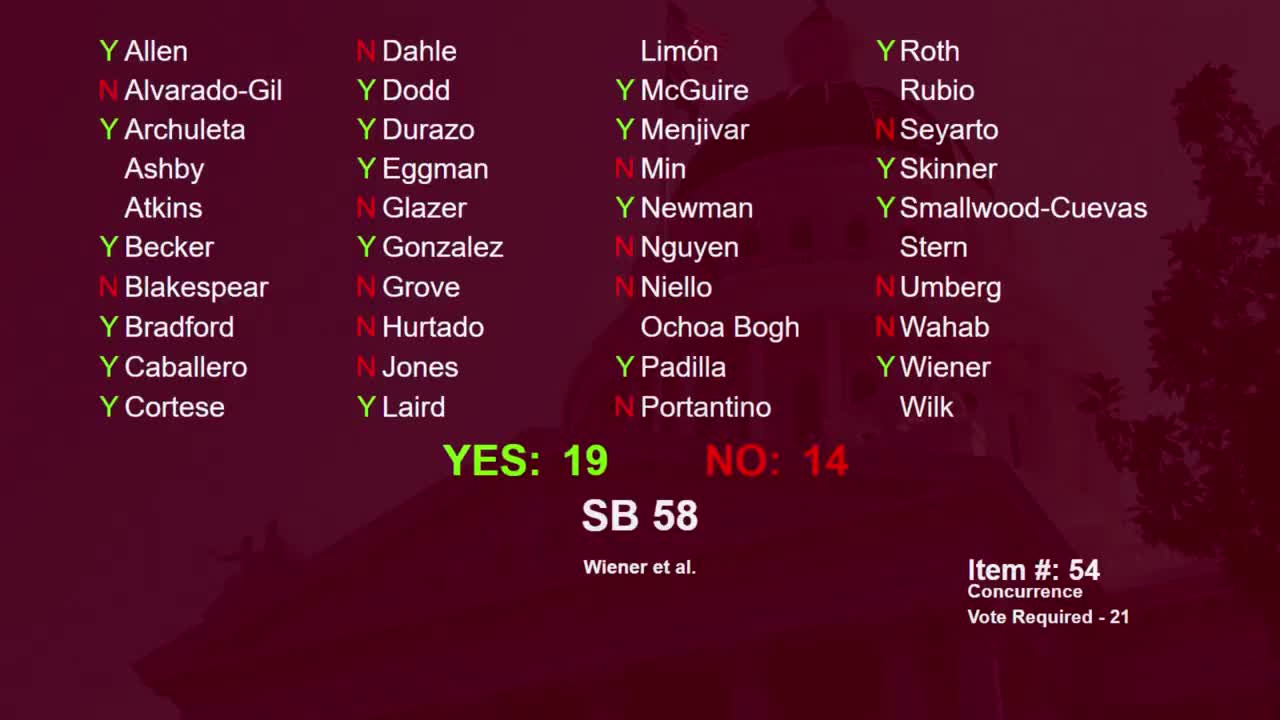 1MIN
Senate Floor
 1MIN
Assembly Floor
 4MIN
Assembly Standing Committee on Public Employment and Retirement
 2MIN
Senate Floor
 6MIN
Senate Standing Committee on Labor, Public Employment and Retirement
Bill Author

Bill Co-Author(s):