SB 483: Pupil rights: prone restraint.
- Session Year: 2023-2024
- House: Senate
- Latest Version Date: 2024-09-28
Current Status:
Passed
(2024-09-28: Chaptered by Secretary of State. Chapter 857, Statutes of 2024.)
Introduced
In Committee
First Chamber
In Committee
Second Chamber
Enacted
Existing law prohibits a person employed by or engaged in a public school from inflicting, or causing to be inflicted, corporal punishment upon a pupil. Existing law prohibits the use of certain restraint and seclusion techniques. Existing law authorizes staff trained in prone containment to use the procedure on a pupil who is an individual with exceptional needs in a public school program as an emergency intervention. If prone restraint techniques are used, existing law requires a staff member to observe the pupil for any signs of distress throughout the use of prone restraint.
This bill instead would prohibit the use of prone restraint, defined to include prone containment, by an educational provider. The bill would also prohibit the use of prone restraint, including prone containment, on a pupil who is an individual with exceptional needs in a public school program.
This act shall be known, and may be cited, as Max Bensons Law.
SEC. 2.Section 49005.1 of the Education Code is amended to read:49005.1.The following definitions apply to this article:
(a)Behavioral restraint means mechanical restraint or physical restraint, as defined in this section, used as an intervention when a pupil presents an immediate danger to self or to others. Behavioral restraint does not include postural restraints or devices used to improve a pupils mobility and independent functioning rather than to restrict movement.
(b)Educational provider means a person who provides educational or related services, support, or other assistance to a pupil enrolled in an educational program provided by a local educational agency or a nonpublic school or agency.
(c)Local educational agency means a school district, county office of education, charter school, the California Schools for the Deaf, and the California School for the Blind.
(d)(1)Mechanical restraint means the use of a device or equipment to restrict a pupils freedom of movement.
(2)(A)Mechanical restraint does not include the use of devices by peace officers or security personnel for detention or for public safety purposes.
(B)Mechanical restraint does not include the use of devices by trained school personnel, or by a pupil, prescribed by an appropriate medical or related services professional, if the device is used for the specific and approved purpose for which the device or equipment was prescribed, which shall include, but not be limited to, all of the following:
(i)Adaptive devices or mechanical supports used to achieve proper body position, balance, or alignment to allow greater freedom of mobility than would be possible without the use of such devices or mechanical supports.
(ii)Vehicle safety restraints when used as intended during the transport of a pupil in a moving vehicle.
(iii)Restraints for medical immobilization.
(iv)Orthopedically prescribed devices that permit a pupil to participate in activities without risk of harm.
(e)Nonpublic school or agency means any nonpublic school or nonpublic agency, including both in-state and out-of-state nonpublic schools and nonpublic agencies.
(f)(1)Physical restraint means a personal restriction that immobilizes or reduces the ability of a pupil to move the pupils torso, arms, legs, or head freely. Physical restraint does not include a physical escort, which means a temporary touching or holding of the hand, wrist, arm, shoulder, or back for the purpose of inducing a pupil who is acting out to walk to a safe location.
(2)Physical restraint does not include the use of force by peace officers or security personnel for detention or for public safety purposes.
(g)Prone restraint means the application of a behavioral restraint on a pupil in a facedown position for any period of time and includes the procedure known as prone containment.
(h)Pupil means a pupil enrolled in preschool, kindergarten, or any of grades 1 to 12, inclusive, and receiving educational services from an educational provider.
(i)Seclusion means the involuntary confinement of a pupil alone in a room or area from which the pupil is physically prevented from leaving. Seclusion does not include a timeout, which is a behavior management technique that is part of an approved program, that involves the monitored separation of the pupil in a nonlocked setting, and is implemented for the purpose of calming.
SEC. 3.Section 49005.8 of the Education Code is amended to read:49005.8.(a)An educational provider shall not do any of the following:
(1)Use seclusion or a behavioral restraint for the purpose of coercion, discipline, convenience, or retaliation.
(2)Use locked seclusion, unless it is in a facility otherwise licensed or permitted by state law to use a locked room.
(3)Use a physical restraint technique that obstructs a pupils respiratory airway or impairs the pupils breathing or respiratory capacity, including techniques in which a staff member places pressure on a pupils back or places the staff members body weight against the pupils torso or back.
(4)Use a behavioral restraint technique that restricts breathing, including, but not limited to, using a pillow, blanket, carpet, mat, or other item to cover a pupils face.
(5)Use prone restraint.
(6)Use a behavioral restraint for longer than is necessary to contain the behavior that poses a clear and present danger of serious physical harm to the pupil or others.
(b)An educational provider shall keep constant, direct observation of a pupil who is in seclusion, which may be through observation of the pupil through a window, or another barrier, through which the educational provider is able to make direct eye contact with the pupil. The observation required pursuant to this subdivision shall not be through indirect means, including through a security camera or a closed-circuit television.
(c)An educational provider shall afford to pupils who are restrained the least restrictive alternative and the maximum freedom of movement, and shall use the least number of restraint points, while ensuring the physical safety of the pupil and others.
SEC. 4.Section 56028.3 is added to the Education Code, to read:56028.3.Prone restraint means the application of a behavioral restraint on a pupil in a facedown position for any period of time and includes the procedure known as prone containment.
SEC. 5.Section 56521.1 of the Education Code is amended to read:56521.1.(a)Emergency interventions may only be used to control unpredictable, spontaneous behavior that poses clear and present danger of serious physical harm to the individual with exceptional needs, or others, and that cannot be immediately prevented by a response less restrictive than the temporary application of a technique used to contain the behavior.
(b)Emergency interventions shall not be used as a substitute for the systematic behavioral intervention plan that is designed to change, replace, modify, or eliminate a targeted behavior.
(c)No emergency intervention shall be employed for longer than is necessary to contain the behavior. A situation that requires prolonged use of an emergency intervention shall require the staff to seek assistance of the schoolsite administrator or law enforcement agency, as applicable to the situation.
(d)Emergency interventions shall not include:
(1)Locked seclusion, unless it is in a facility otherwise licensed or permitted by state law to use a locked room.
(2)Employment of a device, material, or objects that simultaneously immobilize all four extremities.
(3)Prone restraint.
(4)An amount of force that exceeds that which is reasonable and necessary under the circumstances.
(e)To prevent emergency interventions from being used in lieu of planned, systematic behavioral interventions, the parent, guardian, and residential care provider, if appropriate, shall be notified within one schoolday if an emergency intervention is used or serious property damage occurs. A behavioral emergency report shall immediately be completed and maintained in the file of the individual with exceptional needs. The behavioral emergency report shall include all of the following:
(1)The name and age of the individual with exceptional needs.
(2)The setting and location of the incident.
(3)The name of the staff or other persons involved.
(4)A description of the incident and the emergency intervention used, and whether the individual with exceptional needs is currently engaged in any systematic behavioral intervention plan.
(5)Details of any injuries sustained by the individual with exceptional needs, or others, including staff, as a result of the incident.
(f)All behavioral emergency reports shall immediately be forwarded to, and reviewed by, a designated responsible administrator.
(g)If a behavioral emergency report is written regarding an individual with exceptional needs who does not have a behavioral intervention plan, the designated responsible administrator shall, within two days, schedule an individualized education program (IEP) team meeting to review the emergency report, to determine the necessity for a functional behavioral assessment, and to determine the necessity for an interim plan. The IEP team shall document the reasons for not conducting the functional behavioral assessment, not developing an interim plan, or both.
(h)If a behavioral emergency report is written regarding an individual with exceptional needs who has a positive behavioral intervention plan, an incident involving a previously unseen serious behavior problem, or where a previously designed intervention is ineffective, shall be referred to the IEP team to review and determine if the incident constitutes a need to modify the positive behavioral intervention plan.
SEC. 6.Section 56521.2 of the Education Code is amended to read:56521.2.(a)A local educational agency or nonpublic, nonsectarian school or agency serving individuals with exceptional needs pursuant to Sections 56365 and 56366, shall not authorize, order, consent to, or pay for the following interventions, or any other interventions similar to or like the following:
(1)Any intervention that is designed to, or likely to, cause physical pain, including, but not limited to, electric shock.
(2)An intervention that involves the release of noxious, toxic, or otherwise unpleasant sprays, mists, or substances in proximity to the face of the individual.
(3)An intervention that denies adequate sleep, food, water, shelter, bedding, physical comfort, or access to bathroom facilities.
(4)An intervention that is designed to subject, used to subject, or likely to subject, the individual to verbal abuse, ridicule, or humiliation, or that can be expected to cause excessive emotional trauma.
(5)Restrictive interventions that employ a device, material, or objects that simultaneously immobilize all four extremities.
(6)Prone restraint.
(7)Locked seclusion, unless it is in a facility otherwise licensed or permitted by state law to use a locked room.
(8)An intervention that precludes adequate supervision of the individual.
(9)An intervention that deprives the individual of one or more of the individuals senses.
(b)In the case of a child whose behavior impedes the childs learning or that of others, the individualized education program team shall consider the use of positive behavioral interventions and supports, and other strategies, to address that behavior, consistent with Section 1414(d)(3)(B)(i) and (d)(4) of Title 20 of the United States Code and associated federal regulations.
This act shall be known, and may be cited, as Max Bensons Law.
SECTION 1.SEC. 2.Section 49005.1 of the Education Code is amended to read:49005.1.The following definitions apply to this article:
(a)Behavioral restraint means mechanical restraint or physical restraint, as defined in this section, used as an intervention when a pupil presents an immediate danger to self or to others. Behavioral restraint does not include postural restraints or devices used to improve a pupils mobility and independent functioning rather than to restrict movement.
(b)Educational provider means a person who provides educational or related services, support, or other assistance to a pupil enrolled in an educational program provided by a local educational agency or a nonpublic school or agency.
(c)Local educational agency means a school district, county office of education, charter school, the California Schools for the Deaf, and the California School for the Blind.
(d)(1)Mechanical restraint means the use of a device or equipment to restrict a pupils freedom of movement.
(2)(A)Mechanical restraint does not include the use of devices by peace officers or security personnel for detention or for public safety purposes.
(B)Mechanical restraint does not include the use of devices by trained school personnel, or by a pupil, prescribed by an appropriate medical or related services professional, if the device is used for the specific and approved purpose for which the device or equipment was prescribed, which shall include, but not be limited to, all of the following:
(i)Adaptive devices or mechanical supports used to achieve proper body position, balance, or alignment to allow greater freedom of mobility than would be possible without the use of such devices or mechanical supports.
(ii)Vehicle safety restraints when used as intended during the transport of a pupil in a moving vehicle.
(iii)Restraints for medical immobilization.
(iv)Orthopedically prescribed devices that permit a pupil to participate in activities without risk of harm.
(e)Nonpublic school or agency means any nonpublic school or nonpublic agency, including both in-state and out-of-state nonpublic schools and nonpublic agencies.
(f)(1)Physical restraint means a personal restriction that immobilizes or reduces the ability of a pupil to move the pupils torso, arms, legs, or head freely. Physical restraint does not include a physical escort, which means a temporary touching or holding of the hand, wrist, arm, shoulder, or back for the purpose of inducing a pupil who is acting out to walk to a safe location.
(2)Physical restraint does not include the use of force by peace officers or security personnel for detention or for public safety purposes.
(g)Prone restraint means the application of a behavioral restraint on a pupil in a facedown position for any period of time and includes the procedure known as prone containment.
(h)Pupil means a pupil enrolled in preschool, kindergarten, or any of grades 1 to 12, inclusive, and receiving educational services from an educational provider.
(i)Seclusion means the involuntary confinement of a pupil alone in a room or area from which the pupil is physically prevented from leaving. Seclusion does not include a timeout, which is a behavior management technique that is part of an approved program, that involves the monitored separation of the pupil in a nonlocked setting, and is implemented for the purpose of calming.
SEC. 2.SEC. 3.Section 49005.8 of the Education Code is amended to read:49005.8.(a)An educational provider shall not do any of the following:
(1)Use seclusion or a behavioral restraint for the purpose of coercion, discipline, convenience, or retaliation.
(2)Use locked seclusion, unless it is in a facility otherwise licensed or permitted by state law to use a locked room.
(3)Use a physical restraint technique that obstructs a pupils respiratory airway or impairs the pupils breathing or respiratory capacity, including techniques in which a staff member places pressure on a pupils back or places the staff members body weight against the pupils torso or back.
(4)Use a behavioral restraint technique that restricts breathing, including, but not limited to, using a pillow, blanket, carpet, mat, or other item to cover a pupils face.
(5)Use prone restraint.
(6)Use a behavioral restraint for longer than is necessary to contain the behavior that poses a clear and present danger of serious physical harm to the pupil or others.
(b)An educational provider shall keep constant, direct observation of a pupil who is in seclusion, which may be through observation of the pupil through a window, or another barrier, through which the educational provider is able to make direct eye contact with the pupil. The observation required pursuant to this subdivision shall not be through indirect means, including through a security camera or a closed-circuit television.
(c)An educational provider shall afford to pupils who are restrained the least restrictive alternative and the maximum freedom of movement, and shall use the least number of restraint points, while ensuring the physical safety of the pupil and others.
SEC. 3.SEC. 4.Section 56028.3 is added to the Education Code, to read:56028.3.Prone restraint means the application of a behavioral restraint on a pupil in a facedown position for any period of time and includes the procedure known as prone containment.
SEC. 4.SEC. 5.Section 56521.1 of the Education Code is amended to read:56521.1.(a)Emergency interventions may only be used to control unpredictable, spontaneous behavior that poses clear and present danger of serious physical harm to the individual with exceptional needs, or others, and that cannot be immediately prevented by a response less restrictive than the temporary application of a technique used to contain the behavior.
(b)Emergency interventions shall not be used as a substitute for the systematic behavioral intervention plan that is designed to change, replace, modify, or eliminate a targeted behavior.
(c)No emergency intervention shall be employed for longer than is necessary to contain the behavior. A situation that requires prolonged use of an emergency intervention shall require the staff to seek assistance of the schoolsite administrator or law enforcement agency, as applicable to the situation.
(d)Emergency interventions shall not include:
(1)Locked seclusion, unless it is in a facility otherwise licensed or permitted by state law to use a locked room.
(2)Employment of a device, material, or objects that simultaneously immobilize all four extremities.
(3)Prone restraint.
(4)An amount of force that exceeds that which is reasonable and necessary under the circumstances.
(e)To prevent emergency interventions from being used in lieu of planned, systematic behavioral interventions, the parent, guardian, and residential care provider, if appropriate, shall be notified within one schoolday if an emergency intervention is used or serious property damage occurs. A behavioral emergency report shall immediately be completed and maintained in the file of the individual with exceptional needs. The behavioral emergency report shall include all of the following:
(1)The name and age of the individual with exceptional needs.
(2)The setting and location of the incident.
(3)The name of the staff or other persons involved.
(4)A description of the incident and the emergency intervention used, and whether the individual with exceptional needs is currently engaged in any systematic behavioral intervention plan.
(5)Details of any injuries sustained by the individual with exceptional needs, or others, including staff, as a result of the incident.
(f)All behavioral emergency reports shall immediately be forwarded to, and reviewed by, a designated responsible administrator.
(g)If a behavioral emergency report is written regarding an individual with exceptional needs who does not have a behavioral intervention plan, the designated responsible administrator shall, within two days, schedule an individualized education program (IEP) team meeting to review the emergency report, to determine the necessity for a functional behavioral assessment, and to determine the necessity for an interim plan. The IEP team shall document the reasons for not conducting the functional behavioral assessment, not developing an interim plan, or both.
(h)If a behavioral emergency report is written regarding an individual with exceptional needs who has a positive behavioral intervention plan, an incident involving a previously unseen serious behavior problem, or where a previously designed intervention is ineffective, shall be referred to the IEP team to review and determine if the incident constitutes a need to modify the positive behavioral intervention plan.
SEC. 5.SEC. 6.Section 56521.2 of the Education Code is amended to read:56521.2.(a)A local educational agency or nonpublic, nonsectarian school or agency serving individuals with exceptional needs pursuant to Sections 56365 and 56366, shall not authorize, order, consent to, or pay for the following interventions, or any other interventions similar to or like the following:
(1)Any intervention that is designed to, or likely to, cause physical pain, including, but not limited to, electric shock.
(2)An intervention that involves the release of noxious, toxic, or otherwise unpleasant sprays, mists, or substances in proximity to the face of the individual.
(3)An intervention that denies adequate sleep, food, water, shelter, bedding, physical comfort, or access to bathroom facilities.
(4)An intervention that is designed to subject, used to subject, or likely to subject, the individual to verbal abuse, ridicule, or humiliation, or that can be expected to cause excessive emotional trauma.
(5)Restrictive interventions that employ a device, material, or objects that simultaneously immobilize all four extremities.
(6)Prone restraint.
(7)Locked seclusion, unless it is in a facility otherwise licensed or permitted by state law to use a locked room.
(8)An intervention that precludes adequate supervision of the individual.
(9)An intervention that deprives the individual of one or more of the individuals senses.
(b)In the case of a child whose behavior impedes the childs learning or that of others, the individualized education program team shall consider the use of positive behavioral interventions and supports, and other strategies, to address that behavior, consistent with Section 1414(d)(3)(B)(i) and (d)(4) of Title 20 of the United States Code and associated federal regulations.
The following definitions apply to this article:
(a)Behavioral restraint means mechanical restraint or physical restraint, as defined in this section, used as an intervention when a pupil presents an immediate danger to self or to others. Behavioral restraint does not include postural restraints or devices used to improve a pupils mobility and independent functioning rather than to restrict movement.
(b)Educational provider means a person who provides educational or related services, support, or other assistance to a pupil enrolled in an educational program provided by a local educational agency or a nonpublic school or agency.
(c)Local educational agency means a school district, county office of education, charter school, the California Schools for the Deaf, and the California School for the Blind.
(d)(1)Mechanical restraint means the use of a device or equipment to restrict a pupils freedom of movement.
(2)(A)Mechanical restraint does not include the use of devices by peace officers or security personnel for detention or for public safety purposes.
(B)Mechanical restraint does not include the use of devices by trained school personnel, or by a pupil, prescribed by an appropriate medical or related services professional, if the device is used for the specific and approved purpose for which the device or equipment was prescribed, which shall include, but not be limited to, all of the following:
(i)Adaptive devices or mechanical supports used to achieve proper body position, balance, or alignment to allow greater freedom of mobility than would be possible without the use of such devices or mechanical supports.
(ii)Vehicle safety restraints when used as intended during the transport of a pupil in a moving vehicle.
(iii)Restraints for medical immobilization.
(iv)Orthopedically prescribed devices that permit a pupil to participate in activities without risk of harm.
(e)Nonpublic school or agency means any nonpublic school or nonpublic agency, including both in-state and out-of-state nonpublic schools and nonpublic agencies.
(f)(1)Physical restraint means a personal restriction that immobilizes or reduces the ability of a pupil to move the pupils torso, arms, legs, or head freely. Physical restraint does not include a physical escort, which means a temporary touching or holding of the hand, wrist, arm, shoulder, or back for the purpose of inducing a pupil who is acting out to walk to a safe location.
(2)Physical restraint does not include the use of force by peace officers or security personnel for detention or for public safety purposes.
(g)Prone restraint means the application of a behavioral restraint on a pupil in a facedown position. position for any period of time and includes the procedure known as prone containment.
(h)Pupil means a pupil enrolled in preschool, kindergarten, or any of grades 1 to 12, inclusive, and receiving educational services from an educational provider.
(i)Seclusion means the involuntary confinement of a pupil alone in a room or area from which the pupil is physically prevented from leaving. Seclusion does not include a timeout, which is a behavior management technique that is part of an approved program, that involves the monitored separation of the pupil in a nonlocked setting, and is implemented for the purpose of calming.
SEC. 2.Section 49005.8 of the Education Code is amended to read:49005.8.(a)An educational provider shall not do any of the following:
(1)Use seclusion or a behavioral restraint for the purpose of coercion, discipline, convenience, or retaliation.
(2)Use locked seclusion, unless it is in a facility otherwise licensed or permitted by state law to use a locked room.
(3)Use a physical restraint technique that obstructs a pupils respiratory airway or impairs the pupils breathing or respiratory capacity, including techniques in which a staff member places pressure on a pupils back or places his or her the staff members body weight against the pupils torso or back.
(4)Use a behavioral restraint technique that restricts breathing, including, but not limited to, using a pillow, blanket, carpet, mat, or other item to cover a pupils face.
(5)Place a pupil in a facedown position with the pupils hands held or restrained behind the pupils back.(5)Use prone restraint.
(6)Use a behavioral restraint for longer than is necessary to contain the behavior that poses a clear and present danger of serious physical harm to the pupil or others.
(b)An educational provider shall keep constant, direct observation of a pupil who is in seclusion, which may be through observation of the pupil through a window, or another barrier, through which the educational provider is able to make direct eye contact with the pupil. The observation required pursuant to this subdivision shall not be through indirect means, including through a security camera or a closed-circuit television.
(c)An educational provider shall afford to pupils who are restrained the least restrictive alternative and the maximum freedom of movement, and shall use the least number of restraint points, while ensuring the physical safety of the pupil and others.
(d)If prone restraint techniques are used, a staff member shall observe the pupil for any signs of physical distress throughout the use of prone restraint. Whenever possible, the staff member monitoring the pupil shall not be involved in restraining the pupil.SEC. 3.Section 56028.3 is added to the Education Code, to read:56028.3.Prone restraint means the application of a behavioral restraint on a pupil in a facedown position for any period of time and includes the procedure known as prone containment.
SEC. 4.Section 56521.1 of the Education Code is amended to read:56521.1.(a)Emergency interventions may only be used to control unpredictable, spontaneous behavior that poses clear and present danger of serious physical harm to the individual with exceptional needs, or others, and that cannot be immediately prevented by a response less restrictive than the temporary application of a technique used to contain the behavior.
(b)Emergency interventions shall not be used as a substitute for the systematic behavioral intervention plan that is designed to change, replace, modify, or eliminate a targeted behavior.
(c)No emergency intervention shall be employed for longer than is necessary to contain the behavior. A situation that requires prolonged use of an emergency intervention shall require the staff to seek assistance of the schoolsite administrator or law enforcement agency, as applicable to the situation.
(d)Emergency interventions shall not include:
(1)Locked seclusion, unless it is in a facility otherwise licensed or permitted by state law to use a locked room.
(2)Employment of a device, material, or objects that simultaneously immobilize all four extremities, except that techniques such as prone containment may be used as an emergency intervention by staff trained in those procedures. extremities.
(3)Prone restraint.
(3)(4)An amount of force that exceeds that which is reasonable and necessary under the circumstances.
(e)To prevent emergency interventions from being used in lieu of planned, systematic behavioral interventions, the parent, guardian, and residential care provider, if appropriate, shall be notified within one schoolday if an emergency intervention is used or serious property damage occurs. A behavioral emergency report shall immediately be completed and maintained in the file of the individual with exceptional needs. The behavioral emergency report shall include all of the following:
(1)The name and age of the individual with exceptional needs.
(2)The setting and location of the incident.
(3)The name of the staff or other persons involved.
(4)A description of the incident and the emergency intervention used, and whether the individual with exceptional needs is currently engaged in any systematic behavioral intervention plan.
(5)Details of any injuries sustained by the individual with exceptional needs, or others, including staff, as a result of the incident.
(f)All behavioral emergency reports shall immediately be forwarded to, and reviewed by, a designated responsible administrator.
(g)If a behavioral emergency report is written regarding an individual with exceptional needs who does not have a behavioral intervention plan, the designated responsible administrator shall, within two days, schedule an individualized education program (IEP) team meeting to review the emergency report, to determine the necessity for a functional behavioral assessment, and to determine the necessity for an interim plan. The IEP team shall document the reasons for not conducting the functional behavioral assessment, not developing an interim plan, or both.
(h)If a behavioral emergency report is written regarding an individual with exceptional needs who has a positive behavioral intervention plan, an incident involving a previously unseen serious behavior problem, or where a previously designed intervention is ineffective, shall be referred to the IEP team to review and determine if the incident constitutes a need to modify the positive behavioral intervention plan.
SEC. 5.Section 56521.2 of the Education Code is amended to read:56521.2.(a)A local educational agency or nonpublic, nonsectarian school or agency serving individuals with exceptional needs pursuant to Sections 56365 and 56366, shall not authorize, order, consent to, or pay for the following interventions, or any other interventions similar to or like the following:
(1)Any intervention that is designed to, or likely to, cause physical pain, including, but not limited to, electric shock.
(2)An intervention that involves the release of noxious, toxic, or otherwise unpleasant sprays, mists, or substances in proximity to the face of the individual.
(3)An intervention that denies adequate sleep, food, water, shelter, bedding, physical comfort, or access to bathroom facilities.
(4)An intervention that is designed to subject, used to subject, or likely to subject, the individual to verbal abuse, ridicule, or humiliation, or that can be expected to cause excessive emotional trauma.
(5)Restrictive interventions that employ a device, material, or objects that simultaneously immobilize all four extremities, including the procedure known as prone containment, except that prone containment or similar techniques may be used by trained personnel as a limited emergency intervention. extremities.
(6)Prone restraint.
(6)(7)Locked seclusion, unless it is in a facility otherwise licensed or permitted by state law to use a locked room.
(7)(8)An intervention that precludes adequate supervision of the individual.
(8)(9)An intervention that deprives the individual of one or more of his or her the individuals senses.
(b)In the case of a child whose behavior impedes the childs learning or that of others, the individualized education program team shall consider the use of positive behavioral interventions and supports, and other strategies, to address that behavior, consistent with Section 1414(d)(3)(B)(i) and (d)(4) of Title 20 of the United States Code and associated federal regulations.
|
Date
|
Status
|
|---|---|
| Sep 28, 2024 | Chaptered by Secretary of State. Chapter 857, Statutes of 2024. |
| Sep 28, 2024 | Approved by the Governor. |
| Sep 4, 2024 | Enrolled and presented to the Governor at 4 p.m. |
| Aug 28, 2024 | Assembly amendments concurred in. (Ayes 39. Noes 0. Page 5586.) Ordered to engrossing and enrolling. |
| Aug 28, 2024 | In Senate. Concurrence in Assembly amendments pending. |
| Aug 27, 2024 | Read third time. Passed. (Ayes 75. Noes 0. Page 6650.) Ordered to the Senate. |
| Aug 19, 2024 | Read third time and amended. |
| Aug 19, 2024 | Ordered to third reading. |
| Jun 17, 2024 | Read second time. Ordered to third reading. |
| Jun 13, 2024 | From committee: Do pass. (Ayes 7. Noes 0.) (June 12). |
| Apr 29, 2024 | Referred to Com. on ED. |
| Jan 29, 2024 | In Assembly. Read first time. Held at Desk. |
| Jan 29, 2024 | Read third time. Passed. (Ayes 39. Noes 0. Page 3050.) Ordered to the Assembly. |
| Jan 22, 2024 | Read second time. Ordered to third reading. |
| Jan 18, 2024 | From committee: Do pass. (Ayes 6. Noes 0. Page 3011.) (January 18). |
| Jan 17, 2024 | Set for hearing January 18. |
| Jan 16, 2024 | January 16 hearing: Placed on APPR suspense file. |
| Jan 11, 2024 | Set for hearing January 16. |
| Jan 10, 2024 | From committee: Do pass and re-refer to Com. on APPR. (Ayes 7. Noes 0. Page 2969.) (January 10). Re-referred to Com. on APPR. |
| Dec 21, 2023 | Set for hearing January 10. |
| Feb 22, 2023 | Referred to Coms. on ED. and APPR. |
| Feb 15, 2023 | From printer. May be acted upon on or after March 17. |
| Feb 14, 2023 | Introduced. Read first time. To Com. on RLS. for assignment. To print. |
|
Date
|
Description
|
Location
|
Votes
|
|
|---|---|---|---|---|
| Aug 28, 2024 | Unfinished Business SB483 Cortese et al. Concurrence | Senate Floor |
Passed |
|
| Aug 27, 2024 | SB 483 Cortese Senate Third Reading By Aguiar-Curry | Assembly Floor |
Passed |
|
| Jun 12, 2024 | Do pass. | Assembly Standing Committee on Education |
Passed |
|
| Jan 29, 2024 | Senate 3rd Reading SB483 Cortese | Senate Floor |
Passed |
|
| Jan 18, 2024 | Do pass | Senate Standing Committee on Appropriations |
Passed |
|
| Jan 16, 2024 | Placed on suspense file | Senate Standing Committee on Appropriations |
Passed |
|
| Jan 10, 2024 | Do pass, but first be re-referred to the Committee on [Appropriations] | Senate Standing Committee on Education |
Passed |
This list shows positions taken on this bill by organizations on the date displayed, which is linked to the original source.
Positions by individuals are not included.
|
Organization
|
Position
|
Date
|
|---|---|---|
| Alameda County Office Of Education | * Support | Jun 12, 2024 |
| Alliance Against Seclusion and Restraint | * Support | Jun 12, 2024 |
| Alliance Against Seclusion and Restraint | ** Support | |
| Alliance for Boys and Men of Color | ** Support | |
| Alliance for Children's Rights | ** Support | |
| American Academy Of Pediatrics, California | ** Support | |
| American Civil Liberties Union California Action | ** Support | |
| Autism Society Inland Empire | ** Support | |
| Cal-TASH | ** Support | |
| California Association For Behavior Analysis | ** Support | |
| California Association of Student Councils | ** Support | |
| California Community Living Network | ** Support | |
| California Foundation For Independent Living Centers | ** Support | |
| Californians for Justice | ** Support | |
| Civil Rights Enforcement and Education Center | ** Support | |
| Civil Rights Law Firm Collier Socks LLP | * Support | Jan 10, 2024 |
| Civil Rights Law Firm Collier Socks LLP | * Support | Jan 10, 2024 |
| Collier Socks LLP | ** Support | |
| Community Advisory Committee for Special Education | ** Support | |
| Davis Joint Unified School District | ** Support | |
| Disability Rights California | ** Support | |
| Disability Rights Education & Defense Fund | ** Support | |
| Disability Voices United | ** Support | |
| Educate.Advocate. | ** Support | |
| Ella Baker Center For Human Rights | ** Support | |
| Equal Justice Society | ** Support | |
| Grupo De Autismo Angeles | ** Support | |
| Grupo De Autismo Angeles Inc. | ** Support | |
| Include California | ** Support | |
| Legal Services for Prisoners with Children | ** Support | |
| Los Angeles County Office Of Education | * Support | Jun 12, 2024 |
| Oakland Privacy | ** Support | |
| Placer Independent Resource Services | ** Support | |
| Port View Preparatory | ** Support | |
| Port View Prepatory | * Support | Jan 10, 2024 |
| Portview Preparatory | * Support | Jun 12, 2024 |
| Pragnya | ** Support | |
| RespectAbility | ** Support | |
| Rios Eubanks LLP | ** Support | |
| San Francisco Public Defender | ** Support | |
| Sister Warriors Freedom Coalition | ** Support | |
| Special Needs Network | ** Support | |
| Spire Autism | ** Support | |
| State Council on Developmental Disabilities | ** Support | |
| The Children's Partnership | * Support | Jan 10, 2024 |
| western center on law & poverty | ** Support | |
| Youth Justice Education Clinic | ** Support | |
| Youth Justice Education Clinic, Center for Juvenile Law and Policy, Loyola Law School | ** Support |
SENATE RULES COMMITTEE Office of Senate Floor Analyses (916) 651-1520 Fax: (916) 327-4478 | SB 483 |
UNFINISHED BUSINESS
Bill No: SB 483
Author: Cortese (D), et al.
Amended: 8/19/24
Vote: 21
SENATE EDUCATION COMMITTEE: 7-0, 1/10/24
AYES: Newman, Wilk, Cortese, Glazer, Grove, Laird, Smallwood-Cuevas
SENATE APPROPRIATIONS COMMITTEE: 6-0, 1/18/24
AYES: Portantino, Jones, Bradford, Seyarto, Wahab, Wiener
NO VOTE RECORDED: Ashby
SENATE FLOOR: 39-0, 1/29/24
AYES: Allen, Alvarado-Gil, Archuleta, Ashby, Atkins, Becker, Blakespear, Bradford, Caballero, Cortese, Dahle, Dodd, Durazo, Eggman, Glazer, Grove, Hurtado, Jones, Laird, Limón, McGuire, Menjivar, Min, Newman, Nguyen, Niello, Ochoa Bogh, Padilla, Portantino, Roth, Rubio, Seyarto, Skinner, Smallwood-Cuevas, Stern, Umberg, Wahab, Wiener, Wilk
NO VOTE RECORDED: Gonzalez
ASSEMBLY FLOOR: 75-0, 8/27/24 - See last page for vote
SUBJECT: Pupil rights: prone restraint
SOURCE: California Association of Student Councils
Disability Rights California
DIGEST:
This bill prohibits the use of prone restraint by local educational agencies (LEAs), nonpublic schools and agencies (NPS/A), and the State Special Schools for the Blind and the Deaf.
Assembly Amendments: (1)
eliminate the authorization for the use of prone restraint by trained personnel, thereby fully prohibiting educational providers at LEAs, NPS/As, and the State Special Schools for the Blind and Deaf from using, authorizing, or paying for prone restraint or similar interventions; (2) expand the definition of prone restraint to include any behavioral restraint that places a student facedown, including prone containment; and (3) name the act “Max Benson's Law” and make conforming changes to align with these provisions.
ANALYSIS:
Existing law:
- Provides that a student has the right to be free from the use of seclusion and behavioral restraints of any form imposed as a means of coercion, discipline, convenience, or retaliation by staff. This right includes, but is not limited to, the right to be free from the use of a drug administered to the student in order to control the student’s behavior or to restrict the student’s freedom of movement, if that drug is not a standard treatment for the student’s medical or psychiatric condition.
- Prohibits an educational provider from doing any of the following:
- Using seclusion or a behavioral restraint for the purpose of coercion, discipline, convenience, or retaliation.
- Using locked seclusion, unless it is in a facility otherwise licensed or permitted by state law to use a locked room.
- Using a physical restraint technique that obstructs a student’s respiratory airway or impairs the student’s breathing or respiratory capacity, including techniques in which a staff member places pressure on a student’s back or places his or her body weight against the student’s torso or back.
- Using a behavioral restraint technique that restricts breathing, including but not limited to using a pillow, blanket, carpet, mat, or other item to cover a student’s face.
- Placing a student in a facedown position with the student’s hands held or restrained behind the student’s back.
- Using behavioral restraint for longer than is necessary to contain the behavior that poses a clear and present danger of serious physical harm to the student or others.
- Requires an educational provider to avoid, whenever possible, the use of seclusion or behavioral restraint techniques.
- Authorizes an educational provider to use seclusion or a behavioral restraint only to control behavior that poses a clear and present danger of serious physical harm to the student or others that cannot be immediately prevented by a response that is less.
- Requires an educational provider to afford to students who are restrained the least restrictive alternative and the maximum freedom of movement, and use the least number of restraint points, while ensuring the physical safety of the student and others.
- Requires an educational provider to keep constant, direct observation of a student who is in seclusion, and allows that to be a window, or another barrier, through which the educational provider is able to make direct eye contact with the student. The observation may not be through indirect means, including through a security camera or closed-circuit TV.
- Requires a staff member, if prone restraint techniques are used, to observe the student for any signs of physical distress throughout the use of prone restraint. The staff member monitoring the student shall not, whenever possible, be involved in restraining the student.
- Requires LEAs to collect and report annually to the California Department of Education (CDE), no later than three months after the end of the school year, on the use of behavioral restraints and seclusion for students enrolled in or served by the LEA for all or part of the prior school year.
- Requires the report to include all of the following information, disaggregated by race or ethnicity, and gender, with separate counts for students with an individualized educational program (IEP), 504 plan, and students without an IEP or 504 plan:
- The number of students subjected to mechanical restraint, and the number of times mechanical restraint was used on students.
- The number of students subjected to physical restraint, and the number of times physical restraint was used on students.
- The number of students subjected to seclusion, and the number of times seclusion was used on students.
This bill prohibits the use of prone restraint by LEAs, NPS/As, and the State Special Schools for the Blind and the Deaf.
Comments
- Need for this bill. According to the author, “SB 483 would prohibit in all California schools the use of “prone restraint”, a technique that physically or mechanically restrains students in a face down position.
“The U.S. Department of Education recommends banning the use of prone restraints, and over thirty other states have prohibited this form of physical restraint on all students.
“Prone restraint is one of the most dangerous forms of restraint used in a school setting; it is a technique that restricts a student’s airway. Restraint in schools has resulted in serious injury as well as death. In 2018, a 13-year-old student with autism died at an El Dorado Hills school after being held in a prone restraint for over an hour.
“In 2019, The Sacramento Bee found that prone restraints are often used on students with special needs and used at a higher rate for Black students. Several school districts in California have used dangerous restraint techniques on students hundreds of times during a single school year, rather than positive behavior interventions.”
- Limits on the use of restraint and seclusion in schools. Prior to 2019, state statutes limited the use of seclusion and restraints in schools for students with exceptional needs. Specifically, school districts and nonpublic schools or agencies serving individuals with exceptional needs were prohibited from authorizing, ordering, consenting to, or paying for certain types of behavior interventions (e.g. electric shock, toxic or noxious sprays or mists, mechanical restraints, except when used by trained personnel, or locked seclusion, except as specified). Additionally, state statutes authorized the use of emergency interventions for students with exceptional needs in limited circumstances. State statutes also prohibited school employees from inflicting, or causing to be inflicted, corporal punishment upon a student. However, no other limitations on the use of seclusion or restraints for general education students existed.
AB 2657 (Weber, Chapter 998, Statutes of 2018), effective January 1, 2019, prohibits the use of restraint or seclusion for any student, except in specified circumstances. Specifically, AB 2657 established a student’s right “To be free from the use of seclusion and behavioral restraints of any form imposed as a means of coercion, discipline, convenience, or retaliation by staff.” The legislation limited the use of seclusion and behavioral restraints, which include both mechanical and physical restraints, for all students and establishes parameters for situations in which behavioral restraints or seclusion may be used. Specifically, school districts and nonpublic schools or agencies may use a behavioral restraint or seclusion “Only to control behavior that poses a clear and present danger of serious physical harm to the pupil or others that cannot be immediately prevented by a response that is less restrictive.”
School districts and nonpublic schools or agencies are prohibited from using a behavioral restraint for longer than is necessary to contain the behavior that poses a clear and present danger of serious physical harm. AB 2657 clarified what types of interventions are not allowed, and emphasized the need to avoid restraints and seclusion whenever possible. Specifically, it banned physical restraint techniques that obstruct a student’s respiratory airway or impair a student’s breathing or respiratory capacity, behavioral restraints that restrict breathing, or placing a student in a facedown position with the student’s hands held or restrained behind their back.
- Reporting requirement on use of restraint or seclusion. School districts and nonpublic schools or agencies are required to collect and report data on the use of restraints and seclusion to CDE annually, no later than three months after the end of the school year. The report must include the number of students subjected to mechanical restraint and the number of times it was used, the number of students subjected to physical restraint and the number of times it was used, and the number of students subjected to seclusion and the number of times it was used. The information must be disaggregated by race or ethnicity, and gender, with separate counts for students with an IEP, students with a 504 plan, and students without an IEP or 504 plan. The CDE is required to annually post the data from the report on its website within three months after the report is due to CDE.
- Use of prone restraint is discouraged by the U.S. Department of Education. The U.S. Department of Education (DOE) has long recommended that prone restraint never be used in schools because it is unsafe. In May 2012, DOE released “Restraint and Seclusion: Resource Document” in which 15 principles are identified that DOE believes states, local school districts, preschool, elementary, and secondary schools, parents, and other stakeholders should consider as the framework for developing and implementing policies and procedures related to restraint and seclusion to ensure that any use of restraint or seclusion in schools does not occur except when there is a threat of imminent danger of serious physical harm to the student or others, and occurs in a manner that protects the safety of all children and adults at school.
Specific to prone restraint, the resource document states the following:
“Prone (i.e., lying face down) restraints or other restraints that restrict breathing should never be used because they can cause serious injury or death. Breathing can also be restricted if loose clothing becomes entangled or tightened or if the child’s face is covered by a staff member’s body part (e.g., hand, arm, or torso) or through pressure to the abdomen or chest. Any restraint or seclusion technique should be consistent with known medical or other special needs of a child. School districts should be cognizant that certain restraint and seclusion techniques are more restrictive than others, and use the least restrictive technique necessary to end the threat of imminent danger of serious physical harm. A child’s ability to communicate (including for those children who use only sign language or other forms of manual communication or assistive technology) also should not be restricted unless less restrictive techniques would not prevent imminent danger of serious physical harm to the student or others. In all circumstances, the use of restraint or seclusion should never harm a child.”
- National statistics on the use of restraint and seclusion on children with disabilities in K-12 schools. In 2020, the DOE’s Office for Civil Rights (OCR) reported the following statistics, collected for its biennial Civil Rights Data Collection, for nationwide use of seclusion and restraint in public schools in 2017-18:
- 101,990 students of the over 50.9 million students enrolled across the nation’s public schools were subjected to physical restraint, mechanical restraint or seclusion — including 70,833 students who were subjected to physical restraint, 3,619 students who were subjected to mechanical restraint, and 27,538 students who were subjected to seclusion.
- Students with disabilities represent 13 percent of the national student population. However, 77 percent of the students who were placed in seclusion and 80 percent of the students who were subjected to physical restraint were students with disabilities.
- 51 percent of enrolled students are male and 66 percent of students with disabilities are male. However, 84 percent of students with disabilities who were subjected to seclusion were male and 83 percent of students with disabilities who were subjected to physical restraint were male.
FISCAL EFFECT: Appropriation: No Fiscal Com.: No Local: No
According to the Senate Appropriations Committee, “By eliminating the use of the prone restraint technique on students, including those students with exceptional needs, this bill could result in the requirement for school districts to establish new procedures and provide training to employees on the use of alternative restraint techniques or de-escalation practices. The associated one-time costs are unknown but could be in the hundreds of thousands of dollars statewide. These activities could be deemed to be reimbursable by the state.
“It is unclear what implications this bill could have on student placements in nonpublic schools and whether it could lead to students being turned away for liability concerns if they are unable to utilize prone restraint techniques in emergency situations.”
SUPPORT: (Verified 8/27/24)
California Association of Student Councils (co-source)
Disability Rights California (co-source)
Alliance Against Seclusion and Restraint
Alliance for Boys and Men of Color
Alliance for Children's Rights
American Academy of Pediatrics, California
American Civil Liberties Union California Action
Autism Society Inland Empire
Cal-TASH
California Association for Behavior Analysis
California Community Living Network
California Foundation for Independent Living Centers
Californians for Justice
Civil Rights Enforcement and Education Center
Collier Socks LLP
Community Advisory Committee for Special Education
Davis Joint Unified School District
Disability Rights Education & Defense Fund
Disability Voices United
Educate.Advocate.
Ella Baker Center for Human Rights
Equal Justice Society
Grupo De Autismo Angeles Inc.
Include California
Legal Services for Prisoners with Children
Oakland Privacy
Placer Independent Resource Services
Port View Preparatory
PRAGNYA
RespectAbility
Rios Eubanks LLP
San Francisco Public Defender
Sister Warriors Freedom Coalition
Special Needs Network
Spire Autism
State Council on Developmental Disabilities
Western Center on Law & Poverty
Youth Justice Education Clinic, Center for Juvenile Law and Policy, Loyola Law School
15 individuals
OPPOSITION: (Verified 8/27/24)
None received
ASSEMBLY FLOOR: 75-0, 8/27/24
AYES: Addis, Aguiar-Curry, Alanis, Alvarez, Arambula, Bains, Bauer-Kahan, Bennett, Berman, Boerner, Bonta, Bryan, Calderon, Juan Carrillo, Wendy Carrillo, Chen, Connolly, Megan Dahle, Davies, Dixon, Essayli, Flora, Mike Fong, Friedman, Gabriel, Gallagher, Garcia, Gipson, Grayson, Haney, Hart, Holden, Hoover, Irwin, Jackson, Jones-Sawyer, Kalra, Lackey, Lee, Low, Lowenthal, Maienschein, Mathis, McCarty, McKinnor, Muratsuchi, Stephanie Nguyen, Pacheco, Papan, Jim Patterson, Joe Patterson, Pellerin, Petrie-Norris, Quirk-Silva, Ramos, Rendon, Reyes, Luz Rivas, Blanca Rubio, Sanchez, Santiago, Schiavo, Soria, Ta, Ting, Valencia, Villapudua, Waldron, Wallis, Ward, Weber, Wicks, Wilson, Wood, Robert Rivas
NO VOTE RECORDED: Cervantes, Ortega, Rodriguez, Zbur
Click here to enter text.
Prepared by: Ian Johnson / ED. / (916) 651-4105
8/27/24 19:51:23
**** END ****
SENATE THIRD READING
STR Bill Id:SB 483
Author:(Cortese)
As Introduced Ver:August 19, 2024
Majority vote
SUMMARY
Prohibits the use of prone restraint by local educational agencies (LEAs), charter schools, nonpublic schools and agencies (NPS/A), and the State Special Schools for the Blind and the Deaf.
Major Provisions
- Eliminates the authorization to use prone restraint by trained personnel as a limited emergency intervention, thereby prohibiting an educational provider at LEAs, charter schools, NPS/As, and the State Special Schools for the Blind and the Deaf from authorizing, ordering, consenting to, or paying for the use of prone restraint, or any other interventions similar to or like prone restraint.
- Amends the definition of prone restraint to include the application of a behavioral restraint on a student in a facedown position for any period of time, including the procedure known as prone containment.
- Names the act Max Benson's Law.
- Makes conforming changes.
COMMENTS
Number of students restrained or secluded in California. Data posted on CDE's website for 2022-23 shows an unduplicated count of 53,659 students restrained (including but not exclusively prone restraint) and 5,742 students secluded in all educational environments, including all public schools, and NPSs. The total count of physical restraints was over 179,000. Data were redacted for many LEAs to comply with privacy protections in state and federal law.
Dangers of seclusion and restraint. In 2014, the federal Office of Civil Rights (OCR) within the U.S. Department of Education (USDOE) reported the following statistics, collected for its biennial Civil Rights Data Collection, for nationwide use of seclusion and restraint in public schools in 2011-12:
- Students with disabilities represent 12% of the national student population, but 58% of those placed in seclusion and 75% of those subjected to physical restraint. In California, 81% of students exposed to physical restraint are students with IEPs; and
- African American students represent 19% of students with disabilities served with IDEA, but 36% of those subjected to mechanical restraint, defined as the use of devices or equipment to restrict a student's movement.
In 2018, the U.S. Government Accountability Office (GAO) released a report entitled K-12 Education: Discipline Disparities for Black Students, Boys, and Students with Disabilities, in which it shows that in 2013-14, African American students represented 15% of the national population of public school students, but 33% of students subjected to mechanical restraint, 25% of students subjected to physical restraint, and 22% of students placed in seclusion. The GAO also found that African American boys constitute 8% of public school students, but 23% of students subjected to mechanical restraint. The GAO stated, "Teachers and staff sometimes have discretion to make case-by-case decisions about whether to discipline, and the form of discipline to impose in response to student behaviors…Studies show that these decisions can result in certain groups of students being more harshly disciplined than others."
After investigating case studies involving seclusion and restraint use in schools throughout the nation, the GAO concluded in 2009 that certain types of restraint are more dangerous than others, particularly for children. Specifically, the GAO stated that certain techniques are "dangerous because they may involve physical struggling, pressure on the chest, or other interruptions in breathing." The GAO also found that children are subjected to restraint or seclusion at higher rates than adults and are at greater risk for injury. Prone restraints, in which students are placed face-down on the ground, and restraints that impede breathing were identified as having the greatest risk of death.
In 2016, OCR issued a "Dear Colleague" letter to explain the limits that federal civil rights laws impose on the use of seclusion and restraint in public schools. OCR stated that a "school district discriminates on the basis of disability in its use of restraint or seclusion by (1) unnecessarily treating students with disabilities differently from students without disabilities; (2) implementing policies, practices, procedures, or criteria that have an effect of discriminating against students on the basis of disability or defeating or substantially impairing accomplishment of the objectives of the school district's program or activity with respect to students with disabilities; or (3) denying the right to a free appropriate public education."
According to the Author
"SB 483 would prohibit in all California schools the use of 'prone restraint,' a technique that physically or mechanically restrains students in a face-down position.
The U.S. Department of Education recommends banning the use of prone restraints, and over thirty other states have prohibited this form of physical restraint on all students. Prone restraint is one of the most dangerous forms of restraint used in a school setting; it is a technique that restricts a student's airway. Restraint in schools has resulted in serious injury as well as death. In 2018, a 13-year-old student with autism died at an El Dorado Hills school after being held in a prone restraint for over an hour.
In 2019, the Sacramento Bee found that prone restraints are often used on students with special needs and used at a higher rate for Black students. Several school districts in California have used dangerous restraint techniques on students hundreds of times during a single school year, rather than positive behavior interventions."
Arguments in Support
Disability Rights California writes, "Even without any other contributing factors, simply restraining a person prone restricts the ability to breathe, thereby lessening the supply of oxygen to meet the body's demands. The U.S. Department of Education has long recommended that prone restraints never be used in schools because they can cause serious injury or death.
Sadly, there have been many examples of injuries and even death from prone restraints in schools. For example, on November 28, 2018, a thirteen-year-old Davis Unified School District student with autism died following prolonged prone restraint at his nonpublic school. DRC continues to receive intakes and complaints from families whose children have been injured or traumatized from a prone restraint in school. Given these examples and the extreme danger from prone restraint in any situation, DRC's position is that only a total and complete ban on all prone restraint techniques – including prone containment – will ensure the safety of students. If California were to enact SB 483, it would join the over thirty other states that ban the use of prone restraints in their schools."
Arguments in Opposition
None on file.
FISCAL COMMENTS
This bill has been keyed non-fiscal by the Office of Legislative Counsel.
VOTES
SENATE FLOOR: 39-0-1
YES: Allen, Alvarado-Gil, Archuleta, Ashby, Atkins, Becker, Blakespear, Bradford, Caballero, Cortese, Dahle, Dodd, Durazo, Eggman, Glazer, Grove, Hurtado, Jones, Laird, Limón, McGuire, Menjivar, Min, Newman, Nguyen, Niello, Ochoa Bogh, Padilla, Portantino, Roth, Rubio, Seyarto, Skinner, Smallwood-Cuevas, Stern, Umberg, Wahab, Wiener, Wilk
ABS, ABST OR NV: Gonzalez
ASM EDUCATION: 7-0-0
YES: Muratsuchi, Addis, Alvarez, Bonta, Flora, Hoover, McCarty
UPDATED
VERSION: August 19, 2024
CONSULTANT: Tanya Lieberman / ED. / (916) 319-2087 FN: 0004163
SENATE THIRD READING
STR Bill Id:SB 483
Author:(Cortese)
As Introduced Ver:February 14, 2023
Majority vote
SUMMARY
Prohibits the use of prone restraint by local educational agencies (LEAs), charter schools, nonpublic schools and agencies (NPS/A), and the State Special Schools for the Blind and the Deaf.
Major Provisions
- Eliminates the authorization to use prone restraint by trained personnel as a limited emergency intervention, thereby prohibiting an educational provider at LEAs, charter schools, NPS/As, and the State Special Schools for the Blind and the Deaf from authorizing, ordering, consenting to, or paying for the use of prone restraint, or any other interventions similar to or like prone restraint.
- Amends the definition of prone restraint to include the application of a behavioral restraint on a student in a facedown position for any period of time, including the procedure known as prone containment.
- Makes conforming changes.
COMMENTS
Number of students restrained or secluded in California. Data posted on CDE's website for 2022-23 shows an unduplicated count of 53,659 students restrained (including but not exclusively prone restraint) and 5,742 students secluded in all educational environments, including all public schools, and NPSs. The total count of physical restraints was over 179,000. Data were redacted for many LEAs to comply with privacy protections in state and federal law.
Dangers of seclusion and restraint. In 2014, the federal Office of Civil Rights (OCR) within the U.S. Department of Education (USDOE) reported the following statistics, collected for its biennial Civil Rights Data Collection, for nationwide use of seclusion and restraint in public schools in 2011-12:
- Students with disabilities represent 12% of the national student population, but 58% of those placed in seclusion and 75% of those subjected to physical restraint. In California, 81% of students exposed to physical restraint are students with individualized education programs (IEPs); and
- African American students represent 19% of students with disabilities served with Individuals with Disabilities Education Act (IDEA), but 36% of those subjected to mechanical restraint, defined as the use of devices or equipment to restrict a student's movement.
In 2018, the U.S. Government Accountability Office (GAO) released a report entitled K-12 Education: Discipline Disparities for Black Students, Boys, and Students with Disabilities, in which it shows that in 2013-14, African American students represented 15% of the national population of public school students, but 33% of students subjected to mechanical restraint, 25% of students subjected to physical restraint, and 22% of students placed in seclusion. The GAO also found that African American boys constitute 8% of public school students, but 23% of students subjected to mechanical restraint. The GAO stated, "Teachers and staff sometimes have discretion to make case-by-case decisions about whether to discipline, and the form of discipline to impose in response to student behaviors…Studies show that these decisions can result in certain groups of students being more harshly disciplined than others."
After investigating case studies involving seclusion and restraint use in schools throughout the nation, the GAO concluded in 2009 that certain types of restraint are more dangerous than others, particularly for children. Specifically, the GAO stated that certain techniques are "dangerous because they may involve physical struggling, pressure on the chest, or other interruptions in breathing." The GAO also found that children are subjected to restraint or seclusion at higher rates than adults and are at greater risk for injury. Prone restraints, in which students are placed face-down on the ground, and restraints that impede breathing were identified as having the greatest risk of death.
In 2016, OCR issued a "Dear Colleague" letter to explain the limits that federal civil rights laws impose on the use of seclusion and restraint in public schools. OCR stated that a "school district discriminates on the basis of disability in its use of restraint or seclusion by (1) unnecessarily treating students with disabilities differently from students without disabilities; (2) implementing policies, practices, procedures, or criteria that have an effect of discriminating against students on the basis of disability or defeating or substantially impairing accomplishment of the objectives of the school district's program or activity with respect to students with disabilities; or (3) denying the right to a free appropriate public education."
According to the Author
"SB 483 would prohibit in all California schools the use of 'prone restraint,' a technique that physically or mechanically restrains students in a face-down position.
The U.S. Department of Education recommends banning the use of prone restraints, and over thirty other states have prohibited this form of physical restraint on all students. Prone restraint is one of the most dangerous forms of restraint used in a school setting; it is a technique that restricts a student's airway. Restraint in schools has resulted in serious injury as well as death. In 2018, a 13-year-old student with autism died at an El Dorado Hills school after being held in a prone restraint for over an hour.
In 2019, the Sacramento Bee found that prone restraints are often used on students with special needs and used at a higher rate for Black students. Several school districts in California have used dangerous restraint techniques on students hundreds of times during a single school year, rather than positive behavior interventions."
Arguments in Support
Disability Rights California writes, "Even without any other contributing factors, simply restraining a person prone restricts the ability to breathe, thereby lessening the supply of oxygen to meet the body's demands. The U.S. Department of Education has long recommended that prone restraints never be used in schools because they can cause serious injury or death.
Sadly, there have been many examples of injuries and even death from prone restraints in schools. For example, on November 28, 2018, a thirteen-year-old Davis Unified School District student with autism died following prolonged prone restraint at his nonpublic school. DRC continues to receive intakes and complaints from families whose children have been injured or traumatized from a prone restraint in school. Given these examples and the extreme danger from prone restraint in any situation, DRC's position is that only a total and complete ban on all prone restraint techniques – including prone containment – will ensure the safety of students. If California were to enact SB 483, it would join the over thirty other states that ban the use of prone restraints in their schools"
Arguments in Opposition
None on file.
FISCAL COMMENTS
This bill has been keyed non-fiscal by the Office of Legislative Counsel.
VOTES
SENATE FLOOR: 39-0-1
YES: Allen, Alvarado-Gil, Archuleta, Ashby, Atkins, Becker, Blakespear, Bradford, Caballero, Cortese, Dahle, Dodd, Durazo, Eggman, Glazer, Grove, Hurtado, Jones, Laird, Limón, McGuire, Menjivar, Min, Newman, Nguyen, Niello, Ochoa Bogh, Padilla, Portantino, Roth, Rubio, Seyarto, Skinner, Smallwood-Cuevas, Stern, Umberg, Wahab, Wiener, Wilk
ABS, ABST OR NV: Gonzalez
ASM EDUCATION: 7-0-0
YES: Muratsuchi, Addis, Alvarez, Bonta, Flora, Hoover, McCarty
UPDATED
VERSION: February 14, 2023
CONSULTANT: Tanya Lieberman / ED. / (916) 319-2087 FN: 0003533
SENATE RULES COMMITTEE Office of Senate Floor Analyses (916) 651-1520 Fax: (916) 327-4478 | SB 483 |
THIRD READING
Bill No: SB 483
Author: Cortese (D)
Introduced: 2/14/23
Vote: 21
SENATE EDUCATION COMMITTEE: 7-0, 1/10/24
AYES: Newman, Wilk, Cortese, Glazer, Grove, Laird, Smallwood-Cuevas
SENATE APPROPRIATIONS COMMITTEE: 6-0, 1/18/24
AYES: Portantino, Jones, Bradford, Seyarto, Wahab, Wiener
NO VOTE RECORDED: Ashby
SUBJECT: Pupil rights: prone restraint
SOURCE: California Association of Student Councils
Disability Rights California
DIGEST:
This bill prohibits the use of prone restraint by an educational provider on any pupil, including pupils with exceptional needs.
ANALYSIS:
Existing law:
- Provides that a student has the right to be free from the use of seclusion and behavioral restraints of any form imposed as a means of coercion, discipline, convenience, or retaliation by staff. This right includes, but is not limited to, the right to be free from the use of a drug administered to the student in order to control the student’s behavior or to restrict the student’s freedom of movement, if that drug is not a standard treatment for the student’s medical or psychiatric condition.
- Prohibits an educational provider from doing any of the following:
- Using seclusion or a behavioral restraint for the purpose of coercion, discipline, convenience, or retaliation.
- Using locked seclusion, unless it is in a facility otherwise licensed or permitted by state law to use a locked room.
- Using a physical restraint technique that obstructs a student’s respiratory airway or impairs the student’s breathing or respiratory capacity, including techniques in which a staff member places pressure on a student’s back or places his or her body weight against the student’s torso or back.
- Using a behavioral restraint technique that restricts breathing, including but not limited to using a pillow, blanket, carpet, mat, or other item to cover a student’s face.
- Placing a student in a facedown position with the student’s hands held or restrained behind the student’s back.
- Using behavioral restraint for longer than is necessary to contain the behavior that poses a clear and present danger of serious physical harm to the student or others.
- Requires an educational provider to avoid, whenever possible, the use of seclusion or behavioral restraint techniques.
- Authorizes an educational provider to use seclusion or a behavioral restraint only to control behavior that poses a clear and present danger of serious physical harm to the student or others that cannot be immediately prevented by a response that is less.
- Requires an educational provider to afford to students who are restrained the least restrictive alternative and the maximum freedom of movement, and use the least number of restraint points, while ensuring the physical safety of the student and others.
- Requires an educational provider to keep constant, direct observation of a student who is in seclusion, and allows that to be a window, or another barrier, through which the educational provider is able to make direct eye contact with the student. The observation may not be through indirect means, including through a security camera or closed-circuit TV.
- Requires a staff member, if prone restraint techniques are used, to observe the student for any signs of physical distress throughout the use of prone restraint. The staff member monitoring the student shall not, whenever possible, be involved in restraining the student.
- Requires Local Education Agencies (LEAs) to collect and report annually to the California Department of Education (CDE), no later than three months after the end of the school year, on the use of behavioral restraints and seclusion for students enrolled in or served by the LEA for all or part of the prior school year.
- Requires the report to include all of the following information, disaggregated by race or ethnicity, and gender, with separate counts for students with an individualized educational program (IEP), 504 plan, and students without an IEP or 504 plan:
- The number of students subjected to mechanical restraint, and the number of times mechanical restraint was used on students.
- The number of students subjected to physical restraint, and the number of times physical restraint was used on students.
- The number of students subjected to seclusion, and the number of times seclusion was used on students.
This bill prohibits the use of prone restraint, defined to include prone containment, by an educational provider on any pupil, including a pupil who is an individual with exceptional needs.
Comments
- Need for this bill. According to the author, “SB 483 would prohibit in all California schools the use of “prone restraint”, a technique that physically or mechanically restrains students in a face down position.
“The U.S. Department of Education recommends banning the use of prone restraints, and over thirty other states have prohibited this form of physical restraint on all students.
“Prone restraint is one of the most dangerous forms of restraint used in a school setting; it is a technique that restricts a student’s airway. Restraint in schools has resulted in serious injury as well as death. In 2018, a 13-year-old student with autism died at an El Dorado Hills school after being held in a prone restraint for over an hour.
“In 2019, The Sacramento Bee found that prone restraints are often used on students with special needs and used at a higher rate for Black students. Several school districts in California have used dangerous restraint techniques on students hundreds of times during a single school year, rather than positive behavior interventions.”
- Limits on the use of restraint and seclusion in schools. Prior to 2019, state statutes limited the use of seclusion and restraints in schools for students with exceptional needs. Specifically, school districts and nonpublic schools or agencies serving individuals with exceptional needs were prohibited from authorizing, ordering, consenting to, or paying for certain types of behavior interventions (e.g. electric shock, toxic or noxious sprays or mists, mechanical restraints, except when used by trained personnel, or locked seclusion, except as specified). Additionally, state statutes authorized the use of emergency interventions for students with exceptional needs in limited circumstances. State statutes also prohibited school employees from inflicting, or causing to be inflicted, corporal punishment upon a student. However, no other limitations on the use of seclusion or restraints for general education students existed.
AB 2657 (Weber, Chapter 998, Statutes of 2018), effective January 1, 2019, prohibits the use of restraint or seclusion for any student, except in specified circumstances. Specifically, AB 2657 established a student’s right “To be free from the use of seclusion and behavioral restraints of any form imposed as a means of coercion, discipline, convenience, or retaliation by staff.” The legislation limited the use of seclusion and behavioral restraints, which include both mechanical and physical restraints, for all students and establishes parameters for situations in which behavioral restraints or seclusion may be used. Specifically, school districts and nonpublic schools or agencies may use a behavioral restraint or seclusion “Only to control behavior that poses a clear and present danger of serious physical harm to the pupil or others that cannot be immediately prevented by a response that is less restrictive.”
School districts and nonpublic schools or agencies are prohibited from using a behavioral restraint for longer than is necessary to contain the behavior that poses a clear and present danger of serious physical harm. AB 2657 clarified what types of interventions are not allowed, and emphasized the need to avoid restraints and seclusion whenever possible. Specifically, it banned physical restraint techniques that obstruct a student’s respiratory airway or impair a student’s breathing or respiratory capacity, behavioral restraints that restrict breathing, or placing a student in a facedown position with the student’s hands held or restrained behind their back.
- Reporting requirement on use of restraint or seclusion. School districts and nonpublic schools or agencies are required to collect and report data on the use of restraints and seclusion to CDE annually, no later than three months after the end of the school year. The report must include the number of students subjected to mechanical restraint and the number of times it was used, the number of students subjected to physical restraint and the number of times it was used, and the number of students subjected to seclusion and the number of times it was used. The information must be disaggregated by race or ethnicity, and gender, with separate counts for students with an IEP, students with a 504 plan, and students without an IEP or 504 plan. The CDE is required to annually post the data from the report on its website within three months after the report is due to CDE.
- Use of prone restraint is discouraged by the U.S. Department of Education. The U.S. Department of Education (DOE) has long recommended that prone restraint never be used in schools because it is unsafe. In May 2012, DOE released “Restraint and Seclusion: Resource Document” in which 15 principles are identified that DOE believes states, local school districts, preschool, elementary, and secondary schools, parents, and other stakeholders should consider as the framework for developing and implementing policies and procedures related to restraint and seclusion to ensure that any use of restraint or seclusion in schools does not occur except when there is a threat of imminent danger of serious physical harm to the student or others, and occurs in a manner that protects the safety of all children and adults at school.
Specific to prone restraint, the resource document states the following:
Prone (i.e., lying face down) restraints or other restraints that restrict breathing should never be used because they can cause serious injury or death. Breathing can also be restricted if loose clothing becomes entangled or tightened or if the child’s face is covered by a staff member’s body part (e.g., hand, arm, or torso) or through pressure to the abdomen or chest. Any restraint or seclusion technique should be consistent with known medical or other special needs of a child. School districts should be cognizant that certain restraint and seclusion techniques are more restrictive than others, and use the least restrictive technique necessary to end the threat of imminent danger of serious physical harm. A child’s ability to communicate (including for those children who use only sign language or other forms of manual communication or assistive technology) also should not be restricted unless less restrictive techniques would not prevent imminent danger of serious physical harm to the student or others. In all circumstances, the use of restraint or seclusion should never harm a child.
- National statistics on the use of restraint and seclusion on children with disabilities in K-12 schools. In 2020, the DOE’s Office for Civil Rights (OCR) reported the following statistics, collected for its biennial Civil Rights Data Collection, for nationwide use of seclusion and restraint in public schools in 2017-18:
- 101,990 students of the over 50.9 million students enrolled across the nation’s public schools were subjected to physical restraint, mechanical restraint or seclusion — including 70,833 students who were subjected to physical restraint, 3,619 students who were subjected to mechanical restraint, and 27,538 students who were subjected to seclusion.
- Students with disabilities represent 13 percent of the national student population. However, 77 percent of the students who were placed in seclusion and 80 percent of the students who were subjected to physical restraint were students with disabilities.
- 51 percent of enrolled students are male and 66 percent of students with disabilities are male. However, 84 percent of students with disabilities who were subjected to seclusion were male and 83 percent of students with disabilities who were subjected to physical restraint were male.
FISCAL EFFECT: Appropriation: No Fiscal Com.: No Local: No
According to the Senate Appropriations Committee, “By eliminating the use of the prone restraint technique on students, including those students with exceptional needs, this bill could result in the requirement for school districts to establish new procedures and provide training to employees on the use of alternative restraint techniques or de-escalation practices. The associated one-time costs are unknown but could be in the hundreds of thousands of dollars statewide. These activities could be deemed to be reimbursable by the state.
“It is unclear what implications this bill could have on student placements in nonpublic schools and whether it could lead to students being turned away for liability concerns if they are unable to utilize prone restraint techniques in emergency situations.”
SUPPORT: (Verified 1/22/24)
California Association of Student Councils (co-source)
Disability Rights California (co-source)
Alliance Against Seclusion and Restraint
Alliance for Boys and Men of Color
Alliance for Children's Rights
American Academy of Pediatrics, California
American Civil Liberties Union California Action
Autism Society Inland Empire
California Association for Behavior Analysis
California Community Living Network
California Foundation for Independent Living Centers
Californians for Justice
Cal-TASH
Civil Rights Enforcement and Education Center
Collier Socks LLP
Community Advisory Committee for Special Education
Disability Rights Education & Defense Fund
Disability Voices United
Educate.Advocate.
Ella Baker Center for Human Rights
Equal Justice Society
Grupo De Autismo Angeles
Include California
Legal Services for Prisoners with Children
Oakland Privacy
Placer Independent Resource Services
Port View Preparatory
PRAGNYA
RespectAbility
Rios Eubanks LLP
San Francisco Public Defender
Sister Warriors Freedom Coalition
Special Needs Network
Spire Autism
State Council on Developmental Disabilities
Western Center on Law & Poverty
Youth Justice Education Clinic
14 individuals
OPPOSITION: (Verified 1/22/24)
None received
ARGUMENTS IN SUPPORT: Disability Rights California, the sponsor of this bill, argues, “Even without any other contributing factors, simply restraining a person prone restricts the ability to breathe, thereby lessening the supply of oxygen to meet the body’s demands. The U.S. Department of Education has long recommended that prone restraints never be used in schools because they can cause serious injury or death.
“Sadly, there have been many examples of injuries and even death from prone restraints in schools. For example, on November 28, 2018, a thirteen-year-old Davis Unified School District student with autism died following prolonged prone restraint at his nonpublic school. DRC continues to receive intakes and complaints from families whose children have been injured or traumatized from a prone restraint in school. Given these examples and the extreme danger from prone restraint in any situation, DRC’s position is that only a total and complete ban on all prone restraint techniques – including prone containment – will ensure the safety of students.
“If California were to enact SB 483, it would join the over thirty other states that ban the use of prone restraints in their schools.”
Prepared by: Ian Johnson / ED. / (916) 651-4105
1/24/24 13:47:25
**** END ****
SENATE COMMITTEE ON APPROPRIATIONS
Senator Anthony Portantino, Chair
2023 - 2024 Regular Session
SB 483 (Cortese) - Pupil rights: prone restraint
Version: February 14, 2023 | Policy Vote: ED. 7 - 0 |
Urgency: No | Mandate: No |
Hearing Date: January 16, 2024 | Consultant: Lenin Del Castillo |
Bill Summary:
This bill prohibits the use of prone restraint by an educational provider on any pupil, including pupils with exceptional needs.
Fiscal Impact:
By eliminating the use of the prone restraint technique on students, including those students with exceptional needs, this bill could result in the requirement for school districts to establish new procedures and provide training to employees on the use of alternative restraint techniques or de-escalation practices. The associated one-time costs are unknown but could be in the hundreds of thousands of dollars statewide. These activities could be deemed to be reimbursable by the state.
It is unclear what implications this bill could have on student placements in nonpublic schools and whether it could lead to students being turned away for liability concerns if they are unable to utilize prone restraint techniques in emergency situations.
Background:
Existing law provides that a student has the right to be free from the use of seclusion and behavioral restraints of any form imposed as a means of coercion, discipline, convenience, or retaliation by staff. This right includes, but is not limited to, the right to be free from the use of a drug administered to the student in order to control the student’s behavior or to restrict the student’s freedom of movement, if that drug is not a standard treatment for the student’s medical or psychiatric condition.
Existing law prohibits an educational provider from doing any of the following:
- Using seclusion or a behavioral restraint for the purpose of coercion, discipline, convenience, or retaliation.
- Using locked seclusion, unless it is in a facility otherwise licensed or permitted by state law to use a locked room.
- Using a physical restraint technique that obstructs a student’s respiratory airway or impairs the student’s breathing or respiratory capacity, including techniques in which a staff member places pressure on a student’s back or places his or her body weight against the student’s torso or back.
- Using a behavioral restraint technique that restricts breathing, including but not limited to using a pillow, blanket, carpet, mat, or other item to cover a student’s face.
- Placing a student in a facedown position with the student’s hands held or restrained behind the student’s back.
- Using behavioral restraint for longer than is necessary to contain the behavior that poses a clear and present danger of serious physical harm to the student or others.
Existing law requires a staff member, if prone restraint techniques are used, to observe the student for any signs of physical distress throughout the use of prone restraint. The staff member monitoring the student shall not, whenever possible, be involved in restraining the student.
Existing law requires local education agencies (LEAs) to collect and report annually to the California Department of Education (CDE), no later than three months after the end of the school year, on the use of behavioral restraints and seclusion for students enrolled in or served by the LEA for all or part of the prior school year, as specified.
Proposed Law:
This bill prohibits the use of prone restraint, defined to include prone containment, by an educational provider on any pupil, including a pupil who is an individual with exceptional needs.
Related Legislation:
AB 2657 (Weber, Chapter 998, Statutes of 2018) prohibits the use of restraint or seclusion for any student, except in specified circumstances. Specifically, the bill establishes a student’s right “to be free from the use of seclusion and behavioral restraints of any form imposed as a means of coercion, discipline, convenience, or retaliation by staff.
Staff Comments:
The United States Department of Education has recommended that prone restraint never be used in schools because it is unsafe. In May, 2012 the department released “Restraint and Seclusion: Resource Document” in which 15 principles are identified that the department believes states, local school districts, preschool, elementary, and secondary schools, parents, and other stakeholders should consider as the framework for developing and implementing policies and procedures related to restraint and seclusion to ensure that any use of restraint or seclusion in schools does not occur except when there is a threat of imminent danger of serious physical harm to the student or others, and occurs in a manner that protects the safety of all children and adults at school. Specific to prone restraint, the resource document states the following: “Prone (i.e., lying face down) restraints or other restraints that restrict breathing should never be used because they can cause serious injury or death. Breathing can also be restricted if loose clothing becomes entangled or tightened or if the child’s face is covered by a staff member’s body part (e.g., hand, arm, or torso) or through pressure to the abdomen or chest…”
This bill prohibits the use of prone restraint, including prone containment, which could result in the need for school districts to establish new procedures and train employees on the use of alternative restraint techniques or de-escalation practices. The extent of these one-time costs is unknown but could be in the hundreds of thousands of dollars statewide. These activities could be deemed to be reimbursable by the state.
-- END --
SENATE COMMITTEE ON EDUCATION
Senator Josh Newman, Chair
2023 - 2024 Regular
Bill No: Hearing Date: January 10, 2024
Author: | Cortese | ||
Version: |
| ||
Urgency: | Fiscal: | ||
Consultant: | |||
Subject: .
NOTE: This bill has been referred to the Committees on Education and Appropriations. A “do pass” motion should include referral to the Committee on Appropriations.
SUMMARY
This bill prohibits the use of prone restraint by an educational provider on any pupil, including pupils with exceptional needs.
BACKGROUND
Existing law:
- Provides that a student has the right to be free from the use of seclusion and behavioral restraints of any form imposed as a means of coercion, discipline, convenience, or retaliation by staff. This right includes, but is not limited to, the right to be free from the use of a drug administered to the student in order to control the student’s behavior or to restrict the student’s freedom of movement, if that drug is not a standard treatment for the student’s medical or psychiatric condition.
- Prohibits an educational provider from doing any of the following:
- Using seclusion or a behavioral restraint for the purpose of coercion, discipline, convenience, or retaliation.
- Using locked seclusion, unless it is in a facility otherwise licensed or permitted by state law to use a locked room.
- Using a physical restraint technique that obstructs a student’s respiratory airway or impairs the student’s breathing or respiratory capacity, including techniques in which a staff member places pressure on a student’s back or places his or her body weight against the student’s torso or back.
- Using a behavioral restraint technique that restricts breathing, including but not limited to using a pillow, blanket, carpet, mat, or other item to cover a student’s face.
- Placing a student in a facedown position with the student’s hands held or restrained behind the student’s back.
- Using behavioral restraint for longer than is necessary to contain the behavior that poses a clear and present danger of serious physical harm to the student or others.
- Requires an educational provider to avoid, whenever possible, the use of seclusion or behavioral restraint techniques.
- Authorizes an educational provider to use seclusion or a behavioral restraint only to control behavior that poses a clear and present danger of serious physical harm to the student or others that cannot be immediately prevented by a response that is less.
- Requires an educational provider to afford to students who are restrained the least restrictive alternative and the maximum freedom of movement, and use the least number of restraint points, while ensuring the physical safety of the student and others.
- Requires an educational provider to keep constant, direct observation of a student who is in seclusion, and allows that to be a window, or another barrier, through which the educational provider is able to make direct eye contact with the student. The observation may not be through indirect means, including through a security camera or closed-circuit TV.
- Requires a staff member, if prone restraint techniques are used, to observe the student for any signs of physical distress throughout the use of prone restraint. The staff member monitoring the student shall not, whenever possible, be involved in restraining the student.
- Requires LEAs (Local Education Agencies) to collect and report annually to the California Department of Education (CDE), no later than three months after the end of the school year, on the use of behavioral restraints and seclusion for students enrolled in or served by the LEA for all or part of the prior school year.
- Requires the report to include all of the following information, disaggregated by race or ethnicity, and gender, with separate counts for students with an individualized educational program (IEP), 504 plan, and students without an IEP or 504 plan:
- The number of students subjected to mechanical restraint, and the number of times mechanical restraint was used on students.
- The number of students subjected to physical restraint, and the number of times physical restraint was used on students.
- The number of students subjected to seclusion, and the number of times seclusion was used on students.
- The number of students subjected to mechanical restraint, and the number of times mechanical restraint was used on students.
ANALYSIS
This bill prohibits the use of prone restraint, defined to include prone containment, by an educational provider on any pupil, including a pupil who is an individual with exceptional needs.
STAFF COMMENTS
- Need for the bill. According to the author, “SB 483 would prohibit in all California schools the use of “prone restraint”, a technique that physically or mechanically restrains students in a face down position.
The U.S. Department of Education recommends banning the use of prone restraints, and over thirty other states have prohibited this form of physical restraint on all students.
Prone restraint is one of the most dangerous forms of restraint used in a school setting; it is a technique that restricts a student’s airway. Restraint in schools has resulted in serious injury as well as death. In 2018, a 13-year-old student with autism died at an El Dorado Hills school after being held in a prone restraint for over an hour.
In 2019, The Sacramento Bee found that prone restraints are often used on students with special needs and used at a higher rate for Black students. Several school districts in California have used dangerous restraint techniques on students hundreds of times during a single school year, rather than positive behavior interventions.”
- Limits on the use of restraint and seclusion in schools. Prior to 2019, statute limited the use of seclusion and restraints in schools for students with exceptional needs. Specifically, school districts and nonpublic schools or agencies serving individuals with exceptional needs were prohibited from authorizing, ordering, consenting to, or paying for certain types of behavior interventions (e.g. electric shock, toxic or noxious sprays or mists, mechanical restraints, except when used by trained personnel, or locked seclusion, except as specified). Additionally, statute authorized the use of emergency interventions for students with exceptional needs in limited circumstances. Statute also prohibited school employees from inflicting, or causing to be inflicted, corporal punishment upon a student. However, no other limitations on the use of seclusion or restraints for general education students existed.
AB 2657 (Weber) Chapter 998, Statutes of 2018, effective January 1, 2019, prohibits the use of restraint or seclusion for any student, except in specified circumstances. Specifically, AB 2657 establishes a student’s right “to be free from the use of seclusion and behavioral restraints of any form imposed as a means of coercion, discipline, convenience, or retaliation by staff.” The legislation limits the use of seclusion and behavioral restraints, which include both mechanical and physical restraints, for all students and establishes parameters for situations in which behavioral restraints or seclusion may be used. Specifically, school districts and nonpublic schools or agencies may use a behavioral restraint or seclusion “only to control behavior that poses a clear and present danger of serious physical harm to the pupil or others that cannot be immediately prevented by a response that is less restrictive.”
School districts and nonpublic schools or agencies are prohibited from using a behavioral restraint for longer than is necessary to contain the behavior that poses a clear and present danger of serious physical harm. AB 2657 clarified what types of interventions are not allowed, and emphasizes the need to avoid restraints and seclusion whenever possible. Specifically, it bans physical restraint techniques that obstruct a student’s respiratory airway or impair a student’s breathing or respiratory capacity, behavioral restraints that restrict breathing, or placing a student in a facedown position with the student’s hands held or restrained behind their back.
- Reporting requirement on use of restraint or seclusion. School districts and nonpublic schools or agencies are required to collect and report data on the use of restraints and seclusion to CDE annually, no later than three months after the end of the school year. The report must include the number of students subjected to mechanical restraint and the number of times it was used, the number of students subjected to physical restraint and the number of times it was used, and the number of students subjected to seclusion and the number of times it was used. The information must be disaggregated by race or ethnicity, and gender, with separate counts for students with an IEP, students with a 504 plan, and students without an IEP or 504 plan. The CDE is required to annually post the data from the report on its website within three months after the report is due to CDE.
- Use of prone restraint is discouraged by the US Department of Education. The US Department of Education has long recommended that prone restraint never be used in schools because it is unsafe. In May, 2012 the department released “Restraint and Seclusion: Resource Document” in which 15 principles are identified that the department believes states, local school districts, preschool, elementary, and secondary schools, parents, and other stakeholders should consider as the framework for developing and implementing policies and procedures related to restraint and seclusion to ensure that any use of restraint or seclusion in schools does not occur except when there is a threat of imminent danger of serious physical harm to the student or others, and occurs in a manner that protects the safety of all children and adults at school.
Specific to prone restraint, the resource document states the following:
“Prone (i.e., lying face down) restraints or other restraints that restrict breathing should never be used because they can cause serious injury or death. Breathing can also be restricted if loose clothing becomes entangled or tightened or if the child’s face is covered by a staff member’s body part (e.g., hand, arm, or torso) or through pressure to the abdomen or chest. Any restraint or seclusion technique should be consistent with known medical or other special needs of a child. School districts should be cognizant that certain restraint and seclusion techniques are more restrictive than others, and use the least restrictive technique necessary to end the threat of imminent danger of serious physical harm. A child’s ability to communicate (including for those children who use only sign language or other forms of manual communication or assistive technology) also should not be restricted unless less restrictive techniques would not prevent imminent danger of serious physical harm to the student or others. In all circumstances, the use of restraint or seclusion should never harm a child.”
- National statistics on the use of restraint and seclusion on children with disabilities in K-12 schools. In 2020, the U.S. Department of Education’s (DOE’s) Office for Civil Rights (OCR) reported the following statistics, collected for its biennial Civil Rights Data Collection, for nationwide use of seclusion and restraint in public schools in 2017-18:
- 101,990 students of the over 50.9 million students enrolled across the nation’s public schools were subjected to physical restraint, mechanical restraint or seclusion — including 70,833 students who were subjected to physical restraint, 3,619 students who were subjected to mechanical restraint, and 27,538 students who were subjected to seclusion.
- Students with disabilities represent 13 percent of the national student population. However, 77 percent of the students who were placed in seclusion and 80 percent of the students who were subjected to physical restraint were students with disabilities.
- 51 percent of enrolled students are male and 66 percent of students with disabilities are male. However, 84 percent of students with disabilities who were subjected to seclusion were male and 83 percent of students with disabilities who were subjected to physical restraint were male.
- Arguments in support. Disability Rights California, the sponsor of this bill, writes, “Even without any other contributing factors, simply restraining a person prone restricts the ability to breathe, thereby lessening the supply of oxygen to meet the body’s demands. The U.S. Department of Education has long recommended that prone restraints never be used in schools because they can cause serious injury or death.”
Sadly, there have been many examples of injuries and even death from prone restraints in schools. For example, on November 28, 2018, a thirteen-year-old Davis Unified School District student with autism died following prolonged prone restraint at his nonpublic school. DRC continues to receive intakes and complaints from families whose children have been injured or traumatized from a prone restraint in school. Given these examples and the extreme danger from prone restraint in any situation, DRC’s position is that only a total and complete ban on all prone restraint techniques – including prone containment – will ensure the safety of students.
If California were to enact SB 483, it would join the over thirty other states that ban the use of prone restraints in their schools.”
SUPPORT
California Association of Student Councils (co-sponsor)
Disability Rights California (co-sponsor)
Alliance Against Seclusion and Restraint
Alliance for Boys and Men of Color
American Civil Liberties Union California Action
Autism Society Inland Empire
Cal-TASH
California Association for Behavior Analysis
California Community Living Network
California Foundation for Independent Living Centers
Californians for Justice
Collier Socks LLP
Community Advisory Committee for Special Education
Educate. Advocate.
Ella Baker Center for Human Rights
Grupo De Autismo Angeles Inc.
Include California
Legal Services for Prisoners with Children
Oakland Privacy
Placer Independent Resource Services
PRAGNYA
RespectAbility
Sister Warriors Freedom Coalition
Special Needs Network
Spire Autism
State Council on Developmental Disabilities
Western Center on Law & Poverty
13 individuals
OPPOSITION
None received
-- END --
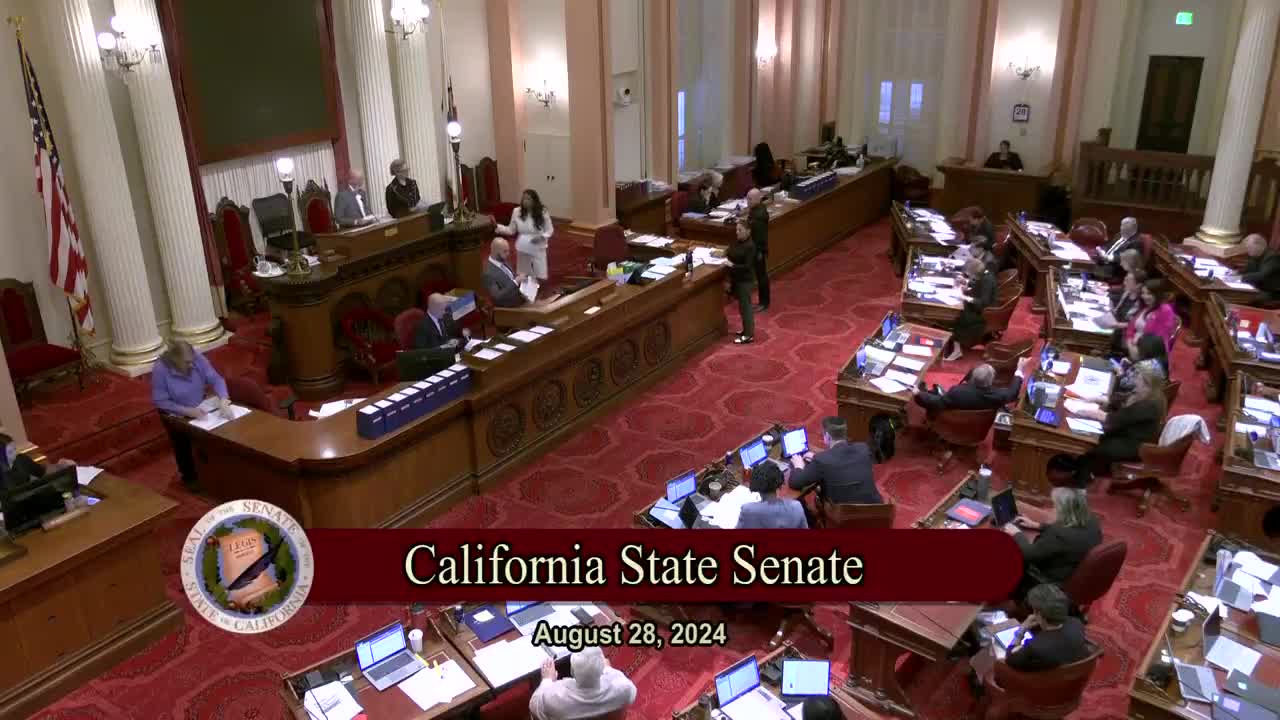
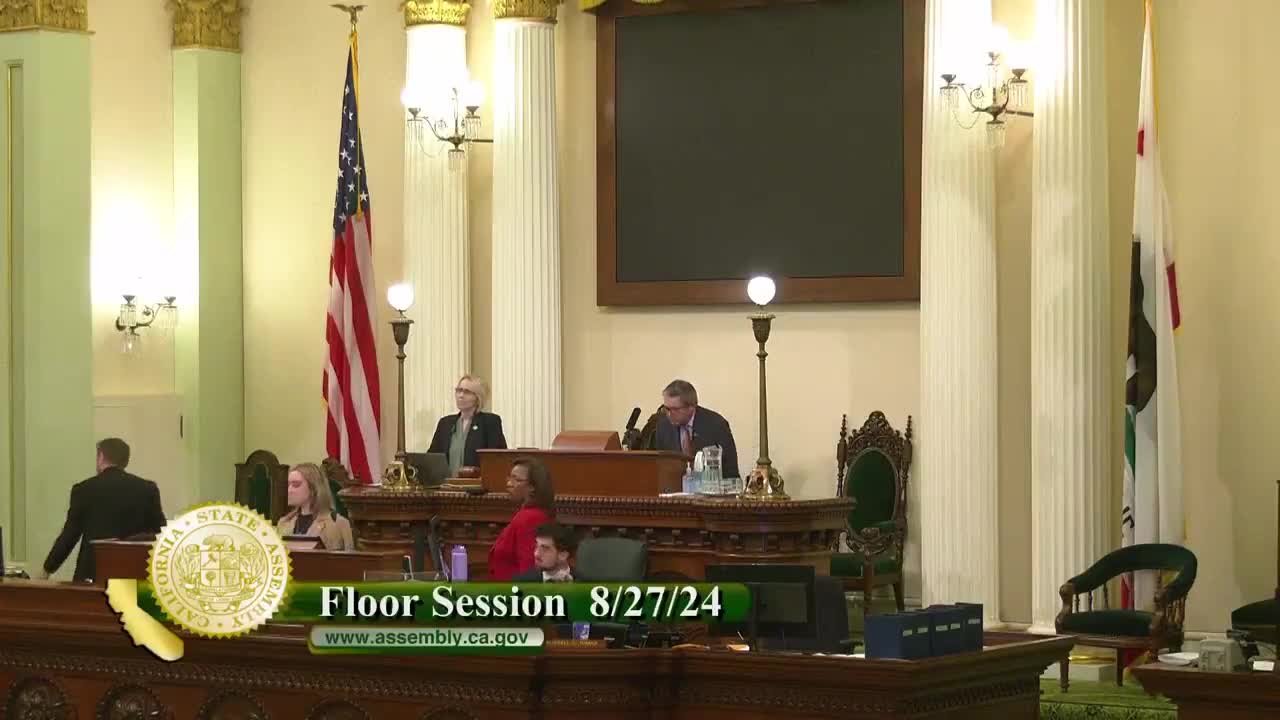
Bill Author