SB 484: Escrow agents: customer contact centers.
- Session Year: 2023-2024
- House: Senate
- Latest Version Date: 2023-06-28
Current Status:
Failed
(2024-08-15: August 15 hearing: Held in committee and under submission.)
Introduced
In Committee
First Chamber
In Committee
Second Chamber
Enacted
Existing law, the Escrow Law, provides for the licensure and regulation of escrow agents by the Commissioner of Financial Protection and Innovation, and makes it unlawful for any person to engage in business as an escrow agent except by a corporation organized for that purpose licensed by the commissioner.
This bill would authorize a licensed escrow agent to designate an employee to perform work on the licensees behalf at a remote location, as defined, in accordance with specified conditions and requirements, including that the licensee adopts and adheres to appropriate written policies and procedures to supervise and maintain appropriate control of the work of employees at remote locations and safeguard the licensees records and consumer personal information, as specified.
Existing law, the Escrow Law, regulates escrow agents. The Escrow Law defines various terms for these purposes, including customer contact center as a facility operated by an Internet escrow agent, as defined by the Escrow Law, that exists solely for the purpose of responding to customer electronic messages and telephone inquiries, subject to specified limitations.This bill would change the definition of customer contact center to mean a facility operated by an escrow agent, as defined by the Escrow Law, for the purpose of remotely accessing an escrow file to further the processing of the escrow, including, but not limited to, responding to customer electronic messages and telephone inquiries, subject to specified limitations.Existing law, the Escrow Law, regulates escrow agents. The Escrow Law defines various terms for these purposes, including customer contact center as a facility operated by an Internet escrow agent, as defined by the Escrow Law, that exists solely for the purpose of responding to customer electronic messages and telephone inquiries, subject to specified limitations.
This bill would change the definition of customer contact center to mean a facility operated by an escrow agent, as defined by the Escrow Law, for the purpose of remotely accessing an escrow file to further the processing of the escrow, including, but not limited to, responding to customer electronic messages and telephone inquiries, subject to specified limitations.
Existing law, the Escrow Law, regulates escrow agents. The Escrow Law defines various terms for these purposes, including customer contact center as a facility operated by an Internet escrow agent, as defined by the Escrow Law, that exists solely for the purpose of responding to customer electronic messages and telephone inquiries, subject to specified limitations.
This bill would change the definition of customer contact center to mean a facility operated by an escrow agent, as defined by the Escrow Law, for the purpose of remotely accessing an escrow file to further the processing of the escrow, including, but not limited to, customer electronic messages and telephone inquiries, subject to specified limitations.
(a)For purposes of this section:
(1)Encrypted has the same meaning as provided in paragraph (4) of subdivision (i) of Section 1798.82 of the Civil Code.
(2)Remote location means a personal residence, or a temporary, nonpublic location not owned or leased by the licensee or an affiliate of the licensee that is not simultaneously physically accessible by anyone other than a single employee and individuals who maintain a common household with the employee. Remote location shall not include any licensed real estate office or place of business associated with a real estate office.
(b)A licensed escrow agent may designate an employee, when acting within the scope of employment, to perform work on the licensees behalf at a remote location if the licensee does all of the following:
(1)Prohibits in-person consumer interactions, including the physical receipt and disbursement of cash or other monetary value or the disbursement of escrow funds, at a remote location and does not advertise or designate a remote location to the public as a business location.
(2)Prohibits books and records, as determined by the department, from being physically mailed to, shipped to, or stored at a remote location except for storage on an encrypted device or encrypted media.
(3)Prohibits the physical receipt of mail or delivery of documents related to the licensees licensed business at a remote location.
(4)Prohibits a consumers personal information from being physically stored at a remote location except for storage on an encrypted device or encrypted media.
(5)Provides an employee working at a remote location with appropriate equipment, which may include encrypted devices, virtual private networks, and similar technology, to perform work and safeguard licensee records and consumer personal information.
(6)Adopts and adheres to appropriate, as determined by the department, written policies and procedures to supervise and maintain appropriate control over the work of employees at remote locations and safeguard the licensees records and consumer personal information in connection with work at a remote location, including but not limited to, all of the following elements:
(A)Employee data security training.
(B)Maintenance of security logs of remote logins.
(C)Procedures designed to detect suspicious logins or attempted logins and to suspend access by potentially compromised accounts or equipment.
(D)Data breach response procedures.
(7)All books, records, and persons shall be made available to the commissioner at a licensed location.
SECTION 1.Section 17005.3 of the Financial Code is amended to read:17005.3.Customer contact center means a facility operated by an escrow agent for the purpose of remotely accessing an escrow file to further the processing of the escrow, including, but not limited to, responding to customer electronic messages and telephone inquiries; provided, that no receipt or disbursements relating to an escrow are made from the facility; and provided further, that any documentation or other material generated, transmitted, or otherwise sent from the facility can be reviewed at any time from the business location of the escrow agent.Customer contact center means a facility operated by an escrow agent for the purpose of remotely accessing an escrow file to further the processing of the escrow, including, but not limited to, responding to customer electronic messages and telephone inquiries; provided, that no receipt or disbursements relating to an escrow are made from the facility; and provided further, that any documentation or other material generated, transmitted, or otherwise sent from the facility can be reviewed at any time from the business location of the escrow agent.
Customer contact center means a facility operated by an Internet escrow agent that exists solely for the purpose of responding to remotely accessing an escrow file to further the processing of the escrow, including, but not limited to, customer electronic messages and telephone inquiries; provided, that no receipt or disbursements relating to an escrow are made from the facility; and provided further, that any documentation or other material generated, transmitted, or otherwise sent from the facility can be reviewed at any time from the business location of the Internet escrow agent.
|
Date
|
Status
|
|---|---|
| Aug 15, 2024 | August 15 hearing: Held in committee and under submission. |
| Sep 1, 2023 | September 1 hearing postponed by committee. |
| Aug 16, 2023 | August 16 set for first hearing. Placed on suspense file. |
| Jun 28, 2023 | Read second time and amended. Re-referred to Com. on APPR. |
| Jun 27, 2023 | From committee: Do pass as amended and re-refer to Com. on APPR. (Ayes 10. Noes 0.) (June 26). |
| Jun 8, 2023 | Referred to Com. on B. & F. |
| May 25, 2023 | In Assembly. Read first time. Held at Desk. |
| May 25, 2023 | Read third time. Passed. (Ayes 40. Noes 0. Page 1300.) Ordered to the Assembly. |
| May 23, 2023 | Ordered to special consent calendar. |
| May 18, 2023 | Read second time. Ordered to third reading. |
| May 18, 2023 | From committee: Do pass. (Ayes 7. Noes 0. Page 1172.) (May 18). |
| May 12, 2023 | Set for hearing May 18. |
| Apr 17, 2023 | April 17 hearing: Placed on APPR suspense file. |
| Apr 10, 2023 | Set for hearing April 17. |
| Mar 30, 2023 | Read second time and amended. Re-referred to Com. on APPR. |
| Mar 29, 2023 | From committee: Do pass as amended and re-refer to Com. on APPR with recommendation: To consent calendar. (Ayes 7. Noes 0. Page 569.) (March 29). |
| Feb 28, 2023 | Set for hearing March 29. |
| Feb 22, 2023 | Referred to Com. on B. & F.I. |
| Feb 15, 2023 | From printer. May be acted upon on or after March 17. |
| Feb 14, 2023 | Introduced. Read first time. To Com. on RLS. for assignment. To print. |
|
Date
|
Description
|
Location
|
Votes
|
|
|---|---|---|---|---|
| Jun 26, 2023 | Do pass as amended and be re-referred to the Committee on [Appropriations] | Assembly Standing Committee on Banking and Finance |
Passed |
|
| May 25, 2023 | Special Consent SB484 Newman | Senate Floor |
Passed |
|
| May 18, 2023 | Do pass | Senate Standing Committee on Appropriations |
Passed |
|
| Apr 17, 2023 | Placed on suspense file | Senate Standing Committee on Appropriations |
Passed |
|
| Mar 29, 2023 | Do pass as amended, but first amend, and re-refer to the Committee on [Appropriations] with the recommendation: To Consent Calendar | Senate Standing Committee on Banking and Financial Institutions |
Passed |
This list shows positions taken on this bill by organizations on the date displayed, which is linked to the original source.
Positions by individuals are not included.
|
Organization
|
Position
|
Date
|
|---|---|---|
| California Escrow Association | ** Support | |
| Escrow Institute Of California | * Support | Jun 26, 2023 |
Date of Hearing: August 16, 2023
ASSEMBLY COMMITTEE ON APPROPRIATIONS
Chris Holden, Chair
SBPCA Bill Id:SB 484
Author:(Newman) – As Amended Ver:June 28, 2023
Policy Committee: | Banking and Finance | Vote: | 10 - 0 |
|
| ||
|
|
Urgency: No State Mandated Local Program: No Reimbursable: No
SUMMARY:
This bill authorizes a licensed escrow agent to designate an employee to perform work on the licensee’s behalf at a remote location.
Such a licensee must establish appropriate written policies and procedures to supervise and maintain appropriate control of remote employees, such as those safeguarding the licensee’s records and consumer personal information. Additionally, this bill prohibits in-person consumer interactions, including the physical receipt and disbursement of cash or escrow funds, at a remote location and requires all books, records, and persons to be made available to the Department of Financial Protection and Innovation (DFPI) commissioner at a licensed location.
FISCAL EFFECT:
Costs of approximately $539,000 in fiscal year 2023-24 and $506,000 annually thereafter to DFPI for three additional staff positions to ensure licensees are adopting and adhering to remote escrow policies and procedures (Financial Protection Fund).
As noted in the Department of Finance’s (DOF’s) analysis of this bill, costs might be recovered through examination fees for licensed escrow agents. DOF also notes that DFPI’s administrative costs for licensed escrow agents are generally recovered through assessment fees, which are at their statutory limit, potentially necessitating an increase to this fee cap to alleviate fiscal pressure.
COMMENTS:
- Purpose. According to the author, “This bill will ensure that escrow agents can continue to work while maintaining all other protocols and safeguards pertaining to this important market function.” This bill is sponsored by the Escrow Institute of California and supported by the California Escrow Association.
- Background.
Remote Work in the Financial Services Industry. The shift toward remote work has been complicated for the banking and financial services industry because of rigorous rules around data privacy and security. For example, remote work is allowed for bank and credit union employees, but employees must follow strict protocols around the use of customer data. Additionally, many non-bank financial services companies must comply with state licensing laws that severely limit the ability for a licensee to allow an employee to work from an unlicensed branch of the company.
During the COVID-19 pandemic, DFPI issued emergency guidance allowing certain licensees, including finance lenders and servicers, escrow agents, student loan servicers, and residential mortgage lenders and servicers, additional flexibility to permit remote work. Under the guidance, DFPI would not take enforcement action against licensees operating “unlicensed branches” created by remote work to the extent that licensees and employees take appropriate measures to protect consumers and the state. AB 2001 (Grayson), Chapter 181, Statutes of 2022, allowed a specific subset of DFPI licensees under the California Financing Law (finance lenders) to continue employee remote work policies authorized by the emergency guidance on a permanent basis.
Escrow Agents. Escrow agents serve as neutral third parties who manage legal documents and funds that change hands between buyers, sellers, lenders, and borrowers once all conditions of a contract, such as for a real estate transaction, have been satisfied. Similar to the statutory authorization provided to finance lenders, this bill allows escrow agents to continue employee remote work policies if licensees establish appropriate guidelines.
Analysis Prepared by: Irene Ho / APPR. / (916) 319-2081
Date of Hearing: June 26, 2023
ASSEMBLY COMMITTEE ON BANKING AND FINANCE
Timothy Grayson, Chair
SBPCA Bill Id:SB 484
Author:(Newman) – As Amended Ver:March 30, 2023
As Proposed to be Amended
SENATE VOTE: 40-0
SUBJECT: Escrow agents: customer contact centers
SUMMARY: Authorizes a licensed escrow agent to designate an employee to work remotely as long as the licensed agent complies with specified privacy, record-keeping, and consumer safety requirements. Specifically, this bill:
Specifically, this bill:
- Defines “remote location” as a personal residence or a temporary, nonpublic location that is not simultaneously physically accessible by anyone other than an employee and the employee’s immediate family.
- Authorizes a licensed escrow agent to designate an employee, when acting within the scope of employment, to perform work on the licensee’s behalf at a remote location if the licensed escrow agent does the following:
- Prohibits in-person consumer interactions at a remote location and does not designate nor advertise a remote location to the public as a business location.
- Prohibits books and records, as determined by the department, from being physically stored at a remote location except for storage on an encrypted device or encrypted media.
- Prohibits a consumer’s personal information from being physically stored at a remote location except for storage on an encrypted device or encrypted media.
- Provides an employee working at a remote location with the appropriate equipment, which may include encrypted devices, virtual private networks, and similar technology, to perform the work and safeguard licensee records and consumer personal information.
- Adopts and adheres to appropriate, as determined by the Department of Financial Protection and Innovation (DFPI), written policies and procedures to supervise the work of employees at remote locations.
EXISTING LAW:
- Provides the Escrow Law and requires the DFPI to administer a licensing program for and conduct oversight of escrow agents. (Division 6 of the Financial Code, Section 17000 et seq.)
- Defines “escrow” as a transaction in which one person, for the purpose of effecting the transfer of property to another person, delivers money or a thing of value to a third person to be held by that third person until the happening of a specified event or the performance of a prescribed condition, as specified. (Financial Code Section 17003)
- Defines “escrow agent” as any person engaged in the business of receiving escrows for deposit or delivery. (Financial Code Section 17004)
- Defines “Internet escrow agent” as any person engaged in the business of receiving escrows for deposit or delivery over the Internet. (Financial Code Section 17004.5)
- Defines “business location” as a facility or other place of business where a person engages in the business of receiving an escrow for deposit or delivery, but does not include a customer contact center. (Financial Code Section 17005.2)
- Defines “customer contact center” as a facility operated by an Internet escrow agent that exists solely for the purpose of responding to customer electronic messages and telephone inquiries; provided, that no receipt or disbursements relating to an escrow are made from the facility; and provided further, that any documentation or other material generated, transmitted, or otherwise sent from the facility can be reviewed at any time from the business location of the Internet escrow agent. (Financial Code Section 17005.3)
FISCAL EFFECT: Unknown. This bill is keyed Fiscal by Legislative Counsel.
COMMENTS:
- Purpose
According to the author:
This bill will ensure that escrow agents can continue to work while maintaining all other protocols and safeguards pertaining to this important market function.
- COVID-19 and remote work in financial services
The COVID-19 pandemic led to the rapid adoption of remote work across the United States. While the share of workers who telework has gradually been increasing over the last few decades, mandatory stay-at-home orders from state and local officials pushed many professionals into permanent or part-time teleworking.
At the start of the pandemic, California took action to provide worksite flexibility to some of its financial services licensees. In March 2020, the Business, Consumer Services, and Housing Agency (BCSH) and DFPI issued emergency guidance that granted certain licensees, including finance lenders and servicers, escrow agents, student loan servicers, and residential mortgage lenders and servicers, additional flexibility around remote work. The guidance stated that DFPI would not take enforcement action against licensees operating unlicensed branches to the extent that, during the state of emergency, employees conduct activities provided that appropriate measures are taken to protect consumers and their state.
Following the success of the Newsom Administration’s temporary emergency measures, the Legislature passed 2001 (Grayson), Chapter 181, Statutes of 2022, to allow for permanent worksite flexibility for companies licensed under the California Financing Law, provided the licensees met certain conditions and complied with specified consumer protections.
AB 2001 did not apply to every licensee that received a temporary reprieve under the Newsom Administration’s temporary COVID-19 measures. AB 2001 focused only on CFL licensees and was the product of significant discussions between stakeholders, legislators, and DFPI.
- Escrow agents.
Escrow agents play an important and trusted role in some of the most complex and high value financial transactions in consumers’ lives, such as real estate transactions. Escrow agents serve as neutral third parties who manage legal documents and funds that change hands between buyers, sellers, lenders, and borrowers once all conditions of a contract have been satisfied. The Escrow Law protects members of the public who entrust their money or other assets to independent escrow agents in California.
According to data provided by the author’s office, as of May 2021, there were 340,170 registered escrow agents (also known as loan officers) in the United States. In California, there were 37,120 escrow agents. The escrow industry is majority female, with 58.8% of escrow agents being women as of 2022.
- Proposed amendments.
As drafted, SB 484 may not allow for significant new remote work opportunities for escrow agents. Following discussions with the author about the goals of SB 484, the committee recommends the following amendments to align remote work opportunities with those already available to CFL licensees. The below language is substantially similar to AB 2001, discussed above, which was finalized following a year of discussions between stakeholders, DFPI, and legislative staff. The committee recommends:
Replace current provisions of the bill with the following:
Section 17216 of the Financial Code is added to read:
(a) For purposes of this section:
(1) ‘Encrypted” has the same meaning as provided in paragraph (4) of subdivision (i) of Section 1798.82 of the Civil Code.
(2) “Remote location” means a personal residence, or a temporary, nonpublic location not owned or leased by the licensee or an affiliate of the licensee that is not simultaneously physically accessible by anyone other than a single employee and individuals who maintain a common household with the employee. Remote location shall not include any licensed real estate office or place of business associated with a real estate office.
(b) A licensed escrow agent may designate an employee, when acting within the scope of employment, to perform work on the licensee’s behalf at a remote location if the licensee does all of the following:
(1) Prohibits in-person consumer interactions, including the physical receipt and disbursement of cash or other monetary value or the disbursement of escrow funds, at a remote location and does not advertise or designate a remote location to the public as a business location.
(2) Prohibits books and records, as determined by the department, from being physically mailed to, shipped to, or stored at a remote location except for storage on an encrypted device or encrypted media.
(3) Prohibits the physical receipt of mail or delivery of documents related to the licensee’s licensed business at a remote location.
(4) Prohibits a consumer’s personal information from being physically stored at a remote location except for storage on an encrypted device or encrypted media.
(5) Provides an employee working at a remote location with appropriate equipment, which may include encrypted devices, virtual private networks, and similar technology, to perform work and safeguard licensee records and consumer personal information.
(6) Adopts and adheres to appropriate, as determined by the department, written policies and procedures to supervise and maintain appropriate control over the work of employees at remote locations and safeguard the licensee’s records and consumer personal information in connection with work at a remote location, including but not limited to, all of the following elements:
(A)Employee data security training.
(B)Maintenance of security logs of remote logins.
(C)Procedures designed to detect suspicious logins or attempted logins and to suspend access by potentially compromised accounts or equipment.
(D)Data breach response procedures.
(7) All books, records, and persons shall be made available to the Commissioner at a licensed location.
REGISTERED SUPPORT / OPPOSITION:
Support
California Escrow Association
Opposition
None on file.
Analysis Prepared by: Luke Reidenbach / B. & F. / (916) 319-3081
SENATE RULES COMMITTEE Office of Senate Floor Analyses (916) 651-1520 Fax: (916) 327-4478 | SB 484 |
THIRD READING
Bill No: SB 484
Author: Newman (D)
Amended: 3/30/23
Vote: 21
SENATE BANKING & F.I. COMMITTEE: 7-0, 3/29/23
AYES: Limón, Niello, Bradford, Caballero, Min, Nguyen, Portantino
SENATE APPROPRIATIONS COMMITTEE: 7-0, 5/18/23
AYES: Portantino, Jones, Ashby, Bradford, Seyarto, Wahab, Wiener
SUBJECT: Escrow agents: customer contact centers
SOURCE: Escrow Institute of California
DIGEST:
This bill amends the definition of “customer contact center” under the Escrow Law to allow for remote accessing of escrow files, provided that no receipt or disbursement relating to an escrow are made from the facility.
ANALYSIS:
Existing law:
- Provides the Escrow Law and requires the Department of Financial Protection and Innovation to administer a licensing program for and conduct oversight of escrow agents. (Division 6 of the Financial Code, Section 17000 et seq.)
- Defines “escrow” as a transaction in which one person, for the purpose of effecting the transfer of property to another person, delivers money or a thing of value to a third person to be held by that third person until the happening of a specified event or the performance of a prescribed condition, as specified. (Financial Code Section 17003)
- Defines “escrow agent” as any person engaged in the business of receiving escrows for deposit or delivery. (Financial Code Section 17004)
- Defines “Internet escrow agent” as any person engaged in the business of receiving escrows for deposit or delivery over the Internet. (Financial Code Section 17004.5)
- Defines “business location” as a facility or other place of business where a person engages in the business of receiving an escrow for deposit or delivery, but does not include a customer contact center. (Financial Code Section 17005.2)
- Defines “customer contact center” as a facility operated by an Internet escrow agent that exists solely for the purpose of responding to customer electronic messages and telephone inquiries; provided, that no receipt or disbursements relating to an escrow are made from the facility; and provided further, that any documentation or other material generated, transmitted, or otherwise sent from the facility can be reviewed at any time from the business location of the Internet escrow agent. (Financial Code Section 17005.3)
This bill amends the definition of “customer contact center” under the Escrow Law to mean a facility operated by an escrow agent, as defined by the Escrow Law, for the purpose of remotely accessing an escrow file to further the processing of the escrow, including, but not limited to, customer electronic messages and telephone inquiries, subject to the following limitations:
- That no receipt or disbursements relating to an escrow are made from the facility; and
- That any documentation or other material generated, transmitted, or otherwise sent from the facility can be reviewed at any time from the business location of the escrow agent.
Comments
- Purpose of this bill. The purpose of this bill is to authorize escrow agents to conduct some of their business remotely.
- Escrow agents. Escrow agents play an important and trusted role in some of the most complex and high value financial transactions in consumers’ lives, such as real estate transactions. Escrow agents serve as neutral third parties who manage legal documents and funds that change hands between buyers, sellers, lenders, and borrowers once all conditions of a contract have been satisfied. The Escrow Law protects members of the public who entrust their money or other assets to independent escrow agents in California.
According to the author’s office, during the COVID-19 pandemic, the California Department of Financial Protection and Innovation (DFPI) issued guidance to escrow agents permitting employees of licensees under the Escrow Law to conduct activities from home which normally would require a branch license. As COVID-19 remote work guidelines revert back in the aftermath of recently revised CDC guidelines, escrow workers may no longer have a legal option of working remotely.
This bill authorizes escrow agents to remotely access escrow files, provided that no receipt or disbursement relating to an escrow are made outside of a licensed business location. This narrow approach provides the industry with flexibility without relaxing the state’s ability to maintain oversight of critical activities where funds change hands.
FISCAL EFFECT: Appropriation: No Fiscal Com.: Yes Local: No
According to the Senate Appropriations Committee,
- Unknown fiscal impact to the DFPI for potential increased examination and enforcement workload associated with remote escrow activities (Financial Protection Fund).
- Unknown potential decrease in license revenue to the extent that there is a decrease in licensed branch locations.
SUPPORT: (Verified 5/18/23)
Escrow Institute of California (source)
California Escrow Association
OPPOSITION: (Verified 5/18/23)
None received
ARGUMENTS IN SUPPORT: California Escrow Association writes in support, “Large portions of the escrow process can be accomplished efficiently without face to face contact with escrow principals. During the pandemic, we learned that many employees prefer a hybrid model where some work is completed in the office, and some at home. Escrow is an excellent example of work which lends itself to the hybrid model… SB 484 [is] a simple clarification to allow remote work in the
escrow field, which is good for employees and licensees, and ultimately consumers by facilitating the efficient processing of escrow.”
Prepared by: Michael Burdick / B. & F.I. /
5/20/23 12:51:37
**** END ****
SENATE COMMITTEE ON APPROPRIATIONS
Senator Anthony Portantino, Chair
2023 - 2024 Regular Session
SB 484 (Newman) - Escrow agents: customer contact centers
Version: March 30, 2023 | Policy Vote: B. & F.I. 7 - 0 |
Urgency: No | Mandate: No |
Hearing Date: April 17, 2023 | Consultant: Janelle Miyashiro |
Bill Summary:
SB 484 amends the definition of “customer contact center” under the Escrow Law to allow for remote accessing of escrow files, provided that no receipt or disbursement relating to an escrow are made from the facility and that any documentation sent from the facility be reviewable at any time from the escrow agent’s business location.
Fiscal Impact:
- Unknown fiscal impact to the Department of Financial Protection and Innovation (DFPI) for potential increased examination and enforcement workload associated with remote escrow activities (Financial Protection Fund).
- Unknown potential decrease in license revenue to the extent that there is a decrease in licensed branch locations.
Background:
Escrow agents play an important and trusted role in some of the most complex and high value financial transactions in consumers’ lives, such as real estate transactions. Escrow agents serve as neutral third parties who manage legal documents and funds that change hands between buyers, sellers, lenders, and borrowers once all conditions of a contract have been satisfied. The Escrow Law protects members of the public who entrust their money or other assets to independent escrow agents in California.
The DFPI’s Escrow Law Program administers the Escrow Law and regulations by licensing and examining escrow licensees. The program consists of two teams: licensing and examination. There are currently seven full-time positions in the licensing team and 15 full-time positions in the examination team.
The Escrow Law Program is self-funded by annual fees levied from the escrow licensees and does not generally receive support from the General Fund. Annual license fees are up to $2,800 and there is a special assessment fee of up to $1,000 for each licensed location.
Among the responsibilities of the examination team, current law requires the program to conduct examinations of each licensee as often as the DFPI deems necessary and appropriate, but at least once every 48 months (Financial Code section 17405).
Proposed Law:
Amends the definition of “customer contact center” under the Escrow Law to allow for remote accessing of escrow files, provided that no receipt or disbursement relating to an escrow are made from the facility and that any documentation sent from the facility be reviewable at any time from the escrow agent’s business location.
Related Legislation:
AB 2001 (Grayson, Chapter 181, Statutes of 2022) authorizes licensees under the California Financing Law to conduct limited activities from remote locations.
Staff Comments:
The DFPI has a workload Budget Change Proposal (BCP) for the 2023-24 Fiscal Year tied to the DFPI’s existing resource needs. DFPI’s BCP summary states that the department is requesting 5.0 positions and $1,127,000 in 2023-24 and $1,072,000 ongoing to address growth in licensee locations and consumer funds managed, expand internet escrow services, reduce examination backlogs, and support other Escrow Law Program operations.
To the extent the potential additional enforcement workload identified by DFPI is not absorbable within existing resources, there may be new cost pressures that impact the department’s operating costs or future budget requests.
-- END --
SENATE COMMITTEE ON
BANKING AND FINANCIAL INSTITUTIONS
Senator Monique Limón, Chair
2023 - 2024 Regular
Bill No: SB 484 Hearing Date: March 29, 2023
Author: | Newman | ||
Version: | February 14, 2023 Introduction | ||
Urgency: | No | Fiscal: | Yes |
Consultant: | Michael Burdick | ||
Subject: Escrow agents: customer contact centers
SUMMARY
This bill amends the definition of “customer contact center” under the Escrow Law to allow for remote accessing of escrow files, provided that no receipt or disbursement relating to an escrow are made from the facility.
EXISTING LAW
- Provides the Escrow Law and requires the Department of Financial Protection and Innovation to administer a licensing program for and conduct oversight of escrow agents. (Division 6 of the Financial Code, Section 17000 et seq.)
- Defines “escrow” as a transaction in which one person, for the purpose of effecting the transfer of property to another person, delivers money or a thing of value to a third person to be held by that third person until the happening of a specified event or the performance of a prescribed condition, as specified. (Financial Code Section 17003)
- Defines “escrow agent” as any person engaged in the business of receiving escrows for deposit or delivery. (Financial Code Section 17004)
- Defines “Internet escrow agent” as any person engaged in the business of receiving escrows for deposit or delivery over the Internet. (Financial Code Section 17004.5)
- Defines “business location” as a facility or other place of business where a person engages in the business of receiving an escrow for deposit or delivery, but does not include a customer contact center. (Financial Code Section 17005.2)
- Defines “customer contact center” as a facility operated by an Internet escrow agent that exists solely for the purpose of responding to customer electronic messages and telephone inquiries; provided, that no receipt or disbursements relating to an escrow are made from the facility; and provided further, that any documentation or other material generated, transmitted, or otherwise sent from the facility can be reviewed at any time from the business location of the Internet escrow agent. (Financial Code Section 17005.3)
THIS BILL
- Amends the definition of “customer contact center” under the Escrow Law to mean a facility operated by an escrow agent, as defined by the Escrow Law, for the purpose of remotely accessing an escrow file to further the processing of the escrow, including, but not limited to, customer electronic messages and telephone inquiries, subject to the following limitations:
- That no receipt or disbursements relating to an escrow are made from the facility; and
- That any documentation or other material generated, transmitted, or otherwise sent from the facility can be reviewed at any time from the business location of the escrow agent.
COMMENTS
- PURPOSE
The purpose of this bill is to authorize escrow agents to conduct some of their business remotely.
- BACKGROUND
Escrow agents play an important and trusted role in some of the most complex and high value financial transactions in consumers’ lives, such as real estate transactions. Escrow agents serve as neutral third parties who manage legal documents and funds that change hands between buyers, sellers, lenders, and borrowers once all conditions of a contract have been satisfied. The Escrow Law protects members of the public who entrust their money or other assets to independent escrow agents in California.
According to the author’s office, during the COVID-19 pandemic, the California Department of Financial Protection and Innovation (DFPI) issued guidance to escrow agents permitting employees of licensees under the Escrow Law to conduct activities from home which normally would require a branch license. As COVID-19 remote work guidelines revert back in the aftermath of recently revised CDC guidelines, escrow workers may no longer have a legal option of working remotely.
This bill would authorize escrow agents to remotely access escrow files, provided that no receipt or disbursement relating to an escrow are made outside of a licensed business location. This narrow approach provides the industry with flexibility without relaxing the state’s ability to maintain oversight of critical activities where funds change hands.
- ARGUMENTS IN SUPPORT
California Escrow Association writes in support:
Large portions of the escrow process can be accomplished efficiently without face to face contact with escrow principals. During the pandemic, we learned that many employees prefer a hybrid model where some work is completed in the office, and some at home. Escrow is an excellent example of work which lends itself to the hybrid model… SB 484 [is] a simple clarification to allow remote work in the escrow field, which is good for employees and licensees, and ultimately consumers by facilitating the efficient processing of escrow.
- ARGUMENTS IN OPPOSITION
None received
- AMENDMENTS
Committee staff recommends the following clean-up amendment:
17005.3. “Customer contact center” means a facility operated by an escrow agent for the purpose of remotely accessing an escrow file to further the processing of the escrow, including, but not limited to, responding to customer electronic messages and telephone inquiries; provided, that no receipt or disbursements relating to an escrow are made from the facility; and provided further, that any documentation or other material generated, transmitted, or otherwise sent from the facility can be reviewed at any time from the business location of the escrow agent.
- PRIOR AND RELATED LEGISLATION
Assembly Bill 2001 (Grayson, Chapter 181, Statutes of 2022) authorizes licensees under the California Financing Law to conduct limited activities from remote locations.
LIST OF REGISTERED SUPPORT/OPPOSITION
Support
California Escrow Association
Opposition
None received
-- END --
Discussed in Hearing
 3MIN
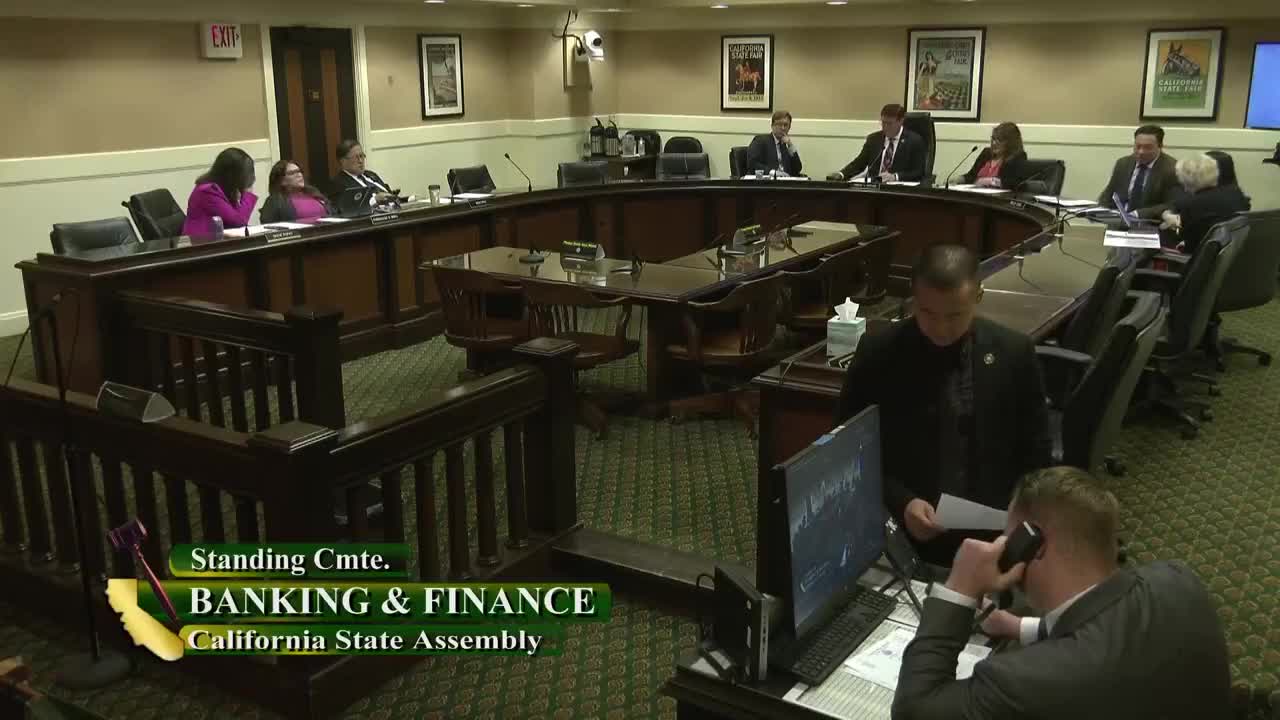
Assembly Standing Committee on Banking and Finance
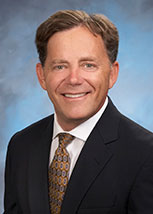
Bill Author
Bill Co-Author(s):