SB 498: Alcoholic beverage control: violations.
- Session Year: 2023-2024
- House: Senate
- Latest Version Date: 2023-10-08
Current Status:
Passed
(2023-10-08: Chaptered by Secretary of State. Chapter 613, Statutes of 2023.)
Introduced
In Committee
First Chamber
In Committee
Second Chamber
Enacted
What does this bill do?
The bill raises the amounts alcohol licensees can pay to avoid serving suspensions. For retail licensees the usual maximum payment increases to $6,000 (or up to $12,000 if the license was suspended or revoked within the last three years), and the cap for a second sale to a minor within 36 months increases to $40,000. It also allows the Department of Alcoholic Beverage Control to consider any later death or serious injury caused by the served alcohol when deciding discipline, and raises the fine for sales that lead to great bodily injury or death to $3,000.
The summary is provided by generative AI which can make mistakes. For original language, please view the details in the table below.
Existing law prohibits a licensee from petitioning for an offer in compromise if the proposed suspension exceeds 15 days. Existing law, notwithstanding that prohibition, authorizes a petition for an offer in compromise for a 2nd violation of specified provisions of existing law relating to the provision of alcohol to minors that occurs within 36 months of the initial violation without regard to the length of suspension and provides that the offer in compromise may not be less than $2,500 nor more than $20,000.
This bill would instead provide that the offer in compromise may not be less than $2,500 nor more than $40,000.
Existing law prohibits a person from providing an alcoholic beverage to a person under 21 years of age, to a habitual or common drunkard, or to an obviously intoxicated person, as specified. Existing law makes violation of those provisions a misdemeanor and makes any violation by a licensee of any provision of the Alcoholic Beverage Control Act a basis for revocation or suspension of a license.
This bill would authorize the department to consider as a factor, in determining the level of discipline for violations of the above-described prohibitions, whether there is a subsequent death or great bodily injury to the individual provided the alcoholic beverage or to any other person.
Existing law, for specified violations of the above-described prohibition on providing alcoholic beverages to persons under 21 years of age that result in great bodily injury or death, as specified, makes that violation a misdemeanor punishable by 6 months to one year in county jail, a fine of $1,000, or both.
This bill would increase the fine for that violation to $3,000.
Existing law, the Alcoholic Beverage Control Act, contains various provisions regulating the application for, the issuance of, and the suspension of alcoholic beverage licenses by the Department of Alcoholic Beverage Control. Existing law authorizes an alcoholic beverage licensee, as provided, to petition the Department of Alcoholic Beverage Control for permission to make an offer in compromise, before the operative date of the suspension of the alcoholic beverage license, and to pay an amount in lieu of serving the suspension, and prescribes certain guidelines for calculating the applicable amount of the offer in compromise.
This bill would make a nonsubstantive change to that provision.
In determining the level of discipline for a violation of Section 25602 or 25658, the department may consider as a factor whether there is subsequent death or great bodily injury to the person who is sold, served, furnished, or given the alcoholic beverage, to any other person, or to both.
SEC. 3.Section 25658 of the Business and Professions Code is amended to read:25658.(a)Except as otherwise provided in subdivision (c), every person who sells, furnishes, gives, or causes to be sold, furnished, or given away any alcoholic beverage to any person under 21 years of age is guilty of a misdemeanor.
(b)Except as provided in Section 25667 or 25668, any person under 21 years of age who purchases any alcoholic beverage, or any person under 21 years of age who consumes any alcoholic beverage in any on-sale premises, is guilty of a misdemeanor.
(c)Any person who violates subdivision (a) by purchasing any alcoholic beverage for, or furnishing, giving, or giving away any alcoholic beverage to, a person under 21 years of age, and the person under 21 years of age thereafter consumes the alcohol and thereby proximately causes great bodily injury or death to themselves or any other person, is guilty of a misdemeanor.
(d)Any on-sale licensee who knowingly permits a person under 21 years of age to consume any alcoholic beverage in the on-sale premises, whether or not the licensee has knowledge that the person is under 21 years of age, is guilty of a misdemeanor.
(e)(1)Except as otherwise provided in paragraph (2) or (3), or Section 25667 or 25668, any person who violates this section shall be punished by a fine of two hundred fifty dollars ($250), no part of which shall be suspended, or the person shall be required to perform not less than 24 hours or more than 32 hours of community service during hours when the person is not employed and is not attending school, or a combination of a fine and community service as determined by the court. A second or subsequent violation of subdivision (b), where prosecution of the previous violation was not barred pursuant to Section 25667 or 25668, shall be punished by a fine of not more than five hundred dollars ($500), or the person shall be required to perform not less than 36 hours or more than 48 hours of community service during hours when the person is not employed and is not attending school, or a combination of a fine and community service as determined by the court. It is the intent of the Legislature that the community service requirements prescribed in this section require service at an alcohol or drug treatment program or facility or at a county coroners office, if available, in the area where the violation occurred or where the person resides.
(2)Except as provided in paragraph (3), any person who violates subdivision (a) by furnishing an alcoholic beverage, or causing an alcoholic beverage to be furnished, to a minor shall be punished by a fine of one thousand dollars ($1,000), no part of which shall be suspended, and the person shall be required to perform not less than 24 hours of community service during hours when the person is not employed and is not attending school.
(3)Any person who violates subdivision (c) shall be punished by imprisonment in a county jail for a minimum term of six months not to exceed one year, by a fine of three thousand dollars ($3,000), or by both imprisonment and fine.
(f)Persons under 21 years of age may be used by peace officers in the enforcement of this section to apprehend licensees, or employees or agents of licensees, or other persons who sell or furnish alcoholic beverages to minors. Notwithstanding subdivision (b), any person under 21 years of age who purchases or attempts to purchase any alcoholic beverage while under the direction of a peace officer is immune from prosecution for that purchase or attempt to purchase an alcoholic beverage. Guidelines with respect to the use of persons under 21 years of age as decoys shall be adopted and published by the department in accordance with the rulemaking portion of the Administrative Procedure Act (Chapter 3.5 (commencing with Section 11340) of Part 1 of Division 3 of Title 2 of the Government Code). Law enforcement-initiated minor decoy programs in operation prior to the effective date of regulatory guidelines adopted by the department shall be authorized as long as the minor decoy displays to the seller of alcoholic beverages the appearance of a person under 21 years of age. This subdivision shall not be construed to prevent the department from taking disciplinary action against a licensee who sells alcoholic beverages to a minor decoy prior to the departments final adoption of regulatory guidelines. After the completion of every minor decoy program performed under this subdivision, the law enforcement agency using the decoy shall notify licensees within 72 hours of the results of the program. When the use of a minor decoy results in the issuance of a citation, the notification required shall be given to licensees and the department within 72 hours of the issuance of the citation. A law enforcement agency may comply with this requirement by leaving a written notice at the licensed premises addressed to the licensee, or by mailing a notice addressed to the licensee.
(g)The penalties imposed by this section do not preclude prosecution or the imposition of penalties under any other provision of law, including, but not limited to, Section 272 of the Penal Code.
In determining the level of discipline for a violation of Section 25602 or 25658, the department may consider as a factor whether there is subsequent death or great bodily injury to the person who is sold, served, furnished, or given the alcoholic beverage, to any other person, or to both.
SEC. 3.Section 25658 of the Business and Professions Code is amended to read:25658.(a)Except as otherwise provided in subdivision (c), every person who sells, furnishes, gives, or causes to be sold, furnished, or given away any alcoholic beverage to any person under 21 years of age is guilty of a misdemeanor.
(b)Except as provided in Section 25667 or 25668, any person under 21 years of age who purchases any alcoholic beverage, or any person under 21 years of age who consumes any alcoholic beverage in any on-sale premises, is guilty of a misdemeanor.
(c)Any person who violates subdivision (a) by purchasing any alcoholic beverage for, or furnishing, giving, or giving away any alcoholic beverage to, a person under 21 years of age, and the person under 21 years of age thereafter consumes the alcohol and thereby proximately causes great bodily injury or death to themselves or any other person, is guilty of a misdemeanor.
(d)Any on-sale licensee who knowingly permits a person under 21 years of age to consume any alcoholic beverage in the on-sale premises, whether or not the licensee has knowledge that the person is under 21 years of age, is guilty of a misdemeanor.
(e)(1)Except as otherwise provided in paragraph (2) or (3), or Section 25667 or 25668, any person who violates this section shall be punished by a fine of two hundred fifty dollars ($250), no part of which shall be suspended, or the person shall be required to perform not less than 24 hours or more than 32 hours of community service during hours when the person is not employed and is not attending school, or a combination of a fine and community service as determined by the court. A second or subsequent violation of subdivision (b), where prosecution of the previous violation was not barred pursuant to Section 25667 or 25668, shall be punished by a fine of not more than five hundred dollars ($500), or the person shall be required to perform not less than 36 hours or more than 48 hours of community service during hours when the person is not employed and is not attending school, or a combination of a fine and community service as determined by the court. It is the intent of the Legislature that the community service requirements prescribed in this section require service at an alcohol or drug treatment program or facility or at a county coroners office, if available, in the area where the violation occurred or where the person resides.
(2)Except as provided in paragraph (3), any person who violates subdivision (a) by furnishing an alcoholic beverage, or causing an alcoholic beverage to be furnished, to a minor shall be punished by a fine of one thousand dollars ($1,000), no part of which shall be suspended, and the person shall be required to perform not less than 24 hours of community service during hours when the person is not employed and is not attending school.
(3)Any person who violates subdivision (c) shall be punished by imprisonment in a county jail for a minimum term of six months not to exceed one year, by a fine of one three thousand dollars ($1,000), ($3,000), or by both imprisonment and fine.
(f)Persons under 21 years of age may be used by peace officers in the enforcement of this section to apprehend licensees, or employees or agents of licensees, or other persons who sell or furnish alcoholic beverages to minors. Notwithstanding subdivision (b), any person under 21 years of age who purchases or attempts to purchase any alcoholic beverage while under the direction of a peace officer is immune from prosecution for that purchase or attempt to purchase an alcoholic beverage. Guidelines with respect to the use of persons under 21 years of age as decoys shall be adopted and published by the department in accordance with the rulemaking portion of the Administrative Procedure Act (Chapter 3.5 (commencing with Section 11340) of Part 1 of Division 3 of Title 2 of the Government Code). Law enforcement-initiated minor decoy programs in operation prior to the effective date of regulatory guidelines adopted by the department shall be authorized as long as the minor decoy displays to the seller of alcoholic beverages the appearance of a person under 21 years of age. This subdivision shall not be construed to prevent the department from taking disciplinary action against a licensee who sells alcoholic beverages to a minor decoy prior to the departments final adoption of regulatory guidelines. After the completion of every minor decoy program performed under this subdivision, the law enforcement agency using the decoy shall notify licensees within 72 hours of the results of the program. When the use of a minor decoy results in the issuance of a citation, the notification required shall be given to licensees and the department within 72 hours of the issuance of the citation. A law enforcement agency may comply with this requirement by leaving a written notice at the licensed premises addressed to the licensee, or by mailing a notice addressed to the licensee.
(g)The penalties imposed by this section do not preclude prosecution or the imposition of penalties under any other provision of law, including, but not limited to, Section 272 of the Penal Code.
REVISIONS: HeadingLine 2.(a)Whenever a decision of the department suspending a license becomes final, whether by failure of the licensee to appeal the decision or by exhaustion of all appeals and judicial review, the licensee may, before the operative date of the suspension, petition the department for permission to make an offer in compromise, to be paid into the Alcohol Beverage Control Fund, consisting of a sum of money in lieu of serving the suspension.
(b)No licensee may petition the department for an offer in compromise in any case in which the proposed suspension is for a period in excess of 15 days.
(c)Upon the receipt of the petition, the department may stay the proposed suspension and cause any investigation to be made which it deems desirable and may grant the petition if it is satisfied that the following conditions are met:
(1)The public welfare and morals would not be impaired by permitting the licensee to operate during the period set for suspension and the payment of the sum of money will achieve the desired disciplinary purposes.
(2)The books and records of the licensee are kept in such a manner that the loss of sales of alcoholic beverages that the licensee would have suffered had the suspension gone into effect can be determined with reasonable accuracy therefrom.
(d)The offer in compromise for retail licensees shall be the equivalent of 50 percent of the estimated gross sales of alcoholic beverages for each day of a proposed suspension, subject to the following limits:
(1)The offer in compromise may not be less than seven hundred fifty dollars ($750) nor more than three thousand dollars ($3,000).
(2)If the petitioning retailer has had any other accusation filed against him or her the petitioning retailer by the department during the three years prior to the date of the petition that has resulted in a final decision to suspend or revoke the retail license concerned, the offer in compromise may be not less than one thousand five hundred dollars ($1,500) nor more than six thousand dollars ($6,000).
(e)Notwithstanding subdivision (b), a licensee may petition the department for an offer in compromise for a second violation of Section 25658 that occurs within 36 months of the initial violation without regard to the period of suspension. In these cases, the offer in compromise shall be the equivalent of 50 percent of the estimated gross sales of alcoholic beverages for each day of the proposed suspension, and the offer in compromise may be not less than two thousand five hundred dollars ($2,500) nor more than twenty thousand dollars ($20,000).
(f)(1)The offer in compromise for nonretail licensees shall be the equivalent of 50 percent of the estimated gross sales of alcoholic beverages for each day of the proposed suspension, and the offer in compromise may not be less than seven hundred fifty dollars ($750) and may not exceed ten thousand dollars ($10,000) unless the nonretail licensee has violated Section 25500, 25502, 25503, or 25600 by giving to any licensee illegal inducements, secret rebates, or free goods amounting to more than ten thousand dollars ($10,000) in value, in which case the offer in compromise shall be equal to the value of the illegal inducements, secret rebates, or free goods given.
(2)Notwithstanding paragraph (1), any nonretail licensee who pays an offer in compromise based upon a violation in the exercise of any retail privileges of that license shall have the offer in compromise computed on estimated retail gross sales only pursuant to subdivision (d).
(3)All moneys collected as a result of penalties imposed under this subdivision shall be deposited directly in the General Fund in the State Treasury, rather than the Alcohol Beverage Control Fund as provided for in Section 25761.
|
Date
|
Status
|
|---|---|
| Oct 8, 2023 | Chaptered by Secretary of State. Chapter 613, Statutes of 2023. |
| Oct 8, 2023 | Approved by the Governor. |
| Sep 13, 2023 | Enrolled and presented to the Governor at 4 p.m. |
| Sep 7, 2023 | In Senate. Ordered to engrossing and enrolling. |
| Sep 7, 2023 | Read third time. Passed. (Ayes 79. Noes 0. Page 2994.) Ordered to the Senate. |
| Sep 5, 2023 | Read second time. Ordered to third reading. |
| Sep 1, 2023 | From committee: Do pass. (Ayes 16. Noes 0.) (September 1). |
| Jul 12, 2023 | July 12 set for first hearing. Placed on APPR. suspense file. |
| Jun 15, 2023 | From committee: Do pass and re-refer to Com. on APPR. (Ayes 20. Noes 0.) (June 14). Re-referred to Com. on APPR. |
| Jun 15, 2023 | Coauthors revised. |
| May 26, 2023 | Referred to Com. on G.O. |
| May 15, 2023 | In Assembly. Read first time. Held at Desk. |
| May 15, 2023 | Read third time. Passed. (Ayes 38. Noes 0. Page 1078.) Ordered to the Assembly. |
| May 9, 2023 | Read second time. Ordered to third reading. |
| May 8, 2023 | From committee: Be ordered to second reading pursuant to Senate Rule 28.8. |
| May 1, 2023 | Set for hearing May 8. |
| Apr 25, 2023 | From committee: Do pass and re-refer to Com. on APPR. (Ayes 14. Noes 0. Page 873.) (April 25). Re-referred to Com. on APPR. |
| Apr 11, 2023 | Set for hearing April 25. |
| Mar 29, 2023 | Re-referred to Com. on G.O. |
| Mar 20, 2023 | From committee with author's amendments. Read second time and amended. Re-referred to Com. on RLS. |
| Feb 22, 2023 | Referred to Com. on RLS. |
| Feb 15, 2023 | From printer. May be acted upon on or after March 17. |
| Feb 14, 2023 | Introduced. Read first time. To Com. on RLS. for assignment. To print. |
|
Date
|
Description
|
Location
|
Votes
|
|
|---|---|---|---|---|
| Sep 7, 2023 | SB 498 Gonzalez Senate Third Reading By Gipson | Assembly Floor |
Passed |
|
| Sep 1, 2023 | Do pass. | Assembly Standing Committee on Appropriations |
Passed |
|
| Jun 14, 2023 | Do pass and be re-referred to the Committee on [Appropriations] | Assembly Standing Committee on Governmental Organization |
Passed |
|
| May 15, 2023 | Senate 3rd Reading SB498 Gonzalez | Senate Floor |
Passed |
|
| Apr 25, 2023 | Do pass, but first be re-referred to the Committee on [Appropriations] | Senate Standing Committee on Governmental Organization |
Passed |
This list shows positions taken on this bill by organizations on the date displayed, which is linked to the original source.
Positions by individuals are not included.
|
Organization
|
Position
|
Date
|
|---|---|---|
| Alcohol Justice | ** Support | |
| City of Long Beach | ** Support |
SENATE THIRD READING
STR Bill Id:SB 498
Author:(Gonzalez)
As Amended Ver:March 20, 2023
Majority vote
SUMMARY
This bill modifies guidelines for calculating the applicable amount of the offer in compromise the Department of Alcoholic Beverage Control (ABC) may make to a licensee in lieu of license suspension. Additionally, this bill authorizes ABC to consider as a factor, in determining the level of discipline for specified provisions relating to the sale of alcohol, whether there is a subsequent death or great bodily injury to the individual provided the alcoholic beverage or to any other person.
Major Provisions
- Increases, from $3,000 to $6,000, the maximum offer in compromise in cases in which the proposed suspension period does not exceed 15 days.
- Increases, from $6,000 to $12,000, the maximum offer in compromise in cases in which the retail licensee has had any other accusation against them within three years that resulted in the suspension or revocation of the license.
- Increases, from $20,000 to $40,000, the maximum offer in comprise in cases in which a second violation of specified provisions (e.g. alcohol sold to minor) occurs within 36 months of the initial violation without regard to the length of suspension.
- Increases, from $1,000 to $3,000, the criminal misdemeanor maximum fine for specified provisions in the Act related to the selling of alcoholic beverages to minors.
- Authorizes ABC to consider as a factor, when determining the level of discipline against a licensee, whether there is a subsequent death or great bodily injury resulting from a person in violation of providing an alcoholic beverage to an underage person, a habitual or common drunkard, or an obviously intoxicated person.
COMMENTS
Background.
ABC Agents are sworn law enforcement officers (peace officers) with statewide powers of arrest. Whether in plain clothes or uniform, peace officers have the legal right to visit and inspect any licensed premises at any time during business hours without a search warrant. This includes inspecting the bar and back bar, storeroom, office, closed or locked cabinets, safes, kitchen, or any other area within the licensed premises. Licensees cannot and must not deny entry to, resist, delay, obstruct, or assault a peace officer. ABC takes disciplinary action against licensees who violate, or whose employees violate existing laws. The disciplinary process consists of up to 15 steps, most of which are subject to statutory and due process requirements.
If ABC has evidence of a violation involving a licensee or licensed premises, it files an administrative complaint called an "accusation." An accusation, if proven, leads to the suspension or revocation of the license. The process starts with 1) the reporting of a violation to ABC and subsequent confirmation by ABC, 2) the identification of a violation as a result of an ABC compliance investigation, and/or 3) an investigation conducted by another law enforcement agency.
After an investigation has been completed, an ABC district office evaluates the case and can take one of six different actions, as appropriate (no violation, letter of warning, verbal admonition, written notice of public nuisance, incident file, or a formal accusation). Formal discipline by way of accusation is the most severe for the licensee. Should an accusation be prepared, a pre-accusation interview will be held with the licensee, an accusation package will be prepared and an administrative hearing will be scheduled. This hearing is followed by action by the ABC Director, and possibly an appeals process that can go to the California Supreme Court, if necessary.
The number of complaints ABC receives may range from 3,000 to 6,000 annually. These complaints come from concerned citizens, local law enforcement agencies, and the alcoholic beverage industry itself. Sworn management staff evaluates each complaint and determines whether further investigation is warranted.
ABC Penalties. It is the stated policy of the ABC to impose administrative, non-punitive penalties in a consistent and uniform manner with the goal of encouraging and reinforcing voluntary compliance with the law. Any person licensed by ABC, and his/her employees, must abide by all California laws. If ABC has evidence of a violation involving a licensee or a licensed premise, it will file an administrative complaint, called an accusation. An accusation, if proven, will lead to the suspension or revocation of the license. An accusation is in addition to, and not a substitute for, possible criminal and civil penalties that local city and district attorneys may bring against the licensee or employee who committed the violation.
Criminal penalties can result from violations that are criminal offenses. For example, the sale or service of alcoholic beverages to a minor, is not only grounds for an accusation, but constitutes a criminal offense. Thus, the seller could be arrested, charged with a crime, and face a fine, community service work or imprisonment in county jail.
In fiscal year 2021-22 approximately 69% of the violations were first time violations.
Licensee Penalties for Sales to Minors. ABC has defined penalties for selling or furnishing an alcoholic beverage to a minor (under the age of 21) or permitting a minor to consume an alcoholic beverage on the premises. Current law authorizes ABC to issue a 15-day suspension to a licensee for a first violation of provisions relating to the sale or furnishing of alcoholic beverages to a person under the age of 21. A second violation within 36 months may result in a 25-day suspension and a third violation within 36 months may result in license revocation.
However, a licensee may pay a fine in lieu of serving the suspension (offer in compromise), if ABC finds that public welfare and morals would not be impaired by this determination. A licensee may not petition the department for an offer in compromise for a third violation within 36 months of the first violation.
Specifically for retail licensees, if that suspension is for 15 days or less, that an offer in compromise may not be less than $750 not more than $3,000, or, if the licensee has had any other accusation within three years that resulted in the suspension or revocation of the license, not less than $1,500 nor more than $6,000. This bill increases those fines from $3,000 to no more than $6,000, or, where the licensee has had their license suspended or revoked from $6,000 to no more than $12,000. The bill does not increase the minimum amount in either case.
Additionally, current law authorizes a licensee to petition ABC for an offer in compromise for a second violation of specified provisions that occur within 36 months of the initial violation. In this case, the offer in compromise may be no less than $2,500 but no more than $20,000. This bill increases this fine from $20,000 to a maximum of $40,000. The bill does not increase the minimum fine. In 2020, ABC issued 1,709 citations for sales to minors.
Finally, current law prohibits a person from providing an alcoholic beverage to a person under 21 years of age, to a habitual or common drunkard, or to an obviously intoxicated person. Under existing law, a person who violates these provisions is guilty of a misdemeanor, by a fine of $1,000 and basis for revocation or suspension of a license. This bill increases that fine to $3,000. Additionally, this bill authorizes ABC to consider as a factor, in determining the level of discipline for violations, whether there is subsequent death or great bodily injury to the individual provided the alcoholic beverage or to any other person.
According to ABC, in these cases the department generally will push for more stringent penalties, however when such cases go to an appeals hearing, there have been instances in which such penalties don't hold up on the basis that the licensee is not responsible for something that occurred after the sale. The language in SB 498 should help ABC in those cases since the expectation to licensees would be clear that such a violation would subject the licensee who was the source of the alcohol to greater penalties.
According to the Author
According to the author, "Having a state license to sell alcohol comes with the great responsibility of ensuring public safety. However, outdated finds for violations and alternative penalties, like the ability to petition for offer in compromise, can dissuade further compliance as underage drinking continues to be a huge issue in California. In my district, we became aware of multiple businesses openly breaking the law and selling to minors. Unfortunately, a tragedy had to happen in order for a business to get their license suspended and eventually revoked."
Arguments in Support
According to the City of Long Beach, "in recent years, the City of Long Beach has seen the devastating impacts of violations to the Act. In 2019, after a minor was illegally sold alcohol at a liquor store, the minor drove under the influence and fatally struck a family of three out walking on Halloween night. In a separate incident in 2022 involving a different alcohol establishment, officers were dispatched to a double fatal hit-and-run collision that tragically killed two Long Beach residents. During incidents like these ABC has limited authority to effectively address public safety concerns that result from a violation of the Act. SB 498 aims to strengthen ABC's administrative review process for retail licenses by expanding their authority to increase administrative fines for violations.
Arguments in Opposition
None on file.
FISCAL COMMENTS
According to the Assembly Appropriations Committee: 1) Minor and absorbable costs to ABC to modify specified allowable enforcement actions. 2) Potential revenue gain in excess of $150,000 annually by increasing maximum offer in compromise amounts a licensee may be required to pay in lieu of serving a suspension (Alcohol Beverage Control Fund).
VOTES
SENATE FLOOR: 38-0-2
YES: Allen, Alvarado-Gil, Archuleta, Ashby, Atkins, Becker, Blakespear, Bradford, Caballero, Cortese, Dahle, Dodd, Durazo, Eggman, Glazer, Gonzalez, Grove, Hurtado, Jones, Laird, Limón, McGuire, Menjivar, Min, Newman, Nguyen, Niello, Ochoa Bogh, Padilla, Portantino, Roth, Seyarto, Skinner, Stern, Umberg, Wahab, Wiener, Wilk
ABS, ABST OR NV: Rubio, Smallwood-Cuevas
ASM GOVERNMENTAL ORGANIZATION: 20-0-2
YES: Santiago, Lackey, Aguiar-Curry, Berman, Bryan, Cervantes, Megan Dahle, Waldron, Gipson, Jones-Sawyer, Low, Mathis, McKinnor, Jim Patterson, Quirk-Silva, Ramos, Robert Rivas, Blanca Rubio, Ta, Villapudua
ABS, ABST OR NV: Garcia, McCarty
ASM APPROPRIATIONS: 16-0-0
YES: Holden, Megan Dahle, Bryan, Calderon, Wendy Carrillo, Dixon, Mike Fong, Hart, Lowenthal, Mathis, Papan, Pellerin, Sanchez, Soria, Weber, Wilson
UPDATED
VERSION: March 20, 2023
CONSULTANT: Eric Johnson / G.O. / (916) 319-2531 FN: 0001588
Date of Hearing: July 12, 2023
ASSEMBLY COMMITTEE ON APPROPRIATIONS
Chris Holden, Chair
SBPCA Bill Id:SB 498
Author:(Gonzalez) – As Amended Ver:March 20, 2023
Policy Committee: | Governmental Organization | Vote: | 20 - 0 |
|
| ||
|
|
Urgency: No State Mandated Local Program: No Reimbursable: No
SUMMARY:
This bill modifies guidelines for calculating the applicable amount of the offer in compromise the Department of Alcoholic Beverage Control (ABC) may make to a licensee in lieu of license suspension and allows ABC to consider whether a death or great bodily injury occurred when determining the level of discipline for a license violation.
Specifically, this bill:
- Doubles the maximum offer in compromise amount ABC may assess from a retail licensee from $3,000 to $6,000 generally, and from $6,000 to $12,000 if the retail licensee has had its license suspended or revoked within the past three years.
- Doubles the maximum offer in compromise amount ABC may assess from a licensee from $20,000 to $40,000 when a licensee’s petition for an offer in compromise is for a second violation relating to the provision of alcohol to a minor occurring within 36 months of the initial violation.
- Allows ABC to consider, when determining the level of discipline against a licensee, whether there is a subsequent death or great bodily injury resulting from a person in violation of providing an alcoholic beverage to an underage person, a habitual or common drunkard, or an obviously intoxicated person.
- Increases, from $1,000 to $3,000, the criminal misdemeanor fine for violation of the prohibition on providing alcoholic beverages to an underage person resulting in death or great bodily injury.
FISCAL EFFECT:
- Minor and absorbable costs to ABC to modify specified allowable enforcement actions.
- Potential revenue gain in excess of $150,000 annually by increasing maximum offer in compromise amounts a licensee may be required to pay in lieu of serving a suspension (Alcohol Beverage Control Fund (ABC Fund)).
COMMENTS:
- Purpose. According to the author:
Having a state license to sell alcohol comes with the great responsibility of ensuring public safety. However, outdated finds for violations and alternative penalties, like the ability to petition for offer in compromise, can dissuade further compliance as underage drinking continues to be a huge issue in California. In my district, we became aware of multiple businesses openly breaking the law and selling to minors. Unfortunately, a tragedy had to happen in order for a business to get their license suspended and eventually revoked.
This bill is supported by the City of Long Beach and Alcohol Justice.
- ABC Enforcement. The Alcoholic Beverage Control Act (Act) authorizes ABC to take disciplinary action against a licensee that violates, or whose employees violate, existing laws. When ABC has evidence of a violation by a licensee or licensed premises, ABC files an administrative complaint or “accusation” for investigation, which can lead to the suspension or revocation of the license. Once ABC reaches a final decision to suspend a license after conclusion of the appeals process, the Act allows the licensee to petition ABC for an offer in compromise to pay a sum of money into the ABC Fund in lieu of serving the suspension.
ABC’s stated policy is to impose administrative, non-punitive penalties in a consistent and uniform manner with the goal of encouraging and reinforcing voluntary compliance with the Act. In cases resulting in death or great bodily injury, the Assembly Governmental Organization Committee’s analysis of this bill notes that ABC generally pushes for more stringent penalties, but appeals hearings have not always sustained higher penalties on the basis that the licensee is not legally responsible for an incident that occurs after the sale of alcoholic beverages. In response, this bill doubles specified maximum allowable offer in compromise amounts, authorizes ABC to consider whether subsequent death or great bodily injury occurs when determining the level of discipline for violations related to prohibited provisions of alcoholic beverages, and increases the maximum criminal misdemeanor fine for a person who serves a minor who then proximately causes death or great bodily injury.
Analysis Prepared by: Irene Ho / APPR. / (916) 319-2081
Date of Hearing: June 14, 2023
ASSEMBLY COMMITTEE ON GOVERNMENTAL ORGANIZATION
Miguel Santiago, Chair
SBPCA Bill Id:SB 498
Author:(Gonzalez) – As Amended Ver:March 20, 2023
SENATE VOTE: 38-0
SUBJECT: Alcoholic beverage control: violations
SUMMARY: This bill increases the maximum amount for an offer in compromise that an alcohol licensee may pay in lieu of the alcohol license being suspended related to specified provisions in the Alcoholic Beverage Control Act (Act). Additionally, this bill authorizes the Department of Alcoholic Beverage Control (ABC) to consider as a factor, in determining the level of discipline for specified provisions relating to the sale of alcohol, whether there is a subsequent death or great bodily injury to the individual provided the alcoholic beverage or to any other person. Specifically, this bill:
1) Increases, from $3,000 to $6,000, the maximum offer in compromise in cases in which the proposed suspension period does not exceed 15 days.
2) Increases, from $6,000 to $12,000, the maximum offer in compromise in cases in which the retail licensee has had any other accusation against them within three years that resulted in the suspension or revocation of the license.
3) Increases, from $20,000 to $40,000, the maximum offer in comprise in cases in which a second violation of specified provisions occurs within 36 months of the initial violation without regard to the length of suspension.
4) Increases, from $1,000 to $3,000, the maximum fine for specified provisions in the Act related to the selling of alcoholic beverages to minors.
5) Authorizes ABC to consider as a factor, in determining the level of discipline for violations of specified provisions, whether there is subsequent death or great bodily injury to the individual provided the alcohol or to any other person.
EXISTING LAW:
1) Establishes ABC and grants it exclusive authority to administer the provisions of the Act in accordance with laws enacted by the Legislature. This involves licensing individuals and businesses associated with the manufacture, importation, and sale of alcoholic beverages in this state and the collection of license fees for this purpose.
2) Provides that every person who sells, furnishes, gives, or causes to be sold any alcoholic beverages to any person under 21 years of age is guilty of a misdemeanor.
3) Provides, within the Act, various provisions regulating the application for, the issuance of, and the suspension of alcoholic beverage licenses by ABC.
4) Authorizes an alcoholic beverage licensee to petition ABC for permission to make an offer in compromise in any case which the proposed suspension is less than 15 days, before the operative date of the suspension of the alcoholic beverage license, and to pay an amount in lieu of serving the suspension as provided.
5) Prescribes certain guidelines for calculating the applicable amount of the offer in compromise for licensees, including, specifically for retail licensees, that an offer in compromise may not be less than $750 not more than $3,000, or, if the licensee has had any other accusation within three years that resulted in the suspension or revocation of the license, not less than $1,500 nor more than $6,000.
6) Prohibits a licensee from petitioning for an offer in compromise if the proposed suspension exceeds 15 days. However, notwithstanding that prohibition, existing law authorizes a petition for an offer in compromise for a second violation of specified provisions of existing law relating to the provisions of alcohol to minors that occurs within 36 month of the initial violation without regard to the length of suspension and provides that the offer in compromise may not be less than $2,500 nor more than $20,000.
7) Prohibits a person from providing an alcoholic beverage to a person under 21 years of age, to a habitual or common drunkard, or to an obviously intoxicated person, as specified. Existing law, states that a violation of these provisions is a misdemeanor and makes any violation by a licensee of any provision of the Act a basis for revocation or suspension of a license.
8) Provides that for specified violations of provisions relating to the prohibition on providing alcoholic beverages to persons under 21 years of age that result in great bodily injury or death, makes that violation a misdemeanor punishable by six months to one year in county jail, a fine of $1,000, or both.
9) Provides that it is the intent of the Legislature to abrogate the holdings in cases such as Vesely v. Sager (1971) 5 Cal.3d 153, Bernhard v. Harrah’s Club (1976) 16 Cal.3d 313, and Coulter v. Superior Court (1978) 21 Cal.3d 144 and to reinstate the prior judicial interpretation of Civil Code Section 1714 as it relates to the proximate cause for injuries incurred as a result of furnishing alcoholic beverages to an intoxicated person, namely that the furnishing of alcoholic beverages is not the proximate cause of injuries resulting from intoxication, but rather the consumption of alcoholic beverages is the proximate cause of injuries inflicted upon another by an intoxicated person.
10) Provides, a person hosting a party could be held civilly liable if a guest under 21 consumes alcohol and then causes death or injury to another person. (Government Code Sec. 1714(b)(1))
FISCAL EFFECT: This bill is keyed fiscal by Legislative Counsel.
COMMENTS:
Purpose of the bill. According to the author’s office, “having a state license to sell alcohol comes with the great responsibility of ensuring public safety. However, outdated fines for violations and alternative penalties, like the ability to petition for offer in compromise, can dissuade further compliance as underage drinking continues to be a huge issue California. In my district, we became aware of multiple businesses openly breaking the law and selling to minors. Unfortunately, a tragedy had to happen in order for a business to get their license suspended and eventually revoked.”
The author’s office also argues that, “outdated penalties that are being offered in lieu of suspension are less effective when they do not keep pace with the cost of living. The current administrative fines offered in compromise by ABC have not been increased to reflect the cost of living since 1994, undermining the ability for ABC to properly enforce the law. SB 498 will help enhance enforcement by increasing fines to promote greater compliance with existing laws that prohibit the sale of alcohol to a minor, and allow ABC to consider the outcome of violations to prevent future fatalities associated with underage drinking and driving.”
Background.
ABC Agents are sworn law enforcement officers (peace officers) with statewide powers of arrest. Whether in plain clothes or uniform, peace officers have the legal right to visit and inspect any licensed premises at any time during business hours without a search warrant. This includes inspecting the bar and back bar, storeroom, office, closed or locked cabinets, safes, kitchen, or any other area within the licensed premises. Licensees cannot and must not deny entry to, resist, delay, obstruct, or assault a peace officer. ABC takes disciplinary action against licensees who violate, or whose employees violate existing laws. The disciplinary process consists of up to 15 steps, most of which are subject to statutory and due process requirements.
If ABC has evidence of a violation involving a licensee or licensed premises, it files an administrative complaint called an “accusation.” An accusation, if proven, leads to the suspension or revocation of the license. The process starts with (a) the reporting of a violation to ABC and subsequent confirmation by ABC, (b) the identification of a violation as a result of an ABC compliance investigation, and/or (c) an investigation conducted by another law enforcement agency.
After an investigation has been completed, an ABC district office evaluates the case and can take one of six different actions, as appropriate (no violation, letter of warning, verbal admonition, written notice of public nuisance, incident file, or a formal accusation). Formal discipline by way of accusation is the most severe for the licensee. Should an accusation be prepared, a pre-accusation interview will be held with the licensee, an accusation package will be prepared and an administrative hearing will be scheduled. This hearing is followed by action by the ABC Director, and possibly an appeals process that can go to the California Supreme Court, if necessary.
The number of complaints ABC receives may range from 3,000-6,000 annually. These complaints come from concerned citizens, local law enforcement agencies, and the alcoholic beverage industry itself. Sworn management staff evaluates each complaint and determines whether further investigation is warranted.
Since different types of crimes can occur in and around locations where alcoholic beverages are sold and consumed, to maximize the ABC’s enforcement efforts, complaints assigned for investigation are prioritized based upon the seriousness of their nature. The most serious are classified as Priority 1 complaints that include violations such as disruptive and disorderly premises, illegal narcotics activity, sales of alcohol to minors and to obviously intoxicated persons. Priority 2, 3, and 4 complaints, while also serious, have a lesser immediate public safety impact and therefore receive lower priority.
ABC Penalties. It is the stated policy of the ABC to impose administrative, non-punitive penalties in a consistent and uniform manner with the goal of encouraging and reinforcing voluntary compliance with the law. Any person licensed by ABC, and his/her employees, must abide by all California laws. If ABC has evidence of a violation involving a licensee or a licensed premise, it will file an administrative complaint, called an accusation. An accusation, if proven, will lead to the suspension or revocation of the license. An accusation is in addition to, and not a substitute for, possible criminal and civil penalties that local city and district attorneys may bring against the licensee or employee who committed the violation.
Criminal penalties can result from violations that are criminal offenses. For example, the sale or service of alcoholic beverages to a minor, is not only grounds for an accusation, but constitutes a criminal offense. Thus, the seller could be arrested, charged with a crime, and face a fine, community service work or imprisonment in county jail.
In fiscal year 2021-22 approximately 69 percent of the violations were first time violations.
Licensee Penalties for Sales to Minors. ABC has defined penalties for selling or furnishing an alcoholic beverage to a minor (under the age of 21) or permitting a minor to consume an alcoholic beverage on the premises. Current law authorizes ABC to issue a 15-day suspension to a licensee for a first violation of provisions relating to the sale or furnishing of alcoholic beverages to a person under the age of 21. A second violation within 36 months may result in a 25-day suspension and a third violation within 36 months may result in license revocation.
However, a licensee may pay a fine in lieu of serving the suspension (offer in compromise), if ABC finds that public welfare and morals would not be impaired by this determination. A licensee may not petition the department for an offer in compromise for a third violation within 36 months of the first violation.
Specifically for retail licensees, if that suspension is for 15 days or less, that an offer in compromise may not be less than $750 not more than $3,000, or, if the licensee has had any other accusation within three years that resulted in the suspension or revocation of the license, not less than $1,500 nor more than $6,000. This bill increases those fines from $3,000 to no more than $6,000, or, where the licensee has had their license suspended or revoked from $6,000 to no more than $12,000. The bill does not increase the minimum amount in either case.
Additionally, current law authorizes a licensee to petition ABC for an offer in compromise for a second violation of specified provisions that occur within 36 months of the initial violation. In this case, the offer in compromise may be no less than $2,500 but no more than $20,000. This bill increases this fine from $20,000 to a maximum of $40,000. The bill does not increase the minimum fine. In 2020, ABC issued 1,709 citations for sales to minors.
Finally, current law prohibits a person from providing an alcoholic beverage to a person under 21 years of age, to a habitual or common drunkard, or to an obviously intoxicated person. Under existing law, a person who violates these provisions is guilty of a misdemeanor, by a fine of $1,000 and basis for revocation or suspension of a license. This bill increases that fine to $3,000. Additionally, this bill authorizes ABC to consider as a factor, in determining the level of discipline for violations, whether there is subsequent death or great bodily injury to the individual provided the alcoholic beverage or to any other person.
According to ABC, in these cases the department generally will push for more stringent penalties, however when such cases go to an appeals hearing, there have been instances in which such penalties don’t hold up on the basis that the licensee is not responsible for something that occurred after the sale. The language in SB 498 should help ABC in those cases since the expectation to licensees would be clear that such a violation would subject the licensee who was the source of the alcohol to greater penalties.
Dram Shop Law. A dram shop law is a type of statute, which holds any business establishment strictly liable for selling alcoholic beverages to a person who is obviously intoxicated. The purpose of dram shop laws is to increase the responsibility of those who make profits by offering alcoholic beverages to consumers. The word “dram” refers to a British unit of measurement for serving alcohol.
Dram shop laws usually deal with prohibiting alcohol sales to intoxicated persons, but sometimes they may also cover the sale of alcohol to minors, as well as issues with licenses and identification. Most states have some form of these types of laws, but they vary widely between jurisdictions. California's Dram Shop Law specifies that a vendor who provides alcohol to a person 21 years of age or older cannot be held liable for damages if the person then injures someone else, even if the person was obviously intoxicated at the time. The law states that the consumption of alcohol, not the furnishing of the beverages, is the proximate cause of injuries that an intoxicated person inflicts on another individual, a position that largely eliminates dram shop liability. Thus, the sale of alcohol by bars, liquor stores, and restaurants in California is not considered to be the cause of an automobile accident.
Minor Decoy Program. The Minor Decoy Program allows local law enforcement agencies to use persons under 20 years of age as decoys to purchase alcoholic beverages from licensed premises. As of October 2004, ABC has been using its own decoys. The Decoy Program has been recognized as an excellent method to attack the problems associated with the unlawful purchase and consumption of alcoholic beverages by people under the age of 21. In 1994, the California Supreme Court ruled that the use of minor decoys was not entrapment and did not violate due process requirements. Since the Supreme Court ruling hundreds of law enforcement agencies have used the Decoy Program. When used on a regular basis, the percentage of licensees selling to minors drops dramatically. Immediately following the Supreme Court ruling licensees in some communities were selling alcohol to minor decoys 50% of the time. After continuous use of the program over a period of time, that percentage dropped to less than 20% in some cities.
Target Responsibility For Alcohol Connected Emergencies (TRACE). The TRACE protocol was created in the spring of 2004 when a diverse group of law enforcement agencies, including the Department of Alcoholic Beverage Control, stakeholder groups and individuals to combat the increasing problem of youth access to alcohol. In May 2006, the TRACE Unit at ABC was born as a free standing bureau within ABC. Today, TRACE has continued to be supported by the Office of Traffic Safety (OTS) grant funding which has stabilized the unit and ensured its continued operation. The unit is composed of five agents, who cover the entire state.
TRACE is a protocol wherein first responders to alcohol-related emergencies immediately notify ABC when an incident involves a person under 21 and an alcoholic beverage that results in great bodily injury or death. Or anyone charged with vehicular manslaughter that was under the influence of alcohol regardless of their age. ABC Agents conduct a simultaneous investigation to determine where the alcoholic beverages were acquired, purchased, or served. Agents will be alert to the collection of evidence that may indicate where the alcoholic beverage was obtained. Such evidence can include false identification, receipts, bags, labels, and statements of witnesses. If the TRACE investigation determines that an ABC licensed location sold or furnished alcohol to a minor or served or sold alcohol to someone who was obviously intoxicated, the department will file an administrative action to suspend or revoke the license of that business. Since January 2021, ABC has investigated 304 possible TRACE investigations to date.
The Responsible Beverage Services (RBC). AB 1221 (Gonzalez Fletcher) of 2017 created the Responsible Beverage Service Training Program Act with the intention of reducing alcohol-related harm to local communities. The goal of the bill was to ensure effective Responsible Beverage Service (RBS) training for servers and their managers to curb harm related to underage drinking and the overuse of alcohol in California communities. The bill required ABC to create the Responsible Beverage Service Training Program (RBSTP) to ensure on-premises servers of alcoholic beverages and their managers are educated on the dangers of serving alcohol to minors and over-serving patrons. Approximately 56,000 ABC licensees have on-premises alcohol sales privileges, which means alcohol can be consumed on site. On-premises locations include, but are not limited to, bars, restaurants, tasting rooms, clubs, stadiums, movie theaters, hotels, and caterers.
To meet the new training requirement, any on-premises alcohol server or manager must register in the RBS Portal, take training from an authorized RBS Training Provider, and pass the ABC Alcohol Server Certification exam within 30 days of their confirmed training. Servers and managers must be certified within 60 days of their first date of employment. The RBS informational multi-language flyer is available to download in multiple languages. RBS training courses are offered in English, Chinese, Korean, Spanish, and Vietnamese. The exam is available in English, Chinese, Hindi, Korean, Punjabi, Spanish, Tagalog, and Vietnamese. The length of training varies by training provider, but generally takes between 90 minutes and four hours. RBC certifications are valid for three years.
Licensee Education on Alcohol and Drugs (LEAD). Licensee Education on Alcohol and Drugs, or LEAD is ABC’s free voluntary prevention and education program for employees and licensees of off-sale locations such as liquor stores, convenience stores, and gas stations. In 1991, the program began due to a grant from the California Office of Traffic Safety. LEAD provides practical information on selling alcoholic beverages safely, responsibly, and legally, and preventing illicit drug activity on or around their licensed establishment. At the conclusion of the class, an exam is given on the material that was covered. Each person that fulfills all of the training requirements receives a certificate, via email, certifying that they successfully completed a LEAD training course.
Although some local governments currently require alcohol servers working in their jurisdictions to attend a LEAD course, the ABC LEAD program does not fulfill the requirements mandated by AB 1221 of 2017 and does not qualify as an ABC approved RBS Training.
In support. According to the City of Long Beach, “in recent years, the City of Long Beach has seen the devastating impacts of violations to the [ABC] Act. In 2019, after a minor was illegally sold alcohol at a liquor store, the minor drove under the influence and fatally struck a family of three out walking on Halloween night. In a separate incident in 2022 involving a different alcohol establishment, officers were dispatched to a double fatal hit-and-run collision that tragically killed two Long Beach residents. During incidents like these ABC has limited authority to effectively address public safety concerns that result from a violation of the Act. SB 498 aims to strengthen ABC’s administrative review process for retail licenses by expanding their authority to increase administrative fines for violations.
Prior legislation. SB 271 (Mendoza) of 2017. Would have authorized ABC to not aggregate a first violation of provisions relating to selling or furnishing alcoholic beverages to a minor, for the purposes of determining penalties, suspension, or an offer, if the licensee or designee has completed or agrees to complete a Responsible Retailer Course within six months of the date of settlement or final decision. (Held in the Senate Appropriations Suspense File)
AB 1221 (Gonzalez Fletcher), Chapter 847, Statures of 2017. Established the Responsible Beverage Service (RBS) Training Act of 2017, and requires ABC, on or before January 1, 2020, to develop, implement, and administer a curriculum for an RBS training program, as specified. Additionally, the bill requires, an alcohol server, as defined, to successfully complete an RBS training course offered or authorized by ABC.
AB 2121 (Gonzalez) of 2016. Would have established the RBS Training Program Act of 2016, beginning July 1, 2020, that requires an alcohol server, as defined, to successfully complete an RBS training course from an accredited training provider within three months of employment and every three years thereafter. (Vetoed by Governor Brown)
SB 1102 (Budget and Fiscal Review Committee), Chapter 227, Statutes of 2004. Among other things, authorizes an alcoholic beverage licensee to petition for an offer in compromise for a second violation of provisions relating to selling or furnishing alcoholic beverages to minors that occurs within 36 months of the initial violation, equivalent to 50 percent of the estimated gross sales of alcoholic beverages for each day of the proposed suspension.
AB 2715 (Hollingsworth) of 2002. Would have authorized alcoholic beverage licensees to petition ABC for a training program in lieu of, or to mitigate, a proposed license suspension or fine. (Failed passage in Assembly Governmental Organization Committee)
REGISTERED SUPPORT / OPPOSITION:
Support
Alcohol Justice
City of Long Beach
Opposition
None on file
Analysis Prepared by: Eric Johnson / G.O. / (916) 319-2531
SENATE RULES COMMITTEE Office of Senate Floor Analyses (916) 651-1520 Fax: (916) 327-4478 | SB 498 |
THIRD READING
Bill No: SB 498
Author: Gonzalez (D)
Amended: 3/20/23
Vote: 21
SENATE GOVERNMENTAL ORG. COMMITTEE: 14-0, 4/25/23
AYES: Dodd, Wilk, Archuleta, Ashby, Bradford, Glazer, Jones, Nguyen, Ochoa Bogh, Padilla, Portantino, Roth, Rubio, Seyarto
NO VOTE RECORDED: Alvarado-Gil
SENATE APPROPRIATIONS COMMITTEE: Senate Rule 28.8
SUBJECT: Alcoholic beverage control: violations
SOURCE: Author
DIGEST: This bill increases the maximum amount for an offer in compromise that an alcohol licensee may pay in lieu of the alcohol license being suspended related to specified provisions in the Alcoholic Beverage Control Act (ABC Act). Additionally, this bill authorizes the Department of ABC to consider as a factor, in determining the level of discipline for specified provisions relating to the sale of alcohol, whether there is a subsequent death or great bodily injury to the individual provided the alcoholic beverage or to any other person.
ANALYSIS:
Existing law:
- Establishes the Department of Alcoholic Beverage Control (ABC) and grants it exclusive authority to administer the provisions of the ABC Act in accordance with laws enacted by the Legislature. This involves licensing individuals and businesses associated with the manufacture, importation, and sale of alcoholic beverages in this state and the collection of license fees for this purpose.
- Provides that every person who sells, furnishes, gives, or causes to be sold any alcoholic beverages to any person under 21 years of age is guilty of a misdemeanor.
- Provides, within the ABC Act, various provisions regulating the application for, the issuance of, and the suspension of alcoholic beverage licenses by the Department of ABC.
- Authorizes an alcoholic beverage licensee to petition the Department of ABC for permission to make an offer in compromise in any case which the proposed suspension is less than 15 days, before the operative date of the suspension of the alcoholic beverage license, and to pay an amount in lieu of serving the suspension as provided.
- Prescribes certain guidelines for calculating the applicable amount of the offer in compromise for licensees, including, specifically for retail licensees, that an offer in compromise may not be less than $750 not more than $3,000, or, if the licensee has had any other accusation within three years that resulted in the suspension or revocation of the license, not less than $1,500 nor more than $6,000.
- Prohibits a licensee from petitioning for an offer in compromise if the proposed suspension exceeds 15 days. However, notwithstanding that prohibition, existing law authorizes a petition for an offer in compromise for a second violation of specified provisions of existing law relating to the provisions of alcohol to minors that occurs within 36 month of the initial violation without regard to the length of suspension and provides that the offer in compromise may not be less than $2,500 nor more than $20,000.
- Prohibits a person from providing an alcoholic beverage to a person under 21 years of age, to a habitual or common drunkard, or to an obviously intoxicated person, as specified. Existing law, states that a violation of these provisions is a misdemeanor and makes any violation by a licensee of any provision of the ABC Act a basis for revocation or suspension of a license.
- Provides that for specified violations of provisions relating to the prohibition on providing alcoholic beverages to persons under 21 years of age that result in great bodily injury or death, makes that violation a misdemeanor punishable by six months to one year in county jail, a fine of $1,000, or both.
- Provides that it is the intent of the Legislature to abrogate the holdings in cases such as Vesely v. Sager (1971) 5 Cal.3d 153, Bernhard v. Harrah’s Club (1976) 16 Cal.3d 313, and Coulter v. Superior Court (1978) 21 Cal.3d 144 and to reinstate the prior judicial interpretation of Civil Code Section 1714 as it relates to the proximate cause for injuries incurred as a result of furnishing alcoholic beverages to an intoxicated person, namely that the furnishing of alcoholic beverages is not the proximate cause of injuries resulting from intoxication, but rather the consumption of alcoholic beverages is the proximate cause of injuries inflicted upon another by an intoxicated person.
This bill:
- Increases, from $3,000 to $6,000, the maximum offer in compromise in cases in which the proposed suspension period does not exceed 15 days.
- Increases, from $6,000 to $12,000, the maximum offer in compromise in cases in which the retail licensee has had any other accusation against them within three years that resulted in the suspension or revocation of the license.
- Increases, from $20,000 to $40,000, the maximum offer in comprise in cases in which a second violation of specified provisions occurs within 36 months of the initial violation without regard to the length of suspension.
- Increases, from $1,000 to $3,000, the maximum fine for specified provisions in the ABC act related to the selling of alcoholic beverages to minors.
- Authorizes the Department of ABC to consider as a factor, in determining the level of discipline for violations of specified provisions, whether there is subsequent death or great bodily injury to the individual provided the alcohol or to any other person.
Background
Purpose of the Bill. According to the author’s office, “having a state license to sell alcohol comes with the great responsibility of ensuring public safety. However, outdated fines for violations and alternative penalties, like the ability to petition for offer in compromise, can dissuade further compliance as underage drinking continues to be a huge issue California. In my district, we became aware of multiple businesses openly breaking the law and selling to minors. Unfortunately, a tragedy had to happen in order for a business to get their license suspended and eventually revoked.”
The author’s office also argues that, “outdated penalties that are being offered in lieu of suspension are less effective when they do not keep pace with the cost of living. The current administrative fines offered in compromise by [the Department of] ABC have not been increased to reflect the cost of living since 1994, undermining the ability for ABC to properly enforce the law. SB 498 will help enhance enforcement by increasing fines to promote greater compliance with existing laws that prohibit the sale of alcohol to a minor, and allow [the Department of] ABC to consider the outcome of violations to prevent future fatalities associated with underage drinking and driving.”
ABC Penalties. It is the stated policy of the Department of ABC to impose administrative, non-punitive penalties in a consistent and uniform manner with the goal of encouraging and reinforcing voluntary compliance with the law.
Any person licensed by the Department of ABC, and his/her employees, must abide by all California laws. If the Department of ABC has evidence of a violation involving a licensee or a licensed premise, it will file an administrative complaint, called an accusation. An accusation, if proven, will lead to the suspension or revocation of the license. An accusation is in addition to, and not a substitute for, possible criminal and civil penalties that local city and district attorneys may bring against the licensee or employee who committed the violation.
Criminal penalties can result from violations that are criminal offenses. For example, the sale or service of alcoholic beverages to a minor, is not only grounds for an accusation, but constitutes a criminal offense. Thus, the seller could be arrested, charged with a crime, and face a fine, community service work or imprisonment in county jail.
Licensee Penalties for Sales to Minors. Current law authorizes the Department of ABC to issue a 15-day suspension to a licensee for a first violation of provisions relating to the sale or furnishing of alcoholic beverages to a person under the age of 21. A second violation within 36 months may result in a 25-day suspension and a third violation within 36 months may result in license revocation.
However, current law allows a licensee to pay a fine in lieu of serving the suspension, known as an offer in compromise. Specifically for retail licensees, if that suspension is for 15 days or less, that an offer in compromise may not be less than $750 not more than $3,000, or, if the licensee has had any other accusation within three years that resulted in the suspension or revocation of the license, not less than $1,500 nor more than $6,000. This bill increases those fines from $3,000 to no more than $6,000, or, where the licensee has had their license suspended or revoked from $6,000 to no more than $12,000. This bill does not increase the minimum amount in either case.
Additionally, current law authorizes a licensee to petition the Department of ABC for an offer in compromise for a second violation of specified provisions that occur within 36 months of the initial violation. In this case, the offer in compromise may be no less than $2,500 but no more than $20,000. This bill increases this fine from $20,000 to a maximum of $40,000. This bill does not increase the minimum fine.
Finally, current law prohibits a person from providing an alcoholic beverage to a person under 21 years of age, to a habitual or common drunkard, or to an obviously intoxicated person. Under existing law, a person who violates these provisions is guilty of a misdemeanor, by a fine of $1,000 and basis for revocation or suspension of a license. This bill increases that fine to $3,000. Additionally, this bill authorizes the Department of ABC to consider as a factor, in determining the level of discipline for violations, whether there is subsequent death or great bodily injury to the individual provided the alcoholic beverage or to any other person.
According to the Department of ABC, in these cases the department generally will push for more stringent penalties, however when such cases go to an appeals hearing, there have been instances in which such penalties don’t hold up on the basis that the licensee is not responsible for something that occurred after the sale. The language in the bill should help the Department of ABC in those cases since the expectation to licensees would be clear that such a violation would subject the licensee who was the source of the alcohol to greater penalties.
Related/Prior Legislation
SB 271 (Mendoza, 2017) would have authorized the Department of ABC to not aggregate a first violation of provisions relating to selling or furnishing alcoholic beverages to a minor for the purposes of determining penalties, suspension, or an offer, if the licensee or designee has completed or agrees to complete a Responsible Retailer Course within six months of the date of settlement or final decision. (Held in the Senate Appropriations Suspense File)
AB 1221 (Gonzalez Fletcher, Chapter 847, Statures of 2017) established the Responsible Beverage Service (RBS) Training Act of 2017, and required the Department of ABC, on or before January 1, 2020, to develop, implement, and administer a curriculum for an RBS training program, as specified. Additionally, the bill required, an alcohol server, as defined, to successfully complete an RBS training course offered or authorized by the Department of ABC.
AB 2121 (Gonzalez, 2016) would have established the RBS Training Program Act of 2016, beginning July 1, 2020, that requires an alcohol server, as defined, to successfully complete an RBS training course from an accredited training provider within three months of employment and every three years thereafter. (Vetoed by Governor Brown)
SB 1102 (Committee on Budget and Fiscal Review, Chapter 227, Statutes of 2004), among other things, authorized an alcoholic beverage licensee to petition the Department of ABC for an offer in compromise for a second violation of provisions relating to selling or furnishing alcoholic beverages to minors that occurs within 36 months of the initial violation, equivalent to 50 percent of the estimated gross sales of alcoholic beverages for each day of the proposed suspension.
AB 2715 (Hollingsworth, 2002) would have authorized alcoholic beverage licensees to petition the Department of ABC for a training program in lieu of, or to mitigate, a proposed license suspension or fine. (Failed passage in Assembly Governmental Organization Committee)
FISCAL EFFECT: Appropriation: No Fiscal Com.: Yes Local: No
SUPPORT: (Verified 5/8/23)
Alcohol Justice
City of Long Beach
OPPOSITION: (Verified 5/8/23)
None received
ARGUMENTS IN SUPPORT: According to the City of Long Beach, “in recent years, the City of Long Beach has seen the devastating impacts of violations to the [ABC] Act. In 2019, after a minor was illegally sold alcohol at a liquor store, the minor drove under the influence and fatally struck a family of three out walking on Halloween night. In a separate incident in 2022 involving a different alcohol establishment, officers were dispatched to a double fatal hit-and-run collision that tragically killed two Long Beach residents. During incidents like these the Department of [ABC] has limited authority to effectively address public safety concerns that result from a violation of the [ABC] Act. SB 498 aims to strengthen [the Department of] ABC’s administrative review process for retail licenses by expanding their authority to increase administrative fines for violations.”
Prepared by: Felipe Lopez / G.O. / (916) 651-1530
5/10/23 15:29:13
**** END ****
SENATE COMMITTEE ON GOVERNMENTAL ORGANIZATION
Senator Bill Dodd
Chair
2023 - 2024 Regular
Bill No: SB Hearing Date: 4/25/2023
Author: | Gonzalez | ||
Version: | Amended | ||
Urgency: | Fiscal: | ||
Consultant: | |||
SUBJECT:
DIGEST: This bill increases the maximum amount for an offer in compromise that an alcohol licensee may pay in lieu of the alcohol license being suspended related to specified provisions in the Alcoholic Beverage Control Act (ABC Act). Additionally, the bill authorizes the Department of ABC to consider as a factor, in determining the level of discipline for specified provisions relating to the sale of alcohol, whether there is a subsequent death or great bodily injury to the individual provided the alcoholic beverage or to any other person.
ANALYSIS:
Existing law:
- Establishes the Department of Alcoholic Beverage Control (ABC) and grants it exclusive authority to administer the provisions of the ABC Act in accordance with laws enacted by the Legislature. This involves licensing individuals and businesses associated with the manufacture, importation, and sale of alcoholic beverages in this state and the collection of license fees for this purpose.
- Provides that every person who sells, furnishes, gives, or causes to be sold any alcoholic beverages to any person under 21 years of age is guilty of a misdemeanor.
- Provides, within the ABC Act, various provisions regulating the application for, the issuance of, and the suspension of alcoholic beverage licenses by the Department of ABC.
- Authorizes an alcoholic beverage licensee to petition the Department of ABC for permission to make an offer in compromise in any case which the proposed suspension is less than 15 days, before the operative date of the suspension of the alcoholic beverage license, and to pay an amount in lieu of serving the suspension as provided.
- Prescribes certain guidelines for calculating the applicable amount of the offer in compromise for licensees, including, specifically for retail licensees, that an offer in compromise may not be less than $750 not more than $3,000, or, if the licensee has had any other accusation within three years that resulted in the suspension or revocation of the license, not less than $1,500 nor more than $6,000.
- Prohibits a licensee from petitioning for an offer in compromise if the proposed suspension exceeds 15 days. However, notwithstanding that prohibition, existing law authorizes a petition for an offer in compromise for a second violation of specified provisions of existing law relating to the provisions of alcohol to minors that occurs within 36 month of the initial violation without regard to the length of suspension and provides that the offer in compromise may not be less than $2,500 nor more than $20,000.
- Prohibits a person from providing an alcoholic beverage to a person under 21 years of age, to a habitual or common drunkard, or to an obviously intoxicated person, as specified. Existing law, states that a violation of these provisions is a misdemeanor and makes any violation by a licensee of any provision of the ABC Act a basis for revocation or suspension of a license.
- Provides that for specified violations of provisions relating to the prohibition on providing alcoholic beverages to persons under 21 years of age that result in great bodily injury or death, makes that violation a misdemeanor punishable by six months to one year in county jail, a fine of $1,000, or both.
- Provides that it is the intent of the Legislature to abrogate the holdings in cases such as Vesely v. Sager (1971) 5 Cal.3d 153, Bernhard v. Harrah’s Club (1976) 16 Cal.3d 313, and Coulter v. Superior Court (1978) 21 Cal.3d 144 and to reinstate the prior judicial interpretation of Civil Code Section 1714 as it relates to the proximate cause for injuries incurred as a result of furnishing alcoholic beverages to an intoxicated person, namely that the furnishing of alcoholic beverages is not the proximate cause of injuries resulting from intoxication, but rather the consumption of alcoholic beverages is the proximate cause of injuries inflicted upon another by an intoxicated person.
This bill:
- Increases, from $3,000 to $6,000, the maximum offer in compromise in cases in which the proposed suspension period does not exceed 15 days.
- Increases, from $6,000 to $12,000, the maximum offer in compromise in cases in which the retail licensee has had any other accusation against them within three years that resulted in the suspension or revocation of the license.
- Increases, from $20,000 to $40,000, the maximum offer in comprise in cases in which a second violation of specified provisions occurs within 36 months of the initial violation without regard to the length of suspension.
- Increases, from $1,000 to $3,000, the maximum fine for specified provisions in the ABC act related to the selling of alcoholic beverages to minors.
- Authorizes the Department of ABC to consider as a factor, in determining the level of discipline for violations of specified provisions, whether there is subsequent death or great bodily injury to the individual provided the alcohol or to any other person.
Background
Purpose of the Bill. According to the author’s office, “having a state license to sell alcohol comes with the great responsibility of ensuring public safety. However, outdated fines for violations and alternative penalties, like the ability to petition for offer in compromise, can dissuade further compliance as underage drinking continues to be a huge issue California. In my district, we became aware of multiple businesses openly breaking the law and selling to minors. Unfortunately, a tragedy had to happen in order for a business to get their license suspended and eventually revoked.”
The author’s office also argues that, “outdated penalties that are being offered in lieu of suspension are less effective when they do not keep pace with the cost of living. The current administrative fines offered in compromise by [the Department of] ABC have not been increased to reflect the cost of living since 1994, undermining the ability for ABC to properly enforce the law. SB 498 will help enhance enforcement by increasing fines to promote greater compliance with existing laws that prohibit the sale of alcohol to a minor, and allow [the Department of] ABC to consider the outcome of violations to prevent future fatalities associated with underage drinking and driving.”
ABC Penalties. It is the stated policy of the Department of ABC to impose administrative, non-punitive penalties in a consistent and uniform manner with the goal of encouraging and reinforcing voluntary compliance with the law.
Any person licensed by the Department of ABC, and his/her employees, must abide by all California laws. If the Department of ABC has evidence of a violation involving a licensee or a licensed premise, it will file an administrative complaint, called an accusation. An accusation, if proven, will lead to the suspension or revocation of the license. An accusation is in addition to, and not a substitute for, possible criminal and civil penalties that local city and district attorneys may bring against the licensee or employee who committed the violation.
Criminal penalties can result from violations that are criminal offenses. For example, the sale or service of alcoholic beverages to a minor, is not only grounds for an accusation, but constitutes a criminal offense. Thus, the seller could be arrested, charged with a crime, and face a fine, community service work or imprisonment in county jail.
Licensee Penalties for Sales to Minors. Current law authorizes the Department of ABC to issue a 15-day suspension to a licensee for a first violation of provisions relating to the sale or furnishing of alcoholic beverages to a person under the age of 21. A second violation within 36 months may result in a 25-day suspension and a third violation within 36 months may result in license revocation.
However, current law allows a licensee to pay a fine in lieu of serving the suspension, known as an offer in compromise. Specifically for retail licensees, if that suspension is for 15 days or less, that an offer in compromise may not be less than $750 not more than $3,000, or, if the licensee has had any other accusation within three years that resulted in the suspension or revocation of the license, not less than $1,500 nor more than $6,000. This bill increases those fines from $3,000 to no more than $6,000, or, where the licensee has had their license suspended or revoked from $6,000 to no more than $12,000. The bill does not increase the minimum amount in either case.
Additionally, current law authorizes a licensee to petition the Department of ABC for an offer in compromise for a second violation of specified provisions that occur within 36 months of the initial violation. In this case, the offer in compromise may be no less than $2,500 but no more than $20,000. This bill increases this fine from $20,000 to a maximum of $40,000. The bill does not increase the minimum fine.
Finally, current law prohibits a person from providing an alcoholic beverage to a person under 21 years of age, to a habitual or common drunkard, or to an obviously intoxicated person. Under existing law, a person who violates these provisions is guilty of a misdemeanor, by a fine of $1,000 and basis for revocation or suspension of a license. This bill increases that fine to $3,000. Additionally, this bill authorizes the Department of ABC to consider as a factor, in determining the level of discipline for violations, whether there is subsequent death or great bodily injury to the individual provided the alcoholic beverage or to any other person.
According to the Department of ABC, in these cases the department generally will push for more stringent penalties, however when such cases go to an appeals hearing, there have been instances in which such penalties don’t hold up on the basis that the licensee is not responsible for something that occurred after the sale. The language in the bill should help the Department of ABC in those cases since the expectation to licensees would be clear that such a violation would subject the licensee who was the source of the alcohol to greater penalties.
Dram Shop Law. A dram shop law is a type of statute, which holds any business establishment strictly liable for selling alcoholic beverages to a person who is obviously intoxicated. The purpose of dram shop laws is to increase the responsibility of those who make profits by offering alcoholic beverages to consumers. The word “dram” refers to a British unit of measurement for serving alcohol. Dram shop laws usually deal with prohibiting alcohol sales to intoxicated persons, but sometimes they may also cover the sale of alcohol to minors, as well as issues with licenses and identification. Most states have some form of these types of laws, but they vary widely between jurisdictions.
California's Dram Shop Law specifies that a vendor who provides alcohol to a person 21 years of age or older cannot be held liable for damages if the person then injures someone else, even if the person was obviously intoxicated at the time. The law states that the consumption of alcohol, not the furnishing of the beverages, is the proximate cause of injuries that an intoxicated person inflicts on another individual, a position that largely eliminates dram shop liability. Thus, the sale of alcohol by bars, liquor stores, and restaurants in California is not considered to be the cause of an automobile accident.
Prior/Related Legislation
SB 271 (Mendoza, 2017) would have authorized the Department of ABC to not aggregate a first violation of provisions relating to selling or furnishing alcoholic beverages to a minor for the purposes of determining penalties, suspension, or an offer, if the licensee or designee has completed or agrees to complete a Responsible Retailer Course within six months of the date of settlement or final decision. (Held in the Senate Appropriations Suspense File)
AB 1221 (Gonzalez Fletcher, Chapter 847, Statures of 2017) establishes the Responsible Beverage Service (RBS) Training Act of 2017, and requires the Department of ABC, on or before January 1, 2020, to develop, implement, and administer a curriculum for an RBS training program, as specified. Additionally, the bill requires, an alcohol server, as defined, to successfully complete an RBS training course offered or authorized by the Department of ABC.
AB 2121 (Gonzalez, 2016) would have established the RBS Training Program Act of 2016, beginning July 1, 2020, that requires an alcohol server, as defined, to successfully complete an RBS training course from an accredited training provider within three months of employment and every three years thereafter. (Vetoed by Governor Brown)
SB 1102 (Budget and Fiscal Review Committee, Chapter 227, Statutes of 2004) among other things, authorizes an alcoholic beverage licensee to petition the Department of ABC for an offer in compromise for a second violation of provisions relating to selling or furnishing alcoholic beverages to minors that occurs within 36 months of the initial violation, equivalent to 50 percent of the estimated gross sales of alcoholic beverages for each day of the proposed suspension.
AB 2715 (Hollingsworth, 2002) would have authorized alcoholic beverage licensees to petition the Department of ABC for a training program in lieu of, or to mitigate, a proposed license suspension or fine. (Failed passage in Assembly Governmental Organization Committee)
FISCAL EFFECT: Appropriation: No Fiscal Com.: Yes Local: No
SUPPORT:
Alcohol Justice
City of Long Beach
OPPOSITION:
None received
ARGUMENTS IN SUPPORT: According to the City of Long Beach, “in recent years, the City of Long Beach has seen the devastating impacts of violations to the [ABC] Act. In 2019, after a minor was illegally sold alcohol at a liquor store, the minor drove under the influence and fatally struck a family of three out walking on Halloween night. In a separate incident in 2022 involving a different alcohol establishment, officers were dispatched to a double fatal hit-and-run collision that tragically killed two Long Beach residents. During incidents like these the Department of [ABC] has limited authority to effectively address public safety concerns that result from a violation of the [ABC] Act. SB 498 aims to strengthen [the Department of] ABC’s administrative review process for retail licenses by expanding their authority to increase administrative fines for violations.”
Discussed in Hearing
 2MIN
Assembly Floor
 7MIN
Assembly Standing Committee on Governmental Organization
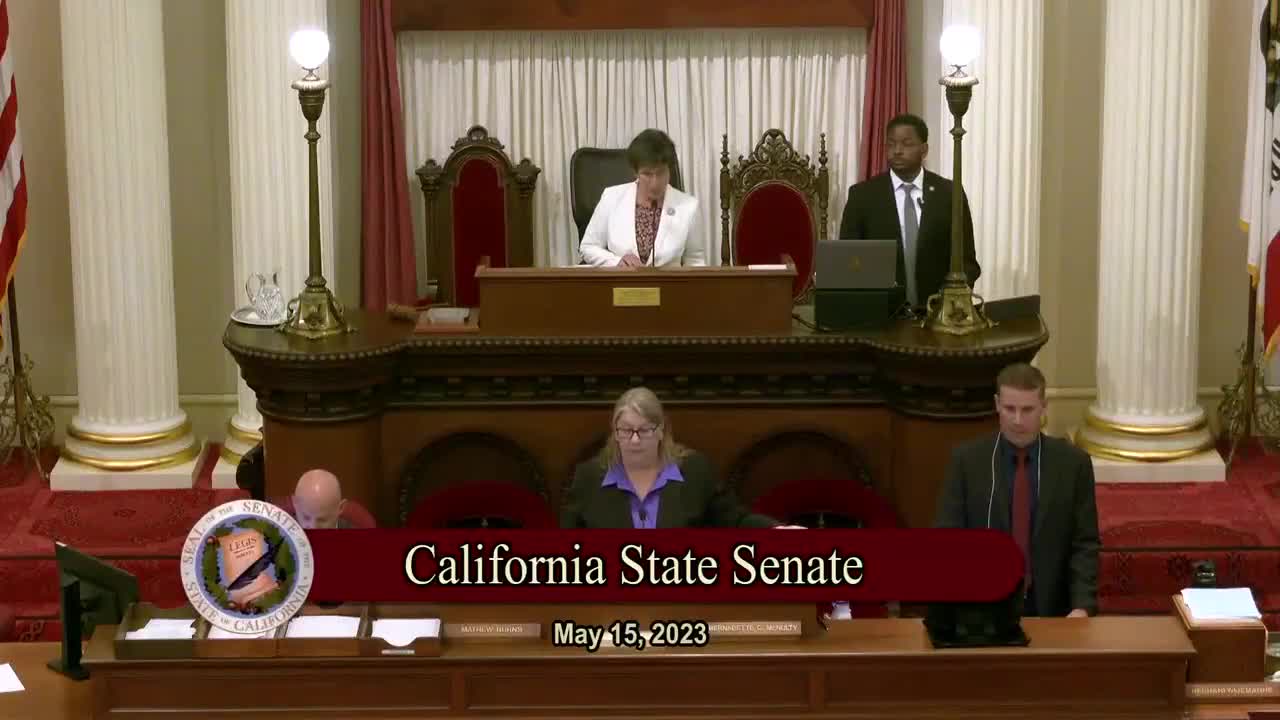 1MIN
Senate Floor
 2MIN
Senate Standing Committee on Governmental Organization
Bill Author

Bill Co-Author(s):
