SB 565: Taxation: filing.
- Session Year: 2023-2024
- House: Senate
- Latest Version Date: 2023-09-19
Current Status:
Failed
(2024-01-25: Stricken from file.)
Introduced
In Committee
First Chamber
In Committee
Second Chamber
Enacted
The Personal Income Tax Law requires an individual taxable under that law to make a return to the Franchise Tax Board stating specifically the items of the individuals gross income from all sources and the deductions and credits allowable, as prescribed. Existing law requires the Franchise Tax Board to notify all potential eligible individuals of available paperless filing options offered through the Franchise Tax Board, including the CalFile program and free tax preparation services.
Existing law requires the State Department of Social Services (SDSS) and the State Department of Health Care Services (DHCS) to exchange data with the Franchise Tax Board upon request, including specified personal information of a program participant, as defined. For taxable years beginning January 1, 2020, and before January 1, 2026, existing law authorizes the Franchise Tax Board to disclose, upon request, specified return information to SDSS and DHCS. Existing law requires all data provided to remain confidential and be used only for specified purposes, including informing individuals of the availability of the Volunteer Income Tax Assistance, CalFile, the federal Earned Income Tax Credit, the California Earned Income Tax Credit, and other federal and state antipoverty tax credits.
This bill, for taxable years beginning on or after January 1, 2025, and before January 1, 2031, would require the Franchise Tax Board to provide a free tax return preparation program that utilizes the prepopulation of data for qualified individuals to complete and e-file their California personal income tax returns. The bill would define a qualified individual for this purpose to mean an individual who, among other things, received an invitation from the Franchise Tax Board to participate in the free tax return preparation program, is eligible to use CalFile in that taxable year, and is eligible for the California Earned Income Tax Credit, the young child tax credit, or the foster youth tax credit in that taxable year. The bill would authorize the Franchise Tax Board to utilize CalFile as the free tax return preparation program.
This bill would allow SDSS and DHCS to exchange data with the Franchise Tax Board for purposes of the free tax return preparation program. The bill would also authorize the use of information provided by the Franchise Tax Board to SDSS and DHCS for purposes of implementing the free tax return preparation program.
This bill would incorporate additional changes to Section 19551.3 of the Revenue and Taxation Code proposed by AB 1002 to be operative only if this bill and AB 1002 are enacted and this bill is enacted last.
The Personal Income Tax Law requires an individual taxable under that law to make a return to the Franchise Tax Board stating specifically the items of the individuals gross income from all sources and the deductions and credits allowable, as prescribed. Existing law requires the Franchise Tax Board to notify all potential eligible individuals of available paperless filing options offered through the Franchise Tax Board, including the CalFile program and free tax preparation services.
Existing law requires the State Department of Social Services (SDSS) and the State Department of Health Care Services (DHCS) to exchange data with the Franchise Tax Board upon request, including specified personal information of a program participant, as defined. For taxable years beginning January 1, 2020, and before January 1, 2026, existing law authorizes the Franchise Tax Board to disclose, upon request, specified return information to SDSS and DHCS. Existing law requires all data provided to remain confidential and be used only for specified purposes, including informing individuals of the availability of the Volunteer Income Tax Assistance, CalFile, the federal Earned Income Tax Credit, the California Earned Income Tax Credit, and other federal and state antipoverty tax credits.
This bill, for taxable years beginning on or after January 1, 2025, and before January 1, 2031, would require the Franchise Tax Board to provide a free tax return preparation program that utilizes the prepopulation of data for qualified individuals to complete and e-file their California personal income tax returns. The bill would define a qualified individual for this purpose to mean an individual who, among other things, received an invitation from the Franchise Tax Board to participate in the free tax return preparation program, is eligible to use CalFile in that taxable year, and is eligible for the California Earned Income Tax Credit, the young child tax credit, or the foster youth tax credit in that taxable year. The bill would authorize the Franchise Tax Board to utilize CalFile as the free tax return preparation program.
This bill would allow SDSS and DHCS to exchange data with the Franchise Tax Board for purposes of the free tax return preparation program. The bill would also authorize the use of information provided by the Franchise Tax Board to SDSS and DHCS for purposes of implementing the free tax return preparation program.
This bill would incorporate additional changes to Section 19551.3 of the Revenue and Taxation Code proposed by AB 1002 to be operative only if this bill and AB 1002 are enacted and this bill is enacted last.
The Personal Income Tax Law requires an individual taxable under that law to make a return to the Franchise Tax Board stating specifically the items of the individuals gross income from all sources and the deductions and credits allowable, as prescribed. Existing law requires the Franchise Tax Board to notify all potential eligible individuals of available paperless filing options offered through the Franchise Tax Board, including the CalFile program and free tax preparation services.
Existing law requires the State Department of Social Services (SDSS) and the State Department of Health Care Services (DHCS) to exchange data with the Franchise Tax Board, Board upon request, including the names, addresses, and contact information of individuals that may qualify for the California Earned Income Tax Credit (CalEITC) and specified personal information of a program participant, as defined. For taxable years beginning January 1, 2020, and before January 1, 2026, existing law authorizes the Franchise Tax Board to disclose, upon request, specified return information to SDSS and DHCS. Existing law requires all data provided to remain confidential and be used only for specified purposes, including informing state residents individuals of the availability of the Volunteer Income Tax Assistance, CalFile, the federal Earned Income Tax Credit, the CalEITC, California Earned Income Tax Credit, and other federal and state antipoverty tax credits.
This bill, for taxable years beginning on or after January 1, 2025, and before January 1, 2031, would require the Franchise Tax Board to provide a free tax return preparation program that utilizes the prepopulation of data for qualified individuals to complete and e-file their California personal income tax returns. The bill would define a qualified individual for this purpose to mean an individual who, among other things, received an invitation from the Franchise Tax Board to participate in the free tax return preparation program, is eligible to use CalFile in that taxable year, and is eligible for the CalEITC, California Earned Income Tax Credit, the young child tax credit, or the foster youth tax credit in that taxable year. The bill would authorize the Franchise Tax Board to utilize CalFile as the free tax return preparation program.
This bill would additionally allow the State Department of Social Services SDSS and the State Department of Health Care Services DHCS to exchange data with the Franchise Tax Board for purposes of the free tax return preparation program. The bill would also authorize the use of information provided by the Franchise Tax Board to SDSS and DHCS for purposes of implementing the free tax return preparation program.
The Personal Income Tax Law requires an individual taxable under that law to make a return to the Franchise Tax Board stating specifically the items of the individuals gross income from all sources and the deductions and credits allowable, as prescribed. Existing law requires the Franchise Tax Board to notify all potential eligible individuals of available paperless filing options offered through the Franchise Tax Board, including the CalFile program and free tax preparation services.
Existing law requires the State Department of Social Services and the State Department of Health Care Services to exchange data with the Franchise Tax Board, including the names, addresses, and contact information of individuals that may qualify for the California Earned Income Tax Credit (CalEITC) and requires all data provided to remain confidential and be used only for specified purposes, including informing state residents of the availability of CalFile, the federal Earned Income Tax Credit, the CalEITC, and other federal and state antipoverty tax credits.
This bill, for taxable years beginning on or after January 1, 2025, would require the Franchise Tax Board to provide a free tax return preparation program that utilizes the prepopulation of data for qualified individuals to complete and e-file their California personal income tax returns. The bill would define a qualified individual for this purpose to mean an individual who, among other things, received an invitation from the Franchise Tax Board to participate in the free tax return preparation program, is eligible to use CalFile in that taxable year, and is eligible for the CalEITC, the young child tax credit, or the foster youth tax credit. credit in that taxable year. The bill would authorize the Franchise Tax Board to utilize CalFile as the free tax return preparation program if specified requirements are met. program.
This bill would additionally allow the State Department of Social Services and the State Department of Health Care Services to exchange data with the Franchise Tax Board for purposes of the free tax return preparation program.
The Personal Income Tax Law requires an individual taxable under that law to make a return to the Franchise Tax Board stating specifically the items of the individuals gross income from all sources and the deductions and credits allowable, as prescribed. Existing law requires the Franchise Tax Board to notify all potential eligible individuals of available paperless filing options offered through the Franchise Tax Board, including the CalFile program and free tax preparation services.
Existing law requires the State Department of Social Services and the State Department of Health Care Services to exchange data with the Franchise Tax Board, including the names, addresses, and contact information of individuals that may qualify for the CalEITC, California Earned Income Tax Credit (CalEITC) and requires all data provided to remain confidential and be used only for specified purposes, including informing state residents of the availability of CalFile, the federal Earned Income Tax Credit, the CalEITC, and other federal and state antipoverty tax credits.
This bill, for taxable years beginning on or after January 1, 2025, would require the Franchise Tax Board to provide a free tax return preparation program that utilizes the prepopulation of data for qualified individuals, as defined, individuals to complete and e-file their state California personal income tax returns. The bill would define a qualified individual for this purpose to mean an individual who, among other things, received an invitation from the Franchise Tax Board to participate in the free tax return preparation program, is eligible to use CalFile in that taxable year, and is eligible for the CalEITC, the young child tax credit, or the foster youth tax credit. The bill would authorize the Franchise Tax Board to utilize CalFile as the free tax return preparation program, as provided. program if specified requirements are met.
TheThis bill would additionally allow the State Department of Social Services and the State Department of Health Care Services to exchange data with the Franchise Tax Board for purposes of the free tax return preparation program.
The Personal Income Tax Law requires an individual taxable under that law to make a return to the Franchise Tax Board stating specifically the items of the individuals gross income from all sources and the deductions and credits allowable, as prescribed. Existing law requires the Franchise Tax Board to notify all potential eligible individuals of available paperless filing options offered through the Franchise Tax Board, including the CalFile program and free tax preparation services.
Existing law requires the State Department of Social Services and the State Department of Health Care Services to exchange data with the Franchise Tax Board, including the names, addresses, and contact information of individuals that may qualify for the CalEITC, and requires all data provided to remain confidential and be used only for specified purposes, including informing state residents of the availability of CalFile, the federal Earned Income Tax Credit, the CalEITC, and other federal and state antipoverty tax credits.
This bill, for taxable years beginning on or after January 1, 2025, would require the Franchise Tax Board to provide a free tax return preparation program that utilizes the prepopulation of data for qualified individuals, as defined, to complete and e-file their state personal income tax returns. The bill would authorize the Franchise Tax Board to utilize CalFile as the free tax return preparation program, as provided.
This bill, for taxable years beginning on or after January 1, 2026, would authorize a qualified individual, who cannot claim withholding or other credits, to claim the earned income tax credit, the young child tax credit, or the foster youth tax credit on a form that does not require the qualified individual to file an individual income tax return.This
The bill would additionally allow the State Department of Social Services and the State Department of Health Care Services to exchange data with the Franchise Tax Board for purposes of the free tax return preparation program and the form described above. program.
The Personal Income Tax Law, in modified conformity with federal income tax laws, allows a California Earned Income Tax Credit (CalEITC) against personal income tax and a payment from the Tax Relief and Refund Account for an allowable credit in excess of tax liability to an eligible individual that is equal to that portion of the earned income tax credit allowed by federal law as determined by the earned income tax credit adjustment factor. The Personal Income Tax Law also allows a young child tax credit and a foster youth tax credit against the taxes imposed under that law to qualified taxpayers in a specified amount multiplied by the earned income tax credit adjustment factor, and allows a payment from the Tax Relief and Refund Account for an amount in excess of tax liability.
The Personal Income Tax Law requires an individual taxable under that law to make a return to the Franchise Tax Board stating specifically the items of the individuals gross income from all sources and the deductions and credits allowable, as prescribed. Existing law requires the Franchise Tax Board to notify all potential eligible individuals of available paperless filing options offered through the Franchise Tax Board, including the CalFile program and free tax preparation services.
Existing law requires the State Department of Social Services and the State Department of Health Care Services to exchange data with the Franchise Tax Board, including the names, addresses, and contact information of individuals that may qualify for the CalEITC, and requires all data provided to remain confidential and be used only for specified purposes, including informing state residents of the availability of CalFile, the federal Earned Income Tax Credit, the CalEITC, and other federal and state antipoverty tax credits.
This bill, for taxable years beginning on or after January 1, 2025, would require the Franchise Tax Board to provide a free tax return preparation program that utilizes the prepopulation of data for qualified individuals, as defined, to complete and e-file their state personal income tax returns. The bill would authorize the Franchise Tax Board to utilize CalFile as the free tax return preparation program, as provided.
This bill, for taxable years beginning on or after January 1, 2026, would authorize a qualified individual, who cannot claim withholding or other credits, to claim the earned income tax credit, the young child tax credit, or the foster youth tax credit on a form that does not require the qualified individual to file an individual income tax return.
This bill would additionally allow the State Department of Social Services and the State Department of Health Care Services to exchange data with the Franchise Tax Board for purposes of the free tax return preparation program and the form described above.
The Personal Income Tax Law allows various credits against the taxes imposed by that law, including certain credits that are allowed in modified conformity to credits allowed by federal income tax laws. Federal income tax laws allow a refundable earned income tax credit (EITC) for certain individuals who have earned income, as specified, and who meet certain other requirements. The Personal Income Tax Law, in modified conformity with federal income tax laws, also allows an earned income credit against personal income tax.Existing law, the Earned Income Tax Credit Information Act, requires state departments and agencies that serve those who may qualify for the federal EITC and the California EITC to notify their program recipients that they may be eligible for the federal EITC and the California EITC, as provided. The act defines terms for its purposes.This bill would make nonsubstantive changes to those definitions.The Personal Income Tax Law allows various credits against the taxes imposed by that law, including certain credits that are allowed in modified conformity to credits allowed by federal income tax laws. Federal income tax laws allow a refundable earned income tax credit (EITC) for certain individuals who have earned income, as specified, and who meet certain other requirements. The Personal Income Tax Law, in modified conformity with federal income tax laws, also allows an earned income credit against personal income tax.
Existing law, the Earned Income Tax Credit Information Act, requires state departments and agencies that serve those who may qualify for the federal EITC and the California EITC to notify their program recipients that they may be eligible for the federal EITC and the California EITC, as provided. The act defines terms for its purposes.
This bill would make nonsubstantive changes to those definitions.
(a)The State Department of Social Services and the State Department of Health Care Services shall exchange data with the Franchise Tax Board upon request, including the name, date of birth, address, household or case identification number, and the individual taxpayer identification number or social security number of a program participant, and the names, addresses, and contact information of individuals that may qualify for the free tax return preparation program established under Section 19587. The data provided shall remain confidential and shall be used only for purposes of informing individuals of the availability of the Volunteer Income Tax Assistance (VITA), CalFile, the federal Earned Income Tax Credit, the California Earned Income Tax Credit, and other federal and state antipoverty tax credits that are designed to alleviate poverty and tax burdens of low-income households, for providing an estimate of potential state antipoverty tax credits to individuals, and for the purposes of implementing Section 19587.
(b)Notwithstanding Section 19542 or any other law, for taxable years beginning on or after January 1, 2020, and before January 1, 2026, the Franchise Tax Board may, upon request, disclose the return information described in paragraph (1) to the State Department of Social Services and the State Department of Health Care Services.
(1)Upon receipt of the information described in subdivision (a), the Franchise Tax Board may disclose the following:
(A)Whether the program participant did not file a tax return.
(B)Whether the program participant was claimed as a dependent on a tax return.
(2)The information provided shall remain confidential and shall be used only for purposes of informing individuals of the availability of the Volunteer Income Tax Assistance (VITA), CalFile, the federal Earned Income Tax Credit, the California Earned Income Tax Credit, and other federal and state antipoverty tax credits that are designed to alleviate poverty and tax burdens of low-income households, and for the purposes of implementing Section 19587.
(3)The Franchise Tax Board shall not disclose or provide any federal tax information.
(c)(1)The State Department of Social Services and the State Department of Health Care Services that receive data from the Franchise Tax Board shall annually provide to the Franchise Tax Board, no later than January 1 of each calendar year, the results and findings of outreach conducted to measure whether the outreach achieves its intended purpose of increasing the number of claims for the federal Earned Income Tax Credit, the California Earned Income Tax Credit, and other state and federal antipoverty tax credits.
(2)The results and findings of outreach conducted by the State Department of Social Services and the State Department of Health Care Services required under paragraph (1) shall include, but are not limited to, the following information:
(A)The number of outreach contacts.
(B)A description of each outreach program and the parameters of that program.
(C)The number of individuals responding to outreach contacts referenced in subparagraph (A), if known.
(d)For purposes of this section, the following shall apply:
(1)Voluntary Income Tax Assistance (VITA) means the free basic income tax return preparation program, for federal and state personal income tax returns, managed by the Internal Revenue Service and operated by Internal Revenue Service partners and trained volunteers.
(2)CalFile means the Franchise Tax Boards free, direct, online program for taxpayers to complete and e-file their state personal income tax returns.
(3)Program participant means any individual who receives benefits from a social services program administered by the State Department of Social Services or the State Department of Health Care Services.
(e)An unauthorized disclosure or use of the information disclosed pursuant to this section is a misdemeanor pursuant to Section 19552.
SEC. 1.5.Section 19551.3 of the Revenue and Taxation Code is amended to read:19551.3.(a)The State Department of Social Services and the State Department of Health Care Services shall exchange data with the Franchise Tax Board upon request, including the name, date of birth, address, household or case identification number, and the individual taxpayer identification number or social security number of a program participant, and the names, addresses, and contact information of individuals that may qualify for the free tax return preparation program established under Section 19587. The data provided shall remain confidential and shall be used only for purposes of informing individuals of the availability of the Volunteer Income Tax Assistance (VITA), CalFile, the federal Earned Income Tax Credit, the California Earned Income Tax Credit, and other federal and state antipoverty tax credits that are designed to alleviate poverty and tax burdens of low-income households, for providing an estimate of potential state antipoverty tax credits to individuals, and for the purposes of implementing Sections 19582.6 and 19587.
(b)Notwithstanding Section 19542 or any other law, for taxable years beginning on or after January 1, 2020, and before January 1, 2026, the Franchise Tax Board may, upon request, disclose the return information described in paragraph (1) to the State Department of Social Services and the State Department of Health Care Services.
(1)Upon receipt of the information described in subdivision (a), the Franchise Tax Board may disclose the following:
(A)Whether the program participant did not file a tax return.
(B)Whether the program participant was claimed as a dependent on a tax return.
(2)The information provided shall remain confidential and shall be used only for purposes of informing individuals of the availability of the Volunteer Income Tax Assistance (VITA), CalFile, the federal Earned Income Tax Credit, the California Earned Income Tax Credit, other federal and state antipoverty tax credits that are designed to alleviate poverty and tax burdens of low-income households, and for the purposes of implementing Sections 19582.6 and 19587.
(3)The Franchise Tax Board shall not disclose or provide any federal tax information.
(c)(1)The State Department of Social Services and the State Department of Health Care Services that receive data from the Franchise Tax Board shall annually provide to the Franchise Tax Board, no later than January 1 of each calendar year, the results and findings of outreach conducted to measure whether the outreach achieves its intended purpose of increasing the number of claims for the federal Earned Income Tax Credit, the California Earned Income Tax Credit, and other state and federal antipoverty tax credits.
(2)The results and findings of outreach conducted by the State Department of Social Services and the State Department of Health Care Services required under paragraph (1) shall include, but are not limited to, the following information:
(A)The number of outreach contacts.
(B)A description of each outreach program and the parameters of that program.
(C)The number of individuals responding to outreach contacts referenced in subparagraph (A), if known.
(d)For purposes of this section, the following shall apply:
(1)Voluntary Income Tax Assistance (VITA) means the free basic income tax return preparation program, for federal and state personal income tax returns, managed by the Internal Revenue Service and operated by Internal Revenue Service partners and trained volunteers.
(2)CalFile means the Franchise Tax Boards free, direct, online program for taxpayers to complete and e-file their state personal income tax returns.
(3)Program participant means any individual who receives benefits from a social services program administered by the State Department of Social Services or the State Department of Health Care Services.
(e)An unauthorized disclosure or use of the information disclosed pursuant to this section is a misdemeanor pursuant to Section 19552.
SEC. 2.Section 19587 is added to the Revenue and Taxation Code, to read:19587.(a)(1)For taxable years beginning on or after January 1, 2025, and before January 1, 2031, the Franchise Tax Board shall provide a free tax return preparation program to qualified individuals, subject to paragraph (2).
(2)(A)For taxable years beginning on or after January 1, 2025, and before January 1, 2027, the program shall be available for a qualified individual who is an individual with no dependents or who is a spouse filing a separate return with no dependents.
(B)For taxable years beginning on or after January 1, 2027, and before January 1, 2031, the program shall be available for all qualified individuals.
(b)For the purposes of this section, the following definitions shall apply:
(1)CalFile means the Franchise Tax Boards free, direct, online program for taxpayers to complete and e-file their California personal income tax returns.
(2)Free tax return preparation program means a free program that utilizes the prepopulation of data, to the extent possible, for qualified individuals to complete and e-file their California personal income tax returns.
(3)Qualified individual means an individual, as defined by Section 17005, that meets all of the following:
(A)Has filed a California personal income tax return for at least one of the five taxable years prior to the calendar year that the individual attempts to use the free tax return preparation program.
(B)Received an invitation from the Franchise Tax Board to participate in the free tax return preparation program for the taxable year.
(C)Is eligible to use CalFile for the taxable year.
(D)Is eligible for any of the credits allowed by Section 17052, 17052.1, or 17052.2 for the taxable year.
(c)The free tax return preparation program shall meet the following requirements:
(1)Provide questions to guide qualified individuals to file their California personal income tax return.
(2)Allow qualified individuals to edit or correct information on their return prior to filing, including filing status and information on dependents.
(d)The Franchise Tax Board may utilize CalFile as the free tax return preparation program.
(e)For purposes of developing the free tax return preparation program, the Franchise Tax Board shall be exempt from all provisions of state contracting laws and any approvals or oversight from the Department of Technology or the Department of General Services, and shall be exempt from Project Approval Lifecycle requirements and reporting, including Stage Gates 1-4, Financial Analysis Worksheets, Project Status Reports, and Post Implementation Evaluation Reports, as described in Sections 4819.31 to 4819.38, inclusive, of the State Administrative Manual, and subdivisions (a) to (f), inclusive, of Section 19 of the Statewide Information Management Manual.
(f)The free tax return preparation program shall be available for use in accordance with this section beginning on January 20, 2026.
(g)This section shall remain in effect only until December 1, 2031, and as of that date is repealed.
SEC. 3.Section 1.5 of this bill incorporates amendments to Section 19551.3 of the Revenue and Taxation Code proposed by both this bill and Assembly Bill 1002. That section shall only become operative if (1) both bills are enacted and become effective on or before January 1, 2024, (2) each bill amends Section 19551.3 of the Revenue and Taxation Code, and (3) this bill is enacted after Assembly Bill 1002, in which case Section 1 of this bill shall not become operative.
(a)The State Department of Social Services and the State Department of Health Care Services shall exchange data with the Franchise Tax Board upon request, including the name, date of birth, address, household or case identification number, and the individual taxpayer identification number or social security number of a program participant, and the names, addresses, and contact information of individuals that may qualify for the free tax return preparation program established under Section 19587. The data provided shall remain confidential and shall be used only for purposes of informing individuals of the availability of the Volunteer Income Tax Assistance (VITA), CalFile, the federal Earned Income Tax Credit, the California Earned Income Tax Credit, and other federal and state antipoverty tax credits that are designed to alleviate poverty and tax burdens of low-income households, for providing an estimate of potential state antipoverty tax credits to individuals, and for the purposes of implementing Section 19587.
(b)Notwithstanding Section 19542 or any other law, for taxable years beginning on or after January 1, 2020, and before January 1, 2026, the Franchise Tax Board may, upon request, disclose the return information described in paragraph (1) to the State Department of Social Services and the State Department of Health Care Services.
(1)Upon receipt of the information described in subdivision (a), the Franchise Tax Board may disclose the following:
(A)Whether the program participant did not file a tax return.
(B)Whether the program participant was claimed as a dependent on a tax return.
(2)The information provided shall remain confidential and shall be used only for purposes of informing individuals of the availability of the Volunteer Income Tax Assistance (VITA), CalFile, the federal Earned Income Tax Credit, the California Earned Income Tax Credit, and other federal and state antipoverty tax credits that are designed to alleviate poverty and tax burdens of low-income households, and for the purposes of implementing Section 19587.
(3)The Franchise Tax Board shall not disclose or provide any federal tax information.
(c)(1)The State Department of Social Services and the State Department of Health Care Services that receive data from the Franchise Tax Board shall annually provide to the Franchise Tax Board, no later than January 1 of each calendar year, the results and findings of outreach conducted to measure whether the outreach achieves its intended purpose of increasing the number of claims for the federal Earned Income Tax Credit, the California Earned Income Tax Credit, and other state and federal antipoverty tax credits.
(2)The results and findings of outreach conducted by the State Department of Social Services and the State Department of Health Care Services required under paragraph (1) shall include, but are not limited to, the following information:
(A)The number of outreach contacts.
(B)A description of each outreach program and the parameters of that program.
(C)The number of individuals responding to outreach contacts referenced in subparagraph (A), if known.
(d)For purposes of this section, the following shall apply:
(1)Voluntary Income Tax Assistance (VITA) means the free basic income tax return preparation program, for federal and state personal income tax returns, managed by the Internal Revenue Service and operated by Internal Revenue Service partners and trained volunteers.
(2)CalFile means the Franchise Tax Boards free, direct, online program for taxpayers to complete and e-file their state personal income tax returns.
(3)Program participant means any individual who receives benefits from a social services program administered by the State Department of Social Services or the State Department of Health Care Services.
(e)An unauthorized disclosure or use of the information disclosed pursuant to this section is a misdemeanor pursuant to Section 19552.
SEC. 1.5.Section 19551.3 of the Revenue and Taxation Code is amended to read:19551.3.(a)The State Department of Social Services and the State Department of Health Care Services shall exchange data with the Franchise Tax Board upon request, including the name, date of birth, address, household or case identification number, and the individual taxpayer identification number or social security number of a program participant. participant, and the names, addresses, and contact information of individuals that may qualify for the free tax return preparation program established under Section 19587. The data provided shall remain confidential and shall be used only for purposes of informing individuals of the availability of the Volunteer Income Tax Assistance (VITA), CalFile, the federal Earned Income Tax Credit, the California Earned Income Tax Credit, and other federal and state antipoverty tax credits that are designed to alleviate poverty and tax burdens of low-income households, and for providing an estimate of potential state antipoverty tax credits to individuals. individuals, and for the purposes of implementing Sections 19582.6 and 19587.
(b)Notwithstanding Section 19542 or any other law, for taxable years beginning on or after January 1, 2020, and before January 1, 2026, the Franchise Tax Board may, upon request, disclose the return information described in paragraph (1) to the State Department of Social Services and the State Department of Health Care Services.
(1)Upon receipt of the information described in subdivision (a), the Franchise Tax Board may disclose the following:
(A)Whether the program participant did not file a tax return.
(B)Whether the program participant was claimed as a dependent on a tax return.
(2)The information provided shall remain confidential and shall be used only for purposes of informing individuals of the availability of the Volunteer Income Tax Assistance (VITA), CalFile, the federal Earned Income Tax Credit, the California Earned Income Tax Credit, and other federal and state antipoverty tax credits that are designed to alleviate poverty and tax burdens of low-income households. households, and for the purposes of implementing Sections 19582.6 and 19587.
(3)The Franchise Tax Board shall not disclose or provide any federal tax information.
(c)(1)The State Department of Social Services and the State Department of Health Care Services that receive data from the Franchise Tax Board shall annually provide to the Franchise Tax Board, no later than January 1 of each calendar year, the results and findings of outreach conducted to measure whether the outreach achieves its intended purpose of increasing the number of claims for the federal Earned Income Tax Credit, the California Earned Income Tax Credit, and other state and federal antipoverty tax credits.
(2)The results and findings of outreach conducted by the State Department of Social Services and the State Department of Health Care Services required under paragraph (1) shall include, but are not limited to, the following information:
(A)The number of outreach contacts.
(B)A description of each outreach program and the parameters of that program.
(C)The number of individuals responding to outreach contacts referenced in subparagraph (A), if known.
(d)For purposes of this section, the following shall apply:
(1)Voluntary Income Tax Assistance (VITA) means the free basic income tax return preparation program, for federal and state personal income tax returns, managed by the Internal Revenue Service and operated by Internal Revenue Service partners and trained volunteers.
(2)CalFile means the Franchise Tax Boards free, direct, online program for taxpayers to complete and e-file their state personal income tax returns.
(3)Program participant means any individual who receives benefits from a social services program administered by the State Department of Social Services or the State Department of Health Care Services.
(e)An unauthorized disclosure or use of the information disclosed pursuant to this section is a misdemeanor pursuant to Section 19552.
SEC. 2.Section 19587 is added to the Revenue and Taxation Code, to read:19587.(a)(1)For taxable years beginning on or after January 1, 2025, and before January 1, 2031, the Franchise Tax Board shall provide a free tax return preparation program to qualified individuals, subject to paragraph (2).
(2)(A)For taxable years beginning on or after January 1, 2025, and before January 1, 2027, the program shall be available for a qualified individual who is an individual with no dependents or who is a spouse filing a separate return with no dependents.
(B)For taxable years beginning on or after January 1, 2027, and before January 1, 2031, the program shall be available for all qualified individuals.
(b)For the purposes of this section, the following definitions shall apply:
(1)CalFile means the Franchise Tax Boards free, direct, online program for taxpayers to complete and e-file their California personal income tax returns.
(2)Free tax return preparation program means a free program that utilizes the prepopulation of data, to the extent possible, for qualified individuals to complete and e-file their California personal income tax returns.
(3)Qualified individual means an individual, as defined by Section 17005, that meets all of the following:
(A)Has filed a California personal income tax return for at least one of the five taxable years prior to the calendar year that the individual attempts to use the free tax return preparation program.
(B)Received an invitation from the Franchise Tax Board to participate in the free tax return preparation program for the taxable year.
(C)Is eligible to use CalFile for the taxable year.
(D)Is eligible for any of the credits allowed by Section 17052, 17052.1, or 17052.2 for the taxable year.
(c)The free tax return preparation program shall meet the following requirements:
(1)Provide questions to guide qualified individuals to file their California personal income tax return.
(2)Allow qualified individuals to edit or correct information on their return prior to filing, including filing status and information on dependents.
(d)The Franchise Tax Board may utilize CalFile as the free tax return preparation program.
(e)For purposes of developing the free tax return preparation program, the Franchise Tax Board shall be exempt from all provisions of state contracting laws and any approvals or oversight from the Department of Technology or the Department of General Services, and shall be exempt from Project Approval Lifecycle requirements and reporting, including Stage Gates 1-4, Financial Analysis Worksheets, Project Status Reports, and Post Implementation Evaluation Reports, as described in Sections 4819.31 to 4819.38, inclusive, of the State Administrative Manual, and subdivisions (a) to (f), inclusive, of Section 19 of the Statewide Information Management Manual.
(f)The free tax return preparation program shall be available for use in accordance with this section beginning on January 20, 2026.
(g)This section shall remain in effect only until December 1, 2031, and as of that date is repealed.
SEC. 3.Section 1.5 of this bill incorporates amendments to Section 19551.3 of the Revenue and Taxation Code proposed by both this bill and Assembly Bill 1002. That section shall only become operative if (1) both bills are enacted and become effective on or before January 1, 2024, (2) each bill amends Section 19551.3 of the Revenue and Taxation Code, and (3) this bill is enacted after Assembly Bill 1002, in which case Section 1 of this bill shall not become operative.
(a)The State Department of Social Services and the State Department of Health Care Services shall exchange data with the Franchise Tax Board upon request, including the name, date of birth, address, household or case identification number, and the individual taxpayer identification number or social security number of a program participant. participant, and the names, addresses, and contact information of individuals that may qualify for the free tax return preparation program established under Section 19587. The data provided shall remain confidential and shall be used only for purposes of informing individuals of the availability of the Volunteer Income Tax Assistance (VITA), CalFile, the federal Earned Income Tax Credit, the California Earned Income Tax Credit, and other federal and state antipoverty tax credits that are designed to alleviate poverty and tax burdens of low-income households, and for providing an estimate of potential state antipoverty tax credits to individuals. individuals, and for the purposes of implementing Section 19587.
(b)Notwithstanding Section 19542 or any other law, for taxable years beginning on or after January 1, 2020, and before January 1, 2026, the Franchise Tax Board may, upon request, disclose the return information described in paragraph (1) to the State Department of Social Services and the State Department of Health Care Services.
(1)Upon receipt of the information described in subdivision (a), the Franchise Tax Board may disclose the following:
(A)Whether the program participant did not file a tax return.
(B)Whether the program participant was claimed as a dependent on a tax return.
(2)The information provided shall remain confidential and shall be used only for purposes of informing individuals of the availability of the Volunteer Income Tax Assistance (VITA), CalFile, the federal Earned Income Tax Credit, the California Earned Income Tax Credit, and other federal and state antipoverty tax credits that are designed to alleviate poverty and tax burdens of low-income households. households, and for purposes of implementing Section 19587.
(3)The Franchise Tax Board shall not disclose or provide any federal tax information.
(c)(1)The State Department of Social Services and the State Department of Health Care Services that receive data from the Franchise Tax Board shall annually provide to the Franchise Tax Board, no later than January 1 of each calendar year, the results and findings of outreach conducted to measure whether the outreach achieves its intended purpose of increasing the number of claims for the federal Earned Income Tax Credit, the California Earned Income Tax Credit, and other state and federal antipoverty tax credits.
(2)The results and findings of outreach conducted by the State Department of Social Services and the State Department of Health Care Services required under paragraph (1) shall include, but are not limited to, the following information:
(A)The number of outreach contacts.
(B)A description of each outreach program and the parameters of that program.
(C)The number of individuals responding to outreach contacts referenced in subparagraph (A), if known.
(d)For purposes of this section, the following shall apply:
(1)Voluntary Income Tax Assistance (VITA) means the free basic income tax return preparation program, for federal and state personal income tax returns, managed by the Internal Revenue Service and operated by Internal Revenue Service partners and trained volunteers.
(2)CalFile means the Franchise Tax Boards free, direct, online program for taxpayers to complete and e-file their state personal income tax returns.
(3)Program participant means any individual who receives benefits from a social services program administered by the State Department of Social Services or the State Department of Health Care Services.
(e)An unauthorized disclosure or use of the information disclosed pursuant to this section is a misdemeanor pursuant to Section 19552.
SEC. 2.Section 19587 is added to the Revenue and Taxation Code, to read:19587.(a)(1)For taxable years beginning on or after January 1, 2025, and before January 1, 2031, the Franchise Tax Board shall provide a free tax return preparation program to qualified individuals, subject to paragraph (2).
(2)(A)For taxable years beginning on or after January 1, 2025, and before January 1, 2027, the program shall be available for a qualified individual who is an individual with no dependents or who is a spouse filing a separate return with no dependents.
(B)For taxable years beginning on or after January 1, 2027, and before January 1, 2031, the program shall be available for all qualified individuals.
(b)For the purposes of this section, the following definitions shall apply:
(1)CalFile means the Franchise Tax Boards free, direct, online program for taxpayers to complete and e-file their California personal income tax returns.
(2)Free tax return preparation program means a free program that utilizes the prepopulation of data, to the extent possible, for qualified individuals to complete and e-file their California personal income tax returns.
(3)Qualified individual means an individual, as defined by Section 17005, that meets all of the following:
(A)Has filed a California personal income tax return for at least one of the five taxable years prior to the calendar year that the individual attempts to use the free tax return preparation program.
(B)Received an invitation from the Franchise Tax Board to participate in the free tax return preparation program for the taxable year.
(C)Is eligible to use CalFile for the taxable year.
(D)Is eligible for any of the credits allowed by Section 17052, 17052.1, or 17052.2 for the taxable year.
(c)The free tax return preparation program shall meet the following requirements:
(1)Provide questions to guide qualified individuals to file their California personal income tax return.
(2)Allow qualified individuals to edit or correct information on their return prior to filing, including filing status and information on dependents.
(d)The Franchise Tax Board may utilize CalFile as the free tax return preparation program.
(e)For purposes of developing the free tax return preparation program, the Franchise Tax Board shall be exempt from all provisions of state contracting laws and any approvals or oversight from the Department of Technology or the Department of General Services, and shall be exempt from Project Approval Lifecycle requirements and reporting, including Stage Gates 1-4, Financial Analysis Worksheets, Project Status Reports, and Post Implementation Evaluation Reports, as described in Sections 4819.31 to 4819.38, inclusive, of the State Administrative Manual, and subdivisions (a) to (f), inclusive, of Section 19 of the Statewide Information Management Manual.
(f)The free tax return preparation program shall be available for use in accordance with this section beginning on January 20, 2026.
(g)This section shall remain in effect only until December 1, 2031, and as of that date is repealed.
(a)The State Department of Social Services and the State Department of Health Care Services shall exchange data with the Franchise Tax Board, including, but not limited to, the names, addresses, and contact information of individuals that may qualify for the California Earned Income Tax Credit, and the free tax return preparation program established under Section 19587. The data provided shall remain confidential and shall be used only for purposes directly connected with the federal Earned Income Tax Credit, the California Earned Income Tax Credit, other federal and state antipoverty tax credits, and for the purposes of implementing Section 19587.
(b)Notwithstanding Section 19542 or any other law, the Franchise Tax Board may disclose individual income tax return information for taxable years beginning on or after January 1, 2020, and before January 1, 2022, to the State Department of Social Services and the State Department of Health Care Services. The information provided shall remain confidential and shall be used only for purposes of informing state residents of the availability of the Volunteer Income Tax Assistance (VITA), CalFile, the federal Earned Income Tax Credit, the California Earned Income Tax Credit, and other federal and state antipoverty tax credits that are designed to alleviate poverty and tax burdens of low-income households, and for the purposes of implementing Section 19587. The Franchise Tax Board shall not disclose or provide any federal tax information.
(c)(1)The State Department of Social Services and the State Department of Health Care Services that receive data from the Franchise Tax Board shall annually provide to the Franchise Tax Board, no later than January 1 of each calendar year, the results and findings of outreach conducted to measure whether the outreach achieves its intended purpose of increasing the number of claims for the federal Earned Income Tax Credit, the California Earned Income Tax Credit, and other state and federal antipoverty tax credits.
(2)The information required by this subdivision shall include, but is not limited to, all of the following elements:
(A)The number of outreach contacts.
(B)The response rate to the outreach contacts referenced in subparagraph (A), if known.
(C)A description of each outreach program and the parameters of that program.
(D)The number of individuals responding to outreach contacts referenced in subparagraph (A), if known.
(E)The number of individuals who ultimately undertook the desired action and filed a return, if known.
(F)The name and amount of state and federal antipoverty tax credits claimed, if known.
(d)For purposes of this section, the following shall apply:
(1)Voluntary Income Tax Assistance (VITA) means the free basic income tax return preparation program, for federal and state personal income tax returns, managed by the Internal Revenue Service and operated by Internal Revenue Service partners and trained volunteers.
(2)CalFile means the Franchise Tax Boards free, direct, online program for taxpayers to complete and e-file their state personal income tax returns.
(e)An unauthorized disclosure or use of the information disclosed pursuant to this section is a misdemeanor pursuant to Section 19552.
SEC. 2.Section 19587 is added to the Revenue and Taxation Code, to read:19587.(a)(1)For taxable years beginning on or after January 1, 2025, the Franchise Tax Board shall provide a free tax return preparation program to qualified individuals, subject to paragraph (2).
(2)(A)For taxable years beginning on or after January 1, 2025, and before January 1, 2027, the program shall be available for a qualified individual who is an individual with no dependents or who is a spouse filing a separate return with no dependents.
(B)For taxable years beginning on or after January 1, 2027, the program shall be available for all qualified individuals.
(b)For the purposes of this section, the following definitions shall apply:
(1)CalFile means the Franchise Tax Boards free, direct, online program for taxpayers to complete and e-file their California personal income tax returns.
(2)Free tax return preparation program means a free program that utilizes the prepopulation of data, to the extent possible, for qualified individuals to complete and e-file their California personal income tax returns.
(3)Qualified individual means an individual, as defined by Section 17005, that meets all of the following:
(A)Has filed an individual income tax return a California personal income tax return for at least one of the five taxable years prior to the calendar year that the individual attempts to use the free tax return preparation program.
(B)Received an invitation from the Franchise Tax Board to participate in the free tax return preparation program for the taxable year.
(C)Is eligible to use CalFile for the taxable year.
(D)Is eligible for any of the credits allowed by Section 17052, 17052.1, or 17052.2. 17052.2 for the taxable year.
(c)The free tax return preparation program shall meet the following requirements:
(1)Provide questions to guide qualified individuals to file their California personal income tax return.
(2)Allow taxpayers qualified individuals to edit or correct information on their return prior to filing, including filing status and information on dependents.
(d)The Franchise Tax Board may utilize CalFile as the free tax return preparation program if CalFile meets the requirements of this section. program.
(e)For purposes of developing the free tax return preparation program, the Franchise Tax Board shall be exempt from all provisions of state contracting laws and any approvals or oversight from the Department of Technology or the Department of General Services, and shall be exempt from Project Approval Lifecycle requirements and reporting, including Stage Gates 1-4, Financial Analysis Worksheets, Project Status Reports, and Post Implementation Evaluation Reports, as described in Sections 4819.31 to 4819.38, inclusive, of the State Administrative Manual, and subdivisions (a) to (f), inclusive, of Section 19 of the Statewide Information Management Manual.
(f)The free tax return preparation program shall be available for use in accordance with this section beginning on January 20, 2026.
(a)The State Department of Social Services and the State Department of Health Care Services shall exchange data with the Franchise Tax Board, including, but not limited to, the names, addresses, and contact information of individuals that may qualify for the California Earned Income Tax Credit, and the free tax return preparation program established under Section 19587. The data provided shall remain confidential and shall be used only for purposes directly connected with the federal Earned Income Tax Credit, the California Earned Income Tax Credit, other federal and state antipoverty tax credits, and for the purposes of implementing Section 19587.
(b)Notwithstanding Section 19542 or any other law, the Franchise Tax Board may disclose individual income tax return information for taxable years beginning on or after January 1, 2020, and before January 1, 2022, to the State Department of Social Services and the State Department of Health Care Services. The information provided shall remain confidential and shall be used only for purposes of informing state residents of the availability of the Volunteer Income Tax Assistance (VITA), CalFile, the federal Earned Income Tax Credit, the California Earned Income Tax Credit, and other federal and state antipoverty tax credits that are designed to alleviate poverty and tax burdens of low-income households, and for the purposes of implementing Section 19587. The Franchise Tax Board shall not disclose or provide any federal tax information.
(c)(1)The State Department of Social Services and the State Department of Health Care Services that receive data from the Franchise Tax Board shall annually provide to the Franchise Tax Board, no later than January 1 of each calendar year, the results and findings of outreach conducted to measure whether the outreach achieves its intended purpose of increasing the number of claims for the federal Earned Income Tax Credit, the California Earned Income Tax Credit, and other state and federal antipoverty tax credits.
(2)The information required by this subdivision shall include, but is not limited to, all of the following elements:
(A)The number of outreach contacts.
(B)The response rate to the outreach contacts referenced in subparagraph (A), if known.
(C)A description of each outreach program and the parameters of that program.
(D)The number of individuals responding to outreach contacts referenced in subparagraph (A), if known.
(E)The number of individuals who ultimately undertook the desired action and filed a return, if known.
(F)The name and amount of state and federal antipoverty tax credits claimed, if known.
(d)For purposes of this section, the following shall apply:
(1)Voluntary Income Tax Assistance (VITA) means the free basic income tax return preparation program, for federal and state personal income tax returns, managed by the Internal Revenue Service and operated by Internal Revenue Service partners and trained volunteers.
(2)CalFile means the Franchise Tax Boards free, direct, online program for taxpayers to complete and e-file their state personal income tax returns.
(e)An unauthorized disclosure or use of the information disclosed pursuant to this section is a misdemeanor pursuant to Section 19552.
SEC. 2.Section 19587 is added to the Revenue and Taxation Code, to read:19587.(a)(1)For taxable years beginning on or after January 1, 2025, the Franchise Tax Board shall provide a free tax return preparation program to qualified individuals, subject to paragraph (2).
(2)(A)For taxable years beginning on or after January 1, 2025, and before January 1, 2027, the program shall be available for a qualified individual who is an individual with no dependents or who is a spouse filing a separate return with no dependents.
(B)For taxable years beginning on or after January 1, 2027, the program shall be available for all qualified individuals.
(b)For the purposes of this section, the following definitions shall apply:
(1)CalFile means the Franchise Tax Boards free, direct, online program for taxpayers to complete and e-file their state California personal income tax returns.
(2)Free tax return preparation program means a free program that utilizes the prepopulation of data, to the extent possible, for qualified individuals to complete and e-file their state California personal income tax returns. The Franchise Tax Board may utilize CalFile as the free tax return preparation program, if CalFile meets the requirements of this section.
(3)Qualified individual means an individual, as defined by Section 17005, that meets all of the following:
(A)Has filed an individual income tax return for at least one of the five taxable years prior to the calendar year that the individual attempts to use the free tax return preparation program.
(B)Received an invitation from the Franchise Tax Board to participate in the free tax return preparation program for the taxable year.
(C)Is eligible to use CalFile for the taxable year.
(D)Is eligible for any of the credits allowed by Section 17052, 17052.1, or 17052.2.
(c)The free tax return preparation program shall meet the following requirements:
(1)Provide easy interview style questions to guide qualified individuals to proper filing solutions. file their California income tax return.
(2)Allow taxpayers to edit or correct the information on their return prior to submitting, filing, including filing status and information on dependents.
(d)The Franchise Tax Board may utilize CalFile as the free tax return preparation program if CalFile meets the requirements of this section.
(d)(e)For purposes of developing the free tax return preparation program, the Franchise Tax Board shall be exempt from all provisions of state contracting laws and any approvals or oversight from the Department of Technology or the Department of General Services, and shall be exempt from Project Approval Lifecycle requirements and reporting, including Stage Gates 1-4, Financial Analysis Worksheets, Project Status Reports, and Post Implementation Evaluation Reports, as described in Sections 4819.31 to 4819.38, inclusive, of the State Administrative Manual, and subdivisions (a) to (f), inclusive, of Section 19 of the Statewide Information Management Manual.
(e)(f)The free tax return preparation program shall be available for use in accordance with this section beginning on January 1, 20, 2026.
(a)The State Department of Social Services and the State Department of Health Care Services shall exchange data with the Franchise Tax Board, including, but not limited to, the names, addresses, and contact information of individuals that may qualify for the California Earned Income Tax Credit, and the free tax return preparation program established under Section 19587, and the form established under Section 19582.6. 19587. The data provided shall remain confidential and shall be used only for purposes directly connected with the federal Earned Income Tax Credit, the California Earned Income Tax Credit, other federal and state antipoverty tax credits, and for the purposes of implementing Sections 19582.6 and Section 19587.
(b)Notwithstanding Section 19542 or any other law, the Franchise Tax Board may disclose individual income tax return information for taxable years beginning on or after January 1, 2020, and before January 1, 2022, to the State Department of Social Services and the State Department of Health Care Services. The information provided shall remain confidential and shall be used only for purposes of informing state residents of the availability of the Volunteer Income Tax Assistance (VITA), CalFile, the federal Earned Income Tax Credit, the California Earned Income Tax Credit, and other federal and state antipoverty tax credits that are designed to alleviate poverty and tax burdens of low-income households, and for the purposes of implementing Sections 19582.6 and Section 19587. The Franchise Tax Board shall not disclose or provide any federal tax information.
(c)(1)The State Department of Social Services and the State Department of Health Care Services that receive data from the Franchise Tax Board shall annually provide to the Franchise Tax Board, no later than January 1 of each calendar year, the results and findings of outreach conducted to measure whether the outreach achieves its intended purpose of increasing the number of claims for the federal Earned Income Tax Credit, the California Earned Income Tax Credit, and other state and federal antipoverty tax credits.
(2)The information required by this subdivision shall include, but is not limited to, all of the following elements:
(A)The number of outreach contacts.
(B)The response rate to the outreach contacts referenced in subparagraph (A), if known.
(C)A description of each outreach program and the parameters of that program.
(D)The number of individuals responding to outreach contacts referenced in subparagraph (A), if known.
(E)The number of individuals who ultimately undertook the desired action and filed a return, if known.
(F)The name and amount of state and federal antipoverty tax credits claimed, if known.
(d)For purposes of this section, the following shall apply:
(1)Voluntary Income Tax Assistance (VITA) means the free basic income tax return preparation program, for federal and state personal income tax returns, managed by the Internal Revenue Service and operated by Internal Revenue Service partners and trained volunteers.
(2)CalFile means the Franchise Tax Boards free, direct, online program for taxpayers to complete and e-file their state personal income tax returns.
(e)An unauthorized disclosure or use of the information disclosed pursuant to this section is a misdemeanor pursuant to Section 19552.
SEC. 2.Section 19582.6 is added to the Revenue and Taxation Code, to read:19582.6.(a)(1)For taxable years beginning on or after January 1, 2026, qualified individuals may claim a qualified credit on a form that does not require the qualified individual to file an individual income tax return, subject to paragraph (2).(2)(A)For taxable years beginning on or after January 1, 2026, and before January 1, 2027, the form shall be available for a qualified individual who is an individual with no dependents or who is a spouse filing a separate return with no dependents.(B)For taxable years beginning on or after January 1, 2027, the form shall be available for all qualified individuals.(b)For the purposes of this section:(1)Qualified credit means the credits allowed by Section 17052, 17052.1, or 17052.2.(2)Qualified individual means an individual that meets all of the following requirements for the taxable year:(A)Is eligible for a qualified credit.(B)Does not have a tax return filing requirement under Section 18501.(C)Receives an invitation from the Franchise Tax Board to submit the form to claim a qualified credit.(c)The form shall be filed in a form and manner prescribed by the Franchise Tax Board.(d)The form shall be subject to the same requirements as an individual income tax return required pursuant to Section 18501.(e)Individuals who can claim withholding or other credits shall not be eligible to use the form under this section.(f)For purposes of developing the free tax return preparation program, the Franchise Tax Board shall be exempt from all provisions of state contracting laws and any approvals or oversight from the Department of Technology or the Department of General Services, and shall be exempt from Project Approval Lifecycle requirements and reporting, including Stage Gates 1-4, Financial Analysis Worksheets, Project Status Reports, and Post Implementation Evaluation Reports, as described in Sections 4819.31 to 4819.38, inclusive, of the State Administrative Manual, and subdivisions (a) to (f), inclusive, of Section 19 of the Statewide Information Management Manual.(g)The form shall be available for use in accordance with this section beginning on January 1, 2027.SEC. 3.SEC. 2.Section 19587 is added to the Revenue and Taxation Code, to read:19587.(a)(1)For taxable years beginning on or after January 1, 2025, the Franchise Tax Board shall provide a free tax return preparation program to qualified individuals, subject to paragraph (2).
(2)(A)For taxable years beginning on or after January 1, 2025, and before January 1, 2027, the program shall be available for a qualified individual who is an individual with no dependents or who is a spouse filing a separate return with no dependents.
(B)For taxable years beginning on or after January 1, 2027, the program shall be available for all qualified individuals.
(b)For the purposes of this section, the following definitions shall apply:
(1)CalFile means the Franchise Tax Boards free, direct, online program for taxpayers to complete and e-file their state personal income tax returns.
(2)Free tax return preparation program means a free program that utilizes the prepopulation of data, to the extent possible, for qualified individuals to complete and e-file their state personal income tax returns. The Franchise Tax Board may utilize CalFile as the free tax return preparation program, if CalFile meets the requirements of this section.
(3)Qualified individual means an individual, as defined by Section 17005, that meets all of the following:
(A)Has filed an individual income tax return for at least one of the five taxable years prior to the calendar year that the individual attempts to use the free tax preparation program.
(B)Received an invitation from the Franchise Tax Board to participate in the free tax return preparation program for the taxable year.
(C)Is eligible to use CalFile for the taxable year.
(c)The free tax return preparation program shall meet the following requirements:
(1)Provide easy interview style questions to guide qualified individuals to proper filing solutions.
(2)Allow taxpayers to edit or correct the return prior to submitting, including filing status and dependents.
(d)For purposes of developing the free tax return preparation program, the Franchise Tax Board shall be exempt from all provisions of state contracting laws and any approvals or oversight from the Department of Technology or the Department of General Services, and shall be exempt from Project Approval Lifecycle requirements and reporting, including Stage Gates 1-4, Financial Analysis Worksheets, Project Status Reports, and Post Implementation Evaluation Reports, as described in Sections 4819.31 to 4819.38, inclusive, of the State Administrative Manual, and subdivisions (a) to (f), inclusive, of Section 19 of the Statewide Information Management Manual.
(e)The free tax return preparation program shall be available for use in accordance with this section beginning on January 1, 2026.
(a)The State Department of Social Services and the State Department of Health Care Services shall exchange data with the Franchise Tax Board, including, but not limited to, the names, addresses, and contact information of individuals that may qualify for the California Earned Income Tax Credit. Credit, the free tax return preparation program established under Section 19587, and the form established under Section 19582.6. The data provided shall remain confidential and shall be used only for purposes directly connected with the federal Earned Income Tax Credit, the California Earned Income Tax Credit, and other federal and state antipoverty tax credits. credits, and for the purposes of implementing Sections 19582.6 and 19587.
(b)Notwithstanding Section 19542 or any other law, the Franchise Tax Board may disclose individual income tax return information for taxable years beginning on or after January 1, 2020, and before January 1, 2022, to the State Department of Social Services and the State Department of Health Care Services. The information provided shall remain confidential and shall be used only for purposes of informing state residents of the availability of the Volunteer Income Tax Assistance (VITA), CalFile, the federal Earned Income Tax Credit, the California Earned Income Tax Credit, and other federal and state antipoverty tax credits that are designed to alleviate poverty and tax burdens of low-income households. households, and for the purposes of implementing Sections 19582.6 and 19587. The Franchise Tax Board shall not disclose or provide any federal tax information.
(c)(1)The State Department of Social Services and the State Department of Health Care Services that receive data from the Franchise Tax Board shall annually provide to the Franchise Tax Board, no later than January 1 of each calendar year, the results and findings of outreach conducted to measure whether the outreach achieves its intended purpose of increasing the number of claims for the federal Earned Income Tax Credit, the California Earned Income Tax Credit, and other state and federal antipoverty tax credits.
(2)The information required by this subdivision shall include, but is not limited to, all of the following elements:
(A)The number of outreach contacts.
(B)The response rate to the outreach contacts referenced in subparagraph (A), if known.
(C)A description of each outreach program and the parameters of that program.
(D)The number of individuals responding to outreach contacts referenced in subparagraph (A), if known.
(E)The number of individuals who ultimately undertook the desired action and filed a return, if known.
(F)The name and amount of state and federal antipoverty tax credits claimed, if known.
(d)For purposes of this section, the following shall apply:
(1)Voluntary Income Tax Assistance (VITA) means the free basic income tax return preparation program, for federal and state personal income tax returns, managed by the Internal Revenue Service and operated by Internal Revenue Service partners and trained volunteers.
(2)CalFile means the Franchise Tax Boards free, direct, online program for taxpayers to complete and e-file their state personal income tax returns.
(e)An unauthorized disclosure or use of the information disclosed pursuant to this section is a misdemeanor pursuant to Section 19552.
SEC. 2.Section 19582.6 is added to the Revenue and Taxation Code, to read:19582.6.(a)(1)For taxable years beginning on or after January 1, 2026, qualified individuals may claim a qualified credit on a form that does not require the qualified individual to file an individual income tax return, subject to paragraph (2).
(2)(A)For taxable years beginning on or after January 1, 2026, and before January 1, 2027, the form shall be available for a qualified individual who is an individual with no dependents or who is a spouse filing a separate return with no dependents.
(B)For taxable years beginning on or after January 1, 2027, the form shall be available for all qualified individuals.
(b)For the purposes of this section:
(1)Qualified credit means the credits allowed by Section 17052, 17052.1, or 17052.2.
(2)Qualified individual means an individual that meets all of the following requirements for the taxable year:
(A)Is eligible for a qualified credit.
(B)Does not have a tax return filing requirement under Section 18501.
(C)Receives an invitation from the Franchise Tax Board to submit the form to claim a qualified credit.
(c)The form shall be filed in a form and manner prescribed by the Franchise Tax Board.
(d)The form shall be subject to the same requirements as an individual income tax return required pursuant to Section 18501.
(e)Individuals who can claim withholding or other credits shall not be eligible to use the form under this section.
(f)For purposes of developing the free tax return preparation program, the Franchise Tax Board shall be exempt from all provisions of state contracting laws and any approvals or oversight from the Department of Technology or the Department of General Services, and shall be exempt from Project Approval Lifecycle requirements and reporting, including Stage Gates 1-4, Financial Analysis Worksheets, Project Status Reports, and Post Implementation Evaluation Reports, as described in Sections 4819.31 to 4819.38, inclusive, of the State Administrative Manual, and subdivisions (a) to (f), inclusive, of Section 19 of the Statewide Information Management Manual.
(g)The form shall be available for use in accordance with this section beginning on January 1, 2027.
SEC. 3.Section 19587 is added to the Revenue and Taxation Code, to read:19587.(a)(1)For taxable years beginning on or after January 1, 2025, the Franchise Tax Board shall provide a free tax return preparation program to qualified individuals, subject to paragraph (2).
(2)(A)For taxable years beginning on or after January 1, 2025, and before January 1, 2027, the program shall be available for a qualified individual who is an individual with no dependents or who is a spouse filing a separate return with no dependents.
(B)For taxable years beginning on or after January 1, 2027, the program shall be available for all qualified individuals.
(b)For the purposes of this section, the following definitions shall apply:
(1)CalFile means the Franchise Tax Boards free, direct, online program for taxpayers to complete and e-file their state personal income tax returns.
(2)Free tax return preparation program means a free program that utilizes the prepopulation of data, to the extent possible, for qualified individuals to complete and e-file their state personal income tax returns. The Franchise Tax Board may utilize CalFile as the free tax return preparation program, if CalFile meets the requirements of this section.
(3)Qualified individual means an individual, as defined by Section 17005, that meets all of the following:
(A)Has filed an individual income tax return for at least one of the five taxable years prior to the calendar year that the individual attempts to use the free tax preparation program.
(B)Received an invitation from the Franchise Tax Board to participate in the free tax return preparation program for the taxable year.
(C)Is eligible to use CalFile for the taxable year.
(c)The free tax return preparation program shall meet the following requirements:
(1)Provide easy interview style questions to guide qualified individuals to proper filing solutions.
(2)Allow taxpayers to edit or correct the return prior to submitting, including filing status and dependents.
(d)For purposes of developing the free tax return preparation program, the Franchise Tax Board shall be exempt from all provisions of state contracting laws and any approvals or oversight from the Department of Technology or the Department of General Services, and shall be exempt from Project Approval Lifecycle requirements and reporting, including Stage Gates 1-4, Financial Analysis Worksheets, Project Status Reports, and Post Implementation Evaluation Reports, as described in Sections 4819.31 to 4819.38, inclusive, of the State Administrative Manual, and subdivisions (a) to (f), inclusive, of Section 19 of the Statewide Information Management Manual.
(e)The free tax return preparation program shall be available for use in accordance with this section beginning on January 1, 2026.
SECTION 1.Section 19852 of the Revenue and Taxation Code is amended to read:19852.For purposes of this part, the following definitions apply:(a)Employer means any California employer who is subject to, and is required to provide, unemployment insurance to their employees, under the Unemployment Insurance Code.(b)Employee means any person who is covered by unemployment insurance by their employer, pursuant to the Unemployment Insurance Code.(c)Federal EITC means the federal earned income tax credit, as defined in Section 32 of the Internal Revenue Code.(d)California EITC means the California earned income tax credit, as defined in Section 17052 of the Revenue and Taxation Code.(e)State departments and agencies that serve those who may qualify for the federal EITC and the California EITC means the following programs in the specified departments and agencies:(1)The State Department of Education: free or reduced-price meal program and National School Lunch Program.(2)Employment Development Department: California Unemployment Insurance.(3)State Department of Health Care Services: the Medi-Cal program.(f)The amendments made to this section by the act adding this subdivision shall apply to notices required pursuant to Section 19853 furnished on or after the effective date of that act.For purposes of this part, the following terms have the following meanings: definitions apply:
(a)Employer means any California employer who is subject to, and is required to provide, unemployment insurance to his or her their employees, under the Unemployment Insurance Code.
(b)Employee means any person who is covered by unemployment insurance by his or her their employer, pursuant to the Unemployment Insurance Code.
(c)Federal EITC means the federal earned income tax credit, as defined in Section 32 of the Internal Revenue Code.
(d)California EITC means the California earned income tax credit, as defined in Section 17052 of the Revenue and Taxation Code.
(e)State departments and agencies that serve those who may qualify for the federal EITC and the California EITC means the following programs in the specified departments and agencies:
(1)The State Department of Education: free or reduced-price meal program and National School Lunch Program.
(2)Employment Development Department: California Unemployment Insurance.
(3)State Department of Health Care Services: the Medi-Cal program.
(f)The amendments made to this section by the act adding this subdivision shall apply to notices required pursuant to Section 19853 furnished on or after the effective date of that act.
|
Date
|
Status
|
|---|---|
| Jan 25, 2024 | Veto sustained. |
| Jan 25, 2024 | Stricken from file. |
| Oct 8, 2023 | In Senate. Consideration of Governor's veto pending. |
| Oct 8, 2023 | Vetoed by the Governor. |
| Sep 21, 2023 | Enrolled and presented to the Governor at 4 p.m. |
| Sep 14, 2023 | Assembly amendments concurred in. (Ayes 32. Noes 8. Page 2845.) Ordered to engrossing and enrolling. |
| Sep 13, 2023 | In Senate. Concurrence in Assembly amendments pending. |
| Sep 13, 2023 | Read third time. Passed. (Ayes 62. Noes 15. Page 3460.) Ordered to the Senate. |
| Sep 8, 2023 | Read third time and amended. |
| Sep 8, 2023 | Ordered to third reading. |
| Sep 5, 2023 | Read second time. Ordered to third reading. |
| Sep 1, 2023 | Read second time and amended. Ordered to second reading. |
| Sep 1, 2023 | From committee: Do pass as amended. (Ayes 11. Noes 4.) (September 1). |
| Aug 23, 2023 | August 23 set for first hearing. Placed on suspense file. |
| Jun 29, 2023 | Read second time and amended. Re-referred to Com. on APPR. |
| Jun 28, 2023 | From committee: Do pass as amended and re-refer to Com. on APPR. (Ayes 6. Noes 2.) (June 26). |
| Jun 1, 2023 | Referred to Com. on REV. & TAX. |
| May 25, 2023 | In Assembly. Read first time. Held at Desk. |
| May 24, 2023 | Read third time. Passed. (Ayes 32. Noes 6. Page 1270.) Ordered to the Assembly. |
| May 18, 2023 | Read second time. Ordered to third reading. |
| May 18, 2023 | From committee: Do pass. (Ayes 5. Noes 2. Page 1175.) (May 18). |
| May 12, 2023 | Set for hearing May 18. |
| May 8, 2023 | May 8 hearing: Placed on APPR suspense file. |
| May 1, 2023 | Set for hearing May 8. |
| Apr 27, 2023 | From committee: Do pass and re-refer to Com. on APPR. (Ayes 6. Noes 1. Page 938.) (April 26). Re-referred to Com. on APPR. |
| Apr 18, 2023 | From committee with author's amendments. Read second time and amended. Re-referred to Com. on GOV. & F. |
| Apr 13, 2023 | Set for hearing April 26. |
| Mar 29, 2023 | Re-referred to Com. on GOV. & F. |
| Mar 22, 2023 | From committee with author's amendments. Read second time and amended. Re-referred to Com. on RLS. |
| Mar 21, 2023 | From committee with author's amendments. Read second time and amended. Re-referred to Com. on RLS. |
| Feb 22, 2023 | Referred to Com. on RLS. |
| Feb 16, 2023 | From printer. May be acted upon on or after March 18. |
| Feb 15, 2023 | Introduced. Read first time. To Com. on RLS. for assignment. To print. |
|
Date
|
Description
|
Location
|
Votes
|
|
|---|---|---|---|---|
| Sep 14, 2023 | Unfinished Business SB565 Caballero et al. Concurrence | Senate Floor |
Passed |
|
| Sep 13, 2023 | SB 565 Caballero Senate Third Reading By Irwin | Assembly Floor |
Passed |
|
| Sep 1, 2023 | Do pass as amended. | Assembly Standing Committee on Appropriations |
Passed |
|
| Jun 26, 2023 | Do pass as amended and be re-referred to the Committee on [Appropriations] | Assembly Standing Committee on Revenue and Taxation |
Passed |
|
| May 24, 2023 | Senate 3rd Reading SB565 Caballero et al. | Senate Floor |
Passed |
|
| May 18, 2023 | Do pass | Senate Standing Committee on Appropriations |
Passed |
|
| May 8, 2023 | Placed on suspense file | Senate Standing Committee on Appropriations |
Passed |
|
| Apr 26, 2023 | Do pass, but first be re-referred to the Committee on [Appropriations] | Senate Standing Committee on Governance and Finance |
Passed |
This list shows positions taken on this bill by organizations on the date displayed, which is linked to the original source.
Positions by individuals are not included.
|
Organization
|
Position
|
Date
|
|---|---|---|
| All Home | ** Support | |
| California Taxpayers Association | ** Against | |
| Economic Security Project Action | ** Support | |
| Local 34 | * Support | Apr 26, 2023 |
SENATE RULES COMMITTEE Office of Senate Floor Analyses (916) 651-1520 Fax: (916) 327-4478 | SB 565 |
VETO
Bill No: SB 565
Author: Caballero (D), et al.
Amended: 9/8/23
Vote: 27
SENATE GOVERNANCE & FIN. COMMITTEE: 6-1, 4/26/23
AYES: Caballero, Blakespear, Durazo, Glazer, Skinner, Wiener
NOES: Dahle
NO VOTE RECORDED: Seyarto
SENATE APPROPRIATIONS COMMITTEE: 5-2, 5/18/23
AYES: Portantino, Ashby, Bradford, Wahab, Wiener
NOES: Jones, Seyarto
SENATE FLOOR: 32-6, 5/24/23
AYES: Allen, Alvarado-Gil, Archuleta, Ashby, Atkins, Becker, Blakespear, Bradford, Caballero, Cortese, Dodd, Durazo, Eggman, Glazer, Gonzalez, Hurtado, Laird, Limón, McGuire, Menjivar, Min, Newman, Padilla, Portantino, Roth, Rubio, Skinner, Smallwood-Cuevas, Stern, Umberg, Wahab, Wiener
NOES: Dahle, Grove, Jones, Niello, Ochoa Bogh, Seyarto
NO VOTE RECORDED: Nguyen, Wilk
SENATE FLOOR: 32-8, 9/14/23
AYES: Allen, Alvarado-Gil, Archuleta, Ashby, Atkins, Becker, Blakespear, Bradford, Caballero, Cortese, Dodd, Durazo, Eggman, Glazer, Gonzalez, Hurtado, Laird, Limón, McGuire, Menjivar, Min, Newman, Padilla, Portantino, Roth, Rubio, Skinner, Smallwood-Cuevas, Stern, Umberg, Wahab, Wiener
NOES: Dahle, Grove, Jones, Nguyen, Niello, Ochoa Bogh, Seyarto, Wilk
ASSEMBLY FLOOR: 62-15, 9/13/23 - See last page for vote
SUBJECT: Taxation: filing
SOURCE: Author
DIGEST:
This bill requires the Franchise Tax Board to provide a free tax return preparation program to qualified individuals.
ANALYSIS:
Existing law:
- Requires the Franchise Tax Board (FTB) to develop and make available forms for taxpayers that are as simple as possible for taxpayers to prepare; FTB must ease taxpayers’ compliance burden in the form and design of tax returns.
- Enacts a refundable Earned Income Tax Credit (EITC) against the Personal Income Tax, in modified conformity with federal law (SB 80, Committee on Budget and Fiscal Review, Chapter 51, Statutes of 2015).
- Provides that the EITC is only operative for taxable years for which resources are authorized in the annual budget act for FTB to oversee and audit returns associated with the credit.
- Provides that the Legislature must establish the California EITC (CalEITC) adjustment factor – the percentage of the credit allowed for federal taxes for the taxpayer - for each taxable year; otherwise the California EITC adjustment factor is zero. For 2022, the California EITC adjustment factor is 85 percent, with the actual amount of EITC allowed dependent upon filing status of the eligible individual, how many qualifying children the eligible individual has, and how much earned income the eligible individual claims.
- Allows, additionally, a refundable Young Child Tax Credit (YCTC) for a taxpayer who claims the EITC, and who has a child under the age of six at the end of the taxable year, equal to $1,000, which is reduced by $20 for each $100 (or fraction thereof) that the taxpayer’s income exceeds $25,000.
- Allows, additionally, a Foster Youth Tax Credit (FTYC) of up to $1,083 per eligible individual, who meets all of the following requirements:
- Qualify for the CalEITC;
- Were between the ages of 18 and 25 at the end of the taxable year;
- Were in California foster care at age 13 or older and place through the California foster care system; and
- Satisfy the foster care verification requirement.
- Allows individuals with income below a certain threshold to not file a tax return for state purposes, when the value of the standard deduction and personal exemption credit exceed the taxpayer’s liability. For 2022, these thresholds are $20,913 in gross income or $16,730 in adjusted gross income (AGI) for single taxpayers (under 65 years of age with no dependents) and $41,830 in gross income or $33,466 in AGI for married individuals filing jointly (under 65 years of age with no dependents).
- Increases the above thresholds based on the number of dependents claimed, or if the taxpayer(s) are over the age of 65, and directs FTB to adjust them annually for inflation.
- Prohibits, generally, disclosure or inspection of any income tax return information, and sets forth criminal sanctions, including imprisonment, which apply to FTB personnel convicted of unlawful disclosure or inspection of tax records.
- Contains explicit exemptions allowing FTB to disclose information to certain entities for specified purposes, including to allow FTB to exchange data with the Department of Social Services (DSS) and the Department of Health Care Services (DHCS) including the names, addresses, and contact information of individuals that may qualify for the EITC.
This bill:
- Requires FTB to provide a free tax return preparation program to qualified individuals for taxable years beginning on or after January 1, 2025, and ending after the 2030 taxable year.
- Specifies that for taxable years that begin on or after January 1, 2025, and before January 1, 2027, the program must be made available to qualified individuals that file as single with no dependents or married filing separate.
- Requires FTB to expand the program to include all qualified individuals no later than taxable years beginning on or after January 1, 2027, and ending after the 2030 taxable year.
- Defines “free tax return preparation program” as a free program that utilized pre-population of data (to the extent possible) for qualified individuals to complete and e-file their California state personal income tax returns.
- Defines “CalFile” as the FTB’s free, direct, online program for taxpayers to complete and e-file their California state personal income tax returns.
- Defines a “qualified individual” as a natural person that meets all of the following requirements:
- Has filed individual income tax returns for at least one of the five prior taxable years prior to the calendar year that the individual uses the free tax return preparation program;
- Has received an invitation from the FTB to participate in the free tax return preparation program for the taxable year;
- Is eligible to use CalFile for the taxable year; and
- Is eligible for any of the following credits:
- CalEITC
- YCTC
- FYTC
- Requires that the free tax return preparation program shall meet the following requirements:
- Provides questions to guide qualified individuals to file their California income tax returns; and
- Allows taxpayers to edit or correct the information on their return prior to filing include their filing status and information on their dependents.
- Exempts the FTB from all provisions of state contracting law and any approvals or oversight from the Department of Technology or the Department of General Services, as well as from Project Approval Lifecycle requirements and reporting as described in the applicable sections of the Statewide Information Management Manual, for purposes of implementing this bill.
- Specifies that the free tax return preparation program shall be available for use beginning on January 20, 2026.
- Expands existing data sharing provision between the DSS, the DHCS, and the FTB, to allow for the exchange of data directly connected with the administration of the free tax return preparation program established under Revenue and Taxation Code Section 19587 that would be added by this bill.
- Repeals this bill on December 1, 2031.
- Contains provisions to resolve conflicts with AB 1002 (Irwin).
Background
Increasing EITC claims. Since it was enacted, taxpayers were not claiming the California EITC at the Legislature’s desired and anticipated rate. In 2020, the Legislature enacted SB 1409 (Caballero, Chapter 114, Statutes of 2020), which required the FTB provide a study that would analyze and develop a plan to implement a “no return” or “non-filer” tax filing pilot program. The study was provided to the Legislature on January 3, 2022. The findings discussed opportunities to allow for taxpayers with little to no income to file their returns to claim the CalEITC, YCTC and FYTC. The study discussed each possibility, and indicated that there would be less risk if FTB were able to work with “known populations” of taxpayers first, before they did any outreach to those without a filing requirement who have never filed with the FTB. The study recommended enhancing CalFile as a starting point would allow the FTB to reach out to those that have filed with the FTB in the past. The report noted that there were significant fraud risks in starting with the simplified one page return and not starting with a known population of taxpayers.
CalFile. CalFile is a free, direct online program that allows taxpayers to e-file their California only personal income tax returns with FTB. The CalFile program expanded the taxpayer population eligible for this service and also allowed taxpayers to file prior year returns. FTB began utilizing CalFile exclusively as a simplified filing portal for the California return in 2015. This portal also allowed for pre-population of data if taxpayers registered and obtained a MyFTB account. However, this portal does not provide a mechanism for the taxpayer to file a federal personal income tax return.
Related/Prior Legislation
AB 1002 (Irwin, 2023) would have directed FTB, for taxable years beginning on or after January 1, 2026, to allow a qualified individual, who cannot claim withholding or other credits, to claim the EITC, the YCTC, or the FYTC on a form that does not require the qualified individual to file an individual income tax return. The bill also would have allowed the FTB to develop a smaller form that may be filed in its place. The bill would also have exempted the FTB from existing contracting laws and specified approvals and oversight in administration relating to the form. Governor Newsom also vetoed AB 1002.
FISCAL EFFECT: Appropriation: No Fiscal Com.: Yes Local: No
According to the Assembly Appropriations Committee:
- Costs of approximately $609,000 in fiscal year (FY) 2023-24, $4.1 million in FY 2024-25, and $7 million in FY 2025-26 to FTB to develop the program and update information technology (IT) systems (General Fund (GF)). FTB notes this cost estimate was developed with the assumption that another bill (AB 1002, Irwin) requiring FTB to facilitate CalEITC, YCTC, and FYTC claims is also enacted, as the resources and system changes needed for both proposals are significantly intertwined. Thus, costs associated with this bill may be higher if AB 1002 is not also enacted.
- Likely minor and absorbable costs to DSS and DHCS to exchange data with FTB, as the agencies are already required exchange data with FTB to implement other tax programs.
- GF revenue loss of an unknown, but potentially significant, amount to the extent streamlining the tax filing process increases the number of taxpayers claiming the CalEITC, YCTC, or FYTC.
SUPPORT: (Verified 10/20/23)
All Home
Economic Security Project Action
OPPOSITION: (Verified 10/20/23)
California Taxpayers Association
ARGUMENTS IN SUPPORT: According to the author, “The California Earned Income Tax Credit, Young Child Tax Credit, and Foster Youth Tax Credit are some of California’s most important anti-poverty tools, which improve the economic security of working families that struggle to make ends meet. California has made important investments in educational outreach to ensure eligible families are aware that they qualify for these credits, but many still fail to claim the credits because they do not file a state tax return. SB 565 implements recommendations by the FTB pursuant to SB 1409 (Caballero, 2020) to reduce barriers to tax filing by requiring FTB implement new enhancements to the CalFile program. CalFile is a free to use tax filing system for eligible households, but due to a variety of factors, can be cumbersome and is not user friendly. Under SB 565, FTB will be required to modify CalFile to enhance the user experience and notify taxpayers of their eligibility to file, including when data can be pre-populated automatically. SB 565 will not only improve an existing platform for tax filers, it will help ensure more eligible families receive the credits they are entitled to.”
ARGUMENTS IN OPPOSITION: According to the California Taxpayers Association, “The program proposed under SB 565 could lead to potential conflicts of interest, as the FTB would be responsible for partially filing, processing, reviewing, and adjudicating tax returns. When a taxpayer engages in filing on their own behalf or through a tax preparer, the taxpayer or the preparer will be able to advocate in the taxpayer’s interest. There must be a separation between the taxpayer and tax administrator/collector to maintain fairness and objectivity during the compliance process. SB 565 could result in taxpayers receiving less tax credits than they are eligible to receive, or possibly exposing the FTB to potential fraudulent claims. Assessing eligibility for tax credits is a complicated process that requires intimate knowledge about taxpayers’ families and living situations, in addition to income, age, and other factors that might be relevant for a particular credit. Errors could cause interruptions or delays in receiving benefits, and fraudulent claims would undermine the integrity of the tax credit programs. Errors also could lead to filers receiving lower benefits than they are eligible for, or overstatements of credits that the recipient would have to pay back (with interest and penalties). Further, a pre-populated state return may result in taxpayers missing out on federal credits they are eligible to claim, since filing both a state and federal return is necessary to claim federal credits.”
GOVERNOR'S VETO MESSAGE:
This bill would require the Franchise Tax Board (FTB) to provide a free tax return preparation program to individuals eligible for the California Earned Income Tax Credit, the Young Child Tax Credit, and the Foster Youth Tax Credit. This bill also requires the California Department of Social Services and the Department of Health Care Services to exchange data with the FTB for purposes of administering this free tax return preparation program.
While I am supportive of the author's goal of reducing barriers to tax filing and ensuring eligible families receive credits, this bill would result in ongoing General Fund costs in the millions of dollars to implement.
In partnership with the Legislature, we enacted a budget that closed a shortfall of more than $30 billion through balanced solutions that avoided deep program cuts and protected education, health care, climate, public safety, and social service programs that are relied on by millions of Californians. This year, however, the Legislature sent me bills outside of this budget process that, if all enacted, would add nearly $19 billion of unaccounted costs in the budget, of which $11 billion would be ongoing.
With our state facing continuing economic risk and revenue uncertainty, it is important to remain disciplined when considering bills with significant fiscal implications, such as this measure.
ASSEMBLY FLOOR: 62-15, 9/13/23
AYES: Addis, Aguiar-Curry, Alvarez, Arambula, Bains, Bennett, Berman, Boerner, Bonta, Bryan, Calderon, Juan Carrillo, Wendy Carrillo, Cervantes, Connolly, Flora, Mike Fong, Friedman, Gabriel, Garcia, Gipson, Grayson, Haney, Hart, Holden, Irwin, Jackson, Jones-Sawyer, Kalra, Lee, Low, Lowenthal, Maienschein, McCarty, McKinnor, Muratsuchi, Stephanie Nguyen, Ortega, Pacheco, Papan, Pellerin, Petrie-Norris, Quirk-Silva, Ramos, Rendon, Reyes, Luz Rivas, Rodriguez, Blanca Rubio, Santiago, Schiavo, Soria, Ting, Valencia, Villapudua, Ward, Weber, Wicks, Wilson, Wood, Zbur, Robert Rivas
NOES: Alanis, Megan Dahle, Davies, Dixon, Essayli, Vince Fong, Gallagher, Hoover, Lackey, Mathis, Joe Patterson, Sanchez, Ta, Waldron, Wallis
NO VOTE RECORDED: Bauer-Kahan, Chen, Jim Patterson
Prepared by: Colin Grinnell / GOV. & F. / (916) 651-4119
10/25/23 10:52:44
**** END ****
SENATE RULES COMMITTEE Office of Senate Floor Analyses (916) 651-1520 Fax: (916) 327-4478 | SB 565 |
UNFINISHED BUSINESS
Bill No: SB 565
Author: Caballero (D), et al.
Amended: 9/8/23
Vote: 21
SENATE GOVERNANCE & FIN. COMMITTEE: 6-1, 4/26/23
AYES: Caballero, Blakespear, Durazo, Glazer, Skinner, Wiener
NOES: Dahle
NO VOTE RECORDED: Seyarto
SENATE APPROPRIATIONS COMMITTEE: 5-2, 5/18/23
AYES: Portantino, Ashby, Bradford, Wahab, Wiener
NOES: Jones, Seyarto
SENATE FLOOR: 32-6, 5/24/23
AYES: Allen, Alvarado-Gil, Archuleta, Ashby, Atkins, Becker, Blakespear, Bradford, Caballero, Cortese, Dodd, Durazo, Eggman, Glazer, Gonzalez, Hurtado, Laird, Limón, McGuire, Menjivar, Min, Newman, Padilla, Portantino, Roth, Rubio, Skinner, Smallwood-Cuevas, Stern, Umberg, Wahab, Wiener
NOES: Dahle, Grove, Jones, Niello, Ochoa Bogh, Seyarto
NO VOTE RECORDED: Nguyen, Wilk
ASSEMBLY FLOOR: 62-15, 9/13/23 - See last page for vote
SUBJECT: Taxation: filing
SOURCE: Author
DIGEST:
This bill requires the Franchise Tax Board to provide a free tax return preparation program to qualified individuals.
Assembly Amendments
(1) sunset this bill on December 1, 2031, (2) make technical changes, including to reflect the enactment of SB 131 (Committee on Budget & Fiscal Review, Chapter 55, Statutes of 2023) which amended the same code section as this bill, and (3) resolve conflicts with AB 1002 (Irwin).
ANALYSIS:
Existing law:
- Requires the Franchise Tax Board (FTB) to develop and make available forms for taxpayers that are as simple as possible for taxpayers to prepare; FTB must ease taxpayers’ compliance burden in the form and design of tax returns.
- Enacts a refundable Earned Income Tax Credit against the Personal Income Tax, in modified conformity with federal law (SB 80, Committee on Budget and Fiscal Review, Chapter 51, Statutes of 2015).
- Provides that the EITC is only operative for taxable years for which resources are authorized in the annual Budget Act for FTB to oversee and audit returns associated with the credit.
- Provides that the Legislature must establish the California EITC adjustment factor – the percentage of the credit allowed for federal taxes for the taxpayer - for each taxable year; otherwise the California EITC adjustment factor is zero. For 2022, the California EITC adjustment factor is 85 percent, with the actual amount of EITC allowed dependent upon filing status of the eligible individual, how many qualifying children the eligible individual has, and how much earned income the eligible individual claims.
- Allows, additionally, a refundable Young Child Tax Credit (YCTC) for a taxpayer who claims the EITC, and who has a child under the age of 6 at the end of the taxable year, equal to $1,000, which is reduced by $20 for each $100 (or fraction thereof) that the taxpayer’s income exceeds $25,000.
- Allows, additionally, a Foster Youth Tax Credit (FTYC) of up to $1,083 per eligible individual, who meets all of the following requirements:
- Qualify for the CalEITC;
- Were between the ages of 18 and 25 at the end of the taxable year;
- Were in California foster care at age 13 or older and place through the California foster care system; and
- Satisfy the foster care verification requirement.
- Allows individuals with income below a certain threshold to not file a tax return for state purposes, when the value of the standard deduction and personal exemption credit exceed the taxpayer’s liability. For 2022, these thresholds are $20,913 in gross income or $16,730 in adjusted gross income (AGI) for single taxpayers (under 65 years of age with no dependents) and $41,830 in gross income or $33,466 in AGI for married individuals filing jointly (under 65 years of age with no dependents).
- Increases the above thresholds based on the number of dependents claimed, or if the taxpayer(s) are over the age of 65, and directs FTB to adjust them annually for inflation.
- Prohibits, generally, disclosure or inspection of any income tax return information, and sets forth criminal sanctions, including imprisonment, which apply to FTB personnel convicted of unlawful disclosure or inspection of tax records.
- Contains explicit exemptions allowing FTB to disclose information to certain entities for specified purposes, including to allow FTB to exchange data with the Department of Social Services (DSS) and the Department of Health Care Services (DHCS) including the names, addresses, and contact information of individuals that may qualify for the EITC.
This bill:
- Requires FTB to provide a free tax return preparation program to qualified individuals for taxable years beginning on or after January 1, 2025, and ending after the 2030 taxable year.
- Specifies that for taxable years that begin on or after January 1, 2025, and before January 1, 2027, the program must be made available to qualified individuals that file as single with no dependents or married filing separate.
- Requires FTB to expand the program to include all qualified individuals no later than taxable years beginning on or after January 1, 2027, and ending after the 2030 taxable year.
- Defines “free tax return preparation program” as a free program that utilized pre-population of data (to the extent possible) for qualified individuals to complete and e-file their California state personal income tax returns.
- Defines “CalFile” as the FTB’s free, direct, online program for taxpayers to complete and e-file their California state personal income tax returns.
- Defines a “qualified individual” as a natural person that meets all of the following requirements:
- Has filed individual income tax returns for at least one of the five prior taxable years prior to the calendar year that the individual uses the free tax return preparation program;
- Has received an invitation from the FTB to participate in the free tax return preparation program for the taxable year;
- Is eligible to use CalFile for the taxable year; and
- Is eligible for any of the following credits:
- CalEITC
- YCTC
- FYTC
- Requires that the free tax return preparation program shall meet the following requirements:
- Provides questions to guide qualified individuals to file their California income tax returns; and
- Allows taxpayers to edit or correct the information on their return prior to filing include their filing status and information on their dependents.
- Exempts the FTB from all provisions of state contracting law and any approvals or oversight from the Department of Technology or the Department of General Services, as well as from Project Approval Lifecycle requirements and reporting as described in the applicable sections of the Statewide Information Management Manual, for purposes of implementing the bill.
- Specifies that the free tax return preparation program shall be available for use beginning on January 20, 2026.
- Expands existing data sharing provision between the DSS, the DHCS, and the FTB, to allow for the exchange of data directly connected with the administration of the free tax return preparation program established under Section 19587 that would be added by this bill.
- Repeals the measure on December 1, 2031.
- Contains provisions to resolve conflicts with AB 1002 (Irwin).
Background
Increasing EITC claims. Since it was enacted, taxpayers were not claiming the California EITC at the Legislature’s desired and anticipated rate. In 2020, the Legislature enacted SB 1409 (Caballero, Chapter 114, Statutes of 2020), which requires the FTB provide a study that would analyze and develop a plan to implement a “no return” or “non-filer” tax filing pilot program. The study was provided to the legislature on January 3, 2022. The findings discussed opportunities to allow for taxpayers with little to no income to file their returns to claim the CalEITC, YCTC and FYTC. The study discussed each possibility, and indicated that there would be less risk if FTB were able to work with “known populations” of taxpayers first, before they did any outreach to those without a filing requirement who have never filed with the FTB. The study recommended enhancing CalFile as a starting point would allow the FTB to reach out to those that have filed with the FTB in the past. The report noted that there were significant fraud risks in starting with the simplified one page return and not starting with a known population of taxpayers
CalFile. CalFile is a free, direct online program that allows taxpayers to e-file their California only personal income tax returns with FTB. The CalFile program expanded the taxpayer population eligible for this service and also allowed taxpayers to file prior year returns. FTB began utilizing CalFile exclusively as a simplified filing portal for the California return in 2015. This portal also allowed for pre-population of data if taxpayers registered and obtained a MyFTB account. However, this portal does not provide a mechanism for the taxpayer to file a federal personal income tax return.
Related/Prior Legislation
AB 1002 (Irwin, 2023) directs FTB, for taxable years beginning on or after January 1, 2026, to allow a qualified individual, who cannot claim withholding or other credits, to claim the EITC, the YCTC, or the FYTC on a form that does not require the qualified individual to file an individual income tax return. The bill also allows the FTB to develop a smaller form that may be filed in its place. The bill also exempts the FTB from existing contracting laws and specified approvals and oversight in administration relating to the form. AB 1002 is currently pending on the Senate Floor.
FISCAL EFFECT: Appropriation: No Fiscal Com.: Yes Local: No
According to the Assembly Appropriations Committee:
- Costs of approximately $609,000 in fiscal year (FY) 2023-24, $4.1 million in FY 2024-25, and $7 million in FY 2025-26 to FTB to develop the program and update information technology (IT) systems (General Fund (GF)). FTB notes this cost estimate was developed with the assumption that another bill (AB 1002 (Irwin)) requiring FTB to facilitate CalEITC, YCTC, and FYTC claims is also enacted, as the resources and system changes needed for both proposals are significantly intertwined. Thus, costs associated with this bill may be higher if AB 1002 is not also enacted.
- Likely minor and absorbable costs to DSS and DHCS to exchange data with FTB, as the agencies are already required exchange data with FTB to implement other tax programs.
- GF revenue loss of an unknown, but potentially significant, amount to the extent streamlining the tax filing process increases the number of taxpayers claiming the CalEITC, YCTC, or FYTC.
SUPPORT: (Verified 9/12/23)
All Home
Economic Security Project Action
OPPOSITION: (Verified 9/12/23)
California Taxpayers Association
ARGUMENTS IN SUPPORT: According to the author, “The California Earned Income Tax Credit, Young Child Tax Credit, and Foster Youth Tax Credit are some of California’s most important anti-poverty tools, which improve the economic security of working families that struggle to make ends meet. California has made important investments in educational outreach to ensure eligible families are aware that they qualify for these credits, but many still fail to claim the credits because they do not file a state tax return. SB 565 implements recommendations by the FTB pursuant to SB 1409 (Caballero, 2020) to reduce barriers to tax filing by requiring FTB implement new enhancements to the CalFile program. CalFile is a free to use tax filing system for eligible households, but due to a variety of factors, can be cumbersome and is not user friendly. Under SB 565, FTB will be required to modify CalFile to enhance the user experience and notify taxpayers of their eligibility to file, including when data can be pre-populated automatically. SB 565 will not only improve an existing platform for tax filers, it will help ensure more eligible families receive the credits they are entitled to.”
ARGUMENTS IN OPPOSITION: According to the California Taxpayers Association, “The program proposed under SB 565 could lead to potential conflicts of interest, as the FTB would be responsible for partially filing, processing, reviewing, and adjudicating tax returns. When a taxpayer engages in filing on their own behalf or through a tax preparer, the taxpayer or the preparer will be able to advocate in the taxpayer’s interest. There must be a separation between the taxpayer and tax administrator/collector to maintain fairness and objectivity during the compliance process. SB 565 could result in taxpayers receiving less tax credits than they are eligible to receive, or possibly exposing the FTB to potential fraudulent claims. Assessing eligibility for tax credits is a complicated process that requires intimate knowledge about taxpayers’ families and living situations, in addition to income, age, and other factors that might be relevant for a particular credit. Errors could cause interruptions or delays in receiving benefits, and fraudulent claims would undermine the integrity of the tax credit programs. Errors also could lead to filers receiving lower benefits than they are eligible for, or overstatements of credits that the recipient would have to pay back (with interest and penalties). Further, a pre-populated state return may result in taxpayers missing out on federal credits they are eligible to claim, since filing both a state and federal return is necessary to claim federal credits.”
ASSEMBLY FLOOR: 62-15, 9/13/23
Ayes: Addis, Aguiar-Curry, Alvarez, Arambula, Bains, Bennett, Berman, Boerner, Bonta, Bryan, Calderon, Juan Carrillo, Wendy Carrillo, Cervantes, Connolly, Flora, Mike Fong, Friedman, Gabriel, Garcia, Gipson, Grayson, Haney, Hart, Holden, Irwin, Jackson, Jones-Sawyer, Kalra, Lee, Low, Lowenthal, Maienschein, McCarty, McKinnor, Muratsuchi, Stephanie Nguyen, Ortega, Pacheco, Papan, Pellerin, Petrie-Norris, Quirk-Silva, Ramos, Rendon, Reyes, Luz Rivas, Rodriguez, Blanca Rubio, Santiago, Schiavo, Soria, Ting, Valencia, Villapudua, Ward, Weber, Wicks, Wilson, Wood, Zbur, Robert Rivas
Noes: Alanis, Megan Dahle, Davies, Dixon, Essayli, Vince Fong, Gallagher, Hoover, Lackey, Mathis, Joe Patterson, Sanchez, Ta, Waldron, Wallis
No Vote Recorded: Bauer-Kahan, Chen, Jim Patterson
Prepared by: Colin Grinnell / GOV. & F. / (916) 651-4119
9/14/23 10:02:39
**** END ****
SENATE THIRD READING
STR Bill Id:SB 565
Author:(Caballero)
As Amended Ver:September 8, 2023
Majority vote
SUMMARY
Requires the Franchise Tax Board (FTB) to develop a "free tax return preparation program (program)" that uses pre-population of data and guiding questions to assist eligible taxpayers in filing their state income tax return.
Major Provisions
- Requires the FTB, for taxable years beginning on or after January 1, 2025, and before January 1, 2031, to establish the "program" for "qualified individuals," as specified.
- Provides that the "program," for taxable years beginning on or after January 1, 2025, and before January 1, 2027, shall only be available to a "qualified individual" that is an individual with no dependents or who is a spouse filing a separate return with no dependents. For taxable years beginning on or after January 1, 2027, and before January 1, 2031, the "program" must be available to all "qualified individuals." The "program" must be available for use, as specified in this bill, beginning on January 20, 2026.
- Defines a "qualified individual" as an individual that received an invitation from the FTB to use the "program," that is eligible to use "CalFile" for the taxable year, that is eligible for the California Earned Income Tax Credit (CalEITC), the Young Child Tax Credit (YCTC), or the Foster Youth Tax Credit (FYTC), and that has filed an individual income tax return at least once in the five taxable years preceding the calendar year of attempted "program" use.
- Defines the "program" as a free program that utilizes the pre-population of data, to the extent possible, for qualified individuals to complete and e-file their state personal income tax returns.
- Defines the "CalFile" as the FTB's free program that utilizes the prepopulation of data for qualified individuals to complete and e-file their California personal income tax returns.
- Authorizes the program as an eligible use under existing data-sharing provisions between the FTB and other specified state agencies.
- Incorporates additional changes to Revenue and Taxation Code Section 19551.3 proposed by AB 1002 (Irwin), currently on the Senate Third Reading File, to be operative only if this bill and AB 1002 (Irwin) are enacted, and this bill is enacted last.
COMMENTS
According to the Author
The CalEITC, YCTC, and FYTC are some of California's most important anti-poverty tools, which improve the economic security of working families that struggle to make ends meet. California has made important investments in educational outreach to ensure eligible families are aware that they qualify for these credits, but many still fail to claim the credits because they do not file a state tax return. SB 565 implements recommendations by the FTB pursuant to SB 1409 (Caballero), 2020 to reduce barriers to tax filing by requiring that the FTB implement new enhancements to the CalFile program. CalFile is a free to use tax filing system for eligible households, but due to a variety of factors, can be cumbersome and is not user friendly. Under SB 565, FTB will be required to modify CalFile to enhance the user experience and notify taxpayers of their eligibility to file, including when data can be pre-populated automatically. SB 565 will not only improve an existing platform for tax filers, it will help ensure more eligible families receive the credits they are entitled to.
Arguments in Support
None on file
Arguments in Opposition
None on file
FISCAL COMMENTS
According to the Assembly Appropriations Committee:
- Costs of approximately $609,000 in fiscal year (FY) 2023-24, $4.1 million in FY 2024-25, and $7 million in FY 2025-26 to FTB to develop the program and update information technology (IT) systems (General Fund (GF)). FTB notes this cost estimate was developed with the assumption that another bill (AB 1002 (Irwin)) requiring FTB to facilitate CalEITC, YCTC, and FYTC claims is also enacted, as the resources and system changes needed for both proposals are significantly intertwined. Thus, costs associated with this bill may be higher if AB 1002 is not also enacted.
- Likely minor and absorbable costs to DSS and DHCS to exchange data with FTB, as the agencies are already required exchange data with FTB to implement other tax programs.
- GF revenue loss of an unknown, but potentially significant, amount to the extent streamlining the tax filing process increases the number of taxpayers claiming the CalEITC, YCTC, or FYTC.
VOTES
SENATE FLOOR: 32-6-2
YES: Allen, Alvarado-Gil, Archuleta, Ashby, Atkins, Becker, Blakespear, Bradford, Caballero, Cortese, Dodd, Durazo, Eggman, Glazer, Gonzalez, Hurtado, Laird, Limón, McGuire, Menjivar, Min, Newman, Padilla, Portantino, Roth, Rubio, Skinner, Smallwood-Cuevas, Stern, Umberg, Wahab, Wiener
NO: Dahle, Grove, Jones, Niello, Ochoa Bogh, Seyarto
ABS, ABST OR NV: Nguyen, Wilk
ASM REVENUE AND TAXATION: 6-2-3
YES: Irwin, Bains, Calderon, Petrie-Norris, Luz Rivas, Valencia
NO: Wallis, Ta
ABS, ABST OR NV: Pacheco, Jim Patterson, Zbur
ASM APPROPRIATIONS: 11-4-1
YES: Holden, Bryan, Calderon, Wendy Carrillo, Mike Fong, Hart, Lowenthal, Papan, Pellerin, Weber, Wilson
NO: Megan Dahle, Dixon, Mathis, Sanchez
ABS, ABST OR NV: Soria
UPDATED
VERSION: September 8, 2023
CONSULTANT: Harrison Bowlby / REV. & TAX. / (916) 319-2098 FN: 0002123
SENATE THIRD READING
STR Bill Id:SB 565
Author:(Caballero)
As Amended Ver:September 1, 2023
Majority vote
SUMMARY
Requires the Franchise Tax Board (FTB) to develop a "free tax return preparation program (program)" that uses pre-population of data and guiding questions to assist eligible taxpayers in filing their state income tax return.
Major Provisions
- Requires the FTB, for taxable years beginning on or after January 1, 2025, and before January 1, 2031, to establish the "program" for "qualified individuals," as specified.
- Provides that the "program," for taxable years beginning on or after January 1, 2025, and before January 1, 2027, shall only be available to a "qualified individual" that is an individual with no dependents or who is a spouse filing a separate return with no dependents. For taxable years beginning on or after January 1, 2027, and before January 1, 2031, the "program" must be available to all "qualified individuals." The "program" must be available for use, as specified in this bill, beginning on January 20, 2026.
- Defines a "qualified individual" as an individual that received an invitation from the FTB to use the "program," that is eligible to use "CalFile" for the taxable year, that is eligible for the California Earned Income Tax Credit (CalEITC), the Young Child Tax Credit (YCTC), or the Foster Youth Tax Credit (FYTC), and that has filed an individual income tax return at least once in the five taxable years preceding the calendar year of attempted "program" use.
- Defines the "program" as a free program that utilizes the pre-population of data, to the extent possible, for qualified individuals to complete and e-file their state personal income tax returns.
- Defines the "CalFile" as the FTB's free program that utilizes the prepopulation of data for qualified individuals to complete and e-file their California personal income tax returns.
- Authorizes the program as an eligible use under existing data-sharing provisions between the FTB and other specified state agencies.
COMMENTS
CalEITC: In 2015, the Legislature enacted SB 80 (Budget and Fiscal Review Committee), Chapter 21, Statutes of 2015, which established the CalEITC. The CalEITC is a refundable Personal Income Tax (PIT) credit allowed to eligible individuals determined in accordance with the federal EITC, except as modified for California. The state credit is only operative in taxable years in which the Budget Act allocates resources for the FTB to oversee and audit returns associated with the credit. To be eligible, a taxpayer must have earned income of at least $1, but no more than $30,000, for that taxable year. The amount of credit varies based on a taxpayer's adjusted gross income, the number of dependents a taxpayer may claim on their return, and filing status among other factors. The state credit calculation begins with a taxpayer's federal adjusted gross income, and additional information that impacts the calculation of the state credit, such as number of dependents, is submitted via Form 3514 when filing a return. Generally speaking, eligible taxpayers with a higher number of dependents receive increased amounts of credit.
YCTC and FYTC: The Legislature authorized the YCTC beginning in the 2019 taxable year by enacting AB 91 (Burke), Chapter 39, Statutes of 2019. The YCTC provides a refundable credit up to $1,000 per dependent who is under the age of six. Subsequently, in 2022, the Legislature enacted SB 201 (Committee on Budget), Chapter 72, Statutes of 2022, which created the FYTC and provides a refundable credit up to $1,000 to a taxpayer who is between 18 and 25 years old and was in the foster care system at 13 years of age or older. In order to qualify for the YCTC and the FYTC, a taxpayer must generally have received the CalEITC in the same taxable year. Additionally, SB 201 indexed both the YCTC and the FYTC amounts to inflation, and allowed a taxpayer to earn zero dollars in income to receive the YCTC if they otherwise qualify.
Barriers to claiming the CalEITC: In order to claim the CalEITC, and subsequently the YCTC and FYTC, a taxpayer must file an income tax return. Existing law, however, establishes a minimum income threshold that an individual may earn before being required to file a return. While these amounts vary based on the taxable year, filing status, and number of dependents, any taxpayer who has at least one dependent is not required to file a return if they make less than $35,546 in the 2022 taxable year. As noted previously, the maximum income a taxpayer may earn to qualify for the CalEITC is $30,000. Thus, any family who earns income eligible for the CalEITC is not required to file a PIT return. Additionally, the cost to file a return for those individuals not required to file a return may outweigh the benefit of the CalEITC. The average cost to prepare a tax return is estimated at $325. The maximum amount of the CalEITC a single filer with no dependents may receive is $275 for the 2022 taxable year. Moreover, as the number of dependents that a filer may claim increases, the complexity of preparing a return generally increases, which subsequently increases the cost for preparation. While there are free filing options for which CalEITC eligible households would qualify, the generally greater complexity of preparing a return as household size increases can push households towards a professional preparer, which can be costly. VITA programs, which provide free assistance to eligible, low-income filers, are often over-subscribed and cannot support all households that seek their assistance.
According to the Author
The CalEITC, YCTC, and FYTC are some of California's most important anti-poverty tools, which improve the economic security of working families that struggle to make ends meet. California has made important investments in educational outreach to ensure eligible families are aware that they qualify for these credits, but many still fail to claim the credits because they do not file a state tax return. SB 565 implements recommendations by the FTB pursuant to SB 1409 (Caballero), 2020 to reduce barriers to tax filing by requiring that the FTB implement new enhancements to the CalFile program. CalFile is a free to use tax filing system for eligible households, but due to a variety of factors, can be cumbersome and is not user friendly. Under SB 565, FTB will be required to modify CalFile to enhance the user experience and notify taxpayers of their eligibility to file, including when data can be pre-populated automatically. SB 565 will not only improve an existing platform for tax filers, it will help ensure more eligible families receive the credits they are entitled to.
Arguments in Support
None on file
Arguments in Opposition
None on file
FISCAL COMMENTS
According to the Assembly Appropriations Committee:
- Costs of approximately $609,000 in fiscal year (FY) 2023-24, $4.1 million in FY 2024-25, and $7 million in FY 2025-26 to FTB to develop the program and update information technology (IT) systems (General Fund (GF)). FTB notes this cost estimate was developed with the assumption that another bill (AB 1002 (Irwin)) requiring FTB to facilitate CalEITC, YCTC, and FYTC claims is also enacted, as the resources and system changes needed for both proposals are significantly intertwined. Thus, costs associated with this bill may be higher if AB 1002 is not also enacted.
- Likely minor and absorbable costs to DSS and DHCS to exchange data with FTB, as the agencies are already required exchange data with FTB to implement other tax programs.
- GF revenue loss of an unknown, but potentially significant, amount to the extent streamlining the tax filing process increases the number of taxpayers claiming the CalEITC, YCTC, or FYTC.
VOTES
SENATE FLOOR: 32-6-2
YES: Allen, Alvarado-Gil, Archuleta, Ashby, Atkins, Becker, Blakespear, Bradford, Caballero, Cortese, Dodd, Durazo, Eggman, Glazer, Gonzalez, Hurtado, Laird, Limón, McGuire, Menjivar, Min, Newman, Padilla, Portantino, Roth, Rubio, Skinner, Smallwood-Cuevas, Stern, Umberg, Wahab, Wiener
NO: Dahle, Grove, Jones, Niello, Ochoa Bogh, Seyarto
ABS, ABST OR NV: Nguyen, Wilk
ASM REVENUE AND TAXATION: 6-2-3
YES: Irwin, Bains, Calderon, Petrie-Norris, Luz Rivas, Valencia
NO: Wallis, Ta
ABS, ABST OR NV: Pacheco, Jim Patterson, Zbur
ASM APPROPRIATIONS: 11-4-1
YES: Holden, Bryan, Calderon, Wendy Carrillo, Mike Fong, Hart, Lowenthal, Papan, Pellerin, Weber, Wilson
NO: Megan Dahle, Dixon, Mathis, Sanchez
ABS, ABST OR NV: Soria
UPDATED
VERSION: September 1, 2023
CONSULTANT: Harrison Bowlby / REV. & TAX. / (916) 319-2098 FN: 0001665
Date of Hearing: August 23, 2023
ASSEMBLY COMMITTEE ON APPROPRIATIONS
Chris Holden, Chair
SBPCA Bill Id:SB 565
Author:(Caballero) – As Amended Ver:June 29, 2023
Policy Committee: | Revenue and Taxation | Vote: | 6 - 2 |
|
| ||
|
|
Urgency: No State Mandated Local Program: No Reimbursable: No
SUMMARY:
This bill requires the Franchise Tax Board (FTB) to provide a free tax return preparation program to qualified individuals.
Specifically, this bill:
- Requires, for taxable years beginning on or after January 1, 2025, and before January 1, 2027, the program to be available to a qualified individual with no dependents, and requires, for taxable years beginning on or after January 1, 2027, the program to be available to all qualified individuals.
- Defines a “qualified individual” to mean a person who receives an invitation from FTB to participate in the program and: (a) has filed a California personal income tax (PIT) return for at least one of the five prior taxable years, (b) is eligible to use FTB’s existing “CalFile” program, and (c) is eligible for the California Earned Income Tax Credit (CalEITC), Young Child Tax Credit (YCTC), or Foster Youth Tax Credit (FYTC).
- Requires the program to utilize, to the extent possible, prepopulated data that can be edited and corrected for qualified individuals to complete and e-file their state PIT return.
- Exempts FTB from all provisions of state contracting laws and any approvals or oversight from the Department of Technology (CDT) or Department of General Services (DGS) for purposes of developing the program.
- Requires the Department of Social Services (DSS) and Department of Health Care Services (DHCS) to exchange data with FTB to implement the program.
FISCAL EFFECT:
- Costs of approximately $609,000 in fiscal year (FY) 2023-24, $4.1 million in FY 2024-25, and $7 million in FY 2025-26 to FTB to develop the program and update information technology (IT) systems (General Fund (GF)). FTB notes this cost estimate was developed with the assumption that another bill (AB 1002 (Irwin)) requiring FTB to facilitate CalEITC, YCTC, and FYTC claims is also enacted, as the resources and system changes needed for both proposals are significantly intertwined. Thus, costs associated with this bill may be higher if AB 1002 is not also enacted.
- Likely minor and absorbable costs to DSS and DHCS to exchange data with FTB, as the agencies are already required exchange data with FTB to implement other tax programs.
- GF revenue loss of an unknown, but potentially significant, amount to the extent streamlining the tax filing process increases the number of taxpayers claiming the CalEITC, YCTC, or FYTC.
COMMENTS:
- Purpose. According to the author:
The CalEITC, YCTC, and FYTC are some of California’s most important anti-poverty tools…but many still fail to claim the credits because they do not file a state tax return. SB 565 implements recommendations by the FTB pursuant to SB 1409 (Caballero, 2020) to reduce barriers to tax filing by requiring that the FTB implement new enhancements to the CalFile program. CalFile is a free to use tax filing system for eligible households, but due to a variety of factors, can be cumbersome and is not user friendly. Under SB 565, FTB will be required to modify CalFile to enhance the user experience and notify taxpayers of their eligibility to file, including when data can be pre-populated automatically.
- Support and Opposition. This bill is supported by Economic Security Project Action and All Home, with the former arguing “By making it easier for Californians to file their taxes, and to claim the tax credits they have earned, SB 565 would help increase economic security among the lowest-income Californians.”
This bill is opposed by the California Taxpayers Association, which argues potential conflicts of interest, as “FTB would be responsible for partially filing, processing, reviewing, and adjudicating tax returns…There must be a separation between the taxpayer and the tax administrator/collector to maintain fairness and objectivity during the compliance process.”
- Background.
CalFile. CalFile is FTB’s existing tax return filing portal. CalFile includes a data pre-population function, but a taxpayer must register and obtain a MyFTB account to utilize the feature. Accordingly, a CalFile return is pre-populated only with data FTB already owns. Use of CalFile is also limited to taxpayers with maximum adjusted gross income of $203,341 for single filers and $406,687 for joint filers.
Barriers to Claiming Tax Credits. In order to claim the CalEITC, YCTC, or FYTC, a taxpayer must file an income tax return. Existing law, however, establishes a minimum income threshold before an individual must file a return. While these amounts vary based on the taxable year, filing status, and number of dependents, any taxpayer with at least one dependent is not required to file a return if the taxpayer makes less than $35,546 in the 2022 taxable year. Since a taxpayer must earn below $30,000 to qualify for the CalEITC, most families eligible for the CalEITC are not required to file a return and are not aware they could get a tax refund if they filed a return claiming these credits.
The FTB’s recent “Report on the Study to Increase the Number of Claims for the CalEITC and Federal EITC” found that using aggregated data to determine eligibility, estimate a potential credit amount, and prepare a state tax return would simplify the process for claiming the CalEITC, but significant gaps exist in the data necessary to do so. This bill requires FTB to provide a free tax return preparation program to qualified individuals, which could include revision of CalFile for this purpose, and requires DSS and DHCS to exchange data with FTB to implement the program. In the first two years of this new filing option, eligible filers would be restricted to single filers with no dependents, as this group of individuals has fewer variables that impact calculation of tax, before opening to all qualified taxpayers in subsequent years. Participation is also limited to filers invited by FTB to participate in the program.
Enterprise Data to Revenue (EDR) Project. FTB’s EDR project is in the second of three phases and will modernize the IT systems and processes across the agency. Since the existing vendor for the EDR project would be required to integrate the filing option authorized by this bill into the vendor’s scope of work, this bill provides a related exemption from state contracting laws and approvals or oversight from CDT and DGS to prevent any delay or cost increase to the ongoing EDR project.
- Related Legislation. SB 131 (Committee on Budget and Fiscal Review), Chapter 55, Statutes of 2023, amongst other provisions, extends FTB authorization to disclose PIT return information to DSS and DHCS through the 2025 tax year.
AB 1002 (Irwin) authorizes, for taxable years beginning on or after January 1, 2026, a qualified individual to claim the CalEITC, YCTC, or FYTC on a form that does not require filing an individual income tax return.
Analysis Prepared by: Irene Ho / APPR. / (916) 319-2081
Date of Hearing: June 26, 2023
ASSEMBLY COMMITTEE ON REVENUE AND TAXATION
Jacqui Irwin, Chair
SBPCA Bill Id:SB 565
Author:(Caballero) – As Amended Ver:April 18, 2023
Majority vote. Fiscal committee.
SENATE VOTE: 32-6
SUBJECT: Taxation: filing
SUMMARY: Requires the Franchise Tax Board (FTB) to develop a "free tax return preparation program (program)" that uses pre-population of data and guiding questions to assist taxpayers in filing their state income tax return. Specifically, this bill:
- Requires, for taxable years beginning on or after January 1, 2025, the FTB to provide to "qualified individuals" a "program" that provides questions to guide "qualified individuals" to file their state income tax return, and allows taxpayers to edit or correct information on their return prior to filing, including filing status and information on dependents.
- Provides, for taxable years beginning on or after January 1, 2025, and before January 1, 2027, that the "program" shall only be available to a "qualified individual" who is an individual with no dependents or who is a spouse filing a separate return with no dependents.
- Provides, for taxable years beginning on or after January 1, 2027, that the "program" shall be available to all "qualified individuals."
- Provides that the FTB may use "CalFile" as the "program" if "CalFile" meets the requirements of this bill.
- Requires that the "program" be available for use, as specified in this bill, beginning on January 20, 2026.
- Defines the following:
- A "qualified individual" as an individual that received an invitation from the FTB to use the "program," that is eligible to use "CalFile" for the taxable year, that is eligible for the California Earned Income Tax Credit (CalEITC), the Young Child Tax Credit (YCTC), and the Foster Youth Tax Credit (FYTC), and that has filed an individual income tax return at least once in the five taxable years preceding the calendar year of attempted "program" use;
- The "program" as a free program that utilizes the pre-population of data, to the extent possible, for qualified individuals to complete and e-file their state personal income tax returns; and,
- "CalFile" as the FTB's free, direct, online program for taxpayers to complete and e-file their state income tax returns.
- Exempts the FTB from various contracting and project approval laws when implementing the program.
EXISTING FEDERAL LAW authorizes a refundable earned income tax credit (EITC) to eligible taxpayers. The amount of this credit varies based on the taxpayer's adjusted gross income (AGI) and the number of dependents that the taxpayer may claim on their tax return, among other eligibility requirements. The credit is reduced as a taxpayer's AGI increases until it is phased out after surpassing a certain threshold. (Internal Revenue Code Section 32.)
EXISTING STATE LAW:
- Conforms, with certain modifications, to the federal EITC, by authorizing the CalEITC under the Personal Income Tax (PIT) Law. The CalEITC focuses on a smaller subset of taxpayers than the federal EITC by targeting the state credit to taxpayers with the lowest incomes. (Revenue and Taxation Code (R&TC) Section 17052.)
- Provides, for taxable years beginning on or after January 1, 2019, a refundable credit under the PIT Law equal to $1,176, multiplied by the EITC adjustment factor, per qualifying child under the age of six, as specified. The amount of the credit is adjusted for inflation beginning in 2022. To be eligible for this credit, a taxpayer must have received a CalEITC in that taxable year. (R&TC Section 17052.1.)
- Provides, for taxable years beginning on or after January 1, 2022, a refundable credit under the PIT Law equal to $1,176 , multiplied by the EITC adjustment factor, to a taxpayer aged 18 through 25 that was formerly in a foster youth program while age 13 or older. The amount of the credit is adjusted for inflation. To be eligible for this credit, a taxpayer must have received a CalEITC in that taxable year. (R&TC Section 17052.1.)
- Authorizes, for taxable years beginning on or after January 1, 2020, and before January 1, 2022, the FTB to share individual income tax return information with the California Department of Social Services and the State Department of Health Care Services to inform state residents of certain anti-poverty tax credits, and free tax preparation and filing services.
FISCAL EFFECT: None, according to the FTB.
COMMENTS:
- The author has provided the following statement in support of this bill:
The CalEITC, YCTC, and FYTC are some of California's most important anti-poverty tools, which improve the economic security of working families that struggle to make ends meet. California has made important investments in educational outreach to ensure eligible families are aware that they qualify for these credits, but many still fail to claim the credits because they do not file a state tax return. SB 565 implements recommendations by the FTB pursuant to SB 1409 (Caballero, 2020) to reduce barriers to tax filing by requiring that the FTB implement new enhancements to the CalFile program. CalFile is a free to use tax filing system for eligible households, but due to a variety of factors, can be cumbersome and is not user friendly. Under SB 565, FTB will be required to modify CalFile to enhance the user experience and notify taxpayers of their eligibility to file, including when data can be pre-populated automatically. SB 565 will not only improve an existing platform for tax filers, it will help ensure more eligible families receive the credits they are entitled to.
- Economic Security Project Action, writing in support of this bill, states, in part:
The CalEITC – along with the related YCTC and FYTC – is one of the most important anti-poverty tools that our state has to offer to working families. In 2021, the state awarded nearly $1.3 billion in CalEITC credits to over 4.2 million Californians. Yet, despite efforts at both the federal and state level, thousands of individuals do not claim the credit for a variety of reasons. By design and practice, many who have the hardest time getting tax credits are those who need them the most. This includes thousands of people who are already connected to government agencies through other benefits. Nearly half a million Supplemental Nutrition Assistance Program recipients who are eligible for CalEITC don't receive it[1].
Eligible CalEITC recipients state time and time again that not meeting the filing threshold combined with the complex filing methods that are currently used in California hinder their ability to claim the credit. Analysis from Code for America found that 21 percent of low-income filers could not provide earnings documentation required to file taxes, making this a significant barrier[2]. SB 565 will drastically simplify tax filing, especially for these low-income Californians, by pre-populating data the FTB already has access to, and providing a free, online tool for taxpayers.
- The California Taxpayers Association, writing in opposition to this bill, states, in part:
The program proposed under SB 565 could lead to potential conflicts of interest, as the FTB would be responsible for partially filing, processing, reviewing, and adjudicating tax returns. When a taxpayer engages in filing on their own behalf or through a tax preparer, the taxpayer or the preparer will be able to advocate in the taxpayer's interest [. . .]
Assessing eligibility for tax credits is a complicated process that requires intimate knowledge about taxpayers' families and living situations, in addition to income, age, and other factors that might be relevant for a particular credit. Errors could cause interruptions or delays in receiving benefits, and fraudulent claims would undermine the integrity of the tax credit programs. Errors also could lead to filers receiving lower benefits than they are eligible for, or overstatements of credits that the recipient would have to pay back (with interest and penalties). Further, a pre-populated state return may result in taxpayers missing out on federal credits they are eligible to claim, since filing both a state and federal return is necessary to claim federal credits.
- Committee Staff Comments:
- CalEITC: In 2015, the Legislature enacted SB 80 (Committee on Budget and Fiscal Review), Chapter 21, Statutes of 2015, which established the CalEITC. The CalEITC is a refundable PIT credit allowed to eligible individuals determined in accordance with the federal EITC, except as modified for California. The state credit is only operative in taxable years in which the Budget Act allocates resources for the FTB to oversee and audit returns associated with the credit. To be eligible, a taxpayer must have earned income of at least $1.00, but no more than $30,000 for that taxable year. The amount of credit varies based on a taxpayer's AGI, the number of dependents a taxpayer may claim on their return, and filing status among other factors. The state credit calculation begins with a taxpayer's federal AGI, and additional information that impacts the calculation of the state credit, such as number of dependents, is submitted via Form 3514 when filing a return. Generally speaking, eligible taxpayers with a higher number of dependents receive increased amounts of credit.
- YCTC and FYTC: The Legislature authorized the YCTC beginning in the 2019 taxable year by enacting AB 91 (Burke), Chapter 39, Statutes of 2019. The YCTC provides a refundable credit up to $1,000 per dependent who is under the age of six. Subsequently, in 2022, the Legislature enacted SB 201 (Committee on Budget), Chapter 72, Statutes of 2022, which created the FYTC that provides a refundable credit up to $1,000 to a taxpayer who is between 18 and 25 years old and was in the foster care system at 13 years of age or older. In order to qualify for the YCTC and the FYTC, a taxpayer must generally have received the CalEITC in the same taxable year. Additionally, SB 201 indexed both the YCTC and the FYTC amounts to inflation, and allowed a taxpayer to earn zero dollars in income to receive the YCTC if they otherwise qualify.
- CalFile: CalFile is the existing tax return filing portal at the FTB and includes a data pre-population function. To utilize this feature, however, taxpayers must register and obtain a MyFTB account. CalFile is available to over one-half of California filers according to the FTB, and has an AGI maximum limit of $203,341 for single filers and up to $406,687 for joint returns. Currently, the FTB supports CalFile functionality with data owned by the FTB, and expanding the use of data shared with other agencies, as proposed by this bill, may provide greater insight into individuals and families potentially eligible for the CalEITC, YCTC, and FYTC.
- Free tax preparation assistance: While California taxpayers have numerous options to assist them in preparing their tax returns, two free tax programs are the Volunteer Income Tax Assistance (VITA) program and the Tax Counseling for the Elderly (TCE) program. These programs, however, are available only to certain taxpayers. VITA requires that a taxpayer make $60,000 or less in income, has a disability, speaks limited English, or is active duty or retired military personnel and their dependents. TCE is available only to taxpayers over the age of 60.
- CalEITC Uptake Report: The FTB recently published a study, "Report on the Study to Increase the Number of Claims for the CalEITC and Federal EITC (CalEITC Uptake Report)." Required by SB 1409 (Caballero), Chapter 114, Statutes of 2019, the CalEITC Uptake Report examines changes necessary to increase claims of the CalEITC and the federal EITC, including utilization of pre-populated data. In evaluating this concept, the FTB noted that using aggregated data to determine eligibility, a potential credit amount, or preparing a state tax return would simplify the process for claiming the CalEITC, but also noted that significant gaps exist in the data necessary to determine eligibility or a proposed credit amount for a large portion of taxpayers before they filed among other challenges. The CalEITC Uptake Report, however, also noted that there are 3 million individuals in a CDSS program who are not associated with a filed tax return, and 270,000 of these individuals appear eligible based on income data, excluding self-employment income. This bill would give the FTB discretion regarding who may access the program and authorize this program under data sharing provisions in existing law, which could provide the FTB necessary data to expedite tax return preparation and could increase uptake of potentially eligible individuals who do not file a return.
- Barriers to claiming the CalEITC: In order to claim the CalEITC, and subsequently the YCTC and FYTC, a taxpayer must file an income tax return. Existing law, however, establishes a minimum income threshold that an individual may earn before being required to file a return. While these amounts vary based on the taxable year, filing status, and number of dependents, any taxpayer who has at least one dependent is not required to file a return if they make less than $35,546 in the 2022 taxable year. As noted previously, the maximum income a taxpayer may earn to qualify for the CalEITC is $30,000. Thus, any family who earns income eligible for the CalEITC is not required to file a PIT return.
Additionally, the cost to file a return for those individuals not required to file a return may outweigh the benefit of the CalEITC. The average cost to prepare a tax return is estimated at $325. The maximum amount of the CalEITC a single filer with no dependents may receive is $275 for the 2022 taxable year. Moreover, as the number of dependents that a filer may claim increases, the complexity of preparing a return generally increases, which subsequently increases the cost for preparation. While there are free filing options for which CalEITC eligible households would qualify, the generally greater complexity of preparing a return as household size increases can push households towards a professional preparer, which can be costly. VITA programs, which provide free assistance to eligible, low-income filers, are often over-subscribed and cannot support all households that seek their assistance.
- Internal Revenue Service (IRS) Direct File Program: In May 2023, the IRS released a report on a direct tax filing tool. Publication 5788, filed with Congress pursuant to the Inflation Reduction Act, found that 72% of taxpayers are interested in an IRS direct filing tool, that a working prototype of a direct filing tool was positively received by the users who tested the prototype, and that the estimated cost of this tool would likely be modest[3]. Accompanying this report were two letters from the United States Department of the Treasury and the IRS that announced plans to develop a direct filing tool pilot for the 2024 tax filing season. While the IRS report did not address the exchange of data with state tax filing systems, a third-party report included in the IRS's publication did note that a federal direct filing tool could include some form of data import into state tax preparation software.
- Enterprise Data to Revenue (EDR) project: The FTB is currently undergoing a systems update, known as the "EDR project". The EDR project is in its second of three phases, and is intended to modernize the information technology (IT) systems and processes across the agency. This project is updating systems that date back to the 1980s, and any change to existing practices would likely require integration with the EDR project.
This bill exempts its provisions from various state contracting laws and project oversight processes. This exemption is provided because the existing vendor for the EDR project would be required to integrate the filing option authorized by this bill into the general systems update occurring at the FTB. In order to prevent any impact to the EDR project, which would delay implementation and increase the project's costs, this bill seeks to ensure that the new filing option can be seamlessly integrated into the existing IT systems modernization efforts at the FTB.
- FTB Considerations: In its analysis of this bill, the FTB has noted the following considerations
- Technical: First, the FTB notes that the phrase "and before January 1, 2022" on Page 2, Line 17 should be deleted. While this deletion does ensure data can be shared amongst the FTB, CDSS, and DHCS, Committee Staff notes that the Assembly Budget Subcommittee No. 4 on State Administration approved trailer bill language that would extend the sunset for these data sharing provisions in May. Given the ongoing negotiations in the budget regarding these provisions, the author and Committee may wish to retain the identified phrase for the time being in order to avoid enacting conflicting statutes.
- FTB Considerations: In its analysis of this bill, the FTB has noted the following considerations
Second, the author and Committee may wish to insert the phrase, "for the taxable year" after "17052.2" on Page 4, Line 40 of this bill.
Third, the author and Committee may wish to delete the phrase "if CalFile meets the requirements of this section" on Page 5, Lines 10 and 11.
Finally, this bill interchangeably uses the phrases "California personal income tax returns," "individual income tax return," and "California income tax return," as well as "qualified individuals" and "taxpayers." The author and Committee may wish to amend this bill to provide consistency in the terminology.
- Policy: The FTB notes that:
- This bill would not address the need for qualified individuals to file a federal tax return separately to claim federal credits;
- Invitations for the program would be sent in March and April, which is likely after many qualified individuals have filed their returns; and,
- Qualified individuals would need to correct the information on a prepopulated tax return prior to final submission to ensure proper and accurate return filing.
- Policy: The FTB notes that:
- Related legislation: AB 1002 (Irwin) authorizes a method for taxpayers to claim the CalEITC, the YCTC, and the FYTC without filing a tax return, as prescribed. AB 1002 is currently pending hearing in the Senate Committee on Governance and Finance.
REGISTERED SUPPORT / OPPOSITION:
Support
Economic Security Project Action
Opposition
California Taxpayers Association
Analysis Prepared by: Harrison Bowlby / REV. & TAX. / (916) 319-2098
Iselin, Mackay, Unrasth, "Measuring Take-up of the CalEITC with State Administrative Data" (June 5, 2023). https://mattunrath.github.io/files/research/Iselin_etal_CalEITC.pdf, accessed June 2023. ↑
Code for America, "Non-filer Learnings and Recommendations" (April 16, 2021). https://files.codeforamerica.org/2021/06/16174016/filer-learnings-and-recommendations-april-2021.pdf, accessed June 2023. ↑
IRS, "IRS Report to Congress: Inflation Reduction Act §10301(1)(B), IRS-run Direct e-File Tax Return System" (May 16, 2023). https://www.irs.gov/pub/irs-pdf/p5788.pdf, accessed June 2023. ↑
SENATE RULES COMMITTEE Office of Senate Floor Analyses (916) 651-1520 Fax: (916) 327-4478 | SB 565 |
THIRD READING
Bill No: SB 565
Author: Caballero (D), et al.
Amended: 4/18/23
Vote: 21
SENATE GOVERNANCE & FIN. COMMITTEE: 6-1, 4/26/23
AYES: Caballero, Blakespear, Durazo, Glazer, Skinner, Wiener
NOES: Dahle
NO VOTE RECORDED: Seyarto
SENATE APPROPRIATIONS COMMITTEE: 5-2, 5/18/23
AYES: Portantino, Ashby, Bradford, Wahab, Wiener
NOES: Jones, Seyarto
SUBJECT: Taxation: filing
SOURCE: Author
DIGEST:
This bill requires the Franchise Tax Board to provide a free tax return preparation program to qualified individuals.
ANALYSIS:
Existing law:
- Requires the Franchise Tax Board (FTB) to develop and make available forms for taxpayers that are as simple as possible for taxpayers to prepare; FTB must ease taxpayers’ compliance burden in the form and design of tax returns.
- Enacts a refundable Earned Income Tax Credit against the Personal Income Tax, in modified conformity with federal law (SB 80, Committee on Budget and Fiscal Review, Chapter 51, Statutes of 2015).
- Provides that the EITC is only operative for taxable years for which resources are authorized in the annual Budget Act for FTB to oversee and audit returns associated with the credit.
- Provides that the Legislature must establish the California EITC adjustment factor – the percentage of the credit allowed for federal taxes for the taxpayer - for each taxable year; otherwise the California EITC adjustment factor is zero. For 2022, the California EITC adjustment factor is 85 percent, with the actual amount of EITC allowed dependent upon filing status of the eligible individual, how many qualifying children the eligible individual has, and how much earned income the eligible individual claims.
- Allows, additionally, a refundable Young Child Tax Credit (YCTC) for a taxpayer who claims the EITC, and who has a child under the age of 6 at the end of the taxable year, equal to $1,000, which is reduced by $20 for each $100 (or fraction thereof) that the taxpayer’s income exceeds $25,000.
- Allows, additionally, a Foster Youth Tax Credit (FTYC) of up to $1,083 per eligible individual, who meets all of the following requirements:
- Qualify for the CalEITC;
- Were between the ages of 18 and 25 at the end of the taxable year;
- Were in California foster care at age 13 or older and place through the California foster care system; and
- Satisfy the foster care verification requirement.
- Allows individuals with income below a certain threshold to not file a tax return for state purposes, when the value of the standard deduction and personal exemption credit exceed the taxpayer’s liability. For 2022, these thresholds are $20,913 in gross income or $16,730 in adjusted gross income (AGI) for single taxpayers (under 65 years of age with no dependents) and $41,830 in gross income or $33,466 in AGI for married individuals filing jointly (under 65 years of age with no dependents).
- Increases the above thresholds based on the number of dependents claimed, or if the taxpayer(s) are over the age of 65, and directs FTB to adjust them annually for inflation.
- Prohibits, generally, disclosure or inspection of any income tax return information, and sets forth criminal sanctions, including imprisonment, which apply to FTB personnel convicted of unlawful disclosure or inspection of tax records.
- Contains explicit exemptions allowing FTB to disclose information to certain entities for specified purposes, including to allow FTB to exchange data with the Department of Social Services (DSS) and the Department of Health Care Services (DHCS) including the names, addresses, and contact information of individuals that may qualify for the EITC.
This bill:
- Requires FTB to provide a free tax return preparation program to qualified individuals for taxable years beginning on or after January 1, 2025.
- Specifies that for taxable years that begin on or after January 1, 2025, and before January 1, 2027, the program must be made available to qualified individuals that file as single with no dependents or married filing separate.
- Requires FTB to expand the program to include all qualified individuals no later than taxable years beginning on or after January 1, 2027.
- Defines “free tax return preparation program” as a free program that utilized pre-population of data (to the extent possible) for qualified individuals to complete and e-file their California state personal income tax returns.
- Defines “CalFile” as the FTB’s free, direct, online program for taxpayers to complete and e-file their California state personal income tax returns.
- Defines a “qualified individual” as a natural person that meets all of the following requirements:
- Has filed individual income tax returns for at least one of the five prior taxable years prior to the calendar year that the individual uses the free tax return preparation program;
- Has received an invitation from the FTB to participate in the free tax return preparation program for the taxable year;
- Is eligible to use CalFile for the taxable year; and
- Is eligible for any of the following credits:
- CalEITC
- YCTC
- FYTC
- Requires that the free tax return preparation program shall meet the following requirements:
- Provides questions to guide qualified individuals to file their California income tax returns; and
- Allows taxpayers to edit or correct the information on their return prior to filing include their filing status and information on their dependents.
- Exempts the FTB from all provisions of state contracting law and any approvals or oversight from the Department of Technology or the Department of General Services, as well as from Project Approval Lifecycle requirements and reporting as described in the applicable sections of the Statewide Information Management Manual, for purposes of implementing the bill.
- Specifies that the free tax return preparation program shall be available for use beginning on January 20, 2026.
- Expands existing data sharing provision between the DSS, the DHCS, and the FTB, to allow for the exchange of data directly connected with the administration of the free tax return preparation program established under Section 19587 that would be added by this bill.
Background
Increasing EITC claims. Since it was enacted, taxpayers were not claiming the California EITC at the Legislature’s desired and anticipated rate. In 2020, the Legislature enacted SB 1409 (Caballero, Chapter 114, Statutes of 2020), which requires the FTB provide a study that would analyze and develop a plan to implement a “no return” or “non-filer” tax filing pilot program. The study was provided to the legislature on January 3, 2022. The findings discussed opportunities to allow for taxpayers with little to no income to file their returns to claim the CalEITC, YCTC and FYTC. The study discussed each possibility, and indicated that there would be less risk if FTB were able to work with “known populations” of taxpayers first, before they did any outreach to those without a filing requirement who have never filed with the FTB. The study recommended enhancing CalFile as a starting point would allow the FTB to reach out to those that have filed with the FTB in the past. The report noted that there were significant fraud risks in starting with the simplified one page return and not starting with a known population of taxpayers
CalFile. CalFile is a free, direct online program that allows taxpayers to e-file their California only personal income tax returns with FTB. The CalFile program expanded the taxpayer population eligible for this service and also allowed taxpayers to file prior year returns. FTB began utilizing CalFile exclusively as a simplified filing portal for the California return in 2015. This portal also allowed for pre-population of data if taxpayers registered and obtained a MyFTB account. However, this portal does not provide a mechanism for the taxpayer to file a federal personal income tax return.
Related/Prior Legislation
AB 1002 (Irwin, 2023) directs FTB, for taxable years beginning on or after January 1, 2026, to allow a qualified individual, who cannot claim withholding or other credits, to claim the EITC, the YCTC, or the FYTC on a form that does not require the qualified individual to file an individual income tax return. The bill also allows the FTB to develop a smaller form that may be filed in its place. The bill also exempts the FTB from existing contracting laws and specified approvals and oversight in administration relating to the form. AB 1002 is currently pending on the Assembly Floor.
FISCAL EFFECT: Appropriation: No Fiscal Com.: Yes Local: No
According to the Senate Appropriations Committee, FTB’s administrative costs under the bill would total in the millions of dollars annually. This bill would not change the way income tax is calculated under current law. However, FTB estimates that offering the proposed free tax return preparation program proposed under this bill would result in increased usage of the Earned Income Tax Credit, the Young Child’s Tax Credit, and the Foster Youth Tax Credit. The corresponding annual revenue loss would be in the tens of millions of dollars annually (General Fund).
SUPPORT: (Verified 5/19/23)
All Home
Economic Security Project Action
OPPOSITION: (Verified 5/19/23)
California Taxpayers Association
ARGUMENTS IN SUPPORT: According to the author, “The California Earned Income Tax Credit, Young Child Tax Credit, and Foster Youth Tax Credit are some of California’s most important anti-poverty tools, which improve the economic security of working families that struggle to make ends meet. California has made important investments in educational outreach to ensure eligible families are aware that they qualify for these credits, but many still fail to claim the credits because they do not file a state tax return. SB 565 implements recommendations by the FTB pursuant to SB 1409 (Caballero, 2020) to reduce barriers to tax filing by requiring FTB implement new enhancements to the CalFile program. CalFile is a free to use tax filing system for eligible households, but due to a variety of factors, can be cumbersome and is not user friendly. Under SB 565, FTB will be required to modify CalFile to enhance the user experience and notify taxpayers of their eligibility to file, including when data can be pre-populated automatically. SB 565 will not only improve an existing platform for tax filers, it will help ensure more eligible families receive the credits they are entitled to.”
ARGUMENTS IN OPPOSITION: According to the California Taxpayers Association, “The program proposed under SB 565 could lead to potential conflicts of interest, as the FTB would be responsible for partially filing, processing, reviewing, and adjudicating tax returns. When a taxpayer engages in filing on their own behalf or through a tax preparer, the taxpayer or the preparer will be able to advocate in the taxpayer’s interest. There must be a separation between the taxpayer and tax administrator/collector to maintain fairness and objectivity during the compliance process. SB 565 could result in taxpayers receiving less tax credits than they are eligible to receive, or possibly exposing the FTB to potential fraudulent claims. Assessing eligibility for tax credits is a complicated process that requires intimate knowledge about taxpayers’ families and living situations, in addition to income, age, and other factors that might be relevant for a particular credit. Errors could cause interruptions or delays in receiving benefits, and fraudulent claims would undermine the integrity of the tax credit programs. Errors also could lead to filers receiving lower benefits than they are eligible for, or overstatements of credits that the recipient would have to pay back (with interest and penalties). Further, a pre-populated state return may result in taxpayers missing out on federal credits they are eligible to claim, since filing both a state and federal return is necessary to claim federal credits.”
Prepared by: Colin Grinnell / GOV. & F. / (916) 651-4119
5/20/23 13:00:25
**** END ****
SENATE COMMITTEE ON APPROPRIATIONS
Senator Anthony Portantino, Chair
2023 - 2024 Regular Session
SB 565 (Caballero) - Taxation: filing
Version: April 18, 2023 | Policy Vote: GOV. & F. 6 - 1 |
Urgency: No | Mandate: No |
Hearing Date: May 8, 2023 | Consultant: Robert Ingenito |
Bill Summary:
SB 565 would require the Franchise Tax Board (FTB) to provide a free tax return preparation program to qualified individuals.
Fiscal Impact:
FTB’s administrative costs under the bill would total in the millions of dollars annually. This bill would not change the way income tax is calculated under current law. However, FTB estimates that offering the proposed free tax return preparation program proposed under this bill would result in increased usage of the Earned Income Tax Credit, the Young Child’s Tax Credit, and the Foster Youth Tax Credit. The corresponding annual revenue loss would be in the tens of millions of dollars annually (General Fund).
Background:
The Earned Income Tax Credit (EITC) is a federal tax credit for low-to-moderate income individuals and families. Congress originally approved the EITC in 1975, in part to offset the burden of social security taxes and to provide an incentive to work. When the EITC exceeds the amount of taxes owed, it results in a tax refund to those who qualify for the credit and claim it. The credit is based on a percentage of the taxpayer's earned income, and phases out as income increases. The percentage varies depending on whether the taxpayer has qualifying children.
In 2015, the Legislature enacted a California EITC (SB 80, Committee on Budget and Fiscal Review). The California EITC is a refundable Personal Income Tax credit allowed to eligible individuals determined in accordance with the federal EITC, except as modified for California. The CalEITC is only operative for taxable years for which resources are authorized in the annual Budget Act for FTB to oversee and audit returns associated with the credit.
The CalEITC amount allowed is dependent upon filing status of the eligible individual, how many qualifying children the eligible individual has, and how much earned income the eligible individual claims. For tax year 2022, all individuals making $30,000 or less regardless of whether the eligible individual has a qualifying child, are eligible. The 2022 maximum credit for taxpayers is (1) $3,417 with three or more qualifying children, (2) $3,037 with two qualifying children, (3) $1,843 with one qualifying child, or (4) $275 with no qualifying children.
Starting in taxable year 2019, some individuals may qualify for the Young Child Tax Credit (YCTC). To qualify, a taxpayer must have a child under the age of six at the end of the taxable year and the taxpayer must have been allowed a CalEITC. Taxpayers can claim a credit up to $1,000, which is reduced by $20 for each $100 (or fraction thereof) that the taxpayer’s income exceeds $25,000. In 2022, the Legislature expanded the credit to allow it to those individuals who have a qualified child and would have received the CalEITC, but have no earned income in the taxable year (SB 201, Committee on Budget). SB 201 also indexed the value of the YCTC to inflation; consequently, the maximum YCTC allowed in 2022 increased to $1,083. Unlike all other state tax credits, CalEITC and YCTC are refundable, meaning that the state refunds the taxpayer any amount of credit even if their tax liability is reduced to zero.
SB 201 also implemented the Foster Youth Tax Credit (FTYC). This credit provides up to $1,083 per eligible individual. To qualify for this credit, current and former foster youth must meet all of the following requirements: (2) qualify for the CalEITC, (2) were between the ages of 18 and 25 at the end of the taxable year, (3) were in California foster care at age 13 or older and placed through the California foster care system, and (4) satisfy the foster care verification requirement.
State law allows individuals with income below a certain threshold to not file a tax return for state purposes, when the value of the standard deduction and personal exemption credit exceed the taxpayer’s liability. For 2022, these thresholds are $20,913 in gross income or $16,730 in adjusted gross income (AGI) for single taxpayers (under 65 years of age with no dependents) and $41,830 in gross income or $33,466 in AGI for married individuals filing jointly (under 65 years of age with no dependents). These thresholds are increased based on the number of dependents claimed, or if the taxpayer(s) are over the age of 65, and are increased annually for inflation.
California taxpayers have many options available to them to assist in the preparation of tax returns. Two of the free tax help programs are Volunteer Income Tax Assistance and Tax Counseling for the Elderly. Taxpayers living in California can get free tax help from these programs to file their federal and California Personal Income Tax returns. Additionally, CalFile is the FTB’s free online direct to government e-filing program for the California personal income tax return.
Senate Bill 1409 (Caballero, 2020) requires FTB provide a study that would analyze and develop a plan to implement a “no return” or “non-filer” tax filing pilot program. The study was provided to the Legislature in January, 2022. The findings discussed opportunities to allow for taxpayers with little to no income to file their returns to claim the CalEITC, YCTC and FYTC. The study discussed each possibility, and indicated that there would be less risk if FTB were able to work with “known populations” of taxpayers first, before they did any outreach to those without a filing requirement who have never filed with the FTB. The study recommended enhancing CalFile as a starting point would allow the FTB to reach out to those that have filed with the FTB in the past. The report noted that there were significant fraud risks in starting with the simplified one page return and not starting with a known population of taxpayers.
The California EITC has not been claimed at the Legislature’s desired and anticipated rate. In the Budget Act of 2022, the Legislature set aside $20 million for state outreach grants to promote CalEITC and to promote free tax preparation. Grantees will carry out statewide and local outreach efforts aimed at reaching eligible families.
Proposed Law:
This bill would, among other things, do the following:
- Require FTB to provide a free tax return preparation program, as defined, to qualified individuals (as defined) for taxable years beginning on or after January 1, 2025. Specify that for taxable years that begin on or after January 1, 2025, and before January 1, 2027, the program shall be made available to qualified individuals that file as “single” with no dependents or those individuals that are married, but file separate tax returns. The measure specifies that the program shall be expanded to include all qualified individuals no later than taxable years beginning on or after January 1, 2027.
- Define “CalFile” as the FTB’s free, direct, online program for taxpayers to complete and e-file their California state personal income tax returns.
- Require that the free tax return preparation program shall meet the following requirements: (1) provides questions to guide qualified individuals to file their California income tax returns, and (2) allows taxpayers to edit or correct the information on their return prior to filing include their filing status and information on their dependents.
- Exempt FTB from all provisions of state contracting law and any approvals or oversight from the Department of Technology or the Department of General Services. Additionally, exempt FTB from Project Approval Lifecycle requirements and reporting as described in the applicable sections of the Statewide Information Management Manual.
- Specify that the free tax return preparation program shall be available for use beginning on January 20, 2026.
Related Legislation:
AB 1002 (Irwin) would authorize, beginning taxable year 2026, a method for taxpayers to claim the CalEITC, YCTC, and FYTC without filing a tax return, as prescribed. The bill is currently pending in the Assembly Appropriations Committee.
Staff Comments: Due to their similar subject matter, FTB has estimated the administrative costs and revenue impacts of this bill and AB 1002 based on both measures moving forward and then split the impacts between the two bills.
-- END --
SENATE COMMITTEE ON GOVERNANCE AND FINANCE
Senator Anna M. Caballero, Chair
2023 - 2024 Regular
Bill No: | SB 565 | Hearing Date: | 4/26/23 |
Author: | Caballero | Tax Levy: | No |
Version: | 4/18/23 | Fiscal: | Yes |
Consultant: | Deitchman | ||
Taxation: filing
Requires the Franchise Tax Board to provide a free tax return preparation program to qualified individuals.
Background
Earned income tax credit (EITC). The EITC is a federal tax credit for low-to-moderate income individuals and families. Congress originally approved the tax credit legislation in 1975, in part to offset the burden of social security taxes and to provide an incentive to work. When EITC exceeds the amount of taxes owed, it results in a tax refund to those who claim and qualify for the credit. As the name implies, the credit is based on a percentage of the taxpayer's earned income, and phases out as income increases. The percentage varies depending on whether the taxpayer has qualifying children.
Married individuals are eligible for only one credit on their combined earned income and must file a joint return to claim the credit.
In 2015, the Legislature enacted a California EITC (SB 80, Committee on Budget and Fiscal Review). The California EITC is a refundable Personal Income Tax credit allowed to eligible individuals determined in accordance with the federal EITC, except as modified for California. The California EITC is only operative for taxable years for which resources are authorized in the annual Budget Act for the Franchise Tax Board (FTB) to oversee and audit returns associated with the credit. The Legislature also must establish the California EITC adjustment factor for each taxable year; otherwise the California EITC adjustment factor is zero. The adjustment factor is the percent of the total credit that will be allowed for any taxable year. For 2022, the California EITC adjustment factor is 85 percent.
The amount of EITC allowed is dependent upon filing status of the eligible individual, how many qualifying children the eligible individual has, and how much earned income the eligible individual claims. For tax year 2022, all individuals making $30,000 or less regardless of whether the eligible individual has a qualifying child, are eligible for the California EITC. The 2022 maximum credit for taxpayers is as follows:
- $3,417with three or more qualifying children.
- $3,037 with two qualifying children.
- $1,843 with one qualifying child.
- $275 with no qualifying children.
Young Child Tax Credit. In addition to the CalEITC outlined above, starting in taxable year 2019, some individuals may qualify for the “young child tax credit” (YCTC). To qualify for the credit a taxpayer must have a child under the age of 6 at the end of the taxable year and the taxpayer must have been allowed a CalEITC. Taxpayers can claim a credit up to $1,000, which is reduced by $20 for each $100 (or fraction thereof) that the taxpayer’s income exceeds $25,000. In 2022, the Legislature expanded the credit to allow it to those individuals who have a qualified child and would have received the CalEITC, but have no earned income in the taxable year (SB 201, Committee on Budget). SB 201 also indexed the value of the YCTC to inflation and as a result the maximum YCTC allowed in 2022 increased to $1,083.
Unlike all other state tax credits, CalEITC or YCTC are refundable, meaning that the state refunds the taxpayer any amount of credit even if their tax liability is reduced to zero.
Foster Youth Tax Credit. In 2022, the Legislature enacted SB 201 (Committee on Budget) to allow the Foster Youth Tax Credit (FTYC). This credit provides up to $1,083 per eligible individual.
To qualify for this credit, current and former foster youth must meet all of the following requirements:
- Qualify for the CalEITC;
- Were between the ages of 18 and 25 at the end of the taxable year;
- Were in California foster care at age 13 or older and place through the California foster care system; and
- Satisfy the foster care verification requirement.
Filing requirements. State law allows individuals with income below a certain threshold to not file a tax return for state purposes, when the value of the standard deduction and personal exemption credit exceed the taxpayer’s liability. For 2022, these thresholds are $20,913 in gross income or $16,730 in adjusted gross income (AGI) for single taxpayers (under 65 years of age with no dependents) and $41,830 in gross income or $33,466 in AGI for married individuals filing jointly (under 65 years of age with no dependents). These thresholds are increased based on the number of dependents claimed, or if the taxpayer(s) are over the age of 65, and are increased annually for inflation.
Tax preparation assistance. California taxpayers have many options available to them to assist in the preparation of tax returns. Two of the free tax help programs are Volunteer Income Tax Assistance (VITA) and Tax Counseling for the Elderly (TCE). Taxpayers living in California can get free tax help from these programs to file their federal and California Personal Income Tax returns:
- VITA is available to taxpayers that:
- Make $60,000 or less;
- Have disabilities;
- Speak limited English; or
- Are active duty or retired military personnel, or their dependent.
- TCE is available to taxpayers over 60 years old.
Individuals with AGI of $60,000 or less for tax year 2022 may also be eligible for free online filing through various programs supported by the Internal Revenue Service. Additionally, CalFile, is the FTB’s free online direct to government e-filing program for the California personal income tax return.
Senate Bill 1409 (Caballero, 2020) requires the FTB provide a study that would analyze and develop a plan to implement a “no return” or “non-filer” tax filing pilot program. The study was provided to the legislature on January 3, 2022. The findings discussed opportunities to allow for taxpayers with little to no income to file their returns to claim the CalEITC, YCTC and FYTC. The study discussed each possibility, and indicated that there would be less risk if FTB were able to work with “known populations” of taxpayers first, before they did any outreach to those without a filing requirement who have never filed with the FTB. The study recommended enhancing CalFile as a starting point would allow the FTB to reach out to those that have filed with the FTB in the past. The report noted that there were significant fraud risks in starting with the simplified one page return and not starting with a known population of taxpayers.
Despite the availability of these resources, the California EITC was not being claimed at the Legislature’s desired and anticipated rate. In the Budget Act of 2022, the Legislature set aside $20 million for state outreach grants to promote the California EITC and to promote free tax preparation. Grantees will carry out statewide and local outreach efforts aimed at reaching eligible families.
The author wants to provide another option for individuals to claim the California EITC, YCTC and FYTC by enhancing FTB’s CalFile system.
Proposed Law
Senate Bill 565 requires the FTB to provide a free tax return preparation program to qualified individuals for taxable years beginning on or after January 1, 2025.
The bill specifies that for taxable years that begin on or after January 1, 2025, and before January 1, 2027, the program shall be made available to qualified individuals that file as “single” with no dependents or those individuals that are married, but file separate tax returns. The measure specifies that the program shall be expanded to include all qualified individuals no later than taxable years beginning on or after January 1, 2027.
The measure defines “free tax return preparation program” as a free program that utilized pre-population of data (to the extent possible) for qualified individuals to complete and e-file their California state personal income tax returns.
SB 565 defines “CalFile” as the FTB’s free, direct, online program for taxpayers to complete and e-file their California state personal income tax returns.
The bill defines a “qualified individual” as a natural person that meets all of the following requirements:
- Has filed individual income tax returns for at least one of the five prior taxable years prior to the calendar year that the individual uses the free tax return preparation program;
- Has received an invitation from the FTB to participate in the free tax return preparation program for the taxable year;
- Is eligible to use CalFile for the taxable year; and
- Is eligible for any of the following credits:
- CalEITC
- YCTC
- FYTC
The measure requires that the free tax return preparation program shall meet the following requirements:
- Provides questions to guide qualified individuals to file their California income tax returns; and
- Allows taxpayers to edit or correct the information on their return prior to filing include their filing status and information on their dependents.
The bill exempts the FTB from all provisions of state contracting law and any approvals or oversight from the Department of Technology or the Department of General Services. Additionally, the FTB shall be exempt from Project Approval Lifecycle requirements and reporting as described in the applicable sections of the Statewide Information Management Manual.
SB 565 specifies that the free tax return preparation program shall be available for use beginning on January 20, 2026.
State Revenue Impact
Pending.
Comments
1. Purpose of the bill. According to the author, “The California Earned Income Tax Credit, Young Child Tax Credit, and Foster Youth Tax Credit are some of California’s most important anti-poverty tools, which improve the economic security of working families that struggle to make ends meet. California has made important investments in educational outreach to ensure eligible families are aware that they qualify for these credits, but many still fail to claim the credits because they do not file a state tax return. SB 565 implements recommendations by the FTB pursuant to SB 1409 (Caballero, 2020) to reduce barriers to tax filing by requiring FTB implement new enhancements to the CalFile program. CalFile is a free to use tax filing system for eligible households, but due to a variety of factors, can be cumbersome and is not user friendly. Under SB 565, FTB will be required to modify CalFile to enhance the user experience and notify taxpayers of their eligibility to file, including when data can be pre-populated automatically. SB 565 will not only improve an existing platform for tax filers, it will help ensure more eligible families receive the credits they are entitled to.”
2. Why the Exemption from State Contracting Law? The FTB is currently undergoing a large-scale, multi-year systems upgrade where the vendors have already been chosen and have been working to implement the project for several years. Due to the complex nature of the project and the large scale impact it has on the entire department, it is important that the vendor that is currently managing their current large project to be allowed to implement the changes required by the bill into the project. If FTB were subject to the state contracting law, and required to put system upgrades out to bid where other vendors could win the contract, this could cause problems with their current project, and delay implementation of this bill and the entire project. To alleviate the problem, the bill provides an exclusion from this requirement so that FTB may work with the vendor that is already working on their systems upgrade to make the system changes necessary to implement this bill.
3. Opt-In Only. The free tax preparation program required by this bill would allow the FTB to prepopulate a qualified individual’s California personal income tax return. This means that FTB would take data available to them from government sources like payroll records from the Employment Development Department and insert the information into a California tax return form. If a taxpayer received an invite from the FTB, they could create an account with the FTB and login to see their prepopulated return. The individual would then have to review all the information provided and certify it is correct and make any edits necessary. The individual would then have an option to e-file the return with the FTB. There would be nothing mailed out to the taxpayer other than an invitation to participate. No return is filed on a taxpayer’s behalf if they did not create a profile with the FTB and actively choose to submit the return. This service would be provided in addition to other services offered to Californians.
4. Related Legislation. Assembly Bill 1002 (Irwin) directs the FTB, for taxable years beginning on or after January 1, 2026, to allow a qualified individual, who cannot claim withholding or other credits, to claim the EITC, the YCTC, or the FYTC on a form that does not require the qualified individual to file an individual income tax return. The bill also allows the FTB to develop a smaller form that may be filed in its place. The bill would also exempt the FTB from existing contracting laws and specified approvals and oversight in administration relating to the form. AB 1002 is currently pending in the Assembly Revenue and Taxation Committee.
Support and Opposition
(4/21/23)
Support: Economic Security Project Action
Opposition: California Taxpayers Association
-- END --
Discussed in Hearing
 1MIN
Senate Floor
 1MIN
Assembly Floor
 39SEC
Assembly Floor
 13MIN
Assembly Standing Committee on Revenue and Taxation
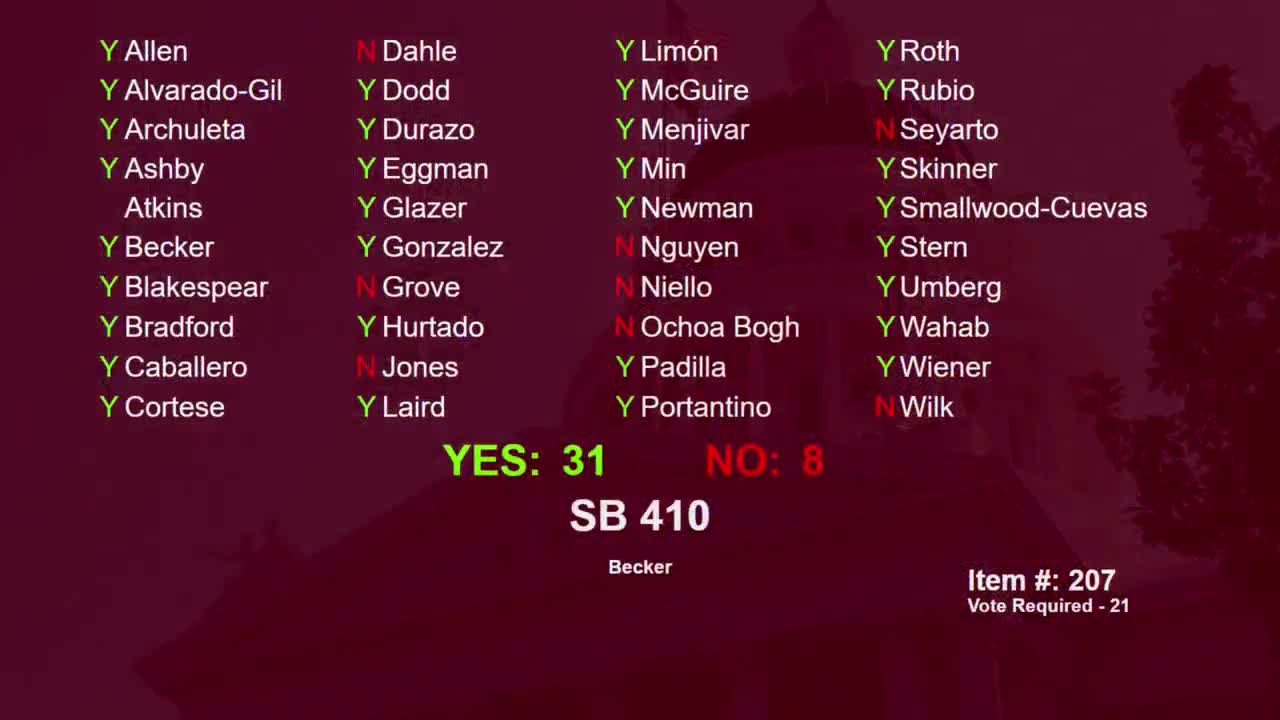 4MIN
Senate Floor
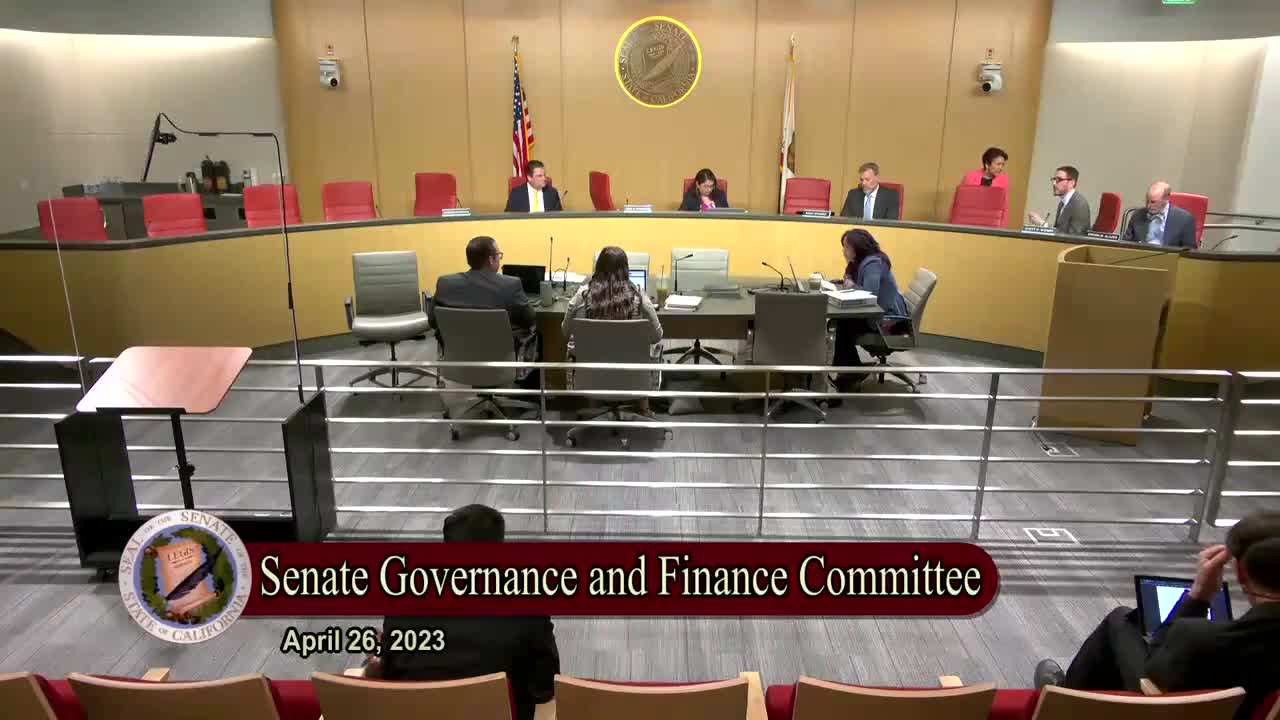 13MIN
Senate Standing Committee on Governance and Finance
Bill Author
Bill Co-Author(s):
