SB 579: Fish: Annual Provisional Stocking Document.
- Session Year: 2023-2024
- House: Senate
- Latest Version Date: 2023-09-08
Current Status:
Passed
(2023-09-08: Chaptered by Secretary of State. Chapter 181, Statutes of 2023.)
Introduced
In Committee
First Chamber
In Committee
Second Chamber
Enacted
Existing law establishes the Department of Fish and Wildlife and prescribes the functions and responsibilities of the department with regard to the implementation, administration, and enforcement of laws regulating fish and wildlife in the state.
This bill would require the department, before January 1 of each year, to make publicly available on the departments internet website a specified annual document that contains conditional or provisional plans for freshwater fish plants. The bill would require the department, as part of this document, to include a disclaimer that states that the fish plants are not completely certain to occur as planned and that the department may not be able to adhere to the provisional stocking dates and places due to various unforeseen conditions, as specified. The bill would also require the disclaimer to include a statement referring the public to the Fish Planting Schedule on the departments internet website for more up-to-date and accurate information about fish plants.
Existing law establishes the Department of Fish and Wildlife and prescribes the functions and responsibilities of the department with regard to the implementation, administration, and enforcement of laws regulating fish and wildlife in the state.
This bill would require the department, before January 1 of each year, to make publicly available on the departments internet website a specified annual document that contains conditional or provisional plans for freshwater fish plants.
(a)It is the intent of the Legislature to make the Annual Provisional Stocking Document available to the public, recognizing that this document expresses the departments intended plans for fish plants and that the departments execution of these plans is not guaranteed.
(b)The department, before January 1 of each year, shall make an updated Annual Provisional Stocking Document publicly available on the departments internet website.
(c)The department, as part of the document required pursuant to subdivision (b), shall include a disclaimer stating that these fish plants are not completely certain to occur as planned. The disclaimer shall include a statement that the department may not be able to adhere to the provisional stocking dates and places due to various unforeseen conditions, including, but not limited to, weather, disease, staffing, and funding. The disclaimer shall also include a statement referring the public to the Fish Planting Schedule on the departments internet website for more up-to-date and accurate information about fish plants.
(d)As used in this section, the Annual Provisional Stocking Document, also known as the Provisional Fish Release Plans for the Current Fiscal Year, means a document used by the department that contains conditional or provisional plans for freshwater fish plants.
(a)It is the intent of the Legislature to make the Annual Provisional Stocking Document available to the public, recognizing that this document expresses the departments intended plans for fish plants and that the departments execution of these plans is not guaranteed.
(b)The department, before January 1 of each year, shall make an updated Annual Provisional Stocking Document publicly available on the departments internet website.
(c)The department, as part of the document required pursuant to subdivision (b), shall include a disclaimer stating that these fish plants are not completely certain to occur as planned. The disclaimer shall include a statement that the department may not be able to adhere to the provisional stocking dates and places due to various unforeseen conditions, including, but not limited to, weather, disease, staffing, and funding. The disclaimer shall also include a statement referring the public to the Fish Planting Schedule on the departments internet website for more up-to-date and accurate information about fish plants.
(c)(d)As used in this section, the Annual Provisional Stocking Document, also known as the Provisional Fish Release Plans for the Current Fiscal Year, means a document used by the department that contains conditional or provisional plans for freshwater fish plants.
(a)It is the intent of the Legislature to make the Annual Provisional Stocking Document available to the public, recognizing that this document expresses the departments intended plans for fish plants and that the departments execution of these plans is not guaranteed.
(b)The department, before January 1 of each year, shall make an updated Annual Provisional Stocking Document publicly available on the departments internet website.
(c)As used in this section, the Annual Provisional Stocking Document, also known as the Provisional Fish Release Plans for the Current Fiscal Year, means a document used by the department that contains conditional or provisional plans for freshwater fish plants.
|
Date
|
Status
|
|---|---|
| Sep 8, 2023 | Chaptered by Secretary of State. Chapter 181, Statutes of 2023. |
| Sep 8, 2023 | Approved by the Governor. |
| Aug 30, 2023 | Enrolled and presented to the Governor at 2 p.m. |
| Aug 24, 2023 | In Senate. Ordered to engrossing and enrolling. |
| Aug 24, 2023 | Read third time. Passed. (Ayes 73. Noes 0. Page 2801.) Ordered to the Senate. |
| Aug 17, 2023 | Read second time. Ordered to consent calendar. |
| Aug 16, 2023 | From committee: Do pass. Ordered to consent calendar. (Ayes 15. Noes 0.) (August 16). |
| Jun 20, 2023 | From committee: Do pass and re-refer to Com. on APPR. with recommendation: To consent calendar. (Ayes 15. Noes 0.) (June 20). Re-referred to Com. on APPR. |
| May 18, 2023 | Referred to Com. on W., P., & W. |
| May 11, 2023 | In Assembly. Read first time. Held at Desk. |
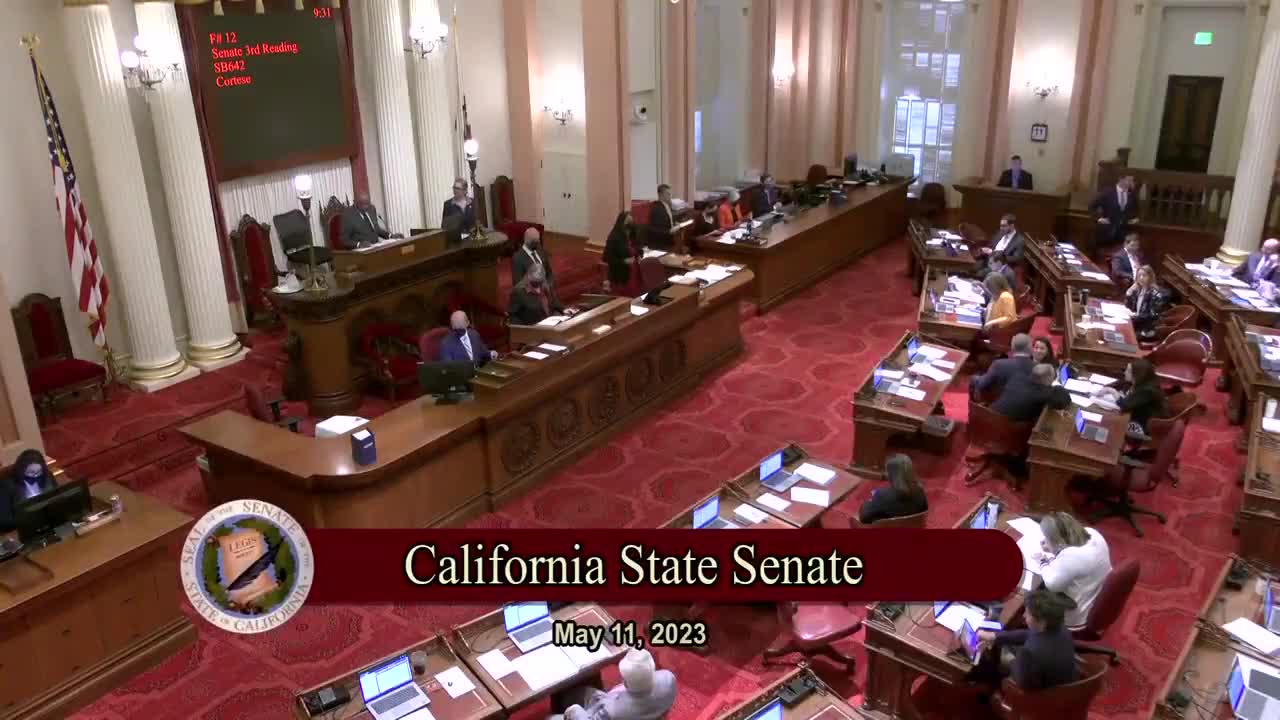
| May 11, 2023 | Read third time. Passed. (Ayes 39. Noes 0. Page 1051.) Ordered to the Assembly. |
| May 2, 2023 | Read second time. Ordered to third reading. |
| May 1, 2023 | From committee: Be ordered to second reading pursuant to Senate Rule 28.8. |
| Apr 21, 2023 | Set for hearing May 1. |
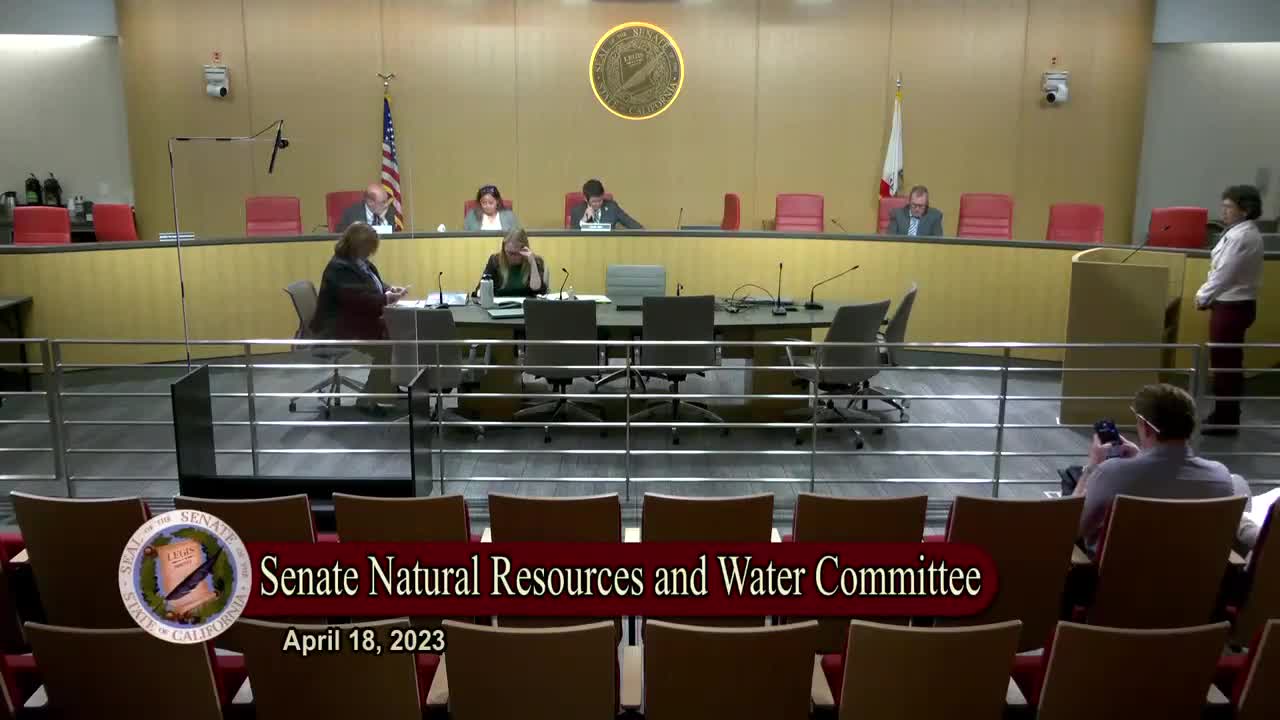
| Apr 19, 2023 | From committee: Do pass and re-refer to Com. on APPR. (Ayes 10. Noes 0. Page 802.) (April 18). Re-referred to Com. on APPR. |
| Apr 10, 2023 | Set for hearing April 18. |
| Mar 20, 2023 | From committee with author's amendments. Read second time and amended. Re-referred to Com. on N.R. & W. |
| Feb 22, 2023 | Referred to Com. on N.R. & W. |
| Feb 16, 2023 | From printer. May be acted upon on or after March 18. |
| Feb 15, 2023 | Introduced. Read first time. To Com. on RLS. for assignment. To print. |
|
Date
|
Description
|
Location
|
Votes
|
|
|---|---|---|---|---|
| Aug 24, 2023 | SB 579 Umberg Consent Calendar Second Day Regular Session | Assembly Floor |
Passed |
|
| Aug 16, 2023 | Do pass. To Consent Calendar. | Assembly Standing Committee on Appropriations |
Passed |
|
| Jun 20, 2023 | Do pass and be re-referred to the Committee on [Appropriations] with recommendation: To Consent Calendar | Assembly Standing Committee on Water, Parks, and Wildlife |
Passed |
|
| May 11, 2023 | Senate 3rd Reading SB579 Umberg | Senate Floor |
Passed |
|
| Apr 18, 2023 | Do pass, but first be re-referred to the Committee on [Appropriations] | Senate Standing Committee on Natural Resources and Water |
Passed |
This list shows positions taken on this bill by organizations on the date displayed, which is linked to the original source.
Positions by individuals are not included.
Date of Hearing: August 16, 2023
ASSEMBLY COMMITTEE ON APPROPRIATIONS
Chris Holden, Chair
SBPCA Bill Id:SB 579
Author:(Umberg) – As Amended Ver:March 20, 2023
Policy Committee: | Water, Parks and Wildlife | Vote: | 15 - 0 |
|
| ||
|
|
Urgency: No State Mandated Local Program: No Reimbursable: No
SUMMARY:
This bill requires the California Department of Fish and Wildlife (CDFW) to make an updated “Annual Provisional Stocking Document” available on its website before January 1 of each year. This bill also requires the stocking document to include a specified disclaimer stating the fish plants are not completely certain to occur as planned, CDFW may not be able to adhere to the provisional stocking dates and places due to various unforeseen conditions, and the “Fish Planting Schedule” available on CDFW’s website provides more up-to-date and accurate information.
FISCAL EFFECT:
Minor and absorbable costs to CDFW.
COMMENTS:
1) Purpose. According to the author:
Until recently, CDFW would post their annual provisional stocking plans at or near the beginning of each calendar year so that anglers and the public could view the [CDFW’s] estimation of where and when they planned to stock fish for the calendar year...For example, residents may notice from the provisional plan that there is less stocking planned near disadvantaged communities than the previous year. Seeing this provisional plan allows these people and communities to educate themselves on why their local bodies of waters are not being stocked and then work with governmental entities, nonprofits, and others to try to increase the stocking in their communities. Therefore, [this bill] is necessary to increase transparency for recreational anglers by requiring CDFW, to once again, make their Annual Provisional Stocking Document publicly available on their website.
2) Background. CDFW is the principal agency with responsibility to manage and conserve the biological resources of the state, including fish, wildlife, and plants. As part of its responsibility, CDFW has operated a statewide system of fish hatchery facilities since the late 1800s that rear, and subsequently release, millions of trout, salmon, and steelhead of various age and size classes into state waters. These fish are reared and released for recreational and commercial fishing, and for conservation and restoration of fish species that are native to California waters. CDFW also stocks water bodies throughout the state with several species of trout and inland salmon raised in its fish hatcheries to provide recreational opportunities for anglers. According to the Senate Natural Resources and Water Committee analysis of this bill, for the most recent five complete years, CDFW planted almost 32 million fish from eight species of trout and inland salmon weighing over 8.7 million pounds.
CDFW, on its “Fish Planting Schedule” available on its website, provides information on hundreds of trout plants in various water bodies across the state during specified time periods. This information is readily available to recreational anglers. According to a disclaimer at the top of the webpage:
This dynamic Fish Planting Schedule is updated in real time, directly by CDFW Hatchery staff. Although it contains current information, all fish plants are subject to change depending on road, water, weather and operational conditions. Conditions permitting, the waters listed here will be restocked with catchable-size fish from CDFW hatcheries, according to this schedule. More specific dates are not given to avoid focusing excess fishing activity immediately after a plant.
In addition, CDFW previously published an “Annual Provisional Stocking Document” online but discontinued the practice the last few years due to circumstances that resulted in very different stocking than anticipated, including disease outbreaks, drought, fires, floods, high water temperatures, and infrastructure issues. In light of these challenges, the department’s ability to forecast planting schedules up to a year in advance has been significantly hampered the last few years. CDFW intends to again produce an “Annual Provisional Stocking Document” in fiscal year (FY) 2023 if hatchery operations remain close to normal and fish inventories stabilize. This bill requires CDFW to make this “Annual Provisional Stocking Document” available on its website before January 1 of each year.
The state’s hatcheries used for trout stocking are funded, in part, through the issuance of sport fishing licenses. Fees collected from license sales are deposited into the Hatcheries and Inland Fisheries Fund (HIFF). Recently, additional funds were made available to hatcheries to help address infrastructure and equipment needs necessary to improve climate resiliency. These investments include $16 million in FY 2021, $35 million in FY 2022, and $5 million annually from FY 2023 through FY 2027. The Budget Act of 2023 approved an additional $1.2 million in FY 2023-24 ongoing and seven positions at CDFW to ensure the department is maximizing the use of the available balance in HIFF to perform the required workload associated with trout hatcheries.
Analysis Prepared by: Nikita Koraddi / APPR. / (916) 319-2081
Date of Hearing: June 20, 2023
ASSEMBLY COMMITTEE ON WATER, PARKS, AND WILDLIFE
Rebecca Bauer-Kahan, Chair
SBPCA Bill Id:SB 579
Author:(Umberg) – As Amended Ver:March 20, 2023
SENATE VOTE: 39-0
SUBJECT: Fish: Annual Provisional Stocking Document
SUMMARY: Requires the California Department of Fish and Wildlife (CDFW) to make an updated Annual Provisional Stocking Document (Stocking Document) available on its website before January 1 of each year. Specifically, this bill:
- Requires that CDFW update and make the Stocking Document available by January 1 each year.
- Requires that the Stocking Document include a disclaimer that unforeseen conditions may prevent compliance and that the Fish Planting Schedule currently available on CDFW’s website provides the most accurate information.
EXISTING LAW:
- Establishes CDFW in the California Natural Resources Agency [Fish and Game Code (FGC) § 700], including:
- CDFW’s mission is to manage California’s diverse fish, wildlife, and plant resources, and the habitats upon which they depend, for their ecological values and for their use and enjoyment of the public (FGC § 712.1); and
- CDFW’s core programs include biodiversity conservation, and hunting, fishing, and public use, among other things (FGC § 712.1).
- Makes it unlawful to place, plant, or cause to be placed or planted, in any of the waters of the state, any live fish without securing the written permission of CDFW (FGC § 6400).
- Requires the Fish and Game Commission to establish, maintain, and operate fish hatcheries for stocking the waters of the State (FGC § 1120).
- Sets the state hatchery production goal of 2.75 pounds of released trout per sport fishing license sold in a previous calendar year, as provided. Requires the predominant number of released fish be catchable size or larger, and requires CDFW to achieve this goal in compliance with certain policies, including the Strategic Plan for Trout Management, as provided (FGC § 13007).
- Declares that it is the policy of the state that to the extent possible the state should establish and maintain native wild trout stocks and discourage the planting of hatchery-raised hybrid and nonnative fish species in wild trout waters or in other areas that would adversely affect native aquatic and nonaquatic species (FGC § 1726).
- Requires that CDFW release an update every five years to the Strategic Plan for Trout Management, which among other things, is guided by ecologically and environmentally sustainable hatchery and stocking practices for native trout as listed (FGC § 1728).
FISCAL EFFECT: Unknown. This bill is keyed fiscal.
COMMENTS:
- Purpose of this bill. According to the author, “Until recently, CDFW would post their annual provisional stocking plans at or near the beginning of each calendar year so that anglers and the public could view the [CDFW’s] estimation of where and when they planned to stock fish for the calendar year. This ‘Annual Provisional Stocking Document’ was a helpful resource because it gave a modicum of predictability to anglers in California by allowing them to see which bodies of water were planned to be stocked for the year and an approximation of when they were planned to be stocked. This information was useful, not just to anglers, but also policy makers, because it allows California residents and policy makers to see where the state is planning to prioritize fish stocking for the year. For example, residents may notice from the provisional plan that there is less stocking planned near disadvantaged communities than the previous year. Seeing this provisional plan allows these people and communities to educate themselves on why their local bodies of waters are not being stocked and then work with governmental entities, nonprofits, and others to try to increase the stocking in their communities. Therefore, [this bill] is necessary to increase transparency for recreational anglers by requiring CDFW, to once again, make their Annual Provisional Stocking Document publicly available on their website.”
- Background. Trout fish stocking in the U.S. dates back to the 1800’s. Non-native trout have been stocked throughout California to enhance recreational opportunities, even before the creation of CDFW. In fact, many fish introduced to California are so commonplace that many believed them to be native.[1] For example, in 1871, Seth Green, known to many as the “Father of Fish Culture in America,” boarded a train from New York to California with 12,000 newly hatched American shad in milk cans. One week later, he arrived in Sacramento, traveled up to Tehama, and launched the first formal introduction of non-native fish to California.
Today, fish plants (i.e., releasing fish into bodies of water) are still largely done to support recreational fishing, although there is a stronger focus on restoring native fish, mitigating for habitat loss caused by developments such as dams, and reducing negative environmental impacts of introducing recreational fish.
California supports a rich heritage of native trout, wild trout fisheries, and a hatchery system that produces and stocks trout, which are highly desirable for anglers (for purposes of this analysis, ‘trout’ includes the twelve recognized native trout, non-native species of trout and char, the Mountain Whitefish, and landlocked salmon). CDFW is responsible for managing the state’s trout resources to provide the public with diverse angling opportunities and to ensure the persistence of trout populations.
The right fish, right location, right numbers, right time, right purpose. Judgement on which waters of the state will be stocked considers the best available data, hatchery production capacity, several governing policies, stocking environmental impact reports, and the biological needs of the released fish. It is important to note that fish are living animals, and cannot be planted in habitat that will not support them—warmer, lower elevation areas are not suitable for trout. Additionally, not all of the released fish are of “catchable” size, so a released fingerling (baby) trout may need years before achieving “catchable” size.
According to the 2003 Strategic Plan for Trout Management (Strategic Plan), CDFW has stocked hatchery catchable trout “to satisfy angler desires and create recreational opportunities” since 1945. Recreational angling is one of the main themes of the Strategic Plan, and includes the goals of providing diverse opportunities for angling statewide, and increasing the public’s awareness of trout-related recreational opportunities through improved communication and educational sources. The Strategic Plan recognizes that these efforts are part of “the broader sphere of fisheries and resource management, which includes protecting and maintaining native and wild species and their habitats.” The 2021 draft update of the Strategic Plan delineates priorities intended to sustain and restore wild trout fisheries, better utilize hatchery trout, and improve angler satisfaction.
Forecasting for fish planting. CDFW previously published a Stocking Document online, but discontinued the practice the last few years due to circumstances that resulted in a very different stocking schedule than anticipated (continued below). CDFW intends to again produce a Stocking Document in Fiscal Year 2023 if hatchery operations remain close to normal. In view of recent challenges, CDFW’s ability to forecast planting schedules has been significantly hampered the last few years. However, CDFW maintains two other fish planting logs currently available to the public – the Fish Planting Schedule and an online interactive map.
As of June 12, 2023, the “Fish Planting Schedule” available on CDFW’s website, provides information on nearly 1,000 fish plants of various species and size into various water bodies across the state from the week of December 18 – 24, 2022 to the week of June 25 – July 1, 2023.[2] This information is readily-available to recreational anglers. According to a disclaimer at the top of the webpage:
This dynamic Fish Planting Schedule is updated in real time, directly by CDFW Hatchery staff. Although it contains current information, all fish plants are subject to change depending on road, water, weather and operational conditions. Conditions permitting, the waters listed here will be restocked with catchable-size fish from CDFW hatcheries, according to this schedule. More specific dates are not given to avoid focusing excess fishing activity immediately after a plant.
The Fish Planting Schedule includes a two-week-ahead forecast of planned stocking and about twenty-six weeks of previous stocking history is currently available on CDFW’s website. As such, only fish of catchable size are listed on the Planting Schedule to protect the smaller fish, and after twenty-six weeks this information would largely be considered outdated by anglers. Data currently available from the Fish Planting Schedule show planting performed in 44 of the state’s 58 counties, including both urban and rural areas, with many water bodies being repeatedly planted throughout the six months of data available. Eleven lakes in Fresno County were planted a total of 49 times, most repeatedly.
Additionally, CDFW has a geographical information system (GIS) map available that represents the general locations that have been stocked with fish by CDFW during the current year and the two preceding years.[3] It was created to provide a spatial representation of release waters described in CDFW’s statewide hatchery database. This spatial representation makes fish stocking information more accessible both to CDFW staff and to other interested parties and could be utilized as a tool by hatcheries to enhance fish stocking planning and efficiency.
The annual forecast in the Stocking Document could be subject to considerable change. In addition, CDFW already limits advance knowledge specific to planting sites to limit fishing pressure. An annual fish stocking forecast may support some level of planning for anglers (a one to seven month range is given as a potential release time), although the fish plants are not guaranteed. The current Fish Planting Schedule represents the most accurate information. The available CDFW GIS map provides some information for fish plants from the previous two years. The 2019 version of the Stocking Document also contained dates for the last time that body of water was stocked with that size and species of fish. Most of these previous release dates had been from the previous years (2018–2019), although some dated back as far 2003 and, for some, the 2019 release was the first fish plant of that size and species. This level of detail is not available on the GIS map or planting schedule that CDFW currently maintains.
Recent challenges to fish planting. Fish stocking can vary based on a wide range of factors such as water temperature, flow, depth, weather, site accessibility and popularity, algae presence, high turbidity, high alkalinity, general poor water quality, funding, and other reasons.
Over the last few years, CDFW has faced multiple challenges to its planting plans.
- Disease outbreaks. In 2020, new-to-California pathogens – Lactococcus garvieae and Lactococcus petauri (Lactococcus spp.) – were detected at the Fish Springs, Black Rock, and Mojave River Fish Hatcheries. This bacterial outbreak resulted in the euthanasia of about 3.2 million trout. In 2020, the nearby Hot Creek Hatchery was quarantined as a safety measure, and, in 2021, it also experienced an outbreak of Lactococcus spp. In 2022, Black Rock and Fish Springs Hatcheries experienced another outbreak of Lactococcus spp. These bacteria had not been previously observed in hatcheries or the wild in California. The working hypothesis is that the pathogens were transported to the hatcheries by birds present in the Pacific Flyway. These outbreaks limited the availability of fish for planting in the Eastern Sierras and Southern California. CDFW re-allocated fish from other locations and purchased some from private hatcheries in order to plant more locations in those areas.
- Drought, fire, and flood. In 2021, all trout at the American River Hatchery were relocated as there was insufficient cold water being released from the Folsom Dam Complex. In 2019 – 2022, fire and drought limited operations at the Silverado Fish Base which resulted in reduced stocking in the San Francisco Bay Area. Drought conditions in 2020 – 2022 also forced the release of fish from hatcheries earlier than usual. Severe flooding at the Moccasin Creek Fish Hatchery in 2017 caused significant damage that was not repaired until 2022. In addition, ongoing work that impacts the water tunnels that provide water for Moccasin Creek will require limiting the fish inventory each fall until 2030.
- Additional infrastructure issues. The Kern River Hatchery has remained closed since 2019 due to an inoperable water intake.
Recent hatchery budget augmentation. The state’s hatcheries used for trout stocking are funded, in part, through sport fishing license sales. Recently, additional funds were made available to these hatcheries to help address infrastructure and equipment needs necessary to improve climate resiliency. These include $16 million in fiscal year 2021, approximately $35 million in fiscal year 2022, and $5 million annually from fiscal year 2023 – 2027.
- Related legislation. SB 1148 (Pavley), Chapter 565, Statutes of 2012, requires CDFW to give priority to stocking native hatchery-produced species in California waters where stocking is determined to be appropriate by CDFW.
AB 7 (Cogdill), Chapter 689, Statues 2005, established hatchery production goals tied to fishing license sales and increased priority for stocking native trout strains where appropriate.
REGISTERED SUPPORT / OPPOSITION:
Support
None on file
Opposition
None on file
Analysis Prepared by: Stephanie Mitchell / W., P., & W. / (916) 319-2096
SENATE RULES COMMITTEE Office of Senate Floor Analyses (916) 651-1520 Fax: (916) 327-4478 | SB 579 |
THIRD READING
Bill No: SB 579
Author: Umberg (D)
Amended: 3/20/23
Vote: 21
SENATE NATURAL RES. & WATER COMMITTEE: 10-0, 4/18/23
AYES: Min, Seyarto, Allen, Becker, Dahle, Eggman, Gonzalez, Grove, Laird, Limón
NO VOTE RECORDED: Hurtado
SENATE APPROPRIATIONS COMMITTEE: Senate Rule 28.8
SUBJECT: Fish: Annual Provisional Stocking Document
SOURCE: Author
DIGEST:
This bill requires the California Department of Fish and Wildlife to make available online an updated Annual Provisional Stocking Document, as provided
ANALYSIS:
Existing law:
- Establishes the California Department of Fish and Wildlife (department) in the California Natural Resources Agency. (Fish and Game Code (FGC) §700)
- The department’s mission is to manage California’s diverse fish, wildlife, and plant resources, and the habitats upon which they depend, for their ecological values and for their use and enjoyment of the public. (FGC §712.1)
- The department’s core programs include biodiversity conservation, and hunting, fishing, and public use, among other things. (FGC §712.1)
- Makes it unlawful to place, plant, or cause to be placed or planted, in any of the waters of the state, any live fish without securing the written permission of the department. (FGC §6400)
- Sets the state hatchery production goal of 2.75 pounds of released trout per sport fishing license sold in a previous calendar year, as provided. Requires the predominant number of released fish be catchable size or larger, and requires the department to achieve this goal in compliance with certain policies, including the Strategic Plan for Trout Management, as provided. (FGC §13007)
This bill requires the department to make available online an updated Annual Provisional Stocking Document, as provided. Specifically, this bill:
- Requires the department before January 1 annually to post an updated Annual Provisional Stocking Document on the department’s public internet website. Defines the Annual Provisional Stocking Document as a document used by the department that contains conditional or provisional plans for freshwater fish plants, as specified.
- Requires the Annual Provisional Stocking Document to include a disclaimer that fish plants are not completely certain to occur due to various unforeseen conditions, and to include a statement referring the public to the department’s online Fish Planting Schedule, as specified.
- States legislative intent that the Annual Provisional Stocking Document be available to the public and acknowledging that the department’s plans are subject to change.
Background
The department stocks water bodies throughout the state with several species of trout and inland salmon raised in its fish hatcheries to provide recreational opportunities for anglers.
As of April 12, 2023, the department, on its “Fish Planting Schedule” available on its website, provides information on over 600 trout plants into various water bodies across the state from the week of October 16 – 22, 2022 to the week of April 23 – 29, 2023. This information is readily-available to recreational anglers. According to a disclaimer at the top of the webpage:
This dynamic Fish Planting Schedule is updated in real time, directly by CDFW Hatchery staff. Although it contains current information, all fish plants are subject to change depending on road, water, weather and operational conditions. Conditions permitting, the waters listed here will be restocked with catchable-size fish from CDFW hatcheries, according to this schedule. More specific dates are not given to avoid focusing excess fishing activity immediately after a plant.
According to the Strategic Plan for Trout Management (2003 update)(Strategic Plan), the department has stocked hatchery catchable trout “to satisfy angler desires and create recreational opportunities” since 1945. Recreational angling is one of the main themes of the Strategic Plan, and includes the goals of providing diverse opportunities for angling statewide, and increasing the public’s awareness of trout-related recreational opportunities through improved communication and educational sources. The Strategic Plan recognizes that these efforts are part of “the broader sphere of fisheries and resource management, which includes protecting and maintaining native and wild species and their habitats.”
The department previously published an Annual Provisional Stocking Document online, but discontinued the practice the last few years due to circumstances that resulted in very different stocking than anticipated. Over the last few years, the department has faced multiple challenges to its planting plans. These include:
- Disease outbreaks. In 2020, new-to-California pathogens – Lactococcus garvieae and Lactococcus petauri (Lactococcus spp.) – were detected at the Fish Springs, Black Rock, and Mojave River Fish Hatcheries. This bacterial outbreak resulted in the euthanasia of about 3.2 million trout. In 2020, the nearby Hot Creek Hatchery was quarantined as a safety measure, and, in 2021, it also experienced an outbreak of Lactococcus spp. In 2022, Black Rock and Fish Springs Hatcheries experienced another outbreak of Lactococcus spp. These bacteria had not been previously observed in hatcheries or the wild in California. The working hypothesis is that the pathogens were transported to the hatcheries by birds present in the Pacific Flyway. These outbreaks limited the availability of fish for planting in the Eastern Sierras and Southern California. The department re-allocated fish from other locations and purchased some from private hatcheries in order to plant more locations in those areas.
- Drought, fire, and flood. In 2021, all trout at the American River Hatchery were relocated as there was insufficient cold water being released from the Folsom Dam Complex. In 2019 – 2022, fire and drought limited operations at the Silverado Fish Base which resulted in reduced stocking in the San Francisco Bay Area. Drought conditions in 2020 – 2022 also forced the release of fish from hatcheries earlier than usual. Severe flooding at the Moccasin Creek Fish Hatchery in 2017 caused significant damage that was not repaired until 2022. In addition, ongoing work that impacts the water tunnels that provide water for Moccasin Creek will require limiting the fish inventory each fall until 2030.
- Additional infrastructure issues. The Kern River Hatchery has remained closed since 2019 due to an inoperable water intake.
It is also important to note that “catchable” size trout take multiple years to produce, and that fish are living animals that cannot be planted in habitat that will not support them.
In view of these challenges, the department’s ability to forecast planting schedules up to a year in advance has been significantly hampered the last few years. The department intends to again produce an Annual Provisional Stocking Document in fiscal year 2023 if hatchery operations remain close to normal.
Comments
The value of fish stocking forecasts. It is unclear what the value of an annual fish stocking forecast is compared to the two-week-ahead forecast of planned stocking and about twenty-six weeks of previous stocking that is currently readily-available on the department’s website. The annual forecast could be potentially subject to considerable change. In addition, the department already limits advance knowledge specific to planting sites to minimize fishing pressure. Any part of the state concerned about inadequate stocking has sufficient information available to argue for more. Data currently available from the Fish Planting Schedule show planting performed in 41 of the state’s 58 counties, including both urban and rural areas, with many water bodies being repeatedly planted throughout the six months of data available. Eleven lakes in Orange County were planted a total of 35 times, most repeatedly.
FISCAL EFFECT: Appropriation: No Fiscal Com.: Yes Local: No
SUPPORT: (Verified 5/2/23)
None received
OPPOSITION: (Verified 5/2/23)
None received
ARGUMENTS IN SUPPORT: According to the author, “Fish stocking is based on a wide range of factors such as water temperature, flow, depth, weather, site accessibility and popularity, algae, high turbidity, high alkalinity, general poor water quality, funding, and other reasons. Until recently, CDFW would post their annual provisional stocking plans at or near the beginning of each calendar year so that anglers and the public could view the department’s estimation of where and when they planned to stock fish for the calendar year. This ‘Annual Provisional Stocking Document’ was a helpful resource because it gave a modicum of predictability to anglers in California by allowing them to see which bodies of water were planned to be stocked for the year and an approximation of when they were planned to be stocked. This information was useful, not just to anglers, but also policy makers, because it allows California residents and policy makers to see where the state is planning to prioritize fish stocking for the year. For example, residents may notice from the provisional plan that there is less stocking planned near disadvantaged communities than the previous year. Seeing this provisional plan allows these people and communities to educate themselves on why their local bodies of waters are not being stocked and then work with governmental entities, nonprofits, and others to try to increase the stocking in their communities. Therefore, SB 579 is necessary to increase transparency for recreational anglers by requiring CDFW, to once again, make their Annual Provisional Stocking Document publicly available on their website.”
Prepared by: Katharine Moore / N.R. & W. / (916) 651-4116
5/3/23 15:16:10
**** END ****
SENATE COMMITTEE ON NATURAL RESOURCES AND WATER
Senator Dave Min, Chair
2023 - 2024 Regular
Bill No: SB 579 Hearing Date: April 18, 2023
Author: | |||
Version: | Amended | ||
Urgency: | Fiscal: | ||
Consultant: | |||
Subject: Fish: Annual Provisional Stocking Document
BACKGROUND AND EXISTING LAW
Existing law:
- Establishes the California Department of Fish and Wildlife (department) in the California Natural Resources Agency. (Fish and Game Code (FGC) §700)
- The department’s mission is to manage California’s diverse fish, wildlife, and plant resources, and the habitats upon which they depend, for their ecological values and for their use and enjoyment of the public. (FGC §712.1)
- The department’s core programs include biodiversity conservation, and hunting, fishing, and public use, among other things. (FGC §712.1)
- Makes it unlawful to place, plant, or cause to be placed or planted, in any of the waters of the state, any live fish without securing the written permission of the department. (FGC §6400)
- Sets the state hatchery production goal of 2.75 pounds of released trout per sport fishing license sold in a previous calendar year, as provided. Requires the predominant number of released fish be catchable size or larger, and requires the department to achieve this goal in compliance with certain policies, including the Strategic Plan for Trout Management, as provided. (FGC §13007)
The department stocks water bodies throughout the state with several species of trout and inland salmon raised in its fish hatcheries to provide recreational opportunities for anglers.
As of April 12, 2023, the department, on its “Fish Planting Schedule” available on its website, provides information on over 600 trout plants into various water bodies across the state from the week of October 16 – 22, 2022 to the week of April 23 – 29, 2023. This information is readily-available to recreational anglers. According to a disclaimer at the top of the webpage:
This dynamic Fish Planting Schedule is updated in real time, directly by CDFW Hatchery staff. Although it contains current information, all fish plants are subject to change depending on road, water, weather and operational conditions. Conditions permitting, the waters listed here will be restocked with catchable-size fish from CDFW hatcheries, according to this schedule. More specific dates are not given to avoid focusing excess fishing activity immediately after a plant.
According to the Strategic Plan for Trout Management (2003 update)(Strategic Plan), the department has stocked hatchery catchable trout “to satisfy angler desires and create recreational opportunities” since 1945. Recreational angling is one of the main themes of the Strategic Plan, and includes the goals of providing diverse opportunities for angling statewide, and increasing the public’s awareness of trout-related recreational opportunities through improved communication and educational sources. The Strategic Plan recognizes that these efforts are part of “the broader sphere of fisheries and resource management, which includes protecting and maintaining native and wild species and their habitats.”
The department previously published an Annual Provisional Stocking Document online, but discontinued the practice the last few years due to circumstances (described below) that resulted in very different stocking than anticipated.
PROPOSED LAW
This bill would require the department to make available online an updated Annual Provisional Stocking Document, as provided. Specifically, this bill would:
- Require the department before January 1 annually to post an updated Annual Provisional Stocking Document on the department’s public internet website. Define the Annual Provisional Stocking Document as a document used by the department that contains conditional or provisional plans for freshwater fish plants, as specified.
- Require the Annual Provisional Stocking Document to include a disclaimer that fish plants are not completely certain to occur due to various unforeseen conditions, and to include a statement referring the public to the department’s online Fish Planting Schedule, as specified.
- State legislative intent that the Annual Provisional Stocking Document be available to the public and acknowledging that the department’s plans are subject to change.
ARGUMENTS IN SUPPORT
According to the author, “Fish stocking is based on a wide range of factors such as water temperature, flow, depth, weather, site accessibility and popularity, algae, high turbidity, high alkalinity, general poor water quality, funding, and other reasons. Until recently, CDFW would post their annual provisional stocking plans at or near the beginning of each calendar year so that anglers and the public could view the department’s estimation of where and when they planned to stock fish for the calendar year. This ‘Annual Provisional Stocking Document’ was a helpful resource because it gave a modicum of predictability to anglers in California by allowing them to see which bodies of water were planned to be stocked for the year and an approximation of when they were planned to be stocked. This information was useful, not just to anglers, but also policy makers, because it allows California residents and policy makers to see where the state is planning to prioritize fish stocking for the year. For example, residents may notice from the provisional plan that there is less stocking planned near disadvantaged communities than the previous year. Seeing this provisional plan allows these people and communities to educate themselves on why their local bodies of waters are not being stocked and then work with governmental entities, nonprofits, and others to try to increase the stocking in their communities. Therefore, SB 579 is necessary to increase transparency for recreational anglers by requiring CDFW, to once again, make their Annual Provisional Stocking Document publicly available on their website.”
ARGUMENTS IN OPPOSITION
None received
COMMENTS
The value of fish stocking forecasts.
It is unclear what the value of an annual fish stocking forecast is compared to the two-week-ahead forecast of planned stocking and about twenty-six weeks of previous stocking that is currently readily-available on the department’s website. The annual forecast could be potentially subject to consideration change. In addition, the department already limits advance knowledge specific to planting sites to limit fishing pressure. Any part of the state concerned about inadequate stocking has sufficient information available to argue for more. Data currently available from the Fish Planting Schedule show planting performed in 41 of the state’s 58 counties, including both urban and rural areas, with many water bodies being repeatedly planted throughout the six months of data available. Eleven lakes in Orange County were planted a total of 35 times, most repeatedly.
It is important to note that fish are living animals, and cannot be planted in habitat that will not support them.
As described below, the department’s ability to forecast planting schedules up to one year in advance has been significantly hampered the last few years. The department intends to again produce an Annual Provisional Stocking Document in fiscal year 2023 if hatchery operations remain close to normal.
Recent challenges to fish planting.
Over the last few years, the department has faced multiple challenges to its planting plans.
- Disease outbreaks. In 2020, new-to-California pathogens – Lactococcus garvieae and Lactococcus petauri (Lactococcus spp.) – were detected at the Fish Springs, Black Rock, and Mojave River Fish Hatcheries. This bacterial outbreak resulted in the euthanasia of about 3.2 million trout. In 2020, the nearby Hot Creek Hatchery was quarantined as a safety measure, and, in 2021, it also experienced an outbreak of Lactococcus spp. In 2022, Black Rock and Fish Springs Hatcheries experienced another outbreak of Lactococcus spp. These bacteria had not been previously observed in hatcheries or the wild in California. The working hypothesis is that the pathogens were transported to the hatcheries by birds present in the Pacific Flyway. These outbreaks limited the availability of fish for planting in the Eastern Sierras and Southern California. The department re-allocated fish from other locations and purchased some from private hatcheries in order to plant more locations in those areas.
- Drought, fire, and flood. In 2021, all trout at the American River Hatchery were relocated as there was insufficient cold water being released from the Folsom Dam Complex. In 2019 – 2022, fire and drought limited operations at the Silverado Fish Base which resulted in reduced stocking in the San Francisco Bay Area. Drought conditions in 2020 – 2022 also forced the release of fish from hatcheries earlier than usual. Severe flooding at the Moccasin Creek Fish Hatchery in 2017 caused significant damage that was not repaired until 2022. In addition, ongoing work that impacts the water tunnels that provide water for Moccasin Creek will require limiting the fish inventory each fall until 2030.
- Additional infrastructure issues. The Kern River Hatchery has remained closed since 2019 due to an inoperable water intake.
It is also important to note that “catchable” size trout take multiple years to produce.
In view of these challenges, the department’s ability to forecast planting schedules up to a year in advance has been significantly hampered the last few years.
Recent hatchery budget augmentation.
The state’s hatcheries used for trout stocking are funded, in part, through sport fishing license sales. Recently, additional funds were made available to these hatcheries to help address infrastructure and equipment needs necessary to improve climate resiliency. These include $16 million in fiscal year 2021, approximately $35 million in fiscal year 2022, and $5 million annually from fiscal year 2023 – 2027.
2018 – 2022 release data.
For the most recent five complete years, the department planted almost 31,840,000 fish from eight species of trout and inland salmon weighing almost 8,715,000 pounds.
Future amendments.
Should this bill be substantially amended in the future, the Committee may wish to re-hear the bill.
SUGGESTED AMENDMENTS: none
SUPPORT
None received
OPPOSITION
None received
-- END --
Discussed in Hearing
 3MIN
Senate Floor
 3MIN
Senate Standing Committee on Natural Resources and Water
Bill Author

Bill Co-Author(s):