SB 613: Organic waste: reduction goals: local jurisdictions: low-population waiver.
- Session Year: 2023-2024
- House: Senate
- Latest Version Date: 2023-10-13
Current Status:
Passed
(2023-10-13: Chaptered by Secretary of State. Chapter 878, Statutes of 2023.)
Introduced
In Committee
First Chamber
In Committee
Second Chamber
Enacted
Existing law requires the State Air Resources Board to approve and begin implementing a comprehensive short-lived climate pollutant strategy to achieve a certain reduction in statewide emissions of methane, including a goal of a 75% reduction in the level of the statewide disposal of organic waste from the 2014 level by 2025.
Existing law requires the Department of Resources Recycling and Recovery, in consultation with the state board, to adopt regulations that achieve those targets for reducing organic waste in landfills that may include, among other things, different levels of requirements for local jurisdictions and phased timelines based upon their progress in meeting the organic waste reduction goals, and penalties to be imposed by the department for noncompliance.
This bill would, for a local jurisdiction, as defined, waive those requirements and regulations until December 31, 2028, if the local jurisdiction does not qualify for other specified waivers, disposed of fewer than 5,000 tons of solid waste in 2014, and has fewer than 7,500 people, as provided. Beginning January 1, 2027, the bill would authorize the department, in its discretion, to renew the waiver, as provided.
Existing law requires, no later than January 1, 2018, requires the State Air Resources Board to approve and begin implementing a comprehensive short-lived climate pollutant strategy to achieve a certain reduction in statewide emissions of methane, including a goal of a 75% reduction in the level of the statewide disposal of organic waste from the 2014 level by 2025.
Existing law requires the Department of Resources Recycling and Recovery, in consultation with the state board, to adopt regulations that achieve those targets for reducing organic waste in landfills that may include, among other things, different levels of requirements for local jurisdictions and phased timelines based upon their progress in meeting the organic waste reduction goals, and penalties to be imposed by the department for noncompliance.
This bill would exempt would, for a local jurisdiction, as defined, from waive those requirements and regulations until December 31, 2028, if the local jurisdiction disposes does not qualify for other specified waivers, disposed of fewer than 5,000 tons of solid waste per year and in 2014, and has fewer than 7,500 people, as provided. Beginning January 1, 2027, the bill would authorize the department, in its discretion, to provide cities and counties meeting those conditions with an extended recovered organic waste product target schedule, to renew the waiver, as provided.
Existing law requires, no later than January 1, 2018, the State Air Resources Board to approve and begin implementing a comprehensive short-lived climate pollutant strategy to achieve a certain reduction in statewide emissions of methane, including a goal of a 75% reduction in the level of the statewide disposal of organic waste from the 2014 level by 2025.
Existing law requires the Department of Resources Recycling and Recovery, in consultation with the state board, to adopt regulations that achieve those targets for reducing organic waste in landfills that may include, among other things, different levels of requirements for local jurisdictions and phased timelines based upon their progress in meeting the organic waste reduction goals, and penalties to be imposed by the department for noncompliance.
This bill would exempt a local jurisdiction, as defined, from those requirements and regulations until December 31, 2028, if the local jurisdiction disposes of less fewer than 5,000 tons of solid waste per year and has fewer than 7,500 people, as provided. Beginning January 1, 2027, the bill would authorize the department, in its discretion, to provide cities and counties meeting those conditions with an extended recovered organic waste product target schedule, as provided.
Existing law requires, no later than January 1, 2018, the State Air Resources Board to approve and begin implementing a comprehensive short-lived climate pollutant strategy to achieve a certain reduction in statewide emissions of methane, including a goal of a 75% reduction in the level of the statewide disposal of organic waste from the 2014 level by 2025.
Existing law requires the Department of Resources Recycling and Recovery, in consultation with the state board, to adopt regulations that achieve those targets for reducing organic waste in landfills that may include, among other things, different levels of requirements for local jurisdictions and phased timelines based upon their progress in meeting the organic waste reduction goals, and penalties to be imposed by the department for noncompliance.
This bill would exempt a local jurisdiction, as defined, from those requirements and regulations if the local jurisdiction disposes of less than 5,000 tons of solid waste per year and has fewer than 7,500 people, as provided.
(a)Notwithstanding any other law or regulation, a local jurisdiction that does not qualify for a waiver pursuant to subdivision (a), (c), or (d) of Section 18984.12 of Title 14 of the California Code of Regulations, as that section read on January 1, 2023, that disposed of fewer than 5,000 tons of solid waste in 2014, and that has fewer than 7,500 people, qualifies for a waiver until December 1, 2028.
(b)A local jurisdiction seeking a low population waiver pursuant to subdivision (a) shall apply to the department. The application shall include both of the following:
(1)Information that establishes that the local jurisdiction meets the criteria in subdivision (a).
(2)The number of tons of solid waste that the local jurisdiction disposed of in 2014 if the local jurisdiction has not submitted the 2014 data directly to the departments disposal reporting system in 2014.
(c)Beginning January 1, 2027, the department may, in its discretion, renew a waiver issued pursuant to subdivision (a) in accordance with subdivision (b) of Section 18984.12 of Title 14 of the California Code of Regulations.
(d)For the purposes of this section, local jurisdiction includes a city, a county, a city and county, or a special district.
(a)(1)Notwithstanding any other law or regulation, subject to the requirements of subdivision (b), a local jurisdiction is exempt from the requirements imposed by this chapter and its implementing regulations until December 1, 2028, if the local jurisdiction disposes of fewer than 5,000 tons of solid waste per year and has fewer than 7,500 people.
(2)A local jurisdiction in possession of a low population waiver a local jurisdiction that does not qualify for a waiver pursuant to subdivision (a) (a), (c), or (d) of Section 18984.12 of Title 14 of the California Code of Regulations, as that section read on January 1, 2023, may qualify that disposed of fewer than 5,000 tons of solid waste in 2014, and that has fewer than 7,500 people, qualifies for an exemption a waiver until December 1, 2028, pursuant to paragraph (1). 2028.
(b)A local jurisdiction seeking a low population exemption waiver pursuant to paragraph (1) of subdivision (a) shall apply to the department. The application shall include both of the following:
(1)Information that establishes that the local jurisdiction meets the criteria in subdivision (a).
(2)The number of tons of solid waste that the local jurisdiction disposed of in 2014 if the local jurisdiction has not submitted the 2014 data directly to the departments disposal reporting system in 2014.
(c)Beginning January 1, 2027, the department may, in its discretion, provide cities and counties that meet the criteria described in subdivision (a) with an extended recovered organic waste product target schedule, which shall be exempt from the Administrative Procedure Act (Chapter 3.5 (commencing with Section 11340) of Part 1 of Division 3 of Title 2 of the Government Code). renew a waiver issued pursuant to subdivision (a) in accordance with subdivision (b) of Section 18984.12 of Title 14 of the California Code of Regulations.
(d)For the purposes of this section, local jurisdiction includes a city, a county, a city and county, or a special district.
(a)(1)Notwithstanding any other law or regulation, subject to the requirements of subdivision (b), a local jurisdiction is exempt from the requirements imposed by this chapter and its implementing regulations until December 1, 2028, if the local jurisdiction disposes of less fewer than 5,000 tons of solid waste per year and has fewer than 7,500 people. For the purposes of this section, local jurisdiction includes a city, county, a city and county, or a special district.
(b)(2)A local jurisdiction in possession of a low population waiver pursuant to subdivision (a) of Section 18984.12 of Title 14 of the California Code of Regulations, as that section read on January 1, 2023, may qualify for an exemption until December 1, 2028, pursuant to subdivision (a). paragraph (1).
(b)A local jurisdiction seeking a low population exemption pursuant to paragraph (1) of subdivision (a) shall apply to the department. The application shall include both of the following:
(1)Information that establishes that the local jurisdiction meets the criteria in subdivision (a).
(2)The number of tons of solid waste that the local jurisdiction disposed of in 2014 if the local jurisdiction has not submitted the 2014 data directly to the departments disposal reporting system in 2014.
(c)Beginning January 1, 2027, the department may, in its discretion, provide cities and counties that meet the criteria described in subdivision (a) with an extended recovered organic waste product target schedule, which shall be exempt from the Administrative Procedure Act (Chapter 3.5 (commencing with Section 11340) of Part 1 of Division 3 of Title 2 of the Government Code).
(d)For the purposes of this section, local jurisdiction includes a city, a county, a city and county, or a special district.
(a)Notwithstanding any other law or regulation, a local jurisdiction is exempt from the requirements imposed by this chapter and its implementing regulations if the local jurisdiction disposes of less than 5,000 tons of solid waste per year and has fewer than 7,500 people. For the purposes of this section, local jurisdiction includes a city, county, a city and county, or a special district.
(b)A local jurisdiction in possession of a low population waiver pursuant to subdivision (a) of Section 18984.12 of Title 14 of the California Code of Regulations, as that section read on January 1, 2023, may qualify for an exemption pursuant to subdivision (a).
|
Date
|
Status
|
|---|---|
| Oct 13, 2023 | Chaptered by Secretary of State. Chapter 878, Statutes of 2023. |
| Oct 13, 2023 | Approved by the Governor. |
| Sep 21, 2023 | Enrolled and presented to the Governor at 4 p.m. |
| Sep 14, 2023 | Assembly amendments concurred in. (Ayes 39. Noes 1. Page 2835.) Ordered to engrossing and enrolling. |
| Sep 11, 2023 | In Senate. Concurrence in Assembly amendments pending. |
| Sep 11, 2023 | Read third time. Passed. (Ayes 80. Noes 0. Page 3165.) Ordered to the Senate. |
| Sep 5, 2023 | Read second time. Ordered to third reading. |
| Sep 1, 2023 | From committee: Do pass. (Ayes 16. Noes 0.) (September 1). |
| Aug 16, 2023 | August 16 set for first hearing. Placed on suspense file. |
| Jun 28, 2023 | Read second time and amended. Re-referred to Com. on APPR. |
| Jun 27, 2023 | From committee: Do pass as amended and re-refer to Com. on APPR. with recommendation: To consent calendar. (Ayes 11. Noes 0.) (June 26). |
| Jun 8, 2023 | Referred to Com. on NAT. RES. |
| May 25, 2023 | In Assembly. Read first time. Held at Desk. |
| May 25, 2023 | Read third time. Passed. (Ayes 40. Noes 0. Page 1302.) Ordered to the Assembly. |
| May 23, 2023 | Ordered to special consent calendar. |
| May 18, 2023 | Read second time. Ordered to third reading. |
| May 18, 2023 | From committee: Do pass. (Ayes 7. Noes 0. Page 1177.) (May 18). |
| May 12, 2023 | Set for hearing May 18. |
| May 1, 2023 | May 1 hearing: Placed on APPR suspense file. |
| Apr 21, 2023 | Set for hearing May 1. |
| Apr 20, 2023 | April 24 hearing postponed by committee. |
| Apr 14, 2023 | Set for hearing April 24. |
| Apr 11, 2023 | Read second time and amended. Re-referred to Com. on APPR. |
| Apr 10, 2023 | From committee: Do pass as amended and re-refer to Com. on APPR with recommendation: To consent calendar. (Ayes 7. Noes 0. Page 571.) (March 29). |
| Mar 7, 2023 | Set for hearing March 29. |
| Feb 22, 2023 | Referred to Com. on E.Q. |
| Feb 16, 2023 | From printer. May be acted upon on or after March 18. |
| Feb 15, 2023 | Introduced. Read first time. To Com. on RLS. for assignment. To print. |
|
Date
|
Description
|
Location
|
Votes
|
|
|---|---|---|---|---|
| Sep 14, 2023 | Unfinished Business SB613 Seyarto Concurrence | Senate Floor |
Passed |
|
| Sep 11, 2023 | SB 613 Seyarto Senate Third Reading By Sanchez | Assembly Floor |
Passed |
|
| Sep 1, 2023 | Do pass. | Assembly Standing Committee on Appropriations |
Passed |
|
| Jun 26, 2023 | Do pass as amended, and be re-referred to the Committee on [Appropriations] with recommendation: To Consent Calendar | Assembly Standing Committee on Natural Resources |
Passed |
|
| May 25, 2023 | Special Consent SB613 Seyarto | Senate Floor |
Passed |
|
| May 18, 2023 | Do pass | Senate Standing Committee on Appropriations |
Passed |
|
| May 1, 2023 | Placed on suspense file | Senate Standing Committee on Appropriations |
Passed |
|
| Mar 29, 2023 | Do pass as amended, but first amend, and re-refer to the Committee on [Appropriations] with the recommendation: To Consent Calendar | Senate Standing Committee on Environmental Quality |
Passed |
This list shows positions taken on this bill by organizations on the date displayed, which is linked to the original source.
Positions by individuals are not included.
|
Organization
|
Position
|
Date
|
|---|---|---|
| California Special Districts Association | ** Support | |
| De Luz Community Services District | ** Support |
SENATE RULES COMMITTEE Office of Senate Floor Analyses (916) 651-1520 Fax: (916) 327-4478 | SB 613 |
UNFINISHED BUSINESS
Bill No: SB 613
Author: Seyarto (R)
Amended: 6/28/23
Vote: 21
SENATE ENVIRONMENTAL QUALITY COMMITTEE: 7-0, 3/29/23
AYES: Allen, Dahle, Gonzalez, Hurtado, Menjivar, Nguyen, Skinner
SENATE APPROPRIATIONS COMMITTEE: 7-0, 5/18/23
AYES: Portantino, Jones, Ashby, Bradford, Seyarto, Wahab, Wiener
SENATE FLOOR: 40-0, 5/25/23
AYES: Allen, Alvarado-Gil, Archuleta, Ashby, Atkins, Becker, Blakespear, Bradford, Caballero, Cortese, Dahle, Dodd, Durazo, Eggman, Glazer, Gonzalez, Grove, Hurtado, Jones, Laird, Limón, McGuire, Menjivar, Min, Newman, Nguyen, Niello, Ochoa Bogh, Padilla, Portantino, Roth, Rubio, Seyarto, Skinner, Smallwood-Cuevas, Stern, Umberg, Wahab, Wiener, Wilk
ASSEMBLY FLOOR: 80-0, 9/11/23 - See last page for vote
SUBJECT: Organic waste: reduction goals: local jurisdictions: low-population waiver
SOURCE: Author
DIGEST:
This bill creates a waiver for low-population local jurisdictions and exempts those jurisdictions from SB 1383 organics waste diversion goals until December 31, 2028, if they do not already have another, specified, waiver.
Assembly Amendments
(1) specify that local jurisdictions that already have a low-population, rural, or high-elevation waiver established in the California Code of Regulations, are not eligible for the waiver created in this bill; and (2) authorize the Department of Resources Recycling and Recovery (CalRecycle) to, instead of providing an alternative recovered organic waste product target schedule, renew a low-population waiver established in this bill.
ANALYSIS:
Existing law:
- Requires the California Air Resources Board (CARB) to complete, approve, and implement a comprehensive strategy to reduce emissions of short-lived climate pollutants (SLCPs) in the state to achieve, among other things, a reduction in the statewide emissions of methane by 40%. (Health and Safety Code (HSC) §§39730 et seq.)
- Requires that methane emissions reduction goals include specified targets to reduce the landfill disposal of organic waste by 50% relative to its 2014 level by 2020, and achieve a 75% reduction relative to 2014 by 2025. (HSC §39730.6)
- Requires CalRecycle, in consultation with CARB, to adopt regulations to achieve those targets for reducing organic waste in landfills (SB 1383 regulations). These regulations include:
- Requirements for local jurisdictions to impose requirements on generators and authorize local jurisdictions to impose penalties for noncompliance with those requirements.
- Different levels of requirements and phased timelines for local jurisdictions based on different categorizations for those local jurisdictions.
- A process for local jurisdictions facing penalties for violations of these requirements to obtain relief by submitting a notice of intent to comply that includes an explanation of why they were unable to comply and a description of the proposed actions to come into compliance in a timely manner. (Public Resources Code (PRC) §42652.5)
- Provides waivers for low population, elevation, and rural local jurisdictions. (14.C.C.R. § 18984.12)
- Exempts local jurisdictions in possession of a specified rural exemption from the recovered organic waste product procurement targets until December 31, 2026. Beginning January 1, 2027, CalRecycle may provide these exempted rural jurisdictions an extended recovered organic waste product procurement target schedule. (PRC §42652.5)
This bill:
- Exempts, until December 31, 2028, local jurisdictions from their organic diversion and methane emission reduction targets under SB 1383 if the local jurisdictions (including a city, county, a city and county, or a special district) have fewer than 7,500 people and dispose of fewer than 5,000 tons of solid waste per year.
- Specifies that local jurisdictions that are exempt from SB 1383 requirements due to a low population waiver allowed under Section 18984.12 of Title 14 of the California Code of Regulations, as that section read on January 1, 2023, may still qualify for the exemption created in this bill until December 1, 2028.
- Authorizes CalRecycle, beginning January 1, 2027, to extend this waiver.
Background
- Organic Waste and Short-Lived Climate Pollutants. Organic material accounts for more than a third of California’s waste stream: food waste alone accounts for approximately 18% of landfilled material, and yard waste accounts for another seven percent of the total waste stream. Organic waste is not only a high volume problem in landfills--it also has an oversized impact on climate. According to CalRecycle, methane emissions from decomposing organic waste in landfills account for approximately 20% of the State’s total methane emissions. Methane is a climate “super pollutant” that is 84 times more potent than carbon dioxide over a 20-year timescale.
- Organic waste and methane emission reduction goals (SB 1383 Regulations). In 2016, the Legislature passed SB 1383 (Lara, Chapter 395, Statutes of 2016), which established emission reduction targets for short-lived climate pollutants including hydrofluorocarbon gasses, anthropogenic black carbon, and methane. SB 1383 required ARB to approve and implement a comprehensive short-lived climate pollutant strategy that included a 2030 target of reducing methane emissions by 40% relative to 2014 levels. In order to achieve these reductions in methane emissions, SB 1383 set a goal of reducing landfill disposal of organic waste 50% by 2020 and 75% by 2025 from 2014 levels; and to rescue at least 20% of currently disposed of surplus food for meals by 2025. CalRecycle was given the authority to adopt regulations that would achieve these organic waste reduction requirements.
- Existing SB 1383 waivers. The ambitious organic waste diversion goals established in SB 1383 necessitated an overhaul of California’s organic waste management infrastructure. In developing regulations, CalRecycle recognized that certain local entities face more significant problems in developing organic waste infrastructure than others. CalRecycle developed in regulations a set of SB 1383 waivers for certain jurisdictions. Waivers are available for local jurisdictions that are rural, high-elevation, or low-population. Jurisdictions can also apply for disaster and emergency waivers, and non-local entities and local education agencies that meet specific criteria can also apply.
According to CalRecycle, rural, high-elevation, and low-population jurisdictions have a small organic waste footprint and face significant challenges in collecting organic material, noting that it would be “exceedingly expensive for [these local jurisdictions] to comply with the collection service requirements.”
In this regulation, CalRecycle developed different eligibility criteria for the different types of waivers. Cities and special districts are eligible for a low population waiver if they have a population of less than 7,500 people, and disposed of less than 5,000 tons of waste in 2014, as reported to CalRecycle’s waste database in 2014. According to CalRecycle, 54 local entities are currently exempted under the rural, elevation, and low-population criteria.
Comments
- Purpose of Bill. According to the author, “The De Luz Community Service District (DLCSD) is a special district in Riverside County with a population of approximately 2,000, which disposed of less than 1,350 tons of waste in 2014. CalRecycle initially communicated with DLCSD that it would qualify for the low population waiver under both of the above conditions, but DLCSD was later disqualified from the low population waiver because their waste tonnage was not reported to CalRecycle’s DRS in 2014 by DLCSD.
“As a special district, DLCSD was required to report waste tonnage to the County of Riverside, which it did, not CalRecylce’s DRS. Only cities and counties were required to report to the DRS in 2014. DLCSD had no way to know in 2014 that only reporting to the county as required would later disqualify them from the low population waiver from the organic waste collection program five years later. The cost of implementing an organic waste disposal program is entirely unrelated to which entity DLCSD reported to. It is an arbitrary condition that exists solely for the convenience of CalRecycle.”
- New low population waiver. SB 613 provides a new definition for “low population” that differs slightly from the current definition developed in CalRecycle’s regulations. The current criteria to receive a “low population” waiver for cities and special districts is that the jurisdiction disposed of less than 5,000 tons of solid waste in 2014 as reported to CalRecycle’s Disposal Reporting System, and the jurisdiction has a total population of less than 7,500 people. SB 613 removes the requirement that local jurisdictions need to have reported their waste tonnage back in 2014 to CalRecycle’s Disposal Reporting System. SB 613 also authorizes CalRecycle (beginning Jan 1, 2027) to renew the waiver beyond December 31 2028.
- DLCSD falls through the cracks of current regulation. The criteria for SB 1383 low population waivers currently defined in regulation are intended to capture local jurisdictions that have a small organic waste footprint and face disproportionate challenges to collecting organic material. However, the regulations were also developed with implementability in mind. Requiring local jurisdictions to have reported waste to CalRecycle’s Disposal Reporting System in 2014 enables CalRecycle to evaluate whether those jurisdictions are on track for SB 1383 targets, which are held relative to 2014 waste data. However, while these are important procedural considerations, the result is that one or more local jurisdictions that align with the intent and face the same challenges as other low-population jurisdictions have fallen through the cracks.
Related/Prior Legislation
AB 1985 (R. Rivas, Chapter 344, Statutes of 2022) provided an exemption for rural jurisdictions and authorizes CalRecycle to create a delayed and ramping enforcement timeline for penalties for rural local jurisdictions to meet their organic waste procurement targets.
SB 613 (Laird, Chapter 508, Statutes of 2021) pushed back the timeline for penalties for local jurisdictions that have not complied with SB 1383 requirements until January 1, 2023.
FISCAL EFFECT: Appropriation: No Fiscal Com.: Yes Local: No
According to the Assembly Appropriations Committee, CalRecycle estimates one-time costs of at least $150,000 (Integrated Waste Management Account (IWMA)) to re-open its SB 1383 low population regulations, as well as ongoing annual costs of $171,000 (IWMA) and one position beginning in fiscal year 2024-25 to implement the provisions of this bill
SUPPORT: (Verified 9/11/23)
California Special Districts Association
De Luz Community Services District
OPPOSITION: (Verified 9/11/23)
None received
ASSEMBLY FLOOR: 80-0, 9/11/23
AYES: Addis, Aguiar-Curry, Alanis, Alvarez, Arambula, Bains, Bauer-Kahan, Bennett, Berman, Boerner, Bonta, Bryan, Calderon, Juan Carrillo, Wendy Carrillo, Cervantes, Chen, Connolly, Megan Dahle, Davies, Dixon, Essayli, Flora, Mike Fong, Vince Fong, Friedman, Gabriel, Gallagher, Garcia, Gipson, Grayson, Haney, Hart, Holden, Hoover, Irwin, Jackson, Jones-Sawyer, Kalra, Lackey, Lee, Low, Lowenthal, Maienschein, Mathis, McCarty, McKinnor, Muratsuchi, Stephanie Nguyen, Ortega, Pacheco, Papan, Jim Patterson, Joe Patterson, Pellerin, Petrie-Norris, Quirk-Silva, Ramos, Rendon, Reyes, Luz Rivas, Rodriguez, Blanca Rubio, Sanchez, Santiago, Schiavo, Soria, Ta, Ting, Valencia, Villapudua, Waldron, Wallis, Ward, Weber, Wicks, Wilson, Wood, Zbur, Robert Rivas
Prepared by: Brynn Cook / E.Q. / (916) 651-4108
9/11/23 19:49:39
**** END ****
SENATE THIRD READING
STR Bill Id:SB 613
Author:(Seyarto)
As Amended Ver:June 28, 2023
Majority vote
SUMMARY
Exempts certain local jurisdictions from the short lived climate pollutant (SLCP) reduction requirements established by SB 1383 (Lara), Chapter 395, Statutes of 2016, until December 1, 2028.
Major Provisions
- Provides that a local jurisdiction that does not qualify for specified waivers, that disposed of fewer than 5,000 tons of solid waste in 2014, and that has fewer than 7,500 people, qualifies for a low-population waiver until December 1, 2028.
2) Requires a local jurisdiction seeking a low-population waiver to apply to the Department of Resources Recycling and Recovery (CalRecycle), and requires the application to include both of the following:
a) Information that establishes that the local jurisdiction meets the criteria; and,
b) The number of tons of solid waste that the local jurisdiction disposed of in 2014 if the local jurisdiction has not submitted the 2014 data directly to CalRecycle’s disposal reporting system (DRS) in 2014.
3) Authorizes CalRecycle, beginning January 1, 2027, in its discretion, to renew a waiver, in accordance with specified regulations.
COMMENTS
Organic waste management. Organic material accounts for more than a third of California's disposed waste stream. As this material decomposes in the state's landfills, it generates significant quantities of methane. Methane is a powerful SLCP that is 84 times more potent than carbon dioxide over a 20-year timescale. According to CalRecycle, landfills emit approximately 20% of the state's total methane emissions.
SB 1383 required ARB to approve and implement the comprehensive SLCP strategy to achieve, from 2013 levels, a 40% reduction in methane, a 40% reduction in hydrofluorocarbon gases, and a 50% reduction in anthropogenic black carbon, by 2030. In order to accomplish these goals, the bill specified that the methane emission reduction goals include targets to reduce the landfill disposal of organic waste 50% by 2020 and 75% by 2025 from the 2014 level.
In order to achieve these goals, California's waste management infrastructure is going to have to recycle much higher quantities of organic materials, involving significant investments in additional processing infrastructure. Organic waste is primarily recycled by composting the material, which generates compost that can be used in gardening and agriculture as a soil amendment and for engineering purposes. Anaerobic digestion is also widely used to recycle organic wastes. This technology uses bacteria to break down the material in the absence of oxygen and produces biogas, which can be used as fuel, and digestate, which can also be used as a soil amendment. Tree trimmings and prunings can also be mulched.
In order to close the loop on recycling organics, markets need to be developed for the finished compost, digestate, and mulch. CalRecycle included organic materials procurement targets in its SB 1383 regulations, which require local jurisdictions to procure specified quantities of organic waste products to be used in public works projects.
Waivers. CalRecycle's SB 1383 regulations included accommodations for certain jurisdictions that have barriers to meeting the new organic waste standards. The regulations allow for waivers for local jurisdictions that are rural (as defined), high-elevation (above 4,500 feet elevation), or low-population (produced less than 5,000 tons of solid waste in 2014 and a population below 7,500 or have a population density below 75 per square mile). Rural and low-population jurisdictions generally produce low quantities of organic waste, and in rural areas, most organic material is managed at home. High-elevation areas face unique challenges to compliance, including severe weather conditions in winter months that make collection systems infeasible. CalRecycle notes that it would be "exceedingly expensive for [these jurisdictions] to comply with the collection service requirements." Waivers also exist for disaster and emergency situations.
This bill. This bill is intended to clarify that the De Luz Community Service District, located in Riverside County, is eligible for an SB 1383 waiver. The district has a population of approximately 2,000 and disposed less than 1,350 tons of solid waste in 2014. While the district meets the general requirements for a waiver, CalRecycle denied a waiver because the district did not report its disposal tonnages to CalRecycle's electronic DRS in 2014. As a special district, it is not required to report directly to the DRS and reported instead to Riverside County, which reports countywide information. SB 1383 was enacted in 2016, and the regulations were adopted four years later, in 2020, six years after the baseline year of 2014.
This bill revises the SB 1383 regulatory definition of "low-population" by removing the requirement that the 2014 baseline tonnage had to be reported to DRS at that time, thereby removing the barrier to CalRecycle's approval of waiver. This bill also affirmatively states that jurisdictions that meet the low-population criteria are exempt from the SB 1383 requirements until December 1, 2028, if they provide an application that demonstrates that they meet the criteria for the exemption.
According to the Author
SB 613 renews the spirit of the law in requiring that regulations for organic waste recycling be cost effective and technologically feasible for organic waste recycling. Regulatory waivers should exempt special districts like would suffer disproportionately without significantly impacting the state’s actual goals for waste recovery.
Arguments in Support
According to the California Special Districts Association:
SB 613 clarifies that small local jurisdictions, like special districts, are exempt from organic waste recycling requirements as long as they meet certain requirements. SB 613 is in keeping with the spirit of SB 1383 which required CalReycle's regulations to be "cost effective and technologically feasible," by clarifying that small special districts like DLCSD and others that would suffer disproportionately without any major impact the state's actual goals for waste recovery, are exempt as long as specified requirements are met.
Arguments in Opposition
None on file
FISCAL COMMENTS
According to the Assembly Appropriations Committee, CalRecycle estimates one-time costs of at least $150,000 (Integrated Waste Management Account (IWMA)) to re-open its SB 1383 low-population regulations, as well as ongoing annual costs of $171,000 (IWMA) and one position beginning in fiscal year 2024-25 to implement the provisions of this bill.
VOTES
SENATE FLOOR: 40-0-0
YES: Allen, Alvarado-Gil, Archuleta, Ashby, Atkins, Becker, Blakespear, Bradford, Caballero, Cortese, Dahle, Dodd, Durazo, Eggman, Glazer, Gonzalez, Grove, Hurtado, Jones, Laird, Limón, McGuire, Menjivar, Min, Newman, Nguyen, Niello, Ochoa Bogh, Padilla, Portantino, Roth, Rubio, Seyarto, Skinner, Smallwood-Cuevas, Stern, Umberg, Wahab, Wiener, Wilk
ASM NATURAL RESOURCES: 11-0-0
YES: Luz Rivas, Flora, Addis, Friedman, Hoover, Mathis, Muratsuchi, Pellerin, Ward, Wood, Zbur
ASM APPROPRIATIONS: 16-0-0
YES: Holden, Megan Dahle, Bryan, Calderon, Wendy Carrillo, Dixon, Mike Fong, Hart, Lowenthal, Mathis, Papan, Pellerin, Sanchez, Soria, Weber, Wilson
UPDATED
VERSION: June 28, 2023
CONSULTANT: Elizabeth MacMillan / NAT. RES. / (916) 319-2092 FN: 0001525
Date of Hearing: August 16, 2023
ASSEMBLY COMMITTEE ON APPROPRIATIONS
Chris Holden, Chair
SBPCA Bill Id:SB 613
Author:(Seyarto) – As Amended Ver:June 28, 2023
Policy Committee: | Natural Resources | Vote: | 11 - 0 |
|
| ||
|
|
Urgency: No State Mandated Local Program: No Reimbursable: No
SUMMARY:
This bill exempts certain local jurisdictions from the organic waste diversion requirements established by SB 1383 (Lara), Chapter 395, Statutes of 2016, until December 1, 2028.
Specifically, this bill, among other things:
1) Provides that a local jurisdiction that does not qualify for specified waivers, that disposed of fewer than 5,000 tons of solid waste in 2014, and that has fewer than 7,500 people, qualifies for a low-population waiver until December 1, 2028.
2) Requires a local jurisdiction seeking a low-population waiver to apply to the Department of Resources Recycling and Recovery (CalRecycle), and requires the application to include both of the following:
a) Information that establishes that the local jurisdiction meets the criteria in 1), above.
b) The number of tons of solid waste that the local jurisdiction disposed of in 2014 if the local jurisdiction has not submitted the 2014 data directly to CalRecycle’s disposal reporting system (DRS) in 2014.
3) Authorizes CalRecycle, beginning January 1, 2027, in its discretion, to renew a waiver issued pursuant to 1), above, in accordance with specified regulations.
FISCAL EFFECT:
CalRecycle estimates one-time costs of at least $150,000 (Integrated Waste Management Account (IWMA)) to re-open its SB 1383 low-population regulations, as well as ongoing annual costs of $171,000 (IWMA) and one position beginning in fiscal year 2024-25 to implement the provisions of this bill.
COMMENTS:
1) Purpose. According to the author:
SB 613 renews the spirit of the law in requiring that regulations for organic waste recycling be cost effective and technologically feasible for organic waste recycling. Regulatory waivers should exempt special districts that would suffer disproportionately without significantly impacting the state’s actual goals for waste recovery.
2) Background.
Organic Waste Reduction Requirements. Organic material accounts for more than a third of California’s disposed waste stream. As this material decomposes in the state’s landfills, it generates significant quantities of methane. Methane is a powerful short-lived climate pollutant (SLCP) that is 84 times more potent than carbon dioxide over a 20-year timescale. According to CalRecycle, landfills emit approximately 20% of the state’s total methane emissions.
SB 1383 required the Air Resources Board (ARB) to approve and implement a comprehensive SLCP strategy to achieve, from 2013 levels, a 40% reduction in methane, a 40% reduction in hydrofluorocarbon gases, and a 50% reduction in anthropogenic black carbon, by 2030. The bill specified that the methane emission reduction goals include targets to reduce the landfill disposal of organic waste 50% by 2020 and 75% by 2025 from the 2014 level. In order to achieve these goals, California’s waste management infrastructure will need to recycle much higher quantities of organic material, involving significant investments in additional processing infrastructure. Markets need to be developed for the finished compost, digestate, and mulch. CalRecycle included organic materials procurement targets in its SB 1383 regulations, which require local jurisdictions to procure specified quantities of organic waste products to be used in public works projects.
Waivers. CalRecycle’s SB 1383 regulations included accommodations for certain jurisdictions that face barriers to meeting the organic waste standards. The regulations allow for waivers for local jurisdictions that are rural, high-elevation, or low-population (produced less than 5,000 tons of solid waste in 2014 and a population below 7,500 or have a population density below 75 per square mile).
Author’s Intent. The author intends bill to clarify that the De Luz Community Service District (CSD), located in Riverside County, is eligible for an SB 1383 waiver. The district has a population of approximately 2,000 and disposed less than 1,350 tons of solid waste in 2014. While the district meets the general requirements for a waiver, CalRecycle denied the district a waiver because the district did not report its disposal tonnages to CalRecycle’s electronic DRS in 2014. As a special district, De Luz CSD is not required to report directly to the DRS and instead reported its data to Riverside County, which reports countywide information. SB 1383 was enacted in 2016, and the regulations were adopted four years later, in 2020, six years after the baseline year of 2014.
In response, this bill exempts from the SB 1383 organic waste reduction requirements local jurisdictions that meet the current population and waste disposal tonnage requirements for a low-population waiver but that did not submit the 2014 waste disposal tonnage data directly to CalRecycle’s DRS in 2014.
Analysis Prepared by: Nikita Koraddi / APPR. / (916) 319-2081
Date of Hearing: June 26, 2023
ASSEMBLY COMMITTEE ON NATURAL RESOURCES
Luz Rivas, Chair
SBPCA Bill Id:SB 613
Author:(Seyarto) – As Amended Ver:April 11, 2023
SENATE VOTE: 40-0
SUBJECT: Organic waste: reduction goals: local jurisdictions: low-population exemption
SUMMARY: Exempts certain local jurisdictions from the short lived climate pollutant (SLCP) reduction requirements established by SB 1383 (Lara), Chapter 395, Statutes of 2016, until December 1, 2028.
EXISTING LAW:
- Requires the California Air Resources Board (ARB) to complete, approve, and implement a comprehensive strategy to reduce emissions of SLCPs in the state to achieve, among other things, a reduction in the statewide emissions of methane by 40%. (Health and Safety Code (HSC) 39730 et seq.)
- Requires that methane emissions reduction goals include specified targets to reduce the landfill disposal of organic waste by 50% relative to its 2014 level by 2020, and achieve a 75% reduction relative to 2014 by 2025. (HSC 39730.6)
- Pursuant to SB 1383, requires the Department of Resources Recycling and Recovery (CalRecycle), in consultation with ARB, to adopt regulations to achieve those targets for reducing organic waste in landfills. These regulations include:
- Requirements for local jurisdictions to impose requirements on generators and authorize local jurisdictions to impose penalties for noncompliance with those requirements;
- Different levels of requirements and phased timelines for local jurisdictions based on different categorizations for those local jurisdictions; and,
- A process for local jurisdictions facing penalties for violations to obtain relief by submitting a notice of intent to comply that includes an explanation of why they were unable to comply and a description of the proposed actions to come into compliance in a timely manner. (Public Resources Code (PRC) 42652.5)
- Requirements for local jurisdictions to impose requirements on generators and authorize local jurisdictions to impose penalties for noncompliance with those requirements;
- Provides waivers from the requirements for rural, high elevation, and low population jurisdictions. (14 California Code of Regulations 18984.12)
- Exempts local jurisdictions in possession of a specified rural exemption from the recovered organic waste product procurement targets until December 31, 2026. Beginning January 1, 2027, authorizes CalRecycle to provide these exempted rural jurisdictions with an extended recovered organic waste product procurement target schedule. (PRC 42652.5)
THIS BILL:
- Specifies that, notwithstanding any other law or regulation, a local jurisdiction is exempt from the requriements of SB 1383 and its implmenting regulations until December 1, 2028, if the local jurisdiction disposes of fewer than 5,000 tons of solid waste per year and has fewer than 7,500 people, subject to specified requirements.
- Specifies that a local jurisdiction that is in possession of a low population waiver, as specified, may qualify for an exemption until December 1, 2028.
- Requires local jurisdictions seeking a low population exemption to apply to CalRecycle, and requires the application to include:
- Information that establishes that the local jurisdiction meets the specified criteria; and,
- The number of tons of solid waste that the local jurisdiction disposed in 2014 if the local jurisdiction has not submitted 2014 disposal data directly through CalRecycle’s disposal reporting system.
- Authorizes CalRecycle, beginning January 1, 2027, to provide cities and counties that meet specified criteria with an extended recovered organic waste product target schedule. Exempts the extended schedule from the Administrative Procedure Act.
- Defines “local jurisdiction” for purposes of the bill to mean a city, county, city and county, or a special district.
FISCAL EFFECT: According to the Senate Appropriations Committee, CalRecycle estimates one-time costs of at least $150,000 [Integrated Waste Management Account (IWMA)] to re-open the SB 1383 Low Population regulations, as well as ongoing costs of $171,000 annually (IWMA) and one position beginning in 2024-25 to implement the provisions of this bill.
COMMENTS:
- Organic waste management. Organic material accounts for more than a third of California’s disposed waste stream. As this material decomposes in the state’s landfills, it generates significant quantities of methane. Methane is a powerful SLCP that is 84 times more potent than carbon dioxide over a 20-year timescale. According to CalRecycle, landfills emit approximately 20% of the state’s total methane emissions.
SB 1383 required ARB to approve and implement the comprehensive SLCP strategy to achieve, from 2013 levels, a 40% reduction in methane, a 40% reduction in hydrofluorocarbon gases, and a 50% reduction in anthropogenic black carbon, by 2030. In order to accomplish these goals, the bill specified that the methane emission reduction goals include targets to reduce the landfill disposal of organic waste 50% by 2020 and 75% by 2025 from the 2014 level.
In order to achieve these goals, California’s waste management infrastructure is going to have to recycle much higher quantities of organic materials, involving significant investments in additional processing infrastructure. Organic waste is primarily recycled by composting the material, which generates compost that can be used in gardening and agriculture as a soil amendment and for engineering purposes. Anaerobic digestion is also widely used to recycle organic wastes. This technology uses bacteria to break down the material in the absence of oxygen and produces biogas, which can be used as fuel, and digestate, which can also be used as a soil amendment. Tree trimmings and prunings can also be mulched.
In order to close the loop on recycling organics, markets need to be developed for the finished compost, digestate, and mulch. CalRecycle included organic materials procurement targets in its SB 1383 regulations, which require local jurisdictions to procure specified quantities of organic waste products to be used in public works projects. - Waivers. CalRecycle’s SB 1383 regulations included accommodations for certain jurisdictions that have barriers to meeting the new organic waste standards. The regulations allow for waivers for local jurisdictions that are rural (as defined), high-elevation (above 4,500 feet elevation), or low-population (produced less than 5,000 tons of solid waste in 2014 and a population below 7,500 or have a population density below 75 per square mile). Rural and low-population jurisdictions generally produce low quantities of organic waste, and in rural areas, most organic material is managed at home. High-elevation areas face unique challenges to compliance, including severe weather conditions in winter months that make collection systems infeasible. CalRecycle notes that it would be “exceedingly expensive for [these jurisdictions] to comply with the collection service requirements.” Waivers also exist for disaster and emergency situations.
- This bill. This bill is intended to clarify that the De Luz Community Service District, located in Riverside County, is eligible for an SB 1383 waiver. The district has a population of approximately 2,000 and disposed less than 1,350 tons of solid waste in 2014. While the district meets the general requirements for a waiver, CalRecycle denied a waiver because the district did not report its disposal tonnages to CalRecycle’s electronic Disposal Reporting System (DRS) in 2014. As a special district, it is not required to report directly to the DRS and reported instead to Riverside County, which reports countywide information. SB 1383 was enacted in 2016, and the regulations were adopted four years later, in 2020, six years after the baseline year of 2014.
This bill revises the SB 1383 regulatory definition of “low-population” by removing the requirement that the 2014 baseline tonnage had to be reported to DRS at that time, thereby removing the barrier to CalRecycle’s approval of waiver. This bill also affirmatively states that jurisdictions that meet the low-population criteria are exempt from the SB 1383 requirements until December 1, 2028, if they provide an application that demonstrates that they meet the criteria for the exemption. - Suggested amendments. The committee may wish to amend the bill to: 1) streamline and consolidate the language; and, 2) clarify that the waivers, and waiver renewals, granted to qualified districts are consistent with and governed by the appropriate regulations.
- Author’s statement:
SB 613 renews the spirit of the law in requiring that regulations for organic waste recycling be cost effective and technologically feasible for organic waste recycling. Regulatory waivers should exempt special districts like would suffer disproportionately without significantly impacting the state’s actual goals for waste recovery.
REGISTERED SUPPORT / OPPOSITION:
Support
None on file
Opposition
None on file
Analysis Prepared by: Elizabeth MacMillan / NAT. RES. /
SENATE RULES COMMITTEE Office of Senate Floor Analyses (916) 651-1520 Fax: (916) 327-4478 | SB 613 |
THIRD READING
Bill No: SB 613
Author: Seyarto (R)
Amended: 4/11/23
Vote: 21
SENATE ENVIRONMENTAL QUALITY COMMITTEE: 7-0, 3/29/23
AYES: Allen, Dahle, Gonzalez, Hurtado, Menjivar, Nguyen, Skinner
SENATE APPROPRIATIONS COMMITTEE: 7-0, 5/18/23
AYES: Ashby, Bradford, Jones, Portantino, Seyarto, Wahab, Wiener
SUBJECT: Organic waste: reduction goals: local jurisdictions: low-population exemption
SOURCE: Author
DIGEST:
This bill creates a definition for low-population local jurisdictions and exempts those jurisdictions from SB 1383 (Lara, Chapter 395, Statutes of 2016) organics waste diversion goals.
ANALYSIS:
Existing law:
- Requires the California Air Resources Board (CARB) to complete, approve, and implement a comprehensive strategy to reduce emissions of short-lived climate pollutants (SLCPs) in the state to achieve, among other things, a reduction in the statewide emissions of methane by 40%. (Health and Safety Code (HSC) §§39730 et seq.)
- Requires that methane emissions reduction goals include specified targets to reduce the landfill disposal of organic waste by 50% relative to its 2014 level by 2020, and achieve a 75% reduction relative to 2014 by 2025. (HSC §39730.6)
- Requires the Department of Resources Recycling and Recovery (CalRecycle), in consultation with CARB, to adopt regulations to achieve those targets for reducing organic waste in landfills (SB 1383 regulations). These regulations include:
- Requirements for local jurisdictions to impose requirements on generators and authorize local jurisdictions to impose penalties for noncompliance with those requirements.
- Different levels of requirements and phased timelines for local jurisdictions based on different categorizations for those local jurisdictions.
- A process for local jurisdictions facing penalties for violations of these requirements to obtain relief by submitting a notice of intent to comply that includes an explanation of why they were unable to comply and a description of the proposed actions to come into compliance in a timely manner. (Public Resources Code (PRC) §42652.5)
- Provides waivers for low population, elevation, and rural local jurisdictions. (14.C.C.R. § 18984.12)
- Exempts local jurisdictions in possession of a specified rural exemption from the recovered organic waste product procurement targets until December 31, 2026. Beginning January 1, 2027, CalRecycle may provide these exempted rural jurisdictions an extended recovered organic waste product procurement target schedule. (PRC §42652.5)
This bill:
- Exempts, until December 31, 2028, local jurisdictions from their organic diversion and methane emission reduction targets under SB 1383 if the local jurisdictions (including a city, county, a city and county, or a special district) have fewer than 7,500 people and dispose of fewer than 5,000 tons of solid waste per year.
- Specifies that local jurisdictions that are exempt from SB 1383 requirements due to a low population waiver allowed under Section 18984.12 of Title 14 of the California Code of Regulations, as that section read on January 1, 2023, may still qualify for the exemption created in this bill until December 1, 2028.
- Authorizes CalRecycle, beginning January 1, 2027, to provide cities and counties meeting the above conditions with an extended recovered organic waste product target schedule, as provided.
Background
- Organic Waste and Short-Lived Climate Pollutants. Organic material accounts for more than a third of California’s waste stream: food waste alone accounts for approximately 18% of landfilled material, and yard waste accounts for another seven percent of the total waste stream. Organic waste is not only a high volume problem in landfills--it also has an oversized impact on climate. According to CalRecycle, methane emissions from decomposing organic waste in landfills account for approximately 20% of the State’s total methane emissions. Methane is a climate “super pollutant” that is 84 times more potent than carbon dioxide over a 20-year timescale.
- Organic waste and methane emission reduction goals (SB 1383 Regulations). In 2016, the Legislature passed SB 1383 (Lara, Chapter 395, Statutes of 2016), which established emission reduction targets for short-lived climate pollutants including hydrofluorocarbon gasses, anthropogenic black carbon, and methane. SB 1383 required ARB to approve and implement a comprehensive short-lived climate pollutant strategy that included a 2030 target of reducing methane emissions by 40% relative to 2014 levels. In order to achieve these reductions in methane emissions, SB 1383 set a goal of reducing landfill disposal of organic waste 50% by 2020 and 75% by 2025 from 2014 levels; and to rescue at least 20% of currently disposed of surplus food for meals by 2025. CalRecycle was given the authority to adopt regulations that would achieve these organic waste reduction requirements.
- Existing SB 1383 waivers. The ambitious organic waste diversion goals established in SB 1383 necessitated an overhaul of California’s organic waste management infrastructure. In developing regulations, CalRecycle recognized that certain local entities face more significant problems in developing organic waste infrastructure than others. CalRecycle developed in regulations a set of SB 1383 waivers for certain jurisdictions. Waivers are available for local jurisdictions that are rural, high-elevation, or low-population. Jurisdictions can also apply for disaster and emergency waivers, and non-local entities and local education agencies that meet specific criteria can also apply.
According to CalRecycle, rural, high-elevation, and low-population jurisdictions have a small organic waste footprint and face significant challenges in collecting organic material, noting that it would be “exceedingly expensive for [these local jurisdictions] to comply with the collection service requirements.”
In this regulation, CalRecycle developed different eligibility criteria for the different types of waivers. Cities and special districts are eligible for a low population waiver if they have a population of less than 7,500 people, and disposed of less than 5,000 tons of waste in 2014, as reported to CalRecycle’s waste database in 2014. According to CalRecycle, 54 local entities are currently exempted under the rural, elevation, and low-population criteria.
Comments
- Purpose of Bill. According to the author, “The De Luz Community Service District (DLCSD) is a special district in Riverside County with a population of approximately 2,000, which disposed of less than 1,350 tons of waste in 2014. CalRecycle initially communicated with DLCSD that it would qualify for the low population waiver under both of the above conditions, but DLCSD was later disqualified from the low population waiver because their waste tonnage was not reported to CalRecycle’s DRS in 2014 by DLCSD.
“As a special district, DLCSD was required to report waste tonnage to the County of Riverside, which it did, not CalRecylce’s DRS. Only cities and counties were required to report to the DRS in 2014. DLCSD had no way to know in 2014 that only reporting to the county as required would later disqualify them from the low population waiver from the organic waste collection program five years later. The cost of implementing an organic waste disposal program is entirely unrelated to which entity DLCSD reported to. It is an arbitrary condition that exists solely for the convenience of CalRecycle.”
- Tweaked criteria for “low population.” SB 613 provides a new definition for “low population” that differs slightly from the current definition developed in CalRecycle’s regulations. The current criteria to receive a “low population” waiver for cities and special districts is that the jurisdiction disposed of less than 5,000 tons of solid waste in 2014 as reported to CalRecycle’s Disposal Reporting System, and the jurisdiction has a total population of less than 7,500 people. SB 613 removes the requirement that local jurisdictions need to have reported their waste tonnage back in 2014 to CalRecycle’s Disposal Reporting System.
- DLCSD falls through the cracks of current regulation. The criteria for SB 1383 low population waivers currently defined in regulation are intended to capture local jurisdictions that have a small organic waste footprint and face disproportionate challenges to collecting organic material. However, the regulations were also developed with implementability in mind. Requiring local jurisdictions to have reported waste to CalRecycle’s Disposal Reporting System in 2014 enables CalRecycle to evaluate whether those jurisdictions are on track for SB 1383 targets, which are held relative to 2014 waste data. However, while these are important procedural considerations, the result is that one or more local jurisdictions that align with the intent and face the same challenges as other low-population jurisdictions have fallen through the cracks.
Related/Prior Legislation
AB 1985 (R. Rivas, Chapter 344, Statues of 2022) provides an exemption for rural jurisdictions and authorizes CalRecycle to create a delayed and ramping enforcement timeline for penalties for rural local jurisdictions to meet their organic waste procurement targets.
SB 613 (Laird, Chapter 508, Statutes of 2021) pushed back the timeline for penalties for local jurisdictions that have not complied with SB 1383 requirements until January 1, 2023.
FISCAL EFFECT: Appropriation: No Fiscal Com.: Yes Local: No
According to the Senate Appropriations Committee, the Department of Resources Recycling and Recovery (CalRecycle) estimates one-time costs of at least $150,000 (Integrated Waste Management Account [IWMA]) to re-open the SB 1383 Low Population regulations, as well as ongoing costs of $171,000 annually (IWMA) and one position beginning in 2024-25 to implement the provisions of this bill.
SUPPORT: (Verified 5/18/23)
California Special Districts Association
De Luz Community Services District
OPPOSITION: (Verified 5/18/23)
None received
Prepared by: Brynn Cook / E.Q. / (916) 651-4108
5/20/23 13:00:33
**** END ****
SENATE COMMITTEE ON
Senator Anthony Portantino, Chair
2023 - 2024 Regular Session
SB 613 (Seyarto) - Organic waste: reduction goals: local jurisdictions: low-population exemption
Version: | Policy Vote: |
Urgency: | Mandate: |
Hearing Date: | Consultant: |
Bill Summary:
This bill would create a definition for low-population local jurisdictions and exempt those jurisdictions from SB 1383 organics waste diversion goals, as specified.
Fiscal Impact:
- The Department of Resources Recycling and Recovery (CalRecycle) estimates one-time costs of at least $150,000 (Integrated Waste Management Account [IWMA]) to re-open the SB 1383 Low Population regulations, as well as ongoing costs of $171,000 annually (IWMA) and one position beginning in 2024-25 to implement the provisions of this bill.
Background:
Organic waste and short-lived climate pollutants. Organic material accounts for more than a third of California’s waste stream: food waste alone accounts for approximately 18% of landfilled material, and yard waste accounts for another seven percent of the total waste stream. Organic waste is not only a high volume problem in landfills--it also has an oversized impact on climate. According to CalRecycle, methane emissions from decomposing organic waste in landfills account for approximately 20% of the State’s total methane emissions. Methane is a climate “super pollutant” that is 84 times more potent than carbon dioxide over a 20-year timescale.
Organic waste and methane emission reduction goals (SB 1383 regulations). In 2016, the Legislature passed SB 1383 (Lara, Chapter 395, Statutes of 2016), which established emission reduction targets for short-lived climate pollutants including hydrofluorocarbon gasses, anthropogenic black carbon, and methane. SB 1383 required ARB to approve and implement a comprehensive short-lived climate pollutant strategy that included a 2030 target of reducing methane emissions by 40% relative to 2014 levels. In order to achieve these reductions in methane emissions, SB 1383 set a goal of reducing landfill disposal of organic waste 50% by 2020 and 75% by 2025 from 2014 levels; and to rescue at least 20% of currently disposed of surplus food for meals by 2025. CalRecycle was given the authority to adopt regulations that would achieve these organic waste reduction requirements.
Existing SB 1383 waivers. The ambitious organic waste diversion goals established in SB 1383 necessitated an overhaul of California’s organic waste management infrastructure. In developing regulations, CalRecycle recognized that certain local entities face more significant problems in developing organic waste infrastructure than others. CalRecycle developed in regulations a set of SB 1383 waivers for certain jurisdictions. Waivers are available for local jurisdictions that are rural, high-elevation, or low-population. Jurisdictions can also apply for disaster and emergency waivers, and non-local entities and local education agencies that meet specific criteria can also apply.
According to CalRecycle, rural, high-elevation, and low-population jurisdictions have a small organic waste footprint and face significant challenges in collecting organic material, noting that it would be “exceedingly expensive for [these local jurisdictions] to comply with the collection service requirements.”
In this regulation, CalRecycle developed different eligibility criteria for the different types of waivers. Cities and special districts are eligible for a low population waiver if they have a population of less than 7,500 people, and disposed of less than 5,000 tons of waste in 2014, as reported to CalRecycle’s waste database in 2014. According to CalRecycle, 54 local entities are currently exempted under the rural, elevation, and low-population criteria.
Proposed Law:
This bill would create a definition for low-population local jurisdictions and exempt those jurisdictions from SB 1383 organics waste diversion goals. Specifically, this bill would:
- Exempt, until December 31, 2028, local jurisdictions from their organic diversion and methane emission reduction targets under SB 1383 if the local jurisdictions (including a city, county, a city and county, or a special district) have fewer than 7,500 people and dispose of fewer than 5,000 tons of solid waste per year.
- Specify that local jurisdictions that are exempt from SB 1383 requirements due to a low population waiver allowed under Section 18984.12 of Title 14 of the California Code of Regulations, as that section read on January 1, 2023, may still qualify for the exemption created in this bill until December 1, 2028.
- Authorize CalRecycle, beginning January 1, 2027, to provide cities and counties meeting the above conditions with an extended recovered organic waste product target schedule, as provided.
Related Legislation:
AB 1985 (R. Rivas, Chapter 344, Statues of 2022) provides an exemption for rural jurisdictions and authorizes CalRecycle to create a delayed and ramping enforcement timeline for penalties for rural local jurisdictions to meet their organic waste procurement targets.
SB 613 (Laird, Chapter 508, Statutes of 2021) pushed back the timeline for penalties for local jurisdictions that have not complied with SB 1383 requirements until January 1, 2023.
SB 1383 (Lara, Chapter 395, Statutes of 2016) established emission reduction targets for short-lived climate pollutants, including hydrofluorocarbon gasses, anthropogenic black carbon, and methane.
Staff Comments:
Staff note that the IWMA is currently operating with a structural deficit, which is projected to be about $5 million in the current fiscal year and about $7 million in 2023-24.
-- END --
SENATE COMMITTEE ON ENVIRONMENTAL QUALITY
Senator Allen, Chair
2023 - 2024 Regular
Bill No: SB 613
Author: | Seyarto | ||
Version: | 2/15/2023 | Hearing Date: | 3/29/2023 |
Urgency: | No | Fiscal: | Yes |
Consultant: | Brynn Cook | ||
SUBJECT: Organic waste: reduction goals: local jurisdictions: low-population exemption.
DIGEST: This bill creates a definition for low-population local jurisdictions and exempts those jurisdictions from SB 1383 organics waste diversion goals.
ANALYSIS:
Existing law:
- Requires the California Air Resources Board (CARB) to complete, approve, and implement a comprehensive strategy to reduce emissions of short-lived climate pollutants (SLCPs) in the state to achieve, among other things, a reduction in the statewide emissions of methane by 40%. (Health and Safety Code (HSC) §§39730 et seq.)
- Requires that methane emissions reduction goals include specified targets to reduce the landfill disposal of organic waste by 50% relative to its 2014 level by 2020, and achieve a 75% reduction relative to 2014 by 2025. (HSC §39730.6)
- Requires the Department of Resources Recycling and Recovery (CalRecycle), in consultation with CARB, to adopt regulations to achieve those targets for reducing organic waste in landfills (SB 1383 regulations). These regulations include:
- Requirements for local jurisdictions to impose requirements on generators and authorize local jurisdictions to impose penalties for noncompliance with those requirements.
- Different levels of requirements and phased timelines for local jurisdictions based on different categorizations for those local jurisdictions.
- A process for local jurisdictions facing penalties for violations of these requirements to obtain relief by submitting a notice of intent to comply that includes an explanation of why they were unable to comply and a description of the proposed actions to come into compliance in a timely manner. (Public Resources Code (PRC) §42652.5)
- Provides waivers for low population, elevation, and rural local jurisdictions. (14.C.C.R. § 18984.12)
- Exempts local jurisdictions in possession of a specified rural exemption from the recovered organic waste product procurement targets until December 31, 2026. Beginning January 1, 2027, CalRecycle may provide these exempted rural jurisdictions an extended recovered organic waste product procurement target schedule. (PRC §42652.5)
This bill:
- Exempts local jurisdictions from their organic diversion and methane emission reduction targets under SB 1383 if the local jurisdictions (including a city, county, a city and county, or a special district) have fewer than 7,500 people and dispose of less than 5,000 tons of solid waste per year.
- Specifies that local jurisdictions that are exempt from SB 1383 requirements due to a low population waiver allowed under Section 18984.12 of Title 14 of the California Code of Regulations, as that section read on January 1, 2023, may still qualify for the exemption created in this bill.
Background
- Organic Waste and Short-Lived Climate Pollutants. Organic material accounts for more than a third of California’s waste stream: food waste alone accounts for approximately 18% of landfilled material, and yard waste accounts for another seven percent of the total waste stream. Organic waste is not only a high volume problem in landfills--it also has an oversized impact on climate. According to CalRecycle, methane emissions from decomposing organic waste in landfills account for approximately 20% of the State’s total methane emissions. Methane is a climate “super pollutant” that is 84 times more potent than carbon dioxide over a 20-year timescale.
- Organic waste and methane emission reduction goals (SB 1383 Regulations). In 2016, the Legislature passed SB 1383 (Lara, Chapter 395, Statutes of 2016), which established emission reduction targets for short-lived climate pollutants including hydrofluorocarbon gasses, anthropogenic black carbon, and methane. SB 1383 required ARB to approve and implement a comprehensive short-lived climate pollutant strategy that included a 2030 target of reducing methane emissions by 40% relative to 2014 levels. In order to achieve these reductions in methane emissions, SB 1383 set a goal of reducing landfill disposal of organic waste 50% by 2020 and 75% by 2025 from 2014 levels; and to rescue at least 20% of currently disposed of surplus food for meals by 2025. CalRecycle was given the authority to adopt regulations that would achieve these organic waste reduction requirements.
- Existing SB 1383 waivers. The ambitious organic waste diversion goals established in SB 1383 necessitated an overhaul of California’s organic waste management infrastructure. In developing regulations, CalRecycle recognized that certain local entities face more significant problems in developing organic waste infrastructure than others. CalRecycle developed in regulations a set of SB 1383 waivers for certain jurisdictions. Waivers are available for local jurisdictions that are rural, high-elevation, or low-population. Jurisdictions can also apply for disaster and emergency waivers, and non-local entities and local education agencies that meet specific criteria can also apply.
According to CalRecycle, rural, high-elevation, and low-population jurisdictions have a small organic waste footprint and face significant challenges in collecting organic material, noting that it would be “exceedingly expensive for [these local jurisdictions] to comply with the collection service requirements.”
In this regulation, CalRecycle developed different eligibility criteria for the different types of waivers. Cities and special districts are eligible for a low population waiver if they have a population of less than 7,500 people, and disposed of less than 5,000 tons of waste in 2014, as reported to CalRecycle’s waste database in 2014. According to CalRecycle, 54 local entities are currently exempted under the rural, elevation, and low-population criteria.
Comments
- Purpose of Bill. According to the author, “The De Luz Community Service District (DLCSD) is a special district in Riverside County with a population of approximately 2,000, which disposed of less than 1,350 tons of waste in 2014. CalRecycle initially communicated with DLCSD that it would qualify for the low population waiver under both of the above conditions, but DLCSD was later disqualified from the low population waiver because their waste tonnage was not reported to CalRecycle’s DRS in 2014 by DLCSD.
“As a special district, DLCSD was required to report waste tonnage to the County of Riverside, which it did, not CalRecylce’s DRS. Only cities and counties were required to report to the DRS in 2014. DLCSD had no way to know in 2014 that only reporting to the county as required would later disqualify them from the low population waiver from the organic waste collection program five years later. The cost of implementing an organic waste disposal program is entirely unrelated to which entity DLCSD reported to. It is an arbitrary condition that exists solely for the convenience of CalRecycle.”
- Tweaked criteria for “low population.” SB 613 provides a new definition for “low population” that differs slightly from the current definition developed in CalRecycle’s regulations. The current criteria to receive a “low population” waiver for cities and special districts is that the jurisdiction disposed of less than 5,000 tons of solid waste in 2014 as reported to CalRecycle’s Disposal Reporting System, and the jurisdiction has a total population of less than 7,500 people. SB 613 removes the requirement that local jurisdictions need to have reported their waste tonnage back in 2014 to CalRecycle’s Disposal Reporting System.
- DLCSD falls through the cracks of current regulation. The criteria for SB 1383 low population waivers currently defined in regulation are intended to capture local jurisdictions that have a small organic waste footprint and face disproportionate challenges to collecting organic material. However, the regulations were also developed with implementability in mind. Requiring local jurisdictions to have reported waste to CalRecycle’s Disposal Reporting System in 2014 enables CalRecycle to evaluate whether those jurisdictions are on track for SB 1383 targets, which are held relative to 2014 waste data. However, while these are important procedural considerations, the result is that one or more local jurisdictions that align with the intent and face the same challenges as other low-population jurisdictions have fallen through the cracks.
- Under SB 613, how will CalRecycle know if a local jurisdiction meets exemption requirements? Currently, local jurisdictions that believe they are eligible for SB 1383 waivers can apply for one of these waivers following the procedures outlined on CalRecycle’s “Department-Issued Waivers” webpage. As part of the waiver application, local jurisdictions certify that they qualify for the specific waiver. Because SB 613 establishes low population exemptions as a default, instead of the current system by which local jurisdictions apply for a waiver, it is unclear whether the onus of proving eligibility for exemption would rest with local jurisdictions or with CalRecycle.
Suggested Amendment: The committee may wish to amend the bill to describe the process by which local jurisdiction would establish and provide evidence of their eligibility for low-population exemptions.
- Similar codified rural exemptions have a sunset. In 2022, AB 1985 (R. Rivas, Chapter 344, Statues of 2022) exempted rural jurisdictions from SB 1383 procurement targets until December 31, 2026, if the jurisdictions already had a rural exemption pursuant to subdivision (c) of Section 18984.12 of Title 14 of the California Code of Regulations. AB 1985 also authorized CalRecycle to create a delayed enforcement timeline for penalties for rural local jurisdictions to meet their organic waste procurement targets, and authorized CalRecycle to establish alternative targets to reach SB 1383 goals for these rural jurisdictions.
By exempting rural jurisdictions that currently have a waiver for SB 1383 requirements until Dec 31, 2026, AB 1985 provided rural counties with more certainty that they would be exempt from requirements for a known amount of time, instead of being uncertain if they would receive a waiver each time they re-apply (waivers must be applied for every five years)
AB 1985 also set a clear timeline for re-evaluating the inclusion of exempted rural jurisdictions in achieving SB 1383 targets. This recognizes that while rural, elevation, and low-population jurisdictions face special challenges in meeting SB 1383 requirements and thus deserve special accommodation, they still have a role to play in diverting organic waste from landfills and advancing the State’s SLCP goals.
Suggested Amendment: To ensure that low-population local jurisdictions are in dialogue with CalRecycle regarding their appropriate participation in the State’s organic waste diversion goals, the committee may wish to amend the bill to add a sunset to the low-population exemption, and authorize the department to establish alternative timeline, penalties, and targets for organic waste procurement for low population jurisdictions.
- Committee Amendments: Staff recommends the committee adopt the suggested amendments bolded in (4) and (5) above.
Related/Prior Legislation
AB 1985 (R. Rivas, Chapter 344, Statues of 2022) provides an exemption for rural jurisdictions and authorizes CalRecycle to create a delayed and ramping enforcement timeline for penalties for rural local jurisdictions to meet their organic waste procurement targets.
SB 613 (Laird, Chapter 508, Statutes of 2021) pushed back the timeline for penalties for local jurisdictions that have not complied with SB 1383 requirements until January 1, 2023.
SOURCE:
De Luz Community Service District
SUPPORT:
California Special Districts Association
De Luz Community Services District
OPPOSITION:
None received
-- END --
Discussed in Hearing
View Older Hearings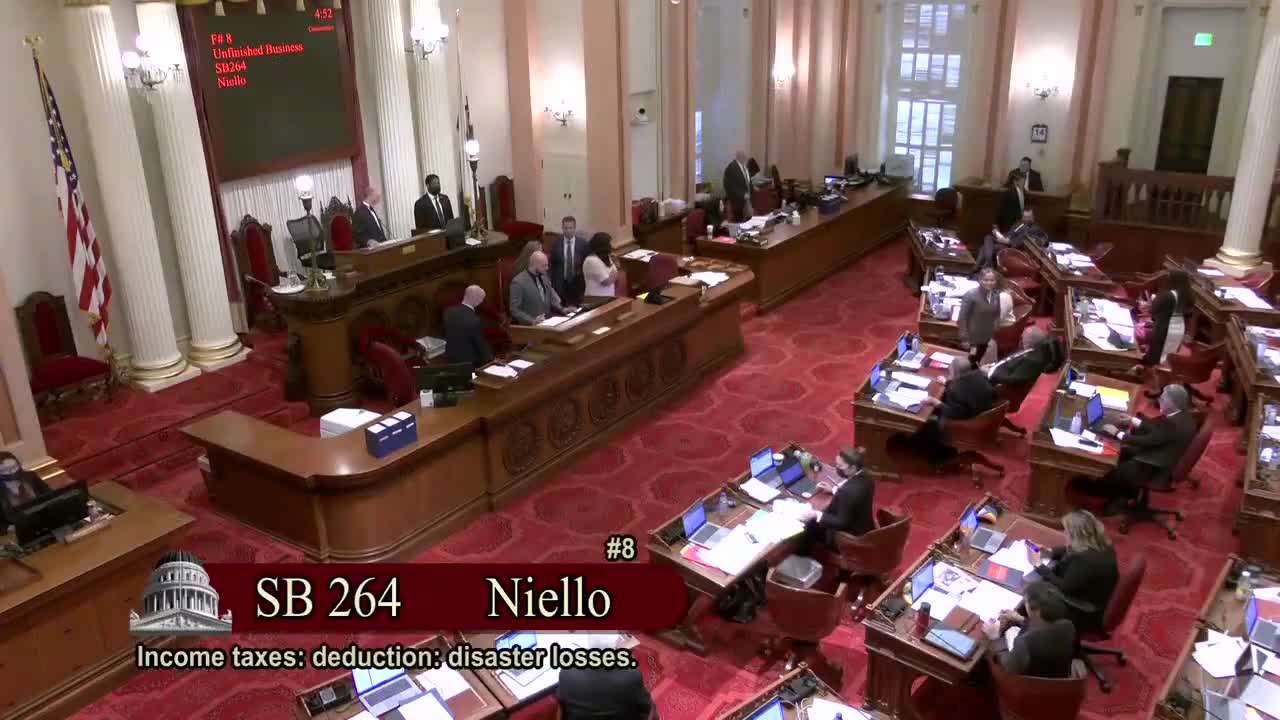
Bill Author
Bill Co-Author(s):