SB 618: Child support: enforcement.
- Session Year: 2023-2024
- House: Senate
- Latest Version Date: 2023-03-22
Current Status:
Failed
(2024-02-01: Returned to Secretary of Senate pursuant to Joint Rule 56.)
Introduced
In Committee
First Chamber
In Committee
Second Chamber
Enacted
Existing law requires, as a condition of eligibility for benefits under certain public assistance programs, including the CalWORKs and Medi-Cal programs, that applicants or recipients assign to the county any rights they may have to child support, as specified. Existing law delegates to the Department of Child Support Services and local child support agencies the responsibility for collecting and enforcing child support obligations, including child support delinquencies, as defined.
This bill would prohibit the department or a local child support agency from collecting interest that has accrued on child support owed or assigned to the state or the county. The bill would also prohibit child support owed or assigned to the state or the county from accruing interest.
Existing law requires that, except as specified, not less than the general prevailing rate of per diem wages, determined by the Director of Industrial Relations, be paid to workers employed on public works projects. Existing law defines the term public works for purposes of requirements regarding the payment of prevailing wages to include construction, alteration, demolition, installation, or repair work done under contract and paid for using public funds, except as specified. Existing law also includes as a public work work done for irrigation, utility, reclamation, and improvement districts, and other districts of this type, except as specified. Existing law makes a willful violation of laws relating to the payment of prevailing wages on public works a misdemeanor.This bill would make a technical, nonsubstantive change to that definition.Existing law requires that, except as specified, not less than the general prevailing rate of per diem wages, determined by the Director of Industrial Relations, be paid to workers employed on public works projects. Existing law defines the term public works for purposes of requirements regarding the payment of prevailing wages to include construction, alteration, demolition, installation, or repair work done under contract and paid for using public funds, except as specified. Existing law also includes as a public work work done for irrigation, utility, reclamation, and improvement districts, and other districts of this type, except as specified. Existing law makes a willful violation of laws relating to the payment of prevailing wages on public works a misdemeanor.
This bill would make a technical, nonsubstantive change to that definition.
The Legislature finds and declares that interest rates owed to the State of California for delinquent child support have an inequitable impact on low-income, noncustodial parents that discourages regular child support payments for disproportionately low-income families. Interest rates for delinquent child support have been waived in the States of Connecticut, Delaware, Hawaii, Idaho, Illinois, Kansas, Louisiana, Maryland, Mississippi, Montana, New Hampshire, New Jersey, North Carolina, Pennsylvania, South Carolina, South Dakota, and Utah. California should join the bipartisan coalition of states that waives all interest rates for delinquent child support to enhance racial equity in this state.
SEC. 2.Section 17500 of the Family Code is amended to read:17500.(a)In carrying out its obligations under Title IV-D of the Social Security Act (42 U.S.C. Sec. 651 et seq.), the department and the local child support agency shall have the responsibility for promptly and effectively collecting and enforcing child support obligations.
(b)The department and the local child support agency are the public agencies responsible for administering wage withholding for the purposes of Title IV-D of the Social Security Act (42 U.S.C. Sec. 651 et seq.).
(c)(1)Except as provided in Section 17450, the local child support agency shall submit child support delinquencies to the department for purposes of supplementing the collection efforts of the local child support agencies. Submissions shall be in the form and manner and at the time prescribed by the department. Collection shall be made by the department in accordance with Section 17450. For purposes of this subdivision, child support delinquency means an arrearage or otherwise past due amount that accrues when an obligor fails to make any court-ordered support payment when due, which is more than 60 days past due, and the aggregate amount of which exceeds one hundred dollars ($100).
(2)For purposes of this subdivision, child support delinquency means an arrearage or otherwise past due amount that accrues when an obligor fails to make any court-ordered support payment when due, which is more than 60 days past due, and the aggregate amount of the support delinquency exceeds one hundred dollars ($100).
(d)If a child support delinquency exists at the time a case is opened by the local child support agency, the responsibility for the collection of the child support delinquency shall be submitted to the department no later than 30 days after the receipt of the case by the local child support agency.
(e)Notwithstanding any other law, the department or the local child support agency shall not collect interest that has accrued on child support owed or assigned to the state or the county pursuant to Section 11477 of the Welfare and Institutions Code.
(f)Notwithstanding any other law, child support owed or assigned to the state or the county, pursuant to Section 11477 of the Welfare and Institutions Code, shall not accrue interest.
All matter omitted in this version of the bill appears in the bill as introduced in the Senate, February 15, 2023. (JR11)(a)As used in this chapter, public works means all of the following:
(1)Construction, alteration, demolition, installation, or repair work done under contract and paid for in whole or in part out of public funds, except work done directly by a public utility company pursuant to order of the Public Utilities Commission or other public authority. For purposes of this paragraph, construction includes work performed during the design, site assessment, feasibility study, and other preconstruction phases of construction, including, but not limited to, inspection and land surveying work, regardless of whether any further construction work is conducted, and work performed during the postconstruction phases of construction, including, but not limited to, all cleanup work at the jobsite. For purposes of this paragraph, installation includes, but is not limited to, the assembly and disassembly of freestanding and affixed modular office systems.
(2)Work done for irrigation, utility, reclamation, and improvement districts, and other districts of this type. Public works does not include the operation of the irrigation or drainage system of an irrigation or reclamation district, except as used in Section 1778 relating to retaining wages.
(3)Street, sewer, or other improvement work done under the direction and supervision or by the authority of an officer or public body of the state, or of a political subdivision or district thereof, whether the political subdivision or district operates under a freeholders charter or not.
(4)The laying of carpet done under a building lease-maintenance contract and paid for out of public funds.
(5)The laying of carpet in a public building done under contract and paid for in whole or in part out of public funds.
(6)Public transportation demonstration projects authorized pursuant to Section 143 of the Streets and Highways Code.
(7)(A)Infrastructure project grants from the California Advanced Services Fund pursuant to Section 281 of the Public Utilities Code.
(B)For purposes of this paragraph, the Public Utilities Commission is not the awarding body or the body awarding the contract, as defined in Section 1722.
(8)Tree removal work done in the execution of a project under paragraph (1).
(b)For purposes of this section, paid for in whole or in part out of public funds means all of the following:
(1)The payment of money or the equivalent of money by the state or political subdivision directly to or on behalf of the public works contractor, subcontractor, or developer.
(2)Performance of construction work by the state or political subdivision in execution of the project.
(3)Transfer by the state or political subdivision of an asset of value for less than fair market price.
(4)Fees, costs, rents, insurance or bond premiums, loans, interest rates, or other obligations that would normally be required in the execution of the contract, that are paid, reduced, charged at less than fair market value, waived, or forgiven by the state or political subdivision.
(5)Money loaned by the state or political subdivision that is to be repaid on a contingent basis.
(6)Credits that are applied by the state or political subdivision against repayment obligations to the state or political subdivision.
(c)Notwithstanding subdivision (b), all of the following apply:
(1)Private residential projects built on private property are not subject to this chapter unless the projects are built pursuant to an agreement with a state agency, a redevelopment agency, a successor agency to a redevelopment agency when acting in that capacity, or a local public housing authority.
(2)If the state or a political subdivision requires a private developer to perform construction, alteration, demolition, installation, or repair work on a public work of improvement as a condition of regulatory approval of an otherwise private development project, and the state or political subdivision contributes no more money, or the equivalent of money, to the overall project than is required to perform this public improvement work, and the state or political subdivision maintains no proprietary interest in the overall project, then only the public improvement work shall thereby become subject to this chapter.
(3)(A)If the state or a political subdivision reimburses a private developer for costs that would normally be borne by the public, or provides directly or indirectly a public subsidy to a private development project that is de minimis in the context of the project, an otherwise private development project shall not thereby become subject to this chapter.
(B)(i)For purposes of subparagraph (A), a public subsidy is de minimis if it is both less than six hundred thousand dollars ($600,000) and less than 2 percent of the total project cost.
(ii)Notwithstanding clause (i), for purposes of subparagraph (A), a public subsidy for a project that consists entirely of single-family dwellings is de minimis if it is less than 2 percent of the total project cost.
(iii)This subparagraph shall not apply to a project that was advertised for bid, or a contract that was awarded, before July 1, 2021.
(4)The construction or rehabilitation of affordable housing units for low- or moderate-income persons pursuant to paragraph (5) or (7) of subdivision (e) of Section 33334.2 of the Health and Safety Code that are paid for solely with moneys from the Low and Moderate Income Housing Fund established pursuant to Section 33334.3 of the Health and Safety Code or that are paid for by a combination of private funds and funds available pursuant to Section 33334.2 or 33334.3 of the Health and Safety Code do not constitute a project that is paid for in whole or in part out of public funds.
(5)Unless otherwise required by a public funding program, the construction or rehabilitation of privately owned residential projects is not subject to this chapter if one or more of the following conditions are met:
(A)The project is a self-help housing project in which no fewer than 500 hours of construction work associated with the homes are to be performed by the home buyers.
(B)The project consists of rehabilitation or expansion work associated with a facility operated on a not-for-profit basis as temporary or transitional housing for homeless persons with a total project cost of less than twenty-five thousand dollars ($25,000).
(C)Assistance is provided to a household as either mortgage assistance, downpayment assistance, or for the rehabilitation of a single-family home.
(D)The project consists of new construction, expansion, or rehabilitation work associated with a facility developed by a nonprofit organization to be operated on a not-for-profit basis to provide emergency or transitional shelter and ancillary services and assistance to homeless adults and children. The nonprofit organization operating the project shall provide, at no profit, not less than 50 percent of the total project cost from nonpublic sources, excluding real property that is transferred or leased. Total project cost includes the value of donated labor, materials, and architectural and engineering services.
(E)The public participation in the project that would otherwise meet the criteria of subdivision (b) is public funding in the form of below-market interest rate loans for a project in which occupancy of at least 40 percent of the units is restricted for at least 20 years, by deed or regulatory agreement, to individuals or families earning no more than 80 percent of the area median income.
(d)Notwithstanding any provision of this section to the contrary, the following projects are not, solely by reason of this section, subject to this chapter:
(1)Qualified residential rental projects, as defined by Section 142(d) of the Internal Revenue Code, financed in whole or in part through the issuance of bonds that receive allocation of a portion of the state ceiling pursuant to Chapter 11.8 (commencing with Section 8869.80) of Division 1 of Title 2 of the Government Code on or before December 31, 2003.
(2)Single-family residential projects financed in whole or in part through the issuance of qualified mortgage revenue bonds or qualified veterans mortgage bonds, as defined by Section 143 of the Internal Revenue Code, or with mortgage credit certificates under a Qualified Mortgage Credit Certificate Program, as defined by Section 25 of the Internal Revenue Code, that receive allocation of a portion of the state ceiling pursuant to Chapter 11.8 (commencing with Section 8869.80) of Division 1 of Title 2 of the Government Code on or before December 31, 2003.
(3)Low-income housing projects that are allocated federal or state low-income housing tax credits pursuant to Section 42 of the Internal Revenue Code, Chapter 3.6 (commencing with Section 50199.4) of Part 1 of Division 31 of the Health and Safety Code, or Section 12206, 17058, or 23610.5 of the Revenue and Taxation Code, on or before December 31, 2003.
(e)Notwithstanding paragraph (1) of subdivision (a), construction, alteration, demolition, installation, or repair work on the electric transmission system located in California constitutes a public works project for the purposes of this chapter.
(f)If a statute, other than this section, or a regulation, other than a regulation adopted pursuant to this section, or an ordinance or a contract applies this chapter to a project, the exclusions set forth in subdivision (d) do not apply to that project.
(g)For purposes of this section, references to the Internal Revenue Code mean the Internal Revenue Code of 1986, as amended, and include the corresponding predecessor sections of the Internal Revenue Code of 1954, as amended.
(h)The amendments made to this section by either Chapter 938 of the Statutes of 2001 or the act adding this subdivision shall not be construed to preempt local ordinances requiring the payment of prevailing wages on housing projects.
|
Date
|
Status
|
|---|---|
| Feb 1, 2024 | Returned to Secretary of Senate pursuant to Joint Rule 56. |
| May 18, 2023 | May 18 hearing: Held in committee and under submission. |
| May 16, 2023 | Set for hearing May 18. |
| May 15, 2023 | May 15 hearing: Placed on APPR suspense file. |
| May 9, 2023 | Set for hearing May 15. |
| May 8, 2023 | May 8 hearing postponed by committee. |
| May 1, 2023 | Set for hearing May 8. |
| Apr 25, 2023 | From committee: Do pass and re-refer to Com. on APPR. (Ayes 4. Noes 0. Page 877.) (April 24). Re-referred to Com. on APPR. |
| Apr 20, 2023 | Set for hearing April 24. |
| Apr 19, 2023 | From committee: Do pass and re-refer to Com. on HUMAN S. (Ayes 11. Noes 0. Page 799.) (April 18). Re-referred to Com. on HUMAN S. |
| Apr 10, 2023 | Set for hearing April 18. |
| Mar 29, 2023 | Re-referred to Coms. on JUD. and HUMAN S. |
| Mar 22, 2023 | From committee with author's amendments. Read second time and amended. Re-referred to Com. on RLS. |
| Feb 22, 2023 | Referred to Com. on RLS. |
| Feb 16, 2023 | From printer. May be acted upon on or after March 18. |
| Feb 15, 2023 | Introduced. Read first time. To Com. on RLS. for assignment. To print. |
|
Date
|
Description
|
Location
|
Votes
|
|
|---|---|---|---|---|
| May 15, 2023 | Placed on suspense file | Senate Standing Committee on Appropriations |
Passed |
|
| Apr 24, 2023 | Do pass, but first be re-referred to the Committee on [Appropriations] | Senate Standing Committee on Human Services |
Passed |
|
| Apr 18, 2023 | Do pass, but first be re-referred to the Committee on [Human Services] | Senate Standing Committee on Judiciary |
Passed |
This list shows positions taken on this bill by organizations on the date displayed, which is linked to the original source.
Positions by individuals are not included.
|
Organization
|
Position
|
Date
|
|---|---|---|
| Bay Area Legal Aid | * Support | Apr 24, 2023 |
| Both Sides of the Conversation | ** Support | |
| ChildrenS Institute | ** Support | |
| City and County of San Francisco | ** Support | |
| City and County of San Francisco Treasurer's Office | * Support | Apr 18, 2023 |
| Coalition of California Welfare Rights Organizations | * Support | Apr 24, 2023 |
| Ella Baker Center For Human Rights | ** Support | |
| Growing Greatness Now | ** Support | |
| Homeboy Industries | ** Support | |
| Legal Link | ** Support | |
| Legal Services of Northern California | * Support | Apr 24, 2023 |
| Parent Voices | ** Support | |
| Root & Rebound | ** Support | |
| Rubicon Programs | ** Support | |
| San Bernardino Fatherhood | ** Support | |
| San Francisco Financial Justice Project | ** Support | |
| San Francisco Treasurer José Cisneros | ** Support | |
| The Maven Collaborative | ** Support | |
| Tipping Point Community | ** Support | |
| Truth and Justice in Child Support Coalition | * Support | Apr 24, 2023 |
| Truth in Justice Coalition | ** Support | |
| Western Center for Law and Poverty | * Support | Apr 24, 2023 |
| young community developers | ** Support | |
| Young Women's Freedom Center | ** Support | |
| Youth ALIVE! | ** Support |
SENATE COMMITTEE ON APPROPRIATIONS
Senator Anthony Portantino, Chair
2023 - 2024 Regular Session
SB 618 (Rubio) - Child support: enforcement
Version: March 22, 2023 | Policy Vote: JUD. 11 - 0, HUMAN S. 4 - 0 |
Urgency: No | Mandate: No |
Hearing Date: May 15, 2023 | Consultant: Matthew Fleming |
Bill Summary:
SB 618 would prohibit the Department of Child Support Services (DCSS) or a local child support agency from collecting interest that has accrued on child support owed to the state or the county, and eliminate interest on child support owed or assigned to the state or the county going forward.
Fiscal Impact:
DCSS reports loss of collections in the tens of millions annually (Local Funds, Federal Funds, General Fund). DCSS further reports that the total amount of interest owed to the state is approximately $4 billion. While much of this debt may ultimately be uncollectible, there were collections of approximately $38.2 million in 2022, of which $18 million went to the General Fund as recoupment.
Background:
When a custodial parent receiving child support applies for public assistance, such as CalWORKs, their child support is assigned to the government. Thereafter, when the non-custodial parent pays child support, they pay the money to the government, not to the custodial parent. Under California law, the custodial parent will receive $100 of the child support if they have one child, and $200 if they have two or more children. The rest of the child support payment goes to the federal, state and county governments for repayment of the public assistance received by the custodial parent. If the non-custodial parent falls behind in their child support payments, the government imposes an interest rate of 10%. As interest accrues on the debt, and arrears increase, if and when the non-custodial parent makes payments above the amount of the original court order, the payment goes first to the parent, then to the principal of the debt, and finally to the interest. Functionally, this means that very little of the interest is ever collected by the government. This bill would prohibit the collection and accrual of interest on child support that is owed or assigned to the state or a county.
Proposed Law:
- Prohibits DCSS or an LCSA from collecting interest that has accrued on child support owed to the state or the county pursuant to an assignment of rights for repayment of public assistance received.
- Prohibits interest from accruing on child support owed or assigned to the state or the county for repayment of public assistance received.
Related Legislation:
- SB 343 (Skinner, 2023) modifies the statewide uniform child support guideline and low-income adjustment, modifies certain related provisions relating to childcare costs and other aspects of calculating support, and makes changes to the procedures for court-ordered child support to bring California’s laws into conformity with federal requirements. SB 343 is in this Committee.
- AB 1755 (Assembly Committee on Judiciary, 2023) is identical to SB 343 and serves as the Assembly counterpart. AB 1755 is pending in the Assembly Appropriations Committee.
- AB 1148 (Bonta, 2023) suspends, for 18 months after a parent is released from incarceration or involuntary institutionalization, the parent’s obligation to pay child support, and requires a court, within 90 days before the obligation is reinstated, to hold a hearing to determine whether the court-ordered child support amount should be modified. AB 1148 is pending on the Assembly Floor.
-- END --
SENATE COMMITTEE ON HUMAN SERVICES
Senator Alvarado-Gil, Chair
2023 - 2024 Regular
Bill No: | SB 618 | ||
Author: | Rubio | ||
Version: | March 22, 2023 | Hearing Date: | April 24, 2023 |
Urgency: | No | Fiscal: | Yes |
Consultant: | Heather Hopkins | ||
Subject: Child support: enforcement
SUMMARY
This bill would prohibit the Department of Child Support Services (DCSS), or a local child support agency (LCSA), from collected interest on child support owed to the state or county, and eliminates interest on child support owed to the state or a county going forward.
ABSTRACT
Existing Law:
- Provides that each parent of a child has an equal responsibility to support their child in the manner suitable to the child’s circumstances, and that if a parent willfully fails to so provide that support, the other parent may bring an action to enforce the duty to provide support. (FC 3900, 4000.)
- Establishes DCSS as the single statewide agency responsible for the administration and management of California’s child support enforcement program and administers the state plan for securing child support and determining paternity. (FC 17202.)
- Requires each county to establish an LCSA that has the responsibility for promptly and effectively establishing, modifying, and enforcing child support orders. (FC 17400(a).)
- Requires any recipient of child support who receives or has received certain forms of public assistance funded in part with federal funds, including California Work Opportunity and Responsibility to Kids (CalWORKs), to assign to the county any rights to the child support up to the total amount of the cash assistance received by the family, until the entire amount of aid paid has been reimbursed, as specified, subject to the below conditions. (WIC 11477.)
- The first $100 from any amount of child support collected for a family with one child, or the first $200 for a family with two or more children, is not considered income for purposes of the assignment in 4) and is passed through to the family. (FC 17504.)
- Provides that it is the intent of the Legislature that, commencing January 1, 2025, or on the date certain automated systems are complete, the California Department of Social Services (CDSS) and DCSS must provide full pass-through of child support payments to families receiving CalWORKs benefits. Requires CDSS to provide a report to the Legislature on this issue evaluating any unintended impacts of this policy on or before April 1, 2024. (WIC 11477.06, 11477.07.)
- The first $100 from any amount of child support collected for a family with one child, or the first $200 for a family with two or more children, is not considered income for purposes of the assignment in 4) and is passed through to the family. (FC 17504.)
- Provides that DCSS and the LCSA have the primary responsibility for promptly and effectively collecting and enforcing child support obligations as necessary to comply with specified federal laws, including serving as the public agencies responsible for administering wage withholding. (FC 17500(a), (b).)
- Defines a “child support delinquency” as an arrearage or otherwise past due amount that accrues when an obligor fails to make any court-ordered support payment when due, which is more than 60 days past due, and the aggregate amount of the support delinquency exceeds $100. (FC 17500(c).)
- Requires an LCSA to submit child support delinquencies to DCSS for purpose of supplementing the LCSA’s collection efforts, and authorizes DCSS to use any manner authorized under state or federal law to collect the outstanding support. (FC 17450, 17500.)
- Provides that interest accrues on the principal amount of a money judgment remaining unsatisfied as follows:
- For judgments entered or renewed before January 1, 2023, interest accrues at the rate of 10 percent per year.
- For judgments entered or for which an application for renewal is filed on or after January 1, 2023, at the rate of 5 percent per year for specified judgments, including a judgment of under $50,000 for a claim related to a personal debt arising out of specified transactions. All other judgment types not specified continue to accrue interest at 10 percent per year. (CCP 685.010.)
- For judgments entered or renewed before January 1, 2023, interest accrues at the rate of 10 percent per year.
This Bill:
- Makes Legislative findings and declarations regarding the impact interest rates on delinquent child support has on low-income families, and lists states that have waived such interest rates.
- Prohibits DCSS or local child support agency from collecting interest accrued on child support owed or assigned to the state or county pursuant to an assignment of rights for repayment of public assistance received.
- Prohibits interest from accruing on child support owed or assigned to the state or county for repayment of public assistance received.
FISCAL IMPACT
This bill has not yet been analyzed by a fiscal committee.
BACKGROUND AND DISCUSSION
Purpose of the Bill:
According to the author, “California requires parents who receive public assistance to repay the state by intercepting their child support. Under existing California law, a $300 payment would require only the first $100 to go to the child, and the remaining $200 goes to repay the cost of public assistance. Unfortunately, this puts non-custodial parents in a difficult situation. Eliminating the 10% interest will maximize all parents’ ability to focus their financial resources on their families and the child specifically. Non-custodial parents, who cannot repay public assistance, may even be incarcerated for nonpayment. In fact, data shows more than 80 percent of counties currently incarcerate for nonpayment. It is time change the financial structure within the child support system and allow for funding to directly benefit the child. By eliminating the debt from parents, especially families of color, we can reduce employment barriers, improve homeowner rates, credit scores and, most importantly, improve parent-child and co-parenting relationships and outcomes for each individual child.”
Child Support and Public Assistance
When a custodial parent receiving child support applies for public assistance, such as CalWORKs, their child support is assigned to the government. Thereafter, when the non-custodial parent pays child support, they pay the money to the government, not to the custodial parent. Under California law, the custodial parent will receive $100 of the child support if they have one child, and $200 if they have two or more children. The rest of the child support payment goes to the federal, state and county governments for repayment of the public assistance received by the custodial parent.
If the non-custodial parent falls behind in their child support payments, the government imposes an interest rate of 10%, one of the highest interest rates for such debts in the country. As interest accrues on the debt, and arrears increase, if and when the non-custodial parent makes payments above the amount of the original court order, the payment goes first to the parent, then to the debt, and finally to the interest. This functionally means that very little of the interest is ever collected by the government.
An example of a scenario helps to illustrate how this works. A custodial parent with one child has a child support order of $500 per month and applies for public benefits. The non-custodial parent initially makes $500 payments each month. The custodial parent only receives $100 each month from those payments. If the non-custodial parent misses payments, a 10 percent interest is added on that amount and it continues to accrue on the debt. Once the non-custodial parent begins making payments again, the custodial parent continues to only get $100, and the remaining $400 goes to the government to repay the public benefits the custodial parent is receiving. Even after the child turns 18 and there is no longer a child support order, interest is still accruing on the balance the non-custodial parent makes. This can last for decades with the non-custodial parent having their paycheck, veterans benefits, and even SSI garnished. The debt often lasts for decades solely because of the high interest rate being charged.
Related/Prior Legislation:
SB 343 (Skinner, 2023) modifies the statewide uniform child support guideline and low-income adjustment, modifies certain related provisions relating to childcare costs and other aspects of calculating support, and makes changes to the procedures for court-ordered child support to bring California’s laws into conformity with federal requirements. SB 343 is pending before the Senate Appropriations Committee.
AB 1755 (Assembly Committee on Judiciary, 2023) is identical to SB 343 and serves as the Assembly counterpart. AB 1755 is pending before the Assembly Judiciary Committee.
AB 1148 (Bonta, 2023) suspends, for 18 months after a parent is released from incarceration or involuntary institutionalization, the parent’s obligation to pay child support, and requires a court, within 90 days before the obligation is reinstated, to hold a hearing to determine whether the court-ordered child support amount should be modified. AB 1148 is pending before the Assembly Judiciary Committee.
AB 3365 (Assembly Judiciary Committee, 2020) would have, among other things, removed the sunset on the 2013 increase to the low-income adjustment to the child support guideline. AB 3365 was held in the Senate Judiciary Committee due to the COVID-19-related bill restrictions.
AB 3314 (Weber, 2020) would have required that a court’s determination of a parent’s “earning capacity” must take into account the parent’s specific circumstances, as specified, and required an LCSA to make an individualized determination of a parent’s actual income earning capacity rather than relying on presumed income beginning January 1, 2022. AB 3314 bill was held in the Assembly Judiciary Committee due to the COVID-19-related bill restrictions.
AB 2325 (Carrillo, Ch. 217, Stats. 2020) reestablished, until January 1, 2023, a program to suspend a parent’s obligation to pay child support if the parent is incarcerated or involuntarily institutionalized, unless they have the means to pay or are incarcerated for domestic violence.
AB 1092 (Jones-Sawyer, 2019) was similar to this bill in that it would have eliminated interest on child support arrears assigned to the state or county, but also included a more expansive provision that would have limited the state’s ability to collect on all arrearages. The Governor stated in his veto message that, while he “appreciate[d] the author’s concern that charging interest on past due child support arrears can lead to uncollectable debt and make it harder for families to escape poverty,” he could not support the bill because “it would lead to an estimated revenue loss of millions of dollars outside the budget process.”
COMMENTS
California’s current system of high interest on child support payments arrears creates a situation in which the non-custodial parent can often never complete the repayment of their debt. This debt repayment rarely benefits the child, as the debt often continues long after the child turns 18 because the interest is the majority of the debt. By eliminating the interest and interest repayment the non-custodial parent may be more motivated to make consistent payments as they see more money going to the parent, and less going to the government to pay interest.
PRIOR VOTES
Senate Judiciary Committee: | 11-0 |
Assembly Floor: |
|
Assembly Appropriations Committee: |
|
Assembly Committee: |
|
POSITIONS
Support:
Both Sides of the Conversation
Children's Institute
City and County of San Francisco
Coalition of California Welfare Rights Organizations
Ella Baker Center for Human Rights
Growing Greatness Now
Homeboy Industries
Legal Link
Parent Voices
Root & Rebound
Rubicon Programs
San Bernardino Fatherhood
San Francisco Financial Justice Project
San Francisco Treasurer José Cisneros
The Maven Collaborative
Tipping Point Community
Truth and Justice in Child Support Coalition
Western Center on Law & Poverty
Young Community Developers
Young Women's Freedom Center
Youth Alive!
Oppose:
None received
-- END --
Senator Thomas Umberg, Chair
2023-2024 Regular Session
Bill No: SB 618 (Author:Rubio)
Version: March 22, 2023
Hearing Date: April 18, 2023
Fiscal: Yes
Urgency: No
Consultant: AWM
SUBJECT
Child support: enforcement
DIGEST
This bill prohibits the Department of Child Support Services (DCSS) or a local child support agency from collecting interest that has accrued on child support owed to the state or the county, and eliminates interest on child support owed or assigned to the state or the county going forward.
EXECUTIVE SUMMARY
“Child support” presumably calls to mind amounts paid by a parent to support their child. But a significant amount of court-ordered child support never reaches the child. When a parent or child is receiving or has received certain public assistance benefits, the custodial parent is required to assign their rights to the child support to the state or county as “reimbursement” for the benefits; the family is entitled to keep only a “pass through” amount of $100 for a single-child family and $200 for a family of two or more children. This system was put in place pursuant to a federal framework that puts certain conditions on the receipt of federal funds for certain assistance programs.
California also charges interest on past-due child support awards, though no federal law requires it. Specifically, California’s 10 percent annual postjudgment interest statute applies to past-due child support payments, which is one of the nation’s highest child-support interest rates. Under current law, this 10 percent annual interest rate is applied regardless of whether the payments are going to the child or to the state. Research shows that high interest rates on child support result in significantly higher child support arrearages and uncollectable debts.
This bill would end the practice of charging interest on child support payments owed or assigned to the state or county, and prohibit DCSS or a local child support agency (LCSA) from collecting interest that has already accrued on assigned child support payments. The bill does not affect interest accruing on child support that would actually go to the child. By eliminating interest on child support owed or assigned to the state, this bill is intended to prevent the accrual of snowballing past-due debts and give relief to parents so they can actually support their children.
This bill is sponsored by 20 members of the Truth and Justice in Child Support Coalition, a statewide coalition that seek to bring equitable reform to the state’s child support laws. There is no known opposition. If this bill is passed by this Committee, it will next be heard by the Senate Human Services Committee.
PROPOSED CHANGES TO THE LAW
Existing state law:
- Provides that each parent of a child has an equal responsibility to support their child in the manner suitable to the child’s circumstances, and that if a parent willfully fails to so provide that support, the other parent may bring an action to enforce the duty to provide support. (Fam. Code, §§ 3900, 4000.)
- Establishes DCSS as the single statewide agency responsible for the administration and management of California’s child support enforcement program and administers the state plan for securing child support and determining paternity. (Fam. Code, § 17202.)
- Requires each county to establish a local child support agency (LCSA) that has the responsibility for promptly and effectively establishing, modifying, and enforcing child support orders. (Fam. Code, § 17400(a).)
- Requires any recipient of child support who receives or has received certain forms of public assistance funded in part with federal funds, including CalWORKS, to assign to the county any rights to the child support up to the total amount of the cash assistance received by the family, until the entire amount of aid paid has been reimbursed, as specified, subject to the below conditions. (Welf. & Inst. Code, § 11477.)
- The first $100 from any amount of child support collected for a family with one child, or the first $200 for a family with two or more children, is not considered income for purposes of the assignment in 4) and is passed through to the family. (Fam. Code, § 17504.)
- Provides that it is the intent of the Legislature that, commencing January 1, 2025, or on the date certain automated systems are complete, the Department of Social Services (DSS) and DCSS provide full pass-through of child support payments to families receiving CalWORKs benefits. DSS shall provide a report to the Legislature on this issue evaluating any unintended impacts of this policy on or before April 1, 2024. (Welf. & Inst. Code, §§ 11477.06, 11477.07.)
- Provides that DCSS and the LCSA have the primary responsibility for promptly and effectively collecting and enforcing child support obligations as necessary to comply with specified federal laws, including serving as the public agencies responsible for administering wage withholding. (Fam. Code, § 17500(a), (b).)
- Defines a “child support delinquency” as an arrearage or otherwise past due amount that accrues when an obligor fails to make any court-ordered support payment when due, which is more than 60 days past due, and the aggregate amount of the support delinquency exceeds $100. (Fam. Code, § 17500(c).)
- Requires an LCSA to submit child support delinquencies to DCSS for purpose of supplementing the LCSA’s collection efforts, and authorizes DCSS to use any manner authorized under state or federal law to collect the outstanding support. (Fam. Code, §§ 17450, 17500.)
- Provides that interest accrues on the principal amount of a money judgment remaining unsatisfied as follows:
- For judgments entered or renewed before January 1, 2023, interest accrues at the rate of 10 percent per year.
- For judgments entered or for which an application for renewal is filed on or after January 1, 2023, at the rate of 5 percent per year for specified judgments, including a judgment of under $50,000 for a claim related to a personal debt arising out of specified transactions. All other judgment types not specified continue to accrue interest at 10 percent per year. (Code Civ. Proc., § 685.010.)
Existing federal law:
- Requires a state to reimburse the federal government a certain portion of child support payments assigned to the state under 4), as repayment for federal funds granted to the state for public assistance programs, except that a state may elect to pay an excepted portion of the funds to the family, as follows:
- For a family with one child, up to $100 of the support collected may be passed through to the family.
- For a child with two or more children, up to $200 of the support collected may be passed through to the family. (42 U.S.C. § 657.)
This bill:
- Prohibits DCSS or an LCSA from collecting interest that has accrued on child support owed to the state or the county pursuant to an assignment of rights for repayment of public assistance received.
- Prohibits interest from accruing on child support owed or assigned to the state or the county for repayment of public assistance received.
- Makes nonsubstantive conforming changes.
COMMENTS
- Author’s statement
According to the author:
California requires parents who receive public assistance to repay the state by intercepting their child support. Under existing California law, a $300 payment would require only the first $100 to go to the child, and the remaining $200 goes to repay the cost of public assistance. Unfortunately, this puts non-custodial parents in a difficult situation. Eliminating the 10% interest will maximize all parents’ ability to focus their financial resources on their families and the child specifically. Non-custodial parents, who cannot repay public assistance, may even be incarcerated for nonpayment. In fact, data shows more than 80 percent of counties currently incarcerate for nonpayment. It is time change the financial structure within the child support system and allow for funding to directly benefit the child. By eliminating the debt from parents, especially families of color, we can reduce employment barriers, improve homeowner rates, credit scores and, most importantly, improve parent-child and co-parenting relationships and outcomes for each individual child.
2. California diverts hundreds of millions of dollars in child support from families and charges parents interest on the amounts owed to the state
Every year, California intercepts hundreds of millions of dollars in child support payments ordered for the maintenance of the obligor’s child and diverts those payments to the state.[1] Under a federal-state framework developed in the 1970s and 1980s, when a recipient of child support receives or has been the recipient of certain public assistance benefits—here, CalWORKS—the recipient is required to reimburse the state for their benefits received with their child support payments.[2] Such recipients must assign their rights to child support to DCSS or an LCSA, which then keep the child support payments up to the amount of the benefits received, minus a pass-through amount that is returned to the parent and child.[3]
Until 2022, California passed through $50 in child support to a family with one child and $100 to a family with two or more children; in 2022, that amount was increased to $100 for a family with one child and $200 for a family with two or more children.[4]
The assigned child support received by DCSS or an LCSA does not go back to the child; it is instead shared among the county, local, and federal governments involved in the child support case.[5] Additionally, if a parent becomes late on their child support payments, the past-due amounts accrue interest at 10 percent per year; the interest, too, is paid to the government unless and until the full amount of CalWORKS benefits are reimbursed.[6]
Diverting child support payments away from the children the payments are intended to support harms the children in a straightforward way: they are deprived of the resources ordered for their support.[7] But the assignment framework harms children in indirect ways as well. Over 75 percent of outstanding child support debt in California is owed by parents who could not afford to pay their original child support order; because of California’s 10 percent annual interest accrual rate (discussed below), it is nearly impossible for a parent to catch up.[8] Parents faced with insurmountable debt and significant wage garnishments (which will not make a dent in the principal) are more likely to engage in “of-the-books” work or illegal activities, increasing the likelihood of disruption to the family.[9] Research also shows that parents who are in arrears on child support are less likely to have relationships with their children[10] and that the system of rerouting child support payments to the government can result in custodial parents and children not appreciating how much support the noncustodial parent is actually providing, leading to resentment.[11] As a result, requiring parents to pay child support to the government can harm the very family relationships child support is intended to bolster.
A 2022 budget trailer bill establishes the Legislature’s intent to eliminate the assignment program altogether beginning in 2025;[12] by April 1, 2024, DSS and CDSS are required to submit a report, drafted with the input of a range of stakeholders to address this policy and evaluate any unintended consequences.[13] For now, however, interest continues to accrue on past-due support payments assigned to the government.
3. California’s high interest rate on child support payments to the state or county prevent many parents from ever catching up with their obligations
Although child support is a primarily state function, the federal government exercises control over how states’ child support frameworks operate by making compliance with certain federal laws a condition of receiving certain federal funds for public assistance programs.[14] In the 1980s, Congress enacted the Bradley Amendment, which requires a state to treat an order for child support as a judgment by operation of law with the full force and effect of a judgment in the state, and prohibits the order from being modified retroactively.[15] Because the Legislature did not enact a child-support-specific interest statute, California’s general civil judgment interest statute—which accrues at 10 percent annually—governs interest on child support orders.[16]
California’s 10 percent annual interest rate is higher than the interest rate most other states charge on past-due child support; 16 states and the District of Columbia do not charge interest on child support arrears.[17] According to the National Institute of Justice, an office within the United States Department of Justice, states that charge “interest have experienced a far greater increase in arrears than those that do not charge interest,” and evidence suggests “that these arrears are uncollectible because they are owed by parents with little or no reported income.”[18]
A wide range of organizations recommends eliminating interest on child support as a straightforward means to stop overburdening parents, ranging from the federal National Institute of Justice[19] to the Task Force to Study and Develop Reparation Proposals for African Americans.[20]
4. This bill prohibits DCSS or an LCSA from collecting interest already owed on child support assigned and owed to the state and from charging interest on child support payments assigned and owed to the state going forward
This bill prohibits DCSS or an LCSA from collecting interest that has accrued on child support assigned to the state or the county and eliminates interest on child support assigned to the state or the county going forward. Eliminating past-due interest does not run afoul of the Bradley Amendment because it prevents collection of past-due interest and does not modify the judgment itself.[21] And the bill does not affect interest on child support payable to families, so it will not reduce any child support amounts that would actually go to a child. The bill affects only child support that is diverted to the state, which the child never sees.
According to the sponsor, the Truth in Justice Coalition:
California's egregious 10% interest rate is one of the highest in the country. Sixteen states, including Idaho, Louisiana, Mississippi, North Carolina, South Carolina, South Dakota and Utah, charge no interest at all.
California research shows that 95% percent of this debt is uncollectible. But the debt is still accruing on our most vulnerable residents. Eliminating the interest rate is also a crucial racial and economic equity issue because child support debt disproportionately impacts families of color. California's reparations task force recommends removing the annual interest rate charged for past due child support.
Eliminating interest will maximize parents’ ability to focus their financial resources on their families. Lifting the burden of child support debt from parents has shown to reduce employment barriers, improve housing status and credit scores, and most importantly, improve parent-child and co-parenting relationships.
SUPPORT
Truth in Justice Coalition (sponsor)
Both Sides of the Conversation
Children’s Institute
Coalition of California Welfare Rights Organizations
Ella Baker Center for Human Rights
Growing Greatness Now
Homeboy Industries
Legal Link
Parent Voices
Root & Rebound
Rubicon Programs
San Bernardino Fatherhood
The Maven Collaborative
The San Francisco Financial Justice Project
Tipping Point Community
Western Center on Law and Poverty
Young Community Developers
Young Women’s Freedom Center
Youth ALIVE!
Two individuals
OPPOSITION
None known
RELATED LEGISLATION
Pending Legislation:
SB 343 (Skinner, 2023) modifies the statewide uniform child support guideline and low-income adjustment, modifies certain related provisions relating to childcare costs and other aspects of calculating support, and makes changes to the procedures for court-ordered child support to bring California’s laws into conformity with federal requirements. SB 343 is pending before the Senate Appropriations Committee.
AB 1755 (Assembly Committee on Judiciary, 2023) is identical to SB 343 and serves as the Assembly counterpart. AB 1755 is pending before the Assembly Judiciary Committee.
AB 1148 (Bonta, 2023) suspends, for 18 months after a parent is released from incarceration or involuntary institutionalization, the parent’s obligation to pay child support, and requires a court, within 90 days before the obligation is reinstated, to hold a hearing to determine whether the court-ordered child support amount should be modified. AB 1148 is pending before the Assembly Judiciary Committee.
Prior Legislation:
AB 3365 (Assembly Judiciary Committee, 2020) would have, among other things, removed the sunset on the 2013 increase to the low-income adjustment to the child support guideline. AB 3365 was held in the Senate Judiciary Committee due to the COVID-19-related bill restrictions.
AB 3314 (Weber, 2020) would have required that a court’s determination of a parent’s “earning capacity” must take into account the parent’s specific circumstances, as specified, and required an LCSA to make an individualized determination of a parent’s actual income earning capacity rather than relying on presumed income beginning January 1, 2022. AB 3314 bill was held in the Assembly Judiciary Committee due to the COVID-19-related bill restrictions.
AB 2325 (Carrillo, Ch. 217, Stats. 2020) reestablished, until January 1, 2023, a program to suspend a parent’s obligation to pay child support if the parent is incarcerated or involuntarily institutionalized, unless they have the means to pay or are incarcerated for domestic violence.
AB 1092 (Jones-Sawyer, 2019) was similar to this bill in that it would have eliminated interest on child support arrears assigned to the state or county, but also included a more expansive provision that would have limited the state’s ability to collect on all arrearages. The Governor stated in his veto message that, while he “appreciate[d] the author’s concern that charging interest on past due child support arrears can lead to uncollectable debt and make it harder for families to escape poverty,” he could not support the bill because “it would lead to an estimated revenue loss of millions of dollars outside the budget process.”
**************
Brown, et al., The Payback Problem: How Taking Parents’ Child Support Payments to Pay Back the Cost of Public Assistance Harms California Low-Income Children & Families (Apr. 2019), pp. 3, 15. ↑
Id. at p. 10. ↑
Fam. Code, § 17504; Welf. & Inst. Code, § 11477. ↑
AB 87 (Committee on Budget, Ch. 11, Stats. 2020); Fam. Code, § 17504. ↑
See Legis. Analyst, Rep., Analysis of Child Support Program Proposals in Governor’s Proposals for the 2022-2023 Budget (2021-2022 Reg. Sess.) (Feb. 18, 2022), p. 2. ↑
Ibid.; Code Civ. Proc., § 685.010. ↑
Brown, et al., The Payback Problem, supra, at p. 18. ↑
Id. at pp. 21, 23. ↑
Haney & Mercier, National Institute of Justice, Report: Child Support and Reentry (Sept. 2021), p. 28, available at https://www.ojp.gov/pdffiles1/nij/300780.pdf. All links in this analysis are current as of April 14, 2023. ↑
E.g., Turner & Waller, Indebted Relationships: Child Support Arrears and Nonresident Fathers’ Involvement With Children, Journal of Marriage and Family, Vol. 79, No. 1 (Feb. 2017) p. 24. ↑
Brown, et al., The Payback Problem, supra, at p. 31. ↑
AB 207 (Assembly Committee on Budget, Ch. 573, Stats. 2022). ↑
Id.; Welf. & Inst. Code, §§ 11477.06, 11477.07. ↑
See 42 U.S.C. §§ 651-669b. ↑
42 U.S.C. § 666(a)(9). ↑
See Code Civ. Proc., § 685.010. ↑
National Conference of State Legislatures, Interest on Child Support Arrears (updated Oct. 15, 2021), https://www.ncsl.org/human-services/interest-on-child-support-arrears. ↑
Haney & Mercer, supra, at p. 28. ↑
Id. at p. 8. ↑
California Task Force to Study and Develop Reparation Proposals for African Americans, Interim Report (Jun. 2022), pp. 21-22. ↑
See 42 U.S.C. § 666(a)(9). ↑
Discussed in Hearing
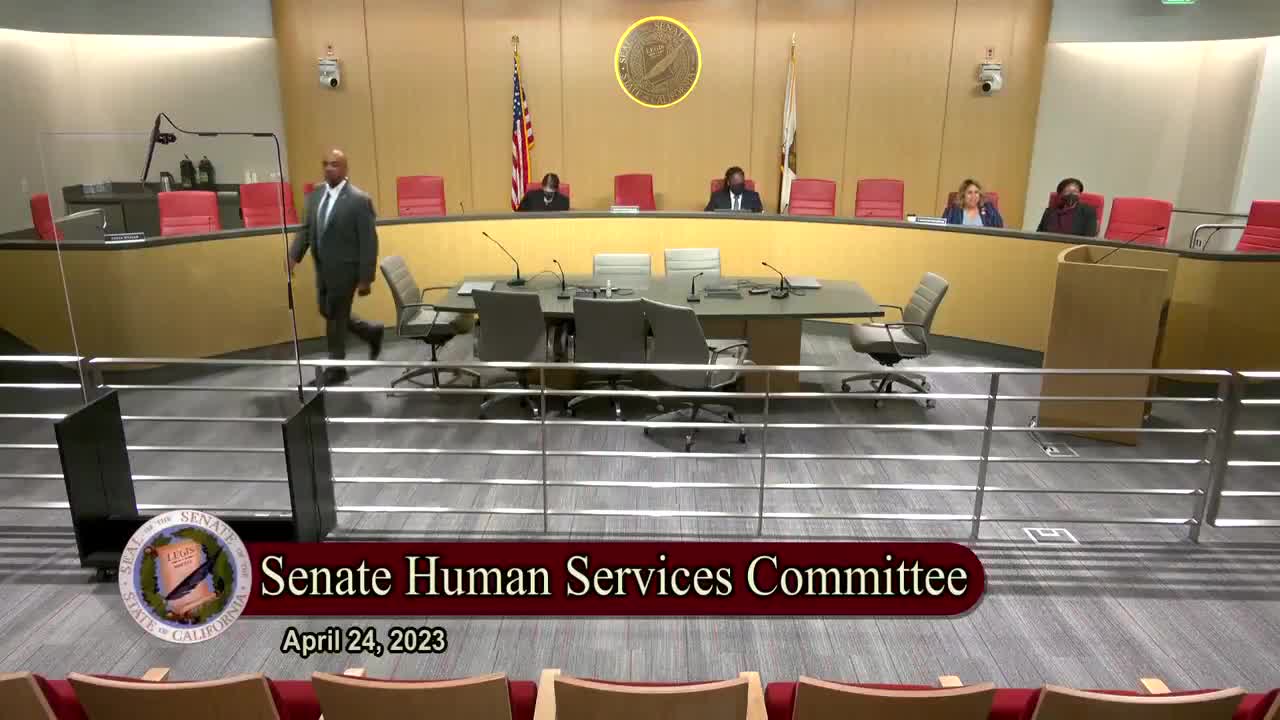 10MIN
Senate Standing Committee on Human Services
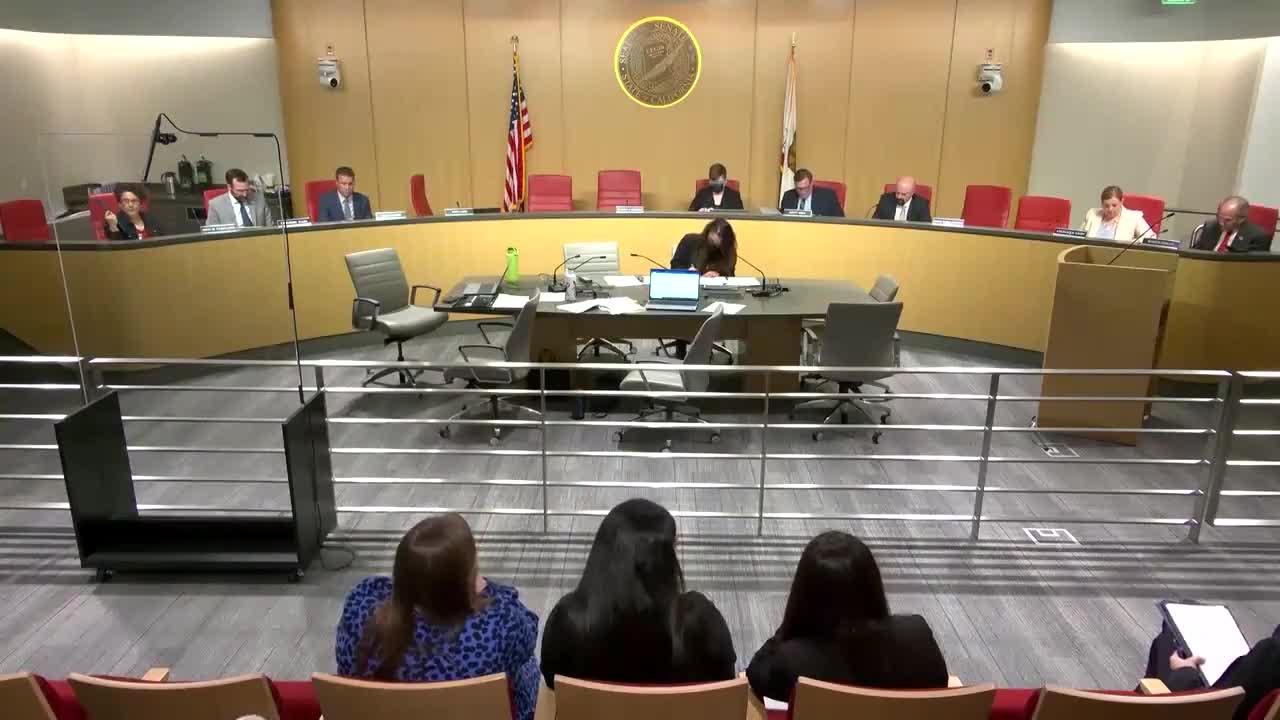 10MIN
Senate Standing Committee on Judiciary
Bill Author

Bill Co-Author(s):