SB 681: Political Reform Act of 1974: amendments.
- Session Year: 2023-2024
- House: Senate
- Latest Version Date: 2023-10-08
Current Status:
Passed
(2023-10-08: Chaptered by Secretary of State. Chapter 499, Statutes of 2023.)
Introduced
In Committee
First Chamber
In Committee
Second Chamber
Enacted
What does this bill do?
The bill shortens the public notice period for bills that would amend the Political Reform Act from 12 days to 8 days before final passage, affecting lawmakers, the Fair Political Practices Commission, the news media, and people who track campaign finance rules. It keeps the 12‑day rule for bills whose prior version did not amend the Act. The bill also requires the Legislative Counsel (which runs the legislature’s bill website) to offer email alerts people can sign up for and to send them by 9 a.m. the day after such a bill is introduced, changed, or acted on, with "Political Reform Act Bill" in the subject line.
The summary is provided by generative AI which can make mistakes. For original language, please view the details in the table below.
The Political Reform Act of 1974 may be amended by statute if, among other things, the bill in its final form has been delivered to the Fair Political Practices Commission for distribution to the news media and to persons who have requested to receive copies of such bills at least 12 days before passage in each house.
This bill instead would require bills amending the act be in final form at least 8 days before passage in each house. However, the bill would require bills amending the act to be in final form at least 12 days before passage in each house if the previous form of the bill did not amend the act.
Existing law requires the Legislative Counsel to make specified information pertaining to legislative measures publicly available in electronic form on a computer network, including the text, bill history, and bill status of each bill introduced in each current legislative session.
This bill would require the Legislative Counsel to make available to the public the option to sign up to receive email alerts any time a bill to amend the Political Reform Act of 1974 is introduced, amended, or otherwise subject to an action triggering a specified notification. The bill would require these email alerts to be sent as soon as feasible, but no later than 9 a.m. the calendar day after the legislative action that is the subject of the alert.
The Political Reform Act of 1974, an initiative measure, provides that the Legislature may amend the act to further the acts purposes upon a 2/3 vote of each house of the Legislature and compliance with specified procedural requirements.
This bill would declare that it furthers the purposes of the act.
The Political Reform Act of 1974 may be amended by statute if, among other things, the bill in its final form has been delivered to the Fair Political Practices Commission for distribution to the news media and to persons who have requested to receive copies of such bills at least 12 days before passage in each house.
This bill instead would require bills amending the Act act be in final form at least 7 8 days before passage in each house. However, the bill would require bills amending the Act act to be in final form at least 12 days before passage in each house if the previous form of the bill did not amend the Act. act.
Existing law requires the Legislative Counsel to make specified information pertaining to legislative measures publicly available in electronic form on a computer network, including the text, bill history, and bill status of each bill introduced in each current legislative session.
This bill would require the Legislative Counsel to make available to the public the option to sign up to receive email alerts any time a bill to amend the Political Reform Act of 1974 is introduced or introduced, amended, as specified. or otherwise subject to an action triggering a specified notification. The bill would require these email alerts to be sent as soon as possible, feasible, but no later than one business 9 a.m. the calendar day after the legislative action that is the subject of the alert.
The Political Reform Act of 1974, an initiative measure, provides that the Legislature may amend the act to further the acts purposes upon a 2/3 vote of each house of the Legislature and compliance with specified procedural requirements.
This bill would declare that it furthers the purposes of the act.
The Political Reform Act of 1974 may be amended by statute if, among other things, the bill in its final form has been delivered to the Fair Political Practices Commission for distribution to the news media and to persons who have requested to receive copies of such bills at least 12 days before passage in each house.
This bill instead would require bills amending the Act be in final form at least 5 7 days before passage in each house. However, the bill would require bills amending the Act to be in final form at least 12 days before passage in each house if the previous form of the bill did not amend the Act.
Existing law requires the Legislative Counsel to make specified information pertaining to legislative measures publicly available in electronic form on a computer network, including the text, bill history, and bill status of each bill introduced in each current legislative session.
This bill would require the Legislative Counsel to make available to the public the option to sign up to receive email alerts any time a bill to amend the Political Reform Act of 1974 is introduced or amended, as specified. The bill would require these email alerts to be sent as soon as possible, but no later than one business day after the legislative action that is the subject of the alert.
The Political Reform Act of 1974, an initiative measure, provides that the Legislature may amend the act to further the acts purposes upon a 2/3 vote of each house of the Legislature and compliance with specified procedural requirements.
This bill would declare that it furthers the purposes of the act.
The Political Reform Act of 1974 may be amended by statute if, among other things, the bill in its final form has been delivered to the Fair Political Practices Commission for distribution to the news media and to persons who have requested to receive copies of such bills at least 12 days before passage in each house.
This bill instead would require bills amending the Act be in final form at least 5 days before passage in each house.
Existing law requires the Legislative Counsel to make specified information pertaining to legislative measures publicly available in electronic form on a computer network, including the text, bill history, and bill status of each bill introduced in each current legislative session.
This bill would require the Legislative Counsel to make available to the public the option to sign up to receive email alerts any time a bill to amend the Political Reform Act of 1974 is introduced or amended, as specified. The bill would require these email alerts to be sent as soon as possible, but no later than one business day after the legislative action that is the subject of the alert.
The Political Reform Act of 1974, an initiative measure, provides that the Legislature may amend the act to further the acts purposes upon a 2/3 vote of each house of the Legislature and compliance with specified procedural requirements.
This bill would declare that it furthers the purposes of the act.
The Legislature finds and declares all of the following:
(a)The Political Reform Act of 1974 has an important mechanism that allows amendments that further its purposes to be passed by statute, passed in each house by rollcall vote entered in the journal, two-thirds of the membership concurring and signed by the Governor, as long as the bill, in its final form, has been delivered to the Fair Political Practices Commission for distribution at least 12 calendar days before passage in each house.
(b)Due to how close fiscal committee deadlines are to the end of the legislative session, the requirement that bills amending the act be in print for 12 days often makes it difficult and sometimes impossible to make important amendments before the legislative session ends.
(c)With the speed and ease of electronic communications that were not available when the act was passed in 1974, requiring bills to amend the act to be in their final form for 8 days instead of 12, except for bills that did not amend the act in their previous form, will strike a better balance between providing the news media and the public with enough notice of amendments before final votes and allowing sufficient time to make needed amendments after fiscal committee deadlines.
(d)To ensure that the news media and the public are promptly alerted before new changes to the act are made, the public must have the option to receive quick alerts by email when such changes go to print.
SEC. 2.Section 81012 of the Government Code is amended to read:81012.This title may be amended or repealed by the procedures set forth in this section. If any portion of subdivision (a) is declared invalid, then subdivision (b) shall be the exclusive means of amending or repealing this title.
(a)This title may be amended to further its purposes by statute, passed in each house by rollcall vote entered in the journal, two-thirds of the membership concurring and signed by the Governor, if at least 8 days before passage in each house, or at least 12 days before passage in each house if the previous form of the bill did not amend this title, the bill in its final form has been delivered to the commission for distribution to the news media and to every person who has requested the commission to send copies of such bills to that person.
(b)This title may be amended or repealed by a statute that becomes effective only when approved by the electors.
SEC. 3.Section 81012.5 is added to the Government Code, to read:81012.5.(a)The Legislative Counsel shall, through the information system described in Section 10248, make available to the public the option to sign up to receive an email alert any time any of the following actions occur:
(1)A new bill that would amend this title is introduced.
(2)An existing bill that would amend this title is amended, referred to the floor or committee, voted on, or is otherwise subject to an action triggering a notification by the information system described in Section 10248.
(3)An existing bill that would not amend this title is amended to include provisions that would amend this title.
(b)The email alerts described in subdivision (a) shall be sent in the shortest feasible time, but no later than 9 a.m. the calendar day after the legislative action that is subject to the alert.
(c)All email alerts sent through the information system described in Section 10248 regarding bills that would amend this title shall include the text Political Reform Act Bill in the email subject line.
SEC. 4.The Legislature finds and declares that this bill furthers the purposes of the Political Reform Act of 1974 within the meaning of subdivision (a) of Section 81012 of the Government Code.
The Legislature finds and declares all of the following:
(a)The Political Reform Act of 1974 has an important mechanism that allows amendments that further its purposes to be passed by statute, passed in each house by rollcall vote entered in the journal, two-thirds of the membership concurring and signed by the Governor, as long as the bill, in its final form, has been delivered to the Fair Political Practices Commission for distribution at least 12 calendar days before passage in each house.
(b)Due to how close fiscal committee deadlines are to the end of the legislative session, the requirement that bills amending the act be in print for 12 days often makes it difficult and sometimes impossible to make important amendments before the legislative session ends.
(c)With the speed and ease of electronic communications that were not available when the act was passed in 1974, requiring bills to amend the act to be in their final form for 8 days instead of 12, except for bills that did not amend the act in their previous form, will strike a better balance between providing the news media and the public with enough notice of amendments before final votes and allowing sufficient time to make needed amendments after fiscal committee deadlines.
(d)To ensure that the news media and the public are promptly alerted before new changes to the act are made, the public must have the option to receive quick alerts by email when such changes go to print.
SEC. 2.Section 81012 of the Government Code is amended to read:81012.This title may be amended or repealed by the procedures set forth in this section. If any portion of subdivision (a) is declared invalid, then subdivision (b) shall be the exclusive means of amending or repealing this title.
(a)This title may be amended to further its purposes by statute, passed in each house by rollcall vote entered in the journal, two-thirds of the membership concurring and signed by the Governor, if at least 8 days before passage in each house, or at least 12 days before passage in each house if the previous form of the bill did not amend this title, the bill in its final form has been delivered to the commission for distribution to the news media and to every person who has requested the commission to send copies of such bills to that person.
(b)This title may be amended or repealed by a statute that becomes effective only when approved by the electors.
SEC. 3.Section 81012.5 is added to the Government Code, to read:81012.5.(a)The Legislative Counsel shall, through the information system described in Section 10248, make available to the public the option to sign up to receive an email alert any time any of the following actions occur:
(1)A new bill that would amend this title is introduced.
(2)An existing bill that would amend this title is amended, referred to the floor or committee, voted on, or is otherwise subject to an action triggering a notification by the information system described in Section 10248.
(3)An existing bill that would not amend this title is amended to include provisions that would amend this title.
(b)The email alerts described in subdivision (a) shall be sent in the shortest feasible time, but no later than 9 a.m. the calendar day after the legislative action that is subject to the alert.
(c)All email alerts sent through the information system described in Section 10248 regarding bills that would amend this title shall include the text PRA Bill Political Reform Act Bill in the email subject line.
SEC. 4.The Legislature finds and declares that this bill furthers the purposes of the Political Reform Act of 1974 within the meaning of subdivision (a) of Section 81012 of the Government Code.
The Legislature finds and declares all of the following:
(a)The Political Reform Act of 1974 has an important mechanism that allows amendments that further its purposes to be passed by statute, passed in each house by rollcall vote entered in the journal, two-thirds of the membership concurring and signed by the Governor, as long as the bill, in its final form, has been delivered to the Fair Political Practices Commission for distribution at least 12 calendar days before passage in each house.
(b)Due to how close fiscal committee deadlines are to the end of the legislative session, the requirement that bills amending the act be in print for 12 days often makes it difficult and sometimes impossible to make important amendments before the legislative session ends.
(c)With the speed and ease of electronic communications that were not available when the act was passed in 1974, requiring bills to amend the act to be in their final form for 7 8 days instead of 12, except for bills that did not amend the act in their previous form, will strike a better balance between providing the news media and the public with enough notice of amendments before final votes and allowing sufficient time to make needed amendments after fiscal committee deadlines.
(d)To ensure that the news media and the public are promptly alerted before new changes to the act are made, the public must have the option to receive quick alerts by email when such changes go to print.
SEC. 2.Section 81012 of the Government Code is amended to read:81012.This title may be amended or repealed by the procedures set forth in this section. If any portion of subdivision (a) is declared invalid, then subdivision (b) shall be the exclusive means of amending or repealing this title.
(a)This title may be amended to further its purposes by statute, passed in each house by rollcall vote entered in the journal, two-thirds of the membership concurring and signed by the Governor, if at least 7 8 days before passage in each house, or at least 12 days before passage in each house if the previous form of the bill did not amend this title, the bill in its final form has been delivered to the commission for distribution to the news media and to every person who has requested the commission to send copies of such bills to that person.
(b)This title may be amended or repealed by a statute that becomes effective only when approved by the electors.
SEC. 3.Section 81012.5 is added to the Government Code, to read:81012.5.(a)The Legislative Counsel shall, through the information system described in Section 10248, make available to the public the option to sign up to receive an email alert any time any of the following actions occur:
(1)A new bill that would amend this title is introduced.
(2)An existing bill that would amend this title is amended. amended, referred to the floor or committee, voted on, or is otherwise subject to an action triggering a notification by the information system described in Section 10248.
(3)An existing bill that would not amend this title is amended to include provisions that would amend this title.
(b)The email alerts described in subdivision (a) shall be sent as soon as possible, in the shortest feasible time, but no later than one business 9 a.m. the calendar day after the legislative action that is subject to the alert.
(c)All email alerts sent through the information system described in Section 10248 regarding bills that would amend this title shall include the text PRA Bill in the email subject line.
SEC. 4.The Legislature finds and declares that this bill furthers the purposes of the Political Reform Act of 1974 within the meaning of subdivision (a) of Section 81012 of the Government Code.
The Legislature finds and declares all of the following:
(a)The Political Reform Act of 1974 has an important mechanism that allows amendments that further its purposes to be passed by statute, passed in each house by rollcall vote entered in the journal, two-thirds of the membership concurring and signed by the Governor, as long as the bill, in its final form, has been delivered to the Fair Political Practices Commission for distribution at least 12 calendar days before passage in each house.
(b)Due to how close fiscal committee deadlines are to the end of the legislative session, the requirement that bills amending the act be in print for 12 days often makes it difficult and sometimes impossible to make important amendments before the legislative session ends.
(c)With the speed and ease of electronic communications that were not available when the act was passed in 1974, requiring bills to amend the act to be in their final form for 5 7 days instead of 12 12, except for bills that did not amend the act in their previous form, will strike a better balance between providing the news media and the public with enough notice of amendments before final votes and allowing sufficient time to make needed amendments after fiscal committee deadlines.
(d)To ensure that the news media and the public are promptly alerted before new changes to the act are made, the public must have the option to receive quick alerts by email when such changes go to print.
SEC. 2.Section 81012 of the Government Code is amended to read:81012.This title may be amended or repealed by the procedures set forth in this section. If any portion of subdivision (a) is declared invalid, then subdivision (b) shall be the exclusive means of amending or repealing this title.
(a)This title may be amended to further its purposes by statute, passed in each house by rollcall vote entered in the journal, two-thirds of the membership concurring and signed by the Governor, if at least 5 7 days before passage in each house house, or at least 12 days before passage in each house if the previous form of the bill did not amend this title, the bill in its final form has been delivered to the commission for distribution to the news media and to every person who has requested the commission to send copies of such bills to that person.
(b)This title may be amended or repealed by a statute that becomes effective only when approved by the electors.
SEC. 3.Section 81012.5 is added to the Government Code, to read:81012.5.(a)The Legislative Counsel shall, through the information system described in Section 10248, make available to the public the option to sign up to receive an email alert any time any of the following actions occur:
(1)A new bill that would amend this title is introduced.
(2)An existing bill that would amend this title is amended.
(3)An existing bill that would not amend this title is amended to include provisions that would amend this title.
(b)The email alerts described in subdivision (a) shall be sent as soon as possible, but no later than one business day after the legislative action that is subject the alert.
SEC. 4.The Legislature finds and declares that this bill furthers the purposes of the Political Reform Act of 1974 within the meaning of subdivision (a) of Section 81012 of the Government Code.
The Legislature finds and declares all of the following:
(a)The Political Reform Act of 1974 has an important mechanism that allows amendments that further its purposes to be passed by statute, passed in each house by rollcall vote entered in the journal, two-thirds of the membership concurring and signed by the Governor, as long as the bill, in its final form, has been delivered to the Fair Political Practices Commission for distribution at least 12 calendar days before passage in each house.
(b)Due to how close fiscal committee deadlines are to the end of the legislative session, the requirement that bills amending the act be in print for 12 days often makes it difficult and sometimes impossible to make important amendments before the legislative session ends.
(c)With the speed and ease of electronic communications that were not available when the act was passed in 1974, requiring bills to amend the act to be in their final form for 5 days instead of 12 will strike a better balance between providing the news media and the public with enough notice of amendments before final votes and allowing sufficient time to make needed amendments after fiscal committee deadlines.
(d)To ensure that the news media and the public are promptly alerted before new changes to the act are made, the public must have the option to receive quick alerts by email when such changes go to print.
SEC. 2.Section 81012 of the Government Code is amended to read:81012.This title may be amended or repealed by the procedures set forth in this section. If any portion of subdivision (a) is declared invalid, then subdivision (b) shall be the exclusive means of amending or repealing this title.
(a)This title may be amended to further its purposes by statute, passed in each house by rollcall vote entered in the journal, two-thirds of the membership concurring and signed by the Governor, if at least 12 5 days prior to before passage in each house the bill in its final form has been delivered to the commission for distribution to the news media and to every person who has requested the commission to send copies of such bills to that person.
(b)This title may be amended or repealed by a statute that becomes effective only when approved by the electors.
SEC. 3.Section 81012.5 is added to the Government Code, to read:81012.5.(a)The Legislative Counsel shall, through the information system described in Section 10248, make available to the public the option to sign up to receive an email alert any time any of the following actions occur:
(1)A new bill that would amend this title is introduced.
(2)An existing bill that would amend this title is amended.
(3)An existing bill that would not amend this title is amended to include provisions that would amend this title.
(b)The email alerts described in subdivision (a) shall be sent as soon as possible, but no later than one business day after the legislative action that is subject the alert.
SEC. 4.The Legislature finds and declares that this bill furthers the purposes of the Political Reform Act of 1974 within the meaning of subdivision (a) of Section 81012 of the Government Code.
|
Date
|
Status
|
|---|---|
| Oct 8, 2023 | Chaptered by Secretary of State. Chapter 499, Statutes of 2023. |
| Oct 8, 2023 | Approved by the Governor. |
| Sep 21, 2023 | Enrolled and presented to the Governor at 4 p.m. |
| Sep 14, 2023 | Assembly amendments concurred in. (Ayes 32. Noes 8. Page 2794.) Ordered to engrossing and enrolling. |
| Sep 13, 2023 | In Senate. Concurrence in Assembly amendments pending. |
| Sep 13, 2023 | Read third time. Passed. (Ayes 61. Noes 18. Page 3351.) Ordered to the Senate. |
| Aug 28, 2023 | Read third time and amended. |
| Aug 28, 2023 | Ordered to third reading. |
| Aug 17, 2023 | Read second time. Ordered to third reading. |
| Aug 16, 2023 | From committee: Do pass. (Ayes 12. Noes 4.) (August 16). |
| Jun 21, 2023 | From committee: Do pass and re-refer to Com. on APPR. (Ayes 6. Noes 1.) (June 21). Re-referred to Com. on APPR. |
| Jun 14, 2023 | From committee with author's amendments. Read second time and amended. Re-referred to Com. on ELECTIONS. |
| Jun 8, 2023 | Referred to Com. on ELECTIONS. |
| May 31, 2023 | In Assembly. Read first time. Held at Desk. |
| May 30, 2023 | Read third time. Passed. (Ayes 32. Noes 8. Page 1341.) Ordered to the Assembly. |
| Apr 11, 2023 | Read second time. Ordered to third reading. |
| Apr 10, 2023 | From committee: Be ordered to second reading pursuant to Senate Rule 28.8. |
| Mar 30, 2023 | Set for hearing April 10. |
| Mar 28, 2023 | Read second time and amended. Re-referred to Com. on APPR. |
| Mar 27, 2023 | From committee: Do pass as amended and re-refer to Com. on APPR. (Ayes 6. Noes 1. Page 424.) (March 21). |
| Mar 13, 2023 | Set for hearing March 21. |
| Mar 1, 2023 | Referred to Com. on E. & C.A. |
| Feb 17, 2023 | From printer. May be acted upon on or after March 19. |
| Feb 16, 2023 | Introduced. Read first time. To Com. on RLS. for assignment. To print. |
|
Date
|
Description
|
Location
|
Votes
|
|
|---|---|---|---|---|
| Sep 14, 2023 | Unfinished Business SB681 Allen et al. Concurrence | Senate Floor |
Passed |
|
| Sep 13, 2023 | SB 681 Allen Senate Third Reading By Friedman | Assembly Floor |
Passed |
|
| Aug 16, 2023 | Do pass. | Assembly Standing Committee on Appropriations |
Passed |
|
| Jun 21, 2023 | Do pass and be re-referred to the Committee on [Appropriations] | Assembly Standing Committee on Elections |
Passed |
|
| May 30, 2023 | Senate 3rd Reading SB681 Allen | Senate Floor |
Passed |
|
| Mar 21, 2023 | Do pass as amended, but first amend, and re-refer to the Committee on [Appropriations] | Senate Standing Committee on Elections and Constitutional Amendments |
Passed |
This list shows positions taken on this bill by organizations on the date displayed, which is linked to the original source.
Positions by individuals are not included.
|
Organization
|
Position
|
Date
|
|---|---|---|
| California Clean Money Campaign | ** Support | |
| California Federation Of Teachers | ** Against | |
| Fair Political Practices Commission | ** Support |
SENATE RULES COMMITTEE Office of Senate Floor Analyses (916) 651-1520 Fax: (916) 327-4478 | SB 681 |
UNFINISHED BUSINESS
Bill No: SB 681
Author: Allen (D), et al.
Amended: 8/28/23
Vote: 27
SENATE ELECTIONS & C.A. COMMITTEE: 6-1, 3/21/23
AYES: Glazer, Allen, McGuire, Menjivar, Newman, Umberg
NOES: Nguyen
SENATE APPROPRIATIONS COMMITTEE: Senate Rule 28.8
SENATE FLOOR: 32-8, 5/30/23
AYES: Allen, Alvarado-Gil, Archuleta, Ashby, Atkins, Becker, Blakespear, Bradford, Caballero, Cortese, Dodd, Durazo, Eggman, Glazer, Gonzalez, Hurtado, Laird, Limón, McGuire, Menjivar, Min, Newman, Padilla, Portantino, Roth, Rubio, Skinner, Smallwood-Cuevas, Stern, Umberg, Wahab, Wiener
NOES: Dahle, Grove, Jones, Nguyen, Niello, Ochoa Bogh, Seyarto, Wilk
ASSEMBLY FLOOR: 61-18, 9/13/23 - See last page for vote
SUBJECT: Political Reform Act of 1974: amendments
SOURCE: Author
DIGEST:
This bill reduces the time from twelve to eight days that bills amending the Political Reform Act of 1974 (PRA) be in final form before passage in each house. The bill retains the twelve day requirement if the previous form of the bill did not amend the PRA.
Assembly Amendments
change from seven to eight the number of days bills amending the PRA need to be in its final form. The amendments also provide additional details and criteria for the email alerts required to be sent by Legislative Counsel, as specified.
ANALYSIS:
Existing law:
- Provides that the PRA may be amended by statute if, among other things, the bill in its final form has been delivered to the Fair Political Practices Commission (FPPC) for distribution to the news media and to persons who have requested to receive copies of such bills at least twelve days before passage in each house.
- Requires the Legislative Counsel to make specified information pertaining to legislative measures publicly available in electronic form on a computer network, including the text, bill history, and bill status of each bill introduced in each current legislative session.
- Provides that the Legislature may amend the PRA to further the act’s purposes upon a two-thirds vote of each house of the Legislature and compliance with specified procedural requirements.
This bill:
- Requires bills amending to the PRA be in final form at least eight days before passage in each house.
- Requires bills amending the PRA to be in final form at least twelve days before passage in each house if the previous form of the bill did not amend the PRA.
- Requires Legislative Counsel to make available to the public the option to sign up to receive an email alert any time any of the following actions occur:
- A new bill that would amend the PRA is introduced.
- An existing bill that would amend the PRA is amended, referred to the floor or committee, voted on, or is otherwise subject to an action triggering a notification, as specified.
- An existing bill that would not amend the PRA is amended to include provisions that would amend the PRA.
- Requires that these email alerts described 3) be sent in the shortest feasible time, but no later than 9 a.m. the calendar day after the legislative action that is subject to the alert. Provides that all email alerts sent regarding bills that would amend the PRA shall include the text “Political Reform Act Bill” in the email subject line, as specified.
Background
PRA Amendment Deadline Prior to Passage in Each House. The PRA passed in 1974 originally had a requirement that bills be in print in final form for 40 days, but was amended in 1976 by AB 2607 (Keysor, Chapter 883, Statutes of 1976) down to 20 days and in 1985 by AB 869 (Lancaster, Chapter 1200, Statutes of 1985) down to the current twelve days.
Comments
- According to the author, California was the first state in the nation to pass a sweeping political reform law following the Watergate scandal. Proposition 9, passed by voters in 1974 and known as the PRA, instituted numerous important transparency reforms including lobbying restrictions and reporting requirements, conflict of interest codes overseeing elected officials and public service employees, and extensive campaign disclosure mandates. The PRA granted the Legislature the authority to amend the Act with a 2/3 vote in each house. Bills amending the PRA must also be in their final form and available for public review for 12 days before being passed by the Legislature.
Important reforms to the PRA have been impeded by timing conflicts between end-of-session Legislative deadlines and the 12-day final form requirement. The legislative calendar currently makes it difficult for PRA reform bills to succeed at the end of the legislative session with the Appropriations Committee’s Suspense hearings leaving little time for critical amendments. In some instances, the Committee may amend a PRA bill after the 12-day deadline has passed - making it impossible for the Legislature to vote on it. Extended periods for public review of these bills is vital to ensuring government accountability and transparency, however, the current timeline dates back to 1985 before the advent of the modern internet when physical copies of bills were distributed by mail.
FISCAL EFFECT: Appropriation: No Fiscal Com.: Yes Local: No
According to the Assembly Appropriations Committee:
- Minor and absorbable costs to the Fair Political Practices Commission (FPPC) to update informational materials and legislative tracking practices.
- Costs of approximately $20,000 to the LC to create the email alert option.
SUPPORT: (Verified 9/12/23)
California Clean Money Campaign
Fair Political Practices Commission
OPPOSITION: (Verified 9/13/23)
ASSEMBLY FLOOR: 61-18, 9/13/23
AYES: Addis, Aguiar-Curry, Alvarez, Arambula, Bauer-Kahan, Bennett, Berman, Boerner, Bonta, Bryan, Calderon, Juan Carrillo, Wendy Carrillo, Cervantes, Connolly, Mike Fong, Friedman, Gabriel, Garcia, Gipson, Grayson, Haney, Hart, Holden, Irwin, Jackson, Jones-Sawyer, Kalra, Lee, Low, Lowenthal, Maienschein, McCarty, McKinnor, Muratsuchi, Stephanie Nguyen, Ortega, Pacheco, Papan, Pellerin, Petrie-Norris, Quirk-Silva, Ramos, Rendon, Reyes, Luz Rivas, Rodriguez, Blanca Rubio, Santiago, Schiavo, Soria, Ting, Valencia, Villapudua, Ward, Weber, Wicks, Wilson, Wood, Zbur, Robert Rivas
NOES: Alanis, Chen, Megan Dahle, Davies, Dixon, Essayli, Flora, Vince Fong, Gallagher, Hoover, Lackey, Mathis, Jim Patterson, Joe Patterson, Sanchez, Ta, Waldron, Wallis
NO VOTE RECORDED: Bains
California Federation of Teachers, AFL-CIO
Prepared by: Scott Matsumoto / E. & C.A. / (916) 651-4106
9/14/23 10:02:42
**** END ****
SENATE THIRD READING
STR Bill Id:SB 681
Author:(Allen)
As Amended Ver:August 28, 2023
2/3 vote
SUMMARY
Reduces, from 12 days to eight days, the amount of time that a bill amending the Political Reform Act (PRA) must be in print before it can be taken up for final passage, as specified, unless the previous form of the bill did not amend the PRA.
Major Provisions
- Reduces, from 12 days prior to passage in each house to eight days prior to passage, the date by which a legislative bill that proposes to amend the PRA must be delivered to the Fair Political Practices Commission (FPPC) in its final form for distribution to the news media and to every person who requested the FPPC to send copies of such bills to that person. Maintains a requirement that the bill be delivered in its final form to the FPPC at least 12 days prior to passage in each house if the previous form of the bill did not amend the PRA.
- Requires the Legislative Counsel, through a public legislative information system developed in accordance with existing law, to make available to the public the option to sign up to receive an email alert any time any of the following actions occur:
- A new bill that would amend the PRA is introduced.
- An existing bill that would amend the PRA is amended, referred to the floor or a committee, voted on, or is otherwise subject to an action triggering a notification by the information system.
- An existing bill that would not amend the PRA is amended to include provisions that would amend the PRA.
- Requires the email alerts described above to be sent in the shortest feasible time, but no later than 9 a.m. on the calendar day after the legislative action that is the subject of the alert. Requires all such email alerts to include the text "Political Reform Act Bill" in the email subject line
COMMENTS
An initiative statute that is enacted into law by California voters generally can be amended or repealed only by another statute that becomes effective when approved by the electors, unless the initiative provides otherwise. Initiative measures, however, often include provisions that allow the Legislature to amend those initiatives without voter approval, subject to certain conditions. (The term "initiative" refers exclusively to a proposed law that qualifies for the ballot through voter signatures. Other types of ballot measures - including measures that are placed on the ballot by the Legislature - are not "initiatives" under California law.)
For instance, in June 1974, California voters passed Proposition 9, an initiative measure that created the PRA and established the FPPC. The PRA codified significant restrictions and prohibitions on candidates, officeholders, and lobbyists. When it was enacted, the PRA provided two procedures by which it could be amended. First, the PRA can be amended or repealed through a statute that takes effect only when approved by the voters. Alternately, Proposition 9 allowed amendments without voter approval if 1) the amendments furthered the purposes of the initiative, 2) the bill amending the PRA was approved by a two-thirds vote of each house of the Legislature and was signed by the Governor, and 3) the bill in its final form was delivered to the FPPC for distribution to the news media and interested persons at least 40 days prior to passage in each house. Since that time, the Legislature has twice enacted legislation reducing the number of days prior to final passage that such bills must be delivered to the FPPC for distribution. Specifically, AB 2607 (Keysor), Chapter 883, Statutes of 1976, reduced the period from 40 days to 20 days, and AB 869 (Lancaster), Chapter 1200, Statutes of 1985, further reduced the period to 12 days, among other provisions.
Since its enactment in 1974, the PRA has been amended hundreds of times, and the vast majority of those amendments were enacted without voter approval. Of the more than 300 bills that have been chaptered that amended the PRA, only two were submitted to the voters for their consideration (one was approved by the voters, and the other was rejected). The remaining legislative amendments to the PRA were enacted without voter approval. (Voters have also approved four initiative measures that amended the PRA since its adoption.)
The requirement that bills amending the PRA be in print in their final form for 12 days before final passage can create challenges in connection with longstanding legislative deadlines and practices. For example, the Appropriations Committees in the Assembly and Senate generally hold hearings for bills that have been placed on their suspense files at least twice a year-once shortly before the legislative deadline for bills to pass out of the house in which they were introduced, and again shortly before the scheduled adjournment of the Legislature for the year. Those suspense file hearings generally are held approximately two weeks before the relevant legislative deadline. In such situations, it is often the case that a bill that is amended coming out of the relevant Appropriations Committee is not put into print as amended until there are fewer than 12 days remaining before the deadline. This can limit the ability of the Appropriations Committees to amend PRA bills to address concerns, and can otherwise prevent bills that amend the PRA from being amended at crucial times in the legislative process.
Because this bill proposes to amend the PRA without being submitted to voters, it must further the purposes of the initiative and it requires a two-thirds vote of each house of the Legislature.
According to the Author
"Important reforms to the PRA have been impeded by timing conflicts between end-of-session Legislative deadlines and the 12-day final form requirement. The legislative calendar currently makes it difficult for PRA reform bills to succeed at the end of the legislative session with Appropriations Committee suspense file hearings leaving little time for critical amendments… Supported by good government groups, SB 681 shortens the length of time a bill must be in its final form before it is passed by the Legislature from 12 days to 8. It additionally requires email notification and tracking updates to [PRA] bills on the publicly available California Legislative Information website. This shortened timeline will allow additional time to negotiate important amendments at the end of the legislative session while still providing more time for public review and engagement than is required of other legislation."
Arguments in Support
In support of this bill, the FPPC writes, "Advances in technology and processes have increased the ease and efficiency of accessing legislative amendments, such that amendment language now becomes publicly available online typically hours after it crosses the desk. Existing law also requires the maintenance of a system that provides email alerts when bills are introduced or amended, creating a helpful tool for keeping up to date on legislative action. It is of great public importance that bills that amend the [PRA] have a sufficient public review period before the Legislature may vote on the bill. SB 681 thoughtfully weighs this interest against the practical reality of tight deadlines that can occur during the legislative process."
Arguments in Opposition
In opposition to this bill, the California Federation of Teachers (CFT) writes, "CFT is comprised of 147 local unions chartered by the [American Federation of Teachers]. Our local union members elect representatives internally and ultimately our division leads and legislative committee. For matters related to the [PRA] we also further consult our legal team, who [can] often [take] days to respond to our inquires. Without having 12 days to review amendments to the [PRA], we may not be able to formulate a position or amend a position in a timely matter. While the goals of SB 681 are laudable, and we appreciate the amendments made to the bill, we would oppose a reduction of the days amendments to the [PRA] must be in print before the conclusion of a legislative session."
FISCAL COMMENTS
According to the Assembly Appropriations Committee:
- Minor and absorbable costs to the FPPC to update informational materials and legislative tracking practices.
- Costs of approximately $20,000 to the Legislative Counsel to create the email alert option.
VOTES
SENATE FLOOR: 32-8-0
YES: Allen, Alvarado-Gil, Archuleta, Ashby, Atkins, Becker, Blakespear, Bradford, Caballero, Cortese, Dodd, Durazo, Eggman, Glazer, Gonzalez, Hurtado, Laird, Limón, McGuire, Menjivar, Min, Newman, Padilla, Portantino, Roth, Rubio, Skinner, Smallwood-Cuevas, Stern, Umberg, Wahab, Wiener
NO: Dahle, Grove, Jones, Nguyen, Niello, Ochoa Bogh, Seyarto, Wilk
ASM ELECTIONS: 6-1-1
YES: Bryan, Bennett, Lee, Low, Pellerin, Blanca Rubio
NO: Lackey
ABS, ABST OR NV: Essayli
ASM APPROPRIATIONS: 12-4-0
YES: Holden, Bryan, Calderon, Wendy Carrillo, Mike Fong, Hart, Lowenthal, Papan, Pellerin, Soria, Weber, Wilson
NO: Megan Dahle, Dixon, Mathis, Sanchez
UPDATED
VERSION: August 28, 2023
CONSULTANT: Ethan Jones / ELECTIONS / (916) 319-2094 FN: 0001355
SENATE THIRD READING
STR Bill Id:SB 681
Author:(Allen)
As Amended Ver:June 14, 2023
2/3 vote
SUMMARY
Reduces, from 12 days to eight days, the amount of time that a bill amending the Political Reform Act (PRA) must be in print before it can be taken up for final passage, as specified, unless the previous form of the bill did not amend the PRA.
Major Provisions
- Reduces, from 12 days prior to passage in each house to eight days prior to passage, the date by which a legislative bill that proposes to amend the PRA must be delivered to the Fair Political Practices Commission (FPPC) in its final form for distribution to the news media and to every person who requested the FPPC to send copies of such bills to that person. Maintains a requirement that the bill be delivered in its final form to the FPPC at least 12 days prior to passage in each house if the previous form of the bill did not amend the PRA.
- Requires the Legislative Counsel, through a public legislative information system developed in accordance with existing law, to make available to the public the option to sign up to receive an email alert any time any of the following actions occur:
- A new bill that would amend the PRA is introduced.
- An existing bill that would amend the PRA is amended, referred to the floor or a committee, voted on, or is otherwise subject to an action triggering a notification by the information system.
- An existing bill that would not amend the PRA is amended to include provisions that would amend the PRA.
- Requires the email alerts described above to be sent in the shortest feasible time, but no later than 9 a.m. on the calendar day after the legislative action that is the subject of the alert. Requires all such email alerts to include the text "PRA Bill" in the email subject line.
COMMENTS
An initiative statute that is enacted into law by California voters generally can be amended or repealed only by another statute that becomes effective when approved by the electors, unless the initiative provides otherwise. Initiative measures, however, often include provisions that allow the Legislature to amend those initiatives without voter approval, subject to certain conditions. (The term "initiative" refers exclusively to a proposed law that qualifies for the ballot through voter signatures. Other types of ballot measures - including measures that are placed on the ballot by the Legislature - are not "initiatives" under California law.)
For instance, in June 1974, California voters passed Proposition 9, an initiative measure that created the PRA and established the FPPC. The PRA codified significant restrictions and prohibitions on candidates, officeholders, and lobbyists. When it was enacted, the PRA provided two procedures by which it could be amended. First, the PRA can be amended or repealed through a statute that takes effect only when approved by the voters. Alternately, Proposition 9 allowed amendments without voter approval if 1) the amendments furthered the purposes of the initiative, 2) the bill amending the PRA was approved by a two-thirds vote of each house of the Legislature and was signed by the Governor, and 3) the bill in its final form was delivered to the FPPC for distribution to the news media and interested persons at least 40 days prior to passage in each house. Since that time, the Legislature has twice enacted legislation reducing the number of days prior to final passage that such bills must be delivered to the FPPC for distribution. Specifically, AB 2607 (Keysor), Chapter 883, Statutes of 1976, reduced the period from 40 days to 20 days, and AB 869 (Lancaster), Chapter 1200, Statutes of 1985, further reduced the period to 12 days, among other provisions.
Since its enactment in 1974, the PRA has been amended hundreds of times, and the vast majority of those amendments were enacted without voter approval. Of the more than 300 bills that have been chaptered that amended the PRA, only two were submitted to the voters for their consideration (one was approved by the voters, and the other was rejected). The remaining legislative amendments to the PRA were enacted without voter approval. (Voters have also approved four initiative measures that amended the PRA since its adoption.)
The requirement that bills amending the PRA be in print in their final form for 12 days before final passage can create challenges in connection with longstanding legislative deadlines and practices. For example, the Appropriations Committees in the Assembly and Senate generally hold hearings for bills that have been placed on their suspense files at least twice a year-once shortly before the legislative deadline for bills to pass out of the house in which they were introduced, and again shortly before the scheduled adjournment of the Legislature for the year. Those suspense file hearings generally are held approximately two weeks before the relevant legislative deadline. In such situations, it is often the case that a bill that is amended coming out of the relevant Appropriations Committee is not put into print as amended until there are fewer than 12 days remaining before the deadline. This can limit the ability of the Appropriations Committees to amend PRA bills to address concerns, and can otherwise prevent bills that amend the PRA from being amended at crucial times in the legislative process.
Because this bill proposes to amend the PRA without being submitted to voters, it must further the purposes of the initiative and it requires a two-thirds vote of each house of the Legislature.
According to the Author
"Important reforms to the PRA have been impeded by timing conflicts between end-of-session Legislative deadlines and the 12-day final form requirement. The legislative calendar currently makes it difficult for PRA reform bills to succeed at the end of the legislative session with Appropriations Committee suspense file hearings leaving little time for critical amendments… Supported by good government groups, SB 681 shortens the length of time a bill must be in its final form before it is passed by the Legislature from 12 days to 8. It additionally requires email notification and tracking updates to [PRA] bills on the publicly available California Legislative Information website. This shortened timeline will allow additional time to negotiate important amendments at the end of the legislative session while still providing more time for public review and engagement than is required of other legislation."
Arguments in Support
In support of this bill, the FPPC writes, "Advances in technology and processes have increased the ease and efficiency of accessing legislative amendments, such that amendment language now becomes publicly available online typically hours after it crosses the desk. Existing law also requires the maintenance of a system that provides email alerts when bills are introduced or amended, creating a helpful tool for keeping up to date on legislative action. It is of great public importance that bills that amend the [PRA] have a sufficient public review period before the Legislature may vote on the bill. SB 681 thoughtfully weighs this interest against the practical reality of tight deadlines that can occur during the legislative process."
Arguments in Opposition
In opposition to this bill, the California Federation of Teachers (CFT) writes, "CFT is comprised of 147 local unions chartered by the [American Federation of Teachers]. Our local union members elect representatives internally and ultimately our division leads and legislative committee. For matters related to the [PRA] we also further consult our legal team, who [can] often [take] days to respond to our inquires. Without having 12 days to review amendments to the [PRA], we may not be able to formulate a position or amend a position in a timely matter. While the goals of SB 681 are laudable, and we appreciate the amendments made to the bill, we would oppose a reduction of the days amendments to the [PRA] must be in print before the conclusion of a legislative session."
FISCAL COMMENTS
According to the Assembly Appropriations Committee:
- Minor and absorbable costs to the FPPC to update informational materials and legislative tracking practices.
- Costs of approximately $20,000 to the Legislative Counsel to create the email alert option.
VOTES
SENATE FLOOR: 32-8-0
YES: Allen, Alvarado-Gil, Archuleta, Ashby, Atkins, Becker, Blakespear, Bradford, Caballero, Cortese, Dodd, Durazo, Eggman, Glazer, Gonzalez, Hurtado, Laird, Limón, McGuire, Menjivar, Min, Newman, Padilla, Portantino, Roth, Rubio, Skinner, Smallwood-Cuevas, Stern, Umberg, Wahab, Wiener
NO: Dahle, Grove, Jones, Nguyen, Niello, Ochoa Bogh, Seyarto, Wilk
ASM ELECTIONS: 6-1-1
YES: Bryan, Bennett, Lee, Low, Pellerin, Blanca Rubio
NO: Lackey
ABS, ABST OR NV: Essayli
ASM APPROPRIATIONS: 12-4-0
YES: Holden, Bryan, Calderon, Wendy Carrillo, Mike Fong, Hart, Lowenthal, Papan, Pellerin, Soria, Weber, Wilson
NO: Megan Dahle, Dixon, Mathis, Sanchez
UPDATED
VERSION: June 14, 2023
CONSULTANT: Ethan Jones / ELECTIONS / (916) 319-2094 FN: 0001255
Date of Hearing: August 16, 2023
ASSEMBLY COMMITTEE ON APPROPRIATIONS
Chris Holden, Chair
SBPCA Bill Id:SB 681
Author:(Allen) – As Amended Ver:June 14, 2023
Policy Committee: | Elections | Vote: | 6 - 1 |
|
| ||
|
|
Urgency: No State Mandated Local Program: No Reimbursable: No
SUMMARY:
This bill reduces, from 12 days to eight days, the number of days a bill amending the Political Reform Act (PRA) must be in final form before passage in each house of the Legislature.
However, the 12-day requirement still applies to a bill if its previous form did not amend the PRA. Additionally, this bill requires the Legislative Counsel (LC) to update the California Legislative Information (Leg Info) website so the public can sign up for an email alert any time a bill amending the PRA is introduced, amended, or otherwise acted upon.
FISCAL EFFECT:
- Minor and absorbable costs to the Fair Political Practices Commission (FPPC) to update informational materials and legislative tracking practices.
- Costs of approximately $20,000 to the LC to create the email alert option.
COMMENTS:
- Purpose. According to the author:
Important reforms to the PRA have been impeded by timing conflicts between end-of-session Legislative deadlines and the 12-day final form requirement. The legislative calendar currently makes it difficult for PRA reform bills to succeed at the end of the legislative session with Appropriations Committee suspense file hearings little time for critical amendments. In some instances, the Committee may amend a PRA bill after the 12-day deadline has passed – making it impossible for the Legislature to vote on it. Extended periods for public review of these bills is vital to ensuring government accountability and transparency, however, the current timeline dates back to 1985 before the advent of the modern internet when physical copies of bills were distributed by mail.
- Support and Opposition. This bill is sponsored by the California Clean Money Campaign, which argues this bill “will strike a better balance between providing the news media and the public with enough notice of amendments before final votes and allowing sufficient time to make needed amendments after fiscal committee deadlines.” This bill is also supported by the FPPC.
This bill is opposed by the California Federation of Teachers, which states “the goals of SB 681 are laudable,” but argues the additional in-print “time is important and necessary for our review of legislation that may impact our members and the public as a whole.”
- Background.
PRA. When the PRA was first enacted in 1974, the initiative measure provided two processes by which it could be amended: (a) through a statute that takes effect only when approved by voters and (b) through a statute without voter approval if the bill’s amendments further the purpose of the initiative, the bill is approved by a two-thirds vote of each house of the Legislature, and the bill in its final form is delivered to the FPPC for distribution to the news media and interested persons at least 40 days prior to passage in each house. Since that time, the 40-day final form requirement has been reduced to 20 days, and then to the current 12-day requirement. This bill further reduces the final form requirement to eight days.
Leg Info. Existing law requires the LC to make specified legislative information available to the public in electronic form, which the LC provides via the Leg Info website (leginfo.legislature.ca.gov). Although not required by law, the website also allows users to subscribe to receive email updates about the status of specific bills identified by bill number or key words. This bill requires the LC to allow users to subscribe to receive email updates about the status of bills amending the PRA.
Analysis Prepared by: Irene Ho / APPR. / (916) 319-2081
Date of Hearing: June 21, 2023
ASSEMBLY COMMITTEE ON ELECTIONS
Isaac G. Bryan, Chair
SBPCA Bill Id:SB 681
Author:(Allen) – As Amended Ver:June 14, 2023
SENATE VOTE: 32-8
SUBJECT: Political Reform Act of 1974: amendments.
SUMMARY: Reduces, from 12 days to eight days, the amount of time that a bill amending the Political Reform Act (PRA) must be in print before it can be taken up for final passage, as specified, unless the previous form of the bill did not amend the PRA. Specifically, this bill:
- Reduces, from 12 days prior to passage in each house to eight days prior to passage, the date by which a legislative bill that proposes to amend the PRA must be delivered to the Fair Political Practices Commission (FPPC) in its final form for distribution to the news media and to every person who requested the FPPC to send copies of such bills to that person. Maintains a requirement that the bill be delivered in its final form to the FPPC at least 12 days prior to passage in each house if the previous form of the bill did not amend the PRA.
- Requires the Legislative Counsel, through a public legislative information system developed in accordance with existing law, to make available to the public the option to sign up to receive an email alert any time any of the following actions occur:
- A new bill that would amend the PRA is introduced.
- An existing bill that would amend the PRA is amended, referred to the floor or a committee, voted on, or is otherwise subject to an action triggering a notification by the information system.
- An existing bill that would not amend the PRA is amended to include provisions that would amend the PRA.
- A new bill that would amend the PRA is introduced.
- Requires the email alerts described above to be sent in the shortest feasible time, but no later than 9 a.m. on the calendar day after the legislative action that is the subject of the alert. Requires all such email alerts to include the text “PRA Bill” in the email subject line.
- Contains various findings and declarations about legislation that proposes to amend the PRA and developments in electronic communications since the enactment of the PRA that have made it possible to distribute information about such legislation to the public and the news media more promptly and efficiently.
EXISTING LAW:
- Creates the FPPC, and makes it responsible for the impartial, effective administration and implementation of the PRA. (Government Code §§83100, 83111)
- Permits the electors to propose statutes and amendments to the Constitution, and to approve or reject them, through the initiative process. (California Constitution, Article II, §8) Permits the Legislature to amend or repeal a statute that was enacted by an initiative through another statute that becomes effective only when approved by the electors, unless the initiative statute permits amendment or repeal without the electors’ approval. (California Constitution, Article II, §10(c))
- Permits the PRA to be amended or repealed only through one of the following procedures:
- Amendments to the PRA that further its purposes may be enacted by statute that is passed by a two-thirds vote in each house and signed by the Governor, if at least 12 days prior to passage in each house the bill in its final form has been delivered to the FPPC for distribution, as specified; or,
- The PRA may be amended or repealed by a statute that becomes effective only when approved by the electors. (Government Code §81012)
- Requires the Legislative Counsel, with the advice of the Assembly Committee on Rules and the Senate Committee on Rules, to make specified information available to the public in electronic form, including the text of each bill in each current legislative session, the bill history and status of each such bill, and all bill analyses prepared by legislative committees in connection with each such bill. (Government Code §10248)
FISCAL EFFECT: According to the Senate Appropriations Committee, pursuant to Senate Rule 28.8, negligible state costs.
COMMENTS:
- Purpose of the Bill: According to the author:
Important reforms to the PRA have been impeded by timing conflicts between end-of-session Legislative deadlines and the 12-day final form requirement. The legislative calendar currently makes it difficult for PRA reform bills to succeed at the end of the legislative session with Appropriations Committee suspense file hearings leaving little time for critical amendments. In some instances, the Committee may amend a PRA bill after the 12-day deadline has passed - making it impossible for the Legislature to vote on it. Extended periods for public review of these bills is vital to ensuring government accountability and transparency, however, the current timeline dates back to 1985 before the advent of the modern internet when physical copies of bills were distributed by mail.
Supported by good government groups, SB 681 shortens the length of time a bill must be in its final form before it is passed by the Legislature from 12 days to 8. It additionally requires email notification and tracking updates to Political Reform Act bills on the publicly available California Legislative Information website. This shortened timeline will allow additional time to negotiate important amendments at the end of the legislative session while still providing more time for public review and engagement than is required of other legislation.
- Amending Initiative Statutes and the Political Reform Act of 1974: An initiative statute that is enacted into law by California voters generally can be amended or repealed only by another statute that becomes effective when approved by the electors, unless the initiative provides otherwise. Initiative measures, however, often include provisions that allow the Legislature to amend those initiatives without voter approval, subject to certain conditions. (The term “initiative” refers exclusively to a proposed law that qualifies for the ballot through voter signatures. Other types of ballot measures – including measures that are placed on the ballot by the Legislature – are not considered “initiatives” under California law.)
For instance, in June 1974, California voters passed Proposition 9, an initiative measure that created the PRA and established the FPPC. The PRA codified significant restrictions and prohibitions on candidates, officeholders, and lobbyists. When it was enacted, the PRA provided two procedures by which it could be amended. First, the PRA can be amended or repealed through a statute that takes effect only when approved by the voters. Alternately, Proposition 9 allowed amendments without voter approval if (1) the amendments furthered the purposes of the initiative, (2) the bill amending the PRA was approved by a two-thirds vote of each house of the Legislature and was signed by the Governor, and (3) the bill in its final form was delivered to the FPPC for distribution to the news media and interested persons at least 40 days prior to passage in each house. (As detailed below, these rules have since been modified.) Notwithstanding these general rules governing amendments to the PRA, certain provisions of the PRA can be amended by the Legislature without restriction in order to add information to the state voter information guide.
Since its enactment in 1974, the PRA has been amended hundreds of times, and the vast majority of those amendments were enacted without voter approval. Of the more than 300 bills that have been chaptered that amended the PRA, only two were submitted to the voters for their consideration (one was approved by the voters, and the other was rejected). The remaining legislative amendments to the PRA were enacted without voter approval. (Voters have also approved four initiative measures that amended the PRA since its adoption.)
Because this bill proposes to amend the PRA without being submitted to voters, it must further the purposes of the initiative and it requires a two-thirds vote of each house of the Legislature. - Previous Legislation: As detailed above, when the PRA was enacted, it required any bill that proposed amending the PRA without being submitted to voters for their consideration to be delivered to the FPPC in its final form for distribution at least 40 days prior to final passage in each house. Since that time, the Legislature has twice enacted legislation reducing the number of days prior to final passage that such bills must be delivered to the FPPC for distribution. Specifically, AB 2607 (Keysor), Chapter 883, Statutes of 1976, reduced the period from 40 days to 20 days, and AB 869 (Lancaster), Chapter 1200, Statutes of 1985, further reduced the period to 12 days, among other provisions.
- 12 Day Print Rule and the Legislative Calendar: As noted by the author, the requirement that bills amending the PRA be in print in their final form for 12 days before final passage can create challenges in connection with longstanding legislative deadlines and practices. For example, the Appropriations Committees in the Assembly and Senate generally hold hearings for bills that have been placed on their suspense files twice a year—once shortly before the legislative deadline for bills to pass out of the house in which they were introduced, and again shortly before the scheduled adjournment of the Legislature for the year. Those suspense file hearings generally are held approximately two weeks before the relevant legislative deadline. In such situations, it is often the case that a bill that is amended coming out of the relevant Appropriations Committee is not put into print as amended until there are fewer than 12 days remaining before the deadline. This can limit the ability of the Appropriations Committees to amend PRA bills to address concerns, and can otherwise prevent bills that amend the PRA from being amended at crucial times in the legislative process.
- Legislative Information Website: As detailed above, existing law requires the Legislative Counsel to make specified legislative information available to the public in electronic form, including the text of bills, bill history and status, and bill analyses. Legislative Counsel complies with that requirement through a legislative information website maintained at https://leginfo.legislature.ca.gov/. In addition to allowing the public to search for legislation by bill number, keyword, author, and code section, the website also allows users to subscribe to receive email updates about the status of specific bills or about the status of bills that contain keywords specified by the user. This bill additionally would require that website to offer users the ability to sign up to receive email notifications about bills that amend the PRA. While it may be possible to receive notifications of most such legislation through the existing legislative information website by signing-up for notifications in connection with bills that contain the keywords “Political Reform Act,” such an approach likely would be less than perfect, as it would be both over-inclusive (i.e., it would include bills that do not amend the PRA but that include the text “Political Reform Act”) and under-inclusive (i.e., it would exclude bills that amend the PRA but that do not include the text “Political Reform Act,” if any).
- Arguments in Support: In support this bill, the Fair Political Practices Commission writes:
Advances in technology and processes have increased the ease and efficiency of accessing legislative amendments, such that amendment language now becomes publicly available online typically hours after it crosses the desk. Existing law also requires the maintenance of a system that provides email alerts when bills are introduced or amended, creating a helpful tool for keeping up to date on legislative action.
It is of great public importance that bills that amend the Political Reform Act have a sufficient public review period before the Legislature may vote on the bill. SB 681 thoughtfully weighs this interest against the practical reality of tight deadlines that can occur during the legislative process.
- Arguments in Opposition: In opposition to this bill, the California Federation of Teachers (CFT) writes:
CFT is comprised of 147 local unions chartered by the [American Federation of Teachers]. Our local union members elect representatives internally and ultimately our division leads and legislative committee. For matters related to the Political Reform Act we also further consult our legal team, who [can] often [take] days to respond to our inquires. Without having 12 days to review amendments to the Political Reform Act, we may not be able to formulate a position or amend a position in a timely matter.
While the goals of SB 681 are laudable, and we appreciate the amendments made to the bill, we would oppose a reduction of the days amendments to the Political Reform Act must be in print before the conclusion of a legislative session. We believe this time is important and necessary for our review of legislation that may impact our members and the [public] as a whole and for those [reasons] respectfully oppose the legislation.
REGISTERED SUPPORT / OPPOSITION:
Support
California Clean Money Campaign (Sponsor)
Fair Political Practices Commission
Opposition
California Federation of Teachers
Analysis Prepared by: Ethan Jones / ELECTIONS / (916) 319-2094
SENATE RULES COMMITTEE Office of Senate Floor Analyses (916) 651-1520 Fax: (916) 327-4478 | SB 681 |
THIRD READING
Bill No: SB 681
Author: Allen (D)
Amended: 3/28/23
Vote: 27
SENATE ELECTIONS & C.A. COMMITTEE: 6-1, 3/21/23
AYES: Glazer, Allen, McGuire, Menjivar, Newman, Umberg
NOES: Nguyen
SENATE APPROPRIATIONS COMMITTEE: Senate Rule 28.8
SUBJECT: Political Reform Act of 1974: amendments
SOURCE: Author
DIGEST:
This bill reduces the time from twelve to seven days that bills amending the Political Reform Act of 1974 (PRA) be in final form before passage in each house. The bill retains the twelve day requirement if the previous form of the bill did not amend the PRA.
ANALYSIS:
Existing law:
- Provides that the PRA may be amended by statute if, among other things, the bill in its final form has been delivered to the Fair Political Practices Commission (FPPC) for distribution to the news media and to persons who have requested to receive copies of such bills at least twelve days before passage in each house.
- Existing law requires the Legislative Counsel to make specified information pertaining to legislative measures publicly available in electronic form on a computer network, including the text, bill history, and bill status of each bill introduced in each current legislative session.
- Provides that the Legislature may amend the PRA to further the act’s purposes upon a two-thirds vote of each house of the Legislature and compliance with specified procedural requirements.
This bill:
- Requires bills amending to the PRA be in final form at least seven days before passage in each house.
- Requires bills amending the PRA to be in final form at least twelve days before passage in each house if the previous form of the bill did not amend the PRA.
- Requires the Legislative Counsel to make available to the public the option to sign up to receive email alerts any time a bill to amend the PRA is introduced or amended, as specified. Requires these email alerts be sent as soon as possible, but no later than one business day after the legislative action that is the subject of the alert.
Background
PRA Amendment Deadline Prior to Passage in Each House. The PRA passed in 1974 originally had a requirement that bills be in print in final form for 40 days, but was amended in 1976 by AB 2607 (Keysor, Chapter 883, Statutes of 1976) down to 20 days and in 1985 by AB 869 (Lancaster, Chapter 1200, Statutes of 1985) down to the current twelve days.
Comments
- According to the author, California was the first state in the nation to pass a sweeping political reform law following the Watergate scandal. Proposition 9, passed by voters in 1974 and known as the PRA, instituted numerous important transparency reforms including lobbying restrictions and reporting requirements, conflict of interest codes overseeing elected officials and public service employees, and extensive campaign disclosure mandates. The PRA granted the Legislature the authority to amend the Act with a 2/3 vote in each house. Bills amending the PRA must also be in their final form and available for public review for 12 days before being passed by the Legislature.
Important reforms to the PRA have been impeded by timing conflicts between end-of-session Legislative deadlines and the 12-day final form requirement. The legislative calendar currently makes it difficult for PRA reform bills to succeed at the end of the legislative session with Appropriations Committee suspense file hearings leaving little time for critical amendments. In some instances, the Committee may amend a PRA bill after the 12-day deadline has passed - making it impossible for the Legislature to vote on it. Extended periods for public review of these bills is vital to ensuring government accountability and transparency, however, the current timeline dates back to 1985 before the advent of the modern internet when physical copies of bills were distributed by mail.
- Additional background provided by the author. The legislative timeline currently makes it difficult for PRA reform bills to succeed at the end of session. Bills get off the Appropriations suspense file with so little time to spare that an author may have at most one or two days to make floor amendments in time to get voted on before session ends. Sometimes, as in 2021, bills get off suspense late enough that the 12 days makes it impossible to make floor amendments at all. In some cases, the Appropriations Committee may amend a PRA bill coming off suspense with language that does not go into print until after the 12-day deadline has passed. These issues have stopped important amendments on important PRA bills in the past.
FISCAL EFFECT: Appropriation: No Fiscal Com.: Yes Local: No
SUPPORT: (Verified 4/12/23)
California Clean Money Campaign
OPPOSITION: (Verified 4/12/23)
None received
ARGUMENTS IN SUPPORT: In a letter supporting SB 681, California Clean Money Campaign states, in part, the following:
With the speed and ease of electronic communications that were not available when the act was passed in 1974, SB 681’s shortening of the the period that PRA bills are required to publicly be in their final form will strike a better balance between providing the news media
and the public with enough notice of amendments before final votes and allowing sufficient time to make needed amendments after fiscal committee deadlines.
Prepared by: Karen French / E. & C.A. / (916) 651-4106
4/12/23 14:04:26
**** END ****
SENATE COMMITTEE ON
ELECTIONS AND CONSTITUTIONAL AMENDMENTS
Senator Steven Glazer, Chair
2023 - 2024 Regular
Bill No: 681 Hearing Date: 3/21/23
Author: | Allen | ||
Version: |
| ||
Urgency: | Fiscal: | ||
Consultant: | |||
Subject:
DIGEST
This bill reduces the time from twelve to five days that bills amending the Political Reform Act of 1974 (PRA) be in final form before passage in each house.
ANALYSIS
Existing law:
- Provides that the PRA may be amended by statute if, among other things, the bill in its final form has been delivered to the Fair Political Practices Commission (FPPC) for distribution to the news media and to persons who have requested to receive copies of such bills at least twelve days before passage in each house.
- Existing law requires the Legislative Counsel to make specified information pertaining to legislative measures publicly available in electronic form on a computer network, including the text, bill history, and bill status of each bill introduced in each current legislative session.
- Provides that the Legislature may amend the PRA to further the act’s purposes upon a two-thirds vote of each house of the Legislature and compliance with specified procedural requirements.
This bill:
- Requires bills amending to the PRA be in final form at least five days before passage in each house.
- Requires the Legislative Counsel to make available to the public the option to sign up to receive email alerts any time a bill to amend the PRA is introduced or amended, as specified. Requires these email alerts be sent as soon as possible, but no later than one business day after the legislative action that is the subject of the alert.
BACKGROUND
PRA Amendment Deadline Prior to Passage in Each House. The PRA passed in 1974 originally had a requirement that bills be in print in final form for 40 days, but was amended in 1976 by AB 2607 (Keysor), Chapter 883, Statutes of 1976, down to 20 days and in 1985 by AB 869 (Lancaster), Chapter 1200, Statutes of 1985, down to the current twelve days.
Additional Background Provided by the Author. The legislative timeline currently makes it difficult for PRA reform bills to succeed at the end of session. Bills get off the Appropriations suspense file with so little time to spare that an author may have at most one or two days to make floor amendments in time to get voted on before session ends. Sometimes, as in 2021, bills get off suspense late enough that the 12 days makes it impossible to make floor amendments at all. In some cases, the Appropriations Committee may amend a PRA bill coming off suspense with language that does not go into print until after the 12-day deadline has passed. These issues have stopped important amendments on important PRA bills in the past.
COMMENTS
- According to the author: California was the first state in the nation to pass a sweeping political reform law following the Watergate scandal. Proposition 9, passed by voters in 1974 and known as the Political Reform Act (PRA), instituted numerous important transparency reforms including lobbying restrictions and reporting requirements, conflict of interest codes overseeing elected officials and public service employees, and extensive campaign disclosure mandates. The PRA granted the Legislature the authority to amend the Act with a 2/3 vote in each house. Bills amending the PRA must also be in their final form and available for public review for 12 days before being passed by the Legislature.
Important reforms to the PRA have been impeded by timing conflicts between end-of-session Legislative deadlines and the 12-day final form requirement. The legislative calendar currently makes it difficult for PRA reform bills to succeed at the end of the legislative session with Appropriations Committee suspense file hearings leaving little time for critical amendments. In some instances, the Committee may amend a PRA bill after the 12-day deadline has passed - making it impossible for the Legislature to vote on it. Extended periods for public review of these bills is vital to ensuring government accountability and transparency, however, the current timeline dates back to 1985 before the advent of the modern internet when physical copies of bills were distributed by mail.
- Argument in Support. In a letter supporting SB 681, California Clean Monday Campaign states, in part, the following:
Since 1974, the Legislature has enacted a number of significant PRA amendments to improve government accountability and election transparency. These improvements include expanded financial contribution restrictions to more public officials; implementation of a one-year “revolving door” ban on lobbying by former elected officials; and increased transparency in lobbying and political advertising.
Unfortunately, due to how close fiscal committee deadlines are to the end of the legislative session, the requirement that bills amending the act be in print for 12 days often makes it difficult and sometimes impossible to make important amendments before the legislative session ends. SB 681 rectifies this problem by shortening the number of days PRA bills must be in final form from 12 days down to 5 days. To ensure that interested members of the press and public are informed of any new PRA amendments, it also requires Legislative Counsel to make available to the public the option to sign up to receive immediate email alerts any time a bill to amend the PRA is introduced or amended.
With the speed and ease of electronic communications that were not available when the act was passed in 1974, SB 681’s shortening of the the period that PRA bills are required to publicly be in their final form will strike a better balance between providing the news media and the public with enough notice of amendments before final votes and allowing sufficient time to make needed amendments after fiscal committee deadlines.
- Recommended Amendments. 1) Amend to change the number of days to seven instead of the current five in the bill, and 2) Add language applying twelve days before final passage for bills that are gutted and amended, where the bill did not previously amend the PRA.
RELATED/PRIOR LEGISLATION
SB 1253 (Steinberg), Chapter 697, Statutes of 2014, created a mechanism for initiative proponents to remove their measure from the ballot before the Secretary of State officially qualifies it for the next general election, with the intent to provide initiative proponents and the Legislature with the ability to resolve a policy issue through the legislative process.
AB 2607 (Keysor), Chapter 883, Statutes of 1976, shortened deadline to 20 days from 40.
AB 869 (Lancaster), Chapter 1200, Statutes of 1985, shortened deadline from 20 days to the current 12.
POSITIONS
Sponsor: California Clean Money Campaign
Support: None received
Oppose: None received
END --
Discussed in Hearing
 2MIN
Senate Floor
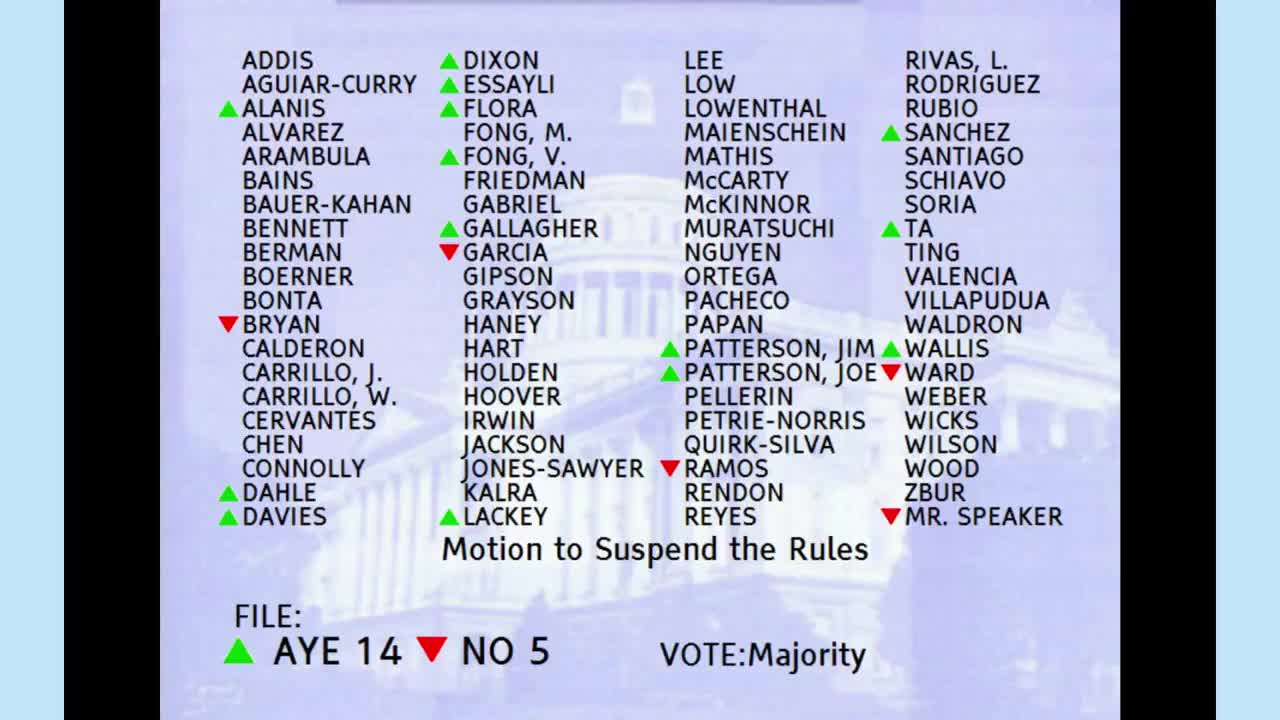 3MIN
Assembly Floor
 1MIN
Assembly Floor
 2MIN
Assembly Standing Committee on Appropriations
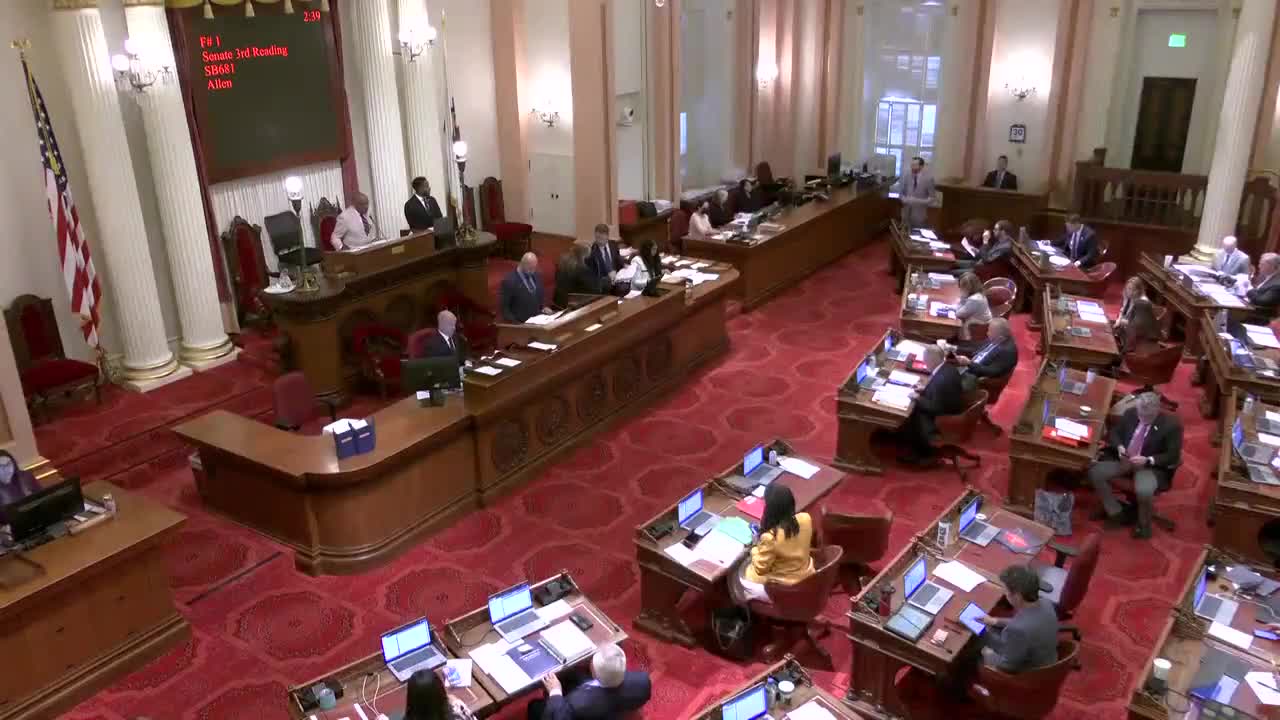 3MIN
Senate Floor
 7MIN
Senate Standing Committee on Elections and Constitutional Amendments
Bill Author

Bill Co-Author(s):
